
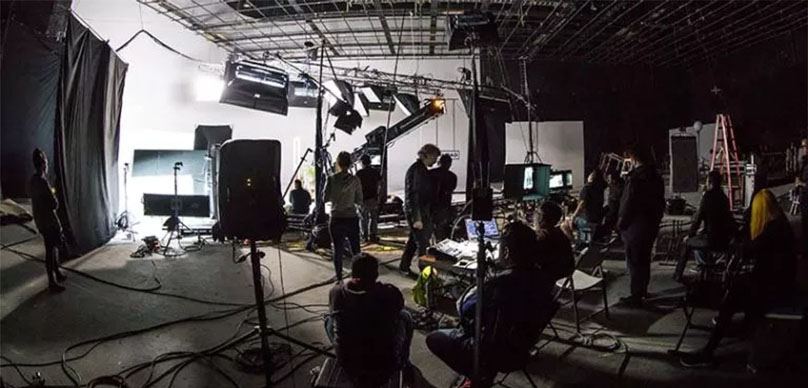
BPS 380: Watch This to Survive on a Film Set with Christine Chen

Christine Chen is an Academy qualified film producer, director and co-author of Get Reelisms. She fell in love with capturing images and telling stories through film the first time she got her hands on an early addition VHS camcorder in 1993. Christine’s love of film turned into a life-long passion for writing and directing.

Christine has a B.A. from Rice University as well as a MBA from the University of Texas McCombs. Christine‘s films have been showcased at festivals such as Hollyshorts, New Orleans Film Festival, and Fantasia Film Festival. Christine’s recent feature, Erzulie had a limited theatrical run in May 2022 and is now available on VOD starting June 14, 2022 through Kamikaze Dogfight Films and Gravitas Ventures.

Enjoy my conversation with Christine Chen.

Right-click here to download the MP3

LINKS

SPONSORS

  1. Bulletproof Script Coverage– Get Your Screenplay Read by Hollywood Professionals
  2. AudibleGet a Free Screenwriting Audiobook

Alex Ferrari 0:34
I'd like to welcome to the show Christine Chen. How you doing Christine?

Christine Chen 0:48
I'm good. Thanks for having me. I really appreciate it.

Alex Ferrari 0:52
Thank you so much for coming on the show. Uh, you know, we've I've done 600 Plus episodes right now at this point this as of this recording, and I've never done a kind of onset Survival Guide for not only pas but specifically for pas and interns and unset interns, but also for crew members and new crew members in different departments that just don't understand the, the carny language, there is a film set. So you guys decided to write a book called Get. Which, by the way, it is as simple beautifully. You know, it's not like it's as you can if you guys can see, it's all pretty pictures and everything. So it's real. Like it's to the point and it's, it's a book that I wish I would have had when I started out. I'm sure you feel

Christine Chen 1:42
That's why we created it. Yeah, I'm glad you pointed that out. That's exactly why we created it. I so I got started in the industry in like 2000. Dude, 2000. And Jesus 1514 around then? Sure. And yeah, I remember going on my first set, and somebody asked me for a stinger. And I had no clue what that was no clue. And nobody tells you this, you just get thrown into the wolves. And the film says super high pace. And you're already stressed out that you want to make a good impression because he finally got onto a film set. And it's almost like get a car. I'm like, I don't know what the eff that is. And so the the only option at that point is to hopefully snag the crew member that has the time and patience to explain it to you. But that you that you have the fear of sounding, just showing that you don't know what you're doing. I mean, not that, you know, you going around, say is not enough to show that you don't know what you're doing. But like to just add insult to that to be that obvious that you don't even know how people talk on set is even worse. So yeah,

Alex Ferrari 2:57
Yeah. We will know, if you don't if you're new on set within three to four minutes of just seeing the winning actually, if they're like, Wow, this is cool. They're brand new, they're brand spanking new. They feel sparkles in their eyes, brand spanking new. And then you've got the grizzled grip that just walks by has been doing it for 25 years. And then like, there you go, that's that. He doesn't care about any movie stars. Anything. He's like, I'm here for a job. You want to push the dollar push the dolly. That's as simple as that. But no, when I first got started out, I was thrown into the woods and I was going to technical film school that actually taught you some of these things. So I went to full sail in Orlando. Where is it very technical film school, at least it was when I was there. And I knew what a stinger was. But there's still this corny language of you know, an apple box and, and you know, a honey wagon and crafty and all of these things that you just don't know you and I take it for granted because we've been on set up a ton of times over the years. But when you're first on set, you're you're nervous as hell. And the thing is anyone listening who gets on set for the first time, they just have to understand that most people, most people on the crew, depending on who you get on and what type of day you get. Understand that you know nothing. And if you're a PA, it's expected you know nothing unless you're like, the 45 year old PA. That's another conversation. Yes. So, because I've met those guys, I'm like, Yeah, me too. Have you ever thought of going into a department? No. Solid. I'm like, Alright, brother, you do you? So how did you so let me ask you the first question, why did you want to get into this insanity? This corny world that is the film business.

Christine Chen 4:42
You know, I when I wake up at like 4am to get on set. I asked myself that every time

Alex Ferrari 4:49
Is this? Why am I doing this?

Christine Chen 4:51
Why? Why did we do this to ourselves? Or I'm on the you know, the fifth overnight. I'm like, why am I doing this again? Got it. And then I, you know, you get through it. And then the next day you wake up and let's say you're, you're off, you're like, Wait, why am I not on set? You know? And so I, it's weird, it's very strange thing and I tell new filmmakers this all the time, you'll know if you belong or you don't, you know, you'll go on your complaint you'll get off me maybe not one day, maybe you give me like two or three days and you if you feel the itch, then you just know, I was in documentary filmmaking actually, before I went on set, I had been a one man band for a while. In undergrad, you have to be a well rounded person. So they say, you know, you have to do a credit and an art class. And so I fell into filmmaking. At that point, I chose the intro to documentary filmmaking course, Rice University, and loved it. I loved the editing part of the telling the story part, everything. And that was I mean to the that was all I knew. And I thought, okay, cool. That was fun hobby. You know, it's, and I'll never deal with filmmaking again. And I, but I should have known that things were going to change after that. Because the proportion of time that I spent on that class, the intro to class was probably like, 70% of my time. And then like the rest of my 10 classes was like the last 10% It'd be add, like partying and all the other stuff to it. And so, but my culture, I'm a first generation Taiwanese American, you don't pursue stuff like filmmaking or art of any sort. You're a doctor and engineer something practical, you know, that will give you a steady nine to five job. And it took me doing one of those jobs, I was a IT consultant after I graduated, that I realized I didn't want to do that. And I was searching for myself as to what I was going to do. And for some reason, landed on being a lawyer. And so you have to take the LSAT, it's to be able to qualify. And to do that there's prep courses and stuff. And I'm terrible at taking tests. So I took one of those courses. And you know, the universe has a way of laughing at you, my LSAT, teacher was a filmmaker. And he was it was in Houston at that time. And he I guess, had a group that was doing the 48 Hour Film Festival thing. He was like, Hey, you want to be a PA? No clue what that was? Because there's aren't pas and intro to documentary film at all. You are a one person you do everything yourself. So Mike Yeah, sure. No clue show up. And they get now I know what I was actually doing. I was the second AC, but it was PA, but they gave me a slate and I was the happiest person ever. I was like, Oh my God, I'm such an important job of using a slate writing around this thing that people wanted to take pictures with, you know, and, and I just, it clicked it just I don't know what happened. They say there's divine intervention. Some people go on to have a light bulb moment. And I definitely would say I had a light bulb moment. I just felt like I belonged and that this crazy world was something that I really just loved. And it really just took that one set. I just, I just remember being fascinated with everyone's job, which is not common for me usually, like, you know, my dad's engineering I asked him one sentence, they told me like five sentences and I like to now after two words, you know, but on on this film set, every single job was fascinating to me. You know, I just I'd never seen a follow focus before I just, you know, stared at that for a very long time. And then, you know, grab water for like, grip, and it was like watching them build stuff and never seen that before and looking at the makeup, you know, and just everything was cool. Now I lucked out because the set that I got on, they actually knew what they were doing. I could have been on a shit show, but it was it was not and I forgot. I'm on a lot of customers a camera too late.

Alex Ferrari 9:25
Go ahead. Okay. I mean, we're talking. We're talking about sets here. No one ever curses on a set. So as much cursing as you do on set or hurt here on set, that's as much as you could do here. Okay, that's a very bad okay. Yeah, so So but let me I mean, you know what, when I was on the set for the first time, too, it is very intoxicating. It's an intoxicating environment if you're in a good set, I mean, I've been on both I've been on bad sets. Oh, yeah. Egos going out of crazy and then this thing's just like you said a should show like, they just don't know what they're doing. They can't make their day. You know, it just, they're just a bunch of monkeys running around, you know, with a camera trying to do something. So I've been on those sets. And then, and then when you walk on a professional set working on a studio project or network project, and you just see these grizzled veterans who worked like a well oiled machine, and what's fascinating is that a lot of times you'll go on the first day, and everyone's on there for the first day. And yeah, there might be a few people who know each other. But generally speaking, everyone's new on that on that set to each other. And they still run like a well oiled machine because they all understand their part in the machine. And it only only problems I ever see on set is when people overstep their, their lane, they want to do this or the DP wants to be the director, the director wants to be the lighting guy

Christine Chen 10:53
Department.

Alex Ferrari 10:53
Yeah, exactly. Or the or did like it's all about the dress. No, it's not. It's all about the it's all about the curtains in the back. No, it's not, dude. We need five hours for the for the curtains, no, no. hours for the curtains, you got five minutes. So let's move along. So you've been on set so many times, and obviously continues to work on sets. What is the biggest, like newbie mistake, you see that that pas make on day one or or onset interns to this? This kind of goes for both?

Christine Chen 11:27
Sure, I think for me is people go in feeling entitled. And when I say entitled, it means like, I think people have a from the from the out the outside world. You see the red carpets, you see the you know, Entertainment Tonight, and you see the people dressed up. And I think people going in and thinking like, oh, because I'm a director, you know, or an aspiring director, I'm going to be able to jump, you know, jump positions and just start letting my opinion matters, you know, and sure, to a certain extent, but like, I think people forgetting that all the people that are on set started off and work their way up to where they are, and earned the right to be there. And I and I think newbie mistake is thinking that things are below them. Like, oh, I don't need to get water for people or take the trash. It's like, that's labor that's below me. You know, and, and I think no matter how veteran you are on set, there's you will realize, I feel like it's if you are a good crew member, you will always there will never be a job that is below you. At any point in your career, you know, because you understand the value that each position each job entails and how that affects the overall success of the film. And that's the biggest thing I see for new starry eyed pas is that they come in thinking, Oh, I went to college, and I shouldn't need to go run errands and pick up dog poop and all this other, which that happens. And that's the problem. And the thing is that we veterans can smell that and see that instantly. You know? Yeah, I mean, like we you said within today, it's so funny now being on the other side. When you're brand new, you're like, Oh, nobody can tell I'm brand new, I could just like pretend that no, we can tell within like, like you said two to three minutes. Now, we can also tell within two to three minutes if you're good or not. And it's attitude. It doesn't have to do with skill. Because getting water is not a skill. I mean, it's not like a thing that you have to learn. Everybody can do it, but there's like an attitude that comes with it for people who are good and who are not. And you can pick it out like within, you know, you probably say well, within five minutes. I'm like, Alright, I can count on these four pas out of these 20 You know, like it's like, yeah,

Alex Ferrari 14:15
Right, because there's gonna be the four pas who are just hustling left at anytime you turn around, they're there. Waiting, waiting.

Christine Chen 14:24
What can I do? Do you mean anything?

Alex Ferrari 14:27
Yeah. And then the other ones are sitting around, you know, back I found? Yeah, Gabby found her sitting around crafty. Talking about how the director is doing the job wrong. And he they can do better.

Christine Chen 14:37
Yeah. Yeah.

Alex Ferrari 14:39
I've seen it so often. And it's so that's why I love you know, some of these some of these older grizzy grizzled veterans, the DPS the, you know, the, the key grips, yeah, those departments. You know, I just throw them to the wolves you know if I see that on set I'll be like, Hey, that guy, go talk to that guy, do good. Go do your thing, go do your thing, and then just start and they just start because it's God, it's, it's such a weird thing on set culture because it is, it is a carny world. And I actually made a movie about carne. So I have a really good understanding of the carny world and Carnegie's and what they do and how they treat each other. And it's the secret language that you talk, you know, that we could talk to each other. And they'll put you through the grinder until you prove yourself. Yeah, you belong there. Respect. Yeah. And they're going to beat you up. And in a, in a almost, almost rite of passage kind of way, not in a practical way. Not in a hopefully not in a derogatory way, though, I find I've had that happen to me on set as well, things sets have changed a little bit, hopefully, sure, since my day, but it's because it's so tough. Being on set. I mean, I mean, when I worked on set, as a PA, I figured out really quickly, probably after a year of interning and being on stages, and, you know, I went I was working at Universal Studios, I was working at Disney behind the scenes and productions and things like that. And like you said, when I wake up at three o'clock in the morning, I'm going out there somewhere sitting in the mud, and while it's raining, while I'm trying to wave people into where they're parking, and I'm like, this sucks. Yeah. I don't I you know what, I don't think this is what I want to do. I want to be on set, but this is not what I wanted. So I learned I just jumped from that to post real quick and, oh, no air conditioning, and carpal tunnel. I'll deal with that. And I jumped for that. And then when I started to become a director, and then started, you know, as as a post guy started to go on set, and then started to be directing and doing commercials and things like that. It seemed like okay, this is where I want to be. But things that I learned along the way was that, at a certain point in my career, I felt the ego felt that it was above doing some menial stuff. And the crew picks it up. As the director of the coop, the crew picks it up. So now anytime I'm ever on set, and for the last 10, probably 10 plus years, I'm picking up garbage at the end of the day. I don't care you know, I'll I'll grab stuff. I'll pick stuff up. And then other like some of the older What are you doing, sir? Sir? What do you like it? Okay, guys, let's we all gotta move it along. So that's kind of like, Why are you picking that up? You're the director. I'm like, No, it's okay. If it's in the middle of the day. No, that's I have to do a job short. At the end of the day, we've wrapped. Let me help out. Yeah, let me help out. And I never eat first. I always try to let I always try to let the crew go before me. So they see that I'm like, No, you guys are busting your balls. You know, go I want to help. But these are the little things and no one tells you as a as a filmmaker, or as a crew person. There's these etiquettes these kind of hidden languages. It's almost prison yard like

Christine Chen 18:03
Yeah, totally. Yeah, I mean, I often say oh, we're like just glorified louvers. And we one thing from one side to the other side, and we do it again. Yeah, no, it's it's there's nothing super sure. After the product is all done and stuff like that. You don't care about the journey. Yeah, sure. It can be it can be it glamorous, but like it really isn't. You know, and

Alex Ferrari 18:25
It is for some men it is for actors. I mean, the act and sometimes it's not even that glamorous for the actors, because it looks glamorous from the outside. But when they're there on a on a on the 14th hour freezing on a green screen hung by cables. Yeah. And they're just like, I gotta be super now. Like, what am I doing here? Like it's, it's, it's, it's worse. There's harder. There's harder work in the world.

Christine Chen 18:48
Yes, there is. We're blessed. We're very blessed.

Alex Ferrari 18:51
There's no question but it is still not what everyone expects it to be. So it's really fascinating that way. Now the one thing I always love and I love what you wrote about in your book was walkie talkie etiquette. Now I I think when I was coming up there, yeah, of course there was walkie talkies. And I knew a little bit of it because I used to work on some some shows for Nickelodeon. So it was never the key pa i was i was always you know, office PA or or on set pa but it wasn't the key pa because again, not where I wanted to go down that road. But can you talk a little bit about that is a completely secret language and even to this day, I understand some of it but as a director, it's not something I understand completely. So can you express and explain to people what walkie talkie etiquette is?

Christine Chen 19:42
Sure. So that's a big thing. When you first go on it, you're not going to see it for a tiny, tiny Ciske small sets won't be able to afford walkie talkie. So we do first scan on set that has walkie talkies, that can be very jarring. I like what is this thing? At first it's cool and And then at the end of the day, you're like, Please throw this in the trash. Because you, you have this purse, you have several people constantly talking in your head. And for people who don't know, the walkie talkies are a way for things to be moving behind the scenes while set things are being shot. And you do it very quietly, because everybody has an earpiece in the ear and they can't hear, you know, it's not over walkie hopefully, and you can't hear things are happening because it's all in your head on over the walkie and so there's just a specific way that you answer respond. And it's very military, honestly, I've heard it is. It's it's I believe that's where it really came from. But a lot of it is the way I can describe it is like if you were blind, like how would you know somebody heard your message, understood your message and is working on your message, right? Because and you're delivering this to, you know, however big your crew is, because everybody is on the walkie, you know, in certain departments on their own channels, and, and whatever most for the most part, people were on channel one for production. And so you just have to get really good at being specific, and to keep the traffic on the walkie talkie as minimal as possible as well. So being specific, concise, and so you just, it's a way of efficient communication. And these shorthand ways of talking, this etiquette allows for this efficiency of talking on the radio. So it's hard, it's a lot harder said than done. Because there will be something that happens, you know, I don't know, the honey wagon is stuck, you know, and in the middle of the set or something and you got a new pa who's like freaking out about it because it's his or her responsibility to get this honey wagon out of the middle of the scene and everybody's yelling at them because it's, you know, taking up precious time from shooting, and they're describing this over the walkie and no but and somebody who is nowhere near that said is like what the eff is going on, you know, and you're just like, take it to, to take it to to, you know, put go go on a different channel. But like, you just don't, until you've gone through the wringer and you've experienced that or you've, you've been on the receiving end. To have perspective, that's when you realize why this etiquette is so important. But it's things like when you have when you're asking for a department for something, you know, wardro Can you insert what you need, Christine for you know, and then the other receiving in having to say, like copy, so they know that I heard the message, you know, type thing. It's just it's like playing telephone, because it can't see anybody. That's the problem. You know, sometimes you were all in different parts of the set. I think that's the that's just to give context, we are all in different parts of the set, that this could be within driving distance far away. This could be deep in the boonies and in because let's say you're doing a Wi Fi and you can't see people on set in the scene. So they're all hiding, like far far away. Or somebody who is in a truck who has no clue is in a fishbowl has no clue what's going on and said you have to communicate to all of these people in an efficient way. Something important or not, you know, so. So there's just a lot of shorthand for that. And it is extremely jarring when you have never had a walkie talkie and you get on set and you just want to like I don't know, just talk on it like a regular person, you know, like a telephone but it's not Yeah. So So yeah, I have specific, you know, lingo that's on there and as long as you can, you know, kind of get used to that you should be able to survive being a walkabout Oh, this is like practice you know?

Alex Ferrari 24:29
Yeah, exactly. And it's a new language and it's a protocols and how you do things and you're learn pretty quick that's the thing oh yeah real quick you the real the real quick if unless you just want to get yelled at constantly you know so you know for like Where's where's the where's actor? Where's actor

Christine Chen 24:46
Yeah, talent trial. Yeah, where is Yeah,

Alex Ferrari 24:48
Walking back to on our way a minute away. minute away.

Christine Chen 24:55
Eta eta of talent. Yeah, yeah, exactly.

Alex Ferrari 24:58
Things like that. So it's It's talent will come out of his dressing room to take everybody switches the two. Everyone's like what's going on? Like it's Yeah, yeah. Problem. So now one thing I have been asked this myself and I don't have an answer for maybe you'd have an answer for. There is so many secret names code names for basic things. Lauren said, Stinger is an extension cord baby. A baby. Yeah, baby, Apple, cheese plate, brick. All of these things. Why not just say, I need I need an extension cord. And I know that's too. It's a little longer stingers faster. Yes. That's why these things were and then

Christine Chen 25:52
I don't think so I think it just I think it's just a fast way to decipher something without having to because the thing is, there's like different sizes of certain pieces of equipment. There are different brands of certain pieces of equipment and stuff like that. And sometimes if you just give it like a pet name, that pet name is so different from everything else. It's just easy to identify it. You know, it's it's so like, I heard and it changes all the time by region by location, and that's the same thing. But yeah, like I heard taco cart, you know, that was another thing. Okay, grab the taco cart. But I think that's a Texas thing. You know,

Alex Ferrari 26:37
There is there yeah, there is a look, there's all sorts of new ones I heard the other day. God, I hope they don't bring in spinning wheels of death. For lunch. Have you heard of a spinning wheel up?

Christine Chen 26:49
I haven't heard of spinning spinning wheels.

Alex Ferrari 26:50
It's gonna go with that pizza. Pizza. So spinning. Spinning wheels a day all the peas like God, I hope they don't bring in spinning wheels of death have launched Jesus Christ. I'm like, What's the spinning wheel of death? And they're like, Oh, it's this and and, and there's one. It's a mean one. Because he's now passed. Oh, because this actor passed and they and I just remember I was on set. No, no, it wasn't I wasn't the Gary Coleman. It was a Mickey Rooney. Oh, have you know what? I'm you know what a Mickey Rooney is? Yes. Give me just a little creep. No, it's mean. But these are the things you're just like, Wow, man. Like how, like I hear like, give me a Mickey Rooney there. And then the grip the key grips pushing the dolly. And the DP is like, give me a Mickey Rooney. I'm like, I'm sorry. What's a Mickey Rooney is like a little creepy. I'm like, wow, okay. So it's just this carny prison led to military that is brutal.

Christine Chen 27:52
Extremely brutal are a man maker. I heard that one. Oh, I haven't heard him. Me. Oh, we have to have apple box and someone to stand on it. Oh, yeah. So wrong.

Alex Ferrari 28:06
I've heard that as a Tom Cruise as well. Give me a Tom Cruise. Just give them a little extra height.

Christine Chen 28:12
Height. Yeah.

Alex Ferrari 28:15
It's brutal. It's brutal. It's look, it's not for the faint of heart being on set. That's that's

Christine Chen 28:22
It's very not peasy.

Alex Ferrari 28:24
No, it isn't. And that was one thing when I was when I was on set my wife who's out of the business completely. She doesn't know anything about our business. Yeah, she would walk on set while I was directing. She's like, how, how is this? Allowed? How's everyone not being sued left and right. For that what's happening being said, and this is all before me too. Before all that stuff. And I was just I just said like, it's just kind of the culture, it was the culture and it is, look, to be honest, it is sometimes a toxic culture. There's no question on set is a toxic culture. And for for females even worse. question like, I mean, I remember I was on I was on a production, I was directing. And I saw a female grip for the first time ever. And she was wonderful. By the way, she busted her ass and she was great. And I'm like, what does she have to put up with? Oh, from the grip department to hang with the grid? Yeah, nine in 2001. Can you? You I'm saying? Yeah. And that'd be so it's but it's, it's it is, you know, there's a lot of male testosterone running on set generally. So, yes, it has changed a bit and I think it has changed for the better. Yes. But, you know, I've talked to female DPS I hadn't seen I honestly didn't see a female DP until maybe like, eight, nine years ago. Like on Saturday. Yeah, it was just not a thing that you saw very often. But now it's becoming more prevalent and females are becoming you know, and people of color and all this stuff are all All coming on set, which is great. But it can be a toxic environment and you as a as a young PA or young intern coming in have to be aware of that. But understand that there is there's a little you got to get a little bit of a thick skin.

Christine Chen 30:15
Yeah, definitely. Would you agree? Yes, I completely agree. I, especially when you move up the ranks to when you typically get to bigger budgets and stuff, they are run by more older film veterans, and they have, they're just kind of stuck in the past. And so you're dealing with it more and more so than, like, if you're on a student project, everybody's like, woke and stuff, you know, but yeah, so So you're dealing with that a lot. And, and it's, it can be extremely frustrating. But you also have to realize that, in order for change to happen, you have to educate, so it's a lot of taking, it is harder to take the time to teach, it's easier to keep the same, doing the same thing or yell at somebody or, or whatever, but it's harder to stop someone and say, You shouldn't say that, or like I don't like, you know, that's not right to do. So it's it's, it's a slow changing process, but it is it is changing. And it's unfortunately, a lot of this is top down, you know, and and until there's enough time of cycling, to get new people up to the top to trickle down with new ways of thinking and stuff like that. We're going to run into that kind of thinking, you know, it's just it's, it's, it's not, I wouldn't say it's right, it's just a it's a product of the environment and the time period, you know, but yeah, for sure,

Alex Ferrari 31:47
Without question. And there's also another thing that is a culture that happens on set, especially if it's depends on who's running the set as far as either first ad director, DPS as well. But there's, you know, it can be stressful. It's extremely stressful. The SEC can be a little stressful. And every once in a while, you'll get a veteran who's just really comfortable with themselves, who will play practical jokes on set to kind of release the tension and my favorite is my DT a friend, a good friend of mine, DP, old veteran guy, he would always have a broken lens in his kit. And first AC or second AC would come up and he would just throw it at him. It's like a Zeiss, you know, like, Oh my god. Throw it at him. And I can hear put this on the camera and throw it right at him in front of everybody. And oh my god, and you just see this guy's face. He's just white just drained like blood. And, and he falls in the cracks. And then he would play it up. He's like, how could you drop you've cracked my lens. That's a $50,000 lens. What if, and everyone's just trying to hold it in. And before the kid has an absolute heart attack, they let them they let it go. So it's almost like a coming of age kind of almost mafia Aska like I come over here. It's initiation like You're good now kid come on. And he used to also have an old this is when we used to shoot film, of film reel with exposed film.

Christine Chen 33:20
Ohh no

Alex Ferrari 33:21
Throw the reel at the kid and the film would come all over the place and they were just like, oh my god, that was today's dailies. Like oh, that people would just think these little Hartman's sometimes you'll see that in the front of the whole set, but within departments there's like little not say hazing, but just fun, you know things to kind

Christine Chen 33:43
Yeah, I thought you were gonna say t stop. That's a pause. But more they send the second AC to go find T stops yeah, I've had I've seen that happen in the second AC like looking at the entire day for tea stops. I can't find it. Yeah,

Alex Ferrari 33:58
I've been looking for tea stops I've called everywhere no one has that I have what I had once I was when I was in school, some old grisly post online editor like, you know, TV guy, and some some producer she came on in like a just a battle ram. And was Boston's everyone's just being a complete ass. And I was there as an intern watching this and, and the editor goes, Ah, God, and she was looking at footage from the day before, like, Oh, God, what happened? She's like, what happened? What happened? She's like, you know, if they would have done double double drop frame, it would have been better. So it would have just really steadied up the image quality. So you need double double drop frame timecode and she's like, okay, so she went on the next day to set and just rip every wire we shooting double double. I want my image to be he was like, everyone was just like the Did you talk to Henry, because everyone knew everyone knew he did it? Because they're all I think she actually got in trouble. But he didn't care. He had job security. But these are the kinds of things that, you know, they're so high strung pas and intern sometimes that you got to kind of loosen them up a little bit, because and also, by the way, when you're that high strung, that's when accidents happen. And that's when mistakes happen. And you got to lose them. loosen them up. Just a bit. Just a little bit. Now, you've been on set for a while now. Yeah, it was the worst day on set for you. And how did you overcome it?

Christine Chen 35:40
Um, I would say, one of the worst days was this happened not too long ago, about two years ago, I think tears. When was snow vid in Austin, Texas. The snow Apocalypse that happened the I've only been hearing so

Alex Ferrari 35:57
I've only okay.

Christine Chen 35:58
I think this was two years ago. And Austin had a freak snowstorm. And this was I mean, I think this was

Alex Ferrari 36:08
Oh, it'd be, it'd be January, February, if

Christine Chen 36:11
Yeah that was what it was. It was January. Yeah, February. And the producers were refusing to shut down the set. Because Because where we were currently, there was no snow storm yet. There was talk of it. And everywhere else in Texas, there were pile ups and I scenario,

Alex Ferrari 36:33
One where they froze, everything froze out. Yeah, the power grid went down.

Christine Chen 36:38
Yeah, power grid went down and stuff like that was a couple years ago. Yeah, yeah. And then it were in the middle of it in a hit. And I just remembered, it was both the worst, but also, there's elements of it, that like, were great, too. At that point, the, I think the crew knew that. Like, it was beyond my control, even though I tried to call it several times, but it you know, ultimately, is the producers called SIL. And every crew member gave me an article of clothing, because we were outside and it was really, really cold. And there was snow and it was blizzarding and everything. And like, we didn't have enough people were moving trucks and it was icy and everything. And luckily, he got called later by the producers, but it was a constant, like just communicating with the crew and being like, Hey, I'm sorry, I want to call it this is the situation like they hopefully will call it you know, soon type thing and just I think it sucked because I just felt powerless in that situation to ensure the safety you know, of my crew and the way I dealt with it was just constantly talking to the crew. Giving them like a play by play of what's going on from top down. I kind of did a little hint hint, like if you want to leave I'm not going to stop you type thing. You know, but I think your your safety is poor I think it's important and you know, please do what you think is the most important type thing. But I am under this is what's happening from top down type thing and and to be put in that situation really sought because it's people safety and when you have no power and you have no power to to ensure I can say I walk you know, but like that also is not good for the crew either, you know, and then they don't have the one person that's vouching for them you know there so it was a lot of like, Hey, this is what's going on. This is the play by play if you were to walk I'm not going to stop you from it and I support it type thing and and hopefully they're gonna call they eventually did call it but it but I think despite that really shitty moment feeling you know, having the crew each food I tell you each department gave me an article clothing so that I wouldn't like freeze to death. But like somebody gave me a hat someone gave me you know, a jacket, a jacket that was happened to be in their car. So one day I looked like this big ass like marshmallow with like 50 layers of clothing because we were outside in the snow was blowing at us. And we were not prepared. We were not none of us. Yeah, not prepared. And then then to have later on the director who doesn't understand you know that we were doing our best to make it happen. Like, essentially blame you for a snowstorm. arm in that everything was a shit show. But to then to have Karoubi like to stand behind you and say, yeah, it is a shit show because nobody that should have been called, you know, was like nice to, to have that support but like that it's just that was a terrible situation to be in when when people's safety isn't being taken into concern and your whole job as an ad is to ensure the livelihood and safety of your crew and you're powerless to do so I think that that is a terrible, terrible place to be at. Yeah,

Alex Ferrari 40:38
Yeah, that is that's not a good place, which actually leads me into my next question. Are there signs that interns, young interns and pas and other crew members can actually see when a production is going down quickly? Like this, this thing's, hey, today's not hey, well, what? Well, we're gonna work 18 hours today and not get paid? Like, what are those signs? Yeah, those little things that you just can start? Yeah. I know, you and I could smell it.

Christine Chen 41:11
Yeah. Morale is a big indicator, in my opinion. Sure, there's some people who are crankier than other people and tolerance is lower. But I think when you start to have when departments start to talk amongst each other, and usually, yeah, and you can feel an overall dissatisfaction. That's usually a problem. Or I feel like if the culture keeps changing a lot, that's usually not a good indicator, either. When they're when there's a lot of unnecessary. People just yell, that's also just morale, when people are angry, and just, you know, yell at each other. Yeah, I think those are pretty big indicators as well. Or when you have locations or people who are separate from the production show up randomly, and they're not happy. That's usually not a good indicator, either, because that means something wasn't cleared somehow, and things are about to go. Crazy.

Alex Ferrari 42:34
So let me ask you this. So because the director obviously is, should be the leader of the ship, the leader of the captain of the ship, we're moving things forward. Everybody moves around what the director? Is he or she's ideas of what's going going on?

Christine Chen 42:50
Yes. In theory, in theory theory.

Alex Ferrari 42:53
In theory, that's, that's very loose flair, fluid, very fluid, if you will. But generally speaking, and when you're on a Ridley Scott set, yes. Ridley runs the show, let's just throw that out there. Simple as that. Right. So when you have that situation, what are signs that you don't have a good leader on the set? What are things that you've seen, because I'm, I'm assuming you've seen one or two bad directors in your day, you have not only hurt the production, but taken out, you know, just not understand how the system works that they have to make their day. Yeah, we can't spend five hours on the Scorsese shot. Because we're not Scorsese. And we don't have the budget that we have. So we like how all these kinds of things I'm imagining, you know, as an ad, you've seen directors come up with shot lists, which is, by the way, my favorite thing to do with when I work with an ad for the first time, show up there, 150 shots, 150 shots, and I just hand it to them. And they're just like, No, no, no, that you see, just see why. Because it depends on that also tells me what kind of ad it is. If the ad is going to come up to me and go, so we got to talk about this man. There's just no effing way. We're gonna and I'm like, that's good. Or, you know, we're gonna give it a shot. I'm like, Okay, no, which way which kind of a deed and I want the first one. I want the one that says, there's no effing way. We're gonna do this. But let's figure it out. And let's figure out what what, and I go, don't worry. I always do that. Let's see how fast we can move. I know, I'll probably only end up with 15 or 20 of those shots. Yeah. And then once I say that, they're like, Okay, it's not nuts. But but I'm assuming you've had that shot list or that storyboard. So how do you how do you see what are those things about? What are the signs in a director that you can see that they just not? They're in over their head?

Christine Chen 44:46
Ah, I think when the crew starts to lose respect for the director and how I see it is when it goes from, let's see what the director wants to what do you want and I'm Whoa, wait, I'm not the director, I'm the ad, when they start to look at for new leader, that's a problem. So which happens a lot?

Alex Ferrari 45:09
And that could be the first ad or the DP. Yes. Or the generally the two that they go to.

Christine Chen 45:13
Yeah, exactly. And so once i And Mike, why are the numbers of questions directed at me have increased significantly, as they're like, Ah, okay. Or they start questioning? Why a lot. Instead of being like, okay, that's what they want, let's do this, or like, or the IRA, like, oh, they want this, okay, you know, type thing. That's, yeah, sigh conversations, whatever gets talked on on channel two. When you, you can really quickly pick out when people have stopped, it's, or when people are trying to leave as soon as possible after a set has wrapped or hasn't wrapped, or they're planning on which bar to go to afterwards. And that is the only thing keeping them from walking off the set. That's when you realize that the director has lost the crew. But yeah, it's, I think, it's when concerns that are being bypassed, because I'm the director, and not, you, they considered get bypassed a certain number of times, that's when you really lose the crew as well, you know, like, hey, we can't do this, because, and then like, whatever, like I'm the director, make it happen, you know, type thing, that's if you do this so many times, like, you're going to lose the crew, because that is a quick indicator that you have no understanding of why their job is important, or why their job takes a certain amount of time. And why you're glossing over it, you know, I see this happen a lot with specific positions. positions for is that usually are like makeup is a big one. Art, things like that it doesn't happen as much with camera, or even sound because I think it's that it's when people, especially first time directors, when they go on to strike the there's a very easy understanding of like, hey, if we don't have the right camera set up, you're not going to get your shot, right. But the other positions are harder to understand the importance of unless you have done a few films or or, or you've worked on a set enough to understand the importance of, and I think that's the issue is that new directors who haven't come up the ranks or worked in a position, it's perspective, and when you lack perspective, and don't respect all the positions on set, you will lose your crew, and you will lose your crew, and they will start to look for a new leader. And that leader is usually the DP or the ad. So and so when I start to get Hey, what do you think we should do about this? Or actors? Oh, man, if talent is coming to you? That's a bad thing. Yeah. Yeah. That is very bad, like crew. Okay, because usually the he has interface with the crew so that, you know, there's a certain extent that that's understandable. But I think when the talent, no longer goes to the director, and goes to you the ad, that is a big indicator that things are going downhill fast. Yeah, because the tablet should never really need to talk to the ad, the the whole job of a director is to help you talk to the tablet. So at the top, so I revise, put that first when the talent is talking to the end, or the DIA, or the TP talking to any other crew member about their performance or what they're supposed to do that it's not the director, jump ship. Right.

Alex Ferrari 49:14
Another thing is, too, that I think filmmakers listening don't understand is the importance of feeding the crew and feeding them well. And taking care of them. And having surprise, you know, in between meals, like hey, you know, we didn't we didn't we didn't budget for a full dinner, but we're going to do a walking dinner, you know, or something like that, where you know, they go out and get some burritos or something to kind of hold them over until they can get to the bar is something but that's something that it's almost a second thought to young filmmakers. So like oh yeah, just get a bunch of pizzas and like eat that. Pizzas kill production. It slows everything down. Spinning Wheel it slows it down everyone. It's stuffed on cheese and bread and things like With that I remember an old remember dove Simmons. He ran a course called the two day film school. And he was like this. Just grizzled. Roger Corman? UPM. And he Oh my god, the stories he would say. And he's like, I don't have a lot of sugary stuff on my crafty table, because it will cause sugar rushes. And if it causes sugar rushes if there's tension, fights will break out. These are little things that you just like I was my mind got blown. When I heard these things coming up. I was like, wow, I never thought about he goes, and God forbid, if you bring pizza onto a set God, like, like, yeah, am I wrong?

Christine Chen 50:42
No, you're not. And if you're been on set a while, and you're really good at your job, you can start these are the details you notice you plan for, like I, I can tell like from lunch, I'm like, Okay, we had this, therefore, I need to build an extra hour. Before we're gonna start getting hot. We're gonna start moving like I like, these are the little details or you're like, Oh, we ate that. Okay, well, the bathroom situation is going to be a whole thing. Yeah. So this is like redoes. Yeah. Ah, you start noticing all these little details.

Alex Ferrari 51:17
I had a friend of mine on, on a, he was on the set of 24. He was a production designer and 24. And I went on, just to visit him. And we were working on a project together. And I just went on to visit the set. And when you walk on set I just saw crafty was the most insane crafty I've ever seen in my life. And then I stayed for lunch, and there's lobster tail and steak, and I'm like, What is? What is this? Like? I live in the indie world. And, and it was like, because at that level, you've got to that's just that's just the way businesses run.

Christine Chen 51:58
It's nuts Yeah, I remember the first unions that I got on, it was in Texas 2016. And I've only done indies before that. And I Yeah, you look at the craft services table, and you're like, Wow, this is the entire budget of my film. Right here sitting sitting here as Yes, yeah. Yeah.

Alex Ferrari 52:20
Can you imagine a Marvel set? I can only imagine a Marvel set like a quarter million dollar movie. I haven't been on a $200 million movie on either, you know, just you imagine the amount of chest? Ah, you know, it's it's, I can't even I can't even imagine. Now there's one thing that and this is one thing that you can get really in trouble for as a PA and an intern. And it's something that no one talks to you about I line by line if Christian Bale's situation with Shane Holbert taught us anything. And I don't think that conversation was so much about the eyeline, I think it was things going on. And then by the way, if you guys don't know what I'm talking about just Google Christian Bale on set. It's genius. Especially the remixes. But and by the way, Christian Bale had been on set since he was like, seven, five so he'd been it's not like he's new to set. Can you explain to everybody what an eyeline is? And how to avoid getting yelled at by talent, which is the worst thing other than being yelled at by the director or any of the other crew members? Like if you're being yelled at by talent? That's bad. Public, you pretty much you almost gone guarantee. Yeah.

Christine Chen 53:37
So an eyeline is like, whenever an actor is acting, there's a specific area where no matter where you're standing in that spot eyeline it's hard for the actor to not to they will definitely see you. And that's extremely distracting. So we are always trying to crew and are in it. If you don't have enough, you just know to as you know, Stan, and us more than usually where the video villages or something like that are in the shadows. Because if you think about if you're trying to, if you've ever tried to focus on anything, and you're trying to be in a difficult emotional spot, and you can't because a fly is flying around you that's what it feels like when somebody is standing in someone's eyeline. And so it's kind of a it's a frame of vision, where you will see that person if you're in that frame of vision, that's the eyeline and so your mate and you will accidentally sin eyeline and that's when you'll see people look at their look at the ground, be a tree, you know, like, try to not move around so that you're not Being a distraction to the performance and it's very easy to do. And you know, the best way to do it is in general, wherever the camera is, and where the action is being directed if you're kind of in that besides the director and the DP and stuff like that, you try to stay away from that area and and courtesy of asking somebody you know the talent aids or we are this is good spot or whatever. But if you can see the actor and you can make eye contact with that actor, you are in their eyeline move. Yeah, so if there that's the best way if you can watch the scene and you realize, oh, shit, the actor staring directly at me, you are in their eyeline if you can make eye contact with anybody who's acting that is within their eyeline. So

Alex Ferrari 55:59
And then also, the other part kind of tag on to that is being in the shot. Many times, have you seen the first day PA or intern has no clue about anything on a set, and they're just literally sitting in the back in the middle of the shot. When the director yells action, and you could just see them like this, like, I kind of could I kind of could see for this shot. Because you're in it. Like, and you hear the DP or camera or the director or the first ad hoc, get that guy out of the shot like you just like and you just start freaking out. Oh god, I've seen that happen too many times. Even if I see it on my site before we got to just get that guy out of the shop. If I'm in a great mood if I'm not in a bet if I'm if it's a rough day, I'm going to get my shots. Yeah. So please just be aware of your surroundings. Be aware of your surroundings. Yeah. And also, that's a date, that's a safety thing. Because some crazy stuff could be happening, the stunts could be going on, a crane could be coming down, please be aware of your surroundings and what's going on on set. And I know that's the job of a first ad to kind of let everybody in especially if there's a weapon on set, or there's a stunt going on on set. You know, you've got everybody,

Christine Chen 57:20
You bring it up a good point, I think the thing is that a film is a collaborative thing. And it's up to everyone to kind of do their part and be hyper aware. So with like safety, anything with safety, I always tell everyone on set like, Hey, I will be mad at you. If you double check my triple check whatever I'm talking about when it comes to safety, if a crew comes up and is like, hey, could we do the gun safety? Again? Could you shout out again that the street is locked or or that the stream is live or something like that? I'm not going to sure it under stressful situations I've like like a peer stressed about it. But like I would rather somebody triple double check my work when it comes to anything that has to do with safety. And yeah, no, I but I think collectively as a group, that's the only way for everybody to stay safe is if we kind of have like a checks and balance system. You know, there is a hierarchy. But people make mistakes, especially, we throw them under that much stress and limited time and limited resources and stuff like that. I think it's up to the tire team to look out for each other. So so everybody should be as hyper aware as possible. But it is so easy to become myopic, especially with what you're focused on undoing. And so yeah, no, it's I just think any any and this has nothing to do with the hierarchy. I think anybody should be looking out for their fellow man woman. Yes, it, you know,

Alex Ferrari 59:11
No question and has to be brought. Yeah, there's, you know, obviously, there's, you know, some some tragedies have happened in recent years about about onset safety and issues that that are horrible, and it happens, you know, stunts go wrong things happen. I think it's really about safety and trying to, like you say everybody's responsibility to say if see something, say something,

Christine Chen 59:33
Say something. Yeah, say something, say anything. Yeah. It's it can be hard to do in any group setting group think is a thing. So it'd be like, Oh, well, somebody else will bring this up or so you know, but I don't think you should, nobody should ever assume that, you know, type thing. So it's better to like, be annoying and have five people bring it up and like nobody bring up and then something happens. You know, some

Alex Ferrari 1:00:00
Agreed 100% Now I think it's appropriate to start wrapping up our conversation. What is an abbey singer and a martini shots? Oh? Because it's again, Carney language nobody? Anybody any normies out there with like what the abbey singer and Martin. So can we take what an AVI singer is and what a martini shows for everybody.

Christine Chen 1:00:23
So Abby singer is the second to last setup of the day. And people are usually very excited, because it's an indicator that we will almost go home. Sometimes it can be, you know, misnomer because Sure, maybe that second last setup takes forever. And you might do like 10 takes of it. But it is just a nice morale booster knowing that this is the second to last shot. And the reason why it's called Abbey singers, Abbey singer was actually a ad, I believe. And he was famous for saying, all right, that was great. But then you say, but let's do it again, type thing. So and one more, let's do one more. And so they coined the term Abbey singer after him. Because anytime it felt like they're about to finish, another thing was added right before it so it was before B singer and the Martini. Depending on where you are, some people in Texas have tried to make it the margarita or the Texas martini or whatever. But it's the last setup of the day, the martini and it's important in its when you've been on set, you hear it called out. I'm always trying to anticipate the abbey singer and the Martini, because these are indicators of letting departments know they can start to slowly wrap up stuff because, you know, anytime you've been anywhere you kind of like move in and you spread out and you your things get bigger and bigger and bigger spread out in space and, and having some extra time to slowly pack up your stuff and really make the exit of off the set that much faster and more efficient. So I'm always in veteran crew members will get annoyed if you don't call them because call the Abby singer or their Martini because they're like I could have been, you know, wrapping stuff. And now I have to after wrap spent an extra 30 minutes I could have been doing an in between setups, you know,

Alex Ferrari 1:02:35
My team, am I having my teeth, but things that are that other setup breaking? Down? Right? Yeah, I suppose everyone's sitting around waiting for it just in case. Now I'm gonna ask you a few questions as all of my guests, what advice would you give a filmmaker trying to break into the business today?

Christine Chen 1:02:53
And get advice would be to always think about what value you can give somebody before you ask for value from somebody else. So in any space and time, I think if as long as you can be invaluable to somebody and helping them on their set. When you're first starting off, donating your time, that type of thing that pays off, it may not pay off immediately. But you never know, five years from now, that pa that you were nice to that you helped out could be that could be your ticket to another job. And that's not why you do that, you know, so don't mistake and oh, let's be nice to people so that, you know, five years could be off. Yeah, no, I think that's just a principle in life is just like people will always know, after set is done. And it's crazy. And you've all gone through war together. People always remember how you made them feel. And if you can leave a lasting impression of, hey, when I dealt with this one person, they always made my day better, or help was helpful or something you will do. Great going down line. So that's that's if you want to break in. I, as a veteran, I will hire people who make my life easier or just easier doesn't need necessarily mean a skill set user can just be like, Hey, you made sure I had water the whole day and I you know, you made sure that I didn't I knew where my keys were the whole day that you know if I will hire that person over somebody who's had five or 10 years of experience that you know doesn't who gives me an attitude or whatever. And that's the quickest way to get roped in to get to be in with with people is if you if I can feel like I can you have my back. right no matter what. And so Oh, yes, long story is if you can approach everybody as a make your life easier? How can I just brighten up your day a little bit? I think you'll do just fine. So

Alex Ferrari 1:05:18
What is the lesson that took you the longest to learn whether in the film business or in life?

Christine Chen 1:05:23
That it's okay to walk away. I think this is an I still struggle with this, I think you will get to a point where you love your career so much, and you love your job so much, you will want to give everything to it 100 To, to a detriment to yourself. And you have to realize that if you aren't taking care of yourself, you're going to be useless to everybody. So that means burning out, that means giving more time and over committing and stuff like that, or doing projects with people who don't respect you as a person, or as for your time, or your safety or your well being. And it is okay, to set boundaries by walking away. And to know that your career is not going to go down the waist, you know, it's not, it's not going to be over. Just because you wouldn't stand for the way you were being treated a certain way on set, and you decide to leave. And this is very, very, very hard to do. Because when you're on set, especially if you're a position like it being an ad or whatever, you're responsible for many people, it's not just yourself. And so when you leave, it feels like you are letting down, not just yourself, but everybody else that depends on you. But in the end much though, we love our job, and hopefully it is your passion, it is a job. And your safety, livelihood and your peace of mind and mental health is not worth sticking out just a bit more, you know, because that could have long lasting effects, you know, for your ability to work later. So that's, I still I still struggle with this, you know, just walking away and being okay to to walk away. Or, It's hard because you in this industry, it will feel like whatever opportunity that you have is the only opportunity you'll always you'll ever get in career, it will feel that way. Right. And, you know, there will be months where you may not work, you know, and stuff and, and in that moment, maybe turning down $100 per day. 18 hour job seems stupid, because that's $100 but but you're also setting an expectation, right? So the hope is by standing up for not doing that you are enabling other people to also have the power to stand up for that. So that it sets a standard that that is not how the film industry should operate. You know, it's kind of like the whole me to thing too. It's like, that's for me, if anybody is disrespectful, in that way to any of my crew members, I will walk no matter what, because I'm standing up for something and and say, setting the precedent that this is not okay. And are set and I think it gets hard, because you'll be on some incredible opportunities and stuff like that. And you have to make that decision of is it worth this opportunity? Or is this going to actually be damaging, you know, in the future or, or dangerous or whatnot, you know, so right, that's the that's the hardest is is walking away. Nobody wants to walk away,

Alex Ferrari 1:09:08
Especially at the beginning, especially at the beginning, you know, and I had to do it so many times. In with my post I like literally just turned away, you know, one of the biggest music video companies in LA and I just like I can't work with you anymore. You just too abusive. And a certain point, you just have to say, I'm just gonna roll the dice and, and generally works out. Yeah, it's not you will work again. I mean, it's not like you will and and if anyone ever says you'll never work in this town again. That's a guarantee that he will work. There's nobody that means they're so full of themselves. Yeah. If it starts off with Do you know who I am? And then goes into you'll I'm the director. I'm the director and I'll make sure you never work in this town again. Don't be scared. That's bullshit. If that doesn't happen, I've never heard of it happening. Ever anyone getting listed? I'm sure it does happen. I've just never seen it or heard about it. And especially if you haven't done anything wrong, people realize that and no one has that much juice. Not in today's world, maybe in the olden days where there was like, you know, 15 Productions going on in the entire country at one time. Sure, but now there's just too much work and yeah, it's Yeah.

Christine Chen 1:10:27
Yeah, don't compromise your integrity and compromise things like that. I think that's the hardest thing is walking away so hard. It's like a bad relationship. No, it's not working. I don't want to break away I want to break up with you. Because it's comfortable tonight.

Alex Ferrari 1:10:44
Oh, that's a whole other conversation which is a whole other podcast. And last question, three of your favorite films of all time?

Christine Chen 1:10:53
Three of my favorite I mean, it's funny this question always makes me laugh because all my stuff is not very sophisticated. I love Love Actually.

Alex Ferrari 1:11:06
Fantastic film. I love second best Christmas movie of all time behind diehard.

Christine Chen 1:11:14
I don't know I would argue because then the beta whether diehard is a Christmas movie,

Alex Ferrari 1:11:17
We had an episode. Someone I had a researcher Come on. It has been proven by the numbers that Die Hard is a Christmas

Christine Chen 1:11:25
Yeah, it is. I love that movie. I love Forrest Gump. So Epic is epic, epic epic film. And then I can watch Shawshank Redemption at any time any point any where if it pops up I will just find myself fixated on it and just watch

Alex Ferrari 1:11:48
Stop talking dirty to me. That's that's my number one Shawshank everybody everyone I know everybody listening just said Shawshank Yeah, no Shawshank is my number one is, you know, I just absolutely adore that film. And it has so many layers. And it's so deep and it just cuts through so much of the BS and yeah, it just it's so it's almost as perfect of a film in my opinion as it is.

Christine Chen 1:12:12
And I'll keep watching and being like why is it so perfect? And then I'll start watching and get lost in it and then forget that I was watching it to try to learn like something from it. I do that a lot with good movies.

Alex Ferrari 1:12:23
And what and another one that was the one that he did that Frank Darabont did right afterwards which is Green Mile is another one of those that just yeah, it just hits just hits right spot. Now where can people pick up your book get

Christine Chen 1:12:39
Sure right now getreelisms.com is a spot we haven't branched out yet to Amazon. That's a business decision. But yeah, get reelisms.com online. I think we also have an Etsy store. So if you use Google get reelisms and make sure the reel is R E E L. You should you'll be able to find it eventually. Maybe in a year or so we'll we'll be on Amazon stuff. But for now it's a boutique. And it'll be fun if you ever go into a rental house and Austin our I think there's a few now in Los Angeles and stuff like that. You see it take a photo. It's always fun. But yeah, but yeah, get Rosen's dot com is the best way to go about getting it.

Alex Ferrari 1:13:26
Christine, thank you so much for coming on the show and for writing this book. And I wish again, I had this when I was coming up and it is invaluable for anybody being on set it is a it's a survival guide on how to survive on set. Just understanding this is like the it's like the Rosetta Stone. Yes. It's a stone of film talk on set and how to understand it and everything. So I appreciate you my dear. Thank you again for all the hard work.

Christine Chen 1:13:53
Thank you so much for having me!

Please subscribe and leave a rating or review by going to BPS Podcast
Want to advertise on this show?
Visit Bulletproofscreenwriting.tv/Sponsors

BPS 379: The Art of Being a Military Advisor on Set with Jariko Denman

Jariko Denman was born in Washington DC and, as a military brat, grew up all over the world. In 1997 he enlisted in the US Army. After basic training and Airborne School, he completed the assessment and selection process for the 75th Ranger Regiment and was assigned to the 2nd Ranger Battalion at Ft Lewis, Washington. Jariko went on to serve in the Ranger Regiment for 15 and a half years. Jariko deployed to combat 15 times in Iraq and Afghanistan from 2002-2012 as a Weapons Squad Leader, Rifle Platoon Sergeant, and Ranger Company First Sergeant, amounting to 54 months of total combat experience as part of a Joint Special Operations Task Force.

Jariko Retired from active duty in 2017 after four years as the Senior Military Science Instructor at St. John’s University in New York City and now lives in Los Angeles. Since Retiring he has advised on several major motion pictures, national ad campaigns, and television series’ as well as continuing to train and work within government and tactical industries.

Enjoy my conversation with Jariko Denman.

Right-click here to download the MP3

LINKS

SPONSORS

  1. Bulletproof Script Coverage– Get Your Screenplay Read by Hollywood Professionals
  2. AudibleGet a Free Screenwriting Audiobook

Alex Ferrari 0:26
I like to welcome to the show Jariko Denman. How you doing Jariko?

Jariko Denman 0:40
I am great. Thanks for having me on.

Alex Ferrari 0:42
Hey, man, thanks for coming on brother you you are a unique guest to the show because I've never had a a filmmakers last soldier slash media slash Ayahuasca taker and so many other things. You know, when the when you're when our mutual friend connected us. I just felt fascinated by your story in general man and I have all sorts of questions for you. So. And by the way, the best quote, I think that pretty much sums you up. If I may be so bold is one of your quotes, sir. I don't want to be rich or famous. I just want to be a fucking storyteller. pretty much sums it all up.

Jariko Denman 1:27
Yeah. Well, I've told some stories. And I'm pretty far from being rich or famous.

Alex Ferrari 1:30
So is it then you're right on tracks? Are you right on your mission? You're on a mission. So So first question, how did you get involved in the military? How did you become an Army Ranger, all that kind of stuff?

Jariko Denman 1:45
Yeah, I got it. All I was I was an Army brat. So I grew up in a military household, my dad served over 20 years, he's a Vietnam vet. Desert Storm grenades and a few wars. So I just, you know, for me, it was kind of normal. He did want me to join the Air Force. So I got treated better than an army guy. But I, I pulled a fast one on when I joined the Army, just like just like he was in. So yeah, you know, growing up in a military family, it was kind of a natural pacing for me. I was you know, as a kid, though, I was pretty artistic, I drew a lot painted and stuff like that my dad really wanted me to go to art school. So I always did, I was always very creative. But I also wanted to go into military, I want to do get some adventure, I wanted to get out of my parents house, I hated school. So it was just a natural progression. It was either, you know, be a be Jeremiah Johnson living in the mountains or join the military. So I chose the military. And then my brother also joined the military, and we both you know, kind of went down the Ranger track, just a I'm not sure how familiar you are, but you know, not the number. The Ranger community, the Ranger Regiment is basically the only special operations unit. At that time, you know, I joined in the late 90s, it was the only special operations unit you could go to work or assess and select for off the street. So back then, at least when I went to the Navy recruiter, you couldn't get a buds or a seal contract, right, you had to join the Navy with some other job that they had assigned you. And then just hope that you were able to get to buds or assess for the SEAL teams. Same with the Air Force. Same with the Marine Corps. All those other branches basically said, Hey, you can come and be a cool guy. But you have to sign up for this and hope that we accept you into the selection process. Whereas to become a ranger, you walk in off the street and say, hey, I want to Ranger contract, which doesn't guarantee you're going to become a ranger. But it does guarantee that you will be given the opportunity to assess and select or assess and be selected. So that was the reason that basically the whole reason I became an Army Ranger is because it was the only one you could sign up to go directly to the selection.

Alex Ferrari 4:04
So what I mean, I've heard I mean, obviously the seals is the legendary selection process. It's been talked about a lot, but I don't know a lot about the Rangers, which I hear. It's no joke.

Jariko Denman 4:16
Yeah, it's, you know, all all those selections are, you know, they're similar. They just, they choose different things by which to torture you with and they, you know, every selection process in the military or in the Special Operations community, it's just a series of gates through which you have to pass before you you know, you can call yourself whatever that may be. And, you know, in in buds, they use a lot of like maritime stuff swimming and, you know, Zodiac rafts and all these all these things, physical things, but most of them having to do with the water. Whereas, you know, the the selection pipeline for the Ranger Regiment is you know, it's very ground based it's it's a, the Ranger Regiment is known as most elite light infantry in the world. So every gate we pass through is an assessment in your skills in that in that environment, right? So you go through so when I went in you, you go to you join the army, you go through basic training as an infantry man. You go to Airborne School jump school where you learn how to jump out of a plane, which is, it's like a little break, honestly. Not not a hard school. And then you go to a thing that is now called rasp, the Ranger assessment selection program. It's an eight week course. And it's just physical and, you know, academic tests that test your mettle in, you know, doing ground combat, right. So, patrolling in the woods, doing raids, recon ambush. And then just like physical things, ruck, marches, runs, you know, PT events. And one of the big differences in being a ranger and being in a couple of these other units is in the regiment we have, I'll refer to it as the regiment because you know, it is, and, but at the end of that process, you basically you're assigned to a Ranger Battalion. But a difference with us is, once you're assigned to the Ranger Battalion, that's when we say, Okay, you're three raste. Now the hard part starts, right. So you get placed in kind of a, an unofficial probationary status. Much like a, you know, a probationary firefighter, their first year on the job, they do anything wrong, they're gone, right? So you have that same kind of environment as a new guy in the Ranger Regiment. And then there's kind of a confusing thing for a lot of people you go to, you then go to Ranger School, right? Which is a school run by the training detachment of the US Army. It's a it's an army school. It isn't necessarily a special operations course. It's it's very old school, but it's another gate, right? And in order to become a leader, or really to survive past a year in the Ranger Regiment, you have to complete Ranger School. So all in you know, your pipeline is around a year and a half. From off the street to then getting there and being like, Okay, I am a an established Ranger. So, you know, Ranger School is it's mainly it's a leadership course. That's what they say. But they basically don't let you sleep and they don't let you eat and they have you patrol for, you know, two and a half months. Constant raid recon ambush patrols throughout carrying about 100 pound rucksack in three different phases, you do your first phase in Fort Benning, Georgia, she's just kind of like, run of the mill woods. And then you go to mountain phase, which is in Salonika, Georgia, North Georgia, which is the base of the Appalachian Trail. So pretty, pretty legit mountains there, you do patrols there, and then you go to Florida, and you do what's called, like, Florida phase or swamp phase, and you're in the swamps for the last last little bit there. And then hopefully, you graduate and you know, you can get recycled, dropped all those things. So it lasts anywhere from about two and a half months to if you're just not a lucky fella, you can be there for you know, a long time.

Alex Ferrari 8:31
So it's it's just like filmmaking, but different. Yeah,

Jariko Denman 8:34
yeah. You know, it's, I found a lot of parallels in the in the film community. I think you're making a joke, but

Alex Ferrari 8:41
I know, I know. I know. There isn't. I mean, I've been a director for almost 30 years. i It's always I always looked at it as very much like a, like a military unit even though I'd never been in the military. But from from watching and understanding and just studying what that's like, you know, seeing just movies, you just go oh, this seems like a group of guys or group of people trying to make something happen. Different departments, central leadership, and and then there's sub leadership's all around and you just got to keep going. And it's and it's, you just move into an area that wasn't there before. Generally speaking, occupied by force. Yeah, yeah, exactly. Yeah. I always say we're carnies. You just put up tents, we should do a show. And then the car he pulled the tents down, and then you're off? Because I don't know about you. If, if you've met any people in the industry that are very corny, like,

Jariko Denman 9:28
yeah, it's I mean, that's one of the things that attracted me to the film history too, is it's a very kind of nomadic lifestyle. Like you're not nomadic in the sense that you don't have a home but like, you get to go all over the place. You get to go see, you know, I don't know a lot of other things being like, Oh, I'm gonna go live in New Orleans for three months. You know, it's great. I think it's

Alex Ferrari 9:46
going to New Zealand for six months or a year so I'm like, they had some things like that is Yeah, it is a very, it's a sexy business. On the outside, and the inside Isn't that so much. So one thing I you know, there's a lot of misconception Since about military and soldiers and you know, especially in the world that we live in today, what's the biggest misconception that you you feel that people have of military of soldiers of, you know, people, you know, going out there and doing their job? Yeah, I think

Jariko Denman 10:20
that's a really good question. The biggest misconceptions, I'd say, is just it's kind of like how society in general is right now. Right? Like, as a veteran, I find myself either completely lionized, like, oh, man, you're you. If you fart, it doesn't stink to two being completely demonized, like, oh, man, that guy's probably got PTSD. He's probably crazy, you know, that type of thing. So it's just that I'd say that the biggest, you know, misconception is like, we're not Jason Bourne, you know, but we're also not Travis Bickle. You know? Like, they. We live in the middle there somewhere. Right.

Alex Ferrari 11:01
Basically, exactly. Because movies have not helped us the stereotype. They used to they go to the extreme, most movies. Exactly. I mean, other than full metal jacket.

Jariko Denman 11:12
Right? Yeah. I think within my community, the thing I often battle with is like I volunteered, I really enjoyed my time in the military. I loved it. I liked deploying, I liked doing missions. I liked I liked it. So was there was there some degree of sacrifice? Absolutely. But they're, they're ones that I chose, you know, like, yeah, I missed a bunch of birthdays. And I didn't do this and that, but I also got to do some really, really, really cool stuff that not a lot of good people get to do.

Alex Ferrari 11:42
And you get to play with some pretty pretty gnarly toys.

Jariko Denman 11:46
Yeah, yeah, that too. Um, I've never really been a gun guy or a gear guy or whatever. I just like kind of like whatever they give me out of the armory, I'll take it and use it and, but there are a lot of there are a lot of people in the military that they're really into that. So like, every day they come to work. They're like, Oh, this is awesome. I get this, you know, widget or this rocket or this, whatever. And I was like, Whatever, man, it's just Wednesday to me, you know?

Alex Ferrari 12:10
Now, you, you said you enjoyed your time in the military? Apparently you did? Because you had is it 54 months? of

Jariko Denman 12:17
combat? Yeah, that's correct. That's it was the

Alex Ferrari 12:21
15. Tours.

Jariko Denman 12:23
Yeah, 15 tours. So in, in in the regiment, you know, we were part of the Special Operations community. So our deployments weren't as long. So a conventional army unit usually deployed 12 to 15 months for deployment. But just because of our op tempo, or operational tempo, we were like, hit it so hard, and did so much. Our deployments were generally shorter. So my, you know, deployments, those of those 15, those were anywhere from like, 60 to 180 days each, they weren't years long. But when you add them all up, it's yeah, they're about four and a half years, or however long that is difficult.

Alex Ferrari 13:02
So, you know, being in the military, as long as you haven't seen as much combat as you have, what do you think, is the mentality that you need to have in order to survive, that kind of, you know, that kind of nut trauma, but just that whole, the whole thing? I mean, there's a special kind of human that goes into that, like, I can't comprehend going into that, even though I'm a filmmaker, I can pretend it. But like, it's, there's a certain mindset, there's a certain mentality that that you need to have, what do you what's your experience? And what do you think it

Jariko Denman 13:32
is? So another good question. So I'm almost like you do this for a living?

Alex Ferrari 13:39
It's not my first rodeo, sir.

Jariko Denman 13:43
No, yeah. I think I think it's finding whatever your motivation is, and it's different for everyone. You know, for me, as corny as it sounds, for me, it was it was service. Not so much a grandiose service to our nation. While that did come in, you know, as a youngster, but for me, it was in and these are all cliches, but cliches come from somewhere. It was service to the people with me, I, I never wanted to, you know, punch out and then, you know, find out on the next appointment, one of my friends got hurt or killed. So it was it was kind of a, you know, almost a selfish act. It's like a FOMO kind of thing. You know, you get on these deployments, you start, you know, stacking up accolades, you start to develop a reputation and you just, you just want to keep, you know, feeding the beast. It can also be a bit of an addiction. Yeah, so, while I was well, I would love to say it was like, oh, man, I really I it was it was 50% motivation to do it again and 50% fear of missing out on the next one.

Alex Ferrari 14:58
That's that's a really interesting because I've heard that from from, you know, other military people, I've seen that it's just kind of like, it's an adrenaline rush, like you're on, on like a high adrenaline high all the time. Like, you can't rest when you're on deployment almost to a certain extent, if I'm not if I'm not mistaken.

Jariko Denman 15:18
Yeah, yeah. And, you know, now we're finding, there's like, a lot of physiological effects of that. We're in, you know, like, just the hyper vigilance and, you know, a lot of hormonal things that have that have happened to guys just because it takes, you know, it takes a long time to unpack that and, like, reverse the effects of that. But absolutely, you're, you're, you're in that environment all the time. And you're just like, you kind of need it. After a while.

Alex Ferrari 15:43
It's yeah, it's almost like yeah, it's it's from what I hear and from what I've heard, that a lot of soldiers have been out into deployment, they say, Look, I'm I'm not fighting for my country. I'm fighting for the my brother next to me. Absolutely. Yeah. That's, that's basically because, you know, there's the macro. And then there's the micro of what you're fighting for. And you're like, right now, I can't think of the macro. I'm thinking about these guys next to me, this this my unit?

Jariko Denman 16:08
Yeah, yeah. And, you know, you, you also really don't have time to think about like, the macro, you know, kind of the tactical level, like, Okay, we're gonna go out and raid this house or raid this place. Like, you're like, oh, actually, should we like are? You don't have time for that. So it does you you really circle the wagons with the group you're with, and do the best job you can and hope that it's all chipping away at the Great, the greater good. But it doesn't So

Alex Ferrari 16:42
fair enough. Now, you know, from from my research on you, I did hear that you, you took Ayahuasca now I, I've been fascinated with that, that stuff. I haven't taken any, nor do I plan on taking it. But I'm always I always love asking people what they saw. Because from what I understand, it is not only trippy, but it's like and I've gotten deep into the psilocybin and all of that stuff that it's kind of in the similar BLT, and all that stuff. It opens up doorways in your mind that you can't even comprehend. I love to hear straight from the horse's mouth, no pun intended, sorry.

Jariko Denman 17:21
Absolutely, yeah, if I were to describe it, say indescribable. But you know, I've had a few years now to sit with it. And I do, I do a lot of work with plant medicine and with with psychedelics, in general, I think they're really, really good. When done intentionally, I think there are a lot of people that are running from their problems with them. But when done with intention, you know, not only the the spiritual changes in myself, but also the physiological changes that can be proven through science. You can't argue with it. But as far as things I saw, like the big takeaway for me, and the thing that I think, I will say openly the like, I think I want to save my life. Not in that I was gonna go kill myself. But I was just miserable. I was just a miserable person. I couldn't experience happiness. I couldn't, I couldn't. I couldn't meaning I couldn't connect with people in a meaningful way. But I can now and I credit Ayahuasca with fat and what it really did for me, the thing that I can like, really take out of it is that it put me into such amazingly dark places like fear and terror and, and just bad stuff. indescribably bad, like, really feeling that, and then being able to pull myself out of it, in my own mind, gave me back the power to feel how I want to feel, if that makes sense. Oh,

Alex Ferrari 18:55
it makes it makes all the sense in the world. It seems like it's from what I've heard it just like it does open up, different consciousness opens up. Like if your consciousness is normally this way, you have a window of opportunity of maybe a few if it's like a few hours, if I'm not mistaken, like this. And that's a lot that comes in and it's all personalized. It's not like everyone, we're all going to McDonald's. Now everyone has their own own experience in that time period.

Jariko Denman 19:22
Yeah. Yeah. And it's, I mean, like, when you when you talk about it being indescribable, it's like, you know, there was no sense of time no sense of space, absolute. Just being in not even being it is it's very hard to explain, but again, once you once you're in there and your mind can kind of like navigate your way out. It gives you this power again to you know, I still I still get in bad moods. I'm still sad. I'm still angry, but now I'm like, Okay, I'm feeling angry. Is this like a? Is this a, a logical response to what's going on right now? Yes, it is. Okay. Okay, good. You know, whereas before, you know, I would put myself in a loop of like anger and depression and anger and depression. And I'm able to kind of pull myself out of that.

Alex Ferrari 20:19
So it's kind of like it almost simulates the darkest parts of your soul in many ways, and allows you to figure your way back out of that. So it's almost a training in, in a virtual environment. It's almost like virtual VR training of the soul. And then you come back out, you're like, is that good? Good? It's

Jariko Denman 20:39
a very good way of putting it. Yeah, yeah. And, you know, one of the kind of physiological ways of how to explain to me because it's a very spiritual experience, but I'm also like, I like to figure things out, you know. So the way it's kind of been explained to me is, you know, when, when our, when our brains experience trauma, when we experience trauma, whether it's childhood, or adult trauma, our brain is a is a living being that figures out, okay, I'm going through this, I'm just going to like, you know, if there's a pathway between here and here, my brain just says, Okay, I don't like it here, I'm gonna go around this spot. Right. So then we will have these coping mechanisms for our traumas, whether it's, you know, not feeling safe as a kid or experiencing, you know, a blunt trauma of seeing something really bad, our brain shuts off certain pathways. Those pathways, however, are very necessary for our brains to work and for us to be at our true top for himself. So what I Alaska does, or a lot of psychedelics do is they go back in, and they turn those pathways back on. But in doing so, we have to re experience whatever level of trauma there was, that made that turn off. Like the brain remembers, and it puts us back through it. But then we come out and they're turned back on and we have a better brain for it.

Alex Ferrari 21:57
Sure, it basically goes in and rewires you, in many ways. It's kind of like the the groove in the in the record, there was a scratch, they went in and made that right out and made that connection again.

Jariko Denman 22:08
Exactly. Yeah. And, you know, I'm not a scientist or anything, but I like that way.

Alex Ferrari 22:13
It's very scientific. That's, that's proven science or the record theory. So you mentioned something a few times in our conversation, the spirituality aspect of it. And I've heard that as well. What did you when you walked in? Were you a very spiritual person? Or when you walked out? Did you become more spiritual? Did you see something in there that just made sense to you? Because I've heard many different scenarios.

Jariko Denman 22:41
I wouldn't call myself spiritual I do. A there's somebody up there pulling the strings on something, right? But I can't put my finger on it. I'm not a religious person never have been I wasn't raised that way. You know, I do feel I do feel a really strong bond to the earth, you know, like with nature, with animals, but as far as I wouldn't describe myself as a spiritual person. And I think if anything coming out of it, I feel a stronger bond at the Mac, like talking macro level, like to the universe, like I, I absolutely think that we are a speck in, in in something. So, you know, I feel like coming out of that I was in some places, whether it was in my mind only or not that or, you know, I recognize that there's a lot bigger of a there's an indescribably big something out there. And I can't ignore that anymore. So it just kind of universal rather than spiritual. Maybe

Alex Ferrari 23:46
you've been either you mean you could say either one really because it means spiritual has a connotation to it. And understanding that there's your greater part of a larger universe is in many ways a spiritual, a spiritual thing. It just all depends on how you look at it. And it sounds to me that it also kind of humbled you and humbled the ego a bit because when you say we are a speck, that is diminishing the ego. Dramatically.

Jariko Denman 24:12
Yeah, absolutely. I mean, there is yeah, no ego left coming out of coming.

Alex Ferrari 24:19
I mean, the hell out of Yeah. Oh,

Jariko Denman 24:21
yeah. The first ceremony you know, you call them ceremonies. I did four

Alex Ferrari 24:25
did four ceremonies.

Yes, you did. Because that's who you are.

Jariko Denman 24:31
I'm telling you that after coming out of that first one, I was like, I mean, just like bug eyes like I don't know how I'm gonna do that again. Like I was

Alex Ferrari 24:40
you how long of time did you have between?

Jariko Denman 24:43
I did. So did four ceremonies. I did one one night one the next night, took a day off and then did two more. Yeah.

Alex Ferrari 24:54
You are a soldier brother. That's me. That's a mental that's that's a military mentality. to this thing, like you're like, I don't care. It's it almost killed me the first time. Screw it.

Jariko Denman 25:04
I'm going back in. Yeah, yeah. And, you know, I've I've talked to you know, I get a lot of questions from people in the in the veteran community about ayahuasca and I kind of tell people, the best time to go into it as if you've got nowhere else to go, it's best to do it when you kind of feel like you are out of options. Because I was able to, you know, with a lot of a lot of turbulence, obviously given to it, and just say, hey, like, Here I am, like, you can kill me if you want to do whatever, but I am at your mercy. Basically,

Alex Ferrari 25:39
you You surrendered, which is not in your nature is a general statement, which is fascinating because you as a soldier, you're not built to surrender. But in that environment in the iOS basket, it pushes you to a place where you like, I'm done. I have and that's basically spirituality. If you give up you'd be like, fine, I just go, take me. And then then you come back from that, and it even changes you forever. And I understand that. So many PTSD and traumas are being saved or being like with one or two doses of psilocybin or peyote or ayahuasca, these kinds of psychedelics are doing some really amazing things politically, like they're doing it clinically, too.

Jariko Denman 26:25
Yeah, there's, there's people out there doing really, really amazing work with it. There's a couple of, you know, veteran, nonprofits out there that are setting veterans up with, with ceremonies, like very responsible ceremonies, you know, there's, there's a lot of there's a lot of weirdos out there. You know, like, Ayahuasca in the basement in West Hollywood. Like, that's not where you want to go. But

Alex Ferrari 26:48
I used to live in elixir. I understand exactly what you're talking about. I've I've heard of these. Hey, man, we're gonna go do Ayahuasca in West Hollywood. I'm like, you let me know how that works out for you. Yes, I don't want to go to Iowa, Tosca and walk out into West Hollywood. Oh, man, that would be that'd be much rather be in the jungle. With a panther someone?

Jariko Denman 27:08
Yeah. Yeah. That's funny.

Alex Ferrari 27:11
So speaking of Hollywood, you go, you've gone you've lived a fairly exciting life. And then Hollywood comes a calling. And you get you get caught up in this insanity. That is Hollywood. As a as a military specialist, right? As a consultant, right? Yeah. At Tech advisor, so tell me why. And how did you get in.

Jariko Denman 27:35
Um, so I think the how became came before the Y, which was I was, you know, I was getting ready to retire. I was working, teaching college ROTC in New York City. And a friend of a friend who was a Navy guy, Seal Team guy, which seals kind of have Hollywood debt market corner right now. Advising thing it's, it's, it's very seal heavy. So friend of a friend got called for a job tech advising on a limited series by NatGeo called The Long Road Home. That series was about army guys in Sadr City Iraq. And just one major battle they had so this Navy guy got the job call for the job. And he's like, I don't know anything about the army and I'm not gonna be a shithead and take a job that I really am not qualified for. So he called another guy was like, hey, you know, he, this other guy had worked in the in the industry a little bit in like stunts and things like that, and helped out on set, you know, being a PA here and there. So he know the business a little bit, but he was also not necessarily a very experienced army guy. So he, he called me and said, hey, they allowed him to have a second guide just for pre Pro, just for you know, the table reads and the getting getting wardrobe and props and all that stuff together. So he called me because he knew I was getting ready tires. Like, Hey, you wanna come check this out? I know, you were in solder city, you really experienced guy you can help out. I'll handle the movie stuff. You just handle the army stuff. I was like, okay, so I went and did it. The pre pro thing and they they liked my work. So they say you can stay on for the run of the show. So I stayed on for the run the show doing tech advisor stuff. And you know, at this point, I was retiring. I knew that I didn't know what I was going to do when I grew up. So I was like, alright, I'll kind of pursue this. So you know that Navy guy, his name is Raymond Doza. He's tech advised and produced on a lot of thing. He just got done doing the run a show for terminal lists. He's got a great, you know, list of credits in that world. So he's like, yeah, man, I'll kind of champion you into the into the industry. Um, anytime I got a job, I'll bring you along, and we'll be a team. So, him and I just, you know, we worked several things kind of we had a deal like he called you eat what you kill. So we all went out and tried to, you know, you know, you know it is trying to get jobs, hustle, you, hustle, you hustle, yeah, you're on that hustle. So getting jobs, and then you'd get a job and be like, initial entry on the job like, Hey, I can't do this alone. And you bring another guy. And if they're, you know, if the penny pincher say, well, we only got room for one or like, all right, and it is what it is. So, you know, I did that for a long time, like, four years with Ray, you know, both of us on a project him doing a project alone, me doing a project alone. And, you know, once I was into it, I guess the Y comes is like, I really enjoyed it. It was like a really, because something I struggled with, in my, you know, transition out of the military in the civilian world is how do I take all this knowledge I have, I'm like, you know, I retired as a master sergeant, I am a master of this craft. How do I take all that knowledge and use it? You know, I don't want that to be a waste. There are there are these intangible things of work ethic and leadership, and you know, these things that I've learned, but the actual skill set the things that I am an absolute master of how do I use those and not carry a gun anymore, right? This was it, it was alright, I can be, I can be creative, I can be engaged. And I can use these skills to like, make art and to help people, you know, bring their visions to life, and I loved it. And I loved how, you know, a set, it works like a military unit, there are people who do XYZ, they do those things they perform, or they don't work, you know, reputation carries you along way in the industry. There were there were a lot of different things that once I did it, I was like, I really liked this. And that that was that was kind of my why it wasn't. I had to get into it to see it. But once I was there, I was like, Oh, this is this is what I want to do with my

Alex Ferrari 32:16
life. That's awesome. And it's, and you've worked on some pretty cool shows along the way. Without question I have to ask, though, because I've been in the business for few years. And you know, Hollywood actors, they tend to be a little flaky, sometimes a little bit soft. But they feel like they they pretend they forget that they're pretending to be a tough guy until they run into a tough guy. So off the record, you don't have to say names. You don't have to say a show. Have you ever had to check somebody? Have you ever had to say, Dude, you're gonna hurt somebody shut the EFF up.

Jariko Denman 32:56
Oh, yeah, I mean. Yeah. And that's a lot. That's one thing that's really good about Ray and I's relationship. I will tell her like, Hey, man, I don't fucking care if I get fired. Like, you're not gonna make me fucking look bad. You know? I don't like it is if you do take ownership of these projects, like, you know, one. One a thing that I'm on comes out. I'm I'm nervous, because my friends are gonna watch it and be like, would you let this do do that? Peer pressure? Yeah, yeah. But I will say and I get I get this question a lot from people from the military. They're like, Oh, man, Mark work with actors, all those primadonnas, like the most. I've had, I would say, 95% positive experiences. Because at the end of the day, they're actors, they want to look good, you know, and if you present yourself as a professional that can make them look good. They'll listen to you. There is one, there's one time when I would say like, I had to check someone and be like, Hey, shut the fuck up. And listen to me. You don't know what the fuck you're talking about? It happened? Yeah, and yeah, I won't name names.

Alex Ferrari 34:08
Off the record will when the camera stops recording will will turn I will say

Jariko Denman 34:11
he took very, like, he took this feedback very gracefully, and was like, You are absolutely right. I'm sorry. But he did have to get checked.

Alex Ferrari 34:22
Yes. Like the stories I hear of stunt coordinators and people who like, you know, play kung fu guys on screen. And they, they try to test the stunt guy who happens to be like a martial arts expert. And

Jariko Denman 34:33
yeah, you know, well, I will say to, you know, in doing what I do in the tech advisor world, some of my biggest issues are usually with stunt guys. Yeah, it's,

Alex Ferrari 34:46
you know what I think because I've had, I've had a lot of big stunt guys on the show, and I've worked with stunt guys. They're all nuts. I'm not sure it's nuts as you guys are, but it's nevertheless and I can imagine those two Hitting on a set must be interesting. Well, it's,

Jariko Denman 35:03
it's, I get it, it's, for me, I don't I don't have ego, I just want the movie to look good. You know, and I think what it is, is a lot of times, you know, when you're a stunt guy, if you're on an action movie, there's not usually a tech advisor on like an action movie, right? And I've done some action stuff that's like, sci fi centric, like, but I still want the people shooting to look right, you know, for their character or whatever. And they'll be like, oh, man, I was in such and such and I was in so and so. And it's like, Alright, great, man. I don't care that look. Yeah, watch that you looked fucking stupid when you're shooting a rifle. So listen to me. But, you know, for for the most part. stunt guys are great. There's and stunt coordinators are always awesome. They all I always have a very good working relationship with the coordinators. It's it's usually like the guys who have been steady for, you know, a year or two. And they're like, oh, man, I know. It's the egos. Yeah, I have a friend who was in Special Forces. I'm like, okay, cool. Like, I don't care.

Alex Ferrari 36:06
He's not here now. And I am.

Jariko Denman 36:09
I am. You're the guy that you're saying. Like I told you something like, I'm the same as them. So like, shut the fuck up and listen to me.

Alex Ferrari 36:17
Yeah, no stunt coordinators always because they have to be there. They're the leaders there. They're the majors. They're the masters of that of that craft. And if they screw up someone could get hurt or, or die. Yeah, so every stunt coordinator I've ever met, they're like, they're right on the money all the time. No messing around. But the stunt guys are the Hey, man, can I jump off that roof? I only need you on the fifth floor. But I want to do it off the 20th floor. I could do it off the 20th floor like the camera it I don't need it. But let me try it for my real. I'm like, No, fifth, fifth floor is fine.

Jariko Denman 36:46
That's definitely a guy. That's definitely a stunt guy that's been in the business for like less than five years. Right, exactly.

Alex Ferrari 36:51
And then there's the old guy who's been around 20 years, he's like, Dude off the third floor, and just move the camera over here like that. Throw the light over there. It's gonna look like it's on the seventh floor. And let's go. Now, during all of your, your tech advising, what was the most difficult day you've ever had to overcome? And how did you overcome it? either mentally or either just the day because you know how it is on a set, things don't go right things go off things, you know, the guns didn't show up that day, because they get stuck in traffic, something like that. What was that thing for you? I know, it's not. It's not like a director who's like the entire world's gonna come crashing down around you. But was there something really difficult that you were able to overcome? And how did you overcome it?

Jariko Denman 37:36
Yeah, I'd say, you know, when I, when I take advice for the outpost, there were just a lot of a lot of challenges in that I wouldn't put it to a day but like the pre production, you know, it was all Bulgarian crew, you know, doing it in Bulgaria a lot, a lot of like, additionally, doing it with a studio that wasn't used to doing kind of semi documentary style, like war movie, they're used to doing action, they're not used to doing war, totally different genre, which was kind of hard to explain to them at times. But, you know, there were there were producers and even, you know, studio guys who really understood that. But sometimes things would happen, you know, you'd get just the wrong guns, you know, or you know, one of the things that happened with that was like, the, it kind of worked differently over there with the crew and the, you know, the, the prop master was kind of handling a lot of stuff that like an armor would handle here. So he was just kind of out of control, like kind of an egomaniac and just didn't order me any ammo for training for the boot camp that the actors had to do. So just getting really creative in in because I had to produce you know, a good in product of these, these cast members being able to portray professional soldiers and you know, every step along the way during that process, I was just thrown you know, thrown resistance because and I'm not done at the end of the day I know that that guy was probably getting told some by some line producer somewhere like you don't need ammo for training let's just save it until the movie it's going to save us you know X number of dollars or whatever so yeah, it was it was getting through the pre production in that in that movie in a way that still accomplish the directors intent for what he wanted these these guys to step on set for day one. Acting and feeling like and it was it was i i had hardly any gray hair before I started that movie.

Alex Ferrari 40:00
In this industry, so this is you'll do that to that movie age. I'm 20 I'm 22 years old, sir, look at me. So I have to ask you though, man, you mean obviously you've seen movies over the years. You know, I see that you have Mr. Criminal is a criminal Hicks, a corporal Hicks, Corporal hex behind you. From aliens. You know, obviously Full Metal Jacket is considered one of the classics. What is the best? One of the best films that you think that really capture? What it's like to be in the military? Even if it's a sci fi movie? They did like they nailed it because I think I've heard aliens is pretty, pretty, like, Rock on.

Jariko Denman 40:40
I love aliens. So my favorite my favorite movie is platoon.

Alex Ferrari 40:47
I had Oliver. Yeah. That's, that's as real as it gets.

Jariko Denman 40:52
Yeah, I mean, there are you know, some technical aspects that are that are weird, but I wasn't in Vietnam also. So yeah, I think just the how it feels, it just feels just, it feels right. In the end, how they they really captured in platoon, they, they showed how you never really, at least in my experience, you'd never really hate your enemy. Like you hate your chain of command. Like you hate your leadership. Right. Right. Right. It showed that in a really thoughtful and beautiful way that like, yeah, these people are trying to kill us but our real enemy is this. And I love that about it. It also you know, it showed how many different walks of life people come from in the military, you know, and those people's strengths and like, you know, you have a you have Chris Taylor, who's a rich college kid and then you have guys you know, who are rednecks or who or whoever and they you see their strengths and their weaknesses and their their their scar tissue from home and their their fears and their hopes all coming together and that and that's what it's like it's it's it's a lot less your experiences they're a lot less focused on the enemy and then the actual fighting as they are in the in the in the mundane in the every day. And that's why I love platoon.

Alex Ferrari 42:32
Yeah, it's had Oliver on the show and we talked about amid the stories he told on Aronoff about how he got that thing made is it's it's insane

Jariko Denman 42:43
it's amazing anything anything that even has a with a patina on it all in jest. I've read all his books, like watched every behind the scenes like I love that. I love that movie. Yeah.

Alex Ferrari 42:53
And there was once I think there's one story that I think it was one of the making of that the that all the all the actors are like coughing up a hill. And they were just dying because he treated them like soldiers. And then he just drove up on a Jeep just like smoking a cigar and just go into set. Yeah. And they're like, this is the frickin general here. This is horrible. And he hated he hated that they hated the command. They hate.

Jariko Denman 43:16
I mean, he nailed it. Yeah.

Alex Ferrari 43:19
Yeah. You got to do it, man. No question. Now. I wanted to ask you about another bout another part of your life where you were on the ground level of Afghanistan when we were when we were leaving Afghanistan over a year ago. But you were like, right there. You were at the gates. You were at the airport. What?

What was that like, man?

Because all I saw, I mean, we all saw the video, we all saw the footage and we saw, you know, people crying and trying to escape, you know, before the Taliban came in? What was that like brother

Jariko Denman 43:50
in it? You know? So it was it was so we just like, I don't know if irony is the right word ironic is the right word, whatever. But I went through, you know, I did all these deployments to Afghanistan, I kind of came back I got the film history. And then, you know, between jobs and stuff, I was just kind of trying to find hustling. So I know schools and stuff. So I got into, you know, doing a little bit of freelance journalism, writing, writing articles, doing a little bit of stuff. And, you know, I was, you know, presented with the opportunity to go to to the gate to the airport during the evacuation, and I thought I was just going to go on a plane, land, watch a bunch of evacuees get on the plane and fly out. Well, then I got there and I realized like no one was going to keep me from getting off the plane. Like I anticipated there being military personnel on the ground. Like I was like, Shit, I'm gonna get off I'm gonna get a better story.

Alex Ferrari 44:49
Once a soldier always a soldier.

Jariko Denman 44:50
Yeah. And because of my background and the you know, the network I have, I was able to kind of get a little bit of a support network there of basically a room to go to and plug my phone into charge it and get a couple hours a rack and, but it was weird because I, you know, I'd spent years kind of deprogramming myself from the things that, like helped me survive there. And then I went back, and it was a lot of the experience was a lot more profound and raw. Right? gunfire and, and things like that were like, Oh, that's a big deal. You know, whereas before it was totally within context, it was never something that like raised my hackles or or got my, my heart rate going. Because it was in context, if that makes sense, like, I'm an award, this is what I'm supposed to doing. But then you go back and you're there with no, no rifle, you're there, you know, as a noncombatant, you don't really affect it, the experience just became a lot more profound. You're a lot more of a human in that not to say that, like, I was a sub human or something like that before, but I was there to do a very specific job and tasks. So I feelings didn't have a big part in my experience, right. But in at those gates, just seeing the, the scale of like human suffering, there was like a really big, profound time. You know, and it took me a little bit of time to unpack that and kind of, like, process it. And, you know, I'm healthy with it now. But, you know, I did have as, as my time there wore on, I was only there about a week. But you know, the first couple days, I was like, Alright, I'm gonna, I'm here to get a story. And then, you know, as you saw, probably in the news, like the evacuation thing started to happen. So people figured out I was there. And I started getting calls and texts and WhatsApp signal messages and, you know, hundreds of messages a day. Hey, my Herbert errors there, my, my so and so is there, whatever. So my, my, my focus shifted from just journalism to helping pull people through those gates. And, yeah, and I did that as long as possible. I had, you know, people on the ground there that were still in the military, I was talking to you, they're like, Hey, you gotta get the fuck out of here. You know, like, we're leaving. So you gotta go. So I left and I left. Kind of right in the nick of time, right before the bomb in that final bombing that happened. I left? About a half hour before that. Really? So you would have been in that area? Oh, yeah. That's where I spent, you know, 80% of my time that whole week was on that abrogate? So, yeah, it's it's crazy. You know, Korea is what movies are made of, you know, and it was everybody, you know, I I had that long Army career, but like, since I've been out I've been like, I'll be, I'll be perspective. Yeah. First, when I have this perspective, I'm like, What the fuck are like, What are you doing, bro? This is weird. This is wild. Like, Choose Your Own Adventure book. And, like, pick the wrong page.

Alex Ferrari 48:14
Exactly. I mean, God, I mean, it's, uh, you're, you're helping as many people as you can. But then, you know, obviously, you can't help everybody because you're getting bombarded with so many messages and things like that. It was heartbreaking to watch from our perspective, I can't even imagine what it was like from you and for others on the ground there.

Jariko Denman 48:34
Yeah, it was, it was it was rough. It was it was it was a it's one of the worst things I've witnessed in my life. Really? Yeah. It's, it's socks. I mean, but, you know, it, it's something like that, being a soldier prepared me for it's like, I don't make policy. You know, I just, I can just do the best I can. So

Alex Ferrari 48:57
and I saw that picture that you took in the in the, in that big giant jumbo carrier with like, you know, 1000 people or whatever behind you. You know, you one of those guys that took me you were one of the people that the news was showing that image around constantly. I mean, you were you were in as they say this shit.

Jariko Denman 49:16
Yeah, yeah. Well, I mean, literally, yeah,

Alex Ferrari 49:19
literally. Well, well, I mean, I appreciate you sharing that with us and and doing what you could when you were there, man. I do appreciate that. Now, switching gears to another insanity. Your new film. You're working on? triple seven. Oh, yeah. Yeah, you forgot all about that.

Jariko Denman 49:40
Oh, yeah. Well, you call it I. It is going to be a documentary film that I'm like, I'm not even there yet. Like, my mind. I didn't that part.

Alex Ferrari 49:49
But yeah, so triple seven. Talk to the audience about what triple seven is and what you guys are trying to accomplish with it.

Jariko Denman 49:55
Yeah, so triple seven is seven skydive into the seven continents in seven days, hopefully, to break a world record for seven skydives into seven continents, the current world record is month long, so we're definitely gonna break the world record for the skydiving into the seven continents. I mean, unless I like burn in on continent three or something like that, but it's, it's basically we are doing this as I don't want to call it a stunt. But we're doing a stunt to raise awareness and funds for a, an organization called Folds of Honor Folds of Honor, raises money to give scholarships to Goldstar kids, so kids whose parent was were killed in either combat or as a first responder. And the reason that we're, we're kind of const, there's, you know, you can't swing a dead cat without hitting a veteran nonprofit these days, everybody knows. But the reason we picked Folds of Honor is because, you know, the the war has been over for a year now and people are already forgetting. And, you know, if there's a there's a kid out there right now, who's five years old, whose parent was killed in Afghanistan, you know, four, four years ago, okay. And in, you know, 12 years, whatever, whenever that kids applying to college, we're definitely going to have forgotten about these wars. So we're trying to one things are fresh in people's minds go out, do things that are crazy, to raise awareness for this nonprofits, so we can put as much money in their bank as possible. So that as all these kids, you know, it's in the it's in the 1000s of kids whose parents were killed in these wars. So having funds ready for when they hit, you know, those years that they're taken care of? So that's the long and short of that's the why. And the how is you know, it's myself about nine other guys are jumping. former Marines former SEAL Team guys, former SF guys. Yeah. And we're starting in Antarctica on one January.

And this year,

Alex Ferrari 52:08
that's coming up January. Yeah. Yeah. So

Jariko Denman 52:10
about what is that about six, seven weeks away?

Alex Ferrari 52:12
So is it just because I'm not familiar with any articles weather patterns? January 1, hotter, colder?

Jariko Denman 52:22
It's summer there. Yeah. Okay, good. So you did choose that at least. So

so when we jump, if we jump in, you know, around 13 grand, it'll be negative 75 at jump altitude,

Alex Ferrari 52:34
at jump altitude, and then on the ground, it'll be like Hawaii.

Jariko Denman 52:37
Negative 40. Ish.

Alex Ferrari 52:40
Yeah. And that's, that's in the summer. Yeah, yeah. So I have to ask, well, you guys all drunk one night and said, You know what, be fun. Because it sounds like a bunch of guys hanging out shooting pool, drinking and going, what we should do, man, we should just do seven continents and seven days and raise some money for some kids, man,

Jariko Denman 52:59
what do you think? Yeah, yeah, I got brought on a little later. But that's probably exactly what happened.

Alex Ferrari 53:04
Because this is not a same idea. It's it's a fairly, I mean, just to travel alone, and the fatigue on the traveling alone. I mean, I know you're being strategic about where you're going in the world, but still, it's

Jariko Denman 53:16
like, yeah, we'll just drink a lot of coffee, you know, and it'd be fun black rifle coffee. Obvious. Yeah. Yeah, for sure. Yeah, but it's, uh, it is going to be very, very difficult. And like, that's, that's kind of the point. I think, for me, and one of the things in doing, you know, all the social media activations, and then the documentary for me, something that's very important to me, and in being a storyteller is inspiring my generation of veteran to realize that, like, our best days are behind us, like, Yeah, those were the glory, I call them the glory days to it was, you know, I did a lot of live in, but like, we've got so much time left, and we've learned so many lessons, and we've done. So we put so much in our like, life experience bank, we can't waste that. We have to continue to find ways to serve, and you know, hear it, black rifle, we're coffee where I work. That's what we do. We try to go out and inspire veterans inspire young people to find a purpose. You know, find something that really makes you passionate makes you want to do things for that thing that suck. You know, I mean, it's like anyone with their art. It's like being a filmmaker, like, you know, getting that first movie across the line as a filmmaker that almost kills people. And people go work their whole life trying to do that. And but that's what's that's what makes people wake up in the morning is like having a struggle having a purpose. And for me, this is just a great example of that, like, Yeah, it's crazy. But I mean, no one's gonna watch something that ain't crazy. So

Alex Ferrari 54:59
well. I mean, in today's world, I mean, that's for sure you gotta get you got to get attention. Well, I mean, I not only do I appreciate your service, and I thank you for the service as well for all the years and time that you put into your to defending our country. But what you're doing now is, is really that this project seems so wonderful. And I'll make sure to promote it as much as I can, through this interview, and through all my platforms as well, because it's a wonderful charity of what you're trying to do. And I love insanity. Obviously, I do have been in the film industry for close to 30 years. So obviously, I'm not wired well, either. But just, it's just a different kind of rewiring that as needed. You know, I'm going to ask you a few questions, I ask all of my guests, and this is going to be interesting, I'm going to be interested to see what you say about this. What advice would you give a filmmaker trying to break into the business today coming from your experience?

Jariko Denman 55:57
Coming from my experience, I would give them the advice of, you know, a, to use a an analogy, don't be scared, don't like start in the mailroom. Right. Like, I, my first job, I went and shared a hotel room with my buddy because they weren't paying me at first, you know, I mean, you can't, you don't get to skip the line. So drop your ego and start in the mailroom. Even if you're not getting paid to be in the mailroom, like you just got to get your foot in the door and show your value.

Alex Ferrari 56:28
With all the training you've had over the course of your career, is there any lesson that you can pull out of that that can help filmmakers deal with the industry? Because the industry is so absolutely brutal?

Jariko Denman 56:40
Yeah, I guess a couple things. One, being absolute master the basics. That's, that's, yeah, it's something I tell people for everything. You know, in the military, in the Special Operations community, we always said like, we don't do anything special. We just absolutely master the basics. That's the first one. And then the second one is like it's not personal. It's not. It's not. It's not show Friends. It's show business. So get over yourself and realize it's not personal for every time you get your feelings hurt. There's 10 people behind you that won't so thick skin and realize it's not about you.

Alex Ferrari 57:19
Yeah, I mean, you're breaking hearts all around the world right now, sir. I mean, what do you mean, it's not about me and my vision? Come on Jericho. I mean, oh, God, I'm sure you've met a few people along the way. Now, what is the lesson that took you the longest to learn whether in the film industry in the military or in life?

Jariko Denman 57:40
I guess it would be listening to my own advice. Like I, I take things too, personally.

Yeah, I think it's, it's just realizing that you're a cog in the wheel, you know, and you're replaceable. But, yeah, I think for me, that's the heart. That's been the hardest thing I have to learn every day and not. Not so much. Like I get offended. I take it personally, but I just really care. You know, and sometimes I care too much.

Alex Ferrari 58:18
It's not about you, is you and you and you can be replaced. That's a really tough lesson. Like, because when you're coming up, you're like, I am replaceable, until you get fired. And you're like, oh, there was three other people that could do my job. Using that that special mommy lied to me. Yeah.

Jariko Denman 58:36
I'm not a special snowflake.

Yeah, there's two kinds of people, people whose mom told them they're special too much. And people whose moms didn't tell them they're special enough. Right?

Alex Ferrari 58:45
Exactly. There. You're absolutely right. There's those are two very specific groups of people. And three of your favorite films of all time.

Jariko Denman 58:56
Ooh, that's a that's a tough one. Because you know how like they

Alex Ferrari 58:59
did they always change right now this moment?

Jariko Denman 59:03
Yeah, platoon. Always gonna be number one. I love the film. Big Wednesday. The Wednesday. I love it. Oh, yeah. That's

Alex Ferrari 59:11
a good one. Julius.

Jariko Denman 59:13
Yeah. I can't get through that movie with with dry eyes. I cried.

Alex Ferrari 59:17
That's it. That's a dude movie, though. That's like a Yeah, that's. Oh, it's such a sentimental do testosterone film. Oh, it's spiritual with the waves and offense. Great.

Jariko Denman 59:29
Yeah. Yeah. It's, it's so good. And I think you know, I've been watching Dunkirk a lot lately. And I love the I've been kind of like SPIVA working on a project in my own creative space that has that, you know, those parallel stories. I just the way they did that. And it's also just gorgeous. Like, you can mute that movie and watch it and it's still great.

Alex Ferrari 59:54
It's what's Christopher Nolan. I mean, I mean, I can't wait for Oppenheimer. I mean, who else gets like two? 100 million dollars to make a movie about Oppenheimer. Like, who else is gonna get that no one is really gonna get a move to earn a million bucks and go make an Oppenheimer and he's he's sure to get a black and white too. I think it's like, it's easy. I've seen black and white. I've only seen black and white images of the movie so

Oh, let Chris do what he does. Come on. I mean, it'll be

Jariko Denman 1:00:23
at number three spot. It's constant rotation. But I've been watching. I've just been like, you know, you have to rewatch troubles that come up. Every now and again. And for me right now that's done Kirk.

Alex Ferrari 1:00:34
Brother Jericho. Man, I appreciate you coming on man. And thank you so much for being so raw and honest about your experiences and your story that you're telling and, and the good work that you continue to do, not only in Hollywood to make make these actors and these things look good. But the work you're doing with your new project and, and charity, so I appreciate you brother, where can people find out more about you? And the end? triple seven and and where they can donate if they want to?

Jariko Denman 1:01:00
Yeah, so the triple seven you can find out all about that on legacy expeditions.net Just as it's spelled. And then Jericho Denman I guess Instagrams where I'm kind of like the most active my handle is kind of funny. I made it years ago. It's laid back Berzerker as

Alex Ferrari 1:01:19
an adult, that's amazing. zerker that's all this

Jariko Denman 1:01:25
Yeah, and then you know, I'm currently you know, working now I'm seeing I don't even know my time I make I make long form content for black rifle coffee. So, you know, go on our YouTube channel, check out our work there. We we've done some pretty awesome lifestyle stuff here recently. And then getting ready to start kind of a bigger, bigger lift on this documentary about the triple seven. So yeah. All things on YouTube black rifle coffee. We have podcasts we do all kinds of stuff and then legacy expeditions on that.

Alex Ferrari 1:02:01
Man, you are a busy busy man, man. Your your your retirement is. It's not very relaxing, sir. Yeah, no. I appreciate you again. Man. Thank you so much again for doing doing everything you've done. Ben, I appreciate you.

Jariko Denman 1:02:14
Thanks a lot for having me.

Please subscribe and leave a rating or review by going to BPS Podcast
Want to advertise on this show?
Visit Bulletproofscreenwriting.tv/Sponsors
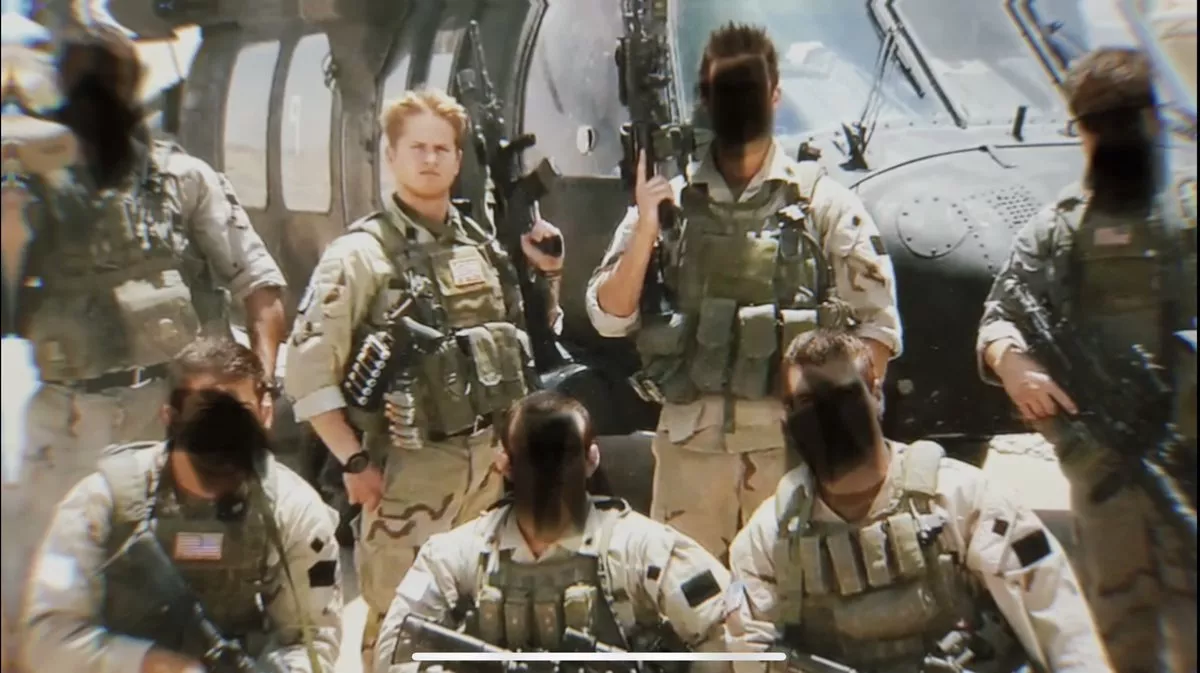
BPS 378: Directing as a Team & NOT Killing Each Other with Vanessa & Joseph Winter

Vanessa and Joseph Winter are a writer/director duo best known for their critically acclaimed SXSW midnighter “Deadstream,” a horror comedy coming to Shudder in October. They also wrote and directed a segment of the highly anticipated V/H/S/99 which will have its world premiere at the Toronto International Film Festival.

Their feature debut, Deadstream, has been getting rave reviews since it debuted at SXSW (it’s at 91% on Rotten Tomatoes). The film is about a disgraced internet personality who tries to win back followers by live-streaming himself alone at a haunted house. The whole thing takes place in real-time and is a found-footage style film with the bonkers horror-comedy feel of early Sam Raimi. It’s a funny satire of social personalities and a creepy, supernatural flick. It impressively balances the mixture of tones.

They also have a segment in the latest entry to the V/H/S/ series, V/H/S/99. It premiered at TIFF, with many critics citing their segment “To Hell And Back” as a highlight. Like Deadstream, it mixes horror with comedy and is filled with horrific, practical creatures.

Vanessa and Joseph met in film school and have worked together ever since. Before shifting to focus on writing/directing/acting, the duo cut their teeth doing everything from art direction to score composition to costumes to production design to editing. They have an interesting story about getting these projects off the ground that feels like a great fit for the podcast. Joseph also listens to Indie Film Hustle and was excited to be part of the show!

Please enjoy my conversation with Vanessa & Joseph Winter.

Right-click here to download the MP3

LINKS

  • Joseph Winter – IMDB
  • Vanessa Winter – IMDB

SPONSORS

  1. Bulletproof Script Coverage– Get Your Screenplay Read by Hollywood Professionals
  2. AudibleGet a Free Screenwriting Audiobook

Alex Ferrari 0:48
I like to welcome to the show Vanessa and Joseph Winter. How're you guys doing?

Joseph Winter 1:03
Great Alex!

Alex Ferrari 1:06
Thank you so much for coming on the show, guys. I have not had a couple, like a romantic couple of filmmakers ever on the show. So I was intrigued by that. And then the horror aspect was also more intriguing. And then the image that you guys sent. I was like, Well, I mean, I gotta have gone now. I mean, that picture's worth 1000 words right there. So it's no, it's really good. I'm really glad to meet you. I'm fascinated with you guys. I want to I want to find out how all of this happened. First, the first question is, how did you guys meet? How did you guys get together decide to go? You know what we should do? We should be horror filmmakers together. Let's do. Like, I want to know what that conversation was.

Joseph Winter 1:48
When we very first met and never crossed my mind that this is my horror filmmaking buddy for the rest of my life. But it was so we were in film school

Vanessa Winter 1:58
At the same time. It was so natural.

Joseph Winter 2:00
Yeah, it was total natural progression, like really quickly. But I was in a film class. It was like the first film class you take when you get into the program. And Vanessa was in the class we'd never talked, she came up to me after class one day said, I'm the production designer of a senior capstone project. You feel like a great fit for the art director to work under me. How do you feel about that? And that was the first time we'd really spoke. And I mean, it was all it was because I found out later everyone else said no, but I was really grateful for that. Because it was I mean, she was really awesome. And we got along really great. And then I talked her into loving whore. I mean, it wasn't hard, but she hadn't been exposed to, like, you know, the stuff that I'm into.

Vanessa Winter 2:46
Yeah, yeah, I was always into horror. But film school really was my introduction to cinema. I grew up in a small town, my family was like very conservative with what we could watch. And so in college, took my first film class. And immediately I fell into the genre lane of horror and sci fi and so I feel like us deciding oh, we're gonna make more movies for the rest of our lives. Easy. That was an easy that was way easier than should we have kids. Yeah. Yeah.

Alex Ferrari 3:17
Well, I have to ask you, because I'm married. I have kids. How in God's green earth do you guys balance the family life, you know, in the in the relationship with the filmmaker, because both are fairly stressful. And both are horror shows. If you have

Vanessa Winter 3:37
Perfect description, like I, we, I mean, we were like, we've been hustling to become narrative filmmakers for like 10 years together, working lots of different corporate jobs, commercial jobs, doing the whole whole thing that everybody does. And then we got pregnant at the same, like, got pregnant had a baby. We made a feature almost immediately afterward. Like I was getting up at 3am writing scripts, like the baby's like four weeks old. And then we made a movie almost finished it. We'd almost finished filming it and then got pregnant by accident. And so then we had a baby and then we finished our movie and then we may were part of VHS and like it's honestly we just run around all day screaming and then collapse at night.

Joseph Winter 4:25
It's really like I don't really know how to answer it because this is like when dead string production was actually going to happen and I still had a full time corporate job that was just looming over the whole thing is like how and I still looking back and like okay, I can see how we squeezed by with like having a little baby and stuff but it's like I don't have the model to teach somebody how to do that. Yeah,

Alex Ferrari 4:48
It's there's an I've said this so many times in the show. We're all insane and it's in there as insanity to do what we do. But you guys are a little different. You're a little you're your next level insane. Uh, because I mean, you've gone to another place, you've transcended the insanity of just making a film. You got into relationship, you have kids, and while you're having kids, you're like, oh, but my film, like, like, these are the thoughts that go through your head. It's fascinating. And it is just a testament to your love of what you guys do. And is there in the relationship? Is there anyone who's grounded? Are you both psychotic? Because I'm the psycho Drake crazy one in my relationship? And my wife to grounded was like, no, no, we're not going to do that. And we kind of balanced each other out a little. Because if it was two of me, I don't know why would self destruct. So I'm curious how that dynamic works. And you're and you're

Joseph Winter 5:40
Crazy about different things. I think that's how it works. Like, sometimes I get really scared at the scope that Vanessa will pitch about something where she's like, No, I really think we can do this. And it's like, that's not possible. So I start to panic. And that pragmatic kind of says,

Vanessa Winter 5:56
I'm like crazy like bite off more than you can chew person. But I've got a more chill energy where Joseph Scott, the performer, like, he's got the excitement, but also the like, anxiety, things are going wrong. Kind of like the even person, but I've definitely got, yeah, like, he was just saying, my own set of crazy where he's like, what, like, it's very the beginning of projects, I get super amped that's like, my, my place and Joseph's like, okay, but like, for real? Yeah, real, what's good?

Joseph Winter 6:30
There's plenty of crazy crossover, though, where we're not compatible, like we just aren't. And we're still trying to figure that out. So

Vanessa Winter 6:36
Yeah, sometimes there's too much crazy.

Alex Ferrari 6:39
I could see that. I can see that without question. So how did you guys, you just said that you guys have been going, you know, 10 years? And that's kind of the number I throw out to people like, how long is it going to take like, starting points? 10 years? Just, that's how you got to look at it. You got to just you're gonna be grinding for 10 years to make something happen for yourself? How did you guys keep going? I always love asking that question. Because I mean, everyone's different, unlike what you mentally had to tell yourselves. And you hate each other, which is a blessing. But most of us don't. We're alone. We're, you know, the filmmakers by themselves. And, you know, I tried quitting 1000 times. But I can't because because it's a disease and you can't get rid of it. And it's done. So how did you guys keep going? What did you like? Did you guys help each other out? Did you Did one is like, I can't do this anymore? The other one's like, no, no, we got to keep going. And vice versa? How did it work?

Joseph Winter 7:32
I'm genuinely interested in your answer. If you want to answer first,

Vanessa Winter 7:35
I was just gonna say I think you hit the nail on the head with the fact that there's a benefit with us being we're having the same insane dream. Because we there's definitely like dark nights of the soul. I guess you could call them multiple times where we are like, on the verge of like tears like, can we actually make this happen? Like, what what are we doing with all of our time and money? depressions, but I think that, yeah, the nice thing about being in it together is that and I feel like, the risks are a little bit easier maybe than for somebody that's like in a partnership where the other person is like, You're crazy. You're taking things too far, like for a relationship or, you know, financially or something where we kind of, yeah, we had the same crazy dream. So when it was like, should we mortgage our house to make our first feature? We're like, Yeah,

Joseph Winter 8:32
Yeah, let's do it. Yeah. So the essential part, oh,

Alex Ferrari 8:37
By the way, everyone, listen, don't do that.

Joseph Winter 8:40
That's what I tell. That's what I tell people, like, don't do what we did. It just so happened to have worked. In our case, it's not a good business model, like, but but in order to feel good about what we did, to get dead stream off the ground, we needed 10 years of like, for me, changing my value system. Like honestly, if I right out of film school had had the opportunity to do a feature. There's some version of that where I would have imploded just looking back because the thing I was valuing, valuing at the time, was getting the filmmaker being in my 20s and trying to rise to the top and like, things that don't mean that much to me anymore. And as we were going along in our life started to change to like, Okay, I'm approaching my 30s. Does that actually matter to me? Is there a version where that doesn't like, can I just make a movie when I want to, like, the kind of movie I want to and I started to remove like the superficial stuff, or the things that were separate for the love of from the love of the craft and the things that I actually wanted to engage in. And that really helped not feel so panicked about the years burning by and having not made a feature. So I mean, that's how, for me, that's how when we got to the point of like, Hey, should we open up some 0% interest credit cards and like go for it was like, Okay, I feel like I've got a good foundation now of like what's important to me and we're not willing to sacrifice everything in order to do it. Like we're going to try to balance the family and stuff and then it just finally made sense.

Alex Ferrari 10:14
Well, it can and I'm imagining you guys had the same conversation that we all do at 23 year like, Shit, I didn't make my feature Orson Welles did 2020 sevens like Spielberg made Jaws at 27 I'm just jacking around right here, let the hell that's exactly what I'm talking Tarantino made the reservoir when he was like 31 Like, and that just the number just keeps creeping up until you're like, well, Ridley Scott didn't make it to 40. So that's like, Yeah, but he did 4000 videos, music videos and commercials prior to that. So that's you lose, you're getting loosey goosey. But did you have that conversation with yourself? As well as that as that time gets cooking away?

Vanessa Winter 10:51
Absolutely. For sure. I've got like, I've got an issue with like, my like, I don't know what you call it the like, the life clock ticking away, where I get really freaked out about time passing by Joseph's a little cooler about it.

Joseph Winter 11:07
No. But that took effort, though, because I just made a decision that was you know, earlier than you about the I'm going to be at peace about the clock aspect and just just have some faith that at you know, when I'm in the right mental place, and you know, things will just happen at the right time if we just keep healthily working at it and not sacrificing like our health and things along the way. But yeah, that was always there, man. I'm also pretending right now that it stopped mattering to me. But you know, it always matters.

Alex Ferrari 11:39
I love the neuroses that's going on here, you're in this conversation, because you're just kind of like, this is really getting inside the mind of the insanity of a filmmaker. And this is not what they teach at school, they don't never did that they teach you about you're going to be Spielberg, you're going to be the next Nolan. Here. Look, we're going to teach you how to make $100 million movie, no one ever in film school is teaching you look, it's going to be 10 years of grinding, you're going to want to break psychologically multiple times a day, you're going to probably go bankrupt a couple of times, you probably lose relationships, like I mean, they don't tell you all these things. But this is what the truth of it is. So I'm so glad that you guys are being so raw and honest about this process for people listening, because I hope it helps wake some people up to like the realities of this. And the other thing I wanted to ask you is because as a filmmaker myself, like I, my wife, and I've taken strategic, you know, risks through my filmmaking career. At the beginning, I threw credit cards and almost went bankrupt and all that kind of stuff at the very early beginning of it. But as I got older, we're like, okay, let's strategically, how are we going to do this without a family? The second the kids came into the picture, it changes things, but it seems like you were able to balance having kids, because it's one that you guys could eat ramen mean? Probably not. Now, I mean, you don't want to, but you know, you can. You don't want to, but you could, you know, but now when you have kids, it's a different responsibility. How do you balance the insanity of the dream with the responsibility of a family?

Vanessa Winter 13:13
I think, I think for me, like I almost experienced what you did backwards, where I think I had, I kind of had this thing coming out of film school where I didn't, and maybe it's because I'm a woman, but I had this feeling of like, I didn't go to school for a hobby. So I kind of had this overcompensating, like, I'm gonna get this corporate job, and I'm gonna make enough money while I'm also chasing my dreams so that I could show that I can, like make a living. And there was something about having my first baby where I was kind of like, oh, like, this is it, like, I am going to make a feature now, or it's never going to happen. And so I got a little bit more crazy and risk taking where I started putting like child care on a credit card where I didn't have I had never done that before, like, spend credit card money on. I mean, besides some student films, like but really, I hadn't been really doing that. So that for me was kind of like the switch went off, where I just started saying no to all of my comfort, like commercial clients, or most of them and was just like, I'm going to do this thing. Because if I don't, I'm going to regret it, even if it goes badly. So that's, that's where I was.

Joseph Winter 14:23
I'm really interesting. I mean, this happened for both of us. But the thing that I like to tell people about having our kids is like before then it was 24/7 film stuff, like what we would talk about in our house, there were no boundaries. It wasn't like, Okay, at this time, we're just talking about our personal lives like film, our ideas, the things we're working on our corporate stuff, it was all just, you know, laying in bed talking about it. And when we had our daughter, there started to be some structure around it where we said at this time, which just family time like we have to, it's only fair to our family to do that. But it was so weird that once we started putting back Andres on when we would work on film, I became way more productive. My output was so much more than it had ever been. And I feel like that has stuck. So now we have that second daughter, it's the same thing, the hours of the day that we have to work are a lot more productive than they ever were before then. So there's that benefit that's come from it.

Vanessa Winter 14:23
Yeah, unfortunately, we should have discovered you earlier, Alex, and we could have made a lot of smarter decisions.

Alex Ferrari 14:26
Well, but that Well, I appreciate that. Louis, I wish I had me when I was. Imagine if a show like this existed in the 90s. You know, we peep millions and millions of dollars would have been saved relationships would have not, you know, busted at that point. I mean, less people would be in the insane asylum right now, if we kind of information back then. But so what were some of these mistakes that you guys made along the way that you were just like, that maybe you could talk about that other people can learn from and hopefully not fall into those same traps?

Vanessa Winter 16:02
One of my biggest things, I think, was just not saying no to anything. And same thing. Yeah. And yeah, I think that with your, like, I think the advice that you give like having multiple legs of your business, I guess you could call it is a really smart thing to do. But I think you don't want to have like 40 legs to your business, you don't want to feel like you're missing out. Because you're not working with this producer, you're not like letting go some of your clients or whatever it is. And I think that I just had that for a long time where I was overworking. Just overworking for not enough money. And then creatively, I kind of had the same problem where I always wanted to be a horror filmmaker. And with doing that you you take like, just in the nature of horror, you take big swings, and you isolate a certain amount of audience. And I think that there were when I would do my own creative, like projects, I like a short film or something I would have in mind, like, oh, but if my commercial clients saw this, like, couldn't help me out and like both ways. And as soon as I just started really writing and making the things that were purely Vanessa, I guess you could call them they're just weird and, and just what I wanted to do, that's when audiences started responding, or that's when I started getting into festivals and ended up finding my management. And so I think, yeah, I think specifically for me, there was a lot of mistakes and just not being focused enough.

Alex Ferrari 17:38
And it sounds like you it sounds like you did the same thing I did. I think I think every filmmaker goes through this process is you find your voice. And then you have the, you know, the the kohona is, as they say, to actually put your voice out there. And that's what people are your secret sauce. That's what people are attracted to not. I'm gonna go make a Sam Raimi movie. I'm like, Well, we have Sam. He doesn't pretty well. We don't need another Sam Raimi. You know, he's, he's solid. Like, we don't need another one of him. Or a cheap copycat. But what but but there's only one, Vanessa. So that and that's and that's the thing. There's only one, Joseph. So that's that when you are able to finally put that out there is that's when I'm so glad you said that, that you're like, oh, that's when stuff started to happen. When you were brave enough to put yourself out there. I'm assuming that's the same for you, Joseph?

Joseph Winter 18:26
the thing that came to my mind is I was afraid after I mean, in college, I was afraid to make bad things. After college, I was afraid to make bad things that actually kept me from making I wish I would have made so much more things and bad things because you learn a lot when you make something that's not turning out, right. And you actually learn a lot when you make more things that are shorter. And in my mind, like the next project I was going to put my energy into was going to be a 17 minute like really ambitious thing. And I wish I would have just taken the opportunity to give myself more smaller experiences have things that I'm too ashamed to show people because I did anyway, along the way. And like that's how that's how you learn and I I'm jealous looking back at my other friends that were jumping on these like, yeah, I just got this opportunity to direct a little thing over here. It's not that good, but I'm going to do it and in my mind, I was like why would you want to have that on your reel or have that but like no, I that was a mistake you can you should make bad things you should make lots of bad things and you can curate what you show people

Alex Ferrari 19:33
I think it's the same kind of itis that we we filmmakers have they're like, well Spielberg didn't have this and you know, like, on his real I mean, on his his film, like you want your filmography to be perfect, because that's the ego inside of you going one day there'll be studying me in film school, and when they do, I can't have this crap out there. You know, kinda like that's the you laugh because both of you have thought this in your mind at one point or another because I Dude, I think all of us do because we all are insane. The filmmakers ego is oh my god it is there's the level of delusion we have. But you know what I said this the other day I was at AFM and I was on stage talking, and I said this out loud. And it was a friend of mine, who told me this, and he told me I could steal it. My friend John Kim, he said, the delusion and the skills that you need to get a movie done, hurt you after the movie is done. To try to sell it, because you can't be delusional when you're selling it. You can't be to like my movies, the greatest. Obviously the next Quinn Tarantino, why kampsen? Anybody? recognize my genius? Is that do you agree with that?

Joseph Winter 20:48
I mean, yeah, I feel like, I feel like that's for sure. True. I just right now, what you're seeing is me trying to think how if I felt that way, after we made dead stream, like if I had the healthy mindset, I will say what health is like, We're mature enough, right going into dead stream that I grew out of so much of that kind of mindset, by the time we made it, that we didn't have SXSW aspirations. When we were making dead streaming, we didn't have like, the successes of the movie, we're not the goal. Like by the time we made this, it was like very pragmatic, it was, we're going to pay for an education in learning the part of the business that most people don't talk about, or won't talk about, learn how much people are offering for a low budget movie. And like, what, just like that kind of thing. And so I mean, 10 years before, I wouldn't have made a movie that was just my best shot, but mostly for an education and mostly, you know, to just do something. So I think that's something that did help with being older and getting started with that.

Alex Ferrari 21:54
The the, the 20, the 20s version of all of us were idiots. Absolutely, of course, I didn't make a movie till I was 40. Because I was like, Well, I has to be Reservoir Dogs. It has to, like, blow everybody out of the water. Because again, my filmography is going to be taught in schools, and I can't have this kind of insanity. So

Vanessa Winter 22:18
Yeah, man, that pressure can really get to you though. Right? It's crippling, it's crippling?

Alex Ferrari 22:24
It is it because it's all self inflicted. It's completely your own delusions in your mind. I you know, I kind of asked you, why do you think we do that to ourselves? Why? Because I've never asked this question on the show before, but like, what? Who told us that that's the weight, like what isn't enough? And it's not just us? It's most filmmakers have this conversation with themselves in like, my first movie has to be this. And it has to be that and you know, and I have to be respected and it has to win into this. What is it that we can't just go out and like you did with dead stream and just go, we're just gonna go make a movie. We're going to learn about the process. And if it gets in some places it gets in some places, as opposed to this is Oscar worthy, which I've had that conversation, not me with other filmmakers who have done posts for and they're like, I'll see you at the Oscars next year. I'm like, You see, see they're all right there, buddy. All right, let me know how that works out for you.

Vanessa Winter 23:24
Man. Yeah, like I feel it. I feel like there's a there's a particular kind of crazy of filmmakers that puts you in that mindset. In fairness to filmmakers, I feel like there is a lot of when I compare it to other other art forms. There is some truth to this, like fear and feeling that everything you make could be your last. Because if you blow it bad enough, people don't want to work with you and don't want to pay like help you pay money. It's so hard to make a film just by yourself. So that does I think add to some of the pressure. Yeah, the I also hearing other writers talk, I think this may cross over to writers too, which is how crippling it is to sit down and realize that your first draft is going to be complete crap, right? And that's like a big mental hurdle. And I don't know if it's just because you're admiring other films that are so good or other books that are so good. But this idea it's really hard for the idea to sink in, that it started as bad. It's like hard to believe. Well, I tried. I believe that the first iteration of JAWS or whatever was probably bad. And it took a long time before it became jaws. One

Joseph Winter 24:49
of the biggest reasons is that's what they put in front of you at film school like they put the awesome first films in front of you. A masterpiece Yeah, about Reservoir Dogs. It's not even And technically, Tarantino is first movie. Oh, and like hearing Edgar Wright. It's like, well, you don't know this really like it's not really talked about like that. And then I heard Edgar Wright on a podcast years ago, where he talked about fistful of fingers, which he doesn't even want people to see. And I still haven't seen it. And he explains why. And I wish I would have been taught that in school, like, here are the filmmakers who made first films that either you can't see, or they don't want you to see. And then they learn from it and went on to make Shaun of the Dead or like, you know, something else like that.

Alex Ferrari 25:34
Where they don't do that that doesn't sell, doesn't sell them seats in film school. I mean, they sell the sizzle, but they don't sell the steak real well, but they sell the sizzle really, really, really well. And you know, what's fascinating is after talking to as many people as I have on the show, and speaking to like Edgar and some of these bigger, you know, Oscar winners and things like that, I've come to realize in just my own personal journey, that all of them go through the same things that we do. It's always shit at the beginning. It's always crap. They're nervous, they have to look at the same blank page you guys have to look at. And they just work it out in a different way. But it is it is, I think Hollywood puts it out there that that like the story of Rocky, that he wrote it in like, what, four, three nights or something like that, he wrote Rocky. And then like, that was the the myth like, oh, he wrote any one of the Oscar. And then years later, I saw an interview with Stallone. And he's like, Yeah, I wrote the first draft in three days, but I beat the hell out of that thing for the next six months, you know, perfecting it, you know, it's, it's that kind of delusion that's put out there. But I think that's a Hollywood thing, too. And I mean, it's been, you know, it's always been that way with this kind of the sizzle, not the steak. You know that question. So with so let me ask you a dead stream. How did you guys first of all, fantastic. It looks great, man. It's so much fun. And then I'm like, wait a minute, is that Joe? Is he the star of this too? Like, that's tough enough to do it behind the scenes, but in front of the scenes, and for in front of the camera to be able to do it all. And you're right. It's like basically, you're the show on top of it. So it's a lot of pressure on you, Joe as as a performer of that movie. Yeah, you got some ghosts and goblins and other things flying around, which are really interesting. But your funniest shit by the way, you really, really funny this funny as hell, really well produced looks nice. It looks like you know, because I've see, I see a lot of stuff. See a lot of stuff. And in the horror genre, as you know, not always is production value. But always, how did you guys decide to do like, this was the thing like, Get this thing off the ground? And then we'll talk about the South by Southwest call.

Vanessa Winter 27:51
Yeah, I think yeah, we started writing it around Joseph strengths because he can act and He is hilarious. But it did end up being really Gru grueling, and a ton of pressure. As

Joseph Winter 28:04
you I think we should like talk about why though. The reason is, like we we were trying to, we gave ourselves the creative prompt of like, what if there was a movie, no one could say no, to, if we made like, could we, in theory, make something by ourselves? And that's the thing that led us to? Well, that would of course, I would be in it. And it wasn't like, honestly, we didn't think I was great. We just thought that I could act like I had been in some of our other stuff that we had made. So it was like, okay, a given. It's me in a haunted house. Is there and nobody else is in it. Like that's kind of where what we were building off of?

Vanessa Winter 28:39
Yeah, I think we're like, originally were like $25,000 2530. Like, what could we do if we just strapped cameras to Joseph and that was kind of like, and we were kind of like simmering on that like a little bit. And then I think once it started once it started feeling like somebody who was going to go in and do a real live stream and put up extra cameras, and a movie that was going to escalate from maybe a little bit more grounded to just completely bonkers 80s Creature Feature. That's where at least I started getting really creatively excited. But then of course, the budget, like tripled. It was having to pull some shots that off. So that I guess that's its own. That's its own Genesis. As far as Joseph's role in it, it became clear, like, increasingly that how difficult it was going to be because on the on the performer, just the pressure on the performer to carry the whole movie. And as we started diving into YouTube personalities and started writing the script and refining the script. We became really scared about how hard it is actually, to talk for 90 minutes and have people care and It also made the date the influencers online a lot more of just what kind of talent and art form they've kind of honed in with this blogging style. Comedy, I would call it, I would think some of them are definitely comedic artists. So we started studying that a lot. And yeah, so it ended up being a lot of pressure for Joseph to, to deliver that kind of performance. And that kind of nuance that could actually be watchable. And even when we had a script that was super, we felt like it was really solid. We have a casual writers group with friends that we would read stuff out, read stuff with, and even when we felt like it was slain pretty well with them, we started doing some tech rehearsals and realize that the character wasn't there yet that he was just going to be unwatchable. So anyway, ended up being a lot of rehearsals for Joseph. And then the technical side was also a little bit unexpected. Just how difficult it was to operate the camera. So a lot of the movie was just me, like, not yelling at you, but like basally, directing and saying, Hey, pan that room again, but this time, 20% slower. So all of this was like while he was trying to be here. So that

Joseph Winter 31:15
was the thing that we didn't like, we had thought through a lot, we did not think through the part of operating while acting like we just didn't, I didn't. And it was a completely different thing. It was engaging a different part of my brain than the performer. And it was just incredibly difficult. And like at the time, so I had avoided actually thinking about me doing some of the emotional scenes or like, actually the weight of the movie, because I knew if I did think about it, I would clam up, I would get that paralysis before we ever made it. So I waited to think about it until we were shooting. And it really felt I just felt crashing that first day was a mess. We had to reshoot almost the whole thing. Like I just wasn't good. I wasn't on. But But yeah, I mean, thank goodness, it wasn't a studio movie, because we had, we had the ability to pop in some weekends to the same location over the next few months and do some pickups just on our own dime on you know, whenever we have a chance. So that was fortunate. And that really saved the movie.

Vanessa Winter 32:15
Yeah, so I think the missing piece as far as when we talked about starting starting the movie, it was a kind of do it yourself. But then as the script progressed in the idea got bigger, we ended up bringing on a partner, Jared Cook, who was our CO producer, and also our DP. And so this wasn't, he was so instrumental in pulling off the how seamless the camera rigs worked. Along with that he designed the interface for the chat. So he was a really big creative force. And we did we put a lot of work into the the tech rehearsals and camera tests to make sure the movie wasn't too shaky. Joseph actually had two cameras strapped to his head as the POV of the point of view camera so that we could change angle or lens length. And one of them had a little gimbal in it to help stabilize so that it wasn't a nauseating found footage. Scary Movie experience. So anyway, that's I was really happy with the way that the tech worked out in the movie, but it did put extra pressure on Joseph to camera operate. It wasn't just a it's free. It wasn't an improvised, like go back scared tell some jokes. Everything was like very finely tuned with timing and where he was looking and how to access very precise

Joseph Winter 33:46
film.

Alex Ferrari 33:47
I'm exhausted and I didn't even make this movie. I mean, just what you explain. I'm like, oh my god, I'm tired already. Well, let me ask you. So like, how many days you guys shoot?

Joseph Winter 33:59
That is hard now. Because of all the partial stuff. But the first we did seven days back to back as our main principle. And then there were a few pickets. I think the way last time we calculated probably ends up at 14 or 15 days when it was all said and done

Alex Ferrari 34:15
with the pickups and things that you just put back into what was so I always like to ask him this question. You know, we're all you know, we all are on set. And there's always that one day that you feel the entire thing is going to come crashing down around you as directors. I'm assuming that happened every day, probably every hour of every day. Was there the one thing that you just like, I don't think we're gonna make it. How what was that thing and how did you overcome it?

Joseph Winter 34:37
What should we choose? But,

Vanessa Winter 34:39
man for me, for me it was day one. And maybe it's because I as like the director that was behind monitor. The schedule was more on my shoulders. But we had a huge windstorm that came through the very first day and blew off all of our makeshift duva teen on the outside of the house. which

Joseph Winter 35:00
was like to cover the entire house so that we could shoot during the day. We ended

Vanessa Winter 35:05
up like spending hours and hours repairing that and then by the time we got our first shot off, just the morale wasn't there, the character hadn't really vibed yet. And we got the camera Tech, we realized even with all of our tests, it just I mean, they're not action cameras are not cinema cameras. So the consistency, there's just a lot of surprises. And we thought we were going to shoot the whole movie in six days. Oh, man, it's so scary. Like, Jesus night for me, which is like coming home late. And just we only had a couple hours asleep anyway, but I just remember just sitting like awake the whole time being like, how are we going to pull this off? Oh, that's what we that was the worst. I think that was the darkest. We

Joseph Winter 35:50
literally sat in this office. It was like, man, it's like 17 hours after showing up for the shoot. And we were sitting here literally saying, How are we going to save the movie? Because it was like this is going to crash and burn. We're not even gonna finish making it. It's not. And then what we finished we will never show anybody because I did so bad that first day. But yeah, so I agree with her first day.

Alex Ferrari 36:14
Well, I mean, if it makes you feel any better, when I did my first big film, a hurricane came and in Florida and flooded our sets. Completely, of course, so we decided to write it into the script. That's good. I mean, I wrote it into like, like, Oh, and also FEMA decided to set up at the hospital that we're at 10,000 people outside online getting food and water while we're trying to shoot a movie in the basement of this like working slash abandoned hospital. So like we just like yeah, write it in, man. We can't What do we gotta do? We have no money. Let's so lesson for everyone listening that sometimes you got to write it in.

Vanessa Winter 37:03
That's, that's hero status. You have to keep making movie.

Alex Ferrari 37:09
Again, the insanity of what we do. It's not that's like hey, maybe maybe we shouldn't do this. No, that never crossed our mind is like we got trucks out here. There's a dolly we're shooting on the Panasonic dv x 100 A mini DV the best film camera ever made in the world. I mean, you gotta go, gotta go. I even had the adapter for the wide angle we have to go. This was happening. This was happening. It was five days of Oh my god. Anyway, that's a whole other story. If you guys had a chance to go back in time to talk to both of yourselves. At the beginning of this insanity, what will be the one thing you would tell them?

Joseph Winter 37:55
Would it be the beginning of the dead stream insanity or Oh,

Alex Ferrari 37:58
no, no, no, no, the entire journey of this 10 year odyssey to get to where you are right now. At the beginning you're at film school, both of you and you. And all of a sudden you Marty McFly it in and you just walk in and just go dice. I'm from the future. I can't tell you much. But I can tell you this one thing I need you to

Joseph Winter 38:19
do, I would say chill the eff out and, like adjust expectations. This is like getting in touch with the love of the craft and life. And then let's talk making an actual feature length film. So like that was the thing if you would have told me back then 15 years later, your first movie comes out or whatever. I would have imploded and like I wish I could go back and just say don't implode, like be okay with that.

Vanessa Winter 38:50
I think I would have been like look myself in the eyes and be like, you're never going to be good at commercials. You know, you're never going to be good at commercials just go make horror movies.

Alex Ferrari 39:01
Unless there's horror crime here so for commercials you

Vanessa Winter 39:04
know, I've actually done some of those and that was a lot of fun. I guess it's not like a whole thing it's just a cardinal so

Alex Ferrari 39:13
every once in a blue moon you get

Joseph Winter 39:15
you get to play like that.

Alex Ferrari 39:17
Well you know when you guys when you guys work do you guys work together as a team like besides dead stream like how do you direct on set? Do you guys work as a team? And if you do how what like how do you I always fascinated by teams of directors like what do you guys do? Do you mean do you like know what each other's thinking? Are you calling brother ring it like how are you doing it?

Joseph Winter 39:37
Yeah, so what we say like usually, I mean I'm usually in front of the cameras so far and what we've done and because of that we do a lot of pre pro so that when we show up like a lot of like storyboarding with our iPhones and like making sure that the decisions as much as possible. Get made before we show up that way there is less likely of the friction of having a completely different idea for something, which will still happen. Because no matter how much you prepare things are different.

Vanessa Winter 40:10
Yeah, I don't think we're on like the Coen brother level yet. Actually, I haven't seen them direct. So I don't know what it's like. But if we realize on set that we've been imagining something completely different, then we just kind of argue it out. And our Luckily, our crews have kind of gotten used to it. But we'll just sit there and be like, Are you sure you want it to be over the shoulder like, not a two shot, and we'll just argue the pros and cons and tell somebody's out loud in

Alex Ferrari 40:34
front of the children or you.

Joseph Winter 40:38
on VHS 99, we made a goal to not do that like to, we'll be like, hey, sidebar, and then we would go last very long. But like we we started that way with the sidebar, but then it was like it was so crazy with the schedules, and we decided there wasn't time. So we just had to say like, after a take, I just be like yelling over the camera like, hey, wherever she was hiding. And we would just argue it out like that. So we're working on that.

Alex Ferrari 41:03
That's, you don't you don't argue for the children, that the children being the crew, you can't do that. Oh, like but apparently they figured out that mom and dad are fighting special

Joseph Winter 41:13
crew is the same crew as dead stream. So by that point, they felt like our actual children, and they were great.

Alex Ferrari 41:19
Mom and Dad are fighting again, let's just take a break. Now, what did you do with dead stream is a horror, comedy. horror comedies are not easy. They're arguably one of the most difficult things to do in that genre. Because you got to balance how much comedy versus how much horror. I mean, Sam is the SAM is the master of that. I mean, you Evil Dead or Army of Darkness is, is beautifully balanced. And I think you guys did a really great job here. But how do you in the creative process? Think? Should we throw a gag in here or scare in here? Like how? How do you balance that out?

Vanessa Winter 42:00
I always say a lot of like when I think about the process. It's a lot of trial and error. So yeah, lots of lots of rewrites in the script. And then I think on set, there's moments of feeling like, you know what, I think even if we have to cut this joke that we love, I think it's most important that this scene is scary. So we'll make those kinds of decisions. And then I think it still really finds itself and post. Yeah. test audiences are really helpful. And there is sound design, like also transformed our movie because we were able to really lean into okay, this is this is scary, like moment, do we need to cut some dialogue? really emphasize the scare with sound. But yeah, it was just kind of a it's kind of a crapshoot.

Joseph Winter 42:49
Yeah. If you if you were to read the draft, if you were to read what we thought we were making, when we set out to make Devstream, so a lot more jokey. I mean, our movie is very comedy. But on the page, there were more little gags and jokes and longer monologues that we thought were funny that weren't actually funny. And like, by the, the version, you see now is way more scary than what was on the page. And that's because of the editing. Like we actually shot it pretty true to what that was on the page. But then we refined it and post and it was like test screenings, and just feeling it out with different people. Or we finally were able to realize, yeah, this is like too many jokes in this moment. This needs to be scary. So I would say the secret sauce so far was has been post production.

Vanessa Winter 43:36
Yeah, we also kind of benefited from being two brains where I think because Joseph was the performer, he could really focus on the moment and the comedy in the moment. And I was very focused on things, the tension, and the scares that I wanted. I was thinking about the movie a little bit more as a whole. And so that yeah, unlike the super brain of Sam Raimi, we have to I don't

Alex Ferrari 44:04
know, he's, he's not he's not human. Obviously. He actually opened up the book. And that's how he that's just the way it is. Now, I always love asking this question, especially you guys now that I know the backstory of dead stream. You submitted all these film festivals. And we all do it. Well, you know, we all going to submit to the lottery ticket of Sundance slam dance South by Toronto, the top five or 10 and then you get a call from South by Southwest. What was that like for you guys? Considering that wasn't the delusion? At the beginning of this process? You were just like, oh, let's just I'm assuming you just like let's just see what happens kind of vibe, right?

Joseph Winter 44:47
Let me actually tell you about the delusion. So like we weren't, we were so like, we we were so non delusional about

Vanessa Winter 44:55
I hated Phil, like, at least for me like I had a thing against film festivals. It's Like the rejections and lottery of it is so painful. We also live right by Sundance and go every year and it's just kind of this looming like, we don't even try. That was like my reaction to it. Like, I don't, I don't have any. I'm not even gonna have hopes that they can crush anymore. Okay. Oh, yeah,

Joseph Winter 45:19
that was That was rude towards Sunday. We love Sunday. So it was just this feeling of like, we don't belong, you know what I mean? Like, like we're not, we're not going to give them that power, we're not going to submit to the Ailis festivals. So we didn't like honestly the biggest festivals that we submitted to or the fall festivals that was like beyond fest, and there was Fright Fest and Fantasia. And those were like the long shots to us. The thing that changed the course of the movie was, we got rejected by the big ones, except beyond fest, and from Ersoy, who helps run the festival. He called us and he said, I would love to play you at beyond fest. But I think you're selling yourself short. I have a sales agent friend who could talk to you take over the festival thing that you're doing. And you could try for first quarter festival like South by Southwest, and Sundance. And we were like, no brainer, no, thanks. Like, we're not, we're not that, like we have a

Alex Ferrari 46:18
no sweet guy was.

Vanessa Winter 46:21
But it was like, What's your

Joseph Winter 46:23
angle? That's how I was feeling like, what's this guy's angle? Because he's just being too good to be true. Like, he's been so nice and so sweet. So we're

Vanessa Winter 46:31
like, what this guy does love cinema or something.

Alex Ferrari 46:34
He's like, he's not really human. No, no, no, there's none of that in film business.

Joseph Winter 46:40
But the but the thing is, like, after thinking about after we actually told him, No, we want to do world premiere at your festival. We thought, Okay, we made that stream as a huge swing, everything about it, we put everything on the line for the movie. Why would we stop doing that right now, when this guy is telling us there is a shot a small shot, but a shot? So we came back and said, All right, let's do it. Let's talk to the sales agent, we withdrew from the path that we had, like some of the small ones we've been accepted to. And we just he the sales agent started submitting for us, which is how most festivals are programmed. And

Vanessa Winter 47:19
it sounds it sounds dumb, but it was so nerve wracking because we had had some offers for distribution. And I felt like, you know, if we pull out of the fall festivals, which is very genre friendly, there's a chance that nobody we get rejected from the bigger festivals, and nobody just ever sees our movie. And these offers kind of go away. And so yeah, I was pretty nervous. So this is all leading up to your question of the call from,

Alex Ferrari 47:45
by the way, what were the what were the offers? Were they any good? Or were they pretty predatory? Or they were like solid or No,

Joseph Winter 47:51
I have strong feelings. I feel like I usually say the strongest version of this, which is very predatorial in my mind. Now here's the thing, I wouldn't have known that if I hadn't listened to indie film hustle, because I had no frame of reference. But you talk about the predatorial distribution industry. And so that was on my brain. When I saw we got this very big distribution company that started talking to us after the beyond fest offer. And we were so excited. We're like, if we have their name on our movie, oh my god,

Alex Ferrari 48:21
I without you saying it. I know who it is. And we won't say it publicly. But when we stop recording, I'm going to ask you, and I'll tell you who it is. I know who it is. Go ahead.

Joseph Winter 48:30
You probably do. And it was so it was so low and it was just deflating, and I felt offended but also might be offended at this like it's just a stupid movie. And so basically from that to like, with the sales agent using the South by Southwest like behind the scenes, hey, let's have exclusive negotiations to like shutter it's a completely different Oh, like it's it's not even close.

Alex Ferrari 48:59
So so you get so you get into South by and we'll get to the phone call in a second. But you your sales agents, you know, working behind the scenes to negotiate a good deal for you because now you're in South by and now it's a conversation and because you're going to premiere it South by hey, let's talk to shutter now. You want to make a deal before this goes out? Because once this goes once this premieres this is going to be a feeding frenzy. Let's Let's Make a Deal beforehand. Is that kind of that was kind of the vibe.

Vanessa Winter 49:28
Yeah, it was for a little bit more detail. It was going out to some big some big people first so like shutter Netflix Blumhouse and seeing what they thought and seeing is there any is there any chance of kind of creating not like a bidding war but like a friendly version of that. And then when it didn't seem like that was going to happen. It was a conversation of shutters offering a really good price now and they benefit from like announcing at attend a list festival. So do we go with that? Or do we take the risk of it premiering? And then trying to negotiate? And so, yeah, yeah, so we ended up. And we also, we really love shutter. And that was one of our goals at the beginning was to be on shutter, we just feel like that's where our audience was. So after talking with them and stuff, we felt like signing with them before self buy was the right decision. And we ended up being really happy with it. Today is the name of our sales agent, blue Finch. They're based out of London, I've never heard anybody have a bad experience with them. I've heard of them. And they've like, they've also handled the international sales portion, which has ended up being significant for us, which was great and unforeseen. And having somebody that's really honest and transparent. And showing you all of the deals, is just made such a huge difference. And I know it's so rare. It's so rare. What's

Alex Ferrari 51:01
your a unicorn? You guys are unicorns,

Joseph Winter 51:06
we were so aware of that this whole time. Like, we kept thinking when's the part where blue Finch is going to screw us light us and they never did. It's It has not happened, they've been such a great partner. And with the shutter thing I want to say like, the numbers made sense. There's a reason why we said alright, let's just go to shutter. This is like, we're happy with this. But a big part of that was they wanted to take care of the movie. So it was like it was a good deal. And there was that promise of we will release you in October, that week that you come out will be all about dead stream. And like they really believe in the movie got the movie where the other distribution company that we're talking about, was talking about it like just a number. It was like something they're gonna throw at the wall, see if it sticks, and then that's it. I've heard that so so we're very, we're so it's

Vanessa Winter 51:56
gonna be so rare to just in the streaming days of having a streamer that actually is passionate about your film and is planning a release and a marketing strategy. And so that was that was also just really shutter was really great. And that way.

Alex Ferrari 52:13
No, so you get the phone call what happens?

Vanessa Winter 52:16
So we actually got we actually got an email because the phone with our sales agent got the phone call since they submitted. So I saw it in the middle of the night because I woke up for some reason saw the email, and I was so excited. I was shaking and I like I woke Joseph Joseph up in the freakiest way possible, just like shaking him and shaking him. He's so confused. I finally get it out. Like what happened? I'm not kidding. He went back to sleep.

Joseph Winter 52:44
No, this is what happened. That's a dream. But it's a dream. It's a dream of

Vanessa Winter 52:47
ours by myself just eating like canned soup on the floor being like, Whoa,

Joseph Winter 52:53
check it out. We got we got rejected our entire new strategy rejected from everybody except for South by South by was like the last thing we're waiting for. So we're not going to get it in my mind. It's like, we blew it. We blew it with this whole thing. So she wakes me up by literally shaking me going. We got into stuff like that. And I was like looking at her dad died. Like, that's how I came out of my sleep is like her dad died or something.

Alex Ferrari 53:19
I'm so sorry for you.

Joseph Winter 53:22
I also as soon as I realized that it wasn't bad. In my mind. I was like your, your sleep is so precious. So I was like, Okay, I'm gonna I'm just gonna try to go back to sleep. And I did when I woke up the next day. I was like, What was I thinking going back to sleep like I I legit did not let myself feel anything.

Vanessa Winter 53:40
Like if you have a six month old baby, it makes sense. Why you Oh, no,

Alex Ferrari 53:44
no, no, no, no, no, no six month, six month old. I don't care if you would get an Oscar nomination. That's nice. I'll deal with that in the morning. But so so you but you went back to sleep knowing that you got to the south bar, or did you still think it was the dad had passed?

Joseph Winter 54:01
No. I knew as soon as it was good news. I'm like, Okay, I'm gonna go back to sleep. And like, wait, I feel this. But I woke up being like, South By

Alex Ferrari 54:11
Christmas Day. It's like Christmas day.

Joseph Winter 54:15
It was it was awesome. That's amazing.

Alex Ferrari 54:17
As I look, I'm so happy that you guys i hope this story. I mean, we've gone through the rollercoaster of emotions here from the very state of despair. To Getting to to like now look, we haven't been screwed. We're actually making money. We made a movie with your the VHS 999 coming out. You guys are off and running now and I'm so happy for you guys. And you know, it was overnight. Obviously you just this was overnight success. Obviously it was very quick. You didn't have to struggle at all through this process. You know, when is when is it? It's already out and shutter right up. Everyone can see that shame on shutter. One is one is VHS 99 Come

Joseph Winter 54:57
out. That came out in October as well. they're also both.

Alex Ferrari 55:01
And what's next? What's next for you guys?

Vanessa Winter 55:04
It's totally more horror movies. Yeah,

Alex Ferrari 55:07
nothing lined up. Like, I'm assuming you got a couple things lined up. We got a couple

Joseph Winter 55:10
of things brewing, but not ready to announce. All right, all right, but you're working on stuff. That's all. I can say horror comedy,

Alex Ferrari 55:19
for sure. Or comedy you sticking in the genre that you like, is to stay right there. I'm going to ask you a few questions. Ask all my guests. If you guys have listened to me, You know what these questions are? What advice would you give a filmmaker trying to break into the business today?

Joseph Winter 55:35
Let me tap into my memories of all the times I've imagined answering this question. I feel like I'm gonna go back to that regret of like, making not making more stuff, and just being willing to make bad things to write bad things, because that's how good things are made.

Vanessa Winter 55:54
Yeah, I would say the landscape is always changing, like things are changing so much that all the stuff I learned in film school, and I think you've said this before on your podcast, which is like all your heroes in the 90s or whatever, that stuff's not relevant anymore. So it's always carving out your own path. And I think there just is this trial and error of finding your niche, and it's going to take some time.

Joseph Winter 56:17
And also don't make 20 minute short films. They're hard to program and really short films.

Alex Ferrari 56:24
Make them short. I mean, my first film was 20 minutes and I got into 160 film festivals, but it was 2005 Less competition. I could have gone to 250 festivals if it would have been 10 minutes

Vanessa Winter 56:39
a 17 minute sci fi 3d movie it was

Joseph Winter 56:43
22 minutes it was two minutes really like 3d 3d and this was my this was my film school delusion. Like I was like that I'm going to make

Alex Ferrari 56:53
the 3d one 3d was like super hot and then you get Yeah, it was like this whole thing. We built like bricks.

Joseph Winter 57:00
Yeah, we didn't say that was when everything everything was being converted 3d And we were like, eff this let's make real 3d So that's what we did and I regret it honestly, it was like why would make a 22 minute epic thing I could have made like six things and grown as an artist Wouldn't that have been nice? That well that doesn't

Alex Ferrari 57:19
that doesn't fall into the delusion sir. What is the lesson that took you the longest to learn whether in the film business or in life?

Joseph Winter 57:26
Everything's gonna be okay when everything is going bad like literally every production big stakes small stakes, they'll end up being okay after the bad it's hard for me to still remember that but like it's true.

Vanessa Winter 57:42
Hmm. Sounds like yeah, life. Yeah, the risk when to take risks was my I think my biggest learning thing. So I think yeah, you the business requires taking risks and committing. And so by default, you're going to miss out on other things.

Alex Ferrari 58:05
All right. And three of your favorite films, which I'm assuming will be horror of all time.

Joseph Winter 58:10
Okay. For me that here's the three. We've got the shining creep show. Silver Bullet the gate Monster Squad three amigos.

Alex Ferrari 58:21
That's that's six.

Joseph Winter 58:24
You can't make me choose. I've tried.

Alex Ferrari 58:27
You were ready. You are ready for that. You are ready for the question. I appreciate that. Monster Squad. I mean, Wolfman has nartz She is you my dear.

Vanessa Winter 58:39
Um, and yeah, I'm not as prepared. I would say I love the original Alien. I think it's a perfect monster movie. Um, there's a 1979 Russian movie called Solaris, which is sci fi horror. And I think it's just beautiful and haunting. I also love from the 70s Don't look now with Donald Sutherland in Yeah, it's a great husband and wife relationship, but also just terrifying. And imagery super iconic. So I don't know if those are my favorite but those are three.

Alex Ferrari 59:15
And where can people find out more about you guys and what you guys are doing?

Joseph Winter 59:19
I'm on Twitter and Instagram at Joseph Winter VHS.

Vanessa Winter 59:25
My handle is Vanessa M is and Marie Winter.

Alex Ferrari 59:30
All right, guys. It's been such a pleasure talking to you guys. And I really hope that this conversation inspires and terrifies people all at the same time. I appreciate you continued success and congratulations on everything guys.

Vanessa Winter 59:45
Yeah, very honored to be here.

Please subscribe and leave a rating or review by going to BPS Podcast
Want to advertise on this show?
Visit Bulletproofscreenwriting.tv/Sponsors
BPS 377: I Almost Died Making My Indie Film with Josh David Jordan

Josh David Jordan is a Texas filmmaker, director, actor and artist. Starting off as an actor, He appeared in several feature films, as well as the sitcom, SCRUBS. He began to slowly transition myself behind the lens. Josh worked on MTV featured music videos for the Polyphonic Spree, Rhett Miller of the Old 97’s and many more.

Right-click here to download the MP3

LINKS

SPONSORS

  1. Bulletproof Script Coverage- Get Your Screenplay Read by Hollywood Professionals
  2. Audible- Get a Free Screenwriting Audiobook
[fusebox_transcript] Please subscribe and leave a rating or review by going to BPS Podcast Want to advertise on this show? Visit Bulletproofscreenwriting.tv/Sponsors
After premiering his short film, SAM AND GUS, and winning several film festival awards, along with audience awards, Josh decided to write and direct his first full length feature film, THIS WORLD WON’T BREAK, which won 14 film festival awards, received distribution, theatrical release, dvd and on every platform. Josh recently directed Joshua Ray Walkers hit single and directed the live spot on The Late Show with Jimmy Fallon. Currently in preproduction for the feature film El Tonto Por Cristo.

Enjoy my conversation with Josh David Jordan.

Right-click here to download the MP3

LINKS

SPONSORS

  1. Bulletproof Script Coverage– Get Your Screenplay Read by Hollywood Professionals
  2. AudibleGet a Free Screenwriting Audiobook

Alex Ferrari 0:00
Oh, I think when you say you did, Barney, what did you do on Barney?

Josh David Jordan 0:04
I was the character. I could do the voice and I could be inside.

Alex Ferrari 0:08
Oh, yeah, the voice and what you actually were inside the Barney outfit

Josh David Jordan 0:11
I wore the costume. And they filmed that at Katie studio this episode. So I was right next door. And I thought, This is my big break, man.

Alex Ferrari 0:21
This episode is brought to you by the Best Selling Book Rise of the Filmtrepreneur how to turn your independent film into a money making business. Learn more at filmbizbook.com. I'd like to welcome to the show Josh David Jordan, how're you doing Josh?

Josh David Jordan 0:35
Man, I'm doing fantastic. I'm been so excited to be on the show. I was like whenever I wake up, and I'm going to go on a bike ride and I check my to see what apps to see what podcast have, you know, the newest I see yours. I get super pumped. Because it's the perfect bike rides an hour around my lake. And I listened to it every single time. It's like, it's the most inspiring thing to be riding your bike and listening to this this podcast.

Alex Ferrari 1:00
Oh, I appreciate that very much man. And, and I do put out a couple of them a week. I know why I love it. Love it. It's it's been my insanity for seven years, just continuously putting out just a lot of them. But I appreciate and I'm glad it's always nice to hear that because like I said many times before on the show, I just talking to a mic in a room and you just really don't know the impact that makes on people out there. So I appreciate you reaching out and, and telling me about your story about your movie, which is you know, it's it's an interesting, it's an interesting journey, man. I'll be honest with you. So I get pitched daily to for filmmakers to come on the show. And it's it's it's always got to be something special for me because at this point we're on like episode 630 or something like that. I've heard a lot. And a lot of things have been on the show. So if they call me up and they go, Hey, man, I made a movie five grand. I'm like, I made two movies for five grand doesn't matter. Like, that's no, I need it's not 9091 anymore. Your story was was really interesting to me is the budget that you did some of the interesting things that happened behind the scenes, which we'll talk about. And, and the quality. And it looks so gorgeous. Ben, so congrats on the look of that film. And because it it just I I don't see it often. I see I see any films that your budget range. And I'd be honest, it looked like crap. They might be good stories. It might be fun, but they don't look good. Yours looks six figures plus easy. So that was one of the things that caught my eye. So that was that was the combination of a bunch of stuff that got on the show.

Josh David Jordan 2:41
Yeah, that's that's the film. That's the film this role won't break. You just described it in a nutshell. And it was really hard. Alex when I would go to as I'm pitching for our, our next film, and people were like, No, we loved your movie. It was gorgeous. And I was like, Yeah, that was what do you need for this one, another two, three mil. And I'm like million. And I'm like, Oh, we did this for 36k. And they kind of shut down and they're like, oh, and they're not really interested. I'm like, it's so bizarre in this world that we live in of like indie film, if you can do it. And like imagine what I could do for $500,000. But it seems like it doesn't work that way. For some reason. As an as for me for right now. It hasn't worked out that way.

Alex Ferrari 3:21
So when you talk to investors, that's tell them yes, 2 million, please. Yeah,

Josh David Jordan 3:28
That's exactly how much it cost.

Alex Ferrari 3:30
I need to know exactly what I have budgeted 2 million cash. When can we start? Don't ever tell them the budget if you can help it.

Josh David Jordan 3:38
I've learned my lesson. Believe me, I've learned a lot of lessons. A lot of lessons.

Alex Ferrari 3:41
I would have, I would have I would have if I was coaching you I would have told you listen to everybody at cost. quarter million half mil.

Josh David Jordan 3:49
But in the revisor your book because that's gold, right? Already already. We're not even in five minutes, and you're already given gold.

Alex Ferrari 3:57
But it's but it's so true. Because you again, when investors are looking at you like oh, he only made it for 30. They don't look at it, like look at the value. They look at us like oh, they're not real. They're not a serious situation. And that's just short sightedness. Yeah, I mean, look at Robert Rodriguez. He, you know, imagine if they would have been short sighted with him.

Josh David Jordan 4:15
That's the thing. It's a different we live in a different world now.

Alex Ferrari 4:18
Oh, and then some don't get me started. Don't get me started on that. It's just he assumed that the 90s was a great time and it's ruined us all.

Josh David Jordan 4:26
Ruined. It has had I'm a kid of the 90s for sure.

Alex Ferrari 4:30
So how did it so first, the first question, Brother, how did you get started in the business?

Josh David Jordan 4:34
Yeah, so my, you know, going way back my dad was a traveling evangelist. He still isn't he still was a preacher. And me and my brother were on the road with him. three piece suits, we would open up his white tent revivals. And so I mean, I grew up in the South and the Midwest. And so like LA and New York were so so foreign, right. I mean, that was this is pre internet. This is pre everything and just blockbusters and, you know, I wasn't even watching foreign films because how cuz you know, especially traveling, we were homeschooled on the road. But my dad was a cinephile. And so he made sure that when we were going to these little small towns, we would go see movies, and the motels that we stayed in, we'd stay up late and watch TV. And that got me going. And then his favorite film is, It's a Wonderful Life. And I remember like, the way it made him feel, I was like, I want to do that. I want to, I want to, I want to make that. But you know, being a 16 year old kid, and in the south, you know, it's impossible pre internet pre like, digital cameras, just. So I go to the library, and I would get books on like, Alfred Hitchcock, or whoever it was, and just, it just seemed like a fable to me. And then I knew that acting. They were doing school plays, that's as close as I could get. Maybe I could be an actor and then go off to Hollywood. started acting, I still do acting, and I was in University of Missouri. And I was doing theater and I was miserable. Because I wasn't making films. I just didn't know what that I wanted to create and tell the story. Not really just be a day player, you know, a day or two, and then you go home and you're not really your hands aren't in it. And I went to Dallas, Texas, and started going to Katy acting studio, which was for film and television. And they walked in one day as well. My first days there, they were like, Hey, how tall are you? I said, I'm six, two, they will come with us. So at the time, Barney was a pretty big deal, the dinosaur and he was going through contract negotiations and they were trying to frazzle him. So I got to do one episode of Barney. And I thought this is then I'm in the TV world. Well, he renegotiated his contract and he went off and did his own thing.

Alex Ferrari 6:47
Oh, that's when you say you did, Barney. What did you do on Barney?

Josh David Jordan 6:51
I was the character. I could do the voice and I could be inside.

Alex Ferrari 6:55
Oh, yeah. The voice and what you actually were inside the Barney outfit

Josh David Jordan 6:59
I wore the costume. It was filmed. And they filmed that at Katy studio this episode. So I was right next door. And I thought this is my big break, man. You're not meant to be Barney. I mean, I'll take anything at this point.

Alex Ferrari 7:13
Money's money catches Jeremy. I mean,

Josh David Jordan 7:17
Everyone loves Barton.

Alex Ferrari 7:19
No, they actually just released a documentary that I hate Barney or hate me or something like that. And, by the way, that my daughter saw that walk by they're like, why do people hate Barney? I go. Don't Don't sing the song. Don't Yeah, don't don't don't. Please don't do it now, because I'm not gonna do it to our listeners. Because once it gets in the ear, it's an ear worm. And it's done.

Josh David Jordan 7:41
Yeah. So that didn't work out. But I kept pursuing it. And I was going on commercials. I was in a commercial for Wingstop with a chimpanzee and Troy Aikman. I thought maybe I can do this. And I only did like two or three of those. And then I got the call that I got a part on scrubs the TV show. So I fly to LA. And I'm in the episode, my choosiest choice of all bunch of lines. And I was like, Well, this is it. You know, because that day, I was coming in Michael J. Fox was leaving. So I got to meet Michael J. Fox. And it was you know, I was in Hollywood. I mean, I was in Hollywood on that day. Those on those two days. And then, you know, the pumpkin happens. And I fly back to Dallas, Texas. And then here I am bartending when my episode airs in a bar bartending watching my episode. And I was like, I don't think this is working out. I don't think this is I don't know what's happened. It's not really working out. There's a disconnect here. Yeah. And so yeah, so I'm a part of the okra house theatre here in Dallas, which has Matthew Posey as the artistic director, and he's been Magnificent Seven, No Country for Old Men, true lives. Piers bras Brosnan suns, and I've been there for 10 years. And little more satisfying. There's no auditions, Matt calls you on the phone and says, Do you want to be in this next play? I'm writing it for you. And I took that to heart. And I was like, Wait a minute. I'm surrounded by actors. I'm surrounded by people who have cameras. What if I write for everyone, and we just make this film? So that's how that part started.

Alex Ferrari 9:23
Wow, man. So I have to I always like asking this question. Because there's so many people listening who are in your boat, because not everyone's in LA, or New York or Atlanta or any of these big hubs where a lot of production is going on? I wasn't when I started. I was in Miami, you know, and I remember I would have killed for a podcast like this when killed to have this kind of information back in the 90s. Are you kidding? I mean, the closest thing I got was entourage. And Project Greenlight.

Josh David Jordan 9:48
This is true. All that is so true. I think we're the same age. Yeah, we're the same. Yeah.

Alex Ferrari 9:54
Same vintage as they say. The same vintage as they say. So it's pretty remarkable but question I have is as especially as an actor, I'm assuming there was a couple of nodes along the way. How did you? Or did you not get any nose?

Josh David Jordan 10:09
Oh, no, my gosh, it was all nose. I drove to Austin, I bartended one night, and my agent was like, she was sending me on stuff. And God bless her soul, she was doing the best she could. And I drove, I left at four in the morning from the bar, drove to Austin, Texas, I had an 8am call time I walked in. And I was the only non Asian male in the room. And there was like, 50 in there, it was for Dell commercial. And she didn't read the notes. And it was basically they were looking for an Asian male for this. And suddenly, I didn't just take knows. So I went and I said, Hey, can I still read? Because I was thinking to myself, either I'm not getting this at all, or I'm 100% getting this wrong. It's always, yeah, I've always looked at it like that. I've always looked at it. Like, there's something on the other side. And the thing is, I mean, you can't learn that stuff. In a book, you can't learn how to have thick skin like that. Or to just be like, look at yourself in the mirror, be like, I am crazy for doing this. But so it's everyone else who has made it before me. They just kept up with the crazy. And so I just kept that I thought I was gonna make it in my 20s when I had a full head of hair and no gray in my beard. But you know, instead, I made my first feature when I was 42 years old. And you know what? I'll take it, you know, cuz I'm making my next one when I'm 45. So that's a pretty good the windows are getting closer, I think.

Alex Ferrari 11:32
Hey listen, brother, I made my first feature. 41. So I, you know, and I could have done it. And there's a whole conversation about how why I didn't do it before. But But yeah, I mean, it's okay. It is what it is. The question I was gonna ask is, how do you keep going, like, when you keep getting the nose? And I think you answered it to a certain extent, like, Yeah, you had a positive attitude about the whole thing, just like, there's something on the other end, I got keep, just keep going.

Josh David Jordan 11:55
Yeah, for me, it's like cinema and film. And just the FYI, you know, in the meantime, I make a lot of music videos. And I just I have to create, I mean, I don't know what that is, I wish there was times I would tell my wife, I wish there was a switch, I could turn it off, I could turn off. I don't want to create switch. But you know what I can't, you know, and you just got to deal with it, you know, and luckily, you know, for me is like having your podcast and your book and people who are putting things out, it's you now you can hear it from others is you're not necessarily failing, you just haven't hit the right stride or hasn't, you know, a lot of it is hard work. And a lot of its luck, a lot of its timing. And if you're gonna make it, you just you're gonna have to measure all those things. And hopefully it all hits at some point, you know,

Alex Ferrari 12:44
Right. And it's just this constant, just relentlessness of you have to keep going. Trust me, dude. Like I tried to quit so many times. So many times I tried to quit and I couldn't I just I'd always come back to it in one way shape, or form. And it is it is the beautiful illness as I call it. It is it's an illness that you just can't get rid of it just can't get rid of it.

Josh David Jordan 13:08
I mean, I don't have a film of the Dallas International Film Festival, but I'm there because I have to be around it. I have to sit there and watch all the shorts and I have to talk to these filmmakers and I love Q and A's I love film festivals. So that's one of the reasons I love making films is like man once the our last film all around the world. And I was like oh great. Another addiction with film. Great. Now I love film festivals. You know I love

Alex Ferrari 13:32
Yeah, I mean, I used I used to go so many of them. I would say guy just can't anymore. But uh yeah, but I agree. But I feel you brother No, I feel the especially that first few times. You walk the red carpet, you see an audience with your film in it and and then you see other cool films and have you been to Sundance yet?

Josh David Jordan 13:52
I have not been to Sundance, I've been to South by Southwest. But yeah,

Alex Ferrari 13:55
Go to Sundance man it is. It is a magical experience just to go to Park City and just be there. It's it's probably the most magical I made a movie there. Because of that, because there's just such a magical experience as a film festival. But anyway,

Josh David Jordan 14:09
I think there's like crazy part of me. It's like, I think that I'm gonna go because I'm gonna go with a film, but maybe I won't. So I'm gonna keep I'm gonna keep hacking at it just for half a second. And hopefully I can bring one there.

Alex Ferrari 14:20
I heard that a couple of times.

Josh David Jordan 14:22
I know. I know.

Alex Ferrari 14:23
But it just in case. You might not enjoy.

Josh David Jordan 14:28
Yeah.

Alex Ferrari 14:29
While you can still go up that hill. Because trust me, it ain't easy brother. In my 30s it was not easy, because he's so damn high up. You can't breed. But that's a whole other conversation. So tell me about your film. The world won't break.

Josh David Jordan 14:48
Yeah, so this world won't break. I was writing several things. And I was trying to find something on Netflix One night my wife was like, What are you doing? I spent like two hours trying to find trailers. You know, when she's like, we haven't even watched anything yet. And it's almost 11. And she goes, What do you want to see? And I was like, what kind of want to see a movie about a country singer who doesn't make it, like we see the ones of the guy who falls from grace and it gets old. And you know, or we see the young guy who makes it. And he says at the stadium, and I was like, how about the 40 year old? Who doesn't make it? Like, what do you do at that point? When you're, and I was writing from my own personal, like, struggle. All my friends here in Dallas, Texas, you know, in Austin, they're all country singers. And I'm in the friend rock, which I go to all my friends shows. And I was like, Man, I have a friend who one night at a barber having a whiskey and he was like, telling me the exact same thing. He's like, What do I do? He's like, I can't quit, because I've just put in 25 years of my life. But I can't really keep going because I'm getting old. And it it's not happening. And thirdly, what do I do? He's been, you know, a singer songwriter, his whole entire life. And it you know, it does pay the bills. But no, it's not on the marquee. He's not selling out the big shows. And I was like, Oh, I can write that. Because I was in, you know, I hustle here, as a bartender, and also in the photo and video world. So I was like, starting to put it all together, and realize, well, I got the people, I got the actors from our, our acting studio, I have all these great locations that I bartend at. And I can start calling on favors for the last 1520 years I've been in the photo and video world and staying late and taking care of things. And so I just started asking for inclines for favors. And so when we you see my actual budget, it's like $386,000. But when you take out all the end times, is 36k. Because I got locations that were five, six grand a day I was getting the main guy who owns bulk productions, call me one day is hey, I want to help out with your movie. And I was thinking, you know, monetarily with money. And he goes, put a list together. And whenever you need that stuff, it's yours. So got a grip truck, you know, I had all of this stuff. And I had all of these talented people who were sort of in the same boat as me as like, they want to create something commercial works great to pay your rent and to pay your bills. But like it's not feeding that thing inside you. That's not why everyone went to film school. I didn't go to film school. This one won't break was my film school, man. It's insane. So that was the whole premise of how to get started. And I had one guy, he was going to give me $25,000 $35,000 Excuse me. So that was going to be 60 grand ish. I was like, We can do this. I can pay everybody just a little bit. We can shoot this, you know, in 15 days. And I drove to go pick up the money. He takes me out to lunch. And basically he tells me No, I'm not gonna do it. I'm gonna do I'm gonna put this money somewhere else. He was like, sorry, this guy's a multimillionaire. And I didn't know what to do. I've literally freaked out, I paid for our meal, tried to leave and realize he drove us there. So I had a ride back in the car with this guy, I get in my car. As I drive off, I throw up because I'm so freaked out because we're supposed to start in three days, I run a red light. I call everyone and I say Hey, guys, it's off. We're not going to film the movie. And it got quiet. And then one person goes, we'll see in a couple of days. And everyone said, I'll see in a couple days, Josh, we had to make this film. And I had been I'd put so much work into it. Because I didn't have the money for locations. But I would drive every weekend and scout and take pictures of time of day, I would go to thrift stores, I got all the clothes. And whenever we would start shooting, I would actually be the wardrobe guy. There's a car in the movie that is really prominent in the film. And I would have to drive that to set get an Uber, go back, get the grip truck, drive back on the way grab coffee and breakfast stuff and bring snacks. I had to do that through the entirety of the film and I was sleeping two or three hours. But man, I was getting to do it. And I don't know what that thing is that clicks inside my head. I'm sure other creatives is like, you're on fire. You're at a 10 and there's no stopping you at that point. Because it's like that thing if you stop you feel like it's all gonna go away. So that was how I got it going.

Alex Ferrari 19:30
Man he's in that's the insanity. It's an insanity that we go through.

Josh David Jordan 19:35
Yeah, and then the, the crazy part, we were gonna start six months before that. And we had a play that night. And Matthew Posey left the theater. He's, he's one of the leads in the movie. And someone opened up his door and shot in there six times and shot him in the face. And so I'm getting phone calls at three in the morning and everyone's saying Were you with Matt, are you with Matt? I'm like what What happened? They said, Josh, he's in Baylor, they're not sure if he's gonna make it. And he knocked out all six of his teeth. He almost lost his tongue. And I'm using one of my best friends and I'm freaked out. But I'm also like, Man, I'm never gonna be able to create anything. That's, you know, he's the creative director of this theater. Yeah, so that was how it all started. So just the fact that that happened, and we kept rallying around, it's pretty insane because everything after that wasn't shot in the face, but it felt like and at times, it felt like shots in the face of all the things that were falling apart.

Alex Ferrari 20:40
You know, it's really interesting, because you did a semi auto, autobiographical film, my first movie was a little bit like that. But the second movie was definitely semi autobiographical, which was on the corner of ego desire. And if I think all three films talk about the same thing, which is not only chasing your dream, but I think as you get older, you start to define success differently. What you define success as a 20 year old is not how you define success as a 40 year old. Is that a fair statement?

Josh David Jordan 21:14
Oh, 100%.

Alex Ferrari 21:16
Right, exactly. So the the character in your film, he's like, I'm 40, or that friend of yours, the bar is that I'm 40. It's not working now. But I'm making a living, doing some singing and songwriting. But you know, I'm not. I'm not a huge star. But the question is, do you need to be a huge star,

Josh David Jordan 21:34
Right. And that's the point. And the cool thing about it is the guy at the bar, who was telling me that story is the guy who plays the lead in my movie, he had never been in a movie. But his music is, so I was like, How does not? How does the world not hear your music? So it's kind of a little bonus there that I got to like, put him on the big screen on the biggest screens. And I was like,

Alex Ferrari 21:57
He's great. Yeah, he's

Josh David Jordan 21:58
He's Greg's phenomenal. He's phenomenal. So it's kind of like, it was a really cool moment for me and him to be like, we both just did it. That's insane.

Alex Ferrari 22:08
Right! We both we both kind of fulfill the dream together. In a different way, we helped each other fulfill our dreams in a certain way. But I think and everyone listening, I think it's something that really needs to be asked. Because I know a lot of people listening like yourself and other people, you know, before you made your movie, we're figuring out, man, it's not working for me, man, it's I'm not making it I'm not I'm not Chris Nolan yet. I'm not David Fincher yet, I'm not Tarantino yet. And, um, and I always said, like, you're not going to be those guys, those guys are those guys, you've got to be the best view that you can be. And at the end of the day, there's only going to be a handful of people who are going to get the opportunity to work in those in those sandboxes. Oh, for sure. It's just, it's just numbers, the amount of people who want to do it. And then there's out of those people who want to do it, how many are really even capable, if given the opportunity to do it, you know, at the top of the top.

Josh David Jordan 23:05
Yeah. And I pretty much saw that sandbox and knew I couldn't get in it yet. So I brought my own sand and poured it beside it. And I played with like I was playing with these guys in the sandbox. And that can give you a lot of like, when you're in a film festival, and your movie trailer is playing before like blockbuster movies, because they'll do that they'll program things like that. And I was one of the very few people to make a trailer pre go into festivals, like a really good trailer. Because we were at the Glasgow Film Festival, and our movie played the theater, the trailer played before every single event in every single movie. And that that alone keeps you going. Just seeing

Alex Ferrari 23:50
Exactly, it's just how you define your success. And if you can make a living doing what you're loving to do, and you really just love the process and not the outcome. That's when you because it sounds like you enjoy I mean, I know we'll go deeper into the headaches of the insanity of this film. But at the end of the day, you enjoyed this process. And did you have an outcome I mean, we all dream of getting into a big festival or we get you know getting found or getting, you know picked out of the crowd all the 90 stories that we heard, but were you happy were you happy at the end of this week? Like you know what, I'm good. I'm solid. It doesn't make a billion dollars I'm okay with that. I'm gonna make my next movie is that

Josh David Jordan 24:31
Yeah, yeah, I mean for sure. For me, it was like always dream really big like I always say like, well ahead and practice your academy award speech in the mirror. Because you never know and it can give you a little bit of but you know in the back of your head that you're crazy and that's insane. So that we are opening red carpet event was actually at the Dallas International Film Festival, and we ended up winning Best Feature and that was our first showing. And then we when we got into the Australia Film Fest of all, we got into the Glasgow Film Festival, and we got to travel to all these places. And a lot of the places put us up in really nice places. And so the fact that it was really cool because overseas, a Texas film about a country singer is just like, it's so foreign, huge, huge. So the Q and A's and the people coming up to us, you know, when you play a movie like that here in Dallas, Texas, it's like, we'll open the front door, bro. You know what I mean? Over there, it was like Australia, especially that was a that was a trip for sure. So you know, and I don't know if we talked about what happened with the film after that, or if we get into that later. Okay, cool. Yeah, I can I can talk about that.

Alex Ferrari 25:40
But yeah, you're right. And it's you see, but that's a different level. That's probably something you didn't expect. No, right. You didn't expect that? No, not that thing. So it's just interesting, the way the universe works, that's all it's just really fascinating how it works. And, and again, for every all the young, the young uns listening, you know, for a couple of old fogies who've been doing this for a few years, you know, you will redefine success for yourself, you know, and, and it's not giving up on the dream, you always, always hope and you keep going. But if you just enjoy the process, and not attach yourself so much, that that's where all the pain comes in. Because when you attach your outcome outcome, that you're like, I'm doing this movie, to get discovered, or to blow up or to make money, you're done, you're done. You gotta like, I love doing what I'm doing. And I don't care what happens at the end, I hope, and let's position ourselves the best we can to be successful. But at the end of the day, it's still just about the process. And that's it. It's kind of like a painter that way. Like, you know, painters generally don't pay to like, I'm going to sell this for $100 million, like, Van Gogh just painted and never made a dime.

Josh David Jordan 26:47
I was telling my wife just, I'm gonna touch on that. I was telling my wife she was we're talking about she goes, What do you want out of the film besides freaking blow up and a soundtrack to blow up and we become the new ones. You know, that's, you know, we win an Academy Award. But you know, I said, what I really want is a kid in a German library or an old bookstore, to pull off the shelf that this roll won't break DVD, watch it and his mind be blown that there's a place like that. It happened. Alex, someone emailed me and talked about the film that he saw in somewhere in northern Canada, his kid and he talked about this fictional place called de Belem in Dallas, Texas. This guy plays country music, and he wrote the greatest review, I think he was like, 16, or 17. And I was like, man, you know, I didn't conjure up the fame and the money, but I conjured up a kid pulling off a DVD and another, and another country, so that was really special to me. I was like, okay, that's, that's a way of me. I feel like I made it. Right. I felt like I actually was at our library. And I was scanning it to see if you might check it out. And it was like, this roll won't break. And then Thor, I was like, I'm cool with that. I'm okay with that.

Alex Ferrari 27:55
If you remember what you said at the beginning of our conversation, is when Dad Your dad saw, It's a Wonderful Life and how it made him feel and you're like, I want to do that. Well, you just exceeded. Yeah. And you you want you want you want 100% That was the goal you wanted. You wanted to affect people with your work. And you did that not only once, probably multiple times. But that's the one that picked out so that I just want people to listen to that. That like it's not always about the Oscar. It's not always because I've talked to Oscar winners. And it's not all it's cracked up to be. Don't get me wrong. We all want one. And I wouldn't mind one. I put it right behind me on this. I put it right there. Exactly.

Josh David Jordan 28:37
It'd be funny. If in fact, that kid's name was Oscar, but it wasn't amazing.

Alex Ferrari 28:43
When you tell the story again, has the name skip

Josh David Jordan 28:47
Gold gold tips go yeah.

Alex Ferrari 28:50
But alright, so there was a few other things that happened in this this film. before. Before we get into the really crazy story that happened to you. I always like asking this question, what is the worst day on production? And how did you overcome it? And that, that pre production or post production what was like that day you've got the whole world has come crashing down? No,

Josh David Jordan 29:13
I'll tell three real quick. Day one. I'm going into the oldest gymnasium in the world with the oldest owner. It's in Dallas, Texas. The guys at he just turned 90. And I had a monologue for him. And we're carrying all this gear up. I mean, huge c stands and rollers and huge lights. And he smoked he smoked cigars and he was Josh come in here. I was like, yeah, he goes, I'm not doing the monologue. And he left. And I was like, what? And he comes back in he goes, you can still shoot here. I'm just not doing it. And he was the chunk of the of that saying he was the old guy. And so I walked in and I said, here's the deal, Doug, can you just say that This one line, which is a line that you hear two more times in the movie, so I had to have that one line. And he looked at me ask that it'll be a close up. And he goes, I'll do it. And he does the line. And so, so what that was the worst thing that was happening on day one, and then we still we worked out of it. Okay, day two, I thought it'd be a good idea to have these boat scenes where he's fishing on these unless Lake. Well, I don't really have a huge crew, but we had three boats. And it was like, 90 mile an hour winds and I said, action, all of our boats go away. And we all go in different directions. And I was like, What am I thinking? It's my first feature film, I'm gonna shoot on a lake. I don't know what I'm doing. I don't know what I'm doing. And there was self doubt. And all of a sudden, two boats come over. It was a friend of mine. She worked for the rowing team, and she was like, Do you guys need help driving some of this around? So she helped out. And the rest of the day was stellar. was stellar. I guess you know, the third one would have to be when we had just picked up the new El Camino. Okay, so the day before we shoot our lol a week, the El Camino in the car, the engine blew. And I was like, the whole point of this is this guy doesn't have a truck. He has an El Camino. You know, it's all it's old and rusty. We put the word out like we need a El Camino. What a crazy thing to ask for in the world. And somebody on Facebook said their mom's new husband had one in the garage. There was old rusty and brown. I was like what? So I haul over there and grab this thing. He gives it to me for the whole entire shoot, it gives me the keys as you'll have fun. And as I'm driving down the road, I'm like, Dude, I'm batting 1000 Even though I'm kind of within in the first two pitches. And then as I'm going up the hill, smoke starts coming out of this El Camino. But it was just a water pump. We fixed it in the cars in the whole movie. So you're not gonna go on and go on and go on

Alex Ferrari 32:05
Everyday there was something I'm sure

Josh David Jordan 32:06
Every, you know, Alex every single day something was going on. And something happened on our last week and a half our last week and a half of filming. It was perfect. And I mean, I'm telling you, it was like summer camp. And we all had a blast. We're pulling rabbits out of the hat, special effects that we were doing in camera. Everything was happening. And we ended on that high note. But the first half, I mean, it was every single day something was happening that I had to fix on the fly for sure.

Alex Ferrari 32:43
I mean, going back to the lake shots, did you not see jaws? Not here what Spielberg said. Don't

Josh David Jordan 32:53
At least least listen to Steven at least right?

Alex Ferrari 32:55
I mean, it's like a funny side story. I was talking to Kevin Reynolds who did Waterworld and he called up Steven. And he's like, What should I do? He's like, don't shoot in the ocean. He's like Nah, I'll be fine.

Josh David Jordan 33:10
I got a soft spot in my heart for Waterworld. I love Waterworld.

Alex Ferrari 33:13
I listened Peter who wrote it, who's a good friend of mine who's on the show. And Kevin was on the show. And it's oddly one of the most successful IPS the universe has ever had. Oh, wow. I didn't know if you know that or not. They made so much money off of Waterworld.

Josh David Jordan 33:33
Oh, well, good for them then. For a little bit.

Alex Ferrari 33:35
No, no, no, everyone always like oh, Waterworld, like the You know what, I don't know if you've been to Universal Studios and in Florida or in LA.But there's a Water World ride. 20 years later, they still are there and they're still one of the most popular attractions. And they've made so much money with WaterWorld IP. It's in seeding and

Josh David Jordan 34:01
That's another thing. A disaster turns into a profit. I love I love it. I love it. That's positivity for

Alex Ferrari 34:09
You mentioned to me in your email pitch that you there's something happened at the Alamo Drafthouse. What?

Josh David Jordan 34:18
Okay, so you know, making the film was insane. We know we shot for 26 days, over over a year and a half because I had to keep giving the gear back. And luckily, Greg didn't accidentally shave his beard off or Roxanna didn't get pregnant, like I was. I mean, I was walking on thin ice by doing that I was just everyday thankful that we were getting another day. And and they always say, like, you know, don't have a lot of locations. Do you have no money for a film where we shot in 42 locations. That's why he has the grand, the grand pneus of it. But I was always sleeping three hours a night and then when I was given some dailies to some different people grandma's around. South by Southwest wanted it. This is the previous year. And we were still filming. We still had, you know, half the movie to film. So I was rushing, rushing rushing, and my son who's now 21, he co edited the film with me. And so he even worked on it when I was at work that I would work on it with him. And when I got home, and I was still working a full time job and getting this film. And I was driving back and forth to Austin getting the color done, because it wasn't working out. And I wasn't sleeping. There was like a, it was a deadline to have the DCP in the hands of the festivals. And it was before, you know, the next morning before seven, well, I stayed up for like three days maybe and got the DCP and the blu ray, which was a gift actually from def, they provided that if you've got another festival, they would provide you a DCP and a Blu Ray, which was huge. And I'm driving back from Austin. I drop it off in the mailbox for the programmer to upload it. And I eat some breakfast. And my wife goes, we should go celebrate. You just your film is done. You're You're done. It's blocked. It's an DCP. And so we go to the Alamo Drafthouse and we're watching a movie and I'm like, why the trailers all vignetted I couldn't figure out why there were vignetted. And I started to like sweat. And I started. And I for half a second. I didn't know where I was. I didn't know I was in a movie theater. And the lady asked if I wanted a margarita. And I said no. And my wife turned to me like, Whoa, he must not be feeling good. If he was turned down a margarita. And I stood up. I walked out into the Alamo Drafthouse parking lot. Were there at 1030 shown or 11am showing because we, you know, we've just finished, and I'm walking around, and I know I need to, I need to, I need to sit down, but I can't sit down and all of a sudden, I can't feel my left hand. And then pain starts going up. And I can't really my heart can't really control. And I'm walking to my wife has no idea where I'm at. Well, she follows me in the parking lot. I walk in the Alamo Drafthouse. I'm on my hands and knees. And I look at the guy, Jorge, who I've known. He's at the front desk. And I'm trying to say, call an ambulance because I'm dying. I mean, this is it. And then my last thought, when I was trying to see amulets, I realized, well, I'm not going to be in the memorandum, I'm not going to be in the memory of in my own film, and I let go, I start to pass out and I go, I think that's pretty peaceful. And I, I'm out, I wake up, and my wife over me, she's on the phone, she's called our doctor. And she goes, I could hear it, I'm coming back in like, it's just a ringing noise. And he goes, she goes, you're having a panic attack. It's not a heart attack. And what happened was all the adrenaline that I had built up over those past months and weeks and year prior making the film, when I dropped off the DCP my brain goes, and we're done. And we can't go any farther. We're done. We've completed job well done. And then my body goes, sia and I, if you look up Wikipedia, a panic attack. It says symptoms and it says it feels like you're going to die. And I had to like, go to a functional medicine doctor for a long, long time, and build up my immune system. And he said, you just have to take it easy medical, because you will have a heart attack. And it won't be a panic attack. So yeah, I almost died on the Alamo, which would have been a perfect place if you really I mean, come on. Why? right smack dab in the middle of it, too. I was on Browse right there.

Alex Ferrari 38:54
If you're watching this movie of your life, Josh. I mean, it's it's pretty like it's like the it's the point of what is it the the point of no return and a point of no return? But the all is lost moment. In the screenplay. In the movie. You're like, Oh, he's made the movie. Wait, he's dying at the movie theater. Right? He is movie. All his loss. That is the I mean, you can't sell poetic.

Josh David Jordan 39:20
Yes, that's how and that's how Bob Fosse he died. I found out at a premiere. He had worked so hard, and he dropped dead in front of the marquee. I was like, poetic, poetic for sure.

Alex Ferrari 39:32
I mean, it's Well, I'm glad I'm glad it worked out with us. I just uh, you know, I just as a side note, my first film broken I had a panic attack on set. Oh, oh, I had a full blown panic attack that had to actually go I'm like guys I got Give me a minute. I went to the bathroom. And I had to get my give me like 10 or 15 minutes guys set up the lights or something like that because it was so overwhelming to me because I had never done it. It was just, it was just something it was it was a huge project for me at the time, it was all this stuff. And I, I literally just started to try to meditate and breathing in and out and there was nobody there to help me. And I was just like, Yeah, it sucks, dude, I've had probably two or three panic attacks all based around the film industry.

Josh David Jordan 40:19
I have to one was recently but the cool thing is, I can tell myself, you know, I have a lot of methods now to where I'm like, You're not having a panic attack, you just need to chill out for a little bit. And so once you've had it, but man, it's obviously never had it. But they say most ambulance rides. People are thinking they're having a heart attack. It's a panic attack. And by the time they get them to the hospital, they're like, Oh, I think I'm good. Because they give them the IV and it calms them down. But everyone thinks it's a panic, a heart attack for sure. Or stroke or something. Good Lord.

Alex Ferrari 40:51
I mean, that's an amazing story. But Well, I'm glad you made it, brother. I'm glad you might. And that's a warning for all filmmakers. You know, you're still human. And there's a lot of stress, especially when trying to get a movie together and things happen and how many heart attacks and panic attacks has has happened to filmmakers in the course of the last 50 or 100 years?

Josh David Jordan 41:12
Yeah, all movies cost something. It may be your heavy.

Alex Ferrari 41:17
It might be you know, how did you get now how did you because you've mentioned a couple times you've read my book, how did you decide to go with distribution?

Josh David Jordan 41:26
Yeah, so look, the timing of your book was great, because we were coming back from Scotland with the movie think Glasgow Film Festival. And we were things were starting to really happen with the buzz of the film. And we Funny enough, we were talking to Alamo Drafthouse and they were gonna put it in all the Alamo Drafthouse is like a little short deal, and have Greg play like a little and we can sell the merchandise the soundtrack. So we're I was working that out when we were in Scotland, on the airplane. And we had gotten word that South by Southwest, even though we weren't in a competition, what they were like, you know, maybe we can work something out where we can premiered in Austin, you can do a festival thing. And all our phones went off and said South by Southwest cancels. This was like early, early, early COVID. And a time we landed everything, all the other film festivals, we were part of everything else shut down. So I'm back to I mean, in theaters mean, Alamo Drafthouse especially closed its doors. And so it was like, I just made a movie. What I do with this, and I, you know, I am still thankful that we were able to least do that huge run of festivals, get the movie in the can, because I know a lot of friends who like we're shooting a film with the head, like kids in it, you know, the age of 10. And then COVID Gone, gone. Because those kids don't look the same. They have half a movie in a can. I mean, it breaks my heart to think about it. A lot of people lost a lot of things. We were very lucky that we still walked away, you know? So I'm, you know, I'm depressed. And I'm like, Okay, well, I'm just gonna make the DVD myself. And so I figured out how to do all that. I told people, if you want a signed autograph, I'm only doing 100. If you want a signed autograph of the DVD, it's 30 bucks. And we threw in some stickers, we sold out like that. Three grand, I have three grand, I make 1000 DVDs. So they're in my garage. And I'm like, Well, what do I do with this? And I did the whole like stuff before and all the different menus. And because of COVID. And because of so many film festivals that shut down that didn't have films come out. They're cut in half, what movies are for distribution, content, everyone's at home, everyone needs to be watching something. And people are running out of content. Well, my phone starts to blow up, like literally. And I was talking to a lot of different distribution companies. I mean, some and you know, I love how you talk the truth about how some of these are predatory. I mean, Alex, it was so sickening, you know, especially like, I've almost died. You know, I'm not gonna give you my film. I like give you this. You know, it was like 40 45% for 20 years now. Gee, yeah. Oh, and then we're going to redo your posters. I don't know if you've seen our poster. Our guy who did our poster did a phenomenal job. Yeah, of course. It's like they wanted to redo the poster redid the trailer and they just wanted to spend the money would be coming in. And then we got a phone call for the one that we went to with who was cast say their name on the map to you. Yeah. So this little company called Passion river films. reached out and I looked them up and they worked with libraries. I was like, okay, they don't really do theatrical, but they were like, you can keep your theatrical and you keep DVD rights and all these things. I was like, This sounds too good to be true. So I reached out to Ben and Jim Cummins over at vanishing angle. And Ben was nervous because Ben's name can be saying that wrong. I said, Hey, do you know about passionate River and they go, and Jim was like, Yeah, Thunder Road, they have Amazon and DVD sales, we sign out with them, because they're phenomenal. And they'll put it in every library in North America, including Canada and the US. And so they sent over the paperwork. And they like, we love the trailer. We love it. It was a two year deal. I'll say it. It was a two year deal for 20%. I mean, and they're gonna, and they're going to put it into every library and they're going to buy all the all the DVDs that I had. They said, We'll sell those for you. And we'll take a percentage by putting them into libraries. And so some libraries, if there's a big enough metroplex, though by 1015. And so they set us up, it works so well with us, and they put us through, obviously, we did the T VOD, the transactional. And then I still have theatrical right. So I was going around once COVID was over with and we're showing we're selling out here in the Dallas Fort Worth area 600 seat theaters. And that's just for us. And then they said, Hey, there's this new thing called Tubi. Goes and this is predecessor, they're pretty new. This is 2020, the beginning of 2020. And two, he needed content. And they loved our runtime The weather was country music and that they can advertise with like Chevy Miller Lite, bloodline Wrangler. So as of now besides the DVD sales, which sounds crazy to BS right there. Oh, yeah. Oh, yeah. You know, I mean, you talk about on the show, you know, I remember like, I was talking, I was chasing daylight when you would talk on the show, because you were speaking the truth. And then a month later, you know, tug is gone. I'm like, oh, you know, that was my plan. And it's just like, something pops and something goes away. And you were talking about Avon. And I remember you talking about and I was like what advertising video on demand. There's, I feel like I'm gonna make it on Amazon and iTunes and dude, I choose. It's the lowest. Oh, it's horrible. Yeah. Then we got some good Vimeo stuff. Because like in Australia, that's one of their platforms is Vimeo for, for certain films that aren't rated? And yeah, so I 100%. As of today, own the film, VOD, DVD, theatrical, I own 100% of the of the rights of the shots amazing. And we had a great win a great prize, the best kind of run, you can do, like right now it's on Amazon Prime for free. And we're gonna keep it on there. Because it's a nice calling car. Because we're making our new film for people to like, go watch that, and watch it for free. And then once the next one will happen, we'll take that down, or you can rent it and then I'll start to build a collection, you know, Blu ray DVD and, and have it through our own website.

Alex Ferrari 48:12
Dude, I'm so happy that the book helped you with that. And the show helped you with a lot of this stuff that you're talking

Josh David Jordan 48:18
100% I always tell people, the three things that every if you're if you're a filmmaker, or if you want to be a filmmaker, or if you're needing to go level up in a different area, the three books that you have to have on your shelf is indie film has a filter printer. Right Rebel Without a crew. And then I really like Dan's book, this immersive guide to filmmaking. Oh, yeah. People should get your audiobook because it's really, it's really stellar. It was really listened to. And for some reason, I learned a lot of new things. I've just re listened to it on a drive. And I was like, Oh, that's really that's really solid if you listen to it, because it sounds like I read and I kind of blank out. So I listened to it and then went back and thumbed thumbnails, some stuff in your book for the next film that's coming up that I didn't do in the last one.

Alex Ferrari 49:09
And then the audiobook to also has extra stuff that I just stopped in the middle. And I'll just start like, real quick.

Josh David Jordan 49:14
Right, Gary Vee. I love it.

Alex Ferrari 49:17
That's why I got it from Gary did. Like I'm doing that when I have when I do an audiobook.

Josh David Jordan 49:23
That's brilliant. Brilliant.

Alex Ferrari 49:25
It's great. No, I'm so happy that that is the case. And that's a real great success story and distribution because I'm sure you were getting predatory stuff left and right and all over the place.

Josh David Jordan 49:37
It's make Yeah, making this it's really gross. And it's, you know, for a filmmaker, I think if maybe if I wouldn't have almost died, I would have just been exhausted enough to give it away. And I think what happened was I was exhausted. I almost died and I was pissed. And I was like, I'm taking this thing. I'm alive again.

Alex Ferrari 49:59
I'm back!

Josh David Jordan 50:02
I will sell these DVDs.

Alex Ferrari 50:04
I will say that's that's genius. That's really a genius way of looking about it. And libraries are a big thing that people don't don't understand, you know, also cruise lines and airlines too, for certain movies. You can get it. There's so many no streams, sorry, your airline? Yeah, it's so many revenue streams that you can create and go after distributors who just focus on those kinds of things and getting you into those places.

Josh David Jordan 50:28
Yeah. And because of your show, someone was talking about we funder. And so we were going that route for the next film. And then we got film independent to support us as a 5013. C, people can do tax write off. So it's like, I've learned so much in the past. And then like, with your show, and having people on, I'll listen to an hour. And then like five minutes, someone says something that like changes the trajectory of the film of the next film. I'm like, I'm listening to it. Like, I get that. And I've been there. I've been there. I've been there. I've been there and the EU hadn't been there. And I write that down. And then it really, you know, there's so many things that our fingertips that I think, you know, if people really want to do it, you can do it. It's out there for you.

Alex Ferrari 51:17
And so the film is a bit of a financial success for you.

Josh David Jordan 51:20
I mean, like I said, I'm not like, I'm not rich and famous, but we're in the black.

Alex Ferrari 51:28
You get your money back, you made your money back. Yeah, like you are in the top one person, one per one, one 1% of filmmakers.

Josh David Jordan 51:35
And the cool thing about it also is like, it's still I still get checks, and it pays for all the stuff that we have in our websites, it pays for our CPA, our LLC, it's like, you know, the film still. And once we get the next film made, we're really going to push this one break again, because a lot of people didn't get to see it. Right, because of just all the content. And we can repackage that it's forever, you know?

Alex Ferrari 52:02
Yeah, I mean, you could put that movie out. Right? Right. You could release it right now.

Josh David Jordan 52:07
Were given blu ray, and then vinyl, we're on a waiting list for a vinyl record. So we're going to package it with a Blu ray. Because you said one of the beginning of one of your shows you says the niches isn't the riches.

Alex Ferrari 52:19
The niches. Yeah. Yeah. And you have

Josh David Jordan 52:24
Yeah. And then the next film is about an orthodox monk on the coast of Texas. So it doesn't get more niche than that, you know?

Alex Ferrari 52:30
Yes. The name of that one El Tonto Cristo

Josh David Jordan 52:35
El Tonto Por Cristo

Alex Ferrari 52:37
Yes. And so that means basically translated if I am, I am Latino. So, the Fool for Christ essentially,

Josh David Jordan 52:46
Yes, that's exactly right. It's like, you know, it's not a Robert Eggers style film. It's not scary, but it's going to have that vibe. It'll have a neat, we're shooting in black and white. I'm doing I'm breaking all the rules. I've already broken rules. So we're shooting in one sick sick one, and black and white.

Alex Ferrari 53:04
Just but you're shooting color and taking the color. I mean, the black and white later, right. Are you shooting? Yeah. Keep keep the color just in case.

Josh David Jordan 53:12
Oh, believe me? Yeah, technology, technology. We're using the newest red. And it's like with this technology. If we get in there, like, oh, it's like,

Alex Ferrari 53:23
Just just keep the color for distribution, just in case. Like we love the film, but you shot it in black and white. I can't sell it. And you've got no stars in it. So it's gonna be a tough sell. They're like, well, you know what, I could just turn that color right back on for you. Yeah. That's what it takes.

Josh David Jordan 53:40
We have been less stars this time.

Alex Ferrari 53:42
Good. Good. Yeah. Always, always get a face man. Always get on can. Josh, man, I appreciate you coming on the show man telling us your insane story. I'll ask you a few questions. Ask all my guests. Cool. What advice would you give a filmmaker trying to break into the business today?

Josh David Jordan 53:57
You know, I think it's really quickly. It's like a Chinese parable that I once heard about a man they had a beet farm and the beets all dried up. And the kid was like, what we're gonna do, we're ruined. And the father was like, maybe, maybe not. And then all of a sudden, all these horses came up the hill. And he was like, Oh my gosh, we're gonna be rich. And his father said maybe maybe not. We don't know. Well, as he was trying to train the horses, the horses broke his leg, both legs. And he said son said now I'm crippled. This is the worst thing that ever happened as far as that maybe, maybe not. And then the Chinese army came over the hill. They said we need your son for war. And he said, case crippled, and they left and all those men got slaughtered. So basically, when you're making an indie film, and your transmission blows up, or someone gets shoot in the face, it's not the end of the world. It's not.

Alex Ferrari 54:50
I may be the guy who gets shot in the face. It could very definitely be the end of the world.

Josh David Jordan 54:56
Or me or me and Alamo Drafthouse for sure.

Alex Ferrari 55:00
Yeah, I get I get that. I've heard that parable. So what is it wonderful parable? What is the lesson that took you the longest to learn whether in the film business or in life?

Josh David Jordan 55:08
You know, everyone always says this and it's the truth is like, the whole Calvary is not showing up by Mark Duplass. But I'll take it one step further and say, like, sometimes you're gonna have to do everything, because it's not going to be just yours. Until maybe one day you know, you are Wes Anderson. And you can tell if someone with color pink you want. But right now, just do it yourself. And if you don't find joy in that, and this is not for you.

Alex Ferrari 55:38
And three of your favorite films of all time?

Josh David Jordan 55:41
Oh, man, I forgot about this one. I'm gonna say Badlands. Yeah, I'm gonna say it's a wonderful life. Now, I'm George Bailey. At my age. I feel like I'm George Bailey. And number three is a tie because it's Point Break and karate kid. And because that shouldn't those films like shouldn't be so shouldn't have worked. And they did. And I love I love rewatching him. I just saw one break here in Dallas on 35 millimeter. It was gorgeous.

Alex Ferrari 56:17
And I'm assuming you've seen Cobra Kai? Oh, yes. Of course. I mean, it's, it's, it's awesome. Yeah. Brother, man, where can people find out more about you your films you're in we're gonna watch your movies.

Josh David Jordan 56:31
Yeah, you gotta joshdavidjordan.com. And that's gonna have everything about the new film, if you want to be if you want to invest, or if you want to throw money our way. It'll have this roll on break where you can buy that. And then all my links. I'm on Instagram and Twitter. Yeah, because when the pandemic happened, someone hacked my Instagram and Facebook account and they deleted them all. So I just restarted them. That really stinks. So go there. Follow me there. And yeah, that's it.

Alex Ferrari 56:59
Brother. I appreciate the story. I appreciate you coming on. I appreciate all the support for what I do all these years and I'm glad you made it. Glad you're alive. That this movie didn't kill you, though. It did try. Yeah. But I appreciate you brother. Thanks again.

Josh David Jordan 57:15
Welcome to Texas and I hope I see you in Austin man.

Please subscribe and leave a rating or review by going to BPS Podcast
Want to advertise on this show?
Visit Bulletproofscreenwriting.tv/Sponsors
BPS 376: How to Make Money in TODAY’s Indie Film with Jon Erwin

In 2002, Jon Erwin founded a production company with his brother, Andrew. Their first ventures were commercials, documentaries, and music videos. The brothers soon were directing videos and producing concerts and television programs for platinum recording artists such as Amy Grant, Michael W. Smith, Casting Crowns, Switchfoot, Skillet, and others.

They received 11 GMA Dove Awards nominations and 3 wins for Music Video of the Year. Jon and Andrew have also produced and directed several documentaries, including the multiple award-winning 9/11 story, THE CROSS AND THE TOWERS.

In 2010, Jon and Andrew began exclusively developing dramatic feature films. In August 2018, they partnered with Kevin Downs and Tony Young to launch Kingdom Story Company, in an exclusive partnership with Lionsgate, which creates life-changing content from a variety of talented storytellers.
Their features have all opened in the top-ten box office and they have received the coveted A+ CinemaScore® three times.


Early hits include OCTOBER BABY, MOMS’ NIGHT OUT, WOODLAWN, and the surprise hit I CAN ONLY IMAGINE, which became the #1 independent film of 2018, earning more than $86 million at the box office. Others include I STILL BELIEVE, a biopic about CCM megastar Jeremy Camp which was released by Lionsgate in 2020, followed by the 2021 release of THE JESUS MUSIC, sharing the untold story of how Jesus Music transformed into the multi-billion-dollar industry of Christian Contemporary Music.

AMERICAN UNDERDOG followed in 2021, which told the story of NFL MVP and Hall of Famer, Kurt Warner. JOHNNY CASH: THE REDEMPTION OF AN AMERICAN ICON, is a documentary that details the true story of a music legend’s spiritual quest and releases Dec 2022. Their latest film, JESUS REVOLUTION based on The Jesus Movement that changed the course of history and comes to theaters Feb 2023.

Jon is also the author of the book Beyond Valor: A World War II Story of Extraordinary Heroism, Sacrificial Love, and a Race Against Time, which tells the amazing true story of his grandfather Red Erwin, who received the Congressional Medal of Honor in World War II. Beyond Valor was published in August 2020.

Enjoy my conversation with Jon Erwin.

Right-click here to download the MP3

LINKS

SPONSORS

  1. Bulletproof Script Coverage– Get Your Screenplay Read by Hollywood Professionals
  2. AudibleGet a Free Screenwriting Audiobook

Alex Ferrari 0:25
I'd like to welcome to the show Jon Erwin, how're you doing Jon?

Jon Erwin 0:39
I'm good man. You've already had my brother on so set the bar low. You know, you've had the you've had the suave, friendly brother on the product. You know, like mad scientist, brother. I think he calls me anyway. So, but thanks for having me on. Yeah,

Alex Ferrari 0:54
I've had Andy, I had Andy on when you guys were promoting American underdog, which I love that film. And after I watched that film, I went back and I just went through your catalog because I was so impressed with how that film was put together. story wise, I was like, wow, there's something here. And then I went, and then I'd heard of the other films I hadn't seen, you know, I still believe and I can you imagine and all those kinds of films. And my wife and I just had them binge them all, man, you guys. Really? Yeah, you guys are doing some really good. Yeah, seriously, you guys are doing some really good stuff. So when your new film, Jesus revolution came up, I was like, Oh, I gotta have I gotta have John on, you know, if I had one, I gotta have the other one on. And then yeah, I'll have both of you on and now.

Jon Erwin 1:33
We'll do it together. Right now we're dividing and conquering. You know, we do so much grass roots, marketing. But I'm glad you enjoyed the films. I mean, ultimately, it's a privilege. I mean, it's a privilege to entertain people, like it's, I just think the business of entertainment is so hard, and, you know, sometimes sucks on a certain level, because it's so hyper competitive. You know, sometimes it's easy to lose sight of just how cool it is to get to do what we do, you know, and anytime that you can have, you can sort of see something in your mind or feel it deeply in your soul, write it on a piece of paper. And then hundreds of people come around you to make that thing real. And you're you're sitting there with an audience and they're, they're moved by it, and they're watching it as if it were real. It's like magic. It's like dreaming while awake. It is a privilege to do this. And I'm grateful for the audience to supporting the work enough to let us do this for a living. And this is a job that you should like work another job like behind the desk for years and years and years, save up some money and just blow it all getting to do this. So the fact that we get paid at all for this is really, really cool.

Alex Ferrari 2:39
It's a miracle that anything gets paid. It's a miracle that any gets made. And that is fascinating that as as, as an artist, we are the artists that spends the least amount of time doing the art, which is the days on set are so few and far between. It's mostly revving up to get the damn thing made writing getting produced getting trying to raise money, do all that stuff, then you spend if you're lucky 30 to 60 days if you're lucky.

Jon Erwin 3:12
Yeah, I was. I was talking to but having said that, I'm going to talking to Mel Gibson about his movie, Hacksaw Ridge. Very good movie. And, you know, it's the directors question. Like I was like, how many days did you ever shoot it? And he was like, man, you know, they didn't quite have their money together. I had to shoot that movie in 58 days shooting. I'm like, oh, shoot two movies now. And he's like, Well, on Braveheart. We had 85 I'm like, I would shoot three movies. So yeah, I've never had more than 30 days to shoot a movie. And, and there's there's magic to that, though. I think the absence limitation is the death of creativity. Like there's magic to being in a corner backed into a corner, feeling panicked, you know, and in not being able to second guess your instincts. But But yeah, you're right, you prep for months, you shoot for just a small time, you know, and it's like summer camp, and then it's over and then you then you edit it for months, and then you market it for months. And so you're right. actual making of the theme. The theme, the overall process is very, very short.

Alex Ferrari 4:15
And if you want to really get crazy, if you remember, John Woo, on the killer, he had 170 days.

Jon Erwin 4:24
Oh, come on. What do you do? What do you show you make one shot and you're like, Okay, there's good day,

Alex Ferrari 4:30
You, you basically shoot those insane action sequences until your heart's content. Like that's how he was able to make the killer and hardboiled. They had like 140 180 Day

Jon Erwin 4:43
That's insane, man. That's that's no idea. I don't even know. I don't know. I wouldn't I wouldn't know what to do. I would have no clue how to even show up for a day's work.

Alex Ferrari 4:56
We're gonna shoot half a page today guys. We're gonna shoot it yeah.

Jon Erwin 5:02
Gonna get it 18 Always and we're done. Yeah. You know what's funny, though is is for the independent filmmakers out there, I think, for me, we used to do music videos in our career started in sports television, lied about our age to live on Mondays, we go caravan, somebody gets sick randomly. And then my dad bought us a camera started making stuff. And it's like that Malcolm Gladwell 10,000 Hour Rule. kicked in, just, you know, I really think what we do is, to your point, much more of a business than it is an art form. It's the symphony of art. And it's also much more of a craft than it is an art form. And it combines a lot of art. But a craft is something that you sort of like, just get better and better at every day. You know, it's sort of an iterative process. It's sort of like you against you. And it's a quest to just improve and slowly but surely, seek to master your craft. But you know, way back in the day, we would make all kinds of music videos, that was sort of our grind. And we would do a bunch of them, like four or five a month. And

Alex Ferrari 6:09
500 bucks, like 500 bucks 1000?

Jon Erwin 6:10
Well, that's the thing, it won't know what happened. It was after Napster. And so Andy and I came into Nashville, and the whole industry was like, there are no more $300,000 music videos, what are we going to do? Well, and we were like, someone's gonna pay us $15,000 To do a music video. Let's do all of them, you know. And so we just, we just don't, you know, and so we, but it was this process. But what I realized is, whenever we were on the random occasion that we had all the money in the world. And there were, you know, it just becomes decisions by committee, and there were 12 execs there and all that stuff. There was a magic loss, whenever, like, the way we would do it is like Andy would prep a music video, and I so I would show up to his that, and I hadn't even heard the song, and then he would show up to my set. And he had, you know, we would just sort of LeapFrog. And there was just always a magic when we never quite had enough and time or money. And there's something to the strain of having to solve problems creatively in an environment that's full of pressure that you can't second guess your instincts. It's terrible for your health and, you know, mental sanity, but it really is good for the work. And so I'm a huge fan of, of even like on the movie that you mentioned, American underdog that went from a 46 day schedule pre COVID to a 30 day schedule post COVID, we had to cut a third of the budget out to keep it greenlit. And I don't think that they're the other movie would have been better. And a lot of a lot of the things that we came up with, like using the real footage of the game, you know, which in editorial really did well, we couldn't choreograph near as much stuff. So we choreographed what we could exactly as it happened in the real game. And then that way, we could use the actual game footage, but and so a lot there was a lot of articles, a lot of people saying that was a great artistic choice. And I'm like, that wasn't an artistic choice. That was a production limitation, you know. And so I think you just find great ideas when you're constrained.

Alex Ferrari 8:09
Right! It's like, it's Jaws is the classic example of that, right? Yeah, the sharp doesn't work. Okay, I guess we're gonna show it. We're not going to show the shark as much it kind of worked out for that that that I forgot the guy's name. I don't even know that guy's name. Did he do anything else after?

Jon Erwin 8:24
Now that was that was a 50 day shootings getting jobs was they went 150 days. They went

Alex Ferrari 8:31
But what not his fault. And can you imagine that his first big like he did Sugarland Express. He did duel. We're talking about Steven Spielberg, everybody, if you don't know. And then and then you and this is his first kind of big studio based on a best selling book. And he's like, I'm never gonna work again. I'm never going to work again. He's like yeah,

Jon Erwin 8:53
He was gonna get fired every day and his credit water is horrible. Anytime you introduce in any substantive way to to our industry,

Alex Ferrari 9:05
Nature and general nature in general, but water has water specifically because you got cold water, you can't move everything just and it doesn't doesn't do what it doesn't do what you want it to do. It doesn't

Jon Erwin 9:21
Look good. Boy Does it look good. I think in this movie that we just did Jesus revolution there's a whole sequence in the rain and and there's also some underwater dive take work and for this sort of dream sequence and and I remember talking to a keystone cinematographer, and I'm like yeah, I think we do the sequence and you know, a couple hours or whatever this conversation in the rain, he was like, six hours later. I was like, You were totally right. AKIsE and, but you know, we do have this thing that we say Pain is temporary film is forever, you know, and I do believe it. Yeah, like, go for difficult. It Go for it. Go for death. because no question and, you know, because it's just better.

Alex Ferrari 10:04
So John, I mean, we just kind of ran off with this because a lot of people don't know who you, you, you and and we did.

Unknown Speaker 10:09
We went on it. We just we just went because yeah, we just we just went off. Probably so

Alex Ferrari 10:14
So tell me tell me how you and your brother got you said you got into the business by music videos. Yeah. But your your first kind of F if I'm not mistaken your first narrative was October Baby or one of your first Yeah, was that so right. And that was a completely indie film back then, how did you raise the money for that? How did you you know, get that off the ground wasn't an easy film. You know, subject matter.

Jon Erwin 10:40
Yeah. Why start there? You know, looking back. You know, basically, we were, you know, we, we started in as sports Gehrman was 15. And then we, you know, when we started, we were a service company, really found our footing doing music, videos, and commercials. And then I went to but you know, from the south, right, born and raised in Birmingham, Alabama, you know, obviously, my faith has always been a huge part of our life and community and upbringing. And, and, and then, you know, just around the time that all this sort of new thing of faith based films was sort of emerging, post passionate of Christ, and Sony was doing faith based films. And so I went to direct second unit on a faith based film called courageous in Georgia, and the real Cinderella story, these, this church was making these movies and Sony was funding them. And they were doing like 30 million a box office, and they were tiny films like wanting to make movies. So it was amazing. And, and so I went down there to work on those films, they wanted to do a police drama with car chases, and action sequences, and like, churches, making movies and car chases should never be combined, you know, people will die. And so I was hired to sort of go in and with professionals and take go far away from the set and do the stunt work and do the action sequences. And which I love. And the director of that movie asked the question that doesn't really matter, I think what your your beliefs are? And it's a great question to ask, he's, like, you know, trying to understand you like, like, what's your purpose and the purpose of your work? Like, why do you do what you do? And I think a lot of us focus on what we do. Very few of us focus on why we do what we do. And, and I couldn't stop thinking about the question like I couldn't, the whole time I was working on a film. I was like, I couldn't stop thinking about it. And that led to sort of a fusion of a career and calling and the idea of, of joining the fray and jumping in on values based faith based entertainment, you know, Heartland type stuff, and I remember it, we were doing a film with Sean Astin. And he said, I see you guys frontiersmen pioneers. And I said, Thank you, Shawn, That's high praise is like, you know, most volunteers didn't die on the frontier. And I'm like, well, the name roads actress and the, the, the trail will be paved. But what I learned was, it's such an, it's such a privilege to be a part of anything that's emerging, you know, most industries are, it's like, the cement to the foundation has hardened. So to be able to make your mark on anything that's emerging right in front of you, is, first of all completely out of your control. It's a factor of timing. So that's like technology in the 70s. You know, in you know, computers or, or even that group of directors like Spielberg and Scorsese and Lucas and Coppola and department, all these guys inventing the modern blockbuster, like you just have to sort of catch lightning in a bottle. So it's cool to, to be a part of something, you know. And so that led to a completely different business to finally answer your question which is, which is going from a service company to intellectual property is coming and starting raising money for for, you know, our own films, and October Baby was first we had to raise $100,000, to get the production to that movie made. And, and then we had to raise the marketing as well. In the first quarter million, no joke was from my grandmother, who I kept getting to remind that she invested in film, and, and then the second quarter million from a surgeon named Jim who we hit film, like 150, of his orthopedic trauma cases, and, and so it's just you have to be very pragmatic, you got to get really good at solving problems. And I think the thing that we didn't realize was that, that really helped us was that, you know, you really have to think holistically about a business. And in entertainment, we don't so we think so much about the product, and then but we don't think about how to market and distribute the product. And so as a filmmaker a lot of times, it's like you're, you're climbing a mountain and you get to the top of the mountain. And, you know, you think that you've summited Everest or something, and actually the fog clears and there's a mountain ahead of you that's twice as tall and, and that's marketing and distribution. And so it was very it was it was it was it was it was good fortune at the time that we couldn't had a distributor sorted the film and had to then go raise another three and a half million, which is this category of money that we that was printed advertising was called PNA to get the movie released, and then you know, you're throwing up in a in a trash can on Thursday night because you You bet your your grandmother and everyone else believe that, you know, and, you know, you're thinking, you know, it's funny, as you know, we make the utricle movies. And so, you know, it's a, it's a rare part of our business that on on a Friday by about new, you know, if the last two years of your life were worth anything at all. It's like an election. And I've experienced all sides of it. And it's a thrill. But But luckily, the film went well, and it cracked the top 10. And everyone made money that God included, my grandmother made a film for Sony, called mom's night out. But I think one of the biggest things that I would recommend is just like, if you can combine two things, eventually, you'll win. And those two things are just, you know, maybe call it grit, or just pain tolerance or endurance versus perseverance. If you can perseverance, if you can combine that with curiosity. Yeah, eventually, you'll win. Like if you can just have a higher tolerance to pain, and just keep going like it's going to take longer than you think. But if you keep going, but you're not learning anything, then you're just going to repeat your mistakes over and over again, there's a lot of people like that. But if if you have a level of tenacity, and perseverance, and you match that with just being a student, and learning all the time, and trying to understand how things work, eventually, you'll you'll catch your moment. And for me, I became obsessed with the interrelated disciplines of our industry that a lot of people resent, like, if you're a writer, and director, he's like, Oh, the marketing people, or the finance people. But what I learned is all these things are sort of inextricably linked, you know, the high concept and scripts is essential to the marketing campaign, and the movie itself and its budget is essential to the overall p&l of the enterprise. And, and so what I think really helped me was the ability to think holistically and understand and just by, by, by, by virtue of having to being able to look sort of, like the name of your book that, so Film, film to film intrapreneur, that's such a cool terror, to try to really have the mindset of an entrepreneur, first and foremost, and then let your creativity funnel through that, I think, I think is a much better way to be successful in our industry.

Alex Ferrari 17:41
Well, I mean, that's the thing. That's the reason I wrote the book is because so many filmmakers, and I've been doing this now, eight years, and I've been doing my business I've been doing the film is almost 30. So I've seen and played in so many different sandboxes over the course of my career. But I keep seeing filmmakers make the same mistakes. They just they, they just like they're stuck in the 90s. They think they're going to make a movie, go to Sundance, and someone is going to come down from Mount Hollywood, write them a check. And then they're making a Marvel movie like that's, that's their idea of success. But you and I both know that that's not the reality of the marketplace. The marketplace isn't what it was in the 90s a movie like slacker could find, could find its footing of film, like clerks could find its footing in the 90s. Because it was the new VHS, the video is

Jon Erwin 18:27
Home Entertainment safety net, you know, you lose money at the time. Yeah, totally. And then pick it up in home entertainment. And the theatrical window was and that was enough of a billboard to justify the spin even if you lost a lot of money, because Home Entertainment was so lucrative. But that was a 2030 year bubble, you know? And, and unfortunately, it's changed. The other thing that the reason you got to stay curious is we are in an industry that is rapidly changing. And and so, you know, that's one of the I think the problems with film schools is if you're out of the industry, for four years, it's a different industry. And certainly COVID has actually accelerated that change. And so what COVID did, in my contrarian point of view is that COVID COVID is going to end up reshaping our industry very similar to how Napster reshaping music and and what it's going to do is it just it's going to pull forward about a decade of change into a more constricted window. And it's going to take a lot of time for that. Now, having said that, if you can sort of skate where the puck is going to be as Wayne Gretzky said, there's enormous opportunities opening up. But you got to sort of let go of the past and really be hyper curious about the future. And so learning to me being curious and learning and I'll give you an example of what you just said, we did our second film, our first 100 5 million or second 10 was very profitable. Then we found our voice with a phone call Woodlawn. We, we you know, they say a filmmaker finds their story and tells it over and over again and our we found inspirational true stories and that's just like our Our niche spent raised all the money for the film was about third of the PNA did the wrong deals, didn't basically make as much money as we hoped we were about 15. And box office really needed to do 20. And that was the first time I didn't get all the money back to the investors, we had like this perfect batting average up till then with the films and documentaries. And we really, I couldn't sleep at night, I just I hate to lose, it's like, my philosophy is like, either either we win, or let's just play again, let's just whatever it is ping pong, whatever, you know, go go get and so. And so what we did is we actually, to me, a huge part of success is just learning to fail correctly. And mindfully, and failure, in my opinion, is the great teacher, if you'll let it be. And so with Woodlawn, we stopped in for five months, we studied it, we asked questions. And we did something that I don't know why more people don't do we solicited a ton of criticism from people like if we're going to be in an industry that has this whole category of people called critics that and we're going to read all those things obsessively. Why not solicit criticism from people that actually care about you, and want want the best for you? So we went out to all of our friends and people in the campaign outside of the campaign, what did we do wrong? How can we do better? What what can we learn from this, and it ended up with this 170 page, you know, post mortem slash Jerry Maguire manifesto. So you know, and, and we saw inside the market, we saw new business model. And that was the playbook that led to I can only imagine, and I can only imagine was built to break even at 15 million box office. It did that in its first two days, first three days. And it did. So everything between that and the 86 million in box office that it did, and becoming number one of the year was margin. But that would have never happened if we hadn't failed number one, and we hadn't feel correctly. Number two, and really learned, we didn't make a better movie we actually spent less on the movie with Imagine we actually implemented a better business model, and a much more innovative business model. And that's what led to the success of the movie. And we also learned a lot about what people wanted. And so I would just say that you have to embrace and what I found is the titans of our industry, Steven Spielberg, you know, we were just talking about he is as good a businessman. Oh, as he is an artist and filmmaker, he's produced more films that he's directed. He is incredibly true on the business. So it was Tom Hanks. And so it was Matt Damon. So it was Ben Affleck, like, like, we think of these people as artists, but they're also really astute business people. And you have to hold both together, and you have to value both. And you have to see the interrelatedness of both. And I think what keeps a lot of filmmakers back is they have this sort of almost elitist resentment, that we're in a business and we're selling products right now. And they had to buy, you know,

Alex Ferrari 23:05
It's so annoying. It's, again, why I wrote the book, because it was so annoying that nobody's thinking outside the box. No one's thinking that this is a product. And we're like, It's art. Dude, if you want to go make art in the backyard, my friend knock yourself out. But the second you take grandma's $250,000, you better figure out a way to get grandma's money back. I mean,

Jon Erwin 23:25
It's entertainment. It's not art, it's entertainment. It's a symphony of art to create it. But there's a nobility, I think it was John Lasseter, that said, the nobility of entertainment. You know, the idea that, you know, we provide a service and by the way, and I just believe we're in a service business, like one of the things that we say there's not about us, it's about the people sitting in the seats and the experience they're having. And that's it. And you got to get out of the way of that. And, and so to me, it's about entertaining an audience about loving an audience is about getting getting to know an audience and serving that audience well. And the people that have really done well in sort of other niche sectors like Jason Blum has become a good friend. And the way he thinks and the way he talks about the audience, and entertaining the audience and the way he places you know, jail is this friend of mine, and he was one of the pilots and Top Guns he talked about every day, Tom Cruise shut up and just said, this is a privilege what we do is a privilege, how can we exceed the expectations of the audience? So I've found the really great people our industry are much more service oriented than they are sort of selfish about their, about their precious ego and their their sort of artistic expression and the greats in our industry are much more about let's entertain the audience like that's the normal thing to do is people are paying money. They're paying, they're they're paying in their time, they're buying popcorn that's more expensive than anywhere else on the earth. They're paying basically the same price. For my movie as they are for Avatar, they cost like

Alex Ferrari 25:03
100 times more 540 million.

Jon Erwin 25:07
So the attitude that I need to have is like, I'm gonna do everything I can to entertain you, and to uplift you, and to give you a great experience in the movie theater. And then if I've done that, well, maybe I can also tell you what I believe, and what I hope will enrich your life as well. But if I just the more you apply a mindset that is not common, and certainly not taught in business, in film school, but a mindset of the pregnant is in the business, and a mindset of service, entertainment, the more the more you win in this industry, that's what I found. And I think a lot of what the attitude that comes out of you know, that that's expected, from filmmakers is actually the opposite of what will actually get you to the top of the industry.

Alex Ferrari 25:54
Well, let me ask you this, because I'm really curious to hear your position on this, you know, the theatrical business model has changed dramatically since COVID. It was already on the downward slope, we were all we all saw. And like you said, a decade worth of change is been compacted in two or three years, and the theatrical business is hurting. There's no question about it. Last time, I went to a theater. And I've said, last last year, there was only two movies that I went to the theater that I actually went and paid money to go see, which was Top Gun, and Avatar. And those are the only two because those are the only two that I felt that deserved a theatrical experience, from my from my point of view for me to get out of the house and go and all that there are other deserving movies. But you know, for me to the kids, all that stuff, you know how it is. But your films are interesting, because you are servicing an audience that doesn't get serviced, often, and definitely not serviced. Well, often. So it's, again, goes back to that, that my book was, which is the future of filmmaking is niche filmmaking, finding an audience of good news. Yeah, finding an audience and serving that audience. Like you said, you want to serve them, you it's a privilege. So your audience is faith based. And and specifically, not only faith based, but the sub genre of, you know, true stories that are that's kind of like where you found your, your, your really, your, your magic, your secret sauce, if you will. But so, it was so interesting, because I just moved from LA to Austin. And it's a very difference. Great City. I love Austin, low Austin. It's amazing. But I you know, when I go to the theater, or I passed by the theater, what was one of the posters I saw Jesus revolution?

Jon Erwin 27:36
Oh, great. Yeah, we're doing that.

Alex Ferrari 27:39
But that was, but I but I saw that months ago, months ago, I saw that in the theater, I would have probably not seen that in LA. Probably not, because it's not the demographic, quote, unquote, of this film. This is a Heartland center of the country kind of film. And but that audience shows up. They show up to the theaters, they do that. So it's a lesson that I hope everyone listening is, is about is one, an audience will show up for Top Gun. Because it was an amazing experience. I would go see it in IMAX today. There's such an amazing experience. But if there's something that touches their emotional nerves, that's what will get people out of seats. But with that said, What do you feel about where the pucks going to be in three or four or five years because theaters are starting to drop more and more screens are just going away? I've seen them just close the shop. So how is your business model going to work differently as you might still, you probably have a longer life theatrically than most filmmakers. But at a certain point. Yeah, I think it's, you know, yeah,

Jon Erwin 28:47
Well, it's interesting that you it's a great question. It's one of the questions to ask is what's the future of the theatrical experience in theatrical window? I do study it obsessively. In RG has put out some really good reports on trends post COVID. I really, I the short and the long. The short answer is I think that the actual window will absolutely endure, but it's just going to be different. And I think it's going to look a lot more like Broadway. Then then then what we had before COVID And I could literally talk about for hours about until like Steve Carell and Crazy Stupid Love. You want to like roll out of a moving car, like oh my gosh, I'm done with this guy. I'm a nerd for this stuff. But But, but I'll say I'll say this. Here's the question to ask for every independent filmmaker. If you're asking the question, which I think traps us, is this a good movie? Therefore, it deserves a theatrical experience. That's the wrong question. The best thing that I wrote down that I think is way more true now than even when I wrote it in that post mortem to Woodlawn is I wrote down this is no longer a movie business. This is a brand driven event business. And that's what it is. So avatars a brand, you know, top guns a brand, and it's an event, it's a social event. And we need those things and we need to go see them. The thing is, we just need fewer of them. And we want them to be bigger, and there's just there's not everything. Post COVID, coinciding with the streaming war, we don't need a lot of categories of films outside of our home. So if you can be one of the things that works outside the home, you actually make a lot more money right now, like Avatar sitting on top of the box office number one, or was it six weeks, seven weeks? Like that's not a good indicator, most of the industry, that means that we're all just gonna go see Avatar and Avatar is going to play forever, like a show on Broadway, like Les Moonves or you know, whatever. And Tompkins the same way. And so what does that mean for all of us? And yeah, loves doing it. Megan did great. You know, and things will work, but less work. So the real question, the real question to ask yourself with evaluating a movie for theatrical opportunity is can I think my god live at Samuel Goldwyn, who is true to my first film, one of the great old Titan executives, the industry said, he always asked, you know, is it a? Is it a? Is it a good movie? Not the right question. Is it a great movie for an audience? How many of them are there? And do I know how to talk to them? And so the real question is, can I make this as an event? For an audience? If the answer to that is yes, then you have a theatrical shot. Okay, then you ask how large is that audience? And do I know how to talk to them, and then you actually reverse engineer the economics to that end. And so what I've learned is, I'm still alive in this business, number one, by the grace of God. But secondly, it's much more about mitigating risks and modeling a downside than it is betting for an upside. So like with imagine, we built it to break even in our prior film, films box office 15 million. The film that I'm doing right now Jesus revolution, I feel that it's an event for our core audience, I think people are going to show up for it, I don't know, talk to me in three weeks, or whatever. But I really do feel like I really do feel like it's an advance. And it's like a social event. And that's why we're putting in theaters and really going for it. But it still has a very achievable, breakeven. And so to me, it's really about reverse engineering outcomes and protecting a downside. And so and letting instead of saying, what does this movie cost? That's the wrong question. And say, what's the business model of this? What do we think it could achieve? And, you know, if we don't know if it's the actual, but it might be well then make it at a cost where the product is now usable. And you can probably create a marketplace around it and flip it to a streamer at a profit. But still test it for theatrical, you get over a certain budget where sort of has to go theatrical so. So I think it's just about really thinking about the audience. And I think that the actual question will become, is this an event for the audience, if you can say, with a straight face, this is an event for an audience of people that I know, release it in theaters, that's going to still work? If it's not, if it's not a social event, and typically a social event that's undergirded by a brand, then you're going to really struggle in today's environment, releasing computers.

Alex Ferrari 33:30
Well, I mean, the brand, you guys put it right in the title Jesus. That's the brand. Arguably, what a great marketing by the way, Jesus, His people. Great, great marketing over the years. Yeah, well, we'll see. Yeah, Jesus, Jesus has done well. But the point is to me,

Jon Erwin 33:47
Yeah, but

Alex Ferrari 33:49
I didn't You didn't hide it. And that's why I was so impressed about it. Because a lot of people would be scared, they would change it to something else. But the put the word Jesus, that Jesus is a trigger word, for a lot of people has nothing to do with poor Jesus. But it's a trigger word for a lot of people. And you decided to put it right out there because you know who your audience is. And that man, God bless. God bless you for that, brother. I mean, seriously, I was like,

Jon Erwin 34:12
Well, also, you know, what I want to make your movies that I don't care who you are, or what you believe, I'm going to try to make a movie that you love. But I found it's actually better. Instead of trying to make a million people love like you. Yep, just find 100 People that absolutely love you, and build a relationship with them, and super serve them and then let their let them be your voice to the masses, and just trust that those people are indicative of some level of the population, you know, and there's more of them. And so with Jesus revolution, you know, it'll be very interesting to see what happens because we don't have as much you know, advertising money as we did with American underdog but we've taken the time to go all over the country and really connect the film to the audience. It's leaders and, and you know, there's just a there's a message behind the movie and it's, I love the movie. It's a fun movie, it's you make you laugh and cry. I think the performance is really good. It's kind of like my almost famous or some like, you know, to a Cameron Crowe film, you know,

Alex Ferrari 35:15
oh, I could tell that could see that.

Jon Erwin 35:17
What is the cost of a good artists copy Great artists steal Cameron Carver, listen to this, I'm sorry. But, you know, but it sort of is in that spirit. And the cool thing I think about it is I didn't name the movie, Time Magazine named the movie. And this is a cover of Time magazine from 1971 at a very similar time, and there was this psychedelic sort of Jesus on the cover and, and with this 10 page spread that was so incredibly optimistic and hopeful. And it just said, Jesus revolution, and it was this sweeping hippie revival that was going on all over America. So the good news is, there's a historical context in Time magazine called, we're just telling the story that cover.

Alex Ferrari 36:00
And you know, what's fascinating is, after I watched the movie, it's not a it's not a preachy movie. It's actually I love the trailer, because it's not like, you know, if you don't believe in Jesus, or you don't believe in that, you could still enjoy this film, because it's just a great story, of transformation of people searching for themselves and finding, you know, the divine within themselves and divine, within groups of people opening up doors that are shut discrimination against people just because of the way they look. Yeah, there's so many themes in this film that I absolutely loved and connected with. It's not like a beat you beat you over the head with a Bible conversation. It is not by any stretch of the imagination. It really is a wonderful thing that almost anybody can enjoy.

Jon Erwin 36:42
I'm glad you said, man. So that's what we were trying for it. I'm so yeah, you say that we we basically. That's that was exactly the intent. You know, I wanted to make a movie, I just think the narrower the focus, the wider the appeal. And that's why I think Jason Blum does that really well. Oh, yeah, something specific, really well, but I took my daughter Megan, and really enjoyed it, you know, and, and so I think that, that, what we're doing is we understand who we are and the audience that we serve. And we're, we're unapologetic and unafraid of telling stories that we love that we hope other people are going to love to. And with this story, what's been interesting about it is because it is set in the world of the church, in the 70s, but people that don't believe or have any sort of religious affiliation at all, love and appreciate the movie because they see it as sort of a modern day allegory of loving the other. So basically, the story is this sort of square pasture geared by his daughter, opens his church to this group of hippies, that at the time, weren't allowed become the church like the at the time, it was like, you know, for a hippie to go to church, it was like, go home, get a job, take a bath, cut your hair, we joined society now maybe you can come to church, and he just let him in. And there was this hippie street preacher named Ronnie frisbee, and it was like a nitroglycerin moment. And that sparked this nationwide awakening. So there's a ton of natural humor in it, because these groups of people are so different. But that theme of like opening your heart in your mind. And literally your diverse to a group of people that society would see you can't hang out with that society would say is a polar opposite point of view, then you and actually learning to love each other. And joining together in something that seems to play a really strong and really rabid relevant to today's sort of just this, this situation that we're in as a country, you know, no matter no matter what people believe. And so it's cool to be able to do something really specific. But that also plays as a broader sort of motivational allegory, you know,

Alex Ferrari 38:53
And you know, what's, what's wonderful about what you and Andy your brother do with your films, is that you have this beautiful balancing act that you do with all of your films that you put just enough in to serve the core audience. But you put just enough in that someone outside of your core audience could enjoy like, I can only imagine was you man, you nailed it right down the middle for your core audience. But when you're watching it, anyone can enjoy that film. Anyone can enjoy American underdog. Like you don't have to,

Jon Erwin 39:25
I'm glad you say that's the goal. I mean, a lot of times it's like it's fun to be able to test contrary in opinions, like like opinions that maybe other people don't share. And my opinion about Christianity is it's not divisive. It's not. You know, there's this verse in the Bible. It says, the fruit of the Spirit is love, joy, peace, patience, kindness, goodness. And then it says against these things, there is no law. And my opinion is when you portray those things correctly, like who's gonna say we don't We'd more love joy, peace and patience and kindness to each other and goodness and society like, like, we need these things today. And I think if you just let the story do the work, you know, trust the audience's, you know, abilities, and you don't have to beat them over the head. And I think that just choose stories that you feel are powerful and life changing, and tell them to the best of your ability. I think that that's just a better way to do it. And I think if you do it, right, these stories can be inviting and inspiring, no matter what belief you have, and I don't think anyone should ever feel alienated or driven away, or ostracized by Christianity, I just think that that's, that's unfortunate. And one of the things that I would hope changes, you know, over the next decade is this is this is just, this is good stuff for everybody. And those are the stories that we want to tell. And I think when you just really portray and infuse the virtues of Christianity in ways that are really entertaining and stories, you know, they're things that are universally needed, and, and things that we who doesn't love a good redemption story? You know,

Alex Ferrari 41:09
I mean, absolutely. And I mean, it's very progressive, what you're saying, you know, it, it shouldn't be, but it is, and wonderful in a wonderful way. Because your point of view on your faith is not, you know, it, this is a weird thing, because I lived in the bubble of Los Angeles for 13 years. And then when I moved to Austin, I just saw things a little bit differently. It's really interesting to see and by the way, Austin, not the, the most conservative situation. The imagination, all the crazies and all the weirdos, you know, Keep Austin weird. It's a wonderful city. But yeah, I just start seeing things a little bit differently on the way I'm like, oh, okay, this makes sense now, and it's, I love this, I love what you guys are trying to do, because you are trying to bring the two, the two sides, whatever, those two sides together together, because that's what we should be doing. Regardless, you know, you and I both grew up at a time where we both could, you know, believe different things and still have a beer, or still have a conversation. I was, like, you know, are you kidding me? My, my father and me have completely different points of view on life, you know, and uncles and, you know, all that kind of stuff in the family. But, you know, we still get together, we still love each other, we still, you know,

Jon Erwin 42:28
That's right. You know, it's, it sounds like such a cliche, but yeah, love really is the, you know, in the sense of, like, you know, when you think of like, you know, there's so much more that unifies us, and things to agree on, and then then divides us. And I think there's just this gap of sere in the middle. And, and I, for me, you know, I had the good fortune of being born and raised in like the buckle of the Bible Belt, Birmingham, Alabama, but very quickly at the age of 15, traveling outside of it, because I was working for ESPN. And then in marketing the film's you know, I live in Nashville, Tennessee, I commute to and work in Los Angeles, spent about half a week or a week of the month or whatever, there. We market these films everywhere. I've traveled the continental United States man. And you just realize that there's a lot that binds us together. And there's a lot to have a beer over and talk about and celebrate. And when you just boil things down to their themes and their values, there's a lot of values that we agree on. And so I think as a as a Christian, what I've realized is man, actually there's a hunger for this stuff beyond belief, you know, in terms of like, beyond what people believe, I think if you sit down and watch some things that are really well made. But but you know, this is where we had a decade of the antihero are very good versions of that. But if you binge Game of Thrones House of Cards Breaking Bad, you just it's hard to believe in anything, let alone yourself. And I think people are craving a sense of meaning and purpose and, and values. And so there's sort of a return. So yeah, has Christianity been weaponized and counterfeit? Absolutely. But that's just what we do as people, whether it's politics, or religion, or whatever,

Alex Ferrari 44:24
All religions, by the way, almost all of it, yes.

Jon Erwin 44:27
But I would say that, you know, it says something about the source because you only ever really weaponize something that's intrinsically powerful, and you only counterfeit something that's intrinsically valuable. So of course, the crazies are going to use this thing to their own, you know, purposes, and there's going to be televangelists, and there's going to be rogue people but, but I think the thing at its source is, is beautiful and meaningful and powerful. And whether you believe it to be absolutely true, like, like I do, and I find great meaning from that or whether you like Thomas Jefferson, who famously cut all of the references to the divinity of Christ out of a Bible. It's called the Thomas Jefferson Bible. The reason he did that is he said, he didn't really believe in the the Divinity, or questioned it, but he thought the teachings of Jesus were the greatest moral reset in the history of the world, you know, and I agree with them. And so what it's just good stuff, it's, you know, loving your neighbor, going the extra mile turning, turning the cheek, you know, being known by how you love people like these are things that if we reintroduced to society, society would be better for it. And I think that the best way to do that is through stories. And so what we want to do is we want to tell stories that, that certainly resonate with our core audience with that Heartland audience and super served them. But also are just hopefully, entertaining and applicable to whoever wanders in the theater. But what we want to do first and foremost is entertain. We're entertainers first, and I hope to there's nothing like being in an audience of people and hearing them laugh and cry, and tear at it at a movie. I've never seen a movie. Like Jesus revolution, we really screened it far and wide and early last week, let us we've shown it to a lot of people. And you know, I've not ever been a part of the movie where people are cheering during the film, at certain points. And that's a wonderful experience. And it's so it's wonderful to connect with a core audience like that.

Alex Ferrari 46:26
You know, it's in what you're saying is true, because I've noticed that as well, in some of the other work that I do, and other shows that I do, that people are starving for this kind of message, these positive messages, these positive stories, these things that are that fill you up. And look, I love Breaking Bad. I thought Breaking Bad was one of the

Jon Erwin 46:49
Most perfect last hours of television ever, ever,

Alex Ferrari 46:52
Ever made. And other than maybe two episodes of the entire series, but that fly episode drove me nuts. Other than that, the whole series was almost perfection. It really was as as, as as an art as an art piece. It was beautiful. But at the end, you don't feel really uplifted by by what Walter White has been doing. You know, it's been entertaining as hell. But then you watch something like Shawshank, which is one of my favorite films of all time.

Jon Erwin 47:20
And that's right, that's exactly the difference. Yeah.

Alex Ferrari 47:23
And then you look at Shawshank and if you look at IMDb, it overtook the Godfather as the most is the best film ever made. How and why? And I've said this and I've talked to Oscar winning screenwriters about this. I've talked to every story analysts about this. I've talked to filmmakers about this and like what is it about that film that is connected with so many people from every walk of life since it's released, and it's the worst name in film history worst name in film history? On on paper, it is not a particularly great story. You know, it's like oh, it's a it's a pretty it's a it's not a it's not a particularly like innovative story on the surface. But what Frank Darabont was able to do with that movie has connected so deeply with people who you know people who think Steven Seagal is the greatest actor of all time. Love Shawshank.

Jon Erwin 48:22
Yeah, though it transcends man, and I'll tell you what it is at its essence. You know, I love I love to think about and find the essence of things. There's this great book, Man's Search for Meaning by Viktor Frankl disguises was in several, you know, survived the Holocaust, his family did and a psychologist was in several camps came out and finished the work that he beaten began before, which led to one of the Great's psychology books ever written, which is Man's Search for Meaning and, and he had this incredible optimism, even though of all he had been through, and his take was that he can was thing logotherapy is the Greek word for me, or Lagertha, I don't know how to say it is the Greek word for meaning. And his point was that actually, pleasure wasn't sort of the end all. Like Freud, you know, his point was that actually, the the quest is to find a sense of meaning and purpose to your life, that is what everyone's looking for. So if you talk about the function of the storyteller, whether that's a movie, or a play, or sitting around a campfire, the function of the storyteller in society is to try to take all this nonsense and all these things that don't connect and, you know, and fit them together to bring a sense of order and meaning and purpose. So the stories that I think transcend you know, when, when, when a wall is right, that line, every man dies, not every man really lives in the middle of a brilliant film Braveheart. But that's meaning and purpose. And I think it's actually the power of that theme that makes that movie transcend not that you Onra I think it's the theme of living from your heart and living from your soul, you know, and living from your passion and Shawshank the same way Hard movie but brilliant material in terms of meaning and purpose. And so I think when we did I can only imagine barbicide just as what is the essence of like, what do people how does this dude that looks like you know, offense? Right? This multi platinum juggernaut independent artists, not you, I'm talking about Bart, you look great anyway. And so does Bart now, but anyway, but the idea of, you know, how does how does, you know, just, he's just an everyman, you know, I'm saying like, there's anything, you know, and he was an everyman with an everyman band that was, you know, independent from Texas, how do you ride this multi platinum juggernaut? I just said, what do people feel when they hear the song and because I got to match that with the movie, whether people know it or not, they're gonna feel the same way. And he said, You know, it's a rush of hope. That's what they feel. And so we sort of, we sort of engineered the whole movie around that same experience. And I just feel like people need a rush of hope right? Now, they need a sense of like, my life matters. There's meaning to life. There's some sort of destiny, there's some sort of purpose here. And, and I and I need sort of, I need to go out of a theater feeling hopeful and feeling like, I'm matter, and life is worth living. And I think that, as great as Breaking Bad is as great as Game of Thrones is, except for the last season, please remake it, you know, you know, that you, you have the opposite. After you watch those things, you just sort of feel this sense of, it's me versus everyone else, hopelessness, you know, and it's survival at all cost. And I think that seeped into our society a little bit. And I honestly think that the aggregate entertainment is one of the reasons why we're at each other's throats, you know? Because if you watch Game of Thrones, and house guards, Breaking Bad and other things, it's like, Okay, there's one law, I gotta live and you gotta die. And that's it. You know, it's me versus everybody. And I think that's gotten into society a little bit. And I actually think, you know, what we say is the world needs a little more Catherine. Sense of Frank Capra, you know, It's a Wonderful Life and things like that a little a little optimism, a little hope. And, and I think that there's room in the marketplace.

Alex Ferrari 52:22
Do you think that because I think there's going to come up, I do think there's going to come a point in the next decade that there's going to be a runaway hit like a juggernaut hit, and it's not going to be one there's going to be a series of them that are and you guys are probably going to be behind one or two of them at least. But there that's going to connect with the majority of people looking for that rush of hope. And they're gonna go oh, wait a minute. Maybe we shouldn't remake another Star Wars or another Marvel show. And maybe we should start putting some money into this. Do you think that will ever happen within the studio's because they always go with the money goes, even after passion.

Jon Erwin 53:02
Everything is cyclical. I think everything is cyclical, and everything is counterprogramming. And I think one of the reasons I can only imagine worked was there was an article before it came out that deadline wrote that said like the music biopic is dead like these films don't work anymore. The point is, we sort of were at the front end of the reemergence of a dormant genre. Now you think like Elvis and stars born and, you know, Bohemian Rhapsody, and all these music, like one right after the other, this is now a reestablish genres, it's actually a little more risky. One of the real hard things about filmmaking is an independent filmmaking especially, is that the way to win with independent film is our minds are differential engines, meaning there's a great marketing book, Seth Godin book Purple Cow. Yeah, his whole thesis is that if you see a cow, you don't take a photo of a cow, you don't tweet a cow. You've seen a cow. They're all cows, they'll say, but my gosh, if that cow was purple, you know, oh, my gosh, there's a Purple Cow. You know, so I'm going to tweet that, you know. So my point is, that you really have to have the courage and conviction that if something is entertaining and meaningful to you, it'll be entertaining and meaningful to other people. Like there's more of you. And I remember what I can only imagine we had done all this research and we had seen a gap in the market. And then we had seen the need for a brand and I knew that I love that song. And everybody I knew love that song. And so in the core community, but every studio told us now one executive is Studio said, you know, you know, I think there's 18,000 people that would watch this movie and that's, that's it. That's the total audience. This will never work. But we just went forward with a conviction, but because we record with the conviction, we owned it because nobody would. Nobody would take a risk on And we benefited from that. And so I think you have to be willing to be different, you know. And you have to be willing to take it take bets on things that you feel deeply. And, you know, I think when you listen to the stories of like Star Wars or jaws were one of the great one of the great blocks of our industry. And that three our entire dreams documentary is the chairman of 20th century fox came to Alan Ladd Jr, who was the who was the chairman most vision group and said it was in post production said shut down the Star Wars, The Star Wars thing. It's an embarrassment to the studio. And Alan Ladd Jr, not having seen a frame of the film said, I've seen it, it's the greatest movie ever made. It's one of the greatest flops in the history of our industry. But the point is, that's how weird Star Wars was to, to everyone that that was looking at it, you know, and they were the studio was sending notes, like the Wookie should have pants, why does the pinata and they're like, really, the point is that the studio business is a rear view business. And they only the thing is like, hey, we want something totally original, that's just like something else that made a billion dollars last year, like that's just the way they think. And so it takes a level of conviction. And, and it takes a level of as an independent filmmaker, extraordinary belief. And, and I actually think a lot of filmmakers have like, they want to stay above that, like, Oh, I'm working on this thing. And you know, it's gonna be good, you actually have to have an attitude of like, I love this. I know, there's people that love this, I'm trying to make it the best I can. But I'm telling you, there's an audience for this. And you have to have a level of conviction in yourself, and in the thing that you're creating that is uncommon, to will it through the system, and to get money for it, and then to will it into existence. And that and that's, I think missing a lot within independence all you know,

Alex Ferrari 56:57
And I think the one thing that we can kind of summarize from this conversation is as independent filmmakers, you need to not just make a movie that tickles your own fancy, it has to do with a little bit of that. But you have to find out if there's an audience for it. And don't say horror movies, a lot of people like a horror movie, that's that that's too big, which is again, going back to my book, it's about niching, down and niching down to the point where like, what is an audience that will enjoy this movie? And I can talk to, which is what your what would that executive said? Can you reach that audience with the money and the resources and the abilities that you have? And if you can kick them by combine those two, then you have a potential, not a guarantee of potential for success. But the biggest thing is, I'm gonna make an action movie because people like action movies, you've done, you're done.

Jon Erwin 57:48
Well, you know, what's interesting about that is, I think one of the, one of the real secrets to that if you want to know like a key that sort of unlocked it. It's summarized in the word distain. And what I mean by that, that's what I really bonded with Jason Blum over was the any audience that feels the same, right? He felt like 20 years ago, the horror audience felt mistake, like studios were like, they don't care, like just murder a bunch of people, it doesn't have to be good. And the audience felt that and, you know, I've learned in therapy, and shouldn't do it a little more, you know, the primary needs of people are to not to be agreed with, you have to agree with them. People just want to feel seen, and heard and understood. And, and, you know, identifying, oh, people like horror movies is like, well, now it's like, well, no, yeah, they like horror movies. And guess who saw that before no one else did Jason Blum. And now he's dominated and monopolize the market. So you have like, a one in 1000 chance of competing with him. What you really have to see and have the courage to, to embrace is an underserved audience. That, that, that is being sustained by the industry. And you have to be willing to understand that instead of trying to be cool at cocktail parties in LA, you know, what makes you cool at cocktail parties in LA winning, so go in with an audience, and then, you know, in focus on just loving an audience, and so for me, the faith audience is one of those groups that, you know, they're being called things like, again, it's not a political affiliation, but it's seen that way in LA and so they're being called things like deplorable. And so and there's also this stigma of poor quality, and I'm talking to an investor whose daughter was there and I said, you want to know the you want to know the opportunity and the problem in faith, it's the same things the chart, turned his daughter and said, Let's Play rapid word association game. I'm just gonna say something just responded. She said, Okay, I said, Christian movies, and she just do and I'm like, in one syllable, she just described the problem in the opportunity, like if you fix that, so for a lot of people, they don't wanna be associated with it. I would rather go right at it like Jason Blum went right at it. with work and say, Okay, we hear you, we hear that there's a quality problem. And it's also a lack of authenticity and you're underserved, and you're disdained by whatever you're getting, we're gonna, we're gonna fix that on your behalf. That's the business opportunity. So you really know whether that's Crunchyroll. Think about it. Vic's plus is just having huge growth right now. Or, or or Blum. Doing something's

Alex Ferrari 1:00:26
Or Mr. Beast, Mr. Beast on YouTube

Jon Erwin 1:00:29
Yeah, is getting to know developing a relationship nurturing relationship with an audience that's underserved, that no one else sees value in yet, then, or no one has the courage to really give them what they want. Or an audience that you understand and are representing in a unique way, like a movie like Crazy Rich Asians or whatever, having the courage to do that, instead of like, have the courage to be unique. Conformity is not the way forward in our industry, everyone in LA looks the same, has the same spec script in their back pocket, you know, wants to talk about themselves, you know, and so, how it's homogenized and so to me, the courage to be different is is the way forward and the people like Tyler Perry, or Jason or people that, you know, interacted with, they have way more success by differentiating. And the narrower the focus is, the wider the appeal. And so it's just have the courage and conviction to do something that you really believe in, that you want in need. And that you're connected to an audience that wants wants and needs and be willing to be unpopular while you do it, because you'll be popular when it works. And and, and that's just a different a different way to think in a different way forward. But if you if you identify if you're just in the rearview mirror, and like, you know, oh, the audience was actually filmed his work. Yeah. And everyone knows that. And that's why it's it's saturation. That's impossible. You have to be the one that says, hey, this will work. And everyone says you're crazy and weird. For years.

Alex Ferrari 1:02:05
Not all of them,

Jon Erwin 1:02:06
Cameron, that's how you know, right? That's

Alex Ferrari 1:02:10
Horrible idea. Avatar, horrible idea. Right?

Jon Erwin 1:02:14
If you listen to Peter Chernin Titanic, most expensive movie, at the time, on top of the most expensive movie, it was $100 million at the time, and he went 110 million over budget. Yeah. So you know,

Alex Ferrari 1:02:27
That we knew the first story that we ending of.

Jon Erwin 1:02:31
So so to me, just, I think, look, if I can leave you with anything, is do things that you really believe in, and just match perseverance with curiosity. And then also a level of courage and your decisions, you know, I would rather fail courageously than fail, because I made a safe choice, you know, and do something that you really believe and have the courage to be different and have the courage to put a different voice out there. Because I think that that's what people want is, is unique voices that represent unique audiences. That's one of the joys of the film world is you get to sort see thing through through someone else's eyes. And so and so that's what I'll what I'll leave otherwise, the biggest thing is just keep learning constantly, and never ever, ever quit. Success might be just around the corner, you never know.

Alex Ferrari 1:03:19
So Jon asked you a few questions asked all my guests. What is the lesson that took you the longest to learn whether in the film business or in life?

Jon Erwin 1:03:25
Oh, my gosh, I'm horrible at answering questions. You know, I would I would actually say the value of failure, I think, yeah, I think that's what people don't under failure is incredibly valuable. And it's really the only path to success. And I think it's something that we all run from. But if we actually ran towards it, and learn to sort of fail, small and iterate, you know, I mean, whatever doesn't kill you makes you stronger. Yes, some things do kill you, though. You want to avoid those things. But if you can sort of fail and learn, it's like Thomas Edison said, have not failed. I've just found 10,000 ways not to make the light bulb. If you embrace failure as a part of your process, I think that that's the way to win. And it takes took me a long time to, to it. It's a very vulnerable thing to be willing to fail so that you can learn how to win and and I think that took me the longest to learn,

Alex Ferrari 1:04:18
And the toughest question of all three of your favorite films of all time.

Jon Erwin 1:04:22
Three, my favorite films of all time, I have this list of sort of films that I just think No, first of all, there's no perfect film. I think George Lucas said the best films are never completed. They're only abandoned. But but there are films that I think for the moment in time in which they were created are untouchable, like don't change a frame. So I think I'm trying to think it's one of those and then there's also just great films that that that I've seen, you know, recently but to me Braveheart is still just like, super my soul. I just think that that's such a The well made film that I just it just gets me man, it just gets me. Good. You know, I still think Saving Private Ryan is, is one of those things when he says earn this at the end I'm just that's a summary of an entire generation and, and and just incredible you know I think I think the King's speech is amazing. I think, Gosh I'm beyond three Slumdog Millionaire Fellowship of the Ring was just one of the transcendent experiences I had in the theater like oh my gosh and then I think some of the old ones I think it's a wonderful life and you know, Casablanca you know, I think it's a perfect movie. I've exceeded my

Alex Ferrari 1:05:55
Well, I mean, I

Jon Erwin 1:05:57
What's your answer to that question?

Alex Ferrari 1:05:58
I mean, well, Shawshank is a perfect movie in my opinion. I mean, Shawshank is, it's perfect. I think back to the future is perfect. It's one of the greatest scripts ever made. It kind of is, isn't it is it's the it is as perfect of a screenplay and perfect and an execution

Jon Erwin 1:06:12
Produced by Steven Spielberg. There's no better there's no better producing the director.

Alex Ferrari 1:06:18
And everyone said he was everyone said they were crazy. And it was only the Steven that was able to push it through and then they stopped at two weeks after shooting with the wrong guy like yeah, we're gonna redo these laughs Can you imagine? And Jocelyn Jaws is another perfect film. I mean, that that movie doesn't, it just is perfect.

Jon Erwin 1:06:37
Jaws is Jaws is one of those things where the limitations, the limits personal limitations are what made it perfect. For sure. I think. Look, I would put Top Gun Maverick up there as one as experiences I've had in the theater. Oh, long time, man. I can really really good

Alex Ferrari 1:06:56
Man it is such a good, good movie. It's yeah, there's nostalgia with that film. Without question for guys like you and me. But it is just damn near perfect in what it was aimed to do. Without question and I mean, and also put up the matrix as almost as a perfect movie as well.

Jon Erwin 1:07:16
The matrix is a tote is one of the again, it's it's as perfect as a movie gets by far. I think probably the filmmaker that I most trust now. And I can't wait for Indiana Jones is James mango. I think that dude just fires he nails nails every time. Like I thought Ford versus Ferrari. Unbelievable. You know,

Alex Ferrari 1:07:37
Logan, I mean, Logan Logan sent it transcended the genre.

Jon Erwin 1:07:40
And again, Logan is one of those where it transcends, you know, it's hyper violent, it's gritty. But that quest for meaning and purpose and transcendence is all right there and then television I just think I'm one of those I know everyone's on it. But I think the last and this is great. I just think it's

Alex Ferrari 1:08:01
I hear I hear that's good. But for me Yellowstone right now is anything that tailors

Jon Erwin 1:08:05
I haven't taken the Yellowstone trip like I haven't moved yet. It's on my list

Alex Ferrari 1:08:11
Best writing I've ever seen on television. It's so good.

Jon Erwin 1:08:15
And then I think anything that's I think anyone's Gilligan does is just like he's such a student of our industry. And that just comes out Tarantino in that way. He just comes out his love and obsession of the of the craft comes out so

Alex Ferrari 1:08:29
Jon, man, when can when and where can we see Jesus revolution?

Jon Erwin 1:08:33
Jesus revolution comes out nationwide, February 24. It's in theaters everywhere. And thank you, Cameron Crowe for all the things that I still and I hope you enjoy the very same way and and I think I think no matter what you believe you really enjoy it's an enjoyable film and, and go check it out theaters.

Alex Ferrari 1:08:49
Jon, I could talk to you for hours, brother, I appreciate you coming on man. My man like you and your brother have to eat. When you come down to Austin. We gotta go grab a beer man. Without question.

Jon Erwin 1:08:58
I love it. I'm there. I'm there pretty frequently. So let's do it.

Alex Ferrari 1:09:01
I appreciate you!

Please subscribe and leave a rating or review by going to BPS Podcast
Want to advertise on this show?
Visit Bulletproofscreenwriting.tv/Sponsors
BPS 375: Directing Al Pacino in an Indie Film with Johnny Martin

Since he was eighteen years old, Johnny Martin has been solely working in the film and television industry. He began his career as a stuntman, and within a relatively short period of time graduated to being a stunt coordinator and second-unit director. In those capacities, Johnny has worked on over 260 films, TV shows, and commercials, and even won the award for Best Stunt Coordinator of the Year for the film “Gone in 60 Seconds” and later receiving two nominations for an Emmy and one Screen Actors Guild award.

In 2003, Johnny launched his own production company, MARTINI FILMS. In just the first year he produced three films under his banner and two of the films received SYFY Channel’s “Premiere of the Year”. In 2012 Martini Films was one of the first US companies to partner with China Film Group (“CFG”) for the feature film “Urban Games”, which was entirely shot in China and Korea. Since, Martini Films has produced 20 films for Lionsgate, Sony, Paramount, and Saban.

{"0":"html-lang-direction","1":"skiplinks","2":["images-titles","2"],"3":["control-titles","5"],"4":["link-targets","23"],"timestamp":1700631650}

In 2014 Johnny began his Directing debut on the horror film “Delirium” after winning three film festivals and receiving a theatrical, he was then hired in 2016 to direct “Vengeance: A Love Story”, starring Nicholas Cage and Don Johnson and then following up with “Hangman”, starring Al Pacino, Karl Urban and Brittany Snow and is now in post-production on “Alone” starring Donald Sutherland and Tyler Posey. On each of these films he has credited the late great Tony Scott for the many years of preparing him for his new venture. 2018 Johnny was invited to be a member of the Academy of Motion Picture Arts and Science.

Right-click here to download the MP3

LINKS

  •  Johnny Martin – IMDB

SPONSORS

  1. Bulletproof Script Coverage– Get Your Screenplay Read by Hollywood Professionals
  2. AudibleGet a Free Screenwriting Audiobook

Alex Ferrari 1:51
Enjoy today's episode with guest host Dave Bullis.

Dave Bullis 1:56
My next guest is a filmmaker and stop man. He began his career in 2014 just directing with his debut of the horror film delirium, which is actually coming out the beginning of next year, by the way, which was January 2018. He went on to direct to other films vengeance, A Love Story starring Nicolas Cage and Don Johnson and Hackman, which is the film want to talk about today. A lot about today, starring Al Pacino, Karl Urban and Brittany snow. We also talk a lot about doing stunts because he was in a really cool movie called killer clowns from outer space with guest Johnny Martin and I really appreciate that too. You know, we have a mutual friend and and Mr. Keough. And, you know, is it just me Johnny? Or does Michael Keough know everybody?

Johnny Martin 2:40
Michael Keough not only knows or he knows people he doesn't even know yet.

Dave Bullis 2:47
Yeah, it's always seems like Mike is always knows somebody else. He's always, you know, I see him talking to somebody else, or just, you know, mentioning somebody else. I'm like, Oh, my God, this man must not sleep. He must just, you must just either either call or go to networking parties are just, you know, he has his finger on the button like he has it all working together.

Johnny Martin 3:06
Oh, well, I've known him for a long, long time, probably over 1820 years. And back then, you know, he always talked about directing and doing all these movies. And I just thought, well, he's craft service, really. And I was always told today's craft service is tomorrow's director. And sure enough, this man pulled it off. He's amazing.

Dave Bullis 3:23
Yeah, I mean, he definitely did. And, you know, and speaking about, you know, today's craft services, tomorrow's director, you know, there's a lot of ways to get into the film industry. I mean, you know, everyone I've had on here as unique story. So I wanted to ask Johnny, how did you break into the film industry?

Johnny Martin 3:38
Well, it's such a great story. And I'm very proud of it. And basically, when I was seven years old, I used to go to car washes all the time, because when I grew up, it was like the 70s. And they always had the hot rods coming into the carwash and as a huge cost. And so one day also in his car pulls up with a trailer behind it with a smashed up car. And this guy steps out. I mean, she looked like Burt Reynolds coming out his car. He just was an amazing man. I had to ride ride my bike up to him and ask him, you know what have you know, when I'm in your car and he goes, this is a car. Her name is Eleanor. He goes, Eleanor meet and he asked me my name. And I told him he goes, Yeah, Eleanor's, a star. My movie called gone in 60 seconds. And I'm the director, producer, stuntman, actor, writer. And I'm out there delivering my movies, all the theaters and self distribute this film. And I said, I don't understand it. So he so we sat for like two hours and he explained everything to me. At the end of the conversation. I said, I want to do what you do. And he says, Well, look, if you go home and study and train, you can come see me when you're 18 and I will help you out. So sure enough, that day I went home and I started training, I started learning how to be a stuntman and an act I took acting classes and when I turned 18 And sure enough, I got in that car went to LA call my mom and tell her I was I was there and she said Honey I got bad news for you he colicky he died today doing movie Gone in 60 seconds part too. And so I went there, I was left alone, not knowing what to do. So I worked my butt off. And 10 years later, I got asked to suck, coordinate, and design all the actions for an upcoming Jerry Bruckheimer movie, we're starting to get out of that part of it my life and started only direct and produced. And I said, Well, what's the name of the movie? And they said, was gone in 60 seconds. And so it was just this amazing turnaround was like he was still taking care of me. And I ended up winning the award for Best coordination of the year. So it was really a thrill.

Dave Bullis 5:31
Yeah, that's absolutely amazing. It's absolutely amazing Johnny, where you got to actually be part of the movie that you started with? And yeah, that's amazing. And so, I mean, you did a lot of different stunts. And I looked at your IMDB. And I there's one movie Johnny, I have to ask about and you did stunts for killer clowns from outer space. Oh, my

Johnny Martin 5:52
God. You don't understand. I did a Titanic. I've done the matrices. I've done the terminators. I've done tons of YouTube. But the number one question everyone asked me. You were in killer clowns. It's so funny. That little cult movie was one of my first films that I acted. And it's done. And I played three of the clowns. And I did everything on that show. And it ended up becoming my most memorable movie. You know, I keep getting gifts from all over and autograph signings for that movie, too. It's just crazy.

Dave Bullis 6:22
You know, one day I was I was at like a big loss. I don't know if big loss is kind of like this big box discount store. And I was there, they had this big these have a movie section. And I found killer clowns there one day, and I said, you know, I remember this movie as a kid. So I take it up to the register, right? And I'm checking out and the girl scanning was, you know, scanning the DVDs and buying and she stops on killer clowns. And she goes, Oh, my God. She was I remember this movie. And she goes, she's telling everyone around us because have you ever seen this movie? She goes, it is freaking awesome. She goes, it's about these clowns are coming from outer space. And they're turning people into these cotton candy cocoons. And everyone now is like getting around her looking at this DVD case of killer clowns. And they're like, Oh my God, dude, is there more copies back there? Oh, my God, there's listening to awesome and it's just, it's just one movie that just came out of nowhere. And I remember seeing as like as a kid growing up. And now I have another copy. You can't see it. Because on a podcast, but I have a copy on my bookshelf.

Johnny Martin 7:24
That's great. Well, I'm in talks with the Chiodo brothers to see if I could produce the part the part two of that. So it's kind of interesting.

Dave Bullis 7:32
And I think like part two would be absolutely awesome. I think movies, especially movies like that, I think now are more prevalent than ever. Because I mean, I know, you know, I'm starting to get the superhero fatigue. And I'm starting to you know what I mean? I and I know, people who work on those movies, and I want to support them. But at the same time, like you know, I am way more interested in seeing like a Coen Brothers movie. You know what I mean? Or something like that, where it's like this, this fun movie, you know, or something even something like you know, something else has come out recently. That just blew me away was three billboards. Have you seen that yet? No, I Oh, yeah. It's fantastic. But I'm sure I'm getting off track. Okay, I love it. But But yeah, it's, you know, that's why I think movies like that, you know, it just it stays in that Zeitgeist because it's such a fun movie. And you mentioned doing stunts for Titanic too. I promised Johnny I was gonna mention that too. Because I saw you did you know I saw Titanic on your IMDB and I I said you know, I'll ask about you know Titanic than that then killer clowns but I so so just uh, you know, as we talked about stunts and everything, you know, there's been like, guys like Jason Statham Hoover has mentioned that you know, stunt guys should get their own category at the Academy Awards because you know, they do a lot of dangerous work they do a lot of different you know, the car flips they break jumping through the glass all that all that stuff you know, all that all that dangerous work, you know, so you know, as a stunt guy yourself, you know, what are your What are your thoughts about stunt stunt guys getting their own category in the Academy Awards?

Johnny Martin 9:08
Well, I agree and disagree with it and the part I agree with is it Yeah, you know, the the number one genre that makes the most money in the film industry is actual movies. So it is it is all of us out there. That least what I was and But the other point of it too is that you know, you have to declare who is a filmmaker and to me to be nominated for Academy Award, you have to be a true filmmaker. And there are a lot of some people that are are not filmmakers. They are just guys it like get hit by cars and like to crash up and wreck things and all that but then there's those great second directors and stuck quarters out there that know how to design amazing action that helps drive not only the story, but the characters as well. I mean, there's nothing better than seeing a great a great action.

Alex Ferrari 9:56
We'll be right back after a word from our sponsor. And now back to the show.

Johnny Martin 10:05
That helps tell you who this character truly is, and what he's feeling without having to say it. And that's, to me a very rare to see, like The Bourne Identity movies. To me, I'm very impressed by because they, you know, the action is really only 20%. The rest is all the acting of Matt Damon and, and you see what he's reacting to and so believable, where then you jump into Fast and Furious, which I think is, you know, amazing stunt work and all that. But it's and designed very great. But my issue is that it does it. Is there a character in that car? Or is it the car, that's been the hero? And that's, to me the point that if they do do this, they have to make it clear that it should go to a filmmaker, not because someone made 500 million in the box office on a great action.

Dave Bullis 10:51
Yeah, I see what you mean. And go because, you know, sometimes in the in movies like Fast and Furious, you know, the sort of the, the car itself, the muscle cars, the the exotics, they're like the sort of center of attention and a lot of those action set pieces.

Johnny Martin 11:07
Yeah, and that's not what the story is about, not about the car, it's about who's driving the car and where and where they're going.

Dave Bullis 11:13
Yeah, and you know, that'd be funny to actually like, turn into something like Transformers was kind of like the same thing, you know. So as you as you did your career, Johnny, you know, as you got, you know, to do more and more stunts, you started producing. And, you know, again, as we were talking, you know, it's always interesting to see the trajectory of careers. So as you go from stunts to producing, how did you make that, that sort of transition from one to the other?

Johnny Martin 11:39
Well, I mean, the whole reason why I got into science, I happen to be really good at it. So I was fortunate to stay in it for as long as I did, probably longer than I wanted to stay but but I wanted to learn from some of the top directors look better way of getting behind Tony Scott and James Cameron than to get on the set of the statement and stay on for a few weeks and say, just try and sneak on. So that was mainly my main main idea. Then when I started to watch it, I realized how much money is being overspent when people are just trying to spend money. When you look at Studio movies, you look at it, where they're spending $100 million, well, really only 50 million got put in the movie. The rest are executive charges, studio charges, and all that. So movies aren't really 100 million. I'm like, Well, why can't you make? You know, and I started seeing the decline of video, and blockbusters and all that. And I'm like, Well, where is the recoupment gonna come from. But we have to start making movies for less. And sure enough that started happening. And so when I started studying that I wanted to produce, I knew that I knew how to shoot action. I knew how to do it quickly. And that was the most expensive part of making action movies is the action. So I went to Millennium Films, Avi Lerner and I told him, Well, how much do you do your sci fi movies for? And he says 1.8 million. I said, and you shoot it where he goes in Bulgaria. I said, Well, what if I tell you I could choose one of your sci fi movies and same style, same way for 300,000. And I'll shoot it in LA, so it's impossible. And so I had my actors Casper Van Dien and Michael Rooker Kala, Bobby and say, I think he could do it, I really believe in Him. And sure enough, we pulled it off for 310,000. And movies became sci fi film of the year. And then I did another one. And I said, Can I have the 1.5? And he said, No, I'll give you 700 Because he wanted to test me. And sure enough, I did that one for seminar, and that became sci fi movie there the following year. And then it started giving me more and more films to produce after that. So it's more or less knowing. And I through my career, I've always wanted to learn every department, I thought, learning from this man, HBO Lickey that I met, when I was seven years old. The key to becoming a great filmmaker is to learn everyone's job, I learned how to do special effects, I learned how to do visual effects. I learned every single career when I when I had a day off, I'd go spend it with some some of my buddies that did another career than I did. And I try to learn it's like some ultimate filmmaker. And that's where I thought producing would be very, very good for me. And it's paid off very well for me. As far as my career, I got to be the first company to travel to China, and to CO CO produce a movie with China Film Group about five years ago in 2013, called Urban games. And I got to show them how you could pull off a movie where they thought they need 18 million. I did it for seven and a half one. So it worked out really well. They wanted me to stay there and I just couldn't stay in China. I want to come back home and do some real movies.

Dave Bullis 14:26
If you did stay in China just just sort of play like a what if game Johnny, if you did stay in China, do you think that they would have just been coming up to you with like, you know, project after project and just saying Hey, Johnny, could you you know, produce this film and produce this film in Beijing and then go to, to to like, you know, to such want to do this film?

Johnny Martin 14:45
Yeah, I was asked to go to Canada. You know, in my movie, we went to Seoul, Korea and debate Beijing and the problem I had with it. It's similar to TV in China, where the producer isn't the film Aker, it's really the director. And in TV, it's the the writer who is the producer. And so it became something where I'm a creative producer. And I'm not the kind of producer that just needs to push up numbers around and get things done at certain price, I want to be a part of the filmmaking experience and to help scenes get better. And when I went to China, it was more that I had these ideas, but the director got to override me were in my films here as a producer, I got to say what I wanted and felt that you needed to shoot this no matter what, and I got it done. And so that's why I really didn't want to stay in China for very much longer. Because I didn't want to just be a guy that did the numbers. I wasn't that I was built to make movies not to just help create movies by money.

Dave Bullis 15:41
Yeah, and I think that's very virtuous of you, Johnny, because you realize wanna stay true to yourself, you know, you don't want to just sit there and, you know, you want to make your own movies, you want to make other people's movies. Exactly. So, by the way, you know, I don't know if you do you know, Peter Marshall?

Johnny Martin 16:02
Name sounds familiar.

Dave Bullis 16:03
He's like a, he does a lot of first ad work. He's worked a lot with John Woo. But he actually was in China for a while doing different movies and stuff like that. But yeah, I just I just wanted to ask if you knew him and just in case you to ever cross cross paths.

Johnny Martin 16:19
It very well might be that do know, because I've done a few job where movies, so

Dave Bullis 16:23
Yeah, he and he's a real good guy, too. And so, but yeah, if you if you don't, though, if you don't know him, though, Johnny, let me know. And I'll introduce you to.

Johnny Martin 16:30
You got it sounds great.

Dave Bullis 16:32
So so so as you sort of, you know, gotten better at producing, you know, you're able to sort of, you know, do different things with money. You know, was your was your budget sort of rising incrementally? Or did you ever find yourself Johnny? Like, somebody would say, oh, no, Johnny, we're only gonna give you, you know, 500,000 or a million. And then when you make the and when you went to make that your second, third and fourth, they were they, you know, they just kept it at that same point, where was like Johnny willing gonna give you 50 million or 500,000? Or a million? Or do they allow you to? Or did you were able to get it to go up incrementally?

Johnny Martin 17:05
Well, I after I do those two, two sci fi movies, that's when an obvious way to do it third, and I said, No, I want to step up to a budget where I could actually make a film that I believe in not just having to put it together and do whatever I could for the money. So immediately there, I jumped up to the five to $7 million range. And I did three or four, Cuba Gooding Jr, movies that he started, it was just right when Wesley Snipes went to jail, and Cuba was right there to fill in for the next grade action hero where I was hoping to try to get these dramas and rewrite them into, you know, action pieces, but not action movies where, you know, it helps to book so I'm a real big fan of Cuba Gooding, and I just wanted to see him just raise his career up by not being sold out as an action stock, but being an action quality actor. And so that's what I started doing. I found a niche in that spot. And that's where I realized that if you have like to point one to 2.5 below line, that's where most movies today are being made. Everyone gets caught up in numbers. And they think that you know, I got $11 million budget, I guarantee that $11 million budget still has a below the line to make the movie around 2.1 to 2.9. You know, just because it fluctuates. I've done movies for seven millions and 9 million to 12 to 13 million. And yet the below the line is still around 3 million or less. That doesn't change because you know, you know, today's movies, because there is no payoff in in VOD as blockbuster I mean, excuse me, Netflix isn't buying as much as, as we thought they would. And China stopped buying all together. You know, it really makes it hard for anyone to recoup. So I was lucky that I found that niche because right when I started really getting further and further into it, that's when I realized that all the movies have to make that unless they're sequels, or they're a Marvel comic, you know, all the rest of the movies are still being done at this level. And the problem is a lot of the studio guys don't know how to do movies at this price. You know, they don't know about sales. That's what Avi learned taught me. You know, what each country buys films for what every actor is worth and how much you have to make movie his goal all along was always make a movie. For what you can pre sell this movie lower by a million dollars. And then you can make that movie for that and know that you always have a million dollars. And no matter what the movie is, you have as a great producer yet to figure out how to do that movie for the money that's going to make the company money. So that's what I learned. And so now basically, I'm still doing the same I mean, my movies 11 million, but yet still below the lines are still under three.

Dave Bullis 19:38
And that's a great bit of voice. By the way, Johnny, I really liked that. That advice because, you know, just how it ties in, as well. You know, just with with just this podcast, you know, I've had filmmakers on who've done their first movie their second movies or third movies, and some of them have made a comedy as their first movie.

Alex Ferrari 19:57
We'll be right back after a word from our sponsor. Sir. And now back to the show.

Dave Bullis 20:06
And one of the things that we talked about on here, they said, David, when wherever we go to like foreign sales agents, or we go to do VOD, or to any of these, like aggregators, like, you know, you know, there's, there's tons of them out there, but they got any of them. They always say, well, who's in it? And they go, Well, you know, it's nobody, when they say, we can't really saw a comedy as your first movie with a lot of unknown actors, and expect it to get a wide release. So they always said, you know, go out and make a horror movie instead. What do you think about that advice? So just to make a horror movie as your first movie?

Johnny Martin 20:42
Well, I think the advice that that person said is even worse than what we all thought today. And then nowadays, you know, 80% of movies that are being made are being made by independent not studio studios, just by our movies, throw their name on it. And now everyone thinks I gotta Lionsgate movies like no, I did it through Patriot pitchers. And then they just bought it at the end for 2.7 or 2.8. But now it looks like it was a Lionsgate movie. So knowing that, yeah, I mean, we can't even sell movies. And since we're in the independent world, we're not fortunate to do movies. Without cast, I mean, that we can't even sell it and get our domestic out of it. So we have to have a cast. So if you try to make a movie without an actor, and you think you got gold, well guess what's probably gonna end up sitting on a shelf, or it's gonna be sold to a distributor that that will prove that you never made a dime when he made all the money. So you should never ever try to get horror movies. It's very tricky. It's like a good example is what happened to me is that I need to show everyone I could direct everyone knew I could produce everything. I could do action, direct action, but they didn't know if I could direct a film with actors. So I went ahead and wrote a movie about my friends that I grew up with that we used to go to the scary house when we were kids. And we had this, you know, hell gang. And we I created the story around it. And I shot at the original house that we used to sneak in at night. And I made it sound foolish because down footage was dead while I started getting the news from everyone, that sound footage was going to die sooner or later. So I had to rush and get this movie into editing and, and post and clean it up and get it ready. And by time that I was ready to sell it. I missed the window by about a month. Everyone said, bounce, which is too many people did it because it's cheap to do. So you know what we're done with it. So now they're done with it. So what am I going to do with this movie now? Well, I went back, I rewrote it, and I borrowed it another 50,000. And I changed it into a mix of sound footage and real footage of a real film. And now that movies done very well for me, as very, like I did it with kid actors from Disney Channel, and all that where, you know, you could get them at scale. And at least they're there. They're not known names, but at least they have a resume that you can at least put on a poster. And that's what I suggest you doing, you know, if worst comes to worse, and you can't afford an actor or can't get an actor, you know, always turn to a TV star, because at least they got some kind of clout to them.

Dave Bullis 22:59
Yeah, and with with TV being so prevalent nowadays, you know, there's a lot more to TV stars out there. Because, you know, on Netflix alone, there's like, what 300 shows? The episodic shows now? What, you know, yeah, there's, there's a lot of, you know, Amazon, and you have your cable package, and then you have Netflix and and all the other channels. You know, there's a lot of episodic content up there now.

Johnny Martin 23:19
Yet well, and the problem with all this is 10 years ago, Blockbuster would hold on to your movie forever. I mean, you you could go in there and get a movie from 20 years ago, nowadays, where do you go other than the number one distributor in the world and that's Walmart, Walmart, believe it or not, is the number one destroyer because they hold on your movies for years and years, they put in that $5 bucket. And if you can be thrown in that $5 bucket, you're the luckiest producer in the world, because that's where the money is to be added. Because they can keep it in that book bucket for three years where Netflix is lucky, the whole lot. If you get into Netflix could hold on your movie for only three months. Redbox, you're lucky to be in it for months. So there's nowhere that has a lasting way of selling your movie other than Walmart right now.

Dave Bullis 24:05
And that's a very good point, Johnny, you know, I was uh, one time I was actually at a film producer sort of seminar and they also talked about you know, what the cost of shelf space is. So if you walked into a target at Best Buy a Walmart and you start looking around the movie section, you know, each time the cover is horizontally versus vertically you know what I mean that the cover is facing out towards you and you can see it versus if you just see the spine you know, there's a huge cost difference between those two because it's about shelf space and you know they have that we have what I level of one goes to first they have hey we're talking about all that stuff. And you know you now you know with with blockbuster gone and you know now it's just you know Netflix and you know like you said Walmart you giving him that bin now that bins a whole nother you know, almost like another revenue cycle or another opportunity. You know what I mean? And that's sort of, I know what you mean too, but going into that bin, I've seen tons and tons of movies that I Some friends of mine has made movies and I've seen them in there. And they said, you know, that was actually good because people do actually buy from those from those big barrels of of movies.

Johnny Martin 25:09
Oh, yeah, it really is. I mean, that's, that's really that's the only place that people, you know, our film watchers, the real filmmakers go to that buggy because they want to watch something new and they want something that they can buy three of them instead of going to the theater and having to pay for one movie.

Dave Bullis 25:26
Yeah, and, and yeah, then Joseph died just to sort of just to sort of reminisce, you know, we talked about blockbuster, I remember going there to a lot and I wanted to ask, you know, do you think that the blockbuster in any way, shape or form is going to come back? Like where you could actually just go to a store with with your friends and actually just, you know, actually rent physical movies?

Johnny Martin 25:48
You know, what, I wanted to open up one so bad, but every time I do I do the research. And you know, the problem is, you know, like, my daughter's right now, even though I'm in the business, I'll catch him watching a movie that's in theaters here right now. Because everything's being pirated. Everything's online, everything's free now. I mean, you could really watch anything, you want it anytime for free. So why would you need to go out when you could just download it, or get it online. And that's the problem is, is that, you know, I used to love going to the blockbuster with my kids. And that's going through every movie. And that was fun. And now it's that here, that time is gone. And it's really hurting families. And that's what movies are all about. Movies are all about bringing families together and enjoy an experience a dream, you know, and now it's just a matter of do they have time to watch one and that's where it's, I really miss blockbuster. And I think the film industry is really hurting because it's gone.

Dave Bullis 26:45
Yeah, it's, I know, there's a lot of piracy out there. And I also wonder, too, as we talk about net neutrality, you know, how much that will play into it. Because if you're paying more for your internet, if you're paying more for certain features and packages, you know, going to those those torrent sites is not going to be as readily accessible as it is now as if net neutrality goes away.

Johnny Martin 27:10
Yeah, yep. Well, on the other thing, gotta remember is that you own a block, Buster, you got to buy how many DVDs? Were online, you just need a copy of the movie, and you don't have to make anything anymore. Yeah.

Dave Bullis 27:24
Yeah, but it would be fun, though. It just in a best case scenario, to just own a blockbuster or something. Almost like what Tarantino used to work at, you know, what, it was a video archive?

Johnny Martin 27:36
I totally agree. I think it can still work in certain cities. I really do. Because a lot of people don't want to go on the internet, you know, just finding the right the right town like LA is not the right town. But maybe somewhere in in Spokane, Washington, or Boise, Idaho, Idaho, maybe the perfect spot for that.

Dave Bullis 27:55
You know, there's still a few blockbusters left, and they're all in Alaska.

Johnny Martin 28:01
Really, I believe that See, there you go. People don't want to be hibernating in their house, they want to get out. That's great. Love hearing that.

Dave Bullis 28:09
Yeah. And also, because, you know, the, the internet, they're slow as well, but do it? Yeah. And you know, you're right. I do want to get out. But that, you know, they were able to go out and then you know, go to the blockbuster. And you know, they don't have to stream it or anything, they can just, you know, play away from the blu ray or the DVD. And when I when I did read that, you know, I started saying, You know what it makes sense, you know, show your, you know, I don't know how populated Alaska is and you know, but I know it's it's not that populated. You know what I mean? It's you know, when you think of Alaska, you think of igloos and polar bears.

Johnny Martin 28:41
Yeah, absolutely.

Dave Bullis 28:44
So your journey, as we talked about, you know, getting back to this, I'm sorry, now, I started get off topic again. But as we, as we go back to talking about, you know, your career and you and producing and everything, and you said you had to prove that you had direct. And I think that's very, very critical. Because I think that's, that happens to a lot of people. You know, I think that's, that's one of those, you know, it's unique to everybody, but it's also universal at the same time, because people want to see what you're capable of, they want to see what you can do. So So you made the horror movie delirium. And, you know, what, what was your experience, you know, just just getting that made, in terms of, hey, this is the movie where I'm going to show everybody what I can do.

Johnny Martin 29:23
Well, the thing is that, you know, going back to old subject is that, you know, people don't want to be your first try. They just won't do it. And no matter what script you have, you know, that's their career on the line. So that's why you have to be able to show and prove yourself. And that's what's tricky is it you know, unless you have you know, everyone doesn't look at your movie, as $100,000 movie or $200 movie, they look at it as as a movie. So you can't tell someone Well, this was only this. That's why I did this. They don't care. They only care. Did you make a quality movie, not caring about your budget or anything else? So now you're competing against that.

Alex Ferrari 29:59
We'll be right back. back after a word from our sponsor. And now back to the show,

Johnny Martin 30:08
Which really makes it hard. So when I did my movie, the background that I had was the most important learning every one's job. Because once I did that, that allowed me to have a six man crew. That's all I shot my movie with. I didn't have any more than that I knew what I needed to do. I prepped it, PrEP is the most important thing where today's movies, they don't give you prepping where they give you four weeks to do a great movie, it needs to be prepped so great. And having every backstop every way I have a problem happens and ready to make change anytime. I don't think I've ever shot a script that we shot to the script itself. There's always a moment where you think, oh my god, what if I did this, and you have to be prepared for that. And you have to have a great team behind you. Remember, when you're directing your number one thing that you should be doing at that moment is finding the right DP for you. Because you're not just making the movie his eyes behind that thing. And he needs to move that camera. No director ever says okay, no, move that camera here there. And that's great. But you got to find moments through the dialogue that gets you to that other character to not cause this delay of a cameras before a hard cut. And that's why it's so important to hire as a finding that perfect soulmate that you could find in a DP that you guys think like imagine to like, and you guys could pick the shot perfectly. And know that he you have, he has free range to do whatever he wants to do to find that as well. It's a partnership. And that's what everyone wants to say, Well, I did this movie with I mean, every movie I've done, I've done with my DPS. I have to DPS I trust wholeheartedly. And I don't want to do a movie without them. Because we'd know each other we know what we both like. And so I would suggest that to everyone and product, know what your product is, I mean know what is going to sell for the next four years don't don't like sound foolish for me when I made the film, which I did the worst mistake because I created something that was hot at the moment. I didn't look into the future. And that's what you need to do. If I could do a found footage, imagine how many other films are gonna be sound footage. So what can I do? What can I do to be different because that $200,000, the only thing is going to make you stand out is if you have something that's different and new and fresh. And so that's what you really have to consider just don't go out shooting mood to show that you have you know how to direct because no one's going to the only time someone's gonna tell you that you're a great director is when they love your movie. Not love your shots. Love your movie.

Dave Bullis 32:32
Yeah, and that's a good point, Johnny, you know, and it's always about that, the whole experience, right? And you mentioned building a team. So you know, just about finding the right director cinematography, so you know how to work together, I couldn't agree more. I've been a part of film sets like that. I've seen film sets like that, where, you know, they want to hire somebody because they got a nice camera, or they want to hire somebody because they can talk the talk. But you know, when it comes time to when it becomes crunch time. It all sort of falls away. Yeah, absolutely. So yeah, and you know, and also, we talked about just standing out from the pack, I think that is, you know, obviously it's more important than ever, you know, because right now, it's a war of eyeballs and ears, right? You know, it's a war of, you know, how can I get my movie seen and by making it you know, as unique as possible, not sounding like something is someone's already has already seen with you, as we talked about found footage. That's why I think proud of my activity really found that niche, even like The Blair Witch Project, as well, The Blair Witch Project, they really were able to capitalize on the fact that the internet was so new, it was in an infancy stages. And, you know, everyone really believed in it. And the marketing was brilliant behind that, because it made it seem like it was a real mystery that and this movie was going to be you know, you're watching a documentary, you know, and then with paranormal activity, it was a, you know, I think they did something similar, but they were able to just capitalize on this, and he made it free, even cheaper than the boiler, which was we, I think, or made it for what 13,000. So it's like, you know, standing out, you know, just finding that niche and standing out is sort of key. And I think, you know, to do that, rather than just, you know, reverse engineer it, I think that the way to do that is, you know, find what movies you like, and write a script that you'd like to see and go from there. And then sort of use your what resources you have, and then see how you can get it to sort of fit in that context. So you're not looking going out and going well, I need to you know, go out and rent a yacht to blow up or something like that, you know, it's stuff you have you it's stuff that you have access to, that you can use to make your movie.

Johnny Martin 34:34
Well, and the most important thing is like when I say find find something new and fresh. You have to be willing to get ready to change your whole thought pattern of that because it could fall on you could fall on your face by but by doing that just as fast as you get successful. And by what I mean by that is that when I made my movie, I knew I had to be different so I wanted to make standby me meats a horror movie. I wanted five characters now made These guys hang out with each other for for three months, I filmed them for three months, just hanging out until I knew they were best friends and wanting to hang out with each other. That's when I made the movie. And that's how I knew it was gonna get that stand by me moment, it was more about character. And so I made this movie, it was head scares in it and had these great moments. And when I made it, I turned around and people you know what, when they got that title horror on there, and you're not delivering, or my idea was great, and it looked great, it won some some festivals. But at the end of the day, when people buy it, they said, Johnny, we don't know how to categorize this movie, we don't really know how to sell it, because it's not really a horror, and it is. So we don't know what to do with it. So that's when I had to go back not only to change it out of sound footage, but I had to put more scares in it and cut out a lot of the dramatic parts, where I built these characters. So a lot of stuff I truly believed in, I had to change because at the end of the day, it's not about what I think is perfect. It's what you know, the audience and what the buyers and distribution companies thinks it's good.

Dave Bullis 35:58
Yeah. And and, you know, again, as we talked about sort of selling, it's sort of like, you know, exactly what is everyone looking for? What is everyone buying? How do I get people to buy this movie? And, you know, as we, as we talked about your your second film that, you know, in the past couple of months, because again, in the pre interview, we were talking about how the past couple of months have been actually, you know, really good for you. You know, not now delirium is coming out soon, which is the movie we're just talking about. And now you have a second film that's coming out Avengers a love story with Nicolas Cage. So how did you go about, you know, getting that film? Johnny, did you put that together? Or was that something that was sort of pitched to you?

Johnny Martin 36:34
Well, no, it was a great movie, they, Patric pitchers asked me to produce it with Nick Cage, who I've been friends with for 20 years. And I met him during God and 16. We did a lot of movies after that together. And so I was producing it, the director, I didn't believe and I didn't think he could pull it off for what I had. So I basically had to fire him. And Nick wanted to direct the movie himself. And I said, Great. So since medium had this great collaboration together, you know, he was so busy with his schedule, and I would, you know, he called me up, he goes, Hey, can you start the shot list? A, you know, show me the locations I'll pick, and all this stuff. So we're working hand in hand, and then, you know, when when when the budgets start getting tighter and tighter and tighter, you know, I had to cut days out of movie and I told him I, you know, you have just moving 21 days. And he said, that's gonna be very hard for me to do plus my schedule. Johnny, I don't know if I could pull it off. Why don't Why don't you do it? And so everyone agree. There's the producers. And everyone said, Yeah, John, Donnie should do it. He knows the movie The best. Then DGA stepped in and said, Nope, Johnny can't do it. Because he's a producer on the film. And by Directors Guild rules. You can't take over a movie for a director if you're the producer. So we didn't have a director. We were supposed to start shooting in 48 hours and eight hours before we started shooting the DJ, my producer, my financier, God, his attorneys after the DGA. And they finally agreed that I could direct the movie. So I didn't have that much warning that this was my movies. And it was about rape. And it was a sensitive story. And it was very hard. So I just worked every every night. And every day I was off to prep this movie, you know, for every day. And it was a really hard, hard movie. But I'm very proud of it. And Nick is very, very proud of it. And I think we pulled off something special.

Dave Bullis 38:20
So when you mentioned prepping even on your days off, Johnny, was that more like you were in your producers hat like you're thinking to yourself, Okay, well, is this location really locked? You know, what could go wrong? What else am I going to need? Was it stuff like that?

Johnny Martin 38:33
No, I already you know, I do that. I mean, like when I direct like when I grew up, my last week hanging out, everyone else might hear my deal in my head is I'll go produce it for the first two weeks, and I'll get everything handled with unions everything else. And and didn't make all the deals, but then I shut off from my producer at take that off, and I go dry it into direct. And when I did this on vengeance, it was about seeing seeing the scenes, I usually have this weird thing that people make fun of me for but I could see things I could see scenes. In my head go around me I could see cars pass by my body when I'm just standing there looking. So I like to close down a street and fit in the middle of the street and and look at it and find the scene. And when I see that then I could really picture where all my cameras could go and all that. And that's why again saying a great DP can visualize your story because as I talk out loud, he's seeing what I'm seeing now too. So I had to make this movie it was next movie and I had tried to find out how to make it mine where I could believe it. You know, shooting a rape scene is very sensitive, and it's very hard to shoot rape scene because people get so disturbed by it that that your movie could be ruined by a bad rape scene by making it too much. And so my rape scene this movie a little girls watching her mom getting raped and I thought the way I could do this and make it violent, that need to be violent because we needed to know why these guys should get what they get by the end of this movie.

Alex Ferrari 40:01
We'll be right back after a word from our sponsor. And now back to the show.

Johnny Martin 40:10
That I said, what better than to show a rape scene through the eyes of this girl and what her visual is and what her pain is that she's feeling, and very show very little of the rape itself. And that's was different than next version of it. And that's where I brought mine. So that's what I do during prep, to try to prepare what I feel the movie should look like.

Dave Bullis 40:32
Yeah, and I think that's a good point, too. Because, you know, there are movies that have very violent, very violent rape scenes, you know, like I spent on your grave, irreversible Straw Dogs, just to name a few. And you know, and again, you were mentioning, you know, doing things a little bit differently. And I think the way the you did it, it definitely sounds like, you know, obviously, you're taking a very touchy subject very, you know, hard subject. But it's a different way to sort of show this narrative rather than obviously, that the graphic rape like I was just in three movies I just mentioned.

Johnny Martin 41:06
Right! Absolutely. You're right.

Dave Bullis 41:08
So so as you know, and you mentioned, your your third movie, by the way, and I, this is actually the movie that got us talking to Mr. Keigh was, is hanging man. Again, I saw the poster and I said, Wow, that looks awesome. And again, Michael, you know, just introduced us out of sheer luck or law of attraction, whatever you want to call it. But, you know, as we talked about hanging man, I wanted to ask you, what is it like? Well, I wanted to actually, I want to ask what it was like working with Al Pacino. But I also want to ask you, though, to Johnny, you know, how did you go about with this movie and getting this made? With hanging man? Did you know Was this another project that you were able to get made by yourself? Or was this pitch to you?

Johnny Martin 41:50
Well, after I did the vengeance, a love story, hanging man was in the company, a patriot. And so they had a director already attached to it. And when Michael of the financier saw the movie vengeance, he said, I want you to do hanged man. And so I had to talk my way into RL Rifkin, who was the other producer, and he didn't really want me because he already had his director. So it was a struggle. And Michael said, Well, I'm not going to finance it unless Johnny directs it. And he goes, well, well, well, it's not our decision. It's a it's out. It's Alba chinos. So out here Alba Chino, you know, didn't want to set the meeting. He said, Well, let me see what he did before. And he watched my the Benyus, the love story. He stopped after the rape scene and called and said, I'd like to meet him, because he was blown away by how I treated the rape scene. And he didn't watch the rest of the movie, which was funny, he just wanted to see something that really caught his eye. And so the scariest day of my life is knowing I'm gonna go meet the number one filmmaker of all time and the iconic Alba Chino, you know, how can I top this? And how am I going to talk this man who's worked with Scorsese, and Salman and Coppola, and let him think that I'm as good as them, you know. And there's one thing I have, and that's passion. I don't care about the money, I don't care about anything else, but to try to make a film that is emotionally that gets people emotionally involved. And that's what I am almost here. My favorite movies are like miracle and rocky and all those movies, not, you know, great action movies. And so going in there, I guess I gave out a pitch that he just said, Your energy is so big and you believe in it's so much your words. And before we knew it, we were doing lines opposite of each other. And and he would do he was when I say this, and I come back with a line right after that. And, and he would come back to me and we started an improv thing. And before I know it has gone there every day, and we were doing improv and finally he'd call me at two in the morning, go, okay, this person with two lines, Johnny, the carpets in the police actually caught number two, and he was yeah, he was where were they born? I go Minnesota. He was from a single families and know their family is still married, but they're having problems, as it was what we thought of what the characters would be. So when we got to the set, he was able to focus differently on each character, knowing what they went through in their lives, even if it was a one line character. And that's what really made this movie so amazing is because it just became so real. And to work with Al Pacino. Probably any drug any director in the world should be as lucky to have the moment that I had with this man who's probably the most incredible actor and human being I've ever met.

Dave Bullis 44:38
Yeah, I mean, I just want to get that's one of the questions I want to ask about working with Al Pacino was, you know, I mean, obviously there had to be some kind of almost like intimidation because you know, Al Pacino has been in so many freaking movies that have just, you know, skyrocketed like, you know, Serpico and and, you know, which where he played a detective also. And I mean, that's what I was going to ask is, you know, if ever if he ever or just, you know, not not like coming with an ego, but just the fact that, you know, hey, look, it's Al Pacino. I mean, this man has just made so many awesome movies. And it's like, you know, how do you direct somebody like that has worked for Scorsese and stuff like that, you know, it's just like, well, you know, you know what I mean? So, so that's good, Johnny, I'm glad that, you know, you were able to sort of find that, that core and again, you know, you're passionate, you know, what you're doing? And, you know, so I want to ask you to, as you're sort of going back and forth, forth with him. And he asked you to where was this character born? You know, that's just you add, let me I mean, what would have happened just as a whatever, if you would have said, our I don't know.

Johnny Martin 45:40
Well, the thing is that I prepared myself so well, that I, I knew everything that I need, I read that script 18 times before I met without, and I was involved with everyone I knew where they were in the scene. I already picture the set every pitcher, who they were, how they carry their shoulders, how they walked, and everything else. So I mean, great part about hanging man is that every role drove the story. So it was easy to know, what emotions these people felt. It's like the in my opening scene when we find the first thing. You know, everyone say, well, Johnny, this girl's so weak, you know, why isn't she supposed to be a cop? I said, yeah, she's a beat cop work and two in the morning shift. And, and you know, and she works a schoolyard. And so, to me that that character needed to be a little bit weaker. So my lead character, Rooney could come into this movie, and be strong and not be compared to another cop. And so it was stuff like that, that made me realize that when I met out that I really thought this stuff out. And I already pretty much knew I didn't know the backstory so much, which I learned a lot. But I pictured this girl was wounded somehow, and she was weak. And so what would that lead to? And that led to what her family likes would be. And so al brought it more out in me as well. You know, but we did a lot of rewrites from it from from the prep, it was an everyday meeting everyday talk by prep the movie, so it was really quite interesting. And he wouldn't allow stuff that he felt that the audience would stop it, it's very bad. He said in the editing room with me price seven days, didn't say a word just hung out with me to watch see how we were doing this. And you know, at the end of the movie, I told him out, I know, you thought we made seven. But it's a character piece about for for people struggling with their lives to find out how they can help each other. And that's what the movie kind of is, again, I'm all about relationships and movies, and I know that everyone's gonna go see it probably is gonna go into Oh, my God, this is another seven because that's what the trailer looks like. And it is it's like a seven. But it's more about having a relationship with with these actors. More than the normal seven kind of movie.

Dave Bullis 47:43
Yeah, and, you know, I have the I haven't seen the movie yet. But I actually, I actually ordered it on Vudu. And it's out early on night right now. So I'm actually gonna watch it Not tonight. But tomorrow. So I can't wait. And I saw it was up there. And I said, Oh, I said, I actually ordered it. I was like, You know what, I'm gonna have Johnny on the podcast. And I thought it was gonna watch it, but I didn't. But I made sure to order it. And by the way, everyone, I'm going to link to that in the show notes hanging man on Vudu, it's actually out before it's in theaters are the same time it's in theaters yet? And which I think by the way, Johnny, I think that's a really good idea for a lot of films in general. Because it sort of gives you, you know, so a different form of access, you know, in case you know, the movie isn't playing around you, or if you know, there's not a theory like around you. I've always said this is a really good idea that I you know, I mean, as we talked again, about VOD, and everything else, I always think it's a good idea for a lot of films to do that. Is it to come out either at the same time. It's in theaters, or even surely then after you know what I mean.

Johnny Martin 48:49
Right, exactly. I totally agree with you.

Dave Bullis 48:53
And so Johnny, you know, as we, as we sort of, you know, have been talking for about 45 minutes, you know, is there anything in closing that you want to talk about Johnny or anything that we get a chance to discuss?

Johnny Martin 49:05
You know, half the reason why I do these, these interviews at all as because, again, I cared about movies. And the worst thing about this, this business is failure, and how low it can really bring you and how easy it is to quit this business. And there's so many people that are more passionate about films than probably anything in this world. And I just have to tell everyone is that you know, knowledge is everything. And the key thing you got to be as the smartest guy in the room learn more than the guy that you're meeting and learn everything you can about him him as well. I mean, no have the knowledge of knowing his work and how it compares to your work. But people you know, the ego gets really big in this industry, and that is what destroys people unfortunately.

Alex Ferrari 49:52
We'll be right back after a word from our sponsor. And now back to the show.

Johnny Martin 50:01
So I just sent say, knowledge is everything and learn as much as you can before you are ready to go out there, you get one chance at this. Don't Don't blow it just because you get that opportunity to be ready for your opportunity.

Dave Bullis 50:14
You know, Johnny, that is that is absolutely great advice. You know, always be ready and always learn as much as you possibly can. And Johnny, we will find you out online.

Johnny Martin 50:25
Well, themartinifilm.net themartinifilms.net that is, I have a website that explains my story and my whole career from stunts to acting to producing. I'm going to start the opening up seminars of how to raise money in and help people in Georgia, all my crew members and all that they want to become better filmmakers and even more filmmakers. So I'm going to start putting on seminars, how to go about putting together films and all that hopefully, I'll have that recorded. And I do have an upcoming movie with our friend Michael Key Hill, which I gotta tell you I'm very very proud of and I cannot wait to get started on this thing in the movies called judge not I think that is more like the seven that that everyone wants to see. It's really dark and gritty. And that's kind of like my genre that I want to go with like David David flinch. pincher did.

Dave Bullis 51:17
That's really, really cool. And you're Mr. Keyhole together. That's, that's gonna be interesting. Because, you know, again, because Kiko knows everybody and, you know, yeah. I'm very excited. Yeah. And you're genuinely when you are doing those seminars, let me know. And I will add them to the show notes as well update them. You know, everybody, everything that Johnny and I talked about on the show, in this episode will be on the show notes at Dave bullas.com. Twitter, it's at Dave underscore Bullis. Johnny Martin, I want to say thank you so much for coming on.

Johnny Martin 51:52
Thank you very much, Dave. Very nice meeting you all!

Please subscribe and leave a rating or review by going to BPS Podcast
Want to advertise on this show?
Visit Bulletproofscreenwriting.tv/Sponsors
BPS 374: The Making Of Small Engine Repair with John Pollono

This week I brought on the show, playwright, screenwriter, director, and actor, John Pollono.  I wanted to go down the road a little bit about his remarkable journey in the business which expands across theatre and short films. 

John is one of the founders of the Jabberwocky Theatre Company in 2004 which became the Rogue Machine Theatre in 2008 where he produced his earlier plays. His big break came with his screenplay for the acclaimed biographical drama film, Stronger which premiered at the 2017 Toronto International Film Festival.

The screenplay, based on Bauman’s memoir Stronger, was number two on the Black List (most-liked “motion picture screenplays not yet produced) in 2016.

Stronger, starring multiple award-winning actors, Jake Gyllenhaal, is the inspiring real-life story of Jeff Bauman — an ordinary man who captured the hearts of his city and the world to become a symbol of hope after surviving but losing his legs in the 2013 Boston Marathon bombing and must adjust to his new life.

This project came along for John right after signing with Los Angelos – based Creative Artists AgencyProducers, Alex Young and Todd Lieberman were already familiar with Pollono’s work. And they were on the hunt for something. That was when adapting Stronger became a prospect. At the time, the book was not yet published so he had a chance to review the unpublished book. 

Producer Scott Silver was looking to mentor a more junior writer for the Stronger film and fortuitously, John was a good fit having grown up 20 minutes from where the characters take place, he was the best candidate for the job. So, with a follow-up pitch, the book’s film adaptation screenplay was sold to Lionsgate.

Writing Stronger (the film) was a double success for Pollono. Not only was he mentored directly by the incredible Scott Silver and receiving writing directions about theme, structure, etc, but the project brought him some notoriety as well by topping number two on the blacklist a year before production. That script made a big enough splash for his career.

Besides Stronger, Pollono is known for writing Small Engine Repair (the play and its film adaptation), Lost Girls (2013 and 2015) Off-Broadway release, Second Of Rules (the play), Lost and Found (2006), Razorback (play, staged in 2008) and his one-act Illuminati play which won Best Play at the 2010 Network One-Act Festival in New York City.  

In his career in front of the camera, Pollono made appearances on shows like Grey’s Anatomy, recurring roles on Mob City and NBC’s This Is Us TV series, and have worked professionally in entertainment Public Relations

Pollono’s love for stories and movies dates back to being a kid who was also a voracious reader — reading every Stephen King book there is. He picked up short story writing at a pretty young age. Obviously, he had a sort of knack for storytelling and started pursuing that path and passion to become a filmmaker and has been fortunate to shadow so many directors who I really admire in the business.

He earned a Bachelor of Arts in 1994 from the University of New Hampshire and did two semesters of film school at NYU on an exchange. His experience in New York City, being surrounded by such a diverse group of artists was the biggest epiphany of his life that helped him decide his filmmaking career.

He’s guest-starred in the television series, How I Met Your Mother and has had smaller acting credits on film and stage.

In 2021 he wrote and directed the black comedy-drama, Small Engine Repair which will premiere this September. The film is based on Pollono’s play of the same name. I can not recommend this film enough. It is easily one of the best films I’ve seen in 2021. 

Events spin wildly out of control when three lifelong friends agree to do a favor on behalf of the brash young woman they all adore. It follows lifelong friends Frank (John Pollono), Swaino (Jon Bernthal), and Packie (Shea Whigham) who share a love of the Red Sox, rowdy bars, and Frank’s teenaged daughter Crystal (Bravo). But when Frank invites his pals to a whiskey-fueled evening and asks them to do a favor on behalf of the brash young woman they all adore, events spin wildly out of control in this exploration of brotherhood, class struggle, and toxic masculinity.

This interview was a pretty cool conversation and I did not hold back getting John to share all the gems of the business he’s learned and fun questions like what it’s like working with Frank Darabont and working on the new Hulk Hogan movie currently in production.

Enjoy my conversation with John Pollono.

Right-click here to download the MP3

LINKS

SPONSORS

  1. Bulletproof Script Coverage– Get Your Screenplay Read by Hollywood Professionals
  2. AudibleGet a Free Screenwriting Audiobook

Alex Ferrari 0:20
I'd like to welcome to the show, John Pollono. How you doing, john?

John Pollono 0:23
I'm doing all right. How you doing, man?

Alex Ferrari 0:24
I'm doing great, man. I'm doing great. It's any day above of the ground nowadays?

John Pollono 0:31
I know. Right. With the we've lowered the bar. Pretty much.

Alex Ferrari 0:35
All the bar has been lowered since 2019. that's for damn. that's for damn sure.

John Pollono 0:39
Yeah

Alex Ferrari 0:40
But thanks for coming on the show, man. We're gonna talk later.

John Pollono 0:43
I'm a big fan of the podcast. Thanks.

Alex Ferrari 0:45
Oh, thanks, man. I appreciate it. You know, we were going to go down the road a little bit about your your remarkable journey in the business. And in your you're an East coaster.

John Pollono 0:56
Yeah.

Alex Ferrari 0:57
So I always love talking to East coasters. Because I mean, being an East Coast. There's a different energy with these coasters. Even though you're even though you're West Coast now as I was. But

John Pollono 1:07
it's where you spent the formative years I think is

Alex Ferrari 1:09
I think it is. And it never leaves you. And never never know. If you can live in LA for the next 50 years. I had a I had a good friend of mine, who was a first ad worked on every big movie you can imagine. 20 years he raised in New York, but until he was seven, he was still talking like, you know, when I go to the door, it had the accent he had the

John Pollono 1:27
It's comfort. It's it's what you're used to you do it? You know, I mean, I've been here about 20 years. And I, you know, it kept me at, you know, the first like five or six. I was like, you know, I'm not, I'm not really here. And then you kind of like I kind of love it. I mean, California is great. But California is like a melting pot. It's like people from all over. And I mean, like most of my friends are from the northeast from New York and Boston. And I mean, it's just happened to gravitate towards that. I mean, like I said, My wife's in Dallas. But you know, when we first were dating and stuff, she'd be like, we stopped yelling, and I'm like, I'm not yelling.

Alex Ferrari 1:59
That's love.

John Pollono 2:01
That's how we Communicate, and then realize when you're from people back home, you're all like that, you know, so it's just that you attract birds of a feather, I guess.

Alex Ferrari 2:08
And then eventually all all East coasters go down to Miami to to retire. So that's Yes, that's it. Isn't that the law? I think that's the law. The law. So, so man, how did you get into the business? How did you get started?

John Pollono 2:24
Like how back do you want to go? I mean, so

Alex Ferrari 2:27
not the womb, but right.

John Pollono 2:30
I mean, look, I always loved stories and movies. And as a kid, I was a voracious reader. And I started writing, you know, short stories a pretty young, I was obsessed with Stephen King. I like read everything he wrote. And I don't know, I just sort of had a knack for it. And then, you know, started doing that kind of thing. And then I wanted to be a director. I wanted to make movies and I, you know, it was a dream of mine. Then I went to university New Hampshire was pretty much all I could afford. But I didn't exchange to NYU. And you do you for a whole summer. It's like two semesters worth of filmmaking classes. And I was just like, it was the biggest epiphany of my life. Being in the city being surrounded by such a diverse group of artists. For the first time in my life, I was around people I could just sit down with and we could talk about movies and stuff for hours, like endlessly. So I was no longer the sort of having to convince my peer group to go watch a movie with me or talk about it. I was just with people and living and breathing. And I was like, This is what I want to do, you know, for the rest of my life. And, you know, I went a very circuitous way. I graduated from college, I lived in Colorado for a couple of years with with a girl we lived in a trailer park and I wrote a bunch of terrible screenplays. And then I moved out to LA with those and you know, in my backpack, and, you know, they sucked, I was writing movies that were derivative of movies, so I didn't quite, you know, like, here's my Indiana Jones, here's my you know, whatever weapon exactly for weapon type stuff. And, and so then I started to take acting classes, and I got more involved in theater and I've been a, you know, in a playwright for, you know, 15, about 1015 years now. And theater was really what, how I discovered my voice, and it's sort of amplified all of that stuff. And, and then in theater and working as a playwright having play after play produced and sort of living in that world. I just, yeah, I've developed my voice as a writer. So then when I started to write screenplays, I had that sort of skill set that wasn't derivative of other movies. It was based on the lessons I'd learned in theater, which were, you know, character and drama and conflict and, you know, provoking an audience and really going to these daring, scary places. And so when I started to use that, in screenwriting, my you know, screenwriting career sort of took off, and then I've just sort of been juggling the two ever since,

Alex Ferrari 4:59
but You but you started but you started acting a little bit before. I mean, you were you your big break wasn't your big break or your first notable role with Frank Darabont and mob city?

John Pollono 5:09
Yeah, that was coincidentally, he saw me in small engine repair of the play in 2011. And I had known Frank, when I first moved to LA, I worked at the mailroom, Castle Rock entertainment. And then, which was really cool. I mean, look, I'm like, in my mid 20s, I'm like, this is great, I made wonderful friends. And then a friend of mine in the mailroom, this guy, filson tanny, who's a great guy, I'm still friends with him, he was taking acting classes at this place. And I, you know, I had acted in NYU and done and I kind of had, like, you know, the bug, but I kind of was too, you know, so much of my life and sort of my upbringing was being sort of closeted about my artistic side, and being afraid to sort of in the culture that I was in, or I was subscribed to the, like, I was too vulnerable. And I just didn't have feel like I had that support system, I had to kind of keep it very down. So that was, I was still in I probably the last 10 years of my career by being too much of a chicken shit to just say, you know what, this is what I am, I am an artist, you know what it is like, you're from Queens, like that tough guy. Like,

Alex Ferrari 6:14
my father was like, you're gonna do what? Like, what's kind of where you gonna make money like they had, he was a factory where

John Pollono 6:21
he just 100% exact same thing, exact same thing. And I had, you know, I've had, you know, 100 jobs in my life, manual labor, construction, irrigate, you know, everything, landscaping, you name it, because that I was afraid to say, hey, look, this is what I want to do. So I took those acting classes. That's sort of how I met it. And then I, but then I became an assistant to the head of PR. And it was like this beautiful family to be part of. I'm still friends with all those people and I so in the PR department, Frank Darabont made a bunch of movies at Castle Rock. So I just got to know him as like, you know, the 27 year old guy who parks his car and talks about movies, he was awesome. He was, you know, one of those filmmakers who you could just talk to, and, you know, I just got to know him through there. So then when I was in this play, and he was obviously new, Jon bernthal, from walking dead, he came and saw it. And he was like, I didn't know you're an actor. And you know, I'm such, you know, I love your that you wrote it. I love it. And yeah, and they brought me in on that pilot. And, yeah, I just got cast in that I think someone else got cast over me, this Irish actor, and he, like, couldn't get his green card. It was like I was pinned for it. And then they let me go, they cast this guy. And then they called and they're like, hey, you're in and I was like, This is amazing. So we shot that pilot, but it kind of sat there for a long time. And then we shot those other episodes. I mean, that was such an amazing experience. And I just adore Frankie. So great.

Alex Ferrari 7:38
So how did you have connections in the Lisa department to get that actor kicked off? Right. Let me say, you know, what, what is it? I have to ask? Because I'm such a huge Frank Darabont fan. I mean, sure. I mean, everyone. This is the show understands my obsession with Shawshank Redemption, considering it's one of the greatest cinematic experiences I've ever had, and continue to have one of the best screenplays ever written. What is it like working with, like, you know, I guess you already knew them a bit, because you'd been working with them. And, you know, as the 27 year old has parked his car, but yeah, it's another thing had been directed by by giant like that,

John Pollono 8:15
well, you know, there's different directors have different ways of doing it. That was one of the things I learned that it's like, what kind of director are you and you know, Frank, he does the work on the page. And he worked, you know, in the case of mob city was written by a bunch of different people, but it was like, his vision, and he was very visual. And so performance wise, you know, he kind of let you do your thing. Like, I feel like I'm a different director than that. I like to get in the weeds with the actors more, but he's not intimidating. He's a super cool guy. He fucking loves film. Like you're saying, he's a student of it. And that really interesting about Frank, which isn't like a lot of directors I've worked with is that if you're like, Hey, you know, my cousin's in from out of town, he wants to see other movies like bring them in. Like I was working as like a freelance PR guy at the time still to pay the bills because I had a child. And you know, we were making shit work I like I said at that was a period of my life where I had like four jobs. One of them was mob city, but you know, and it paid good, but not enough to raise a family in LA. You know, you're always waiting for that bigger break. So but I was I brought all of the PR guys I was working with and gals like these, this another group of friends I had, and he's like, Yeah, he brought them all around the monitor. They're all like, I can't believe this. He completely is disarming. He loves to show you this and ask people questions. Like he loves the process so much. He's very inviting. So you whenever if he has a minute, you can always ask him questions about the camera lenses and this and that, you know, at mob city, he was starting to go more digital, which he didn't think he would and he would talk endlessly about that. I mean, the guy is just like so open about all that and eager to share.

Alex Ferrari 9:53
That's awesome, man. That's all yeah, it

John Pollono 9:56
exceeds your expectations on how cool he is with that particular person. You

Alex Ferrari 10:01
know, I've heard he's been I heard from other people who've worked with him. He's very cool, but it's nice to continuously hear that he is awesome.

John Pollono 10:09
Yeah, now he totally, you know, I think he's very visual and that sort of his lane. You know, I think if you're an actor who likes to be super collaborative in terms of your ideas of the characters, and the performance, and, you know, high of this idea about the scene, and you know, he's not necessarily that director, but he's painting beautiful pictures, and he knows the story, and he knows it. So it's like, you gotta you got to go with the flow. That means all different kinds, you know,

Alex Ferrari 10:35
right. Like, yeah, if you're working with Clint Eastwood, are you working with Tarantino? They're very different flavors of director.

John Pollono 10:40
Right?

Alex Ferrari 10:41
Very, very different.

John Pollono 10:42
Yeah, no, totally. And, you know, again, that was sort of I was very intimidated to direct a movie. And one of my things was, like, I was fortunately able to shadow so many directors that I that I really admire. And I saw, well, I had the opportunity of being the actor with them and saying, oh, okay, how can I communicate that and, and additionally, some incredible theater directors as well. So I felt like, you know, it's such a godsend to be able to see someone like, you're saying Frank Darabont work, and sort of cherry pick some of the stuff he does, they'll be like, yeah, I think I want to try that. And some of the stuff you're like, Okay, that's not the director. I am. But, you know, Frank, I think his direction starts on the page. You know, so right. There. Yeah, he's a writer. And I mean, there's so you know, there's so Connect interconnected in many ways, but you know, read his script, you kind of know what he wants from that character.

Alex Ferrari 11:34
Now, when you were, you know, you're hustling as an actor. And then you're writing some screenplays, I'm assuming you haven't written Lethal Weapon seven at this point, you've gone past that. I would write that I was about to say, I would enjoy having you writes. That would be interesting to say the least. But so you start writing. Can you tell me a little bit about how stronger came to be?

John Pollono 11:58
Yeah. So you know, smaller repair at that time as a play was like my writing sample, you know, what they used to get you in the door. And I had just signed with CAA. And they were like, you know, I had written some screenplays. And at that point, I had had some legit screenwriting jobs, but the door wasn't sort of kicked open, so stronger. I had known the Mandeville guys especially this guy, Alex young Todd Lieberman producers over there. They were familiar with my work, I had had enough plays going on that they got to know you, you know, you have a general meeting. And you say, hey, look, you know, I have a play running with you. We want to check it out. So they go see it. So they were like, especially Alex, who was the junior sort of producer at the time, he kind of knew my voice and he was looking for something so stronger came by the book sample they had hadn't been published yet. They were trying to find a writer. It was a it was a really, fortuitous situation. Because just coincidentally, one of my favorite all time screenwriters, Scott silver was a producer on it. And his role was he was going to they were going to hire somebody a little more junior. And Scott was going to kind of, as sometimes happens in these things to kind of oversee it. Like, we like this guy's voice. He's never necessarily written a studio movie of this size, we're going to kind of help mentor him a little bit, which Scott does a lot. And he's amazing at that. So, you know, look, I grew up 20 minutes from where the characters take place. So, you know, I think it was a shoo in and enough of my plays, which had taken place in that sort of those neighborhoods. It was just a really good fit. So I read the book, I had my take on it. And then, you know, I came up with my pitch. And I had never done that quite thing before. But like, these guys were incredible. You know, we sold it to Lionsgate and then, you know, I spent a ton of time with, with Jeff Bowman and his friends and everything. And then you know, and then I wrote it, and then I wrote a first draft that I think really captured, like the rough, scruffy heart of the story that it ends up being and, and then you know, working close with the producers, and more importantly with Scott relief, saying, Okay, well, this is, you know, this seems working, this is not so, structure theme, really nailing down on that writing, writing, writing, and then eventually, you know, it just kind of clicked and it became, you know, that script then being on the blacklist and all that stuff, even before the movie was produced. That script made a big enough splash. I mean, look, sometimes you write a screenplay, and the producer takes it and it's under lock and key. And they they, you know, give it out to a director reading but like, you know, I mean, I have scripts, scripts, I'm certain I've written that maybe, you know, 15 people I've read outside of the company, I wrote it for stronger was one of those that it just went out on the circuit. Interesting. So that's how

Alex Ferrari 14:41
and that's and that's how I got involved with blacklist.

John Pollono 14:44
Yeah, because blacklist is like, you know, Junior execs, assistance, everybody like reading and it was just a caught fire that year. And you know, that he was like I said, before I was made I started to have buzz and people wanted to hire me because they read this script and then like holy shit. And then you know, obviously when you make a movie brings you to a whole nother level. But you know, that's sort of how that that took fire. But just as importantly, from that relationship with Scott, he and I just really clicked and he's from Worcester, Massachusetts. And we've gone on to write a whole bunch of scripts together. And you know, that was as important in terms of my education as being a studio screenwriter is anything is like getting to work with him on all this stuff. And you know, how I like to approach it, how he does, and again, just like working with a director, you kind of cherry pick, I've always tried to be humble and open to that. And, you know, Scott is like, you know, he's one of a kind, and he has his way of doing it. And then when we do it together, so I've really, you know, gotten so much out of that. approach as many of these sort of collaborations as possible.

Alex Ferrari 15:50
Let me ask you, what's the when you were working with Scott, when you were just brought in on stronger? What's the biggest lesson you learned from him as far as either structure or character or approach to the craft? Because you were still, you've been writing for a long time, but this was kind of like you were starting to get into deeper waters here in Hollywood?

John Pollono 16:05
Oh, absolutely. I mean, look, when you write a play, there is, you know, you're, you're in a good way, you're limited by the constraints of theater, right? You know, whereas a movie, you can do anything, you can do exterior, the universe, whatever, there's like too many options. So sometimes, initially, that's intimidating. So theater by nature of it, you're a little bit more contained. I would say the thing that Scott initially, even having written a draft, and knowing like what it's about was the specificity of theme, really being disciplined in being like, he's like, you know, what, what is this about? You know, and using that theme, as sort of a prism to inform the rewrites the structures, what scenes stay, what doesn't like to really be disciplined about about that. And that was something I think I was doing to some extent, subconsciously, some way consciously, but it was always easy to be like, Oh, this is a really cool tangent, which, you know, my whole thing in theater was always like, is it? Is it deepening the character? Is it really funny? Is it thematic? Is it moving the plot? is it doing all those things, but in especially in a film, it's like, really, the economy of making sure it's all cohesive and one vision. And although you may not know, my theme, reading something, or anyone's theme, it's clear when there's sort of an intelligent design behind that, and I felt, maybe that doesn't work for everybody. You know, certainly I grew up listening to, you know, being obsessed with Tarantino and Scorsese and hearing their work process, especially Tarantino saying, like, you know, there's that famous quote he has when he's writing Reservoir Dogs that he's like, Mr. Blonde, took that straight razor out of his thing while I was writing, and he surprised me, I didn't do that. So I still like to create, especially in theater, or I want the characters and situations to surprise me, but it has to be like, let's not go off the reservation. Let's continue saying what we need to say. And that served me very well and continues to,

Alex Ferrari 18:00
I always find it fascinating. And I know, you know, in my own writing over the years, and with with writers I speak to I always, always am fascinated when they say something like Tarantino just said, like, oh, all of a sudden, the, you know, the, and when I was first writing first coming up with stories and things like that, it would be so difficult. I'm like, when when I hear things like that, I'm like, What are you talking about? I don't like they're not talking. These characters aren't? I'm not I'm not just writing down what someone's saying in my head like, and then later, and I don't know what it is that maybe it's being open. Maybe, you know, wherever this magic dust comes in, from our creativity flows through us. I don't know, I opened the door. And all of a sudden, when I did start writing, I was like, oh, oh, I kind of see, I get glimpses of it. I'm not nearly obviously it's as open as Tarantino is, right? I don't think anybody has. But is that kind of the process with you to like, did you? I mean, do you see this actors talk to you?

John Pollono 18:57
Absolutely. I mean, look, I think taking a deep dive in theater, being an actor, being on stage, performing other people's words, my own words, was instrumental in the sort of progression of an artist. So when I write, I know how to write for actors. I know, as an actor, I just know that I know how to, like I'm in the bath water, you know, so you know, there are acceptable characters. And then there are characters that are just servicing the plot. So really sort of interesting analogy when I first started to write plays, for my friends and for you know, my wife, who was a my, my future wife, who was in my acting class, we started a theater company we did this, like theater has brought me pretty much all my core relationships, but you'd be writing something and you know, in the back of your mind, I'm like, Okay, I'm writing this play. Is this character significant enough that I'm going to be able to get my friend to commit to it, work for free, carry equipment around, take work off, do all this shit and If it's not valuable to them as an actor, they're not going to do it. And I found that sort of philosophy works, meaning every character I try to write, you know, sometimes there's like day players, they just got to say a little things, basically extras, but you want them to have some meat, because I know how actors are in terms of give them juicy subtext. And they will bring it to a whole other level. If you don't give them subtext, I don't care how good of an actor there is, they are, they're just gonna invent something or just kind of float. So I do think I specially in my early theatre writing, I would experiment with having characters one way, and then suddenly, yeah, if you write a character who has like, they take a joint out of their pocket, and they start smoking, but they're, you know, but if you set that character up as like a 55 year old, you know, school teacher, whatever, well, that's surprising. But that actor will then stitch that into the entirety of their performance, you know, so you're like, creating these moments that will be organic to it, but it better suit a better damn well suit the story and suit other things, but I like stories in which the characters can continue to surprise me and continue to do things within the reality of what they are. Do you know what I mean? But I like I, I mean, I love how I like my favorite stories have characters where you're a little bit unsure of what are they going to do so so I like building that in and interesting that an actor is going to going to pull it off and have fun pulling it off. Yeah,

Alex Ferrari 21:30
right. I mean, Mr. blondes a perfect example of that, like you have no idea where Mr. blondes going. Yeah, it's a great a great, great analogy.

John Pollono 21:37
Well, I mean, look, I I love talentino. But I think Tarantino, I don't necessarily always get the sense, and I'm not shitting on him in any way. But I think his sort of type of movies and it feels like, in a way, only He can do it.

Alex Ferrari 21:52
There's no question. He's just the only thing. Just gonna direct Inglorious Basterds? Like,

John Pollono 21:58
no, I know that. I mean, that's one of my favorite movies. But I don't necessarily get that these his movies have like a theme. In the end along the way of like, where my work is, and where I come from, I don't know if that's dictating him, although I feel deep resonance, and I love his movies and watch them over and over again, because I love the characters and the camerawork, and I get emotionally involved. But whereas if I see like a Scorsese movie, or some other newer directors that I love, like, I really, you know, man, it's, it's so funny. I, I never watched Little Women, the Greta gerwig movie, and my daughter was like, you got to see you got to see it. And I saw it, I was blown away. I was like, I couldn't believe how much I love that movie. I mean, I've watched it multiple times. And, you know, you just never know So, but I watched her movie and I'm like, Oh, she there's clear what she's having to say with this. And it's all cohesive and it all works. And, and again, not that he doesn't do that. But you know, I can I can clearly see a Scorsese movie and say that there's like a dark thematic idea he's working out of it. But you know, whatever, it it's all different. I just think if someone I don't know who else but Tarantino can engage me to that degree without having some sort of more, you know, commentary on the human condition. But but he does,

Alex Ferrari 23:09
but him and he's also just on a whole other level, his own level. And there's just nobody else that that that works the way he does. Like I was, like you were saying like, okay, let's give Nolan Inglorious Basterds, let's give Fincher Django Unchained like that's, I mean, I'd be interested to see those films by the way, I would, surely would be, but they're not. He writes so perfectly. For one I,

John Pollono 23:33
I think, to your point, I think Tarantino's directing starts when he writes, and it's all fluid. So it's not someone taking a script, which, by the way, I mean, I love that process. As a playwright, that's the bread and butter of what playwriting is, is you create something and then you have the the chemical reaction of having a director have their interpretation of that text. That's the beauty of it. Whereas Tarantino, it's like from start to end. It's It's his sort of singular vision, which is really cool. I mean, it's amazing. Everything he does opening night,

Alex Ferrari 24:04
and very few, and very few artists can do it at that level, within a studio system. Like there's not, there's just that there's just not many, that list is very, very short. Now, when you're writing either plays or scripts, do you start with character or plot?

John Pollono 24:21
I mean, or theme? Yeah, no, it depends. I mean, to me, look, honestly, it's different in each situation. Yeah, it's just different in each situation. I think usually, you know, you read that book on writing by Stephen King. Yeah. Such. Yeah, so great. But I think what he said, I think he said, and it's been a while, that clicked so much as he's like, Look, you have this little bubble here, a great idea of a character or a sketch or a scene. And you have this little bubble here and might be a theme and might be this and that and they're kind of all floating around and then suddenly, they click and you're like, holy shit, that's what it is. So to me, it's always been at least two pieces clicking you know, like, first Small Engine Repair it was this I dia of the themes being a father, all that messiness kind of floating there. And then the composites of the character hits all I kind of ragged. And then suddenly they click, and they just stick together. And you're like, Okay, that's it. Now we're off, you know, but all I try to say and try to do is like, if I'm gonna sit there and write about it, it has to be compelling to me, to make it work, to put the time and to really make my work, shine, I have to be compelled by it, I have to be moved deeply by something in it in order to do it. So that's, you know, that's part of that of that whole process. But yeah, sometimes it's Yeah, I think it is like a real interesting character. I mean, certainly with the case of stronger the book was not a great I don't think it was, it was not a deep book. It was he wrote it really quick. It was like an airport book. And in reading that I was like, compelled by what wasn't said, as much as what was said, and knowing the truth of the neighborhoods and talking to him a little bit. I was like, Oh, the story here is like, the subtext of that whole book is what I made that movie about, which is, he feels pressured to be this hero. And we are so much more comfortable when he is in that struggle, that the book is like, hey, rah, rah, everything's good. But then meeting him, you're like, things aren't good. He's really struggling. Let's peel that back. So you know, that was a case of that like an investigative thing. But you know, it's different in every in every situation.

Alex Ferrari 26:33
But now I know a lot of screenwriters listening, dream of being having one of their scripts on blacklist? Can you talk a little bit about what it's like to go down that journey? Because you you kind of skimmed over it a little bit, but like you I think it was number two on the blacklist that year, something like that. Yeah. What is how is the town treat you what was that whole kind of world? And because at that, at that point, you're the belle of the ball. And so many people are,

John Pollono 26:58
you know, look, I when I found out I was in the office with Alex and Todd and and Jake Gyllenhaal and we had Scott silver on the phone, and we were all talking so kind of things were already in motion at that point. And I

Alex Ferrari 27:12
made that project for that project. Yeah,

John Pollono 27:13
just so it was like, I mean, look, I had an early agent. This guy, Ron was the ad Abrams, and he was primarily my theater agent, but he was great. And one thing he said to me a word of advice, which I think is unbelievably difficult to follow. But super healthy. He's like, just be pleasantly surprised when things work out. That's just conduct yourself like, you know, I mean, that's the guy did not I was pleasantly surprised. But look, it didn't change your life. It didn't make things easier. It definitely look I think all of these sort of accolades and stuff. They make things a little easier to do what you want to do but at the end of the day, you're still looking at a blank page, you're still want to create something that you're like you're proud of, and you want to do and those things are nice. I'm always like cautious because if you believe the hype, you also have to believe it when people don't get it and it's a very tricky thing. And you know, I've been doing it long enough to know that things that are trendy or whatever don't that they don't necessarily like you have to believe in a more absolute purpose I think of what is it what is your artistic journey and um, you know, I always go back to punk rock you look at punk rock back then and you're like, you know the shit that you look at and you're like, God Damn, that is like the real deal. Didn't know it's to have those Pat's on the backs then you know what I mean? Like they just didn't mean why was find it funny as I as I started to come and get more serious about film that I would think about, like my favorite movies, my favorite plays, and then you go back and you look and a lot of them got destroyed in either reviews or box office. I mean, look at Shawshank Redemption, it just don't even know. I mean, that's maybe a lot of people's top 10 lists to this day. But to be fair, that

Alex Ferrari 28:57
it's a horrible title. I'd be one of the worst titles of all time, but I don't even know. I don't know what what note Sydney can call that what was it? What was the

John Pollono 29:09
title was Rita Hayworth and Shawshank Redemption? was the name of his like, novella that it was basically Yeah.

Alex Ferrari 29:13
I don't know what I'd call it either. I mean, it's it's a tough thing. But it's like, how do you how do you mark because how do you market that film? Like I didn't even know it's so hard to market it but arguably, what was

John Pollono 29:26
the thing is like, you know, the some of the hardest things to market are that I certainly experienced that a lot with our movie is like, it's tricky. Some things that are super easy to market are not necessarily good. Some things are harder. I mean, that's just the nature of it, and then it comes up and it's there. I mean, you know, this is why, you know, the movies that stand the test of time, they just find their own path, but it doesn't always happen, you know, immediately.

Alex Ferrari 29:49
No, I always love I always love seeing that picture of George Lucas with a T shirt that had a bad review of Star Wars on it. And he just walked out on set with this bad review of Star Wars. Some, I think some guy in variety or something just rip Star Wars apart in 77.

John Pollono 30:04
I mean, you know, I've, it's it's a very complicated thing, the review system may mean, look, I think reviews, reviews exist. I've certainly got some incredible reviews. I've gotten some bad reviews. I've, I've learned from reviews, I've also had been, like, deeply emotionally affected by them. And that's obviously on me. I mean, I think the purpose of reviews is simply like, Hey, this is one person's opinion. Let me see. And by the way, I have reviewers in the theater world that I will read the reviews, and if they love something, I'll be like, I'm not gonna love it, because I know this person's aesthetic. Conversely, if they like shit all over it, I'm like, you know what, there's something going on here. But you know, that's the purpose of it. And you know, God loves people who dedicate their lives to the arts, in any way, shape, or form. But it's just difficult. When you've worked so hard on something to have people. The hardest thing for me is always like, if they don't get it, you don't have to like something. But if they don't get it, you know, I had plays written when I had reviews who were like, they literally didn't get certain plot twists that or machinations to the plot that they didn't get. And that was led to confusion or whatever. And I'm like, I don't know what to do. You know, like, it's there. So those things bother me worse. But you know, what are you gonna do? I don't think I'd ever get a T shirt and wear I mean, maybe if I made Star Wars I would,

Alex Ferrari 31:21
that will again another another person on a very short list.

John Pollono 31:26
Sure enough, my god, did he take a drubbing with those those prequels that he did? I mean that,

Alex Ferrari 31:32
you know, but the funny thing about the prequels is I agree. I don't I don't particularly like them. I enjoy them when I came out. But I was younger. And then I came back and I watched I watched Phantom minutes with my daughter the other day, I'm like, Oh, my God, other than the action sequence with Darth Maul. I mean, it's Yes. It's just not well, I didn't like the way it was written. Forgive me, George. But there's a generation. That's there. Star Wars films.

John Pollono 31:54
No, they love it. I mean, like, the memes are all over the place, they defend it to the end. And, you know, look, man, look, there's a there's a cop, you know, there's a form of art where I don't necessarily subscribe to it. But like, you know, you look at a painting of a stop sign. And people will stare at it for four hours, and it has deep resonance. And it's, that's great. So sometimes the creativity is in is in the reception of it as well as it is in the actual thing. But I just don't think those the prequels were not my favorite Star Wars. And I'm not gonna change my mind on that.

Alex Ferrari 32:27
I mean, we're, we're of similar vintage, sir. So I think we both grew up with the same stuff.

John Pollono 32:34
At so excited, I saw that Ziegfeld theater. I mean, I was so excited to see that I was like, but before the internet really was was going on, like so you read a review in the paper, and the paper was like, Yeah, I don't know about this. And I was like, I don't know what they're talking about. And then you saw it, and you're just like, Huh, okay, this maybe wasn't worth the way but whatever. But like you said, It stood the test of time people thought I have to ask,

Alex Ferrari 32:55
I have to ask you, since you know you enjoy Star Wars, the Mandalorian. I mean, yeah, that's cool, man. They're just they're hitting on all cylinders, man, as well. You know, it

John Pollono 33:04
took me a couple episodes to sort of figure out what it is. And then I was like, Oh, cool. It's kind of like an old 70s spaghetti western, like kung fu type thing. And then I was super, super fun. It's super enjoyable. Yeah, yeah, I really do. I really dig it. Yeah.

Alex Ferrari 33:18
Now let's talk about small engine repair, which, you know, tell me how, how, what is it about? And how did it How did it even come to be?

John Pollono 33:26
So small repair started its life as a late night play at a theater company that I was a co founder at, in Los Angeles. And we my wife was a producer of the late night series at that time. And what it was is you have a main stage play. And we had a big like 100 seat theater and then like a 50 seat theater. So in the 50 seat theater, they were doing Sunset Limited with Cormac McCarthy. So to your previous point is how does ideas germinate? So I sat and I watched that play, it was great, it was getting tons of people in there. And the late night plays you just when they walk off, you got to go on, but you need to have a set that can easily function with their set, you need to not reinvent their sort of lighting scheme. Got to make it simple. You know, I mean, I have a lower budget and and you you know, everybody leaves and then you do it. So what that does give you creative licenses to write whatever the hell you want. And to not worry about the pressures of being like a commercial mainstream play. Which theatre especially at that time was always like, the more provocative it was. So we were doing like plays or readings of like Adam Rapp, Sarah Kane, the lebua like really cool, edgy, provocative stuff. So I was looking at the set and I had that like, idea of these characters and sort of the what if scenario for myself was always like, Okay, what if I didn't go to college? What if I stayed and went, you know, became more of the kind of archetypes of some people I knew growing up, you know, in particular, the was like a guy, I had a Harley. And there was a guy who ran a shop at the end of the street on South Willow. And I used to go there and hang out while he do it. And I was just like, oh, that guy's cool. It's like a single set, guy holds chord. He's got his Pitbull on the thing. And he's got the friends keep coming and go, and hey, you want a beer and just doing that. And I was like, Oh, this is a cool set. So then I looked at the current McCarthy's, then I was like, okay, you could turn this into a shot. And, you know, the whole lawn mower kind of thing seemed interesting to me. And then I just started to populate it. And then it was like, thematically what was going on having a daughter, you know, in sort of the environment like you grew up with, to where it's like, you know, what it's like to be like in the tough guy circuit posturing, or whatever, and how you gain status from talking in a certain way. But like how coded that is, but like, I just knew that I've always had a knack for dialogue, and especially that sort of the rhythms of that sort of neighborhood, working class neighborhood. I'm like, I got that. And then well, how do I incorporate what's personal to me, which is like having a foot in both of those worlds, being I consider myself a feminist and having a daughter and being so deeply have the, the, the visceral emotion of that with also knowing I can walk into, you know, the locker room or anything, and I could trade barbs with anybody and talk shit with anybody. And a lot of times, it's about women, and it's misogynistic, sort of the world. So I put those two together and sort of saw the chemicals would go off. And then it was also like, Look, this is the sort of tool set that you have on a play, and again, put up the set, lights come up, do your play, lights go down, like the simpler, the easier it is, so that I knew I was like, I'm going to do a master scene. And I had written other plays that sort of toyed with that formula, I had written a play with a whole second act as one scene and I just really liked that idea of just, you know, drawing the tension out in a one act continuous thing felt that would be very immersive. So that kind of all informed this sort of idea of getting these guys the structure of what it would be, you know, sort of slowly chipping away at an audience's resolve and starting to feel like they're the guys and starting to see through that, you know, the triggering words and start just feeling like you're in a garage, and then have that stuff happen. But and to be you know, the the prerequisite of late night is like, you have to provoke, you have to like, feel something, you don't want to go and sit and watch a play, that just reinforces everything you already believe, like let's emerge from this unsettled or provoked and have a roller coaster. Because it's 1030 people binge drinking, you know, you want to gauge and so all of that stuff was in it. And that sort of birthed the play, which we did very low stakes late night, and it just kind of caught fire. And then it went to mainstage. And it kept moving. You know, Jon bernthal, who was a part of that it was always like, Hey, we're really onto something, sometimes you just have something that in particular, this material. Look, we had a theater lovers there who had seen every play in LA for the past, you know, 20 years, loving it, we had, like, you know, bernthal has a bunch of friends fighters and cops who would sit there never been to a play, and they loved it. So we created this community of you know, gay, straight, you know, working man, you know, working class artists, everything, and it was just great, because everyone was in it and got it, you know, got what the piece was trying to say there. The the the play is in northern movie is written, it's not pandering, it's really like, keep up with us. And you have to use your head to really understand what this is about. At the end of the day. It's like, hit no one's saying the theme. You know, the theme that I was working with, no one sits down and says, Wow, this is a lesson I learned. It's not that, you know, and, and people were getting it and loving it and it kept moving. So john and i were always like, this would be a good movie. Also, as you know, in the independent film world, the more contained your story is, the better it is to keep it at a certain budget. And it was like, Well, shit, that's all it is. And I had to open it up, obviously, to make it a movie. But I tried to be really strategic about that thematic making sure that it's cohesive, but still the majority of the movie, you know, the four weeks we shot three weeks were in the shop, right? And that's where the majority the activity happens. And that keep that kept it, you know, doable. It made it so that we could make the movie for that. So all of the play really informed the movie and that's sort of how it happened. And john and i our relationship and work our careers went and finally having the time and him certainly having the ability to get people really excited to put money into it and you know, make it happen. And then you know, it just kind of clicked we really got lucky until we got incredibly unlucky with the pandemic.

Alex Ferrari 39:46
You're not the only one that's been hit by that, sir.

John Pollono 39:50
People are suffering a lot worse, but I'm just like, and by the way, we were like the pandemic hit and then vertical films bought the film and they're so excited about doing this big theatrical release and we're like awesome because People's masks are off. And then now we're back with a delta. Look, as to what we were saying about before, hey, we made a movie, it's a miracle you put it out, I believe that this movie will find an audience. It just might take longer. And like, I think about myself is like I saw Reservoir Dogs. I didn't see in the movie theater. I caught it on VHS afterwards. And it's like, oh, you know how enjoyable that is? And how many times I watch it. So I mean, I'm hoping for something like that. I just because I mean, I don't know, none of us know, when the movies are gonna come back to normal. Man,

Alex Ferrari 40:31
I don't know, either. I'm looking forward to it. I was able to watch one movie, in that window, where everything is good. And you're like, oh, everyone's back. So everyone could go in. And I watched the movie. I was just like, I'd forgotten. It's been a year since I've been into a movie theater. I was like, oh, man, this is so much fun. And it's the packed house that has everything. And then one.

John Pollono 40:52
Look, man, I'll wear a mask. I'll go to a movie I'll do you know, I'll go see small engine repair in the theater with an audience which is like, you know, that's the hardest thing is like this material is Oh, I've been able to battle tested over and over again with with,

Alex Ferrari 41:05
yeah.

John Pollono 41:07
You know, man, it's like, it didn't really happen to me until I can have that. So.

Alex Ferrari 41:11
And by the way, john, for my, for my money, one of the best actors working today. He's absolutely remarkable. I mean, I can list off 1000 things that he's done, but I just love his I think that's I think one of the things I liked about both your performance and his in the film is the rawness. there's a there's a, there's a thing about when you have a masculine, like, you know, that and that term, toxic masculinity. But But you know, in the performances, to be a tough guy, but a vulnerable tough guy is not easy. And to pull off both is not easy within within a character and within a performance. And that's what

John Pollono 41:52
No, I mean, that that's him. And I mean, look, I had the advantage of knowing him. And he's one of my closest friends, and really shaping the character in a way that I felt accessed his tool set as an actor in a way, you know, he's played a variety of these characters, but I was like, you can, he can get away with murder, so you could craft his character to be like, his sueno is like, really a study and contradictions in so many things that you say, but uh, beneath at all, john is a human being, but as a performer has a huge heart. And he's tough as hell, and he's got all that stuff. But also, he was fearless in creating this version that sort of subverted a lot of his persona and being, you know, kind of very vulnerable and very sort of submissive in a way that he certainly isn't as a real person, but he has the capacity to do that. I mean, look, that's ultimately, and again, I never want to tell people what the movie is about, I want people to always, you know, come to their own conclusions, but it's certainly a study in I wouldn't even necessarily say toxic masculine, I would say modern masculinity, but in particular, you know, the struggle that we have, like, you can say, coming from a neighborhood where you have your masculine and your feminine, and then you know, and how do those two coexist and really, the movie is looking at the places where they, they bounce up against each other, there's places like I wanted to create, you know, these guys who you wouldn't ordinarily see being so intimate with each other and loving with each other, but then the violence and the undercurrents and just kind of creating a very raw real way now, I love john is one of my favorite actors as well, and but he's like a real guy, like he doesn't have to act or research what that guy is, he has those tool set within him. And it's just effortless. So then you can go a whole other level and start deconstructing it.

Alex Ferrari 43:43
And I don't know if it's the same case in where you came up when you came up from but when I came up in my culture, you know, women, you know, very much East I mean, Latinos are very much east. And you know, and my God, my father was one of the things the first generation that didn't cheat on his on his mom, my grandfather had, like, you know, nomina kids and all that kind of stuff. Yeah. But the women in the side of our, of my family and of all my family throughout my family, close and far, are very strong women, like you didn't disrespect a woman in the family, you might disrespect. You might say some shit about somebody else. And you might say something wrong about the girl around the corner. But you would never disrespect. And so I think that, for me, at least always really guided my path in regards to how I treat women in general because of that, just like you don't do that you were raised not to do that. I was raised by women basically. So I'm yeah, I'm surrounded by women now. Yeah.

John Pollono 44:42
You and I are similar in that sense. And I think that was a saving grace for me is like, you know, I have my sisters and how influential they were to me and not having that, you know, it's funny, man. Later in life. I started to have friends and stuff who had trouble with women and I was like, Oh, wait, you don't have a sister. You know what I mean? Like, I've shared my deepest. See grunts with, uh, with my sisters my whole life. So it was it was very easy to have that that relationship. But you know, and again to back to back up a little bit the play was all men, it was the three guys and then the and then the college guy shows up. And all of the women in the movie were referred to, but they weren't ever seen. So the movie did give a great opportunity in terms of, obviously the power of cinema to punch in on someone's face like Sierra, who's the heart of the movie and the heart of the play her character, even though she's not on stage, it just amplifies all of those emotions that you and I are talking about, where it just further complicates it. And it's not, you know, it's not like a simple cinematic cheat. It's like you they're flesh and blood characters, and they're involved in the in the movie thematically and plot wise, you know, the movie doesn't exist without them. It's not, you know, just lip service. Now, I

Alex Ferrari 45:54
have to ask you the question, man. Sure. Did your first film? So you're directing? You wrote it, and you're acting in it? Are you nuts? Well, it's, it's tough to do one of those things, brother, instead of you did all three?

John Pollono 46:11
Well, look, I mean, here's the truth is, it's hard to take a chunk of time out of your life to pursue a passion project. So to some extent, I was like, if I'm going to do that, I'm going to be all in. Now, I knew I was gonna write in directed, I had played that character, for so long, so many different directors with, you know, Andrew block with Giovanni in New York. And it just, I just understood it inside and out. And I felt this is a very unique once in a lifetime opportunity to play a character whose emotional state mirrors that of a first time director, which is terror, stress, trying to keep all that anger in at any given moment, then I'm on camera, but the character is just manipulating it subtly. The whole fucking movie, he's just pushing it slowly. He's the least flashy of all the things, but he's just sitting there, and he has a check. And he's making sure all the chess pieces click. And that's what it just clicked like that. You know, and I mean, I couldn't have done it without john and Shea. And the key in this particular thing was, I mean, look, it's one of those things, they say that you when you're naive, you you don't realize the challenges ahead. But it was it was very much in having, you know, very, very seasoned producers who had my back. You know, Rick Rosenthal, who's a very seasoned director, Peter has done a bunch of movies, Noah, who was my manager, but he also did that everyone had my back, and the DP and I, Matt Mitchell laying out every single shot. So there were no surprises, we all knew everything ahead of time, and it was all there. And look, in theory, I feel, if you do your pre production really, really well, on the day, you can kind of almost just sit back and let everything click into place. It was all pre production, it was table work, it was knowing every little thing so that in the moment when we had those discoveries. And look, you know how this goes to we didn't have a budget that after every take, we like Frank Darabont did, you know pause it do a playback, look at it, make sure okay, move the briefcase a little bit, that way move that you sent out that time, so you trust your dp that it's going to look good. And then like, instead of doing that, let's just roll again, these are, these are, you know, the best actors that you could get, you know, so then create a system around it, where they can really do their thing. And that's, it was all around that apparatus. So I mean, look, I and again, the script was my direction, like, here's what it is. And look, we improvise, we found a lot of new stuff. But we kept going back to that, that roadmap and all those things and discovering stuff. So it's terrifying as it was, I knew I had done so much prep, that it just sort of had a life of its own and it kind of, you know, it was just happening before my eyes and you can feel it when you're there. This is the muscles you learn in theatre. When you're on stage with someone and something is happening. You can't deny that the air changes. So I just kind of looked for that. And if it felt that way, in the moment, even if I'm on camera or whatever, then I'm like okay, we have captured something is the story beat or whatever. Let's just keep going. And then look, the Edit was an embarrassment of riches. We had the performances when there was nothing, you never had to like, edit around the performance. It was like it was all there. Oh, I'm gonna give him

Alex Ferrari 49:35
Oh, no, I've had that. I've had the pleasure of directing newbie actors and Oscar winning actors and in between the two men. I take the the seasoned actors everyday because if they make your life so easy, a good actor, it just like you don't even as a director just makes you look good as a director when you have that kind of talent in front of the lens and you're not forcing and pulling and tugging. Perform? Well, look,

John Pollono 50:00
I think I think just some great advice I got early on, which is like, hire the best and then get out of the way. And I think that's accurate for, you know, I'm here to support and I would talk and you have character, you have actors like Shea whigham, who's brilliant. And, you know, we sat at the table for months really answering questions and working through it. And then you had, you know, actors like Sierra, who I met a couple of times, we worked a lot talked, and then she showed up, and she had it all worked on, and it was just little adjustments, but I'm not a control freak, I like want to create, which again, I learned a lot of working with David Gordon green and sort of shadowing him on stronger. It's like, he sets the table. And then he lets you go. And it's like, it's it's invigorating, making a movie with him. And I wanted to create that. I mean, we worked our asses off, but everyone was empowered. It's like, every single person contributed to that project, everyone who was there, and, and it was just sort of a communal art project.

Alex Ferrari 50:54
You know, now there's, you know, when when someone's on, when a director is on a project, there's always that one day, at least for me, I'm not sure if it's for you. But that day that everything feels like it's falling apart that like, Oh, my God, this, I don't know, if I'm gonna make it over this day or something happened, what was the toughest day in the production for you? And what did you learn? And what did you learn from it? Well,

John Pollono 51:18
great, great question. So I would say there were a couple of dark moments. That you're just like, the hole opens up on the floor, and you're like, holy shit. And I mean, what it taught me was just take a deep breath, and you'll get through. So I'll tell you one example that ended out being a gift. And then I'll tell you one example, which was a massive challenge. And we had to make it work. So the gift was the opening scene of the movie, or you saw the movie? I'm assuming?

Alex Ferrari 51:46
I have not. I've not yet I didn't get a chance to see it yet. I'm dying to see it. I'm dying to see it.

John Pollono 51:50
No worries, you'll, you'll follow up, let me know what you think afterwards. So the opening scene, as it was constructed, was the sort of no dialogue version that we cut out. So it sort of takes place slightly in the past. So most of the movie takes place in the shop. So we dress the shop to be like it's for sale. It's like the first day at the shop. Frank, the character I play comes back. He's served a couple of days in prison for fighting, you know, his daughters. He hasn't seen his daughter in a little video and seen his friends. He shows up in the front, he's kind of cut up, he's gonna cast it's like telling all the story like no dialogue. And we have the dolly shot, and we had to move it in this cinematic and move it around. And it was a very one of the three or four just really complicated cinematic shots that wasn't necessarily about the acting, it was about the shot, the fluidity, like maybe the credits come in, and all that stuff, like really, like storyboarded mapped out, which we did on like, two things. And, you know, we have the dolly tracks, we have the extra crew, we had all that stuff. And again, the art department dressed the outside of the shop on that day. So like, we can't shoot anything else until that stuff is stripped. And it was, you know, john Byrne fall and Shea whigham show up. And the the younger vert, the four year old version of the crystal character who Sierra plays, is played by John's daughter, Addie, who I know. But, you know, I know we're pretty well known her through the years, but she's there with her dad, and they want to come up, put her down, she runs up to my character, we hug. Look at everybody, and we're like we're going to do and it's like setting up the story. So it's supposed to snow, but not till about one o'clock. So they shot my coverage with the dolly or whatever, coming out of the truck and doing all that stuff. And then they turn it around and it starts to snow. And it's like early, but you're like okay, we can make it work. Dude, it started to snow is strong. As you can imagine, to the point that you can't go in a dolly, they're covered. You can't keep sweeping it. So we lost the dolly. And then the equipment started effect and you're like, holy shit, what are we going to do? And then we did one reverse take with with Addy. And she's freezing when she comes to me because she knows me but she's like, I don't want to go to this asshole is I'm gonna go with my dad. I'm cold. She's four. And you're like Jesus. So that was a dark moment. Because what are you going to do? So then, in the moment, you know, we the priests gather around? What footage do we have? What do we need to retake? and john was like, working on it. And it became like, what moment are we have like, don't invent it. Don't deny it. Let's see what happens. So we have maybe two more takes as the snow was gathering before the equipment was damaged. She comes up, you know, my character Frank reaches out for her and she's gonna go to me. She's like, I want to stay with my dad. I don't want to do it. So I get her and it's heartbreaking. She's crying. She goes back to that. And then I'm like, just being emotive about like, I'm feeling we're all feeling that stress and the tension of it. And then at the end of the day, it's like, you know, Hey, stay with him. It's okay, honey. We did. So we shot you know, without our sort of choreograph, we shot a whole bunch of angles, and we did it and we had it in the can and I was like, Alright, either we're just gonna start later. And I when we were in the house, I shot some pickup stuff, but it's So we had all that footage and like, what is it, it's not going to be what I thought it was. It's not what it was in the script. But it ended up being a gift because now we created the sequence that opens it where my character gets out of jail, he sees his daughter, he reaches out for her, and she hasn't seen him in a little bit. So she's like, Who is this guy, she's upset. And she goes to john, who's the, you know, the surrogate uncle and the other one and into Shay. And then my characters dis distraught by it, and then we go into the shop, and we used like, 90% of the footage that we shot, the editors put together a beautiful, heartbreaking sequence that was darker, and and less fun, but it was so much more deeply resonant thematically, that it informed the whole movie and it it made the movie darker and more beautiful and tougher and way harder. And like I said that was a gift because all of everything feeling on that in the in Addy field she's like, fortunate what's going on all of that tension,

Alex Ferrari 56:01
right on the screen.

John Pollono 56:02
And when you think about that, when you see it, and and how again, that was a you know, it's tough to find every little make sure we had coverage and everything. And we had to digitally add snow on like one shot or whatever, to make it all match. But it's like, I'm like, I can't believe we had that gift.

Alex Ferrari 56:18
Yeah, so that was the that was the gift. What was the Oh my god.

John Pollono 56:22
Well, the the the hardest day without a doubt was the day we shot at a big bar fight. And the our fight choreographers were the coordinator was Eric Linden, who did the Punisher all the fights. The Mark is a big Marvel guy, like he's doubles as Captain American shit, like he is the man. And obviously he knows john. And you know, John's, that kind of guy that everything he works on people, like I'll do anything you work for, because he is that guy. He's so real and amazing. I mean, that's how I, you know, got to know. And so share the script with Eric was like, hey, you're gonna do this, but he was like, hell yeah. And you know, a lot of the Marvel choreography, which is super fun to watch, it's like it. It's not porn, but it's like, pause the story. Let's do this kick ass, exciting fight sequence. Sometimes it moves the plot, sometimes it doesn't. It's thrilling. And it's its own specific thing. This was like, the fights and the violence have to fit thematically and in the tone, and in the world of it. And he was really eager about that challenge. But we had a lot to shoot in that bar. And then this fight, and it was chaotic. And, you know, the DP hadn't really shot a fight scene to that extent. And then we ended up having to reinvent a lot of stuff. And it was, you know, but the guys, we were beating up, I mean, you have john who was an expert at that, I mean, I'd done some of that stuff, but not to that extent, Shea was really comfortable with it. But the, the the the stuff, man, we had were like, you know, just hit me like pretty much just like just really do it. They're all padded up. So we just beat the shit out of each other quite a bit. And it was like, shooting from this angle from this angle. And it was the terror of I don't know, like, unlike other things, you have to get enough coverage on those physical things. Otherwise, they're just not going to cut. Right. Right. So it was chaotic. We shot which I think Eric Linden was like, Alright, here's the solution. Let's shoot one master tracking, that's all the right angles. And and then once you have that, and it took a lot, we're eating time getting that one. But once you have that you can always cut back and forth to it. So this was all like new information and like my plan and with the DP, like all that stuff. It was like, What are you going to do? Like, you can't This is the only day we have on this set. And so we just shot it. And you know, I was terrified the whole time. And having to be physical and doing all that stuff. And I mean, the fight is incredible on I mean, like, I'm blown away about how good it looks, because it has all that shit. But on that day, I mean, I was like, why do I make this movie? What am I doing?

Alex Ferrari 58:59
What am I playing here? I was.

John Pollono 59:03
I literally was like, there's a hole opened up behind me and I'm like sinking and I like what am I doing? I'm sweating in the back of it. Like, this is a disaster. Yeah, but that was the that was the most sort of terrifying moment of me just because it was all of the things clicking together. You had all the extras you had all this stuff. And then I forgot what happened. Like there was a big bus of extras that weren't there on time or something. I mean, it was just like all the problems happening at once.

Alex Ferrari 59:27
Hey, no, no, that's in Martin Martin Scorsese says it very best because if you look at your film, and you don't think it's an absolute disaster, you're not doing something right. There's always a moment there's always a moment that you're like this is a fiasco I'll never work in this I'll never work again. This is the last time you get you get that you get that feeling I had a fight sequence a fight sequences are I mean, unless you're Michael Bay, or or Tony Scott, cameras and money to shoot over 100 cameras in a giant transforming robot. That's a whole other conversation. Yeah, but we I was shooting a fight sequence one day and I had the greatest stunt team and from Kill Bill in the matrix and this insane stunt coordinator from 24. And they they've been working on this fight sequence. And I just but the team I had a couldn't catch up on the day on the on the I was just I was getting my pages. So when we finally got to the fight sequence, they had wirework setup. They had wire work setup, they had rigging setup, and they're like, I'm like, we got to rework this man, we got sorry, we can't, we don't have time for the rigging. So and they, they rework the entire fight sequence just from like, we got two hours, what can we do in two hours?

John Pollono 1:00:36
And did you lose your mind? Or do you just take a deep breath? Or do you Kevin?

Alex Ferrari 1:00:40
No, I know that whole shoot that whole shoot, I lost my mind because the weirdness about that film was that I had some amazing talent, probably some of the best time I've ever worked with. And it was like, the first thing I'd done in Hollywood really, with like, some amazing technicians, some really accomplished actors. And then the support team was not accomplished. And that was the thing so the support team did not stay up at the same level as the rest of them. So the head was great, but the rest of the team wasn't

John Pollono 1:01:13
I mean, isn't it remarkable how it's like you know, it's that analogy they say it's like a it's like a stereo equipment your your stereo is only as good as its weakest component. And I mean, I feel beyond blast at everybody I had but you're like, in retrospect, you're like, wow, with that one? Oh, he's, oh, you're screwed. Meryl Streep there but if your ad sucks, like you're screwed,

Alex Ferrari 1:01:35
I did a whole movie where my audio guy saved me my location audio guys. He was like, it was a completely on location all the time actors running around. In public we were doing kind of like this, you know, let's just running around and kept you know, capturing stuff. And everyone's like, I don't know how the sounds gonna be on like, I here's a here it's fine. I got into post my post sound guys like Who the hell was your location sound guy? Like, Oh, no, you were in the snow. You had 50,000 people running around and all this stuff and it sounds crystal clear man.

John Pollono 1:02:08
And meanwhile on the day everyone's furious at the sound guy cuz he's like way do all this like there's always Oh, it's we had an incredible Wow, just like you but so often people like would be like, waiting on waiting on sound playing like fuck it. You can't make it you know? I mean, and it's waiting on sound. Oh, you're like, Dear God, you say big.

Alex Ferrari 1:02:28
Thank God. He did what he did because it just without it. There's no movie. So it's

John Pollono 1:02:32
Yeah,

Alex Ferrari 1:02:33
it's it's fascinating, man. Um, now I have to ask you. You're working on the new Hulk Hogan movie. Right? Yes. With with Todd Phillips. Is there any spot? Silver's right. Is there anything you can say about it? Cuz I'm a huge fan. And I can't wait to see it.

John Pollono 1:02:49
I definitely can't say stuff on the air. I'm like terrified to I've never I've never worked on anything that was so under lock and key.

Alex Ferrari 1:02:57
How's it how's it off? Okay. All right. Sorry, guys off off air. But, but how's it working with Todd and these great, you know,

John Pollono 1:03:05
I had met him you know, as like a general meeting years ago. And I was like, Oh my god, like we talked. We talked for like an hour. And then his next meeting didn't show up. We just hung out twice. And I was just like, He's such a cool guy. Like, he's so easy to talk to. Very disarming. Just like a cool dude. Like, I mean, you'd love that guy. And then you know, working with him on this now Tom Scott had made the Joker with him Joker movie with him. Obviously, so you can see the kind of people I get to work with, which is so awesome. Yeah. So the guys are obviously have a great you know, shorthand a working relationship. So when, when I'm in the room with the two of them, first of all, it's funny watching them bust each other's balls, but like, you know, because Scott and I have a certain dynamic and then when Todd comes in, it's like, all different. It's really fun. But he's great man. He's a fearless. He's like an artist. He's like, got really, really smart notes. And, you know, Scott's super smart. It's just, it's, you know, this is what I always wanted was to work with people who like really lift you up in your game and help you do things, you know, bring out the best in you. And, you know, I can't speak highly enough about those two guys. And you know, I'm really excited to make that movie and I think it's gonna be awesome.

Alex Ferrari 1:04:17
And it's someone Chris Wright.

John Pollono 1:04:20
really hung out with him. I only hear him through the through the grapevine of every you know, everybody else but I'm a huge fan of Chris Hemsworth. I mean, he's like, just having him in my head as you write called Cogan dialogue is just really fun.

Alex Ferrari 1:04:31
I cannot I'm just I'm a huge help. I mean, I was a wrestling fan and all that stuff. And as you will love the movie, I can't wait. I cannot wait. I'm gonna ask the last two questions. I asked all my guests. What is the lesson that took you the longest to learn whether in the film industry or in life?

John Pollono 1:04:50
Well, I think, Wow, that's a deep question. I think the thing that that took me the longest to learn was to because of the way I was raised And where I came from, I think it was having enough confidence to say and do what I wanted. And to not look too outward permission to do what I wanted to do. And as an artist, primarily, I mean, I've, I, like you were talking about is like, I'm really blessed that I've had some really caring people in my life, whether it was the teacher when you needed it. And I mean, quite profoundly, was when I met my wife in that acting class. And I, she's such an incredible actress, she's actually in the movie. And she was just like, sitting down with her. And having her breakdown my early plays in doing it, it was like, do you should do this, like, you're really good at this, it was like I am, you know what I mean? And then have that at that moment in my life, you know, when when you're you don't and then like I said, my biggest regret was always not figuring out earlier to be like, this is, this is what I want to do. And I don't care if you get it or not, I get it, you know what I mean? And then and then do it and, and being comfortable with being vulnerable like that. And, look, it's still not completely easy. I'm putting out this movie, it's the first thing I made. It's, it's, it's latching into all of those things I've worked so hard to get past and you just got to be healthy about it. But you have to find that, that strength to just, you know, be confident enough in who you are.

Alex Ferrari 1:06:19
Very cool. Time, it's still a work in progress. We are all a work in progress. And this is for you. I would like to ask what are three screenplays that every screenwriter and filmmaker should read?

John Pollono 1:06:32
Wow. That's a good really good question. I think one of my favorite screenplays is Chinatown. I think just in terms of being a classically structured, incredible thing. That's so resonant. I love that. I would say the fighter, the original draft, Scotts original draft, which is different than the movie has an entirely different first act. It's such a joy to read. And it's really interesting to read that and then see the movie and see what they kept in and what they change. What what how much that would have changed. It's like a masterclass and that I mean, I think his script would have been equally as brilliant, if not, maybe better, but the movie they had and seeing that I think that that's, that's phenomenal. And then the third, you know, one, look, it sounds corny, but I took that Robert McKee class when I was in my 20s I just had him

Alex Ferrari 1:07:22
on, I just had him on the show. No, I

John Pollono 1:07:24
mean, I picked up at the airport and drove him I like got to because I was there for some Film Festival and we chatted and I was like, fuck is this guy. And, you know, so much of his stuff was like so resonant, but when he really broke down Casa Blanca, you know, I mean, I was like, Oh my god, I had no idea. And reading that screenplay and seeing that movie in also having the Robert McKee sort of book to follow through. That was like a masterclass for me to do that. So I would say those three in terms of my personal like growth as a writer, or were very, very influential scripts,

Alex Ferrari 1:08:00
and when and where can people see small engine repair?

John Pollono 1:08:04
So it comes out in theaters in September 10 and then it's on video on demand and I think early October

Alex Ferrari 1:08:14
Okay, cool. So it'll be it'll be available everywhere

John Pollono 1:08:18
the video on demand Yes, like you know, I guess you know, Apple and all that stuff. I've never really gone through this process but it's like you know, Amazon whatever wherever you get video on demand. Got it there really will be everywhere, which is I mean, I watch a lot more video on demand now obviously. Yeah, but uh and I would just say with the movie to people who your listeners and stuff which sounds like you have a really cool film fans is like you know, try to see it with a group of people that's how it was intended to be it'd be really fun to see it with that and everyone's different reactions and stuff like that. It's definitely a roller coaster I think the movie is more in line of like we're talking about you know, those films that like a Reservoir Dogs or Goodfellas or something you saw and it had that tension that humor but you really enjoyed seeing it with with

Alex Ferrari 1:09:01
people. Gentlemen, it has been an absolute pleasure talking to you brother. I wish you continued success on your on your Hollywood journey and storytelling journey, man. So thank you again for making this film and for doing what you do, brother Thank you.

John Pollono 1:09:15
Alright, thanks man you to keep at it and I look forward to the next time.

Please subscribe and leave a rating or review by going to BPS Podcast
Want to advertise on this show?
Visit Bulletproofscreenwriting.tv/Sponsors
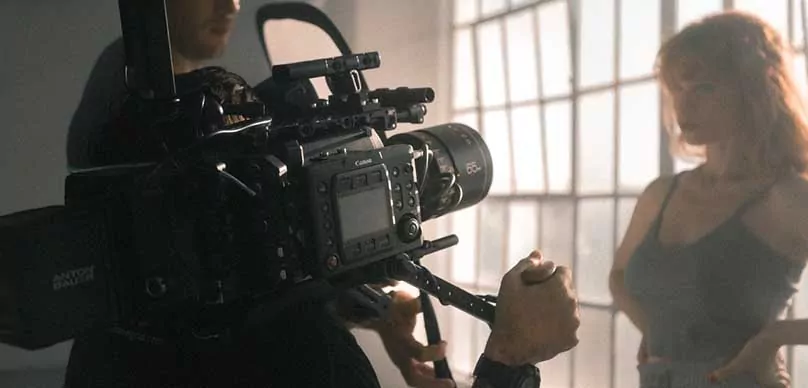
BPS 373: Cinematography for Directors with Jacqueline B. Frost

Cinematographers are really the directors of images while directors are the authors of the performances. Evidently, the collaboration between these two important persons on set with a shared vision and respect influences the work environment and (the ultimate result) the film, a great deal. 

We’re inspired this week by cinematographer, and author, Jacqueline B. Frost’s book, Cinematography For Directors: A Guide For Creative Collaboration.

She compiled her 30+ expertise in cinematography and production into this book. Its 2nd edition was published in March 2020. The book is a handbook for directors and aspiring filmmakers who want to get the best visuals for their films while establishing a collaborative relationship with their cinematographer. Through interviews with current ASC cinematographers, and a balance between technical, aesthetic, and historical context, this book guides the director into a powerful collaboration with their closest on-set ally. Topics include selecting a cinematographer, collectively discussing the script, choosing an appropriate visual style for a film, color palette, film, and digital formats, lenses, camera movement, genres, and postproduction processes―including the digital intermediate (DI). Interwoven are quotes from working ASC cinematographers.

From my own experience directing and working cinematography a few times, it is no secret that the relationship between a director and his cinematographer must be intuitive and non-contradicting. A quick sit down to break down the script, vision and general approach makes the work way easier for every party. 

Frost’s background in fine arts, photography, and cinematography— merged, has made it easier for her to spot the crevices in approaches or the lack thereof pertaining to DP, and head of images that have been the detriment of many projects.

Cinematography for her is a long-time love of the image and the endless learning process that was ignited when she pursued her graduate degree. To date, she’s taught cinematography, film, and documentary production at UCLA and through shorter courses and produced over 20 feature films and documentaries. 

We cover several themes from Frost’s book including what directors need to know about aesthetics of lenses, focal length, and its depth of field. 

Our conversation was definitely like a mini masterclass on cinematography and Jacqueline was a goldmine of knowledge.

Enjoy my conversation with Jacqueline B. Frost.

Right-click here to download the MP3

LINKS

  • Jacqueline B. Frost – IMDB
  • Jacqueline B. Frost – Facebook
  • Cinematography For Directors: A Guide For Creative Collaboration – Amazon

SPONSORS

  1. Bulletproof Script Coverage– Get Your Screenplay Read by Hollywood Professionals
  2. AudibleGet a Free Screenwriting Audiobook

Alex Ferrari 0:15
I'd like to welcome to the show Jackie Frost. How are you doing, Jackie?

Jacqueline B. Frost 0:18
I'm good. How are you?

Alex Ferrari 0:19
I'm very good. Thank you so much for being on the show. We're going to talk about today, I wanted to have you on the show because of your book cinematography, for directors and I, as I was saying to you, before we started recording, I've been as a cinematographer, which I do not consider myself a cinematographer, but I have a little feature film. So arguably, I've you know, not well, but apparently made, made it, I sold it. So apparently I did something, okay. Yeah, there was an image, it looked clean, all that kind of good stuff. And I've been a director for most of my career. So I've worked with good cinematographers, or with bad cinematographers. And I really think that a lot of especially young up and coming directors, don't understand the relationship don't understand the, the nuance of that religious, how important it is, how to collaborate, all these kind of things. But we're going to get into the weeds about all of this. But before we get started, how did you get started in the business?

Jacqueline B. Frost 1:13
Um, well, it goes back quite a ways right now. But I mean, when I was an undergrad studying, photography, Fine Arts, I was really into, you know, art history, I was into photography. And then I took a film history course. And that just opened up a whole nother chapter of my life. My professor actually said, You are really good at this. And you have a knack for it as Okay, so I pursued studies in film production after that. And because I already had a background in photography, when I did get to grad school, I could shoot better than most of the people there. So suddenly, I'm shooting like everybody's film. So I realized I really liked the creation of the image, um, cut back CUT TO 30 years later, I still love the creation of the image, I realized that cinematography is an endless learning process is because I, of course, learned in 16 millimeter film of black and white reversal. Then I went to color reversal, I was so excited, I finally got to color negative, I thought I'd hit the big time, you know, going from 16, to Super 16 to 35 was like, wow, you know, but then everything changed, of course. So I've also been an educator in the field of cinematography, and film production and documentary production, and you name it as some studies courses as well, for a good portion of my career. So I shoot I teach. And basically, my background from the fine arts and photography, and cinematography, all merged into something that was highly relatable to many other cinematographers. And something that it seemed filled a void between the director and the cinematographer. So that in a nutshell, that's 30 years or so.

Alex Ferrari 2:58
So, in a nutshell, I gotcha. So yeah, that's and again, that relationship is so so so so important. Especially when you're when you're because like I said, I've worked with good, good DPS. I've worked with horrible DPS. Isn't it true, though? Isn't it true that all you need to be to be a dp is you just need to buy a camera, right? That's just the way it works. Right? If you buy a red camera, you're automatically cinematographer? Isn't that the way it works?

Jacqueline B. Frost 3:22
Oh, yeah, sure.

Alex Ferrari 3:26
No, that was my, that was my biggest frustration coming up. Because you know, you would, when I didn't know any better, you'd hire people because of their gear. And not because of their talent. And that is one of the biggest mistakes as a director, well, they have a grip truck, and they've got to read or they got an Alexa, they must know what they're doing. No. What's your experience,

Jacqueline B. Frost 3:47
Not thoroughly the case. And you know, obviously, not all cinematographers. And I learned this a long way to own their own gear, because, you know, it's what they do with the gear, not having the stuff. Well, I got a whole bunch of stuff. I don't know how to use it. You know, it's not like that. It's like, what do I do with this? Okay, you can give me any camera. Just give me a little manual. I'll figure it out. Okay. It's about what you do with that camera. You know, so

Alex Ferrari 4:15
yeah, no, there's no question. And I think that in the in the olden days, back in the day when I was coming up in the 90s 80s, early 2000s, even you could buy a film camera, and that film camera will hold you for a decade. comfortably like you. You had an S r three. Yes, if you had an S or three s or two. As our three just had a couple of bells and whistles, that's all it was. Is it for everyone listening that's a an airy six Super 16 millimeter camera. That's the one I that did my film project in college with. I got the SRP, by the way never saw an sRGB again, in the field was only a start because it was expensive to have another three, but you could own that camera and it would hold nowadays. Every week there's a new camera every week there's a new K, there's new technology constantly constantly coming out. So it doesn't make sense for some photographers to own their own gear unless they can, they can turn it over pretty quickly or it's a per project like this project gonna pay for this camera, something along those lines,

Jacqueline B. Frost 5:17
or they rent out there gear as a side gig. But I mean for independent filmmakers or students coming out of film school or whatever. I mean, there's so many really good prosumer cameras now that can make nice films with and you know, way that we never there you go.

Alex Ferrari 5:34
See I'm holding up my iPhone 12 Max, whatever, I just, I did exactly. This, this blend these lenses. I mean, look, it's not professional, but even if you had some adapt, if you could just adapt it a little bit, put an adapter on it. I mean, Steven Soderbergh doing some insane stuff with the iPhone. I mean, it's pretty remarkable. Again, it's not about the gear, it's about the person behind the lens.

Jacqueline B. Frost 5:55
Yes, yes. And in No, during the COVID times that we've teaching, cinematography and stuff. I was doing it online, but they were still doing projects, and we'd meet and screen them. But, you know, sometimes they were like, Can I use my phone? I'm like, Well, okay, let's see how it goes. You know, some had DSLRs. And they could work with that, you know, the differences, though, you don't really have the lens variants that you have a real camera, you know, which make a difference. And you can buy, you know, a variety of 5000 $10,000 prosumer gear, that's pretty awesome.

Alex Ferrari 6:30
And even, I mean, you could buy a Blackmagic 6k for 20 $500. Get yourself a nice sigma lens and 18 to 35 photo lens. I shot a feature, I've shot two features with that lens. Yeah, it's fine. It's prosumer it's definitely not, you know, the high end glass of cinematography, you know, you know, like, I've shot with Zeiss. I've shot with cooks and things. And you feel the difference when you have like an engine. You

Jacqueline B. Frost 6:56
know, the difference when you start, I recently did a workshop for an MFA cinematography thesis project. And it was we had cook lenses on through and we had an the cook guy came in to do the demo. I was like, Oh my God. I mean, it's just like Richard kura said to me many years ago, he goes, You shoot anamorphic the camera could fall off the truck, and you got a beautiful image. So that's so true. Because I could see it. I can see it in the macro. The glass, the macro was unbelievable. I could see it in the anamorphic widescreen it was just so beautiful. Even on the Zeiss is a beautiful two. Oh, no. Camera, it's about the lens.

Alex Ferrari 7:32
Yeah, and that's the thing. If you are if you're a director or cinematographer listening, the only thing you should invest in is class because class doesn't go away. I mean, as long as it's a night, you know, glasses, glass, the gear the camera is going to change is changing as we speak. And all of that stuff, but the glasses where the investment lies because I love vintage. I love vintage glass. I'd love old glasses that cuts down the it cuts down the sharpness of like a red. You know, you get a nice 5060 year old piece of glass. What was the not the the one the Oh God, the one that Oh, the I can't remember better French glass set. And then there was an ASC cinematographer who pulled it out of obscurity shot him about but I can't remember that boo, belay boo, boo boo, something it bolts bolts. Well, it's ours. Yes, the bolts are set. Yes, the bolt the super bolts, the Super Bowl tires. I've shot with Super Bowl tires. Oh, stonor red, stunning. And they're old, old glass. But anyway, we can start geeking out we got to stop this. Let's actually talk about what what? Because this is what happens when I start talking lenses. I start geeking out a bit. But for the director and the cinematographer, how do you how would you recommend that collaboration? begin? How How should a draw an ideal scenario between a director and cinematographer?

Jacqueline B. Frost 8:52
Well, there's a lot of different ways that people come together but from the 30. So interviews I've conducted over the years, the consistent theme seems to be you need to have somebody that you intuitively connect with somebody who you feel comfortable with somebody who you trust understands your vision. You may have similar tastes, you may have a similar background. I'll use an example of Matthew leba, teak. And he talked about working with Darren Aronofsky. And he said, We come from the same place. We like the same music. We like the sameness and so we could work together instantly. That's a shortcut that really makes a big difference. And when you really trust your dp, you like your dp, they're the person that you know, you lean on when you start to flake out as a director and you're like all over the place. Wait a minute, look, your dp and they'll be like, remember we talked about? Oh, yeah, you know, so it's somebody who shares your vision and doesn't contradict you, especially if so, the first comes with an intuitive meaning. It comes also for looking at each other's work and respecting each other again, Using MADI as a reference, he admires and respects the directors he's worked with. He really likes that sense of collaboration and many DPS Rodrigo as well. They like to share that vision what they have and feel like I have something that I can share with your vision and bring to this project to make it even better. You know, and that's really where it comes down to just you know, that meeting, you don't come in and, and geek out. That's that's the meeting you don't have with a director, you know, what I was carrying when I got this lens, and I got it was cool stuff. And then enough, first of all, it's like, Okay, well, what what do you What's your vision? How do you see your film? You know, what is the theme? You know, how, what does it look like in your mind? You know, because that color palette is part of the conversation. Well, and then the next step might be okay, read the script, what do you feel about the script, and still, it's thematic, you know, they talk about thematic things, then, okay, let's talk about visual references. You bring the years, I'll bring you mind, let's see whether we're on the same page in terms of what this film looks like, feels like, you know, as a director, you can say, Well, look at these three films, I'm thinking about something like this coffee table book, or this particular artist. And the DP will say, oh, okay, I see where you're going. Also, Hey, how about their golden photography? And how about this? And how about that, you know, and you start to share a vision. And that also would come in the discussion of color palette, depending on the genre of the film. And then from there, it's like, okay, we know where we're going now. And now the cinematographer will visually interpret the script where the director will go ahead and focus on shots, angles, composition, framing, as well as working with their actors, you know, and that's really the coming together.

Alex Ferrari 11:40
So, and I know a lot of directors, young directors, full of vigor. As I was, when I was a younger, younger man, I had all these illusions of shooting, you know, getting all my storyboards out getting my shots down. And you do and you could do create that. But as I've gotten older and gone through this, leaning on the eye of a cinematographer, especially when you respect them, like, Look, I'm thinking about shooting it this way. What do you think? and the like, you know what, this would be a great wonder, okay, how do we, okay, that's gonna cut off about an hour and a half of setup times. Let's see how we can do that. And how interesting it is. Leaning on that cinematographer. I found to be, especially one that I trust is invaluable, because I have ideas. And of course, I'm going to come in with shot ideas. And because I'm a cinephile, and and he or she will as well. But, but I think a lot of times filmmakers feel younger filmmakers feel that it's my way or the highway, and they block off that collaboration, because it's ego or its insecurity, or, you know, their fear of like, you know, oh, he's gonna take it away from me, or she's gonna take the movie away from me, because they're running the camera, and there's so much of that stuff going on. Have you found that as well?

Jacqueline B. Frost 12:56
Well, I definitely advise against that. And, and I mean, I've taught directing, and I've taught cinematography, and I taught cinematography, for directors at UCLA extension. And, you know, I definitely say it is best for director not to be a tyrant, and to open their mind, you know, to not say this is just mine, but I'm open to collaboration. And the cinematographer and the production designer, those people, they're there to really serve your vision and to help pull it out of your head and put it on the screen. So to not use them as a resource is, as I think, really problematic for a director because they can make your film so much better.

Alex Ferrari 13:37
No, without question. Now, one thing I always love. Asking a cinematographer is how they want to break down the script. How should a director and as a photographer, sit down and break down a script, approach the script in general?

Jacqueline B. Frost 13:52
Well, there's different ways people like to work. I was fortunate enough to speak with Roger Deakins, a few years ago. And you know, he works with the Coen Brothers a lot, of course, you know, they storyboard and sometimes he'll work with them, and sometimes not, you know, it's not like you have to sit down with them. For him. He trusts in what they do, but he'll glance at what they have. Okay, I see what you want. They'll bring his perspective as well. Rodrigo preeto talked about working with Ang Lee and he was a little bit more precise about the way he wanted things, what lens he wanted. metaleptic loves to sit down and get in and work with, you know, help storyboard or shot list or break down the script, Ellen chorus, she'd like to just take the director sequester them for a week and really pull out of their head what it is they want. So she's really clear on cymatics. And she definitely has a more theoretical perspective to it as well. So you know, some people they just what a cinematographer wants is to be a collaborator. They want to be a collaborator. They don't want to be just Is the technician creating an want to help put their take into it as well. And so being pulled in in the beginning is important.

Alex Ferrari 15:10
Yeah. And I think a lot of times I, the way I always like to collaborate with cinematographers is the shots and the ideas, we work it out together, we work the shot list out together, but the lighting is all them, you know, it should be all them. And that's where this Can't you said this word a few times already in our composition theme. theme is extremely powerful, because you look at a movie like the last emperor, which is just stunning, stunningly shot, anything, Deakins is ever shot, you start looking and you start seeing the theme, through light, through composition to a certain extent, but there's definitely there. But the light and the lens choices are really what create the aesthetic of that theme is that your feeling as well.

Jacqueline B. Frost 15:56
That definitely helps to create it. Because I mean, if your theme is isolation, you're going to use a different focal length than if it's somebody feeling really with all the people around them. So it's a difference between a wide angle and a normal lens, it's going to give you a different perspective and depth of field as if it's a person who's just, you know, falling in love. Maybe we just want to see their eyes movies, you just want to see their face in the background doesn't matter. So yes, lens definitely helps to underscore the theme. Color does as well. You know, whether it's muted, warm, saturated, D saturated, that's part of the tone that's being conveyed, thematically, and will tell tell volumes beyond the words in the exposition itself.

Alex Ferrari 16:39
I mean, you look at it from like the matrix. I mean, which is so the theme of the of I think it was Bill Pope who shot that the theme of the matrix lighting and color palette versus the real world color palette, it's so distinctive, and you get that vibrant, kind of greenish, because of the code vibe, and the aesthetics and then in the real world is all just muted, grays dark. And then you're also collaborating with your wardrobe. And in your production designer, that's another conversation how you could collaborate with all your heads to create the image because it's not just the DP and the director,

Jacqueline B. Frost 17:14
oh, never know, it's the production designer creates the environment that the DP is photographing. So you kind of have to be in concert and coming up with what the overall look is going to be. And the other thing too is once that has been decided the color palette, and you know whether it's going to be saturated, essentially, there's they're shooting that way intentionally. So you can't sort of as a director, go and post and say, Yeah, I don't want to desaturate anymore, let's pump up the color. It's really not the whole design hasn't been created for that. So once you make the decision, you know that you really want to go a certain way, you kind of have to stay with it and not change because the DP has been shooting the film the whole way thinking what you discussed, and you can't all of a sudden change your mind at the end. And you know, the DI

Alex Ferrari 17:58
and the one and we'll talk about the AI in a bit. But the one one example of horrible example of that exact thing happening at probably one of the largest scales ever was the Justice League movie, where the one that was released originally by Joss Whedon was orange that last bout it was just horribly orange. And people were like, what's going on? And then when Zach finally got a chance that release is like, Okay, this makes more sense, because that's the way it was originally shot. So that we'd like jamming something in that wasn't there. And that happens a lot. And especially Yeah, because the power of the is just, it's it's like, it's like Stanley says, With great power comes great responsibility. Yes, it's true. It's true. Because the whole the whole thing can change. Oh, it's, I mean, I've been a colorist for I was at colors for 20 years. So I've colored 50 6070 features plus 1000s of other little projects. So I I would be in a room with a dp and the director. And sometimes the DP would want to go one way when the DP would leave, then the director be like, Hey, can we go, can we go back this way, again, that happens all the time as a colorist, you'd like I who's paying my bills, I have to serve a Master, I can't serve everybody. And so it's like this weird place to be. But, you know, with a couple of strokes, you know, the whole thing now has become D saturated. But but the colors are so vibrant, because the wardrobe is so vibrant. So now I gotta go do more work to fight what you guys originally planned. And I try to explain this to directors like, Look, this is not the way this was designed. I can do it. It's not going to look as good as if we just go with what was designed originally.

Jacqueline B. Frost 19:34
Yeah, well, that's what that happened when the eyes were first coming about in the early 2000s. That was problematic. And so that's why it's kind of written in a lot of ASC and union contracts now that they come back to do the color correction so that it is their vision. The cinematographer vision on that actually is released unless of course the studio head and producer gets in and changes the whole thing but that is supposed to be in contrast Now that you know the caller, is that what they decided on?

Alex Ferrari 20:03
But at the end of the day, but at the end of the day, though it is the director and and or producers final call, isn't it?

Jacqueline B. Frost 20:10
Well, it ultimately could be the studio's final call, you know, but it is the direction, the cinematographer is really the director of the images, they offer the images, right. And the director is the author of the performances. So, you know, it gets a little bit gray, but I think that the best collaborations and if you want to keep working with your dp, I would say, you know, work together like, okay, we we talked about the sector, remember, okay, let's keep going with that. And how D saturated then we then we can negotiate?

Alex Ferrari 20:42
Yeah, I mean, you're not going to go recover chivo or deacons. I mean, that's just not you know, that's not a conference, that's not a conversation.

Jacqueline B. Frost 20:49
But you know, they do their own anyway. I mean, they want to be there, they want to be creating what they really intended the image to be. So that's why they come back. And that's why they're now paid to come back and sit in the DI.

Alex Ferrari 21:03
Yeah, because it's their it's, it's their responsibility. You're absolutely right. And we're also talking about a very high level, I mean, we're talking at the highest, the highest level of, of cinematography and filmmaking as the names that we're throwing around. But when we're talking in the indie world, this is where it becomes a lot grayer egos start flaring up. You know, I've been in rooms where the DP got a little too fancy on set, and I had to save them because they're like, you know what, we're gonna filter this. I'm like, we could do this without, like, hard filters. Don't get married to the image. But the DP wanted to show off for the director and the producer. I'm like, Okay, and then when they came up, like, why is everything yellow? Like, I like it was literally just yellow there. And I knew what they were trying to achieve. And under the look, they were trying, they were trying to Amelie kind of vibe. Oh, yeah. Which the input? But yeah, they, they put too strong of a hard yellow fill filter on it a color gel, not color jumper. Yeah. And it just polluted all the images. And it took me I mean, it was in, there's two big stars in the shot that they were talking about. And it took me about eight hours to kind of literally get in there and like, window things out and follow it took it took forever to get that scene done to save it to literally save it. So you know, that's a scary scenario to be in, and it was in the DP just let things go. But when the producers got involved, they're like, wait a minute, that's not what we discussed. So there's there's that and there's also the politics of it all. Which it's something that a lot of people don't talk about is the politics of, you know, the DP, the director, the producer, then eventually, maybe a distributor studio. But what's your experience? I mean, you've been you've been in those that di suite a lot, I'm sure over the course of your career, and I've interviewed people who've been in it as well. What's your feeling, as far as the politics are concerned?

Jacqueline B. Frost 22:59
Well, the indie world is very different. Very. So of course, issues here, completely different worlds completely different worlds, you know, and I haven't been as high end as the people that I talked to. So their experiences sometimes are mixed as well. I mean, not everything has been, you know, hunky dory for them. And I'm talking about like major people, you know, in the ASC. But in the indie world, you that's where I think the trust between a director and cinematographer is even more important. And personally, I never would have slapped a yellow filter on without saying something to the director, arm, but I don't think I would have even done it. Because I know that it's better these days. Something like that in house, you don't need to do it. The only time I put a black and white a yellow filter on is if I was shooting black and white, of course, pick up the contrast. And then I would say, you know what, I'm going to kick up, you know, that's when I would do

Alex Ferrari 23:51
but that makes sense. And and we could do color tests. You know, like, it's not hard to do a quick camera test. It's a red camera, you own the camera, let's go out and shoot something. And let's test it out. Yes, it's not what I was more ego than anything else, you know, and that's it good. I get it is a problem. And of course, that dp never worked with that director again. And she's gonna say that you ever worked directly never worked with that dp again, and there's just so many I mean, being in this suite for so many years. I just, I just saw everything I've seen. I've seen the best of the scenarios. I've seen the worst of scenarios I've seen a dp who shot a movie when an award at a major festival and wasn't even in the color suite with me. And it was just mean that mean the director call it timing the entire thing. And then they when the cinematography award didn't even mention us things like they were like, you know, like, I know you shot it, man. But, hey, a shout out to the director. Because we are, you know, when I when I decided to dp my first film, I've been coloring for 20 years. So I was like, You know what, if I could just get this thing down the middle? I can save it. And that's exactly what it was. And I showed a few of my friends in the AC about it. And I showed them the film. They're like, what do you think they're like, one of my, one of my good friends in the sec, he's a, he's a very Eastern European, he's like my friend stick to directing. Because it's fine. There's an image there, but please let it leave us to professionals. So I never I didn't even call myself I said lit by I even just, I didn't even want to give myself a dp credit, because I just don't think of it. But But I knew if I could just shoot it down the middle, and I did and shot raw.

Jacqueline B. Frost 25:44
Right?

Alex Ferrari 25:44
Definitely shoot RAW. Now, I wanted to ask you about lenses. Now, and I don't want to go down the rabbit hole on this because we can spend five hours on just looking at 30? No, yeah, we already started. But it's what do you think directors need to understand in regards to the aesthetic of lenses? Like the basics of it, because we can go into the weeds about, you know, coatings and lens flares? And I mean, we could go on for hours about this stuff. Because it's 100 it's literally 100 years of different kinds of class.

Jacqueline B. Frost 26:14
Okay, the thing about directors, some not you necessarily, obviously, because you do have a technical background, but there are directors, if you start talking like that, their eyes will just Yes, over Yes. Check out they don't get they just want to know, okay, so but what directors should know, they should understand focal length. And what that gives you in terms of depth of field, for sure, a wide angle is going to give you the whole environment and beyond, you know, a normal is going to reduce that. So you know, know the basics. And know what you're doing with that, know that if you have a zoom on that, yes, you could do a rack and you could do that, you know, the vertigo shot that

Alex Ferrari 26:54
the the jaws,

Jacqueline B. Frost 26:57
right, do that and watch the depth of field come closing in, you know, know that if you're shooting a beauty shot close up, if you have a longer lens on like an 85 a factory, it'd be soft, and your subjects look really good. But if you take a wide angle lens, you put it in your actor space, it's going to distort. And maybe you want to do that because it's a horror film, or they're psychotic or something, right. So if you understand the basic principles, and also the basics of depth of field in terms of focus, because if you are having an 85 and you're in the low light, and you're wide open, you have no movement in there, you know, and you can understand you're focused on the left eye or the right eye if they blink itself. So you know, I think that that's as far as a director needs to go understanding the basics of depth of field, the basics of focal length, and difference between a high speed and low speed. And maybe you know, if you want to add a little more what anamorphic will give you versus a spherical lens

Alex Ferrari 27:51
pro and prime versus zoom and get those kinds of things. But I

Jacqueline B. Frost 27:56
But I outlined in the chapter of the book, I went to coatings and and all of that major company. I had a conversation just last week with the guy from cook. Oh my God, we went way down a rabbit hole. So it was really, you know, but I wouldn't put that I wouldn't put that in for a director to necessarily wrap their head around.

Alex Ferrari 28:16
No, absolutely not. I mean, I'll geek out just a little bit because I have to, but one of my favorite lenses is the Synoptic. Are you familiar with optics panoptics. So canoptek is a French lens that Kubrick shot, the end scene. In shining in the air inside the inside the maze with the snow. He shot that scene with a panoptic which is a 9.8 y non fisheye. So it doesn't fisheye. If you remember this scene in Clockwork Orange when he's walking around the out the record shop, that's a synoptic it's all super wide, but it doesn't fisheye that's the optic the shot right before the the the unfortunate scene in the beginning of Clockwork Orange, let's say when they pan that as door rings that's a panoptic. So I love that lens. So I found it sister, or the baby brother of it in 16, which is the 5.8 good optic, which you can attach to a a Blackmagic 1080 p pocket. So it has a super 16 lens. And it's I shot my shot my feet I shot one of my features. A lot of my shots were with that. It needs light, it works best outside, if you're inside you need it, you really need to, you know, if you shoot it wide open, it's going to be soft on the edges. But you can pop in a little bit, especially if you shoot a little bit higher rez and I was blown away at how beautiful the images it's just Oh, it's just, it's just wide. It's great. So that's it and I got it off of ebay and they're available. Still And the nine points are still rentable. They're rare, but they're rentable. But these are kind of little vintage things that you just like oh, what a Kubrick shoot. Oh Okay, there you go. Yeah, I want to I want to shoot with that so I mean, I go down that rabbit hole, but vintage I mean, look what I'm Zack Snyder just did with with army of the dead. That was all was it? We it was it What was he? What did he realize? He rehoused? Is it still lenses or just old vintage glass?

Jacqueline B. Frost 30:28
I'm not sure I there's probably an article on American cinematographer magazine about it. Yeah, I mean, because he because if you are working with vintage glass, still camera lenses and rehousing them,

Alex Ferrari 30:39
well, he rehoused all of all his lenses, and he shot and you can tell like, it's a very, like, there's barely any, like everything's out of focus. Like he moves 100 it was a really unique for such a big budget, visual effects film, a pretty pretty ballsy and he shot the whole thing himself because he's he grew up as a cameraman, and director cameraman in the commercial world. So it's fascinating to watch. But that's what's happening now. And knowing something as simple as this, this idea, if you're shooting with a red if you have a female actress or any actor, if you want to see the pores, shoot with new lenses, if you want to soften things up a little bit, shoot with a little bit older, size, cook better, because it's going to be a softer image.

Jacqueline B. Frost 31:26
I mean, old cooks, because the old cooks are getting sharper and crisper, although they were saying the Zeiss is, you know, their, their lines are just perfect. So that from end to end, the lens will be crisp and sharp, whereas cook allows the fall off. And so I think, you know, bring it back to a director again, if you have the opportunity to test some glass with your dp Yeah, and then together and then you know, you write let's notes, this is the 25, cook, this is 25 sites, this is this this is that, then you can really get a sense and the director can respond to what they really like.

Alex Ferrari 32:02
And that's and if you can do that, and in today's world, you know, you probably could do that. I mean, you probably could have the DP like rent, rent a couple packages for the day, go out and shoot some tests, come back to the DI suite and take a look at it and see what even if you know nothing as a director about lenses, you could just go I like the way that looks.

Jacqueline B. Frost 32:20
I don't like that that's too sharp that you know, definitely. Yeah. And I mean, that's something that isn't hard to do. And I it would be a bite nice bonding thing for a director, oh, yeah, they don't know each other that well. And then you can start to see where you're going. And I think more of those kind of testy experiences watching films together, getting a sense of where this person's coming from, you know, understanding each other I that will make it so much easier on those 12 to 15 hour days.

Alex Ferrari 32:48
Oh, especially on that 15th hour, is where you really, you know, those last those last few hours of those days is when you start leaning on each other, and especially the director is leaning on the on the DP a lot. I've been on shoots, where I'm just like, I'm either exhausted, flustered, I'm dealing with other things on set, and I can't, I can't even think of the next shot. And I'm like, we're working where do we need to put the camera? And the DP is there. Remember, we spoke about this, let's Why don't we shoot this here? Or the location changes? Or we can't shoot it that location. So we have to run to another location and steal something? And we're like, okay, on the fly, what are we going to do? And yes, that's when you you want that, that, you know, brother or sister in arms on the day in that relationship. So, so important.

Jacqueline B. Frost 33:38
It is it is and it can make and break a film too. Because if it isn't a good relationship, and you're hating each other and, and like I always used to say don't fight in front of the children, like, you know, you're arguing in front of the actors, because you got to throw off you know, you know, go are you behind the trailer somewhere, if you punch each other back then but don't you know, it's it can really ruin a film. So I think finding that person and I think that's why directors who really like a certain dp will keep working with them. And you know, and then unfortunately, if somebody passes away, it's harder to find another way to keep working with again, and you know, but it's a shorthand that's so essential. And doing these books, I, you know, I was able to really focus on the first one came out in 2009. So I was still talking about film stuff. You know, that's when I decided I had to redo this completely and redo the whole thing from beginning to end. But so I got to talk to more people because of that, you know, and I really found that it was an important conversation. And that DPS feel very, very strong about it. They don't want to be dictated to they don't want to be handed a shot list or a storyboard say it has to be just like this because they say nothing looks like a storyboard. No lens look exactly like storyboards, right, you know, as a reference. Cool,

Alex Ferrari 34:58
you know? And then That's the other thing is like sometimes you work with DPS, excuse me with directors who are arguably could be easily could be lighting this themselves like a Fincher or a Cameron and and like like I have a wonderful story with Russell carpenter who you know the Titanic won the Oscar for Titanic but any the True Lies as well with and now he's doing avatar with with with James and his stories of Jeff's are are hilarious because of I won't tell it here but I'll tell you off here but it wasn't I don't want to get into that the whole story but but you know when you have somebody like a director like a James Cameron or David Fincher who arguably could like the damn thing themselves could they're that technically inclined. You need a special dp for that you don't like Deakins is not going to work with Fincher, there's just no way. No way. No, no way. You know, but chivo will work with Alejandro because that works perfectly fine. You know, or Terrence Malick and chivo will work together because the company always in it. Oh my god, isn't it amazing? Oh my god, Shiva. Oh, God. He says just like, you know, when you're with these kind of cinematographers, and that's the thing when you when you have two Titans, like if you have a deacons, and you have a Michael man, how does that, like, you know, how do you how does that work out? We're off subject now network is geeking out and, and playing around. But in seriousness, like when you have two Titans like that, that are some of the best at what they do in their own fields, and they can't agree with one image or the one way of looking at things. It must be hard. And that's those stories have been out there. And therapies. Sure. Yeah.

Jacqueline B. Frost 36:52
You know, and that's also depending on if they continue to work with each other. If you look at a DPS credit, you see they work 10 films with this one, one with somebody else, and then five more with the same people. That one was not a good experience.

Alex Ferrari 37:05
Generally, generally, generally speaking, yeah. And you could see like, you know, Spielberg would work with Who's he worked Africa, who he was, was he working with, like, up until 80? Until then, Janis came in? And then who and Yes, yeah, yeah. And he worked with him for a certain point. And then that was it. Going Hey, john Jonas, and then, ya know, it's been he's basically shot everything right? since then. Yeah. Yes. Yes. He's, because he's, that works. It works. And I go back to the I go back to the well all the time with people I've worked with, because I just like, I don't wanna have to deal with a new relationship, especially at such a high level, you want to just build that relationship and Okay, know what I'm gonna get with this, you know, as opposed to try and dating someone new. This is this is a relationship. I don't want to date someone new. And I have to look, I have to like pretend I'm somebody I'm not. And I can only hold that up for so long. Like, it's like I know you we know each other. Let's just keep going down this road.

Jacqueline B. Frost 38:07
Like, got Martin Scorsese, right. He worked with Michael Bauhaus for many years, many years from you know, they did like from that film, after hours in the shorter Wait, then Michael ball has passed. So he had to find somebody new. So he tests the waters lib found Rodrigo creato. And now that's been working since, you know, he had Robert Richardson shoot a couple films for him. But it's been creative since. So it's like when you find somebody you're comfortable with working with you go with you've got Robert riches, and he's used to work with Oliver Stone all the time. Yeah, he's trying to try to divorce. You know, and now he's a Tarantino, because he found his new love. And, you know, they connected. Oh, they

Alex Ferrari 38:53
connected in a big way. And, you know, I just wish I just with quitting a little shoot more often. So we could see their work together. But yeah, The Hateful Eight. It's been stunning. And they're doing insane stuff, what they were doing and all that kind of stuff. You know, now that you spoke about visual reference, what should a director bring as visual reference for their vision to a dp?

Jacqueline B. Frost 39:16
Well, it's anything from previous films, of course, some, you know, you could say this film, this film, this film. I think Spike Lee would be notorious for actually screening and, you know, saying something like this, not, you know, knocking on the shoulder or whatever. If they don't have time, they would just share shot list streaming things, you know, check out this, check out that. So photography, of course, is a very strong reference. You know, you've got photography of William Eggleston for a certain time period with the Alang Grapes of Wrath time period. Nan golden, contemporary 70s. You've got a variety of photography, sometimes. It could be graphic novels, depending on the kind of, you know, film it is it could be old magazines Life magazine look magazine for a certain vintage time period. The force there are a handful of painters that are filmic painters you got Edward Hopper, you know Caravaggio, for chiaroscuro Rembrandt for chiaroscuro. Vermeer for directional light. You've got Andrew Wyatt for a certain look. He misery they're very filmic and their their paintings alone seem like stills from a film

Alex Ferrari 40:29
in a way you watch it you watch Barry Barry. Lyndon Lyndon B Barry Lyndon right yeah, yeah very very Linden oh my god like those frames are literally paintings they looked a tour of the candlelight from below I mean, it's literally like he just zooms out and then you just like still frame that looks identical to a masterwork I mean, all and it's shot, shot after shot after shot after shot in that movie like that.

Jacqueline B. Frost 40:58
And I was pulling and I was talking about Sam Mendez talked about using Edward Hopper as their as a reference to Conrad hall for Road to Perdition. So as frame grabs, I mean, there is a frame in repetition that looks like an Edward Hopper painting. I mean, it's seen where it's kind of split in half the boys sitting on the bed in a long shot. The Tom Hanks character comes in, but he's not there yet. So it's an empty frame. And it's so painterly, it's beautiful.

Alex Ferrari 41:25
No, Conrad, I mean, Bobby Fischer. I mean everyone always goes back to Bobby Fischer and what he was doing and Bobby Fischer Alright guys, I apologize we're geeking out again. This I knew this was I knew this was gonna happen. This isn't gonna happen. One thing one thing I think directors should understand is the power of color and the color palette. Absolutely. Because color is so informative at its at a subconscious level green gives you this energy of feeling red gives you that and I think one of the best uses of that was the loud user the last emperor. It is it's a masterclass in color palette. And what from like when the instruct when the teacher comes on a green bike, you know things little

Jacqueline B. Frost 42:11
it's Vittorio has a whole philosophy on color. But you don't have to get as in depth as that except if you understand that their color even just using color as complimentary colors if you understand the color theory a little bit

Alex Ferrari 42:25
what do we have? What the color wheel there?

Jacqueline B. Frost 42:28
Yeah, the color wheel what's you know, what's warm, what's cool, what's complimentary, you know, and integrating those if something is the past the period piece you know, it's warmer perhaps in the present day maybe schooler I mean, there's been so many films where they've touched on this the color palette for specific reasons saturated liquid, Todd Haynes and Ed Lockman. duty to recreate the 50s it has this feeling of a technical or Kodachrome film, film, but that's add light lighting it like Kodachrome film, you know. So, the references will give you that to base yourself on but you have to understand as a director, if you're saying well let's everything have cool palette, what you're saying is this is a somber tone, right use for a rom com.

Alex Ferrari 43:12
It's not gonna work.

Jacqueline B. Frost 43:15
Nor if you have a rom com and it's all you know, if it's saturated warm, okay, we want to see the but if it's dark, and chiaroscuro, that doesn't work as a rom com either. So your lighting and doing color for genre.

Alex Ferrari 43:26
Yeah, exactly. So you look at that's why most comedies are shot essentially flat, almost, it's like, you know, Dumb and Dumber, or the more slapstick it gets the flatter it is there's no in depth lighting. Rom coms have a little bit more shape to the light, but again, very specific. But then you look at, you know, a Michael Bay film, and then or Tony Scott film, and the colors are vibrant and saturated and dark blacks because it's an action film. And then you look at seven or fightclub A Fincher film. And the contrast is dark and like you look at seven is just a masterclass in life. That's

Jacqueline B. Frost 44:05
Yeah, because the whole look visually, is a visual exposition of how sick and twisted and sad story is. Yeah. It's telling it's telling the audience how to feel without telling them how to feel.

Alex Ferrari 44:18
Right, you see a frame you see a frame of seven, and you see a frame of Dumb and Dumber and there's a different energy regardless of what's happening in the frame. So understanding those basics as a director, you have a better yet these are things that I think all directors need to understand at a rudimentary level, to be able to be a, an effective storyteller in this medium colors, basic color theory, basic lens choices, basic lighting, but you know, these kinds of things are basics that you can't I don't want to think about it. I don't want to think about like, if you don't as a director, you're relinquishing that power to someone Else good. Could be you could take all the credit for a Roger Deakins. Or you could have a dp who has no understanding of what they're doing and make you look horrible. But you need to understand just the basics to go, Oh, wait a minute, that's not what I want. That's not the tone I want. We need to switch that basic basic stuff. Do you agree?

Jacqueline B. Frost 45:19
Yes, absolutely. And it will if you can get on the same page and really truly collaborate together that's gonna make the film so much better.

Alex Ferrari 45:27
Know what I mean. And again, Malik and chivo I mean, you watch you watch tree of life and you're just like, just you just sit there like you just said, you just sit there and go. Oh, yeah, this is like this. Like it's it's it's when they when those two get together. It's like you're in a dream. It is really dream like in a way that I can't really explain it and that's the beauty of it is that the visuals of it are so dreamlike. And it's not that they just like you know, foggy put some Vaseline on the lens is nothing like that. It's reality ethereal quality. Yeah. I mean, one of my favorite Kubrick films is his eyes wide shot. And I absolutely adore eyes wide shot. Intel. I love eyes wide shot, but the thing is with eyes wide shot. It's a dream. It's it's completely unrealistic thing and the way they did the sets and all that stuff. But the lighting I mean, especially the beginning, just the the the Christmas lights in the background. Yeah. And that's how they lit they lit the whole damn scene with Christmas lights. And I think China ball. Right, right, which are good things to keep as a reference. Right? Yeah, I mean, China balls, the indie filmmakers best friend is a china ball. cheap, cheap lighting,

Jacqueline B. Frost 46:53
get it get a little bit and they travel? Well they flatten out, just don't crush the bolts keep them separate. Exactly. Exactly.

Alex Ferrari 47:00
Now, one thing with all the confusion of cameras and resolution, this is a one one area that, you know, it's a pet peeve of mine with the 8k 12k 6k 5k, all this kind of stuff. So many directors get caught up in the case like, Oh, I'm shooting 8k, I'm like, good for you. It means nothing. I shot my last film 10 ADP looks great. blew it up to 2k on a DCP projected at the Chinese theatre. And I was shocked at how good it looked. I was scared. I'm like, this is not gonna look good. And all that oh my god, it's one of the most beautiful things I've ever been a part of. So it doesn't it again, it's always about what's behind the lines, who's who's behind the lens and Who's shooting the shooting it. But what's your take on this whole 8k and the resolution wars, if you will, and directors getting caught up in that. And also then the power that that gives the director with with composition in post?

Jacqueline B. Frost 48:00
Well, in terms of First of all, I want to say there's a quote that john Seale said to me, he said, of course, with a really good Australian accent that I won't do right now. First Five minutes into watching a film, they're not going to know your audience is going to not be aware of whether it's 8k 2k 5k they're not gonna think about that they're gonna be in the story. The story is any good. All right, so that first of all, isn't going to make your film better shooting 8k? And how are you projecting it 8k because you can shoot it 8k but then it's being projected to K at best, at best it's on on a monitor, it's 1080. So what does it really matter? You know, if you are shooting something that is isn't the right now 4k is kind of averaged out. You know, cinematographers said that super 35 is the equivalent of a 6k k anamorphic is is beyond you know, supers six 630 65 millimeter is beyond 10. It's like eight to 10k whatever. But unless you're seeing it like that, you're not getting the impact of it. If you're watching it on your on your phone, or on a computer, it really doesn't matter what you could be shot with your phone. No, it doesn't matter. So to get hung up on that I think is a really trivial and marketing kind of issue. That right now the manufacturers of the cameras keep saying well we can do this and this how many cases are we going to go? Do you really need to see somebody scores Okay, then your di guy you know, you go into post now you got to slap 100 filters on it to soften things up again. You know, you're it doesn't you put it back that's now taken away from film in the making.

Alex Ferrari 49:39
The only thing I would say ever to shoot that at the higher resolution is that is a wildlife. Shoot it at 12k you need that resolution. You're out in the in the savanna somewhere you want to zoom in on a lion eating a gazelle, and you're cute, then yes, absolutely shoot as many cases as you can, because you're more likely going to project that animal iMac scenario or something like that, but the one thing that I've talked to so many VPS about, especially when I'm in my in the in the DI suite was the repositioning You reek recomposing shots, where the DP very, you know, with with with mission, shot it and compose it one way, but the director comes in and goes, Oh, well, let's get all our coverage from the shots. And let's pop into extreme close up. Let's pop out over here. Let's do this and that. Can you do that? Especially in the indie world? Can you do that? Yes. If you shot 6k, could you get away with it? Yes, but the lighting is not correct. The lighting was lit for a wider a wider shot. It's not, it's not lit for your eyes. Yes, you can jump into the eyes. But then it's my job then as a DI that I'm doing basically digital lighting and I'm sculpting light in the DI which takes longer, all this kind of stuff. So but and I know that the PS, every dp ever talked to hating,

Jacqueline B. Frost 51:00
because you lighting you every time you do a different setup, you're you're tweaking the light. And if it's a close up, now that's going to cut into the coverage, of course, you're going to tweak the lights off in the light do this. And so that's that actor looks the way you want them to look. So to just take a slice out of something else is not ideal at all. No,

Alex Ferrari 51:18
no. I mean, look, if you get in trouble, maybe if you get in trouble one shot, but not like, because we all do that. I mean, I've seen $200 million movies who shoot it or whatever. Yeah, I mean, I was I was talking to a dp who worked with bei and he literally was in the DI went outside, shot a closeup of a tire with his iPhone and brought it back in, inserted it and made the movie. Oh, that's awesome. Because it's because it was like, yeah, I'll be right back. Let me go get another shot. He shot some sort of tie or something with his iPhone. It was an insert it was like a you know, 15 frame insert, but he wanted that shot, edited it in, no one ever knew. So it happens it happens. But as a as a thing that is a constant is definitely

Jacqueline B. Frost 52:06
not ideal. But the thing is, like, you know, and resolute things have shifted so radically quickly, like john Beit Bailey told me he shot a film a few years back, this was when the eyes were early, they shot it anamorphically you know, so it was widescreen. anamorphic. And they only did to do a to K di. So it was released. Okay, so what was the point of shooting? widescreen anamorphically. You know, it was there was no point it was reduced. So, you know, if you shoot something 1k 2k 4k, you're great. If you have the opportunity to do something, or if it's a special feck thing, or if it's it is going to be IMAX or huge. Okay, then the higher case matter. But to get have a little tiny camera get hung up on

Alex Ferrari 52:48
this is 15k

Jacqueline B. Frost 52:50
who gives a crap really, at the end of the day, it doesn't matter because you don't need to see that much detail.

Alex Ferrari 52:56
Right? You want to know you do not trust me. I've been in that I've been in the AI suite and I'm like, oh, that actor did not Oh, they didn't shave today. Okay, that's I see every hair, okay? Look at that way,

Jacqueline B. Frost 53:10
you don't need to see it. I mean, remember with film, remember the music, the magical transformation that would take place you're shooting on set. Okay, you got your Zeiss lenses at all. But you're shooting film, you see it transferred. And it looks just beautiful. Because the ice is different than film reads. You know, that's what made it so nice and soft and magical. Whereas you have a really harsh lighting, and you have a really sharp lens in a four to 6k image quality. You don't really want that sharpness.

Alex Ferrari 53:43
And that's why Alexa hasn't really jumped up to 8k 10k cuz they're like, we don't need that. And and arguably, Alexa has the soft one of the softer images. I mean, when I say softer, I mean a pleasantly soft edges. And the red, the red is sharp, as its surgical, how the red sensor picks up the image. And I don't know about you, but I'm a big black magic fan. I love Blackmagic cameras, I think they're the best bang for the buck for an independent film. And I've done tests where I've shot and this is for everyone listening, because everyone thinks Oh Alexa, Alexa, let's if you can afford it. God bless you. God bless you. But if you can't, I've shot with and I've spoken to AC cinematographers who have had black magics on the set with as B or C cameras on every set. And they're like we can't publicize this because you know, we can't do that because that's just it. That's not the cool thing I guess or whatever. But they literally had they should be roll on it and you can't. Can't tell and I actually did like it let's actually put this to the test. So I shot Blackmagic Alexa, same lenses, same setup, shot it down the middle. I mean I throw it up there. I challenge anybody to tell me which is which but where The Alexa starts showing its glory is where you start pulling it. You start going under, under or over. The black magic falls apart. But the Alexa hold and hold and but if you're doing your job as a dp, you shouldn't really be under five steps. Step five stops or not. Yeah, I'm hoping not but, but just for people listening. I mean, Blackmagic cameras are best bang for your buck. Without question. You can get a beautiful image of you shot with those or have you any experience with those cameras? Yeah, yeah. I have one right here. Yeah, they're great. They're they're fantastic. Little cameras. They're fantastic cameras. Especially. That's the original 1080 p that's super 16. sensor. Oh, what I have. Oh, so also, you definitely get to look up that synoptic you got to put that an optic up. Look up that panoptic it's good. And that's been booster. Isn't that speed booster amazing on that thing. You get an extra stop stop and a half. Yes, yeah. Sweet. It's, it's it's happening here. So I have, yeah, different things that yeah, it depends on the budget depends on the price of the project. Of course. One other thing I wanted to talk, so we kind of touched upon this the entire time, but in a DI suite. How should a director work with a cinematographer in the DI suite? In your opinion, and I will tell you mine because I see so often, but I'd love to hear your point of view. I think the DI suite really is the DPS domain, because it's their image, that they're tweaking and polishing based on a discussion that's already been had with the director. So I don't think it's a time to do radical different things. Or to go off of that I think that the DI suite is really for the DP to finish their film, to finish being the author of their image. So but where do you balance that with the vision of the director in the safe, it's a little bit different. And we're talking subtleties, not we're not talking like black and white to color or set massive saturation differences or anything like that. But aesthetically, where I've been in the room with a director is like, I don't like that. But the DP is like, well, I want it this way. At a certain point that dp has to like, Look, if it's within five or 10%, of where I originally had the idea, I disagree with you, but you're the director. It is your final vision. This is where that politics situation comes in. And then God forbid, if the producer shows up off, forget it. You do not want the producer involved in the situation.

Jacqueline B. Frost 57:22
But you know, then at the end of the day, I mean, you're working for the director, the director is not working for you. So if it was me, in that situation, I would have to relent, if the director really feels that it should be a little brighter than I intended it to be, you know, it is there felt, I may be annoyed every time I see that shot. But isn't it

Alex Ferrari 57:46
right, as long as it's within a preset, like if it's if it's like, if we're literally just, you know, pixel adjusted pixels. It's a five or 10% difference. That's aesthetics. That's like my taste versus your taste. But if it's like 50% off, and like, you know, wait a minute, this is not what we talked about your we went in shooting the matrix, but now you want Amelie, or you want or you want Dumb and Dumber, this is not what we talked about. Now, can you tell people about your book in cinematography, for directors a guide for the Creator, calibration, collaboration? tell everybody about the book and why you wrote the book?

Jacqueline B. Frost 58:24
Yes, well, the first book came out in 2009. And the second book came out in March of 2020. Right on time of COVID. Of course, obviously,

Alex Ferrari 58:33
for for everyone to go out shooting in production. So great book,

Jacqueline B. Frost 58:37
I haven't done any promotion for it. It's sort of like disappeared for a year. So I'm just pretending that it just came out now. So that the second edition is new, completely updated. The reason I wrote the book is because it is sort of the thread between the director and cinematographer to kind of put them on the same page. This is it's written for directors more than cinematographers. But I've given it to cinematographers, and then given it to directors like

Alex Ferrari 59:05
please, please do this, for God's sakes with this,

Jacqueline B. Frost 59:08
please read this book. So it gives them It gives directors producers screenwriters, people who are not super tech savvy, it gives them an understanding of what his cinematographer does. And I use a variety of quotes from ASC members to kind of validate what I'm saying. So I talked about lenses. I talked about formats. I talked about visual effort references color palette, working with the script formats. touch on color theory. I even talked about film versus digital, talk about certain types of cameras, where we are today, and a whole list of collaborators, directors and cinematographers historically.

Alex Ferrari 59:46
So it is a book that every director should read, especially directors coming up who have not had the experience of being on set with many DPS. It is invaluable because if you had a good collaborator as a dp You're, it's so hard to make a good movie period. Yes, it's so difficult to tell a good story, it's so difficult to just produce a film and get it over the finish line. If you're fighting your dp, it's so much harder.

Jacqueline B. Frost 1:00:14
It's not, that's, that's hard, you should be in celebrating the fact that you're making the film, celebrating the fact that you've finished the film, because you're going to be in festivals together, you know, you're going to be sharing it together. And, and hopefully, you're both proud of what you've achieved. So that's, you know, and so I'm all about advocating for collaboration, on all parts, for sure.

Alex Ferrari 1:00:35
in life in general, we should all get together, have a coke and a smile. No, Freeman's, then, you know, just work them out calmly, what you know what, and that's, and that's something that's very important to say, you will not all agree on things. And as a dp, I'm like, I want to go left, you want to go right, that's fine. As long as the DP understands that the end of the day, the director is, you know, and I'm taking it as a director, I'm taking advice or input from the production designer, the costume designer, the actors that all this, oh, this location, that location, all these kind of things, but, but if you could, at least respect I think respect is the big word here, is refers back. If you respect your cinematographer, and the cinematographer respects the director, you can work things out, as long as there's respect there. But you will get angry, there's no question, you're gonna get angry with each other, because it's production. It's crazy. It's insane.

Jacqueline B. Frost 1:01:29
And you're creatives, and sometimes you're not gonna see things exactly the same way. Right? But it's it, you know, I have to trust that if I'm shooting for a director, that it's their vision, and they see it in their head, they know what they're doing. So I may see it this way, but they're like, no, I really want it. I don't need that. Okay. I'm not gonna argue you're fine. If that my shot? No, you know, okay, you see it this way, you know how you're cutting it together. Okay.

Alex Ferrari 1:01:50
All right. And let's, let's move and let's move it along. Let's move on. And that in that attitude is of one of an experience of photographer because I've seen both the inexperienced cinematographer and the expert and the experience cinematographers just like the experience directed so so like, that's fine. Just Just get along. Let's I got to go get some coffee. Let's move on. It's really not worth fighting about it's pick your battles pick, isn't that you, the young dp the young directors, they fight all the battles all the time, and they're exhausted by the end of the shoot, where the it's like an every in every feels like the the guy was that story, when there was a story of a young boy who wanted to finally fight his dad, like, you know, that coming of thing and like, I'm gonna take you out Oh, man. And the and the dads like, Alright, you want to fight, let's walk outside and go, is it so that the kids like walks out the door, walks, he's walking out the door to go fight them in the front yard. And that clocks him in the back of the head and knocks him out? And when the kid wakes up, he's like, lesson number one never turned you back on. So that's age. I mean, I should. That's abuse. But but you get the story, you get the Let's hope it doesn't happen. But you get the idea.

Jacqueline B. Frost 1:03:09
What a dp and experienced dp in particular, but even you want to director be prepared, yes. there and go, Oh, gee, where do we put the care of like, you should know that already. So if you if a director comes on set, and they're prepared, and they know what they're doing, and they know what they want, they have a vision that will make everybody's life so much better. It'll make the shoot so much smoother. And that's what you want to go for. You don't want to be completely unprepared of what you're doing.

Alex Ferrari 1:03:36
Amen, amen. And I'm gonna ask you a few questions as well. My guests, what advice would you give a filmmaker trying to break into the business today? Don't piss anybody off? No. That's obviously not possible. Especially in today's world, you're gonna piss somebody off by doing something?

Jacqueline B. Frost 1:03:55
Well, the thing is, today, there is so many more open doors than there were before. Because you can make so many films digitally that look good, that you can submit to so many festivals, there's so many outlets now. If you're a woman, and you'd like to be a dp is so much easier for you now, with the doors being open for unions for the ASC. There's an openness and rather than, you know, a discrimination against women shooting so it, go for it, but do your best work and be strong and don't let anybody deter you on the path. And I say that for guys, as well. You know, you have to just be determined, follow what you want to do. And stay your course. You know, I think eventually you'll make it.

Alex Ferrari 1:04:41
What is the lesson that took you the longest to learn whether in the film business or in life? Wow, that's a hard that's a good question. You know, I appreciate

Jacqueline B. Frost 1:04:52
I mean, I think everything is an endless learning process. Don't ever assume you know, everything remain open. And be friendly and fun to work with. You know, don't take yourself so seriously

Alex Ferrari 1:05:06
as I don't know who I think forgot who it was, but it was either a famous director, someone's like the best advice I ever got as a to make it in this business Just don't be a dick. Good, there's still working in the business. So I don't know, there's there there is there is and they do get to a certain place. But generally speaking, if you want, if you want to be on set with, you want to be on set for 15 hours a day with someone you get along with. And if you're a prick, you're not going to work as much.

Jacqueline B. Frost 1:05:36
People aren't going to want to work with you, and you're not going to work with them. So and that has happened, you know, it's like it's a hard job. And I've talked to DPS about this too, you know, and they say they want to enjoy the experience, you know, life's too short not to.

Alex Ferrari 1:05:51
And last question three of your favorite films of all time. Of all time,

Jacqueline B. Frost 1:05:56
I'd have to put the graduate in there for sure. So Apocalypse Now because that's the one that made me fall in love with cinematography, because of victorio. And the third one that could be tough. I really love the work of Douglas Sirk and the cinematography of Russell Mehdi, so good to look at like, all that haven't allows or written on the wind. I love the saturation of the 1950s cinematography, I love the work of wrestling money. So I guess I could say those.

Alex Ferrari 1:06:28
And where can people buy the book?

Jacqueline B. Frost 1:06:30
They can buy the book through Michael ABC productions. They go buy it on Amazon, Barnes and Noble. It's pretty much everywhere now.

Alex Ferrari 1:06:37
That's awesome. Jackie, thank you so much for being on the show. It's been a pleasure. And I know we can geek out for at least another hour or two. But I do appreciate you writing the book and helping directors collaborate with send a tog refers in a positive way. So I appreciate you.

Jacqueline B. Frost 1:06:53
Yes, thank you so much for having me and it's been a pleasure speaking again.

Please subscribe and leave a rating or review by going to BPS Podcast
Want to advertise on this show?
Visit Bulletproofscreenwriting.tv/Sponsors

BPS 372: How NOT to Lose Money Producing Indie Films with Anne Marie Gillen

The film industry had to adjust a lot since the hit of COVID. Thanks to streaming services, the hit wasn’t as volatile as could be. Now that society seems to be reaching the end of the pandemic, the future of the filmmaking and film experience post-COVID has become part of the conversation. To help us explore the subject, I have on the show today, seasoned filmtrepreneur and award-winning producer, Anne Marie Gillen.

Anne Marie is the CEO of Gillen Group— an entertainment consulting firm in Los Angeles. Production-wise, she’s credited for producing commercially and critically successful films and television shows. Coupled with an international network of studios, distributors, and talent, one may call her, The Plug.

During the stages and succession of my career, she’s ranked C-suite executive positions at big entertainment companies like Development & Production at Entertainment Business Group, Electric Shadow Productions, and Revelations Entertainment.

Her comedy-drama film, Fried Green Tomatoes produced in 1991, is an all-time classic and stands to have been a Box office success. It grossed $119.4 million on an $11 million budget and was nominated for two Academy Awards. The film tells the story of a housewife, Evelyn Couch, unhappy with her marriage, befriends an elderly lady in a nursing home, and is enthralled by the tales she tells of people she used to know. Through Idgie’s inspiring life, Evelyn learns to be more assertive and builds a lasting friendship of her own with Ninny.

Anne Marie compiled her business expertise in the industry and her production experience to write The Producer’s Business Handbook (2010, 3rd edition). The book was followed by her next film, Parallel Man: Infinite Pursuit, in 2014. 

Chased by commandos, Agent Nick Morgan is on the run in the multiverse! To escape, he jumps between parallel Earths including a polluted industrial hellscape, a planet where dinosaurs evolved into humanoids, and a fungi world with giant mushrooms.

Your corporate minds will definitely enjoy this interview.

I’ve linked Anne Marie’s book, The Business of Show Business for Creatives, in the show notes for you to check out. 

Enjoy my conversation with Anne Marie Gillen.

Right-click here to download the MP3

LINKS

SPONSORS

  1. Bulletproof Script Coverage– Get Your Screenplay Read by Hollywood Professionals
  2. AudibleGet a Free Screenwriting Audiobook

Alex Ferrari 0:08
I'd like to welcome to the show Anne Marie Gillen. How you doing, Anne?

Anne Marie Gillen 0:14
I'm doing great. Thank you so much, Alex. I just have both of my vaccinations and a two week incubation period. So I'm almost normal

Alex Ferrari 0:25
Almost I'm my wife and I are just almost there. We're in the go f yourself category right now. But we're almost We're almost to the edge we're like, and it's so sad for us because we're just right on the border of like now, not yet. Not yet. But as of this recording in about a week or so we should be able to, to, to jump on beautiful. So it's been a crazy. It's been great. It's been a crazy year and change. It is affected not only the world, but it's just thrown our business upside down. And the way we do business as the as the way we consume content is the way we release content. I think the the ripple effects of what has happened in our industry will be felt for years to come from the theatrical experience to streaming. I'd love to hear just really quickly what you think of where we are right now. And how how you think this is all going to kind of shake out because we're in the ripple still. We're not out of the ripples we are in? We're still in the ripples. Yeah, absolutely.

Anne Marie Gillen 1:28
But I think more than anything is, especially with how we consume, I think was because of COVID was just launched very quickly. 510 years ahead of the game plan, but it's where we were always had it. So that didn't surprise me too much. It certainly affected the theatrical way more than we would have if we hadn't have had COVID. But I do believe that we'll come back to a certain level but yeah, that's Yeah, Africa. Well, I don't think you know, I think when it comes to this, the Indies and documentaries, and things like that, I think it will be pretty much staying with the streaming. But the big event movies and visual effects kind of immersive movies, I think will come back very strongly when we can all go back to the theater because we all desperately miss it.

Alex Ferrari 2:22
Oh, I miss I miss going to the theater. But I don't know when I'll feel comfortable in the theater again, it's going to be a really that I call it the hangover, the COVID hangover, of just like being in a room with someone else without a mask on a handshake. You know, I was a hugger. Back in the day, I was a hugger. Like, you know, you like how you say goodbye. You say Hello, I'm Latino. So this is the way it is. So, you know, you know, just like, you give them a hug. And you know, and you say goodbye. So it is a it's gonna be interesting. I think we're gonna still be feeling this for the next few years. I don't think the movie I don't think the theatrical experience will ever come back to its hype prior. And it's been going down steadily. I mean, if it wasn't for if it wasn't for Marvel, take Marvel out of the equation for the last decade.

Anne Marie Gillen 3:08
Take Disney Marvel out. But what we're why the numbers have stayed up is because the cost of the ticket has gone up, right? missions have been slowly kind of steadily just ever so slightly

Alex Ferrari 3:21
going down. So it's going to I think, I don't think you'll ever come back up. I think it'll eventually eventually turn into a Broadway scenario where it's event films only like, right, like, I'm not going to I'm not going to the theater to see a comedy right now. Like it's not really necessary, but I will go see an event movie or big action extravaganza or, or something that's cinematic like Joker, even though Joker wasn't like a huge blockbuster like action packed. It was essentially taxi driver. But it was, but it was cinematic. And right. I wanted to go see it there. So I

Anne Marie Gillen 3:59
right there, sir. I think you're absolutely right. But I don't think those numbers go back up to where they were. Yeah. And that's okay. I don't think we have to bemoan that so much. You know, there's still, you know, the good news is there's so many more outlets for us producers to go to now that weren't there before. And the competition is fierce. And the whole, you know, I got to have a theatrical release mentality, I think is falling by the wayside pretty strongly. Very strong. It's,

Alex Ferrari 4:28
it's not as sexy. I mean, don't get me wrong. Look, it's still a filmmakers of a certain generation will always have a reverence for the theatrical experience. In my generation, maybe the generation behind this but like my kids, or the kids, or like the generation, that teenagers right now, it's not as big of a deal as it is to my generation, your generation generation behind me. It was just like, oh, you're not a real filmmaker unless you're up on the screen.

Anne Marie Gillen 4:57
And I think film festivals will fill that Space even more. So the idea that your film is premiered at a festival in a theater to have that kind of experience will help replace that. And I think film festivals will grow even more so because of that. You remember when when people filmmakers was like, well, you're not a real filmmaker unless you shoot film. Yeah, that's gone now. Right? Right. Exactly.

Alex Ferrari 5:21
Exactly. Now, it's like, I didn't get a theatrical but I premiered on Netflix. And now, you know, 100 million people just watched my movie, sadly, far more than they ever would going to the theater. Oh, absolutely. I had I had a filmmaker on the other day, who directed the amazing documentary called the last blockbuster. And he Taylor, he got a Netflix deal, which is ironic and brutal in so many ways that Netflix is premiering. And it's a huge hit. And he's like, it's outnet. So many people are gonna watch that film, that would have never seen it. I've never seen it before,

Anne Marie Gillen 5:56
especially when it comes to a documentary or I'm real big into social impact entertainment right now. And it's really, if you really believe in those things, it's it's about eyeballs, not about opening in the theater or opening, screaming or opening Film Festival, whatever. You've got to get the eyeballs in order to change the attitude to get the dialogue going to get them from apathy to empathy and into action about whatever the topic is. So absolutely. So we went on a tangent. So let's start actually, how did you hit it?

Alex Ferrari 6:31
How did you get in the business?

Anne Marie Gillen 6:34
Well, I hail from Minnesota, Minneapolis, Minnesota, and I always was a performer. In high school, I did every play, and I majored I was an acting major in college and came back to the Twin Cities and did the whole theater seeing the Guthrie in children's theater. I then focused on my dance side of things. And I was in a dance company and a choreographer. So that was my whole life. And one winner. I just felt like I was hitting the glass ceiling here. And it was about as good as it was going to get. And I really wanted the next and the new challenge. And it was the middle of middle of very cruel, cold winter. And so it was like, okay, it's either probably New York or LA, you know, Chicago felt more like a lateral move. And I thought, well, the middle of winter, I know nothing about LA, let's go check it out. So I got in my car, $500 in my pocket, clothes in the backseat, and I drove up to LA, I didn't have a job, I didn't have a place to live. I didn't know anybody. My mom called her cousin, they let me stay there. And that's kind of started the whole thing. And when I first landed in LA, I, you know, got my agent and tried to do the whole acting thing. But I began to realize very early on, that being a producer was where it's at, because then you have more control over your life. Yeah, at least you can be working on things and making things rather than as an actor. You're always waiting for somebody to hire you give you permission. Yeah, yeah, giving prisoners permission to do my work. And actors in. in Minneapolis, we're very still our unit revered, you know, you have a craft and a talent. And you know, in LA, it's like, you say you're an actor, you know, where do you waitress, etc. So it was, I just didn't like the feel of it. So I thought, Okay, I got to teach myself how to be a producer. How do I do that? So I started producing a workshop on how to produce film. And it was a couple hours a week, and it ran for 10 weeks. And I would start with development, and then go into financing, and then the production side of things, and then the marketing and the distribution. And of course, I didn't teach it, I just produced the event. And so I had to hire, or as asked guest speakers to come in each work who were experts in those area. So I started combing the trades and finding people that were that and I would ask them to come and speak. So I built my Rolodex. I made a little money because I produced it. And I of course, took every course and I did it for like two years, every 10 weeks, do it again, do it again. Do it again. So that basically was my BA in filmmaking. And then it was time to get into the real world. And I wanted to since I was mainly a creative I wanted to work with an assistant to a producer or writer or director and I couldn't get hired. And finally, I was offered a job as the executive assistant to the president of a distribution company. And I didn't know anything about it, but he just needed somebody very organized and talented like me, so I took the job he offered it to me. And it was with a company that no longer exists but they should have been the next another mirror Miramax or new line it was called Emmerdale.

Alex Ferrari 9:58
I remember him Dell, of course. Remember him Dell and the 80s, late 80s Oh my god, they were released, they released a punch of Greek, I worked in a video store in the 80s in the 90s. So I remember the logo very much. And you had, and you had, you didn't have sleeves, you had the plastic boxes on the VHS, I remember, the White Day I remember.

Anne Marie Gillen 10:21
So the three years that I was there, we went, I don't know 12 Academy Awards platoon. So there I am this little piano, you know, with my ears glued to the phones and to the meetings. And I just sucked it in and just taught me as a producer, that 50% is making your movie and 50% is marketing and distribution. And you've got to focus on the marketing and distribution and who your audience is when you're in development or even before you've been optioned anything and put your time and money into it. And another thing that it really taught me began to teach me was film financing, they pioneered or were one of the pioneers of the model where you would put up your own PNA into a rental system. And back then, like you were just saying, You worked in the video store, if you could guarantee a certain level of theatrical release with the PNA commitment, you pretty much got 50 to 75% advance for your home video, because they were desperate for any Oh, anything video stores. So the majority of their money went into the print and advertising and renting a studio system to release their movies. And then if there was a shortfall, they would put some money into the production side of things. So when I left there, and started my first company, that was my business plan, I just pretty much replicated that business plan. And at the time, the money was coming out of Asia. And I found a Japanese investor, very wealthy Japanese investor, he was kind of the bill gates of Japan. And he bought into this concept, which was smart and what was happening there. And, you know, he was my financial business partner. And that's how I made my first movie executive produced my first movie, which was fried green tomatoes. And it was one of those projects that you know, when I read it, you know, you laugh, you cry, you

Alex Ferrari 12:20
remember, it was it was wonderful.

Anne Marie Gillen 12:24
But, you know, it was like a well, it's a female driven project, it really doesn't have major stars. Oh, you've got the race story. It's a period piece. And yes, it's beautifully written, but no, so they weren't able to get it made. So I came on board and I said, I'm gonna roll my company on this. And because we could get weird and then we went to Universal for the theatrical release during the rental system with us me putting up the PMA. And eventually when they started seeing the dailies and everything, they went back and renegotiated bought us out of the PNA position, the rest pretty much as movie history from there.

Alex Ferrari 13:00
Yeah, that was that was released by Universal if I remember universal, yeah, so that was that was a big I remember that was a big release, it did very well on our on our video store. It did very well on our video store, or mom and pop video stores still doing very well. It's it's Yeah, it's amazing that this day, yes, to this day still probably gave you guys residual checks. Again. So that's, that's remarkable. Um, now you also know, you also you wrote a book called The producers handbook. Right?

Anne Marie Gillen 13:30
It's called the producers business handbook. Okay. And I think it's an it's, it's fourth or third edition. I forget. But yeah, so it's basically through all this, there, you know, by by putting that course together by being at Hemdale when I was, and by having to do this business plan and all this financing, I had to learn about, nobody taught me that it's really hard to learn that even in school to this day, the financing side of it very much. Oh, throughout the years, I just had to, you know, educate myself to this. And I remember when I was at Hemdale their in house attorney left. And so I said, Well, I'll sit in all the meetings and take the notes. So in all the legal meetings, I was there, and I would just quietly take notes and then I call my dad who was an attorney and I go Damn, pro rata Perry, pursue, how do I spell it? What's it mean? And, you know, just began to learn the lingo language of film financing. And so once I became more of an expert in this arena, I thought, you know, I don't want it, it shouldn't be that hard to get this information. So, you know, put this book together with john Lee. He had written the first edition, and we did the second and third and it's it's, you know, with what's gone on in the last three to five years, we still need to do another additional thing, keep it up to date. But a lot of the stuff still has stayed the same, you know, there's still pre sales and estimates and completion. And

Alex Ferrari 15:15
so yeah, so I get I guess it there is certain things that have stayed in place. But in today's marketplace, you know, from my experience in the business, the sales in the distribution side of things, sales have just really dried up in a in a way that when I say dried up, I mean, it's like, like in the 80s. People were printing money in the 90s. In the early 2000s. You all just like sniper seven, yes, just yeah, put out sniper seven, it's already pre sold, and you got 3 million on DVD. Like it, those days are so gone, and the marketplace is shifting so much. Now, that unless you have really, really bankable like extremely bankable stars, and genres, it's almost impossible to really recoup money. So as a producer, from from what I've seen in the distribution space, there are certain genres, there are certain talent, you know, excluding the anomaly, excluding the Sundance whatever, or the film festival, darling, that really doesn't even happen as much as it used to back in the 90s. So how do you as a producer in today's world, kind of parenting because even pre sales, again, without the proper star, and genre, because you could put Nicolas Cage in a certain kind of genre doesn't sell nearly as much as if you put them in an action, or, or something like that, or Stallone in a drama doesn't really move the needle as much. So I just would love to hear your take on that. Well, you're right. And that's the end of the podcast and seen we're done. And that's the end of it. All right.

Anne Marie Gillen 16:55
You know, it's always something, I've been doing this for 25 plus years, it's always something. So you just got to pivot, you just got to learn the new way, and pivot. And so right now, I would say, you're absolutely right, you need a certain level talent, and that talent has to be right for the genre, you gave a perfect example, you have to have the right budget level, for the reasons you've talking about, you know, you're going to be able to get any pre sales in it, what budget level is that? You know, so all those things come into play. So certainly, as somebody that's more about quality than like, just straight horror or something,

Alex Ferrari 17:36
or your quality versus product. And there's a balance between

Anne Marie Gillen 17:42
the two, right to balance on occurs, balanced producer, okay, so you've got, it's a three legged stool, you got to give equal to the creative and the distribution and the money. And anytime one outweighs the other, it's somehow lopsided. So, you know, how do you creatively answer those problems? So for as an example, when I go for casting, you know, there's, there's me and my directors, wishlist, you know, there's the casting people that come up with interesting ideas. And I kind of combine the two and then I go to my international sales agent, they go and they give me their and they're totally different. And so you got to figure out what's the right balance for that movie, and that marketability,

Alex Ferrari 18:22
and then there's also like a bit of delusion, I found, because I do a lot of consulting and coaching and distribution and there's filmmakers who come out with the like, Look, I've got I want to get an avenue to just use Nick as a as an example. I want to I want to get into cage involve them like, okay, and I I know producers and directors who have have gotten Nick on a $5 million movie $6 million movie, in certain genres, it kind of like a horror ish action genre. And that works at that budget level, but a lot of times they'll like, come up with an idea and they want Nick involved and like it's gonna cost you 40 million. And like, know, that, that star at that budget range, there has to be more than just Nick attached for that to make sense financially, there has to be other casts, the director needs to have some sort of presence, you know, like a Joe Carnahan can can bring out a movie at $40 million, with, you know, a Frank Grillo, and, you know, a in the cage, like that, that that monitor makes sense, because of the pre sales that those guys come up together, and then Joe and his whole thing, that's the that's up and that packages that packages sold before they even start shooting. Like,

Anne Marie Gillen 19:35
yeah, and you saw that with the recent Berlin, you know, there's certain announcements that I had every territory sold out. And whether you know what the movie is about or not, you just see the package. So when somebody says, What is your package? You know, that's what they're asking for, you know, and it's so important that you understand what the finance plan needs to be what the budget level needs to be what level casts It is, you know, where the genre fits in the marketplace. And they all have to meld together in the right. Perfect. Magical combination. And you I and I've been doing this 25 years, I don't even know, I don't rely on my opinion. You know, I get a casting directors opinion, I get the international sales agents opinion I get, you know, I work with them, and what are the estimates? And, you know, cast? And how does that and diversity now is another huge thing, you know, which is wonderful. I mean, one of the most recent conversations I had was with the sales agent, as we're going to have to replace one of our people, and it's all give me diversity, give me diversity. And it doesn't need to be a big name, but it needs to be diversity. And, you know, it's interesting. So I've got Native Americans, I've got, you know, Asian, you know, and it's really wonderful to be able to give, you know, to really pass that way with those opportunities.

Alex Ferrari 21:01
But I think I think before, like, again, in the 80s, and 90s, you could be a sloppy producer, meaning that you could just kind of like you had such a cushion, that money was almost guaranteed if you had just this or that, and you didn't really need to be that good, honestly, because I remember the movies that I saw in the video store in the 80s and 90s. Were garbage. And they were and they were making bank and when DVD showed up, I mean, my God, the money was just flying, right since the print. I mean, it was just literally like I always use sniper seven as an example, because they made so much money with the sniper, the sniper franchise, and they were bad movies. But you know, they brought they brought Todd out, not Tom, Tom Berenger out every, you know, few years. And they're like, yeah, here's, here's a mil, let's go do this. And that's one thing. And another thing is to what makes sense today. So let's say right now, a certain actor is hot. Well, when you started that movie, he might have been hot, but something might have happened in the next 12 months. And a perfect example is I had I had producers, I won't use the actor's name. But a lot of people I've spoken about this actor before, nothing against the actor is an actor who works a lot. And he's not a huge star, but he's a name and a face. And he's bankable to a certain budget. But he made that year 17 movies. So when his movie came out, in the marketplace, he'd go to distributors like I already got three of him, I'm good this year, like I already got it. So he's diluted his value. And the producer was there holding, holding the bag. So there's that that whole thing, because if tomorrow morning, Nick comes out and makes 30 movies next year, which by the way, Nick Cage could possibly do 30 movies, his value in the marketplace might I'm not saying he does, he doesn't have that many

Anne Marie Gillen 22:51
app and all the time, you know, where people just do too much. But there are still sloppy producers, but they are not making the money back for the investors and they're just taken, you know, a lot of innocent investors, you know, and taking their money and running, and knowing they're not going to be able to, you know, get their money back. But you know, it just drives me crazy. It's why investors think this is such a high risk, horrible business to be in, because so many sloppy producers, or not just you know, just kind of pie in the sky, just, I gotta make my movie, and they're not the balanced producer. And then that understanding what the audiences and what the market will allow and trying to keep it all in check. Oh,

Alex Ferrari 23:36
the delusions that are out there with filmmakers and producers. Sometimes it's like, Look, if you want to make an art film, make an art film, you know, and yeah, you know, I made my first film for five grand, I sold it to Hulu. And I sold it to Hulu and licensed it to Hulu sold and sold some foreign territories with it. It was fantastic. It was an art film. It was an experimental film. I didn't really know what it was like, how is it going to turn out? But at that budget level, who cares? But if I would have made that to 300,000 he would I you can't it's there's just a balance of again, there's that word again, balance of what you if you want to make art understand that there's a value attached to that art

Anne Marie Gillen 24:15
right. And there's nothing wrong with that nothing lucky and and may go through the roof and that's great. But you know, you need I mean, another big term for me is risk mitigation. Yes. If you want to talk to investors or finance yours or funders, that's a good term to use. You know, how are you going to mitigate my risk, you know, and

Alex Ferrari 24:37
pre sales tax incentives. There's there's a list of things that you can

Anne Marie Gillen 24:41
mention account. A lot of people don't know about collection accounts and it's just like one of the best things that you can offer an investor to

Alex Ferrari 24:48
hear. Can you explain the collections account for the audience real quick?

Anne Marie Gillen 24:51
Sure. It's, it's it's basically a third party escrow account, where all mainly it's international revenue, but can be revenue for whatever your project is, is then assigned to go into this escrow account. So it's protected. So all the stakeholders, whether they be net profit people, investors, mezzanine, bank, loan funders, whatever, they know that whatever revenue comes, it is protected in this third party escrow account. And everybody signs off on the terms called waterfall who gets paid and what order, what percentage and all of that. So there are two main companies out there that do that vintage house,

Alex Ferrari 25:36
I, I've had them on the show, they're one okay.

Anne Marie Gillen 25:39
And free way entertainment. And free ways probably would do more lower budget movies than vintage my take on so if you're in a lower budget range, I start with them. And they'll take sometimes if it's a really low low budget movie, they might take a fee off, you don't pay them upfront, but the first revenues that come in, they might take a fee, and then it's 1% ish area, or they just start at the 1%. And they The first thing that they put aside is is residuals, the potential residual effect Yes. To pay for? Yeah, yeah. So when you go to become a signatory for sag, if you have a collection account set up, that can help you with putting up those very large residual bonds, etc, because they know that it will be paid because they're holding that money for you. Plus, it protects all the stakeholders. So it's just a win win all the way around to have a collection account.

Alex Ferrari 26:38
It's wonderful here,

Anne Marie Gillen 26:39
word cam collection account manager, you know, etc. It's it's one in the same.

Alex Ferrari 26:45
Yeah, it's, I have to ask you now, like, how do you have I want to ask you first, how do you raise development money? Because that's the hardest money to because there's no guarantee that there's anything even going to get made. So you're just basically rolling the dice as an investor going, Hey, I like this book that you have, we're going to develop it into a screenplay. I'm going to help you develop it into a screenplay, I'm going to get a piece of the action once this movie gets made. But how do you raise that kind of money? Well,

Anne Marie Gillen 27:19
again, it's about being very balanced in your approach, you know, you use the very common term, it's the highest risk of all the money. And I don't know if I would agree with you there, it's the lowest amount of money, it is risk, manage it properly. It's not the highest risk, what you just talked about is making this movie for, you know, 20 million. That's a lot of money. And I think that might even be a higher risk. But to answer your questions, specifically, producers nowadays are totally expected to come with a package, which means you need a powerful screenplay and need to be able to hire legal hire casting director, do budgets and schedules higher up in line producer, if you don't do that, yourself, you know, all these, you know, beautiful look, books, and sometimes sizzle reel or rip, thematics. And, you know, and it all takes money, pay the writer and totally on the producers not whereas before you could go, oh, I've got this great IP this book, and, you know, companies would jump not so much anymore. So you've got a couple of different options. One is to go to a company that already has development money, or a first look, deal with a network or a streamer, or whatever. So for instance, if it's a great book that you're going after an really powerful lead interesting role for an actress of a certain age, I go through variety insight and find out who's got deals at all these different streamers or networks. And in the actress, that would be actors, that would be right for it, I do my research, make sure that they have a real production company, many just have a name, where you want to be sure there are people there that they have a partner, they have creative executive, and you know, then I tried to pitch the creating of the executive, and then they would bring it to their first step. So that's one model. And you can do that with directors, writers, showrunners, actors, etc. Then, and the toughest model is you do it yourself. And

Alex Ferrari 29:29
you bootstrap, bootstrap

Anne Marie Gillen 29:29
it. And I'm sure we've all done that on some level. And then there's the put the proper business plan together and get a development fund together. And you really have to, you know, again, risk mitigate the approach. So the way that it's really spelled out pretty a whole chapter of it is in the book about development financing, and you want to do it in steps. Okay. So you put together a finance plan. Costs of what you think you're going to need. So there's legal there's the writing of the screenplays, there's casting director, there's the UPM, there's visual materials, there's all that line item stuff, I don't like to put too often money for myself, because that's my skin in the game. And so, uh, you know, if I wouldn't approach that, Oh, great, I'll be able to live off this money. While I know I'm a real producer as I develop. That's a little difficult, but you can put something in there for that. And then you make sure that each step of the way your test marketing, it's so the first thing that I do is I run comparables from the last five to seven years, to see what else out there in this genre in this level, but that I'm thinking of director that I'm thinking of level, the type of casting that what has worked, what hasn't worked? More importantly, and why hasn't it worked. And I want to be sure that the way I'm planning all of this, you know, is fitting into the specificity of what the marketplace might allow for. Once I've done that, that I call that greenlight, okay, and I run the numbers,

Alex Ferrari 31:13
you know, for the internal, that's the concept, the internal green light,

Anne Marie Gillen 31:16
the internal green light. That's right. So I track, you know, what, what the budget level was for that movie, how wide a screen it opened on what was the widest screen and finally open AI because that tells you the the spread of the PMA, so did it open on five screens, and then it went to 300. That's a whole different level than if it opens on 3200. And then that's the most I've ever opened up, because you're spending 25 35 million right out of the gate just to opening weekend. So I track that what the genre is, what the level of talent is director and lead cast, and I got to go to the year that it was released, not who they are now. So I've got to go back five, seven years to to contemplate who they are now, what the rating was. Because, you know, if I'm thinking I'm going to deliver a PG movie, and all the comps I have are our it throws everything off. So I and I look for the trailers that they use, I look for the visuals, the posters and all of that, the tag lines. So I have this massive spreadsheet where I'm tracking like 30 comps, with all this information, really educating myself to what this material where this material might fall. And if I come up with numbers that look like I think I'm onto something really strong here, then I don't just rely on me, I go and vet it with a distributor with an international sales agents etc. and said, This is what I think I'm going to do.

Alex Ferrari 32:45
This is the level cast and they go Yeah, that that I can sell, you know, if you can deliver on this that I can sell then I start spending money. But if I get nose in any one of those places, I stop and I find a different property that's going to get me yeses. And Kim, can you just tell everybody really quickly with these plans in these packages? A lot of times they use comparables to other films. So I've seen this way too many times and please tell people to stop doing this and disagree with me if you'd like if you're making a horror movie. If you're making a horror movie, and you are putting together a package do not use Blair Witch Project and paranormal activity as this is what horror movies do to investors. Any smart money will just look at you and go get out of my office dumb money or dumb money

Anne Marie Gillen 33:33
down money might not but it just shows me You're a peon. You don't know the business. And yeah, if I would never use it as a comparable in my narrative part of my business plan. I might mention something like that if it's perfect, perfect. But I would never never use it in my financial comparables because it's just it's wrong anomalies. It's right it is it's like winning the lottery. So and the same with movies that win Academy Awards. It's like oh, yeah, but my movie will win the Best Picture Academy Award. So I'm going to do the same as this movie.

Alex Ferrari 34:10
Oh, yeah. Like moonlight. Like my movie was shot in Miami and their movie was shot in Miami. So it's moonlight and they won the Oscar and I can't wait the Oscars. Well, yeah, that or or Napoleon Dynamite? Oh my god. Yeah.

Anne Marie Gillen 34:24
Awards and things like that as well. And so I I tried to get it down to the most realistic 10 to 15 that really fall there.

Alex Ferrari 34:33
Yeah, exactly. Now, one of the biggest problems producers and filmmakers have is that chicken and egg thing which is attaching name talent to a project something that's going to give you the money, but then the name talent doesn't want to come on board until you have the money. So there's that chicken and egg thing. How do you approach How do you attach potential name talent to your project?

Anne Marie Gillen 34:59
Well Sometimes named talent won't regardless, that's just a fact. No, or they're their agents won't let them. Especially hot up and comers, sometimes they take a little too much advice maybe from or let the handlers handle them a little too much. So that that there are, there's nothing you can do about that. But what you can some things you can do, it helps to have a casting director. You know, it helps to have a very good attorney, a recognizable firm, you know,

Alex Ferrari 35:37
recognizable and recognizable casting director helps to,

Anne Marie Gillen 35:40
yeah, that's what I'm saying. Yes. And, and the material is, first and foremost, it's about the material. You've got to have a great piece of material, great screenplay for a role that they want, not a role, they've done it over and over and over again. I mean, they they wanted real actors want to, you know, express themselves take on something that they haven't done before. So a lot of times I really, if if I'm going to have to go out for actors at a very early stage and use them. I want to think outside the box a little bit more. So if they're known for comedy, but you know, they've got the chops off, or like Robin Williams, you know, yep, Jim Carrey, you know, give them the opportunity in a role that's very dramatic, when you know, they can do it, they just haven't been given that opportunity. So they would come on board and for a much lower, much lower. Absolutely, because you can't pay him for you know,

Alex Ferrari 36:44
can't pay him, you can't pay Jim Carrey 20 million in the height of Dumb and Dumber To do that. But if you want to do men on the moon, you could probably get them sometimes for scale, if they really, really wanted. It happens.

Anne Marie Gillen 36:57
And and if the actor has a production company, it's a little easier because you're not necessarily going through the agent, you're going to the creative executive there. And you know, and they're going to come on board as a producer, and they'll have much more creative input and hands on. If I'm going that route. Well, I do this regardless. But, you know, I really, you know, are they on any boards? Do they support any bass adores anything? What nonprofits do they cook again, I like to focus on a lot of social impact projects, so that you can do what's called a double bottom line, that only is a role really great, but it's an issue that's important to them. So those are some of the key things that I tried to do. What do you have?

Alex Ferrari 37:48
Right. And then there's also the, you know, the the harsh realities of like, well, who's the director, who's the producer, you know, just because you might have the next Pulp Fiction. But if you have a producer who's never done a thing in their life, and a director who's done one short film and won an award at the Moose Jaw Film Festival, which I don't even know if that's a real festival or not, but I want to go, I want to go to the Moose Jaw International Film Festival. But then there's that whole uphill battle, and I've been there as well. And I've seen that as well, where you got good material, but the team, there's no confidence that the team will ever can execute this. So there's that too.

Anne Marie Gillen 38:27
Yeah, so you got to take, you know, I'm working with a couple of first time directors. And I believe in them 250%. And they're great in a room in a pitch, they can speak their passion and vision. And you just, you're on board, you know, you really, and they've spent the time to put together the right materials to visually showcase what they can do. So if you're going to take on something with the first time director, as a producer, you know, you they need to be of that caliber because it is it you do have a bit of an uphill battle. And you've got to be sure that once they get in the room, or the zoom or whatever, with potential talent that they're they're able to close them and and they're they're going to say I'm going to feel confident and you're at you know what you're doing right now,

Alex Ferrari 39:25
and a lot of times they are Writer Director, so you know, the material they can speak to the material better than anybody. And that's also if you can be a writer director, that's honestly the only real control you have as a director, especially if your first time you know, unless you own the property all out. They can, they can throw you under the bus so quickly. And I've seen it happen where the writer gets on to the producer and the producer is like, I got Nick Cage, but Nick can't work with with Bob is Bob Bob's never directed anything but Nick's got a director who is worked with a bunch of times, and he wants to do the project. This is the reality of the business.

Anne Marie Gillen 40:04
So it's really important that as a producer, you have those tough conversations, before you go out technically legally get into business with this writer, director, director or writer, it's, you know, you've got to understand I mean, where do you stand? Is this your rocky that if you're offered a million, you're not going to walk away? And I need to know, you know, because?

Alex Ferrari 40:30
Because I want to take that million?

Anne Marie Gillen 40:33
Or is this something that if you were bumped to a producer, and you've got credit, and you've got your piece produced, but you couldn't direct it? Would you accept that? And sometimes they're yeses, and sometimes there's no, and I will move in either case, you know, depending on how I feel about that situation, or that particular person. But you need to know that going in, you don't want to be surprised later or get stuck later at the mercy of Yeah, no. choice and you knew that going in.

Alex Ferrari 41:05
And that's only something you learn as a producer with time, because when you first starting out, you you fall into all the traps, we just you just laid out right there. Every little scenario, I've already hit that those walls a ton of times, I'm sure you hit them when you were starting out. And only with time, do you understand, you know what, I really need to have this conversation. This is it's the come to Jesus conversation. Like it's, it's like, Look, this is the reality of what is happening. And my whole world of indie film, also, my whole universe is all about giving you the hard facts and truth. Because I rather you hear it from me than when you're sitting in a room and someone just pulled the wool right under right from underneath your feet, the rug underneath your feet, I'm would you would you say I always say this, I'd love to hear if you agree, I believe that my philosophy of this business is that every single person, no matter if you're Steven Spielberg, Scoob, Rick Hitchcock, or the lowest film student, all of us are going to get punched in the face, period. And we're going to get punched in the face multiple times in our careers. And they're going to come fast, they're going to come hard. Sometimes you won't see them coming. And it's only with time and hopefully some knowledge that it's not the question of if you'll get hit, it's a question when you'll get hit and how you'll get hit. And you have to start learning how to take the hit especially early on and keep going forward. And then as you get older, you might get a little bit wildly and you can start getting it to slip off you. And then occasionally, you can get them to miss altogether or not even get into that conversation as you go down the road. But even even pros who've been in this 2030 years, they still get surprised. And my job and my my calling is to try to let everybody know, you're going to get punched. Here's how to take the punch. Is that fair?

Anne Marie Gillen 42:52
Oh, absolutely. You know, everybody thinks that Oh, once I get my first movie made, you know, it's all golden from that. I forget the statistic I have in one of my notes when it when I teach my finance class, but I think 98% of first time. filmmakers never make a second movie.

Alex Ferrari 43:11
Oh, yeah. Oh, yeah. Yeah,

Anne Marie Gillen 43:12
something something horrific. Like I was like, whoa. And for all those reasons you just stated, it's just like, you know, you're gonna be punched. And the question is, how quickly can you come back from it? Don't let it it's gonna knock you down. And you got to bounce right back up, and come back at it. And later when you look in your words, but okay, what just happened? How can I avoid that next time?

Alex Ferrari 43:37
Exactly, in the most. But so many filmmakers have the stars in their eyes that they just don't even know that the punch is coming. And when they get hit, once they're out, there are pulled and they're out of the game. I mean, when I was talking to Oliver Stone, on the on the show a while ago, I was I wasn't shocked. But he's like, I'm still hustling my Monday, I'm still trying to get my movie made. I'm gonna say that you're Oliver Stone. He's like, I'm Oliver Stone, but I'm still trying to matter doesn't matter,

Anne Marie Gillen 44:05
movie and he killed you to get it together, you did your 17th and it kills you. When you're in there, which is kind of falls in your lap and things happen. And those are golden. But it's a constant, constant battle, to put it together. And, and five years from now, the whole finance plan is going to be different. And five years from there, it's going to change and there's gonna be something else and and you've got to constantly pivot and constantly re learn. And you've got, I mean, I remember initially just having to tweak because I was a creative. I didn't I didn't go I didn't know, economics and legal and all that. But you read my book and you think I was, you know,

Alex Ferrari 44:41
PhD, a PhD of some sort.

Anne Marie Gillen 44:43
I have no, you know, and I hated it when I was in it, trying to figure it out and learn. I just hated it. And then I just, I just kind of went, No, it's creative. Putting a finance plan of doing this is creative, and just with that little shift and over time, it gets better. rubber. So all day, every day, I am still being creative because every time I get on the phone with somebody I use my acting is like, Who is that person? What is their tone? Like? Okay, I got to match their rhythm. And it could be okay, what's going on? What do you need? Then I got to talk like this. Okay, this would or like with Alex, when we first started so how are you doing and what's going on and you get oh and, or whatever it is and or they throw something at you, even though your agenda and your plan and your bullet points are right in front of you and they throw something after you got to, okay, improv. It's all those years of improv class, you know, you never know what's going to come back. So. So to me, that's all just wonderfully creative. And when you used to go to meetings, it's like, how do I need to dress for that meeting? If it's a banker, financier, I gotta look like I don't need the money. If it's a creative, I gotta wear my creative clothes. You know, and so

Alex Ferrari 45:51
you can't walk it. You can't walk into creative with this with a suit and you can't walk into a bank, with your your khakis on and flip flops, right? It's not gonna, it's not gonna work. Now. So you've been in the business for many years, I'm assuming that there was never been a negative experience with a distributor in your entire career, that everything is going smoothly, all the money is coming. 110% everyone's been completely open with the reporting. And you've never had any issues whatsoever. Is this a fair statement? Or am I completely off base? You're completely off? I think I knew I would

Anne Marie Gillen 46:33
a point where the whole team just finally gave up. It's, it's, you know, it's a lot David and Goliath is just like, you know, if they just throw another legal thing at you, and you run out of money, your investors safe enough already. I'm not spending any more legal money to try to track this down or get this just enough how but I gotta ask you,

Alex Ferrari 46:54
it's what it look in my my audience is very well aware of my feelings on distribution. And what I've, what I've been able to do for them, and getting the information out about distribution and predatory distributors, and things like that. But I have to ask you, like, the whole concept of the Hollywood accounting, which is what it mean, which is basically started in the days of Chaplin. I mean, this started early, I mean, United Artists was created by Pickford, Chaplin and fair banks, because they were getting screwed by the studios. So this whole Hollywood accounting thing and how distributors do not, and I'm guessing all, but a lot of distributors, unscrupulous distributors, will do things in their numbers to make sure that you the producer, do the filmmaker, never see a dime? How is this a functioning business? Like, is it just purely because there's fresh meat that constantly is coming in to replenish the old meat that's just exhausted of just getting ripped off? Or investors? Is that how the system works? Because in any other business, you know, if you were in the cookie business, and I, you know, you all of a sudden, I sell 5000 cookies, and I'm like, sorry, I really didn't sell 5000 cookies, because the chocolate chips, you know, they got more expensive and, and all these, like, that doesn't happen in other businesses. And not, I mean, sure that does, but not at that level, so blatant, that there's a name for it. And there's, and really quickly, you know, the whole thing with the me to movement, which was basically which was dinner, the casting couch, it was a punchline, it was a joke, it was part of this, this fabric of the industry, like, you know, if you want to get it, you got to go on the casting couch. That whole thing was business as usual, for way too long. I feel that what's going on with distributors, is the financial version of that kind of abuse, because you're just being abused financially. You just said, we just gave up. So I'm sorry, through 1000 things that you would use? I went on a rant, I apologize.

Anne Marie Gillen 48:52
No, that's fine. That's fine. And it's I mean, that's as old as the hills. And, you know, there's, if you need a really good attorney, yeah. And the net profit definitions of the net profit definitions of studios distributors sometimes can be 30 pages long, it just gets ridiculous, you know, for that reason. So that's where a really really smart attorney can at least be helpful. It's why a lot of people pay so much money up front or try to get as much money upfront as possible

Alex Ferrari 49:27
because you'll never get anything else. Hi,

Anne Marie Gillen 49:29
they asked for gross position. It's why they asked for box office bonuses. You know, so you know, they can see what what you know, which is a little difficult now, because it's there's a crash and burn. It's why you see the streamers paying these big hefty amounts, because that's all that ever to be fair, because there is no other window or back end or whatever. It's just the way it has been.

Alex Ferrari 49:58
But but we're due for Change, we're due for something something has to change. I don't know what that technology will be, what that system will be, but something has to come kratt this system is already stressed like the distribution system COVID has put it was already look when I went to AFM in 2019 I was like what I was walking around, I was like, she it's just a bunch of dinosaurs. Like, I mean, I'm walking over corpses. I mean, it was it was really, it was really bad. And it just kept getting going down, down, down. So nothing against AFM, but just the marketplace has changed so much in that space. So I feel like there's so much stress on the the apparatus of distribution. And now COVID just put it more it will pop I feel something's gonna come crashing down. I think the next economic downturn something Yeah, you gotta watch the word distribution is such a large all encompassing entity. Correct? I think you're more talking like theatrical. And then it leads into something else. No, I'm talking about I'm talking about the whole like the apparatus. But if you go to a Netflix getting killed with a Netflix or Hulu or Amazon, they sold it for whatever it's different. You're done in non studio, non studio I'm talking about non studio distributor is what i'm talking Yeah,

Anne Marie Gillen 51:13
I just wanted to be clear, because very encompassing word. And, and that's another reason that I like having a collection account. And it doesn't help so much on the domestic side. But certainly on all the international because your sales agent in your agreement with your sales agent, it says that any monies you know that are collected will not go to them. But they'll all the distribution agreements with all the different distributors in France and Germany and UK. When they do the agreements with them. It says that all monies do minimum guarantees overages will go into this account, so never goes to the sales agent. It goes right there. And we talk that through in the waterfall and how it's all protected. So that's another reason that how you can risk mitigate some of those issues. But then if the distributor in Germany doesn't want, Hey, what are you gonna do?

Alex Ferrari 52:03
You're gonna go super,

Anne Marie Gillen 52:04
you know, yeah, then that's pretty tough. But again, the collection account people, they know, all those distributors, you know, they can help track that and deal with that for you,

Alex Ferrari 52:17
etc. So it's there's ways around it, but it is a very slippery, shark infested situation where you really need to understand the navigation of it. I remember I was I was talking to a filmmaker at AFM, they came up to me and they're like, Hey, I got a deal. I'm like, great, like, we just got a $30,000 mg. I'm like, well, that's fantastic. What was your budget? Like? 150? I'm like, Okay, what was that? For? He goes, it was all rights for five years. I'm like, so you're happy about that? Yeah, we got 30,000. I'm like, in what business? Ever? Yeah, that you spent 150,000 you're happy, happy about 30. Like, that's, there's something systemically wrong with that well,

Anne Marie Gillen 52:56
right. And, again, where we started with being that balance producer, it probably was not his money. Probably. He got to make the movie he wanted to make.

Alex Ferrari 53:08
And it's going out into the world

Anne Marie Gillen 53:10
ending, you know, got a little bit back and can at least give a check back, you know, so I'm happy. You know, but that's not a sustainable business. And it's not a sustainable career.

Alex Ferrari 53:19
And I honestly, it's not a moral. There's moral issues. Well, that's a whole other conversation. So what projects are you working on now?

Anne Marie Gillen 53:29
I'm, I'm working on a project. And this is the first time feature film director, although he's done music videos and shorts, sure fallen,

Alex Ferrari 53:38
accomplished filmmaker, but not feature filmmaker. Right.

Anne Marie Gillen 53:40
Right. Exactly. And it's a it's a sci fi trilogy. In the PR, Stephanie, and we're doing we have an international sales agent, we have really creative, wonderful deals with the visual effects house and the virtual virtuals. I do. I hope you have somebody coming on board to talk about virtual and what's going on there like already. I already did, yeah. Okay. Cuz that's, that's the way to go. That's the future filmmaking. And that, again, will get those budgets done will keep us safe, because we don't have to go to all these locations. And just a myriad of

Alex Ferrari 54:21
what I mean. Yeah, you just watched the Mandalorian and you just go wow, yeah. In God's green earth. Yeah, it's so fascinating. It's so one and it's cheap to and honestly, it's not that expensive. I mean, Mandalorians it's expensive but if you if you're doing it at a much into your level, you can get the company that I had on call on I think it was unreal. I think there are I forgot their name, but the real engine, I'm not sure if it was unreal engine but it was it was another company that was using that engine. But bottom line is that the smaller the smaller, the smaller version of it for a wall. Just a what like a full wall. Yeah. Then 1000 bucks for the actual engine and then whatever the screens cost. So under 20, Grand 30 grand, you've got a whole virtual set that you can use and build sets in front of and move. And it's it was fascinating. It's fast. Yeah,

Anne Marie Gillen 55:14
yeah. For it all in camera, and you can say on the soundstage and oh, it's great. It's great. Yeah, well, that sounds exciting. G is being shot that way.

Alex Ferrari 55:23
That's amazing. That's gonna be that's gonna be a

Anne Marie Gillen 55:25
lot of very excited about that. And to use that, that technology.

Alex Ferrari 55:28
Now I'm gonna ask you a few questions. I asked all my guests. What advice would you give a filmmaker trying to break into the business today? Um, mmm, material, material material. Um,

Anne Marie Gillen 55:46
if you spend any of your own money makes you? Well, even the most important thing is to have a good attorney. Yes. So when you have anybody developing money, your money, whatever, have a good attorney, and make sure that whatever agreements you're doing are locked, solid chain of title, option agreements, whatever, you know, work for hire writer agreements, you know, make sure you have an attorney dealing with that so many times I see people, oh, they get a template from a friend. And they just kind of change a few things and get in trouble getting a lot of trouble later down the road. And you can't give up. I mean, what we were talking about you just, it's just keep moving. And bring partners in to like you said, first time produce I've never done that we'll find a partner who has that believes in the material like you and that you legally moral compass wiser on the same page and can go down that road together? You know, I've done that a lot in my career.

Alex Ferrari 56:46
Sounds good.

Anne Marie Gillen 56:48
Yeah.

Alex Ferrari 56:48
What is the lesson that took you the longest to learn whether in the film business or in life? It's not about me. Wow, that was a quick answer. Hey, get over yourself. It's not about me.

Anne Marie Gillen 57:01
You know, what? Anger is when they're upset is a few you're never gonna work in this. It's, it's, it's not about me. It's that. That's a tough one. That's a tough one.

Alex Ferrari 57:12
You know, what, and have you had that statement said, You'll never work in this town again. Have someone said that to you? You know, I've had that I've had that said to me like you when someone says that to you. They are in a place of such massive ego. It's It's so they're so far gone in so much pain, if someone said, and of course, the more infamous, you do know who I am. If someone ever says Do you know who I am? Just walk away. Just walk away. I've had that experience. I'm like, wow, wow. And do you know who I am? You'll never work in this town again. I By the way, anytime I'm on set, I yell out you'll never work in this town again, at least 20 times a day. And everyone pitches themselves. I do it constantly. Anytime a grip doesn't. Anytime a grip says something wrong. I'll just walk by I'm like, dude, you'll never work in this town again. And then they just are so I make it a joke because it's so ridiculous. And then I think someone called me out once and I said something on set. They're like, my phone rang. My phone rang. I said, my phone rang. I'm like, whose phone? Is that? Like? It's your sir. You'll never work. When I'm on set in my next book, yes. Never work in this town again. And three of your favorite films of all time. Fried Green Tomatoes, obviously. Um, oh,

Anne Marie Gillen 58:44
I'm such a singing in the rain person. Because because I wasn't used directed musicals. And you know, and actually, that was my first goal coming out here was to do musicals. And I haven't done one yet.

Alex Ferrari 58:58
Well, the market the markets, it's a little rougher, the musicals not as much as it used to be in the 40s in the 30s, and 40s. Yeah,

Anne Marie Gillen 59:08
and, and in something I just saw this year that I watched it like three times, just because I was so enthralled with it. And it was the trial of the Chicago seven.

Alex Ferrari 59:18
No, look at what I was hearing

Anne Marie Gillen 59:19
sarkin and the writing and the acting and the history and how it spoke on so many levels, and it was just able to do something like that and leave that kind of legacy and help the dialogue. Right now for for the whole United States. I thought was just

Alex Ferrari 59:38
timing was brilliant time it was and he said that he goes, you know, five years ago, this wouldn't have worked. But you know, in today's environment, I got greenlit. Yes. Right. And where can people and where can people reach out to you if they if they find you online?

Anne Marie Gillen 59:56
Well, they can go to my website Gillan group llc.com And there's a form to fill out. I think it probably even has my email, etc. I'm pretty easy to find. Open that anywhere.

Alex Ferrari 1:00:09
You know what?

Anne Marie Gillen 1:00:11
I'm really nice about talking to a lot of people or helping people. Yeah, I really take that pretty easy. I mean, I can't do it all day every day, obviously. But, you know, people that know me know that they can always pick up the phone and pick my brain and sit in on a call with them that is difficult for them and translated for them later, what it meant and all of that. So I tried it, because it was such a hard, hard journey for me and nobody should have to struggle that hard to learn it and get it.

Alex Ferrari 1:00:40
Amen, sister. Amen. Amen. And it's been a pleasure talking to you. Thank you so much for coming on the show. I appreciate it.

Please subscribe and leave a rating or review by going to BPS Podcast
Want to advertise on this show?
Visit Bulletproofscreenwriting.tv/Sponsors
BPS 371: Selling Scary Stories To Tell in the Dark with Cody Meirick

Today on the show we have filmmaker Cody Meirick. Cody is the director of the documentary Scary Stories, based on the wildly popular book series Scary Stories To Tell in the Dark. We discuss how he leveraged an underserved niche audience, how he piggy-backed off the major studio release of the narrative version and how he was able to get access to the key players in this niche.

This past summer Academy Award®-winner Guillermo del Toro and acclaimed director André Øvredal created the hit movie based on the iconic book series.

It’s 1968 in America. Change is blowing in the wind…but seemingly far removed from the unrest in the cities in the small town of Mill Valley where for generations, the shadow of the Bellows family has loomed large. It is in their mansion on the edge of town that Sarah, a young girl with horrible secrets, turned her tortured life into a series of scary stories, written in a book that has transcended time—stories that have a way of becoming all too real for a group of teenagers who discover Sarah’s terrifying home.

Enjoy my “scary” conversation with Cody Meirick.

Right-click here to download the MP3

LINKS

SPONSORS

  1. Bulletproof Script Coverage– Get Your Screenplay Read by Hollywood Professionals
  2. AudibleGet a Free Screenwriting Audiobook

Alex Ferrari 0:10
I'd like to welcome the show, Cody Meirick, man, thank you so much for being on the show, brother.

Cody Meirick 3:07
Thanks for having me. Appreciate it.

Alex Ferrari 3:09
So we're going to talk about your documentary, scary stories today. But first and foremost man, how did you get started in the film business?

Cody Meirick 3:19
Sure. So I started. So I, I was always the creative type. And for a long time, I wanted to be a writer, I kind of I guess, I've thought back and realized back in my 20s, I spent my 20s, I spent wanting to be a writer, a novelist, right. And because I always had this creative side, and then around the time I turned 30, right before I moved to Chicago, got a job with an education nonprofit, where I work to this day, running a website. And nowadays, a lot of times running a website often involves creating content. And in this case, creating media creating videos, web content, instructional videos, that sort of thing. Right? And so, so I kind of learned a lot over the course of time working there becoming a halfway decent editor, you know, telling the story in three minute chunks in some respects. And so, so I got a certain amount of experience there. And at a certain point, about five years ago, I decided, you know, what, I have a lot of the tools and the know how and that sort of thing to do a film a low budget film, and and it's going back to this kind of creative side. And so, so I needed in a documentary really made sense. You know, essentially what I do is, you know, make three minute documentaries and web form, you know, putting on on a website and so, to a full length documentary made a lot of sense. I wanted it to be marketable, I wanted it to make sense. I also wanted to make sense for me to do it. You know, having a, from an education nonprofit talking about and also with degrees and literature and that sort of thing. You know, children's literature made a lot of sense it also, first and foremost, I always would recommend, if you're going to spend the years to get off the ground your project, then have it be something you're interested in to have that be something you're passionate about that sort of thing. And so, um, so this idea to do a documentary on this particular title, made a whole lot of sense for me. And so, yeah, I mean, at some point, you just, you commit, and you say, you're done this, it's Yeah, exactly. Like you've done all these plans, and so on and so forth. And you you bet at some point, you're just like, put it out there, guess what my name is Cody Merrick and I'm making this documentary. And, and it you know, it has fits and starts over over years. And documentaries definitely can because you can kind of piece together interviews and other things over time. And so and so that's what I did. So as I've been saying, five years, most of it happened over the course of three ish years. But then you can add on, you take into to some festivals, finally getting distribution, so on and so forth. So the whole process from get go to, you know, beginning was basically five years,

Alex Ferrari 6:21
Five years. So that's a long time to be on a project. So I'm assuming you're not doing this 24 hours a day, seven days a week. I'm assuming you have your this is a side hustle. It's just

Cody Meirick 6:28
No, no, I mean, the job I said, I got about 10 years ago here in Chicago, still there. It's developed the the website has really grown and I've helped it to grow and and we've gone it taken in different directions. But I'm still doing that, to this day. Yeah,

Alex Ferrari 6:45
Very cool. Now, you made a documentary based on the very, very popular scary stories franchise, which is almost as like a goosebumps, I think, behind there only behind goosebumps as far as sales are concerned, correct?

Cody Meirick 7:01
Yes. Yes. And, and the interesting thing, you know, I did our interview, RL Stein, the author of goosebumps, and and he, he's kind of my celebrity, I definitely have some other fairly well known people, but RL Stein's the one where it's like, he's the Stephen King of the children's, you know, children's literature, everyone's heard pretty much heard of him, you know, and so he's a celebrity, right? And so, but anyways, but these are a little bit different than his because RL Stein has been interviewed about a million times. And it's a different interview, when you're interviewing someone who's been interviewed a million times. And these books, the author passed away a long time ago, and the illustrator is, is, at this point, famously known for not doing interviews. And so there was kind of a hole there that like, okay, you know, a documentary that kind of gets under under the hood and learns a bit about these books and how they came to be and how, how they're, it's kind of a fandom, you know, and that's what's great for a documentary is that, you know, there's people that are very passionate about this title, whatever it may be. And then also, you have the censorship piece, it's the, arguably arguably the most banned or challenged children's book of the last 40 years. I say, children's book book, the first year, in first decade that the American Library Association made a list, decade long list was in the 1990s, it was number one on the list, the most challenge book of the 1990s was scary stories to tell in the dark, and it was still in the top 10. The last one wasn't published since 1991. And so, you know, in between 2000 2009, it was still in the top 10. So it was still a very much Challenge book, even though they're, you know, they're always in print. But you know, you didn't, they weren't, you know, they had become more of a having a cult following, and that sort of thing. And so this is very different than, for instance, that goosebumps documentary, because there's there's a number other components that kind of go down and channel your documentary. And

Alex Ferrari 9:06
Now, when you went out when you decided to go down this long and windy road of making this documentary, you had obviously in your mind, you know, you chose a subject matter that is something that you can leverage. So you're leveraging the scary stories brand. You're also you're also leveraging the audience for scary stories was just over 7 million books, if I'm not mistaken, have been sold. And on top of that, how many more I've been read. So you're talking about million. This is a very large niche audience, but an audience that you could arguably target if you wanted to go after them through Facebook through other ways of cultivating that audience. What were some of the ways that you did cultivate an audience or plan to target this audience with your with your film?

Cody Meirick 9:55
Sure. It It takes time. I'm with with I also run this social media for my, the nonprofit I work for. So I've got a lot of experience with, with, you know, growing an audience on social media and that sort of thing and targeting a audience, right? A, you got to stay active. You just got to and you know, each one is different. I remember I have a friend who had his you know, doing a podcast, totally not filmmaking podcast, just a podcast anyways. And he, you know, I talked to him a bit about it and, and, you know, you're, you're still no matter what you're probably you're, you're attaching yourself to a niche audience. And, and so you're, you're you want to have a Avenue and all your, the different platforms you're on to be constantly pumping out fresh stuff that people can like, people can share, so on and so forth. People are gonna notice you because you you're pumping out new information. How do you do that? Well, each one is different, but I can guarantee you any, any, any documentary that has a topic, I can tell you what the niche is, right? You know, you what's the one usually use vegan chefs? Yes, the biggest chef, yes, vegan chefs. Well, there you go. I mean, that's, you wouldn't want a documentary topic. That's just food. It's way too broad. You're competing with, you know, websites and social media that you know, it's in shows and networks. networks, exactly. Now, start to niche down, okay, vegan chef, Okay, you know what you I, you can wrap your head around that there's people sharing things around, you know, being a vegan. There are people who've written books about, you know, being vegan, and I bet they would like to be promoted. So you promote them. And then when your film comes out, they're going about, oh, yeah, this is the person who shared my thing, so on and so forth.

Alex Ferrari 11:55
Did you do that with this? Did you do that with this, this movie,

Cody Meirick 11:59
if someone's been following me on social media for a while, they know I'm just incredibly active. With this particular one. You know, the art, the illustrations from the book are have become incredibly well known. And beloved by many people, people get tattoos of the art, people do adaptations of the art, but then in a different style, or their makes claymation things or I don't know that there's a million things where people are kind of paying homage to the art, I guarantee you in the past five years, if you made something I probably shares, made something related to scary stories to tell. And Doc, I probably shared it. Also, it's all based in folklore and urban legends. So there's a lot of kind of fun, interesting avenues you can go down, you know, just to pick one story, pick one single story from it. And I probably shared some kind of tidbit about that story at some point, so on and so forth on different social, I mean, it's just being really active, constantly pumping out stuff related to your topic, and people will like it, they'll share it, they'll comment on it, so on and so forth. You know, it's it's a hustle, you know, yeah. But I, you know, just leading up to my first crowdfunding campaign, I spent nine months building it, and I've been building ever since. But I told myself, I need nine months to even build a little bit of an audience for that first one, which I did.

Alex Ferrari 13:22
And how did how did the crowdfunding campaign go?

Cody Meirick 13:25
It went, Okay. I mean, I, I have, I definitely have a love hate relationship with crowdfunding at this point, which is to say, you know, I know, it's, it's, it's perfectly valid way to go. And I won't say I won't do it again, for sure. I definitely can't say that, because maybe I just need to that said, you know, so the first time I raised over 7000, and then I, and then the two subsequent times, I raised around 2000 each, so I raised somewhere in the 12,000 range, over the span of three campaigns, it happened, you know, different points of the production, so I could, okay, the first time I didn't, I just had a mostly video pitch, I didn't have a trailer. The second time I had a trailer. Third time, so on so forth, I mean, you know, you try to, you know, give them something new each time you're doing it. That said, each subsequent, Okay, number one, the first one was the most successful because no one had ever thought about doing a documentary about scary stories to tell in the dark. It was the coolest idea ever, and people loved it. I didn't have a very good pitch. The pitch video was actually on the back and I like it, but you know, but I didn't have enough for a trailer or a proper trailer, and, and so on, so forth. But just the very idea. Got me some press I got mentioned on some very major websites, just with the very concept of doing a documentary about these books. And so Then then subsequent ones, it dropped off, you know, a because I was hitting a lot of the same a certain amount on the same audience I was before through social media, you know, I'd been building it, but still, it's, it's hard. And then also, it's not a new idea anymore. So you know, people are still discovering it, so you can get some traction there. But it's, it's definitely hard to get new press if you know, F. Okay, I've heard of that. I don't know if it'll ever get done. So it's hard to it's hard to, you know, to see. That was my experience. That's not to say everyone has that same experience, but that was mine. And so it's, it's, it's tough. That said, could I have done this without crowdfunding? No, probably not. And I mean, it's, this is the end budget, I estimate being around $35,000, you know, and that was paid for, in various ways. And that 12,000 was a was a big chunk. Sure. So, yeah.

Alex Ferrari 15:57
All right. Now, a lot of people think that you'd need permission, or you need the rights to do a documentary on a known subject. I know the answer to be no, for the most part, depending on what you do with it. So can you talk I'm sure. This has come up. Were you contacted by the CBS film people who are the producers of the new Guillermo del Toro produced narrative feature film version of this?

Cody Meirick 16:31
So? Okay, so early on here, here's a, here's my advice right into that, if you can do you absolutely want to do and that is getting access. Now getting access, in a lot of ways is part of what's going to sell the documentary in the long run. But then also getting that access allows you to get out of various legal ramifications, if you're getting that access by access. I mean, okay. You know, for instance, in my case, the family of the author of the books reached out to me after that crowdfunding, first cap crowdfunding campaign, they love the idea of the censorship thing. I mean, I'm sure they'd like the idea of celebrating these books in a documentary form, and that sort of thing. But, but also, you know, the, the fact that I was really putting the censorship component upfront and a big part of what the documentary was going to be about. They liked that they loved it. And so they, they supported it. So so that right, there was a big thing, right? There was like a stamp of approval. Yes. And they were a little bit of a liaison to some degree with the CBS film folks. Yes, they heard about it along the way. Of course, this all happened over years. But they heard about it, you know, main thing, and they didn't have to tell me this, but I was told indirectly was just make sure you're not adapting any of the stories? Well, of course not. You know, I know that. I know, I can't do that. And it's a documentary. So I, you know, now, the illustrations, that's a different thing altogether. Yes. So, um, so again, the illustrator is, has been known for many years, it does not engage, whether it's interviews or anything else now, and I can see all over the internet that people are, you know, not only replicating his art, and they're putting on shirts and selling them, they're making money on his illustrations. And I've, after tons of research in numerous years, I knew he doesn't seem to be lawyering up and that sort of thing. So. So there was that. That said, That said, the tricky part, definitely, with the documentary is okay, you know, let's hope no one even tries to get a lawyer, right? And definitely, because it's so you want to keep every everyone happy you want. And if you're doing a relatively positive spin on it, then then you're you're relatively safe, which is to say, You're safer than not, you know, it's not like I'm attacking these books or attacking an IP, you know, that for some reason, then, then you're going to get into all kinds of, you know, possible ramifications and legal ones, all that stuff. That said, I mean, there's definitely a nuts and bolts part of it as far as, okay, you know, I don't have permission to use these illustrations, but I use them throughout the documentary, but people are talking about the illustration. It's illustrating a point that someone has seen with you so on and so forth. I mean, this is a nuts and bolts way of editing it so you're pretty safe. That said, you're still going to end up giving it to a lawyer at the end and saying, Here, watch the whole thing. How, how much risk Am I taking on right I you know, and you Yeah, I mean, one thing I would recommend is if you can, especially with a documentary, it's a bit easier. Get a fiscal sponsor. And that really helped because I don't know if I how much I could afford the legal fees that I needed sporadically. And I was able to get them for free, because I got a fiscal sponsor and went through channels to get that. And so that was very helpful.

Alex Ferrari 20:30
We'll be right back after a word from our sponsor. And now back to the show.

Cody Meirick 20:41
You're always taking on a certain amount of risk. I mean, I don't know every film is risk, right? I mean, you do the consent process as best you can. documentary you're going to, you're definitely lessening your risk all along the way, by doing proper consents, and, you know, so on and so forth, and jumping through hurdles, and getting fit certain things signed from certain people and stuff like that. That said, I was told by another documentary film America or some time ago, I mean, you, legally speaking, you can get away with a certain amount of seconds, and you're probably not going to get any traction. anyone trying to say, you can't show that. I mean, if it's brief enough, and again, you wrap it in, like the fact that people it's it, people are talking about it, and you're showing something, you know, that's illustrating their point and that sort of thing.

Alex Ferrari 21:33
Yeah, there is, there's something called fair use. And there's a certain amount of of that, but there's a film that I always, always come up with, I always bring up is room 237, that documentary about Stanley Kubrick, yes, like you watch that movie. And they're like just shooting, they're just showing full scenes from the shining. Like completely in their action, I was showing full scenes of the shining, the shooting, showing full scenes of Eyes Wide Shut, and they're using it to demonstrate something else. But you know, and that movie didn't get to it. And I know it wasn't in a positive light. I mean, it made it made Stanley into this kind of reckless, crazy conspiracy theorist kind of thing. So it wasn't a positive spin on the film on Stanley on anything. So as you can see, the very first thing to say, this is not sponsored, or, or approved by anybody at Warner Brothers, anybody this or that. But it got made and got released in a large way. But the one thing that they do do in that movie is they never show a clip of a movie without someone talking underneath it. It's never like they just show a scene from the shining. Like they didn't do that they basically always had someone talking under it. So it's all about how much you want to kind of go after it, you know?

Cody Meirick 22:49
And that's, and that's what you learn about fair use, there isn't you? If you're looking for some kind of rule hard and fast, there isn't gonna find it doesn't exist. hard and fast rule is give a lawyer and talk to them along the way along the way. You're definitely you know, when it's finished, and you have your you have an account of it. That's the hard and fast rule is honestly, and I guarantee you they had they talked to a lawyer and they laid out risks, and then probably I get I'm sure they're still what were risks. I mean,

Alex Ferrari 23:18
It's massive. Yeah,

Cody Meirick 23:20
There's still plenty of risks there. I mean, to some degree, you're you're going down the road of what you can do, from the very beginning is choose a topic where, you know, you don't think anyone is going to have a problem with it, right? I mean,

Alex Ferrari 23:36
It all depends, like I mean, if you go, you know, like I did, I went to the Sundance Film Festival and shot a whole film at the Sundance Film Festival without their permission shooting while the festival is going on. And to, you know, a lot of people are like, Are you afraid of Sundance? I'm like, No, I really hope they lawyer up. Because Can you imagine the press on Sundance trying to crack down on an independent filmmaker to make a film about basically was a love letter to Sundance and Park City. On top of wasn't even negative, though I do poke a little fun. It's a it's a, it's a parody almost of what it's like to be a filmmaker, though. I think it's more of a documentary. Because it's ridiculous. But people were like, you know, but that's not even a documentary. But it is parody. And parody is another world that you can get away with. So it's all it's a real gray area, and it's all about the filmmaker and how confident they are that, you know, honestly how ballsy they are, because there's a lot of documentaries about subjects, that the subject matter in the documentary doesn't want the documentary to come out. There's, I mean, that's some of the best documentaries ever, are about, you know, are they you know, it's so it's, it's very interesting. So I was curious about that. And I wanted to get that out there because a lot of people don't, because this is a fairly known brand. It's a fairly known property. And you know, it's I Just kind of like I don't want to make the Harry Potter documentary. I'm sure there is.

Cody Meirick 25:05
What I've talked about a little bit is this idea of early on having a plan for taking your documentary out of the realm of being a fan film. Okay. And and, you know, Harry Potter is a good example, I can turn around and make a Harry Potter movie tomorrow. But how is that different? How did I add value? How did I make it any different than anyone posting anything on YouTube and just throwing up there of people random people talking about Harry Potter? Okay. And I really, you know, I, there's a, there's a, there's a glut of movies in general. But there's a glut of documentaries that nowadays everyone, and their brother has a documentary about every topic out there, right? virtually everyone. And, and that's kind of the running joke is now they're doing a documentary about this, you know, or that and so on and so forth. So you need to find ways to rise above that and say, Okay, this is more than a fan film, this is more I'm adding value. You know, I mean, a celebrities, that's the go to, if you can get some celebrities, great. interview them. That's, that's value because people like to hear celebrities talk about, you know, whatever it is be access, like I was saying earlier, you know, if you have access to the story, documentary there was making the festivals around the same time I was going around is a documentary about Monster Squad. Yeah. Great. Oh, favorite right of the 80s. And, you know, but there's a lot of cult favorites. What set that apart. It was one of the kids in the movie, doing the documentary. So he immediately had access to the quote unquote, official story of that movie. So that that, you know, I'm not going to turn around and make a movie about Texas Chainsaw Massacre tomorrow, because I have no access. And how, you know, how do I?

Alex Ferrari 27:05
It wasn't like that other movie The worst movie ever made? Or it was about troll two. Yeah, exactly. which one it was one of the the people that were in it, you know. So that, by the way, was not seen with that documentary. It's so much better than the movie. I can't even tell. Yeah, yes. Yeah. I actually felt when I saw troll two. After I because I saw the documentary. I'm like, Well, I gotta go see, watch. Then I watched role too. I felt a little bit of myself die inside. That bad of a movie. Like I love the room. I can watch the room all day. Yeah, and especially with a group of other filmmakers. It's even better. But yeah. Okay, so what was the the distribution plan for the film? And what kind of Windows strategy Did you have with it?

Cody Meirick 27:54
So I had, I definitely I did what you probably preach not doing what is to some degree, you know, you know, hope for the best sort of thing, go take it every step of the way. Take it to a few festivals. I didn't go to a ton of festivals because I do think, you know, unless you're getting in the top five or six, then you can definitely spend way too much money touring around trying to go to festivals, but I did a few and and and then that resulted in several distributors being interested right around the same time. Three in all, and they're all smaller distributors. I mean, there's a lot of them. Right. And so that was very interesting. And also very helpful because I you know, not that I'm going to go into detail here but I did get to see kind of the quote unquote, deal for several different of the smaller distributors. And that was an experience in and of itself, just so I can kind of see, you know, as much as you read here and there about it, it's still hard. Because even what you read sometimes are, you know, examples of, Oh, I made a small movie, it was a million dollars. Well, it's that that's not that's a different level, right? I want I want to read about the people who've made their you know, film for, you know, in the 4050 100 grand Yeah, exactly. Yeah. And and so you're, you didn't make it for 5000. So you do need to make money and you're actually you have a little bit of debt or you maybe you're paying people on the back end a little bit here and there and so on so so you need to make a certain amount of money. That said, you don't need to make a million dollars or $500,000 or anything like that. So So anyways, so that was a useful experience, for sure. Kind of seeing these different distributors interested in and seen a few deals and I went with one of them for for various reasons and Yeah, as far as and if I kind of knew what it would mean, inevitably, distributor reach contacts you, okay, let's look at their library. Let's do some research to figure out okay, here are the other titles is how different and similar are mine compared to others? You know, this was a, you know, a distributor that was known for horror movies lower budget horror movies that not a big surprise, it's a documentary I wanted I was mostly asking Okay, you know, they have done some documentaries previously but you know, the bread and butter is is more on the lower budget horror movies and so okay, you know, with documentaries, a big thing is is, you know, education distributors and that sort of thing. So I asked him a lot of questions regarding that. And but as far as the release and windowing, you know, I was surprised what we did, which is, you know, t VOD over the summer, and for about four months, and then and DVD as well in the middle of that. And then. And then amazon prime, which it's on amazon prime video.

Alex Ferrari 31:11
But you wind it out with the release of the the narrative film by by CBS Films. Yes, yes. Left to leverage that a bit.

Cody Meirick 31:18
Yeah, sure. Yep. I mean, wouldn't you? Yeah, why wouldn't we? And and, you know, how much that does? I don't know, it's all, it's really hard to parse things. Because, because I also hustled the heck out of it the entire time, in all kinds of other ways. And I've been building all kinds of things, so on so forth, and, you know, and they hired a PR company, how much, you know, they're, you know, a little bit late, you know, how a smaller distributor works, you know, they're going to put some, if you're lucky, they put some money into, you know, pushing it for a period of time, and they definitely did. So, it's, it's a little bit of, Okay, how, whatever success comes, it's, it can be difficult to parse, you know, how much is it? Was it me hustling? How much is it was a distributor actually putting some effort? And how much of it was just okay, you know, it was good timing. And so it was gonna happen no matter what.

Alex Ferrari 32:20
Yeah, I mean, I'm not sure how good I'm not sure what kind of response to you would have had five years ago? If this film would have come out?

Cody Meirick 32:27
Sure. Sure. I mean, but from the get go as far as the adaptation goes, you know, so I had the idea for this documentary five years ago. And I started to make a few spreadsheets, a couple lists and that sort of thing. And then boom, announced CBS Films, purchase the adaptation rights.

Alex Ferrari 32:44
Which means nothing, which means nothing

Cody Meirick 32:46
Which means nothing. Absolutely, absolutely. So five years ago, they put a couple writers that are long since gone. It's been in development for many years. And then so it could have never happened, which, you know, my my thing even back then was like, if it never happens, then my documentary all anyone has about this, about this. And so so even if it never happens, then there's there's a benefit there. Because it was obvious that people were excited, you could see you know, it was making news and people on social media and so on so forth, we're talking about who wouldn't have great be great to have a scary stories to tell him dark movie. So those same people in theory will, you know, get something out of a documentary that does something very different. And then, you know, look at the censorship piece, which really sets it apart from any kind of adaptation,

Alex Ferrari 33:38
Right. But I think also moving forward in the future people who anybody who searches for scary stories, you are the second, the or the second result for the year until eternity, or as long as those, those those films are up on those platforms. So that's not a bad place to do. Like if you do a back to the future, or a big trouble Little China as a call out to the two posters behind you. documentaries. Anytime someone searches for those movies, the documentary pops up right next to it, that's a good thing. That's a really good thing and easy marketing. It is. Anytime you could attach yourself to a a popular brand, and or franchise in one way shape, or form. documentary being the easiest way to do it without getting sued. Is, is a really good way of going about it. Now, you also talked a little bit.

Cody Meirick 34:27
I was just gonna say I mean, one thing I'd also recommend, I mean, if you can, and not all documentaries do this, but if you can attach some kind of cause behind it, you know, I have, you know, these are the most banned books of the last four years that sort of anytime, like if there's a f it's a movie, okay? You know, was it a black filmmaker? Was it a woman filmmaker wasn't what back when? There were many of those or was it this? I mean, I don't know this each one of

Alex Ferrari 35:01
1000 things. Yeah,

Cody Meirick 35:02
Yeah, it could be 1000 things. But if you can, if you can add some kind of emotion to it in some way, some kind of cause in some way, shape or form, I think that package is it's so much better and says, okay, there's a reason for this documentary to exist. Because I think from the get go, you have to make that argument, you have to say, Why make a doc this documentary. And so you have to, you know, it's, you know, punch people in the face with the fact that there's a very important reason for this documentary to exist. And so attaching that cause is,

Alex Ferrari 35:37
is how it's very helpful. And it also expands your audience, social people listening, you have a niche audience of people who like scare stories, but then all of a sudden, you've got a whole brand new spill off audience, which is just people who are interested in the concept of banning books, or the subject of banning of banned books and censorship and all that. That's a whole other group that you can target, which is arguably fairly niche, and arguably something that you could focus on whether they're going to want to watch a movie about scary stories, who knows. But there is a potential a potential audience there that just by tweaking the documentary a bit, it opens yourself up to it. So why wouldn't it make sense documentary more interesting?

Cody Meirick 36:18
Yes. And there's, there's Banned Books month is banned books week, which is September, which leads into October and Halloween time. So it's like September, October is like Bye, bye. You know, hopefully, people will watch it anytime of the year, but I feel like that time, time of year, people are talking about banned books, and then they're, then they're talking about scary movies and books and that sort of thing. So it's but you, but yeah, any cause you have, yeah, you're and you're totally right. You're kind of, you know, adding an audience and but you and you can focus in focus your efforts towards Okay, do they have a day or a week or something, an event that is all about that the invention is something you can read? Yeah, convention, whatever it is. and American Library Association is here in Chicago, and, you know, I've made been, you know, made friends with them and interviewed people with them, and that sort of thing. So there's various, you know, institutions around that cause that you can really, you know, you know, leverage. And in your, you're totally right, you're hitting a slightly different audience than you were before.

Alex Ferrari 37:25
Now, I always propose, you know, being a film entrepreneur, you always think about other product lines, other ancillary products that you can sell other things you can do, or services you can do, you're fairly limited in this scenario, because you don't have the rights. So you can't get you can't make a T shirt, you can't make a hat. You can't make a you know, a mug or, you know, anything that has the term scary stories on because you don't own that brand. But and I'm not sure if you've have done this, but this is my unsolicited advice to you. Since you have built up this audience that likes scary stories. Why wouldn't you create an affiliate program with Amazon, and sell scary story books, there's very merchandise, scary. So all that stuff. And you could easily put that up on your social media platforms, on your website, put a store together. So anyone who happens to find you, or finds out more about scary stories of documentary, if they go there, chances are that they might want to buy the book or buy a T shirt or but and that's something that you could just be an affiliate for. Does that make sense?

Cody Meirick 38:27
Yeah, absolutely. Absolutely. I it's, it's opening those doors. But I think that's an app. Hey, you got no argument here? I don't know. I'll have to look into it. Yeah,

Alex Ferrari 38:37
It's fairly easy to open up an Amazon affiliate account. And it's just an easy passive revenue stream that is 100%. Yours, you don't have to sell it, you know, if this is, you know, there's no deal with a distributor about it, nothing else. And when you have a brand as popular as this, you can create an online store, being an affiliate that sells not only scary story stuff, but then you start thinking like, well, if I'm RL Stein books, goosebumps stuff, you can start creating all these product lines, and little categories of things that that audience might buy. And if they click on I don't know if you know how affiliate programs work, but I'll tell the audience is if they click on your link for the stereo stories book, and like, I really don't want that scary stories book right now. But I do need that inflatable mattress. They click and they buy the inflatable mattress within 24 hours. If you click on that link, and you get I think it's 5% whatever the percentage is of that sale, depending on the product, and they could spend 1000 I you know, I make a ton every month specifically like they just click into like, I'd really want to buy that book. But while I'm here, I'll buy my groceries, I'll buy that shirt that I wanted, I'll buy that camera package I've been looking for or that lens and you get a piece of that action. So it's a really great way to make a passive revenue stream off this documentary. Moving forward. Yeah. Absolutely, I will absolutely. Look, look into that. That's good advice. Okay, so I'm going to ask you a few questions. I asked all of my guests, sir. What advice? Would you give a filmtrepreneur starting a project today?

Cody Meirick 40:18
I'll go back to the message of my documentary, which is read, read a lot. Yeah, I mean, you know, I never went to film school, but I've read a whole lot of books about how to put together a movie, how did you know, modern distribution, so on and so forth. So I yeah, I would say a lot of research and a lot of reading, I mean, just just make it a priority to, you know, I went through a period. And I'm not doing it now. But I went through a period where I was, oh, I was watching at least one film making documentary, a month, and reading at least one book, A filmmaking book a month, for a long period of time. And I mean, I'm, I'm, I know a lot more, and I'm a lot better at what I do. Because Because I made it a point to say, I'm going to consume as much information as now you get to ingest it, and then decide on your own, okay, how much of that am I going to take and how much, you know, doesn't apply to me, so on and so forth. But just just reading a ton. makes a difference.

Alex Ferrari 41:29
Educate yourself as much as humanly possible, put those tools in that toolbox. Now, what is the lesson that took you the longest to learn whether in the film business or in life?

Cody Meirick 41:39
Um, I would say that, that is a hustle. And it's an ongoing hustle. And so I've gotten a certain mentality sometimes, and I think we're all guilty of it, of planning, like crazy and getting everything prepared. It's like, you know, building the plane, because you're about to go off a cliff and you think, Okay, I'm gonna go off that cliff, it's just gonna fly and sail and the job is done. And voila, you know, I mean, I, I feel a little bit like I did that my first crowdfunding campaign where it's like, I put so much into that, and I just, I read, so many people say, it's just, you know, it's, it's like a second job for an entire six weeks or a month or whatever you do it, you are going to hustle, you know, incredibly hard for that period. But if you do, you will hit your goal. Well, I didn't hit my goal, I but I, I accomplished a certain amount and that sort of thing. But anyways, you know, you put all this information, all this planning into something, and you think it's just going to coast along after that. And that's not how that's not how life works. And that's not how filmmaking works. It's, it's a constant hustle, you know, the film's never done. But the nice thing, I think, so it took, I definitely took some time to learn that, but also, on top of that, the positive thing, the nice thing about being an independent filmmaker is that, at least for me, if you're in the producing, directing, writing type situation, your movie can define you more than then, you know, all the other things that you might you put energy towards, like, you know, you will always be attached to that piece of art, whatever it is. And so, I mean, I really liked that I like, you know, at one point, I wanted to be a novelist and but it was a similar thing where it's like, you put it out there in the world. And that's, that's part of what defines you. And if you you know, hopefully you really liked it, then then it's always out there, you know, and I, but like I said, it's never done. And you're always looking towards the next project where and you're also always looking at the last project to see okay, you know, got it. How is it doing, you know,

Alex Ferrari 44:05
And now three of your favorite films of all time?

Cody Meirick 44:09
I'm one of them. I probably have to choose a Charlie Kaufman movie. Eternal Sunshine.

Alex Ferrari 44:18
Oh, cool. I love adaptation. adaptation is one of my favorite.

Cody Meirick 44:21
That's my number two. If you caught me a different day, I might say adaptation but today I'll say Eternal Sunshine. I'm probably go with it's a little cliche, but I'll say Shawshank Redemption.

Alex Ferrari 44:35
I mean, if you've listened to the show you you know, that's obviously the greatest movie of all time. Was cliche because, I mean, if you don't, if you don't love that movie, you're dead inside and I can't speak to you. I mean, it's obviously obviously, yes, yes. So and then the third I will go with what dreams may come. I love The pressing is all hacked. But nowadays nowadays even more so? Yes, it's. Yeah, that's, yeah. For people who haven't seen that one. That's the one with Robin Williams about suicide and death. And it's it's rough. It's a rough. In hindsight, it's a rough movie to watch now, but yeah, it is beautiful dawning, it won the Oscar for Best Visual Effects. It was it was basically like a Renaissance painting. The whole thing was like a Renaissance painting. It was just gorgeous, beautiful. If he'd done good choices are good choices. Now, where can people find you and find the documentary and find out more about everything.

Cody Meirick 45:43
So you can definitely find me website. And social media is mostly scary stories, Doc. And so you can definitely find me there. Giant thumb studios, you can find the website, that separate website. And as far as the documentary, it's on Amazon Prime right now. And it's on all the major VOD. It's on DVD. So you can definitely Google scary stories to tell him dark documentary, it's all over, you'll find reviews, you'll find all kinds of stuff. So it'll be the first thing you find

Alex Ferrari 46:14
Little competition when there's no other one. So that's a good thing, too. You are in as what I like to call it the blue ocean where there is not a lot of blood in the water. So very good, my friend. Thank you so much for coming on the show, brother. I really appreciate it.

Cody Meirick 46:27
Thanks for having me. It's fun.

Please subscribe and leave a rating or review by going to BPS Podcast
Want to advertise on this show?
Visit Bulletproofscreenwriting.tv/Sponsors