ISM 009: Inside the Mind of Screenwriter Rob Edwards (Disney’s The Princess and The Frog)

[fusebox_track_player url=”https://api.spreaker.com/v2/episodes/40962571/download.mp3″ image=”https://bulletproofscreenwriting.tv/wp-content/uploads/2020/08/SCREENWRITERS-MIND-PODCAST-THUMBNAIL-500×500-1.jpg” color=”#5b7597″ ]
Please Note: Once you press play it will take a few seconds for the episode to start playing.

Inside the Mind of Screenwriter Rob Edwards (The Princess and the Frog)

Today we go inside the mind of screenwriter Rob Edwards (Disney’s The Princess and The Frog). Rob Edwards has written two classic animated films for Walt Disney Feature Animation, the Academy Award-nominated Treasure Planet, and the Academy Award® and Golden Globe-nominated The Princess and the Frog. He also consulted on Tangled, Wreck-it Ralph, and Frozen.

This is from the Indie Film Academy Podcast archivesEnjoy your journey into the mind of Rob Edwards.

Right-click here to download the MP3
Download on Apple Podcasts Direct
Watch on YouTube


LINKS AND RESOURCES MENTIONED IN THIS EPISODE

  1. Bulletproof Screenplay Script Coverage Service – Get Your Screenplay Covered by Industry Pros
  2. The Foundations of Screenwriting: Story Development
  3. The Foundations of Screenwriting: Formatting
  4. BPS Presents: Writing for Emotional Impact (FREE AUDIOBOOK)
  5. Shooting for the Mob (Based on the Incredible True Filmmaking Story) FREE AUDIOBOOK
  6. Rise of the Filmtrepreneur™ (FREE AUDIOBOOK)

STREAMING SCREENWRITING EDUCATION

  1. Indie Film Hustle TV (On-Demand Real-World Screenwriting Education)
  2. Storytelling Blueprint: Hero’s Two Journeys
  3. The Dialogue Series: 38 hours of Lessons from Top Hollywood Screenwriters
  4. The Script Lab Workshops
  5. How to Write a FAST Screenplay
  6. WGA Presents: The Art of Screenwriting
  7. Screenwriting Masterclass: Crafting Complex Characters

SUBSCRIBE TO THE PODCAST

RESOURCES

  1. Download FREE Screenplay Collections
  2. FREE 3 Part Screenwriting Video Series Taught by Oscar® Winners
  3. Download Your FREE Screenwriting Audiobook
  4. Indie Film Hustle® Podcast
  5. Filmtrepreneur® Podcast

[adsanity_group align=’alignnone’ num_ads=1 num_columns=1 group_ids=’738′]


Gain Access to On-Demand Screenwriting Courses


If you liked Inside the Mind of Screenwriter Rob Edwards (Disney’s The Princess and The Frog), then you’ll love: 

[adsanity_group align=’alignnone’ num_ads=1 num_columns=1 group_ids=’739′]

[adsanity_group align=’alignnone’ num_ads=1 num_columns=1 group_ids=’740′]

[adsanity_group align=’alignnone’ num_ads=1 num_columns=1 group_ids=’741′]


Enjoyed Inside the Mind of Screenwriter Rob Edwards (Disney’s The Princess and The Frog)? Please share it on your social networks FacebookTwitter, or YouTube) by using social media buttons at the bottom of the blog. Or post anywhere else you feel it would be a good fit. Thank you!

We welcome thoughts and remarks on ANY of the content above in the comments section below…


Get Social with Bulletproof Screenwriting™:
Facebook: Inside the Screenwriter’s Mind Podcast

YouTube: Bulletproof Screenwriting™ Show
Twitter: @bpscreenplay

Podcasts To Open Your Mind:
Podcast: Inside the Screenwriter’s Mind™
Podcast: Bulletproof Screenwriting™ Podcast
Podcast: Indie Film Hustle® Podcast
Podcast: The Filmtrepreneur® Podcast
IFH Podcast Network: Discover the Best Screenwriting and Filmmaking Podcasts

Additional Resources:
IFHTV: Indie Film Hustle TV
Indie Film Hustle Academy: Premium Online Screenwriting Courses
Book:
Rise of the Filmtrepreneur®: How to Turn Your Indie Film into a Moneymaking Business
Book: Shooting for the Mob (Based on the Incredible True Filmmaking Story)
FREE 3 Part Screenwriting Video Series Taught by Oscar® Winning Screenwriters
Please note some of the links in this post are affiliate links, and at no additional cost to you, I will earn a commission if you decide to make a purchase or use a service. Understand that I have experience with all of these services, products, and companies, and I recommend them because they’re extremely helpful and useful, not because of the small commissions I earn if you decide to buy something.

BPS 090: Creating a Billion Dollar Horror Franchise with Screenwriter Jeffrey Reddick

Today on the show we have screenwriter and director Jeffrey Reddick, who is best known for creating the highly successful Final Destination horror film franchise. The franchise has grossed over $650 Million world-wide. Not bad for an idea that was first conceived for an X-Files episode.

Jeffrey also co-wrote the story for, and executive produced, Final Destination 2 (2003). Jeffrey made his first connection to the film industry at age 14 when he wrote a prequel to Nightmare On Elm Street (1984) and mailed it to Bob Shaye, the President of New Line Cinema. Bob returned the material for being unsolicited. But the young man wrote Bob an aggressive reply, which won him over.

Bob read the treatment and got back to Jeffrey. Bob, and his assistant, Joy Mann, stayed in contact with Jeffrey for over five years. When he went to The American Academy of Dramatic Arts in New York at age 19, Bob offered him an internship at New Line Cinema. This internship turned into an 11-year stint at the studio.

Aside from Final Destination (2000), which spawned four successful sequels, Jeffrey’s other credits include Lions Gate’s thriller, Tamara (2005), and the remake of George Romero’s classic, Day of the Dead (2008). Jeffrey’s directorial debut is Don’t Look Back.

When a young woman overcoming her traumatic past is among several witnesses who see a man fatally assaulted and don’t intervene, they find themselves targeted by someone, or something, out for revenge.

Jeffrey has had an amazing career so far and I can’t wait to see what he comes up with next.

Enjoy my spooky conversation with Jeffrey Reddick.

Right-click here to download the MP3

LINKS

SPONSORS

  1. Bulletproof Script Coverage – Get Your Screenplay Read by Hollywood Professionals
  2. AudibleGet a Free Screenwriting Audiobook

Alex Ferrari 0:52
I'd like to welcome to the show the legendary Jeffrey Redick, how are you doing Jeffrey?

Jeffrey Reddick 3:43
I'm doing well. How you doing? Brother?

Alex Ferrari 3:44
I'm good man. I'm good, man. It's as good as we can be in this horror script of a year.

Jeffrey Reddick 3:52
I know. I know. It's just like when you think you hit the final act, killers dead killer pops back up again. And it's like,

Alex Ferrari 3:59
I mean, like I was talking to another guest the other day about is like this is so on the nose. Like, you know, studio would produce the script of 2020 it's just too It doesn't even make sense.

Jeffrey Reddick 4:11
Yeah, absolutely. No, it's been. It has been like, you know, you try to stay stay grateful and you try to stay positive about stuff but you can't not take in the fact that like the world is like suffering through something really. Absolutely.

Alex Ferrari 4:26
Absolutely. And getting getting crazier and get it getting crazier but but we as filmmakers and screenwriters are insane enough to go yes, I know the world is burning. But how do I get my my screenplay produced? I need the budget for my film.

Jeffrey Reddick 4:44
We can still make this movie we can do it safely.

Alex Ferrari 4:48
This insanity of the psychosis of a filmmaker or screenwriters you're just like how do I get this movie made this crazy this is that I imagined there filmmakers in the Mad Max world and I know we have no gasoline, or cameras, but we got to shoot something.

Jeffrey Reddick 5:05
Yeah, I would say no starting an only fans page, not not doing the stuff that they normally do on there, but just only just me typing just to somebody. I'm sure there are some people out there that will be like, Oh, that's so relaxing to watch every type all day. Just pay me a couple of bucks a month.

Alex Ferrari 5:23
You could just walk why, exactly. It's the it's the new generation of the burning log or the fish tank video. Yes. So Jeffrey, how did you get into the business?

Jeffrey Reddick 5:37
Um, how I, how I got in business is a pretty funny story. It all started when I was 14. And I was a, you know, 14 year old hillbilly living in eastern Kentucky. And I saw this movie A Nightmare on Elm Street that blew my mind. It's still my favorite movie ever. And I went home and I banged out a prequel on my little typewriter. And I found out who owned new lines in it, who ran New Line Cinema, Bob Shea. And I got the address. And I mailed it to him. And he sent it back to me. And he's like, you know, we don't take unsolicited material. Thanks for sending your thing. So I had to look up unsolicited because I'm 14. I didn't know what that meant. And then I wrote him back. I sent it back to him. Because I was kind of perturbed. I was like, Look, sir, I've seen three of your movies. And I spent $3 on your work. So I think you can take five minutes to read my story. And he actually read it.

Alex Ferrari 6:29
But this is so what yours is so we're talking like at this was at five. So this is the time that you could actually call up Bob Shea's office, get a receptionist or get her his assistant and actually maybe possibly get through.

Jeffrey Reddick 6:44
Why didn't get through to him on the phone, but I okay, yeah, I got it,

Alex Ferrari 6:47
but even get through them, period.

Jeffrey Reddick 6:50
Yeah, I think but then I wrote the letter. And and, you know, once I wrote that second letter, he wrote me back and he's like, thank you for your aggressive introduction. And he read the story. And he was very constructive. And basically his assistant joy man who was a wonderful woman, she's not with us any longer. She her and Bob kind of took me under their wing from afar. And so they would send me scripts, and movie posters and just things that, you know, a 14 year old kid in Kentucky like flips out over. And they stayed in touch with me till I was 19. And I went to college in Kentucky at this great University College called Berea College. And I went to New York for study for a summer program to study acting, and Bob and Joyce said, Well, how do you want to intern at new line? I'm like, Are you kidding me? Of course I do. And I got an agent and decided to stay in New York. And you know, my internship turned into a position at new line. And I ended up working there for 11 years, and they ended up you know, producing final destination. So

Alex Ferrari 7:46
that little thing yeah, that little little film that you liked what you just dropped that into? Yeah, that's the final destination. Well, one of the more successful horror franchises in history. Now, how did you get well, first of all, how did you come up with the idea for final destination?

Jeffrey Reddick 8:05
The, the colonel for the idea came when I was I was flying home to get a lot of stuff was as Kentucky base, I was flying home to Kentucky, and I read an article about a woman who was on vacation. And her mother called her and said, don't take the flight you're on tomorrow, I have a bad feeling about it. And so she changed flights. And then the story, they said the flights that she was supposed to be on crashed. So that put the idea in my head, but I didn't know the story to go with the idea. And then, you know, years later, I was trying to get an agent for writing. And so I had to write a spec script for something that was on TV. And I loved the X Files. So I use that idea is a setup for an X Files episode. And I got the agent. And then my friends and newline were like, this is a great idea. Like don't, you know, don't send the script in, like for an X Files episode, like make it a feature. So I ended up writing a treatment, you know, because back in the day, you could sell treatments for her projects are no pitch or a pitch. Yeah, you can do that back then. And now it's like, hey, pitches the story and tell us who your star is.

Alex Ferrari 9:04
And you have and you have 50% of the financing in place already. And you have distribution in place.

Jeffrey Reddick 9:07
Yeah, it's like, yeah, the business is, is changed so much. But But you know, I one of my friends, Chris bender that worked at New Line had just started working for Craig Perry and Warren Zeid, who were producers that had to deal at new line and I knew that even though I worked at new line, and I had a straight kind of pipeline to the creative team, I knew that it would give me more juice if I had producers on board because they would just take it more seriously. But it was a hard Honestly, it was a hard sell. Like they were like we don't get death being the killer. Like you can't see it. You can't fight it. And we're like, that's the point. And so it wasn't until we threatened to take it to Miramax or like we'll buy it. All right, well buy it. It will take a chance on it.

Alex Ferrari 9:54
No, it's a great it's a it's a great idea. It is such a you know in your And you're right. I can only imagine back then, because there was like you had Jason, you had Freddy, you had Michael Myers, you had Chucky and all these, like, you could put that on the poster, you can't put death that has no figure on the poster. So it must be it must have been a difficult sell for the marketing team.

Jeffrey Reddick 10:19
It was and I think they did a great job with Oh, yeah. But, you know, the whole reason that we, you know, the whole reason that I, I want, and I'm glad that when James Wong and Morgan came on, they fought to make sure that that that death never had a forum, and they came up with some some other amazing thing, like the whole Rube Goldberg aspect of it. But the reason that I wanted to not give death a form is because I wanted it to be as universal as possible. And if you put like, if you put like a Western kind of Christian version of death, you know, like Grim Reaper with sickle or something like that, then then it doesn't appeal to people who either are have different religious beliefs or spiritual beliefs or don't have spiritual beliefs. So I thought it was very important to not do that. And, and I think that's why it's been as successful as it has been.

Alex Ferrari 11:05
Yeah, it travels very well around the world, because everybody has death in their culture, that is something that concept is in every culture, the figure of it is different from culture to culture, right. But that's it. You can project they can project their own version of what death is on to the movie, which is fantastic. And I remember the trailers of that film. They just as the sequels kept coming, they kept focusing more and more on the deaths. Like that was like, that was the selling point. Like, what is the craziest way we could kill? So?

Jeffrey Reddick 11:38
Yes.

Alex Ferrari 11:41
That became the the hook I guess, as as these kept going, how many? There was five? Right?

Jeffrey Reddick 11:47
Yeah, there have been five of them. And there will be a sixth one. There. It was definitely in the works before COVID hit and now COVID just kind of put the brakes.

Alex Ferrari 11:56
Are they? Are they good? Are they going to kind of reboot the whole thing? Are they going to just make a straight up sequel? Or you don't know? You can't tell?

Jeffrey Reddick 12:03
I don't Yeah, I mean, I don't. I don't know if reboot. I think reboot is too strong of a word. Um, you know, because it's the final destination, you know, films have their formula, you know, a big set piece at the beginning and then death comes after people. So I don't know if reboots the right word, because that that intimate,

Alex Ferrari 12:23
but bring a new generation, I guess. I mean, but but every but every cast was like you didn't have one cast member that ran through the whole thing.

Jeffrey Reddick 12:30
Did you remember Tony Todd is the is the recurring has been the recurring character and Ali Larter was in the right and second one. Yeah, Tony Todd's been, you know, he hasn't been in every single one of them. But he's been in like, a lot. Yeah. Yeah, he should be in every one of them. There are a few where they can put him in there. And they they they got they got the message that people love Tony Todd. And

Alex Ferrari 12:54
now I do remember when you and I originally met 10 years ago on a panel here in LA, a horror film panel. And I remember you saying on the panel that like, Look, I they can make as many of these as they want. Because every single time they make one I get a check. So yeah, I know. residuals, residuals

Jeffrey Reddick 13:16
know what that sounds like. Good. Yeah. Yeah, that sounds better on a panel. There are people there, then I sound like a douchebag.

Alex Ferrari 13:25
No, no, no, and I don't even I don't mean to make you sound like that. I completely. And I know that and I listen, I look, I know a lot of I've had a lot of screenwriters on board that like they work on a few of the first ones. And then I had the guy who did Air Bud, who created air bug. And they made 12 of those films. He was only involved in the first two or three but every single time they make a new one, he gets a residual check. So that's nothing to be ashamed of as a screenwriter. Well,

Jeffrey Reddick 13:56
I know when it will even as a horror fan, though, it's like I want there to be yes, the money is nice, but I want there to be more because I can't think of any other franchise that's been this successful. And they've only made five of them in 20 years, like every other. There have been like 20 Halloweens and 20 Friday you know there have been like even you know even nightmare downstream there have been like it's like come on, make some more because the fans want it and I need to get some new shoes.

Alex Ferrari 14:27
As we were saying residual checks are nice. They're very very nice. Now how did I wonder I always like to ask this of a screenwriter who has a hit because when Final Destination came out it was a fairly large hit for for the but it was a fairly small budget to I'm imagine it wasn't a huge budget.

Jeffrey Reddick 14:44
No, that was that one. I have to say they It was 20 million which is actually big for a horror movie back then. Big Four horror film. Um, but yeah, it was a it was a big hit. sleeper hit it opened it like number three or four and then the next week it went up and then the next weekend. Number one, so it was definitely a word of mouth hit two, which was nice to see happen. And that rarely ever happens. Especially with horror. Yeah, usually they open big and then they drop. Right, exactly.

Alex Ferrari 15:10
So I always like to ask screenwriters who had that kind of success? How did the trap the town treat you? What was the experience of being in the final destination? hurricane, if you will?

Jeffrey Reddick 15:22
Well, the funny thing is I, I missed the hurricane because I was in New York. So I worked out of the New York office of new line. So I wasn't in LA, we're kind of all the, you know, the hurricane like action happens. So I was, I was aware of how well it did. But I was in a different world. And so I stayed at new line because I, I just loved the company so much. I'm just one of those people, you know, creatures of habit that gets very comfortable. I actually stayed at New Line, until I sold the sequel, the story for the sequel, in 2000, in 2000, and then finally, my bosses were like, you know, everybody knew I was like, we love you to death, Jeffrey, but you sold two movies. Now it's time, it's time to

Alex Ferrari 16:09
go out into the world, Jeffrey, it's okay. Like they were pushing you out of the nest,

Jeffrey Reddick 16:14
out of the nest. And, but I was happy in New York. So I was going to stay in New York. But unfortunately, you know, 911 happened. And I lived in Battery Park City, which is not far from the World Trade Center. So once that happened, I then I decided to move out to LA. So you know, typically, when something like that happens, even when you sell a project, you kind of, you know, looking back, you kind of you know, you move to LA immediately, you milk that movie as much as you can till it comes down. And if it's hit, you're out here, but I kind of missed all all of that stuff. So by the time I got out here, it was funny because people, my agent, you know, I got an agent, he pretty much had to introduce me to the town. Because, you know, James Wong, Lynn Morgan, who, you know, co wrote the movie and also directed it, you know, they were out here in the hurricane. So people didn't really know who I was until I actually got out here. And then they read my script. And they're like, Oh, I'm like, Well, my name is all over the poster. But they don't you know, it's a town where if you're not sitting in a room with somebody, they don't actually go and look at a movie poster in the credits.

Alex Ferrari 17:19
Yeah, out of sight, out of mind,

Jeffrey Reddick 17:20
basically, out of sight out of mind. So, so I missed the craziness of the hurricane, which I think was probably a good thing. For me, just as a person, because I think if I got out here, I may have got sucked into like, just the world of craziness that I wasn't prepared for I I got sober like 15 years ago. So I think if you know, and mine was my my advice was drinking and it was, you know, just wasn't anything like super crazy. It was just kind of more like, sitting at home being sad, drunk and not being happy. So I think if I had been out here, in that celebratory party kind of scene, healthy. I think it would have been very unhealthy for me. So I think it was a it was probably, you know, God looking out for me in that that that way. But um, it's funny now kind of, you know, as the years go by, though, seeing how much of an impact the movie has had, like, you know, when I hear somebody say, this is a final destination moment, like, even when I'm not around, like, they don't know that I'm involved with it at all. I'll just be out in public and somebody's like, Oh, it's like, final destination. And it's like, holy shit. Like, this is like part of the culture now like,

Alex Ferrari 18:31
Oh, it's in the it's in this guy. So yeah, it's it's definitely transcended, like, I mean, I'd argue kind of like a Freddy or a Jason or a Chucky or Michael, but in its own its own very unique space. I mean, you have a final destination is a very unique niche within the horror genre, because there is no killer. Yes. Visual killer. It's a very, you know, very, very unique in that has more than one movie. It has five movies, you know, so that it's in itself, and I guess they kept being successful because it kept making them.

Jeffrey Reddick 19:07
Yeah, absolutely. You know, and it's, you know, it's, it's just as somebody who's been a horror fan my whole life. It's been, it's been very gratifying, you know, it's but it's also a dragon that you're chasing, you know, you find yourself chasing that dragon dragon. Something's like, Well, why don't you bring to something like Final Destination? And I'm like, What? idea and they're like, Oh, that's too much like final destination. Well, that was not enough like final destination.

Alex Ferrari 19:28
So that is something that is something that's real because a lot of filmmakers and screenwriters don't realize that but when you're you're a hit in town for something. That's the box you get put into and you a lot of times have to fight your way out of that box. I know. I know, for a fact that Wes Craven, one of the greatest horror directors of all time, I knew his personal assistant. That was his personal system for many years and he was dying to get out of he wanted to do something different. He'd been doing horror for such a long time. And that movie music The heart which was called 500 violins. The only reason he got that was because they wanted scream to He's like, what do you want me to do scream to Harvey? I need Give me the budget to make. Yeah, to make this. And that's how he got it. But he was I felt that he was, from what I understood. He was frustrated that he was only able to do horror. I know he wanted to venture out as an artist. Yeah, and that happens, doesn't it?

Jeffrey Reddick 20:27
Yeah, they it's it's it's it since I love horror. It's I don't mind being in that box as far as writing goes. But yeah, the idea that it's like, we need you to bring us something like, final destination, that unique thing that you created. But then we didn't actually we were very concerned about it because it was unique until it became a hit. It's just a hard place to be in but you know, I The good thing is I find myself like branching out a little bit like right now I'm working on two animated series for the car for Netflix. You know, in their, their their kid animated series, and one of them has some creepy, fairy tale dark fairy tale elements and the other ones like a spin off of the saga Yojimbo, the Japanese comic. So that's like Samurai rabbits, you know, and it's so much fun to do it. So I'm finding myself Finally, branching out a little bit, but I always will come back to genre like I love this genre so much that

Alex Ferrari 21:22
well, if you love it, you love it. But you but you also want to break out from like, I don't want to write another final destination. I did that. Let's, let's move on.

Jeffrey Reddick 21:29
Let's do something else.

Alex Ferrari 21:31
Now, were you involved with the sequels? I know you were involved with a second sequel? Did you? Were you involved with the other sequels at all?

Jeffrey Reddick 21:37
No, not not not physically involved. I mean, I I'm very good friends with a producer Craig Perry. So, you know, he'll call me up and a lot of times and bounce ideas off of me and let me know what's going on. So I definitely kind of know what's going on with the franchise. And it's, it's actually been fun to see. Other people kind of come in and put their their mark on the brand. I mean, the first one, it's always been this almost incestuous circle with the first four. It's like, you know, I worked on the first one in the second one and James Wong and Glen Morgan worked on the first one and the third one, Eric brass, and Jay maca. Gruber worked on the second one, and then Eric rested the fourth one. And then we brought in somebody due for the fifth one. And it was like, you know, I love the fifth one. But it's just fun to see, like other people kind of come in and take that concept and put their spin on it.

Alex Ferrari 22:21
Right? I'm imagining what the George Lucas feels like with what they've been doing with Mandalorian. And, and all the other cool films and stuff that they're doing with his his baby that he had put out so many years ago? Yeah.

Jeffrey Reddick 22:38
I think it all depends probably on personalities. Like if I like I'm not sure like that, cuz I know some people get very protective and precious of their work. But you know, I think that's part of working at a studio, what that helped me kind of separate my ego from a lot of that stuff. Because I realized, like, you know, once you write a movie and somebody else buys it, you're kind of handing it over to other people. So you just hope to create a good enough relationship with those people that you can have some say and how they execute it. But again, it's a quality problem. It's a quality problem to have if you have other people doing sequels to your stuff. So I definitely don't complain about

Alex Ferrari 23:15
writing first world problems. As I say it's first world problems. Now, you are such a fan and a student of the genre of horror films, what makes a good horror screenplay?

Jeffrey Reddick 23:28
I mean, I think for me, it it all, it starts with the basics of, you know, having relatable characters. I think if you make me fall in love with these characters and care about them, then I will follow the journey wherever it takes me. Sometimes scripts go off into bizarre directions, but if it's grounded in characters that I can really relate to and care about. That's always the most important thing for me. I do think, you know, for horror, you know, you want to, you know, you want to have some kind of hook that can bring people into the story, some kind of concept that doesn't feel like we're reading the same story of, you know, a family moves into a house and, you know, something horrible happened there. And now a ghost is like haunting them. It's like, we've seen that so many times, it's like, you do want something that we haven't seen 100 times unless you're putting a very unique spin on it. scares and suspense are obviously important. And if you're doing a straight up horror film, obviously, the kills in the set pieces are important too. If you're doing a movie, because you you, you're also you're writing something for for people, but you're making it for an audience out there. So there's certain things that the audience expects in a horror film. So you either want to deliver on those expectations or subvert them in a cool way.

Alex Ferrari 24:47
So very cool. Now, what are the biggest problems you see with horror protagonists? Because, you know, it's almost a cliche. You're like, why are you doing like you're yelling at the screen. Don't go in there. The Killers in their The what? What is the biggest problem you see with protagonists in horror films in general?

Jeffrey Reddick 25:06
I think that you pretty much ended on the head. I mean, I think a lot of movies require and you know, and I'm sure, like, there, there are movies that I've written where this happens to. But you know, when you require, because the thing is audiences, I read this somewhere where a psychologist said that that film audiences always think that they're braver and smarter than the people on screen. So like, you know, when a character wouldn't do something in the film, they're not, they're like, well, if I was there, I'd have jumped on that killers back and done it. But the worst thing you can do is have like, an I've seen so many good movies just get undermined by this, where they just have the main characters, stay in a location when any rational person, right have left and do stupid things that any rational person wouldn't do. So if you have a character that keeps making bad choices, just to keep the story going, that's the biggest mistake I see are I wrote somebody scripts where it's like, you know, this is the city, this is any good movie talking. This is like a human being like, I cannot think of any person, no matter how tough they are, that would stay here after what they just saw. Right? You know, like, you know, I read a script recently, where, you know, a person gets invited to like, some mysterious party and doesn't know who invited them and walks in, and there's like, some weird orgy going on. And, you know, she backs up into some strange guy. And he's like, Oh, don't worry about that. Follow me, I'll show you what's where the host is. And I'm like, Oh, this would be gone at that point. You know, she's, she was horrified by the origin wasn't like she saw the orgy was like, that looks fun. She was like, horrified. And so who's gonna follow some strange man, you know? So when I see stuff, like when I read stuff like that in scripts, especially when that happens over and over again, I think that's the biggest mistake I see in horror films is making your characters continually do silly things just to keep the story going. Well, when

Alex Ferrari 27:00
I when I was thinking, thinking of three films, specifically that are horror films that are so good, that they transcend the genre, almost, which is Jaws, Exorcist and Silence of the Lambs. The stories, the characters, everything is so well constructed. There's never a moment in Silence of the Lambs. I'm like, don't don't like why are you doing that? Like jaws is perfectly it's as as perfect of a film, it's period as you can get. And the actresses like, those, the situation is structured in a way where, well, the priest is trying to get the devil out of this girl. So he has to be in there. Because that's his job as opposed to, you know, oh, let's get this all split up in the woods. Yeah, so the killer could knock us off one at a time.

Jeffrey Reddick 27:52
Right? And you don't get a pass because I see a lot of this in the scripts to where people will be like, really? Now you want to split up now? Have you seen a horror movie and then they still split up? It's like, that doesn't give you a pass by

Alex Ferrari 28:04
exactly now, and that was the perfect thing. Well, that started with scream when scream actually was so self aware of its own faults. Yeah, I mean, that is a brilliant script. And that's Yeah, love scream.

Jeffrey Reddick 28:16
I that's one of my favorites.

Alex Ferrari 28:18
I mean, so brilliantly done and the first opening sequence with Drew Barrymore I mean, it's it's the psycho and you killing it. I mean, spoiler alert first 10 minutes drew dies. But, but it like it was shocking for a new generation. It was basically what what psycho did back in the day, but it was so brilliant. I remember when that came out. It was just like a revelate like everybody, it was such a monster hit

Jeffrey Reddick 28:44
at the end because I went to a screening of it and I didn't I you know, I saw the poster in the trailer. I thought Drew Barrymore was the star of it. I just went in there with my sweet ass going, Well, I can't wait to watch Bruce. Bruce scream for like 90 minutes and get and I was like,

Alex Ferrari 28:59
What? What? What's going on?

Jeffrey Reddick 29:01
Oh, it's like one of the most brilliant 10 minutes of cinema.

Alex Ferrari 29:06
Yeah, it's it's amazing. Now, with the blue we know what the problem is with protagonists. But what can you do as a screenwriter to make a horror villain legendary? Because we've already rattled off a handful of names that are all you need to do is just say their first names and in the horror genre, they know what it is. So what do you do? Like what makes Michael Meyers Freddy? Jason you know, those characters so so legendary, as opposed to other horror, you know, other horror either franchises that either come and go, that have those kind of looks from the poster. The same elements is Jason or Freddy, but they don't live up to it and they don't what's that magic? What's that thing? In your opinion?

Jeffrey Reddick 29:54
You know what I think? I don't think that there's I don't think that that that's almost an answer because it's it's almost like catching lightning in a bottle. Because sometimes the characters are so like you mentioned Simon lamb like Hannibal Lecter is such a delectable like, you know with its with just the portrayal and the way that he was filmed and everything is that it's mesmerizing that so you have sometimes you have villains like that, or Freddy Krueger, I think is probably the best example of the of the slashers. Because especially in the first movie, like he was so feral, and so there was just something so wicked about him, like he cut himself, he cut it, people he was just horrible. Like, we'd never seen anything like that. And Chucky had such a distinct, you know, it's a toy, you know, it's like, look like a little toy. You know, you almost had as much fun with the Chucky movies when the dolls getting knocked around, knowing that, knowing that it's possessed, like, so it's, there's something about that. But, you know, I think, you know, with Michael Myers, he didn't say anything. And it was just, he was an embodiment of evil. But also that movie came out at a time, you know, we were kind of in, you know, the suburbs, everything was about the sub suburbs and how the suburbs were safe and the last bastion of safety in America. And, you know, Michael Myers came in and kind of took that over. And with Friday the 13th, you know, like people forget, you know, Jason's mother was a killer. And the first one, he wore like, a sack over his head. And the second one, he didn't get the hockey mask on the third one. And I think that that, that by that point, it you just were our culture was at the time. slashers are so hot. And that just happened to be the one that like exploded Friday, the 13th exploded. I don't know if it's necessarily because of Jason per se. Time Bomb.

Alex Ferrari 31:38
It was timing,

Jeffrey Reddick 31:39
I think with timing on that one. Because again, most people think of him with a hockey mask. It's like, well, he didn't have the hockey mask till the third movie. And he wasn't the killer in the first one. So I think timing has a lot to do with when certain movies take off and when certain movies hit but I think good. No, I was gonna say, but I think when you create a villain for a horror film, especially if it's like a slasher film, you do kind of want to come up with some kind of iconography, some kind of look that's unique, where people will like, they'll remember that, that that killer if your movies fortunate enough to like, really strike a chord with people and take off. Like, that sucks about finals nation. It's like, we could have had a Halloween costume and a toy line, but we don't because it's we don't have a killer. So

Alex Ferrari 32:25
we have five but we have five movies. And hopefully, yes, yes.

Jeffrey Reddick 32:29
But it's funny because it's Yeah, because I love like collecting, like, you know, stat you know, movie posters and statues and tchotchkes. So it'd be nice to have one for mine. But that's our

Alex Ferrari 32:41
they should they should actually sell the statues of the kills. So like the, the sequence of a kill like that chap.

Jeffrey Reddick 32:50
That would be awesome. Like the log going into sheriff's car. Exactly. All those kills a B on the balance beam. And the fifth one, like I love that kill, too.

Alex Ferrari 33:00
Yeah, but you look at things like leprechaun, and I'm like, how did that thing become? How did that become a thing? Like they ran off? Like, how many of those are the things that they just took off? So and then something like candy man did it? Like there should be 20 candy men?

Jeffrey Reddick 33:15
Yeah, there should be. I mean, well, you know, what's interesting, too, is we have to also look at the time when these movies came out as far as what was accessible. So, you know, back when, when I was young, you know, there were like three networks in HBO. So everybody was watching the same things. And so people were seeing the same movies. There weren't as many movies that were coming out as there are now so, you know, you didn't have a, you know, when scary movies came out, like everybody rushed to see them. But everybody across the country was seeing like the same movies and watching the same things on television. You know, like, back in the day, it was like 60 million, you know, viewers was like a hit for a network show. And now it's like, well, we got 10 million viewers, it's a hit. So you know, the country used to be much more the choices used to be a lot more limited. So a lot of the people would get around, especially the horror fans with with reading Fangoria. You know, you'd see what was coming up and Fangoria, and then all the horror fans would rush out and see those movies. And they're, you know, they're cheaper to make and they turn a profit. So I think that's why you have a lot of horror franchises. You know, they seem to have burned themselves out a while ago. Just because I think the marketplaces got bigger with like the streamers and so many theater chains now with so many movies coming out like it's you really have to like rise above all the clutter out there.

Alex Ferrari 34:32
Right and and I can't imagine being I think it's in the camera ready that Jordan Peele remake

Jeffrey Reddick 34:38
Yes, Kenya is gonna come out but they had to push it but you know, Candyman is one of those movies I mean, it's it's it definitely appears in like the top rated you know, as far as it's a it's a beautiful movie. Um, but I do think you know, people you know, I don't I like to say delicately because people get their hackles up when when you start talking about at all, but you know, you have to look at the time when that movie came out. Right. And, you know, it's basically an interracial love story. And, you know, people weren't quite ready for that. I mean, I just read an 85. You know, there was when they put up commando, there was a love scene between Arnold Schwarzenegger's character and the female lead. But when they cast right on Chong, they cut this loveseat out because they're like, the country's not ready for this yet. And there was there was still a lot of that I think itchiness that people had about interracial relationships. And I'm like, screw you. Because if it wasn't for interracial relationships, I wouldn't be here so.

Alex Ferrari 35:37
Exactly,

Jeffrey Reddick 35:38
exactly. But But, you know, it was a different time back then. So I you know, but that I mean, that movies from the acting directing?

Alex Ferrari 35:47
Yeah, I remember it.

Jeffrey Reddick 35:49
I mean, everything is like, it's a I mean, it's a masterful movie, like you. Such a beautiful movie. And I thought the sequel was good, too. I liked I liked the sequel a lot. But yeah, it did. I think the reason it probably didn't take off as it was, it was, it was it wasn't the, you know, hot teenagers getting slashed up. You know, it was like dealing with like, you know, racial inequality and racial injustice. And it also had an interracial love story at the center of it. So I think people you know, I again, I just think people weren't quite ready for that at the time that it came out.

Alex Ferrari 36:22
So how do you see from from the moment that final destination was released to now and moving forward? How has horror changed because I don't see as many slasher films anymore. That's not as in vogue as it used to be. Right. You know, it's not like the 80s the golden the golden era of slasher films and that kind of horror, what kind of and then there was the Was it the horror porn or not poor porn, but, um, so I saw it torture. Yeah, the saw and the hostel and that that whole era of, of kind of horror, where do you see horror going? And it Are we going to come back to some of this, you know, nostalgic slasher, because I know they tried to remake Friday, and they did it. They did as good of a job, but you can't catch that. Robert England is ready.

Jeffrey Reddick 37:12
Yeah. Yeah. I mean, I think right now we're, we're very much in a supernatural kind of

Alex Ferrari 37:19
write up, contract,

Jeffrey Reddick 37:20
kind of horror kind of world. But but I honestly, you know, because I know that the business tries to the business tries to stay ahead of the curve and kind of run the ball about what's going to be popular, but then something popular comes out and then they everybody tries to start making that so everybody's, you know, trying to make the next get out now, like socially relevant kind of horror films. So I think we'll be seeing some more of that coming out for a while, but I think we're just one, you know, fresh slasher film away from having any of these genres come back. I mean, I still love it good slasher movie. You know, I, you know, there have been a glut of zombie movies, like, you know, and I get on Netflix and Amazon Prime and Hulu and everything. I'm like, you know, from every country, it's like, there's a good zillion zombie movies out there right now. So I don't know. I mean, I think people go to see horror films to escape, though the horrors going on in the real world. So I feel like escapism or like supernatural kind of stuff, is probably going to always be popular, and slasher stuff, because that's still escapism if it's not sadistic. You know, like, just mean spirited. I certainly know when COVID first hit, you know, all my friends were like, we're writing a COVID script. I'm

Alex Ferrari 38:41
like, No, no, I said the same thing. And like I had, I talked to some executives, like we got 20 COVID scripts a day, and nobody is going to produce a COVID script. Because the last thing I want to watch is a COVID script. Like you didn't want to watch a 911 movie after 911 or Vietnam movie while Vietnam was going on. Yeah,

Jeffrey Reddick 39:00
yeah. So I think that um, I think the escapism horror You know, I think supernatural still goes strong for a long time, but, you know, I think slasher movies are always going to be popular, it's just you got to, you know, you got to hit that right slasher kind of combination with characters in the slasher together.

Alex Ferrari 39:17
And in the end, that's the one thing I love you said that said something a second ago mean spirited with those those slasher films of the 80s that we all kind of love and grew up with. They're not mean spirited. I mean, Freddie is funny. Like, he got funnier, he got a lot funnier, after sec, the second and third and fourth, he became almost a comedy act, you know, killing people towards the end and towards the end of that series, and, and, you know, it wasn't mean spirited, even Michael and those in Jason who are kind of basically voiceless, they don't say anything. And when Freddy vs. Jason came out, I mean, that was hilarious. That was so much fun, but That is a key isn't it not being mean spirited in the way you do it and I think a lot of those torture kind of torture porn films, kind of, I think a little bit were a little bit mean spirited, like salt one was amazing.

Jeffrey Reddick 40:13
Yeah. And I think that's it, you know, it's all a personal it's a matter of taste for sure. Like I don't, you know, cuz I know certain people, like certain types of movies, but I shouldn't there's, there's a difference, like, and I'll just use hostel as an example. Like I thought the first hostel was very entertaining, like it had an add humor to it. You had, you know, male antagonists for the first time in a long time in horror movies. So and it was also kind of commenting on how like, you know, you know, American men will American anybody will travel internationally and they're just we have an arrogance about it. Like we, you know, we go to like France, and we're like, annoyed that people don't speak English. And then we're here demanding that everybody speak English, but when we travel, we're like, why does anybody speak English everywhere? So they kind of played up that whole thing and made the character you know, the characters were kind of, some of them were sympathetic, but some of them were kind of jerks. And the torture didn't come to later was I think, if you watch saw too, you know, in my humble opinion, I like it. It kind of did everything right that hostile did I think hostile to did wrong? You know, because it had, you know, women it had the, you know, Heather amaszonas character who's like, tied up naked, hung upside down, like begging for life as this woman like, slowly like, slices her for, you know, it's just, there's a difference in tone. Like, there's a Yeah, there's just a mean spiritedness about, like hostile to and there's a mean spirited is about certain of these kind of torture porn movies, where it's, you're not just you know, because you want to go have fun at these movies. It's not like, it's not like watching it. You don't want to go and watch somebody you know, you don't want to watch a mortician dissected the body correct in real life. So for a horror movie, it's not like you want to sit there and watch a killer slowly like to torture a person to death. You know, it's like watching somebody torture academ you know, online it's like, that's not entertaining. That's just feels gratuitous and is mean spirited. And I think that that's why those films don't tend to have as big of an audience because even the Saw movies they're, they're not I don't feel like they're mean spirited. there's a there's a sense of like, with jigsaw, you know, giving people a choice to like, save themselves or save somebody else. You know, sometimes, I don't feel like they're, you know, they're gruesome but I don't feel like they're mean like it feels like you're like

Alex Ferrari 42:30
I remember hospital being like costal was a hostile to specifically was I agree with you was mean. Yeah, like, there there was just like, I don't want to watch this like this is, then you watch Friday. And you're like, well, this is fun. Like it this is this is just fun. Chucky is you know, like, when when my wife saw Chucky the first time she's like, and she watched it years later after it was really she's like, this is ridiculous. I would just kick the damn thing. It's a doll. Like, it's so it's a doll. What's wrong with you people like it's like, but that's kind of what makes it funny, and that he's so wonderfully written and his dialogue and everything is so yeah. And the bride of Chucky and all of that. It's amazing. Now, what do you feel? Because you've I'm sure read a lot of scripts in your day. What is the biggest mistake you see young screenwriters make?

Jeffrey Reddick 43:24
Um, I don't know if this is a quantitative light. If this is like a literal mistake, I can say I think the problem that I find with a lot of young screenwriters is they think they're great. writers are a script. Right? Right away. Yeah. And, and any, in any, you know, just if you think logically, no matter what if you're no matter what you're, if you're an artist, whether you're a painter or a writer, thing, or you get better with practice, and the more you do it, and if you're a craftsman, if you make stuff out of wood, you get better, like the first thing that you carved out of wood isn't going to be the best thing that's ever been carved out of wood before. So I think the biggest mistake that I see with a lot of young writers is they kind of come out with this attitude. Like, I understand that you have to believe in yourself, because trust me, this business is like, you get rejected, you know, 1000 times and then you get one person saying yes. So you have to keep your ego. You know, you have to keep your spirits up and your ego right sighs but I just see a lot of young writers where they're like, this is the best script, you know, I've ever written and you got to read it. And if you read it, you start giving them notes, they start arguing with you. And you know, not that I think that my notes are the end all be all, but it's like, there's an unwillingness to recognize that they're young, like, trust me my first couple of scripts, I went back and read them. I'm like, wow, these are, you know, years later, like, these are crap. You know, these were awful. I can't believe I thought these were great. But you have I think the biggest mistake young writers make is they don't understand that. You know, it takes You've got to keep doing it to get better. And you know, every script that I write hopefully is better than the last script that I wrote. Because I've learned something in between. So I think being open to that process and realizing it takes time, like there's a lot of people that think there's some easy shortcut, like, and I'm sure you've heard this, too, every time. You know, I speak at a, you know, any place, whether it's a high school or a college or a horror convention, or a screenwriting convention. The two questions that people ask me are, how do I get my script to a studio head? And how do I get financing? How do I get an agent? Yeah. And how do you know and it's like, there aren't any. think that there are like, it literally, like I heard, there was a 10 year old somebody, and I can't remember who it was, I wish I could, somebody very smart and famous at the time, it said you have to be if you're an artist, you have to be willing to dedicate 10 years of your life to struggling before you finally succeed. And they said, we say succeed, we don't mean that you're going to all of a sudden be rich and you know, have all the money in the world, we mean to get something done. And, you know, I thought that Rose Bowl, when I went to you know, New York as I was 19, I got an agent, I was interning at New Line, I was like screw that 10 year rule, it was 10 years to the to the year I graduated high school that I sold final destination. So it took all that time of me writing scripts, getting them rejected, almost getting jobs, not getting them, it took 10 years to actually get my first project like produced and made for when I graduated. So people have that's, you know, I think that's a rule that people need to keep in the back of their head. Because there's so much clutter in the business, where you have people who are like, Alright, I'm going to try this acting thing for two years, because my dad has a lot of money, and I'm pretty, or handsome. And if I don't make it, I'm going to quit. So you, you have like people who are dedicating their lives to this plus, you have all this clutter of hundreds of people coming to Hollywood every day, you know, with with rich families, and you know, their good look, the best looking person at their school. So there, they've got to be the most beautiful. And so you have to outline it's almost like survivor, you have to like Outlast

Alex Ferrari 47:04
What is it? What is it? I'll think out last?

Jeffrey Reddick 47:07
Yeah, it's like, You got it, you gotta, you gotta, you gotta be in it for the long haul. Like, you know, this, this isn't a business, you know, like that you that can be kind of a side hobby. You know, it's something you really have to like, jump into the pool, and you have to, like swim in that pool for up to maybe 10 years. So there aren't, there aren't any shortcuts. You know, because it's even this stuff. Like when I wrote that letter, Bob Shea, I wasn't I didn't have any grand plan about oh, this is going to lead to this. And this and this in the future. I was just like, I have a story I want to tell and I want this. He He owns the he does the Friday movies. And I want him to read it. You know, like that was my only goal. Because I had a story to tell that I wanted somebody to read. So I could never have planned that, oh, he's going to kind of take me under his wing. And then I'm going to get it Yeah, I could I you know, I never planned any of that stuff. So I found that what people call like luck has, has often been years of me working really hard over here and it not paying off like I thought it would but then somebody else on this side of the you know, this side of town reads a script. And they're like, oh, let's call Jeffrey and, you know, so there's been a lot of that. So all the work that you put out there will benefit you somehow, but you just don't always know how it's gonna be. So you can't expect like a shortcut, like, somebody at a convention is going to, you know, have their agent sign you and then all of a sudden you're gonna sell your script and then that's it, you know, it's just

Alex Ferrari 48:40
it's no it there is no shortcut. I completely agree with you. And and I, I we both got wrapped up lots of it in our business, lots of shrapnel, lots of wounds, lots of wounds. And when you say put work out there, you know, when I with this podcast I've been, you know, that's why a lot of podcasts fail because they just like I'm gonna do 20 I'm just gonna keep dude like after 20 they're like, well, no one's listening. I'm not making any money. I gotta go. And it's the outlasted almost all of my contemporaries. And by putting out these episodes, it's amazing. Who listens to this stuff. Yes. And all of a sudden, I get a phone call or I get an email going, Hey, I listened to this one obscure episode. And this guy who directed some of the biggest movies ever wants to be on your show, because it'd be a good fit for what he's doing. Right. I'm like, like, what? Like, how is that? But that's the thing. It's it's putting work out there without any attachment to the outcome? I think is I think the biggest piece of advice.

Jeffrey Reddick 49:38
Absolutely. Absolutely.

Alex Ferrari 49:40
Now, can you tell me about how you transitioned from just being a lowly screenwriter to now being a writer, director of a new film?

Jeffrey Reddick 49:54
Well, yeah, it's so funny because you know in features Yes, the writers are like look slowly at TV.

Alex Ferrari 49:59
But yes,

Jeffrey Reddick 50:00
I started, I worked, I worked. I started working in TV recently, I'm like, I've been missing out. On the party, like the good stuff is in TV, oh my god. But you know, it's it's funny, like I, I had a couple projects that I said, I have to direct these because if I give them away, I already know how people are going to change them. And I These are things I want to direct. And when I first went out with good samaritan, I just went out with it as a project I didn't go out with, you know, with the idea of me directing. But the thing with this story is, you know, you're not sure if it's a supernatural force that's after them. Or if it's a killer that's after them over, it's all on the main character's head because she's had some trauma in her past, and every place that wanted to do the movie was like, just make it straight up supernatural, or just make it a straight up killer. And then we'll do it. And I'm like, but that's not the story, I want to tell like, that's, that's kind of the easy story until like, I want to tell something a little different. So I realized that if I wanted to do this movie, the way that I wrote it, then I would have to direct it myself. And I'd been on enough sets and been a have been in the business long enough that I knew the basics, I directed a short in a in a, you know, like an indie music video for a friend. So, you know, I knew that I knew the basics, but you definitely don't know what you don't know until you actually get on a set and start directing yourself. So, you know, that was a little that was some hubris on my part. I'm thinking, well, I've been on a lot of sets. And I did a short, so I'm ready. That's awesome. But I have to say it was like, such, you know, now that now that we're done, it was it was such a fulfilling experience. And it was such a learning experience, too, because now I know the areas that I need to fill in that I didn't know before. So I'm excited to do it. I'm glad that I did it. It was you know, again, and my friends, always, my director, friends were like, well, you trust me, when you direct your first feature, you're going to be like, screw that I'm never directing again. Or you want to do it again. So I definitely want to do it again. But yeah, the reason the reason for me doing it was out of necessity of not wanting them to change. You know, the story into like, just a straight up supernatural movie or straight up, you know, slasher movie. And it's, you know, like Final, but I mean, this definitely didn't have anywhere near the budget of final destination. But like final destination. It was a, it was a concept where the people that wanted to do or like well, it's not horror, supernatural enough to sell it as a horror movie. And if we sell this as a thriller, then you need a list stars. So we have to get a list stars attached so that, you know that whole all that business kind of crap that came up with even with final destination where people weren't there, like, Oh, you can't do something that's not easily put in a box. I'm just kind of motivated me to like do it myself.

Alex Ferrari 52:50
Yeah. Because you were you were trying to go down the road with the film, like traditional like, go to the studios trying to get financing, do it a little bit, you know, do it the normal way. But you kept getting so much stuff, so much resistance on your vision, you're like, well screw it, let's just go do it indie. Yeah. Can you talk a little bit about first of all the name of the movie, what the name of the movie is? And what is it about?

Jeffrey Reddick 53:11
Oh, yeah, the movie is called don't look back. It was originally titled Good Samaritan. Some people might get confused by them. It's called don't look back. And it's about a group of people who see somebody getting fatally assaulted in a park. And they don't help and one of the people and it gets the video goes public, the victim's brother outs, the witnesses and somebody or something starts killing them. So our lead character is a woman named Caitlin who's gone through some trauma in her past. And she's convinced that something supernatural is after them. So she's trying to solve the mystery of who killed the guy in the park. And everybody else is like, there's a killer after us. And then she kind of ends up popping up but a lot of the scenes where the dead people are because she she's kind of seeing these supernatural signs around her that are pointing her into a direction of It's Supernatural, but you're not sure if it's in her head or not. So yeah, that was a bad elevator pitch because I kind of jumped around a little bit.

Alex Ferrari 54:09
I can't I'm gonna have to pass on this one. I can't I can't, I can't I can't finance this one. Jeffrey, I'm sorry. Yes.

Jeffrey Reddick 54:16
Five, six sentences. And, but, but yeah, it's, um, it was it was a really fun film to make. And, you know, again, what was great for me too, is I got to, I just had a lot of creative control, like, again, and there were definitely areas like, with locations and things like that, where we had to, you know, compromise because we didn't have a budget to do certain things. But, you know, I got to work with a wonderful cast. You know, our lead Courtney Bell is a wonderfully talented black actress. And, you know, I got to find the Best Actress for the film who was, you know, a black actress, which, you know, if I done this with a studio, the people that they were throwing at me were, were not, they were like, you know, and you know, that's, that's Always an important that's been important to me for so long because I've written, diverse cast in my films before. And they always end up being cast with all white actors and actresses. And I just tried to explain to people because again, people, when you talk about diversity, it's again, like certain, you know, hackles start rising because people start getting like defensive. But it's, it's, it's more about, you know, when people read scripts in Hollywood, or when they cast movies, their default for every character is a white actor or actress. So that's just the default for a leading, like, we'll send out a casting notice for leading ladies or leading men, and we'll say, you know, all ethnicities, and 99% of the submissions will be white actors and actresses. And even if we send out, you know, note saying, we were looking for black actors and actresses, they'll send us a lot then but then, you know, they're still throwing in more white people at us being like, look at these people first. So for certain roles, people of color are just not in people's brains, even the casting people's brains when it comes to leading roles, and so we're starting to course, correct that now. But it is frustrating when they've cast like, you know, white actors and actresses in roles that were written for people of color. And they always say, well, we just went with the best person. But I've seen so many, I've been in the rooms with casting with people casting projects, and their thinking is what is going to be the most palpable to people across the United States and across the world. And that's why they make that decision most of the time. So now we're seeing that course corrected a little bit. And I've just seen so many wonderfully gifted, lead talented actors and actors of every race, you know, white, Latino, man, you know, Asian, black, it's, there's so many talented people, that just giving people an opportunity that, you know, like Courtney would not have been cast as the lead in a horror film, if it was done by a studio, but I think what people see your performance now they're gonna be like, holy shit, who is this girl? So I'm really excited about that.

Alex Ferrari 57:00
Well, I'm looking forward for it to get to released and I will put links to all of that in the show notes. I am going to now ask you a few questions. I ask all of my guests. What are three horror screenplays every screenwriter should read?

Jeffrey Reddick 57:17
Um, well, I am going to say A Nightmare on Elm Street. I think that's a really, really strong script. I think the A because I consider aliens or a sci fi ish.

Alex Ferrari 57:31
It's it dances the line of horror I get you, I get exactly where you're coming from. There's a monster. a predator arguably is is a monster film. I mean, if you think of monsters of the Frankenstein, and Dracula of our generation is aliens and predators. Yeah. But they they danced the line between action sci fi horror. But yes, aliens. Aliens is just an amazing film period.

Jeffrey Reddick 57:54
And it's a it's such a great script. And that's a script where you can tell a director wrote the script, because when you visualize the movie, you visualize exactly what ended up on the screen. So that's how James wrote that script. But that's probably not a good rule, because I always tell screenwriters not to direct in their scripts.

Alex Ferrari 58:13
But alien, the alien script also was terrifying. Yeah, the original the original alien was terrifying as well.

Jeffrey Reddick 58:21
And what's another great script? I feel like I'm cheating because it's just like, I just think of silence the lambs to like, that was another script that I read that, you know, I'm trying to think of those obscure horror scripts. Like, you know, the scream script is really fantastic.

Alex Ferrari 58:37
Yeah, but extra ILOG extra extra cyst obviously, is is a good screenplay. jaws. I'm not sure if the screenplay is as powerful as the film. I haven't read the screenplay. Have you read the screenplay now? Yeah, I don't know if that translates. But But I think the exorcist if I remember correctly reading that script. That was pretty terrifying.

Jeffrey Reddick 58:59
Yeah, yeah.

Alex Ferrari 59:02
Okay, what advice would you give a screenwriter wanting to break into the business today?

Jeffrey Reddick 59:11
Write a lot. By, you know, reading scripts online, I think finding a genre that you're passionate about is very important, because they again, the business does tend to pigeonhole you or put you in a box based off your first kind of hit. So I think, you know, if you like, horror, if you like sci fi, feel like action. Find some of your favorite movies in that genre and find the scripts online because reading scripts will give you a lot of, you know, a lot of inspiration and, you know, even instruction on how to write stuff. So I think that's really important. And I tell people to it's like, you know, we live in an age now where people can shoot movies like 4k movies on their iPhone. And, you know, the reason you write a script is because you want to get it made. And if you're I think if you're a young screenwriter, especially surround yourself with the creative people like find a good friend of yours who's a director. You're especially if you're in like school, studying screenwriting, you know, like, I was talking to Craig Perry at UCLA to like their screenwriting class and Craig asked the class you know, screenwriters, raise your hands, directors, raise your hands. And he's like, how many of you all hang out together, and none of them did. And Craig's like, guys, you're crazy. Like, you're a writer, you should be a director, you should be hanging out with the writers because you need scripts to write. And I think people don't think that way. When you're, when you're younger, it's like you think a little bit more myopically. And I think if you think about that, you know, connecting yourself with a good director writing a really amazing short and having a director direct, it can get you a lot of attention. You know, I think that that those are the things like it's, it's continued making sure that you keep growing as a as an artist, like, have friends who will give you honest feedback, you'll, you'll find out your friends pretty quickly, you'll have the friends that hate everything you do, like, you don't need those friends to give, because they just hate it, they're gonna hate everything you do. And you don't want your mom reading your script, because she's gonna love everything you write. But you'll find that right balance that people who give you constructive criticism, and it's just be open in that to be open to learning more, because you're always going to grow as an artist.

Alex Ferrari 1:01:13
And what is the lesson that took you the longest to learn whether in the film business or in life?

Jeffrey Reddick 1:01:21
What if I haven't learned it completely. Trying to control things that I have no control over? is, is, is the lesson of life that I still also struggle with? You know, I still try it. I try not to, but I think it's a very important lesson is to, to, you know, let go and let God because there are certain things, you know, you can beat your head against the wall for 20 years trying to do something or, or be angry about something that you have no control over and kind of letting that go as much as possible, I think, let you have a much less stressful life. And you can kind of go along with the flow of life. Like when you know, when the acting thing hit a wall for me. I didn't quit the business. I started writing, you know. So it's kind of going with that flow and seeing what life brings your way being open about. Jeffrey, I

Alex Ferrari 1:02:09
really appreciate you being on the show. Thank you so much. I want to congratulate you on making the jump from screenwriter to Writer Director and finally getting I know that's a big step. It is a big step. It's not done very often. It's definitely not done well very often. So I am I am I congratulate you. And thank you for bringing Final Destination into our into our world into the Zeitgeist. It is still very entertaining when I go back and watch those films. So thank you so much for everything you do my friend and I continue success.

Jeffrey Reddick 1:02:45
Thank you for all your support. And yeah, yeah, just now you got me all like blushy Yeah, I just really, I do. I appreciate the support. You've been a great supporter for so long. So and you know, you know, I've got your back on this side, too.

Alex Ferrari 1:02:59
Thank you, my friend. I want to thank Jeffrey for coming on the show and dropping the horrific knowledge bombs on the bulletproof screenwriting tribe today. Thank you so much, Jeffrey. Please don't forget to check out his new film, don't look back and get links to that. And anything else we spoke about in this episode, after show notes at bulletproofscreenwriting.tv/090. And if you guys haven't checked it out already, please head over to ifhacademy.com. And check out all of our amazing courses, including screenwriting courses, how to get money for your film, how to produce a film, film distribution, blueprint and so many more courses and education to help you guys on your path. So thank you again for listening. If you are going to go trick or treating, please, please be safe. And as always keep on writing no matter what. I'll talk to you soon.


Please subscribe and leave a rating or review
by going to BPS Podcast
Want to advertise on this show?
Visit Bulletproofscreenwriting.tv/Sponsors

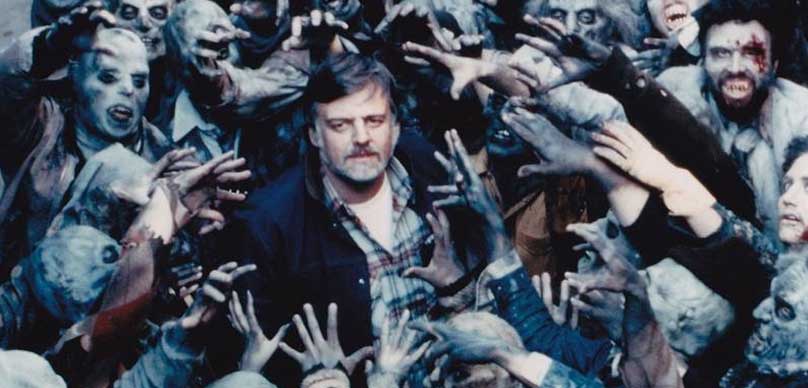
George A. Romero Scripts Collection: Screenplays Download

What can be said about the legendary creator of the modern zombie myth, George A. Romero. He was single-handily responsible for launching the zombie myth we all know and enjoy today. Unfortunately, because of a mistake he never trademarked or owned the copyright to his masterpiece Night of the Living Dead. (You can read more about the horror story here)

Below are all the screenplays written by George A. Romero available online. Watch the video below to get a deeper insight into his writing process. If you find any of his missing screenplays please leave the link in the comment section.

When you are done reading take a listen to Apple’s #1 Screenwriting Podcast The Bulletproof Screenwriting Podcast, with guest like Oscar Winner Eric Roth, James V. HartDavid ChaseJohn AugustOliver Stone and more.


(NOTE: For educational and research purposes only).

NIGHT OF THE LIVING DEAD (1968)

Screenplay by George A. Romero and John A. Russo – Read the screenplay!

DAWN OF THE  DEAD (1977)

Screenplay by George A. Romero – Read the screenplay!

DAY OF THE DEAD (1985)

Screenplay by George A. Romero – Read the screenplay!

CREEPSHOW 2 (1986)

Screenplay by George A. Romero – Read the screenplay!

DAY OF THE DEAD (1985)

Screenplay by George A. Romero – Read the screenplay!

RESIDENT EVIL (1998)

Screenplay by George A. Romero – Read the screenplay!

DAWN OF THE DEAD (2004)

Screenplay by George A. Romero and James Gunn – Read the screenplay!

LAND OF THE DEAD (2005)

Screenplay by George A. Romero – Read the screenplay!

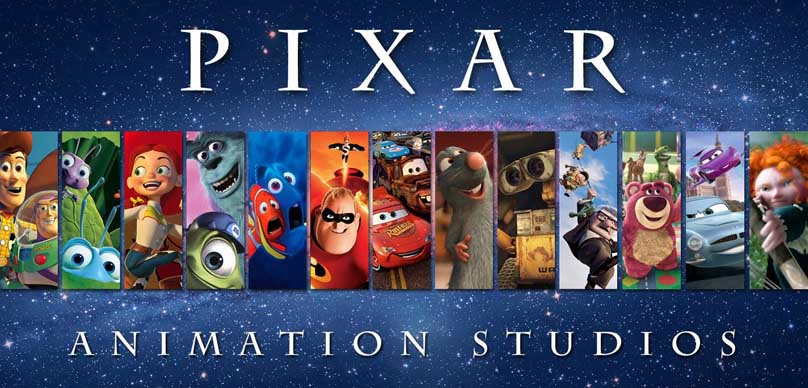
BPS 089: Has PIXAR Lost Its Storytelling Magic with Dean Movshovitz

Ever wonder how Pixar continuously puts out hit after hit? What is the story secret sauce that has created one of Hollywood’s most amazing track records? Today’s guest might be able to shed some light on the answer. On the show, we have screenwriter and author Dean Movshovitz. Dean wrote the best-selling book Pixar Storytelling: Rules for Effective Storytelling Based on Pixar’s Greatest Films.

PIXAR STORYTELLING is the first book to offer an in-depth analysis of the screenwriting techniques and patterns that make Pixar’s immensely popular classic films so successful and moving. Each chapter of the book explores an aspect of storytelling that Pixar excels at. Learn what Pixar’s core story ideas all have in common, how they create compelling, moving conflict, and what makes their films’ resolutions so emotionally satisfying.

First released in October 2015, the book has sold over 15,000 copies without any marketing or PR. PIXAR STORYTELLING is taught on campuses worldwide, from Norway to Argentina, to Northwestern’s Qatar extension, and is cited in works and books from Finland to the US to Russia. It has been translated into Vietnamese and is being translated into Russian.

PIXAR STORYTELLING has proven to be an inspiring, insightful, approachable, and popular book, which can be used as a gift, a manual, and a textbook

Enjoy my conversation with Dean Movshovitz.

Right-click here to download the MP3

LINKS

SPONSORS

  1. Bulletproof Script Coverage – Get Your Screenplay Read by Hollywood Professionals
  2. AudibleGet a Free Screenwriting Audiobook

Alex Ferrari 0:49
I'd like to welcome the show Dean Movshovitz, how are you doing?

Dean Movshovitz 2:36
I'm good. It's great to see you. Great to be here.

Alex Ferrari 2:39
Thank you so much for being on the show. I know we've been trying to do this interview for I met I met you at the ESA events, what, like a year ago?

Dean Movshovitz 2:48
Yeah, pretty much

Alex Ferrari 2:50
About a year ago, and we've been traveling between their schedule and my schedule we've been it's been crazy. But you're finally here. And we're ready to talk all things Pixar, which is based on your amazing bestselling book, Pixar storytelling, which we were talking about earlier, I can't believe no one sat down and wrote a book about how Pixar tells their stories. Like that's insane. But you were first. I was of course.

Dean Movshovitz 3:13
Nowthere's another one out there,

Alex Ferrari 3:14
Which was shot which was shown that it will shall remain nameless.

Dean Movshovitz 3:18
Exactly. But I was the first when it came out. There was nothing else that talked about Pixar that way.

Alex Ferrari 3:26
Now. And when you directed all the films yourself, how was that?

Dean Movshovitz 3:31
Like divine inspiration? Sort of was like, you know, writing from God,

Alex Ferrari 3:38
it's just, it's like conversations with God. It's just just straight, just straight. Yeah. Toy Story came to you that way I understand. We joke because there are people out there who think that you've worked with Pixar, but you're angling this book is based on analysis of how they tell their stories. So to be very clear, you are you do not work for Pixar or Disney. But you have broken down their secret sauce, if you will. Yeah.

Dean Movshovitz 4:05
It's really reverse engineering to try and figure out what makes them so special why they work so well why they have this rivard revered place and all of our hearts.

Alex Ferrari 4:16
Yeah, so that's my first question is why are Pixar film so good. I mean, there's very few companies and studios who have their track record.

Dean Movshovitz 4:25
I mean, to be fair, the number one reason is really the company culture which which I don't get too much into in my book My book is more about how you know the nuts and bolts way you can do that as one person at home alone with doesn't have all of the resources. But we have to admit that it's their standards like their when you see their movies, you see how every line every bit part is worked on to be as good as it can be to be to to be utilized in the best way in a repetitive way. Like nothing is just there. They really work. Hard to make every element, serve the theme, or serve the story have its own arc have its own sort of life. And I think that's a standard that you need to hold yourself to. I think, as writers, we often especially something is working, it's sometimes hard to push yourself to make it not just work would be great. And the other thing is their flexibility and the brain trust everyone knows about. And my personally favorite story, or most inspiring story is how they storyboarded most of inside out for like a year, year and a half, before they and they did that when fear was the main antagonist. And after a year, year and a half of working on it, they realized, Oh, no, no, no, this is not what it should be. It should actually be sadness, and went and redid the whole thing and reshaped the whole story, which a lot of studios wouldn't do or wouldn't have the flexibility and the motivation and the values to do that. And I think that mentality is something every writer should adopt.

Alex Ferrari 6:05
Yeah. And can you talk a little bit about the brain trust because I know you and I know what the brain trust is. But a lot of people don't understand that. That's how stuff gets done over a Pixar.

Dean Movshovitz 6:16
Oh, yeah, of course. So what they really have is all the pillars used to be john Lasseter. Now, he's not there, but all the top Pixar filmmakers, you know, Pete Docter, and Brad Bird, even though I don't know who's still there, and who's not. But basically, all those directors of Andrew Stanton for sure. They meet every couple of months with every project and the people working on this project will present a real or a couple of scenes or a storyboarded, you know, sequence or act. And they will just all go into it and talk about it. And in Ed catmull his book where he talks about their company culture that really embraces failure and embraces criticism, and its people go into those meetings ready to discuss anything, anything is up for grabs. And you know, it's kind of like a in in TV shows where you have a writers room, and you have a lot more ideas to draw from and a lot more input. And I think it definitely makes their films richer. And I also was in a panel and I heard their head of development, talk about the research that goes into living in the very beginning, when they just have a concept, they will often give the director, often their ideas, start with the directors, even if they later hire a different writer, who will have an area where they want to do like I remember they talked about cocoa, how he set up three different rooms, each one with a different idea, I don't know where the other two, but one of them was cocoa and that room was filled with sort of Day of the Dead foods and those, remember the word those presentations, they have the dead people with the food and the picture. And sort of all of that vibe and the way he talked about that, and his ideas about that were so passionate and rich, that the brain just went, you should go for that. So there's a lot of work into very, you know, seed of the idea, the very seed of the concept before you even move ahead. It's like, it's the to maybe hardest thing as a writer on one hand, to really work very hard on the concept before you go to an outline or treatment or script. And on the flip side, to have the flexibility and honesty and, and values and ambition to even when you have everything set beautifully to be able to go like No, you know what, this can be better. Or this is how it should be even if it means really breaking a lot of a story in you.

Alex Ferrari 8:55
Yeah, I have a friend of mine who's an animator over at Disney and at Disney Studios and a lot and I've been he's been there since Lord like princess in the frog he worked on yours years ago. And he's also worked on frozen and Zootopia and some other big ones as well. And it never ceases to amaze me that they will completely scrap an entire story and go back and he's shown me told me that the influence that Pixar is culture has had on on Disney Studios. And did you notice like Disney movies have gotten much, much better? Over the years much, much better over the years ever considered? Like Zootopia is, I think is a masterpiece. I mean, what they did and and, and he told me what the original ideas were they and he's in the desert and they were just completely different. Like the animals were much more vicious. They all had collars on that would determine that they would like if you go into the wrong area, it would sting like they had a bunch of stuff. And they and they would like fully design. Like there's an entire aisle. saw the the artwork for tangled. When it was bait like tangled entire world was based on Da Vinci's designs, it was dening to see. And they had been working on tangled for a decade, that the guy who was a great artist there, I forgot what the artist was the director. But for whatever reason it, it changed, and all of a sudden, it turned. But a lot of that has to do with Pixar influence on them and in the story structure, because they will, they will make a complete 180. Whereas a studio, you really can't if you're doing a live action, it's very too many too many think gears are moving, where it's an animation, especially with all that pre pre pro that they do, you can shift if you want to.

Dean Movshovitz 10:49
Yeah, and even if you can, sometimes other studios have a lot more value on this is when we want to release it. This is really nice. We want it out. And if you see they push their movies very often.

Alex Ferrari 11:01
Now, what does Pixar look for when choosing an idea for a film?

Dean Movshovitz 11:08
choosing an idea? Well, it seems to me if you look at her films are two main things. The first is a world of very, very rich world, a world that offers you a lot of characters and a lot of danger when you think of superheroes, toys, the ocean, the world of the dead, the inside of your brain, these are worlds that are immediately very rich, like you can immediately imagine you almost real What do you think of the logline of insight out there could be 50 different elements they could use in the brain or in the person that it didn't even put in this to scrap list of that movie must be, you know, exciting and enticing. So, one part of it is really a world that is rich, and you can explore and has some danger of constantly. But then the other side is to really find emotional states. My favorite example is Toy Story. Because you start with Oh, the world of toys a child's toy that's so exciting. It's such a rich idea. And you know, kids would relate to it. But when you think about it, the movie, the real outliner what's really makes us love that movie is what happens when a child's favorite toy is thrown aside for a newer tie. And that is, you know, hurdle. Rudel. Yeah, it's heartbreaking.

Alex Ferrari 12:39
I mean, that song in Toy Story,

Dean Movshovitz 12:42
dance drama, it could be an indie drama, you know, it's like, it's like a brother, the unfavored brother, right,

Alex Ferrari 12:49
though that Sundance I mean, the Sundance the Toy Story to song about being left on the side of the road and stuff. I'm like, oh, like you just are devastated. Listen to that. I mean, listen, the first, what is it the first four minutes or five minutes of up is probably the best representation of a human relationship I've ever seen. The history of like, it's amazing. And how and how do you do it? How do you go in with up and pitch up? Like, we're gonna do a movie about an old dude, Boy Scout, and a house with balloons in it. And it's just like, the marketing department must have had a field day like, you want us to sell like, little dolls of an old angry guy. Which they did, by the way, but

Dean Movshovitz 13:37
I mean, up, I know, it started something's very, very, very different. I don't remember the details, but sort of something very, very different. And I wonder like, and they started talking about sort of the book, like, because that image of the house with the balloons is such a great image. It's so amazing. And they bet they I bet it could be wrong, that they had that first. And they're like, Okay, so how do we justify that? And all of that beautiful opening in is, is sort of all of the only explanation I can imagine for someone tying a balloon and being so connected to their house. You know, that ridiculous thing of flying away with your house becomes so natural when you see that opening and what that house means and everything that comes from that.

Alex Ferrari 14:29
Yeah, I mean, they they have done what Hitchcock said he wish he could do which is like literally play a piano key and hit an emotion if you want him to cry. You hit this button if you want him to laugh, you hit this button. Pixar films do that in a way like I mean, personally, one of my favorite Pixar says Coco, like I absolutely love cocoa and how they did in the music and the visuals. It's just all so beautiful. In your chest like you know, I see myself as a grown man like tearing up content. stantly ever these movies, Wally. I mean cheese is the guy doesn't even talk. And you completely are invested in what happens to this little trash can. It's like so they're so brilliant in the way they do it is remarkable.

Dean Movshovitz 15:16
My favorite is Toy Story three the ending of Toy Story I, I just lapse.

Alex Ferrari 15:23
No, absolutely. I mean, it's, it's, um, and, and to be fair, like, you know, we always talk about pictures, hits and they're, they definitely outweigh the ones that didn't do as well and in my like one of the ones that I saw, besides cars to which we should not discuss, but but The Good Dinosaur, I thought Good Dinosaur failed, not only in the box office, but it failed every major Pixar thing, like when I saw a good story a good time. So I was like, this, this isn't a Pixar film. This feels like something else. I don't understand. What what what went wrong on that in that movie, in your opinion.

Dean Movshovitz 16:05
I mean, first off, I want to say that I do cried twice in the good dinosaur. Like

Alex Ferrari 16:09
there's moments there's, there's glimpses there's glimpses of Pixar, but it's definitely not a full package.

Dean Movshovitz 16:16
So the Pixar formula, like the structure they have is really balancing three different stories in each movie. One is action adventure. It's Indiana Jones. It's it's part of that Caribbean, it's just life or death. You know, it's joy, writing like tower of boyfriend's to get to the train. It's all that crazy stuff. Then they have a bonding story, which is you know, it's Woody and Buzz it's Carl and the boys and and Russell The Boy Scout, right? It's two people who who have deep emotional reasons why they can't coexist. Woody and Buzz can't coexist. One doesn't understand that he is that he's a toy. And the end Woody. When he sees buzz, he sees his irrelevancy. Right, they can be together until they grow. And then the third thing is this sort of emotional change this sort of education or attention, a plot that a character goes inside themselves. And I think the good dinosaur, minimize a lot of the action adventure, like there's some of that there. Remember, flood, I remember, there's this paradox souls that are evil, but it doesn't have that same level of tension and action that some of the other movies have. And I think it makes it feel a little slider. And, and the same thing with the bonding part, there is this great moment with the human child, those are my favorite moments. But it doesn't, I don't think it has the same sort of complexity and richness that some of their other movies create between their conflicting characters. And then when you get to the third marker of growth, I remember Arlo was an inventor. So I think he had that thing about making your mark or overcoming his fear. And, and that's sort of what the whole thing is hanged on. But I think again, it's not something as almost as mature I want to stare as complicated as some of the other examples like Woody learning to give up a spot or joy learning to accept sadness into her life and into Riley's life like those. Those things are adult emotions, those things are sort of things adults deal with Mike in Monsters University, failing giving up on his life dream, you know, so I think, and Arliss Ark is a little more, I'd say, oriented towards children, like as a as a teenager as an adult, his art doesn't resonate with the same strength.

Alex Ferrari 18:58
Yeah, as we're talking, I'm going back in through my head. I'm like, okay, Pixar films, and I'm going going, I'm just clicking them off. And the majority of them do have those characters that can't get along. Or they can't live with each other or like even Wally has Eve who they're opposites. They're generally opposites, either opposites and they can't get along and generally opposites don't get along at the beginning and they figure a way out to come towards the end. Incredibles I'm not sure about I know cars had.

Dean Movshovitz 19:28
So

Alex Ferrari 19:29
yeah, yeah, but that's also that was the first kind of outside the box outside of the brain trust because they brought Brad Bird in from the outside to do that, so that's why it makes sense that that film was kind of on its has its own thing, but even cars with Mater and

Dean Movshovitz 19:45
so credit on his films, I'm sorry when Pixar films have like seven rock credit writers between story and screenplay. Brad Bird is the only one where he right he has the sole credit. Right exactly. So

Alex Ferrari 19:57
his his stuff is a little bit Different than the other Pixar films, but everything else like, generally speaking, like in cocoa, you know, the his, his his uncle, his dad eventually, but it was always a spoiler. But, but those kind of, but those characters in your right and there is generally always massive action adventure even in Toy Story. I mean, the the there's constant adventures and like but the adventure is going downstairs or out a window. But it's still the stakes are extremely high. Wally had a lot of that as well. I mean, it's you start analyzing it because I know a lot of people listening right now. I mean, most people listening should have at least seen one if not all Pixar films. They're just those kind of films. But it is when you start to deconstruct them. This way it starts taking on a little bit different light. Now, what are the themes that Pixar goes back to again and again? And why do they do it?

Dean Movshovitz 21:00
I was gonna touch on this when you talked about me and you crying like children? I think one of the crucial reasons that that happened is the themes they choose. If you think about, you know, Disney movies or general movies we see, they don't always touch on the themes. Pixar talks about Pixar talks a lot about death. About Yeah. And not not even like The Lion King way where Lion King has a death in it. But it's a coming of age story. Toy Story three is about aging in a way it's about. Yeah, it's about time not coming back. Inside Out is about depression. It's about the cost of having complicated emotions and how life will never be as simple as it was when we were children. I mean, Toy Story

Alex Ferrari 22:01
for Toy Story for which I just saw recently. I mean, yeah, it's brutal at the end, and I get guys, by the way, it's just spoiler alert from this point on. I mean, anything we're gonna just I mean, if you haven't seen these movies, I'm sorry. But um, but yeah, the end of that, like, what do you leave, and you just like, that's another stage of life where you leave your family you go off and you know, you leave your friends that you made when you were when you were younger? You know that many people hold on to friendships, all their life, those are very special relationships, because people change times change situations change. Finding Nemo perfect example as well.

Dean Movshovitz 22:39
About parenthood my mom raised me by herself, it was just me and her. And she maybe was a little overprotective of thought at times. And when we start Finding Nemo and she told me because there is this line that Dori has where she says like, but if you don't if anything happened to him, how would anything ever happened to them? And my mom gas my mom gas one day she will will quote that line to me and talk about the effect it had on her because pictures about parenting and Finding Nemo is about parenting and inside out you know? She talks about how she has to be their happy little girl and in the end is her saying that she can't be that those are things that a few filmmakers much less than a commercial children oriented high budget you know film will dare touch and dare touch so honestly Yeah, that's

Alex Ferrari 23:41
one thing Pixar does honest it's authentic and honest. I mean, they they really really they're they're brutal they're absolutely the stuff that oh god and inside out when what's his name dies? Oh my Oh, what's this big as a big bond? What

Dean Movshovitz 23:58
is it? bond? Yeah, big

Alex Ferrari 24:00
but when big bond fail I'm like a bawling and I'm like, oh, Mike like was sober because you go back to either your own imaginary friend. Or when you're in Toy Story, you go back to that toy that you left at the side of, or somewhere you donated to the to the to the goodwill or something. And you're just like, you feel terrible. So now I like anytime my daughters are like gonna throw something away. I'm like, No, no, no, they'll throw that away. We'll put them in the garage. Put them in the garage. We can't just throw it away. You could give it a home if you can find someone for him but we don't just gonna give it to the goodwill. That's just it's so ridiculous.

Dean Movshovitz 24:42
In a car now after Toy Story three, you're scared to give your toys to daycare?

Alex Ferrari 24:46
No, exactly. Because it's such a brilliant transition from like, where will toys go? Will they go to daycare and the the politics inside of daycare and what happens in that? Did you ever see the commercial Spike Jonze director, this amazing commercial for IKEA. It was years ago and it was the story of a lamp which which just makes makes perfect sense here with it's exactly the same lamp from Pixar that what are the I forgot the name of those lamps. But you go through the life of this lamp with this person like oh, it's wearing this and the different things that happened and at the end it she unplugs it and puts it on the side of the on the side of the road like in the garbage like in a city like right there so it could be thrown away. And then a new lamp gets put on. And you just and then they start like closing in on this let there's no dialogue in the entire thing. And you just start closing in. And you feel horrible for the lamp until this guy walking by goes What's wrong with you? It's just a lamp. It's just, it has no feelings. The new lamp is much better go home. I was just oh my god. It's one of the most brilliant commercials I've ever seen. Oh, it's typing IKEA lamp commercial on Google. It is amazing. But the guy had like this Swedish accent for IKEA. And he's like, what's wrong with you? It has no feelings. What's the new one is much better. But that's the power of storytelling. Like you felt you felt something for an inanimate object. And I mean, for God's sakes Toy Story is the best example of that all the Toy Story films are such an amazing example. Because now you as a grown man, and me as a grown man will look at our toys from our childhood or look at our daughter's toys and just maybe what if when we close the door I don't want my pork. It's amazing. But that's the power of really powerful storytelling. Now, a Pixar has some amazing characters. What is their trick on creating these characters that just stick with us? like Woody and Buzz? You know, like no Dory, like they these characters? How are they make these characters so rich and sticky?

Dean Movshovitz 27:13
Well, one of the main things for me that I find is all of their care, characters care so deeply about something, they all have something that without it, life is meaningless. Like one of the smartest decisions they made in developing Toy Story is saying, oh, there's nothing that toy wants more than to be played with. That premise is the engine for all of those films. And it seems natural to us. But you can imagine different ways to go about that, like, maybe just don't want to be left alone. Maybe it's more about like you it's not, it's not natural, it's not an accident, it's a choice. And that choice drives all the emotional journeys, like when we cry those movies is because we know how much getting played with means to woody means to Jessie means to lock so even it's Andy doing all of their films, you know, obviously Finding Nemo have the connection to the house joy and that opening, right where you see how Riley's mind develops. Joy says it's my job in life to keep this girl happy. When this girl is unhappy, I as a person, I'm failing, you know? And they do. I think a lot of times when people develop a story, they find what the character wants, or they find a problem the character have. But they don't necessarily set up why it's so important to them or how deeply it's ingrained into their identity. Pictures characters cannot live without the things Pixar then takes away from them.

Alex Ferrari 28:59
Right so like Wally, his whole existence is about cleaning, putting things away, organizing and doing

Dean Movshovitz 29:10
what is the first thing we see him do right? He's cleaning all those things is alone on the planet. He has this one friend that's a cockroach that sort of goes along with him. Then he goes home and what does he do? He watches a video from Hello, Dolly. And close up if you remember that close up of his hands touching each other. Yes. In the movie. And that's what he wants and don't Eve shows up and you're like, Oh my god, this is his chance. What is another robot gonna be there? He can't fuck this up. You know, you can't screw this up. I don't know what you're

Alex Ferrari 29:45
fine. It's fine. It's fine. It's fine.

Dean Movshovitz 29:49
And that just that and think about what's working here a robot watching a scene from an old musical but it shows you how How much he yearns for love. And, and that's what they do whether it's Remy risking his life to get a spice from an old woman's house, right? Because he has to make something that's artful. They said these things that these characters can't live without.

Alex Ferrari 30:21
Yeah. And going down the line, almost every Pixar movie that I can think of there is something that the main character cannot live without your eye from Ratatouille wanting to cook, to Finding Nemo, Finding Nemo. To Wally wanting love to it's just it just you start going. This is what's wonderful about this conversation, because every time we're talking about a new concept that I go back as we're, as we're talking, I'm going back in my back of my head is going cars got it, and you just start checking off like Yep, they did it there. Yeah, they did it there. Yeah, they did it there. And it is it's fascinating to see, but they that need. I mean, it's kind of like, you know, Disney with Pinocchio, like you feel that Pinocchio wants to be a real boy. You know, that's the power of of that is especially when he goes off to that crazy Island and starts smoking and drinking and all that kind of crazy. It was a different time. It was a different. It was a different. It was crazier, crazier times. But that wanting for a character is so powerful. And I've never really thought about it that way. You're absolutely right. You never think of you start thinking going back to what I mean. If you start going back to some of the most successful films and characters of all time Luke Skywalker wants to get off he wants to get off the planet. He wants to be a star fighter. You know, and and you start you know, you start going back to all these famous movies all the main characters have this amazing powerful need that if I can't get this it's not my world is over even Tootsie like you know,

Dean Movshovitz 31:58
so funny I was thinking of like to see like before we started talking I was thinking about and this sort of relates to your question about character because what Tutsi does amazingly well which is very Pixar ish is how every character in it is a reflection of the theme and brings out some side of the lead. Like if you're talking about men women so you have you know, the director and the actor is sort of our you know, harasser is and look down women you have that one female boss you have his roommate was sort of more about his artistic side that he's neglecting. And Pixar does that to think about Incredibles, right? Every galley for has, they cannot agree about what being a superhero is none of them. So that's another good trick that Pixar often does.

Alex Ferrari 32:47
Which is what can you explain it we Every character

Dean Movshovitz 32:49
has a different point of view. Every character has a different role different function, every character different inflection of the theme. If you think about Remy and linguini they're opposites linguini has the heritage and the opportunity but no talents rarely kids or rats but has all the spirit Yeah, he's a rat in the world and then you have Cousteau and ego who are polar opposite like everyone is a different way in to to theme to the character to but my favorite line in Ratatouille

Alex Ferrari 33:25
is like it was you it was getting funny with it was it you was getting funny with the spices? The delivery of that line was so brilliant man. I mean, I like people who are listening can't see that I literally have a smile. Because I'm constantly thinking of Pixar movies in my head all the way down. And just thinking about the good times that you have watching those films. It's it's pretty remarkable. There's not any studio that I can think of that has that reaction, even Disney itself. You know, even Star Wars films don't all hit exactly the right place. Marvel is close, but even Marvel is not. You know, you will never get what you got at the end of Marvel Avengers endgame like that. It took 10 years to get there. I mean, it took 10 years to get to that specific 30 minutes of film.

Dean Movshovitz 34:19
Yeah.

Alex Ferrari 34:20
But Pixar hits that every time almost every time they're hitting that. Now how does Pixar create so much empathy in their stories?

Dean Movshovitz 34:31
It's a lot of what we talk about sort of giving that very, very deep need. I think often you really want to know why they need it. Like why is it so important to them? Wiley is really my favorite example of this because we have nothing in common with them. Like Yeah. And the first 30 minutes as you also said are silent. There's no dialogue and they have To make you love this guy, and it's really a talk about the three reasons we like both people and characters, like there's a first layer that's very superficial, where you know, maybe someone's very attractive or very confident, or you think about high school, right as a popular kids that you didn't know, but you like them because they had these like, external, discernible traits. And that can work in a movie, but it only gets you so far, and it dissipates very quickly. Movie Stars help, then you have a second layer, which is a little more intimate, it a little more personal, maybe you know, their hobbies, or maybe they have this neat little point of view, or there's something exciting about them. I always the the prologue of The Incredibles is does a great job of this where you see sort of, right, yeah, you see the two of them, in their heyday, they're flirting, they're stopping crime. And you're like, Oh, these are cool people, I enjoy hanging out with them, you know, but it's, but you know them a little more now. But the real important layer, and the one that you have to have to generate these sort of to make people cry is, is what happens when you think about how you met your best friend. Right? How you get to know those idiosyncrasies about them that don't make sense. But you know them because you're close to them, how you understand what they want, and why they want it and how it comes from. And maybe even most importantly, think maybe the main difference between a friend or a character that we love and everyone else is, we can forgive their flaws. You need to get that level of understanding of clarity of a person, so that you can look at their flaws in a way that doesn't stop you from loving them, and in a way where you're in their corner, to sort of defeat them. So when you see Wally, you don't see a robot that's cleaning the earth, you see someone who is devoted to their job, who loves their job who takes pride in it. You see someone deeply curious, because he collects all those things every day, and he does them around. You see someone who has a very good friend, a lot of friends takes care of right, he runs over him and then he's worried and then he makes sure he's okay. And do you see that deep yearning for love? And when you talk about in that way, that's every one of us. Oh, absolutely. You know, if I were left alone in a dystopic wasteland, that's the ideal life I could watch.

Alex Ferrari 37:41
Pretty much, pretty much. I mean, I remember when he got kissed by Eve in this in in space. And he just like, freezes it just like floats in the air floats in the air away. It was like, it's it's remarkable. I mean, going to Incredibles you know, I'd argue and I think a lot of people say this, but it's arguably one of the best superhero movies ever written and ever produced, you know, up there with Dark Knight Deadpool and Logan. You know, it, you know, it's just so what like the day ended, Brad Bird understood the plight of the superhero. And they were brand new superheroes we'd never heard of. And when you see Mr. Mr. Incredible in a cubicle. That is that image, that image, this giant monster is dude sitting in this little cubicle. And then he's got this little boss who's just the biggest pain in the air. How more perfect. I have an analogy for a lot of people's lives. Because I've had a boss we've had, we've all had bosses we disliked. And we all were like, I'm really a superhero. Why am I in this cubicle?

Dean Movshovitz 38:49
That's a great way of putting it. You're right. And they think, and it comes back to something they try to find in all of their ideas are like, This character is x, how can we make them the most uncomfortable? How can we torture them? If you want to call it like, if you're writing about a superhero? It's natural to have them fighting crime. That's, that's that's our comfort zone. Ironically, in a cubicle. Yeah, put him in a cubicle. That's, that's, that's a tension that that drives character, right, that drives a movie that has to be fixed and addressed before the movie is over. So

Alex Ferrari 39:27
I think i think i think DC could do something with that. Because if you take Batman and Superman and put them in a cubicle, I want to watch that movie. I want to see what happens there. Oh, it's just it's they they you also mentioned that they torture their characters they like rip the heart out of their characters. Can you discuss a little bit about that and use some examples of how they do it or why they do it.

Dean Movshovitz 39:51
It's it's it they torture them, but they torture them in a very, very specific way in a way that's very, very tailor made. If you want to think about up, maybe when I say torture, we're thinking about that opening sequence, which is very tragic and very sad. But that's, that's not an example of what I'm talking about. The way they torture Carl in an up is by giving him a kid who's upbeat, a kid who has selfless values, and a kid that needs him.

Alex Ferrari 40:26
Right, who said he was literally a Boy Scout?

Dean Movshovitz 40:29
literally a Boy Scout, right? Yeah. Because all current once after that opening is to be left alone. He's, I think, in many ways he's dead. Right? Right. He's breathing. He's alive, but he's dead. And he's stuck with this kid who forces him to sort of act in the world. And then when you get to the bad guy, I'm blanking on his name. Who wants to kill this exotic board who wants to hurt Russell is like he is forced to, to find a new purpose to live again. And that's sort of what I mean when I say torture, right? Marlin meeting Dory, is what saves him. But it's also a form of torture torture. Oh, because exactly right. She just wants to go this and do that and not think ahead and be reckless and talk to the whale? And he's like, No, no, no, this is not how we do things, right? It's it's these very smart ways of torturing their characters. Like you, you know, if you cut someone's leg, if you put them in danger, every character would separate from that right? Again, Toy Story, getting a new favorite toy and seen in Toy Story one, in Toy Story two, they have this great mechanism where he's given a chance to be in a museum, right? And he's like, Oh, you will be respected forever, you will never have to worry about being thrown away or donated, right? They set it up in the beginning of the movie with a character that's put on the shelf. And then you'll be in a museum, but you'll never have known it. No one will ever play with you. And yet, yeah. And that's toward tourists choice, right? That's something that's very hard to do. keep finding those ways.

Alex Ferrari 42:17
So so really quickly, I don't interrupt you, but because before I forget, normally, everything we've been talking about this, but you're basically giving the main character, its opposite. It's getting to its Yang. But with that specific example of woody in Toy Story two, it's not a person, which is a Ying and the Yang. It's his want is a yin and a yang, meaning he wants to be played with. But boy being, you know, encased and never have to worry about being discarded again, and being revered and honored for the rest of his life. is the opposite of being played and thrown away with. Yeah, is that accurate?

Dean Movshovitz 43:02
I think it's Mickey calls this either the lesser of two evils or the greater of two goods, which I think is always a very good way to approach dilemmas and choices because you know, if it's being played with or not being played with, what do you have a simple an answer to that, right. But what they do really well is stack the deck in a way, it's a very hard choice, and then the choice comes down to values. Here's this lovely moment where he's trying to convince him to come back, where woody rushes off the new coat of paint that's on its shoe to reveal Andy's name. And, and that's like, oh, and and Woody goes, and we go, Oh, that's right. That's who you are. That's what your values are. And they also give him Jesse, who suffered the same thing he did. But she's just like, two shades on the spectrum. more extreme. She's like, screw owners. I don't ever want to know her again, you can trust them. So she's sort of pulling him in that direction. So yeah. It just all works to serve the core dramatic question the core idea, the core flaw, it it's a funnel, everything they add is going through a funnel to that to the very core of their story and of that character.

Alex Ferrari 44:24
It twist or two is basically the godfather of animation. Because I embrace it when I saw it, I was like, well, this is it's I can't believe they made it better than Toy Story one and they did in my opinion, I think toys r two is even better than one even though one is amazing. Toys R two just hits on. So that's just a song alone. Just the

Dean Movshovitz 44:43
other three was like Toy Story three.

Alex Ferrari 44:46
That's not so much not so much. Now, let's discuss Pixar drama and conflict. I guess we kind of touched on it which is basically the drama and the conflict is throwing two opposites together. And then there was let me see. So Buzz and Woody. Buzz is delusional. So it doesn't have any wants Really? In the first he's just, yeah, I guess he's kind of he's just delusional. He doesn't even know he's a toy.

Dean Movshovitz 45:17
Yeah, that's right. But But the thing that happens is woody very clearly, as we all remember, tells him You are a toy. Right? And then it becomes this whole thing about about buzz either protecting that, or later accepting that there's that moment later on, where he tries to fly. When they're already at SIDS house and he falls. And it's an avian remember, there's like Randy Newman specifics on playing at that moment. And he needs to deal with that. Because until he deals with that, he and Woody can't work together. Now, though, he and Woody can't work together. And these room as an ecosystem will never function. So right, you're right, in the sense that because he's not the protagonist, like he doesn't have a clear one. But he has, he has a problem.

Alex Ferrari 46:08
Oh, you know, he's, he's got he's got stuff to deal with. He's got he's got he's, he's working. He's working through stuff. There's, there's no question that buzz is working through stuff. And so brilliantly done in that first in that first movie is when when buzz goes to fly the first time, because he bounces and everything, he actually flies so that the illusion continues. And that's such a, that's such a fascinating analogy for life. Because a lot of times this story that we tell ourselves, for protection for whatever, you know, that thing is for our ego. A lot of times things happen in our life that feed into that. And you see, you see I am a genius. You see, I am I am this or I am that. But when that facade comes crashing down, that is what that's what buzz has to deal with. He has to like, wait a minute, my identity has been Buzz Lightyear, this this astronaut, you know, action astronaut, and I'm like, No, I'm just a toy. That is so powerful. That theme is so powerful among other themes that are so powerful in that movie,

Dean Movshovitz 47:09
I think almost all stories. And in real life, all growth, start from a moment like that, start from a moment where your image of yourself or your set of values, failure. And to use a metaphor from inside out that I think is helpful for writers like variety has all these islands of personality. Right? Yes. Honesty, Island family Island. And I think a good script, or a good story starts when one of those islands is destroyed. When a character has one of their items destroyed, and though they need either to rebuild it, or find a new one, and figure that out. And if we talked about drama and conflict, I think Pixar does a great job of making sure that all their conflicts offer on one hand, an opportunity for destruction, you could lose everything you had, but also an opportunity for construction where, oh, you might not live your life the way you have until now. But to create something new, something stronger. Right? And they always find these great visual ways to show I think I call it the book like at first as a fly in the world. And then at the end, they always showed the new world and how it's better. In inside out. If you remember the end for control panel, it gets so much bigger. And yeah.

Alex Ferrari 48:36
Right. And they're mixed in the memories are mixed together.

Dean Movshovitz 48:39
Exactly. So you're like, oh, okay, Ryan, he won't always be happy we lost that battle. But look at all the emotional riches, she will now be able to experience. I think that

Alex Ferrari 48:54
if we can if we can get a little cycle analytic on on screenwriters. I mean, for myself, I could talk about myself, but I've seen other screenwriters and filmmakers as well go through this, which would they have this image of themselves whether that be I'm going to be the next Tarantino I'm going to be the next Sorkin I'm going to be the next big writer, and they start tailoring their writing around that idea. And when that idea doesn't germinate, because the reality sets in, because they're just like, you're trying to be the next guarantee. I'm like, Well, I'm sorry, there's no one's ever going to be the next Sorrentino, because you've got to be the best you that you can be because Tarantino became who he is because he is true to himself. He understands that he did not try to imitate not one person he imitates everybody he imitates everybody does it so masterfully that we just go Okay, that's fine. But I think for like for me, for, I don't know for my whole 20s every time a certain year would go by you would I was 23 that's when Orson Welles made Citizen Kane. Well, I guess I'm not gonna be Orson Welles. And then you hit 20 like 27 Oh, that's when that's when Spielberg made jaws.

Dean Movshovitz 50:11
Okay, oh, 38 sizzle winning and Oscar bet the rest director, what? 28? Exactly.

Alex Ferrari 50:18
So you start going through all those milestones. And as you get older, you start realizing that those are not realistic, not because you can't do it, because that's that your path. You know, those are outliers. Those are complete outliers. Those are magical moments. And that's a lot of times I feel that so many filmmakers and screenwriters get caught up in the lottery ticket, and not in just being themselves. And when you get comfortable with being yourself, which is like what most of these Pixar characters do, at the end, they get comfortable with themselves, they break the illusions of who they thought they were, like, Woody thought he had to be something right at the end, he changes all of them change NEEMO, you know, that anemos dad, and everybody changes to finally going, Oh, this is who I really am, as opposed to the illusion. And that's an extremely painful process in life. extremely painful. It could be from when you were a kid, and you think you're the hot the hot shit of the moment, and the girl just rejects you, Boom, crash, the island that you're talking about is this very, very quickly. And that is the process that you go through life. But I think in a creative standpoint, I think so many of us have these illusions, I think we grab onto them. And please let me know what you think. You grab onto these illusions you grab onto these kind of constructs, as a defense mechanism. Oh, yeah.

Dean Movshovitz 51:46
Yeah, it's I think someone talked about the difference between fixed mentality and growth mentality, right? You know that, right? So fixed mentality is I'm talented, I'm smart. I'm a good writer, I'm growth mentality says is not occupied doesn't care how good you are, it only cares about making your work better. Right? And, and this is crucial, I think, when it comes to criticism, because if you approach criticism with this need, that could be you know, unconscious, or almost unconscious, like, I need to protect my image of myself as a good writer, then criticism is painful. Because you're constantly negotiating, what does it say about me? What's this? What does this mean? Where am I on that timeline. But if you, if you try to get to that growth mentality, then a criticism is a gift. Even if you don't agree with it, it's, it's, it points you towards what matters, or it makes you sharpen, which you think is right, you'll you go like, Oh, no, no, no, this is right, because XYZ and I can double down on that, like, you know, it's a whole different issue. But when you adopt a different mentality, it frees you from the need to protect that image. And that lets you grow that that to accept criticism that lets you you know, toss away that brilliant scene you wrote and write something new. Instead, it frees you to write a first draft, that's bad, because you're not worried about being a good writer, we're just we're worried about getting to this project. It is. It's instrumental, I think, to free yourself from that need. And, and to go off what you said about Pixar, Pixar characters learning to accept themselves. I think they also accept learn to accept their limitations.

Alex Ferrari 53:36
Right? And that's also very difficult because the ego does not like that at all, you know, especially when you're younger. Especially when you're younger, you really think like, no, look, I had a conversation with myself, I'm like, I should be at the Oscars by at least 25. You know, and then when 25 like, no, 3030 I gotta move to LA, you know, and then, and then 30, okay, with really like, 35 really. And then I actually had clients in my edit suite that turned to me and like, I'll see you at the Oscars next year with this movie. The delusion was so great in their mind that they, the construct that they built around that ego in the in the image that they had in their head. It was so they needed it so much. And then that's when fights occur. That's when, you know, conflict happens a lot of times because if you threaten that image, and it happens in the Pixar movies, everything Woody, Woody literally becomes violent. Towards he kicks them out of the

Dean Movshovitz 54:40
room. If he's not Andy's favorite toy, he has no idea who he is. He exists.

Alex Ferrari 54:46
Right and it's, it's an I hope we are discussing this which is Pixar, non Pixar kind of stuff. But it all works into character because that is why Pixar is characters and stories. touches so much because it is is close to the struggle and all good movies were written Well, it's the struggle that we go through as humans throughout through our lives. And when you see that authenticity, you are attracted to it like a moth to a flame. And that's why Pixar I feel that Pixar films resonates so much internationally. Oh, yeah,

Dean Movshovitz 55:21
clearly. Yeah. I think you talked about pain earlier. And I think that if you want to measure conflict, it's like, oh, does my script and have enough conflict? You need to measure it by how much pain your character is. That that's the that's the measuring unit. And, and to be fair, when I tried to think about the difference between Pixar and Disney, right, why you immediately know when when a movie is a Disney movie, and when you meet you know, it's a Pixar movie, because they're both on the surface similar, right? And legacy travelers that you mentioned, a lot more Pixar than Disney.

Alex Ferrari 55:57
Oh, absolutely. It's one of their it's one of their best animated films, in my opinion. Like I love frozen too much more than frozen when I thought frozen one was, but it did, obviously, what do I know? My daughter's bought five dresses. So they did okay. But um, but Zootopia Big Hero six was also wonderful, but it's very Pixar ish. Big Hero six is very, very Pixar ish.

Dean Movshovitz 56:23
And it's not even talking about quality like given stories, these bets are like Lion King Lion King is great. Doesn't feel like Pixar. And I think the difference is Disney films are more than mean is in the best way possible. There's a fairy tale. The characters are archetypes. They're abstract, they represent something, it's these coming of age, it's family. It's stuff like that. Pixar tries to feel realistic, right? The characters aren't archetypes in that way. They're they feel like they exist in our world, just in corners, we don't see or don't know. But they they feel they feel like us. They feel like a work place. They feel like you know,

Alex Ferrari 57:08
they're not kings and queens other than other than brave, and even brave, you really identify with I forgot her name but the princess because she's like, oppressed that she wants to get free. Yeah. And then, and that is also mixing it with relationships with your mother and your parents and all of that stuff. And it's just, and then the whole there's so many layers. Yeah, and to be fair,

Dean Movshovitz 57:32
I love great, I think brave is is underappreciated, but it's one of their movies that didn't do as well. I always when she when she talks her mother at the end and the sun comes up. I always cry but but I know a lot of people consider it like second tier Pixar. And I think it's partially because of this thing where it feels like 10% more of a fairy tale than Pixar sort of realistic adult complex characters and emotions and issues.

Alex Ferrari 58:03
What did you think of the latest Pixar film? I forgot the name of it.

Dean Movshovitz 58:06
Well, that's one. Oh, onward.

Alex Ferrari 58:08
onward. What did you feel about onward because I saw onward. I liked I liked it. And I could see a lot of I mean, the dad style, the dad stuff, and not at the end and all of that stuff. But it was it didn't resonate like Wally, it didn't resonate, like inside out. But it had its moments. It's It's better than good dinosaur, in my opinion. And it's still a quality Pixar film. But it It didn't hit exact like in stock cocoa. So why is that you? And that's just my opinion on what you thought of it?

Dean Movshovitz 58:42
Well, I'm sort of in the same space as you I'm a little biased with onward because my father died when I was very young.

Alex Ferrari 58:49
So connection.

Dean Movshovitz 58:51
But ironically, it made me have the opposite reaction, because I was like, Oh, that's not what I that's not a reaction I would have would have no way I would go meet him without bringing my mother along. Because I find that just to be self like, there's stuff like that that made a little harder for me. But to answer more concisely to your question, I think the lead wasn't didn't have a deep enough want or need like yes, he wants to connect with his father, but he didn't have that personality flaw we've been talking about. Like you see him not being able to talk to the girl at school or not being able to not having confidence. That's something we've seen so many times and so many other films. Correct and it works. You like him, you're on the journey. The moment when he goes through the list and realize it's been his brother is deep and it's profound right in what it says about appreciating the family you're with and the people who are there for you. I love that I have a rush of emotion and tears when that moment happens. But I think the lead character and is not as you niQ and their flaw isn't as neatly tied to their journey, right? meeting his father all this, it doesn't quite tie to the problem he has in the beginning. And I think those things sort of keep it from reaching its full potential. I also think that the world they created, which is fun and funny and interesting. I think it could have been explored further, I think it could have had, again, if you think about Monsters, Inc, right? We have that neat relationship, like, screams run this, you know, beautiful. These little assumptions or rules, toys of being played with, right, that make the world tick.

Alex Ferrari 1:00:47
There wasn't anything like that in that. I don't remember that.

Dean Movshovitz 1:00:49
Yeah. It talks about how they lost the magic and there's some stuff about you know, but it didn't quite. It wasn't hammered home. I think it wasn't.

Alex Ferrari 1:01:00
Yeah, I see what you're saying. But it's not there is that which is the whole magic and I lost the magic. And it was, he talked about it, like it's in its past and stuff. It but it's not as powerful as like, all toys want to be played with. Everything runs on screams, where then laughter is 10 times or 20 times as fast as good, you know. And that twist is I mean, it's just so it's, it's remarkable. It's a remarkable way to look at things. Now I want to touch one more thing before we go. villains. Ah, pics, Pixar villains. Can you talk a little bit of how Pixar creates those villains? Because in my mind, there aren't any villains that I can think of that steal the show. The protagonist generally is the one who steal like Darth Vader steals the show. Yeah, yeah. Hannibal Lecter stole the show like it completely. But in Pixar, the villains are good. Like an Incredibles. He was great. The kid and it was really complex. But they don't steal the show. What What, what is a Pixar villain?

Dean Movshovitz 1:02:10
Well, I think that's actually a great point that I haven't quite thought of that way. And I think the main reason is because Pixar often places the bulk of the antagonism on what I call a troublesome villain or a troublesome antagonist. And that's someone who isn't evil isn't malicious. Someone means well, but he's just in the protagonists way, like Buzz and Woody, right, but isn't Woody's way. He's his main form of conflict. He's in no way shape or form of villain.

Alex Ferrari 1:02:43
There really isn't a villain other than what's this kid that that crazy kid across the Yeah. Said is is this close to him this week? And he gets what he deserves. That's all I'm saying.

Dean Movshovitz 1:02:54
Yeah. So we think they often even up has a clear villain, right? Right isn't a month.

Alex Ferrari 1:03:01
Exactly. I don't remember his name. The see though is he like, like, I can picture him and I know he has the dogs. And that was it. I don't remember. But I remember the bird squirrel. The kid the block. The dollar is great. All of that I remember the villa is kind of like in the background.

Dean Movshovitz 1:03:20
Because most of the conflict in that movie is between him and the kid or him himself and a lot of nature. There's a lot of like talk about you know, same thing with Finding Nemo right. So a lot about the ocean the obstacles, and when the two does have a villain they are very often so you humanize lotso who's as evil a villain as Pixar may have made Yeah, it's that amazing flashback about how he was left out. They made hacking equals replaced and you know, and then he also becomes a mirror image of woody who's has the same fears. And and when you watch those who are with you like Oh, if woody doesn't get over Andy, he could become lotsa, right? So even when they have someone who's more nefarious, they often give them very human reasons for why they're doing it. And I think my favorite Pixar villain who's also a villain is Anton ego, right? Who's really designed as like, even I broke it down for a lecture I gave and there's a top shot of his office and it's the shape of a coffin. You know, it the first minutes of the film is introduced as the grim eater like he's really

Alex Ferrari 1:04:43
so good. So yeah, but he ends up not being a villain. That was the bed really, which is brilliant in Ratatouille is just so it's, it's fascinating, but I've always been, I've always heard and I've had so many, you know, amazing guest on the show who knows story and screenwriters and consultants and, and scholars. And the consensus is in order to have a good protagonist, you need a good antagonist. But Pixar kind of breaks that rule.

Dean Movshovitz 1:05:15
So I would love that definition. You don't necessarily need a good antagonist, you need good antagonistic forces, correct?

Alex Ferrari 1:05:23
Yeah, because finding the Finding Nemo is a perfect example. There is absolutely no villain in that movie. There's nothing that's there's a girl there is the little girl with that said, That's. Yeah, but that's basically said, it's like, it's not a villain. It's just it's a little girl who's doing what a little girl does? Yeah. Isn't he said his nature. He's he's on the different spectrum of nature, meaning that he's a little bit you know, you know, but how many of us don't know that kid? Yeah.

Dean Movshovitz 1:05:57
So yeah, so they always have these forces, but not necessarily a clear cut villain. And I think that it goes back very much to what we talked about what makes them unique. Because when you make a story, you have a limited amount of real estate, right? And the more time you spend on, you know, a Dr. Evil villain is time you're not spending with conflict that brings out your character, or with that troublesome antagonist who's a friend and an ally, but you can bond with them. And then both of you have to grow, right? It's less ways of developing the world I think about inside out right? Where you have maybe that clown or you have all these other things, but a lot of it is physical, and the main antagonist to make them antagonist is sadness. Right? She's the one who's stopping joy from making writing happy, and

Alex Ferrari 1:06:50
pushy. So passive aggressive. She's so passive aggressive isn't even funny. She's not like twirling her. She's just like, I'm sad. This is what I do. I'm sorry.

Dean Movshovitz 1:07:01
I mean, when you think about inside out the problem, and inside out, is that joy refuses to lead writing. I'd be happy if at the beginning of the film, don't like oh, yeah, sure, no problem. That would be sad. There'd be no movie. She is. She's the villain. But But the problem is with her. And so to an extent does that in a lot of their movies, the problem the real problem, right? Like Bug's Life has the grasshoppers, but I think the more Pixar went on, the more they went away from those real real villains. And even in Wally, right, where you have that auto pilot auto,

Alex Ferrari 1:07:39
yeah, the how, basically how,

Dean Movshovitz 1:07:41
yeah, basically how he's also he's trying to protect humanity, right. It's from a good place. And, and eventually they defeat him, of course, but he represents. He's an opposite of Wally in many ways. And if he had all the information, if he believed that Earth had a chance, he would let them come back. He just doesn't think they have a chance.

Alex Ferrari 1:08:06
It's It's remarkable, and I'm thinking of films in the Zeitgeist that have this non villain esque you know, because obviously Star Wars has Darth Vader. It's such a clear archetypal, you know, Hero's Journey story, but you look at a movie like Forrest Gump. I mean, for Forrest Gump. It's very Pixar esque. In the in its in its storytelling. I mean, without the drugs and the sex and stuff. But but the but there is no villain. Jenny is the closest thing we have to a villain and oh, no, listen, listen. Listen. Listen, we can have a conversation Jedi Jedi. Look if Jenny was out of forest his life completely. Yeah, you know? No, but Jenny is this close, like I said, as close to a villainous thing. And it's not something that she's trying to hurt forest. She's just who she is. She has sadness, doing what sadness does. And she's been doing it because of all of the baggage and things that she dealt with as a child that she carries along throughout her entire life. But Forrest, his main antagonist is the world who doesn't understand understand him. He just goes, you know, just completely oblivious to life. Just and in many ways, you know, I

Dean Movshovitz 1:09:22
never thought about it because it was just about as you were talking, I was like, What is Forrest Gump want? What is what is driving it? Like all these things we're talking about? It'd be you'd be hard pressed to say Oh, Forrest Gump deeply wants it maybe Jenny but even that doesn't you know, I don't think I wouldn't say the drive the whole film. And the way you said it with the world as an antagonist. I would say Forrest Gump is watching scene after scene of Forrest Gump goes to somewhere that won't accept them or that he shouldn't belong where that he shouldn't thrive at and finding a way, either through his sort of earnestness or through luck, where he does thrive there. Like that's literally what happens the entire movie scene.

Alex Ferrari 1:10:00
Yeah, the entire movie he just fails up. He failed. And that's I think one of the things that can't be good and it's also if you take the historical aspect out of Forrest Gump the story doesn't work like the, the leveling up constant like, Okay, he's a great football player why cuz he runs Why did he run because he ran away from bullies is just something he did. And then that takes him to okay now he went to Vietnam, how did he get there? Oh, here's Red Bull, and he meets three presidents. And he does. Like, if you take those aspects out within the story doesn't have, you know, it's just a dude just walking through life. But because everything gets amped up constantly like and we invested in this little fruit company called Apple, and we don't have to worry about money no more. Like it's it's a it's almost a dream like thing because you're like, man, wouldn't it be amazing if, if our if you know, as the person listens, like, wouldn't it be amazing to go through life? just constantly just winning without even trying? Yeah, but the one thing he can't win that

Dean Movshovitz 1:10:57
you're so vulnerable, like he succeeds, but he's also he's so

Alex Ferrari 1:11:00
yeah. But the one thing that he can't, the thing that he struggles for is Jenny. Yeah, Jen is the only thing he can't, it doesn't fall into his lap. Everything else falls into his lap, right, Jenny does not fall into his lap. And that is basically the arc like, you know, without Jenny, there's no movie. And if and Lieutenant Dan is just the whatchamacallit. He's he the

Dean Movshovitz 1:11:26
antagonist

Alex Ferrari 1:11:26
Yeah, ally antagonists exactly through the whole thing. And he just kind of he doesn't really affect full force doesn't he changes but he doesn't change.

Dean Movshovitz 1:11:37
Or it doesn't change? No, I mean, he changes.

Alex Ferrari 1:11:41
Oh, everybody else around him changes.

Dean Movshovitz 1:11:42
Exactly. Yeah.

Alex Ferrari 1:11:43
Even his mom, every every every character he touches changes perception thing. But so going back to Pixar, it is as close to a Pixar film as I could think of in the in the real world.

Dean Movshovitz 1:11:56
Yeah, yeah, that's true. I'm a fan. Think about movies, other movies don't have villains. And one movie that came to mind is, in a way, ordinary people. And I think people would rush to say, Oh, the moms the villain. But you can't you can't say that everyone there is so hurt and vulnerable. Everyone there. Like it's the situation where you know, the father can't lead. The mom is unable to to give the child the love He needs. He's going through his own thing that he needs to forgive. And so they're really just problems to each other. No one is. Literally, if you're talking about tailor made tasks or fees. The worst thing a mom like that could get is a child who needs her love of vulnerable childhood needs are love. The worst thing that Father character could get is a broken family that needs him to meet it. Right? It's separately, all of them are fine, just when you sort of put them in opposition to each other when the tragedy happens.

Alex Ferrari 1:12:59
Very cool. Now we can keep talking about Pixar for at least another five hours. But I'm going to ask you a few questions. I asked all my guests. What are three Pixar screenplays and or movies that everyone should every screenwriter should study?

Dean Movshovitz 1:13:15
Hmm. So the first No. So instead out for sure, because it's the most original most dramatically complex. And another one, I'm debating between Ratatouille and Finding Nemo because those are my just two personal favorites. So let's let's cheat and put both of those number two, because number three is less about the writing and more about its message. And I think everyone who's pursuing something artistic or risky, should watch Monsters University. Yeah. Because Monsters University deals with a character who tries their best and exhaust every option and realizes they're not going to be who they want to be. And I'm not saying that to be defeatist, I, I think everyone should, and I'm living my life that way to pursue what they want, as best they can. But I think Monsters University message of Oh, even if you don't get that you can still become In my case, the best coach in town, the best care coach in town or anything else. I think that's very comforting. And I think if we talked about being more flexible with your image of yourself, then to me Monsters University exemplifies that.

Alex Ferrari 1:14:28
I would say that there this town LA is riddled with the corpses of film directors who thought they were going to be the next Spielberg. Because Because Spielberg it basically inspired multiple generations because he was such a popular, popular director that they were going to be the next Spielberg. And it's okay that you're not the next Spielberg. It's okay, it's okay. You know, Nolan wanted to be and Nolan and Fincher one To be the next Kubrick Yeah, they both they both actively said, we want to be the kind of the next Kubrick. But they ended up being the next Nolan the next Fincher. Yeah, you know, and obviously, that they're still at a very high level. Yeah. But not everybody is going to get to those levels, because that that's the upper echelon of any industry. Like, you're not going to be the best cookie chef ever. Like, you know, but if you make good cookies for people, and you love what you do, and you're happy, well, that's the dream, isn't it? Like,

Dean Movshovitz 1:15:36
Absolutely, that is the dream

Alex Ferrari 1:15:38
If you can be happy doing what you love to do, at whatever level you're at, then that's why a lot of people like, you know, a lot of times, you see in these films, you see a janitor, who's super happy. And he's just like, I just love my job. And for somebody else outside just like I don't, I don't understand that. But for them, that's happiness. You know, for you know, the, the guy who sells the hotdogs in the corner. For me, or like, if someone working at a job, like, you know, going to work everyday going to a cubicle, there are people in the world who love doing that I, I would, I would slit my wrists. Like I that's not who I am, you know, and people see what I do on a daily basis and go, you don't have a job. You don't have a steady income, like you don't have a check coming in every week. I'm like, dude, I've been doing that for 25 years, I've been a freelance. Oh, but that's I'm happy there. So it's, it's, it's really a definite definition that you have to make for yourself.

Dean Movshovitz 1:16:40
I can tell you I, I served in the Israeli army, and I was a computer programmer there. And almost all of my friends went on to have a career as computer programmers. And and some of them were very happy with it, some of them found ways to pivot. And a lot of them just have like, this is my job. And in my free time I'm doing all these things I get allows me to freedom and allows me to live my life this way. Like some people define themselves with their jobs. Some people define themselves in different like, everyone, you know, I have two friends who were very polar opposites. And it always used them as sort of my role models, because both of them create a life that is in their image. And I think that's really what everyone should aspire to. Now, what

Alex Ferrari 1:17:23
is the lesson that took you the longest to learn whether in the film business or in life,

Dean Movshovitz 1:17:26
I would really go back to what we talked about earlier with the fixed and growth mindset. And I'll, I'll give you a very concrete example, when I finished college in Israel, I got a great job in New York City promoting Israeli cinema for Israel consulate. And it got me into film festivals and sort of working with Israeli filmmakers, and meeting all these artistic directors in New York. And I go to all these fun events, and I felt like sorry, and I felt like on top of the world, and then it ended and I got some job offers in the US, but they fell through because of a visa and went back to Israel. And suddenly I was like, wait, what, it's sort of all my plan that she was going to go from there somewhere. And it really made me sort of reassess myself and see, okay, if none of this happens, or if I don't have all these cool things in life, who am I independent of that. And really, that lesson of tying your happiness and tying your self esteem, not to accomplishments, not to external markers, but to your values, to your ambitions to your work. And that's it, that's not something I've learned, that's a direction I've learned to aspire to every day, I try to get better at it. Because I think I think you can be oblivious, or you can be preoccupied with your image when things are going well. But I think everyone at some point hits a bump in the road. And I think the way for those bumps to be less painful is to when you're writing high pivot to this mentality that is about your work, it's about how to be better in whatever you do at and retire to your to your values and to your effort to knock your achievements into sort of external

Alex Ferrari 1:19:22
markers. And where can people find out more about you and your where they can get your book and and get in contact with you.

Dean Movshovitz 1:19:30
So the book is available on Amazon. And they can sign me at Dean mops events.com where you can read a little more about the book, you can read a little more about me. That's where I talk a little bit more, a little more about my speaking engagement or sort of my screenwriting coaching side hustle and and I also have a project there right now where I'm going through the WGS top 101 screenplays. Whatever Seeing what lessons we can learn from each other. That's what's happening there.

Alex Ferrari 1:20:06
Very cool. Thank you so much, Dean for being on the show. It has been a wonderful walk down memory lane, to thinking about Pixar films again. And I know there's so many lessons storytellers can take from the Masters because they really have mastered the form in a way that not any other studio in Hollywood has done. There's nobody with their track record. So it is. They are a wealth of information and storytelling technique that I think every screenwriter should look at, regardless of genre. Regardless of what you're writing, you can learn something from watching and reading Pixar work. So thank you so much for shining a light on this processor.

Dean Movshovitz 1:20:48
Thank you, Alex. It was my pleasure. And I really feel like we could be going on for hours. So right, thank you.

Alex Ferrari 1:20:56
I want to thank Dean for coming on the show and sharing the secrets of the Pixar storytelling machine. If you want to get links to anything we spoke about in this episode, including a link to Dean's book, Pixar storytelling, just head over to the show notes at bulletproofscreenwriting.tv/089. And if you haven't already, please check out our new podcast inside the screenwriters mind, and it is a deep dive into the minds of some of the greatest screenwriters to ever work in cinema. It is an archive of the best interviews throughout the ifH Podcast Network. To take a listen head over to screenwriters mind.com. Thank you again for listening. As always, keep on writing no matter what. Stay safe out there. And I'll talk to you soon.


Please subscribe and leave a rating or review
by going to BPS Podcast
Want to advertise on this show?
Visit Bulletproofscreenwriting.tv/Sponsors

The Top Ten Horror Screenplays : Screenplays Download

The Horror Genre has been a mainstay of the motion picture experience practically since its inception. The term Horror has evolved throughout the years; initially, it was meant to include everything except graphic violence, but now it can involve as much gore and violence as one can conjure in about 100 minutes.

Here are the Top Ten Horror Screenplays in no particular order.  Do you think we’re missing a script?  Let us know by providing the link in the comment section.

When you are done reading take a listen to Apple’s #1 Screenwriting Podcast The Bulletproof Screenwriting Podcast, with guest like Oscar Winner Eric Roth, James V. HartDavid ChaseJohn AugustOliver Stone and more.


(NOTE: For educational and research purposes only).

BRAM STOKER’S DRACULA (1992)

Screenplay by James V. Hart  – Read the script!

PSYCHO (1960)

Screenplay by Joseph Stefano and Robert Bloch – Read the script!

CARRIE (1977)

Screenplay by D. Lawrence Cohen  – Read the script!

SCREAM (1996)

Screenplay by Kevin Williamson – Read the script!

AN AMERICAN WEREWOLF IN LONDON (1981)

Screenplay by John Landis – Read the script!

THE SHINING (1980)

Screenplay by Stanley Kubrick – Read the script!

HALLOWEEN  (1978)

Screenplay by John Carpenter and Debra Hill – Read the script!

HEREDITARY (2018)

Screenplay by Ari Aster – Read the script!

THE EVIL DEAD (1981)

Screenplay by Sam Raimi  – Read the script!

A QUIET PLACE (2018)

Screenplay by Scott Beck and Bryan Woods – Read the script!

Vince Gilligan Scripts Collection: Screenplays Download

What can be said about Breaking Bad creator and screenwriter Vince Gilligan? Below are all the screenplays and television scripts written by Vince Gilligan available online. Watch the video below to get a deeper insight into his writing process. If you find any of his missing screenplays please leave the link in the comment section.

When you are done reading take a listen to Apple’s #1 Screenwriting Podcast The Bulletproof Screenwriting Podcast, with guest like Oscar Winner Eric Roth, James V. HartDavid ChaseJohn AugustOliver Stone and more.


(NOTE: For educational and research purposes only).

BATTLE CREEK (2002)

Screenplay by Vince Gilligan – Read the screenplay!

AMPED (2007)

Screenplay by Vince Gilligan and Frank Spotnitz – Read the screenplay!

HANCOCK AKA TONIGHT, HE COMES (2008)

Screenplay by Vince Gilligan – Read the screenplay!

BREAKING BAD (2008-2013)

1×00 “Pilot”

3×01: “No Mas”

3×03 “I.F.T.”

3×05 “Mas”

3×06 “Sunset”

3×07 “One Minute”

3×08 “I See You”

3×09 “Kafkaesque”

3×10 “The Fly”

3×11 “Abiquiu”

3×12 “Half Measures”

3×13 “Full Measure”

5×16 “Felina”

BPS 088: The Entrepreneurial Screenwriter with Jeff Willis

Today on the show we have screenwriter, consultant, and studio executive, Jeff Willis. Jeff has been in the film business for over 15 years as a writer and executive working on films like Avengers: End Game, Spider-Man: Far from Home, Captain Marvel, and Black Panther to name a few.

Around 30 minutes into the show we begin to discuss the business of screenwriting and more importantly what screenwriters can do to make money and get their stories out there. There are so many options out there for the entrepreneurial screenwriter. Jeff and I talk about the many options a screenwriter has to make money with his or her stories and unproduced screenplays.

Enjoy my conversation with Jeff Willis.

Right-click here to download the MP3

LINKS

SPONSORS

  1. Bulletproof Script Coverage – Get Your Screenplay Read by Hollywood Professionals
  2. AudibleGet a Free Screenwriting Audiobook

Alex Ferrari 0:40
I like to welcome the show Jeff Willis, how are you doing my friend?

Jeff Willis 2:49
I'm doing well. How are you doing? Thanks for having me on.

Alex Ferrari 2:51
I am doing as well as I can be in this crazy upside down world we live in today.

Jeff Willis 2:55
I know I keep telling everyone you're pandemic adjusted terms is my go to phrasing is endemic adjusted terms.

Alex Ferrari 3:02
I mean, we live in it. Well. I mean, now currently when we recording this episode, I mean, we're literally in Blade Runner. Because of the fires. I mean, some of the images coming out of San Francisco literally look like Blade Runner. 2049 It's I know it's it's insane. And now every day I walk out of my house I live in LA. I walk out and I go not can't go outside today. Not too much smoke in the air got to go back in the house. It's it's an insane. It's like the whole world is it's crazy. It's crazy.

Jeff Willis 3:34
Yeah. Who knew who knew that Roger Deakins was going to dp the apocalypse?

Alex Ferrari 3:40
It does look, I mean, you right? That's actually I'm gonna steal that one. I like that one. Because I don't know. It's It's insane. And and our business has changed so radically. And so many things have changed not only for riders, but for the business in general. I mean, if I would have told you, hey, Jeff, you know, in January, you know, no blockbuster season this year, for the first time since 1977. There will not be a summer blockbuster season. And oh, we're gonna shut down the world for at least a couple months. And you will look you would have looked at me like that's a horrible pitch. And we're not making that movie.

Jeff Willis 4:17
Yeah, exactly. Too unrealistic.

Alex Ferrari 4:19
It's too on the nose. No one would believe something as crazy as that. So how did you login into the business in the first place, sir?

Jeff Willis 4:29
So I, you know, I started in, in film school. I didn't really get interested in film until I was in high school. And it was one of those things were a friend of mine, who was a you know, one of those like kids, like I wanted to be a director since I was nine. My parents got me a camcorder. I was Dan kind of kind of people. He always knew he wanted to make movies. And he was one of those projects in high school where you know, that, you know, they give you the option. They're like, Oh, you can do an essay, or you can do a project or you can do a test. And he was like, I want to make a movie. And I was like, Well, that sounds kind of fun. Like oh, not with that. And then it's The process of you know, being behind the scenes and making something just totally, like, totally blew my mind, I had so much fun doing it. And then once I knew he was gonna go to film school, I'm like, Oh, that's a thing, you can go to school for this, like, that sounds awesome. So I went to Long Beach State for film school. And then, you know, my senior year in film school, I interned in the in the business, you know, to get my foot in the door and get some college credits and everything. And that was, you know, almost, you know, 20 years ago, 1520 years ago. So, over the last, you know, over the last 15 years, I've been just, you know, working my way up and you know, climbing the climbing the ladder, and then writing on the writing on the side.

Alex Ferrari 5:39
And the business has changed a bit since you got into it originally, would you say? Little, little tiny bit, you

Jeff Willis 5:45
know, there are, you know, things like emails, which are way more important than they used to be. We only send interns to the copy room to copy you know, 400 scripts manually anymore. God, I

Alex Ferrari 5:57
remember those days. Geez, I was an office intern for a show for Fox when I was in college. And that was I had to make copies. It was it sucked. Yeah.

Jeff Willis 6:07
No, no one wanted no one wanted to intern on Fridays, because that was the day you had to photocopy every script for every executive to take home with them. You know?

Alex Ferrari 6:15
And then don't forget the color the the the different drafts and the different color pages that you got to stick in? And oh,

Jeff Willis 6:24
exactly. No, good, good, good times.

Alex Ferrari 6:27
Good times, good times. But that's also a thing that a lot of a lot of writers and people getting into the business don't understand that you do got to pay your dues in one way, shape, or form. You know, and I think from when we were coming up, it was a little bit more accepted. And I think there was a little bit more access even because the competition wasn't nearly as brutal as it is today. It was it was a simple, it was simpler times, as I'm sure when we were doing it growing up. It seemed like there was just oh my god, how are you going to break in, but looking back, you're like, Oh, my God, I was wide open, like, there was nothing. Like I got internships in this. And I got, I got into that, and there was so many more opportunity. But now it's a little bit more complicated, but I think it's a lot more, there was a lot more opening to the whole mentorship program and kind of like getting getting in and learning that way. And then doing that crap work pa work, intern work, things like that, to kind of get to the next level and learn.

Jeff Willis 7:22
Yeah, it's, you know, it's funny how often I tell people that too, because you know, and you talked, you know, on on your other episodes of your podcast about how important networking is, you know, that's the gong you keep banging, because like, like it is, it's, you know, I haven't had, I don't think a single job that I've ever gotten, since my first job has come anywhere other than networking, someone knew someone or put in a call for me, or told me they knew of something. And it is it's like it it as much as the industry has changed in terms of, you know, how it does business, or the things it focuses on, or the types of projects it does, like, the one thing that never changes is, you know, by and large, with few exceptions, you know, the the majority of people make their way in this industry by starting at the very bottom, you know, working real hard for a really long time, until eventually it pays off. And, you know, that it, you know, that has, has become more difficult in some ways. But you know, also in other ways, like, like, it hasn't really changed. But that's what everyone does is, is they have to spend a long time paying their dues to, you know, to get to the point they want to be

Alex Ferrari 8:24
now can you you know, because I'm sure you know, you work in Hollywood, you work with some big studios, I'm assuming that you get hit up all the time, especially when someone knows that you work at Marvel, or you work at this company or that company. They're just like, Hey, hey, can you read my script? Hey, I got this great aunt man. script for admin for can or they try to like, suck, like, what can you do for me, Jeff? Kind of energy, which is the biggest mistake anyone could ever make when trying to network with someone because you just want to get away. It's just like being that that wanting guy who wants to date at a club girls can feel it and vice versa. The same thing happens in it. And I always I always I used to call it or I still call it the desperation. jakar so you would actually it's a clone that you're drenched in with and you can smell it. You can sense this desperation. I always tell people that the only way to really truly network is one to try to be as authentic as possible. And to to be a value. What can I do for you? How can I help you and that's how you build a relationship. Not what can you do for me? Would you agree?

Jeff Willis 9:35
Yeah, no, absolutely. And it's funny because I give that exact advice to pretty much everyone that asked and it's funny I'm I'm pretty active on you know, Twitter, Reddit, a couple other you know, things and it is funny how often people yeah, people ask that question. How do I network? How do I make connections? And it's funny because yes, as soon as you start with well, over the course of several years, you have to if people go No, no, I'm out like I can do it in two weeks. But it's you know, that's the, what you said is exactly right. I mean, it is about providing, providing mutual value. And you can't be the person that walks in and says, you know, what can you do for me Nice to meet you, you know, like, read my script. And what's funny is how often people will literally just assume that that means, you know, like, like, bumping it one interaction. So it's like, Okay, I won't ask them to read my script, the first time, I'll say, nice to meet you at the pitch event, and then we'll go home, and then I'll email them and say, Well, your script, you know, and it's, and I keep telling people it, like, it's, that's not what it's about it is again, about, you know, providing a mutual benefit and showing that you're genuinely interested in someone else. Because we all have people that you know, want something from us, we all have people that are looking to leverage what we can do for them for their own benefit. And we're all in that position where we all need benefit from someone else. But you can't, you can't make a habit of being the person that is constantly treating, like a one way street and saying, what can you do for me? How can you help me, help me, help me help me without offering something in return? And it's funny, because the next question that a lot of young writers, you know, often ask is like, well, what can I possibly offer? You know, an executive, you know, or what can I offer someone, you know, in a position of power that I need something from? And it's, and it's funny, because I tell people? Well, I mean, think about, you have to, you have to anticipate, you know, what, what they need, what they're looking for that kind of thing, they are meeting with writers, because they need good quality writers that can, you know, pitch to them that can help them fill out, you know, a slate of, you know, of talent, they're looking at, you know, they need people who can't they, they can rely on that, they know that, you know, when their boss says, here's a concept I'm interested in, they can bring someone in, and, and vet really quickly whether or not they're a good fit, so that they can look good to their boss. So your value as a writer, you know, isn't in, you know, here's a script by it. For me, it's, I can, you know, I can tell stories, I can develop character, I can take what you're giving me and synthesize that and give you back something that you can, you know, show to your boss show to your department head show to a producer or a director and make you look good. And that's how you get into these relationships where, and, you know, the more I'm the the higher the levels I get to in this industry, the more I see, it's true, where, you know, there are very few people in this industry that have the power to, you know, to greenlight or to or even to spend money, you know, nowadays, they're just, they're just so few of those positions around. And those people tend to have people that they like, and go to over and over again, because those people have demonstrated, you know, an ability to give them what they're looking for. So they say, Great, I need a rewrite on this, you know, this spec is pretty good. But the dialogue sucks, you know, I know a guy who's my dialogue guy, and I can bring him in, and he'll Polish this up for me. And you don't get to be in a position like that without offering some value to someone else. The guy that keeps saying Will you read my spec? Will you do something for me never becomes the guy that gets a call from a studio head saying, look, I needed I needed a last minute dialogue polish on this, I'll give you 100 grand for a week's worth of work, you know?

Alex Ferrari 13:07
Yeah, it's very true. That's a lot of times people ask, like, hey, why is that director keep getting work, he stinks. Like, his movies are bad, but he keeps getting work or that writer keeps getting work. Why? Because exactly what you said they have proven that they can provide a service and get and get it finished, which and actually get them a final product, good, bad or indifferent. They got something at the end of it, and that you can show that you've completed as a director of 345 films like okay, at least we know, he or she is going to get it over the finish line. Same thing goes for writers like we're gonna get a draft out of this guy, or we're gonna get a Polish out of this person. And that is more valuable a lot of times then, the most talented writer that no one's ever heard of, is that a mean cuz they're unproven, and Hollywood is fairly skittish new stuff like that, taking risks,

Jeff Willis 14:03
ya know, the number of times that I I've told people that to where it's like, and again, I think this is the same pretty much everyone says, but you know, it's better to be, you know, someone who is pretty good at their job and easy to get along with than someone who's a genius. And, and not, because it is true, like, what most executives are looking for, in a situation, especially when you're developing something like development is a process of incrementally getting closer and closer to something that you can that you can feel comfortable shooting, right? Like, it is rare that you either a bias script and you're like, I'm gonna shoot this as it is no notes, or where you say, you know, I'm gonna buy this script, and it's only going to take one rewrite, and we're gonna get all the way there. You know, it's, it's most often a, an evolutionary process. So rather than being the writer who is difficult to get along with, and occasionally brilliant and hoping that you really just hit that Grand Slam, you know, every time you're up to bat it's so much better. To be the writer, that's like, Look, I may not be, you know, I may not write the most genius stuff in the world. But if you give me a set of notes, I can get you most of the weight of what you're trying to do, you know, I can get you 80% of the way there every time I do a draft. And again, that's what becomes valuable because then the development executive can go back to his people, his producers, his studio heads and say, Look, we paid this money for this work, and look how much better it is further along, it's almost, you know, like, where do we go from here, it gives them that constant evolution that they're looking for in getting the project more and more ready for production. And, you know, I've always, I've always told people, you know, if you asked me whether I'd rather be, you know, a spec writer making, you know, million dollar spec sales, or you know, like this German writer who's getting you know, 5060, grand, 100 grand a draft, but regularly doing rewrites and stuff, I would be that second writer every time. Because, you know, that's, that is where you not only do the work, and you can you keep working in this business as a writer, but it's also where you make the most connections, and the most value in your career is like the number of people who are like, that guy can get me 80% of what I need, if I hire him and to do it to do a pass, he'll, he'll get me what I need in that script.

Alex Ferrari 16:08
80% is huge. Like that is, like if you can get a script to 80% of where you want it to be. That is because most people can't get it to 10%

Jeff Willis 16:19
Yeah, no, it's funny, I, my, my very first executive job, I, you know, I'm looking at, and it's funny, because this actually parlayed into a writing assignment for me, but, you know, it's one of those things, and one of the one of the areas that, you know, I think it's so important for writers is understanding writing for budget and understanding, you know, what things cost, because there are so few people that can do that. But it is like, the number one consideration when people are rewriting stuff is, is trying to hit budget numbers in production, you know, logistics that they that they have to work within. But so that, you know, this guy writes, it writes a script, and I can't remember the details, but it was, you know, the third act is this huge, you know, house mansion explodes, you know, like, like, explosions, helicopters, you know, everything. And at the time, we were an independent company. So we were like, look like, like, everything script is great. The third act gets, you know, quote, unquote, a little out of control. And we need to, we need to, we need, we need to write it cheaper, we need a cheaper version of a third act that, you know, that doesn't miss any of the, you know, the character, the important character moments of the arcs, but like, but it's just literally cheaper to shoot. So the guy caught, the guy goes back, and comes back and turns into his rewrite. And now, the, the the third act is like, I forget, it's like, takes place at like a ski chalet. There's snow, there's more explosions, there's, you know, gunfire, and everyone's looking at the script going, this is more expensive than the last verse, you know. And, and, and the writer just didn't understand what elements made a cheaper, cheaper shoot. And it's one of those things where, like, that's what I think is so important with, you know, with writers who are trying to have a career This is you need to understand, and it's one of the reasons why I'm so glad you do this podcast, and there other business resources out there, because it's not just about writing good characters, or compelling narrative. It's also about understanding like the business that drives the art. So like, if you don't understand how to make those business considerations like work, you're not gonna be hired very often, because that's what they need is they need someone to say, I need this script rewritten to be shot $5 million cheaper, but don't lose any of the good stuff, you just need to figure out a better way to do it.

Alex Ferrari 18:27
Right, exactly. So instead of a cast of 1000s, that is gonna cost you you know, a lot of money to shoot that big giant action sequence. Maybe you could do it in a different way that they can drop that budget just a bit. So everyone's happier.

Jeff Willis 18:43
Yeah, exactly, exactly. is it's kind of one of those things like, so it's $20 million to shoot it this way. Is there any way to, to to rewrite it so that we could shoot it for, say, the $8 million? We actually have? Because if we can't, then we're going to something else? Because I don't have an extra 12 million to give you.

Alex Ferrari 19:00
Exactly. And I think for writers specifically, you know, when you write I've heard this so many times from writers like should I should I, you know, box myself into budget, or should I just let my imagination flow? And I always tell people like, well, what's the endgame here, because if it's a spec script to show what you can do, then as a writer, then let your let your mind flow. Understand that the chances of that getting produced is going to be Milton none. But you also don't want to box yourself in completely. It all depends on your end game. If you're trying to produce a movie for you know, $100,000 and make an independent film. You can't have that giant action sequence in it. That's just not the way it works. So you kind of have to work things out a little bit. Would you agree?

Jeff Willis 19:49
Yeah. Well, I mean, and it also I think, has to do a lot with you know, with the notes or the reason you're coming in, you know, to meet and it's one of the questions that I don't hear asked often enough by writers, but like You know, you come in, and there's a set of notes, and they tell you what they want to accomplish in the script. But very few writers, you know, will take the time to ask, like, what is your goal with this with these notes? Are they just trying to be? Are you just trying to tweak the story? Are you legitimately trying to make it cheaper to shoot? Or do you care about budget? Like, are you willing to blow it up, like, in the conversation that that is had about a rewrite, so often, it's only looked at in terms of story and character. And, you know, it's really important, I think, to have that conversation, because a lot of times, sometimes even executives don't know. And more importantly, for the writer, it also tells you which notes are really important and which ones aren't. Because like you can kind of go through if you're having a legitimate conversation about the business considerations of you know, the notes, and there isn't 1% of the notes, then you know, that that note is like a personal preference, or it's something you know, it's something more more subjective. Versus, you know, I can't have this shot on a cruise ship, because that expensive that that location is too expensive, or whatever. So the more you can have an open conversation with whoever whoever's hiring you about the kinds of notes they're doing, what the motivation is for, why the why they want it done. It not, it doesn't just, you know, help you as a writer, but it also helps you turn in a draft that they that is more likely to be what they want, it's able to really hit the areas that they that you know, the things that they want. And again, it makes a development executive look like a superhero, if, you know, if they give you a script and you rewrite it, and for 50 grand you cut $10 million out of the budget like that is that is like hero level stuff for a development executive to be able to say so it's always worth considering those kinds of things when you're, you know, when you're considering writing assignments, because that's what so much of this business is the underlying business drives so much of this. Now, can

Alex Ferrari 21:49
you can you kind of this, I want to hear what your thoughts up. I think it's a myth that a lot of screenwriters and filmmakers kind of think about when they're writing their, their Opus, their their big screenplay that they're trying to create. And which is there's nothing wrong with having ambition when you're writing a screenplay. But there has to be truth raw truth involved with this. And one of them is I've seen this happen so many times, that they're gonna write the 100 and $50 million epic, based on an original idea, and they've never sold anything. And the director that they might have attached to it has never directed anything close to this budget range. And they will spend five to eight years peddling it around town with a sizzle reel, with 1000s of dollars worth of concept art, and it's going to be the next big Marvel thing is going to be something just like Marvel, and they're pitching it to the studios, and they just wonder, why am I not getting any traction? Can you? Can you talk a little bit about that? Well, I

Jeff Willis 22:52
mean, it's I, I was just talking with a friend about this the other day, but, you know, when you're when you are creating projects, you know, the the two angles that I typically that I typically advise people to go on is either if you want to make something yourself, make it as low budget as you possibly can. Because the idea is, you know, there are a there are an ever decreasing number of people that can finance a movie dependent as the budget escalates, right? So if it's a million dollars, maybe there's 5000, individuals, companies, whatever, they can make a million dollar budget, you know, if it's a $5 million budget, maybe there's 2000 if it's a $10 million budget, maybe there's 1000 if there's a 20 million, like you get into like so the more expensive you write something the fewer and fewer places that can actually make it and until you until you literally hit a point of no return which is you are only at a level where a studio can make it but if you look at what the studios are making, they're not doing original stuff much anymore. I mean, you know Disney by and large, Marvel make stuff based on their own IP Star Wars make stuff based on their own IP, Disney now makes most live actions are remakes of their animated like movies, like the number of original projects being developed at Disney are is much smaller than it used to be.

Alex Ferrari 24:04
And also and also the budget of those like Ivan Ivan the great whatever, that the monkey movie with a Heisenberg that just got released on Disney plus, those are they make so they make like move on. And they're gonna have all their old animated IP, or they'll make something that's probably 20 million and below. Yeah, more kind of like touchy feely really family, sometimes sports like the miracle miracle or things like that. And they still do one or two of those a year. Exactly. It's a bit like so

Jeff Willis 24:34
what I kind of tell tell people is like, Look, you need to aim for the lower end of things if you want to have any hope of getting it made. Because all of the development slots at the much higher level much higher budget are basically already reserved by people who already know what they want to make. So, you know, the business consideration I tell people is look you're either writing something low budget, hoping to get it made or you're writing something super high budget because it's a sample to get hired on. You know an assignment that are It exists. But again, you know, Marvel Disney, you know, Warner Brothers DC, like, they all have their big budget tentpoles they don't need a 100 they don't need to make to take $150 million flyer on some original superhero they created. Because, you know, in the case of Marvel, there's what 6800 superheroes they have to choose from already?

Alex Ferrari 25:20
Is it safe?

Jeff Willis 25:21
It's hard to explain sometimes, because I know that that's it's one of the it's one of the strongest illusions in this industry. Like, like the illusion? Well, first of all, the strongest illusion is the one that screenwriters you know, just like, are off somewhere, and they just, you know, write down their brilliance and, you know, type fade out, then sell it for a million dollars and then disappear until they're ready to sell another one. Like, that's the number one but like, but the second one is that, yeah, that, that you can somehow write a great script. And all of a sudden, you know, the sequel part, the doors will open. And you know, the studios will welcome you in and pay you, you know, ungodly amounts of money to make your original project. And that just doesn't really exist anymore. Because, you know, at the studio level, the studio already knows what they want to make and their projects that are already in development, and they need someone to execute what, what vision they're already trying to create. They're not looking for, you know, like, gee, we're short on, you know, franchise, tentpole ideas, like, I sure hope someone comes along and gives us one.

Alex Ferrari 26:23
Yeah, that's not so that's especially Disney. That's not something that Disney is having a problem with at this point in the game.

Jeff Willis 26:30
I don't think any creative execs, you know, anywhere in any of the studios are sitting there going, gee, if only we had some ideas about what we wanted to make movies.

Alex Ferrari 26:39
Yeah, exactly. But the whole, the whole business has become the studio business from when you came into the business. And I came into the business, when there was that $20 billion. I mean, Disney used to make 20 30 million movies a year at 20 million, 30 million, and occasionally a few temples, which now the whole business is completely driven by temple and spectacle. And that's just the way the business is. And if they make a movie for less than $100 million, that's insanity. Like, I've, there's rare for that to happen, because I've been saying this for years. And I actually wrote into my book, that Disney's Disney is not a movie studio anymore, that they they make about 15% of their revenue from exhibition of their films. They're in all the other businesses from theme parks and T shirts and hats and exploiting IP. That's the business that they're in there, you know, because it's the definition. To me, a definition of a studio is a company that makes movies and makes money off of selling access to that movie, that was the traditional definition. But that's not what these studios are, especially the top, you know, three or four like Disney, universal Warner Brothers. They Disney does it the best, obviously, they, everyone, everyone's chasing Disney.

Jeff Willis 27:55
Well, and it's and it's funny to see how how many companies are chasing Disney as well, where it's not just the studios, it's a lot of independent companies are aiming that way to where it becomes less of a focus, like so when I when I first started working beacon pictures was the company, I worked for it first. And it was I had the distinction of working in a lot of companies like after their heyday, but before they have a resurgence. So I was I was at beacon pictures post, bring it on Air Force One and pre castle, you know, so it was like, but, you know, at the time, you know, beacon was kind of the quintessential independent company, right, which is it had an overall deal of studio that paid them overhead to develop stuff. And you know, and make it. And that's where so many of the, you know, so many of these movies came from, which is, you know, Disney would have first looked deals with all these companies all around town, and they would bring them the stuff that they were interested in, hey, here's a really interesting $20 million drama. Here's a you know, and once all the works been done, they didn't Disney could say, it seems like you have a good business plan here. Yeah, we'll make that one or Yeah, we'll distribute that, or Yeah, we'll give you the money to do that. And, you know, after after the home video bubble burst, and studios stopped kind of doing overhead deals that it was it was it was, in effect, independent development kind of went away. And all these companies are now working on their own. But it's funny, because now you see these independent companies trying to replicate the studio model, because they know that's where the money is. So rather than seeing companies, independent production companies, you know, try to develop 40 projects, hoping to make you know, five in a year, you see them really trying, you know, trying to acquire established IP that you see them trying to or develop, you know, in house IP, but then just milk it like crazy. I mean, the number of companies I've worked with or consulted for in the last few years, where the focus wasn't on development. It was getting that one project out there so that they then they then could concurrently develop a video game development marketing campaign work with a merchandiser to get product out there. It really has for better Or worse, become this, you know, this, you know, horizontal, you know, effect where it's not about constantly putting out new content, it's about putting out content that was successful enough, you can exploit in a variety of lateral ways and make multiple revenue streams, you know, in order to, in theory get more money to make more movies, but it gets really frustrating because then you get, you know, again, instead of companies looking to make five movies a year, they may only make one because they're so focused on the other ancillary markets. And that's an you know, really hard I think it's contributed to the the decline in the stock market. I think it's declined, you know, the decline in, you know, writer jobs in general, it's been, it's been really hard because there's so many other business interests now, rather than just we need to develop new material constantly, so we can make more movies constantly.

Alex Ferrari 30:48
Now, would you recommend a writer, instead of writing a script, let's say they have a great idea for, you know, world building in this very epic story, whether it be in fantasy sci fi action, whatever it might be, would you recommend they actually just write novels based on that story, self distribute or self publish those novels at first or get it published traditionally, and they can actually start making money with their, with their writing, in addition to now having, hopefully an established IP, that might make it a little bit more appetizing for that screenplay that they already wrote, based on that on that work. So they're still making money off of their, their stories. And yet, they also have the screenplay ready in hand. So now they can walk it. It's much more I feel it's much more powerful for a writer to walk into an executive meeting go, here's my best selling book that is sold X amount of copies because I've self published it. Here's the book series. It has a big fan base. Here's what I've built. Here's the screenplay for the first two. What is that a better pitch, then? Here's a screenplay. Yeah, I

Jeff Willis 31:55
mean, so it's so it's so interesting. You mentioned that because I've actually been, I've actually been kind of pivoting to self publishing a lot in the last couple of years. Mostly because I'm working on my own stuff in that vein, but like, it's interesting that you bring that up, because I think there's really two, there's two ways to look at that. And the first is, you know, the, the way that you're describing it is absolutely a viable path, right, which is, if you develop something that is successful in another medium, that is obviously a feather in your cap when you when you go back to the to the screenwriting element. And the other thing that I'd say about that is that you know, what's really important is, we all talk about how frustrating this this business is where like you are pitching things, you don't get the job, you write stuff, it doesn't get made, like there is so much failure that comes you know, often through no fault of your own, just just the nature of the beast. And there's so much frustration that comes with not not getting things made waiting for approval waiting to stop for someone to say yes. And I really think that things like self publishing are great, because not only is it a potential Avenue where you can sell and make money on your own. But it's also it's also that creative release, it's that you don't need permission, you can literally just, you know, write the end, you know, fade out, click publish, and it's available, people can buy it and the market and the audience can speak for itself. So I often kind of recommend writers that have a lot of different ideas. And a lot of different mediums consider that because it is it's kind of one of those look, if you like writing a lot of different things, maybe focus on the low budget stuff, for screenwriting, and then write your huge space epics as books, you know, that, that you don't need to spend money to shoot in film, because it's a book, it's words on a page. So I think that it's definitely a good idea to consider other other avenues to, you know, to get interest in a project and then kind of come back to it. The second part of that, though, that I would warn people to get against is, there's a real mentality, you know, kind of like with the networking shortcut that we talked about earlier, people want to shortcut this process. And the way that often comes in is they, what a lot of writers translate, what we just talked about into is, oh, if I have it as a book first, then that means it's popular, and I can, I'll have an easier time selling and,

Alex Ferrari 34:03
and, you know,

Jeff Willis 34:04
the truth is, one not only is it like, you have to have a you know, a bonafide like bestseller, you can't sell 10,000 copies, and have it really moved the needle for anyone because, you know, it's one of those, let's think about this 10,000 copies, even if all 10,000 people bought a movie ticket at 10 bucks,

Alex Ferrari 34:21
and you want to make $100 million movie and you're making $100 million now but you're

Jeff Willis 34:25
only have you know, 100,000 in sales, that's not gonna that's you need to have legitimate like, like earth shattering numbers to impress people. But the other the other flavor of that, that I see a lot is, oh, if I if I write it as a book first, then I'm licensing it rather than selling it to the studio so I can reserve all these rights and everything. And I always like, again, I think, you know, my pet peeve is you know, business stuff you because it's one of those things where on the business side of things when you're doing a negotiation, there's so much trade off for what you're doing like no one unless you're JK Rowling unless You're good, okay, Stephenie Meyer, um, you don't get to dictate the terms of the agreement. So the more greedy you are with holding things back, the less likely someone is going to a wanted or be give you what you're asking for. So I see so many writers be like, well, if I write it as a book, then it's existing IP. So that'll get my foot in the door, because I can say it's existing IP, and then I can make a better deal for myself. And sorry, like, we've only sold 14 copies to friends and family, like, you're not gonna get a better deal at the studio than buying it outright. If that, you know,

Alex Ferrari 35:30
no, I mean, when I when I laid out that that scenario, it's a long game, that's gonna take a while to build up a fan base, you've got to I mean, you've got to build basically a business around your, your writing, and it can work, I've seen it work, I've seen filmmakers, I've seen screenwriters, create podcasts out of their screenplays, and turn that into a, you know, existing IP, where now you can monetize the podcast, but also start building an audience. There's so many ways for an ambitious entrepreneurial screenwriter to get their work out there. But there's what is just the one big thing that you have to worry about is work, you got to do lots of it. And it's going to take the other thing, time and patience. Like, this is not a short game, we're talking about years, not months, years for for you to build this up to the point where if you've written four or five books over the course of three years, you've built up an audience around your work. Let's say there's a series, let's say there's a podcast, let's say there's other ancillary products that you've built around this story, which again, everything I'm saying is completely doable in today's world, and very affordable to do to the point where an executive is expanding, scanning around Facebook, and you pop up on their feed. They're like, what the hell is this? And all of a sudden, they go to the website, they're like, what is this they got a whole world here, they've got product lines. Now we're talking to different completely different conversation without an executive or a potential investor, somebody is now calling you because they're interested in what you're doing as opposed to look at me guys, look at me, look at me, I need I need you, I need you to just like now I'm just gonna do my own thing. And I'll wait for people to come to me and for my personal experience, that's exactly what has happened to me. When I started indie film hustle five years ago, where I was drenched in desperation. jakar for a lot of my time here in LA when I first got here, because I didn't know any better. And when I opened up indie film, hustle, and bulletproof screenwriting, all that stuff, all of a sudden, I started getting contacted by people about my projects about things because I've built out this thing online, and I can provide value. And that's the key value, what can you provide besides a story? Because everyone's got a story? Right? Well, I

Jeff Willis 37:44
mean, it's you and the word entrepreneur, entrepreneurial is such a great, you know, a great phrase for this, because, you know, writers are all independent contractors, we are we are our own business owners, we are our own brands. Yes. And you do like you have to, you have to create excitement for your for your work. And it's funny because some writers are only want to write right in some screeners only want to write screenplays, and that's fine. But then, but then your version of that hustle is writing script after script after script and hoping someone notices. And for people who want to do that, like that is totally fine. Like that's, that's their bag, like, that's great. But you know, I am more person, I am personally more interested in other avenues of things. So the the, you know, writing things in different genres, writing things in different mediums, books, you know, whatever, trying things on my own, you know, web series, short films, you know, like any of that kind of stuff increases the chances, or at least I like to think it does of someone seeing you in a non standard way. Because if you only write scripts, the only way you're going to get discovered is if someone reads your script out of a stack of other scripts and says, Oh my God, that's really great. Let's meet this guy. But again, you never know when you know, some executives gonna be you know, messing around on Facebook, or Twitter. And someone's gonna say, Oh, my God, have you seen this thing? This web series is hilarious, or like, this graphic novel is my favorite thing. I read this this year. Have you ever heard of it? Like, that's the kind of stuff that I think that if you are, if your priority is being a creative person, you know, like a creative professional, there shouldn't be any limitations on the types of projects you're willing to do or tackle as long as they're interesting to you. Because every everything you put out is another chance for someone to discover you in a different way. And there's another audience to be drawn. And you can have arguments and debates over, you know, what's the best way to do that? What's the streamlined way to do it? What makes sense? What doesn't, but the truth is, like, it's such a moving target that no one ever can tell you it like no one, no one has yet figured out a way to say if you do A, B, C, and D, you'll be you'll be successful. Because if they could, we would have all done away. Oh. So you know, the only thing that's left to do is to try A B C, D, E, F, G H I J, you know, and hope that you know, someone somewhere sees K and is like, awesome. That's why I want to talk to that guy,

Alex Ferrari 40:01
you know, and I don't mean to interrupt you. But I think that a mind shift needs to happen with screenwriters in today's world, because, and this is just my opinion, I'd love to hear what you think about it is that if you're constantly waiting for someone else to give you permission, someone else to make your dreams come true, you are giving way too much power to the industry, you're giving way too much power to somebody you've never met, to make you happy to put food on your table, all of that stuff. I'm much more in the camp of building something myself being able to express myself as an artist, monetize that art in a million different ways now online, that you can do that and start just doing even if you're not making a lot of money at first, just do the work, just keep working, keep pumping out content, keep, if it's a podcast, if it's you know, if it's a story podcast, if it's a web web series, like you said, if it's books, if it's graphic, novels, whatever it is, just keep pumping stuff out. Because eventually, if you keep at it, you will build something of substance, you will build something that will be able to generate enough revenue. So you don't have to Uber, that you don't have to do that job that you don't want. And then if something happens, great, and maybe you even want to reach out to a few people, and I get this is what I'm doing things like that. But you're not like, if I don't get that call, my life is over. And I feel that's the problem with filmmakers with screenwriters and everybody in this business, you're always waiting for that permission from somebody, where in today's world, like when you and I came into the business, that wasn't an option. Like there wasn't an option to self publish, to do a podcast to do web series to actually create revenue streams from your art. This is very, very difficult. But in today's world, absolutely. You can I love to hear what you think.

Jeff Willis 41:48
Yeah, no, I mean, it's one of the things that, you know, the, the shift that I think ultimately has happened, you know, on a larger scale is, you know, it is it has gone from an industry or at least the idea of breaking in creatively whether you're talking about publishing, right, you know, screenwriting, filmmaking, whatever, has gone from a problem of access to a problem of standing out, right. And it's asked me to choose which one I would like, I would so much rather have the problem be figuring out how to get an audience for the content I'm able to make, rather than the problem be, I need someone to give me permission to make what I want to make. So it's, it's why I tell everyone that, you know, the wants to think about making an independent movie or whatever, like, like I am, so into that idea of doing it yourself, because you can like, like, it's like you said, you and I didn't have that option. You know, growing up, I mean, even when I went to film school, it was the beginning of like, the digital age. So we're just starting to be able to affordably make stuff and not have to, you know, spend money on film stock and developing in a lab and stuff. So, you know, that the last few years of being able to or the last, it's not a few years anymore, I'm old, it's the last couple of decades. The last couple of decades have seen you know, it just consistently get cheaper and easier to shoot, you can learn to do animation at home now, you know, with After Effects, which cost you 20 bucks a month or whatever, you know, you can learn to shoot on a GoPro camera that's 400 bucks, you know, you can learn to like, there are so many ways that you can do stuff yourself. And again, like I would so much rather have the problem be too much content and being and being seen above, above the the mess of like, you know, crappy projects that will never get made? Because people everyone thinks they can make a movie and it turns out, no, they can't. You know, it's, I would so much rather have the problem be getting visibility for your good quality stuff. One because I think that tends to happen naturally anyway. But to it's an easier problem to have to have something that exists and be like, I just need to figure out how to get people to see it than it is to be like I have this thing I really, really want to do, but oh my god, I need someone to give me the money to do it. I need to raise money to do it. You know, it's

Alex Ferrari 44:01
no one's ever gonna ask you to as an executive, as someone who's worked in the business, if you see somebody do everything we were just talking about that has spent a couple years building out their own IP building out novels building out like a little world like a little mini Disney, maybe a couple t shirts here, maybe a graphic novel there and they've been able to do all of this. Isn't that much more impressive to you? Like, wouldn't you just want to have a conversation with that person to just figure out like, how are you doing it? Because I've had those meetings I've had a studio executives call me there's like, dude, how are you doing it? Like I just want to know how you are running your business. And then we'll talk about your projects. But it's I feel it's much more impressive. It shows a lot about the person and it shows a lot about their work ethic and their it says volumes about who they are as an artist and as a business person. Yeah, I

Jeff Willis 44:52
mean, and I think that's that's true more than anything because it is a visibility and like and view into the The kinds of things that they're interested in and the kinds of things they're working on. Like, the really hard thing is, as a screenwriter, it might be comparable, if you had meetings with people, and they were to ask you questions like, so how many scripts Have you written? You know, like, how many have you sold? You know, like, What? How many? How many paid gigs Have you gotten, but they don't ask those questions. So it's hard to contextualize for a, for an executive that you're meeting with, if you're just a screenwriter, it's hard to contextualize whether you are incredibly experienced, or this thing you're meeting on is, you know, like, like, your lucky swing right out of the gate, or whether it's, you know, something you kind of got a handle on, but you just kind of lucked into, like, it's really hard to take a meeting as solely a screenwriter. And again, unless you have a ton of credits to your name that people can look up, say, you know, look, you're in good hands here, like I my work speaks for itself, you know, because you're otherwise relying on, you know, either word of mouth, or your agents to kind of put your name out there and say, Well, no, no, he did, he did a really great uncredited rewrite on this thing, or he did an amazing draft of this movie, that's, you know, that the option expired, it's dead, you know, like, it's really hard to contextualize all of the hard work and the good work you put in as a screenwriter. But if you are the kind of person that is, again, entrepreneurial, and developing other things, it is so much easier to again, point to things and say, you know, point to the Hey, I made that thing and say, hey, look, like I have this website, I have this, you know, book series, I have this, you know, this, this wiki page, that is all about the crazy, you know, interconnected world that I've written in my sci fi graphic novel series. So I think that, that makes it more interesting. Because again, if you're just looking at scripts, the script has to speak for itself. And you have to hope that the guy or gal reading it, loves that one script enough to want to meet you, right? Or has heard enough good things about you over the years to be like, I gotta meet that person. Because other people have worked with him and say, He's great. But yeah, like I said, you know, if you're, if you're doing a bunch of your own things in an entrepreneurial way, you increase the chances that someone will come across it in a in an unconventional way, like just living their life link, you know, someone sends you a link, or someone says, Hey, have you checked this out? It's more likely to get checked out. because not a lot of people will even when you say you got to read the script. It's amazing. It's hard for people to find time to read 100 pages, but to watch a two minute, you know, YouTube clip, like sure, like y'all, I'll put that on. And, and then once they once you catch their attention, then when they find you online and find your presence and find the things that you've made again, see you in that like, Oh my god, he made this and he did this. And he tried that. And that's interesting. Oh, how'd that turn out? So then even if it's not, you know, I sold 180,000 copies of my of my sci fi novel, it's maybe not but like, but you have something really interesting going on here that people seem to respond to. And that's where the conversation most often.

Alex Ferrari 47:50
Right? And I loved you said something to words that really resonated with me, I think we should dig into a little bit of it a little bit. It's being just a screenwriter, the concept of being just a screenwriter, I want to dig into a little bit because I agree with you, I think I'm gonna ask you the question. Do you think being just a screenwriter is enough? If you're starting out? You know, it's because if you have credits, if you're old school, if you started in the 80s, or the 90s, or even the early 2000s, you have you have something under your belt, that's a different conversation, but just starting out now, unless you've got the next you are the next Pulp Fiction, you know, you're the next Tarantino or Sorkin or Shane Black. Unless you're that which nine out of 9.999% out of 10 is not going to be that person. Do you think that a screenwriter should be more than just a screenwriter?

Jeff Willis 48:45
I think it depends on on the interest. I I don't think that there's anything wrong with being just a screenwriter, I think there are people out there for whom writing screenplays is the only thing they want to do and feel called to do and that's there's there should be no no shame or stigma attached to that agree. But I think it is a harder path now than it used to be writing writing jobs are fewer and far between, you know, it is harder and harder to get your name out there as a as a screenwriter, it's harder and harder to get your name on stuff that actually gets produced in get you get credits for. So I think that it is harder to be just a screenwriter and not have other irons in the fire. That's not to say that it can't be done. And that's not to say that it shouldn't be done if that's if that's really what you feel like your career is is aimed towards. And you know, most importantly, I think that it's important not to not to force yourself into a category that you don't like, I cannot count the number of writers that assume they need to be writers and directors because that's how they get stuff made but have no interest in directing and void shows when they try to make a short film. Right. So it's kind of one of those things where I I always kind of tell people like and and it's it's funny because I just had this conversation with a friend of mine where he was asking, you know, Doesn't make sense to always kind of be writing the same type of project or to like to do a whole bunch of different things. And I think there was a time where being just a screenwriter who only wrote screenplays in one particular genre might have been the way to go. Because you know, you're the horror guy, you're the guy, you're a dialogue punch up guy. But I think more and more, I think that it is more advantageous to be someone who has a wide variety of interests, and even more has a wide variety of mediums they're interested in, because, again, I think that it's, I think that in this changing landscape, where I mean, in the last decade, you know, TV has completely overtaken film in terms of like, the number of productions that are out there, and the type of content that's being out there. And there's nothing to say that, you know, 10 years from now, it won't be something else video games, it might be animation, it but like who knows, like, with COVID animation might really take off,

Alex Ferrari 50:50
it's holodeck. It's holodeck filmmaking. It's holodeck filmmaking. So that's, it's gonna be holograms. And we're gonna be inside the story. That's the next day.

Jeff Willis 50:58
There you go. Yeah. So, you know, and the fact that there's so many, so many changing variables, I think that the, again, the more irons you have in the fire, I think the more likely you are to find success, it may be unconventional success that you don't expect, like, it may be one of those things where and and it's funny, because talking about all the self publishing, writing that I do, and like, I cannot tell you the number of writers I know that self published books and make in excess of a quarter million dollars a year, right? And you and you have never heard of that exact bookshelves. They're not like they're not, you know, at Barnes and Noble. And it's one of those things where I think that it, it is going to, it's going to require someone to be able to accept the fact that it that the the reality doesn't match the dream. And we talked about that briefly, where it's like, the dream is you know, I you know, I write a screenplay whenever I feel like it, I sell it I show up for the premiere, get my picture taken, do a bunch of interviews, then go back home and write another screenplay. Like, yeah, that's, that is already unrealistic. And and off the mark from what reality is, but it was,

Alex Ferrari 52:03
it was real, it was unrealistic when it was happening, which is like the 80s. In the 90s, when the spec boom app,

Jeff Willis 52:09
it makes you want to shake those people and say, which writer told you that this is the way it was? Because I don't know anyone who this this experience is indicative of you know, but but I think it's gonna take so people have already kind of accepted I think it moved into, like, if you're talking with people who have seriously taken their writing career seriously, as a screenwriter, and they have realistic expectations, then they now know, you know, it's it's a slog, there's a lot of disappointment, there's a lot of false starts, like they have a more realistic sense of what that job is. But I think it could potentially shift even more in the future where now it becomes Look, if you if you are a creative person, if you are a writer who writes stories, then you may be writing things in a variety of different mediums and you never know what may take off, it may be a web series for which you have a Patreon that pays your bills. It may be you know, uh, you know, in an independent book sale, where you get 70% royalties at Amazon that pays your bills, it might be screenwriting, where you get a huge six figure paycheck every couple of months, or, you know, if I had to put my money on it, probably a combination of everything, where, you know, in order for me to quit my day job, and by the way, I love day jobs, I don't understand why more writers feel like they can't have them. I'm like, I love the fact that my writing is extra money and not Oh God, can I pay the mortgage, you know, with write my writing check before I need to get another one. But for me to get comfortable with leaving my day job and being a full time creator, that has to come with obviously a certain amount of income to support my family, you know, my bills, my responsibilities, and I don't more and more I don't see that as coming from just screenwriting. You know, I see that coming. as, you know, my tax return at the end of the year, most likely in that situation is going to look like okay, here's the you know, here's a you know, 50 k rewrite I did on a screenplay. And here's the eight Grand i made on Amazon for my book sale, here's the you know, the the 2500 for my Patreon account, and you add up all of those sources of revenue, to get at a level where you can support your family. And I think that, again, the writers who were like I only do this one thing, and I can only do that are going to have a harder time because each of those revenue streams is becoming harder and harder to succeed at. So the ones that are open to doing multiple ones, and, you know, seeing where that revenue comes from are going to be the ones that are able to survive as full time creators more easily because they're not relying on that, that you know, that real rare circumstance where like God, I hit it out of the park in that one that one arena.

Alex Ferrari 54:35
So you're suggesting people hustle service while you're saying they have to hustle?

Jeff Willis 54:39
At the risk of quoting what's on your hat? Yes. Hustle might be the appropriate word

Alex Ferrari 54:44
for it. Well, I mean, I'll use an analogy of what happened in my career. I started off as an editor. And I was just a commercial editor. I just did commercials in in Miami when I first started out. And then when I came to LA I realized that like oh, Everybody here has a final cut machine, everyone's an editor here, I'm gonna go into color grading. So I now can edit. And then I started color grading because it was less competition, a color grading. And then when everybody started getting more color grading systems, I'm like, Well, you know what I'm gonna go. So do post production supervision, because I kind of understand the whole thing. So now I do three jobs in post. And then I'll also do an online editorial, I'll be on the editorial too. So like, I could package and master films as well, to get it all out there. Oh, and I'm doing some VFX I'll just become a VFX supervisor as well, because I could do VFX on the independent films. So now I was I because of that, I was always eating. I was always working, because I spread myself out. And I know guys who would like know, all I do is edit promos. All I do is I'm just a trailer editor or I'm just, I only do TV. Like they really specialize and I was very old mentality to do. And when things started to close down, that reel was only promos and they couldn't get work, they had to start from scratch as opposed to really diversifying their their skill set and what opt in what services that they can provide to a potential client. And I agree with you 100%, that writers now if you're a writer, you should write. And there's so many either between side hustles of writing blog posts, writing other things that you can get on a freelance basis through up work or Fiverr, things like that just to write and get paid to write. There's books, there's podcasts, you know, from your books, there's web series, there's so many ways to start generating revenue. And then then additional, like you said, Oh, and I could maybe do that rewrite for 20,000 or, or $50,000. And putting it all together, at the end of the year, you're like, oh, man, I had had a pretty good year, as opposed to the old school mentality of like, I just screen right. And I only got to screening great jobs, and I made 100 grand this year, which is not a bad thing. But for whatever reason, if those two jobs go away, I'm screwed.

Jeff Willis 57:02
Yeah, well, I mean, it's it, you know, and it's to the point of, you know, again, treating, treating your career, like a business you are you are the brand, you are the business. And if you were in, you know, in any other field, the idea of only having one stream of income would be insane. If you were in financial services, and someone said, and a financial advisor was like, you know what you should do, you should pick one stock you really like and put all your money in that like, like, you would not hire that guy again. Same thing, though, like the same thing is true of a place like Disney. If Disney decided at one point, we're not going to do anything else, no theme parks, no merge, no whatever, we're only going to put movies in theaters, like they would like their dividend would revolt. But you know, so it's kind of one of those things where, again, if you are a serious, creative professional, and you see yourself as a company or a brand or something like why would you not also think that diversification is important for you? Why would you think that only screenwriting is the only way forward, and the only source of revenue you can have, rather than looking for other ways. And, you know, you have a number of other, you know, services, and I've had a bunch of people on this podcast that have other you know, businesses, and you see that all the time, you know, someone who's a writer, and a script consultant, or, and a, you know, and they do coverage work,

Alex Ferrari 58:19
and they have an online course or something,

Jeff Willis 58:21
or they have an online course, or they work a day job like that, like that mentality, I think is so important. And I have so many writer friends I know, that feel like they are a failure as a writer, if they, if they can't make ends meet from their screenwriting every year. That's not they, they say, you know, gee, I had I had a good year, the day before, the year before, but this year, I made zero, you know, and it's been a real struggle. And I always kind of, why don't you go out? Like, why don't you go out and get something else that will help you know, pay the bills or will help pass the time or, you know, will help make you feel creatively fulfilled? Like there is no reason you have to only stay in one lane when every other, you know, financial advice in every other area of your life is diversify, diversify, diversify, so that you can both manage, you know, manage disappointments and also, you know, and and mitigate risk, like, you should be doing that in your creative endeavors as well.

Alex Ferrari 59:12
Without without question, and that was what I did with post, like, I was a director, but directing jobs were few and far between. And they, you know, like, just like getting that screenwriting gig, getting a directing gig, you know, someone's gonna give you two $300,000 it like it's a lot of, to, you know, have a budget to do a commercial or do a music video or whatever. I couldn't survive on just doing that. So I always had post production as my base. And I always that's what and then then and because I was able to build that business up as a direct wreck and go, Oh, by the way, if you hire me as a director, I'll throw in post or I'll package it all together.

Jeff Willis 59:47
I was just gonna say The other benefit is, you know, his additional areas of expertise that then become, you know, value adds to, you know, to what you're doing. And, again, you know, maybe it's not, maybe it's not as you know, If it's an if it's a super low budget indie, then yeah, maybe it's like, I'm the director and also the post supervisor and also the colorist. Well, yeah,

Alex Ferrari 1:00:05
no, but for commercial work for commercial work for music, or for client work for, even to even series, like I've gotten, I did a series for legendary, where I did everything. And, and it was a good budget. But if it wasn't me doing everything, we couldn't have done it, because the budget was too low was perfect for me.

Jeff Willis 1:00:24
Right. But then but then that that experience also translates into if you just want a director job, I mean, if you're going up for you know, directing a Marvel movie or whatever, like, that's a completely different thing. You can also then say, but I've worked in post, I understand what a post supervisor does, oh, you understand what a VFX person does. So you're not gonna have a problem with me not understanding and appreciating the value that other people add. And like, being able to communicate with them and being able to effectively execute those areas become really, really important. And I mean, I, I kind of have that in, in my job, too, which is, you know, I work in primarily business affairs. And there are an awful lot of people I work with that have only ever worked in business affairs. So they don't understand the larger context beyond like negotiating the agreement and getting you getting the deal done. And as someone who has spent most of his career bouncing around, I've worked in creative, I've worked in physical production, I've worked in operations. I'm one of, you know, at the risk of tooting my own horn, I think one of my strengths, as you know, as an executive is having experience with that whole process, so that I can say, I understand why creative is asking us for this thing, I understand the limitations that we need to go back to them with I understand, you know, from a legal perspective, why we can and can't do that I understand from working with post why that's like why we can't do this. But maybe we can do this instead. And it's such a valuable skill to be able to say, not just here's the one thing I do when I do it well, but here's the thing I do, and I do it well, and I do it well, because I understand all of the different moving pieces I have to interact with and can help explain and work with those areas. Because it's just again, this is such a collaborative business, even if you're a one man show, you know, doing your own thing, like you still have to work with other people. And the more you can understand what where they're coming from and what their needs are like, the better partner, you're going to be with them. And those again, those are the people that get hired over and over again, is that that guy gets me he understands that I have budget constraints to care about. And it's not just about you know how good the script is, you know, that post guy gets me because he knows I need to stay on budget no matter what, but I don't have a lot of money. I need to make the most of what I have, you know, like, those are the kinds of things the people that get hired so often because they give people value.

Alex Ferrari 1:02:38
Yeah, I mean, I can't tell you what, when I was working with directors who were just directors, and they had no idea about the post production process, it used to drive me mad, it just, it would be just so upsetting. Because I'd be like, well, we didn't do this. And this. Well, I don't know how to do anything of that. I'm like, Dude, this is your business man. Like, this is what you do. Why don't you? I don't think you don't have to be an expert in what I do. But you should have a conversation like basic conversation, read a book, Matt.

Jeff Willis 1:03:06
Funny story I had in film school was so my film school had two different tracks, there was the production track, and then there was the like, the studies track, right? And

Alex Ferrari 1:03:16
so one makes money and one track makes money the other one doesn't make?

Jeff Willis 1:03:20
Well, exactly. So So what ended up being funny is the production track was all for the, you know, aspiring directors that, you know, you know, they wanted to make their own films. And the the studies track was where I ended up going, because there were so many more interesting classes, there was a production management class, that's where the writing classes were like, there were so many different areas that I was interested in. And it was so funny, because by the time film school ended, I was the go to producer on all my friends shows, because they were all on the production track. But none of them knew how to like actually make the thing. They just knew how to, like, most of them knew how to boss actors around. And they knew, you know, some of them kind of paid attention in cinematography class have kind of got a sense of like angles and light and lenses and stuff like that. But beyond that, they couldn't tell you, you know, how to do a schedule, or a budget, or where to show up or the logistics of having, you know, a company move.

So, it's funny how, you know, it's funny how, like you said, people who want to be just directors or whatever, and have no interest in learning the other areas, like that's where the real value is, is even if you do it, even if you haven't spent a decade doing that job, a director that knows what each person that works for them does and what their capacity and requirements are is such a valuable addition because they're the guy that can be like, yeah, okay, I get it. Like you're stressed out, you're over budget, you know, what do you need me to do? Or Gee, like the schedules, you know, you were running behind today, what do I need to do to catch up? And that's the stuff again, that you know, that has that makes you a working professional rather than someone who occasionally gets work and you know, like, I cannot count the number of directors that I've worked with that, you know, especially on big studio movies, they get sidelined when they can't deliver on time. It's just like, Okay, great, like you had fun doing your creative stuff. We're gonna go finish the day now, because we have eight more pages to shoot. You know, it's just right.

Alex Ferrari 1:05:07
And that's the other thing going. Going back to the screenwriting aspect of it. I think a screenwriter who understands production or at least understands, like we were saying earlier, understands costs, and what things do cost and time and things like that, when they're doing the rewrite when they're when they're, you know, hired to do a polish. And if they, like you said, if they can shave dollars off and still able to tell that story, you will work constantly, because it's all about for the for the studio, or whoever's putting up the money, it's about ROI, return on investment, if you can return more money to them, then you will always work. And that's why it's, you know, directors, writer, directors like Robert Rodriguez, has worked constantly throughout his career because he's able to produce high quality products, you'd like him don't like them irrelevant. Tyler Perry, a lot of people don't like his stuff. He's laughing all the way to the deck. He just I think I just read somewhere that he shot 42 episodes of his show in like four or five days is crazy. Like, I'm just curious, I would love to just be a fly on the wall to see how he's doing, I'm assuming is very played like, where it's just like, boom, boom, boom, boom, boom, and they just cover the hell out of it. And we're out the door. But his audience is good. And look at a writer. Look, that's a perfect example of what we're talking about look at a writer who wanted to be a screenwriter who wanted to make movies, but it couldn't break in. So what did he do, he started writing plays. And when nobody and then he started producing his own plays, then he would go on tour with his own place. And he built something up for himself and built up this community and built up this, this, you know, this world, this ecosystem, if you will, of all this stuff that he was doing with Medea and all that stuff, to the point where he finally got a shot with diary of an angry black woman, which then exploded and then he leveraged that and then and then over the course of last 20 years, he's literally built quietly, he's built this empire where now he is the only executive, excuse me, the only filmmaker I know. And I don't even think Lucas had this Lucas had other toys, but he built an entire studio for himself.

Jeff Willis 1:07:22
Yeah, it's so funny. So like, I worked with the producer this one time and again, most people probably wouldn't know wouldn't know his name. But like he had a very similar to like, kind of like the way Jason Blundell has been house where, like, Yeah, he had a formula for the way he made stuff. And he made a lot of money making movies over the years to the point where he had bought himself basically, you know, a lot, you know, it like it like it where he could shoot and he had a backlog built and everything. And it was funny working with him, because so many of the notes were, you know, I don't have an airport set. But I do have a coffee shop, a restaurant, a you know, whatever. So make it fit in one of those very corpsman

Alex Ferrari 1:07:54
esque, very corpsman esque.

Jeff Willis 1:07:56
Exactly. But you know, it was what it was one of those things right? Again, like, you may look down on the fact that he makes, you know, kind of cheesy movies that are all kind of the same. But like his model was, I don't spend $1 over a million dollars to make it because I sell it to the cable networks for 1.5. And I do that eight times a year, like I don't like there's nothing stupid about that business model where you're making 500 grand eight times over every year, like clockwork, you know, and you have your model, you know what you're building, you know what you're shooting like, it's just, it's it's funny how often how often people try to, like, divest creativity from business and see them like, see them as as negatives are opposite sides of a coin, where it's like, oh, if you do something that's smart business, it can't possibly be creative. And I'm like, are you kidding me doing eight movies a year with the same sets and making them all seem different, is about the most creative thing I can think of just too much more than like, I have an original set that I built for this one movie, and then I tear it all down to the end.

Alex Ferrari 1:08:55
And again, if you're Spielberg or Nolan, or you know, or these giants, that's great. But that's not that's the exception to the rule, and that everybody's ever going to be Spielberg and no one's you know, or Cameron or Scorsese or any of these giants. You got to build you, you got to walk your own path and build your own world, I think and I think we are now in the the age of the entrepreneurial screenwriter, the entrepreneurial filmmaker, the film entrepreneur, as I call it, because that is the way forward. I think a lot of people are still writing and making films or trying to make films like it's 1997. And that world has gone literally now. With COVID

Jeff Willis 1:09:43
Yeah, it is. So it's so much harder to to work within the system when there is so much stuff out there. And again, it's about attention. It's about getting someone who again is in a position to pay you to do something. It's about getting their attention and getting their interest. And again, like I, you know, there are, there are, there are some executives I know that are old school, like, you know, I read scripts, and that's all I do every day. And then I find a good script, I meet the writer, and that's it. But I mean, like, it's that there are so many more executives I know now that have diverse interests, you know, and they're constantly watching web series and surfing YouTube and looking for you know, tick tock or whatever, like, whatever the new thing is, trying to find interesting, you know, interesting voices, so that they can come in and talk to them. And I do really wonder how, like, I would be curious. And again, I don't work in development. So I don't have any, any hard and fast numbers on this. But I would genuinely be interested in you know, if you look at the total number of, of meetings and executive takes these days are creative exec, how many of them are, you know what I am, I am a screenwriter. I write screenplays, you read my screenplay, liked it, and now you want to meet with me versus like, hey, you're an interesting content creator that I found somewhere else, I really want to, I really want to see, you know, see what you can, I just wanna have a conversation with you and talk and see if there's anything there.

Alex Ferrari 1:11:03
Right. And I think the second conversation is much more interesting, for me, at least, then, than the first one, I because I and I think we could leave it at this. If if you're able to, to express yourself creatively, as a writer, and make money doing all these other things that we're talking about, whether it's writing novels, self publishing, in a web series, graphic novels, podcasts of of your stories, whatever those other avenues are, if you're able to build a small business, around your art, whatever that is, and that art could bring in 50 to $70,000 a year, or whatever the number is for you to be able to provide for you and your family, whatever that because depending on where you live in the world, that number can vary. Whatever that if you can do that. And keep doing that for years, year after year. Why are you so concerned about making it big somewhere else, you're you're living the dream at that point. And and then if someone shows up great, but you're happy in this process, as opposed to being so on me, I don't know about you how many writers you know are just angry, bitter, unhappy, because it hasn't worked out the way they want it to, because they've been sold a raw deal, or this illusion that we've been talking about, where you write the spec script, get a million bucks and just go off in, you know, into your Hawaii, Hawaiian palace somewhere, you know, and surf all day, and then right when you want, that's not a really practical thing. And I think they've been sold a raw deal. I think they've sold a myth. And they're pissed about it, where I think if you're able to build out a business, around your art, whatever that is, then you're happy. And that took me a long time to figure out because I was the angry and bitter filmmaker for for most of my career. And I always say if you don't know, an angry and bitter filmmaker, if you don't know, an angry and bitter screenwriter, you are the angry and bitter.

Jeff Willis 1:13:04
No, it's true. Like I think, yeah, to leave it, you know, I think that the constant evolution of your expectations is something that's really important, you know, and I was the same way, you know, I, when I graduated from film school, you know, again, you have the sights on the on the screenwriter, writing, you know, writing Marvel movies, seeing my name on screen and stuff like that. And what's funny is, over the years, I, you know, obviously, and then I hit that disappointment that everyone does, where it's like, okay, that, that my life didn't work out the way that I just assumed it would at 22. But then, but then you start thinking about really kind of the things that are important, right, you start getting your, you know, your bucket list of, you know, experiences together. And it's funny, because, you know, now that now that I've worked at Marvel, you know, one of one of the nice perks is that they credit all of their in house people on their films, right. So, you know, it's one of those things where it's like, I have gotten a credit on the Marvel movie, does it say credits executive, you know, halfway down the crawl rather than, you know, written by? Sure. Is that really that important to me that that, you know, the writing credit is? Is that the only thing that will make me happy? No, not so much. You know, I, you know, I've always, I've always loved studio lights, and I've worked on one now. So you know, you know, that bucket list is done, you know, I've been paid for my writing, like, not a lot, but I've gotten a check that says, you know, for your, for your writing services. And it's just been important to reevaluate once you do have that, you know, that hard crushing reality check of like things, not working out how you want, and finding out what really is important to you, and deciding, you know, what makes you happy. And for me, it's one of those things where, like, I really enjoy my day job at Marvel, I like the people I work with. I love those movies. So the chance to work on work on them, even if it's you know, you know, vetting the names in the intro, which is like not terribly exciting, but like, it's something that I find immensely satisfying, and I enjoy it's something that I don't I wouldn't mind doing as a day job until I you know, until the day I retire. And then on top of that, I'm able to supplement it with creative projects. That interest me, I can make a short film when I want, I can write a script, I can write a book. And most importantly to me, I don't ever have to worry about that thing being a financial success, because I have a day job that pays my bills for me. So everything else is just on top of that. And what what's been really nice about that is, to me, that is my definition of a successful life. It's my successful career, where I have found a way to be happy and content with the things I have achieved and able to set more realistic goals than just being like, Oh my God, if I don't, if I don't have a written by credit on a Marvel movie, before I before I retire, like my whole life's meant nothing up to this point, you know. And it's hard because that in comparison to a lot of writers I know that are full time writers and won't allow themselves to do anything else, like full time screenwriters that won't take a day job or whatever. And I just see so much struggle, and so much frustration with, you know, the living paycheck to paycheck or the feast or famine nature of the business. And it's just, I always think it's important to really, like, really reevaluate those things that are important to you. And for me, writing is important, but it's not so important that I can't also you know, pay the bills of the day job or find other ways of feeling like I've I've met certain thresholds for success that I have for myself. And I think these days, that's, that's what a lot of writers and other creatives are faced with, which is, you need to figure out your definition of success. And it's probably not going to be what you originally thought it was, you're probably not going to make your money from where you thought you were, you're probably not going to make the the fame and fortune from where you thought you were, it's probably going to come in a different form.

Alex Ferrari 1:16:29
Are you okay with that or not? And I don't know about you, but when I, when I didn't get to the Oscars at 25. I said,

Jeff Willis 1:16:38
I was sitting at home being like, man, I should add it. I you

Alex Ferrari 1:16:41
know, and then I'm like, well, I'll wait till 30. And then you push the 35. And then you always have that conversation like oh man, but Spielberg make jaws when he was 27. You know, Orson Welles made, you know, Citizen Kane, when he's 23. You know, Tarantino was what 31 when he made or 30, when he made a reservoir, you know, it every year that that that those lines, just keep going back and back till you finally just go, you know what, I'm just not those guys, I got to walk my own path. And when you become comfortable with that, life becomes a lot more pleasant in this business. And I think that's where a lot of the pain comes from, when you're just holding on to these ideas that you've been taught, or you've heard of growing up in this business. And when they don't come to fruition, which, by the way, 99.9% of people don't get their dream exactly the way they want it. It's heartbreaking.

Jeff Willis 1:17:36
Yeah, like, I can't remember if you saw it on Twitter, it was it was about a month ago now. But there was a survey going around, about how old were they got their flat directing, producing, you know, like writing gig. And like, it's so funny, cuz like, the, the, the stereotype or the assumption is that, you know, everyone that makes it in Hollywood is, you know, some, you know, 23 year old, fresh out of college, you know, success story. And the reality is, I think they said that of all of the, like the Oscar winning directors, the last 10 years, like the average age is like, 41, where they directed their first film, you know, and it's just, it's like, it is, and maybe it's reassuring, because I'm, you know, approaching 40, you know, in a little over a year. So, you know, maybe that's reassuring to me, but, you know, whether it's that or whether it's author saying I didn't write my first book until I was 44, or 50. Like, there is no, you're not out of time, you're not trying, like, you can't break in any time, it could be your next project, it could be your 10th project from now, like, there is no hard and fast rule, as long as you're willing to still go for it. And still, again, to quote your hat hustle, you know, like, you can be you can break in with anything at any time, you know, and that's what motivates me to keep going is, you know, the idea that, that an opportunity could be just around the corner could pay off.

Alex Ferrari 1:18:50
Absolutely. Listen, I made my first feature 41. So it took me 20 years to break through them in the mental block of making a feature film, and I just got when I did it. So and that was that's my path. And by the way, the first thing you do is not going to be Reservoir Dogs. It's not going to be paranormal activity. It's not going to be Iron Man. It's not going to be this monster cultural hit that that you dream about. It could be and if you If that's you, please call me You can come on the show. But but generally speaking for the rest of us, it's not that and you just have to be okay with that and keep going forward on your own path. Because you're not going to be Orson Welles you're not going to be staying in not going to be guaranteed or you're not going to be Sorkin. You're not going to be black or Joe Astor house, those that that's not the world that we live in. You know, look at Jordan, look at Jordan Peele. He wasn't Comedy Central, doing skit comedy for years. And yeah, and all of a sudden, he became the this generation's Hitchcock, like, literally overnight, like coming from comedy and he just like I'm gonna write, like one of the better horror screenplays ever written. Oh, yeah. I'm gonna do that now. And I'm gonna also direct it like, you see, I just want people listening to it. I promise you, Jordan, Peele did not sit down and go, you know what I'm going to do about a decade of comedy on a cable network, and I'm going to do really well on that. But then I'm going to shift gears and I'm going to do horror, and I'm going to be rebrand my entire self as a horror guy, because that's what I really love. I guarantee you that wasn't a conversation, a journey. It just kind of happened. Now I'm going to ask you a couple questions. Ask all my guests. What is the lesson that took you the longest to learn whether in the film business or in life,

Jeff Willis 1:20:36
I think it's probably applies to both the film business and life, but it's, it's basically kind of what we were talking about, you know, like, don't wait for someone to give you permission to do something. And the corollary to that, which is like, no one is going to advocate for you better than yourself. I spent a lot of years waiting for people to like, recognize my hard work and waiting to reward me for your genius, your genius or your genius for my for my genius. Yeah, exactly. And it's funny, because I learned that from my, I learned that from my parents who both came from this, this world where you work at a job and you just do a good job, and the company takes care of you until you retire. And that is most definitely not been my experience in the professional world lately. But you know, I spent a lot of time just saying, Well, look, if I just do a really good job, and I come and I show up to work every day, eventually, like, you know, I will get all the things that I want. And it took me a long time to realize how often that's just not true. People go, Oh, thanks for doing the work, appreciate it, have a good day. And you have I've had to fight for everything that I've wanted by hard work, you know, dedication, you know, persistence. And it took me a long time to realize that, you know, I was waiting around for someone to give me permission or recognize that I was able to do more than than I was doing. And and now that I've kind of learned that lesson, it's a lot easier for me to to advocate for myself and go out there and do the things I really want to do. Because, you know, I I know that the inspiration in the museum is going to start with me.

Alex Ferrari 1:22:12
Now, um, what are three screenplays that every screenwriter should read?

Jeff Willis 1:22:17
I think the three scripts that I think affected me the most and are great examples of you know, people writing that great scripts that really got the noticed was passengers by john spades is fantastic. story of your life by air hyzer, which became a rival, which he got nominated for an Oscar for was blew my mind. And then my friend, Bob signs wrote a script called orphans that got made into an indie movie called extracurricular activities last year. And he has had that script as his calling card script for 20 years. And he still gets it. And they still email him and say, Oh my God, that's one of the best scripts I've read the the twist at the end just blew my mind.

Alex Ferrari 1:22:58
So and it finally got made.

Jeff Willis 1:23:00
And it finally got made. Yeah, they spent 20 years it got optioned, I think eight or nine different times. Like it just never like, it was a true like, if you ever want it, you should have him on the podcast at some point, please about process. Yes. Because he is like the quintessential, like 20 year overnight success story where everyone's like, Oh, my God, you got your movie made? That's great. He's like, yeah, 20 years after I optioned it the first time.

Alex Ferrari 1:23:25
Absolutely. Bob, what's gonna be Bob is gonna be on the shelf. Bob wants to be on the show. I want to have Bob on the show. And now where can people find you and the work that you're doing?

Jeff Willis 1:23:34
Most of the stuff I do. These days, I'm on Twitter most often. I'm at j Willis at one. I also have a somewhat defunct blog, all rights reserved. WRI t s, which is where I kind of post articles on the business of writing whenever I can think of that. And then ultimately, I'm I'm working on a business of writing book that hopefully will will help some people out, hoping to have it published by the end of the year. But follow me on Twitter. That's where that's where I make most of my announcements and and make most of my rants on the business end of things.

Alex Ferrari 1:24:05
I need to talk to you about your marketing because when you say that defunct bla bla bla you know, blog, it's just generally not very appetizing.

Jeff Willis 1:24:12
I feel like I feel like I couldn't in good conscience say it was active when I think the last post was like from February of this year, so

Alex Ferrari 1:24:20
Well, that's fair. There's been a lot of people who stopped posting in February because of obvious reasons. It just like the world is upside.

Jeff Willis 1:24:27
It wasn't for lack of wanting to update the website. Let me just say that.

Alex Ferrari 1:24:32
Jeff, man, thank you so much for being on the show. I really appreciate your your take on the business and hopefully some screenwriters listening right now will start thinking about taking their career in a different path that can make them happier and more successful. So I do appreciate your your implement. Thank you so much, my friend

Jeff Willis 1:24:51
is supposed to be on the show. Thanks so much for having me.

Alex Ferrari 1:24:54
I want to thank Jeff for coming on the show and inspiring the tribe today. Think a little bit differently about how you can make money with your screenplays. I plan to be doing some more stuff in regards to the entrepreneurial screenwriter in the coming months, so keep an eye out for that. If you want to get links to anything we spoke about in this episode, please head over to the show notes at bulletproofscreenwriting.tv/088. And guys, if you need some help with developing your story, I have a new course at IFH Academy called the foundations of screenwriting story development taught by Jeffrey Calhoun, who is the writer of the best selling book, The guide for every screenwriter. So just head over to bulletproofscreenwriting.tv/storycourse. Thank you so much for listening, guys. As always, keep on writing no matter what. Stay safe out there, and I'll talk to you soon.


Please subscribe and leave a rating or review
by going to BPS Podcast
Want to advertise on this show?
Visit Bulletproofscreenwriting.tv/Sponsors

BPS 087: The Essentials of Great Screenwriting with John Truby

Today on the show we have one of the most popular guests to ever be on the Bulletproof Screenwriting Podcast, the legendary John Truby. John is the author of The Anatomy of Story: 22 Steps to Becoming a Master Storyteller.

John Truby is one of the most respected and sought-after story consultants in the film industry, and his students have gone on to pen some of Hollywood’s most successful films. The Anatomy of Story shares all his secrets for writing a compelling script. Based on the lessons in his award-winning class, Great Screenwriting, The Anatomy of Story draws on a broad range of philosophy and mythology, offering fresh techniques and insightful anecdotes alongside Truby’s own unique approach to building an effective, multifaceted narrative.

His is former students’ work has earned more than $15 billion at the box office, and include the writers, directors, and producers of such film blockbusters as RatatouilleIn TreatmentPirates of the CaribbeanX-Men I/II/IIIShrekMother Mary of ChrisBreaking BadHouseLostPlanet of the ApesScreamThe Fantastic FourThe NegotiatorStar WarsSleepless in SeattleOutbreakAfrican Cats (which Truby co-wrote for Disney) and more.

Over the last 25 years, more than 50,000 people have attended his sold-out seminars around the world, with the American Film Institute declaring that his “course allows a writer to succeed in the fiercely competitive climate of Hollywood.”

John’s angle on the storytelling process has always fascinated me. This is why we teamed up to bring you his FREE screenwriting webinar call Stories That Sell. The replay is available for about another week for the BPS Tribe. Click here if you want to watch it for FREE.

Get ready to take some notes. Enjoy my EPIC conversation with John Truby.

Right-click here to download the MP3

LINKS

SPONSORS

  1. Bulletproof Script Coverage – Get Your Screenplay Read by Hollywood Professionals
  2. AudibleGet a Free Screenwriting Audiobook

Alex Ferrari 0:53
I'd like to welcome back to the show returning champion John Truby. How you doing John?

John Truby 3:18
Good to see Alex great to be back.

Alex Ferrari 3:20
You. You were one of you were actually Episode One of the bulletproof screenwriting podcast A while ago when I first launched this podcast and and it's been one of the most downloaded episodes in the history of the show. And it was fairly epic if I remember it was like night at least 90. Yeah. everyone listening strap in because it's gonna be it's gonna be a while. Now, for people who don't know who you are, john, can you tell everybody a little bit about yourself?

John Truby 3:51
Yeah, I've been teaching story for over 30 years now. Most of the students that I've had I've had over 50,000 students are screenwriters. But my work has been focused toward story in general, meaning it works for novelists, screenwriters, short story, theatre, Video game, every medium there is, is all about telling a great story. And even though there are clearly some major differences between the means. I've found that if you know the techniques of good storytelling, you will be successful in any one of those mediums. So I've been really doing that and also the last over 30 years, working as a story consultant, script consultant, and that's where most of my work has been done. I've done over 1000 scripts on and it's you know, what happens is typically a studio will come to me with a script that needs work. They don't want to spend upwards of 100 to $200 million making in, in marketing it without having a script that's going to be it's going to work. And so they asked me, you know, and then I'm coming in not as a co writer, not as a somebody who is writing dialogue, but somebody who is going to help them get the story, right. And then, and and what a lot of people don't realize is that most scripts that are actually made, have other writers, story consultants that sort of think come on board, because it's just too expensive. Not to get it right. So that's, that's what I've been spending my time doing. And I found that, that trying to understand story is a lifetime commitment. It's, it's that fascinating, and it's that complex. And what I've tried to do is, is, is turn probably the most complex craft in the world into something that's easy to understand and easy to apply. So that a writer can write their own best work. That's what that's really what I'm always about is helping writers write their best.

Alex Ferrari 6:14
What I what I find fascinating from our last interview, and from your book, by the way, which everybody listening, if you have not read anatomy of story, you're doing yourself a disservice. So you have to read this book. It's been out for a while, but boy does it is that is evergreen of a book of I've ever seen. It'll be it'll still be fresh in 100 years is to refresh because stories story, no matter. It's going back to the poetics.

John Truby 6:41
Yeah, that's right.

Alex Ferrari 6:43
So what are what I what one thing that kind of blew my mind when I spoke to you the first time, and I just never thought of it this way. It was like, you know, you always think of the three act structure, you always think of the you know, the beginning, the middle of the end, the hero's journey, all of those kind of things, you know, and in Campbell and that kind of stuff. And you said something that was so, so kind of rocked my world and story, you're like, Well, why don't you throw the hero's journey on a detective story. Let me see how that works out for you. And I was just, I just my mind exploded because it was like, it just blew the doors off the concept that every single story is exactly the same, which it's not. So can you kind of delve a little bit into that.

John Truby 7:27
Yeah, it what you put your finger on is my opinion, the biggest problem that writers face screenwriters. They have these these two basic models for how they think you're supposed to write the script and tell the story. One is hero's journey, the other three x structure. And the problem is that they're highly limited. They're basically for elementary level writing, they're there for beginners, and they simply don't work at the professional level. The reason they don't work at the professional level is different depending on which ones you're going to use. When it comes to hero's journey. The problem with hero's journey is that the beats that are listed there, those are the Joseph Campbell beats, those are valid beats. But those are the beats of a myth. Story. Myth is one of the major genres. I do classes in all the major genres. Myth is one of them. But there's another 12 or 13 major genres, that all worldwide storytelling is based on. Either one of those genres, or more more typically a mix a combination of those. Well, Campbell laid out very effectively the beats of the myth form, which is probably the oldest story form. The problem is, in in the modern day, we're not just writing myths, stories. And And specifically, Another criticism of Joseph Campbell beats is that they're actually not just a myth story, they are the male warrior myth story. For example, they don't have anything to do with a female myth, which is a massive story form in the myth area. So the problem is, that's why I mentioned before, you know, if you're going to write a detective stories is a relatively modern form, you're going to be in big trouble. You're going to write yourself into a hole really fast. Love Story, Crime Story. fantasy, fantasy has certain connections to myths, so you won't be as big trouble if you do it with fantasy. But even there, the story structure of myth and fantasy are fundamentally different. They're different beasts. And so if you're using a structure for myth to write a fantasy is going to take you down the wrong track. Now when it comes to three act structure, that's it. bigger problem, because three out of structure it at least with with hero's journey, those beats are valid. Those actually will tell a good story in the military. But three structure is is nothing. There's nothing in it. It's simply a way to break a story into three sections. Because it appears to make it more manageable. But really all it does is give you guideposts when you say so I'm in the first act? Well, you're in the beginning. And if I'm in the second act, I'm in the middle, you know, all it is, is fancy words apply to beginning, middle and end. And what I've always contended is it doesn't do anything for you in terms of creating a story triac was really invented by a story analyst looking at a script after had been written to try to see if he could figure out what was happening at each step of the process.

Alex Ferrari 11:00
Reverse Engineering reverse engineer. Yeah,

John Truby 11:01
exactly. And, and unfortunately, in my opinion, this caught on and it became kind of the, you know, the the mantra that people would use, and I believe that it has caused more problems. It has killed more writers writing careers than any other single element in story. And that's why that's why I've been so you know, adamant about over the over 30 years that I've been teaching story, that it's fine to start with it. That's great, because when you first starting, you don't know what you're doing it, it gives you a little confidence, it gives you a sense of well, let's let's I can at least divide this these events are going to happen in the first act, this lot generally happen in the second act, and this will happen in the third as well, that's helpful. But what I always then say is, now you got to move beyond that. Because the professional storytelling, especially in screenwriting, is so much more advanced than that if you're relying on that, and and you think that you have now learned how to structure a story, you're dead, you're absolutely dead.

Alex Ferrari 12:21
There's, there's I've had the privilege of interviewing a lot of big time, very successful screenwriters on the show. And I've talked to them sometimes on air sometimes off but from what I hear is like, I love talking about the hero's journey, and all this kind of stuff with them sometimes, and they say, a couple of these, these are billion dollar account billion dollar screenwriters, because they've worked on some very big shows. And they go Look, man, you can, after the fact you can slap anything onto a story structures concern, I can make it look like a hero's journey, I can throw five acts on it, I can throw four acts on it, I could throw six acts on it, I can, it's just kind of like you're trying to just, it's not what started the process. But you can slap whatever show you want on it after the fact. And the problem is that a lot of screenwriters think that that is the only way and like you're saying early on, it makes a lot of sense. But when you start getting into some more advanced storytelling, more advanced screenwriting, your it's not just the simple three act structure, even though you can apply that onto it,

John Truby 13:30
right, like you can do what I what I always tell people is that, you know, they say, well, well, john, you know, I applied it to my script, or I applied it to Raiders, the Lost Ark, or this movie or that movie, and it was it was there. And I say exactly what you just said, which is you can divide anything into three parts, or four parts, or seven parts or 10 parts, you know, it's you take in a pie, and you're just making more slices. That doesn't mean that it's going to give you any techniques or tools to create the pie in the first place. And that's the big distinction that people have so much trouble with, and so hard to get them to go beyond that, in order to really become a craftsperson at the highest level, and that's again, what we're all talking about. What we should be talking about is how do you write at the level that can get cheap, professional work. And that means you got to be really, really good at all of these skills of story, including character, structure, plot, the symbol and so on and so forth. That three act doesn't even touch.

Alex Ferrari 14:41
It's it's fascinating because, you know, I love the pie technique, because it's like it's literally a pie and you I could look at the pie and I could say what the pie was made of, but I didn't bake the pie. You need to know half the baker did what the baker does which is is remarkable. So, going going back a little bit, when you're seeing screenwriters is that the biggest mistake you see screenwriters make is is applying this this three act structure? because like you said, Raiders of the Lost Ark to my understanding? And please correct me if I'm wrong, the Raiders of the Lost Ark? is a five act show or is it? Or is it not, you could you could cut up,

John Truby 15:24
you cut it up at the three point it's totally arbitrary you are you're adding an outside division to the process. What I talk about the anatomy story is a story process that is organic, which simply means I'm going to track a main character working through a plot to get a goal. And therefore what what is actually sequencing that story is the development of that character as they go from first wanting the goal to either accomplishing or failing to get the goal. And what is the internal change that that person goes through, as they go through the process, the external process of a plot. And that that means that every story that you write is going to be unique, because it's going to be based on you your unique main character, and nobody else has that character. And how you take that character how you make them change. And so that's whereas with with react, we've just taken any old story and said, Okay, we're gonna divide it at this point. And at this point, and now we've got three acts has nothing to do with the main character, it has nothing to do with the more complex plot sequence. Now to get to your question, this problem with three act, it is the biggest problem that people have only because it prevents them from understanding how to solve the real problem. And the real problem is that, and I based this on years of experience and 1000s of writers, the real problem that writers have in terms of working professional, is they don't how to construct a plot. plot is the game, because we're talking about popular storytelling, and what drives popular storytelling and every medium cluding screenwriter is the ability to come up with a surprising plot that people have not seen before. Now think about how hard that is, especially when you have people doing things like hero's journey, so on, which are hitting the same beats every single time. How are you going to come up with something that they haven't seen before? In fact, that's the biggest problem other with three X, excuse me with the hero's journey, I mentioned that it only applies to myth. But the other problem is that we've seen it so many times that everybody knows what's going to happen. It's boring. All right. So it comes down to this, this problem with plot and, and and why we say anybody who's been writing for any length of time, knows the importance of a strong main character. Okay, so they they study, they work hard to try to come up with and understand how how you create a good bancaire. They know the importance of good dialogue. Okay, which you do at the end of the process. And where the root of the problem is that when they think about Okay, now it comes time for me to create the plot? Well, they don't know how to do that. And there's no book that tells them, they think that tells them how to do that. And so they think, well, I'll just figure it out as I go. And guess what doesn't work. That way, you are not going to figure it out as you go, what is going to happen 99% of the time is that you start down this path of the plot, you're going to get about 15 or 20 pages in, you're going to run yourself into a dead end, and you're going to stop, you're going to run into writer's block, and you're going to think it will this is something on a psychological problem. No, it's not a problem to psychology, it's a problem with your plot. You don't know what the story is going to do here. And because you didn't think of it from the beginning as an entire plot sequence, you're not gonna be able to get out of this problem. And so what I'm what I've been really pushing last few years, all the work, the new work that I've been doing is all about how do you create plot? How do you explain to people how to create plot because it's very complicated. And especially how do you create plot that gives your story maximum narrative drive, because that's what the studio studios want to do is care about three things. Three things when they get your script, narrowed, drive, narrative drive and narrow Right. That's it, because that's what sells to a worldwide audience. Right? That something like Raiders of the Lost Ark, what does it have? It has fantastic narrative drive. It also has a great character. It has some fun scenes, some fun dialogue, there's some great fantasy in there, and so on and so forth. But what's really making that thing work is fantastic narrative drive. That is the definition of popular storytelling. And so that's where I've been doing all my work and trying to get writers to focus on to understand, if you want to succeed at the highest levels, you've got to become a master of plot, you'll get the character, you'll get the dialogue, if you write a good plot with a strong main character, the dialogue practically writes itself. People don't think I'm crazy when I say that, but it's absolutely true. Because then you're not asking the dialogue to do what it can't do. You're not asking the dialogue to structure the story, which a lot of people do. So that's why that's why I pushed so hard on this, on creating plot, learning how to create plot, especially plot with intense narrative drive. And that by the way, you know, we're going to talk later about this story rescue worksheet that I have for people. That's what that's all about, too, which is these are techniques to give you maximum narrative drive in your script.

Alex Ferrari 21:26
Now, I was reading a book, The Stephen King book on writing, which is a fantastic book. And he said something and always stuck with me was really and I wanted to hear your thoughts on this is that he's like, if you you have to have the basics of grasp of the English language. So he goes, you have to understand this, this and this and has to be instinctual, not because like when I'm writing, because I've been writing for, you know, you know, a long time as it throughout my life, just as not even in creative just generally, you have a kind of taste for what English is supposed to sound like, and how it's supposed to be written and basic grammar and these, these are things he goes, You need to understand this instinctually if you're thinking about it too heavily, you need to go back to the drawing board. And I feel that with Master storytellers, a lot of this is just instinctual because they've done it so many times, like a master craftsman like a master carpenter, like a master painter. There's certain strokes that they've done 10,000 times. And if you try to, to verbalize it, it's almost impossible to verbalize it.

John Truby 22:38
I find that is almost always the case with really the top writers. They're very bad at verbalizing how they got there. Right. What I would say to a Stephen King or anyone else like that is, yeah, you're absolutely right. Once you get to that position where you're writing at that level, you but that's you, you don't need to analyze it too much, because you've already got it as part of your second and third nature. It's already embedded in how you think what they never talk about is, well, gee, Steven added you did you have this kind of ability when you were six years old? And first going to school? No, you did. You know, it's by the, by the time you've gotten through all your education, and you've written all these books, and you've made some mistakes, and you obviously have have done extremely well, at the same time. That entire process is a process of improving and increasing the craft. Now, he may not be one who likes to verbalize it or analyze it. That's great, that's fine. But what I would say to anybody else who is not currently writing at the level of Stephen King, which is that many By the way,you don't have that luxury, right, you do not have that luxury. And that's why when you know, the anatomy story book, and the recent work I've been doing on plot, it's all about trying to give people techniques, specific, applicable techniques that you can apply to your story right now. And in doing that, you're going to master that technique. So that down the road a few years, when your level of ability has gone way up, then you don't have to think what was the What was the name of that technique

Alex Ferrari 24:35
that I use there? It's in there. Exactly. But it's the same thing as you know, and I hate to use baseball analogies, but I actually love using baseball analogies where you might have a natural swing and maybe when you're you know 15 1617 you have a natural swing but when you start getting you know that that natural swings, not going to get you into the majors for you to be anybody of any magnitude. So slowly but surely. As you take more swings, you start getting coached, you start, you know, you start getting coached on technique here, because now you pick up a thing there there. And then because you've been at the plate so many times, it becomes second nature, you don't even think about it, you don't analyze it. But as you're going up, you're analyzing that swing, you're watching it, you're really taking notice.

John Truby 25:21
But at a certain point, you're getting feedback from that batting coach, who is saying, Hey, I noticed there's a little switch in your swing that you didn't have two weeks ago, right? We haven't been hitting since then. And because you need that outside eye to say, look, that natural process, quote, natural process, which is actually made up of multiple smaller techniques, somehow got out of kilter. And we got to identify that and fix it, so you can get back to the natural swing.

Alex Ferrari 25:52
So you're basically like a story chiropractor, chiropractor, he got it. He got to adjust the spine to get I

John Truby 26:01
get that spine structure working. But I use this similar I use a similar analogy with with basketball. I mean, if if I wasn't writing and in teaching writing, I would like to be a point guard in the NBA, that that would be my second choice, sir. Now, and you know, and I always, in this comes up, when when people say to me, you know, john, I don't need to read any of these books, all I need to do is what you know, all you have to do to write successfully is to write well, there's a certain truth to that, right. If you don't write anything, you're not going to write successfully, because you haven't written anything, right? But the thing that all you have to do is write, in order to write at the professional level is nonsense. It's a similar thing of saying, you know, I would like to play point guard in the NBA, all I have to do is play basketball, right? Now, there's a lot of time on the playground, I get a lot of time playing basketball, but I'm not going to get close to the NBA. Because a I don't have the natural ability. But much more importantly, I have not been getting extensive high level coaching. Since the age I picked up the ball. You know, you take a guy like Michael Jordan, or for for younger people than myself,

Alex Ferrari 27:31
LeBron James, right.

John Truby 27:33
But the guy is a fantastic natural talent. Sure, but the guy has been getting coaching to refine that talent for his entire life

Alex Ferrari 27:45
and practicing and adjusting and going. And

John Truby 27:48
what happens is we look at him at when he plays just as we look at a Stephen King book, and we see the polished product, we don't see the techniques, the hundreds of techniques sitting under the surface that makes it look like he's just taken a walk in the park. Right? It's a lot more complicated than that. And to get to that level, or to attempt to get to that level, you got to learn those techniques.

Alex Ferrari 28:17
Right? And it's the same thing with like, film directing, like, you know, you look at the masters, and you just go oh, my God, like you look at a Kubrick film. And there's just so much density in his technique. And he literally would wait five, seven years prepping a film. So he had everything really, or Hitchcock or these kind of guys. But there is so much work that goes into that that makes it the easier it looks the harder it was to get there. Yeah. Many many ways. Absolutely. Now you I'm sure you're asked by screenwriters yet you're asked questions all the time, from screenwriters. How do we get better how to do this? What are some of the best questions you get asked by screenwriters?

John Truby 28:58
Well, let me first start off by saying the wrong questions.

Alex Ferrari 29:04
I was gonna say that was my next question. You ruined it, john. We'll start off with the worst, then we'll go to the best Sure.

John Truby 29:12
Yeah. But the worst is See, it's it's has to do with the underlying problem. Most writers think that the reason they have not yet reached success is because they don't know the right people. This is a business of connections. How many times have we heard that? And so when I would give a talk, or teach a class, the inevitable question is, how do I sell my script? How do I get an agent? How do I meet producers who will buy material and so on? And it's not about how do I write better? It's how do I sell and clearly these are concerns week, we want to sell our work. But I consider that the, by far the biggest misconception that writers have about why they do not succeed. And I believe that in order to succeed, you got to know what the problem is first. The problem is not that you're not connected, I find that 99.9% of writers, when they finally meet a connection, who can really do them some good. They don't have the material to give to them. But by by the material, I mean, I don't mean they don't have a script, they got a script. It's not good enough. It's not good enough. But they don't want to say that to me. They don't want to say, hey, john, you know, I don't think I'm a good writer yet. And I don't want to say it to them. But that's the that's the probable fact, is what you need to be knowing what you what you need to be asking is, technically what is wrong with my story? Why is this story not working? Because the only thing that sells his story? So, you know, when it when it comes time to the best question, it really, it tends to be focused on the if the writer understands that the real structural elements under the surface that are making all the difference, and do it. So those are that they understand the desire line. And so they'll ask me is my desire line working, because the desire is the spine of the story. If they asked me a question like that, I know this person has a shot to write a really good script, because everything's going to hang on that spot. And then if they ask me something like, the conflict is not working. I don't know why. That tells me also, that they're on the right track, because after desire and spine is opposition and conflict. You can't figure out the opposition until you get the goal. This is a big mistake that a lot of writers make, you know, they think they might think in terms of conflict first, and there's no goal to hang it on. There's nothing to fight about. You can't have people fight, unless they're fighting over a goal. And that is a goal that both the hero and the main opponent should have. So when I hear people talk about these, the structural underpinnings of a good story, then I know that they're focused in the right area. And they may not fix the problem right now. But they're going to get, because if you stay focused on those kind of structural things, I always say, you get the seven steps, right, it's really hard to screw it up. And by the seven steps, I'm gonna put the seven major structure steps in any good story, you get those, right, you've got the DNA of the story, you've got the basic fabric and, and, and structure spine of that story. And then the rest of it is adding on the special details, the twists and turns and so on. But if you've got the strong spine, if if your opposition set up and conflict is correct, it's going to make that part of it so much easier.

Alex Ferrari 33:20
Now, everyone's always looking at blockbusters of how to write this, you know how to make money with their scripts and all this stuff. And, and what makes a blockbuster blockbuster. So I'll ask you the question, what are some key elements to a successful popular film, even though both you and I know and I'll speak for you and please correct me if I'm wrong, that the chances of a screenwriter who's starting out writing 150 to $200 million script that gets picked up by a studio is 0.0000%. But But I think that even if you're able to write something of that magnitude, it might be a good Friday example, or might get him an agent or might get them and God knows it might get produced or picked up or something. But what are those key elements? And do you agree with that? And what are the key elements?

John Truby 34:06
I do agree with that. The your idea, when you're writing that script is not to sell that it's highly unlikely that it's going to happen if it happens, fantastic. But what you're trying to do is show that you're a professional, right? That that you are at the level that you can be hired, because that's where all the work is not in spec scripts. It's getting hired because because you're a professional and you they know you're going to do the job and think about it. You got you got all this money that you have to spend on a lighter, you're going to want to be damn certain that this person is going to predict in this very esoteric world of writing and creating a new story that they're going to be able to come in with a great a great script every time including the time when they spit when I give my money. So absolutely. That's correct. The it's funny that you asked this question because I always ask question to students. When I teach my anatomy of story class, I say, Why do you think? What do you think is causes a blockbuster? Why is there a blockbuster? And, and I usually do it in terms of, you know, American movies, by far make the most money in the world. So I always do it in terms of like, maybe teach in Berlin or Paris or whatever, say, Why do American movies make so much money? And they always have the same two answers. And it's so hilarious. The first answer they give is, you have all the movie stars. And, and I, okay, yes, true. But Hollywood has not been a movie star based business for at least 20 years, right? At least 20 years. And the only people who don't know that still may be a few movie stars left that are not getting paid what they think they deserve. But, but but other than that, you know, it's not a movie star business. The other then they give the answer. Well, you spend all this money on special effects. Right? And we'll end with yes, we do all those all those Marvel movies, our money on special effects. But But then I point out, there's just hundreds 1000s of movies that spent a lot of money on special effects, and there were bombs at the box off

Alex Ferrari 36:26
and movie stars and movie stars?

John Truby 36:29
Absolutely. So neither of those has to do is their way down the list. In terms of why something a blockbuster? And the answer, and it won't be surprising hearing it for me. But it is true. I fervently believe it. The reason that a movie as a blockbuster is embedded right in script. And it has to do with those key structural elements I was just talking about the first of it, first of them being a desire line, a strong clear desire line that extends through the entire length of the script, that the hero chases after with intense speed and energy, and will do anything to get it. Because what that does is it provides narrative drive, which does not depend on particular culture. Everybody knows, I see a character with a goal. I like the character, I want him to get the goal. Therefore, if I can see him, blast through all these opponents trying to stop him, especially if he is starts off as an underdog and then gets the goal fantastic world over. No matter what the language no matter what the culture, they want to see that. So that's what you start off with you start off with this strong spine. And and and I talked about this in the story rescue worksheet, which is it's got to be a gold with a clear end point. We have to know specifically at the end of the story, did they hero get it or fail? Now, obviously, most of the time they get it and usually if you want a blockbuster, it's a good idea for them to succeed in the goal. But interestingly enough, it's not necessary. That that he has that goal. And then it goes after it with intense speed and energy that makes all the difference. I mean,

Alex Ferrari 38:30
Raiders Raiders, he didn't get the goal. Right. Right. He lost the Ark of the Covenant. It's got rights in the in the warehouse somewhere.

John Truby 38:38
That's right. Exactly right. And and so it but it's it's the right, and what the desire line is what provides the ride and Hollywood blockbuster movies or thrill rides. And the question is structurally How do you get that? Well, the first and most necessary is you've got to have that strong desire line by a single hero. Now, once you do that, know that you see in blockbuster story is the opposition setup. You have to have one main opponent who is present and attacking for the entire store. You hear that? You said Well, obviously you know what when I watch all my movies, there's always that opponent there. Well, yeah, what you're not saying are all the scripts where the opponent where they're either isn't a main opponent, or isn't a main opponent who's there for a while and then you know, he disappears for a while and no, it's got to be one main opponent attacking the hero relentlessly. And then that's that's that's the tip of the iceberg because then you have to have a support group of opponents, preferably hidden under the surface. So we don't see how these opponents are connected. They are connected. They're not always in the most popular and typically the best stories. The opposition is connected to each other in some way, but it's a hidden hierarchy. So this is another key because what does that do? It gives you ongoing conflict, each of these things, the conflict never stops. And it's also what allows you to build the conflict. You know, people when they talk these three act structure, people say, Oh, I'm having, if you notice, they always have second act problems. Wasn't first act problems, not third act problems, it's second eye problems. Okay, there's 99% of scripts go bad in the middle, because the writer using three x structure doesn't know what to do with the story. Well, what's supposed to happen is that in this conflict between the hero and the opposition over the goal, you normally get conflict, you build conflict. And in less, you set up this up this opposition in a connected way, where each opponent wants to defeat the hero for a different reason. And using a different technique, then you can create what I call this Gatling gun approach to the old Gatling gun machine gun type of thing. Instead of instead of, okay, the hero's taking action steps to reach the goal 10 minutes later, on apart the main opponent attacks, and then he goes another 10 minutes. And then the main opponent attacks again, know, if you've got this hierarchy of opposition, main opponent attacks, second opponent attacks, third opponent attacks back to the main upon then the second part, bam, bam, bam, bam. So what you're getting is what I call the key to the middle, which is punch, Counter Punch. That's the key to the middle of the story, you really what you're trying to set up as a heavyweight fight between two equally match opponents, and they are pounding the shit out of each other. And that's what until you get to the very end with the battle, which is the biggest conflict of all. And one of them probably the hero is going to win. And the story I leave the theater, I feel fantastic. I tell them what's wrong.

Alex Ferrari 42:26
And this is why the whole end game you know, Avengers endgame was such a monster hit. But what they did was they built it up over a decade of stories that built up those characters. And it was just something that no one's ever done in Hollywood, to the point where at the end, and spoiler alert, if you guys haven't seen this, but at the end when I mean, if you haven't, it's not my fault, guys. But at the end when Iron Man finally does that, that snap, and and that's a perfect example, like Thanos is such a amazing villain, because he's an unmovable object. I mean, and I love the way they set it up in infinity, Infinity War, which is the first part of that in the very, very beginning. They throw the Hulk Adam and we all know the Hulk is the most powerful thing we've seen, nobody can beat. No one could be and he wipes the floor with the Hulk in five minutes, and you're like, Oh, this guy and but that's just such wonderful writing and so beautifully within that one minute you knew this is someone not to be trifled with if the Hulk just got his ass handed to them. And then it's just this constant beating that he did. I mean, that was just beats on the Avengers beats on and beats on them to finally at the end, it takes everybody to finally to finally beat them. I was watching a movie the other day because you know we're in the middle of COVID so you start we recycling old movie Jen seen in like a decade or two. And I was watching boar at and I hadn't seen Bora in at least 15 years. And it's still funny. It's still funny to this day. But when you were talking about desire even as a silly of a film that's that is he has this desire that holds through the entire movie is he wants to go and meet Pamela Anderson and marry her. It that drives the whole story without that it's just a dude Miranda ring around the country. It's a perfect example of no matter what you do, you have to have a clear desire endpoint, even if it is fakie is that

it's something that drives the story.

John Truby 44:35
But so what you know because it's it's what and this by the way, is an especially difficult problem that comedy writers have. They again they dealing with certain misconceptions that are killing and the big misconception copywriters have they think it's you pack as many jokes in the story as you can. Okay, that is disaster right there. Because what happens is, within our realize is that a joke stops before momentum of the store, because we are stopping everybody stopping to watch somebody fall.

Alex Ferrari 45:11
Yeah, on a banana peel, rock.

John Truby 45:13
And then we laugh that, Okay, that was great. I really enjoyed that. Okay, you string too many of those together, it's beginning without setting up a storyline, a desire line that you hang everything on. And all of a sudden, again, you tend to 15 minutes in, you hit the dead end wall, because there is no for story momentum, there's no narrative drive, the narrative drive is just as important if not more important, in a comedy, as it is in something like Avengers, which, which at least has the benefit of all this big violent conflict that can that you know, dazzle right to keep keep you dazzled. But in comedy know, you've got to hang those jokes on a storyline. And that is provided by the clear goal that the hero is only going to get to at the very end.

Alex Ferrari 46:05
And and it's silly, and for everyone listening who writes comedy, I mean, even it's silly of movies like airplane, and Dumb and Dumber, who are classics and comedy. Dumb and Dumber. They're trying to get the suitcase back to the girl who has fallen in love with, you know, from a distance. That's the driving factor airplane, we got to land this and survive, we got to land the plane and survive. That's the but it's very there. They're not really grand plots here. It's very simple. But the point is it's a comedy we need something to to hang the joke's on that and give an excuse to go where we're gonna go with it. So an airplane is obvious and but Dumb and Dumber. They're going across country and and they keep all these jokes happen along the way, but it's being driven by something because if if there wasn't, then there'd be no plot. It's just be two guys doing stupid stuff. It's Beavis and Butthead, essentially.

John Truby 46:59
Right. Right.

Alex Ferrari 47:01
Which is, now I wanted to talk to you about it, because we didn't touch this last time. And, and I wanted to hear your thoughts about it. theme. theme is such an important part. And I feel it's something that a lot of screenwriters just don't even think about. It's like an afterthought about the theme of what are you trying to say with the story? What's the underlining, you know, your arc for the character for the story? Like, what are you trying to say? Can you talk a little bit about theme and how you how it, you know, you you think about it? Sure.

John Truby 47:35
So this is getting a little freaky, because the the thing that I've most been working on with the new book that I'm writing, it is theme is, that is what, you know, I talked just before about the fact that the big problem that separates the top professions from everybody else is the ability to plot. But we got to take that even a step further. The real problem that even some of the the top professions have is that they don't know how to express the theme through the complex plot. That's where you get the double punch. Now plot just plot on its own is great. And that's the essence of popular storytelling. But if you've got if you can also express a powerful theme through the plot, so it's not heavy handed. The audience does not know that they're getting this life affirming this appraising theme in the story. And because if they think that's what they're going to get, they're going to shut down right away. But if if you get it past their defenses, which you do with the plot, it's just it takes what what, however poppier that story is, and it magnifies it least double and probably more. Now, let me give you an example. Example I love to use is, is the Dark Knight, in my opinion, the greatest superhero movie ever made. And I would challenge anybody to come up with one that's better. I don't just mean that's fun. I don't just mean the only one,

Alex Ferrari 49:27
the only one that I can think of, if you will, because you've thrown the challenge down, john. So I have to say, Logan, is probably in the top five with Dark Knight. I do agree with you that Dark Knight is yes. And for the same reason, for the same reason, because it's a superhero movie with theme, with a lot of themes, a lot of theme, but it's done beautifully. It's done beautifully, truly through the plot of the story. But for me, the reason that dark night is even greater is I think the The main characters more complex, Batman is a more complex character. In fact, I think he's the most complex superhero there that's ever been written. And that goes all the way back to the original comics. But it's also the ambition of the theme in The Dark Knight is greater than and low. In The Dark Knight, he really questions the whole concept of the superhero. Because the super superhero is essentially the religion of it is a religion, it is the superhero religion, it is the idea of that superheroes can save us. Now, what the Dark Knight then does thematic is says, Is that really a good idea? Isn't it better? Instead of putting all of our faith in some superhero or outside force? That is going to come in and save the day for us? Wouldn't it be better if we all decided we're going to get in and solve the problem ourselves and working together? And what he does is he sets it up with this great character. comparison. Have you got the Dark Knight? You got the white knight? Who's the prosecutor usually starts off with the white knight. And then you got the Joker who is at the other extreme he is he has darkness persona flaw is our narky. Right.

John Truby 51:25
Right, exactly. And so and what they what will the entire plot then is set up to express the theme of is it good for us to have a Savior? And the way they do it is the plot is totally driven by the Joker. And the plot is quite brilliant. In fact, if anything, there's too much plot, there's it de Nolan's are the only people in the world that I would say they wait too much. That's not a problem, right? Can't have too much plot. But, but what they do is they The plot is driven by the Joker, and it's really a sequence of challenges. They become more and more complex that the Joker gives to Batman to solve. And what they by complex, I mean, morally complex, they put Batman in a more and more difficult comp, moral position. So for example, we're going to say you're going to save your girlfriend, and you're going to save the white knight, the prosecutor, until they end with the biggest moral challenge of all, where he does the classic Prisoner's Dilemma with the two ships, you know, right? You blow or do you blow them up, because you think they're gonna blow you up? And so it's really on so many levels. It's brilliant. But my point is, it's because that the plot is in service to this larger theme that it had the kind not just is why it's so great. It's why it's so popular. And this is what always surprises people. People think that theme is theme versus popularity. No. It's only theme versus popularity, if you don't know how to express the light. If you do if you express themes through the dialogue, by preaching and saying, okay, here's what you need to learn from our money. No, that's not going to work and people are going to avoid it like crazy. But if you express that plot, like the dark mind, where you're doing it through the characters, the character opposition and the plot sequence, then the audience just goes away thinking that's just the greatest thing I've ever seen. That's That's why you know, I mean, this question about theme is in the primary plot is people just don't have to do it. They don't do it. Because there's so many techniques involve theme. The problem is, they don't know how important it is.

Alex Ferrari 54:07
Now, I want to ask you this because I'm fascinated by the movie Avatar. Now avatar, up until recently, and still arguably with with, you know, with the inflation is the biggest movie of all time. It has a very strong, some say overbearing theme. Actually a bunch of themes layered on top of each other. What made that film so because it's so popular, because yes, there was 3d and there was amazing visual effects. But we've seen amazing visual effects before and they movies have died. And that what is it about that film that caught the tension or the the fantasy of of the pop of the world at such a level that it took you a decade, almost four films Even an Avengers endgame barely creeped over 10 years later. You know, Disney, like pushed it out one more time to get the extra two or 3 million and needed to just say were the biggest movie of all time, even though you know, it wasn't. But So how? What's your what's your take on that film?

John Truby 55:18
Well, again, as you asked me this question right at this time, because I think avatar is such an important film. And it is often so misunderstood. I did an entire class on like an hour and a half class just on the techniques of avatar, and why it works. And so, you know, I'm not gonna take up all the time,

Alex Ferrari 55:42
though, I'm sure I'm sure the audience would be fascinated. Maybe we can do another episode just on avatar, but

John Truby 55:48
because I I can do it very easily. Having done it all right. But the avatar, James Cameron is, in my opinion, the best popular storyteller in film, popular storytelling. And to a lot of people, that's kind of that's kind of thing praise. That's, that's, you know, oh, yeah, he's, you know, nobody's going to criticize him for writing a great film. Or say that he wrote a great film. But those people would be quite wrong. Because that those talents, those skills are very complicated. They're very advanced. And he knows exactly what he's doing, beginning with how he combines his young. This guy is the ultimate genre Movie Maker. And he always combines the same three, which are myth, action, and loves store. And that combination, that combination genres, it doesn't get more popular than that.

Alex Ferrari 56:58
I'm going back down to his filmography, and I'm going, yep, that's there. Yep, that's there. Yeah, yeah. Even Terminator, from terminator terminator to the abyss. True Lies, Titanic, I mean, other than Parana, too, but we don't count them.

John Truby 57:12
And it's important to start with the genres because the genres of the story forms, and in almost all my work over the last 30 years has been really focused on jobs. How do each of the genres work? What are the genre beats for each form? And then how do you mix them? Because almost nothing now is a single genre. And it hasn't been for at least 20 years, probably more like 30. And what brought it on was Star Wars, Star Wars was the first really film to really mix multiple genres. And you see in the difference from, from jaws to Star Wars, I think jaws was came out in 7675,

Alex Ferrari 57:52
jaws and 76. And then seven Star Wars right after,

John Truby 57:55
right? You have everything before Star Wars, everything after Star Wars. jaws is a single genre, story, source, right? Star Wars has multiple genres. And once that came out, and people saw the studio saw how popular multiple genres were for a worldwide audience, it's been that way ever since. So and we were talking earlier about blockbuster. I mentioned, first of all, desire, and then the opposition setup. Third one is mixing genres, multiple genres. And in that data rescue worksheet, I have a place where people can tell me at least, at least two and preferably three genres that are going to make up your story. Because what you're doing with the audience is you're saying, I'm going to sell you two for the price of one, I'm going to say you three for the price of one. And story in store returns, what it does is, whatever beats you have for one genre, now you add a second, you add a third, you're getting incredible density of story beats. And what does that translate? plot? It's giving you great plot, it's giving you narrative drive, all these things we talked about earlier,

Alex Ferrari 59:14
because of you. So if you have a love story, that's a certain amount of beats that have to happen in that if you have an action, there's a certain amount of beats that happen after that if there's myth, there's a certain amount of beats. So just by the nature of combining genre, you're just automatically have to have a more complex plot, purely because you're not just doing Romeo Juliet.

John Truby 59:36
Exactly. Exactly. And the one of the nice things about it is is if you know the beats, because you got to know the beats, but if you know the beats is practically doing the job for you, because if you got to hit all of those beats, of course, the trick is going to be how am I going to combine them? How am I going to mix that? How am I going to sequence them and that's easier said than done. But once you do, then you've got a fantastic Have a plot from beginning to end, and you're not going to have that middle that collapses, because you don't know what the main character is supposed to do, then you're going to have to be doing great stuff, every five minutes, you're going to have a major beat happening. So that's the first thing that that you get an avatar, and all the beats for each of those genres is there. You're also getting this very powerful thing. And yes, in certain ways, that is definitely overdone. It's it's heavy handed. But there's enough in the theme that is part of the story structure, that the stuff that's heavy handed, you can kind of, you know, overlook, and you're still getting moved by it. Because you're still what is the basic story? It's the basic story, it's it, it's a battle between a tech society and a nature society. And you're saying, what a tech society gone, you know, without limits, and what it does to nature. And it's a horrible thing to see.

Alex Ferrari 1:01:09
But if you look, but if you look at avatar, I mean, there's probably more than just three, I mean, you're talking about machine versus man, man versus nature or machine versus nature, as well. That's another kind of kind of storyline in that as well. And there's probably a few other layers in there that we can't even see

John Truby 1:01:27
it with it. But those are definite, important lines and elements, those are not actually in this may just be a semantic difference I would not put those are not genres, personal makes a man versus machine or nature versus man, those kind of like types of themes. There's a major thing. However, one of the things I've talked about in the avatar class is that one of the reasons it was so popular is because it it used to what I call to new myth forms. Because what almost all writers in Hollywood have done for the last 50 years, is when they were doing a myth based story. They went back and borrowed from the ancient Greek myths, and they just updated. And that's great stuff, because those are great stories. But what what, what Cameron did was, he took two new myth forms that nobody was playing with. And he made that the basis of this story. And what are those two myths forms? One is ecological myth. And the other is which, which takes in tech versus nature? And how do you balance those out? Obviously, we don't have a balance initially, and it has to be reapply. But the other is a female myth. Because what what happens in this story, on the surface, it's what we have a conflict between a tech culture and a nature culture. But what's really going on under the surface in story terms, is you're getting mail merge mail myth versus female myth, all that military stuff, that that comes in all those guys, those are the Joseph Campbell male myth beats. But what he's doing then is he's putting them into conflict with the femaleness beats, which nobody else has done, nobody else is playing with. Except in the last few years, we've had a few movies that have gotten into the female myth like inside out, like gravity, and their massive hits. And I've always, I always tell my students, you know, if you want to have a good chance of writing a hit film in the next 10 to 20 years, write a female men modernize, modernize that female myth, and it's, it's, you know, half the population. And yet the stories that are about their journey have not been told for 3000 years ever since the you know, male cultures took over from female cultures. So you know, not to get too esoteric here but but that's the kind of thing that's going on in avatar that when we watch it is just really fun story in this you know, these great world and, and the great special effects and so on likable characters, but what's going on under the surface structurally is massive and very revolutionary. And it easily overcomes the obvious, quote mistakes that are made like you know, what is the desire line they want to they want to mining for obtaining, they want to obtain obtaining That's a bit on the nose. It's a bit of a classic MacGuffin. I don't know what it is. But the point is, who cares? It doesn't. It's such a minor mistake, if you will, that the fact he's doing all this other stuff so well and really, so far beyond anybody else working today is is is what is what gives him those kinds of those kinds of numbers that the box hawks didn't ask. Well, he'd only miserably but he did the same thing with Titanic, like Titanic had no reason, at all, rather be a movie to anybody wanted to watch. Yeah, it's like we all know the ending, right? We all know the story.

One of the one of the worst calls I've ever made Alex, one of the worst calls, I heard this was coming out. I said, Oh, what a disaster. This is gonna be a bomb in the fox. I know what's gonna happen $200million? Is he insane? It's crazy. It's crazy. And but what did he do? What did he do? He took a disaster pictures structure, right, which is a kind of action, myth based story. And he added a love story. And what that meant was see the reason that disaster pictures, typically, they'll have a certain audience, but they're not that big, is because it's really a cross cut of various people as they're being destroyed by whatever the disaster, right, right, but we haven't gotten to know any of them well enough to care. And so what does he do? He says, the disaster for the very end of the picture. And the whole three quarters of the movie is the love story about two people who we now really, really care about. And he adds that at the end on to everybody else getting killed. And then we've got a massive Oh, you know, don't forget,

Alex Ferrari 1:06:56
don't forget Now you also have the anticipation of the entire Odyssey Odyssey Odyssey audience knowing what is going to happen, which is a very rare thing, because it's just a story that the entire world knows about. So we all like oh my god, we'd love jack and rosewood, but the ship's gonna sink are they gonna make? So that is an additional layer on top of it as well. I mean, I agree with you. I've been every time James Cameron comes out with someone It was like I go in James I trust like I, I might not understand it. When he's doing it. Like I don't think these next like it's on paper for more avatars, or five more avatars that he's making? are arguably 10 years after the first one like, does it you know, people like does anyone care? It's even relevant. I'm like, in James, I trust I, whatever he's doing.

John Truby 1:07:46
Let me put it this way. Let me put this way. I have a lot more trust in Him being able to extend the avatar series. Sure. In the Star War people have extending their series.

Alex Ferrari 1:07:57
Fair, fair enough. And also, you know, that just like a lot of popular filmmakers and storytellers in general, from Spielberg, to Hitchcock, to King, even Stephen King, they aren't given the respect that they're there. Do you know when Spielberg was hitting, you know, home run after home run in the late 70s, early 80s. He was just like, I mean, he there was just a run, and King as well. And Hitchcock, but they were never he's popular. It's popular only later in their careers to people go back and go, you know, what, this guy's kind of a kind of a genius.

John Truby 1:08:34
Yeah, yeah. Well, there's a thing. We know, in the back of our mind, we associate popularity equals mediocre. Right? Like Paul, like Paul Graham, it's cool. It's neither really good. It's not really bad. You don't you don't get that kind of popular success by being really embarrassingly bad. No, is just middle of the road. But in fact, there are some and most popular stuff is middle of the road. But there are some who are able to and I talked about it, this is an actual technique, which is to transcend the genre, right. And it's something you actually do in the script, which kicks it up from what everybody else is doing in that genre. And it's and it's, it's doing something that really haven't seen before. We've seen it very rarely. And basically what they're doing is they're taking the traditional beats, and they're twisting them, and resequencing in some cases, so that even though it's the same general structure, it's for example, a detective story. It's still a detective story. But the way they did the detective story I've never seen before, so it's filled with surprises. And this is one in my opinion, one of the keys if not the most important I won't say rule because I don't like that word, but but It's pretty damn close to a rule, which is that your best chance of success as a screenwriter or in any medium of storytelling is specialize in one genre. become the best at that form. Mix it with two or three other forms. And transcending, do it do the beats in a unique way that we've never seen. And if you do that, you get the combination rare combination of it's really popular. And it's highly respected, critical.

Alex Ferrari 1:10:43
It's like, like Pulp Fiction, like Pulp Fiction, like full solution, or recently, for example, I would just mention the detective for knives out.

John Truby 1:10:51
Yeah. The whodunit. Like, when was the last time we saw who done it like clue? Yeah, it doesn't exactly it does not exist in the movies anymore. It does not. The last one we had was certainly the orangutan express the Orient Express came out a little bit ago. But in terms of like an original, an original, you're going back to LA confidential.

Alex Ferrari 1:11:15
Yeah, you're right. Yeah,

John Truby 1:11:16
it is a transcendent. But in the basically, the detective form does not exist in the movies, it's all in television, all in television. And yet, he was able to do it in such a unique way that we want to, you know, leave home, leave all the detective possibilities we have on the TV, and actually go to the theater, watch it. I mean, that was really quite original and ingenious some of the things that he was doing. But that's what you want to do whatever your form is, you need to specialize, so you can master the beats, you can't twist the beats until you've mastered them in the first place. And by the way, this brings up another pet peeve of mine, one of the things I drives me absolutely nuts is why here, you know, on these on these Facebook posts or screenwriting places, they say, you know, you you have to, to learn the rules to great. And you know, the implication is that the ideal is to not have follow the rules, right? Not not follow any rules, because, because that stunts creativity, right? Well, on the surface that makes total sense. It's complete nonsense. Because what those rules are, what I always say is, well, if it's a good rule, you probably want to follow it. If it's a bad rule, No, you don't. But for example, if I'm, if I'm walking on the top of a mountain, and there's a rule that if you step off of the mountain, you're gonna fall to your death. You don't want to break that rule, right? Same thing goes for story, it was story, you know, there are certain things that that you want to do, you want an active main character driving the story, you want to have a single main character who can focus the conflict and so on. You want other opponents who can create a, a density of attack, and so on and so forth. There are certain rules are really useful. And this is the way genre works is well, those beats are rules, those are, those are beats that must be there, or it's not the form. If you don't have a first kiss, in your love story, you're dead. But is it what got that then you have to do it in a unique way.

Alex Ferrari 1:13:38
But isn't isn't it true though, like I've seen this happen with with directors with with screenwriters, they're so invested in showing that they do not adhere to these rules, that they'll go out on the limb to do something that's so outside the box of rules, and it doesn't work. So it's the equivalent of me going up or like a happy Madison. If you remember that one with Adam Sandler where he was the golfer. He played golf with a hockey stick. Because he that's the way he knew how to do it, and it worked for him. But generally speaking, if I show up to a golf golf course, and I'm going to drive with a hockey stick, because it's not the rule, right? I'm not going to make it there's certain things in a golf swing and a golf club. There's certain basics that you need to do. Now once you're Tiger Woods, and you've swung that if you want to bring out a hockey stick, I'm gonna watch Tiger Woods, the hockey stick and see how it works out.

John Truby 1:14:38
But but he's not going to do it if he's trying to win that tournament. That's the thing is right, the rules are there because they work. And the point is not to be slaved to the rule. And that's why we say learn the beats of the genre. But don't break those beats don't don't fail to don't say oh, I'm beat All these beats, I don't have to have them at all. No. Do the beats in a way we haven't seen before like cameras. Like canon. Exactly. Exactly. So it but but but this thing about genres and how you deal with genres. That's the game. That's the ballgame. Now, in every medium in pot and worldwide storage,

Alex Ferrari 1:15:20
I just never I've just never again once again, john, you've made me think about store in a completely unique way because I on a on a visceral level, I understood what you meant. But I never consciously thought about combining genre before but like, like, Yeah, he's right. It's an action mixed with myth mixed with a love story. And he's done it all his career. And he's been extremely successful. And with even What is the secret agent True Lies, you know, story, which, again, on paper, it sounds like, it doesn't sound like okay, it does. But when you start looking at a movie, like True Lies, or the Abyss even I mean, it's it's a love story. At the end of the day, the Abyss is a love story that happens to have sci fi and aliens and some cool action in it. And then there's and then he also don't forget, he always throws the technical, right, you know, promise over it, which a lot of screenwriters don't have that capability because they don't have a James Cameron in there. So he's a very unique style filmmaker as a whole package. It's it's just nobody, not really Scott, not Nolan, not Fincher, not Kubrick, there's just nobody that's had his combination of stuff and how he does it. Also keep in mind, keep in mind is so often forgotten. And I'm a huge believer in screenwriter as all true. I do not believe I think the director, auteur theory is one of the stupidest things that anybody ever came up with. And every time I teach my class in Paris, I've made it a point to tell them where it came from, of course, you know, and it's spread here. But, but, you know, some of the directors you mentioned, write their material, but some don't. And the thing about Cameron, which is why he's been able to get this consistency of not only quality, but consistency of popularity, is that he's always a co writer. And, and, and or, or the only way. And what that allows him to do is he's coming. He's creating it from the structural position, when director comes on to it, the stroke, yeah, you can change certain things. But the structure is there, you're not going to be messing with that. Unless you want massive cost overruns. So that's why I always look, I was looking at the screenplay, even though it's not fashionable, you know, they everybody else likes to throw around their directors. But to me, it's the unknown screenwriter, or writer, director, that is really where you need to look at for a what are the techniques, why this thing is working? And then and then be wired? Why is this person so good at where what is their skill level? and Cameron is just consistently done it over? Over years and years and years since our career over decades? Yeah, over decades of work. Now, I wanted to touch upon the villain a little bit and how to really write a really good villain and I love to use because we've spoke about him earlier. And I think there's just such it's such a wonderful teaching tool, the Joker and Batman, specifically in The Dark Knight, I just don't think that there's been in recent history, a villain written so beautifully. And it's so perfect for that hero. You throw the Joker in avatar, not so much. It doesn't work because he's not designed for that world. But because of the complete he's literally the mirror. The mirror image of Batman and that's what a good villain should be. Correct?

John Truby 1:19:05
Yes. Well, the question is, what does that mean? Yes, right. But what does that mean? And, and yes, I agree. Joe is one of the all time great opponents in movie history. Certainly it is. I would say one of the two keys for my opinion that it is the best superhero ever made. One being the fact that the original main character is got so much he's not super he's not this Superman type of character. He is a human being who is deeply flawed and trouble, but before you with that, you can't do anything else.

Alex Ferrari 1:19:46
But can I stop you for one second? Is Batman that amazing of a character and superhero without a joker?

John Truby 1:19:55
Yes, he is okay. But he cannot get to that level. He gets he gets to his highest level, because of like with it because of the joke. But the original source material, the reason that any Batman movie is going to be better than any Superman movie is because the original main character is human. And he his, his his flaws, is, is what the, what I call the the first of the seven major structural steps, the weakness need. He's got so much weakness need. And so much goes so much stuff that is that has been troubling him for his whole life, that anytime he goes into a story, you're automatically in 100 yard dash, you're at the 50 yard line. I mean, it's a tremendous advantage. But having said that, no, he cannot get to the heights of a character without the Joker because no talk about this anatomy, the story is the the opponent is probably the most important single element in a story. Because the opponent is what causes the hero to change. Without the attack of the opponent, the hero is not motivated to change, they're not motivated to look at the great internal flaw that starts the whole story and say, Hey, this isn't working for me, I'm getting my clock cleaned by this opponent. And the only way I'm going to beat him is if I deal with what's really the problem here. So that's number one. And always stay in the narrative story, the hero learns through the pump. And that's an incredibly important principle and story right there. Um, another key principle is that the hero is only as good as the as the person he fights. Because, and I always use the analogy of a tennis match or, or a game of sport, which is that each character drives the other to greatness is because of the conflict between them that each is forced to dictate not just one, not just the hero, each is forced to dig down and come up with their best stuff. And then they make that punch, and then you get the Counter Punch. And, and it's it's testing each of them to their, their fullest capability. So that when you get character change at the end for the hero, and really great stories, you're also going to get character change for the pump. Now, the you look at the Joker, the Joker is very misunderstood, in my opinion. Most when it came out, most most critics talked about him as this newest, you know, he had nothing of value. Not so he he, he very definitely has a set a value system. But it's just a very dark valley. And his point of view, he has a different point of view.

Right. And in fact, the entire movie is a thought experiment conducted by the Joker to prove his view of humanity, which is humans are simply animals with a thin veneer of civilization, and you put them in the slightest bit of trouble. And that veneer is going to get washed away. And you're going to see what they really are, which is they're just they're gonna, they're gonna eat you alive. And so that's why he gives that man these increasing moral challenges because he's trying to prove it. And to me, the, the, you know, the brilliance of the prisoner's dilemma thing with the ships at the end is just I mean, all of the all time great beats the big problem I have with it, and the biggest problem I have with the whole movie, I didn't believe that decision. I

Alex Ferrari 1:24:06
feel optimistic. It was too optimistic.

John Truby 1:24:07
Yeah, it's telling me that I ship full of regular people versus a ship of criminals, murderers and so on, that they are not going to blow up the criminal ship before the criminal ship can blow them up. It's not believable To me, it's not believable. But having said that, having said that, the construction of it and the fact that the Joker drives the store is one of the keys to the success of this thing. And it's a technique of you know, I talked before about plot is the biggest problem that writers have. And that's because there are more skills and techniques that go into plot than all the other writing skills combined. And people just don't know what they are and In my opinion, the single most important plot technique of all, is, start with your poem. Because what a plot really is. So we think of plots is one of the great misconceptions, or one of the things I've been working on over the last few years, in trying to come up with a way to explain plot to people that they could actually use, because it's so hard to get is that plot we think of plot is the sequence of actions that the hero takes in going after the goal. And, and that is on the surface, what is what is happening. And that's why we always talk about plot is what happens next? Well, except the question is, the real question is, what causes what happens next. And what causes what happens next is the main opponent. And that's why what a plot really is, is a sequence of actions, covering the entire story that the opponent comes up with, to put the hero in the greatest amount of trouble. If you think of plot that way. All of a sudden, how to plot your story will may not just suddenly come to you fully blown. But you're about 50% there. That's how important that concept is.

Alex Ferrari 1:26:27
But so as I never thought about this, but you're after thinking about it, you're right that the Dark Knight, Batman is not the one driving this show. Batman's not doesn't have a need that needs to be fulfilled. The Joker has his thesis he needs fulfilled, and everybody around him is, is addressing the Joker's craziness. So it's not a Batman does eventually change towards the end, obviously, and he makes that sacrifice if he does all the things that he does. But he's just constantly reacting to the Joker, the Joker is the spine of the movie, which is also a unique, which is also unique. It's it's not many popular films that have the villain as the as the driving factor.

John Truby 1:27:14
No. And and and, and it appears on the surface. to contradict what I said earlier, we always want to active hero. Well, Batman is quite apt, oh, fairy, it's just is just you know, and we are tracking his actions in trying to catch the opponent. So in that sense, we could say that the plot is the actions Batman takes to catch the Joker. And so he's very active in that sense. But the key to plot is that this sequence of actions that the opponent is taking, are mostly under the surface. We don't see them, and the hero doesn't see. And that's why we get reveals. That's why we get surprised, is because what is this what is a reveal. And plot is based on two major things conflict and movies. What does it reveal reveal is basically where the hero in the audience realize the move of the opponent. Oh, they just pulled that. I didn't know that. That's going to cause me a big problem. And now I have to deal with. That's a review. So but the point is that you want to start from the point of view of the opponent, how to come up with a sequence of actions they're going to use to defeat the hero and then hide most of them. And then the sequence of the story is the hero going after his goal discovering various things that his opponent is doing to try to keep him from getting if you think if you use that sequence, that process writing process, you're 100 times better off than if you do it the normal way which is here's my hero there's my goal. He's going to take action one and action to action three action for someone it doesn't work.

Alex Ferrari 1:29:09
So basically, without Pepsi there is no coke without Microsoft there is no Mac. Yes, yes. Because you know Coke is only coke because it had a Pepsi to fight. If it had an RC cola to fight it wouldn't work. This wasnot a great story. Not a good story you need you know you needed the literacy. You needed vanderbilts to go against Rockefeller you needed you needed those you need the giant industries you know that those those two in there but at the end of the day, it's two characters to have to battle it out. That's really good versus bad and has in it that's why I always tell always tell writers never think your opponent is two separate characters. Yes, they are separate two sides. But in fact, it is the relationship between them is the most important relationship in the entire story. And that's what you constantly want to be aware of is the relationship between the two of them, and how it goes back and forth, as each one gets the upper hand. So then, so Okay, so Batman Begins, if we're gonna if we could, we could, because I'm a huge Nolan fan. And I do agree with you. Sometimes he has so much plot. Because sometimes you just like, I can't, I can't just blow something up, Chris. I can't think that hard, right. I mean, inception, you're just like, what's going on? I don't know what's going on. But this is a fun ride. But so Batman Begins. You know, he basically revamped the entire Batman myth. And he did it in a beautiful way. And a lot when I saw Batman Begins, I was like, well, this is the best superhero movie ever made. Then the Dark Knight showed up and was like, Oh, my God, this is just a completely different level, then Batman, Dark Knight Rises shows up. And arguably the weakest of the three be yet.

I'll put it up against almost a lot of other superheroes. So what made that film not work nearly as well as the Dark Knight? Yeah. One of the great questions. Great questions. I get It's good.

John Truby 1:31:25
It's good. I always really good, it's good and good. But it's not as good as the other two. And it's not, it's not as good as he wanted to be. I because it was a I was I'm such a fan of his and such a fan of the the, you know, the two movies that came before it. I did a breakdown of that film. So my website troubie.com. And where I talked about, how could this go wrong? And in my opinion, first of all, it's because it is too ambitious. It's he tried to he basically, he went into it saying, okay, I've just done the dark mind. He

Alex Ferrari 1:32:07
made the Godfather. He was trying to make the Godfather two movies, right? Yeah.

John Truby 1:32:13
I've just done on that love. Sure. How do I top that? And in my opinion, in trying to top it, it was so ambitious. It's basically an analysis of a revolution in a society. How do you you know, in in the dark night, you have the problem of a Savior. But the society is still pretty much where it's at, you know, Batman takes the hit, so that they won't rely too much on a savior. And he'll he'll be the bad guy. So we don't get into this superhero cult, okay, but it's still basically the same society. Well, in The Dark Knight Rises, he's trying to say, Okay, how do we actually create a greater society? This is the classic question of science fiction. But he's trying to do it in the crime fantasy, combination genre, super hard to do. But if you're looking at, there's a number of beats from the French Revolution. And what the breakdown way of what I'm talking about is, it always take it down to the basic structure, mission beginning, you get those seven steps, it's really hard to screw it up. And in my opinion, he put so much superstructure in terms of the ambitions and what he was trying to tell him that story on a desire line, could not handle it. And I think I talked about it in the breakdown is a bridge too far.

Alex Ferrari 1:33:55
He just was a little too ambitious slightly, but he's still late, but he's still landed in places that most filmmakers and screenwriters would kill to do.

John Truby 1:34:03
Yeah, but the problem is, without an urgent desire line, tracking the entire story, right? Because you'd have a large chunk where as I recall, I haven't seen it since it's a mount. It just it just basically, exactly, there's a note bizarrely, and it sits there, there's no urgency at all. And when you don't have the spine at the base, the whole superstructure collapses, and is just, it's spinning its wheels, whereas, you know, what they sometimes do is plot for plot sake. And, and that's where that big theme, that ambitious theme, without the process, excuse me without the the plot and the structure underneath it, to drive it. Then it becomes over the top it becomes a little on the nose, and you don't get any story or urgency. You don't get any narrative drive. And so it gets really Tired

Alex Ferrari 1:35:01
yeah and i if i remember the movie correctly there was a moment when basically when Batman is thrown into the into the pit with a broken back after a battle Bane Yeah, it the story just sits there for about 20 to 25 minutes everyone's kind of walking around but Gotham he's taken over, it's a few weeks the cops are trapped underneath it. Like it's there's nothing to it there's there is no draw and then it picks up again.

John Truby 1:35:26
But there is actually the point. It's one of the, because I couldn't remember that. But yeah, rock is back. He's in the back, he's in the pit. He's not doing anything, the movie is not doing anything.

Alex Ferrari 1:35:38
Right. And and. And Bane isn't a bad villain. He's actually a very well written and good and obviously well performed villain, but and he has a very specific and that's the one thing that all the villains actually had, even from Batman Begins, they all have very specific points of view. And Bane. Bane had a similar idea that the Joker wanted, but it's just his like, he believes that this is going to happen. And this is my thesis, and I'm going to prove to you Batman, that this is my thesis. Yeah, you know,

John Truby 1:36:12
now I know that's a really good at opponents, they're really good at that. Because they know that's the trick to doing driving the plot that they want to drive. But but also just in terms of character sense, was always push is. In fact, I make the case that even using the term villain is a problem for a lot of writers. Because when we think of villain, we think of this very simplistic, evil characteristic of the mustache, right? Yeah, and, and, and it's so important, I always try to push writers make the main opponent as complex and characters your role. Because that is going to give you benefits, open down the line in not just in terms of character in terms of the emotion that the audience has for the story. And especially in terms of plot. It's just, it's just super cool.

Alex Ferrari 1:37:09
Yeah, I mean, and if you look at someone like you know, one of my favorite films of all time, I've spoken about many times on the show, Shawshank I mean, the villain of the the warden, and the end, and he had like three major villains the the prisoner, the the main, the main guard, and the and the warden is the ultimate villain. I mean, I think that's why it's so satisfying when Andy finally breaks free. And then and then just screws everybody along the way. It was such a brilliantly written story. I mean, it really is truly in love. Well done. Yeah, it is. It is probably one of the most perfect scripts I've ever read and one of the most perfect films ever seen. But I also would argue going back to Batman, that Batman Begins could be the Godfather where Dark Knights godfather to I could argue that. Yeah.

John Truby 1:38:05
Where I would disagree with us on the Godfather ranking. I feel that you know that you look at these charts. Yeah. Geez. You know, that godfather near the top godfather to a little higher than godfather three. I just saw that chart fly through Facebook. It was like all the trilogies and yeah, and to be fair, it is my contention is godfather two is not the movie The Godfather. One is why because every beat in godfather two was first done in godfather one,

Alex Ferrari 1:38:39
right without it's the foundation.

John Truby 1:38:41
It's the foundation. But every single story beat throughout the plot is in godfather one, the differences then godfather two, they get that cross cut structure. Also, comparing the gangsters you comparing the gangsters with the different generations. But But in terms of the, you know, my anatomy story, they do a extensive breakdown of the Godfather. And it was just one of those beautifully written, yes, it's great direction. So but I look at it from the point of view of storytelling of writing a screen a couple semesters, at every level, from structure through dialogue, every level never been done better. And in my opinion, it also tend to give a little bit more credit. Just as when, you know like when they're assigning credit in a screenplay. The original writer to me is always gets gets most of the credit. Because the work of creating all of those beats is much harder than it is to adjust them and polish right and polish. And so to me, even though the Polish job on godfather two was incredible that that all the beats are writing godfather one. And, you know, it's interesting, I talked about it in the class that the Godfather two was affected how he wrote godfather two was affected by the response that godfather one guy, because it didn't get the response he thought it would get if there was going to be fired every other day. That was before he even started Yes. shooting it in terms of the audience response to the ending of the story. Yeah, he what he thought structurally that made him Mario Puzo had done is create a character who even though he's become the new Godfather, that morally, he's become the devil. And the whole thing is structured to the connection with making the equation of Michael equals or godfather equals devil. And, and so you wanted to get something is very difficult to pull off for a writer in any meeting, which is a split, ending for the character. Whereas on one level, they have succeeded, succeeded tremendously. On the other level internally, they have fallen and failed. And all he got was people saying he succeeded. Isn't it great that he blew away or the five heads the families, with his brother in law and so on? Isn't that great, they didn't see the moral decline. And that heavily affected how he then wrote godfather two, to make Michael a much darker character. And much more, not somebody we're going to root for so much as some way that we see that this is a guy who is becoming more and more corrupt.

Alex Ferrari 1:41:49
So So basically, without Star Wars, there is no empire strikes back as far as it being that good and without Batman Begins, arguably, there's no Dark Knight. Yeah, you need the first. Yeah, in order to build build upon you can't come out the gate with Empire Strikes Back, it doesn't have the gravitas? Well, it's the same thing. If you want to go back to endgame. You can't have Avengers endgame without the 10 years of films. That's right, that built up those characters

John Truby 1:42:14
to get into that crescendo there in terms of to get a concluding film like that in a series. It's all based on what you did before. Yeah, all the setup, the setup work that they do in Marvel movies, songs. Amazing. Amazing. And that's why that you know, because they you've got this bank of characters, and they're great characters and great superhero characters. But it's obviously it's going to be in how you have them interact. And really, there's, it's quite an interesting story challenge that they have a Marvel, which is, what do you do with superheroes, because for the most part, they can die. And, and we know there are exceptions to that, which I won't mention, but but the point is, if they're superheroes, and they don't have any real physical Jeopardy, you know, I always laugh at the fights in superhero movies, because, you know, one guy hits the other guy with a punch that knocks him through three buildings. But you know, he shakes his head like a cartoon and then gets up and goes back to the fight. It's like, you know, very quickly you realize, hey, there's nothing's gonna happen in this fight.

Alex Ferrari 1:43:21
That's why Superman, that's why Superman so difficult to get behind.

John Truby 1:43:25
Exactly, exactly. But but so the trick the way Marvel handles is how they, they interweave and interconnect all the films of the separate ones. So that when they get them all together, in the, you know, the Avengers, or the Avengers, and all of the all, you know, the two, the two sides that the villain team versus our hero, where you're basically just taking the heavyweight fight and you're kicking it up another 10 notches, because you're getting one All Star team against another All Star team. It's all been set up, you know, years and years before with the other films. And it that's the payoff is so great.

Alex Ferrari 1:44:08
That's good. Like, that's what sports are like. It's the Yankees versus the Yankees were always the great villains. If you don't live in New York, if you're in New York, they're the heroes but the Yankees in the in the 50s in the 40s in the 50s. They were they were just dominating and the bulls were that in the 90s and, and LeBron James is that and, and so on. So it there's Oh, there is that, but it takes time to build that. But I have to I have to ask you this because I'm sure my audience wants to know since we've since we've been bringing it up. I've talked about this at nauseum, but I'd love to hear your thoughts. We understand that wide Marvel works. Can you discuss and dissect why DC doesn't. And why they've had so much trouble in the DC Universe, which arguably has some of the greatest superheroes of all time. They're easily the most well known. Superman, Batman and Wonder Woman are much more well known than anybody other than maybe Spider Man in the Marvel Universe prior to launching of the Marvel MCU back in the day. So why is it so difficult? What what happened at DC that it's taken them, it's still like they have some one offs here and there that are good, but they've not been able to create what Marvel has.

John Truby 1:45:23
No. And this is a big subject. And I can't say that I'm an expert on it, because I am not a fan for the most part, the DC universe

Alex Ferrari 1:45:34
that says volumes right there.

John Truby 1:45:37
But But then again, you know, I don't, because of that basic superhero problem in superhero storytelling, I'm not as big a fan of the Marvel universe as some people are. Although I totally agree with you about that the final film is the final Avengers, and a one we're just before. But in terms of their certain one off, DC films, DC comic films that are really good Wonder Woman, I thought was excellent, was wonderful. Um, and the Batman films, obviously in the hands of the Nolan brothers, yeah, or the best you get. But the problem that the problem comes in, how do you combine them into like the Justice League? It's the same thing. You're basically it's for storytellers is the problem, how you tell a story about an all star team. And there's lots of problems with all star teams. Because among them, first of all, if you're going to have an all star team, you got to have all star opposition team. And that means you got to establish all those characters. And you got to do that all that work in previous films. So that it's not just a, you know, five guys with different costumes on that supposedly, each has a different major superpower. And then we're supposed to get that's going to be really good conflict and drama. No, that's not going to do it. That's not what it's about. But if you notice, what to me is the real key to what Marvel has done, besides one time better setting up this stuff in previous films, which was they? I believe it was, wasn't a JJ Abrams, they brought in one of those wouldn't when they started to, they started to put the the Marvel characters in conflict with each other.

Alex Ferrari 1:47:34
I think dress Wheaton.

John Truby 1:47:36
Yeah, that's right. I knew was a TV guy was a TV guy. And that That, to me is the key right there. Because what they did is they brought it in, they brought in the knowledge of television, and television, I don't know if we talked about this last time, television is so far advanced, above film, right now, it has been for 20 years is a meeting. And there's various reasons for it that we don't have time to go into. But one of the things that they do that is based on is because they're doing an ongoing series. They know that the real juice of the story, when you sustain the story is, you don't bring in a new opponent every week, what you do in a police show or detective show, character that we don't even get to know know, you put the main characters of the show in opposition. That's where the conflicts got to comprehend. Because there's a character we care about those two characters we meet and know every week. So what they did was they figured out a way even though these are superheroes figured out a way to put them to have them fight amongst themselves. And all of a sudden, you get the fact that we care about these characters. We know these characters as human beings, not just superheroes, but also we're getting the conflict driven, and building based on characters, the characters we love, then typically at the end, they bring in the opposing team that gives us the big battle that gives us all the fireworks and so on and so forth. And we capo cap off the story, but was the trip to the whole story was all the conflict between the heroes that led up to And to me, that's what they're really good.

Alex Ferrari 1:49:21
And also, I think the biggest thing and I've said this a lot before too is that, that the Marvel universe of characters, they're all kind of based, for lack of a better word, they all have vulnerabilities, generally speaking, there's, they all have vulnerabilities, they all can get hurt. Yeah, even Iron Man, even even Thor who's a he's the only God in the Marvel Universe, where in the DC Universe, they're essentially all gods. You've got other than Batman, who, honestly is a marvel. He's a Marvel character who got the DC Universe because he's much more Marvel than anything else. But you got Superman, you got Wonder Woman, you got Green Lantern, you got the flash, these are God to Aquaman they're all gods and when you and that's the problem when you write for Gods if you can't kill them, or kill, fundamental problem right there, that's why Superman movies are so difficult, right? And you know I mentioned earlier we'll be talking about the seven major structure. So first step is weakness knee, if that's a God, they don't have a weakness name. If they don't have a vulnerability, you don't have a story. Because the whole story is designed to solve that we're too poor to test that weakness. And so and yeah, and that's why when when I heard that, that you're gonna have Batman versus Superman, that this is the stupidest idea you could possibly do, then notice they're trying to do what Marvel's do. They're trying to create conflict among the superheroes. But one is that God one is superhuman, the other is a human being. It's not even a contest, you would take about five seconds, not even

it's like, my wife who's not a superhero fan when she heard like Batman vs. Superman, that's ridiculous. Superman would kill him in five seconds. Literally, that's what she's not a fan. I'm

John Truby 1:51:13
like, yeah, that's why it's not gonna work. I guarantee you, every person in America, when they heard that movie was coming out, the very first thought they had was, that's gonna take five seconds.

Alex Ferrari 1:51:26
And it took them how long it took him, like two hours to get to the fight. And the fight lasted eight minutes. Right? And it was just so unsatisfying, is a general like insert a bleak, completely absurd, but going back to God's really quickly though, the Greeks, you know, they figured out the God thing.pretty well. I mean, if you go back to Zeus and Hades and all these, but what they did is they added human elements to all of these gods, you know, Zeus was

John Truby 1:51:54
they were all flawed characters, right? And now, you know, a really important thing to keep in mind is that, that in Greek mythology, those gods are not Gods versus humans. Gods are simply human beings taken to an nth degree. Right. And they're done that to show how humans really All

Alex Ferrari 1:52:18
right, exactly. And that's definitely not what Superman is. So john, I'm going to ask you a few questions that I asked all of my guests. What are three screenplays every screenwriter should read?

John Truby 1:52:34
Man, see what what I tend to do? Because it's so important that people know the genre that they're writing. Okay, that whenever somebody will, what are the screenplays you think are great that you recommend? I always first say, Well, what, what genre are you talking about? But But given that there are 12 1314 major genres that almost all stories are built on? Um, I can give you some examples. For example, example gangster, the Godfather, godfather one and Goodfellas. I put them I put them pretty much on the same level, both brilliant scripts, brilliant scripts. If you talk about crime, are you talking about Usual Suspects? The best.

Alex Ferrari 1:53:28
I'd say they come out of Hollywood in the last 25 years. That was a 90s film. So we're talking about 30 years plus now.

John Truby 1:53:37
Um, and also, if you want to talk about I mean that this this film just blows me away. And the writing on it is so great. It's also I think, in the crime. So I'd call it a transcendent Crime Story, which is in group.

Alex Ferrari 1:53:53
Oh, yeah. And Bruce? Yeah.

John Truby 1:53:55
Just just absolutely. Um, if you're talking about, you know, fantasy crime, you know, or the myth form. You talking about the dark night? Absolutely. You got to read that script. If you're talking about the action form of going back to a, I've got to go back 60 years and to a different country, and move that every action movie is based on it's the Seven Samurai probably the greatest script ever written, in my opinion, Grace. II, if you're talking about a love story, probably When Harry Met sell, romantic comedy, it doesn't get better than that. That and interesting how any holds any absolutely at that level as well. And going back many years, I'd say probably 80 years to one that is, is I often like to compare To Harry Met Sally, and it's actually Philadelphia Story. Oh, that's another one. Yeah, this is a It Happened One Night, but also great. Um, so I'm just trying to think of some of the other genres detective story. I go with la confidential. Absolutely brilliant script is good as that form gets on film. Now, of course, we want to talk about just great writing, then you gotta go, you gotta go to television. The Best Writing in the world is done on television has been for 20 years. Then looking at shows like Breaking Bad.

Alex Ferrari 1:55:46
Man, the wire

John Truby 1:55:48
higher. The my top five, five greatest shows ever Are those the wire Mad Men Breaking Bad Sopranos and the original Twilight Zone, and the writing the writing a different medium. But especially if you're interested in understanding how plot works and how to extend plot. You got to watch tell you got to look at how they extend, extend plot over multiple episodes to create an entire season.

Alex Ferrari 1:56:22
We should we should have you back just to talk about television one episode, like I said all week, because I know that we've even touched television in this episode. And I know that's something you're pretty passionate about. Yeah, it's, it's over the last almost 10 years now. The one class that I've asked to do most often around the world is television, how to write for television, because that's that's where the quality is. And if any country in the world can write at that level, because it's all in the writing. And the writers are the authors in television, not the director. And when you put the writers in charge, that's what you get to say, sir, to say, Now, what advice would you give a screenwriter wanting to break into the business today?

John Truby 1:57:09
You got to learn your craft, you got to learn the craft, and you got to especially learn how to plot it's, it's, as they say, it's it is the skill, it is hard to come by because there's very little written on it. In and it's one of the reasons that, that almost all the classes that I've been doing the last few years are focused on that. But But without that ability to tell a story that is going to please the audience, not just be fulfilling to the audience, but please the audience. You're not in the game. And and it is especially given all of the obstacles to screenwriters. You know, much greater obstacles to screenwriters than for example, indie novels, where a lot of writers are going now because they're going 100% chance of getting your workout 100% chance. Right, right. screenwriters who have a point 0001 chance. So that's massive obstacle, the only way you get over that obstacle is you've got to have a plot in a in a genre or multiple genres that is so good, so unique and so surprising that the reader who is the gatekeeper and who is who is mentally what's the word I want? he's mentally programmed to say no. These people job is to say no. The only way you can get past them is to come up with that kind of a story with fabulous plot and incredible narrative draw. And then even a reader will not stop.

Alex Ferrari 1:58:53
And now you also said you had a gift for the tribe today. What What is that gift you are giving us sir?

John Truby 1:58:58
Well, I've put together a worksheet that I think will immediately increase the quality of writers story a lot, just by going through the seven techniques that I've listed there. And I've got a place on the worksheet for them to fill in their own story. And so it's the call to story rescue worksheet. And they can get it by going to www.tv forward slash indie. Indi.

Alex Ferrari 1:59:33
Okay. That would be true. b.com forward slash indie calm. That's right, I'm sure. Yeah. And I'll put that in the show notes, john. So john, and I appreciate that. JOHN, we could keep talking for at least another two hours about the story. And it's, it's we have to have you on more often because it's always a masterclass when you're on. So john, thank you so much for being on the show, and dropping knowledge bombs on the tribe today, man, thank you so much.

John Truby 1:59:58
Thank you so much. It's always a pleasure. You're great to talk to and love to do it anytime.

Alex Ferrari 2:00:04
As promised, that was an epic conversation. Thank you so, so much john, for dropping insanely big knowledge bombs on the bulletproof screenwriting tribe today. If you want to get links to anything we spoke about in this episode, please head over to the show notes at bulletproofscreenwriting.tv/087. And if you want access to that limited time free webinar that John Truby has put together for us, called stories that sell please head over to bulletproofscreenwriting.tv.truby thank you so much for listening, guys. As always, keep on writing no matter what. Stay safe out there, and I'll talk to you soon.


Please subscribe and leave a rating or review
by going to BPS Podcast
Want to advertise on this show?
Visit Bulletproofscreenwriting.tv/Sponsors

Planet of the Apes Scripts Collection: Screenplays Download

Planet of the Apes is considered one of the first true film franchises in Hollywood history. Here’s a collection of every Planet of the Apes screenplay available on-line. If you find any of his missing screenplays please leave the link int he comment section.

When you are done reading take a listen to Apple’s #1 Screenwriting Podcast The Bulletproof Screenwriting Podcast, with guest like Oscar Winner Eric Roth, James V. HartDavid ChaseJohn AugustOliver Stone and more.

BPS 086: How to Create a Netflix Story Map Beat Sheet with Daniel Calvisi

Today on the show we bring back author and Story Maps guru Daniel Calvisi. His last episode was one of the most popular in the history of the podcast. The concept of story mapping has been a huge help to so many screenwriters. This is why I wanted to bring him back to discuss how to use his story mapping technique on the television/streaming script. This is based on his best selling book STORY MAPS: TV Drama: The Structure of the One-Hour Television Pilot.

Daniel Calvisi brings his Story Maps screenwriting method to television as he breaks down the structure of the TV drama pilot, citing case studies from the most popular, ground-breaking series of recent years, including THE WALKING DEAD, GAME OF THRONES, HOUSE OF CARDS, TRUE DETECTIVE, BREAKING BAD, MR. ROBOT, SCANDAL, and MAD MEN.

Story Maps: TV Drama offers the first beat sheet for television screenwriters (“Save the Cat” for TV). This is the structural template that aspiring and professional TV writers have been looking for. A clear, practical, step-by-step method for writing a pilot that adheres to Hollywood standards.

How to write a TV pilot has never been easier. Writing a pilot begins here.

This book first introduces you to the key formats, genres, and terminology of modern TV shows then details the major signpost beats of a teleplay and the crucial characteristics that must be present in each act, using specific examples from our new “Golden Age of Television.”

Enjoy my conversation with Daniel Calvisi.

Right-click here to download the MP3

LINKS

SPONSORS

  1. Bulletproof Script Coverage – Get Your Screenplay Read by Hollywood Professionals
  2. AudibleGet a Free Screenwriting Audiobook

Alex Ferrari 0:47
I'd like to welcome back to the show returning champion, Daniel Calvisi How you doing my friend?

Daniel Calvisi 3:04
Good, good. How are you doing?

Alex Ferrari 3:06
I'm good. Well, you know, just hanging in there in this crazy upside down world. It's, I keep telling people, I feel like we're back to the future too. And we're on the the other timeline, we are just now living in a alternate universe that I didn't sign up for.

Daniel Calvisi 3:23
I know, it doesn't feel quite real. It's like everything's kind of on hold.

Alex Ferrari 3:27
Everything is just a weird place to be. But but as they say, in the business, the show must go on in one way shape, or form. And, and the creative process has not stopped. writers are writing and creators are creating. And we're here to help as much as we can. So the first time I had you on the show, your episode was very, very well received and has been downloaded 1000s and 1000s of times. So I wanted to kind of bring you back on to discuss your amazing concept of story mapping. But specifically for television, because television is the and when I say television, everybody I mean streaming. I mean, traditional television will just say television for lack of a better term. But that includes Netflix and Hulu and all the other places we're talking about. But I want to kind of focus on that because a lot of people are starting to write more and more for that. I think there's much more opportunity in television now than there ever was that there there is right now in film and independent film. If you're a screenwriter you more likely will get a job in television than you will you know writing up a blockbuster. Is that a fair statement?

Daniel Calvisi 4:40
Yeah, definitely. Yep. There's a lot more opportunities there's a lot more jobs. They're just I mean, writers are getting hired off Twitter in some cases, for to staff on shows, you know, how

Alex Ferrari 4:53
does that work

Daniel Calvisi 4:54
with with studio features?

Alex Ferrari 4:56
How does that work? Is that a specific story you know, of it? It's

Daniel Calvisi 5:00
Yeah. Well, I mean, they're the biggest story was Rob Delaney, who was kind of already kind of a famous comedian. But he had a big Twitter presence. And he was noticed by Sharon Horgan, who was well known for TV and in the UK, and they ended up co creating that show catastrophe. And so he's really big. That was a really big show for Amazon. Yeah, he's really big now. And it was mostly because he was just hilarious on Twitter, you know, but there's many other instances, mostly in comedy, because people can just kill on Twitter. And then they get noticed, and somebody emails them and says, Hey, you know, do you have a pilot?

Alex Ferrari 5:42
such as such a crazy ridiculous story. But yes, it makes all the sense in the world because, and I say ridiculous, because it's, it's kind of ridiculous. Like, how is that? I know, a lot of people listening to the like, I've been busting my ball, and all I have to do is do a good Twitter account. I'm like,

Daniel Calvisi 6:00
it. I think the key the key with any social media is consistency. Like if you do it every single day, you're gonna get noticed, you know, like, it used to be YouTube stars. Now it's Tick Tock stars,

Alex Ferrari 6:13
Instagram,

Daniel Calvisi 6:14
Instagram, they put out something every single day, which is, which I could never do. I don't have. I don't have the patience. And you know, I was telling you offline that I need deadlines and stuff. But people would do that. They prove that they have a work ethic. And then they back it up with talent. So

Alex Ferrari 6:32
it is a weird world we live in my friend how weird worse not. It's not 1982 anymore. that's for damn sure.

Daniel Calvisi 6:39
So I wanted it occurred to me the other day. I'm like, it's not 1982. It's

Alex Ferrari 6:44
not good. though. I actually saw something on on on Facebook or Twitter that was an image is like, there was a highway and there was a turn off. And it's like 2020 straight ahead. 1980 turn off if you want to go back the car, the car was taken off? I don't know. hard, right? I don't know. I might, I might I might if I could go back with what I have in my head. Obviously, right away. Let's go back to 1980. It was simpler times. It's simpler times simpler times. So first and foremost, how do you story map an idea for television? Well, you

Daniel Calvisi 7:18
start with what I call the basic story map, which is things like your protagonist, your theme, your compelling crisis, your compelling crisis is really the core concept of the core conflict of your concept. It's essentially like your logline basically, and it has to be an engine that can continuously go and continuously generate stories. So let me give you a few examples here. So Breaking Bad, and this will this will kind of sound like a logline, but it's really the engine for the whole show. a mild mannered high school teacher becomes a drug lord under the nose of his brother in law, a DEA agent. So that's like the core of it. And you can imagine, okay, that could generate six seasons, you know, and it did. Sons of Anarchy was Hamlet and a biker gang. Okay, it was stepfather and son like to keep a gun running biker gang together. And it's corruption, betrayals and escalating violence, the Americans to Russian sleeper agents in the 1980s pose as the perfect suburban couple by day as they run missions by night which ironically, bring them closer as real lovers. So if you can get that engine, you're off to a great start.

Alex Ferrari 8:36
So like so a logline? So those all those log lines, you have to kind of think as a writer, you're like, Okay, I just I love the term story engine. Because it's like, you know, when you when you throw something like the Breaking Bad logline in it, it just writes itself, almost like oh, yeah, you can, there's so many stories you can put out there, but like, oh boy meets girl and boy loses girl and girl. And then they get back together. That's not much of a story engine.

Daniel Calvisi 9:05
Yeah, and it's and that not only is it not specific, and you want to get as specific as possible, but that suggests a closed ending. And with TV you don't want closed endings like you do with feature films to keep going

Alex Ferrari 9:18
right so Breaking Bad, arguably could have gone for another three, four seasons. I think

Daniel Calvisi 9:23
Yeah. competently keep evading the law basically.

Alex Ferrari 9:26
And it But at a certain point it wears it's it's wears out it's welcome. You know like I mean any of these any of these cop shows like Hawaii Five o I think just went nine to 10 seasons and they just they just stopped it. But those kind of those kind of shows are like SWAT and I, you know, no TV shows are not really in vogue right now. But our police a police TV shows Yeah, procedurals are not really in vogue right now. But, or like a show like bones, which ran for 12 seasons, I think it was it was

Daniel Calvisi 9:55
Yeah, something like that.

Alex Ferrari 9:56
It just keeps it's just you will never end It could never end it's up only basically when the audience just says, you know, we're good.

Daniel Calvisi 10:05
Yeah, that's what they call the case of the week, you know, or like on X Files and a monster of the week or the alien of the week, you know, something like that. But so

Alex Ferrari 10:14
there's there's so on those procedural shows, well, on those kind of shows, like X Files is a great example. There is the week, the monster of the week, but then there's also the underlining season story and then the underlining story engine of the entire series. So the entire series is the truth is out there. molder is trying to get the truth. So that's Yeah, the engine. But the that year, it's like, whatever, like I was caught Cancer man, I think he was

Daniel Calvisi 10:42
smoking man.

Alex Ferrari 10:43
Yes. So there's a whole season on discovering who that guy is, basically. And then after that, then there's the next big. So there's this underlying story that kind of keeps going into kind of dabble on to it, even when they're dealing with the monster of the week. And they kind of go back to it.

Daniel Calvisi 10:56
Is that true? Yeah. Yeah. So in that case, you would call that a hybrid, a scripted and procedural hybrid. So not only is there the procedural case of the week, but there's ongoing arcs below it like, like with Mulder, it was related to the disappearance of his sister, and he believed that his sister was abducted by aliens. And I'm not sure I don't think that lasted the whole, you know, 10 seasons, maybe that was like the first three or four or something. But that pushed it, that was the arc behind it. So it would come up every few episodes. And then as it went on, as it kind of got into the more modern era of television, it became more of a narrative scripted series, where there would less of the monster the week type of thing, right, I was just watching happens when just the audience gets sucked in, and they want they want more character work

Alex Ferrari 11:50
is more about the characters, right? As opposed to just like the monster of the week, kind of kind of deal. So like, like, I, my wife, and I watched all of bones, you know, cuz we were just catching up on all the shows. Were in quarantine. And there was always that one thing I forgot, I think it was that the for for the main character, the the female, she bones herself. It was the father or something like that. And she could never find the bones or something along the something that kept her going for a long time. With castle, it was the same thing for Beckett, the character, the main character, her father was killed and she could never discover who it was. And that kept going for like four or five seasons, that show went on for like 10 seasons as well. But then you're right after like three or four seasons, it kind of either, you know, they can't keep that going for 10 years. They'll they'll go for three or four years, and then they'll pick something else up. And and and take that and kind of keep driving the show. Correct?

Daniel Calvisi 12:49
Yeah. Yeah. Like I think it was the blacklist on NBC. And I don't know if they four or five seasons, then finally they just said Yes, he's her father. Yeah. Then they went on with it from there. You know, it wasn't as much of a mystery anymore.

Alex Ferrari 13:06
Yes, spoiler alert by anyone who has not seen the blacklist I just finished I just finished watching the blacklist. So I completely understand. Oh, yeah, it was like that whole, that whole thing? Like Is he the father is the the Father, we all kind of knew it was that but then then there was the other thing like, well, when What's his what's a secret? And, and what a sheet and now she's turning badly. She's gone into this whole breaking bad thing in that series, like she's gone.

Daniel Calvisi 13:29
I haven't seen it. You know, I haven't seen it recently. I kind of just watched the first season. So it gets it gets

Alex Ferrari 13:35
better, it gets a lot better, it gets a lot better than the first season. So you should you have time, might as well pick it up again. Now, how do you create a compelling character that can carry a series? Because a lot of times, you know, I watch a series and it's starting out, and it's just the characters, the character himself or herself is not strong enough to hold the weight of a whole series, it might hold the weight of a movie might hold the weight of a few episodes, maybe a season, but not for the entire night for a run of 5678 seasons. What What do you do to kind of create that compelling character? Well, I

Daniel Calvisi 14:12
think they have to have a compelling backstory or what you might call their ghost, like Don Draper on Mad Men, he had this backstory where Don Draper wasn't his real name, he assumed the identity of a guy that he was serving in Korea with. And this this officer in Korea, they were in a battle together. The officer whose name was Don Draper died, and they confuse the two. And they thought he was Don Draper. And they thought the guy who died was dick Whitman. And so he just assumed the guy's identity and totally rebooted his life. He came to New York, and ended up becoming an ad advertising executive. So he has this whole backstory which essentially is is a federal crime, right? So he's kind of he's kind of evading the law, like he doesn't want people to know his secrets. And it's all about this duality that he's pretending to be another person really the whole time, which matches up with and kind of parallels the his occupation, which is advertising, you know, advertising is pretending this glamour, you know, this glamorous world to sell baked beans or whatever it is. So that's an example. But in my story map, I say there's four things that you want to define for protagonists. So this is right off the back before we even start, or even start writing the pilot. This is just your initial outline. So I go with defining characteristic scale misbehavior and Achilles heel or flaw. So the defining characteristic could be their occupation, or it could be just something that could be something they're good at, it could be just some way to capture them. Okay. The skill is something that they're really good at. So like Walter White, his skill was obviously chemistry, you know, so he was good at that. So he was able to make that the misbehavior is a quirk or trait that consistently generates conflict. So maybe they have no filter, and they're always talking out, maybe they're making funny asides. Maybe they're a snob, you know, something. And then the Achilles heel or flaw, which may relate to their ghost, is that thing that can destroy them, you know, so like, in in, I would say, probably in madman, Don Draper's Achilles heel, heel or flaw is that he's actually dick Whitman. He actually is not the person that he's saying he is, you know,

Alex Ferrari 16:42
so like, I'm Tony Soprano, like Tony Soprano's ghost or secret is you can't if anybody in his crew found out that he was going to a therapist, it'd be

Daniel Calvisi 16:51
Yeah, it'd be done. Yeah, I would say his therapist. Initially, I was there was a lot with his mother, right? Like, he kind of had a big mother complex, right? So she was almost kind of his Achilles heel as well. But his defining characteristic, I would say, he's kind of impatient, or he's, I don't know, the frustrated leader, maybe like he kind of doesn't want to be the leader. In some ways, you know? And then his skill is he he is a pretty, he's a pretty good leader. And his misbehavior, maybe is that he's, he's violent, you know, he has those violent, he has a temper, temper. Right now he'll go off the handle. So those are characteristics that go into him. And that you could use to write him, you know,

Alex Ferrari 17:41
so those kind of so those four elements really do help to set up a compelling character and sex that could hold the series for a while.

Daniel Calvisi 17:49
Yeah, yeah. So I think that's like the minimum that you would need.

Alex Ferrari 17:52
Now. I mean, I'm sure you found this, a lot of times when the shows start, you know, as they say, jumped the shark to refer to happy days back in the day, when I show jumps the shark A lot of times, either that story engine has run out of gas, or the character it's himself or herself has kind of either caught they, whatever was interesting about them before is either been weighing it's watered down, it's been resolved, and they haven't been able to pick up another thing to keep that character going. Because obviously, I have not seen madmen, believe it or not, so I'm not sure somewhere in the series that did they find out his secret? And, you know, yeah,

Daniel Calvisi 18:32
certain people along the way. Well, yeah.

Alex Ferrari 18:35
But is it like an explosion, meaning like a story explosion that like everybody, the cops come in? he's arrested? Like,

Daniel Calvisi 18:41
is there a moment like that? There never really is no. Okay. So I kept that. The first Yeah, the end of the first season, there's a big confrontation, his nemesis tries to turn him into the boss. And the boss says, Who cares? It's kind of funny. So he ends up winning. That's right.

Alex Ferrari 19:00
All right. But so a lot of times if you're not able to keep that, that thing going, the show just dies, because it's not interesting. And I found that it's a lot of times when I like I was watching, I watched I think six seasons of The Walking Dead. And it just got to a point where I was just like, I can't anymore. It's Yeah, it just kind of Yeah, just I mean, it was great at the beginning and it was awesome, but it's just at a certain point you just like

Daniel Calvisi 19:28
again and you think it was that you it was just the devices kept being repetitive or that you didn't care about the characters anymore?

Alex Ferrari 19:35
No, the specific group, I can tell you exactly the moment when Deegan showed up. When diggin the arch, which is supposed to be the biggest baddest, bad guy, nega nega sorry neguin the biggest bad guy in The Walking Dead universe, according to the comic shows up and everybody was so excited when he showed up and everything. His bat his antagonist was so brutal In the point where the, the good guys could not get a lickin, so it was too overpowering. It's kind of like when the when the villain is too strong, and the May and all the other characters, nothing they did that he just constantly beat them and beat them and beat them. So even in a fight, even in a rocky fight, you know, Drago beats him up in Rocky four and is beating them and you're like, oh, but rocky gets in a lick and cuts them. And then you're like, oh, wait a minute, there's a chance. So it's just like, you know, it's like, the rock going after a five year old, like, there's nothing to five year olds gonna do that's gonna physically match up. And at that point, it gets boring. And then also, I've also built up a love for the characters. And I don't want to see my characters constantly get just abused again, once in a while, but it was just constant. And I just like, both my wife and I just said, you know what we can't, I can't, I can't say and it was a season of this. And even at the end of the season, it was really no, the guys still there. gotta win. They didn't Not really. And if they did, I didn't remember it. It wasn't it wasn't. It wasn't appeasing enough for me. So I just, I just, I just walked away. And now I'm hearing that, you know, what's his name is coming back. And after he left the show, and I'm like, Oh, that's interesting. But I think I can't I goes negative Oh, and he can still run. I don't want to I don't, I can't. And like if they would have killed him in the NFL season, that would have probably kept going over the first time he showed up, but he just keeps coming back. So that was my feeling. That's

Daniel Calvisi 21:31
Yeah, there are shows that are just too dark and you get sick of it, you get sick of your characters losing, right? You want them to have a when they need to have a win every now and then, you know, and you need to root for them to have a win. But if you know they're just gonna lose, and it's just gonna be a complete downer. Right? then yeah, you might fail out of a show.

Alex Ferrari 21:51
Brian, that's a lot of times when people bail out of their sports teams, because they just keep getting beat up all the time. And you're like, well, there's the only reason you watch a sporting event or you watch a movie or a show is because you hope that whoever you're rooting for has a chance. So like the Avengers, perfect example. Thanos was fairly an unstoppable object, I mean, and they said they established him so beautifully in Infinity Infinity War, where within the first 10 minutes, he literally wipes the floor with the whole, which is arguably the biggest, baddest guy in the Marvel side of things. And everyone just said, Oh, man, so even Thanos who has this power that is just so overpowering, and he won. But yet you felt that there was hope. And they did get a couple licks and and there was a way to do it. And it was gonna take the entire Marvel Universe against this guy to beat them. But there was still hope there. What if that'll just kept beating on everybody? And it was it's boring. It's boring.

Daniel Calvisi 22:55
Yeah. And you notice the only real movie with a dark ending was Infinity War, which is,

Alex Ferrari 23:01
which is basically the Empire Strikes Back at the end. It's like the middle part. It's the middle part. Yeah. To partner. Yeah.

Daniel Calvisi 23:06
But if so if every Avengers movie, or every Marvel movie had a dark ending, yeah, that audience would have been turned off a long time ago, I think, and also an ad successful.

Alex Ferrari 23:16
And you also knew that endgame was coming. A few months later, however, it like everyone knew like, okay, we're not waiting two more years for this, like, it's coming next year, it's coming next summer or something like that. And we know they're coming back. Good. But with something like walking dead, they didn't. They just, it was just this constant pounding. So that's something that everyone listening, make sure whoever your protagonist is, give them a win. Even if they have a very powerful foot, which you need. You need a powerful foe to make this thing go, right.

Daniel Calvisi 23:51
Yeah, you need to go to antagonists, you need to get nemesis. But yeah, I would say by the it can still like your pilot can still end on a dark moment. Yeah, sure. It has to end on a trigger that triggers the first season's engine. So whatever the main conflict is going to be for that first season, it has to be generated, at least by the end of the pilot, you know, and that has to be compelling. And that has to be something that you can see generating a lot of episodes now. It could be a loss, I guess, but it's probably a little bit better if it's a win. But really, the way I would characterize it is usually pulling the carpet out from under the protagonists like something you didn't see coming, they didn't see coming, they never thought it would get this bad. This, whatever, maybe they're going through a gateway, maybe a door slammed in their face, some kind of opportunity, but the rug has been pulled out from under them. And it's like the oshit moment, basically, at the end of every pilot, which then triggers the first season you know, so like in scandal You find out during the pilot that she had a affair with the president, President of the United States. And he has hired her, because he's been accused by an intern of, of having an affair, right. And she doesn't want to believe it at first. Well, by the end of the episode, she knows it was true. And so the trigger at the end is she starts representing the intern, the accuser of the President. So now she's diametrically opposed to the President, as opposed to being his former mistress and trying to help him. So that really gives you that like, Oh, crap moment. So now Oh, this first season, she's going to be taking on the president, in addition to new cases coming in during the week,

Alex Ferrari 25:46
and if you just finished watching, how I got it, How to Get Away with Murder, which is also another shot of that, is that good? It's, it's amazing, especially that first season, where I mean, in the pilot, it's about Whoa, who killed this dude. And like, the whole seasons about who killed this person. And what's done so beautifully in that show is at the beginning of every episode, you're taking, there's a flash forward to, or excuse me a flashback to the night of the murder. And they just little by little, every episode gives you just a little bit more information, a little bit more information until you finally get to the answer. And it's not at the end of the season, generally, you get to the answer, by the middle of the season. And then the rest of the season. They're figuring out how to get away with it.

Daniel Calvisi 26:40
So it's okay.

Alex Ferrari 26:42
It's really wonderful. It was a very unique structure of how they were able to do it. And we were hooked from, from the moment you watched the first episode, you're just like, okay, I heard this is good. Let's watch it. And you're just like, I gotta know who killed them. And the way they set it all up, and then like, and then that she's a teacher, she's a lawyer, who's teaching people how, you know, how you would get away with murder? How you would defend that person who got away with murder? It's just it's, it's wonderful to see. And

Daniel Calvisi 27:10
does she take the case at the midpoint of the season? Does she end up defending the murderer, or they're just kind of all she's out? She's,

Alex Ferrari 27:19
she's kind of involved. But she doesn't actually, she actually never kills it. But she's always in the hurricane. She's always inside. And it's very close. So I mean, I'm not giving anything away, they kill her husband. So and you know, it's her husband. So you wondering, did she do it? Did her students do it? The the sister do it like and you're just like this, who done it. But she's a really amazing attorney. And she you know, and, and she's like a force of nature. So then she has to defend herself because she's accused, and there's all sorts of it just constantly, you don't know. And that's the one thing I love about that show specifically. And I think if if you could do this, as a writer in today's world, you you have a job, if you can come up with something that has not been seen before or not not seen before. If you can write the story in a way that I can't tell what's going to happen next. Because Yeah,

Daniel Calvisi 28:18
you and I are be surprises, surprising turns. Yeah, you

Alex Ferrari 28:21
and I are both fairly educated in the story spectrum, I've seen hundreds of 1000s of hours. And most people have seen that even if we're not in the business of constructing story. We've just seen enough to know, oh, that's the bad guys gonna do this. Oh, she's gonna do that. I love this, show them like I have, I'll turn to my wife. And I'll just go, I have no idea what's happening. I have no idea where this is going.

Daniel Calvisi 28:48
And that's a good example that you said it was the Hutt, her husband who was killed. It has to be a consequential person, if you're gonna hang a whole season on on a murder case, it has to be consequential or even just any engine. So like in scandal, she's not just she didn't just have an affair with like some lawyer or some CEO, she had the affair with the President of the United States. It's How to Get Away with Murder. It wasn't just some random person that was killed. It was her husband, you know? So think about that. When you write your concepts, you know, that's what makes it high concept and that maybe the better term is high drama, you know, high consequences.

Alex Ferrari 29:31
And it's funny enough that that first season, that story engine, the ghost of that even after it's resolved, it kept coming back. And they kept coming back because they got because they because you got away with it. That's the name of the show. You got away with murder, but it's always lingering. Is that secret like a madman? It's like that thing. And there's multiple people involved is anybody going to talk is and then sometimes they do and sometimes they don't and what's going to happen and who's dead now and oh my god. And it just constantly kept that engine going in. It did finish I think we it was season. This was the last season. They did six seasons of it. But it could have kept going. But at a certain point he started like, how many times a week? How many times can this person away with murder? Like how many times can you do this? But it for the run? It was fantastic. It really, really was. Now you see, I don't know if we've spoken about this specifically, but the compelling crisis. Can you talk a little bit about the compelling crisis?

Daniel Calvisi 30:31
Yeah, so it's the it's the core conflict? Excuse me, sorry. It's really the core conflict. It's the core engine. I mean, we basically touched on this at the beginning. It's that engine that's going to push the story. It's that dramatic construct, right? It has to be interesting. It has to be compelling. So this is basically your elevator pitch. So if you're telling someone the story, like the this is a chemistry teacher turned meth cooker, you know what it has to be fascinating in its construction. And that's tough to do. Because obviously, if it wasn't tough to do, everybody would come up with a great high concept every single week, you know, but it's tough to do

Alex Ferrari 31:19
it. Can we can we just discuss what a horrible pitch Breaking Bad is? Just like on paper money. The

Daniel Calvisi 31:28
they called it? It's funny, I've seen it referred to as the greatest pitch of all time. Yeah. Because the the initial tagline the initial pitch was he goes from Mr. Chips to Scarface, right. So that right there, you're like, Okay, well, that's at least five seasons, you know, maybe more. Here's this mild mannered guy who's gonna become this huge drug lord, you know, just absolutely ruthless guy. So that in itself, was considered to be a great pitch. Now, the the kind of the logline that I gave at the beginning is more of the specifics, you know, his, his brother in law's a DEA agent on his tail. And he Well, he's the chemistry teacher, who then is good at cooking math. And eventually, he gets kind of more and more power, little more more brutal. Well,

Alex Ferrari 32:16
the way we're presenting it, and the way you just presented, it sounds fantastic. But when I've seen interviews with Vince Gilligan, and he's like, on paper, you're like, Oh, yeah, she his wife has cancer. And then he's a, he's a chemistry teacher who starts selling meth on the side to pay for the or no, he has cancer. He has cancer and, and like, on paper, it just didn't. Nobody

Daniel Calvisi 32:38
was depressing.

Alex Ferrari 32:38
It sounds depressing. Like, why he's got cancer. He's a chemistry teacher. He's gonna sell math. What should what network is going to run this like, and he got and it was turned down by almost everybody. Except for AMC who just said, Hey, we'll take a shot. And even then, they were like, the hatchet was just hanging over their heads for the first season. Just any moment now. And it took a minute before it got it got up and running. Yeah, yeah. Before people started, it took

Daniel Calvisi 33:06
a little bit. There was a whole kind of class of shows that came out of the writer strike. Yeah. And yeah, was that Oh, wait. Yeah, it kind of cut the season in half. Yeah. And a lot of the network's found out that they didn't have enough content. And so they took a chance on a number of shows like last Mad Men Breaking Bad, and a lot of these great shows came out of that period. And it's probably because they took a chance on creators who weren't super established like JJ Abrams. And last, he was established more in features. Not in TV. He was kind of a newcomer, well, actually, he done little, he done Felicity,

Alex Ferrari 33:43
it needed to deal with it. And he did alias. Yeah.

Daniel Calvisi 33:47
But they took a chance on Damon Lindelof, who was a newer showrunner as well there. And just the concept was crazy. He's like, Oh, yeah, there's 18 main characters, and they're gonna stay on this island for the whole run of the show, you know? So I think it It turned out well, and it really affected kind of the history of TV because they really took a chance, you know, something like, True Detective was really taking a chance as well, one director for the whole run of the season. One writer, he didn't have much experience in TV at all, I think he'd been like a staff writer on one show nic pizzolatto. So you know, when you take chances it can pay off. Of course, the landscapes also littered with canceled shows where it didn't pay off, you know, right. But write something that you want to see, right, something that does take some chances, and that's how you're gonna stand out. You know, it's your unique voice that's gonna make you stand out.

Alex Ferrari 34:44
So is there a difference in structure regarding and just story mapping ideas in general with sitcoms and maybe a 30 minute dramedy as opposed to the one hour drama?

Daniel Calvisi 34:55
There is Yeah, if you really want to get technical, and the story map breaks this down into Beat sheet. So a one hour pilots, that structure is going to be either teaser plus four or teaser plus five. So basically, that's if you're considering the teaser as an act, that's five or six X total. And then with a 30 minute, either sitcom or drama T, it's usually going to be cold open slash teaser. Sometimes they call a cold open, plus three x or plus four x. Your average sitcom, let's say one that I've mapped would be the Unbreakable Kimmy Schmidt on Netflix, that was teaser plus three. And then dramas like Atlanta on FX that was teaser plus for maybe you would say, okay, drama, these have a little bit more complex storytelling, that could be the case. As far as the actual pilot script themselves, this is the pilot that you're going to submit to an agent, manager, student, network, executive producer, whatever, your one hour pilot script is going to be, like 54 to 60 pages, I recommend you don't go over 60 pages if you're a newbie, and then a half hour script, whether sitcom or drama, it is going to be more in like the 32 to 38 page range. And people ask, okay, well, if I'm writing a network sitcom, with commercials, the sitcom actually only ends up being 23 minutes, you know, so should I write a 23? Page script? The answer is no. You should still write a 32 to 38 page script, maybe 30. Because they're going to end up cutting some material because the actors are going to deliberate faster. I mean, comedy is all about pacing. So that just is the industry standard that you're going to write in that range. Now if you're a newcomer, I wouldn't say 38 pages, I'd say keep it 32 to 35, something like that,

Alex Ferrari 36:54
you know? And do you um, and all the all the same idea as far as a compelling character, the story engine, because sitcoms are different, like the sitcom, The logline just has to kind of like, you know, all in the family. I mean, it's basically that blog like Golden Girls, you know, I'm going old school, sorry. Or Big Bang Theory, you know, bunch of nerds trying to figure out life with, you know, a hot girl cross it Hall, essentially. And how that works out. That means that I mean, I don't know if that's even the logline. I don't even know how but the logline of a show like that is,

Daniel Calvisi 37:28
but be very is are the are the elements the same. They're basically the same. I mean, you do have a protagonist who probably has a quirk or a misbehavior. And they may have Achilles heel, but the stakes aren't as high, you know, obviously, it's not going to be life or death, if it's a sitcom. But one thing that and then there is a compelling crisis, there's an urgent crisis for that particular pilot episode, okay. So they may be the same, they may not so like the compelling crisis of let's say, Big Bang Theory may be these guys trying to negotiate the real world, even though they're the biggest nerds on the planet and kind of get along with girls. Okay, you know, as frontline by their neighbor, but the urgent crisis of the pilot is that particular story that week, that particular challenge that they have to deal with, and I don't, I don't know, I don't remember the pilot. But one thing, if you talk about the 30 minute drama t, which is the hottest format today, in which you see a lot more shows, using that format, a lot more shows on Netflix, using the 30 minute drama ad format, a lot more on Amazon shows like dead to me on Netflix, love on Netflix, and Atlanta, like I mentioned, Master of None, and different networks. So they really focus on a subculture and the subculture of the drama, it is really important in those cases. So you really want to drill down into a world that we haven't seen before. Okay, transparent, for example, it was examining the impact of a parent who is transitioning to another gender and the impact on his adult children. Okay, and that was something we hadn't seen before. You know, it really kind of changed the Zeitgeist. And it's a really unique, interesting show. And there and transparent there really was more drama than comedy, although, there were some really funny moments. But it was really more like kind of 70% Drama 30% comedy if you if you had to,

Alex Ferrari 39:38
you know, so Master, so like a show like master of none. What is the subculture there? Because I haven't seen the show in a bit, but I'm trying to remember good question. I

Daniel Calvisi 39:46
would say it's the Indian American, right man who and his family because we do touch on his parents and there are flashbacks to his parents in India coming to America. So it's Indian American man. Trying to struggle as an actor. Okay. And then we get into there's other characters there's the Lena wave character who's a gay black woman. And her family also is examined. There was a great episode which I may have won the Emmy called three Thanksgivings. And three or four Thanksgivings. And it goes back in time, kind of showing her coming out of the closet, with each Thanksgiving when she was younger with her family. So we examined her family, you know. So his family dynamics, it was a struggling actor, it was a young guy, trying to find a partner, you know, trying to find a woman and settle down, his friends are settling down. And he's still the single guy in the city. Kind of trying to grow up, basically, you know, Rami on Hulu is also about a guy trying to grow up in the modern world and become an adult, as he lives at home with his family. But the subculture there is Muslim America. So he's, he's a Muslim. And really, I haven't seen any other show that really had a main character who was a Muslim that was kind of really broke out, you know, and Ramiz a great show to look at. That's a great drama it.

Alex Ferrari 41:14
Now as a writer, do you if you're creating a pilot for any of these shows that 30 minute drama, a one hour drama? Do you need a story Bible? Well, it

Daniel Calvisi 41:25
depends if your Do you mean like a pitch Bible that you show to people?

Alex Ferrari 41:28
Yeah, I mean, yeah, like if you need to understand where the series can go, at least for the season, and then possibly for two or three, and then ideas for two or three seasons ahead of that?

Daniel Calvisi 41:39
Yeah, yeah, you do, you need to understand that. And I would say it would be good to have that written document. Today, you see a lot of pitch decks where there's a lot of visuals, you know, a lot of images. And they talk a lot about tone. And they show like pictures of actors who capture that the essence of that character. So there are a lot more visual, but you can do one that's purely text based. And yeah, you wanted to find the characters in more detail so that you know going forward, what their arcs are going to be and who they are really, so you can write them better. And the arcs going forward in season one, and then ideally, season two, season three, maybe beyond that. But you don't need to have like the entire first three seasons mapped out. But it is good to have a good idea of the major arcs.

Alex Ferrari 42:30
Now, can we discuss a little bit about theme within shows because theme is obviously a very powerful thing that in a lot of times gets lost in the writing process in television shows how like, Can you talk about certain shows and see what the theme underlining theme is of each show? And how important it might be to the success of a show?

Daniel Calvisi 42:54
Yeah, yeah. Well, basically theme is what is your show about? Like, why are you telling this story? What about it fascinates you and should fascinate the audience? What emotions and ideas do you plan to explore, and that can lend itself to inspiring what the characters will do their actions and the plot lines and the beats? theme to mention madman again, the theme would be the pursuit of happiness in an increasingly cynical and chaotic world. Now, that is pretty broad, but each character is is dealing with trying to be happy in this chaotic time of the 1960s in New York City. And it's really, the world is throwing things at them. And they're just trying to get along with their spouse or find a spouse or raise a family or balance the job and home life. There's a lot of dealing with sexism, there's a lot of dealing with racism. And in that case, it was really, it was really key that it was that subculture of Manhattan in the 1960s. But other shows, I would say Breaking Bad the theme of sacrifice comes into play time and time again. Walter White is put in these impossible situations. And the idea is, what is he willing to sacrifice to save his own skin? In some cases, it's literally his own skin, like he'll be tied up. And he he, you know, Jerry rigged a something to burn the, the, the ties on his wrist or something and he and he burns himself to do it, you know, like, is he willing to go through that much pain? Or is he willing the big overriding theme is he willing to sacrifice his family and that's the big thing. That's really his goal from the beginning, is to make enough money to support his family, if he dies from cancer, so after he dies, and the cancer element is taken out of it at a certain point It's when it's more about him being Scarface, you know, it's more about his power. But at a certain point late in the game, his wife does found find out that he is this meth cooker. And she gets in on the business and they run the carwash, which is their front. You know, that's how that's how they launder the money.

Alex Ferrari 45:19
It's literally a car wash, which is so beautiful. It was like they're literally wildly

Daniel Calvisi 45:24
intentional.

Alex Ferrari 45:25
Oh, obviously, yeah, there's no, like, oh, we're gonna wash money at the car wash?

Daniel Calvisi 45:31
Yeah. It's, it's and the pilot, the end of the pilot is he's, he's washing and literally drying his money, he has cash in the dryer. Literally, like he's washing the money.

Alex Ferrari 45:45
Now, what are some of the biggest mistakes you see writers make when putting together a pilot?

Daniel Calvisi 45:52
Wow. Well, using too much of a closed ending, so that there isn't that season one trigger to trigger the rest of the show. The scenes are too long. And the acts the act breaks are not where they should be, you know, my beat sheet defines your X ray defines the signpost beats of your plot. And it also defines where they fall in the script. Okay, so I have I have a very specific page range paradigm that I've constructed, but it's based on produce shows, hit shows, and pilot professional pilots that I read. So like, for example, I have the teaser of a one hour drama should be two to 10 pages act, one should be 12 to 15 pages at two should be six to 10 pages, and it should end around page 30. And I continue through to act five. So if you read my book, story, maps, TV drama, then you'll see these breakdowns. And you'll know basically how long you have for each act. And it really is empowering. And it gives you kind of a deadline and a target, you know, and it is easier to write if you know, okay, I'm writing act two, and I only have 10 pages, and it should end around page 30. You know, it's actually liberating. Because then you don't write 35 pages, and it gives you some discipline to know that this is the industry standard structure. You know, I don't know if that answered your

Alex Ferrari 47:35
Well, no, it does. It does. It does not Are there any bad habits that screenwriters writing a show have that they should kind of rid themselves of like you've seen this again and again. And again. You're like, Oh, God, please stop this. Well, it's

Daniel Calvisi 47:49
funny, I heard, I had heard years ago that there was a huge flood of pilots that were just like Breaking Bad. Like that pilot, you know, as it was so popular at the time. But uh, yeah, like I said, the trigger, there isn't a trigger to trigger season one, there isn't that compelling crisis, really, it's it's a one off story, you know, so there's not that fascinating conflict that can keep repeating. Just the characters are not that interesting, there is a lack of conflict, they really have to generate conflict, and each scene has to have conflict, and ideally increasing stakes. There isn't a midpoint, like there should still be a midpoint and a pilot, just as there is a midpoint and a feature. And that should be really strong. And then there should be an all is lost moment that really hitting bottom moment that happens at the end of Act four. If you're talking about teaser, plus five x knows and all is lost in in the 30 minute structure as well.

Alex Ferrari 48:50
Now how do you approach rewriting the rewriting process which is just brutal?

Daniel Calvisi 48:56
Are you not at not do well with rewrites?

Alex Ferrari 48:59
I mean, I don't mind rewrites Actually, I actually enjoy doing going back and rewriting because it's just honing what you've done before. But for for when I'm doing stories, specifically, nonfiction is a lot easier. But for fiction, you start killing those darlings. And it's hard. It's hard to kill the darlings. And that's one thing I know a lot of writers like I've read so many screenplays that are you know, you know, it shouldn't be 135 pages, you know, it really needs to be 92 you know, it's just because they just you just need to be 135 Yeah, really doesn't you know, um, you know, is this Braveheart? No, I don't know. It's so a certain point. It's hard to cut those out. So any suggestions or any advice?

Daniel Calvisi 49:43
Well, yeah, I would say you have the story map paradigm. You know, that comes from my book. And the worksheet if you your your listeners if you want to email me at Dan at act for screenplays.com. I will send you a worksheet for the one hour drive And 30 minute if you want. So you have that worksheet in that paradigm. So you can do better at hitting those page points in your, in your subsequent drafts. And then as you know, you want to give it to friends and get feedback from other people. And that's tough, because you do end up killing those darlings. You know, that favorite scene that you love someone you hit, give it to three friends, and two of them are like, you don't need that scene, you know, you should cut that scene. And that's when you that kind of separates the men from the boys. You know, that's the tough thing that you have to do, that professional writers have to do is be able to cut those scenes that just aren't working, aren't pushing the story forward, they don't have enough conflict. They're just not crucial, you know,

Alex Ferrari 50:46
right. And a lot of times, it's just like, there's a cool line in that scene, or there's a cool thing that happens in that scene. But it's not really moving the story forward, it's fluff, but it's really cool fluff and it's tough to cut those.

Daniel Calvisi 50:56
Yeah, and every scene should a move the story forward, be reveal crucial character, or see really explore the theme, you know, in a unique way that isn't explored in other scenes. Ideally, all three of those, but it should hit at least one of those. And it should, you know, the most important is moving the story forward.

Alex Ferrari 51:17
Now, I'm going to ask you a few questions. I ask all of my guests, sir. I mean, what are three television pilots every screenwriter should read?

Daniel Calvisi 51:28
Okay. I would say and I'll try to I'll try to deviate from just the ones in my book because I have seven in my book that I break down. I would say Breaking Bad Ozark. I really love Ozark these days. And wow, I would say to throw in a half an hour one I would say dead to me also on Netflix. Okay, so two to Netflix and an AMC.

Alex Ferrari 51:55
All right. Now, what advice would you give a screenwriter wanting to break into the business today?

Daniel Calvisi 52:01
Write a lot have more than one sample that is ready and polished. I mean, if you have the greatest script in the world, you only have one yes, that can launch your career. But you want to show a manager or an agent that you're not just a one trick pony. And that you do have more than one script. So I would say have a portfolio of two to three really strong pilots. And ideally secure a manager first before and then they can they can get you staffing jobs, but 99% of staffing jobs are in LA. So if you're going to be a TV writer, you do want to eventually I would say come to LA

Alex Ferrari 52:45
and where can people find you and the work you're doing.

Daniel Calvisi 52:49
You can find me at act for screenplays.com. That's AC t fo you are screenplays.com. I have a bunch of interviews around on the internet and like film courage and indie film, hustle and La screenwriter. I have books on Amazon. My most popular book is the one that is on the one hour film structure, which is called story maps, TV drama, the structure of the one hour TV pilot. And I have webinars also that you can get on my site at ACC for screenplays.com. There's a webinars tab, I have one called the screenwriting secrets of Netflix. And then I have some that detail the one hour beat sheet, the 30 minute beat sheet, and the 30 minute drama. So there's a whole wealth of of ways you can learn from my methods. Daniel, thank

Alex Ferrari 53:39
you so much for being on the show again, sir and and dropping those knowledge bombs on the tribe today. So I appreciate it, brother. You're welcome.

Daniel Calvisi 53:47
Well, thanks for having me. I always enjoy it.

Alex Ferrari 53:49
I want to thank Daniel for coming on the show and dropping those knowledge bombs on the bulletproof screenwriting tribe today. Thank you so much, Daniel. If you want to get links to anything we spoke about in this episode, including copies of his book, and other services that he provides, head over to the show notes at bulletproofscreenwriting.tv/086. And guys, if you haven't already checked out our new course at ifH Academy called the foundations of screenwriting story development, taught by Jeffrey Calhoun from the script summit. And in the course he talks about concept development, understanding theme, character development, character sheets, internal versus external conflict, sympathy versus empathy, and so much more. If you want to get access to it, just head over to bulletproofscreenwriting.tv/storycourse. Thank you so much for listening, guys. As always, keep on writing no matter what. Stay safe out there, and I'll talk to you soon.


Please subscribe and leave a rating or review
by going to BPS Podcast
Want to advertise on this show?
Visit Bulletproofscreenwriting.tv/Sponsors