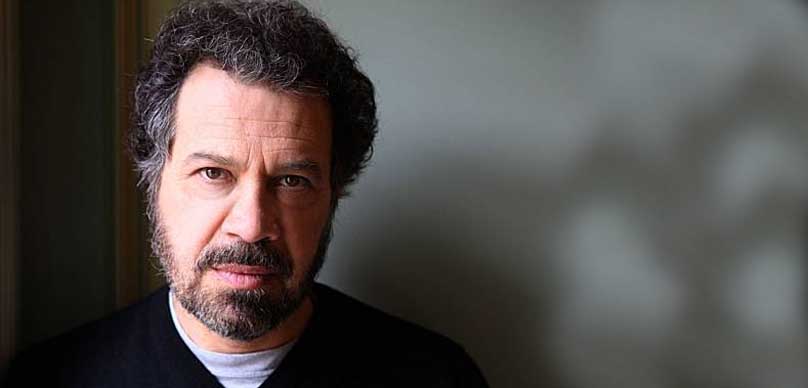
BPS 112: The Craft of Epic Story Screenwriting with OscarĀ® Winner Edward Zwick

We have been on a major roll lately on the podcast and this episode keep that going in a big way.Ā Our guest on the show today is writer, producer, and directorĀ Edward Zwick. Edward made his big shift from his childhood passion of theater to filmmaking after working as a PA for Woody Allenin France on the set of Love and Death. He then moved to California in the summer of 1976 and has since forged a respected name for himself in Hollywood.

Edward Zwick is a multiple Academy Award, Golden Globes, and BAFTAĀ award-winning director, writer, and producer.

Faced with the fear of going to law school during his first five years in the industry if filmmaking didn’t work, Zwick cards turned and launched him into projects that are now some of the most critically and commercially acclaimed in the business. His work spectrums the comedy-drama and epic historical genres. You can see just some of the films he written and directed below.

About Last Night, Edward’s directorial debut was about aman and woman who meet and enter a committed relationship for the first timedespite their personal problems and the interference of their disapproving friends.

He next tackled his first historical drama, and definitely not his last, the Oscar winning Glory.

This is the exceptional story of America’s first unit of African American soldiers during the Civil War and the young, inexperienced Northerner who’s given the job of training and leading them. Based in part on the actual letters of that young officer and brought to life with astonishing skill and believability.

Legends of the Fall: This epic romance follows a man’s fight to come to terms with himself and a family struggling to preserve its simple way of life. Taken from Jim Harrison’s popular Novella, LEGENDS OF THE FALL tells the story of three brothers and the beautiful, compelling young woman who irrevocably changes each of their lives.

Courage Under Fire: A soldier discovers how elusive the truth can be in this first major film about America’s role in the Gulf War. Lt. Col. Nathaniel Serling (Denzel Washington) was the commander of a unit during Operation Desert Storm who mistakenly ordered the destruction of what he believed to be an enemy tank, only to discover that it actually held U.S. soldiers, including a close friend. Since then, Serling has been an emotional wreck, drinking heavily and allowing his marriage to teeter on the brink of collapse.

As a means of redeeming himself, Serling is given a new assignment by his superior, Gen. Hershberg (Michael Moriarty). Capt. Karen Walden (Meg Ryan) was a helicopter pilot who died in battle during the Iraqi conflict, and the White House has proposed that Walden be posthumously awarded the Congressional Medal of Honor.

Serling is asked to investigate Walden’s actions on the field of battle, but he quickly discovers that no two stories about her are quite the same; Ilario (Matt Damon) says Walden acted heroically and sacrificed herself to save the others in her company, while Monfriez (Lou Diamond Phillps) claims she was a coward who was attempting to surrender to enemy troops.

Meanwhile, reporter Tony Gartner (Scott Glenn) is hounding Serling, trying to get the inside story on Walden and on Serling’s own difficulties. Matt Damon lost 40 pounds to prepare for his role in Courage Under Fire, which resulted in a potentially life-threatening illness for the young actor.

The Siege: When a crowded city bus blows up in Brooklyn and a campaign of terror begins to make it’s bloody mark on the streets of New York, it’s up to FBI special agent Anthony “Hub” Hubbard (Denzel Washington) and U.S. Army General William Devereaux (Bruce Willis) to find out who’s responsible and put an end to the destruction. Together, they face explosive danger at every turn when they team up towage an all-out war against a ruthless band of terrorists.

The Last Samurai: Tom Cruise stars in this sweeping epic set in Japan during the 1870s as Captain Nathan Algren, a respected American military officer hired by the Emperor of Japan to train the country’s first army in the art of modern warfare.

As the Emperor attempts to eradicate the ancient Imperial Samurai warriors in preparation for more Westernized and trade-friendly government policies, Algren finds himself unexpectedly impressed and influenced by his encounters with the Japanese warriors, placing him at the center of a struggle between two eras and two worlds, with only his own sense of honor to guide him as The Last Samurai.

Blood Diamond: An ex-mercenary turned smuggler (Leonardo DiCaprio). A Mende fisherman (Djimon Hounsou). Amid the explosive civil war overtaking 1999 Sierra Leone, these men join for two desperate missions: recovering a rare pink diamond of immense value and rescuing the fisherman’s son, conscripted as a child soldier into the brutal rebel forces ripping a swath of torture and bloodshed across the alternately beautiful and ravaged countryside.

Jack Reacher: Never Go Back:Ex-military investigator Jack Reacher (Tom Cruise) leaps off the pages of Lee Child’s bestselling novel and onto the big screen in the explosive thriller the critics are calling ā€œtaut, muscular, gruff and coolā€*. When an unspeakable crime is committed, all evidence points to the suspect in custody who offers up a single note in defense: ā€œGet Jack Reacher!ā€ The law has its limits, but Reacher does not when his fight for the truth pits him against an unexpected enemy with a skill for violence and a secret to keep.

Edward even won the Academy AwardĀ® for producing Shakespeare in Love.

Shakespeare in Love’ showcases a young Will Shakespeare as the up and coming playwright of the time, but he has been disastrously struck by the bane of the writer’s life – writer’s block. His comedy “Romeo and Ethel, the Pirate’s Daughter” isn’t going anywhere and the playhouse is under threat of closure.

What Will needs is a muse, and she appears in the form of the beautiful and betrothed Lady Viola. The path of true love does not run smooth for Will, but the joys and tragedy of his own life find their way onto the page in a moving, witty and spellbinding tale.

The list goes on. Edward has had a remarkable career so far and still has much more to give. Speaking to Edward was like sitting in my persona filmmaking masterclass. We discuss ho he made the jump from a low budget comedy to epic historical dramas, his creative process, navigating Hollywood, directing some of the biggest movie stars in the world and much more.

Prepare to take notes on this one tribe. Enjoy my conversation with Edward Zwick

Right-click here to download the MP3

LINKS

  • Edward Zwick – IMDB

SPONSORS

  1. Bulletproof Script Coverage – Get Your Screenplay Read by Hollywood Professionals
  2. AudibleGet a Free Screenwriting Audiobook

Alex Ferrari 2:37
We have on the show the legendary Oscar winning filmmaker, Edward Zwick. Now, Edward has directed and written some of the most influential films of the past two decades, starting with about last night. Glory, Courage Under Fire, legends of the fall, the siege, Last Samurai, Blood Diamond, defiance, jack, Reacher and many, many more. He is also the producer of the Oscar winning Best Picture, Shakespeare and love. He's also the creator and executive producers of shows like Nashville 30, something and many more. I mean, the list goes on and on. I was humbled to sit down with Edward and discuss his career, his creative process when he's writing and directing how he directs legendary movie stars like Tom Cruise, Leonardo DiCaprio, Morgan Freeman, and Denzel Washington just to name a few. I was absolutely in awe of, of Edward while we sat down and discussed his his craft and the way he did it, it was awe inspiring to say the least talking to Edward. It was like sitting down in a master class of cinema. So I cannot wait to share this episode with you. So without any further ado, please enjoy my eye opening conversation with Edward Zwick. I like to welcome to the show Edward Zwick, thank you so much how you doing my friend?

Edward Zwick 4:21
I'm doing as well as can be expected given the circumstances of all of our lives.

Alex Ferrari 4:26
Amen. My friend event it is a weird and wacky world that we live in nowadays. And I mean, we've been locked up for a while now. And I'm sure for directors even. It's like your projects on hold, can we can we not shoot?

Edward Zwick 4:44
There's of course, all of that. I mean, I am also a writer. So social distancing. And that kind of sheltering in place is too familiar to those of us that that have to write so I mean, a bit of that.

Alex Ferrari 4:59
Yeah. I'm a writer, and I've been in post for 25 years. So I completely understand. So before we get started, how did you get into the business?

Edward Zwick 5:11
Oh, man, it's, it's a bit of a tale. I began, you know, working in the theater as a kid.I even began directing theater when I was about 15. And on through, I went abroad to France on a fellowship, after college and in the fellowship was to work with experimental theatre companies, Peter Brook, and Irianda Skien. But the truth is, the whole time, I had, you know, had a desperate love affair with movies. But it was a it was a, you know, a passionate fan and a viewer, I didn't really know much about the technology, I'd never really learned exposure. I took stills, but I had, you know, I couldn't read a bolex or work of a viola. And so I, I just didn't, I thought it was somehow, you know, forsworn, because I'd spent all my time in the theater, but through an odd set of circumstances, very odd. I had worked for a magazine when I was in college called the New Republic. And while there, I had had a correspondence with Woody Allen, because he was writing for The New Yorker at the time, those occasional pieces. And we had asked him if he wanted to give us some pieces as well. And he said, Yes. And so he was briefly published in the New Republic that year that I was there. So when I was in Paris, I had heard he was shooting there. I was walking down the street, in Santa Monica prie. And I saw him walking toward me. And I did something that I would never dare do now. Particularly knowing you know, how shy he really was, and is, and I just went up, introduced myself, and I said that he and I had corresponded. And I said, I was around and I was on fellowship money. And would it be okay, if I could just come by the set some time and see what he was up to? He said, sure. But actually, what he said was call me at the George V. And I thought, Oh, well, he's blowing me off, you know, which is fine. And I called him he said, Oh, no, come on by. And I did. It turned out that really, he was very lonely at the time, he was one of the few people when a few Americans there. And I spoke English, but I also spoke French. And within a very short time, he offered me a job to work on the movie as a PA slash assistant, which I did. Right. And, and the he actually was very kind he took me to, to Hungary with them, it was a movie called Love and Death. And, and then, that was really it. Except that he was exceedingly generous. He just suffered my ridiculous questions. And let me just observe, I was despised by the French crew, because there I was talking to the director, which is absolutely forbidden in any kind of hierarchical thing and, and yet, he was quite willing to, you know, indulge me. And and so that I had done something actually in college that Joe Papp had seen, and I had a sort of half assed opportunity to go back and maybe work at the Public Theater when I got back to the United States after this year. But I decided instead that I was going to do it, like so many people before me that I was going to sort of reinvent myself in the movies. And I applied to the American Film Institute, from from France, and it was a very early time there, it was not a it was a very small, not very known circumstance there. And I sent them reviews of plays, I'd done I tend some some things I'd written and I sent them some songs I'd written and for some reason I got in, and I came to Los Angeles in 1976. I think never having been to California, not knowing anybody, I arrived it was you know, about 180 degrees and there the hills were on fire, and nothing

Alex Ferrari 9:31
much has changed.

Edward Zwick 9:32
And I thought that I had made a terrible mistake, having left this this apartment that I'd been subletting in Paris and, and, and and went to the American Film Institute did very, very badly my first year would go home and just cry myself to sleep facedown on the mattress every night. But somehow, by the end of the first year there I had somehow managed to slipped by, and was one of the people asked to come back the second year and make a short film, which I did. And he did no good for me whatsoever. But I,

Alex Ferrari 10:11
you know, was that was that was that Timothy and the angel?

Edward Zwick 10:14
Yes, it was, it was it won a prize at a Chicago Film Festival meant nothing except, you know, some, you know, little plaque that I still have. And but the I had two years of the kind of demystification that you need when you first come here, when you understand what people mean when they say these things to you and and that whole nomenclature of Hollywood and development and you know, those horrible critical phrases that that development executives know, and you have to learn the translation. And probably the most important thing that happened is it Marshall Herskovits. And I met, he was there also as a director. And we became friends. And more than that, I think, after we left film school, because there is no, you know, continuing education, I think we remained each other's friends, but also became each other's teachers in a way. And finally, we began to get some kind of work, and it was horrible. The other would be willing to tell the other person it was horrible. And we would try to analyze why. And that relationship began and continued up, day in both and informal ways. At the same time, I met a guy there named Steve Rosenbloom, who cut my student film who'd never cut anything before. So we figured out that Viola and, and then esteem back and, and, and he has cut everything I've done since as well as having several Oscar nominations. And and I don't know, it was just that sort of that cauldron, that that very serene moment where you actually form certain relationships with people who are actually willing to tell you, you're full of shit. And, and you admit your aspirations to each other. And that's sort of how it began.

Alex Ferrari 12:23
Now, with when you did your, your, either your first short film or even when you apply to, to, or went to LA for the first time, what was the biggest fear you had to overcome? Because a lot of a lot of people listening might have not even taken that first step to walk towards the path of following something that they're passionate about. And they have something blocking them. What was that? Was there a fear? Or did you just go gung ho?

Steve Hodgins 12:47
Well, well, I mean, to be true, really honest, and my father had gone bankrupt when I was in college. And I had applied and had been accepted to law school. So ironically, when you get accepted, I don't know if it's still true now. But in those days, when you got accepted to law school, they and I had gotten this fellowship, they gave me a, what's it called, there was the, the possibility of coming back the year after, or they were able to attenuate my acceptance. And so I had that thing, that piece of paper. And my greatest fear is that I would have to go back and go to law school, because I just, I really had no wish to do it. I applied because I was scared. And I was a middle class kid who thought I had to somehow have something to fall back on. And I guess, you know, that continued for several years, because while I was starving and mooching off my girlfriend, who was willing to, you know, let me stay in her this little rented house. And, and I was, even if for years after that, when I was a script reader and the various things that I did to try to make money, those people who had graduating and clerking for supreme court justices and going to work for white shoe law firms and making a shitload of money and really advancing to the world and I was not as none of you right away. And so there was a, you know, a certain period of time, I would say, the two years of film school and maybe two or three years thereafter, where I was struggling,

Alex Ferrari 14:26
where as you would and and for people listening today, when you were trying to become a filmmaker, it was not the cool thing to do. Nobody really even knew what a film director did.

Steve Hodgins 14:37
Really, sort of true. I mean, I mean, look, I went to I went to an Ivy League school and particularly there I mean, that the couple years before me that I went to Harvard and the guys from the lampoon had come out, and you know, Doug, Kenny, and and and those guys. They had not yet made movies, but they were finding their way here. I seem to remember seeing Animal House like the first year that I actually was there. I don't remember Animal House what year it was. Was it about 77? Is that a good guess? 70?

Alex Ferrari 15:12
Yeah it was rough. Yeah, it was like mid to late 70s. Yeah.

Steve Hodgins 15:15
I think in any case, it was not an acceptable thing. There wasn't a mafia of people all from the same school who had come out here and, and there had never been film courses in the school that I'd gone to. And so it was all very, very new. But when I lived in Paris, all I had done was go to the movies, I probably should have spent a lot more time a lot more time, you know, doing the work I supposed to have done which is working with experimental theater companies, but the cinema tech was their only luck while I was still the head of it. You could spend four francs which was $1. And you can see three movies at a six o'clock and at eight o'clock and 10 o'clock show at the Cinematheque and that would be the Festival of Truffaut or it would be Antonioni, or it would be you know Zoo or Kurosawa and or Indian American films to and Paris, which few people know is probably the best revival city in the world. So they would have a John Ford Film Festival, or they would have a no Preston's Burgess festival. And that's every day, we just go to the movies. So my point is that, that I was there, and I at least had a sense of what I aspired to. I didn't know how to do it. And I did work at ASI, and I listened. And when all the fancy people would come in, tell me about their experiences. I thought I was paying attention. But then when I would try to go and do the work, it never resembled what Sidney polycon been talking about, or, or what Roman Polanski was talking about, as he talked to the students. And I, I just wasn't getting it. And I felt despairing about that. And, frankly, it wasn't for several years of just doing work that was mediocre. And until one day, the penny dropped, and I can't really explain exactly why it happened when it happened. But something was revealed to me about the relationship between what I wanted and what the cameras saw. What I wanted to say and what people said it the actors in their mouths and how stories were told and and and and really it happened like Helen Keller at the pump, I don't know if you've ever seen.

Alex Ferrari 17:37
Of course, of course. Yeah.

Steve Hodgins 17:38
The moment when, when she's got Patty Duke is there and she's pumping in she goes water just oh, Lord. Oh, and suddenly, at that moment, suddenly she can understand language. And for me, that was some language. And, and from then it was a very, very fast trajectory. After very little trajectory, it then began to really gather steam.

Alex Ferrari 18:03
But you struggled for years until that moment happened. And just

Steve Hodgins 18:08
Yeah, I would say the aggregate was was certainly certainly five good years of struggle. And by struggle, I also mean self loathing, of getting an opportunity to write something and then seeing it was bad. And even when I got an opportunity to do a television movie, finally, it was bad. And then the next one was just as bad. I mean, I mean, I'm not sure that they knew at ABC, or even the producers how bad it was, but I knew how bad it was compared to what I was trying to compare myself to.

Alex Ferrari 18:40
Sure.

Steve Hodgins 18:41
And I was embarrassed by it. No, better.

Alex Ferrari 18:45
No, there was. I mean, I've been a fan of yours for a long time and with your filmography, but I saw you on a DVD of this, this this little known amazing acting, directing the actors course called the Nina foch course, because

Steve Hodgins 19:03
Ah,

Alex Ferrari 19:04
can and and I saw you there and and, and of course, George Lucas was in there. There's like a ton of amazing directors who Nina really helped. And I, when I first launched the new film, hustle, I was probably one of the biggest sellers of our course, as I sold tons and because I took it, I'm like, No, I got to promote this to to an audience. And I love that course. But you actually I took the video course you actually took her course. Right?

Steve Hodgins 19:30
Yeah. I mean, there are a few people that mark you I mean, I was lucky enough to have several good teachers in high school and certainly one or two in college but she she just was so radical. I mean, you know, I've I know a little bit about Brando's life and because Anne's life and, and and what who Stella Adler was, and and and what effect she had on people and um and and Sandy Meisner, and and Nina was a student their's, and she took their gospel and apply and then really translated into her own understanding because she too had had a more Hollywood experience. She had been a contract player for Louis Mayer in the in the 40s. And she had then been, she worked with George Stevens and William Wyler as a coach.

Alex Ferrari 20:26
Yeah, then she worked with Kubrick and I think sessile made a million.

Steve Hodgins 20:30
I think something like two mil, she used to tell the middle story. She had the best stories of anybody. But she was also unbelievably tough. Yeah, she was unsparing about what the calling was of directing. And not just directing the actor. But but but storytelling. And, you know, the funny thing, when you have a great teacher, pay attention, you don't always get it right away. What happens is that, at least for me, a year later, or five years later, you'll find yourself in some situation, and then something will happen. And then you'll say, Oh, that's what you meant. And then a whole reservoir of things that will still have been in you will then be available to you, because nothing really leaves if you're paying attention, it's there, it can be called upon. And I think for me, that I just needed to have some thought sort of practical application of doing a thing for it to then be somehow internalized. But once I had done it, and even done it badly, and I maintain good teachers doing it, well, I was able then to reference what she was talking about. And all the things that she talked about, in terms of how one elicits a performance from an actor, how one uses behavior, how one really breaks down a script, it became something that I then took in and applied some of whatever my own experience had been been to try to make it my own. But, but she was she was really formidable. And and, and believed in it as a calling or believed in it as a you know, like a race to it

Alex Ferrari 22:34
almost like a priest.

Steve Hodgins 22:35
I was gonna go there. And I thought at least you said the pretentious part about it. Yes, I think that's true.

Alex Ferrari 22:42
And, and she was I mean, she was a formidable in the, in the DVD and the video course that I saw, I could only imagine being in the room with her. Yeah, it was amazing. I really was. She She was remarkable.

Steve Hodgins 22:54
Now, really, she would really take you apart. She had played the they created something that if I called the narrative workshop, where you would show something that you had shot and we all worked on tape at that time shot at single cameras, if it were film, broke, cut it ourselves. And the exercise was like a Communist Chinese self criticism session, where you have to show the film to your peers, and you're not allowed to speak. And they just tell you what they've seen.

Alex Ferrari 23:24
Oh

Steve Hodgins 23:25
And you have to sit there and fucking take it. And then and then you do some kind of that that repentance thing that you know the Chinese, I am guilty of the sin of pace, I am guilty of this kind of indulgent sort of session.

Alex Ferrari 23:44
That must that must have been amazing. Now, you, you You did a movie in the 80s, which was at least one of those classic 80s movies, which is about last night with Rob Lowe and john Belushi and, and Demi and Elizabeth and it was such a wonderful film. Last night, one of those amazing 80s films and it's a very small, I mean, that's small but it's it's a comedy. And then from from a controlled more controlled comedy you go to glory. Right? How the heck did that convert? Like? Was it an agent? Was it the script? What like what like, how did you get that gig because generally speaking, you don't go from romantic comedy to Epic civil war movie.

Steve Hodgins 24:28
Yeah, it was it was one of those again, flukes. Um, I will say that I had obviously studied American history. So I had a very particular interest in it. I had about last night and had the good fortune of doing well. It's a movie that was made inexpensively made a lot of money for the studio. So they were predisposed to be interesting what I might be interested in. When I said that you can imagine their response was the same as yours. But there's a guy named Jesse Jansky, who had actually been to college with me who had gone to work at that studio. So I had a personal connection with one of the executives there. And two things, they said to me finally, as I, as I first worked with Kevin, john, when they were considering doing it, I was involved with a producer named Freddy fields, who's a very sort of legendary character for any number of reasons in Hollywood, as a producer, and then having created what is now ICM, but um, we found out that there was going to be a reenactment of the 100 and 25th anniversary of the Battle of Gettysburg taking place on the field with the reenactors. And there were going to be 1000s of men, maybe three or 4000 men on the field that day, July 4 125, years after 1863, that would have been 63. A, it was like 89, something like that. And we convinced them to give us $25,000 or $20,000, whatever it was, where I could go with a friend of mine who's a cameraman, and another cameraman we picked up in New York, and Freddie and me to go on to that field, and just shoot what it might look like. And I didn't know what I was gonna see when I got there. But I read about these reenactors. And we went there. And we had to put on the union uniforms because he wouldn't let anybody on the field who wasn't actually in the reenactment. But there we were running around, is 100 degrees in Gettysburg in this mid summer. And we we shot hot, several 1000 feet of film. And I brought it back to LA and Steve Rosenbloom, who was not yet an editor. He was actually an assistant. But my my close friend, we took the film, and at night in the cutting room, when he was done with his day job, we snuck in there and we cut the film together and put it to music and put together about couldn't have been more than a five or six minute reel. But it was magic, because it was the dust would come up and the horses would go through and these cannons would go off. And, and and there was no narrative,

Alex Ferrari 27:23
right? But it was a sizzle. It was a sizzle.

Steve Hodgins 27:26
I invented the sizzle, apparently,

Alex Ferrari 27:29
apparently, because I was like this is the most amazing sizzle I've ever heard of.

Steve Hodgins 27:32
Exactly. And so we did that. And showed it to the studio. And the one thing the studios are sub are subject to and this is I think explains the sizzle. Which is Oh, well we're incapable of imagining it. But if you show me something that is in fact there, maybe maybe that makes it makes sense. I mean, I I find this sizzle to be a little bit offensive when someone's taking my film and 10 other directors films and saying that they've done it. But that's how it's gonna be because God helped them if they could do it the same way. But, but that was one thing that happened and they looked at it, they went, Wow, that's pretty great. They said to me, we will make this movie for a certain budget, if you can get Matthew Broderick to agree to do it. Now, Matthew Broderick at that point had done Ferris Bueller. He's not exactly the most logical, you know, choice to play in this kind of movie.

Alex Ferrari 28:35
Right.

Steve Hodgins 28:37
But that began in a bit of a conversation with Matthew and and some real hesitation he had about doing it and having to win him over to that idea. But the good news was they said basically, if you could get Matthew Broderick to do it, then all the rest of those guys, you know, those black guys, you know, well, you know, you'll you'll take care of that.

Alex Ferrari 28:59
Yes, it does a couple guys, whatever, whatever doesn't matter, which which, you know, amazing, amazing.

Steve Hodgins 29:04
It's an amazing story. Because I mean, I had known Denzel, because the year before we had started 30 something and, and, and Denzel was, I think he was they're still doing Sandy elsewhere at the time right away.

Alex Ferrari 29:17
That's right. He did say nice.

Steve Hodgins 29:19
And I'd seen Morgan do something that bam. And Andre Brower was still a senior it was still in. Still in his final year at Julliard. He had never done anything before. But it it bespoke something that's, I think, also interesting to talk about which that their approach to it was essentially as a white savior narrative, No, man, and that's what they wanted the movie to be. And therefore there was a lot of a lot of pressure put on me to really lift up that character of Shaw and talk about his how he was trained and where he was born. And it got there and there was literally, but two reels of film and, and really to put the burden of the narrative on him. And I had to write a lot of it. And in fact, as we started, I had to shoot a bunch of it. But it became abundantly clear that when I started rehearsing with the guys in the tent with Denzel and Andre and Morgan, Jimmy, that there's that was, that was the story that we shot that first scene and looked at it in dailies. Or let me back up for a second when I looked at the stuff with Matthew alone. And it looked like a kind of bad movie for television, because it was arch, and it was stilted. And it was just something you'd seen before. But when I started realizing what these guys had, it just all revealed itself to me. And I began to write more for them and figure out ways that there would be other scenes in which they would have figured even more prominently in the plot. And so that when I finally showed the movie to the studio, I cut the first two reels, I literally began with Matthew Broderick, on that field in that letter, and he meets Morgan Freeman, you know, three minutes into the movie, when he's lying there on the field, and starts meeting the other guys, you know, six minutes later. And the movie became what it became, which is not to diminish anything that Matthew did, or or to diminish his import, and, and, and, and his performance. But these guys were in a state of grace. They were they were representing something that I could only imagine or humble myself in front of.

Alex Ferrari 31:54
Yeah, and, and, and from what I when I saw the film, I mean, all I all I can remember from from the back of my head is Denzel just, it's just Denzel, I mean, Morgan and everybody else. And Matthew was great, but it's just Denzel. You just saw, he became Denzel and glory, like he became

Steve Hodgins 32:14
Yeah, in a relationship with us where we made several more movies together. But, but one thing we will say also, and this is how I tried to make that transition. And I think this is really important to say.

I know that about last night was you know, people in rooms talking and 30 something we should come right after at the regional Mirage the same time was the same thing. But I shot so much film, meaning in that movie, and in those 40 episodes that had preceded this I'm like a lot of the directors that became really great directors, who shot to Reelers, you know, George Stevens who had shot you know, a Mac senate and and john Ford, who had shot you know, crummy westerns and all that shooting film, cutting film, doing it, figuring out what makes a scene work was, again about gaining a kind of Felicity and, and, and the kind of chops as a jazz. You know, trumpeter might fingers scales as a pianist might. And one more thing, which is I went back to some of the Masters that I had so loved. And I think I watched Ron and Kaga Boucher, and the Seven Samurai 100 times. Because what Kurosawa did with those movies, he did not have a lot of money, and we didn't have a lot of money for glory. He showed me how to fill that frame and how to stage that in depth and how to give the impression of scale. And I, you know, stole mercilessly from his technique, even though it was different, you know, period and whatever. And I would have, I could afford, you know, four days in the movie where we had six or 700 extras or five days, right. And I figured out how to space those shots, when I needed them through the different aspects of the story. So that then when I only had 200, or even 100, and Phil inserted those shots into the bigger shots in your mind as the audience you're there among the 700 or 2000 of them, because you have to remember there was no CGI,

Alex Ferrari 34:47
none at all in

Steve Hodgins 34:48
All camera. It's all in camera. We couldn't we couldn't duplicate and tile and do any of those things.

Alex Ferrari 34:56
That's amazing. Now moving forward in your in your career. I've noticed that you worked a lot on the upcoming. Yeah, you've worked with a lot of up and coming. actors, like from Denzel. You know, Brad Pitt, Matt Damon encouraged to fire, you have a heck of an eye?

Steve Hodgins 35:17
Well, I mean, I thank you. And and I do, I am proud of that. And by the way, I would include, um, Claire Danes, and Evan Rachel Wood in the Intellivision, too, I think it's, it's, it's freeing, frankly, is that would go back to the theater and, and having some confidence in my estimation of who an actor really is, and who he is for that part, as opposed to what his reputation might be, or what other movies you might have seen. of, I would like to think that I would cast unknown actors as movie stars, and I would try to cast movie stars as actors that trying to find some equalizing of the voice and, and ask the same thing of both of them.

Alex Ferrari 36:08
Now, how do you know how do you sculpt those remarkable performances? Because throughout your filmography, I mean, you have amazing actors, obviously, but but use your films for specifically this, the performances are so sculpted, how do you work with them? How do you kind of come up with these from Leonardo and Blood Diamond to to Tom and Last Samurai? And these kind of films, like their performances are? So there's depth to it? How do you sculpt a great performance? Um,

Steve Hodgins 36:42
I think it begins with a kind of trust, that has to be earned. And I think that comes out of some set of conversations that begin, and they begin very early. Sometimes it's doing the research together. Sometimes it's doing physical things, you know, Denzel and I, I mean, the guys, even all of them in the tent, as they were learning how to, you know, load a musket and do drills with with the, with the reenactors, or Tom working with the sword or, or drinking Jagermeister, with Leonardo with guys who had been in the South African Defence Forces. There's a building of vocabulary and, and trust that that's part of it. I think there's also a commitment to honesty, about not bullshitting an actor or a movie star, about what what they're doing and not being the person whose job it is to suck their cock, but rather to really demand something of them, right, because you've done the work and, and, and the truth is, they want to do the work. And, and I think, obviously, over time, when you've done a certain number of performances, actors might come there, knowing that you might have some notion of what you're doing. Right and, and how to get them there. But by the way, you evoke Nina. And, and, and, and there's a very, very good example of something that I might things I might have heard her talk about, when I was 22. That then, when I found myself at 35, in these relationships with movie stars, or 45, those, that's when a lot of that stuff came in handy. Because, you know, she had worked with mighty Clift, and she had, you know, understood that, that that, that actors and actresses were a very particular breed. And there are very specific kinds of issues that you could understand that they have to deal with. And, and you could be sensitive to those. And then one other thing, I think, and that is maybe it's going to sound a little bit woowoo. But I think the directing, kind of directing, and I believe there's a certain amount of exchange that happens, a kind of my experience of the material first say as a writer, or even breaking it down just as a director of someone else's work, but that as I approach it, I want to understand the nature of the experience that the actor is going through. And when I go and talk to that actor, somewhere in me, I'm also communicating to him or her. What I believe the nature of that experience to be, and it might be the tone of my voice. It might be a touch on the shoulder. It might be my posture, it might just be the intensity and the sweat. I don't know what it is. But I think that there is some willingness to go deep. And to understand where that actor wants to get to.

And to create an ambience where that actor can be comfortable to discover something. And to feel like they have the time to discover it, a lot of what you do as a director is to is anti entropic push away all the entropy of life of noise and traffic and pressure and your watch in the end, is to give them at least the illusion that they have a safe space,

Alex Ferrari 40:46
Right

Steve Hodgins 40:47
which they can create. And, and something that I that I talked a lot to Steven Soderbergh about when we work together is creating a circumstance in which the default is truth. And just to say, the script and what you're asking the actor to do, is to not make some ridiculous transition into lines is not to have to give along expository speech for no reason. To have a costume that feels right, to have a set that feels like it's real, to not ask them to not to stage things in a way as to be arbitrary for the camera, but to have let life in to that process. And as a director, however much I prep, there's no substitute for me sitting there and letting them play an experiment and discovering myself even things I might not have known, because there is life happening in front of me. And if you can create enough of that, that the actor feels as if, as if they're cheating. As as if there's just life happening. And by the way, when you read about it, and you read about what the gift was suddenly of Kazakhstan and Brando, or, or James Dean or, or, or, you know, different actors, that was the Revolution, the revolution was was bringing life onto the stage and in front of the screen that was not very different than the life we know it to be. It's just that life put into extreme circumstances.

Alex Ferrari 42:34
And I think I think the two words that really sum up the performances I've seen in your films is depth and truth. Is there is that there is just, there's substance, it's not it's not it's not a veil, very thin performance, with all of them. Because some actors, you know, movie stars, in some movies, they're Oscar caliber. Other Other times, you just like what happened. And it happens with that happens with every artist in every field. But but but there's a consistency in your work. And that's why I wanted to ask you that question.

Steve Hodgins 43:09
Well, I mean, I think it's also it's also who you're surrounding them with, yeah, what are the nature of the words, you're asking them to say, you know, I listen, I I have found at times that the hero of a production has had been the, the, the costume designer, yeah. Or the prop man. Or, you know, the skinny knife that Brad has, and legends of the fall that was the built and that somehow becomes this, this thing and I and obviously, the the DP who creates this universe, everybody, if you're if you have those magnificent people, they are also creating this edifice on which the performance then can rest, but the edifice is already higher up and the performance is already lifted in some way. So it's, it's, it's, it's about everybody else, too. And of course, not me. I sometimes think that it's the hair and makeup, people who are in the trailer, who are the first people to see that see the actor in the beginning of the day. And the last people to see them at the end of the day, that are as instrumental in giving them that sort of confidence to to go out there like on a, you know, those umbilical lines that the guys go out on a spacewalk, you know, out there, they're out there in zero G, and you're back behind the camera with a cup of coffee, but but they're out there and they have to feel like they're like they're being taken care of and supported.

Alex Ferrari 44:39
Now, another another theme I've seen in your films is just the massive scale of many of your films. It's just so many like very, you know, just very epic films from legends of the fall to The Last Samurai to glory. As a director, how do you work with such a massive Live, not only crew, but just the 1000s hundreds, if not 1000s of people that might be in front of the lens sometimes. How can you like because I look, I have a, you know, when I'm directing, I'm directing a scene, I'm directing a scene with four or five people in a room. And you just try to keep hold of two or three cameras, and making sure everyone's you know, just trying to take the narrative. How can you even grasp that man?

Steve Hodgins 45:23
I know this, this is gonna sound a little bit fatuous. But I think it's it's just as hard to direct a scene with five people in a room as it is with 500. I think, you know, when you have 500, it's, it's about your canvas. What what is on your palate? And and in some odd way, there's more to photograph when there is 500 people out there, right? There's there you can juxtapose what's that that meyerhold phrase, neither, you can never be too close nor too far away. I mean, you have the you have the long shot, you have the great scale thing, which then juxtaposes to a close up you have, you have a kind of palette that is exciting. Action, certainly, particularly action where there is stakes that are emotional, where you're not looking at action for its own sake, but you're actually following the story. And that action has a purpose with that story that you're telling me that individual actor or that set of actors. And part of it is the thing that I never thought I would be well suited for it always having a certain amount of patience. I mean, you know, there, there have been there have been days when you arrive, it's 530 in the morning. And then about five hours later, six hours later, the ad says, okay, that's lunch, and you haven't got a shot. When, and, and, and, and Okay, and you know, you're getting written now it's three in the afternoon, and you're convinced that you're going to get fired, and you're going to have to lose student days, you have to get some confidence that you're going to then accomplish when you do those things, the things that you want that you've got the number of cameras, and then you've got the right shots, and you've done a shot list. I mean, II don't do shot lists of people in rooms and talking and whatever. But on those things, you damn well better have your shot list because you're not coming back there, you know, with 500 extras the next day?

Alex Ferrari 47:23
Yeah, so like, it's kind of like that old, that old story of john Ford on a script. The Indians take the fort. Like it's literally one line, but it took two weeks to shoot. And I'm assuming once you move that machine to reset that machine, that's another day, almost sometimes,

Steve Hodgins 47:41
there's so many great stories about that I won't bore you with and there's there's a great one about David lean, and they're setting the the the, the attack on aka but you know, without the camera without filming the cameras and, and, and there's, um, what was I gonna say there was another thing that reminded me of, of I, you know, yeah, you just have to that that's a real, that's about a kind of redundancy. I read a now something really weird has happened to the visual on the front, okay. I am I there's a book that I read by Rick Atkinson called the army at dawn. He's a Washington Post reporter about and it's about the Allied it was part of a trilogy about World War Two. And it's about the invasion of North Africa, which was an utter failure. And it's about all the preparations they had to do to create amphibious landings. Well, they'd never done them before, what is an obvious landing, they had invent the amphibious craft, and they had to understand about supplies and all of this. And it was about the redundancy of checking and rechecking and having these endless meetings with all of the departments and making sure that everybody's on the same page and, and being honest about you can and can't accomplish. And what they discovered when they did the landing, is they got it all wrong. But they never could have done D day if they hadn't fucked up so badly in North Africa. And so part of it is also making really stupid mistakes, as long as you then don't make them twice,

Alex Ferrari 49:27
then that's pretty much filmmaking. Not one one part of filmmaking that is not really taught in schools very often. And I know I felt I've had to deal with it I'm sure you have to every director has ever had to deal with it. Is the inevitable politics of being on set the hierarchy dealing with politics of actors or crew or studio or producers. Can you talk a little bit about how you as a director deal with those, those those panels Tick moments, which, when you have a group of people, it's going to happen.

Steve Hodgins 50:03
Yeal. well, you've you've mentioned, you know, by those seven people you've mentioned, if you if you triangulate them, you've mentioned about 49 different relationships, so, so maybe more, so I can only I'd have to talk about them somewhat separately. Um, the one thing I would say is I have over time, come up with a kind of an analog to what a film set is. And, and, and, and because it's not a startup, and it's not a team. It's not a business. It's this, a group of people all coming together with a common goal. But the goal is ephemeral. The goal is a story. And I think of it a little bit like the sort of like the sailing ships in the 16th century. Everybody on that ship is a master, the ship's carpenter, the sail maker, the cook, the navigator, everybody is really is an expert in what they do. Um, and at the front of the ship up in the in the in the prow of the ship is some guy with a big long beard, blown back by this spray in the wind. And he said, I don't really know the way, right, he has idea. But somebody's got to say that. And all the rest of them are probably capable of being that guy who's up there, but they don't want that gig. They're perfectly happy being in their own depart, doing their thing as experts, and also grumbling that the son of a bitch up there doesn't know what he's doing. But, but they're wonderful people, they might film people on a set are funny as shit, they are capable of working in long hours in inclement conditions with crummy food. And, and, and, and, and there's a love there. And there's a commitment to this thing. And it's, it's romantic, it's a beautiful thing. So generally, I find a crew to be just the best part of it are all that now, when you fold in the actors who have their own little world and their own set of issues, they have to be that they have to be dealt with in a very particular way. So as to be able to keep that separateness to a certain degree and be able to have the focus and the concentration that they need. But you'll also find that if actors are not in gratitude for their opportunity, or not aware of what's happening, they could lose a crew to an actor could get a crew to do anything for them. Or they could have a crew that's working against them. And it's all it's often a factor of what their nature is, you know, a little bit have a little bit of sensitivity on their part or kindness or awareness of what other people are going through goes a very long way. And and vice versa. Because a crew could sabotage an actor just in some very subtle but very unhappy ways.

Alex Ferrari 53:19
And when No, and I think the same goes for directors like it if you don't, I mean, I've had crews, I see I've been on sets where the crews are completely against the director, either in either in television, because television is even rough. And that's a whole other conversation. Yep. But in a feature world, they come in and if you just a little bit of kindness, saying hi to them, saying thank you, you know, all those little things, making sure that they that they're fed on time that these little little things go such a long way when you get when you're at our 12 and you need them to go another 30 or 40 minutes. Totally,

Steve Hodgins 54:01
totally and, and also I listen, I started I was very young, when I started really directing. I mean, I was maybe 26 wives, and I would do some of these shows at Universal. And those guys, you know, they had been working for 35 years, they've done 1000s of hours, right? And even when I started making movies, it became very clear to me that the dolly grip I was making my third movie so I shot six hours of film and he shot 600 and when I would start to say Okay, now we're gonna put the camera over and by the time I point he was already moving the dolly over to where the camera was going to be because he knew so so the part of it was actually surrounding myself with people who really knew much more than I did and trying to pay attention and really ask you know, dumb questions and and and try to listen

Alex Ferrari 54:57
their absolute absolute absolute

Steve Hodgins 55:00
When you when you try to then factor into the executives, and oh, yes, that's that's a whole other story about you know, yeah,

Alex Ferrari 55:08
that's another podcast, that's another podcast. Now, um, have you ever had to deal with an unprepared or difficult actor? And if you have what do you as a director? If it's a star, if it's a bit player, if it's if it's a secondary supporting character? How do you deal with that as an actor, as a director to keep the engine going?

Steve Hodgins 55:34
You know, I've dealt with actors who were too anxious to do well. And that's something you deal with. But when you deal with an actor who's not prepared, was drinking at lunch? At the bad scene, and I'm not sure I handled it very well, I'm not sure I even knew what to do. Because there's not much you can do. I suppose if you're in the position to fire someone, you can. But you also know that when you fire someone, you're also hurting yourself. Because the they're not going to necessarily say, Oh, it's fine. We'll go back and reshoot all this, and we'll give you all the time back, it'll inevitably hurt you in some way. I think there are two things. One, there are a lot of us, I think, who are perfectly willing to call each other out of the blue. And I won't mention names of guys who called me. But I could tell you that I have presumed to pick up the phone and call another director and say, before I work with this guy, I've heard something just talk to me, tell me honestly, this will never go any further. What am I looking at? What am I up against? Because that's the kind of honor among thieves. Yeah, if they've had a bad experience, they don't want they don't want you to have a bad experience. Directors, ironically, are very, are very supportive of each other, we may be competitive in some, in some industries mind as to who could do a better film, but any director who's been through it more than once, or has a life in it has real compassion for for their peers. So I will call people and they will call me and so that's one failsafe to avoid that thing happening. And only once I've been forced to use an actor that I didn't want to use that I heard stuff about. And it almost ruined, I think it actually did really hurt the third act of one of my movies, and I will not mention who that is, but it was, it was bad. And I hated it. And I should have fought it harder. It was because the movie was going out way over budget and that needed, they felt they needed another star and it was just a bad scene. So that was that. Um, but the other thing is, try to if there's a way that you know, you're not gonna get a movie star to read for you. Right? But you can, but you can try to spend time with them. And, and even though it seems awkward, really try to talk honestly and get the measure of who that person is. Because people will tell you who they are. I mean, there's, if you really listen, when you anybody in life, when you beat them, they want you to know who they are. And, and and if you can get past your own anxiety or your or your expectations, you know, I need this person to be in my movie, therefore, I'm going to like him. Right? In fact, what they're saying is crap, or what they're saying is terrifying about, you know, their, their entitlement or their, you know, pomposity, or, you know, they're ingratitude things that really make you crazy. You end up if you end up casting that person, then you get what you deserve.

Alex Ferrari 59:04
We'll be right back after a word from our sponsor. And now back to the show. Amen. Amen. Very, very, very true. Now, in Last Samurai, which by the way last summer is one of those movies that if it's on, it's a it's a remote throwing kind of throw away the remote kind of movie for me. Like if it's on wherever it is, in the movie, I just stopped Okay, I'm in I'm in and I'm, it's one of those films for me. I absolutely adore it. I also am fascinated with Samurai culture and cemetery history and I haven't recorded our autograph. In in, in the it's, it's on the wall in the back. I'm, I've got my samurai sword in the other room. I mean, I'm in so that's why when I saw that trailer for the first time, I was amazed. Some there's so many things in that movie that we could talk about, but The fight sequences in that film are so wonderful and so amazing. And I know Tom, from what I hear from other directors I've talked to who've worked with him, and also just the legend. He is a serious, committed, professional actor, and he wants to do everything himself.

Steve Hodgins 1:00:20
Yeah, I mean, yeah, there. Um, I would say, there is only one shot in that movie that Tom did not do. And that's when the horse that he's riding in the final charge takes a fall. Right? Right. Because, first of all, the insurance company would never let us do that. And I would never let him do it. Because the guys who did it were the gypsies from Spain, from zingaro, the great horse circus, who were the greatest writers in the world, and who had trained with those horses for four months before then. But he wanted to, but he wanted to do it. Oh, I'm sure and by the way, he's riding in the charge. He's, I'll tell you what he's in. He's in the charge on the on foot when the two armies come together and hit each other. Oh, he's in that shot that. But But what I remember is, is it was February, we didn't start shooting the movie. We till like September, October. So in February already, I remember he was renting a house someplace on the west side, and like, there was a tennis court there. And I went to go see him one night, and it was foggy, cold. And it was nine at night. And I remember walking down to the tennis court, and he is out there with a sword guy working out. And that's seven months before we shot the movie. And, you know, some of the learning Japanese. And I mean, you know, there was a great guy, a guy named Nick Powell very talented stunt guy who was really good with sword. But I also found that a lot of the Japanese had their own you know, experts and they had shot a lot of Samurai movies. And and there were there were some guys on that on that field of there were 700 Japanese who came to live in New Zealand with us, when we made that movie even created a village with our own doctors and diet and whatever. But there were guys on on that field who had been in those carousel movies. So and and there are certain guys in those battles, who must probably who die about 100 times, I think that it's

Alex Ferrari 1:02:46
as good as good stunt people. Do you just put another wig on them? Get them out there again.

Steve Hodgins 1:02:51
But But I do remember that literally. It was a kind of ghoulish exercise, certainly in that final battle about saying, okay, okay. What's another way to kill someone? How many ways are there that I could devise to kill someone? tell you another interesting thing. You probably like we there's the scene when that when the samurai first come out of the mist and they charge and they're on horseback and horseback week week, we built an app that's an animatronic horse. It was a million dollars to build a horse. That is probably only in about 28 seconds of film.

Alex Ferrari 1:03:36
How is that? That doesn't make a lot of sense ROI wise. Like there's not a really good return on investment or is there? I

Steve Hodgins 1:03:42
mean, seriously? No, it does. Because in the middle of this remarkable season, you have your movie star, doing things that you would never let a movie star do. Okay, horse rearing, turning sword bending, twisting to an end then getting t boned by another horse and going over.

Alex Ferrari 1:04:04
I guess you're right. I guess you're right. You're absolutely right.

Steve Hodgins 1:04:06
There's no other way to do it. And you save yourself. Okay, this whole sequence is going to be five minutes. If you got 30 seconds of that movie star doing that in the middle of it. It's probably worth it in a movie that cost $130 million. That million dollars was well spent. Yeah, but true.

Alex Ferrari 1:04:26
That's amazing. So like so that sequence that fight sequence in the in the back alley, the when the samurai surround Tom and that the way you shot that in the way that the timing and the slow mo and the way he the way he was thinking like the images. How do you approach a scene like that?

Steve Hodgins 1:04:44
Yeah, I am. I I read a I read a book by john McPhee talking about Arthur Ashe, and I think it might have been osuna playing a tennis match in the 60s. And it's a brilliant analysis of, of sport, but also competition and I remember him time trying to break down a tennis stroke into the composite motions of every change the weight and and and a vision and timing and and what the human brain might be capable of doing and understanding all at once. When you see a player in hang time twisting and reverse the ball and then going opposite Elio, since you know, things that are or I once had a cat, that I slow motion and dropping the cat from higher up upside down and seeing the cat come and find his feet with a kind of gyro ability that he would have. So the idea was to say, how would it be possible for someone because you know, in Samurai movies, when you see it, they're doing it, but it's very fast. And you're taking it on faith? That that's how it would have been. But I said to myself, okay, is there a way that we could literally break it down and see it, and do it in the reverse? Usually, what you do in action, or at least what I seen before, with action is some action starts in it immediately goes into slow motion

Alex Ferrari 1:06:33
Right?

Steve Hodgins 1:06:34
And that's how it happens. And I said to myself, well, what happens if we do it, and then find a way to then go backwards, and almost like that, that, you know, he's been training? Right. That's, that's why this makes so much sense. And when you're, when you're training it, you know, you train and you train and you train, and they try to say to you, and the whole theory of that was, which is what coaches used to say to me, if you did well, oh, man, you were playing out of your mind? Yeah, you're playing out of your mind. What does that mean? The zones are opening, you're only reacting,

Alex Ferrari 1:07:14
Right?

Steve Hodgins 1:07:15
So this first show him playing out of his mind, almost been unaware of what he had done. And then go back and almost to recapitulate it, in that penultimate moment, that leads up to the last moment, that was the whole theory. But Tom, I will say, Does every, and those guys are swinging, they're not they're not sharpened swords. But if one of those swords would have hit him in the face, or in the arm, that would have been, you know, the, if not the end of a career would be the end of a couple weeks of shooting. So, so imagine the amount of time that he spent rehearsing that with those guys to do that. It done all I wanted to show it all in one take first.

Alex Ferrari 1:08:05
Yeah, and that and the reason why all of that works so beautifully is because it works into his character. And that's what I love about that action sequence. It is it is a statement about what the character is gone through. It is not just an action sequence to look cool, which is fine. And there's those those stories in those films. But in this your action sequence are actually telling is a storytelling aspect. It's not just look how cool you swing a sword. It I mean, I believe I'm not interested in action for its own sake.

Steve Hodgins 1:08:36
I mean, I like it sometimes. So this is not who I am. I, if there's a reason. If something is accomplished narratively in it, then there's a reason for it to be in the movie. And sometimes that's a by design. It's great if you can reveal anything through behavior, rather than through exposition. And in this case, it It literally begins with that first scene with the character playing YuGiOh hero hero Yuki sanada when Cruz refuses to, to, to lie down, and get up, he's trading that stick Oh, so good. But it's a progression. And even that scene, by the way, which we did in the rain, which made it much more dangerous hurry for him. It happens to be a master. But that to have slipped if one of them slips at that moment in that wet, sloppy mud. That's just, you know, right out. So

Alex Ferrari 1:09:43
it is it is again and if anyone listening has not watched last time. Please do yourself a favor and watch it because the actual sequence is the story. I mean, I cry at the I mean, you're just tearing at the end of that. It's just so emotional and so well done. You go to something like Blood Diamond, which is again, another dis. I mean, it's not a war movie, per se, but it is a war movie. You know, there is definitely elements in that. And that's one thing I wanted to ask you. There is something I've noticed in your filmography as well, is there's a theme, a lot of the stories you tackle are deal with war, and even even pawn sacrifice about Bobby Fischer is a internal and external war of one character. So what draws you to that kind of material? Because it started way, way early with glory.

Steve Hodgins 1:10:37
I don't know.

Alex Ferrari 1:10:42
Because, I mean, you do see you sort of pattern, right?

Steve Hodgins 1:10:45
Yeah. I mean, look, I'm not the first dramatist to realize that, that in those extreme circumstances, you can find great story. And you got to go back to you know, let's start with Homer. Right, right. Right. And then and then the aliens are pretty good one.

Alex Ferrari 1:11:03
Time, it's okay. It wouldn't, it wouldn't have a good box office opening,

Steve Hodgins 1:11:06
I'm just gonna write and Shakespeare did, okay. With, with several different wars. And, you know, I mean, I, you know, in those moments, obviously, things are simplified. Yeah, the nuance of care, I had done plenty of ambiguity and ambivalence when I was doing 30 something and doing little, you know, modern, you know, behavioral comedy. But with this, there's an opportunity to juxtapose that kind of emotionality that's at the same, it's not strange to see that at the same pitch. Because that's the world that it's in the outside the external reality matches the internal reality there. So it doesn't seem stupid. For that to be at a certain depth of intensity.

Alex Ferrari 1:12:00
Now, the siege which is, by the way, one of my wife's and mine favorite films, which is he she adores that film. Um, she's the one thing I want to ask you there, it's an eerie Omen to 911 like you did that in before 911. How, how did you come up with that story? Because, I mean, imagine when you, you know, when you experience 911, you're like, oh, Mike, Oh, my God. I mean, it's Yeah,

Steve Hodgins 1:12:24
obviously, that certainly was a but

Alex Ferrari 1:12:28
comparing it to your to your story to your film, you're like, Oh, my God, this is? Wow. Well,

Steve Hodgins 1:12:32
I would say two things. One is that I was reading a lot about Europe, and what Europe was going through with terrorism. And, and I have a number of friends who went into government, and whom I could talk to write out what they anticipated. Because a lot of times, what seems like it's happening someplace else, is inevitably going to happen here. And I you know, and, and, and, and that only gets faster and faster. We look no further leaving in the pandemic, you know, which Oh, that's gonna be just over there. No. It is. It is one world in that regard. And, and so, I guess I was paying attention. I wasn't prognosticating. I was trying to pay attention to what was happening in the world. And, and I just felt that that was coming here. And by the way, the guy two people helped me on that script very closely. The first was Larry, right. Larry, right, who then wrote the looming tower. He's one of the greatest journalists of our day. And he wrote this book about the pandemic. A year ago, before this all happened. He's a, an amazing journalist who's paying great attention. And the others men omis, who's a friend and a great writer, he was actually I think he wrote a couple of the Indiana Jones movies and and he's a politically very savvy guy. So it was, you know, I had help. And I also had helped by talking to people from the, the the FBI, CIA, counterintelligence, Task Force, Task Force and and talking to people who were, you know, experts in the field of hostage negotiations, and at every stage, you know, if you're, I mean, I did have some experience at the very beginning of my life as a journalist, and I still hold on to the understanding that there's no substitute for talking to people and know what they're talking about. Especially if you bring a movie star with you.

Alex Ferrari 1:14:54
That always helps is what you're saying.

Steve Hodgins 1:14:56
Yeah, it really does. You mean then i would i would be there with the CIA with Annette Bening and and and and then would they would have stonewalled me at the minute she walked in it was like, Oh, wait, let me show you this secret document from like,

Alex Ferrari 1:15:12
what do you want to know who shot JFK? Like? Exactly.

Never underestimate the power of the star power of movie stars and trying to get anything done in this town in general. Now, you you have been, you've been a writer from for most of your career actually, I think it was in most of your career you've always been writing and you write most of you work that you direct. And then also you write scripts that are are, are that are not something that you direct. What is your writing process? Like? How do you get into it? Because arguably, directing 500 horses, taking a hill is probably easier than looking at a blank page. Yeah, I

Steve Hodgins 1:15:57
think that's a fair way to put it. I mean, I know that when I'm writing, I'd sure rather be out on the set with 500 horses, but I conversely, when I'm out there with 500 horses, I sure wish it would like to be back someplace else writing.

Alex Ferrari 1:16:11
It's, it's Yeah, it's always that yeah. So but what is so what is your process? Do you start with character? Do you start with plot? Is it Do you like what is that process for you?

Steve Hodgins 1:16:22
Hmm. I mean, I mean, I I do believe I mean, I mean, sometimes there are simple things I know when I when I started writing Blood Diamond. I Chuck Leavitt had written a very interesting script that really didn't have much to do with what we were doing but it was set in the time of you know, that the conflict diamond you know, moment and but I kept thinking and thinking about the story would be in as reading a lot of books and reading a lot of articles and talking to people whatever. And I came up with a phrase and the phrase was the child is the diamond. And like that, I put that on my like on a post it note and if you think about it, um, you know, the the the Solomon Vandy character is looking for his son. Leo is looking for the stone, Jenny Connelly is looking for a bus story. And somehow, the idea that the each had these goals were started it all spinning in my mind as to as to how one could, it's sort of a john Houston sort of plot really, where these different people have these different agendas, and they come together and, and apart. That's conceptual. And part of it is conceptual, I think, certainly, for samurai, no, Marshall and I, and john Logan, we've had because john Logan and I did the first drafts together. The idea that a man would end up turning against everything that he has been trained to do and believe in and fighting to the death for it.

Alex Ferrari 1:18:20
Right

Steve Hodgins 1:18:21
is a concept. Yes. How does that man get from that place to that place? And then we talked a lot about Samurai culture. We talked a lot about Zen. Um, so that's part of it. But the other part, I know is going to sound it's kind of sounds kind of hokey. But what's a movie that I really want to see that nobody else is making?

Alex Ferrari 1:18:46
Okay

Steve Hodgins 1:18:47
Can I entertain myself? Can I can I give myself the experience of doing this kind of doing this movie? Because while you write a movie, you are living it. And in fact, maybe the best performance of it is the one that nobody sees. It's the one that only you have been able to imagine and see in your mind. Because it's inevitably going to be reduced by compromise of money and time and performances,

Alex Ferrari 1:19:14
right.

Steve Hodgins 1:19:15
Is there any way that I can, you know, just sort of re imagine my experience of being a kid in the movies or that person at the Cinematheque at 22 years old? Just just been, you know, hypnotized by, by a thing that that really interests me.

Alex Ferrari 1:19:38
Fair enough. And that leads me to the next question. What drives you as a storyteller?

Steve Hodgins 1:19:48
Oh, look, you early in this conversation, you use the word calling?

Alex Ferrari 1:19:58
Yes.

Steve Hodgins 1:19:59
So I'll throw it At the end, I'll say, I'll say, I think that there is purpose. And I think there is value. In trying to hold a mirror up to our society, I think the storyteller had a role in the primordial cave cave, trying to explain to everybody why that saber toothed Tiger came and took that child away that day, or what that Eclipse meant, you know, that we've, we've, we've had a role. And it may be just to make people laugh, and it may be to to deal with their fears. Or it may be even to explain their own ambivalences or to give them language for something that they don't have. But but there's there is something of a ministry in it. And I and I do think that the reason that certain movies are memorable and others are forgettable is that the movies that are memorable, somehow dig into those personal secrets and, and internal workings of the mind and of the heart that that people want to explore. And they want to start with it. And when we are in movies, we are weeping for ourselves, we are weeping for those characters, but we're weeping for the parts of ourselves that identify with those people in that moment that have something of them or have experienced something, or will experience it. I had a conversation with James Newton Howard yesterday, who is a some wonderful composer with him. I've done several films. And he said, You know, people say they, they, they they, they make movies. Because they want to explore something they've experienced. He said, I write music, to experience something that I've never felt.

Alex Ferrari 1:22:06
Right.

Steve Hodgins 1:22:07
And that was so beautiful to me. It's very honest. And he and I want to have an experience. And and and then I want to offer it to other people. And that's a whole other way of sort of turning it around.

Alex Ferrari 1:22:21
Fair enough. Now I'm gonna I'm gonna ask you a few questions. I ask all of my guests. If you could go back and tell your younger self one thing, what would that be?

Steve Hodgins 1:22:34
Be? be bolder,

Alex Ferrari 1:22:37
take more chances. Take more chances. You'll be okay. It's okay. Yeah, don't be so scared. Yeah. I'll agree. I'll agree with you that I feel like my 20s were a complete waste. Yeah. Now, what advice would you give a filmmaker trying to break into the business today?

Steve Hodgins 1:22:59
Well, I mean, it's kind of remarkable in that, you know, with it with a consumer HD camera and, and avid for Mac and, you know, some you could make anybody can make movies now. I mean, I saw you actually had Shaun Baker on your show once before. Yeah. And, and and his first movie, and even a second. I mean, you you know, he, I think that it's not nearly so much about technology as it is actually coming to understand why you have any notion of telling a story. You know, what is it? The i i've never, yes, there's a whole world of people that, that make movies, because that's cool. And that's a comic book. And, sure, God bless them. And it's fine. It just, it just, it just does not, you know, my jam. But, but you've got to have something to say. You've got to, I would say, for a filmmaker, it's not just to look at other films, but to try to look at life and to read books about psychology and politics and science. And I think it's curiosity for the world about how people behave and how the world behaves. I just don't think it's about trying to figure out where to put the camera. Or, or or you'll you'll be, that was, by the way in going all the way back what I watched with Woody Allen, when I first was 21 years old. He didn't know any of that stuff. They were people I realized he was a writer who has somebody wanted to say and some of it was funny, and so it was emotional, but he had people who could help him learn that and he learned it and I loved it too. But I'd like to think that there were things that I was interested in beyond the process of making the film. I love the making of the film. And we've talked about that today even. And it's, it's delicious. But it's actually what's gonna give a film some kind of substance is something in it something worth saying.

Alex Ferrari 1:25:27
Now what is the lesson that took you the longest to learn whether in the film industry or in life?

Steve Hodgins 1:25:36
Boy. Yeah, I guess I would say that, when I was really young, and beginning, certainly in the, in the industry, that I thought that I was making movies, so as to get something else was to get fame or money or sex or, and some, some validation that I didn't get in childhood. And, and so so so my process was fraud, my process was contorted to some degree. And, eventually, and it took a while, I realized that, Oh, actually, it was the doing of it. That was the gift. I made movies, because I really liked doing it. I did it, for the joy of it. And, and, and the reward. It's not the credits on IMDB. It's not anything because they're all going to be forgotten. Like, everything is forgotten. It's it's, it's the the reward is the those relationships and the memories of, of the struggle, and, and the defeats and the triumphs, but to have the experiences that is that is the thing that that I have.

Alex Ferrari 1:27:08
And what you've just said is so perfect. So, so profound, that I just want to touch on it for a second because as as filmmakers, because I deal with independent filmmakers on a daily basis, and I've spoken to many over the years. And there is I mean to be a director in many ways there is there has to be some sort of ego there to be able to say I'm gonna, I'm gonna go do this. But a lot of them get caught up in the whole awards, or my legacy or what I'm going to leave behind or, or, or then of course, the more shadow things like rich, famous Sex, drugs, money, whatever that is. But if you look if you start to study history, you know, most filmmakers today, most people who really can name one Orson Welles film, can maybe name one or two john Ford films, unless you're a real cinephile can go in there. And at the end of the day, you know, no matter how many Oscars you've won, how many how many awards, you've gotten, what you said, is so profound, because it's about the experience, it's about the religious, it's about living life, it's about going through all that. And it's not about the awards. It's not about them, if you can make some money along the way, and when a couple of words along the way, great, but it doesn't mean anything. It's more about that experience. Would you agree?

Steve Hodgins 1:28:28
Think of the privilige of being an artist?

Alex Ferrari 1:28:31
Oh, god, yes.

Steve Hodgins 1:28:32
You know, and and by the way, it's it's it's maybe a pretentious to even use that word in film, because it's a film business. And so you're an artist, businessman, but whatever, you are sure. That rather than punching a time clock, or doing something that I despised, so as to get a pension, or, or deny, I have gotten up every morning, just excited. Now, what that day might hold, I've been given the privilege of exploring my imagination and my fears, or my fetishes, or my anxieties or my desires, and been overpaid for it, you know, really wildly over rewarded for it. And given some sort of sort of validation. I can't begin to describe, um, it's, it's that there's that commercial where it says, Oh, this thing is valuable. This thing is, you know,

Alex Ferrari 1:29:34
right, right. Right. Right.

Steve Hodgins 1:29:37
Ivaluable, whatever. But no, I mean, that, that that is it. It is it is this astonishing privilege, and to have been in relationship with really great, brilliant people, artists themselves, really, you know, passionate people who care about what they're doing. You can't even can't even estimate its value.

Alex Ferrari 1:30:02
And last question three of your favorite films of all time.

Steve Hodgins 1:30:05
Oh my god. Well, I named I already named no parasolid movies so you could take any one of those as

Alex Ferrari 1:30:13
many as fair enough, fair enough. I'll allow that cheat. Okay.

Steve Hodgins 1:30:22
Uh, I guess I have this movie that I really love. Um, yeah, it's by Ettore Scola. The Devil in Love. We all loved each other so very much.

Alex Ferrari 1:30:36
Oh

Steve Hodgins 1:30:37
It's in by Ettore Scola. It's an Italian movie that I really really love. It's going to be such a hokey thing to talk about, you know, to talk about you know, the Godfather one and two. I mean,

Alex Ferrari 1:30:49
sure.

Steve Hodgins 1:30:50
You say you throw the remote away. that's a that's a remote thrower away. I hope that if that movies on and it's 11 at night, I'm gonna be up till two you know it just

Alex Ferrari 1:31:02
I was seeing an interview with Tom Hanks once he's like, all things can be all answers are in The Godfather. Like if you have a question about life,

Steve Hodgins 1:31:11
it's true

Alex Ferrari 1:31:13
leave the gun, take the cannoli. That's a profound.

Steve Hodgins 1:31:17
And by the way, and and in and anything you want to know about, about about film about directing, is in The Last Samurai. It's narrative action, characterization, humor, pace. It's all there to staging. So if you had one on a desert island, it would be that one who want to learn go to film school be that one.

Alex Ferrari 1:31:38
Now I absolutely agree with you. And what it has been an honor and a privilege to talk. It's been an absolute pleasure talking to you. It's really, really been great. Thank you for your time, and I truly appreciate it.

Steve Hodgins 1:31:52
All right, well, I really enjoyed it too. And best of luck with your with your show.

Alex Ferrari 1:31:58
I want to thank Edwards so much for coming on the show and dropping his knowledge bombs and sharing his experiences in the film business and hopefully sprinkling a little inspiration to keep the tribe going and following their dreams. Thank you again, so much, Edward. If you want to get links to anything we spoke about in this episode, please head over to the show notes at indie film hustle comm forward slash 447. And if you haven't already, please head over to filmmaking podcast.com and leave a good review for the show. It truly helps the show out a lot. Thank you again for listening guys. We've got some more amazing guests coming in the weeks and months ahead. I've been very, very busy. And we got some other stuff. I've been cooking up for you guys as well. So keep an eye out for that. Thank you again so much for listening, guys. As always, keep that hustle going. Keep that dream alive. Stay safe out there, and I'll talk to you soon.


Please subscribe and leave a rating or review
by going to BPS Podcast
Want to advertise on this show?
Visit Bulletproofscreenwriting.tv/Sponsors
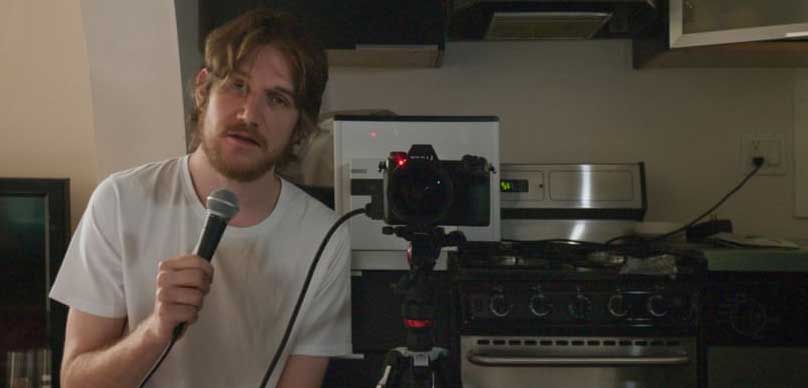
BPS 109: RAW and HONEST Screenwriting with Bo Burnham & James V. Hart

This is Part 3 in aĀ 3-Part Limited Series of conversations I’ll be releasing between the legendary screenwriter James V. Hart, the writer of Hook, Contact, Bram Stroker’s Dracula, and Tomb RaiderĀ and some of the top screenwriters in the game.

Today on the show we have Bo Burnham, the director and screenwriter of Eighth Grade. It is a RAW and HONEST look at growing up as a young person today.Ā The film was a run away hit and distributed by A24.

Thirteen-year-old Kayla endures the tidal wave of contemporary suburban adolescence as she makes her way through the last week of middle school—the end of her thus far disastrous eighth grade year—before she begins high school.

James and Bo discuss how he wrote and structured Eighth Grade, his life as aĀ YouTuber/Stand Up comedianĀ and much more. Enjoy this conversation between James V. Hart and Bo Burnham.

Right-click here to download the MP3

LINKS

SPONSORS

  1. Bulletproof Script Coverage – Get Your Screenplay Read by Hollywood Professionals
  2. AudibleGet a Free Screenwriting Audiobook

Alex Ferrari 2:07
Well guys, today is part three of the James Hart interview series. And today's guest is going to be Bo Burnham, who is the writer of the critically and box office hit eighth grade. Now eighth grade came out in 2018, released by age 24, and was produced by Scott Rudin. And it was kind of a runaway hit when it came out. And James and Bo sit down to discuss how he broke down his own anxieties and issues that he had himself. And he put those into his script that made it come alive, and and about what it was like to be premiered at the Sundance Film Festival, what the bidding war was like to get bought by a 24, which is essentially the Sundance of independent film distribution. And James also helps break down the emotional journey of all the characters and structure of eighth grade. So without any further ado, please enjoy this rare conversation between James V. Hart and Bo Burnham.

Bo Burnham 3:18
Hello, everybody.

James V. Hart 3:19
I watched the film again last night and today, and I was gonna make some joke and comment about it being autobiographical. But it is, according to some of the readings. So could you talk a little bit about about where this came from me personally?

Bo Burnham 3:38
Yeah, I mean, truthfully. I was at the time in my life I was doing stand up, I was a stand up comedian for 10 years, I've been sort of secretly had a passion for screenwriting the entire time, and sort of came to the end of the road of doing stand up because I was having panic attacks on stage and just felt like I couldn't perform any longer. And I would try to talk about my anxiety on stage about my own personal experience with my anxiety, which was tied up with being onstage presenting myself having an audience performing. And then the only people that seem to really understand that were like 14 year old girls that would come up to me after the show and go like, because I assume that only like 27 year old male comedians would understand what I was going through. But the men my age didn't understand it. But the young women would come up to me and say, that's exactly how I live. And I was like, What are you talking about? And I realized that just sort of specific pressures that made me anxious, which were tied to sort of performance and how I was seeing had been sort of democratized and given to an entire generation. So I sort of felt like, okay, we've told our story with my circumstance. Now let's tell our story with your circumstance. So a truthfully it was autobiographical, but it but it took a connection with people like Kayla to show me just how similar I was to them. It was it was people like Kayla seeing themselves in me before I sort of saw myself and her.

James V. Hart 5:21
So bad question. But what were the 14 year old girls doing in a comedy club?

Bo Burnham 5:26
Oh, well, well, I I tend to be it's like, it was in theaters, and it's a little bit more of a theater show. So it's like a musical theater show that's a little more akin to young people than I didn't feel comfortable in comedy clubs, like the brick walls and the chicken fingers. And I don't know, I've just never I never vibe with it. But I mean, that's that's sort of the maybe, I mean, that explanation for the inspiration is sort of like, the thing I figured out after the fact, you know, I wasn't consciously thinking that. But really going into it, it was just, I felt like I was from the internet, I grew up on the internet. And in some way, I'm sort of the oldest person that's grown up on the internet. And I just felt like it wasn't being portrayed correctly. I felt like kids weren't being portrayed correctly. And I felt like it was a whole generation that was being talked about culturally, as self obsessed when I thought it's, they're actually anxious and self conscious. So

James V. Hart 6:26
yeah. Can you recall? You were a stand up comedian, you had to still have a career you're out there with crowds. But deep Can you recall the moment or the the circumstances in which you decided to sit down and you were going to you were going to write the screenplay, and you were going to direct it, but that that incubation process was for you?

Bo Burnham 6:48
Yeah, I mean, I had been writing sort of secretly and just been sort of very tired of myself as a subject. So. But I had written another script. Earlier, there was a high school script that I had tried to get made. That was way bigger, inherently sort of a bigger budget, and I had tried to direct it myself and it like, didn't work at all. And hold on, let me answer again, because I thought, coming back to the house,

James V. Hart 7:19
We might have lightning

Bo Burnham 7:30
Im settled, a decision to decide to write directed? Yeah. Um, so I had written another script previously, oh, my god, these other great. This is like, this is like, I've written another script. Previously, there was a high school script that was a sort of a bigger budget movie was maybe going to probably in the studio space, and I had shot the opening scene of it to try to direct it. And I was sort of shot down. But I think for the right reasons, I shouldn't have directed that script. And I didn't really write it with the thought that I would direct it. But But with this one, I definitely sat down, specifically going, I want to write something that I think plays to what I think my strengths might be as a writer, as a director, which I just guessed where I thought where I feel like I can write kids the way they talk. And I feel like I can get them to act in the way they actually are, and not have to be too over processed and you know, hopefully, just make something natural and realistic.

James V. Hart 8:37
Anybody try to talk you out of writing it yourself? Or did you beat you were, you

Bo Burnham 8:41
No, I never really told anyone to have them talk me out of it, you know, and, and the truth was it the process of writing, it was so enjoyable that I got to the end of writing, and it felt like, if this is it, I kind of at least partly got what I needed out of it, which is, I was just in a really, really bad place. And I felt like it's that sort of opposite thing, where I finally sat down to write something, just to enjoy the process of writing to actually have the process of writing be something that was fulfilling and an end in and of itself. And then that actually became the thing that was made. But I just felt like I was at a point where I feel like everything feels like a chore, it feels like work. And I need to get back to doing something that I enjoy. So the impetus for the script was what would I just enjoy writing? Not even what's a feasible movie? Cuz you know, I don't know. R rated eighth grade film doesn't sound like a slam dunk. You

James V. Hart 9:40
know, there's no superheroes, there's no explosions. And that's kind of what that was. The next question was that you just said something as I it's interesting for writers to hear the most these people are writers they want to know about your process. You sat down to write something that mate was going to make you happy and then you would enjoy writing. Not an assignment. Are I'm going to try to do the next superhero. I'm trying to do the next Wonder Woman, you sat down and wrote something for yourself. So that's a very liberating thing for writers to hear. Maybe there, maybe you can talk about your process a bit about once that happened, what your process was,

Bo Burnham 10:15
yeah. And truthfully, I wish I could, at any point, conjure the ability to just sit down and write something I enjoy. It's I have long, long dry spells between the inspiration that that gets me to a place where I'm, you know, writing very fervently and feeling very excited. But yeah, I mean, it really was. I mean, I think this this might be partly an answer. Part of my process is I just can't really out start without I have to, I have to have the thing, I have to sort of just jump in and just start writing people talking to each other write a scene that it has to sort of prove to me that it is that the heart is beating right away before I even try to structure it. And it might not even be like the and I don't even think that's a tactical decision. I think it's just because I need to prove that I enjoy doing this that like writing this thing, writing these people feel alive. And it feels enjoyable to me. Because I think of myself as a writer, I mean, first, second and third, like and it's actually what I get the most enjoyment out of so my barometer for the core of what I work on, is is to how does it make me feel when I write it? I mean, that's more than like, what does it sound like? Or what do people think when they read it? It really is the thing I'm pursuing is just because you know, I haven't worked that long but I've just found that the things that I enjoy writing the most are the things that I have the best chance of connecting with people and it's I feel like I can tell that when I when I watch someone else's work or read someone else's work that if there's just a sort of passion enjoying the writing itself it's just like totally infectious and and you can fail with either way so you might as well you know like what's the point of other than you know making money which um, you know, it's it's it's definitely not easy to like passionately make money. I haven't figured that out yet. But yeah,

James V. Hart 12:28
You can mechanically make money and be passionate about it.

Bo Burnham 12:31
Yeah, you can be passionate about the money yeah.

James V. Hart 12:33
So you started with a voice you started with the characters voices your your entry your entry into this into eighth grade was finding the character voices he is that how you you created characters, you would put them in situations and just have them start talking like LCS? I mean, Kayla's LCS incredible and instantly they all are performances are absolutely totally believable as if you're shooting a documentary.

Bo Burnham 13:02
Well, that was that was, again that the the writing was written to hopefully be that messy, and that natural that decision to director was only to deliver on the writing. I always feel like that as a director, I'm just directing it because I I want the writing to be delivered correctly. But really, in creating Kayla, it was it was like her ice, isolated voice that was the first thing to be captured. So the first thing I wrote was just monologues of her just with a topic in her head just talking about herself. Because when I would watch videos on YouTube of young kids speaking to camera, like I'm speaking right now, the way in which they spoke was it. It was it existed in such sharp contrast to the way I saw kids speaking in movies, and not only kids speaking in movies, but kids speaking in movies, on webcams looking to camera, like identical scenes and movies had kids that were perfectly articulate their little like poet laureates that are, you know, looking ready to camera and saying, Okay, so I'm going to tell you the story, how about how I went from being the queen of the school to the bottom of that, and then what's in this and it's all Poppy and snappy and performative and presentable. And I'm, what I would watch these kids online, speaking the layers of their speech and the performance of their speech, which is just the reality of one being a human being, but especially being a kid, which is like, I have an idea of what I want to sound like I have a process of delivering what I want to sound like, I have my own reaction to the way I'm sounding. I'm adjusting myself in front of this unseen mirror that you can't see, which is I see myself as I'm talking. It's very, very complex to me, and as I was watching it, watching these kids stumbled through a video just talking about how to be cool. I was like, This is what it means to be alive right now to make this weird rhetorical performative. But these kids are doing his spiel so true to me. And so that was the initial writing was was just writing that opening monologue of her being herself, which is like, being yourself sounds so trite, but it's also like, be yourself. I mean, that's is, you know, to be or not to be or it's, I mean, there's a that's like, all these, all these sort of stupid little, like, cliches and bromides of you know, the kids latch on to and these videos are actually, I think, very deep Anyway, I'm getting away off track.

James V. Hart 15:37
No its very telling.

Bo Burnham 15:39
Point is I, I just, yeah, I, I at least in with eighth grade, for sure. What I was trying to do was capture a way of speaking, I'm a failure of speech. And that's especially with kids. And that's the mistake that for me that movies about young people often miss make mistakes with, and it's across production. It's, you know, you're you're, you're portraying, how do you you're writing people that don't yet know how to speak you're dressing people that don't know how to dress themselves, you're sitting, I think, I think probably be human experiences. But certainly childhood is just failure, everything is a failure. And even your, even your, your thoughts or even a failure to yourself, in your own mind. You're even doing a performance to yourself and whatever. It's,

James V. Hart 16:33
there's a there's a wonderful moment, and we talk a lot about how we build character. That's kind of my method and processes that take some of the mystery out of this for writers. And one of the things we always ask them, What is my What does my character want? What does my character need? What are the differences? And you do a brilliant thing with LC and she's so good in the scene. She's actually sitting down there writing what she wants. I get it right there in blue and white. It over here how to get it. Yeah, exactly. It's perfect to be and she and she is smiling. She's writing this, she will be happy.

Bo Burnham 17:13
Yeah. Well, that was the funny thing about part of this is that I realized that, and especially if you're writing a film that takes place now, people are aware of movies, and not even that people try to people try to conjure movies into their own life, you know, so I was getting to the point, the script where I was going, alright, well, this is the point where we need to know her goals. And we need to know how she's going to get them and I'm going well, she could just literally do it. Like it's a it's definitely, me, it's kind of like it's almost an inside joke for writers of that point in the story. It's, you know, the beginning of the second act, or whatever, she's actually like, she's got a plan, she's moving forward, and she's writing this stuff down. But, um, yeah, I mean, I think that stuff can be, I think it's interesting to maybe think about the fact that you don't have to be the only one aware of plot, I mean, you can see plot as something that your characters are also aware of, you know, that, that your characters are desperate to structure their own arcs. And it might not be in perfect union, it shouldn't be with what you're ultimately going to tell in your story. But to be aware of, I mean, a lot of the writing that works for me, and again, I've written, you know, one script that's got made, I don't really know anything, but when it works best for me, it's, it feels like listening, and the sort of the big turns in my script that felt like turns were actually me just jumping into a scene writing it, and doing the thing where it's almost like you're playing chess with yourself, and you're going from one side to the other, if you're writing dialogue or doing stuff between, and you really are every time you walk to that other side of the table trying to beat the other person, honestly. Um, and yeah, it really is. For me, it's just about listening, let the best form of writing to me feels like I'm listening to the characters, and I'm meeting them. And they're surprising me, rather than I'm like going like, Alright, what should they be? And what would make them interesting because I've also fallen into that thing. And that's just like, death, and then I get my own head, but the best stuff. The best character stuff feels revealed, because I don't feel I certainly don't feel good enough of a writer to sit down and create human beings. I mean, but I can maybe set up situations where I can just stumble into things where I'm where they're talking to me a little bit and I can start to hear them and understand them as I as I write them.

James V. Hart 19:56
I have this is great because there's only One plot in your movie, everything else is character driven. And then the goal of what we try to do is to have character driven narrative as opposed to plot driven where there's only one plot. It's the last week of eighth grade. Yeah, that's it. That's the Y now that's the why it's happening now to her. That's your plot.

Bo Burnham 20:18
Yeah, like it's it. For me, it's that simple. Yeah, it's it's basically opening up the capsule and you want the What are you gonna do with your life? Yeah, but that is the plot the plot is, and I can it's funny because it some people, I definitely see a structure to the thing. I think there's like a total like, inciting incident, turn reversal midpoint, all that stuff. But just I guess it's um, it's a subjective structure. You know, the structure may not be seen by anyone but her in terms of the stakes. But if you're invested in the character that that was the hope of the film was to go, you know, a normal kid's life to them feels like life and death every day. So can we take a pretty normal stretch of days in this girl's life, where nothing quote unquote, like spectacular or movie worthy happens to her, but but portray it? But if we can somehow sing the audience's heart rate with hers and truly be subjective? Like? How can you make a movie that feels as dramatic as it does to her? Because that's the funny thing to think about, like Harry Potter and all these big fantastical kids movies is that i think i think kids see them as like observational and relatable and not escapist. You know that they really are. To a kid walking in talking to your crush feels like slaying a dragon. So that's why kids gravitate towards fantasy, because their life feels that high stakes. And I think that's why we all do but, um, yeah, I was just interested in in making, uh,

James V. Hart 22:06
Well, you've hit on my favorite subject, which is structure, I am a structure fascist and believe that structure is your friend. And it really capture lightning in a bottle. And instead of making you a formula, your film is very carefully structured. And you and you use terms that are familiar to the audience. I, we have a I use other terms, but you still got it. I was intrigued by the fact that you chose the something like curtain drops, like in a theater in a stage show where the the phone blogs, her little video blogs, and punctuation marks, and you chose them very carefully to place, which which dictated to me that you structure that you had carefully thought out in your head, whether it was instinctive, or you were conscious of what you were doing with those phone phone interviews. The choice of that is as a structure device.

Bo Burnham 23:02
Yeah, for me, like, for me, I heavily lean on the first act into the second act structure. I think there's a little more freedom after that. But in terms of launching ourselves into the story with a newfound purpose going forward, which for Kayla, that moment is right after the karaoke scene, and she, she's confronted this thing that she was, you know, she's been this sad girl opens her time capsule. We don't yet know what the inciting incident is, because we find it out later. But we we later know that looking at that she realizes, like, what is my life become, I need to change it. She's given this opportunity to go to the pool party. She like rejects the call when her dad asks her Do you want to go to this thing or not? She finally does go to it. It's an initial failure and a setback that she then overcomes with a big forward true commitment to it not a I rolls to Dad, I don't really want to go to this party, but really walking out and singing karaoke, it goes well enough for her to like fully commit to changing her life and and trying something else. And like, it might it might not play as as, you know, whiz bang plati as other things, but like, yeah, I need to feel oriented by that cost structure and all that is just, I mean, just making it so it's not like soup in your hands. I'm just giving you some it just Dramatic Structure moment to moment so that you know where you are, you know what, you know where you came from, you know where you're looking, and you just care about anything. Yeah, I mean, it just helpful for me to know where I'm oriented and that like you watch it. movie where you go like, oh, the scenes could just be jumbled around and it would mean the same thing or, and

James V. Hart 25:08
Yeah, no, your your your audience is the good. the good work that you've done here as your audience is not aware of the structure because they're emotionally being pulled through this BIOS, BIOS is character by Kayla. So in terms of that, there's three things that you did that come in, in my, my protocol with what we do here. Cinderella moments, your film is full of Cinderella moments where we give LC these little Pat's on the back and little hits of pixie dust a little moments where there were we're encouraged that she's going to make it she's going to get there. And there's two or three of them are just beautiful. And there is a moment in the very center of your narrative when and good narrative has this moment. And it's what I call the top of the mountain. It's like it's as good as you're going to get for her. And when she gets that invitation to the mall, from a woman, and she goes to the mall, and she's suddenly part of a group. Yeah, you know, it's and she's looking at what she's going to wear. I mean, that's Cinderella. Yeah. Give your audience those kinds of moments. And you have them in the third act, too.

Bo Burnham 26:19
Yeah.

James V. Hart 26:20
Beautiful.

Bo Burnham 26:21
Really funny. It's like it could sound like and it's so funny, because on the surface, it's could sound like oh, Cinderella moment is meant to be like, sweet and or too saccharine or too easy, or like a fairy tale or whatever. But actually, like, if if you're setting out to make the most depressing, like, bleak thing in the world, it is, like imperative that you have those moments, because it's like it is that if you want to break an audience's heart, you just show them the alternate reality when it can be okay. So like, Yeah, I love that. I love that. And I really do love thinking about fairy tales and old stories. I mean, that really helps me too, when I just try to think about like, how to write my story. It's like what Vonnegut used to do you know, on the chalkboard with everything like, like plotting out the stuff in a line like that's, that's really helpful as much as movies I think about like, yeah, like what happened in Snow White, or I go like, or wait, what happened even like that story, my mom told me when I was a kid, and like, you kind of want to get back to like, the first the core of how narrative interacts with you before you were like a conscious writer who is in their head too much.

James V. Hart 27:42
Well, you invoke Vogler, and we both believe the same thing, and there are certain storytelling elements that are embedded in the universe. They're part of the ether of what of the universe that you can't fuck with. But they're always there. Like your thing. What was that thing My mom told me, it's instinctive. You also invoked my other deity Kurt Vonnegut, who I had the chance to work with before he died. Man, I didn't realize when I started doing my charts, that I went back and studied that I had been influenced by all of his charts, really can find that that where you're taking the audience have two last questions. What was how did you always know what the ending would be? Because you've chosen that frame with the time box and the and the phones? Or did you have endings that you had tried to find and couldn't or didn't work,

Bo Burnham 28:33
we actually shot another ending, it's not really another ending. It's just it just had another final shot instead of her walking down the street, which was her like, we haven't shot going into a dance and the like end of the year dance and dancing in the middle. And then like, a sort of surreal, like spotlight hits her. It just felt a little cutesy and felt like it had been done. And I also felt like, her triumph at the end is also lonely. And that was sort of important. It was interesting, though, it was the thing I got in my head the most about was the ending. Because I felt like, oh, does this need to be like, in order to be like art does, it needs to be like way more ambiguous and way more dark and way more unresolved. And then I realized that like, you know, this is her story. And this is her. And it's not it's the ending is not that it's going to be incredible. It's that she thinks it's going to maybe be okay. It's just staying in her experience and like, what is the ending she would want to give herself or not would want to but what is the ending she is capable of giving herself? Which Is that so? Yeah, it's hard, you know? But I felt like I try not to it's hard to not be really, really precious about the opening and the ending, and to think of them as so different than every other part of your movie.

James V. Hart 30:02
Well, the phrase phrases

Bo Burnham 30:04
Written multiple times and actually the the whole basically the whole ending monologue like her video got re recorded after the shoot. And it's like the easiest reshoot because she just comes over my house and we put a crappy backdrop behind her and shoot her on my laptop. But, um, yeah, yeah.

James V. Hart 30:21
I mean, were you informed? Were you informed because it's a beautiful ending, and it's a very mature ending. And she's very, she's very honest, her own even her face is different. It's more mature and more settled and more serene and satisfied. We I use the word I use the phrase satisfying ending, not happy, not sad, not good or bad, but satisfying. Is your audience. Have you taken your audience to a satisfying ending? And the fact that you shot it after the shoot? Did the footage inform you to the performances inform you?

Bo Burnham 30:52
Yeah. You know, there was there was a version it was it wasn't that different. The monologue was just a kind of it didn't it kind of retain the what's the word the sort of like, whatever, unself aware, and of course, he's still a kid. So it's sort of unsub aware, but the thing that was added was the sense of like, and if you're not okay, that's okay, too, because, like, I hope High School is right for you. But it might also not be great. And it's okay, because middle school wasn't great for me and I got through it. So you'll get through high school to as opposed because before it was just about, you'll get through high school and it's going to be our high school is going to be great, you're going to and realize that like she's been kicking this sort of like dishonest can of hope down the street, the entire movie. And she's finally now rather than because it's kind of what got her into the mess in the first place is that in sixth grade, she put all this pressure on her eighth grade self to be the best person ever. And now finally, it's ridiculous. I didn't realize this writing the script, but instead of just, you know, loading all of that stress onto our future self, she's actually forgiving your future self and saying, like, you actually don't have to deliver on my behalf. I just hope you're all right. And even if you're not all right, like we're going to continue the struggle, the eternal human struggle to be alright. Or whatever.

James V. Hart 32:24
It's an incredibly satisfying ending. It's been really as a very moving for me today when I watched it last night. It was a very funny thing. I'll say a very funny

Bo Burnham 32:31
there's just a mark of the movie. Sorry, the writing. But her initials are k l. d, for some I mean, I don't know why she chose L. But I have multiple people come up to me after screenings because at the very end, she's in her backpack and the initials KL D are in the back. And they thought like, it was code that she was killed right after. Like, no, no,

James V. Hart 32:55
That's the alternative ending on the DVD is yes. There's the oboe bit. Real quickly, your your stand up. And I asked Jordan Peele, the same thing last year. And I and I might, our dear friend Robin Williams, who we great years with a missing enormously your stand up. So you're aware of the audience, you know, the audience is always a factor in your performance. Yeah, where are you? Did you take the audience with you when you were writing? And when you were shooting? Did the audience have a presence with you at all in terms of that process?

Bo Burnham 33:32
A little bit? And not not totally I think the audience was most with me in the editing process. But I definitely do pig. And if this is anyone that just has any background in the live arts or theater or any sense, like I do think I am lucky to have a part of me that just is fluent in the way an audience experiences something not that I was going to be able to perfectly translated or perfectly No. But as I was making it in, and I was definitely editing, and I think writing to a collective experience in a theater, I definitely wasn't thinking of people watching this alone. Um, hopefully it works like that as well. But I was thinking of, I guess, said pieces that would that would that would be experienced as a group. And I think I think even if you end up if your thing ends up streaming or a loaner laptop, that that's still a good. It's still a good invisible thing that your story should aspire to, or, I mean, I actually hate speaking in the second person because I'm, I'm, what, what do I know? But I'm just saying this to myself. Like, that's what I like to because when you when you think about one person watching it, you get in your head because you're like, Who the fuck is this asshole, you know, but like, when you think of a group of people, it really is like, a crutch. It's a crutch. Section it's a it's what the audience actually is So, um, but yeah, yeah, I mean, and it's also what I like to do. I like my, my standard shows were very theatrical and went for big reactions. And I always felt like I was trying to do sort of a magic show. And even this movie's going for that, you know, I wanted to make a movie where people would be cringing or covering their eyes or stuff, just because I think like, that's just fun for me. You know, I aspire to just be like, the Blue Man Group. And that's my final. That's my real point. Just watch the Blue Man Group if you want to understand how to manipulate an audience,

James V. Hart 35:40
My son with my son was a blue band for five years in Boston.

Bo Burnham 35:43
Really, really the Charles Playhouse? Yeah. That's like the staple of Boston, the Boston cultural scene, which is,

James V. Hart 35:52
And we watch the show 100 times.

Bo Burnham 35:54
It's the best I went out. I went I probably When did he do it?

James V. Hart 35:59
He's been riding with me now for about 10 years, about 10 years ago to 2008.

Bo Burnham 36:05
I mean, I probably saw him in high school. It's incredible.

James V. Hart 36:10
I'm gonna ask you one last question that I'm asked you to stay with me when I say goodbye. Because I think a lot of people were I know, I asked it today, especially how moving her final sort of blessing is that she sends herself off into the future? Yeah. Is there going to be a freshman year?

Bo Burnham 36:30
Well, that's so funny. Well, I freshman year has already passed for her. She's a suck. She's a sophomore now. Um, you know, people ask if he was going to be a 12th grade, that probably be the thing. But, you know, part of it was like, part of the movie was going like, you know, kids have a lot of media and our culture is putting a lot of pressure on kids. And to have the success of that movie, then put an incredible amount of media and cultural pressure on the actress to then immediately deliver her life as a movie. All the time is too much for me. So I'm still in the process of like, just live your life kid and we'll chill out and maybe down the road. If we want to make something again, we'll make it but like, let's not get in that process of, of trying to just view our life is working towards the next film, especially when you're 15. Because that's, that's what the movie is trying to sort of rally against. But I would love to I mean, she's great. And she's amazing. But um, yeah, if there's like a seven and a half, seven up or like a Yeah, boyhood version of it, I'd be happy to

James V. Hart 37:38
Just don't want to see her as an opioid victim or anything like that.

Bo Burnham 37:41
Yeah, one. Yeah, I would probably be more interested in catching up with her like 30 or something. Yeah. I think is like, you know, obviously 12th grade would start with her dating up the capsule, which is like, you know, so that's like the right way

James V. Hart 37:54
I want to thank you. There's a lot of people that you can't hear right now that are applauding and saying so and, and hopefully we can get you to Austin for another another visit.

Bo Burnham 38:11
Appreciate the time and I feel vastly unqualified. So take everything I say with a giant boulder of salt and I don't know what I'm talking about. But I appreciate all of your time and attention. And thank you for the time.

James V. Hart 38:26
Thank you sir. Okay, we're signed off now but I want to just go a couple things. I will edit this video too though. What I try to do is use pieces of it as we talk about your film and chart. Got it? Awesome. I'll I'll send it to you if you want to see it. I normally included in the talk you know we're in pieces. Hey guys. And then I do like to put it up on my website once the festival taking place and all that stuff is going on and you're gonna look at the at the website and see what Jamie and chisel did it Jordan Peele did it I you know, there's, there's a number of done it. So I just want to make sure that it's okay with you. If not, we'll restrict it to the

Bo Burnham 39:11
Okay, you don't have to wait for my approval or anything. I mean, I don't you know, I'm not

James V. Hart 39:16
Oh, this is a real treat. And I've got to tell you, I was really impressed with how how seamless the unit it's a really powerful structure and really does you have no idea I could I teach structure and everything later, but not if it's character driven. And if your character Yeah, pulls you in touch with your heart through the structure. They're not aware of it. It's the writers who push you.

Bo Burnham 39:38
I know it was so funny because it's like you can just take the most apparently structureless character driven esoteric stuff from it. Kids are obsessed with it. It's like the master or something. You mean it's like what are you talking about like Freddie's in trouble. He's walking around. He has got nothing to do. We stumbled on this guy. He goes in there. Like, like you Yeah, I mean, yeah, I realize so. So religiously on Instructure. You know, it's like isn't the most helpful thing?

James V. Hart 40:11
Well, I always tell people, the best structures I ever met was Robert Williams.

Bo Burnham 40:15
Yeah.

James V. Hart 40:16
They just came out of the blue in the ether. Yes, I would watch him after a performance and he would make notes and shift things around and say, do you think this work? You know, and he could tell the joke about the history of golf with a drunk Scotsman? Yes, yes. For that joke. 100 times? Yes. And it's the same punchline every time. Yeah. And it kills you. And that that's you guys know structure.

Bo Burnham 40:42
Yeah. Well, yeah, exactly.

James V. Hart 40:45
Telling a good joke. Knowing when to land a line. You know, that structure?

Bo Burnham 40:48
Yes. No setup payoff. Yeah.

James V. Hart 40:51
I really appreciate this. I'm going to let you go. I'm thrilled to be able to, to have you be part of this. And hopefully when I do the chart, I'll show you the chart you go. Wow.

Bo Burnham 41:02
Amazing.

James V. Hart 41:05
Oh, yeah, there. Yeah. There's a Cinderella moment. There's a top of madness.

Bo Burnham 41:09
Yeah, I would love that. And hopefully lepsy at the festival and just I appreciate the time. Thank you.

James V. Hart 41:15
Thank you, sir. great pleasure.

Alex Ferrari 41:18
I want to thank James and bow for being guests on the show today. If you want to get links to anything they spoke about in this episode, please head over to the show notes at bulletproofscreenwriting.tv/109. And if you want to have James v heart, guide you through structuring your film, your screenplay, and just helping you with not only character but the emotional journey of your character using his remarkable system, the heart chart, head over to bulletproof screenwriting.tv/hartchart that's hart chart. I promise you, you will not be disappointed. It is an amazing masterclass, as well as a ton of other bonuses you'll get if you take the course. Thank you so much for listening, guys. As always, keep on writing no matter what. I'll talk to you soon.


Please subscribe and leave a rating or review
by going to BPS Podcast
Want to advertise on this show?
Visit Bulletproofscreenwriting.tv/Sponsors
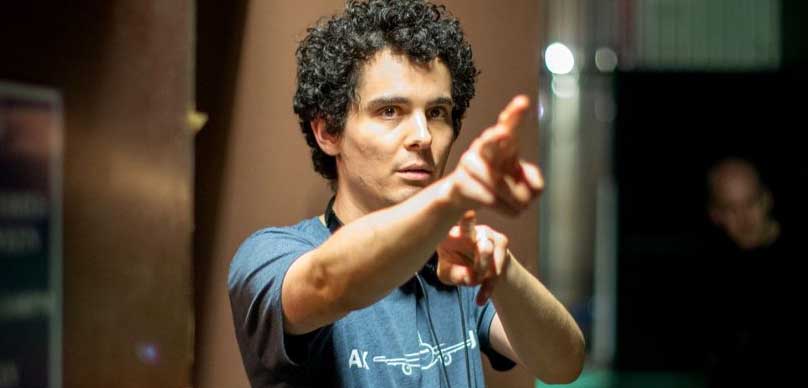
BPS 107: Screenwriting the Oscar-Winning La La Land with Damien Chazelle & James V. Hart

This is Part 2 in aĀ 3-Part Limited Series of conversations I’ll be releasing between the legendary screenwriter James V. Hart, the writer of Hook, Contact, Bram Stroker’s Dracula, and Tomb Raider just to name a few, and some of the top screenwriters in the game.

Today on the show we haveĀ Damien Chazelle, theĀ OscarĀ® Winning director and screenwriter of La La Land. He bursted on the scene with his debut film Whiplash. The film is about aĀ young musician (Teller) struggles to become a top jazz drummer under the tutelage of a ruthless band conductor (Simmons).

La La Land tells the story of Mia [Emma Stone], an aspiring actress, and Sebastian [Ryan Gosling], a dedicated jazz musician, who are struggling to make ends meet in a city known for crushing hopes and breaking hearts. Set in modern day Los Angeles, this original musical about everyday life explores the joy and pain of pursuing your dreams.

James and Damien discuss how he wrote and structured La La Land and much more. Enjoy this rare conversation between James V. Hart and Damien Chazelle.

Right-click here to download the MP3


Learn screenwriting from legendary screenwriter James V. Hart (Hook, Contact, Bram Stroker’s Dracula)

LINKS

SPONSORS

  1. Bulletproof Script Coverage – Get Your Screenplay Read by Hollywood Professionals
  2. AudibleGet a Free Screenwriting Audiobook

Alex Ferrari 2:04
Well guys, today is part two of that limited series I am doing with James v. Hart. And today he is interviewing the Oscar winning Damien chazelle, the creative force behind lala land and whiplash. And in this conversation between James and Damien, they talk about the origins of lala land, how he came up with it, how he built the characters. It is a fascinating conversation sitting down and again being a fly on the wall of a great conversation between two master screenwriters. So without any further ado, please enjoy the conversation between James v Hart and Damien chazelle.

James V. Hart 4:47
Damien we're sitting in the this is where we're going to be showing your clips tomorrow. They're just slip right there. Wow. I never seen that before. What what model is that? And over here, the charts going to go And here's the whole gang, the tech crew setting up the ballroom. Oh, hey, guys, they had a man and a man.

Damien Chazelle 5:09
Oh, that room is cool. It's a big room and more of like a small classroom. That's awesome.

James V. Hart 5:15
No, that's why I want you to see that this is. There's a lot of excitement about this. And we really appreciate you authorizing me to take you apart. Yeah. So lala land. Yeah. Be Damien, the youngest director of ever winning Academy Award. And now he's old enough to grow a beard. Yeah, a little bit. But to today, today, tomorrow, we'll be spending an hour and a half going through the process with a chart of lala land. And you and I spoken about this, I just want all of you to know that Damien, approve the picks Eclipse. He picked the points in the film that he thought were the most important, and we built a chart around that. But you have some news that I think maybe we It has nothing to do with the movie business. Has nothing to do with working with Ryan again or walking on the moon. But you're about to take a big step in your life. Oh, yeah. I got engaged. Ah, yeah. I guess now two weeks ago. Okay. Yeah, a little longer. Weknew you weren't pregnant. But engaged is that's at least one or the other. Yeah.

No, no pregnancy. Retro. Congratulations.

Damien Chazelle 6:30
Thank you. Yeah, we actually met through Benj. passuk, Minar. Who wound up writing the lyrics on? Yes. So, you know,

James V. Hart 6:42
well, we also just saw the the Broadway musical, but they've also written the lyrics. Yeah. Which is staggering. So you, you've assembled quite a team? How many of the what what are the people that you'd had already known and worked with, that you bring into the production? Well,

Damien Chazelle 7:03
the only one who I knew from way back when was Justin Hurwitz, who wrote the music. And so that, you know, we had kind of played in this genre before together and right. I wanted to do a musical together. And so the next two people who, who I met to kind of make this with were the producers, Fred Berger and Jordan Horowitz. I know, you know, both of them, Jordi is pretty real. And so for the longest time, it was just the the three of them in May, me and Justin, Fred and Jordan, for a number of years, just kind of trying to beat this into shape, get it into script form, get the music out there, get demos written. Then we started to assemble other parts, the music team like Benj. passuk, and Justin Paul, who wrote all the lyrics, and Mandy Moore, choreographer, Marius devries, our music producer, and then it was kind of one step at a time trying to kind of get this fully fleshed out.

James V. Hart 8:06
I did, I did have the pleasure of meeting the executive at focus who put you into turn around. Oh, did you? He did, she said, I'm sorry. I'm the guy that son in law's movie in Jordan horror, which is my son in law that is and and so they did us

Damien Chazelle 8:26
a favor, to be honest, because first of all, they gave us the initial kind of, like, push to actually I mean, without focused features kind of getting this going initially. You know, I don't know that me, Fred and Jordan, that we enter each other's orbit that we and and then to their credit, once they decided that they weren't going to make the movie, they didn't kind of make us languish in development. Hell, they just let us go. Granted, it was a scary moment, you know, because we were, you know, felt that it feels like you're orphaned and and it was a number of years. Before we found another home for the movie took a while.

James V. Hart 9:05
I have two quick questions. And then we're gonna jump into the chart. You and I talked about what you think the ending of the movie is. And the ending has been a very stirred a lot of conversation, a lot of discussion, a lot of debate. Over the choice you made of the ending, you and I spoke about the financing, where media and said sort of have a they sort of settled, though they resolve their conflicts is after the audition, which is still my favorite song. That was my vote. The audition is staggering. And I'm sure in the Broadway show, it will be a showstopper. Wow, can you just talk about your process and everybody here is a writer, a producer, a director all three. A little bit about your process and what you why you chose it, the way to end the film you did and what your feelings were about the bench scene and what came after.

Damien Chazelle 9:59
The bench scene I guess probably came later. Because I think at the very, at the very start, I knew roughly where we were headed in terms of the final scene. I knew I wanted to tell a story about a romance that doesn't, you know, that doesn't last forever, something that winds up being a finite moment in these people's lives. And they're kind of like two ships passing in the night, they cross for a moment. And that moment is crucial for both of them. But they wind up going their separate directions. And I wanted, I knew I wanted the tone of the ending to be okay with that, you know, that I didn't really see it as a, as a tragic ending. I was certainly very inspired by the umbrellas of Cherbourg, French French musical from the 60s. And that similarly does not keep the romance going at the end. But where's the tone there, I think is a little more again, tragic. I think here, your I wanted to, I wanted there to be, I wanted there to be a real hope, to the ending. And also this idea that you know, some dreams come true, some don't, this wouldn't be an honest movie, if every dream and act came true. Wouldn't be an honest movie of every dream didn't. But it's a movie about dreamers. It's a movie about the dreams that kind of push us and guide us. So. So it was important to me that, you know, some things work out some don't that, you know, that Mia becomes the actress, she wanted to become that that in many ways, Sebastian becomes a version of themselves that he wanted to become. But sacrifices come with that. So I guess I saw it as still a positive ending, but just one that maybe would be a little, a little less predictable.

James V. Hart 11:47
Well, it's very grown up and very mature. And it pissed a lot of people off. But it also it also embraced a lot of a lot of people you gave that you gave the audience the Hollywood ending, you gave them that what if they live happily ever after? And then so the audience got that, that that rush got that emotional charge? And then you made it brought it back? And then we made it very responsible? very adult? Very?

Damien Chazelle 12:11
Yeah, well, I think sometimes it's also like, I mean, we talked a lot about me, friend and Jordan about, you know, the ways in which we wanted to really wholeheartedly embrace the musical genre, and then ways in which we wanted to, you know, try to tweak it a bit further. And, you know, sometimes I really feel life does feel like a musical, and sometimes it really does not. And so I think I wanted to make sure that we played with both ideas in this movie, the times in which life really feels like it's entering that magical movie movie round, like when you're falling in love, or that moment when a dream comes true. But then there's times where you really feel as far away from you as possible. The movie for me was about kind of this push and pull between life and fantasy, reality and fantasy, and that at the end, and in a way, you really want to put them side by side in the most direct way possible. That felt to me like what we were building up to the equation, building up to life and fantasy, side by side. And in a way, as a viewer, you can kind of choose which which you prefer,

James V. Hart 13:16
will you take us from the star dance, which is a total ultimate expression of falling in love. And you crash and burn us with the dinner fight. So you would go from that amazing peak, the beginning of that whole romance and I'm sure we've all felt that way. We're dancing and the kiss at the end of that sequence is dead center of the story. That you didn't you take it all away from us for dinner? Yeah, here's a question. We always ask him, and then I'll let you go. So we do the chart. whose story is it?

Damien Chazelle 13:51
Well, I mean, to me, I really think it's, it's just gonna sound like a cop out that it's both both Mia and Sebastian's stories. And I think, in a way, that was the challenge, because even a lot of the movies that we were inspired by, whether they were dramatic love stories, are romantic comedies or musicals, you know, ultimately kind of sided with one individual over the other. But I, I really felt strongly here that that, you know, both points of view had to be privileged. And it just depended on what you know which point of view we were, we were taken, at which point, but that we needed to kind of hop back and forth. It's also I guess, why I mean, I think in many ways, it's about it's about these two people as a couple in relation to the rest of the world. It's kind of why, after the opening number, there's no musical number outside of these two people, you know, so we use our opening traffic number as an entree into the world but then at that point, everything becomes more and more intimate, and more and more motivated by just those two people. So you don't have auxiliary characters have you know,

James V. Hart 15:03
I'm only charging two characters, I usually charge five or six. And it's a beautifully structured screenplay. And it's a beautiful structured film. On page 38 of your script is the dancing the stars, which is the dead center of your movie, which is 58 minutes into your movie. Okay, so I'm just doing this because the director to me decides what the time running time of the movie is not the page count. Right, right. Well, yeah, one minute page. And now you're working with Ryan again doing

Damien Chazelle 15:37
life after lala land? Yes, yes. The sequel? sad, lonely years of Tibet? No, yeah. I mean, we're, I mean, in many ways, it feels like a 180. We're doing a movie about the moon landing, and Ryan's playing Neil Armstrong. But you know, I guess you could say, one similarity is that again, it's a movie about very literally outsized dreams.

James V. Hart 16:05
I want to thank you, everybody here tomorrow will be applauding and cheering you and hopefully, I won't be able to live up to these expectations you've set for us, and I really appreciate it. It's great. And awesome. You'll love this festival. Writers Festival there. Yeah. This looks awesome. And congratulations on your engagement.

Damien Chazelle 16:26
Thank you. Say hi to Sam in a spacesuit for us. We'll do I'll tell them you say hi.

James V. Hart 16:32
Thank you, sir. Thanks, Alan. Elisha for doing all the Alicia for doing all the hard work for us.

See, it worked. out.

Damien Chazelle 16:42
There we go.

James V. Hart 16:42
Amazing walk on the moon.

Alex Ferrari 16:50
Thank you guys so much for listening. If you want to get links to anything that we talked about, in this episode, head over to the show notes at bulletproof screenwriting.tv forward slash 107. And we have one more in this limited series coming out in the next couple weeks with James v. Hart. And if you haven't checked out his new course, the hart chart screenwriting masterclass over at IFH Academy, you are missing out it is a game changing course. Head over to bulletproof screenwriting.tv forward slash hartchart. Thank you so much for listening. As always. Keep on writing no matter what. Stay safe out there. And I'll talk to you soon.


Please subscribe and leave a rating or review
by going to BPS Podcast
Want to advertise on this show?
Visit Bulletproofscreenwriting.tv/Sponsors
BPS 106: The RAW Truth About Screenwriting in Hollywood with Rick Najera

Today on the show we have award-winning screenwriter, actor, director, producer, sketch comedian Rick Najera.Ā Rick is also an author, playwright, coach and national speaker with an expansive portfolio of credits in all forms of entertainment.

From starring in films with Sidney Poitier, George Clooney and most recently Mario Lopez, to writing sketch comedy for Jim Carrey and Jamie Foxx, Najera is best known for starring on Broadway in his award-winning, self-penned stageplay, Latinologues, directed by comedy legend Cheech Marin. Najera is only one of three Latinos to ever write and star in their own play on Broadway.

As a screenwriter, Najera has written dozens of scripts for TV, film and the stage, starting out in the industry as a staff writer on the groundbreaking urban comedy series, In Living Color, for which he wrote more than 30 episodes. Najera went on to write for Townsend TV (10 episodes), MAD TV (47 episodes), East Los High – a Hulu original (21 episodes) and more.

He pennedĀ the feature film Nothing Like the Holidays starring Debra Messing, Alfred Molina, John Leguizamo and Luis Guzman, which won him an ALMA Award. Najera learned from great writers like Spike Lee, Quentin Tarantino and Scorsese to ā€œwrite what you know’ and has been a pioneer in Hollywood telling his American experience, from a Latino perspective.

Rick and I discuss the raw truth about working in Hollywood, writing comedy, working with greats like Jim Carrey and Jamie Foxx and much more. This is a entertaining and informative episode. Get ready to take notes.

Enjoy my conversation with Rick Najera.

Right-click here to download the MP3

LINKS

SPONSORS

  1. Bulletproof Script Coverage – Get Your Screenplay Read by Hollywood Professionals
  2. AudibleGet a Free Screenwriting Audiobook

Alex Ferrari 0:09
I like to welcome to the show, Rick Najera, man, how are you doing, Rick?

Rick Najera 3:28
Good, Alex, how you doing?

Alex Ferrari 3:30
As good as we can be in this crazy mix up the world we live in today, sir.

Rick Najera 3:34
It is a crazy mixed up world. Yeah, it's so much going on. But you know, different stuff. I'm sure that everyone's tired of hearing about COVID interactions and things like that. Let's talk about film.

Alex Ferrari 3:44
Absolutely. Absolutely. So first and foremost, sir, how did you get into this ridiculous business?

Rick Najera 3:51
You know, it's very simple. Um, I thought of the, the one thing that would just totally destroy my life and make my life really horrible. And I went, let's go for that job. And it had to be writer, because that is the probably one of the worst jobs you can get in Hollywood. It's just, you know, really horrible.

Alex Ferrari 4:08
Now, why not? Why, sir? Why? Well, I

Rick Najera 4:11
Well, I mean, I have to tell you, first of all, it's a lonely business. So it's not like, you know, it's lonely. No one, you know how many times they go, Oh, my God, there's, that's the writer of that film. You know, it's even you could name off Star Wars. They'd go, Oh, my guts. Oh, wait a minute, is that James Earl Jones Oh, my God, not for you. Because people are are attracted to the to the man or woman in the podium. You know, and that's, that's the person I mean, we've had years of now, you know, the the cult of the director like Orson Welles and people like that, or, you know, Quentin Tarantino, but say Quentin Tarantino, Orson Welles, were also actors, they're performers. So they were hybrids. And I think that's kind of what's coming to the world now is more hybrid. I mean, yes. writer you know, I'm a proud member of the WTA I've you know written a lot of things but now I love my union are great. And my favorite things are screeners I used to get but we don't they don't really send at the screeners like they used to

Alex Ferrari 5:14
know that as much anymore now yes like you go online

Rick Najera 5:17
to see something like one thing I don't want to be online is a freakin pandemic. I don't want to be in five a screen.

Alex Ferrari 5:25
Yeah. I want to go to a theater and watch it theater. I

Rick Najera 5:27
want popcorn. I can't watch a movie without popcorn in my hand. There's so it's, it's it is the it is more of what I think I am in a lot of certain performers are and writers and people like that. We tend to be Heifetz. And the old world of Hollywood actually was the Model T Ford world. Right? Like, the the writer does eight hour, you know, he does the eight o'clock hour family sitcom, that's the guy and this person's the single camera guy. And that person's this no, this is a writer, but he's really comedy. And this is this. So they approach writers that way. It's being Latino. I had to always create my own job. You know, there wasn't, you know, we talked earlier on the show that there isn't a lot of Latino writers. And there's there's a reason for that. But they're just we're just few or a few and far between. I was on a plane I think was hosted in Lopez and one of the writers were going to some event, and there's like three Latino writers on the plane, I say, this plane goes down. We've lost half the writers in Hollywood. And at that time, it was kind of the truth. It was like it was like, we've lost half the writers the display goes down. I mean, and I hope I mentioned along with Josephina in the other writer, for sure it was it would go you know, but it was true. It was like What a tragedy is sad because, you know, no one wants to be the first in Hollywood. Or like, you know, people have called me a pioneer in some ways. You know, Pioneer I got I've never wanted to be a pioneer pioneer really is a bad job. Because pioneer gets killed by the bear gets cholera syphilis some mercury poison and a silver mine and some

Alex Ferrari 7:15
What's that? What's that? So it's like game Oregon Trail Oregon Trail trail. Yeah,

Rick Najera 7:19
just the worst things you can imagine Eagle the eagle takes your baby yeah your feet you have no fingers or hands you've got no personal hygiene fair enough fair to add and you're you're just hoping to syphilis kills you instead of a Native American and well that's it's just bad it's so I want to be the guy that shows up in the train you know what the you know the nice mustache and Joe show up with a train and and all that kind of world that's the kind of guy I want to be I don't want to be a better yet. The guy shows in a jet just right to New York even better. You know, it's great. But pioneers a bad thing to be you don't want to be a pioneer. It's just the danger level of Pioneer is really up there. I went to Australia to film something. And that place was dangerous already. I could imagine someone going that place and being a pioneer. They have everything there will kill you. spiders, snakes, every the people I mean, kangaroos box. I mean, it's crazy. Oh, kangaroos aren't even cute animals, like I saw King like seven foot high. And they will gut you with their feet. You know, so you go walk up with a carrot your mouth and what to feed it gently, you know, with a gill kill you. And so it's that's to me, Pioneer. So I do not want to be a Latino pioneer. Because first of all, they don't no one cares. And

Alex Ferrari 8:37
no one do. So by me. So when you when you started out? I mean, you started out? How did you like start getting work because I look, I'll tell you what, you know, I came up as a commercial director and in post production as a Latino in Miami. And, you know, I started off in editing Latino, you know, commercials and doing other stuff or South America and things like that. But it was a little it was hard to break through to the American market for and that was This is the mid 90s where things are a bit different now in regards to accessibility, like I mean before, get more and and then that whole crew

Rick Najera 9:14
and those guys aren't even doing what you say particularly Latino stories.

Alex Ferrari 9:18
No, they're no they're they're not there but they're still but they're still you know, Latino, you know, let's call it Latino directors and and Robert Rodriguez and and you know, and all that kind of stuff. It was it was a different world so I could only imagine what it was like for you as a writer coming up in the 90s

Rick Najera 9:36
Well first of all, they were surprised I could write in English what's the bigger surprise what could I do you understand the words it was very hard you know it's it's I got in this business because I believe you can be anything you want to be you know that was drilled in my head you can be able to ever you want to be and and I believed it So I said I'll be an actor because being an actor you can be any character want to be and then this business spends their entire energy telling you can't do that. And now those exceptions are starting to happen. I'm watching with Shonda Rhimes. I'm a big fan of, you know, people like that. But on the whole, for the 90s, just the 92, like when I first started out was, it was a 92 it was I got an in living color. And I got that after being an actor. I was, I was working a lot, you know, as I got into acting, I did you know, I mean that did shows every show from Colombo to whatever to you know, China beach and all these pilots and you know, West Wing, and I just didn't like the roles. I finally it was one day I was doing a film called Read surf with George Clooney. And we both were leads. And he had 1020 Auditions afterwards, I had zero. And we both release. And I said, Well, why what he's going on 20 shows why, why can I? They said, Well, he's going out for white roles. You only play Latinos. So it was ingrained. It agents, managers, everyone, you play Latinos now which led to can you play? At that time, it was like you're either gonna be drug lords, which hasn't changed terribly much because look at Narcos and shows like that, or you're the gardener or your you know, whatever it is, it wasn't like, you know, Dr. Sanchez, we need to We're losing him. Dr. Sanchez. We're losing. You know, it was always you know, you know, quick cut, you know, Pan left. And Dr. Sanchez is I'm just working here as a gardener, but part time I am also a doctor to help with this situation. So that

Alex Ferrari 11:46
I want to watch that I want to watch that medical drama. That's Dr.

Rick Najera 11:48
Sanchez. He's a gardener by day. But ER doctor at night. I learned this during the war, you know, salads. Teach people back up. And also

Alex Ferrari 12:02
gardening. Because I do like the gardening. It's steady when

Rick Najera 12:07
it calms me down. One night, er, gametime gardening. And I also have him. I bring the truck around. And I also make lunch for the people.

Alex Ferrari 12:19
Oh, of course, of course. Great. That's a funny

Rick Najera 12:23
dimensional character. I didn't know that. You know, so I just I just said, listen, these roles aren't, you know, they're dumb. I was very insulted by them. And I was I started off as a classical actor as an actual actor at the Globe Theatre in San Diego was as it lawyer playoffs, I did Time magazine 10 Best Production years American Conservatory Theater, all the best theaters in the nation. And the minute they found out I was Latino, there's like this. And it wasn't a secret was it wasn't walking around going. My name is Rick Nash. It sounds like an Arabic word cried. You know, nothing is exotic. And obviously not Anglo American is when I got very, you know, stuck in playing the Latino. So I said, um, if I'm gonna play a stereotype, I better written it. So I just started writing the roles. And I've turned the stereotypes upside down. I would I play a drug lord, but he was a news fanatic. You know, I talked about the news. I was I was watching the news last night, you know, talking about

Alex Ferrari 13:25
these Scarface who watches CNN?

Rick Najera 13:28
Yeah, I heard about a man. His name. He he was executed in Texas by lethal injection is ironic, no. Lethal objection. He was a drug lord. So I'm thinking to myself, for his last meal. He asked for steak, french fries and a Diet Coke. Why would you order a diet? Are you worried about the calories we're talking about? I would do that I would take care of and really create, you know, flip and flip them out and change them around. And it was it was a tough fight because you're you're in a battle with Latinos themselves. And that you you know, because it's because you're going to you every every time you're performing Latinos looking at you going, No, he's not that good. Or I don't like him or for 1000 reasons. Mostly. We're Vidya you know, Andy, of looking at someone. And so, you either people assume you're full of yourself, I gotta get that people assume I'm full of myself. You've done all these shows. You must think you're the most incredible person in the world. And I go, No, not at all. And I'm the most insecure person in the world. Those shows make you insecure. Okay, Hollywood is geared to make you insecure. It's actually geared when you walk in the door and they look at you and they said they're just not good looking. Or walk in the door. You're not sexy. Hey, you know, old, but it's like the words they used. I was like, vibrant, wonderful.

Alex Ferrari 14:55
No, it's not. It's not it's not a ton that builds you up. It's not it's not look like Brad Pitt and George Clooney were having problems getting roles when they were young. I mean, I mean, yeah, it took it took a minute. It's a George Clooney took a while before he actually hit.

Rick Najera 15:11
George Clooney. I'll tell you a story. I worked with George years ago, and we did that read serve together. And he invited me to his house to have two

Alex Ferrari 15:20
is this free? Is this pre or post? Er?

Rick Najera 15:23
Oh, this is this is I believe, pre er, like, like, so he's, he's still hustling at this point. Still hustling, still hustling? And he's hustling and I go to his house. And he has a pet pig. Pig? Like, yeah, so we're in his house, you know, doing tequila shots, and we're talking is a few of his friends over. And he says, you know, we do the movie, we'll get a bad guy, and I'm the good guy. And so we're gonna cut or not hang out together to keep that kind of denture. I said, understandable. No problem at all. And I look at his house with George. It's a great house goes out. Thank you. I go. So what do your parents do? What are your parents? So did

Alex Ferrari 16:08
he test himself?

Rick Najera 16:09
He looks at me and he just goes, it's my house. I go, I go, Well, what do you do? I'm an actor. I go. I'm an actor, but don't have a house like this. Because he really what he done pilots and stuff like that, but so he's making money, but he wasn't, you know, so I didn't know. And I said, Well, I'm an actor. How come I don't have a house? Like the house? Like there's so many because you just have to ask for more money. It's nice that Okay, last remember money? The truth is, it was just math. If you audition for 20 different roles, you're going to get one. And when you came to the Latino actors, there wasn't many roles. We didn't have many Latinos writing those roles. And even now, half the time when there is a Latino show, I almost assume I'll never get on there. Because Latinos, a lot of times they don't want to hire you themselves. Because they're looking at going no, I want to have this cast filled with all these white writers behind the screens and stains. And I am talking major Latinos who have told me no, I want to have some, you know, white writers around me. Because to them, that's success. So that's changing but but it's it is a very tough business. And it's sad because the least thing, the reason all of us go into art, and you know, I'm sure it's the same with you too, is it? You want to comment and explore the world you're living in and talk about it and show people look at this. This is such a unique way to see those I was just watching you know, Better Call Saul and Breaking Bad and I love that writer. And I was looking at I what I love about his writing is and in Shonda Rhimes to what I love about the writing is they'll take it anywhere. And a lot of times when you're dealing with Latino stories, particularly you have Anglos, you know, white Hollywood telling you what a Latino story is. There's the difference was

Alex Ferrari 18:09
like they did it with black, what's a blood? What's a black story? What's a gay story? What's with any whatever, whatever minority it is, I'll tell you what kind of story it is.

Rick Najera 18:17
Exactly. And that that is the problem. And so that's been the issue. And a lot. That's why I became so independent is why I produced my own shows and stuff like that, because I had to.

Alex Ferrari 18:29
So there's a you, you got started with a living color, because for people not for people who aren't aware and living color when it came out. I mean, Kenan was kind of like an 800 pound gorilla that could really do whatever he wanted, especially after the first season because it was such a runaway hit. And if you haven't if you don't know what a living colorize it was basically just you know, a Saturday Night Live sketch comedy,

Rick Najera 18:51
which is Chappelle Show. Yes, Chappelle Show before the Chappelle Show,

Alex Ferrari 18:55
right. And it was Yeah, and before that, it was like really, Saturday Night Live was the only thing on Yeah, honestly. But in living color just hit the mainstream in a way that I mean, it really hit the zeitgeist. So I could only imagine what was it like working with you know, was Were you there when Jim was there? Jim Carrey worked

Rick Najera 19:13
with Jim till four in the morning. I mean, this is this is my day. Okay. I'm working with Jim to like four to write a sketch called you know, the juice man. She's a fan sketches like juice, juice juice, his character Gray, and about 10 o'clock I go, Hey, what if he so crazy with his juice that he thinks he can fly or something and jumps out the window? That's a horrible idea. For the morning, Jim. Hey, what are you with the juice guy so hyped up the juicy things you can find jumps out the window and dies? Gets a great idea. Oh my god. Brilliant.

Alex Ferrari 19:51
You're gonna go far. Jim. I borrowed my words.

Rick Najera 19:55
And I say Jim's a very you know, and it's like Jamie Foxx was hiding in my office because He was in some fight with so and so. And you know Katie was upset about something and and Jennifer Lopez and walking and going Rick and I be an actress. Do you think it could be an actress? Right? I told her yes, you can. So it's like Rosie. Oh, you know, Rosie Perez, Perez and and, you know, Rosie, and I would and Jennifer would have lunches together because we'd be only Latinos there. Right? You know, the one of my favorite times in living color. I wrote a sketch because they wouldn't let me act. They're like, Dude, you really can't act you gotta write. No, no, just do it. Because most of the acting staff are the writers were actors and performers, some of the great performers. Some of the best performers were not on stage. They were actually you know, guys like Robert Schimmel are great stand up comedians, you're like, these were the staff. I mean, you know, the people you just it just goes on who's who's in fact, I'm the bliss famous person in that room. Like, one time has an event and Jennifer Lopez there and say, Hello, Jennifer, say hello to Jennifer my ad, spend some years you probably will remember me. I don't want to go up there and get amazed by her security detail. And I just would like to avoid that for my ego. She's gonna say something, and I'm not gonna say anything. So she's walking up was Marc Anthony, and I get to meet Mark entity years later. But she walks up, he recognizes. And she runs up and gives me a hug. That was such a beautiful moment. And she goes, Rick, we've done so well, haven't we? And I just looked at I was like, Well, I'm at the party, too. But I

Alex Ferrari 21:34
really well. But my security detail hasn't gotten here yet know,

Rick Najera 21:38
my security detail. Still getting the press pass and trying to get past there. My main security guys on the floor being arrested right now. priors. Yes.

Alex Ferrari 21:49
And this is a rented suit. This is a red.

Rick Najera 21:53
So a lot of times, you know, that was, you know, that's really what the day was like, you just had tons of people around. It was a very exciting time, especially for people of color. To me. Just amazing. And it was Fox and Fox would let you get away with stuff even though Fox now seems to be against people of color. Good. All right. There's a time,

Alex Ferrari 22:14
though not the time, but they let that when Fox first showed up, as far as the network was concerned, they had nothing to lose. So they just they just like we got married with children. Sure. The anti Cosby Show. Great. So why not? It was

Rick Najera 22:29
basically this kind of you had to be, it was the bad boys. Yeah, we were the true not ready for primetime players. And it was it was such a unique time in Hollywood, and it I'd still have my Living Colour jacket that they gave me. So give me a jacket. And I didn't know as a hit show until I work one day at an airport. Because remember, we're there all day long and a night to four in the morning or some amazing, you know, ridiculous amount, the price so many sketches do so much work. That meant none of us had a personal life. Right? You know, no one had a personal life. So I didn't, you know, you'd work till Friday, but you'd be done about four, whatever it was, you go to sleep the next day takes you one day to get yourself together, you feel like you just beat like a pinata. And then Sunday, you're like, oh, I should get my laundry done. Or I should get to pay some bills or do whatever. And then oh my god, what happened this time? I gotta be there. 10 in the morning to pitch. And one time the pressure pitching was so hard because you're in a room with Robert Schimmel. The greatest writers ears, you know, Larry Wilmore, all these people that are, you know, are in the room with you. And everyone's got to get something on the air. Everything's got a because if you don't you pitch and they say, Oh, I love that idea. It's great. Okay, well go with that idea. That idea that you're had to work. And this wasn't nice. This wasn't Oh, we're so wonderful idea. This is great. Let's go for with this. It was like, Alright, you got to 12 gets done. It's pretty

Alex Ferrari 23:59
brutal. Those rooms for my worst part,

Rick Najera 24:02
they'd walk in and say you got nothing. They don't want any of your pitches, you bet. You're going to pitch again in a few hours, some ideas. So you'd have to come back when you've worked all amount of time on this, to come back with a story. And if they didn't like it, for whatever reason, it just, you know, science was not gonna play that. Well. That's like work Nana, you had to come up with new ideas. So you're constantly coming up with I had one writer as you know, well known writer worked on tons of shows. He gets in there. And it was intimidating me because he walks up. So yeah, I've got 108 I kept a list sketches. These are 180 sketches that will just you know, no one will stop these ideas. This is the best pitch. I've worked for a year coming up with ideas for this show. He's telling me and stuff. I'm like, Wow, I'm intimidated. And I got my big list of sketches. I got about 200 of those. That means you know, not for you know, not guaranteed kill it's still good. Could you to my car at 300 those, you know, they're good premises, maybe Need some work? Maybe they do it to be, you know, BS or and maybe five days. And he's like this whole math Wow in a humble within a week, he comes to the office and goes, I got nothing man.

Alex Ferrari 25:12
They destroyed me mad they destroyed

Rick Najera 25:15
nothing. And he's like thinking ideas. So So I would see grown men cry. Wow. And I was people needed ideas bears like crack because like cracked in the 90s or 80s It's like, you know, it was it was sad so they would go through so much material and you would have to come up with ideas and you know like to work on other shows later years later, like mad tv. Or

Alex Ferrari 25:41
how has it worked because matte TV was like the kind of almost the, the sequel to live in color in some ways. In

Rick Najera 25:47
some ways. It was a sequel, but living color had more of the stand up comic sensibility. Jamie Foxx, that's the Mad TV had the Groundlings sensibility, yeah, more like sketch comedy from the Groundlings. There's a very particular Groundlings is a very particular style, they use a lot of wigs, they use a lot of different stuff. They're you know, they look at Pee Wee Herman and will Pharaoh as they're saints, you know, they pray to them. And so there you have a different style. But to me, it was kind of cultish in some ways, because you had to have that school. I like the stand up comedy schools, the chapels those guys like that, because they in stand up comedy of the Comedy Store. But then you've got the improv, then you've got the Laugh Factory, but each one has their own style and schools. So as much more varied. Groundlings was a very definite style. Then came UCB and all these other others.

Alex Ferrari 26:41
And What years were you at Mad TV?

Rick Najera 26:44
Gosh, I gotta think maybe like around 2005 or something like that.

Alex Ferrari 26:53
Starting starting around? 2005

Rick Najera 26:54
I think I think I remember. I mean, I wrote a lot of those things. And it's in my IMDb and i i read this stuff. And I'm like, What I didn't remember so

Alex Ferrari 27:02
you miss you miss the time that Julie was there. Julie Michelle Jones. Oh, yeah.

Rick Najera 27:07
What is a Julie Julie I worked with later on Julia and I work together and Latino locks either showed up on Broadway. Well,

Alex Ferrari 27:14
she's wonderful. She was my she was the star of my first feature. Wow. Which one was that? This is Meg. She and I directed her comedy special. And I've been friends with Jill for about a decade. Jeff. Tonto stages. Wait,

Rick Najera 27:30
this is a very close friend. I really like her like because because I interviewed her for my, my podcast now in America, you know? Sure. I don't want to siphon your million man. Audience.

Alex Ferrari 27:44
I'll put a link i'll put a link in the show notes. So

Rick Najera 27:46
yeah, put a link to the show. Because you know, Listen, guys like me don't have the audience to you do. So, but I'm here in America to hedge Julia and she's just a great person. You know? She did. She didn't, you know, I think it was Reno 9110. Yeah, she's like that. So it's it. The comedy school in Hollywood is very small.

Alex Ferrari 28:08
Yeah, that's one thing I've made since I got here. almost a dozen years ago, I met Julie three months in, by the way. Three months after I got here. I met Julian she started in a short film that I shot like, I was hired to do within within three months of getting here. It was like, and I when I got here, like this is Hollywood. Great. This is the way it's always gonna be. I'm just gonna like in that whole project turned into a shit show. And you know, but she was wonderful. We always stayed in touch.

Rick Najera 28:33
We say this is Hollywood. This is Holly. Now this is all I know.

Alex Ferrari 28:37
This is Hollywood. Yeah. But it's very small town. And everybody knows everybody. It's so weird. Because and the more I do these show, like when I do this show in my, my other podcasts. I'll talk to a guest and I'm like, Oh, I know. Do you know this person? Yeah, I know that person. Like, and it's just like, everyone knows everybody. So if you and this is something for the audience listening. Don't Don't be an ass. Because you will get back to you people will talk.

Rick Najera 29:06
I know, it's with me. It's like, you know, I go through through Mum, you know, normally for me, it's it's I've run into more just I don't think people understand. I don't think they've ever stood because I don't fit anything. You know, it's not like you go you're not in a box. I'm not a box. I write a director, actor, you know, I've done everything, you know, VP and network and, you know, do all this stuff. Not a big network, but it's still a network. And so I've seen the world very differently. And, and I come up like, I'm gonna do a T, a web show in February on a web show. A masterclass right, in February. So, so people go like, Hey, he's actually teaching are doing some like that. Because I came from school, you had to do everything. And that's very Latino. Like, oh, I know. I've never met a Latino that you You go to front of Home Depot. Can you do tile? Oh yeah, I can do can you do plumbing? For sure I got my tools. Can you do surgery surgery? Can you? Oh yeah, I can do quite crack open the heart. I need a donor. But then I got my tools. I guess you got a donor I got my tools. So it just, that's where people have been.

Alex Ferrari 30:24
I mean, look, I have a hat on this says hustle. I mean there's there's there's I mean, it's it's it's on brand for me, sir. I

Rick Najera 30:29
understand woke up this morning. Every day. I'm hustling Everyday everyday I'm hustling. Because, like, even even before Yeah, every day. That's our mantra. Everyone hustle.

Alex Ferrari 30:42
It's just, it's just the way it is. It's just the way this

Rick Najera 30:45
is where it is. And I thought about my son started acting as commercials and doing quite well. And he was like, how do you want to do commercials right now I want to study school. And like, in part of me was like, if I worked, if I was in Tijuana, you would have a box at Chick place in your hand going to a chiclet you'd work that's the way our Latinos are, you know, it's like, some, you know, people go I have children, because I love them. And also it's like Latinos. Like, we need a crew, and a little bit to get there. But my family that's hilarious, even though I can't stand it.

Alex Ferrari 31:26
We'll be right back after a word from our sponsor. And now back to the show. You you, you were able to make a, you know, an anomaly in Hollywood, which was a movie called nothing like the holidays, which was a holiday Christmas movie, which I saw. And when I saw them, the cast is amazing. And it was a Latino basically a Latino Christmas movie with a with a real representation of what it's like. And you know, it's always, you know, it's always weird with with Latinos, because we're, we're not just one block, where we're 30 or 40 Different tribes, if you will, depending, you know, I'm Cuban, Mexican, and, you know, you know, everything from everywhere, you know, from Chile every so everyone has their all different kinds of traditions. We all kind of have similar traditions. Yeah, but so you know, nothing, nothing like the holidays. I saw I saw myself in it, but it still wasn't a Cuban Christmas, you know, but it was

Rick Najera 32:32
it still there are certain things you relate to like, like, you know, do Latina logs as long as I did. And, you know, getting that show on Broadway is the first successful Latino play on Broadway. Right? They called it a play. Right, which to me, it was more of a comedy special series of monologues, but they call it a play, which put me in direct competition with all the big multi-millions. I'm like, No, don't call me a play called theatrical event or something like that. I brought Latino logs back, I could actually get Tony for revival. But, you know, a lot of times when you would do work like, you know, Latino logs and that kind of stuff. People didn't know what to label it. You know, we're hard to label you know, nothing like dollars we use Ah, I'll tell you where you can relate your Caribbean. Yeah. And are Ricans are still Caribbean now. Sure. The joke is Puerto Ricans in Puerto Rico would call Cubans to vase in two ways. And that means basically I used to have so it's like every every time you meet a Cuban in Puerto Rico, like I call where they me back, that's not an avocado back on Ah, the avocados would fall from a tree kill you. You know, it'd be like, everything was just hyper beautiful what Cuba was. And of course, that's a human aspect that we're looking back. Like, I thought my years in high school are wonderful. Now I'm like, now I luckily Don't Look Back in high school. That was the best time of my life. Because but if people do they look back and they go I was a football captain are always so

Alex Ferrari 34:07
I'll tell you I'll tell you a joke. If I may be so bold as to tell you a joke. If what's the difference between an Argentine and a Cuban like so the Argentinian thinks he knows everything but the Cuban knows. He knows everything.

Rick Najera 34:20
Yes. It was like, it was like, it was an Argentinian if they can. If they sell you what they're worth would they think they're worth paying millions.

Alex Ferrari 34:33
But that's good, but those are those kind of look subtleties. When you're writing when you're writing. You know, it's like I remember doing commercials for Latin America and I literally had to version out. Yeah, 30 different videos. Because if you if you have a Puerto Rican vo guy in Mexico, that's not gonna fly. No, you have to It's so it's you know, that was the first time I kind of really understood like, oh, okay, this is like that's everything. is a little different. So when you're writing for this kind of audience, it's not easy. You're trying to appease a bunch of different audiences.

Rick Najera 35:07
What I would write like what I would my writing I've, I've worked everywhere in the United States and outside the United States. So I've worked for Mexico with fertility sit down in Mexico. You know, I've worked a lot of like, all speaking horrible Spanish, which is, to me the most amazing thing because I grew up Chicano in California. We're, we're known for getting a C in Spanish. That's like our deal. If, if that's Chicago, you speak great Spanish, you're not a Chicano. It's like, hasn't disappeared to America. They're interviewing me in Spanish. I'm like, Ah, let's give me a headache. Oh my god, I gotta get this thing. And of course, understanding and doing this but, but a lot of words, I just don't know. You know, like this, this quick side story. I was in, in Mexico and in Chihuahua, Mexico, and I had a bodyguard and it goes, his car keeps driving by me. And he goes, we have to leave and I go why? Because to guide us and I go oh, there's a there's a mural around here. I'd love it. I love his work. So cannabis is wonderful. I thought he said see get us you know, it got it. So finally I go back to the hotel and I go where's that mural? You're gonna show me because what mural like go see cantos because Sicario sees like directly me. I go. Oh, what does that mean? He goes assassins. I go assassins like those guys driving by me were assassins. Like, how do you know? It goes because they kidnap me I call the kid have you? Because yeah, go well, what kind of bodyguard are you if you're getting kidnapped by the same people that doesn't protect me?

Alex Ferrari 36:41
I'm gonna have to let you go. I'm sorry.

Rick Najera 36:43
Because I go who normally do bodyguard this the the chief of police of Chihuahua. So bodyguard for the chief of police. This guy was a major guy. It took him 24 Narcos along with army guys to capture. And but it's you know, I didn't know. So when I started working for you know Mexico and places like that I had to have an education because it's it there's so much different flavors. So if I do if I go to Miami and perform, and I do one of my monologues then the truth is, if I do a monologue, take Cuba Libre, which is about a Cuban prostitute and Cuba, you know, very, you know, gut wrenching hard monologue to perform not by me an actor and actress in the company would do that. And I'd hear people crying in the audience, because it affected them so much. Yet, when I was doing night monologue button 11 in New York on Broadway, a whole nother cry and feel sure. So I can tell what cities are performing. And if I'm doing if I was doing, say, Miss East LA on the West Coast about a beauty pageant girl that doesn't want to give up a crown. I would take to New York I did as Miss Puerto Rican Pride Parade. You have to shift it a little bit, you shift it you adjusted and in Miami. I'm doing alien resorts and I'm saying, you know, I'm basically yelling screw Cuba. Screw Castro. Right, right. Every Cuban is applauding me and loves me forever. Sure. So you're playing to the audience? You have to you it's what committee the RT did. minidoll RT was, you know, was a form of theater throughout Italy. And around I think it was, you know, the Renaissance area around that. People go to each town and listen to the gossip, listen, and the taking. If you live a Saturday Night Live, any of these shows now in Sketch wise, that's what they are. They're comedians are listening to the gossip. They're putting it out there. You got the audience going, Oh, I can't believe they went there. And what comedy is that cathartic release of ideas and expressions that you shouldn't be able to say on stage. But since you're saying it, you'll get an applause and laughter.

Alex Ferrari 38:58
Now, you I mean, you have you're very unique in the sense that you you had a Broadway show, a hit Broadway show. Excuse me. A what? It's not a show. It's not play. It's a it's a special

Rick Najera 39:10
special. On Broadway,

Alex Ferrari 39:14
it was on Broadway, and you did. So how do you approach as a writer? How do you approach a Broadway show?

Rick Najera 39:21
You know, a, you approach the same way you do with all writing, which is basically the story. It's a big beginning, middle and end. You're on the way I learned writing with my father. We were very poor. And he would go to see a movie, and he couldn't afford to take me so he'd come back the movie. And he would explain the movie to me was such graphic detail and this and that. And then years later, I see the movie and I'd be really disappointed. I was like, oh, it's boring. My dad told me so much better, so much better until the story and the man what he felt. And I learned storytelling to him. And that's really what it is is telling a story now. You can take a story. And like say Mandela Are you? Okay? That's Yoda as a child, and ever seeing Yoda as an adult. And then when you look at a story, like Breaking Bad and you go, well, Breaking Bad, here's Saul, before Breaking Bad. You know, here's his the early part of his career, let me understand where we're coming up, coming up. So we're all going through stories that we just don't know the ending most of time. And that's also true in life. It's like, we could sit there and have this great, you know, wonderful conversation and this and then it's like, Did you hear what Oh, do you mean? The COVID? Oh, no, not Alex. So it's like, yeah, immediately afterwards, somehow, he went out, a plane up and a plane dropped from the sky, or anything. And that's the thing is we don't know the end of the story. And that that is what life is. So as storytellers we're making up how we think the story is, but there is no ending. Because the biggest lie a storyteller tells is, and this is what said, you remember, as a child, what we heard was, and they lived happily ever after. Well, that's a lie. Because I saw OJ Simpson one time as a kid. I remember seeing OJ Simpson go out. Wow, he's with this blonde woman and like, I was like, impressed. I think it was a was a I think it was a busboy or something.

Alex Ferrari 41:15
He did the Naked Gun movies. I mean, he writes to me, you're like, Oh, my

Rick Najera 41:19
God. Now cut two years later, he's in a white Bronco going down the freeway in a slow chase and then stop there. And they lived happily ever after. Yeah, is it happening? So it doesn't we don't live happily ever after. So storytelling is a continual evolution of a human life. From before and after. And so that's why you know, stories are so you can take a story like Breaking Bad and go to the prequels or go to the sequel or go this is still a story, but there are every story has a beginning, middle and end. But the end is there will be no end. It continues until somehow. I mean, you look at the greatest books are. Our stories are never ending. You know, in fact, there was a movie called The never ending story.

Alex Ferrari 42:05
There was three of them, apparently. Three of them. I only saw the first and second I didn't even know there was a third

Rick Najera 42:12
gear. Is this true Hollywood. It's a never ending story. There's always a different way to tell the story. It's like, how many it's like you started noticing your older when you go. Oh, that's the remake? What?

Alex Ferrari 42:23
Oh, tell me about it. Are you kidding me? Yeah, as you start looking at like, how many Batman like I remember when Batman 89 showed up. And it was the biggest event of the year. I mean, 89 was an amazing was an amazing year for movies. And now what is there been like? 15 Batman's?

Rick Najera 42:41
Like Batman online. It's it's there's a guy who plays Batman, which is the voice. Oh, yeah. Yeah. Yeah. He's scares his wife.

Alex Ferrari 42:49
Oh, that meant that bad dad bad that.

Rick Najera 42:51
Yeah, yeah. Yeah,

Alex Ferrari 42:52
he's so good. It's so good. So

Rick Najera 42:54
many versions of Batman and then you kind of look any go. There's only so many versions of stories, you know, me with basic structures beginning, middle and end. And then you go, whose eyes are we swatching the story through? Are we watching it from the Father, the Son, the daughter, who's who have worked my entrance in the story. So stories as complex as they are really are, are very simple. You know, we learned them as kids and we need that completion. We need to feel that completion, like yeah, you fought, you know, like Alfred Hitchcock, when he's doing vertigo, and the man is standing there, he's conquered. You know. Jimmy Stewart has conquered his fear to be on top of that ledge. And you go, wow, that moment, but you know, there's a story after that he has to go down the down, walk down the stairs, call his office tells us you know, this is what happened, explain it fill out paperwork, then he has to go home, got to serve himself a drink. And later on he dies but his son takes up the mantle v you know, so it is This is what life is we're a neverending story and as as writers and people are telling people's story that we recognize and we hope they recognize it too. And nothing like the holidays is a family story that just happens to be Latino.

Alex Ferrari 44:15
Right, exactly. Now, you've done a lot of acting and writing in your life. What do you enjoy doing more?

Rick Najera 44:23
I like acting more for one reason this difference here's here's a difference acting omission hair ready for you on the set. Now, here's writing. This is a piece of crap. What are you talking about? We made it das Dogen is dead. He's not available. Guys in rehab. You got to write it for this person. What is going on with you? I said you're talented.

Alex Ferrari 44:47
I mean, this is supposed to be a positive show about writing. So I'm not sure No, no, it's

Rick Najera 44:53
positively miserable.

Alex Ferrari 44:54
And no, no. It's it's, it is I'm actually one of the more honest shows about the film industry that there is on on in podcasting. So I'm very real and raw about it. But what you just said is not wrong.

Rick Najera 45:10
No, no, it's not wrong. Because yeah, I remember being in living color. It was a very classy example. I was wearing sweats looking like, just the worst homeless person you could imagine. been writing for days. And I remember seeing this actor hidden under five, Michelle did one line. And he was like, there's all these women around me. He's talking and everybody's yeah, I've done this. I've done this. And, and me is like, a coffee. I need coffee. It's what are you doing in line? I just need food, you know, and they were totally different being treated. And so when I would act, it's it's just how well they treat actors is such difference, you know, a writer unless you're a major showrunner. You might be treated a certain way. But on the whole, they just, you know, the, the writers are the guys that were getting beat up in high school. You know, they were the ones who went to Comic Con and came back and told all their friends and things like that. I didn't sit that form of writer I tended to be much more street. I grew up with tough people and situations where and that's one thing about being a Latino is literally like, just in living color. Remember, Salma Hayek came to visit me one day and all the all the male writers who, you know, totally lost lost their mouth. Oh my God, look who's visiting you. You know, and she wasn't even famous this point. I took her Danny's actually. And we had lunch at Denny's and

Alex Ferrari 46:39
I came this is pretty this is pretty Desperado. Well,

Rick Najera 46:43
big time pre Desperado. She just flown into LA. She'd been maybe three months in LA.

Alex Ferrari 46:48
So the year a year a year away. Like that's probably like, she was like 9495 When she did that was like yeah, it was like 9392 I think it was sure she was Fresh Off the Boat Fresh Off the

Rick Najera 47:00
Boat. And here's an ironically, I'm talking to you know, Jennifer Lopez monitor lunch knob cool. Okay, I'm going to lunch. What are you gonna do? I'm gonna meet the guy. I just Latino called me up and she wants to meet me. Because some of Latino writers how rare we were. And she, I took her to Denny's gutter. You know, I got the Grand Slam, obviously.

Alex Ferrari 47:23
I mean, you want to treat them all right. So

Rick Najera 47:25
you're right. No, I just told her. I said, Look, I have one hour and Denny's is right next door to Denny's. Get guests on Denny's. Denny's. You know, a $2 biscuit too. And so I took her there. And we were talking she said, you know, you confuse me, you're a writer, you're an actor, you do everything. And I try to explain to her that she came from the world of Televisa, right? Where you were an actor, and you're a writer, and you're a director and all these different things. And I'm like, as a Latina, as a Latino in Hollywood, you have to do everything you just need to do because you, you always have to remain relevant. You always have to be doing something. And you always have to have something to say. And to do that to be fresh and be relevant. To talk you. You've got to be out. You got to be out and about. And I would luckily as a stand up or as a comic, when I'd go out and do stand up comedy. You're out normally. But once I got married, it was difficult to do that. I became a dad, I did a Showtime special called diary of the dad man, which was about becoming a dad. You know, it was a unique thing because I did not want to be a dad. You know, I've told my kids that many times. bargain with them. I did not want you I didn't even want you here didn't even want you. You are a mistake.

Alex Ferrari 48:46
On fact that one night of the kealan leuco came out you were

Rick Najera 48:51
right on your mother. No, it was you know, I I tell him joking. Of course the church did. I did not you know it, but men, you know, especially Latino men, we weren't necessarily taught, we were taught to work, you know, you're gonna work and you brought and never see your kids. But you better bring home money and you better do all these different things. That was your idea. You know, you don't see little boys playing with dolls going someday I'm gonna hold the doll like this in my hands and rockets asleep. And no, we're not. We're not trained that way. So, for me having spent so many years in the business and and it was it was um, you know, it's like, I can't believe I just got married, you know, and I am and she got pregnant right away. And literally right away. I mean, she told me she's like, it'll take me years to get pregnant. Of course, in vitro, most of my friends are doing in vitro. And I'm like, now here, I'm Mexican. There's one thing our people do extremely well. Pregnancy naturally,

Alex Ferrari 49:55
so you brush you brushed your shoulder against terrorism. That was I looked

Rick Najera 49:58
at her you know? look better and it was done. It was it was like, you know, I was ugly

Alex Ferrari 50:04
using the force and using the Force use the force. There you go. You're pregnant. You're pregnant at this point.

Rick Najera 50:11
So she got pregnant. And the kids right away. We have three. So you're still married? So, you know that's in Hollywood.

Alex Ferrari 50:21
That's a that's a that's a success in Hollywood.

Rick Najera 50:23
Well, I it was our 18th year anniversary. But I

Alex Ferrari 50:27
mean, you're so let's, let's put, let's just clarify for everybody listening. What a miracle it is that you're still married. You're in Hollywood, and you're a stand up. Yeah. And, and a stand up and a performer and a writer. So I mean, you really are you are an anomaly, sir. Because I know I've known many a stand up in my life, and worked with many and it's, they are very interesting souls.

Rick Najera 50:51
Well, the thing was stand ups. You know, it is it's a rowdy world. There's there's not no two ways about it. It's just a very rowdy drink, talk hang out, world, you know, it's like and that's, that's a unique thing. You know, that was really kind of kind of straight, I think. But you know, women don't ever give you extra points for that. They don't go so amazing. You know, it's like he expected and that's, and I think it is so yeah, we've been married 18 years and being married in Hollywood is probably the real toughest job. Not only but you

Alex Ferrari 51:25
So you started off as you started off as a stand up. First.

Rick Najera 51:29
I did. Well, I started off as an actor. I was an actor. I did. You know, I mean, every cop drama, Hill Street Blues, I'm at my age myself. But I was like the last year of Hill Street Blues that

Alex Ferrari 51:41
wasn't that shot in black and white. And it was like that invite by Gunsmoke.

Rick Najera 51:44
He was next to Gunsmoke set. I remember that. And and they were talking about a show called Gilligan's Island. They didn't do it years later. And I it was I did the Spanish version, Gilberto silent where we would go back to you'll hear something that sounds funny shirts getting cross what's going on?

Alex Ferrari 52:08
You're just too soon. Too soon. Too soon. Too soon, too soon.

Rick Najera 52:12
Yeah, it was. You know, I mean, you it was a it was unique in Hollywood, that, you know, it's actually I mean, in a weird way. It's tragic. Yeah. All it is, you know, you go and you say, my father was in Vietnam, and World War Two. And how many world war two movies ever seen a Latino? And then you go and how many do you see in Vietnam? Vietnam. I think the platoon has, has a camera pan and have a guy with a Virgin of Guadalupe, you know, statue or something? I think that was it. Anyone? Oh, they represents every single Latino that that went through Vietnam and, and did that whereas my family actually did it. So I saw how Hollywood never told her stories. What Diaz became my, my passion was a teller stories.

Alex Ferrari 53:02
Did you ever see the movie Hollywood shuffle? Yeah, no, I

Rick Najera 53:06
worked with Robert Townsend. I looked at his TV show.

Alex Ferrari 53:09
Right. So Robert, I mean, I and I, and I've said this on the show multiple times. I think he's, he doesn't get the credit he deserves because he before he was like, before that whole I'm gonna go do my movie on a credit card thing of the 90s and clerks and, and then by the Archie and that whole thing. He did it first. He and he did it in 87. I remember because I was working at a video store at the time. So I remember it,

Rick Najera 53:34
where it was rare things you hear? Yes, I

Alex Ferrari 53:37
was. I was working on a video so that time,

Rick Najera 53:39
and I remember, he's gonna bring back video. Yeah.

Alex Ferrari 53:43
And he made that movie specifically because he was exactly what you're talking about in the Latino experience he was talking about in the black experience, which was Hollywood wasn't telling him a story. They're gonna tell you you're gonna be the slave or you're going to be the gangster or are you going to be this? And he there's this great skit in Hollywood shuffle where he's, he's like a duly like a Juilliard trained actor. And he's talking with a British accent. And he has a whole bunch of African Americans who are speaking British. And then all of a sudden, you have, like, the whitest guy in the world going Nah, man. When you talk jive, you got to talk like this. And you see them trying to train the African Americans how to talk gangster and so it's just so it was such a spear into Hollywood. It's so wonderful. It was

Rick Najera 54:26
so true. I remember that. Yeah, I was in. I was doing general hospital as an actor on General Hospital. And I played one from the Biscayne islands. And this has been me years ago. I'll tell you how long ago was I was I was at you know, Latino Golan kind of character. Okay. Oh, Monica. Poor traveler helped me Monique. So I thought

Alex Ferrari 54:47
this is this Armando Bondi. So Ricardo Montalban stop.

Rick Najera 54:50
I wrote for the guy new Ricardo my

Alex Ferrari 54:51
work with all these beautiful you know, everybody, you know, do you know?

Rick Najera 54:55
I do and I don't want to.

Alex Ferrari 54:58
Have you worked with Robert did you ever work with Robert,

Rick Najera 55:00
I met Robert Robert came to live in color and I brought him to I toured around and live in color. And he invited me to his his movie. And I saw as I went to the screening of it it or yeah, oh, yeah, he didn't know anyone in Hollywood. And I was like, Hey, you're Mexican, Latino, I am doing live in color. Please come by, I'd love to show you around. And that's how you do it. You'd actually call people up and say, Hey, man, I hear you're Latino. I'm letting them do alright, cool man. Want to come by are? It was it was a very much a feeling of helping one another. I don't think that is just now. But the time it was, there was Paul Rodriguez. And

Alex Ferrari 55:41
there was there was not many men. I know George

Rick Najera 55:43
Lopez. I knew George you know, we all knew each other coming up. So, you know, it's very much a small world where you said, you know, every buddy, you just call people up. I mean, you just you just did. So Robert, and guys like that. And George and so we were very rare. But before us came, you know, Ricardo Montalban. I remember working for him and writing him a speech for some, you know, theatrical event, and, and I was like, I felt like a kid. I was at his house. Beautiful house. And he was like, Ricky, Ricky, no, no, no. Ricky. What about he called me Ricky. I mean, that's how that's but as a Latino, we understood he was the adult he was the the man. So we had a great deal of respect for him. I mean, Eddie almost is my neighbor. So

Alex Ferrari 56:33
I've met Eddie's, Eddie's wonderful man. And he's wonderful

Rick Najera 56:38
guy. Yes. The guy's like, he's like family, just saying. I mean, I love the guy.

Alex Ferrari 56:43
Yeah. I said, I sat down with him talking. I had lunch with him once and I was talking to him about Miami Vice. And he was like, Oh, let me tell you about my advice. And he'll just go into this whole, like, all the backstories. Like, yeah, the other guy when I replaced them after three episodes, and then Don Johnson came in, and I set him straight, like day one. And that was the end of that. And like, he just started talking to all this stuff. And he was, he is so cool. And Blade Runner and all that. I mean, he's just, he's at

Rick Najera 57:07
all of us. He season. He's a legend. And that's, that's the thing is like, that's the part of Hollywood, like, we're people that, you know, like, got to work with Cheech Moran, he directed me on Broadway. He's amazing. And my other show Latino thought makers, right? Interview these these celebrities, star. I think, for me, it fits my purpose in life, that I feel Latinos are the solution, never the problem. And if you get to know us, you'll realize that. So what Latino thought makers does, which I do that show is introduce people to Latinos in a different way to see us as the solution, not the problem. And what comedy does comedy opens door like, I worked on culture clash, which was at Fox, I was one of the writers on that show culture clash in living color, mad TV, I could go off comedy wise, it's pretty, it's a pretty good resume, you know, in terms of who I've worked with, and all that stuff. But those aren't the moments, the moments you remember, are the silliest moments in the world, just like when, at the end of the day, when you're in a studio, and everyone's putting away all the equipment, and now it's, it's getting to be sunset, and you feel you've been part of a dream factory. You've done something. Those are the moments I remember, I just go that's such a beautiful, they taught the Martini shot. No, no, those are moments where you go, yeah, it's worth it. All the pains worth it. Yeah. And it's it. I remember that because I saw I remember, as a kid, I saw movies, black and white film, and the guys is that he's an actor, and his whole life has been every time he's about to make it. It gets he gets drafted to the Korean War. So he cut to just 50,000 Koreans coming toward my Chinese. He said, machine gun, shooting it and all these, I mean, just everything. Finally he gets the big roll of his life. And he's about to walk on stage. And someone turns them goes, is it worth it? And he looks at me goes, yeah, it's worth it. And this is after 50,000, Chinese, all these things, all the stuff he's gone through. And he goes, it's worth it. And I think that's what it is, is that when you do it, and it's we share a love for something that is hard for other people understand it's tangible. We love the business of making up stories.

Alex Ferrari 59:27
And but isn't it insane? But that's the insanity of this. This whole thing I've been saying for a long time that it's it's an illness. It's like once you get once you get bitten by this, it's in your bloodstream and it will never go away. It will flare up. It can be dormant for 20 years, but I'm talking I sometimes I talked to filmmakers who were like, Hey, I just turned 60 I'm retired. But what I really want to do is direct so what do I need to do and like and they were a doctor or something like that all their life? He's like, I really wish I would have gone down that road. But now I'm here and I want to do, it never goes away. Even I've, you know, I've been in this business 25 plus years now, and going in and out, and I've wanted to leave, because it got so difficult sometimes. And I literally just like, I can't take the pain anymore. And I would go for a minute and then I would come back, you know, and I'd always have one foot in or one foot. I never truly left it ever. You'd never

Rick Najera 1:00:29
truly retire. I always tell people because I every time I meet somebody, you know, they anyone who makes it announced that I'm retired. I'm not doing this anymore. They're always back the next year going okay, well, my God really bored. Alright. It's like just never say retired because it's not a, an occupation. It's a lifestyle. Yeah, when you sit down you say My lifestyle is being an artist, my lifestyle is creating my lifestyle is doing that. And I can do it through stage page or many different forms. And and this is just like us having this podcast and us talking. We're sharing a love for a craft or an industry. And you're not necessarily industry really for the craft for sure of it. And that's that's really what it is. We're sharing a love for something that we truly

Alex Ferrari 1:01:18
do love. Now what so what do you say to writers listening right now? And filmmakers for that matter? listening right now who are struggling to get their voice heard to get their thing out there to get their their work seen? Or? Or they're just going there? They're basically in the Korean War right now. And there's 50,000 Chinese coming at them. Or the enemy is coming at them? How, what kind of what's the words that you can say to them to keep them going? And to keep that dream going?

Rick Najera 1:01:51
Messy? It's actually it's, you know, I haven't thought about this for a while. So thank you for bringing this up. This is why I like talking about the industry with other people. You really kind of you think about Oh yeah,

Alex Ferrari 1:02:00
you work it out. You work it out. Work it out. So

Rick Najera 1:02:02
the workout is this. Um, my father was a door to door salesman, man, he would go door to door and I when I do stand up, I give him an accent. The truth is he didn't have an accent but no, but it's funnier with an accent. When you're with an accent. I hate to say it, but it really was people. Because if I did with his regular voice we would like so your you said your dad's Mexican. Yeah.

Alex Ferrari 1:02:23
Oh, hold on a second one I my friend. Yeah. Okay. Okay, now, I understand.

Rick Najera 1:02:30
So, but my father, you know, would tell me this story. And he was a member of Toastmasters and all Stephanie's book beautifully. He told me it, Rick, I really want you to speak beautifully. If you spoke beautifully, be very proud of you. So that's why I became a Shakespearean actor at the globe, my 17 I wanted to speak beautiful. So I studied Shakespeare and I memorized it and all that. So one day told me, you know, I was auditioning for something, I didn't get it. And he goes home. Okay, so that ain't good debt. And normally, I was, as I lived, grew up in San Diego. So I was working all the time. I mean, I was like, an actor that could work. And because the, the talent pool was less none. I mean, there's great people, but there was just more more. I didn't have to audition to get 50 people, the National Search and 2500 It'd be 15 people, 15 people, and I knew most of them not doing so I auditioned for a second city, improv Chicago. They're doing a special in San Diego. And they hired two unknown actors. You know, for the first callback, I didn't get it. They weren't sure when the second callback finally got it. I told my dad, I'm auditioning for this thing. And I didn't get it. Because what let me tell you story goes every day I go out and I knock on the door. And I say, I try to sell my things. He pots and pans he sold. Because then I go to another door. But around the 100 door. Finally someone says yes. You have to knock on a lot of doors. You hear no. Before you finally hear the one. Yes. And that was it. Knock on doors. So I went back to the audition. I got I got the role. And the other unknown actor in San Diego was Whoopi Goldberg. So why Whoopi Goldberg and I got a second city improv special together in San Diego. So that was a

Alex Ferrari 1:04:21
true story. So that's, that's pre Color Purple. So we talked 8483

Rick Najera 1:04:26
It was it was pre her one woman show. Oh, oh, wow. So it was there. I was a kid. I was like, What 17 or something? Yes. At the Old Globe, and then I had to audition. I think I just turned 18 And I felt she was speaking in a bars. You know, she's a full 72 The bad influence but she was but she told me what she taught me that improv is saying yes. And you know what acting is and writing and all this stuff is saying yes, to a dream. But you you know if you remember the star outriders hearing that it's remember, you have to hear a lot of nose before you hear. Yes. And once you get that mantra in your head, you will you know, and here's a second one. What you think is success may not be read your idea of successes. Oh, yes, absolutely. So that's a that's a lot of times, you know, cuz I, I, I struggle with it. You know, like, sometimes I'm like, I'm the biggest loser in the world on my Lord. You know? Sure I get to play on Broadway. But Lin Manuel Miranda.

Alex Ferrari 1:05:30
Wow. Well, it's always that there's always a bigger fish. There's always a bigger fish.

Rick Najera 1:05:34
Hamilton. Oh, I did 137 performance with an extension, the first one like that, while they were off Broadway, and they said, Hey, you could be Broadway. So it got people thinking that direction. But the man just nailed it. And so. So you start to get that comparison. You know, and I think about it. It's like, well, Whoopi Goldberg wired I Whoopi Goldberg,

Alex Ferrari 1:05:55
why did I win the Oscar for gold? Yeah,

Rick Najera 1:05:57
you know what I mean, to Jennifer's just a fly girl, what happened to me, you know,

Alex Ferrari 1:06:02
but don't forget, look at what we've been where we are. Looking at some accomplished,

Rick Najera 1:06:09
you have to kind of look at it and go, you know, maybe success. To me, in the end, for my success in life has been my three children. That's it. If I looked and said, Look, if you go all your success in life that you've done, if your three children are your measure of success, then I'm a successful man. Now, if my measure of success was an Emmy, you know, I get a nomination. But if I got, once I get that me or if I got an Oscar or whatever. And you have to learn that your ideas, success is the process. It's the that's what life is life's a process, you wake up you, you try to find love, you try to keep love, once you find it, you try to you know, all these 1000 things of what our evolution isn't, you know, and I, I saw my relative Mike was much older now. And, and, you know, I gotta tell you, old age does not look pretty. It just looks like oh, man, this looks bad. But I've never heard them complain. I've heard them understand this is life, that they're happy when they wake up. And you know, and that's the word, their attitude is, you know, this is a good day. It's, it's if you stop comparing yourself to others, and compare yourself to you find and you find that happiness, then I think you're successful. Because in the end, the moments that truly make you a human being and can truly make you give back and what is our humanity is the love our kindness and how we you know, like you said earlier, don't be a jerk, because people remember, I constantly meet people every day that will walk up to me and they go, hey, you know, I work with you years ago, I always go was a jerk.

Alex Ferrari 1:07:57
That was that was a nice to you.

Rick Najera 1:07:59
And I've never heard anyone say I was bad. I've never heard that. You know, maybe because I'm asking him I look you're imposing and intimidating Batman, mask yourself. I'm simply, I add a simple rule was very much so of to judge a person by their character of how well they treat someone that can do absolutely nothing for them. Right? That's it. So if I walk on a set, or whatever it is, if I see a scar, someone else treating an intern or a PA or someone badly, that's my judgment of that person. But, but I gotta tell you, I've had so many actors and stars that I've met, that are truly nice people. Truly great people. You know, you know, I look at certain people and I go, they're a good person. And luckily, when I meet them, they tend to be I haven't been fooled that often. Where I go, Mother Teresa. Whoa, that was a surprise. She was rough man. Attitude.

Alex Ferrari 1:09:03
She still owes me 50 bucks.

Rick Najera 1:09:06
So close. I'm a miracle worker, watch this. Look, that's my leopard. Get away from the way I look at it, though.

Alex Ferrari 1:09:19
Yeah, that is wonderful. That's wonderful.

Rick Najera 1:09:23
If we fall in love with the process, and we enjoy it. That's the thing because, you know, you're constantly writing you're constantly doing stuff, you're constantly testing yourself and and it is a business that it's it's a beautiful art surrounded by a very ugly business. That's the reality. You know, that's, that's truly it. But then again, you know, some of the greatest stuff in our world can be bastardize or changed or you know, best intentions or whatever. You have to develop in yourself, your purpose. And once you find your purpose. And once you say this is my happiness is larger than you, then you giving it the best you can as long as you're grateful for little things, I mean, be grateful for you calling me up and putting me on your podcast and having a nice conversation. Being grateful for that, that's, I'm grateful for it. That's the thing to be grateful for you, you know that be grateful for the little things. And that way, when the big things come, you'll still use you haven't changed, you're still grateful.

Alex Ferrari 1:10:28
I'll tell you when I when I when I let go of that whole comparison thing. And, you know, it took me years before I got my first feature done. And I was capable of doing it 15 years ago, who could have shot I could have shot that was the dream is the dream is the feature the feature the feature. And but the thing was, I compared myself to Robert Quinton, because I came up in the 90s. So I was like, Oh, my first feature is got to be a mariachi, it's got to be reservoir die, it's got to be this big thing. And that pressure, the art can't handle that kind of pressure. Like it's not built to do that. So when I finally hit 40, and I was attached to another huge project, and that project fell through again. And I was just like, You know what, I can't do this anymore. I'm 40 I got it, I got to do it. And then within 30 days, I was shooting my feature with Julie. I called her up on my joke call your friends, we're gonna go make a movie. And we shot this kind of like improv, you know, Curb Your Enthusiasm, style, style, you know, you know, story about her loosely based on her life. Yeah. And we just did it. And but but I liked it. And I also never attached any outcome to it. And that's the other thing with art. Like, if you were like, I need to win the Oscar, you're never you're gonna you're setting yourself up to be miserable. It may

Rick Najera 1:11:37
not, you know, it may not be for you. You know, I mean, that's the thing is, is it. You know, if you if you as an artist, you believe there's a higher power because I think you have to as an artist, you have to me I know Ricky Gervais always talks about he's an atheist. But I think if you really broke it down, he would hope to believe there's a God and something great something, something, something that we all do. Because the truth is, we in the place of things in life, we need to have something we can look and go there's a reason we're here, there's some higher being that goes, there's a reason you're here. And we want to believe that because as artists, if you look at even the Bible, you know, I went to, I've read so many, you know, I went to seminary, very few people know that. So I it says, the beginning of Genesis says, Man, God created man in the image of God created, you know, basically, so you're creating the image of God, trust your creator was God. So God creates you, your wife, your children, wherever, in the image of this higher power. His act of creation, is what art is to create. And if we're in his reflection or her reflection, then we are creators itself. That is our natural thing to be as creative, be creative people. And so creation and be creativity is storytelling. And it may be done to a commercial, it may be done because I've cried over commercials when well done. Oh yeah. You know, you that to get haiku up in only 30 seconds or a minute. You're going to create this world that will will touch you, then that's beauty. I mean, think about it. So like I looked at and I remember you know I did want a character was Alejandra was a busboy that was a macho guy, all the women. He thought did a great character because I said I worked as a busboy. You know I was my only had three jobs in my lifetime there were not related to entertainment one was a busboy. It was so traumatic after three months that

Alex Ferrari 1:13:44
was a true a true artist. So

Rick Najera 1:13:48
that was my my my

Alex Ferrari 1:13:50
took dramas Iwo Jima.

Rick Najera 1:13:54
He asked me to bring water no ice out my foot. Remember that? Like it scarred me.

Alex Ferrari 1:13:59
It scarred me.

Rick Najera 1:14:02
Good. The waiters. And the busboys, were so confident. And I remember I'd see I saw a busboy in a 10 speed bike, drive up to a woman and start talking to her. And I'm thinking, you're on a 10 speed bike with no very little command to the language and you're going up to a woman go, Hey, how are you? Yeah, my name is Alejandra. You know,

Alex Ferrari 1:14:23
how would you do? How do you do?

Rick Najera 1:14:27
It kind of attitude. And here, I'm like this educated, you know, there's been actor type, working as a busboy for three months, just scandalized by this. And I'm thinking that man's a happy man. Yep. He's honestly happy. And his whole life is happy and he's loves life and all stuff. Michael asked what you want to be. You want to be the person because every day, every you know, I nearly died a few years ago and I came back from a coal mine. I bought stuff and people are like, Oh my god, I wrote a book about it almost white And it was about a Hollywood but it really was about Saxon in my head. And so I came back. And I remember being in a coma and almost sort of voice of God going, you want to go back or you want to stay like a literal voice. I can't remember exactly what the accent sounded like, so I can't go. God was Puerto Rican.

Alex Ferrari 1:15:26
He sounded like, he sounded like Tony Montana. It's like, did you wanna go back? Or did you want to stay here?

Rick Najera 1:15:35
They don't like. But I remember hearing you want to go back and stay. And I said, I will I still have some things to do. And so I came back on my body. And I, you know, once you feel the pain in your body, like, oh, no, because I changed my mind, I'm going to have it. But I worked myself through and I just said, a simple mantra. This is about six years ago, I said, I will do no harm. And I will be kind. And that'll be compassion of is not not that I was a bad guy. I will do what I just said, I'll be grateful. I'll remember being grateful. And that's the thing. That's what you do so. So if you sit there you say, you know, because a lot of times, I'm sure I think I'm reading right? And me too, is it? We're in this business? And we're constantly going we've got to do this, you know, our ambition is always the ambition of Yeah, why should I get any more and more, or I want them to recognize me as the genius that I am. Well, I

Alex Ferrari 1:16:33
let that go while ago I the time. Now I'm just now. I mean, this is what he did he just become more liberal. Like, you know, I just look, I just want to be happy. I want to enjoy the process. Yeah, that's much more important to me than Bhaskar.

Rick Najera 1:16:50
I'm Harvey Feinstein, I just want to be loved. I look at and I go, I want to make the world a better place whenever I can. If not that, then thank God for the world that I've been given. You know, thank God for every little miracle. And you know, I think wasn't me says, Louis CK actually said this. And, you know, he said, you're 40 you're in a plane, 30,000 feet or whatever. It's a miracle. And you think about that, and I go, I mean, you right now on a podcast, I'm seeing you you're seeing me. It's a miracle. It is. We you know, as a kid, I'm watching three channels, three networks, you

Alex Ferrari 1:17:36
know, and when you hear that,

Rick Najera 1:17:39
yeah, or, or better yet, when I was grew up in San Diego, we heard the Mexican national anthem, because the the disc were over on the side of Mexico. So you sit there go, that was I Love Lucy, then that the Da da da, da, da da. Standing tall singing the Mexican national anthem. But I appreciate what you got. That's what I tell anyone that's listening about this business is that you appreciate every single moment. You appreciate everything. You guys the miracles all around you. If you think that way, then it doesn't matter whether you so called made or not. Yeah, you're making it. You're making it?

Alex Ferrari 1:18:20
Yeah, absolutely. Rick, I I appreciate you coming on the show. It's been it's been an absolute joy talking to you, sir. Where can people find you?

Rick Najera 1:18:29
Well, you can always check me out on on on Aaron America. It's on revolver podcasts on Apple and other stuff. And then check out Latino thought makers. I'm doing a show with Cornel West, Dr. Cornel West from Harvard law college, and that's going to happen January 28. And then I've got a if you check out my site, you'll I will have a class on writing that I'm doing with Sanjeev Chopra, Deepak Chopra's brother, and Jackie Ruiz who just quit publisher. So I'm constantly even with this COVID You know, you got to work and keep going, keep going. You got you got to work because if anything, I just look at and I go, I go. Newton, came up with his best theories during pandemic. Shakespeare wrote Lear during a pandemic. And even though we're in this time of pandemic, and I'm, like you, you know, said you watch the news, you go, Can it get any worse? I'm expecting Godzilla walking down any avenue and anything that happened,

Alex Ferrari 1:19:30
the Mole People should be taking over any moment. Yeah,

Rick Najera 1:19:33
you know, maybe I'm even thinking maybe that lizard people idea is true. I have no idea. I don't,

Alex Ferrari 1:19:38
I don't know. Hey, whatever, you never know.

Rick Najera 1:19:42
But if I can love my life, and be grateful, and and be kind to another person every day, and I said, that's, that's what we're gonna do. And if the greatest production of my kids then I'm fine with it.

Alex Ferrari 1:19:56
Rick, it has been an absolute pleasure talking to you, my friend. Thank you so much for for what you're doing and continue continue making people laugh, man and making people think so I appreciate you, brother.

Rick Najera 1:20:05
Thank you. Great talking to me. Good. Consider your friend now for podcast brothers anytime.

Alex Ferrari 1:20:14
I want to thank Rick for coming on the show and dropping his hilarious knowledge bombs on the tribe today. Thank you so much, Rick. If you want to get links to anything we spoke about in this episode, head over to the show notes at bulletproofscreenwritingtv/106. And if you haven't already, please head over to screenwriting podcast.com And leave a good review for the show. It really helps us out a lot. Thank you so much for listening, guys. As always, keep on writing, no matter what. Stay safe out there, and I'll talk to you soon.


Please subscribe and leave a rating or review
by going to BPS Podcast
Want to advertise on this show?
Visit Bulletproofscreenwriting.tv/Sponsors
BPS 105: Inside Screenwriting Get Out with Jordan Peele & James V. Hart

Jordan Peele

Get ready to have your mind blown! I’ll be releasing a 3-Part Limited Series of conversations between the legendary screenwriter James V. Hart, the writer of Hook, Contact, Bram Stroker’s Dracula, and Tomb Raider just to name a few, and some of the top screenwriters in the game.

First up is the screenwriter that took the world by storm with his Oscar-Winning screenplay Get Out, Jordan Peele. If you have been living under a rock for the past few years here is what the film is about.

In Universal Pictures’ Get Out, a speculative thriller from Blumhouse (producers of The Visit, Insidious series, and The Gift) and the mind of Jordan Peele, when a young African-American man visits his white girlfriend’s family estate, he becomes ensnared in a more sinister real reason for the invitation.

Now that Chris (Daniel Kaluuya, Sicario) and his girlfriend, Rose (Allison Williams, Girls), have reached the meet-the-parents milestone of dating, she invites him for a weekend getaway upstate with Missy (Catherine Keener, Captain Phillips) and Dean (Bradley Whitford, The Cabin in the Woods).

At first, Chris reads the family’s overly accommodating behavior as nervous attempts to deal with their daughter’s interracial relationship, but as the weekend progresses, a series of increasingly disturbing discoveries lead him to a truth that he could have never imagined.

This was recorded before Jordan’s next hit film Us was released. Listening to these two masters discuss character, plot, theme, and more is a rare treat. It’s like being a fly on the wall. When you are done listening to this conversation you can read some of Jordan’s screenplay here.

Enjoy this rare conversation between James V. Hart and Jordan Peele.

Right-click here to download the MP3

LINKS

SPONSORS

  1. Bulletproof Script Coverage – Get Your Screenplay Read by Hollywood Professionals
  2. AudibleGet a Free Screenwriting Audiobook

Alex Ferrari 2:08
Now guys, you are in for an amazing treat. today. I'm so excited about this. This is part one of a three part series that I am going to be releasing on the bulletproof screenwriting Podcast, where the legendary screenwriter James v. Hart, writer of Bram Stoker's Dracula, contact, August rush, and hook, just to name a few of his films, is going to be interviewing some of the top screenwriters in Hollywood. And first up is Oscar winner, Jordan Peele, the writer of get out and us in this conversation, James, and Jordan kind of break down, get out specifically, and how he came up with the story, how he worked the characters, how he developed the entire script. And James starts talking to him about charting the emotional journey of his characters using his story system, the heart chart. So without any further ado, please enjoy the conversation between James V. Hart and Jordan Peele.

James V. Hart 3:19
Thank you, Jordan for doing this. Not everybody in the audience is going to know the film, Guess Who's Coming to Dinner? But Was this an urban legend? Or does this have something to do with with the, the genesis of get out, but was there were comparisons there were, it was very controversial for its time, in terms of race relations.

Jordan Peele 3:41
It did have a good deal to do with how I developed the story. I, you know, the the beginning nuggets of this screenplay, were really coming, coming from a emotional place of feeling. And the fear that I wanted to capture in this movie was this fear of being observed. And being being observed by a bunch of people who are acting like they're not observing you. And I think I quickly sort of tie that in with race and the feeling of being black in a white space. And I was writing the script, I had several, several different versions of the story going. And at some point, I realized, Oh, this is Guess Who's Coming to Dinner. So I think I was I was operating with a version of it where a girl brings her boyfriend to meet all of her high school friends and sort of inside joke and all that and at some point, I realized No, this has got to be a family thing.

James V. Hart 4:51
And it makes it more grown up and takes it out of the the kind of teen you know,

Jordan Peele 4:57
exploitation or horror film version. mood, and there's a wider, wider sort of variety of people to interact with. And there, there's also a, a certain of as you said, there's a certain adult relatability to the fear of meeting your potential in loss for the first time. And I recognize like, Look, you know, I guess I knew this was a tough one, a tough one to, to sell. Because people, I think people would assume when hearing the premise that there's no way this can be done, right. So, you know, looking back at how Guess Who's Coming to Dinner, I think one of the reasons that was able to sort of cross the the boundary of racism and become a popular movie was was that everyone knows what it feels like to meet your in laws. And that's, that's universal, even though this particular dynamic is, you know, makes it extreme.

James V. Hart 6:01
You started, I believe you started the idea. Forget it was that always the title was always the title?

Jordan Peele 6:08
No, for a while, the working title was get out of the house.

James V. Hart 6:13
Guess who's getting out of the house? Yeah, I guess there was a different president, when you I believe there was a different president, when you first started working on the script, or on the idea? Did any of the political changes and shifts from the Obama administration to the Trump administration that that had to get have any impact on the evolution of the story? Not trying to get political? I'm just wondering, how did your mood change? Did something change inside you? Or outside you?

Jordan Peele 6:41
Yes, I, you know, the Trump was was basically elected between when I shot the movie and when it came out. And so that was in the editing phase. And by the time we were in the phase of picking up some additional photography, Trump was a I don't think he had been elected yet, I'm not sure. But the climate was the surrounding race was becoming more out in the open. And there was this discussion of Black Lives Matter was happening in a way we hadn't seen. More specifically, there was attention being brought to him by people being murdered by police. And so because the Obama era was just surrounded with this post racial lie, as a, as I like to call it, all of a sudden, I was sort of showing this movie to testing it in a world that was race weary, you know, months later, but both for good and bad reasons, race weary. So but I remember specifically feeling that the the original when I showed the original ending, which was of course, as you probably know, Chris, it doesn't, it doesn't end well. Chris ends up in prison. And it's, it's meant to be a gut blow. But it's also a downer, it was an extra special downer. And because the state of the world had evolved, and that these conversations were happening. So that's when I made the decision to give us a happy ending, which I don't know if I would have in the Obama era, firmly in the Obama era where everyone was, you know, seemed to certain that race wasn't a thing.

James V. Hart 8:46
Well, it was one of the one of the struggle of the struggle that a writer, these are all writers, and they're all interested in the process. And the struggle with beginnings and endings, you know, is is what we all go, we all wake up at that nightmare, you know. So one of the principles that we'll be discussing today, instead of a happy ending, or a setting, I refer to it as a satisfying ending. Is your audience an ending that they're satisfied with? Not that they're pissed off by or feel derailed? Or cheated by? Is it satisfying? So? Did you you wrestled with this ending? Did you wrestle with it in posters? Or was it? Did you wrestle with it when you were shooting? How did you how did you find that satisfying ending?

Jordan Peele 9:26
When when I wrestled with it in the script phase, and I wrestled with it and pose. So in the script phase, as you do, I had many different ways this could go. And there were there was several different endings. Some, some nobody even knows about. But I, I in the script phase, I settled on the gut blow version, you know, hey, you know, you might only get to do this once, boom, hit them with it and rip the rip, though. Now for Monday, though, you know, you're already they've already given me their money sort of thing. Well, as we got closer, okay. Well, yeah, as we got closer to the, you know, the launch, and I really realized this is really happening, and I've done so much work to serve the audience. And I think that's just where I come from as a filmmaker. I think the other version, the badass. I don't care what you think of my film, I made my film. Thing is not really me. I come I come from comedy, you know, so I, in my soul, the one guy that's not laughing is my failure. Yeah. So I, you know, I went with the in the last hour, I felt very content with the decision that you got, we have to give him a hero. And more importantly, the moment the car comes up, the cop car come rolls up. And the audience goes, Oh, you're a guy. Yeah.

That that moment. achieves my point. Yeah, right. No matter how much farther I take it. They've done they've done the work I don't need to make I don't need to make a point. They've made the point. So it's even more subversive and more elegant to let that be and then give us our fun when as well.

James V. Hart 11:38
Well, that paranoia that paranoia is still creeps up on everybody, I don't care what your ethnic background is, when that cop car shows up. You're going fuck. No, guys, it's antler. Guys. Deer is Deer Hunter cop, you know, it's the down the road. There the So you mentioned something that I'm a big proponent of in the work that we do with structure is audience you talked about, you're an audience guy. And a lot of filmmakers, a lot of writers don't ever have the audience present in their process. And I'm kind of putting you on the spot here. But could you so they're not just hearing it from me? Could you talk about the audience a little bit in your when you're writing? And when you're thinking that you're are you? Do you bring them with you? what's what's your, what's your connection to the audience in the in this?

Jordan Peele 12:30
I mean, I you know, I've because I've been on stage a lot, and I and done a lot of comedy live live comedy, I think I do have a nice little extra voice of the audience in my head. And, you know, I'm always in with comedy, you're always thinking about the audience, because you're always trying to subvert their expectations. So that they don't get ahead of you and say, okay, you're you're dumb, or, you know, this is dumb, where this is trying to speak to somebody who's less intelligent than I am. As far as I'm concerned, the the audience that, you know, there's no movie without the audience. There's no, it doesn't exist if someone's not seeing it for the first time or whatever. So anything less than trying to get every single member of the audience is kind oflazy. Yeah. Yeah. Do you have to assume there is a way to get what you want as an artist and to give the audience what they want? I

James V. Hart 13:45
guess ultimately, they decide whether your success or not, no matter how hard you work, or don't yours, you slaved over

Jordan Peele 13:52
what the stakes are, you're going to be often your ability to do it again, do it otherwise, do. So that's pretty important.

James V. Hart 14:01
I appreciate that. two last questions real quickly. You said that this is a movie you have to see more than once. What is it that people miss? That they what what is it that we mostly missed in that first viewing that when we go back a second time we go Oh, I mean, I'm not sure it'd be interesting to hear your view on that.

Jordan Peele 14:21
Yeah, well, you know, any certainly any movie with a reveal or a twist? You can watch again and with a new perspective on the what what you saw the first time pre twist, a movie that kind of honors that second viewing. And the first really is a movie where clues were there. Yeah, if you if you know you, you you but you missed them. I think that's the most satisfying thing as an audience to feel like I wasn't treated like I'm a dum dum but because I'm not and I almost got it but I didn't and he then went and you can see the proof that he was given he was laying out the breadcrumbs for me

James V. Hart 15:22
yeah like the opening is I had to watch it twice to go Oh, that's the guy yeah, that's

Jordan Peele 15:28
that's that's a nap in the beginning that yeah, that's what i think you know there there's I put a lot of detail to make sure that second viewing it worked and there's these layers I mean, the big thread to follow Of course it is Rose. And you know now now what we know from rose you know, the first moment we see her she's you know, having a moment in a she's selecting a pastry with that weird weird little smile on her face that first time you watch it is just the sweetest ingenue you could imagine and it has a completely different sinister take the next time so there's all there's many of her actions that are mean something different going through and my favorite of course, is the is the thread with the Father, the grandfather and mother Walter and George. And this idea that grandpa had lost to Jessie Oh, and as as you know, she can run fast is always chasing that you know, he built this mythology that it was a race there was a racial reason he didn't win and that this whole thing kind of come from that. That's why of course we see Walter running

James V. Hart 16:50
well, that's what's diabolical about the ending. I mean, I specifically have not charted the ending until today when we do this live with our our group because the ending is diabolical it's I mean the roller coaster ride you take us on and the ups and downs and it's like whoa one reveal after another that all that's I mean, it's a very satisfying ending all of the conflicts all the threads you pulled together in a very satisfying ending. And she creeps me out. She creeps me out. Rose rose Really? Really? Oh, that is incredible. That yeah, I forgot her name but those Sandy rear replaced

Jordan Peele 17:27
Georgina

James V. Hart 17:28
georgene incredibly

Jordan Peele 17:32
Allison Williams is yeah the fact that she can do both sides of that performance just shows you how good a liar she is really?

James V. Hart 17:43
The same smile when I have got the keys that she is at the pastry store the same last last question. Okay, is there going to be a good outer

Jordan Peele 17:54
eye you know, as the farther I move from it I don't think so. You know, I will you know and then never say never I will I'll tell you this I would never do it as like a money grab I would only do it because I've got the story to make the whole the get out universe that much sweeter. And you know, I got some ideas but i right now I don't have it and I love making new worlds.

James V. Hart 18:30
Well, we really appreciate your taking the time to talk to us today. And I know everybody behind me and around me. I'm getting my breast Bradley Whitford in case you hadn't noticed is enjoying is about to hopefully enjoy this next hour and a half and we certainly have enjoyed your film and look forward to the next adventure that you bring us.

Jordan Peele 18:53
And thank you it's called us and it comes out March 15 19. So it's coming up I'm editing it right now.It's good

James V. Hart 19:06
are we gonna laugh more on this one?

Jordan Peele 19:09
You know what did you know it's is I'll tell you what I you will laugh You will be scared. You will like get much like get out there will be range.

Well coming from you will take it adjustable and nut and nuts to think that expect anything less.

James V. Hart 19:28
So here's your little tribute...clicking our tea cups. Actually, I'm actually in the chair. The chair right now. This is Mrs. Chair. I

Jordan Peele 19:39
love it.

James V. Hart 19:40
I love it so perfectly satisfying indeed.

Alex Ferrari 19:43
I want to thank James and Jordan for that amazing conversation. And if you want to get access to James V. Hart's masterclass, over on ifH Academy, just head over to bulletproof screenwriting.tv/hartchart. Like I said before, this is a three part series. So part two, James will be talking to another Oscar winning screenwriter, which is going to blow your minds. I cannot wait to get those out for you. So keep an eye out for that. They're going to be mixed in with our regular scheduled programming, but keep an eye out for that. Thank you so much for listening, guys. As always, keep on writing, no matter what. I'll talk to you soon.


Please subscribe and leave a rating or review
by going to BPS Podcast
Want to advertise on this show?
Visit Bulletproofscreenwriting.tv/Sponsors

BPS 100: Avoiding the DARK SIDE of Hollywood: Oliver Stone EXPOSES SHOCKING TRUTH About OSCAR & FILMMAKING!

Today on the show I bring you one of the most influential and iconic writer/directors in the history of cinema, three-time OscarĀ® winner Oliver Stone. Throughout his legendary career, Stone has served as writer, director, and producer on a variety of films, documentaries, and television movies. His films have been nominated for forty two OscarsĀ® and have won twelve.

Stone began his career as a screenwriter, though always had his eye on being a writer/director. He struggled years before being hired to write the true-life prison story Midnight Express, for which he won his first OscarĀ®. Stone further wrote Brian De Palma’sdrug lord epic Scarface, Year of the DragonĀ featuring Mickey Rourke, and John Milius’sĀ Conan the Barbarian.

His first outing as a director wasĀ Seizure, an exploitation horror film he directed right out of film school, and the thrillerĀ The Hand, starring Michael Caine. Stone finally broke through as a director with his film Salvador, aĀ violent look at the chaos of war as seen through the lens of an amoral photojournalist during the Salvadoran Civil War.

This is one of Stone’s most underrated works. It was critically acclaimed but commercially didn’t hit the mark.

After Salvador,Ā he jumped right into directing Platton, the film that would catapult Stone into the stratosphere. PlatoonĀ would go on to be nominated for eight Academy AwardsĀ and won four including Best Picture, Best Director for Stone, Best Sound, and Best Film Editing.

Platoon was the first in a trilogy the Stone made about the Vietnam War, the other films were Born on the Fourth of JulyĀ starring Tom Cruise and Heaven & Earth starring Tommy Lee Jones.

After Salvador Stone directed nine films in ten years. During that decade he created some of the most memorable films in cinematic history including the decade-defining Wall Street, JFK, The Doors, Natural Born Killers, andĀ Nixon.Ā 

Stone says his films are

“first and foremost dramas about individuals in personal struggles,”

and considers himself a dramatist rather than a political filmmaker. Politics definitely are a subject matter he enjoys making movies about. 2008’sĀ W., a film about American PresidentĀ George W. Bush, was the first film in history released about a sitting president. This film wrapped up his trilogy on the presidency which he started with JFKĀ and Nixon.

Stone’s filmography is peppered with notable films and masterpieces including 1997 road movie/film noir, U-Turn, 1999’s Any Given Sunday,Ā a film about power struggles within anĀ NFL-style football team, andĀ World Trade Center, based on the true story of survival duringĀ the September 11 attacks.

In 2004 Stone tackled another giant historical figure, Alexander the Great. His film Alexander,Ā starring Colin Farrell, Anthony Hopkins, andĀ Angelina Jolie,Ā had a rough road and major studio interference.

Stone later re-edited the film into a two-part 3-hour 37-minute filmAlexander Revisited: The Final Cut, which later became a cash cow for Warner Brothersbecoming one of the highest-selling films in their back catalog.

In 2010, Stone directed his first-ever sequel, Wall Street: Money Never Sleeps.Ā In this film, he returns to Wall Street during the 2008 financial crisis. Famous onscreen villain Gordon Gekko Michael DouglasĀ returns. Gekko teaches co-star Shia LaBeoufthe ins and outs of criminal investments.

Frost/Nixon’s Frank Langellaco-stars along with Susan Sarandon. I personally have a deep connection with his film Wall Street as it was the subject of the first short film I ever wrote, directed, and edited in high school.

Speaking to Oliver was a dream come true. Many of his films have impacted popular culture in a way that is uniquely his. During my time working at a video store, it seemed every film he released was a cultural bomb. Natural Born KillersĀ was the first time I saw a modern director use multiple formats in one film.

His last film SnowdenĀ tackles the most important and fascinating true story of the 21st century. Snowden, the politically-charged, pulse-pounding thriller starring Joseph Gordon-Levitt and Shailene Woodley, reveals the incredible untold personal story of Edward Snowden, the polarizing figure who exposed shocking illegal surveillance activities by the NSA and became one of the most wanted men in the world.

He is considered a hero by some, and a traitor by others. No matter which you believe, the epic story of why he did it, who he left behind, and how he pulled it off makes for one of the most compelling films of recent years.

During our epic conversation, we discuss his legendary career, working with the Hollywood system, his time in Vietnam, struggling as a screenwriter, how he deals with rejection, and his amazing new book Chasing the Light: Writing, Directing, and Surviving Platoon, Midnight Express, Scarface, Salvador, and the Movie Game.

Chasing the Light is an intimate memoir by the controversial and outspokenĀ Oscar-winning director and screenwriter about his complicated New York childhood, volunteering for combat, and his struggles and triumphs making such films as Platoon, Midnight Express, and Scarface.

Before the international success of Platoon in 1986, Oliver Stone had been wounded as an infantryman in Vietnam and spent years writing unproduced scripts whileĀ driving taxis in New York, finally venturing westward to Los Angeles and a new life.

Stone, now 73, recounts those formative years with in-the-moment details of the high and low moments: We see meetings with Al Pacino over Stone’s scripts for Scarface, Platoon, and Born on the Fourth of July; the harrowing demon of cocaine addiction following the failure of his first feature, The Hand (starring Michael Caine); his risky on-the-ground research of Miami drug cartels for Scarface; his stormy relationship with The Deer HunterĀ director Michael Cimino; the breathless hustles to finance the acclaimed and divisive Salvador;Ā and tensions behind the scenes of his first Academy Award-winning film, Midnight Express.

Chasing the LightĀ is a true insider’s look at Hollywood’s years of upheaval in the 1970s and ’80s. I highly recommend every filmmaker and screenwriter read this gem. Click here to read the book.

The main themes I took away from speaking to Oliver was struggle and fight. No matter how successful he got, no matter what heights he reached in Hollywood Oliver Stone had to fight to get each remarkable film in his filmography on the screen.

To this day he still gets rejected all the time. Throughout his career, he would jump from Hollywood studio to independent film. He wrote both PlatoonĀ and Born on the Fourth of JulyĀ over a decade before they were produced because no one in Hollywood believed in what he was trying to say with those films. Platoon, The Doors, Midnight Express, Salvador, andĀ Talk Radio were all indie films.

I hope this conversation inspires filmmakers and screenwriters to never give up. Oliver struggled for years taking jobs as a production assistant, cab driver, office assistant, and any other gig he could find to help him survive while he was chasing his dream. He wrote and wrote, meeting his goal of one to two screenplays a year, no matter what. Never give up, never surrender. As Oliver says

“Either you’re born crazy or you’re born boring.”

Enjoy my epic conversation with Oliver Stone.

Right-click here to download the MP3

LINKS

SPONSORS

  1. Bulletproof Script Coverage – Get Your Screenplay Read by Hollywood Professionals
  2. AudibleGet a Free Screenwriting Audiobook

Alex Ferrari 0:53
Well guys, today is the day I have been teasing this episode now for a little while now. And you guys have been clamoring to find out who the special guests I have on the show today is and a few of you guessed it, but if you don't know already, it is the legendary Oliver Stone. I cannot tell you how excited I am to bring you this interview. Talking to Oliver was like a dream come true because I'm such a big fan in his films. I've had such an impact on me, as a filmmaker as a person has made me think in different ways. He is such a unique filmmaker, an artist. His films, not only entertain, but they touch you they they make you think they quit. They make you question many things about our society about different areas of our society, from Wall Street, to war, to politics, to the presidency. I mean, he's talking about huge, huge stories, huge figures in history. In in, he's just there is really not a lot of other filmmakers who have a filmography, like Oliver Stone. The films that he has been a part of either as a screenwriter, producer, or director have been nominated for 42 Oscars, and they have won 12 he personally has won three Oscars. His first one came as a screenwriter for the film Midnight Express in 1978. And then he tells the story about how even winning an Oscar as a screenwriter didn't guarantee anything. He was hustling for the next five years trying to get his movies made. He wrote platoon and Born on the Fourth of July in the 70s. And he was using platoon as a writing sample to get him work on other little films like Conan the Barbarian, Scarface, and Year of the Dragon, which he all wrote. And they might be huge and monumental films today but when they came out, they were not well received. So he had a really tough go of it. And then he had this amazing champion called john Daly, a legendary producer, who gave him a shot to direct his script, Salvador. And then right from Salvador, he went into directing platoon as this little independent film that he was shooting in the Philippines with a cast that if you look at today, you will be amazed at who was in that movie, but they were all just young actors nobodies at the time. And his his story is just so remarkable. He's worked on films, and I'm just going to throw a few of these films out that you might recognize from him. As I've already mentioned, Conan the Barbarian Scarface, as screenwriters in Salvador Platoon, Wall Street. Born on the Fourth of July, the doors JFK, Natural Born Killers Nixon, any given Sunday, Alexander World Trade Center, W. Wall Street Money Never Sleeps, and the most recent Snowden. I mean, his his filmography is legendary. And I was truly humbled to sit and speak with an artist of his statute. for an hour, I was just so oh my god, it was just like a like I said, it was a dream come true. Now, I hope this conversation inspires filmmakers and screenwriters to never give up. Oliver struggled for years, taking jobs as a production assistant, cab driver, office assistant, and any other gig he could find to help him survive. While he was chasing his dream. He wrote and wrote, meeting his goal of one to two screenplays a year no matter what Oliver Stone is the definition of never give up and never surrender. And we also go into a deep dive of his new book, chasing the light, which is his memoir, from the beginning of his career, all the way up to the peak of Platoon, where he won four Oscars and was nominated, I think, for eight Oscars that year. And his entire career exploded after that. And I have to highly, highly recommend his book. Because I've, I've read it, and it is such an amazing, raw journey into Hollywood of that time, and then also just a peek into a career. That is just remarkable. And I will give you links on how to purchase the book in the show notes at the end of this episode. So without any further ado, please enjoy my conversation with Oliver Stone. I'd like to welcome to the show. Oliver Stone. Thank you so much for being on the show. Oliver.

Oliver Stone 8:00
Nice to meet you, Alex. Frankly, I heard about you yesterday, and Okay, here we are. Yeah, I know it's the fastest. That's how I heard about you. I put I put up Facebook and, or Twitter. And I forgot what? And you answered and you asked very nicely. First of all, that you were interested in the subject matter which was about about nuclear energy, but the fact that you contacted him and the invitation was very nice to join your show. So here I am.

Alex Ferrari 8:27
And I and I and I appreciate it very much. Like we were talking a little bit before the show started, you know I am a lot of the films in your filmography have had a major impact in my life. And because during the time when you were coming up in the late mid to late 80s and early 90s that time period was when I was working at a video store. So I was watching obscene Lee about so many movies and that period of time you were prolific. I mean, you were shooting you were making movies every movie a year almost movies in 10 years. Yeah, it was it was pretty insane. It was like every year you would get an every single movie you would do would be just like this monumental thing from Platoon, radio, talk radio, JFK Born on fourth in Wall Street and all those kinds of things. So they were really impactful into into my life. And I'm gonna tell you something when I saw Wall Street because Wall Street really just immensely hit me in 88 and 8788. I can literally recite to you the greed, the greed speech, I learned it from from that age and I've never lost that. I'm not like I've been rehearsing it. It's just always stuck in the back of my head. And that character and what you did with that, that film The the commentary that you were saying about things was remarkable

Oliver Stone 9:51
Over commentaries. Yeah, they were injured. I used to really work at the I cared about and a lot of people noticed that the commentaries are pretty pretty pretty remarkable, pretty deep. And I like that because it's the only chance we you know, after the critics finished with you, dry you out in the laundry room, it's really nice to be able to say, Hey, this is what I really intended, maybe it didn't come across, but to be honest with yourself, and also it helps you creatively because it, it gives you a feedback and says, Okay, this gives you feedback and it gives you makes you think about what you did and did not achieve. And often in the commentaries, I tried to be critical.

Alex Ferrari 10:30
Now, you have a new book called chasing the light, which I'm a little bit over halfway through and I love it so far. And I can't wait to finish the book. And I'm going to recommend it to everybody I know. That is a filmmaker to read it. So we're going to get we're going to get started with the beginnings of your career because the book takes all takes you all the way up to Platoon, if I'm not mistaken, correct that to the end of platoon. And you did a couple things after Platoon, just a few, not many, but you did a few other films after platoon. But the story of how you came up is a story that I hadn't really heard about before from I mean Salvatore's and and obviously Conan the Barbarian and, and Scarface, and in some of your older films is some of your older films as well. But the first question I have for you is, can you tell people because I really think this is important. How many screenplays had you written prior to directing your first film?

Oliver Stone 11:27
Well, no, I directed my first film out of film school, basically two years afterward, budget horror film called seizure, which I wrote. And I had come out of film school in 71. With the as a writer, director in my mind, and that's what I set out to be that was my dream. And you know, Godard and Barnwell and the European bag, you Italians, to Fellini, among them, I mean, the obvious ones, but they were all leaders in the culture. And I wanted to be one guy, they were writer directors, most of them attracted me to the concept. And I had been a writer before film school, when I was 19, I wrote a book called The child's night's dream, which was eventually published in 97. But so the writing in me was always strong. But then after my service in Vietnam, I explained this in the book, as you know, the intensity of that experience required a concentration at the highest level of your physical senses, smell, sight, sound, you walk in the jungle, and you know, you have to pay really 360 degree attach that intensity, in some way became the camera eye for me. Because I'd never concentrated on the camera as much as I did there. My camera in my head. And that's what I tried to reproduce when I went to film school on the GI Bill, which paid my tuition there, but it was, you know, going out and making a short film is is very chaotic. For most of us, it's, you have to get the cooperation of your fellow students. It's not easy. It's like a Chinese cultural critique session, you know, but it ECOWAS made films over the course of those two years. Some were successful, some were not. Short films are tricky, but you know, there are an art form in themselves and you'll learn a lot. You learn a lot physically, technically, you produce you, you edit you, you shoot, and you write. Now most of the kids were not interested in writing. That was what was amazing to me. There was no requirement at film school to go to screenwriting class. Not none at all. That always bothered me, because I went, I mean, maybe a few kids went. And I wrote screenplays during that period. And I learned from these teachers they were they were good teachers. They were NYU teachers. And I bought a lot of screenplays, and I read them because they were becoming more available in the 60s. So you could read the screenplay, not from American movies as much as from European films. It's very interesting that in a sense, that study of film starting with the Europeans and it only, you know, it was over the 70s it became more and more Americanized. And finally, they started to publish some screenplays. But some of the greatest screenplays in American film are no I have never seen any copies of them. acceptances unless you go to the studio vaults. So there's a big hole there. And screenplays, their screenplay writer was regarded as kind of a warm in the back room, and the director was a star. He was wearing the scarf, Bertolucci, and he would come out on the set. And he'd make up his ideas as he went along. And there was a kind of freeform improvisation That was fun. It was the beginning of a new thing. And yet, there was not the burden of money, the commercial feeling that you had to make your money back about that system, because these films in Europe were made for very little. So that was the environment in which I but I always was I was disciplined as a writer. So I, after I got out of film school and drove a cab and worked in various jobs, got married went through the whole hard hardship of trying to make it in the film business, which is very difficult. Even in those days, far more perhaps. And in that period, I kept writing screenplays. Every year, I set a goal for myself of at least trying to write one one and a half, maybe two screenplays and a couple of treatments to turn out stuff, sending them out to agents, no response. rejections, rejections. So you say how many I don't really remember, I would say about eight to 11, as well as long treatments. One of those treatments to cover up was my first break, it sold option option sold almost me and I got to work with Robert bolt, who was a great screenwriter of that time in Chicago and Lawrence of Arabia. Bought was a serious student, but he was overstyled screenwriter that you lay it all out on the page, your architecture is there. Every line of dialogue is there. It's a whole other way different than film school. So were you more of a treatment. So I was always between the two. I was trying to write the fallout screenplay. And at the same time I was. And when I became a director of finally in the business in 85, with Sal 86 was Salvador, and then platoon. I never have I still I stayed true to this screenwriter loyalty, which is right to script write it as much as you can get on paper before you do it. And I have that mindset. And I think a lot of people underrate that don't make money.

Alex Ferrari 16:42
Right? And then so your your second film was the hand, which was a with Michael Caine. And it was a horror film. And I always found it interesting that you started your career as a director with two horror genre films, essentially, horror movies was can you tell me how those how the hand came to came around

Oliver Stone 17:00
The hand is very similar to the hands an interesting movie, it's going to be actually released by shout factory next year on blu ray.

Alex Ferrari 17:08
Yeah,

Oliver Stone 17:09
It was buried at the time. I liked the movie. I saw it recently. And it's kind of it's very interesting psychological thriller, based on a book I bought by Mark Randell called the lizard's tail. But it was very similar to seizure, because it's about it's a similar story and that the main character, Jonathan frid, and the first one Michael Caine, and the second one, are haunted people haunted in the sense that they bring with their minds, they bring the doom onto themselves. They think they think the horror, they think the har, and in what in the case of the hand that he thinks his wife is leaving him, and he becomes insanely jealous. And he sees everything as that he loses his hand in a car accident, he sees it partly as her fault. He sees the hand, ultimately as a weapon of vengeance and a weapon of anger, to get it to get back at the people who took his hand as well as his wife. So it's pretty far out and very ambitious as a visually as a first movie. Very difficult to make a small hand work as, as a shark might. And I will put I was crazy to do it. But that was a kind of it was difficult for me. Prior to the hand, you forgot that I came through as a screenwriter in 1977. Eight with Midnight Express,

Alex Ferrari 18:31
Which is my next question.

Oliver Stone 18:33
Yeah. Okay.

Alex Ferrari 18:34
Yeah. So Midnight Express actually was what do you do consider Midnight Express to be the project that really launched your career?

Oliver Stone 18:42
Yeah. I mean, it got me into the Hollywood side of the business. I was in New York, I was dead in the water. I didn't. I tried. I tried. I tried, you know, to get to get all these rejections. I mean, I got hundreds of letters I can. It's no fun. I mean, going begging for things getting small jobs, production assistant here and there. TV work. I worked for almost a year well paid advertising film company for baseball films. I mean, I tried to make it happen. My wife, thank God was working at the UN and had a steady job. So that was we know we made ends meet. And I have to say it was a it was a I almost gave up hope many times before. By the time I reached 30 years old, I talked about it in the book, like 30 years old and you feel like in those days, you feel like you had to have started your career, you know, if not something was something was wrong. And I felt like I had failed in my life. And I go into that and why. And my father, my mother, my grandmother, all this comes into play it's so that's why I ended the film with protune. Because when I ultimately realized my dream, which is to have a success of international proportions, The unbelievable I mean, every country in the world it played, made big money, number three in America domestically. And then on top of it Academy Awards, and then it wins. And Elizabeth Taylor is out there on the stage, giving me a big kiss, you know, she was this, the movie star of my youth as a woman, she was the most glamorous. So you know, this was all unbelievable. And but I had been. So it was, it was a golden time. And that's why I wanted to end the book because that the dream had been achieved. And I showed you how it was achieved and how how much work was required, how much rejection. And I think it'd be very helpful to young people, I got to see the path that we had where I had in the 1970s. It's different now because in many ways, it's a different system, because now it's a lot technically easier to make a film, you don't have to kill yourself. It's much easier to turn out quality with a video camera. And it's up to you. It's much more inventive medium, and techniques are much, much easier. However, you have the audio, you have the consequent problem that if everybody's doing it, you have a huge volume and a limited distribution system.

Alex Ferrari 21:15
Right, right, exactly. It's easy to make the movie now that now the place you have to kill yourself is actually get anyone to see it or sell it.

Oliver Stone 21:22
Exactly, Exactly. I've seen so many so many young filmmakers have sent me stuff. I have piles of films that nobody watches, you know, it's really and there's some talent here some talent there, talents, but I i champion many films that have filmmakers that have gotten some distribution, but it never worked out. I mean, they they died off in the very hard to get through this barrier of distribution and publicity.

Alex Ferrari 21:52
Now you talk about champion, champion filmmakers. Can you talk a little bit about what john Daly did for you as a champion, because we all need a champion, especially in this business, if we can get one.

Oliver Stone 22:04
I dedicated the book to john. I mean, the book for me would took three years to write off and on. That was just a lot of work. I have to tell you, it's like making a movie in his own way. And I take writing very seriously insensitive, I just not scribbling now, I did this I did that. No, I'm looking for themes in the in the book, the themes of growing up themes of going to war and the themes of relationships with your parents, your mom and your dad, your grandparents, the history of that time what was going on World War Two, into Vietnam. And I think there's a lot of consequences at out of World War Two. I was born on the on the right at the end of it in 46. And my mother was a French citizen. My father met her on the street in Paris during the liberation and as an officer in the army, and married her and brought her back to the states in late 45 and early 46. pregnant. So there you go. I mean, it's a war baby, you'd say right. My mother was an immigrant in her way.

Alex Ferrari 23:14
But john, but john really

Oliver Stone 23:16
Is also an immigrant. I mean, I've always done well with immigrants. For some reason, the American movie business was not was was just not letting me get myself done. It was so frustrating by the time I made the hand. I was even with the success of Midnight Express, I was kind of a black sheet people knew me as outrageous somebody who broke barriers, who was trying to say things do different things was fighting for this Vietnam script that everybody said AI it's well written, but we don't want to make it's not gonna make any money. So I mean, that was kind of the guy who was one of those guys around that was known as difficult or not that I was crazy when I was, but I really was upset that things were not going. I wrote a script called born the Fourth of July and I'm platoon in both in seven in the 70s. I neither want to get mad. It was just frustrating because human they were making apocalypse coming home Deer Hunter nice films, but nothing to do with my experience on the on the on the ground over there. They're both the mythic films that come in home very realistic, but about a woman in a marriage in LA. The other two are gigantic films, but they have nothing to do with reality that I saw. I can say that, you know, Michael, Michael Cimino, I worked with him on your the dragon. Big Vision, Napoleonic vision, but reality not so much. And so Francis, also the Godfather.Anyway

Alex Ferrari 24:48
But john was the one but john was the one that kind of,

Oliver Stone 24:50
Well, it's it's just that I was out. I was kind of dead in the water. I may I wrote Scarface and you know, although it's claimed as a Now, at that time it It had a hard road it was I had fight with the producer. And he bad mouth me and around the business and frankly, it was filled with obscenity and violence and people thought I was crazy kinda. I'd done Midnight Express Scarface. Conan the Barbarian. These were tough, violent films. So people saw me as sometime the hand, you know, who is this guy? So it was tough. And I had to I left LA and I. I talked about my cocaine addiction, too. So that was a big problem at one point. But I gave that up. And then I fought my way back with your the dragon, which amino didn't do as well as they'd hoped. So my career was dead. And I said, I can't do it the Hollywood way, the LA way. So I'm going to do it this way. I was in New York at that I had moved back to the city. And I really set out to do Salvador, which was a gigantic film again, I'm crazy. Set is a civil war country in 19 8080s. We started in 85. Journalists, I knew Richard Richard Boyle, a wonderful, wonderful friend, Irishman, had been there and had had a whole story with the death squads down there, and with a woman, and he written about it in his notes, and I took that and with him made it into a screenplay. And I dedicated myself to making this movie at any cost, I would not quit until we made it, I was gonna use my own money I had. At that point, I'd accumulated some money from screenwriting. So I, I had enough to maybe get a bigger loan at the bank. I had a couple of houses when I owned, and so forth and so on. So I was scheming to make this film for $700,000. Now this involves helicopters involves Civil War, it involves involves death squads, but Boyle was so sure that we would get cooperation from the Silva in Salvador, which is a very cost wise, very inexpensive country to shoot him but they never shot a film. It was insane proposition that shows you how desperate I was, I wouldn't give up. And I wrote the script with him. And it was a good script, but nobody wanted to touch it. Because again, it was critical of the US foreign establishment. Oh, God, I just been so many rejections in my life. I can't. I have about 10,000 now. I think you know, I'm sick of it. I'm good at rejection. When you can, something of mine the other day important to me, and I kind of shrugged. It just doesn't add rejection. me. I'm trying to. I think that's the best advice I can give. I, john Daly was introduced to me as an English independent film that he just come to Hollywood, he was making his first steps. He was doing a film with the Falcon movie was Sean Penn. And he was doing he'd been involved with Terminator, the first one, but had had problems with Cameron and him had not gotten along and blah, blah, blah. And also he was involved with.

Alex Ferrari 28:00
Okay, so many. It's hard to keep track.

Oliver Stone 28:03
He was doing that he'd done a nice job with the Gene Hackman movie. Yes. gene editing with the basketball movie.

Alex Ferrari 28:10
Ohh the Hoosiers,

Oliver Stone 28:11
Hoosiers, I love that movie. And so he was he was trying to make films he had some taste. Although he was not known for he was a boxing promoter in Africa during the the alley fight one of them and he had a shady reputation and so forth and so on. But he was a lovely scoundrel. I loved him because he was a Cockney, he was unpretentious from the lower classes and he, you know, he he wanted he didn't have any respect for the establishment. So he was that kind of guy. He he read Salvador and he read it too. I swear this is true story. You never hear it. Very rare story. But he read both he and I, I went in to see him. By the way, I met him through Gerald green who those people who care Gerald green has another character and they were both kind of con men, but they're nice. They were good guys, but they were they were scraping by and I sat in that meeting and john said to me, God, bloody hell good scripts, both of them. Which one do you want to do for us all over? That's a piece of a classic dialogue because you just don't never hear that shit.

Alex Ferrari 29:13
Never.

Oliver Stone 29:13
No one says yes. Like that. No one says they all say maybe and then they forget. Or they all say no, but they don't really know what they're talking about. So anyway, I said I want to do Salvador because it's fresh. It's new. And I'm not going to do platoon because I almost made it three times. And it got destroyed on the way and never get made. It's a curse. It's a fucking curse. Phil. Phil here, Salvador. So I started on Salvador and he actually helped me get it made. And there was some road it's in the book. It doesn't end there. There was so many problems making that film. Jimmy Woods was great, but also an extremely pre Madonna and at that time, and I've become great friends with him. But my god, he made this he made the road. He was the star of the film. And anyway, we We pulled it together with about 4 million, 3 million and the money was always questionable. You never knew if it was going to show up the next day, that kind of movie it was. So paste it was pasted together. And you know what it works? Go see it again, please do.

Alex Ferrari 30:16
We'll be right back after a word from our sponsor. And now back to the show. No, it's no it's a it's a fantastic film. I mean, there's a rawness to it. It's so raw, and it's so visceral. It is it's remarkable. So then you do Salvador and then then I get that almost killed me. Right? And then you just jump into another small movie.

Oliver Stone 30:46
90 speaking parts for civil war, helicopter fight battles, all kinds of shit tank battles. But we got it. We got we somehow finished it. And we ran out of money several times. It's a great story. Then john says to me, and we have fights all the way through the editing because john is concerned about the violence. And there was any length and all I had all the usual issues. Big Vision. Three hours, I had to cut it down to two hours and 10. And the violence oh god I had so they rejected it. Every fucking studio distributor in Hollywood rejected that movie that was heartbreaking. was good. It was a good movie, but too much violence too much

Alex Ferrari 31:29
At the time.

Oliver Stone 31:30
So what does he do? He says, fuck. I'm going to make my own distribution company. And he did. He made this Hemdale distribution company. And he literally distributed the film himself in April of 86. It doesn't it doesn't open I mean, he doesn't have any money to really distributed but at least it gets on the map. And there are some decent reviews that aren't people begin to see it and they get excited about it. But it takes time. Meanwhile, he says go make a go mate platoon in Philippines. So I'm going from Mexico, right to Philippines with $6 million now and I very little platoons a big movie. Again, I've been through the rough road now with my cinematographer Bob Richardson and Mike, and Mike and Bruno and various various people. And Alex Oh, so we made the movie at 6 million more efficiently than we did Salvador. Because we were more experienced. And we had all the usual problems with jungle and heat and sticky and rain and all that shit. It wasn't easy. But we plowed through it because we were tough. And, and, lo and behold, I mean, it really took off. I can't tell you how it took off right away. I mean, the moment there was nothing movie where it'd be be film in the Philippines, sort of a chuck norris thing or something. Nobody gave a shit. And you know, the moment we showed it, it was cut in a rough cut. People started reacting and Gee, oh my god, and there isn't anything like this. It's a reality that they did never seen before. A real a grid a reality, because I'd gone into the details of what I have experienced. And that was missing from film war films in general. I've seen a couple that close Korean films, Korean war films, but at that time, it was now it's almost standard, they do it. But it was hard to get the reality of the jungle and the perception of the jungle. And on top of it, it was critical. It was critical of the whole experience, which I think was the best part of it, it was a message saying this thing is a fraud. To say the whole fucking war was a fraud. There were three lies I mentioned in the book, I go into the details, you know, the concept of friendly fire people Americans right kill don't fire is much greater than people know, the concept of killing civilians in in Vietnam was huge. I mean, it was very abundant. And, and not always, but there was a lot of that going on, and accidentally spill overs and stuff like that. And number three, the biggest lie of all was that we're here to win. We're here winning. And that was never true. From the beginning. It was never true from 1947 on it was never true when we got involved with the French. So there was there's a lot of lying going on. And I go back into the concept, the theme of the lie and how the law influences American life. Because my parents had lied so much to me, at the age of 16, they rip apart. And I think we are the happiest family in the world. But no, it's not true. What's going on, boom, here's what's happening. Lie, lie, lie. This is what I learned in my life that people lie in not necessarily out of malicious intent, but out of comfort, or out of fear, various reasons. So that lie which extends from the divorce and 62 extends into Vietnam, for sure. Because that's all I see. I come back to the United States alive, fucked up. A lot of a lot of Vietnamese dope over there. But I learned a lot from actually from the black troops because they were really worried. To the music. I learned a lot about life humanity stain about love in a way it's it's an interesting story. That's suicide story. I got into some of that in platoon. Some of the Charlie Sheen's best friends are black and they kept me locked. They can't be human I say I say closer to me. And the character of Elias by Willem Defoe is very important too. He becomes a figurehead for the young man. You see him at the end of the war, he's divided, he very divided. He's a man of 242 fathers, he says, the sub two sergeants, the two sergeants represent polar opposites. And one of them one Sergeant kills the other. That's the crux of the movies, one sergeant, after he reports after he's reported for a war crime, but the other Sergeant kills that Sergeant under the cover of battle under friendly fire, and gets away with it, except that the young man sees it. And he has to get even. And it leads to its Dynamo, which is pretty strong, where you know what happens, I mean, it doesn't shut those, that kind of stuff doesn't get shown in more films. If you look at the ref, even the ones that followed, it's generally speaking to get the cooperation of the Pentagon, and the movie studios and all that you got to go along with the patriotic or the United States really cannot be criticized, or any of its wars. Now, considering that we relied our way into the six or seven wars since World War Two, I think the intelligence agencies have lied to us so much in the lie persists in American life. I this is a theme for me, obviously, you see it in JFK, and you see it in its, you'll see it again and again. And Snowden, my last one in 2016, I guess, the director who seeks out the lies

Alex Ferrari 36:50
And exposes them, and that's something that you've been that, since the beginning, since the beginning, almost,

Oliver Stone 36:56
I can't help it. And don't believe me, it's gotten me in a lot of hot war.

Alex Ferrari 36:59
I'm all I could only imagine what all over I can only imagine. Now, after the massive success of platoon by box off that success. And you know, Oscars and awards and all that kind of stuff you go into, in my opinion, a decade defining film, which is Wall Street, it really captures a segment of what the 80s were like, for people who wanted to kind of feel what it was like to be there at that time. And I feel that that's something that you do with a lot of your films, you you you define the era so beautifully, like with the doors and JFK.

Oliver Stone 37:34
I just set out to tell the story in the best style I could, I was able to get better and better at filmmaking. It's all about experience. You know, I'm no genius. And I said, I sat with my crew with Bob and Bruno and Alex, we set a style for each film that worked for that film. In other words, JFK was done in a very specific style for that story, as was Natural Born Killers. And so was in Wall Street was done this way. Born on the Fourth of July was very, very hard and almost cinema scope, vision of reality, literal linear story, we made it linear it was the book was not. So each film, I was never thinking about those as defining something. I think a lot of my work since then has also defined for me new things. But if people don't see it yet, they will wonder. I've gotten more and more into documentaries. I've done nine or 10. Now, eight or nine, including The Untold History of United States as well. I think one of my strongest efforts, it was done in 2012. And it was 12 hours long. It was the history of Untold History of this country from 1898 to 2012. with Mr. Obama. Please see it if you if you haven't seen it, you have to see it

Alex Ferrari 38:50
I highly recommend it. I highly, highly recommend it. Yeah, I see I saw when I came out back in the day and I see it. Yeah.I saw it.

Oliver Stone 38:59
You got to pay attention.

Alex Ferrari 39:00
No, it's Oh, absolutely. Absolutely. Now, when you when you were making Wall Street, did you have Do you did you work at the Paris Mercantile Exchange when you were a teenager? Is that correct?

Oliver Stone 39:12
Have you ever had you know that?

Alex Ferrari 39:14
Well, I do I do a little bit of research. And is that one of the things that kind of drew you to that story? What made you make Wall Street because there's so much passion behind there?

Oliver Stone 39:22
Yeah, I worked on this on this stock on the cocoa and sugar exchange in Paris one summer. And my father was on wall street for most of his life from the 1930s on 1930 234. in that era, know it for you became he was he was a four walk right in the depression and then he became a stockbroker, an analyst, an analyst in those he worked his way up, it was the old system. He was the hell Holbrook character in a sense, or the more Nietzschean character from Wall Street. He was the old fashioned values the way do it the right way. Wall Street for him was a serious religion. It was The engine of American business and I mean, he meant it seriously because it was Wall Street was where you would go to get money, you would go to capitalize your business, for research and for and for capitalization. I mean, it's very important to build companies was his idea of America, it was building. And he saw Wall Street as the most positive factor, which I believe it was for many people, although, obviously, there's some privilege and abuse. Some people take advantage of two more. But my father was a good man. And I don't think he was money was not his goal. It was about his he was an intellectual, he wrote monthly letters, so he really cared about this. He wouldn't have, he wouldn't if he had lived past 85, he would have been, I think, surprised to see a Gordon Gekko type. When when I made the movie with the business was changing, I'd had friends who were making millions of dollars at that age at a young age, my age on Wall Street. Well, actually, I was that that time I was actually 43. So I'm saying that people were making money in their 30s in their some in their late 20s. This was unheard of in My Father's Day, all right now. And of course, it was revealed a new business was revealed the concept of businessmen like Gecko going into companies and getting their stockholders to vote for them and Bill breaking up these companies and in some cases, cannibalizing them, that is to say, taking businesses like big business and take a subsection of it and sell it off. cannibalize it. So what he does in the movie that Charlie Sheen's father is a union rep is a union rep at the airline, he thought he runs the union. I'm sorry. ignore that.

Alex Ferrari 41:39
It's blue star Blue Star, if I remember correctly.

Oliver Stone 41:41
Yeah, he takes on a tip from Charlie that was given to him. He takes advantage of the naivete of Charlie. Douglas, Michael Douglas does any buys into the company. It's one of his many things he's doing. He buys into the company and eventually gets control of it, and then breaks it up, destroying so many jobs. And I showed that it was a pain in that and I think that's important. And the father feels betrayed by the son. The father has a heart attack the son understands the, the scope of his mistake was is huge. So many people get hurt. And all his life, you know, he, in other words, he repents he gets his way, you'll see what happens in the movie, he, he goes, he changes. And he goes after Gekko reveals him to the SEC, and takes the fall, he of himself takes the fall he gets involved, he gets to go to jail. And presumably he's learned his lesson and comes out of jail. And he'll be a good man a better man. That's a true story. But the surprise of the movie, of course, was that first of all, they didn't want to make that either. Because who cares about business? There was not many movies before that. There were serious. This was and they they they distributed it very weirdly. So whole story they all right, right about the next book, but it that it actually hung around and it made money over time, it became a big cult favorite more than that it became a, as you say it affected a lot of young people who went into this and went into Wall Street. Some of them I've met since then some of them made fortunes on Wall Street, they owe me

Alex Ferrari 43:23
A small commission.

Oliver Stone 43:24
In a way I was my father's my father's continuation, because he was a broker made money for people not himself. The but the, the shock was at Michael Douglas, who was the supporting character, the bad guys just becomes the star of the movie in people's minds. And of course, Wednesday, fucking wins the Oscar. The film doesn't get nominated for anything, not even a screenplay. And there are many witty lines in it. But now he went to Michael and Charlie went his own way in his own career. And I think he was a talented young actor. But you know where he went, he went into it wasn't into girls and money. But he was the first part of the film. I don't think he was his second book.

Alex Ferrari 44:10
Fair enough. Fair enough. Now, let me ask you, what do you hope people take away from your life's work,

Oliver Stone 44:17
I have no such intention. I I make the films for to satisfy each inner need. And I try to make it as broad and, and entertaining as possible that you can never tell me if people walk away from Wall Street Oh, man. I'm here. I'm studying engineering and science. And I'm going to drop that I'm going to go to Wall Street and make a fortune. That wasn't the intention.

Alex Ferrari 44:36
Exactly.

Oliver Stone 44:37
So you can never offer the box office success is a misunderstanding between the audience and the other.

Alex Ferrari 44:45
All right, fair enough. Now, what advice would you give a filmmaker trying to break into the business in today's world.

Oliver Stone 44:55
I would just do it the same way I would write direct myself. I would take The limited amount of money I would make the most creative imaginative film I could. Because you have easier tools, less money is involved. I wouldn't necessarily do it on an iPhone and unless I had to, but you know what I'm saying? It's you can get beat you can make the film The question, of course, is how good is it? And will it be distributed? that's a that's a tough game. And in that regard, I can just say, show it and show it at the right places. I a lot of people take the film festival route, which is pretty long and hard. Because there's so many film festivals now. But you know, you got to do what you got to do to show it to people show it. I would add a few few layers to that. I would say, if you can afford it, go to acting school. Yes, reading drama. Study writing. Acting is very important. You know, I took a triad. I wasn't very good, but you must watch actors, you must understand them to some degree. By going to acting class and seeing the fundamentals how they're formed, how people shaped the characters and some succeeds. I'm done. You see a lot. So that's a very important thing. And I would that's a no an acidic why Melanie? Okay. I have, oh, I would end writing. Keep writing. write a diary. Write write about incidents in your life. Write about your take it and translate the personal onto paper. Now on paper. It's a whole other ballgame. You this happened? It was serious. It was violent. It was this. It affected you. But now is it here on paper? And that's, that's another transfer of energy is it's it's what it's about.

Alex Ferrari 46:46
Okay, now, what is the lesson that took you the longest to learn whether in the film business or in life,

Oliver Stone 46:52
and read

Alex Ferrari 46:54
and read, read, read lots, read lots and not just film books?

Oliver Stone 46:58
She plays that scene, you know, structure plays, and movies. Oh, God, I saw how many movies? You forget movies. That's the problem in movies, you have to see more than once to really absorb them. As you know. You probably seen all the junk movies three four times.

Alex Ferrari 47:14
I've seen a few I've seen a few junk movies a few I've seen a few healthy movies.

Oliver Stone 47:18
I bet you missed frogs.

Alex Ferrari 47:21
I didn't miss frogs. Yes.I have not seen frogs. frogs.

Oliver Stone 47:26
Check it out. AIP 1974 five is a great movie is scared the shit out of me. I've never go back to horror films since then. Except for one the witch that that broke me up to I can't see horror films anymore. And that's why I didn't succeed in horror films because I was too much of a masochist. And I was always turning the the the horror was going inward into the guy's head. So to be a horror filmmaker, you have to be sadistic to some degree you have to want to nail the audience like Hitchcock did or dipalma.

Alex Ferrari 47:57
Now the lesson that took you the longest to learn you were asking me about something else? I'm sorry. Yeah. What is the lesson that took you the longest to learn whether in the business or in life? Barbara Walters time? If you were a tree, Oliver, what kind of tree? Well, the longest to learn to love. Okay, that's great answer. Great, great answer. Now, where can people purchase your book chasing the light? everywhere? No, you can't. It's

Oliver Stone 48:28
For all I know, it's on Amazon. It's on. You know, iTunes, wherever you you check for your books. That's obviously the place to go. There are good bookstores in New York and LA and I guess in Texas somewhere. There might be that I'm sure I've heard it's in New York. I you know, the distribution in LA, I don't know it's spotty. This COVID thing is ruined so much. So many books that have not been open flat. You know, this book is doing well in spite of that. And we you know, it's there is an interest in it. And I think it's a good biography. But you can always get it somewhere.

Alex Ferrari 49:09
And when can we expect to sequel? And when can we expect the sequel? The next one?

Oliver Stone 49:16
I haven't, I have it in my head. I have diaries. It will take it out a year or two, too long story. It's a hard story. It doesn't end in 86. It's a great pie. And it's the realization of a dream. And it's the end of the act in your life, so to speak. You arrive, I was 40 years old. And I was on in my way I was on top of the world is feeling good. But it's a hell of a hell of a load to carry success. You don't have any idea how many people hit on you, or need things from you. And all of a sudden you're growing and your circle is growing and you have so many people in your life. It's a whole other ballgame.

Alex Ferrari 49:56
I can ask you one last question. throughout your career. You have worked within the studio system, somewhat, you know, finding money here and there. It's in the studio system. How do you work within that system and still maintain the creative fight that you have in all of your work and main fight for that vision?

Oliver Stone 50:13
You have to do it step by step. I don't, there is no formula. thing is I did enter into the into the studio system. You can't say platoon or Salvador were done inside that system. No, they were not. They were independent films. And they were recognized by the Independent Spirit people. But after that, yes, I had an entree and Wall Street. Yes, was made by Fox, what 20th Century Fox under rupert murdoch, and Barry Diller. And that was an eye. And then I worked. But I have to realize I always did what I wanted to do. I never, except for once or twice where I was compromised by the studio and I managed to always do it my way. Was my script, or I co written or even if my name is not on it, believe me. It was my It was my story. It was something I had totally stick put my stamp on. I never, I mean, I never I never worked from it never got scripts from the studio never worked. They'd say, Are you interested in this or lands? Sometimes it was a very big commercial film, but I couldn't do it. I couldn't get myself in. Because a commercial film in their minds and action film has to have a climax every 15 minutes or an action scene. And that's for putting a shape on it right away away. You know, Tom Cruise has to run here and he has to do that. And after 15 more minutes, yeah, you know, you it's it fucks you up? You got to do it. I found my way through it. I don't you know, talk radio was done independently again, with Garth Verbinski in Canada. And then president. The film that was followed by Born on the Fourth of July was done under difficult conditions with universal limited money. But Cruz was a movie movie star. And it was a story about a paraplegic. So obviously, they're not too keen on seeing Tom Cruise in a wheelchair for half the movie. You know, you understand these kinds of problems come up, always fighting about it. JFK, I sold it as a thriller. I sold it to Warner Brothers. They love the idea. It's a murder story. We they didn't think about nor did I have all the political implications of saying this. So but I had no doubt that I was following that a true path of Jim garrison who had started this horrible investigation that shocked the world, but he actually stuck to his guns. He was the first public figure a DA in New Orleans who actually did that. Nobody else opened their mouth about that awful crime that was buried in the bullshit of the Warren report. garrison had tremendous godson paid a huge price, that kind of thing. Nixon was done in from inside me, so made by Warner Brothers wouldn't make it it was made by an independent mariachis, not Mariota, Eddie Andy Vanya. Independent doors was made independent with Mario, because you see, I would go back and forth. These were independent producers became empowered in the 80s. From video sales, that was a whole difference. We have video sales, and that group of people Dino Doris was one of them. But Mary Oh, Andy, john Daly, they were able to carve out a little kingdoms from an Harvey Weinstein out of their little out of these video sales. And that became a business until it became abuse as all these things do. The numbers changed. And by the late 90s, the middle 90s the numbers were insane. And people were expecting too much. It's always the golden goose, you know, every okay video sale, and then we're gonna get we're mark up the prices. And we say it's worth this much. And it changes it distorts, and people accurate started asking for 15 $20 million, a picture, it all changed and became more corporate. And that's what happens. The corporations move in because the money is bigger. And these independent producers start to disappear. You can you can track the flow of them through time. And a lot of them disappear because the core studios or the corporations take over that business.

Alex Ferrari 54:19
Right. Oliver, I appreciate your time so much. Thank you so much for being on the show. And and thank you for doing being you all these years. Yeah. Thank you very, very much for that. And I recommend the book highly for everybody to read. So think it's going to fit

Oliver Stone 54:35
The question. Are you going to finish it because

Alex Ferrari 54:38
It's right. It's right here.

Oliver Stone 54:40
I won't finish it.

Alex Ferrari 54:41
Oh, no, I will. I will. I love I love books like this and you're writing in the book. I can feel like I'm there. And that's such a wonderful experience. And you're here and I'm hearing stories like I'm a movie geek. So all these kind of stories I love listening to and the inside stuff of stuff and I want That was when I picked up the book I expected to be like, you know, this is an Oliver Stone book. If it's anything like his movies, he's going to be raw, and he's going to tell the truth. And that's exactly what I've gotten so far, as far as I've gotten in the book. So I really do appreciate you putting this book out. And I hope this book and the show inspires many filmmakers and screenwriters out there. So thank you so much for your time, sir.

Oliver Stone 55:21
Remember the lie?

Alex Ferrari 55:23
Is the is the theme is the theme. Thank you, my friend. Merry Christmas.

Oliver Stone 55:27
It's a line of dialogue. And Nixon, by the way,

Alex Ferrari 55:30
yeah, of course,

Oliver Stone 55:31
it Nixon says that he's a great scene. Okay. Take care of yourself, Alex.

Alex Ferrari 55:34
All right, my friend. Thank you again. Thank you. Bye bye. I want to thank Oliver Stone so much for coming on the show and sharing his filmmaking journey with the tribe. As I promised this was going to be a legendary episode of the indie film hustle podcast, and I hope I did not disappoint you guys. If you want to get links to anything we spoke about in this episode, including how to read Oliver's new book chasing the light writing, directing, and surviving Platoon, Midnight Express Scarface Salvador and the movie game, all you have to do is go to the show notes at indiefilmhustle.com/425. And if you want to get a free copy of the audio book, just head over to free film book.com and sign up for a free trial of audible and you can download all of his books for free and listen, I will also put that link in the show notes. As a filmmaker Oliver Stone really loves to stir up controversy he is a larger than life figure. And again, such a unique filmmaker that was able to play it and still is able to play within the studio system, but many times is much more at home, outside the studio system working with less money and making independent films. And again, I hope this interview inspires filmmakers and screenwriters out there to never give up and never surrender their dreams. Thank you so much for listening, guys. As always, keep that hustle going. Keep that dream alive. Stay safe out there. And I'll talk to you soon.


Please subscribe and leave a rating or review
by going to BPS Podcast
Want to advertise on this show?
Visit Bulletproofscreenwriting.tv/Sponsors

BPS 098: How to Get Your Screenplay on HBOMax with Jason Shuman

I have a treat for the tribe today. Last week we had screenwriter Eduardo Cisneros on the show discussing his new film Half Brothers. Today we have his co-writer and producer of the film Jason Shuman. Jason is a writer and producer who has made over 20 motion pictures grossing more than $500 million worldwide as well as produced over 100 episodes of television.

Shuman has produced four films that reached number one at the box office withĀ Darkness Falls,Ā The Messengers,Ā Bangkok Dangerous, and the critically acclaimedĀ Lone Survivor.Ā Other well-known films include the 2017 docudramaĀ Rebel In The Rye, Little Black Book,Ā Daddy Day Camp,Ā Middle MenĀ and the beloved comedyĀ Role Models.

On the television side, Shuman has also produced shows including TBS comedyĀ Are We There Yet?Ā with Ice Cube, and served as Executive Producer on the FX show Anger ManagementĀ and the EmmyĀ® nominated TV movie,Ā Dawn Anna. His new film is Half Brothers.

Renato, a successful Mexican aviation executive, is shocked to discover he has an American half-brother he never knew about, the free-spirited Asher. The two very different half-brothers are forced on a road journey together masterminded by their ailing father, tracing the path their father took as an immigrant from Mexico to the US.

I first met Jason years ago at the Sundance Film Festival where I spoke to him on the Indie Film Hustle Podcast about the film he had in the fest called Rebel in the Rye. In this episode, we discuss his career as a producer, how he went “all in” to become a serious screenwriter, how Danny StrongĀ (Gilmore Girls, Empire, Billions) helped him become a better storyteller, and his epically funny new film Half Brothers.

Enjoy my conversation withĀ Jason Shuman.

Right-click here to download the MP3

LINKS

SPONSORS

  1. Bulletproof Script Coverage – Get Your Screenplay Read by Hollywood Professionals
  2. AudibleGet a Free Screenwriting Audiobook

Alex Ferrari 0:03
I'd like to welcome to the show Jason Shuman, man, how you doing Jason?

Jason Shuman 0:24
Hey, good. Great to be back. Alex. Good to see you. Thank you for having me.

Alex Ferrari 0:34
Yes. This is your first time on the bulletproof screening podcast but you are a friend of the show from indie film hustle back in the day. We we did a when I did my I think it was my first Sundance interviews. When I was at Sundance doing interviews and you were one of my I was lucky enough to talk to you while you were there with rebel in the Rye.

Jason Shuman 3:51
Man, that was a for me. That was an amazing Sundance, my favorite Sundance that I've ever experienced. It was so great.

Alex Ferrari 3:58
And it was the shining outside it was snowing so much that year it was like, like, but no joke was like a like a dilution of snow outside. It was insane. how crazy

Jason Shuman 4:12
It was special because I loved rebel and working long and so I was so proud of the movie, but also because I had so many friends that wanted to come to be a movie premiere. So I rented this like house and it was like about 14 of my friends. Some who brought their wives. So it was couples and it was like a fraternity house I had there were like four rooms and the rooms had bunk beds in it. So they were like husbands and wives sleeping together and bunk beds all so if there was this I had a great sort of thing and I was like, Hey look, I'll I can promise you as if you come with me everywhere. I can get you in if you roam on your own. Good luck to you. And so everyone was like it was like my little entourage Had the whole time it was best.

Alex Ferrari 5:03
Do you remember? Do you remember what we what we did the interview in that in that penta. And that kind of like penthouse area was like it was like that. That's where I was staying. So it's like this kind of kids camp for grownups going to Sundance. It's like camp for grownups, if you stay anywhere within the vicinity of Main Street, unless you're rolling really hard, and you're one of the big stars, you get your own private everything, but generally, but generally, there's just no space. So that you have to get you got people, you know, who are very high end, like people in the industry, big producers and directors and actors. And they're, they're doing exactly what you said, they're sleeping bags around the corner somewhere to Matt. They're like the two of them in a bunk bed. Like it's,

Jason Shuman 5:50
Happy to be here.

Alex Ferrari 5:51
Yeah, it's, it's, it is such an it's just an amazing experience. And I can't wait to actually experience it again. Hopefully, I don't get it back, you know, hopefully after it. But so before we get started, can you tell the audience how you got into the business because you have a unique path to your screenwriting side?

Jason Shuman 6:11
Well, I mean, I look i was i was a film geek. Since I was 10 years old, I was riding my bike to the mall to see everything in anything. I had a note from my mom, that in the movie theaters knew me to let me see R rated movies if I wanted to. Because I had that note that would never fly today, by the way, like I was just a little film geek dreaming of going to Hollywood and making movies and, and my dream was to go to USC film school. So when I got in, I thought like the heavens had parted. And like I was anointed the next coming. And then you get to orientation. And you realize, so did the other 60 people that got in everyone felt the same way. So you kind of have to have a big wake up call and say, all right, you know, I'm just an 18 year old freshmen time to work. And so I got to go to USC film school and meet the most incredible group of friends that I still am very close with to this day. And I had a wonderful experience there. I got to do internships because I was living at USC, and you get to be so close to Hollywood. And so I didn't know I was just doing everything in anything making movies on the weekends, doing internships on days, I didn't have classes, and one of my internships led to an internship with a guy named Marnell, Koeppel Sim, who passed away two years ago. But that was a big thing. Because he was he was a huge producer at the time, she's huge and won an Oscar for Petunia, just a couple years earlier, it had the fugitive, which was not only ox opposite, but got nominated for an Oscar. And he was in the middle of making seven devil's advocate eraser. outbreak. And so there I was interning for this for this company, this man, he had this huge production company at Warner Brothers. And so I felt like I had like the king of the world, even though I was just making copies and getting coffee. And that led to a job when I graduated. So I got some my first, you know, big break coming out of there. But to be honest, I kind of had wanted to be a writer, director, as we all do, and we, but because I was offered this job, everyone was like, Well, why don't you just take it? You can just learn what do I know? I'm 22 years old. So I took the job. And I spent a couple years there and it was a great sort of induction into the business from a Reno film school is not real reality.

Alex Ferrari 8:48
No, stop, stop. Stop it. You mean to tell me when you're out in the real world. They don't talk about Kurosawa all the time.

Jason Shuman 8:59
My favorite freshman year, my buddy herb Ratner, still a close friend. He goes, he calls me up. It's like a Tuesday night and he goes, man, there's like a sneak preview of Philadelphia, with Denzel and Tom Hanks, we got to go and I was like, I have a geology test tomorrow. And he's like, we're talking about, you know, who cares about the geology is let's go see this movie. And I was like, you're right. I'm a college student. Now I don't have to study for the geology does that though. So my, my, my going rogue as a college student was not going to that party and getting drunk on Tuesday night. It was like going to the man's Chinese and see a sneak preview. That to me was like being the rebel.

Alex Ferrari 9:45
This was your Animal House. This was your house.

Jason Shuman 9:49
So there was a lot of that in college, a lot of sneaking off. So, um, so I worked for Arnold for many years and rose up there. And then I had this most amazing opportunity to start my own production company with a guy named William sherek. And so we went off and I quit, I quit that job, I went, and we started to make some movies. And one of the original ones was darkness falls, which I can't believe now was like 18 years ago.

Alex Ferrari 10:24
And if I, if I can stop you for a second, because when we spoke the first time, I actually know the story of darkness falls, how it got produced. I'm, like, one of my co hosts was with me, Sebastian, he was like, how do you know that? I'm like, dude, I'm a film geek. And any story about a filmmaker who made it like that any because that was a lottery ticket. Essentially, he had a great short, that he had a great short that got picked up. And then they turned it into a feature, which then was a big hit at the time. And I was like, of course, I know that story every you know, if you have to know that just kind of like they'll mariachis and the clerks and like he was one of those. He was one of those guys that had that that window. Yeah. So it was great.

Jason Shuman 11:08
Like he was he is and was the nicest guy Jonathan, he became close friend of William and eyes. And so it was a magical experience, because we go off and make this movie. We're all in our mid 20s. And we shot it in Australia and, and anyway, we bring it back in the studio didn't know what they sent these three guys off doing. And then they just put it God bless Tom sherek. Who, who was like, let's put it out on Superbowl weekend. And everyone was like, Super Bowl Weekend. That's a two day weekend. No one goes to the movies on Super Bowl Sunday. And he's like, Yeah, but there's no competition. So we came out in 2003 Superbowl weekend and we were number one for this little movie. And that sort of helped William and I get a deal at the studio and and and then we were off to the races making a bevy of movies over the next 10 years. And we just flying over genres like we did the Messenger's Sony we did little black book, we did role models, we were just hopping all over the place with comedies with horror with romantic movies, some family movies, so it was a great run. I really loved it.

Alex Ferrari 12:24
Now, let me ask you a question though. How as a as a producing team or as a production company? Yeah. The the standard frame of thought is to pigeonhole yourself or at least it's your, your, the heart like Blum house, he's like, you can't Blum house, you know, slapstick comedy, I'm not gonna probably go see. But, um, maybe I would, because I'd be curious. But generally as a as a production company, or as a producer, you kind of want to knit yourself like Arnold was an action. He was the action dude, he was the actor. He was like, he reminded me very much of Joel Silver like him and and Joel

Jason Shuman 12:56
Intern are as well.

Alex Ferrari 12:58
Yeah. So that's, we have to have a conversation about that another day. But, but yeah, those kind of guys. So you were jumping all I saw me when looking at your IMDb, you're everywhere, like role models horror, like it's all over the place.

Jason Shuman 13:11
That's my own fault. And probably to my own detriment, because we had we came right out of the gate with two fairly successful horror movies and darkness falls and the messengers, and we were getting a lot of offers for people like can make horror here can make horror there. But the truth is, I'm just I love movies, and I love stories. And I love all kinds of movies. Like I'm just not I see everything. I don't care small, big, which genre you are. I see it all indie movies, and, and I just was like, William, I can't sit in another meeting and talk about the mythology of these of the ghosts and what their motivations are. And I started to become creatively stagnant because, you know, yeah, we had to meet in a row and they were hits but we probably developed 15 others at the time. So I was in so many meetings and reading so many scripts having to do with this thing and that thing, you know, blumhouse came later and certainly he grabbed that with paranormal and he wrote it and that's probably what William and I should have done. But I was so excited to read little black book. I was so excited to read Bangkok dangerous, so excited to deal with being meetings on role models and talk about like, the big set pieces because I loved Judd Apatow and I our offices were right next to Judd Apatow and I was like, but I want to make movies like him too. So it's great. Just to have my own wanting to flex the that muscle of like being just telling different kinds of stories. So that's what we just kept doing.

Alex Ferrari 14:53
And it seems to have worked out okay for you. You've done, you've done no complaints. It's like and I think Once you've set yourself up as either I mean for screenwriters would you recommend screenwriters stay kind of on, on on a genre at the beginning, so at least they kind of put themselves in that box. And then they can kind of spread out like once you're Aaron Sorkin, you can write whatever you want. Once you're Shane Black, you can pretty much write whatever you want. But at the beginning, the town kind of likes to know what you are, if you're a horror, got your horror, got your comedy, comedy,

Jason Shuman 15:24
because your reps need to know how to sell you they need to know how to introduce you to the town. And that is done easier for them. And for you, if you kinda like this is the I want to make the next blumhouse movies or I want to be the next jet Apatow if you can kind of sell yourself that way. It just makes their job easier, whatever that is,

Alex Ferrari 15:45
right. But but you actually because you were jumping all over the place that became kind of your brand. Like, oh, he he does everything.

Jason Shuman 15:54
That's what people don't. They're like, Well, yeah, you you can look at my IMDb and you're like Jesus, but I you have to understand when I went in to make daddy day camp, which seems funny now, right? But Sony called William and I and said, Would you be interested in producing it? Like the kid in me is like I grew up on those Herbie the lovebug movies and can't movies like meatballs. And I was just like, Wait a second, I am going to submerse myself in can't movies. And I am going to try to make the greatest can't movie for the this generation of eight to 12 year olds. So it's like you think like, Schumann, why would you go off and make daddy day camp? It's like, well, because to me, that was an exciting opportunity to give kids of that generation, a camp movie that maybe they would watch over and over again. And I went nuts. I watched so many camp movies, not just the ones that I remembered. I was trying to submerse myself and what made camp movies fun, what kids would want to see today. So it's like, even though the result may have not been this beloved, like legendary can't movie that was the attempt that was and that goes for everything. When we were making Bangkok dangerous, you know, it's like, we were thought we were making, we tried to make an action movie that could parallel, you know, the action movies that they and we thought there would be like, this was Bangkok dangerous, then there would be like Shanghai dangerous, then there would be we were trying to set up so people have to understand sometimes it works like role models, lone survivor, etc. And sometimes it does, you tried everything and just fell a little short. It's not like you didn't work any harder. Right? You did any more to make it a great movie. So you just put them out there and go, let's see what happens.

Alex Ferrari 17:56
Now I was when we spoke. When we spoke at Sundance those years ago, you were at that point talking about getting into screenwriting, and that you were moving to New York to work with the work with Danny Thank you, Danny, with Danny strong and, and kind of just like, you know, go under his wing a little bit. You were telling us like, Hey, I'm gonna, I'm gonna learn how to be a screenwriter. So what made you jump from being a producer to wanting to go into the very non competitive world of screenwriting?

Jason Shuman 18:30
There's many things, it's just you get a little older. And you start to say to yourself, how do I want to keep challenging, but there was also that kid in me who look I had what William and I got to do at the young age, we got to do it and the opportunities I had learning from Arnold at 22 years old. I wouldn't take that back for anything. But there was that 1415 year old and me that was like, but I wanted to, I wanted to write I wanted to create stories from the beginning not to sit with writers who and I love and respect Good, good screenwriting. So I thought either I put my money where my mouth is, and see if I have it in me, or just, you know, go and continue to be a producer and keep trying to evolve that way. And it was Danny who called me and said, I want you to drop everything. And I want you to move to New York. And I just want you to like, Come meet with me every day. And just let's talk screenplays let's I want you to write and I'm going to read your stuff. And I'm going to critique it. And I'm just going to give you a bootcamp and I was like, how can I turn this down? That's amazing. We had been pals since 18 since USC film school, but like Danny at that time was, was at the like he had just won every award for game change and the height of the butler coming out and he he hadn't even created Empire yet. Which I got to be sitting there with him while he wrote the pilot for empire that was pretty cool. He kept like turning his computer going like, Is it me? Or does this seem seem really fun to you? And I'd read it and it'd be like cookie, doing something like they have the vision for cookie way, way at the beginning. So I owe it all to Danny. Like, really?

He I did. I did what he said, I left my life in Los Angeles, and I moved to New York. And I sat and wrote every day with him, he texts me in the morning, here's the cafe I'll be at, I'd show up. I do my stuff. He'd be doing his stuff at lunch, I'd asked him a bunch of questions. And when I was ready to show him stuff, he'd read it. And he was brutal. He was brutal with me, but it was helpful. He'd give me all the ways he approached writing all the sort of mottos that he would take how he approached a blank page, how he would approach characters, how we would approach everything. And I just tried to make that habit. And it took a while he, it was a year and a half of writing, handing him stuff and him Wow. shitting on it. And finally, after a year and a half, he thought that maybe I had morphed myself into a writer who could be consistent. I don't think he was looking for a good scene here. And there. He was looking for consistency. He was looking for, like my storytelling to have evolved to a place where he felt like, now I could go off and maybe sell some stuff or, or or had honed my voice. I mean, that's a hell of a friend.

Alex Ferrari 21:39
I gotta say,

Jason Shuman 21:40
yeah. One of the greatest things he taught me. So any screenwriters listening was, he was like, sit down and write write down a list of things you love, and things you hate. Like things, things that anger you because that's where recount came for him. It's like, it's like, he hated that election process, the 2000 election, he was angry about the outcome, and it really boiled his blood. And so, you know, then he goes and buys some books and reads about the Florida recount. And that turns into a story that he outlines. And so that was a big thing for me. You know, like, if you look at a lot of the projects I'm working on now, this show I have at Apple. Eduardo and I are writing short circuit, my HBO show about the Lakers. It's all stuff in the 80s because one of the things I wrote down on that when I would do those exercises is I love the 80s I just do. Yeah, that was my era. I love the music. I love the television. I love the movies. I love the campiness, I love the outfits, I love my memories. I like what malls looked like I liked just that. And so it that list he had me do really reverberated in the work. Not all the work that I've done in the last four or five years, but a lot of it is like things that really angered me are things that I just love so much that I want to live in that world and with those characters. So that was just every I could we could do a whole couple hours on the Danny strong method and how well it works. But it really was,

Alex Ferrari 23:24
I'm not sure I'm not sure everybody can afford that, that that seminar for a year and a half. And I'm not sure Danny has the bandwidth. I know I'm joking, I'm joking. You should you should actually call Danny. Like Danny, I'm just gonna I'm just gonna put out a seminar, it's gonna be called the Danny strong method. I'm not paying you anything, unfortunately. But I think Danny strong. That's amazing. So you said something really interesting. Like, how do you approach a blank page? How is there? is there is there are there some tips because that is the most one of the most daunting things a writer has to do is, and it's not a page anymore. Is that blinking cursor? Generally speaking, yeah. How do you approach a blank screen?

Jason Shuman 24:10
This is it was Danny had always sort of taught me that. Don't get it right, get it written. I don't care if it's the worst scene you've written in the world. And Eduardo subscribes to that same theory. So when I started working with Eduardo was nice to see that like, I have friends I have very successful screenwriter friends, who they'll spend the whole day on that one page so they get it perfect. And God bless them. But I found that what Danny's method and Eduardo's method, which is just just write the worst version of the scene, I don't care because the rewriting it to us is the fun part. So I feel like I've written the most amateurish worst awful scenes that I wouldn't show like my closest friends, but then you go back and you immediately start to realize how lazy it is how cheesy the dialogue is. But at least you're not looking at a blank page anymore. At least you're looking at some semblance of a scene. And somehow, even if you're rewriting the whole thing from scratch, it somehow to me makes it mentally easier. If I'm rewriting a scene that exists, then then staring at that blank page. So that's what I've always done these last couple years.

Alex Ferrari 25:29
I mean, from I can't agree with you more, I always find the rewriting process so much easier than the writing process for me. And when I'm like, I write a lot of Britain, but my books and, and I do my writing, I write, like seeing the announcement from our iPod, my blogs and stuff, but it's just starting sucks. It sucks. But the rewriting part, so sometimes I'm writing I'm like, this sucks. I know. It sucks. I'm just gonna keep Yeah, that Oh, that was horrible. Let me just keep going. Or is this is this is atrocious. I'll never let anyone read this. And I'll just keep going. And then the next morning, I'll come back and like, Okay, this is exactly what I thought it was really hard. But why don't we do this? Why don't we move over this over here. And let me rewrite this, oh, I have a brand new that this really bad paragraph that I wrote, has now set me on another path in my mind. To write a brand new paragraph has nothing to do with the old paragraph. But it's a complete rewrite from basically and just go. So it's, it's it keeps it keeps the thing flow. And it keeps the things it's kind of like editing I've been I've been an editor for 20 odd years. So like when you edit the scene, you edit a horrible, just get it all just cut it just cut it. It's master shot theater, there's no nuance, get it up there, then you could start slicing and dicing

Jason Shuman 26:42
same, it's the same. And I wish you know a lot of writers beat themselves up and like everyone has their process. Everyone approaches it however they want. This works for me. And the tidbits that Danny's taught me or at least the ones that I retained are that way because I think they spoke to me. But like I remember I showed up one day. And I got a terrible sleep. And I was just kind of groggy. And I was like, Danny, I don't know if I feel it today. And he's like, doesn't matter. Keep writing. And I'm like, I got like two hours of sleep. And he's like, let me tell you something. When you read your screenplay, you got 126 pages of crap, that you're ready to sit down and read through. You won't remember which scene you wrote on that day when you came and you're like, Oh, I feel great today. Remember which scenes we felt great about which seat because it's all just sort of blends in. So the goal every day should just get those two pages done, get those three pages each day, just get that done. Because then when you stack it all together, you probably won't even remember and it probably won't even be as bad. Just like on those days where you think you wrote brilliance. And then you go read it next day. You're like, wasn't that brilliant? I mean, I walked away. I walked away the day before thinking like, Man, what a great day of writing. It's, it's it's the same thing. It's never as good as you thought it was. But it's also never as bad as you thought it was. And so just keep doing it. Just keep writing. Don't let yourself get excuses. And just kind of keep powering forward and like that. That's what makes Danny Danny because it's like yeah.

Alex Ferrari 28:31
I and I think it's I always find it to be better to be prolific than to be perfect. Yeah, there's a lot of directors, a lot of screenwriters out there who just put out stuff. And yeah, they're not all home runs. But a lot of them a couple might be strikeouts, but there's a lot of singles, a lot of doubles, a lot of triples, and there's maybe a one or two homerun situation in there. If I may, if I may be as cliche is to use a baseball metaphor with it, but but I always find that it works. Baseball metaphors work. That's why it's so cliche.

Jason Shuman 29:02
One of my favorite stories from Forrest Gump because I got to work with this guy, Charles Neuwirth, who was the UPN line producer on Forrest Gump. And he said like Zemeckis had been talking about the shots he wanted to get, and it took like six hours to set up, and they could only do it during a certain time of the day. And so they get it all ready, they're rehearsing it, they go to shoot the scene. It's not quite what he wanted, and he just turned to Charles and what they can all be gems. can all be gems, but when you mix it in with Forrest Gump, you have so many great things about it. Does it matter that not everything is and I try to remember that they can all be gems, but if you've got enough gems in there, yeah, it'll be good stuff. it sparkles. It

Alex Ferrari 29:48
will sparkles. Now, as you know, obviously you've been around town for for a while you've been working in town when you started to go out as a screenwriter. How did the town respond to you? As you know, because everyone used because this town is very loves boxes and loves putting people in boxes. So when you came out from, hey, you've been a successful producer. But here's my script I need you to read. How did the town respond to you? I'm curious. Um,

Jason Shuman 30:19
I had to fight that I had to convey my conviction in my heart and soul that that this was like, not just a thing I was trying that this was a full commitment that I was making, that I wasn't looking to just sort of dabble my foot in it. And I meant it. When I packed up and moved to New York. I was like, I'm all in. And so I had to convey that this was not just some hobby, and I was hoping that I was going to succeed by hook or by crook. And so yeah, I had to deal with it was nice that when agents would read it, and they didn't know who I was, because I'm not, I'm not Brian Grazer. I'm not just like, not everybody knew who I was. So I ended up having some, when I started sending my material out to agencies, tried to send it to people I thought maybe didn't know who I was, but who I knew and admired. And so those were some initial meetings that went really well. And I did, I was honest with them that I have a producing career, but I'm hoping I'm hoping that my knowledge and my background of producing will only make me a better, better writer, especially in television, where TV or TV show running and TV writing, a lot of it is producing too, I have hung around enough a TV shows to see that the the show runner, half your job is overseeing the writers and the other half is dealing with the network and the studio and dealing with the politics of and that is in itself producing. So I knew I could combine both in a way that could be advantageous to the writing. And then along the way, I almost wanted to call up every writer I've ever worked with as a producer, and say, I'm so sorry that you have to take notes from me, because now that I've given myself a grad school in screenwriting, and I feel like I understand screenwriting, so much better now than when I did as a producer. I'm like, you had to sit there and listen to my notes. Like, and now I feel like I was just talking out of my ass. Like, how did I not do this sooner, at least sort of dive into screen, right? I feel it makes you a better producer to sort of understand the nuances of not only being a writer, but just on how story works and structure and characters and God just like it's just crazy to me that that the way this town is built where you could get a really good job like I was given right out of college, and in a room with million dollar writers and have Arnold Coppola single, like Jason read the script, meet with me with that million dollar writer give him notes. And they have to listen to me. And they're very cordial and respectful. Because I represent Arnold COPPA Xin. But I'm like thinking back upon that now, not only was I I should call those people up and be like, thank you for not just being like your biggest moron Jason, who sent you into this room.

Alex Ferrari 33:39
And that's isn't that amazing. But that is that is the way this town works. It is just ridiculous that there's a huge producer, a legendary huge producer, who sends in a 20 something and goes, I kind of like I trust your taste, Jason, go read it. And then go talk to this million dollar plus screenwriter and give him notes. Who's been who's written probably 30 or 40 screenplays in his life, probably even more, you've never written one. And you've written you've read maybe five, so maybe 10 I'm being generous. So give him you're giving me notes based on the video store experience you have.

Jason Shuman 34:20
I would do that. I would prepare all night. I'd be like in order to make this character more three dimensional. This is what you should do this to do. And I was prepared on it. But Jesus Lord, okay, all right. I guess my youthful, like, fake it till you make it kind of stuff.

Alex Ferrari 34:41
And that's and that's, you know, that's a really good lesson for screenwriters listening today, because you're gonna deal with young Jason's. And by the way, Jason is one of the nicer ones that I've I've ever met in this business, but you're gonna get, you know, we all deal with people who are put in positions of power that don't have they shouldn't be there. Especially talking to creatives who might know it's, I mean, it's this. It's the oldest, I mean, manque. I mean, manque just came in late. I mean, so it's been happening since the dawn of our industry. Someone just said, you know, someone told Chaplin, you know, when you fall, it's not really ringing true. So can you put the banana peel over to the like, there's telling you, you're doing it wrong, or wants to put in their stuff. But so how did you deal with? How would you? How do you suggest screenwriters deal with notes? Because that is something that every screenwriter no matter what, what level they're at, unless you're Tarantino, or one of these big writer directors who have every does every Yeah,

Jason Shuman 35:46
sure. Yeah. Um, look, I think one of the skills of the good screenwriters, the ones who have a lot of success working within the studio, and the network system, is learning how to address notes and interpret notes without just being a typist, like your job. And I think they expect this of you is not to literally take the notes and just go and do note number one, and just go into the document and change it. They're giving you what's bumping them about what you've written, and they're trying to articulate it, hoping that you will get it. And then that's, that is an art form that I'm constantly trying to work on. And having Eduardo getting to work with Eduardo makes it easier because we're just two of us. So we can talk it through. You know, people like Danny who works solo, Danny just has an interpretive mind. So he's like, Okay, I know what they want. I, I can read between the lines. And so I guess it's just something you should, if you're a writer, if you have a partner, a room that you work in, talk it through, maybe from talking it out loud, you kind of like, oh, here's Okay, I see what they're and then you bring your own creativity to the note and your changes, so that it doesn't mess up the overall tone and theme that you were going for. That is an art form and of itself. And if you can become good at interpreting network and studio notes, you will be a successful writer. I'm still working on it to this day, I do feel like my past as a producer helps. But believe me, there are still plenty of documents I get, or I'm like head scratching like shit. This is bumping them. But the note is confusing me. It's confusing me and I don't understand what exactly they want. And sometimes it takes a few days of it. And I like talking it through like did they mean this? I mean, look, if you have a good relationship with them, you can call them and ask them to explain it. But a lot of times we've done that, and I'm even more confused.

Alex Ferrari 37:58
Exactly. Now how did you get it? Now how did you get involved with Eduardo and and what is it like writing with a partner? You know, because I'm also a soloist I I've written with partners before and sometimes it's been great sometimes it hasn't been good. Eduardo loves working with you because I had him on the show as well obviously. So he speaks nothing but high highly of you sir. Except off off air off off air. off air. He was destroying you, but on air. He really really enjoyed working with you wasn't working with how is it working with it with Waldo? And how did you guys meet?

Jason Shuman 38:36
Well, look, Alex, I'll go deep. I have had no luck in my personal social life finding a like as to my mother's dismay, like, finding some married started family. Yeah. Not for lack of trying. I just can't seem to click with with someone out there. I know. It's harder. Now we're in a pandemic. But even before I can't use that as an excuse, somehow in my business world. I've had two partnerships, me and William sherek. And me and Eduardo. And they both came very naturally. It was not forced. It was not anything. It was like I met William. In college, we totally clicked. And then naturally we got we just started working together. There was no sort of like, like formal like, thing. It just felt so natural that we were into each other's Yang like and then the same thing with Eduardo like I just met him. Coincidentally, it was kind of full circle from co Pilsen because my sort of mentor at Cobo Wilson was this executive named Sanford panitch. And he's sort of the opposite of what I was just describing. He was a young executive who was brilliant, just brilliant, even at a young age, and he found Arnold so many of those movies like like, seven and future And devil's advocate, and eraser, he found those scripts and he developed them. And he was like 2526. At that time, he's amazed. And now he runs. Well, he's president of Sony under Tom Rothman. And he's just that good. He's just that good. And I was having breakfast with them. And he had read some of my stuff that I had been writing and he thought it was good, thank God. And he said, Look, I just signed this deal with this guy, Eduardo Cisneros. He just wrote and produced this massive hit called instructions not included, which Sanford couldn't speak highly enough of. And he said, The guy is like the Judd Apatow of Mexico. He He's created all these hit shows. Now he's created his movie. I just signed an overall deal with them. Why don't you meet them? And if you guys come up with an idea that you can work on together. Great. Do it here at Fox at that time, Sanford was at Fox. And so it was Sanford. He kind of like

Alex Ferrari 41:01
Matchmaker, he's a matchmaker.

Jason Shuman 41:04
And so we we met in a conference room at Fox, and I came with like, literally 10 ideas that I had prepared. I was always the Judd Apatow when I had offices near him. He always said like, when he worked the comedy clubs, and when Sandler would say like, Hey, man, could you write me like three jokes. And he would write like 20 jokes, because he just wanted to show Sandler like that he was up for the challenge that like, he wasn't going to waste this opportunity. So that always kind of like, Okay, I'm gonna come prepared every time and I wrote down 10 ideas. And I pitched them all to him, and Eduardo hated all of them. So then we were like, well, then we just started shooting the shit. And then we just started talking. And then I somehow stumbled on a germ of an idea that he was interested in, but it was not fleshed out. And then we ended up meeting for coffee another day, talking about the idea more, which led to more meetings. And then we eventually took the idea to Sanford, he bought it. And then we were able to write our first script together. And I'm not kidding. It's kind of like, it was so easy. It was so natural, that, like, his strengths were my weaknesses. Vice versa. His work ethic was the mine, in terms of like, you know, being available for each other, we didn't have other stuff going on, like, that frustrated each of us. And so it was such a wonderful process that when that was over, he was like, hey, I've had this other idea. Maybe we could work on it together. And we ended up selling that as a TV show to Fox didn't get made. But we got to write another thing together. And in during that is when he said like, Hey, I have this idea for this movie called half brothers. And then he's like, now we just pitched that one together. So it just happened very naturally. Where would there was never like an official, hey, let's shake on it. We're working.

Alex Ferrari 43:05
We're writing tea.

Jason Shuman 43:07
It just happened naturally. And so I'm just grateful. I'm just grateful to the universe, that in my work life, they brought me to partnerships that have just been magical, where in my personal life, I'm like, still waiting, still dealing with the phone calls from my mother being like,

Alex Ferrari 43:26
Oh, my God, I dealt with that so much that my mom, my mother actually connected me with my wife, she actually matched make me with my wife, believe it or not. And it worked. It works. By the way, it was a swing and a miss of a handful of times before. But it was Oh, man. on that. Yeah. Cuz it was like, every time she would try to hook me up with something I'm like, this is Do you even know who I am? Like, why did you Why would you send her to me? Like, this makes no sense. But yeah, so that's, that's great. And then as far as writing, I mean, cuz you wrote by yourself for a little while before you start writing with a partner. So yeah, when you're writing with a partner, what Eduardo said at least was that you guys just kind of, you'd be you have, you'd have someone to bounce ideas off of, and you can kind of bounce things back and forth.

Jason Shuman 44:14
A lot of people have asked me, What, don't don't you get frustrated because I have my own voice. As a writer, I have all my life experience that I bring to it. Do you get frustrated and I could see how people could ask that because when you're just up by yourself, you may be get frustrated with yourself but you're not arguing over this jokes, funnier, that jokes funnier. But I think that with Eduardo and I, we just haven't had that issue. It's been a total sort of two one plus one equals 10. We feel like we get 10 times more done. We're not hurting each other's voice. Sure. Do we argue about like I think that's funny and he doesn't think it's funny or vice versa. But we just let it go find keep your joke. Um, early on, I Eduardo, getting getting to know him. He had such a mission with his writing. You know, my mission was just to try to make people laugh. I just grew up Jerry Seinfeld, David Letterman, Mel Brooks, I just I just wanted to make the world laugh. I didn't have specificity specificity that Eduardo did with what he not only wants to make the world laugh. But he wanted to change the stereotype of, I'll say, Latin x people for him, specifically Mexico. But he really had a goal with his laughter. And that changed my world, to be honest, Alex, because I had just sort of grown up thinking like, oh, laughter is the best medicine. But to meet Eduardo, and have him talk about, yeah, I want to make people laugh. But I also want to create characters that defy the stereotypes. And I'd like to do it by sort of, like putting cheese on the broccoli. Like, maybe we can change hearts and minds by creating positive Latinx stereotypes, like having characters that would normally just be a white doctor, or a lawyer or a successful businessman. But why can't we can Mexican Cuban, South American, and somehow the comedy can just come and somehow People will laugh and see the movie, but then they'll walk away, not realizing that like, Oh, it was a Latino character that wasn't just a garden or a made a Narcos, a rhino. And so, when, when he started to talk to me about that, it was to me, I was like, sign me up, Eduardo, sign me up, because I want to go on that mission with you. So to me, helped me understand where the last many decades have gone wrong in in their portrayal of Latino characters, and let's try to let's try to make a positive impact on the way it brought a whole nother depth to what I was just thinking of just gonna be another funny Jewish guy, to being to having more of a purpose to the writing. In an entertaining way, obviously, first and foremost, we're trying to entertain Sure. And so, with that goal in mind, can we also elevate what we're trying to do?

Alex Ferrari 47:45
That's, uh, if you can combine those two things in your professional life in your creative life, that is a very honorable way to to approach it. It really truly is. I mean, for me, I mean, I'm Cuban. And only two main Cuban influences in pop culture are Ricky Ricardo, and Scarface who happens to be Italian. So he, you know, so, and for years, you know, like, Hey, man, how you doing, man? Like it was constantly that throughout me when I was growing up, you know, because Scarface was the 80s By the way, nothing gets missed a poem. I think Scarface is a tastic film. And I think Chino did a fantastically a performance of what it was, it's a it's a bit over the top, I'm just saying just a bit over the top, and it's just a bit but he's a patina. But it's but it's true. And and I think now with what's going on in the world, and there is a lot more awareness of, of bringing these kind of characters, and I think you guys are at the forefront, and I can't wait to actually see half brothers, but from the trailer. It looks hilarious. Like, I'm like, I told my wife about it. Like, we kind of watch this when this comes out. This is gonna be amazing.

Jason Shuman 48:54
Thank you, I love the movie. It was everything Eduardo and I wanted to do when we set out to write it, to produce it, and bring on the team of Luke and Luis. Like, it's, I'm, I'm so proud to have been able to make a movie like this that is very contemporary, very, we think, but also follows the classic structure of movies that I grew up loving, like planes, trains, and automobiles. I mean, I, I worship these movies, and I've watched them hundreds of times. So to get to kind of live in the genre of some of my all time favorites, but try to create a modern movie with also the intention of like what we were saying to to just change the stereotype a little bit change the perception. So it was it was a fulfilling experience from top to bottom.

Alex Ferrari 49:52
You know, you know what's funny is when I was watching the trailer, and I saw that scene with when he's running towards the car with the goat By the way, everyone You can see the trailer at the at the show notes. So it doesn't sound like we're like talking weird, but definitely watch the trailer. But when he's running towards the goat first image that popped in my head, I don't know why it was planes, trains and automobiles. Like I just like it just it just felt very john Healy to me, which was great. And I was like, oh, now that you said that, it makes all the sense in the world because you can see that, that that kind of tang to it, it has a flavor of of those kind of old midnight run. Especially midnight, I just recently watched midnight run again.

Jason Shuman 50:34
Oh, my God grown and consider anything, anything, even if one little moment in a movie that I'm a part of reminds me of john Hughes, like, we're good. I'll take it cuz that's, I don't I could never make planes, trains if I tried. It's such a brilliant movie. But we just tried to bring the funny in the heart and the warmth and the characters that were that could make it an entertaining movie, and still take you on a trip and take you on a journey. And so we can have another conversation after you watch. I'll come back anytime.

Alex Ferrari 51:10
I can't wait. No, I can't wait. I can't wait to see it. And, okay, just let me lose my train of thought. Um, we were talking about john Hughes. All right, I forgot. We'll go on to the next question. So with with half brothers, in you, obviously now, sitting on both sides of the table as a producer and as a screenwriter. What advice do you have for screenwriters on approaching a project approaching a producer? How What does that screenplay? How does that screenplay have to be? How should they approach it? What's the do's and do nots? Should we just show up at your house? and knock on the door with a screenplay? I mean, I heard that's the way it's done in Hollywood. I've seen movies. How do you? How do you look at it?

Jason Shuman 52:00
choosing a producer? It's it? You know, you got to be careful because there are a lot of producers around around town. And like I don't know. And

Alex Ferrari 52:12
can we use the air quotes with the words producers, because I

Jason Shuman 52:17
Hit a producer.

Alex Ferrari 52:18
But also you could just go down to the FedEx store and or UPS store and get a business card made up and say you're a producer? There's no accreditation.

Jason Shuman 52:27
That's the scary part. Yes, sir, is so important. Because as I've learned, if they give up on your script, it's good as dead, like the producer has to keep that boulder being pushed up the mountain, you're a screenwriter, you know, unless you happen to have a career as producing like I had luckily done. So we sold in this case, we sold the pitch to focus there were no producers attached at the time. But I knew what to do as far as how to get keep the studio as as we kept doing drafts. And we got Luis attached to star and we got Luke interested in directing. That was me just instinctually taking over and saying I've got a script that I'm really proud of. And I think there's a movie here, I'm just gonna keep putting it together. So when it came time to the studio saying like, I think we're gonna make this, then they were just like, Well, why don't you just produce it? Why don't you and Eduardo just produce it since you've kind of been acting as producer anyway. So that was just a lucky situation where I turned to Eduardo. And I was like, wow, that's, that was it? We get to make it ourselves. But I do I do. Really. I don't take for granted good producing. Because even in my writing career, I've I've now been able to work with producers, that unlike they have skills that I don't have as a producer, I think they are they've helped me see things that I'd like to do in my producing game. And people that I just respect immensely. And so if you're a screenwriter, and you've got a script, like you can, you can either take your chance on a young ish producer or a new producer, if they have a lot of excitement for your script. But don't, don't, don't, don't sell your soul away. Like if they dropped the ball, you got to be willing to change it up. Because you can just sit dormant with a producer's kind of given up on it. And then it's just the if you go with a big company, like a big grant, Brian Grazer type company, well, they're great and Brian's amazing, but you're probably going to be dealing with their executives which is okay to just make sure that you get along with them. Make sure that you have a rapport with that executive and you feel like this executives got your back has the same vision of you do of trying to get it where it needs to be? There's no right answer, Alex, because every producer is gonna have a different set of skills, they're gonna have different contacts. Like, I only know the people that I know. Right? So if you bring me your script, I know the agents that I've known for 20 years, I know the talent that I know. And I have a way of doing things that might be totally different than somebody else who's like, been doing it the same amount of time I have and their connections are totally different. So the attachments that they might pitch you the agents they might talk to. So it's sort of an instinctual thing. You got to meet with producers, you got to hope there's enthusiasm, you got to look into their eyes, male or female, and you got to say, I trust them. I got a good feeling. You know, bring another Danny strong story when when when he wrote recount, and HBO was like, Danny, like, Who do you want to team up with on this movie? Because Sydney Pollack, who was the original Director Producer of recount passed away, like months before they were going to go shoot. And so Danny was given carte blanche to like team up with so many different and I find named you some of the director and be like, Lord, but he met with Jay Roach, and Jay Roach at the time. This is before Jay Roach has gone on now to do a bevy of dramatic work. That's amazing. But at the time, he had had the Meet the Parents movies, and the Austin Powers movies. But Danny met with them. And I'm gonna steal his story. He felt much better. But he just said, I met with him. And I was like, this guy's a winner. This guy, it's like, could I go with some of these other people who have more dramatic stuff on their resume that I admire too? Sure. But I sat there with Jay. And there was just something about this meeting, where I was like, Yes, I want to, I want to go down a road with this guy. I want I just this guy's a winner. And everything he touches turns to gold and I'm in and that was just Danny's instincts. That was just Danny's instinct saying like, I you could talk me out of it. But But am I gonna let you because? And I feel like that's what as a writer, you gotta send your stuff out there. You got to be fearless in that and then the meetings you take. If somebody seems shady. If somebody seems a little suspect, don't do it. Don't do it.

Alex Ferrari 57:37
But that doesn't happen. That doesn't happen in Hollywood, Jase. I mean, everyone who is so nice and upfront, and they didn't do anything shady here. Right. That's sarcasm, if anyone did not pick up on the sarcasm, that sarcasm, I'm just both Jason and I have gray hair for a reason.

Jason Shuman 57:58
I was always taught, like, a good deal with a bad person is a bad deal. Yes. And a bad deal with a good person is a great deal. And I don't forget that like if I meet with somebody, and they're offering me less money, but, but I just feel like such a good person. And I asked around about them and people speak lovingly. And then there's this other person who just don't know but but they're offering me more money 10 times out of 10 I'll go with the less deal but with the good person because it will in the long run it will pay off to me.

Alex Ferrari 58:39
That's a great, great advice. And I've just remember what I lost my train of thought the one thing I was gonna say it's so great that Focus Features you know, is producing films like a half brother because in the studio system that's that was very commonplace, but nowadays, yeah, you don't you don't get films of this because that halfway there is not a tentpole. You know, it's not $200 million movie so generally the studio's that's what that's what they're doing. And now specifically with the way the world is like no, but like what Warner Brothers just released the other day was just like, holy cow. This is this is changing the game. I mean, who knows what's gonna happen in the next year? So it's so cool that they actually are putting so many resources in a really, it truly is. It truly is.

Jason Shuman 59:26
That was a testament to Eduardo his work with Oh, honey. Oh, derbez. Um, you know that that Eduardo had worked with him not only on instructions, but Latin how to be a Latin lover had helped him out with overboard. And so those movies, Oh, honey, it was a brand. So those movies performed really well. And focus was willing to take a shot to kind of create their own division or at least their attempt to kind of get into that market. If we're just talking about from a business standpoint. They saw that there is a niche being created by Eduardo and no henio and Ben Odell and their company. And it was just sort of like, and look, we're in a pandemic, so the movies come out. And it's doing fine for pandemic wise we're doing great. But you know, in a real world, the box office would have been more on par with like Latin lover and overboard and instructions, but the world's changed. And so most people will safely watch it on their on their things. But if they happen to be in and around a theater, or drive in, I went to the drive in this weekend to watch it was so fun. And but if you're in Phoenix, or Texas, or Florida, or somewhere where there's a theater and you feel safe, you can experience it how Eduardo and I intended it to be experienced, but eventually it will come out and hopefully still do the same kind of numbers that that those other movies did. Over the lot.

Alex Ferrari 1:01:00
Yeah, and I want to ask you a few questions. I asked all of my guests sir. What are three screenplays every screenwriter should read?

Jason Shuman 1:01:10
One, my first and foremost is network.

Alex Ferrari 1:01:14
So good. It's been Yeah, that's, that's been on that list a lot.

Jason Shuman 1:01:18
A lot. I refer to it quite a bit. And it's just brilliant to me in every way, shape and form. I could never use the word so easily that he uses. so brilliant. I really do love a Paddy Chayefsky as a writer but also the movie network. The other ones I sort of flip around from a genre perspective. I love Cameron Crowe's Jerry Maguire script. Because I think that drama D is a difficult, difficult genre, trying that the critics often crush you. And it's like, when you get it, right, though, when you do Terms of Endearment when you do a movie that has comedy, but also has a ton of drama in it. And it's about someone like Jerry Maguire, like just taking a small step forward in life. And so I love reading that script all the time, because I think how he pulled that off, we created a big movie about a sports agent is quite brilliant. And then, God, the third one that I would say, because I read so many scripts that I often refer to, I, I would this is gonna come out of nowhere, but Oliver Stone, his script for wall street is very influential to me. Because he created a world created a world that I'm very fond of. He created a pace and a character. And that character's goal is to make money and to be like this. This like Gordon Gekko guy who's supposed to be the bad guy, but turned into this iconic, like, good guy. And so when I read Wall Street when I read Wolf of Wall Street, also another great script, similar vein, they create these worlds that are so fun to live in. They're so intoxicating. Yeah, though, they're sort of nefarious worlds. And so I often refer to the wall street screenplay as well. So I know that's kind of all over the place. But I use those those three scripts have inspired me a lot.

Alex Ferrari 1:03:55
Well, you and I are of similar vintages. So Wall Street, in my video store days, I must have seen Wall Street It was a religious experience to watch Wall Street for me. I can read I can recite the greed speech right now off the top of my head. I'm not joking you I could go off the top of my head and read that because I just, it was such a you and I never really understood it. But you actually said something really, very pointedly there that it's intoxicating. That that world at that time was I wanted to be Gordon Gekko so bad when I was a freshman in high school. Like I was just like, um, like, I started reading Wall Street books. I started reading, you know, investing books. I started like, you know, oh, yeah. I mean, I had the poster, the greed poster. There's they said they sold greed posters, with the whole speech. And I had it framed in my room. Oh my god.

Jason Shuman 1:04:50
Wait, it's not just the greed speeds. It's like when he's in the limo and he says, You're either inside or you're outside. And I'm not talking about some schmo making 300,000 living comfortably I'm talking about liquid rich enough to own your own jet, you know as a 15 year old the movie's supposed to be a tragic of a guy who's sold his soul to the devil. Yes pays the price. But But our generation saw it as as like a beacon of light of like how to live our lives.

Alex Ferrari 1:05:28
The funny thing is that the devil is the thing that you love the most about the film and that's what the devil is good at. Yeah, he's good at it at a toxicated bringing you in. And and I actually like the second one, Wall Street. Money doesn't sleep.

Jason Shuman 1:05:42
I don't want to talk about that you don't like my good friend Allan Loeb wrote it and I love him. He's one of the best screenwriters. But it was hard for me to watch because I the first one is so perfect. why he's such a perfect movie, that it was just I don't think there was any version of the sequel that would have made made you happy. It's just like, if somebody made Apocalypse Now, too. I probably go like I can't.

Alex Ferrari 1:06:06
I can't do it. I can't I don't care if it

Jason Shuman 1:06:09
Perfection. How do you top that? Just let it be.

Alex Ferrari 1:06:12
I don't care if Coppola goes back in time and writes it in the in the jungle while he's shooting? The first one. I'm not watching it. I'm not watching

Jason Shuman 1:06:21
Can't do it.

Alex Ferrari 1:06:22
Now. What advice would you give a screenwriter wanting to break into the business today?

Jason Shuman 1:06:27
Very simply, I have a couple mantras I live by them. It's like, first off, you got to be all in. Yeah, like playing poker, you got to look at your hand, whoever you are, if you're whatever culture you come from, whatever males like female, binary, whatever you see yourself as whatever you look in the mirror and identify as you've got to look at the hand you've been given. And you got to say, I've got a lot to say, and I'm in it to win it. And you got to put your chips in and say I'm all in. I'm all in. And I'm gonna keep going until I die until I have a heart attack. And because it is so tough, it is so competitive. And you gotta just say, I'm just like, whenever my time is, and I do feel like everyone gets their shot. That you got to just keep writing every day. No excuse. Just tell your stories. I don't care if it's, as Danny would tell me. I don't care if it's making a list of things you love and hate. I don't care if it's just going off book and just in your journal writing extemporaneous scene, you've got to write every darn day, you have to even Sundays, like you got to adjust. Jerry Seinfeld says he has a calendar. And he makes sure he writes at least one joke every day. And then he puts an X in his calendar so that he looks back on the year. And it's like, okay, I wrote 360 a minimum I wrote 365 jokes. So you should be able to look back and say I wrote every single day. And I promise you, if you do that one year, then two years, then three years, stuff will happen. It just Will you unless you're just too scared to show it to anyone then I don't know what to tell you. But like, if you just do it, just just put your chips all in the middle and say whatever this hand is, I've been given in life. I'm all in on it. And I'm gonna I'm gonna keep evolving obviously as a human being and as a writer, but I'm I'm in it to win it as a filmmaker and a storyteller. That would be my

Alex Ferrari 1:08:41
that's awesome advice. Yeah. And again, just perseverance man, perseverance. Just that's it's it's a lot of times I found in this business. It's not about the who's the best or the most talented. It's the one who just keeps grinding it out and keeps going keeps showing up.

Jason Shuman 1:08:55
I don't love Jay Leno. I wasn't the big Jay Leno fan. But man, that guy had a work ethic. He would write he jokes on Saturdays on Sunday is in the morning at night. He was like, I'm not the best looking guy. I'm not the funniest guy, but I'm gonna work harder than everyone else. I'm gonna just if I'm, like, I don't have that natural charisma, like Letterman does, or everyone just loves Letterman. But you know, and my I have a lot of respect for people like that. And so that these are just the people like the Judd Apatow story I said, where he'll wrote 15 jokes. There's a theme to what we've been talking about. And that's just how I see it. I'm just like, I'll put in the work. I'll deal with the rejection. And it's no fun Look, I don't like it. I have plenty of friends who have dealt with lots of hours of phone call me being like, uh, uh, but then I get up the next morning and just keep going. Just keep keep it going.

Alex Ferrari 1:09:55
Keep keep keep the keep the hustle. Keep the hustle. Last question, what is the lesson that took you the longest to learn whether in the film business or in life?

Jason Shuman 1:10:06
So easy to answer that enjoy the process? Mm hmm. So results oriented, that you can't, you just cannot be, it can't just be the selling of the script, or just getting the movie made or the TV show made. You gotta try to enjoy the process of writing that you're like, every day, you get to sit there and tell your stories, you know, and some days are good, some days bad, but try your best anything in life. Try to enjoy that you today, the goal is to write three pages. And if you did that successfully, go have yourself a beer or a nice meal or pat yourself on the back. Because that, you know, enjoy the little victories enjoy the process, and then the outcome will be what it's going to be. I don't I have no control a lot over that. And yes, I used to. I used to start having grandiose things of like, oh, maybe I could sell this for a million dollars and get it made with Brad Pitt. And great, great when it happens. I've been lucky enough to have it happen a couple times like that as a producer. But in general things happen in ways you never saw come in. So just try to the process. And and then half brothers is out right now as we as we speak in theaters, and then as a coming up. Do you know when it's coming out? Oh, no. We'll be out on VOD, Amazon, all that stuff, but it will at some point.

Alex Ferrari 1:11:39
And I will I will put all that in the show notes. Jason and I appreciate you coming back on the show man on this show. First time, it was an absolute pleasure talking. I know we can keep talking for at least a couple hours. Just and I'm the first one to sign up for that Danny strong seminar you're going to be creating soon, so I appreciate that

Jason Shuman 1:11:58
Thank you Alex anytime.

Alex Ferrari 1:12:01
I want to thank Jason for coming on the show and sharing his journey with us if you want to get links to anything we spoke about in this episode, including how to watch his new film half brothers. Head over to the show notes at bulletproofscreenwriting.tv/098. And guys, if you have not checked out, indie film, hustle, TV, and all of the amazing screenwriting courses and filmmaking, lessons, workshops, movies, documentaries, things like that, head over to indiefilmhustle.tv and check it out. Thank you so much for listening, guys. As always, keep on writing no matter what. Stay safe out there. And I'll talk to you soon.


Please subscribe and leave a rating or review
by going to BPS Podcast
Want to advertise on this show?
Visit Bulletproofscreenwriting.tv/Sponsors
BPS 097: How to Make People Laugh & Cry with Your Screenwriting with Eduardo Cisneros

Today on the show we have screenwriter,Ā Eduardo Cisneros.Ā He began his screenwriting career in his home country of Mexico. Working on countless television series including Saturday Night Live: Mexico. His career took an upward trajectory when he began working with one of the biggest comedy actor/writer/producer and director in the Latinx world, Ā Eugenio Derbez.

Eduardo help develop the massively successful crossover smash Instructions Not Included.

Eduardo Cisneros’s latest project hits close to home. Half Brothers, who he co-wrote and produced with Jason Shuman, is based on his experiences as an immigrant from Mexico in America. His father was the basis of the main character’s father in the story.

Renato, a successful Mexican aviation executive, is shocked to discover he has an American half-brother he never knew about, the free-spirited Asher. The two very different half-brothers are forced on a road journey together masterminded by their ailing father, tracing the path their father took as an immigrant from Mexico to the US.

ā€œHalf brothers is about bonding.Ā It’s about empathy. It’s about the challenge of developing the ability to put yourself into somebody else’s shoes and realizing that you have more in common than things that separate you.ā€ – Eduardo Cisneros

It was an absolute pleasure speaking to Eduardo and discuss how he approaches each story, what it was like work on SNL Mexico, how it’s like writing with a partner, and how he hopes his films change the conversation on how Latinx people are perceived in our culture. He wants to bring his Spanish-speaking audience a greater representation in Hollywood.

Enjoy my conversation with Eduardo Cisneros.

Right-click here to download the MP3

LINKS

SPONSORS

  1. Bulletproof Script Coverage – Get Your Screenplay Read by Hollywood Professionals
  2. AudibleGet a Free Screenwriting Audiobook

Alex Ferrari 0:49
I'd like to welcome the show Eduardo Cisneros. How you doing my friend?

Eduardo Cisneros 3:33
I'm pretty pretty good. How are you doing?

Alex Ferrari 3:35
I'm as good as I can be in this upside down world that we live in today.

Eduardo Cisneros 3:40
Yeah, isn't it wonderful?

Alex Ferrari 3:42
It is it's something it's something it's something like I like I said the mole people haven't risen up and Atlantis hasn't hasn't risen either to take over the world. Yes yet. But that's the only thing missing from 2020 honestly. Alien aliens Meteor. Yeah, what else is there?

Eduardo Cisneros 4:02
Well, they found this big sculpture of like a Buddha and then has had like a dead person inside Did you see that? And I might not leave that leave that alone. This is not the year like please put it back in the ground like bury that stuff like I don't think we can handle any more of that stuff.

Alex Ferrari 4:20
Don't open that today

Eduardo Cisneros 4:22
Just. Like dont

Alex Ferrari 4:25
Just let Indiana Jones just close the door and walk away slowly, slowly.

Eduardo Cisneros 4:31
Brendan Fraser closing

Alex Ferrari 4:36
A Brendan raise your friend Brendan Fraser reference. I appreciate that. Old School mummy.

Eduardo Cisneros 4:44
All sorts of stuff under my sleeves man.

Alex Ferrari 4:48
Well, listen, man. Thanks so much for being on the show. Man. I'm so excited to have a screenwriter but also a Latino screenwriter because we don't get many of those on the show. And as as a lot You know, filmmaker. When I found out about you, I was like, Yes, yes, I'd love to have him on the show. And let's, let's talk screenwriting from, from your perspective, sir. So before we get started, how did you get into this ridiculous business?

Eduardo Cisneros 5:16
Good question. You know, I was born and raised in Mexico. And in Mexico, and I would say in the Spanish language, world, radio is a big thing. So I always wanted to be a filmmaker, but we have less avenues, you know, to get to that goal. So my first opportunity was as a radio DJ. And specifically, because a lot of the radio there is very driven towards like comedy and humor would not so I would write sketches for radio, but that's basically what you would call it. So when I moved to Mexico City, which is the bigger hub of entertainment in Latin America, and the springboard in, I first started going around the radio, radio stations, who produce a lot of content, but it was all comedy. So I started writing the, you know, I took my tapes and my scripts and, and people liked what I did. And they hire me. And I happen to cross paths with one of many other business staff writers, and no henio was already at the top of his career. And he hasn't climbed down since he was it was, I would say, the first peak on the series of peaks. So I was fortunate enough that because of the funny stuff that I've written for radio, then I was then brought on to write TV. I'm summarizing it. It was a little bit of a trek, from very, very baby junior level writer to a full time staff writer for tenure. But that's, that's that's how it happened. And

Alex Ferrari 6:53
yeah, generally, it's not the overnight like, yeah, just one day, I got this. And the next day, I'm a staff writer, I just kind of worked out. Yeah. Now what is it like being a staff writer for at Haneul? And in also in just a staff writer, because your staff writer basically for anything he does or was a specific show? How

Eduardo Cisneros 7:10
does that work? Now, when you're, it's a weird system. And I rarely, I mean, I don't think that I will experience anything in my life like that as a writer. And I also think it's a very different experience for any writers. I don't know how many people in the world would have a situation like this, but because he is, but even more so at the time, he was a big commodity for fertility. So which is the biggest network and the only game in town for decades. And he was their biggest star. So they let him hire two or three writers. Full time it was job was only to write for anything that he did. So he was always surrounded by a team of two or three writers, which meant if he had a TV show that you would write for a TV show, if he was dubbing a movie, then you would add some jokes. If he was going to do some kind of public experience appearance even as a speech, then you would have to help him write the speech like you were, you'd be at his best 24 seven for a full year round. Didn't matter if he was shooting a show or not so but the reason why I think it's also unique it was because he, he basically was an artist who shaped pop culture in Mexico. So it was a very bizarre experience with you a write a sketch, and sometimes it was like a one off thing where his show was on hiatus, but he wanted to make fun of something that happened. So we would write a sketch, shoot it and put it in some morning show or something. And it would be water cooler conversation. This was pre Twitter kids. This was pre social media days. So you would go out on the street, you would go to the supermarket, you would go to the gym, and everybody was talking about this thing. It was like Game of Thrones,

Alex Ferrari 9:11
or something or Seinfeld back in the day.

Eduardo Cisneros 9:14
I always tell people that it was it was the most important thing was Seinfeld because ohanian was not only very commercially successful, but he was also admired because his brand of humor was very different and very observational and smart compared to other comedians in Mexico. So that was very bizarre. And we had another taste of it when instructions that included came out and we get to that in a minute but I was in Mexico City working on another project of henio when construction and include come out of Mexico, and I decided to live a more New York style way of life. I ditch my car and I would take public transit to the office every day and from my like from my door like my house. public transit during the gym to go to the office, everybody was talking about me. So it is it's a very weird and also very gratifying as a writer that you create something. And you put something on a sketch show where he shows up at an award ceremony and he does a funny thing. And everybody's talking about it the next day. It's also a big responsibility, but it was it was a great experience.

Alex Ferrari 10:23
So for people who don't know, Daniel is he's, he's an annual. He. He's like, like you said, a cultural icon in Mexico. And then he has crossed over he's done movies, like construction is not included like overboard. Who was with what's her name?

Eduardo Cisneros 10:41
I know Ferris.

Alex Ferrari 10:42
Thank you Anna Faris Yes. Which is, which was a remake of an old Kurt Russell Goldie Hawn film back in the 80s. And he's actually done a he's been in a bunch of American movies. So he has definitely crossed over. So the equivalent so for everyone listen to it's the equivalent of you getting a staff position with Seinfeld in the height of his powers in the 90s. Basically, where he is anything you wrote, people saw, and you were talking about, and you were just there in that, that hurricane in the center of the storm.

Eduardo Cisneros 11:15
And it was it was a weird experience. Because the truth is, I was I was barely out of college. I was very young as in my early 20s. I did go I mean, I did get the what I call a media degree in Mexico for my bachelor's degree. So I, I studied everything. I then I took a specific production workshop for like NYU, I went to New York Film Academy in New York, I shot I shot a bunch of short films. So I was always geared toward filmmaking and writing, but, but to have a job like that within a year or two, graduating college is insane. And it's why only so much that I thought, Oh, this is what life is gonna be like, this is the life of a writer. It's gonna be amazing. This is the first two or three years of my career. Wait until you see. But it didn't work out though. It didn't pan out.

Alex Ferrari 12:12
Yeah, generally, when when when I had a small amount of success when I came into the business, and I was making crazy money as an editor. And I'm like, Oh, this is just the way it is. Right? You just you just roll hard like this until one day, the gravy train stops.

Eduardo Cisneros 12:30
Yeah, and you have no control. You're, you're waiting there for the phone to ring and it's not ringing. And you're like, Oh, I guess I'll find a way to pay the bills. So it's Yeah, it's a very eye opening.

Alex Ferrari 12:45
humbling. humbling. It's a humble,

Eduardo Cisneros 12:46
It's very humbling, very humbling

Alex Ferrari 12:49
This business. This is what this business will definitely bring you to your knees. Every and I don't care who you are everybody that it happens to every mega star in the world, every success story, they all get humbled to their knees at one point or another in their career. Right? You know, it's not only the

Eduardo Cisneros 13:06
line, never too big. You're never too big to fall in your house. You're never too big to to eat humble pie. So, and by the way, the first person who told me that was when you know, can you tell me he wanted to warn me. He was saying he would always say there's always gonna be someone around the corner. Who's funnier than you? Who is more charismatic than you? So don't coast don't, you know, don't don't take these things for granted. Like, always make sure that you're always putting out the best version of the work in and I might Yeah, yeah. You know, he's like, You're like a kid. And you're like, yes, that you know, like, but he it worked for him. So like, Oh, I guess it should start paying attention. to it. This successful man is saying

Alex Ferrari 13:55
to be yes. Oh, yeah. I know.

Eduardo Cisneros 14:00
I learned my lesson.

Alex Ferrari 14:02
So uh, so you you were you were Tell me how you were involved with instructions not included, which was, I think, his first big hit here in the States. And I you know, was released by I think Lionsgate at the time. So it was a it was a big release. It's a big release for the film. So how did you get involved with it?

Eduardo Cisneros 14:21
Well, I was it was we started writing the movie at that point precisely in the early aughts, where we were writing this show and we were writing about I was writing a bunch of stuff for you. But it within that team of two or three writers, I just happened to be the person who had studied more of me when regards to screenwriter who is more interested in film, so when he said, You know, he called us to his office and he said, You know, I'm the most successful comedian on TV, but at the time, there was no real commercial business in Mexico was all art house a mortise barrows eat mama tambien. We've made they made like four or five movies a year. And he said, like, all those directors Don't take me seriously. So I'm going to have to come up with my own script of the movie. And he talked about his idea. And I was one of the one of the only people who was like, Yeah, I really would like to do that. Anyway, it was it was, at the time, it was kind of like a vanity project, he might as well have said, I want to record an album. Like, it was one of those things where you're like, Alright, sounds like, I'm sure. And then we talked about so him and I got a little more time to talk about the movies we liked. And at the time, we're very, we're very inspired by all this. movies that came from Italy, right? Oh, in cinema part of it. So Life is beautiful. And pristine, like all these movies that were very unabashedly emotional and cheesy and corny, but they were also had like a, they have paces and depth. And they also have a streak of comedy. And that kind of jive very well with the Latino sensibility. Um, so he wanted to do that he wanted to show that he could do, he uses comedic chops, but also make people cry. So we started watching those movies. And then we he partnered up with console as compared to produce comedy sparrows. And he brought on like a more seasoned screenwriter to kind of, so we can break the story together. And then eventually, after a couple of drafts where there was a bit of a story, then ohanian, I and another of his writers cope with MP, we worked on the script for another four years after that, again, because of him, he is a perfectionist, and he will do draft after draft and we would get every scene to his liking. And even then, after five, six years, if you could believe this, still, we can find people to Who would think that Daniel was a movie star. And I laughed because there's really nobody bigger than him at the moment in the Spanish language world. But at the time, it was more like now who wants to put money in the hands of the movie. But the thing is, like, I would spend so much time with him, that I would see firsthand how people responded to him and how the effects I was like, I think that I think there's a little bit of snobbery going on back then. So, but long story short, we got to make the movie and it came out and was a great experience. At the time, I had already moved to LA, I had learned my lesson I had, I just think that I decided to cross over before the movie came out. So by the time it came out, I already had an agent and also was in a position to kind of like capitalize the success of the movie. But, you know, I'm thankful that it came out when it did and it did the way it did.

Alex Ferrari 18:14
Yeah, it was it was a huge success, especially in the in the Spanish speaking world here in the States, but it also found a bigger audience. It's not just that Latinos who went out to see it. I mean, a lot of other cultures have seen it because it's just such a beautiful film. It really really is a beautiful film. And I my wife, and I just loved it when we saw it. Now you you also worked with SNL, but Mexico's SNL, right? I I've never spoken to anyone who's worked with any an SNL outside of here in the state. So what's it like? Like, is it just another sketch comedy show? But with a obviously with a Mexican twist to it? How is that how's the whole thing work?

Eduardo Cisneros 18:55
Well, so at the time, I was telling you that I was in Mexico City at the time, the reason why I was there, because I was already in LA, but Ohio called me and said, we're doing this now. And I was alright, I'll be there. So I, you know, he relocated me to Mexico City to work on this project, and he got the rights you have the rights to do the SNL franchise which I didn't know existed by the way. I didn't know that SNL had turned into this thing where they had an SNL and in Korea, Brazil, and one in Spain, which Funny enough, it's on Thursday night. I hate each one. That's amazing. Yeah. But it's so they because they've done this a few times. Now Broadway video has the whole way. This whole system to kind of train you to do this and they explain the process to you. And then you sit down and watch this video, of like behind the scenes of step by step how to put the show together. And then when we turned around and tried to put it together, they sent horatia stance to work with us along the way. They also sent somebody from Second City to make sure that we were kind of building upon all these tenets of improv comedy. They're the core of SNL. And it also happened that. So when I moved to the US, and I try to cross over, I was hoping for things to go as, as quickly and as well as they did when I moved to Mexico City. That was not the case. And so I, I said, You know what, I have to prepare as much as possible. And I went to NYU and took a bunch of screenwriting classes. I took every class that I could, there was a thing called media Bistro. I don't know if it still exists, but I would like went through, like, simulations of writers room that they did with like real writers from like the Simpsons and whatnot. But one of the most important things that that I did was take improv. And I went, I joined UCB. I completed the program. I joined a couple teams. So I was one of those annoying people that would go Hey, you're gonna come watch my improv show. I was I was at La guy.

Alex Ferrari 21:21
At least it wasn't a one man show. I mean, this is an improv show. Because there's, there's the improv show. And then there's like, Hey, can you come see my show? Are you right? And I have, and I have been to an LA one man show or one woman show. And it is. It's, it's, it's kind of like a rite of passage of Rites here in

Eduardo Cisneros 21:42
LA. Yeah, I think I would still, I think if I have to choose, I would rather do the band because at least you're like words. It's music. They can it can always play up Converse. But yeah, there was one man show. It's like the one man on stage and other just another one men in the audience. And that just show for one man.

Alex Ferrari 22:05
Exactly.

Eduardo Cisneros 22:07
Not no woman show. So so because I had that training, I was also able to transmit some of that too, because there was very little improv comedy. In Latin America. And in Mexico, it's growing more. But at the time, this was a few years ago, there were very few improv companies there. So I had improv training. And I used that so that was a great experience. And, and a lot of it was being truthful to to the brand, which is being topical, which is being political. You know, knowing how to cap, you know, capitalize on whatever is happening at the moment. So it was a great experience.

Alex Ferrari 22:53
Yes, it sounds awesome. Now, you've been you've written a lot of different, you know, comic comedy and characters, what is it, especially in the future world? Or even in scripted television? What is how do you create a memorable leading character for comedy?

Eduardo Cisneros 23:14
I think one of the things that was that heard that was more helpful, was, more often than not a script problem is a character problem, right? And I realized that was a very helpful thing to learn in general, but specifically for comedy, because when you have a character in comedy that has a strong point of view, and that you know, what they think about the world, and you know, what they do in the moment of crisis, then it's, it becomes easier, all of a sudden, to, to, to write and then I used to, you know, because when, when I was in Mexico, after I've been part of my, what I call it, the, was kind of like my Karate Kid training, which I was kind of training without really knowing that I was training but I was working as a consultant for Sony television in America. And part of my job was to do something like you see the ad Everybody Loves Raymond documentary with Phil Ruffin. Oh, yeah. Russia.

Alex Ferrari 24:25
Yeah. So great. So great.

Eduardo Cisneros 24:26
So I was working exactly with that with that company, doing exactly that. But for Latin America, it would take the nanny or what um, you know, what have you right? So a lot of I went through a lot of character Bible series Bibles, and I was exposed in a short amount of time, to a lot of, of the engines of very different shows. And in the process, I had to train writers and some of the exercises that I would give them, one of them was you Ask a question. And then write the answer according to each one of the characters from the Simpsons, right? So the characters on The Simpsons are so well defined that you know what the answer is gonna be, like, you know, what Homer is gonna be, you know, when this is gonna say, you know, what Bart is gonna say. So that's a great example of what do you want to do in comedy, you want to make sure that every one of your characters has such a specific point of view, that the audience knows what that point of view is. But also, they will be surprised, and kind of looking forward to see how they're going to express their point. So it's more about what how, Karen on willing Grace is expressing what they have to say how its array, like how each person on TV, you know, what they think you you're just waiting to see how they're going to express that point of view that you know. So as a writer, I think creating a TV show, or creating a feature comedy, where the character has strong point of view is essential. You really need to know that before you start doing any more writing. And I would say in TV is even more important because characters are even more important than story on TV, like people will forgive a bad story. But if it's a character they love, they will watch them do anything. They will watch them make coffee, if it's an interesting character. So from a community point of view, I think that's that's, that's very helpful.

Alex Ferrari 26:40
Did you ever watch Breaking Bad?

Eduardo Cisneros 26:43
I watched the pilot.

Alex Ferrari 26:44
You watch the pilot, okay.

Eduardo Cisneros 26:46
Yes, sorry.

Alex Ferrari 26:49
There is no reason why we can't we have to end the interview Now, obviously, no. Um, so there was an episode in that series, a very famous episode where they basically sat around and followed a fly the entire episode. And they like talked a bunch and they just and it was, it was honestly the worst. It's like a legendarily worst episode of the entire series other than bad and maybe a couple of other episodes. The it's almost a flawless series. But the reason why you stick with something like that is because you love the characters. Because if that was a new show, you're like, Oh, hell, no, I'm out of here. But you die. You know? Yeah. But I never thought of it that way that with comedy specifically, you know, you go through all of television, especially comedy and television, not as much in because it features the character can change. They have a point of view, like Axel Foley has a point of view. But he changes, you know, he

Eduardo Cisneros 27:43
you want them to change. It's a transformation machine. Right? Right. So movie, that's the distinction by television

Alex Ferrari 27:50
character. But Seinfeld is Seinfeld and Kramer is Kramer and, you know, Monica from friends is and they're they don't change, they might change a little bit. But overall, that point of view of who that character is never leave. So if you are writing for television, especially comedy, you definitely have to hold on to that point of view. Yeah, when is it? Not with comedy to? You know, I don't know if it's as much I'd love to hear your thoughts about it. The villain or the antagonist. You know, a lot of times comedy, the antagonist is not a Darth Vader style figure. It could be the situation, it could be, you know, odds or things like that. But, um, like, airplane, you know, which, all I have to say is the word airplane, and everyone just laughs because if you see that it's just such a brilliant film. But there is no villain there is the planes gonna crash that is the antagonists the plane almost as becomes the antagonist. So when you're writing comedy, either for television or for, or features, what's the key to a good antagonist, whether that be a situation or actual character?

Eduardo Cisneros 29:00
Well, there's two things, I think the key to any antagonist in any particular format is you just have to be able to see the story from their point of view, because everybody's the hero of their own story, right? So you have to understand why this person nobody does thinks to be evil, right? unless you really write a nutshell or writing that cartoon. If tonally, that's what it is. All right. But for the most part for a TV show, you would probably want something that is more grounded, unlike what is what is the why is this character doing what they do? What what why do they see themselves as the hero of the story? But even going further than that, I think that in comedy, The, the main antagonist is always that the main character, they usually in comedy, The reason why we laugh Because we see that this person is undermined by their own character flaws, right? So if you think about the comedic version of to your point like the the, you know, the airplane is not the airplanes fault that all these people are idiots, right? So it's the same thing that, that if you're in a car with four comedic characters with strong point of view and they get a flat tire, you know that because they're incompetent or because they have such character flaws, that this thing is just going to snowball into anybody walking three hours. Like if they didn't, if they didn't have these character flaws that were undermining them at every step. They would, it would be jack Bauer, right? It'd be like 24 B, people who are like fiction. I think usually comedy is a way for us to highlight how in life, we are the first person to step on toes, right? So yeah, so that I mean, it's the Road Runner story, like he's case, in the end is like, yes, the Road Runners can be smart, but this guy's like, so stubborn and in such an idiot. And just we laugh at that.

Alex Ferrari 31:17
Right, exactly. And I always thought I always thought the road winner was the villain personally, and that fill in those shorts, because I feel for Wiley so badly. Actually, the other day on Facebook actually saw a meme where there was a coyote who actually had a road runner and there's mouthy, like, Oh, my God, he finally did it, it was just finally did it. But that's really it. That's interesting, because I never really kind of thought about the point of view. I mean, the flaws, you know, if you look at a movie, like hangover, which is a classic now, you know, each of them have a very distinct point of view, each of them have a belief system. And what's exactly Zach Galifianakis his belief system is just brilliant. But the combination of those those points of views is when you get thrown into and those point of views, they kind of change a bit, but they, they, they stay, they are who they are, at the end, they may definitely have changed a bit. But those point of views have stayed pretty solid. But that point, but those point of views is like you said that the flat, the flat tire, like, okay, that's where the comedy comes in. I'm trying, I'm trying to dissect the comedy a bit more, and I just want to kind of dig into your brain a little bit. But you're, you're you're bringing it up in my head now that it? It is, it's just coming clear to me, I hope the audience is getting clear as well. Are they picking up a couple of nuggets along the way about what makes what's funny, because, you know, a dude stepping on a banana peel and falling? Well, that's funny. But when you but when you actually get that point of view of who that guy is, and a backstory, then it becomes even funnier. And then that's, you know,

Eduardo Cisneros 33:02
when it comes to movies, we think about the best comedies out there, what I consider classics, and if you are of those people who believe, like I am that, you know, after the midpoint in the second act, and I'm glad I can take talking to specific terms for all the nerds out there. But like after your midpoint is specific, the second act, you want to, obviously raise your stakes, right? And if you are writing a superhero movie, that's what they call the bad guys close and like this is more like an external villain coming in. And, you know, coming closer to where you are in a comedy, it's more about like, how can I put this schmuck in or how can you bring this all the all the look character flaws in this character that they're gonna just, you have to face them with those shortcomings to the point that you're going to push them to that turn. So one of the best examples out there is Groundhog Day, right? Which I think is one of the best screenplays when it comes to comedy. And he is really leaning into almost like the worst of him in, in the second act is really coming out and it just gets to a point that but what happens like pushes him so hard that he can't over. It's not until he is able to see those shortcomings that he's a jerk and selfish and uses everybody to his to his own agenda. And that is able to change as a character but before that he's blind and he's going he's repeating the same behavior literally the definition of insanity, right like repeating the same behavior and and you know, he wants to kill himself he can. So that's that to me, like look at every comedy with a with has a strong comedic point of view and you will find that that's the part where you're really challenging your main character because that that With the comedy, the first half, we're going to have all the laughs But then the second half is going to turn a little more challenging because this person is going to make everything very difficult for themselves. Yeah, what I love and then that's, that's only when they will change. Right? Yeah, I

Alex Ferrari 35:16
mean, what I love about Groundhog's Day it is it is, by the way, top five comedy scripts ever written. I mean, it's and performing at that movie is an absolute masterpiece. But put yourself in that scenario, which I know everybody in the world who ever watches that movie puts themselves in that scenario, like what would I do if I had to do everything again today? And a lot of us would probably just do that, like we would go down those kind of those places, especially, I mean, especially the younger you are, absolutely. But you just got to he gets to a point where he's like, I've, I've eaten everything I can eat. I've enjoyed every spoil I can enjoy. I've I've slept with every woman that's in this town that I want to sleep with. I've stolen all the money, I've had all the experiences. And it's not fulfilling me until he finally gets to a wall where he hacks to actually just gives up and it goes, I got it. I gotta change. I got to do something else. Because this thing is not letting me get off the hook. I can't kill myself. I can't go anywhere. That's the brilliance of that script. And that story, that character until at the end, he does finally he's like maybe I should do something to better myself. So I learned how to play piano I you know, I learned how to I sculpt that starts in this dish helping people on the way it is such a wonderful, wonderful, I'm sorry, I'm geeking out about Groundhog's Day with you. I'm sorry.

Eduardo Cisneros 36:31
About Groundhog Day, groundhog day all day. But as I think I don't know if it applies to every genre, because I've had the opportunity now to do but I think when it comes to just straight comedy pure comedy. You I like the idea in Mexico, we have the same no Kaito Kaito Kaito salir de la tonetta means like, I don't want any more cheese, I just want to get out of this mouse trap. Right? So to me, that's the moment where the characters like I don't want to chase anymore. Just get me out of the mousetrap. And I think Groundhog's Day is an example. And when you watch everybody goes in watch to watch half brothers, you will see you know you in even the trailer, you get an idea this, this character that we set out of the place is very judgmental. He thinks he's like a higher level than everybody else. And we found a very external manifestation of that he's an aviation engineer, right? He's literally flying above everybody else. So when you without spoiling much, but I think in that after the midpoint, you'll find him really trapped in this place where he just, he doesn't want anything else. But to get out of the mousetrap. And his biggest enemy is not even going to be this half brother is just going to be its own shortcomings as a character. Right. So I'm hoping that you get to watch it soon. And then we'll then I'm really happy to geek out and yeah, the mechanics of the script.

Alex Ferrari 38:02
So so so that's a wonderful segue, sir into your new film. It was very subtle. No, no accident. But no half brothers is your new film. Which can you tell everybody a little bit about what the movie is about? I saw the trailer of it. It looks it looks fantastic. I am dying to see it. I really am. It's definitely a Friday night, Saturday night, you know, movie night with your with your spouse kind of film, at least for us. But it's funny, it looks great. So tell a little bit of everybody about what it is.

Eduardo Cisneros 38:33
Half brothers, I'm very proud of this movie. I'm very happy with the work that everybody did in the movie. Obviously, not only myself, but like I think we got a really, as a team. And this movie is was a chapter right? Because Robbie and I feel like the road movie is often seen as low hanging fruit, right? Like, oh, it's good to be on a car, get them from A to B. How hard can that be? Right? And it's it's precisely the simplicity of it. That makes it super challenging. So I approached this the way I start approaching everything. Since ohanaeze words were resonating in my head I just prepared along with my writing partner we just prepared even before we wrote the first scene to be as familiar with this genre as possible. And we watched every version as from the most biggest commercial comedy to the smallest, more esoteric, indie porn like we watch everything to see what worked, what didn't work. So that went behind the brand. I think it was worth it. The other circumstance that was very special about this movie was that in a world where, you know, we know that the studio's are more more inclined to buying IP and superhero movies and this and that this was an original pitch, we presented it to Focus Features who and who don't get into producing that movie that easily, right. They're very, very picky about what they produce in house. It's normally either co co production or just an acquisition. So we were very lucky that they believed believed in the pitch. They bought the pitch and they developed it with with us. And that was also extremely helpful. Because these are people who have excellent taste in, in movies, who very experienced and who were again, because I was kind of coming off the Actually, I literally started fleshing out this idea. Right after around the time instructions included came out. So it was in this wave again, of thinking about all those 90s movies from Miramax that inspired me. And I was like, well, you don't really see those movies anymore. And part of it is because you know the people.

Alex Ferrari 41:15
Yeah, exactly.

Eduardo Cisneros 41:17
But leaving that aside, I think that, you know, there was there was something not cynical at all about those movies. And I think that the pendulum right now still in a very darker cynic cynical side of the spectrum. But I think because of the times we're living in, I'm like, I think it's time for a movie that wears its feelings on its sleeve. So well, long story short, we developed a script. And we were aiming for a similar thing, if you watch destructions, they're difficult tonal shifts that might look seamless, because we work very hard, but they're very tough to everybody to people who love and enjoy the movie. And luckily, it's been the majority of people who watched it. Even in script form. They said, I just loved that. And one minute, I'm laughing my ass off. And then the next one or two minutes later, I'm crying with this character genuinely going from and I'm like, well, that's life, right? Isn't that where we live? Like, we started out storytelling with tragedy and comedy. And I think it's become more and more more and more complex. I think we start need to start making mixing the sweet with a savory, you know, we need to start mixing one thing with the other and see what comes out of it. So this is all to say that that was a way to try and do that. And apparently, we did something good, because people are responding very positively to to the movie.

Alex Ferrari 42:46
And how was it working with your, your writing partner, Jason because Jason was on my show indie film hustle with his film, his Sundance Film, back in two, three years ago, now, Catcher in the Rye. And I had the pleasure of talking to him. And he was when I was speaking to him, he was starting to take writing seriously. He's been a producer for a long time. And he wanted to start writing. He's like, you know what I'm going to start writing. And this is what I'm going to do. So how did you guys get together? And then what is the process? Because I've only written? I've written with partners before, but I generally they didn't work out. Because I have I have since I've realized that I write well by myself. I can I can recall it. I could collaborate, but like the actual writing part process. How did that work out with you?

Eduardo Cisneros 43:37
Well, I again, this happened right around the time that instructions not included, came out and luckily sanfur panitch, who ran Fox international at the time, the International production division of Fox, he I said luckily he he knew what my role had been shepherding instruction on included creatively. Even before the movie came out, he was familiar with the process. And so when the movie came out, it was a hit. He offered me a to picture deal. So I I wrote my first movie for for them. And then when it came time to write my second movie, out of my two picture deal. He said you have to meet this guy pieces. Shuman, he's a producer. He wants to be a writer, etc. So I think you guys have a similar sensibility. And I was like, all right. Why not? So we, I you know, when you're in Hollywood, you have like, 100 meetings like this. Yeah. So I'm like, Okay, I guess one of those general meetings where you're like sitting there, awkwardly, it's almost like one of those,

Alex Ferrari 44:52
Like blind date. It's a blind date is essentially

Eduardo Cisneros 44:56
a blind date. But to me, it's almost like a play date where you're like, Your mom and this other woman are really good friends with you. Now you have to play with this kid. You might not even like them, you're stuck here with the sucker. Where do you go? Right? So, but in this case, it just, we started talking and he came, he came very well prepared, he came with like 10 log lines that he had, it was going one after the other in a minute now. And then, at the end, he's just started telling me this story that happened to him once and I'm like, oh, that that could be, that's a good, you know, jumping off point for a story, and we started fleshing it out. And we sold it and we're rooting for Fox, and that script has changed hands, and now it's now a searchlight. But I don't know what's going to happen to that story with it. But, you know, regardless of what happens to that script, we found that we just had a, you know, good chemistry, writing. And it's also so great, after years of being on my own, with the laptop, and inside my head, to have somebody to expedite the process where you're like, going back and forth, and ping pong, you know, mentally, and then something great comes out, I've been paired up with writers before, especially, you know, working for Hani or this and that you're always like, Alright, you two have to work on this, and I need to do your best, but you're like, I'm not enjoying this at all. Like, I have two ideas that very clear my head. Now, how would you explain this to this person, I don't understand what they're saying. I'm definitely laughing at their jokes. So this was just all I don't know. And he's a really nice person. And I also think that I, again, I keep mentioning handy, because he's such a formative person in my life, and as an artist, and professionally, but he's such a nice person to everybody. And he's the biggest star out there. And I might give, he can be the biggest game in town and the biggest person that market and be remember your name, and say hi to you, and each person in the room and treat them with dignity. Like I want to be that person to you. No, absolutely. So I think Jason shares that value. So we're like, I want to work with them. I want to work with somebody who's who shares those values as well, not only creatively on the page, but also how to behave as a human being. That's important.

Alex Ferrari 47:31
So this is essentially a buddy a buddy comedy, essentially correct? Yes. So what what is what makes a good buddy comedy?

Eduardo Cisneros 47:43
Good, buddy, buddy, come buddy, comedy. And comedy means it's, anyone makes the comedy work, it's, again, it goes back to two POV goes back to point of view. What I find useful when come when it comes to writing any story, but also comedy is just to know what you're talking about right to know what your movie is about? And to know what is the subject matter. And for a comedy, what do you want is to people who have different ways to approach this same subject matter whether is fame, or love or sex, what do you want opposing points of view, but at the same time, they have to have complimentary abilities. So they kind of need each other. And so, again, you have to decide what your your tone is, but there is Philomena, one of the movies that I watched and was very influential also right and half brothers. Steve Coogan is, I think a comedic genius. I love the old trip series. It's a road movie series on it on its own. And but what makes the movie even more than whatever their mystery they're trying to unveil as Judi Dench and her point of view and she's this very, quote unquote, simple woman who's very earnest, and she's has all this faith, and she's superstitious and this and this super skeptical, cynical, snarky British guy who Steve Coogan into the interaction of the two of them, whatever they do, they can follow them on the fly, right? The sparks that are flying from the conflicting points of view. I think that and I think that's what makes the comedy work.

Alex Ferrari 49:54
So it's something like so something like 48 hours, you know, you have very two different point of views with Eddie Murphy. acknowledge these characters and Lethal Weapon and, and and obviously half brothers as well. They're very and you can you actually like the main character when you see him? You can tell he's uptight. He's an uptight and uptight dude. And then you just put the complete mirror image of them the other dudes Like what? It's like very, very, it's so you just want to see the uptight dude get poked constantly. And it's even funnier. And the other guy, I think it's funnier to when the other guy doesn't even realize he's poking them. And look, I'm just doing, I'm just doing me, man, I didn't mean to. Yeah. What do you mean is, it's wrong to run with a goat? Yeah, just having the goat. Having the goat that was beautiful. By the way. I love that like, having a goat as part of like, walking around with a goat is amazing. Great image.

Eduardo Cisneros 50:56
Again, I think, you know, you're giving me a good, good opportunity to talk as an example of what is your subject matter? Right? We really we were really trying to keep always, in, always inner sight that this wasn't a movie about empathy, and about the ability to put yourself in somebody else's shoes. Which Renato, the main character completely lacks, right? He's very uptight. He thinks he's the smartest person in the room all the time. He thinks he's very hard working self made. And obviously, what life is going to give him is the chance to meet his half brother who is the completely opposite, or what he thinks is, is the completely opposite, right? Because Renato was born in Mexico, his father left never came back him and his mom had to fend for themselves. And he was he teased himself because he himself like a self made man, and everything that he has, like, because he busted his ass. And so he has no patience for excuses. He has no patience, we will not drive. And then lo and behold, he has what he perceives as greeneville brother, you know, this millennial kid was like, wants to be an influencer and you know, make money really quick. And he's awesome person with a lot of empathy. He's a little bleeding heart person who like loves animals and the planet and culturally sensitive like us things. So it's the right kind of person that will test his patience, and he would not be anywhere near prison like that, if it were not for the circumstances of the movie. So that was, that was a lot of fun to write.

Alex Ferrari 52:42
And when when is the movie coming up?

Eduardo Cisneros 52:45
December 4, in theaters, in whatever is safe to go to the movie theaters. And I'm, I mean, there's also drive in theaters, etc. I again, this is a movie came out of watching all those movies that we talked about all the films from the 90s. And a lot of it is a collective experience, right? Like a movie that's a little democratic, that we can all enjoy together and share the laugh. And the laughter, the the emotion, the tears. So I'm hoping that people get to do that whenever it's prudent to do so. Right? And, and that they find a way to enjoy it in a collective experience,

Alex Ferrari 53:32
and I'm gonna ask you a few questions asked all my guests. What are three screenplays every screenwriter should read?

Eduardo Cisneros 53:43
Um,

Alex Ferrari 53:45
I mean, won't be on your gravestone. So just off the top of your head.

Eduardo Cisneros 53:51
There's a few that I love. I love 28 days. Yeah. Sandra Bullock. The movie sent me She didn't write it. This is Santa grant. I think it's the writing. If I'm not mistaken, that's a great, dynamic character that I feel in this script form. They do a great job of earning every step of her turn, without hitting you in the head with anything. By using all these tools from a and recovery, it's a great it's a very smart way to show you how this character is evolving in a way that they need to evolve. Well, it turns out Sunshine of the Spotless Mind is another one.

Alex Ferrari 54:40
I mean, Charlie Kaufman is a general statement.

Eduardo Cisneros 54:44
I feel like should I say that?

Alex Ferrari 54:47
And Groundhog's Day, obviously, we spoke about Groundhog's Day.

Eduardo Cisneros 54:50
Yeah, I'm deliberately trying to not mention movies. So I can get a little bit more room but mean Casa Blanca, probably.

Alex Ferrari 55:06
And then the comedy. I always tell people like if you want, if you want good comedy to Blazing Saddles, you can't go wrong with Blazing Saddles.

Eduardo Cisneros 55:15
Yes.

Alex Ferrari 55:17
I have almost anything Mel Brooks Spaceballs, even even Robin Hood Men in Tights. Stuff that

Eduardo Cisneros 55:25
Well, I think, you know, I think the South Park movie has a

Alex Ferrari 55:29
What an amazing that what anything they do is amazing.

Eduardo Cisneros 55:33
And they they're amazing, amazing writers. And here's the other thing with comedy. It's, it's, it's so personal to that and we live in a world is becoming more and more personal because you can cater so specifically the comedy that you consume to your taste. And that because the content content exists, right before you like, well, there's one studio movie in the store. We have

Alex Ferrari 56:00
five nominees. That's it.

Eduardo Cisneros 56:02
There's five comedies this year. Yeah, exactly. You're bored TV networks, and that's whatever. Now there's like all these other avenues and all these other platforms. And you can if you're like a queer, brown, Latino, bilingual, there's something for you.

Alex Ferrari 56:18
So there's a platform for you, sir. 799 a month?

Eduardo Cisneros 56:23
Exactly. With a seven day free trial. So that's why studio comedies are suffering a bit because now comedy has become so such an individual experience. Right? But But again, and again, like if you can, at some point hit gold when you find the right comedy, and people do like being a room with other people. And when, when it's normal to do so again, but you haven't experienced again, I'd say comedy and horror, that when you do get a good one, and you're in a room with other people in screaming and or laughing out loud. That's such a great catharsis, that when you find it, and it's good and smart, and well made, I think it's gone. And there will be more.

Alex Ferrari 57:08
Yes, hopefully soon, hopefully. Now, what is the lesson that took you the longest to learn whether in the film business or in life?

Eduardo Cisneros 57:18
How to keep interviews short? Answer say I don't think I've learned that lesson.

Alex Ferrari 57:28
And we'd love you for that, sir. We'd love you for that. And, and if and what do you have anything else coming out soon? Are you working on anything else?

Eduardo Cisneros 57:37
I'm working on a short circuit. I think we're talking another hour about it.

Alex Ferrari 57:42
Are you working on Short Circuit the reboot?

Eduardo Cisneros 57:45
Yes. And I want to say this, because I read this when when the mood when the news came out. This is a movie that I loved as a kid and been offered a lot of remakes after injection included, a lot of things came my way. I've turned down many remakes because out, because it's just tough to write a remake. It really, really is. And it's not that I'm like, this great amount of dignity, which I want to think I do. But it's more like, I want to do a great job, I want to do a great job writing the script is just really tough. But when I learned that the rights were available, and a light bulb went off in my head, and I was like, Oh, I got it, I know what it is. And on top of that, because I am a brown guy and Latino man, I'm always gonna tell stories from that perspective. So it wasn't like, Oh, I'm gonna brown stuff, stamp the story. And I'm gonna like just take this old story and put it which which happens a lot. In this case, I'm very passionate. I think Jason I found a very special new take on the story and even more so to see within the context of Latin x characters, which we rarely ever get to claim anything that is fantasy or comedy. So if I can call dibs on that sense. It's really amazing. So this is where we're working. We're writing a remake?

Alex Ferrari 59:21
Well, I've spoken to john on the show, john Burnham, the original director of the original short circuit many times and John's a just a treasure and a wealth of knowledge and I've told them so many times short circuits like one of my favorite 80s movie like I when I saw when I saw that when I was I was like, fifth grade I think when I was when I saw that so it was like Johnny five Johnny Oh my god, it was amazing. So I'm looking forward to seeing your your you and Jason's new take on it. It could definitely use with an update. It didn't didn't age. It definitely a movie of its time. So I'm really curious to see what you do with it. But But thank you so much for being on the show. I I appreciate what you're doing. I can't wait to see half half brothers. And I hope everybody goes out and sees it, my friend. Thank you so much.

Eduardo Cisneros 1:00:07
Thank you.

Alex Ferrari 1:00:08
I want to thank and why there's so much for being on the show and sharing his screenwriting journey with the tribe today. Thank you so much, Eduardo. If you want to get links to anything we talked about in this episode, please head over to the show notes at bulletproofscreenwriting.tv/097. And don't forget to check out half brothers, his new movie available in theaters as we speak and hopefully soon available online as well. Thank you guys against so so much for listening. As always keep on writing no matter what. I'll talk to you soon.


Please subscribe and leave a rating or review
by going to BPS Podcast
Want to advertise on this show?
Visit Bulletproofscreenwriting.tv/Sponsors

BPS 094: Deconstructing the Emotional Pulse of Your Screenplay with James V. Hart

I’m so excited to bring this episode to the BPS Tribe. Today we have legendary screenwriter James V. Hart. James is the screenwriter behind some of Hollywood’s biggest blockbusters like HOOK, directed by Steven Spielberg based on an idea by Hart’s then 6-year-old son, Jake, BRAM STOKER’S DRACULA, directed by Francis Ford Coppola, MUPPET TREASURE ISLAND, directed by Brian Henson, and CONTACT, directed by Robert Zemeckis.Ā MARY SHELLEY’S FRANKENSTEIN, TUCK EVERLASTING, AUGUST RUSH, SAHARA, LARA CROFT: TOMB RAIDER: THE CRADLE OF LIFE, AUGUST RUSH and many more.

ā€œNo one has a job in our business until you type ā€˜the end’.ā€ — James V. Hart

Dracula has a special place in my heart as it is one of the major influences that made me become a filmmaker.

James has served on the faculty of the Columbia University Graduate Film program. Served as mentor and advisor at the Austin Writer’s Ranch, Sundance Film Labs, and the Equinoxe-Europe Writing Workshops for over 20 years in 11 countries. Hart has also conducted the Puglia Experience for writers and producers held in the Puglia region in Italy.

During the making of Dracula Francis Ford Coppola called James up and told him he hated everything about the story and the movie they had shot. James sat down with Francis and beat up the film and story. Frustrated that this happened, James set out to develop a tool that could help him map out the screenplay’s emotion before they ever start shooting. Ā The HART CHART was born.

Originally launched online at the 2015 Austin Film Festival, James has developed a proven story mapping tool for serious writers working in television, film, novels, plays, and other literary forms, with a guarantee you will never face a blank page again.

James and I discuss THE HARTCHART, his journeys in Hollywood, how he became a 20-year overnight success, what it was like working with master filmmakers like Coppola, Speilberg, andĀ Zemeckis, and how he breakdowns a blockbuster story idea.

This is one episode for the record books. Enjoy my conversation with James V. Hart.

Right-click here to download the MP3

LINKS

SPONSORS

  1. Bulletproof Script Coverage – Get Your Screenplay Read by Hollywood Professionals
  2. AudibleGet a Free Screenwriting Audiobook

Alex Ferrari 0:48
I'd like to welcome to the show James V. Hart. How you doing James?

James V. Hart 4:55
So far, so good.

Alex Ferrari 4:56
Thank you so much for coming on the show. I am We were talking a little bit before we started recording. I am a huge fan of many, many of the movies you've done you, you kind of were there at the beginning of my journey as a filmmaker with with hook and Dracula specifically and we'll we'll get into all of those as well. But I mean, you've you've done a lot, sir. In your in your, your, your tenure in Hollywood.

James V. Hart 5:23
I did have a little help. Along with substantial help.

Alex Ferrari 5:28
Yes, exactly. And it's and of course, everyone always looks at you know, your careers like yours like Oh, God, he you know, he just started off with Spielberg but now he's, he was hustling a little bit prior to hook.

James V. Hart 5:41
I was 44 years old I was the overnight sensation has been standing in the corner for 20 years.

Alex Ferrari 5:47
So let's let's get into that. How did you get started in the business?

James V. Hart 5:51
Well, I grew up in the in the 60s, went to film school at a nondescript film school in Texas and and I had always my dad was a big driving movie guy. So he was always throwing us in the car and popping popcorn and going to the movies and, and we had a place in Fort Worth called the gateway theater. So on Saturdays, my mom would dump us there. 25 cents. We got two features, five cereals, 100 cartoons, and we spent the whole day at the movies. And then we go home and reenact the film's I didn't know you could I didn't know how to how to get in the movie business. And then and then we started going as teenagers on Friday night, we got really interesting. But I became obsessed with films and from very early stage and my parents were their credit never talked me out of it. And we didn't know. So I went to SMU which had no very little known film school but a gentleman named William Jones. Are the head of our department brought in some of the hidden relationships all over him all over the country. I mean, George Roy Hill came to you in 1969 with a wet gate answer print but you don't know what that is a way to answer.

Alex Ferrari 7:08
I actually didn't answer but I actually I actually shot film back in the day so I I'm aware I am a wet gate answer print of Butch and Sundance.

James V. Hart 7:17
Nobody seen it. There were just 30 of us. We spent five hours of George Roy Hill after watching the movie discussing Alan pakula brought still cuckoo Dennis Hopper hidden and and jack showed up with EZ rider. And I watched you know every co ed in the room sign jack Nicholson's arm with their phone number. So we didn't have you know, we could text in those days. Right. Right. So and so and we didn't know and we weren't we weren't UCLA we weren't, you know, NYU, or neither of us in the big film schools. But we had this amazing access. I mean, Robert armour brought mash the screen, oh my god, that's at SMU and it saved the film. They were gonna dump it because the they were doing Torah Torah or some big. They were just letters. And the reaction in Texas at the at our film festival changed the course of that film. So I was I didn't know how blessed we were. I thought everybody you know,

Alex Ferrari 8:16
Robert Altman and jack nicholson and Dennis Hopper walk and

James V. Hart 8:19
you're hanging out with him and stuff, you know, and and so and we made films, we made narrative, you know, 30 minute color films and at SMU and just nondescript film school and decided that, you know, I didn't go to Vietnam, I got lucky. And I just told my mom and dad I wanted to make a movie business.

Alex Ferrari 8:41
They said, okay, and this is what the time and this is a time when the movie business. That wasn't even a considered a career.

James V. Hart 8:48
Like that's not a thing. To the 60s and 70s were exploding in the indie film world national address. I have to point to lm Kit Carson, who came to kit was one of the leaders of the indie film movement. And David Holtzman diaries sort of set the standard the Jim McBride film, changed everything. kit was a journalist and also wrote criticism and everything was he was a an amazing person he got Wes Anderson started art BB was part of nobody starts with Andersen business. And he was part of that. So he came and lectured at our class that we only had 15 students in our film class. There were 30 in the department. Right? We were lined up bolex. As you know, I remember. And Kip came to show us David Holtzman diary, which if you haven't seen is an incredible first kind of mockumentary or first kind of documentary that wasn't really a documentary. And I asked a few questions during the session. And afterwards, he said, Come on, let's go have coffee. And he took me to the on the campus there and we went to the student center had coffee and he basically was saying, This is what you're going to do. You're going to Right. And in those days you didn't think about being a writer you thought about being a director, the director a superstar, you know, and, and it was right he was sort of outed me and got me thinking about the possibility and associate Coppola had started zoetrope there was independent film and didn't Dennis change the world with easy writer? Five Easy Pieces. Bob mapleson them in the in the money Helman. You know, were these groundbreaking directors that were doing stuff their way. So my friend and I got in our van. We sent our movie to Francis Coppola, American zoetrope and we drove to California in our van. And we went to Los Angeles and knocked on the door there at TPC at the rave, Wilson's production company, met with him. And then we drove up to San Francisco and set in San Francisco, his office reception room for a week. Really, every day we were the guys from Texas. We came here to see Mr. Coppola. We sent him our film, you know. And the dragon lady, of course said well, you know, he's really busy. And this was a British at the very beginning of zoetrope. This was like this was I mean,

Alex Ferrari 11:18
it had THX been released yet had THX been released yet or

James V. Hart 11:21
not yet. There's just just just released. He was doing rain people, right. And so George Lucas would come in and out, you know, there was a God who did the thing, the director who did write stuff,

Alex Ferrari 11:37
which was Oh, yeah, I know. He's talking about yeah, I forgot his

James V. Hart 11:40
San Francisco directors. That whole crew was brilliant. Brilliant. cinematographers cable Deschanel, Caleb Deschanel, you know, in and out. And we sat there all week long. We're back. You know, she will, you know, he's really busy. I've told him, you're here, you know. And finally, on Friday, we didn't get the hint. You know, it's like, finally she said, you know, he's leaving for the weekend. He's really not going to be able to see you. And we said, well, we'll come back Monday. She said, Well, he's going to be gone for a very long time. So about this time I see through the little glass hallway portal window, you know, your comms Copeland, he had Jerry Garcia hair in those days. Yeah. And he opens the door and walks into the reception room, we get Mr. Copeland Mr. Kabila where the guys from Texas, and I know the dragon ladies behind us going, you know, and Francis didn't say a word. He just wheels pivots and heads right back through the door and waved at us over his shoulder and says, keep making movies. And Steven and I went, Wow, Francis Coppola just told us to keep making movies. Wow. Not knowing of course, we were being really blown off. And Francis did get Steven, my my partner then in filmmaking, a drama, or Roger Corman kill that we're shooting in Texas. So he, he did come through, but years later, when we were doing Dracula, I told him the story. And he said, You know how many guys like you showed up my office? I have no idea. I can't remember a thing about this. Thank you, sir.

Alex Ferrari 13:13
Thank you. Mr. Coppola. Thank you.

James V. Hart 13:15
That gave us the bug. We went back to Texas at Princeton Kobo said for us to keep making movies, which wasn't a lot, which was a lie,

Alex Ferrari 13:22
which wasn't a lie.

James V. Hart 13:24
So we raised money in Texas and shot a film in Europe that Leon Capitan has directed who if you google him, you'll find out who he worked with the great directors and committee directors got in a lot of festivals. Ken brought it out to LA to sell it. It was it was when Dirty Harry was popular. We were doing a European style movie about two hitchhikers from North Carolina hitchhiking around Europe during the summer. And what was happening is we're more like Truffaut, we didn't have any killings or car chases or right but it got it got us It won a lot of awards at festivals and even Peter guber saw it said, I hope my first movie is this good. So we kept being encouraged. We kept being killed with kindness. You know, and, and I didn't start writing until I wrote in high school, but I never did know it was a job. And we were raising money for another couple of other bad Texas films that were nightmares. And the scripts kept coming in and I kept going, I don't, this is not good. So my friend Bill Kirby, William Chamberlain, Kirby, the Name of the Rose, that he wrote, he did Halla he wrote how he wrote stunt man a bunch of stuff, he was my mentor. And we started writing together and wrote several scripts and never got made but they they gave us a profile. And the first script I wrote by myself, I put my put another name on it. I was embarrassed. Anybody would think that I was raving about it was called frat rats, it was basically Animal House before Animal House became a big lawsuit. But I put a name of a person on it I hated in college. So you know, they're suddenly my disguise. And then people would give me criticism, not knowing it was me, which is a huge help. And also, it also taught me to be touched with developing a thick skin. Okay, and not react. But I started writing and got some I got a couple of blessing. I got hired to write my male cheerleader story, my Texas experience, which is a terrible film, but gave me a chance to get produced and find out what it was like to get paid to write. Because that's when it changes. So So paper, right, that's when it changes.

Alex Ferrari 15:51
You'll absolutely then it becomes Siri like, Oh my god, this is real. Yeah, I remember when I got paid to direct I was like, Ah, oh my god, this is this is a thing. I can actually do this. I'm not just do I'm not actually paying for the privilege of doing that somebody actually is paying me to do it. So okay, so from your male cheerleader, Texas movie, which I'm assuming that was the one that

James V. Hart 16:11
You give me an F

Alex Ferrari 16:13
Yeah, give me that's what I thought it was. Give me an FM assuming that give me an F. From Oh god, what was the covers like something from beaver?

James V. Hart 16:22
Beaver, beaver?

Alex Ferrari 16:24
beaver view or something like that? Like, oh, wow, I saw that. I was like, Yeah. Hey, you know, hey,

James V. Hart 16:30
we also when I wrote it, I wrote mash for girls. Yeah. The producers got a hold of them. Wait, we can't do that. We can't make this movie we'd have to do to an ass and you know. Yeah,

Alex Ferrari 16:39
of course. So

James V. Hart 16:40
I watched the movie and I just go That was my last. My last comedy. Yeah, exactly. What I wrote was really Savage. And and and the way the girls talked and the way they thought. So more, it would be more

Alex Ferrari 16:53
kind of like, like Fast Times at ridgemont High because that was actually that was a more It was funny, but it was actually really raw and really authentic. But the producer Slap Shot slap shot.

James V. Hart 17:04
Shot. That's when I saw that. I went Hey, there it is. Yeah,

Alex Ferrari 17:08
yeah. So Alright, so you go from, from your male cheerleader movie. How do you go from there to working on hook? Because this is a big jump there. There's a because in the IMDb the your IMDb. There's a big gap from 1984 to 1991. And there's I'm sure some stuff happened there. But I'm really curious on you know, that doesn't have to be the whole story. But just how did you get into the office? And how did you get that gig because I'm assuming in 91. This is pre Jurassic Park. So I know during that time, because my time my timeframe, I was working in the video store from 8788 to about 93.

James V. Hart 17:48
Kevin Smith,

Alex Ferrari 17:49
yeah, it can't turn to Kevin Smith. All that. Yeah, I was that time period. So in that time period, I'm pretty much excellent in trivia, like I know, all the movies got released during that time, and you made a bunch of them in that time. And I know from my recollection, Spielberg had already Stephen had already had a couple of, he was always Steven, and he was always a hit. But a lot of people were saying, Oh, it's over for Steven, you know, it's great. He hasn't really had a big hit in a while. This is pre special in this list and pre Jurassic Park. And a butt butt hook was a big deal when it was being produced. It was like, everybody wanted to be on the set. It was huge. How did you get that gig?

James V. Hart 18:28
Well, it wasn't a gig. I created it. My son, my son at age six at the dinner table, who's now my writing partner said what a Peter Pan grew up. It was a game we played this game. I was a very successful development deal writer who wasn't getting anything made. But making a living, making living in the development. Right, you know, made a living, put kids through private school, and my son would come home and say, dad, everybody wants to know what movies you've made. And I couldn't point to give me an app. Because when you said I showed him the wall of scripts I'd written I had written for Spielberg, I'd written for Frank Marshall, I'd written for Robert Redford and Paul Newman to reunite. I mean, it had some very prestigious gigs. None of them got made. So when it came time for I decided that there were two films that I had to make Dracula and hook. And I was actually fired by CAA and let go because I hadn't had anything made and I was in my 40s while I was writing hook and Dracula. Yeah, Dracula Dracula was set up as a USA movie for television with a budget of two and a half million dollars. And dear sweet Karen Moore, who were still friends today, paid me to write that script. At the same time, I was working with Craig, Craig Baumgarten and Adelson, Greg, Greg Thompson, on a development deal at Sony and they came to me and said, What do you have that nobody wants to do? I had tried I pitched hook all over again. When my son gave me the idea that my daughter now was part of that she just read her fourth film. When we came up with hook. It was blasphemy. You know, you were treading on sacred ground. You couldn't have been have a grown up Peter Pan. Steven was trying to do Peter Pan But Michael Jackson Coppola had tried to do Peter Pan Jose for a bunch of people had wanted, but john Hughes wanted to do Peter Pan. They all kept coming up with the same idea. The darlings, go back to Neverland are the darlings children go back in there. So there's always the same story. And it wasn't until Jake said in the doing our What if game, you know, dad did Peter Pan or up and I said of course he didn't. You know, that's stupid question being a good parent that I was. And Jake said yeah, but what if Peter Pan grew up and boom, the bells and whistles went off? we pitched it all over town. Everybody passed on it. Finally Craig Baumgarten said what do you have, that nobody wants to do? And I gave my 10 pages on Huck brought in Nick castle who I adored his film. Boy, you could fly we did. We made a lowball development deal with Jess against he had at TriStar Sony TriStar as a favor. Nobody gave a shit about what we were doing. So Nick and I went off for a year and smoke cigars and, and drink single malt and, and and took this took the idea of the story. From you know, what was the worst thing I could do to Peter Pan Europe making be a lawyer? You know? So we spent a year on the script just having a ball against he leaves Sony and Robert and Mike medavoy comes in. And usually whenever you know the drill, the studio head changes everything.

Alex Ferrari 21:42
Oh, yeah. It's all painted. It's tainted.

James V. Hart 21:44
Yes. The painted it didn't work with Mike medavoy reads the script goes, wait a minute. This is huge. I don't know this is going on. I mean, I'm trying to pay the light bill. You know. And so, Mehta boy got together with CAA, and they went out to five directors over one weekend. And I still don't know who all was on that list, but I know most of them. Stephen was the one who said yes. And and my wife always knew that if Stephen found out about hope that he would do it. Because it it lay it was a it was a it hit all of us, right. In our guts. This is we were all fathers, we were you know, Dustin was older. He had kids, Robin was was turning 40 he had kids and Steven was having a new family, you know, everybody who suddenly had that Father thing going on that responsibility of what happens when you grow up and and you've forgotten your childhood. So we were actually in Wyoming. Staying with friends, we'd rent and we rented out both of our apartments. We had the kids, you know, I was trying to help with my credit card work to pay the lunch bill, Cadillac jacks. And in those days, we didn't have cell phones. I had to go downstairs to the payphone, hope my credit card work and check my answering machine remember answering?

Alex Ferrari 23:07
I do sir.

James V. Hart 23:13
And there was a entry machine from john. And the message from john Levin has been mine was my agency a and it still isn't in my representative were like 35, almost 40 years. He said, call me. There's a very big director that that wants to do hook. So I called him and we spoke and I said, if it's not Spielberg, we're not having a conversation. Anyway, that's who it is. So I went back upstairs to my kids and to Judy, and we've all been there, you know, trying to figure out where we're gonna go next. And gave him the news. And it was, you know, it was it was a tremendous, it was like it, you know, it's one of those Hollywood stories, you know, you just it happened. And so, I and I had written the script long before Spielberg was involved. Right. Just still an issue, you know, that the so much creativity? I mean, I created roofie Yeah. You know, I created that whole multi racial last white thing we could, we had Wendy grow up with it be old and we did all the stuff we'd actually there's a lot more bury in the script. And that there isn't in in the, the Disney version, you know, so if suddenly the world everything changed. And, Nick, you know, Nick, it was difficult to watch Nick be replaced because we both worked so hard on it. That's why I insist and you get story credit, but within the same period of time, I turned in Dracula, six weeks later. Now this is an agency that fired me

Alex Ferrari 24:49
and you and but were they representing you at this point,

James V. Hart 24:51
I asked him to please stay us and I'm writing these two scripts. Well, nobody's gonna do those. Just represent me until I get to that point where I'm done. And then you can cut me loose. And my lawyers tried all over town to give you nobody wanted to represent me. While I was writing these scripts, Dracula had done 100 times, nobody was going to do Dracula. Nobody want to do grown up Peter Pan, and to john lemons credit john live and took cook, to Dustin and Robin. And they went, Stephen.

Alex Ferrari 25:22
Oh, that's how it went. So it was it was through the day went apple.

James V. Hart 25:27
Smart. Exactly. And john Levin went to Winona Ryder. And nobody could believe she wanted to do Dracula and she's the one who called Francis and said, will you read this script for me? Because I needed to know if somebody wanted to play a grown up, you know? Plus, you've stuck it to him on godfather three by walking out the door. And then we got to meet Sophia. Yes, I remember. Of course. So. So in a matter of two months, I went from the Abyss to the two biggest directors and in my world wanted to do two scripts that nobody wanted to do it that everybody everybody passed on. So I didn't handle it very well, I was, you know, all these agents, and they call you back and go, Hey, we were just kidding. You know, we didn't. I didn't make decisions, but somebody else's decision, and I'm just going you're on the same writer I was when you were gonna represent me. So I'll stick with john lemon. Yeah, that's a man. And that's, that's how I got the gig. And I watched I watched two of the greatest directors in the world struggle. I have such admiration for what they had to go through to get those movies man.

Alex Ferrari 26:41
Spielberg was dope. Yeah. Cuz hook was took was a challenging film to make, technically and creatively. And I mean, that's those sets. I remember hearing stories of everybody in Hollywood had to make a trip to the set because it says was so amazing. And it was a tough sell to I personally loved hook. And I thought it was amazing. And I and it gives me warm feelings inside every time I watch it. And now more than more than ever, because now I'm that 40 something with kids. And I loved it when I was 20 something but now it completely has a completely different connotation now, like, oh, wow, shoot, it's a completely different

James V. Hart 27:22
No, you know, your kids here.

Alex Ferrari 27:24
And now my kids seating and all that kind of stuff. But then with Dracula, Dracula was that first film, I remember seeing Dracula in the theater opening, it was a huge opening, I remember was

James V. Hart 27:36
at St. Francis his life and say, and set records, nobody could believe how big

Alex Ferrari 27:41
it was. And it was, if I remember correctly, one of the best trailers I had ever seen.

James V. Hart 27:48
It again is again, it's Oh, my God,

Alex Ferrari 27:50
whatever, a lot of trailer editor I mean, because that trailer sold the movie so beautifully. And the Witcher and then went in the way Francis went about it with this old kind of like turn of the century style filmmaking and using older technologies and reversing the film, and it was just so rich and the transitions and how he was able to do it. But you were telling me a story before we started recording that Francis made a phone call to you. Can you talk a little bit about that?

James V. Hart 28:19
grant, drat when Dracula sets for being built when hook was coming down, so it's kind of a heady time for me. But we'd had we'd had we were deep in post production and had a release date right around Halloween in 1992. And Francis had been in the editing room nonstop. And we've had two or three disastrous previews. I mean, just disastrous. And I watched this courageous man go, Oh, well, it's another rewrite. Let's go back, you know, and just the studio is panicking in there, want to shut it down and come and take over and what have you. So it was about mid, late summer. We're opening in October, mid December. I get a phone call at midnight in New York, from Francis. And when you know, Mr. Coppola calls you? You? Don't you wake up? And he says, Well, okay, Jim, I want you to get on a plane in the morning and come out here as fast as you can. To the I hate the film. I hate the script. I hate you. I hate the fact you ever wrote it. I hate the actors. I hate the studio. I hate the whole idea that I ever got involved in this piece of shit. I want to show you that movie.

Alex Ferrari 29:28
Wow. That's great sales pitch. Yay. I can't wait.

James V. Hart 29:34
So the next night on there and I'm in San Francisco and to God, I don't know how long I'm gone. I don't know what's happening. I don't know. The day trip. If I'm being fired the movies you know, I don't know what's happening. So, the next evening I'm down in The Godfather screening room there zoetrope is Francis called the Bohemian amblin you know, the big, big godfather couches and cigars and wine and liquor. And two women that spoke Romanian. I don't know why. They were there. But they were these two women. I think they were, you know, bite my throat. And Francis did even come down. He called me from the penthouse. Okay, good. You're here. You're fine. Yeah. Okay. So I want you to call me after you screen the movie, and I'll come down and we'll talk. This is about 10 o'clock at night. So, by 1030, I'm drunk. By the time the film is over, I'm kidding. I'm so angry. I'm so pissed. I mean, he was right. He was a piece of shit. You know, and I had been to all the dailies that we rehearsed, when we did this incredible prep that he prepped all the prep he did. I saw the storyboards we did. The screenplay was loaded by the actors, you know, there wasn't a bunch of people saying this sucks, throw it out, they wanted to add more. And then God, how did this happen? So then Francis comes down, and is dapper, you know, you were smoking robe and a Corvette and stuff, little pointed Turkish shoes, and, you know, and all happy and said, You didn't call me? I said, Yeah, I hate you, too. So he said, let me tell you that let me like a big kid, let me tell you the film I wanted to make. And I'm glad Didn't we just make this movie, you know, and he pitched me what I thought we'd shot. But what I begin to recognize is that during the shooting we had we set in the next two weeks and went through every footage, all the footage we had and went through the existing cut. And we begin to identify pieces of narrative that the film needed not whole scenes to be reshot. But pieces, transitions, piece of narration, and insert here, you know, and I kept saying, difference, there's got to be a way to head this off in the past. So you don't want to get the editing room, you fix some of this in the script, there's got to be a way to measure that script. And, and, and manage that script. So it's telling you a whole lot more than because we had we were thought we were golden. I had the greatest record in the world. And here we are in the interview and panicked. You know, especially indie filmmakers don't have the money to bring back, you know, when owner writer and, and Gary Ali, and everything, you know, they don't have that kind of money. They they're in the editor and going, we're pumped. Right. So this is where the heart chart came from. I'll just give you an example of the we didn't shoot any new scenes, we shot pieces, we realized that we had never seen Dracula and Mina together, I mean, his wife together before he went to battle. So when she hands him the helmet, you know, and he goes off to battle. The ending was the big controversy, because the ending didn't work. The ending, she stabs him and, and, and punches the knife into him, and she's redeemed and he dies at peace, and he's redeemed. And then she walks out the door and walks into the arms of Keanu Reeves. And the audience was like booing now, and I kept saying to Francis, that's not who they want to see. They want to see when they want to see when Ana and Gary stay together somehow, forever. Yeah, forever. So he had George Lucas and Mike. Ming, Ming Gala. Yeah. Hellboy. Watch the film, to see, yeah, we've done a cut we done, we spruce it up. And we told him where we were going to fill in these blanks and that sort of thing. We got to the end, and George said, You broke your rules, you you you don't have the right ending. She has to cut off his head, which is the rules you set up in the film, to totally redeem him. She's got to complete the mission, and then not walk out the door. Any kind of reasons aren't. So I'm here, Francis calling me and he said, okay, George saw the film. And he thinks that, you know, we got to do this. And he said, and he said, Do you think we can? I think Wynonna would, you know, come back and work with Gary, if she could cut off his head. And I said, I think that's the only way you would get her back. In law, you know,

Alex Ferrari 34:12
yeah, they had a rough a rough time on that set from what I heard legendary.

James V. Hart 34:17
So we came back and put that chapel scene backup together, he had built all those sets like theater sets, so we could just fold them out. That's incredible. Wow. Save the gargoyles. So in that last scene, where you see that all of that seamless work, some of the close ups and some of the shots are shot a year apart. And you've seen what they had to do wigs they had to do all this stuff, you know, and she cuts off his head and then Roman came up with the idea of the beautiful mosaic and the sealing of them together, you know, blend together. But I kept saying there has to be a way to in the screenplay form while you're doing the script to make Are these emotional journeys, your characters are going on in their head some of those off of the path, we should have caught the fact that she had to cut off his head. You know, we'd follow the emotional journey of what Kerry always had to do to say it by cutting off her head and taking out her heart, you know, if we, if I if I had been measuring that emotional journey instead of just admit a great scene, you know? So he said, Well, why don't you start with these three questions. And he gave me three journalist questions, which was the beginning of the heart chart. And the question were very simple. And I figured if I he said, Just answer those three questions before you start anything, again, before you start a story. And so I started using the questions. And then I expanded into 10 questions. And I started drawing these charts, these actual hand drawing charts to measure the heartbeat and the emotional journey of the characters. Not an outline, not cards on the wall, because even cars on the wall I get lost. Am I emotionally where am I pace wise? Where How important is this? So the chart? The chart was like your your EKG when you get your heart? Yeah, those of you who are old enough to do that. And I saw, so we started out by drawing them. That's the Austin Film Festival, one of the very early on. Yes,

Alex Ferrari 36:17
yes. Yeah, that's it.

James V. Hart 36:19
And then in 2015, guy, Goldstein came to me who did writers do it? And he said, I can do an app. But now we're an online app. Right? That is, that is the Dracula chart. The very first chart I ever did. Okay, there, there's the drawn one. So and I started doing it at the Austin film festival every year, but doing my films. And then people said, Well, do you wrote those films? Your your, you, you know, you did that on purpose. And so we started doing other people's films I've done Jordan Peele, get out. I've done Jamie, this is eels. lala land. Bo Burnham, eighth grade, the Wedding Crashers, you know, Batman, I mean, suddenly, you start applying these principles to it. And if you just follow this, you'll never face a blank page. You'll never be you'll never be writer's block. It does. I don't believe in writer's block. But my daughter just said it yesterday on her podcast, she doesn't believe in writer's block, either. That there are ways if you know crap, you're always jumpstarting, you're always writing and answering questions and solving problems. So the heart chart is this is my booklet. It used to be printed up and given away. That's how thick it is. How thick is Robert, Mickey's book? A bit thicker. And how much dust is it collecting on your show?

Alex Ferrari 37:45
A lot.

James V. Hart 37:47
Christopher Oliver has the only book that's as thick as makitas that should be used and listened Makita to great, did a lot for the screenwriting Training Unit. This is all you need. And it says right there and never face a blank page again. You have some shitty ones, you know, but you won't be blank. So this they finally begged me to put this together at Austin. And we just started it about three or four years ago, and it's caught on. And the app, the chart you saw is now available online. And it's an opt in opt out as a monthly subscription. And you can save everything in the cloud, every conversion you make every every change you make. And if you go to the website, you can see the examples. And you can see it come to life, I needed it because it showed me an emotional journey. What was pulling my characters through the narrative is that of being pushed. And that's what I've been doing all up until Dracula, you've been pushed, pushed everything. And even even hook I learned a lot on hook a finding character. If you do this, you will be writing character driven narratives as opposed to plot driven. And it's even now being used in some by some showrunners and TV to where they can take the chart and do a whole season. You know, really lets you see on one page, the emotional journey your characters go through, instead of an outline. You know, now there's a lot of work you do before that I mean, there's a lot of writing you do before you put it on the chart. But those three questions that Francis gave me is where where this all started, I went oh my god. And then people go, Oh, that's easy. You know, what does my character want? What do they need? What are they afraid of? What do you know? What what what what is their visible tangible goal? What is you know, is it a satisfying ending to the biggest one for me is do you have a satisfying ending? Not happy, not sad, not good or bad. But have you satisfied your audience with a journey you've taken? And I know everybody's got plenty of movies and TV series where they didn't like the ending of the series or like the end of the season. They didn't like the end of the you know, like last or so last is the battle or, you know,

Alex Ferrari 39:54
a good example of a movie that a show that did had a horrible ending that people hated was lost, but another Great one I feel is breaking bad. Like brick breaking badly ending was perfect and satisfying. And like, Vince did a perfect job. And that was a heavy, that was a lot of weight to carry, because he was so good. Almost every episode of that series was amazing. And it just kind of kept growing and growing. And if he if he missed the landing, the whole thing.

James V. Hart 40:29
Right Sopranos urban the last episode of Sopranos, you know, people like are the last even the last episode of Game of Thrones, like people pulling their hair out. So these are all things that I think you can vote on. I both agree on this, there's certain storytelling principles in the ether of the universe, you can't fuck with. Yeah, you can try and they're going to get you, right, or you could learn to manage them and use them to your benefit, like structure for me isn't is not a formula structure for me is like putting in a model. It'll actually liberate you, if you know structure. So my whole thing is about structure and about character driven narratives. And it's the only way I've survived it. You know, it's not one of those things where I'm a working writer, I use this every single day in my in my craft, I'm adapting a book right now for Scott Weiner. That's how I adapt. I actually do notes. Every day, I'm using this I use these principles, these questions, these signposts in every single thing I do. And you'll see some quotes from from some pretty big writers that that didn't want to know about it until they saw what I did with the chart. They went, Oh, my God, you know more about the movie than I do. Yeah. And I directed her I wrote it. So. So it's great for threshold writers, a lot of writers that are struggling to try to figure out how to how do I get to be that they I've seen him stop in the middle of my sessions and go and solve a problem and come back and say, I just solved it. I know what I'm missing. Now. And it's, I want it to be mechanical, not some, you know, spiritual guided talent that you can only half if you're special. It really, there really is a mechanical process to what we do. as writers.

Alex Ferrari 42:13
The one thing the one thing I and I just literally just had Chris on a couple of weeks ago, again, because it was 25th anniversary of writers.

James V. Hart 42:22
And I was on the trip. Yeah.

Alex Ferrari 42:23
Yeah. And he and he's, I mean, I love Chris to death. And the one thing I was talking to him about in regards to plot and character plot and character because that's always a lot of people like on plot first only it's all only character based or um, or, you know, theme and all that. And people just try to pigeonhole themselves. But the one thing I think it was him or I think it was another guest that I spoke to, but this concept of all the great movies. What do you remember? Do you remember the plot? Or do you remember the character? Like I vaguely remember, I know I mean, I've seen all the Indiana Jones's. I remember Indiana Jones, I and I do remember some parts of Raiders of the Lost Ark plot like quote, unquote, plot, but I remember Indiana Jones. So characters are what we we don't identify with plot as a as a species. We identify with other human beings, other characters. And that's what you connect with, like you connect with Andy dufrane. In Shawshank. You know, the plot is the plot is fantastic. And but it's all about his experience in that. Did you ever heart chart Shawshank? Yes, I

James V. Hart 43:31
did. Frank. Frank, and I go way back. We did Frankenstein together. That was the last film he didn't direct. Frank talks about Shawshank in a very interesting way because a lot of writers don't want to know about structure and don't want to know about they want to be taught. They don't need any they don't have to learn anything. And Frank says will tell you that hey, I wrote Shawshank in five weeks. But he thought about it for eight years. Yes. When he sat down to write he had figured all of this out in his head structurally, character wise, where he needed a scene and why you know, he made so he did his chart in his head. Frank doesn't need my help. There's a lot of writers who do need this help. It helps a lot of threshold writers get off the dime. And I have I have writers from my Columbia classes that are now on directing and running companies and stuff and they still teach the heart chart, you know, to their incoming to their incoming writers. Shawshank Shawshank is probably one of the top 10 movies ever on anybody's list. Yeah,

Alex Ferrari 44:34
it's my number one. I

James V. Hart 44:35
mean, everyone in this industry, looked at it his character, but it's also incredibly well structured. I mean, he'll be like yo bellows get shot. You know, you had to be you had to structure that character up to that point where you could not afford to lose him. And that's the point of no return. When he's dead. all bets are off. Right? Right, cuz you were like he's gonna get out. There's hope. Oh, Gotta hope there's hope and bang, pulls you right down the chart, you're up here, going, Okay, he's got there's news he's got he's gonna outrun you right down here.

Alex Ferrari 45:10
And then of course makes the villain even the the villain, even that much more villainous and like it completely just cements him as the absolute pure personification of evil. And by the way, that move that the end and by the way, anyone who hasn't seen Shawshank, sorry, spoiler alert on all this, but if he does that, and you will talk about satisfying endings. Yeah. I mean, that is that is a satisfying ending, seeing him do what he did the the, what's his name, Clancy, Clancy Browns character, get taken off, and then he's going to basically deal with whatever he was dishing out for the last 20 years himself as a prisoner. And then just that beautiful ending and from Roma, please tell me if this is true or not. The original ending wasn't what Frank had in mind, from my understanding that the studio executive said, No, they need to see meet each other on the beach. And that was added after Is that true?

James V. Hart 46:02
Yeah, that's true. Because I do think well, and that's, that's when the foot is, I don't know, where they where they came up with that where they came up with the ending part scripts days, if my my, my whole theory is you should be able to figure that out in the script stage, you're always going to learn something new from the footage. But if you track that emotional journey of those two characters, they have to meet on the beach. They have to

Alex Ferrari 46:27
and know when you say a match, so can I just kind of dive in a little bit deeper into the heart chart, because when you're saying you're tracking the emotional journey, what is exactly the heart chart doing to the character's emotional journey? Like how are you tracking this? Because it's, it sounds fantastic, but physically, like, physically, how is it working?

James V. Hart 46:45
I wonder, but they're gonna try to call up, call up one and show you. But by answering the questions, you get a series of pluses and minuses. This is good for the character. This is bad for the character, this progresses the character. This is an obstacle that stops the character, this decision that character makes is going to have a consequence is that consequence good or bad? So you begin to measure ups and downs, got it? setbacks, successes I have, I have a signpost I call the top of the mountain. And I have another one called the Cinderella moment, I have another one called resurrection opportunity. These are terms that nobody's heard before. I have veteran writers go I've never heard of a resurrection opportunity. What a great you know, and then where it goes and why on top of the mountain what I began to learn through fairy tales and really good narrative was that there's a top of the mountain dead center in your narrative. Where's as good as you're gonna get? Your it's the success that your main characters have had or something they've accomplished, where you're going. Yes, they've done it. Is it and where is it Chris Vogler. His center is the ordeal. Right? Oh, my ordeal is over here a little deeper in the top of the mountain. is is is become a term now. And how you structure the first half of your story. But this

Alex Ferrari 48:07
is the mountain but as the top of the mountain in the first act, second act, third act.

James V. Hart 48:12
Memories dead center, middle of a second. Okay. Even if you do five acts that matter. It's the dead center of your narrative. And I begin to measure certain films and look at them and go wow, I'm right. Indeed, they're good. The first one the good. Indiana Jones, the Primo

Alex Ferrari 48:31
Raiders of Lost Ark. Yeah,

James V. Hart 48:32
literally one hour into that film. He's got the ark. He's in the truck. He's got the girl he's on the boat. He's about to get a backrub you know, and, and boom, the movie is not over. everything after that is a serious complication to whether or not he's going to make it or not, or whether he and Marian are going to survive or how they're going to get to the end of the movie. Yeah. And I and Cindy and Dracula. I went back and looked at Francis cut and I timed the rules cafe scene where he gives you the diamonds and the tears and they actually meet. He takes her back and connects with her one hour and four minutes into the two hour and seven minute film. And that's as good as it gets for them. Everything else after that is complicated. And everybody's trying to pull you down the mountain Cinderella, which is where this started. Cinderella. She goes to the ball. Everybody has her phone number. You know the prince goes I'm not dancing with the sissy Edwards anymore. Mo Who were you? You know, she achieved her goal, which was in the real story was to get to the ball and plead to the prince for her father's estate to be given back to her. The Disney paid version and made it you know, I want to get married to a handsome prince. But that's the top of the mountain that's dead center in the narrative. And what happens Oh, damn, she stays too long at the ball point of no return can't be undone. You know consequences. Plan falls apart. You know the end of the second act. She's back home to change the toilets again. You know she'd never gonna get out. resurrection Oh, there's this glass slipper that she doesn't know about circulating town looking for resurrection opportunity. It gives your it gives your character that second hope and for the third act, so and I begin to measure really good filmmaking and really good even Tarantino is heavily structured.

Alex Ferrari 50:19
Oh, see, that's the genius that's the genius of quitting is because he's his films look like they were throwing together. But even Pulp Fiction you watch Pulp Fiction

James V. Hart 50:29
is perfectly perfectly perfectly structured. No, it's insane begin to be and begin to give me the feeling that structure and character go together. They're not. They're not competing with each other they are they are complementing each other. And if you, you learn this skill, mechanically, it teaches you how to do this. I don't think we're toward teachers, right? I don't like saying teach. It gives you strategies on how you're going to compensate for your work. In our chart also tells you how long it's been since you saw a character when they entered Oh, my God, I haven't had that character in 30 pages, or 15 pages or you know, so it begins to measure a pacing for you about when your exit stage left interstage right. You know, when, when a character shows up, and what their what the impact is they have one the other characters, sometimes your characters are going in opposite directions.

Alex Ferrari 51:18
But what I love, but what I love about your book, what you're with the heart, charm, love. And trust me, I'm doing this show, I've interviewed everybody. I've talked to everybody about all their different types of structures. I'm always fascinated when I hear something new that gets me excited. Because at the end of the day, we're all trying to get to the same place and we're all it's just different maps to the same place and some people might like Vogler better or true, be better or heart better. It's all relative. But what I love about what you're talking about is that you can see visually, the entire blueprint of your story. In a good word. Oh, yeah, a map or a blueprint of the whole thing, because the cards are one thing, but you can't physically you got to go into a graded. Yeah. But visually to be able to see how the emotion of your characters and the emotion of your store is being charted. Each one along the way, is fairly powerful. And when you see like there's a, there's a dip, oh, wait a minute, there's, there's no, there's a problem here. They're flat. They're flatlining. Well, you

James V. Hart 52:21
don't want to do Yeah, right. You're flatlining, you're dead. So that means there's something wrong over here. I

Alex Ferrari 52:26
haven't seen this character for a while. Maybe we should bring this back in. That is really fascinating. Can you tell me just the resurrection moment or opportunity in Shawshank? I'm trying to think in my head. I'm like, Well, where is that? Because he's lost? Oh,

James V. Hart 52:41
yes. Yes. When the restaurateur opportunity is when he was when Morgan goes into the goes into the the, the the review that he goes through all the time, and is he's been through all of this shit. And you know, they always turn him down. And this time he goes and tells the truth. He finally stops lying. And he tells the truth to the committee.

Alex Ferrari 53:05
But that's a resurrection for red but how about for Andy? Or is there an end?

James V. Hart 53:10
I gotta go back remember the movie?

Alex Ferrari 53:11
Because because i i agree with you. I think that the main character of the movie is red. It's not it's red. Red's the storyteller. It's his point of view. Everything's coming from reds point of view. But Andy, you don't see His resurrection moment because his resurrection moment is kind of shown to us.

James V. Hart 53:28
Let me think about that. Because it could be because when Gil bellows wood character gets killed, that's that's like disaster. It's all falling apart. So it's going to come after that whatever that resurrection. Opportunity is brandies and to come after that. And it may be it may be his that may be what prompts his brilliant escape. You know, his when he when he decided to get out. So in a way what he's facing in prison after Bella's is killed and he knows he knows that he's next that you know he'd the poster is the posters his fucking resurrection opportunity.

Alex Ferrari 54:07
When the one that when he when he clicks off in that first piece of plastic comes on?

James V. Hart 54:11
Yeah, but that was years before he puts the poster up. Right? Yeah. I don't remember when he did that. But the poster. It comes after guild's death. So whatever it is, it comes after Gil's death where he gets the impetus I'm getting out of here.

Alex Ferrari 54:31
Yeah, and it's it's difficult to kind of narrow it down because red is the main character and Andy's look and Andy's the back but but we actually the the resurrection moment for Andy is actually revealed to us at the end, when his entire story is kind of laid out. You're like, Oh, that's when it happened. So it's actually shown to us, but read you're absolutely right. And it's tracked so beautifully when he just goes you just tell the truth. Oh, it's people, the people who listened to the show know my affection for Shawshank Rita Frank efra and Green Mile I love Green Mile, love, love Green Mile as well. Now what is the biggest mistake You see? screenwriters make because you work with a lot of first time screenwriters. What is the one thing that you see like, Oh, god, this is the one thing?

James V. Hart 55:14
Well, again, that's why I did the toolkit. They don't understand structure. at all, they think that they think it's, it's really not your enemy. It's your, it's your friend. And once you discover the structure doesn't make every single film the same. Even though the signposts are in my work are the same. You can rearrange them can't change, appointed, overturn, can't change, plan falls apart, can't change, resurrection opportunity can't change top in the middle. You know, if you have those four things you can write, back, you go by I try to I try to unsatisfying ending. If you if you haven't know what those are, you can write backwards, you know what your first sight has to accomplish to set you on that journey. The other thing too, is I think that they're they overwrite dialog, and they say, they're not able to write behavior into their scripts, they say everything on the on the, on the nose dialogue, or acquisition all being being verbal. So I miss behavior. And executives don't like to read behavior. They like to read dialogue with a lot of white on the page. So tell me what's going on. But good writers who can write behavior into their characters. So the plan for indie, it's being afraid of snakes? You know, there's a phobia, you know, that that you know, is going to show up again, you know, that that snakes going to show up again, it's just when so that structure is anticipation structure. Maybe it should make you anticipate not go Okay, well, here comes the part where, you know, the monster is not really dead. Yeah, we know that. He's right. It's how it's delivered. And I get the my favorite example is always tell I've worked, I watched I've worked with Robin Williams, who was he and his family were great friends. And we

Alex Ferrari 57:03
know, I can imagine, here,

James V. Hart 57:05
but I watch Robin, the best structuralists I ever saw at work was run whims. Interesting. I just think that all this stuff came out of his mind he was pulled in from everywhere, you know, and all India, he did have a great database. But I watched him film live his stand up show for HBO three nights in a row. And at the end of in, at the end of each night, he would take the card out of his back pocket and start making notes and scratch things out and move, you know, and he would he would talk to you maybe maybe had dinner before or something, he would pick your brain on something and he would show up in the show. But I watched him rearrange his his cards every night. You know, to find to try to find that smooth ride that he wanted one thing led to another but it seemed like it came out of nowhere. You know? And the for those that don't believe me if you've ever seen the history of golf? My Robin Williams

Alex Ferrari 57:57
Oh, that was an amazing I love that doesn't matter how many times you watch it? How

James V. Hart 58:01
many times you see him do it. Same fucking punch line every time. Yeah. And you're laughing at all the same players that you've heard it for the first time, that structure, you know, and all your friends that do improv and dazzle you with Oh, how do you do that? It's structure. They have a set of circumstances and a set of Givens and a set of sign posts and a set of circumstances that they always resort to, to then invent inside that box.

Alex Ferrari 58:25
And and that's the interesting because I know exactly the bit you're talking about because I pissed myself every single time I saw him play do that. And and it was so and I you know what thinking back when I when I heard him doing that bit, which is like why did the Scottish create golf, and how and then the story of the dude that actually creates it, and how he builds stages sections and it's plotting and I never thought about that in joke writing because I'm not a joke writer or stand up. But he actually structured that so beautifully. Because when you think he's done, he's like, no, wait a minute, we're gonna do this, this this 18 die, and then we're gonna do Oh, yeah, we'll throw it sand in it. We'll do this. And then hey, let's do it. Eight to 10 you're just like, oh my god, this is amazing. We're gonna throw this little ball of 1000 you're gonna feel like it's a string. We'll call it a stroke. That's right. Because every time you miss you feel like you have a heart attack.

James V. Hart 59:20
You can't you can't you can't argue that he makes that up as he goes along, but it feels like it. That was his brilliance. That was it. And also anybody knows where they say about a comedian. He has good timing or she has good time he or she really knows how to land a line or that structure.

Alex Ferrari 59:35
Interesting. Interesting. So that yeah, it was it was and i and i had a short interaction with Robin, about three months before he passed and I he was such a gentle soul. And I just, I don't know, but because you were really good friends with him. There was something I felt off when I met him. I felt this kinetic thing that was coming off of him, even though he was quiet and calm that day. But you could feel that that was just the energy. I don't know, maybe it's just me, but he's just like this, this energy that just kept going on like, Oh my god, I must be insane to deal with because he was that thing that you saw on stage.

James V. Hart 1:00:11
Yeah, he's actually very shy, right? Very common, very quiet and reserved and, but but if you threw the match in the haystack, he felt obligation to he felt that obligation to perform and entertain and make everybody feel good. But I mean, when we dinner with his kids, I mean, the kids dominate the conversation and Robin would just sit, listen, but he, he was very attentive that way. And, and it was the side of him that you don't expect to see. And also just that he had a hit a lot of things going on in his life in himself anyway. I'll do a robin story is sure, please, it's my wife and I were there with them and happened to you know, what did never show up in a routine. But, and Marsha is good, his incredible life with kids. We're still very close. We were at we went to San Francisco and I introduced him to Albert do up until the very famous French comedian who he loved. And we all went to dinner at one of their cool restaurants in San Francisco, big high ceilings, and we have a long table, you know, and everybody's looking at Robin, you know, and, and on the wall, there's a group that are from Texas, or I can say this because I'm from Texas. And when I've had big hair, you know, and they're loud and having a good time. And all of a sudden we I see Robin Robin, would you do this a lot, you know, and I watched him looking up and he was starting to get kind of nervous and like he kept looking up and it was above his woman and sitting across from us and kept looking up the ceiling. And we were going and we all sort of took sneaky peeks and and there's this giant Roach climbing the wall in this super held in ritzy high in San Francisco with this giant rush the rush is that big. It is climbing up the wall to the ceiling directly above this woman's head.

Alex Ferrari 1:02:18
And Robin she's going Oh god, no.

James V. Hart 1:02:22
Yeah, and we're all going oh my god, is it gonna fall? And she starts looking at like, looking at the table, roll it and he didn't want to call the manager over Hey, there's a fucking Russian. And finally it happened. fall right up with her hair. No, Robin falls out he cannot control his laughter any longer. He is on the floor. He is guffawing you know he is sitting with the whole replaces lit up and she's like

Alex Ferrari 1:02:52
oh my god.

James V. Hart 1:02:55
And he's like I'm so sorry. I'm so sorry. I didn't mean to you. And she stands up and announces to the whole restaurant she points writer at writer Robin says Robin Williams. You're not funny. And of course then the whole Yeah. And he bought dinner and everything else but it was it was a you couldn't It was like a guest kitchen a skit a sketch out of center nightlife. paranoid calm no sound like an old old like Charlie Chaplin, you know, BIT bit, you know, and we're all we watched it play out in real time. And it was hysterical. And also fishy. They left the restaurant but he bought dinner and the manager came out and combined and a big fucking Roach in her hair. To get it out. You don't step on it.

Alex Ferrari 1:03:41
Oh my god, I must have been amazed.

James V. Hart 1:03:45
I'm so sorry. You know, you're not funny.

Alex Ferrari 1:03:48
First of which, of course, which of course everybody knows he is

James V. Hart 1:03:52
and was quiet. When she when she said that? He started laughing Yeah,

Alex Ferrari 1:03:56
because he's like, Oh, this is brilliant. This is I can't write this you can't write that you can't write.

James V. Hart 1:04:02
And to have sat there and witnessed it. It was even like I can't believe it's gonna fall it's gonna land right on her head.

Alex Ferrari 1:04:10
We're just waiting. You know that I could just as you're telling the story my director mind is like shot here. Shout out shout of the close up eyes like you could just you're just like it's a Hitchcock scene.

James V. Hart 1:04:22
It is it is very Hitchcock you know and and of course what what we all says was a roach went up there to commit suicide it had it I'm going to dive into a bowl of spraying it you know and suffocate brooch I'm done with this world. I'm we're out of here. We're Gone. And if I'm

Alex Ferrari 1:04:41
gonna I'm gonna do this right. Let's go all the way to

James V. Hart 1:04:47
whatever if you get tired, you couldn't hold on here with you. He give up

Alex Ferrari 1:04:51
on I'm sure Robin kept going. I'm sure he kept building up a

James V. Hart 1:04:53
backstory on top of the mountain and then put into return and disaster. That's amazing. A resurrection opportunity you're not funding changes. Anyway.

Alex Ferrari 1:05:05
Um,

James V. Hart 1:05:05
that's that now I can work that into a structure lesson. Okay?

Alex Ferrari 1:05:09
Yeah, absolutely. You should absolutely work that into a structure lesson. No question.

James V. Hart 1:05:12
I have a story. I'm sorry if I digress.

Alex Ferrari 1:05:15
No, no, no, I think it's, we it's an amazing story. And it actually works about structure, you actually turned it into a structure lesson as well. Now, I wanted to ask you, well, first of all, I mean, you've written all these amazing movies and and worked with amazing people. But I mean, obviously, the top of your mountain was writing for The Muppets. Obviously.

James V. Hart 1:05:37
They were my favorite experience. I did just under Brian Henson, I just exchanged notes recently on any birthday. Yeah. That was the that was the I guess that's the cat's pajamas or the bee's knees or, you know? That's, I mean, it was totally unexpected. Brian, Brian and I had met during hook. And another book that we wanted to do the Calico was a mandamus magic, which is a Gallico. novolin. Deputy now. And they, he, we've met and like each other. And he came to me, Disney was going to pull the plug on about the dirt around. It didn't like where it was going. And they came to me and Brent said, will you read the script? We're about that we're about to lose this project. You know, and we're having problems. Can you just read it? Give me some feedback. And I read it and there was no human beings in the script. There was no Jim Hawkins there was no lunch on sir. We were all met.

Alex Ferrari 1:06:37
Bob By the way, for people who are not catching up. You wrote Treasure Island, Muppet Treasure Island. Yeah, people might not know

James V. Hart 1:06:44
I mean, I came in and put my orange water with great people like Jerry Jewell and sir bill bought a lot of stuff later, but um, and I read it and said there's no humans you can't make this movie with no humans. You can't have Jim Hawkins be a puppet and, and and Robin long john silver via puppet you can't do it. It's like Lucas when he first did star wars are all robots. You know, you got to have the human being element. You know?

Alex Ferrari 1:07:12
Is that is that true is when Star Wars when he wrote first wrote it everybody

James V. Hart 1:07:16
was CPU Ember CPU and our 2d two they were the heroes.

Alex Ferrari 1:07:19
Okay, right. And then look showed up afterwards. Got it.

James V. Hart 1:07:22
So we would shut it up at my house in the Hudson River, which and and actually Brian's brother lived nearby and we snowstorms and piles of snow. So we spent three days working on the script. And and the reason there were no humans in the script is that Frank Oz did not like to work with children. He's got 12 of his own, but it isn't my work. And so I said, Well, let me write some scenes and see if we can convince Frank. differently. So we wrote some scenes, and they were they loved the scenes because I brought some some humanity back into the story, especially the relationship between Jim and London silver has been a seminal relationship in my my upbringing about villains. I mean, I have a whole thing on villains. why they're the good guys. You know? And so it was a you're able, we were able to do that emotional connection between Jim and john. Keep all the jokes and keep all the stuff in you know, but the funny part was casting the Muppets in their various roles because they are like movie stars. Yeah, I mean, I would, I would never suggest we they are having a hard time casting Kermit. So I would suggest and Brian was it now Kermit won't play that role? He's not he won't be good in that kind of part. Oh, okay. And, you know, what do we do with Miss Piggy? You know, but she had to have just the right role where she wouldn't do the film. But a bigger trailer or something. So you begin to understand that this that this, this world of Muppets is like an archeological dig. They have a history of the way movie stars have a history. Yeah. Oh, absolutely. Incredible. And and the people that created the character are the only ones that could do them. There was a big controversy when Jim died if they were going to continue to Kerman. Oh, wow. So and that's what's interesting. I mean, when Frank has his hand goes up Miss Piggy skirt. He's Miss Piggy. Nobody else is Miss Piggy, but Frank Oz. You know. And so that was interesting to see that that the guy JOHN RIZZO, you know, I can't remember the performers name but they were created by the puppet here by the puppeteer. So as long as they were alive, they did the characters. Did you had other puppeteers who came in and did this sort of characters but casting Kermit and casting Miss Piggy was the most difficult part of the of the show. And we missed we may Miss Piggy Benjamin again. We've been marooned on the island and had a string of pirate lovers including London silver, And actually it was fun to watch Frank work on set because he had he was staying character in between takes

Alex Ferrari 1:10:07
did he read it you see

James V. Hart 1:10:09
yes that's a terrible line. Brian Let's shoot it again you know about the ship and and so and Brian and Miss Piggy would have a dialogue you know between takes with Frank because Miss Piggy Same thing with Steve Whitmire, who did Kerman they would normally stay in character between takes unless they took a break and right should that you know shift the shadow. And then when my kids were with me on the set in London and we had that in your they're alive I mean they don't have eyes that don't their eyes. eyes don't move they don't have you know, they're not marionettes, right? No, No, they don't. And we're leaving the set and we let x etc think about a Brian, the end of the day and there's a whole trolley full of all the Muppets hanging and payable on their on their spikes, you know? Oh my god and Julia, who just arrived just to register for film? She was I think 10 then she free tested. Oh my god, they're dead. Yeah, I don't want to see this. I mean, their eyes are suddenly there is of course. Right? So it was and getting to work with juries rule and the whole Muppet Henson team was extraordinary.

Alex Ferrari 1:11:32
Wow, it must have been so much fun working with them

James V. Hart 1:11:34
such a culture such it's such a culture of caring and concern about character. You know, those characters don't change they're like movie stars. No absolutely themselves.

Alex Ferrari 1:11:48
My my my Kermit the Frog I grew up which was Jim and the Kermit the Frog that lives today. The character is the same. His all his principles as him as piggies is the same. gonzos is the same. It bazis is the same. It's they are they're movie stars. But they it's they're they're actually it's fascinating. I just wanted to touch really quickly. You said something very interesting. You believe villains are heroes. Yep. Can you touch on that? Because that's fascinating. I'd love to hear your take on that real quick.

James V. Hart 1:12:17
Yeah, well, villains are how I made my career. And it all started with as a kid when I again, why is why is longines over the bad guy. Why is why is Captain NEEMO the bad guy. You know, I started as a kid I'm gonna wait to make Captain even wants to end slavery. He wants to abolish weapons of mass destruction. He wants to end war. You know, I'm voting for President. You know, my guy is and then you are in any any advanced nuclear energy. So so far I'm getting people's going good, good, good nuclear energy. Well, no, no. And then he destroyed nuclear energy because he knew what we do whether we got our hands on it. I cried. When? When James Mason goes down with a Nautilus. I wanted to kill nedlands and Kirk Douglas for throwing the bottles and having him blow up his stuff. I couldn't figure out why he was the bad guy. Right? Same thing with lunch on silver lunch. And so we're taught so taught Jim Hawkins so much about being a man and being loyal and being a mate. You know, when Jim had a chance to kill, to shoot blown John's team and he's stealing the treasure he let him go. He learned so much from lunch. Same thing with with with Dracula. When I finally started researching Dracula, Dracula was a fallen angel. He wasn't a guy in a tuxedo just wants to suck your throat there was a story. So villains to me are the villains, advanced history, villains, forced society to change. You know, they force us to advance and to achieve new and also they're visionaries. We may not always agree every one of us, Jules burns. The man who conquered the world, you know, the all these guys were visionaries. JOHN, john Galt in, in atlas shrugged. The visionary didn't agree with his politics, but he was a visionary. Yeah, so the villains sort of come jumping out to me like, wait a minute, why why am Why is the villain so misunderstood? And so you know, and then suddenly, we don't have all these are all villains from literature. You know, for me, Jekyll and Hyde is a big one for me that what Robert Louis Stevenson intended? His wife burned his first manuscript. That's the one I wanted to read. Yeah, yeah, she burned it twice. Sure, it reveal too much about them, you know? He but he led it, he led a double life in real in real life. He led a double life with his mates, he would take him to London, give them nicknames, give them identities. They'd horn winch around. Then you come back up to his little Calvinists, you know, so, suddenly, the villain was more interesting to me than the hero. The least interesting character in Star Wars Luke till he finds out he was Father is in. Something's interesting.

Alex Ferrari 1:15:03
You're absolutely right.

James V. Hart 1:15:07
Harry Potter is another kid who's gonna learn bad magic for bar mitzvahs until he finds out who his father is. Right? Yeah. So it the villain is also what makes you special. And I think Bob and I both agree on this is what it's what? It's what forces the call to action which forces a hero to emerge the villain. So the hero, the hero is really indebted to the villain and I don't call them villains anymore as much as a nemesis. Yeah,

Alex Ferrari 1:15:32
right.

James V. Hart 1:15:33
The villains me sound like a cartoon cardboard thing in a video game or, you know, tort mustache twirling.

Alex Ferrari 1:15:40
And that's what and that's one of the things about villains that even without a good villain, that the story doesn't go forward. Like you could have that you could have Hercules. But without, you know, all of the the like, well, perfect example in today's age Marvel movies. I mean, Thanos was an amazing villain, and that they built it up over a decade of films and how they built that up to the point where at endgame when everybody literally the entire universe Marvel Universe has to, has to come to fight him all at the same. That's why it's that's such a cathartic moment. But that without that knows, it's just, if it's a weekly and he's not as you know, it's, it's a balance, too, because when you have when you have a villain that's so powerful, that there's no hope that he could ever be beaten, then it's like, why are we watching this? Yeah.

James V. Hart 1:16:29
And that's why Darth Vader when you get Darth Vader's backstory, and that's why Georgia there brilliant job in Jedi of actually getting to see anniken as that gentle old elder man who you can see as being Luke's father, you know, and even anniken I mean, I I do this is just to my students. Why is why is Darth Vader bad? But did he do so terrible? Well, then you go back to the lore and he went to the dark side to save his wife. Yeah, he chose, he chose the dark side, he saved his wife's life. That's love. So that also gives you some redemptive quality of this worse, the script I'm writing right now, another Gallico novel, The love of seven dolls as a horrible, terrible Nemesis in it. And, and slowly began to reveal what it why he's like this. Why he can't stand it or be anything pure and uncut. He has to corrupt everything. There's a reason why. And when you find out that reason why when you find out what that villains Achilles heel is, it's not just a way to kill them, it's a way to understand them, and empathize with them.

Alex Ferrari 1:17:34
Well, like in perfect example. Thanos he just wants to know, he is overpopulation. It's too much overpopulation in the world. My solution is wrong, which is wrong, he's not wrong, how he approaches it is wrong and that's where the villainous aspect is to these characters. But it's not like the olden twisting the mustache to be bad just to be bad there's no depth there and that's what drives a good story. I mean, James I can keep talking to you for at least two or three more hours, but I'm just gonna I'm going to ask you a few questions I asked all my guests and and and then I will leave you on to write more more things.

James V. Hart 1:18:07
All the answers are in here. Okay, www bit hard. chart.com us is a 20 inch or discount code.

Alex Ferrari 1:18:16
So what three threes? What three screenplay should every screenwriter read?

James V. Hart 1:18:22
Wow, Shawshank.

Alex Ferrari 1:18:24
Oh man after my own heart. I'm

James V. Hart 1:18:28
probably godfather one. Great. And not just a transcript of the movie, but you get you know, get the get to publish the public screenplay. I'm trying to think probably Bonnie and Clyde.

Alex Ferrari 1:18:50
Another great one.

James V. Hart 1:18:54
It's me again, with the characters, not the plot, two characters. And I would I mean, I'm proud of some of the stuff I've written. But if someone someone's read, I actually read. Actually, we'll actually have George's first American RPG script. We were supposed to try to finance it for him. Godfather one, Shawshank. I would read some TV episodes too. I'd read some I read some events, his episodes of Breaking Bad. Let's see to show you what you can do in 45 to 50 pages.

Alex Ferrari 1:19:32
That pilot is a genius.

James V. Hart 1:19:34
Yeah.

Alex Ferrari 1:19:40
If someone was going to read wonders, if someone's going to read one of your screenplays, if you're like he could only read one of my scripts. Which one is it?

James V. Hart 1:19:48
100 I read Dracula.

Alex Ferrari 1:19:49
Yeah. That would agree with you. Yeah. Yeah.

James V. Hart 1:19:52
I don't know how it exists in some form or not because we we did all that extra work. Also the August restaurant I'm real proud of August 1 of the last time I worked with Robin. I thought Pearson does such a good job directing reading that film. And it didn't get the acknowledgement that it should have, because I should have put once upon a time. It's a really it's a screenplay, right? I used everything I knew about the heart chart, everything I knew about character, everything I knew about structures in that film. And to me, there's a talk about a satisfying ending. Some people are not satisfied because they don't see them together. But for me, is credibly satisfying. He, he accomplished his goal. He brought his parents together. Now I can watch it 100 times and it still gets me every time I get to that part.

Alex Ferrari 1:20:39
Now what now What advice would you give a screenwriter trying to break into the business today?

James V. Hart 1:20:44
Well, the business has completely changed and it's wide open for for writers that way it wasn't for me when I started out. blacklist, inc, inc. Inc. Well, Austin Film Festival, screenplay contest, all of the fellowships that are being offered through Nichols and through Warner Brothers and Disney and if the international screenwriter Association, I think are wonderful. Yep, they've done a lot of I've done a lot of work for them. screencraft, stage 32 these are all platforms that didn't exist when we were trying to start out there was no helping hand. The Austin Film Festival is worth submitting to keep submitting your and your scripts are now being read. They're not just going into the black hole, they're actually being read. You know, you've got 200 readers on the on the on the blacklist that are there to find scripts, that's their job for their for their, their producers, their studios, their networks. They're they're looking that's how my daughter got her first film made was his blacklist. She just read her fourth film and Amazon I'm I'm your woman is Julia Hart. Star girl is Julia Hart. And the n plus the business is looking for the new threshold writers. There, they had it with me, you know, when they don't want to put up with us anymore. They want the new fresh voices who are coming out of not necessarily film schools, but you're coming out of workshops and masterclasses and we didn't have that access. You've also got 100 more buyers than we had.

Alex Ferrari 1:22:19
Oh 1000 probably Yeah, yeah.

James V. Hart 1:22:22
And then it'll change the COVID COVID thing will come and go, not nothing is going to go. But we'll find a way to live with it. And we're already trying to get into production. As soon as production starts. And some of that development moves off the shelf. They're looking, okay. And I think it's a great time to be a writer, especially in TV, we're finally that it is true. The writer has the power and television. You know, they used to say that and then but now it's true.

Alex Ferrari 1:22:50
What is the lesson that took you the longest to learn whether in the film business or in life?

James V. Hart 1:22:56
To listen? Okay? No, that's I learned that from Francis and a few other people to never be, never speak first in the meeting. And, and listen, and listen to everything they have to say. And nod your head a lot. And go, that's a good idea. Well think about that. make notes. And then go back and press two said whatever. Even if you disagree with everything they said. You know, you go back and you take you look at your notes, and the ones that keep haunting you the ones that keep coming back and bite you in the ass. Those are the ones you have to address. No, but I think listening is the listen and collaborate.

Alex Ferrari 1:23:37
And work can work.

James V. Hart 1:23:38
You don't want it you don't want to collaborate, go sculpt or you know, go do a painting. You know, we're if you if you're not able to collaborate, you're gonna have a hard time. And where can people find more about the heart chart and everything you do Heart, heart heart. chart.com is the website you'll find there. We just put up our for masterclasses that we filmed in Austin last year, they were available for a special bundle. The toolkit is there for download which I'm going to send you one good sir.

Alex Ferrari 1:24:04
Thank you. Sorry, I look forward to that.

James V. Hart 1:24:06
And the chart is a monthly subscription. You can get in and out anytime you want to it's 899 a month. But I recommend that everybody sort of spend time with the toolkit before they try the heart chart. It's a great tool I've just had just in this last week, we had like another 30 or 40 subscriptions based on the last masterclass that I did. And we're updating the we're updating the the story mapping tool all the time. You get a two week free trial, you can go in and play with the examples and see what the other films that we have there. Like us on Facebook, like us on Twitter, and I will be doing some more classes in some online classes in in 2021

Alex Ferrari 1:24:45
Sounds good. James, thank you so much for taking the time out to to share your story, share your information, and talking talking to our tribe. So I truly appreciate it and thank you for all the good work you've done through your career and continuing

James V. Hart 1:25:00
Now you've got to do what you told me you're gonna do now you know about the heart chart so yeah, I'll be talking about it Don't worry about it said you know this is a great I think what you guys are doing a great the podcast is a whole nother network that we never had access to so I appreciate the exposure. Last thing. Just remember when you're down and out on yourself that nobody no director no writer no no actor no producer no costume designer no dp nobody has a job in his business until a writer types the end so as the advice I can give you is go type the end.

Alex Ferrari 1:25:38
Thank you, James.


Please subscribe and leave a rating or review
by going to BPS Podcast
Want to advertise on this show?
Visit Bulletproofscreenwriting.tv/Sponsors
BPS 093: How to Write Complex Characters with John Winston Rainey

Today on the show we have screenwriter and script doctor,Ā John Winston Rainey. John is the co-author, along with legendary script consultant Linda Seger, of the bookĀ You Talkin’ to Me?: How to Write Great Dialogue. John has written 25 screenplays of which 3 have been produced and 10 have been optioned.Ā HeĀ has been a script consultant since 1989 and is the author of Screenwriting Style That Sizzles: A Primer For Polishing.

John had been a writer in the film industry for 35 years and won the Writers’ Guild award for best script. He had also been head of the creative department for three different studios. He is the author of the best-selling book, ā€œThe Perfect Pitch.ā€ He tutoredĀ John on how to write screenplays that sell, and all ofĀ John’s acting and directing experience gaveĀ him the ability to analyze dramatic writing with a fine eye and ear.

In the March/April 2003 issue of Creative Screenwriting (vol.10; #2),Ā John’s deeply closeted script analysis service was outed whenĀ he was rated the # 1 analyst in the country. Overnight,Ā he was flooded with work. What an astounding experience! Instead of screwing up his courage to call producers, they were calling him! And there is nothing better for learning the craft of screenwriting than to analyze lots and lots of scripts and explore ways of fixing the distractions.Ā John started getting a reputation as a great script doctor.

As a result, he not only became a script consultant in high demand, but he has also taken numerous options (deals) on many of his own spec screenplays.Ā He is toldĀ frequently that his scripts are easy reads and he attributes that to the writing style that he has developed, which he sharesĀ with his clients, as well as his stories. Even ifĀ producers turn down one ofĀ his scripts, they frequently ask for other scripts that he has written. He has been through many development (rewriting with the producer) processes. Taking assignments and doing rewrites have been exciting creative measures of his craft.

Enjoy my conversation with John Winston Rainey.

Right-click here to download the MP3

LINKS

SPONSORS

  1. Bulletproof Script Coverage – Get Your Screenplay Read by Hollywood Professionals
  2. AudibleGet a Free Screenwriting Audiobook

Alex Ferrari 0:03
I'd like to welcome the show John Winston Rainey. How you doing, John?

John Winston Rainey 2:16
Doing well, how are you doing Alex

Alex Ferrari 2:18
As good as we can be in this crazy upside down world that we live in today?

John Winston Rainey 2:22
Upside down, upside down

Alex Ferrari 2:25
I feel like we are in the upside down like Stranger Things like I keep telling people that I feel like we honestly are in Back to the Future to in the alternative timeline. Were a bit awkward. Yes, we're Biff. Biff runs the world. Yes. It's just insane world. I mean, there's a meteor coming now and

John Winston Rainey 2:49
Night before the election

Alex Ferrari 2:51
Yes, obviously, because the universe has a sense of irony.

John Winston Rainey 2:57
Well, we're we are going through a massive transition from the third dimension through the fourth dimension to the fifth dimension. So everything is becoming energy, less matter and more energy. We have to become acclimated to that. That's why we are quarantining ourselves so that we can become self sufficient, mentally and emotionally without having to go out and grab and push and shove.

Alex Ferrari 3:25
Well, well, man, I there's definitely something happening. There's no question about it. I've never seen anything like this in my lifetime.

John Winston Rainey 3:34
It is very quantum. It's very quantum very, very

Alex Ferrari 3:38
So um, so let's talk a little bit about screenwriting and that process, but before we do, how did you get into the business?

John Winston Rainey 3:48
Well, okay, so it was late at some time. And this young lady told me she didn't want to see me again. And instead of this was over a Thanksgiving weekend, and I thought, instead of crying in my beer, I'm just going to sit down this weekend, write a screenplay. I did. And I wrote, I wrote it longhand on on legal pads, because I didn't. I didn't have a computer back then. And of course, I have a huge background in acting and directing. And so you know, like, I kind of knew what dramatic fire was all about. And a friend of a friend of mine, new Ken, Rod cop, and we got the script to him. He read it. He said, Yeah, john, come on down. And so I was in his workshop for four years. I wasn't in there. Six weeks when he asked me to be his associate, which means the gopher, you know, but he's but I mean, he loved my writing and did all the way up to the day died actually passed away this past year, unfortunately. But anyway, yeah, so I wrote that script. Play that first green play got option, actually. And by Bill Duke.

Alex Ferrari 5:05
I now know Bill. Bill's a good guy.

John Winston Rainey 5:08
Yeah. Very good guy and really, really super intelligent. Very smart guy.

Alex Ferrari 5:13
Very smart.

John Winston Rainey 5:14
Yeah. Yeah. And so I went through a development process with him on that very first screenplay. And boy went to school their school there. And yeah, but before then I had been I'd been a big fan of love The Dramatic Arts, but also Joseph Campbell. The first time I read here with 1000 faces back and God I don't want to tell you, Ben because you know exactly how old I am. But, but it was, it was a long time ago. And it was extra curricular reading, you know, I didn't I just read it. Because it was there.

Alex Ferrari 5:54
It sounded interesting.

John Winston Rainey 5:56
Well, a professor that I knew, recommended it and, and so he wanted me to read it so we could discuss it. And so I knew about here 1000 paces before George Lucas started touting it.

Alex Ferrari 6:12
Well, now you give me a little bit of your age there just by saying that. Now I wanted to, I wanted to ask you in regards to the hero's journey, because the hero's journey has been, I mean, abused in Hollywood now for a very, very, very abused for four decades now. And it has been kind of set up as like that is the only way to tell a story. And that is the only story and everything falls into that story. Where I know by my own experiences and and working in speaking to other other people on the show that that the hero's journey isn't the end all be all it is one and it has a lot of elements to it. But can you talk a little bit about that? Because I always use the example of like, if you throw the hero's journey on the detective story generally does not work.

John Winston Rainey 7:06
Hey, it doesn't because the detect unless the detective has some inner issue that that needs to be resolved before you can solve the case. Because your theme really comes from Well, I mean, caffeine has two aspects to it. And I'm getting a little off subject because you have the your conceptual thematic things like racism, people call that a theme. What it's not really a theme as much as its subject matter. You know, the theme would be how does a racist you know, like take the defiant when the black band white band chained together trying to escape the law. And they hate each other primarily because they're conditioned to hate by virtue of skin color, and that's it period. And over the course of the movie, the story, they realize they have to depend on each other and they come to respect each other. So that inner journey is really the theme, coming to respect. You know, all things all life or what is considered the other. The subject matter is racism. So it's really two different aspects. But back to the hero's journey, you know, Aristotle said, you know, he said, You know, there's every story has a beginning, middle and an end. And then Gianluca dog comes along and says, Well, yeah, every story has a beginning, middle and end, but not necessarily in that order. And so you take a look at momentum, and you say, Okay, so how is that structured? Where's the beginning, middle and end up? It's there is there but you it or you take a look at traffic. There are five different stories to traffic. Each one has their own structure. It's Pulp Fiction, and Pulp Fiction, same thing. Pulp Fiction has three different structures, but the stories are just intertwined. And as yanaka dog says, you know, the the end is sometimes the beginning. There's another great movie that I like even more than Pulp Fiction is called before the rain. It's a Macedonian film written and directed by a photographer, and I can't pronounce his name mucho something or other. But it's a brilliant, brilliant movie that came out a year before Pulp Fiction, and it doesn't same thing. The theme to that is, the circle is not round. I mean, it's just so beautiful because and he does that structurally. He shows that structurally as well as thematically, I mean, as well as the character arc. So anyway, I don't know. So yeah. I don't think I'm answering your story.

Alex Ferrari 10:01
So I mean, so like, I just I just wanted to kind of, you know, bring it to to the audience the question because a lot of a lot of specially young filmmaker or young screenwriters, when they're starting out, you know, they read the hero's journey or Chris Vogler book the writers journey, which are amazing books, but not every story needs to fit in. So if you take a standard Sir Arthur Conan Doyle, Sherlock Holmes story, which Sherlock generally doesn't, it's he's not about changes, he never changes it.

John Winston Rainey 10:29
He's a James Bond type character, James Ryan doesn't change. Ethan Hawke and Mission Hospital, they don't change. The only James Bond movie that actually worked for me, in that way was Casino Royale.

Alex Ferrari 10:44
Yeah, but he changed it he changes in that movie.

John Winston Rainey 10:46
Well, that's what I'm saying. He's got an arc, he has a character arc. The rest of them, you know, they get boring after a while. Yeah, it's

Alex Ferrari 10:53
just a guy, you know, weaponized?

John Winston Rainey 10:57
You know, I think for me, actually, and this is going to shock a lot of people, one of the most boring films that I've ever watched was the hangover. Because not, you know, a lot happens and nothing changes. You know, in that in that movie, the cannabis market now there's no they don't they, they have a really nice Mercedes going to Las Vegas, they come back with a beat to shit Mercedes. And you know, and they find the guy, you know, so they succeed in their quest. But what do they learn? Now, I've had to come to terms of this, Alex, I, you know, because for me, there's no real point in telling a story, unless you have something to say in that story. And that you That's what I'm saying is really not about the plot, the plot is the vehicle, or the change that the character has to make in order to achieve whatever goal that they set out to achieve. And that goal that they set out to achieve is something that they originally were afraid to go after, but some compelling new information comes to them. And this is basic, Joseph Campbell stuff, you know, that the mentor, the boom, whatever, you know, I call it new information. And they say, oh, as strange as I am, I do have to make this emotionally challenging decision to go after it anyway. You know, and so then they do, and they get into the river, the unknown, and an act two, and, you know, and shit happens. And they have to make adjustment, inner adjustments, internal adjustments, until they finally reach some paradigm shift. And they go into Act Three. And, you know, that's the basic structure. Now, let me just say you're talking about new writers. I think that a new writer needs to learn that basic capability and structure before they try to do something really fancy when they do Pulp Fiction, or any power, or you and I think they should stick. This is for new writers. Now I think they should stick with a single protagonist. I generally separate protagonists, which is an archetypal story function story driver from main character, main character is the one that from whose perspective we see the story. And main characters, one who actually carries the emotional theme, thematic arc. They are often in Hollywood, the same character. But they are at times like a Million Dollar Baby where they are different. Right? I'm just saying Maggie drove that story in a Million Dollar Baby. But the Frankie character was the change character. He's the one that carried the emotional arc. He's the one that had to make the emotionally challenging decisions. Maggie, there was no emotionally challenging decision. I want to be a boxer. And by God, I'm going to be the best. And that was it throughout the story until she was hurt. But Frankie, all the way through. Yeah, and there are many reasons we won't get into analyzing that story. But there are many reasons why he was afraid to take her on as a boxer why he was afraid to take Iran again at the midpoint, etc, etc. Am I talking too much?

Alex Ferrari 14:20
No, no, keep going. Keep one It's fantastic.

John Winston Rainey 14:22
But But generally, I think a new writer is to combine those two aspects of character protagonist, which is the story driver, main character, which carries the emotional art makes him a singular character like Danny Kathy and a few good men. He's both protagonists he drives a story. He also has the emotional arc, he has to resolve his situation with his fear of being being compared to his very famous father litigating father and he has to resolve that And, and so he has an ally in what's his name that

Alex Ferrari 15:08
Kevin Pollak?

John Winston Rainey 15:09
Yeah, I think is it Kevin Pollak?

Alex Ferrari 15:11
Yeah. Kevin is or no Demi Moore the Demi Moore and Kevin Pollak?

John Winston Rainey 15:14
No, no, no, no Demi Moore is a conscious character. Right? He's the one yes forces him compels him to make the right choice. But the Kevin Pollak character, he's the one that corrects his his mindset about his father.

Alex Ferrari 15:31
Right, exactly.

John Winston Rainey 15:33
So really, right, what I'm saying there is the protagonist and the main character are the same. You can have in different, I'm a new writer, or someone who's you know, and there's first second third script, they need to, like, make sure they have the basic craft down the fundamentals down, then they can start, you know, playing games with it.

Alex Ferrari 15:57
Yes, the equivalent of a building a shack in your backyard before you go after a mansion or an office building.

John Winston Rainey 16:03
Well, yeah, and also, if you get it from IKEA, you want to follow the directions.

Alex Ferrari 16:08
Yeah, before you get before you start getting fancy, you should probably follow the directions. And then once you follow directions a lot and you understand the basic Yeah,

John Winston Rainey 16:16
you know, I You see, Robin, you see all these bookshelves, right? Well, I actually ordered 12 of those building Bob bookshelves or whatever, building bookcases from IKEA. And so I built one I followed the directions assiduously did I did the same thing with the second one. By the time I got to the third one, I knew what it was, by the time I got to the 12th. One, I could build those things in 20 minutes.

Alex Ferrari 16:42
Right? Cuz you have to have experience

John Winston Rainey 16:44
already. And that's exactly it. It's a craft, it's a craft. And you cannot become the artist until you first of all, have got the craft in hand. That's true of anything. You know, you go to play the piano, you start, you know, you learn your basic chords and scales and, and how to sight read in later on, you know, you start getting fancy,

Alex Ferrari 17:10
yes, get fancy. So So I wanted to ask you in regards to a specific genre film, The Revenge film, let's, I was going to use that as an example. And the revenge film, generally speaking, there is no refusal of Germany, generally speaking, like if you look at the Count of Monte Cristo, and please correct me if I'm wrong, but if you look at kind of Monte Cristo, he, it's not that he doesn't want to go is a he's afraid to go or doesn't believe he could go. But the want it's

John Winston Rainey 17:43
by going by talking about going going to break down break out of this

Alex Ferrari 17:47
event, just generally revenge and going after that, that mission. And because once he gets into jail, it's about not about his revenge sits in the background, but it's about survival. It's about trying to get and then when the moment when the moment appears that he can actually break out even if as miniscule of an idea that might be great. And then that he sees that the the old man can actually teach him all these things. And then revenge starts getting a little bit a little bit more coherent. But it's still a dream until he gets out. And then he finally go, there's no refusal there. I don't think

John Winston Rainey 18:22
well, I, I I understand your point. And, hey, you could argue that he's a, he's a, he's a victim of that circumstance. And he could be giving up, you know, like, there's no hope there's no, right that could be that could be considered as a refusal. But I'm glad you brought this point up, though, because, for me, generally, the refusal of the call is the beginning of the thematic journey. The refusal of the call bridge, you get a call to adventure, we're talking cam cam belly and structure here. For anyone who's not aware of that, me because a lot of people talk about inciting incident this and that inciting incident call to adventure can be the same, but they can also be different, right? And the refusal of the call, for me is the beginning of the thematic journey, because why would we refuse to go after something we want, except for some underlying, perhaps unconscious, like in a few good men unconscious fear, or an emotional armor that we're protecting ourselves from? And then some new information comes along, and then we said, Oh, damn, I've got to go after that. You know, I've got to take that decision. And there are there are places Yeah, I agree with you that there are Successful movies that have no refusal of the call, and I think that's a missing beat that would have enhanced the story even more. Had they had that.

Alex Ferrari 20:13
So what is the theme of a Monte Cristo? Then? Obviously revenge is the theme, but that's not a

John Winston Rainey 20:19
revenge is a Yeah, it's,

Alex Ferrari 20:21
it's the subject matter. But the thing that how does Dante change from I mean, he obviously changes a lot from before he gets, you know, you know, thrown into jail and all that stuff and to the end, but the thirst of revenge is like, towards the end, he realizes, you know, it's not worth it until he's drawn into the final

John Winston Rainey 20:42
battle. Well, and that would be if he I mean, Hamlet, the same way, right? Yeah, Hamlet, you know, he has that speech. In, in Act five, scene one with a ratio, you know, where, you know, just let it be, you know, whatever will be will be case or restaurant, you know, he's watching, you know, they take up your skull, and then they bury over you. Yeah. And, and, and he's shocked. And he, you know, he comes to, you know, there's a Providence is part of the sparrow. And then you're in So, in a sense, it's the same thing. There's another movie too. Oh, yeah.

Alex Ferrari 21:30
The graduate. Yeah.

John Winston Rainey 21:32
You have you have Dustin Hoffman going after Katharine Ross. And you know, he's banging on the windows. You know, any finding you and they run out of the church together they now this is a this is actually a Mike Nichols, Mike Nichols touch, because they rehearse that last bit where they're in the back of a bus. Yeah, of course, of course, is that iconic scene, and the actors were so tired. You know, they they completely beat it was supposed to be a happy ending. But the actors are so tired, got the shot was over. And they just kind of let go, and they start looking at each other. Mike Nichols left that in because it's like, What now? Right? What now? Yeah. What's the point of all of this? What now? And I think it's the same thing and counter Monte Cristo. And what's the other one that I mentioned? Yeah, yeah.

Alex Ferrari 22:33
Well, I forgot the other one. But Kill Bill. Let's use it because that's a very famous revenge film. Yeah. You know, how does? How does kiddo change? From the moment when she starts to where she is? Is that the bride? The bride? Yeah. I think they called her kids and her name was kiddo. I think, arguably, but the bride Yes. The bride. The bride.

John Winston Rainey 22:58
Let's just call it

Alex Ferrari 22:59
Uma. Uma. Let's go Uma

John Winston Rainey 23:01
oh my God. He never did that again. Never did

Alex Ferrari 23:08
that again. So um, so basically, at the end, I mean, that's just such a straight revenge film. There's no Yeah, I don't even remember towards the end if she actually I think she regretted it a little bit. At the end, like she was crying and this and that, that she had to go. I can't I can't. I can't remember. Yeah, she

John Winston Rainey 23:30
you know, I mean, she'd love this guy.

Alex Ferrari 23:32
Right. And she had to kill him because of that. Sorry. Spoiler alert, everybody. It's called Kill Bill. So I mean, sorry. But um, but she did love them but yet still had to to do it. And she didn't, I think towards the end. She didn't want what she got to that moment. I think she didn't want to do it anymore. But I don't even remember if she

John Winston Rainey 23:55
says yeah, but she had to watch it. Again. This brings up Hamlet again, you know, he's not really interested in killing anymore. But he's forced into this into this short bite, kind of short bite fitting thing. charities. And so you know, and everyone winds up dying. And and you know, and it's not his fault, because he's already resolved his issue, you know, with with Claudius. So yeah, and you know, like I said, Bring up hangover again. There are if you are adept, as a storyteller as Tarantino is, some movies aside. I never got through The Hateful Eight.

Alex Ferrari 24:39
I you know what, I'll go on record stating that's my least favorite of his films. Yeah, it was it was I think it was just a lot of talkie talkie but like once upon a time in Hollywood, I thought was well. Brilliant. That was brilliant. Yeah. Well, I

John Winston Rainey 24:52
there are a lot of, you know, Pulp Fiction.

Alex Ferrari 24:54
I mean, he's he he's generally has a really good batting average

John Winston Rainey 24:58
in his career in Glorious bastards I love doing that. Matter of fact, in our book, I'm gonna quote him. But the book that we wrote the dialogue you taught that

Alex Ferrari 25:10
Yeah, the dialogue books he wrote with

John Winston Rainey 25:13
us that I use that open. Thank you. I use that opening scene of the Nazi got into the bathtub. Really? Oh, you seem

Alex Ferrari 25:25
to match. It's a masterwork that that those seven or 10 minutes is a masterwork of cinema. It's Yeah, it is so good on so many levels. it's astounding how good it is. And he has those throughout his career. I mean, he is just such a unique voice in in cinema, there is never been someone like him nor I think will ever be anyone like him.

John Winston Rainey 25:46
Well, he does pay homage to a lot of people that he would that were in the heat that influenced him, or that he was influenced by

Alex Ferrari 25:54
which which is a good it's, which is really interesting, because which kind of brings me to another point, paying homage so if you watch the movie Point Break, which is a classic 90s 80s 90s but I I don't remember because it was during my generations time, like when I woke I was I was a teenager, there was a there was a

John Winston Rainey 26:18
fight in a bar somewhere, right? There was no

Alex Ferrari 26:21
bar fight, there was no bar fight in that movie. There was fights with alcohol around but there was no bar fight. But that movie essentially was taken and re completely paid homage to and fast and furious. So fast and furious is literally a blueprint from Point Break. Yeah, yeah. I feel that's a little heavy handed as far as like if you look at like it's the same other than you just switched out surfing for

John Winston Rainey 26:50
fast cars car.

Alex Ferrari 26:51
Yeah, for car racing, and then Fast and Furious turned into james bond with cars. I mean, it's ridiculous now. But fun. So but paying Oh, Mize how careful Do you have to be because I think as a screenwriter as storytellers we're all taking from everything and everybody. Yes, you know, Tarantino as much as they might be criticized for it. Everything he does is original. He might take from other people, but he just mixes it. He's like a giant mixtape. You know, he samples from everything and create something completely new.

John Winston Rainey 27:24
And and all artists do that. There. There's some famous quotes that I don't that I forgot. But paraphrase. It's like we're, we're all thieves. You're good artists,

Alex Ferrari 27:34
good artists copy great artists steal. There you go.

John Winston Rainey 27:37
Yeah. And yeah, and, you know, I've watched tons and tons and tons of movies in my time. And you know, you don't know. Like, for instance, I don't think George Harrison was consciously copying. He said fine was with his song, My Sweet Lord. But they won the copyright thing, because I think there was like, four notes that were the same. But I don't think he was consciously. But you know, he was such a sponge from using that.

Alex Ferrari 28:14
Something's gonna pop out. Something's gonna pop out.

John Winston Rainey 28:16
Exactly. It will. You know, Dylan used to take old folk songs and just rewrite them. Yeah, just rewrite the lyrics, you know, keep the melody and, you know, that's been done since time immemorial.

Alex Ferrari 28:31
I mean, shit. So as screenwriters, especially young screenwriters starting out, I mean, obviously, read as many screenplays as you can watch as many movies as you can as as a young screenwriter. Could you take structures from older films, and kind of start using them as a starting point to and start? Yeah, I mean, start using them as a starting point to get because it's not even if you start with like, I'm going to take, do the right thing. And I'm going to take its structure, and I'm going to translate it to another language or another set of circumstances or another thing like that. But at the end, by the time you're done with it, it's changed. It just naturally changes unless you're literally ripping off dialogue. And

John Winston Rainey 29:16
you can't you can't do that structurally. I mean, yeah, I mean, songs do this all the time. You have a you have a basic chord structure. And, you know, you've got your basic 1625 chord structure, which in the 50s and 60s was used. ubiquitously. You know, as a matter of fact, I was just doing a song. Oh, I was playing the theme to the apartment. Just yesterday, I think. And it is in the key of F. And it goes f D minor. What was it F. Jose. Oh, yeah. EP D minor, and then what's up with a poor boy didn't have See no see seven a back to app. So it's basic. It's a basic structure but it's got this elaborate harmonies to it and melody to it. Yeah. And you can do the same thing with screenplays I did it with North by Northwest. I took North by Northwest beat by beat and I just totally rewrote the whole thing. different characters, different situations, different locations. Certainly different dialogue. Because, yeah, I know August funnier than

Alex Ferrari 30:31
Hitchcock's.

John Winston Rainey 30:34
Yeah. And yeah, that's it. That's a good place to start. And otherwise, I started just sit down, start writing, and then structure it after that.

Alex Ferrari 30:46
Do you outline first or do you just go?

John Winston Rainey 30:50
Mostly I just go. I just started like, and I have a, something, some impulse hits me. I can. I can tell you two quick stories about screenplays I've written. JOHN Denver, you know, bought the farm back in 1997, I think and my wife and I, a few weeks later, we drove up to IOC. She was a choreographer, and she was looking for music for her next gig. And so I was touring around in the store, and I looked up at the billboards, top 10, top 100, whatever. And john Denver's three Greatest Hits albums. Were in the top 10. And his Christmas album was number 12. I turned to my wife, I said, Why this guy had to die because he couldn't have he couldn't give his songs away the last 10 years of his life, primarily because of marital issues. You know, he married after and he married somebody that was not support anyway. So I said this guy had to die in order to make his, you know, become famous again. And she looked at me, she said, that's a screenplay. So I mean, she just said that I said, What? And so on the way home, we were talking about all kinds of Elvis sightings and things like that. And I wound up writing a story about it over the hill country western star, who was Uber famous living in bel air, and they repossess his house, any he goes up in the mountains to talk to his manager, and everyone thinks he's dead. And he can't get back to LA for a reason I got to get into and winds up on a dude ranch Chevalier horseshit for a living. You know, because no one recognizes him, I'm not gonna get into why he has a major car accident. He's out for six weeks, and they have to shave his head and

Alex Ferrari 32:49
right, and then his music starts

John Winston Rainey 32:51
blowing up again, plays movie stars blowing up. And yeah, and so he has to get back to LA and cash in. But in the meantime, he's finding out who he really is, instead of this facade. Another one was, we owned some land in Iowa. And I was walking back through and 30 acres, all forests and fields and lots of Briar patches, lots of berry bushes. And so I'm out there one day, and there's this huge briar patch, instead of going around it. I said, I'm just going to go through it until I've gotten in the middle of it. And I started getting hung up on the briars, you know, as well dressed. And, and all of a sudden, I couldn't move. And this little bit of panic went through my body. And instant I had this whole story about a briar patch that eats people. And so I wrote that that's, you know, become really popular, you know, in the option world. So,

Alex Ferrari 33:48
yeah, and that I wanted also to touch on that because this is something that a lot of screenwriters don't understand about professional screenwriters in Hollywood, is that I know guys who have, you know, made one or two massive movies like they were big, you know, giant films. And yet, when you go to their IMDb, they might have not had anything else produced with the next 10 or 15 years of their life. But they've been non stop working for all of those times and and their scripts have been optioned left and right and it gets optimal once and then it gets optioned again, and it gets moved over to another studio. And they make a living off of things that never get produced. And can you talk a little bit about that kind of like, underground world that nobody talks about?

John Winston Rainey 34:36
I actually I actually make most of my money, or a lot of my money doing what I call vanity projects. You know, people come to me and they want their life story and on film and all that and your mind is so unique and everything no one lives a unique life. I mean, you talk about structure, our lives are structured similarly. Right. But anyway, yeah, people can They want a screenplay written or you know, a producer will come to me and want a screenplay written. And my spec scripts I've had numerous options on I've got about 15 spec scripts, 1500 ami. And I've had numerous options on them because my writing is very contagious. You know, you start reading my scripting you you can't I there was a story. I was in Morocco, doing a script for a producer, actually. And he was good friends with Ridley Scott. And he read one of my samples. I'll actually the one that I just talked to you about the budget over the hill country western star, which is a basically a rom com. And so he was sitting here on the on the, on the table, and Ridley Scott was hanging with his guy over in Morocco, and not Bangladesh. What's the Marrakesh marriage? Yeah. And he was gonna go to bed and he says, Can I take this to bear with me? You know, he just needed some reading material, something to put him to sleep.

Alex Ferrari 36:13
That's all what you want to hear is like, really, Scott took my script just to go.

John Winston Rainey 36:17
Well, interestingly, he comes down the next morning, he slams my script down on the table, and he says, this damn thing kept me awake till one o'clock in the morning. And he says, Is he fast? And my producer said, Yeah, well, I'm still waiting for that phone call. But nevertheless, the point is that your writing style has to be contagious. It has to be you've got don't get it in the way of your story with your writing style. And I mean, that has to do with structure, character development, and also how you put the words on the page period. So all of those things have to come together. What was the question? Oh, what do I do I just sit down and write or do I? No,

Alex Ferrari 37:01
no, the question was just to talk a little bit about the the the whole optioning and making

John Winston Rainey 37:07
Oh, yeah, yeah, well, yeah. So you can make a whole living without ever being on IMDB

Alex Ferrari 37:13
which, which I've met. I've met so many of those screenwriters, some, some of them literally have no IMDb credits, or like one or two little ones. And then there's other guys or gals who actually have one big credit one monster credit. And then silence nothing. Yeah, but there but in town. They're known as they're doing script doctoring there. And that's a whole other script doctoring. And in that kind of world that dude make a living doing that.

John Winston Rainey 37:44
Yeah, john sales, john sales. Oh, he makes a living doctoring scripts, rewriting scripts. He makes, you know, a ton of money from the studios doing that we're used to I don't know where he is now. And then he'll take that money and he'll go and make his own indie films, you know, on you know, you know, you basically Well, now he doesn't have to find that his own films, but yeah, and melius used to do that as well. back then. He

Alex Ferrari 38:11
was he was he was amazing. Screaming he's amazing script doctor.

John Winston Rainey 38:15
Yeah,

Alex Ferrari 38:16
he wrote, I don't know if you knew this. He wrote the scene. The scene in jaws when they're drunk, right before that whole scene was on the boat in

John Winston Rainey 38:26
the boat. Getting where they get out. That's Milly's.

Alex Ferrari 38:30
Yeah Spielberg Spielberg called him it's like can you do me a favor? And he's like sure. All right, that's he for he wrote that scene like the night before.

John Winston Rainey 38:37
fingerprints all over that.

Alex Ferrari 38:40
Millie's has his fingerprints all over it all the movie brats stuff he touched at one point or another

John Winston Rainey 38:46
well and the thing is is guys like that. You know, if you give them a thank you, you know they're fine with it. Just pay me basically that's what it really is. You know, just I I've got some skill. I've got the craft and you know, I got it down. Just you know, pay me

Alex Ferrari 39:03
is like gunslingers basically you're like, yeah, you're exactly. You're good. You're a gunslinger. Like, how do you how do you clear out this? Do you need me to clear out this outlaw for you in this town for me? I just I'm I'm a mercenary.

John Winston Rainey 39:17
Yeah. IBG pieces are a few dollars more exact have gotten out of Gun Will Travel.

Alex Ferrari 39:25
Yes, no, I remember those. I remember those.

John Winston Rainey 39:28
You remember, Paladin? The Richard Boone character? No,

Alex Ferrari 39:31
I didn't remember that one. I've read. I've seen so much stuff. And especially I worked in a video store. So I saw a lot of stuff when I was very young Jared, you know, I was five years in a video store for all through like before High School and after high school and then maybe a little bit after high school before I went to college. I worked at a video store. So I watched. I watched it. I was watching films at a time or I could literally watch everything released that week. Can you remember like it was like, because they would release five movies? Six movies a week? Yeah, I would watch all of that. That was a moment in time where you could actually do that. Now that's absolutely. I need multiple lifetimes just to catch up with what's right. Now, I mean, you've worked with a lot of screenwriters in your time, what is the biggest mistake you see screenwriter, especially young screenwriters make?

John Winston Rainey 40:23
Other than writing style?

Alex Ferrari 40:25
Yes.

John Winston Rainey 40:26
Other than using too many adverbs, too many passive verbs and that sort of thing. Would you guys be crazy? Or overdoing your dialogue? Another one, I'm listening a bunch of go for. And first of all, a screenplay is a lot like a short story. And people have to absorb that is not a novel. Short Story. Yes. You know, you you have to get in under two hours, because that's about as long as the bladder lasts for your audience member. Yeah, seriously. Yeah. And, and they need to sell more salt and sugar. Yep. In the

Alex Ferrari 41:06
backend? Well, back when, when we used to be able to go to the movie theaters, not so much anymore. So we'll see what we're at.

John Winston Rainey 41:14
I mean, there, there are a bunch of them. And I actually, and I talked about writing style, because I used to say the same things over and over and over again. And I finally just wrote a book. And when somebody wants me to consult with him, I just send them to book, you know, but the other thing is not setting up the emotionally challenging decision that drives the story. I, I don't know if this is proprietary or not. But I talk about emotionally challenging decisions are dilemmas and decisions and decisions of the main character are what drive the story basically. And then you have a reaction from the antagonist. And so they have to reconsider and revise. And so the intention changes, but the object, the objective remains the same. And those decisions are not well set up. And often people will put those major emotionally challenging just decisions off screen somewhere. And you can't do that. You got to put it on the page. And also overriding shame. That's another one. You know, that's a technical issue. So

Alex Ferrari 42:38
you mean to tell me this should be as little whitespace on this on the page as possible?

John Winston Rainey 42:44
As much?

Alex Ferrari 42:45
Exactly.

John Winston Rainey 42:47
Yeah, this is a case in screenwriting. This is a case where less is definitely more but you have to have the you have to have the correct less. In the right words. Choose every single word.

Alex Ferrari 43:02
I mean, I'll tell you when I wrote I mean, I've written screenplays in my career. But uh, but I've written I read I read a both I read two nonfiction books. One was based on a story of my life because my life was very interesting, sir, thank you very much. And it, but I found it so freeing writing a book. Because I did not have to be so easy. I found it's so much easier writing 60,000 words than it is writing whatever the amount of words is in a 90 minute screenplay. Because in the screenplay, you have to be so surgical, so surgical with your words, but in a novel, you could just and that he floated across the screen, and he did this. And you could just, you could just like, paint the picture. You could take a paragraph just to discuss how the wall looked if the wall is really important, but in the screenplay, you've got three words to explain the wall.

John Winston Rainey 44:00
Yeah, no, that's a designer's job.

Alex Ferrari 44:04
Right,

John Winston Rainey 44:05
but how can we make this wall important? There's a character in the story. So how can Yeah, yeah, so yeah, that and the way to do that Alex is you know, I'm a big one for avoiding adverbs at all costs. And if you choose the correct action verb, you will not need an adverb do not need the modifier. Also, never, ever I've written entire screenplays with not a single adverb, passive verb helping verb or passive present tense. And I challenged myself all the time there time. There are times when, you know, I'll spend an hour on a sentence on a single sentence, you know, and and I'm Believe me I'm, I'm not shy about going to thesauruses dictionaries and I'll look all around. So yeah, next to songwriting and writing poetry within a particular form, screenwriting is right up there with those guys.

It's like the Haiku of writing. It is Haiku. If you approach it like it's Haiku, yes, you will get you will get better. Absolutely. No, you cannot you cannot just sit there and, and splashing on the page, you have to, you know, maybe that's good for you to get your story out, then go back and rework that damn thing. So yeah,

Alex Ferrari 45:32
like if you I remember reading Shane Black's early screenplays and the the way he describes the scene, his descriptions were so vivid and so beautifully written, and so concise. It was wonderful. Then I read other scripts like that, literally, it's three or four paragraphs just to talk about like the alley. I'm like, dude, like, you need to move along here guys like I did the alleys. Not that. But in the writers I like the alley is. So

John Winston Rainey 46:00
the alley, the alley is for the location manager location scout.

Alex Ferrari 46:04
And that's something else I feel that a lot of young screenwriters make a mistake in is that they feel that they're almost proxy directing. When the writing I mean, worst thing you could do is put a camera move in, don't ever put a camera move in.

John Winston Rainey 46:17
I just took that note this morning, actually, I was working, I was consulting on it on the script. And I said leave the directing to the director, I said, you got you, you must acknowledge that you've got co creators here, you must lend them the space to do their work. Just all you do with a word is Be as specific as possible. And then you let them expand upon it.

Alex Ferrari 46:44
I mean, it's very similar like to an architect, the architect lays out the blueprint but blueprint. The blueprint is the foundation of everything as you're building the building. There's going to be a couple of shifts here and there. And there's going to be in the in the guy who's paying for it. This isn't Isn't this the way it is in Hollywood, the guy who's putting up the money that the finance this building is going to go You know what, I want to move that wall over there. I want to paint the pink cuz my girlfriend wants or the orange or

John Winston Rainey 47:12
what have you probably do is say, instead of making these, these studs 16 inches, what can we make them 19 inches apart? right? Exactly. It's it's all the time. And then a lot Yes, building code, but nevertheless,

Alex Ferrari 47:26
right? And they'll start doing that. And then that's when the building just doesn't if it all comes crashing down. But that's what happens in Hollywood,

John Winston Rainey 47:34
all the time. Where the structure just absolutely sucks. Now, I'm not a big one to talk about structure up front. Because I want because everything for me comes from character, right? Even structure comes from character because you have this symbiotic relationship between plot and theme. But if all of these elements together don't co here, because a producer wants to throw in because his girlfriend is acting as though she can't do that. Can she do it this way? No, no, we can. No it because it screws up your story. And I'm I'm actually amending my words here. But it yeah, it messes with the story. You can't do that, you know, write another screenplay. Don't use this one.

Alex Ferrari 48:20
Yeah, it happens.

John Winston Rainey 48:22
That's what happens in Hollywood, is they'll buy a property, and then they'll totally jacking around and rewrite them bringing theirtheir own kitchen sink for writers. And no one's communicating with anybody else. It's like, you know, well, I

Alex Ferrari 48:38
mean, it depends on I think the smart. I mean, look what Marvel did it the best as far as like they understand their properties, and they have complete control and this and when they went away from their model early on, and you can see that in I'm not sure how verse you are in the MCU. But the first film, I remember when Hulk came out angley did a Hulk years ago with Eric Bana. And oh, yeah, remember that one? It was a while ago when when the visual visual effects really not know. It didn't work out. Hulk was horrible. But they let the director and the creatives force rewrite the mythology of the Hulk. And it was this hodgepodge of craziness. He really was angry because of what his dad did to him and all this like supercycle, it was like, that's not the Hulk. We, we want to see Hulk Smash. That's what we wanted to see. We want to see Hulk Smash. I don't understand Hulk Smash. It's not complicated, but because all these other people came in. But then from that point on, they took control of their properties and and kept going. But

John Winston Rainey 49:50
yeah, but this goes back to our original topic of is there are there other stories other than the hero's journey, right? In this case, yeah, you know, and you know, I mentioned the hangover and other things like that, where you tell a story purely for entertainment, you know. And I, I had trouble getting on board with that. But

Alex Ferrari 50:17
apparently, a lot of other people didn't because it did very, very well and sponsored

John Winston Rainey 50:23
a lot a lot of movies, a lot of people just want like my brothers. I asked my brother, I said, Why do you go to the movie? She says to escape? And, okay, that's, you know, and that's what I think that's with a large a large demographic is I just wanted to go and let go of my life. What I mean?

Alex Ferrari 50:41
Yeah, absolutely. But if you look at hangover, hangover, I agree with you. They don't really change at all. I mean, there's not a change in the characters. They just don't

John Winston Rainey 50:52
they go on an adventure, essentially. But not only that, a lot of it wasn't funny to me. I mean, I could tear that thing apart, you know, but the funniest part to me actually was when the the naked Vietnamese guy. And that guy was funny.

Alex Ferrari 51:11
He's so great. Ciao. Ciao was great. There it looks so I mean, comedy is always relative. Some people will look at an airplane and go and be Blazing Saddles and get offended,

John Winston Rainey 51:20
like, Well, no, no. Okay, guy you just mentioned two of my favorite, which they're amazing.

Alex Ferrari 51:27
I mean, the airplane is is an absolute classic and so is Blazing Saddles. But there's a lot of people who look like my wife will watch airplanes. She's like, this is ridiculous. Why would I watch that? She's she does not get it. And there's so comedy is also relative. But on a structural standpoint,

John Winston Rainey 51:42
I'm so lucky. I'm still looking for the whacking material.

Alex Ferrari 51:49
Or the the the chanting or non chanting section, which is which is great, but they are Christians. But if you look at hangover, hangover one hangover two and a half or three are essentially the same.

John Winston Rainey 52:01
I don't I quit.

Alex Ferrari 52:03
When I went to see hangover two, which was basically hangover one. But in Thailand, it was all it was. It's just the exact same story.

John Winston Rainey 52:10
But just a bit Alex's because the audience loved hangover one. They love that structure. So let's give it to him again.

Alex Ferrari 52:19
Absolutely. But that same director then wrote directed Joker, which was arguably one of the better films in the comic book genre. In my opinion, I don't know what you felt about Joker, I haven't I haven't seen it. So Joker is basically a taxi driver. It's taxi driver, but with a comic book villain. And he's Travis Travis critical to the point where they hired Travis Brickell to be in the movie. So Robert De Niro is in the movie. And Scorsese was gonna originally produce it, he had to walk away from other products, because he had other projects. But I mean, it was it was so involved. So if you haven't seen Joker yet, you should watch Joker purely because it's taxi driver. That's why people were losing their mind. People were like this is because if you if you released taxi driver today, Peter wasn't that disguised? Oh, I mean, to anybody who's ever seen taxi driver could go, Oh, this takes place in the 70s. It's really I mean, he's not literally a taxi driver. But the themes, the everything. The aesthetics,

John Winston Rainey 53:26
it's like the psychotic.

Alex Ferrari 53:28
Yeah, the, the break the psychology, the psychotic breakdown, the the aesthetics of how its shot. It is so clearly taxi driver, and they make no bones about it. They're like, Oh, yeah, we weren't completely inspired by it was it was a combination of Kingdom Kingdom comedy and taxi driver. It's a mesh of those. Okay. Oh, go watch.

John Winston Rainey 53:48
You've got a lightweight. Speaking of taxi driver. You know, our title of our book is you're talking to me. The thing is, is it's a book about dialogue, how to write dialogue. Yes. I'm being revealed here. That line was improvised. Yeah, I know. It wasn't written.

Alex Ferrari 54:07
The funny thing is I one of my friends who passed away he was the first date. I think it was the first ad or the UPM on taxi driver, and he was in the room when they showed me that. Okay, so you know, he told me the solar He's like, yeah, that was just like the kind of Marty just gonna

John Winston Rainey 54:27
read it. No, no, Scorsese asked De Niro. He says, We need something with the mirror. Can you? Can you improvise something? And change? Oh, yeah, exactly. Did it once. And the gun mechanism didn't work. Right. So they had to do it again. Yeah,

Alex Ferrari 54:41
it was nuts. But those are the things that people also a lot of screenwriters also think that like, Oh, that was a genius writing like no, a lot of times they do come up with it on the set.

John Winston Rainey 54:51
Now here's, here's the thing. If I were directing something that I had written, we would first of all have a lot of table reads and I would make sure The script is ironed out. See, because I'm from the theater now. Yeah. And I've done Shakespeare and I've done Sam Shepard, and I've done all of these, you know, things in between. and I would want them to nail down the dialogue. Before we get in front of the camera. I don't want people you know, let's make sure that we have it. And we know what our beats are. We know what our our motives and intentions are. And let's, let's do it right, if you're good actors. I've worked with those actors who say, Oh, I don't want to mess up my creative thing when I would just say go back to acting school.

Alex Ferrari 55:38
Agreed. Actors need but like, like structure and understanding the craft, you need to understand the basics first, but have to have some leeway to play.

John Winston Rainey 55:47
Okay, I'll tell you that I watched, interestingly enough, I don't know how well, Jennifer Aniston is. But I saw some outtakes of her doing the same scene over and over and over again. She stuck to the script. Exactly. But every single take was different.

Alex Ferrari 56:06
Yeah, she just presented it.

John Winston Rainey 56:08
That's that's great skill. No, I think that she's in the moment. I think she's right there in that moment, and that's what what was it? Is it Sanford miser, or somebody who says that? a great actor. No, is Antonin Artaud is, the French crazy guy wrote a theater in his double. He said, a great actor is one who is able to repeat a moment as it for the first time. And that's what I'm getting at. If if the line doesn't work, let's fix the line. But then when you're in front of the camera by God deliver,

Alex Ferrari 56:51
right, exactly. But But with that said, there's also those magical moments that you can't write like in like a Midnight Cowboy in Midnight Cowboy crossing the street. I'm walking,

John Winston Rainey 57:01
walking here, yeah,

Alex Ferrari 57:03
that you can't write that you can't write. And then there was a taxi. He's like waving his hands like so.

John Winston Rainey 57:09
We actually had the same Bible on that. That that was absolutely a lot of people don't know that. That was an ad. And that taxi driver was real real.

Alex Ferrari 57:21
He almost almost ran over Dustin Hoffman.

John Winston Rainey 57:26
Writing character, though. I mean, it was brilliant. It was absolutely brilliant. Yeah.

Alex Ferrari 57:31
I know. We could keep talking for at least another two or three hours. So but I'm going to I'm going to ask you a few questions. I ask all my guests. What are three screenplays every screenwriter should read? Oh, God,

John Winston Rainey 57:43
I had no idea. I

Alex Ferrari 57:50
I I don't think three of your favorite screenplays any of them? Boy.

John Winston Rainey 57:58
Chinatown is a good one for me.

Alex Ferrari 58:03
And hang over obviously.

John Winston Rainey 58:06
You got that one? Yeah. China's chown

Alex Ferrari 58:19
if you can't come up with any other ones, that's fine.

John Winston Rainey 58:21
I mean, I I've got so many of them that I don't want to like

Alex Ferrari 58:26
me, it's not gonna be on your gravestone. You could just throw it out three names. It's fine.

John Winston Rainey 58:32
Okay, you know what? Butch Cassidy and back in the day, you know, William Goldman was the go to guy. And, and I constantly quote one of his or explain one of his scenes about, you know, Sundance, not wanting to jump off that cliff, but he has to make the emotionally challenging decision not because he's afraid of dying, because he's afraid of humiliating himself, which I think is just a brilliant, brilliant choice. You know, you know, for an actor to me. You know, that was emotionally that's what when I talk about emotionally challenging decisions. That's one of the things I talk about is fear of death. Is is less than the fear of public speaking or Yeah, or humiliation. Yeah, humiliating yourself. Yeah. So. Oh, god. What? I think you're good, man. It's a good

Alex Ferrari 59:31
it's such a crazy Sorkin Yeah. Sorkin Yeah.

John Winston Rainey 59:36
I wouldn't recommend godfather only because Coppola did his own thing. And I think for a new writer would be you know, it would take them off in a track they can't quite

Alex Ferrari 59:48
well. It's kind of like it's kind of like studying, you know, Beethoven and Mozart at the start at the start.

John Winston Rainey 59:56
Before Yeah, let's let's start with the baby stuff.

Alex Ferrari 1:00:02
Let's Yeah, exactly. Let's start reading hang over first and then we'll go into the Godfather

John Winston Rainey 1:00:08
would be would would be a distraction.

Alex Ferrari 1:00:13
Well, no, no, no, we got him. We got it. We got it.

John Winston Rainey 1:00:16
Well, no, I gave it to you know, I did copy North by Northwest but I totally changed the content, right? Well, my agent at the time he said take an old classic and then contemporize it and disguise it. And then so I had another very close friend say Oh, do North by Northwest. And so I did. And so I think that's a

Alex Ferrari 1:00:44
that's those are those are three. Great. Those are three great starting points.

John Winston Rainey 1:00:47
All right. Okay, so I'll leave that at that.

Alex Ferrari 1:00:49
Now. What advice would you give a screenwriter wanting to break into the business today?

John Winston Rainey 1:00:54
What advice when I give them? Yes. Well, what you just said read lots of screenplays, watch lots of movies, but read all the beginning books you know and read. I would suggest other than for the first two books I suggest for new writers is Bulger's book. And David tried two years book and read Linda's book to read Linda's making a good script. Great. Yep, read those three you can read the Sinfield book in the in the Michael Hague book. But also in conjunction with those books. Also study Darren Mark's book inside story because it's all about character character character character, DERA and I feel the same, that everything in a in a story comes from character, you name me something and I will take it I will track it all the way back to carry the only thing that doesn't is the outside the story genre. So the mood, the tone, the pace. And a good example of that is,you know who? Well you know who Dr. Anton Chekhov was? Yeah. And he wrote four great plays, you know, a seagull cherry orchard, three sisters and Uncle Vanya, and a bunch of one acts. And he wrote them as social satires. They were social satires and standard philosophy read them. And Constantine Stanislavski. But he says, No, no, no, these are not satire. These are tragedies. And so, and the rest is history. He produced them as tragedies instead of a social, but what I would love to do is take those plays and direct them as social satires. Okay, but anyway, the point I'm making is that everything comes from character except that except possibly genre.

Alex Ferrari 1:02:43
Now, what lesson took you the longest to learn whether in the film business or in life?

John Winston Rainey 1:02:50
Letting go

Alex Ferrari 1:02:53
Yes.

John Winston Rainey 1:02:55
Yes. Realizing that you cannot. And I actually, my father said this when I was 11 or 12 years old. But I didn't get it until many years of actually teaching piano and also consulting on screenplays that you cannot teach anything. You can facilitate another person's learning when they are ready to learn it. That's good. And, and even then you have to be able to I think the true gift of a teacher is understanding what doors are open that you can enter, and what knowledge can be dispensed as a result that will build upon what's already known. But you cannot teach and you cannot impose knowledge on anybody. That's the biggest thing I had to learn. That's great. In my obsessive compulsive manner, I had to learn to let go of needing to get other people to get something.

Alex Ferrari 1:04:06
Fair enough. And where can people find you and your work and your new book with that you wrote with Linda

John Winston Rainey 1:04:13
Well, the book is on Amazon,

Alex Ferrari 1:04:15
And the name of the book again.

John Winston Rainey 1:04:18
You talking to me? How to write great dialogue. And they can find me at john Winston rainy.com. And what else?

Alex Ferrari 1:04:29
That's pretty much covers and you do swip Consulting, and

John Winston Rainey 1:04:34
I do Yeah, I do. I I yeah, consulting analysis, but those are not the real fun things. The fun thing is just writing a good screenplay. And I do that on, you know, people hire me all the time to write a screenplay, and I'm pretty fast. Alright, and I actually am still not in the Union by design by choice. Because I can charge whatever I want to charge.

Alex Ferrari 1:05:02
Fair enough. JOHN, thank you so much for being on the show and dropping the knowledge bombs on the tribe today. I appreciate it, my friend.

John Winston Rainey 1:05:11
Well, it was it was a joy. It is absolute joy. I hope it works for you.

Alex Ferrari 1:05:16
I want to thank john for coming on the show and dropping those knowledge bombs on the tribe. Thank you so much, john. If you want to get links to anything we spoke about in this episode, including links to his books, you talking to me how to write great dialogue and screenwriting style that sizzles. Head over to the show notes at bulletproofscreenwriting.tv/093. And if you haven't already, please head over to screenwriting podcast.com and leave a good review for the show. It really helps us out a lot. Thank you so much for listening. And as always, keep on writing no matter what. Stay safe out there. And I'll talk to you soon.


Please subscribe and leave a rating or review
by going to BPS Podcast
Want to advertise on this show?
Visit Bulletproofscreenwriting.tv/Sponsors