BPS 011: Inside the Spec Script Market with Agent David Boxerbaum

We all have heard about screenwriter selling a spec script for seven figures but who are the power brokers who are helping that process along? Enter Verve Literary Agent David Boxerbaum.

David is a senior agent at VERVE Talent & Literary Agency, and his impressive client roster includes the likes of David Guggenheim, writer of Safehouse; Ken Marino, writer/producer of Wanderlust and writer of Role Models; Maria Maggenti, writer of MTV’s Finding Carter; and Ransom Riggs, writer/co-executive producer of the upcoming supernatural horror thriller, Black River.

At the age of 26, David was listed as one of the Hollywood Reporter’s “Next Generation 35 Under 35,” making him one of the youngest people ever to make the list. He is known for his impeccable taste and his strong industry relationships which help him garner six- and seven-figure sales for his clients in a shrinking spec marketplace.

What is an agent like David Boxerbaum looking for in a screenwriter? How does an agent work with a client to build a career? How do you approach a Literary Agent? All will be answered in this episode. Enjoy!

This Sundance Series episode will be co-hosted by Sebastian Twardosz.

Right-click here to download the MP3

SPONSORS

  1. Bulletproof Script Coverage – Get Your Screenplay Read by Hollywood Professionals
  2. AudibleGet a Free Screenwriting Audiobook

Alex Ferrari 0:00
We have today Boxerbaum. He is a superstar, literary agent over at paradigm. And he has been known to sell many, many spec scripts in Hollywood in the millions of dollars, at least six figure to seven figure sales and he's known, known known for doing that for quite some time, he's built a hell of a reputation for himself. And I had an opportunity to sit down with him and my co host Sebastian tortoise, to discuss the spec script market, how to approach an agent of his caliber, how to get representation, what they're looking for, and how to get it out into the world. And how do you work how a screenwriter or filmmaker should work with an agent and what that process is. So it's a lot of knowledge bombs tossed out in this episode, guys, so enjoy my conversation with David Boxerbaum.

Sebastian Twardosz 2:24
All right, well, David is an agent, your talent agent and a literary agent now do you do both more literary

David Boxerbaum 2:29
agent and town agent? Avi I do have clients that are actors and actresses that actually write as well but more literary than talent.

Sebastian Twardosz 2:36
Okay, and did you always want to be an agent?

David Boxerbaum 2:39
Now I don't know if anybody if she ever wants to be an agent know I don't think I actually knew I wanted to be an agent. It all started when I was one of those kids like most kids who love film I saw went to my first movie was like That looks amazing. I want to do that someday. movie that did it. Listen, I was in love with Frank Capra. So my dad showed me It's A Wonderful Life early on. I just became a huge fan Capra fan and as it went on, you know, anything ambling wise etc in that world 80s You know, world I grew up and it was like unbelievable, Back to the Future and all that so I became in love with movies. And I said, I want to go to film school at this point. I had no quota agent does no good agent. What deals are what selling scripts, all that stuff? I went to film school and where did you go to film school? Went to NYU film school.

Sebastian Twardosz 3:34
Did you apply anywhere else or was NYU the place you wanted to go? So

David Boxerbaum 3:37
growing up in California, I grew up in San Francisco. So yeah, I grew up in California. I kind of wanted to go to USC, you would think like USC UCLA. Obviously I was the kid that wanted to leave home and like go far away.

Alex Ferrari 3:50
Right? You didn't even know the Hollywood was here.

David Boxerbaum 3:53
By the way, in hindsight, yeah, you look back and you that's where the hub of it all is. But I wanted to leave home and I wanted to go to the east coast and experience that and see what it's like to be on the East Coast and be a part of that. So I went to NYU film school and truly loved it. I mean, I was it was in love with what all it was all about making movies and screenwriting and all of that

Sebastian Twardosz 4:13
way. I just have to know did you really love it? Because a lot of people who go to film school actually don't like film

David Boxerbaum 4:18
I love I'd love to single out. Yeah, I surely Yeah, Tisch was great. But Tish, Tish was very much more geared towards what like Sundance is a more independent, more artist friendly.

Sebastian Twardosz 4:30
We forgot to say we're actually here at Sundance. Yes.

Alex Ferrari 4:34
I think everybody will know by the end.

David Boxerbaum 4:38
I went a long time ago.

Alex Ferrari 4:40
Just like the filmmakers were around was it this time was it it was

David Boxerbaum 4:43
Spike Lee was teaching there okay.

Sebastian Twardosz 4:47
From Spike Lee did

David Boxerbaum 4:48
not have a class bike lane. In undergrad the only rest was teaching there. So guys like that. But it was no i didn't have classes like that. But we're still cutting movies too. By the way. We're still Cut Yeah, of course yeah so movie Oh yeah, maybe I was so I graduated I graduated film school now I'm gonna come back to California cuz I can't afford to live in New York

Sebastian Twardosz 5:10
did you want to be when you were in so in film school

David Boxerbaum 5:13
I wanted to be a director that was my I want to be a filmmaker. I guess I'm a writer so director so I really wanted to focus my attention to my I felt like I had the creative love and passion for so when did you graduate? So I graduated in 98 got graduate 98 So came out to LA and New nobody I mean, only thing about in my youth didn't really prepare me for what LA was about to play with me about right. Tell you Yeah, because it's very like sets very Sundance in the bay. So you don't really get the UCLA USC which is like, Hey, you just you know, get in your car and drive down to Beverly Hills and get a job at one of the middle rooms, whatever it is, or one of those jobs in the production offices. I had no clue. So I came out here and was just sent out resumes got like some odd end jobs just to make ends meet. And I got a call from Jerry Bruckheimer films and demand dinner. Yeah, good man. Now, I didn't know him personally, but at the time, but give me I get a good call from one of the many assistants there when interviewed. And I always tell the story. This is the only time that I feel NYU helped me. When I was there. I go an interview and listen, there was a laundry list people interviewing for this job. It was to be like Jerry's, I don't know, eighth or ninth assistant. So you know, literally walk the dog fix a script library. Yeah, the guy is time. I mean, it's 40 now, but the time was like eight or nine assistants? And like number nine. Yeah, I was like, come on, come on. Let me walk that dog. And but it was obviously you're working for Jerry. This was a time during when Kanye was in post. No con Connor was coming with coming out. Enemy the state was in pre and the best was Armageddon was in production. So Michael Bay was roaming around the building all day. And I saw I saw I interviewed and I had honestly, no qualifications for the job much of you have to have qualification to walk. Let me tell you.

Sebastian Twardosz 7:12
So they do background checks on

David Boxerbaum 7:15
a woman who interviewed me went to NYU. And that's that's where that connection helped. And I told that story to the NYU kids a couple months ago. And it was when you got a big laugh at the class because you never know what the NYU connection was, or film school or USC or anything. So did that was there for about seven, eight months, it was an amazing experience to see that but it wasn't really integrated that much.

Sebastian Twardosz 7:40
And you actually do so you're doing more like PN type stuff?

David Boxerbaum 7:43
Yeah, totally pa stuff. We're not getting lunch, whatever. But you know, answering phones occasionally answer the phone a couple times. And Jerry would call and you put it through the number forces and demand three, number two, number one. So I did that kind of stuff. And then, you know, I didn't really know what I wanted to be still in the business. I didn't understand. I knew now. Okay, it was production. It was producers, and there was all executive and all that. But I didn't quite understand what I want to be. I knew coming out of film school, I didn't want to be the kid that ran around town broke with a film scanner on my head, nothing. There's nothing wrong with that. And it's an amazing, creative passion. If you have that you want to do that. And it's a great journey. But for me, I wanted to kind of learn the business, I just still didn't know where to be in the business. So why was there something like if you really want to learn it, you should go to work in an agency that's where the hub of it all is. That's where you learn everything. So I went from there and got a job to way more small room.

Sebastian Twardosz 8:37
How did you end up getting a job when was narrow?

David Boxerbaum 8:40
I applied? I came in I went for an interview you have like the UTA jobless Yes, almost like sounds like here. Here's what you do apply to all of them. And I think honestly, all of them turned me down minus way more. So that places for for at least 1/4 One of the best places, right? So I went there and this was during an old regime that has now obviously since changed many times. But I got a job. They're working for a guy named Lee Rosenberg, who was one of these old school types who had created an entity called triad had merged it with Wim Morris and which is really legendary agent. And the good thing about it good or bad, but anyway, look at it was he was on his way out was his last year in theory, and he was going to retire so he was in. He was in definitely a place of his life that he was ready to mentor somebody. So I was that last person to be mentor clients. Did you have your he had some of the greatest TV? TV creators? Yeah, big TV agent of our time. So I made a lot of money in a course of his career, putting TV packages on there. So that was my first introduction to agents and I was there for a year and unfortunately he did retire. And then that was a kind of an odd place there.

Sebastian Twardosz 9:51
I always think we're going a little bit too fast. Can you tell us what it was like working at William Morris at that time, like for people who get that first assistant job or do you have any Advice

David Boxerbaum 10:00
sure it was in a honestly it was it was a really if I remember it was a really fantastic time it was the place was definitely going through a change there was a there was a regime change and that's kind of also helped push my unfortunate boss out of the building but it was amazing to see such heavyweights in our business and to be around them I was on the first floor there and that's where all the real heavyweights were on the first floor to be around them and see the kind of success that they had built as a young 2223 year old kid I was on that yeah you're working you know all day you're you're doing on to them jobs as assistant that you know normally you think you want to get everyone to do and you're just but you're literally trying to learn as much as you can

Sebastian Twardosz 10:41
you lasted a year I mean cuz I you know I worked at ICM Scherzer for 18 months like most people don't even last a year totally why is it that you Why do you think you lasted that long and did that actually I loved

David Boxerbaum 10:52
it when I once I got in there and I saw literally what everybody said was true the hub of information it was all there I felt like you when you walk into an agency you feel like you've been immersed in the action you're in it right you know there's there's points in the in the business for sometimes for your effect. Sometimes you're on the outside looking in like and you want to be involved in the middle of it. I felt like at William Morris and obviously plays I work now and other agencies you feel like you're in the middle of it you're immersed in and I felt like that was what was so exciting to me. It got my blood going. It was really exciting to come to work every day. I left because my boss retired and I was in an odd place like I was in no man's land. And I got it it was really in shock got a call whether to this day, I still know how why they call me because an odd call. I got a call from two agents that endeavor and said Hey, I hear your boss retired areas every Greenberg and Richard White's airy needed a good assistant during staffing season, that time area was on the rise to become now what he is arguably one of the best TVH in town. And he needed someone to come work for him. So he said, would you come work for me I was like, great i in what's endeavor basic, I didn't really know what they thought was kind of still a startup so to speak. So I went over there. Was that above islands? No, they just move up there. They were in their building above islands. Yeah. Crazy. So I was I spent about two and a half years there working there. And there's an amazing time because that place was growing. So I was at a place that was a monolith to a place that was now starting up and really expanding of buying itself and really becoming a real, you know, factor in the business and these agencies, young agents who are now kind of legendary agents of our time, partners, you know, owners of agencies, were all young coming up in the business was really great to see that and see the rise of that kind of learn and soak it all in.

Alex Ferrari 12:49
So one question I've always had about agencies, you know, I know there's a lot of politics Sure. How is it? Like, is it basically like what they see an entourage? Was it that kind of like, cuz you were saying, like, I was in a weird place? Sure. Like, because you're your boss is gone. So now you're like, what's the power for I

David Boxerbaum 13:07
mean, there's always politics and I think in any off in any surrounding business or any, especially an agency because me it's interesting, you know, it's only the only the few survived right to get an agent, right? And you put so many years into it, you could put three, four or five years consistent and then realize one day that you're not going to make it like now and you spent all that time making little note little or no money, you know, busting ass every day for 14 1314 hours sometimes a day to make no money to literally not make it so is there politics? Yeah, because you're trying to become the guy that gets noticed guy gets noticed the one that best the other and the one that gets the bump to the next level deal. So

Sebastian Twardosz 13:48
the secret sauce to that are just

David Boxerbaum 13:50
honestly, what I always tell in this not jumping to heaven, I tell my students now is that blinders on and focus, like everything else is great, there's gonna be a lot of things that can be distractions, but the blinders on and focus these, this is the time if you want this, you have to focus and just go for it. And literally, you can't let any distraction get in your way. So is there a secret sauce? It's the distractions of the outside world, the social scenes, the the things that will take you away from part of it. I

Sebastian Twardosz 14:17
mean, it's Sure, sure, but like,

David Boxerbaum 14:19
I mean, are you in there in the morning, the last one to leave while you're reading another person? Are you on the weekend doing more than you have to do to to impress your boss? Are you at night going out for a drink? But are you back, you know, at one o'clock at night to read a script before you go to the app at seven o'clock in the morning? Like I'm warning you now. So it's just are you going the extra effort to do it? You know, and we'll actually think

Sebastian Twardosz 14:41
burnout is I should ask you about this because we're at this point. Sure. Because burnout is a big thing in the business. Do you have any excuses I should ever be part of the business. What do you have to do you have any notes or comments on that?

Alex Ferrari 14:52
Cuz that I mean, that's hell, but

Sebastian Twardosz 14:55
actually, at one point,

David Boxerbaum 14:57
I think I think you hit a wall and like everybody's career You know, there's points where you hit a wall and you say, wow, you know what is what's next? And can I? Can I get over that wall just professionally and mentally and physically right? But if your passion action for me speaking for myself only here, if you're passionate and love what you do in Asia and to me, it's different every day because there are so many noes in our business, right? All we hear 99% No, right. Not good enough. Didn't like it didn't do well at the box office. No, no, no, no. That one yes. When you get it, it makes everything else feel like it never had never happened never existed. And that one, yes. Is what gets you to the next day. And I think, for me, the passion of that, yes, a passion of success of seeing your clients grow, as Why wake up in the morning come to work, you know, and I think, you know, obviously, my family, you know, trying to build a career all that is so much part of it as well. But in purely about agent team that get that yes, is such a gratifying part of of the business and part of the job that you live for.

Sebastian Twardosz 16:03
So a lot of people don't, because people just look at it from their point of view, you know, so if you're a writer or director, and you you're used to getting no all the time, what's what's interesting as agents get more nose probably than anybody because I know, from like, it's hard. But think

David Boxerbaum 16:18
about think about also, as an agent, what you deal with the negativity, the know, the all the things that you shield the client from, you know, people always say, Oh, you're like a therapist, you know, deal with clients issues, their own issues, personal issues, as long as a career issues. There's some truth to that, of course, but you think about if you add all that up and and on daily basis, it's this No, no, no. And you're you're taking all that in to answer questions or burnout. Sure, because you're dealing with so much negativity on daily basis. But the positive things that confirmation to the wonderful experience of getting a yes, and building careers, and breaking careers, and seeing clients grow and movies open and do well. And being on sets. It's so much offsets the other stuff. That's all worth it to me.

Alex Ferrari 17:04
So when so let's say you obviously were more literary now, right? Sure. And you're known for selling a lot of high end spec scripts. I had some success. You've had some success on spec scripts. So what would you suggest? Well, first of all, what do you do with a with a client when they first come? You've just signed a new guy sure. And or new guy or girl and they've got a spec script that you like, what's the next step?

David Boxerbaum 17:25
So I'll just say five ways I'll tell you where to start. You know where I got to where I actually said yes, yes. So your endeavor I'm endeavor I worked for Eric Greenberg richer whites and already many well

Sebastian Twardosz 17:40
for argument Yeah. I was working for because we're gonna leave we're definitely gonna get to to just ask but I want to hear like when he gets made agent to because it's gonna be cool.

David Boxerbaum 17:51
Man, you're in a part of society? Yes. Yes. I'll show you a secret handshake.

Sebastian Twardosz 17:57
Manual like

David Boxerbaum 17:59
awesome. I mean,

Sebastian Twardosz 18:01
this is where he's like self censoring.

David Boxerbaum 18:07
I am as

Sebastian Twardosz 18:10
you know, he doesn't know Yeah.

David Boxerbaum 18:11
Honestly, I'm as confident my career has ever been. I'm confident who I am. And I'd be the first one to admit if I thought anybody did think. Not a short time Sure.

Sebastian Twardosz 18:23
No, would you really endeavor

David Boxerbaum 18:26
to have a truly unbelievable to watch the way he he does is he goes about his business, the way he conducts his business, and his business in general, you know, and the man is, is truly the best of the best at what he does. So it's very high. It's very

Sebastian Twardosz 18:41
just the time the effort the calling, effort, the

David Boxerbaum 18:43
effort, the passion, the drive, I mean, that's that talk about burnout. I mean, I everything he does is burnout but the drive to want more and succeed and all the hurdles that one may face along the way to get over them. Back to me, so So then I took a little detour so that endeavor was a good question. So

Sebastian Twardosz 19:09
at the top you're working for orient Ori, like you

David Boxerbaum 19:12
know, didn't know where my place was and the company didn't really under have an understanding of it.

Sebastian Twardosz 19:16
Yes. And down realize how good

David Boxerbaum 19:20
you had an ammo Did you did you

Sebastian Twardosz 19:23
have a decent Do you did you realize how good you had it? Or did or did you have a good I don't did you not have I think I

David Boxerbaum 19:28
had a good I don't think I you know, it's like if I had the Christmas Carol and I can look at you know that my life right? Yes, sure. I would tell my tell young boxer balm that I had a really good and that just to focus and stay and think the different things have worked out unbelievably amazing career and I always think the path I took let me meet my wife and kids, family all that right. So all that path was made was great for all that. Having said that, I think there was an element of naivete in the way I just happened. So

Sebastian Twardosz 20:01
I it's important to have mentors or people that right and sure can absolutely, absolutely than you that can say to you, you know,

Alex Ferrari 20:10
we'll be right back after a word from our sponsor. And now back to the show.

David Boxerbaum 20:21
Absolutely. But I actually don't regret that what I did is in what I did was I took a small detour from agent teen and went into the production executive ranks, yes, and then worked for a company called Archeo pictures, which has been around for years, many, many years, and had this great library of titles, some of the ohms and they didn't, that you know, the hurdles you face that every day but, and I spent a year trying to put title remakes together and all of that. And, you know, it was exciting experience was also I quickly learned that what I missed from the ancient world was that every day excitement, the you know, the rush that things are moving, things are shaking, and I felt like in the working world, it's a slow down to a halt, right. It's a big,

Alex Ferrari 21:07
it's a different development.

David Boxerbaum 21:11
Just, and I lived in, I lived in looking back, it's amazing, because we had this really wonderful library of great titles that now is probably even more enticing to many, many filmmakers. But then at a time, when you had a lot of great filmmakers who want to be a part of Archeo, because they grew up and love these old titles. So we had some fantastic opportunities to meet people and, and kind of become, you know, contacts and friends and work with people. But again, I quickly learned after a year that I wasn't familiar, I went back into at&t, but kind of had to start kind of take a step back. But I had to kind of start a different size agency and went to a place called metropolitan where I worked for four years there. And it was a great four years agent was it metro was metropolitan. So I went right from assistant there me so I went right from executive to agent major, me back and facing me from you know, whatever, they do a background to be an assistant other places. And they need a young covering agent they could pay no money to and just come in and hustle. And

Sebastian Twardosz 22:15
guys, let you first I remember your office they're like, guys,

David Boxerbaum 22:19
let me tell you what I had when I tell you I had to come in and I had nothing in my corner, you know, nothing in my corner but pure drive and, and a little naivete, which was good, by the way. It was good. Yeah. Because it was it was all an uphill battle. And it was a really amazing experience because at that point, nothing was given. We were small agency, not a huge literary department. And we face hurdles trying to compete with the big boys right I'd come to Sundance this got 1617 years ago and try to sign directors and all then writers and I mean no one ever heard of Metropolitan we were a small little place and sure it was so many great things that came out of there and have blossomed to really fantastic careers but it was a small little place and so after four years spec sale first spec So do you remember it? I don't I don't shell Yeah, guy should have probably prepared flash don't read otherwise. There's been so many I'll just play my old age

Alex Ferrari 23:27
Yeah, no, we have four scripts on the other side of the room.

David Boxerbaum 23:31
So by Monday, you kidding. But I

Sebastian Twardosz 23:35
what you're selling scripts there and stuff. I mean, it was mostly

David Boxerbaum 23:39
online. I was doing TV and feature. So it was I was mostly trained in TV at that point. So I went in there as a real as a TV agent. But I quickly kind of started to also learn the feature business I was doing both. And by the way to this day, that has been a huge asset in my careers. I knew both fields. I do much more feature film now on TV, but I've had success putting recently Queen TV shows on the air and all that but that having both those assets in my repertoire has done so many great things for my career because it gives clients kind of the comfortability that they can come to me and know that I have the knowledge and wherewithal I mean I hope I do well I believe I do to understand both mediums. It's a rarity. I

Alex Ferrari 24:19
think so what's the actual because I know a lot of people listening would love to know what's the inside look at like selling a spec. Like you've got a client

Sebastian Twardosz 24:27
sure you've got a script that you believe in, well, how did they find the first place

Alex Ferrari 24:30
but sure we I mean, we could go back to like, Okay, how do you how do you even get how does that script get to you?

David Boxerbaum 24:35
Sure. I mean, listen, I always say and there's so many different ways a great script and gets in my hands but we say great material rises to the top it's like cream to somehow find its way to the top and it can be in so many various ways from you know, relationships to you know, friends who give it to you to you contest you read to other agencies they leave from and you try to be that guy that poses Don't cheese. But sometimes circumstances arise that something like that does happen. And so it's different different ways it comes Tickity. But you know, selling selling a spec, which, you know, I'm very proud to say it has some success in is, there's no secret science to it. Having said that, I think I've, to my own end have kind of found a formula that works, and found a formula that has has allowed me to have the accessibility to people that necessarily I wouldn't have had before. But most importantly, it comes down to the material itself. And I just feel like, for me, personally, I trust my tastes and trust my, my, what I'm reading, if I love the project itself, and I feel like take it out, I feel like my track record taken out usually leads to nothing what so you've been you've built

Alex Ferrari 25:52
already a reputation ledger, I mean, Dave is bringing in must be at a certain level.

David Boxerbaum 25:57
Sure. I mean, I have always told this anybody I speak to whether it be film schools or conferences, whatever that you know, all agents have in this town, I think his taste and their respect, right. And, and I think respect integrity. Once you lose one of them, you're in trouble. Once you there's both you're done. And for me, I've always prided myself on on on keeping those intact, the best way possible. And I pride myself on just having great taste. And there's no magic to that. It's the old saying, you know, when you see it, no, when you read it is so true. I just know what I respond to and I love and what I respond to and I love and take out the marketplace has just had a lot of success, do you?

Sebastian Twardosz 26:41
What's your process of actually doing this? But

Alex Ferrari 26:44
let's set it up. Like with your client, like you have a new client, you have a spec Do you believe in? What's the next step?

David Boxerbaum 26:49
Sure. So let's use a recent example. So as recent as last weekend, so clients had given me a spec, that was a in theory, a small drama, but not really when you looked at what the story was about historical drama. And it was about auto Frank who And Frank's father, who in his journey to after his daughter, obviously is perished. And he's now escaped the camps or left the camps in the war is over to get his diary published in the same kind of timeframe, or your different timeframe, but they do meet up at the end was this amazing editor named Barbara Zimmerman with a double day and she had found the diary in like a pass then down at the at her office. And it was her journey to get that that diary published as well. So the story of these two people's journeys to get this what now is obviously arguably one of the you know, most well known Diary books of our time published the way it works. So trip was phenomenal. So I read this, you did take yourself in an era where transformers DC Marvel movies, how was that movie going to find its place in the marketplace? But I knew a not only was a writing superb, like, this is a universal story of hope of the will to succeed the perseverance. Everybody knows the book. I felt like this definitely, definitely what specially what's going on in the world today. This would find its place might not be that big studio might not be it, but it's gonna find its place somewhere. So I tested it out there and why test it out. When I do my test things out in the marketplace. I'll give it to a few tastemakers that I love if I get any when of interest. And I'll be very honest with them upfront and say listen, this is the plan just so you know, I'm very upfront about it. And once I caught interest from the few teachers and like I gave it to I knew I had something so

Sebastian Twardosz 28:49
you're slipping into them. Do you? Do you slip it like a day in advance a couple days?

David Boxerbaum 28:53
Depends if I if I'm focused on maybe that tastemaker works for a director that's of high caliber that needs more than a day. I'll give him more than a day but there usually is a 24 to 48 hour window in my process that I give somebody to read the tastemakers are these other agents? No, these are these are producers executives in town. Okay, so that's an also an error now where I think specs have gone from they go out one day takes like a few days people to read it and you find out really where you are in a place of selling or not selling it within like a week or two. I've been thankfully blessed that still my specs go out and I'll know within 24 to 48 hours on my cell phone, you know, I'll know pretty fast, based on again my reputation of selling them and having a taste whatever. So this thing went out on a Friday. By Friday night, there was heads of studios all over us. Because because the producers had given to we had allowed them to go to their certain territories, their studios, and we had heads of states and it went so fast that night that I didn't even have time this happened to me numerous times. but this one really took one optical zone. I didn't even have time to get certain signals involved, the big tbid Because it was going so fast. And in hindsight, I probably should just gave it to them. But it just it was moving at lightspeed a Friday night. And, you know, the scripted comfort zone, these had the studios. By Saturday morning, we started the offer started coming in. And by Saturday evening, we had six or seven offers, they had offered up to where they were and Fox Searchlight one a day, and it sold within 24 hours. But

Sebastian Twardosz 30:33
I want to draw down this a little bit if I can, because this is Evan script, who is a friend of mine. The difference with this one is they're not they weren't totally new writers that you had sold a spec of theirs last year, too, wasn't it? Actually, I

David Boxerbaum 30:45
did not sell that spec at all the other agency that they had been at it sold it ah, they had unfortunately, felt like the agency they were right there. Funny story, they came in they met with me and my colleagues and they didn't end up signing with me Shame on them, they came back so myself and myself, my colleagues and I kept in contact with them over the course of a year here let allow the other entity to do their thing didn't like wasn't like time to really make them make them uncomfortable or or not happy. But unfortunately, their agency just didn't do what their guest was promised them. They came to us cut to

Sebastian Twardosz 31:28
that's what their defense, one of them worked on agencies, one

David Boxerbaum 31:32
of them worked there to escape it, you know,

Sebastian Twardosz 31:40
okay, cuz I was gonna ask like, how did that first one happened because that was also the first one.

David Boxerbaum 31:44
It was also the first one. The first one went out that first one I mean, I know the story, the first one out and went to a bunch of places and it probably should have gotten a better reception. It didn't in the sense of selling to a bigger place. It sold to an amazing producer basil wanted it just to get the financial sell that they wanted a thoroughly this one. This one did very, very, very well for so one question has this one, but this one was, so just summon up. So that cells that night. One of them had just came to see me and I don't think I'm outing him by telling the story. It's just I think a wonderful story about you know why we do what we do want them to just come in and see myself. They a couple days before that would be Wednesday, and had had said basically listen, I need to I need to figure out what I'm doing here. We need to like just get going financially for my family. For everything, I just, there's a little bit of anxiety, there's a little bit of concern, you know, and so when you hear those things, you kind of read through the lines, you know what's going on. And you know, you feel like you're sitting there man to male somebody who has children, whenever you're like, you know, you want to do what you can do. So that actually because I was by no means usually you go with a spec before, there's a whole thing before Sundance theory, whatever, because Sundance is the kind of afternoon start kind of a kickoff of the new Spanish spec season, whatever it is. But hearing that I just was like, man, the man, I have a family of my own. I just felt a real like, you know, responsibility to myself and to him to really see what I could do quickly. To then call him and tell him that we had accomplished this money with money, his life changing for sure. was an amazing experience. But then to hear later on, when he told his wife and his wife was in tears, he told his mom and his mom, it validated for his mom, he could be a writer and you can have success. This is not his first script was for script. Other one again sold for this

Sebastian Twardosz 33:38
one was significantly bigger than his versus high six figures.

David Boxerbaum 33:41
Yeah, this is the first one was not even the same stratosphere Oh, six, maybe not even the same sheet. Right? Is fear? Yes. That you know, yeah. No, not life changing money. Jobs? No, no. Right. So and once again, it's not always about the money. It's about what this did about it. His career as a writers, all of that, again, was was on a Saturday afternoon, which doesn't really usually happen on Saturdays was really a very defining, again, moment of why we do what we do. And if it was ever a moot point, up to that point, if I had felt burnt out, or was having a tough time, that gets you revitalized again.

Alex Ferrari 34:21
So how often and no, this is a story that I hear all the time. When you sell a spec strip, let's say they sell for a million or high six figures or whatever. How many get produced? Because there's so many that being are bought constantly. Yeah, but they just sit on a shelf. I never understand that. So do you have any insight on

David Boxerbaum 34:38
that? Yeah, I mean, it's just so hard to get movies made these days with, you know, original content, which doesn't necessarily make it to the screen these days, as much as we want it to be. Since you know, since the years like, like years past, I would say I'd have 10 One or two who make it to the big screen, which is really, really sad and scary. A big there. Thanks. I mean, the the transaction is they have to have that opportunity to at least have it on their shelf and the property undershelf just but if it comes down to a numbers game, it's that or make the next Batman Marvel or Batman whenever you go for the sure bet, right? Because how many Yeah, how many of the, in his business? How many of these new original content kind of projects? Have we seen that come out and didn't do? Well? How many? I mean, I look at the list every year. These are acquisitions at a Sundance of all the movies a Carson's and then what they do at the box office, and you look and you go, you just get headshaking Yeah, and the year before wasn't very good. I mean, it's just really head shaking. And so it's good

Sebastian Twardosz 35:39
agents, selling movies. A lot of money here. Yeah, that's what you do.

Alex Ferrari 35:43
It was so impressive to even see something like Avatar, that is such a huge risk. Yeah. On a brand new property with nothing. And they spent what 400 $500 million on that? Yeah,

David Boxerbaum 35:54
I mean, that by that point, you're betting on a filmmaker and saying, well, obviously they'll go down with the ship on with him. Yeah, yeah, exactly. You know, I think at that point, but yes, you're right. I mean, it's just I mean, I mean filmmaker, not an avatar. There's no IP built in there and nothing you know, no major major stock to start nothing you know, rolled it it rolled it but but but to be able to say from the guy who brought you Titanic brings you answer avatar, yeah, of course brings you I mean, that's that right there. You know, so sadly, not as many as you'd like to see but I still hold hope that studios realize that this is a business of original content and an original creativity real voices, and that there still is a want in need and a passion for Deadpool. But they it's still based on a marvel. It was erotic but a very obscure my

Alex Ferrari 36:48
right and it was done for a think 35 or 40 minutes. Very shoot and in theory a shoestring for them and they change and they change the genre. Yeah, for sure. Because it took a risk.

Sebastian Twardosz 36:57
Totally. I want to switch it up a little bit. talk a lot about writers How do you break a director? Yes, please or a writer to director or just a straight director? You know, what do you look

David Boxerbaum 37:08
for a director purely going to be about the vision of what you see the product for me? Again it's similar to writing is that when you see something it's very visionary when you see a movie that you say that that to me there's there's a point of view there's a vision the way they deal with their shot selection the actor's all that. To me that's what has to stand out these days. How do you break a director? Do you they're going to be from a film they've already done that Garner that gets you know rave reviews in town you kind of obviously have to get him in front of everybody could possibly can that movie

Sebastian Twardosz 37:39
genre matter? No, not at all. Because I've seen some great dramas like I always go back to Spider was great. Yeah, really good show from you can find it on Vimeo I think Yeah. Which is that's just the way they they directed the actors.

David Boxerbaum 37:53
Yeah, not at all. I mean, no donors genre as a matter of genre matters. Only in short films. I believe. That's where genre does stand out. And you look at a short film like we were involved with, like lights out for example, right? I mean, it's simple little shorts. That you know, wasn't unbelievably a visionary but it had a really great hook to it. That's now led David Sandberg to have a very illustrious career and Bill and growing so in short to me, I feel tend to feel comedy and horror are the ones that really stand out unless you do some very visual visual visual effects. Stimulating you know,

Sebastian Twardosz 38:27
like Tron or one of those guys there's a film called ruin right? Yeah really. But yes runner yeah Tron Guy too. Yeah,

David Boxerbaum 38:35
but yeah, West bar did ruin ruin West bossman years you know just hustle and trying to get things made and everything and find us ruin and ruin the Reds Maze Runner but I mean I think baking director is even that much harder because in your asking studio to give a new in theory filmmaker X amount of millions of dollars to make a movie you know put it in their hands extremely hard but it's Jessica board of directors,

Sebastian Twardosz 38:58
directors audition now to write they have to go

David Boxerbaum 39:02
to get a ribbon reel at the particular rip reels have to put together

Sebastian Twardosz 39:06
what does that mean? Every director have to do this now.

David Boxerbaum 39:08
You wouldn't say I went to every director I would say people

Sebastian Twardosz 39:11
not the well known

David Boxerbaum 39:12
newer directors. I would say that most new directors are breaking into the scene unless they were pinpointed by the executives or by the studio by the producers that this is the person they saw they saw something they already seen they already seen something that that told them that they knew understood the vision of the movie would have to at least put something on on film on screen that will show their vision of what they can do look look something that shows somebody and by the way, I tell all my directors to do any of that no matter what when they go into a room to audition for it

Alex Ferrari 39:41
but like a lot I've noticed that Marvel specifically has been using a lot of new directors lately, especially one that is a cheap one that I did this

David Boxerbaum 39:50
car.

Alex Ferrari 39:54
Did I did Spider Man spider web. Yeah, yeah. But it's like how to go from 500 days of scupper.

Sebastian Twardosz 40:00
Yeah, all the time. Like the olden days, I would never have like, because if you, this is what the system is set up to do,

David Boxerbaum 40:09
because you if you look at what Marvel's what Marvel wants to be known for is, is giving your characters depth and giving your character something that layered much more than just blowing up buildings and all of that, right. And you look at what those movies at those kids people have broken out in those movies. So all those movies are present is is just real actors type pieces. And I think that's what Marvel looks for.

Sebastian Twardosz 40:32
What's not just marvel, everyone's I mean, everybody call in trouble. Get your Sundance movie, and then what they'll do is they'll just surround you by, you know, excellent DPS. Excellent. Yeah. Other filmmakers that are tastic. And they want your point of view.

David Boxerbaum 40:44
Yeah, it's honestly a breath of fresh air to see these, you know, these young filmmakers breaking out I think it's great. Yeah, it's a new a new vision for all these movies is wonderful, you know? So I'm all for you know, I mean, sometimes it's risky, but close.

Alex Ferrari 41:00
Close. So what would be advice you would give someone just starting out as a screenwriter, try and break it

David Boxerbaum 41:06
well, so for StreamWriter I mean, simple, same, but great writers, right, which is first and foremost. So if you were scream louder, continue to hone your craft. I always say, you know, I'm a I'm a film school kid that came out here and became an agent, right? I don't think I had the fortitude. I guess I maybe did or didn't to, like put in the time effort to be a director or do all that. But so I commend anybody that puts in the effort to be a writer and sit down and put pen to paper and all that. I think it's an amazing, amazing job and I think it's amazing passion and unbelievable, unbelievable creative outlet. Having said that, so many writers think they're writers and say they're writers yet don't write don't actually put do the work right, they toss a talk a lot. Now she do it. So first thing first is to write. Secondly, is just to get immersed in this world as much as possible, doesn't mean you have to live out in LA Sure, it helps to be around the business and be not. I hate to say bubble of Hollywood, but just be immersed and understand it. Enter contest, read as much as you can about the world of screenwriting and your craft and just understand and know your craft know what it's all about, you know, understand the business that we work in. I think it only makes you that much more. I would just say ready when the success hopefully comes you

Alex Ferrari 42:29
know, now is that a prerequisite to write your first script in a Starbucks in LA. Every time I go to Starbucks

David Boxerbaum 42:38
laptop, it's shifting. Now you can do coffee bean repeat. So it's one of those three half of you,

Alex Ferrari 42:44
anybody who's not in LA get that when I first moved here, I was like everyone's writing a script.

Sebastian Twardosz 42:52
So I was a writer I don't like to do that because I'd want like noise which noise I way too easily distracted like it's just me it's like the Jewish thing in me I don't know I'm just like right away I'm like, wait, what's going on over here? You know, like a dog and up in me went away so

Alex Ferrari 43:10
So breaking the director,

David Boxerbaum 43:13
director is I would say just go out and shoot some shoot every whenever you can. There's so many more opportunities now to be to have your I talked about this when I was talking to the kids man, my you students in my you have your stuff now uploaded on YouTube. I mean, formerly fine, obviously, all these places where people can see your stuff, Emil, I think he's had to go out and shoot, get a camera, you know, invest in something, whatever it is on iPhone, I don't care what it is to shoot something, do it and just start to build and again hone your craft and build your resume when I do suggest features or shorts. Well, I mean listen either or is fine, but it's not me it's hard. I mean, it's hard to go out and shoot a whole feature you know, I mean, you know I'm not saying max out your credit cards and go severely I mean that but like if that's what your passion and love is.

Sebastian Twardosz 43:57
Do what Yeah, but you can break somebody in just a short. Sure. Absolutely. So it's good enough and sure enough, absolutely.

David Boxerbaum 44:01
It's it's harder, but you can of course I think studios are a little bit more resistance to giving somebody isn't given somebody a shot just off a short film, but it's done for sure. But just you know, to break to get your start in directing. I always think film school is great, but most importantly just go out and shoot do it. She won't do it again. I commend anybody that does it just go out and do it. Yeah.

Sebastian Twardosz 44:28
A couple what you mentioned contest so like nickel fellowship Austin's yes that comes to mind you actually I mean attention to them. Absolutely. I

David Boxerbaum 44:35
mean obviously the film school want to be pay attention all of that Sam a golden we pay attention to that. Anything in the blacklist I think Franklin lettered site is such a is is very connected to the Hollywood scene and very in touch the Hollywood scene and we've had great success with the blacklists say. But you know, again, I mean, it's it's so there's not one way or right way. It's just continue to right now,

Sebastian Twardosz 44:59
and do most of your classes usually have a manager before they get to you or does it matter?

David Boxerbaum 45:03
And that's a matter. I mean, I'd say now. Now I'd say a good, I'd say a high percentage of my clients have managers. But at some but not it changes sometimes they come to me, you know, manage some of them to do with a manager. And when it comes to lawyer, so chain, it's different every time and you work together with them as a team. Yeah, the client Yeah, the best thing can happen to a client is that everybody's unified in the approach to the career right? We're all in sync, whenever if there's a if there's a crack in that system, then something's not working, right?

Alex Ferrari 45:31
Do you normally do you sit down and strategize like absolutely career path? Like yeah, I you know, get the script then from here, we're going to do this.

David Boxerbaum 45:39
I mean, I'm much more hands on the approach of agency than most I'd say. Most agents are much more transactional and like in this not knocking other agents is a lot of them are transactional, it's like just getting the job done and so on onto the next I'm very, I get very immersed into note process and making sure again, that everything has my stamp of approval when it leaves the office because again, it's my taste and my integrity and respect out there. So

Sebastian Twardosz 46:04
and by the way, it's not the be all and end all for script to actually sell I mean, as long as the script is really good even if a spec doesn't sell an assignment absolutely assignment but you also did the rounds you get to your

David Boxerbaum 46:15
horse but you know, a great piece of writing even if doesn't sell still a great piece of writing that's gonna get garnered a lot of interest in different areas for you of course, you know, whether it be film or TV wherever it is, so it's doesn't always have to sell and someone to spec isn't necessarily a high percentage these days. Again, I've had some good success but the percentages aren't necessarily they're not the 90s 90s Let me tell you

Alex Ferrari 46:41
what like someone like Max Landis who's been doing sure insane specs lately he's also writes like incredibly few rights ridiculous out there just completely puts up but he's kind of like, like from what I've read he's starting to bring back a little bit of this this shame black days you know, when he sold the weapon and long has been

David Boxerbaum 46:59
doing really well for himself. I mean, to see that but you see a turn

Alex Ferrari 47:02
Do you see studio starting to go down? Like hey, let's pay big money.

David Boxerbaum 47:06
I can only speak for myself, I can't speak for you know, Max or anybody else I can pick for me and Mike, my clients. I have seen a great boom in a spec mark. Okay. Most people would say you're out of your fucking mind for saying that. You have me a spec market. You know, it's all about perspective. Perspective. I mean, keeping the blinders on. I don't care what all the noise is. To keep the noise out, you know, but now I just have seen a great a great success in that world. Great.

Alex Ferrari 47:38
Very cool, man. Thank you so much.

David Boxerbaum 47:39
Thank you guys. Great fun thank you. I have a lot of fun. Thank you for having me here. Of course I'm now have to go out and brave the crazy blizzard. It's gonna be outside. Yeah, they're nothing like a little Blizzard Sundance. But thank you guys. And obviously continued success to the everything you guys are doing to thank you. Thank you for being here. Thanks, everyone

Sebastian Twardosz 47:55
for listening.

Alex Ferrari 47:57
It was amazing talking to David. He was a wealth of information. And it's it's an avenue that I really have never gone down. I've never talked to anybody of his caliber, and really getting inside information on what it's like to sell spec scripts, how it changes people's lives, his clients lives. And also looking at it from an agent's perspective, not only from the screenwriters perspective, and what they're looking for, and what he's looking for, and how he works with his clients, and that whole mentality, so I was really excited to have him on the show. And David, if you're listening, thank you, my friend so much for being on the show, and helping drop some knowledge bombs. And of course, thank you to my co host, Sebastian Tordoff, from circus Road Films and Adam Bowman, from media circus, who are our CO hosts and CO production on these special Sundance episodes. And if you want links to anything we talked about in this episode, just head over to indie film hustle.com, forward slash BPS 011. And there have put David's contact information so if you want to reach out to him, you can and if you haven't already, please subscribe to the podcast. It really helps us out a lot and gets helps get the word out on what we're trying to do at the bulletproof screenplay. Just head over to screenwriting podcast.com And as always, Keep writing no matter what doctor said.


Please subscribe and leave a rating or review
by going to BPS Podcast
Want to advertise on this show?
Visit Bulletproofscreenwriting.tv/Sponsors
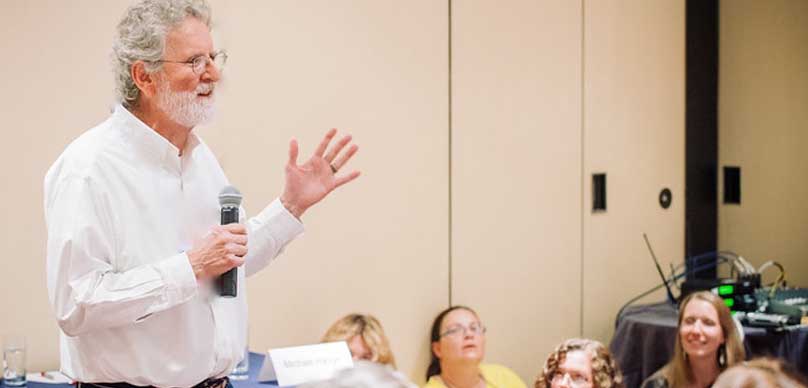
BPS 010: How to Write a Screenplay That Sells with Michael Hauge

You are in for a treat. This week’s guest, MICHAEL HAUGE has been one of Hollywood’s top script consultants, story experts, and authors for more than 30 years.

He coaches screenwriters, novelists, filmmakers, professional speakers, internet marketers, and corporate leaders, helping transform their stories and their audiences using the principles and methods of Hollywood’s most successful movies.

Michael has consulted on films starring – among many others – Will Smith, Tom Cruise, Reese Witherspoon, Julia Roberts, and Morgan Freeman, and has presented lectures and workshops to more than 70,000 participants worldwide.

He is the best-selling author of Writing Screenplays That Sell (now in its 20th Anniversary Edition) and Selling Your Story in 60 Seconds: The Guaranteed Way to Get Your Screenplay or Novel ReadAccording to Will Smith,

“No one is better than Michael Hauge at finding what is most authentic in every moment of a story.” – Will Smith

After our interview with Michael Hauge and I decide to bring one of his best courses to the Bulletproof Screenplay Tribe. We called it the Screenplay and Story Blueprint: The Hero’s Two Journeys.

Right-click here to download the MP3

SPONSORS

  1. Bulletproof Script Coverage – Get Your Screenplay Read by Hollywood Professionals
  2. AudibleGet a Free Screenwriting Audiobook

Alex Ferrari 0:00
Michael, man, thank you so much for being on the indie film hustle podcast. I really appreciate you taking the time.

Michael Hague 3:51
Oh, my pleasure. I'm looking forward to it.

Alex Ferrari 3:54
So tell me, how did you get started in the crazy film business?

Michael Hague 3:58
Crazy business? Well, basically, I grew up in Oregon, and I had moved back there after getting a master's in education. And I taught school for three years. But I'd always dreamed of working in the film business, having no idea what that would involve or anything about it. But I just always loved movies. And I figured it's time if I'm going to give this a try, I better get going. So I sort of jumped on the turnip truck and went down to Hollywood and move there discovered a small film school that I started going to and took a variety of classes. And one of those was in what was formerly known as story analysis, which is just the term for being a reader in Hollywood, meaning you read scripts for agents or producers or studios. And you write a synopsis of each script. And then you give your comment where you tell them this is terrible. You don't want anything to do with this. So then you give it to them. So they don't have to take the time to read a lot of bad scripts mostly, but it's an entry level. job. And after I learned how to do that I, I sort of cold call about 100 different agencies and finally found one that gave me a shot and I became their reader, and then moved over to being the reader for one of their clients who was a producer, he made me his head of development, that's just the next rung up, which means I'm now working full time reading scripts for him and working with writers and finding story ideas and so on. And it sort of went from there. Then I worked for a couple other producers. And that led to me on the side teaching at UCLA Extension, teaching screenwriting, out of that grew a weekend seminar that I ended up taking over around the world. And out of that grew my book and my consultation business. And that's pretty much where I am now. I still consult with writers and filmmakers and storytellers and lecture about screenwriting.

Alex Ferrari 5:54
Very cool, very cool in your book, your book, writing, writing the screenplay that sells writing screenplays that said, Yes, that was now the 20th anniversary.

Michael Hague 6:03
Yeah, it's it's past that now we I get a new edition, the 2020 year mark. And I think that was a couple years ago. So it's gone to 22 years, since the first edition came out. And then since then I wrote another book on pitching called selling your story in 60 seconds, and other products and so on. But those two books are the mainstay.

Alex Ferrari 6:26
I took them I took your course the the heroes, two journeys, the DVD course, I guess it was right. That's how I got familiar with your work. And I took that years ago, and it was wonderful. And now we're all we're all familiar with the hero's journey, but you talk extensively about the heroes two journeys. What do you mean by that?

Michael Hague 6:44
Well, to me the way the best way to break down a story or look at story is that there are actually two goals or two journeys, if you will, that the hero of the story takes what is a journey of accomplishment, the hero wants to cross some Finish Line wants to achieve some visible goal. And then they pursue that through the course of the story. It's a very visible thing that drives the action, it's what we see on the screen. So it might be stopping a serial killer, or an alien invasion or finding a buried treasure winning the love of the girl or the guy or, or whatever, escaping from some bad situation. It's always something that when we hear that goal, we can envision what achieving it would look like. But underneath that, on most movies, not all some big action movies don't have this. But in most movies, there's a second journey that's under that it's an invisible journey. It's what I call a journey of transformation. And that second journey is one where the hero's conflict comes from within where they are battling or must overcome some long and deep seated fear, usually that grows out of something in the past, and Intel, they can overcome that fear and find the courage to change, they're not going to achieve the visible goal. And so what I talk about is the way those two things intertwine that visible journey and then that inner journey of transformation.

Alex Ferrari 8:19
So it's kind of like the subtext of the characters development in itself, kind of like the hidden the hidden part of it of what he's trying to do. It's the characters arc. Got you and the thing and sometimes a character does even know he has that arc until later in the story kind of develops it, I guess, kind of like us in life. We all have our, our inner journeys and our inner issues. And then we don't know that we even have them until later on in life, or things come to us to kind of expose these problems or these issues like oh, that's why you're so angry because you didn't go to that party when you were in third grade, or

Michael Hague 8:52
something along those lines. Yeah, it's usually it's usually not something you didn't do but something that was done or happen to you, that causes what I call the wound. It's that painful or traumatic event, or sometimes it's an ongoing situation, usually from adolescence doesn't have to be but a good example, I like to use his Goodwill Hunting where he was abused by his father got a belt taken to him throughout his whole adolescence, apparently. So now that he's a grown up, he, and he's falls in love. He wants to win the love of Skylar, and he does what he thinks he needs to do to do that, but he's never really going to achieve that goal unless he can overcome his fear of letting people see who he truly is of letting her in because he's afraid that he deserved that beating and he's a worthless person. Now he's not aware of that, as you said, this is this is hidden from ourselves. This is we develop this emotional armor and it's such strong armor that we think that's who we really are. So it takes the course of the movie for the hero to read. recognize, oh, this is what I'm really dealing with. And this is what I'm going to have to change about myself to accomplish that goal. And in that movie, that transformation is facilitated by Shawn, the Robin Williams character who helps him see that inner conflict, that identity that he's taken on and help him overcome it.

Alex Ferrari 10:20
And that's why at the end, well, spoiler alert, I gotta go see about a girl.

Michael Hague 10:25
That's exactly

Alex Ferrari 10:26
He finally, he finally figures it out and says, Hey, I'm gonna go. And I guess, you know, as I've I keep reading screenplays and watching movies, and the best ones are those deep seated that when the character actually not not, doesn't beat the bad guy, but beats the bad guy within himself, almost, you know, and kind of like, just like, that's why Goodwill Hunting is such a wonderful film. And we everyone's so, you know, what's the word identifies with? Well, because it's, you know, that the inner struggle, I think, is makes characters much more powerful than just the big strong guy that goes around, you know, beating up the bad guys in so many ways.

Michael Hague 11:06
I mean, precisely because, yeah, we may not have been beaten, has not fallen in love. But there, we always believe that there's a part of us, we can't show to the world, we always believe there's a part of us that isn't worthy, or, or that shouldn't be revealed, or that we're terrified of connecting of someone else, and really being that vulnerable. So that's the universal experience. And then it's just particularized in the story, or in any good story that any screenplay that any of your listeners are writing, it's one of the key questions I always want a writer to ask about their script is what terrifies my hero. And I'm not talking about fear of heights

Alex Ferrari 11:48
Or smart aliens. There's right right, what

Michael Hague 11:50
what is the emotional fear? What is the what is the wall that I refuse to cross over or break down, no matter how much I want this goal, because it's just too scary. And when a writer can figure out, this is what terrifies my hero, then they're going to get in touch with that inner conflict and that inner journey that the hero takes, and I just think it makes the story much richer, and as you say, much more universal.

Alex Ferrari 12:18
Now, besides Goodwill Hunting, can you throw one more example out of another one that kind of grasp that?

Michael Hague 12:24
Yeah, yeah. If you give me I could throw out 100. Let me go through a few in Rain Man, his wound was his brother died his No, his brother was taken away, his mother died, his father abandoned him. So now his belief is that anybody I get close to is going to disappear. Now, again, I want to emphasize it's not conscious. It's not like if you said to Charlie Babbitt, well, you know, what are you afraid of, and he'd say that he's completely oblivious to it because it's become so much a part of who he is or how he sees himself. But his belief is anybody I get close to will disappear. So his terror is of getting close to anybody. And then he meets this brother, and his reaction to his brother is not to embrace him and say, Oh, well, I've got a brother, it's to just exploit the guy and terrify this brother, because all he really wants at the beginning is his inheritance. But in the course of the journey, what he does is he finds the courage step by step, and gradually to connect with the brother, and comes to realize, even if I get close to this guy, he's not going to disappear. I don't need to be afraid of that consciously or subconsciously. And that's his arc. That's his growth. And when he does that, in that case, it's not that he achieves the goal, it's he becomes mature enough to let go of that goal, give up on that inheritance and find a better goal, which is to help his brother

Alex Ferrari 13:51
and the brilliance about that specific movie is that Dustin Hoffman's character? He can't be hurt by what Tom Cruise's character is doing to him because he is autistic. So he like all these things that like kind of the the braiding that he does, I guess he doesn't get affected by it. So even more, so it's kind of like looking in a mirror almost with with Tom Cruise's character like he can't. Yeah, can't hurt him.

Michael Hague 14:17
Well, yeah, I don't know. I wouldn't agree with that. Because the thing is, he can hurt Raymond by frightening him so badly. You're right. You're right, you're equipped to deal with the world. Right? Here's, here's the parallel I see. It's a it's a story about a character who has to learn to feel by being with someone who is incapable of expressing emotion as incapable of connecting with another person physiologically, and so but through that character, the the Tom Cruise character, Charlie Babbitt learns to express his feelings and connect with another person in a way the brother who taught him that is incapable of doing

Alex Ferrari 15:00
Excellent point. Excellent point. Now, what are what are the elements of a great scene scene?

Michael Hague 15:07
A great scene? Well, I think, first of all, it has to have the the key foundation elements that any overall story has. And that is it has to be built on character, desire and conflict. In other words, in a good scene, not just the hero of the story, or the main character in the scene, but everyone in that scene must want something. And then the, let's say, the scene is involves the hero of the story, and he's the one that's driving this movie or driving this goal that moves us along the story, then, whatever it is he wants, or whatever it is, the other characters want. By and large, there must be something standing in their way, there has to be some conflict to be overcome. Primarily because your goal is a screenwriter, your number one goal is a storyteller of any kind. Because I work with internet marketers, and I work with public speakers, and I work with novelists and so on, the goal of any storyteller has to be to elicit emotion and emotion grows out of conflict, not desire. Desire, doesn't really isn't really emotionally involved in that test is the engine that drives the story. It's the obstacles the character has to overcome, that make the story involving and actually make a story sound commercial, as far as that goes. So within each scene, you want to say, Okay, who what, how does this scene relate to my hero and that hero's outer journey? How does this move the hero closer to his goal, or create more obstacles to it? And then what does every character in this scene want? And then, if possible, what you want to do is take some of those characters if and put them in opposition. So they want opposing things. That's what's going to create greater conflict in the scene. Sometimes the scene is not about characters in conflict with each other, but teaming together to face some other obstacles, some force of nature, some villain that's on the way, or some, some opponent that has to be overcome, but it's always about what is that conflict? What is that conflict going to be? And then the last thing I would say that's absolutely essential to every scene is you must create anticipation. You want to end every scene with the reader anticipating, okay, what's going to happen next? You want to create a question. Okay, now I see where this particular sequence ended, I see where the hero is. Now. They're somewhere that they weren't at the beginning. But now what are they going to do about x? Now? What's the next step they're going to take? or Now how are they going to face this villain that I just saw a scene where the villains planning to kill them, or whatever it might be. So you always want to force your reader to turn the page or to move to the next scene, and try and guess what's gonna happen.

Alex Ferrari 18:01
Now, Michael, when you're saying conflict, and obviously conflict is an integral part of every great movie and every great scene. I've heard from a lot of different gurus, teachers, instructors, analysts on story that the one story that really never had the main character didn't have conflict was Forrest Gump. Now, I'm not sure if that's true or not, there's conflict all around him, but he personally never had it. It. Can you explain to me whether that's true or not? Or what your take on? That is?

Michael Hague 18:29
Um, I must confess my take is that just sounds bizarre to me. Good night, see that he has conflict. Let's take the main through line, what is his main desire in that entire movie?

Alex Ferrari 18:42
Oh, that would be getting Jenny

Michael Hague 18:45
getting Jenny. And Jenny keeps getting separated from him. And he tries to get her and then she gets involved with others. And and it's, it seems like, always, always, it's let's get back to her. And whenever he encounters her, there's something standing between them. It's it's it's like a love story. But she gets involved with protesters and the hippies in the late 60s, or whatever else it might be. So there's that. And then there's the fact that when he goes to Vietnam, the bombs are blasting all around him, and he's got to save, save the life of Captain Dave is in the movie in more than a decade. I

Alex Ferrari 19:33
know, I know. Lieutenant lieutenant, I got

Michael Hague 19:37
it. I think maybe it's hard to recognize what his overall goal is, because it's a very, very episodic story. And because what happens is he seems to overcome the obstacles he faces fairly easily and then go on and have a big effect on other characters, but I would not Definitely not say there's not conflict that there are obstacles for him to overcome, or that the audience is wondering how is he going to do this? Or how is he going to be able to make money? Get you know, I'm for both shrimp or whatever. Right, right. It's trying to do so either either the answer, the short answer would be? I don't know. I don't understand the question, sir. answer would be they're wrong. There's lots of obstacles for him to overcome in that movie.

Alex Ferrari 20:33
And now that you've explained it in that way, I completely, totally agree with you.

Michael Hague 20:38
I miss a lot. Louis said, I'm thinking What about his mother? And in fact, his mother's dying. I mean, he is able to overcome those obstacles. But so as the hero of any movie, they just go on to something bigger. And I think the key is look at the relationship with Jenny.

Alex Ferrari 20:55
Yeah, exactly. And Jenny is his main goal. And it's that's it? That's, and I think, maybe it's because there's so much other stuff going on around him. And he's in every historical, you know, area. And you know, he does so many different things, that you kind of lose track, sometimes at the end of the day, of course, he just wants to be with Jenny, period.

Michael Hague 21:11
That's it. There's another there's another thing we should point out, too. That is the movies of biography. It's and biographies do not follow the same kind of structure that other films do. I usually say that the, I don't know if it's the most difficult to write, but the least commercial genre is a biography. And what I mean by a biography is the birth to death story of someone's life, or at least birth to, you know, as far along as Forrest Gump gets in that story, because let's take a movie like The King's Speech. The King's Speech is a true story about George the Third, the end, but it's not a biography, because we don't see him being born and his childhood and so on. We learn of those things as backstory through dialogue. But it's basically a story about a guy who has a single goal, and that is he wants to give a speech without stuttering. Right? Okay. And his, the whole movie is about how is he going to be able to do that with the help of Lionel Logue until the speech becomes not just important to him, but important to the whole country, because it's got to lead England into World War Two. So that's not my definition of biography. But if you take a movie, like Chaplin, Amelia Earhart, or I guess that was called Amelia, I forget what the title was, or, or other movies like that. And notice Malcolm X. So these, generally speaking are not do not do well at the box office, then what they do is they'll have an obstacle, and then they'll overcome it and then obstacle and overcome it. And it's sort of like, well, here are pieces strung together into this person's life. And the reason those are generally not commercial, I believe, is because audiences want a singular finish line that they're rooting for that hero to cross. And so that's why Forrest Gump adds the thread of Jenny that runs through that otherwise biography that is about one incident, or one goal after another. And if you take a movie like Braveheart, it's the same thing. The whole story of his life is toward one goal and that is freedom for Scotland. Or Gandhi is about freedom for from England for India. And those biographies are those true stories about real characters who have a singular goal that you can follow creates a much more familiar and stronger spine I believe, than just what you call life stories. And so I always recommend you find the one particular incident in the person's life where they had the biggest goal or the most compelling goal and make the story about that. And perhaps because of that, people are not recognizing the the conflict in Forrest Gump the same way because they're forgetting it's a biography that's going to be segmented into one goal after another.

Alex Ferrari 24:14
Right and generally our lives are not about one singular goal it's about multiple little goals. That's why

Michael Hague 24:20
That's why movies are better than real is not properly structured.

Alex Ferrari 24:25
It's like my goal is to get to the supermarket and get what

Michael Hague 24:29
I like to say real life is shit happens and then you die and not jet not generally not generally, like

Alex Ferrari 24:37
our goals now are like I need to go to the supermarket and get this. The crackers are out shoot.

Michael Hague 24:43
I'm like there's an obstacle,

Alex Ferrari 24:45
but not not not very exciting, though. Very exciting, but freedom from from England. That's that's a much more grandiose goal in life. And also,

Michael Hague 24:55
that's another good thing to point out that movies are not secure. cessful either artistically or commercially, because of the size of the goal. It's only the size of the conflict for the hero that makes a difference. So there's nothing inherently bigger or more important about freedom for England than there is surviving on Mars or

Alex Ferrari 25:21
Google hunting, falling in

Michael Hague 25:23
love with someone who's an inflatable sextile. I'm giving away answer to a later question. But it's, it's always what makes it seem impossible for the hero to accomplish this goal. So what that goal is, is only important in that it gives the story its forward thrust and gives the opportunity for those obstacles.

Alex Ferrari 25:47
Very well put very well put now. You know, I'm sure you've read a few scripts in your day. couple, three, a couple, two or three? What are some of the common problems you see with first time screenwriters and like kind of first time scripts? Well,

Michael Hague 26:03
the number one problem, I think, overall is the writer has not given nearly enough thought to is this commercial. Yeah, it's the writer is assuming apparently, that because this story sounds intriguing to him or to her, or because it's something that happened to them that was fascinating, or because you know, it makes for a good story around the dinner table. This is something that a million people are going to be willing to pay to see. And that just most of the time is not the case. And while I agree on an emotional level, and on a psychological level, you want to write about what you know, what I think is more important is when you come up with a story idea, ask yourself, is there any movie I can point to, that's made money in the last year or anything that is advertised in today's paper that's playing at the Regal Cinema or the Arclight, or whatever, that this is similar to, that this is in the same genre that this is going to appeal to the mass audience in the same way. And I think that a lot more respect or attention needs to be paid to is this really something that's going to make money, because I'm assuming that anyone listening who's a screenwriter wants to be a writer, because you want to be heard your what your stories are to be seen as films, and for a movie to get made is going to cost a lot of money, and somebody's got to put up that money, and they can't invest that money unless they think it's going to turn a profit. And because movies are expensive, unlike books, which you can publish for pretty cheaply. Movies have to have a lot of people buying tickets or tuning in, if it's a TV show, or subscribing to Netflix, if it's that in order for that movie to turn a profit. And so you have to be able to build into that story or build that story on us. One that has a good possibility of making money. And I just feel like lots of writers are not thinking about that. They just it's like for their own edification. Let's say that hurdle is passed, let's say they found a high concept store or let's say they found a movie that is within a genre that's generally commercial, let's say then the key problems are more within the way the story is told one difficulty I see frequently and this is not limited to new writers, I encounter this with million dollar screenwriters, the story is just simply too complicated. Yeah. Another thing to remember about movies, especially if you're pursuing a Hollywood career, if you're talking about pursuing a Hollywood financing a mainstream movie for this country. They're very simple. I mean, Hollywood stories are built on very simple ideas. There is I would guess, not a single movie playing in theaters right now that came out of Hollywood that I could not with three minutes of fun express the storyline in a single sentence,

Alex Ferrari 29:19
log lines and basically, you know,

Michael Hague 29:21
it's it's simple. Now, it doesn't mean the characters aren't layered. It doesn't mean the characters can't be complex, it doesn't mean that there are lots of obstacles to overcome. It's just at the level of story concept. You know what it isn't a group of reporters wants to find out the truth or report the truth about the sex scandal in the Catholic Church, a guy stranded on Mars wants to stay alive until he can be rescued in a year and a half. Its you name it, whatever movie is out there, whatever is is doing well or even getting made. It's based on a simple story and then it's not about going off on a lot of tangents, or making that complicated. It's about keeping that straight through line, and then creating interesting and different and increasingly difficult obstacles for those characters to overcome.

Alex Ferrari 30:15
We'll be right back after a word from our sponsor. And now back to the show.

Michael Hague 30:26
Now, the final thing, the last thing, and this is, in a way, the simplest, but it's just too many scripts I read are not professionally presented. It's like they're not properly formatted, which astonishes me because I've been around long enough that when I started, there were no, there was no such thing. There was barely computers, there was certainly no such thing as final draft or Movie Magic Screenwriter, and you had to sort of set the margins on your typewriter and things like that. But now, all you got to do is invest in a formatting program, and you're pretty much home free, as far as that's concerned. And all you have to do is use spell checkers or get somebody who knows English to check it for spelling and grammar. And I see a lot of those errors in new scripts. And it's like, come on, spend 24 hours, doing a little researcher spend a buck to get the program. And you can make this look as good as any other script floating around Hollywood. So those three things I think its simplicity, professionally presented, and most of all commercial.

Alex Ferrari 31:30
So Michael, you mentioned the term high concept. Can you explain to the audience what a high concept and low concept are?

Michael Hague 31:39
Yeah, well, I haven't really heard the term low concept before but high concept gets bandied about a lot. And people have different definitions of it. But here's mine, a high concept idea is one that an audience will line up, or tune in to see the movie or the TV series, just based on what the logline is just based on what that movie is about. On a plot level. And high concept stories promise big conflict. So a good example, recently of a high concept movie that did very, very well, was the Martian, because it's about a guy who's gets stranded on Mars, and now somehow has to survive, and face all of the elements on this foreign planet and stay alive long enough that the people on earth can send a spaceship to rescue him, let's say. So it sounds like the obstacles are going to be big. It's a genre kind of film, not just science fiction, but it's about someone needing to escape from a bad situation. Now, it comes with a stellar cast, and it got great reviews, and it's good to get nominated for Oscars, and so on. But a high concept does not depend on those things, high concepts or ideas that it doesn't matter who directed it, who's starring in it, what kind of Reviews What Kind of word of mouth or what kind of awards it gets. It's just the story idea. So Jaws speed, those would be typical high concept kind of ideas. If a movie is much smaller, let's take another movie that's going to get a number of Oscar nominations. That was also one of my favorite movies this year called room. Okay, that's a story about a mother who's raised a child from birth in a nine foot by nine foot room, and the child's never seen the outside. So it's how would they what would happen in that situation? And then what would happen if they had the opportunity to go into the outside world? Wonderful movie, but I don't think when you hear that story idea, you say yeah, I've got to see that. That sounds exciting. That sounds like an edgier seat suspense. And so that movie was released slowly, you can usually tell when a movie is not as high a concept because the release powder will be just a few theaters, and then a little more a little more, because they want the word of mouth to build. Because movies that aren't high concept, low concept issues, as you say, are dependent on criticism on reviews on word of mouth, on promotion and publicity on the stars that might be in that story. Now, one last thing I want to say about high concept it has absolutely nothing to do with artistic quality. You can have a high concept movie that's great. Martian is an example of that, in my opinion. You can have a high concept movie that is absolutely dreadful. And you can have a low budget rd not high concept story. That's great. And you can have another one that's dreadful that we're not we're only talking About a commercial issue here.

Alex Ferrari 35:02
Got that makes perfect sense. Now, do you have any tips on to screenwriters on how they can get their screen screenplays actually read?

Michael Hague 35:14
Well, yeah, I kind of wrote a whole book about it actually. So it's a tough question. Because it's so big. There's so many different things that one can do and you consider, and in those two books we talked about, the book on pitching is all about how do you describe your story in 60 seconds, so that somebody want to read it. And writing screenplays that sell has a whole marketing section. But be that as it may, what I'd say more succinctly is, the smartest thing you can do to market your script is to follow in the footsteps of those who've done it before. Okay. And the way you do that is you first of all, besides reading as much as you can interviews with screenwriters, especially newer ones, I mean, it's fine to hear the story of our William Goldman became a screenwriter, but it's got nothing to do with you. I mean, that was decades ago, and he's now hugely successful. Those are the those are the screenwriters that usually get interviewed. But anytime you can see in a film magazine, or on your podcast, if you interview someone who's new, but has managed to cross over and broken in, those are the people who have the stories about how they did it that are going to be most valuable. And you want to follow in their footsteps, meaning they might have entered contests, they might have gone to pitch March, they might have composed great cover letters, or emails, what they have all done. Now there are two things they would all have in common one is they write, they write and they write, and they write, I've never seen a successful screenwriter that didn't write regularly, that's not a marketing tool. It's just you gotta keep writing, even while you're marketing one script to keep working on the other. And the other thing they did is network. And by that, I mean, they found situations where they could meet other people that could provide them with either more and more contacts or information on how to reach those people. And then beyond that, what you want to do is you want to target the people, you're going after some screenwriters who are trying to break in, they get that writer's kill list of all the agencies and they either limit themselves to the ones with asterisks. who say, Well, we will look at unsolicited material, which is a mistake, because those are usually not very powerful agencies, or they send a mass email to everybody or they buy email lists and send it to everybody. And that just doesn't make sense. Because 90% of the production companies in Hollywood, you're probably not going to be interested or be able to mount your particular script, what you want to do is look at movies that are similar, go to a website called the Internet Movie Database, find out who the producers of those movies are, and then contact the heads of development for those companies. Because if it's whatever company produced The Martian, I mean, certainly scot free because it's really Scott directed it. But there are other companies involved, they obviously have been able to enter interested in bigger budget exciting action kinds of films, you probably wouldn't pursue those companies with room, that movie, I was just describing this very low budget, independent, small movie, and so on, you may if they've done other things like that, but figure out what movies yours is similar to and then go after the people who've made those movies before. And a couple of rules to as you're doing this. One is, as I said, you want to keep writing, you never want to stop writing just so you can mark it and the other is never wait for somebody else to keep moving forward. Don't send your script to somebody and even they say I'll get right back to you. Don't wait until they get right back to you before you start pursuing other people. Just always keep going after as many appropriate producers, agents, managers, or production companies as you can until you find the one that really is willing to make a deal with you.

Alex Ferrari 39:21
So Michael, what was the lesson that took you the longest to learn in the film business?

Michael Hague 39:25
I don't know if this is what you're going for, because it's not really a lesson about screenwriting or even necessarily the business. It's a little bigger than that. But the lesson that I wish I had learned sooner is that the best way the best path to take is to concentrate on the things that I loved and repeatedly eliminate the parts of what I'm doing that I wasn't enjoying. In other words, focus on what I have wanted or what I loved and not what I thought other people thought I should be doing. Because for a long time when I came to Hollywood, I was trying to sort of break in or move up the ladder doing existing jobs or doing them the way other people did. I felt for a while well, I, I know I can teach this, but I should be a screenwriter, even though I didn't really have a desire to write scripts myself, I like working with other writers, or I should be getting a development job at a studio or I should be doing this or then when I became a consultant, there were things about it, I didn't like I didn't like writing synopses. And I didn't like actually writing much of anything. And so over the years, what I realized is I could just eliminate the things I didn't like. And it wouldn't, it would actually enhance my career because the more I eliminated that I didn't like doing, the more successful I became as a consultant and as a speaker, and so on. Until now, when I do consultations, it's what I love to do. Because I like interacting with writers, I like to feel like a collaborator, I like long sessions, not quick wins. I hate doing notes. I like sitting down with people in the industry and hashing through the projects. I like speaking to groups that have invited me to come but I don't like advertising my own seminars, and I don't do that anymore. And I think if there's a broader lesson from that for anyone, it's make sure that whatever path you're on to keep checking and say, Is this still bringing me joy? And if the answer is at all, no, or if part of it is not say, is there a way to adjust what I'm doing so I get more of the joy and less of the seemingly necessary pain to get there. Now, it doesn't mean in the early stages of your career as a screenwriter, anything else there are dues to be paid and there isn't some grunt work you got to go through. But at a certain point, you're going to find that there are things you're doing that make it worthwhile and other things that you feel like you got to put up with and the more you can let go of the put up with stuff and the more you can stay with the worthwhile stuff. I think in the long run, you'll certainly be happier and probably more successful.

Alex Ferrari 42:23
That entire answer should be on a t shirt.

Michael Hague 42:27
For fat people

Alex Ferrari 42:29
I was gonna about to say you're gonna have to have a very large face bumper sticker. So Michael, this is a question I always ask all of my my guests what was the most underrated film you've ever seen?

Michael Hague 42:43
i We should tell people I was cute for this. She sent me this one in advance. Yes, think about it. And I it probably wouldn't have been hard to come up with because I use this movie as an example all the time. It's a movie called Lars and the real girl. Love that movie. And it may be wrong to say it was underrated because Nancy Oliver who wrote the script actually was nominated for an Oscar. So that's not underrated. And it got good reviews. But it didn't do business. I mean, very few people went to see it. And I consider it one of the great romantic comedies ever. I just love talking about this movie. And I think the reason very few people saw it is because the logline is it's about a guy who falls in love with a sex doll. So it sounds either see me or kind of distasteful or broad R rated comedy, none of which it is. I mean, it's one of the sweetest actually most spiritual kind of movies that has just a great love story at its core. It's one I love to talk about. I've actually done lectures just about that movie. And this is a chance for me to recommend everyone who's listening find it and see it. It's called Lars and the real girl. Yeah, with

Alex Ferrari 43:58
Ryan Gosling. It's yeah, he was awesome in that movie. It was a great, great film. I love that movie. So Michael, what are your top three films of all time?

Michael Hague 44:05
Okay, well, I want to tell your listeners just by way of excuse just like the last one, you warned me that this was going to be a question. Yes. And so I emailed you back and said, I don't want that.

Alex Ferrari 44:19
And I begged you to answer it. But we do

Michael Hague 44:21
this in every broadcast. And I said, Okay, what's what's my favorite movie? What was what was the question? My three favorite? Yeah, yeah, no, no specific order. So here's my answer. I was incapable of doing that. So here's what the answer I came up with the way the only way I could get even close was if I segmented them. Okay. Okay, so you're gonna have to put up with like nine titles here.

Alex Ferrari 44:46
Now, fair enough.

Michael Hague 44:48
The first thing I thought is in terms of favorite movies, what are the three classic movies that I consider just absolutely great films that were very formative for me that made me After all these years, they're still great movies. And the three I came up with were Casablanca. Still probably the greatest love story Hollywood has ever done. Psycho. Now, perhaps the scariest movie Hollywood has ever done. And Hitchcock's best, I think, unlike vertigo that most people regard. And finally the Godfather, which if I had to pick the great Hollywood movie, I would probably pick that one. So those are the three favorites in terms of these are great, great movies by any measure, I don't know how they could be improved. Then I thought, Okay, the second set is what are three movies that are my favorites, because they meant a lot to me personally, as I was growing up, or as I was falling in love with movies. And the three I picked for that were number one. Bye, bye, birdie. Because not, not a great movie, although some great numbers, but because it was a movie, the first movie, I remember having a crush on the star because Margo got on that treadmill. I was lost forever, that I saw repeatedly that I just loved and and was just under I remember going back to see multiple times. So I it's sort of beyond guilty pleasure to say apologetically say to me, the second one was Miracle on 34th Street. My favorite, I think, still probably the best Christmas movie much better than It's A Wonderful Life in my opinion. And that meant a lot to me, because I always loved Christmas. But because at one point in my life, I was a department store Santa myself, and I tried to model myself after admin Glen in Miracle on 34th Street. So there's probably more information there. And that's very, that's a very cool story. Okay. And the third one is A Fistful of Dollars. It's a movie, my favorite Western ever, although, if you take that whole Man with No Name trilogy, it'd be hard to pick share. But that was an important movie. To me, maybe this is more career as well as personal because it's I saw it when I was just starting to take some film classes, they didn't have filmmaking at the University of Oregon when I went there, but they had like a film appreciation or film studies class. And I was learning about all these big name directors, and I happen to see it. And I started noticing a lot going on in the movie underneath the plot, and I actually took notes, and sort of compose this whole analysis of what was going on underneath. And that's what I think I really internalize the idea that there's the plot of a movie. And then there's all the layers underneath that can be added that are not instead of an exciting, in this case, action filled Western or plot or superficial story, if you want to say that, but grow out of that, and are intertwined with that, to make it terrific. So that was the second group. And then the last group that was impossible was really probably what you're asking, and that is what are my desert island movies, what are the movies that I could see again, and again and again. And the thriller came up with although with, if you gave me another day, I'd probably come up with six different ones. One is Sleepless in Seattle, because it's probably still my favorite romantic comedy. It also meant a lot to my career, because it was the first movie I ever lectured about, in its totality at a at a seminar at a conference once. And as I was in the middle of the lecture, I noticed in the back of the room was Jeff arch who wrote it. And I thought, oh my god, I'm talking about his script. And afterwards, he came up and said, everything you said about that movie was what I wanted people to get. And we've been friends ever since. So that was cool. So I picked that the Bourne trilogy for action movies, the all three of the Bourne Identity born, you know, supremacy and so on. And finally, Love Actually, which offer Christmas and romantic comedy and one of my all time favorite writers, Richard Curtis, and I just think is a movie that I could see once a year and often do and still like it. So that's the best I could do with three.

Alex Ferrari 49:27
That was actually one of the best answers to that question we've had on the show.

Michael Hague 49:31
Because I cheated. I drew outside the love.

Alex Ferrari 49:35
Alright, so last question. Where can people find you?

Michael Hague 49:40
Actually, there's only one place people need to go to find out about my coaching about the products I've created, including my books in the heroes two journeys that you mentioned and also read a lot of articles and question and answers I've done and that's to my website. It's story mastery. dot com, STR y and then mastery with a Y on the end story mastery.com. And if you go there, there's a lot of things that you can link to and see that I think will sort of expand on some of the questions you asked me and other things about everything to do with the storytelling actually not just screenwriting.

Alex Ferrari 50:22
I will definitely put links to all have to put I'll put a link to that in the show notes. Michael, thank you so much for for being on the show. We've you've thrown out a lot of great great nuggets. So thank you.

Michael Hague 50:32
Oh, good. Well, thank you for having me. It was an honor and great fun. I enjoyed this a lot. And if we do it again, I'll come up with three different movies or nine different movies for you.

Alex Ferrari 50:41
Thank you so much. I really love talking to Michael It was it was it was a treat to really get to know Michael and and now work with him a little bit putting this new course together the story and screenplay blueprint. So as promised, I'm going to give you guys the link to get the course which will be retailing for $67. But you're going to get it for 25 bucks, and it'll be 25 bucks for a little while. So you have to hurry and get it quick before we before the sale runs out. But it is a launch. So all you have to do is go to indie film hustle.com forward slash story blueprint, that's indie film hustle.com forward slash story blueprint, and that will give you guys directly a link to the course 25 bucks, so definitely check it out, guys, I think you really will get a lot out of it. And to get links to anything we discussed. In this episode, just head over to indiefilmhustle.com/bps010. And if you haven't already, head over to screenwriting podcast.com and sign up and subscribe to the bulletproof screenplay podcast on iTunes. It really really helps us get the word out on this podcast and get this information into more screenwriters hands. So as always, keep on writing no matter what. I'll talk to you soon.


Please subscribe and leave a rating or review
by going to BPS Podcast
Want to advertise on this show?
Visit Bulletproofscreenwriting.tv/Sponsors

BPS 009: How Marketable is Your Film Idea or Screenplay?

So how marketable is your film idea or screenplay? I know so many screenwriters and filmmakers who spend months and sometimes years on an idea that is cool to just themselves. Depending on what you are attempting to achieve with your story, you should always figure out if your idea is marketable or if you have a fighting chance of selling the screenplay or final film.

Paul Castro, the writer of the Warner Brothers feature film August Rush (Starring Robin Williams) shares with us his thoughts on how to test and find marketable ideas. You can download the MP3 or watch the video below.

Right-click here to download the MP3

SPONSORS

  1. Bulletproof Script Coverage – Get Your Screenplay Read by Hollywood Professionals
  2. AudibleGet a Free Screenwriting Audiobook

Alex Ferrari 0:00
So Paul Castro, the writer of August Rush, and I have put together a course called The million dollar business of screenwriting. Now I'm going to give you a one of the lessons that he teaches in this course called is your screenplay marketable? What is the marketability of your screenplay. So I wanted to give you a kind of a sneak peek of the course in this podcast and listen to one of these amazing lectures that Paul does in this in this course. Now, this is not just for screenwriters, this is also for directors, producers, filmmakers, who have ideas that they might want to get flushed out, or a movie that they're about to start, definitely listen to what Paul says, because it might save you years of your life, let alone 1000s and 1000s, or even, maybe even millions of dollars, depending on the level you're at. And at the end of the episode, I'll give you a special link to get the course at a substantial discount. So sit back and get ready to get your mind blown.

Paul Castro 4:04
I wanted to talk to you about the marketability of your idea. So writers we all have a peppering of all sorts of ideas, bombarding our psyche and our soul often, and most of the time every day, at least for me and many of my friends. So how do you choose an idea? Well, I think it's important to take your top three ideas, and be really honest with yourself, is it marketable? Right, because there are ideas out there that are real. Something that's interesting to me may not be interesting to the world. So I wrote a script about a fugu chef one time the Japanese puffer blowfish, which is the poisonous fish and I love this story, and it got some traction but nobody ever bought it. And the writing experience was a value for sure. But I could have spent those eight weeks to 12 weeks to eventually six months working on something that was much more marketable. So what makes a marketable screen Play that's going to put you in the best possible position to sell it. So these days, it is a true story. For some reason Hollywood and actors, movie stars like to play something that actually happened. So how do you acquire that? Well, you acquire it from source material, what is source material from a magazine, a book, an article, something you've seen in the news. Now, you may be saying, Hey, Paul, that's great. But I'm a new screenwriter, how am I going to acquire that? Well, from my experience, I have seen that book authors are a lot more accessible and open than say, trying to get to a movie star. So if you approached a book author knows I said, he or she not the agent, because agents are wonderful, but they're the gatekeepers. They're trying to protect that person. And they're trying to get them paid, understandably, so. But if you approach a book author, and show your passion for the material, have a plan for how you're going to adapt it from book to the big screen. And oh, by the way, you're going to do this for free, as long as that he or she gives you a free option. And if the material once you're done with it is at a level of vibrancy and at a high frequency of quality, that that person says yes, this is what this is my book on screen, in a screenplay form that can eventually make it to the big screen. Yeah, I would love to say you did a great job. If they agree to that, then you go forward as a team to sell the entire project and it cost you time and sweat equity, that can be done. And most writers are a bit trepidatious and shy and circumspect in going that route. Because they feel like well, what value do I have to add? Well, I'm here to tell you, you have a lot, you're a creative, right? That's invaluable. And if you're going to be brave enough to approach this person, and coming from a good place, you're not trying to rip anyone off, you're trying to add value with your talent and creativity, you can acquire some wonderful stories, right? So the market is very friendly towards a true story. Something that's current, is it. Like these days, you hear a lot of stories about autism, which is a very important subject. All right, if there's something that is relevant to the science world as far as as a curable disease, something that has an energy beyond just a true story. All right, an Olympic hopeful, who blah, blah, blah, fill in the blank. Maybe there's something in your hometown, some somebody that nobody even knew about this person. And you could bring that story to fruition through a screenplay where there's a will there's a relative, and there's also a way. So I would encourage you to start looking for true stories, something from source material, if there's a book that you saw when you were you read when you were a little kid, and why isn't this ever been a movie, then that's a voice a little God wink that's telling you to pursue it. So your job now is to spend the next I'm sorry, not one hour, two hours, going to Google going to your Rolodex going to your hometown, going through all your resources to identify a true story that you can bring to fruition through the craft of screenwriting. So you have two hours, make sure you hit the restroom, get some water and get some amens whatever you do, and get prepared because two hours and you're going to on Vale the gym that you were meant to write through a true story from source material. Okay, in 321 Write it

Alex Ferrari 9:01
I'll tell you what I learned a ton from Paul while I was working with him on this course. I mean, he goes over things like how to workshop your screenplay, which I had never heard of this whole technique of how he actually workshops have screenplays, so he can get feedback and make it better it's it's pretty pretty awesome. How to submit to an agent how to get the your screenplay to an agent pitching how to read a room not read a person but actually read a room which is amazing how to write different kinds of screenplays from 30 minutes, sitcoms to one hour dramas, residuals, a W GA, writing assignments and so on. I mean, it's it's a pretty dense course on the business of screenwriting and how to actually make a living being a screenwriter, but again, a lot of the concepts and things that Paul talks about for screenwriters can easily be translated to filmmakers. So definitely a course to take a listen to and as promised I am going to give you a discount code. So all you have to do is go to indie film, hustle, calm, forward slash, screenwriting 25 That's indie film hustle.com, forward slash screenwriting 25. And you'll get the course for 25 bucks. I mean, that is a absolute steal. I'm not not even playing around. It's so dense. And there's some more preview. When you go to that link, you'll see a few more lessons, you can kind of preview and take a listen to. Well, well worth it, guys. So I hope you got a lot out of this episode. And if you want the link again, just head over to the show notes at Indie film hustle.com, forward slash BPS 009. And if you haven't already, please head over to screenwriting podcast.com. And leave us an honest review on the show. It really helps the show out a lot and gets this information out to as many screenwriters as possible. And as always, keep on writing, no matter what. I'll talk to you soon.


Please subscribe and leave a rating or review
by going to BPS Podcast
Want to advertise on this show?
Visit Bulletproofscreenwriting.tv/Sponsors
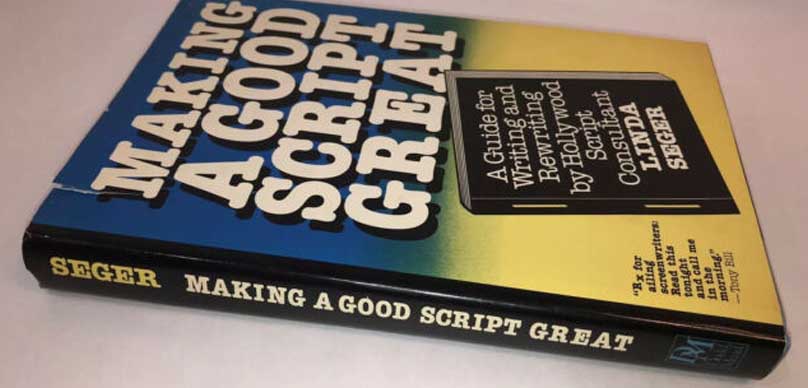
BPS 008: How to Make a Good Script Great with Linda Seger

Linda Seger is a legend when it comes to screenwriting coaching and script consultant. She’s been coaching for over 30 years and pretty much invented the job title. After reading her best-selling book, “Making A Good Script Great” I had to have her on the show.

She’s  best known for her method of analyzing movie scripts, which she originally developed as her graduate school dissertation on “What Makes a Great Script.” She founded the script consulting industry, becoming the first entrepreneur who saw script consulting as a business, rather than an offshoot of seminars or books.

Linda Seger has consulted on over 2000 screenplays and over 100 produced films and television shows including Universal SoldierThe Neverending Story IILutherThe Bridge (miniseries), etc.

“When I arrived I had an idea. Three days later the idea had become a complete and rich outline. Linda’s warmth, guidance and insight helped me structure my story and discover the layers that made it come alive.”  Sergio Umansky

Her clients include Oscar® winning writer and director Peter Jackson, Sony Pictures, and Ray Bradbury. Unlike other screenwriting gurus, Linda Seger is not a screenwriter but has focused exclusively on consulting and teaching.

Linda Seger has written 13 books, 9 of them on screenwriting, including the best-selling Making a Good Script Great, Creating Unforgettable Characters, and Writing Subtext: What Lies Beneath(FREE AUDIOBOOK VERSIONS HERE)

Ron Howard has endorsed Making a Good Script Great, saying he uses the book when making all of his movies beginning with Apollo 13

Not a bad recommendation. Take a listen to this masterclass on screenwriting with Linda Seger and get ready to take notes!

Right-click here to download the MP3

SPONSORS

  1. Bulletproof Script Coverage – Get Your Screenplay Read by Hollywood Professionals
  2. AudibleGet a Free Screenwriting Audiobook

Alex Ferrari 0:46
So for for those of you for those of us in the audience who are unfamiliar with your work, can you tell us a little bit about your history and what you do.

Linda Seger 3:16
I am a script consultant. And I was actually the first script consultant I made up the name I made up the job in 1981. I've worked on over 2000 projects from since then. Then I started writing books, I have 13 books out and nine of them are in screenwriting, and I do seminars on screenwriting around the world. So I've been to I believe, 34 countries now on six continents. And I usually do those one to three day seminars, but occasionally longer. I'm going to Norway in November for five days and do a seminar in Oslo fun, so, so they're kind of exciting. It's all related around screenwriting.

Alex Ferrari 4:02
Fantastic. So since you were one of the first people if you were actually the first person to do this, can you explain to me, in your opinion, what the craft of screenwriting is, as you see it?

Linda Seger 4:14
Well, the craft of screenwriting has to do with understanding the structure of a story and being able to create beginning middles and ends. It's an understanding that a story has a plot line that has direction, and it has subplot lines that have dimension and that feed in and intersect and integrate with that plotline. So for instance, if you were doing a crime story, the plot line or the directional story is I got to solve the crime that the detective has a sweetheart and maybe a relationship with a parent and maybe problems with a boss and there's other these relational dimensional aspects. So the writer has to balance these and know how to structure them, then every movie, no matter what genre is, there is something that this movie is about an idea we might say it's about the human condition and who we are and what our identity is. And so the writer has to know how to integrate the theme. Then of course, there are characters you have your major and your supporting and your minor. The writer needs to know how to give dimension to a character, but also direction. So if the detective is solving the crime, they gotta keep on that narrative track and keep solving the crime and not just decide to take a little vacation, right? And then then drama. You know, movies are cinematic. So they have to understand how do you create images? How do you make those images cinematic, visually, exciting, original, unique? So I always say that screenwriting is an art, the craft, and it takes creativity. And the art side is mainly that voice of the screenwriter, what is it that you are that is special, that's unique, and that you give voice to the genre you choose? Through the kind of characters you decide to portray through the stories you tell? So you're always working on all three of these aspects to learn the craft to learn how to be a better artist.

Alex Ferrari 6:37
And so since you've been teaching for so long, and what in your opinion, what is what can really be taught and what can't be taught and I think a lot of people have this assumption that they go to someone like you and they'd like you're gonna write, you're gonna help them write the the great, you know, the great American screenplay, if you will, or the Oscar winning screenplay. I want people to understand what what can actually be taught and what needs to come from the actual writer themselves.

Linda Seger 7:00
The craft can be taught, you can actually learn how to structure a story. And it will immediately improve the script. The artists something you keep having to hone and learn and to have the courage to show your voice because a lot of times people say, Well, I'm going to write a script, kind of like that last big hit them, it's it's not really who they are. And so you have to find what that voice is, and have the confidence to keep letting it get out there. But all these things are craft, I had an experience which clarify this for me. Many years ago, an executive from a production company said to me, Linda, we finally figured out what you do as a script consultant. She said, we had a series of scripts come in. And they were so beautifully crafted at such a high professional level. But the artistic side and the originality was not at that same level, and we couldn't figure it out. We then discovered they had all come to you, as a script consultant. And we understood what you did that I said, I can only bring the craft, I can bring the craft up to a very high professional level as a consultant. And people can do that reading my books, or reading any books on screenwriting, go into classes, but the art has to then be raised up and said, I can't make the art get up to that professional level. But I can encourage and nurture the art. In many times learning the craft helps nurturing the art

Alex Ferrari 8:46
very much like I don't know if there's a good analogy or not like a chef you can you can teach someone how to scrambled eggs but too, and and anyone could scrambled eggs but at a certain point. It's that artistic aspect. I mean, I'm sure you've had some amazing scrambled eggs in your life. And probably some bad scrambled eggs in your life. And it's similar. It's like the person who, who understands that craft and, and really gets it and then also throws in themselves into it. As an artist. That's when magic happens.

Linda Seger 9:13
And there's so many different parts to that crap. I having worked on so many scripts, and before that I was a drama teacher. I taught theater at colleges and universities, I directed plays. And then when I entered the film industry, I took a series of classes, most of them through UCLA Extension, just to change my mind. So I started to see scripts from the viewpoint of film, not theater, and we could say film and television. And over these 30 plus years, one learns a great deal. So as the years have developed, and I've worked on more and more scripts, I look more at things like seeing Transitions. How does that writer move from one scene to the next? Are they overusing flashbacks? Are they overusing voiceovers? Or do they need more voiceovers do have they not set up their style? How do they set up their genre? And so I'm always learning. And of course, when it's whether they come to me with the class or come to me with the script, we're all in a sense, I have continued to learn about the craft and the art of screenwriting all these years. And it's a lot easier of course, for me to do my work I have a lot more to draw on. But there's so much to the art and craft of screenwriting. Some people think it just flows, you say no, the best writers, they write, and they rewrite and they hone their craft and they become more confident in their art. It's it's a continual process. And it isn't that it just rolls off of you. And suddenly you have an Academy Award winner.

Alex Ferrari 11:12
Right? There's, there's so many people who just watch a movie, and go, I can do that. I can write a script, that's easy. It's similar. Like I just listened to Mozart symphony. I'm gonna write this if it's the same concept like you can't just because you you can, you can consume it and enjoy, it doesn't mean that you can do it right off the bat. It takes years and years and years of work to do. Now, what are some of the biggest mistakes you've seen screenwriters make over the years beginning screenwriters?

Linda Seger 11:38
Well, when I first started, most of the mistakes are structural, that they didn't get their story going, they didn't get it focus. Sometimes the first turning point was actually at the midpoint. And they just did not have that clear sense of beginning middles names. As the years have gone on, I have found that even the beginning, screenwriters are at a higher level, because they have usually read books and maybe taken a seminar or two, before perhaps like they come to me with their scripts. So one of the problems is always originality. How yet, how do you have? How are you able to be unique and different, and learn to put that out there. Sometimes it's a problem of development, that the writer is not developing the characters developing the conflict, developing the storyline, they're just sort of doing a lot of things, but it's not really happening there on the page. So I think development is a huge, you know, is a huge thing as well.

Alex Ferrari 12:56
Now what, um, over the years, oh, I was gonna ask you, um, can you explain to people what a studio reader it does? Because I know a lot of people that really don't understand exactly what the reader doesn't, and what their point is,

Linda Seger 13:11
right? A reader who is sometimes called a story analyst, and I did that for several years when I first entered the business. They are the people that read the scripts, and they might be handed Tim scripts a week. And they go home, they read the script, they write a synopsis, usually a page or two, then they write a paragraph or two that says, I recommend this or I don't recommend it for the following reasons. So let me just give you a couple for instances. I was the reader on the bodyguard. And remember that the

Alex Ferrari 13:50
the original the original bodyguard, yes with Kevin Costner, but that was originally with Steve McQueen. Right. It was an older script, if I'm not mistaken.

Linda Seger 13:58
Oh, I don't know about that. It was it was Lawrence Kasdan. Right again. Okay. Go ahead. Yeah. And it's the one that was made with Whitney. We use of course, of course, when I read it, it was about a feminist comedian. And I recommended it. But because I said, I think it's very commercial. I think it's, you know, quite a good script, but it's got a big story hole in the middle of it. So in a rewrite, this has to be addressed. The person I read it read for at that time, was Jane Fonda's company, okay, and that their executive says, Oh, we think this script has problems and I said that's what I said. And it was I was reading is a tryout for an ongoing job with the company and they didn't hire me. They just decided they don't think that script was that good. Well, then the script got made. Huge, huge money maker huge. A theater piece I felt somewhat vindicated. Sure. And so my job, in a sense was in that one paragraph to be able to say, this is what is good about the script. This is where the problem is in a rewrite fix the problem, but they didn't. I was also the reader for the Christmas story,

Alex Ferrari 15:18
a great movie that plays.

Linda Seger 15:21
And there were two of us who were readers that EMI films, and we just thought it was fabulous. The two of us talked about it before we went into the meeting with the Vice President. And we both agreed, it was just terrific. We went into the meeting, and he was lukewarm. And we pushed up that. So a story analyst or reader is not a decision maker. And they're really not there with the authority to solve problems. They can just point the way, they're really there to do this synopsis that somebody can read this, who's the next person up the totem pole? And can say, Oh, yes, this sounds good. Or no, this reader has turned it down, we're not even going to bother. It doesn't have to be read by anyone else. So

Alex Ferrari 16:13
they're basically a gatekeeper.

Linda Seger 16:15
Yes. And the authority that they have is that when I, when I would be a reader, if I highly recommended something, somebody else had to read it. And if I turned it down, probably it would never get read again. So that's the only authority they have. And it's a different job than the script consultant whose job is to analyze and self assess, and help solve the problems in the script.

Alex Ferrari 16:45
Right, but they're pretty powerful gatekeepers, because if they don't let you through the door, you're not going to get any farther they might not have the power to make the movie but

Linda Seger 16:53
yes, they already go through the door and one when I read for HBO films many years ago, one of the things I would try to do is to follow what happened to the script that I recommended because if the next person disagreed with me and passed on it that really said I had not made a good decision. And most the time that script went up at least two levels above me that said I was sorting them out and most as a reader I would say I recommended one out of 25 but I knew another professional reader who said hers was maybe one out of 75 She was a great reader but somebody else said to me that's that's being a little bit too much of a filter that right you're not letting some stuff in Yeah, because you might be missing some things that are going to be terrific with the rewrite

Alex Ferrari 17:52
like like the bodyguard Yes. So um there is some unspoken rules in regards to how you present a screenplay to be seen by a reader is a general statement or by to be read by producer something like that. Things like formatting obviously. I know the the guy came in remember the way the little gold tassel things on the side of the screenplay please forgive me.

Linda Seger 18:17
Oh gold tassels things.

Alex Ferrari 18:19
Do you know the things that go into the the things that hold the script together when you Thank you.

Linda Seger 18:26
But yes,

Alex Ferrari 18:27
yeah, there's like unspoken rules of like, if you put three in there never gonna look nice remove

Linda Seger 18:31
the Brad's first thing I said don't even send me the Brad's that just gets thrown away. But yes, that is the correct and you have a title page. That's the name all your contact information on there and usually, like a colored you know, front and back. And the script is generally going to be less than 120 pages. And many times similar 95 105 that is very workable, and certain margins. Most people will use final draft or a screenwriting formatting program to make it look the correct font, all that so and then you hope it's it's what's called a page turner. Read it, but keep turning the pages. Dialogue tends to be short 123 lines and then the next person has their dialogue. And description tends to be fairly short and concise. There is a saying with readers, you want to see a lot

Alex Ferrari 19:35
of white, right I've heard that I've heard that don't have a

Linda Seger 19:38
big block of dialogue don't have three paragraphs of

Alex Ferrari 19:41
description unless it has Quinn Tarantino's name on it. Yes.

Linda Seger 19:45
Whatever they want. Exactly that idea for people getting into screenwriting, to read scripts in New York genre. So if you're a romantic comedy writer, read and study that Harry Met Sally are, you know, these I twits these probably my favorite dealer that one, those are great with a proposal. I mean, whatever it is that you that has done well, maybe even a company that's been up for some awards, read them, watch the movies, see the similarity between the two, read early drafts if you can. And if you can read the shooting draft.

Alex Ferrari 20:27
Now, let me let me ask you a question that with you, you said a movie like Tootsie. And this leads into another bigger, larger question. Do you think a film like Tootsie would even be made in today's Hollywood system?

Linda Seger 20:38
I would certainly hope so. I

Alex Ferrari 20:40
would, I would, too. It's an amazing script. It's a great but in the world that we're living in with, you know, every other movies a superhero movie or a now new Star Wars movie or, or anything that's already been based on something in the past? Do you see even Hollywood being open to like I rarely ever see originality coming out of Hollywood as much anymore?

Linda Seger 21:00
Yeah, what happens is they get into the sequels and they get into reboots was good last year. And they have become, as I understand it, more and more closed to new writers. So what they do is, they come up, they want to do an adaptation or whatever, they go through their academy award list, right. And a lot of times, and things get rewritten. But the difficulty, particularly with studios, studios feel they always have to bring in another writer, no matter how good the script is. And I've been working with the script that I've been, actually, I've been sort of helping set it up. Because I happen to know, some producers I thought who would be interested who are. And they were saying, Let's go the studio, I said, don't go to a studio, they're going to take this beautiful writer off of it. And to put on another writer who's not right for the Shandra, then that writers not going to work. And I said it is going to be in development health for the next three or four Are Forever yours, it would be much better let the studio come in when you have the picture made. And I think that's what they are going to do with this. So one of my favorite scripts I ever worked on out of 2500 scripts, probably the best script. And then has been in development hell at a studio for three years now. Yeah. And it was, it was I thought it was ready to shoot, you know, now, things do go through rewrites, you get the director on board to get the producers on board. And so they say, Well, okay, that's the process, no matter how good the script is, it is going to go through this process. But okay,

Alex Ferrari 22:50
enough is enough. Yeah.

Linda Seger 22:53
But with a production company, the writer is more apt to be part of that process. And even sometimes, as a script consultant, I'm part of that process as well. So we we meet and we're a team and you're able to listen to what the producer says and say, I see what you want to do. Okay, here's where we could do it. And then I'm talking to the writer and we're all together working it out together, rather than simply taking a script and handing it to somebody else.

Alex Ferrari 23:26
Now, can you explain the concept of on the nose dialogue, which I think it is, and cliche dialogue is, which is I think when some of the worst offenders in screenwriting today,

Linda Seger 23:36
let's say dialogue, is those things we always hear? Which is yes. I can't tell you how many times as the someone says, yes. It's, it's overused. And on the nose dialogue is say, Oh, I see you're at this party. You're also eating shrimp like I see you. Right. We have so much in common we both have gone for this trip. Are you attracted to me?

Alex Ferrari 24:06
Like normal human being spotted speak,

Linda Seger 24:08
as opposed to the subtext is, you might have two people talking about the strep and saying, Well, it's very, you know, it's very juicy, I love to say, and all of a sudden they say this is really a love scene. One of the loveliest scenes to watch for subtext where it's not on the nose isn't sideways, my mile sit down with a glass of wine and she says, Why are you so into Pinot Noir? And he says, Hi, well Pinot Noir, and he says, you know, it's so brilliant and it is subtle, and you have to coax it and I think Myles is talking about himself every scene. He's really saying to Maya if you could only coax out my brilliance. Like what happens with Pinot Noir. It is so rich and it's so wonderful. And when I say The scene in a class I tell the class, well, you're watching the scene. Keep in mind, they are not talking about wine. It's the love scene. They're talking about each other. And it's so cute because you suddenly start hearing the giggles. Right? You get it? Yeah. Let's see what's going on under the surface. So you're trying and one of my books is called Writing subtext as the subtitle is what lies beneath. And the whole idea of how do you get resonance. Just to give you another example, which is going to be used in the new edition of writing subtext is that if you're doing a movie, like the proposal, and somebody like Sandra Bullock with her handsome young assistant, says, I'm preparing him for this important meeting. It's a that's on the nose. But if she were to say, I'm grooming him for this meeting, now you have another level of meaning going on, because of course, they are going to end up as bride and groom, right? So that the writer keeps working with the better choice of word that has resonance or that has an underlying meaning without just saying it.

Alex Ferrari 26:20
Right, right. Now, there's an there's also writers that actually make a living just coming into the cleanup dialog for subs and adding subtext where there was a lot of on the nose stuff.

Linda Seger 26:30
Yes, yes. And they're the rewrite that many the uncredited rewrite in many cases. And many times that person is given a very specific assignment. You remember Romancing the Stone years ago, or one of my friends triva Silverman, who was for many years, the executive story consultant on The Mary Tyler Moore Show. She was called in to make Joe more likable. And so they said, you know, like her. And so she started going out it was her job to go through the script. She was a great comedy writer. And just to go through the script and say, Why do I start adding of course, Joan became more likable with the cat and giving her the food when she finished her book to help celebrate. And just those little tidbits

Alex Ferrari 27:22
and adds a lot those little little, little things that you add to a character is his massive over the course of of the storyline. Now, can you can you paint a picture for me of what a working writer is in Hollywood today? Not the million dollar Shane Black's and Aaron Sorkin's of the world, but like the rest of the WGI because I think because I think a lot of writers get into the screenplay game because they all think they're gonna win the lottery same reason why filmmakers want to make a movie because they think they're gonna go to Sundance and make, you know, get get win the award and Harvey Weinstein's gonna write him a check for, you know, 5 million bucks, and the rest is history. And I think I want to kind of break that notion of the million dollar lottery ticket kind of writers, and what the rest, because there's a lot more at the bottom of the mountain than there is at the top. But there but there are working like people who make a living doing that. So what can you paint a picture of what an actual working writer is in Hollywood?

Linda Seger 28:18
First of all, a lot of writers who gain some kind of a reputation are called in either because let's say an independent producer, has option to book. And let's say for instance, they can't afford a Writers Guild writer, who might start at 65,000. And then thinking I could afford 25,000 30,000. I can't afford that bigger price. And so they optioned a book, maybe for very little money, depending, and now they're looking for a writer. Now what happens sometimes with inexperience, producers, they choose the wrong writer, they choose the person who's not writing in that genre, which is what and so they're writing a romantic comedy. And they say, well, this person is known for is really well known as a writer, let's get them and maybe their drama writer, action writer, but they need to find a writer. And so there are many experienced writers in the room Hollywood or around the country, who are very good at what they've done. They've probably written five scripts, maybe they've had one movie made, maybe they've had something optioned and they are hired to turn that book into a script, or somebody is written a script and it needs a rewrite from somebody more experience. So the writer gets hired. Now they can get right hired by a production company, maybe a small one. course they can get hired by a studio if they're well known, but they are hired specifically to write For those people who say, Well, I want to write my life story, I want to have a screenplay based on me, I've had this happen, a lot of money,

Alex Ferrari 30:10
right? Those are always wonderful scripts, I'm sure. We'll be right back after a word from our sponsor.

And now back to the show.

Linda Seger 30:25
Yeah. And what happens though, is that the writer is in a bind, because this person who wants their life story told, doesn't know what a script is. And they're trying to satisfy that person, because that's the person paying them knowing that probably, it will either never get made, or it will get made low budget and never see the light of day or never get any place to get a release or anything. So what? So writers, there's lots and lots of experience, people out there, love these writing jobs. Now, sometimes, they don't get these writing jobs in Hollywood. Let me just give you a few examples. I had a client who moved to Florida, we had worked on a adorable script that took place in the south very light, lovely, charming, romantic comedy. She couldn't get it made. She went over to England, and she reset it in a village in England, instead of him. Maybe it was Alabama. And she got it made over there. So, so many times the writer has be thinking about I shouldn't go with the Hollywood Game, I don't think I'm going to get any place, right, or the writer director that does a movie, very low budget, gets it into film festivals, and maybe gets a job out of that. I had a writer director that I worked with who did a film for $7,000. And I'll tell you that film looked really good. I mean, it took place on a desert. It's called far from ascension, and I don't disclose anything I work on. But once the film is made, it's to everyone's advantage, right? It was the title of it, sure, and very limited sets. But sometimes people can get movies made for very little, or for 100,000, or for half a million. I know a producer director that I've worked on some scripts she's given to me, and I think I've recommended some and she's gotten them made. And she said I'm very good at raising money for these, you know, small budget movies, and we get them into screenwriting festival, you know, various film festivals. And she said, we get a release. In certain places. It's never going to be the release like studio film. But they get made. And actually a movie I worked on with that she did is she said we won the award for Best inspirational film, and we beat out Warner Brothers.

Alex Ferrari 33:09
That's always nice.

Linda Seger 33:11
For the award. That's pretty cool.

Alex Ferrari 33:14
No, is there a place where writers can actually, you know, where would you suggest writers send their scripts to kind of get feedback because it's, you know, stuff that stuff to get a script, a screenplay or even read, but like festivals or contests or groups, what would you suggest? Yes, well,

Linda Seger 33:29
the first thing is don't ever send anything, any place without having other people having read it. Now, there's different levels of readers, you certainly can start with people that you know, you probably know some writers, trade scripts with your friend, just make sure that you don't give your script to somebody who is negative, and is going to demoralize you. There are people that will demoralize a writer, and they won't write for years. And I know some of those, right, of course, writers. Sure. So that's the first level is just people, you know, the second level for very little money, you can have it read by a story analysts. And they're going to just do a couple pages of notes. And, you know, they'll give you some feedback. And that can be helpful to know how will a story analysts. Look at this. I know some people who are wonderful story analysts, so anyone ever wanted a recommendation or see ads all over I mean, that can be 50 or $100. For that. Then the next level is the script consultant. And that's the people like me whose job it is to really analyze the script to look at the strengths, look at the weaknesses, figure out how to make the weaknesses become strengths. So very and I have all sorts of levels of services from extremely detailed to one or two Two pages that really give writer a sense, this is what you have? Is this worth investing a lot of money in? Because maybe the story is not good enough anyway? Or you really have something here, right? No, no guarantees, and whether it'll get made, then then after you've gone through some steps to get professional feedback, entering screenwriting contests and see what happens that it would if you can get a one of the top three, like a third place, second first winner, whatever. And there are loads of screenwriting contest. So you want to try to make something happen with that. Because if you get a first place, now, when you show that to a producer, you can say by the way, it won first place that recently one of scripts script I'd worked on won first place at the WorldFest Houston Film Festival for screenwriting. And I mean, that's worth a lot that's sure full award to get. So you want to have something that if you write to a production company, they have a reason to read your script.

Alex Ferrari 36:15
Yeah, anything, anything that could give a little cachet to the script? Yes.

Linda Seger 36:19
And if you can add to say, I've been writing for several years, I've written five scripts, this one, I think fits your company. By the way, it's it's also one of the screenwriting awards, was chosen as me something that can help make them want to read it.

Alex Ferrari 36:39
Now, you touched a little bit about this earlier about other markets besides Hollywood, which a lot of people always focus us on Hollywood or just the American market. But there's so many emerging film markets around the world, you know, that are just embracing filmmaking, and just blowing up as far as the market is concerned. So how can screenwriters leverage those markets and helping them get their screenplays made?

Linda Seger 37:01
Well, the first thing is, if somebody's not from the United States, don't try to go to Hollywood go to your own country, you're probably have a better chance. I have a client coming in. Next week from Mexico, he went to Columbia film school. He said every one of us who were from outside the United States have gotten films made since we graduated Columbia 1215 years ago. He said not one of my US colleagues at Columbia Film School have gotten filming was that shows the US market is really

Alex Ferrari 37:36
tough. Oh, no, they made they made it in their own countries. Yes. And

Linda Seger 37:41
so right. And so when the US market is the toughest, so when people from Germany or England or wherever, say, Well, I want to get a film in Hollywood said don't even bother to try to get it made in your own market, because you have a better chance in that market. And then Hollywood will come after you. Because they've seen this film, and they think it's great. And well, let's get that you know, that writer. So now the other thing is somebody who is from the US can always go to another market and say what are some markets where I actually could get my script into somebody who's doing work or doing co productions at other markets. So Canada, for instance, or Germany, or England got it? If you got some scenes in Germany, go to German producers. And if you've got scenes in England, goat England, producers, and this sad kind of bypass, or if you don't bypass the US market, go to a production company, not a studio, it's hard to get your script into a studio anyway. Right? And maybe don't go to the biggest production company. Don't start with Ron Howard's company, where you probably won't give it read any way or get in the door. Try to find what those smaller companies are. Look at the credits of movies that you love, and don't look for a universal production. Look for that fourth name down that those producers and of course sometimes with smaller, you know, smaller producers are trying to find that writer who's just wonderful, but less expensive.

Alex Ferrari 39:31
Well, you're like, like, um, I didn't mean to interrupt you. Reese Witherspoon, she actually created her own production company and started taking in scripts and she got some really great scripts out of that out of that and she also produced Gone Girl, she she actually got that you got the rights the Gone Girl.

Linda Seger 39:51
And look for those actors. If you want to go after an actor look for the actors that have production companies, because you have a better chance with that. Then some other way. And then you know the thing with agents, people say, Well, can I get an agent or manager and say, well, it'll take you years, you might do better getting a deal. And then you can go to an agent, because you have proven something about yourself. It's really, really hard to get an agent. And it's very, very hard to get your agent as a new writer to work for you and make anything happen.

Alex Ferrari 40:28
Yeah, I know many writers in LA, that have that problem with their agents and managers. Oh, yeah. Cuz they just want to look, they're in the business to make money. And it's much easier to sell someone who has an Academy Award, or has a proven track record than to hustle, a new guy

Linda Seger 40:45
coming up? Yes.

Alex Ferrari 40:47
Now, do you? Do you suggest screenwriters write a short films or short screenplays to see if they can get that produced in a way to build a track record up?

Linda Seger 40:56
Well, especially if they're directors themselves, and want to do a short film short films, the raid opportunities at film festivals, and short films can prove who you are, they show your ability, I work on quite a few. I say quite a few. I mean, I work on short films. And one of the things I always look for, is to find out something in that short film that makes the writer director known. So don't just do another car chase, they can get Michael Mann to do the car chase, they don't need you do something interesting, whether it's in the writing of it, or the approach to it. So that you can start getting awards with a short film and someone looking at it says, Oh, that directors that are naturally good at what they're doing. But wonderful script, you know, great job of directing. So again, you have something to show. And it doesn't have to be a 30 minute film. There's a lot of fabulous films of six minutes or 10 Film this. In fact, years ago, I worked on a short film, it was called there is no APR. And the two characters were named May and June. Nice, too. It was six minutes, it was two women on their way to Las Vegas, where one was going to get a quickie before us. And the the writer said I want to do this little film and then I'm going to do a feature. And she was sort of dismissing that little film and I say her name was cherry Norris and I said Sherry, take that little six minute film very seriously. So she hired me as a script consultant, she hired a directing consultant in the film on audience favorite award at the Alberni Film Festival. And she then went on to do an adorable little romantic comedy called duty dating. And she might have done a film since then. But it was interesting to say everything you do you do with the same professionalism, as when you finally get the opportunity to do the feature, right. Don't ever dismiss anything. Now, the structure of

Alex Ferrari 43:17
a short screenplay, short film screenplay must be obviously much different, in the same but much more condensed. So you have to get to those beats much faster, I would imagine, right?

Linda Seger 43:27
Yeah, I still structured in the 3x structure. They're beginning, middle and end. And even with this little there is no April, I looked very carefully at the structure. She had her turning point she had her development, she had our conflict. Everything was in there, but you only have six minutes to do it.

Alex Ferrari 43:48
So it's a much it's even tougher to a chore than doing a 90 minute script. At that point.

Linda Seger 43:53
Well, I don't know if it's tougher differently, you know, tough and it is interesting to see how well many of these do I think every short film I've won I've worked on has won awards. And and sometimes I remember one one writer early on many years ago said you were the only person who believed in this. And he said and that kept me going and I did my little short and it won these five awards. And you know, what a what a nice thing is to start to see and get some kind of success because you can write for years and years and years. And that get any feedback that tells you Oh, you did a good job on that.

Alex Ferrari 44:40
Right and that does help as a as an artist. You want that reinforcement? reassurance, if you will, like hey, I'm on the right track. I'm actually good at what I'm doing. Maybe I can keep I should keep trying to do this because it's a it's not a it's not a sprint. This is definitely a marathon

Linda Seger 44:58
to figure it out. is going to take you years. So unless you love doing doing it unless you love the writing, don't even bother. No one is waiting for you. That is going to keep you going as you feel inside yourself passionate about what you're doing. And you are keep going through the learning curve.

Alex Ferrari 45:20
Yeah, absolutely not 111 thing i I've when I've been when I went to started studying screenplay writing and, and all the books and obviously yours your books on the top of that list. The one book that really kind of, or the concept, I guess was Joseph Campbell's hero's journey, which that kind of changed the game for for storytelling in the last 3040. When did that come out? He When did he release that?

Linda Seger 45:49
Well, I know that it was in the early to mid 80s after Star Wars came out, which I think was more like 77 or say right guess 97. But when Star Wars came out in Dota and George Lucas started to talk about how he had used Joseph Campbell's theories. Then people started to look at Joseph Campbell. And then Christopher Vogel wrote the book called The writer right knee which deals with the hero's journey, and I did some parts in my making a good script grade on the hero's journey in the first two editions. And I actually told Christopher, I said, you need to write a book on this. And if you don't, in two years, I'm going to that's not the book I want to write. You should write then once in a while, Chris, thanks me. He said, I really glad you pushed me because that book has been extremely well received and done extremely well.

Alex Ferrari 46:51
I've read that book. A lot of times. Yeah.

Linda Seger 46:53
Yeah. Like I do with doing seminars on that so one can get Joseph Campbell kind of put down into screenplay form by reading Chris's book.

Alex Ferrari 47:03
Right it kind of like Yeah, cuz the Joseph Campbell's is more mythology. It's not focused specifically on filmmaking. Well, Chris Chris's book is that's what I loved about his. His book as well. Now, what when they're when is there's writing a screenplay, and then there's also marketing a screenplay and getting your voice out there as a screenwriter. Do you have any tips on how you can get that script that they finally made out there until the world like, actually get seen? Yes, well, that's,

Linda Seger 47:31
that's the golden ticket. That's a whole world in itself. But one thing people can do. They can go to conference screenwriting conferences that have pitched fast. One of the best is those the great American pitch Fest in Los Angeles. That's usually in June, it is put on by a woman from Canada in Calgary, named Cigna, who is just fabulous, it is so well organized, she gets so many people there to receive pitches, hundreds and hundreds of people go. And so you have an opportunity to do that five minute pitch in front of people who actually have the ability to buy your your scout, then story Expo in September has a pitch fest, which is getting bigger and bigger. And it's the same thing. You go there you have your one sheet, plus you have your screenplay in your briefcase. And when they say I'm interested, you give them the one sheet in the next day, you send them the script, if they say they're willing to read it, get it there really quickly, very quickly. And there's been a lot of successes with something like these pitch fest. There's one, I think there is one in Canada. And I would even suggest that some of the Americans go up to Canada and do that with Canadian producers. And again, you might have a better chance.

Alex Ferrari 49:01
Just this competition is less competent, and there is a cachet. Maybe not in Canada, but other parts of the world that like oh, this is a US I'm an American Screenwriter, a Hollywood screenwriter, it might have some more cache might have more pull in a marketing.

Linda Seger 49:16
Yes, yeah. There are some things where people put their Synopsys online and you have to be kind of careful about that because it's easier to steal that and I do know some people have done well with that. I think there are some of those sponsors of those kind of Synopsys that actually say they can get it into producers and giving him the executives and maybe the executive sort of thumb through there and just take a look to see if there's anything of interest. I don't know this overall what Senate desire they're probably quite low but then everything is quite low.

Alex Ferrari 50:00
No, can you can you really briefly talk about log lines, which is something that a lot of people don't talk about and the importance of them?

Linda Seger 50:07
Oh, yeah, log lines are that one line that immediately capsulate your story. For instance, if I said a shark threatens a tourist town on a Fourth of July weekend, yes, JAWS

Alex Ferrari 50:22
I loved et et was fantastic. No joke.

Linda Seger 50:28
And something withdraws. As you listen, that log line, it has conflict on it, you use the word threatens it has high stakes is the Fourth of July weekend, which says this is the tourist dollars, as he says, and it's a shark. So it's the man against monster story in one line, you have so much information. And so a writer works and works on that logline. Because if you go to a pitch fast, you might want to have that log line to pull the person in immediately that you're pitching to. The other thing that you work on is what's called the elevator pitch, which is the 22nd pitch. So you get into an elevator and you press the 12th floor and you turn around as Steven Spielberg is standing behind you. That's when you go into your I have a script, Shark crap, and

Alex Ferrari 51:23
probably don't pitch that story to him. I think he knows that what

Linda Seger 51:26
that pitch to say. I had to say that because I just happened to have this opportunity. Yeah, let me see what that person says. And you, again, make it very, very concise. Michael Haig has written a book called I think it's selling the selling your script to 60 seconds or something like that it is about pitching and as about treatments, and you know, these these log lines, and it's that whole idea, you have to be able to get that script very, very concise that somebody immediately gets, what's the genre? What's the stakes, what's the conflict, give me something about you know, my, maybe my main character might be in there. Give me lots of information.

Alex Ferrari 52:14
So, um, I want to just to kind of close off our interview with two movies that I wanted you to kind of talk about a little bit and two of them are considered to have the great great screenplays ever written. But one and they're very different from each other. One movie is Shawshank Redemption, which is considered probably one of the greatest films ever made, at least by IMDb standards. What makes that movie so ridiculously amazing. And from NF talked to every, every scope of life, you know, for every everybody from you know, millionaires to you know, kids to, like people love that movie. And it wasn't, wasn't widely loved when it first came out, but it's grown and there's this thing about it. Can you kind of break that down? And then the other movie? Story? Sure. I'll tell you about the other movie afterwards, which was you think about? Oh, then I'll go to the Okay. The other one is Pulp Fiction. Like how that magic of what that is?

Linda Seger 53:19
The greatest movies of all time? I'm not sure I would know what

Alex Ferrari 53:23
some of them I didn't say most but some of them say

Linda Seger 53:25
they are both. You know, they're both very good. They're both excellent. And say, Well, what is it about them? Shawshank I think and the feeling for the characters, and their situation in their context is so strong when you match it with Morgan Freeman, he just pulls you into that storm so beautifully. And Robins and memorable scenes. One of the things to look for in a movie is what are the scenes you probably have not seen before that carry so much emotion so much feeling it because that's where you go into the art not the craft or Shawshank is based on Stephen King's story. Sure. When I think of Shawshank and I think of that scene where Tim Robbins goes into the room and locks the door and plays a piece of classical music, it's an opera and he puts it on the intercom and it just floods the prism everybody just as brought to halt by the beauty to bring beauty in that and oh my gosh, that feeling of that scene. So sometimes in movies when you analyze them you for instance structurally Shawshank I think the resolution is too long in that movie. And so from just a purely structural craft viewpoint And I think it could have been tighter. But from an artistic viewpoint, just a story that pulls you in and the twists and turns of the story, the fact that this guy kept getting his Rita Hayworth so he could dig behind them and what it took and themes of determination. So you can look to say it's a great story. It's great characters as acceptable roles that really bring great actors to the table. It's a theme that is expressed. And it has, in that case, the twists and turns. Whole fiction is such an original piece, you have very little money to shoot it with low budget, lots of fascinating things that mean the guy has just shot the person. And he starts quoting from the Bible. Like, gosh, what is and the sure hand, I think the thing was Quentin Tarantino. By the time he did Pulp Fiction, he knew what he was doing. He said he had spent 10 years doing a movie that couldn't even be released. It was so awful. Sure, and he did Reservoir Dogs then he did Pulp Fiction. And I remember in that opening scene in the cafe, that when he stopped that, he starts the credit in his belly dancing music. I mean, it happened. Years ago, I started surfing music, took belly dance to that Sure. Killer piece of music, starts the movie again, in a totally different place. And I totally trusted Quentin Tarantino knew what he was doing. He was not going to drop that scene where we're going to come back to it. And to feel that sense of a writer director who knows what they're doing and has a sure and confident hand.

Alex Ferrari 56:59
Right? That's a great analogy. That's

Linda Seger 57:02
how he just interwove all of this.

Alex Ferrari 57:06
And still hitting the beats still hitting that? Yes, he hit. He hit that hero's journey, oddly enough within that structure,

Linda Seger 57:15
say and he also I analyze Pulp Fiction in terms of its structure, and it's beautifully structured, I think, right at the midpoint is the story of the watch, which acts as kind of a fulcrum for the first half. And the second half does and the interweaving is really fast. And because he'll drop something for a while. But then you know, he's going to come back to it.

Alex Ferrari 57:42
You know, the funny the funny, I'll tell you real quick, funny story about Pulp Fiction is I was listening to an interview with Robert Rodriguez. And he was talking about he was he was, you know, they're best friends. And they've been and they were doing the movie at the time. And just like George Lucas had that screening of Star Wars for, you know, the Paloma and Coppola and all that and everyone said, Oh, poor George. Poor Poor George. He just Yeah, well, maybe next one, George Spielberg was the only one that kind of like, you might have something here. Quentin did the same similar thing with with Pulp Fiction. He brought in all his his his friends, which for filmmakers and writers and stuff, and Robert was the only one that wasn't there. He was off shooting somewhere. But after the screening, he talked to some people and one of the one of the directors who will remain nameless because no one knows who it is. Because quitting won't say who it is. He's like, you know, I'm gonna have a stern talking to about with Quinton about this. I mean, he needs to learn how to make a movie. I mean, this is not right what he's done. I think he's gone off course. And then he was gonna make that phone call but then Putin was over in France with a can so after he won the Palme d'Or is free calls him up it goes I was gonna give you a stern talking to but what the hell do I know?

Linda Seger 58:58
Well in Pulp Fiction has what I call the loop structure is that you loop it back and Quinton, who quotes some, somebody else says a story has a beginning middle of end but not necessarily in that order. Correct. And in my book advanced screenwriting, I talk about different non traditional structures and use Pulp Fiction as the example of loop and just an unusual structure but he knew what he was doing

Alex Ferrari 59:30
that confident hand is something that that I it's a great it's a great description of Quentin Tarantino was a filmmaker he he's gonna go down his route no matter what, what you think about it, but he knows he's gonna take you in this journey. It's kind of like when I saw Birdman last year, and, and I was like, Oh, I forgot what a real director's

Linda Seger 59:52
Yes, somebody knows what they're doing. And they this is not their first rodeo. Right? Just like took you through this. First time. I have done this

Alex Ferrari 1:00:00
and it's so I just still remember watching Birdman and going this is what a director is like you like you watch it when you watch a Scorsese movie or one of the you know the big but I hadn't seen a movie so original and completely him he took you in that journey and you trusted him the entire time. And it was it was a one and I'm so glad I won the Oscar was like such an odd choice for you know, for the for the Academy, but I thought it was a wonderful choice. So last question, my dear is the toughest question of the mall. So prepare yourself. I asked this of all of my all my guests. What are your top three films of all time?

Linda Seger 1:00:36
Oh, okay. The best for your there's so many. But let me just mention a couple I particularly find is gems. One is always Amadeus.

Alex Ferrari 1:00:50
Yeah, you're not the I just had someone say Amadeus is a wonderful,

Linda Seger 1:00:54
big diamond. A really big one. You know, like Gone With the Wind. Those are the big diamonds. You know, who say the top three films, I wouldn't know how to answer that. I could answer it in terms of movies that I am incredibly fond.

Alex Ferrari 1:01:13
Yeah, no rules, no rules.

Linda Seger 1:01:14
Like my some of my favorite. Now, people know I talk about witness a lot and I have talked about for many, many years, I think it is one of the best structured films. And these guys really knew what they were doing and telling the story. Because I have a special feeling for witness. My husband who at that time was the guy was dating sorta kind of proposed to me in the middle of the barn raising same sort of kind. And then the proposal became specific. And now we've been married for it'll be 29 years next year. Congratulations.

Alex Ferrari 1:01:51
So

Linda Seger 1:01:52
I have a real feeling comedies I put Tootsie shine of the top very thematic, very strong. Just a wonderful acting wonderful characters, great idea behind it. So those are three and then I'll just mention what I call a little gem, the little diamond stand by me, I love cranes are made to me as a great example of a very small film of 12 year old boys, and how a film can be about that and pull somebody in who ordinarily would not be pulled into that film. If somebody said what is one of the least interesting things to you, is I would say 12 year old boys because they make me so nervous that they walk on railroad tracks and trains are ready to come. You know, all of that. And I said, I love that film. I just think it's a great example of dimensionality and heart and having a this little directional line. Let's go find a dead body. Now all stuff about friendship. It's just, I call that the little diamond. absolute gem of a little movie.

Alex Ferrari 1:03:10
Wonderful list. Wonderful list. So Linda, where can people find you?

Linda Seger 1:03:15
Linda sager.com is my website. My email Linda at Linda Sager comm s Eg er, thank you, Bob Seger if you're not sure how to how to find me. And it's the same spelling. And they got a full website. There's a whole lot of stuff on there. So people will probably find interesting.

Alex Ferrari 1:03:37
And you have many even 13 books, correct? Yes, there's nine of them on screen writing. Okay. And then you also do court you also do consulting as well as workshops every once in a while? Yes.

Linda Seger 1:03:50
Well, most of my work is script consulting. And then I do seminars. So my next one is Norway. And I was in Europe all summer long doing Vienna, in Germany and England and Paris and tough life stuff. Listen, yeah, I did seven in nine weeks, and I just went from one country to the other with little vacation time in there. So, but then pretty easy to find.

Alex Ferrari 1:04:15
Okay, fantastic. Linda, thank you so much for taking the time to talk to us. We really appreciate it.

Linda Seger 1:04:20
Okay, and you can follow me on Facebook and Twitter, and also sign up for my newsletter.

Alex Ferrari 1:04:27
Absolutely. Thanks again, Linda.

Linda Seger 1:04:29
Thanks so much.

Alex Ferrari 1:04:30
It was an absolute pleasure talking to Linda she really dropped some major knowledge bombs on the tribe today and I really do appreciate her taking the time out to talk to us. So thank you, Linda, very much. If you want links to anything we talked about in this episode, just head over to indie film, hustle comm forward slash BPS 008 That's bulletproof screenplay, BPS 008. And guys, if you have not signed up and subscribed for this podcast on iTunes, please do so go over there. Leave a A good review, give us a hopefully a five star review. It really helps us out, especially in these first few weeks that we're out because it's going to help us rank on iTunes and get this information out to as many screenwriters as humanly possible. So just head over to screenwriting podcast.com. And as always, keep on writing no matter what. I'll talk to you soon.


Please subscribe and leave a rating or review
by going to BPS Podcast
Want to advertise on this show?
Visit Bulletproofscreenwriting.tv/Sponsors

BPS 007: How to Create an Emotional Impact in Your Screenplay with Karl Iglesias

This week we were lucky enough to have as our guest best-selling author Karl Iglesias. He has written award-winning books including The 101 Habits of Highly Successful ScreenwritersWriting for Emotional Impact, and Cut to the Chase(FREE AUDIOBOOK VERSIONS HERE)

I discovered Karl Iglesias’ work reading Writing for Emotional Impact. It really transformed the way I wrote screenplays and created a bunch of new habits that I still use today.

Karl is a script-doctor, author, award-winning instructor, and story consultant, specializing in the reader’s emotional response to the written page. He helps writers, filmmakers, producers and advertising executives craft better stories that connect emotionally with an audience.

It was a major threat to interview Karl on the show. His work is so specific but yet broad. His one rule that can never be broken,

“Always be interesting.”

I think most films coming out of Hollywood today should take that advice. Keep your audience engaged and emotionally invested. So many filmmakers and screenwriters today don’t understand that basic concept.

I really asked Karl the tough questions so we could fill this episode with amazing content for you. This is one podcast you won’t want to miss. Enjoy!

Right-click here to download the MP3

SPONSORS

  1. Bulletproof Script Coverage – Get Your Screenplay Read by Hollywood Professionals
  2. AudibleGet a Free Screenwriting Audiobook

Alex Ferrari 0:00
Now today on the show, we have an emotions expert. His name is Carly gliss. Yes, he's a best selling author and master lecturer around the world. And he really focuses on the emotional impact of writing and getting the most emotion out of the words that are being put on the page. I've read all his books and taken a few of his courses. And he's wonderful and really made me start thinking differently about how I write what kind of words you use to just pull out that emotion to really get the reader really excited about what they're reading. So I wanted to bring them on the show. And this episode, I beat him up something fierce. It's literally kind of like a free masterclass on screenwriting, and emotional impact of your characters and story, and even told me afterwards he's like, my god, you really beat me up in this episode. I'm like, yeah, why don't get as much stuff out for screenwriters as humanly possible. So please get ready to take some detailed notes as we dropped some major knowledge bombs in this episode. So without any further ado, enjoy my conversation with Carl Yglesias. Welcome, Carl, thank you so much for being on the show.

Karl Iglesias 3:18
Thank you. My pleasure.

Alex Ferrari 3:19
So we'll jump right into it. So um, what is um, your teachings are focused on the emotional impacts of stories and screenplays? Can you explain this a little bit to the audience?

Karl Iglesias 3:29
Sure. So I was I was a writer, I'm still a writer. And, and I tend to be kind of very left brain. My wife likes to say that I have two left brains. Very, very mostly logical. And the thing that drives me more is, is the trying to understand how things work. So I've always wanted to tell stories, I was wanting to be in filmmaking. And, and I wanted to know why, you know, you read all the books and tells you, okay, you need to do this, you need to do that for structure, character development, character arcs, and everything that being that was being taught, I was wanting to know why. And, and so I started to get more into the effect of storytelling more than the rules. And it really didn't take long to understand why I was loving certain films more than others. And it was basically about the emotional response that I was getting from these films. You know, I tend to get into like, you know, comedies or thrillers and I realize, well, the comedy that doesn't make you laugh is not it's not never going to be your favorite movie, or a horror film that doesn't scare you. It's not going to be your favorite horror film. So it's really all about the emotions and response of the movies. And so I tend to kind of went, you know, with reverse engineering figure out, okay, the effect the end effect is the emotion, the emotional response of the audience. And so how do you get there? How do you do that? And that's what I tend to focus in my studies and In my teaching, you know, it's a kind of, you know, people say it's the kind of book that you always wanted to read, but couldn't find out there. So you wrote it. That's, that's what it is. They also I wrote down. You know, as far as I know, I'm the only one who speaks about this. And I think it's the most important thing. You know, if, you know, when people read your script, if they don't, if they're not engaged by your script, and you lost, that's it, it doesn't even go past the Faster Reader to the executives, let alone two actors and directors and, you know, the studio betting, you know, 100 million dollars to make your film if it doesn't engage them. So the rule number one, and the only rule in storytelling is to engage the audience and not be boring. And that's really, you know, I like to say my classes that there's only, you know, there's there's this 1000s and 1000s of rules, and principles from all the books, but and you can break all of them. Except one, you cannot break this one rule, which is be interesting. And as long as you're interesting, you can break any rule you want. And I think you'll still be a good storyteller. But that's the key, you got to engage your audience. And so So I focus more on the actual specific techniques that generate those emotional responses.

Alex Ferrari 6:15
So with that said, I'm going to I'm going to put you on the spot a little bit and one of my favorite films of all time, and arguably now according to IMDb, the number one film of all time, The Shawshank Redemption.

Karl Iglesias 6:28
Okay, yeah, great film.

Alex Ferrari 6:30
It is. It's absolutely amazing. And I've analyzed that movie so much, because I've, I've wondered what, what is in that story? And in the way that Frank Darabont wrote that story, and also directed, and the characters and the actors and write the whole package? What in that movie that touches so many people, I mean, like, in a way that there's never been another movie that I know. Right now, when it came out. It wasn't like this blowout success. Obviously, it was not a big get nominated for Best Picture, but it didn't win. But but it's one of those movies that kind of grew later. And till now, all of a sudden, it kind of just came up and took over the Godfather, like you know, absolutely. You know, when the Godfather came out, it blew everything out the water everybody knew was the greatest thing ever made it that right? But Shawshank didn't. And I'm curious on your take of why that story hits so beautifully with everybody.

Karl Iglesias 7:24
Well, there, I think there's two combinations, first of all, and you're right, when the movie first came out, it wasn't a success at all. And and the thing that makes a movie a success, usually, from the start, which is the beginning is usually the concept. So the concept is like the book cover, right? There's something about the concept that's unique. That drives people to the theaters, not a great concept. Not at all right? It actually kept people away. It's like, okay, a movie about people in prison. Okay, you know, who cares? I mean, I admit, I was one of them, you know, I was like, a movie does not interest me, right? And it was only through word of mouth and reviews and, and then you finally go, Okay, I'll go see it, and then you wild by it. So when you're in the theater, so you know, when you're trying to make a when you try to write a story, I always recommend you know, since since you're not, you know, you're obviously you're, you're a nobody, and you want to interest people you got to do with the concept first. So at least people open your script and read it. But in this case, you had simply word of mouth. So what is it about once you're inside the theater? Once you're committed to watching these two films, this film? What is it that that wow, so the very first thing is always characters that the first thing is a character that you connect with. And the very first thing that it connects you with is is Andy and a character who is unjustly accused of something that he didn't do, and that automatically connects you. So if you're familiar with the, you know, my techniques for, for connecting emotionally with a character, you know, the one of the most powerful one is pity. So feeling sorry for someone, and you automatically feel sorry for him because he didn't do it. You know, he's accused of something. And he's accused for it, I guess his life right? For something that he didn't do so this on undeserved misfortune is one of the biggest, biggest techniques you can use to connect with a character. And so you're automatically connected. So you're already on board. And then you realize, okay, well, you know, what do you do when you're inside of prison? I mean, so, you know, the only thing you can do to survive is hope, and hope is probably one of the most powerful themes and messages in stories. It's true, you know, because all of us in our life so life's our struggle. And, and especially in the

Alex Ferrari 9:46
movie business.

Karl Iglesias 9:47
Yeah, exactly. But if you look at you look at, you know, great stories, and certainly the foundation of most religions is hope. You know, it's one of the most powerful things So you got a character we care about, you know, combined with this message of hope, you know, you know, get busy living, or get busy dying, which is such a powerful line. Right, amazing. And there you go. And then of course, you know, you got to you got to tell a good story. So there's elements of suspense, there's attention, anticipation, surprise, humor, other characters you care about, read, you know, certainly fear. You know, once you're, once you're connected with a character, what what you do as a storyteller, as you're trying to make us worry about that character, you know, you hope that they will be happy, and you hope that they'll survive, or whatever they do whatever they want. The interesting about this, this, this movie, though, is that we didn't know what Andy, you know, his, you know, his goal was secret for 19 years. And so, we didn't really know what the what his main goal was other than surviving. But if you create jeopardy for that character throughout, and they certainly do in this in this film, you're worried all the time. And so you're constantly engaged in this film, so you have you have the character you care about, you have to struggle. And then of course, the the bigger, you know, epiphany and the way everything is resolved, which is very clever, surprising. You know, poetic justice at the end. I mean, it's just in friendship. I mean, this got you know, everything is there you got all the the great ingredients. And and of course, you got to, you know, give kudos to Stephen King for the story and for for Darabont for the adaptation, but it's just one of those. One of those things where everything all the stars are aligned, and, you know, with great characters and performances, and, you know, a great script. I mean, yeah, it's definitely one of the one of the greatest movies out there.

Alex Ferrari 11:51
And then Darabont I heard he literally gave them the script away to get the opportunity to direct it. Yeah, yes, he was, he was offered a few million because people who read it in the business understood that that this was like, Oh, this is serious. This is a good script. Yeah. But he, he they offered him like seven figures like high like mid to high seven figures for it. And he's like, Nope, he finally, Director He wanted to start his career. And I think I think it was a good idea for him.

Karl Iglesias 12:17
Absolutely. Yeah. It's kind of like Sylvester Stallone and raw. Yeah.

Alex Ferrari 12:21
Do you actually believe that Rocky was written in three days? He says he wrote it in three days, it possible

Karl Iglesias 12:29
that you wrote it in three days, but he probably developed it over a longer period of time. Right.

Alex Ferrari 12:34
And that's another great I mean, geez, yeah. Oh, absolutely. That script is the ultimate underdog story. Yeah. So let me ask your question. Why is Hollywood's Why is Hollywood lacking such emotion, true emotion? And its films today? And what are they like? Why do you why do you think because in the 70s, in the 80s, even there was more emotion and character in their movies than today. Today, it just seems to me so flat and so heavily reliant on visual effects and concepts and things that we've, we've seen back from the 70s and 80s, that the rehashing today, why, what what do you think of the bow into business today? In general,

Karl Iglesias 13:10
it's, well, I, you know, the business is always a sign of the times, it's always a, you know, a reflection of the culture. And, you know, our culture in the 60s and 70s was a lot different than it is today. And, you know, you got to understand that the film studios are a business, they're corporations, they're in, they're in the business of making money. So they're not in the business of making art. It's one of those really interesting paradoxes, where, you know, I think in Europe, they're more interested in making art, because there's their films are subsidized by the government, you know, but but in in the United States, it's all you know, it's capitalism. So you basically go, Okay, well, what, who buys our films? Who are films for who is our audience? What do they want? You know, and when you have a huge population of, you know, 1415 year old boys who, who goes into movies, that's why you have so many, you know, superhero movies, and kinda like, you know, video game type movies and horror films and comedies, and, you know, but that's the sign of times. And, you know, once in a while you get, you know, a great movie that goes across all all demographics, you know, the four cue movies, and then, you know, then then try to make the same kind of movie and then people get bored. It's one of those things. I mean, we're, you know, one of the one of the strongest emotions we have as an audience is, is the sense of, we always want something new. And when we get the same thing over and over and over, we eventually get tired of it. And we gravitate and we grab on to this new thing. So you'll always get those in. In movies, you always get that one film that just just just you know, the slit the sleeper hit, basically, right? And then everybody wants to make it, you know, and then they beat it to death and beating to death and then you try something new. The thing that really, really surprises me Still is this, you know, as the superhero movies, keep going on and on about it that have been, you know, slated for release until you know, 2020, which is unbelievable. It just is such a, you know, a high confidence in movies and and I'm kind of surprised that it has, you know, there's so much saturation, I'm surprised that the the audience hasn't heard of it. But

Alex Ferrari 15:22
And now and now Warner Brothers is getting into it. And now they bring all their slates out. So yeah, I'm, I'm wondering about how much longer I'm a comic book geek. So I'm, yeah, I'm happy about it. But right at a certain point. I, you know, now they're going to be doing Star Wars every year. Right. Right. Until foreseeable future, you know, it's so it's,

Karl Iglesias 15:42
well, the thing is, I mean, as long as you tell a good story, that's what can I mean, that's what counts. So so if you guys as you can maintain great storytelling, within that current within that concept and genre, then I think you're okay. I think so far doing okay. You know, I mean, I mean, comic books have been, you know, I've been in business for, you know, over eight years, I think. And so it's like, yeah, and they're still in business. So, you know, as long as in good storytelling and characters. Yeah, absolutely.

Alex Ferrari 16:11
So what are the biggest mistakes you see in first time screenwriters? Oh, I know, it's a short, it's a short show. But

Karl Iglesias 16:22
a lot of you have probably the biggest mistake Do you have? Well, the biggest mistake is is I think over relying on plot over character. That's one. And so you didn't have flat characters. And the big mistake I see, you know, dialogue usually is pretty crappy. And that's usually the one thing that we kind of read most of, in a script, okay, we're trying to get the story from the characters, you know, and good dialogue usually reflects the character's personality. So you know, and the fact that the script, the scripts don't really amount to anything, they don't really go anywhere, see go anywhere, or they don't say anything, they don't have any meaning. We don't know what the characters, what the author wanted to really say, you know, which is usually reflected in the character arcs. So, you know, there's always a reason for everything, you know, when they say, like, a, you know, structure is another thing, too, we everybody talks about structure, but I don't think anybody understands what that means, you know, they think well, three up structure, beginning, middle, and end, but they don't understand that the turning points that create that structure are more about character than actually plot points, you know, they could, you know, sit for years to come plot points, but so people think, well, it's got to be something big, and that changes the story. It's not really that it's more about the character, and the character decisions, and the character changes, you know, and the epiphany of the character and what that means to the overall story. That's what that's what we can so we're talking about, I think, mostly a, you know, kind of, like, there's a lot of, there's a lot of education out there for stress, but I don't think it goes deep enough, or I think people most most people don't really understand kind of like the deep, deep, deep principles of story and how it relates to us as human beings which I think once you really understand that that's kind of like a it's mostly what my focus is at this, at this stage of my career is really kind of going deeper into story and understanding what what it means and why we why we like stories or why we why story has such an effect on us emotionally. It's good to say well, you know, we enjoy stories and we you know, like to feel suspense but why is that and I think once you understand that it kind of teaches you that how to do it teaches you why you should do it and to you know, kind of makes you see when you don't have it in a script to kind of really focus on it. You know,

Alex Ferrari 18:58
not did you have you happen to see straight out of Compton yet? I haven't seen it yet. No. And I saw it I saw it this last weekend and it's I heard it was good. It's my it's so far this year is probably the best film I've seen, which says a lot about the industry today like a thriller about a good storyteller a good story about you know, gangsta rap is like the best story out there right now, which Wow, that's which fascinates me. But it was good. Even my wife who had no idea about gangsta rap. She sat there. So that was a really good movie. So the character in the story, which leads me to my next, my next question, no, there has been great debate about this question for many years, and I'd love to hear your thoughts about it. What in your opinion is more important plot or character?

Karl Iglesias 19:46
Well, that is a very good question. Well, you probably heard I mean, you heard this before. You know, right. You get both ends, right. But most people tend to lean toward character. And the reason for that is because you will, you will hear that character creates plot. You know, the more since since we need to connect with character and since we tend to appreciate more three dimensional characters, you know, you can't really kind of have just a plot that's already ready made, and trying to fit characters in it because the end result will be flat characters. So characters tend to have the edge. But here's my point on it. My here's my view on it. Stories are neither plot driven nor character driven. Okay, okay. So that that's going to be probably kind of the controversial thing to say you think it's one of the but it's neither. What I like to say is that stories are tension driven. So it's not part of character, it's tension, that grabs an audience that makes you appreciate a story. And tension is really, you know, a problem that needs to be solved. Or a character that needs to change. Okay. Um, so, you know, you could have unique tension at the story level, to keep us it's the only thing that keeps us engaged. Basically, when when I talk about all the emotions of story and talking about the audience, emotion is not the character emotion. So you have, for example, you have character emotions, like you know, you know, sadness and joy and fear. When I'm talking about the audience emotions, the emotions you pay money to go see in the theaters. We talked about curiosity, anticipation, tension, hope, worry, surprise, laughter. Right. Those are the emotions you like to feel in as an audience. And all of these can be incompetent, like into that one umbrella of tension. In other words, when you feeling tension in a story, there's no way you're bored. You're completely engaged when you feel intention. So that's really the key emotions you want to feel

Alex Ferrari 21:54
now tension and tension. And what's it like tension, any kind of tension or comedic tension or

Karl Iglesias 22:00
tension? It's attention, intention, basically, me it's basically to me, it's the opposite of boredom, basically, okay, you know, you'd like if you're passively sitting back in your seat, and you're going through, you know, you think about something else. When you're feeling for example, if somebody creates a question on this, you see a character enter a room, the very first thing that goes in your mind is Who is this character? Right? So why are they in the room? What are they doing? Where are we? So all these questions when you first start a movie, that creates curiosity? Right? So curiosity, that sense of curiosity in your brain is tension. Right? Because you have this question, when that question gets answered, you have tension relief. Okay, and everything, you know, everything that's enjoyable about life, is tension relief, basically. Right? I mean, when you're, you know, when you're when you're having you know, you want to have sex with someone, you have this, you know, you have tension and it gets it gets released. At the end, when you have, you know, when you're hungry, that's tension you eat, you know, you have to feel satisfied, right? You're tired, that's tension, you go to sleep, you feel relief. So it's all about tension relief, excuse me for so. And so, so it's all about tension. So all these you know, when you feel anticipation, you know, like, the character says, Okay, I'm going to go and, you know, to, I need to go to Europe to catch a killer, right? So when you say, I'm going to Europe, so you're anticipate the arrival to or, you know, meet me meet me in the parking lot. So I'm going to beat you up later after school. That's anticipation. So that's tension. Anticipation is tension. Curiosity is tension. You know, and

Alex Ferrari 23:43
if you're gonna kiss me, you're not exactly

Karl Iglesias 23:45
in a scene. So even so when you go deeper, right? Y'all know that, you know, storytelling is or filmmaking is all scenes, right? So at the scene level, that's another thing too, that when you're talking about what's really doesn't work in scripts, it's mostly seen. So I tend to teach a lot of classes on scene writing, because I think it's at the scene level, you know, that that counts. And scenes are really mini stories. So you have a character who wants something in the scene, and is having difficulty getting it. And that's what creates tension in the scene, because you're well, will they get it? And that's what drives the scene. That's what drives the whole story. If you have a main tension in the story. And really all when you think about all stories are just tension until they are relief until you have a resolution. Right? Yeah, you know, the three extraction people create structure, people have to say that it's you know, beginning middle and end, but I like to say it's mostly, you know, set up struggle and resolution, right. And a struggle is that middle act too, which is the struggle to get what they want. And in a lot of scripts, you see characters first, that you don't know what they want, that hasn't been thought of so that's already broken right there. And if we know what they want, usually it's it's not that difficult. So So it's not that interesting. So there's no struggle. And so, there you go. That's, that's my answer. So it's all about attention.

Alex Ferrari 25:10
There it is that yeah, we've put that we put the end of the debate right now. Yes.

Karl Iglesias 25:15
This is just according to me. Oh,

Alex Ferrari 25:17
of course. Yeah. So um, in your opinion, what is the functions of dialogue?

Karl Iglesias 25:23
The function was dialogue. Boy, you had like, really big, big questions here. I lasted to answer those.

Alex Ferrari 25:31
I'm sorry, I'll start throwing some more softer.

Karl Iglesias 25:35
Well, the functions of dialogue, I mean, there's only two ways you can tell a story really, you can, you can, you know, you can describe something, right? So, and then you can, you can have characters talking about it, right. So the difference between the two is that, traditionally, the narrative part of it is more passive. And the dialogue is more active, meaning that when characters speak in dialogue, you are immersed in the experience, you're, you're there with them, you're like a fly on the wall, like really, kind of being part of the conversation. And that's usually in your brain, that's usually more interesting than just reading. You know, if I told you, you know, Bob entered the room and said to Susie, that he loved her, and that he couldn't live without her. So I'm just kind of describing something, right. So I'm just telling you a little story. But if I say, you know, Bob came into the room. And so and he goes, Susie, I love you, I can't, I can't live without you. And Susie says, well, sorry, I don't love you back, I'm seeing your, your best friend or whatever. Right. So, you know, by, by actually having the character speak, you're, you're a lot more immersive to lead, it's more of an active experience than just description. And usually readers, you know, when they read scripts, and the returns of scripts, they usually tend to just read dialogue, only, they try to grasp the story, because I have to read a script so fast. So they like to say that they read the burden areas vertically, most, most readers, at least, you know, the ones that I know of from experience, because they have to read scripts very fast. And so they usually get the story from the dialog. So, you know, when you see scripts with a lot of description, they usually don't tend to like that takes them longer to read, it takes them longer to understand the story. And also, the great thing about dialogue is that not only you can communicate the story, you can also communicate the characters personalities and attitudes. So you have to get to really get to learn the characters. And also dialogue tends to be the joy of of the, you know, the wit and cleverness and sarcasm and have a story, you know, characters.

Alex Ferrari 27:59
Now, with dialogue, I would argue to say one of the greatest dialogue writers alive today is Quentin Tarantino. What? What is your take on his style, which is so unique that I mean, I've still I tell people all the time, like, there's certain directors, certain writers that might have not made it in this market this time or that time. But honestly, I think if Tarantino shows up today, with Reservoir Dogs, it, it would it would create a revolution just because of who he is and his talent. What is what is your take on his technique and how he does his things? Because they are, it's such a unique person, I always tell filmmakers, if you want to learn how to write dialogue, listen to his dial, don't try to write his dialogue, but you'll never be able to write. Right but

Karl Iglesias 28:46
well, there's well the thing about Tarantino, I mean, first of all, he he is a extremely knowledgeable about film. He used to work as a in a video store. And he used to like pretty much immerse himself in movies and even really obscure and will be, you know, in foreign films and Hong Kong films and crime films. So he's very knowledgeable. So he's able to ask, actually, you know, my belief in of art or creativity is really creativity is really a way of combining old things into something new. And this is what he does. So the more old things you know, the more you're the more resources you have, which is this knowledge of film, the more you can combine them into something unique. And that's what he does very well. So that's that, too, is that he's not afraid to break the rules. Oh, yeah. And like I said, like, I use Turnitin all the time and examples of when I say that you can break every rule except one. And be interesting. And that's that's the one that he that's what he does. I mean, he breaks every single rule except one. He's always interesting, and that's why he's successful because people people gravitate to his films because they know they're not going to be bored.

Alex Ferrari 29:57
Right and so if you watch this, if you watch Pulp Fiction, which The structure of that film was is non obviously not standard. Right. But if you look at the plot points, they actually hit. Yeah, well, you know, which is kind of weird. We'll be right back after a word from our sponsor. And now back to the show.

Karl Iglesias 30:25
Absolutely, well, yeah, well, it's like, you know, the, the French filmmaker, genre Equador is known, it's known for to have said, you know, every, every film has a beginning, middle and end, not necessarily in that order. Right. So, you want to if you don't put Pulp Fiction in the order of the stories just would be decided to tell it in a in a just nonlinear way. You know, you just played with time a little bit. You know,

Alex Ferrari 30:51
and, and it just Yeah, and obviously, yeah, it

Karl Iglesias 30:53
was very unique. Absolutely. And entertaining, which is the most important thing. I mean, you know, you know, I've seen films where people tried experimenting with things, but they were just boring as hell, you know, right. In this case, he experimented, and it turned out, okay, because it was interesting. You know, he still told the story with interesting characters, and surprises.

Alex Ferrari 31:14
So, um, you wrote a book called 101 Habits of Highly Successful screenwriters. Can you share a few of those habits with the audience, some of the some of the top ones that you think are really important?

Karl Iglesias 31:25
Well, the very, very top one is the one that started that's that led to the rain for emotional impact, which was Habit number 69, which was evoking emotion on the page. And so one of those habits was, you know, it, successful writers are so set six are successful, because they're able to evoke an emotion on the page consistently. Write so they're able to create that emotional response in the reader. They're always entertaining. So they're masters of their craft. And and when I started teaching, because of that book, at the time, I was just a writer, and I was no interest in teaching, I was just a writer, I just wanted to be alone in my room, right. So I started completely terrified. But I was invited to the very first screenwriting Expo and because of that, those habits book, the book, and the thing that most people wanted to know was, was, of course, this particular habit, which is a craft or wanting to know about the craft. So I started teaching about the back part of it. And then people eventually wanted to want to have a book. And that's the reason why the second book was written, because people just kept asking, you know, from after my presentation, so is there a book with all that information that I was giving? So, but in terms of habits there, so that that's the number one, by far, I mean, you could you, you could, like I said, you could ignore any other habit, if you if you consistently are able to create an emotional response in the reader, from your words, you're guaranteed success. Because, you know, you can just, you know, you can drop your script in the middle of a Beverly Hills Park, and, you know, an agent will pick that up and read it. And if they're totally wowed by the script, there's no way he's not going to pick up the phone and call you. But that's the key, they have to be wowed by the script and 99% of the scripts out, there are not that, you know, that great, unfortunately. So that's, that's why there's so much problems. But the other thing too, and this is more about the business aspect of it is that one of the habits is that you're you, you, you have to have, you have to develop a really thick skin in Hollywood, because most of the businesses rejections, so you have to be able to be able to take rejection, and be able to live with it and be able to persevere and keep writing and keep getting better. And keep having hope. You know,

Alex Ferrari 33:54
I'll tear and tear and it took forever. For Yeah, do you think

Karl Iglesias 33:59
one of the one of the, you know, surprising things when I was interviewing all those writers was that their very first script that they sold was usually their 10th or more, you know, that they kept they kept writing, even though they kept being rejected and not selling anything and having to, you know, work crappy jobs, or even not having any money in the bank and struggling, but they just kept at it. And I think a lot of writers, even very talented writers, who could be great writers, usually because of life and family and usually give up because because of the realities of life and don't have that persistence and that passion to to keep writing. You know,

Alex Ferrari 34:39
I think writers are one of the most undervalued parts of the filmmaking process. Oh, absolutely. Yeah, it is all part that I mean, it starts on the page.

Karl Iglesias 34:49
Uh huh. Yeah, yeah, it started they're really the most important element. I mean, when you think about it without the writer if there's no script, nobody in this town has a job. Right? Right. I think about all the jobs in this industry right this Over 200 300 jobs that are related to making a film, if not more, right, if not more, and, and we're not talking about just the film we're talking about, you know, the business agents and producers and and accountants and lawyers. I mean, if without a script, nobody has a job.

Alex Ferrari 35:16
As as, as Hollywood realizes every time there's a Writers Guild strike Exactly. All of a sudden, everyone goes, Oh, wait a minute, we need these guys. Right, exactly. Maybe we should pay them a little bit

Karl Iglesias 35:26
here. But that's the that's that is the paradox that they, you know, they they know secretly that they're the most important, but they think that they could do it. They think that it's not that hard that anybody can do it.

Alex Ferrari 35:39
Well, that's the thing. And if I've seen a movie, so I could write one. It's kind of like, everyone says that. And then I'm like, Well, you could also listen to a symphony, doesn't mean you can write one. It's exactly yeah, it's a lot more than just that.

Karl Iglesias 35:54
So this is all jokes that I like to say about this guy who's who goes to a piano store and he goes inside the piano stores his old man, he sits down and starts playing the piano, and he's awful. And, and the sales because what's going on? What are you thinking? I can't understand this. I've been listening to music my whole life.

Alex Ferrari 36:16
Why doesn't work? I don't know. Exactly. Right.

Karl Iglesias 36:19
So that's the thing. People think that you know, because they because we immerse in films, because we see movies all the time. We know how they work and everything. It's like telling a joke to some people. You know, some people, everybody understands jokes and appreciate jokes, but nobody can be a comedian. You know,

Alex Ferrari 36:34
it's, it's rough to be up on that stage. No question about it. Yeah. So what are some of the mistakes you see in indie film stories? And in their screenplays in general? Because no, they're very kind of different than your mainstream movies. So yes, indie films, I find a lot of times when they hit, they're wonderful. But the majority of them are, you know, a little rough sometimes. Yeah. What's your experience with that?

Karl Iglesias 36:58
My experience with them is that it is, it's not gonna be surprising me, for me to say it's, it's, again, the emotional response. So you know, when you say if an indie film doesn't hit it, that's basically what it means. It means it just didn't grab the audience, the audience was mostly bored by it. So, you know, there's always good elements in an indie film that, that, that mates, the people on board to commit to it and make it and usually it's about characters. The thing about indie hits is that most of them, as far from my experience, don't really have a concept. You know, it's mostly a very soft concept. And it's really kind of relies on character in the drama of characters. And so, you know, great, the characters are great, but, but ultimately, if the audience is bored throughout, in other words, if the other elements, the other emotions are ignored, you know, like, like, tension, or surprise, or twists, or, you know, something unique about it, you know, they just don't to grab the audience, you know, or maybe it's the maybe it's the statement that the, you know, the filmmaker wants to make, maybe it's a statement that we just don't care about. Right? Yeah. That there's a lot of things you know,

Alex Ferrari 38:14
so can you give an example of a few indie films that blew your way and why they blew you away? Oh,

Karl Iglesias 38:21
it's been

Alex Ferrari 38:22
it's been a while it's been a while. You can go back and go back to the early 90s. Go back to the early 90s. If Yeah,

Karl Iglesias 38:29
for me, I mean, the type of movies that I tend to, like, more I like, you know, more thought provoking films, so I tend to gravitate towards the you know, sci fi and futuristic not necessarily fantasy but but so the movies like you know, Stranger Than Fiction, for example. Yeah. So anything that has a really kind of like a really very unique concept to it, but it definitely an indie film. You know, I usually tend to like it because I'm because I'm more intellectually challenged or, you know, like, my mind is constantly working in thinking and, you know, I tend to have more of a philosophical kind of mind thing, so anything that has a really kind of high concept within the indie film, then I tend to like I'm trying to think of the last the last woman Memento was a pretty old Memento Absolutely yeah,

Alex Ferrari 39:19
that was one of those ones obviously Reservoir Dogs and write fiction fiction was kind of an indie but yeah,

Karl Iglesias 39:26
yeah, yeah you know very very old film but a mariachi with Robert Rodriguez, you know that he made the very end right only made it only $7,000. But there was something really unique about it, and it was entertaining. So so high concept good characters, but also great, you know, a good story that really keeps you engaged from start to finish one, one film I

Alex Ferrari 39:52
think that I don't know if you liked it, and I think you might have adaptation.

Karl Iglesias 39:57
Ah, yeah, yeah, um,

Alex Ferrari 39:59
that was Very interesting.

Karl Iglesias 40:01
I liked it. Yeah. It wasn't interesting. And of course, we all enjoyed it because we're writers and we could. We could identify. Oh, bad goodly. Yeah. But you know what I didn't I didn't like it as much as I enjoyed Eternal Sunshine because Oh, yeah, you know, Eternal Sunshine had this really high concept. So there's a good example from the very same filmmaker,

Alex Ferrari 40:20
a very unique filmmaker. Exactly.

Karl Iglesias 40:21
Yeah. Charlie Kaufman.

Alex Ferrari 40:23
Yeah,

Karl Iglesias 40:24
yeah. Although, if you're talking about the Spike Jones as the director, yeah. Speaking of Spike Jones, her to was it was a good indie film. Yeah,

Alex Ferrari 40:32
very, very nice film. I like that one a lot as well, right? Um, is there any any advice you can give indie filmmakers on writing their first script, other than what we've already kind of discussed any specific like techniques or tools that maybe that could help them to kind of get off the ground.

Karl Iglesias 40:48
Just Just learn more about story. And we're not talking about just the you know, the usual the usual suspects, box and Mikey and Syd field, we're talking about just go deeper into into story and how to tell a really good one, I think there's, there's still a lot of people that don't know how to tell a good story. And of course, it starts with the emotion. So obviously, I would tell people go read my book, or, you know, of course, of course, and learn that it's really about the emotions, and that you could break every single rule as long as people feel those emotions. So learning, learning how to write scenes, there'll be another aspect to it learn how to write a good scene. I always tell writers to take acting classes, because even if they're interested in being an actor, because you get to learn how to write good scenes from from actors, because that's, you know, they're all they're all, you know, their main thing is, what do I want in the scene and the different beats in the scene? And that's really how you write a good scene.

Alex Ferrari 41:50
That's interesting. That's a really good, that's a really good tip. Yeah.

Karl Iglesias 41:54
And, yeah, and that they learn how to how to create that feeling London, really knowing what an audience wants out of a story. You know, so we definitely want something new. So we want something so probably a thought provoking concept we want characters we can connect with emotionally so that there's actually techniques for that talk in the book. And then once once we connect with a character, you know, give us give us a, you know, a, a goal that that is worthy, you know, a lot of times, you know, a character goes after something that we, you know, it's it's tends to be more of a selfish goal. And we don't really connect with that. This is this is something that I also speak about, about the paradox of the goals we have in life, which is to you know, to be rich, right? We all try to make money and survive. But you never see that in films. You never see that as a goal in

Alex Ferrari 42:53
film. So say that again. See, this isn't your so Okay, so

Karl Iglesias 42:57
there's this paradox, okay. If you if you think about if you ask people in real life, what their what do they aspire to? Right, that's usually aspired to have a good job to be rich to be happy to have things to have material things a big house a good car, Scarface. Exactly. Right. Yeah, exactly. Power. Right. Well, power you see, like the film, but usually it's the in the, in the cautionary tales, right. But about in films, when you think about what is it that people aspire to and films, like what their goals are, it's usually about love a family about saving the village about doing something for another about finding their child. You know, it's more about what's really important in life that people kind of still trying to learn on their own. So there's a there's a connection between stories and the meaning of stories and why we like stories, and what is the the power of stories in our life?

Alex Ferrari 43:53
But do you think do you think that story that had the goal of being just rich or successful or comfortable and having a good family and which are most of the goals of real life people,

Karl Iglesias 44:04
right, yeah.

Alex Ferrari 44:05
Do you think a story like that? Or do you have an example of a story? Well,

Karl Iglesias 44:08
no, we don't I mean, other than I mean, somebody brings the example of how to succeed in business and never trying, which is a famous play. But but you never see that or, or you see that in a character that originally goes after that goal, but then learns, that's not the you know, usually midpoint that the, it's not the solution. So yeah, and there's a reason for that is because it doesn't work. You know, it doesn't, you know, and and to go back to your question about the common errors I see in film is that usually the goals that characters have in a story are usually not what I call worthy goals, right? So there's worthy goals and, you know, flat goals or whatever, unworthy goals. They're mostly unworthy like they're I just don't care, or I just I can't really connect with a character who goes after that, you know, I just don't care. And so that's important. One of the things that I teach about connecting with characters that not only you have to use this, these techniques to make us, you know, feel sorry for him, show their humanity and show their admirable traits to just so you care about them, right? But the second part of that equation is what do they go after and why? And so in the movie, what do they go after, is very important, because if we don't care what they go after, we're just not going to care, we're gonna just go through the motions, and struggle, but we're not going to care. And that's why one of the things that I teach a lot about is Pixar, because Pixar knows how to tell great stories. And, and so and I go through this whole list of the entire movies, and I go and show them what the characters are after. And if you see what they're after, it's always about you know, saving a friend, saving a child falling in love saving the village, it's all these things that are considered, you know, that goes deeper into our humanity and our, our sense of being social with, you know, peered part of this group, as opposed to being a selfish single a person that goes after what they want just to be happy. And you never see that, you know, if talk about structure and redemption, you know, his goal was to not to not to die. But not to be Yeah, not to be stuck in this prison. Right? So he was for 19 years ago, he pointed to escape and he finally escaped. But if you look at what is the thing that really makes us completely fall in love with that movie is is the last, you know, 30 seconds. Oh, no, not not the choice of him escaping. Oh, was decided right? About It. Remember, it's not in the story. It's read story. That's that. It's very true. It is. So if you think about the way the movie ends, the movie doesn't end with Andy escaping it ends with red connecting as a friend with Andy on that beach.

Alex Ferrari 47:03
And right, and

Karl Iglesias 47:05
did you get that is the moment that that makes us go? Oh,

Unknown Speaker 47:09
it's done?

Karl Iglesias 47:10
It's done? Exactly. Exactly. There's actually a very, you know, who Lindsey Doran is the producer? Yes. Yes. So she she's, she's known for talking about story, too. There's, there's, I think there's a couple of videos online, some TED Talks that she did, about the ending of films and how the thing that people really, really care about about a film is not the achievement of the of the character's goal. It's what happens afterwards, which is the ability to share that feeling with people they love. So she mentions Rocky, for example, think that rocky, you know, a lot of people think he won the fight, which he did. He doesn't know, but, but they remember that thing when he goes like, yeah, you know, ADRIAN Adrian, but that, you know, they think it ends on the fight, but that ends up ends with him and her at the end, and saying, I love you, I love you. Right. And she mentioned Dirty Dancing to about the fact that it doesn't end with with with the girl leaping in the arms of Patrick Swayze. It ends with her reconciling with her father. So there's all these, you know, what's really important, I think film and stories talk about what's really important in life, you know, they kind of like they're teaching us how to live there. The I like to say that stories are kind of like the how to manual for life. And, and they're kind of like, they're coded in this in this entertainment form. Because, you know, I mean, people's stories, and yeah, exactly, people can actually tell you how to live but that's usually what you know, like documentaries, or nonfiction or documentaries. But stories are a lot more powerful. Because they're there, they're entertaining, but the messages in there the message that you know, they're kind of like suddenly telling you how to live by entertaining you. It's like a sugar coated pill,

Alex Ferrari 49:01
like like myths and legends. Essentially, that's how exactly the meat and potatoes of our society is passed along. Right? Exactly. So an interesting note, though, on that Shawshank Redemption, that last scene from what I understand was added by the studio.

Karl Iglesias 49:17
The scene about the Mexican

Alex Ferrari 49:19
Yeah, from what I studied the movie a lot, right? And I've watched every documentary ever made. And originally, the original script did not have that scene and how this original script and you remember it ends with him driving in the bus going towards Andy. Oh, okay.

Karl Iglesias 49:35
Okay, but it's still it was fun. It was still as powerful I think.

Alex Ferrari 49:39
I mean, well, but the beach was like we needed to see it. Yeah. And it was

Karl Iglesias 49:43
as long as it's not that it doesn't focus on Andy because it wasn't any story that was read

Alex Ferrari 49:47
on this on the on the bus and he just drove off. And then if you notice that in the helicopter, I think there was a helicopter shot that kind of goes off into the ocean, right and then it dissolves into that because that was the end. That was the last shot. And then they put in that dissolve on Andy on the beach afterwards, which I think with studios notes go, I think that's probably one of the best ones.

Karl Iglesias 50:11
That's true. I think that was very powerful.

Alex Ferrari 50:13
So I have a couple more questions for if you have time. Um, one can you explain and I know this might be a big question. So if you don't have enough time can you explain to the audience what is subtext? And why is it so important? Oh, I'm sorry, cough I'm asking.

Karl Iglesias 50:34
Because you're, you're you're hitting on the on the questions that I have a whole course about, you know, I mean, like, I teach a whole course on test subjects. So right, so this is the I'll give you the 32nd.

Alex Ferrari 50:44
Exam. Yeah, that's all we ask. Okay, so,

Karl Iglesias 50:47
so subjects, okay, so I'll give you an example. So if I, if I said to you, three plus two equals five. And you, your mind will go? Okay, yeah, I got that. It's pretty obvious, right? But if I said to you, or showed you a piece of paper, and I showed on the board said, three plus x equals five, okay, your brain would automatically start solving X? Sure, because you're challenged by it. Right? You go, oh, there's a challenge. Oh, ah, x equals two. I got it. I solved this, right. So that's a good example of the difference between obvious. Sure, dialog are an obvious thing you see, right where it's just obvious. And on the nose, we call that right. And subtext because so subtext makes you an active participant in the scene by making your brain work a little bit. So when somebody says, like in the famous scene in When Harry Met Sally, when at the end to connect, and she says, I hate you, Harry, I hate you. And she kisses him. Right? Right. We all know what she really means and feels. Right? We know she loves him. So the line I hate you is really subtext for I love you, but she really feels right. So I hate you plus the case equals subtext. And that's really more interesting than a character saying, I love you and kissing him because then you go, Okay, it's obvious. It's just there. So the obvious and that's another by the way, that's another thing that you see a lot of in terms of problematic scripts. And there's tends to be very lack of subtext throughout, it's mostly on the nose throughout and obvious. It tends to be a passive experience, you kind of mostly bored by it, because you're not challenged, you're not challenged by it. Whereas when you subtext you go, you're like, completely engaged, because your brain is working. You're like, they're trying to figure this out. Oh, I know what she's really feeling. Like you're actually working a little bit. You're

Alex Ferrari 52:52
ahead of your head of the audience a bit. Yeah. Yeah. Exactly. As a writer, as a writer, as a writer,

Karl Iglesias 52:57
yeah. Well, you want the audience to feel to be an active participant versus a passive one. So So and there's actually techniques for that and, and really, the good writers, the ones that get higher all the time, especially in dialogue, you know, you get the writers who are hired for two weeks to, to, to rewrite the dialogue. It's usually to take the dialogue, they're just flat and obvious and on the nose, and give it some life. And the life is usually give it some time. subtext.

Alex Ferrari 53:22
Got it? Got it. Alright, so one last one last big question that this is just a geek question. This is just something I want the answer to. Because I know you're, you know, you're, you're who you are, and you've studied so many stories. I'm a huge fan of Breaking Bad. Okay. And it is one of those stories that it's obviously in a screenplay, but in the scope of the story and the arc of that character and the arc of the show. There's never been a television show ever to do what he did. What's your thoughts on how Gillean Vince Gilligan, Gilligan, Gilligan Gilligan, Vince Gilligan actually was able to create, like, what are the key moments or points that made that makes that story so good? Because unlike like, very much like Shawshank Redemption, in the film, we're breaking bad is one of those shows that I can't say universally everyone loves, but it is pretty well respected. And well,

Karl Iglesias 54:21
Breaking Bad is not the only one. I mean, the sopranos did that too. And the wire also did that too. I mean, we've talked about in madman, I mean, we talked about shows that just that great storytelling, it's just great storytelling, you know, if you have a show that has great storytelling with great characters and interesting scenes and surprises, and I mean, I, you know, and I'm a big fan of Breaking Bad too. It was just just a big novel. It was just this novel that took five seasons, and I don't know how many episodes to tell a story and it was a complete story. It was about a character that was very interesting. It wasn't your typical good guy. It was Ark. And it just kept us engaged because we wanted to know how that would turn out. And that's really kind of like the key question of stories. Good stories, I think, always make you think. And make you wonder what's going to happen next. You know if you can have that, that sense of kind of mystery, or you know, JJ Abrams calls it the mystery box, you know? Yeah. Just Yeah. Of constantly making the audience want to know what's going to happen next. They're constantly tuned, they're gonna keep watching scene after scene after scene. In the case of Breaking Bad, they just watch episode after episode after episode,

Alex Ferrari 55:39
except that one episode with the fly. Yeah. Except that one episode with

Karl Iglesias 55:46
the that was entertaining. You know,

Alex Ferrari 55:48
everybody says, like, what the hell with it? The writers just take the day off. They just like, well, we could do it the

Karl Iglesias 55:55
right way. I bet he still kept you engaged, though. Right?

Alex Ferrari 55:58
To a certain extent.

Karl Iglesias 55:59
Yeah. Um, so yeah, as long as it makes you wonder, you know, what the hell's going on? What did what is the meaning of this? Or keeps you engaged? But that was a you know, and it's funny, because I get that question all the time, especially in the sense of, you know, writers are told all the time to make sure your character is likable. You know, it's the biggest note and you know, and they always mentioned Breaking Bad because, you know, here's, here's a character you really connect with who you don't really agree with, in terms of his moral that moral part of it, is doing something as

Alex Ferrari 56:32
illegal. But the thing that's brilliant about him is at the beginning, you did he was just at the beginning? You did right. And that's the brilliance of you. into him. Yeah. And then he turns into Scarface.

Karl Iglesias 56:41
Right. But the thing is, is why do we keep Why do we keep loving? Yeah, because I mean, if you if you it's almost like, you know, if you had a friend, and then you and then your friends started killing people and enjoying it, you certainly wouldn't become his friend anymore. He didn't want anything to do with him. But if you bet if you cared about him, right, you know, that's the thing. So the thing is, is this the lesson in there, but making sure you care about that character? And you worry about them? Yeah, about what's going to happen, then you then you could tell a good story. That's really the basis of telling a good story in creating a character you care about. And it doesn't have to be it doesn't have to be likable, but you have to care.

Alex Ferrari 57:20
And I was I was lucky enough to binge watch most of it up until the last eight episodes. Uh huh. And it was I have every day, my wife and I would just sit and watch three or four episodes. Wow.

Karl Iglesias 57:33
I know. Thank God for binge watching.

Alex Ferrari 57:34
Right. All right, great.

Karl Iglesias 57:35
I think it's a better way to enjoy story because it's a lot more immediate. And you don't have to wait a week. You know, it's all fresh in your mind.

Alex Ferrari 57:42
Thank you Netflix. Yeah. So where can people find more about you and more about your work?

Karl Iglesias 57:48
Very simple. They just saw you have to do is Google my name or just put Carla glaces calm and it takes you to my website and you just get to see all my work there. Yeah, I you know, when anytime somebody asked me for a business card, I don't have business cards, I always tell them just just go to my website. You know, that's my, that's my business card right there. Just my name.com.

Alex Ferrari 58:08
And you have you have a bunch of books you've written you have a DVD course as well that you sell.

Karl Iglesias 58:13
Yeah, well, I don't really sell it. It's mostly the writer store and creative, screenwriting magazine, they have the DVDs, I just basically, you know, they asked me to do something, I don't like to say no. So I do something and then they sell it. Same with the teaching. I teach at screeners University and at UCLA extensions, writers program, both online so people can take courses with me, I also consult so if anybody wants consultation, there's the details on my website. And then I appear on, you know, writers conferences, sometimes, you know, there's this year I'm going to be actually in a few weeks, I'll be at the, at a Writers Conference in San Luis Obispo, where I'll be delivering a keynote address there. And next year, I've been invited to a script conference in Poland, and then an Animation Festival in South Africa. So I'm becoming kind of international now.

Alex Ferrari 59:05
That's awesome. Yeah. So um, one last question. I asked this question for my guests. And it's a tough question. What are your top three films of all time? Wow. And everybody says the same thing. Oh, really? Wow. Wow. Oh, wow. Yeah. Well,

Karl Iglesias 59:24
that's that's a very big question. It

Alex Ferrari 59:26
doesn't have to be an order just three films. Yeah. In the moment that you can remember.

Karl Iglesias 59:30
Well, you know, it's a Blade Runner is right up there. Silence of the Lambs, Shawshank Redemption, the godfather. Anything by Pixar, except maybe cars and cars too. Those are the I know the two weakest films but in terms of story. You know, we just I just watched up last night with my kids. So you know, and I've seen it 100 times so it's gonna you know it always get to you. They just know what to tell. Great story. So anything by Pixar. And and it's one movie too. It's a kind of an Well, I won't say obscure because it's a classic movie, but a lot of people don't know because it's, it tends to be an old film. And that's Charlie Chaplin's city lights for city lights, where he falls in love with a blind girl. And that's one of the you know, it's probably one of the earliest romantic comedies, but but very, very moving, especially the last, if I remember, right, it's silent. Yeah. But it's known for the very last scene in the movie, which is one of the most powerfully emotional filters you know, scenes in the world and the history of cinema. And they always show that they will show that clip or that moment in every every Oscar telecast about, you know, the, you know, the history of films and stuff like that. So, very, very powerful and pretty entertaining film. So I would say that's, that's right up there with my top favorite movies.

Alex Ferrari 1:00:57
Very good, good list.

Karl Iglesias 1:00:58
A good thank you.

Alex Ferrari 1:01:00
Carl, thank you so much for being on the show. We really appreciate you gave us a lot of great gems. So hopefully, to do it was my pleasure. As promised, Carl brought the thunder and brought some amazing knowledge bombs. So Carl, thank you so much again for being on the show, and dropping some major knowledge on this episode. Now if you want links to any of Carl's books, courses, anything about we talked about in this episode, just head over to indie film hustle.com, forward slash BPS 007 That's bulletproof screenplay BPS 007. And guys, if you're enjoying the show, please don't forget to subscribe on iTunes and leave us a good review and give us a five star review. If you really like it really helps us out a lot and gets the word out to help other screenwriters on their journeys. So just head over to screenwriting podcast.com And that is a end of another episode of The Bulletproof screenplay podcast. Thank you so much for listening. And as always, keep on writing no matter what. Talk to you soon.


Please subscribe and leave a rating or review
by going to BPS Podcast
Want to advertise on this show?
Visit Bulletproofscreenwriting.tv/Sponsors

BPS 006: How a Screenwriter Becomes a First Time Director with Kelly Fremon Craig

I’m asked all the time

“How does a screenwriter get the opportunity to direct one of their screenplays?”

That is the question. In Hollywood, more times than not, writers don’t have the power or ability to direct their own material. It took a few screenplays before Quentin Tarantino got the shot with Reservoir Dogs. Today’s guest is writer/director Kelly Fremon Craig. She got her shot to director her own screenplay on the 2016 critical darling The Edge of Seventeen starring Hailee Steinfeld, Woody Harrelson, and Kyra Sedgwick. Check out the trailer below.

Kelly’s adventures through Hollyweird are inspiring to say the least. Enjoy my conversation with Kelly Fremon Craig.

Right-click here to download the MP3

LINKS

SPONSORS

  1. Bulletproof Script Coverage – Get Your Screenplay Read by Hollywood Professionals
  2. AudibleGet a Free Screenwriting Audiobook

Alex Ferrari 0:00
I'd like to welcome to the show Kelly Freeman. Craig, thank you so much, Kelly, for being on the show.

Kelly Fremon Craig 3:04
Oh, thank you so much for having me.

Alex Ferrari 3:06
I'm a big fan. I loved your movie edge of 17. It's it hark back to my well, basically our time growing up in the with John Hughes films.

Kelly Fremon Craig 3:18
Yes. Oh, man. Thank you. That's such a great compliment. Because yeah, I grew up on those films. And, and it Yeah, I feel like they were especially that age. Like they're so formative, you know, he would get that feeling.

Alex Ferrari 3:34
Yes, he had he had his hand on the pulse at me.

Kelly Fremon Craig 3:36
Yeah, he totally did. He got out. Like, I think like, the thing that was amazing is he got how layered it is, you know, and messy and complicated. And, you know, he always pulled that off, which was just, which was just cool.

Alex Ferrari 3:52
So, so let's get started. First of all, how did you get into this crazy business?

Kelly Fremon Craig 3:58
I a man in college, I was, you know, I was I was an English major. And I was writing a bunch, but I didn't really know. I didn't know what I would do with it. Exactly. Um, and then I did my first internship when I was a senior in college at a at a film production company, and read my first screenplay and just kind of fell in love with with the medium. Luckily, the first screenplay that I read was was something really good. And so it just made me it made me want to try it at the time I was doing like I was, um, I was doing, like spoken word poetry, like slam poetry,

Alex Ferrari 4:41
slam poetry, that must have been that must have been a dark time.

Kelly Fremon Craig 4:46
That's like a college thing to do. Or, like, go to like, little underground coffee shops, you know, a moat, you know?

Alex Ferrari 4:54
Did people snap instead of clap?

Kelly Fremon Craig 5:00
It was we took ourselves very seriously very soon

Alex Ferrari 5:03
as you do in college.

Kelly Fremon Craig 5:06
Yeah. So, um, so anyway, so I was writing, I was writing those like little characters that were they were basically like monologues, I guess I was writing different in different voices essentially. And then when I read my first script, I was like, Oh, this is you can make all these different voices talk and things happen. And there was something exciting about that. And at that time, I just started to watch movies that I felt like, were about me at that age, like I had, for the first time discovered swingers. And that was actually one of the films that really made me like, Go, man, this can be about like me and my friends and my life, you know, movies about that. And so it made me want to just start to try to, you know, try to write something. So, so yeah, so I started and, and then moved up to LA and, you know, was like temping, and a receptionist and an assistant and that sort of thing and writing at night and then finished my first script a few years later, and, and then ended up selling that and that was probably in 2004 or five is that is that postgrad? Yes, yeah,

Alex Ferrari 6:23
how was what was your experience as a as a, as a first time basically produced writer working on a fairly decent sized budget? Film, and like, that whole experience?

Kelly Fremon Craig 6:35
It was, it was, it was wild, it was crazy. Because Because on the one hand, you're just, you're so excited that like, someone is gonna make your film like, this is gonna happen, you know, right. And then and then just sort of like the, just the excitement of all that was an incredible high, but then when you actually get into it, and you realize that, um, that, you know, you write this thing, but it's really kind of a template, and then it's, it sort of grows legs and runs away. And it's not really yours anymore, you know, um, so. And that that part, that part of it was hard. It was hard to go and like, and sit down in the theater for the first time and see it and feel like whoa, oh, my God. This is, this is so

Alex Ferrari 7:26
not what you wrote.

Kelly Fremon Craig 7:28
Not what I Yeah, exactly. Right.

Alex Ferrari 7:31
Isn't that the the the trials and tribulations of every writer in Hollywood?

Kelly Fremon Craig 7:37
Exactly. And so, but I think like, you know, you sort of at least starting out, you don't think it will happen to you?

Alex Ferrari 7:46
Like, oh, yeah, oh, no, I'm good. I won't fall into that trap. I know, the traps there. I won't fall into it.

Kelly Fremon Craig 7:52
Exactly. Yeah. And then all of a sudden, you're there and you're like, holy shit, it's there. Everyone's right. And that's what happens. So anyway, so, um, so. But, you know, that was a painful experience. But the good part of it, the thing I think that that was, that was positive that came out of it was it just number one, thicken my skin, which I feel like you have to, you have to be really tough to just survive this business anyway. So I think you need that. And I did not have that coming in. Um, I was just sort of starry eyed and like, Oh, my God, script like, you know, CZ, you know, um, but that yeah, that was that was a very quickly replaced by, you know, citizens. But anyway, yeah, so it was, the good part about it was, it's, um, it happened to me, but it also just made me you know, want to direct which I, which I don't know, that I would have really tried to do had I not had that experience. So for that I'm thankful for it.

Alex Ferrari 8:57
So then how did how did that experience help you get edge off edge of 17 off the ground? And how did it come together? And in general,

Kelly Fremon Craig 9:07
um, I don't know that they were related at all. I really kind of like once it was done. I was, I was, once postgrad was done. I really, I mean, I really had a moment where I was like, I think I'm done. I think I'm just done with this whole deal. I think I just need to move out of the state. I just need something different because I I just I thought, Man, this is not not what I wouldn't what I had, thought it was gonna be like, and then and then I sort of had a moment where God bless my manager, he was he at the time just was like, oh, you know, write something that you want to write. And, and just, you know, don't think about anybody else. Don't just write something for you. Because at the time, I was also doing rewrites and studio work and stuff like that, which is, you know, when you're sort of a hired gun like that, it's a different deal. You're writing. You're You're, you're an auto, you're more of an auto mechanic. You're just sort of trying to help somebody else fix something that they're, you know, that they're working on. And

Alex Ferrari 10:05
that's, and that's, and that's something I wanted to talk about real quick that a lot of a lot of filmmakers and screenwriters listening, kind of don't get sometimes, like, you know, they just see like five years in between movies, and they're like, how are they surviving? And how do you survive?

Kelly Fremon Craig 10:22
That's the thing, you know, you're doing a lot of things that, first of all, so few movies actually get made. So you're writing a lot of things, but that never get may never see the light of day. It's amazing how many things you know how small the percentages that actually gets through feel, honestly, like somebody said, like, it's actually a small miracle to get a film made. And I think that's true. It's a it's really, it's a it's a feat. So there are so many ways. So there was a lot of time in there, were just sort of writing for a doing those type of things. And then there and then there was sort of the moment where I kind of stopped everything and went, alright, let me just go and write something I really care about and just write it for me. And then that was, that was that was just 17.

Alex Ferrari 11:09
And then how did it come together? How did you get hooked up with that little producers? Names Jamie?

Kelly Fremon Craig 11:15
Has anyone heard of them? But

Alex Ferrari 11:19
ah, James Elbert James L. Brooks, for everyone listening?

Kelly Fremon Craig 11:23
Yes. Yeah. You know, um, so I had, he was used just like the guy that I, there's really, and there still is nobody that I admire more than the business like he's so his films are. So I think on so many occasions, he's made literally perfect films. And so I just had always worshipped Him. And when when I wrote this, we decided to take a shot and send it to him, even though it was like, it was, you know, everybody prefaced it with, this is never going to happen. Like just just so you know, like, it's not going to happen, but we'll try. So I was like, I was braced for like, absolutely no way in hell. And then, and then all sudden, I heard Wait a minute, he read it, and he likes it, and he wants to sit down with you. And then I was like, I can't like the week in between hearing that and sitting down with him. I like, I can't even describe to you all, like, I see that I had. No, I'm sure.

Alex Ferrari 12:30
I mean,

Kelly Fremon Craig 12:31
just like your stomach and knots and like rehearsing every last thing I was gonna possibly say. And then and then I sat down with him. And, and I also in my mind had decided that, you know, I really wanted to direct it, I really want to hold on to it. And I had decided that at some, some point down the line once I had, hopefully, you know, buttered him up. It convinced him that, that I that I should do it. Um, but it turned out that in that first meeting, when we sat down, he said, I think I think you know, I think the voice is really specific to you. So I really think you're the right person to direct it.

Alex Ferrari 13:11
Wow.

Kelly Fremon Craig 13:12
I mean, I, I can't, I wish I really wish like, I had like a video of that whole reading the absolute utter shock on my face. So, um, so anyway, yeah. So I and then it ended up that we, you know, he helped us out. And we went and made it a few years later.

Alex Ferrari 13:35
So yeah, I wanted to ask you, because a lot of films, a lot of screenwriters kind of don't understand the business side of it, in the sense of from the first draft, to first day of shooting, how many years was that?

Kelly Fremon Craig 13:46
That was four years.

Alex Ferrari 13:49
So I preach a lot of the grind, and the hustle that you have to do and, and you have to show up every day, and you have to keep pushing every day.

Kelly Fremon Craig 14:01
Amen. Because you know what? The thing is, like, I think it's very easy when you see something on the internet, or something. You think a person is just like, you think it's just happened overnight? Like it seems like it's just like, Oh, it's just happened. But yeah, you don't see the, like years and years and years of work to get it there and the and the amount of nose that you have to turn into yeses. And you know what I mean, there's there's a whole big mountain to climb to get there. You know, it's, it's fascinating. Most of it, yeah, most of the job. It's fascinating

Alex Ferrari 14:36
that a movie like just 17 could get made, just in general because, you know, in today's world of, of, you know, multi blockbusters that a studio could get behind if a film like that is awesome, but yet also that hope, that hope development stage. How many projects I'm sure have you've heard about from other people or have been involved with that book. through that development stage, and just die, like five years in, they're like, oh, there's a change in the studio or all. It just goes away. And then you're just heartbroken.

Kelly Fremon Craig 15:09
Yeah, I mean, that's the thing. I think it's, it's so many different things have to line up for it to work. And, and it's also, you know, I think you have to you have to care about the film that you're making so much that you are able to withstand the, the, the slog of it, you know,

Alex Ferrari 15:39
the brutality, the brutality.

Kelly Fremon Craig 15:40
Yeah, exactly. And just the, you know, I mean, also just having to live with live with it for four years, and love it still, and be passionate about it still, even after you've been so in it that you can't, you don't I mean, I mean, it's like, when you're in the editing process, like, by the time you use, you know, you get to your test audience, you've seen the movie, like 500 times, so every joke, like nothing makes you laugh, nothing makes you cry, like, there's, you don't feel a damn thing because you're just, you're desensitized, because you spent so much time with it, you know, and you somehow I think, have to be able to get through that and, and reset and reset, and constantly somehow, like fresh in yourself to experience emotionally knew over and over and over again. And that also, I think, is something people don't really talk about as part of the process. You have to like, be able to show up and feel it again and again and again. And again. You know,

Alex Ferrari 16:45
you get no till you get dull, it just nullifies your feelings towards it. Because you know, I mean, I've been editing for 20 years, and sometimes when you're on a project and you edit a feature again and again, like you forget the jokes, what made you laugh three months ago? Doesn't make you laugh now.

Kelly Fremon Craig 17:02
Now just yeah, now it just makes you want to, like, you know, pain your head against the wall. And you know that it's yeah, it's it's really, it's a Yeah, it's a part of it is really exactly what you said. It's the grind of it. It's hard.

Alex Ferrari 17:17
Yeah. Now, what was it like working closely with James Ellis Brooks? I mean, he's obviously a legend in the industry. What was it like working with a legend?

Kelly Fremon Craig 17:27
You know, what's amazing to me is that, you know, sometimes you meet your meet your heroes, you meet those legends, and you're like, Oh, he's just, you know, a mortal man. He said, Yes. But with Jim, I swear to God, it's like, the closer I got to him, the more I just was enamored and blown away by his his genius. Like, he's, he's literally, he's a genius. He's, he's also like, I've never seen anybody who has a more lightning fast mind. That's the other thing. Like he's, he is able to, he's able to articulate things so beautifully and poetically, and, and hilarious, in the most hilarious way imaginable, and off the top of his head in like, a half a second. And I don't, there's so few people on earth that can do that, you know, and you can also distill something down to its essence, in a second and a half. And he's, I mean, I just, I feel like I'm, I, it's, I only and more. They only worship and more, I'm only more in awe of him. I feel so lucky that I got to be in the presence of that, you know,

Alex Ferrari 18:48
if you had one lesson to take away from working with Jim and I call him Jim not because I know him obviously. But it from from working with Mr. Brooks, what would be that one lesson be like, Oh, my God, this is that nugget of that, that gold nugget of information that just is invaluable.

Kelly Fremon Craig 19:05
I'm a to two things actually, the first thing was, and this totally changed my life really, really, really. He said, when we first sat down, and we're starting the development process, he said, The most important thing you have to figure out is what do you what do you sing about life in this story? And I thought that was that's it's so important because there's so often you can get caught up in the mechanics of storytelling and jokes and you know, and everything, but at the end of the day, if a film needs a thesis, it needs to say something about how we live, you know, something about our experience as humans and and it's amazing, I think actually how Frequently that question is actually asked, when, you know, when when people are making a film. And I know, I don't know that I was asking myself that question before. I've worked with him. And now I've never, I never approached to a film. You know, as I'm looking at a new project and starting new things, that's always the first question on my mind to the point where I'm probably annoying everybody. Because I'm like, but what is it saying?

Alex Ferrari 20:28
We'll be right back after a word from our sponsor.

And now back to the show. So what does it mean? What is the meaning of life in this store?

Kelly Fremon Craig 20:43
Exactly. I mean, that's really, but when you think about it, like, when you really think about your favorite movies, you can, you can do that you can say, it's saying this, it's a it's really about this, like, there's something that you take away. And so that was a really, that was life altering, honestly. And and then the other thing was, he really, he encouraged me to go spend some time with teenagers just research it spend time with the people because there's something about that, that. First of all, there's it, they give you little details and insights that you can't, you can't just make up. And they also it's suddenly you have a face. For you. It's it's, it's it's like you have a little constituency or something. Right? It's just a gives you a different, I don't know, a different level of mission or something. Because you're like, oh, man, but these are the people really actually living there. So how can I try to really capture that in a way that they would go? That's it. That's the line, you know,

Alex Ferrari 21:55
to honor them? Yeah, exactly. Their struggle, because it is not easy. Being a teenager is not easy. I cannot even imagine being a teenager today with us.

Kelly Fremon Craig 22:07
I've got you know, what is you know, it's so amazing to like, the other day, I'm driving along, and I was driving along with my husband and I heard a song from from the 90s When I was a teenager. And I was it just like, it did that thing where just hit me like 100 bricks. And if I was just my stomach was in knots. Like, holy, like, I was like, I was back there immediately. And I was with Whoa. I mean, it's it's it was a amazingly powerful time in life. Oh, I'm happy to be past it.

Alex Ferrari 22:45
Yeah, it's no, no, I mean, but just the brutality of social media and teenagers I cannot even imagine.

Kelly Fremon Craig 22:53
Oh, god, yeah. Now it's now it's so much. It's got to be. It's it's got to be worse. Yeah.

Alex Ferrari 22:59
Oh, it's, it's without question. It's worse. We were growing up, it was just much more innocent. And then,

Kelly Fremon Craig 23:06
yeah, you will. And that's the thing. Like, you could kind of get away from it for a second. No, you're this like fishbowl at school, but then you could go home and kind of like, forget, but now it's just everybody's gonna force all the time, is doing all the time and compare yourself to it and wonder if you're, you know, how you're, you're always I think in this like, weird, like, comparison of where you are on the social spectrum and how you're doing in life. And that is absolutely, like, I think maybe the most crazy making like biggest mindfuck there is that age, you know? Right? Also, like, Who

Alex Ferrari 23:43
are you and where are you? Like, where do you rank in the social hierarchy. But as you and I both know, it means absolutely nothing. All the problems that you see in high school, in the grand scheme of things is a blip on your

Kelly Fremon Craig 23:56
Yes, exactly. Like the end of the world when you're there. Yeah,

Alex Ferrari 24:01
God Yeah, though. I didn't get I didn't get that A I didn't get that be really? Yeah.

Kelly Fremon Craig 24:06
Exactly. Yeah.

Alex Ferrari 24:08
So now you worked with some fairly popular and legendary actors as well. And you were a first time director. So how was it? Like how do you direct Woody Harrelson and keep your character Cedric?

Kelly Fremon Craig 24:23
Oh, man, you know. So this is also a credit to Jim um, when we went when I was gearing up to to go into production. Jim said, okay, the thing we've got to do is we've got to go sit in the back of Larry mosses class now Larry Moss is a he's a very famous acting coach. He's He's you know, he's he's coached like Leonardo DiCaprio and he coached Helen Hunt and as good as it gets and and he puts up these these classes where essentially like actors go and they, they put up a little, they put up a scene from a movie or a play and and then he directs them and you see something, just bomb. And then you can give these adjustments where all of a sudden the scene just, like just burst to life. It's amazing. It's amazing to watch the transformation. So sitting and watching, like a master do that. And you know, and really watching him for hours, honestly, that was that gave me I had something to shoot for. I had something to go okay, that's the thing to be after. And I think and and that helped me tremendously because I think had I not had that experience. Um I think I probably would have gone into I'm going gone into the gone into production, not necessarily a little bit rudderless, not knowing what the thing to shoot for is, you know, not knowing what good directing really looks like, you know what I mean? So, so honestly, I think that that helped tremendously. I mean, no matter what, it's still Woody Harrelson. And I mean, you know, I mean, when the first time I met him, it's like, it's terrifying. What he said, you know, but he is also such a just cool, warm, wonderful person that he he helps that melt away really easily. And he's also somebody who's really committed to the work doing great work, you know, so that makes it easier because everybody's sort of wanting to do the same thing. So yeah,

Alex Ferrari 26:49
he kept he keeps kind of like he keeps the he puts the bar high.

Kelly Fremon Craig 26:53
Yeah. Oh, yeah.

Alex Ferrari 26:55
Yeah. Now, um, do you have any tips on like, how do you actually adjust? You know, a movie star, as opposed to, you know, is there a difference? Or is there are they just actors when they're on set with you? And I know, that's kind of a weird comment. But do you know what I mean? Sometimes there is that baggage of a movie star as opposed to just an actor trying to get a scene with a director? Do you talk to them beforehand, because I had another director on first time director on and he had a movie, he did a movie with John Malkovich. And he actually asked John Malkovich, how do you want to be directed? Because it's John Malkovich. I mean, seriously? Yes.

Kelly Fremon Craig 27:31
Yeah. What a great question.

Alex Ferrari 27:33
Yeah. How do you want to be directed? Because you know, I'm not gonna sit here and give you motivation. That's why I hired you. You are Woody Harrelson. So like, Are there any techniques or tips that you can kind of throw at us?

Kelly Fremon Craig 27:45
Um, you know, I Oh, I really always tried to do it as as a as playing and trying things, you know, an exploration. So my approach is, it's never like, I'm never like, you did that wrong? Can you do it this way? This is the right way. I'm, I'm everything is like, hey, let's, um, can we try one where we do blah, blah. Let's try this this time. Let's try that. Let's try. Let's try these different things. Because that to that, to me, at least, if I'm imagining myself in an actor's shoes, that's an exploration that's not, you know, you're messing up, could you do it? Could you do it right?

Alex Ferrari 28:25
Not the putting out the Kubrick way.

Kelly Fremon Craig 28:28
Which is, um, which also, by the way, you don't know, you, you you really, the other thing that I think is so important, when you're directing is like, is getting choices. And that's another thing that did, Jim drilled into me was just like, get, you know, get what you, you know, what you had in mind as a writer, but then get a lot of different iterations of it, because you, when you're in the editing room, you're gonna want to be able to move the scene along a spectrum and not just be stuck in, you know, because you have five takes that are angry, you know, what I mean? Like, if you have versions of a line, then all of a sudden, you can actually have the tools to shape a scene in the edit, you know, otherwise, you have many less tools. Um, so So that's also helpful because it just becomes the direction really just becomes about trying things, you know, and choices. And let's get one like this. And let's, you know, so we have options. And I think that also that just that eases everything off. That eases the pressure off and also gives, I think the actors permission for them to try things. That's the other thing I want that I like, I never give direction, in the beginning of a scene, like, you know, we'll go over the blocking but I tried never to, you know, I tried never to say anything, because I loved what they would come out with, you know, I loved watching Oh, that's their interpretation of that. And sometimes it's, it's much better than what I had imagined. So, um, so It's nice to just let everybody explore and play. Play.

Alex Ferrari 30:06
Yeah, we're making a movie for God's sakes. Yeah, exactly. Now how much improv was there on set?

Kelly Fremon Craig 30:12
Um, ah, it depended on the actors. Hayden Zito who plays Erwin. He's just he's such a wonderful improviser. So, and so, I mean, really, everybody was Hayley is a wonderful improviser as well and would ever really, you know, everybody on there was, but I would say probably with with Hayden, um, it was just really fun to let him riff, like, do his nervous riff, because they would just there was so endearing. But if I just let the camera roll, or I just say, okay, you know, just try try something, try something. Try whatever you want to do. Like, let's shake it up after after I had this scene, letting him kind of just play, um, really, really resulted in I think, some great little moments that are that are in the that are in the movie that wound up in the movie. You know, when he yells off the Ferris Wheel?

Alex Ferrari 31:08
Yes.

Kelly Fremon Craig 31:10
Fucking right. That's important. That's him improvising. So, there's so add her laughing as hard genuinely laughing because, you know, but anyway, so that's

Alex Ferrari 31:23
the best. But that's, that's perfect. Because they're not acting anymore. They're actually Yes, exactly.

Kelly Fremon Craig 31:27
So like, so. To me, like to give everybody a lot of room to just try stuff in a play is, I found was really the best way to do it. Or for me that I found just, it allowed everybody to use their talents to the, you know, to the best of their use the best of their talents.

Alex Ferrari 31:54
Of course, now, I'm just curious, because it was about just that the word camera. What did you shoot this on? Because it looked gorgeous.

Kelly Fremon Craig 32:01
Oh, thank you. It was Alexa. That's my

Alex Ferrari 32:03
thought. It looks it looks very, very pretty. Oh, thank you know, um, do you think writing is a good doorway into getting into a directing job?

Kelly Fremon Craig 32:15
You know, I have to say, I don't know how anybody gets into directing without writing, but because that's my own process. But I, um, I absolutely think that that's a great way to get into it. Because if you write a piece of material that that people like, the great thing is that you could have let you know you have leverage because it's yours. And you know, you can more easily say well, I but I'd like to direct it. You know, and that's, you know, it's a everybody has a hard time taking on a first time director. It's nerve racking for everybody. But But I think if you if you've written the material, then you automatically have, you're automatically closer to it, you have more of an intimacy with the characters and everything else. So you can make a good argument why you're the right person to do it. You know,

Alex Ferrari 33:13
the Frank Darabont way of going about things? Yeah. Yeah, you know, I mean, I'm assuming you know, that story, right. I don't tell me this. So, obviously, you know, the Frank Darabont is and Shawshank they offered him high seven figures. Uh huh. For Shawshank as they should, because it's arguably one of the best movies ever made. And he said, Nope, I have to direct so he ended up with $250,000 for the script, and then he got to direct

Kelly Fremon Craig 33:44
and, and best best decision ever best

Alex Ferrari 33:47
that he's like, I'm gonna be a director. And this is what this is how I'm gonna roll. And God God bless him. He turned on the money, but in the long run, it was a great investment in himself. That's right. Yes, exactly. And arguably turned out one of the greatest movies ever.

Kelly Fremon Craig 34:01
Yes. Yeah. Yeah.

Alex Ferrari 34:03
Now, um, what are some of your writing directing influences?

Kelly Fremon Craig 34:09
Um, Jim Brooks, obviously, Cameron Crowe, Alexander Payne. I gosh, I mean,

Alex Ferrari 34:21
I Mr. Hughes, Mr. Hughes?

Kelly Fremon Craig 34:24
Yeah, for sure. John Hughes. Yeah. Yeah, I Oh, Richard Linklater, okay, I love I love before sunset or before sunrise.

Alex Ferrari 34:38
Oh, that whole that whole that whole series is so beautiful.

Kelly Fremon Craig 34:42
Series is so good. And

Alex Ferrari 34:44
they just wrote it with Yeah, he wrote it with the actors.

Kelly Fremon Craig 34:47
I mean, it's yeah, it's amazing. It's amazing. I love I'm so I mean, there's certain filmmakers that I'm just so I'm like, so thankful for them. You know what I mean? Like, like every Film is just a gift. You know? I'm, I don't know. So, um, so yeah, those,

Alex Ferrari 35:08
those are some of the guys. Now what is the biggest lesson you took away from making edge of 17.

Kelly Fremon Craig 35:20
And it was, you know, it was there were so many because it's just it's a steep learning curve as a first time director, so just every single day you're learning something new. Um, but, um, but I think, I think ultimately that, um, you know, your, your note, the thing that I, that the gym said a lot, and that, and that always, that really stayed with me too is that, you know, when you're on set, the thing that you're, the thing that matters most is what ends up on film, you know, and because there are a lot of things, it's, it's, you know, first of all, it's a whole sort of army of people, different fires to put out and every, you know, that's just the nature of it, anytime you're going to do anything like this, that's the nature of it. But if you can just clear all of that away and silence that noise and just worry about what's on film. And, and sometimes, even if that means, you know, there are some, there were some things where, you know, we had to go 20 takes and it was, but you have to because it's you just have to, you know, oh, and when and when it's happening, it's you're sweating bullets, because you can feel everybody being like, Are you kidding me? Take 20

Alex Ferrari 36:48
out of curiosity on that that specific scenario, like what was the purpose? Were you just not getting what you wanted? Are you just exploring a lot,

Kelly Fremon Craig 36:56
uh, you know, it Well, in this particular instance, that I'm picking up, it was like, there was a whole, there was a bunch of extras there was. And it was a, it was just having to get having to get a very specific moment between the actors, and having the extras, doing the right thing at the right time, and having the camera move in the right way and captured at the right, you know, it was just a lot of moving parts. And so it just took a lot to get there.

Alex Ferrari 37:29
It was hurting, it was hurting my cats.

Kelly Fremon Craig 37:34
And so, but there are certain things where you go, but it's, but it's important, we have to do it even when, you know, even when everybody's tired. And it's you know, it's 4am and, you know, like, you just have to know that you don't want to be in the editing room later, just kicking yourself because you didn't, you didn't go one more and just get it, you know, so that that part's I think I just remembering that and somehow shutting out, you know, the noise is I think important.

Alex Ferrari 38:06
Now, what advice would you give a filmmaker who was wanting to make their first feature film?

Kelly Fremon Craig 38:13
Um, oh, man. Um, I probably pass along that Jim Brooks advice about get choices, you know. So that they have room to play in the edit. And, and also to sit down with everybody you possibly can to get advice and ask, Where are the landmines? You know, I tried to do that before I started and people, you know, I sat down with a number of directors that were just were really gracious about it. And were like, okay, you know, this, you know, this may happen, this may happen, this may happen. I suggest this. I said, like, get every bit of advice you possibly can. Um, yeah.

Alex Ferrari 38:59
People who've been down the road a bit and can warn you about the landmines.

Kelly Fremon Craig 39:03
Yeah. Because a lot of because the problem is, you know, going into going into my first thing, I knew that there were things I know, I knew, I didn't know. But the much scarier things were the things I didn't even know. You know what I mean? All I do is a big, you know, that was, there was a big section of that, you know, and so I was trying to shrink that box as much as I could before I went into it.

Alex Ferrari 39:28
Yes, yes, I know. I know that very well. Yeah. And now what is now what this is, this is my Oprah question. So prepare yourself. Okay. What is the lesson that took you the longest to learn whether in the film business or in life

Kelly Fremon Craig 39:49
I feel like I need to like lay down on the couch.

Alex Ferrari 39:52
Tell me, tell me Kelly, how were you when you were a child now?

Kelly Fremon Craig 39:57
I'm a man. Um, oh, that is? Um Oh, god that is I'm really, like,

Alex Ferrari 40:12
there's something that comes to your head as fide.

Kelly Fremon Craig 40:14
Yeah, yeah. Um, I think, you know, I think I think probably finding if, okay, I'm gonna try to figure out how to articulate this. But for me, it was, it was it is always important, especially as, you know, as a person trying to tell stories, to find that. That part that actually hurts, you know, like, whether I'm watching actors or you know, like watching a take or writing a scene to find that thing that actually makes me go, oh, oh my God, I know that I feel that. And I think like, in a way if I can boil it down, it's probably just about like, compassion. You know? I think that the whole experience of the movie and looking at every different character and writing each character and watching the takes and working with the actors is all about sort of finding compassion for each different each each, each different person and moment. And so I guess that's, that's what I take into the, into the few into future projects, sort of trying to find that in each character and story and I guess that kind of leads over into life. You know, everybody you meet even if the when somebody is an asshole if you can sort of reach past it and find find the like pain that it's coming from.

Alex Ferrari 41:52
The truth that yeah, truth. Yeah, that person or that character? Yeah. Yeah. See, that was a very deep answer. You can get off the couch now. Now, this question might be even tougher. So this is a I asked all my all my guests this question. What are the three of your favorite films of all time?

Kelly Fremon Craig 42:14
Oh, man,

Alex Ferrari 42:17
any three that come to your mind?

Kelly Fremon Craig 42:19
You know, yeah, this is always so it's so hard to do to think to narrow down but I would say, um, sideways is one of my favorite films by Alexander Payne. Um, uh, as good as it gets.

Alex Ferrari 42:38
Oh, it's such a good movie. So brilliant.

Kelly Fremon Craig 42:42
It's Oh, it's so brilliant. It's so brilliant. Um, and, uh, and I'd say the Breakfast Club?

Alex Ferrari 42:51
Yes. Yeah. There was rumors that they were gonna make a sequel to The Breakfast Club. Oh, God, they were gonna get they were gonna go to their high school reunion and then they were all gonna get locked up in jail for something that happened and it was just gonna be them in jail. Like, when was that? John? John was still alive back then. Okay, John. Well, yeah, John was still alive back

Kelly Fremon Craig 43:12
then. Watch that, or was he part of it?

Alex Ferrari 43:14
I don't know. I don't know. I don't ever remember if that was I think he squashed it. But there was a there was a there was a story floating around about hey, let's do let's do a 10 year later, 20 year later, you know, high school reunion of what happened to these characters? Which arguably, I kind of interested to know.

Kelly Fremon Craig 43:32
Right? It's like, I don't know whether I want that or whether I am like, no, no, no, like, I don't want that. I really I'm like almost equally conflicted, like I equally want and don't want it.

Alex Ferrari 43:44
I would want to see it personally. But I don't want anybody else to ever see it.

Kelly Fremon Craig 43:50
Exactly. If that

Alex Ferrari 43:52
makes any sense. Like I'm curious to see what happened but I don't want it out there. Yes, yeah. Yeah. Now where can people find you online?

Kelly Fremon Craig 44:01
I am i I'm on Instagram. I'm on Twitter I think Katie Freeman Craig on Twitter and Kelly Green Craig on Instagram. I'm not I'm not super active on those things. But um, but he but I'm on there.

Alex Ferrari 44:16
Kelly thank you so much for taking the time out to talk to the to the indie film hustle tribe and and share your your your journey of making Niger 17 And thank you so much. I really appreciate it.

Kelly Fremon Craig 44:28
Thank you so much. Thank you. I really appreciate you having me.

Alex Ferrari 44:34
Man, Kelley's story is pretty inspiring. And I hope it inspires you guys to to start writing more man get out there start writing pitch those scripts make your movies there is no excuse anymore. So just go out there and do it guys. Now if you want links to anything we talked about in this episode, head over to indie film hustle comm forward slash b p s 006. That's be bulletproof screenplay BPS 006. And guys, thank you so much for the warm welcome. The subscriber base has grown so fast and we're getting downloads like crazy people are talking and retweeting the show already. So thank you so much. We're already getting to that almost that top spot in iTunes under screenwriting. And we're actually I think the number two for, for filmmaking even. So that's really, really exciting. And again, I want to get this information out to as many screenwriters and filmmakers as possible. So if you're listening, please tell five friends about the show. And and have them tell five friends and so on and so on. So we can get this information out to the people that need it. And if you haven't already, head over to screenwriting podcast.com And subscribe on iTunes. So as always, keep on writing no matter what, doctors.


Please subscribe and leave a rating or review
by going to BPS Podcast
Want to advertise on this show?
Visit Bulletproofscreenwriting.tv/Sponsors
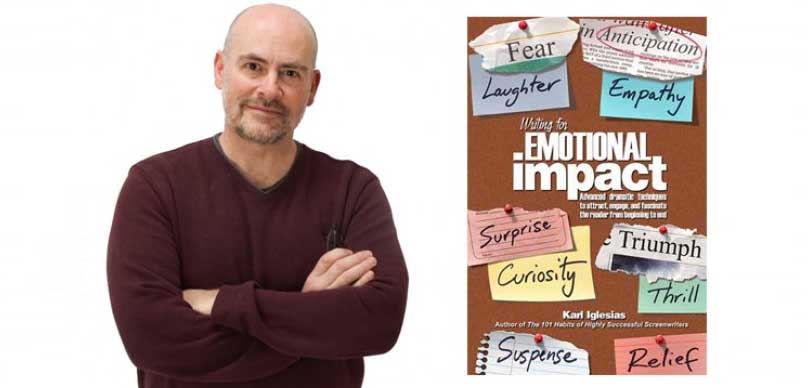
BPS 005: The Million Dollar Screenplay with August Rush Screenwriter Paul Castro

We’ve all read in Variety or The Hollywood Reporter of some no-name screenwriter selling his or her screenplay for a million bucks. Ever wonder how they did it? What structure did they use? What “tricks of the trade were” employed?

May I introduce Paul Castro, the original writer of one of my favorite films August Rush. Paul Castro is a produced, award-winning screenwriter and world-renowned screenwriting professor.

Structure…is the canvas on which we paint with words.” – Paul Castro

His project, August Rush was produced by Warner Brothers and starred the late great Robin Williams, Keri Russell, Freddie Highmore and Jonathan Rhys Meyers. The film took Paul Castro into the belly of the Hollywood beast.

august rush, paul castro, the million dollar screenwriter, million dollar screenplay, screenwriting course, screenwriting courses, screenwriting Teacher,, film school, independent film, moviemaker, guerrilla filmmaking, tarantino, indie film, film crew, cinematography, short films, film festivals, screenwriter, screenwriting, filmmaking stuff, screenplay, UCLA School, Screenwriting Podcast, screenwriting, screenwriter, screenplay, movie script, film script

The business of screenwriting can be tough, but while a student at the UCLA School of Theater, Film, and Television, he was a finalist for the Coca-Cola Refreshing Filmmaker’s Award for directing and producing his original screenplay Healing, and landed a three-picture screenwriting deal worth $1 million.

The lessons he learned not only from selling August Rush but many other Hollywood screenwriting adventures were invaluable. He later went back and became a screenwriting professor at UCLA School of Theater, Film, and Television, teaching thousands of students over his ten years of teaching.

Paul Castro teaches screenwriting from the inside out.” – Richard Walter, UCLA Screenwriting Chairperson.

After being a screenwriting professor, script doctoring and consulting Paul decided to create the ultimate screenwriting course. He calls it “The Million Dollar Screenplay.”

I took the course myself and all I have to say is WOW! Paul teaches with an elegant style that’s extremely understandable and straight to the point. Success leaves clues and so do masterfully crafted screenplays that sell for millions of dollars.

Paul Castro shows you those secrets. Not trying to do a hard sell here but I just love this course.

What clearly resonates with me is Paul’s love for and dedication to his students and to storytelling. He is a composed and practical artist and teacher, yet highly imaginative in his approach.
– Michael Eisner, Former CEO of The Walt Disney Company.

Here’s some of what Paul covers in his course:

  • Professional screenwriting techniques
  • Plot development for the big screen
  • Creating compelling characters to attract movie stars
  • Winning dialogue
  • Structure to serve as the blueprint for your movie
  • Scene construction to evoke suspense
  • Sequence writing to manage an ensemble cast

After taking his course I reached out to him and asked him to be a guest on the podcast. What followed was not only a master class in screenwriting but also lessons on the film business and he also discussed how to discover your own voice as an artist. Pretty mind-blowing.

Enjoy this whopper of a podcast episode and if you haven’t seen August Rush do yourself a favor and watch it. It’s worth watching for Robin Williams alone!

Right-click here to download the MP3

SPONSORS

  1. Bulletproof Script Coverage – Get Your Screenplay Read by Hollywood Professionals
  2. AudibleGet a Free Screenwriting Audiobook

Alex Ferrari 0:00
Well, man, thank you for taking the time out there. Really appreciate it, man. Sure, Alex.

Paul Castro 2:45
Absolutely. I'm happy to do it.

Alex Ferrari 2:47
So um, I want to jump right into it. So how did you get your foot in Hollywood's door which is a screenwriters that I think one of the ultimate questions for all screenwriters like, how do you break through? There's so much noise? There's so many people trying to do it? How did you get your foot in the door?

Paul Castro 3:03
Yeah, it's a valid question and one that is asked perpetually throughout the years by up and coming screenwriters and even my friends who have also taken similar paths. I was on the East Coast and I was in a suit and tie job out of college in the Washington DC area. And it wasn't terribly pleasant. And I made the decision to go to Hollywood in the attempt of trading daydreams for dollars as a professional screenwriter. And I thought UCLA Film school would be the best path being that the majority of Oscar winners have come out of that program. So I thought that would be a good start. So I drove cross country in my truck, and I was excited to go to UCLA there was only one challenge, Alex, which is I got rejected.

Alex Ferrari 4:01
You already packed up you bought the you bought the t shirt, you bought the hat, the mug?

Paul Castro 4:04
Oh, yeah, everything. And so I, you know, I contacted or 10 tempted to contact the chair to the department, to no avail. So I went to UCLA and I put in the mailboxes of every film professor, the top 10 reasons why they should reconsider my application. And I just, you know, printed it out and put it in their mailbox in hopes of some type of response. Fortunately, the chairperson of the department called me up and said, Oh, we got your top 10 list was very funny made us all laugh. And I said, Well, great. Am I in and he said, No, absolutely not.

Alex Ferrari 4:45
Thank you for the hustle.

Paul Castro 4:46
I appreciate it. Exactly. So a year later, I did apply again and fortunately I was one of the 18 to get in. And it was it was a good year. I was glad looking back on it that I didn't get because it gave me a chance to really hone my craft and write and take seminars and read books and do everything I could humanly possible to inculcate myself into the system in an organic, holistic way. So at UCLA, we had to write a full length feature, feature length screenplay, Alex every eight weeks, for three years, Jesus. Yeah,

Alex Ferrari 5:28
that's insane. Like, I took me forever to write my first feature script.

Paul Castro 5:33
Yeah, right. Holy cow. So and those who couldn't keep up, were invited to leave the program. So I thought, wow, I got to get this done. So yeah, with so I got really lucky because of that pressure, because I had to come up with ideas. Of course, I have a nephew named Anthony. And he at the time was five years old. He was like a redheaded Harry Potter type kid. And he was born on August 5, and he kept looking off into space and kind of pondering life a lot. And I said, Hey, what's going on? What do you think about little guy? And he would say, Well, do you hear the train in the distance? Yeah. Do you hear the kids playing soccer? Yeah. Do you hear the birds chirping? I go, Yeah, you just put it all together. It's music. And I went, Wow, okay, that's trippy, right. So it just kind of stayed with me. It resonated with me. And when it was time to come up with another idea for UCLA. I thought, Hmm, what if this kid had like this amazing musical ability simply because he could take sounds from everyday life? So I wrote a screenplay called noise and noise was about a young musical prodigy named August Rush, who uses his gifts to reunite his estranged parents. And I came up with the name August Rush because Anthony is born August 5, and Geoffrey Rush won the Oscar for a movie called Yeah, yeah, make that movie. That's awesome movie. Yeah, it was a musical movie. So I thought, okay, that makes sense. So, yeah, so it's just one of those things. Okay, here goes another screenplay. And the chairperson of the screenwriting department at UCLA, Richard Walter, who to this day is a dear friend and mentor and wonderful person. So Richard said, Hey, I really love this screenplay. May I give it to a producer friend of mine? And I said, Absolutely not now.

Alex Ferrari 7:45
Nice, nice. No, no, no, please, please don't do that.

Paul Castro 7:49
Now, please. I want to I want to marinate in angst and work at Starbucks for the rest of my life.

Alex Ferrari 7:54
Not that there's anything wrong with Starbucks.

Paul Castro 7:57
You know what? Starbucks is part of my daily ritual. And there are many days when I go, man, I just wish I could just chill here and meet people all day

Alex Ferrari 8:06
and work. It's how much how many screenwriters are at Starbucks on a daily basis.

Paul Castro 8:12
And the best ones are the ones that work there. Probably, you

Alex Ferrari 8:14
know, the funniest things is that and this is hard for people outside of LA to understand is, when you walk into a Starbucks, any Starbucks in the Los Angeles area, you will see a laptop with Final Draft open it just I've not yet found one that is always somebody working on a screenplay or if not, you will hear someone talking about the story that the kind of

Paul Castro 8:38
right. You know, you're right. You know, if you get pulled over by a cop for not wearing your seatbelt, you could always ask him. Hey, how's your screenplay? Gonna?

Alex Ferrari 8:49
Welcome to La Hollyweird.

Paul Castro 8:50
Yeah. So anyway, so that that was the situation and it was, you know, serendipity, cosmic choreography, a plethora of luck. And so I met with this producer and he really liked the screenplay. He also liked something else I wrote called a gift for mom. And I was fortunate he gave me a three picture a deal. Wow. And it was pretty substantial. But you know, I mean, just one of those things is just very lucky. There are screenwriters, I meet on a daily basis that are enormously talented that have still not, you know, I hesitate to say aided because what does that really as long as you're being creative and contributing to the world in some way, shape or form with your creativity? I think that's success. But

Alex Ferrari 9:40
being able to make a living doing what you love to do is the dream in one way and that dream is very true. You don't have to be a billionaire. You can you know, you can and that's something we preach it in the film also is like you know, what, what is success to you guys, like is 100 grand a year doing what you love? Is that enough? Is 50 grand a year you know? Living in Kansas, is that enough? You know, like, yeah, that's the question you have to ask yourself. But anyway, sorry, I digress. Yeah, definitely.

Paul Castro 10:06
Right, that that is a wonderful way to approach it. You know, what is your definition of success? First of all, what is that? You know? So, that's, that's how I got started. I got very lucky.

Alex Ferrari 10:21
You were at the right place at the right time with the right project. Yeah,

Paul Castro 10:25
exactly. And I guess, you know, I mean, I definitely don't want to project false humility, but there's a lot of luck to it. But I also do have to say I wrote a lot. By that time, when I sold August Rush, I had written probably 11 feature films is maybe 12.

Alex Ferrari 10:44
That's a number that's I've interviewed a bunch of different screenwriters, and the number is 1011 12, before something gets sold. It's that's a good, that's a good number. I mean, there are the the oddballs that sell it, like their first script or second script or something like that. But generally, you have to kind of like, get all the bad scripts out. It's a yeah, get all the bad writing done early.

Paul Castro 11:06
Right. And I think you already know my philosophy. It's not right about what you know, it's right about what you know, hurts. You know, everyone has their little owies from life, something that's happened to them. Usually, it's from childhood that has stayed with them, and the writers who are brave enough to go into the belly of the beast of that situation early on. You don't have to write the 910 1112 script. So you can actually nail it on the first or second or third time. And, and you don't have to write about that situation. Alex, as you know, it's writing about that emotion. So what is an emotion that? Okay, someone that wave retracts of something that was horrifying or embarrassing or shameful to you? When that wave retracts? What are the seashell gems left behind? What is that emotion?

Alex Ferrari 12:03
And that's the, that's where some of the best writing has come from, in a lot of ways, especially when you're starting out I'd imagine. I mean, I've heard from many different I mean, I've read every screenwriting book and everything. And and, and a lot of a lot of the Guru's and a lot of successful screenwriters as well always say, you know, at the beginning, you write what you know, or that pain that you're saying about then later on, as you become better with your craft, you can start creating the Harry Potter's of the world and things that aren't based in reality. Is that something Do you agree with? Or what's your point of view on that?

Paul Castro 12:37
No. Again, I would suggest never second guessing the market and what the market wants and what could sell or should sell. I mean, you look at something like Erin Brockovich, okay, right that ever sold now, but Julia Roberts said, Hey, this rocks, and then you have a movie.

Alex Ferrari 12:57
And Steven Soderbergh was like, Yeah, I'll do it.

Paul Castro 13:01
It's like that everything came together. So I'm a big believer, Alex, in, you know, give yourself to the world and come from the spirit of contribution. Yeah, yeah. The universe will conspire on your behalf.

Alex Ferrari 13:19
That's a great, that's excellent. That's really as excellent. That's a great, that's great advice. Now with August Rush, I've always wanted to ask a screenwriter this story. How was the process of getting a story you've got you got it sold now? What is the process of the journey that it went through to get it onto the screen? So like, how did the development process go? I mean, you have I mean, I know this is a very long question, but just you know, as you know, just give us a Reader's Digest version of it. Like how, what was the journey, like for August Rush to get it out to the big screen, because it was released by obviously a major studio with major stars in it. So it's not a slight little indie film. It was a it was a big studio movie at the time. So how was that process?

Paul Castro 14:01
Yeah, um, well, it was it was an involved process. So I'll walk you through it. And actually, now it's another process because August Rush is going to Broadway.

Alex Ferrari 14:11
Oh, how awesome is that? Congratulations.

Paul Castro 14:13
Yeah, it's fantastic. I'm excited because I think it will translate well to the stage. So yeah, so the Writers Guild only requires, you know, two rewrites and a Polish at the time when I sold it. But I was a young new writer eager to please. So I was in writer rewrite. And some people would say hell, but I don't think it was I think it was a wonderful training ground for me. So over a two year period, I did, I don't know 1617 drafts of that spread. How many years? Yeah, two to two and a half years. She's

Alex Ferrari 14:52
just Yeah, so you're basically in development, as they call it, development? Hell,

Paul Castro 14:56
well, I never want to I never want to use negative connotative. Fair enough, fair enough. Yeah. It was challenging and it trained me well for my future in Hollywood. Okay. And I often joke, you know, something really tragic happened in that process. They got better.

Alex Ferrari 15:21
Amazingly enough, right? Yeah, cuz sometimes it

Paul Castro 15:23
doesn't. Sometimes it doesn't. But but it did. And. And then after about two, two and a half years, my agent, manager, lawyer, Business Manager, they had an intervention and said, If you keep rewriting for this project, we're going to resign because it's ludicrous. And yeah, an intervention. That's brilliant. Yeah. Well, that's how I looked at it, because they sat me down. Is it enough is enough? Yeah. So I went on. Yeah. And I was doing other projects at the time. I did. You know, I had the good fortune of working with Stan Lee, you know, founder of Marvel Entertainment, on two projects. And, you know, I had other things going on. But I really loved dog and stretch. And I, of course, hoped it would get made someday. So a couple of years went by, and came really close to getting made different directors attached and reading it and liking it. And then the producer did a movie with Robin Williams, and said, Hey, can you take a look at this script? And Robin read it and said, Yeah, but my part has to be more substantial. I believe. That's how it went down friends. So the producer wisely hired two writers, and they gave it another polish and pass and rewrite. And then about a year and a half later, I believe Robin officially became attached to the project. And when Robin Williams is attached to a project, you know, that's good news for everybody. Mm hmm. So yeah, so fortunately, then things were off to the races, and then Freddie Highmore and Keri Russell and Johnny Meyers. And yeah, it became a real thing.

Alex Ferrari 17:08
So the second that Robin got attached, everything kind of opened the doors, the floodgates kind of open up and everything got speech got got hyped up a bit, as far as speed is concerned.

Paul Castro 17:17
Exactly. Everything was coalesced and off to the races.

Alex Ferrari 17:21
The funny thing is, I had an opportunity to meet Robin once and I tell you, I've never met a human being and he was so calm and very you know, he was not the the person that persona he portrays. You know, he was that kind of energy energetic guy. But he that day, he was very calm with his wife. And but you could feel the energy coming off of him. It was something that was tangible in the air, like you could sense and I don't want to get into all the kind of like, you know, vibey stuff, but it literally you can sense the vibe of the man it was I never met a human being like that before. But I got it. I got it.

Paul Castro 17:59
You're you're onto something. And I don't mind you getting into vibey stuff. I mean, not I don't buy the stuff it is when everyone has energy and and and what is your energy? Are you are you comfortable with it? Do you like if you like what you're projecting to the world? Is it enhancing your life? Are you empowering, people are depleting people are then powering you are depleting you. It all starts with energy. And that's what resonates from a great script. It just is vibrating the same way you just described. Yeah. And that's great. What Robin Williams. Yeah, he was he was amazing. And one one quick note, I

Alex Ferrari 18:35
actually was watching I think a documentary something on the matrix, the matrix boys, or boy and girl. And they, they that was in development hell forever. Because it was forever and it took him they rewrote it. You were saying you rewrote it rewrote it. They rewrote that for five years, and five years. And that's why that script is that movie is so good. That's amazing. Yeah. But to your point, like, you know, sometimes that rewriting process is helpful.

Paul Castro 19:06
Yeah, you know, something takes over if you surrender to it, and you're not kicking and screaming. Right, right. We're all very precious with our work sometimes. And, you know, I would encourage the opposite, you know, when you just allow it to flow naturally, organically and take input and you know, take it and you don't have to always use it, you can go home. That's interesting, maybe for my next script. So yeah.

Alex Ferrari 19:33
It's a lot of a lot of working with or collaborating with people a lot of times in Hollywood, from my understanding is that that that that kind of mentality works really well, kind of going with the flow, kind of like, you know, just kind of riding the waves because if you try to go against the flow is when you have problems.

Paul Castro 19:49
Yeah, that's a really good point. On the same note, we all as creatives need to have a strong clear vision for what we want to communicate creatively and You know, we're not typists, we get paid for our point of view of the world. And I really believe that's why new writers and old writers, veteran writers, can all be successful, because everyone has a different point of view of the world. Alex, right. So you and I, born and raised in New York, and now we're different places. But, you know, your point of view of the world is very different than mine. And I celebrate that. And that's why we go to the movies.

Alex Ferrari 20:27
And that was the that's the thing I always try to preach here as well is that filmmakers, a lot of times, they just like, I'm gonna be the next Tarantino. I'm gonna be the next David Fincher, I'm gonna try to copy this or that, and I'm like, you'll never be the next year. And Tina, because there's only one Tarantino and there's only one voice. I think only all the successful writers and filmmakers all have a very loud and distinctive style and voice. And that's what people don't get coming into the business. They all want to try to emulate the next. Oh, that's big. So I'm gonna do that. I'm like, Well, that might work. That might work once, but it won't sustain a career. You know?

Paul Castro 21:06
Yeah, that's a good point. And you know, when you say they all have a loud voice, sometimes the loudest voices are the subtle, slight voices that just have a big impact because of their subtlety and their nuances.

Alex Ferrari 21:20
Well, like Wes Anderson, I mean, he's not a very loud personality by any stretch, but his movies aren't. They scream?

Unknown Speaker 21:26
Is it style? Yeah.

Alex Ferrari 21:29
And Buster, Buster and Buster Keaton, for that matter, as well. I mean, he was obviously silent. But its style, his style of humor, and his style of storytelling is something that was very distinctive. So So let me ask you, when does a writer need an agent or a manager? is another big question a lot of screenwriters asked?

Paul Castro 21:50
You know? It's a great question. And I think it goes back to the approach of contribution. Okay, most writers and I was there to where you use, I need an agent, I want an agent, I need to sell something, I want an agent or manager. And you first have to ask yourself, what do I have in my vault to contribute to this agent? Or manager? Yes. Yeah. What value?

Alex Ferrari 22:17
Yeah. Instead of instead of looking at an agent, or a manager is like, what can you do for me? You should flip the script a bit. And that's awesome advice.

Paul Castro 22:25
Yeah, absolutely. So you know, when I was in LA, you know, you know, Joe Manganiello, when, when he was an actor running around LA, he was also the type of guy who, hey, Joe, what are you doing this weekend, I'm driving two hours to San Diego for a little play that I'm not getting paid for and driving two hours back, which I Oh, by the way, I've been doing for the last month and a half. You know, it was a person who was on purpose, not paycheck, looking to contribute at a high level. And the rest of it just, you know, came like an avalanche of abundance for that guy. And it happens for most successful people if they're coming from a place of contribution, circling back for agents, first of all, new writers and all writers and anyone in the creative arts, especially media and entertainment, first needs to realize that agents are not scumbags. Now, are there scumbags in every single profession? On the planet? Yes, yes. Well, it's politics now,

Alex Ferrari 23:28
obviously, obviously. Now politics. They're on the up and up, of course,

Paul Castro 23:32
yeah. But there's going to be that in any profession. So if you're coming to Hollywood, and saying, oh, all agents are bastards, then yeah, that's gonna be your experience. But I think they're great. If you're contributing to them, they're going to be wonderful, and they're going to contribute to you, and they're going to enhance your career. So I would suggest having a body of work besides just one screenplay. I would, you know, 2345, maybe some pilot episodes for TV. If you have some non scripted reality show ideas, you know, scope that as well let them know that you're you're just not a one trick pony. You have, you're in this for the long haul, and you have an arsenal to contribute to them. And they're stable.

Alex Ferrari 24:20
Right? That's a great, that's amazing advice, actually. Now what and this is, I love it. You

Paul Castro 24:25
say that's amazing advice actually, as if the actually part means usually your advice is terrible, but

Alex Ferrari 24:31
not you know, you but as a general answer to these kind of questions, I know. A lot of times people will just like oh, well you know, you got to do this or that and it's like, okay, that's an answer, but it's not like so what I try to do with my guest is I really try to dig for questions that I want to know answers to. So like that's like, I've always asked him like, what, what do I need to do to create get an agent or manager should I even need one as a director at this point in Mike in my life in my career, and like well, you Do you have to, and that's all about what we were talking about earlier about marketing is like you, as a creator are marketing yourself to an agent and manager and selling yourself to them to go look, this is what I can do for you. Because it's already assumed that they can do something for for the writer if they're choosing the proper agent or manager.

Paul Castro 25:21
So exactly, it's a good point and Okay, so if I said to a writer, would you like Aaron Sorkin's agent? They would probably say what? Oh, of course, of course. But what if you don't write character driven talky type movies that are very deep and insightful and poignant? What if you are the popcorn summer blockbuster action adventure guy or horror film guy is Aaron Sorkin's agent, the right guy for you probably not maybe down the hall, his colleague, maybe she's the right agent for you. Maybe she is the one that has sold a bunch of horror films. So I think targeting the right representation is just as important as if you should have representation or not.

Alex Ferrari 26:15
Now, this is a big question. As I as I'm digging deep here. What is the difference between a screenplay that actually sells and one that doesn't sell? And I know that's a real broad term, so do the best you can?

Paul Castro 26:29
It's an easy question to answer. Oh, good. You know, in Hollywood, they don't buy screenplays, they buy emotion. So if you can make a reader feel something on a very visceral level, then they cannot be ignored. Haley Fox, I always mentioned Haley by name, because she was the Development Executive at the production company that bought my first screenplay. And she was so passionate about it that she says if you don't buy this screenplay, I am going to quit. And I've been here seven years, but there's no need for me to be here. Wow, she felt that deeply about the material. Now, when writers are coming from a place of truth facing that hurt that we talked about those little hours from child and I say little, obviously I'm not making light of it, they're very substantial. And they can take that that hurt or that rage and put it on the page and then eventually makes to the big stage of, you know, cinema, or television. It's because somebody felt something if they felt deeply about it, and it can't be ignored. And those are the screenplays teleplays pilot episodes that sell because people all have that response. You look at Eric Roth's Forrest Gump. It's amazing. Robert Zemeckis gave it to Tom Hanks when he was going on vacation to Europe. And Tom said, yeah, I really don't want to read anything. I'm on vacation. And he's and Zemeckis said, well just read like the first 10 pages on the flight. And by the time the flight landed, Tom Hanks was attached to Forrest Gump.

Alex Ferrari 28:19
And the rest as they say, is history.

Paul Castro 28:21
Yeah,

Alex Ferrari 28:22
that talk talking about emotion. Like there's a show I watch now one that I'm loyal to on on TV. It's called The Goldbergs and and Adam Goldberg is the writer and creator of that and that's literally he's taking his hours every week, and putting them out on the screen. And but that authenticity, it's not like another 80s show. Oh, it's another. Oh, we're all making fun of the 80s which I'm a huge 80s fan. That's probably one of the reasons I like it so much. But the characters the family the and then every week at the end, he shows a video when he was shot when he was a kid. Are you like oh, this is just brilliant. That's that kind of stuff you're talking about. That's so emotional. And his genre.

Paul Castro 29:04
Yeah. And Adams been doing this a while right. Yeah. So so he's finally come to the point where you say no, I'm going to give myself this is the this is the real hurt. Mm hmm. And in real estate, the three most important things are Location, location, location, and in writing, especially screenwriting, it's conflict, conflict conflict.

Alex Ferrari 29:25
Yeah. And there's a lot of conflict.

Paul Castro 29:30
Now I get if I rewrote myself, it would just be one conflict. Yeah, exactly. Exactly. And economical.

Alex Ferrari 29:36
Um, real quick. Now I know loglines is a big, big question. A lot of times for starting up screen starting screenwriters. Like how important is it? How important is it in the selling process? Is it something What's your experience with that?

Paul Castro 29:49
Yeah, I think it's really important and it's overlooked and it's underrated in the process. If you can not sculpt of vibrant Lean logline that's going to fully communicate your screenplay or your television show idea, then you're not ready to go any further.

Alex Ferrari 30:12
We'll be right back after a word from our sponsor. And now back to the show.

Paul Castro 30:23
It's one of the most most difficult parts of the process. Alex, it really is.

Alex Ferrari 30:29
I know I've, I've had to write a couple that they're paying.

Paul Castro 30:33
And you're gonna have to try it out with friends and families and rewrite it and see when they glaze over, and when they get excited. And you're gonna have to keep working on it until it's really just nailed, right?

Alex Ferrari 30:43
And it's like, every word means something like literally every single syllable means something, because that the real estate so sure, it's almost like a Twitter tweet. Yeah, you have to make it really concise.

Paul Castro 30:57
Yeah, I like that the real real estate assists short. That's a good way of putting it. It is and people don't have time to really, you know, before I was even represented, I would, you know, try to get agents on the phone and, and what time I got more diviner, he was an old Hollywood agent, very famous at the time, and more, sadly has since passed, but it was after hours. And I called you know, one of the big three I think more was with ICM at the time, and his assistants are gone. So guess who answered the darn phone more diviner? And I'm Mr. Vaughn. All right. When films do not get what do you got? What do you got kid? Yeah. And I literally had to pitch that thing and title, genre and the pitch and that was it. Yeah. And off of that he wanted to read the screenplay. And it wasn't because I just took it off the top of my head. Fortunately, I had heard this before, copious times at UCLA where they hammered into us. This is very important. So I was prepared. And there's been times where I've read new writers and I've, I read their screenplay, like, Oh, my God, this is fantastic. And they go, Well, you didn't seem very enthused when I first pitched it to you. Well, that's because your pitch was well, it's kind of like, you know,

Alex Ferrari 32:18
it's kind of like Forrest Gump meets Hostal. You know, it's kind of

Paul Castro 32:25
Yeah, and it's challenging when you're using other material to pitch your, your, your material, such as saying it's like this and like that, because what if the person hasn't seen one of those or both of those? Right?

Alex Ferrari 32:39
Exactly. Yeah. And, and anytime I've I've actually asked this question before on the show is like, if, you know, it's kind of like The Matrix meets, you know, Cinderella I actually would watch that movie. But one key thing if you are going to do that, and it is kind of like a lot of times unnecessary evil to have that in your back pocket because someone's going to ask that question sometimes. At least that's what I've been told. Make sure that you use movies that have been hits. So it's like Ishtar meets the fantastic for the new one. So it's like not really going to help you sell your product

Paul Castro 33:17
although there have been movies that were not hits that just you know people loved or got great reviews were correct Yeah, I'm came later on so my whole life you know, the holidays are coming up and on TV we're gonna see It's A Wonderful Life as we do every year but when that first came out, it wasn't well received at all.

Alex Ferrari 33:36
It will seem like Shawshank Redemption picked up its steam much later on after its initial release.

Paul Castro 33:41
Yeah, and I it's funny at titles. I know. We're not on the title subject, Alex. I had to bring it up. Anyway, those titles are so important because the worst title Yeah, I mean, but but it was from a Stephen King novella, Rita Hayworth and Shawshank Redemption. All right. So being that it was the great Steve. Yeah, Stephen King, are they going to say no, we hate your title. But that was a situation. I think if the title was a little different, it probably would have had a bigger audience. But that being said, It's a masterpiece and Frank Darabont and Stephen King. I mean, wow,

Alex Ferrari 34:15
I know. It's absolutely but yeah, you're right. Like that's one of the worst titles in history. There was a new movie that that just came out with the worst title. Is the Sandra Bullock movie and Billy Bob Thornton? Hmm, our Brand is Crisis. I saw the poster for that. I'm like, wow, who came up with that? Title? It's like, I'm sure it's a fun movie. And I love Sandra Bullock I love everybody in the in the movie, boom, like, and it died. It died a miserable horrible death at the box office. Yeah. And I imagine the title did not help the situation.

Paul Castro 34:48
Yeah, it's that's a really important aspect of the whole process. I mean, let's talk about okay, if you're a parent and you have a newborn on the way Mm hmm. Let's decide You know, I don't know, should we let's not even think about it or it doesn't really matter, okay? Now this is your child, you're going to put a lot of thought into what that person's name is, you know, a dear friend of mine, Luke Fantino, who's at Warner Brothers marketing, such a smart guy, and he really, I really think he has the crystal ball. And if and movie's gonna do well, or not simply because he can look at it from a helicopter point of view and a micro point of view, and all these nuances we're talking about

Alex Ferrari 35:34
titles are, titles are extremely important. And, and I think and again, it's goes back to marketing, and branding. And, and, and a lot of screenwriters and artists in general, filmmakers don't look at their art as product. But if you look at it as product and market it and sell it as product, even though it's art, you have so much better chance of selling it to whatever aspect you're trying to sell it to in the business, if you're trying to sell it to an agent, sell it to a production company, sell it to an audience, sell it to the person you're just pitching it to. There's it's always about selling it and promoting it and packaging it in a right way to get the attention or the the end result that you're looking for.

Paul Castro 36:17
Yeah, you're absolutely right. It's an interesting craft, because it's not only a craft, it's a profession. And it's where art and commerce meet. And a lot of these production houses, many majors, the big studios, the marketing department has the final word on if a screenplay is going to be greenlit or sold or bought. It will go through all the proper channels. But if the marketing department goes, Oh, my God, we love it. But we don't know how to market it, then guess what?

Alex Ferrari 36:49
It's done? Yeah, it's done. Unless you're doing it independently, and you've got your own money. And you're going to do it that route. It's It's rough. Absolutely. Now talking about production companies. How do How does a screenwriter should a screenwriter submit their work to a producer or a company?

Paul Castro 37:07
Well, it's challenging because a lot of them don't accept unsolicited material for various legalities. That being said, some will have open processes where you have to sign certain forms, and then they'll accept it. Again, I would target a production company that does your type of material. I would find a person in that production company, not just blindly send it there. I would get on the phone, build a relationship with them, meet them on social media. And, you know, I think the best approach is to ask advice if you're a new writer in this industry, you know, you don't have all the answers. And oh, by the way, I don't have all the answers. I'm constantly asking advice from people. You know, I've had the good fortune of sitting down for a couple of hours with Michael Eisner. And I've known Michael for five, six years now. It's probably been there, like seven years now. And I'm always looking for advice from him. But I'm also looking, how can I add value to him? Right, but I'm always trying to know, what are what are your needs? And how can I say she ate those as a production company? What do they want to do? Do they want to make art? Do they want to win an Oscar? Do they want to make money? Of course they want to make money. And there's nothing wrong with making money. This is an industry where, you know, great make money, you know, right? If Alex's screenplay gets made, it's going to employ 1000s of people. And there's going to be all these other ancillary business entities that are going to benefit from Alex's screenplay. It could be on HBO and Showtime, it could be on an aeroplane going to, you know, Europe, it can be in a hotel room while I'm there with my, you know, whatever. And so, so it's a really interesting world in the fact that once the property is out there to the world, many people can benefit from it. And of course, when I say property, that screenplay

Alex Ferrari 39:15
Exactly, exactly. Now, I'm going to get more personal into your process. What is your process of writing a screenplay? If you don't mind? This is just a basic, you know? ABCs? What do you what's your process of books? I always find it fascinating. Everyone approaches the craft differently. So I'd love to hear what how you do it.

Paul Castro 39:33
Yeah, so the idea is obviously paramount. So does the idea really rock your world? Is it something that you're thinking about a lot is almost haunting you. And if you can package it into that logline package is not a good word for this, but if you can create a logline where you've captured what you initially responded favorably towards your idea, then you're on to something. So I do the logline. And I work a lot on that as far as just sculpting resculpt thing it, you know, like you said, wisely. Every word counts, right? And even if it's the right word isn't the right word for the lyrical nature of your logline. So you have to see how it fits into the overall scheme of things as

Alex Ferrari 40:26
well. log lines are generally isn't it's an art form in itself. Yeah, absolutely.

Paul Castro 40:30
And in for your audience members after that may not know what a logline is. It's a one liner, I often say is a one liner. Is that a log line? Because I'm not even sure where that etymology

Alex Ferrari 40:41
Where's? Where's the log in? Where's the line? Exactly.

Paul Castro 40:45
So once I have the log line, I do a two page movie, which is basically two pages double spaced of if Alex and I were walking to the bus stop, and Alex says, Hey, man, I gotta go. What did you see last night, and I tell you what my movie is, as we're both going in different directions. It's that fast. It just really broad strokes, but it's more involved than the log line. And then I do a 30 to 60 Beat outline. And but I hit some did that my phone off? I saw I

Alex Ferrari 41:25
can't I cannot I cannot work like this now. I'm

Paul Castro 41:31
glad you're saying. Yeah. So so the outline hits, various speeds. And as you know, Alex, you know, the opening pages are very important, especially page one, the opening images, the inciting incident, the end of Act One, which I say is page 17 paid then page 30, then page 45. And page 60, which is the tentpole every movie page 75, page 90. And then what is your finale? Those are the main beats that you need to get first, before you fill in the rest of your beats. And you know, when people go, Well, how do I know what beat goes next? Well, I always say the best movies are good news, followed by bad news. Good news, followed by bad news. And, but they are increasing in intensity as the screenplay or movie progresses. So if there's a good news moment, there's going to be an equally powerful bad news moment. And then the next good news moment is going to be even more substantial. And the next bad news moments can be more substantial. And it has to adhere to the law of rising action. Okay, because of the best movies, it grows in intensity, that's what keeps us riveted, right. So then once you have the, the outline established, you know, character breakdowns. Now, when my character breakdowns, I like to do the protagonist and the antagonist. And it's in first person and they're just kind of ranting, okay, they're just kind of talking. And you're getting their personality, you're getting their vibe, and you're getting who this person is. I know a lot of writers and a lot of actors, you know, what was their favorite color? What ice cream did they have when they were three years old? That's cool. If it works for your process. For me, that's not my process. I just kind of like to capture the voice of the character and the energy of the character. And then it's off to the races.

Alex Ferrari 43:37
And then you just start start filling in those gaps. Yeah, yeah. So the outline, and it's similar when I write the outline is is everything to me, like I have to have, it's basically the foundation of the entire story. So without these points of like a guide, you're just lost in my opinion. I mean, everyone's process is different. But for me, it makes it much easier because you're like, Okay, I need to get to this point here. Okay, I just got a boom, boom, boom, that's point here, boom, boom, boom, here point. So having those key points, is there just kind of like mile markers on the journey? Structure is

Paul Castro 44:09
paramount. I mean, you're a professional. And this is not a nother thing. New writers go, Well, I want to be a writer. I hope to be a writer. No, you are a writer. And you are a professional writer. When you start acting like a professional writer, and profess professional writers. They outline they sculpt, they make this the blueprint on which they're going to create and that's what structure is, it's the canvas on which we paint with words. That's,

Alex Ferrari 44:37
that was actually quite beautiful.

Paul Castro 44:42
So when a studio is going to hire you for an original piece, a spec script that you've written or for rewrite, they're hiring you for your expertise in this craft as much as they are hiring you for your abundance of creativity and execution?

Alex Ferrari 45:03
That's yeah, absolutely. Now, let me ask you the age old question, what is more important plot or character?

Paul Castro 45:12
You know, you know, I mean, that's a tough one to answer, because I think it's a symbiotic relationship. It's the balance. It's the ain, the yin and the yang. It's the space between the notes makes the music, right, it's this. I mean, this is this is what we're all talking about. So I would never put more weight on one or the other. That being said, the best stories are about one thing. Okay, so you look at a commercial success like the movie Taken in recent years. Yeah. Okay, what that entire movie is about Liam Neeson doing what? Just

Alex Ferrari 45:59
killing and kicking everyone's that's the way to go Going, going to save his daughter.

Paul Castro 46:04
Right? His daughter has been

Alex Ferrari 46:06
kidnapped, taken, sorry. Kidnapped, horrible, horrible, they've taken much better. So he just

Paul Castro 46:12
wants to get her back. So that is what the whole movie is about. In Jaws, they need to kill the shark. Exactly. So you know, the best movies, I believe, are about one pending question that needs to be answered by the end of the movie.

Alex Ferrari 46:32
So how what would be the question for Star Wars? You tell me, I would imagine it's the boy's journey to God. I've seen that movie a million times. And I'm a huge fan of it. But like, how can you and it's probably the most, the best example of the hero's journey ever done to film? I can't say I don't know. Like, isn't it about Luke's journey to find himself and become a man. Eventually his his his journey from being a boy to being a Jedi along the way, a path and you know, God, you see, it's getting very convoluted here.

Paul Castro 47:12
Where Where does he find his power?

Alex Ferrari 47:15
within himself? There you go. That's it. That's the story.

Paul Castro 47:19
Andy in sha shred Shawshank Redemption, you know, the Tim Robbins character. This is a man who felt imprisoned and only experienced freedom by going to jail for a crime he didn't commit. Right. So he could have been a you know, a son's incarceration car, sir, it is so free of being incarcerated his whole life and have continued to do his accounting or banking. But he would have never felt free unless he had that experience. That's very true. Yeah. So

Alex Ferrari 48:00
it's always finding that one thing it's about?

Paul Castro 48:03
Yeah, it is. And there's a great line, get busy living or get busy dying.

Alex Ferrari 48:11
That pretty much covers it, doesn't it? Right. Yeah.

Paul Castro 48:13
I mean, that's the that's a great line in the movie. And it basically is the movie, isn't it?

Alex Ferrari 48:20
Yeah, the whole movie is basically in that line, get busy living or get busy dying. And that explains that movie. So well. I talk about that movie constantly on the show. Because it's Saturdays. It's it's one of my top five, you know, it's it's amazing. Now, you have been you've done. You've been busy not only as a screenwriter, but as also as a teacher, and instructor and you've created this awesome course called called the million dollar screenplay. How did you come up with the course? And what was the purpose behind it?

Paul Castro 48:51
Yeah, so I taught at UCLA for over a decade. And I've spoken around the country at various events when they've invited me on the craft of screenwriting. And I thought, Okay, well, a lot of people are always asking about the million dollar screenwriter or the million dollar screenplay. What is that all about? And it's not about selling the million dollar screenplay and becoming a million dollar screenwriter. It's about having a body of material that's going to influence the masses positively through your art. So I thought, well, how can I communicate that in a course. And I thought, well, I'm going to teach the same thing I taught at UCLA in the undergraduate program and in the master's program, and structure is going to be a big part of it. And I'm going to hopefully put it in a form that's digestible to whoever wants to take the course and it's not going to be, you know, 25 or 50 hours long. It's going to be two hours long and they're going to get as much from it as if they We're in a master's program in Screenwriting.

Alex Ferrari 50:03
So it's a really condensed version of everything. So like, it's basically the logline of your course. very condensed and right to the point. Well, this

Paul Castro 50:13
right to the point, you know, I am super blessed Alex, I have a daughter and she's amazing, right? And someday she may want to become a screenwriter. So I thought to myself, well, if I were going to sit down with her and walk her through this craft and put her in the best possible position to succeed as a screenwriter, what would I teach her? And that's what the course is.

Alex Ferrari 50:41
That Well, I've already started taking the course I haven't gone through the whole course just yet. I've started taking the course and I was so blown away just by the beginning of the course that I reached out to you. I was like, oh, no, I gotta get Paul on the show. I gotta get Paul on the show. I gotta, I gotta spread the word. I got to spread the word. I drank I drank I drank the Kool Aid, sir.

Paul Castro 50:57
Thanks. You know you to me is a nice platform for education. And I'm proud to be on their site.

Alex Ferrari 51:03
Yeah, it's an awesome it's an awesome awesome course. And that's a great it's a I just discovered it myself, you to me, and they are amazing. And I'll make sure to everyone to have links in the show notes where you can get the the course and stuff. Now on the site. A side question I have, just because I know you've been we're probably around the same vintage. So we there was a time where there was the Rock and Roll screenwriter. Arguably to say that Tarantino is probably the last rock and roll screenwriter today but there was that moment that moment in time when there was the Shane blanks Shane blacks of the world and the Joe Ester houses and they were making 2 million a pop 3 million a pop sometimes 5 million, depending with back end or bonuses. On screenplays. What are those days completely gone? And how different is the the landscape? The screenwriting landscape today? Yeah, well,

Paul Castro 52:01
deals are structured in all sorts of creative ways. And when you're dealing with agents, and you know, so you look at someone like an Aaron Sorkin Okay, right. I'm not gonna. Yeah, I certainly like the Steve Jobs movie, but I think social network was, was a great movie. So if Aaron Sorkin got his quote, so what I don't know what he's getting these days, probably two $3 million a screenplay. But there's a chance maybe they said, Hey, Aaron, can you take a million on this and get some back end points? I don't know if they did that deal. I have no idea. But that could be super lucrative for a screenwriter. So when you look at just what's in, you know, the trades of what a screenwriter made on a script sale, I wouldn't look at that I would look at, you know, the deal behind the deal. Right. And that is, yeah, I'm sorry. No, go ahead. Go ahead. No, you go ahead. I want to hear you

Alex Ferrari 53:03
know, I was, to your point. To your point, I was actually watching a documentary on Arnold Schwarzenegger. Well, he's a, you know, I've studied Arnold's career for many, many years, child of the 80s and stuff. But he was talking the business side of things. And he said, he asked, they asked him the question, which was the most lucrative film you've ever made? They made the most money on do what do you think the answer is to that? I'm sure, you know, his whole filmography. What, which movie do you think he made the most money on?

Paul Castro 53:33
So that's a good question. I would imagine Terminator he had back end points. When we got into the sequels

Alex Ferrari 53:40
today, to this date. The most profitable film he ever did was twins.

Paul Castro 53:46
Really? Did he get back end points? He they structured

Alex Ferrari 53:49
a deal. That was it's kind of almost like the George Lucas. Oh, don't worry about the merchandising rights. Because him and Danny DeVito and Reitman, Ivan Reitman, the director, they all walked in to you, I think it was universal, if I'm not mistaken, was universal, or fuck, I forgot who it was, I think was universal who did it? And they walked in, and he talked to the President and like, look, we're all gonna do it. We're all gonna do it for like, no money. We just want to, we just want like, and it was an insane amount of back end points, something that no one had ever done before. But the studio was like, Oh, great. If it's a hit, we'll make some money. If it's not a hit, we don't take, you know, because Arno was asking for 20 million at the time, and you know, all this kind of stuff. And he didn't say the number. But he says it's the most lucrative things. So back end points, and especially depending on the kind of deal you can make is, yeah, it's very lucrative. I mean, look at look at I mean, Keanu Reeves in the matrix movies, Jack Nicholson on the Batman movie, he pulled like 60 million off of that, because he got a piece of the merchandising. I mean, it's insane.

Paul Castro 54:49
Yeah, is the gift that keeps giving and, you know, that's where good representation comes into play. Because as a creative I would encourage you to try to negotiate this deal with yourself. And even if you have the ability to negotiate those from your you know, upbringing or past life experiences you know it's better to keep you clean as the creative I think

Alex Ferrari 55:14
it's shelters you a little bit from the the messiness that is the business.

Paul Castro 55:18
Yeah. So it could be you know involved. So and then you look at the guilds, right, like so you have the Directors Guild, the DGA, and then sag Screen Actors Guild and the Writers Guild of America, W GA, and Producers Guild of America, those guilds are set up to protect the creative person. So you know, you know, you can look up, you know, the August Rush deal, I think it was in March of 2000. And go wow, that was a big number, but it's really about you know, the life of the movie afterwards. And there's no better time to be a creative person a screenwriter, especially because just go to your local cable operator and see how many channels are on there.

Alex Ferrari 56:01
And not even let's not even talk about streaming,

Paul Castro 56:03
streaming and Netflix and now Amazon's in the game and Hulu and YouTube. Absolutely. And it's going to keep going and growing as it should and new forms that are no longer new forms webisodes are fantastic so

Alex Ferrari 56:19
I'm not dude suggest film it to the checks. Screenwriters kind of also put their dip their toes like I mean that screenplays are in for feature films is, you know, that's the the golden trophy, if you will, that's that's the thing that everybody's like, Oh, I want to see my movie in the big screen. But it's, you might take a different route, like now like, oh, maybe you could get something done on Hulu on Amazon, or Yahoo or things like that, that might have very much more difficult time trying to get done more mainstream, but it gets your foot in the door. And now you have something to show do you suggest them stuff like that?

Paul Castro 56:52
Yeah, absolutely. I don't think any Avenue has a monopoly on how a writer should be produced and out to the world. And, you know, again, don't be so precious with your work. I want to have an Oscar. So unless I get a studio deal, it's not gonna accept anything now. Get yourself out there. You know, this is all about, you know, sharing your gift with others. This is a short journey. I mean, I hate to say it, but 100 years from now, most of us are not going to be here. Right. Right. So you know, I just read Nikola Tesla's books, actually, there's a few books on him. And after I read the first one, I kind of became addicted to his story.

Alex Ferrari 57:38
He's amazing. Yeah, amazing, amazing, man.

Paul Castro 57:41
And this was a person who was like, yeah, let the Edison's of the world make crazy cash. I'm just gonna keep creating, and I'll be okay. And he was right. You know, it doesn't mean you should be frivolous and irresponsible with you know,

Alex Ferrari 57:55
well, he could have been he could have made a couple of choices. Just a couple of, you know, patents, just a couple could have been doing a little bit better. He didn't have to have such a tough, tough time. But there's a better balance. It's all about balance to Edison's on one end. Tesla was on the other. You should be somewhere in the middle. Yeah. And Tesla had a few

Paul Castro 58:15
few patents as well that he did sell. But yeah, you're right. You're absolutely right. Then, you know, it's funny that that his name is Tesla. And then they the new car company, Tesla, you know, followed that it was named after him, right? And look at the amazing, innovative things Tesla Motors is doing. It's

Alex Ferrari 58:33
unbelievable. It's crazy. And I can't wait for you know, the price to come down so I could afford. Yeah. So and one thing I wanted to say I wanted to cover real quick because you mentioned this earlier in the in the in the podcast that with managers and agents. And this is something I want to kind of stress to people like let's say you have less you're starting out screenwriter, you have one screenplay. And you have the opportunity to pitch Aaron Sorkin and let's say it's aligned with Aaron Sorkin. You might not be Aaron Sorkin's agent, you might not be ready to be thrown into that kind of world yet you might not have the Arsenal yet the experience yet to like be thrown into a writers room because you haven't done it yet. Or you haven't had the experience. You haven't written those, you know, 20 screenplays or 10 screenplays haven't gotten you haven't worked out your craft enough? Is that a fair statement to say? Or to be wary of that? Sometimes, I mean, obviously when an opportunity knocks you know, take it but you should be should be cautious, cautious about that kind of stuff. Right?

Paul Castro 59:37
Well, let me let me understand your question. So you're saying just so I understand that if you are given the opportunity to jump into the the big lakes waters of the big leagues, you know, you haven't,

Alex Ferrari 59:50
but you haven't, but you haven't done manage. Right, but you haven't done minors leagues yet. And they're like, all of a sudden, I'm in the I'm in the, you know, starting lineup at the Yankees, but I've swung the bat 15 times. In my life, so is it smart to jump in there? Because you'll never get that shot again? Or is it? Do you see what I'm saying? Because I'll give you a real quick story I was I was brought in after I did one of my movies, I was brought into some major agencies and major Italian agencies and, you know, agents and managers, and I had a lot of meetings. And there was just one agent that I had a meeting with, and he was smelling me out, you know, he was trying to kind of figure out what I could do. And I didn't come from the place of what I could do for him. I came from the place of what you can do for me. And, and I was also realizing that I was just not ready yet. Like I was not ready. Yeah, yeah, sure, I could direct the movie and I could do things. But if thrown into this into the into the deep end of the pool, would I have survived, I wish I would have survived but would have thrived. We'll be right back after a word from our sponsor. And now back to the show. In that environment, so that's the kind of, you know, maybe I'm coming from a fearful place. I don't know, I would love to hear your point of view of like, what you should do if something like that happens. And obviously we've all heard story of people, like Robert Rodriguez, who got the shot, and he flourished and doing what he does. Yeah, what do you feel? What's your?

Paul Castro 1:01:19
Well, you know, my belief system is jumping, the net will appear. And you look at somebody like Robert Rodriguez, who you just mentioned. So El Mariachi, he financed by becoming a personal lab rat, we're doing pharmaceutical experiments on him. I mean, this was a person who was he's gonna get made no matter what's driven, who's driven but he was driven not for fame or fortune. He just wanted to express his creativity to the world. So I would say, Okay, if you were going to give advice to Alex of yesteryear, how would you have approached those precious coveted meetings that you had differently?

Alex Ferrari 1:02:06
Well, the thing is, I've gone through the path, I've gone through this, the game a few times, you know, with my first film, got a lot of attention, I got studio calls, I got that stuff. And then I wasn't ready. I didn't have a script, a screenplay ready. I didn't have any other projects ready. And the heat was on me, but I didn't have anything else to show. So basically, everyone's like, that's nice. You did this really great short film. But there was nothing left, you know, like, I couldn't make it fast enough. And then by that time, the spotlight was gone on to the next guy, and the rest is history. And then it happened again, when I released my mid a few other projects of mine have gone through this Gambit a few times, never making it to the beat, but I've had, you know, serious meetings with serious guys and people. What I would say to the old out, and this is like not turned into a session, I appreciate it. Um, what I would say to the Alex of yesteryear is to not be so would not not be so eager to impress people with what you can do and your prowess be, but be more coming from a place of expression as an artist on this as an artistic the artistic point of view is become, show, share your voice, and share your voice share who you are more than trying to be the next this or the next that. And that's a mistake a lot of filmmakers make on the business side, I would have done more research, I would have prepared myself better to go into these meetings to go into the battle of these meetings. In that sense. It was kind of like going in, you know, it's like going to a knife fight or going to a gunfight with a knife. You know, like you brought a knife to a gunfight. It's similar similar mentality, I was not ready yet. And also mentally, I wasn't there yet, as well. So I think more homework would have been my advice on the business side, and more expression of who you are as an artist, for better or worse if they people like you or not, and also not trying to please, everybody, because you will never please anybody, everybody. And that's something I've learned doing indie film, hustle. And being online as you can't please everybody, you know, my point of view is not going to be everyone's point of view. And that's okay. I mean, there's certain people who look at Howard Stern, who's made hundreds of millions of dollars on his point of view, whether you agree with them or not, you know, it's it's, you know, some people think he's a pig, some people think he's awesome, but it's just the point of view. And that's all you can really do as an artist is express yourself as who you are. And that's the people who I think become successful in whatever avenue they go down.

Paul Castro 1:04:44
Yeah, excellent point. And, yeah, and that's a very honest assessment of where you were at the time and what you would have done differently because he had to be, you know, a little bit brave to really take a hard look at yourself and who you are and who you are. who you want to be? And we, of course, all want to be the best version of ourselves. Right? Yeah. But that being said, I think you could have made that relationship successful. Yes. With the right approach and spirit, which you identified. And, you know, you mentioned a couple of key things you've said during this chat, which I think is interesting. You said, in one of your stories, you said, you're never going to get this opportunity again. Right? Well, that's how a lot of people think, of course, you are no one is this one shot or nothing thing. I mean, you know, you'll never work in this town again. It's over. If you wrote, you know, Schindler's List, and is an agent gonna go Oh, no, you pissed me off two years ago, I'm not gonna know it's a masterpiece. So they're gonna get it made? Yeah. So I think, let your material do the talking for you. And don't talk yourself out of a deal, which a lot of writers do, they get very excited. And they don't know when to go, Okay. I'm just gonna shut up and let the experts talk and do my job. Right. And I'm talking to myself as well, by the way.

Alex Ferrari 1:06:19
Yeah, I feel I feel you on that one. No question about it. And then

Paul Castro 1:06:23
Alex, one thing you said also, which before I forget, I'm gonna mention is going into battle. Well, I would change your your, your inner voice, what battle there's no battle, this is beautiful. This is going to be a lovely waltz. And it's going to be an under the moonlight waltz with Mr. or Mrs. Agent. And by the end of it, you know, we're going to part ways and they're going to be feeling great and a little bit wealthier than before. And I'm going to feel great and get to do my craft at a high level, how beautiful.

Alex Ferrari 1:06:59
And now I'm going to talk I'm gonna say something here, because I love what we're doing here. It's it's wonderful. And I'm actually getting a lot out of it personally. So I really appreciate it. But what I think is that a lot of filmmakers, screenwriters, artists in general, and you know, I've been around this business for a long time, and I've been in the trenches. Most of that career. I've, I've dabbled in, you know, I've gotten worked on projects, I've got Sundance, I've worked with Oscar winners, I've worked with people, you know, a different project, my projects, I've never gotten to that level, yet. But what I've noticed is there's something I'm working on as an artist, as well. And this one indie film hustle is kind of teaching me is that I have a lot of armor on. And I have a lot of like, like you said that battle terminology. When my inner my inner voice, my inner spirit is not that kind of guy. But being beaten up by the business for so many years and different avenues of the business, whether it be in post production, where I come from, or screenwriting or filmmaking, or anywhere, artists generally will just throw this armor on and then its guard that armor starts getting heavier and heavier and heavier to the point where you can't move and you can't even do anything. Where someone like you just said, you know, it's a it's a waltz, it's a float. When you think of a waltz, what do you think you don't think of anything heavy, you think of something very flowing, very smooth, very just, you know, it just kind of going with the flow. And I think a lot of artists, as the years go by become more and more disgruntled. In a lot of ways I'm that person as well, I have been. And I've been kind of trying to get myself out of it. And just hearing you analyze my terminology has shined a light on like, man, he's absolutely right. It's not a battle. And if you walk into a meeting like that as a battle, then it's gonna be a battle. But if you walk into a meeting like that with a much more open energy and just like, hey, this is the way it's gonna go. And if it's for you, great if it's not, there's another opportunity down the street. And that's the that's something I wanted to kind of say to everybody listening that, you know, this business does beat you up a lot. And I'm sure, Paul, you you can attest to this. I mean, it is a brutal business in many ways. But it doesn't have to be and you can kind of make things flow for you. And I think a lot of people who are working at the highest levels. Aren't these kind of Bulldogs, sometimes they are. But a lot of times they're not.

Paul Castro 1:09:32
It depends who you're dealing with. And surely what your what circles have you created, okay, yeah, they have and getting getting beaten up, but who wants to be in that industry going to battle trenches? These are all war terminology. So who wants that? So as a new writer, I would encourage you to do this exercise. Write a list of adjectives of what you think the entertainment industry is. And if your adjectives include brutal, pretentious, fake, and the list goes on and on and on, then I would encourage you to re think and revamp that entire list. The entertainment industry, my list is they're creative, they're generous, we influence the masses positively. There's this wonderful thing we do, which we get people out of their daily routine. And we put them in the moment to where they don't have to think about yesterday or tomorrow. They're right there in the moment. And there's residual value for people who read our screenplays and watch our movies, they can go back to their life, and be if their life is beautiful, or chaotic, tumultuous, or joyous, they're going to come back with something of value to contribute to the loved ones in their life. So you know, the holidays, right? Thanksgiving. What is Thanksgiving? It's giving thanks. Right? What is collaboration, it's co laboring. So start appreciating, because when you appreciate things increase in value, when a house depreciates, it loses value when it appreciates it increases in value. So if you get into the habit of appreciating things in your life, even the little, you know, kicks in the shin every now and again. And just appreciate it. Wow, what did that teach me? I mean, I look at the entertainment industry. And you know, have I had my challenges along the way? Sure you're in, you know, a career for a decade or two decades, you're going to have those times when you go, Wow, that really hurt. That was painful, that hurt my feelings. This was emotionally trying. And you have to look at it and go, Okay, well, that's true. And then you have to ask yourself, What did I do to invite that into my life? And then once you own bad, okay, what have I gotten from this? It wasn't a lost experience. How can I use this for future endeavors? You know, if I meet an unsavory person in the entertainment industry, even at a high level meeting, I instantly recognize and I think to myself, haha, how can I help this person? How can I contribute to them? How can today be the day when this person will no longer be unsavory? Because of the energy I'm bringing to this dynamic? And how can we create something of value

Alex Ferrari 1:12:42
and that is, that is the key I think, with everything we do in life is to be able to create value for people. And I think one of the reasons why this podcast and and indie film hustle has been so well received, is I hold heartily I'm trying to create value. And I I'm kind of an experiment for that I am an experiment for that. Because at the core of what I'm trying to do with with this, is to help people because I was just tired of seeing so many filmmakers walk through my doors in post production and just kick you know, and I don't want to use this that negative terminology but but eaten alive by the business in a lot of ways with their beautiful films, and they don't know how to market themselves. They don't promote themselves. They don't think about the long term that all this kind of stuff. I was like, You know what, let me see if I can shine some light and help some people along the way. So they don't have to go through the pains that I went through, or that I've seen.

Paul Castro 1:13:35
You're doing a great job, Alex and it's really beautiful and altruistic what you're doing for writers and creatives, not just screenwriters, but anyone could get value from what you're doing. And I think it's awesome. I'm trying and you look at someone like it's a right now I'm going to deal with Shirley MacLaine Oscar winner. I've done copious projects with surely and surely is a person if you look at her career, she's been working for what over 55 years or something

Alex Ferrari 1:14:00
she worked on, on among other movies, but what I love is the Alfred Hitchcock movie, Family Plot, if I'm not mistaken, she was in that one, right. Um, so no, no, three. That was the one that was the one. Yeah, that was her first movie. Yeah, that was the first movie. Exactly. Exactly. Yeah, yeah,

Paul Castro 1:14:16
exactly.

Alex Ferrari 1:14:16
What a first movie that was.

Paul Castro 1:14:17
Right, exactly. She got you know, she was on Broadway and take. I think Hitchcock was in the audience and saw her. But so Shirley's had, this career never goes, Oh, what a lovely, beautiful career she's had. It's just like sculpted out of magic, right? But you look at her career. There were times when she gave her belief systems about metaphysics, quantum physics, past lives, aliens, that were her beliefs were not in alignment with mainstream media and the mainstream thought processes Correct. People would even allow that type of thinking in their realm. And, you know, people really responded harshly towards her and what she was doing She could care less. She traveled she did more movies, she did Broadway she did Vegas, she sang, she danced. She wrote books, I think she has seven times New York Times bestsellers. And Shirley MacLaine was and is a purpose who's a person who's on purpose, not paycheck. And as a result, those situations never even heard her. And she just kept going. She went, Hmm, interesting. Bam, kept going. Okay, so you, Alex, are now at a point where, from your experiences, you can look back on that tumult that you experienced and go, Huh, now I have a different perspective, I can look at it through a different lens. Your listeners who have not yet jumped into the deep waters of the entertainment industry can look at their life now and ask themselves, what journey do I want to have in the entertainment industry? And I would encourage all of us to not write our Oscar speech just yet. But to write our lifetime achievement speech,

Alex Ferrari 1:16:12
Oh, that's great. That's really great.

Paul Castro 1:16:15
At age 90, when you're up on stage, and your friends and family and kids and grandkids, and everyone's out there, what body of work? Did you contribute to this world?

Alex Ferrari 1:16:27
And that's a question you should ask yourself, what do you want to contribute to this world? Not what you can take from this world or from this business for that matter?

Unknown Speaker 1:16:35
factly?

Alex Ferrari 1:16:36
Well, I will ask, just a couple questions I ask of all of my guests. Well, first of all, Paul, this has been an eye opening and enlightening interview, I have taken as much as, as you're giving I've taken as much as hopefully the audience will take out of this too. So it's, it's been eye opening for me. So I really appreciate your amazing energy, man, I really do. Like,

Paul Castro 1:16:58
it's been very beneficial for me as well and really big fan of what you're doing.

Alex Ferrari 1:17:03
Alright, so to the last two questions, I always ask all my all my, my guest, what is the most underrated film you've ever watched?

Paul Castro 1:17:12
Okay, are you asking a two part question?

Alex Ferrari 1:17:14
Are you sure? And the second part is what are your top three films of all time? So go

Paul Castro 1:17:19
ahead. Okay. So, you know, there's a movie called Kolia. It was a foreign film. I believe it's KOLY. A, okay. And I believe it was Czechoslovakia in. And it was amazing. It was amazing. Just brought me to my knees. So that would be one that I think most people don't know about. Okay. And the next question was my top three.

Alex Ferrari 1:17:51
Yeah. And that could be the top three that you can come up with today. Because that always fluctuates depending on the room and the time period.

Paul Castro 1:17:58
Yeah. You know, there's so many great movies, not only in our wonderful country, but other countries as well. So there's a Chinese movie called farewell to my concubine. You ever saw? Yeah,

Alex Ferrari 1:18:11
that was? Oh, yeah. While ago? Yeah, that was during my video store days.

Paul Castro 1:18:16
Yeah. Brazilian movie called Central Station. For that one. Now is a good fun. Yeah, the same producer who did city of God. Donald Rambo did Central Station. He's got an amazing tale. Yeah, fantastic. And then, you know, look, look at the young filmmakers of today. They're just coming out with such interesting material and just, you know, breaking all rules and boundaries. I'm a big fan of Paul Thomas Anderson. I think he's really great. You know, Wes Anderson's great. You know, then you have you know, the females. Audrey Welles is one of the great female writer directors I think is underrated in has not shown us her best work yet. Although most of our work has been extraordinary. Allison Anders. And so I look at the person even Francis Ford Coppola had the good fortune of sitting down with Francis in class at UCLA. Oh, yeah. Oh

Alex Ferrari 1:19:19
my god, that must have been a heck of a day. Oh, it

Paul Castro 1:19:22
was like three hours with Francis Ford Coppola. It's

Alex Ferrari 1:19:25
like, what just he's just talking talking shop.

Paul Castro 1:19:27
Yeah, just talking shop. And this is you know, a long time ago, but he he was such a creative guy. He came in very stalwart and you know, the, the legendary director, but then once we asked him about, hey, what are you working on? He turned into a little kid. And that's, those are the best creative people, right? I mean, we're all just splashing in the baby pool and playing in the sandbox and finger painting. Really?

Alex Ferrari 1:19:59
That's yeah. I have twin daughters. So I and they're in that air and that age now so I, I feel you I feel it's fascinating watching them grow well,

Paul Castro 1:20:08
how old are they?

Alex Ferrari 1:20:09
They're going to be four in a couple days in a few weeks. Oh my god,

Paul Castro 1:20:12
what a full age, right? Yeah, they just it's every

Alex Ferrari 1:20:15
day something new and, and I'm introducing them to like, you know different like they know who the Hulk is. They know who Yoda is like, it's so. So like when anywhere we're in anywhere in the world. They're like, they'll point at Yoda or the Hulk that comes on advertised like that eat your whole gets it. So it's, and that's starting to introduce the you know, introduce them to story, but I'm seeing what stories kind of resonate with them. Obviously, frozen is the greatest movie of all time. Oh, my God, if I hear that song one more time.

Paul Castro 1:20:48
Let's just let it go.

Alex Ferrari 1:20:50
Ah, oh, it's rough. That was a rough

Paul Castro 1:20:53
one. But yeah, it's that's great man. And you know, your daughters, you have a responsibility to them, you know, what is responsibility responding with ability? And, you know, Walt Disney, you know, Bambi, you know, he saw how kids reacted and realized from that point on, this is a real responsibility I must take seriously, right

Alex Ferrari 1:21:16
because yeah, Bambi was, and a lot of I don't know about you, but you have a daughter too. How's your daughter now? Six, six. So she's a little bit ahead of us. Um, the, the Disney movies the old stuff? Hard. I can't I can't show them Pinocchio. I know. It's like there's, I mean, they're turning into donkeys. They're drinking. They're smoking. There's, there's abduction. There's like, it's like craziness. It's like, it makes the grim movie The Grim stories that like seem tame. Yeah. Yeah, it's some of the Snow White's way too harsh. Like, I can't like I even the book. Like I got them the Book and they get scared by the imagery of the book. I'm like, oh, and like, I can't I get so I'm sticking more with the Pixar stuff. And even then some stuff like I'm, you know, hesitant about but yeah, it is a responsibility. No question.

Paul Castro 1:22:09
Isn't it great, man. Don't you love being a father?

Alex Ferrari 1:22:11
It's a wonderful man. It really is. I know that this whole interview is to just all of a sudden just turn it to two dads talking. Oh, Paul, I really meant I can't wait. Let me one last quick. One last piece of advice. If you have one thing to one piece of advice you can give screenwriters just starting out what would it be?

Paul Castro 1:22:30
Right. Right, right, right. And just just enjoy the process. Don't be so hard on yourself. As artists, we feel so deeply so we get hurt and our feelings hurt and we beat ourselves up. And you know, give yourself a break. Okay. The way that you handled things in the past does not have to be the future. start reacting differently and be kinder and gentler with yourself. Create and continue to write on.

Alex Ferrari 1:23:01
On that note, Paul, thank you again so much. It's been an amazing, amazing interview. Amazing podcast. Thank you so much for your time, sir.

Paul Castro 1:23:09
Thanks, Alex. Thanks a lot. And to be continued.

Alex Ferrari 1:23:13
I love I love that interview. Many Paul gave us so much good information. And I'm just such a big fan of August Rush. I do love that movie a lot. So and I again, I can't stress enough how amazing that course that he that he has put out million dollar screenplay is I've taken a lot of screenwriting courses over the years. And it really encompasses a lot of great, great, great information. And it's very, very affordable for what you're getting. And at the show notes at Indie film hustle.com, forward slash BPS 005, you'll get a link to this amazing course. And because Paul and I had such a great time doing this interview, we actually teamed up to create another course, which is called the business of screenwriting. And it is a prerequisite if you want to be a screenwriter in this business. Paul lays out so many knowledge bombs in this little course, that just tells you all the inside stuff about meetings and pitches in the system, and all the stuff that they do not teach you in school. So definitely go to the show notes. There'll be a link for that course there as well. And do not forget to head over to screenwriting podcast.com And leave us an honest hopefully good review of the show. It really helps us out in the rankings of iTunes, especially since we're such a new podcast. So we really, really appreciate it. And as always, never stop writing no matter what. Talk to you soon.


Please subscribe and leave a rating or review
by going to BPS Podcast
Want to advertise on this show?
Visit Bulletproofscreenwriting.tv/Sponsors
BPS 004: How to Sell Your Screenplay with Ashley Scott Meyers

Today’s guest is screenwriter/podcaster Ashley Scott Meyers from Sellingyourscreenplay.com. Ashley is a working screenwriter in Hollywood. He also spends his time running a popular screenwriting blog and podcast. His focus is on helping you sell your screenplay. Here’s a bit of his philosophy in his own words:

If you ask 100 different screenwriters how they broke into the business you’re going to get 100 different answers. There is no “right” way to break in. So my philosophy has always been simple: try as many different angles as possible and figure out what works best for you.

Below are two short lists of things you should be doing to try and sell your screenplays. I’ve listed them in order of what I think is most effective (your results may vary). One thing to keep in mind, this is not an exhaustive list. You should be thinking of other ways you can market your material and doing those things, too. If you would like to share any of your ideas please email me as I’m always curious to hear how other writers are successfully marketing their material.

Also, you may not be able to do everything on these lists, but the more you do the better chances you’ll have. If you’re serious about success, however, you’re going to need to try most of these things, otherwise, you’re not going to be giving your screenplay, or yourself, a real chance to succeed.

Things you can start doing today.

  • Make phone calls to agents, managers, and producers pitching your material
  • Write query letters for your screenplays and snail mail, email, or fax them to agents, managers, and producers
  • Scour sites like Craig’s List and other online resources for people looking for screenplays and send them your query letter
  • Enter screenwriting contests
  • Try and connect with agents, managers, and producers on social media sites like Twitter and Facebook

Long term items which you should also be doing.

We get into it in this interview so take some notes on this epic conversation. Enjoy!

Right-click here to download the MP3

LINKS

SPONSORS

  1. Bulletproof Script Coverage – Get Your Screenplay Read by Hollywood Professionals
  2. AudibleGet a Free Screenwriting Audiobook

Alex Ferrari 0:08
I'd like to welcome the show Ashley Scott Meyers, man, how you doing brother? Thanks for being on the show.

Ashley Scott Meyers 2:10
I'm doing great. Thank you for having me on.

Alex Ferrari 2:12
Yeah, I've been I've been a fan of what you do over at sell your screenplay for a long time. So and we we run in the same circles. So it's it's finally we and we bumped into each other at AFM in the hallway as you do at AFM.

Ashley Scott Meyers 2:26
Exactly, exactly. Yeah. Coincidental meeting. But yeah, that was fantastic.

Alex Ferrari 2:30
So um, so first of all, let's talk about how you got into the business like what was your big break? Do even you know, because you're your writer, so it's tough. So how did you do it?

Ashley Scott Meyers 2:39
Yeah, it's tough. So I mean, I think I'm the typical, typical, typical and a lot of ways I grew up on the East Coast, Annapolis, Maryland to be specific, and I came out here after college, you know, and just moved out here and just started working at a tennis club. I play tennis club started to meet people. There was a guy there that was up at CSUN Cal State Northridge. He was getting a degree in communications with an emphasis, I think, in screenwriting, so I went and basically did the same thing. And one of the things that I got out of CSUN was, as I was walking out one night, there was another guy in my class named Stan Williamson, I think that was his name. And he had just sold a script called just write that actually start. And this was, you know, back in probably the late 90s. Start, Sherilyn, Fenn and Jeremy Priven. And it was actually a very nice little film. And I said, Well, how did you sell it? And his answer was, like, super straightforward. He was responding and back in like, let's say, 1998. It was like backstage, and that was the day gala variety and Hollywood Reporter back in the back of those magazines, they would have classified ads. And there were production companies that would be looking for scripts, and you would see him and I had seen them in submitted to a few, but I'd never heard anything from any of them. So I kind of had just given up. But he said, No, you got to be persistent. And you got to send it's going to be hundreds of letters, you're going to send out a lot, you'll probably never hear from most of them. But every now and then you will. And he said I've over the years, I've optioned a ton of scripts through this, and this one actually got option and then produced. So that was how he did it. And I just started religiously doing that. I just turned it into a routine. And every Thursday, I would go down to the public library, and I could get all of these different magazines. And again, back then it was drama blog and backstage West and there was a whole bunch of these things. Yeah, the Hollywood Reporter. And I would go through them once a week and I would make submissions and and eventually I started to get a little bit of people, you know, calling writing back and and eventually I optioned and sold my first script, a script called dish dogs that did end up getting getting produced and had Shawn Aston and Matthew Willard and Brian Danny, which back in 1998 was a big deal. Yeah, they were they were hot actors. It was like a $2 million film. Obviously, the world of independent film has changed a lot since then. But, but it was a great experience in terms of getting on the board and getting a credit, but it was not a great experience in terms of like creative fulfillment. This is the typical stuff, the script was completely rewritten. And at one point we optioned the script to these guys. And, you know, just just this little an aside. So me and my buddy wrote this script, we go down there, and we meet him at this house. And it's kind of it's off where the big Larry Flynt building. So we're driving by the Larry Flynt building, and you take a right into the neighborhood there. And you know, it's like, yeah, and just like a beat up little house, small little, you know, ranch house, and we go in there, and they're like, Oh, we just did a movie with Stallone. And, you know, they hold up this poster and you're looking and you're like, that's not Sylvester Stallone. And it was Frank Stallone, his brother. So that was the kinds of movies they were making. And that should have been our first clue that things might not be headed in the right direction, but to their word, like there was no there was no funny business with the money. They never tried to cheat us or anything like that. They were good. Cool. Like they were super cool guys to hang out with. But creatively we just didn't see eye to eye and they made a number of changes. And I mean, in my opinion, anyways, the movie is terrible. And, but that was kind of my first foray into it foray into screenwriting, Professional Screenwriting, I would say.

Alex Ferrari 6:04
Very cool. Now you've been doing, you know, you've been doing a lot of work at sell your screenplay and you do consulting and you work with a lot of screenwriters to help them sell their screenplays. What is the biggest mistake you see first time film a first time screenwriters make? Yeah, so

Ashley Scott Meyers 6:19
I would say the this the single biggest mistake and I really try and preach this on my podcast every episode is that a lot of screenwriters, especially newer screenwriters, they tend to write scripts about, you know, some life experience or something that they think is cool, that they think is interesting, but there is no discernible market for that movie. And, you know, it's basically dead on arrival. And even if the script is really, really, really well written, I mean, if it's, if it's great, like, if it's super well written, then you might be able to get some work out of it, you might be able to get an agent out of it, you might be able to it might be able to push your career forward. But in terms of actually selling the script, it's going to be very, very difficult, unless you really understand, like what producers are looking for and what budget range and, you know, just understanding some of the more logistical things of screenwriting. It's not I think people that go into screenwriting, they have this sort of fantasy that and this is not this is a pure fantasy, they think that you know, screenwriting, I'm gonna be able to sit, you know, on a beach in Thailand with my laptop and, you know, create my stories and email them off to the producer. And, you know, it's not like that, at the levels I've worked at and which is not even to say, the studio level, which I'm sure is even a whole nother you know, set of parameters, but it's very much about I mean, Professional Screenwriting is really very much about getting assignments, it's about, you know, getting networking with that producer, and then the producer comes to you with his idea and wants you to write it, he doesn't care about if he's the one paying the bill. He doesn't care about your idea, you know, he just needs someone who understands how to put a screenplay together and, and and and can write it for whatever budget he has. So I say that's the mistake is understanding what you're actually how you're going to actually market the script how you're going to sell and understanding is there really an audience for this too many screamers and I include myself in that, like my the first couple scripts I wrote. I mean, one of them was called Mother literally the first script I ever wrote it was called midlife comedy. And it was about this guy going through a midlife crisis. And here I am, like a 22 year old, you know, guy writing about midlife. I knew nothing about midlife crisis. And there was no there was no market for that script. Even if I did, even if I'd have been, you know, a 40 Something guy writing that there was still no market for a movie like that.

Alex Ferrari 8:32
Gotcha, gotcha. Now, how would you? How would you? How would you tell screenwriters to approach prospective producers about getting their stuff looked at or produced?

Ashley Scott Meyers 8:42
Yeah, so I mean, in this in this day and age, I mean, there's a whole host of ways to network with producers, including my own site selling your screenplay.com I will not show that here. As much obviously, I think my own services are fantastic. And and I have a variety of ways for screenwriters to connect with producers. But there's other services out there. I mean, if you don't have a lot of money, the biggest like thing that I think you can do is get an account with IMDb Pro, you can get it for free for a couple weeks. But even if you can afford the 15 or 16, whatever it is per month. Like I'd say 80% of everybody in the entertainment business is listed there with an email address or phone number. So if you want to connect with people, you know, that's a quick, easy, cheap way to do it. Now, when you start talking about sending cold emails, you know, you're sending an email, you don't know this person, you're going to need a volume and again, and you do it a lot. And you're going to need some volume on that because in most cases, they're not going to respond to you. So you need to be doing it a lot consistently. But that's the quickest, cheapest, easiest way. There's other free services. I mean, I've had screenwriters tell me they've connected on Twitter, you know, following some some agents or managers or producers on Twitter and being a becoming sort of a part of their circle, you know, tweeting at them just getting to know them and not you know, constantly pitching your scripts, that strategy. I think I just mentioned stage 32 Craigslist is a great free place, especially if you're writing short films, there's a ton of producers, directors on Craigslist, looking for especially short films, you know, guys out of film, school, even people in film school, they need short scripts, this is a great way to build your resume. It's a great way, all of these things that I just mentioned, you know, knowing how knowing who you're going to sell your script to, doing some short films is a great way to do that. Write some short scripts, they're easy to write, in this day and age, everyone's telling you to make them shorter. I mean, a five minute short script is perfect. And for something like Craigslist, it's easy to produce, and go on Craigslist, meet some people. And you know, the James Cameron and the Steven Spielberg's of tomorrow, those guys are on Craigslist looking for scripts right now, some of those people, you know, 99.999% of them, they're not going to not going to succeed. But some of those people that are looking for scripts on Craigslist, they will go and have careers. And if you get to meet those people early on, that's a great way to do it. There's a tip there's another service called the blacklist, these are all you know, online services, you can pay in some cases, fees and ink tip and blacklist you pay a fee. And then, you know, you can upload your script or you can respond to leads. And I have similar services to like the blacklist or a tip at selling your screenplay. One thing I always recommend, and again, not to show my own services, but I have something similar, but I highly recommend the Inc tip newsletter they do once a week they publish a newsletter that they send to members. And again, there is a cost to this, I think it's maybe 30 or $40 per quarter or something. But it costs it's it's you get to see what real producers are looking for and how sort of granular that actually is and how specific it is. And you know, you can start to get a feel for what you're writing. Even if you don't have scripts to submit to that newsletter, your scripts don't match what they're looking for, you will start to see patterns, you know, female driven thrillers, you know, you'll see that over and over again scripts for you know, for women, you'll good scripts for women, oh, that's, that's an underserved market, maybe that's something that you can tweak on one of your scripts, or maybe on your next script that you write, you can start to sort of figure out, Hey, these are what the producers are actually looking for. And, and maybe I should write something that people are actually looking for. So I'd say those are sort of the main places I would recommend.

Alex Ferrari 12:12
Now, you spoke a bit about short films, are short films worth it? Or is it should film writers do short films, shouldn't they?

Ashley Scott Meyers 12:19
Yeah, I highly recommend it. I mean, again, you have to you have to like you have to understand the expectations of something like this, the short film that you do most likely is not going to go viral. And it's not going to you know, catapult your your career to the stratosphere. But that's okay. I mean, if all you get out of it is a you know, you meet an actor that you hit it off with, and then you know, that actor or you meet a director that you hit it off with, I mean, these short films, there's virtually no budget, so you're not going to make any money writing short films. I mean, you'll be lucky if they pay you 100 bucks. In most cases, they're not going to pay you anything. But I think that's fine. And especially for people that don't have credits yet. It's a great way to sort of get into the system to get on IMDb start to build a resume. I mean, when you're pitching to a producer, your feature film and they say, Well, what else have you done? Hey, man, look me up on IMDb, and you got six short films listed there, that totally puts you in another conversation as just, you know, the guy that has done it. So I would say understand what is realistic with the short films, but they don't take that much to write? And wouldn't you rather write you know, let's say 10 short films and see one or two of them actually get produced? Then, you know, maybe two feature films and see none of them get produced? You know, I think it's a great way just to cut your teeth and network with people and see, you know, you'll start to understand why did they change certain things in my script, and you'll start to understand probably the practical aspects of production, hey, they change this and why did the actor you know, he didn't say this line of dialogue, right, you'll start to understand, well, this line of dialogue was sort of a tongue twister. And, you know, maybe he couldn't, it didn't feel natural for him to say, and that can enhance your writing. So there's a lot of sort of subtle things that you get out of doing a short film. And and it just, it can't be underestimated. Like, that's how you build a career. I mean, everybody wants to, you know, get discovered by the producer and win that Academy Award. And that occasionally happens. So people think that that's like, the way it happens, because it happens, you know, once you know in a blue moon, but if you really looked at the people that have won Academy Awards for screenwriters, I'd be willing to bet 99% of them, you know, they started off very modestly and work their way up and eventually got to that point, and everything starts, you know, it's like the longest journey starts with the first step. And I think short films are great, great first step

Alex Ferrari 14:42
there are you know, there are no prodigies in our business that are there. I mean, there are no people that just show up and like I can just write the Oscar winning script or the Oscar winning movie. It's yeah, doesn't exist as it's kind of a myth.

Ashley Scott Meyers 14:54
I think I think like Diablo Cody, who did Juno, you know, I think she's kind of the goal. Standard for that is that there's this sort of mythology behind her that she was plucked out of obscurity. And she did win that Academy Award. And but again, even if you drill into that story her specific years though she's a wreck. Yeah, correct. And she was, she was working as a professional writer for a newspaper. So I mean, that's another great background, like you're gonna if you want to be a screenwriter, see if you can get a job as a journalist, because that's a great background, learning how to communicate with words and and you know, how to, you know, mess with people's emotions and get people to have an emotional reaction to your writing. All that is great background, and you're laying the groundwork, potentially for screenwriting.

Alex Ferrari 15:38
Now, what are the some of the key elements of a good script?

Ashley Scott Meyers 15:42
You know, I would say I'm big on structure. And I think a lot of screenwriters, I think a lot of people like there's, there's sort of two types of people and you'll one of the people are more are probably better with structure and one type of people are better with character, I would say most people who go into screenwriting, like maybe 70%, or 80%, it seems to me, they're more interested in character than structure. And I think if that's who you are, or in my case, as I said, I feel like I'm pretty good with structure. You know, you need to lean the other direction and kind of be good with the other thing that maybe you're not as natural with. And so I would say that's number one, if I was going to give a tip is, is trying to understand where you fall in the equation, are there a lot of scenes where they're great characters, but it doesn't really move the story forward? You know, maybe you need to step take a step back and be better with structure. Or the the other thing is, does this script feel sort of robotic, it's structured well, but the characters don't feel real. Maybe I need to spend a little more time with with the structure. But I would say the biggest thing I do say, Well, what's a good script? The biggest thing is, you know, evoking genuine emotion. And that's ultimately why movies I mean, the best movies, they evoke genuine emotion in the viewer. I mean, you have a visceral reaction to it. It's an emotional reaction to it. And the screenwriter needs to start that process with the screenplay. I mean, when you read a good screenplay, you know, Shawshank Redemption is a good example. Reading the screenplay. It's, it's an emotional experience, just as watching the movie. I mean, you really feel for this guy, it's he's really able just through the words on the page, you can really feel some emotion, he's able to draw that out of you. And that's the thing like, if you do nothing else, forget about structure, forget about character, if you can evoke genuine emotion and people through your writing, I think you're in pretty good shape. And, you know, you can probably learn a lot of the other stuff. But if you don't know how to get get emotion out of people, you don't know what connects with people, it becomes very difficult to to be a successful writer.

Alex Ferrari 17:44
Now, what are some of the cliches or tropes that you constantly are seeing in screenplays that you just wish that were just gone?

Ashley Scott Meyers 17:51
Yeah, that's a good question. You know, one of the big ones, and it's talked about often is this idea of the opening where it's, you know, you see some really dramatic scene, and then it cuts to, you know, two weeks ago or six months ago, that sort of an I don't even know what that's called, there's probably a name for it. You know, there's certain things like that, that you just you, when you read a lot of scripts, like when you're the lone screenwriter writing your script, you don't realize that every screenwriter in the world is is, you know, doing that same same thing? I would say also originality, I mean, obviously, originality counts for a lot. I remember in the 90s, after Pulp Fiction hit the hit the scene, you know, there was just, there was so many of these sort of, you know, rip offs, fiction and knock offs. And, you know, some of them were better than others, like,

Alex Ferrari 18:40
something like eight nights, eight days in a valley or something like that. Yeah,

Ashley Scott Meyers 18:44
yeah. Three, three days. Surely, they're thrown. Yeah. And I mean, even a movie like go, you know, yeah, it was a big studio movie. It's like, it's basically just kind of Pulp Fiction with a bunch of young you know, urbanites what,

Alex Ferrari 18:57
what to do and what to do endeavor when you're dead. Something like that was another one of those guys.

Ashley Scott Meyers 19:03
And if you I mean, that's just the movies they got produced. So think of how many of those reps were floating around there. So I would say really be original. Don't try and just knock off you know, something or write like something else. Be original have your own voice.

Alex Ferrari 19:18
Now, um, screenwriting contest, what are your what's your opinion on them? And do you think they mean anything? Do they work? Do they help?

Ashley Scott Meyers 19:24
Yeah. So So and I, you know, I kind of feel like I go against the grain with a lot of what the sort of the common wisdom here with a lot of screenwriting consciousness here, here's my opinion, I've and I've had a lot of these people that run screenwriting contests, I've had them on my podcast, so you can go back and you can listen to some of these episodes for yourself. What I have found with the screenwriting contest is the people who run the contest, they genuinely understand that the best thing they can do to promote their screenwriting contest is have a bunch of really successful winners. So when you win their contest, and then you go on To sell that studio script, that's a big feather in their cap, and that's going to help them build their own business. So there is a sort of symbiotic relationship between the screenwriting contest and the screenwriters that entered it. And most of the people that have come on now most all the screenwriting contests, the people that I've talked to, they understand that and so when someone wins a screenwriting contest, they're going to do what they can to help those people move along in their career. Obviously, the bigger contests the Nichols, I think is probably sort of the top of the Keisha I'm tracking board has done a fantastic job really promoting their winners, and they're really well connected. You Austin? Yeah. So there's some, there's sort of some of these marquee contests that are definitely, if you can win them, you know, they they're, they have some real value in place even placing, even placing, correct, correct, but even the smaller contest, I think, you know, again, they can they can have some value if you just manage your expectations and realize that, you know, it's not even the nickels, like, even if you go and look at the nickels, which is, I think, without any but I don't think anybody would argue that. That's the top screenwriting contest so so even with the nickels, it's the top screaming unconscious, you can go and get a list of their winners and start to go on IMDb and see what their winners even winning the nickels. It doesn't guarantee you a screenwriting career, most of the people that have won the nickels or place nickels never went on to do much of anything. So you have to understand that contests are not the be all end all. And it's unlikely sometimes that happens. But most of the time, it's just exactly what I was saying with the short films, it's just going to be another piece of the equation that kind of helps you again, it gives you a little something when you're talking to a producer, Hey, I just got a semi final placing in this, you know, Joe Blow screenwriting contest, and maybe it doesn't count for a lot, but it counts for a little. And you never know how that's going to actually help you down the road. Obviously, don't submit to screenwriting contests, if you can't afford it. I mean, this is not you shouldn't be using your rent money to submit to more screenwriting contests. But if you can afford if you can afford to do it, I recommend trying it. You know, and I have a list on selling your screenplay of sorts, I think it's nine or 10 contests that are all reputable. And it's the ones we mentioned and a bunch of others that I think are reputable and worth entering. So that's kind of where I would send people if you want to know specifically about that. But you just never know the other sort of the bigger question of this. And again, it goes back to what I was saying about short films is I really feel like one big hurdle and and and I'd be curious to get your thoughts on this. Because because I think you're in a similar situation. I mean, we're both from the East Coast, we moved out here kind of to make our dreams come true. One of the big things that I faced was growing up in Annapolis, Maryland, there were no artists, I mean, the only artists that I knew was my guitar teacher who was you know, scratching out a living, teaching, you know, high school kids how to play classical guitar. So that's my that was my experience as an art. So I didn't know writers certainly didn't know filmmakers. But there really were no artist. So there's just sort of this, this, it feels unattainable. It feels like sort of a pie in the sky like it could never actually happen. It just doesn't feel real. And so you know, entering a screenwriting contest, even the lowliest screenwriting contest in the world, or doing that short film and seeing it produced and, and maybe that short film gets into a film festival, I think it just, it gives you confidence, and it gives you it makes you feel like like, these are things that you can do today, and actually have some tangible results. If you're just hurling scripts at Universal Studios and the big producers and the big stuff, you know, you're quite likely to go, you know, 2345 10 years or longer without having any tangible results of them. Just saying no, thanks. No, thanks. No, thanks. So I think getting on the board and having some even minor success as early as early in your career as possible. It just makes you feel like it's real. And I think in hindsight, I was very, very lucky. I had been here about three years when me and my writing partner option that first script dish dogs, but and they gave us 500 bucks for a six month option. And we were just tickled to death man. And we were just over the moon. But all of a sudden, I started to feel like maybe I got a shot at this, maybe I can actually do this. Maybe I'm not this isn't just a pie in the sky. So again, with the contest with the short films, understand what the expectations are, understand that, no, they're not going to, they're not going to turn your life around. They're not going to change your life. But they might give you a little bit of confidence just internally to you, they might be competence to you, it might be something that you can show your mother, you know, I just won this contest, and she might be a little less skeptical of you throwing and driving out to Los Angeles. You know, there's just there's these little subtle things that I think are important and so many people give up. And I'm sure you've had this experience too. I mean, when I got to LA I went down to senex casting I started doing extra work and you know, I met a bunch of people and you know, two years later, half those people were gone three years later, you know Got 25 years, 10 years, almost all of them are gone. And I wasn't smarter and more talented than these people. I was just more persistent. I just kept banging against the door. But But I think having that success with DISH talks again, in hindsight, I was very, very lucky

for a variety of reasons. So I think that's where screenwriting contests, even the lowest screenwriting contests, and same thing with the lowest short film, that's where I think they can really be worthwhile. No, and

Alex Ferrari 25:26
I would agree with you coming from Miami. I mean, I was surrounded by artists, but not filmmakers. It was hard to find filmmakers. So for me when I was growing up, you know, watching like movie magic on television on a Saturday night watching the behind the scenes of Terminator two, you know, it's like, Oh, my God, I can see something. And then later in life, you know, my connection to Hollywood, as weird as it might be as watching entourage, like it was a window into that world, whether it's extremely crazy as it was, it was still that window, and it was a connection there. So a lot of times you do feel like you're on an island, and it's someplace that you think is completely unobtainable. That's why it took me so long to finally move out to LA took me a long, long time. And I've been out here for a decade now and doesn't even I can't even remember a time when I wasn't in LA, honestly. But one of my best friends. That was one of the two three guys I knew in LA when I came out here said, The only regret you will have to moving to LA is you didn't do it sooner. And he was absolutely right. From the moment he met me. He's like, why don't you come out to LA? When you come out to LA? You got to be out here. And there is something about being here. You know, a lot of people's like, do I need to be in LA to make it? No, you don't. But it helps in a lot of ways, in my opinion, because you can walk into any Starbucks in LA, and how many laptops will have final draft open? Yeah, they're everywhere. You're surrounded by this entire its entire industry and everybody everybody walking the street is in the business in one way, shape, or form. So that's, that's infectious. Do you agree?

Ashley Scott Meyers 26:57
Yeah, absolutely. I mean, just our own, you know, coincidental meeting at AFM. I mean, we both live in LA, we were it was easy for us to get in our car and drive to AFM. We didn't have to get in a plane and go to a hotel and this, like, I would have never done it, you know, I would have just tried to do it online. So there's all these little subtle things and being in LA as another prime example, you get the question just when people ask it, you know, in some ways my heart sinks, because when someone asked the question, you know, what they want to hear? They want to hear that you don't have to move to LA because they're struggling with that. And but the bottom line is, is is this going to help? You know, you can you can make it, it's it's not impossible, but you're making something that's already very, very, very, very, very, very difficult. You're making it even more difficult by not moving to LA.

Alex Ferrari 27:41
And a lot of people move to LA make those connections, make a name for themselves, and then move away. And that's completely fine. And then they can just come back and forth for business. But what I think everyone does their time here, you know, what are New York, you know, in New York, the other big place, but generally speaking, if you're going to make it in the movies, in the flicks and the pictures, you know, being out here, it helps so, so, so much, and we're both prime examples. Yeah, yeah. So no, I agree. Now, one thing I've always wanted to talk to somebody like you about is the, how the screenplays presented and all the kind of codes that I've heard that you that, you know, producers or production companies like well, if has three, one of those things called the whole description for as the birth of brass braids. Yeah. So there's three of them. They're obviously amateur, and I don't want to deal with it. So it has to have to, and then they open up the first page, how some of the formatting has to be and all that stuff. How much of that is real? And how much of is is BS?

Ashley Scott Meyers 28:41
Yeah, so that's a good question. And, you know, it's, it's, it's subtlety much like the the question about moving to LA, it's hard to quantify, and it's gonna be different. There's no, like, there's no set rules or this and that, but, you know, think about from the perspective of the person who's going to be reading this script, you know, they're probably someone who's overworked and underpaid, they're sitting at a desk, reading through dozens, if not hundreds of scripts, trying to find that diamond in the rough that they can bring to their boss. And so, you know, these little clues, like what you're talking about now that No, I don't think anybody really submitting scripts with the brass braids anymore. Now everything is electronic. So you're on so yeah, so you're on so you're submitting PDFs. But you know, I mean, there are things that you know, I nothing is it's there's no like, hard and fast rules with screenwriting. But I would say you're getting a program like final draft or a you know, some legitimate screenwriting program that will get you like, 90% of the way there because it'll take care of like the formatting and you know, the proper use, and so you're 90% there, and then all you really need to do is go and you can go to selling your screenplay.com/library We got you know, hundreds, if not 1000s of script produced scripts listed there. So you can go and look and I would say look at some of the more modern ones. And, you know, look at how the title page is laid out. Lay out your title page like, you know, a produce script. So just don't do anything, you know, crazy look at some produced scripts and try model years after it, you know, but there are certain things that I think again, if you are the just put yourself in the mind of that overworked, underpaid reader, if a script comes in and the formattings off, what are you going to think you're going to think this guy has not taken the time to learn the basics. And just kind of what you said, I don't know that there's a good example of like a screenwriting prodigy I mean, screenwriting is one of those things, that just takes a lot of skill, it takes a lot of patience and time and like doing it, you just have to put in the hours to get good at this. And there's no, I don't know that there's really any escaping it. I mean, different people have different talent levels. And, and people are able to, you know, maybe achieve success with different amounts of effort. But I read Oliver Stone, like platoon was the script that kind of got him going. And I think that was like his 11th script.

Alex Ferrari 30:59
We'll be right back after a word from our sponsor. And now back to the show.

Ashley Scott Meyers 31:09
You know, so even a guy like that, who is, you know, immensely talented, you know, super smart. Even a guy like that had to write 10 scripts before he kind of mastered the craft, and had one that people really respected and like, so, you know, it's just part of the process. And if you write 10 scripts, and you're still getting some of these sort of formatting issues wrong, then you know, yeah, that's probably another issue. I would say, you know, the length of script, this is a common thing I see through the script analysis. And, like, again, it's a very, very easy thing to look at, like when you open up a PDF, it tells you, you're looking at page one of you know, 120 pages. So right on page one, that reader can look at what the page number is, and again, put yourself in the head of a overworked reader. If you see that the script is 160 pages. You just got to think, does this guy really maybe this guy's written the next Shawshank Redemption, and there's always that thought, but then the next godfather? I think the script for The Godfather is 160 pages. So they're not father. Yeah, exactly. Are you? Are you really?

Alex Ferrari 32:15
Are you Francis Coppola? 1970s. Yeah,

Ashley Scott Meyers 32:17
exactly. So. So you know, I would just really urge people to take that stuff as seriously as possible and try and do you know, some due diligence, look at produced scripts, and try and present yours in the best possible light. Because I do think it counts. But I think again, it's a subtlety. And I think the act of going through and learning these rules, and looking at those produced scripts, just doing that work will make you a better screenwriter. And that's the whole point is when someone sees 160 page script, the first thing they're wondering is okay, is this is this the next Francis Ford Coppola? or is this some idiot who doesn't know what he's doing? You know, and, and, and, by the way, I just read 100 Other pitch scripts that were 160 pages, and every of every one of them was a stinker. So you know, they're gonna, they're gonna be like, Yeah, I doubt this is the next Francis Ford Coppola with good reason. Because they've never read the next Francis Ford Coppola. They've read 1000 scripts this year, and not one of them has been good as the godfather. So yeah, if you're writing The Godfather, knock yourself out. But But I would say be careful. Be very careful that

Alex Ferrari 33:22
now, can you for once and for all tell screenwriters how to copy write their script?

Ashley Scott Meyers 33:29
Yeah, it's it's as simple. So it's, there's, there's a lot of information. Yeah. Okay. So there's two pieces to that. Number one, the WT GA registration is a good, quick, cheap, easy thing to do. And you'll get a W J number. And that's just a function of going to the W ga.org. website. And there's a link that says register script, I think it's 20 bucks, and it lasts for five years, and a lot of producers will have what you have you fill out a release form, and then on that release form, and might even say what's the WJ number. So that's a good first easy step, it'll take you five minutes and cost you $20. So I highly would recommend that then the other piece of that is going to the Library of Congress and off the top of my head, it's going to be more than I could, you know, explain but I do have a post if you go to selling your screenplay.com that's specifically labeled, you know how to copyright your or copyright your your your script and go do that. I'm not a lawyer. So I don't want to get into like all the legal stuff. But I have had lawyers tell me that there are certain protections and stuff that the Library of Congress copyright will give you that the WTA registration will not so he recommended this was my lawyer was recommending that I do register everything with both the WGI and the libre office. In fact, I don't even know that he cared about the WTA. That's my invitation. But he did. He was a lawyer and he did recommend that I recommend it that he that I registered with the WTO but it's just a matter of going through the process. It's all online in this day and age. So it's not that complicated. And I can't remember, I just can't remember off the top of my head what it is, but I have a post where I go through it in great detail and explain how to do it.

Alex Ferrari 35:00
My understanding the WPA is basically a token and has no legal protection whatsoever. While the only one that really matters is the Library of Congress, the WJ is nice. But it really is kind of like a token. It's nice. But if you only do the WPA, I, you're in trouble. So you definitely have to have at least the Library of Congress, as well, because that's the one that really counts. But you're right. They do. Are there are predictions as to why and there's a sense of credibility, I guess.

Ashley Scott Meyers 35:26
Yeah. I mean, the thing of my experience with the Library of Congress is that it's always taken a long time. And I haven't done it in a while. So my memory is a little, little hazy. But when you register a script with them, they don't give you like, it's not instant registration, just and so it's like six months, yes, six months or nine months later, you'll get a letter with your actual, you know, Library of Congress registration number. And so often, what I find is I get done with my script, and I want to start sending it out. So the WTA will give you a registration number right then and there. So at least your, your, whatever their protection is, and again, you may be right, that it doesn't offer much of any protection, but it is some protection. And so I always just do the WJ. And then I don't I don't feel bad about sending it out before that the Library of Congress letter actually comes back to me. So I can start sending it out. At least I feel comfortable with that, again, do your own due diligence, but that's what I do.

Alex Ferrari 36:21
Yeah. And from what I understand is, once you register at the Library of Congress, it starts at that moment you register. So if anything comes along, and someone tries to take your stuff you use or tries to copyright it after you. Yeah, you're first in line got that date? Yeah, exactly. So it starts from that date, even though you don't get the registration for a year. Now, can you? Um, can you tell me a little bit about selling your screenplay? And yeah, you do. They're

Ashley Scott Meyers 36:45
so sure. So this started, I started, I think, in 2009, as just a blog. And I basically at that point, I had written a book, called of all things selling your screenplay. And I basically just went and detailed my experience selling whatever scripts I had sold up to the year, what say 2007, or eight when I actually wrote the book, and I did a self publishing with the book. And one of the big things that they were recommending, at the self publish the company that and I say self publishing, I was working, this is sort of before Amazon publishing. So I actually worked with a company called Book locker, that sort of, it's kind of like a distributor. I mean, they were the ones who actually pushed it into all these services. And they would send out newsletters, how to mark your ebook. So that's where it sort of started, they said, you know, what, start a blog. And, and so that's what I did. 2009 I started this blog, selling your screenplay, I started to listen to a number of podcasts over the years, including Pat Flynn, who I guess we both have some experience listening to. And so in fact, Pat Flynn was really the first podcast I ever listened to, because he had listened at night on the website. And, and I really liked the format. And it's exactly what you were talking about, you know, people get to really feel like they know the person, because you hear them talking and sharing stories about themselves and their family and stuff. So I thought it would be a great way to, you know, disseminate this information that that I had, so about 2000, I guess it was four years ago, let's say 13, I started the podcast, and now it's a weekly podcast, and I'm a little over 200 episodes into it, and I interview, you know, it's a screenwriting emphasis, obviously, but it's a lot of independent filmmakers, you know, guys that are making the low budget genre films. And you know, they come on, and they'll talk about how they wrote it, how they got produced. And then there's also si a select. And that is basically, you get access to a number of things, including some educational materials, a forum of the paid members, and then you also get leads that come out, you know, twice, three times, four times a week, we actually are networking with producers. And so we're then sending those leads to, to to screenwriters, and they're very specific stuff. As I sort of mentioned earlier, it's a great way to actually see what actual producers are looking for. So that's, I'd say, selling your screenplay.

Alex Ferrari 38:55
You have a new film, I see the poster behind you called the pin the pins. Yeah. How do you pitch the pitch? So whatever you directed it, you wrote it, you produced it, tell me how that whole thing came about.

Ashley Scott Meyers 39:07
Okay. So I think, you know, in a lot of ways, I think my some of my motivation was similar to what you have talked about with with your film is that I kind of felt like, it could be a good case study, I could talk about it on the podcast, and I can kind of show people as I went through this process, how you can go about writing and then directing and producing, you know, a low budget film. Now the real impetus to it was and you can go back and listen to my podcast, cuz I, I usually take a few minutes on every podcast and kind of talk about what I'm doing as a screenwriter. And I'm trying to think it must have been maybe 2014. In the fall, I got two back to back writing assignments. And yeah, nice. So I got these two writing assignments, and you have to work so hard to get those writing like just to get these jobs. Yeah, it is. It's a huge amount of effort. And I mean, one of the writing assignments. I have had one of them actually came through a guy I had interviewed on the podcast. That's actually how I met him. But the other one was the distributors of one of my past films. They are on a list that have just a cold email list that I send out query letters to, and they actually recognize my name responded and said, Oh, yeah, we'd like to potentially hire you to do a project, we're starting to produce our own stuff. And but this process went on for I think it went on for like a year and a half, where I would meet with them and just things never quite worked out. So finally, they said, Okay, we're ready to go after a year and a half of kind of waiting for this. And so I do these two, back to back writing assignments. And, and again, I have nothing but good things to say about the people that I was working with individually. But you know, just creatively, it was not fulfilling, I was writing their ideas, it was brutal work, one of the scripts the guy needed in literally a week. So I wrote the entire feature film script in six days, it was a very rough six days, needless to say. And then, and that one actually ended up never getting produced. The other script I wrote, and, you know, there was a lot of rewriting back and forth. You know, a lot of what I thought was my best the best scenes in there, they were taking them out. And some of it was just budgetary. They didn't think for the budget they had, they could do it. So some of it, I kind of understood, but a lot of it, I didn't necessarily finally they brought on a director, and then the director just literally completely rewrote the whole project did a page one rewrite didn't like anything I did. And again, that's part of the process. But I just got to the point where, you know, at this stage in my life, like, I just don't need it. Like, it's, it's the money that they paid me, it's like, the money that they paid me was not worth the, you know, the juice, the juice that I got out of it. Sure. And so I said, you know, what, I got to just go and try something on my own. And, and that's what I did, I'd written the punch. So that's when I started writing the punch. And I knew this was something I was going to potentially do myself. So I kept it, I made sure that it was a low budget, it was very contained small cast limited locations. And, and and I tried to use follow some of my own advice was it's kind of a crime action thriller. It's a genre film, you know, low budget genre film, it's not like sort of an arthouse film. So I felt like, you know, there might be an audience, you know, through self distribution, you know, you put the poster up, and I got a bunch of guys, you can see on the poster, you know, everybody's holding a gun or a knife. So it is it is what it is, you know, it's a low budget genre film. But this is what I feel like I can actually sell and potentially, you know, make more of these, if I can turn this into a business model.

Alex Ferrari 42:35
That's awesome, man. That's awesome. Yeah. So I'm gonna ask you some rapid fire questions. Ask all my all my guests. What would what advice would you give a screenwriter wanting to break into the business today?

Ashley Scott Meyers 42:47
Yeah, I mean, I think a lot of what we've kind of discussed, I mean, get out there, write short films, just, you know, submit to some of these people on Craigslist looking for short films, get your career going network, I think, I think especially and I understand this, because this is the way I am to, I am sort of an introvert. You know, I prefer to just write scripts, I don't want to go out and meet people, I mean, going to AFM is just, it's a brutal thing. Because it just constantly meeting people and, and having to make small talk with people you don't know, it's very difficult. So I understand that most people that go into writing, they're probably like that, but you've got to get out of your shell, and you've got a network and you've got to meet people, and you've got to understand what these producers are looking for. And kind of get over yourself get over your, your this idea that you're just going to keep writing in your room just writing, writing, writing, cuz at some point, that's not gonna, that's not gonna cut it.

Alex Ferrari 43:39
Now, um, can you tell me what book has the biggest impact on your life or career?

Ashley Scott Meyers 43:44
Um, yeah, I'd have to say, and this might be different than what I would recommend. But when I was early on, and I'm giving all these long winded explanations, I know this is rapid fire. So my first foray into screenwriting was I got a copy of the Writers Market. And in there, there was a bunch of pages of production companies that supposedly would read query letters from new people. So I wrote up a query letter or what I thought was a good query letter and sent it off to I think two people I just picked two that seemed especially open and one of them and back then it was like you would put a self addressed stamp postcard in there so that they could easily reply to you. So one of them I get the postcard back. And it says, Thank you for that undated on, you know, titled manuscript submission. No thanks. And, and so I realized then that I was doing something wrong. The other guy just took pity on me. And he actually called me and he recommended Syd field screenplay. And I went out and I got that book. And and I would say that had the biggest sort of profound impact because all of a sudden, you know, someone at this point I was in college in North Carolina again, knowing no filmmakers, this was pre really the internet. So I suppose maybe the internet existed, but it wasn't you couldn't just get a bunch of scripts. So it was very difficult to get this sort of information. So once he told me that Syd field screenplay had a ton of practical use for information, it's real big on structure. But just some of the stuff like the braids, I had never seen a script, I didn't even know what these brass braids even worth. Right. And, and Sid fields talks he talked about that a little bit, you know, to brass braids and and you know, on your script and stuff. So that was just a big turning point where all of a sudden, I started to, you know, I was going this direction, and then all of a sudden, that book sort of, you know, got me back going the other direction, which I think was sort of the right direction.

Alex Ferrari 45:32
Yeah, that that I remember reading that book in college, too. And it blew my mind. And like, what every movie is the same? Yeah, it just blew my mind. Now, what lesson took you the longest to learn whether in life or in the business?

Ashley Scott Meyers 45:46
I think a lot of what we've been talking about is just how important understanding, you know who you're going to sell your script to? And this is, you know, I've been asked similar questions like, if you had to do it all over again, how would you do it differently? What I would do if I was just moving to Hollywood, now, I would make a real concerted effort to find a PA job at a distribution company, a company that was distributing films and learn that side of the business understand why, why they're taking this film, and they're not taking that film. And that would just be really, really valuable for any screenwriter. And it took me a long time to learn it. I didn't do that. And, you know, just through trial and error, and this this movie dish dogs, it really was a low budget, indie or a low budget genre film. It was a comedy, but there was like these young guys, they went to a strip club. So we had kind of me and my buddy just stumbled onto it. And so it took a while to for me to really understand, well, why did they buy that script? And it was a lot of these things I'm talking about was because they could promote the nudity, they could promote a bunch of sexy strippers share. That was kind of a cool story. I mean, these guys were doing, you know, movies with Frank Stallone. So that just sums up what they what they were doing. But But there's something to that. And understanding that lesson is so important.

Alex Ferrari 47:02
Now, I normally ask what your three favorite movies of all time are. But what are your three favorite scripts of all time?

Ashley Scott Meyers 47:09
You know, it's a good question. I mentioned Shawshank Redemption. I really, it's it's a great movie, but the script is equally as good. I read the script for source code. I've recommended that to other people, I think the script is a lot better than the finished film. So if you've seen the film, and we're sort of ho hum on the film, I would highly recommend you go back and find that script. I think and I don't know that I've actually ever read the script for the Wizard of Oz, I have two small children. And we went through this wizard of oz phase where they're watching it over and over again. And you look at some of those old classic movies. And Mike you talk about Sid fields and his sort of structural paradigm and how easily that and organically that fits on a film like the Wizard of Oz, I'm always blown away Wizard of Oz is so well structured. And it's just it's a perfect movie like for so many reasons. And you know, that's it's worth looking at at all these movies I mentioned Shawshank Redemption and source code, but Wizard of Oz is kind of a perfectly built movie. You know, from the character arc to the structure of it to the midpoint to the antagonist. It's It's It's I there's nothing, there's very few movies, I see that I say, I as a screenwriter think I could have done that just I would have tweaked that or would have changed that. And Wizard of Oz is one of the movies I there's not anything I can really point to I say they could have done this better. Or they could have done that better. You know, Megamind is another movie that I watch. My kids have watched it over and over and I'll be sitting there watching it. And I don't know that I've ever actually read the script. But the script is so smart. And it's so perfect. There's very little again with a movie like Megamind that I would change. I can't think of anything, you know that I would change

Alex Ferrari 48:51
about that script. And I know Robert McKee is a big fan of Casa Blanca. Yes. Casa Blanca. Yeah, yeah, for sure. It's amazing. Now, where can people find you? Yeah, so

Ashley Scott Meyers 49:00
I'm selling your screenplay.com Obviously, I'm over there. Podcasting weekly, I am on Twitter, I would highly recommend selling your screenplay.com all my Twitter and you know, Instagram. And so it's listed in the upper right hand corner, but I am on Twitter and Facebook. I think it's facebook.com/selling your screenplay. Don't quote me on that. I'm on YouTube. I do release my podcast on YouTube. So if you prefer to get the video and the audio, you can check that all out. And again, I think it's youtube.com/selling your screenplay. But if you just go to selling your screenplay.com all those links are in the upper right hand corner of the homepage.

Alex Ferrari 49:32
Actually man has been an absolute pleasure talking to you man and talking shop with these attention being on the show, man.

Ashley Scott Meyers 49:37
Thank you. I really appreciate it. And it's a long time coming. I'm so glad we were able to finally connect.

Alex Ferrari 49:41
Cool, man. Thanks. I want to thank Ashley for being on the show and dropping some major knowledge bombs on us. So thank you very much Ashley. If you want the show notes for this episode, just head over to indie film hustle.com forward slash b p s 004. And don't forget to head over to screenwriting podcast.com. And leave us a good review. If you find value in these episodes really helps us out a lot with the rankings in iTunes. And if you haven't already, please subscribe. It really, really does make a difference. I really hope you're enjoying this first batch of episodes of the bulletproof screenplay podcast. There are many more to come, you've got another couple of fresh ones, as well. So just keep on listening, and I truly hope they are valued to you and your screenwriting journey. And as always, keep on writing no matter what.


Please subscribe and leave a rating or review
by going to BPS Podcast
Want to advertise on this show?
Visit Bulletproofscreenwriting.tv/Sponsors

BPS 003: Making It in Hollyweird as a Screenwriter with Doug Richardson

Can you imagine having a front-row seat to the start of the filmmaking careers of Will Smith, Bruce Willis, and Michael Bay? Well, this week’s guest Screenwriter Doug Richardson did just that. In 1989 20th Century Fox hired Doug to adapt Walter Wager’s novel 58 Minutes into the first sequel to the hit franchise Die Hard. In 1990, it was released as Die Hard 2, Die Harder.

Around the same period, Doug Richardson and his one-time writing partner, Rick Jaffa, garnered national attention when their spec screenplay, Hellbent…and Back was the first in Hollywood to sell for a million dollars. Doug has since written and produced feature films including the box office smash Bad Boys (1995), Money Train (1995), and Hostage (2005).

In addition to writing for the screen and print, Doug posts a weekly blog on his website, dougrichardson.com, where he shares personal anecdotes and insight from his thirty-year showbiz career. The first collection of his blogs, The Smoking Gun: True Tales from Hollywood’s Screenwriting Trenches was published in 2015.

I had a ball chatting with Doug and his stories from the set had been mesmerized. He dropped some major knowledge bombs in this interview. Enjoy!

Right-click here to download the MP3

LINKS

SPONSORS

  1. Bulletproof Script Coverage – Get Your Screenplay Read by Hollywood Professionals
  2. AudibleGet a Free Screenwriting Audiobook

Alex Ferrari 0:00
I like to welcome to the show, Doug Richardson. Man, thank you so much for taking the time, but I appreciate it. Hi. Very welcome. So let's get into it. Man, how did you become a screenwriter, like what made you want to jump into this crazy business?

Doug Richardson 3:37
Well, I wanted to be a filmmaker, you know, wanted to be a film director. In fact, like so many kids with movie cameras, and we used to go, you know, sneak away and skip movies at the mall. And from theater to theater, you know, just your, you know, kind of a 1970s movie geek. And then, you know, once a film school, because you know, that's kind of a natural progression. Saw that I kind of liked that movies were written. And a lot of the directors I really admired or guys who had written movies before. So I thought I would write my way into the business after I got out of school. And I did. In doing so I kind of became a screenwriter instead of a film director.

Alex Ferrari 4:24
Gotcha. And you went to USC, correct?

Doug Richardson 4:26
I did. How was how was that back then? Back then when we're in the Quonset huts? Yes. Before George Lucas and Steven Spielberg and everybody built them a mini Warner Brothers.

Alex Ferrari 4:40
I actually you know what, I just spoke there. I just did a lecture at USC and I just for the first time ever, I walked around. You're absolutely right. It's like a mini Warner

Doug Richardson 4:48
Brothers that that was what it was supposed to look like. It was supposed to look like the you know, though the Warner studio it's supposed to leave the interiors and all the all the architecture and stuff was built look like yeah, you know Warner's except, except it's in better shape.

Alex Ferrari 5:04
Oh, it's brand new. It's like, years old.

Doug Richardson 5:07
We were in little we were in World War Two Quonset huts. On another part of campus, it was just this little tiny quad of Quonset huts.

Alex Ferrari 5:17
So it wasn't it, it was it was it was Walmart back then. Back then.

Doug Richardson 5:20
It was always an extraordinarily respected, it was smaller, though. Okay. As in there were fewer students that could there was there were only 20 students per year of cheeses. And in both the grad programs, and the, and the undergrad programs are only 20 Each, it was tiny. So it was more competitive in some regards. And, and you know, by the time you finish there, were only like 15 Each, because people would have dropped or dropped out and moved on. So it was a it was it was it was very interesting, and probably very different.

Alex Ferrari 5:55
Wow, man. Wow. And were you there around the time that Jordan and I was,

Doug Richardson 6:00
I was there after Stephen was not I never went That's right. Long Beach. Uh, I was there, you know, after. Um, so he came and spoke and showed us, you know, he came in talk to us and gave like, some of the best advice you could ever get, which was, you know, film school will not teach you anything about filmmaking. But it is no, it is right. It will provide you a great, you know, laboratory in which to teach yourself. And that was very, very true, because there's some people who got through my program, and I swear, when they got finished, did not know where to put a camera. You know, even in the most basic setups and stuff. So versus, you know, a lot of us, you know, got our start there and moved on and had a pretty interesting class or some, you know, Ken aquaticus was not in my undergrad class, but the undergrad to the grad students went along in tandem. So, and there were the one of the programs, a lot of the classes were the same. So you were mixed in with the grad students. And so yeah, so guys like Ken coppice and Steven Blum. And all those guys have done some work since then, kind of one thing's us. You know, Andy Davis, the producer, Andy Davis, not the director, Andy Davis. And some others, Andy Davis,

Alex Ferrari 7:20
is, it's the same guy. I'm thinking, is it the guy did the fugitive?

Doug Richardson 7:24
No, that's the director Andy Davis. Okay. Okay. Here's the Andrew Davis, the producer who's just produced a lot of in a real go to Line guy out there. He works and works and works. Awesome. Awesome.

Alex Ferrari 7:35
So when you when you write a screenplay, like what's your process, and I know, every screenplay, screenwriter has a, a unique process, what's yours?

Doug Richardson 7:44
I don't know, minds, that unique. I mean, my process is do whatever I need to do, to serve the project. You know, so there's no wheel, I put everything on cards, I outline I, you know, I, you know, I go into a park and, and write on a bench the way Ron bass used to, or whatever, or sit in restaurants and listen to dialogue, I would just sort of, um, you know, if I felt a movie really wired, you know, if it was an action movie, for example, I, you know, like diehard, for example, that I felt was a, you know, kind of a bit of an action opera. That's something I felt like needed to be put on cards. Versus if it's something that's more of a thriller, that's, that's kind of need to be felt. Or if it's something that just there was a lot of, you know, drama that, you know, a lot of that is just research. And then sometimes the outline can be something on paper, sometimes it can be just notions on paper slightly organized, until eventually I get down to sitting down and writing and then the process is then probably very normal, I get that. I write it. I, by the time I get done with the first draft, there's a ton of stuff I already want to rewrite, I rewrite it and rewrite it until it's ready to kind of hand out and give to people to read. Do

Alex Ferrari 9:05
you have do you? Are you one of those writers that kind of like gets the idea and starts beating it up in your head first? Or do you do use the cards and you use the outlines to kind of beat it up because I like when I write I always, like I always beat it up in my head for probably a week or two before I even put anything to paper.

Doug Richardson 9:22
I have stuff in my head all the time. I have things that get that form, I'm sure isn't your writer, you understand this? Some things formed very quickly. And you can get them on paper. And some things like I said, are still in my head that I think are really great notions but have never haven't yet formed into something that I'm either going to write a screenplay or as I do now, which is I write more books and screenplays, but you know, is it you know, it's it's, there are notions in there that I say there's that there's a movie there somewhere. It just hasn't come yet. It hasn't Come together yet so, but still, yeah, it's comes it has to come together in my head before I start, you know, to put it down on paper because then it's, you know, I don't know, when I start to put stuff down on paper, I have no idea what I mean, almost everything I put down, I've kind of run through my head.

Alex Ferrari 10:18
Now, are you when obviously you're working screenwriter and you've had you've done many, many movies over the course of your career? When when what is the process of you actually getting a writing assignment? Like how does that work so the audience can understand a bit of how it works in the studio system, like your agent gets a call? Yeah,

Doug Richardson 10:38
there's the well, there's the old days, and there's nowadays, which is very, very different than the last 30 years. Things have changed. And then there's also there's cycles to, you know, whether they want, they're buying specs, or they're buying pitches, or, and what kind of pitches are buying and, and they want you to come in with a hole nowadays, they want you to come in with a hole, you know, sometimes with almost the marketing campaign, because they, you know, versus I remember, I this wasn't my pitch, but back a long time ago, Dale lahner walked in, and the pitch was, she's blonde, she's beautiful, just don't get her drunk. And that was that was it. That was a green light, a blind day. Oh, my man, they made that movie. But that was the pitch, at least, that movie that was the myth of the pitch, at least,

Alex Ferrari 11:31
at least, the myth of the great movie back in the day. And I used

Doug Richardson 11:35
to have, you know, back in the days, when they were would, there was more development. And they would, they were more interested in buying an idea with a writer and it didn't quite need to be as formed. And they would actually be part of the forming of it process. You could go in and I did go in sometimes I would only go in with a first actor, I would go on with just, you know, character and a couple of characters in a situation. And they would say, Yeah, that's cool. Let's try it. And, you know, deal would be made or you know, and you go start the research or whatever, and you'd eventually write the movie, but a deal will be made now. They kind of almost again want the story to be fully baked. They want 3x And they want like I said practically a marketing campaign. Whether it's something back to your question, whether it's uh, you know, the my agent calls me and says DreamWorks is looking for a haunted house movie. You know, and didn't you have one? And when you go into DreamWorks, you know, DreamWorks wants more than just, hey, I have this idea for a haunted house movie. Fever, hey, you know, the executives want to, you know, unless you're pitching the guy who can say yes, or the woman who can say yes, who's the boss. And generally, you're not at that point, you're pitching something that you need to they need to be able to take upstairs to their, to their boss, to the guy who says yes, or take to their big meeting and to the group and see if they can say yes, and be competitive with it. You know, sometimes they want more ammo than just the story you want to tell them? You know, this is I mean, now it's like they want you know, what's the demographic? Now, right? Yeah,

Alex Ferrari 13:23
you're right, you're absolutely right. They want like they want on stats, they want reports,

Doug Richardson 13:28
or marketing scheme. How we see, you know, do we have a do? Can we imagine a slot for this, you know, which is again, very different than 20 years ago, when they just made stuff that they really liked. And only they developed stuff that really liked it only after they developed it to a place that they really, really loved it? Would they then say, Okay, now, you know, how do we approach? How much do we spend on it? Route? How would you know? And then the marketing guys would come in? And how would we market it? And how would we write there are a lot of screens that we can open on just a couple of markets, you know, so that's now it's just, it's it's very pre packaged, and pre digested and pre marketed.

Alex Ferrari 14:18
So it's before you might have had if you're not at the end business, sorry. And, of course, of course, the end business is a little bit different. But like, Do you think that's kind of the whole corporatization of like the McDonald's thing of Yeah, no, that's

Doug Richardson 14:33
when were the were the corporations but Hollywood there was a lot of different there's a lot of talk for a long time about how how it was going to spin out you know, and people had different ideas you know, where movies gonna be and then we you know, there's a whole DVD part of the business Yeah, with the and videotape part of the business where, you know, you're you you begin like a product and you're fighting for, you know, square feet of shelf space, you know, or lint or linear feet of shelf space at Blockbuster, or Walmart or some, um, no one really knew that it would sort of end up going more, where the marketing guys moved way deep into the creative side to where movies were actually made more to fit a marketing scheme than they were to fit something that an audience is gonna love. Right there. They're kind of almost reverse engineered. This is a marketing scheme that we know we can sell. We've been very successful with this kind of marketing scheme. What can we find that fits that model?

Alex Ferrari 15:49
I think one of the movies of recent year of this year actually that kind of broke what you're talking about, and it was a huge monsters hit to the surprise of the studio was Deadpool. They kind of snuck it in. And then the marketing guys be this brilliant marketing campaign. But that was one of those films that I think just kind of

Doug Richardson 16:08
it was a risky film for them. And it was and it was an anomaly for them. Yeah, it wasn't an anomaly. I think they knew they had some they liked, and they knew they're going to have to sell it differently. They clearly had a ball with it. Yes. They certainly had a ball with it. And and then then then on top of it, the movie deliver. And you've got this massive breakout hit. Now, is that now a new marketing scheme, that they're going to try and fit again, for something other than Deadpool?

Alex Ferrari 16:40
What? Well, Wolverine is going to be an R rated the next Wolverine will be the R rated R but

Doug Richardson 16:44
right are they going to do I mean, people thought Warner's was going to do that with Suicide Squad, you know, that they were really gonna, you know, aim for, you know, but I think they were Warner Brothers was really deep into Suicide Squad for Deadpool came out. So perhaps they didn't do that. I think, you know, audiences may have been hoping for something with more of an edge. But did that create a new a new marketing scheme? Or is, you know, or is that you know, is sometimes they see that, and they just write them off as anomalies. Right?

Alex Ferrari 17:17
Of course. Yeah. I mean, yeah, I completely agree. I but I do think Well, I think there there is going to be a little bit of a shift. But again, the budget to was almost $50 million, or something like that. It wasn't in the studio world. That's nothing.

Doug Richardson 17:30
Now it was in the studio superhero world world. It was an it was an experiment. Yeah. It used to be. See, it's an experiment. It that used to be Hey, this is Deadpool. This is cool. This is how much we're willing to risk on it. You guys go go make it we'll figure out how to add a marketing. Yep. Okay. That's how it used to be. Now, you know, it's looked upon as as like, you know, as a lab rat. It's so crazy and not as left cool. We should We should make it the movies from the period I grew up on. I mean, some of my favorites like Midnight Cowboy tattoo, or something

Alex Ferrari 18:09
you imagine? You will that have been a cowboy today from a studio

Doug Richardson 18:13
at the studio that made it the response was this. We love that this is amazing. We have to make it it's incredibly risky. So we're only going to we're only going to spend this we got a director, we got the script, we got the produce, whatever, you guys go make this film for a million for don't spend a penny more. Okay, go make it, don't spend a penny more or we'll kill you. You know, and then they come back with a movie. And then they say, great, we've got this, it bloomed. It's everything we thought it should be. Now, we've only risked 1,000,004 on it. Let's come up with a way to sell it. But they made it because they loved it. They didn't turn away movies that they didn't love. They saw something they love because they love movies. And they wanted to make sure some they saw as like just money franchises. And we're gonna make them because you know, they make money, but some they would read and they would say, oh my gosh, we have to be we have to make this. This has to be ours. And they would figure out how to do it now. Loving something is dangerous. Because you're not because you're not thinking your way through. It's going to be a marketing thing.

Alex Ferrari 19:24
Do you believe in this whole Hollywood implosion eventually, like the you know, all these big tent poles are just they just keep rolling the dice so much that eventually they're going to have a bomb like, you know, Batman vs. Superman

Doug Richardson 19:36
already. They're already having bombs and like masses, but they're, well, you know, they're Heaven's Gate. Now there's no because there's, they're all the parent companies can withstand the parent companies. The other corporatization is that the parent companies can withstand the bomb. That's the you know, and they've and they've, again, been able to Pre digest them and pre market them in such a way where their risk is still somewhat, you know, minimal, right? So it won't kill the studio. It may make them shift a little bit. I don't think it's going to be an implosion. I think it's going to be a slow erosion of

Alex Ferrari 20:22
cinema.

Doug Richardson 20:24
Well, no, it's gonna change cinema is gonna be there's always people's going people are always gonna want to go sit in a dark theater, I think and see something really great. Yeah, it might be small. That where where it goes as far as you know, the independent world and what you're able to make it dependently and theaters, exhibitors wanting to willing to book independent films, and they're being a market for people wanting to go out. One thing they they've done is they price themselves out of they priced the regular movie goer out of the theater as a regular movie going experience. Because they've been so greedy with that. And that, that I've been really expecting for a while I think that really hit home this summer with some movies. You know, it's like, oh, what are we gonna see? We're gonna see the BFG or Finding Dory, you know, or we saw Finding Dory and Oh, kid. Sorry, you want us to be FG? I'm sorry. I already spent that $150 for that night out. Month. Yes. And we're not gonna go see in another movie for another month. So I think

Alex Ferrari 21:31
it's very true. I have I have twin daughters and everything and all went to go see Zootopia and, you know, we went to go see Finding Dory and but at a certain point you like, and they said, I think that we want to go out my wife took them to go see Secret Lives of, of dogs or pets or something. And that, you know, when like, Ice Age came out, we're like, BFG Yeah, like, I'm not gonna go. Because it's 40. It's 50 bucks. 60 bucks.

Doug Richardson 21:54
Tickets. And then there's the popcorn.

Alex Ferrari 21:57
No, I was bringing my I always bringing my pocket. Well, you're that guy. I'm that dude, dude. Absolutely. Well, your

Doug Richardson 22:02
kids are learning to be frugal. Still. 50 bucks. Yeah. But still, yeah, the cost, the cost of seeing a movie have have gone up, oh, Raizy compared to five or six bucks. High school was over six compared to the cost of living everywhere else. Right. It's it's gone. I mean, when they came, the other greedy thing that I thought was I kind of felt was going to happen as soon as they learned, they could charge a premium price for 3d, then sure, they're going to pay to have movies in 3d, and charge the premium price. But the but the 2d prices just crept up right behind them. Yep. And now

Alex Ferrari 22:45
there's don't forget the big theaters that are special theaters that have this special seating and the special sound and, and those like extra money, ultravision or whatever. It's just all, you know, all sorts of different things. And you know, well, I mean, we've gotten completely sidetracked off our conversation.

Doug Richardson 23:00
I know. But it's, it's fun. And by the way, but from a writer standpoint, these are important things to know and understand. You need to understand the business and what you you work and the people and the perspectives of the people which you're working for, you know, where else you're doomed to in some respect to failure? Well, let

Alex Ferrari 23:21
me ask you a question. Now, you know, you worked in a time where, you know, the studios are a lot different, like we were talking about, like now, you know, a lot of the earlier earlier work in your career, you know, those that was a different kind of time. I can only imagine like every year that goes by, there is a new crop of screenwriters coming into the marketplace. But yet the old crop of screenwriters are still working as well, but yet the number of studio movies are going down. Yeah, now the competition to get even try to get a studio movie made at any level, even you know, a smaller level like a Lions Gate for 20 or $30 million for certain movies, if that even exists much anymore, is getting harder and harder and harder. Because you know, you know, you've been you know, you wrote diehard to and you wrote bad boys and you know, you and you wrote a bunch of studio movies back then, well, you're not gone. You know, you're still in competition with the new 20 year old or the 25 year old screenwriter that's submitting theirs. I'm sorry, if I choose to me. Yeah, exactly if you choose to. So, um, well, let's get back to screenwriting real quick. There's two camps that I've heard of and they are the plot camp and the character camp. Do you sit on one side or do you do both or you have a foot in both?

Doug Richardson 24:41
Ah, some people might argue based upon my era of film. Those that have been made, you know, like in my written a lot more screenplays in pictures that have been made. Um, I really think I prefer a balance of both I think character drives plot. So I'm definitely character first, unless you have an agenda, and a character with an agenda that has real characters with agendas that create some sort of conflict. And you'd have no story at all. But you still have to be an architect of plot to get to kind of get there because it is a movie and you have all you got, especially it's a movie. So I mean, you've got 90 minutes to two hours and 15 minutes generally, in which you're going to have to tell the story. So you know, the screenplays they say our structure? Well, architecture is, is there's a lot of plot involved in an architecture.

Alex Ferrari 25:45
So plot would be the car and character would be the engine.

Doug Richardson 25:49
Yeah, gotcha. I guess if that's a good analogy or not, yeah, but dead sets works for me.

Alex Ferrari 25:56
So you wrote one of my favorite movies in the 90s Bad Boys. How did you get the bad boys gig and how did that come to be?

Doug Richardson 26:04
Ah, that was just one of those. You know, right place, right time kind of things were, they had, ah, Don and Jerry had a whole lot of movies Don Simpson, Jerry Bruckheimer are coming back from their sort of lean period, and had three movies ramping up at once. Dangerous Minds, Crimson Tide and bad boys. And they had this director named Michael Bay who'd never directed anything but some videos and a cut some commercials. And they had half a script, literally half a script and they just stopped. They just stopped even though there have been many scripts for and it's been in development for like 11 or 12 years.

Alex Ferrari 26:53
Yeah, it wasn't a Danny Carvey and Jon Lovitz. Originally it

Doug Richardson 26:55
was there was well, there was a version of the movie with Michael Bay directing six months prior to my being involved. That was it was a Dana Carvey Jon Lovitz vehicle. That's and then that fell apart. And they started to mess with the script again. And they just stopped in the middle, because when they got, um, they had these two TV actors, you know, Will Smith and Martin Lawrence who had hiatuses between their shows are both gonna be on hiatus around the same time someone had the bright idea whether it was Jerry or Lucas Foster, who was that time running their company to put them all on I guess it was Lucas to sort of like, get the get, we got the director, we got this hot young shooter, and we got these two interesting guys. And Martin and Willow came on board and they said that sounds like fun. But the script it's that they had they were all forces. Yeah, you know, George Gallo had originally written a farce. Um, and that was still at the center of it and and will and Martin wanted to be interaction mode. Right. And so I got the call one afternoon, can you come in now? And I'll you know, literally at this moment, I was on my back from a little league practice. On a team, I was coaching and I, my back hurt because I just thrown about 100, fastballs and he says, Wherever you are, can you come over to Disney now, and I said, as long as you can have a bag of ice serious, that's so funny. And I sat down and they threw it at me. They said, Look, we we've got a window. We've got a director, we've got Miami, we've got a production office we're putting together we just don't have a script. Can you? Are you willing to just drop everything you're doing right now and jump in and do this. And I was actually in the middle of taking a brief break as I was writing my first novel. So I jumped in said sure. And we had a very short window of time, we had only five weeks of prep.

Alex Ferrari 29:12
Oh my god. Yeah, I heard I heard from like commentaries and interviews that that will and Martin were really just kind of throwing stuff at the wall.

Doug Richardson 29:19
It was a that was that was kind of the process. We were I you know, within days, I was in Miami. And with no with no script and, and not much supervision, which is good. No, and just mark them well who weren't there yet. And Michael, who was casting the dog parks and building sets for scenes that I hadn't yet written seriously? That and so it was it was really kind of done completely backwards, but there's a line in the movie where you know, the two guys come in, and Joey And to Liana pants Yeah, yeah yells at them say Just do what you do only faster. That was actually that was an actual line from Jerry when I asked him that first day I said, Okay, I can do it, but five weeks and blah, blah, blah, blah blah. He said looked at me says, Just do what you do only faster. That was sort of like every time I saw Jerry, I said I'm doing what I'm doing only faster.

Alex Ferrari 30:25
Nice. And how was How involved was Bay in this whole process?

Doug Richardson 30:30
A was was involved as to he wasn't involved in in the you know, of course Mr. Bay has his own now Mr. Bay is big giant Michael Bay. Yeah. So you know, the world gets rewritten. History gets has probably gotten rewritten a bit, Michael was pretty much relegated to prepping different things. Okay, and be involved in some casting. Dawn and Dawn especially, didn't want to not at one point want Michael because Don was the genius is want him budding himself into the film part. The the the the stop the film part the the the content or story part. And Don came in just like the weekend before we started shooting, and liked a lot of it and sort of got it. But Don hadn't been around at all involved in the process. So he came in just days before we started shooting and blew it up. And then we then I began putting it back together again, as a you know, from Don's perspective. And so Michael, there was the first three or four weeks of shooting it was Michael here your pages go shoot them, please don't let the actors go too far off script. You know, because when they did sometimes there was a few scenes that we one landed up on the cutting room floor, right? Because Michael let Martin and well go off the page to the point where there was no way to link it to the scene before and after. Right. So there was some times there were moments when I had to I'd there was a couple days where I would went in and I had to circle certain lines of dialogue in the morning. Just to make sure that we weren't Michael would work late the first day so much. Michael was crazy mad shooter. I mean, the guy could get incredible amounts of film. Yeah, you know, in the cans so fast. And so he worked everyone to death on the foot on on a Monday. So we were working splits already by Tuesday. Oh, Jesus. So you had time to go in that morning and say, okay, you know, sit down with Dawn and, and we'd circle lines in the scene and say, Look, dude, if you miss these lines, we're done. Because aren't there to say the lines, then we have no scene. We can't link it because that movie really is held together with with with scotch tape, the screw string and tape literally pretty much is and you know, brilliant editor, Christian Migra brilliant editor. Because I mean, he made scenes that didn't look like they were going to cut all right, um, together. And that's kind of how the film's bank it was really written like that about halfway through the process that there was almost like a script that was almost together.

Alex Ferrari 33:27
You know, the funny thing is, is while you were shooting my shooting bad boys, I was in Miami. I lived in there I Miami at the time. And I was just starting out, just starting out my film career. And I just heard about it. And it hurt bad boys too. Obviously, it was even more so. Because when they came back, they came back with a vengeance in Miami. But then

Doug Richardson 33:47
then they did blow up your street. There really wasn't that that much that we didn't have the money to blow up that much. It was that movie for only like, I think 18 $19 million. All in

Alex Ferrari 33:58
Yeah, back in the day. But I remember seeing that. I'll go into the theater and seeing that it was just so much fun and that that movie made will a star.

Doug Richardson 34:06
It did even though he was gonna be a star anyway,

Alex Ferrari 34:09
somewhere. But that was that that was the trigger that if

Doug Richardson 34:12
you'd see if you saw Well, if you'd ever sat down with them and work with them. It was sort of like, Oh, my reaction to well, after the first couple days of rehearsal and hanging out with him. It was like, Okay, this guy is a racehorse. He just doesn't quite know how to go fast yet. But very clear. racehorse

Alex Ferrari 34:35
yours like he hasn't figured that he can run really fast just yet.

Doug Richardson 34:38
He sort will. He hasn't figured out how to run really fast yet. He he could tell. I know. I'm a racehorse. I know I've got these mad skills. You know, I just not I'm working my way through them right now. And they're not very self possessed. Very confident. They're very fun, really nice guy. saved my bacon a few times. stories I can't tell on air. Yeah.

Alex Ferrari 35:07
So you also did the sequel to one of the most iconic action movies of all time diehard, you know, how? How did it feel having getting that call because I mean, literally diehard is a masterpiece. The first

Doug Richardson 35:20
is it isn't it was actually still in theaters. And I'd already seen it twice when I got the call. And the reason why I got the call is because I was the baby writer with no credits. And I guess according to Larry Gordon, and Lloyd Levin, I had a thought, or a guest, that I had the skill to pull it off at least the talent. But the genius behind it, I'm just gonna give credit away again, was because the movie was still in theaters, and Leonard Goldberg was running the studio at the time, Leonard who I to this day adore, who's one of the greatest people in my career, just as a mentor. But I didn't know him then. Anyway, Leonard wasn't willing to really even start development of a sequel of the movie who didn't feel feel the movie was quite tested yet, but Larry felt they were going to need one. Also, they to you know, as you know, very well know, if they're doing a sequel. And if they're, they're announcing a sequel that they're going to start writing one. It's a feeding frenzy and all the agents and all the it gets it gets it gets it gets busy and and not very conducive to getting it done. Right. So Larry Gordon said, Okay, here's what I'm gonna do. I'm Larry Gordon. I used to run a studio. I've got swag. So I've got this book called 58 minutes that I think would might make a really good diehard and I got this writer who doesn't cost very much so I'm just going to go to the studio and tell them on I want to develop this book into a potential movie. It's not going to cost much this guy doesn't have any credit so to speak yet and that was a time when they were willing to yeah Larry go ahead it's not going to cost much so they throw you know a few bob at it and meanwhile Larry was saying to me Okay, whisper whisper they just think they're developing 58 minutes you and I know we're doing diehard to That's brilliant, because by the time we're done by the time you're done with the script, they're gonna want there too. So it was it was that was the exact that was the exact you know, talk and I was like, okay, you know what you're doing I just worked here fine personally, I'm the giraffe came in and took over and one of the first things Joe Ross said when he came in is I need diehard to and Larry said funny you should say so. And there it was. He had it. He just gave it to him right there and it was greenlit

Alex Ferrari 37:55
Wow, that's the story behind that

Doug Richardson 37:58
I delivered but the real genius was Larry Larry was the one who saw it saw the he saw all the gears you know and all the storm clouds and could read the weather and see the future and again the movie was in theater only there's only three weeks and I got the call

Alex Ferrari 38:20
because it was a huge hit right off the bat

Doug Richardson 38:22
it wasn't a huge hit right off the bat it was a surprise right off the bat movies didn't blow

Alex Ferrari 38:27
up yeah, they weren't 100 million dollar openings back then.

Doug Richardson 38:29
They didn't well and yeah I mean all in diehard only made 85 domestic I mean or so roughly it I mean it took a while to get to that number but I hit video screens and

Alex Ferrari 38:42
and video but when it hit you and cable Forget it

Doug Richardson 38:45
but but three weeks in studio wasn't willing to commit yet to a sequel when this I mean this Bruce Willis guy exactly that was that was blisters are big people like the movie but I you know, I they just want you know, but Larry said this is a frank this is gonna be big. I know.

Alex Ferrari 39:04
And you were also brought into kind of, I guess ghosts, right? Or on the live for your diehard right?

Doug Richardson 39:10
I worked? Well. No, I didn't go Strike that. There just was a lot of guys who worked on it. I've actually I'm the guy who broke Mark Bombeck script. Okay. Oh, okay. That's, that's that's that's a funny way of saying it. I did. I did a version of diehard three, that there's very little love left in that movie at one point, but there's a lot of people who work on versions of diehard three. And one point when I was in the middle of shooting hostage with Bruce Bruce came to me and dropped the script on my lap on the set and said can you read this? And it was Mark bombax diehard 4.0 Which is what it was called them and they thought that title was so clever to studio was So like, that's such a cool time,

Alex Ferrari 40:01
it's I owe kind of internet. It's I know it's so meta.

Doug Richardson 40:05
And three hours later we were having a discussion in his trailer, you know, boost didn't want to do should I shouldn't I do another diehard it was one of those things and I then I didn't want to see another diehard. I didn't want to write another diehard right? And I was kind of trying to talk him out of it. Me out of it but he then asked the question, well what kind of diehard would you want to see? So I began to riff I was gonna make another diehard this is what I would do. And the next day literally the next day was a Friday we were at Fox and I was with Bruce with Tom Rothman and Bruce was saying this is the diehard for I want to make and Tom Rothman was looking at me like you asshole you broke my diehard and after I got done breaking it and a lot of other stories that nd whether or not it was a good version of diehard or not my version and Bruce had dropped out of it again you know, right at another release date had been botched. And uh you know, eventually he wrote Bruce back in and was able to make and did what he wanted to do which is make Mark Bombeck script that's what Mark gets credit on it. I actually wrote a letter to the guild during that was a massive arbitration all these wires for jumping in trying to get credit, of course and I actually wrote wrote wrote a letter saying, this is Mark Bombeck script. I didn't know I was one of the guys who tried to take it apart and mess it up. And in the end, this is the movie they wanted to make and march you get so credit.

Alex Ferrari 41:53
And there you go. Now are you on? Are you on set for a lot of these big movies as a writer?

Doug Richardson 42:00
I'm not the diehards while I was already fired by that. A bad boys Yeah. And hostage I you know, hostage. I didn't leave that movie until it was in previews. I was not allowed to leave that I was on the set every second I got one day off. Because I'm writing

Alex Ferrari 42:22
and you're writing they always ask you hey, what can you do a patch up on this? Or what do you think of that?

Doug Richardson 42:27
Well, since I'm there, I mean, there's always a writer on the movie, but since I was there, and I had a French director, and I had very, bullheaded movie star who, uh, you know, like having me around and like having me to fight battles with him or for him. Uh, you know, there was a, there were there were a lot of little changes and stuff. But on that movie, whether you love it or hate the hostage, which people tend to either love or hate it, that was the movie we really went out to make. And, you know, there it is. And, as a writer, I probably never get less if I wrote and directed the movie myself and had complete control. I probably would never have that kind of sway on a movie with a director and a movie star again.

Alex Ferrari 43:18
Got it. Got. So that was that was

Doug Richardson 43:22
to the point where it was out of control. To the point was like, I couldn't leave. I had other assignments. I actually lost money on a hostage, literally, because you've been working on other movies. I had other assignments I supposed to do, and they would not. I was supposed to be on the set for the first week. Right? And, you know, go and I and, you know, Bruce was like, No, you can't leave and then Flom would say no, you can't leave. And this went through all the production and then in the edit room, and in the test screenings. Jesus, yeah. You're a hostage. I was I've actually it's a five part blog that you can read on my you can read it for free on my site, or you can buy the book, the smoking gun, which I was gonna talk about that, which is it's Oh, actually, no, you can't read it on my site. You can only read it in the book. Because that's the there's a five or six part blog called writer called writer held hostage. That is in the smoking gun, which tells a lot of the stories of how I couldn't get off that movie. Wow. All the way to arbitration with Robert craves and was just

Alex Ferrari 44:36
no arbitration. And I've heard many other writers talk about arbitration. Can you explain a little bit to the audience what arbitration is with the Writers Guild? Okay, in a nutshell,

Doug Richardson 44:46
it's roughly Well, one word, hell.

Alex Ferrari 44:49
That's what I've heard from everybody who's ever dealt with it.

Doug Richardson 44:52
Well, it's so antithetical to writing, right? It's so antithetical to collaboration. It becomes this legal list a process that writers are succumb to, you know, if they want to receive credit, and now it pits writers against writers. And then studios are able to use the conflict to their own advantage. In that, that's why they offer these, they, they use it to their advantage of that they will pay you less money up front for the movie, and then say, but if you get a credit, we'll give you this bonus.

Alex Ferrari 45:33
We'll be right back after a word from our sponsor. And now back to the show.

Doug Richardson 45:44
So if they put the carrot on the stick for the writer who might not have might have only contributed, contributed 20%, something that you would the guild would not consider credit worthy. But try and make a case that maybe you contributed 33%, or maybe 50%, depending upon the standard. required and and to then go in and rightfully so the studio's are also part of it, but it's not fun. And you know, it's imagined going in, and you know, anyone out there who's written anything, and then having to go in and defend what you've written on paper to other writers, to a faceless panel of three writers on paper and explain why you deserve credit, instead of that guy. Wow. It's not fun at all. It stops everything in your life, for that period of time. And it's also created an industry of people who do nothing but write arbitrations for other writers.

Alex Ferrari 46:48
That's it, there's a whole industry around it, yep. Jesus man,

Doug Richardson 46:53
this, then I don't sides. I've actually done arbitrations. And have you ever written arbitrations? No, I've watched an ad, I've read arbitrations, I've served as an arbiter, oh, God, it's a it's not fun. No, and you but you want to be fair, and you know, cuz you've done. If you've been in one, you really feel like, okay, and in or maybe if you've been in one and felt like you got you were on the wrong side of it, or maybe felt like you got on the right side of it, because someone did it. Right. You sort of feel like, you know, you're going to be a good juror, and help make a good decision.

Alex Ferrari 47:31
Now, let me ask you a question. Are you any good at pitching? When you go on a pitch? And if you are

Doug Richardson 47:36
good, now I'm certain I now I've decided I suck. I

Alex Ferrari 47:40
used to think you were good.

Doug Richardson 47:41
I think it's it's just a different world of pitch. Now if I have to go in and pitch the whole movie, which I kind of think you need to do almost, I'm not good at it. Got it. You know, I? It's like,

Alex Ferrari 47:54
it's not like the player. Like Robert Altman is a player where, at the beginning of that opening scene, you see writers just going in like, so there's a girl, she's beautiful. She gets drunk. Don't get a job.

Doug Richardson 48:04
Yeah, it's you go in and you used to I used to be able to my whole thing was I would try and pitch characters and, and the first act that would leave everyone with a nice question, Mark. And if it was a good jumping off point, yeah, I had the rest of the movie. But that was a, that became a really energetic and exciting discussion. In the room, instead of you're looking at blank faces. Again, as you're telling the story, they're trying to quantify it for their boss in their heads, do I like it or not? Like, can I quantify it? Can I sell it? Can I, you know, and tell it to them in a way that they can. You know, if there's one point during the pitch, I'm like, if you're not engaged in the pitch as involved in asking questions, I'm sort of like, You must be bored. Now other people are brilliant at it. I've been in pitches with other writers. It's sit there and sit down for 45 minutes, you just been a tail and leave you breathless. Right? And that's a Yeah, that's a talent. I do not possess to do it that way. I've gotten it done. But boy, I would do good. Do everything I possibly could to not have to be in that situation.

Alex Ferrari 49:20
know, when you've written a load of action movies, like how do you approach writing big action sequences and these kinds of studio movies?

Doug Richardson 49:30
Ah, I wrote an interesting blog about that recently, just because I got asked that for the 9 million times. Sorry, excited. No, no, it's the most. No, I never get the question I get asked the most. Okay, so anyone who's listening this podcast, if they go to my website and read Action speaks, there's a longer version of this answer. I'll put it in the show notes. But in that in that yeah, go to my website and just look up Action speaks in the blog section. At good at action sequence because when I wrote my first action film, which was that that diehard thing, that little diehard thing Yeah, I hadn't written one before. Um, but it's the ones I like. And the way I prefer to approach them is that they're, it's a suspense film. And the best action is like writing a great scene in a suspense film. The only difference is, is the conflict, um, engages and blooms in action, in, you know, almost sort of like combusts. Ah, and in, and you know, that and also then creates another problem for your character, you know, a good action film, unless it's the final action film of the scene, a good action scene, it was the finest, the final scene of the film doesn't, you know, shouldn't resolve it should create a bigger problem that needs to be solved, that eventually needs to be handled in action. It also only works going to talk about what's first character plot, if, if your character is deeply engaged and involved, which is why again, a suspense scene only works if you have a sense of suspense with what's going to happen with your character, how is your character going to behave? If you just got a whole lot of really great stuff happening, but you don't have a character engaged in it, some people would call that steaks. Um, but I call it characters with different agendas, oftentimes, fighting for some form of supremacy. If you've got that kind of conflict in that scene, if you don't have that kind of conflict with characters injected into that scene, then it'll lay flat.

Alex Ferrari 51:51
Kind of like when giant Transforming Robots fight for 30 minutes.

Doug Richardson 51:59
I'm making but you but But you, I could say that. You went there, and you can incur Michael Bay's wrath. I know from

Alex Ferrari 52:07
I've actually wrath of de the wrath of bay with Bay ham. I actually am and a lot of people I've actually wrote a whole article post about it. I truly believe that Michael Bay is a genius and what he does, yeah, and I think he changed the game for action is ever since the rock and Armageddon pacifically the rock action movies changed the way they're shot. I mean, everyone tries

Doug Richardson 52:31
to steal his style, and you can see it, you can see it movie after movie movie after

Alex Ferrari 52:36
movie. He is him and Tony Scott both changed the game. In the way action was shot in the 90s. And moving forward. Do I like all of Michael Bay's movies? No, they're not sometimes they're not the great, I still think the rock is probably his best movie. Other than bad boys, of course, which Bad Boys is up there as well. But at a certain point, like Armageddon is just fun popcorn. I mean, it's ridiculous. The movies ridiculous, but it's so much fun to watch. But I do think he's a genius. And what he does, I think, like a lot of times, directors get a little bit. They drink too much of their own Kool Aid. And I think, possibly with a 35 minute action sequence with giant transformers, which don't have as big of a stake as they should. I think that's where certain things go wrong. But

Doug Richardson 53:22
can I Kenick? Can I tell you where I think Michael Bay's real, real geniuses, please. I mean, whether you like his dirty movies or not, and there's certainly people who don't like his movies. He's x with exception of two movies. He's been wise enough to tie his big giant ego and machine all to either a bigger ego or a bigger filmmaker. He's had either Don Simpson and Jerry Bruckheimer over his shoulder. And Jerry is a genius, by the way. Yeah, Jerry is a genius. I've seen it. I because I've seen it in action. Jerry is a genius. And, and so was Dawn, but there's a certain genius to Jerry, you know, you got to kind of sort of be there to say, and, and then, you know, with the transformer films, as Spielberg has always been there. And you know, other than that the two films that he that they have made have made that haven't done well. Have been both with films where you didn't have those godfathers,

Alex Ferrari 54:30
the island and yeah, pain again. Right. Right.

Doug Richardson 54:35
So and, you know, I'm not saying he can't succeed without them because he's been extraordinarily successful. But I think there's a certain wisdom to saying, You know what, there's a bit of a comfort zone here that I can you know, that there's that got that Godfather, who can come Come in and whisper in my ear and say, maybe that's too much.

Alex Ferrari 55:03
Maybe you should pull back here.

Doug Richardson 55:04
Maybe you should pull back here. Maybe we should have. Maybe I'm not feeling a heartbeat here. So maybe we should go find what are you know, and and I think that's, you know, and to you that's something that that that's not a knock on on Bay. I think that's where credit's due.

Alex Ferrari 55:23
Well, no, I think that's I think that's a really great observation because you're right and to smart director to always have someone whoever that person might be who's smarter than you are. Right you I mean, that's that's the key to any great leader right? It's always have people who are smarter than you around you.

Doug Richardson 55:41
Right. And I'm not transformed my films, you know, Lorenza Devonta, Ventura and, and Mark variety and are no idiots. No, either. So, of course, of course, of course.

Alex Ferrari 55:51
Now, tell us a little bit about your smoking gun book. I saw it on your website.

Doug Richardson 55:56
Smoky monk gun book is a lot of people have been asking for a long time, when am I going to we're going to put my blogs into book form. And eventually, I just sort of succumbed to my books are read, my my blogs are repurposed on script mag, like three or four months after I write them. Because the woman who runs script mag, Jeannie Berman is one of my favorite people on the planet. And so it's like, and then it was sort of like in the this publishing company, FW media owns script mag, and Writer's Digest and a few other things. And so they came along and said, Will you please let us publish them in a volume? So we put together the first one. And there you go, well, that'd be two and three, or whatever, who knows?

Alex Ferrari 56:47
Now you do write a lot of novels as well, you're very successful novelist, is there a different process when you writing the novel versus a screenplay?

Doug Richardson 56:54
Yes, and no, the basic process of get up, write it, you know, rewrite it, want to make it you know, if it's not compelling, then do it again. And why is, you know, the, my whole thing is, whether you're reading a script or a book, I want the reader to turn the page and they gotta want it, they got to feel compelled to turn the page, you know, whatever the processor, or, or platform, or platform or architecture of the pieces you just use, if it's not compelling, then you know, they're gonna, someone's gonna put it down, it's tiring to read crap. So. So that's the same process, though, the process of writing straight narrative and fiction, as you know, is, you know, movies are sight and sound only highly constructed. Yes, you know, the elasticity of language that you have, and just writing fiction, and not being not being subject to just sight and sound only is, you know, really fun. It's fun to do it, obviously. And it's it's a, it's also a direct connection with readers, because the people who are reading your screenplays aren't necessarily reading it to be entertained, right, their job or their product, right? Again, they're the quantifiers they're there to, to tell, give it to their boss, or give it to their client or, you know, or get someone involved or give it to finance here, they're all looking to move that ball up the hill, someone who is reading your work, whether it be a blog, my blog, or my books, are reading them to be entertained. So that's the other real difference between doing the two. There's a real direct connection with your you know, your audience.

Alex Ferrari 58:42
Now, if you were gonna give one piece of advice to a screenwriter starting out today,

Doug Richardson 58:47
what would that be? Stop. I've always wanted to say that I've never said that I've been asked that a lot. I've done a lot of panels. Just stop, go get a real job. I would say I would give a few pieces of advice, one of which is the most talented people in Hollywood. Aren't the most successful people in Hollywood. It's true. in show business, it's the most relentless people. Yep. So you need to channel and find that bit of relentless inside of you. And always and and feed it and care for it and bathe it and clean it. And make sure it's ready to go up and rip assholes again tomorrow. Because that if you're because it's so competitive, you get what's gonna make you get up and do it in the morning. Or if you're not even there yet. And you've got some other job. You know what I'm blown away. But I mean, I, the people that I know who have set not second job, second, they have careers, actual careers, and they're writing on the side and trying to push that ball Up the hill. I, I just had odd jobs when I started then I got that I started making a living at it and haven't looked back. There are people who have real life jobs, and they have to, they have to find in curry that competitive passion. And that competitive passion should also be there to make sure this is the other side of that. That relentless thing is. People ask me, you know, when should I send the script out? Is it what how do you know it's good yet? Well? Is it awesome? Is your work awesome. Your work better be awesome. Make your work awesome. If your work isn't awesome, then then it's not gonna get noticed. What makes you special? What makes your work stand out? In some way? in some form. It needs to flat out be awesome. Not okay. Not Yeah, that'd be back in the day. The day I'm such a dinosaur. Yeah, back when I was a pup. They would throw money at people with talent and drive. I had talent drive and I got going. Now they don't have the patience for it. For talent and drive. They expect you to come in ready to go.

Alex Ferrari 1:01:13
They don't want they don't want to have to nurture not work. Yeah,

Doug Richardson 1:01:16
I got lucky. I had some great people with me. I worked with them. I learned I'm still learning. But still there was not you need to come in and be really good. You need to be great. You need to be special. What makes you stand out? What's your they're reading 1000s and 1000s of crappy screenplays every day? Why does your standout? You know and is it your voice? Is it your ability to to you know, is it your perspective? Is it your ability to write a great action scene? Is it you know, there's got to be something in it that makes people go Hmm, that's interesting. Why am I remembering that script?

Alex Ferrari 1:01:55
Let me ask you a question. Let me ask you a question about what like I remember the olden days, the Shane Black days. You know, back when, you know Shane was getting Yeah, three miles and Joe Astor house. I mean, these guys was getting those reminders. Yeah, they were making like obscene amounts, 2 million, 3 million, 5 million for scripts that Joe has your house God, My God, he made millions for movies and never got made.

Doug Richardson 1:02:17
Yeah, those were those about that. And you can realize, yeah, I

Alex Ferrari 1:02:23
mean, it was obscene. Now, and I thought those days were kind of over. But now Max Landis is starting to come back out with these kind of ridiculous deals, as well, for his movies and his voice. So do you think that are those days going to start coming back? Or is he just

Doug Richardson 1:02:41
back? Oh, because those days are always gonna come back in one form or another. It is cyclical. People do want to watch filmed entertainment. They do want to watch there's you know, there's a lot more interactive entertainment, but passive Entertainment has been around since campfires shouldn't want to or good story. People want to see a good story. They want to be told a good story and be moved. Okay, whether they're watching it on their phone or watching it on a drive in. Okay, there's still going to be that. Okay, so and those voices are going to be found and whether they're found in you know, the work of Max Landis are there found by the Weinstein's you know, probably burn in hell, but they did find Quentin and got you know, no, yeah. And that, you know, that's happened to whoever found and decided to, you know, do I mean to me, I'm just I'm in love with, with Sam S model. It's like Mr. Robot, I think is brilliant. And here's a guy who just seemingly came out of nowhere, practically, and is running a show and doing something that's brilliant with his very original voice. Those are going to stand out a video at Vince Gilligan, Vince Gilligan There you go. It's another one. You need to have the patience to within the craft to stay in there and withstand those those cycles and beatings until maybe your voice comes out in its own way. Yeah, it's

Alex Ferrari 1:04:07
it's been around forever. I mean, right. He's been working in X Files. And I mean, he was working, he's a working writer, and then all of a sudden, he said, different Breaking Bad, the crash

Doug Richardson 1:04:15
and he was around forever. For me, Jesus. No one knew Krantz who could do that, but Vince Gilligan, and Brian, and Brian crafts and then boom, and the rest. So, you know, sometimes those voices come early. I mean, I used to love I'm a big fan of film acting. And, you know, Anthony Quinn, who was always a great actor, when he reached his moment. And he said, I finally think I've I understood the filmmaking. I understood, you know, how to control the quiet and how to, you know, and that's when he suddenly went from being a really solid British actor to this frickin genius who went off these runs of characters from Shadow Lands to? Obviously silence of the lands, you know, so Remains of the Day. I hate these crate rolls. sure where we're at that at an advanced age. He found his voice fun. Yeah, Hopkins

Alex Ferrari 1:05:17
Yeah. I mean, how old was he, when he did sounds of the Lambs, and he was in his 50s 50s,

Doug Richardson 1:05:20
or something like that. But again, you sort of it just sometimes it comes early sometimes. And you see, people with these voices, they start and they burn out. Yeah. And it's not an easy business. And then sometimes, maybe, you know, I'm still waiting, you know, who knows, maybe I'm still waiting to find my voice. I've written what you would consider a bunch of programmers. You know, I think with my books, you know, what my lucky day series is, I think I've finally sort of found my voice. Like, okay, this is what I really, now I feel like I, I, I'm, there's something here that's interesting that I'm saying that's worthwhile and valuable. And whatever. You never know when that's gonna happen. I think as a writer, you gotta kind of sort of also work at it and be patient. I mean, Lin frickin Manuel Miranda, who's obviously got more press than anyone can imagine right now. So it's something really cool. In that 60 minutes thing he did it those who don't know who he is, he's the guy who behind Hamilton.

Alex Ferrari 1:06:18
He's, he's really,

Doug Richardson 1:06:19
really is brilliant. But he said some, this may not be his line. He may be someone else's line. But they asked him about writing he says writing is is like the rusty water coming out of the faucet. Okay, yeah, right until the waters clear. And then keep the clear.

Alex Ferrari 1:06:41
Eye right, saw that 60 minutes. I remember that. And

Doug Richardson 1:06:43
as a writer, I went ding That's perfect. That's perfect. That makes such sense. It makes such sense for so many people. You know, sometimes it takes a long time to get there. Just be patient and grind.

Alex Ferrari 1:06:54
Yeah, I was just I was just I just had Jim who was on. Okay, on the show. I don't know if you know, Jim or not. Jim, but he said something similar. He said it gave some great advice about how to get through how to write and he basically goes, write your first draft. Put it away. Write another movie. First Draft, put it away. Write a third movie. First Draft.

Doug Richardson 1:07:16
Don't stop right away. Now go back to the first movie. That is brilliant advice. And he goes now you're a better writer. brilliant advice. Because I always I always call it don't be a one trick pony. Yeah, just don't. Isn't you did script you're you've been working on for eight years. Ah. Okay, stop right now. Yeah, go write three or four more things and then go back to it. You know, then you better it is right. You'll be so much better at it. Don't be that guy who just that one thing a writer, someone who can write lots of things. And you're and but that I think that is a much clearer cleaner version of of mine. I will steal it and use it.

Alex Ferrari 1:07:56
Yes, you should. This is great. So I'm going to ask you a couple questions that I tell ask all my guests. Okay, what is the lesson that took you the longest to learn whether in life or in the film industry?

Doug Richardson 1:08:09
Patients good more in life than anything else? Patience, and I'm still learning it every day. Yep. My re about it.

Alex Ferrari 1:08:20
And life does tend to teach you that lesson.

Doug Richardson 1:08:22
Yes. Children those things, but yeah, patients, you know, not not sit back and watch it go by patients, but just slow down. Be patient. There is tomorrow. You know, there is tomorrow, and then there's tomorrow and just get up and do it again. Exactly. That's, that's. That's that answer.

Alex Ferrari 1:08:45
Alright. And then what are your three favorite films of all time?

Doug Richardson 1:08:48
I hate this question. I hate this question. I

Alex Ferrari 1:08:50
hate this question. Question. Three movies that tickles your fancy at the moment. Okay,

Doug Richardson 1:08:55
cuz there's always there's the there's one period Once Upon a Time in the West. Great movie.

Alex Ferrari 1:09:02
Amazing opening sequence.

Doug Richardson 1:09:03
It's the and and those of you haven't seen it. Okay. Don't see it. Until you've watched in order for a few dollars. $4. Yep. Then watch a few dollars more. Yep. Then watch the good, the bad, the ugly. Not the truncated versions. And then once you kind of built up to it, then when you see what's going on Time in the West, make sure it's a great sound system and a great screen. Because that score is unbelievable. Use of Sound to that original sequence that opening sequence and everything else. That movie is just to me the greatest opera ever so and I I cry when I see it. So there's that movie. Ah, then everything else is hard. So I'll throw out things that really tickle my fancy. Okay. I'm a huge fan lately of I can't watch No Country for Old Men enough. It's a great movie. It fits by I think the purse kind of the novels I write, have that sort of noir ish ness to them. At the same time, it's about that thin line between doing right and wrong. And the road it can take you down. And I think that movie does it in so many ways. And so many different levels. Yeah.

Alex Ferrari 1:10:22
And great created one of the greatest villains of all time. Yeah,

Doug Richardson 1:10:25
that you can still watch. It's just that movie. What was what's better in the movie, the directing the writing, the performance, the homage is to Cormac McCarthy's work in it. It's running on all cylinders. I'm ugly Jones. It's just what came for the dime walked in going walked in with you. I mean, like, God, I just go crazy, then. Okay, and then there's a lot of close thirds, you know, I guess I would go I'm going to go to maybe the movie that made me want to make movies, which would be gold finger.

Alex Ferrari 1:10:58
I love gold thing or man, that's a great movie.

Doug Richardson 1:11:00
I mean, I mean, the movie. What made me want to be a writer was was Ian Fleming. Those are the first books I ever read in my life that I wanted to read make me read another book, because I wasn't bitter then. But you know, when I was a kid, but Goldfinger was like, that was sort of like, wow, I mean to a young man, you know, with hormones. Oh, and yes, and dreams and living in a tiny town. And, like, you see that and you kind of think the really the world is possible. Yep. So that was the one that made you want to make movies. So I guess those will be my three.

Alex Ferrari 1:11:40
And where can people find you man? Online?

Doug Richardson 1:11:43
richardson.com. Pretty simple twit before all the other Doug Richardson's in the world did and there's a lot of us yes, there

Alex Ferrari 1:11:53
is you got you got on the bandwagon early.

Doug Richardson 1:11:55
got there early. And yeah, and you know, if you're a fan of the movies, I really if you like good really crime fiction. I really suggest you go to my site and pick up a lucky day book. Awesome. And you I promise you will be entertained.

Alex Ferrari 1:12:11
Doug man, it's been a pleasure talking to you man. It's been a lot of fun geeking out with you and and you've been dropping some great knowledge bombs. So thank you so much, man. It has

Doug Richardson 1:12:18
been a geek fest hasn't it has

Alex Ferrari 1:12:20
a little bit of a geek fest is

Doug Richardson 1:12:23
all right, pal. They get alright take care.

Alex Ferrari 1:12:26
I had an absolute ball talking to Doug man he was he was so cool. And the stories from the sets from the diehard set from the bad boy set it's it was great. I heard all these stories about bad boys cuz I was in Miami when they were shooting it. And I had heard all of these stories about how Michael Bay had made it and all these kind of like, you know originally for Jon Lovitz, and Dana Carvey and all these kinds of things, and it was really great to hear straight from the horse's mouth what actually happened on that set because bad boys is one of my favorite movies. I love my favorite action movies. Definitely one of my favorite 90s action movies without question and and, you know, there's no transforming robots in that one. But, but anyway, guys, I hope you enjoyed it. Hope you got a lot of got a lot of good information out of that episode. Thank you, Doug, again for being a guest and dropping those knowledge bombs. And the show notes for this episode are at Indie film hustle.com, forward slash b p. S 003. And there you can get links to anything we discussed in this episode. And please do not forget to go to screenwriting podcast.com And subscribe to this podcast and leave us a good review. It really helps us out in the iTunes ranking, and helps get the word out on this podcast and the work that we're trying to do by helping as many screenwriters as humanly possible. And as always, never stop writing no matter what. I'll talk to you soon.


Please subscribe and leave a rating or review
by going to BPS Podcast
Want to advertise on this show?
Visit Bulletproofscreenwriting.tv/Sponsors

BPS 002: How to Write a Screenplay with Fight Club Screenwriter Jim Uhls

First Rule of Jim Uhls, YOU DO NOT TALK ABOUT Jim Uhls!

Well, I have a MAJOR treat for the tribe this week. I have no other than Jim Uhls, the master screenwriter behind David Fincher’s “Fight Club”, one of the greatest films in my generation, in my humble option.

When Chuck Palahniuk’s Fight Club was making the rounds in Hollywood, it was a tough sell to be adapted for the screen. But then Brad Pitt got involved; add David Fincher and Ed Norton, throw Jim Uhlsinto the mix and you’ve got a modern classic.

Jim’s screenwriting credits include of course the modern classic “Fight Club” the feature-film “Jumper” the NBC television film “Semper Fi” and the SyFy miniseries “Spin“.

In this remarkable discussion, Jim Uhls breaks the first rule of Fight Club: He talks about it, working with David Fincher, why he hates outlines and why you should interview your characters. Step inside the mind of the man who figured out how to conquer Hollywood as he lays down knowledge bomb after knowledge bomb in this eye-opening interview.

Towards the end of the interview, Jim gives easily the GREATEST ADVICE ON HOW TO BECOME A WORKING SCREENWRITER I EVER HEARD! This podcast is not to be missed.


Learn How To Write A Screenplay with Jim Uhls

WATCH THE EPISODE HERE

Jim will also share essential insights on developing a career in screenwriting. You’ll learn:

  • The differences between writing for television and features
  • Who to work with: agents vs managers vs lawyers
  • How to obtain and manage projects of various sizes and contexts

Right-click here to download the MP3

SPONSORS

  1. Bulletproof Script Coverage – Get Your Screenplay Read by Hollywood Professionals
  2. AudibleGet a Free Screenwriting Audiobook

Alex Ferrari 5:42
I like to welcome to the show, Jim Uhls. Thank you, man so much for taking the time out to to share some knowledge and drop some knowledge bombs to the the indie film hustle tribe.

Jim Uhls 5:51
Oh, you're welcome. It's I've been pressured. I mean, it's a pleasure to be on the show.

Alex Ferrari 5:58
Well, I have I have stalked you on Twitter. So yeah, that's, that's how we got that's how I got a hold of you. So it's very effective to stalk on

Jim Uhls 6:07
Twitter.

Alex Ferrari 6:08
You know, it it? Apparently it is I've gotten, you'd be amazed at the people on the show purely because I've I've stalked him on Twitter. So Twitter is a pretty powerful.

Jim Uhls 6:18
Yes, indeed.

Alex Ferrari 6:21
So Jim, I wanted to get started, I want to take you back to the beginning of it all. I know, all the way back when you were a small child. No. Um, when? When did you get started in the business? And how did you get started in the business? Like what brought you to this crazy carnival that we call the film industry?

Jim Uhls 6:37
Well, I at UCLA, I got a combination degree that was both playwriting, and screenwriting. And I, I entered it, as a playwright with some plays as a background, you know, that I wrote, you know, after high school and early college. And I was like, thinking, well, I'll look into both of them. I'll study both of them. And it was a great program to go through.

Alex Ferrari 7:06
And there, it's a really great program, the UCLA program, especially last week,

Jim Uhls 7:09
it's yeah, it's, it's still top notch. And so I was able to get plays done there at UCLA, which is more of an instant gratification than a screenplay, which is, you know, you write it and, and you hope

Alex Ferrari 7:26
15 years later, maybe.

Jim Uhls 7:30
So I was able to see actors doing my stuff and all that, and it was great. And a bunch of us, you know, we went out into the world after that. And some friends of mine, you know, had connections and got agents. And then that's how I got an agent. And for quite a while I was, he was using a couple of my sample screenplays to seek out work for me and I have got work here. And they're rewriting work. I sold a screenplay. It didn't get made. But

Alex Ferrari 8:04
something I hear a lot of in the business, there's a lot of big screenwriters I've talked to they're like, Yeah, I've sold a ton of screenplays. And not many of them in need. But yeah, well,

Jim Uhls 8:15
in my case, I was paid to write them, right. And then they didn't get made. That's what started to happen after, after I sold one. Either way, they didn't get made. So they ended up in the same pile. Exactly. And then one of my spec scripts was, which was about a very incendiary, kind of funny, but dangerous relationship with this man, this woman. It had, it had some heat on it. And it was used as a sample when Fight Club was going to be when it was being considered actually what was happening is the book was in galleys, and it was being rejected by every studio in town, when a friend passed it to me and said, I don't think this is going to be made, but I think you should read it. And so I read it, and I just was blown away. And I thought, Yeah, this'll nobody will make this into a movie. It's too good.

Alex Ferrari 9:18
And it's and it's, I mean, it's a pretty, I mean, it's a pretty difficult novel to translate to, to the film medium. I mean, it's it's pretty, pretty intense. To say the least.

Jim Uhls 9:28
Yeah, at the time, I was lucky. Luckily enough, I was dumb enough to not know how difficult and

Alex Ferrari 9:35
as Orson Welles says, ignorance is the best form of confidence.

Jim Uhls 9:42
And so I thought, well, even though it'll never get made, if somebody is hired to write it, I'd love to have that gig because it certainly be fun to be paid to do it even even though there's no chance you know? So, I've been made and so I the my sample basically got me the job. I was acquaintances already with Fincher for a place called the pad of guys, which also had people it's just it was just a place where people hung out and we're screenwriters basically.

Alex Ferrari 10:14
We're gonna have guys. Yeah. Is that is the pad of guys still around? No, no. Okay.

Jim Uhls 10:22
But people like Shane Black were there and Fred Decker. And so, in any case, I worked, the sample worked and I got, I got basically I got the job. And

Alex Ferrari 10:38
no, it was an adventure that got you the job, or Well, I

Jim Uhls 10:41
mean, they all decided basically together Fincher, Laura Ziskin was running Fox 2000. And Fox main studio had already said no way. But Fox 2000 had a certain autonomy as a division, and she wanted to make it she was the only place in town that wanted to make it. And when she got Fincher on board, she got, I guess, the really high up powers at Fox to say, you know, you can proceed with developing a script. And so,

Alex Ferrari 11:13
now Fincher, so everyone understands where Fincher was at his career at that point, he had already made seven. Well, he did alien three, seven, and then the game. So

Jim Uhls 11:22
aim now actually was a game before. The game wasn't no actually, that's an interesting part of the story. He hadn't made the game yet.

Alex Ferrari 11:28
Oh, so it was right off a seven then when this started getting developed,

Jim Uhls 11:31
right, right. So he had made seven and it it certainly made his deals from that point, a lot sweeter.

Alex Ferrari 11:41
Yes, seven tends to do that.

Jim Uhls 11:45
And so I started writing, and I was still writing the first draft when he called me and said, I'm going to go make a movie. Okay. So we went to make the game and Fox had to actually I mean, I was gonna still gonna finish the first draft, but in terms of my other steps, which were in the contract, you know, rewriting and polish. They had to postpone those steps. But I turned in when I turned in the first draft after really doing you know, a lot of my own internal drafts, like over and over and over and over again. Apparently, I got it right. The studio was excited. Laura was excited. Fincher was excited and the producers who with when we began, admin entertainment was a combination of Josh Donovan and Ross Bell, and then Josh Don and left that company and became an agent again, he had been before. So it was just Ross Bell, and the studio brought in you know, another producer of art Linson, to join in so it was art Linson and Ross Bell producing. Then also along with Seon Chafin, who was cinchers producing partner.

Alex Ferrari 13:07
So, when you guys were getting fightclub off the ground, obviously, Fincher his name helped a bit to get the thing started. But I think from what I've read, because I've studied fightclub immensely, it's actually one of my top five films of all time. I mean, it's, it's an absolute masterpiece. Um, no, I mean, it's it really is anytime anyone asked me, I'm like, Well, seven and fight club are up there somewhere up there with Shawshank Redemption and, you know, a couple other ones and a Blade Runner. But, um, but from what I understand with Fight Club, I mean, the studio was going and going, but Brad Pitt really kind of took it over the top at that point, correct.

Jim Uhls 13:44
Yeah. Yeah. I mean, that's what took it over the top to the studio. They did. Well, we've got Brad Pitt doing film with David Fincher. And we're, you know,

Alex Ferrari 13:51
yeah. And then and then the way Hollywood thinks, Well, they did seven and seven was a hit.

Jim Uhls 13:57
Yeah, they love that pairing again. And. And then another great idea, you don't actually Artland tonight, as I recall, had the idea, which was to, you know, the casting of the non named character Jack, to use Edward Norton, who at that time, had his first year of movies coming out his ones. He had three and they were all very different roles, you know?

Alex Ferrari 14:26
Yeah. He had an Oscar nomination off of them Primal Fear, if I remember correctly,

Jim Uhls 14:30
I don't remember, but I wouldn't be surprised. But in any case,

Alex Ferrari 14:36
he wasn't. He wasn't a big star by any stretch yet. He was he was good.

Jim Uhls 14:40
But he had that kind of upward trajectory that was also very appealing to the studio and everybody. We liked his acting chops, of course. So having, having him and then some great actor like Brad Pitt, really, really, you know, Put it over the top

Alex Ferrari 15:01
and Halina. I mean, Helena Bonham. Carter was just

Jim Uhls 15:05
I remember, you know, I was, there's a lot of names of people that were kind of more like that urging, you know, female waif type. And David called me and said, What do you think about Helena Bonham? Carter? I just thought it was so high class like, wow, she she played that part.

Alex Ferrari 15:25
Like she was in Merchant Ivory movies like, let's,

Jim Uhls 15:28
uh, you know, she'd been in a Woody Allen movie where she was playing someone that was a breast, sort of a tough American character. And, um, you know, she clearly could do anything really, you know, I saw I was just amazing. That sort of like, brought up sort of the, the art level of the whole thing.

Alex Ferrari 15:49
Right? It's all of a sudden, you had some art house cred? Yeah, that's not just a big studio movie. Now, the casting of that movie is, is brilliant. Across the board, I mean, meatloaf, and Jared Leto, and all these, like how I mean, I mean, you obviously were pretty close to the production. Obviously, you just didn't write a script and went away. You were pretty close. If I'm, am I correct?

Jim Uhls 16:12
Yeah. Well, I mean, he showed me, he said, we sat down the two of us, David, and showed me the first half of the Redcat rough cut, you know, on his home theater system, and my job was just on the floor. You know, it's like everybody was right. For their roles. Everything looked and sounded in was like, everything that I imagined it. You know, I was just floored by it.

Alex Ferrari 16:41
How? Go ahead. Oh, that's all? No, no, how much freedom did both you and David have during the making of this? I mean, because this does not seem like a studio movie. I mean, there is a lot of stuff that would have normally been nixed off of a script and never even gotten to a production state. How much freedom Did you guys have? And did you have a lot of battles? That you can talk about?

Jim Uhls 17:09
Yeah, that I could talk about? Well, I mean, all I know is that there certainly was a lot of freedom afforded. Fincher and I know that both he and you know, the other producers in Arlington would talk about having conversations with the studio, you know, say what their eyes were kind of like this when I said that, so I don't know. But they, you know, they managed to keep it protected, really the whole way through. I know that in the middle production. You know, this, this story has been told, but I'm Laura Ziskin didn't want the line. And it's a line from the book the line,

Alex Ferrari 17:52
I think I know which line you're talking about.

Jim Uhls 17:54
I want to have your abortion, and I don't really want that line. It was actually David came up with the substitute. I haven't had sex like that since grade school. Laura said, Can we change it back to I want to have your portion. Which was not changed back?

Alex Ferrari 18:12
No, I mean, but but that other line does work quite well in the movie. I think I heard that story interview with David do that he was he said that was like, such a great. He is a very, he's a dark human being.

Jim Uhls 18:28
Well, I mean, you know what, really, what I would sensibilities is he fires on all cylinders. I mean, he, he had a reputation up to that point. I mean, if he started to change with seven, which was such a great character, performances and MIDI drama and all that and suspense. But you know, he'd been labeled a visual guy, I mean, he's everything. characters, story, humor, tech, dramatic moments. You know, the whole thing. He's, he really has a comprehensive grasp of making the film.

Alex Ferrari 19:04
He is a comp, he is a contemporary to, to Kubrick, in many ways, I know He is a devotee of Kubrick's from what I, from what I've read.

Jim Uhls 19:13
What's interesting, you brought that up, because when I first read the galleys of Fight Club, when I was finished, I kept thinking Clockwork Orange. Oh, and that was part of why I was thinking this will never be done, you know, here by a major studio in the United States. I was like, No, I it's not going to happen. But I always kept thinking of Kubrick the whole way through. Because I feel like fightclub is, is definitely something that is in the same line of films that go back to clockwork line.

Alex Ferrari 19:46
Right? I was actually, probably about a year ago, I had watched Clockwork Orange again, and I hadn't seen it in probably a decade. And my mouth was on the ground. I just, I forgot. Like with In the first 20 minutes the stuff that Kubrick got away with, I'm like, my kind of this movie comes out today. It would cause an insane amount of controversy today. I can only imagine what it did in the 70s. So I think Fight Club is is definitely deserves a place on that mantle without question. Because their stuff in Fight Club they just go How did this get through? Like how did this get intercutting? I mean, I think it was the first male penis male any penis? I've seen Male Yeah. On a studio movie. You know, I remember seeing it at like the AMC. I was like, did they just flash a penis on the screen? Now, let me ask you, when? What's your process to adapt something like this? Like, what was your you know, it was like a lot of people said it was almost impossible to adapt into, into into this medium. So what was your process in adapting? That not only this but other other like other material into the medium of film? Like what was your process in this fight club specifically? Well,

Jim Uhls 21:11
to start with, I went to save it. It's very interesting. But Ross Bell had someone type the novel as a screenplay. And it was 500 600 pages. And it was just in suffering. You couldn't cuz you want to do like read parts of it with actors. And it was just like, well, you obviously can't do it that way. That's not how you adapt.

Alex Ferrari 21:33
Yeah, the godfather would have been

Jim Uhls 21:35
he wasn't doing this. He just wanted to have some actors read parts of it and stuff like that. But it was just interesting to see a very vivid way of seeing that you cannot just turn a novel into a screenplay. So um, I, I knew that what everybody wanted at the end of the line. When I turned into first draft, was a screenplay, a screenplay that everybody would want to make. And that was the overriding priority. It has to be a screenplay. It has to work as a screen story. And fortunately, I sort of stylistically sort of melded with Chuck poloneck and put in the step where I put in my own material it seemed to mix with where I was using stuff from the book. But the main thing was, is this structurally, I had to put together something that worked as a screen story. And I would take the book and go through and use a highlighter, to highlight all the stuff like I want to use, I want to use this, I want to use that because the book has got a lot of stuff, and it can't all go into the movie, right? So I would I would do that. And then sort of use that as a guide. And then sit down and stare at a blank screen for hours on end and be full of fear. Yes, yes. But it's interesting that sometimes writing scenes that feel like they're like you felt when you read those scenes in the book, writing them differently than they are the book is what it took to make it seem like it was from the book. It was actually the changing that made it seem more like it was from the book, it was an odd thing. But I think that's one of the parts of adaptation is to convey the spirit of the book sometimes means you're changing something.

Alex Ferrari 23:54
Got it? Yeah, I can omit Yeah, cuz I mean, I remember when I first watched the first Harry Potter, I'm like, well, they skip that part. And they skip that. Right. I mean, enough's enough. But absolutely. Now, how, um, How involved was David? Oh, first of all, how involved was Chuck in the in your process? Or did you talk to him at all?

Jim Uhls 24:16
Yeah, David. And I brought him down a couple times. We the first time we just hit him with all these questions. Why did this happen? Why did that happen and check and say, I don't know. And then we said, yeah, for instance, the scene in which Tyler is driving the car and swerving into headlights. While he's forcing. We call the narrator Jack. He's never called a name in the movie. Or you know in the dialogue of the script at all, but we had to put a name down. So we put jack down when Tyler's forcing him to answer questions and threatening to have a car accident, well in the book It's not Tyler. It's just another one of this project, ma'am. Space monkeys driving. Mm hmm. And we said, why wouldn't it be Tyler and Chuck because, wow, that's a really good idea. But he was also great. He also did clarify a lot. I don't want to make it sound like it was all like that he did clarify a lot. And he also was extremely supportive. Uh, he had no official you know, attachment to the project. But in this casual, friendly way he was he was just a wonderful presence, supportive, informative. And we did get a lot out of having him around.

Alex Ferrari 25:45
He is an interesting soul.

Jim Uhls 25:47
Oh, he is totally fascinating. I mean, really, he's so multi layered, I could just do a separate interview about him. Stuff I was like,

Alex Ferrari 25:59
It's the it's the whole. I mean, just look at his body of work. I mean, you look at someone's, you know, you look at an artist's work. You can kind of creep a little bit into the, into the soul of that person. And if Fight Club is any indication, or choke or any of the other books that he's written?

Jim Uhls 26:19
Yeah, yeah, they're into his soul for sure. Yeah. And

Alex Ferrari 26:23
they're making they made a sequel to fight club in comics, right.

Jim Uhls 26:26
Yeah, that was Chuck project. He wrote it in an artist did the artwork, of course. Yeah, that was interesting. I also wanted to tell you, my I actually don't know if you know this, Alex, but I'm writing a pilot, based on his second novel survivor, really, to be a pilot for an ongoing series. Let's change the name, of course, because of the reality show. It's his novel about a person who survived a religious cult. And then basically, it focuses on after that, and he becomes a call leader. A different kind, you know, more on the national circuit more not not on a compound like he was but a guru, a thought leader going around, you know, traveling and being on television and all that kind of stuff. A Tony

Alex Ferrari 27:26
Robbins kind of guy. Yeah. Right. Wow. That's gonna be so hopefully on HBO or Netflix.

Jim Uhls 27:34
Yeah, we don't we, you know, we don't have I'm the company's paying me and we don't have the studio or the network yet. So

Alex Ferrari 27:41
hopefully, it's a network where you guys can kind of just flourish and not have to worry about I don't I don't know if that would work on network television, hopefully cable or, or streaming. See,

Jim Uhls 27:51
it would not be welcomed in the doors of a network.

Alex Ferrari 27:56
No, so much on NBC and ABC at this point. From the creator of Fight Club calm.

Jim Uhls 28:03
I like to have my ass hit steps as I bounced down, you know, what I tried to go into?

Alex Ferrari 28:11
Oh, that would be fun. That would be a fun interview to have fun meeting to watch. So, so how involved so obviously, Fincher was extremely involved in the screenwriting process with you, correct?

Jim Uhls 28:23
Oh, yeah, yeah. And, you know, when I was doing the second draft and third draft, I go to his house. You know, for a few weeks before actually just going back to myself. And during the draft, we would have these, you know, daily meetings and go through everything. And he was just wonderful working with him. I remember by the time we were working on the end of the movie, he and I both got up and started. Well, he could say this, and he'd move over here and we're going all around his living room.

Alex Ferrari 28:57
Like just having fun, like really creating a tribe. What a shock. Amazing, isn't it?

Jim Uhls 29:06
Oh, creative people. You know how they are?

Alex Ferrari 29:08
Well, I've heard well, I've heard that he's, he's just brilliant in the sense of just he is so multi layered. And he knows a lot about a lot. And he's just one of those guys. I saw an interview with Morgan Freeman, who said that he's just like, his mind is a steel trap. It's just remarkable to work with with him on anything, and and obviously, his career has flourished over the years.

Jim Uhls 29:32
Yeah, right. definitely been a great career.

Alex Ferrari 29:37
Um, so when Fight Club was released, it was not a huge hit. When it first came out. It was domestically Yeah. domestically. It's just kind of well, so. So was it a hit overseas, while by

Jim Uhls 29:49
their standards? Yes. Studio standards, and they I don't know if it wasn't all countries, but it was, I believe in England, or the UK and some of the continental US European countries it was.

Alex Ferrari 30:02
But here in the state I remember when it came out people. I mean, it's a hard movie to mark it. No one really knew how to.

Jim Uhls 30:07
Yeah, that was a really, you know, I mean, after everything we went through and put it all together and it's there it is. And it's just Fincher has really put together this wonderful thing. It was like, oh, marketing,

Alex Ferrari 30:21
how do you market? Like, and I remember I remember, friends come up to oh, sorry, go ahead. No, no, I remember seeing the posters of it up in the, in my local in my local theater, and I was like, I'm gonna go see that because I know who Fincher was. And I knew, you know, I wanted to see Brad and all that. But I'm like, wow, over the years are you start analyzing like, Man, that's a tough movie to sell. Like, it's,

Jim Uhls 30:43
yeah, I had friends come up, you know, maybe in a couple weeks afterwards released and they hadn't seen it yet. And they said, Oh, yeah, no, I'm gonna see it. It's what it's about amateur boxing, right? Oh, my God. I just, I didn't know what to say. I was like, No,

Alex Ferrari 31:00
oh, it's not about amateur boxing. By any stretch. So when so but it was obviously a movie that was a slow burn. And but it was very well received, wasn't received? Well, critically. I don't remember why it

Jim Uhls 31:17
was mixed. But we did have some great champions like Janet Maslin of The New York Times with just a glowing review. And the San Francisco and Chicago, we did pretty well. Now with the LA Times. So he was mixed, which I kind of liked, because that made me feel like that. Well, that's right. It should be mixed.

Alex Ferrari 31:40
Yeah. If everyone loves this movie, there's a society.

Jim Uhls 31:43
I feel like well, wait a minute. What's wrong with everybody? Not supposed to love it?

Alex Ferrari 31:49
Exactly. So for you as a screenwriter, how was it like when this this beautiful thing that you guys put together came out? And it was mixed, and it wasn't a huge hit right away? Um, how did it feel for you as I mean, this was, at that point, the biggest thing you would have done, correct?

Jim Uhls 32:06
Well, I was my first produced film. I, the mixed reviews I was excited about actually, I mean, I didn't like reading the negative one. So I was really jazzed that it was mixed the box office. That was disappointing. And then when it was released on DVD, and those sales skyrocketed through, you know, yeah, stratosphere. I was just, it was so vindicating, you that was just validating, it was great.

Alex Ferrari 32:37
As much, I must have purchased at least four or five different special editions of that damn movie. So your residuals, you got at least a few cents for me, sir.

Jim Uhls 32:48
Well, thank you, I appreciate that.

Alex Ferrari 32:50
Um, so enough about fight club, because God knows we've talked a lot about that, but we talked for hours about it. But can you tell me the craziest story that you can publicly tell us about working as a screenwriter in Hollywood?

Jim Uhls 33:07
The craziest story? Yeah, just

Alex Ferrari 33:09
like, did that just really happen to me?

Jim Uhls 33:15
I think that probably the, I mean, if it's really about being the screenwriter, in those moments, I'd probably say Craziest thing is something really that I did, which I did it several times, which is when I was supposed to come in and pitch my take on doing an adaptation of something. I turned it into a full on conversation with everyone in the room. And we all talked about it and, and we had ideas about how you'd handle certain things. Now you do it. And we'd have this long conversation by the end of it, they go great. And I got the jobs. But I never pitched you know, you just

Alex Ferrari 33:53
would walk in and like Alright guys. So what do you guys think about this? And let's see this. I

Jim Uhls 33:57
wouldn't start with what do you think about I mean, that would be too much. Right? Start off actually talking about some things I thought, right first, then I would bring them into a conversation. And it was great because I hate pitching. I hate pitching. You know what, I'm just talking from beginning to end. I hate it. But of course, I've also done that too, because there's been people that are not going to sit there and have a conversation. Okay, what's the take? Jim?

Alex Ferrari 34:28
Got it got? Yeah, pitching is not something else. I mean, it's it's an art form in itself. Yeah. And I know a lot of screenwriters who just don't dig it?

Jim Uhls 34:38
Yeah, I even thought about hiring a real sales type guy to just do it for me while I'm sitting there. You know,

Alex Ferrari 34:44
that would be brilliant. Can you imagine walking into a studio meeting? I'm like, Who's that? That's my pitch, man. I'm just gonna sit here. Oh, that has to go in a script somewhere. I mean, seriously, that is brilliant.

Jim Uhls 34:57
Well, I mean, it's up and the only reason would want because they want to hear it from the writer, you know, unfortunately, it's a fantasy, but I don't think they they go for

Alex Ferrari 35:06
it one day before before, it's all said and done and you catch up you, you walk away, you should just do it for the hell of it.

Jim Uhls 35:14
Just It was right before I was going to walk away. There's a lot of stuff I would do. And I mean, it might be I get arrested for it.

Alex Ferrari 35:22
Fair enough. I'm sure I'm sure I'm sure you can tell some stories off air. Were pretty interesting. Entertaining. Now you did do a you did have a formal education at arguably one of the best screenwriting schools in the world. Do you think you need a formal education to to be a successful screenwriter?

Jim Uhls 35:44
Um, well, I mean, what helped about it is the roundedness of it the breadth breadth of courses. And, you know, understanding a lot of different things about the world and studying a lot of different areas is certainly good for any writer. But I wouldn't say you have to have that. I think you have to have some kind of, you know, professional class that really teaches structure and everything else, but I would think that's pretty important. whatever form it takes, but it doesn't have to be, you know, in the university system. Got it. You guys. Good? Oh, no, that was it. I have some I have a hallucination next to me who sometimes murmuring you might hear it. But fair enough.

Alex Ferrari 36:39
Do you? Do you outline the story before you write it?

Jim Uhls 36:44
Well,

I hate outlines. I hate pitches. I hate outline. The reason I hate outlines is they're bloodless, lifeless statements. Have you put down in this scene? This emotional thing happened? Oh, really? Well, great. Okay. The idea is like, it's a clinical technical description of what the script is supposed to be. And people want it because they want to know what the script is going to be. But when they read it, they don't know what the script is going to be. They know what the technical description, this cold clinical collection of statements is. That's all they know. And they can go I don't know, I don't feel it. What course you don't feel it.

Alex Ferrari 37:30
I haven't written it.

Jim Uhls 37:34
But I have to do them. I mean, I haven't always had to do them. But some projects you you have to do them. And I'm just sort of cultivated getting better at making them seem to have feelings in them. That's the the only way I can handle doing them.

Alex Ferrari 37:56
Now in your opinion, and there's a couple there's two camps here. For for screenwriters and writers in general. Are you more in the character camp that drives a story or plot camp or both?

Jim Uhls 38:10
I know, it's funny, I think I am in the character camp. But it seems like that, when I'm thinking about character, I'm thinking about the plot as well, like, but big it's because I'm thinking about the care. I mean, it's not only thinking about the character, solely as filling out a whole human being and making them three dimensional and you know, all the texture with them. I'm thinking about them doing things and going through stuff. So it's it's, I would say it's definitely heavily character driven, generated, but I'm thinking about plot, same time.

Alex Ferrari 38:51
No, do you? How do you find the voice of a character? Like as a writer? I mean, I know every writer is a little bit different. But how do you find your voice and your characters?

Jim Uhls 39:01
Well, I'll put two of them together. And I'll just start writing scenes. I like to do what's I call it writing outside the script. And there's various forms it takes one is seeing scenes that are well, they are scenes that are not going to be in the script. And sometimes they're just scenes that I put in any situation. And sometimes there are scenes that would come before the story of the script starts. And sometimes I interview the characters where it's, you know, I type Jim, and I type my first question, I type character name the answer and I try to go them, provoke them, get them angry, then get them you know, suddenly talking in a sentimental weigh about some memory or something and then get them joking and laughing and basically just get them all over the range with questions and He starts off, it's very, very mechanical at first. But they sort of start to come alive in an interview. It's interesting.

Alex Ferrari 40:11
When you were talking about that I was thinking about Charlie Kaufman's adaptation. Pushing the character and asking the character I just for whatever reason, as a writer, I love watching that movie is one of my favorite movies as well. Yeah, that's a great, it's such a brilliant, again, that's one of those movies that's outside the box without question. Anything Charlie writes is pretty much outside the box. Yeah,

Jim Uhls 40:34
exactly. Exactly.

Alex Ferrari 40:36
So, um, you wrote plays before you got into screenwriting? How did that help you in your screenwriting craft?

Jim Uhls 40:43
Well, I mean, that was, you know, it's it's characters behaving and talking. So that was the critical aspect of it, that I carried over into screenwriting plays also have structure and you have to write to that structure and build it well. And you have to build scenes so that a scene has, what is the purpose of the scene? What's the event of the scene? And then what's the takeaway from the scene? And all that thinking, in playwriting is this are the same considerations you have in screenwriting, it's a completely different medium, in a different form, because of course, plays have long, extended scenes. And on the same set, you know, before the set changes, if it does some plays take place on the same set the whole way through. screenplays go all over the place, and scenes are short. But you still have those considerations. Why is the scene exist? Why is it in this story? What's the advent of it? And what's the takeaway from it? And you're also writing characters who are alive and vivid and behaving and speaking and doing things to each other.

Alex Ferrari 42:03
Now, you spoke about structure, what is your take on the like the hero's journey structure, the three act structure, the four act structure? What is there something that you kind of always gravitate to? What is your thoughts on structure in general? Because I think that's something a lot of screenwriters, especially young screenwriters are starting out screenwriters kind of forget?

Jim Uhls 42:22
Right, right. Well, I do basically go by the three act structure. It's, you know, I mean, I may, I may not slavishly follow it. But it's basically what I do with the structure. I mean, then the second act is, is the long act. And it's a very difficult act to write. It's one in which the build, really, you have to keep an eye on the bill, you have to make this thing continually raise the level of the adrenaline in the audience watching whatever type of story it is, I'm not just talking about thrillers or something. But I did have a professor once say, to me something very interesting, which is when an audience starts to watch something, their tolerance is very high. And that tolerance, you know, for what they're watching what what's happening, decreases incrementally as time passes. So you can start off with anything happening, anything going on, and you know, maybe it's mysterious, and the audience doesn't really, you know, whatever, it's the opening, you're kind of just getting into it. The audience is totally, we're ready to, yeah, let's let's do this. And then after a while, it's going to be i, this better be going somewhere.

Alex Ferrari 43:47
You're absolutely right. He was absolutely right,

Jim Uhls 43:50
that that attitude of this better be going somewhere it gets more pointed as time goes on. So that's one thing to keep in mind. When, when you it's it's sort of a structural overview to keep in mind as you're going through the whole thing.

Alex Ferrari 44:10
Now as a screenwriter, and as a storyteller, you know, things that God you got away with, in the 80s, or, you know, or movies that got things got away with in the 30s or 40s. You know, this audience has become so much more sophisticated because of their bombardment of media and movies and stories, that it's becoming harder and harder for screenwriters and filmmakers to really do something that surprises them or keeps them enthralled or keeps them going. What is what's your feeling on that because I mean, things that that that played in the 80s Don't play today, like you can't put you can't you couldn't release commando today. You know, in the in the 80s it was just great, you know, but now you'd be like, I'm probably not gonna fly. So what what do you think? What's your feeling on that?

Jim Uhls 45:00
Well, at this point movies have become basically two things. tent poles, usually, if not always based on pre existing material that has audience recognition, because that's the studio's you know, clamor for safety in their investments. And the other type of movie is the independent film or the independent, like film. It's actually being done by a division in a studio. Yeah. Yeah, there's a term Washington insiders and Washington outsiders and everything. And I was in the indie film is outside the studio system, but he, the independent divisions of Studios is like, pretending to be outsiders, while they're actually insiders.

Alex Ferrari 45:49
We'll be right back after a word from our sponsor. And now back to the show. Right, because because that's another that's another market that's like, oh, wait a minute, let's get a piece of that market. Because there's so many

Jim Uhls 46:05
that maybe making an independent film, though as an independent film. Yeah. But we're putting it out, you know,

Alex Ferrari 46:10
yeah, it's look, it's there's a, there's a cool little logo, it's not Paramount is paramount Vantage. It's not the same. It's Fox 2000. It's not, you know,

Jim Uhls 46:22
right. But you know, thankfully, they're, they're doing it because that's another venue. But I think those are the two basically type type of films and the independent film. It's actually part of the, the ethos of the financial model that it be successful. Critically. In festivals, if it does go through the festival circuit, that's not the same commercial model for a temple. It's just, you know, we'd better be making money, you know. And so independent films, basically live or die by their quality, which, you know, it's that actually a very exciting thing about them. I think,

Alex Ferrari 47:05
Well, yeah. I mean, there's, like, you know, we're making our movie right now. You know, Julie, the star of our movie, and we're making our little movie. That's, she's tremendous. Yeah. And, and, you know, we're making our little movie, and it's truly an independent film. You know, Fox 2000, or Fox Searchlight is not doing anything. You know, we raised our money, and we're, you know, we're making a small little independent film for a small market. But the financial risk is slow, as low, extremely low, as opposed to Ghostbusters. Which, you know, after this last weekend that came out, as of this recording, it did not, it's not living up to the expectations of the studio, I'm from what I've read. Same thing with Independence Day. I mean, the these big budget films that these 10 poles that keep coming out that are there's a lot there's been a lot of bombs this summer, like, a lot of like, big

Jim Uhls 47:59
barbecue, and they liked it, they use the word disappointment, and and I actually go along with that. I mean, a bomb is a bomb. I mean, that's like, you know,

Alex Ferrari 48:07
yeah. million dollars in five.

Jim Uhls 48:11
But but a disappointment is it's not as big a hit. And that that happens to you know, I mean, I really enjoyed Ghostbusters.

Alex Ferrari 48:19
I have

Jim Uhls 48:21
a lot of fun. And but, you know, it financial disappointment means well, we wanted to make more, you know, that kind of thing.

Alex Ferrari 48:31
Exactly. Exam or Independence Day for that matter, or the BFG, the Spielberg movie, that didn't do as well. Things like that. But do you believe in that whole Hollywood implosion that, you know, there's going to be a moment that these studios are going to have, you know, let's say a studio puts out two or three temples and they all financially just die or not do well. And that could it could cripple a studio, because some of these I mean, some of these movies are 200,000,200 50 million. I mean, look, the risk that they took on Avatar was massive back then. And, you know, I mean, that that could have been, I could have not fought out. I mean, it really could have hurt them really badly if that movie did not do what it did. But or imagine if Disney's $4.5 million investment in Star Wars, which is obviously not a risk. But if that that's for our Star Wars movie didn't do well, my God. I mean, I could have really hurt his knee. Do you believe in that, like Spielberg and Lucas said that there's going to be a Hollywood implosion at one point, that the studio system is going to take a big hit. And some of these studios are going to going to fall because they're just rolling the dice so much on these big big temples?

Jim Uhls 49:44
Um, I don't know. I mean, it is a possibility. It's definitely a possibility. I I don't know how many CO production co I don't know what you call it. It's not really CO production. It's co distributed distribution. With two studios. I mean, that's It's been done in the past. I don't know how much they're trying going to try to do that in the future. It certainly is something that helps share the burden. But yes, it's a possibility the implosion is could happen.

Alex Ferrari 50:16
Now, um, this is a this is a loaded question, but it's a question. I'm just curious to see what you think of what is the greatest challenge for a screenplay screenwriter facing and staring at a blank screen?

Jim Uhls 50:33
Starting to type,

Alex Ferrari 50:35
just the first word,

Jim Uhls 50:36
you know, I mean, really, I know that sounds like I'm just kidding. But actually, I'm serious. Sometimes I just make myself die is like, Okay, I'm tired. I'm not gonna do this writer's block thing. I'm not doing it. So I just type. I just make myself type. I mean, I'm typing the scenes that, you know, a scene I'm supposed to be working on. But I, I just do it. I mean, there's a point in, you know, it's like they say, with working out exercise, you know, just do it that kind of, well, it's really true. It's sit there and start putting your fingers on the keys and typing, you may not feel a thing, you may feel like, Oh, I just totally have no inspiration. I don't know what I'm going to type anyway. Just start typing. Because at some point, if you don't let yourself stop, you're going to get into it.

Alex Ferrari 51:33
Eventually, so you don't sit around waiting for that muse to come and tap you on the show? Oh,

Jim Uhls 51:38
yeah. That's, that's the road to writer's block, which is the you know, that's, I look at that, like a disease I don't want to get, you know, I never want to go into that. Because you've I've known people who've been in there, and they've been in it for months and months. It's like, No, I'm not doing it. I'll just type I'll type gibberish if I have to, but I'm not gonna get into writer's block. It's not

Alex Ferrari 52:00
just gonna let it you got to turn the hose on, and whatever comes out comes out. Exactly, exactly. And eventually that water will turn into wine.

Jim Uhls 52:08
That's true. It will if you just keep tapping it will.

Alex Ferrari 52:12
So you also created a remarkable course online called the screenwriters toolbox. Can you tell me a little bit about that?

Jim Uhls 52:20
Yeah, it's interesting. I, when I first after I did it, I started to try to get some people to tweet about it and stuff like that. And they thought that I, because I said it wrong. I said, I did an online screenwriting course. And I forgot that there are ones that take place in real time that are over, you know, and that's not what this is at all. This is permanently there. It's a filmed lecture that's always there that you can always get. So I want to make that clear.

Alex Ferrari 52:51
I'll make sure everybody knows the link to it. It will be in the show notes. And I'll I'll mention it in the podcast as well.

Jim Uhls 52:57
All right, thanks. Yeah, no, it's meant to be the basics. So I cover the basics of you know, format. A cover the basics of style. And by that, I mean, you know, how you use things like going into a shot, because greenroom screenplays are supposed to be written mostly in the master scene format, because you're not supposed to direct on paper, cut to his face cut, do his hand, show this show that, you know, you're not supposed to do that. So I talked about using a master scene, but the permissible use of going to individual shots, you know. And so that's kind of like handling the stylistic, the basic stylistic approach. And I talked about, you know, starting a scene late and ending early, which is you don't want to write every you want the scene to be as short as it can be. And you want to start Absolutely. Where it has to start and not before. And you want it to end where it should in. And so that that bring, you know, that's part of that is what I call shoe leather, which is the stuff that really doesn't need to be in the script, you know? Hey, Alex, where's the pencil? Oh, it's in a drawer over there under the calendar. Oh, thanks. Oh, yeah, I just opened the drawer here. Yeah, you're right. There's a pencil in here. Yeah. No, I'm sorry. That's good. It doesn't need to be in the script. And you were talking about how audiences become more sophisticated part of that is we can, you can shortcut a lot more. You can make transitions of cutting into a scene to something else without an intern interval scene, I guess you'd call it or a scene between them. You mean you don't have to show him go to his car or walk in the building or, you know, even more things you don't have to show you can just go, bam, right from this scene into the next one, and the audience can follow because they're more capable of following short handed film grammar now. And so you've got to write that way. So anyway, I, you know, I cover things like that in the Creative Live course that I did

Alex Ferrari 55:22
know you were saying that one of the huge mistakes I've always seen in screenplays and I've been in my early screenplays I was I was guilty of it as well, is just telling everything and not showing. So now or being economical with my words, like, you know, as opposed to to people. Hey, Jim, remember when we were in high school? A wasn't Mrs. What's her name's class great. She was hot like you, there's a much better way of saying that statement or getting that information across maybe in a couple words, or maybe even in a look, or maybe in something else. So the the economy of, of that kind of information is something that is basically the screenwriters job, right?

Jim Uhls 56:04
Yeah. Well, I mean, one of the hardest things that we all face with it is exposition. You know, it's information that has to get out, but you can't have two characters telling each other things they already know. They just can't.

Alex Ferrari 56:18
Because you don't do it in real life.

Jim Uhls 56:20
Right? You don't have to do it in real life. So, you know, they can't sit there and say, you knew Mr. Williams, and you didn't? Yeah, I knew Mr. Williams. And you knew Mr. Williams. See how we both knew it? Yeah, it's like, you can't do that.

Alex Ferrari 56:36
We've seen movies, we both see movies that does that. Yeah. Without question. So or can be a character

Jim Uhls 56:43
telling the character, something he doesn't know. But it's just a bunch of setup information. That is not really a scene between two people. You can't do that either. So it's difficult to find a way to get information out with characters behaving naturally as they would in real life.

Alex Ferrari 57:06
That is the job of the screenwriter. That's why That's why they get paid well, when eventually they get paid. So, um, the what is the best advice you can give to a screenwriter just starting out today?

Jim Uhls 57:24
Well, I mean, if you're starting out, and that's, that's actually what you're doing, you're starting. So you should be writing like a maniac, because you're passionate you love writing, right? So you should be doing it writing one script after another. I mean, the advice I give to somebody who's actually going to write their first script is write your first script all the way through, don't stop. Don't go back and revise while you're in the middle of it. You can make notes. But right forwards only to the words the end. Right, though first draft. I say that because I want to prevent people from rewriting act one for the rest of their life.

Alex Ferrari 58:04
Yes, I've been in editing for a long time. I know that feeling.

Jim Uhls 58:10
And then I say put that script aside, you wrote a rough draft, put it aside, no, can't touch it. No. Write a second screenplay. And write that one all the way through. With only writing forward, no going back all the way to the end. And put that second script aside. Write a third script, same thing all the way through to the end. You can make notes, but you can't go back and revise. Put the third script away and take the first one out. Now, you're a better writer, you're a better writer just for having written three scripts, you're going to approach the first script. As a better writer, you're going to look at it more objectively because you haven't been looking at it for a while and your head has been in two different screenplays. Now you're going to go back and have a more masterful view of what should be done to that first script. And then you're going to apply the same thing. When you go again, to the second and the third script.

Alex Ferrari 59:21
That's great. That is probably some of the best screenwriting advice I've ever heard. And I've seriously it's like so simple, but yet so powerful. And so just basic,

Jim Uhls 59:32
you know? Thanks. i Yeah, it's,

Alex Ferrari 59:35
you write three screenplays, you're gonna be a

Jim Uhls 59:37
better writer. Yeah, I mean, yeah, that's that's part of it, too. We were talking about education classes and all that. But if but what I just said, is one way that you're already making yourself a better writer on your own, just by yourself.

Alex Ferrari 59:53
That's really it's something that I preach from the top of the indie film, hustle, mountain you hear that it's about work. And about showing up every day, as Woody Allen says 90% of success is just showing up.

Jim Uhls 1:00:08
Right? It's the same thing with just type. That's exactly the same just

Alex Ferrari 1:00:12
type, just keep writing. And I know a lot of screenwriters who are still like, I've been on my screenplay for a year. I'm like, Jesus, man, Jesus, you got it. But what you've just said makes perfect. That's the difference between someone who's just going to be stuck in this one script for seven years, or someone who's going to build a career, at least have 30 scripts that go shop around. And probably it was 30 scripts, maybe two or three of them were or something that could be shopped.

Jim Uhls 1:00:42
Well, another thing, I'm what I want someone to get past that three scripts, right, three scripts thing is, emotionally, people can put a lot of expectation on the first script, I'm writing a script, and now I want it to sell or get an agent or whatever, and all that stuff is swirling around in the person's head. So if they drop it after the first draft, and go to a second screenplay, they broken that cycle of having so much need, for the first grip to do everything for them and make their entire career happen. You know,

Alex Ferrari 1:01:18
it's the it's what I call the Home Run Derby is you only think you're going to up the bat once. And you're going to, and you have to hit a home run. And if you miss and you strike out the will, that's it, as opposed to concentrating on hitting singles. Because right singles will eventually turn into homeruns. You know, you will get you get on base and you'll score, but because of all the singles you've hit every once in a while, they'll throw that pitch the right way and boom, you hit it out of the park.

Jim Uhls 1:01:45
Well, that's really good. That is yes, I like that analogy a lot.

Alex Ferrari 1:01:49
I that's I just actually said that the other day on a podcast because I was like, Guys, you gotta stop this homeowner mentality because I've been in that home run mentality. And the funny thing is that you what you're just saying now about screenwriting. I've, I've, I've started to do, but with directing. And I know that sounds crazy, but I have, I've always had the same problem. Because I've been stuck on trying to make my first feature for 20 years, mind you, the technology is changing. Now it's much more affordable. But now I've just said, Screw it, I'm just going to make my first movie. And I already have two other ones lined up. And I'm just going to keep shooting because I'm gonna keep them at a certain budget level. Or I can keep shooting and every day I shoot, I learned something new. And I'm doing it all myself. And it's all coming out great and blah, blah, blah, and you just kind of keep doing it. And you're not putting all those eggs. And that pressure on the one movie or the ones

Jim Uhls 1:02:40
right where you're doing. Yeah, that's great. You know,

Alex Ferrari 1:02:43
it's it's something you have to do. And I think that it's it's great advice that I mean that seriously some of the greatest advice for screenwriter have ever heard. And I've had a lot of people on the show. And it's like just write three screenplays straight and don't go back. And then after the third one, go back to the first one. And you'll be a better screenwriter. It's just, that's really, really, the best advice is always the simplest I find.

Jim Uhls 1:03:05
Well, well, thank you. Thank you. I appreciate that. But but you know, I'm one of my one of the things I like to impart is you know, how much a person can learn on their own. And I'm not dissuading from taking a screenwriting course or anything but like the screenwriters toolbox. Yeah, I want you to take my course. Go to Creative Live and get my course I will give you that. But I like I like ways that writers can learn on their own and get better on their own. That's an important part of it. So it looks like that's what you're doing with directing as well. So well, that's helpful.

Alex Ferrari 1:03:41
And it's also what Robert Rodriguez did before he made a mariachi he's like I did 30 short films, they were bad. And I just kept doing them and doing them and doing I got all the bad crap out of my way. And then I went off and did on mariachi and then just kept going, but you need to get that bad stuff out. It's like your first script, which a lot of screenwriters didn't like my first scripts gonna win the Oscar. I'm like, that's extremely rare. I don't know if it's happened. I'm sure it has happened. Like, you know, the first guy. Well, I mean, what was the usual suspects? I'm not sure if he that was his first script. But I know there's there's there's some cases to be said that there was a screenwriter who first script was like, you know, amazing, but generally speaking, that's the lottery ticket. Generally speaking for the rest of us mortals. It takes time to develop our craft. Right. So what is the last these are questions I ask all my all my guests. So what is the lesson that took you the longest to learn whether in life or in the film business

Jim Uhls 1:04:44
the lesson that took the longest it was most important and it was a tough one to finally really, really learn is to be have your mind in the process and not in the result. Don't be obsessed about the results. Just stay in the process. Because it may not get made, it may not happen. That's not what you're supposed to be thinking about. That's what does. That's what causes ulcers. That's what causes anxiety, right? Be in the process. And it did take a long time for me to get away from constantly be thinking about the result, rather than the process.

Alex Ferrari 1:05:25
It's it's enjoy the journey, not the destination,

Jim Uhls 1:05:28
right? Basically, well don't obsess about the destination, you get there. Right. Right. Right.

Alex Ferrari 1:05:36
So what are your three favorite films of all time in any order? Or any kind of films that just tickle your fancy at the moment?

Jim Uhls 1:05:44
Well, I mean, that's, that's a really, really difficult question for me, because I like so many in the span of going to films from the past. The deep past international films, it's just, let's say, really difficult for me as it but I can say that, certainly one of them is Dr. Strangelove. I've had a profound impact on me because of the tone, the tone is nearly impossible. It's, it's it's ridiculous, greatest tones of a movie, it's ever been achieved. And I think that's the most difficult thing, element of a movie to achieve is the tone of it. And I then became obsessed with writing reality based characters in a mix of comedy, and drama, or suspense, or, or whatever it is, as a style that really impacted me.

Alex Ferrari 1:06:44
I just strange love Oh, anything Kubrick? I mean, I'm a huge, huge, huge, Kubrick's

Jim Uhls 1:06:49
like I could just then I can start naming directors or I could start naming countries. And

Alex Ferrari 1:06:54
so which director so if you can name two other movies, what are two directors who just, you know, blow up your skirt?

Jim Uhls 1:07:02
Well, in all honesty, I have to say David Fincher is one of them. I mean, and I know that's not the same as somebody viewing their work only because I did work with him, but also viewing his work. You know, I mean, he's he and Kubrick, and, and Spielberg who has this way of you, he pulls you so in that you just believe whatever he wants you to believe. You know, it's just amazing. So, I mean, I can go on with directors. It's like, that's crazy. Yeah. Scorsese. Oh, my God, that was a big mean, STS was also a huge influence on me in terms of tone and, and the way characters can behave. And it can be funny, and it can be scary. And I mean, just, and that applies to his other movies as well. Goodfellas. I mean, certainly, taxi driver and Raging Bull are like, you know, it's Wow, you're just going to tight wire of anything, you know, that you could. Dangerous, funny, scary, exciting. It's, you know, so yeah, Martin Scorsese is way up there. I mean, that's the Westway don't like to list because I'm going to leave somebody out in the movie out in the moment. And

Alex Ferrari 1:08:29
yeah, I mean, we we could sit down and just geek out about movies. And for four days, I'm sure.

Jim Uhls 1:08:35
Right, right. I mean, and Orson Welles, you know, certainly is a was another major favorite of mine.

Alex Ferrari 1:08:42
And when you saw Mean Streets, I mean, you saw it when it came out. Like I saw Mean Streets later on.

Jim Uhls 1:08:47
I saw it later. Oh, you saw it later. Yeah, I saw later.

Alex Ferrari 1:08:51
Okay, so it was, but it was still when that's hard for people to feel like when you see me in streets, like at the moment, that was something really, like out there saying like, Easy Rider, like, you know, you look at each rider now and you're like, oh, that's that's kind of okay. Or Blade Runner Blade Runner you like oh, that's that looks nice. But but like when that came out? There was nothing like it.

Jim Uhls 1:09:13
Yeah, mind blowing. I don't think it is. But no, I mean, I could

Alex Ferrari 1:09:18
I mean, I'll put a Blade Runner against. I mean, many things going on today. Why right? Many, many, many movies. So Jim, where can people find you? Online, not your personal home address. I just have to really clarify I've had a few guests go. What I'm like no, he's like, online.

Jim Uhls 1:09:43
Right. I don't have my own website but I on Twitter, I'm Whoa, whoa, Jack w o HOJK.

Alex Ferrari 1:09:53
Okay. You're going to get a lot of stalkers. Now. I'm sorry.

Jim Uhls 1:09:57
That's all right. You know It's Twitter. I'm used to it. It's everybody else's used to it. So there you go.

Alex Ferrari 1:10:05
Do you have a Facebook page?

Jim Uhls 1:10:05
Yeah, I do. I'm just under my my own name.

Alex Ferrari 1:10:12
I'll put the links to where you can find Jim and his personal home address in the show notes.

Jim Uhls 1:10:18
Where you can't find me there, though. That's

Alex Ferrari 1:10:20
the problem. Exactly. You're always all over the place. Jim, and thank you so much for this has been an absolute joy and pleasure talking to you. So thank you so much for being on the show.

Jim Uhls 1:10:31
Well, thank you. It's been great talking to you too, Alex, really? Terrific. Terrific. Conversation. Thank you, my friend. Thanks.

Alex Ferrari 1:10:41
I told you, I told you, I mean, that was such a fun, you have no idea what a thrill it was for me to be interviewing Jim rules. I mean, you know, as a kid growing up watching Fight Club, and you know, and studying and analyzing Fight Club over the years. It is such a thrill having him on the show, and he brought the goods, and then some that piece of advice. Right, those three screenplays is, I mean, seriously, as simple as that sounds, guys, it is kind of the basis of everything. And and I'm glad you like my analogy of the home runs. Because I really do think that's a lot of times what filmmakers and screenwriters do is they put all that pressure on that first movie or that first screenplay. And when it doesn't go, they get discouraged, and they fall out. And I just want to say something on the side note, guys, you know, as you guys are listening to this, because you are creative artists, you are content makers in one way, shape, or form, whether that be a writer, or a filmmaker, or an artist, and it is your responsibility as an artist to succeed. Now, I know that sounds weird, but you have a responsibility to the world to get your voice out there. All right, because you have no idea. Like I said before, you have no idea, the impact your work as an artist could have on another human being, you have no idea. And I do speak from experience with this with what I've done with indie film, hustle. And with my past films, and what I've done in the past, you can change the course of one person's life that could change the course of many other lives. So it's your responsibility, whether it's making a song, whether it's writing a movie, making a movie, creating a YouTube channel, putting up content, you have no idea what the impact of your art will be. So God dammit, it's your responsibility. So get to it will Yeah. And stop messing around. So as promised, I was going to give you guys a link to Jim's amazing course called the screenwriters toolkit. So all you got to do is go to indie film hustle.com Ford slash toolkit, that's indie film hustle.com Ford slash toolkit, and you'll take you right to Jim's course. And if I were you, I would definitely pick it up. It is really, really, really cool. Now if you want links to anything we talked about, in this episode, just head over to indie film, hustle comm forward slash BPS 002. That's BPS 002 for the show notes. And if you haven't already, please go to screenwriting podcast.com And subscribe to this podcast. It will help us out dramatically in the rankings for iTunes, if we can get a bunch of subscribers and a bunch of reviews within the first six weeks of the podcast. And as a treat. I will leave you today with the philosophy of life by the one the only Tyler Durden and as always, never stop writing no matter what. I'll talk to you soon.

Tyler Durden 1:13:52
No man it could be worse. woman could cut off your penis way sleeping posture out the window moving car. There's always and you buy furniture. Tell yourself that's it. That's the last sofa and everywhere else happens. Got that. So problem and I had it all I had a wardrobe that was getting very respectable cloaks shirt man No, it's all gone to Vegas Thank you just a blank. White guys like you and I know what phase is essential to our survival in the hunter gatherer sense of the word. Know what our consumers consumers, we are byproducts of lifestyle obsession. Murder, crime, poverty, these things don't consider me. What concerns me celebrity magazines or visually 500 channels some guy's name on my underwear. Rogaine Viagra Lester, Martha Stewart, Buck Martha Stewart artist polishing the brass on the Titanic it's all going down man broke off with Sophie units and string green stripe back. I'd say never be completely stopping or I say look let's involve chips fall within this mean that could be wrong terrible tragic stuff good lose a lot of versatile solution for modeling accurate my insurance what things you own end up owning


Please subscribe and leave a rating or review
by going to BPS Podcast
Want to advertise on this show?
Visit Bulletproofscreenwriting.tv/Sponsors