BPS 016: How to Sell Your Idea to Television with TV Agent Matthew Doyle

Today’s guest cracked open a door to a part of the industry I had no idea about, television. Matthew Doyle is a television lit agent at the Verve Talent and Literary Agency. 

He’s an up and comer in the industry and definitely a hustler. My co-host Sebastian Twardos and I wanted to get an “in the trenches” perceptive on the television market and Matthew delivered. He tells a great story on how he got promoted to an agent with a prank by the partners at Verve. Here’s a bit on Matthew Doyle:

Doyle joined in January as Verve’s first off-desk TV lit coordinator. He implemented a new system for information flow and tracking, redesigned current grids, and helped lead Verve to its most successful staffing season ever, with 80% of clients staffed on broadcast and cable shows. He has been an aggressive recruiter, interviewing and training new employees.

Worked with up-and-coming clients such as Arkasha Stevenson and Kirk Sullivan on the television side, and has played an important role in signing clients staffed on upcoming series such as “Pitch” and “Riverdale.” Challenges of the job? “Recognizing that everyone is the protagonist of their own story, and treating them accordingly,” Doyle says. – From Variety – 10 Assistants to Watch. Enjoy our conversation with Matthew Doyle.

All of these Sundance Series episodes are co-produced by Sebastian Twardosz.

Right-click here to download the MP3

SPONSORS

  1. Bulletproof Script Coverage – Get Your Screenplay Read by Hollywood Professionals
  2. AudibleGet a Free Screenwriting Audiobook

Alex Ferrari 0:00
Hi, I'm Alex Ferrari.

Sebastian Twardosz 3:28
And I'm Sebastian Torres. And we are here with Matthew doe, who is an agent at VIRB. Thank you, Matthew For for doing this.

Matthew Doyle 3:35
It's my pleasure to be here.

Alex Ferrari 3:36
Now I heard through the trades that you just had a really great promotion. Can you tell us a little bit about that?

Matthew Doyle 3:41
Yeah. So the way it works, that verb and pretty much any agency is they don't tell you when you're gonna get promoted. Right, which is torture. It's torture us

Alex Ferrari 3:51
because it's like being on death row. Like you don't know if you're going to but in a positive way.

Matthew Doyle 3:55
Yeah, it's, it's brutal. And and you're stewing and myself, I felt in my mind that I deserved to get promoted, which has nothing to do with whether you will get promoted. Like life in the film business. Yeah. So yeah, there's no it's not fair at all. And but I was hoping to, and we had the holiday party for the company. And if there was one last chance to get promoted, it would have been at the holiday party. And I knew this. They had this video that they showed of all the agents, parents, sort of talking about how when they knew their child was going to be an agent. They did

Sebastian Twardosz 4:36
know you're going to be an agent. That's awesome. We knew Matthew would be an agent as soon

Matthew Doyle 4:41
as agents, parents, and they're really old and it's great. Yeah. Then the video ends and then it starts up again and my parents are on the screen. And

Sebastian Twardosz 4:53
you're at the end like tortured you all the way to like

Matthew Doyle 4:57
after I was I actually was it by that point.

Sebastian Twardosz 5:00
I was happy I wouldn't other people got promoted before you were the last

Matthew Doyle 5:03
No, no, I was, I was the only one promoted to agent. So the thing was happening, and I was watching it, and it was poignant, whatever. And then my parents come up, and they start talking about my childhood. And it's really kind of weird and awkward, awkward. I thought, and it was emotional. And then they said that, Matt, you're an agent. So it's something that the partners had spoken to them about weeks beforehand and kept they kept it quiet for me and kept it quiet. Wow. And the agent, and then the agent and my parents because my parents did a video. And then they call them back. And they're like, this is great. We love it. Perfect. We need to do is maybe like, a little bit shorter. Right? That's great notes. So they gave really good, no, so my parents were like, wow, they're the nicest individuals. It's like, you're you were your age? Yeah.

Alex Ferrari 5:58
It's kind of So explain what age being aging is. Again, it's just basically notes and like, the whole getting

Matthew Doyle 6:03
someone to do something without making without them realizing that they're being convinced to do it or offending them. And that's an art. Yeah, it's being but yeah, yes. It doesn't have to be a bad thing.

Sebastian Twardosz 6:17
Okay. Very cool. Okay, so what kind of agent Are you now?

Matthew Doyle 6:20
I'm a literary agent for television. I represent writers and directors in the television business.

Alex Ferrari 6:27
That's now when I mean, we talk a lot about indie filmmakers. And I know there's a lot of indie filmmakers now that are trying to go into television trying to do series. And do you think it's smart to do a kind of spec, you know, spec episode of a show, like as a proof of concept or something like that? Or is it better to just create a Bible? Or what would be the process? What would you suggest?

Matthew Doyle 6:48
Well, yeah, actually, if you have the finances to create a spec episode of the show, I think that is really smart. Okay. And I There are several examples of that, that that have worked out and example. The first example would be a show that aired on TBS search party. The way that happened is now the talent involved was more substantial than probably where most people are starting out. Sure. By the way that happened is they made that for on spec, a short pilot for like, maybe $10,000. And they use that as a proof of concept for a series, okay. And then it was off of that they were able to take the TPS and say, This is how it's supposed to look, this is the style of it. And that gave the executives a better understanding of

Sebastian Twardosz 7:36
oil drawdown is this people who have already succeeded in the business.

Matthew Doyle 7:40
They I don't know. I'm not sure I'm trying to remember the writer director or the creator was there are people who were already established enough but the point is, and if they hadn't done that, it would never would have been bought. It was only when they made it that they were able to get people interested. Is it

Alex Ferrari 7:59
Sunny? It's Always Sunny in Philadelphia. That's another example he did that to his right yeah,

Matthew Doyle 8:03
that's another example right?

Alex Ferrari 8:05
I remember that. I remember that story hitting because it was done very low budge, who was Did they have the stars there yet? Or no,

Matthew Doyle 8:09
but yeah, it was all I mean, they weren't stars then rob Macklin veto wasn't with them at that point. No, even like the second or the third season. Okay. The network wanted to add some star power to it. That originally was just Charlie de Rob MacClenny Kaitlin Olson

Alex Ferrari 8:25
so they weren't they weren't stars yet. No, not at all. They

Matthew Doyle 8:27
made it You cheap to concept was really, really lucky because they brought it to a net to FX right at a time when they were open and willing to engage in something like that. It's rare. It's, it would be surprising if a place like HBO, for example, were to purchase something like that, but TBS when it purchased the search party, and I had nothing to do with that. This is just through what you hear through the grapevine stories. You're a member but they are in the process of trying to rebrand themselves. So when TBS the fact that TBS is trying to rebrand themselves, makes it perfect for them to take a risk on something like search party, like okay, we see you're trying to do something different. We want something different. So we'll put them

Sebastian Twardosz 9:13
here's the real question. Are you actually watching produced spec? Pilots?

Matthew Doyle 9:19
I would 100% Watch pretty spec pilot, I would probably watch a produce spec pilot. If we read them. Before I read. I would be more excited to watch it. Yeah. Because that they're putting their money where their mouth is. And the role of the duck. Yeah, it's it's indicating their ability to execute their vision. And if they can't do it, then it'll be apparent from but that

Sebastian Twardosz 9:42
that's the question that I worry about, like sometimes you might be better on the page than if you actually produced it if you didn't have the resources that somebody like you might be used to seeing.

Matthew Doyle 9:53
Yeah, you're right. They depends on who's doing what if you're a writer, director, and you have that ability And then that means the fact is, if you want to be a talent, you should be self aware enough to know how to realize it, whether you need to bring in a director, or whether you need to bring in talent and not accident yourself. So if you can execute it on your own, then that's that's just a learning experience.

Alex Ferrari 10:19
Now as a package, let's say I go out and shoot a spec spa, a spec. Yeah, let what else should they have a Bible should have a series The first season written, what else should they bring?

Matthew Doyle 10:28
That is a general rule having the most you possibly can? Well, it used the way it used to be is, in broadcast television is a pitch driven business, you would go in and you would talk about an idea and it would be 30 to 40 minutes, even our like blood line for which sold to Netflix was like a two hour pitch. When that sold, and it was epic, and it was detailed. Recently, television has become as in like the fat five past five, six years, television has become a spectrum in business as in people actually write the show. And then they take it to the network's right. But as a spec script pile, exactly. Now, the reason it didn't used to be that way is because if an artist executes the scripts, and you take to the network, and they buy it, what else is there for them to do? The value of the network executives is in shaping the script and giving notes. So usually networks, executives are not willing to engage in that. And right now the spec market is flooded for television. Everyone has a spec pilot and wants to take it out, especially from Baby writers. It's not as unique and interesting as it was, but like True Detective, and like 2011, whenever that sold, that was a spec pilot, and they had a pilot, they had a series. And they had the stars attach Of course. So like that was essential packaging.

Alex Ferrari 11:51
So but so so so gluttony right now of spec scripts right now. So if you had a actual spec pilot shot, it pulls you above,

Matthew Doyle 11:59
yeah, it separates you is that grabs you, in the same way that probably having a spec four or five years ago separated you from the crowd? It was it was something different,

Alex Ferrari 12:08
right? Because it was pitch before. Yeah. And then it was if you had a spec and now we've taken it. Yeah, exactly. Now how I mean, obviously, the streaming networks and Amazon, Netflix and Hulu, how has that affected your job your business, because obviously there's so many more options and opportunities for your clients. But how has that affected the market in general, that that you've seen in your experience? Well,

Matthew Doyle 12:29
an important thing to say is, from my perspective, I'm just starting out in my career. So I have my own thoughts on like the industry, but it's important to keep in mind that my position of someone who's in the trenches

Alex Ferrari 12:45
that that I want, I want your point of view, and I want you to be from the trenches, from the

Matthew Doyle 12:49
from the trenches, what it's a place like Netflix, you sell a show to Netflix. And the first thing I think about as a representative is the fact that there, there are so many shows on there. And the marketing push, it seems the marketing push by each behind each one is significantly less. So you can sell a show to Netflix and it gets lost in the crowd. It's a crowded ecosystem. And as a representative, that's scary because all you want for the artist is to add value to the network and an undeniable way which gives you which gives them leverage and you leverage for them to use in the marketplace and get them the best possible deal. Whereas with Netflix, and with Amazon, when you make a deal with them, they are very generous in their series orders but they buy out all the territories and they own it till the end of time. So the amount of money you can make is capped at the very top front. Exactly. So you're not going to make the amount of money you would have made had you sold it to a traditional broadcast network or even like a traditional cable network. For example,

Sebastian Twardosz 14:03
how do you find clients

Matthew Doyle 14:08
regarding being in the trenches as being in it, as much as I can, the which means what it means you work

Sebastian Twardosz 14:21
you work like like mad. So where do you find people that you want to represent?

Matthew Doyle 14:29
Okay, here's an example. I'll all I can do is go through the examples of the people who were actually much nicer. Yeah, so I represent a writing team Tanner been Katie Mathewson. They're staff writers on pitch, right, which aired on Fox. So I used to work at web which is a larger agency web represents Dan Fogelman. It was a big name showrunner guy. He had reached out to me and made them aware of his assistant, young Tanner lighting. This guy's great You should check him out, I'd saw and then the email was forwarded to the parliament. And I made it I, my goal is to read everything, as just read as much as I can. So I read it, and no one else did. And I know no one else did, because no one else reached out to him, or this thing. I was like, This is really good. And I met with him, I just reached out to him cold. And I liked his personality. He had great relationships, he understood the business. He had a writing partner. And that's how I got involved with him.

Sebastian Twardosz 15:31
So you think it helps to work in the business a little bit before? Before

Matthew Doyle 15:35
that question. Without question there, there, you do need to sort of it helps to understand how it all works. That that was, that was one example. You know, another example is, there's a client, Hoover represents named archaea, Stevenson, who has a film at the festival. And she made a fit, she was a graduate of AFI. And as an agency, we became aware of her through screenings of that. And if you're as a as a representative, you want to have your finger on the pulse of everything. And the way to do that is to go out as much as you can, to industry events, to screenings, to watch anything and everything there is an establishing so

Sebastian Twardosz 16:26
does that mean you're going to like, you know, like USC first look, or to NYU screen? Yes.

Matthew Doyle 16:30
Yeah. 100%

Sebastian Twardosz 16:31
does exactly doesn't mean you go to a lot of film festivals, not just Sundance, because this is the obvious one. We're at Sundance, by the way. Yeah. Yeah. Right. We never actually said that. When it does that mean, you go the other film festivals to smaller ones? I mean, are you actually

Matthew Doyle 16:43
doing that with the yeah, that's, that's the ideal, but yeah, and also being intelligent about it. And you can't do everything, but you try and do as much as you can. And eventually, just, if you're a pinball machine, you're bouncing around, you're going to hit things. And analogizing. It's not that good.

Alex Ferrari 17:02
It's a really good, it's a good analogy.

Matthew Doyle 17:04
If you're, if you're engaging, then you're going to establish relationships with people, and you're going to understand what their ambitions are. And as an agent, all I care about is what people want to achieve in their own lives. And that's just not for artists, that's for executives, as well. And so my conversation with people always come to that. And then when you find that out, you think of ways of how you can help them.

Sebastian Twardosz 17:28
So you let me let me just, I just want to get this right, because I'm very cautious about people actually producing a spec pilot, because I'm against, I'm not against it, per se. I'm cautious because it's a lot of money to do that. It can be is is it still mostly that you are readings like,

Matthew Doyle 17:46
are you mostly me? Oh, yeah, sample scene spec pilots, I hardly hard because there's not. No, it's a rare thing, right? It's a rare thing yet where I'm assuming that you happen to have the money to make it and

Alex Ferrari 17:57
the talent and the infrastructure and the gear and the people and the talent.

Sebastian Twardosz 18:01
And then I'm also worried that you know, you're, you're, I'm worried about expectations, because when it comes to the page, I mean, it people are just writing or typing. That's it. It's cheap. It's really cheap to do. So it's it's more democratic in the sense. I mean, but producing a spec pilot either takes a lot of money, or you have to fill it with people that are names. And so my question is, are your expectations?

Matthew Doyle 18:24
It depends on PI, it depends on your goal of Who of you who you want to be. There's some writers who all they want to do is, is just write and that's fine. And then for that purpose, it makes sense to just put it on the page, and have it be undeniable. There's some people want to be writers and directors. And if that's the case, that having a spec pilot is excellent,

Alex Ferrari 18:45
right? That doesn't hurt. And I mean, I mean, personal experience, I worked on a spec pilot, where I did a lot of post on it, and they spent 50 60,000 had some names in it.

Matthew Doyle 18:55
That's insane. It is, but it's

Alex Ferrari 18:57
not. That's what happened, then. That's why because they did it at a very high level of time. They had, they had some faces in it, but nothing, no major stars, some TV faces, and it went nowhere. And I was just like, wow, and it wasn't that bad. But I was like it just

Sebastian Twardosz 19:11
because my question is ultimately my question is it has to work on the page. So why even go to the process of producing it? If it doesn't, there's,

Alex Ferrari 19:19
from my point of view, I'm on both sides on both

Sebastian Twardosz 19:23
sides by when he's the agent. What do you think of that?

Matthew Doyle 19:26
It depends on what you're watching.

Sebastian Twardosz 19:29
If you if you if you nail it on the page, Shouldn't that be enough?

Alex Ferrari 19:33
But if you produce it on the film on film, it just takes that edge up to the next level. So

Sebastian Twardosz 19:38
do you believe that if you're well or should it just work on the page?

Alex Ferrari 19:43
You're not there's no wrong answer.

Matthew Doyle 19:45
It'll work. Right, exactly. The only needs to work if it doesn't work on the page. It's not gonna work as a produce pilot. But if it works on the page and you produce the pilot, it will probably get more attention Sure, than if it's just a script.

Alex Ferrari 20:00
This is a very unique scenario. Yeah, it that's the thing, which I think that's what's the best is trying to say an

Matthew Doyle 20:05
everyday see $1,000 produce pilot that

Sebastian Twardosz 20:07
no, you know, you're what I'm trying to say. There's something different. I believe that should work. I'm worried because a lot of our audience sure are newer to the business. Yeah. So. So you have to be really careful about what you're like telling them to do or not do. And I sort of believe that some people, though, they'll write a script, and for whatever reason, the scripts not getting traction. So then they think, Oh, I'll make it and then it'll get traction. And that's not necessarily the case. No, you're right. And so the so it's all it's about getting good advice. The right people. If you go to the point of making the script, I think I think you should

Matthew Doyle 20:48
have scripts. Yeah, it'll get traction.

Alex Ferrari 20:51
Let me just ask you one last question about this. And then we'll move on. How many spec pilots have you seen that have gone to show to network? When sold? It's not that many, I

Matthew Doyle 21:01
don't think has any spec. You're talking about something that was written,

Alex Ferrari 21:05
written and produced? Oh, that you know, of, besides the tubes? I

Matthew Doyle 21:12
know, I know, there are more examples of this. There have

Sebastian Twardosz 21:15
to be right. But there aren't a lot, I don't think, okay.

Matthew Doyle 21:17
Well think of it this way, like, and I maintenance, those on Vimeo, those made by a writing and directing team. Vimeo, no one went to Vimeo for watching original content. And then they did for high maintenance. And then they went to HBO. Now, if you're talking about that, as a spec pilot, which I would consider, I mean, there's a spec like series, that's an example of that search party as well, from my understanding, it's always sunny. And that's where my knowledge of it ends.

Sebastian Twardosz 21:49
Because I don't think there will be more in the future. I think there will be more, I think it's not something that happens often. Yeah, I don't know. Do you? Have you ever?

Matthew Doyle 21:57
It's, of course not. It's not the norm now. But if your goal is to stand out, that it will make you stand out by doing that.

Alex Ferrari 22:05
That's all have you heard of any feature films that were later turned into a TV series off of like an indie film like, Hey, this is a great concept. We love the indie film, let's turn it into a series if the if the creators decided to go down that route.

Matthew Doyle 22:19
I know they're examples of this under the lights, and we're gonna blink on a like truly great examples. But you would look at that. Let me get Okay, so we're not considering Friday Night Lights in any film, right? I'm sorry, you're not considering Friday Night Lights in any film? It's well, it's just not so we can No, no, no, no, that's because that's

Sebastian Twardosz 22:37
me. I think I think the bigger question is not to I, I don't like putting on the spot for specific examples. But the question is, would you be open to watching indie films that you would do settling

Matthew Doyle 22:49
with that question? Sure. Like I mentioned earlier, a client are cautious Stephenson, yes, a verb. She's a filmmaker through and through. Yeah, she has a voice. And as a graduate of AFI she, her goal is to make feature films, what she's made are short films, those short films, we've gotten her attraction in television, we sold an original idea that she had simply because we're able to send the short film saying, This is who she is, this is her voice. And people want to meet with her because of that. So if there's a voice there, then on the television side, I can figure it out. I know I can. And I'm from my position. I'm a street urchin. So but I can, I know, I know. I can figure it out. If it's undeniable voice and I don't care whether it's a drawing or a play, or a short film, or feature length film, I don't care.

Sebastian Twardosz 23:40
Can I ask a little bit about like actually selling a script? Like what kind of money is involved in that as it usually scale? Or is it more I mean, like for

Matthew Doyle 23:49
depends on the leverage you have, it depends on the leverage leverage you have. And

Alex Ferrari 23:54
just the leverage the means represent your if you if you just

Matthew Doyle 23:57
take it to one buyer, and they're a young writer, and no other place wants to buy it, then you're in no position to demand high level fees, right. So you're only you're going to be getting scale, something, something of that nature, but each situation is fluid, and it's different. And right now, we're at a time where there's so many different buyers, right? What each is offering is, is really is really different. Like the fact that maybe writers can sell a series to Netflix. And it's ordered to series off of that. That's crazy, but it's happening.

Alex Ferrari 24:40
And they've got the pockets to do it. And Apple might jump in to the game now. So

Matthew Doyle 24:44
they had they are in the game. Oh, really? They are in the game. They have they have upcoming series. Yeah. Jesus saying, that'll be great. Now there's a series with Dr. Dre Verba.

Alex Ferrari 24:54
He did. Yeah.

Matthew Doyle 24:56
We're all over it. But yep, apples is in the game. And that's

Alex Ferrari 24:59
gonna be that's gonna A heck of a shock in the in the marketplace.

Sebastian Twardosz 25:02
I have no idea. And I have a question of all these series that are getting made like we're over 400. Now, I guess 1416 How many of those

Matthew Doyle 25:10
a year? Year Currently there are 416? Four and 26 years? Yes. Graph the mayor of television. That's what he said. Yeah,

Sebastian Twardosz 25:18
exactly. Okay. John Landgraf is the president of FX. Yeah. Okay. And he actually a few, actually, I would recommend googling John Landgraf. Absolutely. He talks a lot about like the, like, having too many, too many series, actually. Now that might be tapering off. But here's my question. Yeah. Of all these series, so 400 Plus series, how many of those are by baby writers, new writers? How many of those are really by people who already have established themselves on TV? Do you know just in jazz majority

Matthew Doyle 25:51
are from people who have already established themselves in television. And then the fact is, if you're a young writer, and you write a series is not the case that you're going to be the sole person and control the series, because when you sell it to a network, any network, you have to add other elements to it, you need to add producers show position, you need someone in control, who knows what they're doing. They're examples, like, Mr. Robot, but Sam Esmail, so he was a feature guy, he wrote a script that got on the blacklist, and maybe like 2009, an incredibly talented writer, he wouldn't you he's not it's not appropriate to call him baby, but he's someone who is not thoroughly broken in television. But when he wrote Mr. Robot, it was just an undeniable script. The first season, you know, he was effectively I don't I don't actually know what he was the show on. Exactly. I would bet I would bet he is. Just because his voice is so clear. But he was surrounded by several things the director of it was I think it was Niels Arden Oplev but someone who is extraordinarily accomplished in anonymous content, probably the best television and feature production company there is out there. Behind him. He was surrounded by people who could help him execute his vision in the second season. He I think this is the case. He wrote directed he directed every episode. Oh, did he? Yeah. Okay. It's all towards television. Same now. And if you look at the girlfriend experience on snores, same example, now that's so large Kerrigan and Amy Seimetz. They, that was all shepherded by Steven Soderbergh. If they were just by themselves, it probably would not have happened as it did, but because they had Steven Soderbergh as the father figure, and he had done the neck, and he's a genius. And he gives no fucks. So he, from what I understand, he sold it to he brought it to Chris Albrecht, and said, This is a series want to do. These guys are really talented. We're going to deliver you all these episodes here, all the scripts, and they're like, Okay,

Sebastian Twardosz 28:02
here's what I know. Okay, so most of them are established writers, which is what I thought it was, yeah. How do you then establish a writer? Let's say somebody out of film school, or somebody who's just come across your desk, their new writer? How do you establish them? What's the process of eventually normally getting them through to the point where they can sell and run a show? But what's that like?

Matthew Doyle 28:23
To be able to run a show?

Sebastian Twardosz 28:25
Yeah, but don't go too far. I mean, like, Okay. How do you break a writer?

Matthew Doyle 28:31
Sending the material and talking about them to anyone and everyone? That's why you need an agent?

Sebastian Twardosz 28:35
How much how much material do they need for you to send? It can just be one. But yeah, usually a spec pilot, original spec pilot, something that shows your voice? Could it be a screenplay? Yeah, but that question, could it be a play? Yeah. Um, so could be any original writing? Yeah. That has your voice. Yeah. So your job is to do what them?

Matthew Doyle 28:56
My job is to call people meet people. Tell them about this artist, why they're incredible and why they should be in business with

Sebastian Twardosz 29:05
that. And then half the job is the writing is half the job. Also, the personality of the writer. Yeah, the being in the room. Is that literally half or so? Yeah, if not more so. So just in there, there being good in the room.

Alex Ferrari 29:17
So that was my next question. What do you look for in a new client?

Matthew Doyle 29:22
I want I want to, I want leaders. Does that mean? Well, here's an example. There is someone who is an exceptionally talented writer director, who I was really interested in and I went to a screening of her work and it was, it was a panel of women is what it was, and they were all talking about their ambitions. After the show the short film at the panel itself, she, in my opinion, dominated she was just the unquestionable leader of it and she had the most division. She was the most aggressive she was is the funniest and she was the smartest. And she needs to clear impression that even from all the way in the back that theater, I could tell like this person is going places, she was just a force

Sebastian Twardosz 30:11
personality. Yeah.

Alex Ferrari 30:14
We'll be right back after a word from our sponsor. And now back to the show.

Matthew Doyle 30:25
The so the personality is a huge aspect of it. And if you're talking about representing showrunners, and representing directors, you want to represent field marshals of their crafts. And that's so that's the that's what I look for primarily. And of course, the talent. Okay,

Sebastian Twardosz 30:43
so then you're sending them out there, you're sending the scripts out for people to read the go to the meetings? Yeah, what happens? How do you get it get the money to get them working?

Matthew Doyle 30:53
As an agent, your job is to frame it right? Set the table. It's they start with generals, they meet with each other, they talk about their shared path. Pass the The hope is that when you set a general meeting, and in talking about an when the agent and the manager prep them appropriately, they can go in knowing what the potential opportunities are at that network. So you set them up with a studio or production company, and they can touch on what they are personally interested in about the production company of the studio or the network. If the production if, if you can bring it up to them saying showing you've done your research, then that's going to be a more engaging conversation. And hopefully, what comes out of it is they're keeping you in mind for the opportunities that whether it's a staffing opportunity, whether it's a directing opportunity, they leave the meeting, thinking that you would be someone that they would want to work with. So that's really why you need to have the personality.

Alex Ferrari 31:59
Now, what advice do you give someone who's just trying to work in trying to get just trying to break into trying to break in trying to get an agent? What what's what do you suggest? What's your advice?

Matthew Doyle 32:08
It's all this is all I mean, really tried? Andrew? Let me try. I'm trying to work hard to say Be yourself.

Alex Ferrari 32:16
Have your original voice. Yeah, having

Matthew Doyle 32:19
an original voice. But that don't people can think they have original voice and they go, Oh, that doesn't really, that really doesn't really do much. It's just so trite, I'm sorry, be work just work crazy hard. If you're obsessed, then that I mean that that's the most important thing. But then then again, people can think they're obsessed, and they're not. They can think they're working on it and they're not. So you just you have to have a realistic perspective on where you stand and how you compare and have such an appetite, in a way be so insecure about your position. And if you are it's because you realize about where you stand and the potential that you have and how far that gap is. And that's what gives you the drive to put in the work and put in the time. And reach that potential. Also, can we can we actually be self aware in a word being self aware?

Sebastian Twardosz 33:24
Sure. Can we go the origin story? Yeah, sure. I want to get your origin story. Yeah,

Matthew Doyle 33:30
interview started backward. Why?

Sebastian Twardosz 33:32
We did it on purpose, actually. Yeah. Well, we're kind of playing around a little bit to see to see what works. Sometimes. People like origin story first. Sometimes they like something like that pops. First. Have a question. You just play around?

Matthew Doyle 33:44
Aren't you having Elijah Wood in this program?

Sebastian Twardosz 33:46
Yes.

Matthew Doyle 33:47
Are you gonna do an origin story for Elijah Wood?

Alex Ferrari 33:49
No, no. Because everybody knows. It's

Sebastian Twardosz 33:51
no, I mean, you have to tailor a little bit to I mean, I thought the coolest thing for you was that I mean, you just got promoted. I mean, it's yeah, that's what we started with. 2016 like, you know, Merry Christmas.

Matthew Doyle 34:02
My promotion I promise you my promotion story is not that cool. There are way I respect for for what they did and rah rah. But there are way cooler promotion stories at WV Hugh Jackman. Came up on the screen and promoted Patrick Weitzel assistant to agents Nice. Yeah, it stuff like that. Like that is cool. Mike and Elizabeth Doyle stumbling through lines. That's not after notes. Yeah. After after. Revealing

Sebastian Twardosz 34:31
but you also got into variety you got into what's it called? And that was the next gen or what was it?

Matthew Doyle 34:36
Yeah, it was variety. New Leaders new leaders. Yeah,

Sebastian Twardosz 34:39
there's that word again. Leader leaders. So I tease you a little bit when you got in. But wait, we gotta get his origin. Where are you from literally wearing from where'd you go to school? What did you know you want to do this?

Matthew Doyle 34:51
Okay. Virginia, Virginia in Arlington, Virginia. Five Minutes from DC. The probably the most important thing about my back Is that the most defining thing about it was the fact that I was a twin. I really wanted to be different than him. So from a young age, I gravitated towards a career. Because if I knew I knew if I could be really specific about that, then no one would have it on me. Entertainment was what I focused on initially. And it from a pretty young age was being an agent. I didn't know what it meant. Really.

Alex Ferrari 35:29
So you were when you were young, you were like, I want to be an agent. Yeah.

Sebastian Twardosz 35:33
But you don't ask how old were you when you knew that and why

Alex Ferrari 35:36
14 gre gold on on your wall?

Sebastian Twardosz 35:40
See that made you want to be an agent that's going to

Matthew Doyle 35:42
it was an article about Richard love it Brian, Lord Kevin Vane, David O'Connor, CA J, there's an LA Times article. And after they assumed the mantle of CA, and that article, and it's sort of profiled them all like they were Backstreet Boys. And then there was an article of Richard love it and reading about his personality. I happen at just the right time, where I was trying to find I was, my problems were nothing in the scheme of things, but at the time, emotionally, I was like, Who am I as a person that just happens when you're getting older? And how can I be special? And how am I different and I really respond to reading about his personality and the ethos he seems to embody and so it's like okay, I think I think I can do that.

Sebastian Twardosz 36:36
So for those people out there read power house, which is the whole ca story and read the agency which is also really good if you're interested in this

Matthew Doyle 36:45
world. There are a lot of there a lot of great books read the mailroom the mayor on reread this is not about read keys to the kingdom by Qin masters him

Sebastian Twardosz 36:56
masters Yeah. I love keys to the kingdom.

Matthew Doyle 36:59
Yeah it's great it's not it's not talked about as much

Sebastian Twardosz 37:02
yeah I mean that's that's if you want to talk about like Mike Eisner and Mike ovitz

Matthew Doyle 37:07
that's a book it it's goes into the details about three personalities Jeffrey Katzenberg, Mike Eisner, Michael Ovitz and how their relationships intertwined and are locked and how they affect each other. And it's fascinating and also

Sebastian Twardosz 37:23
why the business is the way it is because there was a specific incident. What happened since we're here at something in the wintertime. Frankie Wells, who was a very important person in the business he was like the number two really at Disney died when he he was like a, like a ultimate skier like he would jump out of helicopters. And there's a helicopter accidents. They died. But when he died that set off a chain of events that like really changed the whole structure to business, which has led to the founding of Dreamworks, led to the founding of Dreamworks led to the change of seeing the 2.0. But anyway, yeah, we've digressed. There's one that's a good story.

Alex Ferrari 38:02
The other one book I was when I was in Florida, and had no interactions with Hollywood. I read over this. Yeah. Oh, yeah. And that was just like, my mind was blown. I was like, you know, all the whole story of how he did it and what he did.

Matthew Doyle 38:14
I wouldn't call that journalism though. No, it's just a book. That is that was propaganda that was carefully manufactured

Alex Ferrari 38:21
propaganda. Yeah. But it was fascinating read for someone who had never been at that point. That's true. Well, anyway,

Sebastian Twardosz 38:27
let's so you, like you like the these The Young Turks? I didn't see a I do hold them and still do. Okay. Yeah. And so then what was your what? How'd you go about? So

Matthew Doyle 38:38
I, I went to college in Virginia. My parents told me to go and state. I graduated, after Virginia has no connection to entertainment. And actually, maybe I it was it was on me for not doing my research and trying to figure it out. They probably don't know they have like some connections like Tina Fey, Winston. So the I graduated after my third year, and I moved out here. Now the summer after my second year of college, I interned in Los Angeles, spent a very little lonely summer, interning at two production companies. That's where I met you at your USC class, and try to get a sense of, of at&t stuff. And I tried to brand myself as the guy wants to be an agent, and I sat down with large stereo

Sebastian Twardosz 39:34
Lars and I see him Yeah.

Matthew Doyle 39:37
40 minutes late for the meeting. Oh, no, no, there was a there was a I'm an idiot. I'm an idiot.

Alex Ferrari 39:43
So but it worked out. Apparently.

Matthew Doyle 39:45
We got to get Lars on this show. Who knows what I've had could have been but so I sat down with it. Yeah. So I sat down with agents and I was so unpolished, even more so than I am now and I was just like, I want to be an agent. This is the person I was To be in, it was kind of ridiculous. And then I came back after I was an unpaid intern. When after I graduated from school at the Bonaventure pictures,

Sebastian Twardosz 40:09
Lorenzo de Bona Ventura who produced the Transformers Yeah,

Alex Ferrari 40:13
what else legendary producer.

Sebastian Twardosz 40:15
So is a legendary producer, former president of Warner Brothers,

Matthew Doyle 40:18
but so I was an unpaid intern at his production company. And were no one made eye contact with me.

Alex Ferrari 40:29
No, it's It's sad, but I completely Yeah,

Matthew Doyle 40:32
I think I made people uncomfortable. Because

Sebastian Twardosz 40:35
what were you like snooping through their cars?

Matthew Doyle 40:38
No, I as a guy, and I think I was just sloppy. And I was super aggressive. And I was just all Yeah, no finesse. No. And for further, I wasn't getting paid. So they probably felt sorry, for me.

Alex Ferrari 40:52
It was a combination of

Sebastian Twardosz 40:54
taking advantage of you technically, they shouldn't have been doing they can't legally Yeah,

Matthew Doyle 40:58
actually. Comment.

Sebastian Twardosz 40:59
I mean, did you learn them or we go,

Matthew Doyle 41:02
you will. It was it was essential. If I hadn't done that. Here's what the user happy with that. I developed relationships. And I got a better understanding of how the industry worked. But the most important thing was the relationship I developed with an assistant there, the Assistant, I'm going to get to cover that Sarah Holman who was so hard on me. But even for all that, she was essential in me getting my job at the first agency, I worked at Web, she submitted me to a guy who was already a manual assistant. And ARIA manual is dyslexic. His assistants, at times have the prerogative to send emails on his bath. To make a long story short, she sent his sister my resume, he sent my resume to HR from Ari. And so that's why I was hired. Because they thought that he was recommending me. Great. Wow. So that's how I got in. So I started in the mailroom. And nobody was doing, I was in the middle of for four months. Then I worked for a feature agent Simon Favre, for seven months, when he covered Sundance, then I moved over to television, I worked for more Corman in the television department. And then I worked for David Stone. And I was there for years. And I was an agent trainee usually takes about I'd say probably five to six years to get promoted.

Sebastian Twardosz 42:33
Is it really that long? Cheese used to be shorter? Yeah. Was like three or four people

Matthew Doyle 42:37
get promoted quicker? Yeah, it but it. So much of it is who you work for it the right time? Yes, it used to be that ca. It takes like five and a half years, six years to get promoted. But recently, for a lot of reasons, people get promoted a lot quicker there, because they just had the need, and ways they didn't have before. So So I was there. I was trying to figure out a way to get promoted. And a

Sebastian Twardosz 43:07
your hours weren't saying like, describe some of your hours because they were crazy.

Matthew Doyle 43:12
I worked pretty hard. I got in 730 and I was there till 1030 or 11. How often? Almost every night for how

Sebastian Twardosz 43:25
long? years? Yeah. Did you ever sleep there?

Matthew Doyle 43:29
No, I never did that. I never slept there. That's like

Sebastian Twardosz 43:32
really early. were other people working at that level or just some people?

Matthew Doyle 43:36
Did you ever see anyone sleeping? Yeah, absolutely. People say they're the but here's the thing. Water seeds to its own level. So in this business in this day and age with technology, anyone can justify working all the time. Because there's always things to do. But and if you're a workaholic and you need something to justify meeting your life, you're going to do it all the time. And that's what I was doing. And additionally, I was holding on so tight because I was so scared it would go away at any moment. That way I got in was so random that I and I felt I didn't fit in. And so I felt really that would be fired. And frankly working for Simon Favre. I was a moron. In the first three months. He I thought he was tough on me. He wasn't harder bosses would have fired me. Same with corpsman same with David Stone, all of those agents, they looking back. They could have easily let me go and it would have been fair. So I worked really hard to compensate for that because I felt if I if I'm working all the time, they can say to me that you know you're not giving it your all. And so like that's the way I had and that's why I held on to show my value Isn't it doesn't have to be that way, though. And also, I mean, it's certainly not healthy. But rather than working from 730 to 1030, and then leaving, it's way better to be more intelligent about how you spend your time. However, you can do that. And it probably was not nearly I've gotten a lot smarter about how I spend my time. So while I work a lot, now, it's not about being in the office now. It's about getting out there and seeing people having breakfast lunches, dinners, coffees, drink drinks, every single day of the week. And not defining myself by the guys in the office.

Sebastian Twardosz 45:45
You My favorite story, I just want to see if you have anything to say about this. Yeah, I'm not gonna say the whole name. But it's hierro. Who's the manager? Now, my favorite story out of everybody I've ever interviewed or talked to or met in any class, when he was a creative executive at Warner Brothers. Yeah. Creative executive would mean that he was he just been made an executive. So yeah, but it was kind of the low end and how long ways to go. Anyway. The what brought this up was you mentioning going out for breakfast, lunch and dinner, he would go out for breakfast, lunch and dinner, every sing every single day, every single day. And he said to us that he had not set foot in a grocery store in over a year, because every day of the week, he did breakfast, lunch and dinner with somebody and it was all paid for by Warner Brothers. Sure. Well, think of that.

Matthew Doyle 46:36
Respect.

Sebastian Twardosz 46:38
Great. None? Well,

Alex Ferrari 46:40
I want to also ask you what made you want to be a literary agent and also literary agent and television as opposed

Matthew Doyle 46:45
to what came out of your features? Right? I knew it was a gradual process of discovering what it meant. When I when I first was telling myself I wanted to be an agent. I didn't know that I was divided into different departments. You know, I just saw us, which you'd love it represents Will Smith and he represents Steven Spielberg. Okay, cool. I started in the feature department, because I'm really passionate about film and directors of it. It was just clear that when I moved over to television, that that's where the momentum in the industry was, as far as financial promise and also artistic promise. So and also, secondly, I all I cared about for being an agent was understanding the different arenas. So I could advise, accordingly. If you look like an agent, like Ari Emanuel, his brilliance as an agent, and his brilliance in running an agency is understanding all these different businesses and how they work. He started in television when. And then he started, then endeavor was founded, he started representing Mark Wahlberg. He started representing his former roommate, Pete Berg, who was an aspiring actor turned them into a director. And I mean, for Mark Wahlberg, for example. He takes this actor, and then he builds a business producing television Producing Unscripted shows, movies. And it's incredible. That's the value of being an agent, knowing how to grow and build someone, not just in one field, but multiple fields. So that was the additional benefit of that I love. I love film, and I want to continue to stay involved in that my relationships in it are not what they are in television. But

Sebastian Twardosz 48:30
watch, I wanted to just ask them if agencies are separated like an agency web or ca or Uta, ICM, they have different divisions, departments, can you can tell us like break it down? Sure.

Matthew Doyle 48:40
So it's motion picture lit motion picture literary, representing writers and directors for film, motion picture, or sorry, television lit, representing writers and directors for television, unscripted, representing reality stars and production companies for reality television, and talent. And don't get your talent on TV till it depends. No W needed and they had agents who focused on television talent, but it wasn't clear departments. They

Alex Ferrari 49:09
jump back and forth. Sometimes. But the Yeah, yeah.

Matthew Doyle 49:13
I mean, now, especially with the more and more Yeah, I mean, frankly, my mind's not anyone cares what I think. But it's all becoming the same. Like, if you're in a feature agent, and you're at Sundance, and like, just last year, for example, Netflix and Amazon are making the most purchases. Okay. And a year before that, or two years before that layer. People were just wrapping their heads around the idea of them as television distributors, like, well, they're not even television. They're a streaming platform. And they're streaming long form content and short form content.

Sebastian Twardosz 49:43
Yeah, it's all it's all. It's all mixing. Yeah. This year, Sundance is the first year that they have episodic television. In Kansas, part of the festival. Yes. Well,

Matthew Doyle 49:52
my client are conscious Stevenson's film, showing she's very talented.

Sebastian Twardosz 49:56
Yeah, they're also starting. I think they're starting going to do web relatively soon. Yeah, that makes sense. Which, yeah, because the lines are blurring. Well, I was

Alex Ferrari 50:05
like, we were talking last night when we went to dinner. We're walking main street and we see YouTube. Yeah. And we're just like, man, things have changed. Like, you know, eight years ago when I came in, like, you know, it was like, YouTube was great. It's insane. Have any questions?

Sebastian Twardosz 50:20
Um, no, I think I think I think I'm alright. Thank you, sir. So much so much,

Matthew Doyle 50:25
Jeff. When I did the interview, I did have fun. Awesome. Yeah. I love Elijah Wood and happy to be featured. features we all do as well. But really just a fan of one more question. Yeah.

Alex Ferrari 50:45
Name three of your favorite films of all time.

Sebastian Twardosz 50:47
Okay. This shouldn't be this hard, Matthew. Come on. A lot of people get it's hard for like, this is not a hard question. No, I know. But I want

Matthew Doyle 51:01
us to be impressive. No, no, no,

Alex Ferrari 51:03
no, no, no, no, no, no, don't try to know just what you like. It could be something as silly as

Sebastian Twardosz 51:09
number one et then Star Wars done. Yeah. Good. Go. Toy Story four stuff.

Matthew Doyle 51:14
Let's go. Indiana Jones and the Temple of Doom. Awesome. Really? Yeah. More than Raiders. Yeah, more than Raiders. What do you think? Don't

Alex Ferrari 51:20
don't judge? Don't judge don't don't judge. But if you do like fundamentals and believe I'm joking.

Matthew Doyle 51:30
That's a temple of doom. Yes. Okay. Raiders of the Lost Ark. Okay, number two. Research, right. No, no, that's so wrong. Aliens is number two. Okay. Aliens board

Sebastian Twardosz 51:39
an alien. Yeah, I can see that. Oh, yeah. Yeah, I can absolutely see that. This is a generational thing. It is. It is no, absolutely. Yeah.

Matthew Doyle 51:46
And whiplash. Oh, yeah, of course. And then frankly, any movie with Elijah Wood?

Alex Ferrari 51:55
Absolutely. Absolutely.

Matthew Doyle 51:57
Thank you, Frankie that pardon.

Alex Ferrari 51:58
Thank you so much. Appreciate it. Matt was great. I loved having him on the show. And again, it gave me it gave me personal insight on what the television market is looking for, as far as writers are concerned and pilots and, and shows. So I hope you guys learned a lot and picked up a few knowledge bombs. That was dropped by Matthew. Thanks again, Matthew for being on the show. We really, really appreciate it. And if you want the show notes and contact information for Matthew just head over to indie film hustle.com, forward slash BPS 016 for the shownotes. And if you guys haven't already done so please head over to screenwriting podcast.com. And leave us a good review a five star review if possible, on iTunes and really helps us out a lot and really helps us with the rankings where new show so every single review counts and helps so thank you so so much. And as always, keep on writing no matter what. I'll talk to you


Please subscribe and leave a rating or review
by going to BPS Podcast
Want to advertise on this show?
Visit Bulletproofscreenwriting.tv/Sponsors
BPS 015: How to Write a Screenplay FAST with Jeff Bollow

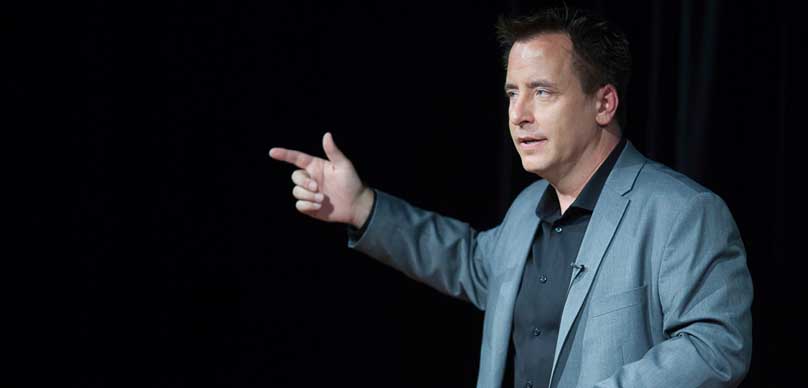
Have you ever wanted to learn how to write a screenplay fast? I know I do. This is why I invited on the show award-winning producer/director, best-selling author, film festival organizer and public speaker, Jeff Bollow.

He is the author of Writing FAST: How to Write Anything with Lightning SpeedJeff Bollow began as an actor at age 12 in his native Los Angeles (credits include Don’t Tell Mom the Babysitter’s Dead and TV’s Columbo) before working nearly every job in production, from camera to sound to lighting — and including jobs in development, post-production, and distribution.

Jeff has worked on feature films, TV series, commercials, music videos, radio, and corporate productions for companies such as Universal, Castle Rock, Propaganda Films, DNA and the Oxygen Network.

After migrating to New Zealand, where he directed television for TV3 and co-founded the Big Mountain Short Film Festival, he moved to Australia, where he launched Embryo Films. Through his company, Jeff has reviewed over 20,000 project submissions and has edited, assessed and/or mentored over 350 projects. He has script doctored in Singapore, Australia, NZ, and the US; and has conducted over 80 live weekend workshops to over 1200 writers in 9 cities in 5 countries, with a unanimous “recommend” approval rating.

His students have been optioned, produced and won (and placed) in competitions worldwide. He designed FAST Screenplayin 2004 and began officially building it in November 2009. It was finally completed in July 2016, nearly 7 years later. Alongside it, he created the FASTscreenplay YouTube Channel, which now includes over 30 detailed and insightful free videos to encourage writers and screenwriters around the world.

In May 2015, Jeff Bollow delivered his first TED Talk, “Expand Your Imagination… Exponentially” (see video below) at TEDxDocklands in Melbourne, Australia, to prepare for the next phase of the larger plan. Jeff’s aim is to build an independent film studio that inspires creativity worldwide, to help prepare humanity for the dramatic changes our future holds. When he’s not busy helping writers with FAST Screenplay, he is working on a new book, developing a television series, and planning two feature film projects. Enjoy!

Right-click here to download the MP3

SPONSORS

  1. Bulletproof Screenplay Script Coverage Service – Get Your Screenplay Covered by Industry Pros
  2. Shooting for the Mob (Based on the Incredible True Filmmaking Story) FREE AUDIOBOOK
  3. Rise of the Filmtrepreneur®: FREE AUDIOBOOK

Alex Ferrari 0:00
Jeff, thank you so much for taking the time to jump on the the podcast. I really appreciate it.

Jeff Bollow 3:32
My pleasure. Thanks for having me.

Alex Ferrari 3:34
So, Jeff, tell me how you got into the film business in the first place. This crazy business.

Jeff Bollow 3:39
I got into the film business. Well, I was a little kid. And I was dreaming of being a movie star and I decided to get in to pursue acting and I started acting when I was about 12. Okay, so I grew up in LA so it's been around me all my life and just started pursuing that got some work as a as a kid actor and fell in love with the filmmaking process and started making my own short films and got bitten by the travel bug and moved to Australia. Where I tried to make an independent film with a friend of mine. We spent about seven years trying to make this info

Alex Ferrari 4:17
man, I've heard that story before. Yeah, I can imagine

Jeff Bollow 4:21
it we ended up abandoning it in post production because by the time we had gotten near to finishing, it had sort of already become a bit obsolete some of the references or like structural story based references were out of date and that kind of thing. It just we sort of went okay, well, that was our film school, I guess more or less

Alex Ferrari 4:41
so as a long film school.

Jeff Bollow 4:43
Yeah. Painful film school.

Alex Ferrari 4:47
I've had I've been in posts for about 20 years, and I seen so many this kind of stories like but I've never heard seven years, seven years as a record. Now I've heard I've heard three and we've been doing this for three or four years and we're like, oh, man, that must just be Pain? Well,

Jeff Bollow 5:00
well, we were doing it for three or four years. And then that sort of, you know, drags on because at a certain point, I mean, the biggest problem that, you know, you run out of money and yeah, you gotta keep working to pay to generate the money to pay the bills and keep it going. So it just, you know, becomes weekends and evenings and you know, it's location.

Alex Ferrari 5:20
It's like a really bad cocaine habit. You just have to keep working to pay for the drug. But that's not going anywhere yet, but I have to keep paying too. It's like it's a vicious vicious cycle.

Jeff Bollow 5:28
I've never had that habit. So I can't

Alex Ferrari 5:30
mean either, sir. I've only seen so far. I've only seen Scarface so this is my reference for movie

Jeff Bollow 5:35
references. I think that's true.

Alex Ferrari 5:39
Now, when you say you were an actor, you weren't one of my favorite movies growing, though. Don't tell mom the babysitter's dead.

Jeff Bollow 5:47
There you go. I said. I said the immortal ridiculous line Parkett. yourself. Metallica breath?

Alex Ferrari 5:53
Yes. I'm sure a highlight.

Jeff Bollow 5:57
I can't tell you. I tried to get them to change that line. And the director was pretty adamant. So all right. Turns out there you go. It's the only it's my it's my one memorable thing from from 510 years of being an actor. So

Alex Ferrari 6:10
if that came out of when in the late 80s or early 90s, I think well, it was it's,

Jeff Bollow 6:15
it came out it we shot it in 1990. It came out in 91. At basically the same time as Terminator two.

Alex Ferrari 6:22
Right. So and it was actually a very, it was a big hit for what it was. It was well,

Jeff Bollow 6:28
I mean, they made it was a relatively low budget that they made it on. So it certainly made its money back just barely, I guess at the at the box office. But then it was it was co financed by HBO film. So HBO right? Just ran it and reread it ran it on on HBO in the early days. Right? And so it's sort of developed this thing called following over the years through that largely, and it's bizarre to me that people still remember that

Alex Ferrari 6:56
film. Oh, no. I mean, I was working at a video store in 91. So I'm very well aware of that movie. And, and of course like everybody else at that time in history. I had a crush on Christina Applegate. So I had a crush on Christina Applegate. And she was still just married with children girl and she just had her and she ran with it with that movie. So sorry. I don't mean to geek out guys about Don't tell mom the babysitter's that. By the way. If you haven't seen it, and you're a 90s kid, you should definitely, definitely watch it. It's

Jeff Bollow 7:26
a really does capture that arrow pretty well. It's, there's something there's something tangible about it. Like texturally. It's it's it's interesting. It's there. I mean, it's not, you know, not the greatest movie of all time. But Oh God, no fun.

Alex Ferrari 7:39
It's still it's still had it still had some of the ad stank on it. But it was It wasn't. It was in a full 90s movie, but it had a little bit of ad stank slapped on just all those movies in 9091 92 they still had that 80s

Jeff Bollow 7:51
Well, I remember somewhere someone had called it the last 80s teen comedy that was made in the 90s.

Alex Ferrari 7:59
No, that makes perfect sense. Actually, that makes exactly the perfect. It's like I always said like, you know, 1980 that's not really the 80s 80s didn't start till maybe 8182 You still got the stank of the 70s laying around.

Jeff Bollow 8:11
I figured out what the 90s are yet.

Alex Ferrari 8:14
Exactly, exactly. So So you move to Australia, I have to ask you, how's the film business down there? Like how is it to make movies and we're on a production company and stuff, you know,

Jeff Bollow 8:25
the film industry in Australia, thing with Australia is it's a much smaller country. So there's only you know, compared to what 300 Something million people in the US, there's 25 to 30 million in Australia. So everything gets gets scaled down almost by a factor of 10 kind of a thing simply because there's, you know, the audience, the homegrown audience isn't big enough to sustain you know, the kinds of budgets that are made in from Hollywood films, that sort of thing. So it almost the industry there almost has an indie feel throughout, except that there's this government funding sort of mechanism woven into the DNA of the industry. So so the way screenwriters for example, think about making money in Australia is they think about getting funding from the government. I $10,000 for a draft sort of thing, you know, so it's

Alex Ferrari 9:24
no you got no you're kidding me really.

Jeff Bollow 9:27
It's kind of that way so it's so everyone is like competing, I guess for government dollars, which is, you know, disconcerting for someone like me who comes from LA and has this sense of, you know, I want to make, you know, commercially viable films that have artistic merit and all that sort of thing. So to, to have to sort of fit into that it's difficult. So what ends up happening is, is you know, you've got writers who are writing for something other than what someone like me is looking for? Generally right in large, right. So the great challenge I think of the Australian film industry is, I mean, the film industry anywhere, I guess, is making a living while you're trying to make your films. But they're I think, because it's smaller, the upside of it is also smaller. So it doesn't attract as many people. So it's a thinner field in which to play, I guess. I mean, it. They're very serious. They take it very serious. That's great quality, particularly in the performing arts there. Which makes for a very robust community. But it's because it's a little small and little parochial. It's very, it's, it's hard for, it's hard to build something and sustain it, they have distribution troubles, and it's, you know, Australians, the Australian audience often doesn't necessarily embrace Australian film, because it's, you know, first of all the marketing dollars spent by this studios and the Hollywood films, and all the all the American films are coming down there with these enormous budgets, and just blanketing press coverage. So the little Australian film, even in Australia has a real hard time getting noticed and getting hurt, and it's in. So in some ways, it really reflects the indie arena across the board.

Alex Ferrari 11:31
Gotcha. So in other words, if you made an indie film in Australia, you would have to bring it to Sundance to be big again, if that's

Jeff Bollow 11:38
true. Yeah, it's it's it's a little ironic that way. It's definitely true that the films that have had breakout success really actually do succeed at overseas film festivals first,

Alex Ferrari 11:49
right? Well, I remember Crocodile Dundee was the biggest hit in Australia for a long time.

Jeff Bollow 11:55
It was but that's sort of a US Australian. Exactly. Exactly. Exactly. Yeah. It's similar with things like Baz Luhrmann film, you know, Australia, or, you know, Mullen Rouge are those kind of like, it's yes, technically, Australian, but most of the money is us, the US. So that it's a, if you're talking about truly Australian homegrown product, it's, you know, the budgets are smaller, and they're and they're more niche. And it's, it's harder to find that audience. So it's a struggle. It's a it's a real struggle.

Alex Ferrari 12:28
And do you do you work in New Zealand as well? Do you jump in back and forth?

Jeff Bollow 12:32
Yeah. So when I moved down there, I ended up migrating to New Zealand. So I lived in New Zealand for many years and have, you know, Direct TV there, and I've acted in commercials on shows and stuff in there. So it's, but you know, then you're scaling it down to a population of 4 million people, right? It's even smaller than Australia. Yeah. So one of the so one of the big problems, and I think this is it, I think gives me an interesting perspective on all this is, if your market is small, you in order to make something at a larger scale, or something that that resonates with audiences wider, you really have to have almost a global perspective on it, rather than the perspective of the local, the the challenge of that is that we want to see local stories. And so if you, you know, this, that whole idea of stories with universal themes, right, like, universal themes are best expressed through specific local, you know, right, if you if you tell a local story that resonates culturally, locally, there's a great film. I don't know if you ever saw it out of New Zealand called whale writer. No, yeah, of course. It's

Alex Ferrari 13:42
wonderful film,

Jeff Bollow 13:43
fantastic film. It's so very specifically New Zealand, it's very specifically the Maori culture. It's very specifically, it's it's small and indie. But it it's themes that we that resonate, right, so it's the parent, the parent child relationship, and where do I fit in? And in my culture now that the culture isn't quite what it once was, and all those kinds of things we can relate to that, whether we're in Australia, whether we're in the US, we can relate to that story, but yet, it's a very specific locals story. I think that is, that's a great takeaway for filmmakers.

Alex Ferrari 14:23
No, what now? What drew you to kind of get into the storytelling aspect and the screenwriting aspect of things?

Jeff Bollow 14:28
Well, when I was in Australia, and I had a good friend of mine down there, and I were wanting to make a film, and I was waiting for him to get his. I don't know if I can use the word shit. Yeah. I've been waiting for him to get as good as stuff. Yeah,

Alex Ferrari 14:46
it's tough to get his stuff together, together.

Jeff Bollow 14:50
So, you know, I was waiting and waiting and waiting and I just got very frustrated. I felt at a certain point that I was like, you know, I grew. I grew up in LA So, to be sitting in New Zealand going, what am I doing? Or you know, at a certain point, it's like, I just need to write something and we need to go try to make it. So I did that I don't particularly love writing, I'm, I think I'm good at it. But it's not where my passion lies, my passion is in directing and producing. And so. So when we, when we were in that three or four years into production, post production on that film, that we ultimately abandoned, I started looking for other scripts. And I put out a call I was back in Australia at this point, put in a call Australia wide, looking for screenplays and God in probably about 300 scripts that knowing how hard it was for me to write, I committed to reading every word of every small my man, gosh, and I will never do that, again. Because it quickly becomes apparent that there's no, if most people don't know what they're doing,

Alex Ferrari 16:00
of course, here here in LA as well. They don't have a monopoly on not knowing what they're doing. It's very much the same.

Jeff Bollow 16:12
Exactly. But but when you as you start reading this stuff, you look at it from the perspective of the reader and the perspective of someone going, I want to make a film, let me see if there's something that I can find out there. Because I don't want to write something again, you start to see all the problems and you start to realize that, you know, I can I can get 30 pages in and realize there's no point in reading any further. And then as you read more you go, I really only need to read 10 pages, and I don't need to go any further. And eventually I realized that, you know, I can actually determine whether or not a script is legitimately viable. In about two sentences. Like, it's really that easy to determine. And, and it's now cut to 16 years later, and my production company has a submissions form on the website. And we've had submissions from all around the world, over 25,000 submissions. And literally I have found about 20 projects. And you go okay, at a certain point. So it's, it's pretty much you can and this is the this is the reason producers don't want to hear the pitch. This is the the reason people don't want to read your screenplay, is because 99.9% of them are awful. So it's more not awful, but just unusable. So not viable, not a viable product. They're not viable. And even if they are viable, they're not viable for that producer at that moment, right. So so ultimately, they're kind of right to say I'm not going to read your, your material, which creates that catch 22. So here I am in Australia saying, okay, but I need scripts, I mean, we need we need, what are we going to make, I don't want to sit down. And so I have this ambition to start an independent film studio that would make between three and six films a year, this was my goal back 1617 years ago as well. And the if you've seen my TED Talk, that's those are the kinds of films that I want to make. Right? So I had this sort of big vision for changing the future and not changing the future, but preparing people for what's to come. Right. I want to make movies that inspire us for what I believe to be a radically different future that's on its way to us.

Alex Ferrari 18:39
So okay, so can you talk a little bit about because I loved your TED talks, one of the reasons why I reached out to you I absolutely love your tech talk. Can you talk a little bit of can you share a few of the points in your talk to the audience?

Jeff Bollow 18:51
Well, so the basic idea is that there's this notion of exponential change. It's really hard for people to wrap our brains around what exponential change means. But the simplest way, I think, to grasp it is, is technology increases exponentially. So so if you have a computer and you use that computer to build a better, faster computer, it's going to double the output of it right? So but then that new computer, building, a new computer will double the output again. So rather than going step one to step two, to step three, to step forward to step five, you go, step one to step two, to step four, because you've doubled to step eight,

Alex Ferrari 19:38
because you double up and go on and on and on. Exactly.

Jeff Bollow 19:41
And but this is the nature of progress. This is the nature of change. And I believe that the future is going to look radically different today, by Essence by by the fact that everything is changing on this exponential scale. So we're early in the in the exponential curve, which is why doesn't seem all that groundbreaking. But if you actually go back and look at, don't tell mom the babysitter's day, like many things about society are quite the same. But it's a dramatically different world that we live in. Oh, Jesus. Yeah. And it's going to get extremely dramatically different from here. As you know, things like, Well, look,

Alex Ferrari 20:26
I'll just use a perfect example. i Since I live in LA, I just discovered maybe I'm old, but I just discovered Amazon. Now. Okay. And I don't know if you know about Amazon now. Which one is that? Amazon now is you log on to Amazon, you can you could just place an order, and it's at your doorstep in two hours, right? Yes. Yeah, that's insane. Like, that's the firt. And literally, the first time I did it, I was like, I'm gonna see if this is real. I really was I honestly, I'll order this. Sure. Sure. I'll give you a tip. No problem. And I really thought it was a scam. I'm like, Nah, it's just it's never gonna. And then an hour later, I hear a knock on the door. I'm like, wow, really? I'm like, you've got to be

Jeff Bollow 21:10
kidding me. So but that's just that's delivery distribution, right? But take it another step further. What about 3d printing? What about when you can go on to Amazon? And you say, I want this pair of pants and your 3d printer prints the pants for you? Or take it another step and say, I'm I'm hungry right now. And the 3d printer prints a beautiful, healthy organic meal for you Star Trek style Star Trek style. Right? Yeah, absolutely. And it you know, what was once science fiction becomes imagination to the next generation of scientists who then turn it into reality. So there's no, when we look at science fiction, we have to, we have to realize someone's getting inspired by that sci fi. And this, if somebody sits and figures out how to make this happen, this may be our future. So

Alex Ferrari 21:58
it was just like what happened with Back to the Future to the back that came out in the nine I think 1990 And a lot of a lot of the stuff that they predicted came true. A lot of it didn't but you know, sure there is there is a hoverboard. You know, it's it's not like everyday stuff by Mattel.

Jeff Bollow 22:15
That's the one that blows up though. No,

Alex Ferrari 22:17
not that hoverboard. There's an actual hoverboard that uses the same technology. Well, levitation

Jeff Bollow 22:20
technology trains that work on maglev. So it's I mean, but I think I think the thing is that when the way we live our lives, because we're all sort of, you know, beholden to paying our bills, and whatever. I mean, we live our lives today, we imagine that the future will look like today, but a little more gadgety and a little faster, right. But, but we're not paying attention to the fact that those changes are, are approaching how fast they get here is anyone's guess. But I think they're approaching faster than we imagined. So, you know, to me, I see the future as a very, very different place than than what we exist, what exists today in 2016.

Alex Ferrari 23:05
And that's basically the essence of the TED Talk, like to prepare yourself for what's coming.

Jeff Bollow 23:09
Well, and so the TED and so the TED talk, then takes that idea and says, you know, that this launched me into this launched me into this desire to make this film studio beak in part because well, no, so I wanted to go into, I wanted to create movies and television entertainment about these ideas, but through the process of teaching, through the process of saying, Okay, well, people have great ideas. I need great screenplays, how do we get them from here to here, and I sat down on a basically reverse engineer the process, people don't understand this concept very well, because a lot of people think fast screenplays, a screenwriting course, which is not, it's at the end of the day, whatever technique you use, whether you use a three act structure, or you know, whatever 10 other formulas are out there, everyone goes through the same process, the process is start with the idea, turn it into a story, get it on the page, shape it, reshape it until it's solid, make it a compelling read for the reader, and then connect it with the people that you're trying to reach. Right. So that process is the same, that's what I basically did. But through the act of reverse engineering that process, I came to see and appreciate and realize how creativity works and how imagination works, and how we harness imagination and creativity and turn it into something that satisfies our own goals. But and so as you start to look at this on a I guess meta level, you start to realize that will really every person on this planet goes through that same process during creativity, right? We all witness life through a different vantage point, right? You're seeing whatever you're seeing in this moment, wherever you are. And anyone who's listening to this is seeing something completely different to what you're saying completely different to what I'm saying. And our backgrounds are all completely different as well. So we interpret it differently. So, in, I guess, this analogy, this metaphor that I came up with is that the earth is like a giant brain. And we're like, individual neurons. And so when we interact with each other, we're, we're sparking that other neuron, right? Where, when I say something to you, that resonates with you, you go, Oh, wow, that's really cool. And then you incorporate it into your thinking. And then that sort of informs where you go from there. Similarly, when you say something to me, or a list of when your podcast and I go, I got that so amazing, or this person's fantastic. So writing, creativity, filmmaking, storytelling, is that, right? So it's, it's, when you're trying to tell a story, when you're trying to write a script, when you're trying to make a movie, you have an idea in your head that you're trying to share with other people with an audience with the world, right? You want you want the most people possible, to hear your idea and to understand it and to connect with you and and to inspire them. So it's all kind of the same thing.

Alex Ferrari 26:39
So then, basically, so So let's back up for a second you have a you have a system called fast screenplay. Basically, it's a it's a system, correct? Because we kind of went into it first before explaining what fast screenplay was. So can you can you break down the seven parts? Did you already the seven part system of fast screenplay? And then from what I'm getting, just so I understand, it's not a like how to write a screenplay. It's a different kind of process to get the idea to the final end endpoint? Is that kind of what it is?

Jeff Bollow 27:10
Well, no, it's both. Okay. So okay, so let me let me back up a second. So fast screenplay fast is an acronym. So it's all capital letters, right? Focus is the F. A is for apply. S is for strengthen, and T is for tweak. So what I realized when I sat down to sort of reverse engineer this process is that writing is a, there are four phases to writing. The first is to focus your ideas where you basically take all the random ideas that you haven't, you focus them into a specific story, right? One you choose, you choose and shape your your story. Now, once you have your story, you have to get that onto the page, you have to write it, which I call the Apply phase, you're applying that story plan that you created. Right, so there's your first draft, once you have your first draft, you have to rewrite, you have to strengthen it to make it in sync with your intentions. So make it the best story that it can be. Once you've got it being to be the best story, then you tweak the words, you polish it, you refine it so that the readers experience when they read your script is there it's a page turner, it's compelling. They want to go through this experience. So focus, apply strengthen tweak is the writing process. So about what 10 years ago now I wrote a book called Writing fast how to write anything with lightning speed, which you can get on Amazon. The Kindle version is really cheap. Anyway, so. But that's the that's the four part writing process. Now, what I also realized was that if a writer goes out and starts just writing scripts, that doesn't necessarily mean that they're writing something that a producer like me could use, right? So the only way that they're going to write something that I can say yes to is if they write something that is aligned with my needs, right? So that doesn't necessarily mean they have to write for me, maybe they write something that's so amazing. I want to make that film. One way or another though, we have to be aligned in order for us to sit for me to say yes, and for us to move forward and make the film. So what I realized was, you could actually add a phase before this writing process, which I call the setup phase, which prepares you for the process and sort of pre aligns your imagination with the needs of the producer. So that when you start the process of writing, your your your brain is off is serving up material to you that is in sync with producers needs right so that you're not going off way on a tangent, but it's still your creativity. It's still Whatever it is you want to write.

Alex Ferrari 30:03
We'll be right back after a word from our sponsor. And now back to the show.

Jeff Bollow 30:13
Right? So then you go through that process, once you're done, you're going to need to get notes and feedback, you're going to need to see how your work is interpreted and responded to by other people. So we have what I call the alignment phase. And that's basically you're sending your work out for notes and feedback, and how do you interpret notes and feedback? So many writers, and I've given notes over so many years now that writers drive me crazy, because they take notes personally. Yep, they say, Hi. How dare you not appreciate and respect the brilliance of what I wrote, and you're like, Okay, I'm giving you a note telling you what the reaction to your work is. And rather than taking that and adapting your work, so that it serves your goals, you're going to reject the note out of hand and take it like I've like, I've killed your baby, right? So you go ego, and egos ego really gets in your way. And at that stage of it, because at the end of the day, we all write crap. I've written so much crap, it's not even funny, right? Arguably, maybe the things I'm talking about right now. But that's for someone else to decide. But at the end of the day, all the goal is not good or bad. The goal is creating something that is effective at what you're trying to get across. So the alignment phase helps you see what other people are getting, and then adapt what you what you've created, so that they get what you want. What you want them to get, also teaches you the skill of adapting your work to the needs of a producer, if you want to go that road. Right? So then the final phase is the payoff phase, which is where now that you have this script now that has been through this process now that it's aligned with. So you know, it's, you know, they like it, you know, it's what they want, how do you then connect with the producer? And how do you identify what producers and how do you then connect with them? So in the whole system of fast screenplay, the seven phases, set up focus, apply, strengthen, tweak, alignment, pay off, it's a,

Alex Ferrari 32:16
it's huge, of course, no, it's absolutely

Jeff Bollow 32:18
it. And it's so it probably takes about a year to learn the process. But I also have been subsequently distilled each of those steps, so that once you get the whole process, you can then condense it, and you can move through it and gradually make the process intuitive, which is what leads to mastery. So it's sort of this thing that looks daunting at the start, but it's really not because most riders think they know all this stuff. And they really just don't, I mean, even intermediate, even advanced riders, to be honest with you, there are things throughout the system that they just don't go, I never even thought of that before. This fills in a gap of something that I didn't know before. So the point my point in creating the system wasn't to teach screenwriting, I have no interest in becoming some screenwriting guru. This is not like I'm at the end of this road, I don't want I don't want this to be my life. From here. I created this because if you're in Australia, and you can't find scripts, and you don't have discretionary funds to pay writers to just develop stuff, which may or may not end up getting produced, because that's wasted money. And when every dollar counts, you can't spend that money. I basically needed an in house script development system like a studio might have, but out of house, right? Right. Like I needed something that anyone could go start here go through this deliver something that we could make. So the idea was hopefully through this process, we'll end up getting scripts and stories some of which will be aligned with what we want to make some of which writers will go off and find other producers. But then in theory will gradually as more people discover it be able to make our three to six films a year and then hopefully change the world

Alex Ferrari 34:12
so so um, basically what you created fast screenplay was a selfish reason you just want better screenplays.

Jeff Bollow 34:17
That's pretty much yeah. I want well, I want I want better screenplays. I don't want to have to write them myself.

Alex Ferrari 34:25
So then, since since you've already said you've read tons of scripts 1000s of probably lifetime, what are the most common mistakes you see with first time screenwriters?

Jeff Bollow 34:35
I mean, seriously, the the it's across the board. You you have problems of ideas, selection, there's like people will have an idea and the kernel of the idea is good, but then they've turned it into a story that just doesn't really make any sense or is not the best expression. Look. Think about the reasons why you you watch a movie and you don't like the movie I mean, how many movies do you watch for you go? That was awesome. Like that was fantastic. Like, it's actually a few.

Alex Ferrari 35:07
I just actually I just actually watched last night for the first time, The Grand Budapest Hotel. I love that movie. And it was, but I just loved it. Like my wife and I sat there and go, it's so unique. It's such a well told story. It's so beautiful to look at. It's just gorgeous film. And that's like, it's rare. And it's rare to actually hear yourself say, that was a good movie. And then of course, there's a spotlight and The Big Short and a bunch of the Oscar nominated films as well this year, but just Grand Budapest like, oh, we just have never got around to there's like, my god, that was really a good film.

Jeff Bollow 35:40
Well, and so if but if you think about then all the other films that you've seen that you sort of go, well, it was good or hands Okay, or you walk away gone cheese, that was terrible. Like, the The reasons are, there are many different reasons for that. But now think about this as screenplays where you're gonna have the same reaction, you know, you're not gonna like every screenplay that you read, even if a screenplay might be good. I mean, there are some awards contenders this year that it's not my thing. Right? Right. Of course, of course, I'm not into it. So. So we have that we have you have writers don't grasp the essence of the character transformation. I mean, stories are about a character, or a situation or something changing. So what changes if that change happens too fast or too slow? Or it doesn't? It doesn't it's not plausible, or it's just not handled very well. All that can be problems, you have problems of dialogue, you have problems of structure, structure, grammar, grammar, but structure, I want to be clear, just because it's not three act structure does not mean it has problems of structure, I think there's over reliance on the three act structure, I've got a video series that I'm working on at the moment, that'll should be up end of February or so on the YouTube channel. But that, that addresses why our reliance on this three act structure is maybe a little a little too extreme, right? That's one story form. But at the end of the day, a film structure has to be right for it. It has to be right for what you're trying to say and how you're trying to set and the point and purpose that you're trying to get across.

Alex Ferrari 37:18
Well, you know, like watching Pulp Fiction in a different structure. And like, if you did a proper three act structure in chronological order, that movie doesn't have the same zing.

Jeff Bollow 37:27
Absolutely. Yeah, that's absolutely true. So, so, there, so when I say that, that most films have structural problems, it doesn't necessarily mean that it's that they're not adhering to three actors. So it's, it's, but But yes, structure is a huge problem for for a lot of writers and, and, you know, also just writing style is a big thing people don't necessarily appreciate but if you're reading lots of scripts, there's something to be said for like a really great writing style, like something that just pops off the page and, and implies more than it says, you know, there's there's screenwriting requires an economy of words that writers often don't fully appreciate, when in some ways, you want to use three words instead of 10. But you want those three words to say more than the 10 would have. Right? So it's it there's a lot in the in the whitespace there's a lot in the in the there's a lot that's implied that should be implied in the way a great screenplay reads. And if writers can really learn to play with that it'll make their it'll make their scripts jump out a lot better.

Alex Ferrari 38:37
I know there's some some screenwriters that when you read because I've read so many bad screenplays in my life, mine mine included

Jeff Bollow 38:45
I'm in the same boat. Mine included with all my earlier efforts are like

Alex Ferrari 38:49
Oh, some rough stuff. But but then you read Shane Black's old stuff like you know, Lethal Weapon and last me a bit heavy but yeah, it's heavy. No, obviously for the time period, but still the stuff you could see that voice is so clear Walter Hill, back in the day, John Miletus. You know, who was an insane writer and of course, Tarantino and million other right, but when you start reading those guys, they all have very, very unique voices. Absolutely. And they and it pops right off the page. Like you read a Shane Black script, you chant black, you read it. Obviously Tarantino probably has the loudest of all of those voices.

Jeff Bollow 39:25
Yeah. There's some there's a danger though also with that, because often the scripts that you find online are some of the most beloved scripts that you find online are written by writer directors. And right if you're writing a screenplay on spec, if you're if you're not going to make your own film, then you have to be careful because there are certain things that writer directors will do. They'll include shots or they'll, yes, certain language that they can get away with because they're describing how they're going to film it. But as the as the as The writer submitting your project, trying to get a story made, you don't want to include that stuff. Because you really want the creative team that is going to ultimately say yes and make your film. You want them to infuse their own creative vision into it. And so if you steer it too much from a, you know, a control standpoint, then it's a turn off to the reader. And, you know, I can't tell you how many times you read a script, it's like, okay, you think you're directing this?

Alex Ferrari 40:32
Right and that? Yeah,

Jeff Bollow 40:34
this isn't even written well enough. Like, let alone directed? Well, yeah.

Alex Ferrari 40:38
Yeah. I was told many years ago, you know, by many different people. Like, don't put direction in a script, unless you're directing if you're directing, do what you want. But generally, don't put like close up here. Dolly in here. Like don't do that. Because exactly for that reason, like Yeah, obviously a Terran to movie will have that because he's gonna direct it. But like, if you read, you know, Shane Black's last last Boy Scout, which was his he wasn't a director back then. Or Lethal Weapon. He wasn't a director back then those scripts just, I mean, they are 80s. And they are, they are what they are. But they're so well put together. I mean, and I still put up Lethal Weapon is one of the best action films.

Jeff Bollow 41:18
I agree, of course, and die hard. I

Alex Ferrari 41:21
mean, Jesus, I mean,

Jeff Bollow 41:22
absolutely. But and they stand the test of time, because the stories are so rich, the characters are so well written and the and the pacing and the tension and the

Alex Ferrari 41:31
masterful, it's masterful to watch, like, you know, considering like watching an action movie today. And then watching Lethal Weapon one, two predator, the original predator or diehard, those 80s action movies that are just like you could pop them in right now. And they do their job, like they will do their job. So well. I mean, even Star Wars for that matter, the original Star Wars. I mean, that was in the 70. There's not many movies that were done in the 70s that hold today, like you could put Star Wars in right now. I'll put it on for my six year old.

Jeff Bollow 42:03
And hang on a part of that is is because the setting isn't the 70s Correct.

Alex Ferrari 42:09
But the storytelling is yes. Universal forever. Yeah, obviously. Yeah. Well, but like The Godfather, you could put the Godfather on. And it still holds very much, though the pacing is a little different than what people are used to today, especially now with the new seven hour version being released on HBO, Godfather one and two, which I'm really interested, I'm not sure if I have the time to watch

Jeff Bollow 42:28
that. That's the big question then, like, Who has the time to watch

Alex Ferrari 42:32
it and sit down and watch seven hours of The Godfather?

Jeff Bollow 42:34
I think one of the frustrating things for me at the moment, though, is that, you know, we have we are technologically capable of making extraordinary stuff today. Oh, and, and one of the biggest, I think let Downs is story and script development. Because Because people people are so enamored of the production process and the post production, CG and editing, all that stuff, the stuff that the stuff that all you really need are the tools and you can start tinkering. When it comes to writing, we all have the tools to start tinkering is a little harder because it's there's no defined shape to what it's supposed to look like. And you know, you can you can write in anything you could ride on the back of a napkin at the end of the day, right? It's not, you know, the, what you write on how you write is not the most important thing. What's important is taking that idea, turning it into a compelling story. And there's this homos, pervasive attitude of, well, I'm just going to bang out a script. You know, I'm just going to spend two weeks or three weeks knocking out my screenplay. I'm ready to go. Alright. And it's like, you wouldn't expect I remember doing a workshop, a live workshop in Melbourne, in Australia once and this woman had attended and she was a novelist. And she made these epic fantasy novels, like each novel would have 800 pages. She had multiple trilogies on the bookshelf at the at the local bookstore, and, and she was she had come to do my screenwriting workshop, because she said, in between my big 800 Page novels, I usually have a month or two off and I'll I thought I'd bang out a script between them. Oh, okay. So. So I met up with her like six months later and said, How's it all go? She said, I was amazed to discover that it's as much work to write a screenplay as it is to write an 800 page novel. Mm hmm. If I could, if I could just let that point sink in the mind of every writer I encounter, oh my god, life would be so much better because if you if you if you realize that that's the amount of effort and skill and nuance that you have to use, I think you would treat the whole thing much more seriously. And if you treat it more seriously, you're you're more likely likely to create better quality. I mean, I don't know how old you are. But the you know what I worry about

Alex Ferrari 45:06
that we're about the same vintage, I think, probably. So you're a little younger, probably, I'm not sure.

Jeff Bollow 45:11
Okay, so we so what you know, but when we were young, we probably wrote stuff, we probably tried to make stuff, you look back at it now. And it was terrible. But new writers don't have the benefit of that. So they assume that what they're creating is great. Even though like, when I create something, if I write today, I'm assuming it's not good enough, you know, I'm going into it with the assumption that I'm seeing those, those early drafts of stuff that I wrote 20 years ago. So

Alex Ferrari 45:41
you know, what, you What's interesting with yours, and I'm gonna cut you off. But what's interesting with what you're saying is, it's so, so true, because when you're, when I started writing at the beginning, or creating things at the beginning of my career, I just assumed that they were awesome, right? It just just didn't only

Jeff Bollow 45:58
not, I mean, that's kind of where the inspiration comes from. So you were right, hit berate yourself, and assume it's awful and never gonna keep going, though.

Alex Ferrari 46:06
But there's a sense of, there's a sense of being humbling as life is life beats you down in the business beats you down as you go through it. And this, this is at every level, I feel that a certain time like now I sit down to create something, I don't assume all of a sudden, it's awesome, I beat it up a lot more I look at it more I analyze it more to see to see if it's like I put it to the test to see if it holds up, where at the first like, you would just put something out there and you're like, oh, look, and then the world will beat it up for you. And it'll do a great job. By the way, they do a fantastic job doing

Jeff Bollow 46:44
that. But you know, I really think it's, it's also in how you interpret things. So if you if if when you say the world beats you down, or or you get beat up for your story, on some level, all all that the world is really doing and saying to you is that you're out of alignment, right? You're not what you think you're trying to achieve. You haven't presented in a way that is achievable yet and if you if you I think if in general, we not you specifically but we all start to look at the negatives at the rejections at the nose at the criticisms, if we look at that, through that filter of well, okay, so the thing that I put out there didn't resonate, why? It I think it will help us improve it helps us It helps us adapt, refine, because ultimately success is available to absolutely anyone who wants it. Yep, really is because all that you have to do is not give up. That's it. I like to say there's only two outcomes for screenwriters. Either you're going to see your movie going to you're going to see your movie made your script made into a movie, or you're going to quit. That's it, there's no other option. If someone says no, then you adapt, you refine, you keep persisting until you get it made his movie.

Alex Ferrari 48:05
You know, I always use I've used this example on the show before but the matrix, I heard the story of the matrix on a documentary I was watching probably like a year ago or something. And what I found out was that the script was so obviously revolutionary. And the story was so out there that people don't really understand it. It took so long to get it made. It took about four to five years to get made. And in that time they shot bound that the workforce, the brothers at the time were shot bound to kind of prove that the contractor, but during that five year period, they were beating the hell out of the script. Yeah, they were rewriting it and rewriting it. And so by the time they finally got to make it, that was the tightest scripts in the world. So they they they beat that thing up so much. So by the time it got released into the world, the world couldn't do any more beating. They couldn't they couldn't tear it down. They've made something so structurally sound, that there's it there's nothing you can do to tear it down. It was just it was just it's like Shawshank Redemption you watch a shank redemption you just go there's I can't. I can't say though anytime I feel bad. I do look up bad review Shawshank. And there are there are some by the way, and I love reading them because it just like you create it.

Jeff Bollow 49:20
This is an interesting point. Because ultimately, I used to use exactly that as an example in my live workshops, I would say you know, ultimately, there will always be people who hate what you do. There will always be people who try to knock you down or not even maliciously, maybe they just genuinely don't like it. But that's okay. I mean, if you if you go back to that brain metaphor analogy, you know, not everything that you put out into the world is going to electrify all the other neurons in the system, right? It's only All that matters is is that it lands with where you're trying landed, you know

Alex Ferrari 50:01
exactly, exactly now, can you? Can you talk a little bit about this free course that you were that you've been working on for a year that fast story development? How to create the detail?

Jeff Bollow 50:08
Yeah, so. So it's a it's a, it's a four part YouTube video series. So if you haven't been to my YouTube channel, check it out. There's a lot of me talking. But it's youtube.com/fast screenplay. And there are, what 30 videos or something like that there at the moment. And this one is a four part series. So one of my biggest challenges is helping people really understand what fast screenplay is all about. So I wanted to do something that was both simultaneously really quality information people could use and run with immediately, but also something that threw through explaining that helps you really understand what what fast then is all about. So it's a it's a four part series. That's called fast story development, how to create detailed original stories in one hour. And so it's got four parts. And the first part is the hidden story dynamic. So as I'm reverse engineering, this process, I'm looking at the three act structure, why does it work when it works, why doesn't it work when it doesn't work. And I realized that there's this sort of hidden story dynamic underneath at all, sort of what I call the building block of all storytelling. But that building block then also applies to, you know, infinitely beyond just storytelling, it's almost like the building block of anything that we choose to do, which means you can actually apply it to story development as well. So in part two, it's called How To Grow stories organically, where you basically start with an idea, and you more or less, just grow it organically into a compelling screen story. So I walk you through that. Now, once you've walked you through that, then part three is how you can do that entire process in one hour. So I walk you through that. And then Part four is why you'd even want to do this why speed actually turns out to be the key to writing success. So each each one's like about 10 minutes, a little less than 10 minutes long. And and they're they're full of animation and all this stuff, which is what has been taking so long, firstly nailing it down. So it's so you know, the pacing, and all, all the normal stuff, make sure that it's effective and entertaining, but also that it is legitimately helpful. I think all four episodes are just packed with stuff that people will be able to use immediately whether they continue on to fast screenplay or whether they go off and do their own thing. It's my goal. My goal has never been to be a screenwriting teacher. So ultimately, if you don't join me, as that's not the end of the day for me, like I fast is fast is not about making a profit. We all proceeds that come into fast get reinvested into fast to make it bigger and faster. And to make it you know, expand it

Alex Ferrari 53:18
exponentially as you said, Yeah.

Jeff Bollow 53:20
Eventually, yeah. So it's, I mean, it's, you know, I want to make my money off of the movies that I make eventually, right? So I'm not, I don't I don't take a I don't take a salary from fast or any of that stuff that I really want people to do fast, because it's going to help them get where they want to go fast. And yeah, well, yeah. Ultimately, fast has multiple meanings. There's the idea of writing it fast. But really, there's no point of writing something fast if it's crap, right. So the only fast screenplay actually refers to the speed at which the screenplay reads. So when I as a as a producer, when I, if I'm, if I'm looking at a screenplay to evaluate it, if it's a slow read, there's no way it's going to be bought. It's just not going to happen. Right? Like, if it's a fast read, that means it's a page turner. That means it's grabbed me, it's pulled me in. I'm there. I want to see what happens next. So a fast screenplay is a screenplay that reads fast. It's a screenplay that people want to find out what happens next for that's what everyone wants to write. That's what you should want to write. Now, writing that fast requires mastering a whole lot of skills and nuances and details, character structure, theme, setting all that stuff, right. So to master it, it's going to take a little bit of time. So you go through the fast screenplay system, which is the acronym which is the system and the and the process itself. You

Alex Ferrari 55:00
Well, we come to the part of the show that I asked the same three questions to all of my, all of my guests. So these are the toughest questions you'll ever have. So be yourself.

Jeff Bollow 55:09
I didn't, I didn't, I didn't. I didn't listen to other ones to prepare. So this is new to me.

Alex Ferrari 55:14
Okay. What is the lesson that took you the longest to learn in life or in the film business?

Jeff Bollow 55:21
The lesson that took me the longest to learn? That's a good question.

Alex Ferrari 55:30
Thank you.

Jeff Bollow 55:33
Do you often have people stumped looking at

Alex Ferrari 55:35
the wall? First, second, but it comes to the

Jeff Bollow 55:39
I think I think that probably is that I'm enough.

Alex Ferrari 55:45
Yeah, that's, that's a that's an answer. I've heard from other. Yes. as well.

Jeff Bollow 55:49
Yeah. You know, look, it's funny because my, you know, all along. And I often attributed to growing up trying to be an actor in LA. He really, I mean,

Alex Ferrari 55:58
it was an actor. It was an actor who said that, by the way.

Jeff Bollow 56:01
It's, it doesn't surprise me as a kid. I went to probably without exaggeration, 1000 auditions, and I probably booked about 50 parts. And that's a lot of rejection. Right? I'm too. I'm too thin. I'm too fat. I'm too tall. I'm too short. I'm too good looking. I'm not I'm ugly. I'm all All right. So on some level, I always attributed to, to that, that I, I hadn't felt like it was okay to express my creative core. And so through teaching writing, I think it was only through teaching, right? I never wanted to be a writing teacher. That was I never would have imagined back then that that's what I that's what I would be doing today. But in many ways through doing that, it's helped me realize and appreciate now, because because I see the insecurities in every single person, every writer, you can see the insecurities. And it's like, now just trust it. Trust this trust you and you trust. I always tell people if you can trust me, you can trust my system that will turn into a trust for yourself. And so in some ways, I'm trying to convey that very lesson to everyone that I teach.

Alex Ferrari 57:21
Good answer, sir. What is your top three films of

Unknown Speaker 57:26
all time? Ah, see, that's always a killer. Yeah,

Alex Ferrari 57:29
it could be just a bunch of lists that could come to mind today.

Jeff Bollow 57:35
Well, I think it's hard to go past Shawshank Redemption just because it's such a it's just such a flawless film, right? It's a beautiful piece of filmmaking. I don't want here's the thing. I don't know that I could say of all time, because I find value in even crappy films.

Alex Ferrari 57:53
Of course, I do, too. Like there's some there's some like 80 schlock that I'll watch. And you know, I love watching Commando, like Commando is awesome. Yeah, but it's a horrendous film. It's horribly structured. There's cardboard cutouts that are being blown up as soldiers. I mean, it's a horrible, horrible, horrible film. But I love it. So, yes, I completely feel. So just three favorite films that really ticked me.

Jeff Bollow 58:17
Well, I'll tell you one that I saw recently, I don't know if I would call it as, as an all time favorite, but I loved it. It's a tiny little indie film called coherence. Okay, if you're if you're since you're an indie film, podcast, I think your listeners would probably love this film. It's made on a tiny budget, I don't even know like micro budget. And it's just such a cool idea. And it's really well executed. And it shows you what can be done. And it's also sci fi in a cool sort of way that I like, I don't want to say too much about it, because it actually gives away Sure. Sort of the core premise of it. But that have you seen a movie called primer? Yeah, of course. Okay, so it's it's not like primer in that sense, but it's that low budget indie thing where they've done something really, really cool. Oh, very

Alex Ferrari 59:05
cool. Okay.

Jeff Bollow 59:07
Yeah, I mean, I'm a huge sort of time travel and sci fi not I love those kinds of stories so Back

Alex Ferrari 59:14
to the Future obviously.

Jeff Bollow 59:17
There's another flawless film it there are some films they're literally they are flawless you can't you can't make it nothing you would change even down to you know, which on the actor's face like it's just flawless So yeah,

Alex Ferrari 59:34
those are three Those are three right there yeah what I'm

Jeff Bollow 59:38
what but I have a I have a very wide variety of I like obscure films and for you know what another one is great one is cinema parody. So

Alex Ferrari 59:46
no cinema parodies. Yeah, if any film any film lover any any movie Love. Yeah, well, maybe

Jeff Bollow 59:51
that's it. Yeah, you just got

Alex Ferrari 59:53
it. Yeah, as a film lover. You just watch that using sa

Jeff Bollow 59:57
good one is Living in Oblivion. Oh, I love living in a place So we're gonna get onto that. Yeah,

Alex Ferrari 1:00:01
if you're a filmmaker everyone out there you must look for a movie called Living in Oblivion. I'll put it in the show notes. Oh

Jeff Bollow 1:00:07
boy. It is it is Steve Buscemi. Early.

Alex Ferrari 1:00:11
Early Steve Buscemi. It's a movie about making movies. And when I hear

Jeff Bollow 1:00:16
Dinklage has the greatest Oh, big part in the history of time.

Alex Ferrari 1:00:20
And and my favorite part of that one of my favorite parts is when the grip, pulls out the screenplay and gives it to the producer. Exactly like I have the script I've been working on and I'm wanting to tell you Oh, that Oh, my God, but he carries the screenplay in his back pocket. That's what I remember. It was so vividly He's like, he's just like bust it out and give it to state in Maine is another great one. Oh, state Maine is fantastic. Dayton Maine is another weight movie making movie movie about moviemaking is absolutely brilliant. Who was a Mamet? Right? That was Mamet wasn't a

Jeff Bollow 1:00:52
Mamet? Philip Seymour Hoffman. The actor

Alex Ferrari 1:00:56
so brilliant, wonderful. And then can you name one under really underrated film?

Jeff Bollow 1:01:02
We probably did. There a few. You know what, I'm gonna go on record saying Star Wars The Force Awakens.

Alex Ferrari 1:01:11
Very, very underrated film, is it? No, no, no spoilers. But go ahead.

Jeff Bollow 1:01:15
That movie has gotten a lot of a lot of flack from especially from industry people or people who are saying that it's just a rip off of A New Hope and you know, that it's not I here's the thing about that movie,

Alex Ferrari 1:01:28
I love that you've called this the most underrated

Jeff Bollow 1:01:31
you're going to you are well only only because there I know there's a lot of haters about that film. But you're going to look at this film after the next to come out and see brilliance in The Force Awakens that you can't see right now. Because I one of my one of the whole sort of principles upon which everything I do is built is the notion of setup and payoff. I believe that that is sort of the core of it. All right, so everything is either set up or pay off. And that movie is set up set up, set up set up and it's fantastic. It's just gonna pay off in May I'm so I've always been a Star Wars fan. I didn't like the prequels, but I, I I'm not I'm not a geek fan. I'm just I'm just appreciative fan. That is like, I'm just so excited about what they've done with that and where they're going with the whole thing. I think it gets derided from especially from a screenwriting standpoint, because everyone's only looking at the similarities to a new hope and they're not a they're not appreciating why those similarities are likely to be there.

Alex Ferrari 1:02:40
Yeah, it's I love it. Um, I am I am actually at it's a very well documented Star Wars full blown geek

Jeff Bollow 1:02:48
okay you know as a new things like the ring theory and all that No, I'm

Alex Ferrari 1:02:53
not that I don't go but I but I carry Yoda close to me all times. He he's always on all times. So I I'm a big more geek than me is much more. I have a life sized Yoda here in my office. It's it's I've had him for Wow years. Cool. Yeah, it's I've had Yeah, I could, I don't want to go down to Geek road because I could I could go hard really, really quickly. But the thing is, I saw the movie and I loved it. And I'm a big fan of it and I can't wait to go see it again. But I just enjoyed it and I enjoyed the trip and the whole thing that JJ did with it and he did it so nicely and so tightly and there is a lot of haters out there but I don't I don't I don't personally care and I know there's a lot of but there's more lovers than haters because it's made to build No

Jeff Bollow 1:03:40
I mean there are and and that movie will be just fine whether it's got me as it's different. Yeah, exactly. But but just but only because the the sort of circle that I've been playing in for a while is the screenwriting and screenwriting education Stan, anything within that world? It's it's it gets consistently bashed, and I think it's just so unfair, because it's it's far more remarkable than it appears to be on the surface. It's also just a great ride. You know what I mean? Oh, yeah, it's just that's icing on the cake. It's but underlying that is, is quite a stunning achievement in my opinion.

Alex Ferrari 1:04:18
And he's created probably one of the best hero, female hero heroes in the last heroine in the last 20 years, if not longer. Yeah. Cuz she's amazing Ray's character that character is absolutely remarkable. Well, I

Jeff Bollow 1:04:33
think there will be some I think there'll be some cool reveals. Yeah, in future episodes, we

Alex Ferrari 1:04:38
won't we won't we won't go down too far. But again, going the same route where you were talking about the the screenwriters kind of, you know, snub their nose at it. They also snub their nose at Titanic and they also snub the rose at avatar. And as Avatar is just FernGully it's just dances with no,

Jeff Bollow 1:04:55
but so you know, that actually makes it brings up a really interesting point because I'm also a fan of Avatar there mistaking the mythological structure for copycatting, right, right. So that in order if you so in the hands of a hack writer, a truly hack writer, you he would copy FernGully and it would not have the same resonance as Avatar does. But what Cameron has done even cameras, an exceptional film, I mean, not box office success. He's like amazing, truly is he actually is really good at what he does. Yes. And he's another one that gets derided a lot which is by the way this doesn't I'm not trying to imply that I'm only about the blockbusters. First I love the I love obscure cinema. I

Alex Ferrari 1:05:49
live in an Oblivion, you know, those? I mean, that's a very small movie. So,

Jeff Bollow 1:05:53
but I think you have to respect I always judge something based on what is it that they were trying to achieve? And did they achieve it effectively. So by that, by that you if you look at a screenplay, or you look at store a story through that filter, a lot of these things that look to be simplistic or plagiaristic or copycat are actually not there. They're using the mythological structure in a completely original way. And so, you know, Avatar is i, if you had done this podcast back then it probably was the avatar is the most underrated. So I think it's important for writers and filmmakers in general, to understand the big mythological structures to understand most people don't understand the three act structure. They understand where the things happen, but they don't understand why the things happen where they happen. So that's what leads to hack ism. That's what leads to people copying something ineffectively, right, but if you understand what the why behind all of it, you can use the the structures to your own advantage. Or you can play around with the structures and come up with something new and different in a way that is also effective.

Alex Ferrari 1:07:12
Jeff, I won't take up any more of your time. This is we've we've geeked out a little bit too much. Hopefully, hope hope the audience didn't mind. But there's some good there's some good knowledge in that geek out as well. So that hopefully something hopefully somebody learned something today. So oh, so where can people find you sir?

Jeff Bollow 1:07:31
The probably the easiest place is to go to fast screenplay.com or, or the YouTube channel youtube.com/fast screenplay. Or just Google my name or writing fast or fast screenplay.

Alex Ferrari 1:07:45
Great. And I'll have links to everything we've discussed in the show notes as always guys, stuff sounds good. Jeff, thank you again, so much for taking the time man. I really

Jeff Bollow 1:07:53
appreciate it had a great time.

Alex Ferrari 1:07:55
I hope you guys learned something from that episode. Jeff was a bald to talk to you, man. And we did geek out a bit on the show. So please forgive us. But I think there's some knowledge that got mixed in there somewhere with all that geeking geeking out. So hope you guys enjoyed it. And if you need the show notes, just head over to indie film hustle.com forward slash BPS 015. And if you haven't already, just head over to screenwriting podcast.com And leave us a good review. It really helps to show out a lot. It is a new show and every review helps us in our iTunes ranking. So please go leave us a five star review. I really, really appreciate it. And as always, keep on writing no matter what. Talk to you soon.


Please subscribe and leave a rating or review
by going to BPS Podcast
Want to advertise on this show?
Visit Bulletproofscreenwriting.tv/Sponsors
BPS 014: Save the Cat – Screenwriting Story Structure Made Easy

Why would you want to ‘Save the Cat’? If you are a screenwriter or aspiring one you should have heard by now of Blake Snyder’s game-changing screenwriting book.

In his 20-year career as a film producer and screenwriter, Blake Snyder sold dozens of scripts, including co-writing Blank Check, which became a hit for Disney, and Nuclear Family for Steven Spielberg — both million-dollar sales. Named “one of Hollywood’s most successful spec screenwriters,” Blake sold his last screenplay in 2009.

His book, Save the Cat!® The Last Book on Screenwriting You’ll Ever Need was published in May 2005, and is now in its 24th printing. When I read this book it really had an impact on my storytelling and screenwriting.

Thankful Blake was not done and apparently it was not the last book on screenwriting you’ll ever need, as the eagerly awaited sequel, Save the Cat!® Goes to the Movies: The Screenwriter’s Guide to Every Story Ever Told, was published in October 2007 — shooting to #1 in the Screenwriting and Screenplay categories on Amazon.com. Blake’s third book, Save the Cat!® Strikes Back: More Trouble for Screenwriters to Get Into… And Out Of was published in November 2009.

Blake’s method has become the “secret weapon” of many development executives, managers, and producers for its precise, easy, and honest appraisal of what it takes to write and develop stories that resonate. Save the Cat!® The Last Story Structure Software You’ll Ever Need has codified this method. Blake passed unexpectedly in 2009 but the Save the Cat community carries on Blake’s work.

I had the pleasure of interviewing one of Blake’s main pupils Jose Silerio. Jose is carrying the torch of Blake’s work and travels around the world well…saving the cat.

Enjoy my informative interview with Jose Silerio.

Right-click here to download the MP3

SPONSORS

  1. Bulletproof Script Coverage – Get Your Screenplay Read by Hollywood Professionals
  2. AudibleGet a Free Screenwriting Audiobook

Alex Ferrari 0:00
So without further ado, enjoy my conversation with Jose Silerio.

Jose Silerio 2:27
Hey, thank you very much for having us. Alex it's I mean we're we're happy from SEMA from save the cat to be part of this and you know, just to help out screenwriters as much as possible.

Alex Ferrari 2:36
Yeah, I'm, I'm a huge, huge fan of Blake Schneider's work and save the cat. I read all three books. And they're they're amazing. And they've kind of changed the business a lot ever since they were released. So can you tell me a little bit about Blake and save the cat? For people who don't know?

Jose Silerio 2:54
Yeah, yeah, definitely. You know, as you said, In the Save the cat three sort of became big in the industry. And that's not you know, it's not just simply us tooting our own horn. But it's really from our own experience. Even when Blake was still around. We saw how his his method, his books really became popular. And Blakely, you know, he's a screenwriter yet, just like most of us, right. He started screenwriting way back in the 80s, he was even started working for his dad, in his in his dad's animation series, doing the voices for the kid in the in the show and all that. And he got into screenwriting way back in the 80s. And he's he sold, you know, several scripts throughout his career until like getting 12 or 13, all together and engineered a couple other made, which is blank check. And stop or your mom or Mom Will Shoot which are kind of the more famous ones he did that came out. But I think from Blake really what he did with Save the cat and how it kind of how it evolved for him was that, you know, just like everybody else in the industry, especially for writers that there are those ups and down moments. And as a writer, you're always, you know, struggling to sort of break in, even though and I said that even though you're in already, you kind of have to keep proving yourself over and over. It's

Alex Ferrari 4:17
what have you done? It's like Janet Jackson says, What have you done for me lately?

Jose Silerio 4:22
And I think that kind of came from him. And it's like, knowing that that struggled to who went through, you wanted to make sure that other writers following him sort of had it a little bit easier if I can put it that way. And And He found you know, he had his own method of developing structure. And which is it's funny because he had this little story. And again, if you remember if it's in the book, where in his introduction to structure was that he you know, this was like early late 90s or late 80s system where he was he went to one of these development meetings. He submitted a script, you know, the producer was there and they decided talking about the script and the Producer goes to him. So what's your, you know, break after break? And he's just Oh, um, you know, he says kind of just kind of nodding his head, and kind of just talking what the story more than after the meeting ended, you know, when all other producers moved out, you know that the one producer who was really only with him, pulled him aside and said, You don't know what the act to break is, right? Yeah, I have no idea what it was. Right sort of became his introduction into creating structure, and him realizing that, you know, in order to tell a good story, regardless of the story, we need structure. And again, so he's developed his own system, which eventually began to save the cat method. And again, because it's from his own experience of wanting to help other writers later down the road, you know, he just simply wanted to share it, because it started working for him. And in like you said, you know, once he published the road saved the cat, the first book was published, and people really gravitated toward it, and it just exploded.

Alex Ferrari 5:59
Now, what did you know, what were save the cat came from the name, but the

Jose Silerio 6:03
name save the cat itself is a term that he uses, you know, and it's, it's, it's a simple way for your audience to like your main hero, you know, perfect. It's the same the gods literally comes from the term, you know, saving a cat, you know, what it is, it's, it's you just put you give your, your, your hero an action to do early on in the, in the, in the movie in the script, you know, that makes us say, Oh, that's a nice guy. You know, I like this person, you know, which will make me want to follow this person's journey for the rest of the movie, which would be

Alex Ferrari 6:35
the opposite of that would be kick the dog, which would be my book, kick the dog, how to be an evil person.

Jose Silerio 6:43
It's a great way to introduce a villain, right? You

Alex Ferrari 6:46
kill anybody who kicks a dog, like that guy's bad. So it's a perfect example. Yeah. So that's where it comes from. Okay, great. So how did you get involved with Save the cat?

Jose Silerio 6:55
You know, it's funny, I got involved with Save the cat exactly the same way. Like everybody discovers save the cat, which is I read the book. I didn't know Blake, you know, before the book came out. But when I read the book, you know, and I tell this to all people, all writers I work with I'm a very lazy reader. I'm sorry to say the book you know, even was as thick as save the cat, man. It's not really that thick. No, it's not. It's not it's not a hard read. Yeah, it will usually a book that thick will even take me something like a year to read.

Alex Ferrari 7:25
You're really lazy, you're really lazy, right read.

Jose Silerio 7:28
Save the cat, a Kenyatta. If I sat down open page one, and couldn't put it down it just like you said it was a very easily but more than being an E serene. I think it just it says, you know, you get it right away, you get a big is talking about it, what the thing, that nice thing about ingredients was sort of, for me, this is my reaction. It was very encouraging. It was really telling me that, you know, this is something that I can do and a lot of the things that I found myself like, oh, no, as a screenwriter, like, I'm getting stuck here, you know, he was kind of explaining it and telling me, you know, this is all you have to do. And that's how I got into save the guy to read the book. You know, he had his email address there, which everybody knows have read the book. I wrote him, Can I just ask him about other stuff and all that. And then one day, he can tell immediately, not one day, but immediately, he then asked me saying, hey, I need to help you with a script that I need to read, then if you can give me notes. You know, maybe we can build something together. And luckily, you know, you were at the right place at the right time. Exactly. You know, the stars aligned for me, kinda, you know. So that's how I got into Santa God. And it was like, way back in 2006 2007.

Alex Ferrari 8:34
Can't believe that's way back. Yeah.

Jose Silerio 8:38
10 years now.

Alex Ferrari 8:39
Wow. So can you explain to everybody what a beat sheet is? Because I remember the first time I was in an executive meeting, and someone goes, so where's your beat sheet? And I'm like, so you see, the character does this. This is very similar to what Blake did. I'm like, I just tried to keep going with it. But then afterwards, I found out what a beat sheet was. So can you explain to everybody what a beat sheet is?

Jose Silerio 9:00
Well, a BJ, especially, you know, we'd save the content, a lot of, you know, a lot of other I guess, teachers, producers, so ever everybody has their own kind of definition for the beat sheet is, I guess I'm kind of gonna go with the save the cat definition is really as Blackboard you know, the beat sheet really has an M for us, we have what we call the 15 beats, the 15 key beats. And this, what it does is the 15 beats of the beat sheet the same that the Blake Snyder beat sheet, it just really pinpoints the 15 key beats that your hero must go through in order to tell a good story. These are moments that must be happening to your hero, right and your hero must be doing as well, in order for us to be able to follow that structure that story in a way that's very familiar for the audience. And again, when I say familiar, I'm not saying you know, you're just merely copying from other movies, other scripts or other books that you use read before but, you know, story structure is something that's been ingrained in all of us. Ever since, you know, from nursery rhymes telling jokes, there's always a structure. And and that beats, you know, those 15 beats is something that Blake sort of naturally develop. But he even says this isn't all discovered, but even not discovered, but he just kind of made it clear for everybody. Gotcha, gotcha, gotcha. And he said, and he, having studied all this film, so they felt like, you know, what really successful feeling to the video, like he said, You know, I just he discovered that there were just 15 beats that were always present. And that's what you know, I guess a beat ship is, you know, you have this, this 15 beats that go from in save the cat, terminologies go from opening image, all the way down to 50. The final image that, like I said earlier to me that your hero must go through. So in short, I guess it's really like an outline, or, but really, it's a good way to really help you, as a writer, figure out what's happening, and more importantly, when it should be happening to your hero.

Alex Ferrari 11:07
Right? It's kind of well, what I've taken from structure is because when I write I, my structures, pretty sound because I like structure. I like having that those tent poles to be able to, like write to. So it's like, Okay, from here to this point to this point, this has to happen. So how I get to point A to point B is up to me as the writer, but I have a place to go without that structure. You're just kind of like rendering all over the place.

Jose Silerio 11:34
Exactly. I think it's what you said. You know, the nice term to use was tentpole, which is exactly you know, what Blake also mentioned that, I think a lot of times, and I say this all the time, like when I went to film school way back when, you know, the writing screenwriting classes, one, the one thing that really always got us, okay, there's Act One, act two, and you write and they're like, Oh, that's very vague. You fill it in. And that's what you know, the the Save the cat beat sheet of Blake does is that at least in Act One, you know what should be happening? Act One, because right there, you know, which bits must be happening within the pack. And where again, it's happening. Then same thing when you go to act two, and act three.

Alex Ferrari 12:14
Yeah, it's, it's pretty amazing. There's a series on YouTube that has a, they take the Save the cat method, and they beat it out with movies. It's wonderful to watch because you're like, Back to the Future at, you know, Terminator Titanic, and you just start watching them, and they literally are beating it out. So they're like, here's this piece. This is when this happens in the movie. This is when this happens in the movie, and you just sit there and you use examples of it. Can you give us a few examples of films that you've saved the cat very, very well? Ah, oh,

Jose Silerio 12:42
he seven hours,

Alex Ferrari 12:43
the hours of them. I know. But just a couple of the big ones. Yeah. Even that

Jose Silerio 12:47
big one got like, you know, some of the Oscar winners, I think speech. Argo mean, very clear and strong beats. And Oscar nominated on which I really liked from two years ago was whiplash. Yeah, again, briefly. Again, all the beats, were there. But the nice thing about you know, the smoothies where you can see is that, you know, you can go there, and I'm probably biased already, by this time at this point, right? For 10 years. I'm watching there and, but still, right, I try to avoid saying, Oh, there's the catalyst. Oh, there's the midpoint.

Alex Ferrari 13:20
It's rough. You know, it's, it's it. Look, I'll tell you, I've been in visual effects and post production for a long time. And, you know, it's tough for me to go to a movie sometimes. It's tough for me to kind of just let go. And I just recently let go when I saw Star Wars. So I completely was not looking at anything technical. I was just on the ride and it's for film to do that too. You know, for people like us that are really into it. It's at that that's a really good sign of the filmmaker who has been able to cut through all of our all of our armor, if you will, of biases like oh, that green screen didn't really look that great. Oh, oh, that story point. That's the catalyst Oh, that's the turning point. And I catch myself doing that all the time now with with lesser movies, but

Jose Silerio 14:04
like you said, you know, the well made ones really are those where you forget it's there, but you don't see it.

Alex Ferrari 14:10
Exactly. Or you look back and you go back to it later and watch it a second time and then you'll analyze it maybe the second or third screening of it but the first time you just enjoy it and you know it's coming but you just kind of you're in the story as you should be.

Jose Silerio 14:23
Exactly exactly and you know those are you know that they did their job well you know, and like you said you know when we go back then we start realizing oh that's why you know we like this part because your case it was building up to the midpoint is going down to the old slots then and all that

Alex Ferrari 14:38
now did you have you seen the new Star Wars

Jose Silerio 14:41
I have and how is it how's

Alex Ferrari 14:43
it How's it hanging in the in the saving the cat

Jose Silerio 14:46
paradise thanks very well in terms of the beat sheet itself of having the beats there. You know, the way they introduce the characters of the setup, you know, the setup,

Alex Ferrari 14:55
no spoilers, no spoilers.

Jose Silerio 14:57
Yeah. Be very careful. You know, even you know, the big moment, the big oil this last moment, I think, you know, even I'm not gonna say it out loud. I think I know you what? You know what I'm talking course? Of course, of course. Right. So, you know, even though we don't specifics, we know that that beat was there. Again, clear third act right, you know what the third act is? And if the beats are still there, so yeah, I think I would love to say that, you know, yeah, of course, JJ Abrams, wrote there and read save the cat before. Before I think it, but you know, I think great filmmakers, great writers, they just know, you know,

Alex Ferrari 15:35
well, the thing is, if you look at all the big movies, the most successful movies, whether they be blockbusters, or Oscar winners, generally, they all follow the beat, they all follow the structure, whether whether, and I think what Blake did so well with Save the cat is that screenwriting is a complex scenario, it's not an easy way to write, it's much easier to write, in many ways a novel because you can Miranda and you can kind of just delve into the deepness of the how the the tree looks today. And you can't do that in the screenplay, it has to be very condensed has to be very concise, every word is has to have a meaning and move the story forward. And I think what Blake did so brilliantly is that he brought it down to the masses, where a lot of that kind of terminology was more upper tier, if you will, like at the you know, at a at a film school or at the higher end like the UCLA, you know, screenwriting programmer, these kind of really epic, big huge institutions that were kind of like guarding the information and Blake kind of took that information and said, Now you all may have it. And now here, here now go and writes B, B. Well,

Jose Silerio 16:46
I completely agree with you on that and there's definitely you know, if you can go the the Joseph Campbell route, of course, we just very again, there's nothing wrong, but it's a great system as well. But like you said, you know, when Blake would save the cat kind of brought it down to the masses, those who weren't kind of more into mythological stuff but just wanted to set up just go straight into well,

Alex Ferrari 17:05
I mean, the right yeah, what what the writers journey was or what the hero's journey is, it works well obviously with Save the cat it's it's it's there. But it's, it's different. It's a little bit, not as simple like save the cat is as simple as you can get. Like, if you're a screenwriter, starting out, read, save the cat, then go off and read everything else. But save the cat is a great base to start from because and that's again, one of the reasons I wanted you guys on the show because the book was so influential. And then you can go off and read a million 1000 books. There's a nice

Jose Silerio 17:41
thing a bucket, they'll say it's up in the Blake really started in roadsafe. The gap is for writers really more than anybody for writers to help them move forward with their own writing. And they feel like they're stuck in kind of go. But it's also a great way to analyze movies. Oh, God and figure out you know why they're working. That's

Alex Ferrari 18:00
why he wrote that second book with the the exact the cat goes to the movies. Right? Exactly. Which was great. It was a wonderful example to kind of go and he's just starts breaking down the movies. And you're just like, Oh, my God, I remember the first time i i discovered the first book I ever read was Sid fields. That was when I was in. Now I'm going way back. This is like the 90s. So and when I discovered that there was a a structure, because he was the first one I ever heard any kind of structure. Yeah. And I was like, wait a minute, at 15 minutes, this happens. And I can't stand that I just started going back to all my movies. I'm like, Oh, my God is. And I thought I've cracked the code. It's like it was like, it was so revolutionary to me. For someone who doesn't understand it doesn't know about it. It's so great. But again, let's say the cat does so well is it simplifies it so beautifully. And it's I don't want to say it's like, right by numbers, because there's a lot of creativity involved. But it gives you those 10 poles that you can just make it's a lot easier. You don't have to think about structure. You can you could just decorate the house, you don't have to worry about the foundation.

Jose Silerio 19:00
Exactly. I think that's the best way to put it. Because there is always an A always talk about it. Because there is, you know, there are always those detractors who can say disappointed by numbers thing. And I think when people say that they're not getting the whole picture, because we're just talking about structure. You know, your your character traits,

Alex Ferrari 19:20
they're not a log everything. Exactly. It's

Jose Silerio 19:23
on the writer. Right. And that's for you to make your characters unique. And once you add that, then it becomes a totally different story. What do you have the structure there already?

Alex Ferrari 19:32
Yeah, absolutely. It's like I said before, it's like literally, you could you could have a house with a complete foundation and structure done. Now how that's decorated. It could be accurate in a million different ways. It's all depending on how the writer wants to, to go forward. So can a lot of screenwriters to always hear about coverage like oh, well can I get coverage and I got bad coverage. I got good coverage and your script needs coverage from a studio or production company. Can you explain a little bit about coverage to the Those who don't know the audience? Well,

Jose Silerio 20:01
I think like you said, you know, coverage really is more of like, you know, you have the reader, obviously, you have the higher ups who can't read all the scripts that go to their studios. So they need the Cliff Notes version scripts that come in. And I think that's that, for me, that's kind of what coverage is, you have the readers who read it. And they put their notes down on the script that they read, kind of going through structure, characters, dialogue, you know, giving it it's sort of class and you know, different students have different styles, different methods, but it kind of they have kind of point system, and they point degrade degraded accordingly. And that's, you know, I think that's the simple way of just describing what coverage is that now that piece of paper and hopefully, for most, it's a one pager, right? That goes now to the next junior executive.

Alex Ferrari 20:53
If it passes, if it passes, because they might, they might have

Jose Silerio 20:56
exactly right, it passes and goes to them, they read the script, and they they do their own version of the next higher up coverage, it goes to the next higher up guy. So that's, you know, I think that's a simple like I said, a simple version of explaining of coverage is it's really a cover letter, you know, for for for the script. Can you just telling us what the script is? You're telling the executive what what the script is all about? And what, what, in what and how it meets certain criteria for

Alex Ferrari 21:22
them. Now, the thing is that as a as a screenwriter, and I've gone through the coverage process and the studio system, it's very frustrating, because sometimes you might not get the reader that you that's really gets it. And a lot of people have passed on Oscar winners, you know, in coverage, and it happens. And that's very frustrating a lot of times because you like oh my god, I like I forgot there's some legendary ones. I just don't remember any of them off the top of my head, but that guy passes at certain studios. Well, Star Wars was passed everywhere. I mean, just the original Star Wars was like, what?

Jose Silerio 21:56
Yeah, you know, that's very true. Bigger producers gonna like I don't think you know, they don't get him get it.

Alex Ferrari 22:02
They don't they don't get it. So in the script was like, Oh, what's this? What's this? This giant monkey who's walking around with this guy? And he's his sister. What? No, forget there's incest involved. This is horrible. So yeah. So it has to do

Jose Silerio 22:18
like you said, you know, it there is it's certainly involved in it, that your script gets to the right person at the right time. Yeah. So that they, you know, they, that whoever the reader is that they're reading it in the right frame of mind in order to get it and be in, hopefully be objective enough. While while reading it.

Alex Ferrari 22:40
I think also, one thing that I've learned in my journeys and from talking to so many different screenwriters is and recover and producers and executives is that at a certain point, you have to even if they might pass on it, you have to write something so good. That even though you know, I don't get it, but man, this is really well written. There's a lot of that, like, this is not going to be made into a movie, but you're a good writer. And I think that's what writers should do, as best they can to try to make the best thing, as Steve Martin says, Be so good that they can't ignore you.

Jose Silerio 23:13
Yeah. And I completely agree with that. And, you know, this is what I always tell writers, especially those who say, Okay, what's the secret to sort of breaking in? And I think the release? Isn't the secret. The secret is he come up with a really great script.

Alex Ferrari 23:27
Script, oddly enough.

Jose Silerio 23:29
Yeah. And because it's, then I truly believe this, because I've heard it from a lot of executives from producers themselves. And they say, you know, the industry leader, yes. You know, they're one thing for the Great, the next great script, right? So the moment you have a great script that goes out, you know, it's going to, it's going to catch fire, it's going to spread on its own. It's because of you know, once somebody says, there's a great script out there, everybody starts looking for it. And I think that's really sort of the secret to, is to break in. But you have to do again, your homework, you have to show them like you were saying earlier, right? That as a writer, you have to show this people, the readers or producers, that they know how to write the story. He know what it takes to be able to be to be a good storyteller.

Alex Ferrari 24:13
Yeah, I know a lot of writers who put in a script, and they said, This is not going to work for us. But I want to hire you for another job because you can write Yeah, and that happens all the time. And I know a lot of screenwriters who make a living, never being produced. Yeah, they just keep optioning or they're working or their Script doctoring. And they've never had a single credit to their name, but they've made millions doing this behind the scenes. There's many guys who do this in Hollywood.

Jose Silerio 24:43
And they're even a lot of those who not just option out, you know, their scripts, even though the script doesn't get made. But they get hired to rewrite again, you know, other scripts again without being credited for it and you and that's, that's a great job to have

Alex Ferrari 24:58
it to certain I guess, I think You've made your first two or 3 million doing that at a certain point, you just want to go, you know, I wouldn't mind getting something made. Yeah, you know, but I wish I had these problems. I don't know about you, but I wish I had that, like, you know, I've already made my 3 million this year. So I really would, you know, they're not going to just play around, they may just play around, you know, let's just follow the passion project to finally finally make that passion project I've been watching about that one legged hooker. And in and in New York, the Puerto Rican hooker who really wants to dance, but she only has one leg. It's a Sundance winner. I can tell you. She has a heart of gold as Yeah, she has a heart. I tell you, every time I hear I always tell people that that story that like Echo, you want to get into Sundance, make a movie about a handicapped one legged Puerto Rican hooker with a heart of gold who really wants to dance but is beaten by her father, her drunken father, you know, who also happens to be a transgender. I'm just saying that alone would win Sundance every year guaranteed. And, but you have to follow the 15 beats. If not, it doesn't work.

Jose Silerio 26:10
Doesn't work at all.

Alex Ferrari 26:13
So um, a lot of also with screenwriters, a lot of emphasis is put on the logline. And I know you guys talk a lot about loglines. Can you give a little bit of advice on how to construct a really great logline and explain what a logline is to people who don't know?

Jose Silerio 26:27
Well, I think there's a lot going to be I'll be honest with you a lot better for me is always the trickiest thing to write rough. And I and I always tell this the writers I you know, Blake talks about it in the book and the same that got in his process was you know, write a logline. One of the first things we did was write the logline right before beating it out. And and that's great because it gives a good idea of what your story is. But that particular loved one that you write, the first logline you write is most probably also not going to be the same logline, the same story, you know, but eventually what the script will be right? Because it as you start to write in writing, things will start changing, you start discovering more about, you know, your characters and stories, it led to a change. So there is a logline that I think it's great to have early on to keep sort of on track as to what your story what you think your story is, or what you envision it to be. And but there is also the plug line at the very end that really captures the real story. And you have to know the difference, you know, as writers, but for meters of what what regardless of which particular logline you're writing on the early on, or the one that you really want to stand out already. The things that they look for are always going to be which you know, in a this is basic screenwriting one to one, but they call them the big three, which is you know, it has to be able to clearly convey historic belongs to which is the Hero number one, you know what the hero wants, meaning the goal, and what's stopping the hero from getting the one you know, what's the problem. So the hero the goal, and the problem for me are the big three. And I think that has to be very, very clear in a logline to make it really compelling. And this isn't, you know, if this is like a one or two out of three, you have to make sure it's a three out of three thing. If not you have no story. And if that's not there in the logline, then your logline won't tell the story. So it's very important to able to make sure that all the three elements have it in in in your logline that you have it in your logline. Another thing that I that I like which Blakely pointed out in the book is having a sense of irony in in the logline. And, you know in in that what that really means is that I think what you want to show is that why is this hero, right? The person to go on this journey? And so you'll want to be able to build up even in your logline. Right, that why this particular hero is going to be the hero. Why is he going why is this journey going to be the hardest thing that this hero is going to be? So it's really building that up? Because what you're telling us is that of all the people in the world, right? This is not the right person to do it. Right? This is not the right person to go on this journey. But that's what makes it compelling diehard Dyer exactly right? Yeah. If you end up always having you know, Mr. Universe, go up against you know, the big evil, you know, whoever it is, right but

Alex Ferrari 29:29
you know, that's good. That's commando that's coming

Jose Silerio 29:34
oh, Steven Seagal Oh, all right. He's gonna be at the end of the day

Alex Ferrari 29:38
right? I just there's no real there's never a chance like you know maybe Steven might not want no he's gonna let

Jose Silerio 29:45
me know then but that's that's in that works for who he is. Right? And the the characters that the theater plays. But again, for the rest of you who are not writing, you know, action type movies or commando type movies, right? You have to find a way to They'll ask you to make sure that just by reading the logline, a one sentence, you know, line that we understand we make you understand what the story is, but more importantly, that it's a very compelling story. And again, by doing that, it's again giving us a sense of irony in the sense that it's, you know, you're, you're introducing us to a character who is not supposed to be going on this journey.

Alex Ferrari 30:22
Right. We'll be right back after a word from our sponsor. And now, back to the show. And go ahead. Sorry, go ahead. No, no, the way you You brought up a really good point I wanted to kind of focus on real quick that the irony of a character that he's not supposed or he she's not supposed to be the one on the journey. Ripley from aliens comes to mind, you know, Sarah Connor, Senator Sarah Connor from Terminator. Diehard John McClane, the lethal weapon boys, like there's no reason for them to, you know, work. And they do. What Star Wars right? And Star Wars The young farm boy who's going up against the Empire?

Unknown Speaker 31:11
Sadly,

Alex Ferrari 31:12
that's that's

Jose Silerio 31:12
what speech robots? Yes. The Word became just starters. Right? Right.

Alex Ferrari 31:19
It's exactly like he has no right like, and that it's something as simple as that. Like, it's not a big huge act or thing. It's about a guy who stutters who cast the not stutter, and he has to inspire a nation. Like that's, that's a simple concept. It's not it's not brain surgery. But then I started when you brought that up, I started going I just went back through my mental Rolodex of movies. And I'm like, you know, a lot of those 80s action movies like commando like every John Claude Van Damme movie, like every Steven Seagal movie, and bad action movies, there isn't that bad action movie and don't get me I love all those movies. Because, you know, I was young when I saw them. And I love them. And there's character and charismatic things about Arnold and about, you know, Sylvester Stallone and all those things and those certain kind of movies. But the movies that really stand the test of time like you could I just watched diehard again, because it's my Christmas movie I always watched, because I don't care what anyone says. It's the best Christmas movie of all time. I don't I don't care what anyone says. Oh, yes. No, if you don't see Hans Gruber falling out of a falling out of a window at the end of the day, it's not really Christmas for me. So that's just me. Whoa, whoa, whoa. So um, but I just literally saw it like a few weeks ago. And I was like, I can't believe how wonderful and how brilliantly it's done. And it literally, that movie alone spawned hundreds of rip offs, like diehard in a boat, diehard on the train diehard on the plane, that all this kind of stuff. It was such a brilliant and Pinnacle movie, but it's that what you're talking about. It's the ironic, the irony of that character who has no business doing a predator is another one. Like, even though Arnold and this entire team are big muscle bound, yeah. But they're up against something that's they have no business they can't beat. And that's what makes a good, really, really good, compelling story. And I think that's where a lot of writers especially have bad action movies. We really could learn something from please, please.

Jose Silerio 33:19
Die Hard is a great example. Because, you know, in the 80s You know, we were used to seeing all the Schwarzenegger movie right. Then the RAMBo Stallone movies. They're all like this muscle bomb Lee, you know, and suddenly, the interview would get introduced to John McClane. It's not really that tone. You know, he's

Alex Ferrari 33:38
no, he's a normal dude. He's, he's

Jose Silerio 33:42
locked in. He's about to get a divorce. Right. Right. To survive to stay together.

Alex Ferrari 33:47
He's a New Yorker in LA, which Trust me, I understand.

Jose Silerio 33:51
I think you know, he's totally different guy who gets thrown into, you know, in a bigger than life scenario.

Alex Ferrari 34:02
Yeah, absolutely. And then the, the brilliance of, you know, the, the barefoot and the bleeding. And it's like, it's just so brilliantly crafted. I don't know, I forgot the name of the screenwriter of that one. But it's so brilliantly crafted, so brilliantly directed. And it holds, even though it's 80s. And you can, you know, it's so fun to watch because of, you know, all the ad stuff in it. But it's so Robocop another one of those, like, absolutely brilliant, like, there's no reason for that hero to be able to do what he does, and go through what he's going through. So that's great. I've never heard anyone say that. But the irony of the character or the hero is something that should be very important in your writing process. Yeah,

Jose Silerio 34:46
I think so. Because again, it's, there's not that sense of irony, meaning that you're here is not the right person, or shouldn't be the person to be going against this problem or having this goal, right. As a writer, you We'll find out easily that you'll end right you do stop writing by page 30. Because you're unable to generate more conflict for your hero, right? You lose sight of that sense of tension. Because your hero, you haven't as we like to sing, save the cat, you haven't taken your hero as far back as possible. Right? So if they're already a great superhero on the first app, right, then again, whatever you throw up in front of them, the second app is something that they can easily overcome. And once that happens, you know, your story ends at page 30.

Alex Ferrari 35:32
That's, I think one of the main problems with most Superman movies, or even telling a Superman story, it's so difficult to create conflict for a god. And it's an except for the very first one that Richard Donner did, and he did it. So magically, it's like every and we've all been everyone's been trying to get back to that. But it's tough to create conflict like the Batman. That's why Batman works better than Superman, because Batman is a dude who Yeah, he's a billionaire. He has stuff but he can get hurt, he can get you know, blood, he can get his back broken, he can do all this stuff.

Jose Silerio 36:05
And his backstory is so much more complex. Or find his parents were killed. He saw them get killed. You know,

Alex Ferrari 36:12
it's so much so much media.

Jose Silerio 36:15
Exactly. You know, it's not just a physical story but really more of the emotional story is what's what's really pulls us in.

Alex Ferrari 36:21
So I'm really curious to see how this Batman vs. Superman. Yeah, fiasco I think it's gonna be a fiasco. That's just me. But that's just my personal opinion. I looked at the trailer the other day, I'm now we're going off topic here. But I saw the trailer the other day, and I was just like, wow, I don't know. Know if this is gonna work. I hope it does. I'm a fan. But, uh, you know, but then I saw Captain, I saw that Captain America Civil War. I'm like, this is brilliant. You've got to like look at the conflict in that. It's like that. It's the ultimate conflict of friends that we've grown up with, or people have seen through these movies, and now they're fighting for ideologies. It's just like, brilliant. Brilliant. I'm sorry. I've gone off on a tangent on superhero movies. I apologize. So um, so what are some of the biggest mistakes you see with screen write screenplays when you read them from like, first time writers or just screenplays in general?

Jose Silerio 37:18
I think especially like especially you know, for us and I would say they got to get a lot of first time screenwriters. Even though when they say first time you know, it's those are within several months haven't really sold anything yet. And one thing I've noticed of play is that a lot of screenwriters tend to write off write a character that's based off another character that they saw in a movie

Alex Ferrari 37:44
really using Are you still seeing a lot of that

Jose Silerio 37:46
yeah it is and it's like you're talking about diehard right right oh god diehard in a plane or heard in a train or didn't know shit sudden

Alex Ferrari 37:56
Sudden Impact don't forget that one John cloud on top of diehard ice rink

Jose Silerio 38:00
so there's a lot that I think a lot of people kind of do that still you know I want to make the next taken I want to make no

Alex Ferrari 38:07
there's there was a after taking came out there I must have been 1000 taken scripts make made. Yeah,

Jose Silerio 38:14
right. Or after bridesmaids came up I want to make the next bridesmaid or hangover right after hangover came. I want to make the next hangover. So the writing, characters are writing stories based off other characters have been seen already or that they simply know from watching right from from the film, it's not characters that they really know, in real life. Right. And I think that that's one missed the one big mistake. Screenwriters new especially the newer ones do nowadays is that, you know, they start writing off, you know, characters that oh, this is what John McClane would do. But you're not writing John McClane anymore. And you have to find, you know, in your own writing, and we mentioned this earlier, um, coming up with your own voice, we know what makes you unique as a writer, you have to be able to find, you know, that the what makes your characters unique as well. And that's really, by, you know, writing, writing characters based off people, you know, in real life. You know, that crazy art that you have, you know, or, you know, absolutely, Buddy you had from high schools. Now, your mother is truly successful, but in a bad marriage. But there are a lot of things that you can pull out of real people who surround us, baby. Right. And I think, you know, that makes it more interesting because now we start seeing people who we know, you know, can be a little bit more complex, who may not necessarily go left when we think everybody's going left. You know, what, what makes them different. And I think that's something that newer writers need to learn more how to build better characters.

Alex Ferrari 39:52
I think also, what you're saying is advice for every aspect of filmmaking in the sense of it. Be yourself and stop trying to be someone else whether that be a writer whether that be a director like I'm going to be the next Quinn Tarantino. I'm like, No, you're not. You can't be because there's only one Quentin Tarantino there's only one Scorsese there's only one Shane Black. Yeah, no, there's don't I mean, I mean, how many people try to rip off Shane Black? After Lethal Weapon? And after? I mean, everyone tried to write like, Shane. Yeah, when he was making the, in the olden days, when everyone was making $2 million, a spec script, you know, sales that don't happen nowadays. But if you just true be true to them, because if you notice, all of those guys, all of those guys are original. They're all they're all being themselves. Yeah.

Jose Silerio 40:40
They were in their original voice came out, then 20 years ago. Right. And it worked for them. So now it's time for the newer writers who want to break into to find what is your original voice for today's time?

Alex Ferrari 40:54
Right, because things that worked 20 years ago will not work today. Yeah. And that's, that's a huge, and that's when screenwriting and filmmaking is a general statement. A lot of people keep going at it from that point of view of like, I'm going to do what Chamberlain like no, don't know, it's a different place different world today.

Jose Silerio 41:11
So I think, if I may, please have time. But another, I think, common mistake that writers have, your writers have an artist is just simply over writing. Especially when it comes to the description and the action part of any we're not, it may not necessarily be an action movie. But you know, when they start describing the action of going, that's going on, you know, they describe it to a, you know, to the most minute

Alex Ferrari 41:37
or they write it like a novelist like, or even

Jose Silerio 41:39
write even to describe a character, they over describe it, I think what this does is, especially for me is when I'm reading it, it takes away a sense of creativity on my end, because now you're making me think very specifically, of an action of a person. And that in a way kind of takes away from the rib. Because now my mind is again, and this is something readers, I mean, I'm sorry, writers have to realize is that your first audience is not the person who buys the movie ticket, your first audience is the reader, right? And you have to know that you know, they don't have the benefit of music, they don't have the benefit of actual faces of actors that they can follow. So reading a page is a little bit harder, they have to work a little bit harder in order to follow the story. So don't overdo it. Right. But provide by putting in too much detail by making it too, you know, too specific, that you know that your own that the reader themselves that aren't losing that, that ability to build the world on their own and get more into it. I think if as readers, if we're given that opportunity to build the world, a little bit on our own, as we're following reading the story, then it becomes more interesting, it becomes more exciting.

Alex Ferrari 42:55
You know, I was the other day, I was reading a script that was sent to me by a professional writer, like a real, you know, with credits with everything for a project. And when I read it, I had been reading so many bad scripts, that when I read this one, I was like, Oh, this is what a writer is like, it was so brilliant. The structure was, was spot on. Every word was like and I was analyzing it was I was reading it because I was just so taken by like, oh, okay, so he condensed everything right? He didn't overwrite everything. He left it open for your interpretation. But yeah, gave you just enough. If there's that fine balance when you're writing like that, and it was just so wonderful. To want to read it was a joy to read as opposed to reading, you know, 98% of scripts. Yeah. Which is, which is rough.

Jose Silerio 43:48
Yeah, I I've had those moments. Right. From from a professional. Right. Right. And it's like, before, you know, the right in page 90.

Alex Ferrari 43:59
Right, exactly. And you're slow reader.

Jose Silerio 44:04
Until I know, this is a good one.

Alex Ferrari 44:06
This is. And I think that's also advice for readers like people who are trying to get readers to get coverage and stuff like that they will notice because they've read so much crap all the time that when something of quality walks through the door, whether they like the matter the subject matter or not, they'll recognize talent in the writing. And it's it come in a blares out it like that, just it screams at you. Because, you know, it's not like you're in a bunch of William Goldman scripts. And Shane Black scripts, and Tarantino scripts are all tossed in you're like, Oh, who's really good? No, it's like a bunch of crap. And then you get that one piece of gold that comes in every once in a while. So, so I was fascinated when I was doing a little research for this interview, I found out that save the cat has some software. Yes. Can you talk a little bit about that? Because that was kind of exciting.

Jose Silerio 44:56
Yeah, we actually do have a software and the nice thing about the software it really follows The Save the cat method, oddly enough, as its laid out, I guess what I should have said, laid out in the book in the first book, A Blake kind of goes through it step by step, right? So, so even in the software, it kind of forces you, if I may use that word, it kind of forces you first to come up with, you know, what's the genre that you want to pick for this story, you know, then it tells you to do the logline. Right. And then, but you're not able to jump right away into the beat sheet, or the board, you know, unless you go through it step by step first. And but the nice thing about it is that if you do follow the steps coming up with logline, then only with the long run, you'll be able to go into the beat sheet. Once you have your beat sheet, that's only when you're able to go into the board, you know, so it but it has all the elements of what makes the save the cat method, and what they kicked out, it kind of forces you to go through it step by step. I think that's the nice thing about it, because it really helps you think and not just I know there's us writers, we're always eager to jump into page one and fade in right. But it but that can also always get us into trouble right away. There is you know, you take the time, the first think about the idea. First think about the premise, the story started eating a dataset building outlines and building structure before you actually go to page one. And that's that that's that's what I think this software is good that it helps you sort of focus little by little step by step, that when by the time you don't get to page one fade in, you know, you've done the hard work already, right. But like I said, it follows all the rules of Save the cat, it takes you to the beat sheet, it takes you to the board, the 40 cards board, and you can see it all laid out in front of you and your screen

Alex Ferrari 46:45
now Can you can you explain I was gonna ask Can you explain what the board is? Because a lot of people might not know what the board is. I love using the board when I when I write it's so helpful. So can you explain it? Because there's the software version, then you're obviously taking it from a real life version, like actual board and stuff. So can you explain what that is?

Jose Silerio 47:03
Yeah, and it's same thing, you know, when when, first my introduction to the board also came from Blake, and how we how we explained it is that, you know, he walked into a producer's room. And oddly enough, same thing happened to me a few years after he told me about it was at the end, he sees, you know, it's corkboard in front of a word or little index cards laid out. And look at this, this, you know, it saved the cat, how we have it is that you have a big whether it's a cork board or white board, or whatever it is you're writing, you break that board into four rows, each row representing an AP, well, but you're gonna say okay, but there's four rows. So why 4x? Well, it's x one, act two, a new act to be an act three. And in each row, you have, we have 10 cards, and each card really is a scene or a sequence. Not meaning that again, it's always you can start what you're doing really here now with the board, surely, you are writing, right, and you're working on scenes already, you're doing scene structure work already here. And it allows you to sort of the follow your hero in terms of its plot in terms of its emotional story. Throughout, you know, you're able to lay out scenes and see if it's working in Act One or enact do, you know, if it's not, you can move them around. But the nice thing about is that again, you're able to see in a very visual, immediate sense, just by looking at the board, you're able to look at it right away and see how the story is playing out. You can see where the characters are moving forward. You know, you can even I think one thing I always emphasize with riders, so when when they do the boards, make sure you're also able to follow the emotional story in the board. You know, one thing we like talking about in save the cat is having the base story, you know, and what the beast story is for those who are familiar with it. What it represents it to me just the theme of the story. Right? So what what they don't know,

Alex Ferrari 49:02
is that that subplot or is that a b? Is that is a subplot or is that

Jose Silerio 49:06
a subplot? It's the emotional story. Got it? That that you that your story that your hero must

Alex Ferrari 49:11
go so then tight. So what's the emotional story of Titanic just so people have a reference?

Jose Silerio 49:16
Well, let's say for Rose, right? The physical story is, I'm going to get married to what's his name Billy Zayn. Right, Bill is the emotional story for her is that she has to be able to tell her mom, I'm not going to do what you're telling me anymore. And she wasn't afraid to my own person. Right? Right. And that's what Jack was just named Leonardo DiCaprio teaches her

Alex Ferrari 49:37
because she is she is she is the character she is the main character.

Jose Silerio 49:41
Yes, I agree with you that she is the main character. And that's what it likes Leo does for he's the one who forces her to learn the lesson to learn the theme of the story in order to be her own person. So

Alex Ferrari 49:52
in other words, it's not a subplot but like exactly like the outside. The obvious thing is like, I'm going to marry this guy and I'm going on this boat Yeah, but the emotion about what the intention of her character is this, what she's going after this is the the inner struggle or the inner journey, the inner journey,

Jose Silerio 50:12
it's the inner journey, it's the internal story guarding the with Luke Skywalker, the external aspect on the Death Star, right the internalist, he needs to learn to be a Jedi to believe into trust to trust leaving. So that's what you know. So going back now to the board, when I tell writers so you can mark this cards, you know, whether you use color, or whatever it is to mark them, you know, they say blue is going to be external story. Red is going to be internal story. It's a simple dot that you can put on each card. And then you can see where you're playing out the emotional story as well. So I think the board is, like I said, hopefully, I'm explaining it well enough. Now, yeah, that you're able to see right away just by standing in front of it. You know, what you have, where the story's going, where their hero is going, and how you're playing out the physical and the emotional story throughout. But it's also you know, it's saved, see if you do it now, meaning, you know, if you do with the board right away before you start writing pages, if you see like a certain sequence is not working in the middle of second app, but you can either take it out, put it away for another day, or maybe you say actually, you know, this sequence might work better in Act One, right? So but you can do it right away, as opposed to doing it later, or after six months or nine months of having written a first draft. Right, instead of saying, wait a minute, page 5255 wasn't working. But you know, yeah, I should have known that nine months ago. Right, right. And save myself the time. Right. So that's the beauty of what the board is

Alex Ferrari 51:45
now this in the software, do you have that option for the dots? Yes, you

Jose Silerio 51:49
do. Oh, great. Sophie, do you know, again, get the all of that we won't have time, but there are little places where you can assign color to it. Mm hmm. Perfect. Wonderful. And it's just a simple thing, but even assigning color to characters. I think it's a wonderful little trick. No, if, let's say green is going to be my villain. But if you're looking at your board, and your entire second row has no green in it, then you know you're in trouble. Because you don't have a villain in it. And the villain is the source of conflict.

Alex Ferrari 52:18
That would be that would be the first Twilight movie. Yeah. The worst films I've ever seen. I don't care what anyone says was horrendous. The villain shows up 20 minutes. I don't care spoiling it. 20 minutes at the end. I'm like, Are you kidding me? Are you kidding? The first hour, 20 minutes. It's just of them pining for each other. It was horrendous. And it's

Jose Silerio 52:42
there you go. See if they had the board

Alex Ferrari 52:45
they had? Well, look, look, they made a couple bucks on that. So what do we know? But they but it's not definitely not being studied by screenwriters. For their for their structure, a story narrative character or directing. But I'm sorry, I get I apologize. I just couldn't when you said that. I'm like, yes, no villain. i That's the first movie that came up. I'm like, because look what happens in Star Wars first, like three, four minutes of the movie? Yeah, the best, the best opening of a villain, arguably ever. And everybody. And that was a wonderful thing about that film is that I've read I've listened to I probably seen every interview with George Lucas ever about that movie about Star Wars. And he said that no matter where you were in the world, even if you had no idea who Darth Vader was. You knew and you didn't speak English. Yeah, you knew that was a bad guy. Yeah, that was that's the brilliance and the universal appeal of of those movies is like you knew and it did that thing with Kylo Ren as well that and the way they've designed his mask and it was all very strategic to portray a villain instantly. Yeah, it's

Jose Silerio 53:57
another great example if I may, is you know which which again was one of my favorites was whiplash with a mentioned ah, soberly way to introduce the dogs and ones first. Two minutes. Ah, for me, it's just just as good as introducing Darth Vader.

Alex Ferrari 54:12
I mean, I'll tell you what, when I watched that movie, it was it was hard to watch. That's a movie that's hard to watch a little bit because he is so brilliant at being just just horrible human. Exactly. He's so brilliant at it that it just I felt like I'm like just leave man just like it's not worth it man. Just go don't play the damn drums anymore. Just go

Jose Silerio 54:38
watch but we know you're gonna want to walk away.

Alex Ferrari 54:41
But you know what's brilliant is and he deserved the Oscar without question because he carries that movie. It does. The whole movie is him as me know he's not the main character but he is so overpowering as the actor and the character is so overpowering. That without him there's so much he's he's the Empire He is here. And this poor kid is Luke. And it's like, but that's if Darth Vader was yelling at Luke. Throwing symbols at its

Jose Silerio 55:11
chair with the horse.

Alex Ferrari 55:13
Just throwing the force like come on Lou, you know, three beats to Obi Wan Kenobi. Three beats with a lightsaber Come on. No. And you also have an app right to save the cat app. Is that different than the software?

Jose Silerio 55:28
No, it's It's, it's it's the same. But like you said, it's an app, it's, it's for your laptop. It's for your iPhone, or your iPad, or Android. I'm apt to be clear. I'm not sure about that. But I know you can work on your iPhone. But it got to go to the same thing sort of like a miniature version of what you can get on your laptop or your computer. Got it. But it's the same thing. It's obviously go through again your logline, and then the beats and then you can even do the cards there. But each card will be like one because it is just an iPhone.

Alex Ferrari 56:02
It's like what card it doesn't give

Jose Silerio 56:04
you the same data set you can play around it. We can you can get what's the word play between the app and the software. I think you can link it if I if I have that. Right. Okay, so what do you have in the in your app, we can go to the cloud and you know right without in your in your in your computer.

Alex Ferrari 56:21
And if you're at Starbucks writing your your script, and you have an idea real quick and you don't have your laptop? Yeah, pop it into your iPad, or iPhone. Because I was I was talking to another screenwriter the other day is like, people here in LA people outside of LA don't understand that. If you walk into a Starbucks, there's at least two people writing a screenplay. Any Starbucks in Los Angeles at any time of the day. Yeah. Exactly. Exactly. Never fails. Never never fails. So I'm I'm I'm now comes to the part of the show. That is the toughest questions. I ask all my all my guests. So are you Are you ready, sir?

Jose Silerio 56:54
All right.

Alex Ferrari 56:55
I hope so. Okay. What is the lesson that took you the longest to learn whether that be in the film business, or in life in general?

Jose Silerio 57:03
Ah, you know what? This for me, it's, it's the discipline of writing. At least for me, personally, I think it's something also the you know, a lot of writers struggle with this, especially those who want to make writing their career job,

Alex Ferrari 57:21
it's time that white page, that white page is a mountain.

Jose Silerio 57:24
Yeah, but it is really just simply finding the time, day in and day out. To say I'm gonna write, whether it's just for 10 minutes, 30 minutes, one hour, or a page a day. Because it's so easy to get caught up with him, especially like I said, for those the newer ones, especially those who have a day job. If you can easily get caught up with other things. And before, you know, it's a week, especially I went to 10 single page before you know, it's two months ready. Right? They haven't written 10 pages. So it is it's not necessarily a lesson, right? But it this being able to spring to discipline yourself and say that I will be writing today. And again, for me, it's you have to put a goal, a daily goal that that's that is attainable for you. So you know, I know other writers who do like a page a day, I know who someone who does six pages a day, just stuff, I tried doing six pages a day. It sounds a lot easier to login this month, you're doing it stuff now. But you have to find a system that works for you that makes it like I said, attainable each and every day. So whether you go by page count, or by minute count, you have to do it. And if it means having to wake up a little earlier, or tell your kids at the end of the day, you know, sorry, that is playing right now on its own. Yes, exactly. I mean that you, you have to do it. And I think if anything, it's just that you have to keep writing if you want to really be a good writer. And I tell this to all writers, you just have to write it's it's not just writing but also reading scripts, not necessarily just watching movies. Yes, watching movies is nice. But read scripts as well. You know, and you have to find a way to put that into your schedule as well.

Alex Ferrari 59:15
Yeah, I

Jose Silerio 59:16
think that's certainly the best lesson for for one, to become a not just a good writer, but to be really a working writer.

Alex Ferrari 59:24
You know, the, if I may quote Woody Allen 90% of success is just showing up. Very true. It's an it's true that consistency of showing up every day and doing the work even if it's five minutes, even if it's 10 minutes, but it's that everyday thing and that's what people get hard. Like if you if you can get into that routine of just doing it every day little by little and trust me I know. Even even Academy Award winning writers have problems. Yeah, writing it like they're just like, Oh, God, I gotta go on right. You know, it's like it's it's right is one of the most laborious processes on the planet and it's one of the most underappreciated parts of the industry without question because without a great script, there is no movies. And it's it is rough. So that's a great, great piece of advice. Now what are your top three favorite films of all time?

Jose Silerio 1:00:17
Oh, man, that's I think this is even the tougher question. Yes, yes, this big three. Ah, all right. Oh, one would be I think the safe answer, but I really loved it. And it's one of those movies I keep watching over and over again. It's Shawshank Redemption of course.

Alex Ferrari 1:00:29
Of course it's one of my top three as well. Twilight obviously too but no, no Shawshank knows second a close second was twilight No. No Shawshank is amazing. It's amazing. It's it's it says it's honestly to me, it's this perfect little movie as you can get it for me because it's my generations Godfather

Jose Silerio 1:00:49
through they're very, very, I think same same with me. You know, it's one of the reason why I love it so much is because it really it kind of breaks so many rules, but it all works. Yep. Right? It's a cool story to read. Is it Andy's right? But you're going to go there at the end of the movie, you're just like, who cares?

Alex Ferrari 1:01:08
So I was gonna say like, whose story and like, now you'd want us ask me that. Like, whose story? Is it? Is it It? Is? Is it reds? I think it's I think it's reds. Maybe because he's the narrator's reds. Because he's,

Jose Silerio 1:01:22
in terms of, and again, for me, it's always like who had the biggest change? Right? And it's, and it's red? Yeah. Red is sorry, although you would think a lot of the action or out of the action being instigated was being instigated by by Andy.

Alex Ferrari 1:01:36
But Andy, but Andy didn't make that large of a change. Not not as big as he was just doing what he does. Yeah, exactly. But read from the moment you see and you actually see them in different tent poles of the movie when that whole interview with the with the board the parole board. Yeah, how he changes and you can literally I mean, that he really lays it out for you Frank Darabont does, and it's absolutely brilliant. And another one of his movies Green Mile, I love, love, love, love green Mo. So go ahead. Sorry,

Jose Silerio 1:02:07
about Shawshank again. I think that's number one for me. Another one, I guess. Again, there's no really order. Of course. One of the most perfect scripts I've read in the movie as well can work really, really nicely. Was a Little Miss Sunshine. Such

Alex Ferrari 1:02:24
a really movie. It's such a really, really,

Jose Silerio 1:02:26
I I tell you're eating NFL this Alright, so when I read that script, I said, this is perfect. I couldn't get reading a script. Yeah, it's it's tight. It's tight. It's tight. And you're following all these characters. Again, one of those that you know, Michael arm did a great job is building all these characters. We get to know all the characters right in the first 10 minutes. We're following all their stories in it. It's it's great. And it's one of those again, it's my way of engaging like if it's a favorite of mine, if you know when you're surfing the TV. Oh, yeah. If you happen to see it, then you stop. Yeah, absolutely. 50 times already before, right. It's one of those Little Miss Sunshine. And then the other one a smaller movie that I really, really, really loved as well. was Billy Elliot.

Alex Ferrari 1:03:10
Oh, yeah. I love Billy Elliot. I remember Billy Elliot, that was a really sweet film.

Jose Silerio 1:03:14
Yeah. And I think that this I think maybe just happened to be time with me when when I had my first child when they first came out. So the whole father son thing was

Alex Ferrari 1:03:22
you secretly want to dance I understand.

Jose Silerio 1:03:26
You want to get I love you know how they played out, you know how our kids journey of him simply wanting to dance played against the backdrop of what's happening in his dad's world, you know, with the coal miners striking and having a bigger theme out there. But yet their theme really was just the same. I think it just makes you laugh. It makes me cry. It's what the movie should be. That's a great, that's a great list. Yeah. So it's that's kind of my top three I think. For now.

Alex Ferrari 1:03:57
For now. Yeah, that's, that's 2016 You asked me this tomorrow. It may change of course, of course. Now, what's the most underrated film you've ever seen?

Jose Silerio 1:04:04
Ah, this is a tough one. I think a lot. I always look for, you know, kind of movies here. Every year. There's like one small movie that comes out that for me to say, um, I didn't even know that came out in the movie. As you know, I've watched it in DVD, but I loved it completely. Right. And they're sort of like they have that in the field. But although there are recognizable actors in literature, right, I think like, in 2013 There's like way way back with Oh, yeah. I like to lay back which is great movie that Steve Carell Toni Collette you know, great cast. There was a yes, in 2014. There's a small one. With the skeleton, the skeleton twins. This with Bill Hader and Kristen Wiig. I haven't seen that one. It's again, it's a small movie, right? It's very indie ish. But I just love how they build the characters and the relationship that they have. So you know, so it's goes for me every year I have kind of the one that they love that they felt like 2015 was 2000. That's 2015 for me. I was gonna say, but I was actually looked it up into happy to for just 2014 Again this, this is where I leave you. Okay, but you know, I think one big one that has photos in underrated it just I didn't even hear about it until somebody told me it was moon. Let me say moon.

Alex Ferrari 1:05:22
Oh, yeah, the song with some rock. Well, yeah, yeah.

Jose Silerio 1:05:26
I in terms of like, thriller, movies. It's just one of those projects. Wow, this really grabbed me. It was like, What the hell is going on here? Really just a nice thing about it. He just read the following one character. Yeah, some Rockwell Rockwell character, right? Then it's like, you're caught in it.

Alex Ferrari 1:05:45
You're in, you're in the web.

Jose Silerio 1:05:47
You can't get up in you know, like I said, I found out about it simply because somebody told me about it. And I said, Look, I had to watch it then to not tell everybody. Have you seen moon? It's?

Alex Ferrari 1:05:58
That's a brilliant. That's the brilliant thing about when you find a little gem like that. You're like, why hasn't someone else seen this? What's going on? Yeah. So So where can people find more about you and more about save the cat? Well save

Jose Silerio 1:06:10
the cat, this website, save the cat.com or Blake snyder.com. But it's the same, I think the easy one to remember, save the cat.com. And in there, the website talks about you know, things that we do workshops that we have, consultations, we do but it also like we also bring up beat sheets of movies that have come out, which is always a great resource for writers.

Alex Ferrari 1:06:34
You have some new ones now to fill up some of the most recent movies. Yeah,

Jose Silerio 1:06:37
yeah, yeah. And we have people who contribute into it. So so that's kind of the best way to keep up with them with Save the cat. And again, like I said, it's it's an ongoing thing. It's a way of keeping, you know, Blake's method in alive and updated all the time.

Alex Ferrari 1:06:57
Fantastic. Well, Jose, man, thank you so much. It's been a pleasure talking to you today. I hope you had fun.

Jose Silerio 1:07:03
All right. Thank you very much for having us, Alex.

Alex Ferrari 1:07:05
Seriously, guys, if you've not read this book, you've got to go out and get it save the cat is an awesome, awesome book. It's just Blake wrote it so wonderfully. And it really opens up your eyes to a lot of different avenues of what it takes to be a screenwriter and how to tell a story. And his method is pretty amazing how it matches up in the in the world of movies today. And in the actual blog post or the show notes at Indie film hustle.com forward slash BPS zero 14, I put a couple of videos of how Blake's method master measures up to certain movies and they actually go through scene by scene of these very famous Hollywood movies. And you can see where all of his points line up perfectly. It's quite remarkable to watch so definitely check that out. And guys, please head over to screenwriting podcast.com and sign up and subscribe to the bulletproof screenplay podcast on iTunes and leave us a five star review. It really helps the show out a lot and helps us get this information out into the world. So thank you so so much. And as always keep on writing no matter what. I'll talk to you soon.


Please subscribe and leave a rating or review
by going to BPS Podcast
Want to advertise on this show?
Visit Bulletproofscreenwriting.tv/Sponsors
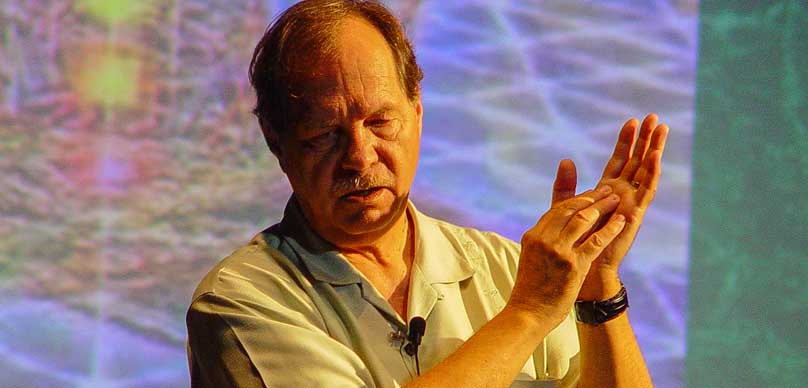
BPS 013: Chris Vogler: Screenwriting & The Writer’s Journey Blueprint

If you have seen Star Wars then you know Joseph Campbell‘s work. If you ever have seen The Lion King then you have seen one of Campbell’s best students, Chris Vogler, work.

Related: Michael Hauge: Writing a Screenplay That Sells

Chris Vogler wrote the game-changing book  The Writers Journey: Mythic Structure for WritersI read this book over 20 years ago and it changed the way I look at “story.” Chris studied the work and principles of the late master Joseph Campbell. His book The Hero with a Thousand Faces was the bases for Star Wars as well as almost every other Hollywood feature film in the past 60 years.


What Chris Voglerdid so well is that he translated Campbell’s work and applied it to movies. The Writer’s Journey explores the powerful relationship between mythology and storytelling in a clear, concise style that’s made it required reading for movie executives, screenwriters, playwrights, scholars, and fans of pop culture all over the world. He has influenced the screenplays of movies from THE LION KING to FIGHT CLUB to BLACK SWAN to NOAH.

“I teach sometimes, and always say that Chris Vogler is the first book that everyone’s got to read.” — Darren Aronofsky , Oscar-nominated Screenwriter/Director, Noah, Black Swan, The Wrestler

Pretty high praise from one of the best filmmakers working today. In this episode, I ask Chris to break down a bunch of concepts of the Hero’s Journey, why it resonates with people around the world and what makes an amazing hero and villain.

Enjoy my conversation with Chris Vogler.

Right-click here to download the MP3

SPONSORS

  1. Bulletproof Script Coverage – Get Your Screenplay Read by Hollywood Professionals
  2. AudibleGet a Free Screenwriting Audiobook

Alex Ferrari 1:24
So Chris, thank you so much for being on the show. We really appreciate you taking the time. I'm very glad to be here. So So you know, just so everybody knows in the audience, I read Chris's book, the writers journey. I don't want to date anybody but over 20 years ago, and it definitely changed the way I look at story. So for that, I thank you very much, sir.

Chris Vogler 3:01
Hey, you're welcome. Yeah, I was a very hungry young, youthful author.

Alex Ferrari 3:06
very youthful, you must be 30 now, so you did it when you were 10. Fantastic. So um, how did you start in the film business? Well,

Chris Vogler 3:16
I had a path that led me through journalism school first, back in Missouri, where I'm from, and then I got into the Air Force, and they sent me out to Los Angeles, I was lucky, it was the middle of the Vietnam War. And instead of going to Vietnam, they sent me to LA and I worked for an outfit that made documentary films about this space program, and so forth. And after that, I got to go to film school on the GI Bill, and went to the USC School. And, and that's really where things came into focus for me, because I encounter the work of this man, Joseph Campbell, who wrote The Hero with 1000 faces and was a big influence on George Lucas and many others. And that kind of, you know, focus me on my quest to find out what stories were all about. So that and also, there was a class at school that was important called Story analysis for film and TV. And that was like a career pathway for me, because it showed me that, you know, thinking critically and writing about stories and reacting to things intelligently was, you know, a way I could make make a path for myself into the business.

Alex Ferrari 4:35
Now, what um, what about Joseph Campbell's work really kind of drew you drew you in and what was the revolutionary part of his work that kind of, you know, really sparked something in you?

Chris Vogler 4:47
Well as as a kid and just a pure consumer of movies and TV from the Midwest. I grew up on a farm. It was, you know, wonderful and mysterious to me. How They sort of hypnotized me with these great images. And all that night, I was on a quest I was trying to figure out, I was looking for the book, where's the where's the the, the rules of this? Where's the physics of it? where's the where's the color chart of the periodic table or the the theory of how they do it. And you know, I got to film school and I found out well, there really isn't anything like that. And then just sort of by accident, I found the work of Campbell. And he wasn't thinking about movies. But he had thought long and hard about mythology and these patterns he kept seeing about heroes, and how that related to you know, current findings in psychology, especially the work of Freud, but more Carl Jung In school, so he was combining the patterns of old mythology with modern psychology and kind of handing it back to us and saying, Okay, here's, here's what's hidden inside all the stories, advice for how to live. And that turned out, I thought, to be a great blueprint for telling stories and communicating with an audience. So that was my, my breakthrough about it.

Alex Ferrari 6:14
Now, can you talk a little bit about what the hero's journey is?

Chris Vogler 6:18
Yeah, you know, this is a pattern that Campbell found in the ancient myths, he kept seeing the same sort of signposts over and over again. And he had, you know, somewhere between 16 and 20, different events, psychological, mostly events, that would occur in almost every story, I worked with a little refined it down to 12 things, but the essence of it is, you know, everybody at some stage in their life has an ordinary world that they know, and then they're going to go into something new and different, and you know, a new relationship, new job, a war starts or a catastrophe happens, or a health crisis, whatever it is, there, you're going to be in a new world. And so it's about exploring that world, and how the difficulties of it can almost kill you, that's sort of the essence of it, that this is Dane, you know, change in life is dangerous. And it can be threatening, but that can also change you and make you stronger and more resilient, and, you know, more more alive and conscious in humans. So that's, that's the basic essence of it, people started an ordinary world, they go out, you know, either because they're itchy inside, or they are being forced to it by outside circumstances, and they explore something new, there's often a mentor who helps them that's an important part of it, the presence or absence of somebody who can guide you and be a role model kind of, but you know, that that's, that's the essence of it, that you were transformed by an intense experience of going through a change and entering a new stage of life and you're not the same you come out as a different person. So that's kind of the, the essence of the idea.

Alex Ferrari 8:16
So would you agree that for people who are not familiar with the hero's journey, a great movie to illustrate this would be Star Wars The original one? Episode Four, then you hope?

Chris Vogler 8:28
Yeah, yeah, that that was, you know, it's always been the easiest way to show where the signpost star because George Lucas was very conscious of Campbell's work he had read about it even before film school he was aware of Campbell because he had you know, studied anthropology and various other things and and found Campbell that way and had the same I think inside I did that Jesus would be great for plotting stories and giving them a little bit of this mythological resonance in psycho psychological reality. So yeah, it's it's easy to see that signposts because he made them big he made all the turning points. Very clear, and obvious. You know, the, the pattern calls for a call to adventure and there's the Obi Wan Kenobi literal, your literal call for adventure. Yeah, there's literally this call to everything is literal like that. There's supposed to be the handing off of some kind of relic of the past that that's going to guide you and help you and so he gets his father's lightsaber from Obi Wan Kenobi. There's supposed to be a mentor, there's Obi Wan Kenobi, and so forth. You know, when they when they come to the, to the cantina. That's a typical situation in the stories that you go to a bar or a saloon or a watering hole or something and you find out what the new world is like and then boom, you take off and that's an important part of the pattern to that that sense in the audience that we know, there's some preparation that needs to be done to meet the hero and figure out what the problems are. But then we want the story to take off. And that should happen, you know, ideally, maybe 20 minutes or so into the film half an hour and maybe, but

Alex Ferrari 10:18
going when he jumps on when he comes on the Millennium Falcon, basically,

Chris Vogler 10:21
yeah, when they go off, it's it's very, very clear. And, you know, there's, there's other things too, that I think check it easy to see the yearning of the hero, you know, when he looks out at the twin sons on the planet, you know, he wants to get out there, and you know, but he's stuck. He's a farm boy, but then boom, this rush of events, takes over and then meets all kinds of monsters and you know, almost dies a couple of times. And that's, that's par for the course, on this, this hero's journey deal.

Alex Ferrari 10:53
Now, can you break down, at least just give a basic understanding for people who don't understand the basic three act structure? And how that might also translate into a trilogy? As well, like, cuz I know, I'm going to use Star Wars again, you know, star, new horror, Empire and return, all that kind of stuff.

Chris Vogler 11:10
Yeah, you know, there's a beautiful thing going on with all of this, the current study that people are doing of story structures, and narrative and so on, which is, at first, my competitors, and I were doing seminars, and workshops, and writing books, all hated each other, and we're jealous. And then, you know, and said, that other guy's system is stupid. And mine is the only one that works, you know, that was procedure. But we got over that. And we all mostly realized it, we're all talking about the same thing. And it's human. And it's kind of hardwired. So these things beautifully start to overlap. And, you know, sort of parallel to my 12 Stage pattern is something called the three act structure, which was really pioneered by a man named Syd field, who was a wonderful man, of course, last year, so and was a real pioneer, because he laid out this unwritten rules of storytelling, that he sort of put together as what they call the paradigm of three act structure. And there's nothing all that earth shaking, he knew about it, but just like my idea with the hero's journey, this can be traced back easily to at least Aristotle, who taught, you need a beginning, a middle and an end. And the energy I think of this is what's important to grasp about the strict the three act structure, it's to use a metaphor, it's like, drawing a bow, you know, you're you're, you're pulling back in the first act, you're, you're loading that bow up with energy, and then you're taking aim and the second act and dealing with the wind and all the other challenges, and then you fire it. And in the third act, and your intention, or the situation of the hero, you know, finally goes to some kind of target, and either hits or misses, you know, and if it misses, it's a tragedy. And if it's a hit, then, you know, you've got a comrade happy. And so, you know, that's one way to, to look at it. And there's, you know, many metaphors that you could, you could use on this, but that, but but that's a good one, that you're, you're gathering energy, you're building tension, then you're, you know, really zeroing in on critical things, and then sort of launching the whole thing in the final act. And that overlaps with my pattern.

Alex Ferrari 13:44
So like a movie like Pulp Fiction, which does has a it's a very unique structure. Can you kind of break that? Because it's genius, because it follows the hero's journey in its own structural way. Am I wrong in that or keep you break that down a little bit?

Chris Vogler 14:00
No, you know, that's a really interesting and challenging one to analyze. Because it's so ambitious, first of all, those guys, the writers of that we're trying to Roger Avery and Tarantino we're trying to deconstruct things and tell multiple stories, and that's very challenging, and they chose to do them out of sequence and, you know, play around with our expectations of what will happen in order, you know, and that's refreshing, but you can and deconstruct it, you can reconstruct it, and sort of lay it out in a linear way. And it's, it's a very, in some ways, conventional storytelling that they're that they're doing the heroes on all the different threads of the story, have an ordinary world they all go through some kind of drastic challenge and change and enter into, you know, some new situation and it And again, they either hit or they miss. I mean, that's the beautiful thing, especially about the main story with John Travolta and,

Alex Ferrari 15:11
and Sam Jackson it,

Chris Vogler 15:13
it Samuel Jackson is is that one of them Tarantino sees this they have this miracle happen where they're supposed to all be shot to pieces and in a drug shootout and miraculously, Sam Jackson says they're missing and he says that's that's a clear sign from God, we were spared for a purpose. And so my life has changed now. And Travolta says, that was just a coincidence, it doesn't change anything. And, you know, the story sort of sits in judgment of those guys. And at the end, the writers give Samuel Jackson eternal life and say you you're going to go on and be like, the guy in cockayne travels around, who travels around righting wrongs and doing good in a nice, Zen kind of way, doing little harm and little bloodshed and revolt is killed getting off the job, you know, he's he jumps off the toilet, and Bruce Willis shoots him to death. So

Alex Ferrari 16:12
spoiler alert,

Chris Vogler 16:15
the story and the story. The writers, you know, sit in God's chair kind of and give their their judgment. So I'm How do you react to this new thing? That's, you know, in the in the second act, the challenge, and then how does it land in so to speak, the third act, although it's all messed up, you know, in the editing process, actually, it's, you can still make that kind of clear moral sense out of it.

Alex Ferrari 16:45
Now, in your opinion, what makes a good hero and a good villain,

Chris Vogler 16:51
this is, this is great, they're sort of, you know, mirror images of each other, sort of reflections of each other. A good way to look at all the characters is that in some way, everybody else in the movie is like a another possibility of the hero that that even the love interest, male or female, is like your opposite side or your opposite possibilities. The villain is the the dark possibility of you the clowns, and tricksters around you, those are the funny possible versions of you. So the villain is some kind of mirror image first. But what makes a good hero is somebody who is complex, and they're broken somehow, that seems to be really deeply essential in all the way back to the mythology is that the hero will be strong and powerful, and you know, maybe, like Hercules stronger than everybody else, but he's got problems, and something broken or something wrong with him. In his case, it was dealing with women, and sometimes He misjudged situations and would go off on people or, you know, caused a lot of problems because he was so impulsive. So, you know, all the way back in the mythology, this idea is planted that the hero is more believable and more human because they're imperfect.

Alex Ferrari 18:22
With that said, I don't mean to interrupt you. I don't mean to interrupt you. But I just wanted to make a real point here. A good hero, like you said, all those flawed heroes, is that one of the reasons why it's so difficult to write for a character like Superman, who's essentially a God, with the movie coming out this weekend. Just curious on your take on that, like, that specific character and how difficult sometimes it is to make those kind of characters work as a hero?

Chris Vogler 18:49
Yeah, yeah, that's certainly a very interesting franchise, to me, partly for those reasons. That it is a mythological character. And as you say, he's got some semi divine potential. I actually was called in at one point by one of the studios to, you know, sort of put Superman on the couch and shrink him and put him through my mythological process. And, you know, this is I think, at a point when they were trying to decide are we going to do Batman versus Superman, this was many years ago. That was considered the this current film has a long, long history. They they asked me to sort of shrink Superman and it was all about the flaws and the limitations. That that's what makes him interesting is that even though he's invulnerable, most of the time, they're still conditions like kryptonite and red and green, right, that have different effects on him and then he's emotionally kind of a train wreck in some ways, and that You know, charming that, that when he puts those glasses on for some reason, he becomes shy and bumbling and can't say what he really thinks and is, you know, very, very easy to identify with. So, you know, you kind of get the best of both worlds is a superhuman set of possibilities, but with some realistic limitations. And then

Alex Ferrari 20:24
that's why I've been Batman. Well, that's why I like that, like Batman is such a relatable character, because people, because people can identify with him, he's, and he's much more popular than Superman, in many ways,

Chris Vogler 20:37
very, very interesting. How we use these characters as meditation devices or something. And we think through the stories about, you know, different developments, what does it mean to be a man, what does it mean to be a patriot, you know, even look at the colors of Superman's costume or Batman's costume. And it just, you know, is sort of a mirror reflection of what's going on in society at the moment, or what society thinks is important. So, you know, Batman, for some reason, that one seems to be a laboratory to experiment with all kinds of different kind of dark brooding thoughts. But is there such a range within Batman that people can just turn the dial to comedy and, you know, grotesque silly things and, and get a big kick out of it, and even find meaning in it. But then turn the dial the other way to Batman is a complete lunatic and, you know, a reflection of the nuttiness of our own society. So it's, it's really fun to see how the writers do this, but also really how the consumers are, are using it to figure stuff out. It's it's just entertainment, you know, they say, it's just cotton candy for the mind. But there's much more going on in even the silliest things.

Alex Ferrari 22:11
And you were continuing with the villain, what makes a great villain.

Chris Vogler 22:14
Yeah, just, I think, you know, very much along the same lines in the kind of fundament, that there should be, you know, a lot of powers, but also limitations. And especially when you are dealing with magical figures, who have, you know, vast magic powers, one of the things that helps is to make a rule, it costs something that every time you do something bad, or something magical. It's not free, it costs you something you may lose, you know, you may become partially partially paralyzed, you might become blinded, you know, every time you use your X ray vision, or whatever. And that just makes the game so much more interesting that he can do anything. And then for the kind of more every day, villains, I think it's useful to realize they don't think they're villains, they think the hero of your story is the villain, that they're, they're totally convinced they're right. They, they have built their whole life is built around their view of the world. And so, again, they're the mirror image of the hero. And when the hero is up there down, when the heroes happy, that doesn't make them happy. And vice versa, you know, they're when they're happiest, the hero is the most miserable. So they make diagrams, they make waveforms, and they're they're perfect mirrors of each other, sometimes.

Alex Ferrari 23:51
They balance the yin and the yang, they

Chris Vogler 23:53
balance each other and, and then there's the whole idea of archetypes, which is something I got out of Campbell's work, you know, also from Carl Jung, who said inside everybody there is a cast of characters basic characters, a mother, a father, a hero, a villain, an angel, a devil, you know, all these kind of basic human possibilities. And at first I thought, the villain is the villain, and and should be, you know, really mean and, and tough all the time. And the hero should be heroic all the time. And the mentor should be mentoree all the time and so forth. But then I realized Life ain't like that. And people have different masks that they wear. You know, maybe you wear 20 different masks in the course of one day. That you're a tough guy one minute that you're a coward the next minute and you're a teacher, one minute, you know, and so forth. So, villain. The villains are wearing a mask, you know, most of the time of the villain but there's other masks in there. And again, they may they can show kindness they can, they can be heroic, they can be a teacher to the hero. You know, they can feel sorry for the hero and an almost spare the hero all these things make them more interesting than just nah, I'm here to you know make your life art so so is it these are the shadings are what make it realistic and more fun.

Alex Ferrari 25:25
Now, the hero's journey is become, and it hasn't become but I guess it is so relatable to so many people around the world, regardless of religion, society language is that because it's just something that is hardwired into every human being, no matter where you come from?

Chris Vogler 25:42
Yeah, it's, it's, there are two things in operation here. And one of them is that I do make that assumption that in the course of evolving into human beings, we created a whole bunch of structures, like families, for instance, and societies, we created these structures and stories are one of those that, you know, I think we actually grew a part of the brain that handles that, that allows you to think and metaphors and imagine people, you know, when somebody's just talking to you and saying, Once upon a time, there was a little girl, you somehow create that world and the little girl. And that's, that's all part of being human. But the other side of it is, then you have millions and millions of examples of these things in the form of stories. And people are, are swimming in an ocean of stories in their lives. And even if it wasn't hardwired, we'd all be taught by Hollywood movies and TV and the myths and legends of our cultures, we'd all be taught? What are the basic rules of these things? And you know, what is the what is the shape, and the effect, but I go back to the first one, that it's hard wired, because it seems that certain images and situations will very reliably trigger emotional and physical reactions in the audience. You know, things like people in trouble, people helping, you know, in sacrificing their own lives to help somebody else. Somebody sneaking up behind you to threaten you, all those things get physical reactions, and it's pretty reliable across cultures. So So there's

Alex Ferrari 27:34
so would you agree that and this is something I've always told people that asked me about story, I'm like, Well, if there was no story in the world, I don't think the human experience can move forward. Like just on a daily basis. How many times do you just tell, well, how was your day at work? That the story, you know, and all these kind of things? Do you agree with that, like, without story, we just couldn't move forward?

Chris Vogler 27:56
Yes, it would be a very different world. You know, I suppose there is an engineering version of the world where, you know, everything would be expressed only as, as mathematical formulas or diagrams or something. But even that's for and the metaphor is telling some kind of a story the world is made of numbers. You know, that's as much of a story as Peter Pan. So yeah, I think it's true because of the fact that it's, it's just so hard wired into us. You know, people say, I remember this one, when Johnny Carson died, people, a lot of people said, What's it like to be Johnny Carson? In other words, you couldn't really tell me how it was to be Johnny Carson. But what's it like, you know, and give me a metaphor. It's like being the king, or it's like being on top of the world, or it's like being under a spider. All those are metaphors, and they tell little stories. So we think in poetry and metaphors, just automatically, and it's so embedded in the language, we don't even realize it. You know, like I just said, it's embedded in the language. And so I've created a metaphor that there's a, there's a mass and then inside that mass, like raisins inside a loaf of bread. There's embedded these, these ideas. So So these things are hard to escape, and you kind of can't see them, because they're so dominant. But, but now there's good things about it, because it does allow us to communicate, and to get ideas across and convince people of things by telling it in the form of a story has all politicians know very well, it's one. Yeah, it's one thing to say the veterans are being mistreated. But it's much better to say here is a veteran and isn't what happened to him and look, and he, you know, had all the sacrifice and now he's suffering. And so now wow, that's a whole different level of relationship and identification. So

Alex Ferrari 30:13
Oh, I see it I see with my, my daughters who are four, how story impact them and how I'm using story now just to kind of relay core, as George Lucas said, the meat and potatoes of our society, like, you know, the boy that cried wolf, don't lie, you know, things like that. It's so powerful and how these stories like the Grim Tales and things like that, they just gone from generation to generation now the Disney stories and, and the movies and stuff, like their movies that I saw when I was growing up. Now I'm showing them to my girls, and, and Star Wars is one of those, you know, kind of mythos those, those generate the new generations are catching up with that, you know, the thoughts that we grew up with? Younger, it's just fascinating to watch. Now, are, are we all on our own hero's journey? Basically?

Chris Vogler 31:04
Yes, that's one of the biggest insights I had, by the way, your daughters are very lucky, because you're keeping up this ancient tradition, and you're not outsourcing it to the technological stuff. That's part of it, but introducing them to it and talking to them about it. Reading the stories to them, especially is, is critical. But yeah, I mean, that was the big insight from the very beginning. I said, Wow, when I read Campbell's book, at film school, I kind of skim through it, I'm a good skimmer, and I skimmed through it on the bus on the way home. And by the time I got off the bus, my whole life had been changed. And one part of it was, yeah, this is great for making movies, this will make better, more entertaining more international movies. But at the same time, I was aware, this is a great guideline for living. It's a template. And and it's a again, it's a metaphor, it's telling you a story, once there was a person who you know, lived somewhere, and they went someplace, and it changed it. But it's, it's just so clear to me that our ancestors thought it was important. And they preserved it in the form of stories, because it's your guidebook for life, for how to deal with the inevitable things, things are going to come along and wreck your plan, no matter what that plan is. And so how do you deal with that? And the stories are just an infinite Well, of options and solutions, and failures, you know, that two examples of tragic failures. So, yeah,

Alex Ferrari 32:49
now What? What? No, no, I was gonna say, I was going to ask you, what do you how do you know you're reading a good story when you're reading? Well, I'm sure you read a few scripts

Chris Vogler 32:59
in your day. Yes, the number count, it's hard to say how many but it's well above 20,000. People like to believe but but I there's there's no question that, you know, I have file cabinets filled to prove it, of my reports that I've analyzed 20,000 stories at least. And, you know, the the elements of the good one are. I'm a sucker for poetry and and for for just good writing. And I, I now I'm sort of ruined as a reader. Because I have low tolerance for bad writing. And I'm talking here about just the how do you compose a sentence. And there's, there's, there are people who, you know, they might be giving you good information. I'm reading a book about the city of Venice right now in Italy. And it's good information, but it's given in this very flat way. Venice was a big city in the 1400s. It was important, you know, and there's no music or poetry in that at all. But But But I appreciate so much the beautiful writers. Now, screenplays are special, they're supposed to be very spare and simple and short sentences like that, for the most part. But there's, there's just a confidence that you feel when somebody knows how to how to build the nice, pretty sentences, not fancy but you know, elegant. So that's, I know, this is very subtle and hard to pin down what I'm saying. But beyond that, the simple thing for you know, like, what's makes a good screenplay is, man, they grab you right away, and you know, right where you are and who it's about, for the most part. They're very clear about this as the hero spending a little time describing her. Maybe giving her are some special behavior at the beginning that gets my attention? Why is she doing that? And that hooks me in. So, you know, there's their scripts, you read 20 pages, you don't know who it's about, you don't know what it's about, you don't know, you know, even you know, is, is this the main location? Or is this a little prologue or, you know, there's a lack of clarity. So I just like it when, when things are simple and clear. That's a sort of a motto of mine. From that the classic old romantic comedy, It Happened One Night, Clark Gale. Yeah. Yeah. Clark Gable is a reporter in that, and his motto is simple stories for simple people. And it's not condescending, it's it's a really good artistic rule. Just keep it simple. Tell me the story. And, you know, make it elegant in language and so forth, if you can, but, you know, be clear. Above above all, that's another thing I'd rather be clear than pretty in my, in my storytelling, and pretty historic, you know, sometimes, you know, overly flowery, it can also mean, look how cool I am. I'm not telling you who this guy is. And I'm going to make you wonder what's going on for a long time. Or I'm not going to tell you, you know, that sort of razzle dazzle

Alex Ferrari 36:25
is are using 75 cent words, when yes, that 10th That letter?

Chris Vogler 36:29
Yeah, yeah, or another version of it is, and then the camera using a Zeiss iKON lens with a 35 diopter on it in the corridor at about 3.6 miles per hour. And then, you know, this kind of over directing is another another version of how

Alex Ferrari 36:47
you read, have you read? Have you read scripts to have that kind of? I mean, I've never heard that is janky. But have you read something like that?

Chris Vogler 36:53
Yes, yeah, it does come up every once in a while. And I think it's generally from someone who isn't confident and hasn't done it very often before, and they're trying to prove, look, I know all this stuff, I took a class or I read a book, or, you know, I went to film school. And, you know, I, myself, I think there was a little bit of that in some of my early scripts, because, you know, also people have a passion, they see it in their head so clear, they want to make sure it's down there on the page. But I learned better ways to do that, than to say, you know, you put please put the camera on a tripod, about four feet off the ground, you know, it's not that, but you know, you it you indicate stuff like that by, he looks up from under his eyebrows, and she sees a flash of light in his eyes. And that gives you that makes the shots in your mind better than saying, with a tight close up, just from his eyebrows down to his nose, you don't have to do that you just draw attention to the the detail you want to see the gun. That's a great note. So, and it is important, these things about the body, the hands, skin, eyes, you know, referring to those in the text. It kind of creates the close ups, you know, just just writing that in your slugline his hand near the gun, you know, is that's that's better than saying a tight close up or that you've seen in your mind immediately. So.

Alex Ferrari 38:36
So you you worked at Disney for a while, correct?

Chris Vogler 38:41
Yeah, that was I guess the that was the longest run I had at any of the studios. I had to sort of like military tours of duty at Fox on either side of that at Fox as a reader and then later as an executive. But in the middle was about 10 years at Disney. And that's a long run. And that's a long run. Your normal gig is about two years. Honestly, people people say you were doing something right? Jobs. Well, I was doing something right. But also within those 10 years, I worked for about four or five companies within Disney. So I kept changing over. And as a new company was developed, like they created Touchstone type period pictures and various other and then there was image Hollywood pictures and Hollywood pictures and you know, all these different divisions and as each one was created, I would come in and write some memos and read some scripts for them and, you know, get involved and I was a little bit conscious of that trying to diversify and get as much stuff into my portfolio as I could. And that's a sidebar here but very important. A lot of my thinking and work these days is about branding. And somehow intuitively, I was good at that. And before the internet, I created a kind of viral marketing for myself through means of the Xerox machines and you know, fax machines and stuff like that. I spread a viral idea through the mind of Hollywood, which was this memo that I, when I was when I was at Disney. And the memo simply took Campbell's academic idea and translated it into Movie language. He talked about the Epic of Gilgamesh, or that fairy tale of the three shoes or something, and I would talk about, you know, here it is in ordinary people in Star Wars and various other classic films. So

Alex Ferrari 40:55
I even read that at a film student, I read that memo. That's how far that memo went, I was in Florida. And I heard about this memo that said, this is the this is the the guide book, the blueprint of all story. And of course, as a film student, you you're like, Oh, my God, I have to read this. And it would circulate around the school. And then I mean, so you did a good job. Without email. Without internet, you were able to create a viral piece of material that branded you completely. Yeah, I went, I got your book.

Chris Vogler 41:30
It definitely did. And I have another thought about the branding, which is that branding is really a matter of association. You're associating yourself with different things like Coke. One of their mottos was coke ad for life. So they say, Coke equals life, and whatever you know about life, whatever you like about life. Yeah, there isn't coke. So

Alex Ferrari 41:54
arguably, arguably, Coke takes away life. But we can talk about that.

Chris Vogler 41:58
Is that true? Yes. Yes, yes. It's certainly if you want to kill something, let it swim and coke for a while. But yeah, you know, if you want to take chrome off your bumper, that that's another it'll, it'll eat the Chrome right off. But it's this matter of the where were we with this is branding branding, on the branding thing is, is that, yes, somehow I was able to do that and brand myself with this thing, because it was almost like something that just popped into my head. When I was standing at the Xerox machine. I had written this memo. And I said, you can sort of load this up with intention. And I even left a copy of it on the Xerox machine on the glass. intentionally thinking the next person coming along may find this and who knows what they'll do with it? Well, let's see. Let's see where that goes. Wow. And, and, and, you know, I think what happened was an executive came in just copied something and found that and plagiarized it. He took my name off, he put his name on the cover, and sent it up through the company ranks because he thought it was good. And it got to the top guy in the company, Jeff Katzenberg. And he said, This is great. This is the this is the greatest thing that's happened since popcorn, you know, there's all our movies and our animation should. Everybody should read this. And eventually you got credit, though. Yeah, I claimed credit, which is a little out of my character. I'm kind of shy and retiring. But I attacked that one. When I heard that this had happened. I wrote a letter to Katzenberg. And I claimed it and I said, the word's gotten out that this memo is on your desk, and I wrote it then that this other guy, and I want something I asked for something, which is I wanted more involvement in the company. And he immediately responded to my amazement, and threw me together with the animation people and that was kind of the the high point of my involvement with Disney. They were just starting Lion King. And I went over there to talk with the animators and writers. And I thought, okay, now I have to do a sales job and I have to explain who I am. And I have to tell them what the hero's journey is. But I walked in the door and the first thing I saw was a corkboard with the storyboard of The Lion King and it was all mapped out by the hero's journey. Step one, step two step three, really memo. The memo got there ahead of me, and with me doing nothing. It did a complete sales job for me and just rolled out the red carpet. So I walked in and I knew exactly who I was and what my idea is.

Alex Ferrari 45:07
We'll be right back after a word from our sponsor. And now back to the show. Now, arguably, Lion King was for met for well over a decade, if not 20 years, it was the biggest animated movie ever. financially.

Chris Vogler 45:29
Yes, it was, I must, I must tell you a bit of a surprise to all of us. Not all of us, but many of us who worked on it, because Disney had been on this rocket ship in line. And then they'd had a couple of, you know, they made they made 20 live action films in a row that were hits, and nobody does that. Now, something bizarre going on. And then they had made beauty in the beast, Little Mermaid, Beast. And those, those, those were so good, and so revolutionary, they completely revive things, we all kind of felt like, well, the Lion King will take a step back, and it'll just be another picture, and it's not going to stand up, you know, you can't keep going like that hit after hit. So you almost hope that one of them will drop back a little lower expectations. And then you come back and you know, try to top yourself. But

Alex Ferrari 46:28
that would that would have been probably Pocahontas, not like navy. So

Chris Vogler 46:31
one of those, one of those that followed in the chain. But you know, it surprised us all. I remember seeing the screening the opening night. They hadn't party, you know, and we enjoyed all that. But the applause when the movie was over, was kind of that was good, you know, which is true for almost all Hollywood screenings, you

Alex Ferrari 46:57
know, every single one of them. Absolutely. You're correct. You

Chris Vogler 47:01
That wasn't too bad. But But Well, we underestimated the way it would connect around the world. And I've heard that everywhere in every culture, that people say that's a Japanese story, you know, or that's an obviously African but you know, every culture relate somehow. So they they did something right. And I had my little part in it. Yeah, I just I had a little story about that opening sequence, the circle of life sequence, they had fully animated that by the time I got there. And they showed me that sequence. The first time I met with them, and then the rest of it was either in pencil sketch form or actual post it notes on the cork board storyboard style. But my reaction to it was, there's something missing. And the missing thing was when Rafiki, who's the kind of the mentor of the story, the kind of magical guy when he holds up the baby Simba, and he shows everybody. I said, Wouldn't it be cool, if those big clouds up there suddenly opened up and a chef, the light came down and lit up the baby. And everybody in the room, wrote that down and started drawing pictures of it, because the animators communicate. And instead of writing notes down, they draw pictures. So everybody drew that. And they, they stopped the production and put that piece in, which was a big, expensive deal, but they said it was worth it. And that makes the little button on the scene. It's this one little thing. And there's a exactly right place in the music where the music kind of explodes. As the baby lion is held up, and that shackle light just punches it. So

Alex Ferrari 48:57
it makes the theme it honestly without no question about it. I still remember when you were saying and I see it so clearly in my head, like, how could you not have that?

Chris Vogler 49:05
Yeah, yeah. And it was like it was all invited and set up by what they had done already. But that's that one little piece, kind of nailed it. And the I saw a physiological reaction in everyone in the room when I just said what if the shaft the light comes down, and I paused a minute and I noticed everybody's there, like shivering and quivering and kind of moving around in their seats, and then started furiously drawing that that image. So it told me something and that's very important to me is that the story or the good ideas actually reach into your body and they do something they they they cause organs in the body to react and secrete fluids, make you shiver and make your hair stand on end and make you cry and do all these other physical things to you. So that's a big part of my thinking now is The, what I call the organic storytelling, that it's in the organs of the body, where the story is actually actually happening. Your brain is, you know, processing and thinking and comparing. But the direct experience is right there in your heart, your lungs, and you know, your guts.

Alex Ferrari 50:22
And also, like, we talk a lot about story structure, and the hero's journey and everything like that for actual movies. But there is a part of that, that goes through the marketing of it to to create a storytelling process of the marketing in two movies recently that has done that amazingly well was obviously the Star Wars movie was probably one of the best marketed movies I've seen in in a long time and Deadpool, another amazingly marketed film. Can you touch a little bit on that? And how story played a part in those two campaigns?

Chris Vogler 50:56
Yes, that's something I'm very interested in. I've done work with companies that do trailers for movies and done a lot of thinking about, about how they connect. And, you know, it's, it's something in the first case in the Star Wars case, they're dealing with what you know. And the objective here was to say, you knew this, but you didn't know this. And so there are little things like, there's the sort of iconic shot of the current villain with his lightsaber with the side flame out, sort of flicks flicks it on. And that was like, Oh, this is telling you it's plussing. This, it's telling you this is going to be the Star Wars you love. But with some new twists and X ray, a simple thing. But something also a little controversial, got people talking about what does it mean, and if there's even look realistic and possible, and so that all worked very well for them. With Deadpool, that's just a brilliant job of projecting a voice. It was it was all about the voice and the kind of iconic look at the character in his reclining lazy position. Those those two things together, made a real strong campaign

Alex Ferrari 52:24
and opposed to the Batman vs. Superman campaign, which told you from what I hear I haven't seen the movie yet. But it told you the entire story. It shows you all the points, the big, big moments already have been given away in the trailer, which is I think, what would they had such a potential to do a Star Wars, if they had the confidence? I think that was the big difference. I think the studio behind it with Star Wars, there was a confidence with the marketing that like look, we're just going to just give you just enough to get you excited. And that's what brought everybody out. And with a story like Batman vs Superman, which is obviously like, you know, the fight of the of the century, they could have done that. But they didn't they went the complete traditional old school. Let's show them all on the trail. And let's see if we can get some butts in seats on the first opening weekend. Do you and I don't want to get to know you. I know these are some of your clients. So feel free to say no comment.

Chris Vogler 53:17
It's It's It's fine. I these are observations I've had anyway. You know, it's a matter of his choice about it. And this particular technique of telling you everything and giving you all the plot beats was really worked out at Disney and it was part of their success for a while that that they they were reassuring you this movie with you know Richard Dreyfus or Bette Midler, whoever it was, they were putting in movies in those days, back in the 80s talking now, they would they would lay out okay, then he's in his ordinary world, and then he's going to go to the special world and it's going to be weird and funny things will happen, but dangerous things. And then at the end with the thrill, the love of a good woman, he'll figure it out. And that worked for a while, but then people really rejected that. And as you say, it's a safety it's a, you know, a default way to do it. And it's so much better when you really know what you have to sell. I was impressed by one campaign in the last couple of years. For Maleficent the movie looks back at Sleeping Beauty and does tells a story from more or less the villains point of view. They knew what they had to sell Angelina Jolie with the weird black corns in costume, and they just sold that, you know, that was their tip and so, you know, I think that's the the ticket is you have to know what it is you have to sell and sometimes it is the story or, or it's a new Voice or new character?

Alex Ferrari 55:03
So I'm going to ask you, right? Now it's going to ask you the same question that I asked all of my guests. These are the toughest questions. So please, what is the lesson that took you the longest to learn whether in the film industry or in life, the longest

Chris Vogler 55:21
to learn, I guess that would be something I'm still dealing with. And in in that department, I would say, honestly, it's getting out of my own way. I'm still learning that, that I tend to do things the hard way and make things hard for myself and make more of the difficulties than they they need to be. So that's, that's been a slow lesson for me that I kind of sum up by something I call it's not my idea. But the do easy method. If you're interested in this, it's it's something that was cooked up by the writer William Burroughs to deal with difficulties in his life. But you just sort of approach everything very gently. And you know, where computers maybe drive you crazy and you want to throw things, there's a way to caress them, so that it isn't so difficult and painful. And I'm not a master of this, by any means. But that has helped me. So that's

Alex Ferrari 56:34
you're still going through your hero's journey in regards to

Chris Vogler 56:36
that? Oh, most definitely. Yeah. Oh, yeah.

Alex Ferrari 56:41
So why don't your top three? Exactly. So what are your top three favorite films of all time, no order or anything like that? Just three films that really touched you? Well, sure,

Chris Vogler 56:53
I always start with my desert island movie, if denied all other films would be the one. And for many years, this has been a movie from the 50s called the Vikings, which is really the source material are very close to the current Vikings TV series. That's on the history. They're they're really drawn from the same literary source, the same historical character. It's the same idea. A great adventure movie with Kirk Douglas and Tony Curtis and Ernest Borgnine. Exactly, and, you know, amazing effects and beautiful ships and all that. Number two, would be a movie called Gilda, which is, uh, oh, yeah, black, black and white. And it's just a special film to me. Because it's a film noir. It's about a triangle of evil guy and woman who is associated with him and a young man who used to be her lover, and, you know, the the loyalties among all those three people. But it's much more profound than that. It's kind of an essay on good and evil and the devil and God and just profound kind of movie. And then our little more modern thing, is a film I'm working with right now. I'm getting ready for electric in Paris. And I had to do a French film. So I picked a film called a more, which won the Academy Award a few years ago, for Best Foreign Film. And it's about old Parisian couple. And the wife has a stroke, and she eventually declines and they have to deal with her complete downfall as a person. very uplifting story. Got it? Yeah, it's it's a tough one. But just beautifully made. And a great example of simple stories for simple people in the best way. Very confident. You mentioned that before. That confidence in filmmakers and storytellers is really nice when you have it. And this guy's very confident. He does a lot of things where he'll just have a black screen, and maybe you'll hear people say, are you okay? And the other one says Jamar, right now, there's no problem. And they're in bed asleep. And he'll just let that black Dean run for almost a minute. And you just kind of breathe and live with it. And boy, that takes confidence. But he's got

Alex Ferrari 59:33
and what is the most underrated film you've ever seen?

Chris Vogler 59:38
Let's see. Oh, yeah, I go to a film that's actually kind of hard to find called They Might Be Giants with George see Scott. And Anne Bancroft, I think is in it and it's a play on Sherlock Holmes. It's about a crazy man. And in New York who thinks he's Sherlock Holmes, and they send us a social worker to visit him. And her name happens to be Dr. Watson. So it goes well there. I've been waiting for you, you know, and she goes, but and eventually, they get, she gets lured into it and realizes he is really the latest incarnation of Sherlock Holmes, or he believes it's so much that, let's just accept that. And there really is like a Moriarty, a bad guy who's doing things and they rally wonderful oddball. All the oddball people in New York are rally behind them to stand up to this shadow of Moriarty. And it's a wonderful inspiring film. For some reason that one's not in a lot of packages, and it didn't get sold. And it's hard to find. But it's a little treasure.

Alex Ferrari 1:00:56
Now, where can people find you?

Chris Vogler 1:00:59
The best thing would be my website, which is www the writers journey.com. And I also have a blog at WordPress. And that is Chris bowlers writer's journey blog. I don't

Alex Ferrari 1:01:22
Okay, and can you tell the people? Can you tell the can you tell that the tribe what books you've actually written besides the writers journey? Or the cuz I know you've written a few books, correct? Well,

Chris Vogler 1:01:37
I have Yeah, actually, I'm building a little library. I wrote, you know, the first book, The Hero's Journey, 20 years ago. Then a few years back, I co wrote a book with a buddy of mine, who's a film director and teacher in New York, named David McKenna. And that book is called memo from the story department. And it's about structure and character, memo from the story to print. And my original memo to Disney is in that about the hero's journey, but also all the other stuff that David and I have used in our work over the years other frames other other systems, like there's a fairy tale analysis technique. There's a way of looking at characters that goes all the way back to the days of Aristotle. There's a chapter on vaudeville, and how the traditions of the stage are still useful for filmmakers today. So it's good that way. And then the third thing, titled that I can claim is I wrote a Japanese manga, you know, their version of Carl. And sure, a buddy of mine, got into the business of publishing in, in America in Japan. And he invited me to contribute a story and so I got one out of the trunk. I took an old movie and novel called Ivanhoe about the time of King Richard and the Crusaders and Robin Hood. And I wrote kind of a sequel to it called Raven the skull. So that's the title Raven skull. And it was supposed to be a four book series, we only did the first one so far, but it's, it was really fun to work with an artist in the Philippines, this guy. This and the editor never met him. I never met him. But we did everything by JPEGs back and forth. You know, I, I want to I want the stirrups to look like this. And I want the sword handled to look like this. And I'd send them the the images and, and man would just come back the next day exactly like I wanted. It was a great way to work. So

Alex Ferrari 1:04:01
there's my there's another book that you wrote the foreword for that actually was the reason I bought the book was because you wrote the foreword to it with myth and the movies. Yes,

Chris Vogler 1:04:11
that that's kind of a another relative of my books. It's in the family. A man named Stuart void. Tila took on a an important job. I'm glad he did it because it was a lot of labor to do it. But what he did in myth in the movies is he said, Okay, here's Vogel's idea. How does that actually work? What does if you do the diagram, what does it look like? He was doing like pie charts of the of the different steps. And what does it look like in 50 different films and he chose really good classics in different genres. And he shows there that it changes depending on the genre, and that they spend more or less time in different stages, and maybe omit stages or repeat them or something. He found all these neat patterns. sort of subcategories within the the general thing he said it still works in all these films, but it's flexible. And so you'll you'll find the the specifics in mainly by genre in the adventure movies, romances, mysteries and so forth. He found these these shadings of it. And it's a great contribution. So,

Alex Ferrari 1:05:26
great curse, I have to say it's been an absolute joy. Talking to you today. Thank you so much for taking out the time and dropping a lot of value bombs on on the audience in regards to structure. Kaboom.

Chris Vogler 1:05:40
Yeah. So I'm glad to do that. And you let me run free. And I appreciate that. And you had good questions. So I hope everybody just keeps in mind my motto, which is trust the path trust the path that you're on. Keep going till you get there. And that has its own guidance system built in. So good luck.

Alex Ferrari 1:06:04
Thanks, Chris. And Alright, so now Chris, we're out. Thanks again so much. I really do appreciate you taking the time. I know it's been I know you're squeezing the end right before you Paris ships. Thank you.

Chris Vogler 1:06:13
Yeah, yeah, I have to keep an eye on that ball. But I'm going to be working on that. Um, more film I talked about today. Oh, buttoning up my clips on that. But this is great. And I wish you luck with your in the film hustle. You got a pretty good list of people on this now and

Alex Ferrari 1:06:34
yeah, Linda. Linda says hi. I said I did Linda and of course Michael and weed and you know that Michael and I have been doing that all the heroes two journeys course digital courses he sees. So hopefully this will help a little bit with sales with that and, and move forward. So of course, thank you again, so so much. I really appreciate it's been an absolute delight talking to you, my friend.

Chris Vogler 1:06:57
All right. My pleasure. Thanks a lot, Alex.

Alex Ferrari 1:07:01
You know, I can't really tell you what a thrill it was to talk to Chris. I mean, after after reading his book and how what an impact that book made on me. If you guys haven't read that book, you got to go out and get it. Writers journey. And you can get all that you can get the links to his books, the course and all his direct websites and stuff like that at Indie film, hustle, calm, forward slash BPS 013. And if you guys haven't gone to screenwriting podcast.com and signed up for this podcast, please head over right now. Sign up, leave us a five star review. You have no idea how important it is for the show and to help get this information out to other screenwriters and other filmmakers out there who really need it. So again, just head over to screenwriting podcast.com. And if you'd like this episode, guys and love what Chris is doing, and his ideas about the hero's journey in screenwriting, you've definitely got to check out the course that I worked with him and the legendary Michael Haig and put out a course called the screenwriting and story blueprint, the heroes two journeys, it is the number one screenwriting course on Udemy has over 4000 students and counting. So if you want to check that out, just head over to indie film hustle.com forward slash story blueprint and get a special discount offer. And as always, keep on writing no matter what, talk to you soon.


Please subscribe and leave a rating or review
by going to BPS Podcast
Want to advertise on this show?
Visit Bulletproofscreenwriting.tv/Sponsors
BPS 012: How to Create a Bulletproof Character Arc with K.M. Weiland (CROSSOVER EVENT)

Today we have a special crossover event between The Indie Film Hustle Podcast and The Bulletproof ScreenWriting podcast. Since I’m the host of both podcasts I thought it would be fun and educational to do these kinds of episodes every once in a while. Today’s guest is best selling author K.M. Weiland, the author of Creating Character Arc: The Masterful Author’s Guide to Uniting Story Structure, Plot, and Character Development.

K.M. Weiland lives in make-believe worlds, talks to imaginary friends, and survives primarily on chocolate truffles and espresso. She is the IPPY, NIEA, and Lyra Award-winning and internationally published author of the acclaimed writing guides Outlining Your NovelStructuring Your Novel and Creating Character Arc, as well as Jane Eyre: The Writer’s Digest Annotated Classic, the historical/dieselpunk adventureStormingthe portal fantasy Dreamlander, the medieval epic Behold the Dawn, and the western A Man Called Outlaw. When she’s not making things up, she’s busy mentoring other authors on her award-winning website Helping Writers Become Authors.

We dig in deep on plot, story structure and of course character arc. Enjoy my conversation with K.M. Weiland.

Right-click here to download the MP3

SPONSORS

  1. Bulletproof Script Coverage – Get Your Screenplay Read by Hollywood Professionals
  2. AudibleGet a Free Screenwriting Audiobook

Alex Ferrari 0:00
I like to welcome the show KM Weiland thank you so much for coming on the show.

KM Weiland 2:58
Yeah, thanks for having me. I'm excited to be here.

Alex Ferrari 3:00
I know we've been we've been we've been trying to get this scheduled for a while. But we're finally here. And we're here to talk about something that a lot of screenwriters and filmmakers have problems with, which is character arc, and plotting and just general stuff. And I loved your book. And it's it's one of the you know, best selling books in regards to this. And that's why I wanted to have you on. So thanks for being on the show.

KM Weiland 3:26
Yeah, absolutely. Thank you for having me. It's great to hear that you enjoyed the book. Yes.

Alex Ferrari 3:30
Now, how did you get started writing in the first place?

KM Weiland 3:34
Well, I like to say that stories were my language, my first memory actually, as of myself up in a tree house, at a family reunion, making up a story. It wasn't becoming a writer really wasn't something that I saw as a career path. When I was young. I was very interested in horses, and I really thought that I was going to end up doing something with them. But they're just, you know, came this day, probably mid teens when I realized I rather stay inside and write, then go outside and ride. So for me really it was I was always making up stories. And it was just a natural progression of deciding when Dan, I'm going to write this down. So I don't forget it. And then you know, falling in love with the art and the craft of writing and storytelling as well.

Alex Ferrari 4:20
Now, why why do you write in the first place? Is it just something that you just can't get away from?

KM Weiland 4:28
I mean, that's a good question. It's something that I continue to ask myself actually. And there's there's always different answers. I think that writing is I mean, first and foremost, obviously, it's this wonderful source of self expression. It's a way of, of exploring life of trying to make sense and bring reason to, you know, this grand adventure that we're all on. And so for me, I've always been very much attracted to epic stories to the archetypal ism of that and Being able to, you know, take take our prosaic lives and be able to see the deeper, you know, archetypes and symbolism and transform that into the, you know, the delicious drama.

Alex Ferrari 5:12
Yeah, because basically life is a basically a journey, it's a story. And we are the archetypes. We are the, the protagonist of our own story. But what you do as a writer, what writers do in general, is just cut all the boring parts structured a little bit better. Would you agree?

KM Weiland 5:32
Yeah, I mean, I think, you know, it's a common bit of advice that writers you know, you can't write until you've lived. And I think probably a sense a lot of writers are introverts. That's something that we struggle with, we have this tendency to want to do our living in the stories, but I definitely find, you know, the older I get, I'm seeing more and more the wisdom of that, that advice. And I think that we, you know, we learn our stories. But living teaches us how to write great stories. So it has to be this symbiotic circle of in developing both kind of both the inner and the outer lives if we're going to both if we're going to live worthwhile lives, and if we're going to write worthwhile stories,

Alex Ferrari 6:13
absolutely. I think as artists in general, you have to live a little before you can really create unless you're a prodigy, which there are few of them. There's there's few Mozart's in the world. Now, what is your writing routine.

KM Weiland 6:27
So it changes from season to season, it kind of feels like just whatever feels right, right now what I do is, I like to dedicate mornings to writing. So I'm not I am not a morning person. So when I say mornings, it's like 10 o'clock, got it. But brunch yesterday, I dragged myself out of bed, and you know, eat breakfast workout, take care of just basic email stuff, just to make sure that the, you know, the internet hasn't imploded on me or something. And then from a minute coffee, that's always the most important part. And then from about 10 to 1230 is kind of my dedicated writing time, I like to start by rereading what I wrote the day before, to just, you know, kind of to be able to correct what I've done, you know, to keep the copy as clean as possible. But also just get back into the flow, and the mindset of what I was doing the day before, and pick a good soundtrack and then just try to keep typing. I you know, I definitely found that when I say when I'm too concentrated on trying to make every word perfect, that I get so caught up in that that I never move forward. So even though I'm a perfectionist, and it's hard, I try really hard to get into that flow and just keep typing. That's kind of my monitor, just keep typing. And ironically, I find that actually I write much better, that there's actually less to correct when I can get into that flow state and just keep writing, rather than, you know, getting sucked into the procrastination of of rereading and tweaking every little sentence as I write it.

Alex Ferrari 7:58
Procrastination is one of the devils have a writer's existence, isn't it? Yes. Now, what are some of the biggest mistakes you see writers make when it comes to character and character development?

KM Weiland 8:12
I think this is something that I mean, obviously, this is something I think about a lot. It's been a focus of, of my own writing my own journey as a writer, and also the things that I teach on my website and through my books. But something that I have really been thinking about a lot lately, particularly in response to a lot of the big name movies and books that we're seeing right now is I think that, that we're seeing that one of the biggest problems that we see is a lack of realization, that character and plot are not separate, they are two sides of the same coin. And you cannot have one without the other and still end up with a an excellent story. Something that I harp on a lot, is cohesion and resonance. I think that benchmark of great fiction is something that presents both it's a story that is cohesive, it presents a whole that is all of a piece and it has it has something to say and that what it has to say is is one unified thought. No, that also good. Also, go ahead.

Alex Ferrari 9:19
No, no, go ahead. I didn't mean to cut you off.

KM Weiland 9:21
I was just gonna continue to say that resonance is part of that is again, kind of the flip side of that, in that you can have a really cohesive story where the plot works great. And the end, the characters all seem to belong within that plot. But if it's not looking deeper into saying something that's beneath the surface, you really miss out on that resonance. So in joining cohesion and resonance, I find that that pretty much begins and ends with joining character and plot.

Alex Ferrari 9:48
Now, I'm assuming you're a movie goer, you see movies, okay, so I'm assuming you watch Marvel movies and you watch Big fans, the big and the DC movies as well. And not such a big fan. Exactly. So I was gonna ask you, what makes Marvel what Marvel's doing whether people like it who listening who like their movies or not? They're doing something, right? Because it is resonating with an audience and a large audience at that. And a worldwide audience is that, whereas DC is not, and they arguably have more popular characters, you know, how did Black Panther destroy everything? Including the biggest stars? What? What happened there? So I don't know if you want it. I don't want to get into a Marvel DC battle here. But But just as on a story, character plot standpoint, what is Marvel doing so well, that DC just does not get other than obviously, the Chris Nolan, Batman's?

KM Weiland 10:44
I think that fundamentally, I think that Marvel started out with the vision for what it was doing in DC is kind of playing catch up at this point. They're trying to copy Marvel success rather than than creating their own vision for what they're doing. And I think that's fundamentally what's happened. Marvel, I mean, has certainly had many entries within the series that are not prime examples of great storytelling. Absolutely. But I think that overall, the what they've done is created an atmosphere where there's leeway for those mistaken entries. Because they've created an overall story where people are identifying and interested in the overall plot, and particularly what they've done with character, I think that they have done an excellent job, particularly with their primary their Cornerstone characters of Captain America and Iron Man. And I think that that what they've done is they have they've been willing to be really honest with these characters. I think the Captain America movies the last two Winter Soldier and civil war, particularly good example of this, in that they did, they did things with the characters that were not what you usually see in these kinds of movies. And I think that they did that from a place of honesty about who these people really are, rather than necessarily who audiences have been trained to expect their their action heroes to be.

Alex Ferrari 12:15
That's a really good point of view, actually, because I mean, that's probably why the Nolan Batman's did so well. Because we knew Batman, I mean, we all know what Batman is. But what he did with him, he made it a completely we we just got a different take on the character and a different perspective. And he acted in a way that we weren't expecting. And I think you're right, the the especially with Captain America, and with Ironman because arguably those are not top end characters in the Marvel Universe, they are now but in the you know, they're not Spider Man. They're not the

KM Weiland 12:47
NRA and great acting side, because I think they were both extremely well cast. Absolutely. They're not characters that on the surface, you look at them and you say this, yeah, audiences are just gonna love this person. You got a goody two shoes on one hand, and, and somebody who's an absolute jerk on the other. And yet we love these characters, the way the honesty and the empathy with which they've been portrayed is, I think, at the heart of why this series has been so successful in the long run.

Alex Ferrari 13:16
And what do you think the success of Black Panther was? Because unfortunately,

KM Weiland 13:20
I didn't get to see that in the theater. So I am not sure yeah, I didn't make it.

Alex Ferrari 13:26
How will you have to go?

KM Weiland 13:29
gators closed down? I live in a little one theater town and the theater is closed. So you're gonna have to wait for VOD, unfortunately.

Alex Ferrari 13:37
Well, it is. It is it is a phenomenal entry into the Marvel universe without question, but it did it did something right, because it actually outperformed the Avengers.

KM Weiland 13:47
Yeah, the trailers look fantastic. So I'm definitely looking forward to it. Yeah. So and

Alex Ferrari 13:51
I can't wait for Infinity War that I can't even imagine what's going to happen, but we're geeking out so let's move on. So, what do you how do you write a positive or and or a negative character arc for a character?

KM Weiland 14:08
So, I believe that the fundamental premise of story versus situation is that there is change involved something changes from the beginning to the end of the story, that something is usually the protagonist, although it can be the protagonist changing the world around him, but usually what we see is either a positive change arc, which has a happy ending or a negative change arc which has generally a unhappy or sad end.

Alex Ferrari 14:35
So can you give me example of to to those arcs from from some so

KM Weiland 14:41
positive change arc? One of my favorite examples, from classic literature would be Jane Eyre by Charlotte Bronte, and negative change The Great Gatsby thing about negative change actually is there's there's more there's more variations of of the negative change than we see of the positive. So we Have a disillusionment arc, which is something we see in the Great Gatsby, which is actually very similar to a positive arc except that what the character learns is not necessarily a positive truth. And we have a fall arc, which is where a character basically starts at a bad place and ends up in an even worse place. And Emily Bronte's Wuthering Heights is a good example of this. The Star Wars prequels with Anniken Skywalker, there, yes, here or there? It's an example of

Alex Ferrari 15:31
an example of many things not to do. But yes. He definitely starts off in and ends off worse. Absolutely.

KM Weiland 15:38
Anyway, so. And then we also have a corruption arc, which is where character starts off in a good place, this classic negative arc or character starts off in a good place and ends in a bad place Godfather Breaking Bad example.

Alex Ferrari 15:52
Breaking Bad?

KM Weiland 15:53
I haven't seen that either. But yeah, that would be my impression of what I've heard about it. First of

Alex Ferrari 15:57
all, you need to stop this interview right? Now go ahead and watch that show. I can't they're Breaking Bad. Got it, you've got to watch Breaking Bad for God's sakes. So that's so so how do you do so any tips on how to write like a good positive or the negative?

KM Weiland 16:13
Okay, so the, the key to any change arc is that you're looking at a, a swivel between a lie that the character believes, and a truth that he's either going to find and be positively transformed by, or that he's going to reject and therefore be negatively impacted and changed by his inability to absorb this truth. So the character in positive arc, the character is going to start out believing a lie. And this lie is on some level going to be a survival instinct. Something has motivated this in his past that has led him to believe that he needs this lie to survive, to be able to claim his self worth or you know, just to survive in an environment that enables this line. And then over the course of the story, you know, the conflicts going to enter his life and create situations where he's going to be forced to recognize that this lie is no longer viable, slowly, it's going to become less and less effective for him in a forcing him into this place where he has to face this truth, which is, should be always a painful truth. Because if it's not, why hasn't he absorbed it before. So it's very much a story about, about sacrificing the easy things that we we hold on to that enable us and prevent us from growth. And reaching out for the powerful truths that may be difficult, but in the end are going to be very freeing and allow us to move on and deal with our flux in a way that is empowering. And then obviously, negative arcs are, are basically the opposite of that, in that the character ends up with a worse lie in a worse place than he started out.

Alex Ferrari 18:04
Is there an example in movies that you can think of a character that has that lie? I can't, I'm trying to rattling my brain to find one. But I mean, a perfect example, just as a human beings like, oh, I don't, I don't, I can't talk in front of people. But yet, that's the lie. You tell yourself not to go on and become an author and have speaking engagements, and so on and so forth. Because that's the lie that's safe, it keeps you it keeps you protected.

KM Weiland 18:30
Yeah, absolutely. I actually did an interesting exercise a while back, where I kind of used the positive arc format that I use and looked at my own life, and the things that I had accomplished as a writer, and, you know, starting out from this place, these lies that we believe, you know, as that I believed as this this shy, introverted little writer who didn't even like talking on the phone. And, you know, having to confront that and face that over. You know, I mean, it was there were challenges or difficulties and painful moments, but being able to look back and say, Yeah, I experienced this positive change in this, this embrace of a, of a truth, you know, an empowering truth of courage and, and freedom in a sense. And so it was, it was very exciting to be able to actually look back and see a complete arc in my own life because we're experiencing them over and over, in our own lives, many different ways.

Alex Ferrari 19:24
And in many different areas of our lives without question, and I think that's one of the reasons we love. We love stories as much as we do because yeah, basically us

KM Weiland 19:34
exactly. As far as a movie example, since we're talking about Marvel I, despite its many problems, I have to say I I really like the first Thor movie, because I think that it is a good example of this. This beautiful change arc that happens you know, he's he's, he's an extreme example, because he starts out in this extreme place. Yes, you know, of arrogance and complete harmony with understanding, you know the truth of the world around him and what people needed. And then this really lovely arc in which he ends from a place of realizing that rather than, you know, forcing war on somebody that he's going to go to this place of self sacrifice. So I really like that as a very obvious example of a positive change arc.

Alex Ferrari 20:19
Yeah, and Iron Man in Avengers, he sacrifices himself. And that's something that he is a character does not do. Yeah, exactly. Now, what makes a good villain because that is one problem. If we're going to go back into the Marvel world of Marvel's having problem with, they have not had a lot of great villains in this, in my opinion, and most of the people who troll the internet. So what makes a good villain in your opinion?

KM Weiland 20:47
First of all, I think it's important to differentiate between the idea of a villain which is a amoral term, and antagonist, which is not antagonists have no moral alignment within the story. They're simply someone who is opposed to the protagonists plot goal, they're an obstacle that's getting in the protagonist, soy, and presumably vice versa, the protagonist is getting in the antagonists way. So you don't necessarily have to come out of story from this idea that oh, the protagonists, a good guy, morally speaking. And the antagonist is a bad guy. morally speaking, obviously, often we we let we resort to that, like that archetype for many different reasons. But I think it's important to start from realization that just because someone is an antagonist does not mean that he is morally incorrect. And I think that then frees us up to understand the role that an antagonist plays within a cohesive story form. And that is someone who is a foil for the protagonist, not just on a plot level. But if you're going to gain that resonance that we talked about, it has to be something that also is a foil for the protagonist thematically within that character arc, as well. And I think that's where we see the Marvel movies kind of going awry with their antagonists, in that very few of them are really good examples of antagonists who matter to the protagonist journey, they're just kind of tacked on so we can have what fights either plot their plot points, if you will plot devices. Yeah, exactly.

Alex Ferrari 22:23
And I always find that the villains that believe in a, in another story, they wouldn't be the villain, or they wouldn't be the antagonist because their point of view, it's just their point of view, whether they're doing it to an extreme or not, I always find those villains who have good, good intentions, but are doing it in in a an extreme way. I always find to be, you know, good. Villains are good antagonists, because they're, they don't mean bad. They're just they're they just trying to achieve a goal. But something happened to them in their in their life or their journey that caused them to be a little bit more extreme. from an outsider's point of view, from their point of view, they don't find it to be extreme. That's it's opposed to the twirling of the mustache guy on the on the railroad tracks, which a lot of times antagonists turn into.

KM Weiland 23:15
Yeah, I totally agree. I think that one of the most important exercises that a writer can do is trying to look at the world from their antagonists point of view, you know, really get into this person's head and give them a viable argument. The medically for why they're doing what they're doing, to the point that they should be able to be in a conversation with the protagonist, who's also stating his viewpoints, and be able to present such a convincing argument that they're this close to convincing not just the protagonist, but preferably the readers or the viewers as well. So that you're thinking, Hmm, he's got a point. And I think that that is, it's the key to really dimensional fiction, because that's how life is right. And also the key to getting the, the reader or the viewer to really, you know, ask themselves the hard questions instead of just saying, oh, yeah, I believe the protagonist. He's the good guy. Of course, he's right. But when you're able to create this kind of dimension, and kind of play devil's advocate, with your antagonist, you have the opportunity to get people to ask really interesting questions about the world and about their own lives.

Alex Ferrari 24:24
Right, exactly. And that's why I think, Civil War I love so much because arguably, Iron Man wasn't the bad guy, or the group wasn't the bad guys. There was that other guy who was, again, a weak villain who kind of like put them all together. But but there was two point of views. And you were either Captain, you were there on TeamCap or TeamIronMan. And it was very, you know, I was a tip cab guy. I completely agreed with him. I didn't agree with what Iron Man was trying. But but it was just very good example of point of view.

KM Weiland 24:56
Yeah, I totally agree. It's like you say the bad guy in that movie was entirely a plot. And the reason the movie still work. The reason it was interesting was because we had this interesting dialogue between characters, both of whom we actually cared about. And so we could understand where they were both coming from, without assigning moral alignment necessarily either one

Alex Ferrari 25:16
exactly know what you do if your character has no arc, you've written a story with a character with no arc, what do you do?

KM Weiland 25:24
Okay, another important distinction, I think that needs to be made at the beginning of that is that a lot of people think my character doesn't change. Therefore, there's no arc in this story. Sometimes that's true. But sometimes it's not. Flat arcs are actually just as viable and sometimes even more powerful a story arc as our change arcs. And what happens in these stories is that there is still a story of change. But what happens is that the character, the protagonist, starts out the story already in possession of the main thematic truth. So he's already got a handle on, you know, pretty much a handle on whatever's whatever's the central question of the story is, and then throughout the conflict, he is able to use that truth to transform the world around him. So it's a world that believes the lie, and the protagonist is able to transform that world, and essentially, quote unquote, give them the truth. Again, Marvel example, Winter Soldier, the second Captain America movie is a good example of this.

Alex Ferrari 26:25
And again, not everybody in the story, antagonists and protagonists have to change. If you look at Shawshank Redemption, the warden is the warden. At the end as he was at the beginning, same thing goes for the for the guards, they don't, they don't change at all. The only people who change are the other guys. And some of those characters don't change either. I mean, only Andy and red really change?

KM Weiland 26:49
Yeah, I think it's that's a question I get asked a lot is do all my characters have to have character arcs? And the short answer is no, because you go absolutely bonkers. We try to give everybody

Alex Ferrari 26:58
can you give an example of a movie, or a story that everybody changes? Like,

KM Weiland 27:03
just the thought of it's exhausting? It's a lot. But I think you know, and that's the one of the reasons it is exhausting is that optimally, you want every single arc in that story to be thematically pertinent, that it ties in to that same central lie or truth in in a related way. So it you don't want you can't just throw Oh, he this guy has a line, this guy has a different line, throw it all into the same story and expect it to come out and work. You want to build, you know, these character archetypes into a cohesive story form where they're all commenting on different facets of that the magic truth. And some sometimes the comment is, this is what happens when you don't change. This is what happens when you stay static. The warden in Shawshank is a great example of this, you know, it's, it's, you know, I think we could look at that and say, well, that's not such a great thing when you're not open to accepting truths and allowing your life to be transformed.

Alex Ferrari 28:01
And, and it really is a key point of character is that lie? Is that that lie and getting to a truth at the end of it? Is that the kind of like the arc, if you will, like you've got that lie to you, you believe. So you've got to break through that lie, to get to what the truth is of who you are as a person as a, as a character in this story.

KM Weiland 28:23
Yeah, totally. It's, it is a, the this I like to look at story, to me story is ultimately about theme, it is about the character's inner journey. And the plot in order to be cohesive to that the plot is basically a metaphor, an externalized metaphor for that inner journey, in which you're dramatizing the this internal conflict in an external way. And obviously, they they influence each other the internal conflict is going to drive the external conflict. And the things that are happening in the external plot are going to force and catalyze the change that this character is, you know, struggling against, and the beginning of the story. And then is, you know, slowly as the story continues coming to this place of realizing that yeah, this is really hard, but I have to do this, if I'm going to, you know, improve as a person and reach any place of, of inner freedom.

Alex Ferrari 29:20
So basically like Luke Skywalker in Star Wars, for hope, the New Hope, he basically has the lie that he's just a farm boy, and he needs to stay to help his aunt and uncle. But you know, a movie or two later, he's a Jedi.

KM Weiland 29:35
Yeah, the original Star Wars trilogy is a great example of an arc over the course of this of a series in that you there's distinct pieces of Luke's journey in each story, you can distinctly see how he's changing. I mean, even just go look for screenshots from each of the three movies. And you know, the way he looks, his the expression on his face, the way he's dressed, the way he looks in each movie is is The obvious progression of who he is.

Alex Ferrari 30:04
We'll be right back after a word from our sponsor. And now back to the show. With aqua and I think it's probably one of the the classic examples of the hero's journey and the story structure and all that stuff. What's your what's your vibe on the hero's journey? Is it? I mean, I know, I've spoken to a few people who who've said, like, look, the hero's journey is great, and you can literally attach the hero's journey onto any story. But it's not necessarily the end all be all.

KM Weiland 30:36
I would agree with that. I think that the hero's journey is totally viable, tremendously insightful and very useful. But I don't think that it is. I don't think it's necessarily as useful a structure for creating character arcs, you know, across genre and without formula as certain other systems. It's something that's definitely influenced my work, but it's not something that I follow religiously.

Alex Ferrari 31:03
And what can you just name a couple of other systems?

KM Weiland 31:07
Well, the ones that have been particularly formative to me, I'm a novelist, but actually the ones that have been most formative for me have been screenwriting books. So I'm sure you're probably familiar with a lot of these. Syd fields, screenwriting is a huge one. John troubIes anatomy of story was one that I've gotten a lot

Alex Ferrari 31:24
out of just got just this, John John was just on the show a few episodes ago. He's amazing. Yeah,

KM Weiland 31:29
he's great. I absolutely love his stuff. Robert McKee story. That's another one that I think is just fantastic, and dramatica dramatic. I mean, that is a really heavy system to get into. But it offers a ton of really interesting insights into archetypal stories

Alex Ferrari 31:44
dramatically. You mean the software?

KM Weiland 31:47
It is a software, but they've got a book as well. Oh, which I definitely recommend. Okay, great.

Alex Ferrari 31:52
Now, what are some keys to creating that unforgettable character?

KM Weiland 31:59
I think that, you know, primarily, you're starting from a place of the character arc, because this is telling you how the character informs the plot. And hello, plot informs the character. And within that, you're getting that dynamic sense of change, which I think that is foundational to unforgettable characters. But from there, I think that several things that you can think about to help you develop characters are number one, you're looking for dichotomies, you're looking for things in your character that, on the surface don't quite line up. Jason Bourne is one of my all time favorite characters, because I think he is a brilliant example of this. You know, here's this guy who's a killer, you know, a total, quote, unquote, mindless killer. And yet he is arguably one of the most decent people that you're ever going to find in a movie. And I love I love that I love that. That decency juxtaposed, you know, against somebody who is a murderer, basically,

Alex Ferrari 32:58
what it's like, but it's not his fault that he's a murderer, of course, in the way that he's been put in the story.

KM Weiland 33:04
Actually, that's going to be my second point in that, I think that another key to dynamic characters, is that it always has to be their fault. Whatever is happening to them, they should not be a victim, at some level, they have to be responsible for it. And I think that Jason Bourne is responsible for what's happened to him, because he made the choice right to let them turn him into that color. So and that's what haunts him that that's the guilt that haunts him through the entire series is, you know, I I did this, I let them do this to me.

Alex Ferrari 33:37
But even though in the beginning in the first movie, he's a victim of his own decision.

KM Weiland 33:43
Isn't Yeah, that's the point. He's a victim of his own decision. And so there's, there's a level of responsibility, you know, rather than just fobbing it off and saying, Oh, well, somebody did this to me, poor me. But like, oh, my gosh, I did this to me, I have to, you know, face this, I have to deal with it. And that's like a catalyst for change.

Alex Ferrari 34:03
And that's so much more interesting. Exactly. The victim like, oh, they did this to me, or they did that to me. And I'm just dealing with the world. It's no, you it was your choice. And now you've got to deal with it. Now, when you're going about structuring a plot, how do you actually kind of put it down? Do you put down do outline? Do you put down, you know, road roadmap, like a roadmap to the end and fill things in between? How do you actually do structuring a plot structure?

KM Weiland 34:33
So my approach to plot structures is basically the classic three act structure. I divide each of the acts into I divide the book into eight, basically, and go from there. But what I do and what I think I'm a big proponent of outlining my book, outlining your novel was kind of how I got started in doing the whole writing instruction thing. So I'm I'm a huge on outlining. And I think what I've seen from people, those who knew art and outlining and everything resistance to the idea is that they're often coming into the idea of outlining and structuring, through this notion that they're just going to sit down and fill in the blanks on their structure into I have an outline. And that's, that's kind of soulless, and it's boring. And then you have to, you know, somehow figure out how to apply this skeleton to this story that you're going to create. So my approach and who and I think that this is a really important way to approach either outlining or structuring. And that is, you have to get a holistic view of the story first. So I enter outlining through basically a very stream of conscious process where I like to write longhand in a notebook. And I just kind of dump out everything that I know, or sense about this story. I look for plot holes, and I'm asking questions to kind of fill those in, until I start getting a more rounded view of the story. And when that happens, I then have a rounded enough view, to kind of be able to again, begin saying, oh, okay, well, this is going to be my first plot point. Here's the the moment of truth at the midpoint, where the character is going to start his shift from being focused on the lie to being more focused on the truth. And I can just, you know, start pick, instead of, instead of looking at the structure and saying, Okay, well, I need a midpoint. So this can be my midpoint, I'm instead throwing the story onto the page, and then kind of looking around and saying, Oh, this is the midpoint. So I am, I'm taking the story and putting it fitting it into the structure, rather than using the structure to try to engineer a story. And then obviously, that will help me find you know, the parts that are missing that I need to fill in the blanks. But I find that a much more holistic process than starting with the structure and trying to, to create a story that's perfectly structured, rather than letting it find its own structure.

Alex Ferrari 37:00
Got it. And and that's a lot of missed. That's a mistake I've made in the past. And many, many writers have made it as they take that Hero's Journey model, and then it just starts slapping things in it just kind of like you're jamming everything in there and not letting letting everything breathe.

KM Weiland 37:14
Yeah. And it's not as fun either. It's not as as subconscious and holistic. So it's I just find it's not nearly as fun as doing it the other way.

Alex Ferrari 37:22
No, do you find that too many writers today are not taking enough risks with their work?

KM Weiland 37:29
I think yes, I would say yes. Overall, I think that there's this sense that they want to take risks and that they're, they're trying, but that they don't understand. It's kind of like the I always say that the the only rule in writing is follow all the rules, unless you're brilliant, and then break them. But you know, we have to in order to do that, in order to reach that level of brilliance, where we're able to take these risks that take us beyond the normal story conventions, we first have to start with that foundation in what those rules actually are, what story theory is, and why it matters. Because if we don't understand that, then we're not able to make educated decisions about where to vary from it, or where to experiment with it. But at the same time, I definitely feel like particularly in screenwriting, I would say that there's this just this, you know, this, it's it's the, the Save the cat syndrome, you know, call it Yeah, where you have this great beat sheet, and then there, you're following it so religiously. And again, I think not too holistically. And as a result, you end up you know, with something that really doesn't seem fresh, or original, it's, it's someplace we've all been there before, you know, probably dozens or even hundreds of times. So even though it may be well structured, it may be well written, it just doesn't feel fresh. And I think there's a big difference between following a beat sheet, or imposing that beat sheet on a story idea, and allowing a story to holistically find that structure, because it well find that structure, because that is what we as humans resonate with, as you know, a story arc that we can connect with.

Alex Ferrari 39:24
Now, what are a few secrets to telling a good story, in your opinion?

KM Weiland 39:28
I think everything we've talked about pretty much back to that. I think that I think honesty is key. I really believe that to tell a story that is worthwhile. That is more than just surface entertainment. And I think entertainments great I mean stories have they start and then they're if they're not entertaining, then forget about it. But as a viewer and a reader I want more. I want something that is going to tell me something about life. If that is going to make me think about myself, I do not want to be preached at, but I want an honest experience of character that allows me to see the world from someone else's perspective. And the only way that's possible is if the author is, first of all, being honest with themselves, about their lives is is, is leading a life of, of self discovery, and is trying to, you know, have their eyes wide open to what that means, and is then able to bring that honestly to the page is not censoring themselves, you know, out of fear of being judged, or whatever. But learning how to bring that in an authentic way that informs the characters in the themes.

Alex Ferrari 40:43
I think last year, there was a great movie example of that was Logan, which is such a Amai, one of my favorite movies of the year. And I think should have been nominated by far but it was a perfect entertaining, yet made you think kind of movie in a large way.

KM Weiland 41:00
Yeah, I, I love what I call pop movies. You know, the comic book stuff. I mean, on the surface, they're cheap entertainment. Right? They're sleep people and spandex running around. You're done. Right? You know, when they look a little deeper as Logan did in and are honest about the characters. I think that that mix of entertainment. And depth is is just fantastic. I think it's, it's one of the best things in storytelling.

Alex Ferrari 41:25
And it's also in all honesty, what we kind of strive for, because if you can tell a story that's honest and deep and but doesn't have the kind of it has all the steak but no sizzle. Yeah. And then Hollywood is basically all sizzle and no steak. Yeah. If you can combine the two. Yeah, that's when like Wonder Woman another if we're going back to the kind of comic book movies, another one that had a deeper understanding of things Black Panther, when you see it, you'll understand as well. Yeah, I agree with you, 100%. Now, this is a question I have for I'm going to ask for all of us writers out here. Any tips for dealing with writer's block?

KM Weiland 42:04
I think that writer's block, that is something that it always has a cause. And I find that vastly encouraging because if you can find the cause, if you can ask the right question, then you'll find the answer. In my experience, it's either it comes down to two different kinds of blocks. One is a story block. And one is a personal block. If it's a story of luck, it's usually you're just you're stuck. You know, something's not working in the story logically, it's just not making sense. And you're not able to progress it. And that's definitely the easiest one, because you can sit down. I like, again, I like to do work longhand in a notebook. And I just started asking myself questions. Why isn't this working? You know, what is? What is the problem here? And just trying to follow that back to the beginning. And, you know, find a solution. So that's, you know, relatively easy because you can work your way through it and, and find an answer without any problem. Personal blocks are a little harder. This is you know, something going on in your life.

Alex Ferrari 43:01
The lie the truth, right? Yeah, exactly. You're

KM Weiland 43:03
too busy working on your own character arc. But yeah, you're you're going through something difficult in your life, you're depressed, there's, you know, yeah, you, you've experienced the death of a loved one, something like that. Got it, or something much less dramatic. I mean, health can definitely have an effect on that. And in those instances, again, I think it's really important to identify, you know what the problem is, instead of, I think, say, Oh, I've got writer's block, that's not the answer, you know, that that's not helping you, you have to go deeper and find, oh, this is why I'm totally unmotivated right now. And then you have to evaluate whether it's a legitimate excuse, you know, if you're just being lazy, because you're scared to deal with the page will you know, then then you have to deal with that. And I'd say get back to writing. But if it's something else, you know, if you're going through a legitimate difficulty in your life, if health is a big issue, then I would say be kind to yourself, you know, there's, there's a time and a place to crack the whip and get to writing. And there's a time and a place to step back and concentrate on yourself and your life and not subject yourself to you know, the guilt that is associated with the idea of writer's block.

Alex Ferrari 44:13
One of the great movies about writer's block that I've ever seen was adaptation. Did you like that movie?

KM Weiland 44:21
Have I haven't haven't seen the whole thing so I've been completely able to comment on that. Well,

Alex Ferrari 44:25
okay. All right.

KM Weiland 44:28
add to the list,

Alex Ferrari 44:29
add it please add it to the list. I mean, but Breaking Bad seriously, I mean, stop it. Now um, and what can I ask you? Why do you think stories are so important to our society in general today? Why is it mean so much and today's you know, I can understand when back when there was nothing to do other than hunting gather. But in today's world, why is story so important still

KM Weiland 44:52
think the story is hardwired into who we are as humanity. I think it's something that we we've we have crave at every juncture in history and will continue to crave. I think that you know, it's it is a expression of self actualization. So I think it is particularly important pertinent in today's you know, society, we live in a first world country where, for most of us survival isn't an issue, you know, it's it, we have easier lives than arguably, anybody, any other generation in history. On a physical sense, our physical needs are completely met. And that gives us a lot of time and space to address the deeper needs of life, self worth, self purpose, you know, what, what does it all mean?

Alex Ferrari 45:40
Look, like when the Greeks had slaves basically, back in the day, and they think that and they just sit around thinking deep thoughts. Yeah,

KM Weiland 45:46
exactly. And I'm not saying we're on par with that.

Alex Ferrari 45:50
But by far,

KM Weiland 45:52
I think it gives us time to, to need to find, you know, answers. And I think story is such a great venue for that. Because number one, it's it's very non threatening. On a certain level, it's something that we do for enjoyment. It's an easy way to connect with, you know, our fellow human beings. But it also when it's done well, is something that, you know, gives us insight into who we are, you know, as individuals, as people into our history into our future. And I think that those, those are big questions, and they're questions that we all want answers to. And story is one of the best ways that we find those answers, not just on an intellectual level, but on an emotional level as well.

Alex Ferrari 46:42
Now, I'm going to ask you a few questions. I asked all of my guests. Can you tell me what book had the biggest impact on your life or career?

KM Weiland 46:51
That's interesting. I actually just wrote a post about that. A couple months ago, I was reading a really great anthology called light the dark, which asked many, many different excellent writers. What what was their formative influence? Basically, why did you become a writer, and I'm reading this book, and and, you know, they all have these blind dancers, which they probably thought about for a long time before they wrote the post, but it was just like, they immediately knew what their response was. And I'm going, I don't know, you know, what was my influence? So I got to thinking about that. And kind of just thinking about the stories that I'm repeatedly drawn to the stories that I'm interested in writing, which again, or are very much this epic, archetypal approach to drama. And there was a book when I was probably I'm going to say eight or nine that my dad had actually read to me. And you know, looking back now I see it, it was this completely crazy pulpy, melodramatic romance that was written in the, in the 1700s. About William Wallace, it was called the Scottish chiefs. And it was really interesting, I just pulled it off the shelf. And I'm like, Okay, well, I'm gonna write about this book. And I flipped open to a passage that I remembered and was just shocked by this, this book that I just kind of randomly chosen is the book, and this passage that I kind of randomly turned to you. And within that passage, it was about the death of a brother in arms in the middle of that, and it was like, This is my writing, this is everything that I write about. And so it was kind of just shocking and interesting to realize that whether that book had actually influenced everything that I'd written afterwards, or whether it was just an example of something that I continue to resonate with, it was very interesting to kind of look back on that, that did of my childhood.

Alex Ferrari 48:42
Now, what is the lesson that took you the longest to learn whether in the film business or in life or not the film business, obviously, in writing or in life?

KM Weiland 48:51
Well, that's that is an interesting question. I'm going to say. I think that I think it's been the idea of being kind to myself, I think that it's something that we see in people in general, but particularly, I think, in writers, there's this self flagellation, this, this constant sense that we're not measuring up that we're not writing isn't any good. You know, what we're trying to say also, we all suck. Yeah. Yeah. And I think a realization that, number one, we're all in this together. And we all felt that way. So, you know, it's really not a benchmark. And, um, but also just realizing that it's a journey, you know, it's life is not so much about the destinations as it is about the journey. Oh, yes. And that's true in life as much as it is in the actual writing process.

Alex Ferrari 49:41
Now, this is going to be part of the toughest question of all three of your favorite three of your favorite films of all time.

KM Weiland 49:47
Oh, gosh. Okay, well, number one, it's got to be the great escape. That's my all time favorite movie. I Oh, we watch it every year. I'm Gladiator. Oh, Definitely movie and I'm gonna go mastering Commander for the third one wow

Alex Ferrari 50:03
master commander now that has not been on the list before on the show. So yeah, I

KM Weiland 50:08
love that movie. Um, Patrick O'Brien, who wrote the Aubrey madron books on which that is based is an absolute genius as far as I'm concerned, and the movie is one of the best adaptations of A, not just a book, but of a series that I've ever seen.

Alex Ferrari 50:22
Very cool. And then where can people find you online?

KM Weiland 50:27
Okay, so my writing website is helping writers become authors.com.

Alex Ferrari 50:32
Okay, that's it. And of

KM Weiland 50:36
course, you have many books that you can find all on the

Alex Ferrari 50:39
website, and you have many books that you've written and all that stuff. And we'll put links to all of them on the show notes. Katie, thank you so much for doing this. It has been an absolute pleasure talking shop with you. It really was.

KM Weiland 50:50
Absolutely, it was a lot of fun. Thank you for having me.

Alex Ferrari 50:54
Katie was an absolute pleasure to talk to and I learned so much about character arcs and plotting, story structure and all sorts of other things. I love hearing different. You just different people's point of view on story. Because, again, there is no absolute way everyone has their own path to go to, but listening to different people's stories. Different people's way of telling stories, helps you develop your own and what clicks for you and what works for you. So again, Katie, thank you so much for being on the show. If you want links to anything that we talked about in this episode, including her books, and anything else you has to offer, head over to indie film hustle.com, forward slash BPS 012. And that's also for the indie film hustlers listening to this podcast as well. I hope you enjoyed this crossover event. Like I said before, I'm going to do this every once in a blue moon. But I think it's a lot of fun. And if you have not if you're first of all, if you're an indie film Hustler, and you have not signed up for bulletproof screenplay, please head over to screenwriting podcast COMM And sign up and subscribe on iTunes. And please leave us a good five star rating would really help us out a lot. And if and vice versa. If you are a bulletproof screenplay listener, and have not signed up for the indie film, hustle podcast and are interested in filmmaking, and all every single aspect of filmmaking other than screenwriting, please sign up. It's really a lot of fun as well. And head over to filmmaking podcast.com and you can sign up there as well. And as many of you guys know, last week, I was sick, I was sick all weekend. I'm still a little bit nasal, as you can kind of hear in my voice. But I'm here getting you out the content that I have to get you guys out every week. But I only did one episode last week for each app for each podcast. So this week, I will be back on regular schedule as well. But thank you for all the well wishes on Twitter and Facebook. It truly, really helped and I really appreciate it guys. So as always, keep the hustle going. keep that dream alive. And I'll talk to you soon and keep on writing no matter what. See you soon guys.


Please subscribe and leave a rating or review
by going to BPS Podcast
Want to advertise on this show?
Visit Bulletproofscreenwriting.tv/Sponsors

BPS 011: Inside the Spec Script Market with Agent David Boxerbaum

We all have heard about screenwriter selling a spec script for seven figures but who are the power brokers who are helping that process along? Enter Verve Literary Agent David Boxerbaum.

David is a senior agent at VERVE Talent & Literary Agency, and his impressive client roster includes the likes of David Guggenheim, writer of Safehouse; Ken Marino, writer/producer of Wanderlust and writer of Role Models; Maria Maggenti, writer of MTV’s Finding Carter; and Ransom Riggs, writer/co-executive producer of the upcoming supernatural horror thriller, Black River.

At the age of 26, David was listed as one of the Hollywood Reporter’s “Next Generation 35 Under 35,” making him one of the youngest people ever to make the list. He is known for his impeccable taste and his strong industry relationships which help him garner six- and seven-figure sales for his clients in a shrinking spec marketplace.

What is an agent like David Boxerbaum looking for in a screenwriter? How does an agent work with a client to build a career? How do you approach a Literary Agent? All will be answered in this episode. Enjoy!

This Sundance Series episode will be co-hosted by Sebastian Twardosz.

Right-click here to download the MP3

SPONSORS

  1. Bulletproof Script Coverage – Get Your Screenplay Read by Hollywood Professionals
  2. AudibleGet a Free Screenwriting Audiobook

Alex Ferrari 0:00
We have today Boxerbaum. He is a superstar, literary agent over at paradigm. And he has been known to sell many, many spec scripts in Hollywood in the millions of dollars, at least six figure to seven figure sales and he's known, known known for doing that for quite some time, he's built a hell of a reputation for himself. And I had an opportunity to sit down with him and my co host Sebastian tortoise, to discuss the spec script market, how to approach an agent of his caliber, how to get representation, what they're looking for, and how to get it out into the world. And how do you work how a screenwriter or filmmaker should work with an agent and what that process is. So it's a lot of knowledge bombs tossed out in this episode, guys, so enjoy my conversation with David Boxerbaum.

Sebastian Twardosz 2:24
All right, well, David is an agent, your talent agent and a literary agent now do you do both more literary

David Boxerbaum 2:29
agent and town agent? Avi I do have clients that are actors and actresses that actually write as well but more literary than talent.

Sebastian Twardosz 2:36
Okay, and did you always want to be an agent?

David Boxerbaum 2:39
Now I don't know if anybody if she ever wants to be an agent know I don't think I actually knew I wanted to be an agent. It all started when I was one of those kids like most kids who love film I saw went to my first movie was like That looks amazing. I want to do that someday. movie that did it. Listen, I was in love with Frank Capra. So my dad showed me It's A Wonderful Life early on. I just became a huge fan Capra fan and as it went on, you know, anything ambling wise etc in that world 80s You know, world I grew up and it was like unbelievable, Back to the Future and all that so I became in love with movies. And I said, I want to go to film school at this point. I had no quota agent does no good agent. What deals are what selling scripts, all that stuff? I went to film school and where did you go to film school? Went to NYU film school.

Sebastian Twardosz 3:34
Did you apply anywhere else or was NYU the place you wanted to go? So

David Boxerbaum 3:37
growing up in California, I grew up in San Francisco. So yeah, I grew up in California. I kind of wanted to go to USC, you would think like USC UCLA. Obviously I was the kid that wanted to leave home and like go far away.

Alex Ferrari 3:50
Right? You didn't even know the Hollywood was here.

David Boxerbaum 3:53
By the way, in hindsight, yeah, you look back and you that's where the hub of it all is. But I wanted to leave home and I wanted to go to the east coast and experience that and see what it's like to be on the East Coast and be a part of that. So I went to NYU film school and truly loved it. I mean, I was it was in love with what all it was all about making movies and screenwriting and all of that

Sebastian Twardosz 4:13
way. I just have to know did you really love it? Because a lot of people who go to film school actually don't like film

David Boxerbaum 4:18
I love I'd love to single out. Yeah, I surely Yeah, Tisch was great. But Tish, Tish was very much more geared towards what like Sundance is a more independent, more artist friendly.

Sebastian Twardosz 4:30
We forgot to say we're actually here at Sundance. Yes.

Alex Ferrari 4:34
I think everybody will know by the end.

David Boxerbaum 4:38
I went a long time ago.

Alex Ferrari 4:40
Just like the filmmakers were around was it this time was it it was

David Boxerbaum 4:43
Spike Lee was teaching there okay.

Sebastian Twardosz 4:47
From Spike Lee did

David Boxerbaum 4:48
not have a class bike lane. In undergrad the only rest was teaching there. So guys like that. But it was no i didn't have classes like that. But we're still cutting movies too. By the way. We're still Cut Yeah, of course yeah so movie Oh yeah, maybe I was so I graduated I graduated film school now I'm gonna come back to California cuz I can't afford to live in New York

Sebastian Twardosz 5:10
did you want to be when you were in so in film school

David Boxerbaum 5:13
I wanted to be a director that was my I want to be a filmmaker. I guess I'm a writer so director so I really wanted to focus my attention to my I felt like I had the creative love and passion for so when did you graduate? So I graduated in 98 got graduate 98 So came out to LA and New nobody I mean, only thing about in my youth didn't really prepare me for what LA was about to play with me about right. Tell you Yeah, because it's very like sets very Sundance in the bay. So you don't really get the UCLA USC which is like, Hey, you just you know, get in your car and drive down to Beverly Hills and get a job at one of the middle rooms, whatever it is, or one of those jobs in the production offices. I had no clue. So I came out here and was just sent out resumes got like some odd end jobs just to make ends meet. And I got a call from Jerry Bruckheimer films and demand dinner. Yeah, good man. Now, I didn't know him personally, but at the time, but give me I get a good call from one of the many assistants there when interviewed. And I always tell the story. This is the only time that I feel NYU helped me. When I was there. I go an interview and listen, there was a laundry list people interviewing for this job. It was to be like Jerry's, I don't know, eighth or ninth assistant. So you know, literally walk the dog fix a script library. Yeah, the guy is time. I mean, it's 40 now, but the time was like eight or nine assistants? And like number nine. Yeah, I was like, come on, come on. Let me walk that dog. And but it was obviously you're working for Jerry. This was a time during when Kanye was in post. No con Connor was coming with coming out. Enemy the state was in pre and the best was Armageddon was in production. So Michael Bay was roaming around the building all day. And I saw I saw I interviewed and I had honestly, no qualifications for the job much of you have to have qualification to walk. Let me tell you.

Sebastian Twardosz 7:12
So they do background checks on

David Boxerbaum 7:15
a woman who interviewed me went to NYU. And that's that's where that connection helped. And I told that story to the NYU kids a couple months ago. And it was when you got a big laugh at the class because you never know what the NYU connection was, or film school or USC or anything. So did that was there for about seven, eight months, it was an amazing experience to see that but it wasn't really integrated that much.

Sebastian Twardosz 7:40
And you actually do so you're doing more like PN type stuff?

David Boxerbaum 7:43
Yeah, totally pa stuff. We're not getting lunch, whatever. But you know, answering phones occasionally answer the phone a couple times. And Jerry would call and you put it through the number forces and demand three, number two, number one. So I did that kind of stuff. And then, you know, I didn't really know what I wanted to be still in the business. I didn't understand. I knew now. Okay, it was production. It was producers, and there was all executive and all that. But I didn't quite understand what I want to be. I knew coming out of film school, I didn't want to be the kid that ran around town broke with a film scanner on my head, nothing. There's nothing wrong with that. And it's an amazing, creative passion. If you have that you want to do that. And it's a great journey. But for me, I wanted to kind of learn the business, I just still didn't know where to be in the business. So why was there something like if you really want to learn it, you should go to work in an agency that's where the hub of it all is. That's where you learn everything. So I went from there and got a job to way more small room.

Sebastian Twardosz 8:37
How did you end up getting a job when was narrow?

David Boxerbaum 8:40
I applied? I came in I went for an interview you have like the UTA jobless Yes, almost like sounds like here. Here's what you do apply to all of them. And I think honestly, all of them turned me down minus way more. So that places for for at least 1/4 One of the best places, right? So I went there and this was during an old regime that has now obviously since changed many times. But I got a job. They're working for a guy named Lee Rosenberg, who was one of these old school types who had created an entity called triad had merged it with Wim Morris and which is really legendary agent. And the good thing about it good or bad, but anyway, look at it was he was on his way out was his last year in theory, and he was going to retire so he was in. He was in definitely a place of his life that he was ready to mentor somebody. So I was that last person to be mentor clients. Did you have your he had some of the greatest TV? TV creators? Yeah, big TV agent of our time. So I made a lot of money in a course of his career, putting TV packages on there. So that was my first introduction to agents and I was there for a year and unfortunately he did retire. And then that was a kind of an odd place there.

Sebastian Twardosz 9:51
I always think we're going a little bit too fast. Can you tell us what it was like working at William Morris at that time, like for people who get that first assistant job or do you have any Advice

David Boxerbaum 10:00
sure it was in a honestly it was it was a really if I remember it was a really fantastic time it was the place was definitely going through a change there was a there was a regime change and that's kind of also helped push my unfortunate boss out of the building but it was amazing to see such heavyweights in our business and to be around them I was on the first floor there and that's where all the real heavyweights were on the first floor to be around them and see the kind of success that they had built as a young 2223 year old kid I was on that yeah you're working you know all day you're you're doing on to them jobs as assistant that you know normally you think you want to get everyone to do and you're just but you're literally trying to learn as much as you can

Sebastian Twardosz 10:41
you lasted a year I mean cuz I you know I worked at ICM Scherzer for 18 months like most people don't even last a year totally why is it that you Why do you think you lasted that long and did that actually I loved

David Boxerbaum 10:52
it when I once I got in there and I saw literally what everybody said was true the hub of information it was all there I felt like you when you walk into an agency you feel like you've been immersed in the action you're in it right you know there's there's points in the in the business for sometimes for your effect. Sometimes you're on the outside looking in like and you want to be involved in the middle of it. I felt like at William Morris and obviously plays I work now and other agencies you feel like you're in the middle of it you're immersed in and I felt like that was what was so exciting to me. It got my blood going. It was really exciting to come to work every day. I left because my boss retired and I was in an odd place like I was in no man's land. And I got it it was really in shock got a call whether to this day, I still know how why they call me because an odd call. I got a call from two agents that endeavor and said Hey, I hear your boss retired areas every Greenberg and Richard White's airy needed a good assistant during staffing season, that time area was on the rise to become now what he is arguably one of the best TVH in town. And he needed someone to come work for him. So he said, would you come work for me I was like, great i in what's endeavor basic, I didn't really know what they thought was kind of still a startup so to speak. So I went over there. Was that above islands? No, they just move up there. They were in their building above islands. Yeah. Crazy. So I was I spent about two and a half years there working there. And there's an amazing time because that place was growing. So I was at a place that was a monolith to a place that was now starting up and really expanding of buying itself and really becoming a real, you know, factor in the business and these agencies, young agents who are now kind of legendary agents of our time, partners, you know, owners of agencies, were all young coming up in the business was really great to see that and see the rise of that kind of learn and soak it all in.

Alex Ferrari 12:49
So one question I've always had about agencies, you know, I know there's a lot of politics Sure. How is it? Like, is it basically like what they see an entourage? Was it that kind of like, cuz you were saying, like, I was in a weird place? Sure. Like, because you're your boss is gone. So now you're like, what's the power for I

David Boxerbaum 13:07
mean, there's always politics and I think in any off in any surrounding business or any, especially an agency because me it's interesting, you know, it's only the only the few survived right to get an agent, right? And you put so many years into it, you could put three, four or five years consistent and then realize one day that you're not going to make it like now and you spent all that time making little note little or no money, you know, busting ass every day for 14 1314 hours sometimes a day to make no money to literally not make it so is there politics? Yeah, because you're trying to become the guy that gets noticed guy gets noticed the one that best the other and the one that gets the bump to the next level deal. So

Sebastian Twardosz 13:48
the secret sauce to that are just

David Boxerbaum 13:50
honestly, what I always tell in this not jumping to heaven, I tell my students now is that blinders on and focus, like everything else is great, there's gonna be a lot of things that can be distractions, but the blinders on and focus these, this is the time if you want this, you have to focus and just go for it. And literally, you can't let any distraction get in your way. So is there a secret sauce? It's the distractions of the outside world, the social scenes, the the things that will take you away from part of it. I

Sebastian Twardosz 14:17
mean, it's Sure, sure, but like,

David Boxerbaum 14:19
I mean, are you in there in the morning, the last one to leave while you're reading another person? Are you on the weekend doing more than you have to do to to impress your boss? Are you at night going out for a drink? But are you back, you know, at one o'clock at night to read a script before you go to the app at seven o'clock in the morning? Like I'm warning you now. So it's just are you going the extra effort to do it? You know, and we'll actually think

Sebastian Twardosz 14:41
burnout is I should ask you about this because we're at this point. Sure. Because burnout is a big thing in the business. Do you have any excuses I should ever be part of the business. What do you have to do you have any notes or comments on that?

Alex Ferrari 14:52
Cuz that I mean, that's hell, but

Sebastian Twardosz 14:55
actually, at one point,

David Boxerbaum 14:57
I think I think you hit a wall and like everybody's career You know, there's points where you hit a wall and you say, wow, you know what is what's next? And can I? Can I get over that wall just professionally and mentally and physically right? But if your passion action for me speaking for myself only here, if you're passionate and love what you do in Asia and to me, it's different every day because there are so many noes in our business, right? All we hear 99% No, right. Not good enough. Didn't like it didn't do well at the box office. No, no, no, no. That one yes. When you get it, it makes everything else feel like it never had never happened never existed. And that one, yes. Is what gets you to the next day. And I think, for me, the passion of that, yes, a passion of success of seeing your clients grow, as Why wake up in the morning come to work, you know, and I think, you know, obviously, my family, you know, trying to build a career all that is so much part of it as well. But in purely about agent team that get that yes, is such a gratifying part of of the business and part of the job that you live for.

Sebastian Twardosz 16:03
So a lot of people don't, because people just look at it from their point of view, you know, so if you're a writer or director, and you you're used to getting no all the time, what's what's interesting as agents get more nose probably than anybody because I know, from like, it's hard. But think

David Boxerbaum 16:18
about think about also, as an agent, what you deal with the negativity, the know, the all the things that you shield the client from, you know, people always say, Oh, you're like a therapist, you know, deal with clients issues, their own issues, personal issues, as long as a career issues. There's some truth to that, of course, but you think about if you add all that up and and on daily basis, it's this No, no, no. And you're you're taking all that in to answer questions or burnout. Sure, because you're dealing with so much negativity on daily basis. But the positive things that confirmation to the wonderful experience of getting a yes, and building careers, and breaking careers, and seeing clients grow and movies open and do well. And being on sets. It's so much offsets the other stuff. That's all worth it to me.

Alex Ferrari 17:04
So when so let's say you obviously were more literary now, right? Sure. And you're known for selling a lot of high end spec scripts. I had some success. You've had some success on spec scripts. So what would you suggest? Well, first of all, what do you do with a with a client when they first come? You've just signed a new guy sure. And or new guy or girl and they've got a spec script that you like, what's the next step?

David Boxerbaum 17:25
So I'll just say five ways I'll tell you where to start. You know where I got to where I actually said yes, yes. So your endeavor I'm endeavor I worked for Eric Greenberg richer whites and already many well

Sebastian Twardosz 17:40
for argument Yeah. I was working for because we're gonna leave we're definitely gonna get to to just ask but I want to hear like when he gets made agent to because it's gonna be cool.

David Boxerbaum 17:51
Man, you're in a part of society? Yes. Yes. I'll show you a secret handshake.

Sebastian Twardosz 17:57
Manual like

David Boxerbaum 17:59
awesome. I mean,

Sebastian Twardosz 18:01
this is where he's like self censoring.

David Boxerbaum 18:07
I am as

Sebastian Twardosz 18:10
you know, he doesn't know Yeah.

David Boxerbaum 18:11
Honestly, I'm as confident my career has ever been. I'm confident who I am. And I'd be the first one to admit if I thought anybody did think. Not a short time Sure.

Sebastian Twardosz 18:23
No, would you really endeavor

David Boxerbaum 18:26
to have a truly unbelievable to watch the way he he does is he goes about his business, the way he conducts his business, and his business in general, you know, and the man is, is truly the best of the best at what he does. So it's very high. It's very

Sebastian Twardosz 18:41
just the time the effort the calling, effort, the

David Boxerbaum 18:43
effort, the passion, the drive, I mean, that's that talk about burnout. I mean, I everything he does is burnout but the drive to want more and succeed and all the hurdles that one may face along the way to get over them. Back to me, so So then I took a little detour so that endeavor was a good question. So

Sebastian Twardosz 19:09
at the top you're working for orient Ori, like you

David Boxerbaum 19:12
know, didn't know where my place was and the company didn't really under have an understanding of it.

Sebastian Twardosz 19:16
Yes. And down realize how good

David Boxerbaum 19:20
you had an ammo Did you did you

Sebastian Twardosz 19:23
have a decent Do you did you realize how good you had it? Or did or did you have a good I don't did you not have I think I

David Boxerbaum 19:28
had a good I don't think I you know, it's like if I had the Christmas Carol and I can look at you know that my life right? Yes, sure. I would tell my tell young boxer balm that I had a really good and that just to focus and stay and think the different things have worked out unbelievably amazing career and I always think the path I took let me meet my wife and kids, family all that right. So all that path was made was great for all that. Having said that, I think there was an element of naivete in the way I just happened. So

Sebastian Twardosz 20:01
I it's important to have mentors or people that right and sure can absolutely, absolutely than you that can say to you, you know,

Alex Ferrari 20:10
we'll be right back after a word from our sponsor. And now back to the show.

David Boxerbaum 20:21
Absolutely. But I actually don't regret that what I did is in what I did was I took a small detour from agent teen and went into the production executive ranks, yes, and then worked for a company called Archeo pictures, which has been around for years, many, many years, and had this great library of titles, some of the ohms and they didn't, that you know, the hurdles you face that every day but, and I spent a year trying to put title remakes together and all of that. And, you know, it was exciting experience was also I quickly learned that what I missed from the ancient world was that every day excitement, the you know, the rush that things are moving, things are shaking, and I felt like in the working world, it's a slow down to a halt, right. It's a big,

Alex Ferrari 21:07
it's a different development.

David Boxerbaum 21:11
Just, and I lived in, I lived in looking back, it's amazing, because we had this really wonderful library of great titles that now is probably even more enticing to many, many filmmakers. But then at a time, when you had a lot of great filmmakers who want to be a part of Archeo, because they grew up and love these old titles. So we had some fantastic opportunities to meet people and, and kind of become, you know, contacts and friends and work with people. But again, I quickly learned after a year that I wasn't familiar, I went back into at&t, but kind of had to start kind of take a step back. But I had to kind of start a different size agency and went to a place called metropolitan where I worked for four years there. And it was a great four years agent was it metro was metropolitan. So I went right from assistant there me so I went right from executive to agent major, me back and facing me from you know, whatever, they do a background to be an assistant other places. And they need a young covering agent they could pay no money to and just come in and hustle. And

Sebastian Twardosz 22:15
guys, let you first I remember your office they're like, guys,

David Boxerbaum 22:19
let me tell you what I had when I tell you I had to come in and I had nothing in my corner, you know, nothing in my corner but pure drive and, and a little naivete, which was good, by the way. It was good. Yeah. Because it was it was all an uphill battle. And it was a really amazing experience because at that point, nothing was given. We were small agency, not a huge literary department. And we face hurdles trying to compete with the big boys right I'd come to Sundance this got 1617 years ago and try to sign directors and all then writers and I mean no one ever heard of Metropolitan we were a small little place and sure it was so many great things that came out of there and have blossomed to really fantastic careers but it was a small little place and so after four years spec sale first spec So do you remember it? I don't I don't shell Yeah, guy should have probably prepared flash don't read otherwise. There's been so many I'll just play my old age

Alex Ferrari 23:27
Yeah, no, we have four scripts on the other side of the room.

David Boxerbaum 23:31
So by Monday, you kidding. But I

Sebastian Twardosz 23:35
what you're selling scripts there and stuff. I mean, it was mostly

David Boxerbaum 23:39
online. I was doing TV and feature. So it was I was mostly trained in TV at that point. So I went in there as a real as a TV agent. But I quickly kind of started to also learn the feature business I was doing both. And by the way to this day, that has been a huge asset in my careers. I knew both fields. I do much more feature film now on TV, but I've had success putting recently Queen TV shows on the air and all that but that having both those assets in my repertoire has done so many great things for my career because it gives clients kind of the comfortability that they can come to me and know that I have the knowledge and wherewithal I mean I hope I do well I believe I do to understand both mediums. It's a rarity. I

Alex Ferrari 24:19
think so what's the actual because I know a lot of people listening would love to know what's the inside look at like selling a spec. Like you've got a client

Sebastian Twardosz 24:27
sure you've got a script that you believe in, well, how did they find the first place

Alex Ferrari 24:30
but sure we I mean, we could go back to like, Okay, how do you how do you even get how does that script get to you?

David Boxerbaum 24:35
Sure. I mean, listen, I always say and there's so many different ways a great script and gets in my hands but we say great material rises to the top it's like cream to somehow find its way to the top and it can be in so many various ways from you know, relationships to you know, friends who give it to you to you contest you read to other agencies they leave from and you try to be that guy that poses Don't cheese. But sometimes circumstances arise that something like that does happen. And so it's different different ways it comes Tickity. But you know, selling selling a spec, which, you know, I'm very proud to say it has some success in is, there's no secret science to it. Having said that, I think I've, to my own end have kind of found a formula that works, and found a formula that has has allowed me to have the accessibility to people that necessarily I wouldn't have had before. But most importantly, it comes down to the material itself. And I just feel like, for me, personally, I trust my tastes and trust my, my, what I'm reading, if I love the project itself, and I feel like take it out, I feel like my track record taken out usually leads to nothing what so you've been you've built

Alex Ferrari 25:52
already a reputation ledger, I mean, Dave is bringing in must be at a certain level.

David Boxerbaum 25:57
Sure. I mean, I have always told this anybody I speak to whether it be film schools or conferences, whatever that you know, all agents have in this town, I think his taste and their respect, right. And, and I think respect integrity. Once you lose one of them, you're in trouble. Once you there's both you're done. And for me, I've always prided myself on on on keeping those intact, the best way possible. And I pride myself on just having great taste. And there's no magic to that. It's the old saying, you know, when you see it, no, when you read it is so true. I just know what I respond to and I love and what I respond to and I love and take out the marketplace has just had a lot of success, do you?

Sebastian Twardosz 26:41
What's your process of actually doing this? But

Alex Ferrari 26:44
let's set it up. Like with your client, like you have a new client, you have a spec Do you believe in? What's the next step?

David Boxerbaum 26:49
Sure. So let's use a recent example. So as recent as last weekend, so clients had given me a spec, that was a in theory, a small drama, but not really when you looked at what the story was about historical drama. And it was about auto Frank who And Frank's father, who in his journey to after his daughter, obviously is perished. And he's now escaped the camps or left the camps in the war is over to get his diary published in the same kind of timeframe, or your different timeframe, but they do meet up at the end was this amazing editor named Barbara Zimmerman with a double day and she had found the diary in like a pass then down at the at her office. And it was her journey to get that that diary published as well. So the story of these two people's journeys to get this what now is obviously arguably one of the you know, most well known Diary books of our time published the way it works. So trip was phenomenal. So I read this, you did take yourself in an era where transformers DC Marvel movies, how was that movie going to find its place in the marketplace? But I knew a not only was a writing superb, like, this is a universal story of hope of the will to succeed the perseverance. Everybody knows the book. I felt like this definitely, definitely what specially what's going on in the world today. This would find its place might not be that big studio might not be it, but it's gonna find its place somewhere. So I tested it out there and why test it out. When I do my test things out in the marketplace. I'll give it to a few tastemakers that I love if I get any when of interest. And I'll be very honest with them upfront and say listen, this is the plan just so you know, I'm very upfront about it. And once I caught interest from the few teachers and like I gave it to I knew I had something so

Sebastian Twardosz 28:49
you're slipping into them. Do you? Do you slip it like a day in advance a couple days?

David Boxerbaum 28:53
Depends if I if I'm focused on maybe that tastemaker works for a director that's of high caliber that needs more than a day. I'll give him more than a day but there usually is a 24 to 48 hour window in my process that I give somebody to read the tastemakers are these other agents? No, these are these are producers executives in town. Okay, so that's an also an error now where I think specs have gone from they go out one day takes like a few days people to read it and you find out really where you are in a place of selling or not selling it within like a week or two. I've been thankfully blessed that still my specs go out and I'll know within 24 to 48 hours on my cell phone, you know, I'll know pretty fast, based on again my reputation of selling them and having a taste whatever. So this thing went out on a Friday. By Friday night, there was heads of studios all over us. Because because the producers had given to we had allowed them to go to their certain territories, their studios, and we had heads of states and it went so fast that night that I didn't even have time this happened to me numerous times. but this one really took one optical zone. I didn't even have time to get certain signals involved, the big tbid Because it was going so fast. And in hindsight, I probably should just gave it to them. But it just it was moving at lightspeed a Friday night. And, you know, the scripted comfort zone, these had the studios. By Saturday morning, we started the offer started coming in. And by Saturday evening, we had six or seven offers, they had offered up to where they were and Fox Searchlight one a day, and it sold within 24 hours. But

Sebastian Twardosz 30:33
I want to draw down this a little bit if I can, because this is Evan script, who is a friend of mine. The difference with this one is they're not they weren't totally new writers that you had sold a spec of theirs last year, too, wasn't it? Actually, I

David Boxerbaum 30:45
did not sell that spec at all the other agency that they had been at it sold it ah, they had unfortunately, felt like the agency they were right there. Funny story, they came in they met with me and my colleagues and they didn't end up signing with me Shame on them, they came back so myself and myself, my colleagues and I kept in contact with them over the course of a year here let allow the other entity to do their thing didn't like wasn't like time to really make them make them uncomfortable or or not happy. But unfortunately, their agency just didn't do what their guest was promised them. They came to us cut to

Sebastian Twardosz 31:28
that's what their defense, one of them worked on agencies, one

David Boxerbaum 31:32
of them worked there to escape it, you know,

Sebastian Twardosz 31:40
okay, cuz I was gonna ask like, how did that first one happened because that was also the first one.

David Boxerbaum 31:44
It was also the first one. The first one went out that first one I mean, I know the story, the first one out and went to a bunch of places and it probably should have gotten a better reception. It didn't in the sense of selling to a bigger place. It sold to an amazing producer basil wanted it just to get the financial sell that they wanted a thoroughly this one. This one did very, very, very well for so one question has this one, but this one was, so just summon up. So that cells that night. One of them had just came to see me and I don't think I'm outing him by telling the story. It's just I think a wonderful story about you know why we do what we do want them to just come in and see myself. They a couple days before that would be Wednesday, and had had said basically listen, I need to I need to figure out what I'm doing here. We need to like just get going financially for my family. For everything, I just, there's a little bit of anxiety, there's a little bit of concern, you know, and so when you hear those things, you kind of read through the lines, you know what's going on. And you know, you feel like you're sitting there man to male somebody who has children, whenever you're like, you know, you want to do what you can do. So that actually because I was by no means usually you go with a spec before, there's a whole thing before Sundance theory, whatever, because Sundance is the kind of afternoon start kind of a kickoff of the new Spanish spec season, whatever it is. But hearing that I just was like, man, the man, I have a family of my own. I just felt a real like, you know, responsibility to myself and to him to really see what I could do quickly. To then call him and tell him that we had accomplished this money with money, his life changing for sure. was an amazing experience. But then to hear later on, when he told his wife and his wife was in tears, he told his mom and his mom, it validated for his mom, he could be a writer and you can have success. This is not his first script was for script. Other one again sold for this

Sebastian Twardosz 33:38
one was significantly bigger than his versus high six figures.

David Boxerbaum 33:41
Yeah, this is the first one was not even the same stratosphere Oh, six, maybe not even the same sheet. Right? Is fear? Yes. That you know, yeah. No, not life changing money. Jobs? No, no. Right. So and once again, it's not always about the money. It's about what this did about it. His career as a writers, all of that, again, was was on a Saturday afternoon, which doesn't really usually happen on Saturdays was really a very defining, again, moment of why we do what we do. And if it was ever a moot point, up to that point, if I had felt burnt out, or was having a tough time, that gets you revitalized again.

Alex Ferrari 34:21
So how often and no, this is a story that I hear all the time. When you sell a spec strip, let's say they sell for a million or high six figures or whatever. How many get produced? Because there's so many that being are bought constantly. Yeah, but they just sit on a shelf. I never understand that. So do you have any insight on

David Boxerbaum 34:38
that? Yeah, I mean, it's just so hard to get movies made these days with, you know, original content, which doesn't necessarily make it to the screen these days, as much as we want it to be. Since you know, since the years like, like years past, I would say I'd have 10 One or two who make it to the big screen, which is really, really sad and scary. A big there. Thanks. I mean, the the transaction is they have to have that opportunity to at least have it on their shelf and the property undershelf just but if it comes down to a numbers game, it's that or make the next Batman Marvel or Batman whenever you go for the sure bet, right? Because how many Yeah, how many of the, in his business? How many of these new original content kind of projects? Have we seen that come out and didn't do? Well? How many? I mean, I look at the list every year. These are acquisitions at a Sundance of all the movies a Carson's and then what they do at the box office, and you look and you go, you just get headshaking Yeah, and the year before wasn't very good. I mean, it's just really head shaking. And so it's good

Sebastian Twardosz 35:39
agents, selling movies. A lot of money here. Yeah, that's what you do.

Alex Ferrari 35:43
It was so impressive to even see something like Avatar, that is such a huge risk. Yeah. On a brand new property with nothing. And they spent what 400 $500 million on that? Yeah,

David Boxerbaum 35:54
I mean, that by that point, you're betting on a filmmaker and saying, well, obviously they'll go down with the ship on with him. Yeah, yeah, exactly. You know, I think at that point, but yes, you're right. I mean, it's just I mean, I mean filmmaker, not an avatar. There's no IP built in there and nothing you know, no major major stock to start nothing you know, rolled it it rolled it but but but to be able to say from the guy who brought you Titanic brings you answer avatar, yeah, of course brings you I mean, that's that right there. You know, so sadly, not as many as you'd like to see but I still hold hope that studios realize that this is a business of original content and an original creativity real voices, and that there still is a want in need and a passion for Deadpool. But they it's still based on a marvel. It was erotic but a very obscure my

Alex Ferrari 36:48
right and it was done for a think 35 or 40 minutes. Very shoot and in theory a shoestring for them and they change and they change the genre. Yeah, for sure. Because it took a risk.

Sebastian Twardosz 36:57
Totally. I want to switch it up a little bit. talk a lot about writers How do you break a director? Yes, please or a writer to director or just a straight director? You know, what do you look

David Boxerbaum 37:08
for a director purely going to be about the vision of what you see the product for me? Again it's similar to writing is that when you see something it's very visionary when you see a movie that you say that that to me there's there's a point of view there's a vision the way they deal with their shot selection the actor's all that. To me that's what has to stand out these days. How do you break a director? Do you they're going to be from a film they've already done that Garner that gets you know rave reviews in town you kind of obviously have to get him in front of everybody could possibly can that movie

Sebastian Twardosz 37:39
genre matter? No, not at all. Because I've seen some great dramas like I always go back to Spider was great. Yeah, really good show from you can find it on Vimeo I think Yeah. Which is that's just the way they they directed the actors.

David Boxerbaum 37:53
Yeah, not at all. I mean, no donors genre as a matter of genre matters. Only in short films. I believe. That's where genre does stand out. And you look at a short film like we were involved with, like lights out for example, right? I mean, it's simple little shorts. That you know, wasn't unbelievably a visionary but it had a really great hook to it. That's now led David Sandberg to have a very illustrious career and Bill and growing so in short to me, I feel tend to feel comedy and horror are the ones that really stand out unless you do some very visual visual visual effects. Stimulating you know,

Sebastian Twardosz 38:27
like Tron or one of those guys there's a film called ruin right? Yeah really. But yes runner yeah Tron Guy too. Yeah,

David Boxerbaum 38:35
but yeah, West bar did ruin ruin West bossman years you know just hustle and trying to get things made and everything and find us ruin and ruin the Reds Maze Runner but I mean I think baking director is even that much harder because in your asking studio to give a new in theory filmmaker X amount of millions of dollars to make a movie you know put it in their hands extremely hard but it's Jessica board of directors,

Sebastian Twardosz 38:58
directors audition now to write they have to go

David Boxerbaum 39:02
to get a ribbon reel at the particular rip reels have to put together

Sebastian Twardosz 39:06
what does that mean? Every director have to do this now.

David Boxerbaum 39:08
You wouldn't say I went to every director I would say people

Sebastian Twardosz 39:11
not the well known

David Boxerbaum 39:12
newer directors. I would say that most new directors are breaking into the scene unless they were pinpointed by the executives or by the studio by the producers that this is the person they saw they saw something they already seen they already seen something that that told them that they knew understood the vision of the movie would have to at least put something on on film on screen that will show their vision of what they can do look look something that shows somebody and by the way, I tell all my directors to do any of that no matter what when they go into a room to audition for it

Alex Ferrari 39:41
but like a lot I've noticed that Marvel specifically has been using a lot of new directors lately, especially one that is a cheap one that I did this

David Boxerbaum 39:50
car.

Alex Ferrari 39:54
Did I did Spider Man spider web. Yeah, yeah. But it's like how to go from 500 days of scupper.

Sebastian Twardosz 40:00
Yeah, all the time. Like the olden days, I would never have like, because if you, this is what the system is set up to do,

David Boxerbaum 40:09
because you if you look at what Marvel's what Marvel wants to be known for is, is giving your characters depth and giving your character something that layered much more than just blowing up buildings and all of that, right. And you look at what those movies at those kids people have broken out in those movies. So all those movies are present is is just real actors type pieces. And I think that's what Marvel looks for.

Sebastian Twardosz 40:32
What's not just marvel, everyone's I mean, everybody call in trouble. Get your Sundance movie, and then what they'll do is they'll just surround you by, you know, excellent DPS. Excellent. Yeah. Other filmmakers that are tastic. And they want your point of view.

David Boxerbaum 40:44
Yeah, it's honestly a breath of fresh air to see these, you know, these young filmmakers breaking out I think it's great. Yeah, it's a new a new vision for all these movies is wonderful, you know? So I'm all for you know, I mean, sometimes it's risky, but close.

Alex Ferrari 41:00
Close. So what would be advice you would give someone just starting out as a screenwriter, try and break it

David Boxerbaum 41:06
well, so for StreamWriter I mean, simple, same, but great writers, right, which is first and foremost. So if you were scream louder, continue to hone your craft. I always say, you know, I'm a I'm a film school kid that came out here and became an agent, right? I don't think I had the fortitude. I guess I maybe did or didn't to, like put in the time effort to be a director or do all that. But so I commend anybody that puts in the effort to be a writer and sit down and put pen to paper and all that. I think it's an amazing, amazing job and I think it's amazing passion and unbelievable, unbelievable creative outlet. Having said that, so many writers think they're writers and say they're writers yet don't write don't actually put do the work right, they toss a talk a lot. Now she do it. So first thing first is to write. Secondly, is just to get immersed in this world as much as possible, doesn't mean you have to live out in LA Sure, it helps to be around the business and be not. I hate to say bubble of Hollywood, but just be immersed and understand it. Enter contest, read as much as you can about the world of screenwriting and your craft and just understand and know your craft know what it's all about, you know, understand the business that we work in. I think it only makes you that much more. I would just say ready when the success hopefully comes you

Alex Ferrari 42:29
know, now is that a prerequisite to write your first script in a Starbucks in LA. Every time I go to Starbucks

David Boxerbaum 42:38
laptop, it's shifting. Now you can do coffee bean repeat. So it's one of those three half of you,

Alex Ferrari 42:44
anybody who's not in LA get that when I first moved here, I was like everyone's writing a script.

Sebastian Twardosz 42:52
So I was a writer I don't like to do that because I'd want like noise which noise I way too easily distracted like it's just me it's like the Jewish thing in me I don't know I'm just like right away I'm like, wait, what's going on over here? You know, like a dog and up in me went away so

Alex Ferrari 43:10
So breaking the director,

David Boxerbaum 43:13
director is I would say just go out and shoot some shoot every whenever you can. There's so many more opportunities now to be to have your I talked about this when I was talking to the kids man, my you students in my you have your stuff now uploaded on YouTube. I mean, formerly fine, obviously, all these places where people can see your stuff, Emil, I think he's had to go out and shoot, get a camera, you know, invest in something, whatever it is on iPhone, I don't care what it is to shoot something, do it and just start to build and again hone your craft and build your resume when I do suggest features or shorts. Well, I mean listen either or is fine, but it's not me it's hard. I mean, it's hard to go out and shoot a whole feature you know, I mean, you know I'm not saying max out your credit cards and go severely I mean that but like if that's what your passion and love is.

Sebastian Twardosz 43:57
Do what Yeah, but you can break somebody in just a short. Sure. Absolutely. So it's good enough and sure enough, absolutely.

David Boxerbaum 44:01
It's it's harder, but you can of course I think studios are a little bit more resistance to giving somebody isn't given somebody a shot just off a short film, but it's done for sure. But just you know, to break to get your start in directing. I always think film school is great, but most importantly just go out and shoot do it. She won't do it again. I commend anybody that does it just go out and do it. Yeah.

Sebastian Twardosz 44:28
A couple what you mentioned contest so like nickel fellowship Austin's yes that comes to mind you actually I mean attention to them. Absolutely. I

David Boxerbaum 44:35
mean obviously the film school want to be pay attention all of that Sam a golden we pay attention to that. Anything in the blacklist I think Franklin lettered site is such a is is very connected to the Hollywood scene and very in touch the Hollywood scene and we've had great success with the blacklists say. But you know, again, I mean, it's it's so there's not one way or right way. It's just continue to right now,

Sebastian Twardosz 44:59
and do most of your classes usually have a manager before they get to you or does it matter?

David Boxerbaum 45:03
And that's a matter. I mean, I'd say now. Now I'd say a good, I'd say a high percentage of my clients have managers. But at some but not it changes sometimes they come to me, you know, manage some of them to do with a manager. And when it comes to lawyer, so chain, it's different every time and you work together with them as a team. Yeah, the client Yeah, the best thing can happen to a client is that everybody's unified in the approach to the career right? We're all in sync, whenever if there's a if there's a crack in that system, then something's not working, right?

Alex Ferrari 45:31
Do you normally do you sit down and strategize like absolutely career path? Like yeah, I you know, get the script then from here, we're going to do this.

David Boxerbaum 45:39
I mean, I'm much more hands on the approach of agency than most I'd say. Most agents are much more transactional and like in this not knocking other agents is a lot of them are transactional, it's like just getting the job done and so on onto the next I'm very, I get very immersed into note process and making sure again, that everything has my stamp of approval when it leaves the office because again, it's my taste and my integrity and respect out there. So

Sebastian Twardosz 46:04
and by the way, it's not the be all and end all for script to actually sell I mean, as long as the script is really good even if a spec doesn't sell an assignment absolutely assignment but you also did the rounds you get to your

David Boxerbaum 46:15
horse but you know, a great piece of writing even if doesn't sell still a great piece of writing that's gonna get garnered a lot of interest in different areas for you of course, you know, whether it be film or TV wherever it is, so it's doesn't always have to sell and someone to spec isn't necessarily a high percentage these days. Again, I've had some good success but the percentages aren't necessarily they're not the 90s 90s Let me tell you

Alex Ferrari 46:41
what like someone like Max Landis who's been doing sure insane specs lately he's also writes like incredibly few rights ridiculous out there just completely puts up but he's kind of like, like from what I've read he's starting to bring back a little bit of this this shame black days you know, when he sold the weapon and long has been

David Boxerbaum 46:59
doing really well for himself. I mean, to see that but you see a turn

Alex Ferrari 47:02
Do you see studio starting to go down? Like hey, let's pay big money.

David Boxerbaum 47:06
I can only speak for myself, I can't speak for you know, Max or anybody else I can pick for me and Mike, my clients. I have seen a great boom in a spec mark. Okay. Most people would say you're out of your fucking mind for saying that. You have me a spec market. You know, it's all about perspective. Perspective. I mean, keeping the blinders on. I don't care what all the noise is. To keep the noise out, you know, but now I just have seen a great a great success in that world. Great.

Alex Ferrari 47:38
Very cool, man. Thank you so much.

David Boxerbaum 47:39
Thank you guys. Great fun thank you. I have a lot of fun. Thank you for having me here. Of course I'm now have to go out and brave the crazy blizzard. It's gonna be outside. Yeah, they're nothing like a little Blizzard Sundance. But thank you guys. And obviously continued success to the everything you guys are doing to thank you. Thank you for being here. Thanks, everyone

Sebastian Twardosz 47:55
for listening.

Alex Ferrari 47:57
It was amazing talking to David. He was a wealth of information. And it's it's an avenue that I really have never gone down. I've never talked to anybody of his caliber, and really getting inside information on what it's like to sell spec scripts, how it changes people's lives, his clients lives. And also looking at it from an agent's perspective, not only from the screenwriters perspective, and what they're looking for, and what he's looking for, and how he works with his clients, and that whole mentality, so I was really excited to have him on the show. And David, if you're listening, thank you, my friend so much for being on the show, and helping drop some knowledge bombs. And of course, thank you to my co host, Sebastian Tordoff, from circus Road Films and Adam Bowman, from media circus, who are our CO hosts and CO production on these special Sundance episodes. And if you want links to anything we talked about in this episode, just head over to indie film hustle.com, forward slash BPS 011. And there have put David's contact information so if you want to reach out to him, you can and if you haven't already, please subscribe to the podcast. It really helps us out a lot and gets helps get the word out on what we're trying to do at the bulletproof screenplay. Just head over to screenwriting podcast.com And as always, Keep writing no matter what doctor said.


Please subscribe and leave a rating or review
by going to BPS Podcast
Want to advertise on this show?
Visit Bulletproofscreenwriting.tv/Sponsors

BPS 010: How to Write a Screenplay That Sells with Michael Hauge

You are in for a treat. This week’s guest, MICHAEL HAUGE has been one of Hollywood’s top script consultants, story experts, and authors for more than 30 years.

He coaches screenwriters, novelists, filmmakers, professional speakers, internet marketers, and corporate leaders, helping transform their stories and their audiences using the principles and methods of Hollywood’s most successful movies.

Michael has consulted on films starring – among many others – Will Smith, Tom Cruise, Reese Witherspoon, Julia Roberts, and Morgan Freeman, and has presented lectures and workshops to more than 70,000 participants worldwide.

He is the best-selling author of Writing Screenplays That Sell (now in its 20th Anniversary Edition) and Selling Your Story in 60 Seconds: The Guaranteed Way to Get Your Screenplay or Novel ReadAccording to Will Smith,

“No one is better than Michael Hauge at finding what is most authentic in every moment of a story.” – Will Smith

After our interview with Michael Hauge and I decide to bring one of his best courses to the Bulletproof Screenplay Tribe. We called it the Screenplay and Story Blueprint: The Hero’s Two Journeys.

Right-click here to download the MP3

SPONSORS

  1. Bulletproof Script Coverage – Get Your Screenplay Read by Hollywood Professionals
  2. AudibleGet a Free Screenwriting Audiobook

Alex Ferrari 0:00
Michael, man, thank you so much for being on the indie film hustle podcast. I really appreciate you taking the time.

Michael Hague 3:51
Oh, my pleasure. I'm looking forward to it.

Alex Ferrari 3:54
So tell me, how did you get started in the crazy film business?

Michael Hague 3:58
Crazy business? Well, basically, I grew up in Oregon, and I had moved back there after getting a master's in education. And I taught school for three years. But I'd always dreamed of working in the film business, having no idea what that would involve or anything about it. But I just always loved movies. And I figured it's time if I'm going to give this a try, I better get going. So I sort of jumped on the turnip truck and went down to Hollywood and move there discovered a small film school that I started going to and took a variety of classes. And one of those was in what was formerly known as story analysis, which is just the term for being a reader in Hollywood, meaning you read scripts for agents or producers or studios. And you write a synopsis of each script. And then you give your comment where you tell them this is terrible. You don't want anything to do with this. So then you give it to them. So they don't have to take the time to read a lot of bad scripts mostly, but it's an entry level. job. And after I learned how to do that I, I sort of cold call about 100 different agencies and finally found one that gave me a shot and I became their reader, and then moved over to being the reader for one of their clients who was a producer, he made me his head of development, that's just the next rung up, which means I'm now working full time reading scripts for him and working with writers and finding story ideas and so on. And it sort of went from there. Then I worked for a couple other producers. And that led to me on the side teaching at UCLA Extension, teaching screenwriting, out of that grew a weekend seminar that I ended up taking over around the world. And out of that grew my book and my consultation business. And that's pretty much where I am now. I still consult with writers and filmmakers and storytellers and lecture about screenwriting.

Alex Ferrari 5:54
Very cool, very cool in your book, your book, writing, writing the screenplay that sells writing screenplays that said, Yes, that was now the 20th anniversary.

Michael Hague 6:03
Yeah, it's it's past that now we I get a new edition, the 2020 year mark. And I think that was a couple years ago. So it's gone to 22 years, since the first edition came out. And then since then I wrote another book on pitching called selling your story in 60 seconds, and other products and so on. But those two books are the mainstay.

Alex Ferrari 6:26
I took them I took your course the the heroes, two journeys, the DVD course, I guess it was right. That's how I got familiar with your work. And I took that years ago, and it was wonderful. And now we're all we're all familiar with the hero's journey, but you talk extensively about the heroes two journeys. What do you mean by that?

Michael Hague 6:44
Well, to me the way the best way to break down a story or look at story is that there are actually two goals or two journeys, if you will, that the hero of the story takes what is a journey of accomplishment, the hero wants to cross some Finish Line wants to achieve some visible goal. And then they pursue that through the course of the story. It's a very visible thing that drives the action, it's what we see on the screen. So it might be stopping a serial killer, or an alien invasion or finding a buried treasure winning the love of the girl or the guy or, or whatever, escaping from some bad situation. It's always something that when we hear that goal, we can envision what achieving it would look like. But underneath that, on most movies, not all some big action movies don't have this. But in most movies, there's a second journey that's under that it's an invisible journey. It's what I call a journey of transformation. And that second journey is one where the hero's conflict comes from within where they are battling or must overcome some long and deep seated fear, usually that grows out of something in the past, and Intel, they can overcome that fear and find the courage to change, they're not going to achieve the visible goal. And so what I talk about is the way those two things intertwine that visible journey and then that inner journey of transformation.

Alex Ferrari 8:19
So it's kind of like the subtext of the characters development in itself, kind of like the hidden the hidden part of it of what he's trying to do. It's the characters arc. Got you and the thing and sometimes a character does even know he has that arc until later in the story kind of develops it, I guess, kind of like us in life. We all have our, our inner journeys and our inner issues. And then we don't know that we even have them until later on in life, or things come to us to kind of expose these problems or these issues like oh, that's why you're so angry because you didn't go to that party when you were in third grade, or

Michael Hague 8:52
something along those lines. Yeah, it's usually it's usually not something you didn't do but something that was done or happen to you, that causes what I call the wound. It's that painful or traumatic event, or sometimes it's an ongoing situation, usually from adolescence doesn't have to be but a good example, I like to use his Goodwill Hunting where he was abused by his father got a belt taken to him throughout his whole adolescence, apparently. So now that he's a grown up, he, and he's falls in love. He wants to win the love of Skylar, and he does what he thinks he needs to do to do that, but he's never really going to achieve that goal unless he can overcome his fear of letting people see who he truly is of letting her in because he's afraid that he deserved that beating and he's a worthless person. Now he's not aware of that, as you said, this is this is hidden from ourselves. This is we develop this emotional armor and it's such strong armor that we think that's who we really are. So it takes the course of the movie for the hero to read. recognize, oh, this is what I'm really dealing with. And this is what I'm going to have to change about myself to accomplish that goal. And in that movie, that transformation is facilitated by Shawn, the Robin Williams character who helps him see that inner conflict, that identity that he's taken on and help him overcome it.

Alex Ferrari 10:20
And that's why at the end, well, spoiler alert, I gotta go see about a girl.

Michael Hague 10:25
That's exactly

Alex Ferrari 10:26
He finally, he finally figures it out and says, Hey, I'm gonna go. And I guess, you know, as I've I keep reading screenplays and watching movies, and the best ones are those deep seated that when the character actually not not, doesn't beat the bad guy, but beats the bad guy within himself, almost, you know, and kind of like, just like, that's why Goodwill Hunting is such a wonderful film. And we everyone's so, you know, what's the word identifies with? Well, because it's, you know, that the inner struggle, I think, is makes characters much more powerful than just the big strong guy that goes around, you know, beating up the bad guys in so many ways.

Michael Hague 11:06
I mean, precisely because, yeah, we may not have been beaten, has not fallen in love. But there, we always believe that there's a part of us, we can't show to the world, we always believe there's a part of us that isn't worthy, or, or that shouldn't be revealed, or that we're terrified of connecting of someone else, and really being that vulnerable. So that's the universal experience. And then it's just particularized in the story, or in any good story that any screenplay that any of your listeners are writing, it's one of the key questions I always want a writer to ask about their script is what terrifies my hero. And I'm not talking about fear of heights

Alex Ferrari 11:48
Or smart aliens. There's right right, what

Michael Hague 11:50
what is the emotional fear? What is the what is the wall that I refuse to cross over or break down, no matter how much I want this goal, because it's just too scary. And when a writer can figure out, this is what terrifies my hero, then they're going to get in touch with that inner conflict and that inner journey that the hero takes, and I just think it makes the story much richer, and as you say, much more universal.

Alex Ferrari 12:18
Now, besides Goodwill Hunting, can you throw one more example out of another one that kind of grasp that?

Michael Hague 12:24
Yeah, yeah. If you give me I could throw out 100. Let me go through a few in Rain Man, his wound was his brother died his No, his brother was taken away, his mother died, his father abandoned him. So now his belief is that anybody I get close to is going to disappear. Now, again, I want to emphasize it's not conscious. It's not like if you said to Charlie Babbitt, well, you know, what are you afraid of, and he'd say that he's completely oblivious to it because it's become so much a part of who he is or how he sees himself. But his belief is anybody I get close to will disappear. So his terror is of getting close to anybody. And then he meets this brother, and his reaction to his brother is not to embrace him and say, Oh, well, I've got a brother, it's to just exploit the guy and terrify this brother, because all he really wants at the beginning is his inheritance. But in the course of the journey, what he does is he finds the courage step by step, and gradually to connect with the brother, and comes to realize, even if I get close to this guy, he's not going to disappear. I don't need to be afraid of that consciously or subconsciously. And that's his arc. That's his growth. And when he does that, in that case, it's not that he achieves the goal, it's he becomes mature enough to let go of that goal, give up on that inheritance and find a better goal, which is to help his brother

Alex Ferrari 13:51
and the brilliance about that specific movie is that Dustin Hoffman's character? He can't be hurt by what Tom Cruise's character is doing to him because he is autistic. So he like all these things that like kind of the the braiding that he does, I guess he doesn't get affected by it. So even more, so it's kind of like looking in a mirror almost with with Tom Cruise's character like he can't. Yeah, can't hurt him.

Michael Hague 14:17
Well, yeah, I don't know. I wouldn't agree with that. Because the thing is, he can hurt Raymond by frightening him so badly. You're right. You're right, you're equipped to deal with the world. Right? Here's, here's the parallel I see. It's a it's a story about a character who has to learn to feel by being with someone who is incapable of expressing emotion as incapable of connecting with another person physiologically, and so but through that character, the the Tom Cruise character, Charlie Babbitt learns to express his feelings and connect with another person in a way the brother who taught him that is incapable of doing

Alex Ferrari 15:00
Excellent point. Excellent point. Now, what are what are the elements of a great scene scene?

Michael Hague 15:07
A great scene? Well, I think, first of all, it has to have the the key foundation elements that any overall story has. And that is it has to be built on character, desire and conflict. In other words, in a good scene, not just the hero of the story, or the main character in the scene, but everyone in that scene must want something. And then the, let's say, the scene is involves the hero of the story, and he's the one that's driving this movie or driving this goal that moves us along the story, then, whatever it is he wants, or whatever it is, the other characters want. By and large, there must be something standing in their way, there has to be some conflict to be overcome. Primarily because your goal is a screenwriter, your number one goal is a storyteller of any kind. Because I work with internet marketers, and I work with public speakers, and I work with novelists and so on, the goal of any storyteller has to be to elicit emotion and emotion grows out of conflict, not desire. Desire, doesn't really isn't really emotionally involved in that test is the engine that drives the story. It's the obstacles the character has to overcome, that make the story involving and actually make a story sound commercial, as far as that goes. So within each scene, you want to say, Okay, who what, how does this scene relate to my hero and that hero's outer journey? How does this move the hero closer to his goal, or create more obstacles to it? And then what does every character in this scene want? And then, if possible, what you want to do is take some of those characters if and put them in opposition. So they want opposing things. That's what's going to create greater conflict in the scene. Sometimes the scene is not about characters in conflict with each other, but teaming together to face some other obstacles, some force of nature, some villain that's on the way, or some, some opponent that has to be overcome, but it's always about what is that conflict? What is that conflict going to be? And then the last thing I would say that's absolutely essential to every scene is you must create anticipation. You want to end every scene with the reader anticipating, okay, what's going to happen next? You want to create a question. Okay, now I see where this particular sequence ended, I see where the hero is. Now. They're somewhere that they weren't at the beginning. But now what are they going to do about x? Now? What's the next step they're going to take? or Now how are they going to face this villain that I just saw a scene where the villains planning to kill them, or whatever it might be. So you always want to force your reader to turn the page or to move to the next scene, and try and guess what's gonna happen.

Alex Ferrari 18:01
Now, Michael, when you're saying conflict, and obviously conflict is an integral part of every great movie and every great scene. I've heard from a lot of different gurus, teachers, instructors, analysts on story that the one story that really never had the main character didn't have conflict was Forrest Gump. Now, I'm not sure if that's true or not, there's conflict all around him, but he personally never had it. It. Can you explain to me whether that's true or not? Or what your take on? That is?

Michael Hague 18:29
Um, I must confess my take is that just sounds bizarre to me. Good night, see that he has conflict. Let's take the main through line, what is his main desire in that entire movie?

Alex Ferrari 18:42
Oh, that would be getting Jenny

Michael Hague 18:45
getting Jenny. And Jenny keeps getting separated from him. And he tries to get her and then she gets involved with others. And and it's, it seems like, always, always, it's let's get back to her. And whenever he encounters her, there's something standing between them. It's it's it's like a love story. But she gets involved with protesters and the hippies in the late 60s, or whatever else it might be. So there's that. And then there's the fact that when he goes to Vietnam, the bombs are blasting all around him, and he's got to save, save the life of Captain Dave is in the movie in more than a decade. I

Alex Ferrari 19:33
know, I know. Lieutenant lieutenant, I got

Michael Hague 19:37
it. I think maybe it's hard to recognize what his overall goal is, because it's a very, very episodic story. And because what happens is he seems to overcome the obstacles he faces fairly easily and then go on and have a big effect on other characters, but I would not Definitely not say there's not conflict that there are obstacles for him to overcome, or that the audience is wondering how is he going to do this? Or how is he going to be able to make money? Get you know, I'm for both shrimp or whatever. Right, right. It's trying to do so either either the answer, the short answer would be? I don't know. I don't understand the question, sir. answer would be they're wrong. There's lots of obstacles for him to overcome in that movie.

Alex Ferrari 20:33
And now that you've explained it in that way, I completely, totally agree with you.

Michael Hague 20:38
I miss a lot. Louis said, I'm thinking What about his mother? And in fact, his mother's dying. I mean, he is able to overcome those obstacles. But so as the hero of any movie, they just go on to something bigger. And I think the key is look at the relationship with Jenny.

Alex Ferrari 20:55
Yeah, exactly. And Jenny is his main goal. And it's that's it? That's, and I think, maybe it's because there's so much other stuff going on around him. And he's in every historical, you know, area. And you know, he does so many different things, that you kind of lose track, sometimes at the end of the day, of course, he just wants to be with Jenny, period.

Michael Hague 21:11
That's it. There's another there's another thing we should point out, too. That is the movies of biography. It's and biographies do not follow the same kind of structure that other films do. I usually say that the, I don't know if it's the most difficult to write, but the least commercial genre is a biography. And what I mean by a biography is the birth to death story of someone's life, or at least birth to, you know, as far along as Forrest Gump gets in that story, because let's take a movie like The King's Speech. The King's Speech is a true story about George the Third, the end, but it's not a biography, because we don't see him being born and his childhood and so on. We learn of those things as backstory through dialogue. But it's basically a story about a guy who has a single goal, and that is he wants to give a speech without stuttering. Right? Okay. And his, the whole movie is about how is he going to be able to do that with the help of Lionel Logue until the speech becomes not just important to him, but important to the whole country, because it's got to lead England into World War Two. So that's not my definition of biography. But if you take a movie, like Chaplin, Amelia Earhart, or I guess that was called Amelia, I forget what the title was, or, or other movies like that. And notice Malcolm X. So these, generally speaking are not do not do well at the box office, then what they do is they'll have an obstacle, and then they'll overcome it and then obstacle and overcome it. And it's sort of like, well, here are pieces strung together into this person's life. And the reason those are generally not commercial, I believe, is because audiences want a singular finish line that they're rooting for that hero to cross. And so that's why Forrest Gump adds the thread of Jenny that runs through that otherwise biography that is about one incident, or one goal after another. And if you take a movie like Braveheart, it's the same thing. The whole story of his life is toward one goal and that is freedom for Scotland. Or Gandhi is about freedom for from England for India. And those biographies are those true stories about real characters who have a singular goal that you can follow creates a much more familiar and stronger spine I believe, than just what you call life stories. And so I always recommend you find the one particular incident in the person's life where they had the biggest goal or the most compelling goal and make the story about that. And perhaps because of that, people are not recognizing the the conflict in Forrest Gump the same way because they're forgetting it's a biography that's going to be segmented into one goal after another.

Alex Ferrari 24:14
Right and generally our lives are not about one singular goal it's about multiple little goals. That's why

Michael Hague 24:20
That's why movies are better than real is not properly structured.

Alex Ferrari 24:25
It's like my goal is to get to the supermarket and get what

Michael Hague 24:29
I like to say real life is shit happens and then you die and not jet not generally not generally, like

Alex Ferrari 24:37
our goals now are like I need to go to the supermarket and get this. The crackers are out shoot.

Michael Hague 24:43
I'm like there's an obstacle,

Alex Ferrari 24:45
but not not not very exciting, though. Very exciting, but freedom from from England. That's that's a much more grandiose goal in life. And also,

Michael Hague 24:55
that's another good thing to point out that movies are not secure. cessful either artistically or commercially, because of the size of the goal. It's only the size of the conflict for the hero that makes a difference. So there's nothing inherently bigger or more important about freedom for England than there is surviving on Mars or

Alex Ferrari 25:21
Google hunting, falling in

Michael Hague 25:23
love with someone who's an inflatable sextile. I'm giving away answer to a later question. But it's, it's always what makes it seem impossible for the hero to accomplish this goal. So what that goal is, is only important in that it gives the story its forward thrust and gives the opportunity for those obstacles.

Alex Ferrari 25:47
Very well put very well put now. You know, I'm sure you've read a few scripts in your day. couple, three, a couple, two or three? What are some of the common problems you see with first time screenwriters and like kind of first time scripts? Well,

Michael Hague 26:03
the number one problem, I think, overall is the writer has not given nearly enough thought to is this commercial. Yeah, it's the writer is assuming apparently, that because this story sounds intriguing to him or to her, or because it's something that happened to them that was fascinating, or because you know, it makes for a good story around the dinner table. This is something that a million people are going to be willing to pay to see. And that just most of the time is not the case. And while I agree on an emotional level, and on a psychological level, you want to write about what you know, what I think is more important is when you come up with a story idea, ask yourself, is there any movie I can point to, that's made money in the last year or anything that is advertised in today's paper that's playing at the Regal Cinema or the Arclight, or whatever, that this is similar to, that this is in the same genre that this is going to appeal to the mass audience in the same way. And I think that a lot more respect or attention needs to be paid to is this really something that's going to make money, because I'm assuming that anyone listening who's a screenwriter wants to be a writer, because you want to be heard your what your stories are to be seen as films, and for a movie to get made is going to cost a lot of money, and somebody's got to put up that money, and they can't invest that money unless they think it's going to turn a profit. And because movies are expensive, unlike books, which you can publish for pretty cheaply. Movies have to have a lot of people buying tickets or tuning in, if it's a TV show, or subscribing to Netflix, if it's that in order for that movie to turn a profit. And so you have to be able to build into that story or build that story on us. One that has a good possibility of making money. And I just feel like lots of writers are not thinking about that. They just it's like for their own edification. Let's say that hurdle is passed, let's say they found a high concept store or let's say they found a movie that is within a genre that's generally commercial, let's say then the key problems are more within the way the story is told one difficulty I see frequently and this is not limited to new writers, I encounter this with million dollar screenwriters, the story is just simply too complicated. Yeah. Another thing to remember about movies, especially if you're pursuing a Hollywood career, if you're talking about pursuing a Hollywood financing a mainstream movie for this country. They're very simple. I mean, Hollywood stories are built on very simple ideas. There is I would guess, not a single movie playing in theaters right now that came out of Hollywood that I could not with three minutes of fun express the storyline in a single sentence,

Alex Ferrari 29:19
log lines and basically, you know,

Michael Hague 29:21
it's it's simple. Now, it doesn't mean the characters aren't layered. It doesn't mean the characters can't be complex, it doesn't mean that there are lots of obstacles to overcome. It's just at the level of story concept. You know what it isn't a group of reporters wants to find out the truth or report the truth about the sex scandal in the Catholic Church, a guy stranded on Mars wants to stay alive until he can be rescued in a year and a half. Its you name it, whatever movie is out there, whatever is is doing well or even getting made. It's based on a simple story and then it's not about going off on a lot of tangents, or making that complicated. It's about keeping that straight through line, and then creating interesting and different and increasingly difficult obstacles for those characters to overcome.

Alex Ferrari 30:15
We'll be right back after a word from our sponsor. And now back to the show.

Michael Hague 30:26
Now, the final thing, the last thing, and this is, in a way, the simplest, but it's just too many scripts I read are not professionally presented. It's like they're not properly formatted, which astonishes me because I've been around long enough that when I started, there were no, there was no such thing. There was barely computers, there was certainly no such thing as final draft or Movie Magic Screenwriter, and you had to sort of set the margins on your typewriter and things like that. But now, all you got to do is invest in a formatting program, and you're pretty much home free, as far as that's concerned. And all you have to do is use spell checkers or get somebody who knows English to check it for spelling and grammar. And I see a lot of those errors in new scripts. And it's like, come on, spend 24 hours, doing a little researcher spend a buck to get the program. And you can make this look as good as any other script floating around Hollywood. So those three things I think its simplicity, professionally presented, and most of all commercial.

Alex Ferrari 31:30
So Michael, you mentioned the term high concept. Can you explain to the audience what a high concept and low concept are?

Michael Hague 31:39
Yeah, well, I haven't really heard the term low concept before but high concept gets bandied about a lot. And people have different definitions of it. But here's mine, a high concept idea is one that an audience will line up, or tune in to see the movie or the TV series, just based on what the logline is just based on what that movie is about. On a plot level. And high concept stories promise big conflict. So a good example, recently of a high concept movie that did very, very well, was the Martian, because it's about a guy who's gets stranded on Mars, and now somehow has to survive, and face all of the elements on this foreign planet and stay alive long enough that the people on earth can send a spaceship to rescue him, let's say. So it sounds like the obstacles are going to be big. It's a genre kind of film, not just science fiction, but it's about someone needing to escape from a bad situation. Now, it comes with a stellar cast, and it got great reviews, and it's good to get nominated for Oscars, and so on. But a high concept does not depend on those things, high concepts or ideas that it doesn't matter who directed it, who's starring in it, what kind of Reviews What Kind of word of mouth or what kind of awards it gets. It's just the story idea. So Jaws speed, those would be typical high concept kind of ideas. If a movie is much smaller, let's take another movie that's going to get a number of Oscar nominations. That was also one of my favorite movies this year called room. Okay, that's a story about a mother who's raised a child from birth in a nine foot by nine foot room, and the child's never seen the outside. So it's how would they what would happen in that situation? And then what would happen if they had the opportunity to go into the outside world? Wonderful movie, but I don't think when you hear that story idea, you say yeah, I've got to see that. That sounds exciting. That sounds like an edgier seat suspense. And so that movie was released slowly, you can usually tell when a movie is not as high a concept because the release powder will be just a few theaters, and then a little more a little more, because they want the word of mouth to build. Because movies that aren't high concept, low concept issues, as you say, are dependent on criticism on reviews on word of mouth, on promotion and publicity on the stars that might be in that story. Now, one last thing I want to say about high concept it has absolutely nothing to do with artistic quality. You can have a high concept movie that's great. Martian is an example of that, in my opinion. You can have a high concept movie that is absolutely dreadful. And you can have a low budget rd not high concept story. That's great. And you can have another one that's dreadful that we're not we're only talking About a commercial issue here.

Alex Ferrari 35:02
Got that makes perfect sense. Now, do you have any tips on to screenwriters on how they can get their screen screenplays actually read?

Michael Hague 35:14
Well, yeah, I kind of wrote a whole book about it actually. So it's a tough question. Because it's so big. There's so many different things that one can do and you consider, and in those two books we talked about, the book on pitching is all about how do you describe your story in 60 seconds, so that somebody want to read it. And writing screenplays that sell has a whole marketing section. But be that as it may, what I'd say more succinctly is, the smartest thing you can do to market your script is to follow in the footsteps of those who've done it before. Okay. And the way you do that is you first of all, besides reading as much as you can interviews with screenwriters, especially newer ones, I mean, it's fine to hear the story of our William Goldman became a screenwriter, but it's got nothing to do with you. I mean, that was decades ago, and he's now hugely successful. Those are the those are the screenwriters that usually get interviewed. But anytime you can see in a film magazine, or on your podcast, if you interview someone who's new, but has managed to cross over and broken in, those are the people who have the stories about how they did it that are going to be most valuable. And you want to follow in their footsteps, meaning they might have entered contests, they might have gone to pitch March, they might have composed great cover letters, or emails, what they have all done. Now there are two things they would all have in common one is they write, they write and they write, and they write, I've never seen a successful screenwriter that didn't write regularly, that's not a marketing tool. It's just you gotta keep writing, even while you're marketing one script to keep working on the other. And the other thing they did is network. And by that, I mean, they found situations where they could meet other people that could provide them with either more and more contacts or information on how to reach those people. And then beyond that, what you want to do is you want to target the people, you're going after some screenwriters who are trying to break in, they get that writer's kill list of all the agencies and they either limit themselves to the ones with asterisks. who say, Well, we will look at unsolicited material, which is a mistake, because those are usually not very powerful agencies, or they send a mass email to everybody or they buy email lists and send it to everybody. And that just doesn't make sense. Because 90% of the production companies in Hollywood, you're probably not going to be interested or be able to mount your particular script, what you want to do is look at movies that are similar, go to a website called the Internet Movie Database, find out who the producers of those movies are, and then contact the heads of development for those companies. Because if it's whatever company produced The Martian, I mean, certainly scot free because it's really Scott directed it. But there are other companies involved, they obviously have been able to enter interested in bigger budget exciting action kinds of films, you probably wouldn't pursue those companies with room, that movie, I was just describing this very low budget, independent, small movie, and so on, you may if they've done other things like that, but figure out what movies yours is similar to and then go after the people who've made those movies before. And a couple of rules to as you're doing this. One is, as I said, you want to keep writing, you never want to stop writing just so you can mark it and the other is never wait for somebody else to keep moving forward. Don't send your script to somebody and even they say I'll get right back to you. Don't wait until they get right back to you before you start pursuing other people. Just always keep going after as many appropriate producers, agents, managers, or production companies as you can until you find the one that really is willing to make a deal with you.

Alex Ferrari 39:21
So Michael, what was the lesson that took you the longest to learn in the film business?

Michael Hague 39:25
I don't know if this is what you're going for, because it's not really a lesson about screenwriting or even necessarily the business. It's a little bigger than that. But the lesson that I wish I had learned sooner is that the best way the best path to take is to concentrate on the things that I loved and repeatedly eliminate the parts of what I'm doing that I wasn't enjoying. In other words, focus on what I have wanted or what I loved and not what I thought other people thought I should be doing. Because for a long time when I came to Hollywood, I was trying to sort of break in or move up the ladder doing existing jobs or doing them the way other people did. I felt for a while well, I, I know I can teach this, but I should be a screenwriter, even though I didn't really have a desire to write scripts myself, I like working with other writers, or I should be getting a development job at a studio or I should be doing this or then when I became a consultant, there were things about it, I didn't like I didn't like writing synopses. And I didn't like actually writing much of anything. And so over the years, what I realized is I could just eliminate the things I didn't like. And it wouldn't, it would actually enhance my career because the more I eliminated that I didn't like doing, the more successful I became as a consultant and as a speaker, and so on. Until now, when I do consultations, it's what I love to do. Because I like interacting with writers, I like to feel like a collaborator, I like long sessions, not quick wins. I hate doing notes. I like sitting down with people in the industry and hashing through the projects. I like speaking to groups that have invited me to come but I don't like advertising my own seminars, and I don't do that anymore. And I think if there's a broader lesson from that for anyone, it's make sure that whatever path you're on to keep checking and say, Is this still bringing me joy? And if the answer is at all, no, or if part of it is not say, is there a way to adjust what I'm doing so I get more of the joy and less of the seemingly necessary pain to get there. Now, it doesn't mean in the early stages of your career as a screenwriter, anything else there are dues to be paid and there isn't some grunt work you got to go through. But at a certain point, you're going to find that there are things you're doing that make it worthwhile and other things that you feel like you got to put up with and the more you can let go of the put up with stuff and the more you can stay with the worthwhile stuff. I think in the long run, you'll certainly be happier and probably more successful.

Alex Ferrari 42:23
That entire answer should be on a t shirt.

Michael Hague 42:27
For fat people

Alex Ferrari 42:29
I was gonna about to say you're gonna have to have a very large face bumper sticker. So Michael, this is a question I always ask all of my my guests what was the most underrated film you've ever seen?

Michael Hague 42:43
i We should tell people I was cute for this. She sent me this one in advance. Yes, think about it. And I it probably wouldn't have been hard to come up with because I use this movie as an example all the time. It's a movie called Lars and the real girl. Love that movie. And it may be wrong to say it was underrated because Nancy Oliver who wrote the script actually was nominated for an Oscar. So that's not underrated. And it got good reviews. But it didn't do business. I mean, very few people went to see it. And I consider it one of the great romantic comedies ever. I just love talking about this movie. And I think the reason very few people saw it is because the logline is it's about a guy who falls in love with a sex doll. So it sounds either see me or kind of distasteful or broad R rated comedy, none of which it is. I mean, it's one of the sweetest actually most spiritual kind of movies that has just a great love story at its core. It's one I love to talk about. I've actually done lectures just about that movie. And this is a chance for me to recommend everyone who's listening find it and see it. It's called Lars and the real girl. Yeah, with

Alex Ferrari 43:58
Ryan Gosling. It's yeah, he was awesome in that movie. It was a great, great film. I love that movie. So Michael, what are your top three films of all time?

Michael Hague 44:05
Okay, well, I want to tell your listeners just by way of excuse just like the last one, you warned me that this was going to be a question. Yes. And so I emailed you back and said, I don't want that.

Alex Ferrari 44:19
And I begged you to answer it. But we do

Michael Hague 44:21
this in every broadcast. And I said, Okay, what's what's my favorite movie? What was what was the question? My three favorite? Yeah, yeah, no, no specific order. So here's my answer. I was incapable of doing that. So here's what the answer I came up with the way the only way I could get even close was if I segmented them. Okay. Okay, so you're gonna have to put up with like nine titles here.

Alex Ferrari 44:46
Now, fair enough.

Michael Hague 44:48
The first thing I thought is in terms of favorite movies, what are the three classic movies that I consider just absolutely great films that were very formative for me that made me After all these years, they're still great movies. And the three I came up with were Casablanca. Still probably the greatest love story Hollywood has ever done. Psycho. Now, perhaps the scariest movie Hollywood has ever done. And Hitchcock's best, I think, unlike vertigo that most people regard. And finally the Godfather, which if I had to pick the great Hollywood movie, I would probably pick that one. So those are the three favorites in terms of these are great, great movies by any measure, I don't know how they could be improved. Then I thought, Okay, the second set is what are three movies that are my favorites, because they meant a lot to me personally, as I was growing up, or as I was falling in love with movies. And the three I picked for that were number one. Bye, bye, birdie. Because not, not a great movie, although some great numbers, but because it was a movie, the first movie, I remember having a crush on the star because Margo got on that treadmill. I was lost forever, that I saw repeatedly that I just loved and and was just under I remember going back to see multiple times. So I it's sort of beyond guilty pleasure to say apologetically say to me, the second one was Miracle on 34th Street. My favorite, I think, still probably the best Christmas movie much better than It's A Wonderful Life in my opinion. And that meant a lot to me, because I always loved Christmas. But because at one point in my life, I was a department store Santa myself, and I tried to model myself after admin Glen in Miracle on 34th Street. So there's probably more information there. And that's very, that's a very cool story. Okay. And the third one is A Fistful of Dollars. It's a movie, my favorite Western ever, although, if you take that whole Man with No Name trilogy, it'd be hard to pick share. But that was an important movie. To me, maybe this is more career as well as personal because it's I saw it when I was just starting to take some film classes, they didn't have filmmaking at the University of Oregon when I went there, but they had like a film appreciation or film studies class. And I was learning about all these big name directors, and I happen to see it. And I started noticing a lot going on in the movie underneath the plot, and I actually took notes, and sort of compose this whole analysis of what was going on underneath. And that's what I think I really internalize the idea that there's the plot of a movie. And then there's all the layers underneath that can be added that are not instead of an exciting, in this case, action filled Western or plot or superficial story, if you want to say that, but grow out of that, and are intertwined with that, to make it terrific. So that was the second group. And then the last group that was impossible was really probably what you're asking, and that is what are my desert island movies, what are the movies that I could see again, and again and again. And the thriller came up with although with, if you gave me another day, I'd probably come up with six different ones. One is Sleepless in Seattle, because it's probably still my favorite romantic comedy. It also meant a lot to my career, because it was the first movie I ever lectured about, in its totality at a at a seminar at a conference once. And as I was in the middle of the lecture, I noticed in the back of the room was Jeff arch who wrote it. And I thought, oh my god, I'm talking about his script. And afterwards, he came up and said, everything you said about that movie was what I wanted people to get. And we've been friends ever since. So that was cool. So I picked that the Bourne trilogy for action movies, the all three of the Bourne Identity born, you know, supremacy and so on. And finally, Love Actually, which offer Christmas and romantic comedy and one of my all time favorite writers, Richard Curtis, and I just think is a movie that I could see once a year and often do and still like it. So that's the best I could do with three.

Alex Ferrari 49:27
That was actually one of the best answers to that question we've had on the show.

Michael Hague 49:31
Because I cheated. I drew outside the love.

Alex Ferrari 49:35
Alright, so last question. Where can people find you?

Michael Hague 49:40
Actually, there's only one place people need to go to find out about my coaching about the products I've created, including my books in the heroes two journeys that you mentioned and also read a lot of articles and question and answers I've done and that's to my website. It's story mastery. dot com, STR y and then mastery with a Y on the end story mastery.com. And if you go there, there's a lot of things that you can link to and see that I think will sort of expand on some of the questions you asked me and other things about everything to do with the storytelling actually not just screenwriting.

Alex Ferrari 50:22
I will definitely put links to all have to put I'll put a link to that in the show notes. Michael, thank you so much for for being on the show. We've you've thrown out a lot of great great nuggets. So thank you.

Michael Hague 50:32
Oh, good. Well, thank you for having me. It was an honor and great fun. I enjoyed this a lot. And if we do it again, I'll come up with three different movies or nine different movies for you.

Alex Ferrari 50:41
Thank you so much. I really love talking to Michael It was it was it was a treat to really get to know Michael and and now work with him a little bit putting this new course together the story and screenplay blueprint. So as promised, I'm going to give you guys the link to get the course which will be retailing for $67. But you're going to get it for 25 bucks, and it'll be 25 bucks for a little while. So you have to hurry and get it quick before we before the sale runs out. But it is a launch. So all you have to do is go to indie film hustle.com forward slash story blueprint, that's indie film hustle.com forward slash story blueprint, and that will give you guys directly a link to the course 25 bucks, so definitely check it out, guys, I think you really will get a lot out of it. And to get links to anything we discussed. In this episode, just head over to indiefilmhustle.com/bps010. And if you haven't already, head over to screenwriting podcast.com and sign up and subscribe to the bulletproof screenplay podcast on iTunes. It really really helps us get the word out on this podcast and get this information into more screenwriters hands. So as always, keep on writing no matter what. I'll talk to you soon.


Please subscribe and leave a rating or review
by going to BPS Podcast
Want to advertise on this show?
Visit Bulletproofscreenwriting.tv/Sponsors

BPS 009: How Marketable is Your Film Idea or Screenplay?

So how marketable is your film idea or screenplay? I know so many screenwriters and filmmakers who spend months and sometimes years on an idea that is cool to just themselves. Depending on what you are attempting to achieve with your story, you should always figure out if your idea is marketable or if you have a fighting chance of selling the screenplay or final film.

Paul Castro, the writer of the Warner Brothers feature film August Rush (Starring Robin Williams) shares with us his thoughts on how to test and find marketable ideas. You can download the MP3 or watch the video below.

Right-click here to download the MP3

SPONSORS

  1. Bulletproof Script Coverage – Get Your Screenplay Read by Hollywood Professionals
  2. AudibleGet a Free Screenwriting Audiobook

Alex Ferrari 0:00
So Paul Castro, the writer of August Rush, and I have put together a course called The million dollar business of screenwriting. Now I'm going to give you a one of the lessons that he teaches in this course called is your screenplay marketable? What is the marketability of your screenplay. So I wanted to give you a kind of a sneak peek of the course in this podcast and listen to one of these amazing lectures that Paul does in this in this course. Now, this is not just for screenwriters, this is also for directors, producers, filmmakers, who have ideas that they might want to get flushed out, or a movie that they're about to start, definitely listen to what Paul says, because it might save you years of your life, let alone 1000s and 1000s, or even, maybe even millions of dollars, depending on the level you're at. And at the end of the episode, I'll give you a special link to get the course at a substantial discount. So sit back and get ready to get your mind blown.

Paul Castro 4:04
I wanted to talk to you about the marketability of your idea. So writers we all have a peppering of all sorts of ideas, bombarding our psyche and our soul often, and most of the time every day, at least for me and many of my friends. So how do you choose an idea? Well, I think it's important to take your top three ideas, and be really honest with yourself, is it marketable? Right, because there are ideas out there that are real. Something that's interesting to me may not be interesting to the world. So I wrote a script about a fugu chef one time the Japanese puffer blowfish, which is the poisonous fish and I love this story, and it got some traction but nobody ever bought it. And the writing experience was a value for sure. But I could have spent those eight weeks to 12 weeks to eventually six months working on something that was much more marketable. So what makes a marketable screen Play that's going to put you in the best possible position to sell it. So these days, it is a true story. For some reason Hollywood and actors, movie stars like to play something that actually happened. So how do you acquire that? Well, you acquire it from source material, what is source material from a magazine, a book, an article, something you've seen in the news. Now, you may be saying, Hey, Paul, that's great. But I'm a new screenwriter, how am I going to acquire that? Well, from my experience, I have seen that book authors are a lot more accessible and open than say, trying to get to a movie star. So if you approached a book author knows I said, he or she not the agent, because agents are wonderful, but they're the gatekeepers. They're trying to protect that person. And they're trying to get them paid, understandably, so. But if you approach a book author, and show your passion for the material, have a plan for how you're going to adapt it from book to the big screen. And oh, by the way, you're going to do this for free, as long as that he or she gives you a free option. And if the material once you're done with it is at a level of vibrancy and at a high frequency of quality, that that person says yes, this is what this is my book on screen, in a screenplay form that can eventually make it to the big screen. Yeah, I would love to say you did a great job. If they agree to that, then you go forward as a team to sell the entire project and it cost you time and sweat equity, that can be done. And most writers are a bit trepidatious and shy and circumspect in going that route. Because they feel like well, what value do I have to add? Well, I'm here to tell you, you have a lot, you're a creative, right? That's invaluable. And if you're going to be brave enough to approach this person, and coming from a good place, you're not trying to rip anyone off, you're trying to add value with your talent and creativity, you can acquire some wonderful stories, right? So the market is very friendly towards a true story. Something that's current, is it. Like these days, you hear a lot of stories about autism, which is a very important subject. All right, if there's something that is relevant to the science world as far as as a curable disease, something that has an energy beyond just a true story. All right, an Olympic hopeful, who blah, blah, blah, fill in the blank. Maybe there's something in your hometown, some somebody that nobody even knew about this person. And you could bring that story to fruition through a screenplay where there's a will there's a relative, and there's also a way. So I would encourage you to start looking for true stories, something from source material, if there's a book that you saw when you were you read when you were a little kid, and why isn't this ever been a movie, then that's a voice a little God wink that's telling you to pursue it. So your job now is to spend the next I'm sorry, not one hour, two hours, going to Google going to your Rolodex going to your hometown, going through all your resources to identify a true story that you can bring to fruition through the craft of screenwriting. So you have two hours, make sure you hit the restroom, get some water and get some amens whatever you do, and get prepared because two hours and you're going to on Vale the gym that you were meant to write through a true story from source material. Okay, in 321 Write it

Alex Ferrari 9:01
I'll tell you what I learned a ton from Paul while I was working with him on this course. I mean, he goes over things like how to workshop your screenplay, which I had never heard of this whole technique of how he actually workshops have screenplays, so he can get feedback and make it better it's it's pretty pretty awesome. How to submit to an agent how to get the your screenplay to an agent pitching how to read a room not read a person but actually read a room which is amazing how to write different kinds of screenplays from 30 minutes, sitcoms to one hour dramas, residuals, a W GA, writing assignments and so on. I mean, it's it's a pretty dense course on the business of screenwriting and how to actually make a living being a screenwriter, but again, a lot of the concepts and things that Paul talks about for screenwriters can easily be translated to filmmakers. So definitely a course to take a listen to and as promised I am going to give you a discount code. So all you have to do is go to indie film, hustle, calm, forward slash, screenwriting 25 That's indie film hustle.com, forward slash screenwriting 25. And you'll get the course for 25 bucks. I mean, that is a absolute steal. I'm not not even playing around. It's so dense. And there's some more preview. When you go to that link, you'll see a few more lessons, you can kind of preview and take a listen to. Well, well worth it, guys. So I hope you got a lot out of this episode. And if you want the link again, just head over to the show notes at Indie film hustle.com, forward slash BPS 009. And if you haven't already, please head over to screenwriting podcast.com. And leave us an honest review on the show. It really helps the show out a lot and gets this information out to as many screenwriters as possible. And as always, keep on writing, no matter what. I'll talk to you soon.


Please subscribe and leave a rating or review
by going to BPS Podcast
Want to advertise on this show?
Visit Bulletproofscreenwriting.tv/Sponsors
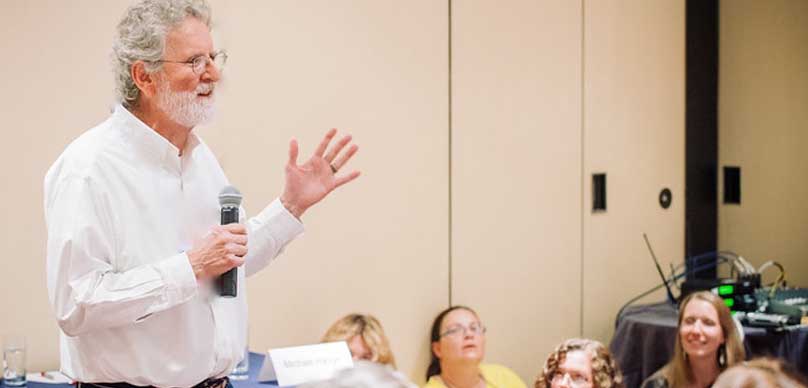
BPS 008: How to Make a Good Script Great with Linda Seger

Linda Seger is a legend when it comes to screenwriting coaching and script consultant. She’s been coaching for over 30 years and pretty much invented the job title. After reading her best-selling book, “Making A Good Script Great” I had to have her on the show.

She’s  best known for her method of analyzing movie scripts, which she originally developed as her graduate school dissertation on “What Makes a Great Script.” She founded the script consulting industry, becoming the first entrepreneur who saw script consulting as a business, rather than an offshoot of seminars or books.

Linda Seger has consulted on over 2000 screenplays and over 100 produced films and television shows including Universal SoldierThe Neverending Story IILutherThe Bridge (miniseries), etc.

“When I arrived I had an idea. Three days later the idea had become a complete and rich outline. Linda’s warmth, guidance and insight helped me structure my story and discover the layers that made it come alive.”  Sergio Umansky

Her clients include Oscar® winning writer and director Peter Jackson, Sony Pictures, and Ray Bradbury. Unlike other screenwriting gurus, Linda Seger is not a screenwriter but has focused exclusively on consulting and teaching.

Linda Seger has written 13 books, 9 of them on screenwriting, including the best-selling Making a Good Script Great, Creating Unforgettable Characters, and Writing Subtext: What Lies Beneath(FREE AUDIOBOOK VERSIONS HERE)

Ron Howard has endorsed Making a Good Script Great, saying he uses the book when making all of his movies beginning with Apollo 13

Not a bad recommendation. Take a listen to this masterclass on screenwriting with Linda Seger and get ready to take notes!

Right-click here to download the MP3

SPONSORS

  1. Bulletproof Script Coverage – Get Your Screenplay Read by Hollywood Professionals
  2. AudibleGet a Free Screenwriting Audiobook

Alex Ferrari 0:46
So for for those of you for those of us in the audience who are unfamiliar with your work, can you tell us a little bit about your history and what you do.

Linda Seger 3:16
I am a script consultant. And I was actually the first script consultant I made up the name I made up the job in 1981. I've worked on over 2000 projects from since then. Then I started writing books, I have 13 books out and nine of them are in screenwriting, and I do seminars on screenwriting around the world. So I've been to I believe, 34 countries now on six continents. And I usually do those one to three day seminars, but occasionally longer. I'm going to Norway in November for five days and do a seminar in Oslo fun, so, so they're kind of exciting. It's all related around screenwriting.

Alex Ferrari 4:02
Fantastic. So since you were one of the first people if you were actually the first person to do this, can you explain to me, in your opinion, what the craft of screenwriting is, as you see it?

Linda Seger 4:14
Well, the craft of screenwriting has to do with understanding the structure of a story and being able to create beginning middles and ends. It's an understanding that a story has a plot line that has direction, and it has subplot lines that have dimension and that feed in and intersect and integrate with that plotline. So for instance, if you were doing a crime story, the plot line or the directional story is I got to solve the crime that the detective has a sweetheart and maybe a relationship with a parent and maybe problems with a boss and there's other these relational dimensional aspects. So the writer has to balance these and know how to structure them, then every movie, no matter what genre is, there is something that this movie is about an idea we might say it's about the human condition and who we are and what our identity is. And so the writer has to know how to integrate the theme. Then of course, there are characters you have your major and your supporting and your minor. The writer needs to know how to give dimension to a character, but also direction. So if the detective is solving the crime, they gotta keep on that narrative track and keep solving the crime and not just decide to take a little vacation, right? And then then drama. You know, movies are cinematic. So they have to understand how do you create images? How do you make those images cinematic, visually, exciting, original, unique? So I always say that screenwriting is an art, the craft, and it takes creativity. And the art side is mainly that voice of the screenwriter, what is it that you are that is special, that's unique, and that you give voice to the genre you choose? Through the kind of characters you decide to portray through the stories you tell? So you're always working on all three of these aspects to learn the craft to learn how to be a better artist.

Alex Ferrari 6:37
And so since you've been teaching for so long, and what in your opinion, what is what can really be taught and what can't be taught and I think a lot of people have this assumption that they go to someone like you and they'd like you're gonna write, you're gonna help them write the the great, you know, the great American screenplay, if you will, or the Oscar winning screenplay. I want people to understand what what can actually be taught and what needs to come from the actual writer themselves.

Linda Seger 7:00
The craft can be taught, you can actually learn how to structure a story. And it will immediately improve the script. The artists something you keep having to hone and learn and to have the courage to show your voice because a lot of times people say, Well, I'm going to write a script, kind of like that last big hit them, it's it's not really who they are. And so you have to find what that voice is, and have the confidence to keep letting it get out there. But all these things are craft, I had an experience which clarify this for me. Many years ago, an executive from a production company said to me, Linda, we finally figured out what you do as a script consultant. She said, we had a series of scripts come in. And they were so beautifully crafted at such a high professional level. But the artistic side and the originality was not at that same level, and we couldn't figure it out. We then discovered they had all come to you, as a script consultant. And we understood what you did that I said, I can only bring the craft, I can bring the craft up to a very high professional level as a consultant. And people can do that reading my books, or reading any books on screenwriting, go into classes, but the art has to then be raised up and said, I can't make the art get up to that professional level. But I can encourage and nurture the art. In many times learning the craft helps nurturing the art

Alex Ferrari 8:46
very much like I don't know if there's a good analogy or not like a chef you can you can teach someone how to scrambled eggs but too, and and anyone could scrambled eggs but at a certain point. It's that artistic aspect. I mean, I'm sure you've had some amazing scrambled eggs in your life. And probably some bad scrambled eggs in your life. And it's similar. It's like the person who, who understands that craft and, and really gets it and then also throws in themselves into it. As an artist. That's when magic happens.

Linda Seger 9:13
And there's so many different parts to that crap. I having worked on so many scripts, and before that I was a drama teacher. I taught theater at colleges and universities, I directed plays. And then when I entered the film industry, I took a series of classes, most of them through UCLA Extension, just to change my mind. So I started to see scripts from the viewpoint of film, not theater, and we could say film and television. And over these 30 plus years, one learns a great deal. So as the years have developed, and I've worked on more and more scripts, I look more at things like seeing Transitions. How does that writer move from one scene to the next? Are they overusing flashbacks? Are they overusing voiceovers? Or do they need more voiceovers do have they not set up their style? How do they set up their genre? And so I'm always learning. And of course, when it's whether they come to me with the class or come to me with the script, we're all in a sense, I have continued to learn about the craft and the art of screenwriting all these years. And it's a lot easier of course, for me to do my work I have a lot more to draw on. But there's so much to the art and craft of screenwriting. Some people think it just flows, you say no, the best writers, they write, and they rewrite and they hone their craft and they become more confident in their art. It's it's a continual process. And it isn't that it just rolls off of you. And suddenly you have an Academy Award winner.

Alex Ferrari 11:12
Right? There's, there's so many people who just watch a movie, and go, I can do that. I can write a script, that's easy. It's similar. Like I just listened to Mozart symphony. I'm gonna write this if it's the same concept like you can't just because you you can, you can consume it and enjoy, it doesn't mean that you can do it right off the bat. It takes years and years and years of work to do. Now, what are some of the biggest mistakes you've seen screenwriters make over the years beginning screenwriters?

Linda Seger 11:38
Well, when I first started, most of the mistakes are structural, that they didn't get their story going, they didn't get it focus. Sometimes the first turning point was actually at the midpoint. And they just did not have that clear sense of beginning middles names. As the years have gone on, I have found that even the beginning, screenwriters are at a higher level, because they have usually read books and maybe taken a seminar or two, before perhaps like they come to me with their scripts. So one of the problems is always originality. How yet, how do you have? How are you able to be unique and different, and learn to put that out there. Sometimes it's a problem of development, that the writer is not developing the characters developing the conflict, developing the storyline, they're just sort of doing a lot of things, but it's not really happening there on the page. So I think development is a huge, you know, is a huge thing as well.

Alex Ferrari 12:56
Now what, um, over the years, oh, I was gonna ask you, um, can you explain to people what a studio reader it does? Because I know a lot of people that really don't understand exactly what the reader doesn't, and what their point is,

Linda Seger 13:11
right? A reader who is sometimes called a story analyst, and I did that for several years when I first entered the business. They are the people that read the scripts, and they might be handed Tim scripts a week. And they go home, they read the script, they write a synopsis, usually a page or two, then they write a paragraph or two that says, I recommend this or I don't recommend it for the following reasons. So let me just give you a couple for instances. I was the reader on the bodyguard. And remember that the

Alex Ferrari 13:50
the original the original bodyguard, yes with Kevin Costner, but that was originally with Steve McQueen. Right. It was an older script, if I'm not mistaken.

Linda Seger 13:58
Oh, I don't know about that. It was it was Lawrence Kasdan. Right again. Okay. Go ahead. Yeah. And it's the one that was made with Whitney. We use of course, of course, when I read it, it was about a feminist comedian. And I recommended it. But because I said, I think it's very commercial. I think it's, you know, quite a good script, but it's got a big story hole in the middle of it. So in a rewrite, this has to be addressed. The person I read it read for at that time, was Jane Fonda's company, okay, and that their executive says, Oh, we think this script has problems and I said that's what I said. And it was I was reading is a tryout for an ongoing job with the company and they didn't hire me. They just decided they don't think that script was that good. Well, then the script got made. Huge, huge money maker huge. A theater piece I felt somewhat vindicated. Sure. And so my job, in a sense was in that one paragraph to be able to say, this is what is good about the script. This is where the problem is in a rewrite fix the problem, but they didn't. I was also the reader for the Christmas story,

Alex Ferrari 15:18
a great movie that plays.

Linda Seger 15:21
And there were two of us who were readers that EMI films, and we just thought it was fabulous. The two of us talked about it before we went into the meeting with the Vice President. And we both agreed, it was just terrific. We went into the meeting, and he was lukewarm. And we pushed up that. So a story analyst or reader is not a decision maker. And they're really not there with the authority to solve problems. They can just point the way, they're really there to do this synopsis that somebody can read this, who's the next person up the totem pole? And can say, Oh, yes, this sounds good. Or no, this reader has turned it down, we're not even going to bother. It doesn't have to be read by anyone else. So

Alex Ferrari 16:13
they're basically a gatekeeper.

Linda Seger 16:15
Yes. And the authority that they have is that when I, when I would be a reader, if I highly recommended something, somebody else had to read it. And if I turned it down, probably it would never get read again. So that's the only authority they have. And it's a different job than the script consultant whose job is to analyze and self assess, and help solve the problems in the script.

Alex Ferrari 16:45
Right, but they're pretty powerful gatekeepers, because if they don't let you through the door, you're not going to get any farther they might not have the power to make the movie but

Linda Seger 16:53
yes, they already go through the door and one when I read for HBO films many years ago, one of the things I would try to do is to follow what happened to the script that I recommended because if the next person disagreed with me and passed on it that really said I had not made a good decision. And most the time that script went up at least two levels above me that said I was sorting them out and most as a reader I would say I recommended one out of 25 but I knew another professional reader who said hers was maybe one out of 75 She was a great reader but somebody else said to me that's that's being a little bit too much of a filter that right you're not letting some stuff in Yeah, because you might be missing some things that are going to be terrific with the rewrite

Alex Ferrari 17:52
like like the bodyguard Yes. So um there is some unspoken rules in regards to how you present a screenplay to be seen by a reader is a general statement or by to be read by producer something like that. Things like formatting obviously. I know the the guy came in remember the way the little gold tassel things on the side of the screenplay please forgive me.

Linda Seger 18:17
Oh gold tassels things.

Alex Ferrari 18:19
Do you know the things that go into the the things that hold the script together when you Thank you.

Linda Seger 18:26
But yes,

Alex Ferrari 18:27
yeah, there's like unspoken rules of like, if you put three in there never gonna look nice remove

Linda Seger 18:31
the Brad's first thing I said don't even send me the Brad's that just gets thrown away. But yes, that is the correct and you have a title page. That's the name all your contact information on there and usually, like a colored you know, front and back. And the script is generally going to be less than 120 pages. And many times similar 95 105 that is very workable, and certain margins. Most people will use final draft or a screenwriting formatting program to make it look the correct font, all that so and then you hope it's it's what's called a page turner. Read it, but keep turning the pages. Dialogue tends to be short 123 lines and then the next person has their dialogue. And description tends to be fairly short and concise. There is a saying with readers, you want to see a lot

Alex Ferrari 19:35
of white, right I've heard that I've heard that don't have a

Linda Seger 19:38
big block of dialogue don't have three paragraphs of

Alex Ferrari 19:41
description unless it has Quinn Tarantino's name on it. Yes.

Linda Seger 19:45
Whatever they want. Exactly that idea for people getting into screenwriting, to read scripts in New York genre. So if you're a romantic comedy writer, read and study that Harry Met Sally are, you know, these I twits these probably my favorite dealer that one, those are great with a proposal. I mean, whatever it is that you that has done well, maybe even a company that's been up for some awards, read them, watch the movies, see the similarity between the two, read early drafts if you can. And if you can read the shooting draft.

Alex Ferrari 20:27
Now, let me let me ask you a question that with you, you said a movie like Tootsie. And this leads into another bigger, larger question. Do you think a film like Tootsie would even be made in today's Hollywood system?

Linda Seger 20:38
I would certainly hope so. I

Alex Ferrari 20:40
would, I would, too. It's an amazing script. It's a great but in the world that we're living in with, you know, every other movies a superhero movie or a now new Star Wars movie or, or anything that's already been based on something in the past? Do you see even Hollywood being open to like I rarely ever see originality coming out of Hollywood as much anymore?

Linda Seger 21:00
Yeah, what happens is they get into the sequels and they get into reboots was good last year. And they have become, as I understand it, more and more closed to new writers. So what they do is, they come up, they want to do an adaptation or whatever, they go through their academy award list, right. And a lot of times, and things get rewritten. But the difficulty, particularly with studios, studios feel they always have to bring in another writer, no matter how good the script is. And I've been working with the script that I've been, actually, I've been sort of helping set it up. Because I happen to know, some producers I thought who would be interested who are. And they were saying, Let's go the studio, I said, don't go to a studio, they're going to take this beautiful writer off of it. And to put on another writer who's not right for the Shandra, then that writers not going to work. And I said it is going to be in development health for the next three or four Are Forever yours, it would be much better let the studio come in when you have the picture made. And I think that's what they are going to do with this. So one of my favorite scripts I ever worked on out of 2500 scripts, probably the best script. And then has been in development hell at a studio for three years now. Yeah. And it was, it was I thought it was ready to shoot, you know, now, things do go through rewrites, you get the director on board to get the producers on board. And so they say, Well, okay, that's the process, no matter how good the script is, it is going to go through this process. But okay,

Alex Ferrari 22:50
enough is enough. Yeah.

Linda Seger 22:53
But with a production company, the writer is more apt to be part of that process. And even sometimes, as a script consultant, I'm part of that process as well. So we we meet and we're a team and you're able to listen to what the producer says and say, I see what you want to do. Okay, here's where we could do it. And then I'm talking to the writer and we're all together working it out together, rather than simply taking a script and handing it to somebody else.

Alex Ferrari 23:26
Now, can you explain the concept of on the nose dialogue, which I think it is, and cliche dialogue is, which is I think when some of the worst offenders in screenwriting today,

Linda Seger 23:36
let's say dialogue, is those things we always hear? Which is yes. I can't tell you how many times as the someone says, yes. It's, it's overused. And on the nose dialogue is say, Oh, I see you're at this party. You're also eating shrimp like I see you. Right. We have so much in common we both have gone for this trip. Are you attracted to me?

Alex Ferrari 24:06
Like normal human being spotted speak,

Linda Seger 24:08
as opposed to the subtext is, you might have two people talking about the strep and saying, Well, it's very, you know, it's very juicy, I love to say, and all of a sudden they say this is really a love scene. One of the loveliest scenes to watch for subtext where it's not on the nose isn't sideways, my mile sit down with a glass of wine and she says, Why are you so into Pinot Noir? And he says, Hi, well Pinot Noir, and he says, you know, it's so brilliant and it is subtle, and you have to coax it and I think Myles is talking about himself every scene. He's really saying to Maya if you could only coax out my brilliance. Like what happens with Pinot Noir. It is so rich and it's so wonderful. And when I say The scene in a class I tell the class, well, you're watching the scene. Keep in mind, they are not talking about wine. It's the love scene. They're talking about each other. And it's so cute because you suddenly start hearing the giggles. Right? You get it? Yeah. Let's see what's going on under the surface. So you're trying and one of my books is called Writing subtext as the subtitle is what lies beneath. And the whole idea of how do you get resonance. Just to give you another example, which is going to be used in the new edition of writing subtext is that if you're doing a movie, like the proposal, and somebody like Sandra Bullock with her handsome young assistant, says, I'm preparing him for this important meeting. It's a that's on the nose. But if she were to say, I'm grooming him for this meeting, now you have another level of meaning going on, because of course, they are going to end up as bride and groom, right? So that the writer keeps working with the better choice of word that has resonance or that has an underlying meaning without just saying it.

Alex Ferrari 26:20
Right, right. Now, there's an there's also writers that actually make a living just coming into the cleanup dialog for subs and adding subtext where there was a lot of on the nose stuff.

Linda Seger 26:30
Yes, yes. And they're the rewrite that many the uncredited rewrite in many cases. And many times that person is given a very specific assignment. You remember Romancing the Stone years ago, or one of my friends triva Silverman, who was for many years, the executive story consultant on The Mary Tyler Moore Show. She was called in to make Joe more likable. And so they said, you know, like her. And so she started going out it was her job to go through the script. She was a great comedy writer. And just to go through the script and say, Why do I start adding of course, Joan became more likable with the cat and giving her the food when she finished her book to help celebrate. And just those little tidbits

Alex Ferrari 27:22
and adds a lot those little little, little things that you add to a character is his massive over the course of of the storyline. Now, can you can you paint a picture for me of what a working writer is in Hollywood today? Not the million dollar Shane Black's and Aaron Sorkin's of the world, but like the rest of the WGI because I think because I think a lot of writers get into the screenplay game because they all think they're gonna win the lottery same reason why filmmakers want to make a movie because they think they're gonna go to Sundance and make, you know, get get win the award and Harvey Weinstein's gonna write him a check for, you know, 5 million bucks, and the rest is history. And I think I want to kind of break that notion of the million dollar lottery ticket kind of writers, and what the rest, because there's a lot more at the bottom of the mountain than there is at the top. But there but there are working like people who make a living doing that. So what can you paint a picture of what an actual working writer is in Hollywood?

Linda Seger 28:18
First of all, a lot of writers who gain some kind of a reputation are called in either because let's say an independent producer, has option to book. And let's say for instance, they can't afford a Writers Guild writer, who might start at 65,000. And then thinking I could afford 25,000 30,000. I can't afford that bigger price. And so they optioned a book, maybe for very little money, depending, and now they're looking for a writer. Now what happens sometimes with inexperience, producers, they choose the wrong writer, they choose the person who's not writing in that genre, which is what and so they're writing a romantic comedy. And they say, well, this person is known for is really well known as a writer, let's get them and maybe their drama writer, action writer, but they need to find a writer. And so there are many experienced writers in the room Hollywood or around the country, who are very good at what they've done. They've probably written five scripts, maybe they've had one movie made, maybe they've had something optioned and they are hired to turn that book into a script, or somebody is written a script and it needs a rewrite from somebody more experience. So the writer gets hired. Now they can get right hired by a production company, maybe a small one. course they can get hired by a studio if they're well known, but they are hired specifically to write For those people who say, Well, I want to write my life story, I want to have a screenplay based on me, I've had this happen, a lot of money,

Alex Ferrari 30:10
right? Those are always wonderful scripts, I'm sure. We'll be right back after a word from our sponsor.

And now back to the show.

Linda Seger 30:25
Yeah. And what happens though, is that the writer is in a bind, because this person who wants their life story told, doesn't know what a script is. And they're trying to satisfy that person, because that's the person paying them knowing that probably, it will either never get made, or it will get made low budget and never see the light of day or never get any place to get a release or anything. So what? So writers, there's lots and lots of experience, people out there, love these writing jobs. Now, sometimes, they don't get these writing jobs in Hollywood. Let me just give you a few examples. I had a client who moved to Florida, we had worked on a adorable script that took place in the south very light, lovely, charming, romantic comedy. She couldn't get it made. She went over to England, and she reset it in a village in England, instead of him. Maybe it was Alabama. And she got it made over there. So, so many times the writer has be thinking about I shouldn't go with the Hollywood Game, I don't think I'm going to get any place, right, or the writer director that does a movie, very low budget, gets it into film festivals, and maybe gets a job out of that. I had a writer director that I worked with who did a film for $7,000. And I'll tell you that film looked really good. I mean, it took place on a desert. It's called far from ascension, and I don't disclose anything I work on. But once the film is made, it's to everyone's advantage, right? It was the title of it, sure, and very limited sets. But sometimes people can get movies made for very little, or for 100,000, or for half a million. I know a producer director that I've worked on some scripts she's given to me, and I think I've recommended some and she's gotten them made. And she said I'm very good at raising money for these, you know, small budget movies, and we get them into screenwriting festival, you know, various film festivals. And she said, we get a release. In certain places. It's never going to be the release like studio film. But they get made. And actually a movie I worked on with that she did is she said we won the award for Best inspirational film, and we beat out Warner Brothers.

Alex Ferrari 33:09
That's always nice.

Linda Seger 33:11
For the award. That's pretty cool.

Alex Ferrari 33:14
No, is there a place where writers can actually, you know, where would you suggest writers send their scripts to kind of get feedback because it's, you know, stuff that stuff to get a script, a screenplay or even read, but like festivals or contests or groups, what would you suggest? Yes, well,

Linda Seger 33:29
the first thing is don't ever send anything, any place without having other people having read it. Now, there's different levels of readers, you certainly can start with people that you know, you probably know some writers, trade scripts with your friend, just make sure that you don't give your script to somebody who is negative, and is going to demoralize you. There are people that will demoralize a writer, and they won't write for years. And I know some of those, right, of course, writers. Sure. So that's the first level is just people, you know, the second level for very little money, you can have it read by a story analysts. And they're going to just do a couple pages of notes. And, you know, they'll give you some feedback. And that can be helpful to know how will a story analysts. Look at this. I know some people who are wonderful story analysts, so anyone ever wanted a recommendation or see ads all over I mean, that can be 50 or $100. For that. Then the next level is the script consultant. And that's the people like me whose job it is to really analyze the script to look at the strengths, look at the weaknesses, figure out how to make the weaknesses become strengths. So very and I have all sorts of levels of services from extremely detailed to one or two Two pages that really give writer a sense, this is what you have? Is this worth investing a lot of money in? Because maybe the story is not good enough anyway? Or you really have something here, right? No, no guarantees, and whether it'll get made, then then after you've gone through some steps to get professional feedback, entering screenwriting contests and see what happens that it would if you can get a one of the top three, like a third place, second first winner, whatever. And there are loads of screenwriting contest. So you want to try to make something happen with that. Because if you get a first place, now, when you show that to a producer, you can say by the way, it won first place that recently one of scripts script I'd worked on won first place at the WorldFest Houston Film Festival for screenwriting. And I mean, that's worth a lot that's sure full award to get. So you want to have something that if you write to a production company, they have a reason to read your script.

Alex Ferrari 36:15
Yeah, anything, anything that could give a little cachet to the script? Yes.

Linda Seger 36:19
And if you can add to say, I've been writing for several years, I've written five scripts, this one, I think fits your company. By the way, it's it's also one of the screenwriting awards, was chosen as me something that can help make them want to read it.

Alex Ferrari 36:39
Now, you touched a little bit about this earlier about other markets besides Hollywood, which a lot of people always focus us on Hollywood or just the American market. But there's so many emerging film markets around the world, you know, that are just embracing filmmaking, and just blowing up as far as the market is concerned. So how can screenwriters leverage those markets and helping them get their screenplays made?

Linda Seger 37:01
Well, the first thing is, if somebody's not from the United States, don't try to go to Hollywood go to your own country, you're probably have a better chance. I have a client coming in. Next week from Mexico, he went to Columbia film school. He said every one of us who were from outside the United States have gotten films made since we graduated Columbia 1215 years ago. He said not one of my US colleagues at Columbia Film School have gotten filming was that shows the US market is really

Alex Ferrari 37:36
tough. Oh, no, they made they made it in their own countries. Yes. And

Linda Seger 37:41
so right. And so when the US market is the toughest, so when people from Germany or England or wherever, say, Well, I want to get a film in Hollywood said don't even bother to try to get it made in your own market, because you have a better chance in that market. And then Hollywood will come after you. Because they've seen this film, and they think it's great. And well, let's get that you know, that writer. So now the other thing is somebody who is from the US can always go to another market and say what are some markets where I actually could get my script into somebody who's doing work or doing co productions at other markets. So Canada, for instance, or Germany, or England got it? If you got some scenes in Germany, go to German producers. And if you've got scenes in England, goat England, producers, and this sad kind of bypass, or if you don't bypass the US market, go to a production company, not a studio, it's hard to get your script into a studio anyway. Right? And maybe don't go to the biggest production company. Don't start with Ron Howard's company, where you probably won't give it read any way or get in the door. Try to find what those smaller companies are. Look at the credits of movies that you love, and don't look for a universal production. Look for that fourth name down that those producers and of course sometimes with smaller, you know, smaller producers are trying to find that writer who's just wonderful, but less expensive.

Alex Ferrari 39:31
Well, you're like, like, um, I didn't mean to interrupt you. Reese Witherspoon, she actually created her own production company and started taking in scripts and she got some really great scripts out of that out of that and she also produced Gone Girl, she she actually got that you got the rights the Gone Girl.

Linda Seger 39:51
And look for those actors. If you want to go after an actor look for the actors that have production companies, because you have a better chance with that. Then some other way. And then you know the thing with agents, people say, Well, can I get an agent or manager and say, well, it'll take you years, you might do better getting a deal. And then you can go to an agent, because you have proven something about yourself. It's really, really hard to get an agent. And it's very, very hard to get your agent as a new writer to work for you and make anything happen.

Alex Ferrari 40:28
Yeah, I know many writers in LA, that have that problem with their agents and managers. Oh, yeah. Cuz they just want to look, they're in the business to make money. And it's much easier to sell someone who has an Academy Award, or has a proven track record than to hustle, a new guy

Linda Seger 40:45
coming up? Yes.

Alex Ferrari 40:47
Now, do you? Do you suggest screenwriters write a short films or short screenplays to see if they can get that produced in a way to build a track record up?

Linda Seger 40:56
Well, especially if they're directors themselves, and want to do a short film short films, the raid opportunities at film festivals, and short films can prove who you are, they show your ability, I work on quite a few. I say quite a few. I mean, I work on short films. And one of the things I always look for, is to find out something in that short film that makes the writer director known. So don't just do another car chase, they can get Michael Mann to do the car chase, they don't need you do something interesting, whether it's in the writing of it, or the approach to it. So that you can start getting awards with a short film and someone looking at it says, Oh, that directors that are naturally good at what they're doing. But wonderful script, you know, great job of directing. So again, you have something to show. And it doesn't have to be a 30 minute film. There's a lot of fabulous films of six minutes or 10 Film this. In fact, years ago, I worked on a short film, it was called there is no APR. And the two characters were named May and June. Nice, too. It was six minutes, it was two women on their way to Las Vegas, where one was going to get a quickie before us. And the the writer said I want to do this little film and then I'm going to do a feature. And she was sort of dismissing that little film and I say her name was cherry Norris and I said Sherry, take that little six minute film very seriously. So she hired me as a script consultant, she hired a directing consultant in the film on audience favorite award at the Alberni Film Festival. And she then went on to do an adorable little romantic comedy called duty dating. And she might have done a film since then. But it was interesting to say everything you do you do with the same professionalism, as when you finally get the opportunity to do the feature, right. Don't ever dismiss anything. Now, the structure of

Alex Ferrari 43:17
a short screenplay, short film screenplay must be obviously much different, in the same but much more condensed. So you have to get to those beats much faster, I would imagine, right?

Linda Seger 43:27
Yeah, I still structured in the 3x structure. They're beginning, middle and end. And even with this little there is no April, I looked very carefully at the structure. She had her turning point she had her development, she had our conflict. Everything was in there, but you only have six minutes to do it.

Alex Ferrari 43:48
So it's a much it's even tougher to a chore than doing a 90 minute script. At that point.

Linda Seger 43:53
Well, I don't know if it's tougher differently, you know, tough and it is interesting to see how well many of these do I think every short film I've won I've worked on has won awards. And and sometimes I remember one one writer early on many years ago said you were the only person who believed in this. And he said and that kept me going and I did my little short and it won these five awards. And you know, what a what a nice thing is to start to see and get some kind of success because you can write for years and years and years. And that get any feedback that tells you Oh, you did a good job on that.

Alex Ferrari 44:40
Right and that does help as a as an artist. You want that reinforcement? reassurance, if you will, like hey, I'm on the right track. I'm actually good at what I'm doing. Maybe I can keep I should keep trying to do this because it's a it's not a it's not a sprint. This is definitely a marathon

Linda Seger 44:58
to figure it out. is going to take you years. So unless you love doing doing it unless you love the writing, don't even bother. No one is waiting for you. That is going to keep you going as you feel inside yourself passionate about what you're doing. And you are keep going through the learning curve.

Alex Ferrari 45:20
Yeah, absolutely not 111 thing i I've when I've been when I went to started studying screenplay writing and, and all the books and obviously yours your books on the top of that list. The one book that really kind of, or the concept, I guess was Joseph Campbell's hero's journey, which that kind of changed the game for for storytelling in the last 3040. When did that come out? He When did he release that?

Linda Seger 45:49
Well, I know that it was in the early to mid 80s after Star Wars came out, which I think was more like 77 or say right guess 97. But when Star Wars came out in Dota and George Lucas started to talk about how he had used Joseph Campbell's theories. Then people started to look at Joseph Campbell. And then Christopher Vogel wrote the book called The writer right knee which deals with the hero's journey, and I did some parts in my making a good script grade on the hero's journey in the first two editions. And I actually told Christopher, I said, you need to write a book on this. And if you don't, in two years, I'm going to that's not the book I want to write. You should write then once in a while, Chris, thanks me. He said, I really glad you pushed me because that book has been extremely well received and done extremely well.

Alex Ferrari 46:51
I've read that book. A lot of times. Yeah.

Linda Seger 46:53
Yeah. Like I do with doing seminars on that so one can get Joseph Campbell kind of put down into screenplay form by reading Chris's book.

Alex Ferrari 47:03
Right it kind of like Yeah, cuz the Joseph Campbell's is more mythology. It's not focused specifically on filmmaking. Well, Chris Chris's book is that's what I loved about his. His book as well. Now, what when they're when is there's writing a screenplay, and then there's also marketing a screenplay and getting your voice out there as a screenwriter. Do you have any tips on how you can get that script that they finally made out there until the world like, actually get seen? Yes, well, that's,

Linda Seger 47:31
that's the golden ticket. That's a whole world in itself. But one thing people can do. They can go to conference screenwriting conferences that have pitched fast. One of the best is those the great American pitch Fest in Los Angeles. That's usually in June, it is put on by a woman from Canada in Calgary, named Cigna, who is just fabulous, it is so well organized, she gets so many people there to receive pitches, hundreds and hundreds of people go. And so you have an opportunity to do that five minute pitch in front of people who actually have the ability to buy your your scout, then story Expo in September has a pitch fest, which is getting bigger and bigger. And it's the same thing. You go there you have your one sheet, plus you have your screenplay in your briefcase. And when they say I'm interested, you give them the one sheet in the next day, you send them the script, if they say they're willing to read it, get it there really quickly, very quickly. And there's been a lot of successes with something like these pitch fest. There's one, I think there is one in Canada. And I would even suggest that some of the Americans go up to Canada and do that with Canadian producers. And again, you might have a better chance.

Alex Ferrari 49:01
Just this competition is less competent, and there is a cachet. Maybe not in Canada, but other parts of the world that like oh, this is a US I'm an American Screenwriter, a Hollywood screenwriter, it might have some more cache might have more pull in a marketing.

Linda Seger 49:16
Yes, yeah. There are some things where people put their Synopsys online and you have to be kind of careful about that because it's easier to steal that and I do know some people have done well with that. I think there are some of those sponsors of those kind of Synopsys that actually say they can get it into producers and giving him the executives and maybe the executive sort of thumb through there and just take a look to see if there's anything of interest. I don't know this overall what Senate desire they're probably quite low but then everything is quite low.

Alex Ferrari 50:00
No, can you can you really briefly talk about log lines, which is something that a lot of people don't talk about and the importance of them?

Linda Seger 50:07
Oh, yeah, log lines are that one line that immediately capsulate your story. For instance, if I said a shark threatens a tourist town on a Fourth of July weekend, yes, JAWS

Alex Ferrari 50:22
I loved et et was fantastic. No joke.

Linda Seger 50:28
And something withdraws. As you listen, that log line, it has conflict on it, you use the word threatens it has high stakes is the Fourth of July weekend, which says this is the tourist dollars, as he says, and it's a shark. So it's the man against monster story in one line, you have so much information. And so a writer works and works on that logline. Because if you go to a pitch fast, you might want to have that log line to pull the person in immediately that you're pitching to. The other thing that you work on is what's called the elevator pitch, which is the 22nd pitch. So you get into an elevator and you press the 12th floor and you turn around as Steven Spielberg is standing behind you. That's when you go into your I have a script, Shark crap, and

Alex Ferrari 51:23
probably don't pitch that story to him. I think he knows that what

Linda Seger 51:26
that pitch to say. I had to say that because I just happened to have this opportunity. Yeah, let me see what that person says. And you, again, make it very, very concise. Michael Haig has written a book called I think it's selling the selling your script to 60 seconds or something like that it is about pitching and as about treatments, and you know, these these log lines, and it's that whole idea, you have to be able to get that script very, very concise that somebody immediately gets, what's the genre? What's the stakes, what's the conflict, give me something about you know, my, maybe my main character might be in there. Give me lots of information.

Alex Ferrari 52:14
So, um, I want to just to kind of close off our interview with two movies that I wanted you to kind of talk about a little bit and two of them are considered to have the great great screenplays ever written. But one and they're very different from each other. One movie is Shawshank Redemption, which is considered probably one of the greatest films ever made, at least by IMDb standards. What makes that movie so ridiculously amazing. And from NF talked to every, every scope of life, you know, for every everybody from you know, millionaires to you know, kids to, like people love that movie. And it wasn't, wasn't widely loved when it first came out, but it's grown and there's this thing about it. Can you kind of break that down? And then the other movie? Story? Sure. I'll tell you about the other movie afterwards, which was you think about? Oh, then I'll go to the Okay. The other one is Pulp Fiction. Like how that magic of what that is?

Linda Seger 53:19
The greatest movies of all time? I'm not sure I would know what

Alex Ferrari 53:23
some of them I didn't say most but some of them say

Linda Seger 53:25
they are both. You know, they're both very good. They're both excellent. And say, Well, what is it about them? Shawshank I think and the feeling for the characters, and their situation in their context is so strong when you match it with Morgan Freeman, he just pulls you into that storm so beautifully. And Robins and memorable scenes. One of the things to look for in a movie is what are the scenes you probably have not seen before that carry so much emotion so much feeling it because that's where you go into the art not the craft or Shawshank is based on Stephen King's story. Sure. When I think of Shawshank and I think of that scene where Tim Robbins goes into the room and locks the door and plays a piece of classical music, it's an opera and he puts it on the intercom and it just floods the prism everybody just as brought to halt by the beauty to bring beauty in that and oh my gosh, that feeling of that scene. So sometimes in movies when you analyze them you for instance structurally Shawshank I think the resolution is too long in that movie. And so from just a purely structural craft viewpoint And I think it could have been tighter. But from an artistic viewpoint, just a story that pulls you in and the twists and turns of the story, the fact that this guy kept getting his Rita Hayworth so he could dig behind them and what it took and themes of determination. So you can look to say it's a great story. It's great characters as acceptable roles that really bring great actors to the table. It's a theme that is expressed. And it has, in that case, the twists and turns. Whole fiction is such an original piece, you have very little money to shoot it with low budget, lots of fascinating things that mean the guy has just shot the person. And he starts quoting from the Bible. Like, gosh, what is and the sure hand, I think the thing was Quentin Tarantino. By the time he did Pulp Fiction, he knew what he was doing. He said he had spent 10 years doing a movie that couldn't even be released. It was so awful. Sure, and he did Reservoir Dogs then he did Pulp Fiction. And I remember in that opening scene in the cafe, that when he stopped that, he starts the credit in his belly dancing music. I mean, it happened. Years ago, I started surfing music, took belly dance to that Sure. Killer piece of music, starts the movie again, in a totally different place. And I totally trusted Quentin Tarantino knew what he was doing. He was not going to drop that scene where we're going to come back to it. And to feel that sense of a writer director who knows what they're doing and has a sure and confident hand.

Alex Ferrari 56:59
Right? That's a great analogy. That's

Linda Seger 57:02
how he just interwove all of this.

Alex Ferrari 57:06
And still hitting the beats still hitting that? Yes, he hit. He hit that hero's journey, oddly enough within that structure,

Linda Seger 57:15
say and he also I analyze Pulp Fiction in terms of its structure, and it's beautifully structured, I think, right at the midpoint is the story of the watch, which acts as kind of a fulcrum for the first half. And the second half does and the interweaving is really fast. And because he'll drop something for a while. But then you know, he's going to come back to it.

Alex Ferrari 57:42
You know, the funny the funny, I'll tell you real quick, funny story about Pulp Fiction is I was listening to an interview with Robert Rodriguez. And he was talking about he was he was, you know, they're best friends. And they've been and they were doing the movie at the time. And just like George Lucas had that screening of Star Wars for, you know, the Paloma and Coppola and all that and everyone said, Oh, poor George. Poor Poor George. He just Yeah, well, maybe next one, George Spielberg was the only one that kind of like, you might have something here. Quentin did the same similar thing with with Pulp Fiction. He brought in all his his his friends, which for filmmakers and writers and stuff, and Robert was the only one that wasn't there. He was off shooting somewhere. But after the screening, he talked to some people and one of the one of the directors who will remain nameless because no one knows who it is. Because quitting won't say who it is. He's like, you know, I'm gonna have a stern talking to about with Quinton about this. I mean, he needs to learn how to make a movie. I mean, this is not right what he's done. I think he's gone off course. And then he was gonna make that phone call but then Putin was over in France with a can so after he won the Palme d'Or is free calls him up it goes I was gonna give you a stern talking to but what the hell do I know?

Linda Seger 58:58
Well in Pulp Fiction has what I call the loop structure is that you loop it back and Quinton, who quotes some, somebody else says a story has a beginning middle of end but not necessarily in that order. Correct. And in my book advanced screenwriting, I talk about different non traditional structures and use Pulp Fiction as the example of loop and just an unusual structure but he knew what he was doing

Alex Ferrari 59:30
that confident hand is something that that I it's a great it's a great description of Quentin Tarantino was a filmmaker he he's gonna go down his route no matter what, what you think about it, but he knows he's gonna take you in this journey. It's kind of like when I saw Birdman last year, and, and I was like, Oh, I forgot what a real director's

Linda Seger 59:52
Yes, somebody knows what they're doing. And they this is not their first rodeo. Right? Just like took you through this. First time. I have done this

Alex Ferrari 1:00:00
and it's so I just still remember watching Birdman and going this is what a director is like you like you watch it when you watch a Scorsese movie or one of the you know the big but I hadn't seen a movie so original and completely him he took you in that journey and you trusted him the entire time. And it was it was a one and I'm so glad I won the Oscar was like such an odd choice for you know, for the for the Academy, but I thought it was a wonderful choice. So last question, my dear is the toughest question of the mall. So prepare yourself. I asked this of all of my all my guests. What are your top three films of all time?

Linda Seger 1:00:36
Oh, okay. The best for your there's so many. But let me just mention a couple I particularly find is gems. One is always Amadeus.

Alex Ferrari 1:00:50
Yeah, you're not the I just had someone say Amadeus is a wonderful,

Linda Seger 1:00:54
big diamond. A really big one. You know, like Gone With the Wind. Those are the big diamonds. You know, who say the top three films, I wouldn't know how to answer that. I could answer it in terms of movies that I am incredibly fond.

Alex Ferrari 1:01:13
Yeah, no rules, no rules.

Linda Seger 1:01:14
Like my some of my favorite. Now, people know I talk about witness a lot and I have talked about for many, many years, I think it is one of the best structured films. And these guys really knew what they were doing and telling the story. Because I have a special feeling for witness. My husband who at that time was the guy was dating sorta kind of proposed to me in the middle of the barn raising same sort of kind. And then the proposal became specific. And now we've been married for it'll be 29 years next year. Congratulations.

Alex Ferrari 1:01:51
So

Linda Seger 1:01:52
I have a real feeling comedies I put Tootsie shine of the top very thematic, very strong. Just a wonderful acting wonderful characters, great idea behind it. So those are three and then I'll just mention what I call a little gem, the little diamond stand by me, I love cranes are made to me as a great example of a very small film of 12 year old boys, and how a film can be about that and pull somebody in who ordinarily would not be pulled into that film. If somebody said what is one of the least interesting things to you, is I would say 12 year old boys because they make me so nervous that they walk on railroad tracks and trains are ready to come. You know, all of that. And I said, I love that film. I just think it's a great example of dimensionality and heart and having a this little directional line. Let's go find a dead body. Now all stuff about friendship. It's just, I call that the little diamond. absolute gem of a little movie.

Alex Ferrari 1:03:10
Wonderful list. Wonderful list. So Linda, where can people find you?

Linda Seger 1:03:15
Linda sager.com is my website. My email Linda at Linda Sager comm s Eg er, thank you, Bob Seger if you're not sure how to how to find me. And it's the same spelling. And they got a full website. There's a whole lot of stuff on there. So people will probably find interesting.

Alex Ferrari 1:03:37
And you have many even 13 books, correct? Yes, there's nine of them on screen writing. Okay. And then you also do court you also do consulting as well as workshops every once in a while? Yes.

Linda Seger 1:03:50
Well, most of my work is script consulting. And then I do seminars. So my next one is Norway. And I was in Europe all summer long doing Vienna, in Germany and England and Paris and tough life stuff. Listen, yeah, I did seven in nine weeks, and I just went from one country to the other with little vacation time in there. So, but then pretty easy to find.

Alex Ferrari 1:04:15
Okay, fantastic. Linda, thank you so much for taking the time to talk to us. We really appreciate it.

Linda Seger 1:04:20
Okay, and you can follow me on Facebook and Twitter, and also sign up for my newsletter.

Alex Ferrari 1:04:27
Absolutely. Thanks again, Linda.

Linda Seger 1:04:29
Thanks so much.

Alex Ferrari 1:04:30
It was an absolute pleasure talking to Linda she really dropped some major knowledge bombs on the tribe today and I really do appreciate her taking the time out to talk to us. So thank you, Linda, very much. If you want links to anything we talked about in this episode, just head over to indie film, hustle comm forward slash BPS 008 That's bulletproof screenplay, BPS 008. And guys, if you have not signed up and subscribed for this podcast on iTunes, please do so go over there. Leave a A good review, give us a hopefully a five star review. It really helps us out, especially in these first few weeks that we're out because it's going to help us rank on iTunes and get this information out to as many screenwriters as humanly possible. So just head over to screenwriting podcast.com. And as always, keep on writing no matter what. I'll talk to you soon.


Please subscribe and leave a rating or review
by going to BPS Podcast
Want to advertise on this show?
Visit Bulletproofscreenwriting.tv/Sponsors

BPS 007: How to Create an Emotional Impact in Your Screenplay with Karl Iglesias

This week we were lucky enough to have as our guest best-selling author Karl Iglesias. He has written award-winning books including The 101 Habits of Highly Successful ScreenwritersWriting for Emotional Impact, and Cut to the Chase(FREE AUDIOBOOK VERSIONS HERE)

I discovered Karl Iglesias’ work reading Writing for Emotional Impact. It really transformed the way I wrote screenplays and created a bunch of new habits that I still use today.

Karl is a script-doctor, author, award-winning instructor, and story consultant, specializing in the reader’s emotional response to the written page. He helps writers, filmmakers, producers and advertising executives craft better stories that connect emotionally with an audience.

It was a major threat to interview Karl on the show. His work is so specific but yet broad. His one rule that can never be broken,

“Always be interesting.”

I think most films coming out of Hollywood today should take that advice. Keep your audience engaged and emotionally invested. So many filmmakers and screenwriters today don’t understand that basic concept.

I really asked Karl the tough questions so we could fill this episode with amazing content for you. This is one podcast you won’t want to miss. Enjoy!

Right-click here to download the MP3

SPONSORS

  1. Bulletproof Script Coverage – Get Your Screenplay Read by Hollywood Professionals
  2. AudibleGet a Free Screenwriting Audiobook

Alex Ferrari 0:00
Now today on the show, we have an emotions expert. His name is Carly gliss. Yes, he's a best selling author and master lecturer around the world. And he really focuses on the emotional impact of writing and getting the most emotion out of the words that are being put on the page. I've read all his books and taken a few of his courses. And he's wonderful and really made me start thinking differently about how I write what kind of words you use to just pull out that emotion to really get the reader really excited about what they're reading. So I wanted to bring them on the show. And this episode, I beat him up something fierce. It's literally kind of like a free masterclass on screenwriting, and emotional impact of your characters and story, and even told me afterwards he's like, my god, you really beat me up in this episode. I'm like, yeah, why don't get as much stuff out for screenwriters as humanly possible. So please get ready to take some detailed notes as we dropped some major knowledge bombs in this episode. So without any further ado, enjoy my conversation with Carl Yglesias. Welcome, Carl, thank you so much for being on the show.

Karl Iglesias 3:18
Thank you. My pleasure.

Alex Ferrari 3:19
So we'll jump right into it. So um, what is um, your teachings are focused on the emotional impacts of stories and screenplays? Can you explain this a little bit to the audience?

Karl Iglesias 3:29
Sure. So I was I was a writer, I'm still a writer. And, and I tend to be kind of very left brain. My wife likes to say that I have two left brains. Very, very mostly logical. And the thing that drives me more is, is the trying to understand how things work. So I've always wanted to tell stories, I was wanting to be in filmmaking. And, and I wanted to know why, you know, you read all the books and tells you, okay, you need to do this, you need to do that for structure, character development, character arcs, and everything that being that was being taught, I was wanting to know why. And, and so I started to get more into the effect of storytelling more than the rules. And it really didn't take long to understand why I was loving certain films more than others. And it was basically about the emotional response that I was getting from these films. You know, I tend to get into like, you know, comedies or thrillers and I realize, well, the comedy that doesn't make you laugh is not it's not never going to be your favorite movie, or a horror film that doesn't scare you. It's not going to be your favorite horror film. So it's really all about the emotions and response of the movies. And so I tend to kind of went, you know, with reverse engineering figure out, okay, the effect the end effect is the emotion, the emotional response of the audience. And so how do you get there? How do you do that? And that's what I tend to focus in my studies and In my teaching, you know, it's a kind of, you know, people say it's the kind of book that you always wanted to read, but couldn't find out there. So you wrote it. That's, that's what it is. They also I wrote down. You know, as far as I know, I'm the only one who speaks about this. And I think it's the most important thing. You know, if, you know, when people read your script, if they don't, if they're not engaged by your script, and you lost, that's it, it doesn't even go past the Faster Reader to the executives, let alone two actors and directors and, you know, the studio betting, you know, 100 million dollars to make your film if it doesn't engage them. So the rule number one, and the only rule in storytelling is to engage the audience and not be boring. And that's really, you know, I like to say my classes that there's only, you know, there's there's this 1000s and 1000s of rules, and principles from all the books, but and you can break all of them. Except one, you cannot break this one rule, which is be interesting. And as long as you're interesting, you can break any rule you want. And I think you'll still be a good storyteller. But that's the key, you got to engage your audience. And so So I focus more on the actual specific techniques that generate those emotional responses.

Alex Ferrari 6:15
So with that said, I'm going to I'm going to put you on the spot a little bit and one of my favorite films of all time, and arguably now according to IMDb, the number one film of all time, The Shawshank Redemption.

Karl Iglesias 6:28
Okay, yeah, great film.

Alex Ferrari 6:30
It is. It's absolutely amazing. And I've analyzed that movie so much, because I've, I've wondered what, what is in that story? And in the way that Frank Darabont wrote that story, and also directed, and the characters and the actors and write the whole package? What in that movie that touches so many people, I mean, like, in a way that there's never been another movie that I know. Right now, when it came out. It wasn't like this blowout success. Obviously, it was not a big get nominated for Best Picture, but it didn't win. But but it's one of those movies that kind of grew later. And till now, all of a sudden, it kind of just came up and took over the Godfather, like you know, absolutely. You know, when the Godfather came out, it blew everything out the water everybody knew was the greatest thing ever made it that right? But Shawshank didn't. And I'm curious on your take of why that story hits so beautifully with everybody.

Karl Iglesias 7:24
Well, there, I think there's two combinations, first of all, and you're right, when the movie first came out, it wasn't a success at all. And and the thing that makes a movie a success, usually, from the start, which is the beginning is usually the concept. So the concept is like the book cover, right? There's something about the concept that's unique. That drives people to the theaters, not a great concept. Not at all right? It actually kept people away. It's like, okay, a movie about people in prison. Okay, you know, who cares? I mean, I admit, I was one of them, you know, I was like, a movie does not interest me, right? And it was only through word of mouth and reviews and, and then you finally go, Okay, I'll go see it, and then you wild by it. So when you're in the theater, so you know, when you're trying to make a when you try to write a story, I always recommend you know, since since you're not, you know, you're obviously you're, you're a nobody, and you want to interest people you got to do with the concept first. So at least people open your script and read it. But in this case, you had simply word of mouth. So what is it about once you're inside the theater? Once you're committed to watching these two films, this film? What is it that that wow, so the very first thing is always characters that the first thing is a character that you connect with. And the very first thing that it connects you with is is Andy and a character who is unjustly accused of something that he didn't do, and that automatically connects you. So if you're familiar with the, you know, my techniques for, for connecting emotionally with a character, you know, the one of the most powerful one is pity. So feeling sorry for someone, and you automatically feel sorry for him because he didn't do it. You know, he's accused of something. And he's accused for it, I guess his life right? For something that he didn't do so this on undeserved misfortune is one of the biggest, biggest techniques you can use to connect with a character. And so you're automatically connected. So you're already on board. And then you realize, okay, well, you know, what do you do when you're inside of prison? I mean, so, you know, the only thing you can do to survive is hope, and hope is probably one of the most powerful themes and messages in stories. It's true, you know, because all of us in our life so life's our struggle. And, and especially in the

Alex Ferrari 9:46
movie business.

Karl Iglesias 9:47
Yeah, exactly. But if you look at you look at, you know, great stories, and certainly the foundation of most religions is hope. You know, it's one of the most powerful things So you got a character we care about, you know, combined with this message of hope, you know, you know, get busy living, or get busy dying, which is such a powerful line. Right, amazing. And there you go. And then of course, you know, you got to you got to tell a good story. So there's elements of suspense, there's attention, anticipation, surprise, humor, other characters you care about, read, you know, certainly fear. You know, once you're, once you're connected with a character, what what you do as a storyteller, as you're trying to make us worry about that character, you know, you hope that they will be happy, and you hope that they'll survive, or whatever they do whatever they want. The interesting about this, this, this movie, though, is that we didn't know what Andy, you know, his, you know, his goal was secret for 19 years. And so, we didn't really know what the what his main goal was other than surviving. But if you create jeopardy for that character throughout, and they certainly do in this in this film, you're worried all the time. And so you're constantly engaged in this film, so you have you have the character you care about, you have to struggle. And then of course, the the bigger, you know, epiphany and the way everything is resolved, which is very clever, surprising. You know, poetic justice at the end. I mean, it's just in friendship. I mean, this got you know, everything is there you got all the the great ingredients. And and of course, you got to, you know, give kudos to Stephen King for the story and for for Darabont for the adaptation, but it's just one of those. One of those things where everything all the stars are aligned, and, you know, with great characters and performances, and, you know, a great script. I mean, yeah, it's definitely one of the one of the greatest movies out there.

Alex Ferrari 11:51
And then Darabont I heard he literally gave them the script away to get the opportunity to direct it. Yeah, yes, he was, he was offered a few million because people who read it in the business understood that that this was like, Oh, this is serious. This is a good script. Yeah. But he, he they offered him like seven figures like high like mid to high seven figures for it. And he's like, Nope, he finally, Director He wanted to start his career. And I think I think it was a good idea for him.

Karl Iglesias 12:17
Absolutely. Yeah. It's kind of like Sylvester Stallone and raw. Yeah.

Alex Ferrari 12:21
Do you actually believe that Rocky was written in three days? He says he wrote it in three days, it possible

Karl Iglesias 12:29
that you wrote it in three days, but he probably developed it over a longer period of time. Right.

Alex Ferrari 12:34
And that's another great I mean, geez, yeah. Oh, absolutely. That script is the ultimate underdog story. Yeah. So let me ask your question. Why is Hollywood's Why is Hollywood lacking such emotion, true emotion? And its films today? And what are they like? Why do you why do you think because in the 70s, in the 80s, even there was more emotion and character in their movies than today. Today, it just seems to me so flat and so heavily reliant on visual effects and concepts and things that we've, we've seen back from the 70s and 80s, that the rehashing today, why, what what do you think of the bow into business today? In general,

Karl Iglesias 13:10
it's, well, I, you know, the business is always a sign of the times, it's always a, you know, a reflection of the culture. And, you know, our culture in the 60s and 70s was a lot different than it is today. And, you know, you got to understand that the film studios are a business, they're corporations, they're in, they're in the business of making money. So they're not in the business of making art. It's one of those really interesting paradoxes, where, you know, I think in Europe, they're more interested in making art, because there's their films are subsidized by the government, you know, but but in in the United States, it's all you know, it's capitalism. So you basically go, Okay, well, what, who buys our films? Who are films for who is our audience? What do they want? You know, and when you have a huge population of, you know, 1415 year old boys who, who goes into movies, that's why you have so many, you know, superhero movies, and kinda like, you know, video game type movies and horror films and comedies, and, you know, but that's the sign of times. And, you know, once in a while you get, you know, a great movie that goes across all all demographics, you know, the four cue movies, and then, you know, then then try to make the same kind of movie and then people get bored. It's one of those things. I mean, we're, you know, one of the one of the strongest emotions we have as an audience is, is the sense of, we always want something new. And when we get the same thing over and over and over, we eventually get tired of it. And we gravitate and we grab on to this new thing. So you'll always get those in. In movies, you always get that one film that just just just you know, the slit the sleeper hit, basically, right? And then everybody wants to make it, you know, and then they beat it to death and beating to death and then you try something new. The thing that really, really surprises me Still is this, you know, as the superhero movies, keep going on and on about it that have been, you know, slated for release until you know, 2020, which is unbelievable. It just is such a, you know, a high confidence in movies and and I'm kind of surprised that it has, you know, there's so much saturation, I'm surprised that the the audience hasn't heard of it. But

Alex Ferrari 15:22
And now and now Warner Brothers is getting into it. And now they bring all their slates out. So yeah, I'm, I'm wondering about how much longer I'm a comic book geek. So I'm, yeah, I'm happy about it. But right at a certain point. I, you know, now they're going to be doing Star Wars every year. Right. Right. Until foreseeable future, you know, it's so it's,

Karl Iglesias 15:42
well, the thing is, I mean, as long as you tell a good story, that's what can I mean, that's what counts. So so if you guys as you can maintain great storytelling, within that current within that concept and genre, then I think you're okay. I think so far doing okay. You know, I mean, I mean, comic books have been, you know, I've been in business for, you know, over eight years, I think. And so it's like, yeah, and they're still in business. So, you know, as long as in good storytelling and characters. Yeah, absolutely.

Alex Ferrari 16:11
So what are the biggest mistakes you see in first time screenwriters? Oh, I know, it's a short, it's a short show. But

Karl Iglesias 16:22
a lot of you have probably the biggest mistake Do you have? Well, the biggest mistake is is I think over relying on plot over character. That's one. And so you didn't have flat characters. And the big mistake I see, you know, dialogue usually is pretty crappy. And that's usually the one thing that we kind of read most of, in a script, okay, we're trying to get the story from the characters, you know, and good dialogue usually reflects the character's personality. So you know, and the fact that the script, the scripts don't really amount to anything, they don't really go anywhere, see go anywhere, or they don't say anything, they don't have any meaning. We don't know what the characters, what the author wanted to really say, you know, which is usually reflected in the character arcs. So, you know, there's always a reason for everything, you know, when they say, like, a, you know, structure is another thing, too, we everybody talks about structure, but I don't think anybody understands what that means, you know, they think well, three up structure, beginning, middle, and end, but they don't understand that the turning points that create that structure are more about character than actually plot points, you know, they could, you know, sit for years to come plot points, but so people think, well, it's got to be something big, and that changes the story. It's not really that it's more about the character, and the character decisions, and the character changes, you know, and the epiphany of the character and what that means to the overall story. That's what that's what we can so we're talking about, I think, mostly a, you know, kind of, like, there's a lot of, there's a lot of education out there for stress, but I don't think it goes deep enough, or I think people most most people don't really understand kind of like the deep, deep, deep principles of story and how it relates to us as human beings which I think once you really understand that that's kind of like a it's mostly what my focus is at this, at this stage of my career is really kind of going deeper into story and understanding what what it means and why we why we like stories or why we why story has such an effect on us emotionally. It's good to say well, you know, we enjoy stories and we you know, like to feel suspense but why is that and I think once you understand that it kind of teaches you that how to do it teaches you why you should do it and to you know, kind of makes you see when you don't have it in a script to kind of really focus on it. You know,

Alex Ferrari 18:58
not did you have you happen to see straight out of Compton yet? I haven't seen it yet. No. And I saw it I saw it this last weekend and it's I heard it was good. It's my it's so far this year is probably the best film I've seen, which says a lot about the industry today like a thriller about a good storyteller a good story about you know, gangsta rap is like the best story out there right now, which Wow, that's which fascinates me. But it was good. Even my wife who had no idea about gangsta rap. She sat there. So that was a really good movie. So the character in the story, which leads me to my next, my next question, no, there has been great debate about this question for many years, and I'd love to hear your thoughts about it. What in your opinion is more important plot or character?

Karl Iglesias 19:46
Well, that is a very good question. Well, you probably heard I mean, you heard this before. You know, right. You get both ends, right. But most people tend to lean toward character. And the reason for that is because you will, you will hear that character creates plot. You know, the more since since we need to connect with character and since we tend to appreciate more three dimensional characters, you know, you can't really kind of have just a plot that's already ready made, and trying to fit characters in it because the end result will be flat characters. So characters tend to have the edge. But here's my point on it. My here's my view on it. Stories are neither plot driven nor character driven. Okay, okay. So that that's going to be probably kind of the controversial thing to say you think it's one of the but it's neither. What I like to say is that stories are tension driven. So it's not part of character, it's tension, that grabs an audience that makes you appreciate a story. And tension is really, you know, a problem that needs to be solved. Or a character that needs to change. Okay. Um, so, you know, you could have unique tension at the story level, to keep us it's the only thing that keeps us engaged. Basically, when when I talk about all the emotions of story and talking about the audience, emotion is not the character emotion. So you have, for example, you have character emotions, like you know, you know, sadness and joy and fear. When I'm talking about the audience emotions, the emotions you pay money to go see in the theaters. We talked about curiosity, anticipation, tension, hope, worry, surprise, laughter. Right. Those are the emotions you like to feel in as an audience. And all of these can be incompetent, like into that one umbrella of tension. In other words, when you feeling tension in a story, there's no way you're bored. You're completely engaged when you feel intention. So that's really the key emotions you want to feel

Alex Ferrari 21:54
now tension and tension. And what's it like tension, any kind of tension or comedic tension or

Karl Iglesias 22:00
tension? It's attention, intention, basically, me it's basically to me, it's the opposite of boredom, basically, okay, you know, you'd like if you're passively sitting back in your seat, and you're going through, you know, you think about something else. When you're feeling for example, if somebody creates a question on this, you see a character enter a room, the very first thing that goes in your mind is Who is this character? Right? So why are they in the room? What are they doing? Where are we? So all these questions when you first start a movie, that creates curiosity? Right? So curiosity, that sense of curiosity in your brain is tension. Right? Because you have this question, when that question gets answered, you have tension relief. Okay, and everything, you know, everything that's enjoyable about life, is tension relief, basically. Right? I mean, when you're, you know, when you're when you're having you know, you want to have sex with someone, you have this, you know, you have tension and it gets it gets released. At the end, when you have, you know, when you're hungry, that's tension you eat, you know, you have to feel satisfied, right? You're tired, that's tension, you go to sleep, you feel relief. So it's all about tension relief, excuse me for so. And so, so it's all about tension. So all these you know, when you feel anticipation, you know, like, the character says, Okay, I'm going to go and, you know, to, I need to go to Europe to catch a killer, right? So when you say, I'm going to Europe, so you're anticipate the arrival to or, you know, meet me meet me in the parking lot. So I'm going to beat you up later after school. That's anticipation. So that's tension. Anticipation is tension. Curiosity is tension. You know, and

Alex Ferrari 23:43
if you're gonna kiss me, you're not exactly

Karl Iglesias 23:45
in a scene. So even so when you go deeper, right? Y'all know that, you know, storytelling is or filmmaking is all scenes, right? So at the scene level, that's another thing too, that when you're talking about what's really doesn't work in scripts, it's mostly seen. So I tend to teach a lot of classes on scene writing, because I think it's at the scene level, you know, that that counts. And scenes are really mini stories. So you have a character who wants something in the scene, and is having difficulty getting it. And that's what creates tension in the scene, because you're well, will they get it? And that's what drives the scene. That's what drives the whole story. If you have a main tension in the story. And really all when you think about all stories are just tension until they are relief until you have a resolution. Right? Yeah, you know, the three extraction people create structure, people have to say that it's you know, beginning middle and end, but I like to say it's mostly, you know, set up struggle and resolution, right. And a struggle is that middle act too, which is the struggle to get what they want. And in a lot of scripts, you see characters first, that you don't know what they want, that hasn't been thought of so that's already broken right there. And if we know what they want, usually it's it's not that difficult. So So it's not that interesting. So there's no struggle. And so, there you go. That's, that's my answer. So it's all about attention.

Alex Ferrari 25:10
There it is that yeah, we've put that we put the end of the debate right now. Yes.

Karl Iglesias 25:15
This is just according to me. Oh,

Alex Ferrari 25:17
of course. Yeah. So um, in your opinion, what is the functions of dialogue?

Karl Iglesias 25:23
The function was dialogue. Boy, you had like, really big, big questions here. I lasted to answer those.

Alex Ferrari 25:31
I'm sorry, I'll start throwing some more softer.

Karl Iglesias 25:35
Well, the functions of dialogue, I mean, there's only two ways you can tell a story really, you can, you can, you know, you can describe something, right? So, and then you can, you can have characters talking about it, right. So the difference between the two is that, traditionally, the narrative part of it is more passive. And the dialogue is more active, meaning that when characters speak in dialogue, you are immersed in the experience, you're, you're there with them, you're like a fly on the wall, like really, kind of being part of the conversation. And that's usually in your brain, that's usually more interesting than just reading. You know, if I told you, you know, Bob entered the room and said to Susie, that he loved her, and that he couldn't live without her. So I'm just kind of describing something, right. So I'm just telling you a little story. But if I say, you know, Bob came into the room. And so and he goes, Susie, I love you, I can't, I can't live without you. And Susie says, well, sorry, I don't love you back, I'm seeing your, your best friend or whatever. Right. So, you know, by, by actually having the character speak, you're, you're a lot more immersive to lead, it's more of an active experience than just description. And usually readers, you know, when they read scripts, and the returns of scripts, they usually tend to just read dialogue, only, they try to grasp the story, because I have to read a script so fast. So they like to say that they read the burden areas vertically, most, most readers, at least, you know, the ones that I know of from experience, because they have to read scripts very fast. And so they usually get the story from the dialog. So, you know, when you see scripts with a lot of description, they usually don't tend to like that takes them longer to read, it takes them longer to understand the story. And also, the great thing about dialogue is that not only you can communicate the story, you can also communicate the characters personalities and attitudes. So you have to get to really get to learn the characters. And also dialogue tends to be the joy of of the, you know, the wit and cleverness and sarcasm and have a story, you know, characters.

Alex Ferrari 27:59
Now, with dialogue, I would argue to say one of the greatest dialogue writers alive today is Quentin Tarantino. What? What is your take on his style, which is so unique that I mean, I've still I tell people all the time, like, there's certain directors, certain writers that might have not made it in this market this time or that time. But honestly, I think if Tarantino shows up today, with Reservoir Dogs, it, it would it would create a revolution just because of who he is and his talent. What is what is your take on his technique and how he does his things? Because they are, it's such a unique person, I always tell filmmakers, if you want to learn how to write dialogue, listen to his dial, don't try to write his dialogue, but you'll never be able to write. Right but

Karl Iglesias 28:46
well, there's well the thing about Tarantino, I mean, first of all, he he is a extremely knowledgeable about film. He used to work as a in a video store. And he used to like pretty much immerse himself in movies and even really obscure and will be, you know, in foreign films and Hong Kong films and crime films. So he's very knowledgeable. So he's able to ask, actually, you know, my belief in of art or creativity is really creativity is really a way of combining old things into something new. And this is what he does. So the more old things you know, the more you're the more resources you have, which is this knowledge of film, the more you can combine them into something unique. And that's what he does very well. So that's that, too, is that he's not afraid to break the rules. Oh, yeah. And like I said, like, I use Turnitin all the time and examples of when I say that you can break every rule except one. And be interesting. And that's that's the one that he that's what he does. I mean, he breaks every single rule except one. He's always interesting, and that's why he's successful because people people gravitate to his films because they know they're not going to be bored.

Alex Ferrari 29:57
Right and so if you watch this, if you watch Pulp Fiction, which The structure of that film was is non obviously not standard. Right. But if you look at the plot points, they actually hit. Yeah, well, you know, which is kind of weird. We'll be right back after a word from our sponsor. And now back to the show.

Karl Iglesias 30:25
Absolutely, well, yeah, well, it's like, you know, the, the French filmmaker, genre Equador is known, it's known for to have said, you know, every, every film has a beginning, middle and end, not necessarily in that order. Right. So, you want to if you don't put Pulp Fiction in the order of the stories just would be decided to tell it in a in a just nonlinear way. You know, you just played with time a little bit. You know,

Alex Ferrari 30:51
and, and it just Yeah, and obviously, yeah, it

Karl Iglesias 30:53
was very unique. Absolutely. And entertaining, which is the most important thing. I mean, you know, you know, I've seen films where people tried experimenting with things, but they were just boring as hell, you know, right. In this case, he experimented, and it turned out, okay, because it was interesting. You know, he still told the story with interesting characters, and surprises.

Alex Ferrari 31:14
So, um, you wrote a book called 101 Habits of Highly Successful screenwriters. Can you share a few of those habits with the audience, some of the some of the top ones that you think are really important?

Karl Iglesias 31:25
Well, the very, very top one is the one that started that's that led to the rain for emotional impact, which was Habit number 69, which was evoking emotion on the page. And so one of those habits was, you know, it, successful writers are so set six are successful, because they're able to evoke an emotion on the page consistently. Write so they're able to create that emotional response in the reader. They're always entertaining. So they're masters of their craft. And and when I started teaching, because of that book, at the time, I was just a writer, and I was no interest in teaching, I was just a writer, I just wanted to be alone in my room, right. So I started completely terrified. But I was invited to the very first screenwriting Expo and because of that, those habits book, the book, and the thing that most people wanted to know was, was, of course, this particular habit, which is a craft or wanting to know about the craft. So I started teaching about the back part of it. And then people eventually wanted to want to have a book. And that's the reason why the second book was written, because people just kept asking, you know, from after my presentation, so is there a book with all that information that I was giving? So, but in terms of habits there, so that that's the number one, by far, I mean, you could you, you could, like I said, you could ignore any other habit, if you if you consistently are able to create an emotional response in the reader, from your words, you're guaranteed success. Because, you know, you can just, you know, you can drop your script in the middle of a Beverly Hills Park, and, you know, an agent will pick that up and read it. And if they're totally wowed by the script, there's no way he's not going to pick up the phone and call you. But that's the key, they have to be wowed by the script and 99% of the scripts out, there are not that, you know, that great, unfortunately. So that's, that's why there's so much problems. But the other thing too, and this is more about the business aspect of it is that one of the habits is that you're you, you, you have to have, you have to develop a really thick skin in Hollywood, because most of the businesses rejections, so you have to be able to be able to take rejection, and be able to live with it and be able to persevere and keep writing and keep getting better. And keep having hope. You know,

Alex Ferrari 33:54
I'll tear and tear and it took forever. For Yeah, do you think

Karl Iglesias 33:59
one of the one of the, you know, surprising things when I was interviewing all those writers was that their very first script that they sold was usually their 10th or more, you know, that they kept they kept writing, even though they kept being rejected and not selling anything and having to, you know, work crappy jobs, or even not having any money in the bank and struggling, but they just kept at it. And I think a lot of writers, even very talented writers, who could be great writers, usually because of life and family and usually give up because because of the realities of life and don't have that persistence and that passion to to keep writing. You know,

Alex Ferrari 34:39
I think writers are one of the most undervalued parts of the filmmaking process. Oh, absolutely. Yeah, it is all part that I mean, it starts on the page.

Karl Iglesias 34:49
Uh huh. Yeah, yeah, it started they're really the most important element. I mean, when you think about it without the writer if there's no script, nobody in this town has a job. Right? Right. I think about all the jobs in this industry right this Over 200 300 jobs that are related to making a film, if not more, right, if not more, and, and we're not talking about just the film we're talking about, you know, the business agents and producers and and accountants and lawyers. I mean, if without a script, nobody has a job.

Alex Ferrari 35:16
As as, as Hollywood realizes every time there's a Writers Guild strike Exactly. All of a sudden, everyone goes, Oh, wait a minute, we need these guys. Right, exactly. Maybe we should pay them a little bit

Karl Iglesias 35:26
here. But that's the that's that is the paradox that they, you know, they they know secretly that they're the most important, but they think that they could do it. They think that it's not that hard that anybody can do it.

Alex Ferrari 35:39
Well, that's the thing. And if I've seen a movie, so I could write one. It's kind of like, everyone says that. And then I'm like, Well, you could also listen to a symphony, doesn't mean you can write one. It's exactly yeah, it's a lot more than just that.

Karl Iglesias 35:54
So this is all jokes that I like to say about this guy who's who goes to a piano store and he goes inside the piano stores his old man, he sits down and starts playing the piano, and he's awful. And, and the sales because what's going on? What are you thinking? I can't understand this. I've been listening to music my whole life.

Alex Ferrari 36:16
Why doesn't work? I don't know. Exactly. Right.

Karl Iglesias 36:19
So that's the thing. People think that you know, because they because we immerse in films, because we see movies all the time. We know how they work and everything. It's like telling a joke to some people. You know, some people, everybody understands jokes and appreciate jokes, but nobody can be a comedian. You know,

Alex Ferrari 36:34
it's, it's rough to be up on that stage. No question about it. Yeah. So what are some of the mistakes you see in indie film stories? And in their screenplays in general? Because no, they're very kind of different than your mainstream movies. So yes, indie films, I find a lot of times when they hit, they're wonderful. But the majority of them are, you know, a little rough sometimes. Yeah. What's your experience with that?

Karl Iglesias 36:58
My experience with them is that it is, it's not gonna be surprising me, for me to say it's, it's, again, the emotional response. So you know, when you say if an indie film doesn't hit it, that's basically what it means. It means it just didn't grab the audience, the audience was mostly bored by it. So, you know, there's always good elements in an indie film that, that, that mates, the people on board to commit to it and make it and usually it's about characters. The thing about indie hits is that most of them, as far from my experience, don't really have a concept. You know, it's mostly a very soft concept. And it's really kind of relies on character in the drama of characters. And so, you know, great, the characters are great, but, but ultimately, if the audience is bored throughout, in other words, if the other elements, the other emotions are ignored, you know, like, like, tension, or surprise, or twists, or, you know, something unique about it, you know, they just don't to grab the audience, you know, or maybe it's the maybe it's the statement that the, you know, the filmmaker wants to make, maybe it's a statement that we just don't care about. Right? Yeah. That there's a lot of things you know,

Alex Ferrari 38:14
so can you give an example of a few indie films that blew your way and why they blew you away? Oh,

Karl Iglesias 38:21
it's been

Alex Ferrari 38:22
it's been a while it's been a while. You can go back and go back to the early 90s. Go back to the early 90s. If Yeah,

Karl Iglesias 38:29
for me, I mean, the type of movies that I tend to, like, more I like, you know, more thought provoking films, so I tend to gravitate towards the you know, sci fi and futuristic not necessarily fantasy but but so the movies like you know, Stranger Than Fiction, for example. Yeah. So anything that has a really kind of like a really very unique concept to it, but it definitely an indie film. You know, I usually tend to like it because I'm because I'm more intellectually challenged or, you know, like, my mind is constantly working in thinking and, you know, I tend to have more of a philosophical kind of mind thing, so anything that has a really kind of high concept within the indie film, then I tend to like I'm trying to think of the last the last woman Memento was a pretty old Memento Absolutely yeah,

Alex Ferrari 39:19
that was one of those ones obviously Reservoir Dogs and write fiction fiction was kind of an indie but yeah,

Karl Iglesias 39:26
yeah, yeah you know very very old film but a mariachi with Robert Rodriguez, you know that he made the very end right only made it only $7,000. But there was something really unique about it, and it was entertaining. So so high concept good characters, but also great, you know, a good story that really keeps you engaged from start to finish one, one film I

Alex Ferrari 39:52
think that I don't know if you liked it, and I think you might have adaptation.

Karl Iglesias 39:57
Ah, yeah, yeah, um,

Alex Ferrari 39:59
that was Very interesting.

Karl Iglesias 40:01
I liked it. Yeah. It wasn't interesting. And of course, we all enjoyed it because we're writers and we could. We could identify. Oh, bad goodly. Yeah. But you know what I didn't I didn't like it as much as I enjoyed Eternal Sunshine because Oh, yeah, you know, Eternal Sunshine had this really high concept. So there's a good example from the very same filmmaker,

Alex Ferrari 40:20
a very unique filmmaker. Exactly.

Karl Iglesias 40:21
Yeah. Charlie Kaufman.

Alex Ferrari 40:23
Yeah,

Karl Iglesias 40:24
yeah. Although, if you're talking about the Spike Jones as the director, yeah. Speaking of Spike Jones, her to was it was a good indie film. Yeah,

Alex Ferrari 40:32
very, very nice film. I like that one a lot as well, right? Um, is there any any advice you can give indie filmmakers on writing their first script, other than what we've already kind of discussed any specific like techniques or tools that maybe that could help them to kind of get off the ground.

Karl Iglesias 40:48
Just Just learn more about story. And we're not talking about just the you know, the usual the usual suspects, box and Mikey and Syd field, we're talking about just go deeper into into story and how to tell a really good one, I think there's, there's still a lot of people that don't know how to tell a good story. And of course, it starts with the emotion. So obviously, I would tell people go read my book, or, you know, of course, of course, and learn that it's really about the emotions, and that you could break every single rule as long as people feel those emotions. So learning, learning how to write scenes, there'll be another aspect to it learn how to write a good scene. I always tell writers to take acting classes, because even if they're interested in being an actor, because you get to learn how to write good scenes from from actors, because that's, you know, they're all they're all, you know, their main thing is, what do I want in the scene and the different beats in the scene? And that's really how you write a good scene.

Alex Ferrari 41:50
That's interesting. That's a really good, that's a really good tip. Yeah.

Karl Iglesias 41:54
And, yeah, and that they learn how to how to create that feeling London, really knowing what an audience wants out of a story. You know, so we definitely want something new. So we want something so probably a thought provoking concept we want characters we can connect with emotionally so that there's actually techniques for that talk in the book. And then once once we connect with a character, you know, give us give us a, you know, a, a goal that that is worthy, you know, a lot of times, you know, a character goes after something that we, you know, it's it's tends to be more of a selfish goal. And we don't really connect with that. This is this is something that I also speak about, about the paradox of the goals we have in life, which is to you know, to be rich, right? We all try to make money and survive. But you never see that in films. You never see that as a goal in

Alex Ferrari 42:53
film. So say that again. See, this isn't your so Okay, so

Karl Iglesias 42:57
there's this paradox, okay. If you if you think about if you ask people in real life, what their what do they aspire to? Right, that's usually aspired to have a good job to be rich to be happy to have things to have material things a big house a good car, Scarface. Exactly. Right. Yeah, exactly. Power. Right. Well, power you see, like the film, but usually it's the in the, in the cautionary tales, right. But about in films, when you think about what is it that people aspire to and films, like what their goals are, it's usually about love a family about saving the village about doing something for another about finding their child. You know, it's more about what's really important in life that people kind of still trying to learn on their own. So there's a there's a connection between stories and the meaning of stories and why we like stories, and what is the the power of stories in our life?

Alex Ferrari 43:53
But do you think do you think that story that had the goal of being just rich or successful or comfortable and having a good family and which are most of the goals of real life people,

Karl Iglesias 44:04
right, yeah.

Alex Ferrari 44:05
Do you think a story like that? Or do you have an example of a story? Well,

Karl Iglesias 44:08
no, we don't I mean, other than I mean, somebody brings the example of how to succeed in business and never trying, which is a famous play. But but you never see that or, or you see that in a character that originally goes after that goal, but then learns, that's not the you know, usually midpoint that the, it's not the solution. So yeah, and there's a reason for that is because it doesn't work. You know, it doesn't, you know, and and to go back to your question about the common errors I see in film is that usually the goals that characters have in a story are usually not what I call worthy goals, right? So there's worthy goals and, you know, flat goals or whatever, unworthy goals. They're mostly unworthy like they're I just don't care, or I just I can't really connect with a character who goes after that, you know, I just don't care. And so that's important. One of the things that I teach about connecting with characters that not only you have to use this, these techniques to make us, you know, feel sorry for him, show their humanity and show their admirable traits to just so you care about them, right? But the second part of that equation is what do they go after and why? And so in the movie, what do they go after, is very important, because if we don't care what they go after, we're just not going to care, we're gonna just go through the motions, and struggle, but we're not going to care. And that's why one of the things that I teach a lot about is Pixar, because Pixar knows how to tell great stories. And, and so and I go through this whole list of the entire movies, and I go and show them what the characters are after. And if you see what they're after, it's always about you know, saving a friend, saving a child falling in love saving the village, it's all these things that are considered, you know, that goes deeper into our humanity and our, our sense of being social with, you know, peered part of this group, as opposed to being a selfish single a person that goes after what they want just to be happy. And you never see that, you know, if talk about structure and redemption, you know, his goal was to not to not to die. But not to be Yeah, not to be stuck in this prison. Right? So he was for 19 years ago, he pointed to escape and he finally escaped. But if you look at what is the thing that really makes us completely fall in love with that movie is is the last, you know, 30 seconds. Oh, no, not not the choice of him escaping. Oh, was decided right? About It. Remember, it's not in the story. It's read story. That's that. It's very true. It is. So if you think about the way the movie ends, the movie doesn't end with Andy escaping it ends with red connecting as a friend with Andy on that beach.

Alex Ferrari 47:03
And right, and

Karl Iglesias 47:05
did you get that is the moment that that makes us go? Oh,

Unknown Speaker 47:09
it's done?

Karl Iglesias 47:10
It's done? Exactly. Exactly. There's actually a very, you know, who Lindsey Doran is the producer? Yes. Yes. So she she's, she's known for talking about story, too. There's, there's, I think there's a couple of videos online, some TED Talks that she did, about the ending of films and how the thing that people really, really care about about a film is not the achievement of the of the character's goal. It's what happens afterwards, which is the ability to share that feeling with people they love. So she mentions Rocky, for example, think that rocky, you know, a lot of people think he won the fight, which he did. He doesn't know, but, but they remember that thing when he goes like, yeah, you know, ADRIAN Adrian, but that, you know, they think it ends on the fight, but that ends up ends with him and her at the end, and saying, I love you, I love you. Right. And she mentioned Dirty Dancing to about the fact that it doesn't end with with with the girl leaping in the arms of Patrick Swayze. It ends with her reconciling with her father. So there's all these, you know, what's really important, I think film and stories talk about what's really important in life, you know, they kind of like they're teaching us how to live there. The I like to say that stories are kind of like the how to manual for life. And, and they're kind of like, they're coded in this in this entertainment form. Because, you know, I mean, people's stories, and yeah, exactly, people can actually tell you how to live but that's usually what you know, like documentaries, or nonfiction or documentaries. But stories are a lot more powerful. Because they're there, they're entertaining, but the messages in there the message that you know, they're kind of like suddenly telling you how to live by entertaining you. It's like a sugar coated pill,

Alex Ferrari 49:01
like like myths and legends. Essentially, that's how exactly the meat and potatoes of our society is passed along. Right? Exactly. So an interesting note, though, on that Shawshank Redemption, that last scene from what I understand was added by the studio.

Karl Iglesias 49:17
The scene about the Mexican

Alex Ferrari 49:19
Yeah, from what I studied the movie a lot, right? And I've watched every documentary ever made. And originally, the original script did not have that scene and how this original script and you remember it ends with him driving in the bus going towards Andy. Oh, okay.

Karl Iglesias 49:35
Okay, but it's still it was fun. It was still as powerful I think.

Alex Ferrari 49:39
I mean, well, but the beach was like we needed to see it. Yeah. And it was

Karl Iglesias 49:43
as long as it's not that it doesn't focus on Andy because it wasn't any story that was read

Alex Ferrari 49:47
on this on the on the bus and he just drove off. And then if you notice that in the helicopter, I think there was a helicopter shot that kind of goes off into the ocean, right and then it dissolves into that because that was the end. That was the last shot. And then they put in that dissolve on Andy on the beach afterwards, which I think with studios notes go, I think that's probably one of the best ones.

Karl Iglesias 50:11
That's true. I think that was very powerful.

Alex Ferrari 50:13
So I have a couple more questions for if you have time. Um, one can you explain and I know this might be a big question. So if you don't have enough time can you explain to the audience what is subtext? And why is it so important? Oh, I'm sorry, cough I'm asking.

Karl Iglesias 50:34
Because you're, you're you're hitting on the on the questions that I have a whole course about, you know, I mean, like, I teach a whole course on test subjects. So right, so this is the I'll give you the 32nd.

Alex Ferrari 50:44
Exam. Yeah, that's all we ask. Okay, so,

Karl Iglesias 50:47
so subjects, okay, so I'll give you an example. So if I, if I said to you, three plus two equals five. And you, your mind will go? Okay, yeah, I got that. It's pretty obvious, right? But if I said to you, or showed you a piece of paper, and I showed on the board said, three plus x equals five, okay, your brain would automatically start solving X? Sure, because you're challenged by it. Right? You go, oh, there's a challenge. Oh, ah, x equals two. I got it. I solved this, right. So that's a good example of the difference between obvious. Sure, dialog are an obvious thing you see, right where it's just obvious. And on the nose, we call that right. And subtext because so subtext makes you an active participant in the scene by making your brain work a little bit. So when somebody says, like in the famous scene in When Harry Met Sally, when at the end to connect, and she says, I hate you, Harry, I hate you. And she kisses him. Right? Right. We all know what she really means and feels. Right? We know she loves him. So the line I hate you is really subtext for I love you, but she really feels right. So I hate you plus the case equals subtext. And that's really more interesting than a character saying, I love you and kissing him because then you go, Okay, it's obvious. It's just there. So the obvious and that's another by the way, that's another thing that you see a lot of in terms of problematic scripts. And there's tends to be very lack of subtext throughout, it's mostly on the nose throughout and obvious. It tends to be a passive experience, you kind of mostly bored by it, because you're not challenged, you're not challenged by it. Whereas when you subtext you go, you're like, completely engaged, because your brain is working. You're like, they're trying to figure this out. Oh, I know what she's really feeling. Like you're actually working a little bit. You're

Alex Ferrari 52:52
ahead of your head of the audience a bit. Yeah. Yeah. Exactly. As a writer, as a writer, as a writer,

Karl Iglesias 52:57
yeah. Well, you want the audience to feel to be an active participant versus a passive one. So So and there's actually techniques for that and, and really, the good writers, the ones that get higher all the time, especially in dialogue, you know, you get the writers who are hired for two weeks to, to, to rewrite the dialogue. It's usually to take the dialogue, they're just flat and obvious and on the nose, and give it some life. And the life is usually give it some time. subtext.

Alex Ferrari 53:22
Got it? Got it. Alright, so one last one last big question that this is just a geek question. This is just something I want the answer to. Because I know you're, you know, you're, you're who you are, and you've studied so many stories. I'm a huge fan of Breaking Bad. Okay. And it is one of those stories that it's obviously in a screenplay, but in the scope of the story and the arc of that character and the arc of the show. There's never been a television show ever to do what he did. What's your thoughts on how Gillean Vince Gilligan, Gilligan, Gilligan Gilligan, Vince Gilligan actually was able to create, like, what are the key moments or points that made that makes that story so good? Because unlike like, very much like Shawshank Redemption, in the film, we're breaking bad is one of those shows that I can't say universally everyone loves, but it is pretty well respected. And well,

Karl Iglesias 54:21
Breaking Bad is not the only one. I mean, the sopranos did that too. And the wire also did that too. I mean, we've talked about in madman, I mean, we talked about shows that just that great storytelling, it's just great storytelling, you know, if you have a show that has great storytelling with great characters and interesting scenes and surprises, and I mean, I, you know, and I'm a big fan of Breaking Bad too. It was just just a big novel. It was just this novel that took five seasons, and I don't know how many episodes to tell a story and it was a complete story. It was about a character that was very interesting. It wasn't your typical good guy. It was Ark. And it just kept us engaged because we wanted to know how that would turn out. And that's really kind of like the key question of stories. Good stories, I think, always make you think. And make you wonder what's going to happen next. You know if you can have that, that sense of kind of mystery, or you know, JJ Abrams calls it the mystery box, you know? Yeah. Just Yeah. Of constantly making the audience want to know what's going to happen next. They're constantly tuned, they're gonna keep watching scene after scene after scene. In the case of Breaking Bad, they just watch episode after episode after episode,

Alex Ferrari 55:39
except that one episode with the fly. Yeah. Except that one episode with

Karl Iglesias 55:46
the that was entertaining. You know,

Alex Ferrari 55:48
everybody says, like, what the hell with it? The writers just take the day off. They just like, well, we could do it the

Karl Iglesias 55:55
right way. I bet he still kept you engaged, though. Right?

Alex Ferrari 55:58
To a certain extent.

Karl Iglesias 55:59
Yeah. Um, so yeah, as long as it makes you wonder, you know, what the hell's going on? What did what is the meaning of this? Or keeps you engaged? But that was a you know, and it's funny, because I get that question all the time, especially in the sense of, you know, writers are told all the time to make sure your character is likable. You know, it's the biggest note and you know, and they always mentioned Breaking Bad because, you know, here's, here's a character you really connect with who you don't really agree with, in terms of his moral that moral part of it, is doing something as

Alex Ferrari 56:32
illegal. But the thing that's brilliant about him is at the beginning, you did he was just at the beginning? You did right. And that's the brilliance of you. into him. Yeah. And then he turns into Scarface.

Karl Iglesias 56:41
Right. But the thing is, is why do we keep Why do we keep loving? Yeah, because I mean, if you if you it's almost like, you know, if you had a friend, and then you and then your friends started killing people and enjoying it, you certainly wouldn't become his friend anymore. He didn't want anything to do with him. But if you bet if you cared about him, right, you know, that's the thing. So the thing is, is this the lesson in there, but making sure you care about that character? And you worry about them? Yeah, about what's going to happen, then you then you could tell a good story. That's really the basis of telling a good story in creating a character you care about. And it doesn't have to be it doesn't have to be likable, but you have to care.

Alex Ferrari 57:20
And I was I was lucky enough to binge watch most of it up until the last eight episodes. Uh huh. And it was I have every day, my wife and I would just sit and watch three or four episodes. Wow.

Karl Iglesias 57:33
I know. Thank God for binge watching.

Alex Ferrari 57:34
Right. All right, great.

Karl Iglesias 57:35
I think it's a better way to enjoy story because it's a lot more immediate. And you don't have to wait a week. You know, it's all fresh in your mind.

Alex Ferrari 57:42
Thank you Netflix. Yeah. So where can people find more about you and more about your work?

Karl Iglesias 57:48
Very simple. They just saw you have to do is Google my name or just put Carla glaces calm and it takes you to my website and you just get to see all my work there. Yeah, I you know, when anytime somebody asked me for a business card, I don't have business cards, I always tell them just just go to my website. You know, that's my, that's my business card right there. Just my name.com.

Alex Ferrari 58:08
And you have you have a bunch of books you've written you have a DVD course as well that you sell.

Karl Iglesias 58:13
Yeah, well, I don't really sell it. It's mostly the writer store and creative, screenwriting magazine, they have the DVDs, I just basically, you know, they asked me to do something, I don't like to say no. So I do something and then they sell it. Same with the teaching. I teach at screeners University and at UCLA extensions, writers program, both online so people can take courses with me, I also consult so if anybody wants consultation, there's the details on my website. And then I appear on, you know, writers conferences, sometimes, you know, there's this year I'm going to be actually in a few weeks, I'll be at the, at a Writers Conference in San Luis Obispo, where I'll be delivering a keynote address there. And next year, I've been invited to a script conference in Poland, and then an Animation Festival in South Africa. So I'm becoming kind of international now.

Alex Ferrari 59:05
That's awesome. Yeah. So um, one last question. I asked this question for my guests. And it's a tough question. What are your top three films of all time? Wow. And everybody says the same thing. Oh, really? Wow. Wow. Oh, wow. Yeah. Well,

Karl Iglesias 59:24
that's that's a very big question. It

Alex Ferrari 59:26
doesn't have to be an order just three films. Yeah. In the moment that you can remember.

Karl Iglesias 59:30
Well, you know, it's a Blade Runner is right up there. Silence of the Lambs, Shawshank Redemption, the godfather. Anything by Pixar, except maybe cars and cars too. Those are the I know the two weakest films but in terms of story. You know, we just I just watched up last night with my kids. So you know, and I've seen it 100 times so it's gonna you know it always get to you. They just know what to tell. Great story. So anything by Pixar. And and it's one movie too. It's a kind of an Well, I won't say obscure because it's a classic movie, but a lot of people don't know because it's, it tends to be an old film. And that's Charlie Chaplin's city lights for city lights, where he falls in love with a blind girl. And that's one of the you know, it's probably one of the earliest romantic comedies, but but very, very moving, especially the last, if I remember, right, it's silent. Yeah. But it's known for the very last scene in the movie, which is one of the most powerfully emotional filters you know, scenes in the world and the history of cinema. And they always show that they will show that clip or that moment in every every Oscar telecast about, you know, the, you know, the history of films and stuff like that. So, very, very powerful and pretty entertaining film. So I would say that's, that's right up there with my top favorite movies.

Alex Ferrari 1:00:57
Very good, good list.

Karl Iglesias 1:00:58
A good thank you.

Alex Ferrari 1:01:00
Carl, thank you so much for being on the show. We really appreciate you gave us a lot of great gems. So hopefully, to do it was my pleasure. As promised, Carl brought the thunder and brought some amazing knowledge bombs. So Carl, thank you so much again for being on the show, and dropping some major knowledge on this episode. Now if you want links to any of Carl's books, courses, anything about we talked about in this episode, just head over to indie film hustle.com, forward slash BPS 007 That's bulletproof screenplay BPS 007. And guys, if you're enjoying the show, please don't forget to subscribe on iTunes and leave us a good review and give us a five star review. If you really like it really helps us out a lot and gets the word out to help other screenwriters on their journeys. So just head over to screenwriting podcast.com And that is a end of another episode of The Bulletproof screenplay podcast. Thank you so much for listening. And as always, keep on writing no matter what. Talk to you soon.


Please subscribe and leave a rating or review
by going to BPS Podcast
Want to advertise on this show?
Visit Bulletproofscreenwriting.tv/Sponsors