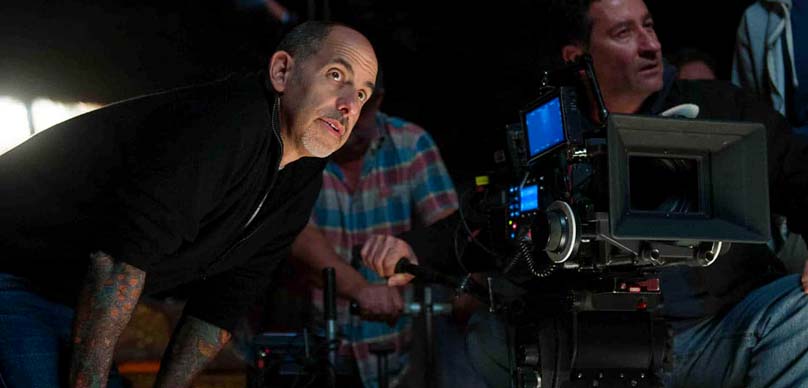
BPS 220: Inside the RAW Reality of Being a Screenwriter with David S. Goyer

DAVID S. GOYER has earned a reputation for telling character-driven stories adapted from the otherworldly realms of superheroes, fantasy and the supernatural. His breakout came in 1998 when he wrote the action hit BLADE starring Wesley Snipes, based on the Marvel Comics vampire hunter. Since then, he’s solidified himself as writer and producer who elevates genre driven stories to the next level.

Most recently, Goyer Executive Produced and served as Showrunner for one of the year’s most epic series, FOUNDATION, which premiered on Apple TV+. Based on Isaac Asimov’s iconic novels, Goyer’s sensibilities brought this world to life with his unique tone.

On the film side, Goyer produced the Sundance hit THE NIGHT HOUSE, starring Rebecca Hall, as well as the Scott Derrickson film ANTLERS. Both films are being released by Searchlight this fall. Goyer also produced THE TOMORROW WAR, starring Chris Pratt for Skydance and Amazon.

Previously, Goyer scripted and collaborated with Christopher Nolan on the story for the Superman feature MAN OF STEEL. Goyer also worked with Nolan on the mega-hit DARK KNIGHT trilogy, starting with the screenplay for BATMAN BEGINS. Goyer went on to team with Nolan on the story for the billion-dollar blockbuster THE DARK KNIGHT for which they received a Writers Guild of America Award nomination for Best Adapted Screenplay, followed by the story’s conclusion in THE DARK KNIGHT RISES. Additionally, Goyer co-wrote and produced BATMAN V. SUPERMAN, which broke the record for biggest March opening weekend in box office history.

In 2002, Goyer made his feature film directorial debut with the drama ZIGZAG for which he also wrote the screenplay, based on the acclaimed novel by Landon Napoleon.  His other directing credits include THE INVISIBLE starring Justin Chatwin and Marcia Gay Harden, and the hit supernatural thriller THE UNBORN, based on his own original screenplay and starring Odette Annable and Gary Oldman. In the same year wrote 2002’s BLADE II on which he also served as an executive producer. In 2004, he directed, wrote and produced the last of the trilogy, BLADE: TRINITY.

In addition to screenwriting, Goyer made his debut in video games with the story for the smash hit “Call of Duty: Black Ops,” and penned the story for its blockbuster follow up, “Call of Duty: Black Ops 2” as well as Black Ops: Cold War. Goyer also wrote and executive-produced the groundbreaking VR series VADER IMMORTAL for Lucasfilm and Oculus.

In Television, Goyer’s work includes the series DA VINCI’S DEMONS, for which he served as Creator, Director, and Executive Producer, focusing on the life of Leonardo da Vinci; CONSTANTINE, KRYPTON; and the cult classic FLASHFORWARD. Goyer also co-wrote the pilot and serves as executive producer for Neil Gaiman’s SANDMAN, which is currently filming in London.

The Dialogue: Learning From the Masters is a groundbreaking interview series that goes behind the scenes of the fascinating craft of screenwriting. In these 70-90 minute in-depth discussions, more than two dozen of today’s most successful screenwriters share their work habits, methods and inspirations, secrets of the trade, business advice, and eye-opening stories from life in the trenches of the film industry. Each screenwriter discusses his or her filmography in great detail and breaks down the mechanics of one favorite scene from their produced work.

Your Host: Producer Mike De Luca is responsible for some of the most groundbreaking films of the last 15 years. After enrolling in New York University’s film studies program at 17, De Luca dropped out four credits shy of graduation to take an unpaid internship at New Line Cinema. He advanced quickly there under the tutelage of founder Robert Shaye and eventually became president of production.

To watch the rest of this amazing series go to The Dialog Series on IFHTV.

Right-click here to download the MP3

LINKS

SPONSORS

  1. Bulletproof Script Coverage– Get Your Screenplay Read by Hollywood Professionals
  2. AudibleGet a Free Screenwriting Audiobook

Alex Ferrari 0:03
Well guys, today we have a special episode of The Bulletproof Screenwriting Podcast, we are going to be airing an episode of The Amazing screenwriting show The Dialogue that's available on indiefilmhustle.tv. And the guest is going to be David Goyer, the screenwriter behind films like Batman Begins, Dark Knight, the new series on Netflix, The Sandman, Terminator, Dark fate, Godzilla, Man of Steel Ghost Rider, and of course the classic John Claude Van Damme film Death Warrant, among many other. Hey, we all got to start somewhere. And David sits down with legendary producer Mike DeLuca to talk about screenwriting, the craft the business, and I thought this would be a really great introduction to this amazing series called The Dialogue, which again is available as if you are a member on Indie Film Hustle TV. So if you want to watch this episode, and 32 other episodes with some of the greatest screenwriters working today, all you need to do is go to indiefilmhustle.tv and sign up for a membership. But without any further ado, here is your preview of The Dialogue Series with David Goyer.

Mike DeLuca 2:54
I'm Mike DeLuca. Welcome to this rare in the trenches look at the craft of screenwriting. Today I'm sitting here with the Prince of Darkness writer producer director David Goyer, the man behind Batman Begins, The Blade series, Dark City, Crow, City of Angels, Flash and 1000 other movies I'm probably forgetting how do you get so busy and welcome.

David Goyer 3:15
Thanks. Thanks for having me. How do you get so busy? I'm workaholic, I guess?

Mike DeLuca 3:20
Well let me put it this way. What do you think was the beginning of this kind of current wave of superhero movies?

David Goyer 3:26
The first really significant comic book movie was the Richard Donner Superman film in 1978. The next really significant one was Tim Burton's Batman film, but they didn't really open the floodgates in terms of all these other superhero movies. And that really happened with the first blade film that you and I did, actually. And the reason for that, I guess, is because, aside from the Batman and Superman franchises over DC, being somewhat dormant, Marvel itself was in bankruptcy, right. And I remember the very first meeting we had for blade was the first day that Avi rod, who's now the head of Marvel, you know, got on the job, and, and what was significant about that film is it wasn't a well known property. It wasn't the jewel of Marvel's crown, it was a sealless character character that didn't even have his own comic book. And it was significant because there was always this assumption that you can make comic book movies out of maybe five characters over DC and five over at Marvel and that was it. But they realized with blade is totally seamless character, oh, my God, this, this character in and of itself can generate the $300 million franchise and Oh, my God, we've got 9000 characters. It's just a free for all right, and that's proven to be the case. I mean, you know, now Marvel's got well with with with the advent of fantastic bore, at least, for ongoing significant superhero franchise.

Mike DeLuca 4:53
Well, I think what you proved with the director of blade, Steve Norrington is that there wasn't so much you needed a known character but there was is a certain attitude and, you know, Yuma and irreverence and modernity reflected in Marvel comics that you guys brought to the screen that had been absent in any of the previous Marvel adaptations.

David Goyer 5:10
There was that and there was also wired to some of the sort of comic book movies that have been made prior to that Dick Tracy, things like that. There was always the assumption that they would be, you know, the production design would be in these primary colors, and that would they would be comic booky, right, if you will. And what the blade films did, and the X Men films and the Spider Man films did, and more recently Batman Begins is they treated the subject matter seriously. It wasn't a kind of a wink wink nudge nudge going on with the audience. And, you know, the filmmakers weren't they weren't looking down on the subject matter,

Mike DeLuca 5:44
Right! The fans have always said we want this kind of Batman, they showed up for Tim Burton's Batman, they should have your Batman and Chris Nolan's Batman. Why did the studio Why did they have to get bitch slapped twice? To go back to something that the fans have continually said not just compact fans, but movie goers we want it to be treated seriously. Not that has to be downer, but we want it appropriately treated characters lasted for 75 years. Why did they let it drift into camp?

David Goyer 6:08
I think it's a generational thing. I mean, first of all, the public's conception of Batman and this is specific to Batman, aside from the fans, is the 60s TV show.

Mike DeLuca 6:17
Do you think that's true, though? Do you think that really represents Batman to a big group? Because I do where are those people who want that Batman? I've never, I've never run into one of those.

David Goyer 6:26
I don't think they want it. Right. I think that that's, that's what they think of as Batman. Right? And so the my grandmother, my uncle, my mother didn't read comic books, they don't know that dark night from, you know, whatever. But the other thing, I think, is that it's a generational thing. I think what's happening now, with filmmakers like Yamo Del Toro, and you know, singer and Nolan and you know, Sam Raimi and breasts, Royals to lesser extent, you know, myself, we were all we all grew up actually being weaned on these comic books, we loved them. We sort of the, you know, ate, breathe and slept them, right. And, again, we weren't looking down at the material. And I think it took that generation of filmmakers to come of age in order to really treat them seriously for the studios to get it.

Mike DeLuca 7:14
Like a generational thing.

David Goyer 7:15
Exactly.

Mike DeLuca 7:17
Do you think special effects coming of age also, as an enabled more adaptations, because they simply weren't there

David Goyer 7:24
There are things that are possible now, that that they simply couldn't do it would have made for $300 million movie or something like that,

Mike DeLuca 7:31
Like spider man swinging through the canyons? There's no way

David Goyer 7:34
I don't Yeah, how would they have done that in the 70s? Or the 80s? Would it look like those TV movies that they did,

Mike DeLuca 7:39
Right! Where does Prince of Darkness come from?

David Goyer 7:45
Prince of Darkness. Well, originally,

Mike DeLuca 7:48
You're a nice guy.

David Goyer 7:49
I am a nice guy have children and pets, bunny rabbits and sunsets and long walks on the beach. I had a high school teacher dubbed me dad. And somehow I was doing some interview with Premier magazine and debt stock. And then they did an article and then in the lame way that other you know, things in magazine. Yeah, they just suddenly He's the prince of darkness.

Mike DeLuca 8:14
Now, did you get tatted up as a response to the unknown unknown and I don't live up to it or what's the story behind those?

David Goyer 8:20
I got my first tattoo the weekend or so my first script when I was 22 years old, sort of in defiance back then tattoos weren't as prevalent and I thought, I'm, I'm, you know, going to be a rebel and never commit to a real job, right? funny anecdote, though. I thought it would be all right early, and get a saying tattooed on my bicep from a poem not drowning, but waving and the tattoo artist misspell the word drowning. So my tattoo says not drawing but waving. So I'm a professional writer with a spelling error tattooed on my body.

Mike DeLuca 8:54
That's pretty ironic. Yeah. What attracts you to dark material over things that might be more like fantastical or escapist or a little lighter.

David Goyer 9:02
I mean, I liked seeing lighter fare. But clearly, it kind of themes that I'm attracted to. I mean, every movie I've ever done with the exception of Batman Begins has been R rated. And Batman Begins is certainly I think about as dark, a PG 13 film as you could get. And certainly people were surprised at how dark it was. And I mean, I'm really interested in anti heroes, I'm really interested in characters that are conflicted. I'm interested in characters that have to sort of go to a dark place in people that are alienated and whatnot, probably because I'm sure there's a little bit of my own experience as a kid or something like that in there as well.

Mike DeLuca 9:41
Does it require a different skill set to make a comic believable on screen? Or is it writing is writing?

David Goyer 9:47
Well, I mean, yeah, I think it is a different skill set. I mean, it depends on whether or not you're adapting ghost world. But say you're adapting a superhero comic book. If it's a well known character, Spider Man, Batman, Superman, there's a cannon, there's it, there's a known lore, and you have to be very careful about what you choose to change or not change. And I'd like to think because of my background, reading comics, and also writing comic books that in the case of Batman, I had a good handle on, you know, what was sacred, and what can be modified a bit. And I would maintain that some of the conflict movies that have been made that aren't successful are the ones that veer too far away from source material. I mean, Spider Man, Superman Batman, the X Men movies, they stick pretty close to source material when you're dealing with a lesser known character like blade. You got more latitude there on a lot of people out there that are you know, specifically aware of blade.

Mike DeLuca 10:55
Was that prevalent in your mind, your mind and Chris Nolan's mind, the fans had, making sure you were reverent enough, but not so reverent that we've all seen it before. Was that a big consideration into the draft story?

David Goyer 11:09
Yeah, we had to walk this thin line between delivering something for the fans, which obviously are the core audience, but they're not going to be enough to make a movie of that budget successful in its own right. And, and, and sort of the broader mass audience. And the problem was the core fans, you know, ever since Frank Miller and Alan Moore and things like that. They were used to a very dark depiction of Batman, Dark Knight, but the mass audience wasn't used to it. And I mean, even burdens first Batman film, which I enjoyed, still had a fair amount of whimsy, and then they got progressively nuttier, and via more like Starlight Express by the time they were done. And they started to become like the old Batman show. And so we had to also make sure with the mainstream audience that we just didn't completely shocked them. Right. But it was definitely a juggling act.

Mike DeLuca 12:04
But last year, micron was interesting, because they did become like the TV show, but no one told Batman like Batman was still placed right straight by right Cloney are poor, like no one told, believe die. We're making a comedy,

David Goyer 12:16
But they were actually quoting lines from the old show like holy rusty metal, some new spawn perversion, I don't know.

Mike DeLuca 12:28
Now, you've made the transition from writer to director when you directed blade three? How did you adjust to things like pacing and action and shooting big action? I know you had done zigzag before it was it a big transition, or is an easier leap. And I mean, who would have thought

David Goyer 12:43
It was a big transition. But since I had been involved in the other two movies, on the first played film as a writer on the second blade film as a writer and a producer, I mean, certain things have already been sketched out, I was aware of, you know, various pitfalls and things like that. So I think that the leap was not as difficult as it might have been for somebody just coming in having never had any experience with that whatsoever. But, look, directing drama is significantly different than directing visual effects or things like that, right. And they're sort of two different skill sets. And you know, especially when you're doing a chase scene, or something like that in the third blade film, where we also had a second unit, and we're literally storyboarding and divvying up shots and whatnot. And it's, it's it's definitely different. I also found, ironically enough, with a third blade film that I as a director have veered away from my own script more than Guillermo del Toro or Steven Norrington did, which is kind of ironic.

Mike DeLuca 13:43
Right! You were, it was easy for you to to show some of your children that Yeah,

David Goyer 13:47
Well, that's the other thing that happens when you go from the transition of writing to directing. I mean, as a writer, sometimes you get in these arguments with a director, and the director will say, Look, I'm on the location, or I'm come down here, I don't know how to shoot this the way you wrote it, or you say, No, I remember one time in a script I had, I had some description of, you know, a bad guy or something like that as being like the, I don't know, like, I described him is like the primordial face of evil, you know, and the director said, that sounds great, but how the fuck do I, what is that? And, and I realized, and sometimes I would argue with Norrington or delta or even Alex players or whatnot into but why are you shooting exactly what's on the page? Why are you changing that? And they would say, because this doesn't cut with this. And I didn't really get that until I was on the set. Having sort of boxed myself into a corner as a writer, and now as the director, thinking to myself, Oh, yeah, I get that. Now. There's a practicality involved. I mean, the script is obviously important and everything comes from the script, but it is the blueprint at some time. As you get on location, and the location is different than you had anticipated, or you run out of time, or the actor has some kind of problem and won't come out of his or her trailer for six hours, or whatever it is, you sound like you've had some experience. Oh, yeah, we've had experienced like that before, you know. And then sometimes, sometimes you'll get there. And this has happened to me, as a writer, as a director, as a producer, and a star will say, I'm not saying that line, right. But you need to say that line because this connects to this, I don't care that your problem I'm not saying that long,

Mike DeLuca 15:31
Right! It's very different than being the writer in a room writing your script. Exactly. You're out there having to explain everything

David Goyer 15:36
Exactly. or justify something or

Mike DeLuca 15:38
Do you think you'll be directing your own material from now on? Except for Batman.

David Goyer 15:45
Funnily enough, I, the next movie I'm about to direct, I did not write. Okay, so the one after that will be the last one, you're gonna you're gonna direct that you want me to direct next is called the invisible. It's a remake of Swedish film. And once again, it's a dark drama, about a murder in high school. But I just thought it would be interesting transitioning into directing to do something that I didn't write, I mean, for me, I thought, well, if I if I get a script with someone else's voice, and then I interpreted that marriage might be interesting, frankly, that's why Chris Nolan approached me to do Batman as he thought, well, your voice is so different than mine. And I think the combination of the two will make for a better film.

Mike DeLuca 16:29
Do outlines play a big part in your process, in the beginning of the script, you do kind of beat out the whole story, or just dive in after page one and wing it.

David Goyer 16:37
The few times I've tried to dive in, you just become hopelessly lost, or on page 40. And just fall into despair and start drinking. Yeah, outlines are a big part I, for myself, usually right, you know, 3040 page outline fairly detailed, I never give them to the studio, right? In my whole career. I've never given an outline to studios, it's the worst, they always ask for it.

Mike DeLuca 17:04
What do you say when they ask? I mean, I know the answer. Because we asked, I didn't have personally, but I know it was asked of you.

David Goyer 17:09
Right! I say fuck off. But, but I reached a certain pinnacle. And I say that, jokingly, I have a certain place in my career where I can say that, right? But you know, you always see young writers can't I mean, well I usually do is I'll say, I will come in to you. And I will verbally pitch you write everything that's in the outline, and I'll take an hour to take you through everything. But the problem with the outline is a format or for studios to read. It's a it's, it's I think Terry Rossio has a website. He's another writer who wrote Pirates of the Caribbean with his partner. And it's the worst possible format to get your ideas across, right? Because it's, it's sort of longer than just, you know, a Synopsys game sort of long enough to raise questions, but you don't have the dialogue in there to execute. In some cases, they had read the scene, you know, they would be, they wouldn't be confused or the essay. It's all in the execution. So you're not getting notes on the outline, as opposed to you get notes in the outline, and it's terrible. And so basically, it's it's the worst format to try to present your ideas in because it's not the whole scene. And they always try to get you to do it. And it's always a disaster,

Mike DeLuca 18:22
Right. So what happens, Chris Nolan calls you and says, I want you to work on the new Batman for me, I know you're a big fan of Batman. So that must have been something that made you very happy. Yeah. And then the two of you immediately got to work breaking the back of that story.

David Goyer 18:35
Yeah, yeah, we that was an amazing experience, because Chris and I worked in a complete vacuum. And, you know, we got together for a couple of weeks and worked out the basics of the story. Then I went off and wrote an outline, 30 to 40 pages, just for Chris and myself, never went into the studio. Chris went in and briefly pitched it to the head of the studio. I wrote the first draft, then Chris did some work on it, then I came back and did it, then it kind of went back and forth. But the amazing thing in that instance, is they were so paranoid about secrecy and whatnot, that the studio a greenlit the movie on the first draft. And the only two people that read it initially, were Jeff Robin and Alan Horne the two and they came to Chris's house to read it right did the script never went into the studio. And we started pre production for a good two months and old people would only come to the house to read it. And then we had a fake title it was called the intimidation game. And all the documents all the legal documents that the intimidation and intimidation game because they were worried about a Superman and Superman scripted when Brett Ratner was doing leaked online, and it had generated some negative feedback. They were very concerned about that. But then again a little funny sidebar is Chris and I went to New York to meet with DC Comics for three, three days to sort of get their blessing while we were doing

Mike DeLuca 20:16
Now were they like abused children, but oh yeah, I imagine remember when Marvel when we got to them they were all suspicious of movie companies and I imagined for DC must have been the same.

David Goyer 20:25
Yeah, DC was when we came in Bristol nipples on the Batsuit. Yeah, they were they were terrified. And when we came in and presented what we wanted to do, Paul Levitz said, Thank God, he's he's the racy comics, and he gave us a blessing. But when we checked in our hotels, what's funny about this is more travel had put on all the itineraries. Batman Begins. That's how it leaked right? With their own cover. Yeah, it was pretty funny.

Mike DeLuca 20:58
I know you've been an independent movie, you've worked at a mini major, you know, a new one. And now you've worked with big studios, is there a are there major differences between your process for independent for many major for major was dealing with Warner Brothers tremendously different than dealing with new wine or the zigzag experience.

David Goyer 21:16
Every situation is different. In the case of zigzag that the independent film I had written and directed, it was a negative pickup. So we were given a set amount of money and just, you know, sent away to make the movie and then come back and there's absolutely no interference. And I had Final Cut and blah, blah, blah. In the case of the mini majors, I was lucky in that I primarily dealt with you, and I hear good things about me. Yeah. And you and I got along and you know, and to a lesser degree and other executives. I used to be there Brian Witten, and I'm we had a good relationship. And you and I obviously had the same sort of points of reference,

Mike DeLuca 21:53
And we knew what we wanted the character to be important to know. All swim in the same direction.

David Goyer 21:57
Yeah, you know, in the case of Warner Brothers, they knew that the Batman franchise had been sorely damaged, and that they had to do something significant in order to resurrect it and go in a different direction. And they knew

Mike DeLuca 22:08
They were like Ellen Burstyn an exorcist. Yeah, we're like Jason Miller. Yes. And the franchise was Linda Blair. Yes, exactly.

David Goyer 22:15
And, and there was projectile vomit. Right. But they they knew that they had to sort of give it credibility again. And so when they announced that Chris, and I were going to do it together, I think there was somewhat of a collective sigh of relief, you know, amongst the fans that Oh, wow, they're I guess they're serious about reinventing this.

Mike DeLuca 22:35
Now. We were aware of the the rumors about the Superman versus Batman project. Did you think or do you think that's a good idea? Or do you think that that's a kind of unlikable movie?

David Goyer 22:45
I think eventually, it's a good idea. I mean, the thing about Superman versus Batman The script is written by Andrew Kevin Walker, who we both know.

Mike DeLuca 22:52
But that's a script capital, the lock and key like, I've just heard about it, but I haven't read it.

David Goyer 22:55
I've read it. It's actually a great script. And but I think, you know, Warner Brothers, they've been trying to revive the Superman and Batman franchise for years. And they were getting nowhere in there, all these different iterations of things at the end and kind of in despair. They said, well, let's do it. This combo movie, sort of like when universal had died with Frankenstein and a Wolfman. Let's just throw them all into the same movie. And, you know, see what happens. But the problem with that is by making that movie, you're basically admitting that you've exhausted all possibilities, right? A franchise. And I don't know whether it's Alan Horne or Jeff Robinson, but they said, you know, always make that movie. Yeah, exactly. But, you know, hopefully now, I mean, I think they with Bryan Singer and Chris Nolan, I think they have successfully press reset on those two franchises. And they can probably get three or four more movies out of each and then make Batman versus Superman right.

Mike DeLuca 23:51
Now, how did they approach you about the flash similar? Did you get a phone call and say we want to go to them and say

David Goyer 23:57
No, after after after Batman Begins. Warner Brothers owns DC Comics. And they'd obviously had a good experience on that. And so they came to me and said, which was fun for especially for comic book geek like me and said, any DC character you want? What do you want to do? We want to do another. They were primarily pushing Wonder Woman, Green Lantern or the flash. I had no particular love for Wonder Woman. And I just thought the flash would be fun and that no one had really exploited those powers right, you know, cinematically yet, so that's what I'm working on right now.

Mike DeLuca 24:38
And when you sit down and begin to write a movie, like the flash or any movie that you've worked on, do you think in pictures first, and then words or words first?

David Goyer 24:48
In the case of flash, I did something similar to what I've done in Batman when the first thing I did was just sat down, locked myself in a room for a week and just reread everything I could possibly Were reread. And I did two things a, I made a list of just cool moments, or lines, in no particular order that I just thought had to be in the movie. And then also made a list of you know, what, if you boil a flashy boil Batman down or you boil blade down, what are the elements that absolutely have to be there? What's the story about what's the, you know, in the case of Batman, obviously, there are core elements that have to be there. But in terms of the theme, you know, it was a story about fear and overcoming your fear and living in the shadow of your father and being afraid that you're not going to, you know, fulfill, you know, you know, what he was trying to do? And, you know, honor his memory. In the case of the flash, I did do the same thing and figure out what's, what's the metaphor, what's the or theme of this movie. And what I decided for the flash, should we be fortunate enough to make it is it's the Icarus myth in a way, that speed is the only modern bytes. And there's all these vices that exists time immemorial. But speed is something relatively new, right? And it's addictive. And, you know, if you run too fast, you'll run yourself literally out of existence, but you'll also sort of won't be able to stop and smell the roses, and you'll leave the people you love behind. So that's sort of the emotional core of what I'm trying to do with the flash.

Mike DeLuca 26:31
In terms of themes, are there other themes that you'd like to explore over other ones? I know, you mentioned the antihero, but are there other themes in the flash that are similar to some of the themes in your other work?

David Goyer 26:43
Well, I mean, in a lot of cases, I seem to tell stories about either reluctant heroes, or heroes who, you know, I mean, in the case of blade, he's, he's acting heroically, but sort of the rest of the world thinks he's a vigilante, as is the case with Batman. In the case of Dark City, it's, again, sort of a hero acting alone, it's isolated and whatnot. I don't think I would actually ever be good to write Superman, because it's the opposite. Thanks for Yeah, and I wouldn't know the angle because I'm so angst ridden, right, that, you know, I wouldn't know what to do with a character like them, right? Give them x, right. Well, in the case of the flash, the Wally West character, I mean, his angst is that he's a screw up, right? He's just a, he's like the last person that you, you know, he gets these powers. And the first thing he does is he just messes round. He was wildly West Kid Flash. Yeah. And then around 1980 1980 became flash became flash. And so the, you know, the bulk of the major generation of film goers that would be seen that moves while he was he's been wildly West.

Mike DeLuca 27:51
You mentioned Dark City, you know, which is another film we worked on together. It's kind of become a cult favorite. And if it's an odd movie, what were the biggest challenges in putting a movie like that together with? Was that an idea that you collaborated with Alex on?

David Goyer 28:06
Alex had the bird Alex boys. Yes, they had the initial light. You had a tree bend that he sent me. That was amazing. But he incomprehensive Brett, and he knew it. And he said, at the time, you know, I want you to sort of make a movie out of this with me and get direct to the CRO but it hadn't come out and I hadn't seen it. There was nothing to go on. And I just thought it's crazy. I turned it down. He went off eventually found limb Dobbs, they did a draft but and lemons great. But lamb is also not known for Ron, you know, the guy that wrote Kafka when wrote the limy. Right? Yeah, okay, the lime is great. But but if you want if you got to kind of inscrutable Chinese box of envy, the guy that wrote Kafka may not be your guy, the best guy to kind of, you know, make it a little less accessible. Yeah, yeah, we're more accessible. And so eventually, I came back on and my job was to my whole point with Dark City was I said to Alex, you've got all these. It takes place in kind of this parallel universe, you've got all these weird rules, and it's fine. For this universe, they have different rules, they just have to be consistent rules, right? So we just have to there was no consistency in anything that was happening,

Mike DeLuca 29:20
Right! So a big challenge is to make everything conform to one right set of rules so that you could suspend your disbelief and go

David Goyer 29:26
Right and it had a dream kind of logic. But I just said we just have to kind of codify right where these rules are new, you know, the first the first scene I wrote for Dark City. I pointed out to Alex kind of something that I thought was obvious, which was you know, the city is always takes place at night. But no one ever comments on it. Right? That that there is no daylight or that there you know, I just had will they might mention that. Yeah, that's like a big deal. So the first thing I wrote that That movie was kind of out of order, and the first thing I did was the scene between, you know, the protagonist character, the Murdock havieron Bumstead was played by William Hurd. And it's, you know, he's being interrogated. And there's this moment where he says, Let me ask you a question to Bumstead Do you remember daylight and that turned out to be kind of the pivotal scene and Ron V?

Mike DeLuca 30:30
No, got that got the existential thing going in, in the movie. In a movie with big ideas like that, you have to fight for space with trying to get those things in, but also have like, character work and great one liners or, you know,

David Goyer 30:45
Well, the thing about dark city that was kind of nice, is we we were deliberately trying to do a movie that forced the audience to think right, and

Mike DeLuca 30:58
Boy, did we get bitten the ass for that.

David Goyer 31:01
You did. But I but the other problem with Dark City, even though it's a movie that I dearly love, is that it's a movie about a guy with amnesia, right, who sort of doesn't find himself and become more active protagonist until the end of the movie? last 15 minutes of the movie. With the soil. Roofers tool is pretty cool, right? But it's kind of hard to make a movie about a guy with amnesia when you cast an unknown before that there was this moment where we're going to have Johnny Depp right, Johnny Depp, playing a guy with amnesia is still Johnny Depp. Yeah, you know what I mean? Yeah, you've got reversibly stars. Yeah, and unknown, and nobody knows who he is. And there's nothing to deal with. But, but another funny anecdote, we shot that movie in Sydney, Australia, and you don't like to fly. And so no one from Uline would ever come to check on us because we were often part of the world.

Mike DeLuca 31:53
Well, the ultimate irony is now as a producer, I just spent seven months you had to go to Australia know that scene in dark city between Bumstead. And Murdoch is is a very pivotal scene. And it it kind of sets the tone for that existential debate. Was that a difficult thing to come up with? And once you had it, it's fitting great. But did you guys struggle with that one?

David Goyer 32:11
We really didn't. It's the first thing I wrote. did. You know I sat home one night, that hour, actually, I was in Sydney at the time, and I wrote that scene. And we never changed it from that initial draft that scene. The trick of Dark City was that it was a Chinese box of a movie. And so many things retroactively had to make sense that we were constantly we had these flowcharts set up, and Alex and I were just constantly getting lost in our own logic. But that was part of the fun of doing it.

Mike DeLuca 32:50
In terms of your own writing, have you ever looked to other screenwriters for advice? Or to be or to have other other writers read your stuff? Or have you ever gotten really bad advice that put you on the wrong path, but do not open yourself up to that kind of?

David Goyer 33:04
Well, I mean, I do have people read my work before I turn it in to studios, I've got four or five friends. Some of them are writers that read it. The more recent friend of mine, Mark parota, Savage, who you've also worked with both the cell II and I have taken two, we write similar kinds of things. We give each other our drafts and give each other feedback. And it's very easy for Mark or myself reading his stuff to see kind of obvious plot holes, and maybe other people might, you know, right, he'll call me up and say your kind of bulging in here, right. And he'll keep me honest, and I'll keep him honest. I think that's important as a writer to have, you know, critical minds looking at your stuff and you know, telling you if it's not good enough,

Mike DeLuca 33:49
Right, why did you decide to be a screenwriter? Was it always that for you? Or did you come to it?

David Goyer 33:53
I was going to be a homicide detective in Michigan. I grew up in Ann Arbor, Michigan, and I had been accepted to Michigan State and I was gonna get a degree in police administration and become a homicide detective. And some of my high school teachers just flipped out and called on my mother and said we think he should be a screenwriter bizarrely

Mike DeLuca 34:13
Wow. Specifically screen

David Goyer 34:15
Oh, yeah. Well, I'd made little email I mean, in high school, they handed her the application for the USC BFA program. Wow. And and you know, and I had never read a screenplay. I didn't know anyone in Hollywood it's so much easier now for people becoming screenwriters. There's there weren't any screenwriting programs I didn't have a computer now you can get all sorts of scripts online, right? There's final draft and there's books on screenwriting and things like that and and digital video cameras, right? But I didn't have any of that crap. And to my surprise, I was accepted to USC and decided to go and upon arriving a USC was promptly kicked out of beginning screenwriting for arguing too much with my teacher. You What was the point of contention? The point of contention was, he said that you could only tell a narrative story. Within within with a living person or animal or something in an animated film, he said you can tell a narrative story within in with an inanimate object, which to me was ludicrous, right? I believe that short film Brave Little Toaster had come out that year. Yeah, but Disney short. Yeah. And I just said, That's bullshit, but you're full of shit. And I remember I stood up on his table, and I was ridiculous. You got a riot? Yeah. And he kicked me out.

Mike DeLuca 35:35
Now what about the high school teachers who push on the path has ever talked to them. And yeah, I stayed.

David Goyer 35:39
I stayed in touch with them. And I had a nice experience a few years back about three years ago, after I directed my first film, zigzag University of Michigan invited me back to kind of do a master class or whatever. And we had a screening of zigzag. There's one movie palace back in Ann Arbor. And tickets, were free to any teachers, former teachers or students from my high school. And they all showed up. And that was kind of cool.

Mike DeLuca 36:04
Was there a particular moment where you gained full confidence of your skills as a screenwriter, where you didn't you know, I don't know if you ever had doubts, but was there a moment where you're like, I got it. This is gonna work.

David Goyer 36:14
Yeah, actually, it was the script for blade. Okay. I mean, I had been writing professionally for at least five years before that. And, you know, looking back on it, I look at some of the stuff I had written and even gotten made and said, Can

Mike DeLuca 36:26
Pretty good van damme movie I thought, yeah.

David Goyer 36:29
But that's like saying, you know, I don't know would you say like, is the best Steven Seagal movie? Right here? It's the best doleful, and everyone has to start somewhere. Yeah, yeah, that that was the first thing I'd done, which was this van Damme movie death warrant. But I think blade was maybe the eighth or ninth script I had written, okay. And it was the first time that I felt like everything just clicked, right. And for me, my prior to blade, even though I wrote the script, it took about four years for the film to be made. Prior to blade, I was still auditioning for jobs, I really did pitch myself really hard. And what was interesting with blade and this can happen with screenwriters, as the movie hadn't been made, but it'd become this sort of infamous script that was circulating around town that people really liked. And, and it happens every once a while and you can make a name for yourself on something that even doesn't get made. And after blade, I, for the first time just got offered projects, right without having to audition for them

Mike DeLuca 37:28
That one script that kind of breaks through and is the writing sample the magic writing sample for writers it things change.

David Goyer 37:33
Yeah. And the script replayed changed my career. What about film school?

Mike DeLuca 37:38
Do you think it does anything for anyone? And do you think did you pick up stuff at USC?

David Goyer 37:42
That was I mean, I clearly did. In my case, I knew nothing about filmmaking, or screenwriting. And I was just coming from Michigan. So obviously, I learned something. But nowadays with the internet, and all these other tools, I don't know that it's entirely necessary to go to film school. I mean, there's so many filmmakers that didn't go to film school, they were successful. And just the whole aspect of filmmaking is so much more accessible to people.

Mike DeLuca 38:08
Yeah. Anyone with a Mac can Yeah, produce a Pixar movie final

David Goyer 38:12
or Final Cut Pro or whatever it is, you know, I mean, that guy that made that film at Sundance tarnation. I don't know if you ever saw that. But he made it for a 1000s of dollars. Right. I saw primer though, which is a primary trade. It was made for $7,000. And it's like a really engrossing movie. Yeah. And I mean, you know, anybody can put together seven grand now, which is tuition for per year. Oh, God. I mean, they even back then I was 25 grand a year or something. undergrad? I mean, no, I

Mike DeLuca 38:41
yeah, I'd rather make the $7,000 move and up at Sundance, but then again,

David Goyer 38:45
You know, there's only one of those a year for Yeah, I I don't know how many films that get submitted. 1000s like winning the lottery, right?

Mike DeLuca 38:56
Is there anything in your life that prepares you for life as a screenwriter or as granted director in Hollywood? Like, is there one quality your tone from way back? When that gave you an edge out here?

David Goyer 39:05
No, there's no quality. I mean, writers come from all walks of life. And I used to think that that, that you had to be tortured, right, to be a good artist. And and I think to a certain extent, that's true that whether you're a musician or a screenwriter or a director or a novelist, that oftentimes if you got a really idyllic childhood, would you produce is somewhat boring because you haven't had any adversity or any conflict in your life. That doesn't mean you have to be miserable now, but but there Yeah, there was a certain amount of adversity or things that I had to deal with as a child. And, as is often the case with writers, you get into that as an escape, right? You know, you don't want to deal with whatever it is that's going on. So you you write stories or you draw comic books, or you write songs, and, you know, they've everything was hunky dory and dandy. you'd be out. stickball team or you know,

Mike DeLuca 40:14
Right whatever it is, you have to write a lot of screenplays before your first produced one.

David Goyer 40:18
My first produced movie was my second screenplay. Okay, so I didn't have to write a lot. And I was one of those sickening guys that I sold my first script about six months after I graduated college and didn't have much in the way of a real job and have no idea what I would do if I didn't do it. Now, I mean, I don't have any real applicable skills,

Mike DeLuca 40:40
Right! Through the skills that you you refine over the course of writing a lot of screenplays, does it result in a better one each time out?

David Goyer 40:49
I think that writing is something that you can continue to get better at. 30 40 50 60 you you know you're I mean, I think as unless you're suffering from Alzheimer's, that Yeah, I think so. I mean, I I'd like to think I put it this way. When I wrote blade I look back at the scripts part of that and thought they were crap. But and then when I wrote that in begins, I look back at blade. A blade was crap right now, I hope five years from now that whatever I'm running at the time I look back at and think Batman Begins right crap, because that means I'm evolving and continuing to kind of hone my craft.

Mike DeLuca 41:26
Did you know that films like puppet masters or death warrant, we're good way into the business, the movies, people, we're going to make that we're going to probably make a profit.

David Goyer 41:35
Now, when I started out, I mean, I everybody's different I was just doing I would just try to burst a make a living right, as a writer. And then it was okay, now let's try to get something made. Yeah, I mean, the bar kept on being raised, right. And then let's try to get something good made in the, you know, I've had a lot of things made. I've had, I think, feature wise, something like 17 things made. And I'm lucky enough, I remember a teacher in film school said, Look, making a good movie is so incredibly difficult that as a screenwriter, if at the end of your career, you can look back and feel that there's even one movie you're truly proud of, you should consider yourself as successful. I can look back between TV and movies now and say there's maybe seven or eight that I'm proud of. And you know, I've got seven or eight that I'm embarrassed by in seven or eight that I'm indifferent to, or I've also got a fair number of things made that I've written under a pseudonym, right, which is something kind of fun. Now what what caused that? Well, if you have enough crappy things made the problem with writing for film, is that you are at the mercy of the director. Right. And I mean, I've been fortunate enough to work with a lot of good directors, but I've also worked with a lot of crappy direct, right? And that's where you use the pseudonym. Yeah, well, at the beginning of your I wish I could retroactively go back in time, right? Put a pseudonym on kickbox or two or demonic tours or something like that. But right, but I didn't, but once I kind of got wise to that. Yeah, I've used the pseudonym three or four. What is your pseudonym? Oh, I have a bunch of them. I have a Cynthia Verlaine. I have Ricardo come out at night. Yeah, your chin. I have Ricardo fist diva. And the studio is no people. No, you have to you have to let the studio know that is you're using a pseudonym. And then I also have you Shiro Tegan, Midori. So those are the three so far. And I have another one that I registered that I've yet to use flex gamble.

Mike DeLuca 43:32
So who knows he's on deck. Yeah. Have you ever had a film that you thought was going to sell into production? Not go into production? Never go into production? And was there one thing that stopped that from happening?

David Goyer 43:44
That's the thing. I mean, you learn in this business that anything can happen. I mean, all the time you meet with producers or studios. They say, You don't understand. We're making this movie. You know? And right, cut two. We're not making this movie, right? Yeah, I had a movie once that the plug was pulled eight days before shooting, which is very late in the game. Sometimes there are movies, the plugs pulled in the middle of shooting.

Mike DeLuca 44:06
What was the what caused the eight day plug loophole?

David Goyer 44:09
I think it was casting and you know, they just ultimately decided does this movie worth it? Or something like that? Did not that movie was ultimately made as a TV movie. And Cynthia Verlaine?

Mike DeLuca 44:23
I say how do you know when to really give them a fight? And when to pick your battles? Like what? How do you know when to to really throw up to fall on your sword for a point of view or a project or

David Goyer 44:39
That's a hard one, especially as you're starting out? Because, you know, there are a couple of different factors involved. I mean, first of all, if you're a beginning writer, you're too difficult or too argumentative. You will ultimately run yourself out of jobs because people say he's just too much of a year she is just too much of a pain in the ass.

Mike DeLuca 44:59
But they want to put point of view too, probably right?

David Goyer 45:01
They do want the point of view. But then But then the other thing that happens is, as you become more successful, you've got a body of work, so you can speak with more authority, and throw yourself around. Now, I reached this aha experience where, I don't know maybe about 10 years ago, I was given a set. The other thing is that you have to be open to the idea that to constructive criticism that just because it's a studio doesn't mean that what they're saying isn't a good idea. You have to really challenge yourself and find this balance between listening to the criticism, and possibly doing what they're saying, and also fighting for your instincts. And there are cases where you could be in a room of people who are all tentative or saying don't do this. And you think, no, I should do the opposite. And you absolutely should stick to your guns. And what I realized 10 years ago, as if I really hate the notes, and I really think that these notes, just completely screw with the integrity of the piece. I won't do them a walk. And usually nine times out of 10 That's so freaks them out. Right? You know, I'll say give back the money. What not on that I did it with you once your appears to me which one refreshment? I was I did an early draft of Freddy vs. Jason. Ah,

Mike DeLuca 46:16
I don't remember it. No, I don't remember. And, and I chose that when Rob butene was,

David Goyer 46:21
Yeah, truth be told, I didn't really want to do the project right in with and you kind of talked me into it. And my heart wasn't in it. And we did a draft and it sucked. And, and I said it sucked in. You know, you guys wanted me to do certain amount of notes. And I just like I

Mike DeLuca 46:37
Get me off this train.

David Goyer 46:38
Yeah, exactly. 10 years later, they made it.

Mike DeLuca 46:41
Did you ever say the eventual movie?

David Goyer 46:43
Did I ever see it? The irony is 10 years later, I ended up being Boone swagel into Script doctoring the day. Since I spent by weeks on that, that

Mike DeLuca 46:54
It was fated to be you and Freddy and Jason. Yeah, you're lucky they didn't draft you for the Freddy Jason Chucky ash from Evil Dead movie.

David Goyer 47:00
I know. I know. That, like every writer in town, like worked on. Right? Pretty versus JC. I mean, there were 13 different scripts written and nothing.

Mike DeLuca 47:12
Cynthia Verlaine took a shot probably now that you're directing your own material, the new line, trust you more because it's one stop shopping for the vision that dealt with you as a writer?

David Goyer 47:21
Yeah, I think newline did trust me because I, in terms of things that have been made, I'd been involved in five or six things in the one that I made and maybe 10 things, you know, all the things that hadn't been made. There's definitely a comfort level between us.

Mike DeLuca 47:37
Have you turned down other assignments besides running away from Freddy vs. Jason? Oh, yeah.

David Goyer 47:41
I turned down assignments all the time.

Mike DeLuca 47:43
I know, you turn that you turn me down again for Ghost Rider?

David Goyer 47:45
I did. I did. I did turn you down for that.

Mike DeLuca 47:50
I guess it was it. Your schedule. But also, you have to be turned on by the material? You will?

David Goyer 47:57
Yeah. I mean, in that case, I actually could not do it, right. Because I was about to drag a pilot. But I turned things down all the time. I mean, that's one of the nice things about hopefully becoming more successful is you can become progressively more selected. And, you know,

Mike DeLuca 48:11
Do you think you'll continue to be open to direct other people's scripts as well as right?

David Goyer 48:14
Yeah. Well, we'll see what the experience is like after I do it. But I think so you're gonna let the writer on the set? Yeah. Yeah, I'm, I'm, I think it's, I think it's good to have the writer on the set. Because it it's important to have somebody who can protect the integrity of the story, because when you are directing, you're shooting it out of order, right. And he says, and his little pieces in, you're overwhelmed by costume and continuity, and the actor won't come out of their trailer and whatever it is that you're dealing with. And the actor might want to make some line modification, and you're not thinking at the time. But if I change that line, it's going to screw up this scene later on down the line that the writer is because the writers got it in his or her head. So I think that's important.

Mike DeLuca 49:01
At this point, your career What do you know what the best thing you've ever written is? I think I'm produced or not produced. But do you know, yeah, that's the best thing.

David Goyer 49:07
The best thing ever written, I think for me produced is Batman Begins so far. I think the best script I ever wrote, not yet produced is not a patient of a Neil Gaiman short story called murder mysteries. And that's admittedly, something I hope to direct but it's more of a dark city. It's led to much more challenging, not sort of downright mental movie.

Mike DeLuca 49:33
Do you like Do you still like those complex narratives as puzzle boxes?

David Goyer 49:36
I do. Right? I do that. I mean, you do too. They're not they're not always gonna burn up the screen in terms of box.

Mike DeLuca 49:43
I think what I learned is that we have a peculiar taste and yes, budget should be watched. Yeah. I mean, although we did have matrix two seconds before matrix,

David Goyer 49:52
I know what's frustrating is the matrix came out. Yeah, you know, a year later or something like that

Mike DeLuca 49:58
And with the ah, That's how you make that idea commercial.

David Goyer 50:01
Exactly, I forgot how to do that.

Mike DeLuca 50:14
This is a hard question to answer, but what do you feel you have one weakness as a writer, I know you want to broadcast this to the studios.

David Goyer 50:20
I think that writers tend to gravitate either more character writers or more plot writers. And I think that that's a kind of a fundamental way that writers approach things. And a lot of writers will write characters person sort of see where those characters take them. Right in no other writers will work from a place of structure and plot and, and back into them. I mean, you know, it's still difficult for me, I think to write female characters. Just because I don't have a vagina. Right.

Mike DeLuca 50:52
You know, they saw those done on Melrose. Yeah, the robber.

David Goyer 50:56
I, yep, that's still difficult for me.

Mike DeLuca 50:58
So what do you do to improve in that area? Knowing that that's a weakness?

David Goyer 51:02
I mean, do you seek go down to Melrose?

Mike DeLuca 51:05
I mean, do you show do you talk to women about characters when you're writing a strip of female?

David Goyer 51:09
Yeah and do you say, we read this to you? Can you see if it rings true or not? You know, and you try to do whatever research you can ask?

Mike DeLuca 51:19
The Katie Holmes character and Batman Begins and nimbu che right and blade we're both pretty strong female characters.

David Goyer 51:25
Yes. And I like writing strong female characters. But you know, I'm, but I'm aware of the fact that I don't want to make them to stride into a book. I'm not. I think I can do it. It's just something that I

Mike DeLuca 51:40
that's one area. Yeah, yeah. You and Oliver Stone. Was there a point in Batman Begins where you guys had a roadblock, and it took you a little bit of time to bust through it was anything difficult in the in the RE fashioning of that myth?

David Goyer 51:55
I remember saying to Chris, at one point, near the end of the second act of the film, that would be great if there were a certain amount of symmetry if, if if Ra's al Ghul when he comes back could burn down Wayne Manor. And I remember thinking that a that would be something the audience wouldn't expect, because it's not in the cannon. Right. I think they're not going to destroy Wayne Manor. Because, you know, Wayne Manor continues exists, but I knew it seems obvious now. But it took us months to figure out how she was, you know, just to figure out well, they can rebuild it. Oh, I mean, it's like

Mike DeLuca 52:34
da right. Well, that's how reverently you treated the cannon in your mind that has always existed and glider down it's gone. Right right.

David Goyer 52:42
But then we thought the debt the debt then fits with the theme in the movie of rebuilding Gotham Ryan

Mike DeLuca 52:47
and you and you managed to get a few lines about you know, that imply that the can make improvements to

David Goyer 52:52
the debt to build a better Batcave and things like that, right? I mean, I think that the was also trying to figure out the machinations of getting Ra's al Ghul back into Gotham and in in linking Rossignol in the League of Shadows into sort of having, perhaps a presence Gotham before, you know, day was that was a tricky movie to write. Right? Also, because we were dealing with a nonlinear structure,

Mike DeLuca 53:17
right? You've worked in the same genre a lot. Have you ever like cannibalized? unproduced scripts for all their stuff became produced all the time?

David Goyer 53:24
I mean, they're yours. Why not? Yeah, exactly. I mean, I remember utilizing a bit from I wrote a unproduced script for Dr. Strange persone. And I utilize that in another bit, or sometimes they'll come up with a line or, you know, a scary sequence and cannibalize. You're allowed to copy from yourself, especially if it's never seen the light of day.

Mike DeLuca 53:45
Where do you find inspiration for the stuff you come up with?

David Goyer 53:49
I'm a voracious reader. It oddly enough, I'm not a voracious consumer of movies, right? I mean, I watch movies, and I watch TV, but not I'm not wanting to describe myself as a student of Bob. But I do read constantly in my bed table. There's four or five books that I'm reading simultaneously and I read all sorts of stuff.

Mike DeLuca 54:12
Now, I know you'd like to think on your feet. So yes, we've got a little screenwriting exercise for you. And we call it the object.

David Goyer 54:19
my loins are yearning Norris. Try

Mike DeLuca 54:25
So here's what's here's what happens here. Okay, we're gonna present you with an object. You're going to tell me its story in any way you see fit. And after that, you're gonna tell me why you chose what you chose. Other than that, there are no rules regulations or limitations

David Goyer 54:38
you bastard Okay, ready?

Mike DeLuca 54:39
Yeah, you know what's going on?

David Goyer 54:40
I'm I know it I yeah, I grok it ticket. Your objects Oh, God. Well, I mean, I see this and immediately I go to some kind of horror film. Oh, no. I mean, you know, this is just You know, some guy cop pursuing, you know, killer or something like that and some god forsaken place it's been condemned. And you know, there were the killer is taken 40 children and he's the murdered them. And you know, this little object is sort of there when the guy finally kills the killer in some.

Mike DeLuca 55:22
So you've taken a child's toy thing built well I am the prince of

David Goyer 55:27
darkness but But I look at this toy and I think this is a disturbing toy like that Jack in the Box or the monkey comes out or do that thing right and monkey II, that bed dolls, those kinds of things really scare me and this little clown and clowns are inherently scary as well and just wrong. And so you've got like an old tin toy of a clown. And it just it's disturbed romantic. And I maintain that if you put this thing in like an empty room with you know, holes in the wall and graffiti and stuff like that, and just some moonlight coming down on that. You'd be scared. And you'd say the souls of 40 murder children have been consecrated into that little toy and they're going to come out and terrify people later on. I don't know. I mean, I seriously though I look at this and I say this is like, right. This is disturbing. I don't know why, right. Maybe it's indicative of my fucked up childhood or something like that.

Mike DeLuca 56:25
I had a fucked up childhood I see a clown on a bike.

David Goyer 56:28
So this is just a benign object. I

Mike DeLuca 56:32
didn't write Batman Begins.

David Goyer 56:33
Right? Well, that's true. But you wrote in the mouth and I mentioned that. And the most disturbing thing about the object is that he I now have to have it sit there in front of me.

Mike DeLuca 56:43
You can put anywhere you want. Really? It's your object. Okay. One might say it's an object lesson. Whoo. So far, you mentioned you wanted to be a cop, a homicide detective, not even just a cop a homicide. I

David Goyer 56:58
was very interested in solving homicides as a kid. You put

Mike DeLuca 57:01
this thing at the scene of a crime not even a crime. child murder a homicide. What's eating you David?

David Goyer 57:06
What's eating? I know as a kid, I watched a lot of monster movies. And a lot of I would just inherently be drawn to you didn't get

Mike DeLuca 57:17
in the car with a group of guys.

David Goyer 57:20
Yeah, I didn't. Yeah, I didn't. I didn't have a scout mouth.

Mike DeLuca 57:25
Never too late.

David Goyer 57:26
Had you had me when a very specific merit badge? No.

Mike DeLuca 57:30
Do you like to be scared? I mean,

David Goyer 57:32
as I do, like, I love to be scared. I love the vicarious right sort of you know, I love that experience of seeing something that's absolutely terrifying. Or reading something that's absolutely terrifying any it's very rare these days when I watch a movie or television that I myself am scared right audience member and I could probably count on one hand in the last decade or two decades the movies that really scare me but I vividly remember for instance, seeing alien reverse time in absolutely losing my shit as an 11 year old and then you know another just really disturbing movie is Don't look now yes the end of Don't look now and that's a movie that movie so disturbing. I remember showing it to a woman who broke up with me afterwards futures isn't debt so terrible. You ever you say hello to that's a breakout? Yeah, yeah, that's a good makeout film.

Mike DeLuca 58:26
You're making out with freak Bala Madonna. Yeah.

David Goyer 58:30
But I think that, you know, Jacob's Ladder, scared me and unhinged me and disturbed me and I think parts of 20 days later and it's really hard to make a really scary movie actually,

Mike DeLuca 58:41
in Batman Begins. I thought it it comes close to true horror and several sequences but

David Goyer 58:47
mostly with a scarecrow. I

Mike DeLuca 58:48
think well, the one I'm thinking of is the Scarecrow has inhaled his own magenic and what Nolan put on screen is his hallucinogenic version of Batman, you know, threatening Scarecrow was truly horrific.

David Goyer 59:02
Well, that was the epiphany that you know, I when I was talking with Chris, when we were first talking about the story, I said, it always bothered me and it didn't Batman comic books and things like that, that they could be some scene where the guy would plop down a newspaper and it would be some man on the streets description of a giant bat in the artists, you know, read edition was a giant bat. And when it looked like a giant ad, saying to Chris, well, what are we going to do? Because it doesn't look like a bat, right? It looks like a guy that's going to a costume ball or something like that. So then I realized oh my god, the Scarecrow uses this hallucinogen. And I mean, the idea of adding the Scarecrow himself see is that that came later but right when we realized that we were getting gas, Gotham, I thought, holy crap. We have this opportunity to ever so briefly, show Batman VM. A fair point is to be your point of view. And he does look like horrific demon and That is what cements bad man's reputation in Gotham. where the legend spreads because hundreds of 1000s of people or at least 1000s of people, Shaw, a giant flying demonic bat, right? Because they were all high. They were all right, you know? And then we backed into the idea of the Scarecrow seeing Batman in the same way. Just a few medicine doctor what have you been doing here? He's near right now. If you'd like to make an appointment.

Mike DeLuca 1:01:11
Now that that must be a case as a writer where there was a happy marriage of your ideas and the director's execution of the ideas you discussed? It doesn't always go that way. But was there a point in the Batman process where you saw dailies or you saw assembly and you knew this, this is one of the best versions of director taking my words and US collaborating on what shouldn't be on screen?

David Goyer 1:01:36
Well, I think the two best versions of that that I've had were dark city. And, and Batman Begins. And the reason for that is because I developed both scripts with the director. And, you know, from the inception, the two of us were on board. So everything that Chris or Alex was going on to design right was coming from that as opposed to writing a script in a vacuum, and then giving it to Norrington or Guillermo del Toro even though I had a good experience with those guys different and then interpreting it in different way or coming at it from a different way, in that in both those cases, we were able to sort of approaching it from the same angle, right?

Mike DeLuca 1:02:17
Did you know When did you know when you saw the Director's Cut, that this was going to work and reinvent the franchise.

David Goyer 1:02:22
I knew before then, because we also started pre production, we brought on Chris brought on his production designer, as we were writing, and he worked in the room next to us. And we would just go back and forth. And he was coming up with designs for Gotham, or the Batmobile. And we would come in and kibbutz and then some of that would plug back into the script that we were writing so deep, this sort of visual evolution of the film was it was happening parallel to the script.

Mike DeLuca 1:02:49
I assume it's gone the other way. For you,

David Goyer 1:02:51
when I've had terrible experiences with directors.

Mike DeLuca 1:02:54
When do you know what those experiences? Is it when you see the director's cut, or before just

David Goyer 1:02:59
from you know, sometimes when you're shooting and I've had experiences with a director, you realize with horror, that the director actually doesn't understand the scene, right? Like missed the whole point of the scene. Right? And, and you try to sort of talk sense into them or things like that, and, you know, debts that's bad. Also, it's bad if you have I've a couple of times work with directors where it kind of became a free for all, and they would listen to anyone because they were terrified. So I mean, yes, my voice was in there, but it's committed to and Midian is done. It's just a mess.

Mike DeLuca 1:03:41
Where's your workspace, where you work out of and what's in it.

David Goyer 1:03:43
I have an office at home. And I do a lot of work there. And my sort of prized possession is a photograph in the 70s of Marlon Brando. In behind him is a paparazzi photographer named Ron vallila who used to stalk Marlon Brando and one point Brando turned around and punched him in the face and broke his nose so from that point on we're gone for a football helmet with his name Ron on it's the photo is Marlon Brando, Iran and the football helmet behind him and that kind of sums up Hollywood

Mike DeLuca 1:04:15
that's great completely the guy wants to punch the nose and the guys figured out what to wear to protect it

David Goyer 1:04:19
and stalking you right you know, but but most of my scripts I write the bulk of the March break the back of all my scripts at a place in Wyoming that I go up to in Jackson Hole, and I just locked myself away in this lodge for 10 or

Mike DeLuca 1:04:32
15 days. Does that evolve over time that that Yeah, I had a writer's retreat for it.

David Goyer 1:04:36
Yeah, I realized it's just better to go away and just really focused

Mike DeLuca 1:04:41
do listen to music or have little rituals while you write or I don't I

David Goyer 1:04:45
don't listen to music. I can't I need complete silence. I can't even have anyone else in the house wish list the room. So there's that I always write from about 10 in the morning till two in the afternoon. I don't write on the weekends. I don't What makes that kind of discipline unique, really important? I mean that some people write in different ways. But for me, you know, I think one of the reasons that I've been successful is that I created my own discipline. And I'm very rigid about it and I treat it like a real job and I found that once I started doing that, I became more effective writer you mentioned,

Mike DeLuca 1:05:19
you read a lot the reading does it help you write? Do you read while you're writing or just like I read before use get inspired to write a screenplay I read

David Goyer 1:05:28
while I'm writing? And inevitably I find out it's, it's usually subconsciously, but inevitably, I will realize as I'm writing, that there's certain thematic elements to what I've been reading or it's selected to read, but I don't it's not apparent to me until I'm sort of much further along in the process.

Mike DeLuca 1:05:45
You just kind of divine out the mood of what you're writing stories or books present themselves. Yeah,

David Goyer 1:05:50
yeah. Like our I'll be on Amazon and I'll, I don't realize it, but I'll be reading descriptions or reviews of books and ordering them, but clearly, in the back of my head, they're thematically linked to whatever it is that I'm writing,

Mike DeLuca 1:06:02
and you've been busy on originals for so long, but you get called on to come in and rewrite other writers screenplays. Yeah, I've

David Goyer 1:06:08
done a certain amount of what they refer to as Script doctoring. Right. And a key frankly, it can be very fun because sometimes it's just a totally mercenary aspect to doing it where you come in for a week or two or three and your job isn't to reveal the fort. Your job is to just do the notes do the nodes or you know, a one movie I was brought in nearly to rewrite Michael Caine's dialogue. That's all I did, is he played a villain and I was just making his dialogue snarky er right and it's kind of fun because I think it's very pretentious to

Mike DeLuca 1:06:44
designate the villain in that Steven Seagal movie

David Goyer 1:06:46
Why yes, he was was that possibly the that was possibly the one the ones to Steven Seagal directed right

Mike DeLuca 1:06:52
his debut his debut What is it Big Mountain Railroad or something? What was it called?

David Goyer 1:06:57
It was escaped a Witch Mountain. That's what it what it was called On Deadly Ground deadly

Mike DeLuca 1:07:01
grounds. The Indian moonwalk,

David Goyer 1:07:03
yeah, all of his movies at the time at Indian American reading that is three words right Delhi ground above the law hard to kill March per death.

Mike DeLuca 1:07:12
Have you ever turned down a rewrite job? Because you respect the original writer? Yeah,

David Goyer 1:07:15
absolutely. I was actually approached possibly to rewrite SpiderMan from David CAPP script and the new one, the new with the world of the first Oh, sorry, this is the first part of it. Yeah. And, and I thought is script was really good. And I told them, You guys are crazy. Like, you should write it. And yeah, that happens a lot. I've also turned on jobs, because I've been asked to rewrite friends were right, or whatnot. But you know, I've been rewritten by people, those many questions, and I've gone on to rewrite them. And, you know, once you're in this business long enough that that kind of stuff out why the musical

Mike DeLuca 1:07:53
chairs so much you think on scripts, and because it's

David Goyer 1:07:58
on one hand, I mean, on one hand, stuff can be developed and can be helped. But I also maintain, I swear to God, I wish one day, for one year, Hollywood would only make first drafts. Right, and I maintain them films would be no better or worse, right? And they probably see a lot of money in development. But sometimes they get better, right? But I always build it in the development process. Maybe by the third or fourth draft, they get better. But then there's sort of a law of diminishing returns, and then they're not as good again. Yeah. And I think the main reason is, well, they're it's twofold. One, it's inevitable that as an executive or a producer, read a script for the third or fourth time, it doesn't feel this pressure anymore, right? And so you get the note, this doesn't feel as fresh anymore. Exactly. And you're like pulled up because you know what all the scares are, you know what the jokes are, you're at, you don't have that experience. And there's that, but it's also, it's the only real element that can change that can be continually fuck with once you're shooting the movie, translate the statues left the station. So it's the obvious place for the studio to second guess themselves

Mike DeLuca 1:09:04
because they can and it right, it gives you that sense of security suitable, right?

David Goyer 1:09:08
And there's also a sense of, Well, this script is great. But if we bring on high paid screenwriter acts bright for a punch up, we did what we could we did what we could, and we protected ourselves. And maybe he gave that little pixie dust. But a lot of times then people just go in and kind of bone it in

Mike DeLuca 1:09:29
out of your approach receiving notes from executives, or producers or managers or actors or like, Are you pretty open minded or have the years kind of built up a healthy cynicism about it all?

David Goyer 1:09:41
I try to be open minded, even though by nature, I'm very cynical about it. But I do try to be open minded and do try to listen a lot of times it's just about them being heard, right? A lot of times you can talk people out of notes, you know, and sometimes you get good notes, but nowadays, I'm much more in the position Being able to pick the people that I'm working with.

So, the producers, the directors, you know, as much as you're gonna be rejected, right? So there's a bit more of a safety factor there.

Mike DeLuca 1:10:24
Do you think genre films have to fight to get the same respect as, even though there's this mad rush to make more genre pictures and bigger temperature, the

David Goyer 1:10:32
most successful films of all time have been science fiction or fantasy.

Mike DeLuca 1:10:36
There seems to be like a weird paradox of in a way the screenplays need to be better crafted than something taking place in the real world because you have to do so much heavy lifting to suspend disbelief and make it believable. Well, that

David Goyer 1:10:49
there is that obviously, there's a suspension, you're dealing with all that suspension of disbelief is a factor that you don't have to deal with. If you're doing fried green tomatoes, or if you're doing you know, I don't know American Beauty or something like that. Will we ever see a science fiction film nominated for Best Picture?

Mike DeLuca 1:11:07
I remember when Sauce Labs got this picture was almost out of Hearthstone, one best

David Goyer 1:11:10
pixel and also when Sigourney Weaver Weaver as actress was nominated for aliens, that was a giant deal, right?

Mike DeLuca 1:11:17
Do you think they're still kind of looked down upon? Yeah, absolutely. Absolutely. Do you ever look at when you're constructing a script? Do you put monologues or action description that you feel is going to help hook an actor or hook a director? I think that's able to do it.

David Goyer 1:11:32
Yeah. I mean, sometimes you have to do that right. And especially if you know that you're you know, you're going out to a certain star right? Sometimes we'll take an extra little pass and try to I remember on blade two for instance, Wesley Snipes, eight, get getting wet, hates getting wet. And we had this sequence where we wanted blade to fall into a bad bout of blood and become totally submerged and and then walk out covered in blood, right? Kind of a problem was he doesn't like to be wet. And I had this bad with Peter Frankfort and Guillermo del Toro, producer and director. They say you're never going to get it in the movie. You're never he's not going to do it. And I said I can get him to do it. So I went back and rewrote the scene and did the descriptive adjective adjective, Florida, Florida, Florida, and I said, and he emerges from the blood looking so like some primordial god of war. And I actually wrote in the description not unlike Martin Sheen in Apocalypse Now.

Mike DeLuca 1:12:34
I swear to God, this means you read closely

David Goyer 1:12:37
you are Martin Sheen and Apocalypse Now you are the primordial god of war. And sure enough, he agreed to do it. Right. So sneaky, but we weren't Yeah, we do that all the time. You know, in the I joke that like every every description of like, a leading lady is always like, attractive, yet fiercely intelligent.

Mike DeLuca 1:12:56
Right? She's gotta be Mensa. She also has to know karate. Ya know, if I remember correctly, you you have a nice balance between writing the action and the descriptions in your scripts to be entertaining. But they're not

David Goyer 1:13:08
show off the like some writers. Why try not to be obnoxious right,

Mike DeLuca 1:13:12
now that you're directing your own scripts? Will you write the pros to be less? Yeah, because you're there

David Goyer 1:13:18
when I mean, partially when you're writing a script, you're trying to attract a director and or stars. But if I am the director, you know, I know what you're doing. There's less kind of Hootenanny involved, you know, verbal who nanny but I will also change my writing style depending on the movie, right? So zigzag with the independent film I did was written very sparsely the blade films were a bit more florid, kind of in your face in terms of the prose style Batman was written, I literally went back and read scripts for Lawrence of Arabia Man Who Would Be King, because we were trying to ape, that feeling of this sort of classic epic, right and try to write Batman Begins in a more sort of classic mannered style.

Mike DeLuca 1:14:03
What was the main difference between those screenplays from that time and scream even screenplays of epics today? Like were they written in a more minimalist style? Yeah,

David Goyer 1:14:11
and they weren't showing right. And there was no kind of wink wink, nudge nudge, A, we know, you're a highly paid studio executive that's reading this right. And they were approached and much more in a no nonsense way. I remember when I was first starting out. I was very impressed with Walter Hill's early scripts, like the scripts, Birth of a driver was a great driver and hard times and they were just like these, like almost haikus because they were so sparse, long riders is very sparse. And you know, I just remember I was very impressed with those scripts. And that's the direction you you were especially that's the direction I ran in and then I realized that I would change it up depending on what the movie will

Mike DeLuca 1:14:50
do. intimidate people in meetings the people that don't aren't familiar with you, they just know the body of work. And then well, who's this dark guy coming in

David Goyer 1:14:57
to see Yeah, and sometimes the tattoos it's funny that I get that because cuz I think I'm relatively affable. You're one of the nicest guys in the business. I think I am. But you know, I've had people, you know, right. Be freaked out.

Mike DeLuca 1:15:08
Just look by it's covered. Yeah. Do you use that ever to your course?

David Goyer 1:15:12
Make them fear you, right? Have you ever there's nothing that will scare them more than just not saying much. Just letting it hang. Yeah, just nodding or something like that.

Mike DeLuca 1:15:25
Aside from just having the talent itself, what's what can't be taught about screenwriting or what's what's the one piece of

David Goyer 1:15:31
tenacity, tenacity, yeah, and having a hard skin because, you know, it's not enough, unfortunately, to be talented in this business, because it's such a social business. And so much of it is not only the work, but getting in the room and convincing these people that not only are you the right guy to write this, but you know, they're developing so many movies, hundreds 1000s of movies that are given studios, and they're only going to make 12 to 25 a year, right. And so for every script of yours, they're going to make your script, they're not going to make 100 others, right. And they're going to spend, in the case of Blade $60 million on the movie in another 30 million, you know, 100 million dollars in marketing. And that's a lot of money. And a lot of people's careers are hanging in the balance turns and making the right decision. So your job is also with the script, or whatever you're conveying personally is, yeah, not only should you not make those movies, you should make mine and your career is going to advance because of it. Because to make even a smallest movie like zigzag. It's millions of dollars riding on it's not the same as just publishing some small book or something. Right.

Mike DeLuca 1:16:42
So now it's not enough to just bring in the material that's commercial and that they can say there's going to be a hit movie that has to be personalized into this will advance your career.

David Goyer 1:16:51
Yeah, you terrified guys that are because it's mostly a studio executives job to say no, because anytime you say yes, right. Your career is on the law of averages

Mike DeLuca 1:17:00
is with you if you say no, exactly.

David Goyer 1:17:02
So if you if you say I believe in this one, you're on the hook for it, right? So your job as the writer or director or whatever is to come on communicate to studio executive A, B or C do your you're gonna get a nice bonus if you do it,

Mike DeLuca 1:17:18
right. Do you think you know i know i love horror films. You love horror films. I'm enjoying the fantasy films that are getting made now. Are we in danger of burning it out? Now?

David Goyer 1:17:27
It'll be cyclical, right? I mean, it'll I think these genres are perennial, right? And everybody will jump on the bandwagon bandwagon like they are. And you know, comic book films, you know, in a year or two that the cycle will burn itself out and it'll go more dormant and then we'll come back again

Mike DeLuca 1:17:43
right I mean, now the most famous characters have kind of been adapted I guess for unless precede unless sequels to those films, you know, that launched the new franchises. Do you think people will start looking for the hidden gems like way

David Goyer 1:17:55
they will but then, you know, 20 years from now they'll probably do another cycle of Superman rhymes and Batman films and Lone Ranger writes in the you know, I think those characters are sort of cultural icons they're just here to stay right?

Mike DeLuca 1:18:08
Why do you think they endure it's a uniquely American kind of invention these these these characters that came from pulpy you know, like, nickel, escapist comic books from the during the Depression days

David Goyer 1:18:21
they have they have resonance and they've they've stood the test of time and Batman, Superman had been around for 75 odd years, something like that any of the character a survived through that and many permutations, there's something about it. I mean, Superman is is the Christ myth, right? I mean, literally, my only son save Yeah, I'm going to give you a God like being I'm going to send him down to save you, and he's going to suffer rereads Christ. So it's kind of obvious why that one endures. And Batman is sort of the ultimate kind of dark wish fulfillment that gets terribly romantic. It's got Granta scenes to vampire stories, Phantom of the Opera, stuff like that, what is the car phones are doing bigger business now than they ever have in a long time? You know, with between the garage and the jet, but I think it's cyclical, it's just people. People like to be scared. They go in and out of fashion. And, you know, I think in another couple of years that'll Abate, they will become dormant again for a while. And I just think, you know, every generation or every other generation, there's, there's going to be a cycle of these things. And people will come up also the public as a very short memory, right? No, everything old is new again, right? And people don't realize that films being made now. You know, you have all these forefathers and films being made 20 years ago and 40 years ago and things like that.

Mike DeLuca 1:19:45
Now after the film, you're about to direct the invisible invisible after that you think flash will be next for you? Probably yeah. And then when can we expect the next Batman and release?

David Goyer 1:19:55
Probably 2008 Summer 2008 We're just talking about a trend to figure out what the hell can we do it? Connect be cool again, that kind of thing. Well, excellent.

Mike DeLuca 1:20:05
Good luck with everything. Thank you. We want to thank David Goyer, director, writer, producer, thank you as well. Please be sure to check out our other great interviews. And remember, it all starts with you. The next written by credit could be yours. I'm Mike DeLuca.

Alex Ferrari 1:20:18
I hope you guys enjoyed that sneak preview of the dialogue with David Goyer. And if you want to watch this on Indie Film Hustle TV, all you got to do is go to indiefilmhustle.tv and sign up. And there you can watch another 32 episodes of this amazing series as well as tons of other courses, movies, documentaries, all about filmmaking and screenwriting. Again. That's indiefilmhustle.tv. If you want to get links to anything we spoke about in this episode, head over to the show notes at bulletproofscreenwriting.tv/220 Thank you again for listening guys. As always, keep on writing no matter what, I'll talk to you soon.

Please subscribe and leave a rating or review by going to BPS Podcast
Want to advertise on this show?
Visit Bulletproofscreenwriting.tv/Sponsors
Pedro Almodóvar Scripts Collection: Screenplays Download

Pedro Almodóvar the most internationally acclaimed Spanish filmmaker since Luis Buñuel was born in a small town (Calzada de Calatrava) in the impoverished Spanish region of La Mancha. He arrived in Madrid in 1968, and survived by selling used items in the flea-market called El Rastro.

Almodóvar couldn’t study filmmaking because he didn’t have the money to afford it. Besides, the filmmaking schools were closed in early 70s by Franco’s government. Instead, he found a job in the Spanish phone company and saved his salary to buy a Super 8 camera. From 1972 to 1978, he devoted himself to make short films with the help of of his friends.

The “premieres” of those early films were famous in the rapidly growing world of the Spanish counter-culture. In few years, Almodóvar became a star of “La Movida”, the pop cultural movement of late 70s Madrid. His first feature film, Pepi, Luci, Bom and Other Girls Like Mom (1980), was made in 16 mm and blown-up to 35 mm for public release. In 1987, he and his brother Agustín Almodóvar established their own production company: El Deseo, S. A.

The “Almodóvar phenomenon” has reached all over the world, making his films very popular in many countries.

Below are all the screenplays available online. If you find any of his missing screenplays please leave the link in the comment section.

When you are done reading take a listen to Apple and Spotify’s #1 Screenwriting Podcast The Bulletproof Screenwriting Podcastwith guest like Oscar® Winner Eric Roth, James V. HartDavid ChaseJohn AugustOliver Stone and more.


(NOTE: For educational and research purposes only).

BROKEN EMBRACES (2009)

Directed and Screenplay by Pedro Almodóvar – Read the Screenplay!

JULIETA (2016)

Directed and Screenplay by Pedro Almodóvar – Read the Screenplay!

PAIN AND GLORY (2019)

Directed and Screenplay by Pedro Almodóvar – Read the Screenplay!

PARALLEL MOTHERS (2021)

Directed and Screenplay by Pedro Almodóvar – Read the Screenplay!


BPS 219: How to Get Your First Feature Off the Ground with Leroy Kincaide

Today on the show we have filmmaker Leroy Kincaide.

With over 15 years’ experience in the entertainment industry, both in front of and behind the camera, Leroy has featured on shows created by companies such as ITV, BBC, WWE and PARAMOUNT.

Before turning his creative hand to the film industry, Leroy was one of the UK’s top professional Wrestlers, holding a heavyweight championship and at the peak of his career had a televised match on WWE’s SMACKDOWN at the O2 arena.

It was around this point in his life, Leroy realised that he wanted to be the creator of his own destiny, so after what was looking to be a very promising future in the wrestling business, he found his true passion for the film industry, and decided to embark on becoming a film director.

Wanting to express his storytelling creativity, he founded Nocturnal Pictures in 2014 and has since written and directed several short films, music videos, and has successfully completed his debut feature film The Last Rite.

A medical student suffering from sleep paralysis finds herself plagued by a demonic entity, after moving in with her boyfriend.

With a distinctive style, dark vision and thought evoking take on story narrative, Leroy is currently building a slate of genre movies fitting for what his imagination can create in a dark cinematic universe.

Following the success of the world premiere of The Last Rite, Leroy was nominated for the Screen International “Genre Rising Star” Award for his debut feature film.

Enjoy my inspiring conversation with Leroy Kincaide.

Right-click here to download the MP3

LINKS

SPONSORS

  1. Bulletproof Script Coverage– Get Your Screenplay Read by Hollywood Professionals
  2. AudibleGet a Free Screenwriting Audiobook

Alex Ferrari 0:00
I'd like to welcome to the show Leroy Kincaide. How're you doing Leroy?

Leroy Kincaide 0:14
Hey, buddy. How's it going, mate you good?

Alex Ferrari 0:16
I'm good, man. I'm good. I noticed an accent. So you're definitely not from the States. Right Sir ?

Leroy Kincaide 0:21
Absolutely bloody not mate no from the UK from a little town called Maidstone in Kent. Oh, yeah, it's quite different from across the pond. But before we get going, Dude, I have to just say man, like big fan of the show. You got me through 2020 Not gonna lie. Every morning when I was making my breakfast. I was like, Yes, Alex Ferrari. Let's get that on. Yeah, dude, you're serving and protecting the, you know, the community of filmmakers that day. So

Alex Ferrari 0:31
I'm trying

Leroy Kincaide 0:34
Just keep doing what you're doing

Alex Ferrari 0:53
I truly, I truly appreciate that. Man. That means that means a lot. It means a lot. Man. I like I've said many times before, sometimes I just sit in front of this mic. And I don't know where this goes. It just goes out into the ether. And but people are listening. You know, it's hard. It's unlike a rockstar who could see the audience. I can't. So I don't know who's listening. So I love hearing stories like that. So a May 2020 was rough for everybody in 2021 Ain't that much easier? Yeah, we're still we're still definitely it's still not 2019. So take us back. Oh, 2015 Oh, the good old days. Yes. Gas wasn't seven, seven pounds a gallon like it is now. How much is gas over there? Now?

Leroy Kincaide 1:42
It's a lot. It's like, um, per liter. It's about one. So I've got diesel. It's like one pound 62. I think 160 falls there about

Alex Ferrari 1:56
That's a pound. So that's like to like 250. us something like that? Yeah, yeah, that's like super cheap. It's super cheap. By the way. That's super cheap. Like here? Oh, yeah. La, we got to around $6.50 per liter per nano per gallon. All you're doing leaders because you have the metric system because like the rest of the world, you have the metric system. We on the other hand, are still stuck on gallons. So okay, let's not get into a conversation of metric system. Let's move into filmmaking. So, you've got a hell of a story, man. was one of the reasons I wanted you on the show because you got a hell of a backstory. How did you get started in the entertainment business? And then how did that get into the film business?

Leroy Kincaide 2:42
So my, my background is very eclectic. Let's just say like, I've got a diverse space of repertoire of work. I started in the entertainment field. When I was 15. I was a professional wrestler, stuck to professional wrestling for quite a while. I'll wrestled probably up until the age of about maybe 30. And yeah, and then pretty much after that, I segwayed out of the game and just found a passion for acting and filmmaking. I had a great run while I was wrestler, had an awesome time I was in the process of potentially getting picked up by WWE had a match on SmackDown done all of that, but it just want to say it's like, you know, when you do something, you're too good to quit. But you don't love it. It was a bit like that.

Alex Ferrari 3:37
I feel it very much. So,

Leroy Kincaide 3:40
Dude, I love the industry for what it had. But I hated the business. I hated the business with a passion. Because it you know, it's like the film industry attracts a lot of interesting people. Some people can be predatory, some people not so predatory. Wrestling is no different. And it was that side of it. That for me just made it not so fun. You know, when you start realizing the magic trick is not really that magical. And you start looking beyond the veil of things, you start to realize that okay, you know, you're just a cog part of many other 100 different parts where when you grow up with the spectacle, what you see what you get different.

Alex Ferrari 4:22
Oh, no, I mean, I'm old school wrestling fan man back from the 80s like going to the WWF was kicking off and so I'm a huge I was a huge I saw the rock wrestle man. I saw Hogan wrestle. I mean, I was a big wrestling fan. From back in the day to man I was I watched WrestleMania one in New York when I lived in New York, so it was like going on in Madison Square Garden. I was living in Queens at the time, and I was watching Mr. T and Hogan. You know, taking that taking that Subway down. I saw the hole I still remember it so clearly. So I'm old era. Oh, yeah, dude, that's what that's when it was really created. That's when that's when a sports entertainer and started and that's the time when people didn't even talk about wrestling as being fake. Or not fake, but because it ain't fake, because trust me, I've seen wrestling it hurts. But yeah, pre predetermined outcomes and they're working as a team and all that kind of stuff. But back then you couldn't even say that it was like, No, it's a sport. Dude. The guy's wearing a turban, man. Come on. Like he's walking in wearing feathers. Like what? Come on. Seriously. You know, Coco, beware really? So do you throw it back? Oh, no. No, I can throw down I can throw down with my wrestling my wrestling trivia man back in the day. Oh, British Bulldogs. Dude, are you kidding? Man? Oh, yeah, dude, it was

Leroy Kincaide 5:40
Yeah, then back in the day. I mean, the rest of the the wrestling scene has obviously is, you know, some of the audience is changed a lot over the years. You know, the Attitude Era was the best era for me. Like that was where I was like, I want to live this sport and just dive right we're doing it like, I love it. Because you sacrifice your body so much in the industry, right? You come you come home and your back's aching. You've got like scratches all over your body and everything. And you don't do it for money you absolutely don't do for money because the industry unless you're at the top, you don't tend to get an awful lot of money. So I have a massive amount of respect toward the end guys out there throwing down on a nightly basis because you know, it's a lot on the body and a lot of broken marriages in that industry is you know, it's it's just Rachel Matic you know, I don't need to go into every detail but

Alex Ferrari 6:35
Yeah, it's the funny thing is that there's a lot of there's a lot of similarities between being an independent filmmaker and being an independent wrestler you know, because you know you are the product and and the different filmmakers trying to make the product but at the end of the day is trying to get seen trying to get noticed and there's a hell of a lot of abuse that comes along the way man you know you with wrestlers, it's physical, mental and so many other things that happen you know from every documentary I've ever seen especially going back to that go into that Jake the Snake documentary which was that connect that first time that you got to real behind the scenes of like oh my god like one of my heroes growing up is like living in a trailer park can't even like it's it really started to ring true like to this is the reality of what it is. And that's what I do on this show too with independent filmmakers like people lose their homes people's marriages break up if you're not smart about how you do it.

Leroy Kincaide 7:30
You've got it you've got to really like position yourself well to succeed I think the the biggest thing that happens in the industry is that people get caught up in the painkiller slash fast cars FAST Women in that scenario and right sure it's easy to burn out like that and unfortunately you know, if you're very heavily influenced by what people want to do, you'll end up just doing everything in anything and then before you know it you've got nothing because you mentioned Jake the Snake back in 2003 2004 was very fortunate I got an opportunity to meet Jake the Snake he come down to the wrestling school I was out and done like a seminar. And you know he's going through a rocky time at that time. But like

Alex Ferrari 8:14
This is pretty this is pretty this is pretty documentary. I was it oh three what it was it was that oh three? Oh, yeah. Very Oh, yeah. This is very before the documentary. Yeah.

Leroy Kincaide 8:25
Just before Yeah. So like, but what a wealth of knowledge man, like, you know, you see, you see as you say your stars like you know growing up and you see them as they end up and you're like, wow, what happened? And then you listen to their their genius ability to know how to communicate to an audience and cut promo like he was a king of promos, man. Like, he was the king of promos. And, yeah, it's just amazing to sort of see, you know, how far they can come and then how and how they can end up and it's a shame, you know, is a big shame. But, you know, the sport is the sport. And unfortunately, unfortunately, for some it's the way it is. So I think the key is about like playing with the cards the best way you can you tell?

Alex Ferrari 9:13
It's like the film business is the film business. And it is what it is and is the game the game changes monthly now, you know, everything's like what? When you start making a movie, the whole market is changed by the time you're finished making the movie. And that's something that we'll talk about yours because yours took a couple years, at least two or three years you said to to get going but you So you went from wrestling onto sets and working as an actor. You've been on many sets. What did you What is a nugget of a nugget, a golden nugget that you pulled out from? From being on all those sets that you brought into your directing and into your filmmaking career.

Leroy Kincaide 9:53
I'm in let's see, I would say the biggest takeaway. I can Use for for the audience's sake is to model patience. I think patience is something that we, we tend to lack a lot of in today's society. But moreover, like, when you're on set, you know, you call times that, like, you know, I was just doing some work on gangs in London, just doing a bit of stunt work on that. So you know, your call time is radically early two hours journey. You sit there all day, and you're not used, for example, oh, yeah, it's like, you could go, Oh, my God, I've had a bad day, blah, blah, blah. Or you just embrace the fact that you're working in one of the key industries that you want to be a part of, and embrace that. So moving from all areas that I've had experience with answered, like making films and stuff like that. The key is just to model patients. And to know that, like, there's a process for everything that you got to do. And, you know, just I think with patience, also comes the ability to, to make crucial decisions without emotion, coming to involved in it, because I think that's it's a very emotional game if you get too connected to make sure that his knees and emotion as the player a certain part.

Alex Ferrari 11:19
Yeah, I think some of the best advice I ever got was from Richard Linkletter, who said, well, however long do you think is going to take? It's going to be twice as long, it's gonna be twice as hard. And that's some of the best advice I've ever heard in the film business. And also don't be a dick. That's the other. That's like the best piece of dope. Don't be a dick. It's so true, isn't it? Isn't that true, though? Isn't that true? Don't be dick

Leroy Kincaide 11:44
The thing is people not saying it's a bad apple. Look, let's not kid ourselves. We all have a bad day. We all everybody day, yes. But the key is about how you don't allow your day to affect you, but beyond you others, and try your best to actually be someone that people want to mix it up and collaborate with. You know, in this world, we have an eclectic mix of everybody, which is important, because don't want everyone the same. So some people you naturally won't shoot the breeze so frequently with, but the key is like, you're all there to share the journey, right? And the process so just always get your pickaxes up, get your shovels and just dig, go for gold man.

Alex Ferrari 12:30
Cut wood carry water cut wood carry water

Leroy Kincaide 12:35
Amen.

Alex Ferrari 12:37
No, I just real quick, I wanted to kind of go back a little bit to your wrestling time. Is there anything from those 15 years working in that side of the entertainment business? Any lessons that you brought into your filmmaking as well?

Leroy Kincaide 12:54
Yeah, I would say it would be the, the discipline, the the, the the process of realizing that like, you know, when you start out wanting to do a certain the same wrestling, you'd want to do a certain move, you'd not do it right the first time, the 10th time, you're still not doing it right, the 20th time, the 30th time, maybe by the 14th time, you might have suffered something. And the repetition in the repetition is the thing that I find most effective in the film industry where I translate the whole book. So the way I look at that is being highly obsessed with what ever process I'm going through. And I repeat, repeat, repeat, repeat, repeat to a level that we're probably most people probably wouldn't want to keep going. But I think at the point when you feel like just there's enough, no, you've got more in the tank, keep going. The discipline that I find from wrestling that I pull into this industry, just it's paid, paid off hugely, because it meant at times where I could have dropped the ball there times where I could have maybe gone I don't know if I can quite do it. I know whether it's a good day, a bad day where I've got a cold, whether it's night, whether it's morning, I got to get up, I got to make stuff happen. And they said it needs to be done. Or the grade needs to be done. Or this script needs to be finished. It's just so easy to to let yourself off. And I try to not like ever do that. Like I do my absolute best to continue to just keep pushing the needle as hard as possible. Especially especially in in the film industry because the thing there's not it's not an easy way to make something happen. Right? It's always tough

Alex Ferrari 14:51
For every for everybody man for even at the event at the highest levels. Those guys are still struggling to get some things made. You know, you know I and I've gotten to talk to a lot of men I hear off air I like so what's your next project? Man? I can't get financed. I'm like you can't you got an Oscar How can you not get fine is in the like, he's the kind of movie I want to tell on the budget I need and this and that. It's it's it's different, obviously, than getting your first film off the ground, but it's still a struggle no matter who you are. Yeah, yeah.

Leroy Kincaide 15:17
It's always like, as I say, like, each new level brings a new devil, right?

Alex Ferrari 15:22
Oh, that's good. Say that again, say that again? Say that again? I like that one. So

Leroy Kincaide 15:25
Each new level brings a new devil.

Alex Ferrari 15:28
I'm gonna steal that one brother. That's good.

Leroy Kincaide 15:32
You know, nothing's ever really stolen.

Alex Ferrari 15:35
Yes, we're paying that will pay I'll pay for it, sir.

Leroy Kincaide 15:40
No credit is paid on. Yeah, with the new levels thing and new devils is basically like, you know, the more money you get, the more responsibilities are gonna come in the money. You know what I mean? It's like, at this level, you know, I've just made the debut horror. It's like, get fabulous. You know, we've just gone out there, and we've just made it happen. Sweet. Let's say the next film, we get a ton of investment in. Yeah, that's great. Now we've got responsibility. Not that we haven't already. But we now got a responsibility to make sure that that person that trust, us, gets it back. And then the higher the budget, the more people and I could just, you know, if there was 100 million budget thrown my way. You know, what, I think I need a stiff coffee, double espresso.

Alex Ferrari 16:35
Every, every 15 minutes on the set.

Leroy Kincaide 16:40
Process The weight of how, how much that is not just about my creativity, that's like, someone's trusting me with that. Like, that's a lot man. Like, and that's a responsibility not many of us are gonna ever feel the weight of so I think we can call stones, you know, people that have done whatever and whatnot. But it's like until we're there. You know, it's, we got to realize each level with its new Devil is a process.

Alex Ferrari 17:09
Oh, there's no question. And I've said that to so many people. I'm like, I can't even imagine what it's like to be James Cameron. Like, I mean, like, I can't even comprehend what he did with avatar. You know, the first Avatar, I can't comprehend what he did had to deal with, with that. davek being the biggest movie of all time, at that moment. You know, like, that kind of pressure and also trying to be creative. And also trying to deal with the politics and also trying to do it like it. I can't I Yeah, man. I, you if you see directors, they age, like presidents. Yeah, you know, it's like they because there's a lot of stress until unless you're like, unless you're like, like Ridley Scott, who can bust out like four gladiators a year. And he'd be like, I'm good. Like, he's just that guy. But because he's been doing it. Jesus, man. I think he's spent more time on set than he has outside of set in his lifetime. More like more likely.

Leroy Kincaide 18:10
Yeah, I think they were back in the mix of doing a new Gladiator.

Alex Ferrari 18:14
Yes, they are. Yeah, they're doing they're doing the the sequel to the sequel, The Gladiator. I mean, he just busted out what? That new one, the last tool and the house of Gucci and now he's doing another like he, he does and he's like 81 or something like that.

Leroy Kincaide 18:30
We don't know his age, but

Alex Ferrari 18:31
He's like, he's just he just but most prolific one of the most prolific directors of his of his generation. He just works Nevers, but I think that's the commercial side of it. He was because he didn't make his first feature to lose 40 Did you know that he didn't make his first feature to lose 40 That's when he made his first feature. But before that, he had 20 years of a million commercials and music videos.

Leroy Kincaide 18:56
But he posts so much like, I remember watching like, I think on YouTube, there's like a kook optics I've got like, yeah, behind the scenes there. Sure. And they were talking it was one of the cinematographers were talking about how we got lots of his inspiration from doing commercials for Blade Runner, and all of that because he got a lot of time to experiment in that space. And I think that's like phenomenal.

Alex Ferrari 19:22
Oh, no, no commercial because some of the best directors in history have come out of commercials but Ridley and Tony were the first do that really. They broke down that that was before Fincher and before Spike Jones and Fuqua and all those you know Michael Bay and those guys that came out afterwards but alright, we want to see we just get out there apologize. So tell me about your film and the last right how tell me the horrific story of how this thing got

Leroy Kincaide 19:51
You know, what did I have to do? Literally everything

Alex Ferrari 19:54
Who did you kill? Who did you kill? Where are the bodies buried?

Leroy Kincaide 19:58
In the back garden, just thank you. Thank you know so like the one the last right come about that Well, I think it film first the film is, let's say it's a mixture between Exorcism of Emily Rose meets Amityville Horror focuses around three elements sleep paralysis and night terrors. demonic possession, and shadow figures like Daddy, that's where the heart of the story is birthed from. inspired by true events, not story, true events, some of the events that have inspired that story I had personal experience with. So, you know, I used to get a lot of night terrors and sleep paralysis stuff when I was a kid, very interesting story, I won't go into massive, massive detail. But yeah, some things that affected aspects of my sleep right up until later years being like, you know, nearly 20. And I drew a lot of my inspiration for the piece around the subject matter itself. And then I just wanted to, like, serve it the best way I could, by telling a story that needed to be told, without all the smoke and mirrors stuff, you know, there was no budget to, to make it like, you know, with heavy CGI, and all of that. And so it was a case of doing the absolute best at telling the story without, you know, without any all the bells and whistles and giving it key execution. And that was really what we did. So we started in 2018, start beginning the script 2018 and filmed in 2019. There was a little story there that was due to shoot in March of 2019. So we we just secured the beautiful house that we went to shooting. So it's like yeah, let's get this house paid for the house. You know what they'll get money we had we booked the house for a month. And then just in between that I was doing door work. So as a part time doormen. So I was working in nightclubs and stuff like that. And this big fight erupted, pretty brutal, was punched in the eye with a key horrible stuff. And I put my arm out and told my bicep just before due to film. This was literally like the 20th of January. And I was about five, four weeks out from filming. So being, you know, on the indie side of it, where we had to literally do 1,000,001 jobs ourselves, as the DP as the director as the writer, and yet, everything. It's like, I knew what that meant. That meant we wasn't going to be able to shoot at the day would book the household. So we run the risk of losing like all of the all of what we put down as a deposit and everything. So luckily, we were able to work that out. So we pushed filming back until September. And then yeah, 2020 where you got me through was pretty much the edit. It was lots of editing, lots of cutting backwards and forwards collide a lot more time. Everyone had time.

Alex Ferrari 23:12
You got to perfect it. So you financed us, right?

Leroy Kincaide 23:16
Yes, yes.

Alex Ferrari 23:17
So. So do you mind talk? Do you? Are you allowed to talk about the budget?

Leroy Kincaide 23:22
Oh, yeah, we were quite cool to talk about is not

Alex Ferrari 23:26
Okay, so what was it? What was the budget of this film? Because it looks fantastic.

Leroy Kincaide 23:29
So the budget for the film was 27,000

Alex Ferrari 23:35
Pounds. So yeah, she's looking at like, $40,000 I'm like that probably 35 or $40,000. That's, that's pretty good. I mean, I believe it looks really good for that price. No, no, it No, it does look good. Look, I get I get hit up all the time if people want to be on the show. And the first thing I do is I check the trailer. And if the trailer doesn't like I can't man, I'm sorry. I can't, like I can't, I gotta, there's gotta be you gotta be at a certain level man. And I could smell it really quickly. But I saw that was a really nice, polished piece. It looked good. And then I was even more impressed when I found out that you did the majority of the hats and, you know, speaking from someone who does the majority of the things on my films, you know, I do I do the same thing. So hustle recognizes hustle. So how how did you handle all of those hats?

Leroy Kincaide 24:28
By you know, like, by not over complicating the wheelhouse, right? I guess you could say like if I if I look back through through my years and the backstory is important, because we all learn a different way, right? Like we can all retain information a certain way. Some people are like, proactive learners, they go out and do things make it work, but they use this in the classroom, or they're great in the classroom, but awful at putting things into practice. I was the first one. So I learned very well By doing stuff, I wasn't the best academically sitting in a room. So because of my abstract obsessive nature being, shall we say a tad off of the radar with high functioning autism and all that, not that that's a bad thing. What it allows me to do is process a high amount of information, and not see it as multiple things and see it as one thing. So what I do is, I don't see all the jobs as multiple jobs, I see them as part of the process to get the feel mate.

Alex Ferrari 25:34
To perspective is this perspective difference?

Leroy Kincaide 25:37
It absolutely feels like, if you talk about it, if I talk about it, and go, Okay, well, I had to learn about the writing. And then you learn about the writing into, you know, three act structure, and then you learn about character development, and you're this character work and all that, that's your script, and then you look at the lenses, and then you look at camera, and then you look at it, before you know it, there's like 20,000 Different things they're looking at. And if you put them all down on paper and said, You got to learn all of this in a matter of whatever your mind would just go. I can't How can you retain all that, but because over time, and I mean, this is over a gradual process of time, mind you, it's not like, you know, three years, I just said, I want to make a film. You know, I've been doing other bits before that other shorts, before that. The information has been just gradual. So what I've been able to do is fine tune the direction that I want to go in as a filmmaker, because that that helps, you know, knowing the, the direction I want to go creatively and as a an artist, but also as someone who's wants to be in the business as a business player, not just someone who's like, Oh, I've got to paint pretty pictures. Like, yeah, I want to paint pretty pictures, but it's no good if you film doesn't correlate in the right way. You know, so it's about realizing that telling the story comes from a few places, you know, as you know, is the story you write the story you read it and the story that you know, it's really so that it so for me, it was more about like, what am I serving as a story? Can I serve it to the best of my ability throw myself at all areas? Because we didn't have the money to throw it? All the areas? You know, we had like what? 30 I think it was like 36 days shoot.

Alex Ferrari 27:35
Oh, wow. Maybe you shot 36 days? On a on a $40,000 budget? How the hell did you do the bombing people were on your crew.

Leroy Kincaide 27:47
My producer, Chloe, you know, she was like wearing a gazillion hearts as well. Sure she was born wardrobe and Okay, prepping the food and that there was a sound guy who was with us the duration. And maybe on on most of the days we had a makeup artist, only one. But there were days where we didn't have any. And then other than that, it was all me like so. I

Alex Ferrari 28:16
You rigged all the light you rigged all the lights you set everything up yourself. You didn't know you had no gaff you had no, no grips. None of that stuff. You just figured it all out yourself. Well, man, that's even. That's even more impressive looking at the trailer, because you look at that film, it looks polished as hell, man. It does. It has a very good look to it. And it looks polished and doesn't look like it does not look in the least like you shot it for 40 grand and had three four people on set. I mean, it's I mean, it is a one location. It's basically a one location movie, right

Leroy Kincaide 28:51
14

Alex Ferrari 28:52
14 locations, you know, but most of it takes place in the house. Right?

Leroy Kincaide 28:57
Most of it takes place in the house.

Alex Ferrari 28:59
But you ran you ran around you ran around outside of the house as well in other locations.

Leroy Kincaide 29:05
Oh, no. So what we did, we had to have one block during the house process, which, you know, that that, you know, that was a process in itself because it was balancing night and day and a lot of the film took place at night. And there were some night and day shoots where you know, people got like no sleep. But ultimately, once we got the block of the house done, that was the main bulk of the film. And then there were other bits where we had to go to like church a couple of times. It was like two churches. It was like a another like monastery sort of place which we used where there's like an interview type of deal going on there or meeting so yeah, it was a variety of different locations to try and even though it takes place in one location, it was about trying to make it feel like it had more scope around it. Like it's a world there as opposed to just a house like you know So yeah, so there was a lot of legwork by all parties involved. But yeah, we we most we had four crew on a day.

Alex Ferrari 30:11
God bless, bro that that is that is impressive man because I know what it feels like shooting I shot my first feature in eight days for like you know a few 1000 bones and and I was I did most of everything and I had the most three four people on set. And mind you guys was a comedy not a horror, but it's still yours came out looking really really nice man. So congrats on that bro.

Leroy Kincaide 30:34
Are you talking about

Alex Ferrari 30:37
No, no, no, I'm talking about this is Meg.

Leroy Kincaide 30:40
Oh, this is Meg.

Alex Ferrari 30:41
This is Meg was my Yeah, this is Meg was my first feature which I shot for five grand over the course of eight days in LA and we just shot up a bunch of people's houses we shot it, I think in I think eight total days. And I shot I that was when I D peed myself because I was like what the hell I want to I want to shoot it. And it was my first feature. And we got it. We sold it to Hulu and we sold internationally. And we had some we had some faces and some you know some stars, not say stars but faces that people recognize. And it did very well. Ego and desire was a whole other code that was that was just me running around for three to four days with me and my sound guy, my camera man and my DP and that's it. So it was like three people running around Sundance stealing the entire movie.

Leroy Kincaide 31:25
It was very interesting the way you picked stuff up. I was assuming I was thinking, I'm sure did you have permits, they do permits, permits

Alex Ferrari 31:36
Permits. I just told the entire movie even went to Sundance headquarters and shot two scenes there. Yeah, we just we were just fearless man, it was just and it was so scary. Because honestly, I got on the airplane. And I didn't know if I had a movie, because I didn't have time to watch the film because we you know, we only shot we shot a total 36 hours for the entire feature. So production time was 36 hours. And there's just no time to sit there. And I mean, I saw that we transferred files but I didn't like look at dailies. So I did I really have no idea if I could fit if it was gonna be a really, really long short, or is this gonna be a feature? And I was like, I just need to make it 70 minutes. That's all I care about. I just needed 70 minutes, and we made it to 73 minutes. And I think we used 98% Of all the footage we shot. But oh yeah, it was just like, it was such a crazy experiment. It was an experiment. You know, it was just like, hey, let's see what happens. And don't forget, I was also shooting interviews at the time too. So I was like, making the movie on a side hustle. While I was actually interviewed people for the show

Leroy Kincaide 32:43
It should be more like about how you made that happen because like as someone that you know if you're doing a DP stuff as well.

Alex Ferrari 32:49
No, that was Yeah, that one I didn't DP actually smart enough to bring my DP with me. So ah, I'm so it was me my DP who was also my camera op with my gear and my lenses and you know, we talked about how I wanted everything to look and everything like that we shot it with a pen, it was the Blackmagic tennety P pocket cameras I wanted that 16 sensor and I had an amazing sound guy that was a three and then I had one friend who would just come and do whatever so we had four people crew running around with three talent seven is running around the entire dance asserting stuff it was it was insane. It was a different world when people could actually go on a bus without a mask on and there were crowds and all that all this stuff and was it the crowd

Leroy Kincaide 33:35
Ohh man what a time to have been alive right?

Alex Ferrari 33:38
Time to be alive. Jesus,

Leroy Kincaide 33:42
You would just think it was like let's literally like a couple of years ago.

Alex Ferrari 33:46
It was it was it was two three years ago when we shot it Yeah, we shot it in 2018 I released them in 2020 in January of 2020 right around Sundance time and we actually premiered it rain dance we will premiered it rain dance.

Leroy Kincaide 34:00
I was just gonna say we I was gonna go down there that year for 24 Rain dance but obviously you know obviously lock downs and stuff happened but rang dance like yeah, so they permeate that I study ocean dude.

Alex Ferrari 34:15
Yeah, it was a big that was a big festival for so it's a great great festival, the world premiere at and the only festival honestly that didn't have a stick up there but about a film about Sundance because I didn't realize how if you've seen the movie, you'll understand it is a perfect film festival movie. It literally is as perfect for film festival crowd as you can get. And film festivals just had a real big stick about promoting Sundance. And like because you don't want your audience sitting. Watching a movie about another festival that's much cooler than what your ads and I didn't consider that when I made the film. I thought it was gonna be like a Gangbuster across like, Oh, it's just gonna get the can. This is getting into Toronto. This is gonna get to South by this. Nope. You Nothing man I got rejected,

Leroy Kincaide 35:01
Like access denied

Alex Ferrari 35:03
Access, oh, no Access denied. But I always tell the story that Sundance normally when you send something to Sundance, you know, he's in that Vimeo link. And you see, like, it's it gets seen two three times, you know, like, you know, a couple, a couple of screeners will watch it. And you know, if it gets up a little bit, you might have four or five people watch the movie at 60 views. They just got passed through. Everybody watched it, because everyone's like, someone shot a movie at Sundance. Do you want to see this? Like, it was like, it was like this whole thing. And I've actually met is so funny. I won't say who it is. But I've met other programmers at that are big at big festivals. And then they'll go, Oh, you're Alex. Yeah. I've seen your movie. I was like, really? Like a 20? Shot of Sundance. Right? Yeah, we saw it. So it's like this cult little thing that goes on the ground now, but anyone listening? If you haven't seen ego and desire, please go, go go watch it. Because it's so it's, if you're, if you're a filmmaker, man, it's built for filmmakers. Now I have to ask you, man, so Alright, so we all have that day as directors on set, that the world is coming down crashing around us that everything's going wrong. And oh, my god, how am I going to get out of this? What was that day for you? And how did you overcome that obstacle?

Leroy Kincaide 36:22
Um, right. Now, I really wish I could say that that happened.

Alex Ferrari 36:30
It didn't say it was perfectly perfectly run through everything was smooth all the way through,

Leroy Kincaide 36:35
Outside of a day getting rained off, which was an evening, so we chop in the day in house. And then it was an evening, we just do tissue. But because it was raining, I was like, well, we'll just move it to another day. I wish I had a more dramatic story than that. Let me try and think of something. I mean, like, you know, the thing that I think is the most difficult thing in the process is being consistent. You know, if you're shooting, what play six nights, stay six days shoots and stuff. It's like, the persistent, like repetition of it is quite hard. Like I think that's, that's a tough thing, I'd say, in terms of an actual day and never really had a bad thing. Oh, boy, actually, oh,

Alex Ferrari 37:27
There it is. There it is. I was when I was I was waiting, I was waiting, I was like, wait a minute,

Leroy Kincaide 37:33
Swami. I'm not gonna I want I want, you know, I wanna throw anyone under the bus or anything. But there was one specific night, you know, I'm very, more to say, quite hands on director, I believe in allowing a lot of room for people to play and have fun. I think that's part of the process. In all areas, not just on screen, I think, you know, with crew, like, you know, allowing room for people to work and develop, because, hey, we're all in this process together. Let's make it work. There were just one of our team players on the crew side, who wasn't quite getting across what we needed. And what I would say, Anthony, this is a good point, actually. What I would say would be to stop the process of processing thinking, when you sense somebody is not right, as you get going. Now, you have interviews with people, right? You get people on board, you get people in the mix, you hope everyone's gonna stick by the word, and do what they say. Because that's why you employ them to get them in the mix. You're like, look, we got natural budget. It's gonna be a crazy ride, we want to do a fabulous thing with this project. You want to you want in like, you know, it's your first film, it's our first film, whatever, like this, just have fun. There was one of the people that we got working with over time, it did more to say, she probably should have left the project in the first week. But you know, you're trying to manage a budget and you keep people on board as long as possible. There was a point where we almost didn't get the main part one of the main aspects of the movie because of this individual, not quite being not not up to task, the attitude just wasn't, wasn't right. And, you know, you know, I, I try, you know, I want to come around and give hugs and love and rainbows and unicorns, but sometimes it unfortunately just doesn't work and that managing a person at four in the morning after a long slog of I was in that it can be quite taxing. So I think that was a tough, a tough thing. And the way I managed that is with empathy. You know, you have to, you have to remember that, like, you know, people were there away from their family and their loved ones, and I'm whatever. And I understand that. And I think it's not about, you know, being a lion and trying to bite people's heads off. It's about just being okay. You know, it is hard to not take it personal, though.

Alex Ferrari 40:32
I was a direct as a director, absolutely. I understand that point. Yeah, easily.

Leroy Kincaide 40:36
You know, when you're when you're trying to create something, and someone is trying to project to you what you need to do versus no, this is what I want, not what I need you to do for me, I just need this and all. So that managing those things, in that moment in time, probably, I would say was the toughest bit. If I'm honest, it wasn't like, you know, an actor didn't show up, or, you know, we rushed the location.

Alex Ferrari 41:08
But that's actually more that's, I think that's even more devastating than, you know, an extra not showing up sometimes. Because that's a one off thing where this is a continuous. It's a continuous burn, if it's not handled properly.

Leroy Kincaide 41:21
Yeah, yeah. And it's like the, you know, one of the things, especially in the indie, indie scene, right, is when you don't have a lot of budget to just, okay, thank you very much. Thanks for your time ended today, we'll get someone else in whatever. When you don't have the budget to really play in that ballpark. You You've got to remember, like, you've now run the risk. If the longer you keep said people in the mix, you run the risk of derailing what you're trying to do that. And that's one of the things that like, you know, because I believe for me, I like to, as I say, I like to give hugs, love, and all of that, because it's a tough process this thing. But there comes a point where you, you have to ask yourself, like, what is everybody here to do? You know, if if you are all here to tell your story, to get your film across the line? Because it's tough. Lots of days, lots of hours, and all of that. How do you work this situation to make it the best outcome for all. Now, sometimes you have to make a tough decision to do that. Because if you don't, what happens is you end up looking back in the edit, go in, I wish I'd done this, I wish I'd done that we shouldn't have done this, we shouldn't have done that. And I don't know as a as a filmmaker, I and a director, I can't allow myself that much leeway to sit down in the edit and go, Ah, I wish I just said this not gonna do it.

Alex Ferrari 43:03
No. And I think that's a lesson that you learn. I think that's a lesson that you learn as you get older. I mean, even though this was your first feature, you'd been around the block a couple times already, by the time you made your first as a human being, you bet. And so just but and also just bumping around and in, in wrestling and also as an actor. So this wasn't your first barbecue per se. So you've had some experience, but when you're younger, you don't want to ruffle feathers. It's about you know, ego sometimes and you don't want to, you know, you don't want to start fighting and so you let certain things go. But when you get into the Edit, you're just like, dammit, I wish I would have gotten that. Dammit. If I did not have to cut around. This is not exactly what my vision was. That's the lesson you start learning early on as a director. And look, I just had it happen a few years ago, when I was on I was on a show that I was doing and I won't throw them under the bus either. But there was a key crew member. We had to shoot. I shot 96 pages in four days. And it was it was a show an eight episode show. And we never went over we shot 10 hour 10 hour things 10 or 12 hours I forgot what it was, but we never went over and not one day. And this guy was giving me problems day one, and he was just giving me attitude. And I And the funny thing was, it was my production company. Like my producer hired him. My producer hired him. So I was literally paying his bills. And he and he had no he had no issue he like he he was just giving me attitude, like within the first day. And I just turned on my DP I was like, Oh, this isn't gonna work. We're gonna have to have a conversation. So I pulled them aside and he's like, Look, man, either get on get on board or get out of the way. Because I can do this without you, bro. I've done I've done I've been doing this 25 years. I don't need your position. I'll handle whatever you're doing. So either get on the board or get the hell out of the way. And it was a very smooth thing. Well after that it was very calm relaxed. Yes, sir. No, sir. But you know, sometimes there are those old it was he was a little bit older than me and had no idea not that I'm anybody but had no idea what experience I had. He just saw some guy show up and like Who the hell's this guy. And sometimes you've got to, you've got to show some teeth. Unfortunately, you've got to because it's your responsibility as a director to tell the story. It's in your hands. And if you don't fight for the story, nobody else will see it. And as a ODP friend of mine used to say you're surrounded by assassins. So like, there's constant things happening all around you all the time. And I use that term constantly is like, oh, surrounded by assassins? Because it's, it's like, oh, this is not working, or that didn't work or I can't get I can't get the dolly track fast enough. Or I got it set this line up again. I gotta make it turn around. It's 1000 things. But yeah, that turns surrounded by assassins is very, very apropos.

Leroy Kincaide 46:07
I like it, I like it,

Alex Ferrari 46:08
You can steal that one. And you can steal that one. Even Trade, it'll be an even trade. Yeah,

Leroy Kincaide 46:14
I'll put your name just underneath it like the quote, you know, surrounded by assassins? Yeah, I think I do think though, when I when I listened to the Savannah, you know, I'm some of the like the put my ear to the floor and listen to what the consensus in how things are, and what's moving and what's going around. I think it's definitely a subject that I believe a lot of people would talk more about, but they treat it very much like taboo, in terms of dealing with problematic characters, because unfortunately, you are right, the surrounded by assassins analogy is very, very crucial. Because, you know, everybody is making a movie with you. Or they're making their movie in your film. And the it's very easy to see what's going on. As all this is all smoke and mirrors. And it's all wonderful when lovely and dandy, but sometimes, you know, if if you don't address the key things that need to be stared managed, you know, there was a couple of other situations as well. Some stuff happened in post where other people you bring to the party to share a slice of the cake. And not everybody shares what you see. Oh, yeah. And I'm very pleased to have come out this side of it and very much stuck to my guns on everything, like I believe I will, I will always accept a new idea. I'll always accept the possibility of a new idea. But if it doesn't improve the direction and where I'm going, I don't want it. Like, I'm happy to say that because I think, you know, we have all got our own story that has got us to this point in time in life and stuff like that. And it it's not for me to know what Alex Ferrari should do to be better. It's like, if I can't give you what you need, then I shouldn't it's not my job to tell you what you need to do, because I want you to do it. Right. You know, and, and unfortunately, we get this word. There's a word that goes around the collaboration word. People say you're not collaborative, when the All they're doing is projecting what they want you to do. And right, that's not collaboration. To me, that's not collaboration, right?

Alex Ferrari 48:38
It's also not professional, you know, the professional, you know, when you're working with I mean, I mean, we could throw around big names like Ridley Scott or Steven Spielberg. And they, they actually have collaborators, who they've worked with on many projects and things like that, but they're actually collaborators, but they understand that the end of the day, it's even a release call, like, no one's gonna tell. And obviously, they walk in with the mountain of, of reputation that they've built over their careers. But when you look at George Lucas or James Cameron, who both no offense to the British, the British cruise, but gave George Lucas a hell of a time on Star Wars and gave James Cameron a hell of a time on aliens, and they both shot over a pinewood. And it was they just didn't, they just didn't believe in what this guy was these guys were doing and they just, they were making their own movie. And they had to like it had to fire the first ad. Like if you just watched on Netflix, they just released the movies that made us and I saw the whole aliens one and you just hear the stories and like, the first ad was like this British guy and he was like a legend is the first ad and the crew loved him but no one cared about this. James Cameron guy who did this little movie called Terminator who had not it yet in England, so no one had ever even seen what he done. Oh, it's a whole story. But anyway, but yeah, but they fought through it. They fought through it and were able to To create, you know, two of the greatest, you know, sci fi films in history, you know, but that's the, but that's the case of who they are. As filmmakers, you know, and they had to fight to get that thing I have to ask you, did you have tea time? Is that a thing? Or is that just really? Was there a time? What is their tea time on set? Stop? Do you like stop production in England? For at like, oh, it's one o'clock. God stop tea time. Is that a thing?

Leroy Kincaide 50:28
I would like to say that's not really a thing. But I think that's more of a thing that we probably as Brits, like, admit, for sure. Like, you know, slight like, sure. Sure. It's, it's like a sacred practice here. Like, you know, lunch has to be lunch, like, we you know, it's got to be the right lunch. It can't be like, any sort of lunch. It's got to be the right lunch. And what I mean by that is like, yeah, we've got working lunches and stuff. Sure, sure, you know, in the game and stuff like that. But ultimately, we all as Brits, I believe, do like the solid one hour lunch. Without fail every day, we can get that most people are cool.

Alex Ferrari 51:09
But there is a break for Tito. There's a little tea time break somewhere along. So it was so funny. It's so funny, because I come from Miami. And that's why I started my production career. And I'm Cuban. So I was raised on Cuban coffee. If you're ever in a production, a true production in Miami wood that is based from Miami, you're gonna see a little old man, or a little old woman. Come around with a tray full of thimbles there thimbles of coffee. And you're going to look at and go, Wow, that's such a cute little coffee. Maybe I should have five or six of them. No, you should pick one. And hold on tight. But that's the thing and everyone stops for the Cuban coffee. Everyone can. That's a Miami production thing. It does happen all the time. But if it's a true Miami production, they they bring that around and I love Mike man when I'm on set, man, I got a little man comes out. And he's like, making it like in the back on like on a hot lead. Not a hot stove. But uh, you know, I'm talking about the electrical stove or something like that, like, yeah, yeah. And he's just like mixing it in like a can and stuff. And like, ah, ah, the best man. There's the

Leroy Kincaide 52:16
There's nothing like coffee like so one of the one of the rules I made sure we had in our house was like coffee was on top. 24/7 If you want a coffee, there's an espresso machine and a Tassimo machine. Don't make yourself one. Absolutely. Because I think like, you know, in the house, it was very, like, a communal area. Sure, sure. When we shot the film. So, you know, we sort of like said, you know, all the policy here, guys, whenever you want a coffee, it was you know, it wasn't like, we put it way out of the way. And you can only have it between the hours of one and two and don't taking too many. There was just like we just, I believe very much so in like being able to look after your your people that they're No, it's just it's bothering.

Alex Ferrari 53:04
And that's such a small thing. But go such a long way. Like if you're on set and it's the 11th hour. And I gotta like beg for a cup of coffee. It's a it's not a good thing. Like I gotta make a run to Starbucks. Like that shouldn't be a thing. I mean, maybe an extra thing. But if you just want to grab a quick coffee or quick something to keep you going. Feed them well. Make sure there's always coffee. Try not to do have you heard of the spinning that's spinning wheels of death for lunch or dinner? Have you heard of spinning wheels of death? No. That's pizza. That's pizza. So that's good. Spinning wheels of death as as my old salty DP used to call? Are you not giving a spinning wheels of death? Are you Please don't. Please don't do that. Because Because pizza will just bring you it just slows everything down. It's quick, it's cheap, but you will pay for it. In the long run.

Leroy Kincaide 53:56
Yeah. I mean, like we for most of the nights because obviously we we were pretty much on average. I mean shooting night shoots, right? We were literally we pretty much all became nocturnal. So we didn't really actually get to bed much before six to 9am on people. A couple of you know, the legendary crew. You know, Jonathan Ito he was our sound guy. He was traveling up from London to Ken so he would come down and he'd like you know, you'd get down for like five maybe 6pm You'd have his nice coffee and have his token coffee as he would always do but then by the time he was finished, he would have to drive another hour and a half back God bless like six six in the morning and he hit this guy this guy was like one of our like bedrocks short sound sound of your of the production because I think for me, I absolutely worship sound I think It's jumping.

Alex Ferrari 55:02
Look, look when I was making one desire, man, people were like, how the hell did you get that sound like, it sounds like it sounds amazing. I go, it's all a mixture between my location sound guy and my post sound guy. And both of them working together made that movie sound much better than it ever had any business of sounding. And it gave me gave the whole movie a production boost of value production value boost. It's so so so important.

Leroy Kincaide 55:29
Yeah, yeah. I mean, one of my, one of my, he was the key person, and we got involved first. So he was our first team player. And, and I said to him, I said, you know, like, we're going to be working very closely, because, you know, I'm DP in it and stuff. But one of the things I said to him, I was like, Look, you are like, pretty much like God on the set, in terms of, if you need more time to set up that thing to get the sound right. We're going to take the time, and we're going to set that up how you need it, because he was on his own. So he didn't have a mixer or whatever he was mixing and doing all this stuff.

Alex Ferrari 56:05
Just mix it and hold it up. Oh, yeah, do this and say, Oh, no, dude. These guys are ridiculous. I have no idea how they pull that stuff off, man. It's, it's amazing. To me,

Leroy Kincaide 56:15
I'll be like, Oh, dammit, we got a boom in shop. But the shop is great.

Alex Ferrari 56:21
We'll fix it. We'll fix We'll fix that out and post. Are you kidding me? We'll, we'll fix it and go clean that up. I always have a rule. Man, I always have a rule. If I'm on set only I'm the only person that can say we can fix it on post. Because I'll be the one fixing it in post. No one else has a lot to say we'll fix it in post because that they have no understanding of what it actually takes to fix that post.

Leroy Kincaide 56:42
Oh, my. Yeah, it is one of the one of the main scenes in the movie, where we've got the main light exorcism thing going on. Lots of action going down. Lovely. Lovely. So I've set the light up. So I've tried to make this light feel like there's some ambient moon light kicking through the room, but it's just like the screen hazy sort of thing. I was like, yep, sweet placed it there. I've got no choice to think about is it bouncing off of the bloody bed is it bouncing off of here. You know, because of the the time in the evening. I just had to get it up. I literally just we should be true. The trigger piece gets opposed. And I can see the light on one part of the bed. The rest of the frame looks cool. But it's on this one particular bit. Every single angle every frame. And I'm like, does this mean I've got to rotoscoped the entire piece. Two and a half weeks later. Yes. I had to literally cut out a light. And I'm very glad I did it. But oh boy is like pulling teeth.

Alex Ferrari 57:50
Amen. It's a lesson you will I promise you won't do that again. I promise. No. That's when you when you get bit once you learn. You're like yeah, well that's that's put it in the back. That's not gonna happen again. Now, you another part of your story, man that's really remarkable is that you landed a major, you know, somewhat say legendary distribution company for indies. Samuel Goldwyn here in the States. How the hell did you land Samuel Goldwyn as a distributor for release of a film? That's from the UK with no stars. In a genre, that's, let's you know, call it what it is. There's a million in one horror movies out there. So how the hell did you land that man?

Leroy Kincaide 58:37
Um, I don't have any

Alex Ferrari 58:42
Idea how it happened.

Leroy Kincaide 58:44
Words gonna say we did this. And we did that. And we did this. And we did that. But however, what I can say, is the things that led up to that opportunity being able to exist. One of the things I would definitely yeah, I'll put this out for people is that like, I was quite naive at the start of it. When we got out, you know, somebody's golden in his company wants to buy your movie and stuff in our kindness. Cool. Right? And I'm like, I feel like I've heard the name before, but I'm not too sure. Anyway, he had this deal sitting around for like, a week, right? And I remember I was talking to him. And then I said, yeah, we've got this company who's quite interested in our film, you know, because we had a lot of nose weird. We had so many knows so many critique so many different things, because everybody's got their idea and what they think, are you moving right? So we would like you know, we got this deal. It seems quite cool. It's in America. America was our main territory that we wanted to really hit. And I sent them an analysis company that said, Oh, Sam Goldwyn, is so what Metro Metro Goldwyn Mayer think Metro goblin. Yeah, yeah, MGM. MGM was that night Yeah, literally, like, for a week, I reset with this name loosely in my head, thinking I'd heard of it. And then I researched it. I was like, what an idiot? And I realized it was the part of Yeah. Yeah, the the legend that he was of these period of time, you know, and the legacy that that company represents was just like, I was very taken back, I'm not gonna lie, I was like, you know, his little old me from a little modest village, you know, don't come from any specific background, and in my family of filmmakers, you know, getting our movie with very little resources available, right from the ballpark, my French part for my big ton of hard work and just effort put in, you know, got our film there. And I did ask myself this question, I was like, what is what has led to this point in time for us to get this movie? With a company like that? And, you know, to answer your question, I think one of the things that, I believe, is the biggest thing was that I never lost sight of the vision that I had for the film, throughout the entire process. This meant that there were times of conflict, and when there were times of uncertainty, and there were times of doubt, you know, it was this reminded me of that first time, well, there's always a first time for something, right. So when you've cut your film, that feeling you feel what the first time you know, it's together is a feeling. The feeling when you first hold your script, from being on a computer to being in physical form, is a feeling. And it's remembering that was the thing that I think, ultimately paid the way forward. Because there were times where we was questioning, you know, do we cut more of the film out? Do we not have enough of this? Do we know, you know, all this down? And you have to get to the stage where you have to believe what your intuition is guiding you to do? You know, not necessarily the feeling side of oneself, but like, your actual intuition, your gut, the gut, the stomach, yeah. Yeah. And let that take you to where it's going to go. The one rule I set to myself is high execution value. That was it. Like, I was, like, I want to shoot it the best way I can, with the most I've got. So making that work in pre production was the key was like finding the right camera finding a lens package or lenses, I could get working with any diffusion, if I used any, really realizing that I had to research my ass off to be able to figure out the best way to communicate my message as a as a director. And then the rest, I would just say, you know, slowly took its way forward. And you know, we we spoke to a different people, some sales agents when we went with moving forward. We just ended up with Samuel Goldwyn, and that sort of really, I don't have any

Alex Ferrari 1:03:19
right place, right time. Right product. That's the way it looks. A year earlier. Maybe now a year from now, maybe no, but right now, it hit I call it the the El Mariachi factor, which is Robert hit at the right place, right time, right product, you know, a couple years after a couple years before, who knows, but that moment in time, all the stars aligned. And sometimes, a lot of times filmmakers don't understand that there is a tremendous amount of luck that is involved in what we do. But you need to help that luck along meaning you've got to be prepared for it when it shows up. Because if you just sat around going, think I'm gonna make a movie one day, I got this idea. It's never gonna happen. But you did it and didn't then these opportunities present themselves the universe does conspire to help you man. It I truly do believe that.

Leroy Kincaide 1:04:15
Absolutely. I mean, there's a definition of luck that I like to work with sometimes, and that is when preparation meets opportunity. Absolutely. You have to, you have to prepare yourself, like Whenever someone's gonna make a film, right? And you're going to set off on this journey. You don't know it's going to take six months or a year or two years or four years or however many years that you say you aim to get it done in this time. And if it works in that timeframe, because you got around for it because of certain things fabulous. We didn't predict 2020 was going to give us COVID We literally all shift of everything we had planned Literally every plan gone, eradicated as it was for everybody. Right? So it meant that we had to, you know, reverse engineer the end goal. Adapt, you know, be, you know, the element of Darwinism, the one who's most adaptable to change is going to be the one that can maybe last the longest, you have to learn to adapt and work these obstacles the best way, because I don't really see problems, more than I see solutions. Solutions are the key.

Alex Ferrari 1:05:32
Yeah, and as in, as I always, if you've heard the show, you know, I always like using the analogy of getting punched in the face, and that we all get punched in, we all get punched in the face in this business, and I don't care who you are, it's just as you go down the line a little bit, you pick up a couple more like that. First, I'm sure your first wrestling match is a lot different than your last. As far as how you took, here's how you how you took a fall. You know, how you all these kinds of how you took a role, how you did all this kind of stuff. As you get older, you start learning how to duck those punches, sometimes you can, you know, move a little bit, but you're going to get punches thrown at you. And it's about adjusting. It's about pivoting. It's about letting those things slide by you. And we all took a huge punch in 2020. And a lot of people didn't recover in there out of the game. And that's what I tried to do with this show is try to let everybody know, don't walk into this. Don't walk into the ring going. Wow, this is a cool place. Who's is that Mike Tyson? What? Why is he coming towards me? I don't. That's what but that's you laugh. But that's filmmakers. Man, I did it too. I was there, I got pushed out a bunch of times.

Leroy Kincaide 1:06:40
But you know that that's the this is the thing. This is why I mentioned the thing about earlier on about having a little butting of heads between myself and someone else just not seeing the right thing in Division. Sure. This is the stuff that if we can't work our way through the bad days, because you can't help but take certain elements personal because you they feel personal. Because you've got people involved, you're working on stuff, you want to go into business with the best interest and someone takes advantage. Unfortunately, the world is filled with people who just see opportunity, and they don't care about you. They just care about what they want. Of course, when you know, when you realize that, like you know, life is really what you make it but beyond what you make it. It's like giving bloody hell for trying to do the thing that you love to do. And who's who can say you can't make it happen. Who's to say you can't do these things? Because you know, we've all heard these stories of people that said, oh, you can't do this. I've even got one of those myself.

Alex Ferrari 1:07:47
What you mean? You mean, somebody told you you couldn't make a film? Shocking.

Leroy Kincaide 1:07:52
Shocking. I heard that my and I was just like, Yeah, but for you, you can't do that. Let me figure it out. And if I fail, I'd like to fail forwards on my terms, not someone else. Amen. Preach, I think. And, and that's the thing that like, the toughest thing with the filmmaking aspect of it is like that, we just got to know that there's a process and a price of entry. And that price of entry could be you make a film and it goes nowhere. It could be you lose a load of money, but then you make some money to make a new film. I don't know what everyone's process is going to be. But everybody's got their process myself. I had to ruin my arm to position myself mentally as a DP. Because that was that was the block of time where I feel I got the most in a three, four month period when when I was off work and off everything because of my injury or mom, that that block of time there had I'd not had that. We definitely wouldn't be having this conversation.

Alex Ferrari 1:08:58
You learn you had the time to educate yourself and test things and do things?

Leroy Kincaide 1:09:03
Dude Yeah, that that time there was in valuable.

Alex Ferrari 1:09:07
So I so I want to I just want to put I just wanted to put a spotlight on this because so many people don't understand this. When you had your house booked, everything was going you were like, I'm gonna go shoot this. And then this accident happens to your arm, which knocks you out for three or four months and pushes everything and changes everything the way you had it planned. When you look back, it was the best thing that could have happened to you in order to make this film as successful as it was but at the moment that that thing happened to you. All you could think about was the bad thing to happen. But I always come to believe that even when bad things happen in your journey, most of the time, if not all the time. When you look back you like you know it was probably good thing that that happened, you know might have shot you know, I needed this. I needed this happen to happen and if I didn't have that this wouldn't have happened. Like with me, I mean, you probably heard the story of me working with that mobster. And doing that movie, you know, almost making the $20 million movie with the mobster and stuff that was the worst time of my entire life. It's just it was devastated me. But looking back, I'm like, that's the that's the thing that made me. That's the shrapnel that is the voice on the microphone.

Leroy Kincaide 1:10:21
Absolutely. I mean, you know, these are character defining moments. Because, you know, when we've, if I go back when when I hurt my arm, I remember my first thought, my first thought was, it wasn't the fact that my bicep wasn't in its right place. Because that the shock of that happened, and that was gone. What was left after that fact, within the five minute window, while there was still the fight and stuff going on, and I was still sort of trying to figure it out, what was going on in the crowd of people was actually I was like, I'm no longer going to be able to hold this camera. And for me, it was more it is funny, but like, for me, it was like a life or death situation because I was like, this is my opportunity to, to build something that potentially can change the trajectory of or start the trajectory of change for the rest of my life. Now, it sounds quite ambitious, quite bolshie to say it, but I feel very much like, purpose is in me creating the film. So because I'm so connected, or was so connected, the injury wasn't the problem. It was like, Nah, I'm not gonna hold the camera, we're gonna lose the location, we were literally, we had the casting for the lead actress the day after, not, not any month. So whatever. After the following day, I had to go after being a hospital till five, or whatever I am, I had to go to the casting to cast our lead actress. And then I had to say to you, I'm really sorry, we've booked you to try and do this, if you're still available. Just let you know, we're gonna have to shoot in September, tore my bicep, and it's black and blues.

Alex Ferrari 1:12:18
So it's so it's so funny that you say that because I just had someone on the show, as of this recording hasn't come out yet. But it will come out in a couple next week, where their first thought they lost their house. They have seven kids. And they lost their house because they mortgaged it to make a movie that failed. And the only thought in his mind was like, oh my god, I'm never going to be able to make another movie again. Not that I've lost my house not like how am I going to provide for my family? The first thought that came to his mind was I'm never going to be able to do this again. And I call that the beautiful insanity. Because that is what we are. We're insane. But there's a beauty behind our insanity because we as filmmakers don't think clearly. Because because we're insane. We're insane. The whole process is insane. From the the indie filmmaker trying to make their first movie all the way to a $200 million blockbuster director or an Oscar winning director. There's an insanity to what we do. And you have to have that spark of insanity to be able to do what we do. But sometimes it goes too far. And that's when marriages or break up and families break up and I mean you desolate I've talked to homeless filmmakers before they got homeless afterwards. It's it's it this is not a game. But, but unfortunately, like I've said before, once you get bitten by that bug, it's with you. You can never get rid of it ever. You can't. It'll go dormant for 30 years, man, but it will pop its head up. Like when you're 65 and you're retired after being a doctor for 30 years and that's the safe route and you're like but you want I really want to do I really want to direct like like you like you're like I've wrestled address I've ever had to wrestle but what I really want to do is direct there is an insanity there to that process. And it's it's a beautiful insanity.

Leroy Kincaide 1:14:17
It's very beautiful. It's also weirdly very It's like being tortured as well. Because Because like I think that the you see this is the issue of creativity right? And now I'm someone who believe very much in creativity is very spiritual in the way that we connect to a vision an idea and we channel it from another Sure Sure sure. Astral plane or whatever. Now, when you have foresight to be able to see your vision you have to deal with the world doesn't see anything close to ever seen what you see that only way you can get that is you have to make it, you have to bring it out your head. Even when you're in process filming, you can show a little rush from the day. But it's not the movie because it's not edited. So the process of this is just in any art form, actually, or any form of creativity where you have to build a vision in your mind, to project it to the world, to give it to the world. To conceive something that nobody else sees, live with it day in, day out, month in, month out year in year out, and still have no one see, it is like absolute torture until you birth that little beauty. And once you've done it, the work is done. Next at a new level a new devil right. But while you're in that creative process, I gotta say like, it's a blessing and a curse, being creative. Because you're never at peace, you're always thinking of new ideas, feeling created creative vibes coming to you wanting a new idea. And our key is almost like being like a radio and tune into the frequency that we need to stay focused on. Because otherwise we're like a dog in front headlights. Right? We just

Alex Ferrari 1:16:13
Shiny lights. Yeah, shiny. Yeah, it's all shiny squirrel, and you just turn it you're like what's going on over there? No, you're absolutely right. And in, you're right, there is no peace, because we have 1000 ideas that 1000 times a second coming in. And we know that we unlike let's see musicians or painters who can go out and paint something in, you know, or go out and write a song, or play a song. That's a lot easier. timewise not craft wise, but timewise than making a film because film is arguably the most complicated art form on the planet. Because you've got to gather so many people you got to it, there's so many other disciplines other than the artistry, you know, the politics of it, the politics of it, the psychology of it, the business side of it, there's so many elements, it really does bring the whole package together of all the Arts and Business and the worst and the best of humanity comfortable from set. I mean, it's there's no question. So it is it is a it is a beautiful insanity that we live my friend. Now where can people where can people see the film?

Leroy Kincaide 1:17:21
So the film, the moment is, by the time that this is all out? It should be on iTunes, Amazon, Vudu, Google and a few other places that are not too familiar with in the States. But yeah, but it's on all the major platforms out there in the States. And we've got a UK deal coming soon. But I'm not too sure when that's coming out in the UK. But yeah, very cool, man. We just get told like this is where it's going. This is what's going on. Fabulous.

Alex Ferrari 1:17:49
As long as as long as the check shows up, brother and clears. That's all that matters.

Leroy Kincaide 1:17:56
You see, that's the bad news today. It's like here because you up. So you've had some beautifully interwoven stories where other filmmakers God bless them have come on and poured their heart out, like by getting stung, and completely ripped off. And it's like, it does make you feel very much like, damn, like, is it even possible to get a film out legitimately anymore without being taken advantage of, you know, it's such a, an area where there's so much mystique and so much like confusion, because us as artists and business, we know we're business entrepreneurs as well, we're building a business, but you know, when you finished your IP, you put it out, and then everyone wants to take that slice of the cake. leave you with, you know, cut the crumbs on the plate. But ultimately, it's like, when you hear of all these stories, I think it can almost like derail you from just aiming to just tell the story. But at the same time, I think be mindful of that there are individuals that do try to take advantage. You know, we had, we had one guy before we signed with anybody. He was contacting us from a random random email, pretending to be some Hollywood producer, right? So the film had just, like started doing around. We was like promoting it on like online and stuff. We just completed the movie, so no one had really seen and this guy had came out of the woodwork and was like, oh, you know, I'd like to take a look at your film. We've got loads of sales agents and people want to look at your movie, blah, blah, blah. And then we found out that this guy had been moonlighting as someone and actually been trying to sell our movie without us even talking to him. He was like, speaking to all these other production companies and distributors and whatnot about our films and he's repping our film. And it was just like

Alex Ferrari 1:20:05
All the time. I've heard that story. It's horrible. It's you know, it Look man, look, don't get me started, you know how I feel about predatory distributors while mentioned IV, you know, that's a key I will I mean, I will go off. It's one of my missions in life. It's one of my missions in life to help filmmakers as much as I can in that department. But the atrocities that I've heard of it's shocking and things that I even haven't even hit the air. Never been on the show, things I hear about in private, are maddening to the to the point where you're just like, I can't even believe this is legal. And it isn't most of the time. But yeah, I've heard people like, and then like, let's say a production company bought your movie, did he have the masters? He didn't have the Masters, right?

Leroy Kincaide 1:20:52
This guy, this guy didn't have, he didn't even

Alex Ferrari 1:20:54
It have a trailer. Right? So this guy was, so this guy was literally going to scam a production company, or another distribution outlet by saying aye, this, get the money and then say, oh, and then you're going to get in trouble. Because they're going to call you and go, Hey, where's our movie? I'm like, What are you talking about? Like, I've never even heard of, I've never heard of that. Do you see that kind of, there's just so much of that in on that side of the business. It's it's not for the faint of heart, man, this whole thing is not for the faint of heart, unfortunately. And it is my job to let everybody know that they are walking into a ring and there are going to be punches thrown at them. And and sometimes there's some MMA guys in there too. So that's even rougher. I'm gonna ask you a few questions asked all my guests are, what is the lesson that took you the longest to learn whether in the film business or in life?

Leroy Kincaide 1:20:58
Listen, this thing, longest learn. Ultimately, I would say the lesson that has taken the longest to learn, truthfully, is to trust in my first intuitive nudge to do what I feel I should do. I think we second guess ourselves to the point of where we end up getting confused as people is general. And one of the things that I feel that this took me the longest to trust was what makes me think I could do said thing about doing said thing before, you know, this is a question we ultimately all face. But you somebody who's got have a first time, every time right? Sometimes first, whichever way you look at it. So realizing that I think once once I learn how to, you know, trust in it, let go of any doubt, and just run with it. You know, the last right is the the child of trusting that intuition. So I'd say if anybody's listening and would get something from it, like, you know, just, they could take from this, I would say just trust your intuition. And you know, don't never second guess yourself, like, you know, you get one life and you've got to take take the best swing you can, right, perhaps,

Alex Ferrari 1:23:17
Amen. Well, I appreciate I appreciate that, because that's something that's taken me a long, long time to, to hone is listening to the gut. Because there's something inside, I don't know what it is. But it's something that that tells you certain things. And if you can, if you can tune into that, you're gonna do a lot better than when you don't, don't let your head don't let your head get involved.

Leroy Kincaide 1:23:40
It's quite crazy, too. Because, you know, like, some some of my work that I've done aside from this is I've done a little bit of like, I want to say life coaching, but I've looked at a lot of like thinking into different results and altering shirt mindsets, right. And the mindset is the real thing. This is the thing where people become their self, or they die as a result before they're even dead. What do I mean by that is, you know, we create self sabotaging activities by default, because a lot of time we're born into a family system, environmental system, Gao system or whatever. And we have to break the cycle when ourself to realize the potential. Now, everybody's got potential. Everybody's got the ability to, I don't want to say be at whatever they want to be, because that's a bit too like, you know, sunshine and rainbows stuff, but ultimately, like, we can really exceed in potential but where we stop is because it myself, I talk to myself, because I'm not brought up in a environment where, you know, maybe having money was the thing, or maybe being a filmmaker was the thing. The thing that you look for is the thing that you resonate mostly with because it's, it's in you by default, right? So how do you break that, you have to break it by going against what your head usually tells you to do, oh, you want to do something creative, or what makes you think you can do that? In your head, you get that voice, just like well, and it's your, you're continuously fighting this inner battle. And you can conquer and harness the fact that whatever is going on inside your mind usually is something that's projected to you through years and years and years and years of conditioning. When you undo all that the potential for what you can be is endless. And that's one of the things that like, is the biggest thing that over life I feel that has really enabled me to trust in my intuition and to trust in my abilities. Actually, I get myself out of my own way. You know,

Alex Ferrari 1:25:56
That I'm gonna tell you that I'm gonna I'm gonna leave it at that man. That's a great way to end the conversation. But that was beautiful. So I wish you nothing but the best man continued success with your film. Thank you for being being so honest and forthcoming with your story. And hopefully, it this this conversation will inspire a few people out there. So thank you again for that. I appreciate it, man.

Leroy Kincaide 1:26:20
No worries, man. Thank you for having me.

Please subscribe and leave a rating or review by going to BPS Podcast
Want to advertise on this show?
Visit Bulletproofscreenwriting.tv/Sponsors
BPS 218: How to Write a Screenplay Super Fast! with Jeff Bollow

Have you ever wanted to learn how to write a screenplay fast? I know I do. This is why I invited on the show award-winning producer/director, best-selling author, film festival organizer and public speaker, Jeff Bollow.

He is the author of Writing FAST: How to Write Anything with Lightning SpeedJeff Bollow began as an actor at age 12 in his native Los Angeles (credits include Don’t Tell Mom the Babysitter’s Dead and TV’s Columbo) before working nearly every job in production, from camera to sound to lighting — and including jobs in development, post-production, and distribution.

Jeff has worked on feature films, TV series, commercials, music videos, radio, and corporate productions for companies such as Universal, Castle Rock, Propaganda Films, DNA and the Oxygen Network.

After migrating to New Zealand, where he directed television for TV3 and co-founded the Big Mountain Short Film Festival, he moved to Australia, where he launched Embryo Films. Through his company, Jeff has reviewed over 20,000 project submissions and has edited, assessed and/or mentored over 350 projects. He has script doctored in Singapore, Australia, NZ, and the US; and has conducted over 80 live weekend workshops to over 1200 writers in 9 cities in 5 countries, with a unanimous “recommend” approval rating.

His students have been optioned, produced and won (and placed) in competitions worldwide. He designed FAST Screenplay in 2004 and began officially building it in November 2009. It was finally completed in July 2016, nearly 7 years later. Alongside it, he created the FASTscreenplay YouTube Channel, which now includes over 30 detailed and insightful free videos to encourage writers and screenwriters around the world.

In May 2015, Jeff Bollow delivered his first TED Talk, “Expand Your Imagination… Exponentially” at TEDxDocklands in Melbourne, Australia, to prepare for the next phase of the larger plan. Jeff’s aim is to build an independent film studio that inspires creativity worldwide, to help prepare humanity for the dramatic changes our future holds. When he’s not busy helping writers with FAST Screenplay, he is working on a new book, developing a television series, and planning two feature film projects. Enjoy!

Right-click here to download the MP3

LINKS

SPONSORS

  1. Bulletproof Script Coverage– Get Your Screenplay Read by Hollywood Professionals
  2. AudibleGet a Free Screenwriting Audiobook

Jeff Bollow 0:00
Cause I think one of the challenges we have today is you know, so many people are watching YouTube and whatever at, like double speed that then to dial it back into the you can't watch a movie at double speed you're gonna miss, like it's not gonna, you're gonna get, you're gonna get info, you're gonna get data points, you're gonna get plot twists and turns, but you're not gonna get nuance and feeling and emotional subtlety. So you can't really watch a movie and take everything that the movie is giving you a way at double speed.

Alex Ferrari 0:28
This episode is brought to you by Bulletproof Script Coverage, where screenwriters go to get their scripts read by Top Hollywood Professionals. Learn more at covermyscreenplay.com. I like to welcome back to the show returning champion Jeff Bollow. How you doin Jeff?

Jeff Bollow 0:44
I'm great. Alex, how are you?

Alex Ferrari 0:45
I'm good, man. I'm good. Thanks for coming back on the show brother. You're

Jeff Bollow 0:48
Thanks for having me, man. It's been a while.

Alex Ferrari 0:50
It's been a few minutes. It's been a few minutes. I think you were in the hundreds. If I remember correctly.

Jeff Bollow 0:54
I think it was like, right around 100.

Alex Ferrari 0:56
Yeah, the hundreds or something like that when you came on last time. But your episode, your episode is one of the more downloaded episodes in the history of the show. It's always done very, very well. So I just was thinking I was thinking the other day, I'm like, you know, it's just back on the show, I think we we need to introduce what you do to the audience to this new audience wasn't originally to a new generation. But the new the new members of the tribe that have been listening, and I've gathered since last we spoke, which is you know, substantial since then.

Jeff Bollow 1:28
Exactly!

Alex Ferrari 1:31
Yes, I want to introduce here's what you do, and and who you are to the to the tribe. So for people who didn't listen to the first episode, how did you? And why did you want to get into this insanity? That is the film industry?

Jeff Bollow 1:44
Well, so I was insane as a very young child. So I literally cannot remember a time when I didn't want to be in the film industry. And so when I was like, five or six, seven, somewhere around there, I was like, constantly dreaming characters for myself on my favorite TV shows. So like, at the time dating myself a little bit here. Like it was cheers was one of my big shows that I would like, I would imagine character for myself as Sam Malone's long lost kid because, you know, used to like sleep around and all that kind of stuff. So what if he didn't know that he had a kid and I would like literally dream up a whole episode of me appearing, and being the guest star of like, Hey, I didn't know that. And I would imagine the whole show. So it was a weird, like, acting slash writing fantasy that I had as this kid. So you know, I was, I'd be on my paper route, throwing papers and dreaming up various fantasies on all these different shows. By the time I got to be 12 years old. I was like, my life is slipping away from me. So I said, I gotta, I gotta do something about this. And there was a guy at my local church who had a recurring role on a soap opera called Santa Barbara. And so of course, to me, he was an A Lister, obviously, he's probably he was probably a guy like just that was one of his few gigs that year, but But to me, he was Nayla he had the golden keys of the kingdom. So I asked him, How do you get into this and I, I, he told me, here's where you go to, to it was drama log back in the day, here's where you go for casting notices and try to take a picture of yourself and get an agent and I got an agent. I was with the kids agency, who at the time represented like Wil Wheaton and mine Bialik and that kind of stuff. And, and got some gigs here and there and just fell in love with the whole process once I was actually in it and on camera and doing the child acting thing. And once you fall in love with the process, it's really hard to you know, to forget that you fell in love with the process. So you're just like, I became a sponge and I was I just did. You know, you name it. So I don't know how far down that road you want me to go with? That was the genesis.

Alex Ferrari 4:06
So then, was there any films or TV shows that we might recommend remember you from Sir?

Jeff Bollow 4:11
I mean, the only one that people recommend remind me that the only one that people will remember today is I had a big part in a movie called Don't tell mom the babysitter's dead. Where I got stoned with with Christina Applegate, brother Oh, and I say and I said to a future X file star David do Cagni pocket yourself Metallica breath to which I begged and pleaded with the director Don't make me say this line. It's the stupidest line in the world. And when we have the cast and crew screening it got the biggest laugh of the palate for the stupidity of the lungs. So Metallica breath Yeah, guys I know Don't leave. It doesn't make any sense. But it's it was a thing for a while there.

Alex Ferrari 5:05
That is a cult that is a cult film everybody. Yes, it's called is a good word. I remember seeing it in the theater I told me to. And Christina Applegate was a huge star. She was still married with children at the time,

Jeff Bollow 5:18
It was her first, it was the first sort of foray her first big move into movies. It wasn't her first movie, but it was her first big move into movies.

Alex Ferrari 5:26
Can you imagine if a movie today was called Don't tell mom.

Jeff Bollow 5:30
Well funny enough. It was not called that originally it was it when we shot it. It was called the real world. And then as we were as it was being edited, the real world the MTV first reality show came along, and they went with change the title. So literally, we're at the cast and crew screening and they go, Oh, by the way, we've changed the title. And we asked the producers kids, and they thought it would be funny to call it Don't tell mom the babysitter's dead and we all went, Oh, God. No,

Alex Ferrari 6:02
I'll tell you what that name is. That's, that's, that's the thing that sticks.

Jeff Bollow 6:07
I honestly think that that's the only reason we still remember it today. I mean, movie, it's like, but it's like you only remember it for the title, which is a good lesson for would be screenwriters and creative people. Like if you're making a comedy. Make sure your title is funny. If you're making a horror film, make sure your title is scary, you know?

Alex Ferrari 6:27
Right, exactly. And you know, we can have Bernie's and things like that back weekend. How that movie ever got made is beyond me. And it's such an 80s

Jeff Bollow 6:36
I love that it did, though.

Alex Ferrari 6:39
And not only one, but two, of course, because the body obviously does a stink after the first

Jeff Bollow 6:46
I was gonna say like how long later was Bernie Bernie's? Two? I can't remember. Two years later, there's Bernie still will be at the ad Scott. Oh, seriously. He's so funny. So much of NATO is thinking about this the other day, so much of the films from that generation don't gonna hold up today. There's no no, a lot of cringy.

Alex Ferrari 7:11
And a lot of those movies in the 80s live beautifully in my memory. And I exactly watch them again, because like I was watching, I saw the I saw like a scene from Bloodsport. Okay. And I was like, no, no, I'm not gonna watch it. No, no, I, in my mind. It's fantastic. In my mind, the action sequences were great. And some scenes are great. The action sequences and stuff were really fun to watch. But I don't need to see the story of that. No, no, it's perfect here. Right? Exactly. Most films from the 80s and 90s, where it's good to hear.

Jeff Bollow 7:48
I mean, there's a lot of like John Hughes stuff that you're like, oh, no, love. I love that movie as a kid. And now like, oh, I don't even think I'd be able to

Alex Ferrari 8:03
We all watch home alone on Christmas.

Jeff Bollow 8:05
And it's, it's just funny how this time changes in our cultural sensibilities shift. And as they do a lot of the things that we look back on that seemed relatively normal and tame culturally, back in the day, just kind of, they don't necessarily seem that way today. So I in some ways, it's kind of encouraging because it means there's always going to be this need for new fresh voices and new fresh ideas and perspectives and, and stories. What we need to do then is tell those stories in a way that gives the today audience the same feel that we had back in the day with that with, you know, movies are of the time of the moment, you look back at 50s and 60s films. And the sensibilities were different in those times. So some of those things can transcend and hang on over the years, but some of them are really relegated to the era in which they were mammy.

Alex Ferrari 8:58
You can watch die hard and it still holds you can watch Wizard of Oz and it still holds you go watch godfather and it still holds these things transcend time and space. Pacing might be a little bit slower than we're used to and things like yes, definitely. But overall, they still I mean, I still watch Casablanca and I'm just like, so

Jeff Bollow 9:16
But how much of it is because you already have that bond with it versus

Alex Ferrari 9:22
Oh, if it was fresh, you would be like, like, well, this is does this make sense here? I remember you look at something like Shawshank, and you know Shawshank is I agree. It's gonna hold from I mean, look, there might be a time where if it doesn't cut every five seconds or every two seconds. It's not going to work.

Jeff Bollow 9:43
I think one of the challenges we have today is you know so many people are watching YouTube and whatever at double speed. Then to dial it back into the you can't watch a movie at double speed. You're gonna miss like it's not gonna you're gonna get you're gonna get info you're gonna get data points. You're gonna get plot twists and turns, but you're not going to get nuance and feeling and emotional subtlety. So you can't really watch a movie and take everything that the movie is giving you a way at double speed. So that's, that's going to force the normal speed to be faster. That's one of the reasons why we want cuts every so often now, I think. And it's like, where does that end out? You know, how does that how does that change the story medium over time? I just find that a fascinating puzzle, you know, so

Alex Ferrari 10:32
So let's bring it back to what you've been doing now for a few years. Yes. Which is helping screenwriters with screenwriting development? So the first question, we're going to talk about the fast screenplay, which is a fantastic system that you've come up with. The first question is, what are the three fundamental problems with screenplay development?

Jeff Bollow 10:53
Well, so the so we have a bunch of fundamental problems, but sort of some core fundamental problems are that at the end of the day, we're making a film, when you're writing a screenplay, you're not writing it for the end reader, you're writing it for the audience, you're writing it for the people who are going to make the film for an audience. So because we're not writing for the reader, a lot of writers often get into this place where they think they think my work has to be perfect, or it's how I see it in my head is what it has to be in it. And there's this, there's this, there's this delicacy that they treat it with, that doesn't really hold in how the industry works. The the screenplay is a is a blueprint for the production process. The screenplay is the is the is the thing around which we all huddle, and decide that this is the movie we're gonna make. It's not the screenplay, it's not the, as the writer, the idea in your head, is not the thing that's going to end up on the screen. The idea in your head is what informs the ideas and all these other creative people's heads, which is what's going to end up on the screen. Right? So fundamentally, a challenge that we have, is that, that we have to create for a creative team. Right? We also have to the another fundamental challenge is that there is not the money, particularly in the indie film world to pay for that script development. So if there's not that money to pay for that script development, how do we develop projects. So let's, for example, let's say you've written a script, you send it to me, as a producer looking for material, I look over that script, and I say, Hey, this is a great idea, this is a decent story. But it falls apart in the second act, and it doesn't really work and I need to change the end, my lead is a little bit older than this, can we age it up a little bit, like I have these changes I need to make, either I'm gonna have to pay you or someone who's skilled at doing that to fix that project. Money, which I can't guarantee is going to give me the result that I want. And money, which I can't recoup, if I don't make this film. So it's very risky for the producer to say, I'm gonna go ahead and buy this or make this. So as a result, we don't and we say no, and it's much more, you're much more likely to get a no, because there it's too there's too much required on the producer side to, to make to go down that road. So as a result, what the producer needs is for the writer to be at a higher level of development, like they need the project to come in, at least on the indie level where you don't have the money for development. They need the script and the project come in at a higher caliber at a at a more at a higher state of readiness with less what I call a viable production ready screenplay. You need that? In order to be able to say yes, so that I can at least see that if there are some adjustments, they're minor, and this writer is talented enough, they can probably make those adjustments. That's a that is one of the fundamental problems. So the so those are the main kind of kind of big sticking points now fundamentally within the industry. My belief is that one of the grand challenges we have is that most writing screenwriting is taught by writers. And by being taught by writers, you don't. What you often don't get is the producers perspective, so you often don't get what the producer needs in your project. So if you're writing something and you don't understand what the producer actually needs in your project, what they need from a packaging standpoint, what they need from a logistics production standpoint, what they need from a budgeting standpoint, you have a great idea. Fantastic. But it's got a niche audience. But your budget is like this. Like, there's a mismatch there. It's misaligned. So because it's misaligned, it's always going to be a no no matter how good that idea is. And I think part of the part of the problem is that the generally within the industry, there is not this infusion of the producers perspective, and what the what that what an understanding of that is and what that means for your project. So I don't know if that answers your question.

Alex Ferrari 15:46
No one answers exactly what what it is. And I agree with you, there's so many screenwriters just come up with an idea and a story. They don't think about the product. They don't think about how this is actually gonna get produced. I have so many screenwriters that have come to me and they're like, I have this this tentpole I'm like, stop right there. Stop. Is that Yes, exactly. No one is gonna give you $200 million. No one's gonna give you $100 million. No one's gonna give you $50 million. It is not the world we live in today. No one's buying tentpole specs anymore.

Jeff Bollow 16:14
It's possible, but it's the very peak of a very specific mountain that you have to climb up to to qualify for. If you're running a 10 pole project. You're competing with other writers who have already written tentpole projects. They know the people they know. They know the pitfalls. They know how to craft a project specifically for that, think about a Tom Cruise movie or something like like he has a very clear view of and nuanced understanding of what it takes to make a big theater film, right? That big theater experience if you don't have that experience, aiming for that. It's like, I want to play in the NBA. I want to be Michael Jordan, but I really, I still need to learn how to dribble. Like what? Like, no, you that dude spent years and years and years and years and hours and hours and hours, but writers tend not to want to spend that time and energy.

Alex Ferrari 17:12
But even if they did, so let me ask you this in the last 20 years, how many tentpole movies have been I want I need one, I need one, I don't not that there's a small amount, I need one that you can think of off the top of your head. That's $100 million plus off of an original IP that had no IP prior to that.

Jeff Bollow 17:34
Oh, I I can't think of a single one myself. I don't know for sure. But I would imagine if there are any, it would be in the count them on a single hand.

Alex Ferrari 17:44
If that if there is because I if you and I are both students at the industry, I can't remember of a movie. That not a small movie that made tentpole money, there's paranormal activity and many of those things, that's fine. Agreed. But I'm talking about a movie that walked in with $100 million dollar plus project but in a studio system off of a script that no one had ever heard of before.

Jeff Bollow 18:04
In a way it's a it's a it's a misunderstanding of how the industry works at that level. When you're thinking about tentpole movies, this is a machine this is a business enterprise, the movie is almost like an it's probably a little controversial, but like yeah, a product like a like an afterthought to what the ancillary income would be from that toys. And

Alex Ferrari 18:29
For the Disney folks, some are the Warner Brothers

Jeff Bollow 18:31
When you're talking. But when you're talking about 10 poles, you're talking about Jurassic Park, or whatever this kind of thing you're going to, you know, the McDonald's Happy Meals and all that kind of stuff, right? Like there's there, you have to be thinking about all that stuff, for it to make sense, like who's going to put $100 million into a movie, or these days 250 $300 million into a movie that can't generate that kind of response, like you like I find that writers often are not thinking through the business reality of the stories and the ideas. And it's not just about genre, it's about budget, it's about marketing, it's about how the where the money comes from it. Because I think writers often think we're going to make a movie, and the box office dollars are going to come in, and that's going to be our windfall. And we're going to like, that's not where you make your money on a movie. Like that's a that's a leading indicator of sort of the possibility of the of the long tail of the income stream from a movie. But if you don't if as a writer, you're you're you're just swimming around in your story ideas, and I have this great idea for a scene or if it's great idea for a character, which is often a motivating factor to get into it. But if that's the if that's the singular drive for making that, it, it didn't it connotes a misunderstanding of how the industry works, which is going to be the thing that's going to make actually achieving that impossible, because what I found Isn't writers quit before they actually develop the skills they need to succeed in that space, because they go into it with a misunderstanding or some wrong ideas about how the realities of how it is, and they sort of keep spinning their circles in the wrong direction, you spin your circles long enough in the wrong direction, you're gonna burn out, you burn out, you go this industry, you can't succeed in this industry, this is impossible. I think today, there is more opportunity just succeed as a screenwriter than ever before. The secret is stop aiming for the top of that mountain. And aim at where the opportunity is down here. And the niche markets in the in the television, indie film realm of television, sure, but that's also its own sort of ecosystem you have to get into, you can make, at the end of the day, we have the technology today, to be able to make movies literally anywhere in the world. If we have the technology to make movies anywhere in the world, for budgets that are down here, we also have the technology today to reach anyone in the world. It's a simple mathematical equation, to be able to create a project for a specific audience, if you can figure out the pricing structure of that and whatever sort of corollary back in office, you do the film entrepreneur thing, if you have that, if you have that understanding of it awareness, we can make small movies even that can generate an income for us, oh, God, this is and because of that you can develop your skill today in a way that we never were able to previously because we just didn't have that opportunity. So I think that's the I think that's one of the biggest challenges that writers, for writers at the moment these days, they're not focusing on, on all the opportunity they're focusing on, they're stuck on that one sort of mythical notion.

Alex Ferrari 21:52
Yeah, the lottery ticket. It's it's called a lottery ticket mentality. And they're agreed that someone's going to show up and like, Oh, I see your 100 million dollar temple, I'm gonna give you $3 million on the spec spot on this. And we're gonna go call Tom Cruise. And we're gonna go to make this thing happen. And it's that's the reality of the show the reality of the world. But there is a possibility to do something with that temple script, which a lot of screenwriters because they're only looking at the one thing, if you really are interested in the story, let's say it's an original story, but it's just too damn expensive pitch, there's no, it's a sci fi epic, or there's dinosaurs running around, or whatever it is, right. But you can't create IP off of that. You can write a book based off of it, you could turn it into a graphic novel, you can you can, there's so many ways that you can build IP around it. So that when you go off and build i plsa, take a year and build IP off this, you start selling books and all this, then someone from Hollywood comes knocking like, hey, we'd love your idea. Do you have a script and you're like, hey, I happen to have one. But you've already made money with the idea. So there's other ways to make money with an with a big idea like that. That's not about getting it produced. I have friends of mine who did the exact same thing. And a year or two later, the people who said no to the script came knocking, because they wanted to produce a series. Of course, they had IP on it. And now all of a sudden, they're like, Do you have a script? I'm like, Yeah, I have a script. I gave it to you three years ago, but we'll give it to you. Okay.

Jeff Bollow 23:24
But that's changed the change the draft date,

Alex Ferrari 23:27
Because I changed the draft date and change the title if you need to whatever. But there are other options for for screenwriters too,

Jeff Bollow 23:35
For sure. And I think that's the great thing about screenwriting is that it is something that we were talking about this a little bit before is, is it's something that you can go do right now, the thing is, what I believe is you need to do it right now, strategically, it's at the end of the day, we all want to just be artists. And yes, we all just want to dream movies, and imagine snap our fingers and make them but we can do that. But we're going to be doing that at a lower budget level. And if you're writing you have to develop skills, one of the grand challenges, even at the lower budget level is that there is increasingly endless competition for eyeballs. So you need to have stories that are going to stand out in a crowded marketplace, you have to have stories that are going to that are going to reach a specific audience to develop the skill of doing that. Well, you have to keep doing it consistently. You have to it's like a it's like dribbling practice for a basketball player. You have to practice that you have to get good at it. And the the idea that we can just step out of the gate because we've seen 1000 movies and magically write a great movie is this fairy tale. At the end of the day. These are skills the story dynamics and character arcs and and how to create something actually original rather than some cookie cutter formula. And how to say something that is that we want to say rather than just tell a story that maybe says something other Ben, what we intended, like all of these nuanced abilities and skills are something that takes time to develop. And so if you're only focused on that one impossible goal, of course, you're not going to succeed at that. And I don't want that to be the takeaway, because you can succeed out of the takeaway is stop focusing on the impossible and focus on this smorgasbord of opportunity in front of you use it to develop your skills, you want that maybe tentpole project as a showpiece of what I'm capable of doing. That showpiece might get you writing assignments from independent production companies who just have not been able to find products. They were like me, right. So it's like, yeah, if we can find the writers that are able to do that. Great. And so write your passion project, but use your passion project to build your career.

Alex Ferrari 25:58
Absolutely. There's there's a lot of ways to skin that cat, sir. Yes, exact lots and lots of ways. So then we've been telling everybody, you know, the problems and how we can't difficult to get this user. You have. Can you have the solution, sir, you you've created everything!

Jeff Bollow 26:19
I have. It's true.

Alex Ferrari 26:21
So what is the fast screenplay?

Jeff Bollow 26:22
Well, okay, so fascinatingly, my challenge was this, I wanted to make a I wanted to have so I made a little independent film in Australia with a friend of mine, I should say, We nearly made an independent film we spent seven years working on it eventually had to abandon it, because of story reasons. And it wasn't good enough and all this kind of stuff. But at the time, I thought we were going to be finishing. And so I started looking for screenplays to produce found 300 Odd screenplays literally read every single one of them over a six month span found nothing I could use. reached out to everybody that I knew they had ideas, they had scripts, none of it like it was just not possible. So I thought what I need is, if we're going to take our film to Cannes or FM or something, we, we need to have other projects in tow, I wanted to say, you might not like this, because we made it on a shoestring. But here's three other projects, see, we have the talent, invest in us on these back in the day when you can get pre sales and all that stuff. And so I couldn't find projects. So I said, what I need to do is I need to be able to take a writer from this idea that they have to not just a screenplay, but a screenplay, an independent producer could actually say yes to. So I sat down. And I said, Let me reverse engineer this process. What does a writer have to do to go through this process. And I as I worked it out, initially, I thought there were six phases they had to go through Eventually, I realized there were seven phases that they had to go through. There's four key writing phases, what I call focus, apply, strengthen, tweak, it's the acronym for fast, basically, focus, the focus phase, every single person, you have an idea for a movie, you're gonna have to focus that idea into a story, right, you're gonna take all the different ideas you have and, and make a story out of them an outline or a story plan or whatever, then you have to apply that plan to the page, which is write a first draft essentially. So every one doesn't matter if you're writing the big tentpole, you're writing a little indie thing. Everyone has to go through this process. Once you have that draft, what do you have to do you have to rewrite it, you have to strengthen it until it's a solid story, the story that you wanted to tell. That's the essence fast. Once you have that, once you have lit, you turn these straight ideas into an actual story, then you need to tweak it, you need to polish it, you need to ensure that the reader experience is so compelling that when someone picks up your screenplay, they tear through it, they cannot put it down it is literally a fast screenplay, write a fast read. And that's how you go from idea to final to the screenplay. Now the problem is great, you've written the screenplay, it a screenplay does not exist for its own purpose. It's only exists to be turned into a film. So you need to also connect with the producer or production company. So what I realized there's a fundamental dynamic underneath all of it. And that is the setup payoff dynamic. And so I said, there's actually a phase at the beginning prior to all this where we set up our imagination, so that what we're creating is more in sync with that ultimate target. And then we have a payoff phase where we find and connect with this projects, ideal producer. And that's what I thought it was I wrote a book called Writing fast how to write anything with lightning speed that goes over these six phases of the process. But along the way, after I wrote that book, I realized there's a missing phase in there just because you write a screenplay doesn't mean it can connect with a producer a production company. So there is a seven phase which is six in chronological order, which is the alignment phase and what we are every every writer is going to have to send Their work out for notes and feedback, they're gonna have to decipher that notes and feedback to see if the project lands the way they want it to land so that they know who to reach out and connect with. Most people who send their work out for for feedback, do it entirely the wrong way. They're doing it to get validation. What do you think of my script? Do you like the scene? Do you like this character?

Is this any good? Do you think have a chance to stand up? And please tell me, it's like, that person's opinion is about as valuable as any other person's opinion like it one person is an opinion, a group of people is a consensus, you need consensus opinion. And you need to have the skills to be able to decipher what people are saying, I actually really liked the story. Okay, well, why like, what do I need to change, like, you need to be able to know from what they say. So when you send your workout for notes and feedback, you have to decipher that you have to figure out what the consensus it is. And it's not about validating your project, it's about making sure that your project is aligned with its target, what do you want to say, Were you trying to reach out to, if you. So those are the seven phases, basically, right, we so if you have all of this and you align your project, then you know exactly where to send it, then it's simply a matter of hooking them, pulling them in getting them excited about reading your project. And then once they do read your project, exceeding their expectations, that's the payoff phase. So the so once I realized that, I realized that once you've been through all this, you can actually use that at the beginning to make the next project even stronger. So the system itself is iterative. So at the end of the day, you will continue to loop through this process until your project improves to the point where making a sale is inevitable. And so the problem is, people don't go through that process, there's probably 200 300 skills that you need to learn things like character development, opposition, conflict, pacing, intention, dialogue, all that stuff. So what I've done is I've taken all of those skills and have woven them throughout the process so that as you go step by steps through that process one day at a time, you're learning a new skill each day. And as you're simply going through this process, and therefore you learn by doing. And so that's ultimately what the fast screenplay system and process is all about.

Alex Ferrari 32:22
So I heard you talk about the hidden story dynamic, what is the dynamic,

Jeff Bollow 32:28
The setup payoff dynamic is the hit so the when I started thinking about the hero's journey, started thinking about three act structure, start to think, you know, all of the different story theories are kind of variations on those things. Ultimately, what it boils down to is setup and payoff. In the way I started to realize was that everything in your story is going to be either setup, or payoff, or both where it pays off one thing, and then sets up another, there's actually a fourth element, which is like a reinforcement. So you set something up, you have another thing that's reinforcing that setup. So the payoff can be bigger, but ultimately, it's setup and payoff dynamic. So like a second setup. So so if you think in terms of everything being setup and payoff dynamic, you don't have to be you don't have to land on these rigid, three act structure or the hero's journey. For example, have a love hate relationship with it. It's a it's a it's a wonderful archetype, but it's only applicable to maybe 40 50% of stories, Hero driven stories. You don't need to tell hero driven stories you mentioned Shawshank earlier. Shawshank is not a hero driven story, Shawshank takes the hero character and splits it into two characters, which is what I refer to as the protagonist and the main character. So the protagonist is the character whose actions dictate the twists and turns of the story the things they do change the direction of our story. The main character is the story whose eyes we experienced the story through read and and Andy, right, so and he's the protagonist, red is the main character, the main character is the one who changes, right? He's the one who and he doesn't really change he stays. He has some change. Not not from a character arc standpoint, he has remained steadfast through the whole thing.

Alex Ferrari 34:22
Read much read makes a much bigger change from the beginning to the end.

Jeff Bollow 34:26
But if you were if you were to use the hero's journey dynamic, it doesn't make sense in Shawshank.

Alex Ferrari 34:34
But but try to do a detective story with a hero's journey. It doesn't work.

Jeff Bollow 34:37
Exactly. So my point is that my point is the hero's journey is fantastic. As far as it goes, we have the sort of love affair with these things. And here's here's my read on it as someone who's been teaching screenwriting now for 25 freakin years is that I believe that we have the three act structure archetype we have the hero's journey We have the story circle, we have these kinds of these kinds of different ideas. Because this is a ball of string that is very a amorphous, there's no right or wrong and storytelling there is only effective or ineffective. If you you can't tell me that I can't put that scene with these two characters on page 45. Of course I can do it. The question is, is that going to be the most effective choice for the story journey we're taking the audience on. And so we we do the hero's journey, we do the three act structure, because it's the easiest way to teach this stuff, not because it's the most effective way to tell the story. So what we need to do ultimately, I believe, in the screenwriting world, is find better ways to tell more effective and more original stories. If you think about it this way, if I want to build an independent film studio, which I do to make eventually hundreds of films a year like that is my grand ambition of like with production teams all around the world, like I have this huge vision. If we made hero's journey and three extra extra stories, we use the same formula for every film. How quick is the audience gonna go? Hang on? I'm seeing the same movie here over and over again. Right? We're going to recognize the unknown originality of it. So we need originality, we tell story. TV is not told in a 3x structure story, but it still works told the 4x structure story. Why does that work? Because it's, it's used, it's using the same set up pay off dynamics in different overlapping ways. Right? So if you have, you have three storylines in a TV show, you have your setup payoff arc, in the one storyline set up, pay an arc in another storyline, you can mix and match so that you're always leaving, sort of those cliffhanger hooks and elements that are going to keep that audience coming through and wanting to know what happens next in your story. So the because a movie is a self sustained, like an encompassed in one in one storytelling session, because of that, we need it to be self contained, right, we need. And so as a result, the when we analyze existing stories, we're thinking of it in terms of those Story segments, and that structure that that sort of formula, but I think the formula hurts us more than it helps us. And so my approach to it is that process based approach where we're going to take everyone through that process of formulating ideas, that process, getting it onto the page, that process of going through your whole story, systematically, big picture, whole story, at level, scene level, dialogue level experience level, we're going to go through that and see how all the details affect all the other layers of it so that we make sure it's exactly the story, what we want to tell at the end of it, like going through the process, I think is stronger than imposing some story type on your idea, you might have a great idea and go, Okay, well, now I have to figure out where my inciting incident is upon point one. And so that's going to lead and it's going to shape your idea in a way that might not be the most effective way to tell your story idea.

Alex Ferrari 38:19
So let me I want to ask you a question. I want to ask you a question in regards to story structure. Because yes, I know a lot of you know, I've spoken to a lot of screenwriters and, and I and a lot of them at the high levels, you know, even off the record, sometimes I talked to them off. I'm like, Man, that structure of that movie seems similar to this film. And many of them quietly, like, I'm not gonna say who many of them quietly have said, Yeah, because I, I used that structure as my tip my template for my script. So I always like using plain break. I mean, anybody who watches Fast and Furious, it's Point Break with cars. Right? Same exact story. Well, I didn't even try didn't even try it. It's hidden. I mean, it was so structurally the same, even characters the same, but what do you think of going into some of your favorite mystery? Like, let's say you have a story idea, like, Okay, I have a detective story. Well, let's go to knives out or let's go to some old Sherlock Holmes structures or whatever, you know, you know, detective stories there are and using those stories as that structure template to kind of lay out a template that works with the kind of story you're trying to do.

Jeff Bollow 39:42
I think that's totally fine. I think that's acceptable. I don't see any reason why not to do that. So some of those things are gonna work. Look, the reason the 3x structure and hero's journey are these archetypes that keep getting taught over and over again is because they do work. It works. They work but they work exceptionally well. For those kinds of stories, what I'm saying is that if you're just because you have an idea doesn't mean that you want to fit into the same architect, if you do use it, I teach it, I teach the React structure, I teach bits and pieces of hero's journeys. Like, you need to know this stuff. For one thing, it's the it's the common language of the film industry. So it's like, you need to be able to speak that stuff with some degree of intelligence. But that doesn't necessarily mean that that should limit the creative choices that we make, right? So it doesn't mean that a script or story is wrong, if we're not telling it according to that structure. So as a if you're a new writer, you're just starting out, by all means impose an existing structure over your current idea, see what it does to your idea, see if it makes it work and how it makes it work and why those dynamics are what they are, at the end of the day. If you go back to set up and pay up look, Mike's backing up a little bit. And probably since we last spoke, I've come to to deeply believe that all story is about change. It's not necessarily about the hero changing. But it's about something changes. If nothing changes in your story, it's going to be boring as sin, it's not really going to engage an audience. If, because we because we are so enamored of the hero driven story of that the old that we tend to only focus and maybe executives tend to typically focus on the hero's change that character arc. But that's a specific type of story. And not necessarily the most interesting take on it. Sometimes you want your character to not change, you want the other characters in the story to make a change, or the place can change or some technology's thinking like, it's in seeing the change, that we extract the meaning from a story. That's how stories give us meaning. What changed and how and why.

Alex Ferrari 42:03
So I know a lot of people listening my thinking like all heroes, are the heroes always changing like the other day they don't, I don't absolutely know. James Bond until Casino Royale. Exactly. never moved.

Jeff Bollow 42:16
But if you had genuine character change, you wouldn't have TV shows either because you can't have a character week to week with the same comic foibles, for example sitcom or something. If they were making a change each week, like

Alex Ferrari 42:29
Sam, Sam Malone and Sam Malone, exactly, he might make a change from the beginning of the series to the end of the series. And it may slight, I mean, more, or you're doing something like they did with Breaking Bad, which absolutely that will

Jeff Bollow 42:44
That is a change for sure. And that was that they knew going into it that that was exactly you're right

Alex Ferrari 42:51
They were gonna he was Mr. Chips to Scarface like that's exactly, it was, this was this thing. But you look at something like Indiana Jones and I was just thinking as we're talking, I'm like, Alright, in the end, he doesn't really change a whole hell of a lot. But the people around them do so like I'm Temple of Doom captures character absolutely changes that she went from this this actress who was very pricy and oh my god, the jungle to a badass there at the end of the at the end of the whole thing, and even short round changes to a certain extent. But he is kind of the James Bond, like he kind of doesn't change greatly.

Jeff Bollow 43:29
And so can you imagine, like script notes on that of like, well, we need to see indeed, like grow and evolve as a character, because the three act structure tells us that,

Alex Ferrari 43:38
Anything like that, but that's not the story that they're trying to tell. That's

Jeff Bollow 43:42
Exactly and, and so and so the problem becomes that then we take this stuff that we've all been taught, or that that we've studied, or whatever, and we impose it upon an idea, and possibly take out the most interesting or nuanced or audience grabbing element of that, because we're looking at it through a very specific lens that this industry has imposed upon it. And I just, I'm just trying to push back on that a little bit and say, I don't think that's I don't think that's right, I think it's the setup payoff dynamic underneath it, that if you get the setup payoff dynamic, correct. Were the things at the beginning, you can't set something up and then not pay it off, because then you're gonna feel empty or there's gonna be holes in the story, it's just gonna feel wrong some way and you can't have this big payoff without first setting it up or emotionally doesn't mean anything to us and doesn't doesn't hit us, right? So you're not gonna be able to, if a character or scene or situation doesn't change over time, we're not going to take much away from that. And so that's sort of the approach that I go in with is is that that's our sort of guiding light.

Alex Ferrari 44:53
And I'm gonna I'm gonna go back to Shawshank for a second imagine that there is no red. Exactly. Imagine that they bring red and These character and to the one Andy character, let's say, and let's say, Andy,

Jeff Bollow 45:05
I'm not sure you could but carry on.

Alex Ferrari 45:07
I'm just I'm throwing this out there. Yeah, to prove your point. So let's say we throw these two characters together. And we follow Andy and He's hopeless at the beginning. And at the end through maybe another character outside of him, teaching him hope, but the perspective of the whole story is Andy's it is not somebody else watching Andy, it's Andy, you are with Andy, you feel his pain you're in that room with, with the ladies, whatever they call them, that did all of that stuff and you following through the whole journey. And you might, they might still be able to hold off the the payoff, which if you haven't seen Shawshank spoiler alert, when he escapes, maybe you hold all that stuff up. Let's say we build that story. It's tough. It's it's it's a good story. But there's no there's it says it's not nearly as powerful as the way it was written.

Jeff Bollow 46:02
And this is the and this is kind of what I get at is, is, that story could still be a great story. But because you're telling it, you would be telling it from a different angle, the message, the point, the purpose, the theme, in some cases, that that sort of big picture idea is, is different. And so the takeaway is going to feel different, the audience is going to feel different about the movie, all of those things come from those story choices that you're making. And so so you have to understand, like, as a writer, at least, filmmakers do, you have to really understand that the the the choices that you make story structurally, the choices that you make with the character arc, the choices that you the decisions that you make, about what that whatever that change is going to be, are the thing that give the audience the feeling that they take away from your from your film. It's what it all is about, ultimately, and little details can change the entire picture and scope and meaning and message all of it, right. So it's all interconnected. Every little piece is is intertwined. And that's the big challenge of it, because you change a scene over here, and suddenly, well, this doesn't really set it up properly. And then now how do I how do I fix that? Now? It's like, that's the that's the challenge of the of the job.

Alex Ferrari 47:31
And do you know that I think originally Indiana Jones came to be because Spielberg wanted to do a Bond film. It really I don't know, I think I think the story goes that and please, in the comments, let me know if I'm wrong. But I hear the legend is that he wanted to direct the Bond movie and couldn't I and for whatever reason didn't work out. And he was on the beach with with George, Mr. Lucas. And they said, Hey, guys, I have something better for you. I've been thinking about this, this Indiana thing or this archaeologist and he's like, oh, what? So it makes sense that they would construct Indiana very similarly to James Bond, because Indiana just goes on adventures, and arguably doesn't change much. If you had a character like Indiana Jones that changes from point A to point B like let's say like an ant like a red did and Shawshank it's just not the same story.

Jeff Bollow 48:23
It's just not it's not. If you had if you had Indiana Jones going through some personal transformation, it becomes about his transformation, not about the pure escapism adventure some that the movies about. And so because they wanted to make a sort of serial adventure story, those stories that has to go front and center. And so the change over time becomes the you know, opening up the Nazis, the Nazis open getting the thing you're seeing that change over time rather than the character change over time. And that's what drives the point, the purpose, the meaning the message, all that right, and

Alex Ferrari 49:05
Flash Gordon, and those kinds of cereals, it's all based on, they don't change they did. You know, you wouldn't want them to Superman, Superman didn't change.

Jeff Bollow 49:16
You don't want Superman to change. He's super freaking man.

Alex Ferrari 49:20
Like, you're done. You're done like, and then later on, you have to do other things. But it's always more interesting. All right, so So Jeff, let's Alright, so I have an idea. I want to write a screenplay fast. Give me the bullet points of how I can write that idea, get at least that first draft out onto the page quickly.

Jeff Bollow 49:42
So so there's a couple of things. So I do I have a whole thing that I do at the beginning. It's actually currently a part I added it as a tool to the strength to the setup phase of my system, where it's really all about what I call a fast draft. And it's it's all about getting your ideas into To dress, some people would refer to it as a sketch draft or a vomit draft or like that kind of thing. But mine's a little bit more targeted in that your thinking and planning, it's not just sit down and start typing. It's a, it's a, it's a brain dump kind of thing. So the first thing that I would do is I would say, take all the ideas that you have in your head, and write one idea on an index card. One next one idea on an index card next, and you stack up all these getting, just get all the ideas out of your head, and onto individual index cards, then you're going to scatter these around, put them up on a wall, whatever, and just absorb them and see what connections you might see. And then from that, figure out what who's the driver of the story, figure out what the goal would be figure out what the obstacle is going to be, start to see some of the thematic things within that stuff. Give yourself sort of a wireframe of where you're going from what's what's the state A, what's the beginning state of the character, or whatever it is, that's going to change in your story. What's the state be, figure out what that change is going to be? change does not happen on a dime. Change happens incrementally. So a story is about the incremental change, the plot points, the twists and turns of your story are those incremental change points. So when you think about whatever is going to change, put it up on a wall, see how it sort of sketches out? Think about that. And think about what needs to incrementally change for this to be a believable, plausible change. Then think about what are those scenes that you've mapped out on your on your index cards, whatever, figure out what are the what are the scene elements that could cause or correlate to those things and just put sort of a general framework together of what that story might be. When you're outlining or you're putting your project together, your, your, your, your getting your sketch, together, the stuff that you do, what we do in detail in the focus phase, is it's not about finalizing your story. Writing is a process of discovery, always remember that writing is a process of discovery, you will never have your story, before you write it, you can flesh it out, you can say this is what I think my story is going to be. And then you're going to write that story. But then when you see that story on the page, it's going to be different to what you thought it was going to be, it's not going to be as good, you're going to have new ideas that came up in the writing of it in his brain that has a creative subconscious that spits ideas out to us. Why is that happen? Because your brain is always working in the background, piecing things together, finding connections, seeing themes, and you don't, it's like when you're driving a car, you don't think about every twist and turn you make on a journey you can get from point A to point B and go, I don't even remember driving that distance, your creative subconscious, that subconscious is just staring on autopilot. So your brain can go off in different directions. That's It's what it's designed to do. So we want to capture that we want to let our creative subconscious out. And that happens when we simply blast stuff onto the page and then see what's there. So when you're planning when you've got this, put it on a wall, put it spread it out on the tape on the floor, and for you, whatever it is find those connections, find those things start wireframing, the thing, then you want to do is you want to blast a draft out to specific road markers. So give yourself every five pages or something like that, right, just simply write to the next five pages, don't worry about the whole thing, just worried about getting to the next five pages, because you want to have a draft until you have a draft, you don't even know the possibility and where your story could go. Once you have that draft, that's when you're going to look at it. And you're going to analyze it, you're going to think about it from the different levels and layers of your story. There's the big picture, what's the what's the idea that you're trying to get across? There's the whole story, which is like how am i How am I expressing that big picture idea, the actual story. Then there's the ACT those those like major components that comprise that story. Then there's the scenes the the blocks of action, that comprise those acts that make up that whole story. Then there's the dialogue level, which is like a window to the characters and the stories we understand sort of the the machinations that are happening behind the story. And then there's the and then there's the individual beats of your story. So if you want to get stuff written quickly, throw your get your ideas out of your head, get them onto index cards, flush them out, give yourself road markers, and then blast out a draft see what you've got and then improve that.

Alex Ferrari 54:46
I'm excited

Jeff Bollow 54:49
Oh my gosh. Can you tell that I that I live and breathe this stuff every day and have done

Alex Ferrari 54:59
That's amazing. Jeff, I know I could keep talking to you for at least another four or five hours.

Jeff Bollow 55:06
Probably would keep talking your ear off for all. Just make them stop.

Alex Ferrari 55:11
But I'm gonna ask you a few questions as all of my guests. What advice would you give a screenwriter trying to break into the business today?

Jeff Bollow 55:19
Today my advice for a screenwriter would be Think Local. Because I really believe that the biggest opportunities that we have today, to launch a career are local, there are people in your neighborhood, wherever you live in the world, that have the capacity to make movies and probably want to. And so if you're what you're wanting to be a writer, right for those people, if you imagine Steven Spielberg, or George Lucas or whatever, like, how did they become so close, they grew up together, it's like they went through the film school, they were like, they were emerging talent before they were big names together. So of course, they're going to work together like not necessarily people at that level, find your own people at your own level, locally, within your own town within your own city. You can make movies today, get good at those skills, develop those skills locally. So then you have showpiece, then you have something that you can take to the studios or the bigger levels that you want to reach out to and you're not coming with a script in your hand that they don't want to read because they don't know who you are. Instead, you're coming with an indie film. That's the first five minutes goes wow, this is amazing. Oh, and what you won, you won which festivals? Oh, and so like, suddenly, this is somebody to pay attention to. And then they they liked this little indie film. And I go, what else have you got? I've got my big tentpole project, but Alex told me not to write, right like that would be my advice is Think Local, because that's going to be your key to global domination.

Alex Ferrari 57:02
Now, what is the lesson that took you the longest to learn whether in the film industry or in life?

Jeff Bollow 57:09
I remember my I remember my answer last time, but I'm gonna give you a different answer this time, this time it is let it go. Let go. Don't get me started. You have an idea of where you're trying to get. And because you have an idea of where you're trying to get, you can get fixated on that, and it can blind you to what's right in front of you. And so when I say let it go, I don't mean let go of that that goal, that passion, that is your fuel. That's your motivation, let that push you let that drive you. But let go of the outcome. Let go of I needed to look this way. Or I'm a failure. If like when I was a kid, I wanted to be a movie star. At a certain point. I was like, You know what, I'm not the leading man. I'm the leading man's best friend. Like that's just my type, right? So I'm probably not going to be the star. So if I hold on to that impossible thing. Maybe it's possible maybe a could have achieved it. But what would I have to what would I miss along the way? Because I'm so stuck on that one idea. If you can let that go. I think you open yourself up to a world of possibility. And today we live in a world of possibility. I know that I know that in the film industry. There's this general sense of it's impossible. If you can find anything you love in the world to do go do that instead. Like I hate that advice. I hate I hate that people say that. No, you can do this. This we have more opportunity today than we've ever had ever. There are no gatekeepers anymore. You can go make your own stuff. If there's no gatekeepers anymore, the quality is where it all comes from, what are you capable of doing develop those skills and get there so let go of those preconceived ideas. Wow, man, I'm rolling.

Alex Ferrari 59:12
And last question. Just three, three of your favorite films of all time.

Jeff Bollow 59:17
Oh, man, I knew you're gonna ask me this and I I hate this question. I'm always going to struggle.

Alex Ferrari 59:28
Thriller come to your mind today.

Jeff Bollow 59:31
Want to find a good sci fi love inception. I know. These are all going to be cliche but I love inception. I love the mystery. I'll tell you what another one that I really like is called time crimes. We've seen that one time crime Spanish film Spanish films fantastic if you like time travel time crimes Man Mark Mark my words you're gonna like it. It's a it's a great little film. And then it since we'll just keep it all sci fi primer. I love primer and primer is not A Primer is not something that you would look at and go, that's a well written film, because it's not about the writing. It's about the end, the end film, and it's, it's cool. I love brain teasers, and I love puzzles and stuff like that. So I lean towards sci fi, just because it's a it's a, it's a, it's a fantastic. I'm a possibilities person. And I like to think through like the, like, where we're going and all that kind of stuff and bring puzzles and stuff. I think we have to exercise this thing to get us where we're trying to go. And, and I love sci fi for that reason. So

Alex Ferrari 1:00:34
That's awesome, man. And where can people find out more about you and your work and all the stuff that you're doing?

Jeff Bollow 1:00:40
I have probably half a dozen places you can find me but I'll keep it to one which I'll just say fast screenplay. Because if you if, if nothing else, join me on the fast screenplay free newsletter. I do a I call it daily ish. Daily prompt, I used to do a daily prompt thing on YouTube where it was like, here's a little prompt to get you writing today. And so I've started doing that in email. I don't do daily because like a lot going on, but, but it's daily ish. And it'll keep you posted with all the various things that I have. And I've got some really cool things coming up. So,

Alex Ferrari 1:01:17
Jeff, it has been a pleasure and an honor to having you back on the show. Thank you for the hard work that you do. For screenwriters around the world, sir. I appreciate you man. Think and keep up. Keep the hustle going, brother, I appreciate you.

Jeff Bollow 1:01:29
Thanks for listening. Thanks for indulging me and thanks for having me really appreciate it. Alex, you I love what you do. Keep up keep doing what you're doing as well.

Please subscribe and leave a rating or review by going to BPS Podcast
Want to advertise on this show?
Visit Bulletproofscreenwriting.tv/Sponsors
Paul Schrader Scripts Collection: Screenplays Download

Although his name is often linked to that of the “movie brat” generation (Steven Spielberg, Martin Scorsese, Francis Ford Coppola, George Lucas, Brian De Palma, etc.) Paul Schrader’s background couldn’t have been more different than theirs. His strict Calvinist parents refused to allow him to see a film until he was 18.

Although he more than made up for lost time when studying at Calvin College, Columbia University and UCLA’s graduate film program, his influences were far removed from those of his contemporaries–Robert Bresson, Yasujirô Ozu and Carl Theodor Dreyer (about whom he wrote a book, “Transcendental Style in Film”) rather than Saturday-morning serials.

After a period as a film critic (and protégé of Pauline Kael), he began writing screenplays, hitting the jackpot when he and his brother, Leonard Schrader (a Japanese expert), were paid the then-record sum of $325,000, thus establishing his reputation as one of Hollywood’s top screenwriters, which was consolidated when Martin Scorsese filmed Schrader’s script Taxi Driver (1976), written in the early 1970s during a bout of drinking and depression.

The success of the film allowed Schrader to start directing his own films, which have been notable for their willingness to take stylistic and thematic risks while still working squarely within the Hollywood system. The most original of his films (which he and many others regard as his best) was the Japanese co-production Mishima: A Life in Four Chapters (1985).

Below are all the screenplays available online. If you find any of his missing screenplays please leave the link in the comment section.

When you are done reading take a listen to Apple and Spotify’s #1 Screenwriting Podcast The Bulletproof Screenwriting Podcastwith guest like Oscar® Winner Eric Roth, James V. HartDavid ChaseJohn AugustOliver Stone and more.


(NOTE: For educational and research purposes only).

THE YAKUZA (1974)

Screenplay by Paul Schrader, Leonard Schrader and Robert Towne – Read the Screenplay!

TAXI DRIVER (1976)

Screenplay by Paul Schrader – Read the Screenplay!

OBSESSION (1976)

Screenplay by Paul Schrader – Read the Screenplay!

ROLLING THUNDER (1977)

Screenplay by Paul Schrader – Read the Screenplay!

BLUE COLLAR (1978)

Directed and Screenplay by Paul Schrader – Read the Screenplay!

HARDCORE (1979)

Directed and Screenplay by Paul Schrader – Read the Screenplay!

RAGING BULL (1980)

Screenplay by Paul Schrader and Mardik Martin – Read the Screenplay!

CAT PEOPLE (1982)

Directed by Paul Schrader – Read the Screenplay!

MISHIMA: A LIFE IN FOUR CHAPTERS (1985)

Directed and Screenplay by Paul Schrader – Buy the Screenplay!

THE MOSQUITO COAST (1986)

Screenplay by Paul Schrader – Buy the Screenplay!

THE LAST TEMPTATION OF CHRIST (1988)

Screenplay by Paul Schrader – Read the Screenplay!

LIGHT SLEEPER (1992)

Directed and Screenplay by Paul Schrader – Read the Screenplay!

AFFLICTION (1997)

Directed and Screenplay by Paul Schrader – Read the Screenplay!

BRING OUT THE DEAD (1999)

Screenplay by Paul Schrader – Read the Screenplay!

FIRST REFORMED (2017)

Directed and Screenplay by Paul Schrader – Read the Screenplay!

THE CARD COUNTER (2021)

Directed and Screenplay by Paul Schrader – Read the Screenplay!

BPS 217: Inside The Low-Budget & Profitable Films Of Asylum With Jared Cohn

Today on the show we have prolific indie filmmaker Jared Cohn.

Jared Cohn is a film/TV director, writer, and producer based in Los Angeles, CA.   He has directed over 40 films that have been produced and distributed by major studios and production companies such as Netflix, Hulu, Showtime, Syfy, Lifetime, and many more.

His works have been released theatrically and he has won numerous awards and has been featured in GQ, New York Times, LA times, Variety, The Hollywood Reporter, Deadline and many other press outlets.  I wanted to have Jared on the show to discuss his process, his origin story and what it was like directing over 20 films for the legendary film studio Asylum Films.

His new film is Deadlock starring Bruce Willis.

Bruce Willis stars as Ron Whitlock, a wanted criminal leading a team of mercenaries on a mission of vengeance. Convinced that the government is working against them, the merciless group brutally seizes an energy plant and holds everyone inside hostage. With a nearby town on the brink of massive flooding and destruction, it’s up to one retired elite army ranger Mack Karr (Patrick Muldoon) to save thousands of innocent lives before it’s too late.

Enjoy my very entertaining conversation with Jared Cohn.

Right-click here to download the MP3

LINKS

SPONSORS

  1. Bulletproof Script Coverage– Get Your Screenplay Read by Hollywood Professionals
  2. AudibleGet a Free Screenwriting Audiobook

Alex Ferrari 0:00
I'd like to welcome to the show Jared Cohn man, how you doing Jared?

Jared Cohn 0:15
I'm doing good. I'm doing good. I'm very happy to be here, man. I'm a you know, big fan and thanks for you know, getting back to me. Great beyond man.

Alex Ferrari 0:25
I appreciate that man I appreciate you reached out to me said that you've been listening to the show a while and you were a fan of the show. And, and I love by the way you pitched your pitch was perfect. Like you gave me bullet points. You're like, this is what I've done. This is what I've worked with. I have this story, this story, let me know. I was just like, perfect. Like, I get I get paragraphs I get like novels sometimes sent to me about people's life story. I'm like, I as much as I want to listen to I can't, I only don't only have so much time in the day. So yours was perfect in it. And it caught my eye. Because, you know, I always like to have stories and angles on the business that I haven't had on before. And you definitely have lived a very interesting life as a director throughout your careers, so we're gonna get into that. But first, how did you get started in the business? What made you want to get into this insanity?

Jared Cohn 1:15
Oh, man. So like, you know, like, so many people and and like, other people have said on your show, like, I started as an actor, like, like, you know, bright eyed dama gum and green. You know, I came out here I had a roommate, and on the East Coast, that was an actor and, and I had no idea what I wanted to do with my life. So he goes out to LA and find success, you know, really quick, some, some good projects. So I, you know, I was like, I got very interested, I'm like, Alright, I'm gonna get into the, you know, the entertainment industry. And, and, and I also wanted to write, I was like, awesome, let me try, you know, right now started, I was reading scripts, taking some action classes. And I was like, I can read it. I was like, some of the scripts I read, I was like, I can do this, this, you know, a lot of white space on the page, you know, the, like, writing book. So I started just how I started acting and moved to LA and doing the classes and writing all the time all the time and, and started booking some terrible not that yeah, it started with like, student films and all, you know, not terrible. I mean, mad respect to anyone. So you know,

Alex Ferrari 2:33
Listen, man. Listen, I've made some terrible stuff. It's okay. You could say, yeah, we've all we're not all Spielberg. We're not all you know, James Cameron. It's okay. Let's we could we could have, we could all agree that we don't all are perfect all the time.

Jared Cohn 2:47
Not everything's a win, you know? Yeah. Sometimes Sometimes you just gotta take the L and

Alex Ferrari 2:52
But atleast, but atleast you got to swing at the bat. That's the thing.

Jared Cohn 2:56
And so what I was writing and acting and what really the first thing one of the scripts I wrote was called steady Danny. And I acted in. So let me back it up a minute. So I acted in four silent movies. You know, I just auditioned, you know, submit this is back in the day. When you were mailin, you know, you're a mailin, I was mailin headshots. And, you know, and

Alex Ferrari 3:24
Fax and resumes.

Jared Cohn 3:26
Yeah. And, and, and I think at the time I did just began like now casting or backstage and backstage and act, you know, active access was like, just getting going like, so it was, this is, you know, oh two, three or something like that. And I submitted her for way the vampire went down the asylum, audition, you know, book department, and they shot the film on 35 millimeter

Alex Ferrari 3:56
Back in the day, this is going, you're going back? So real quick, let's stop for a second. You can't for everybody who doesn't know who asylum is. Can you talk about who asylum is as a company and what and what they do?

Jared Cohn 4:09
Absolutely. So I'll start off by, you know, by attributing them for, you know, oh, you know, so many ways in my in my life, and but they asylum or you don't know, they did sharknado. I mean, they do the what they call, you know, mock busters, you know, like tie ins, which I've done, you know, for they've made hundreds, hundreds of movies. I have 600 movies. They've been around for over 25 years. Almost 30 years.

Alex Ferrari 4:47
They're just there this generations. Roger Corman almost

Jared Cohn 4:51
Yeah, I mean, and run by very three. Very, very smart guys. David Bowie, David lat. And Paul bells and yeah, they make a movie about make a movie every month is also they also do. Yeah, you know, we instead of just shooting schedules or incentives instead insane you know, I mean, but they get them to I mean they and they they know and they would they're very smart because you know they they adapt and pivot with with the marketplace so you know, thrillers are doing well like you're gonna be doing holiday movies you're gonna be well like, if creature features are doing or are doing then they're doing Oh, so it's like they're making they're right on the pulse. And that's because, you know, David O'Malley, he goes, you know, he was obviously pre COVID kind of changed everything, but going all the markets, you know, you know, knowing everybody, so it's very, very good. You know, it's a lot of people talk crap about, you know, all the movies are so low budget, it was like crab over blogs, like, making money. Like they're making money, and they're making movies. So like, you know, and be you know, and everyone, there's always a reason to talk crap. You know, some people. I mean.

Alex Ferrari 6:29
Yeah, so sorry. So you've it so you were saying? So back to your story. So you were acting in asylum films? How did you go from acting to asylum films, to making asylum films?

Jared Cohn 6:41
So I wrote the I wrote the script Steady Danny. And I, because of acting, and then I got to know, you know, I met David Rowley, David LA. And I had just completed a script that I wrote. And I was just basically running around town, like begging everybody, I knew how to read it. You know, like, every early screenwriter, and I got it, you know, I just And he, and I remember, I remember the phone call. And I was, I was actually in New York. got, I got a phone call from Ramallah. He's like, Hey, I'm reading your screenplay. It's like, it's really good. What do you want to do with it? At the time, and this is the time when I was like, I can't I wanted to be an actor. But I was also, you know, the reality of the business was, you know, we live in my house, and I, you know, so I was like, I was like, Oh, well, he's like, Alright, come talk to me on, you know, Can you can you get out here and a couple days, I was like, of course, I didn't tell him I was in New York, because, you know, I didn't want it any reason to postpone any meeting. So I just jumped on a plane know them. And he basically was like, We want I want to make this movie. He's like, if you want to play the lead, this is gonna be a small movie. If you are, we're open to, you know, possibly, you know, possibly directing. I haven't, and he's like, I hadn't seen it. Like, then we're gonna put stars in there. And it'll be a bigger budget. I'm like, Well, you know, I'll do the I'll direct. And he was like, wow, well, what do you what did you have? You know, like, what did you What do you have anything you've directed, and luckily, at that point, I actually had basically taken out all my money and made this little horror movie. So at least I had that to show them

Alex Ferrari 8:45
And you're off to the races?

Jared Cohn 8:47
It was off to the races. So then and then yeah, we set we wrote the script with over there.

Alex Ferrari 8:53
So let me ask you this, then how? How is it to make a film for asylum because you hear all these legends from the outside in of like, super low budgets, insane schedules, all this kind of stuff? What's it like, inside asylum as far as from, from a director standpoint, from a filmmaker standpoint, on budget restraints, schedule restraints, castings, just work post the whole gambit? Like what's it like working inside that machine? Because it is a machine obviously.

Jared Cohn 9:24
Yeah, yeah. I mean, I mean, I gotta, like, be you know, it was so you know, everything is very fast paced. And you know, when they when they put, you know, the Go button on a movie, like, everything, just, it almost, it's like, it's like, alright, we started shooting and we start shooting in a week. And you have nothing, right. And the actors or anything, Jesus that's like, basically, he got you got everyone everyone goes, you know, different people react to handle a different differently, you know, some better than others. But it's like an instant scramble of, Alright, we gotta get cast, we gotta get locations, we got to get word and like date, we have to get not only getting here, but they have to like, deliver, you know, XYZ and like as soon as they get hired, so it's like, phone calls are like, Hey, are you available? Like, you know? Yeah, can you come in today? It's very quick, very, very quick.

Alex Ferrari 10:28
How do you deal with that pressure as a filmmaker, man, especially your first one, like, how do you deal? How did you deal with that kind of, because look, I mean, I've directed features, I've been in the business for a long time, that kind of situation I've, I've done that the fastest turnaround I've done is 30 days, like from idea to start shooting, and it was all within my world, meaning I controlled everything I finance that I did everything. I can only imagine trying to put together one of these projects, which a lot of times those have high visual effects and things like that, like it takes planning for that kind of stuff.

Jared Cohn 10:58
Yeah, yeah. No, I mean, um, I will say also, sometimes, and some of the films you know, you haven't yet you have more time. So not everybody, there was a few there, you know, we need we need to start shooting in a week that no, that's those are two stories. But some of them, uh, you know, you have, you know, a month or something. Never too long. But I mean, it, the good thing is, I mean, I mean, the asylum has, you know, has everything they have their castings built in, and their roster of actors, their VFX cars that are on staff, and they're younger,

Alex Ferrari 11:43
So they have a machine. So they're like a miniature marvel, because Marvel has all that situation is well, obviously at a much different level than asylum, but they all have that. So you can basically when they say, Go, you've got support staff, you've got VFX, you've got there's a lot of people that are ready to rock and roll for you suddenly, it's not like you trying to gather everybody in a week.

Jared Cohn 12:03
Exactly. The line producers, you know, they, they are fun, you know, they're really count. They're really good at getting things done. And, yeah, it really is like a, you know, like, a it's a machine. It's a machine. Yes. And I seen it and, like, it works and and especially now AVOD like, it's all their titles are it's, you know, gold.

Alex Ferrari 12:36
Yeah. So right now, so Okay, so how, what's that? What's the turnaround? What's it? What's your standard schedule? Just shooting schedule?

Jared Cohn 12:45
Well, you know, I would, I mean, I would, anywhere from six to 16 days.

Alex Ferrari 12:58
And this is, this is coming from me who have shot a movie in eight days and four days. And yeah, that seems like a lot, because those are bigger stories that you guys generally are telling you not telling, like small stories you're telling. Oh, like, oh, there's monsters coming from underneath the ocean.

Jared Cohn 13:14
Yeah. And you're, I mean, all types of it's like, it's like, I went to film school, but you know, like, this is your film. Like, this was like the graduate class, right? You know, like, you learn so much. Because, because usually, I mean, on a bigger on bigger stuff, like, you're not really witnessing the inner workings of, like, every moment, yeah, everything but like, on time, so sometimes, you know, so expose, like, you know, what you need, like, I'm really this product we really need, like, let me see it. Before we go into it. Like, it really teaches you to, like, pay attention to the details. Because what happened, like, like, if you're not on top of, you know, if sometimes people drop the ball, you know, you know, different departments that may not have, you know, might not have a or a location and have a location may not have visa or might not have an actor. And, but it's like, you still gotta shoot, like, like, he can't go like, Okay, well, we're just gonna, you know, call this day a wash and, and, you know, it's like, no, like, you have to

Alex Ferrari 14:24
You got to make today got to make the day gotta shoot.

Jared Cohn 14:27
Yeah, got to make the thing gotta shoot something. So

Alex Ferrari 14:30
And you did 15 of these films with asylum. And like you were busting out what form a four year for a clip there.

Jared Cohn 14:38
You know, I mean, yeah, like, you know, there's a few of us that have done you know, you know, a, you know, bunch in that probably in that. You know, like, you know, Mark Atkins you know, Anthony Bronte.

Alex Ferrari 15:00
But let me let me ask you so what so it just so the audience understands this business model works because they got this stuff sold way before, once they Greenlight it, they've already know they've made money. Yeah, it's, it's done.

Jared Cohn 15:13
They're, they're in touch with all about what, you know, the bar market is a really very interesting, like, place because, you know, there's, it's sort of, there's always territories, and buyers and they need content, but it's like a market, it's like, almost like at all i got like the I can bang, like, you know, walking around buying some strange fruit in Bangkok, like, you have to know like, the buyers and they know and the button on the buyer what they want. So when they make a film, they are, you know, fully cabinet into the international market

Alex Ferrari 16:00
Pre-sold already pre sold based on either genre or cast.

Jared Cohn 16:04
Exactly, exactly. And they know exactly who they're selling it to, and what they want, what their tastes are. So they're going into it. And they you know, they're their own, they direct their selling directly to the buyers because that you know that they have the relationships.

Alex Ferrari 16:21
So you but so now you're also saying off air, you told me that they have they just made a deal with Tubi. So they're doing original Tubi stuff, and you said AVOD a little set a little bit ago. For everybody listening, a VOD is advertising video on demand or add video on demand, which is advertising based content or video on demand very much like YouTube is AVOD as well as to be in Pluto and those kinds of things. Now, now asylums libraries have is becoming extremely valuable in the Avon space, so much so that they're actually building stuff for Avon specifically, correct?

Jared Cohn 16:56
Oh, yeah. Yeah. Avon is a really the future of Avon is the return of like TV. Yeah, essentially. Yeah. Right. So it came full circle and like, like now everyone is watching a bot which is Yeah, which is all these great movies, and all these channels. You know, to be Peacock has a free platform. You know, Pluto, whatever crackle. You don't got to pay, you just got to watch commercials, just like to the days like the olden days. That's ideal today, so. Yeah. Whereas like, you know, titles before it was like, if you had a library, okay, yeah, you can resell it. And you can go and you can suss out, you know, buyers and try to license your movie, you know, but now, with Eva, you just put them all put put them all up there. You know, put them all to work instantly. Festival to everyone for free. Just got to watch more and they're making money. So it's like

Alex Ferrari 18:05
They're doing what they're doing. They're doing well. Now what was the biggest lesson you learned during your time making asylum films? I know you're still making them. But like, Is there is there a lesson that you learn from their, their way of making movies because it is a specific way? Kind of like what Corman did back in the day, there was a science to it, like what Jason Blum does now with Blumhouse what is that lesson that you'd like that nugget of gold that you've picked out from working for them so long?

Jared Cohn 18:32
Oh, man, like, just so many things. I mean, I learned so I mean, had a I mean, it had I worked at a block, too. I mean, like, everything I learned I learned so much from them, but like, most importantly, like how to come in on schedule on budget on a very fast paced, you know, how to shoot a movie in eight days, you know, seven days, six days. I mean, it is possible. And there's, you know, there's a you know, some really good filmmakers, you know, following that, you know, that sort of model you know, ideally, I you know, I prefer longer, you know.

Alex Ferrari 19:28
Like everybody does. Yeah, like, like, I've always I've always tell people, what are the two things you will never hear as a filmmaker. You have all the time in the world and nothing but money. Like that's something you will never hear anyone ever say. Yeah. And even Steven Spielberg doesn't get that like even they nobody, nobody gets as much time as they want and as much money as they want. Not even Chris Nolan. And he's pretty damn navan. Maybe Maybe James Cameron, maybe James Cameron here. because he's had 10 years to make the sequels to Avatar

Jared Cohn 20:08
I cannot believe he's been a avatar we're still waiting on our avatar 2

Alex Ferrari 20:14
And but but but to be fair, he's gonna bust out with avatar 234 and five like every year after his gets released, so he's you so but but he's one. I think he's the only human being on the planet that gets to do that. Honestly. There's not anybody els

Jared Cohn 20:29
He owns what IOM

Alex Ferrari 20:33
No, no, no digital domain. He sold that a long time ago. Okay. Oh, yeah, he's doing okay. He's doing okay from stuff. I'm not crying for Jim. Jim's doing financial he's doing fine. But he's one of those guys like just sees gets. I mean, there's nobody else on the planet who could walk in and do what he did with avatar and continuing to do that. Just really is it? Now is there is there What is the craziest Story Asylum film story that you can tell me on air? Like something that was so insane you're like, I can't believe this happened.

Jared Cohn 21:08
Okay, I gotta I gotta go. This is Yeah. I mean, we were in Florida, Pensacola a, shooting a Atlanta gram, which was, you know, a mock cluster of Pacific Rim. Sure.Guielmo Del Toro. And we're looking at all these actually, like amazing locations at this naval base down there. And, you know, it locations were really super dope, because it's actually like, a real Navy base. So we're scouting them for days and planning out, you know, going over the shots. And, you know, and Jeek every GQ magazine sent down a reporter to write this story which exists now it's actually came out and like, it was cool to be a part of. So we're down there, or we're getting ready to shoot and days are going by and then like, literally, like, a day before we start to shoot, get a phone call. One of the producers gets a phone call from some guy and like the Pentagon. Finally, I guess got ahold of the script. And was like, No, you guys aren't this this movie on our Navy base, like so literally, it was just that was a curse

Alex Ferrari 22:48
So you lost so you lost a location.

Jared Cohn 22:50
We lost every location in the movie pretty much like 90 It was a while location. We had Graham Greene down there. Yeah. Yeah.

Alex Ferrari 23:03
How did you? How did you overcome that, man? How did you like how do you overcome? Like, I lost the all the locations for my film a day before I start shooting? And I've got what how many days? Did you have shooting on that? Six days, eight days? 10 days.

Jared Cohn 23:16
That one we actually had that was I think I had like 13 13 or 14 days.

Alex Ferrari 23:22
Oh, wow. That was a lot for you guys.

Jared Cohn 23:25
It was gonna be about to be like, yeah, it was gonna be a big one. Like the budget was bigger as for sci fi, okay. So, like the pressure was on.

Alex Ferrari 23:36
So how did you guys recover? How did you guys recover from that?

Jared Cohn 23:40
Man, you know? We, you know, we just everyone was scrambled and we found you know, locations that were, you know, not nearly as cool but, but oddly that film got have like a sort of this cult sort of following. And misc Mystery Science Theater. aired it and no, did they? Yeah, that's awesome. It was so it was it found sort of found its way and maybe if you know, we shot the Navy base, like it wouldn't have it wouldn't have been like,

Alex Ferrari 24:25
I think it would have been just a little too cool is what it would have been.

Jared Cohn 24:29
would have been like to locate it wouldn't have been as you know, kitschy I guess or whatever people found, you know,

Alex Ferrari 24:38
They liked about it. Well, I listened. I looked it up when I was about it. When I was going to do your interview. I was like, let me do some research. And when I found it on YouTube, like you could just watch it on YouTube for free with ads. I was like, That's genius. Yeah, that's brilliant man. So um, so for how did you go from working With asylum to making in directing multimillion dollar films, dollar films with like Bruce Willis,

Jared Cohn 25:08
Umm, it really I mean, I, I have to say, you know, it comes down. And I'm glad I'm able to write a decent a script that gets made. Because it's all been scripts that I've written that I've run out and I, you know, metaphorically shove it down people's throats as I can sure to read it. And I just did I was going like in tip pitch fest, you know, or, like, be dating with, you know, right. Like, how are you doing my name? Now? I'm pitching you a movie there I think is great. And here's why I think it's great. And here's why you should make it so I did all that crap, man. I submitted I actually won a screenwriting contest like you know one like a few grand like Sal was doing all the

Alex Ferrari 26:13
The usual stuff the usual stuff that every screenwriter does.

Jared Cohn 26:16
I was doing all that stuff and and it took a long time it took a really long time you know, that one deadlock to gate he wrote it wrote the script eight years ago, you know, Oh, perfect first draft. So it was really eight years of running around. And like it had so many false starts so many. Oh, yeah. So many producers that were gonna make it or just come in like, got optioned or whatever. Like, just like, it was it was really exactly like after a while. I was like, I really like reality. Beat me up on that one. But I got a you know, I mean,

Alex Ferrari 27:02
It got finance you got you got Bruce Willis. Now, I gotta ask you, how do you direct Bruce Willis, man? Cuz you've done you've done two movies with him now, right?

Jared Cohn 27:11
Yeah, uh, you know, I mean, you gotta just, you know, you got to work. Bruce is you know, he's a lot, you know, legend. You know, and he knows, but, you know, he, you know, he knows what he's doing. So it's

Alex Ferrari 27:30
Kind of just sit back and let them kind of go and let him do Yeah, let him be Bruce.

Jared Cohn 27:34
Let Bruce be Bruce. You know, and Bruce, and he'll bring it so. Yeah, I mean, you know, it's just great. You know, he's such a, you know, such icon.

Alex Ferrari 27:47
Yeah, I mean, on your first day to tears like on your first day on the set, and you're like, Okay, Bruce, this is the scene like, what? How surreal is that as a filmmaker dude, like you just like, Oh, God, this John McClane.

Jared Cohn 28:02
Yeah, I mean, if you just got exactly you just got to kind of a Bruce, you know, this is what, you know, this is what this is what we're doing and kind of takes it all in. And, you know, maybe some ideas on and but, you know, if he doesn't, you know, if he doesn't like a line of dialogue, or whatever he will be writing, say, or you'll either be writing like, and he knows what he's saying. He knows how to make stuff sound. Cool. So cool. So like, Y'all y'all y'all, you'll only have a problem if you interfere with his creative process. Yeah,

Alex Ferrari 28:44
Fair enough. Fair enough. Now, you also got to direct to legendary Mike Tyson dude, like how the hell do you direct Mike Tyson?

Jared Cohn 28:54
Man, he's awesome, man. He's so cool. I mean, like Tyson

Alex Ferrari 29:01
He's he's cool. And like, he seems. I mean, look, we all look. He's one of the most famous human beings on the planet, Mike Tyson. So it's, you know, he's, you know, it was kind of like Muhammad Ali. Like, he's Muhammad Ali did movies because he was just like, so freakin famous. That they put them in put them in a movie. So when you when you're with Mike, I mean, he seems like he's super cool. And you know, but don't piss him off because he's still Mike Tyson.

Jared Cohn 29:31
Yeah, I bet he's, yeah. And he's is Yeah. So cool, man. And, like, really came alive. Like, like, you know, it once he came, he showed up and I think, you know, he came off a long flight and was coming, you know, crazy, crazy schedule. It's Mike Tyson. Sure. Yeah, but once he got that said he got an award job and He's warming up like you say I started having started having fun It was it was great. It was just really great to see. To see him Have fun and and, like, enjoy, you know, being onset and acting because I mean, he's getting bombarded everyone's just you know, bombarding him and it's

Alex Ferrari 30:18
Everybody wants a picture everybody wants a picture everybody wants a piece of Mike it's like,

Jared Cohn 30:22
Everybody wants a piece of Mike and and. And you know like he's just it's insane to see you know so like everyone everybody wants a picture with Mike Tyson. And

Alex Ferrari 30:36
I mean and they all want that picture with him like with the fist up to their chin or something like that something like something cheesy like that.

Jared Cohn 30:43
I was this is how she is a little cheesy story. I go I go. I watched I was I thought it'd be funny to have like a video or like he was knocking me out, right? I was like, Oh man, I gotta get

Alex Ferrari 30:56
I'm sure that's original. He's never done that before.

Jared Cohn 30:58
Is there for so I was like, Yeah, I was like, I was like, it'll hold the camera and my phone can you know this? Man be cool. Like, and he's like, Nah, man.

Alex Ferrari 31:09
I'm not gonna know. Because if that video got out if he did, if it looks real, it'll go. It'll be national news.

Jared Cohn 31:17
I know. He knows that. He knows that. And, and it was just funny. I was geeking out on Mike Tyson. Because, I mean, he's Mike Tyson. I mean,

Alex Ferrari 31:32
Yeah, it's like, yeah, man. I mean, you work. You've worked with some legends, dude. And you also work with Captain Kirk dude, William Shatner dude, like, what? i How do you? How do you work with someone who's I mean, you're that those are basically three legends? You know, in their, their specific fields? Like, how do you work with the how was it working with William man?

Jared Cohn 31:53
William it he Yeah. And you know, he's a guy, another guy, man. He's been doing it, you know, so long? That he knows, you know, exactly. He knows the filmmaking process. He knows the shot, like, and, you know, Emile you know, you know, and if you know what you're doing, and if you're moving, you know, if you're moving along, you know, you know, he's cool. You know, and yeah, I mean, he's got to be specific, because, you know, he'll call it like, if you're, if you're not on your game. And, you know, there were some because, you know, not on my, on my department, but, you know, whereas, you know, things happen on a movie with it, you know, production, you know, a band is running a little late or sure Rob, I don't know, late or something. And he has no problem, you know, being, you know, calling, calling, calling, and he's right, you know what I mean?

Alex Ferrari 32:54
Like, be professional, be professional.

Jared Cohn 32:58
You know, he's just the other time. You know, he's been around, you know, so you gotta, every everything he says, You know, I was like, Yeah, I agree. I you know, it's like, you wish you could snap your fingers and you know, make the runner come back, you know, Catina stuff happens and and yeah,

Alex Ferrari 33:23
It is what it is. It is what it is. But you're still working with I mean, look, I've worked with guys like that, too. And, you know, if when they've been around forever, man, you better be on your game. You know, they they come to play, especially if they've played on a big level. You know, if they've, if they've, you know, I've worked with Oscar nominee nominated actors and like you like, it was amazing to watch a professional like that work. Yeah. And if you like, just, if you're not on the same level playing field, it's like walking, like you're a high school football player walking on the NFL on an NFL field, you're going to get clobbered.

Jared Cohn 33:58
They'll eat your lunch.

Alex Ferrari 34:00
They will definitely eat your lunch if you don't play. If you don't, they will. And if you get a real one. That's really armory. You're gonna be, you're gonna be in rough shape for the rest of that shoot.

Jared Cohn 34:13
I mean, I've worked. I oddly, like I've worked with you know, I worked with some amazing let me just preface this because I've, you know, majority of people I work with are awesome. And you know, I'm able to understand and you know, but there's been some peat like some people I can't I just like think they're

Alex Ferrari 34:38
The last Coca Cola in the desert.

Jared Cohn 34:40
Yeah. Perfect. Yeah, exactly. And I'm like, like, Who do you think like, I like such like, entitled, The disrespectful like, I'm like, I'm like, I don't understand how, like, like, I'll never want to work for you again. and like, and I know some people now and like things come up in conversation. Oh, and they'll ask me like, oh, how was it like working with so and so and, like, if they're like, if you're not kind and respectful, like, you know, like, I like, I don't understand that mentality and I, you know, I get it like if you're gay if you're like a big, big star and you know, and

Alex Ferrari 35:29
Look man even the biggest stars like a Tom Hanks or Yeah, you know, or the rock or these guys are cool. And I've always I've at least in my experience, the bigger the star, generally the nicer they are. It's those like, on the way up, or the middle level guys or gals, who are the ones that give problems because their ego is very fragile, and they haven't, you know, once you win three Oscars you generated like that, like, you know, Meryl Streep. Let's go, we're here. We're here to work, you know, but this one thing, this is a lesson for everyone listening. This is a really small business. It is very, very small. And it word gets around real quick. If you screw someone over, if you're difficult to work with, I was talking to an agent at a big agency the other day, and they were telling him like, oh, man, you rep. This guy's like, Yeah, I can't work with him anymore. My life is too short. To have that kind of toxicity in my life. I was like, wow. And that person was a fairly big star. I was like, wow, that's you're not the first person I've heard that from. It is it's a small little town, man. It's a small little town. And everyone talks about every everyone knows everybody. And if you screw one person in one place, and it could be something as small as you know, on a silent movie, that's a low budget film. And they might on the next project, go off and do a Tarantino film, because quitting pulls them out of out of wherever they you know, out of like, where they're at bedtime and telling you it everybody talks. So the best advice ever heard in this business? And let me know if you agree with this. Don't be a dick.

Jared Cohn 37:11
Yeah, exactly. And and, you know, I've experienced working with mean just a few, but like, they were like, you remember them. So clearly. There's so many good people that like I could talk about, but like, you're right, the, like the few people like the Dick's like, you remember the most because it's like, it'll ruin the whole experience. Almost

Alex Ferrari 37:39
It's tough enough, man.

Jared Cohn 37:40
This is tough enough work. Yeah, yeah, like, so. Yeah, please just be cool. Like,

Alex Ferrari 37:46
Just be cool, well, at least you're not on it. At least you're not on these films for like, you know, six months.

Jared Cohn 37:53
Yeah, exactly. Yeah, I mean, what I mean, I'd love I mean, I'd love to do like a tea house and TV. Yeah, that would be great. We're on the same project for six months. I mean, that would be awesome.

Alex Ferrari 38:08
Yeah. And if you just got and you just get checks every week, and we're just working out. Oh, just instead of fossil and stuff hustling out every project, you got to work out another one. And another one. I know the feeling, man. Yeah, it's when I got when I was. I worked staff a couple times in my career. And I was promptly fired from both of them early in my career as an editor and I was man that you get addicted to that check at checkout real like leave me I don't gotta go hustle for this. It's just gonna give me this every week. I just got to do my work. This is nice.

Jared Cohn 38:36
Yeah. Yeah, I mean, exactly. Having the next project lined up or something, you know, always is a hustle. Yeah. Also, yeah, the hustle is real. And, you know, yeah, it's like, you know, there's a lot to be said for, you know, being in the hospital be like, being in the trenches. And, and, you know, I, it's like, as soon as you get in the out of the trench that you're in, you might run a little bit, but then you're getting out from different bullets, you got to go back down into it. Now you're on this new trench and you're hustling again. So you know,

Alex Ferrari 39:16
But that's but that's the life of the filmmaker man. That's the life of the filmmaker. It's like even the big boys will go two or three years between projects because they gotta hustle it out and then sometimes they get the keys taken away from them because they get they get thrown in director jail. If you know once you you bomb $100 million $200 million movie and you're not a big you're not one of these giant juggernauts you're you get put in director jail and I'm like, Ah, man, it's it's it's a real thing. Director jails real man. I've talked to the directors who have been in jail. And it's it takes you know, Shane Black who wrote a lethal weapon and last Boy Scout and you know, all that stuff. He got thrown into screenwriter jail after Last Action Hero and he didn't work For 1213 years, and 12 or 13 years he didn't work. I mean, this guy did Lethal Weapon long kiss. Goodnight, last last Boy Scout like he created the spec him and Joe Joe Astor house were basically the ones making the three or $4 million a script script market like with a boom of the of the spec script markets back in the day. And then after last action here, which which was a very big failure. He keyed literally got he's gone. And then it wasn't until Kiss Kiss Bang, bang. And a producer said, Hey, we're gonna make this movie that he was allowed back in, but his keys were taken away from him. And it he's not a couple movies system. Thank God. I guess I'd like Shane.

Jared Cohn 40:41
Yeah, he did that Predator movie.

Alex Ferrari 40:44
Yeah, he did. The Predator movie did Ironman 3.

Jared Cohn 40:46
Yeah, he did. I mean, yeah. I mean, some of those movies. Amazing. And his count. Yeah. I mean, he just, I mean, you got to have your own, you got to be able to do your own stuff. Like, and that is, you know, helped me a lot. You know, being a producer. You know, that way, that way, I'm running off the weight, you know, and I have company people and we, you know, so to be able to do your own stuff and is when you want your time you don't have to wait. Yeah, so you can't you know, someone can take your big your big keys away, but you got it. You got a back pocket key.

Alex Ferrari 41:30
Well, that's because, you know, you come from a place you come from the street level, like I do, like, you know, we're like we're indie film hustlers, all the way from the beginning from the bottom. So we haven't been blessed with the 100 million dollar budget. You know, if you give them $100 million budget guy a million they wouldn't really know what to do with it. Like Roland Emmerich is not making a million dollar movie like Ridley Scott's not making.

Jared Cohn 41:56
No, that's, that's the lunch that's the catering budget.

Alex Ferrari 42:00
That's for that for a week. Now, what are you working on next? Now, what's the next project now?

Jared Cohn 42:08
Um, but just the deadlock. Lifetime movie came out on December 10. And the next one I got two movies that I did. One is called vendetta which you know Yeah, Bruce was my take Mike Tyson and Clyde standing. Do Rosie Thomas Jane that will be coming out I don't have a date. But also Lord of the streets will be coming which is a film that I was done with my company and producer I wrote it and directed as well. But we had we had a you know in in April and and a fan Anderson Silva rampage. Jackson Khalil Rountree. Nice AJ McKee, check Congo. Richard Grieco was in their trash from naughty by nature was in there.

Alex Ferrari 43:10
That's awesome, man. That's awesome. So yeah, what I respect about what you do, man is you do it. And you're out there hustling and you're making the movies and you're making a living as a director, and I can't and no one should ever take anything away from anybody doing that. You know, and I, that's one of those of the reasons why I wanted you on the show is the filmmakers to understand, like, we all don't have to be Steven Spielberg, we all would like to be. I mean, we all would like to have $100 million to go off and play. But those are, those are very specific people. And those, those windows are getting smaller and smaller people. But that doorway is getting tighter and tighter for anybody who can even make that kind of movie anymore. But if you only chase that, and that's the only definition you have as a success in this business, you will fail and you will be bitter and angry for the rest of your life. But if you can find happiness, doing the work you want to do and make a living doing it all power to you, brother.

Jared Cohn 44:08
Nah, man, you said he said, you know, you, you start you talk to big people, little people, people in between. And it's really about, you know, having that attitude that that, you know, hustle. I'm gonna go with the flow roll with the punches. I'm gonna get punched in the face.

Alex Ferrari 44:28
Oh, yeah. My favorite. My favorite analogy is like we're all in a fight. But most of these filmmakers coming up have no idea they're walking into a ring. They're like, Oh, look, it's so pretty in here. Look at that. What's cool and you're out cold because you didn't even know the punch was coming. I'm here to let you know you're in a fight and the punch is coming. So you can take the hit. Keep going and keep going.

Jared Cohn 44:51
To take you're gonna take the hit and you'll think you won't even know you got punched in the face until like you You ran down some rabbit hole like six, you know, for three years or something on a project, right? Coming up on a he basically just said in a landline and it's over. And I mean time is time is your only friend and enemy. You know,

Alex Ferrari 45:20
I agree, man and the thing is that it's about keeping moving forward. And and I respect you in the Senate man you've made 40 movies did you say?

Jared Cohn 45:31
Yeah 45 .

Alex Ferrari 45:32
45 films So listen, man, I mean , I had somebody on who made like 100 over 100 movies or 200 movies he was on. He did a lot of Lifetime movies. And he's Dakota. No, no, God, he's gonna kill me. I forgot his name. I can't remember his name right now. But he was on the show. And I told him the same thing, man. I'm like, Look, dude, you're doing you, man. You're putting out three, four of these a year. You make a good living. You're enjoying your process. You get into work with some of your heroes. And you get to make movies. Dude, it's the dream. Like how many people? Huh, Mike? Mike Pfeiffer?

Yes, it was Mike Pfeiffer

Jared Cohn 46:08
Oh, yeah,

Alex Ferrari 46:09
I love Mike. Yeah, that's Mike. Mike was on the show. And he I told him that I was like, you know, and I hung out with him a bit and went to a color sweet with him. And like, you know, we hung out for a bit because he was he was calling me down the street from where I live. And we were just talking about it, man. I'm like, Did you fucking live the dream, dude, you're like, I mean, I don't care what anyone says if anyone has a problem with the kind of movies you're making, go screw them. And because you're making a living as a director, you're enjoying your life, you're enjoying what you're doing. It's not everybody's cup of tea. But who cares. It's if it's not everyone's cup of tea, you're happy and you're making a frickin living doing what you love to do. That's the dream. That's the That's the definition of success for me. If you make 50, if you're, if you're in Kansas, and you make 50 grand a year, directing movies, and you could put food on the table, a roof over your head, and maybe going on vacation with your family, dude, and making whatever kind of movies you got to make to do that, and you're loving what you're doing to it. That's the definition of success to me. I don't need a million dollars. I don't need $5 million. Would it be nice? You know, like I said, I always tell people if Kevin Fahey calls, I'm gonna take the meeting. If Kevin calls, I'm taking the meeting. I'm not saying I'm going to direct the Marvel movie, but I will take the meeting. No question, because I have to find out what that feels like. But, but that's not the definition of success for me anymore. And that's took me a long time to figure that out. And I hope people listening understand that that it's great to have goals and aspirations to be our heroes. Like, you know, many people wanted to be Stanley Kubrick. Steven Spielberg wanted to be Stanley. Hell, Steven Spielberg wanted to be Akira Kurosawa. So to George Lucas. So to Coppola, they all wanted to be Kurosawa. And they ended up being themselves. We all aspire to be our heroes. But the chances of getting to that level in the same way they did is impossible because there's only one Spielberg there's only one Chris Nolan. There's only one David Fincher, there's only one Robert Rodriguez. Right? But you got to find that place in yourself, man, you got to find that place that makes you happy. And you make the movies you want to make, right?

Jared Cohn 48:15
Yeah, you know, I mean, so fuckin true, man. Like, so. True. And everybody that everybody wants to be. Just be yourself make the move. You know? Like, you know, they're making move, they're they're making the movies that they feel are commercial. So maybe you know, and because they believe that it becomes commercial, you know? I mean, Christopher Nolan. I mean,

Alex Ferrari 48:42
Making $100 million movie about Oppenheimer. Are you kidding? Who else on the planet gets to make $100 million movie about Oppenheimer? Yeah, like that's insanity. That's insane. But I'm always grateful when I when I get the when I get the pleasure and an honor to talk to guys like them. I always say, Man, I'm glad you're taking the swings. You might not always connect with the ball you might not always take get a home run. But I'm glad you're taking the swings because when you take the swings when when guys like that and and directors like that go out there and take those swings. It only benefits us you know, like Avatar was a hell of a swing you know Inception a hell of a swing you know Fight Club. Hell of a swing you know, like these are these are big at bats and I'm so glad that they did it because we are the benefit the matrix huge freakin swing, like you know, that all that kind of stuff, man. So, I'm just happy with that.

Jared Cohn 49:45
It's true and you know, the Great's are great for a reason, you know, and a list actors are a list for a reason, you know, and yeah, and You know, sure, you know, some people, you know, you could argue nepotism or this or that. But again, just like they're putting out works on the screen. That's what's good about this, you know, the good and bad about this business, you know is is, you really can't hide anything, nothing. It's all there. So it's very visual. And you know,

Alex Ferrari 50:24
At the end of the day, nepotism will get you through the door, it might get you a meeting, hell, it might even get your first movie, but if you ain't gonna make money for them, they don't care if your last name is Spielberg, Nolan Fincher Kubrick, no one cares. They might get an opportunity that you and I won't be able to get purely because our last name is not bad. But that might get them in the door, but they got to have the talent and the experience to keep yourself in that door. That's right, Amen. Now, I'm gonna ask you a few questions. Sir, I asked all of my, my guests, what advice would you give a filmmaker trying to break into the business today?

Jared Cohn 50:59
I, you know, I would say, just shoot something, you know, like, and, and there's no reason now that the, you can't afford a digital camera. That's, you know, and it's an enzyme and free editing software. So just, you know, there's no reason to like to just, you know, shoot something. And that way you have your learning and you by doing, if you're Yeah, and we will be working on something, you know, always always, because a lot of people just talk, you know, and, and it's good to talk and plan, but you got to push the button. At some point, you got to, you know, you got to say, alright, I'm shooting this thing. And we start shooting on the date, dot, dot, dot, you know, whatever, like, and you go, you gotta go, you gotta go, and you gotta go, you gotta show it show with the camera, and your actor and location.

Alex Ferrari 51:59
Now, what is the lesson that took you the longest to learn whether in the film industry or in life?

Jared Cohn 52:05
How to deal, you know, like, how dealing with people, other people, communication skills, and how to, like, communication skills are so important because you don't, you know, everybody is so me, people, me people are so different, but are still people that everyone had. And then there's, everybody kind of wants the same thing. You know, they want to be happy, validated and appreciated. And, and it comes in everyone comes in a different form, and, but some people are just really hard to read to. So you're, you're accepting the fact that you'll never fully understand anybody. Probably, you know, maybe even yourself just a small extent, but but doing the trial, realizing that and figuring out a way on how to deal with people, but you didn't take the time to like, oh, that person is terrible. I would, you know, maybe they are, you know, but you're gonna be in situations with people that you're not, you're gonna just have to deal with and you can either put yourself through hell, the only person experiencing the pain is gonna be yourself.

Alex Ferrari 53:16
Right! Right. All right, good lesson. And last. Lastly, three of your favorite films of all time.

Jared Cohn 53:24
Oh, man, there's so I'm obsessed with blood diamond.

Alex Ferrari 53:30
Oh, so good, man. Did you hear that? You listen, did you listen to Edward Zwick conversation I had?

Jared Cohn 53:37
Yes, yes,

Alex Ferrari 53:38
It was one of my favorite interviews I've ever done I love I love Ed on the show.

Jared Cohn 53:43
Legend legend. Oh my god yeah, that movie is just love love it Leo is Danny Archer man. Limitless yes it fucking incredible incredible incredible movie. Um I'm gonna say I'm just gonna say parasite man.

Alex Ferrari 54:10
Parasite Yeah, man. Good film.

Jared Cohn 54:13
Yeah, I mean, blew me out of the fucking water that that movie it just blew me out of the fucking water because I was not no idea what to expect. And man that like the game like squid game?

Alex Ferrari 54:33
Oh, I love I love squid game. I love it.

Jared Cohn 54:36
I'm just like Asian Asian cinema.

Alex Ferrari 54:39
Korean Korean cinema is awesome. They're doing really

Jared Cohn 54:43
F*cking amazing. And, and for everyone out there watch some awesome Kpop music videos, though. They are f*cking nuts. The band BTS. Yeah, it was like, huge. Their music videos are like so cinematic, gold

Alex Ferrari 55:03
I'll tell you, I'll tell you I'll tell you my story, my Korean filmmaker story. I'm at Sundance at them in 2005 at the midnight screening of old boy. And the directors there, he just flew in from Japan to talk and like we're out like, you know, two o'clock in the morning on Main Street and I'm talking to him. I can't remember his name off the top of my head. Park. I think it's Park I forgot his full name but we just sit there talking through his translator about filmmaking about old book before the world really had heard of old boy. And if anyone who has not seen old boy the original go watch old boy, because it will mess you up in a big big way. Oh, yeah. But But listen, man, it has been a pleasure talking to you, man. I wish you nothing but continued success. Keep making the films you want to make brother. Keep yourself happy and and do what you got to do, man and you're an inspiration to a lot of filmmakers out there because you're you're doing it you're making it happen for yourself and it's hasn't been an easy road. I'm sure it's been. It's been Alan back I'm sure. I'm sure you got a little bit of shrapnel on you as well as like I do. But I appreciate you coming on and sharing your your journey with us, man. So I appreciate it, man.

Jared Cohn 56:22
Thanks so much, man. It's truly an honor man. You know, it's like, and I'm gonna go back and I'm just you know, it's funny. It's because I'll be listening. I'm listening and then I can't wait to see my name pop up in the in the Spotify.

Alex Ferrari 56:39
I appreciate you brother. Thanks again.

Please subscribe and leave a rating or review by going to BPS Podcast
Want to advertise on this show?
Visit Bulletproofscreenwriting.tv/Sponsors
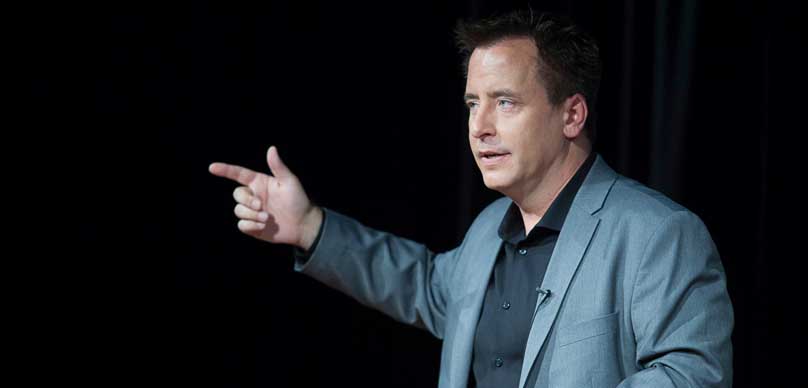
BPS 216: Why Most Screenplays Don’t Sell with Brooks Elms

Brooks Elms is a screenwriter and independent filmmaker. His specialty is grounded personal characters and writing story tension so thick it knots up your stomach.

He’s written 25+ screenplays, a dozen of them on assignment, and sold several scripts, including one this year with Brad Peyton as Executive Producer. Brooks was recently hired to rewrite a screenplay started by an Oscar-winning writer. Brooks began his career writing, directing, and producing two indie features (personal dramas) that he screened all over the world.

And Brooks also loves coaching fellow writers who have a burning ambition to deeply serve their audiences.

Right-click here to download the MP3

LINKS

SPONSORS

  1. Bulletproof Script Coverage– Get Your Screenplay Read by Hollywood Professionals
  2. AudibleGet a Free Screenwriting Audiobook

Brooks Elms 0:00
Here's what they're doing, you're getting back to the thing is there when you see somebody that's writing at those higher levels, it's that they are open to something bigger and it flows. It's almost like they're not doing what other because other people are kind of doing like, Oh, I was in school, I was supposed to do the homework, blah, blah, blah. But when you see somebody that has like a masterful voice, and then it feels like you're connecting to another human being, it feels different. It almost feels like they're not screenwriting.

Alex Ferrari 0:26
This episode is brought to you by Bulletproof Script Coverage, where screenwriters go to get their scripts read by Top Hollywood Professionals. Learn more at covermyscreenplay.com I'd like to welcome back to the show returning champion, Brooks Elms. How you doin Brooks?

Brooks Elms 0:41
I'm doing great. Good to see you. That introduction reminds me of my favorite interviewer back in the day was Charlie Rose, you ever watch the Charlie Rose years back?

Alex Ferrari 0:51
Yeah, back before, before the thing

Brooks Elms 0:54
Before the thing, and he was great. And he always go, and I'm happy to welcome back to this table. So and so he kind of snapped the table.

Alex Ferrari 1:03
You're returning champions, I would say returning champions. So. But thanks for coming back on the show, man. Last time you were on the show. It was a great success. That tribe really loved what you had to say. And it's been a while since you've been back. So it's like, you know, time let's bring it back. And let's talk some shop and see if we can have some more, some more screenwriters and filmmakers out there. So I'm gonna I'm gonna come in hot with the first question, sir. I like it. Why do most film Why do most screenplays fail?

Brooks Elms 1:32
Oh, I love that question. And yeah, really good question and loaded in different way. I would first of all, invite you not to think about it binary fail success. Because what ends up happening when we think about it in binary ways, it's kind of freaked out that success sounds too big and failure sounds too small. So to me, it's just process. And the reason why it's not further along is generally people underestimate how long it takes to do trial and error to get a point where it's like, blowing people away emotional.

Alex Ferrari 2:07
That's where it is exactly. Because a lot of people that are like, Oh, I made I wrote the script, I can't sell it. That's a failure. Like no depends on what you look at. If if your barometer for success is a sale, which don't get me wrong, it is one of the things we're doing this for. Just like if you if a tree falls in no one's there to hear it. kind of vibe. But also, like, if I did the script, how much better? Am I as a writer? How much have I gotten to be a better writer? How do I understand character better? Did I learn how to write dialogue better? These are successes that you have to think about.

Brooks Elms 2:39
I'll go further. So for sure, development of my craft, that's one part just realization of who I am as a human being that the personal thing, it's really significant. I mean, like, you can just write a journal, a memoir, and it's fine. But if you understand story, sort of structure and process, when you really get into like a theme and an art from Vice to virtue, you really surprise yourself about who am I at a deep level, so just the personal growth aspect of it off the charts valuable. So certainly sharpening your skills, personal growth aspect of it. And even in the business side. Scripts are wonderful. But new relationships, oh, we can't do this grip because of whatever. But like, here's these other things, right? That's really good. And then just writing samples, it's like, oh, I didn't realize you could write that sort of thing. So there's all sorts of bend if you're in it for the long term. There's all sorts of benefits.

Alex Ferrari 3:33
And I think a lot of times screenwriters fail in general is because they are always, they're always focused on the destination and not focused on that journey. And writing a script is a journey, selling the script is a destination. And if you if you've put all of your hope, and all of your happiness in the sale, or in the destination, you're going to be miserable in this business.

Brooks Elms 3:54
Amen, brother. That's exactly it's, it's, it's that wonderful game where it's interesting, because everybody kind of knows, okay, I know, I know. It's not the destination, it's a journey. But like, most people, most of the time are focused on the destination and, and when we can recognize how we do that in our own process, inadvertently or whatever, and just really go under No, just right now, in the moment, enjoying this for the sake of enjoying it. It really is a game changer. And then the paradox is those milestones come much faster. Because it's like that time warping, it's like you're working on something like Oh, shit, where the time go, you know, it's like, well, because you're in it, you're in that flow state. And you can we can be in that flow state in the draft after draft process of writing a screenplay. And here's another way to think about Flipside was one of these writers that I worked with who you know, good, talented writer, he's doing some great, you can see he's like, Okay, now I'm done. I'm done with this thing. And you can see eagerness to be done, which always, almost always means we're really probably not quite there probably more juice to squeeze. When we're just like in a place of, I loved writing this draft. I'm ready for feedback, I'm ready for anything. And that's like, oh, let's you know, it's done. You don't even if the energy is different,

Alex Ferrari 5:07
And how about the concept of the Muse is something that so many screenwriters and writers general but screenwriters think about is like, I need to wait for the muse to show up. You know, I'm just gonna watch Netflix until the Muse shows up. And that kind of attitude towards this news is inspiration. From my point of view, and from people I've spoken to at the PI's levels of the business. It's, they say, show up every day, and you let them us know where you're going to be. Because if you don't tell the Muse where you're going to be She don't know where to go, brother. You don't know where to go. So you show up at eight o'clock in the morning to 10 o'clock, that's your writing time. Hey, Muse, I'm going to be here between eight and 10. Not at three o'clock when I'm in the shower, or out at lunch, eight to 10. That's when if you're going to show up, please show up there. Is that what you? Is that your feeling as well?

Brooks Elms 6:00
Yes. And yeah, it's a really beautiful question. Because if we, it's this game of how we're playing this game with ourselves, right? If you genuinely are in the flow, you might need to not show up in that window, right. But most times, when you carve out that space, and ask the muse to meet you, there, it is a much better way of doing it. Because even if you're feeling resistance, or fear, or this or that, or the other, when you show up, the news meets you, um, even if you show up to be like, I don't want to be here, I'm scared, blah, blah, blah, I suck. And then all sudden, the faucets going and then also good ideas come right. That's generally better. Yeah.

Alex Ferrari 6:43
Let me ask you, though. I love asking writers this. There are times when I've been writing where especially my books, when I am on a flow state. And then I stop and I look, I go Who the hell wrote that? This is good stuff. Like you can't read you literally can't recognize. Did I did I write this? There's that moment. And I think every creative and a painter as well, and an artist and stuff, but generally writers because it's such a solitary, you know, experience that it happens. And when I've asked that question to some big guys, they go go this I happen to like, yeah, not as often as I'd like. Because it's almost like you're being you know, to get woowoo on you, you're channeling something that's coming through you, there's some sort of, there's some sort of energy going through you. And I always love using this the story of of Spielberg, where he would he used to say, those ideas floating in the ether. And when the ideas time is to come out, it looks for a host to come through. And if I ignore that idea, it's happened he goes, it's happened to me so many times, I can't tell you where it will go. It's like, okay, you're, it's gonna stay with you for Steven for seven days, if you don't start acting on it, it's gonna go over to James Cameron. And if James Cameron doesn't do anything, because he's an avatar land, he's gonna go over to Chris Nolan. And then it'll just keep jumping to see how this idea is best going to be expressed at this time when it's supposed to come out. So he's like, so when I thought when I saw the idea of dinosaurs in a park, I jumped on it, before anybody else had a chance to do it, because that's an idea that once it was brought into the world, there was no stopping it. And someone was gonna grab onto that T Rex and write it. And there was a probably a handful of people in Hollywood, who could have done it. And I'm gonna say, in one hand, maybe who could have done what Stephen did with Jurassic. But that is one of those things. So I do believe that as well, when the idea is ready. That's why we had like asteroid movies, remember, and Armageddon and deep impact, and they all just start showing up. Like before, then nothing's zombies. All of a sudden, there's a decade without zombies. And then boom, can't freaking get rid of them. They're everywhere. Literally, no pun intended. But things like that. So what are your thoughts on it?

Brooks Elms 9:13
I love that. It's really actually really interesting. And subtle, because the nature of creativity at that level, and everybody I've worked with that's higher level had, there's almost a float to them. They just come in, and there's just this spaciousness about the way they are. And not necessarily we will crazy, but just this opens a lightness to them. Yeah. And what was fascinating to me, the way even you phrased it, you were like, there's that opportunity to be openness. And if you don't dope on it, you lose it. So to me, that was an interesting part the way you phrase it, because maybe, but like, I, so I would invite people to say yes, there's an openness. Yes, you can sort of just connect to something that's out there. Big Garan mysterious and beyond us. And don't worry about the window closing, there's an abundance of opportunity, it's going to come back, just get into the habit of, of the joy of being open to that stuff. And then writing from that place, because you know, the, the nuts and bolts of writing, you know, it helps to have, you know, boxes and stacks in a system, whatever. But like you want to get both, you want to have a way to be able to construct a story that's going to have a design element to it that's functional in an engineering sense. And as you sort of build those sandboxes, you have an openness to something bigger than us. So the sandcastles almost emerged in the Sandbox is feeling like you didn't even write them. So it's both those things.

Alex Ferrari 10:45
And there was this story I heard about this poet, and I forgot her name. But it's such a brilliant story. She said that she was out in the field. And she saw the poem coming, she literally saw it coming towards her. And she had nothing to write down on. So she literally was running towards her house. As the poem was in the ether, she said, and she's like, I'm gonna lose it, I'm gonna lose it. She ran in, grab the pen and paper. And she was so on the tail end of it, she started writing the poem backwards. So she, like literally grabbed the end of the poem, and drag it back into her. And she wrote it backwards first, and then she read, just to get it in before she lost it. And I was like, oh my god, isn't that amazing? Because because of the visuals, the visuals as a filmmaker, you're just gonna, oh, you could see it. And she literally wrote it backwards. And first, because it was already out the door, and she kind of grabbed it by the tail and Riad it back in. It was all it's amazing.

Brooks Elms 11:57
Well, you had me in that anecdote bias, like she was in a field. I was like, Ooh, sounds good. So yeah, it reminds me of, you know, Paul McCartney woke up one morning, one of his greatest songs, you know, and was like, who did the song with any kind of homage to people? And they're like, Gavin, no, he was talking about and he's like, oh, okay, I guess it's me. And that's just if we tune in, it's almost like, you know, like the law of attraction, people talk about it and sort of receiving, if we're in receiving mode, you just kind of like, okay, I'm, I'm ready for really good things to come to me. It just, it's a different way of feeling.

Alex Ferrari 12:29
I think. And I think for people listening, you know, they might sound a bit woowoo. But I, but the reason I, I, I know different is one my own experience, but also you and I are very unique in the sense that we have worked with and or spoken to people at the highest levels of our business. And when you ask these questions, I ask these questions on and off. And the stories that I hear, I'm like, Oh, if this Oscar winner is looking at it this way, and it's not just a one, dude, it's probably like five or 10 of these really legendary people that I've spoken to, who are, they understand this at a level like a Spielberg like they understand at a different level, then there's something there because they're obviously able to do it. And then the key is to be able to learn how to do it again. And again, because sometimes it happens once. And you never hear from them again. It's, there's some times that's that idea comes in, and it blows up. And it's a one hit wonder happens in music all the time. Books, it happens in movies, happens in scripts, where they just come in, and they're like, they never got off the ground again after that, like it was downhill from that point. But the Masters understand how to tap into that again, and again, almost at will, almost at will.

Brooks Elms 13:56
Yeah. And I think what happens I love this this topic is because what, two thoughts they're the first one is this idea of woowoo, which is kind of like you know, it's crazy, but like it is crazy. But why is it crazy and it's crazy is because we sort of in a sort of traditional education system that we were in, they were kind of telling us what to do what does pence spin our attention on and you have to do this great. It was all sorts of distraction of stuff that was out of touch with our bodies and what we really felt like for me, I loved recess I went to art class I love gym and everything else like everything else. I was good at school but I just It drove me crazy because I wasn't fascinated

Alex Ferrari 14:39
They were they were preparing you for a factory job. That's what school was designed to do. It was prepare you that's why there's a bell every hours. So they mean they were preparing you gonna go to a factory. It's Industrial Age system.

Brooks Elms 14:51
That's right. Your Dylan said that 20 years of schooling and they put you on the day shift. Right. So yeah, so So we were trained to be out of touch with those bigger ideas and impulses. So when you come across somebody that speaking to that esoteric or stuff, it feels weird or strange or woowoo. But, um, but it's just because you're out of the habit of it. But when you surround yourself with people that are just sort of aware, connected in that way, it becomes as normal as anything else. It's just access to sort of more intuitive ideas. It's not that sort of mystifying, right? There's a mystery quality to it. But it's really just a matter of connecting dots in more subtle, more powerful ways. So that's the one part. The second part about is, is can you you know, for those one hit wonders, what's the difference between somebody who had a musician who had a one hit wonder and 86, or like you two, or Madonna that hit in several different decades. And my theory is, it's they, it wasn't like this one impulse, one song, they had awareness of how they showed up to the party. So it's like, you know, when you were in middle school, and you had a circle of friends, and then you were in high school, and you had a circle of friends, and then in your early 20s, you had a circle of friends, if you were able to show up as you and make good friendships in those different circles, you can take that as a transferable skill for you as an independent filmmaker, or screenwriter. The key is, go beneath it, it wasn't that oh, it was my one friendship with you know, Jimmy, whatever you want. Beneath that you had a way of showing up. That was a puzzle piece for what Jimmy was looking for. And you guys became really good buddies. And then a romantic way is same thing. It's like it's stories, or any sort of art. There's the artist and the audience, and they're puzzle pieces for each other. And if you know the impulse from what you come from as like a as like a, like what you're most fascinated by in life as a puzzle piece, you can then find your complimentary puzzle piece to snug to fit snugly in that. as things change. You know, who's my favorite current guys is Jon Favreau, right? starts out as a working actor, right, then creates a right swingers phenom, like if he stopped there. He'd be like a lot of amazing, right? And then he's like, no, no, I actually want to direct something myself. And then I want to do the studio movies. And then I want to do Marvel movies. And then he creates Mandalorian. He's probably the best of, you know, better than a lot of the Lucas Star Wars stuff. So like, how do you do it? He did this exact way totally conscious and sustainable. He knew how he showed up to the party. He knew him as himself as a puzzle piece, the soul in a deep level, his soul. And then he was like, Oh, I can fit this new puzzle in this way. Here's how I fit. Here's how I don't fit in. I actually know people that I know if he's been on your show. But know people that work with them. He's just what they've said is he's really good about focusing on what does matter and not caring about the stuff that doesn't. And that to me is like an awareness of who am I is a puzzle piece. And that's how you can keep reinventing yourself on every new level and every new time.

Alex Ferrari 18:08
It's really interesting. And John's really interesting concept, guy because you're right, I mean, you know, you and I are of an age to remember him from swingers. And Rudy, if you remember to go back to acting and Rudy and these kinds of films, and then him trying to make him His bones in in directing where he made a movie called made where he was the director of that. And then they gave him elf and ELF had no reason at all to be successful. There Will Ferrell was a guy at center at live. And it was a ridiculous concept.

Brooks Elms 18:43
Well, that was first

Alex Ferrari 18:44
That was that was Oh yeah. That was his first I think that was either his first starring role, or his first movie I don't know. But it was big. They did not want will like the studio didn't not want with us all documentary on Netflix about it. They did not want Will. They're like who the hell is gonna go see a movie with Will Ferrell in it? This is a ridiculous how that movie got made is a miracle. And then how John got it was even more of a miracle. But he turns it into a hit. And then then he's able to start building his career off of elf. But then he did an Ironman thing launched the entire Marvel universe. And then he jumped into Star Wars and kind of, you know, basically, there's been dragging along Star Wars ever since. You know, he's a great, he's a great man him and Dave Dave Filoni. They're basically creative force of Star Wars right now. I don't know. It's that

Brooks Elms 19:33
If not them who?

Alex Ferrari 19:34
I mean, I mean, who else is it? Who else? Who else are we talking about in that world? But it's really interesting how someone like that can do that. And you look at someone like Tarantino who's been able to create art at some of the highest levels in three different decades. By not focusing on the decade he's on because his films, like anything that he's, he's on, he's such on his own past. So The thing is really interesting about him and he's a once in a generation talent. You love him or hate him. He can respect the man. Yeah. As an artist and what he does when the idea comes to him, this is the thing that's so brilliant about him. There is nobody else in the planet can make it. Like there's just know, there's nobody else who's making Inglourious Basterds. There's nobody who's making Jagland chain. There's nobody's making once upon a time in Hollywood, it's just so quintessential Quinton, that you nobody can make those movies. There's just little Could somebody else make aliens could not take anything away from the genius that James Cameron brought to it, or Ridley Scott or any of these guys. But you'd be like, oh, you know what? Maybe a Spielberg aliens would have been interesting. Or maybe a Scorsese. You know, a Scorsese. Jaws would have been interesting or like that, but you can't say like, oh, yeah, let's give you know Chris Nolan. Inglorious Basterds. It's gonna be interesting. I'll give you that. But it's not Inglorious. Basterds?

Brooks Elms 21:01
Yeah. Yeah, that's right. No, he, he definitely had a deep sense of his puzzle piece, and was able to kind of plug it in for the audience. And actually, I think he's, too. Two stories about him that I think of will be really instructive for people listening to this. One was when he was an actor in acting and acting classes. He was writing down stuff, if he was like, in mid 80s, and didn't have like VCRs, even at that point where he didn't have one. So he was running out. He would like you saw some show, some some film, and he wanted to do like the acting, he wanted you to look at that scene. Right? Right. So he writes it out. And then he gives it to his acting partner. And the guy's looking at it and going, Dude, this isn't in the movie. Here's what you're what I thought it was, oh, man I had so in my head. I've seen this so many times. I thought it was new, because I know this better than what was in. And so he was like, oh, maybe I'm really good at this. Maybe that's part of my sort of puzzle piece that I have to offer. Right? Like I can go so deeply into this thing, then I can start sort of building from where they where they started and taking it off to that also to that point, he I think his superpower has to do with curation. So he starts off as a as a you know, a guy working in movies in a movie store, move around movie buffs recommending movies, Oh, you like this one, you probably like this one to steeped in it. But like, you know, if you look at the music in Reservoir Dogs, it's like such a distinct, obscure set of songs that are that really go down easy to play. So to me, he was a curator of pop culture. And he just even though he speaks, it's like explosively passionate. And so I think he just was so good at going, Oh, I'm like, a million times interested in X, whether it was a song or this or that, and he would just kind of curate it together, learn enough of the rules and then do his own thing. Like I was, I don't know if you ever you know that sequence in Pulp Fiction when when she overdoses and they got the whole syringe and then she was that was taken like verbatim from from an obscure taxi driver doc documentary called American boy I think from like the early 70s. You know, this story.

Alex Ferrari 23:23
American boy, isn't it the one that's Scorsese?

Brooks Elms 23:26
That's so intense. There was a short Yeah, I think was the short documentary but it was the actor from taxi driver that sold Travis Bickle, the guns. Steven prince, I think his name is. Yeah, I'm just off top my head. So like, I'm pretty sure it was it was. It was a short documentary that Scorsese basically directed that was basically about this guy. About the actor from taxi driver basically telling this story. And he tells the story of this overdose beat by beat by beat, which is, as far as I can know, pretty much beat by BBB. What happens in Pulp Fiction, to the point where I saw Pulp Fiction first, I ran across that Scorsese documentary later, and I was like, oh my god, he seems like he ripped it off. But like, you know, I've never heard any sort of plagiarism things and like, to me that sort of indicates how Where's greatness comes from he, you know, who knows how many people saw that obscure documentary, but he did it made a really big, big impact on his soul. And he kind of took it and then and then made it his own in a whole other movie. That was but with the connection there, I felt like he was really very direct.

Alex Ferrari 24:36
But this his genius is being able to to have a encyclopedic mind on cinema, and music, and be able to connect the pieces in a way that nobody else on the planet can. There's just nobody else on the planet that could connect pieces like he does. In his films. You I mean, you watch once upon a time in Hollywood and you just sitting there going, you know and the revisionist the revisionist history that he does As in, in Django in glorious and Hollywood, you just go on? And In what world? Do you kill Hitler? Like the way they do? And like, that's brilliant. In what ways does the Manson family not do what they were supposed to do? It's, it's pretty remarkable, you know, as a screenwriter looking at at his work, and then you go down to someone like Nolan. And you're like, there's nobody else that can make an inception. This is not this. This is this is nobody. Those are so specific to the artists and to the writer and to the filmmaker, that there's no way that James Cameron can't make inception. He can make something, but it won't be inception, the way it's it was conceived the same thing though. I'd argue that it'd be difficult for somebody to make avatar.

Brooks Elms 25:49
Yeah, well, they said Cameron superpower is is is is really insane. Because it's a little more subtle than Tarantino superpower. He's like, obvious. He's just like, like, wildly passionate about some of some some sort of obscure things. But he's smart enough about he connects the dots, he's just so singular in that way. Moving on, like Nolan is a little more traditional, but he definitely has a very, here's what it is, Alex, here's how people listening to this can actually figure it out for themselves. We are all world class experts on our favorite stuff, right. And if you sort of review our favorite stuff, like in the book that I that I that I wrote, I kind of tried to systematize this, for anybody that looks at it, you list your favorite films, you list your favorite TV shows, you start looking at the connective tissue of it, you sort of get more mindful about what you're a world class expert on just based on other movies that are out there. And once you know your voice, and what's most compelling about your voice and analysis on your favorite stuff that really matters. Separate from the stuff that doesn't matter, you get to be you get to be able to you're coming from a place a creative sort of Nexus, where you can then express your idea from that place. And that makes you singular. So Tarantino does it with curating stuff from music and movies and all sorts of things. Right. And then it goes out, Nolan, there's his his style is a little more like, you just get the sense like, you can see how deeply how layered how aware he is about what he cares about. Right. That's what a director is doing is just sort of taking them through a personal growth experience shot by shot by shot with Cameron, what's so interesting is his style is kind of average ish. But avatar, Titanic I mean, he's made some of the most I think he's the box office champ of all time. Right? And he's so how is he doing it? I think he just has it. Anything that's popular is the same but different. And I think Cameron has a really deep sense of what awakens his own soul in terms of the same but different. In my, in my opinion, his stuff is a little too similar to other stuff. But um, you know, the global box office sees it differently. I mean, they love this stuff.

Alex Ferrari 28:04
But the thing is with Cameron is that he taps into primal ideas. Yeah, he taps into really primal ideas. Aliens is not about aliens. It's about a mother, protecting her young on both sides. The alien queen and Sigourney Weaver. That's what that movie is about. It's about it's not about aliens. And that's where a lot of the filmmakers who followed didn't get with aliens. So like they made some interesting alien movies. But what do we talk about when we talk about aliens? Aliens one, aliens two. And then visually what Fincher did with aliens three, and then the studio took it away from him. And that whole conversation, but it's really like after alien, which is arguably one of the greatest sci fi films ever created. Yeah, how do you follow that? With one of the greatest sci fi action films ever created from a note from a guy who just did a terminator? And then you look a Terminator, the primal ideas in Terminator, Titanic abyss, even True Lies, which is probably his most fun, like, having a good time kind of project. But look at an avatar and people always bust balls about avatar like oh, it's FernGully meets Dances with Wolves. And I'm like, and he he tapped into some primal stuff, but what he also does is on the writing side, by the way, I don't know if you've written read any of his scripts lately, but

Brooks Elms 29:43
How's his page craft?

Alex Ferrari 29:45
It's impeccable it's impeccable. You read aliens is a masterclass on description, on economy of words. There is a sea of white is so Eliquis is like reading a shame black script. And you're just like, Oh, I've never read description like this before. Like, are you? Are you kidding me? Like, like, I mean, I went back and read Lethal Weapon and longest deny, and and you're just sitting there going the way he did description, the way he writes description is unlike anyone else. And then you look at someone like Sorkin and the dialogue is something insane. It's insane. It's insane. The cadence, the artistic dialogue,

Brooks Elms 30:29
Here's what they're doing, you're getting back to the thing is there when you see somebody that's writing at those higher levels, it's that they are open to something bigger and it flows. It's almost like they're not doing what other because other people are kind of doing like, Oh, I was in school, I was supposed to do the Hallmark, blah, blah, blah. But when you see somebody that has like a masterful voice, and then it feels like you're connecting to another human being. It feels different. It almost feels like they're not screenwriting, they're there. And what it is, is they're open to something that's so deep and intuitive. And, and it just feels different in a very human but almost universal way. It's really strange and mad, right?

Alex Ferrari 31:07
Yeah, exactly. You look again, well, they'll toto you look at you look at these kinds of writers that you just sitting there going. I mean, no one's making Pan's Labyrinth, other than to give them a little tour. Like there's just, it's not happening. So but their voices are so connected to them to their work. And you're absolutely right, everyone we're talking about. And I've said this, I've said this 1000 times in the show, and I'll say it again, the thing that sets you apart from everybody else in the pack is you being authentic to yourself, your own juice, that thing that Brooks juice, the Alex juice, whatever the juice is that makes you who you are, is what sets you apart in the marketplace in the world. And that's what people connect to. And that's honestly one of the reasons people always ask me, Why do you think that? You know, you, you started podcasting. When there was a lot of podcasts and filmmaking space to seven years, but seven years ago, by the way, in July, it's seven years I've been doing this thing. And they go Why is your show in shows done well over the last seven years, and a lot of other shows haven't haven't continued? And like why do people find your show? Popular? I'm like, they want to listen, and I go, because I am who I am. I am authentic. I'm asking authentic questions. I am not a journalist. I use the essence of me comes through my show comes through the work that I do comes through the marketing comes through my websites, it all is authentically me. I do it without trying or thinking about it. Because when I first started podcasting, and I use podcasts as an example, but when I first started interviewing people, I didn't know how to frickin interview anybody. I've never interviewed anybody in my life. I'm a frickin filmmaker. Like, I'm sitting there talking to somebody. I'm like, I don't I'm gonna ask you questions I would like to ask you. And that was, that was the because I was true. So even to this day, I talked, I'm talking to you, I'm asking you questions. I'm just I'm just having a conversation with you, man. I let nobody

Brooks Elms 33:03
Let me answer let me add something significant enough because I think it's a really great topic and and it'll bring your greatness to the surface in an even better way. Because think about this, in theory, you could be 100% authentic to you, and be pretty antisocial hermit on a mountain 100% authentic absolute, like, the difference between what you're doing my friend and everybody we've talked about in terms of a thought leader, the either entertainment or in this case, you know, is that you, my friend have absolutely absolutely a connection to your own authenticity, but a real burning desire to serve. Like if if you and I started going off the rails and having a part of a conversation that you didn't really feel was serving your audience, you'd be like, up up, up up up here. You're not effing around with that.

Alex Ferrari 33:56
But that's subconscious. But that's that's a conscious thing in the back of my head.

Brooks Elms 34:00
Yeah, but here's the thing, my friend, maybe if you allow it to be a little more conscious, you might have increased your ability to be more sort of reinventing if you want to go to different places or sustain it, because it's the dance. It's not just you being a great dance partner you are, it's that you that's one part of you, and you are really connected to somebody else. So it's you serving your audience, like nobody else does. So it's those both those things, it's not just the authentic thing, because that would be the hermit on the mountain. You are it could be the hermit on The Most Extreme. You are authentic and you genuinely care to serve. And the way you've served people with such a wonderful powerful suite of different programs and tips and services is amazing. And that comes from real generosity and service. You see what I'm saying to me? It's both it's it's like like here's the thing like with Tarantino when these guys that part of when they're yes, they want to express themselves, but they They are dancing with somebody if they're serving maybe like their own inner child in the audience or something at a very soul level, but it's us talking to something else as an advocate. So it's that connection between the two points. It's not just me and my own subject experience, you know, I'm saying the difference.

Alex Ferrari 35:16
No, absolutely. And I agree with you, I think any, any of these masters that we're talking about on the screenwriting side, or on the filmmaking side, or, or the, or the both, is that they are truly thinking about the audience. They're thinking about their own stuff. But they're doing it both at the same time, because there are filmmakers who literally just want to do their own thing and could care less about the audience. And we've all seen those movies. And then we have the other one was like, I only care about the audience, because I want to make money. So I'm going to put out some crap. And then the audience feels it.

Brooks Elms 35:58
You got it. Right. So there's everybody else, I'm just thinking about me, which might be authentic, but it's just so like, look at my belly button. Right. The other one is I'm chasing the market that I'm chasing the market. I'm a hack. If you say this, I'll do this. I don't care, right. And then the real Arts, which to me, Chris Nolan's Dark Knight was the most magnificent, sort of modern example of all the things that felt amazingly personal and intimate, and as big of a spectacle, and it's more, you know, see movie, but like, to me that was like it was it was really, I feel chills even talking about because I felt like, it was a rare time that something was as broadly popular as it could be, and also intimate and personal. I mean, to me, that's that, that I'll give up.

Alex Ferrari 36:43
I'll throw another one at you Thor Ragnarok. I mean, it was they gave basically an independent filmmaker, you know, 100 million dollars to go out and make or 100 $50 million and made some of the most ridiculous insanity of a Thor movie ever. Because the first Thor two Thor movies were fine in the first one was okay. Second one kind of was like one of the considered one of the worst of all the Marvel films. So they like they're like, hey, you know, let's give it to this incent this insane guy. And they did and what did they do? Now Thor went from a, like a background character in The Avengers, to now being one of the most popular characters up there with Iron Man and the other ones, purely because he's so funny. Now that changed his he's a completely different character. It was because of this, this filmmaker, this writer who infused it, and now love and thunders coming out, and I just can't wait to see what's going on.

Brooks Elms 37:41
They took him they met a person. I mean, it's what Todd Phillips in the Joker, right? So he took he took, basically, you know, sort of a taxi driver at a sense, and then put it in the DC universe. And it was an a billion dollars box office like what? That one, it's about the psychopath and I was going to kill people. I thought for sure. It's like, oh, I mean, there was there was a shooting in a movie theater with a guy dresses Joker, I thought Oh, my God, this is gonna be terrible. But he, I think, was able to hear and the screenwriter, were able to be really empathetic to that part of us that does get feel like a victim, and then finds a way to stand up for herself, but does it in a way that's you know, kind of dark, right? So like, very, very dark. And that's when we, in our own life, most of us aren't that dark, but we relate to it, because it's an expression of that feels like so. So the intimacy in Joker, I think was palpable. And that plus is totally broad colored Marvel movie or not DC movie. But DC comes together to make it that again, that's the thing is that is that really beautiful balance of, of sort of popular and personal together.

Alex Ferrari 38:56
But on top of that, then there's the artistry of Joaquin Phoenix's performance, that that is the thing that drives that project without Joaquin doing what he does. And what is he doing. He's being authentic in the way that he approaches that thing. And this is a really interesting conversation, because I've had conversations with actors recently, I've had a bunch of great conversations with some really big, you know, actors. And we talk about like Meryl Streep, and how they and how she's able to basically encompass anybody. She does, like does every year it's an Oscar nomination every second automatic Merrill Merrill gets an Oscar now she's done like 29 Oscar nods I think because I'm like, This is why someone like Tom Hanks sometimes like Tom Hanks, can engulf a character in a way that other actors can't Daniel Day Lewis den Zelle these characters, these actors who just get in there, and you're just like, they're, they're not them anymore. They're channeling the character almost. But how are they doing that? So I'm talking about I'm bringing this up in an artistic idea for for writers and for filmmakers listening, how are they able to encompass the character? So what are they doing differently than the 15 million other actors working, are trying to work? aren't doing and why are they doing it at that level? So what is Nolan Tarantino, Shane Black Sorkin What? Are they doing different that the rest of us aren't doing? What is that key? What are they tapping into? That we can't, and you can't tell me that, oh, they're special. You know, we all have the ability to tap into this because Tarantino was bumping his head against against the glass window, trying to get into the party for a decade. Before he finally got reservoir mate. He was in his early 30s, when he got that made. So he was trying and try no one would even give him the light of day, just would not. So he was able to figure it out. And there's also perseverance and all that, and that's another conversation. But what is it about them? And what is it about these directors who can continuously can tap into something and take their art Scorsese Marty, of his generation and Spielberg of his generation? They're still knocking it out of the park at this. They're like, 70s. And like, I mean, it's insane. So what do you say?

Brooks Elms 41:36
I'll do exactly what I'm talking about, like the it factor somebody comes in, they just have it. So it's intention, because we've been actually touching on this the whole time. It's, I would say it's two main aspects. One is they've got like a soul, deep awareness of, of what they are as a puzzle piece. And what they're not, right, knowing what you're not is actually sometimes even more important than what you are. So that it's like, yeah, I'm my puzzle pieces in the shape or whatever it is, right. And they feel there's a, there's a deep sort of acceptance of that. For what it is. It's not it's good, bad. It's whatever, there's a neutral sort of, or even slightly positive love for their thing. Their distinctness their unique view as a human being. There's that part of it. And then there's the other part we talked about, about process, that when somebody walks in, and they have the it factor, they are basically in the moment, emotionally differentiated to a significant degree about outcome. They are here they are present they are in the moment. And those two factors, awareness of authenticity, being in the moment, and then maybe even what I've said before about sort of awareness of where the audience is, so maybe it's those three factors, awareness of me awareness of you, and then being in the moment. And it sounds really simple. But that is to my, to my understanding, that is the it factor, and actors can do it, musicians can do it. filmmakers can do it with their sort of movies, and when they're in the room, and there, if you can get those three things, meeting the person that you're with, where they are fully being you from your sort of soul expression. And being in a moment when you do it. There's just a there's an openness and a spaciousness that happens. That's when that sort of stuff kind of flows through you just have a deep experience you have. It's like what Joseph Campbell talked about, about an experience of being alive, when I'm fully me, and I'm beholding you being fully you. And we're in the moment fully those three things when you can sort of be in the habit. And so somebody like Meryl Streep, she's just in the habit of getting to that place of being fully open and paying full attention. And that's it. And that's the one thing that separates her from all these other actors, is they they're just in their head as opposed to their soul. And sounds simple, but you'd have to practice getting into your soul. And as writers, we want to practice over and over again, dropping down writing from the soul. And if you're a director on this set,

Alex Ferrari 44:12
Instinct, instinct, something that comes from us, yes, yes, most doors, the gut, is writing from the gut, as opposed to writing from the head. Because the head is craft, and you got to learn craft. Because if you don't know how to play a guitar, you're never gonna be able to play guitar, no matter how talented you might be, give or take, give or take, you know, there's the Mozart's of the world of course, but there is craft, so you do need to work at it. But we're talking about now, we understand craft. We understand now we're at a different level, because you and I both know, really good writers in this town that aren't as successful as they should be. That are that are really good at what they do. I've read scripts that I'm going How is this not been made? And I just like what is wrong? So it's not Think about that. That's good craft. But there's that something else that puts you over the top. And that's what this whole conversation has been about is about connecting to that thing that allows you to stand apart after you've understood craft, underused, the perseverance and the mental and all that all the stuff that you got to go through to make this thing happen. But the journey, not the destination, all of that. But what we're talking about is that authentic thing that makes you stand out. And when you were saying, I see you and you see me, we're both sitting authentic. To go back to James Cameron, what did he do an avatar? I see you that concept. The ICU concept is so old. That it's so it's the force man. It's the force that did a thorough look, what's Lucas did with the force. The force is an idea that had been around for millennia, was chi. It's achieved. It's key. It's the life force. It's, but he's like, but we're gonna do some cool stuff with it. And then the lightsabers, what are lightsabers? What are Jedi Knights they're samurais. You know, on a code, this is all they just touched on primal ideas, things that we all knew, and just spun it to a way that we're like, Oh, okay. It fights in space. We're just what we're to literally what war two edited fight the fight they literally edited for war two footage in a sizzle reel and match the cut for cut with, with the with the TIE fighters and stuff like that. It's what they did. So that's what, that's what they were trying to do. And, and again, with someone like Lucas, he was so authentic with what he was trying to do with Star Wars, to bring myth back to give the meat and potatoes of what we needed and wrap it in this beautiful package.

Brooks Elms 46:56
Yeah, yeah, I love it. Man. I love it. One of the thought I want to add to this is I really liked that sort of articulation of you know, me you in the moment, those three things, really, if you can fill those three boxes, I think you sparked you, then the force flows through you, right? There's not so this the writer that we know, we're an actor that we know that super talented, that some doesn't seem to be getting the opportunities that they want. I think one thing that's different these days that was different than you know, when you and I came up in like the 90s or 80s Is it really was before a gatekeeper sort of situation in Hollywood, where it was like you had to kind of know somebody they would because there were too many people that were interested in writing stuff. And most of the people weren't up to that level of, of, you know, I think of it in terms of prowess and proximity, right prowess. Can you write at that level where you're tapping into that soul deep pit factor, right? And then proximity, do you know somebody that can actually do something with your work, right? And so you're talking about some people that have the prowess, but for whatever reason, they're not in proximity to the people that are actually doing things. And back in the day, you needed representation, you knew this, you needed that. But these days, guys, there's this thing called social media. And that just obliterated the gates, the gates are not there. Hollywood is on social media and social media, I invite everybody listening to this, to think about social media as basically an open cocktail party in Hollywood. Not everybody's at the cocktail party, but I'm telling you, if they're not at the cocktail party themselves, and the cocktail party is Twitter, or LinkedIn, or Instagram or whatever. If they're not themselves, their assistant or their second assistant is, and almost nobody, nobody's talking to them. So you have probably one degree, if not two degrees away from everybody you want to be doing business with. If you have you don't have the prowess, then it's a new conversation anyway. If you first have the prowess, you will have the proximity, you just bring the superpower that we're talking about awareness of me awareness of you awareness of the moment, bring that into your social media interactions. And I tell you, you stand out you're not like the weirdo that's going by my script by my script by my script, you are just connecting to them in a soulful way about whatever they're posting about because they have interest in that and you just let the conversation let the relationship long term relationship just build organically. It doesn't take too many too many of those exchanges for them to go oh is this Alice guy he looks really interesting mean they know you but like, but like somebody who's a newer writer. If you show up with that it factor in social media, you stand out and they're going, Oh, who is this person? They click over your profile. And if your profile is optimized to have that it factor that you just feel whatever your superpower is, it's in that profile. They go, that person's interesting, what's going on? Then they start asking you What are you writing? And then you pitch to the difference?

Alex Ferrari 49:55
Yeah, and I've seen so many comedians who've built a career After just telling jokes on Twitter, oh, yeah, they just they tag a few people, couple hashtags, put it out there, and people just start following them. Because they're just funny. And then all of a sudden, you're like, What are they doing? And like, how are they doing? It's, oh, I gotta show like, it's a different world. And I think so many of us. I was I was such a victim of this for such a long time. And I was acting like he was the 90s. I was acting like it was, you know, and I was treating my career and treating what I was doing very much like, I was still stuck in the 90s. Until I finally, you know, it took me a couple decades to figure it out. I mean, I'm not joking about it. Like literally, I mean, when 2015 showed up. And I was at a pretty low point in my life, not the lowest, I wrote a book about my lowest. But the the was really, it wasn't in a great place. And I was like, You know what, let me let me start giving back. And let me start, let me open up this business, and I'm gonna do a podcast. And that's when that's when I launched indie film, hustle. And from that moment on, I was like, oh, okay, this is how the game is played. Now the rules have changed. I'm now starting to catch up. And now it's like, okay, now I gotta be ahead of the game on all these things. I'm certain because I'm kind of at the street level. And I'm interviewing and talking to people constantly about what's the newest thing if it's NFT's and raising money with NFT's? Or is it blockchain? Is that how we're gonna distribute? Are we, you know, SVOD is over are now at TVOD is dead. And AVOD is where the money is. And these kinds of things and Netflix not buying anymore. And, you know, Sundance doesn't have the same poll that it used to and all of these kinds of conversations where so many filmmakers and so many screenwriters are stuck in the time that they were growing up or that they want to be in because the 90s dude got a spec spec, the spec market in the 90s. In the 80s, and 3 million $4 million. Yeah, no. Do you know the story of Shane Black story on how he I don't know how he sold last Last Action Hero?

Brooks Elms 52:11
I'm sure I've heard it. And I mean, he's, you know,

Alex Ferrari 52:14
The historic was this. Yeah, he's, he's the poster child for from what I heard was his manager, said, Shane, what do you have? What's your next script? He's like, I got this idea. He goes, come over and tell me the idea. He's like, okay, great. Write it down on this napkin. So we wrote it down on a napkin. And then that manager called every studio head in town. This is the craziness that that we were in the world at that time. Every student had in town and said, I got student blacks next. Next script idea. If you want it, you need to come down to my office and read it. Wow. Not not assistant, you. So all the CEOs walked into the office and read a cocktail napkin. In three days later, we had a $4 million dollar bid. It was a bidding war. And then we all know how last action here on it.

Brooks Elms 53:04
But yeah, but yeah, that was yeah, that was

Alex Ferrari 53:08
I think that was the death of that. I think after after that. I think they're like, you know, we're, we're good. It's it. There's still million dollar sales every once in awhile in the stock market. No question. But it's nothing like it wasn't. I mean, Joe Osterhaus Jesus.

Brooks Elms 53:22
Yeah, no, that was it was not it was it was it was, it was, it was a good time. You know, it all I was so cute. But here's what I want to point out with you, my friend is that you took this intense passion that you had for independent filmmaking, and for helping others write your own authenticity, because you're no joke, you deeply care about this thing, and risking all these things, you really are the real deal. And you were like, Look, I've learned a few things over the over the years. I'd like to have conversations around that to be in service with your people. That's how you did it. Dude, that's how your puzzle piece went from what it was in the 90s. To what it was, it is now you just said, Here's my puzzle piece. Here's where I spent authentically and here's a way that my puzzle piece fits with what people need. And you just poured that fuel because you have that enthusiasm. And that's why you're so successful. You've made that connection and my friend anything if you know whatever you want to do as a filmmaker or screenwriter you can I invite you to reflect on the the exact way that you did it because if you did that if you have your trance, all these skills are transferable. That's what we're talking about that sustainability like that the Mojo that you use to go from you know, sort of talented indie filmmaker to like one of the biggest podcasts in the sector, that you can take that same Mojo and put it into screenplay, film, whatever you want. That next level is there for you. You just have to slow down and figure out how to connect those dots. You see I'm saying

Alex Ferrari 54:48
That's a that's a conversation we can have off air sir.

Brooks Elms 54:54
That's my favorite thing to do at uni. We're talking about audience right. And here's how I can tell you I have somebody in my program Right now, 3 million followers online, right 3 million followers. He's only been at it for like a year or two really funny comic, but he just moves in like this comedy class or whatever is like you know what I can do that character starts doing the character puts these 32nd clips on, boom, boom, you know, up, fail, fail, fail and then gets good at it and then start dialing in viral viral viral boom, now he's got, you know, auditions on it lives blown up all over, right? He comes to me and I'd show him how to take that third, it's the same thing I'm telling you. I go, Okay, here's your superpower for 30 seconds your world class, here's how you take that same superpower and put it into a 30 page sitcom. And I'm telling you, dude, easy as pie. Because that's what I do all day long. I try to move myself forward. And I try to help other people move forward with them. And I'm that dock connector. So so I can if I was to work with you, I was very specifically go, here's how I think you use crackers. That's a hard nut. Dude. You're just like you're saying a lot of people are doing podcasts. And they're all falling away. How are you? How are you outpacing? And we would get very specific about that. And I'd say here's your sort of very nuanced, specific superpower. And here's exactly how you apply it in your screenwriting directing whatever you want it those dots connect, I promise you.

Alex Ferrari 56:16
It's really interesting, too, because I mean, I always figured that one of the reasons why, you know, I had a popular show is because I'm just relentless. I just put out so much content, that I'll just work outwork you. I'll outwork anybody, and no one. And yet, I outwork companies, and I'm doing it a lot by myself. But companies with full staffs, and I'm still out working them, because that's who I am. Look, I got 50 How many hustles? Can you see in the screen at the same time? My hat, my shirt and giant letters in the back? I mean, it is a three giant words, hustle. I mean, I live the brand, sir. I live the brand. There's no question. But it's really but it's it's really interesting. It's not more just to kind of stroke my ego, but it's using it as an example of what because you're absolutely right. There are tons of people trying to break into the filmmaking and screenwriting space. And I've been able to do it twice with indie film, hustle, and with Bulletproof screenwriting, both at this, by the way, I don't know if you know this or not. But bulletproof screenwriting is as big if not bigger than indie film hustle as a podcast. Wow. I've just I've been realizing that it's, and I'm not saying that boast. But it's just fascinating to me. I'm like, How is this happening? So it's always interesting when when things like that happen in your life, because you feel like okay, let me I mean, I'm so busy doing it. I don't take time to think about why you do how it's doing it. So that thing, same thing could be turned into when you're writing. If you're getting success. Why am I getting success? And if I can figure out that formula, then I can kind of help it along and put fire gasoline on the fire. That's it.

Brooks Elms 58:03
I get I 1,000% guarantee you. Jon Favreau knows how to do it instinctive. I don't know if he can speak to it. If it's that conscious for him, he probably can't because he's so smart and so aware. But that's how he went from, you know, reinvention, reinvention, reinvention, reinvention. He has that authenticity in Him. He knows the types of puzzle pieces that, oh, here's where I fit in. Here's where I fit in. Here's where I fit in. So you're like you 3x Hustle aspect of your superpower. There's a way of doing that with maybe if you're writing a new screenplay, drilling down on theme, like the wreck with the typical again, I'm just pulling this off my head. But like, the typical screenwriter might think of theme one time, you as part your superpower would like I'm gonna hammer I'm gonna think of theme three times, five times. Like with Tarantino, he curates 10 times more than the rest of us. That's how he's differentiating. And so you have your own way of the exact way that you've differentiated as a podcaster. I promise you that's transferable to you in whatever new format you want screenwriting directing, whatever, and it's a matter of the slow and what happens dude is, it's, it's slowing down, opening up getting to that spacious thing going from the deep. Because when we slow down and we just ask ourselves a question, we're open to that. It flows through us and it tells us it'll go Alex this not that.

Alex Ferrari 59:29
If you can quiet the mind enough to hear when it comes through because we're so busy sometimes. That's why I'm such a big proponent of meditation. I meditate every day. And it helps the creative process a lot and I get the best ideas I get if I have a problem, I asked it in my meditation and generally ideas just fly to me because you quiet yourself all the noise down enough to allow that to come in. So as writers, you know, I asked a lot of these big screenwriters like do you meditate and they're like, Absolutely, like I just It's a part of the process to come and just quiet down the mind to allow that to come in. This is the thing that writers and creatives don't understand. If you can allow yourself to receive this, this thing, this thing in the ether, whatever you want to call it fufu or not, I don't give a crap when an Oscar winner, multiple Oscar winners told me the same thing I'm listening. So regardless if you believe it or not, but if you can require about quiet enough to accept it, to open yourself up to it, to relieve your ego to relieve your mind, and get it out of the way, to you instinctively allow it to come through you, that's when magic starts to happen. And that these, these great artists that we're talking about in this conversation, have the ability to not do it just once. But again, and again. And you can see in a in a filmography. If you look at if you look closely at a filmography, especially filmography scripts are different, because once they get made into movie, a lot of different things happen. But if a writer director you can see where they skewed off most of the time, arguably, Cameron is probably the only one that does not have that. His his filmography pretty much is rock solid. There's just it just there's nothing that you're like, oh, he bombed that one. Never is that it hasn't happened yet. Maybe in the next five avatars? I don't know. Doubt it. But But generally speaking, you can see where things go, oh, oh, he there was a misstep there. What happened there? And when you investigate, there's something happening in their lives, they might have gotten too full of themselves, the ego situations like that. And it's really interesting, because I've been a student of the business for close to 30 years, I've read beyond biographies and really studied what these filmmakers do. And you can just see, you could see like, oh, that boom, or boom, or boom, a book. Oh. And you know, and for Tarantino was Death Proof. He, that was that that was the thing that scared the living hell out of him. And it was really interesting, because he's talked about this publicly so many times. He was terrified of Death Proof like because it was the first time he ever bombed first time, it was not well received first time that people didn't love it. I do like Death Proof. But there's, there's issues about it. It's definitely not at the highest of his of his work. But there was something that happened in that transition. That wasn't authentic to him anymore. Something happened. I don't know what it was. But it didn't sing. It didn't sing like the rest of them. Something happened. So what did you do right away is like, Kill Bill. I'm gonna read back to where I know about Yeah. And then he came out with it with this amazing, you know, amazing Opus, that was Bill Bill, and then Inglorious Basterds, and so on. I'm not sure if Cobra was before or after, I don't remember. But the next movie was,

Brooks Elms 1:02:56
He went. So the way I would say that is he went found a way to receive that he wasn't receiving impulses with that. Yeah. Yeah. Yeah, that's it. And so let me wander back up. Because a lot of sometimes people will hear meditation, even if they're sort of down with or whatever. But they're like, sitting on a cushion, whatever. So like, you'll feel Jackson was really big, you know, he was the balls in the Lakers, he was really big into that. But you can imagine a lot of people that are new to really, because this is really close. So what he would do is just like, Okay, we're gonna meditate as a team, if you're not into meditating, just rest, you know, no judgment either way. So like, anybody who's hearing this, that's kind of new to that thing. It's like, I don't know, it's a weird, just, it's cool. There's, you know, there's not a right way to do it. It's really just settling yourself down and being sort of open to the bigger thing, you could actually do it, going on a walk, you can do it journaling, you could do whatever. I'm like, way into personal growth. And I don't traditionally meditate. I do sometimes. But like, for the most part, I just want to get myself into like a grounded state of tapping into something better. You know, and I do it in the morning, and I do it at night. Most of the time, not not all the time, but like, so I would invite people to think about it. And here's the thing, and so sometimes I'll like my, my morning ritual will be journaling. And then I'll be like, yeah, if now I'm gonna do like some Tai Chi. And I'm like, Yeah, that's kind of stupid. But like, it'll change and like so I invite you guys to come up if look, if you if meditation works for you, and you can do that and clockwork amazing. But I would encourage you guys just to find your own way. And that open space and, and that's going to make the difference. And then the one other thing quickly. The other thing that if you get a good coach, or consultant, what they will do is they will help you get into that deep grounded space because it feels really vulnerable, and people are afraid of it. So if you get to a really, you work with somebody who's really good, and somebody who's really good, we'll put you in touch with your superpower and then just duck like when I'm doing my best work. I'm going to go keep going, it's great, you know, like, I'm really good at getting out of the way to recognize because it's not about me it's being in service to their greatness so that they and their audience can have this beautiful union. So I'm in the moment, helping them sort of have this thing. And when we're getting coached, you know, if it's a great coach, if you feel like, amazing, like so powerful, and then from there, you just write at a much higher level, because the stuff is flowing through you. So a start with your first version of whatever meditation is, or whatever, and then be get support from anybody in your life that can get you into that state of awesomeness. One last last thing. You know, it was to me, like when I look at, you know, Ben Affleck and Matt Damon, and how they, you know, really created, you know, they were having some success in Hollywood, when they, when they, at least what I've heard about, I don't know, that person would have heard about them, making them Goodwill Hunting, I really admired how they seem to just shower each other with love, but they really loved each other. And I know you're awesome. They seem to really build each other up because I had really strong relationships with friends. But in my mind, we didn't seem to be goes as far as those guys seem to go in terms of really celebrating each other. And there's something in that quality. So for them, that sort of celebration was able to, you know, and then it got support from like Castle Rock or whatever, and but like, but but so whatever your version of getting celebrated and supported by amazing people, it could be a coach, it could be friends, it could be whatever, get your version of it, because it's from that place that you're going to create at a much higher level.

Alex Ferrari 1:06:35
Yeah, there's no question Brosman I mean, this conversation went into a direction that I wasn't expecting, which I love. So much, we basically talked about the authenticity of being a screenwriter, and authenticity, being an artist, how to channel how to get things into you how to be able to tap into the ether, all these amazing things that aren't really talked about very often. In this space, you know, we could talk about character development and structure all day. But this is something really interesting. And I'm so glad that we had this conversation and hopefully, it's the beginning place for people listening to start figuring out is this that what's the missing thing? You know, one guy I wanted to bring up before we, before we stop, or finish is Taylor Sheridan, not Taylor shared, and arguably, he's one of the best writers in Hollywood right now. He's arguably the busiest Hollywood writer in Hollywood. There's just he's got 11 shows. In production, I think

Brooks Elms 1:07:34
11?

Alex Ferrari 1:07:35
I think he's got I mean, a god, there's like at least six that I know of off the top of my head. But then I saw a video on Paramount plus that showed like three or four other ones he's developing that are like, you know, there's a new one coming out with Sylvester Stallone as a gangster. And then there's 1932, another prequel to to Yellowstone, and mayors of Kings town and there's like, the six exits, the four sixes ranch of spin off, like there's just so much, but I was watching an interview with him this weekend. He was, I think, on CBS This Morning. And he talked about just bumping his head for years in Hollywood. And he's he's such a matter of fact, guy. He's just like, he's a cowboy. He is a cowboy. That's it. He's straight up cowboy. He's like, I make movies to support my horse habit is exactly that's different. So so he has been bumping it, he was bumping around Hollywood, for almost two decades, just just right, just just acting, and he'd always got parts here and there. And he got a couple of shows and good looking dude, good actor. No reason why he shouldn't have made it. As a leader, he could have easily been a leading man, I could see him as a leading guy. But he's like, I never made it past, you know, 11 on the fucking College. Like he goes, and he goes, I've never seen in town. Anybody batter their head against the wall for 20 years and then make it. And I was like, wow, that's really interesting, because the town tells you what you are supposed to be doing. And I was like, that just hit me like a ton of bricks, man, because I was just like, Wow, that's pretty, pretty deep of a of a comment to say. But then you start thinking about it. And there isn't a story. That 20 years somebody was beating and beating and beating the hell out to be an actor. And then they became Tom Cruise like that doesn't. You know, they were writing for 20 years. And then they became Clint Tarantino like that. He was he's, I've seen it at eight years. I've seen it at 10 years, seen it at 12 years. But I haven't seen it a 20 years. He goes in, that's something really specific. So it's an idea that I was like, huh, the town tells you what you're supposed to be doing. So if you're going in a direction, and after eight or 10 years, it's not working out, maybe this is not the specific path. So maybe I want to be screening for film feature features, feature features, like, maybe TVs where you need to be, you know, maybe you need to be a filmmaker, maybe you need to be something.

Brooks Elms 1:10:30
I love it. To me, that's that puzzle piece. It's like I, I'm probably I think I fit here, right?

Alex Ferrari 1:10:36
I want to I want, I want to fit here. I want to fit here. Yeah, yeah.

Brooks Elms 1:10:40
And then you gotta try it. And then but here's the one thing and and this is, it's a really good thing. It's the key is to when we're trying to find where we fit as a puzzle piece to come from that deeper place, right? Because because sometimes you'll see people going, Oh, I didn't fit here. And then we'll try a quarter. And then we'll try comedy. And then I'll try whatever. And that's kind of a lot of frenetic energy, right, but it's not as deep. So what you want to do is go no, no deeper. And to me, it's like, who am I here to serve. And I think what he did was like, hold on a second, I can connect to the audience in a different way. If I if I write, you know, that I've done I've been able to do so far as as an actor, I can do some serious stuff with an actor, I can go even deeper. So that's to me is what you're looking for is Who can I serve in a deep way? That feels authentic for me authentic for them? To me, that's, that's where that magic is.

Alex Ferrari 1:11:30
And it was so funny, because he's like, someone told him I think he wrote something down somewhere, something I don't know. And a friend of his like, hey, maybe you should write try writing. So that weekend, he went home and wrote the pilot for mayor of Kingston, which I'm watching bomb watching, by the way, it's a fantastic show. And, and he literally said to himself, after he wrote the pilot, which took him a week, that's how much built up craft and energy he had built up, but had never executed in that space, that he was able to create a pilot, by the way, I don't know if you've seen the pilot for sure. Merica? No, no, it's good. It's one of the best pilots I've I've ever seen. It's really, it's up there with, it's up there with the Breaking Bad pilot. It's up there with the madman pilot, in my opinion, because you watch it and it did what a job of a pilot is supposed to do. It introduces characters, and hooks you for the series. And there's something that happens in that pilot that you're just going, we'll have to watch the entire show now, because it is so beautifully crafted. And then just the concept of the of what the characters are doing was something I'd never even never even seen before. So it's such an original idea. That was another thing. But he said, Man, I wish I would have started doing this 15 years ago, he literally stopped and said that, because I wish I would have been doing this 15 years ago, I've been bumping my head as an actor all these years. And what I really was meant to do is write Yeah, and then now he's a writer and director. And then he did carrio And you know of Helen high water. And let me give

Brooks Elms 1:13:08
The keys to one more thought about this was really interesting. There's this personal growth guy named Gay Hendricks and he talks about, he talks about like, these four zones, right? One is like the zone of like, you hate it. It's like you're miserable. And then one is like, okay, you can kind of you know, you can put up with it. But then once whatever. The third is the excellence zone. And then the fourth is the genius zone. Right? And I think what we're talking about with Thomas Sheridan and Tarantino, by the way, as an actor, you know, somebody? Yeah, not not strong. And then, and then through that, but he was trying, he was going out there he was, whatever. So he didn't stop there. He was like, hold on a second. And then, like I said, with that the incident, one guy said, I was ready. You're amazing. And now I was like, oh, yeah, that's actually where my genius zone is. And we share it. And he was, you know, maybe excellent, or whatever, as an actor, but as a writer, that was really his genius. So like, and we know what we're in our genius zone. When you get that time warp thing, things just flow. They just happen. It's just it feels effortless. It's easy. Other people are like, Oh my God, you're amazing at this, you know, but we want to be careful because the excellent zone is tricky, because we're competent for actually getting stuff done. But it's not really why we're on the planet. And maybe those those golden handcuffs, maybe we're good at some other sector or even we're good in a film business, but we're not really connecting soul to soul. We're kind of getting it done, but like that deeper level, so I would invite everybody listen to this. Just think about your different. The book. That's a pretty good one is the genius zone. Hendrix or the big leap by Gay Hendricks, but it's totally applicable to you and your place in the business. Are you working from your real genius on and when you are people they you find your kindred spirits and they find you it's it's beautiful.

Alex Ferrari 1:14:54
It's it's you're absolutely right. Listen, man. Brooks Where can people find out more about you and In the amazing work you're doing, sir.

Brooks Elms 1:15:01
So, go to Twitter Brooks Elms, Brooks Elms at Twitter. And if you'd like me a little bit, just want to hear the stuff, that's fine. If you want to get on my email list, you can click the link on my Twitter profile. And that brings you into, you know, all sorts of different ways to get on my email list. Like there's some free guides about dealing with fear and feedback and all sorts of good stuff. And on my email list, you get exclusive free content, like we did a free group coaching call today, which is really fun. So yeah, and then I actually just came out with a new book, you can get that through the same link. And the book is like a nine step process of how I intend to systematize like that it factor I'm gonna call your superpower. And like where you start to kind of define that. So it's like a system, but the idea is to go really soul deep on your system so that it's repeatable and sustainable, but really clear steps forward. So then writers have been having a really good time with it. So

Alex Ferrari 1:15:57
Brooks, man, it's been an absolute pleasure, man. You got to come back on the show. We always have great conversations. This has been this has been one for the books, my friend so I appreciate you my friend. Thank you again for coming back.

Brooks Elms 1:16:09
Thank you brother. Really happy to be here.

Please subscribe and leave a rating or review by going to BPS Podcast
Want to advertise on this show?
Visit Bulletproofscreenwriting.tv/Sponsors
Neill Blomkamp Scripts Collection: Screenplays Download

Neill Blomkamp (born 17 September 1979) is a South African-Canadian film director, producer, screenwriter, and animator. Blomkamp employs a documentary-style, hand-held, cinéma vérité technique, blending naturalistic and photo-realistic computer-generated effects, and his films often deal with themes of xenophobia and social segregation.

He is best known as the co-writer and director of the critically acclaimed and financially successful science fiction action film District 9, for which he was nominated for the Academy Award for Best Adapted Screenplay. He directed another dystopian science fiction action film Elysium, which garnered moderately positive reviews. He is known for his collaborations with South African actor Sharlto Copley. He is based in Vancouver, British Columbia.

Time named Blomkamp as one of the 100 Most Influential People of 2009. A 2011 article in Forbes named him as the 21st most powerful celebrity from Africa.

Let’s dig into my interview with our incredible and inspiring guest, Neill Blomkamp.

Below are all the screenplays available online. If you find any of his missing screenplays please leave the link in the comment section.

When you are done reading take a listen to Apple and Spotify’s #1 Screenwriting Podcast The Bulletproof Screenwriting Podcastwith guest like Oscar® Winner Eric Roth, James V. HartDavid ChaseJohn AugustOliver Stone and more.


(NOTE: For educational and research purposes only).

DISTRICT 9 (2009)

Directed and Screenplay by Neill Blomkamp – WILL POST ONCE AVAILABLE!

ELYSIUM (2013)

Directed and Screenplay by Neill Blomkamp – Read the Screenplay!

CHAPPIE (2015)

Directed and Screenplay by Neill Blomkamp – Read the Screenplay!

DEMONIC (2021)

Directed and Screenplay by Neill Blomkamp – WILL POST ONCE AVAILABLE!

BPS 215: Marcel the Shell: From Viral YouTube Short to Hit A24 Film with Dean Fleischer-Camp

Dean Fleischer Camp is the award-winning filmmaker and New York Times-bestselling author who created viral sensation MARCEL THE SHELL WITH SHOES ON. Since appearing on Filmmaker Magazine’s 25 New Faces of Independent Film in 2011, Camp’s work has been profiled in virtually every major American media outlet. In 2018, his first feature FRAUD was released to widespread controversy and acclaim, described as a “brilliantly provocative”(Filmmaker) and “exhilarating”(Sight+Sound) “masterwork”(Documentary Magazine) that “pushes the boundaries of documentary”(Variety).

His first scripted feature, an adaptation of MARCEL THE SHELL WITH SHOES ON starring Jenny Slate, Isabella Rossellini and Rosa Salazar, is slated for a 2022 theatrical release via A24. He has directed for Comedy Central, HBO, TBS, Adult Swim and Disney Interactive. Commercial clients include Atlassian, Pop-Tarts, Clearasil, Maltesers, and many others.

Right-click here to download the MP3

LINKS

SPONSORS

  1. Bulletproof Script Coverage– Get Your Screenplay Read by Hollywood Professionals
  2. AudibleGet a Free Screenwriting Audiobook

Dean Fleischer-Camp 0:00
Every time someone asked me how like I made it or how I got that movie that first thing made, I tell them, here's how I made it. But don't copy my playbook because Hollywood's like a bank. And every time someone exploits an insecurity, they're going to close it up immediately. You can never do it the same way twice.

Alex Ferrari 0:18
Today's show is sponsored by Enigma Elements. As filmmakers, we're always looking for ways to level up production value of our projects, and speed up our workflow. This is why I created Enigma Elements. Your one stop shop for film grains, color grading lots vintage analog textures like VHS and CRT images, smoke fog, textures, DaVinci Resolve presets and much more. After working as an editor colorist post and VFX supervisor for almost 30 years I know what film creatives need to level up their projects, checkout enigmaelements.com and use the coupon code IFH10. To get 10% off your order. I'll be adding new elements all the time. Again, that's a enigmaelements.com. I'd like to welcome to show Dean Fleischer-Camp how you doin Dean?

Dean Fleischer-Camp 1:12
Hi, good. How you doing?

Alex Ferrari 1:14
Good man, I was so excited to have you on the show, man because I just had the pleasure of watching your new film Marcel, the show with the shoes on last week. And I told I told your PR people like I just I need to have them on I need to know how this happened. And go what in what universe do I live in that this movie gets made and put out on the theatrical release and it gets made in general but be put out by through put be put up on A24 like I need to know the story behind this this film because and I was lucky because I didn't know anything about myself prior to watching the movie. So I was I was a virgin and Marcel virgin. But as I did research for this conversation cell has been around for over a decade.

Dean Fleischer-Camp 1:56
So we're going on Yeah, yeah, yes. And he's he's an old soul. You're not wrong. That is pretty unusual for a movie like this to not just get made but get distributed. You know, it took a ton of real like blood sweat and indie film hustle. And it Yeah, I mean, it would not have gotten made it would have, we had sort of the Studio offers when those original shorts are made. And they certainly were not. You know, there had had wasn't really or the hardware wasn't really in the right place. And, and I knew that this was going to be you know, kind of a longer road of finding financing independently and then finding this family of incredible, brilliant collaborators that made the film possible.

Alex Ferrari 2:44
So before we get into the the the archaeology of how Marcel got brought into this world, first and foremost, man how and why in God's green earth did you want to get into this business?

Dean Fleischer-Camp 2:58
You know, I have always been I've always been drawn to movies. I was always a big movie buff and fan. I went to film school. i It's funny that the first thing that sort of took off for me was this internet short, because I think now people are saying like, Well, why did you decide to turn it into a movie? It's like, movies were always the point. The YouTube fame was sort of a weird, you know, happenstance. But I'm glad to happen. And I don't think that this type of film is my favorite reactions are the people that kind of are coming to it fresh because it's been so long since we've done something with the character and it's changed a lot it's grown a lot. The whole backstory is sort of different and new and and but but but I do think that it it would not have gotten made and certainly not in in the way it got made with all the creative freedom that I was given that our team was afforded. If it had not had a previously successful run as you know, YouTube shorts and children's books, I think that they're sort of you know, it's weird that we are we are sort of an adaptation of a pre existing IP because that's like everything that's in movies right now Top Gun lightyear everything is pre existing IP. And it's funny that we're technically part of that, but you know, our process and what this movie is is so completely different from

Alex Ferrari 4:19
A little different than Marvel a little different. Yeah, though. I would I would like to see Marcel in a Marvel movie. I think that was

Dean Fleischer-Camp 4:28
Cinematic universe.

Alex Ferrari 4:32
Exactly! So how you know so for everybody who doesn't know how did this character come to life? It just seems so it just like a shell with shoes on and googly eye like it's insane. And this was came, this was like 2000 10,009. Somewhere around there is when you first came up with so how did the character just come to life?

Dean Fleischer-Camp 4:53
It originally came about because the voice came first. Jenny had been doing this well tiny voice because We were sharing a hotel room for a friend's wedding with like a ton of other people to save money. And she started doing his tiny voice to joke about how sort of crushed and smashed she felt. And, and then when we got back to New York, where we're living at the time, I had completely forgotten that I agreed to make a video for my friends stand up show, like local Stand Up Show. And so, you know, my head popped off the pillow that morning, I was like, Oh my God, that's due tomorrow. And, and so I just very quickly, you know, like, asked Jenny like, hey, let's write a couple jokes for that character. You like really funny voice even doing and then I, we, we recorded it. Jenny did some improv around it kind of together ran out, like a madman collecting, you know, supplies from craft stores, basically, not knowing really what it'd be, I was just like, let's just get a bunch of supplies, and I'll figure something out. And, and I made a couple of little terrible looking like goblins that that did not pass muster, and then landed finally landed on Marcel, who I think is so like, you know, he's handsome. And he's, he's cute. And yeah, it was sort of serendipity. And then I screened it. I think I made it and screened it within 48 hours. And then obviously took off on the internet.

Alex Ferrari 6:14
It was it was stop motion animation at first, right?

Dean Fleischer-Camp 6:19
So yeah, it still is all the all the characters in the film or stop motion other than the the rare exception of the insects or CG, but everything else is stop motion.

Alex Ferrari 6:28
So yeah, I was gonna get into the album again to the technical because I was also Yeah, I'm a post guy. So I've been in post forever. And I was just like, looking at it. And I'm like, Man, is it? Man? Did they? Did they emulate it? Did they emulate stop motion to head? Did they competent? They do the stop motion? And like so we'll get into all that in a minute. Yeah, sorry. So you put up this little you made this little throwaway short? Yeah. Oh, this is cute. Let's throw it up on this new thing called YouTube.

Dean Fleischer-Camp 6:53
Yeah, it was I know, it's hard to even imagine a time when you make a short film, it doesn't immediately get posted on YouTube or Vimeo or whatever. But 2010 was like, yeah, the only reason I put it on YouTube at all, because I was in the habit, I'd made lots of videos for, you know, friends shows or whatever. And this was one of the few that I put on the internet because a sort of friend at that first screening, like, tapping on the shoulder when I was leaving is like, can you put that on line, I really want to share it with my grandmother who was at the time she had like a broken hip or wrist or something. And she was kind of laid up in bed and home down. And she thought it might cheer up. And that was the only reason I put it on YouTube. So it was designed for this audience of one but found a much larger one.

Alex Ferrari 7:36
Yeah, that's the thing that like that is that was literally the definition of viral viral film viral. Yeah, it was completely valid. It made what 32 million views on the first one, the first one you did.

Dean Fleischer-Camp 7:46
It's like more than that, because I took it down and I put it back up and you know, whatever. It's like I think it was probably it probably would be like 50 or something, which is actually Yeah, totally. Oh, yeah. Totally back down. i Yeah, I'm not even sure. I don't know what viral videos were before that, like Nyan Cat or something.

Alex Ferrari 8:03
Right, exactly. So that was like an actual viral video wasn't like something that the algorithm picked up. Like, there's no algorithm for Marcel No. It was just sharing, and sharing and sharing. And people were like, I gotta share this, oh my god, I gotta share this. So it was truly a viral situation. So when you the first reactions that you got from the you know, from that, which is still again, 2010 is still fairly, I mean, the internet's been around for a bit. YouTube's been around for about five years. I remember 2010 Very well. And what happened to you and Jenny, when that when you start seeing these numbers, you're like, What the hell's going on?

Dean Fleischer-Camp 8:41
Oh, it felt pretty crazy. I weirdly was like, I don't know, I guess I was pretty enmeshed in internet culture around 2010. But because I'd had that experience of like screening it at this, like, you know, kind of like art art hipster Brooklyn crowd and 2010. It seemed like the most like judgmental art parts, which I consider myself one. I'm not saying that. But seeing people who would normally be very judgmental about anything that you screen at, like a live comedy show, sort of just like completely melt and be like, what was that? And to see how quickly they connected with this character. I was kind of like, I think that's my go viral.

Alex Ferrari 9:18
Really, so you weren't you had an idea that it might go in, but the definition of viral is not 50 million views. I don't think you said oh, this is gonna go 40 50 million easy.

Dean Fleischer-Camp 9:29
No, no, I thought it would get passed around like, you know, like a small, you know, slightly popular Vimeo video and then we'd maybe we could, like leverage that to make a bigger project with it.

Alex Ferrari 9:41
That was the mindset already. I mean, you were the you were the hustle and filmmaker, like okay, this thing goes, we're gonna go out and get some financing. We're gonna make a feature of this damn thing.

Dean Fleischer-Camp 9:51
Oh, yeah, totally. At the time. I was editing like the I was taking the worst jobs like I wasn't aware. And so I was just like, yeah, how do I segue into director And

Alex Ferrari 10:00
Oh dude, don't you streak into the crier, bro. That was in 25 years color editing. Dude, I used to edit promos for Matlock for a television station back in West Palm Beach. All right, so I was like,

Dean Fleischer-Camp 10:17
I might have you be I one of my first jobs editing was editing a tutorial for how to do like a like, I think I think they advertised on like late night television. It was a tutorial for how to do home water births.

Alex Ferrari 10:32
Okay, so it was like in my I'm going back into my archives and see if I could one up that but man, I don't. I don't really think

Dean Fleischer-Camp 10:38
Matlog is pretty great.

Alex Ferrari 10:41
I mean, I mean it Matlog's is pretty good. Yeah, but I mean, but but, uh, waterbirth tutorial for late, man. That's a I'm gonna give it to you on that one. I think he won. I think you won.

Dean Fleischer-Camp 10:50
And it was like it was like footage from like, amateur, like people who are not, you know, professional filmmakers like filming their own home waterbirds as part of

Alex Ferrari 10:59
The home water birth wasn't lit properly. So it wasn't composite. There wasn't composition, there wasn't a techno crane rolling out.

Dean Fleischer-Camp 11:07
Not a lot of muse on scene, frankly, for my taste.

Alex Ferrari 11:13
Okay, so So the so the first video goes, and it, you know, goes viral enough. Um, of course, even then, people were especially I remember especially because I had I had a video or I had a short film that was making the rounds through Hollywood at that time. And it was doing the water bottle tour and all that stuff. So I imagined that you got calls from Hollywood and you're like, Oh, we got to make this into a movie. I want you to tell everybody because I know what happened even without even knowing what knows what happened. I know they were probably saying you know insane stuff like oh, we should take Marcel up with the rock.

Dean Fleischer-Camp 11:49
Oh, yeah, no, you're dead so well.

Alex Ferrari 11:50
So what were the pitches that you got for your character from Hollywood?

Dean Fleischer-Camp 11:54
The one that that has stuck in my mind was that someone a studio had recommended that we partner him with I forget it I'm pretty sure it was Ryan Reynolds that we partner him with Ryan prime together and as like

Alex Ferrari 12:15
I mean it's not a it's not the worst it's been a hard no it's a soft no one that but I watch it. Like there's some things you just like you should team up with the rock. I'm like, I don't know if Marcel and the rock are really right. Yeah, Matthew, Bruce Willis and him.

Dean Fleischer-Camp 12:34
Chemistry. I was like that one Detective Pikachu came out. I was like, Oh, we got pitched Detective Pikachu was

Alex Ferrari 12:44
What your IP was not nearly as big as Pikachu.

Dean Fleischer-Camp 12:47
So that's right. No, they were to go Pikachu. But yes, so we did that water bottle tour and it was just very clear like, Oh, this is they were trying to draft him on to tentpole franchise. And we were, I was always looking to make you know, more of a portrait piece about Marcel and like, really? Because I felt like there's no reason to blow up. Like blow it out. Marcel is already tiny in a blown out world. Taking him on, you know, fighting terrorists in Paris or whatever is like why, why?

Alex Ferrari 13:17
I'd watch that again. ourselves fighting terrorists.

Dean Fleischer-Camp 13:22
You're gonna see it, you're gonna be on an airplane looking through the new releases, and you're gonna see that soon.

Alex Ferrari 13:27
Is that is that Marcel with Chris Tucker? Is that was that what's going on right now?

Dean Fleischer-Camp 13:32
That would be incredible.

Alex Ferrari 13:33
Everyone, everyone listen, listen, a lot of studio execs listen to the show. So hey, we're just throwing this in. We're spinning out gold. Me and Dean are spitting out gold right now. Alright, so you had to say at least at that point, because a lot of filmmakers when they go on these waterbottle tours, if they're lucky enough to get this kind of attention. They fold. They'll go okay. Yeah, I just want to get in the game. I just want to go. But you and Jenny both said no. Where we're gonna, we're gonna make we're gonna protect myself from the savages of all.

Dean Fleischer-Camp 14:05
Yeah, it did feel like something that was like, Oh, got it. Like, because he's cute. It's sort of like, they're picturing this could be the next minions or something. And, you know, that was like, so out of my just like taste. And I think it was it also, you know, like, indie film might have been a little more the world might have been a little more robust when 12 years ago and so I think, you know, nowadays Yeah, you see a ton of directors making that jump and I don't blame them because they want to make a living and they don't want to spend another seven years you know, financing and doing it independently. So So I totally get it at the time. Yeah, I was just like, No, this character has become very dear to us. We know him incredibly well. And we know that that those little shorts have revealed like 2% of what this movie could be and and yeah, throwing them into the mix with with Chris Tucker.

Alex Ferrari 14:58
But But now Now that you've told his story, he's back on the table. I'm just throwing that out. Yeah, that's right. You've made your art piece. Now let's sell out. Let's sell out.

Dean Fleischer-Camp 15:10
Come at me Disney.

Alex Ferrari 15:12
Exactly exactly where we're willing to sell the IP to Disney anything, let us know.

Dean Fleischer-Camp 15:17
And the other difficult thing is we have held on to the IP.

Alex Ferrari 15:21
Yeah, well, we get you made. So you've made a multiple shorts of Marcel over the years, as I saw, it was like, every few years, you would make a new short, you had a children's book, children's books written about them. So this was an IP, you've you literally did kind of create an IP, which is really an indie IP, which is really

Dean Fleischer-Camp 15:40
Yeah, yeah. Yeah, totally. I think it's a really unusual opportunity that that has, that we've found ourselves situation we found ourselves in the, the the books we did ourselves, we wrote and I photographed them. And then we've worked with an illustrator like to turn them into paintings. And so it has never been the kind of thing like I get a little miffed when I see people say, you know, oh, Mercer, of course, he's a movie now. They like sold the rights to someone. It's like, No, man, it's me. It's me and Jenny. And it has been the entire time and we have met, we've held on to the rights of this character, we've never merchandised him. And we're, you know, we're beginning to try to figure out how to do that in a way that is holistic to the character and involves, you know, me overseeing all those things, but we've never really done the smart thing. So that we don't buy houses in Malibu or whatever.

Alex Ferrari 16:32
I mean, I mean, 100 man, if someone shows up with 100 million tomorrow, I mean, it's a conversation. It's a conversation. It's not a hard No, it's not a hard No. I hope that this I hope that this interview helps you along this these routes that someone that I looked, I saw I saw the indie film hustle interview, man. I'll give you 75 mil cash for the IP. I think we can make this work.

Dean Fleischer-Camp 16:54
What's your commission, man?

Alex Ferrari 16:56
That's the love brother. Just the love for Marcel. That's all I want. So okay, so the next question is Alright, so now Hollywood has is pitched you Pikachu. Yeah, and gone down that road. So you guys said, Okay, we got to get to kind of make this ourselves. So now starts the journey of finding people who are insane enough to give you money to make a movie about a talking shell? Yeah, in a house. I mean, yeah, I'm still gonna have to stop you for a second. I was literally sitting watching the movie. And I'm going, how did this get? Like? How, who? And this is before I knew about the IP and knew about the shore? Yeah, so that makes it a little bit more sense. But not much more? Not much. Yeah. So

Dean Fleischer-Camp 17:45
So there's a period after those that the water bottle tour where, you know, we're making a kid's book, maybe and, and we kind of just said no to that we walked away from those and we didn't do anything, we were just like, let's just keep our character and, you know, not get into something that we can't, we can't handle and that we're going to be not proud of. And so for, I think like three or four years, we didn't, we just didn't try to pitch it as anything bigger, but the character never went away. And Jamie and I were kind of always sort of riffing about what his world would be in jokes. And, and I started sort of taking, you know, lazy notes about whenever we'd have a really good idea that we loved about that. And then, you know, after like, four years, I felt like, oh, this actually could work is like a future film. We've sort of built out the world and done all of this. I don't know, like, imagine imagination, building. And, and maybe this actually could deserve a 90 minute like a full feature. And the first thing we did was we got in touch with lysholm who had produced Obvious Child Jenny's first kind of starring role. And also, you know, small indie and and then after, like, how do we Yeah, let's like do this together, where you've come on to produce it and to start from really from the ground up and help us find finances and find money for it. And so, you know, we put together a kind of prospectus a brief and had I had done a lot of like drawing and sort of building up the world. And, you know, we did like another one of our bottle tour where, you know, we're a little older, a little wiser, I understood, I as a filmmaker understood who I was, and, and it was even more impossible than just let us make an animated movie about talking shell. It was also I want Final Cut. And we want a lot of like a final cut. We want a lot of creative control, and we're also not going to sell you a screenplay. You are buying a really like detailed outline and a vision and a group of filmmakers that will deliver but I knew that the screenplay had to be done in tandem with recording audio. Jenny is such an incredible improviser or she's not a like, sit down and write kind of person. And we had, I forget when but we brought on Nick Paley, who's our CO writer on it. And so we were like, we're not, we don't have a finished screenplay to sell to you, you're buying this idea, this abstract, loose, imaginative story. And a process that I, to my knowledge is a is not a way that any other movie has been made before with this sort of, like, full a full stop motion character integrated into a live action world for a feature length. And, and a lot of places there, you know, one or the other of those ideas was a deal breaker. And finally, we found who turned out to just be like our champions, and I'm so grateful that we have them this, this company called Centereach, who financed the film almost entirely, they're a nonprofit out of New York or a not for profit out of New York, they had finance before you've you've heard of a lot of there, they've been a presence in anywhere for a while they finance piece of the Southern Wild, was there was like, I think their first really big one. And, and they usually they usually do small grants and finishing funds and things. But, but they also have this incredible team of in house producers, who were amazing and came on board. And so they were the place that we found a home for it and a home for, you know ourselves where we were supported creatively and financially. And they they were, you know, crucial to get to a movie like this getting made.

Alex Ferrari 22:00
Not only did you have the balls. But this whole package together, I need Final Cut, you got no script. You were you're just basically it's a wing and a prayer here, guys. And it's not like you've done 45 other feature films based on that kind of scenario.

Dean Fleischer-Camp 22:18
Yes, true.

Alex Ferrari 22:21
It is really unheard of. It's really, it's, you're an anomaly that this, how would this got made? But I think it's the power of the character that pushed it through?

Dean Fleischer-Camp 22:31
Absolutely. I don't think that we you'd be able to do that if it was just, you know, from scratch. And of course not, you have to have for someone to believe and have that much faith in something that abstract and that unique, it really requires it having had some record of success. And we were lucky that that was you know, early Internet where it was pretty democratic and pretty word of mouth. Successful. So because it had a little bit of a built in audience, I think that that allowed us to do that. By the way. I don't think I had balls. I think I think competence, sort of ignorance dressed up as ignorance is bliss.

Alex Ferrari 23:08
Doesn't everyone get final cut? I'm just gonna ask for Final Cut. Everyone doesn't have to put in a script. Right? You don't have to buy that. Right. You just just kind of roll with it. So I was I was watching the CBS Sunday Morning. That piece data? Yeah. Which was fantastic. Is it true that there was four versions of this movie made?

Dean Fleischer-Camp 23:26
Yeah, I mean, so we made the movie started four times we did the first round was the first couple years was writing the screenplay. And over the course of that we were we would record audio for a couple days to integrate the like Jenny's great improv and like fold in Isabella and some of the other characters. So we would record a couple days and then write and then recording, right. So that first two and a half, three years was just writing a screenplay. And towards the end of that we were, we were folding in storyboards. So by the very end of that process, we had made the movie in the sense that all the audio was locked, the script was locked, the story was locked, and it was fully storyboarded, Kyrsten laporan, I storyboard the entire movie. So that sort of animatic we could watch and it and it was, you know, we can show to friends and get feedback. And so that was the first time then you go into live action, and you shoot all the plates, those sort of all the live action elements, and then the and then that third step is the is the animation. I guess we made it at least three times, if not more, I'm not sure we made it four times, but something like that.

Alex Ferrari 24:31
A lot of that. And then you were also You were also in it, as well.

Dean Fleischer-Camp 24:35
Yes, yeah. Yeah.

Alex Ferrari 24:37
You're playing an older version of yourself.

Dean Fleischer-Camp 24:41
That's so funny. Yeah. I think I'm playing a I think I'm playing a maybe a young I think I'm playing who I was like maybe in college or like shortly after, like, pretty, pretty down in the dumps and depressed, kind of a depressive. I don't, I'm glad I'm not that person anymore. But I want to sort of

Alex Ferrari 24:59
I'm also glad I'm not the guy.

Dean Fleischer-Camp 25:02
Oh my god. Could you imagine?

Alex Ferrari 25:04
Could you could you imagine? Because because it's always fun to see the the the 40 year old in the in the club. It's always Yeah, right in the corner the guy with the gray, the gray in the goatee in the corner. That's exactly what I need

Dean Fleischer-Camp 25:20
Does he own this place?

Alex Ferrari 25:21
Does he own this place? Is he? Like, what is what is he doing over there? Yeah. Oh, he's dancing. Oh, is that what these calls dancing? Oh, God. Now another thing as I'm watching the movie, I'm hearing this voice and I'm going status a Bella Rossellini. No, no way. They got Isabella Rossellini in this. And as she just the character just kept talking. I'm like, That's Isabella Rosaleen. So that the intrigue my my personal intrigue on how this movie was made, how in God's green earth that you pitched this to Isabella Rossellini, and she said, Sure, I'm gonna play a grandma shell.

Dean Fleischer-Camp 26:05
I think we got super lucky we, I mean, we went through, you know, a cast. We worked with a casting director. But we really wanted Isabella and we sent her the offer, and we sent her, you know, a brief thing about Marcel and his history on the internet. And I think that she probably by herself would have been like, No, I'm Isabella Rossellini. Luckily, her I think daughter or her kids were or maybe grandkids were. Or no, I think her dad was like, no, no, we like Marcel, like Marcel is cool. You should totally do this. And so she, she agreed to do it. And I think like, obviously, I felt like she would be incredible at it, but I didn't know kind of how perfect she would be for it. Because she is, like a lot of the things that that character change once we asked her because we were able to write it around Isabella and around what you know, Nick, and I found really charming and great about her personality. And she has so much in common with the character even before we met Isabel like she literally lives on a farm and knows a ton about about farming and gardening. She has a master's in animal behavior. And, and she also is like, she's, she doesn't kind of suffer fools she doesn't. She's She's just like a very charmingly blunt and not mean but charmingly blunt person who cuts right to the quick of things. And that became obviously like a central thing about Nana County, but some some of that. Some of the B roll you can kind of hear just like the texture of her, like for example, when she's showing me her strawberry in the movie. That's literally her just showing me around her farm and me like interviewing her asking her questions about her farm.

Alex Ferrari 27:39
Really, that's how I'm gonna incorporate that in a movie. I'm gonna put that in. Yeah, it's such a fascinating process, dude. Like this is yeah. I mean, like I said, when I want to walk out of the theater, I'm like, I have to have deep I have to find out how this was made. Because it look I mean, I've been I've been hustling in the film game for Yeah, you know, close to 30 years now, with my own projects, and then with the show now that I've heard 1000s of stories, just and I've studied every anomaly known to man, from mariachi to paranormal, I mean, I've studied all of them had a chance to talk to some of these filmmakers. And I saw this, I'm like, I can't wrap my head about how this was made. And that doesn't happen often. Normally. I'm like, Oh, this is what happened, this was happened. And even with the knowledge of the shorts and the IP, it's still such an uphill battle, to try to get something like this and maintain this soul that you guys were able to maintain with the movie you didn't SKU off. You knew exactly who Marcel was. And it you know, I mean, by the way, every time he threw up, I just couldn't stop laughing. It's just gonna stop laughing. Sorry. I just I just, I just it just came into my head. I'm like, oh, yeah, car and the Carter. Yeah.

Dean Fleischer-Camp 28:51
One of my favorite parts as well. I think that it's like, you know, people have been asking me, obviously, well, what's the what was the genesis? You know, you made the character 12 years ago, it took seven years to make the movie? And the answer to the question, like, how does this movie get made in that exact, very unique way is time you you in walking away from those studio deals, you also walk away from a quick turnaround, because the the end road is going to be hard and you're you know, one of your only things that's in your corner is that you have more time than like a studio would require to spit out something or put it on their slate it's a huge advantage. But you are taking a risk that you know it just never sees the light of day or the if specially if it's an internet thing like that you miss your your moment of popularity or something. But it just felt so it just felt like the right thing to do. And I knew that I would feel like a real show that making a terrible Marcel movie with a character whose potential I knew.

Alex Ferrari 29:52
Yeah, it's remarkable. I have to ask you the question though, man. This is something that a lot of filmmakers don't don't understand. it and are dealing with as they as they're listening to this right now. How did you get through this those years? How did you get through those years of not getting the success that you want it not getting the opportunities you want it having to knock on doors and doors being closed on your face the nose and the nose and the nose? Or the yeses? But yes is with with oil to get this Yes, units, you get the strings and string. How did you get through all of those those years? Because this was over a decade of your life with this character and getting getting this thing made? How do you keep going all those years?

Dean Fleischer-Camp 30:36
I think that's something that is important. At some point, I realized you have to like I wasn't a super, I don't know, some of my like homeschool friends like graduated from film school and they were so you know, willing to just kick open the door and like give someone the elevator pitch for their screenplay and, and that works out sometimes. And as someone whose that just doesn't come naturally to I, I realized that I was at some point I made sort of a promise, I think with Nick Paley who co wrote the film that we're always going to hold each other accountable to at least get to know that actual firm No, before we give up on a project. And that is incredibly important. Because I'm, at least before this, I was super willing to you know, if someone just gave me the runaround, or they said we don't know, I don't know, let's let's come back to me in March or whatever, you know, like, I would just I would let those failures or quasi failures really get to me and I interpreted it as a message that just project you know that that was a no, but the truth is, you don't know unless you get to affirm. No. So now I think and I tell this to like anyone who wants to be an indie filmmaker, get to know, at least get to know, because probably they'll say yes, before they say no. If you you know

Alex Ferrari 31:55
So no one asked you the technical stuff. Alright, so you guys shot this?

Dean Fleischer-Camp 32:02
Wait, can I say one of the things actually real quick, going back to what you said about like, studying El Mariachi and? And those other sorts of movies that? I? Yeah. I don't remember who told me this. But I read or someone said to me, every time someone asked me how like I made it or how I got that movie, that first thing that I tell them. Here's how I made it. But don't copy my playbook because Hollywood's like a bank. And every time someone exploits an insecurity, they're going to close it up immediately. You can never do it the same way twice.

Alex Ferrari 32:37
And that's the thing I've learned over the years is that when you because I was always trying to hack my way in, I was trying to like, well, if I go down this road, right, I'll do what Kevin Smith did, or I'll do what Yeah, Joe Carnahan did or I'll do you know, and I'll just kind of go all these ways. And I realized years later after going back and looking like, oh, there was never another El Mariachi. Or that style. There was never another clerks. There was never another Brothers McMullen. There was never another paranormal activity or Blair Witch. Yeah, like, they're like, they snuck into the party. And then the bouncer came in, and shut the door and make sure nobody. Exactly. So the exact same thing with Marcel no one's ever going to walk this path. This is your path and your path alone. People can get inspiration from it. And you know, but they're like, Okay, I'm gonna go make a show. I promise you right now someone's listening, and is going, I'm gonna go make an animated short, with stop motion. And I'm gonna create a character and I'm going to and they're going to try to do this rote. And they're gonna go, Oh, it didn't work. Why did it work for them? Because it was your it was yours. This was this was gifted to you from the gods. And you're like, This is yours. Take care of it. And guided, guided through.

Dean Fleischer-Camp 33:52
I don't want to discourage anyone from going in May. Thanks.

Alex Ferrari 33:55
Absolutely. But not the exact same thing. But

Dean Fleischer-Camp 33:58
Yeah, yes, exactly. Yeah, yeah, it's true. And, you know, to some extent, I think to continue a healthy artistic practice, you can't get caught up in Why didn't this work? Or how do I, you know, how do I get to that person's level, like, you got to just the lighting and control is, is your work.

Alex Ferrari 34:15
But the thing is this, and this is something that I found so true, after years of talking to all of these great filmmakers, is every great filmmaker, every great artist, every great writer, every single one of them is true to themselves. It is their essence, coming through their work. They're not copying anybody else. They're not. They're not doing they're not you know, I'm not trying to be David Fincher, I'm not trying to be Christian. They are who they are. And that is the that is the key to success as an artist, and but that's the scariest thing to come out with a shell with a googly eye and some shoes on and say this is me and put it out on the do I mean serious? That's you guys. That was something that was so purely you. It's not like you said, You know what there was this other shell with two googly eyes. I'm gonna do one. It was something that was so personal to you. And that's what made the success of that at that character.

Dean Fleischer-Camp 35:14
Yeah, it's also a numbers game like luck. I mean, yeah, I mean, you would use the amount of luck required to by making many more things. So I mean, sure, Marcel was the first thing that really took off. But before that I was hassling it as an editor of the waterbirth videos and creating and creating shorts with my friends that, you know, they never went anywhere, though. No one's ever seen those. But it wasn't. Yeah, you got to not it's not a No, I don't wanna say it's a numbers game. But I think you just have to remain in practice. Just kind of,

Alex Ferrari 35:49
You just grind. It's the grind and the persistence of showing up. And I know, yeah, this. Look, there's so many people that make it in this business, who really aren't the most talented, but the most persistent sir.

Dean Fleischer-Camp 35:59
Yes, totally. That's those people that are kicking down doors and given executives elevator pitches when they're like 19.

Alex Ferrari 36:06
Right, exactly. But you also know people who are extremely talented, but haven't gotten the shot. So yeah, you know, it's, you wonder like, why haven't they gotten the shot, but this other guy, or this other girl got the shot and it just not as down? Like nothing against them. It's just, they just don't have the goods the same? Yeah, it's really fascinating. It's a fascinating thing. But if you can be true to yourself and be an expression of who you really are something personal to you. That's the key that you need your secret sauce, that secret sauce is what sets you apart from the crap.

Dean Fleischer-Camp 36:37
And you also won't if you're making something that's personal and true and true to your heart. Yeah, the money is if you are happy to be successful, you know, it doesn't matter so much. of your being standing true to your heart, you're expressing yourself. That's a that's a and and that's the value is sustaining. Yeah,

Alex Ferrari 36:53
Absolutely. So alright, so you guys shot it, dude, you guys shot the the shells in? You actually shot it stop motion? Yeah, yeah. And they kind of comped it, or was it all on camera?

Dean Fleischer-Camp 37:07
No. So we, I felt from the beginning, like, well, I want this to feel like a real documentary I honestly had never seen and maybe still haven't like a quote unquote, documentary that doesn't just use it as kind of a joke and make fun of its characters. And so I was like, I want to do a mockumentary about this character. And it'll be funny, but I want to treat him with dignity and tell his story with the same kind of respect that you would tell any documentary subjects story. So part of the difficulty is that it's like, okay, well, you know, it's gonna be a Veritate documentary and have that kind of intimacy. How are you going to do handheld motion with a stop motion character, and it's very, very hard, it turns out, but what we did was that we shot everything, live action without characters in it. And then Marcel, and all the animated characters are shot on the animation stage and composited into live action footage. But because like I've been describing it, like everyone knows how a Marvel movie gets made. It's like the shoot the live action. And then step two is that the the VFX artists model and composite things in the computer into the footage, instead of a VFX. Team? Not I mean, we also have to be flexible, but instead of a computer, we have a our step two as a second shoot an animated animation shoot. And because of that, the lighting on Marcel and all the movement and all and all the shadows has to match perfectly with the live action shoot, or he's not going to comp properly. Because it's a real piece of footage. Marcel is a real stop motion piece of footage. You can't alter the lighting later when you're compositing. And so that required our stop motion DP Eric Atkins being on set every day and taking the most meticulous notes on on the lighting setup so that he can recreate it on the stages down to like, okay, Marcel's standing four inches from a Coca Cola cannon that might bounce light. So like things like that, every scenario every time I looked down at his iPad on set, it just looked like scratching from like A Beautiful Mind. It's just like equations and math and like measurements and but but he did it and he has a real engineering brain for that sort of thing. And it's incredible. And when Marcel's interacting with things, shadows, like for example, when he's in the car, there's you know, are passing by trees and the shadows flickering across. And so for each one of those shadows, Eric had to take a look at the time code, we're passing a tree at this time code, and then and then automate a flag to pass by the light to sync up perfectly with when we pass by the tree. So all of that is super meticulous, incredible work by our cinematographers on the animation team. I mean, I'm sorry and the VFX team also crucial

Alex Ferrari 39:47
No, no I just in our that because I know what everything you're saying. I understand exactly what you have went through and it's insane. It's beautiful. It's a beautifully shot film. It the animation was so good that I was like Is this a CG character that they made look like stop motion because that would make the most sense. Easiest play to do something like that. But then I would see like that like man, the cut that stop motion like the tear, and they got that stuff going they're really doing a good job with that. Like, if that if that is CG like man, so I was like it was so this movie fascinates me is so multiple levels, my friend multiple, double the levels. So then I have to ask you, Why is everyone so touched by a shell with a googly eye and a small pair of shoes that what is it about this character? That everyone? I mean, I teared up in the damn movie, man. I'm like, why am I tearing up over a damn shout?

Dean Fleischer-Camp 40:40
Some funny people keep coming up to me being like, I saw your movie. I'm bald and I can be like, great. That's awesome. Yeah. But I think that what is true about why he resonates with so many people is that we all know what it's like to sort of live in a world that wasn't made for us, you know, either from childhood where you're, you know, literally you are. And then I think a lot of us, most of us grow up and we realize like, Oh, dang it. I'm still living in a world that wasn't made for me, but just for different reasons in my eyes, and, and you know, Marcel, Marcel, obviously, that's his reality. But he doesn't. He doesn't get hung up. I find him very actually, like, inspirational to me. And when you're talking about like, how do you sustain yourself over seven years, it's like, I feel sustained and inspired by that character. He doesn't he get, you know, he has these huge outsize obstacles thrown at him. He doesn't see the impossibility of that. He just sees it as like, another thing to overcome. He will overcome it. It's not personal, just like yesterday, and just like tomorrow, and he's he actually enjoys the challenge.

Alex Ferrari 41:50
Well, I mean, my my daughters haven't seen it yet. Because it hasn't come out yet. As of today. They're 10. So Oh, great. So we did get Yes. I'm like, I'm actually 25 years old with it done to me. But I actually did at the screening, get the stick on a 20. Oh, yeah. The little peel offs and stick on like, so they're in Marcel's in my, in my my girls bathroom right now, as we speak, it was like first time I hear girls, I got something for you. And they put them up into like, I don't know who this is. But they're drawn instantly. They haven't even I think I showed him the addition to the trailer. They're like, oh, I want to watch that. And I'm like, oh, yeah, and my girls are gonna ball. It's gonna be fantastic. Now, last question,

Dean Fleischer-Camp 42:37
I's so glad to hear that because Oh, sorry. Yeah, no, that.

Alex Ferrari 42:40
No, no, no, you're saying,

Dean Fleischer-Camp 42:42
I was just gonna say, I'm so glad to hear that. Because I think, you know, like, we made this movie to appeal to our own sensibilities. And it was always sort of a question. Like, we want kids it to be family friendly. And we want kids to enjoy it. But we weren't sure if it was gonna play young because it's, you know, it's not like the spectacle that, like the minions is or whatever. And so, so, but I've been really, like, really pleased to see that kids as young as like, five or six, like, really loved the movie and, and are laughing at all the same places that we are mostly,

Alex Ferrari 43:14
I mean, I mean, you just have to throw your throw up. So when you got a couple, you got a shell throwing up, sir. I mean, you've you've got them. Sorry, you've, you've hit that demographic fairly well. Last question, man. And how did A24 hated this?

Dean Fleischer-Camp 43:28
Or A24. Got involved? I'm so like, they've done such a great job of helping to, you know, bring it to audiences and hopefully get you know, make sure it's seen by the people that would want to see a movie like this. They got involved because we screened it. The Telluride, we premiered at the Telluride Film Festival last August or September. And they, they bought it after shortly after that. And it was such a beautiful coincidence that they were I think that they're trying to I don't know if they don't I think they're trying to you know, branch out and do movies that aren't just like, the typical A24 movie, whatever that is.

Alex Ferrari 44:11
Right! There is no wait.

Dean Fleischer-Camp 44:14
It's really weird. It's like people are like, Oh, it's like folk horror or dark shit. And it's unlike. I mean, Moonlight. ladybird. menari. Like, none of those are

Alex Ferrari 44:23
Everything, everything everywhere all at once. I mean, totally. Hot Dog fingers, sir. There's hot dogs. So, last question. What's next for Marcel? When's the when's the sequel?

Dean Fleischer-Camp 44:37
I don't know whenever Ryan Reynolds freeze up. I don't know. I mean, you know, hopefully the movie comes out finds an audience and there's a there's a market for a sequel, but I know for sure that like, I got so excited when we started developing his community, which was one of the last things that we sort of did because we're not in the movie for very long and now like I love those characters, but they're all Yeah, exactly. And some of them have really great, you know, voice talent attached to them. So I'd love to do something that you know features a few more of those characters. Let's see,

Alex Ferrari 45:11
Dean man, I thank you so much for coming on the show. I'm so happy that this movie exists in the world and in this universe. I appreciate it. We needed more than ever. I think now we need we need a film like this. We need to we need Marcel. We need Marcel we need some happiness. We need to connect to those kinds of characters against a brother man. I appreciate you making the movie and nothing but continued success, man. I can't wait to see if you come up with next brother.

Dean Fleischer-Camp 45:37
Thank you. This has been so fun talking to you. Thank you. Thank you for having me. It's been great. Also where can I get a hustle hat?

Alex Ferrari 45:43
At my store at I appreciate you brother. Thanks, man!

Please subscribe and leave a rating or review by going to BPS Podcast
Want to advertise on this show?
Visit Bulletproofscreenwriting.tv/Sponsors
BPS 214: Can the Nutshell Technique Save Your Screenplay with Jill Chamberlain

Jill Chamberlain has helped thousands of writers find their stories. She has consulted on projects for major studios, for small independents, and for many, many spec screenwriters.

Jill’s Nutshell Technique for screenplay story structure has been praised throughout Hollywood. Producer Callum Greene (Star Wars Episode 9, Crimson Peak, and The Hobbit: The Desolation of Smaug) said “the Nutshell Technique is like the Rosetta Stone: it cracks the code behind why we love the movies that we love. It goes way beyond tired old beat sheet ‘formulas’ and instead guides you to organically write the story you want to tell.”

Jill’s screenplay story structure guide, The Nutshell Technique: Crack the Secret of Successful Screenwriting, was an instant classic upon its release in 2016. Of the over 3,000 books on screenwriting on Amazon, The Nutshell Technique: Crack the Secret of Successful Screenwriting is one of the highest rated ones. It’s on the syllabus for film schools across the world including the world renowned screenwriting program at Columbia University.

Right-click here to download the MP3

LINKS

SPONSORS

  1. Bulletproof Script Coverage– Get Your Screenplay Read by Hollywood Professionals
  2. AudibleGet a Free Screenwriting Audiobook

Jill Chamberlin 0:00
I really need to hear that point of no return what happens at 25%? What is the big event that makes this movie this movie? And what is the climax of the movie? And if we if you don't have those figured out, the other ones kind of don't matter until we figure if we don't have a nice satisfying climax for you. Let's stop. Let's talk about this. Let's find it interesting climax for you.

Alex Ferrari 0:21
This episode is brought to you by Bulletproof Script Coverage, where screenwriters go to get their scripts read by Top Hollywood Professionals. Learn more at covermyscreenplay.com. I'd like to welcome to the show returning champion Jill Chamberlain, How you doin Jill?

Jill Chamberlin 0:37
I'm doing great. It's a pleasure to be back.

Alex Ferrari 0:40
Yes, it's been a while I mean, you last time you were on the show. Bulletproof screenwriting hadn't been created. So you were on the indie film hustle show. And it's a lot of things have changed since then, you know, your book has blown up your your shirt, you're doing workshops, you know, your business has grown a lot, you're helping a lot of screenwriters and and your episode that was on indie film, hustle is easily one of the most downloaded episodes in the history of both indie film, hustle and have bulletproof screenwriting, which is really, I was like looking at the numbers, I gotta get you back on the show. And we have video this time videos. So that's how old we were. And your book and the way your book, which is called the nutshell technique, the way you approached screenwriting, and the craft is so unique. So we're gonna get into the weeds of that. And I could say that coming from a very educated space, because I've spoken to every single screenwriting instructor guru author that exists on the planet, honestly, over the years. So I've studied every kind of technique, and yours is one of the most interesting, and people love it. Writers love it. They rave about it. So that's why I wanted to have you back on the show to kind of reintroduce a lot of the techniques that you're talking about to this audience that stopped listening to both bulletproof and indie film hustle. So before we get into the weeds, how did you get into this insanity? That is the film business of screenwriting and all that?

Jill Chamberlin 2:18
Well, I was a frustrated screenwriter, I was a screenwriter in New York City. And I did, by the way, it did not stay in screenwriting that long, I sold a couple of things. And, and I've kind of completely gone into this direction. But But when this process began, I was a frustrated screenwriter. And I was getting a note back. That was kind of like, very often it was like, why I don't understand it, why it's this character on this journey. And I had a hard time interpreting that note. Another way I would put the note or the way I interpret it now in the language I use is that I was writing a situation, not a story, which I've discovered in my work as a consultant and teacher is a chronic problem. And the, what I did was I partially as a procrastination technique, and I personally, because I just couldn't move forward, I just, I could tell that I could understand intellectually the problem I was getting by had, but no one, no one had any idea how to fix it, or to explain how to fix it. And I had benefited very good training, I went to Columbia University, I also studied with a man named duck cats in New York City, and, but I needed something that put all the important principles together. And so I started analyzing a lot of movies based on some of the things I knew, to develop a universal technique. And, you know, I watched you know, maybe I'm not gonna say I watched 1000s of movies, but I watched a good 100 movies or, you know, in some cases, rewatched, I still take notes. As I watch movies, I'm still analyzing structure. And I was finally able to create this technique that I call the nutshell technique. And the only reason I call it that is because the first time all of these eight it's eight elements that are involved fell into place. I kind of scribbled on the page screenplay in a nutshell. And so the name is kind of stuck. But but that's the idea. It's the eight interconnected elements that are required to tell a story. And it's not I want to differentiate that it's not a strictly it's not a beat sheet method. Most of the books that you're going to find on structure, that deal structure in screenwriting are have a beat sheet approach, right? They tell you you're supposed to hit 15 or 22, or however many pre prescribed beats that appear in most Hollywood movies. And I have no I have no problem with those methods. A lot of A lot of my writers use those methods in conjunction with my method, it does not conflict with my method. But the issue is that a lot of people, writers, when they use strictly a beat sheet method, just looking at moments in time, they do end up with a situation instead of a story because they don't the the principles of what the connection between the beats is not explained. And so, you know, I would say, life is a situation. Life is this happens, then this happens, then this happened, then this happened. That is not a story. Boring, right? Yeah, a story is this happens, which leads to that happening, which makes it ironic when this third thing happens, right? There's a connection between they're not just moments in, you know, episodic moments in time, there's a connection between these methods. And I'm not aware, I was not aware, I'm still not aware of any in there, by the way over 3000 books on Amazon, on the topic of screenwriting?

Alex Ferrari 6:08
No, stop it!

Jill Chamberlin 6:12
Are you aware of the numbers?

Alex Ferrari 6:14
Yeah, I've been I've interviewed a few, probably about 2900 of them.

Jill Chamberlin 6:17
Yes, yes. Right there. You know, everybody's everybody's got a book on it, it seems. And I'm not aware of any book that comes out that explains comprehensively what the connection is. And that is exactly where my problem as a writer fell. And where I find 99% of first time screenwriters who come to me, that is where their problem Falls is that they are presenting a situation, there's proof, they might have a clever idea. They may have some great elements to wit, but it's ultimately not a satisfying story, because there isn't the cause and effect that we need. And so and in my method, I have, you know, I it's not a purely linear method, it's, it's a visual method we can fix we'll see in my book. And by the way, they can everyone can download free versions of my natural technique worksheet on my website, if they go to Jill chamberlain.com/worksheets, you can download the natural technique. And there's one form for comedy structure. And by the way, we're talking about Aristotelian comedy, the academic term, I'm not talking about a haha, comedy, and tragedy. And, and using this structure, it's way easier for me to help you fix your story, if we're looking at these eight elements on a page, than if we're trying to do with over the course of 120 Page screenplay. Because we can see visually you can see what's working and not right there. Because you can see the arrows point you and say, Oh, these things don't relate. And only four of those moments are really moments in time, you know, we have your first scene, your last scene, what happens at 25%? And what happens that 75% Other than that, there are no beats, and you know defined for you the other it's so there are eight elements that make up the technique. Four of them involve moments in time, the other four are about the glue that are what link these moments, how the you know, you know, what is the character's flaw that's behind it? And how does that relate to what happens at 25%? So it's the glue that it's looking at. And that is that is what is the difference between a situation and a story. Otherwise, your protagonist is, if you don't do this, or something like this, if you don't find a way to make the journey specific to the character, you're just making your protagonist a victim, essentially. And you know, even if your character is a victim in some senses of the word, and by victim I mean, basically just ringing them shits happening to them. It shouldn't be random shit, it is you are specifically picking this character and this thing to happen to this character for a reason. The character doesn't know that. But that is what's going to produce a story.

Alex Ferrari 9:13
So that's really interesting, because I love that originally, when you start this whole thing about the note of like, why is this character going through this story? It's really an interesting way of looking at story because you're right, sometimes you look at movies and you just like, I don't I don't there's no reason that why what's going on, but when you when you have a main character who has different stakes, different things that they're trying to overcome, and the story is allowing them to evolve as a as a character as a human being. That's what you connect to. So I mean, I always go back to Josh, I always go back to Shawshank. I mean, you know, Tim Robbins ended the frame from the moment he walked in. To the moment he left are two very different people even read is different. Morgan Freeman's characters is very different. I The End took him a lot longer to get there than it took Andy. But you see this shift and it's those specific things or happened to those specific characters in that story. It wasn't just kind of like, Indiana Jones got thrown into Shawshank. Which would be an interesting would be an interesting movie.

Jill Chamberlin 10:18
But a very different one. Yeah. Yeah. Yeah. And I could speak to get specifically Angie's flaw. And that's really what the journey is right is we're trying to find the right event to bring out something in the character they've never had to face before. Right. And the thing in him that he realizes in the end is that he is he has a bit of a victim mentality. And by the end he is taking, you know, he is taking charge of his own destiny that he has to and this all of this awfulness happened to him. Yes, that's awful. And I'm sure he would prefer it hadn't happened to him. But in the end, it is a comedy and meaning a happy ending, at what because he has learned and has become out come out a stronger person, despite the less suffering that he went through, and a more fully realized person, right than the person who had been cold and not present in his marriage, and was the whole reason why his wife had strayed in the first place, as you know, coming to accept that about himself and his how he will he didn't cause her murder. He, you know, taking some responsibility there actually has made him a better person in the end. And that's really what the journey is about, right? That's not the plot description at all, you probably won't see any mention of his flaw. If you look at IMDb of the I don't think it would mention that I haven't looked. But that's what makes it work. Because otherwise you could just be a victim. Right? If he was an unflawed Angel, who, you know, he admitted nothing in the end and you just broke out. It's like, yeah, that's kind of a cool thing. But I don't really care that much. You know, I don't really care versus having someone realized, oh, I need to change. It's Yes, yes, I'm a victim of the system. But the story isn't about me being a victim, it's about me realizing I actually did stuff that I need to be a better person. And and this is getting me to face and getting a deep hit rock bottom. So you finally face it.

Alex Ferrari 12:27
But that's but a good story connects with us because it's a mirror of life. Because we all go through our own trials and tribulations, whether that be in relationships, whether that be jobs, a boss, you know, an accident, a tragedy, a trauma, all of these things that happened to us are what test our mettle and help us evolve. I am not the guy I was when I was 25. Thank God. And I'm sure you're not the same person you were when you were 25. We've evolved because of the challenges and life situations that have tested us and pushed us to a place where now we can we are who we are. And I think I can I think I can speak for you is like I wish possibly I wouldn't have gone through a lot of that stuff. But at the end, when you start looking back, you're like I am who I am. Because it's literally so I wouldn't say I really wouldn't change it. Would you? Would you rather not sure, but that's a vacation. But that's not what we're here to do. We're not here on vacation.

Jill Chamberlin 13:25
So yeah, no, absolutely. Yeah.

Alex Ferrari 13:28
Do you think that and I've asked this question a ton on the show. And I always love asking, you know, story experts like yourself. Shawshank is one of those stories that connect at such deep levels with so many people and, and always loved it. I've analyzed that film every which way. And I haven't had Frank Darabont on the show yet and I've been trying to so long because I want to talk to him about Shawshank for like, an hour's on how he like broke it all up in stinks. But the there's a connection there because I remember when I saw it I saw in 94 when it came out. And I was in the theater. I was in my early 20s And I had a bunch of knucklehead highschool friends still. And we were all knuckleheads. And we went to go see this, and we walked out and it touched all of us even through the knuckle headedness. You know that it penetrated something so deep. You know, at the time when you know, John Claude Van Damme was the best actor of all time in our eyes, you know, so we weren't very sophisticated, but it connected at a primal level. What is it about this story that connects with almost everybody who watches it? I always love why I always love looking at bad reviews. If I get a bad review on anything. I just type in Shawshank bad review and I feel better about my own work. Because if someone hated Shawshank someone's gonna hate anything.

Jill Chamberlin 14:51
Yeah. Yeah. Yeah. Well, I'm not an expert in the movie, but a couple of things. I mean, that I can say one is the thing that I said that right that ultimately, it? And you'd have to I could, you know, especially if you're dealing with prison people wrongfully convicted, you know, we're dealing with rape, we're dealing with some very ugly, traumatic things that you're putting a character through. But again, we're putting them through it for a reason, right? It's not you know, he's a, he's a pretty nice guy, I have to say he doesn't have the most flawed flaw in my book. But ultimately, the story works because of that, if he hadn't had those if he had just been a nice guy, if he had, if he had no, then I think we wouldn't be, I don't think would have had such a visceral reaction, because you're watching someone be victimized so much, right, that we need to see that? Well, there's a reason why there's something that they learned from it. I think that's one part of it. I think it's also great because they are really following three characters. And there are three different ways that they deal with it, right, that similar journey, but three different characters and three different results. As far as read, and as far as the older gentleman whose name I forget, the senior citizen. I look, I use this character, and I use it as character intro in my class all the time, slipping or not right?

Alex Ferrari 16:23
Before the interview is over,

Jill Chamberlin 16:24
Yeah, but there are three really good journeys, right, that that complement each other to, you know, and that they mirror each other, we see, we've see how the, you know, both read and the fellow has named we can't remember, actually are in that exact same room, right and read, you know, was able to handle it on the outside. And the other guy, Brooks, thank you see, I remember the rest of his character, and Joe Brooks, the one senior citizen of the group, and the oldest resident, I remember the rest of it, right. And so, so it's dealing with all three journeys, and three different voices. And it does interesting things with the concept of the protagonist, right, that we, that red is the narrator. And they will that's typically who we think of as the protagonist. He's also I would say, arguably the one who does change the most. Because you know, from being cynical to having hope and faith, you know, from an ad it is, but it's a product of meeting Andy and the both of them change because of each other. But structurally, Andy actually is the one who makes the story. It I call it, the issue of the protagonist is a whole we could have a whole episode on that. And people, people love to question quiz me on the internet and things about, well, who is the protagonist of what, you know, this movie, because sometimes it is hard to tell. And you know, but one of the I'll tell you the easiest in there, there are a couple of criteria. But the biggest criteria is typically, who makes the climatic choice that's involved at the climax, that's generally going to be the protagonist, right? So it's Andy, who makes that what's the climax of movie is his breaking out of prison? Who makes the choice and Bob with that him, he makes that choice to make this risky move? Right. So that's usually going to point to who the protagonist is. And then there are some other factors we do look at as well. And so yeah, it's got a lot of interesting things going on it I learned I use I use say for the script. I use the character intros to this day when I teach character intros in my classes, because I, you know, the I can I can actually recite to you, the character intro for the warden. Warden Samuel Norton strolls fourth, fourth, a colorless man, in a maybe get a few words on a colorless man in a in a gray suit, with a church pin in his lapel. He looks like he could piss icewater. He, he praises the newcomers with plenty eyes. Perfect, perfect. Isn't that? Yes, it's perfect. And it's exactly right. And it is, you know, Fugo I love that you have a choice detail of the church pin that says, but that while Liam's

Alex Ferrari 19:28
Three words, three or four words, just load you up with so much information. And that's what a lot of screenwriters don't understand when they're writing is that every word they use has to have that kind of impact. I mean, Shane Black's intros or descriptions are legendary How beautifully he he's a wordsmith, the way he writes his, his, his descriptions of things I was reading was like, It's my god. It's so vivid with a sentence, a sentence. So that opening I mean you everything you You need to know about that man is going to set as opposed to four paragraphs, which a lot of first time screenwriters do.

Jill Chamberlin 20:06
Yeah, it's picking very specific details, right? It's just, you know, the church. And then then it's a little bit of the writers voice breaking the fourth wall a little bit. And to get to do that with a character, intro, and giving us a GPS. Don't be fooled by that church pin. This man is the opposite of the arc idea of Christian charity, this man is so cold, he could piss ice water, you know. So you pick one or two physical details that then you can bet are emblematic of the character. And it's a nice way to give us a heads up about the character. And it's a great way to establish your voice as a writer on the page as well.

Alex Ferrari 20:48
So So we've talked about the nutshell technique, what are those eight elements?

Jill Chamberlin 20:53
Yeah, so the, it's a schematic, I'm not going to go into the flash, a flash, this is what it looks like. That's on the camera. So there are the the obstructed moments in time is that we're we're looking at first of what I call the setup want or it's an initial want. It's not necessarily the characters biggest one. This is actually the elements that's, that confuses people the most is the want. So I wrote two chapters on that, because a lot of people get, we want lots of things in life. And there's only one want that is actually the one that comes into play, specifically, what happens at 25%. And what happens at 75%. And so it might not be their biggest want, it might not be the thing that they say they want. It's something they want. And the key is that it's connected. Remember, everything's connected, it's connected to what happens at 25%, which I call the point of no return, meaning it's an external event. And I'm sure anybody who's studied screenwriting they've dealt with, they know something happens at 25%, right, any book that you're talking about, we'll talk about that something happens at 25%. And I refer to it as the point of no return, meaning that it is a external event that happens to the protagonist. So it's not, the point of never no return is never somebody decides to do something, never, it's something happens to character, then they might decide to do something. And in that point of no return, they're going to get that want. So that's the tricky part. So it's not necessarily so a lot of times in a movie, it looks like they don't get what they want. I'm telling you, they're getting something they want it, it may not be the biggest one may not be the thing that they said that they wanted, but they're getting something they want. If you don't do that you're making your character, a victim, that the idea is what we're doing is setting up be careful what you wish for. The character asked for this, on some level, even if even if they what they asked for it in. They're gonna get it in a way that's highly ironic. So you know, they're, they get their want. But they get the third element is attached, the point of no return is the catch. The catch is an upfront problem, right? You got the thing that you wanted, but you're getting something you didn't want. And, and then I'll go through the linear and then I'll talk about to that arch. And then the next elements happen at the 75% mark. So we have other comedies or tragedies. And so it's going to be different for comedy and tragedy. But so comedy means again, I'm not talking about a haha, comedy. This, these are Aristotle's definitions. If you don't like them, blame him, look it up with him, pick it up with him. His his definition is a comedy is about a character who a hero who faces a flaw, and in the end changes and gets a happy ending. And that's the definition I'm using. And then a tragedy is going to be the opposite. It's a character who has a flaw, but they failed to change and that's going to bring their sad ending, right. So in my comedy form the we're actually going to hit a low point at the 75% Before we go back up to in the third act to the happy ending. So they're going to hit rock bottom at 75%. You know what I think Blake Schneider refers to is that all is lost moment I think and I think it's an apt way to describe it. But I would also describe it as being the opposite of where they were in the in the setup want. So that's the tricky part. Again, not every one is going to work we need a want that they get in the point of no return. It is also The opposite of what they wanted in the beginning. And then in a tragedy is going to be high point called the triumph, which is the highest moment of success. And is the also related to the one it is the ultimate manifestation of the thing that they wanted. And then the, we're gonna be followed by the chromatic choice. So the climax is the beginning of Act Three, but central to the climax is the protagonist is making a difficult choice. In a comedy, they have two kind of bad choices in the way I like to describe. So people say that a great ending is inevitable, yet unexpected.

That's a pretty tall order, by the way. That is our goal is to have an inevitable yet unexpected ending. And

Alex Ferrari 25:56
So with that said, I'll use Titanic. Okay, inevitable. But yes, some surprises in it.

Jill Chamberlin 26:03
Yes, yes. Yeah. Yeah, it happened. But yes, that, you know, that, you know, in Titanic, and I will use Titanic as my example here. Right? That is that she begins by wanting to go overboard, because she's suicidal. She's on the, on the rail there. And the I think I'm getting this, right, because, by the way, it's very hard to not show movies on command, I'm kind of I want to cheat and look at my book, because I have to watch these movies several times. It's very difficult to identify. But I believe it's in the moment when Leo rescues her, you know, she gets her want, or she wanted to go over the boat, she wants to get back on the boat, I have to cheat and look at my

Alex Ferrari 26:03
She did, she did want to get back onto the boat. And then he convinces her to get back on the boat. And then when she's about to die, because she's see trips, or stumbles, then it's like, I want to get back on the boat. So yeah, Leo does bring her back on the boat.

Jill Chamberlin 27:01
Yeah, but the one has to go overboard. The point of no return is when she actually falls over overboard. But Jack saves her. And the catch never catches attached. She got her want to go overboard, but the catch is Jack. That's the catch. Right? And by the way, the deal with Jack now Yeah, well, and that's what the story is really about is about what happens when these two people meet whatever the catch is, sets up all of act two, which is twice as long as act one or act three. Right? So it's all about what happens when this society girl who is in this arranged marriage is falling for someone who's not in her class who shouldn't be with and who, you know, can't be together. And the you know, the they actually don't hit the iceberg until the midpoint of the film. So that's actually not the primary story. And that was kind of a smart thing to do. Because we only are you. Yeah, we know the chips gonna sink that, you know, we already know that. Right? What we don't know is what's gonna happen to Rose and Jack. And so that's,

Alex Ferrari 28:07
That's the brilliance of that story. It's so like, even to this day, you go when I remember. I mean, you and I are both have similar vintage. So we both remember when Titanic came out. And everybody was like, Oh, God, Twitter. We all know it's a boat, it's gonna sink. Why are we this is a catastrophe who's gonna watch this. And then you go to see it for the first time, among many times, I went to go see it in theater. And you just look at it. And he's like, it's about Jack and Rose is so brilliant. And then the class system, there's so many layers to what James did. And that is, it's, it's truly remarkable. And you're talking about a tragic ending. If you look at Jack character, Jack changes a little bit but doesn't change a whole Jack's pretty much Jack. At the end as he was at the beginning, generally speaking, generally, rows completely different human being.

Jill Chamberlin 28:57
Yeah, so she's the actual protagonists that and that's why it's actually a comedy in my book, because her endings happy, right, we find out she's had this incredibly exciting life. She didn't end up in that arranged marriage. You know, yes, it's sad, you know, the love of her life, you know, died, but she went on to marry other people and have these exciting things happen, all because she met him, right. And he gave her the strength to learn courage to stand up to society, to not do what people are told her had she not met Jack, you know, she would have either sunk, you know, with this ship, or ended up in that arranged marriage and had this unhappy life, that would have been a tragedy. So what's unexpected and what was really smart to do with Titanic is to use this tragic event actually portray a story that's an Aristotelian comedy. And, you know, while it's sad that Jack dies, he's not the protagonist, and so But he because he is if he is a victim, you know, we can have characters who aren't the protagonists who are the victim, he is a victim. It's not his fault, the ship sank there was nothing and nothing to do with a flaw of his. That's fine. But we need a we need a protagonist who is there's a reason why they're being tested on the story, right? And she's being tested about this, which she unbeknownst to her, you know, this is going to completely change her life not so much because she's on Titanic because she meets Jack.

Alex Ferrari 30:29
Right, which is so was just so brilliant. But so continue, we continue with.

Jill Chamberlin 30:33
Yeah, so when Yeah, in that case, so the climatic choice in that one. So the crisis, for example, in that one, because it's a comedy would be actually that she wants to go back on the ship after she kind of goes off and on a couple times and goes back to get jack or something. And so she actually wants it ironically wants the opposite. She wants to go back on the ship. And then the choice the climax, right is where, you know, to to be a survivor and to save herself. Right. You know, that's so emotionally what we feel is the climax is oh, you know, Poor Leo dies. And that the the climax and chromatic choice, by the way, are are two different concepts that happen at the same time. So the most surprising moment, I think is, you know, when you know, that he's drowning, but the choice that is involved is that she chooses to save herself. So that's climatic choice. And the final step is that she, you know, throws away the the diamond, whatever that was called, because that's not you know, that's not what matters. And then the other two elements are the Florida Strength. So she started as a coward, basically, right, she's unable to stand up to her mother. And in the end, she has shown courage, right to be your own person. And, yeah, and that's what this journey got her to face. And that's what makes it a story, right, and not just a sequential events about the sinking of a famous tragedy. But that's not that interesting, right? We needed the right character, to put in that for you put could have used a different character. But this character, you know, was the choice of how to make this story. Because real life it's not a story like that, to remind people all the time because they come to come to my classes, they come to my consultancy with their own stories. And I'm not saying you can't use it, but inherently life is a situation not a story. So we're going to have to find ways to we're gonna have to find the story in there by which elements you know, we are highlighting and which elements maybe we're leaving out and some stories, some life true life stories that can't be adapted easily.

Alex Ferrari 32:54
So yeah, that was gonna ask you about that. Because that's a problem with a lot of true life stories. Sometimes you just like, it's, it might be interesting might be fascinating, but it can't it's hard to adapt those kinds of those kinds of stories. That's why I mean, I'm trying to think of I mean, there's a ton of really great life stories they've been adapted. Gandhi just for whatever reason keeps coming into my head but but there's but there are but but a lot of them are really tough.

Jill Chamberlin 33:22
Yeah. A lot of them fail a lot of biopics. Right a bore you to death.

Alex Ferrari 33:25
Right, right. Like the new the Desi the Desi and the Desi Arnaz and Lucille Ball, one that aren't working did. It wasn't a bio on them. It kind of was but the way he interacted, he wrote that script, about a week in their life. And use that as the backstory to tell their story of how they came up in the background. So because it's too difficult to like, how can you tell the story? Yeah. Of Desi and Lucy. Balding in its entirety in 90 minutes. But yeah, so that's the way he did, um, Steve Jobs. He, me, he just basically took four keynotes at four different times of his life, and did scenes around it. I mean, it's pretty, pretty fascinating, but it is, yeah. What advice do you have for people who are adopting true lives?

Jill Chamberlin 34:14
Yes, yes. So to be just to be aware of the fact you are inherently dealing with a situation, not a story, that's what you're starting with? Right? Life is not a story. It's a situation so to know that going in there, that means you're gonna have to figure out, strike. That's why structure is going to be really important, you know, structure really all structure means is the events you choose to show in the order you choose to show them. That's all it means. Right? And so, you know, I was I was at a party where someone introduced me, I ran into a student who was with a famous documentary filmmaker who I will not name and she introduced me as her teacher. screenwriting teacher who wrote a book on structure. And His attitude was, to me was a little bit like, structure structure. And so I asked him, I said, you know, your documentary films, just so we understand, are they 90 minutes with the camera like on one person with no cuts at all? And he was like, No, that's not a documentary filmmaking is at all we cut to different things. I'm like, that structure. If you're cutting to different things, that structure if you're not, if you're not showing me 90 minutes of real time, you're structuring things. So that's all we're talking about with structure, right. So a documentary, if you're trying to make tell a story, and you can, by the way, use the natural technique for documentaries, I know documentaries, if you used it. Or if you're telling a real life story, as you're trying to do a biopic, you're going to need to choose the moments that are going to be involved, you're one of the other key moments is Remember, I talked about a flaw was one of the eight elements. And this is hard, a lot of people are doing stories based on themselves, you may have to make your character more flawed than you feel you were because it's not going to be that interesting to see how Koroneiki work throughout it when these incredible things happen. Because that's not a story. A story again, is that, you know, someone faces something, something happens to them, which gets them to face something in themselves. So I would advise being very willing to that you better be willing to look at yourself or whoever the subject is, in the most negative possible light, because you may have to do that. And then ultimately, some stories don't completely work with that character as the protagonist. And I have a technique I talked about in the book in the last chapter called The Secret protagonist that comes in handy for a lot of things. But it can happen with biopics because you look at someone's life, and maybe they were just a nice guy the whole time. And there's no end they there wasn't a change in, in, they didn't have a tragic ending, but they had a happy ending, that's not going to fit what we need for a satisfying story. Well, maybe there's somebody else in their life, who we can hear their story through that characters framework. And so that, and that that character can follow this pattern, because this is what we need. Ultimately, we need one character to follow either this pattern, or this pattern. Right, you know, Leo's pattern was this, that's doesn't work. That's why he's not the protagonist, right?

Alex Ferrari 37:44
And for everyone listening, you're pointing down.

Jill Chamberlin 37:47
Yeah. And the end. So sometimes you have to look to you know, if you had somebody who started happy and ended up sad, and that's the biographical figure you wanted, it's going to you're gonna have to look at other events there and and see if you can find a way to make them follow the tragic pattern perhaps, or maybe that's not going to work. And maybe you're going to have to tell it through their partner or somebody else in their life who actually was affected. That's the technique, you'll see sometimes, that the actual, you know, central figure is not actually the protagonist from a structural point of view. And let me just add protagonist is a structuring device, it really is, it doesn't mean the most important character, it doesn't mean the character who has the most lines. It's the character that fits the pattern of this, or this, either, they're either they went up, up, up, and then came down, down, down and failed to learn. Or they went down, down, down, down, and then they learned something and went up. Not everybody has to follow that pattern. But we need one character to follow that pattern, or you need to find the moments in that character story that, you know, are their life that follow that pattern to make it work. Because otherwise it's not gonna be satisfying. It's right.

Alex Ferrari 39:09
Right, so so so looking at, let's say, a person's life, and there's a meet queue of the two people like the protagonist and the their wife, let's say, in a life, there are those interesting moments where like, oh, it was, you know, there was a very adorable meet cute that happened. And it was ironic because of this. And this. Those are a couple of moments you can pull out of a real life story, and included in the story, but if you actually laid it out how long it actually took all the different things, it's boring as hell. But if you take the highlights of those things, and incorporate them in a structure that makes sense for a movie, then it works. I think that's where I feel that's where screenwriters make mistakes, is that they try to like well, it didn't happen that way. I'm like, well A Beautiful Mind did not happen to wait. Ron Howard made it that that the brilliance of that movie is they changed it for for something they say for dramatic purposes. That was because real life is even the most interesting life is if you take it, you know, an hour of a very interesting life. A lot of times is still boring. Yeah, yep. Even of course of a year of of someone's life, you're like, Oh, my God, it did so much to 1000s of hours that went through is boy, you got to cut through all of that stuff to eyeline. And that's editing that's editing a movie. You're taking our documentary, you taking 80 hours of footage, and whittling down to 90 minutes of the most interesting things that tell a story. And that's how screenwriter should approach Yeah.

Jill Chamberlin 40:50
Yeah, I also like to work backwards too, sometimes. Because it's, you know, we also need not just the meet cute, right? But the other really key moment is that climactic moment, it to me. And so, you know, a lot of times people come in, and my clients or students and they, they're proud, they filled up their nutshell form. And we kind of go through it. And by the way, I put calls, put calls, cold calls, and then and then we try to build it up the strongest. But I'll tell them, I'm not too attached to what you're saying, frankly, about the want with flaw even until I hear your climax. Because I really need to hear I really need to hear that point of no return what happens at 25%? What is the big event that makes this movie this movie? And what is the climax of the movie. And if we if you don't have those figured out, the other ones kind of don't matter until we figure if we don't have a nice satisfying climax for you. Let's stop. Let's talk about this, let's find it interesting climax for you. Because that's what everybody paid their money to see. That's, you know, so those are two incredibly important moments that the whole story rests on that if they're not, you can fill out my form correctly. But if those moments aren't, you know, powerful, then it's, it's, you know, unsatisfying and surprising, then it's no, it doesn't matter that you filled it out correctly. That, you know, we need to find, let's find you more, you know, I saw that ending coming a mile away, let's find you a third choice that we find some way to set it up so that we didn't see it, and work backwards. From there. I do that a lot of the times.

Alex Ferrari 42:28
So you need those kinds of, you know, signposts, um, two pillars, if you have those two pillars, you can connect a bunch I can

Jill Chamberlin 42:37
I can get I can make anything work if I get those two. But I know what those are. I don't really know your story.

Alex Ferrari 42:45
Right! That's, that's really interesting way of looking about it. Because, because a lot of times you like when I write I'm like, Oh, I got the beginning. And I got the ending. And then once you have those two things in your in their good satisfying enough, then you can you connect them is really intuitive. Yeah, exactly. You're just this happens. And this happens. And then he falls into a pit with snakes in it. And he's afraid of snakes. Why is he afraid of snakes? We won't find that out until the third Indiana Jones and things like that. But but we just know the two ending. So if you start looking at movies we love you know, the 25% mark, I mean, the climax and yeah,

Jill Chamberlin 43:24
I like to point out like to people, you know, who like my students, they know my book, they like my method, and I sign up a movie every week for them to watch. And nutshell, and I tell them, Don't get distracted with trying to figure out what was trying to figure out this. You want to find and it's the same thing with your stories. Let's figure out what is the big event? And what is the climax? If you were to turn to your spouse while you watch any movie and ask them what was the big event that made this movie this movie? And what was the climax? They don't know anything about structure? They haven't read my book, or, you know, watch screenwriting podcast, they would be able to answer that. We should feel those two moments in our gut. They're not intellectual. Really. I mean, ultimately, there is emotional stuff going on. Right? But it is it is a gut answer that we should feel this is the thing that changes everything, and that this movie is going to be about and this is the climax. Right? So I like to start with those first really.

Alex Ferrari 44:23
So if we can analyze some of the most popular films of all time or action currently right now

Jill Chamberlin 44:29
I'm really bad with that selling on that we'll try we'll try.

Alex Ferrari 44:32
Not necessarily but just ideas, just general ideas of why things are working. Something like endgame, the Avengers endgame the last Marvel the big the big Avengers movie.

Jill Chamberlin 44:43
Okay, is that the one with Thanos? Yeah, well, yeah, the big battle, the big battle and where he sat at the end or he stood at the end.

Alex Ferrari 44:50
That's the note when he sat well, he's dead at the end. So he dies this is the the last the last Avengers

Jill Chamberlin 44:57
That I didn't see it. Okay, so I'm the one before I can come that was done before

Alex Ferrari 45:01
The one before is sad. But the last one was I can't talk to you about because I'm gonna ruin it for you. But anyway.

Jill Chamberlin 45:09
But the one before it can take no Thanasis the protagonists. That's the interesting structure there.

Alex Ferrari 45:14
Really! Yeah, it is. Yeah. The Infinity War, the Infinity War. What Yes. Thanos is.

Jill Chamberlin 45:20
So again, not not necessarily the most important character, not necessarily the character who's on screen the most, or says the most lines. It's the one whose structure whose change or lack of change holds everything together without Thanos. There's no story. That's the story, right?

Alex Ferrari 45:38
Yeah. Because there's so many heroes, that it's almost impossible to follow. Like, you could pull out a couple of heroes from the Avengers. And the story will continue. It will change a bit.

Jill Chamberlin 45:51
Yeah, but it will continue. Yeah, you can easily Exactly. The story. Yeah. Without him and it would be it's just not even that movie.

Alex Ferrari 45:58
Right. It's, it's, it's, it's really fascinating. There was one interview I saw of you that you you talked about fat Tootsie, can you talk about can I talk about fat Tootsie? Because I love that?

Jill Chamberlin 46:08
Yes, yes, this is the ease. This is kind of the best way I know to to explain what my method is addressing when I'm talking about story versus situation is that it does require that you've seen Tootsie and sometimes people are like, Why you bring up a 40 year old movie, you know, and I'm like, Why haven't you seen Tootsie? One of the greatest movies that every screenwriter should watch. So it's such a tight screenplay to Yeah, you need you need to watch Tootsie people if you have not seen Tootsie for some reason, but I'm going to talk as if people have seen it because they should have right. So the you know, the plot. So the real Tootsie the movie Tootsie is about Michael Dorsey out of work actor gets a job on a soap opera, but he has to pretend to be a woman. And at the climax, he reveals, you know, spoiler, he pulls off his wig and reveals you know that he is a man. And the and then we get into comedy he gets in the end, he gets the girl because he's learned and he's changed. So what if I have the exact same movie to see Michael Dorsey out of work actors, our protagonist gets a part on a soap. But I'm gonna make two changes. First changes is that the part he gets is not a woman it's a part is a male character. But it's it's an obese man. It's a fictional they, you know, in this fictional soap opera world, they have an obese man who's going to be a central character. And Michael really wants this part. So he's going to get his costume or friend to make them a fat suit, and a makeup artist to make him prostheses and he's going to go in and audition and pretend he's actually fat. And he's going to get the part. And then the other changes, I'll have him tell Julie, the love interest that he's gay. And so Julie can be just as comfortable with him, as in proceeds no sexual tension, because she thinks he's a gay man. Just the same way. She felt comfortable with the Dorothy persona in the real Tootsie, right. And we have a very similar movie when you think about it. You know, it's we tend to find it funny in movies. When men are dressing up as women. We find it you know, it can be funny having a little guy like Dustin Hoffman pretending to be a big you know, a big guy. You know, when he grows to hate it. He's getting in and out of its fat suit as quick as he can before people discover him. It grows to hate it so much that live on the air, he pulls off his prostheses and his fat suit, and He reveals his little Dustin Hoffman. But that Tootsie is a situation not a story. What and what is the difference? Do you think so?

Alex Ferrari 48:54
I mean, in initially, my thoughts are you're right, the basic story blocks of the story are very similar. You know, could it be as funny? I argue that him dressing up as a woman in 1980 I think it was 82 or something like that is funnier than him being in a fat suit. So there's those but that's we're talking about really nitpicking stuff here. But the difference why is this a situation versus a story? I think it's a bigger leap. A bigger transformation for a man to dress as a woman as as opposed to dressing as up as a gay Batman. That's my initial thoughts. But I know you have the answer, Jill, so please.

Jill Chamberlin 49:42
Well, you you're in the ballpark. That the the critical difference between the two, the most important and I should set of my eight elements really the most important of the eight elements is the flaw. What is the character Central flaw because remember, that's the story. That's the story not really the external becoming, pretending to be a woman or pretending to be a fat man. That's an event that sets the story into motion. The real story is a particular person being flawed in a particular way having that event happened to them. So what in the real Tutsi is his flaw? Do you think

Alex Ferrari 50:26
I think wasn't was he a womanizer? I think? Yeah. Yeah. I think it was that right.

Jill Chamberlin 50:31
Yeah. He has a lack of respect for women. You know, he's not as egregious example as the Dabney Coleman character, in fact, that cater to that comparison, is part of how he starts to realize he's not such a great guy. You know, I think he described himself as a feminist he thinks he is. But we see right from the beginning him hit on every single woman at this party with the same stupid line, right? He's friends with the Tergar character, and works with her. But the moment he sleeps with her, he treats her terribly, right. So his central flaw of lack of respect of of women, is being tested perfectly. By putting him having him have a point of no return where he actually has to pretend to be a woman. That's the perfect test. With fat Tootsie. It is a arbitrary, it may or may not be a funny situation we're putting it in, but it has, you know, unless we give him a specific character flaw that has to do with and we could do that, right, we could give him a specific character flaw, change the character and he has a problem with, you know, he is shallow about people's appearances or maybe fat people specifically, right, we could do then you could then you could do that. But the character is I presented, you know, we're using the same Michael Dorsey as in the movie. It has nothing to do with it. Here's the thing. Yeah, 99% of writers are writing fat Tootsie. Right, they may have a clever setup, but it's got nothing to do with the protagonist. Right? That's not a story. You have to find the right journey, for the end the right character to go on that journey. That's what we're doing. And that's what I think the nutshell technique breaks down in a very clear way. And that's, you know, I like it's a visual form where you can see right there, oh, yeah, that flaw doesn't work with that catch. They have nothing to do with each other. And so you can make those adjustments to so you can find the most satisfying story

Alex Ferrari 52:34
That says it's that's that's a profound statement your most, most most most Reno's writing fantasy, because you're absolutely right. The Writing Situations, not story. And I'd argue, so wanted to go back to one of the biggest franchises in movie history, James Bond. And I always love bringing him up. Because up until Daniel Craig, James Bond never changed. never changed every movie, he was the same due to the beginning as he was at the end. It was just adventures, and it was just plot and stuff. But if you it was just basically pieces of action back of it. It was at that time in history. It made sense, but things had to change. So I'd argue that Casino Royale, which was the first time you're correct film, arguably one of the best, if not the best, maybe Skyfall. You know, is it was so so amazingly good. Because of the character that I completely agreed. Just changed slightly agree. The depth of the onions you like, Oh, this is why he womanizers Oh, this is one because he was hurt. And this in you just like for the first time you're like, Oh, this is who James Bond is. But But you go back and they're fun. You know, you go back to the Sean Connery's or the Pierce Brosnan or Roger Moore once they're fun little, but they're they're almost serialized. They're almost like, like flash forward a sonic Yeah. Yeah, they're not really deep. Yeah. And that is but but but we learned so there is no flaw in the character of James Bond. Prior to Casino Royale once Daniel Dennett all flaws, and then just did he's had these fight and every movie, he's fighting something within himself, who says it's all fair statement? Yes, absolutely.

Jill Chamberlin 54:25
I completely agree with you. Right? It completely changed with Daniel Craig, as far as going for being a situation might be entertaining, right? A lot of a lot of people, you know, we'd like to see things blow up. And we liked the clever things. And we liked the bad guys, but gadgets and the gadgets and the martini and all that and it's charming. And it can be entertaining, but I think absolutely their situations, not stories. I think it's a great example to that. One of my frustration with franchises is that I think you can do what Casino Royale did and have Both will have a story and it's you know, it's fun and spectacle right in there seems to feel like there's an either or I get frustrated. I'm not a big fan of this. Why was when you through super happy hero movies and I get so bored in superhero movies because for the most part, there's not much story to me. And I don't think you'd lose your audience. If you had a deeper story, right? The the most of the people go there to see the spectacle to see the special effects to see the climax. And that's all great. But you get gain a little bit more. And I think the James B, the Daniel Craig movies did very well, I don't think they hurt. They didn't do worse. I'm not that I'm not an expert on the box office. But I don't think they they certainly didn't decline. They were there were some of the highest grossing Yeah, right. So you get both, you're gonna get both you're not going to and there seems I feel like there's some sort of idea of like, No, we've always done it this way. And this is what people want. It's like, yeah, yeah, they're more people would want it if you actually had story and not just spectacle, and you can do both. Yes.

Alex Ferrari 56:06
Well, yeah. I mean, Dark Knight. Nolan's Dark Knight is, I mean, the whole trilogy, nearly from Batman Begins to dark night, but you look at Dark Knight and you're like, oh my god, it's a crime. It's crime movie. It's it's heat. It's basically he with a psychopath and a joker. You pull out the superhero aspect of it. It's still a fascinating crime, crime, you know, crime thriller. And then you look at something like Logan, which is the last Wolverine movie, and oh, my god, the depth in that. And then they took that to a whole other place. But again, its flaws. It's what that character what Logan is fighting is so much greater than his physical issues that he has, or that he's taking around Professor X. Who's got dementia, the most powerful person in the world with mind powers as dementia. Holy cow, what kinds? You know, I'm I love James Mangold. I think he's brilliant, and what he does as well, but it's but you're right, you can't have both. And when you do, that's when things will go which whole other level?

Jill Chamberlin 57:12
Yeah, it's whole other level. And like you said, I mean, you know, we're talking about, you know, Wolverine, it's the flaw is the story. Really, I mean, it's yes, you have some sort of external event to put it in motion. But it's really the flaw in how you know, the character's flock gets in their way. That is creating what is the story, right, otherwise, it's a situation.

Alex Ferrari 57:36
So right now the biggest movie as we as of this recording of this year's top gun, Maverick, and I was watching Top Gun, I, when I went to go see it, I was just going, Oh, my God, I mean, as perfectly as you can execute a SQL for that for Top Gun for the original Top Gun, which is spectacle, it was spectacle. But the flaw and the challenges that they threw at Maverick, having to go back and teach gooses son, and, and go through the emotional trauma and there was flaws that he was dealing with, in order to and that's what makes that work was yes, it's a spectacle. Yes, the action is amazing. But I saw grown men cry. I was one of them. Because every dad went to go see. But there was but there was something else there besides just spectacle. And that's what yeah, a lot of screenwriters don't understand.

Jill Chamberlin 58:30
Yeah. And that's what hooks us, right. That's what makes us feel that is what why we care. You know, we may be entertained by the spectacle, but you could have spectacle and emotionally engaged us and pull us in. Right. And that's going to come down to that flaw. Yeah.

Alex Ferrari 58:45
Now, I'd love to ask you this question. What do you think is the main difference between a professional screenwriter and an amateur screenwriter? Besides being sold?

Jill Chamberlin 58:55
Circumstances is it right is so

Alex Ferrari 59:00
Just the work how they're actually approaching the craft?

Jill Chamberlin 59:04
I mean, I don't know. There's so much that's outside that control as far as the business goes, right. So I'm not sure that I can say there's one thing that is different, you know, I know, I know, writers who, you know, who I've worked with, who are incredibly talented, whose scripts, I think are amazing, I can't believe aren't being produced and they're not being produced. And I work with some professional writers sometimes whose work does not impress me, I'll just say, and I treat all my clients equally, I'm here to help and I'm here to make everybody's script better. But it's not like there's something inherently better necessarily in the professional writer. I do feel a lot of it is circumstance. I think I can just describe better what's between the difference between the amateur writer who is serious or how as potential and the amateur writer who's not that I could maybe answer that, if I may answer a different question than the one you asked, you know, and I think that is the difference there, to me is somebody who's got one script, basically, they've got one script idea, it's one baby, they think that it will make, you know, 200 million at the box office, if only they can get it in the right hands. And they are, you know, they obviously don't know how the business really works. But they've got just that one baby. And that's it. Versus the writers who I think who are on the right track, are one, two, no, you can't just have one script that they're writing all the time. They're constantly writing, and that they're trying different things. And they're not just writing there they are taking, you know, Hollywood's not looking to discover people. I know, people want to think that they're not on there.

Alex Ferrari 1:00:57
They don't want they don't want unknown quantities.

Jill Chamberlin 1:00:59
They don't want exactly. There are plenty of of writers who are in the you know, in the WGA, who've had stuff done who are out of work and in, but are already known. And those are the people who are who are they're looking to for the next job, not somebody who's yet another unknown out of there. So you need to make your own opportunities is what you know. So that's, that's a big part of it is just you're not going to wait, you can't just wait to be discovered, because it's not going to happen.

Alex Ferrari 1:01:28
Right. And so everyone listening understands why that is, why don't they want this new untapped talent, because before Hollywood was about on tap talent. Now, as you know, it would be I bet I'm talking two years ago, like they were looking for new ideas to 70s. That's how Yeah, that's how the film Brad's got in if we had no idea what now, the whole town is run by fear. And I take a chance on you Jill, as an unknown writer, or me as an unknown writer. If it fails, I lose my job. And then I get and I have that on my permanent record, quote, unquote, that like, oh, yeah, they, they gave this schmuck you know, 5 million for that script, and it bombed. There, they rather be able to hire someone who has done a few things might not be as good. But if everything goes to hell, they're like, Hey, what are you talking about? He, she, she she wrote a script that, you know, won an Oscar. Yeah, it's just wasn't my fault. Basically, the way it is,

Jill Chamberlin 1:02:28
That's, that is a big part of it, you know, it is, you know, if you are not already in Hollywood insider, in, you're trying to get in, you know, you're trying to crash a party that people don't really want you in. And, and you need to be aware of that. I'm not saying don't try to crash it, but you need to be aware of that there are plenty of out of work, right. WGA writers with who have agents and managers already who can't get work. And so, and I'm not saying I'm not let me just say I'm not saying give up. I'm saying, you know, I wish more writers were just aware of how the business works, that the spec market script market is dead, you know, the spec script market is dead, you know, 30 some about 30 spec scripts get bought a year. 30 You know, how many scripts or 30 scripts are registered with the WGA every year?

Alex Ferrari 1:03:19
30 40,000 more?

Jill Chamberlin 1:03:21
Yeah. 50,000 Yeah. 50,000 So, and I'm not saying that bums people out when they hear it and but you need to be aware of the statistics and how the business works. And so stop trying to think if only I get discovered in and, you know, whine about the way the business works? Well, you know, what, that's the way the business works. And, and it's, well, some of it is about fear it also, just to give it a little bit more nuance. I mean, if you wanted to design cars, you wouldn't send to Ford Motor Company, a cocktail napkin where you have designed a, your thoughts on what the next best car design is and expect to get anywhere. Right, right. Right, right. There's uh, there are things you know, there are people who've worked very hard to get there to where they are, and they're not really probably looking for new ones. And so you have to realize you're crashing an industry and you need to try to take you know, most of the writers who I've worked with who've done well, didn't wait. They did not wait to be discovered. They tried lots of different things. I'm going to mention a couple of TV shows and I want you to tell I'm sure you can be able to tell me what they have in common. Letter Kenny Smith, Broad City, insecure. workaholics crazy ex girlfriend. They all have something very poor. in common, I know two of those shows. Okay, what are those two shows? What are those two shows have in common that you can think of

Alex Ferrari 1:05:06
I think crazy ex girlfriend, and I haven't seen them but I'm aware of them workaholics, I can't speak, I can't speak intelligently about it, because I don't know, I've never watched an episode just know of them.

Jill Chamberlin 1:05:18
Okay! What I love all these shows, by the way, what all of these shows have in common is that the Creator started by funding their own prototype. They were either web series, or they were short film that went somewhere, or they had YouTube videos,

Alex Ferrari 1:05:37
Like the like the Philadelphia was the one with Danny DeVito, that show within some Yeah,

Jill Chamberlin 1:05:42
It's Always Sunny in Philadelphia is a little bit different, a little bit different, because that was kind of an internal thing. These were actually they, you know, that was something that was internally distributed, I don't think that they ever distributed to the public. These were all things people put on YouTube, they said, they did not wait to be discovered, had any of these people waited for someone to discover them and fund them. I don't think a single one of the odds are incredibly slim than any, any of these things would have been made it made. And like I said, I think these are all great, great shows, and creators with great talent. And so talent alone is not people, they're not going to find you. You need to be your own protagonist and find ways to put it out in the world that you are an interesting, you have an interesting voice. That's what's unique about you. There are a gazillion writers already in Hollywood. But what what they don't have is you and your specific voice or your specific kind of humor or your specific angle. And whether that's to do a, you know, a web series or to have a Twitter presence or to have a podcast. And by the way, I don't think you should just do one thing. Most of my writers who've been successful have done many things. They did a web series, it didn't do well. They did a short film, maybe it did a little bit they did this they did that they did lots of things, if that's what you're interested in, don't just hide in your room and write scripts and enter competitions and network, you know, in LA, if that's all you're doing, the odds are really, really going to be slim. It's not impossible, it's really slim. Instead, find a way there all these you know, with internet, they're all these ways that cost virtually nothing. Where you can show the world I'm creating great content, you know, you would be very well advised to come find me, you know, versus putting ourselves as writers in the positions of please please, please hire me. What a turn off right?

Alex Ferrari 1:07:43
You're so you're so on the on the money on this because so many of us screenwriters and filmmakers are still looking at the business as if it was the 90s, the 80s and 90s, early 2000s. And the world that we live in now you actually have to take the bull by the horns and go out there. There's a movie coming out as of this recording this week, but and the interview I did is coming out next week. Marcel, the shell with the hotshoe. Hassan, I don't know if you're familiar. I am. I saw it. It's amazing. Yes. It's amazing. A 24 is releasing it. It's this thing. And I didn't know that it started off with a short film. Well, years ago.

Jill Chamberlin 1:08:24
Yeah, I didn't know they were making feature of it. But it was great. It makes sense. Yeah.

Alex Ferrari 1:08:28
Right. So they made that so that and then they did like a few years later, they did another one then Hollywood came calling and they wanted to team up with like Ryan Reynolds. And they're like, that's not what this is. So they just they released a couple of books. So they created an IP to the point where they went out and finally got the money to make the feature on their own terms, complete creative control and Final Cut. But they had this base. I mean, the first short was watched 40 million times 50 million times. So and then the second one was watch 36 million times 40 minutes. I'm like that. So they had this massive audience that they could tap into. But it was just a shell. That's a little talking of three minutes short, and it turned into this beautifully wonderful film. But there you go is and it was just to creators to just like, I got it. I'm just gonna put this out there. No masterplan, but they at least created something and they can go in and go, that is the future. That's that's the way you have to do it. And it's, it could be podcasts, it could be literally changing your screenplay into a story based podcast where an audience you could do this so many. Affordable!

Jill Chamberlin 1:09:39
Very affordable, very affordable. Yeah, but yeah, you're gonna you may have to invest a little bit, right. So people have ideas like I can't spend $1 Like one of us already had to spend $1 But like, you have to buy the mic. Yeah, you're gonna have to get the mic, you know, and put some pillows in the room and you know, and it's not that expensive, but you if you're just gonna wait to be discovered you're gonna just keep waiting until Get all the great stuff we wouldn't have today. If you know these other creators I mentioned it just been just been waiting. And you know, you're gonna have to try lots of things.

Alex Ferrari 1:10:08
Yeah, absolutely. July could talk to you for at least five hours. I know that. I'm going to ask you a few questions. I asked all of my guests. What is the lesson that took you the longest to learn whether in the film industry or in life?

Jill Chamberlin 1:10:25
You know, perfectionist, perfectionism is, is not your friend. Yeah, that's why deadlines are great. You just sometimes you just got got to get it done. And it's, it's never, nothing's ever gonna be perfect. Deadlines are great for that they actually force us like, you gotta, you know, good or bad. You got to turn it in. And you need that sometimes, because otherwise, it's a lot of people won't get anything done.

Alex Ferrari 1:10:51
What are? What are three screenplays that every screenwriter should read?

Jill Chamberlin 1:10:56
Well, the first one, I'm gonna guess many of your guests have said before because everybody knows. I think that everyone should read it. But I'll go ahead and bring it up because it's everyone should read it. The Breaking Bad pilot, I'm sure people have brought that up. Right. That's if you have perfect breaking pilot, what is wrong with you, you need to go find the Breaking Bad pilot. It is it is a must read just an excellent example of of establishing voice of the way he's able to lead our eye. And in story just is a is a masterpiece. I believe the pilot script is another pilot, it's another pilot that I really recommend my writers read is is the pilot for the leftovers, Damon Lindelof. And it's because by the way, these are the things I'm going to run back recommend I liked the scripts better than the final product. So Breaking Bad, it's a great pilot scripts even better. The Leftovers was kind of a little too dark for my taste on the screen. But on the page, it's one of the it is probably the strongest example I've seen a voice of just out there voice of the end. And I think it's helpful for writers to see how far you can go and you know, there are a lot of moments where he stops and says You described something and then says what the fuck it like literally says that in the in the scene description. You know, this happens What the fuck? Right? He's commenting on us and keep in keeping us engaged in that story. And I think that's a really good example for writers, especially ones who are been taught you only write what's seen and heard and to understand what that really means. And the last one is is another one I'd like the it's for voice is big fish. John August. Again, it's the script I like better than the movie I think the script he just is great with vapes in the way he delights us that's what that's the word I like to use a good good voice is kind of Oh, I I didn't have to have that described that way but it delights I'm readers are human we want to be pulled along. And you know voice is one of the hardest things to teach. That's something you really have to practice to to learn. So that's why like, the primary reason I like those scripts are I think are just excellent examples of writers with really strong voice.

Alex Ferrari 1:13:25
And where can people find out more about you your work your workshops, where they can get the book and so much more?

Jill Chamberlin 1:13:30
Yeah, so my book is The Nutshell Technique: Crack the secret of successful screenwriting is on Amazon and all you know, basically all the places you buy the books. It is I don't know if anyone is able to do it, but it is available also in Italian, Korean, Mandarin Chinese is coming out soon. And there's an audiobook version. I'd recommend getting the paper back because the paperback has, has nice big diagrams. It's a larger format book, it's easier to see that. So I teach classes on Zoom, and my screenwriting school is the website is thescreenplayworkshop.org. And I have 10 week classes where you write a feature film or a TV, TV pilot. I have a special class going right on right now. That's actually only for alumni that I just want to mention because it's really unique where we are a TV writers room. It's called TV writers room. People pitch ideas for new series and one idea is chosen and the whole class. Everybody writes an episode of a season the new show, it's really one of the only classes like that. You have to be an alumni though. That's the one class you can't just sign up for my other classes all levels take them beginners to me winning screenwriters take my classes. And then to find out more about my script consultation, you can go to Jillchamberlain.com. And that's also where you can find the free worksheets that I mentioned.

Alex Ferrari 1:15:03
That's awesome. And I advise everyone listening to go check your stuff out you, you have a really unique way of looking at story. And again, again, I've become an expert on looking at stories from so many different angles over the years. And years is really one of the best. So Jill, thank you so much for coming on the show. You're welcome back anytime to talk shop. But I appreciate you. Thanks again for coming back.

Jill Chamberlin 1:15:25
Thank you. It's my pleasure. It was great fun to see you again.

Please subscribe and leave a rating or review by going to BPS Podcast
Want to advertise on this show?
Visit Bulletproofscreenwriting.tv/Sponsors