This is Part 2 in a 3-Part Limited Series of conversations I’ll be releasing between the legendary screenwriter James V. Hart, the writer of Hook, Contact, Bram Stroker’s Dracula, and Tomb Raider just to name a few, and some of the top screenwriters in the game.
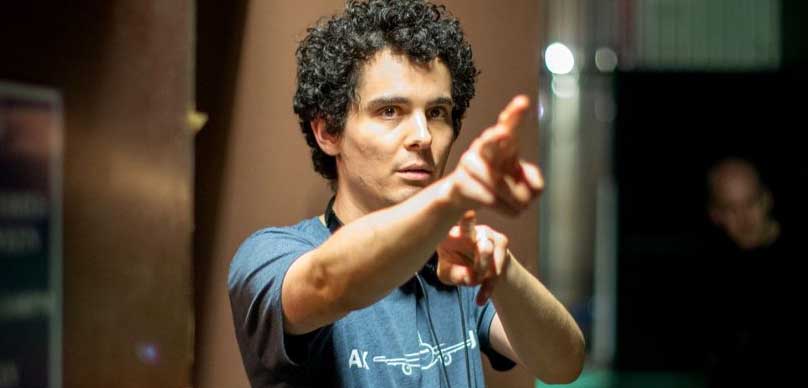
Today on the show we have Damien Chazelle, the Oscar® Winning director and screenwriter of La La Land. He bursted on the scene with his debut film Whiplash. The film is about a young musician (Teller) struggles to become a top jazz drummer under the tutelage of a ruthless band conductor (Simmons).
La La Land tells the story of Mia [Emma Stone], an aspiring actress, and Sebastian [Ryan Gosling], a dedicated jazz musician, who are struggling to make ends meet in a city known for crushing hopes and breaking hearts. Set in modern day Los Angeles, this original musical about everyday life explores the joy and pain of pursuing your dreams.
James and Damien discuss how he wrote and structured La La Land and much more. Enjoy this rare conversation between James V. Hart and Damien Chazelle.
Alex Ferrari 2:04 Well guys, today is part two of that limited series I am doing with James v. Hart. And today he is interviewing the Oscar winning Damien chazelle, the creative force behind lala land and whiplash. And in this conversation between James and Damien, they talk about the origins of lala land, how he came up with it, how he built the characters. It is a fascinating conversation sitting down and again being a fly on the wall of a great conversation between two master screenwriters. So without any further ado, please enjoy the conversation between James v Hart and Damien chazelle.
James V. Hart 4:47 Damien we're sitting in the this is where we're going to be showing your clips tomorrow. They're just slip right there. Wow. I never seen that before. What what model is that? And over here, the charts going to go And here's the whole gang, the tech crew setting up the ballroom. Oh, hey, guys, they had a man and a man.
Damien Chazelle 5:09 Oh, that room is cool. It's a big room and more of like a small classroom. That's awesome.
James V. Hart 5:15 No, that's why I want you to see that this is. There's a lot of excitement about this. And we really appreciate you authorizing me to take you apart. Yeah. So lala land. Yeah. Be Damien, the youngest director of ever winning Academy Award. And now he's old enough to grow a beard. Yeah, a little bit. But to today, today, tomorrow, we'll be spending an hour and a half going through the process with a chart of lala land. And you and I spoken about this, I just want all of you to know that Damien, approve the picks Eclipse. He picked the points in the film that he thought were the most important, and we built a chart around that. But you have some news that I think maybe we It has nothing to do with the movie business. Has nothing to do with working with Ryan again or walking on the moon. But you're about to take a big step in your life. Oh, yeah. I got engaged. Ah, yeah. I guess now two weeks ago. Okay. Yeah, a little longer. Weknew you weren't pregnant. But engaged is that's at least one or the other. Yeah.
No, no pregnancy. Retro. Congratulations.
Damien Chazelle 6:30 Thank you. Yeah, we actually met through Benj. passuk, Minar. Who wound up writing the lyrics on? Yes. So, you know,
James V. Hart 6:42 well, we also just saw the the Broadway musical, but they've also written the lyrics. Yeah. Which is staggering. So you, you've assembled quite a team? How many of the what what are the people that you'd had already known and worked with, that you bring into the production? Well,
Damien Chazelle 7:03 the only one who I knew from way back when was Justin Hurwitz, who wrote the music. And so that, you know, we had kind of played in this genre before together and right. I wanted to do a musical together. And so the next two people who, who I met to kind of make this with were the producers, Fred Berger and Jordan Horowitz. I know, you know, both of them, Jordi is pretty real. And so for the longest time, it was just the the three of them in May, me and Justin, Fred and Jordan, for a number of years, just kind of trying to beat this into shape, get it into script form, get the music out there, get demos written. Then we started to assemble other parts, the music team like Benj. passuk, and Justin Paul, who wrote all the lyrics, and Mandy Moore, choreographer, Marius devries, our music producer, and then it was kind of one step at a time trying to kind of get this fully fleshed out.
James V. Hart 8:06 I did, I did have the pleasure of meeting the executive at focus who put you into turn around. Oh, did you? He did, she said, I'm sorry. I'm the guy that son in law's movie in Jordan horror, which is my son in law that is and and so they did us
Damien Chazelle 8:26 a favor, to be honest, because first of all, they gave us the initial kind of, like, push to actually I mean, without focused features kind of getting this going initially. You know, I don't know that me, Fred and Jordan, that we enter each other's orbit that we and and then to their credit, once they decided that they weren't going to make the movie, they didn't kind of make us languish in development. Hell, they just let us go. Granted, it was a scary moment, you know, because we were, you know, felt that it feels like you're orphaned and and it was a number of years. Before we found another home for the movie took a while.
James V. Hart 9:05 I have two quick questions. And then we're gonna jump into the chart. You and I talked about what you think the ending of the movie is. And the ending has been a very stirred a lot of conversation, a lot of discussion, a lot of debate. Over the choice you made of the ending, you and I spoke about the financing, where media and said sort of have a they sort of settled, though they resolve their conflicts is after the audition, which is still my favorite song. That was my vote. The audition is staggering. And I'm sure in the Broadway show, it will be a showstopper. Wow, can you just talk about your process and everybody here is a writer, a producer, a director all three. A little bit about your process and what you why you chose it, the way to end the film you did and what your feelings were about the bench scene and what came after.
Damien Chazelle 9:59 The bench scene I guess probably came later. Because I think at the very, at the very start, I knew roughly where we were headed in terms of the final scene. I knew I wanted to tell a story about a romance that doesn't, you know, that doesn't last forever, something that winds up being a finite moment in these people's lives. And they're kind of like two ships passing in the night, they cross for a moment. And that moment is crucial for both of them. But they wind up going their separate directions. And I wanted, I knew I wanted the tone of the ending to be okay with that, you know, that I didn't really see it as a, as a tragic ending. I was certainly very inspired by the umbrellas of Cherbourg, French French musical from the 60s. And that similarly does not keep the romance going at the end. But where's the tone there, I think is a little more again, tragic. I think here, your I wanted to, I wanted there to be, I wanted there to be a real hope, to the ending. And also this idea that you know, some dreams come true, some don't, this wouldn't be an honest movie, if every dream and act came true. Wouldn't be an honest movie of every dream didn't. But it's a movie about dreamers. It's a movie about the dreams that kind of push us and guide us. So. So it was important to me that, you know, some things work out some don't that, you know, that Mia becomes the actress, she wanted to become that that in many ways, Sebastian becomes a version of themselves that he wanted to become. But sacrifices come with that. So I guess I saw it as still a positive ending, but just one that maybe would be a little, a little less predictable.
James V. Hart 11:47 Well, it's very grown up and very mature. And it pissed a lot of people off. But it also it also embraced a lot of a lot of people you gave that you gave the audience the Hollywood ending, you gave them that what if they live happily ever after? And then so the audience got that, that that rush got that emotional charge? And then you made it brought it back? And then we made it very responsible? very adult? Very?
Damien Chazelle 12:11 Yeah, well, I think sometimes it's also like, I mean, we talked a lot about me, friend and Jordan about, you know, the ways in which we wanted to really wholeheartedly embrace the musical genre, and then ways in which we wanted to, you know, try to tweak it a bit further. And, you know, sometimes I really feel life does feel like a musical, and sometimes it really does not. And so I think I wanted to make sure that we played with both ideas in this movie, the times in which life really feels like it's entering that magical movie movie round, like when you're falling in love, or that moment when a dream comes true. But then there's times where you really feel as far away from you as possible. The movie for me was about kind of this push and pull between life and fantasy, reality and fantasy, and that at the end, and in a way, you really want to put them side by side in the most direct way possible. That felt to me like what we were building up to the equation, building up to life and fantasy, side by side. And in a way, as a viewer, you can kind of choose which which you prefer,
James V. Hart 13:16 will you take us from the star dance, which is a total ultimate expression of falling in love. And you crash and burn us with the dinner fight. So you would go from that amazing peak, the beginning of that whole romance and I'm sure we've all felt that way. We're dancing and the kiss at the end of that sequence is dead center of the story. That you didn't you take it all away from us for dinner? Yeah, here's a question. We always ask him, and then I'll let you go. So we do the chart. whose story is it?
Damien Chazelle 13:51 Well, I mean, to me, I really think it's, it's just gonna sound like a cop out that it's both both Mia and Sebastian's stories. And I think, in a way, that was the challenge, because even a lot of the movies that we were inspired by, whether they were dramatic love stories, are romantic comedies or musicals, you know, ultimately kind of sided with one individual over the other. But I, I really felt strongly here that that, you know, both points of view had to be privileged. And it just depended on what you know which point of view we were, we were taken, at which point, but that we needed to kind of hop back and forth. It's also I guess, why I mean, I think in many ways, it's about it's about these two people as a couple in relation to the rest of the world. It's kind of why, after the opening number, there's no musical number outside of these two people, you know, so we use our opening traffic number as an entree into the world but then at that point, everything becomes more and more intimate, and more and more motivated by just those two people. So you don't have auxiliary characters have you know,
James V. Hart 15:03 I'm only charging two characters, I usually charge five or six. And it's a beautifully structured screenplay. And it's a beautiful structured film. On page 38 of your script is the dancing the stars, which is the dead center of your movie, which is 58 minutes into your movie. Okay, so I'm just doing this because the director to me decides what the time running time of the movie is not the page count. Right, right. Well, yeah, one minute page. And now you're working with Ryan again doing
Damien Chazelle 15:37 life after lala land? Yes, yes. The sequel? sad, lonely years of Tibet? No, yeah. I mean, we're, I mean, in many ways, it feels like a 180. We're doing a movie about the moon landing, and Ryan's playing Neil Armstrong. But you know, I guess you could say, one similarity is that again, it's a movie about very literally outsized dreams.
James V. Hart 16:05 I want to thank you, everybody here tomorrow will be applauding and cheering you and hopefully, I won't be able to live up to these expectations you've set for us, and I really appreciate it. It's great. And awesome. You'll love this festival. Writers Festival there. Yeah. This looks awesome. And congratulations on your engagement.
Damien Chazelle 16:26 Thank you. Say hi to Sam in a spacesuit for us. We'll do I'll tell them you say hi.
James V. Hart 16:32 Thank you, sir. Thanks, Alan. Elisha for doing all the Alicia for doing all the hard work for us.
See, it worked. out.
Damien Chazelle 16:42 There we go.
James V. Hart 16:42 Amazing walk on the moon.
Alex Ferrari 16:50 Thank you guys so much for listening. If you want to get links to anything that we talked about, in this episode, head over to the show notes at bulletproof screenwriting.tv forward slash 107. And we have one more in this limited series coming out in the next couple weeks with James v. Hart. And if you haven't checked out his new course, the hart chart screenwriting masterclass over at IFH Academy, you are missing out it is a game changing course. Head over to bulletproof screenwriting.tv forward slash hartchart. Thank you so much for listening. As always. Keep on writing no matter what. Stay safe out there. And I'll talk to you soon.
Sign up to receive email updates
Enter your name and email address below and I'll send you periodic updates about the podcast.
What can be said about the magical work the screenwriting and storytelling teams over at Pixar have created over the years? The “Pixar Method” has become a new way of telling and constructing a story.
With hit after hit and rarely misstepping, Pixar Studios has consistently been able to create great stories that content with audiences around the world.
The screenplays below are the only ones that are available online. If you find any of his missing screenplays please leave the link in the comment section.
Today on the show we have award-winning screenwriter, actor, director, producer, sketch comedian Rick Najera. Rick is also an author, playwright, coach and national speaker with an expansive portfolio of credits in all forms of entertainment.
From starring in films with Sidney Poitier, George Clooney and most recently Mario Lopez, to writing sketch comedy for Jim Carrey and Jamie Foxx, Najera is best known for starring on Broadway in his award-winning, self-penned stageplay, Latinologues, directed by comedy legend Cheech Marin. Najera is only one of three Latinos to ever write and star in their own play on Broadway.
As a screenwriter, Najera has written dozens of scripts for TV, film and the stage, starting out in the industry as a staff writer on the groundbreaking urban comedy series, In Living Color, for which he wrote more than 30 episodes. Najera went on to write for Townsend TV (10 episodes), MAD TV (47 episodes), East Los High – a Hulu original (21 episodes) and more.
He penned the feature film Nothing Like the Holidays starring Debra Messing, Alfred Molina, John Leguizamo and Luis Guzman, which won him an ALMA Award. Najera learned from great writers like Spike Lee, Quentin Tarantino and Scorsese to “write what you know’ and has been a pioneer in Hollywood telling his American experience, from a Latino perspective.
Rick and I discuss the raw truth about working in Hollywood, writing comedy, working with greats like Jim Carrey and Jamie Foxx and much more. This is a entertaining and informative episode. Get ready to take notes.
Alex Ferrari 0:09 I like to welcome to the show, Rick Najera, man, how are you doing, Rick?
Rick Najera 3:28 Good, Alex, how you doing?
Alex Ferrari 3:30 As good as we can be in this crazy mix up the world we live in today, sir.
Rick Najera 3:34 It is a crazy mixed up world. Yeah, it's so much going on. But you know, different stuff. I'm sure that everyone's tired of hearing about COVID interactions and things like that. Let's talk about film.
Alex Ferrari 3:44 Absolutely. Absolutely. So first and foremost, sir, how did you get into this ridiculous business?
Rick Najera 3:51 You know, it's very simple. Um, I thought of the, the one thing that would just totally destroy my life and make my life really horrible. And I went, let's go for that job. And it had to be writer, because that is the probably one of the worst jobs you can get in Hollywood. It's just, you know, really horrible.
Alex Ferrari 4:08 Now, why not? Why, sir? Why? Well, I
Rick Najera 4:11 Well, I mean, I have to tell you, first of all, it's a lonely business. So it's not like, you know, it's lonely. No one, you know how many times they go, Oh, my God, there's, that's the writer of that film. You know, it's even you could name off Star Wars. They'd go, Oh, my guts. Oh, wait a minute, is that James Earl Jones Oh, my God, not for you. Because people are are attracted to the to the man or woman in the podium. You know, and that's, that's the person I mean, we've had years of now, you know, the the cult of the director like Orson Welles and people like that, or, you know, Quentin Tarantino, but say Quentin Tarantino, Orson Welles, were also actors, they're performers. So they were hybrids. And I think that's kind of what's coming to the world now is more hybrid. I mean, yes. writer you know, I'm a proud member of the WTA I've you know written a lot of things but now I love my union are great. And my favorite things are screeners I used to get but we don't they don't really send at the screeners like they used to
Alex Ferrari 5:14 know that as much anymore now yes like you go online
Rick Najera 5:17 to see something like one thing I don't want to be online is a freakin pandemic. I don't want to be in five a screen.
Alex Ferrari 5:25 Yeah. I want to go to a theater and watch it theater. I
Rick Najera 5:27 want popcorn. I can't watch a movie without popcorn in my hand. There's so it's, it's it is the it is more of what I think I am in a lot of certain performers are and writers and people like that. We tend to be Heifetz. And the old world of Hollywood actually was the Model T Ford world. Right? Like, the the writer does eight hour, you know, he does the eight o'clock hour family sitcom, that's the guy and this person's the single camera guy. And that person's this no, this is a writer, but he's really comedy. And this is this. So they approach writers that way. It's being Latino. I had to always create my own job. You know, there wasn't, you know, we talked earlier on the show that there isn't a lot of Latino writers. And there's there's a reason for that. But they're just we're just few or a few and far between. I was on a plane I think was hosted in Lopez and one of the writers were going to some event, and there's like three Latino writers on the plane, I say, this plane goes down. We've lost half the writers in Hollywood. And at that time, it was kind of the truth. It was like it was like, we've lost half the writers the display goes down. I mean, and I hope I mentioned along with Josephina in the other writer, for sure it was it would go you know, but it was true. It was like What a tragedy is sad because, you know, no one wants to be the first in Hollywood. Or like, you know, people have called me a pioneer in some ways. You know, Pioneer I got I've never wanted to be a pioneer pioneer really is a bad job. Because pioneer gets killed by the bear gets cholera syphilis some mercury poison and a silver mine and some
Alex Ferrari 7:15 What's that? What's that? So it's like game Oregon Trail Oregon Trail trail. Yeah,
Rick Najera 7:19 just the worst things you can imagine Eagle the eagle takes your baby yeah your feet you have no fingers or hands you've got no personal hygiene fair enough fair to add and you're you're just hoping to syphilis kills you instead of a Native American and well that's it's just bad it's so I want to be the guy that shows up in the train you know what the you know the nice mustache and Joe show up with a train and and all that kind of world that's the kind of guy I want to be I don't want to be a better yet. The guy shows in a jet just right to New York even better. You know, it's great. But pioneers a bad thing to be you don't want to be a pioneer. It's just the danger level of Pioneer is really up there. I went to Australia to film something. And that place was dangerous already. I could imagine someone going that place and being a pioneer. They have everything there will kill you. spiders, snakes, every the people I mean, kangaroos box. I mean, it's crazy. Oh, kangaroos aren't even cute animals, like I saw King like seven foot high. And they will gut you with their feet. You know, so you go walk up with a carrot your mouth and what to feed it gently, you know, with a gill kill you. And so it's that's to me, Pioneer. So I do not want to be a Latino pioneer. Because first of all, they don't no one cares. And
Alex Ferrari 8:37 no one do. So by me. So when you when you started out? I mean, you started out? How did you like start getting work because I look, I'll tell you what, you know, I came up as a commercial director and in post production as a Latino in Miami. And, you know, I started off in editing Latino, you know, commercials and doing other stuff or South America and things like that. But it was a little it was hard to break through to the American market for and that was This is the mid 90s where things are a bit different now in regards to accessibility, like I mean before, get more and and then that whole crew
Rick Najera 9:14 and those guys aren't even doing what you say particularly Latino stories.
Alex Ferrari 9:18 No, they're no they're they're not there but they're still but they're still you know, Latino, you know, let's call it Latino directors and and Robert Rodriguez and and you know, and all that kind of stuff. It was it was a different world so I could only imagine what it was like for you as a writer coming up in the 90s
Rick Najera 9:36 Well first of all, they were surprised I could write in English what's the bigger surprise what could I do you understand the words it was very hard you know it's it's I got in this business because I believe you can be anything you want to be you know that was drilled in my head you can be able to ever you want to be and and I believed it So I said I'll be an actor because being an actor you can be any character want to be and then this business spends their entire energy telling you can't do that. And now those exceptions are starting to happen. I'm watching with Shonda Rhimes. I'm a big fan of, you know, people like that. But on the whole, for the 90s, just the 92, like when I first started out was, it was a 92 it was I got an in living color. And I got that after being an actor. I was, I was working a lot, you know, as I got into acting, I did you know, I mean that did shows every show from Colombo to whatever to you know, China beach and all these pilots and you know, West Wing, and I just didn't like the roles. I finally it was one day I was doing a film called Read surf with George Clooney. And we both were leads. And he had 1020 Auditions afterwards, I had zero. And we both release. And I said, Well, why what he's going on 20 shows why, why can I? They said, Well, he's going out for white roles. You only play Latinos. So it was ingrained. It agents, managers, everyone, you play Latinos now which led to can you play? At that time, it was like you're either gonna be drug lords, which hasn't changed terribly much because look at Narcos and shows like that, or you're the gardener or your you know, whatever it is, it wasn't like, you know, Dr. Sanchez, we need to We're losing him. Dr. Sanchez. We're losing. You know, it was always you know, you know, quick cut, you know, Pan left. And Dr. Sanchez is I'm just working here as a gardener, but part time I am also a doctor to help with this situation. So that
Alex Ferrari 11:46 I want to watch that I want to watch that medical drama. That's Dr.
Rick Najera 11:48 Sanchez. He's a gardener by day. But ER doctor at night. I learned this during the war, you know, salads. Teach people back up. And also
Alex Ferrari 12:02 gardening. Because I do like the gardening. It's steady when
Rick Najera 12:07 it calms me down. One night, er, gametime gardening. And I also have him. I bring the truck around. And I also make lunch for the people.
Alex Ferrari 12:19 Oh, of course, of course. Great. That's a funny
Rick Najera 12:23 dimensional character. I didn't know that. You know, so I just I just said, listen, these roles aren't, you know, they're dumb. I was very insulted by them. And I was I started off as a classical actor as an actual actor at the Globe Theatre in San Diego was as it lawyer playoffs, I did Time magazine 10 Best Production years American Conservatory Theater, all the best theaters in the nation. And the minute they found out I was Latino, there's like this. And it wasn't a secret was it wasn't walking around going. My name is Rick Nash. It sounds like an Arabic word cried. You know, nothing is exotic. And obviously not Anglo American is when I got very, you know, stuck in playing the Latino. So I said, um, if I'm gonna play a stereotype, I better written it. So I just started writing the roles. And I've turned the stereotypes upside down. I would I play a drug lord, but he was a news fanatic. You know, I talked about the news. I was I was watching the news last night, you know, talking about
Alex Ferrari 13:25 these Scarface who watches CNN?
Rick Najera 13:28 Yeah, I heard about a man. His name. He he was executed in Texas by lethal injection is ironic, no. Lethal objection. He was a drug lord. So I'm thinking to myself, for his last meal. He asked for steak, french fries and a Diet Coke. Why would you order a diet? Are you worried about the calories we're talking about? I would do that I would take care of and really create, you know, flip and flip them out and change them around. And it was it was a tough fight because you're you're in a battle with Latinos themselves. And that you you know, because it's because you're going to you every every time you're performing Latinos looking at you going, No, he's not that good. Or I don't like him or for 1000 reasons. Mostly. We're Vidya you know, Andy, of looking at someone. And so, you either people assume you're full of yourself, I gotta get that people assume I'm full of myself. You've done all these shows. You must think you're the most incredible person in the world. And I go, No, not at all. And I'm the most insecure person in the world. Those shows make you insecure. Okay, Hollywood is geared to make you insecure. It's actually geared when you walk in the door and they look at you and they said they're just not good looking. Or walk in the door. You're not sexy. Hey, you know, old, but it's like the words they used. I was like, vibrant, wonderful.
Alex Ferrari 14:55 No, it's not. It's not it's not a ton that builds you up. It's not it's not look like Brad Pitt and George Clooney were having problems getting roles when they were young. I mean, I mean, yeah, it took it took a minute. It's a George Clooney took a while before he actually hit.
Rick Najera 15:11 George Clooney. I'll tell you a story. I worked with George years ago, and we did that read serve together. And he invited me to his house to have two
Alex Ferrari 15:20 is this free? Is this pre or post? Er?
Rick Najera 15:23 Oh, this is this is I believe, pre er, like, like, so he's, he's still hustling at this point. Still hustling, still hustling? And he's hustling and I go to his house. And he has a pet pig. Pig? Like, yeah, so we're in his house, you know, doing tequila shots, and we're talking is a few of his friends over. And he says, you know, we do the movie, we'll get a bad guy, and I'm the good guy. And so we're gonna cut or not hang out together to keep that kind of denture. I said, understandable. No problem at all. And I look at his house with George. It's a great house goes out. Thank you. I go. So what do your parents do? What are your parents? So did
Alex Ferrari 16:08 he test himself?
Rick Najera 16:09 He looks at me and he just goes, it's my house. I go, I go, Well, what do you do? I'm an actor. I go. I'm an actor, but don't have a house like this. Because he really what he done pilots and stuff like that, but so he's making money, but he wasn't, you know, so I didn't know. And I said, Well, I'm an actor. How come I don't have a house? Like the house? Like there's so many because you just have to ask for more money. It's nice that Okay, last remember money? The truth is, it was just math. If you audition for 20 different roles, you're going to get one. And when you came to the Latino actors, there wasn't many roles. We didn't have many Latinos writing those roles. And even now, half the time when there is a Latino show, I almost assume I'll never get on there. Because Latinos, a lot of times they don't want to hire you themselves. Because they're looking at going no, I want to have this cast filled with all these white writers behind the screens and stains. And I am talking major Latinos who have told me no, I want to have some, you know, white writers around me. Because to them, that's success. So that's changing but but it's it is a very tough business. And it's sad because the least thing, the reason all of us go into art, and you know, I'm sure it's the same with you too, is it? You want to comment and explore the world you're living in and talk about it and show people look at this. This is such a unique way to see those I was just watching you know, Better Call Saul and Breaking Bad and I love that writer. And I was looking at I what I love about his writing is and in Shonda Rhimes to what I love about the writing is they'll take it anywhere. And a lot of times when you're dealing with Latino stories, particularly you have Anglos, you know, white Hollywood telling you what a Latino story is. There's the difference was
Alex Ferrari 18:09 like they did it with black, what's a blood? What's a black story? What's a gay story? What's with any whatever, whatever minority it is, I'll tell you what kind of story it is.
Rick Najera 18:17 Exactly. And that that is the problem. And so that's been the issue. And a lot. That's why I became so independent is why I produced my own shows and stuff like that, because I had to.
Alex Ferrari 18:29 So there's a you, you got started with a living color, because for people not for people who aren't aware and living color when it came out. I mean, Kenan was kind of like an 800 pound gorilla that could really do whatever he wanted, especially after the first season because it was such a runaway hit. And if you haven't if you don't know what a living colorize it was basically just you know, a Saturday Night Live sketch comedy,
Rick Najera 18:51 which is Chappelle Show. Yes, Chappelle Show before the Chappelle Show,
Alex Ferrari 18:55 right. And it was Yeah, and before that, it was like really, Saturday Night Live was the only thing on Yeah, honestly. But in living color just hit the mainstream in a way that I mean, it really hit the zeitgeist. So I could only imagine what was it like working with you know, was Were you there when Jim was there? Jim Carrey worked
Rick Najera 19:13 with Jim till four in the morning. I mean, this is this is my day. Okay. I'm working with Jim to like four to write a sketch called you know, the juice man. She's a fan sketches like juice, juice juice, his character Gray, and about 10 o'clock I go, Hey, what if he so crazy with his juice that he thinks he can fly or something and jumps out the window? That's a horrible idea. For the morning, Jim. Hey, what are you with the juice guy so hyped up the juicy things you can find jumps out the window and dies? Gets a great idea. Oh my god. Brilliant.
Alex Ferrari 19:51 You're gonna go far. Jim. I borrowed my words.
Rick Najera 19:55 And I say Jim's a very you know, and it's like Jamie Foxx was hiding in my office because He was in some fight with so and so. And you know Katie was upset about something and and Jennifer Lopez and walking and going Rick and I be an actress. Do you think it could be an actress? Right? I told her yes, you can. So it's like Rosie. Oh, you know, Rosie Perez, Perez and and, you know, Rosie, and I would and Jennifer would have lunches together because we'd be only Latinos there. Right? You know, the one of my favorite times in living color. I wrote a sketch because they wouldn't let me act. They're like, Dude, you really can't act you gotta write. No, no, just do it. Because most of the acting staff are the writers were actors and performers, some of the great performers. Some of the best performers were not on stage. They were actually you know, guys like Robert Schimmel are great stand up comedians, you're like, these were the staff. I mean, you know, the people you just it just goes on who's who's in fact, I'm the bliss famous person in that room. Like, one time has an event and Jennifer Lopez there and say, Hello, Jennifer, say hello to Jennifer my ad, spend some years you probably will remember me. I don't want to go up there and get amazed by her security detail. And I just would like to avoid that for my ego. She's gonna say something, and I'm not gonna say anything. So she's walking up was Marc Anthony, and I get to meet Mark entity years later. But she walks up, he recognizes. And she runs up and gives me a hug. That was such a beautiful moment. And she goes, Rick, we've done so well, haven't we? And I just looked at I was like, Well, I'm at the party, too. But I
Alex Ferrari 21:34 really well. But my security detail hasn't gotten here yet know,
Rick Najera 21:38 my security detail. Still getting the press pass and trying to get past there. My main security guys on the floor being arrested right now. priors. Yes.
Alex Ferrari 21:49 And this is a rented suit. This is a red.
Rick Najera 21:53 So a lot of times, you know, that was, you know, that's really what the day was like, you just had tons of people around. It was a very exciting time, especially for people of color. To me. Just amazing. And it was Fox and Fox would let you get away with stuff even though Fox now seems to be against people of color. Good. All right. There's a time,
Alex Ferrari 22:14 though not the time, but they let that when Fox first showed up, as far as the network was concerned, they had nothing to lose. So they just they just like we got married with children. Sure. The anti Cosby Show. Great. So why not? It was
Rick Najera 22:29 basically this kind of you had to be, it was the bad boys. Yeah, we were the true not ready for primetime players. And it was it was such a unique time in Hollywood, and it I'd still have my Living Colour jacket that they gave me. So give me a jacket. And I didn't know as a hit show until I work one day at an airport. Because remember, we're there all day long and a night to four in the morning or some amazing, you know, ridiculous amount, the price so many sketches do so much work. That meant none of us had a personal life. Right? You know, no one had a personal life. So I didn't, you know, you'd work till Friday, but you'd be done about four, whatever it was, you go to sleep the next day takes you one day to get yourself together, you feel like you just beat like a pinata. And then Sunday, you're like, oh, I should get my laundry done. Or I should get to pay some bills or do whatever. And then oh my god, what happened this time? I gotta be there. 10 in the morning to pitch. And one time the pressure pitching was so hard because you're in a room with Robert Schimmel. The greatest writers ears, you know, Larry Wilmore, all these people that are, you know, are in the room with you. And everyone's got to get something on the air. Everything's got a because if you don't you pitch and they say, Oh, I love that idea. It's great. Okay, well go with that idea. That idea that you're had to work. And this wasn't nice. This wasn't Oh, we're so wonderful idea. This is great. Let's go for with this. It was like, Alright, you got to 12 gets done. It's pretty
Alex Ferrari 23:59 brutal. Those rooms for my worst part,
Rick Najera 24:02 they'd walk in and say you got nothing. They don't want any of your pitches, you bet. You're going to pitch again in a few hours, some ideas. So you'd have to come back when you've worked all amount of time on this, to come back with a story. And if they didn't like it, for whatever reason, it just, you know, science was not gonna play that. Well. That's like work Nana, you had to come up with new ideas. So you're constantly coming up with I had one writer as you know, well known writer worked on tons of shows. He gets in there. And it was intimidating me because he walks up. So yeah, I've got 108 I kept a list sketches. These are 180 sketches that will just you know, no one will stop these ideas. This is the best pitch. I've worked for a year coming up with ideas for this show. He's telling me and stuff. I'm like, Wow, I'm intimidated. And I got my big list of sketches. I got about 200 of those. That means you know, not for you know, not guaranteed kill it's still good. Could you to my car at 300 those, you know, they're good premises, maybe Need some work? Maybe they do it to be, you know, BS or and maybe five days. And he's like this whole math Wow in a humble within a week, he comes to the office and goes, I got nothing man.
Alex Ferrari 25:12 They destroyed me mad they destroyed
Rick Najera 25:15 nothing. And he's like thinking ideas. So So I would see grown men cry. Wow. And I was people needed ideas bears like crack because like cracked in the 90s or 80s It's like, you know, it was it was sad so they would go through so much material and you would have to come up with ideas and you know like to work on other shows later years later, like mad tv. Or
Alex Ferrari 25:41 how has it worked because matte TV was like the kind of almost the, the sequel to live in color in some ways. In
Rick Najera 25:47 some ways. It was a sequel, but living color had more of the stand up comic sensibility. Jamie Foxx, that's the Mad TV had the Groundlings sensibility, yeah, more like sketch comedy from the Groundlings. There's a very particular Groundlings is a very particular style, they use a lot of wigs, they use a lot of different stuff. They're you know, they look at Pee Wee Herman and will Pharaoh as they're saints, you know, they pray to them. And so there you have a different style. But to me, it was kind of cultish in some ways, because you had to have that school. I like the stand up comedy schools, the chapels those guys like that, because they in stand up comedy of the Comedy Store. But then you've got the improv, then you've got the Laugh Factory, but each one has their own style and schools. So as much more varied. Groundlings was a very definite style. Then came UCB and all these other others.
Alex Ferrari 26:41 And What years were you at Mad TV?
Rick Najera 26:44 Gosh, I gotta think maybe like around 2005 or something like that.
Alex Ferrari 26:53 Starting starting around? 2005
Rick Najera 26:54 I think I think I remember. I mean, I wrote a lot of those things. And it's in my IMDb and i i read this stuff. And I'm like, What I didn't remember so
Alex Ferrari 27:02 you miss you miss the time that Julie was there. Julie Michelle Jones. Oh, yeah.
Rick Najera 27:07 What is a Julie Julie I worked with later on Julia and I work together and Latino locks either showed up on Broadway. Well,
Alex Ferrari 27:14 she's wonderful. She was my she was the star of my first feature. Wow. Which one was that? This is Meg. She and I directed her comedy special. And I've been friends with Jill for about a decade. Jeff. Tonto stages. Wait,
Rick Najera 27:30 this is a very close friend. I really like her like because because I interviewed her for my, my podcast now in America, you know? Sure. I don't want to siphon your million man. Audience.
Alex Ferrari 27:44 I'll put a link i'll put a link in the show notes. So
Rick Najera 27:46 yeah, put a link to the show. Because you know, Listen, guys like me don't have the audience to you do. So, but I'm here in America to hedge Julia and she's just a great person. You know? She did. She didn't, you know, I think it was Reno 9110. Yeah, she's like that. So it's it. The comedy school in Hollywood is very small.
Alex Ferrari 28:08 Yeah, that's one thing I've made since I got here. almost a dozen years ago, I met Julie three months in, by the way. Three months after I got here. I met Julian she started in a short film that I shot like, I was hired to do within within three months of getting here. It was like, and I when I got here, like this is Hollywood. Great. This is the way it's always gonna be. I'm just gonna like in that whole project turned into a shit show. And you know, but she was wonderful. We always stayed in touch.
Rick Najera 28:33 We say this is Hollywood. This is Holly. Now this is all I know.
Alex Ferrari 28:37 This is Hollywood. Yeah. But it's very small town. And everybody knows everybody. It's so weird. Because and the more I do these show, like when I do this show in my, my other podcasts. I'll talk to a guest and I'm like, Oh, I know. Do you know this person? Yeah, I know that person. Like, and it's just like, everyone knows everybody. So if you and this is something for the audience listening. Don't Don't be an ass. Because you will get back to you people will talk.
Rick Najera 29:06 I know, it's with me. It's like, you know, I go through through Mum, you know, normally for me, it's it's I've run into more just I don't think people understand. I don't think they've ever stood because I don't fit anything. You know, it's not like you go you're not in a box. I'm not a box. I write a director, actor, you know, I've done everything, you know, VP and network and, you know, do all this stuff. Not a big network, but it's still a network. And so I've seen the world very differently. And, and I come up like, I'm gonna do a T, a web show in February on a web show. A masterclass right, in February. So, so people go like, Hey, he's actually teaching are doing some like that. Because I came from school, you had to do everything. And that's very Latino. Like, oh, I know. I've never met a Latino that you You go to front of Home Depot. Can you do tile? Oh yeah, I can do can you do plumbing? For sure I got my tools. Can you do surgery surgery? Can you? Oh yeah, I can do quite crack open the heart. I need a donor. But then I got my tools. I guess you got a donor I got my tools. So it just, that's where people have been.
Alex Ferrari 30:24 I mean, look, I have a hat on this says hustle. I mean there's there's there's I mean, it's it's it's on brand for me, sir. I
Rick Najera 30:29 understand woke up this morning. Every day. I'm hustling Everyday everyday I'm hustling. Because, like, even even before Yeah, every day. That's our mantra. Everyone hustle.
Alex Ferrari 30:42 It's just, it's just the way it is. It's just the way this
Rick Najera 30:45 is where it is. And I thought about my son started acting as commercials and doing quite well. And he was like, how do you want to do commercials right now I want to study school. And like, in part of me was like, if I worked, if I was in Tijuana, you would have a box at Chick place in your hand going to a chiclet you'd work that's the way our Latinos are, you know, it's like, some, you know, people go I have children, because I love them. And also it's like Latinos. Like, we need a crew, and a little bit to get there. But my family that's hilarious, even though I can't stand it.
Alex Ferrari 31:26 We'll be right back after a word from our sponsor. And now back to the show. You you, you were able to make a, you know, an anomaly in Hollywood, which was a movie called nothing like the holidays, which was a holiday Christmas movie, which I saw. And when I saw them, the cast is amazing. And it was a Latino basically a Latino Christmas movie with a with a real representation of what it's like. And you know, it's always, you know, it's always weird with with Latinos, because we're, we're not just one block, where we're 30 or 40 Different tribes, if you will, depending, you know, I'm Cuban, Mexican, and, you know, you know, everything from everywhere, you know, from Chile every so everyone has their all different kinds of traditions. We all kind of have similar traditions. Yeah, but so you know, nothing, nothing like the holidays. I saw I saw myself in it, but it still wasn't a Cuban Christmas, you know, but it was
Rick Najera 32:32 it still there are certain things you relate to like, like, you know, do Latina logs as long as I did. And, you know, getting that show on Broadway is the first successful Latino play on Broadway. Right? They called it a play. Right, which to me, it was more of a comedy special series of monologues, but they call it a play, which put me in direct competition with all the big multi-millions. I'm like, No, don't call me a play called theatrical event or something like that. I brought Latino logs back, I could actually get Tony for revival. But, you know, a lot of times when you would do work like, you know, Latino logs and that kind of stuff. People didn't know what to label it. You know, we're hard to label you know, nothing like dollars we use Ah, I'll tell you where you can relate your Caribbean. Yeah. And are Ricans are still Caribbean now. Sure. The joke is Puerto Ricans in Puerto Rico would call Cubans to vase in two ways. And that means basically I used to have so it's like every every time you meet a Cuban in Puerto Rico, like I call where they me back, that's not an avocado back on Ah, the avocados would fall from a tree kill you. You know, it'd be like, everything was just hyper beautiful what Cuba was. And of course, that's a human aspect that we're looking back. Like, I thought my years in high school are wonderful. Now I'm like, now I luckily Don't Look Back in high school. That was the best time of my life. Because but if people do they look back and they go I was a football captain are always so
Alex Ferrari 34:07 I'll tell you I'll tell you a joke. If I may be so bold as to tell you a joke. If what's the difference between an Argentine and a Cuban like so the Argentinian thinks he knows everything but the Cuban knows. He knows everything.
Rick Najera 34:20 Yes. It was like, it was like, it was an Argentinian if they can. If they sell you what they're worth would they think they're worth paying millions.
Alex Ferrari 34:33 But that's good, but those are those kind of look subtleties. When you're writing when you're writing. You know, it's like I remember doing commercials for Latin America and I literally had to version out. Yeah, 30 different videos. Because if you if you have a Puerto Rican vo guy in Mexico, that's not gonna fly. No, you have to It's so it's you know, that was the first time I kind of really understood like, oh, okay, this is like that's everything. is a little different. So when you're writing for this kind of audience, it's not easy. You're trying to appease a bunch of different audiences.
Rick Najera 35:07 What I would write like what I would my writing I've, I've worked everywhere in the United States and outside the United States. So I've worked for Mexico with fertility sit down in Mexico. You know, I've worked a lot of like, all speaking horrible Spanish, which is, to me the most amazing thing because I grew up Chicano in California. We're, we're known for getting a C in Spanish. That's like our deal. If, if that's Chicago, you speak great Spanish, you're not a Chicano. It's like, hasn't disappeared to America. They're interviewing me in Spanish. I'm like, Ah, let's give me a headache. Oh my god, I gotta get this thing. And of course, understanding and doing this but, but a lot of words, I just don't know. You know, like this, this quick side story. I was in, in Mexico and in Chihuahua, Mexico, and I had a bodyguard and it goes, his car keeps driving by me. And he goes, we have to leave and I go why? Because to guide us and I go oh, there's a there's a mural around here. I'd love it. I love his work. So cannabis is wonderful. I thought he said see get us you know, it got it. So finally I go back to the hotel and I go where's that mural? You're gonna show me because what mural like go see cantos because Sicario sees like directly me. I go. Oh, what does that mean? He goes assassins. I go assassins like those guys driving by me were assassins. Like, how do you know? It goes because they kidnap me I call the kid have you? Because yeah, go well, what kind of bodyguard are you if you're getting kidnapped by the same people that doesn't protect me?
Alex Ferrari 36:41 I'm gonna have to let you go. I'm sorry.
Rick Najera 36:43 Because I go who normally do bodyguard this the the chief of police of Chihuahua. So bodyguard for the chief of police. This guy was a major guy. It took him 24 Narcos along with army guys to capture. And but it's you know, I didn't know. So when I started working for you know Mexico and places like that I had to have an education because it's it there's so much different flavors. So if I do if I go to Miami and perform, and I do one of my monologues then the truth is, if I do a monologue, take Cuba Libre, which is about a Cuban prostitute and Cuba, you know, very, you know, gut wrenching hard monologue to perform not by me an actor and actress in the company would do that. And I'd hear people crying in the audience, because it affected them so much. Yet, when I was doing night monologue button 11 in New York on Broadway, a whole nother cry and feel sure. So I can tell what cities are performing. And if I'm doing if I was doing, say, Miss East LA on the West Coast about a beauty pageant girl that doesn't want to give up a crown. I would take to New York I did as Miss Puerto Rican Pride Parade. You have to shift it a little bit, you shift it you adjusted and in Miami. I'm doing alien resorts and I'm saying, you know, I'm basically yelling screw Cuba. Screw Castro. Right, right. Every Cuban is applauding me and loves me forever. Sure. So you're playing to the audience? You have to you it's what committee the RT did. minidoll RT was, you know, was a form of theater throughout Italy. And around I think it was, you know, the Renaissance area around that. People go to each town and listen to the gossip, listen, and the taking. If you live a Saturday Night Live, any of these shows now in Sketch wise, that's what they are. They're comedians are listening to the gossip. They're putting it out there. You got the audience going, Oh, I can't believe they went there. And what comedy is that cathartic release of ideas and expressions that you shouldn't be able to say on stage. But since you're saying it, you'll get an applause and laughter.
Alex Ferrari 38:58 Now, you I mean, you have you're very unique in the sense that you you had a Broadway show, a hit Broadway show. Excuse me. A what? It's not a show. It's not play. It's a it's a special
Rick Najera 39:10 special. On Broadway,
Alex Ferrari 39:14 it was on Broadway, and you did. So how do you approach as a writer? How do you approach a Broadway show?
Rick Najera 39:21 You know, a, you approach the same way you do with all writing, which is basically the story. It's a big beginning, middle and end. You're on the way I learned writing with my father. We were very poor. And he would go to see a movie, and he couldn't afford to take me so he'd come back the movie. And he would explain the movie to me was such graphic detail and this and that. And then years later, I see the movie and I'd be really disappointed. I was like, oh, it's boring. My dad told me so much better, so much better until the story and the man what he felt. And I learned storytelling to him. And that's really what it is is telling a story now. You can take a story. And like say Mandela Are you? Okay? That's Yoda as a child, and ever seeing Yoda as an adult. And then when you look at a story, like Breaking Bad and you go, well, Breaking Bad, here's Saul, before Breaking Bad. You know, here's his the early part of his career, let me understand where we're coming up, coming up. So we're all going through stories that we just don't know the ending most of time. And that's also true in life. It's like, we could sit there and have this great, you know, wonderful conversation and this and then it's like, Did you hear what Oh, do you mean? The COVID? Oh, no, not Alex. So it's like, yeah, immediately afterwards, somehow, he went out, a plane up and a plane dropped from the sky, or anything. And that's the thing is we don't know the end of the story. And that that is what life is. So as storytellers we're making up how we think the story is, but there is no ending. Because the biggest lie a storyteller tells is, and this is what said, you remember, as a child, what we heard was, and they lived happily ever after. Well, that's a lie. Because I saw OJ Simpson one time as a kid. I remember seeing OJ Simpson go out. Wow, he's with this blonde woman and like, I was like, impressed. I think it was a was a I think it was a busboy or something.
Alex Ferrari 41:15 He did the Naked Gun movies. I mean, he writes to me, you're like, Oh, my
Rick Najera 41:19 God. Now cut two years later, he's in a white Bronco going down the freeway in a slow chase and then stop there. And they lived happily ever after. Yeah, is it happening? So it doesn't we don't live happily ever after. So storytelling is a continual evolution of a human life. From before and after. And so that's why you know, stories are so you can take a story like Breaking Bad and go to the prequels or go to the sequel or go this is still a story, but there are every story has a beginning, middle and end. But the end is there will be no end. It continues until somehow. I mean, you look at the greatest books are. Our stories are never ending. You know, in fact, there was a movie called The never ending story.
Alex Ferrari 42:05 There was three of them, apparently. Three of them. I only saw the first and second I didn't even know there was a third
Rick Najera 42:12 gear. Is this true Hollywood. It's a never ending story. There's always a different way to tell the story. It's like, how many it's like you started noticing your older when you go. Oh, that's the remake? What?
Alex Ferrari 42:23 Oh, tell me about it. Are you kidding me? Yeah, as you start looking at like, how many Batman like I remember when Batman 89 showed up. And it was the biggest event of the year. I mean, 89 was an amazing was an amazing year for movies. And now what is there been like? 15 Batman's?
Rick Najera 42:41 Like Batman online. It's it's there's a guy who plays Batman, which is the voice. Oh, yeah. Yeah. Yeah. He's scares his wife.
Alex Ferrari 42:49 Oh, that meant that bad dad bad that.
Rick Najera 42:51 Yeah, yeah. Yeah,
Alex Ferrari 42:52 he's so good. It's so good. So
Rick Najera 42:54 many versions of Batman and then you kind of look any go. There's only so many versions of stories, you know, me with basic structures beginning, middle and end. And then you go, whose eyes are we swatching the story through? Are we watching it from the Father, the Son, the daughter, who's who have worked my entrance in the story. So stories as complex as they are really are, are very simple. You know, we learned them as kids and we need that completion. We need to feel that completion, like yeah, you fought, you know, like Alfred Hitchcock, when he's doing vertigo, and the man is standing there, he's conquered. You know. Jimmy Stewart has conquered his fear to be on top of that ledge. And you go, wow, that moment, but you know, there's a story after that he has to go down the down, walk down the stairs, call his office tells us you know, this is what happened, explain it fill out paperwork, then he has to go home, got to serve himself a drink. And later on he dies but his son takes up the mantle v you know, so it is This is what life is we're a neverending story and as as writers and people are telling people's story that we recognize and we hope they recognize it too. And nothing like the holidays is a family story that just happens to be Latino.
Alex Ferrari 44:15 Right, exactly. Now, you've done a lot of acting and writing in your life. What do you enjoy doing more?
Rick Najera 44:23 I like acting more for one reason this difference here's here's a difference acting omission hair ready for you on the set. Now, here's writing. This is a piece of crap. What are you talking about? We made it das Dogen is dead. He's not available. Guys in rehab. You got to write it for this person. What is going on with you? I said you're talented.
Alex Ferrari 44:47 I mean, this is supposed to be a positive show about writing. So I'm not sure No, no, it's
Rick Najera 44:53 positively miserable.
Alex Ferrari 44:54 And no, no. It's it's, it is I'm actually one of the more honest shows about the film industry that there is on on in podcasting. So I'm very real and raw about it. But what you just said is not wrong.
Rick Najera 45:10 No, no, it's not wrong. Because yeah, I remember being in living color. It was a very classy example. I was wearing sweats looking like, just the worst homeless person you could imagine. been writing for days. And I remember seeing this actor hidden under five, Michelle did one line. And he was like, there's all these women around me. He's talking and everybody's yeah, I've done this. I've done this. And, and me is like, a coffee. I need coffee. It's what are you doing in line? I just need food, you know, and they were totally different being treated. And so when I would act, it's it's just how well they treat actors is such difference, you know, a writer unless you're a major showrunner. You might be treated a certain way. But on the whole, they just, you know, the, the writers are the guys that were getting beat up in high school. You know, they were the ones who went to Comic Con and came back and told all their friends and things like that. I didn't sit that form of writer I tended to be much more street. I grew up with tough people and situations where and that's one thing about being a Latino is literally like, just in living color. Remember, Salma Hayek came to visit me one day and all the all the male writers who, you know, totally lost lost their mouth. Oh my God, look who's visiting you. You know, and she wasn't even famous this point. I took her Danny's actually. And we had lunch at Denny's and
Alex Ferrari 46:39 I came this is pretty this is pretty Desperado. Well,
Rick Najera 46:43 big time pre Desperado. She just flown into LA. She'd been maybe three months in LA.
Alex Ferrari 46:48 So the year a year a year away. Like that's probably like, she was like 9495 When she did that was like yeah, it was like 9392 I think it was sure she was Fresh Off the Boat Fresh Off the
Rick Najera 47:00 Boat. And here's an ironically, I'm talking to you know, Jennifer Lopez monitor lunch knob cool. Okay, I'm going to lunch. What are you gonna do? I'm gonna meet the guy. I just Latino called me up and she wants to meet me. Because some of Latino writers how rare we were. And she, I took her to Denny's gutter. You know, I got the Grand Slam, obviously.
Alex Ferrari 47:23 I mean, you want to treat them all right. So
Rick Najera 47:25 you're right. No, I just told her. I said, Look, I have one hour and Denny's is right next door to Denny's. Get guests on Denny's. Denny's. You know, a $2 biscuit too. And so I took her there. And we were talking she said, you know, you confuse me, you're a writer, you're an actor, you do everything. And I try to explain to her that she came from the world of Televisa, right? Where you were an actor, and you're a writer, and you're a director and all these different things. And I'm like, as a Latina, as a Latino in Hollywood, you have to do everything you just need to do because you, you always have to remain relevant. You always have to be doing something. And you always have to have something to say. And to do that to be fresh and be relevant. To talk you. You've got to be out. You got to be out and about. And I would luckily as a stand up or as a comic, when I'd go out and do stand up comedy. You're out normally. But once I got married, it was difficult to do that. I became a dad, I did a Showtime special called diary of the dad man, which was about becoming a dad. You know, it was a unique thing because I did not want to be a dad. You know, I've told my kids that many times. bargain with them. I did not want you I didn't even want you here didn't even want you. You are a mistake.
Alex Ferrari 48:46 On fact that one night of the kealan leuco came out you were
Rick Najera 48:51 right on your mother. No, it was you know, I I tell him joking. Of course the church did. I did not you know it, but men, you know, especially Latino men, we weren't necessarily taught, we were taught to work, you know, you're gonna work and you brought and never see your kids. But you better bring home money and you better do all these different things. That was your idea. You know, you don't see little boys playing with dolls going someday I'm gonna hold the doll like this in my hands and rockets asleep. And no, we're not. We're not trained that way. So, for me having spent so many years in the business and and it was it was um, you know, it's like, I can't believe I just got married, you know, and I am and she got pregnant right away. And literally right away. I mean, she told me she's like, it'll take me years to get pregnant. Of course, in vitro, most of my friends are doing in vitro. And I'm like, now here, I'm Mexican. There's one thing our people do extremely well. Pregnancy naturally,
Alex Ferrari 49:55 so you brush you brushed your shoulder against terrorism. That was I looked
Rick Najera 49:58 at her you know? look better and it was done. It was it was like, you know, I was ugly
Alex Ferrari 50:04 using the force and using the Force use the force. There you go. You're pregnant. You're pregnant at this point.
Rick Najera 50:11 So she got pregnant. And the kids right away. We have three. So you're still married? So, you know that's in Hollywood.
Alex Ferrari 50:21 That's a that's a that's a success in Hollywood.
Rick Najera 50:23 Well, I it was our 18th year anniversary. But I
Alex Ferrari 50:27 mean, you're so let's, let's put, let's just clarify for everybody listening. What a miracle it is that you're still married. You're in Hollywood, and you're a stand up. Yeah. And, and a stand up and a performer and a writer. So I mean, you really are you are an anomaly, sir. Because I know I've known many a stand up in my life, and worked with many and it's, they are very interesting souls.
Rick Najera 50:51 Well, the thing was stand ups. You know, it is it's a rowdy world. There's there's not no two ways about it. It's just a very rowdy drink, talk hang out, world, you know, it's like and that's, that's a unique thing. You know, that was really kind of kind of straight, I think. But you know, women don't ever give you extra points for that. They don't go so amazing. You know, it's like he expected and that's, and I think it is so yeah, we've been married 18 years and being married in Hollywood is probably the real toughest job. Not only but you
Alex Ferrari 51:25 So you started off as you started off as a stand up. First.
Rick Najera 51:29 I did. Well, I started off as an actor. I was an actor. I did. You know, I mean, every cop drama, Hill Street Blues, I'm at my age myself. But I was like the last year of Hill Street Blues that
Alex Ferrari 51:41 wasn't that shot in black and white. And it was like that invite by Gunsmoke.
Rick Najera 51:44 He was next to Gunsmoke set. I remember that. And and they were talking about a show called Gilligan's Island. They didn't do it years later. And I it was I did the Spanish version, Gilberto silent where we would go back to you'll hear something that sounds funny shirts getting cross what's going on?
Alex Ferrari 52:08 You're just too soon. Too soon. Too soon. Too soon, too soon.
Rick Najera 52:12 Yeah, it was. You know, I mean, you it was a it was unique in Hollywood, that, you know, it's actually I mean, in a weird way. It's tragic. Yeah. All it is, you know, you go and you say, my father was in Vietnam, and World War Two. And how many world war two movies ever seen a Latino? And then you go and how many do you see in Vietnam? Vietnam. I think the platoon has, has a camera pan and have a guy with a Virgin of Guadalupe, you know, statue or something? I think that was it. Anyone? Oh, they represents every single Latino that that went through Vietnam and, and did that whereas my family actually did it. So I saw how Hollywood never told her stories. What Diaz became my, my passion was a teller stories.
Alex Ferrari 53:02 Did you ever see the movie Hollywood shuffle? Yeah, no, I
Rick Najera 53:06 worked with Robert Townsend. I looked at his TV show.
Alex Ferrari 53:09 Right. So Robert, I mean, I and I, and I've said this on the show multiple times. I think he's, he doesn't get the credit he deserves because he before he was like, before that whole I'm gonna go do my movie on a credit card thing of the 90s and clerks and, and then by the Archie and that whole thing. He did it first. He and he did it in 87. I remember because I was working at a video store at the time. So I remember it,
Rick Najera 53:34 where it was rare things you hear? Yes, I
Alex Ferrari 53:37 was. I was working on a video so that time,
Rick Najera 53:39 and I remember, he's gonna bring back video. Yeah.
Alex Ferrari 53:43 And he made that movie specifically because he was exactly what you're talking about in the Latino experience he was talking about in the black experience, which was Hollywood wasn't telling him a story. They're gonna tell you you're gonna be the slave or you're going to be the gangster or are you going to be this? And he there's this great skit in Hollywood shuffle where he's, he's like a duly like a Juilliard trained actor. And he's talking with a British accent. And he has a whole bunch of African Americans who are speaking British. And then all of a sudden, you have, like, the whitest guy in the world going Nah, man. When you talk jive, you got to talk like this. And you see them trying to train the African Americans how to talk gangster and so it's just so it was such a spear into Hollywood. It's so wonderful. It was
Rick Najera 54:26 so true. I remember that. Yeah, I was in. I was doing general hospital as an actor on General Hospital. And I played one from the Biscayne islands. And this has been me years ago. I'll tell you how long ago was I was I was at you know, Latino Golan kind of character. Okay. Oh, Monica. Poor traveler helped me Monique. So I thought
Alex Ferrari 54:47 this is this Armando Bondi. So Ricardo Montalban stop.
Rick Najera 54:50 I wrote for the guy new Ricardo my
Alex Ferrari 54:51 work with all these beautiful you know, everybody, you know, do you know?
Rick Najera 54:55 I do and I don't want to.
Alex Ferrari 54:58 Have you worked with Robert did you ever work with Robert,
Rick Najera 55:00 I met Robert Robert came to live in color and I brought him to I toured around and live in color. And he invited me to his his movie. And I saw as I went to the screening of it it or yeah, oh, yeah, he didn't know anyone in Hollywood. And I was like, Hey, you're Mexican, Latino, I am doing live in color. Please come by, I'd love to show you around. And that's how you do it. You'd actually call people up and say, Hey, man, I hear you're Latino. I'm letting them do alright, cool man. Want to come by are? It was it was a very much a feeling of helping one another. I don't think that is just now. But the time it was, there was Paul Rodriguez. And
Alex Ferrari 55:41 there was there was not many men. I know George
Rick Najera 55:43 Lopez. I knew George you know, we all knew each other coming up. So, you know, it's very much a small world where you said, you know, every buddy, you just call people up. I mean, you just you just did. So Robert, and guys like that. And George and so we were very rare. But before us came, you know, Ricardo Montalban. I remember working for him and writing him a speech for some, you know, theatrical event, and, and I was like, I felt like a kid. I was at his house. Beautiful house. And he was like, Ricky, Ricky, no, no, no. Ricky. What about he called me Ricky. I mean, that's how that's but as a Latino, we understood he was the adult he was the the man. So we had a great deal of respect for him. I mean, Eddie almost is my neighbor. So
Alex Ferrari 56:33 I've met Eddie's, Eddie's wonderful man. And he's wonderful
Rick Najera 56:38 guy. Yes. The guy's like, he's like family, just saying. I mean, I love the guy.
Alex Ferrari 56:43 Yeah. I said, I sat down with him talking. I had lunch with him once and I was talking to him about Miami Vice. And he was like, Oh, let me tell you about my advice. And he'll just go into this whole, like, all the backstories. Like, yeah, the other guy when I replaced them after three episodes, and then Don Johnson came in, and I set him straight, like day one. And that was the end of that. And like, he just started talking to all this stuff. And he was, he is so cool. And Blade Runner and all that. I mean, he's just, he's at
Rick Najera 57:07 all of us. He season. He's a legend. And that's, that's the thing is like, that's the part of Hollywood, like, we're people that, you know, like, got to work with Cheech Moran, he directed me on Broadway. He's amazing. And my other show Latino thought makers, right? Interview these these celebrities, star. I think, for me, it fits my purpose in life, that I feel Latinos are the solution, never the problem. And if you get to know us, you'll realize that. So what Latino thought makers does, which I do that show is introduce people to Latinos in a different way to see us as the solution, not the problem. And what comedy does comedy opens door like, I worked on culture clash, which was at Fox, I was one of the writers on that show culture clash in living color, mad TV, I could go off comedy wise, it's pretty, it's a pretty good resume, you know, in terms of who I've worked with, and all that stuff. But those aren't the moments, the moments you remember, are the silliest moments in the world, just like when, at the end of the day, when you're in a studio, and everyone's putting away all the equipment, and now it's, it's getting to be sunset, and you feel you've been part of a dream factory. You've done something. Those are the moments I remember, I just go that's such a beautiful, they taught the Martini shot. No, no, those are moments where you go, yeah, it's worth it. All the pains worth it. Yeah. And it's it. I remember that because I saw I remember, as a kid, I saw movies, black and white film, and the guys is that he's an actor, and his whole life has been every time he's about to make it. It gets he gets drafted to the Korean War. So he cut to just 50,000 Koreans coming toward my Chinese. He said, machine gun, shooting it and all these, I mean, just everything. Finally he gets the big roll of his life. And he's about to walk on stage. And someone turns them goes, is it worth it? And he looks at me goes, yeah, it's worth it. And this is after 50,000, Chinese, all these things, all the stuff he's gone through. And he goes, it's worth it. And I think that's what it is, is that when you do it, and it's we share a love for something that is hard for other people understand it's tangible. We love the business of making up stories.
Alex Ferrari 59:27 And but isn't it insane? But that's the insanity of this. This whole thing I've been saying for a long time that it's it's an illness. It's like once you get once you get bitten by this, it's in your bloodstream and it will never go away. It will flare up. It can be dormant for 20 years, but I'm talking I sometimes I talked to filmmakers who were like, Hey, I just turned 60 I'm retired. But what I really want to do is direct so what do I need to do and like and they were a doctor or something like that all their life? He's like, I really wish I would have gone down that road. But now I'm here and I want to do, it never goes away. Even I've, you know, I've been in this business 25 plus years now, and going in and out, and I've wanted to leave, because it got so difficult sometimes. And I literally just like, I can't take the pain anymore. And I would go for a minute and then I would come back, you know, and I'd always have one foot in or one foot. I never truly left it ever. You'd never
Rick Najera 1:00:29 truly retire. I always tell people because I every time I meet somebody, you know, they anyone who makes it announced that I'm retired. I'm not doing this anymore. They're always back the next year going okay, well, my God really bored. Alright. It's like just never say retired because it's not a, an occupation. It's a lifestyle. Yeah, when you sit down you say My lifestyle is being an artist, my lifestyle is creating my lifestyle is doing that. And I can do it through stage page or many different forms. And and this is just like us having this podcast and us talking. We're sharing a love for a craft or an industry. And you're not necessarily industry really for the craft for sure of it. And that's that's really what it is. We're sharing a love for something that we truly
Alex Ferrari 1:01:18 do love. Now what so what do you say to writers listening right now? And filmmakers for that matter? listening right now who are struggling to get their voice heard to get their thing out there to get their their work seen? Or? Or they're just going there? They're basically in the Korean War right now. And there's 50,000 Chinese coming at them. Or the enemy is coming at them? How, what kind of what's the words that you can say to them to keep them going? And to keep that dream going?
Rick Najera 1:01:51 Messy? It's actually it's, you know, I haven't thought about this for a while. So thank you for bringing this up. This is why I like talking about the industry with other people. You really kind of you think about Oh yeah,
Alex Ferrari 1:02:00 you work it out. You work it out. Work it out. So
Rick Najera 1:02:02 the workout is this. Um, my father was a door to door salesman, man, he would go door to door and I when I do stand up, I give him an accent. The truth is he didn't have an accent but no, but it's funnier with an accent. When you're with an accent. I hate to say it, but it really was people. Because if I did with his regular voice we would like so your you said your dad's Mexican. Yeah.
Alex Ferrari 1:02:23 Oh, hold on a second one I my friend. Yeah. Okay. Okay, now, I understand.
Rick Najera 1:02:30 So, but my father, you know, would tell me this story. And he was a member of Toastmasters and all Stephanie's book beautifully. He told me it, Rick, I really want you to speak beautifully. If you spoke beautifully, be very proud of you. So that's why I became a Shakespearean actor at the globe, my 17 I wanted to speak beautiful. So I studied Shakespeare and I memorized it and all that. So one day told me, you know, I was auditioning for something, I didn't get it. And he goes home. Okay, so that ain't good debt. And normally, I was, as I lived, grew up in San Diego. So I was working all the time. I mean, I was like, an actor that could work. And because the, the talent pool was less none. I mean, there's great people, but there was just more more. I didn't have to audition to get 50 people, the National Search and 2500 It'd be 15 people, 15 people, and I knew most of them not doing so I auditioned for a second city, improv Chicago. They're doing a special in San Diego. And they hired two unknown actors. You know, for the first callback, I didn't get it. They weren't sure when the second callback finally got it. I told my dad, I'm auditioning for this thing. And I didn't get it. Because what let me tell you story goes every day I go out and I knock on the door. And I say, I try to sell my things. He pots and pans he sold. Because then I go to another door. But around the 100 door. Finally someone says yes. You have to knock on a lot of doors. You hear no. Before you finally hear the one. Yes. And that was it. Knock on doors. So I went back to the audition. I got I got the role. And the other unknown actor in San Diego was Whoopi Goldberg. So why Whoopi Goldberg and I got a second city improv special together in San Diego. So that was a
Alex Ferrari 1:04:21 true story. So that's, that's pre Color Purple. So we talked 8483
Rick Najera 1:04:26 It was it was pre her one woman show. Oh, oh, wow. So it was there. I was a kid. I was like, What 17 or something? Yes. At the Old Globe, and then I had to audition. I think I just turned 18 And I felt she was speaking in a bars. You know, she's a full 72 The bad influence but she was but she told me what she taught me that improv is saying yes. And you know what acting is and writing and all this stuff is saying yes, to a dream. But you you know if you remember the star outriders hearing that it's remember, you have to hear a lot of nose before you hear. Yes. And once you get that mantra in your head, you will you know, and here's a second one. What you think is success may not be read your idea of successes. Oh, yes, absolutely. So that's a that's a lot of times, you know, cuz I, I, I struggle with it. You know, like, sometimes I'm like, I'm the biggest loser in the world on my Lord. You know? Sure I get to play on Broadway. But Lin Manuel Miranda.
Alex Ferrari 1:05:30 Wow. Well, it's always that there's always a bigger fish. There's always a bigger fish.
Rick Najera 1:05:34 Hamilton. Oh, I did 137 performance with an extension, the first one like that, while they were off Broadway, and they said, Hey, you could be Broadway. So it got people thinking that direction. But the man just nailed it. And so. So you start to get that comparison. You know, and I think about it. It's like, well, Whoopi Goldberg wired I Whoopi Goldberg,
Alex Ferrari 1:05:55 why did I win the Oscar for gold? Yeah,
Rick Najera 1:05:57 you know what I mean, to Jennifer's just a fly girl, what happened to me, you know,
Alex Ferrari 1:06:02 but don't forget, look at what we've been where we are. Looking at some accomplished,
Rick Najera 1:06:09 you have to kind of look at it and go, you know, maybe success. To me, in the end, for my success in life has been my three children. That's it. If I looked and said, Look, if you go all your success in life that you've done, if your three children are your measure of success, then I'm a successful man. Now, if my measure of success was an Emmy, you know, I get a nomination. But if I got, once I get that me or if I got an Oscar or whatever. And you have to learn that your ideas, success is the process. It's the that's what life is life's a process, you wake up you, you try to find love, you try to keep love, once you find it, you try to you know, all these 1000 things of what our evolution isn't, you know, and I, I saw my relative Mike was much older now. And, and, you know, I gotta tell you, old age does not look pretty. It just looks like oh, man, this looks bad. But I've never heard them complain. I've heard them understand this is life, that they're happy when they wake up. And you know, and that's the word, their attitude is, you know, this is a good day. It's, it's if you stop comparing yourself to others, and compare yourself to you find and you find that happiness, then I think you're successful. Because in the end, the moments that truly make you a human being and can truly make you give back and what is our humanity is the love our kindness and how we you know, like you said earlier, don't be a jerk, because people remember, I constantly meet people every day that will walk up to me and they go, hey, you know, I work with you years ago, I always go was a jerk.
Alex Ferrari 1:07:57 That was that was a nice to you.
Rick Najera 1:07:59 And I've never heard anyone say I was bad. I've never heard that. You know, maybe because I'm asking him I look you're imposing and intimidating Batman, mask yourself. I'm simply, I add a simple rule was very much so of to judge a person by their character of how well they treat someone that can do absolutely nothing for them. Right? That's it. So if I walk on a set, or whatever it is, if I see a scar, someone else treating an intern or a PA or someone badly, that's my judgment of that person. But, but I gotta tell you, I've had so many actors and stars that I've met, that are truly nice people. Truly great people. You know, you know, I look at certain people and I go, they're a good person. And luckily, when I meet them, they tend to be I haven't been fooled that often. Where I go, Mother Teresa. Whoa, that was a surprise. She was rough man. Attitude.
Alex Ferrari 1:09:03 She still owes me 50 bucks.
Rick Najera 1:09:06 So close. I'm a miracle worker, watch this. Look, that's my leopard. Get away from the way I look at it, though.
Alex Ferrari 1:09:19 Yeah, that is wonderful. That's wonderful.
Rick Najera 1:09:23 If we fall in love with the process, and we enjoy it. That's the thing because, you know, you're constantly writing you're constantly doing stuff, you're constantly testing yourself and and it is a business that it's it's a beautiful art surrounded by a very ugly business. That's the reality. You know, that's, that's truly it. But then again, you know, some of the greatest stuff in our world can be bastardize or changed or you know, best intentions or whatever. You have to develop in yourself, your purpose. And once you find your purpose. And once you say this is my happiness is larger than you, then you giving it the best you can as long as you're grateful for little things, I mean, be grateful for you calling me up and putting me on your podcast and having a nice conversation. Being grateful for that, that's, I'm grateful for it. That's the thing to be grateful for you, you know that be grateful for the little things. And that way, when the big things come, you'll still use you haven't changed, you're still grateful.
Alex Ferrari 1:10:28 I'll tell you when I when I when I let go of that whole comparison thing. And, you know, it took me years before I got my first feature done. And I was capable of doing it 15 years ago, who could have shot I could have shot that was the dream is the dream is the feature the feature the feature. And but the thing was, I compared myself to Robert Quinton, because I came up in the 90s. So I was like, Oh, my first feature is got to be a mariachi, it's got to be reservoir die, it's got to be this big thing. And that pressure, the art can't handle that kind of pressure. Like it's not built to do that. So when I finally hit 40, and I was attached to another huge project, and that project fell through again. And I was just like, You know what, I can't do this anymore. I'm 40 I got it, I got to do it. And then within 30 days, I was shooting my feature with Julie. I called her up on my joke call your friends, we're gonna go make a movie. And we shot this kind of like improv, you know, Curb Your Enthusiasm, style, style, you know, you know, story about her loosely based on her life. Yeah. And we just did it. And but but I liked it. And I also never attached any outcome to it. And that's the other thing with art. Like, if you were like, I need to win the Oscar, you're never you're gonna you're setting yourself up to be miserable. It may
Rick Najera 1:11:37 not, you know, it may not be for you. You know, I mean, that's the thing is, is it. You know, if you if you as an artist, you believe there's a higher power because I think you have to as an artist, you have to me I know Ricky Gervais always talks about he's an atheist. But I think if you really broke it down, he would hope to believe there's a God and something great something, something, something that we all do. Because the truth is, we in the place of things in life, we need to have something we can look and go there's a reason we're here, there's some higher being that goes, there's a reason you're here. And we want to believe that because as artists, if you look at even the Bible, you know, I went to, I've read so many, you know, I went to seminary, very few people know that. So I it says, the beginning of Genesis says, Man, God created man in the image of God created, you know, basically, so you're creating the image of God, trust your creator was God. So God creates you, your wife, your children, wherever, in the image of this higher power. His act of creation, is what art is to create. And if we're in his reflection or her reflection, then we are creators itself. That is our natural thing to be as creative, be creative people. And so creation and be creativity is storytelling. And it may be done to a commercial, it may be done because I've cried over commercials when well done. Oh yeah. You know, you that to get haiku up in only 30 seconds or a minute. You're going to create this world that will will touch you, then that's beauty. I mean, think about it. So like I looked at and I remember you know I did want a character was Alejandra was a busboy that was a macho guy, all the women. He thought did a great character because I said I worked as a busboy. You know I was my only had three jobs in my lifetime there were not related to entertainment one was a busboy. It was so traumatic after three months that
Alex Ferrari 1:13:44 was a true a true artist. So
Rick Najera 1:13:48 that was my my my
Alex Ferrari 1:13:50 took dramas Iwo Jima.
Rick Najera 1:13:54 He asked me to bring water no ice out my foot. Remember that? Like it scarred me.
Alex Ferrari 1:13:59 It scarred me.
Rick Najera 1:14:02 Good. The waiters. And the busboys, were so confident. And I remember I'd see I saw a busboy in a 10 speed bike, drive up to a woman and start talking to her. And I'm thinking, you're on a 10 speed bike with no very little command to the language and you're going up to a woman go, Hey, how are you? Yeah, my name is Alejandra. You know,
Alex Ferrari 1:14:23 how would you do? How do you do?
Rick Najera 1:14:27 It kind of attitude. And here, I'm like this educated, you know, there's been actor type, working as a busboy for three months, just scandalized by this. And I'm thinking that man's a happy man. Yep. He's honestly happy. And his whole life is happy and he's loves life and all stuff. Michael asked what you want to be. You want to be the person because every day, every you know, I nearly died a few years ago and I came back from a coal mine. I bought stuff and people are like, Oh my god, I wrote a book about it almost white And it was about a Hollywood but it really was about Saxon in my head. And so I came back. And I remember being in a coma and almost sort of voice of God going, you want to go back or you want to stay like a literal voice. I can't remember exactly what the accent sounded like, so I can't go. God was Puerto Rican.
Alex Ferrari 1:15:26 He sounded like, he sounded like Tony Montana. It's like, did you wanna go back? Or did you want to stay here?
Rick Najera 1:15:35 They don't like. But I remember hearing you want to go back and stay. And I said, I will I still have some things to do. And so I came back on my body. And I, you know, once you feel the pain in your body, like, oh, no, because I changed my mind, I'm going to have it. But I worked myself through and I just said, a simple mantra. This is about six years ago, I said, I will do no harm. And I will be kind. And that'll be compassion of is not not that I was a bad guy. I will do what I just said, I'll be grateful. I'll remember being grateful. And that's the thing. That's what you do so. So if you sit there you say, you know, because a lot of times, I'm sure I think I'm reading right? And me too, is it? We're in this business? And we're constantly going we've got to do this, you know, our ambition is always the ambition of Yeah, why should I get any more and more, or I want them to recognize me as the genius that I am. Well, I
Alex Ferrari 1:16:33 let that go while ago I the time. Now I'm just now. I mean, this is what he did he just become more liberal. Like, you know, I just look, I just want to be happy. I want to enjoy the process. Yeah, that's much more important to me than Bhaskar.
Rick Najera 1:16:50 I'm Harvey Feinstein, I just want to be loved. I look at and I go, I want to make the world a better place whenever I can. If not that, then thank God for the world that I've been given. You know, thank God for every little miracle. And you know, I think wasn't me says, Louis CK actually said this. And, you know, he said, you're 40 you're in a plane, 30,000 feet or whatever. It's a miracle. And you think about that, and I go, I mean, you right now on a podcast, I'm seeing you you're seeing me. It's a miracle. It is. We you know, as a kid, I'm watching three channels, three networks, you
Alex Ferrari 1:17:36 know, and when you hear that,
Rick Najera 1:17:39 yeah, or, or better yet, when I was grew up in San Diego, we heard the Mexican national anthem, because the the disc were over on the side of Mexico. So you sit there go, that was I Love Lucy, then that the Da da da, da, da da. Standing tall singing the Mexican national anthem. But I appreciate what you got. That's what I tell anyone that's listening about this business is that you appreciate every single moment. You appreciate everything. You guys the miracles all around you. If you think that way, then it doesn't matter whether you so called made or not. Yeah, you're making it. You're making it?
Alex Ferrari 1:18:20 Yeah, absolutely. Rick, I I appreciate you coming on the show. It's been it's been an absolute joy talking to you, sir. Where can people find you?
Rick Najera 1:18:29 Well, you can always check me out on on on Aaron America. It's on revolver podcasts on Apple and other stuff. And then check out Latino thought makers. I'm doing a show with Cornel West, Dr. Cornel West from Harvard law college, and that's going to happen January 28. And then I've got a if you check out my site, you'll I will have a class on writing that I'm doing with Sanjeev Chopra, Deepak Chopra's brother, and Jackie Ruiz who just quit publisher. So I'm constantly even with this COVID You know, you got to work and keep going, keep going. You got you got to work because if anything, I just look at and I go, I go. Newton, came up with his best theories during pandemic. Shakespeare wrote Lear during a pandemic. And even though we're in this time of pandemic, and I'm, like you, you know, said you watch the news, you go, Can it get any worse? I'm expecting Godzilla walking down any avenue and anything that happened,
Alex Ferrari 1:19:30 the Mole People should be taking over any moment. Yeah,
Rick Najera 1:19:33 you know, maybe I'm even thinking maybe that lizard people idea is true. I have no idea. I don't,
Alex Ferrari 1:19:38 I don't know. Hey, whatever, you never know.
Rick Najera 1:19:42 But if I can love my life, and be grateful, and and be kind to another person every day, and I said, that's, that's what we're gonna do. And if the greatest production of my kids then I'm fine with it.
Alex Ferrari 1:19:56 Rick, it has been an absolute pleasure talking to you, my friend. Thank you so much for for what you're doing and continue continue making people laugh, man and making people think so I appreciate you, brother.
Rick Najera 1:20:05 Thank you. Great talking to me. Good. Consider your friend now for podcast brothers anytime.
Alex Ferrari 1:20:14 I want to thank Rick for coming on the show and dropping his hilarious knowledge bombs on the tribe today. Thank you so much, Rick. If you want to get links to anything we spoke about in this episode, head over to the show notes at bulletproofscreenwritingtv/106. And if you haven't already, please head over to screenwriting podcast.com And leave a good review for the show. It really helps us out a lot. Thank you so much for listening, guys. As always, keep on writing, no matter what. Stay safe out there, and I'll talk to you soon.
Sign up to receive email updates
Enter your name and email address below and I'll send you periodic updates about the podcast.
The Best Picture Oscar winners from the past decade have been nothing short of phenomenal. It was hard to choose between such an amazing array of stories, but in the final analysis, there can be only one Best Picture, despite any presenter snafus that might happen along the way.
Here are the scripts for the Best Picture winners.
Do you think we’re missing a script? Let us know by providing the link in the comment section.
[fusebox_track_player url=”https://api.spreaker.com/v2/episodes/40962575/download.mp3″ image=”https://bulletproofscreenwriting.tv/wp-content/uploads/2020/08/SCREENWRITERS-MIND-PODCAST-THUMBNAIL-500×500-1.jpg” color=”#5b7597″ ] Please Note: Once you press play it will take a few seconds for the episode to start playing.
Inside the Mind of Screenwriter Randall Jahnson (The Doors, Mask of Zorro)
Today we go inside the mind of screenwriter Randall Jahnson (The Doors, Mask of Zorro). Randall Jahnson is an American writer, director, and producer. His works include Dudes, The Doors, The Mask of Zorro, Sunset Strip, and episodes of the HBO TV series Tales from the Crypt. He also wrote Gun, a Western video game which was voted Best Story at the IGN Video Game Awards.
In this episode, the first of an EPIC in-depth 5 Part series, Randall discusses his college days at UCLA and the plunge into the L.A. punk scene that was erupting in the early ’80s and how that affected his writing career. We will be releasing each part over the next 5 weeks and posting them in this post.
This is from The Film Trooper Podcast archives. Enjoy your journey into the mind of Randall Jahnson.
Enjoyed Inside the Mind of Screenwriter Randall Jahnson? Please share it on your social networks Facebook, Twitter, or YouTube) by using social media buttons at the bottom of the blog. Or post anywhere else you feel it would be a good fit. Thank you!
We welcome thoughts and remarks on ANY of the content above in the comments section below…
Please note some of the links in this post are affiliate links, and at no additional cost to you, I will earn a commission if you decide to make a purchase or use a service. Understand that I have experience with all of these services, products, and companies, and I recommend them because they’re extremely helpful and useful, not because of the small commissions I earn if you decide to buy something.
Get ready to have your mind blown! I’ll be releasing a 3-Part Limited Series of conversations between the legendary screenwriter James V. Hart, the writer of Hook, Contact, Bram Stroker’s Dracula, and Tomb Raider just to name a few, and some of the top screenwriters in the game.
First up is the screenwriter that took the world by storm with his Oscar-Winning screenplay Get Out, Jordan Peele. If you have been living under a rock for the past few years here is what the film is about.
In Universal Pictures’ Get Out, a speculative thriller from Blumhouse (producers of The Visit, Insidious series, and The Gift) and the mind of Jordan Peele, when a young African-American man visits his white girlfriend’s family estate, he becomes ensnared in a more sinister real reason for the invitation.
Now that Chris (Daniel Kaluuya, Sicario) and his girlfriend, Rose (Allison Williams, Girls), have reached the meet-the-parents milestone of dating, she invites him for a weekend getaway upstate with Missy (Catherine Keener, Captain Phillips) and Dean (Bradley Whitford, The Cabin in the Woods).
At first, Chris reads the family’s overly accommodating behavior as nervous attempts to deal with their daughter’s interracial relationship, but as the weekend progresses, a series of increasingly disturbing discoveries lead him to a truth that he could have never imagined.
This was recorded before Jordan’s next hit film Us was released. Listening to these two masters discuss character, plot, theme, and more is a rare treat. It’s like being a fly on the wall. When you are done listening to this conversation you can read some of Jordan’s screenplay here.
Enjoy this rare conversation between James V. Hart and Jordan Peele.
Alex Ferrari 2:08 Now guys, you are in for an amazing treat. today. I'm so excited about this. This is part one of a three part series that I am going to be releasing on the bulletproof screenwriting Podcast, where the legendary screenwriter James v. Hart, writer of Bram Stoker's Dracula, contact, August rush, and hook, just to name a few of his films, is going to be interviewing some of the top screenwriters in Hollywood. And first up is Oscar winner, Jordan Peele, the writer of get out and us in this conversation, James, and Jordan kind of break down, get out specifically, and how he came up with the story, how he worked the characters, how he developed the entire script. And James starts talking to him about charting the emotional journey of his characters using his story system, the heart chart. So without any further ado, please enjoy the conversation between James V. Hart and Jordan Peele.
James V. Hart 3:19 Thank you, Jordan for doing this. Not everybody in the audience is going to know the film, Guess Who's Coming to Dinner? But Was this an urban legend? Or does this have something to do with with the, the genesis of get out, but was there were comparisons there were, it was very controversial for its time, in terms of race relations.
Jordan Peele 3:41 It did have a good deal to do with how I developed the story. I, you know, the the beginning nuggets of this screenplay, were really coming, coming from a emotional place of feeling. And the fear that I wanted to capture in this movie was this fear of being observed. And being being observed by a bunch of people who are acting like they're not observing you. And I think I quickly sort of tie that in with race and the feeling of being black in a white space. And I was writing the script, I had several, several different versions of the story going. And at some point, I realized, Oh, this is Guess Who's Coming to Dinner. So I think I was I was operating with a version of it where a girl brings her boyfriend to meet all of her high school friends and sort of inside joke and all that and at some point, I realized No, this has got to be a family thing.
James V. Hart 4:51 And it makes it more grown up and takes it out of the the kind of teen you know,
Jordan Peele 4:57 exploitation or horror film version. mood, and there's a wider, wider sort of variety of people to interact with. And there, there's also a, a certain of as you said, there's a certain adult relatability to the fear of meeting your potential in loss for the first time. And I recognize like, Look, you know, I guess I knew this was a tough one, a tough one to, to sell. Because people, I think people would assume when hearing the premise that there's no way this can be done, right. So, you know, looking back at how Guess Who's Coming to Dinner, I think one of the reasons that was able to sort of cross the the boundary of racism and become a popular movie was was that everyone knows what it feels like to meet your in laws. And that's, that's universal, even though this particular dynamic is, you know, makes it extreme.
James V. Hart 6:01 You started, I believe you started the idea. Forget it was that always the title was always the title?
Jordan Peele 6:08 No, for a while, the working title was get out of the house.
James V. Hart 6:13 Guess who's getting out of the house? Yeah, I guess there was a different president, when you I believe there was a different president, when you first started working on the script, or on the idea? Did any of the political changes and shifts from the Obama administration to the Trump administration that that had to get have any impact on the evolution of the story? Not trying to get political? I'm just wondering, how did your mood change? Did something change inside you? Or outside you?
Jordan Peele 6:41 Yes, I, you know, the Trump was was basically elected between when I shot the movie and when it came out. And so that was in the editing phase. And by the time we were in the phase of picking up some additional photography, Trump was a I don't think he had been elected yet, I'm not sure. But the climate was the surrounding race was becoming more out in the open. And there was this discussion of Black Lives Matter was happening in a way we hadn't seen. More specifically, there was attention being brought to him by people being murdered by police. And so because the Obama era was just surrounded with this post racial lie, as a, as I like to call it, all of a sudden, I was sort of showing this movie to testing it in a world that was race weary, you know, months later, but both for good and bad reasons, race weary. So but I remember specifically feeling that the the original when I showed the original ending, which was of course, as you probably know, Chris, it doesn't, it doesn't end well. Chris ends up in prison. And it's, it's meant to be a gut blow. But it's also a downer, it was an extra special downer. And because the state of the world had evolved, and that these conversations were happening. So that's when I made the decision to give us a happy ending, which I don't know if I would have in the Obama era, firmly in the Obama era where everyone was, you know, seemed to certain that race wasn't a thing.
James V. Hart 8:46 Well, it was one of the one of the struggle of the struggle that a writer, these are all writers, and they're all interested in the process. And the struggle with beginnings and endings, you know, is is what we all go, we all wake up at that nightmare, you know. So one of the principles that we'll be discussing today, instead of a happy ending, or a setting, I refer to it as a satisfying ending. Is your audience an ending that they're satisfied with? Not that they're pissed off by or feel derailed? Or cheated by? Is it satisfying? So? Did you you wrestled with this ending? Did you wrestle with it in posters? Or was it? Did you wrestle with it when you were shooting? How did you how did you find that satisfying ending?
Jordan Peele 9:26 When when I wrestled with it in the script phase, and I wrestled with it and pose. So in the script phase, as you do, I had many different ways this could go. And there were there was several different endings. Some, some nobody even knows about. But I, I in the script phase, I settled on the gut blow version, you know, hey, you know, you might only get to do this once, boom, hit them with it and rip the rip, though. Now for Monday, though, you know, you're already they've already given me their money sort of thing. Well, as we got closer, okay. Well, yeah, as we got closer to the, you know, the launch, and I really realized this is really happening, and I've done so much work to serve the audience. And I think that's just where I come from as a filmmaker. I think the other version, the badass. I don't care what you think of my film, I made my film. Thing is not really me. I come I come from comedy, you know, so I, in my soul, the one guy that's not laughing is my failure. Yeah. So I, you know, I went with the in the last hour, I felt very content with the decision that you got, we have to give him a hero. And more importantly, the moment the car comes up, the cop car come rolls up. And the audience goes, Oh, you're a guy. Yeah.
That that moment. achieves my point. Yeah, right. No matter how much farther I take it. They've done they've done the work I don't need to make I don't need to make a point. They've made the point. So it's even more subversive and more elegant to let that be and then give us our fun when as well.
James V. Hart 11:38 Well, that paranoia that paranoia is still creeps up on everybody, I don't care what your ethnic background is, when that cop car shows up. You're going fuck. No, guys, it's antler. Guys. Deer is Deer Hunter cop, you know, it's the down the road. There the So you mentioned something that I'm a big proponent of in the work that we do with structure is audience you talked about, you're an audience guy. And a lot of filmmakers, a lot of writers don't ever have the audience present in their process. And I'm kind of putting you on the spot here. But could you so they're not just hearing it from me? Could you talk about the audience a little bit in your when you're writing? And when you're thinking that you're are you? Do you bring them with you? what's what's your, what's your connection to the audience in the in this?
Jordan Peele 12:30 I mean, I you know, I've because I've been on stage a lot, and I and done a lot of comedy live live comedy, I think I do have a nice little extra voice of the audience in my head. And, you know, I'm always in with comedy, you're always thinking about the audience, because you're always trying to subvert their expectations. So that they don't get ahead of you and say, okay, you're you're dumb, or, you know, this is dumb, where this is trying to speak to somebody who's less intelligent than I am. As far as I'm concerned, the the audience that, you know, there's no movie without the audience. There's no, it doesn't exist if someone's not seeing it for the first time or whatever. So anything less than trying to get every single member of the audience is kind oflazy. Yeah. Yeah. Do you have to assume there is a way to get what you want as an artist and to give the audience what they want? I
James V. Hart 13:45 guess ultimately, they decide whether your success or not, no matter how hard you work, or don't yours, you slaved over
Jordan Peele 13:52 what the stakes are, you're going to be often your ability to do it again, do it otherwise, do. So that's pretty important.
James V. Hart 14:01 I appreciate that. two last questions real quickly. You said that this is a movie you have to see more than once. What is it that people miss? That they what what is it that we mostly missed in that first viewing that when we go back a second time we go Oh, I mean, I'm not sure it'd be interesting to hear your view on that.
Jordan Peele 14:21 Yeah, well, you know, any certainly any movie with a reveal or a twist? You can watch again and with a new perspective on the what what you saw the first time pre twist, a movie that kind of honors that second viewing. And the first really is a movie where clues were there. Yeah, if you if you know you, you you but you missed them. I think that's the most satisfying thing as an audience to feel like I wasn't treated like I'm a dum dum but because I'm not and I almost got it but I didn't and he then went and you can see the proof that he was given he was laying out the breadcrumbs for me
James V. Hart 15:22 yeah like the opening is I had to watch it twice to go Oh, that's the guy yeah, that's
Jordan Peele 15:28 that's that's a nap in the beginning that yeah, that's what i think you know there there's I put a lot of detail to make sure that second viewing it worked and there's these layers I mean, the big thread to follow Of course it is Rose. And you know now now what we know from rose you know, the first moment we see her she's you know, having a moment in a she's selecting a pastry with that weird weird little smile on her face that first time you watch it is just the sweetest ingenue you could imagine and it has a completely different sinister take the next time so there's all there's many of her actions that are mean something different going through and my favorite of course, is the is the thread with the Father, the grandfather and mother Walter and George. And this idea that grandpa had lost to Jessie Oh, and as as you know, she can run fast is always chasing that you know, he built this mythology that it was a race there was a racial reason he didn't win and that this whole thing kind of come from that. That's why of course we see Walter running
James V. Hart 16:50 well, that's what's diabolical about the ending. I mean, I specifically have not charted the ending until today when we do this live with our our group because the ending is diabolical it's I mean the roller coaster ride you take us on and the ups and downs and it's like whoa one reveal after another that all that's I mean, it's a very satisfying ending all of the conflicts all the threads you pulled together in a very satisfying ending. And she creeps me out. She creeps me out. Rose rose Really? Really? Oh, that is incredible. That yeah, I forgot her name but those Sandy rear replaced
Jordan Peele 17:27 Georgina
James V. Hart 17:28 georgene incredibly
Jordan Peele 17:32 Allison Williams is yeah the fact that she can do both sides of that performance just shows you how good a liar she is really?
James V. Hart 17:43 The same smile when I have got the keys that she is at the pastry store the same last last question. Okay, is there going to be a good outer
Jordan Peele 17:54 eye you know, as the farther I move from it I don't think so. You know, I will you know and then never say never I will I'll tell you this I would never do it as like a money grab I would only do it because I've got the story to make the whole the get out universe that much sweeter. And you know, I got some ideas but i right now I don't have it and I love making new worlds.
James V. Hart 18:30 Well, we really appreciate your taking the time to talk to us today. And I know everybody behind me and around me. I'm getting my breast Bradley Whitford in case you hadn't noticed is enjoying is about to hopefully enjoy this next hour and a half and we certainly have enjoyed your film and look forward to the next adventure that you bring us.
Jordan Peele 18:53 And thank you it's called us and it comes out March 15 19. So it's coming up I'm editing it right now.It's good
James V. Hart 19:06 are we gonna laugh more on this one?
Jordan Peele 19:09 You know what did you know it's is I'll tell you what I you will laugh You will be scared. You will like get much like get out there will be range.
Well coming from you will take it adjustable and nut and nuts to think that expect anything less.
James V. Hart 19:28 So here's your little tribute...clicking our tea cups. Actually, I'm actually in the chair. The chair right now. This is Mrs. Chair. I
Jordan Peele 19:39 love it.
James V. Hart 19:40 I love it so perfectly satisfying indeed.
Alex Ferrari 19:43 I want to thank James and Jordan for that amazing conversation. And if you want to get access to James V. Hart's masterclass, over on ifH Academy, just head over to bulletproof screenwriting.tv/hartchart. Like I said before, this is a three part series. So part two, James will be talking to another Oscar winning screenwriter, which is going to blow your minds. I cannot wait to get those out for you. So keep an eye out for that. They're going to be mixed in with our regular scheduled programming, but keep an eye out for that. Thank you so much for listening, guys. As always, keep on writing, no matter what. I'll talk to you soon.
Sign up to receive email updates
Enter your name and email address below and I'll send you periodic updates about the podcast.
The Best Picture Oscar winners from the 2000s were yet another decade in telling incredible stories. From intimate family dramas to sweeping epics, it was an amazing decade for cinematic storytelling.
Here are the scripts for the Best Picture winners. Chicago (2003) is not currently available.
Do you think we’re missing a script? Let us know by providing the link in the comment section.
Today on the show we have best-selling author and screenwriter Eileen Cook. She is a multi-published, award-winning author with her novels appearing in nine languages. Her books have been optioned for film and TV.
She spent most of her teen years wishing she were someone else or somewhere else, which is great training for a writer. She’s an instructor/mentor with The Creative Academy and Simon Fraser University Writer’s Studio Program where she loves helping other writers find their unique story to tell.
Conflict is essential to story—regardless of genre. The friction between what a character wants and the lengths they will go to reach that goal is what pulls readers through your book. Great conflict is what leaves readers cheering (or crying) at the end of a story.
Using humor and her deep knowledge of human behavior, counselor and award-winning author Eileen Cook will guide you through the causes of conflict, the differences between internal and external conflict, and show you how conflict resolution techniques can be turned upside down to ramp up the tension in your book.
Filled with practical tips, examples, and prompts, this is a craft book you’ll keep on your shelf to use again and again.
Alex Ferrari 0:02 Today on the show we have best selling author and screenwriter Eileen Cook. She is a multi published award winning author. With her novels appearing in nine languages. Her books have also been optioned for film and TV. Her best selling book creating story conflict is a must for screenwriters. And I really wanted to have her come on the show to break down how to create conflict with your story and your characters. Because without conflict, you have no story. So without any further ado, please enjoy my conversation with Eileen cook. I like to welcome to the show Eileen Cook, How are you doing Eileen?
Eileen Cook 2:46 I'm doing good. Thanks for having me.
Alex Ferrari 2:48 Oh, thank you for coming on the show. I appreciate it. You are you are calling us from the great white north, which is an envious place nowadays. Apparently,
Eileen Cook 2:57 Safely over the border. We're building our own wall, we're doing it
Alex Ferrari 3:01 Safe you know, it's just a it's a it's a you know, for multiple reasons. It's a very envious place to be currently in the world as we as we speak here today. But but we're here today to talk about writing and helping some screenwriters understand conflict. Specifically, you wrote a great book about conflict. So can you give me the definition of what conflict is in your point of view?
Eileen Cook 3:25 Sure. Conflicts friction, at its most elemental level. And I should probably tell people like where I come from and sort of start out with is, I'm a counselor by trade. That was my day job before I turned to writing full time. And so conflict is the the bread and butter of why you have a counseling trade. If people don't have conflict and problems, then they're not coming to see counselors and we don't make a living. So that's never a good thing. So conflict is friction, it's standing between you and whatever it is that you want. And you have to figure out some way to get through that friction. And in terms of any kind of book or a screenplay. It's what keeps people watching. At its most basic level. Just think of remember when you used to go to coffee shops go back in time, many
Alex Ferrari 4:14 Years ago, years ago,
Eileen Cook 4:16 Years ago, right? You would go to a coffee shop. And you know what's more interesting sitting next to somebody just calmly reading their book or writing their screenplay on their laptop or a couple having a fight. Like, you're interested in the couple having a fight. That's the people you're eavesdropping on.
Alex Ferrari 4:33 But let me ask you a question though. So because I mean, my wife's my wife's a counselor as well. So I have I have, I have a little bit of understanding just the same way she has a little understanding about what greenscreen is. I have a little understanding about what she does. What is it in our psyche that is drawn to conflict on just an evolutionary standpoint, cuz you're absolutely right. Like it's much more interesting to watch, you know, Breaking Bad then about him becoming a mess. dealer than him teaching?
Eileen Cook 5:03 Yeah, it wouldn't be a good show, really, if it was like, I got up and I had a great day.
Alex Ferrari 5:09 So what is so what is that thing inside of us on a, almost a reptilian, you know, in the back of our tilian brain that causes us to be attracted to conflict.
Eileen Cook 5:20 I think it's partly because conflict is is partly how we make change. So when you even say you know the term evolutionary, so if you're going to go beyond where you are, you have to stretch yourself, you have to do something different. So let's take a basic example of you want to learn to run. So if you're going to learn to God knows why. But let's say you decide to take up jogging, if you're going to do that, you know, the first few days that you're going out, it's hard, you have to push through that if there's friction, right? It's staying in bed is more comfortable, you have to push through that in order to evolve into a writer. If you're wanting to write a screenplay, you know, everybody knows that feeling when you're sitting down in front of the screen and the cursor, blink, blink, blink. And it's easier to turn it off. But you have to push through that in order to actually end up with words on the page and hopefully an eventual screenplay. So change is intrinsically linked to conflict. And when we talk about character arcs, and wanting to see characters change over a story, they have to usually go through something in order to make that change. They're they're put to the test to the metal. There's that saying you never really know anyone until you know kind of the shit hits the fan idea is that when we put people under pressure, they either move forward and evolve, or they retreat or they break.
Alex Ferrari 6:47 So it's on a almost voyeuristic standpoint, we're looking at conflict, we watch movies with conflict books, or shows with conflict, because we're seeing, I guess, examples of how we can eventually break through our own conflict was if we don't have conflict, we don't have friction in our life, we can't grow. So just like a seed has to break through the soil to get to the light, that's friction, that's that that's the have to actually kind of crack through in order to get the light, which will then make them grow and grow. So that's I mean, that's an analogy it just came out of my butt with, but I missed it. And it was
Eileen Cook 7:22 good. Pretty good. Yeah. Like, I want to see the image of like the tree growing through the sidewalk, and all that kind of stuff. And yeah, I think we want to watch it because it is that idea that we learn. So I write and have written a number of young adult novels. And people always say, Oh, I worry about kids reading about sex or violence or these various things. And it's like, well, they're not necessarily going to do it. I don't think that that's the way it is. You read that? Because you want to see how someone else navigated that conflict, right? So if you know, your conflict was, you were gonna, you know, do a hike through someplace, the smart person says to somebody like, well, what did you wear? What kind of hiking boots? Do you have a map? What did you bring with you, you want to kind of guide to get through that. And I think observing other people in conflict automatically gives us that chance to say, you know, what would I do, which is kind of what we're trying to do and film are in any kind of story is let the reader or the viewer experience it, but in a safe way, right? So we all want to imagine that we'd, you know, storm, the best deal. And we'd be you know, the ones to do that. I do a lot of presentations with kids. And I say like, let's be honest, like if you were living out the Hunger Games, and somebody pulled your siblings name out of the hat, like how many of you would be like, no, choose, I volunteer as a tribute? versus being like, oh, man, that's a shame. Can I have your room? Like, do you know what I mean? Like, we're not likely we want to see other people do those big and glorious things and fight back against conflict, because it kind of gives us a feeling like maybe if I was then under the wire, I'd know how to do it.
Alex Ferrari 9:08 So in a lot of ways, you know, I always talk about being inside your comfort zone, and being inside that that comfortable place. And if you if you're comfortably uncomfortable, it's kind of the worst place to be. If you ever want some sort of evolution or growth it's it's really like if, if you're like making 150 K a year living in Kansas somewhere, has a nice house, and you're not really trying to rock the boat. At that point. You're like you're not trying to grow as a person or trying to, you know, put more tools in the toolbox to move to another place in your life. You're good, but when you swim, like you said, when the fit hits the shin when the fit hits the shin, and you're at a place where you have to move because it's getting so bad that if you don't move, then you're going to die or some sort of version of death. in your in your world, that's what drives you to move so that that comfort zone is a dangerous place, I think a lot of us fall into that comfort zone. So many times, I think that's why when you see conflict, it's just like, it just draws you in, because you just want to get through it a little bit.
Eileen Cook 10:16 Well, and I think I give the example a lot when I talk to people around if people are going to make a change, it's because of one or two reasons. And they're either going to get pushed, or they're going to get pulled. And to kind of understand that example, I say, I want you to imagine that we're going to take a field trip to New York City, and I'm going to take you to Simon Schuster, which is in Rockefeller Plaza, right there on avenue of the Americas. So we're gonna go way up, there's a nice little rooftop deck up there, right. So your I forget what it is we're gonna say 110 stories YOUR WAY THE HECK up there, right. Like, everything's teeny tiny down on that ground, right? And I say to you, like, you know, what's really interesting, and one corner of this building, which is, in fact, true, the other building is only about five and a half feet away.
Alex Ferrari 10:59 Oh, God, I just got chills.
Eileen Cook 11:02 And I could say to you like, Alex, you know, you look reasonably fit. I bet if you had a good run and start, you could make that jump. Now, assuming that you're remotely saying you'd be like, no, like, I'm not gonna do that. what's what's Yeah. But if I say to you, like, regretfully, this building is on fire, and the flames have already come up the stairwells, there's absolutely no way down. It's too windy for a helicopter to push, you know, basically lift us off, the ladders don't go up this high, you either need to jump, or you're gonna burn here. Most people will try and make that jump, right? Because Because no choice because it's yours. You can you can just sit down. And there are people who do that, right. There are people who are like, well, this is my
Alex Ferrari 11:55 time. This is my time, but it's either you choose to die, or you take the chance that you hope and that you're going to survive. But the worst happens if you don't make it is your die as well. So either way, you're gonna die either a fiery death or plummet to your death. It's up to you how you feel about both? Which way do you want to go?
Eileen Cook 12:15 Now the other way that I can get you off that rooftop is if I put something on the other rooftop that is so compelling, that you feel the need to do it. So if I said to someone, let's assume that Simon and Schuster becomes the Hunger Games of publishing, right? And they say there's a movie. So if I sit here, there's a million dollar book contract on that other roof, and whoever's willing to jump over there and get it can have it. Now, there probably be a lot more people who are like, no, it's not worth it. But I know a few writers who I'm pretty sure would be like, you know, I took track in high school. Like, I bet I could do this. So they will try. And you can see that in in books. So you know, we're laughing and joking, but zombie books are a great example where people will push through and do things, because there's something behind them, they're being pushed to try things. Romance stories are almost always about pull, right? It's the idea that, wow, I could have this person in my life, or I could be this place if I wanted to do that, and it will pull them forward. But you need her a push or a pull for people to change. Because otherwise why wouldn't you stay safe on the rooftop? That's human nature, we are we involved up do things that are difficult, we we don't seek out friction typically.
Alex Ferrari 13:37 That's the thing is like, but if you don't, if you and I looked, I have I had no people who never looked for friction. And they live in the comfort zone their entire life, and they had one goal. And that's the goal that they wanted. And once they got that goal, I'm like I'm coasting until this is over. I don't want any shifts at all in my boat. I just want to smooth sail. I know, I know a person like that specifically, I'm thinking about right now. And they're happy, though, at least externally. They seem happy. What happens? You know, like, maybe I should have written that book. Maybe I should have traveled more. Maybe I should have done this. But you know, it's, it's it's really interesting, but there are people like that. But generally speaking, though, even in the comfort zone, you do eventually, just like you said, get bored.
Eileen Cook 14:26 Usually you will, but certainly without a doubt like and this is always again, the difference between real life and any kind of fiction. There are a lot of people who will coast. Now am I going to go watch a two hour film of a guy who coasts? No. Because we're an hour and a half in and he's Yeah, he's come back home and set back. Yeah, all right. Like we're only going to watch that movie to see that person thrown out of that space. So you're gonna have to make them uncomfortable to keep my entrance Just now they may not be seeking that out. So again, we may take your guide who's in the nice, comfortable place, and all of a sudden, I'm going to have, oh, I don't know something crazy, like a global pandemic, that's gonna suddenly take out, you know, certain things where all of a sudden, he can't do what he did before. And he's gonna have to do something different. Now. I'm interested now I'm watching
Alex Ferrari 15:23 right now, someone knocks on the door, I'm like, I'm your son. Yeah. And then all of a sudden, his entire world is thrown upside, boom, overnight, it's gonna happen. You can see those kind of techniques used in so many stories in so many movies where someone's just is, which is the whole Joseph Campbell, it's the ordinary world.
Eileen Cook 15:42 Yeah. And look, real people like to be safe right there. And there are a lot. I mean, there are people who seek out challenges. And you know, you can argue they have more exciting, more fulfilling lives, because they put themselves through that friction, you can argue that, you know, they're crazy that they should just stay, you know, I feel like we're slamming Kansas, and I'm gonna end up having some like Wyoming. Or like, I love Kansas, I'm sure it's been a while though. Now, somehow they hate you. So that's true.
Alex Ferrari 16:11 Dakota, California, wherever any state you like,
Eileen Cook 16:14 yeah, like, you know that, you know, if you stay in that place, they're happy. They're good with that. But again, in fiction, what I what I'm paying to see, and it's important to remember that we're asking people to pay for a product, is we want to see someone go through a struggle, we want to see them overcome that or, you know, if you're wanting to receive a tragedy, then you're going to watch them, you know, fail. But I think one of the problems is that sometimes as writers, we don't like conflict in our own lives, and we, we go easy on our characters, and that's a mistake.
Alex Ferrari 16:49 So, so a lot of the things a lot of these examples we'll be talking about has been external conflict, which is the push in the pole, which were like external fire coming in, you know, or the million dollars is an external pull. What are some examples of internal conflict?
Eileen Cook 17:06 So, there's a great book by Donald moss, who's a literary agent, and he wrote a book called writing the breakout novel. And he has an exercise in there where he says, tell me what it is that your character wants more than anything. And then write down what the opposite of that thing is. And then figure out how your character wants both of those things. And initially, I was like, well, that's crazy, right? But let's just take it at a very basic thing. Like if you say, you know what, I want to be fitter. I want to you know, lose some weight, you know, get some better cardio, going, all that kind of stuff. External conflicts are rarely the thing that get in your way with that, right? Like, we all kind of know, like, Oh, I should probably eat a little bit healthier, I need to, you know, get out to move more, I need to do these kinds of things. That's what I need to do. What gets in your way is the internal thing, which is that you also want to sit on your butt and watch Netflix. And sometimes you want both of those things at the same time. Right? You want the cookie?
Alex Ferrari 18:12 I want a cookie, but I also want the rock I want six pack?
Eileen Cook 18:15 Yeah, you know, and the problem is that you cannot have those things at the same time. You want to be the partner in your law firm, and you want to spend more time with your family. So it's often not the external stuff. It's that internally, you're fighting between yourself because you want both things. So you want to either
Alex Ferrari 18:38 so let's use an example from movie is there a character in the movie that had you know, classic character in a movie that you can think of that has internal conflict that has those two? opposite things? Like I'm thinking I always go to Star Wars because it's like the most you know, very well known like Darth but Luke, Luke wants to do travel. He wants to he wants to break out of his little you know, farm and become I don't know what the other like the opposite what would
Eileen Cook 19:02 the opposite is being safe? Right? Like he wants to keep on peace.
Alex Ferrari 19:07 I want to be safe, but I also want to be a star fighter.
Eileen Cook 19:10 Yeah, right. Like I mean, even look like he has the classic call to adventure, which is a little literal call right? Hey, you know, you want to go with me? We're gonna save the princess all this kind of stuff. And he's like, I can't. And he says he can't because he has to stay and be a moisture farmer. Like, let's just have a moment where we say
Alex Ferrari 19:31 George V hurts moisture farmer, I
Eileen Cook 19:33 love it. Moisture farming. That's what he's doing. Like, really, when you ask me, I think like, I think I'd pretty much rather do anything and be a moisture farmer. But you know, at the moment when he's asked, it's like, well, he still wants to be safe. He doesn't want to rock the boat. He doesn't want to do any of those things. He doesn't want to turn off the guidance system and use the force because everyone around him I mean, I just love imagining that you You're the head of the rebel forces, you're facing down. The biggest thing is called the Death Star. Like it's not exactly subtle, right? Like, it's a bad thing, right? It's called the Death Star. It can blow up planets. You are throwing everything that you have at it. This is a one. Like if you don't take this thing out, the rebellion is the universe's done. And everybody gets taken out except the kid who was a moisture farmer an hour and a half ago. who, you know, is basically saying, Yeah, I never, you know, piloted a starship before, but I, I used to have a Land Cruiser. And it's kind of like shooting those wolf brats, right? It's just like, No, dude, it's nothing. It's nothing like that. Right?
Alex Ferrari 20:43 Nothing like the Wolf Brats.
Eileen Cook 20:45 put somebody in a stealth fighter who like I used to have a four v like it used to shoot squirrels. It's just like that. Right? And it's like, this guy's like, you know, what I'll do is I'll take the only decent thing we have, which is the guidance system? And I'll turn it off.
Alex Ferrari 21:03 Right, exactly. So that's actually a pretty good example. Because you're right, he does want both things. And then you go to the opposite Darth Vader, you know, in his arc, he wants to be, you know, the bad Darth Vader guy, but he also wants to connect with his son. Right? So there's that those opposites. So I've never really thought about conflict, internal conflict like that before. Because if you start analyzing all these kind of amazing characters over cinema, many of them will, if you start analyzing, they want to things and they're generally on the opposite, which was what makes them interesting. That's why a villain that, you know, he literally just early on, like, twist his his mustache, as you know, like, who you know, and he's like, he's got the girl on the on the on the train tracks and the trains coming and like I'm evil, just to be evil. They're very boring, very, very boring villains. But then you got someone like fanno. So I'll use some more current, who's a complex villain, because he wants to actually he kind of wants to save the universe and help the universe. But the way he's doing is,
Eileen Cook 22:08 it's a matter of perspective, right? Right here. There's an interest. And I think it's just important to remember that external conflict is a model of problem solving. Right? So if you have to get through, you know, this obstacle course, you know, and you have to do it in order to defuse the bomb. And that's what I've set up for you that you have to do. And so you're going to have to figure out, you know, all these little puzzles in order to get through that, that's just an exercise in problem solving. And most people, you know, if we set it up, they should be able to hopefully get through those things. The real friction comes internally, which is what's getting between you and them to solve that problem. Right. So I think it I mean, I this is why I'm not personally in law enforcement for a whole host of reasons. But running towards day, part of what law enforcement is about, right? So if someone's shooting, you think, Oh, I'm going to run closer to that. My internal thing is like, no. You're on your own. No, sorry. So what is it inside yourself? So is it a desire for safety, which is often a very fair thing that would keep you from wanting to have adventures? Is it feeling guilty about leaving people behind? Is it you know, what is it that's kind of inside of you that you may not even be aware of?
Alex Ferrari 23:42 So so there's the obviously the greatest Christmas movie of all time, diehard? I mean, it's just long may it rain? Yeah. It's obviously a fact. We've done many podcasts about this. I'm not gonna argue No. So that diehard is a perfect example of really insane external conflict, you know, which is he's constantly being pushed out that movie, by the bad guys by pawns and by all the terrorists and trying to save people. But if you take away the internal conflict that he has, which is now he's going through his divorce or breakup with his wife, and now his wife has been put in jeopardy, so like he wants to, he wants to save her, but like, so what's his internally, I just love to hear your point of view, his internal conflict with her is that he wants to keep that relationship going. And she does it. So there's that kind of friction, but yet now he has to go save her as well. So what's the return in your opinion,
Eileen Cook 24:43 and I think it's the two parts of it. So I think there's one part of it which is part of what he wants to do is obviously beat Hans Gruber because he's a cop, and that's what you do. But part of them also like he could probably sneak in, grab his wife and get her out of there.
Alex Ferrari 25:02 Right, like comfortably before anyone knew who she was, or anything he could have probably just come in boom and get. But then that, first of all, that's a horrible. Yeah,
Eileen Cook 25:11 in case someone's like, Hey, I never thought of that. Right? Not
Alex Ferrari 25:15 that character
Eileen Cook 25:16 right. So he's, he's, you know, having to juggle both of wanting to save his wife, but wanting to save everyone else and to be true to who he is, which is partly what caused the friction in his marriage is that he puts so much time and effort into being a cop, and she felt there was never any time for her. And he also has to learn to trust her, right, because at the end, she's the one who is truly able to help him and he's not someone who trusts other people. So he, he has to trust the guy outside, who's gonna you know, help them and he has to learn to trust his wife in order to really defeat Hans Gruber, he wouldn't have been able to do it 100% on his own.
Alex Ferrari 26:00 Very cool. Now speak, we've been talking a little bit about conflict in regards to story and characters. How should you? Can you discuss the bit, I guess we'd have been discussing the difference between the conflict of the story and characters. But how should characters respond?
Eileen Cook 26:20 I think this is fun, because you get to have some decisions about this because people respond, and sort of all different sorts of ways to conflict, right? So I think we tend to think of the two most basic, which is fight or flight. Right? So if we look at this again, like and I'm coming at this from sort of a psychological point of view, in the animal kingdom, you don't get for example, a bunny rabbit who's like, Oh, yeah, Mr.Coyote, bring it like, do you know what I mean? Like, like the rabbit will run. Because period. evolutionarily speaking, the rabbit understands its outgunned. And it will choose survival. Right? You have to be a little higher up the food chain to choose fights, because you're choosing fight if you feel like you have a pretty good chance to win. Or you have no choice. Right? So again, this is where you see someone who Yeah, like the bunny will come out, you know, pause a flapping, or whatever you want to call it, you know, the years getting
Alex Ferrari 27:28 ready to go. Yeah, if there's no choice for him, it's either fight or you're gonna die, like most will fight.
Eileen Cook 27:35 Yeah. So you can think in terms of, you know, where's your character at? And you know, what would they choose to do, right, and they're not going to necessarily choose to fight right away. So you might have them trying to kind of avoid conflict or get around conflict until they can't avoid it anymore. But there are also a couple other options that people don't think about. So one of them is freeze, which is a lot of times in the face of danger, you will just freeze right? So that the obvious example is animals do this.
Alex Ferrari 28:07 Goats, goats. everyone listening right now go to YouTube after this interview, and type in goat scare. And you will, you'll be laughing for quite some time I've, when I first saw it, I couldn't believe it was just that one goat, like basically just scared to go. And there was a herd of them. And they all froze at the same time and just dropped to the floor on their side frozen. And I was just I couldn't stop laughing. It is. It is so brilliant. But yes, they do that.
Eileen Cook 28:36 Well. And also, how do you get away from a T Rex? Everybody knows this. If you've seen Jurassic Park, they tell you don't move don't do anything? Because they can? Yeah, right. So animals evolutionary sometimes learn like, well, if I can't run, maybe I'll just free solid for a second and hope it didn't see me. And people do this. You've been in situations where you'll see a guy in the living room or whatever. And his wife comes in and she slams the door in the kitchen. And he'll just go totally silent. Right? Like, maybe if I just sit here, one of the kids will find her
Alex Ferrari 29:14 And they'll take the brunt.
Eileen Cook 29:15 Yes. How can I like just not be seen like they're doing a goat, right? They're just freezing right where they are and hoping it passes by. So that's another response that your character can have as they can sort of hope that it passes by them. And the other spawn, which is a nice way of saying kissing up, right? So and you certainly know people who do this, who will throw someone else under the bus. I don't know try and think of some politicians or something who may have
Alex Ferrari 29:49 Made you know, sacrifice another politician or a co worker in corporate America that happens constantly.
Eileen Cook 29:56 You know, like where they're just gonna, they're gonna kiss up to the bad guy because I've been Rather be on the bad guys side then the not.
Alex Ferrari 30:03 Oh, it's like in diehard that that guy yeah that guy forgot
Eileen Cook 30:08 Baby
Alex Ferrari 30:11 Baby I can help you on the cocaine guy I forgot his name but it was perfectly cast guy. Yeah. Oh okay, so perfectly cast that guy? Well yes so similar to that
Eileen Cook 30:22 he's gonna he's gonna kiss up and he's like I'm gonna get on these guys side I'm gonna do that you will see, you know, again, if we take the same you know wife who's come home really angry, you know one option might be to go out there and be like, you look so beautiful today Let me rub your shoulders you know, let's let's distract you by being really kind and diffusive kinds of things. So there are different ways that, yeah, smart people have a way of dealing with conflict and you want to have a range of tools at your thing. And I think when you're writing characters is to sit down and figure out how would my character respond in this moment. And kind of running through the four different options can give you some different ways of looking at it. Like what happens if they freeze? Is it possible that someone will be distracted? Again, you can think of all sorts of scenes and walking dead, where that's basically what they're doing, like, just Don't move, don't make a sound, you know, you throw a rock, you're trying to basically put it onto something else. It's kind of hard to really fawn over a zombie, though, I guess if you smear yourself with other things. So you smell like them. They feel like they're one of the crowd, I guess, would be the best example of falling in that. But certainly, you know, there was a lot of things in Walking Dead of people sort of kissing up to people who were taking power. So it's like, well, if this is the seat of power, that I want to be close to it, and I'm not gonna fight it, because that's gonna be hard fight is hard.
Alex Ferrari 31:54 That's what writers are for. And no one ever kisses up in Hollywood. That's not something that happens here. And I have no understanding what you're talking about. It's so funny, like, when you see, you know, I've been the director for 20 odd years now. And and, you know, when you're on set, I can see like those new people coming on set who try to get closer to the director, because there's that perceived power on the set. And it's fascinating. It's fascinating to watch how people act. But yeah, it's just, that's almost instinctual. At this point. It's almost evolutionary.
Eileen Cook 32:29 If you look at a wolf pack, basically, you know, you know, there's one who's the alpha, so we're gonna make the director the alpha. So you can kind of see yourself now as alpha Wolf, right? So, yeah, why not enjoy it? Well, that's right. And then you know, what you have as a group of other wolves who are either going to work with that, they're going to roll over and show their belly, right, they're going to find a pecking order, they're going to, you know, work towards that, that one Wolf, or they're going to have to strike out on their own. And that is risky and dangerous. A wolf on their own is much more likely to get injured, if it does get injured, it's much more likely to die. So again, when we think of characters who are, you know, doing a Bruce Willis diet? Like, that's some risky stuff, right? And you have to really push someone to do that kind of thing?
Alex Ferrari 33:18 No, should you? You know, what should you focus on more? Should you focus on stories conflict? Or the characters? Or the characters?
Eileen Cook 33:28 Can I have both?
Alex Ferrari 33:30 From the beginning, like having both are so when you're constructing a story, do you construct the internal first or the external force?
Eileen Cook 33:38 I think actually, this is a writer choice, because I think there are stories that come to us in different ways, right? So you come up with a story idea. And either sometimes you'll hear particularly, you know, people who are doing novels will say I'm either doing a plot driven story, or I'm doing a character driven story. So sometimes they have a character and it's like, I really want to write about this person. And then you're trying to figure out what's the situation that would most kind of push that character or, you know, evolve them into a different place. Or you've come up with a great concept in terms of like, I have this great thing like now who's the best person to put into that story, to really stretch it and make it seem interesting. So I think you can tackle it either way. But the fun thing is to then see how those things are going to interact with each other. So how, as my internal conflict that I'm dealing with, how is that going to make dealing with the external conflict maybe harder? Is there something that if I could resolve my internal conflict, that that's what I need to do to solve my external conflict? I think some of that is when you think of, I think it's john Truby who talks about want versus need, if I'm remembering correctly, so yeah, like if you think of, you know, the external being the want or the internal conflict that often they need to resolve the internal conflict in order to beat that external.
Alex Ferrari 35:07 Yes. So, in regards to plot versus character, I always find it fascinating because most, most, a lot of people say, Oh, I'm going to write a, you know, really, I'm a plot driven writer, as opposed to a character driven. But if you look at films, over the years, you don't generally remember plots. You remember characters, like I can vaguely tell you like the plots of Indiana Jones, I mean, probably the first one cuz I've seen it more. But other than that, you know, they're vague. It's not the memorable thing. You know, when you watch Last Crusade, the memorable thing is, his dad and him, the conflict between those two, that's what drives that story. I think, out of plot, like six cents is probably one plot that I kind of remember. And even then, I just basically remember the ending, you know, that kind of stuff. So you don't really stick you know, I think, for success for successful storytelling, and you tell me, you know, character has to be, you know, plots are obviously important, but people remember character much more than they remember.
Eileen Cook 36:03 Well, and because part of it is where character meets plot, right? So if you have a scene, or a plot, like this is a story about a bank robbery gone wrong, where they hold a bunch of people hostage in the bank, and they're trying to get out. So that that's your plot, right? And then it's, it's who you put in that that becomes interesting.
Alex Ferrari 36:28 About the afternoon?
Eileen Cook 36:29 Yeah, like, all of a sudden, it's, it's who's in that story that becomes the catalyst for that, like, because you can do Dog Day Afternoon, or you can say, okay, it's a nursery school teacher, who's, you know, pushed to her limit, who has no skills in this area at all. And so she's gonna have to be the one that you know, comes through this, right? Like, how that person deals with it is becomes often what is interesting to us. So it's, it's people meeting plot. And that's what we find kind of enjoyable is to see how are they going to cope and deal with that, like, I think some of the bad in my humble opinion, James Bond movies is where, where they, they lost track of him as a character. And they were just like, what's the most outrageous situation, we can put this super spy into? And so they came up with, you know, more and more bigger and better kinds of things. But if you look at the ones that are tend to be people's favorites, is where he's pushed personally as a character. So the situation the plot is still big. There's still things happening. But what's interesting is, is he gonna choose to save the woman that he's finally felt like he could start to love or hold on to his duty. Those become the things that we follow and that we're interested in.
Alex Ferrari 37:53 So Exactly. I mean, because I think James Bond, I mean, I was a fan of the old ones that Pierce Brosnan and Sean Connery and they were fun to watch but when it when grant came in, is, is run, especially Casino Royale, which I still consider probably the best. One of the best bonds and that in Skyfall, there was just so that's good. You actually first finally got into bondage. You made him vulnerable. He wasn't a superhero. That's why so difficult to write for Superman. Because he's Superman Superman. Throw the kryptonite in but it gets boring after a while, like, so it's very difficult to write. But that's why Batman so much more interesting, because he's so much more vulnerable. There's so many more ways you can have and talk about internal conflict, Jesus. I mean,
Eileen Cook 38:34 yeah, the guy has to he needs a therapist. That Batcave is sadly missing a therapist. He would do well to work some of that out. But yeah, I mean, I think that's Yeah, Superman is I think a great example in that, you know, yeah, interesting character, but I don't know if much has been made of like, Where is he vulnerable? Where Where are the push points of him? Because that I think, again, is what we like seeing as viewers is how does this particular person with their strengths with their weaknesses, solve the problem? Will Han Solo go back to help? Which is against his nature, right? Or is he gonna you know, reach out and find some connection in this moment? Those are the kinds of things that we remember and provide us with that cheering moment right? Like that's what you're looking for is where people are like, Yes, right. They they got up they did it again after we didn't think they would do it. We're looking for that. And that's people meeting story.
Alex Ferrari 39:35 know, when you are building characters, discuss a little bit about what emotional.
Eileen Cook 39:42 I would love to. So emotional intelligence is is interesting, because it comes from, in my opinion, the very best thesis question that was ever asked. Which is, why is it that smart people do stupid things Which when you think about it is brilliant because we all know someone who is quite smart, but possibly not successful. But until there was a theorist rayvon Baran, who is out of Israel, basically said, Well, look, we know how to measure intelligence, there are several tests, there's the waist, and the Wechsler and so forth, where we can test intelligence. So I can give you a test and say you're in the genius IQ or you're not. But it doesn't seem to be correlated to success. Which logic tells us it should be the smartest people should in theory be the most successful people. But that has certainly not help.
Alex Ferrari 40:43 At all.
Eileen Cook 40:44 No, no. So he started saying, well, there has to be something else, some other kind of quality and the term emotional intelligence came up. And so it's 15 different components that look at things like reality testing, how good are you at understanding that what you see is not necessarily objective, and is influenced by what's going on around you or your own personal perspective? How well are you aware of your own emotions, that's another kind of thing. So he was looking at that ability to understand that, oh, other people have other emotions. If you want a great example, again, remember back when we could travel?
Alex Ferrari 41:32 Yes.
Eileen Cook 41:35 I remember I was headed on a flight someplace. And basically the the plane, the flight got canceled. And so now we're all on this huge lineup, all desperately seeking to get on another flight, right, and the conflict conflict. And the guy in front of me is tearing a strip off this airline worker with like, Do you know who I am? And I need to be back for this. And I'm, I'm very important person, I have so many miles on this airline, and I you know, and so she says, you know, we're doing the best we can, etc, etc. And then I went up next. And I said something like, I'm so sorry that you're having this horrible day. And I sort of commiserated about working in customer service and said this is you know, I'm actually trying to get back is my grandmother's 90th birthday, which was, you know, those kind of things. Okay, well, you have to wait, well, if you want to guess who got on the next flight, it would be me
Alex Ferrari 42:36 with a first grade grade, first grade at first.
Eileen Cook 42:39 You know, so it's that idea of that's emotional intelligence. It's the idea that yelling at this customer service worker is not necessarily going to get me what I want.
Alex Ferrari 42:49 Right? So like it perfectly, you're absolutely right. So that concept of, of being the smartest, because there are people who are, you know, high level geniuses, but generally can't can't live can't even can't even work within society because they just don't have a high emotional IQ have a great intelligence, but not an emotional IQ. And adding that into your character is really interesting to kind of start thinking about that because someone like rain, man, you know, doesn't Hoffman's Rain Man. Perfect example, him and Tom Cruise. So let's just see if we can analyze the emotional intelligence of both of those guys. So obviously, Rain Man, IQ was off the chart. And he had intelligence beyond until it was almost just basically computer. He didn't know how to apply that information very well. And but then you had Tom Cruise's character forgot his name, but Tom Cruise's character who was all emotional intelligence, he knew how to hustle. He knew how to work the system. He knew how to eat, uh, but couldn't even come too close to the intelligence or the capabilities of his brother. And one was very successful. And one was sitting in a room somewhere watching was it Wheel of Fortune, or People's
Eileen Cook 44:01 Court, People's Court? Thank you for walking there for a while.
Alex Ferrari 44:10 So that's a really, you know, really a good example of adding emotional intelligence to your character. So someone
Eileen Cook 44:17 gives you a chance to, to sort of play because we all have areas that were better or weaker in, right? You know, we're not all perfectly evolved. But the good news is that emotional intelligence typically can grow, right, you can become more emotionally intelligent. Whereas tragically, I hate to inform you like your IQ doesn't grow. You may become more knowledgeable so you can learn new things. But you can't become more intelligent
Alex Ferrari 44:47 than a rocket scientist because I read a lot of rocket scientist books. I might read it, but but my mind is not built that way. Personally, like I can't I'm not Science math dude. That's not well, yeah, well, yeah, me on the creative on the marketing on the artistic side, my intelligence is a lot higher than in math. That's why my wife does the math. And I just, she tries to she she understood that years ago, finally she figured it out. She's like, why aren't you doing your own books, I'm like, you don't,
Eileen Cook 45:22 you don't want to know, I once did a budget for a healthcare thing where I taped a penny to the form because I could not figure out where it was. Right? So there are, there's intelligence that you have, and there's just certain places, but your emotional intelligence you can grow. And there are tons of and this is, another piece of advice I would give to writers is check out your local Self Help section of a bookstore. Because there are so whatever your character is struggling with, I guarantee you there's a self help book on that topic, which will give you a lots of ideas to dig into. But there are a lot of great books on emotional intelligence. And there are a lot of online tests that you can give yourselves that are kind of give you some ideas of where you're strong. So you know, answer them from your character's point of view, and figure out like, Is there some place where they're weak in emotional intelligence, and they have to grow in that area. So going back to Rain Man and Tom Cruise, Tom Cruise is really good at figuring out other people's emotions, right? Like he can figure out when to eat, and then how to manipulate them, right? He's really good at you know, all kinds of stuff, but one of them is he's not going to use his own emotions. Right? Like, he doesn't cope with those, and he can't deal with how he feels about his brother for a lot. And that's actually what he has to. And when he does that is when he becomes a more complete person. So you can kind of push and again, there's whole books like, Oh, you want to get better at this aspect of emotional intelligence? Well, here's things you can do. So you can look and figure out like, Okay, is there something that I can give a task, something that can be happening to my character that's pushing them to grow in that particular zone?
Alex Ferrari 47:05 Right. In someone like Sherlock Holmes, for instance, he didn't have very much emotional intelligence, if I remember the classic, you know, sorry, yeah. But he was pretty, he was pretty just kind of like he was much more on the intelligence side. And he actually was very awkward in, in social environment, he just was so beyond everybody else in the room, he was so much smarter than he was, he was difficult. I mean, I would not want to deal with a human being like that. And I have dealt with certain people that are that kind of level of intelligence. And it's really difficult. And they look at me like I'm an oddity, because I'm like, because I'm able to function very comfortably. In a in a social environment. In an artistic and very abstract place, I can live in the abstract where he lives in a concrete, a one plus one equals two, but I say one plus one is the beginning of the conversation.
Eileen Cook 48:02 Let's get locked down into to write. I mean, there isn't a lot of science that's gone into emotional intelligence that says, obviously, you need a base level of a basic IQ, yes, but assuming that someone has a good basic level of IQ, the stronger they are with the emotional intelligence, the more likely they are to be successful. Because the more likely they are to be able to interact with people be able to change how they interact, depending with who they're dealing with, the more likely they are to understand like, Oh, I see this situation this way. But it's possible, I'm not seeing it accurately, there might be a different perspective here. Those are all aspects of emotional intelligence. So they're good to have and they're fun to play with with a character.
Alex Ferrari 48:48 I wanted to wanted to get your opinion on this because I actually, the book I wrote was based on my time, we're making a movie for the mafia, a lot of conversation. So I got to deal with at a young age, I was dealing with these kind of characters. These are real. And I was interacting with them that, you know, a mobster, let's say there's a gangster. They have fairly decent emotional intelligence in the sense of how to manipulate people how to read the room, how to move things around their core intelligence. They're essentially many of them. In any mobsters listening, it's not all mobsters I'm talking about
Eileen Cook 49:27 but it's certainly not new.
Alex Ferrari 49:31 But But if you look at Goodfellas is that they're not bright. They're not super intelligent. They're very, they're blunt instruments, but they know how to work it within their group and within their society. Emotionally because, I mean, it's your I mean, I guess, Don Corleone you know as a as a as a gangster are mobster. hats. I mean, Michael was probably one One of the more intelligent mobsters in cinema history essentially.
Eileen Cook 50:03 Yeah, you know? Yeah, I mean, they, again, yeah, there's that those that book smart. And there's one rubber meets the road smart. Right? Those are those are two different kinds of smarts and emotional intelligence obviously can be used and can be manipulated, right? You know, some of the arguments is that, you know, some aspects of emotional intelligence, you know, people who are sociopathic are some of the stronger those areas, but not in others. So just for clarity, you know, there are others that they they will be weakened, but the more that you understand your own emotions, how they make you feel, a lot of people confuse their emotions, like I would argue a lot of mobsters. And again, not you, Mr. mobster, I'm sure you're very in touch with your emotional side. But they will confuse things like and, you know, this is not necessarily a guy thing in general. But it's not uncommon that a guy will confuse fear and anger. So if someone is emotionally upset or scared, they will lash out. So I used to work in the hospital system, when I was working as a counselor, so I worked with people with catastrophic injuries or illness. And the first thing that you learn is that you get yelled at a lot. And it's because people are scared, right? So you have your loved one who's in a surgery, you know, you're not sure if they're going to come out, and someone will start screaming at you about how the hospital cafeteria was supposed to have chocolate chip cookies. And instead, they have oatmeal, raisins and raisins are lousy and no one likes raisins. And you know, there'll be screaming and it's, you have to know like, they're not actually mad, they're scared. They're really, really scared. And they don't, they cannot identify their own emotion.
Alex Ferrari 51:47 And that's something really interesting in a character, if you can write that into a character that makes that character much more interesting. Because you're right, a lot of times, it's not about the reasons.
Eileen Cook 51:58 It's usually not
Alex Ferrari 52:01 about the reasons it's generally something deeper. So it's just trying to create those kind of layers to to your character.
Eileen Cook 52:07 Well, and I will talk about placeholder conflict with people where I say it's what the conflict means to me, versus necessarily what it is so common, married conflict. Is it and I'm divorced. So this may or may say so many things, right? But like someone who will leave their sock nuggets, their little sock balls, you know, and they rip them off the bottom of their feet, and they leave them right next to the hamper. Like not in the hamper, which is open and available. To receive dirty laundry early, large,
Alex Ferrari 52:41 large, ample, much ample, much larger than a basketball net.
Eileen Cook 52:46 Yes, this is a copious like there is space for that sock, right? And they will take it off, and they'll just leave it laying there like this sad or a gummy maggot?
Alex Ferrari 52:57 My daughter, right? Yes.
Eileen Cook 53:00 If someone is yelling at you about that, it's usually not about the effort that it takes to pick up the sock and put it in the hamper. It's about I feel like you, you think this is my job? Do you think I'm the maid, you're like, you so can't be bought, or you don't care about our space. Because if you cared about our space, you would want it to look nice, you wouldn't leave your socks out, you wouldn't put a dish by the sink instead of in the dishwasher. Where to the other person, it's like, they just don't care, right? Like socks on the floor is just like, well, I might want to wear it again tomorrow. Like, I'm just leaving it where it's comfortably accessible to me.
Alex Ferrari 53:39 And speaking from someone who's been married now for for quite some time. I find that I find that guys are. It's just a sock. It's at the end of the day, it's just a sock. But, but on the other side of the fence, they're much more about Oh, it means so everything you just said
Eileen Cook 54:06 yes, this is where men are like this is suddenly a marriage help self help thing, dude, it's not about the sock.
Alex Ferrari 54:14 A long time ago,
Eileen Cook 54:15 I know not about the sock. The sock is a placeholder for something else. So So sometimes asking yourself, you know, what is it that your character is really angry about and they may not be able to articulate it. Like they may say it's about the fact that I've asked 5000 times to throw the sock in the hamper, and they just don't do it. So he's not listening to me. Right? But if you really dig down, like doesn't matter if the sock is on the floor, it's like well, yeah, it matters to me because of this. And you know my idea of what it means to be a wife or what our house should look like. The division of labor, all of this kind of stuff, right? It goes I'm sure I don't feel like I'm a feminist now because I picked up his socks and now I've let down womanhood, right so there's a lot that is in That sock.
Alex Ferrari 55:02 And for guys
Eileen Cook 55:04 You're still like, it's a sock, right?
Alex Ferrari 55:07 Sorry, I didn't know it was just a sock, I'll put the sock and I'm sorry.
Eileen Cook 55:11 Well, it only becomes a placeholder conflict creases, like she won't let up about the sock. Like, there's all this other stuff going on. And she's gonna pick on me about this stuff. And then it gets into now I feel like you're acting like my mom. And you're saying that I can't be man and put my socks where I want to put my socks. Like, I work 80 hours a week, I'm gonna put my socks, I want to put my dang socks. You're not the mom of me. Right? So all of a sudden you're fighting about stuff is so not to Soc. But when you're writing scenes, think about that stuff. Right? Like, spend some time and ask yourself like, what can I have them fighting about? And then what is it really about? What is that a placeholder for?
Alex Ferrari 55:51 Yes. With without question, let me ask you real quick. Do you do write backstories on your characters?
Eileen Cook 55:58 Oh, yes. I wrote a whole book on writing. Great. And
Alex Ferrari 56:04 so so then that's a that's a hard? Yes. So because I know a lot of people when they write, they just write that kind of, you know, when they're writing a character, they just kind of do a little bit of research on them or, or they kind of develop a small little backstory on it. But then I've heard who was I talking to? Oh, no, it was I was watching the shits Creek documentary, because I just finished watching all of shits Creek, by the way, one of the greatest shows ever. And they were talking about Indian. Canadian is a Canadian. But then there was, I think it was a levy, Eugene Levy. When his son came in to start writing with him. Eugene Levy just kept pounding him, I'm like, No, we're gonna write a book on each of these characters. So like, and that's where a lot of strong all of all of his work throughout his life with Best of Show and the stuff he did with all those characters are so rich, and so deep. It's because they just spent weeks just writing backstory that will never see the screen. But if you could just sense it. So what's your advice on creating backstory?
Eileen Cook 57:11 Well, first off, I want to talk about why I think it's so important. So again, I'm putting my counseling hat back on, which is, who we are, is an accumulation of all the things that have happened to us. And then the story that we tell ourselves about what happened to us. Right, so we tell ourselves a story to make sense of what happened. So you could be adopted, and tell yourself the story that I was never wanted. And then how you go through the rest of your life, the choices they make, the relationships you have, will be based on that story that you tell yourself, which is I am someone that people don't want, you could be adopted and say to yourself, I'm so good that unlike you, who just came shooting out of your mother, my mother chose me. She chose to adopt me, she went through effort and all this stuff to have me and then that is going to shape who you are. Michael Haig, who's a screenwriter talks about what's the hole in your character's soul, which is fun to say, if you've been drinking, which is you know, what happened to them that sort of shaped who they are. So the easiest way to get about this that I think, which is a trick, not a trick, a tool that I used with real people, but I do with imaginary characters is just a basic timeline. So you're going to draw a.on, one side of the page, and you're gonna say birth. And then you're gonna draw a.on, the other side of the page, and you're gonna say page one of your screenplay or scrape page one of your book. And I just want you to make a timeline, or what are the major events that that character had in their life between birth. And when the book opens. And if it was a positive event, you listed above the line. That was a negative event to have people listed below the line. Then as a counselor, what I'm interested in is where do people list things and what do they see as important? So for example, I've seen divorce listed above the line, right and below the line.
Alex Ferrari 59:19 And it's a story you tell like I'm so happy, I'm free. Oh my god, they left me
Eileen Cook 59:23 it was the best thing like I had to grow as a person I needed to do this. You know, this was the most important thing to happen to me. Anything can be above or below the line and a lot of ways because it is the story that you tell yourself about the event. And the example that I gave, which is a real person. It was a client that I worked with. A young man he was a roofer in his early 20s. He tripped, stumbled and basically fell into hot tar. Which is really, really bad. If you know much about burns, burns continue even after you're removed from the heat source. And of course, the problem with tar is that you can't pull away from the heat sources it sticks to you. So he was in excruciating agony. So much so that he ran off the roof, snapping the safety line, he fell for stories where he was impaled on a wrought iron fence that surrounded the building site. So he had massive and I cannot underscore massive internal injuries, orthopedic injuries, soft tissue injuries, on top of having third degree burns over a significant part of his body, including part of his face. And I won't go into details, but burn rehab is one of the worst things to go through. And when I met him was when he was still in the burn unit. And we were doing this exercise and I was asking him, and he listed the accident above the line. And I had a moment where I left and I thought that poor blighters got ahead and treats it like somebody's gonna niraj saw that he hit his head on the way down, obviously. He's not right. He's not right. And I said to him, like, I gotta ask you, why would you live cx and above the line? And he said, I'm 26 years old, and I now know who I can really count on in this life. Do you know how many people go their whole life and never know that?
Alex Ferrari 1:01:29 What the? What if I found an answer?
Eileen Cook 1:01:34 And I was like, just so struck by that, and he was like, I survived. Like, what? What can someone do to me now? How can I be scared of public speaking? When I fell off my roof and I am failing myself when I got up, right? Like, nothing like who's gonna stop me now? Right? Like, he's like, to know that and to like, basically have the worst thing that could ever happen. And I'm gonna move on. And I just remember when I left that room, it was like, This dude is gonna be fine.
Alex Ferrari 1:02:07 Yeah, like, like you were saying, it's the story he told himself because that could have been the below the line, like, my life is over. Look at me that happened.
Eileen Cook 1:02:15 I met again, because I worked in the I met a lot of people who had really minor what we'd call injuries, and it would be like it's over. I can't this I can't that. So for me, it's not what's happened to it's not the backstory in terms of Oh, I'm going to have that my character, you know, survived a plane crash or I'm going to give my character a backstory of they were raised in the foster care system. It's not what happened to them. It's what's the story, they tell themselves about what happened to them, that is going to change how they will react throughout your entire story.
Alex Ferrari 1:02:52 That is that is profound. I just because I just I literally just finished watching shits Creek, the whole binge the entire series in like, a couple of weeks, because it's amazing. But when you see those characters, and by the way, if no one's seen, it's on Netflix, watch it now. Those characters, the story, the story that they tell themselves that they lose, they they're, you know, hundreds of millions of other million multimillionaires and all their money is gone. And now they're stuck in this little town called chutes Creek. And there used to hanging out with Oprah and you know, Tiger Woods and all these other people. And now they're in a motel. And their whole life in their mind the story that they've told themselves this, my life is over, while people who live in the tundra like what do you ridiculous, I've been living here all my life, I'm fine. I'm happy. Like, you're like freaking out. Because you, you know, don't have room services. I'm like, but it's a story they tell. Because other people will look at that situation. And you're like, Oh, well, you know, there's only up from here, which is something that happens to those characters, they all start to change their story, right? At the end, they're like, I don't want to go. I don't want to leave. You know, spoiler alert. But generally speaking, I
Eileen Cook 1:04:06 can see that coming.
Alex Ferrari 1:04:09 And not to give you details, but generally the some of the characters just just don't want to go when given the option even to go back to their old life. They choose No, I, I like this. This is real to me. And that's so that's also profound, like as a character.
Eileen Cook 1:04:26 There's a great nonfiction book called atomic habits. I can't remember Yeah, great book. I can't remember who wrote it but a really smart guy. And you know, one of the things that he talks about is like if you want to change the habit that you have, you have to change your self concept and story right. And and that's part of it as well. You have to change the backstory that you tell yourself. So if you say like, I hate exercise, I hate working out like for a while, you know, I'm no good at that kind of stuff. I'm not fit all that kind of stuff for a while you can force yourself to change the action. You can make yourself get up And all that kind of stuff. But if you can find a way to change the concept of like, I'm someone who like, you know, I met, I don't like, you know, sports or whatever, but I like to move, I'm a strong person, I'm a flexible person, then your actions will start to match that. So real people, like our characters are just reflections of real people. So you want to ask yourself, what's the story they tell themselves about what happened? So again, it's not I think people get caught up in backstory, they see all these exercises, like, what are the five things that your character always has in their refrigerator? You know, and people be like, blah, blah, blah, like, well, I don't care, right? Unless there's something about that, right. Like, what does that tell me about them in terms of how they see themselves, what's important to them? That's what's interesting, because that's what's going to change what they do in other parts of their lives.
Alex Ferrari 1:05:55 Fair enough. I'm gonna ask you a few questions asked all my guests. What is the lesson that took you the longest to learn whether in writing or in life?
Eileen Cook 1:06:08 I think the biggest thing that I learned is that I don't actually care what the rest of you think nearly as much as I thought that I did. So part of that was the assumption that everybody else was very concerned about me and watching me and paying attention to me. And you have this realization, like no one actually cared. Do you know what I mean? You look back at high school. And it was like, Oh, God, like Did anyone know this? Right? And it's like, nobody was paying any attention to you at all. And then it's also occurred to me that there's a lot smaller circle of people that I care about their opinion, and so I respect their opinions and everyone else. They all have one, right? If you write a book, you can look up any book and I always have new authors do this. Look up any book or look up any film that you know the film where you're like, this is the best movie ever made? There'll be someone who'd be like, Nick Casa Blanca, didn't like it.
Alex Ferrari 1:07:01 I always I always tell writers like if you feel if you're feeling bad after a review or something like that, or filmmakers I go, I've been bad review Shawshank Redemption. Yeah. Bad review Godfather, like you just and I've read them and they're hilarious to read.
Eileen Cook 1:07:17 There's always someone who's not gonna like it. And it's like, I can worry about that person. Or I can worry about the people that matter. So
Alex Ferrari 1:07:23 Fair enough. Now, what did you learn from your biggest mistakes?
Eileen Cook 1:07:29 That I can survive? I think what you get is one of those life lessons if you can get back up, in most cases,
Alex Ferrari 1:07:38 What was the biggest fear you ever had to overcome when writing your first anything?
Eileen Cook 1:07:44 I think the biggest fear was, which is a truce, which is what is on the page is never as good as what's in your head. It goes through some sort of ugly metamorphosis, from like this brilliant idea in your brain to this like misshapen creature on the page. And that you have to work with that, that you have to accept that. You got to fix it. It doesn't come out pretty.
Alex Ferrari 1:08:08 There's sludge, there's sludge on it, a lot of sludge. And three of your favorite films of all time?
Eileen Cook 1:08:16 Shawshank Redemption would definitely be right on up there after my own heart. Also based on a great short story, so I'm going to give that I can't go wrong with that. I always watch Apollo 13. That's probably one of my if I'm going to watch like, you know, a tried and true. And I love old class. I love the Sinbad movies,
Alex Ferrari 1:08:41 The Sinbad movies. Oh,the thin man yeah, remember those Yeah,
Eileen Cook 1:08:47 I love I like an old classic noir kind of thing. So that would be on there as well.
Alex Ferrari 1:08:52 Very good mix. And where can people find out more about you and what you in the work you do?
Eileen Cook 1:08:57 Probably the easiest place to find me is Eileencook.com. But I'm on Twitter as Eileen cook writer and I usually have an opinion on something so you can find me there nice and easy. And if you're interested in being a writer, I'm on the creative Academy for writers calm and that's an online writing group. It's free. So it doesn't cost you anything to join. We have forums for screenwriting, we have forums for all different kinds of genres and all those kinds of fun things. We have a good time.
Alex Ferrari 1:09:25 We must have you back to talk in depth about character even more.
Eileen Cook 1:09:30 As you can tell, just keep talking if you don't shut me up.
Alex Ferrari 1:09:34 I appreciate your time. Thank you so much for being on the show.
Eileen Cook 1:09:36 You bet. Thank you.
Alex Ferrari 1:09:39 I want to thank Eileen for coming on the show and showing us how to create conflict with our stories and character. Thank you so much, Eileen. If you want to get links to anything we spoke about in this episode, including how to get her amazing book, creating story conflict, head over to the show notes at bulletproof screenwriting.tv/104 and if you haven't done it already, guys, please head over to screenwritingpodcast.com and leave a good review for the show. It really, really helps us out a lot. Thank you so much for listening guys. As always keep on writing no matter what. Stay safe out there, and I'll talk to you soon.
Sign up to receive email updates
Enter your name and email address below and I'll send you periodic updates about the podcast.
The Best Picture Oscar winners from the 90s have been nothing short of phenomenal. It was hard to choose between such an amazing array of stories, but in the final analysis, there can be only one Best Picture, despite any presenter snafus that might happen along the way.
Here are the scripts for the Best Picture winners.
Do you think we’re missing a script? Let us know by providing the link in the comment section.
Today on the show we have literary manager and producer John Zaozirny. He oversees the feature film production slate for Bellevue and the Literary Management Team.
John and I discuss the raw truth of the film business, what he is looking for in a client, how screenwriters should approach a manager and he does some Hollywood myth-busting as well. If you are looking for representation in the film industry this is a must listen to episode.
His clients’ writing and directing credits include INFINITE, PARALLEL, ELI, BAD MATCH, BETTER WATCH OUT, HEAVY TRIP, OFFICE UPRISING, SPLINTER, A CROOKED SOMEBODY, amongst others. His clients have written feature scripts that are set up at Warner Bros, Paramount, Netflix, Fox, Lionsgate, New Line, Focus Features, Fox 2000, Sony, Universal, amongst others. As well, his clients have had 20 scripts on the last 6 Black Lists, the annual list of the best-unproduced feature scripts. His client Elyse Hollander wrote BLONDE AMBITION, the number one script on the 2016 Black List, and his client Sophie Dawson wrote HEADHUNTER, the number one script on the 2020 Black List.
His clients have also written on TV shows such as MR ROBOT, CLOAK AND DAGGER, TRAINING DAY, TINY PRETTY THINGS, LIGHT AS FEATHER, HAWAII FIVE-O, THE MAN IN THE HIGH CASTLE, and HAND OF GOD, amongst others. He also reps the writer of the Eisner nominated comic book LITTLE BIRD.
As a producer, John’s feature film projects include CRISTO (set up at Warner Bros, Black List 2010), WARDEN (set up at New Line) CAPSULE (set up at Fox, Black List 2013), BLONDE AMBITION (set up at Universal, Black List 2016), and LION HUNTERS (set up at Warner Bros, Black List 2017.) He was an executive producer on the feature films ALWAYS WATCHING,PARALLEL and produced ELI, which was recently released by Netflix. He is producing INFINITE, which has Antoine Fuqua directing, Mark Wahlberg starring and is set to be released by Paramount on May 28, 2021.
Alex Ferrari 0:49 I'd like to welcome the show Salva Rubio how you doing Salva?
Salva Rubio 2:32 Hi, Hi, Alex and Hi to all your viewers and listeners. We're doing fine here in Barcelona.
Alex Ferrari 2:40 Very cool. And I just I always love technology. I mean we're literally across the world from each other. And we're still able to do this it's still I don't take it for granted I'm old enough to know when this was not a thing
Salva Rubio 2:53 You know this is this an apocalypse going on outside? So let's just hope that there is not a solar storm or something like that. Why everything by 2020 has been crazy so far. So why not alien invasion and zombies
Alex Ferrari 3:08 Alien zombies alien invasion more people more people haven't risen up from the bottom yet from the core of the of the planet to take over. Atlantis hasn't risen. I mean, there's there's a few things that are yet to be done. But we still have two months.
Salva Rubio 3:23 We have a couple of months and 2020 so far has been exciting. But maybe it needs to go with a bank. No, no, no,
Alex Ferrari 3:31 No, no excitement, no police. We've had enough excitement this year to last us a decade, if not to. But we're here to talk about about save the cat in your book, save the cat goes goes indie. And I wanted to bring on the show because we've had we've had people on the show before to talk about Blake's Blake's world with save the cat his groundbreaking work. But I wanted to I wanted to bring you on because of the indie aspect of because a lot of my listeners are indie filmmakers. So before we get going on that, how did you get involved with save the cat?
Salva Rubio 4:03 Sure. Well, I mean, it all starts like in 2004. So I finished my university degree with theory's licenciatura. And then I decided that I wanted to work to work in films on how and I found a job in a production company which also has, well it was a half production. Also distribution also exhibition. It was like the most important in the production company, distribution company and so on in Spain. So I started reading scripts, just like so many people. Well, the lucky thing about my job is that I could read a lot of big names, scrape scripts, I mean, it wasn't just like spec scripts, you know, like people trying to get into the industry. We have show that but all of a sudden I had a David Cronenberg screenplay, or maybe Michael hanukkiah screenplay, or maybe you know, Danny Boyle screenplay, because they were, Europe is very common to show your screenplay around before the film is done so that you can start getting money, you know, as a foreign production company, you can get European money, but it has to be done in advance. And it was a funny thing, because I was reading these screenplays and wondering how the resulting feel, could be. But then a couple of years later, I would see that film, on the cinemas in the theaters. And I would be, you know, like, wow, from that screenplay to that movie. There's such a big distance, but in visual terms, the screenplay was there. And they've got me thinking, you know, like, what, so the screenplay can be a classic thing. And then the film can be avant garde thing. I think it was in 2000, maybe seven was I have a very bad memory. Blake Snyder came to Spain, actually, he had a gig in in London, I think he went through Barcelona. And I was lucky, lucky enough to be there with him to meet him and to take his seminar. That changed my whole view. Because I realized that there was, I was an aspiring writer, and I realized there was a method, there was a guideline, there was something that could help me in my learning.
Alex Ferrari 6:44 Very cool. And then can you go over a little bit about what save the cat is for people who are not familiar with it the cat?
Salva Rubio 6:52 Yeah, sure. Save the cat is one of them. Most, one of the best selling screenwriting books in history, I couldn't say is the best selling one or another, but is one of the most important. And he came and took the world by surprise in the mid 2000s. Because they were very good, nice, stylish books. They were all a bit serious, a bit academic. And Blake, he was a comedy writer, he viewed quite a funny book, about screenplay, and screenwriting is structure full of interesting, funny, even childish terms. But the result was that it was a very easy to follow method, based on 12 steps, the breaks neither be cheap. And well, it became a bestseller. Because for students and also for executives, it became like a pattern of how a film should feel.
Alex Ferrari 7:52 And can you go over those those 12 beats the Blake's beats and kind of talk about them a little bit?
Salva Rubio 7:57 Yeah, well, I can try by memory. But first of all, you have the opening image, the opening image is the view of the world before the adventure happens, you know, there's a world with a systemic problem, we still don't know how to fix it, but it's there somewhere. Then we have the setup, which is the moment in which we come to meet our main character is usually two or three scenes, watching him or her in his everyday life is to get to know him or her. This point is another bit called the themes theater, in which another character secondary character, maybe a mentor, tells the main character, the protagonist, the theme, so you should learn is, and we have the catalyst, which is like the inciting incident, you know, halfway through the first actual thing happens that pushes the story forward. And then we have something called the debate, which is a few scenes still in the first act, in which the main character tries to avoid that adventure, and thinks of ways to avoid that. But obviously, that's not going to happen, he has to go this is so we have played called the break into act two, which is the first choice and we enter act two, we have a very long act as everyone who's trying to write the Scooby knows. But Blake called the first part of this second. He called it the fun and games. And that is certainly a very important concept because the fun and games section is where the writer has fun and games no fatalities is telling a horror story to tell and is not going to have any fun. But this is that where the poster moments are where the trailer moments are. This is where you show what the people came to see is what Blake called the problem. of the premise, then we have the mid point, which is a very important bit like a kind of tempo holds the picture together. And we have victory, which the character feels Oh, so this adventure is easier than I thought, I don't have to change at all. But then we have default defeat, which are these the evil characters take notice of the hero and start attacking him or her. So we entered the second part of act two. And we are in what Blake called the bad guys close scene. As the name is surface, planing, as the name says is where the main character has to become a warrior, he has to become someone to defend, depending on which hand gener we can be in a horror film, and he has to fight the monster, he can be in a film about grieving, and he has to confront his feelings, then come three, so important bits to finish the second part of the second act, like he used to call them, they are called or is lost. She's like this belly of the whale moment that writers know very well. But then he had something called the dark night of the soul, which is a time for sadness, a time for regret, because the main character couldn't change, or didn't know how to change. And then we have what Blake called a break into Act Three, which is a moment of illumination, a moment of precision, the main character wants to change, but still doesn't know how to change. So we have the x three, and the x three, here's something cool. In his third book, like revise five beats more, which I can say, so they're not actually, we can say they're actually 17. So in our three, had the preparation where people, main characters are heroes prepare for the duel, then the duel start, then at the middle of the duel, there's going to be a reversal, something that I like to call the it's a trap moment. And then we have the duel per se, and 70s and 80s. They fight each other. The protagonists have some sort of final illumination like Luke Skywalker theory and Obi Wan, say use the Force. And then well, usually the bad guy is defeated. And then we have the final image in which we use as a mirror, we have the opening image and the closest image. Those should be different. We should see that song has changed in that universe.
Alex Ferrari 12:47 Whoa, that was amazing. Is that about? They think you think it is? That off the top of your head? I don't know what you're talking about. You don't have good memory.
Salva Rubio 12:59 So I guess it's kind of my head that I wasn't sure if I could pull it off. But it happened.
Alex Ferrari 13:05 It's hard to it's hard wired. It's hard wired. And now you've seen a lot of I'm assuming from from writing your book, you did a tremendous amount of research watching a ton of independent films. What is the biggest mistake you see in independent film?
Salva Rubio 13:19 Hmm, that's an interesting question. I mean, independent film, as you know, is a universe a different universe, per se. And okay, my biggest insight is this. People usually say that there are two kinds of screenplays First, the literary screenplays, so to speak, and then the technical screenplay. Some one is more like, you know, for the screenwriter, and the other one is for the director, and I believe that I think you need a sales a screenplay, and a shooting script. Right. And also different because many people try to write the film of their dreams. But it's sometimes so different. So we are so intense are so on a moroto
Alex Ferrari 14:13 On marketable.
Salva Rubio 14:15 Marketable. Yeah, that's the word. So investors and all kinds of people who must like it, they they become scared. So I would say, give us a good screenplay clear that I can visualize that feels classy. That doesn't feel like too novelty. That doesn't feel like too strange or weird. And then at some point, during the development process, speaking with people with the money in your pocket, then you can realize your vision.
Alex Ferrari 14:49 Okay. Now, can we go over I want to go over a couple of the genres that you that you kind of spoke about in your book, which I thought I loved the names of these. So Did the how to save a cat approaches the specific genres. So monster in the house?
Salva Rubio 15:06 Yeah, well, let me start by saying that the generators are really useful. I mean, these are an individual like in sort of invented them is what we could call universally storylines. And every story fits one of them. So there's like a kind of short talk to understand each other. I mean, normal gingers are like westerns, which are movies with Cowboys, usually, or horror movies, movies with a monster so but sometimes you have a Western, there's a guy with a heart, but can be a horror story can be a comedy. It can be, you know, it's a problem because traditional gingers don't tell you the story. They just speak about the aesthetics. And that is Berlin. When do you need someone to picture in their mind your screenplay? So the Blake Snyder generous, they tell the story. So monster in the house, for example, is usually horror look always horrible is usually horror. And what is cool about the generous is that Blake, yeah. Is that for this generous to work? You need a few elements. And if those elements are not there, well, it's going to feel incomplete. You know? So for example, monster in the house, as the name says, have a monster with a supernatural creature. Do you need a house? Do you need people locked inside a place to neither maybe a mansion? Maybe a hospital? Or maybe a country? Like in 20 days later?
Alex Ferrari 16:48 In the 2020? Or 20 days later? Yeah.
Salva Rubio 16:51 London 20 days later. Yeah. So then you need a couple things more like for example, you need a sin. People need to be served, what the what is happening to them. And then you see to have enough elements for a page to come before refer to her as a woman Jenner that can help people understand your film, but it's things you can do, you can throw in the elements that are going to make that story original, like you're writing a slasher film. Well, we know they're all the same, but you can say so this is a slasher, with this new Monster of inventing or in this new setting. There's no one no one has ever done. And I think it's a way to focus really soon in those original points your needs your script needs to have.
Alex Ferrari 17:45 So kind of like alien was obviously a monster in the house. But it was the first time that anyone had done it in a spaceship before. That's it. Yeah. Now, the Golden Fleece. How does? What does that genre?
Salva Rubio 18:01 Well, the Golden Fleece are basically wrote movies. They basically wrote movies and Golden Fleece is an element in Greek mythology. The whole Golden Fleece was something like a lamp. I'm not sure
Alex Ferrari 18:16 if it was a lamb. It was a lamb like, thing.
Salva Rubio 18:20 Yeah, skin, lambskin skin. skin was magical. And it could turn anyone into a powerful person. But it was guarded by a dragon in a very distant part of the Mediterranean. And you have to physically go there. So these are the most basic stories like in Joseph Campbell's hero's journey, which hero has to go somewhere and get something to be happier to be healthier for his for his community. But this can be for example, this great film by David Lynch. This straight story. You know, it was about an old man going in a tractor. Yeah, America. But that's it. It's a movie after all. So we also need a few elements. We need a road network sampaoli in in The Wizard of Oz, the road is what the yellow brick road. But in this film I just mentioned, alleys are a little missing. Chinese away from Albuquerque to Los Angeles. Do you need a team, the team is the people that are going with you or that you are going to find in the way for example, in Little Miss Sunshine is the family but it's important to see that the family of Little Miss Sunshine and the companions of Dorothy in Wizard of Oz, they're kind of similar. One of them is a heart or one is the brain, blue is the wheel and so on. And the funny thing about These Jenner is that Junaid wells Blake code wrote apple at the end. Do you need some sort of disillusionment or deception at the end? Every character that arrives to the end of the physical journey will find news. We'll find that that which they were looking for, like for example, the Wizard of Oz, I want to go home when you realize that the Wizard of Oz is a fraud. Fake and well, you cannot go home using his power. You need to go home by your own means. That's what this this is sorry. Sorry about now,
Alex Ferrari 20:39 Dude with a problem. So another cool one.
Salva Rubio 20:43 Yeah, well do with a problem is basically thrillers, and action films, do a problem. As you can see, all of these have like mythological origin. In fact, in the city catalog, we have been publishing a few articles about how these generals have their origin in mythological tales. And in truth, a problem. It could be the Hercules story. He was a normal guy. He wouldn't have been he was special, but all of a sudden, he was tested by the gods. So dude, we are rolling out those stories. Like for example, guy, Hart, McLean, and Hercules they're the same guy. They are. Ordinary guys pursues extraordinary art. And well, they need to find their own strength and their own power they need to believe in themselves to to defeat the gods themselves. So Well, that's a really intense gener
Alex Ferrari 21:53 So it's onra like that a lot of the examples you just gave are very big movies. big big movie. So in the indie world Are there examples? Because dude with a problem like diehard for indies is a little rough, though it can't be done. I guess if you're like in a school somewhere. The school is taken over by terrorists. You're the kid. So I'm just writing a story right now. And you're you're the kid is john McClane. It's basically home alone. But but on an indie budget. Are there any examples of like specifically, like due to the the problem? Or the Golden Fleece or monster in the house? Obviously, most horror films are monsters, low budget, but like low budget, more indie stuff?
Salva Rubio 22:33 Yeah, sure. In in, in the book in civic art goes to the Indies. There's 50 films that we go, we analyzed. And there's 10 genders, five films for each gender, and all of them are independent. Like, for example, let me just tell you the five we have a monster in the house. We have 28 days later, we have the lives of others, which won the Academy Award for Best Foreign Film. We have the Texas Chainsaw Massacre. Yeah, we have the Yeah. And The Blair Witch Project. Of course, what's so cheap, you know, a couple of cameras and, and then we have funny games, which again, is only one location and Golden Fleece, we have a Little Miss Sunshine. We have old brother reservoir rocks, the strange story which is mentioned and the full moon, people may see for Monty Lesnar, a rogue film in this category, you also have the role to perfection films in which people get better doing something you know.
Alex Ferrari 23:44 So no, so like so another genre that that I saw in the book was the superhero genre. Now a lot of people think when they think superhero, they think Marvel they think DC they think Superman or Spider Man or x men are one of these big budget things. How can you apply the superhero genre in the indie world?
Salva Rubio 24:05 Well, the funny thing is that superheroes existed before they kept superheroes, you know, as a superhero in musical terms. It was a different person with special abilities. It could be physical abilities, like for example, Achilles, he was invulnerable, you know, no one could bullets or arrows couldn't hurt him. That's a superhero in my book, you know, he had his own kryptonite, which was the Achilles heel. So this kind of characters have been around, they're always in. This can be normal people so to speak, their powers may not be evident. their powers may not be like flying or having x rays in their eyes. But charisma can be a superpower. Like any politician can tell you, or the ability to inspire others, right in our list. We have for example, Erin Brockovich. As you remember, it was an indie. And it was a film by Steven Soderbergh. And it was a woman that was she defeated a big company out of her willpower, not of her love for other people. That is also a superhero. The others we have is fantastic, Mr. Fox, you know how you remember how he became the leader of his pack. We also have a rubber seal, I turn yellow, and also the Elephant Man, because the super hero Jenner, my favorite thing about it is that people with, you know, underdogs, and people which are ignored by society, they are really powerful because they know how to survive in very harsh environments, like the normal world for you and me, is not really dangerous. But for many people with disabilities, for example, there are my world is a challenge, go wave. That's why they are so brave. And so that's why we have the Elephant Man. And we have a proper comic book superhero in this list, which also was an indie. I'm sure you remember it. We made it was the crow. Sure.
Alex Ferrari 26:25 Yeah. And the Crow was wasn't in the in the production. Yeah, and I'm going to be having the director of that. That film on the show very, very soon. Alex Ferrari is Yeah, he's I'm super excited to have him on the on the indie film hustle podcast, because I love the crow. I thought the Crow was it's a masterpiece. I mean, obviously, it was tragic. What happened with Brandon Lee in this and all of that, but the movie itself is it's almost an anti superhero film, you
Salva Rubio 26:57 know what I mean? But the comic book was great. I mean, if you can read it, it's great. But also the people kept their hearing you they will realize that the people that are watching this they will realize I'm I'm I know him. So the Chroma middle has failed the 90s Oh, sure.
Alex Ferrari 27:20 Oh, yeah, that soundtrack Stone Temple Pilots, Nine Inch Nails. Oh, good.
Salva Rubio 27:24 Fonterra
Alex Ferrari 27:25 Good stuff. Good. I think Smashing Pumpkins was on there as well. I think there was a song by Smashing Pumpkins. It was amazing. It was a great, great soundtrack. It was just at the same time I was in college. So I was watching. I was watching that movie and listen to that soundtrack constantly in the 90s. But yeah, and then I'd like to thinking about superhero as well. Like someone like Sherlock Holmes. He has a superhero power, which is his intellect. So a lot of times the superhero genre, even in the indie world can be someone who's just smarter than everybody else, or has this like he's excellent at a specific thing that nobody else is they are a high achievers are, are their abilities in a one area is so far beyond everybody else that that is considered a superhero. Correct?
Salva Rubio 28:09 Correct. Also, because most superheroes at some point, are rejected by society. I mean, the lesson in the classic superhero, and I'm talking about made, especially the lesson is that many of them will be rejected because they are too powerful or because people are envious of their power or because they inspire people. So they are dangerous. I mean, like, for example, a film like Malcolm X for candy, or films about Che Guevara, those are films about political leaders, but they can be told as a superhero story because they have power, which is inspiring people and leaving them to freedom and that is dangerous for the bad guys
Alex Ferrari 28:55 Or the establishment if, if it goes against the establishment, that's a great I never thought about Gandhi and Michael max as a superheroes, but I guess that is a broad definition of what a superhero is, which is anybody who has an ability that nobody else has, and makes them special. Hence, superhero superhero. Yeah. Not another genre loved. And I'd love to hear your take on it is when the full triumphs, which is a great indie. It could be a great indie genre.
Salva Rubio 29:32 Yeah, he's really into material. I mean, the full childfund is another story that has its roots in the mythical past. But it's it's good material, especially for comedy because the fall triumphant is basically the story of the the village for I think that's the also the name in English and is about their character, that underdog which everyone just ignores because Okay, he's a silly or hero See the world as the rest of the people, or? Well, I mean Helios looks or feels like, full. But I love these general because, you know, once you start with that word, mostly stories, you start with a character, which needs to change the neither a transformation. So some of them start being like a bit, let's say wrong or bad, a bit stupid, a bit evil, whatever, they have a flaw, and they need to work on that flaw. But fools in firms full are mostly well meant they are mostly good people. So they cannot just have a normal arc, like our characters could imply for them to become worse. So, in this in this dinner, the kind of change we're aiming for is adaptation, the need to adapt to the world without losing their inner light, you know, without losing that which makes them nice and special.
Alex Ferrari 31:06 So like Forrest Gump is a good example of of that, like he Forrest Gump doesn't change. But he had gaps from when he's a boy all the way to the end, being a multi millionaire, ex Vietnam vet Medal of Honor winner, and all the other amazing things that happens to that guy, but he does adapt to the world. But he never changes he, he doesn't get harsher. He doesn't change his inner light. Can you give us a couple of examples of indies in that genre? Sure.
Salva Rubio 31:38 I need to say also that the book is called civico goes to the Indies. And it also includes European fields, which are technically indies and Altera films in general. So that's why in this category we have for example, the King's speech,
Alex Ferrari 31:54 Which was appealing was it was a it was a Europe was a minute, it was a European that wasn't a European movie, was it?
Salva Rubio 31:59 Yeah. Yeah. It was very interesting.
Alex Ferrari 32:02 Yeah. But it was independent is a loose term with that, because it won the Oscar looked fantastic.
Salva Rubio 32:09 Do you mean that it was Yeah, it was crazy. But I think production wise, I mean, we were very careful. I don't remember the details. But I think we were very careful to select fields that would fit in the band. Okay. Otherwise, what
Alex Ferrari 32:23 Considering can it's not a studio project, to say the least, and is definitely an indie story, to say the least. Because that's not something the studio would pick up. They might pick it up for distribution after it's made. I think that's what happened with King's speech. Do you have some other examples?
Salva Rubio 32:39 Yes, sure. For example, life is beautiful. We also won an Academy Award. Sure. It's an Italian film. And also, there was a film that made huge waves in the past, but is it's been like sort of forgotten, but it's a great film is called the artist.
Alex Ferrari 32:57 Oh, yeah. The one that was the one that won the Oscar?
Salva Rubio 33:01 Yeah. Yeah, yes, it was the black and white film about sound film and siren film, and how our character had to adapt. And we have a couple more we have Boogie Nights, which is these Well, before in the in the poor industry in the 70s. They also must understand us a terrific film. And we have a special category for Rs film, which is the dark for his people which are playing for, but they want to take advantage of others. And that is much point. Oh, yeah.
Alex Ferrari 33:44 Yeah. And that's Yeah, that's the the dark fool is interesting, a concept as well. There's so many different and in the book, you go through all these different movie examples, which are great. So you really can kind of connect the genre with actual films that you can kind of start applying to in your scripts. Which brings me to my next question. When a screenwriter is working on a screenplay, specifically aiming it at an independent film market? Should they be thinking about budget? Should they be thinking about how it's going to get produced? Or should they just kind of go wild?
Salva Rubio 34:19 I think if it's if it's your first film, you should have the budget into consideration, obviously, because they will trust you if you can make a cheap film. And it works and it looks great. It says that you're a good general in this fight in this battle. It says that with very few elements, you can make a worthy thing. You're not afraid one of the very good film in this regard, is let me check because sometimes I forget the names. I'm sure your listeners remember pie. Yeah, first of all, Darren Aronofsky Which was grainy and dark. And it was so cheap. But that made it so special. There's no film alike. So I think if you aim for, what can I do with a little money? How can I make this look special, not maybe great because some people put all their money in trying to make the film look professional. With that same make look special. It could look different as a director, and show your identity and show us what you can do with what you have.
Alex Ferrari 35:37 But also, I think that takes a level of, of not only bravery, but also of someone who's extremely comfortable in their own skin. Because I know as when I was coming up, you try to emulate other directors, you try to emulate other storytellers, other screenwriters, because you're afraid of your own voice, you maybe haven't found it yet. You haven't developed it yet. And you're afraid to put yourself out there completely, wholly. But these examples of you that you've talked about many of those screenwriters and directors, like pi is a fantastic example. He was a young director and just came out and did exactly what he wanted in a very, like there's still no film look that looks like pie. Pie was this grainy black and white 16 millimeter, high kinetic energy, wonderful story myth mysticism in it. It was an amazing introductory film, and but it's, you could just see the bravery in it. I mean, Reservoir Dogs, obviously, it's a great example of that as well. I mean, look at you know, and, and his writing and how he shot it and what he did. It's, it's remarkable, but I think you you do need to have a sense of comfortability as an artist, I think that goes for any artist, right? In any genre. And any, any, any any craft, whether it's musician, whether it's art, painting, writing,
Salva Rubio 37:02 Yeah, I mean, sometimes you should temptation to say, well, maybe if I don't do what I like, and I do what they like, maybe I can have a shot at the rate. But, you know, I think life's very short. And sometimes you don't get many chances. So I would be happier with with shooting the film I like, and I can be proud of when I can show my family. And I can say to my friends, this is what this is sorry, I've been meaning to sell for all this time. And if that is the last thing, and the last film, I should, okay, so be it. But I'm proud, you know. But if I just go with what they want, I am going to be restless. And I'm going to be you know, sort of unhappy maybe. So, some people don't have the choice. And some people do go and you know, they they shoot something they are hired to shoot and then they go on to make their own stuff. And that is great also. But if I had to choose, I would always choose. I'll do what I want, and then see what they want.
Alex Ferrari 38:12 Exactly. And it's it's a difficult path regardless, as a as a screenwriter, as a director, especially in the indie space. Do you have any advice on getting your screenplay, your independent film, screenplay produced, anything that you can kind of put in there, or present ation, or whatever? Anything that you could do as a writer to help you have a better shot of actually getting produced?
Salva Rubio 38:36 Well, I mean, the world right now, as we were seeing the world is crazy. It's crazy, in a good sense. I grew up I mean, I grew up professionally reading all these screenwriting books from the 70s, and the 80s, and the 90s. And they all said the same thing. Right, the script in this way, and then you print it and then there's a three punch thing. And then you send me with an introduction. And that is out. I mean, that is God and not valid anymore. So we're writing history, we are finding new ways to do it. So I always say if you have a mobile phone in your pocket, should the film shoot the damn film tomorrow, get your friends and do it and then show it in YouTube or whatever. Because for me right now the difference is not making that big film that will put you on the map is making a ton of films, short films, episodes, art, whatever, get you to get into the industry, have friends that will help you with your films do will help them with their friends and then this guy knows one guy and then he puts you in touch and things happen outside your room and things happiness I home and you need to meet as many people as you can help them as much as you can. I think that the gears start moving. And then at some point, you have a chance. But if you try to do everything by yourself, what does it mean to be difficult?
Alex Ferrari 40:12 Very, very, very much. Trust me, I've done it myself. So it's not that easy to do. Now, what's up? What's up? What's next for you? What are you working on?
Salva Rubio 40:23 Right now, I just finished a new draft of an animation film and doing for it's a co production is a production company, New York and in Spain. So they are trying to build you know, this project, animation or young our thing plus, we could say that, and also I'm doing a lot of graphic novel stuff, which, in in the US is mostly superheroes in the comic books and graphic novels. But here, we have many more Jenner's if I may say, so I just have a graphic novel released in the US by the US Naval Institute, and its concentration camps story is a real story about the Spaniards that were in Nazi concentration camps, which is something that not many people know. And it's about the Gracie plan. Some of them of them have to steal pictures of all what was happening in the camp and take them out for the world to know. They do. It is not really a woman's story. Well, it's fascinating. So I invite you to read the photographer of my 1000 is called Ivan, US Naval Institute. And that's the last thing I released in America. Very cool.
Alex Ferrari 41:47 Now I'm gonna ask you a few questions. I asked all my guests. What are three screenplays every screenwriter should read?
Salva Rubio 41:54 Oh my god. You know first name pops in my head always is John Cameron.
Alex Ferrari 41:59 James Cameron redacted said Yeah.
Salva Rubio 42:02 James James Cameron. He writes so well. So I would say anything by James Cameron. Like for example, aliens. Could be great. Little Miss Sunshine. It's hidden hidden piece.
Alex Ferrari 42:14 He didn't do that one. Oh, you do? James Cameron didn't do aliens. But little Mr. Johnson. Other one?
Salva Rubio 42:19 Yeah, that's another one.
Alex Ferrari 42:21 I was gonna say I don't remember James Cameron. Because that would I would actually watch James Cameron's A Little Miss Sunshine. That would be amazing.
Salva Rubio 42:28 It would be a different phone as he called. Little, big dark night.
Alex Ferrari 42:35 And there'll be some sort of 3d animal or creature?
Salva Rubio 42:39 No, I didn't watch another one. Yeah. Broly. You know, I've been the first Indiana Jones are some films like Gauss, because they are straight to the point funny scenes quick to read. Okay, Yes, they are. Hollywood script, but why not? Anyway, you know, each year we have, we're lucky because the academy publishes only screenplays. And there's a few indies in there. So that's also to take into consideration. And just let me say, one, one more. It's a more love by Michael haymaking. Because it will break any expectation is of 67 page script that results in a film of 127 minutes. So you know people that say no, it's one page one minute. Well, not always.
Alex Ferrari 43:40 Not always. That's not a that's not a script to look at proper formatting. But it does the job, but it does the job.
Salva Rubio 43:50 Because what Yeah, good.
Alex Ferrari 43:51 So what advice would you give a screenwriter wanting to break into the business today?
Salva Rubio 43:57 Let's say write a ton of stuff. Let's say don't write 123 screenplays out thing you're down and your talent is there? No, right one every two months, or every three months or every four months but right one finish another? Keep making friends. And somehow if you have 10 screenplays is easier to make you that if you have to.
Alex Ferrari 44:24 And where can people find out more about save the cat and your book?
Salva Rubio 44:28 Well, this blog is save the cat.com weekly there's articles and new beat sheets. So if you're interested, there's a ton of research material there. And my own website is sour Rubio dot info. Just like my name. Well, there's this stuff I've been polishing lately.
Alex Ferrari 44:50 Very cool Salva man, thank you so much for coming on the show. It's been It was a wonderful talking indie save the cat. I'm a fan of save the cat. I love it. I talked to everybody and I talked to all the different kinds of story systems and I just find that they all are going to the same place. We're all trying to tell good stories at the end of the day, so I do appreciate you coming on man and sharing sharing your knowledge with us.
Salva Rubio 45:16 Thank you so much, Alex. I'm thanks for everyone for listening. And you know, don't give up. Keep writing keep shooting to make it.
Alex Ferrari 45:25 I want to thank Salva for coming on the show and sharing his knowledge with the tribe today. Thank you so much Salva. If you want to get links to anything we spoke about in this episode, including links on how to get the book, head over to the shownotes at bulletproofscreenwriting.tv/102. And guys next week, I have a big surprise coming to the bulletproof screenwriting tribe, so stay tuned. Thank you so much for listening, guys. As always, keep on writing no matter what. I'll talk to you soon.
Sign up to receive email updates
Enter your name and email address below and I'll send you periodic updates about the podcast.