BPS 054: Writing a Screenplay from the Inside Out with Brian Herskowitz

Today’s guest is screenwriter Brian Herskowitz. He wrote the book called Process to Process to Product: From Concept to Script: A Practical Guide for the Screenwriter.

Like millions before him, Brian Herskowitz moved out to Los Angeles to pursue an acting career.  He soon learned that there was a dearth of roles for shorter leading men and began searching for other outlets for his creative passions.  In 1980 he wrote his first screenplay, an action thriller about a young man who moves to Tokyo to train for the Olympics in Judo and gets caught up in an intrigue with the Yakuza.   

Through that script, based on his true-life experience as an international judo competitor, he uncovered a knack and passion for writing.  As a writer, Brian has completed well over a dozen feature films.  His first produced feature was a low budget slasher titled DARKROOM.  He currently has several projects in active development including, THE ABDUCTION, THE EMPRESS OF ELSEWHERE (co-written with Theresa Nelson based on her best selling novel), TAKE A RIDE, and FAIRIES (co-written with Pam Dawber and Andy Tobey).

His TV credits include a staff writing position on the NBC sit-com BLOSSOM, multiple episodes of the syndicated series HERCULES: THE LEGENDARY JOURNEYS, and ACAPULCO HEAT, the HBO hit comedy DREAM ON, CBS’s RENEGADE, THE EXILE, MURDER, SHE WROTE, the FOX Network’s YOUNG HERCULES, and CBS’s critically acclaimed was series TOUR OF DUTY (associate producer). Brian co-wrote the FOX pilot MANTIC with Jason Alexander.   In addition, he worked as a punch-up writer on BOB PATTERSON, and LISTEN UP.

Brian currently holds the title of lead faculty in screenwriting for the prestigious  BOSTON UNIVERSITY IN LOS ANGELES – WRITER IN HOLLYWOOD PROGRAM.  Brian has taught online for UCLA EXTENSTIONS and has had students from every corner of the earth. 

Enjoy my conversation with Brian Herskowitz.

Right-click here to download the MP3

SPONSORS

  1. Bulletproof Script Coverage – Get Your Screenplay Read by Hollywood Professionals
  2. AudibleGet a Free Screenwriting Audiobook

Alex Ferrari 0:33
I like to welcome the show Brian Herskowitz. How you doing, brother?

Brian Herskowitz 2:39
so far? So good. Good,

Alex Ferrari 2:41
man. Thank you. Thank you for being on the show. I truly appreciate it. We are going to talk some shop today, some screenwriting and craft shop today. But before we get into it, how did you get into the business? Well,

Brian Herskowitz 2:53
I started off I was a, a quote unquote, child actor in Houston, Texas, and then dinner theater, and always had it my my mind that I was going to eventually come out to LA and become an actor. And I did part of that, and did come out to LA and started trying to work as an actor and found that Michael J. Fox had all the short parts rolled up. So I was like, Okay, now what do I do? And my father is a writer, not a screenwriter, but he's written over 60 books, and quite a few bestsellers with people like Jean tyranny, and Bette Davis. And I don't know George Bush, a lot, a lot of people that people would have heard of, and I guess, the apple Phil, sort of next to the tree, and I started looking at screenwriting, and I was actually in my youth, and I still am a martial artist, and I tore my anterior cruciate ligament in the Olympic trials in 1981. And I spent about nine months in a cast, and couldn't, couldn't go out on auditions, couldn't really do anything. And I sat down and I said, I have an idea for a screenplay. And I sat down, I wrote it in five days. And this is easy. And got an agent and was optioned a few times. And then I said, I'm going to do another screenplay. And then about 70 pages into that went, I have no clue what I'm doing, not even an inkling and started kind of studying the craft and then over the years developed my own blocks and process.

Alex Ferrari 4:24
Very cool. Yeah, it's easy, right? It's five days you should knock one out every it's on that you could knock out for a month easily. Yeah, with the in the weekends. I still do that. And the weekends off and the weekends off on top of that. Exactly. You know, many people I talked to think that that's the way it goes. You know,

Brian Herskowitz 4:42
you you're looking at what he did, I thought oh, this is you know, why haven't I been doing this? It's like going to Vegas The first time you go to Vegas, and you win. Oh, you think oh, why haven't I been gambling my entire life. I won't just box I could do this every day I'd be a millionaire You know? And then you find out that it doesn't quite go That way.

Alex Ferrari 5:00
Yeah, that's exactly what happened to me when I first gambled when I was like, in my teens in a cruise ship. I was like, Hey,

Brian Herskowitz 5:06
I plan it that way. I think I actually there was some sort of like, you know, algorithm. Yeah. Okay. You know, there's SMERSH or chaos is sitting there, right? Okay. I think if we get these guys set up so that they think they're gonna win, they'll come back and lose their entire life say,

Alex Ferrari 5:22
Is it because I put in a court I never forgot, I put in four quarters. And I was like, 16, I was working International. I was gambling international waters. And I got the 60 bucks off of a quarter slot machine. And I'm like, this is amazing.

Brian Herskowitz 5:37
I'll just similar experience.

Alex Ferrari 5:38
I'll just stay right here until I make is the $1,000. And then when I was back down to $5. I said, You know what, I think I should probably quit.

Brian Herskowitz 5:48
Five times my money. I'm good. Yeah. At least you learned one in one go. It took me a couple of guys go. Oh, oh, wait a minute. You mean you don't win every time? What What is that about?

Alex Ferrari 5:58
Exactly? Exactly. Now, you've been in the business for a while? Yes, you've been just here just just starting out. Yeah. And you worked on some really fun shows back in the day back in the 80s. Specifically, three that I remember very well as blossom. Which was was a great was was a hit a huge hit as a comedy is a huge hit for i don't know if i forgot what network it was on. It was NBC, CBS. And then two of my favorite to my favorite 80s action. Shows Hercules and Renegade. Like that's so abs, we have

definitely

Lorenzo Lamas godsakes. And it was great. So how was it working on those kind of hit shows like in the in the writers room? Like how was it that those times, you know,

Brian Herskowitz 6:53
they were all very different. Renegade was kind of a one off, so I was a guest, writer on that freelance writer came in. And that was a great experience, but it was really just that show, and then out with Hercules, banner, and and Renegade. Also, they were both the syndicated shows. So one of the things about the syndicated shows is they didn't have the kind of money that you have on the network. So a lot of them really relied upon the freelance writer. They have a very small staff or almost no staff, and they would do most of the shows would be people outside of the office. So on. On Hercules, I ended up doing four episodes for them, and then kind of spot off to do one of the young the Hercules with Ryan Gosling. People forget that he was young Hercules.

Alex Ferrari 7:42
Was he on Hercules? have to look? Oh, my God. I have to look that up. Yeah.

Brian Herskowitz 7:48
We don't keep in touch. I don't I never call. We're so close and then nothing. But the Hercules. I loved working on the Hercules series for a myriad of reasons. One. You could do virtually anything. If they were open to it just about you know, I mean, I wrote some I don't know if iconic is quite the word but I wrote some interesting episodes. I wrote one called the miserables, but no, it wasn't miserable. It was a les contemptible. That's what it was okay. And it was, they came to me and they said, Hey, we want to do a wraparound show. And I said, Great. And they said, let's set it. We want to set it in revolutionary France and I would. Hercules in revolutionary France. You got to give me a little more here what they said, yeah, we just want to do something where it's, you know, revolutionary, for instance. Okay. So I took, I took I can't remember what the dangerous les isms. I took the movie dangerous laser guns and I basically, I took that concept and married it to the Scarlet Pimpernel. I took that and I said, Okay, so they had ceremonious, which was one of the kind of recurring characters in the show plays this Scarlet Pimpernel like character, I think they called it I called him the chartreuse box. And he is with this beautiful woman, and he's talking to her about how he can turn anybody into a hero. And then, of course, he runs into iOS and Hercules, who are just these kind of bumbling thieves, and he kidnaps them and forces them to listen to the lessons from other shows of Hercules to become heroes. And that was kind of the concept of the pretty wacky, pretty out there. The other one that that was interesting, for a lot of reasons was, I did a show an episode called a start a guide, which was a retelling of the birth of Christ. Just in terms of history, doesn't really make a lot of sense since if you think about the Greek mythology and Gods probably not in the same time that that Christ was being born. But

Alex Ferrari 10:00
dinosaurs or humans were around the same time. So it doesn't matter.

Brian Herskowitz 10:02
You know, you have to you have to go with it a little bit. So that one was actually written by the executive producer. And then he left the show. And they called and asked me on a Thursday, when I come in and do a rewrite, I said, Sure. They I said, When do you need it? They said, Monday, spellers. Yeah, of course. So I took that show and rewrote it, and on Thursday, delivered on Monday, and that was an episode where I Oh, this is kind of, again, I'm married, Close Encounters of the Third guide with, with the birth of Christ, where he gets hit by a star and it suddenly, you know, he has to follow this path to this manger where Christ is being born.

Alex Ferrari 10:49
So you're basically kind of like the originator of Sharknado. Like, you threw two things together, and just like, well, sharks and tornadoes, obviously, why wouldn't you do? So? Of

Brian Herskowitz 10:57
course, Who wouldn't? Who wouldn't think of these exactly, mash up, I'm all about it.

Alex Ferrari 11:02
So but back, you know, when during the syndication days, because I remember watching a lot of the syndicated shows, it was kind of carte blanche on a lot of these shows, like you could do almost anything, as long as the rating stayed, you are kind of free to do whatever you want. And I feel that there's no reason, within reason, within reason, as long as you stayed within the rules of the world, and even then you can still break them a little

Brian Herskowitz 11:23
bit. And they didn't mind breaking the rules. And they're actually I worked on another show under a pseudonym, which called Acapulco heat,

Alex Ferrari 11:34
I remember Acapulco.

Brian Herskowitz 11:36
So he, I did two episodes on. And when they first pitched this is, this is apropos to what you're talking about in terms of they can do anything. Um, a couple he was pitched to me as an international spy thriller, with a professional diving competition team. Okay, we're gonna go all over the world have gadgets, and do international spy stuff.

Alex Ferrari 12:00
Cool. Diving James Bond. Got it?

Brian Herskowitz 12:02
Yeah, exactly. Well, the first episode I wrote had to do with an athletic event taking place in Israel and, and the Palestinians are trying to infiltrate and they think that one of the people in the shooting competition is actually going to end up being an assassin and all this stuff. Great. By the time we went into production, they said, okay, we couldn't find enough people that can dive. So they're there now swimsuit models. Okay, that's fine, great sense of them. And that was fine. And we did that episode. And then they came back and said, we're going to do another another episode, but there's some budgetary constraints. I said, Okay, what are those? They said, well, you can only have one guest star with two other speaking roles. And you can only have one other outside location besides our standing sets. So it went from this huge international spy ring to you can have one location and three actors. And I was like, okay, basically, I got people on a beach saying, I will kill you. You can kill me. I will, Gary. But that so a lot of it had to do with what what are the, you know, the monetary budgetary constraints. Hercules was fun that they never heard them say, Oh, we can't do that. We can't afford that. Other shows? Sometimes, particularly in Yeah, they gotta go. Well, we can't really have you know, a hoard. How about two guys?

Alex Ferrari 13:29
in a dream two guys in a dream? Yeah. Yeah. No, Hercules was fairly popular. And it's been off the Xena and spun off young Hercules is off to a lot of things. So there was a

Brian Herskowitz 13:40
there was a there was actually also there was a an animated series and yes, but yeah, in fact, the last time I went in to meet with them, they asked me to come in and pitch and almost everything I said they came back to me and said, Oh, we did that on Xena I can't do that. So okay, well what about this though? We did that on the on young Hercules get to that? What about this? We did that on the cartoon. We did that in the features of the cartoon we did that on the feet is like okay, I give up. So they had they had a universe they had a complete universe?

Alex Ferrari 14:09
Well, not. So now you you do a lot of teaching and you and you do a lot of instructing a young screenwriters. What are the biggest mistakes you see young screenwriters make?

Brian Herskowitz 14:18
You know, really coming right out of the box? The biggest thing that I see is that they want to do something that is not that is heartfelt, which is great, but not necessarily commercial. And I think one of the things a lot of young filmmakers forget is that films have to be producible. And that means several different things. It means one, there has to be a commercial angle. That doesn't mean it has to be you know, x men or the Marvel Universe. But what it does mean is it has to have a place in the industry. So for instance, if you're going to do something that's very interpersonal and very kind of, you know, small, you have to express That you're going to have a budget and contained enough that you can do it in a on a very low budget that allows it to be done on a on a small scale. And in you know, art houses are directed to video, if you can't do that, then you've got to be able to get to the stars and generally, the writer right out of the box, they're not going to have that access. So my my advice is, you know, look for something that is absolutely personal and touches you but find a way to couch it that is that attracts a wide audience. Because I think a lot of times, you know, you're and it's it's 100%, understandable, you write what you know. And when you're young, you know, you're, you're full of this kind of anticipate anticipatory anxiety and, you know, where's the world going to go? And, and it tends to a lot of young writers tend to do things that are very dramatic and very small. And they're not really, you know, that's not really the popular popular genre right now.

Alex Ferrari 16:02
Exactly. I mean, unless you can make it for a budget that you can afford to do it yourself. If you can make it you make a feature for 20 30,000, which is very, very doable in today's world. Yeah,

Brian Herskowitz 16:11
I mean, right now, there's, you know, unlike 2030 years ago, you know, you you can take your iPhone, you can take your Samsung, you can go out, you can shoot a movie with it, you really can't. And you know, there's all kinds of gimbals and gadgetry that you can use. And there's there's plenty of opportunity, if you have the will, and you have the courage to just jump into the deep end. Do it. But you know, I work with a company right now called horror Equity Fund, which is focused on the horror genre, and for a lot of different reasons. One is, it is a fairly low bar in terms of the entry into the industry, and it's the highest return on investment for narrative films. And, you know, there's, there's still, you know, we get a lot of stuff that's very, it's not commercial. And, you know, maybe it's horrific, but it's not commercial.

Alex Ferrari 17:02
That's actually quite surprising, because you would think almost anything in the horror genre would be commercial, but apparently, it's not. What's an example of a non commercial horror idea? Because I mean, generally horror is like a ghost story. You have a slasher film, you've got a serial killer. There's multiple different genre sub genres within that, but like,

Brian Herskowitz 17:21
Yeah, it really it really has to do with the quality of the writing. Talk about what what is and isn't commercially viable. And I mean, I'll give you an example. We had we had someone who came to us who, whose kind of mantra was I make really bad movies.

Alex Ferrari 17:38
Well, there is that sub genre that mean, Lloyd Lloyd Kaufman has kind of cornered the market on that without pushing trauma.

Brian Herskowitz 17:45
Yeah. So So those kind of things, but, but my feeling is, you know, yes, there's a place to aim for that. But the market has become so saturated and everything that you really have to do something that stands out. I watched a movie the other the other day part of a movie The other day, which was I think it was either killer, I think was killer doughnuts attack that.

Alex Ferrari 18:10
I had I had the producer on the show.

Brian Herskowitz 18:12
Okay, so I apologize. I

Alex Ferrari 18:17
don't know. It's okay. It's not supposed to be gone through.

Brian Herskowitz 18:21
Yeah, well, then it succeeded and exactly what it was, but I want I really marveled at the fact that one people got it done. You know, they got

Alex Ferrari 18:29
an actor in it. They got it, Thomas. Khalid it.

Brian Herskowitz 18:31
Yeah. And and they and they got it into the theaters.

It's what it was.

It I don't know if I went to theaters. Okay, well,

Alex Ferrari 18:39
I'm not sure if it went theatrically. But it did go international. And he did make money with it. A lot of it, actually. But the thing was that the don't the the poster was so brilliant. That's why I got him on the show. When I saw the poster like I have to, I have to, it's just like, you know, doughnuts with like teeth coming to bars. And it's all very ad style. And there is definitely an audience for that kind of movie. And when I saw that, when I saw the trailer was like, Oh,

Brian Herskowitz 19:04
so So I mean, the thing about that is and and we do look at this is that, you know, that film had a hook very much. You know, you look at it, and you're the poster. Oh, I got to see it. I got to see a movie where doughnuts are attacking and killing people. Because it's and then don't they don't they become giant donut students. And I've

Alex Ferrari 19:21
never personally seen the whole thing. So I think they do.

Brian Herskowitz 19:25
I think they become donut. It's a little bit you know, 3040 years ago, there was an attack of the Killer Tomatoes. Well,

Alex Ferrari 19:31
of course, that's

Brian Herskowitz 19:33
the same. Kind of it's in that same wheelhouse for sure.

Alex Ferrari 19:36
But the big difference was that back then there was no competition. And there wasn't as much saturation on media and like to have

Brian Herskowitz 19:44
people that said, I've got a stupid idea. I'm gonna go out and play. Although, yeah, you didn't have you didn't have to sharpen

Alex Ferrari 19:49
and it was and it was it was and it was also shot on film back then.

Brian Herskowitz 19:52
Yeah, that's right. That's right. Yeah. And the expense of that has changed significantly.

Alex Ferrari 19:56
That would you do I mean, I always tell people this too, like, there are certain time periods and certain windows of opportunity where certain things will fly, certain careers will flourish, where in today's world, they wouldn't or in a different in a different time it wouldn't. So, Lloyd Kaufman and troma got was able to build their their foundation in the 80s and 90s, during the DVD revolution, during the VHS revolution, where you were renting stuff like the blockbusters, and that's your mom and pop that doesn't exist anymore. So if someone like trauma shows up today, it's a tough sell. Is

Brian Herskowitz 20:32
there the differences you know, where we're used to be direct to DVD? Now you've got the streaming service, and there's too much. Yeah, it is, but it's changing. And right now, you know, you have there are a lot of entities that are getting into the game that are going to have to have a ton of content and they're going to all be competing against each other. Apple is getting in the game. You've got you know, got got Netflix and Hulu Disney is now in the game. I

Alex Ferrari 21:00
mean, I'm already bought it. I mean, Disney's Did you hear what they're doing with frozen too? So

Brian Herskowitz 21:05
no, we're so

Alex Ferrari 21:06
frozen two will be the first Disney movie that will go theatrical, and then will only live on their on their

Unknown Speaker 21:14
platform,

Alex Ferrari 21:14
it will not be available for rental, it will not be available for purchase, it will only live on Disney plus, so how many subscribers will you think they're gonna get off of that? Sure.

Brian Herskowitz 21:25
And it's been that's been the formula, you know, when when Netflix came out with Arrested Development? Yeah, you know, and rebooted that when they when they had House of Cards, you know, they there are things that that the streaming services have doing. To em. Disney has an incredible library and at some point they can say, you know, you want to watch a Marvel movie you come to us you want to watch you know, I mean, they've got starting Pixar

Alex Ferrari 21:52
Star Wars, Pixar Star Wars Marvel, Fox, the entire Fox and

Brian Herskowitz 22:00
they bought Lionsgate today, we mean they bought Lionsgate. Today they bought Lionsgate. Disney bought Lionsgate. Today, I didn't even know that. That's right. I mean, I think no, double check me on that. Yeah. Double check. They

Unknown Speaker 22:10
bought Lionsgate?

Unknown Speaker 22:13
I think so.

Alex Ferrari 22:16
I really thought it was gonna be Apple, I thought it was Apple is gonna buy Lionsgate because someone was gonna buy them. We all do. We all knew. And

Brian Herskowitz 22:22
I think it was, well, it's not on here, but we'll look it up.

Alex Ferrari 22:26
It will be determined anyone listening, this will be in the future. So you'll easily know if it's true or not.

Brian Herskowitz 22:34
But yeah, you can fact check me It's okay. Sure. You know, with that all of those different, you know, studios, because they're going to have to have original and exclusive content, there's going to be a full while there's going to be a huge boom in an acquisition. I don't know if they're going to go out and produce the you know, thing about Netflix, Netflix is output is producing a ton. But they're acquiring just as much as they're, they're producing. And they're very, they have the pick of the litter right now. So they can go and they can get JJ Abrams, and they can get you know, Guillermo del Toro or they can get, you know, speed scrollbar or whatever they want. They can although Spielberg and he's he's not a fan, Apple might take that piece.

Unknown Speaker 23:16
He's over an app, he's at Apple.

Brian Herskowitz 23:18
So you know, there's, there's gonna be this fight for who's going to have the greater talent and, and the content that only can be seen there. HBO is another example where you know, if you want to see Game of Thrones, bam, you went to you went to HBO, and HBO has changed their model a little bit, you know, there used to be the network of really high quality, and they are seeing the landscape and going that's not going to be enough. We have to have we have to have quantity as well as quality so they're cheap. So yeah,

Alex Ferrari 23:50
it's it's funny because HBO could have you know, they had they had the potential to own that space as well. Let's not even talk about blockbuster. That's a whole other conversation. But but it's fascinating. At the end of the day, the 800 pound gorilla is actually apple. Yes. Yeah. Apple Apple could buy Disney cash.

Brian Herskowitz 24:11
Didn't like saying it out loud. It No, it's it's it's really awe inspiring to think about. The question is what are they going to do with it? You know, and they've, they've started off with,

Alex Ferrari 24:23
they're just like, like 2 billion. They think they spent like 2 billion I think this year, it's like they're slow, slow. It's a slow burn for them.

Brian Herskowitz 24:31
twice what I spent last year, so I

Alex Ferrari 24:32
obviously obviously Me too. But, but like someone like Netflix is spending eight to 10 billion a year, Disney. Disney came out. I don't know if Disney could definitely outspend Netflix, but they have the properties that everybody wants. And then they also have the libraries that everybody wants. Yeah, that's,

Brian Herskowitz 24:51
that's one of the things I'm wondering you know what's going to happen in terms of, you know, I presume that the deals at Netflix and Hulu and Disney owns Hulu Pandora, you know, Disney entrepreneur?

Alex Ferrari 25:02
No, no, they they're the majority when they bought Fox, they became the majority stuff and and Hulu.

Brian Herskowitz 25:07
So Hulu will probably have continued to have some Disney content. But you know, I think eventually Netflix

Alex Ferrari 25:14
deals gone. Yeah. And the whole Marvel all the Marvel shows on there got cancelled because they're like, well, we don't want to do anymore because Disney is opening up their rival studio. I mean, I'll be the first one online for Disney plus, because I have kids. And I love Marvel and I love and I would love to just go to one place and just like I don't have to go hunting for a movie, I know it's there. And they have Fox and now you're saying they have Lionsgate as well, which is insane. They're huge. And, you know,

Brian Herskowitz 25:41
so they're they're going to be they're going to be formidable. And Apple can absolutely be a player in that space. But it's going to be what happens with their content, what kind of content you know, I just not my digress. But you know, DirecTV and at&t, they're another huge entity. But they haven't seen the quality of the content company, but

Alex Ferrari 26:01
they're there, but their quality of work is not good. And they're also they're also in legacy technology, cable cables, legacy technology dish is cable is legacy technology, it is not the future of where things will go. So they're just struggling to keep a foothold on things.

Brian Herskowitz 26:19
But, but that's a whole nother space that you know, could have, should have and didn't. And if Apple doesn't, doesn't, you know, rise to the level of a Hulu of an HBO of a Disney, they're not going to have the audience.

Alex Ferrari 26:35
Netflix will just have been purchased by Netflix. Let's just buy Netflix straight up. I think I think that's probably the acquisition that everyone's counting on that Apple's just really Netflix. I've heard that from multiple industry insiders, they're like, you know, Apple could easily just go in and buy Well, they can or as well, they can go and buy. I mean, they literally they have 200 and what is it 250 or 270 billion cash, cash sitting in the bank cash? It's not I mean, it would double what's the interest on that's pretty good, right? double double what I have at least, about the interest I can live off the interest off of a percentage of that, sir. But, but with all that said with screenwriting, though, that there the potential and the opportunity for screenwriters now is just massive. So many writing so many shows so many good shows out there. You know, there's not a day goes by with a friend like, oh, did you watch that show on x network? I'm like, Nah, man, I haven't.

Brian Herskowitz 27:32
How many hours in the day?

Alex Ferrari 27:33
I mean, there's like, I was just saying this to another guest. The other day, I was like, Look, you know, I would need multiple lifetimes, to watch all the good shows on on TV right now. Where, when I was coming up, and growing up when I was working in my video store in the late 80s, early 90s. I literally watched everything that got released every week, which was five or six movies, right? And TV, cable there was like you'd have 30 shows like that. Was it total? You know, now there's how many shows is like that? 2000 shows a month a year? Yeah, I there's so many shows. So there's a lot of opportunity for for screenwriters. But there's also a lot of competition.

Brian Herskowitz 28:12
Yeah, it's easy to get lost. And just for the reason you're talking about and one of the things that, you know, when I talk to students, I talked to a console with writers it's, it's really about how do you find a voice that is going to attract attention? How do you find a voice that's unique to you, and, and has a quality to the work? That's undeniable, right? And those are the things that you have to really focus on when you're, when you're starting in the craft.

Alex Ferrari 28:40
Now is a creative, it's a creative process for you different when you're working in TV rather than film.

Brian Herskowitz 28:47
There are different pressures, when you're on TV, you know, you you have, you have a time crunch that you don't have as a feature writer, unless you're hired to write, you know, a film for a studio. And even then there's flexibility. With television, you know, particularly if you're writing sitcoms, it's, you know, you write, you got a script to write, it's got its do, it's like the one you know, on Hercules, Thursday, we get a Monday. And you it's not that fast, but but they you know, you have to be able to perform under pressure, and you have to be able to get the scripts out quickly. And television, that's important. But ultimately, you know, and even now, it's more about quality, how good is it? You know, how much how much do people want to see that episode? How much do people want to, you know, what did you bring to the table in terms of the character voices in terms of, you know, a kind of a new take on on what we've been doing, and particularly in television, you know, when I was coming up, you wrote a spec script of a show, right? And, and then you didn't give that to the show that you wrote, because they wouldn't look at it, you gave it to somebody else and they looked at it and all this is great, and you got to get it again. golfer that. Now, most shows are not really interested in looking at specs as much as pilots. And certainly the the representation out there, much more interested in seeing somebody with original work. The problem with that from a showrunners perspective is, if you write a, an original piece of material, and I'm looking at you, as a staff writer on my show is can you really capture the purview and the characters and the voices and, you know, get the essence of my show? You can do your thing, great, but can you do mine. And that's where the idea of having a spec, samples are also a great idea. And I always recommend that if you're going to do that, have a pilot and have a spec, you know, find a show that you love, do a spec episode.

Alex Ferrari 30:48
There's so much more I feel freedom in TV now. And I use the term TV very loosely because it's streaming its web, it's whatever. But episodic, if you will, there is so much more freedom, I feel there. Because that I feel is where all the a lot of the independent filmmakers and those kind of people that would have normally found a voice in the indie world have found a stable job in the streaming world. And it's also there's, it's kind of, I wouldn't say it's the wild wild west, but there is things that like breaking bad or Better Call Saul, for those from that, that universe, those shows are like you would have never in a million years have a show like that 20 years ago, it just wouldn't have never happened, it would have never happened. And there's shows like that all the time coming out now. And there's, and they're everywhere. And they're all good. And I feel like the quality of everything has to go up now because the audience is so much smarter. But now there's so much more competition that it's not about the flashy, it's not that's why the era of the movie star is kind of gone. Like you know, just because you have Tom Cruise in a movie does not guarantee opening, like it used to, like you mean, you put Wilson you put Will Smith in a movie, it was 20 million minimum opening, every time those days are gone. Like really who there are, there's a handful of there's a handful of guys or girls that if you put in helps, but by no stream guarantees. It's it's all now about the event.

Brian Herskowitz 32:17
Yeah, you know, in a way, you know, the similar thing happened on Broadway. And you know, thanks partly to Disney.

Unknown Speaker 32:25
Like, again,

Brian Herskowitz 32:27
you know, the shows went from, you know, small musicals to we have to do you know, Spider Man turn on the lights, we have to do King Kong we have to do you know, really and, and the film industry is is kind of a microcosm of the world as well. And so you have the Marvel Universe you have, you know, did our Star Wars. Yeah, the Pixar, Disney, but you have those universes, which people will still go to the theater because it's an event movie, if you're going to go it's going to be a spectacular, you know, big screen event. You want to see it with an audience. But their shows like I watch Handmaid's Tale.

Alex Ferrari 33:05
Yeah, so good. brutal,

Brian Herskowitz 33:07
really, really beautifully made, right? Yeah, yeah. And, you know, terrifically acted, very well written gorgeously shot. They have a lot of talented people Game of Thrones on HBO, you know, you have that was an epic, epic series, I could, you could make the argument that had they done that as a feature series, that it probably would have garnered an audience and it might have because it was epic, but not every episode was epic. So, you know, it had its own journey on television, the thing that's happening, and in terms of what, what's available for the industry in terms of what's available for the for the young writer, the new writer. It's democratize it in some ways, but you're right. It's also the level has been raised so much, that it makes it very difficult for a young writer to break in on a higher level. So part of what writers need to do in my opinion now is anything. You need to do short content, you need to do web content you need to do and also produce

Alex Ferrari 34:07
and produce your own stuff. If you can produce you can afford to do it, produce your team up with someone who can produce a series I always tell I always tell screenwriters, you know, like, write a web series or write a streaming series, write four or five episodes at 10 minutes each. And join a filmmaker who has the means they're looking for content, you're looking for production, and all of a sudden on your IMDb you have a credit that states that you have an Amazon series. Yeah, it's better than nothing.

Brian Herskowitz 34:34
It's not a bad idea. It's you know, there's, it's the where's that guy who said he would team up with me, you know, how do you find those people that were

Alex Ferrari 34:42
in LA where we're at so that it's easier? It's easier here? But no, but you're right. You're right. It depends on where you are in the world. But

Brian Herskowitz 34:48
it is I you know, I shot a film in Wisconsin, and Appleton, Wisconsin, and we ran out of duck we ran out of gaffers tape and I Eddie I I ran over to every hardware store in the city and couldn't find it. And people looked at me like I was at this huge box store, you know, they were looking at me like gaffers tape. And they had no clue. And I went, well, that looks kinda like gaffers tape. And I brought stuff on. But you know, you, a lot of it is what, what, what is available around you? That doesn't mean that you can't get stuff done. In an acquaintance of mine, who I've had come and speak to my classes a few times is Oren Paley who did paranormal activity. Yes, is a director, writer, producer, editor on that. And you know, it was really a fascinating study on someone just going, Well, I can do that. And then he took 15 k out of his own pocket. But what he did the others who do the same path, the head didn't do. He worked for a year and a half on just, you know, kind of conceptualizing. How are the shots going to work? You know, what am I going to do? How do I make this effect happen? What, how do I make the door closed on its own? Well,

Alex Ferrari 36:03
you mean, he did his homework,

Brian Herskowitz 36:05
you actually, he actually did his homework beautifully. And the other thing he did that I thought was really sharp, is he got terrific actors. And he worked with them improvised with them for a long time before they got before the cameras, and that is a five day shoot when they actually sat down to shoot it. And they basically slept at his house. And you know, he'd come in and scare the crap out of them in the middle of the night. And anyway, you know, probably don't have to do that. But halfway through it, yeah, I probably shouldn't, shouldn't wake them up at three in the morning with, you know, scary noises. So, the he kind of learned on the job,

Alex Ferrari 36:37
like method method directly.

Brian Herskowitz 36:40
Yeah, exactly. So that, you know, those kind of things, absolutely can be done. But, you know, what people kind of universally make the mistake of, particularly outside of the industry is they think, well, if you can make a movie for $15,000, you can make any movie for 15,000 It's so not true. You know, movies cost what they cost. And, and, you know, it's fine to do it as kind of like, I've got to get something done, and I want to make something and go out and just do it in you bite and scratch and claw. But as a business model, not a good idea to do everything for $15,000 from feature leveling, nobody gets paid. You know, the food's crap. Nobody sleeps not you know, and you end up nine times out of 10 you end up with crap. You know, one out of 1000 you get paranormal activity. The rest are like, No, no,

Alex Ferrari 37:30
no more than one one out of a million million.

Unknown Speaker 37:32
Yeah.

Alex Ferrari 37:33
How many? How many other films? Can you count in the last 30 years that were made for 15 grand and Bolden $300 million on? None, you even

Brian Herskowitz 37:43
Blair Witch didn't do that? Because I Russia's 60,000 I think

Alex Ferrari 37:48
No, no, it was like 2735 2000 something like that. Yeah. And then it made just a smaller 180 million figure and and inflation inflation you're looking at it doesn't. It's a lot of money. I had Eduardo on the show. And he the his story, the story of The Blair Witch, from their perspective is Yeah, it was fantastic. And I love to get up Haley on the on the show as well, because he's, his story's just different. It's just the next generation. Yeah, he's he's out. Oh, yeah. He's

Brian Herskowitz 38:16
He's one of the things he said, You know, I, his journey was he was a, he was a programmer with a video game company, and hated it. And saw Blair Witch, when I could do something like that came up with this idea. He says, you know, and he said, I hit the lottery, I hit the jackpot. He said, I don't have to do anything else ever, ever. And he wasn't really all that interested in being a filmmaker as much as it was, this was I think I can do this. And then, you know, he directed a few other things. He produced a few other things. He had that universe that went on, you know, and continues to go on. And he kind of went, yeah, I'm done.

Unknown Speaker 38:54
I'm good. I'm good. Yeah,

Unknown Speaker 38:55
you did fine.

Brian Herskowitz 38:56
So when you're when you're going, when you're doing writing, when you're doing writing, listen to me, is what I'm doing right. When you're doing writing, when you write? How do you approach structure, because I think that's something that a lot of a lot of screenwriters and writers in general, have problems with structure is

the two things that are probably, for me, the most important in writing our structure and logic, store logic. Okay, the idea that I create a world in a universe that makes sense, that doesn't mean that it's a real universe, or real world, it can be as fanciful as you can imagine. But you want to be able to track the motivation of the characters and understand why they behave the way they behave. And that's one of the things that for me, structure and character are, are really intimately tied together. Because it is what the character does, the behavior that they have, that makes the choices for the story. In other words, you know, the example I use in my book, I think, is that you know, Have you one of the first films that Sylvester Stallone did? was a woody allen movie? Where? Yeah, and the other trademark, it was called bananas. Yeah, he's a margarita tree. And if you switch those parts, and you put Sylvester Stallone seated in on the bench, and you know, somebody like Woody Allen coming in and messing with people, how does it change that? Well, obviously, those characters make very different choices. So every individual person, their lives unfold a certain way. There's a movie with Diane Lane and oh, gosh, unfaithful gal. Yeah. Yeah. And, you know, you there was a character that was played by Richard Gere as this kind of devoted husband, who's been betrayed. And throughout the film, he's very sympathetic. And I am I'm gonna do a spoiler, I apologize to anybody who hasn't, please. It's too many years. Okay. Yeah, it's been long enough, I think I think the pain is gone. So at the end of the film, he confronts his wife's lover, and in a moment of passion, picks up a globe, you know, snow globe, and yeah, and smashes them in the head and kills him completely out of character, and you believe it and understand it 100% nobody walks out of there moving on, he would not do that. And so that's what I mean by, you know, understanding the motivation of the characters, that that that becomes a pivotal moment of the story, because then it becomes, here is this good, decent guy now, what's he going to do? And he ends up of course, going in, you see him outside the police station getting ready to turn himself in. So one of the things that I look at is that kind of clarity in who the people are. So I to understand structure, I really have to understand one the world of the character, where are they? What kind of universe they in? And then the other is that character, who are they, at their core? What are their values? You know, sometimes I get like these little flashes of you know, gameplay where, you know, you have to decide their stats, you know, how much intelligence and how much you know, how much power and how much you know, speed and all the different things that make up who they who they are, because that's going to determine the choices that they make.

Alex Ferrari 42:26
It is it's about it's kind of like Captain America turns into Tony Stark all of a sudden he starts being the croc doing the crime, the wisecracks and, and starts being that character like that, that doesn't make a lot of logical sense in that world. You have to stay within the rules that you've created for us universe. And you can I give you

Brian Herskowitz 42:45
Yes, slightly, slightly better example. Okay. If you saw Superman versus Batman,

Alex Ferrari 42:52
okay, don't get me started. So.

Brian Herskowitz 42:55
And we have a moment where these two, you know, superheroes are going at each other. And Batman is ready to kill Superman. And he's got him down with a kryptonite spear don't kill him. Mm hmm. And out of something, Superman says, Martha is stupid and says, Why did you say Martha? And he says, Well, that's my mother's name. Is

Unknown Speaker 43:25
that his name?

Brian Herskowitz 43:27
Let's go. It is the stupidest moment of character logic that that just completely destroyed that film for me. Not that not that I was really what was

Unknown Speaker 43:37
that? What was it was that the moment that it

Brian Herskowitz 43:39
got lost? That was, but that was the one that was most glaring for me because I went, here are these two guys that are killing each other. And the idea that that the guy who he who has in Batman's eyes murdered half of Metropolis, you know, shouldn't shouldn't be destroyed, because they have a mother and the next step. Here we have a universe where Superman is one of the most powerful beings Batman has almost killed him. He's lying on the floor and Batman system. And I'm paraphrasing here. Hey, I know you're probably the most powerful being in the world. But you know, you've been through a lot right now. Just rest. I know your mother's about to murder, but I'll go. I'll go gas up my bat jet. I'm sure it's already take off. I'll go save her. Yes, you know, shooting through the window. I might hit her but I'll try not to. I'm gonna rescue her and bring her back. You just hang out. Don't worry about the flying thing. Do your thing. You know, it's like what are you talking about? That's Superman. He jumps up he go gets his mother What? Why are you getting his mother in this plane where you're going to shoot machine gun? It's insane.

Alex Ferrari 44:50
I just I love that, that you're trying to create some logic of one of the worst films in research. I mean, I know I know. You don't want to You know, he's like, horses, no logic at it. And let's not even get it to justice. That's

Brian Herskowitz 45:04
a whole nother conversation. But that film suffered for that, you know, and you look at that DC versus the Marvel Universe, see, you know, Marvel tends to have within the world, very logical, very well thought out structure. And that structure has to do the you know, the other thing about structure people talk about, and it's changed over the years a little bit used to be that you can have a slow burn, you can have a story that kind of rolls out. And now you really need to hook the audience immediately, you've got to get into the story quickly, you've got to build the suspense or the comedy or the drama, or whatever you're building and get to the heart of the story. So what what becomes a little more difficult now is filling the story with, with what is compelling to an audience. And that becomes really the bottom line.

Alex Ferrari 45:50
I mean, you can argue as well that I mean, the second that they've made Superman brooding. Who's not what is not his character, his character is not a brooding pissed off angry character. He's a very uplifting, very much like Wonder Woman, I think what what made Wonder Woman so wonderful, is that was so full of hope, and so full of, you know, just goodness and power, and power. oment.

Brian Herskowitz 46:14
Yeah, and that goes back to earlier Superman movies in this universe, when there wasn't just here.

Alex Ferrari 46:20
Oh, this man is the Man of Steel City, like he killed to kill Zod. Like, Superman doesn't kill you. He just doesn't kill, you know, like, you don't do that in this. You know, then you go back to the Christopher Reeve, Superman. And you're like, that's the Superman that is in the books. That's the Superman. That's the source. And but that's the one thing that Marvel does have many things. One of the many things that Marvel has over is they're really true to the source material

Brian Herskowitz 46:46
that they know, they have writers that are, you know, just their their sharpest tax.

Alex Ferrari 46:52
I mean, they made Ant Man, the movie, and man, the movie, and it was fun. And it was fun. It was a heist movie, it was fun. They made Guardians of the Galaxy. I'm a comic book guy, I barely knew who they were, right. They could do whatever they want, basically, whatever. I think at this point, they're drunk on their power. And watch the downfall of Marvel Universe moving forward.

Brian Herskowitz 47:15
Next is going to be can, you know, this is a heart Honest to God, you know, keeping that kind of level of quality up is not easy, but they did it over a large number of films for a long time and finding the talent that can continue to bring out that kind of level of quality. It's hard. And you know, it doesn't take a whole lot for a rabid fan base to turn on you. You know, it does. You know, if you look at look at Star Wars, and look at you know, jello Jar Binks, you know, and and Oh, yes.

Unknown Speaker 47:48
Oh,

Alex Ferrari 47:50
yeah. Yeah. Oh, yeah. They'll

tell they'll turn quick, but kind of, but the difference between that is Marvel, the Marvel Universe is full of comic book geeks. And Marvel has been dealing with comic book fans for decades. So they're very comfortable with with the audience. Exactly. Now, can you give us some, I want to ask you, is there a film that you can recommend that has impeccable structure? Like when you see it you just like wow,

Brian Herskowitz 48:19
you know, that? I can think of a quite a few examples. And it really kind of, kind of has to do with what kind of story do you want to tell? You know, I'm a big believer in kind of, like your, your real estate developer, you look at the comps, you look at what's out there you looking at, you know, what kind of movies do you love that you want to write? You know, I do. And I've always thought it was one of the really, truly brilliantly structured movies was Trek.

Unknown Speaker 48:48
Oh, it is it's, it's, it's a breakdown, like

Brian Herskowitz 48:51
I break it down in my book, you know, kind of beat by beat. And, you know, it has everything that you want in terms of a story in terms of the structure. It starts with this hook that gets you in immediately into the story and tells you exactly what universe we're in what what is the world we're about to experience? You know, it starts out with him in a cracker, you know, with this fairy tale very lilting story, and then he says, Yeah, right wipes his ass with the book and we go, Okay, I get it, it's going to be irreverent, it's going to be funny, it's going to be, you know, unusual, then it goes into this kind of montage of him and the people who are getting ready to try and throw him out of the swamp, and, you know, he's taking racks out of his ears. And that, you know, that kind of completely described in a nutshell the universe that we're in. And it just goes from there and every beat is meticulous in terms of what happens structurally where it goes from there. So that was what I loved, I thought on kind of a comedy drama sign. I thought Silver Linings Playbook was very well structured, beautiful movie. And, and again, you know, really well structured. We, you know, we meet are kind of reluctant hero who, you know, is pining for the girl in his past that he wants to get back and has to put together this plan to try and win her and meets Jennifer Lawrence. I mean, it's all again, all there and we get, you know, it's it's a very, you know, way different story from from track in terms of you know how it's structured, where it goes, flows out because of different genres. I was mentioned, I went to China in January, to be a part of the first national, Chinese screenwriting competitions, one of the mentors, and one of the things that I did is they, they wanted to publish my book there. And they asked if I would look at some of the Chinese films, and one of the films I looked at was a film called The mermaid. Yeah, remember those? Yeah. So mermaid was the highest grossing film in China history at the time, made over $500 million worldwide. And they barely made a splash here. And I started to look at it in terms of not just structure Why, why didn't it work, it's from Steven Chow, who I love challenges, great kind of fu hustle, and, and soccer, very wonderful, and, and imaginative and fun and inventive. And I thought, you know, in terms of structure, I thought, kung fu hustle was wonderful. Not it's not typical to the American sensibility, in terms of structure. And in this film, again, he went into fantasy comedy. But there were two things that I thought stopped it from being successful here. One was, there, there was a tone shift in the film, where it's an extremely wacky comedy, you know, with this Mermaid, walking on our fins, you know, and seducing this guy. And, but then there are moments where we see dolphins and tigey being slaughtered. And, you know, the mermaids being killed by sound waves and slaughtered by people shooting them. And it's, it is, you know, that the, there was a mismatch in terms of the tone. And the other thing was logic. The story and character logic where it was a little bit about, we have to set up this this big, you know, overriding entity enemy for them to be for our heroine, heroine to be fighting against. And therefore it doesn't really matter, it's more a MacGuffin than anything else. But the macguffins in the world still have to come out of something, they still have to be able to come out because otherwise, what happens is an audience member, and I always try to put myself in, you know, in the seat of the audience. I think as an audience member, when we see something that we just even if we don't clock it, consciously or unconsciously, we sit there go, that doesn't quite reveal true to me, that doesn't work. And it just takes us out of the film a little bit. So we distance ourselves from the emotional impact of the movie. And that's, I think, what happened with this film though, even though ultimately, it's a fun ride. It's a it's a wonderful ride. But there just are these moments where you just go, Wow, what, what what happened to the world I was in. So the consistency of the character that consisted of the story logic, the world logic, and that tonal shift is what I think kept it from being a hit here. Doesn't mean that and I don't know enough about Europe and the rest of the world to say, Well, you know, they accept that that's fine. And you know, I do you know, the movie The lobster.

Unknown Speaker 53:35
Yeah. Okay. There's

Brian Herskowitz 53:37
a lot of people a lot of people love the last. parceling Not a fan, okay. And for the same reason about this idea of story logic. European films often will take a story and they'll go, they'll do two things. One is they'll say, it's not really important, why? We're just going to show you what. And the other thing is that you get to a point where in that movie for me, where where I kind of, you know, clinched on it. Besides it just being an odd film, and I like odd films. I love being john malkovich. You know, the what was odd about it was kind of fun, but it was also very dark. And what ultimately, kind of, you know, made me go, it didn't work for me was, we have a moment I'm going to spoil it again. We have a moment where in this world every everybody has to have a mate. And every mate has to have something in common. And at the end, this young girl that he's in love with a color feral, she's been blinded. And he's asking her What's your favorite color? And she says blue and he says, Oh darn, red. Do you speak German? No, I don't speak German. And they have this moment where they're going back for about what you know, what are you? What do we have in common, and the last shot of the film is him with needles, poised to poke his eyes out and I wanted to say to The film writer, have you ever laughed at a joke? Do you have two legs? About hair? Do you do you breathe? There are other things that they could have in common, right? And I just for me was logic, blind himself over this, and then they ended there. So we don't know if he finds himself or not, which is very European.

Alex Ferrari 55:21
Very, very open.

Brian Herskowitz 55:22
There's the movie the skin on him. Do you know?

Alex Ferrari 55:25
No, no,

Brian Herskowitz 55:26
I don't know. That's Antonio van Dennison. It's a Spanish guy, the surgeon who takes the guy who rips his daughter, or attacks under National River, tax his daughter and, and forces them to have a sex change operation and then falls in love with her.

Alex Ferrari 55:42
Oh, yeah, that's, that's very mainstream. It's very much that kind of intervention that

Brian Herskowitz 55:47
that film. really well done, but had an ending where you weren't? Really, this is where you okay? All right.

Alex Ferrari 55:57
Yeah. That was like the, you know, I'm a huge fan of Tarantino's work. And one of his films that he wrote has this tonal shift. That is one of the one of the reasons why the movie I felt, I enjoy because it was fun, but full from dusk till dawn, which half the movie is a wonderful kind of caper, not caper film, but like a heist, you know, on the run kind of film with a psychotic, you know, sex driven, you know, pedophile, which is played by Tarantino and George Clooney, who's awesome, then all of a sudden, it turns into this bloody vampire movie, like, out of nowhere, like there's there's just not even a mention of a vampire anywhere before. Yeah. And I mean, it has gone on to spawn TV shows and a huge cult following. But everybody says it and never even to Tina Rodriguez, who directed it is they both said to like, Well, everyone says to movies, like it is.

Brian Herskowitz 56:56
Yeah, and here's the thing, you know, it's interesting, because, you know, you have to master filmmakers. And, you know, nothing wrong with what they did. But what happens, in my opinion is, you know, because people always, always talk to me about well, you know, don't you want to just break free from the structure, and don't you want to do something different, don't get the ABS 100%. But the difference is that you have a wide kind of, you know, V shaped audience, when you're in the structure zone. And as you change structure, and you change character logic, you can still have an audience, but it starts to shrink when you have masters like Tarantino and Rodriguez, you know, even though they they brought that in, they still had an audience, you know, you look at their death proof. Same kind of idea where, you know, no tonal shift, but it was, it was made to be kind of an homage to, oh, it's a very, it was very, it's a very, it's a very kind of targeted, this is who we're going to go after this is. And you know, you can hit a homerun with that. But, you know, they didn't say, Jim, Jim Hill, but you can who is it here? Jim Jarmusch, I think is Yeah, he, you know, he makes films, they're, they're arthouse films, he gets his friends to do it. You know, small budgets, though.

Unknown Speaker 58:18
Yes, got small budgets. And he's got a lot of,

Brian Herskowitz 58:20
but he's got a formula. You know, he knows how to do that. And he knows how to get it to where people want to see that

Alex Ferrari 58:26
was like Woody Allen films back before when he was, you know, did what he did, but but woody films, I mean, to that point, he was making a film a year for what, 30 years. And he had a formula, he had a wonderful formula. And I was a fan of his you know, as a director, I'm a fan of his work, you know, from Annie Hall and Crimes and Misdemeanors balloon over bro. I mean, there's so many did you know that must have been fun. But, but it was, but the point was that he was able to do small budgets, huge movie stars that would come on board for scale. It was a filmmakers dream, basically. And he had complete control.

Brian Herskowitz 59:08
And, you know, often his films didn't make money. And studios would do do a woody allen film because there was prestige to having a woody allen film. And now you go back, you know, to take the money and run or, you know, go back to what's up tigerlily or, you know, some of his earlier movies. That was not the formula at that time. You know, he wasn't getting the big stars. He was just he was just making his films. And, you know, I think in start it was it sort of memories Yeah, that he did the, the kind of the aliens come down and talk to him about you know, why don't you do more like your early films, the funny funny sounds like he has this kind of existential conversation with these aliens about, you know, artistic growth. He's, you know, he's got a mind that just doesn't stop and he's great on that level,

Alex Ferrari 59:56
on that level. Absolutely. So I'm going to ask you questions I asked all of my guests. So what advice would you give a screenwriter wanting to break into the business today?

Brian Herskowitz 1:00:07
Don't say no. Keep writing. Write as much and as varied and as often as you can, and create things for yourself, if you can go out and shoot stuff, shoot stuff. Also, don't stop learning. You know, don't stop, start taking classes, don't stop getting into network groups don't stop, you know, trying to learn what's out there now. And be aware that this is, you know, as much as we all want to be artists, and I do believe we are, you also have a business to take care of if you want to have that as a career.

Alex Ferrari 1:00:48
Can you tell me what book had the biggest impact in your life or career?

Unknown Speaker 1:00:52
Um,

Brian Herskowitz 1:00:55
you know, I'm Mike, as a writer, I might actually have to go back to Syd field screenplay. Yeah,

Alex Ferrari 1:01:03
that was my first book.

Brian Herskowitz 1:01:04
Yeah, I mean, the thing about that, that was the first book that really kind of laid out structure for me. And, and one of the things that, that, you know, I started, it took me a while to come to the understanding of is that simple, kind of reverse engineered film. So you'd look at a film and sell about a third of the way through, there's this happens, and then, you know, this happens. And then and that, that's formula, and formula can be dangerous. So you have to you have to take all of that with a little bit of a grain of salt. You know, every 10 or 15 years, there's some kind of seismic shift in the way that the people the other the other was permitted was, he wrote the 1000 faces. Sure, Joseph Campbell. And, you know, when I first started out, and I would go to meetings, people would say, Hey, you know, so what's a three act structure? You know, what happens on page 29? What happens on page three? And then people were saying, What's the hero's journey? And you know, and who's your wizened old man and what Boone is bringing back? And then, you know, eventually, more recently, it was, like, Snyder, safer guy. Yeah. And, honestly, I have I had negative reaction to save the cat for the reason that I felt like it might micromanage. You know, so there are five, page five, page seven, page nine. And but there were some nice things about it. The one thing about save the cat that, you know, they talk about, in terms of pitching is the idea of what's the same as but different from and for me, that there's a real risk and danger of being derivative. And I look at films like The the feature version of Hannah, with social rownum

Unknown Speaker 1:02:51
I love the movie.

Brian Herskowitz 1:02:52
Yeah, but but what that movie was, was the Bourne Identity with a little girl, you know, and I could just see the pitch. You know, it was like, here's so there. And, you know, Tony, Bill is the listing director is a director, producer, bodyguard

Alex Ferrari 1:03:13
untamed heart. He did untamed heart, I think was another one with Christian with Christian Slater and Marissa Tomi, maybe,

Unknown Speaker 1:03:20
yeah.

Brian Herskowitz 1:03:22
He came and spoke to my class. And it was interesting, because he was the polar opposite. He said, I don't want to see anything that anybody's ever done before. And as much as I admired that, and a producer, I also thought, Well, good luck. There's only so much in the world in the universe that people haven't seen. And, you know, you you just like, there is a an audience that has a certain girth. You know, when you start to say, I'm going to show you something that no one's ever seen, you may hit that home run, because you're aiming, you know, for those those corners, you may be foul. So, use a baseball analogy, obviously. So that, you know, to me that that was one of the risks in doing the Blake Snyder idea of you know, same as but different from but but for a while, when you ended a pitch that's birthing Well, how is it? How is what is it the same as in different? How is it different? You know, that's a limited, so you want to know what the trends are? You want to know what how to be current. For me, like I said, hero, 1000, also, Bird by Bird, I enjoy very much and and I also really, really admire and liked Stephen King's book on writing.

Alex Ferrari 1:04:33
Yeah, it's great book, great, great, great book.

Brian Herskowitz 1:04:35
And one of my favorite quotes of all, which was, you know, as a writer, I create an image here, and I projected into the future, and in the future, someone receives it, as I wrote it, and I went, Wow, that's right. Because, you know, the clearer the image is to that person down the road is going to get it as you intended it, then it's well written.

Alex Ferrari 1:04:56
Very cool. Now what is the lesson that took you the longest to learn whether in the film business or in life

Brian Herskowitz 1:05:00
Wow, we're probably still learning it. First of all, you know, the one of the probably the hardest lesson is to, to listen to criticism. And, you know, I think that sometimes, you know, hearing from people that they don't just adore and love your work and that there are things that can be improved is difficult. And I think what the other thing about that is that you have to, you have to eventually learn to have a certain kind of core piece and center to say that that note is correct, and I need to change it or that note isn't right. And I'm not going to change it. And and know when you know, it's kind of God grant me the serenity, you know, to know what the difference is. And that's a hard lesson to learn.

Alex Ferrari 1:05:53
What is the what did you learn from your biggest failure?

Brian Herskowitz 1:05:57
Or my biggest failure? Well, first of all, let me think, what was my biggest failure? You know, what actually goes back to this idea of notes. And one of the I was a writer, for a TV movie, for universal. And it was for Angela Lansbury. And I was, at the time kind of sitting on top of the world, I was represented by William Morris, they had picked my script out of about 2000 submissions to be the one that they wanted to write the script. And I wrote the script. And I really was thrilled. And we missed her hiatus from Murder She Wrote, and they had a little extra time to think about it. And they asked me rewrite it. I ended up doing about 3030 drafts of the script, without being paid for it. And part of what happened was, and this is going a little bit to what's going on with the agents right now, the agency represented Korean War, the production company, and they were packaging for Korean War. And I was a writer so that I was very young and very stupid. And nobody said to me, Hey, you know, every time you write you're supposed to be paid for. And one of the one of the things that happened is, I got notes from Universal from the producer, universal from the executives and universal from CBS, from Korea, or from Judith Kristof, The New Yorker, everybody, and their cousin was giving me notes. And I was trying to do them all. You can do that. That was the lesson that that I that I really had to take in and go, okay. That failure taught me that I can't listen to everybody. I have to, I have to, I have to hear everybody. But I have to then follow what I think is the best course of action for the project. What makes it a better story? What makes it better character? What makes it more entertaining? Those are the things that are important. People don't always have the answer. They may have a question you have to look at why did you ask me that? What is it I can do to address that without blowing up? My concept of my idea, and giving away my heart and soul on project?

Alex Ferrari 1:08:06
What is the biggest fear you had to overcome to write your first screenplay?

Brian Herskowitz 1:08:11
Ah, my biggest fear. Um, you know, on my first screenplay was pretty fearless. So

Alex Ferrari 1:08:18
so your second screenplay that

Brian Herskowitz 1:08:20
Okay, let's go with this. Like, it's a lack of knowledge.

Alex Ferrari 1:08:24
Okay,

Brian Herskowitz 1:08:24
the idea that I didn't know what I was doing. And it was really, the, the real, it was more a realization that a fear and that I wasn't afraid that I didn't know what I was doing. I discovered that I didn't know what I was doing. And I went, ah, okay, do I want and then and then the question is, you know, I had intended to be an actor. That's what I wanted. I didn't want to be a writer, I want to be an active. So I was like, do I want to give up that and pursue this? And if I do, how do I do that? That was a big step, in that I did.

Alex Ferrari 1:08:58
Three of your favorite films of all time.

Brian Herskowitz 1:09:02
Well, gosh, let me think about that. I gotta tell you, I'm a big fan of Deadpool. I thought it was a terrific movie. I really love this wonderful film. It was it was again, very well structured, very inventive. You know, took risks broke the rules, but within that universe consistent as it could be. I love that film. You know, I love I think fields of dreams.

Alex Ferrari 1:09:31
No, so good. It's

Brian Herskowitz 1:09:32
a wonderful phone. Um, you know, going way back I think Lawrence of Arabia was probably, you know, one of my all time favorites, just superb Li directed, beautifully shot. Excellent. Written everything. It's an and as far as you know, kind of a an epic that we don't see a lot of today anymore. You know, young every young filmmaker should study that film, you know, forward and backward. sideways, the I'd say those are three and

Alex Ferrari 1:10:03
there's many more of course but

Brian Herskowitz 1:10:05
tons I mean, you know in comedy Something About Mary I think was brilliant. I thought bridesmaids and then I love the woody allen so so

Alex Ferrari 1:10:13
now can you tell me a little bit about your book process to product?

Brian Herskowitz 1:10:16
Unfortunately no. Okay loud that I started that because I partly out of out of the concept of you know Syd field I felt was a fantastic book. But I thought that a lot I saw a lot of writers getting kind of straight jacket straitjacketed by the concept of you have this structure and you have to fit into it. And then with here with 1000 faces, I thought almost the opposite. It's a great concept in terms of how do you evolve character and a journey, but there's no real kind of, you know, pinpoints to say how do I get there. So I wanted to give writers two things, I wanted to give writers the freedom to explore within a structure without being straitjacketed and yet allow them a structure that if they got lost, they could come back to me. So that was the impetus. And it came out for 10 years, I taught at UCLA extensions. And all of my classes were online. And I'd written all of my my coursework. So it was taking that all of that information and kind of, you know, molding it over the course of a decade or two, to come up with, with the book. And, you know, I wanted it to be easy to read, clear to understand and specific and I think I succeeded.

Alex Ferrari 1:11:41
And where can people find you in your work?

Brian Herskowitz 1:11:43
They can find me on my website at Brian Herskowitz calm or at her equity fund.com and then the book, you can get an Amazon. It's readily available there. And there's also a link from my my website if you want to go there. Okay, and

Alex Ferrari 1:12:01
I'll put it in the show notes as well, Brian, thank you. It's been an enlightening conversation.

Brian Herskowitz 1:12:05
Yes. A lot of fun. So thanks for that anytime.

Alex Ferrari 1:12:09
Thanks for coming on. Thank you, Brian, so much for coming on the show and sharing your knowledge with the tribe. If you want to get links to his book or anything we spoke about in this episode, please head over to the show notes at indie film, hustle comm forward slash bps 054. And if you haven't already, please head over to screenwriting podcast.com Subscribe to the show and leave us a good review. It really helps the show get seen by more and more people really want to get this information out there guys. Thank you guys so much for listening. I hope I was a value to you today on your screenwriting journey. Thanks again. And as always, keep on writing no matter what. I'll talk to you soon.


Please subscribe and leave a rating or review
by going to BPS Podcast
Want to advertise on this show?
Visit Bulletproofscreenwriting.tv/Sponsors

BPS 053: How to Write for CSI: Vegas, NCSI & Law & Order: SVU with Jennifer Dornbush

Today on the show we have author Jennifer Dornbushwho has written the book Forensic Speak: How to Write Realistic Crime Dramas. We sit down and discuss all things forensics. We even discuss the im[pact of the OJ Simpson case on the world of forensics. Here’s a bit about her amazing book.

Crime stories have always intrigued viewers and storytellers. Today, crime shows rule the airwaves and there is truly a procedural drama out there for every personality — and every writer. Born out of the author’s real-life experiences growing up around death investigation, Forensic Speak unlocks the secrets of forensic science for writers and fans alike. With a filmography of 100 film and TV examples and 80 additional resources, the book provides writers direct access to hundreds of ways to make their crime writing more authentic.

Enjoy my conversation with Jennifer Dornbush.

Right-click here to download the MP3

Alex Ferrari 0:00
I like to welcome to the show, Jennifer dornbusch. How you doing Jennifer?

Jennifer Dornbusch 2:52
Very well today. How are you?

Alex Ferrari 2:54
Good. Good. Thank you so much. You are the first author I've had, we're going to talk all things forensics, and it is a it is a niche of a niche of a niche. And it's actually really important considering the popularity of crime dramas and crime feature films and TV shows Geez, TV shows Can you maybe shows there's so many Um, and I mean, just on Law and Order alone, but like, I think there's three lifetimes we would have to live, watch all of the lawn orders, every episode of every

Jennifer Dornbusch 3:27
Don't even get me started in the NCIS

Alex Ferrari 3:29
NCIS. CSI is I mean for like multiple lifetimes left to get reincarnated many times to come back to watch all those shows. So I want to have you on the show. Because I think it's something that nobody really does talk about very often. I guess that's one of the reasons why you wrote your book. And it is something that I've seen in scripts that I've read, and TV shows, I've seen that like, oh, that doesn't, it doesn't sound good. Even even someone as you know, someone like myself who's not an expert, but I've watched a lot of those shows over the years that you start to pick up certain rhythms in the dialogue and certain rhythms in Well, that doesn't make any sense that DNA situations not working now, like you can't get DNA from that, can you like so we're gonna get into all of that. But before we get started, how did you get into the business in the first place?

Jennifer Dornbusch 4:20
The business of

Alex Ferrari 4:23
both I would love to know, I like to like to know, forensics and film and television and then how did you bring the two together?

Jennifer Dornbusch 4:30
Yes, they they do have emerging story. So I was I will start with forensics. I was born into it. I was born into the world of forensics, so I had no choice.

Alex Ferrari 4:40
So you were born into mercy. Got it? Got it. Exactly. Exactly.

Jennifer Dornbusch 4:46
That would make a good story

Alex Ferrari 4:47
that would actually make a really good story.

Unknown Speaker 4:50
My father was a medical examiner for three counties in northern Michigan and the office was in our house. So yes, Literally, now the autopsies were done at the hospital, but everything else came to our house. tissue samples, blood samples, files, detectives, victims, families. morticians always knocking on our door. video, you know, there was always like a set of like, there's always like a death certificate on the kitchen table next to the, you know, casserole or whatever. or pictures from the latest, you know, investigation. My mom would be like, Can you move those? Can you get those off the table? It's dinnertime now. I I did my first case when I was eight, my first death investigation investigation, and I just I grew up around it. So I didn't really I didn't think it was weird until I became a teenager. And then you get kind of self conscious and you're like, wait, nobody else's dad does this like you guys don't have like livers in your freezer? I don't get it. Any human livers? Yes, yes, yes. Um, it sounds very like Hannibal Lecter. But it was it was very interesting, because my father is very scientific. And he's also very much a teacher. And so everything was a lesson. Everything was a lesson in anatomy, biology life. And my mother, she worked the business, she was sort of the bookkeeper, the office manager kept track of all the records, when people came to the house looking for a death certificate, she would talk to them, and give them what they needed. So it was just, it was just how I lived. So when I grew up, and went off to college and tried to figure out what am I going to do with my life, I always kind of running away from the dead bodies. I always knew that I wanted to be a writer. And it took me a while to kind of figure out the path I did journalism, I did public relations, I did a lot of different things with my writing until I finally was like the thing I really want to do is write for the masses. And so I started to take screenwriting classes started to learn film and television writing. And as you know, when you when you start to become a creative person, especially a writer, a content creator, whatever that is director, producer, you're like, what is it I have to bring to the world? Like, what do I want to talk about? What do I know about what makes me different? In my storytelling, excuse me, that is going to kind of make me stand out. Because as you know, Hollywood is ultra competitive. And it's not enough to be a good writer, you have to have that thing that makes you stand out. And I really did not put this together my background and my writing for a very long time until other people were kind of starting to point it out. And they're like, Jennifer, you kind of had this proclivity for writing about mystery and crime. And like, you know, you seem to know a lot about this forensic world. Why is that? And I literally had, it was other people who said, Who said this to me? And then I'm like, oh, oh, I've kind of taken for granted that I have this whole wealth of knowledge about death investigation and forensics and how things work in police investigations that that most people don't know, right. But I really did not put it together for a very long time. And then I decided to go back to school to get some more forensic training because I realized that I kind of liked it a lot. I kind of missed it. I kind of I love science. I love that world and so much changes in forensics all the time. There's always new things developing. I mean, DNA science alone isn't ever emerging, emerging science. So went back to school, got some training in forensic science, so that I could actually build from the platform that I had. And that's kind of how it all landed. So it all came together.

Alex Ferrari 9:02
Yes, because it's we're always the we're always the last to realize what we're good at. Isn't Isn't that the truth? I literally sat when I was 18. In my room going, what am I gonna do with my life? And I looked around I had 3000 VHS 's of movies from my video store, walking around, and I looked around, I'm like, Yes, I like movies. Maybe I should have a director and that was pretty much the route.

Jennifer Dornbusch 9:27
I always funny, you know, because we just live it. We

Alex Ferrari 9:29
don't think about it, you know? Right, exactly. But that's a very unique story. Like you literally were born into it other than being born out of mercy. And you're the next best thing is literally around at the entire time. It's pretty amazing. Now, you've also consulted on a bunch of shows, haven't you? What kind of shows have you consulted and what have you consulted with them on if you could talk about?

Unknown Speaker 9:49
Yeah, yeah. It's Yeah, of course. So, out of that experience of going back to school, I wrote this book forensic speak, which is basically like a forensic boot camp. In a book, because I couldn't find anything that really kind of compiled all that forensic knowledge into a really easy, fast, understandable, authentic, comprehensive, other than a textbook, who's gonna read a textbook. And because of this book, I started to get speaking engagements. And then people started to find me. And I guess it was really just word of mouth because I really didn't advertise it. And then I would get calls or emails from like assistance on shows like Hawaii Five o or rectify leverage conviction, Bull just along the way, just these kinds of souls, and they would just have kind of random questions about mostly about like, if a person died this way, is that plausible? Or if we do this, what kind of evidence can we get off that body? So?

Alex Ferrari 10:52
Yeah, and that that must have been the that must have been exciting starting to get those kind of calls?

Unknown Speaker 10:57
Yeah, it's, I love it, because I love to research. And so if I didn't know the answer, I got a chance to learn something new.

Alex Ferrari 11:05
So can you give a definition of what is forensic speak?

Unknown Speaker 11:09
Yes. So forensic speak, is basically how do you speak forensics? There is authenticity to the language of DNA Crime Scene Investigation, death investigation, what happens in a courtroom? fingerprint investigation, there's a whole language to that. And so not just the science behind it, the book is about the science behind it. But it's also like, what does it mean? So I break it down into sections chapters that breaks all the like, fingerprint science, DNA science, how do you investigate a crime scene? What is a Google swab? What you know, what, what is mitochondrial DNA? what and how can you use it in your writing or in your content creating?

Alex Ferrari 11:53
It's funny, because I actually remember very vividly when I first got to LA, almost over a decade ago, I went to the California Science Museum. And they had a CSI exhibit out there like an hour from the show from the show. Oh, and I got to walk in and we go through three murder scenes. And it's like, and literally you go in and start playing the game of like, what's the blood splatter? How is blood splatter actually done? Like, how does it really feel? How do you buy the blood splatter you can tell if the how the body was hit or the how the injury happened. You probably can explain blood splatters much better than I can. But it was but it was kind of so fascinating to go in through all of that. And there was an autopsy table it was like insane stuff. So it was I know you're like what I wanted

Jennifer Dornbusch 12:44
literally have an autopsy table.

Alex Ferrari 12:46
So what was so what like so just a perfect example like blood splatter, you know, something as simple as blood splatter? How can blood splatter really determine how somebody might have died? Or, or got or the kind of injury or things like what can you get from that? So yeah, there's this data.

Unknown Speaker 13:05
Okay, so I actually have a whole section on and I'm gonna have to correct you. It's not spell splatter,

Alex Ferrari 13:11
it's better.

There you go. You see, that's why you're on the show.

Unknown Speaker 13:14
Now, right. So this batter is the thing, okay. So the splatter is how do I is it semantics is really semantics. The splatter is kind of what happens, right? The spatter is the image that it makes or the pattern that is so it is really fascinating because things like the spatter, you know, when a blood drops, it drops at a certain velocity. So it was it's a low velocity, if you can tell from the way they have tailed, they have bodies and tails. And so from the tail points you in the direction of where the person was going, when it the hit happened, or when the injury happened. And then whether it's low medium or high velocity, impact, so like low velocity is going to be somebody bludgeoning you with a hammer or crowbar, a high velocity is going to be gunshot wound. And so the spatter is going to look different it's going to it's just going to look different depending on what kind of velocity and so that alone can tell you a lot about how an incident happened. where an incident happened. There's this thing called arterial wave pattern in blood spatter. So if a person is still living and they're moving like they're trapped, they they get hit, they get injured, they get shot, and it's in an artery and but they're still trying to get away or move because the heart is beating, the blood is coming out in that that rhythm and so you can and it creates this wave pattern so like you can some I've seen pictures where you can see it like on the wall a wave of blood and so you know, that person was living while they were trying to travel that Makes sense

Alex Ferrari 15:00
makes absolute sense. I'm fascinated crazy,

Jennifer Dornbusch 15:02
right?

Alex Ferrari 15:03
It's insane, like just thinking about, it's insane to think about, like, how the blood is pumping. And then as they're walking away, you see the that kind of determine how long they live for how it determines so many things. And this is just simply alphabets a blood spatter. Which is, which is remarkable. And, and these are the kind of thing Well, let me ask you like, what is the biggest mistakes you see in crime traumas?

Unknown Speaker 15:34
Um, listen, I have a whole lecture on. And I want to preface this by saying, there are reasons why mistakes, or I call them fabrications are created, obviously. And a lot of them have to do with just the condensing of time. So we were talking about DNA, like you were mentioning DNA, one of the biggest things content creators have to do because we only get maybe 45 minutes to tell a story or an hour and a half to tell a story. So we can't in real in real life, it's going to take six to 12 weeks for a DNA result to come back to the lab. If it's not backed up, rape kits are backed up years. Yeah, so. So we don't have six to eight, or 12 weeks on a TV show to wait for that to happen. So that's one of the things that happens a lot. It's just the condensing of time. Where were you? You put a DNA sample into the lab, and like, you know, half an hour later, you have a result? Okay, probably not gonna happen unless maybe you bribe the the technician? I don't know. Sure. But I think it also gives us opportunity to create things in the story like that, like, say you have an investigator who's like, I need to know this by today, by the end of the day. So they go and they talk to the technician and and what does that conflict look like? So it gives us an opportunity to raise some conflict in the story. I think these are things we can use. So

Alex Ferrari 17:06
and so are there other mistakes specifically, not just like, condenses of time, like mistakes, like when you like something you should avoid?

Unknown Speaker 17:14
should avoid? There are so many. I always like to start from the position of try to speak it well. Like try learn forensics enough that you can speak it well that you don't, because you don't have to make these mistakes. I'm trying to think of one there, there's very much shades of gray, a lot of them some of it has to do with in the process of how do I say the the protocol of processing a crime scene or the protocol of getting evidence. So sometimes you'll see maybe people go, investigators go back to the scene, and they'll find a piece of evidence or see something in that scene that they didn't notice before that then they use to try to solve the crime. Okay, great. You can do that. But that piece of evidence you find after the crime scene is shut down, is totally not going to be admissible in court. That crime scene is done and over, it's been trampled on by 100 people, there's no way anything you find there is is how you can't use that evidence that you find after you open up the crime scene. So I see that up in a lot. And I'm like, you know, where they maybe go back to the location where the person dies? happens all the time they find a bracelet or I don't know. Sure. Well, I get what you're doing for the story. Sure, that would never even be considered good evidence.

Alex Ferrari 18:52
So So let me ask you though, and it because I think our I think the audience is for the films that are made today and TV shows are made today we are so savvy, we are so educated in the sense of the way things are done where things you can get away with in the 70s or the 80s you couldn't even begin to try to get away with now. It's just we're just too We're too sophisticated as an audience because we've just consumed so much of specifically this kind of content but a lot of different things. Even bad visual effects you could like I have my wife who's not even in the business like she's like oh that's a bad green screen I'm like what do you what No, that's just like looking at the comp is really bad I'm like oh jesus you've been listening to so there's so many there's so there's so many things that that so difficult for us to get to get past as writers now you have to really know your stuff. There's somebody out there listening right now saying Well, you know what, why do I need to know about forensic speak like it really is all about the story. It's really all about these are detail this is minutia that really isn't as important as the character development. This or that? So how would you like argue to the sense that I know my answer to that. But what why would you argue that to like, Well, look, you know, this is why this is kind of important. And it doesn't have to be exact because we're This is we're telling the story, right? But I want to hear what you say. And then if it's the same, as I say, I'll just say agree. If not, I'll have I want

Jennifer Dornbusch 20:22
to hear what you have to say.

Unknown Speaker 20:25
That's a great question. And I yes, I believe I'm a writer, I write film, I write TV, I write novels, I believe, first and foremost, we are here to tell a great story into entertain. And that is primarily done through character, not necessarily plotting. Plotting is important, of course, structure plotting, very important, but what I think some of the best some of my favorite crime shows, excuse me, are the ones who where the character is completely informed the character's motivations and all that are completely informed by the investigation that they're doing. So not only are they just uncovering, you know, a crime scene and investigating it and finding justice, that's wonderful. That's a good structure. But it's how is it informing their motivations, their wounds, their strengths? How is it playing to their strengths? How is it really digging out their wounds? How is it changing them as a person? So I think that that's like, first, you have to get the base level, right? You have to get, I always say, I love writing crime drama, because it's very left brain and right brain, you have to get the trails of evidence absolutely locked tight, you have to get the plotting, lock tight, you have to get that structure. But then on top of that, you have to get this a mate, you have to work in this amazing story about a character who really goes from A to Z, right? Who makes this 180 arc. And the thing that's doing that for that character is the crime that they're investigating. The people that they're meeting the victim, the victims, families, those suspects, those are all working to change them to transform them to test them to provide obstacles. So that's, that's my answer to it, I guess. So you need to know, you need you need to be authentic in your crime plotting and crime plotting has to do with trails of evidence, and trails of evidence have to do with forensic evidence.

Alex Ferrari 22:35
My answer to this is a little bit different. But I think it's a great idea if anyone even cares. But my point of view of forensics, or that kind of details, you look at a film like Titanic, which, you know, Jimmy Jimmy camera went a little crazy on that film as far as authenticity is concerned. But there is an underlining feeling that the audience can feel when things are authentic. And with forensics is even more so like I literally know that he used, like the napkins that were on the tables. were manufactured by the company that did the napkins 75 years, or you know, 100 years ago when they first did it. Like, would you notice that? No, what I noticed that no, but everybody else on this crew did notice that everyone in the crew felt that the actress felt it and that came right off the screen. You can't. And I feel the same thing with forensics. Like if you're just, if I write a if I write a scene that's forensic base, and all I'm going to use is my pre knowledge of all the shows I've written, I could probably write something that's somewhat acceptable, but will not and will not pass the smell test. It just won't. It won't pass the smell test, you know, as opposed to something that you might write or someone who's been who has read this book, or have you as a consultant were, like, perfect splatter. Like I thought I was flattered that spatter, like these kind of details, but you do feel it. And I think that's why it's so important to understand the language in whatever genre you're talking. Does that make sense? Absolutely.

Unknown Speaker 24:07
I love that analogy. Yeah. Yeah. Right. You're right. I love that. That's really cool. It's very cool. Yeah, it's like infused then. You know, and when the actors that everybody on set, it's infused in in it, and yeah,

Alex Ferrari 24:21
like, like, er, I mean, like, or any of these medical shows, like, there's stuff that that gets spit out there that nobody knows what it means. But it's authentic. And I think we're now as an audience, expecting that we, we expect that you guys have gotten your stuff together enough to like really confuse us with this technical title. And it makes us feel like we're actually there. Does that make sense as well? Yeah.

Unknown Speaker 24:45
Yeah. It's funny because I've actually had it work against me a few times where I'll get feedback from I think it happened more that with my novels, rather than my scripts where I got feedback from the editor that was like, Yeah, I don't Really think this is how it happens? And I'm like, no, it's exactly how it happens. Because we're so used to seeing things that aren't correct,right?

Jennifer Dornbusch 25:10
The CSI effect, you know, where they're like,

Alex Ferrari 25:12
what CSI the first show that actually really took it seriously. Like the forensics. First time forensics, like became a thing for me. axios is the first thing.

Unknown Speaker 25:24
I mean, you know, there was like, Homicide Life on the Street. There were cop shows. I mean, cops have been staple since the 50s. But forensics, because that's the first time. Yeah, people were actually like, oh, what there's a science. How do they do that? How do you figure that out? Because I know when, when I even growing up, I was kind of embarrassed about what my father did. Because when I would tell them, oh, he's a medical examiner, I would get these looks like I don't know what that is. And I'm like, Well, you know, he does autopsies he's in but he investigates death. And I would get these looks. I don't know what that is.

Alex Ferrari 25:59
But he wouldn't be in the crime scene. He wouldn't be in the crime scene. No, he would absolutely. Would he be a crime scene investigator like, as well? Or would he be a medical examiner?

Unknown Speaker 26:07
Or is there a difference? There is a difference. So in our county, there's a coroner medical examiner system. So it's a smaller County. So he whenever something happened, you know, a death and not all of them were criminal, obviously. But he would go out and he would take his own set of pictures. He would do his own investigation. Nobody could touch the body until he was done doing his examination first, which we

Alex Ferrari 26:33
see which we see a lot on these CSI kind of scenarios. You always see a guy there a girl there taking pictures, can't touch about it. So she's done.

Unknown Speaker 26:41
Yeah, yeah. And so he because there was nobody else to do it. You know, the detectives did their thing as well. But he had to do his investigation, because there you know, he was the coroner, the medical examiner, the death investigator, he was everybody. He was everything. So he would do everything. And then once his he was satisfied, then they would finish up their investigation and examination of the scene. And then they would bring the body to the morgue, and then he could do the examination of the body. Now in Los Angeles, for instance, we have a coroner medical examiner system. So the medical examiner's stay at the county morgue. They never leave the basement. They never leave the morgue. All they do they're just like churning out autopsies. Boom, boom, boom. Sad. But but true. Yes. They had butcher so they they don't they only examine the body. But then we have coroner's in LA who go out and coroner investigators who go to the scene and they do their own pictures and, you know, take temperature, the body and investigations. So it really depends where you're at what system.

Alex Ferrari 27:50
Now, in your opinion, what is the best show and the best film ever that has this kind of like forensic authenticity? Hmm. Gosh, there's

Jennifer Dornbusch 28:01
so many. Let's see.

Um,

show wise. Wow.

Alex Ferrari 28:10
I mean, I imagine CSI is pretty

Unknown Speaker 28:12
hard. I mean, yeah. I mean, they they do a really good job they cover I mean, obviously, they go beyond what is possible. And their labs look amazing. And I don't think any lab in the United States really looks like that even in New York or LA. But, but they, you know, I do think they have done a great job of, of exposing the science of what, and that and in the depth and intricacy of the science and, and how it's changing and evolving. And we're getting better at it.

Alex Ferrari 28:49
How about movies or any movies that you think

Unknown Speaker 28:54
you know, forensically? Gosh. You know, I have to say one of my favorite movies investigatively is prisoners.

Alex Ferrari 29:05
Oh, God. Yeah, I remember that movie.

Unknown Speaker 29:08
Yeah. Because the truth of the matter. And the thing is when I've broken down that movie extensively, and in terms of evidence, trails, and when you follow the evidence, trails, I think there are only I think there is only one piece of physical evidence in one or two in that entire case, because I I look at it also as cases. The rest is all circumstantial or direct evidence. And I think that is, I love this movie so much, because that is actually how it usually happens. Most cases are tried off of, of sorry, most cases are tried off of circumstantial evidence, or maybe direct evidence. It's actually a lot more challenging to find admissible physical evidence. than what we see on television. So forensically, I think that that's a pretty accurate depiction of how cases are more typically investigated through kind of detective, you know, detective work and talking to people and putting together inferences.

Alex Ferrari 30:23
Okay. Now with characters, I think this is a great a great thing that we could talk about to just to help the writing. If you create a crime and you create that crime, that evidence trail, that's kind of like plotting, and you're kind of outlining the story. So if you know a lot about this process, just doing the normal forensics, you know, situation kind of helps you write the story. Is that correct? That does that

Unknown Speaker 30:52
is that fair? 100%. I always when I start a new project, I always pretend like I'm the detective, or I'm the investigator, and I create a case file. And I start laying out like, Okay, this is what I think is going to happen with the murder. And I start laying out what are the trails of evidence to get there, even if I never use all of them, or I don't use everything. I pretend like I build the entire case first. And that becomes my structure. That becomes my, my foundation.

Alex Ferrari 31:20
That makes it makes writing a little bit easier, almost, if you're going down this road. One of my favorite shows, and it's not specifically forensics, but there's a lot of forensics, and it was bones. Oh, yeah, loved bones, and my wife and I just, we just found it like a year ago, and we just ate through the entire 12 seasons, just over six months. We just anytime we didn't and it was just and you're sitting there going? How does she finding out like this inflammation from the bone, like you can actually see where the hatchet hit and what kind of blunt instrument it is. And that's all that I'm assuming is true. That's just that's just like a sub Fiat within this in this world, right?

Unknown Speaker 32:00
Yeah, forensic anthropology is a completely different subfield where you're really just you have no tissue. Yeah, you just have bones. So it's very fascinating and, and ways to figure out the ages of the bones and the sex and gender and height and yeah,

Alex Ferrari 32:15
all all based on just bones. It was such a good show such a good show. Yeah, it was. Now I'm sure you've been asked this question a bunch of times, because you're in forensics. Oh, Jay, what happened?

Unknown Speaker 32:30
To you? No, we actually studied that case. I'm sure

Alex Ferrari 32:34
you you had been the other?

Unknown Speaker 32:36
Yes, in the forensics Academy. And we had guests come in who had worked that case. Okay. That's actually such a pivotal and it was just the anniversary of this.

Alex Ferrari 32:49
Yeah. Cuz

Jennifer Dornbusch 32:51
25 years?

Alex Ferrari 32:52
Yes. And I just found out that oj has a Twitter account. And I just was like, I mean, he was like, Hey, guys, you know, I got some payback to do. So I'll get ready to hear what I have to say. Like, you don't want oj to say he's got payback. That's just not so brutal. Ah, so what happened with that case, because we we all know he did it. So it's such a failure of the complete justice.

Unknown Speaker 33:20
But anyway, it is, you know what, it's a failure of forensics first. And that case, actually, was pivotal and was like a turning point. And they teach it For this reason, in the way that we, we handle and process evidence, because I know this is hard to believe, because we think we're so advanced, and things are advancing so fast. But 25 years ago, it was very common and not unusual for a detective to just slide a vial of blood in his pocket, it's three in the morning, I'm going to run home, get three hours of sleep, and then I'll bring it to the office. That was common. That was normal.

Jennifer Dornbusch 34:03
And, I mean,

Unknown Speaker 34:05
I remember times even like when my dad would be investigating a crime, or not even a crime, a desk, you know, late into the night, it's for, he's tired. There's snow all over the road. It's snowing, he's it's another 10 miles to the morgue. He's just gonna pull the car into the garage, sleep for a couple hours. And then in the morning to three hours later, he'll bring it to the morgue. He says leave it in your car, leave it in the car, lock the door, lock the garage. It's just us. But you can't do that anymore. I mean, that's but that's kind of that's kind of how things were done back then. So that's basically what happened with the oj case. They weren't trying to be you know, they wanted to prosecute this. Obviously they wanted to do the best they could but that was just normal procedure and adjust.

Alex Ferrari 34:51
And the attorney and the other side's attorneys. Oh geez attorney. Yeah, just just rip them apart. Yeah, just Tori.

Unknown Speaker 34:57
Then you have a huge hole. You have this huge break in the chain of evidence and boom, you're done you it's not admissible anymore.

Alex Ferrari 35:05
So and they just I mean it's it's a masterclass you mean Crocker was it's a masterclass to watch how you can literally just destroy heat. But there was so much. He was the chef, there was so much meat out there. I'm not sure if that's a good analogy or not at this situation. But he just, I mean, he cooked them. I mean it. Yeah. And I was one of the guy and I was I don't know how old was what year was that was 25 years ago. Or 30. Yeah, so I was I was just, yeah, I was just like, just out of high school. And I we all watched it like every we did we you know, it was the best reality show on television. You just turn it on and like, oh, there it is, again. And oh, there it is, again, or you hear the updates of what it was insane time.

Unknown Speaker 35:50
I know. Don't they say that? It's kind of the start of reality television to it kind of,

Alex Ferrari 35:54
I mean, arguably the stark reality shows where the real world which was on MTV, that was the first that kind of reality show. But yeah, this was like our obsession of like, what a reality show. It's cinema. verite. A it's what it is. It's it's cinema Veritate watching that that court case, but yeah, and I became you again, so many people started becoming like forensic experts by watching that, because there was so much speak, right? When did CSI come out? That must have come out really? soon? After? Late 90s?

Jennifer Dornbusch 36:28
Yeah, with the 899. Yeah, that came out after because it was

Alex Ferrari 36:31
such a, because forensics played such a part in that case. Oh, my God is such a thing.

Unknown Speaker 36:37
Yeah. things. I mean, really, policies and procedures really changed. First of all in LA, and then yes, spread throughout the county or the country. Yeah.

Alex Ferrari 36:47
So now what what types of evidence are there? Because you kind of mentioned a few of them, like, there are specific kinds of evidence and, you know, I always thought is, like, you know, so I circumstantial and physical. Those are the two that I know from watching shows, what other kind of evidence is there? Sure.

Unknown Speaker 37:03
Sure. Sure. Sure. So I mean, you have physical evidence, and you can break that into trace evidence, biological evidence, impression evidence, you know,

Jennifer Dornbusch 37:10
once an impression, what's impression impression is

Unknown Speaker 37:12
like, you walk through certain footprint, yeah, or somebody you know, hits a hammer through your drywall, that's an impression. And then you have direct evidence, which is really your video feeds your, your photos, anything, witnessed eyewitness testimony, anything that directly shows that thing going on, which we have so much of that now.

Alex Ferrari 37:38
I mean, it's big brother, it's 1984. everybody's watching everything. But so so in the Rodney King court case, that video that the guy took of the beating would be considered what kind of evidence

Jennifer Dornbusch 37:51
direct evidence

Alex Ferrari 37:52
that's direct evidence direct, which which meant, which meant nothing at the time. That's a whole other, it's, it's not your job. It's not your job. It's not It's not your job to judge the evidence, you just have to present the evidence.

Unknown Speaker 38:09
is science applied to the law, all we have to do is apply the science and then the legal system hopefully takes care of

Alex Ferrari 38:16
it. So what other kind of evidences are there?

Unknown Speaker 38:18
So what we did, we did direct we did physical, and then there's then circumstantial, which is really the gray area of evidence and actually where I think story can live very nicely. Because it hasn't, have you seen seven seconds. It's a show on Netflix. It's a limited series on Netflix, it's a crime, a crime series set in New York City, so much circumstantial evidence. So it's all about you look at what happened and you try to piece together like a dotted line. So it's like if somebody broke into your studio, you weren't there. And let's say you know, let's say you leave your studio, everything's perfect the way it is. You get your nice stools and your your pillow, and my Yoda, Yoda, everything's perfect, right, your fixtures, you leave for two hours, go to the Trader Joe's you come back, your stools are tossed across the room, your pictures are off the wall and broken, your yodas are all smashed up or maybe missing, maybe your yodas are missing, and your equipments missing. What can you assume happened while you were gone?

Alex Ferrari 39:31
That someone broke in and generally speaking, someone broke in and was searching for something or actually there was some theft involved. That's one case scenario. Another case scenario is an ex girlfriend from 30 years ago has found me and just wants to ruin my life. I don't have one of those but just you know, so for this case for the state for the state of the of the podcast. Three, my uncle came home and he was drunk. Like there's a I mean, I don't have a drunk uncle but that's another There's so there's many scenarios what the first place you go to was foul play or someone tried to break into a deal.

Unknown Speaker 40:06
Right? Right. I mean, another option is, you got drugged, you came home and you did it yourself and then you woke up and I mean, there's so many 1000s there's 1000s of great story options, but the point is you look at what happened. And you say, what are the circumstances that are possible in here and then you start to talk to people like okay, so did you have an ex girlfriend? Did you have a drunk uncle? You know? Did somebody drug your drink while you were in the Trader Joe's?

Alex Ferrari 40:35
My little coffee the little coffee? That free coffee you get a Trader Joe's that really

Jennifer Dornbusch 40:39
wasn't creamer

brutal, brutal. I'll never drink Trader Joe's coffee again.

What is in the syrup?

Alex Ferrari 40:51
We're writing shows right here as we speak. We're literally writing shows the Trader Joe's murder.

Unknown Speaker 41:01
So yeah, so circumstantial is where you're, you're looking at the things that happened and trying to piece together a dotted line that leads to the truth.

Alex Ferrari 41:09
And that's but that's basically why there's so much of that in, in cinema and in television, because of anime, but also in novels and things like that, because that's where it's a gray area. So you really, like literally we just you throw a scenario, I threw out three possible scenarios. And you could have started to and we could have literally had 20 or 30 always the ex girlfriend Oh, was the daughter? Oh, it was the bottler that did it in the, with the candlestick and Exactly. So there's so many that but then forensics would come into that scenario, and then like, okay, let's see what evidence has been left behind. So maybe, maybe there's some blood leftover or some sweats or, you know, things like that from and then you and then like, who has access to this place? Okay, right, this exactly. I'm speaking purely from watching shows for the last 20 odd years. That's how I'm even able to even have this conversation with you. It's purely from watching, right? So many of the shows just like Well, there's this and there's this option, and then this could happen and this it's funny like but let's seriously like you're like a forensic specialist and I'm literally having a conversation I'm not by any far by any stretch. Am I an expert, but at least I could have a conversation with you like oh, well, DNA could have been blood it could have been sweat it could have been spit. A hair follicle could have been left behind soil from the shoe. Maybe somebody's shoe left a piece of dirt. Yeah. Where is that soil? It's, it's it is it? What is it from I see Beverly Hills Cop to like, oh, the shoes, they have mud on it, where's the mud from the oil fields where he used to jog over at the oil fields, that's where he's at and all of these things. And this is like literally decades of information that gets flown into your head as a writer of all these shows and all these experiences that you start throwing in there. It is fascinating and it's really fascinating. It is fun to write this stuff

Unknown Speaker 43:00
right and what you just did with that I mean that's okay that's how we do it. We're storytellers and and so you what you just did with the shoe to the jogging to the oil that physical evidence physical trace evidence and you made a circumstantial jump to the oil fields that's perfect. That's that's you know, you're building a trail of evidence that's awesome.

Alex Ferrari 43:21
Right? Is that what that was literally the plot of of Beverly Hills Cop? No, always never forgot that. Like at the bottom of the shoe, there's this kind of sand well, where have I seen that sand before? Oh, it's over down like a blocker to where the oil fields are because there's oil in it because it's he jogs at the end this is jogging shoes on the must be that's where he is. And that's where the bad guys were. So but that's how that's how you construct the story like this. It's it's really really fascinating.

Unknown Speaker 43:48
And see how Beverly Hills Cop right? Yeah, to look up to you guys kept you. That's a comedy, but it's a crime.

Unknown Speaker 43:58
It's a detective story.

Unknown Speaker 43:59
Yeah, so people think that detective stories are just this one thing, but there's actually like, I have a whole lecture on there's like 11 types of crime stories and one of them is comedic community. What

Alex Ferrari 44:09
are Can you give us a few examples of those kind of crime stories because everyone thinks of CSI everyone thinks of homicide or lawn order that kind of stuff. Which

Unknown Speaker 44:18
is Yeah, obvious. Absolutely. Okay, there's the first one Beverly has got you. But then another one I loved this show it was on Pushing Daisies. We are great. It was great show.

Jennifer Dornbusch 44:29
It's sad. It went away. You have monk

Alex Ferrari 44:34
monk was so

Unknown Speaker 44:35
good comedic. Oh goodness. Of course. Now that you ask I'm like totally blanking on all these bones has some humor. psych has a lot of humor. There. They're even Brooklyn nine nine, which is like one of my favorite shows right now. Nine Nine is a forensic comedy. It's a it's a detective cop comedy, and they solve cases every episode

Alex Ferrari 44:59
right in a funny ridiculous,

Unknown Speaker 45:01
right? Yes. And so when would these obviously the forensics doesn't have to be as Loctite? Because that's not the point, you know, processing it for that, you know, how did they get the killer,

Alex Ferrari 45:11
but there still has to be some, but there still has to be some basic understanding the forensics because the audience is so well, so well educated and so sophisticated that if they're even in the comedy, yeah, there's some basic things like DNA, you can only do so much with DNA and you can't go too far off the off the reservation makes sense.

Unknown Speaker 45:32
Yeah, absolutely. And if you were to just break down an episode of Brooklyn, nine, nine, purely just for clot and for the detective elements, the trails of evidence, it would work, it would totally, it would totally work every single day. So that, you know, this is like the character, the plot character, left brain, right brain.

Alex Ferrari 45:51
And that's great. I'm glad you brought that up. Because a lot of people again, only think of like CSI think of those kind of shows for this kind of stuff. But it is everywhere. And it's anytime there's a detective story, anytime there's a cop story. There's always forensic, even if like Beverly Hills Cop, for perfect example. Or even just fun, stupid comedies, there's still always some sort of forensics involved or evidence based stuff involved. Now let's talk DNA, because DNA is a very broad term. And what is the truth about DNA? What can we really truly get out of DNA in today's world? And how long has DNA been around? Is it been like 30 years? 40 years? 50 years?

Unknown Speaker 46:35
Um, okay. So yeah, I love starting DNA. I mean, the first sort of inklings of genomes and all that were back in the 50s. But truthfully, the first case that was used, sorry, the first case that used DNA, legitimately in a court to solve a case was in England, and it was at 1988. And so, really, you did not see DNA really start to become widespread? Why'd you have widespread use in a courtroom until probably the mid to late 90s. So that's kind

Alex Ferrari 47:14
of like exactly when oj happened. So it was in its infancy, basically, DNA was in its infancy.

Unknown Speaker 47:19
Yeah. And and at that time, too, it was difficult to test it because you needed larger quantities of it. There were limited testing, right? yet. It's evolving so much. I just wrote two newsletter articles in my newsletter about DNA and the different. The last one's all about kind of the different things that are evolving in DNA right now DNA research, like they're starting to do research and develop tests where you could actually get, it's not really DNA, it's considered more of like a chemical compound that can determine your, your if you're male or female, because DNA doesn't determine that it can't determine male or female. You can do y DNA tests which determine male, but you have to know first that it wasn't a male. So it's a little tricky. To so it's constantly evolving. It's constantly getting better. But, for instance, this is a fascinating statistic I learned recently. It's sad, actually. So there are over 400,000 rape kits sitting in laughs

Alex Ferrari 48:26
Yeah, what's his name? Last Last Week Tonight, john oliver did like, Oh, I love that 25 minute, just rant on rape kits. It's

Unknown Speaker 48:35
insane. That that total? No, and he did one before that on death investigation, which was hilarious. And also very true, by the way. Yes, yes. Um, anyways, he, I think something like only point 2% of those kids, let's just say right now or whatever is getting tested. Only point 2% of those cases of those kids are actually solved based on DNA. Wow,

Alex Ferrari 49:02
that's, that's it. And you would, you would think that that has the best option of actually using the DNA to solve a case.

Unknown Speaker 49:11
This just illustrates the point that most times either DNA isn't available at the scene or its partial DNA, they can't get a full reading or it's degraded. It's just not what we think it is based on television. It's good. It's wonderful. It's getting better. But also, it's expensive. And so another thing people don't realize is that when an investigator investigates a scene, DNA is not necessarily the first thing that they go test. Like if they have certain things that they're testing because it's expensive. So they'll try other tests first, a lot of times, test on I don't know fibers and and shoe prints and things like that. They'll send those off to the lab first before Cuz they're cheaper, they're easier to get. And then the DNA tests again, it takes six to 12 weeks to get those back. It's sometimes it's backlogged. They're expensive. And you got to and you, you were talking about police budgets and investigative budgets across the country that are constantly being challenged. And there's not enough money to do things that really need to be done. And I mean, that's, and there's not enough technicians to be to be tested. That's another big problem. There's not enough labs and not enough technicians trained to test all of this, on top of funding resources being a bit scarce, too. So yeah, we need some reform in that area.

Alex Ferrari 50:45
I mean, just just talking to you in this episode. I mean, I there's being being a storyteller and a writer myself, it just seems that there is endless amounts of just ripe story ideas in forensics, you know, just to create, I you know, that I mean, literally just having conversations with you, right now, I've had five or six different story ideas, like just what we could do this. And we could do this detective story here. And they could, and that's basically what TV shows are like, they just, there's just this one every week, there's just, that's why you could do 3000 5000 episodes of CSI in multiple states in multiple different genre, you know, there's just so much so much to be mined, so much to be mined. So, as a beginning writer, if any writers out there who are beginning, you know, this is possibly a really nice niche, to walk into without question, and if you know your stuff, and you can actually write really well in this niche, chances of you getting hired at a at a show or streaming service becomes a lot, a lot better, would you would you agree?

Jennifer Dornbusch 51:52
I would, I would agree. I would hope that would be true.

Alex Ferrari 51:56
Well, in the in the magical world, of course. Now, also, I wanted to ask you really quickly, any advice on how to make a courtroom scene a bit more realistic? Because I've loved courtroom drama. I love a good cop courtroom drama, like a few, A Few Good Men. So like the verdict, you know, these all these amazing courtroom dramas? What can we do to make those a little bit more realistic?

Unknown Speaker 52:23
Okay. Well, I do have a section in forensics speak on courtroom talk, because you should be able to understand, because I know I wasn't even complete. When I started diving into this. I knew a lot about death investigation. But I was like, Yeah, what does happen in a courtroom? So I started to really talk to judges talk to attorneys. Fine. I've sat in on murder trials before and and I love it, I love doing it. So I think that's a really good way for a writer just spend a couple days sitting in on a trial on a criminal trial or civil. I mean, I think criminal ones are a little more interesting. Now. They're not the most exciting things in the world. But you get to understand how the process works and who asks what and what they can ask or can't ask. And that's probably the best advice I have is just to experience it. And then if you know people who are criminal trial attorneys, or judges or whatever, talk to them, I've sat down and talked with the judge and asked, and she was just so gracious asking me, as I asked a bunch of questions about what does this really mean? And can you how Why isn't this thing admissible? And how does the process work?

Alex Ferrari 53:34
Yeah, I mean, it's do you'd be surprised that attorneys and judges, they're not often asked to be interviewed. So if you ask them, like, Hey, I'm a writer, I'd love to talk to you and kind of pick your brain about your process. It's a very high likelihood that they're gonna say,

Unknown Speaker 53:50
yes. Especially the retired ones, because they just they want to talk and share and

Alex Ferrari 53:56
Exactly, exactly. Now, tell me about your book. I mean, we've been talking about your book a lot in this episode, but tell me a little bit more about your book. And where can people find it? And then where can people find you and your other work as well?

Unknown Speaker 54:09
Sure, sure, sure. Okay. So it's forensic speak. It's over 300 terms on forensics. It is a forensic boot camp in about in a book. And you can find everything super easy on my website, Jennifer dornbusch comm You can find links there to purchase it, and that you can find my blog, my all kinds of information. There's some free videos on crime writing there as well. And yeah, so Jennifer dornbusch comm will be the I also have Twitter and Facebook, and you'll find those links too. And so I like to just talk a lot about forensics on my forensic speak Facebook page. So I'll put a lot of just fun facts and you know, things that I run across,

Alex Ferrari 54:55
and then you don't you have a book coming out to the sequel to the corner.

Unknown Speaker 54:58
Oh, yeah. So this is a novel that came out Last year, and the sequel comes out January 2020. Nice. So yeah. And we're actually pitching this as a TV series. So

Alex Ferrari 55:09
as you should, as you should. Listen, there's so many streaming services out there. There's so many shows out there. I mean, come on someone's good finance, and get it out on this. One.

Jennifer Dornbusch 55:24
We'll see Fingers crossed. Now,

Alex Ferrari 55:27
I'm gonna ask you a few questions to ask all of my guests. What advice would you give a screenwriter wanting to break into the business today?

Unknown Speaker 55:34
Yeah, oh, my goodness, that's such a great question. Because the business is so different than when we tried to break in. I think it's so much friendlier. Honestly,

Alex Ferrari 55:44
it's there's more opportunity now than there was. But there's also a lot more competition,

Unknown Speaker 55:48
there's a lot of competition, there will always be competition, because what we do is unique and special, and people want to be a part of it. So that's amazing. Um, my path has been so odd in in trying to break into

Jennifer Dornbusch 56:02
the world. So get born into a forensic family.

Unknown Speaker 56:06
Yeah. So if you could just, you know, get born in to forensic family. That's the first step. I have no magic beans on this. It's been so much hard work and perseverance and honestly, just never quitting. Just never quitting. Find that circle of support, because you need it, you need that support along the way. Just keep challenging yourself. In your craft, cuz I'm not a natural networker, but I had to learn. And so now I actually love meeting new people like you, I love going out to meet new people. And just keep adding to your your contact list and keep in touch with people. I think the biggest thing and I think this is a little challenging, and I don't mean to pick on millennials or Gen or Gen Z's. But I think one of the things that has gained me the most progression is that I stay in touch with people, like I've met, I met people 12 years ago that I just put them in my contact and you stay in touch, you let them know what you're working on. Because it's a marathon right? As we know, it's a marathon. It's like five marathons, maybe even 20 I don't know. ran like 5000 miles already. So everybody knows that. And they're in it for the long run. And so just develop friendships and relationships and keep developing those and and I think they work best when they're on a personal level not on social media. On

Alex Ferrari 57:40
a phone call and personal and fit in face. That's always it's always in person. So

Unknown Speaker 57:45
yeah, just have a coffee fun because that's what you're gonna do. You're gonna go out for coffee a lot. Like,

Alex Ferrari 57:51
fair enough. Hey,

Unknown Speaker 57:51
take people out for coffee go for just honestly, I really think it's about building relationships and persevering.

Alex Ferrari 57:57
Fair enough. Now, can you tell me the book that had the biggest impact on your life or career?

Unknown Speaker 58:04
Yes, I can. I mean, I love to read so I have a bazillion books on my love book list. But I honestly I'm going to tell you this is maybe a little shocking, but the biggest I actually this actually came to me this year. The book that has had the most impact and influence on my life, and my career is the Bible.

Alex Ferrari 58:28
Okay, fair enough. That's actually that's that's happened in this show before it fantastic stores are fantastic stories. Sometimes brutal, sometimes brutal.

Jennifer Dornbusch 58:41
There are x rated stories in the Bible,

Alex Ferrari 58:43
people I love I like the second part more than the first part. It's a little nicer, a little nicer. Not too much, but a little bit, a little less wrath. But anyway,

Jennifer Dornbusch 58:51
more about more about grace and mercy. Yeah.

less blood less blood, not by much but a little less. The crucifixion is pretty bad. But like I said, a little. A little less.

Unknown Speaker 59:03
Less wars. I don't know. Okay. I honestly Yeah. Because and and my, the the story that I keep going back because you know how they say you always continue to write about the same story model. Sure. For me is the prodigal son. I find that my work. Right. Like, I just, I write about that in so many different ways. I even if I'm not trying I find I come back to that those themes. Oh, okay.

Alex Ferrari 59:32
Now what is what is the lesson that took you the longest to learn whether in the film industry or in life?

Jennifer Dornbusch 59:39
I'm still learning it patience.

Alex Ferrari 59:42
That's mine. That's my patience. Yeah, patience is mine, too. Yeah. And the universe has a way of forcing you to learn, forcing you to learn that lesson. Whether you like it or not, it's because no matter how much you're angry about things not happening the way you want it to at this timeframe. You want to no one cares? No one cares. No one cares. No. What did you learn from your biggest failure? Oh, man.

Jennifer Dornbusch 1:00:15
That's a good question biggest failure?

Alex Ferrari 1:00:19
That means you've learned a lot, then that's a good thing. I always say fail and fail often. Oh, man.

Unknown Speaker 1:00:25
You know, I guess most recently, in the last, say, two years, my biggest failure is, has been, and it's, you know, failure is a great thing, right? Because you learn has been learning focus, because I was split in so many directions, scattering the energies, yeah. Oh, awful. And I thought I could do it all. And society tells us we can do it all. And especially as women, they're like, you can have it all you can do it on like, well, maybe, but I don't think you do at all. Well, when you try to have it all. So, focus,

Alex Ferrari 1:01:02
I suffer, I suffer from that belief. And a lot of people listen to like Alex suffers from focus on like, I focus, but I focus on a lot of things. And I do a lot. But I wish I could just focus on one thing at a time. And when I do those small times, I do actually focus on one thing, I get so much more done. I know it's called Deep work. Have you ever read that book? Deep work? No, I would love to. It's a great book. It's just all about athletes and entrepreneurs and scientists and all these kind of people that kind of just what they do it when you go into deep work to great book. It's just called Deep work. And and because we're all distracted with so many things in life, that when you can actually just turn everything off and an hour of deep work is much more valuable than five hours of scattered work. Very true. It's it's very true. Now, what is the biggest fear you had to overcome for writing your first book novel screenplay?

Unknown Speaker 1:02:00
Mmm

Unknown Speaker 1:02:02
hmm. I wrote my first screenplay in 2002. We were living in Phoenix. And I was teaching high school at the time. So I would come home after being exhausted from teaching high school all day. brutal, brutal. Oh, no. And because I didn't really have time in the morning to write and I was like, No, I'm gonna write from three to five. And my biggest fear was just that I wouldn't be able to do it to get in the habit and really make it happen. Because I came to that kind of writing later in my life. I really ran from my calling for a long time, as we did.

Jennifer Dornbusch 1:02:36
He has as one does as as one does,

Unknown Speaker 1:02:38
as one does. But there's a great book called The late bloomers that I'm wanting to read. Maybe you've heard about that? I haven't heard that one, though. I'm embracing that. But yes, I was just so fearful that I wouldn't be able to be disciplined enough to actually not do what I knew I was supposed to do.

Alex Ferrari 1:02:55
Very I trust me. I know a lot of people listening right now are in the exact same boat. It's like I can't I actually do this. And if you just what I always found was like, just set yourself a goal every day. And if it's one page a day, write one page a day, it could take you five minutes, it can take you an hour, but just write that one page a day. And in 90 days, you'll have a screenplay. Exactly. And if you're feeling Froggy two pages a day, and you'll have it in 45 days, and so on and so forth. And not to rewrite, don't rewrite, rewrite, just keep it going. And then go back later. And then now this is the toughest question of all three of your favorite films of all time.

Jennifer Dornbusch 1:03:39
Uh huh.

Huh. Oh, my goodness. I hate these questions, because I have so many. All right, definitely gone with the wind.

Alex Ferrari 1:03:50
Just been on the show many times.

Unknown Speaker 1:03:52
Yeah. I mean, I saw it at 15. And I fell in love with Scarlet. And

Alex Ferrari 1:03:57
I saw at around 16 or 17. I was just like, this is good. Like, even then when john club went down was the greatest actor of all time for me. That was that it's still cut through anytime a movie can cut through in your teens and still hit you. That means it's really,

Unknown Speaker 1:04:12
really good. It's funny because a lot of these are not crime related at all, because people will say, Oh, you must watch a lot of crime like Yeah, I do for research. But what I love to watch is is comedy or lighter things so Amelie is definitely another one. I really, I just turned it on till just so sweet and beautiful. And yeah. Amelie got Oh, oh, no, I have to pick another one. From what Okay. All right. Here's another one. And this is actually this is actually a crime. A comedy crime. Movie. Gross point blank.

Jennifer Dornbusch 1:04:48
Oh, so good. JOHN, Zack, as

I wish I could have written that

Alex Ferrari 1:04:55
film. So good. So So yeah, it's good. Jennifer, it's been an absolute pleasure having you on the show. It is a very, this is a morbid conversation topic, if you will, without question. But it is the realities of life and also a wonderful, in very fertile ground for writers to dive into and has been diving into them. Since the since the late 90s. Basically, since CSI kind of showed up, people have taken this entire sub genre of writing into a whole other place, and it really can't help every genre. Yeah, you know, completely in every genre. So it does help a lot. So thank you for shedding some light into the dark places, as you like to say,

Jennifer Dornbusch 1:05:39
that's what I do.

Alex Ferrari 1:05:40
Thank you, Jennifer.

Jennifer Dornbusch 1:05:41
Thank you. Thank you.

Alex Ferrari 1:05:44
I want to thank Jennifer for coming on and shedding some light on a very dark subject matter and making it so fun and playful and wonderful. But something that is really needed, especially in the screenwriting community to be as accurate as humanly possible because audiences today are extremely savvy, and they've just seen too much for you not to be accurate on these kind of things. So again, thank you, Jennifer so much. If you want to get links to her book, or anything we discussed in this episode, please head over to indie film, hustle comm forward slash bps 053. And if you haven't already, please head over to screenwriting podcast.com Subscribe to the show and leave a good review. It really really helps us out a lot with the rankings. Thank you again so much for listening. I hope this has been of service to you today on your screen writing journey. As always, keep on writing no matter what. I'll talk to you soon.

SPONSORS

  1. Bulletproof Script Coverage – Get Your Screenplay Read by Hollywood Professionals
  2. AudibleGet a Free Screenwriting Audiobook

Please subscribe and leave a rating or review by going to BPS Podcast
Want to advertise on this show?
Visit Bulletproofscreenwriting.tv/Sponsors

BPS 052: Story$elling Your Screenplay with Heather Hale

Today on the show we have returning champion Heather Hale.  Heather Hale’s new book Story Selling: How to Develop, Market, and Pitch Your Film & TV Projects helps you get your stories out of your head and onto the worldwide stage. From the inspiration and conception of all kinds of creative writing, through the development and refinement of all the elements, to navigating the legal, financial, physical production, distribution, and marketing labyrinths of the overlapping businesses of mass media, she explores how (and why) we write, co-create, share and monetize stories around the world today.

Pitching is an art form that brings together content and communication channels. Regardless of What you’re pitching . . . Where, When and to Whom . . . the principles are universal. It’s How you pitch that matters ― and there are countless strategies that combine elements in different combinations.

Heather’s book details all of them, their construction and applications, in a fun and interactive way that inspires readers to create memorable and saleable pitches in order to get their projects made.

Enjoy my conversation with Heather Hale.

Right-click here to download the MP3

SPONSORS

  1. Bulletproof Script Coverage – Get Your Screenplay Read by Hollywood Professionals
  2. AudibleGet a Free Screenwriting Audiobook

Alex Ferrari 0:31
Now today on the show, we have returning champion Heather Hale. And today we're going to talk about her new book story selling how to develop market and pitch your TV and film projects. Now pitching is an art form. It is something that we all need to do at every level of our lives. Whether it's pitching a project to a studio executive to an investor, or pitching where you want to go to dinner and trying to convince your wife or your friends that that's the place we should go. It's all about how you communicate. But when you're pitching your stories, it is about how content and communication come together. And in this episode, I dig deep into how to get the most out of a pitch, what little tips and tricks you can do to help you in the room with a studio executive with an investor with someone that's going to hopefully help you with your project. So without any further ado, please enjoy my conversation with Heather Hale. I'd like to welcome back to the show returning champion Heather Hale. How are you? All are you doing? How are you? I'm good. I'm good. Thank you for so much for coming back. You are a busy bee. So now you're back with your we're gonna talk a little bit about your second book story selling but you were original guests on indie film hustle in Episode 240 talking about how to work the markets.

Heather Hale 3:38
A lot of fun. Thank you. Yeah,

Alex Ferrari 3:40
absolutely. And you were a big hit. A lot of people like to love that episode. So when I heard about your new book, I was like, well, we got to have Heather back to talk about this. Because if I just for my own personal I just have so many questions. I'm dying to ask. So for for people who don't know who you are and didn't listen to that first episode. Can you tell us a little about about how you got into the film business?

Heather Hale 4:02
Yeah, so I'm a writer, director, producer, film and television and I have about five broken stories because everybody has to break in and re break in and really break in so me bout to do my next one. Yeah. So I guess my big break in was the courage to love, which was a five and a half million dollar lifetime original movie that Vanessa Williams, Stacy Keach, Gil bellows and Diane Carroll was in. That's the big one.

Alex Ferrari 4:27
I got you.

Heather Hale 4:28
I did a bunch of other little things like a couple PBS series that won Emmys and lifestyle magazine that I'm still doing. It's a TV talk show that won some tellies and Ace awards and just lots of I did a lot of infomercials, commercials trade

thrills, you name.

Alex Ferrari 4:49
So you've been hustling? You've been hustling?

Yes, indeed.

So Alright, so let's talk a little bit about selling your stories. How do you How does one well, what advice do you have to develop a marketable story or screenplay a project?

Heather Hale 5:07
Well, that's a loaded question is,

it depends on where you're at in the process, it depends on where you're at in your career, it depends on the kind of project. So that's a pretty broad question. But it's, of course, a question everybody has. So I think a huge part of it is knowing what your concept is, and knowing who would buy it. And who would watch it. So what are your distribution channels? Is it a limited event series? Is it a contained thriller? Or an indie feature? Is it you know, an indie feature? Is it something could be a one hour drama, comedy sketch comedy? What What is this monster that you're selling? And then who are the likely buyers or the prospects that would be contenders for financing distribution attachments, actors, directors, who are the people that could come on board as part of that daisy chain that get the momentum going to get it pushed up the hill? I, I think I said this in the last time, I feel like Sisyphus, the octopus is pushing like eight rocks up. That's how I always feel. But it's I think it's, it's being able to identify what the gym the concept is, and who's going to care? Who's going to care enough to fund millions or pay 12 bucks, like who's gonna care and want to see that? And how do you get it to them, and what's the best way to pitch it to them.

Alex Ferrari 6:26
And that can work pretty much on almost any level. I mean, even if it's a small micro budget film, you're just pitching it to somebody who you want to work for very little on the movies, it could be a dp, it could be an actor that you want to bring on board, it could be anybody. Or it could be your money,

Heather Hale 6:41
shoot in their restaurant, or you want them to donate Gatorade, like whatever.

Alex Ferrari 6:47
Yeah, it's all it's all part of the same thing. Everyone always thinks that you have to sell your story or selling your stories, or your project is all about millions and millions of dollars and getting you know, Steven Spielberg to executive produce. Yes, there are those but more likely, it's like going down to the local pizza joint that you talk to all the time, like, Look, this is what I'm doing. And getting in those skills that you have to kind of build

Heather Hale 7:09
a restaurant after hours, would you give us a really good deal on your cameras? Whatever you need, beg, borrow, steal everything and getting that star to come for one day? You know, whatever it is, it's, it's pitching it in the best light possible and angling it so that your approach strategy is appropriate for whoever it is, whatever it is, you're asking for, from whoever that prospect is?

Alex Ferrari 7:31
Well, let me ask you a question. When I started, when I first started my very first short film that I did, I turned it into kind of like I was a nobody with no, no real background other than shooting a few commercials. This is years ago. And I was trying to put together a small short film, which was going to be around at $1,000 for film in Florida. And I made it into this kind of I even at that's the this book, of course wasn't available then. And a lot of these concepts wouldn't even talked about back then. But

Heather Hale 7:57
I was I needed to read it 20 years ago.

Alex Ferrari 8:01
Yeah, exactly. I would have loved to read this 20 years ago. So but what I did was, you know, because I was like I'm a nobody from nowhere. And I got to put together a team to make this movie. So what I did is made it kind of like an extravaganza, in the sense, like it's a really big ambitious action film with a lot of visual effects. And I started getting artwork commissioned to make it look good. And as you start building up a bigger a bigger thing than it was I was treating it like it was an x men movie. You know what I was I was treating it like a really big budget movie, even though it's a small movie. And that attracted talent to the piece because nobody else in my area was doing anything this

Heather Hale 8:35
action is reality.

Alex Ferrari 8:37
Exactly. So is that kind of a good point, because I know a lot of people listening might have a short little short film or a little micro budget film, and to kind of create this kind of buzz about it and kind of create like, I want to be a part of that craziness.

Heather Hale 8:50
Yeah, I think, you know, everyone wants to be a part of the next great thing everyone wants to not have missed out. It's like that FOMO fear of missing out if you were the one who, who didn't get that opportunity. I have a friend who was next door neighbors with Bill Gates. And when Bill Gates was a kid, he asked him for $4,000 to buy his first computer and he said no. So you know that we all have the book. I was just listening to the Jim Patterson masterclass. And he said 39 people turned down his first novel. And the truth is, are those 39 people wrong? Maybe. But 39 people who are supposedly professionals in the industry missed the boat on being the publisher for James Patterson. So you need people to think you're the next big thing and even if you're not the next big thing like the hot ingenue or whatever, that that project might be in the Spirit Award worthy Sundance buzzworthy is it going to be like you look at distributors and of course distributors want to see a list talent, but they also love to see a good stable and ensemble of solid talent where they know that the the bar of acting ability is going to be raised to that level or that the deep Or the costume designer, whoever the key key department heads are, that those are rock solid people. So if you can create this ensemble around you that you're the weakest link in the constellation, you're going to be able to pitch the strength of your team and kind of try to parlay some traction off of that. Everybody's communal efforts,

Alex Ferrari 10:22
is it? Isn't it true that like, I've seen so many, and I've done it myself, so many projects pitched around, you know, really high end. below the line people like really excellent editors, really excellent DPS. Riley. Yeah, they're, they're really quick. But that gives you like, as a young filmmaker, or an inexperienced filmmaker, they're like, Look, I have the vision. But these are my craftsmen. These are the people who are going to execute my vision. So at least at minimum, you know, it's going to look and sound and look good. And so that's make investors and even studios, sometimes, depending on what type of studio it is a little bit happier, right?

Heather Hale 11:00
Yeah, you've surrounded yourself with people who are going to make sure that you deliver good quality. And same thing with your, if you're an actor, or an actress trying to write yourself a role and put up the money and buy yourself the roll. You know, that is a strategy that works for lots of people, surround yourself with the best of everything, you know, make, you know, let yourself be the weak, I always think you should be the weakest player on the bench, you know, then your game is always raised to the players around you. So just make sure you get the very best you can secure and then pinch your heart out of look at all these great people that you couldn't have afforded. But I've got at this scale, because they all want to help me. And it is an issue as well, that when you land that one actor, or that one key person below the line, they are the ones that nobody wants to be the first to the party. So yeah, same thing with money. No one wants to be first money, and they all want to be first money out. It's tough. You know, you can often get second and third money, but who's the first jump in the pool?

Alex Ferrari 12:03
I don't know if this is even legal or not. But let's say your mom and dad are going to invest in your in your business. Can you just say we have investors already, we already have money and do

Heather Hale 12:10
that all the time. I know someone who has half a million and he or she told me behind the scenes, it's Mom and Dad, you know, nobody can it's confidence. It's just all smoke and mirrors, you know, and it's not just smoke and mirrors. I mean, you want to you want to take care of anyone else's money like it was your own. And you're going to take care of mom and dad's money because that's not so you're in retirement or your own inheritance. But it's your parents. So I think you just you want everyone to know that you honor the fiduciary relationship that you have and that you're going to do the very best you can in every department and every element and make everyone have faith and confidence in you and you got a pitch and pitch and pitch your heart out every which way.

Alex Ferrari 12:55
Now let's talk a little bit about screenwriters because I know screenwriters unfortunately have the worst the worst luck to have to pitch their their wares. And many times they don't have those visual stimulation, or videos or ripple, maddix or any of those things. What are the biggest mistakes you see screenwriters when they're pitching their scripts? Well, I

Heather Hale 13:16
have a lot of ideas for that. And I also think that times have changed. So they used to say don't use any key art, when you're pitching a screenplay. That's sort of true sort of not true. We talked about this in the other book, how to work the markets, but basically don't use shitty key art. Right, because most of what comes is awful. So it's okay to use key art. It's also okay to turn down the 12 students who want you to use their key art and use nothing. As a writer I worked on projects where I was a judge of a bunch of competitions, and the people came in and what the writer the creator pitched verbally and on the page was so much better than the chintzy budget that they could swing for some trailer or sizzle reel like you know, don't don't if it's not fantastic. Don't give that because your words should be able to see your writer that's we expect you to be a fantastic writer. The reverse is true as well. I've seen lots of slick, beautiful high end ad agency quality pitch decks and sizzle reels where the idea wasn't good. Write the story wasn't there, the characters were no good. It wasn't fresh wasn't original. So people can see through that. So as a writer, just write the best stuff you can. So then beyond that, you can use things like you don't have to have a photoshoot. You can use things like unsplash.com and there's a ton of others that's free images. So just get the image that captures some beautiful photographer who's done it for free and given it to you. Also, you can use any image you want in a pitch deck, right? It's not going you're not selling it. It's not necessarily going on the internet. Even if it goes on the internet, it can be password protected. So You can grab images off other things. And that's, you know, another thing people can do what's called a rip ematic. Instead of shooting a short film and editing your proof of concept for your feature film or your TV show, grab images of ala stars with the kind of production value you're wanting to communicate, and then just do a voiceover that kind of unifies it was telling your story. And they know that the Brad Pitt that changes even to Will Smith, that changes to whomever that that's the character we're tracking, then they can visualize in your mind's eye and a list actor with that kind of production value. Or don't worry about it, just have it written, you know, on the written page or grab images, I've done things where, wherever the set is, maybe it's Martha's Vineyard, maybe it's the Wild West, you grab images that conjure that sense of place and time and that mill you. And then don't worry about the actor so much. I have a project where we have an ensemble cast, and of course, we have whoever the hottie of the week is male and female, right? whoever they are, I'm not gonna say who they are because they look dated. But your veteran actors, some of your character actors, those are some of the anchors that you know, maybe you're going to stunt cast a cameo for a day or two. So maybe in your fantasy, you get Frances mcdorman and Kevin Costner. Alright, cool. And then we'll cast whoever the stars are, you know, but those are the anchor that are going to let you know the caliber of acting involved.

Alex Ferrari 16:24
Yeah, I have edited many a rip ematic in my day for clients, where it's it's a kind of a, it's an art form, first of all, but also a lot. But it's, but it's also something that not many people even know about. It's not a very known thing, or diplomatic where I literally would go to, you know, seven and Fight Club. And I would because it was a dark thriller esque thing. And I would just grab images of Brad Pitt and I actually carry Brad Pitt through multiple movies, in the trailer. And there's a lot of those kind of things like these pho trailers on YouTube now that I did do for fun. But

Heather Hale 16:58
on my website, so I have Heather Hill comm forward slash story selling. And I have rip ematic examples. And any that you have, that you I'll put tons more up there. So I keep trying to put things that are good examples. So and there are lots of when the fo ones are fantastic, because if you've ever seen the trailers that take something like the shining and turn it into romantic comedy, Oh, those are the best, right? But look at what it teaches you about images and juxtaposition of images and music and lighting, like you've lightened it up to a different color palette, and suddenly, it's not the shining anymore. Or you take some you know, Wes Anderson thing and make it gritty, film noir ish. Like, that's how you can change what we think the genre is, and who the target audience is. So I talk a lot about in both books, reverse engineering from your comps, your film and television examples that are similar, or that have the same sensibility or same target audience. And what can you learn from their taglines from their keywords? And are you pushing the boundaries in unique and interesting ways? Are you? Are you colliding ideas so that what comes up is fresh and in your wheelhouse really specifically? And I think all of these marketing materials, whether they're on whether it's a pitch deck, that's like a PowerPoint, whether it's a proposal in Microsoft Word or PDF, whether it's a sizzle reel, or rip, ematic, whatever an animatic. All those things are just to communicate the idea that's in your mind's eye to kind of emulate the viewing experience for your prospect.

Alex Ferrari 18:27
Now, can you tell everybody, we just want to go down the line? What is a pitch deck? So if you explain to people what a pitch deck is exactly?

Heather Hale 18:34
Well, I'm I think this is all changing all the time, because we have a whole generation of students who couldn't edit, what, 2030 years ago. I mean, it's just it's a whole different world. And so we have a very visual multimedia savvy, social media savvy generation, plus veterans that have been in the business for a long time and have done things in a different way. So I'm not sure that anybody knows this exactly. But in the book story selling especially I really tried to say, here's what a synopsis is, here's what a summary is. Here's what a logline is, you're going to hear a ton of different examples of what a treatment script meant all these words, but pitch to me. When I think of pitch deck, I think of a deck of cards. And I think of a stack of images. So I think PowerPoint for pitch deck that doesn't make it right or wrong. It can be saved as a PDF and sent in different ways. But I think, image image image with very little writing in a pitch deck, right? I did a fantastic pitch deck for a project. And then they wanted to know what were this episode synopsis. They wanted all the words after I went to all this effort to make this great image rich thing. I had to turn around and end up doing character breakdowns. Here's where the each episode would begin. And then here's our Cliff Notes. I'm cliffhangers. So, to me a pitch package is any one of these things. It's the package of the material. And a proposal might be more like a series Bible where you might have, here's a synopsis of the pilot. Here are the key episodes that we're going to talk about. If it's a limited series, you might have all of them. And so in the proposal, you're putting everything and it's a proposal to someone. Is it to a product placement company? Is it to a director? Is it to a star? Is it to someone playing a small supporting role, that's really key, and they're an A Lister, and you're going after them? And then you're gonna pitch it like, I don't know if you've seen the new, I don't know if it's called Karate Kid, but the new Karate Kid series or

Alex Ferrari 20:34
you mean, Cobra Kai? Kai,

Heather Hale 20:37
they teach that, right? But you know, they pitched it wildly differently to each of those actors, right? Because to one actor, it was his chance to he was the victim, he was the one that had the illegal kick to the head, right? So it was totally pitched differently to each of them to get them to feel like they were the protagonists of their stories. Yeah, so So it's the same thing, if you're pitching to someone who's got a fan, it's a fantastic big part. But they're only in two episodes of maybe a 10 episode limited series, you're pitching that key role, none of the rest of it really matters because they're not even there. So you have to make sure that it's what's in it for me. And what's relevant to me about this.

Alex Ferrari 21:19
So it's cost is your custom making pitches per person. Yeah, person thing,

Heather Hale 21:24
but honestly, 85 to 90% is the same, right, you're just taking out some stuff and shifting it. So I've started doing pitch decks and proposals. And then some, I don't normally have the ability for a sizzle reel. I mean, I can do Ripa maddix and things but my editing skills are are on the upswing. Make them so if I have someone on the team, who's a great editor, that's fantastic. I grab images and I grabbed I'll give like a an AVI timecode script of here where this would be great this clip this clip, this clip, and here's how we could pull this together. But for my purposes, I can usually do it with images, I've grabbed off the internet, which you know, I'm sure everybody knows, but right click and you can use it, you don't need REITs you don't need to pay for it, get the highest rates can and then, you know, make it smaller and wrap your text around it. And you can make a really beautiful presentation that really hits the high notes. And then on the website, I have a bunch of examples of everything too.

Alex Ferrari 22:22
And we'll put those in the show notes without question and then a sizzle reel. Because that's also another mystery that like a ripple Matic what is a sizzle reel. Exactly.

Heather Hale 22:29
Well, if you think of a trailer, the trailer for a movie, say for example, is often unfortunately beginning middle and end and it gives away all the best moments and it ruins the spoilers, right? That's typical bad trailer but it gets butts in the seat. So the cinema a trailer for let's say, Jane, the virgin for this week will be this week. And they're not going to tell you about pilot they're not gonna tell about the whole season. It's just what's coming up. So if you're or Game of Thrones, whatever it is that you're, you know, binge watching, if you happen to be watching it weekly on say, broadcast television. It's this upcoming week that are the like America's Got Talent. Here's who's in the semifinals, whatever it is, that's coming up, that's the trailer, a sizzle reel might be the whole season. Here's the whole asset that like if you were selling a TV show that you've put in the cat, let's think like like the dog whisperer. It might be clips of the whole five or 10 years or big bang theory it might be you know, they might be selling that to other countries. And that sizzle reel is the whole season, or the whole series, or the whole anthology series you think a True Detective American Horror Story. So it's not telling you what's coming up next week. It's not telling you the whole story like a trailer might or a trailer should tease. So they're all different ways of teasing. It's just how much content of the asset are they teasing and even as I give you all those definitions that you know they could all be wrong for a different kind of project. It's just I think I love the saying sell the sizzle not the steak. Right? You just you just want to tease and intrigue them so they want to come back they want they want like a logline is to get them to ask to read the script if if a logline gets them to ask to read the synopsis. They just asked for the second hurdle like you want to always go for the clothes so you're trying to get them to ask to read the script ask to see your you know your screener asked to get to the next step. And if you can't get them to make that leap, what's the very best next thing that will hopefully keep driving towards your goal?

Alex Ferrari 24:42
Now, how do you construct the pitch? I know that's also a loaded question because it depends on what kind of pitches but like you know, let's say a screenwriter is going to go into a pitch meeting with you know a potential producer or studio. How do you construct literally like construct the pitch like because some some of them will go in there and talk for 30 minutes you're like, nope. So how do you do it?

Heather Hale 25:04
And I talk a great deal in the book about different kinds of pitches, different kinds of projects, different environments. So the pitch for an on the studio lot, meeting, an official pitch meeting, that might be 30 minutes long, where everybody in the room has read your writer's Bible, your series Bible, they might have even read this read the screenplay, like sometimes you go in, and you're pitching after the fact where everybody's read everything. And then other times, you're doing a pitch fest event or virtual pitch fest thing, where it's five minutes, it's a total stranger, and you got to, you know, do your whole elevator pitch and don't even have time to build rapport. So I think it depends on what you're pitching, character driven projects are going to be pitched quite differently than a plot driven project, a high concept project is going to be quite differently pitch something that might be a famous novel, or a famous life story, somewhere where we have some point of reference, that's going to be quite differently pitch than some original worldview of like a Juno. Right? And it's, it's a whole, you have to know the world and the person and so depends on what it is you're pitching. Same thing with a pilot, a pilot for a, whether it's comedy or drama, it's going to be very much about that driving protagonist, because it might be it might be a serial, it might be episodic, who knows that? Are we going to want to tune into this character week after week. And then in the book, I go through everything, including reality TV, game shows, documentaries, everything. So it depends on two, do you know anything about the people you're pitching to? Sometimes who you're pitching to you can google them and you have a good feel for who's going to be in the room? I give strategies for how to find out who's going to be in the room. Sometimes you're completely prepared and who's in the room has changed by the time you get there. Like I had to deal with MPC when comp when Comcast was acquiring NBC Universal, so I had a four year deal. And you would go in and you who you thought you were pitching to, and you've done all your research on was different. And I even went in and pitched one day, and they had to call it off because of the stock shares. And who was they were requiring? And they couldn't hear y'all. You know, there's all sorts of stuff going on. Same thing with an investor, are they legit? Are they real? Are they not, it's just sometimes hard to know who you're pitching to. So you want to make sure that you're prepared to kind of lead off with some top notes. I often think of like an overture and a musical or an opera. It's like boom, boom, boom, skipping a rock across the water, so that they get a sense that there's going to be gunplay, there's going to be some fight choreography, there's going to be this epic romance, we get a sense of the type of things we're going to be seeing. And then you do a deep dive into the character that you're pitching to maybe the visuals and cinematics to a director, maybe why there's a great affinity target audience to an investor. It depends on what you're pitching to why, who and why. And that's another thing I talk about is the like journalism, the who, what, where, when, why, like, think about those things. And so in the book, I did what I thought was a lot of fun. And I've had a lot of readers read it, and they loved it. I'm not tooting my own horn, I just was really thought every minute. What What did I wish I had 20 years ago, what does storytellers need to have. And so I did all these work, worksheets and spreadsheets, and here's how to break it down. I have some stuff from Blake Snyder in there that would save a cat and all the genres. And here's an approach for loglines. If you don't like that, no worries, here's how to break down a tagline. Here's how to use irony. Here's how all the different ways of going from logline to synopsis to pitch deck to video, all the different ways because you might have to go backwards and forwards. And that's a big premise of the book is as you refine and hone your marketing materials, it becomes real glaring, where your problems are in your script. Right? Real Clear. So you're rewriting and developing as you're marketing and as you're pitching. And when you pitch and people are confused. It's probably a problem in the script. You know, or missed opportunity when someone laughs when they're not supposed to. There's something there's a there's a gap there waiting for that you you should go back and rewrite your script. And not that you should you know, be influenced by all that. But but it's it's not art until someone encounters it. Right. So what you think is in your head might be quite different. Like I don't know if I told you this in the last one. But I had a thrower class with Neil Hicks at UCLA that I love.

And he gave us this exercise in class and it was you know, what do you want? So one character asked the other character, what do you want? And my brother, his wife had just come out of the closet. So this had rocked the world of our family. And so I wrote you know, what do you want a divorce like Because to me, it was a very melodramatic, poignant thing. So I wrote this little exercise, and I wrote a divorce. And I did this dialogue back and forth. And then he asked us to read it. So here's my family processing this challenging thing. And as I'm reading it, the class is in hysterics laughing like it was a spoof on comedy. And I was too embarrassed to like, I could have cried with how embarrassed I was, but I just kept reading it. And at the end, you'll Hicks it that is some of the best comedy writing we've ever heard. Well, I haven't even had the time to see the humor in it. But it just shows you that what you think you're expressing somebody else might be getting something quite different based on their worldview, or the juxtaposition of what you've put together. So it's all about your delivery, and their discovery. And is there a gap there? And and can you is that a missed opportunity? Or do you need to refine your presentation?

Alex Ferrari 30:59
Now? And would you agree that sometimes if you are lucky enough to walk into an office or someone's home, or you know, depending on an investor or something like that, and you haven't had a chance to do your research, because you didn't know who that person was? That if you do scan that room and see what they have in the room, like, oh, there are Laker fans, oh, they got an autographed picture of Muhammad Ali Oh, they've got you know, things on the wall, like to kind of like quickly do a profile in your head about them and try to connect or create rapport with them in one way, shape, or form before you even start the pitch even if it's for a couple minutes. Does that make sense?

Heather Hale 31:32
It that's actually an age old sales technique called fish on the wall technique. And you walk in and you see the big Marlin on the wall and you go, Hey, did you catch that? And it opens up a chance for them to talk about something that they love. You may see a photo cube and say, Oh, your son so cute. He plays soccer. Well, yeah, now he's in college, because that picture is from when they were five or eight or whatever. But still you have a frame of reference. I often suggest people wear icebreaking jewelry or like your shirt is the who knows it the camp.

Alex Ferrari 32:05
Yeah, the cap. Yeah, it's just a word something. Yeah. Uh huh.

Unknown Speaker 32:08
Well, what is it though?

Alex Ferrari 32:09
It's just a place you work out?

Heather Hale 32:12
Yeah. But I mean, so then I then we begin to have something to talk about, and hustle and be your baseball cap, indie film, hustle, right? So same thing, I'm not wearing anything good. But if I had like a Native American project, and I had turquoise jewelry, and someone said, Oh, I love that I'll actually see how to Staci like boom. And you go right into your story, right? I often try to think of what could I wear that will make them and good example, I used to go down every year to the Marlin fishing tournament in Cabo San Lucas, where lots and lots of millionaires and billionaires aren't that 25,000 just to fish, right. So I would carry the bag from last year's tournament so that when I was at LAX, and you're in this little teeny terminal going to Cabo San Lucas, everyone knew you were going there. And so by the time you got there, you had met a few people on the plane, he had to switch to a smaller plane. They all knew Cabo San Lucas, they saw that the Bisbee, black and blue, and then by the time you're on the shuttle, which they always stop at someone's house or something, you know, the cousin's gas station for beer. You have made 568 friends before you even got into the hotel. Same thing with like the American Film market, Matt p these things if you bring last year's bag, and you're at the Loews hotel, people know that you're in that mill you in that world. So whatever it is that you've got, I wouldn't be wearing costumes. But if you have a T shirt or basically a baseball cap something, but even I have like some really cool jewelry from Ireland Murano. That's like glass blown, and then you can talk about, you can figure out a way to have an anecdote that drives you to your story. It's just a way to shortcut.

Alex Ferrari 33:50
I've heard of some of the most horrible pitches I've ever heard. I'd love to hear when anyone Have you heard about like people like literally dressing up sending Chippendale dancers to agents. It's not a good thing. And it generally does not work if you're just trying to get attention for attention sake, that kind of stunt stuff. It can work. But from what I again, always if it's done properly, if it's done well and it's just generally not.

Heather Hale 34:19
A million examples are going through my head. We could talk all day about bad pitches. million pitch fast by planned and organized millions. But two that come to mind one was a stripper who did a lap dance as part of her pitch. Okay, sure.

Get her It's fine, but it's pretty neat to clearly think everybody in town wanted to hear that pitch. He had no interest in her script. So she had to schlep around all over town doing lap dances for what like that's, that's not going to help you. Another one. This might be incredibly politically incorrect, but I will tell you someone came up to me this was 1520 years ago, and I think it was a female to male transgender. And he was saying that he didn't want that it was a true story. It was his story. And he didn't want people taking the meeting, just to see what look like, right? It was 20 years ago. So it was less. It was it was more rare than and I said to him, I said not to be disrespectful. But I wish I had a hook line. And the guy laughed. He's like, you know what, you're right. Like, it is what it is, right? It is what it is. So it's not the same as the stripper doing it. It's like you get in the room. That's the hook. Okay, now is the story there. So there's, there's always a hook, there's always an angle there. Like I said, I have a million stories of people who've done good jobs, bad jobs. It is what it is. I did one with Martha's Vineyard project where I went into pitch to I think it was NB C's blue sky network. Those USA. And there had there was two different execs I was pitching to. And they each had a different assistant. And so I was doing a lot of coordinating, trying to get the two of them in the room. And so the day that I came, I took chocolate bars from Martha's Vineyard for the two assistants. So it wasn't it was a little brown nosing. But it was kind of project specific, they would remember it was just a thank you, I gave it to them off to the side. And I think a little touches like that are very personal and nice. And then they remember that. So I think there's a lot of things you can do that are within the scope of not just common courtesy, but like I think of other than Japan a year they do oh Miyagi, where they bring a taste of the season. So that was a little taste of Martha's Vineyard for this comedy that we were pitching to their bosses.

Alex Ferrari 36:56
In my book, I actually had went around Hollywood pitching with a mobster, you know, with the book I wrote a little bit ago. And that was my hook like they I was sitting at the short term Armand with some of the biggest actors in the world purely because they just wanted to have a dinner or coffee or drink with the mobster and he never disappointed. So it you use what you got? I guess

Heather Hale 37:25
that's the same thing. Like I was talking with a transgender guy like, I'm not I'm not making any kind of a judgement just that there will be that curiosity looky loo kicking tires. It sucks, but why not use it? So if you've got a mafioso that's willing to come with you and schmooze Have at it, right?

Alex Ferrari 37:42
I don't think there is a mafia. I don't think there is a mafia so that wouldn't come around and instruments in Hollywood. Are you kidding? Yes, they are definitely pitch worthy without question. Right. Now, how do you research potential buyers for either your screenplay or potential projects? There's a lot of people just have no idea where to even begin with just searching. Who's gonna want this?

Heather Hale 38:04
Yeah. So I cover that real extensively in both books. And probably that's one of my, that's probably my superhero skill is like, my dad was a spy. And I was almost a spy. So

Unknown Speaker 38:16
I, you know, I

Heather Hale 38:17
ended up I interviewed with the CIA in Arlington, Virginia for a week when I was 19 years old. So my dad was Yeah, so my dad was in the Secret Service. And so I am like, Spidey skills and spin research and due diligence. So a couple things I learned, unfortunately, for Sony, you know, they had that huge leak. I did not know this, but this is a terrible tip to give people but it's true. And you know, once it's on the internet, it's out there forever. If you're trying to track down contact information for someone, like let's say, you know, it's at caa.com, like, you know, the, the domain name, right, and you know, their name, if you put in, like if you put in Alex Ferrari Plus, at indie film, hustle, calm, something like that. And just do a search for that. What I found was a gold mine of all the Sony press releases that pulled up that person's name that had whatever their actual email address was below, because it came up on all these different documents. And now you've got their contact information. So that's better than variety insight that's better than IMDb Pro. It's the stuff they're using internally. So I shouldn't share that because it'll probably I'll scramble to change it. But that's been an amazing resource for contact info. But I also do like, I'm, I'm sure you have run into investors who are not investors

Alex Ferrari 39:48
know, never they're all on the up and up. Right? They all have millions. This is my favorite. This is my favorite. They say it's only 5 million. I don't that's no problem at all. I could do 5 million in my sleep. I don't know Get up for lesson. One. I can't pick up lunch right now. I can't pick up lunch.

Heather Hale 40:04
And their shoes are cheap. Right?

Alex Ferrari 40:08
So not there's anything wrong with Payless shoes. But if you're saying you have $5 million to invest, you shouldn't have Payless

Heather Hale 40:13
shoes. I'm saying, we can have shoes from Payless. We're asking for 5

Unknown Speaker 40:18
million. Exactly.

Heather Hale 40:20
Exactly. So coming off I've started to do is put in the name plus scam plus scandal plus fraud Plus, you know, and find out because someone somewhere will have said, this guy's a total fraud, it's a scam. So using those search terms, you know, become a world class internet search person. Because you'd be amazed what you find. And and even if you find, you know, who is it, Zuckerberg, anyone who has 10 million friends is bound to have a few enemies, you're bound to find some dirt on anybody. So you can see if it's legit or not, you can see that. So, but finding out what they've done, I had an example where I won't use it. And I won't use any names. But basically, somebody tried to bully me. And they won into optioning, one of my best projects, saying that they had produced a little movie called and then I won't say what it is because it's going to be too easy to track down. But they produced a little movie called XYZ. And then when I did some due diligence, they have been the second unit producer, second unit line producer,

Unknown Speaker 41:34
oh my god,

Heather Hale 41:36
well, I have options I should have at the time this was pre like I should have gone into the backroom. And IMDb need to see that they were second unit line producer, that's quite different than even if you're one thing,

Alex Ferrari 41:48
first line producer, that doesn't

Heather Hale 41:50
mean anything, while difference to cut checks out of a checking account that somebody else got money into. Right? So just do your due diligence, like crazy. And then unfortunately, and I found this if you find someone who has a company name that's really common odds are they chose it because it's really common, and you can never quite suss them out. So, you just, there's so many people playing Hollywood, like if I could go back in time, and clean my calendar of all the people who wasted my time. How much of like Pulitzer Prize Nobel winning projects, right? Because we would have all that time back. So do your due diligence and, you know, pay attention to red flags, because red flags don't get better.

Alex Ferrari 42:35
And yes, it was without question. But But I am I am shocked to hear all these stories about the business. I've never I could never imagine something like that happening and our business. No, it's in our dish is shocking, shocking, shocking.

Heather Hale 42:56
And that's the problem is a lot of people are playing Hollywood.

Alex Ferrari 42:59
Everybody want to pay 95% 95% of like hollywood,

Heather Hale 43:03
hollywood, so you need to figure out, are they I mean, it's one thing, like, I have respect for the guy who's trying to fund his fluffs. Breakthrough, fine. If you're gonna put up money for or whoever, their son, their daughter, if they're gonna put up money to get a break for someone, I'm all over it, let's surround them with the best talent, let's give like, let's get you your money back. Like, like, let's just be honest about what we're trying to do here. But it's when the people are playing Hollywood, they don't really have the money. So you know, I'm a former mortgage banker. So I'm pretty good at tracking down to see if people have the money or not. Because in mortgage banking, you have to do proof of funds. If you ask for proof of funds, a legit investor will give you proof of funds. Yeah, they may block out the account number, they may have it just be better off from the bank manager saying that they have X number of digits. It's none of your business, but just some third party verification. lots of ways to prove that. So it's exhausting.

Alex Ferrari 44:08
I could see it in your face just talking about it. You're exhausted about it.

Heather Hale 44:13
Like I was involved.

I'll tell you two things and we gotta move on because I'll just get sick to my stomach. So I won a senate commendation from California State Senate for helping San Juan Capistrano stay out of the junk bond scandal when Orange County filed bankruptcy. San Juan Capistrano is the only city to not be dragged through that. And so I was the vice president of the Chamber of Commerce, I was really actively involved in saving a historic building yada yada yada. But we saw that come in like a train wreck like there are signals. There was also a company and I'll go ahead and say it because it was a big deal quest financial. That pulled a scan on lots and lots of films. I won't mention them but they are films you will have heard of. We thought we had 30 million raised we thought we had Money in escrow like, and I actually had the FBI call me and say, Can you help us like I was involved in that investigation because I was the one company that pulled out and said, I said to my partners who are all high profile, I said, guarantee you in the 11th hour, they're going to switch escrow companies, they're gonna say there was a problem with the wire, they have to switch escrow companies, and what's going to happen is, people who are supposed to put skin in the game have to put just 400,000, right, because you're getting 30 million This is your skin in the game, you're going to go and that's going to not be that building won't be there. Because there's there will be fraud. So there were I helped try to help them figure this all out. But unfortunately, not a week goes by you think of the people who are all those internet scams with that you inherited money that all the

Alex Ferrari 45:49
Nigerian prince, yes,

Heather Hale 45:51
Prince or even the Social Security scams that are going on, unfortunately, goes on in our business all the time where people say they're going to hire you as a line producer for a project and they're going to wire you money and you need to buy equipment, the equipment is going to somebody else that's cash out of your account because the funds bounced. So the scams are just there.

It's it is exhausting.

Alex Ferrari 46:12
I'll tell I'll tell you, I'll tell you my FBI story if you'd like to. Yeah, first and foremost. So, so the, the worst and I've never spoken about this on on any of my shows, because it's just not. It's not, it's not something that you actually, you know, talk about a lot. But I was called by the FBI, which is not a phone call you want to get because when you get it, you're like, Hi, this is the FBI. I'm like, No, who is this? And they're like Sarah, where the FBI was like, Oh, God, and like, we're USA, you attach this product. Did you work on these projects with these producers? And I'm like, Yeah, I did. I worked in post and I just like, we're flying down to interview you. They've been indicted. And we want to see if we're gonna use you as a witness. And we just want to hear your side of the story, not your side. I'm not in trouble. You're like, well, hang on. Let

Heather Hale 47:00
me just check with my mafioso see what

Alex Ferrari 47:05
this is, thankfully, years later, and my documentation of the mafia story. The mafia story has been documented in my book, which is available. I'll find bookstores on Amazon as we speak. But this was a completely separate thing. I mean, this is probably about 10 years later, but man and they had him come over, we had a set sit down, and we talked to over over a coffee. No, no, no, it didn't come over house, we went met at a coffee shop. I'm like, hey, come over, and we set that and then afterwards, after we felt they felt that like, Okay, this guy was absolutely not involved with anything. And it was cool. Then, of course, I'm talking, then, of course, I'm like, so do you watch the exe files? area? 51? Is it real? Come on, tell me. And I said they just started laughing. They just start pacing themselves. But it's a serious thing. Another project that was involved with the director went to jail, because he defrauded tax tax incentives, because he told the told the state that he paid an actor $6 billion when he actually only paid him $600,000. Right and probably pocket in pocket pocket of the difference. And then all of a sudden, he's in jail for five years.

Heather Hale 48:12
That's hurting, not just the IRS, but it's also hurting your investors, your party, project, star, everyone's pissed at the star because he's making 6 million when he's only making 600,000. Like the lies that go backwards and forwards is, like said exhausting. And I will say not not just in sales. There is like we talked about the beginning. You have to project that you're bigger than you are you have to buy Payless shoes on the first day and wear them before they get scuffed and fall apart. Like you have to wear it's all smoke and mirrors. So there are people who are hammering their crew down saying that their budget is 600,000. And they turn around and tell the investor or the distributor that it's a million dollar project. Well, that is truck because they have the the distributor will say well, it's a million dollars, we're only going to give you 600,000 Well, now you're good, right? But then the crews find out you're getting it's a million dollar project, you will meet a quarter more an hour and then they're striking. Like it's tough. It's tough the balancing.

Alex Ferrari 49:14
It's a balancing act with that kind of stuff. But we have we have gone off the rails here, which is bad. But it's fantastic. Because actually it's all very, very good information for people. Listen, listen, you know, you and I have been around the business for a long time. We've seen a lot of stuff and and I tell you some people have not like I know people right now listening to this podcast, their minds are blown completely by some of the things that you and I take for granted because we've experienced it so many times. But out there that's who they're marking. That's their mark the guy or the girl listening.

Heather Hale 49:45
I think in the last podcast about the thing I overheard at the market right about taking skimming off the top of a SAG bond.

Alex Ferrari 49:53
No, no, no,

Heather Hale 49:54
no, no, don't tell us it. So I was at the American Film market and I overheard you One distributor training a wet behind the ears, another distributor sales agent, basically saying that the contract should read that they make a commission off all proceeds. So what that means is is you know how you put up a SAG bond right to pay all your actors? Yeah, so let's say that bond is a mil of a million dollars 200,000 depends on whatever your budget is sure you put up that bond to guarantee sag AFTRA that you will pay your actors. So when that refund of your bond, your savings account, that composite, the composite that you have allocated to pay payroll, comes back through the account, they take a commission off the top of you getting your own deposit back. So you got and they're teaching one another how to screw independent filmmakers. So you just gotta watch. I know, shocking, shocking,

Alex Ferrari 50:51
I can't a distributor never I thought they were the they were the were the cream of the crop, never a distributor.

Heather Hale 50:57
Yeah. So I mean, it's just, I'm not jaded, I love what we do and love what we do, we are lucky to get to tell stories to connect, you know, I love it, you just have to pay attention to the daisy chain of middlemen in the middle. And the people who are not craters, I also find that with agents and managers and entertainment attorneys, and there's a lot of good ones in the business. But by the time is one creator to another and there's 12 you know, dominoes in the middle. By the time the two creators can talk together, they have a shared vision, and they want as much as they can get on the screen. They want to be honest and authentic to the material. It's all people in the middle who just take a piece off top, every time your money changes hands, someone's getting a piece of it. So it's just a tough, tough business. And still, we're in it.

Alex Ferrari 51:45
And we're and we're still psychotic enough to do this on it. And smile and smile about it because we're all psychotic, and we're all a little bit crazy inside

Heather Hale 51:54
I I often say if I won the lottery, I'd wake up and keep doing what I'm doing only and do a hell of a lot easier. I know exactly what projects I'd be working on and who I'd be hiring. I keep doing it, it would just be easier.

Alex Ferrari 52:07
It'd be a lot it'd be a lot easier without question. Now do you have any marketing tips for screenwriters, and also filmmakers to either help them with their own personal brand or the brand of the project because I've something like a movie like Kung Fury. I don't know if you ever heard of that movie that did so well that they're actually doing a feature of it. Now. That was such a well branded, I mean, so brilliantly branded with some guy from Sweden, I think or something like that, who did it. And that's, that's a great example of a of a project brand name, but then there's filmmaker branding, as well. Or screenwriter branding in general. Like any advice, you have a marketing tips on how you can get them out there.

Heather Hale 52:47
Well, it's funny because you know you it's the flip side of the coin, the more you brand yourself, the more pigeonholed you are. And then you want to shift from a historical biopic to a thriller and, oh, that's not what she writes. You know? So I think, I think Jeff, Archie wrote Sleepless in Seattle said once at selling to Hollywood, you get nouns and verbs, right? nouns and verbs. If you're going to use an adjective, they need to be precious. So with you with your project with your brand, make sure that you're thinking of your adjectives, as almost SEO, Search Engine Optimization words, like are you? Is it a hip word that's going to conjure that affinity market the right age demographic? Is it? Are they words that really clearly delian ate your worldview? The sensibility like if you think of Wes Anderson, or you think of john Grisham, I mean, you can think of Steven key you can think of some of these people or you think of like Jane, the Virgin, like it's a kind of a campy telenovela with its tongue in cheek, like it's really fresh in the woods now. I mean, it's much it's been around for a long time, Big Bang Theory, you know, making geeks hot, like all the different things they did. They, they knew what they were going after what they were creating. So I think it's the same thing for you, if you have a product project is easier to brands and a person because the person might want to evolve and change and, you know, look at the Beatles and the different influences they incorporated as they call, right. So music from India, like whatever it was, they were doing, they were evolving. So I think it's important that you make sure that what you're the Nisha carving out for that project is really crystal clear to that nation. And that's a huge part of the collaborative process and making sure you're all making the same movie. In a writers group, that you don't have people trying to target and tell their story with your script, like, what is the story you're trying to tell and make sure you honor that vision? And then beyond that, how do you communicate that and even, you know, I've done some faith based things that are Not necessarily a Christian faith base, but you want to not alienate people who aren't feeling that. So you know, how can you kind of play down some elements so that you can get these pieces of the puzzle and then play up those benefits to other people? So it's what, what are the pieces of the puzzle? Same thing with ethnicity, you know, I always try, I have a couple projects now where the characters are like Jordan, Chris could be a girl or a guy could be black, white, Asian, Native American, like, I'm cool with that. So I try to like, right, colorblind, unless it's really important that it's a ginger Scotsman, right? That'd be something that that woman has to be middle aged or postmenopausal to. That's what the story is. So whatever the issue is, but otherwise, can you be colorblind and your writing and your casting, so that now if you're going to, if you're pitching that to an African American woman to play the lead, that same pitch package could go to an Asian guy to play that same role? Because it's a thriller, and they are an agent, or whatever? So how do you? How are you, it's all comes down to who you're pitching to? And why what are you trying to get out of them?

Unknown Speaker 56:14
You know, are

Heather Hale 56:15
you trying to get them to fall in love with that role?

Are you trying to get them to feel like they're gonna make their money back? Are you trying to get them to open their doors after

Unknown Speaker 56:23
hours per

Heather Hale 56:23
location? Like, what is the reason you're, what are you trying to do with that?

Alex Ferrari 56:29
Excellent. Now, I also want to ask you, cuz you're out there and you're, you're in the in the trenches, as they say, what's easy? I know, right? What's

Heather Hale 56:39
one of these days want to not be in the trenches, I want to be like up at the Cannes Film Festival on the balcony, not in the trenches, or on a yacht somewhere. But yeah, I'm in the trenches.

Alex Ferrari 56:48
I can set I can, I can sense that from you. I can set so we all want to be at the top of the mountain with Spielberg and Cameron, and all these kind of guys could just do whatever they want, whenever they want. But until that day comes we're here huffing it. So as as we are here, down in the trenches,

Heather Hale 57:05
these are the good old days, we just don't know it yet.

Alex Ferrari 57:06
Exactly. These, these are the stories that will tell these are the stories that will tell them the yachts. Oh, no. But so TV projects or feature film projects, what's the better? What's a good market right now? What's where's the most opportunity? Or in general? What is where is there the most opportunity for content creators, screenwriters, filmmakers to make a dent?

Heather Hale 57:32
Well, I haven't I, I have an opinion, not advice. So I've got lots of opinions. I think no one knows. And if I knew I'd have a crystal ball, and we would be on that yacht having a really fine wine, right. So I'm not saying I'm the Oracle, I have my opinions. And my opinion is film and television when I first wrote the first book, you know, my book proposal said that film and television were converging. And 11. People thought that was really insightful and one person's like, No, they're not. They're totally different business models. They're totally different. No, they're converging. They're so converging. It's so seamless. Now. The viewer doesn't care how that content got to them, whether it was satellite, or you know, coaxial cables, or cell service, they don't care if it's on an iPhone screen, a big screen of their screen, the cinemas at home are as good as they are even better than some of the Cineplex at the mall. So that convergence is pretty incredible what everyone wants. Remember the old days with websites where they called Sticky, sticky website, they want sticky TV now and is what is TV is TV Cable broadcast. Is it streaming like what is it? It's just content, it's all content. And so what they want is, whether they're ad supported, whether they're subscription supported models, whether they are you know, there's so many different models now, what they want is addictive, binge worthy marquee value stock. And so I think the biggest opportunity at the moment is limited event series anthology series. Its serial programming, whether it's episodic look at Black Mirror, or which only did three episodes I guess in their next season, which is kind of odd. But who cares like it's whatever the stories require. So is it are like Twilight Zone, they're rebooting, you know, these kinds of anthology series where the grand American Horror Story True Detective the genre unifies them and you know that you can come back week after week and get that kind of thing who knows who's going to be starring in it? Or like one hour dramas and serials your your Netflix and Amazon and Hulu you know, Hulu just won its first Emmy for Handmaid's Tale. So all of these things, they want people who are going to be loyal and come back, whether it's appointment viewing or binge viewing or just wanting to talk about it because the we've had this nonlinear time shift where people don't talk around the watercooler anymore, right now, you could have seen all of Game of Thrones, and I might not have seen any of it. So how do we, how do we engage on that? And that's what's happening with your, your got talents all around the world is it's like they want this, it's either gotta be live, and you have to be that fear of missing out, we're talking about, you know, so, again, it depends, is it reality, it's documentaries are having a total resurgence of Renaissance now. Because it's easier to find these things. So I think again, it's all about identifying your target audience and being authentic and true to the material. And there's some series out there where one episode is 11 minutes, and another one is 44. It's whatever the story needed to be for that chapter. So we have so much freedom as storytellers today. And that the fragmentation of the dial, I often think of millennials going what dial, right? What's the dial, to dial like, they don't even know that I have this frame of reference. So we have to be able to shift with that and know that at the end of the day, people but there's so many jobs in our industry and around the world, in every industry that are being taken over by robots. It's tough for a robot to tell a story.

Alex Ferrari 1:01:14
Yeah. They're not well, they can't, they can't, but it's all based on older people's I saw AI doing it. There was a whole episode on coming up about that, like AI and and how they wrote it. But it's all algorithm based. It's all based on old scripts. Right? And it's just not, it's not there.

Heather Hale 1:01:36
Yeah, so that's what I think I don't even know if I'm answering your question now. But I'm interested in what we're talking about.

Alex Ferrari 1:01:40
No, no, no, I got you. You made it, you made a very good answer to it.

Heather Hale 1:01:44
But it's being tapped into not just the Zeitgeist that's current, but what matters to you. Like, what's frustrating to you? what pisses you off? What's inspiring to you, because if you're authentic and real about that, you're going to find others, for whom that's true, as well. And the more you can stay stick to the truth, the more like specific it is, the more universal it is. So I think, I think we're in an amazing time. And I think if you just keep sticking to your guns, and stay in the trenches, and keep hustlin and happen, you know, good, good work rises to the cream of the crop.

Alex Ferrari 1:02:20
Now, tell me a little bit about the book. We've talked a lot about stuff inside the book, but just tell us exactly what the book is. Where can people find it when it's available?

Heather Hale 1:02:28
It's called story selling, how to develop market and pitch your film and TV projects. It's a Michael easy book. And it's, there's a link on my website, Heather Hale comm forward slash store selling, that it's a pre order on Amazon. So they actually can order it now. But they don't ship till July. So it's done. It's ready to go. So I don't know what happens in that process of how hard is it to hit print, right, and, like, get it to you. But it's coming out. And I have had a lot of people read it. And like I said not to toot my own horn, but it's it's really good. I'm really proud of it. I think I have had people who've been in the business 30 years who are like, I would read this for every project. So I'm really pleased with that. And people who have never written anything are like, Okay, this is it's not rocket science. And it's not colored by numbers, either. But there are steps and there's some things to think about. And there's a lot of fantastic books out there on everything under the sun. But I didn't feel like there was a book out there that explained these things that we're all scrambling to create all the time pitch decks series Bibles, rip of maddix like, what are these words? How do you pull them together? And do you need a treatment for every project like you'd like? And what are the what order do they get done in so and I talk a lot about like, you know, it's the affinity backwards and forwards, backwards and forwards. It's it's an never ending process and it can be development hell, or it can be I talked about, you know, reduction sauce, you take this huge soup terrain and reduce everything down to great, fantastic ingredients and get to the essence of each of those elements and let them shine and that's what you're trying to do. And I also think of like kindergarten rooms with feng shui like everything should have a place of you know me zomboss knees on scene, everything's got a place and do you have all the pieces you need all the elements so that somebody can help you achieve your dream gives them the pieces they need to sell on your behalf?

Alex Ferrari 1:04:23
Now I'm gonna ask you questions asked all my guests. What advice would you give a filmmaker wanting to break into the business today? Get a job. get a real job. No, no, no. I would not I would not get a job in the business. I would say as a good piece of advice.

Heather Hale 1:04:40
It's not a bad advice. I would say.

You know, write what you know, write what you need to know. Like follow that process of discovery so that you're writing stuff that you would want to watch. Surround yourself with really fantastic people. trust your gut instincts. If you Someone makes your skin crawl, run, and really enjoy someone and they improve your writing or they improve their good collaborator, like, spend time with people that you get this, you know, these productions can be, as you well know, just delicious and dry. So you want to be surrounded by people who make you laugh, who make you feel good about yourself who make you step to the plate to create the best work. Don't surround yourself with naysayers and people who make you question yourself and, and are hyper critical. I mean, it's all about people at the end of the day, not just the people you're working with, and not just, you know, the people you're accountable to whether they're investors or distributors, but also think about what you're putting out into the communal consciousness. Like, is that something that you want to be part of your legacy? Like, really think about that, you know, put out there images that you want out there? I think people often try to kowtow to the up to the market. And what do you think is good?

Unknown Speaker 1:06:01
How about what wish was good?

Alex Ferrari 1:06:05
That was that was that was good. I liked that one. That was? That was good. That was a good one. I like that one. That was actually really, really good. That was it. So the rest of it was scrapped. But this was actually really cool. Can you tell me a book that had the biggest impact on your life or career? Oh,

Heather Hale 1:06:25
yeah, I probably shouldn't because it'll reveal my politics. Iran, atlas shrugged. The Fountainhead. I'm a libertarian through and through.

Alex Ferrari 1:06:35
Fair enough fair dose.

Heather Hale 1:06:37
You know, she came from Russia. And

Unknown Speaker 1:06:38
she, you know, so

Heather Hale 1:06:40
I don't know that we're, that we have the American Dream right now, or real capitalism or real democracy. But what, what we hoped it would be, you know, that's pretty pure in that, and I know, there's people who can't standard.

Alex Ferrari 1:06:52
Hey, everyone's got everything. I asked you a question. What was the book that impacted you? And that was the book. And that's all good. Yeah. Now, what is the lesson that took you the longest to learn whether in the film business or in life,

Heather Hale 1:07:04
I'm probably still learning it? Well, there's several things I would guess one of them is life's not fair. You know. I mean, that's it. It's really I wish life was fair. And it's not. It's not a meritocracy. You know, the best person doesn't always win. And sometimes it doesn't matter how hard you work. Doesn't matter how hard you want it life isn't fair. And it stops. But

Alex Ferrari 1:07:29
you gotta keep running. Keep hustling. Okay, hold on.

Unknown Speaker 1:07:33
Only life was fair.

Alex Ferrari 1:07:34
Oh, my gosh, would there be better they'd be a lot better movies in the world.

Heather Hale 1:07:39
That's like fat comedy and that trailer if life were fair.

Alex Ferrari 1:07:43
Now, what is fast? All right. Now, what is the biggest fear you've had to overcome in your career just to kind of make those first few projects?

Heather Hale 1:07:54
Oh, well, a million. Of course. I think everybody has the I'm not good enough.

Alex Ferrari 1:07:58
Yes. imposter syndrome.

Heather Hale 1:08:00
So I'm not worried about that issue. Um, I think a huge part of it. I this is probably way too truthful. But it's just coming to me. I'm not married. Because I have suffered so many betrayals and divorces professionally, that I'm in a happily committed 11 years solid rock solid romance. But I think I'm just so I feel like I've been divorced 25 times, you

Alex Ferrari 1:08:27
know, the feeling, right? Look, when you're with a project for three, four or five years, and you and you keep in like oh, it's almost there. It's normal. It's always there. It's almost opposite. It is about to drop.

Heather Hale 1:08:40
The rug keeps getting pulled out from under you, you thought that had a ring on it. Like every time like I had a project I was in a payer play offer. And the first check had cleared and the contract was signed, and it fell apart. And it didn't get either pay or play like how does that happen? Why is like not fair. Like, I vented everybody like I every project, I get a step further. And then, like there's a million ways to get screwed in this business. And I've been screwed by all of them. And I just keep thinking I've run out of them. And the next one, like, I don't know, I don't know what the lesson is there. But you just have to, again, have people in your life that you can turn to who can help you see the irony and the life lessons and the comedy in the shit that we put up with. Like, there's always a pony there. Maybe there's it's just not in that room.

Alex Ferrari 1:09:33
Right, right. Or if it was just a couple guys in a horse outfit.

Heather Hale 1:09:38
We're in like, Horton Hears a Who and we're looking in all the wrong rooms that are full of shit. Like there's a pony here somewhere. I don't know where it is, but

Alex Ferrari 1:09:47
I'm glad this turned into a therapy session. I'm glad I could help you with this. Not Listen, listen. I actually I absolutely feel you I feel I've had so many projects fall apart and but for whatever reason. We're still here. We're here. And we and then I don't know if that says something about the business or us well, or both gone with the wind

Heather Hale 1:10:07
when Scarlett O'Hara standing there and it's I think it's Civil War, Civil War, revolutionary

Alex Ferrari 1:10:13
Civil War,

Unknown Speaker 1:10:14
the war and there's all those dead soldiers. Yeah. And they just

Heather Hale 1:10:19
blow and that's awesome man in Hollywood, right? And you look around, you're like, I recognize him from 20 years ago, and I used to hate her guts, but she's a trooper, she's still here, we're gonna be friends like you just, at some point, you see who the survivors are. And that's awesome, man. I know what

Alex Ferrari 1:10:37
and it's so true. And I hope I mean, I hope we have not scared off a whole gaggle of people listening to this.

Unknown Speaker 1:10:45
Or your listeners

Alex Ferrari 1:10:46
know, but you know what this is, but this is the truth of the business. And I'm always like, my, my mantra is follow your dream, but Don't be an idiot. And it's, it's like, I'm all about the positivity and the motivation, you've got to go for it. But you have to be aware of what's out there. And that was the main purpose. I even opened up in the film, hustle and bulletproof screenplay, or bulletproof screenwriting in the first place because I wanted this kind of information out there. Because it's not taught in schools. It's generally not in books, it's stuff that you hear about in the back at drinks at AFM, or in a coffee shop. And you never hear the whole story know each other. Exactly, you you're lucky enough to overhear a conversation like this and that's why I wanted to bring people like you on the show. So I'm grateful for your honesty and I'm

Heather Hale 1:11:32
grateful that you're out there doing this and I'm not jealous of other ones of your episodes. I mean, they're great. So I'm honored to be on here and I hope I hope I said stuff that was cathartic to people who feel like idiots because you're not an idiot like it's happening to the people the people who got screwed and that other deal or third generation filmmakers episode i thought you know what, they've got credits I would be as killed have and I thought come in and not that I my nose hasn't been kicked in many times. But you see them again and their patterns you can recognize so just it's not fair. It sucks get over it. And no, you got yourself and write great stuff and do stuff that makes it at the end of the day worth it.

Alex Ferrari 1:12:17
Yes.

Heather Hale 1:12:17
Right. And at the end of all of this, you didn't write some schlock and you didn't throw together some piece of shit that someone else could have done like make it more worthwhile

Alex Ferrari 1:12:28
without question and I have one last question three of your favorite films of all time.

Heather Hale 1:12:34
Oh well always Shawshank Redemption is

Unknown Speaker 1:12:36
oh

Alex Ferrari 1:12:38
it's my top as well.

Heather Hale 1:12:41
One recently booted from I think I need to do a list where you have the how long they've been on the list Sure Sure. Brand new one is greatest showmen.

Alex Ferrari 1:12:51
I I really enjoy scripts I loved it

Heather Hale 1:12:53
loved that loved it. And then there's a bunch that would be neck and neck for third and in their would for sure be waking the divine.

Alex Ferrari 1:13:03
I love waking that the vibe is such a really little film. Big fish in there. Yeah, Tim Burton,

Heather Hale 1:13:10
and there's a one. There's a million of them. I have a list. I did a list on my website top 10 films. And at 231 I had to stop. So now I just go in and update the top 10 but I always

Alex Ferrari 1:13:25
tell people if you haven't seen Shawshank Redemption, or if you don't want if you don't like Shawshank Redemption, you are dead inside and we can't have a conversation. I've yet to meet someone who didn't like Shawshank Redemption and even if they did if they heard me say these things they probably wouldn't admit to it but but every time by the way anyone listening anytime I get a bad review or someone doesn't like something I do. This is all I google bad review Shawshank Redemption and they exist and you read these things and they were from Big, big reviewers and you just sit there going wow.

Heather Hale 1:14:00
Though, Shawshank is a really good example. I'm not gonna say bad branding or marketing. It was bad

Alex Ferrari 1:14:06
it was it was bad branding horrible.

Heather Hale 1:14:09
To see Shawshank Redemption I have no interest in seeing the jail dropped like zero interest. It came out everyone talked about it. There was no I had no interest it took me like a year and a half to do Shawshank Redemption. And when I did I can't tell you how many times I've seen it so that that makes me feel better again, bad branding bad advertising, bad marketing, whatever it was, but at the end of the day, it didn't matter because it was so

Unknown Speaker 1:14:35
good. It is and it's played 1000 times like that it

Heather Hale 1:14:39
won't matter if it's poorly branded it won't met all the other stuff just write shit like Shawshank like shots you she sell seashells on the seashore.

Alex Ferrari 1:14:54
Like Shawshank like Shashank Heather where can people find you and your work and your Your stuff that you do.

Heather Hale 1:15:01
Heather Hale calm and Heather, Heather held calm. I thought long time ago, just brand new, because you're gonna have wear lots of hats, right? And you don't even the two books are how to work the film and TV markets, which is by focal press, which is a guide for content creators and the other is story selling how to develop, market and pitch your film and TV projects. And my best film and TV projects are ahead of me. They are coming, right you don't need to watch anything else.

Unknown Speaker 1:15:32
Learn and we're moving forward.

Alex Ferrari 1:15:33
Yes, mistakes were made. But now we're moving forward. Taken. Heather, it has been an absolute pleasure having you on the show. And thank you for dropping such honest knowledge bombs on the tribe today. So I appreciate that

Heather Hale 1:15:45
all through the day and regret it but I am my biggest fault. And then there's plenty to choose between.

Alex Ferrari 1:15:52
Thank you, Heather. Thank you. I want to thank you for coming on the show and dropping those knowledge bombs on the tribe today. We all need a little help with pitching. It's a big, big deal. And if you don't know how to pitch your story, I hate to tell you, you're not going to get your story out there. It really is a very helpful tool to put in your filmmaking and screenwriting toolbox. Now if you want to get in touch with Heather and want to read any of her books, head over to the show notes at indie film hustle comm forward slash bps 052 there I'll have links to her her official website and to the books as well. And if you haven't already, please head over to screenwriting podcast.com and leave a good review for the show. Subscribe, and tell every screenwriting friend you know about the show. It really helps what we're doing here out a lot. Thank you guys again for all the support. Thank you for listening. As always, keep on writing no matter what. I'll talk to you soon.


Please subscribe and leave a rating or review
by going to BPS Podcast
Want to advertise on this show?
Visit Bulletproofscreenwriting.tv/Sponsors

BPS 051: The Coffee Break Screenwriter with Pilar Alessandra

I’ve been trying to get today’s guest on the show for months. Pilar Alessandra is an author, podcaster, and script consultant. She’s the director of the popular writing program On The Page, author of The Coffee Break Screenwriter: Writing Your Script Ten Minutes at a Time and host of the On the Page Podcast.

Pilar started her career as Senior Story Analyst at DreamWorks SKG. In 2001, she opened the Los Angeles-based On the Page Writers’ Studio dedicated to teaching and consulting with screenwriters and TV writers at all levels.

An in-demand speaker, she’s taught seminars at DreamWorks, Disney Animation, ABC, CBS, and the AFM and has traveled the world teaching in the UK, China, Poland, Vietnam, Colombia, Portugal, and South Africa.

Pilar’s greatest accomplishment is the success of her students, many of whom have won top competitions such as the Nicholl Fellowship, are working on TV shows such as “The 100,” “Silicon Valley” and “Grey’s Anatomy,” and have sold feature films to major studios. 

Enjoy my conversation with Pilar Alessandra.

Right-click here to download the MP3

Alex Ferrari 0:33
I like to welcome to the show Pilar Alessandra. Thank you so much for being on the show.

Pilar Alessandra 4:42
Thank you so much for having me.

Alex Ferrari 4:43
We have been going back and forth for months because you are a busy lady and I'm a busy guy. So it's amazing that we've been able to do this.

Pilar Alessandra 4:51
I know I know. Thank you for your patience.

Alex Ferrari 4:53
Oh no thank you for being on the show. I really appreciate it. I like I was saying before we started recording we I reached out to you back When I was a young screenwriter, looking for some advice in 2010, on my first I think was my first screenplay. And we went back and forth a little bit, but it never ended. Nothing materialized about it. But I've known about you for a long, long time. And you do some really great work out there for screenwriters. So thank you for all the work that you do.

Pilar Alessandra 5:17
Thank you. It's great work.

Alex Ferrari 5:20
And you are one of the original podcasts out there.

Pilar Alessandra 5:25
I sound so old I was making, I didn't

Alex Ferrari 5:27
want to, I didn't want to say oh, gee, but since you throw it out there, you know, you're one of the Oh, geez. of the podcasting screenwriting world up there with john August. And because you've been, what, 10 years, you were doing your on the page, a podcast.

Pilar Alessandra 5:42
You know, I didn't even realize I mean, at the time, I was too lazy to blog. And so I was like, I'll do this. And yeah, I guess I there just weren't that many screenwriting podcasts at the time. And, and so it caught on. And when I realized that people were actually listening, I was like, Oh, I have a responsibility here. I better start making it good. I better start making it about something. And and and you know, since then, yeah, I take the responsibility pretty seriously. Even the show, the show can be bumpy and silly. But the whole point of it every week is that somebody should leave with a nugget of information about the craft and business of screenwriting. So

Alex Ferrari 6:27
I know the feeling when I first started out, too, I just like I you know, and then when people started listening, you start taking this seriously, oh, crap, oh, crap. Someone's listening to this, we got to

Pilar Alessandra 6:34
know what's happening. Yeah, we

Alex Ferrari 6:36
gotta we gotta bring our a game. So let's, let's start at the very beginning, how did you get into this business? Um,

Pilar Alessandra 6:43
I was, you know, I was in my 20s. And I sort of accidentally fell into a script reading job, because I liked writing analytical papers in college about books. And somebody remember that they're like, wow, and you're lit and lit classes, you wrote these really great papers, that's kind of what we need, we need this book report called a coverage at our studio are a production company, would you do it like once a week. And then when I found out, I could actually make money at it, because I had no idea. I had samples. And I was able to get a job through amblin entertainment that way, as a script reader, and learn on the job as a reader, and then ended up sort of teaching people how to be a script reader as well. They were getting jobs. And then I found I really loved teaching. And I wanted to find tools that that actually could fix certain things that I was seeing sort of common mistakes, if you will, and scripts and hated just saying pass or consider. And I thought what can I develop some tools would they work? And they did work? And and so that's how the classes were born.

Alex Ferrari 7:57
And you also worked at DreamWorks for a little bit.

Pilar Alessandra 8:00
Right. So when amblin became DreamWorks, so to speak, was kind of there for a while. Yes. Yes,

Alex Ferrari 8:08
that was a hodgepodge of stuff, right? I'd

Pilar Alessandra 8:10
been at amblin for a while. And so I became sort of a senior story analyst position, so that I was also doing notes on existing projects. I also worked for a number of other companies as well. Always analyzing material doing notes on material. But I've found working directly with writers is more satisfying, because I can say, and here's a possibility of fixing it, rather than always saying, you know, pass or consider. That's no fun.

Alex Ferrari 8:41
And when you were working at DreamWorks, you were working at a time that was pretty cool. It was early 2000. So they were at the height of their powers, if I'm not mistaken. Right?

Pilar Alessandra 8:49
It was actually again, because let's just let's just go with aging me with every question.

Alex Ferrari 9:00
I'm trying to help. I'm trying Yeah.

Pilar Alessandra 9:02
Thanks, man. I appreciate it.

You know, like sort of the the, it was the age of the rock star writer,

Alex Ferrari 9:09
where Shane Black Joe Astor house, those guys.

Pilar Alessandra 9:12
Yeah. And the idea that you would get a script at even as late as 9pm have to make sure that coverage was in by 7am. because there'd be a bidding war at 8am. I mean, if people were throwing so much money in to get the next big shiny thing, which also is why they burned out a little bit, you know, and started sort of holding back and saying, okay, we're not taking any more specs. And when the writer strike happened when they had sort of an excuse to stop taking original material for quite a while. But yes, at the time, lots of scripts, lots of excitement and lots of learning for me.

Alex Ferrari 9:55
It must have been a wonderful time. I always tell people about that time, which I wasn't around, but I did study That I mean, it wasn't round. Of course you

Pilar Alessandra 10:01
weren't for him, right?

Alex Ferrari 10:02
No, yeah. I'm 22. I'm 22. Yes, I'm just worn really hard. But no, but I wasn't in the business at that time I was in college and those type of areas, but you would read these stories of like every week, Joe Lester house to $3 million, Shane Black and all these Rockstar screenwriters. And I feel sometimes when I seek to speak, I speak to screenwriters, they think that that's still going on. And to a certain extent, there are million dollar buys still. And they're still, there are some spec stuff that happens every once in a while. But it's nothing like it was like every week, every day, there was some new stuff coming out. And these guys were making just, I mean, extra house, I think what it is, I think Esther has like 20 $25 million. And most of them were never produced, that was the thing,

Pilar Alessandra 10:45
right, we could actually make, you know, sort of a sweet living and never have been produced, you know, there were a lot of people who got development deals and got, you know, their scripts bought, and, but also, you know, along those lines, they would take things on pitch a lot. And then they'd have to hire another writer, because the the draft that they got was only me. So half of my job at that time was reading writing samples to rewrite other things that they had bought on pitch or too quickly. So now there are doubling what they have to pay even in the development process. But again, for me to sort of distinguish between like, Okay, what is a project that really, really works, you know, in terms of idea, and another project that works in terms of execution, so you can have a write a great writing sample as well. And that all helps in the work that I do now.

Alex Ferrari 11:42
So what is the biggest mistake? Do you see in first time screenplays?

Pilar Alessandra 11:45
Oh, I don't think there is one biggest. It used to be overriding, you know, I could I could have sort of an easy answer to that question. But now, you know, gosh, there's so many resources out there. writers are so savvy, they're so well read, and they understand, you know, sort of how to be spare on the page. So that's not really it. Um, I think it's maybe sometimes not doubling down on their own good idea that they'll start something with a high concept, and then they'll think it's boring. So then they start to sort of snowball into another high concept, or they'll bring in this magical character here. And then suddenly, we're in a dream and backstory. And they just kind of think that by throwing in all these things, it gets more interesting when actually it's getting more convoluted. And you're not serving your own good idea. So I really like people when they when they just lead to wonderful logline. Best rewrite they can do.

Alex Ferrari 12:51
So in your opinion, what is the screenplay that you've read? That is just like, oh, man, this they got this, like, it's this is if everybody should read the screenplay, and use this as a, as a template of what to do? And how they did it. Of course not copy the screenplay, but just like, Man, that's just good writing.

Pilar Alessandra 13:10
You know, I, first of all, you probably not gonna believe me, but I'm always the most in love with whatever clients work I read that just worked. You know what I mean? I'm always like that script, that script. So I don't really have one script that I tell everybody to read. But I do say that, you know, in the in the age where you can just type in the script title, and then script PDF, and something will magically illegally download for you. You know, you can go to like your favorite movies, and then go to the section of the script, where that favorite moment was in that favorite movie, and look at how it was executed. Like, how did they make you feel that way? Whether it was it feeling romantic or surprised or horrified. And to me, that's the best thing you can do with scripts is find those moments in those great scripts with movies you love. So I'm kind of throwing it back not going like there's this one script? Because I think every script has has its moment. Yes, yeah, every every scripts work. You know, Oh, I love this part of it. But it also there there are dead moments and every great script.

Alex Ferrari 14:25
Absolutely.

Pilar Alessandra 14:27
copy everything that your favorite writer does. every writer does is not perfect.

Alex Ferrari 14:32
It's like like in a john Ford film. The Indians take the fort like that. You know, that's one line but it took 20 minutes on screen. Now what what is your process structure do you do you suggest creating a beat sheet of some sort or how do you like do structure?

Pilar Alessandra 14:51
Well, though, in my classes, I do have them everybody create a beat sheet but not two beats that I think they should have. So I'm not sitting there going on page 12, there needs to be this. And on page one, there needs to be that. Instead, I first asked them to think big picture in terms of beginning, middle and end. And we usually take that middle and divided into two parts. So we've got beginning middle part one, middle part two, and and so you sort of have four equal parts that you can play with. Then I asked them to divide those up a little bit into beats of story. And I just asked them to think of every beat in terms of what somebody wants to do, what they actually do, and what gets in the way. And if you have those beats of story with the, you know, sort of fitting into those four equal parts, great look, you got to structure what story you want to tell, or how you want to tell it is completely up to you. But it helps people at least organize so that they can see the big picture, have some kind of map to follow and then start start writing.

Alex Ferrari 15:51
No. character building is always a very difficult situation. What What do you how do you build an interesting character? In your opinion? What are some, what's some advice that you can give for screenwriters to build interesting characters? Because I've read a lot of screenplays, and I've watched a lot of movies and the characters are just like, there's no depth. There's no, especially in a big studio movies, too. I always beat up on the DC Universe. But, you know, there's a reason why Marvel's done very well in DC has not because the characters, you really feel Iron Man, you really feel Spider Man, and you don't feel as much for the other side of the fence at times?

Pilar Alessandra 16:27
Well, I think I think if you look at the Marvel characters, they're always paying off their own particular character rules, so things that they always or never do, you know, you know, Tony Stark's philosophy of the world, you know, his flaw in the fact that he is always going to sort of try and grab the attention of the room, right, he's always going to try and alpha lead, right, um, you know, what his soft spot is. And they're constantly mining these things we already know about them and bringing them through the scenes. So he doesn't stop and talk about his past. Instead, his past is always shining through in the choices that he makes. So when going back to my classes, when we're talking about character development, I really love it when we are learning about characters on the job, who, how they were raised, who they are, comes through, and the choices they make and the behaviors that they exhibit. So it's what we see, rather than what they stop and talk about, I am not a big one on stopping and discussing things that happened before page one,

Alex Ferrari 17:39
you associate. So you meet. So you'd be basically you shouldn't have two characters goes, Hey, Tony, I know that you had a bad childhood. And that's why you're an alcoholic. Now, like, that's not what you do. And that's it. But a lot of screenwriters do that, unfortunately,

Pilar Alessandra 17:53
all the time. I read it all the time. There's always that, you know, stop and talk scene, you know, and it also comes from a battle of backstory, like you think you had a bad childhood, you know, did the character character

Unknown Speaker 18:06
you know, like,

Pilar Alessandra 18:09
why are you doing that, you know, but if I saw someone, you know, look at an object and start shaking, okay, know that there is some kind of traumatic incident connected with that object or that that object trigger something from the past. And I will find out more with with the choices that character makes. And if at a certain point, they've earned their cathartic moment of revealing the backstory, fine. You know, but at least you've shown it for a while. And now I'm getting just what I need to sort of fill in the blanks.

Alex Ferrari 18:45
It's kind of like Indiana Jones, where he he's afraid of snakes. And he didn't he does never says let me he does say he's afraid of snakes. But you never know why until the third movie, where he actually explains the backstory of it, which is such a great payoff for that character. And even that even that little cut that Harrison Ford has, is when he was a kid, and he whipped he tried to do the whip for the first time and he's hid himself, like those little nuggets are so it just adds like a tapestry, if you will, on the characters.

Pilar Alessandra 19:11
about all we cared about in the first one was, wow, this guy who isn't afraid of anything is afraid of this one thing. We all have fears. That's all we had to know. And then once that's in we can also see it pay off, you know, in a pit full of snakes. So it's, it's it works there. You know, you're right, as you build that build out these trilogies then you can find out more and more and it's it's what keeps us coming back to the movies.

Alex Ferrari 19:37
And that's why that the the payoff I mean, with endgame as of this recording endgame came out a few weeks ago, and it is just the crescendo of 22 films as it's no one's ever done anything like this. And, and again, I'm not I'm a Marvel guy, but I'm not like, oh, everything's great. They have bad movies, but this was such a wonderful way of just wrapping it up. And in payoffs of the characters over 20, over 10 years, it is amazing. I mean, when you I mean, I'm sure you've been watching these stories, as they've, you know, come out over the years. And to see this kind of crescendo of these characters. It's there's just nothing like it I've never seen.

Pilar Alessandra 20:17
It was so great. And you're just sitting there going, you know that that last moment if I say it, you know. And you know, and to be honest with you, there were moments in that battle when I thought, Oh, that's a great way to end it. And then they would bring into something like, Oh, no, that's a great way. Oh, of course, they have to, you know, they they finished off everything was still leaving room for whatever they're going to do with the next series of Marvel movies, Spider Man, etc.

Alex Ferrari 20:47
What I find? No, no, it's okay. What I what I found also fascinating, and I heard this from the directors and the writers is that they actually when they got to the battle scene of endgame, that was going to be a three act structure of that literally of the battle. It was such a mess, it was like 45 minutes. So it was such a massive part they were going to do a three act structure of the battle itself within a giant or strip because it was just so I mean, the screenwriters for that film and the directors how they were able to work in so many storylines, so many characters, so many like giving everybody because every single one of them literally is the star of their own franchise, right? And yet, they're giving everyone their moment they're giving Miss Marvel the moment they given the spider man that moment they give me an Iron Man and Thor and oh, how do you like with people who are writing very, you know, a lot of characters in a screenplay. And I know that there's not many films like endgame, but out there that have a lot of different characters that have like, like, let's say, a suicide squad or a Guardians of the Galaxy, that have a group of characters. Any advice on how to balance that? Because that is an art in itself?

Pilar Alessandra 21:53
Well, I think first of all, step back, Think big picture in terms your major act breaks, so that you know, at least where this is all landing, okay. And again, when we're talking about act breaks, it doesn't have to be prescribed, this must happen at this point, right. But if you imagine that you have at least three turning points in a project, okay. You know, what leads into that second act? And what feels like that midpoint? And what's the end of that second act before you're really going forward? And the third act, just knowing those things? Okay, that first, then look at your ensemble of characters, you know, what is driving tour, but they're all having sort of their mini stories along the way, see if you can now tell what tell each of those stories in three to four scenes. So again, thinking like what's the that beginning, that middle, part one, middle, part two, and just for that character, okay? Because sometimes when it's heavy, heavily populated, that's all you're you're going to get? Or even look into your favorite ensemble movies. And, you know, pluck out one character, and just think about the scenes that you're seeing them and you're gonna see, it's really not that many. So how are they telling that one story? And how do they sort of jump in, so that you're focusing on that major story beat even though it's only a scene? So I think that that would be my advice.

Alex Ferrari 23:24
I hope that makes sense. It makes perfect sense. Makes perfect sense. Now, do you have any advice on how to find the voice of a character because so many characters are so vanilla, and they just, they just don't have any flavor to them? Like, you know, let's bring back Indiana Jones. Boy, that man has a lot of flavor, and you pick up that character and within the first five minutes of the movie, you know, you know who that character is. And then you start developing the voice of that character. And like you were saying with like Tony Stark and these other characters that there's rules within what they do and their actions that they stay true to? What do you do to find the voice of a character?

Pilar Alessandra 24:00
Well, I have a couple of tips that I sort of have my, my my writers run through in class. Number one is what profession or stage of life are they in? And therefore what language do they speak? So we all speak English maybe right? But some of us speak surfer and some of us speak comic book geek and some of us speak lawyer, right? So that profession or stage of life, that becomes a language. So that's one way to find a unique voice. Another is a verbal rule. So this is not what they say but how they say it. So some people curse some people give one word answer some people ramble, right? So their verbal rule that's another thing to think about. A third is what region or country are they from what what phrases do they use? You know, so Thor is going to use you know, phrases From where, Where's he from? What? Well, he's

Alex Ferrari 25:04
from a magical land. But generally Norse is kind of like that kind of vibe.

Pilar Alessandra 25:09
And and he speaks the language of the gods, right? So he will say things that nobody else would say, right?

Unknown Speaker 25:15
and get away with it and get away with it. Absolutely. But

Pilar Alessandra 25:18
including those phrases like, that's just this is normal world, right? And then the fourth one is to actually magically cast in your head. Be Okay, about having the voice of Harrison Ford in your head? Okay, that will be a completely different voice on the page than say, Chris Pratt. Right, right. So, um, so so having it right will help you express the line, nobody has to know that that's living in your head. And if you were doing a spec of a TV show, you would have the advantage of characters that we already know that your chat channeling, so why not do that with original material. So those are my four ways of finding voices.

Alex Ferrari 26:05
I really love the stage of life idea. That is a I've never heard that that idea is a really great idea because it really sets you're there. You know, I'm a 45 year old comic book geek who lives in the basement of his mom's house, that pretty much gets the voice of that character pretty quickly. Now, is it a voice that we've seen 1000 times too? Yeah, that's another thing. So you could start tossing it around and start adding other things on there. Also an archaeologist? Oh, okay. Well, there you go. So they start adding like little flavors of things that, but the but that's a good starting point of how you can kind of brainstorm ideas. Have you?

Pilar Alessandra 26:40
Have you seen booksmart yet?

Alex Ferrari 26:42
I'm dying to I really looks fantastic.

Pilar Alessandra 26:45
So good, right. So if you said, Well, she speaks high school senior, well, we have these sort of stereotypes in our head, right? But if you say she speaks over achiever, okay, that's different. she happens to be a high school senior who speaks over achiever, right now she's got an interesting voice, you know, so that's interesting. Everything about that, that movie I just adored, because every time you thought it was going to make a certain choice, based on all these movies you've seen, it makes it a slightly different one, doesn't mean there has to be the opposite, but it's just different. And it works for the character. It's in keeping with the rules of the character that we've come to know very quickly. With the characters. It's, it's, it's lovely.

Alex Ferrari 27:34
A good example of that is like you just said high schools clueless, like it's either not just your general, they're Valley girls, basically, you know, Valley girls in that time period, not like valley girl, like when valley girl came out back in was in like the late 70s or early 80s. With Nicolas Cage, that that was the first time anyone had ever heard valley girl talk, like, Oh, for sure. And all that kind of stuff. And that was you, but it would they were all high school kids, or Fast Times at ridgemont High. And so how many different types of high schools that we've seen on screen. So fast time in Richmond high speaks very differently than Breakfast Club.

Pilar Alessandra 28:08
Right? Right. You know, if you go even dig deeper to you know, why did clueless not feel cool cookie cutter, right? You could go for you know, the lead is, you know, she speaks matchmaker in a way that that is everything, she looks at everything in terms of who to fix up who you know, who should be with whom, who's the projects, right? And it speaks to her control issues. So her voice matches what she needs to do. I have to be I have to make a confession, right? So I'm in my 20s reading. And I misread that script as just another valley girl script. And I passed on it, because I was always and I thought these girls are dumb. They're just Valley girls. And I really wasn't looking at No, wait a minute. They've got their own rules. They've got their own ways of looking at things. I was actually probably too much of a clueless valley girl myself at the time. To really have the perspective. It haunts me in Hotspur

Alex Ferrari 29:14
Yeah, it almost almost got you fired because he was like you passed on the script and it made a god gazillions amounts of money.

Pilar Alessandra 29:20
Yeah, yeah. Yeah. Yeah.

Alex Ferrari 29:24
But the thing is to it was also a lot of perfect storms in that situation with Alicia Silverstone was perfectly cast and I was Penelope. Who's it? Not until on appeal Miller, who was the director of that.

Pilar Alessandra 29:36
It was oh my god. She's amazing.

Alex Ferrari 29:38
But not Beth. Miller.

Pilar Alessandra 29:41
were so bad.

Alex Ferrari 29:42
Oh my god. No, it's it's a female director. Okay, I forgot who she has everyone someone.

Pilar Alessandra 29:49
Thanks for thanks for making me feel better. I really appreciate it. It was just me being an idiot. So

Alex Ferrari 29:56
are there any other

Pilar Alessandra 29:57
anything else that I passed on? Sure. I mean, it was a long time ago. Yeah, but nothing

Alex Ferrari 30:04
has stood out like that.

Pilar Alessandra 30:06
But you know what one thing I have to say, I do think that, you know, it does say something about, you know, getting older, having some experience, we're also, you know, having a bigger picture view of the world, that, you know, if you're just reading scripts from your own little bubble, right, you're gonna miss some really valuable material. You know, a, you have to sort of think like an audience, for one thing, a really wide audience, and you have to kind of be open to characters and situations that may not necessarily be you or any choices you would make, you know, which is why I get like, prickly when people go into this unlikable note. Because it's like, well, that might be unlikable for you, right, you know, but it's, it's, it could be fascinating for someone else, you know, that doesn't mean we shouldn't sort of look at this life on screen. And, you know, and dig into that story

Alex Ferrari 31:02
was kind of like clueless for you, like you knew those girls, because you were probably close to you, you were too much of a valley girl yourself. So you're like, this is stupid.

Pilar Alessandra 31:10
I was judging them. Exactly. And it had nothing to do with me. You know?

Alex Ferrari 31:16
Do you have any other advice on developing a good protagonist? And what they need to do to kind of move that story forward? Are you Oh, by the way, are you more character driven? Or plot driven? Or is it a combination of two? Because I know I've spoken to a lot of people on the show, and some people like it's all about character, you need a good plot, you need a good structure, but it's all about character and other people like no, it's about plot, it's about structure and characters are in addition, where do you fall on that, that pendulum,

Pilar Alessandra 31:42
I'm gonna, I'm gonna say something wishy washy and say is what the project needs. So in, in the first, in my first day of the first draft class, I have my writers brainstorm in three different ways. Because they may be coming at their project in three different ways. And they have to see what's really going to work for them. So the first thing that we do is brainstorm around character, sort of throwing that character into uncomfortable situations and seeing what choices they make and seeing what structure emerges. The second thing I have them do is actually brainstorm around event. So if they have this one key scene in their head, what happens? Where is it on the timeline? Is it in the beginning, the middle that end and that that way? What comes before it, what springs after it? And the third way I have them brainstorm is just Okay, let's, if it's just your big high concept idea, let's make it the most killer logline possible and see if that really helps you brainstorm. So I really go with what's going to serve the writers intentions the most. I don't think there's one way to do it

Alex Ferrari 32:51
yet because there's certain movies like I was just thinking of Wayne's World, like that's a character based kind of film, The structure is in the plots. It's fine. But you're just going on the road with these guys to work crazy. Cheech and Chong. Let's put that out there. You know, it's like,

Pilar Alessandra 33:06
those book came out of sketches, right. So we have these guys, who we just laughed at the dynamic between them, you know, this one little world that they were in and then did a lot of one thing to find a story. So what if, you know, I think Wayne and Garth, are they trying to get to their ultimate cause I don't

Alex Ferrari 33:25
even remember, I don't even remember what the plot is. I remember Bohemian Rhapsody. I remember Bohemian Rhapsody. And that he had a crush on a girl and they like and then basically all this good stuff. That's basically what I remember from the movie.

Pilar Alessandra 33:39
You know, as long as they're, they have like one goal and they're making choices along the way that are specific to them. You know? Great. You got you got to film.

Alex Ferrari 33:50
It's like a Muppet Movie. I mean, it's like you're just all you're hanging out with the Muppets and then just they're all doing this one thing we got to get to the show. We got a we got a break in and steal that diamond. We got it. You know that kind of that kind of thing. It's it's fascinating now.

Pilar Alessandra 34:04
An emotional turn somewhere in a Muppet Movie at some point, right? They always Miss Piggy is is gonna break up with Kermit or Chrome is gonna break up with Miss Piggy or there's a misunderstanding between, you know? Yeah, there's always something that sort of reinvests you emotionally. So even though we're saying, Yeah, you take these characters put them in gold. There's always also that sort of emotional,

Alex Ferrari 34:27
even even with the Wayne Wayne and Garth that was at some sort of, you know, emotional thing doesn't make you cry. But there's something I just loved that this this this interview went to the Muppets, and now we're using the Muppets as a structural exam.

Pilar Alessandra 34:41
We can learn many things from the Muppets.

Alex Ferrari 34:43
Yes, amen. Amen. Sister, though. antagonist creating a good bad guy is so I mean, there's such a problem. I think it's a it's an epidemic of really bad foreign bad guys in action movies. Like it's always The guy who has the accent and all this stuff and then you, you look at some of you know, some of the greatest bad guys of all time and I'll go just at the action genre, you know, hands from diehard who also was a foreign dude and all that stuff was so wonderfully written so wonderfully directed and played, you know, and you you look at, like Mr. Joshua from Lethal Weapon who's so you know, amazing and of course like Darth Vader and and those kind of characters what do you what are some advice you have for creating a really great antagonist, the Joker, I just came to me with one of the greatest

Pilar Alessandra 35:35
one, it was the Joker from the Dark Knight you're talking about

Alex Ferrari 35:40
the 1969 Adam West version?

Pilar Alessandra 35:44
You never know. Right? So. So if there is, I wish I could quote it right now. But I actually show the logline of the Joker from the Dark Knight in one of my classes because his love line is that he's somebody who is who is trying to bring fun back to the city and stop this horrible masked men from from ruining all of that fun. He believes what he is doing is is a good thing. You know, if you have to kill people to do it, so be it. So every bad guy has his or her own logline. And the you know, my first my first piece of advice is what is their logline? What's their movie, right? So as they're looking in on the scenes, how do they feel they're the hero. And I'm certainly not the first person to say that. But it does it is worth it to actually go in and go, what is your antagonist logline. They don't think they're evil. They think they're right.

Alex Ferrari 36:55
Right, isn't it? But isn't that the truth for every bad guy in history? You know, every dictator, every mass murderer, and in one way, shape, or form. They're not they're twisting, twisting, twisting their mustache, they truly believe that they're doing something If not, you couldn't really go to sleep at night. So you truly believe in a psychotic break of some sort. Obviously, that breaks from societal norms, that you're doing good from your perspective, because I always tell people, the bad guy is always the hero of his own story. He's not the villain, you know?

Pilar Alessandra 37:26
Yes. So the writer, it's like, we can say this for days. But if the writer doesn't actually know what that story is, if they just go I'm, I believe you right? And still write them in this cookie cutter way. They haven't really gone into the the writers into the bad guys psyche, you know, why are they doing what they do? Now, that does not mean that you stop the script, and you go into a flashback of what made the guy evil. That's different. That's their backstory, and we don't need it. We just need to what is their point of view? Now, in this moment? Why do they think they're right? And it will humanize them in terms of how they express their lines, some of the choices that they make, things like that.

Alex Ferrari 38:13
So two great examples. I was just thinking off the top of my head was a Thanos, obviously, because it's an unmined is, you know, in his mind, he's just trying to it's the universe is overpopulated and it's just, there's just too many people so we're just gonna get rid of half of the universe. That's that's his point of view. He's like, I'm just I'm just trying to help. And then, right is that basically, that's basically kindness

Pilar Alessandra 38:35
to the actor's gentle voice that he uses, right? He doesn't know even though he's huge. He's always kind of explaining this like he's a philosophy professor.

Alex Ferrari 38:47
Yes. Yes. Just Brolin. Yeah,

Pilar Alessandra 38:49
right. And and so I think it goes with again, he the the point of view is very clear. So the actor is able to now interpret it with more depth than than usual.

Alex Ferrari 39:00
Yeah, and a lot of the Marvel movies is that's one of the weaknesses of those Marvel movies is that the antagonists always a lot of times wasn't as strong as the protagonist. The protagonist was so well developed, but the antagonists weren't. That nose is a good one, but the other one in black and black panther was wonderful because you just felt bad for him. You know, cuz he was so you remember Black Panther Black Panther. Manga got his name? warmonger. But it's warmonger thing. His name was but he was he's basically his. He's like a stepbrother or cousin. He's a cousin to Black Panther. And he never got raised in Wakanda. He was thrown out in the street and he was rejected.

Pilar Alessandra 39:42
And we do see a little of his backstory, right, Trey that triggers that.

Alex Ferrari 39:46
Yeah. And he just wants to come back and take what's hit me because it's obviously wrong what he's doing, but you get it like you like if I was put in that position, would I make those choices if I had that set, you know, and that's what really humanizes that character. Like you The main character feel bad about re spoiler alert when he doesn't win at the end. You know if he feels bad when he asked to, you know, finish the job, if you will, because he's like, I feel your pain. I do. And those that was what made I think that they that made that movie such a hit as well as all the other cool stuff that happened in it. But without that great antagonist. I mean, what a Star Wars without Darth Vader, like,

Pilar Alessandra 40:23
Hey, I'm looking I'm going to Devil Wears Prada, Miranda sight. So like, you know, what's fun is how beastly she is through most of it. And then we're starting to see her point of view. And this is a you know, a busy working mother like, this is like, sorry, you know, sometimes you need to get stuff done. Plus she has an expertise in fashion. So when she's cutting your protagonists down to size, she's not just saying you're stupid. She's saying you don't understand the industry you're in. And this is why, you know, and she's right. Yeah. So I you can't help but go. Oh, yeah. I wish you hadn't been so mean to the protagonists. But you were right. I get it.

Alex Ferrari 41:11
Yeah. And that's what makes that movie so wonderful. And Meryl Streep, of course, but, but that character is so so wonderfully played. Yeah, agreed. 110%. Now, do you have any techniques for brainstorming? brainstorming scenes, you know, sometimes you like you have a story. But like, I always find that the beginning of the end are very easy to write. It's that it's that middle stuff that gets a little, a little rough how they get to point A to point B, creating those scenes in a wonder in a good way, or in a entertaining way or in a way that we haven't seen 1000 times. I feel sometimes the screenwriters in the 50s and 60s and 70s had such a leg up because audiences weren't nearly as sophisticated. And they and a lot of stuff hadn't been done yet. You know, nowadays, how much content are we making? How many things how many things have we seen? I've seen 10s of 1000s of movies, probably in my lifetime, let alone TV show episodes and stuff. So I'm extremely literate. You're extremely literate on like, my wife is even going oh, this storyline on that one didn't work. The character arc didn't work. Like she's even pointing out green screen bad green screenshots. And she's not in the business. So we're so sophisticated. What do you do about coming up with some original ideas? And what kind of brainstorming techniques to suggest

Pilar Alessandra 42:27
a way, you know, you can flip what you just said and make it an advantage for the modern day screenwriter, because the audience does have so much context now, right? But you can drop into a scene at a specific point without setup, because the audience already knows the journey that led there because we've seen other versions of this story in other movies. That's the first thing I would say is drop it. Okay, maybe drop in at the least hand holding part and see what it looks like. Okay, another is if you do that, does that work within the context of the movie in terms of something that you set up earlier on? Another is having a fresh take on an old trope. So it's absolutely fine to have troops that we I mean, like with genres

Alex Ferrari 43:28
will scream, like scream, for example.

Pilar Alessandra 43:30
Yeah, yeah. But I mean, that was very self aware and sort of calling it out. But like, if you look at I always use an interrogation scene as an example because immediately you know what that looks like right?

Alex Ferrari 43:42
light bulb light bulbs flowing in. I mean, you got the two guys good cop bad cop. Yeah, the rooms dark. Yeah, we get it.

Pilar Alessandra 43:48
But change one thing, change up the setting, and go it's not an interrogation, there is an interrogation in a park. It's an interrogation in the ocean, it's interrogation at an amusement park. It's an interrogation in a kitchen, and suddenly there's a fresh take on it. So you can do one little thing, even just changing upsetting and that will give it a fresh take. So again, I'm going to book smart to have everybody like when you're watching it, look at the fresh take on certain things, certain scenes you thought you knew

Alex Ferrari 44:25
exactly in I was thinking of the and now of course my my juices start flowing interrogation seem like, well, what if one of the cops like always eating like constantly while he's while he's talking to somebody, he's just eating and it's disgusting. And you're focusing on what he's eating, but yet, he's tearing this guy apart? I don't know. I'm just throwing things out there. But right. It's just a new way of doing it.

Pilar Alessandra 44:45
Right. What is it one of the cops is a clown, instead

Alex Ferrari 44:49
dressed dressed as a clown because he was undercover somewhere. We're writing something together. We need a co writer credit on this on the scene. Now, tell me a little bit about Coffee Break screenwriter, which has been around for a couple years. Oh, that book? Yes. Yes. The coffee break screen writer, I want you to, I want you to tell me first of all, how can you write? How does a writer write a screenplay? 10 minutes at a time?

Pilar Alessandra 45:17
Well, kind of like, if you look at the answers to the questions you've asked me, right, if you actually applied all those things that we just talked about, you could you could make progress in 10 minutes on a character. For example, let's say you wanted to go back to voice, okay, I'm going to do a pass on 10 pages, making sure that my character is now speaking his or her stage of life or profession. Okay, so I've now rewritten 10 pages, just with that one technique that could take you 10 minutes of time that could take you your coffee break time. You know, I think we spend this much time on like, updating Facebook or tweeting something, or whatever, you know, you could just go like, I'm just gonna take, I'm going to do one thing to rewrite or make progress and the script and really can do it. And I know you can do it, because I do it in my classes I make make people like, I don't even give Kevin 10 minutes. Again,

Alex Ferrari 46:21
you know, isn't isn't I always tell people. This is one of the pieces of advice I always give people when they want to write screenplays, I'm like, just set up a goal of one page a day, you know, and in 90 days, you'll have a screenplay. If you if you're feeling Froggy, do two pages a day, and you'll be done in 45 days, do three pages a day, and you've done in a month and you've got a you got a first draft of a month, in a month. You know, it's and I've actually had people come back to me like, oh, Alex, thank God, you told me to do that. I'm doing that now. And I'm like, but it's, it sounds so simple, but yet, it's not. And it could be a 10 minute to do to do and you're done.

Pilar Alessandra 46:56
Now, now, what will kill your 10 minutes is when you go back in and you reread that page first. Because you're going to go in and rewrite it, you're going to struggle over it. And then just getting your second that I have to go back to work, you know, or back to my kid, you know, or school. So So yeah, try and do these things, knowing you will be able to go back in and make it all perfect. But don't try and get it perfect right away.

Alex Ferrari 47:26
What are some of your suggestions for the dreaded rewriting process,

Pilar Alessandra 47:30
dreaded rewriting process, it goes back to something that we talked about a little bit earlier, which is first lean into your own good idea. The first pass I have everybody do is making sure they're honoring their own logline. Because it is the common thing that I see with my own clients that they backed away from it. And I kind of give them certain tools to sort of check in on certain areas, make sure that they're honoring at least sort of the two main hooks that come through in their log line at certain stages. Another thing is being, you know, if you have these sort of behaviors that come through these character roles, right, turning up the dial, in certain key scenes, making sure that those behaviors are constantly paying off for entertainment value, or even breaking one of the rules to show change later on. So instead of going back in and sort of redoing all of your characters just turning up the dial on, on who they are. So So those are some tricks I would I would do for story and for character dialogue, you could do one of the things that we talked about. For your ending. This is where a lot of people have problems with the first draft is they, they thought they could cheat the ending. Okay, so, yes, somebody may have found the treasure, but how did they do that? Make sure that there's a trigger moment, like what was the event that triggered the solution to help you find the treasure, go back in if that scene is missing, that needs to be there, that's really important for your re re

Alex Ferrari 49:15
know, we've been talking a lot about craft, and this but I want to talk a little bit about business, about the business of screenwriting, because it's something that people don't talk about. And it's all wonderful when you have this perfect Oscar winning screenplay in your hand. But if you don't understand how to pitch it, how to get it into the system, how the system works, you know, that's so I see so many I mean, I've read screenplays that I'm just like, how is this not produced? Like how is this not made it? And and it also and I've read screenplays from you know, million dollar screenwriters. And they just like here, this is one of the 30 that I have in my drawer that I had never been able to get the bruise and I'm like, Oh my god, how is this not being produced? He's like, I just can't. So it's tough for even established screenwriters later. alone for screenwriters coming in. So what advice do you have on the business side of it? I know that's a very large, very large question. So you know, whatever, whatever areas you would like to discuss?

Pilar Alessandra 50:10
Well, you know, it's funny, because that's not my area of expertise. Mine is all sort of in the in the writing and development stages. But I'm from No, I'm going to, the first answer I'm going to give is going to be an eye roll answer, because it is also about having a lot of content and really good content. And the reason I say this is because on my podcast, got over 600 episodes, I try and have successful screenwriters and TV writers. And we're always going back to what was that moment that that triggered your big break? And it's completely random? It's all random. Like, there's never one answer. It could be, you know, I was at this party, and I'm a friend of a friend. And like, we ended up bonding over skateboards. And then we found out that I mean, it could just be rad, right? Or it could be that, you know, they tracked this one producer, and they were able to really like get in the room and sell them on something. But when it all came down to it, it was when they had the opportunity, it was the content. So I would be remiss if I didn't say it's all about the content first. But as far as what's going on in the industry right now. There's so many things that are happening, because this agent wda thing is actually creating new opportunities. You know, people always get creative when certain things are cut off. That's why like with a writer's strike, right, we started seeing other platforms develop or independent producers rise back up and things like that. So I would say right now, you know, get on Twitter, look at what's happening in the writers community, there are opportunities there that weren't there before. Another is, and don't be mad. But I do think that competitions have become the new vetting ground for managers and agents. They, if you if you place or win a prestigious contest, they'll go, Oh, I want to look at that material. But you as the writer have to vet some of these contests and make sure that you're not just throwing your competition money at willy nilly at things that are unproven, or don't have industry connections at the end of it. So those are that's some advice.

Unknown Speaker 52:42
I hope that

Alex Ferrari 52:43
hope that is helpful, but also, you know, speaking to so many screenwriters, I'm sure as you have as well in your life, you realize that screenwriter, a professional screenwriter is a one that's not six years on one screenplay. You know, that is the biggest problem I see with so many young screenwriters. I'm like, hey, how does that screen right, but yeah, I mean, what have you done? I'm like, Oh, I'm still on that script. I've almost got it, almost that almost cracked it. And it's five years later. And they're still on that one screenplay, where the professional screenwriter in that time has gotten 10 1520 screenplays done. And they're in their drawer. So when you do have that opportunity, like you were saying, that one script is not going to be they're gonna go up, they might take that one, or they might go, that's nice. It's a great example. But do you have anything else you should have three or four other samples? or other projects waiting to go? In a lot of ways? Would you agree with that?

Pilar Alessandra 53:31
Absolutely. Absolutely. And, and think of it this way. Um, if you sell your script to a large studio, you don't own it anymore. So why would you be married to that? No. scripts, but don't marry him, okay? Because somebody else is gonna is going to actually pay the money to marry that thing. You're gonna have to give that bride away. You know. Another thing is if you rewrite, rewrite, and rewrite and rewrite, rewrite, how open Are you going to be to notes? You can be exhausted by the time somebody actually takes it and gives you notes, and then it becomes your job to do the notes. So

Alex Ferrari 54:08
protective and protective of it, too.

Pilar Alessandra 54:10
Yes. So my, my advice is sorry, I'm

Alex Ferrari 54:17
notice a bird behind you. There's a bird behind you in the window. Don't worry. Yeah, I see her in the background. It's all good.

Unknown Speaker 54:22
So cute.

Pilar Alessandra 54:28
Is is read till it meets your own intention. Okay, if you've read written and go, you know what this is, this is what I kind of had in my mind when I started when it was just in my brain. And there it is on the page. You're done. Okay, time to send it out. If somebody wants to pay you to rewrite it. Awesome. You don't need to go around chasing notes. You've met your intention.

Alex Ferrari 54:55
That's awesome. And do you have some big do's and don'ts when writing a screenplay?

Unknown Speaker 55:03
Um,

Pilar Alessandra 55:05
do Don't chase the market? Oh,

Alex Ferrari 55:10
yes, I'm gonna start doing superhero movies because it's hot. Like,

Pilar Alessandra 55:14
and by the time you're done, it's not right. Oh, yeah. So so I don't chase the market. Do these days, try and think why you're the best writer to tell this story actually no, go the other way, find a story, where, really, you're the best writer for it. So this matches a little bit with your personal brand. You've probably heard other guests talk about this, the idea that that, you know, draw from something that's happened to you or some expertise you have don't turn up your nose at maybe even the job that you do. You know, um, like, for example, I had a client who was coming up with this courtroom thriller, and I was like, have you been in the courtroom? No, you know, are you uh, are you a woman? No. And you know, have you experienced sexism? No, it was like, all about like, sexism in the courtroom. And. And I was like, not that you're not allowed to write that. But the the, the project didn't feel authentic. And we thought to the fact that at one point, he was a lager in the 70s. Oh, yeah, he was a lot. He was in his 20s. He was a hippie who had to go into logging to support his family, and into that logging company came these ex cons that were hired from the local jail. Yeah, exactly. So he wrote an original pilot around that it was awesome. And guess what? It's, he's really the person to write that

Alex Ferrari 56:52
he's the only person to write that. Yeah,

Pilar Alessandra 56:54
yeah. No, did it have to match verbatim his own experience? No, it was inspired by his own experiences. So you don't have to find something that that is like, where you have to protect the rights of all the people around you. It's more the idea that you have some authority in this world, it feels authentic, and it pitches really well. That way you're connected to it.

Alex Ferrari 57:15
It's kind of like if Tarantino would do a Pixar movie, which I would go see. But that's truly not on brand, is it?

Pilar Alessandra 57:23
Well, but if he does, if he did a Pixar movie, you know, you know, he's, he's, you know, King of certain genres, right? So in a way, if you were going to animate a certain genre, he'd be the person to do it, you know, plus, you know, you know, what if he did something about, you know, a mouse, who worked in a video store and became an iconic film director?

Alex Ferrari 57:49
It's a bit on the nose? A BIT bit on the nose, bit on the nose, but yes.

Unknown Speaker 58:00
Do it, man.

Alex Ferrari 58:01
He'll do it. Um, and can you actually, you know, for everyone who's listening, because we have a lot of first time screenwriters who listen to this? Can you just describe what on the nose is because that's a note that a lot of people get, and they just don't get what that means. They just really quickly explain that.

Pilar Alessandra 58:14
Well, I think that you the way that you just sort of critique what I said was on the noses, I was being awfully literal, right? You know, it was like, well, that is definitely his story. And literally, it's not, it's not taking maybe an experience and nuancing it right. So that's one version of on the nose. But when we're talking about dialogue being on the nose, it's often when someone's speaking their thoughts or feelings out loud. So they're saying things like, Oh, I'm,

Unknown Speaker 58:43
I'm so angry right now.

Pilar Alessandra 58:45
But I'm experiencing this this mixture of entertainment and embarrassment right now. to Alex, right. Like that kind of thing.

Alex Ferrari 58:54
Yeah, there is. And that is an epidemic as well, a lot of times when with with first time writers as well, I did it when I started writing, I was writing right on the nose. I would that was the note I would get back from studios when they would see my scripts and they would say it's on the nose. It's on the nose. I'm like, What the hell is I got the look on the nose meant and I was like, Oh, it's called about nuances, subtext, you know, a look. You know, always show don't tell it whenever you can.

Pilar Alessandra 59:19
And it goes back to what you said about the audience has educated themselves in movies and TV, they're really smart, savvy audience, so they get the context. All they have to see is that visual clue, and they get it a whole story is told.

Alex Ferrari 59:36
And now you have a new book coming that just it just came out a little while ago, right?

Pilar Alessandra 59:41
It's it's a little thin. There you go. But I guess we could call it a book. It's called coffee breaks, screenwriter breaks the rules. And it's about you know, you know, those rules you all think you're supposed to follow because all those other books and stuff. It sort of goes like well You know what, you should break those rules. But if you break those rules, here's why the rules there to begin with, here's how to break it creatively to actually make your script a little more original. Right? But here's also how breaking that rule can break bad if you go too far with it. So it's it's looking at all those things that should be educational and fun. And gives you a Yeah, it gives you permission to to do something a little nuts.

Alex Ferrari 1:00:32
And when you said break bad, I just Walter White just flew into my head. It was such a good show.

Unknown Speaker 1:00:37
Everything around Walter White, obviously, obviously, What's my name? anyway?

Alex Ferrari 1:00:46
So I'm gonna ask you a few questions. Ask all of my guests. What advice would you give a screenwriter wanting to break into the business today?

Unknown Speaker 1:00:53
Ah,

Pilar Alessandra 1:00:57
what advice would I give? Um, again, start with your own experiences. Look around you right now. Where are you? What can you mind from who you are and what you know? Okay,

Alex Ferrari 1:01:10
now, can you tell me a book that had the biggest impact on your life or career?

Unknown Speaker 1:01:14
Wow,

Unknown Speaker 1:01:15
Mmm

Unknown Speaker 1:01:18
hmm.

Unknown Speaker 1:01:18
A

Pilar Alessandra 1:01:21
guide, I wasn't prepared for these.

Alex Ferrari 1:01:25
That's why I do that.

Pilar Alessandra 1:01:28
As far as I as far as Linda Aronson's a book god what was it screenwriting reconstructed or Oh my god,

Unknown Speaker 1:01:41
Okay, got it. We

Pilar Alessandra 1:01:42
look it up about nonlinear screenwriting, her first, her first screenwriting book, Linda Aronson, and I really respected the fact that she was trying to find patterns outside of conventional structure. Oh, screenwriting updated, sorry. As we establish the answers screenwriting updated, you know, I really, really admired the effort to really dig in and find out why. unconventional storytelling works.

Alex Ferrari 1:02:14
Got it. Now, what lesson took you the longest to learn whether in the film business or in life,

Pilar Alessandra 1:02:19
guy, guess I'm still learning it? You know, what lesson took me the longest to learn is that I'm always learning is that that you are always learning on the job that you never know, everything you are, every day, there is something new to learn, you know, and so be open to it. So that's what I'm learning is that I'm still learning.

Alex Ferrari 1:02:42
Now, what was the biggest fear you had to overcome to achieve one of the biggest goals of your life?

Pilar Alessandra 1:02:48
Oh, gosh, people think because I have a podcast. And

Unknown Speaker 1:02:54
I feel you.

Pilar Alessandra 1:02:56
I teach publicly, you know, they think I must be a very sort of public showy person. I really don't like social media. I don't Google myself. Every day is kind of some wrestling with the anxiety of how, how open everything is right now. advantages to it, there are disadvantages as well. And every day, I think you have to be a little bit brave if you want to communicate to a lot of people so that's, that's my, my daily fear is, is I don't know.

Alex Ferrari 1:03:38
It's social media. Basically.

Pilar Alessandra 1:03:40
I have a little bit of anxiety about it. I hate being on camera. I hate being on video. I hate it.

Alex Ferrari 1:03:46
But you know, fantastic. You've been fantastic. And I i've hope I've made it easy for you. But it's been fantastic having you on camera. You know, I think this is a this is a something that happens to podcasters because, you know, I've been podcasting for almost four years now. My two podcasts and you know, when you're a bass I do it basically alone in a room with a mic or I'm doing it like this over a Skype call with somebody. And you know, it's very different than being out like a YouTuber. Like you know, like getting out there and like Okay guys, we're gonna go do this like I'm not that dude either. I A lot of people think that I'm very, and I am to a certain extent but I I'm happy at home. I don't need to be out at a club somewhere. Those Those days are gone for me. I'm very happy.

Pilar Alessandra 1:04:36
introverted extrovert, right. I

Unknown Speaker 1:04:38
feel that introverted extrovert

Pilar Alessandra 1:04:40
those categories.

Alex Ferrari 1:04:41
Yes. It's the extrovert who enjoys being an introvert. Right?

Pilar Alessandra 1:04:46
Can't wait to go back to their introverted like, Oh, yeah,

Alex Ferrari 1:04:49
I'm just vege at home with my wife and watch Netflix tonight. I don't need to go out party anywhere. And now the toughest question of all three of your favorite films of all time.

Pilar Alessandra 1:05:00
Oh, I'm paper moon.

Unknown Speaker 1:05:03
I love it. Yeah, good movie.

Pilar Alessandra 1:05:06
It's one that I can watch over and over again. And you're gonna you're gonna laugh at me.

Alex Ferrari 1:05:13
I've heard it on the show.

Pilar Alessandra 1:05:14
It's such a script writing teacher thing to say. But Citizen Kane movie I really really love. You know, it's, it's different points of view. I was one of those people that was like, what that was.

Alex Ferrari 1:05:32
Shows spoiler alert. Hello. I thought you were gonna I thought you were gonna say Chinatown?

Pilar Alessandra 1:05:40
Yeah, no, I'm really. No, I'm not in love with Chinatown. Don't tell anybody you know. Um, and then, um, gosh, I again, I always go with sort of like that my latest boyfriend and my latest boyfriend. I keep going. That's fine. Yeah, I just really I was so happy about that movie for so many reasons. So, yeah, so I would say those three movies off the top of my head.

Alex Ferrari 1:06:12
Cool. Now where can people find you and your work?

Pilar Alessandra 1:06:16
I'm on the page.tv that is my website for classes. I love it when people show up in classes. And now I'm also doing online video classes again, try not to be afraid of the camera so that I can I actually teach in real time to people all over. So check that out in the books there and links the podcast and all that kind of stuff. Awesome. Pillai,

Alex Ferrari 1:06:39
it has been an absolute pleasure. I'm so glad we finally got to do this. It was great talking to you. Thank you so much for dropping some major, major knowledge bombs today on the tribe. I appreciate it.

Pilar Alessandra 1:06:48
I really appreciate you inviting me and for being so patient with the scheduling. Thank you so much, Alex.

Alex Ferrari 1:06:54
I want to thank pelajar for coming on and dropping those knowledge bombs on the tribe today. Thank you so much Poehler. It was an absolute pleasure having you on the show. She is a wealth, a wealth of information. And I will put links to everything. She has her website, her podcasts, her books, her courses and workshops, everything I'll put in the show notes at indie film, hustle, calm forward slash bps 051. And if you haven't already, guys, please head over to screenwriting podcast.com subscribe and leave a good review for the show. It really helps to show out a lot. Thank you for everyone who has done that. Thank you for all the support and for all the bulletproof screenwriting true believers. Before the year is out, there might be a small surprise for you. That's all I'm gonna say. You know, I love doing this. You know, I love just dropping little nuggets, little hints of things that I'm working on. And I am going to be just, you know, just a nice surprise for all of the bulletproof screenwriting tribe. So, thank you guys again, so much for everything. As always keep on writing no matter what. I'll talk to you soon.

SPONSORS

  1. Bulletproof Script Coverage – Get Your Screenplay Read by Hollywood Professionals
  2. AudibleGet a Free Screenwriting Audiobook

Please subscribe and leave a rating or review by going to BPS Podcast
Want to advertise on this show?
Visit Bulletproofscreenwriting.tv/Sponsors

BPS 050: Learning Screenwriting Story Structure with John Bucher

We made it to 50 EPISODES! So grateful the show has taken off. Thanks for all the support!

Today on the show we have storytelling guru John Bucher, who is a renowned strategist, communicator, and cultural mythologist based out of Hollywood, California. Disruptor named him one of the top 25 influencers in Virtual Reality in 2018.

“John Bucher is an influencer. He’s one of our most prolific contributors.” — HBO

He is the author of six books including the best-selling Storytelling for Virtual Reality, named by BookAuthority as one of the best storytelling books of all time. John has worked with companies including HBO, DC Comics, The History Channel, A24 Films, The John Maxwell Leadership Foundation and served as a consultant and writer for numerous film, television, and Virtual Reality projects. Currently, he teaches writing and story courses as part of the Joseph Campbell Writers Room at Studio School in Los Angeles and at the LA Film Studies Center. He has spoken on 5 continents about using the power of story to reframe how products, individuals, organizations, cultures, and nations are viewed.

John is a prolific writer.

STORYTELLING FOR VIRTUAL REALITY

Storytelling for Virtual Reality serves as a bridge between students of new media and professionals working between the emerging world of VR technology and the art form of classical storytelling. Rather than examining purely the technical, the text focuses on the narrative and how stories can best be structured, created, and then told in virtual immersive spaces. Author John Bucher examines the timeless principles of storytelling and how they are being applied, transformed, and transcended in Virtual Reality. Interviews, conversations, and case studies with both pioneers and innovators in VR storytelling are featured, including industry leaders at LucasFilm, 20th Century Fox, Oculus, Insomniac Games, and Google.

A BEST PRACTICE GUIDE TO SEX AND STORYTELLING

A great deal of storytelling in film and television involves narratives that include sexual situations and nudity. The increased amount of on-line and streaming content outlets has, in turn, increased the number of narratives that involve these once-taboo subjects. Often, even though directors and producers desire to handle such issues with professionalism, sets become awkward when producing these scenes. A Best Practice Guide to Sex and Storytelling serves as a helpful tool for guiding creators through these waters.

MASTER OF THE CINEMATIC UNIVERSE

Master of the Cinematic Universe is a guide to the future of transmedia storytelling. Content creators of every flavor are constantly needing to expand the mediums they can work in. This volume serves as a resource for using the timeless truths of story structure to craft established as well as up and coming short-form media formats.

STORYTELLING BY THE NUMBERS

Storytelling By The Numbers is a collection of essays and articles that John Bucher has written for LA Screenwriter and a variety of other outlets. All are meant to strengthen storytellers and scriptwriters. Bucher examines trends and tropes found in current film and television and uses these examples to demonstrate how and why they work as storytelling devices. Writers from any genre, working with any type of narrative can finds jewels of wisdom and applicable nuggets for their own ideas. The collection also features ten powerful writing prompts to assist writers in creating or developing a script idea from a single character.

Enjoy my conversation with John Bucher.

Right-click here to download the MP3

LINKS

SPONSORS

  1. Bulletproof Script Coverage – Get Your Screenplay Read by Hollywood Professionals
  2. AudibleGet a Free Screenwriting Audiobook

Alex Ferrari 0:36
I'd like to welcome the show john Booker, brother, thank you so much for being on the show.

John Bucher 4:46
Hey, it's my pleasure. I've been a fan of what you've done here for a long time, and it's real honor to be on the show.

Alex Ferrari 4:52
Thank you so much, man. I appreciate it. So before we get into it, man, how did you get into this ridiculous business we call the film industry.

John Bucher 5:00
Well, it's sort of a funny story actually. I was involved in music in high school, and I thought music is what I wanted to do with my life. And I went to college. And I decided, you know, if I'm going to go into music, I should learn how to be an engineer, you know, somebody who sits behind these big production boards. And so I looked at my college catalog, and it said, they had something called the Recording Arts. And I said, excellent, that sounds great. So I signed up for the first class and the first day of classes, they pushed a TV camera out onto the floor. And I realized I had actually signed up for this course where it can film and television Recording Arts meant visual recording, not music. And I was too embarrassed to say anything. So I just went, you know, through the first courses, and I found out that I loved this medium. So I began making short films and writing screenplays in creating work. And I, you know, began to realize that this is actually something people do as a career. And I knew I wanted to tell stories, the rest of my life. And so this, this medium sort of came and found me,

Alex Ferrari 6:15
basically, and I'm assuming you've, you've gone through a couple of landmines and trenches while working in the business you've, you've taken some shrapnel along the way.

John Bucher 6:25
My God, man, I could tell you stories all day long. I the first time I arrived in Hollywood, the very first job I got here was working on a reality show called flavor of love.

Alex Ferrari 6:41
Oh, Mike. Okay. Do you stop right there? I saw I saw the three seasons.

John Bucher 6:45
Okay, you're

Alex Ferrari 6:46
I was I was a fan of flavor of love. I'm sorry, everyone listening, do not think any less of me. Now, this was a darker time in my life where I was not educating myself as much as I should have been. And I was vegging out. And I was obsessed with flavor of love. and New York. And and what it was that the Bret Michaels thing I saw right afterwards. Yeah.

John Bucher 7:11
I worked on all those shows. Man, I love New York. Rob love, I worked on all those shows. That worked as a production assistant, okay, at the lowest levels. And man, I can tell you stories, just war stories from those shows. But I gotta tell you, it also gave me a taste for what working in this business on a daily grind is like, and, you know, I sort of began to love this idea of just being on sex every day. And the way that you know, the the producers of the show, were crafting something that was tremendously entertaining. Now, like you, I'm a bit embarrassed about it. When I was working on it, I wouldn't even tell my mother what show I was working on because I didn't want her to tune in and watch it and be so disappointed in me.

Alex Ferrari 8:01
You mean to tell me that that show wasn't real?

John Bucher 8:04
Oh my gosh.

Some of the finest writers in Hollywood crafted the storylines that you saw on TV. That is remarkable.

Alex Ferrari 8:15
You know and there's no I I've done a little bit of reality work but mostly in posts I know actually argue No, I actually was a PA on some Nickelodeon reality shows back in the day, when I first started out, but there's nothing like being on a reality show to kind of its you want to talk about getting shrapnel. Ryan, you want to talk about hardening that, that that shell around that skin, man working in reality is like oosh It's rough. It's a rough scenario for any for every and everybody involved from the VA to all the way to the top because, you know, a lot of times you're not working with professional, be professional, you know, talent, right? And all the egos get a little bit out of control sometimes.

John Bucher 9:04
So for everybody, yeah, let the crew everybody is on a hustle. And everybody is just trying to make this something that will be successful. So everybody makes more money and gets more work. It's sort of an environment completely crafted around fear in many ways that you know, this is going to be a big embarrassment or it's going to be a career killer for a lot of people rather than a career maker.

Alex Ferrari 9:32
Yeah, it's you know, there are reality shows are fantastic. I mean there are Emmy Award winning and things like that but like I even did a my one of my short runs and post I did I did a color grading on a like, bridal dress show like you know you wear the dress or you sell the dress or you make the dress. I lasted three or four episodes before I just like I can't I just can't. This is the most unprofessional situation I've ever been And and I mean and I and I work in independent film like I mean I would 1515 different camera setups different color spaces different every I'm like, do you guys even like Have you even like, taken a YouTube course on how to shoot stuff? I couldn't I just couldn't. It's insane All right, so you definitely

John Bucher 10:21
did that old documentary, American movie about the

Alex Ferrari 10:26
fantastic love that love is fantastic.

John Bucher 10:30
And it probably is the closest thing you'll ever see to how reality shows get made. It's it's, you know, 27 different camera setups with every color balance and F stop known to man on cable coming in and out of the project. It is a very, very close representation of what making a reality show is like, and what was it called American

Alex Ferrari 10:57
American movie? Yeah, American movie, not American, the American movie. Anyone who's listening, go and rent American movie. It is arguably one of the most stellar documentaries on the independent filmmaking process ever. And it's just so entertaining to watch. brutto. It's also brutal to watch. It's like watching Deadwood. When you saw Edward for the first time the timber and Deadwood movie, you're crying. You're just like, if you're a director just like put just give him too much. Let him make his movie.

John Bucher 11:27
Why do you? And would you also not say that like after watching that there's no excuse for me not to go make my film after watching what this guy goes through to make his like, this guy's got way worse off than any situation I've ever been in. If he can do it, anybody should do it.

Alex Ferrari 11:46
I mean, we could we could go down this road of conversations in regards to Edgewood and how fantastic his films were in the way that he made them. But that movie The the Tim Burton movie, you sit there going, Oh, like, you know, getting a whole bunch of dentists together and like literally putting together plastic plates to make saucers. And he had no understanding of any sort of aesthetic or quality. But man that he made up with it with passion. Passion, passion. Another movie everyone should go watch Edward starring Johnny Depp as the the infamous Edward. So let's get into it. So I know we could because I feel that we could talk about this for a while. We were gonna have a good chat in this episode. I have a feeling. So you are a mythologist? If I make a website, yeah, mythology. So what is a mythologist? Well, you

John Bucher 12:39
know, first of all, it's someone who goes to graduate school to study mythology, somebody who, you know, devotes their time, effort, education, finances, you know, to the study of mythology. And I later this year in completing my PhD in mythology, in the reason I became interested in that was I wanted to learn about the stories behind the stories. What are these stories, you know, that keep appearing in different places around the globe? throughout history? Why, for example, do we keep telling the story of Cinderella, in a million different cultures throughout history over and over and over again? Why do we keep telling the story of Hercules, you know, we've got basically every movie with the rocker Vin Diesel is another version of the Hercules story. So why do we keep telling these stories over and over again, I wanted to learn about that. So I went and spent several years of my life, you know, taking these classes and reading these books and listening to the greatest mythologists in the world talk about why human beings keep being drawn to the same narratives over and over again. And of course, we end up studying a lot of the, what many would say was the greatest mythologist, Joseph Campbell, who had such an influence on George Lucas in the creation of the original Star Wars, which being the Star Wars fan, I was familiar with Joseph Campbell, I knew that Star Wars was based on this mythological idea of the hero's journey. And I wanted to know more about that. And I think, you know, in the last few years, have there been a people there have been a lot of people who have, you know, anytime somebody finds value in something or really likes something, there's like a whole group of people that rise up that want to tear that down and wanted to talk about why that's not you know, a good thing or a helpful thing. In you know, what I really have an issue with with people that make their whole careers or make their whole online presence, about trying to tear down someone else's work. I feel like the the value to the hero's journey is it's tremendous. It doesn't mean that every story that's ever, you know, hit the screen needs to be about the hero's journey. As a matter of fact, Joseph Campbell was a guy who's he was not prescriptive in what he was saying he didn't say, in order to tell a good story, you need to have these elements. He was being descriptive of the stories he had saw throughout the centuries, and throughout history of what had worked well, and what had risen up and storytelling, you know, in all these different cultures throughout history, so it wasn't even meant to be a prescriptive thing. You know, it's not trying to make storytelling formulaic. What it really is, is getting to the base psychology of how human beings solve problems. And the way that we put that in narrative form.

Alex Ferrari 15:47
Yeah, there's, I mean, obviously, I'm wearing the Lucasfilm t shirt. And I'm also you see a giant life size Yoda in the background. So you know that I'm also a Star Wars fan. And, and, you know, I'm also very familiar with Joseph Campbell's work anybody, anyone who's a screenwriter should at least read the hero's journey, or at least the writers journey by Chris Vogler. That is amazing as well. It is remarkable how we continue to tell the same stories again, and again. And I think it was the first time I ever really understood that we were telling the same stories, again, against when I read Syd fields book. Yeah, that was a first time it was like, I think, late as maybe first year at college or out of high school, excuse me. And I read, I was like, wait a minute, you mean, all movies are like, and then you start going back in your head, like, this movie did it too. And this movie did it too. And this movie did, there is a there is a structure that goes all the way back to the Greeks, and obviously farther back, but the Greeks really took it and ran with it. There is a structure and well poetics, basically,

John Bucher 16:52
Aristotle's poetics. And, you know, he was the first one who said that a story should have a beginning, a middle and an end. And we get our three act structure from that. Now, what's what's interesting there is a lot of people say, well, that's just common sense or whatever. But that was not how stories were being told before, then, really, they were being told in two act structures. And if you go see a play today, most plays still have two acts. So the idea of telling a story and three act structure was pretty revolutionary, because it used to be that a single actor would be on the stage with a comedy mask or a tragedy mask. And you would basically have the actor, you know, portraying the story all themselves. And then we had a Greek tragedy, one who, who writes this idea of adding a second actor to the mix, and having two actors, one that wears the comedy mask, and one that wears the tragedy mask. And then we have another Greek tragedy that adds this idea of the Greek chorus, who stand up behind the actors, and they seeing what's happening sort of in the backstory, all these developments allowed us to start being able to tell more and more complex stories, we could have never gotten to something like the Avengers, you know, which is this long, long, epic story, that without advancing incrementally into how stories are told, in more and more complex ways, you know, the Avengers is tremendously complex. And sometimes we like to say, Well, yeah, that's the way a story should be told. But it took processes for us to get there in order to have these multi hour stories that audiences can follow. So I think Aristotle was really onto something. Let me just also say, and I'd be interested to know, you know, how you feel about this, your lives in this world. I feel like you know, oftentimes, it's become sort of invoke, to sort of trash, any ideas about structure in modern storytelling. I would say this, though, you know, it's not about formula, but it is about form. writers are the only group of artists that really trashed the idea of structure. Sometimes, you never have musicians that come in and say, you know, I'm going to write a song, and I'm going to create a new chord that no one's ever heard before. I'm going to not use the chords and notes. You never have an artist that comes in and tries to create new colors that no one's ever seen before. You'd never have an architect that says, I'm going to design a house with no floor and no ceiling and no windows and no walls. You know, but it doesn't mean that every painting looks alike. It doesn't mean that every song sounds alike, or that every house is looks alike. I think we have to understand that structure is necessary for us to be able to build something that resonates with an audience. But it doesn't I mean, it's the only form of storytelling out there, there are stories that just explore the character who a character is and trying to get down deep into that. But I think sometimes we like to just throw paint up on the wall in whatever sticks. We say, well, that's what I meant to do. I'm just I'm not gonna be bound by these things. And sometimes I think it's laziness more so than anything else. But I'd be curious to know what what your take is on that.

Alex Ferrari 20:29
I, I have strong feelings about this? Because I, because writers in general, are screenwriters specifically? Anybody? It's not like I listened to john Williams score. And I say, Oh, I can go do that. Because I listened to it. Yeah. And it's the same thing for filmmakers and screenwriters, like, oh, I'll watch movies or I read a screenplay, I guess I can go do that. There's not it's like the the level of entry or the barrier to entry is so low for screenwriters, meaning that you could just you need a laptop, final draft and an idea and some basic understanding of how to how to structure or format a screenplay and you're automatically a screenwriter. And it's not that. And when I see, when I see filmmakers or screenwriters start saying, Oh, well, oh structure or that save the cat thing, or all this kind of stuff is not good. I look at it differently, in the sense that I feel that that a lot of that's insecurity, because it's insecurity, and its ego in their own mind, because they're like, I can do it better. I don't need structure like, you do need, maybe you need a blueprint to build a house, man. And not every house looks the same. That's right, you know, it's the bottom line, you just need a blueprint. And that blueprint can change dramatically. You know, you could have five doors in the front of the house, if you want to end and the bathroom could be on the roof. It's fine if you want to do that. But you still need to have the rules of the game in order to play and I think structure allows you to do that I when I write I love structure dramatically, because it's like, it's like, mile markers for me on where I can like put things in struct and I can move those mile markers when I want to. But they're there, you know, and they just kind of like okay, here, I can hang my hat on this. I can hang my hat on to that, and so on. And I think it's so important for for screenwriters to understand. The structure is not an enemy. It's actually a friend of yours. And when you look at these stories like Joseph Campbell's, you know, work, and the hero's journey, like look, we all know anyone listening to this should know the hero's journey, the basic, it has been beaten, and beaten and beaten to death ever since Joseph Campbell came up, or at least presented it to the world that already been there just packaged it and presented it to the world. We all know a variation of the hero's journey. Yeah. Is the hero's journey for every single story. I don't think so I don't I mean, try to throw the hero's journey on a detective story. It's gonna be really tough. That's right. It's a really tough scenario.

John Bucher 23:06
So in what you're saying there is so important because Joseph Campbell wrote this book, The hero with 1000 faces in 1949. Right long time ago. It was meant to describe these things that he saw. I am someone who believes right now. We could do well to take an interest in some of the other things that Joseph Campbell wrote about and one of the things he wrote about is alchemy. And it's a really interesting part of the study of mythology to look at alchemy, and I am working on some theories right now around storytelling, alchemy, because alchemy, was this practice basically, of turning lead into gold. It was this process, you know, that these magicians and chemists and religious

Alex Ferrari 23:53
people, wizards, yes, sir.

John Bucher 23:55
wizards. Yeah, they would, they would try to take these elements and combine them in order to make gold. So I've sort of got this theory that I'm working on that I'm calling, storytelling alchemy. And what it is, is basically taking narrative elements and combining them in order to create something different. The best example that I could make is,

Alex Ferrari 24:18
if you took

John Bucher 24:21
a glass vase, and you filled it full of every thing we know about story, everything we know about developing characters, and about three act structure and five acts structure for television and every aspect of symbolism, and everything we know about story if you put it in a glass vase, and then dropped it on the ground, and it shattered into a million pieces. And let's say we took all those different pieces, and we created a mosaic on the wall of something beautiful, a new art form. That I think is what we're seeing right now with a lot of short form. video with a lot of long form storytelling through the streaming services, we're seeing people take, you know, value and all these elements from character like people have studied in depth how characters should develop and psychology of characters. And people are taking elements of three act structure, but they want to, you know, put put a twist on it, and make it sort of episodic in nature. And we're taking all these elements, and we're creating a new mosaic of something that's beautiful that people enjoy. But it still has all these elements that we know to be true about storytelling. And so I think it's it's a form of alchemy, where maybe all we're doing is we're taking elements that we know about what makes a character work. And we're combining that with audience agency and creating something like bandersnatch, which was the black mirror, you know, spin off movie that allowed the audience to make decisions and have agency. And I think, you know, something like that. How do you tell a three act story in something where the audience has agency, which is, you know, an experimental thing that's going on with storytelling? Well, we still can take these narrative shards that we pick up off the broken glass and create a new Mosaic, and it's still got the elements, they just may not be in the same order that we've experienced them before.

Alex Ferrari 26:22
You know, I think that you bring up a very good point. I mean, you wrote a book obviously called the masters of the cinematic universe, which talks about transmedia. And I do think that there is a lot of opportunity for writers because a lot of writers listening right now a lot of screenwriters are all stuck in the same old school way of telling stories. And I don't say that in a derogatory manner, but like just a standard, you know, legacy, meaning screenwriting, writing a novel, writing a book, you know, those kind of storytelling, vehicles, television, and so on. But now there is so many multiple ways that you can write and tell stories and all these other platforms. Before we get into that though, can you tell me in your definition, what is transmedia because it is a word that's thrown around. It was kind of like what was that back in the day? multi? Oh, god, what was that word? Like with CD ROMs. And

John Bucher 27:19
multimedia

Alex Ferrari 27:20
multimedia? Yes. That was like multimedia player and multimedia. Like it was one of these all like these token words that like, thank God, it's gone. But it was like one of these things like it's a multimedia thing. Like transmedia has turned it into something like that. So can you explain exactly what transmedia is? Absolutely, and

John Bucher 27:39
transmedia? You're right? It's become a buzzword. And it's sort of grown to a point where people just don't even really know what it is. The original idea behind transmedia is that you can create a story that can move between mediums and platforms. Now, a great example of this is what we've seen with with the stories of say, Spider Man or the Avengers or Batman, we started with these stories being told through the medium of comic books, right? Then we saw these stories being told through video games and through movies and through television shows. And basically, these same stories are able to move between mediums. And that's really what transmedia storytelling is, is creating a story that's able to be expressed, regardless of what medium it is, it's sort of something that came out of the explosion of technology that allowed us to start telling stories and a lot of different ways. In some people, somebody would come up with a really good idea for a story, they would go in and pitch it. And an executive might say, you know, that's a really good story. Our film, slate is really full right now. But maybe we could we could, you know, tell that through the medium of television, or maybe we should send that story over to our video game division. And so people begin trying to create stories that would be powerful and be impactful regardless of the medium that they were expressed in. Now, on one hand, this is great, because we have more ways to tell and express a story. On the other hand, people begin to ignore the fact that every particular medium, actually has rules in has form that that helps that story work best. So it's, it's not possible, really, just to take a story. That would be a feature film and just plug it in as a television show. You've got to recraft it, you've got to recraft it for the medium in a way that makes it work. Now, television even has really changed dramatically since we've had all these streaming services come into play. Now people binge watch shows. So it's not about trying to end a story every week in a place That brings the audience back to see it the next week, because people can binge the show and just watch the next episode right away. So, you know, we have to look at these various mediums and try and understand how we express any good story idea through the form of that medium. And that's really what the book master of the cinematic universe is about, is trying to look at those forums and say, Okay, if you have a good story idea, how are you going to then pour it into the appropriate shape? The appropriately shaped glass in order for the audience to want to drinking?

Alex Ferrari 30:39
Yes. It's kind of like video game movies like there. I can't, I'm sure there's one or two that are good, but the majority of them are horrendous? Or is it because they're trying to take the medium of from a video game and plop it into a narrative feature film, and it's just very difficult because it's just different. You know, the storytelling in a video game is massive and in scope, and you can go 1000 different directions and to try to jam that all into an hour and a half. Yeah, is it's difficult. It's extremely difficult. I mean, can you recommend Do you remember a video game movie? That was good enough?

John Bucher 31:16
Maybe, maybe, you know, there was something I liked about the most recent Tomb Raider. There was some things I liked about that. Great movie. But I tell you, I've had more bad experiences than good. I really, you know, saw the trailer a year or so ago for Assassin's Creed. And I thought, Oh, man,

Alex Ferrari 31:37
it looks good. Now, I know,

John Bucher 31:39
in the movie was one of the worst that you get Michael Fassbender, you know,

Alex Ferrari 31:47
it's great to know.

looked fantastic. It was horrible. So now, so this brings us into something else. And I know we're gonna we're walking on land mines on this next, this next account, which I think you know where I'm going with this. So you work for you've worked with vertical comics. All right, which for everyone listening vertical comics is is kind of it's part of the DC Universe. And I've always said the vertical is a wonderful I mean, what they do with their storytelling is fantastic. They, they made movie, movies were based on their books like watchman and V for Vendetta, and a handful of other ones as well, that are really, really good. And that side of the DC Universe I have utmost respect for. But there's another side of the DC Universe. That is not the Chris Nolan Batman, right? Or the Tim Burton Batman or any standalone Batman movies, let's just throw it out there generally, or the original Superman. Other than those exact exemptions, the DC Universe has been a colossal failure in my opinion, and I know people can look I did a whole YouTube video about this. I don't care if it made money. I don't I'm not a fan. You know, I there's elements of that that I do enjoy. I'm a comic book guy like everybody else. But there's been a lot of failures there and look, and I'm not the only one to say this. Everyone. I said it even Warner Brothers is like, we just can't Wonder Woman actually was actually I enjoyed Wonder Woman very much. And I thought I thought Aqua man was fun. Probably one of the more fun ones. I think they could have let let Jason momoa loose a little bit more, but they kind of held them back. But that's just me. We're geeking out guys, but we are going to get to story in a second. I want to In your opinion, what is the difference in why the DC universe's way of Cinematic Universe has failed so epically you know, the Suicide Squad just atrocious. But arguably one of the greatest trailers I've seen in the last 20 years without question how they're how they've been able to fail so epically with arguably three at least of the most iconic superheroes ever created Wonder Woman Batman and Superman and yet Marvel who's lost most of their a level guys and girls through bad business dealings back in the day they lost Spider Man and x men and all these other properties and they came in with and please everyone just said just calm down before I say they came in with B level characters you know as far as Iron Man Thor I've been a Marvel guy all my life those are not a level characters they're not like they weren't selling off like fantastic for you know, the one that has it for but but Thor Iron Man, Captain America, these characters were not huge character. They were popular stuff but they're not better. So they were able to bring that and they've done this instead. seine run of 11, I think 11 years now and created this insane Marvel universe that now as we just recorded this and game came out a couple weeks ago and is now broken. They're the second highest rate of the second biggest movie of all time, and it will become the biggest movie of all time. Because it was it got to that point in less than two weeks. There's a reason why people are so attached. And it's not just visual effects. It's not just spectacle. There's something so deep in story, please, in your opinion, what made Marvel work, as opposed to DC and then I'll give you my humble opinion as well.

John Bucher 35:37
Okay, well, as you mentioned, this is definitely riddled with landmines. I'm gonna do my best here. Fun one

Alex Ferrari 35:45
a lot. A lot of hate mail is getting a lot of hate email is coming. I could I could see it already.

John Bucher 35:50
Right. I think there's a couple of things. One, I do think the point that you make about Marvel really built their success, their recent success on characters that were not there a list characters. I think that has a great deal to do with it actually, because expectations for Batman, Superman, Wonder Woman, the expectations for those characters, the backstory, the mythology behind those characters, is so ingrained in the audience's mind. We have such a strong psychological idea of what those characters do, and what types of stories they can be involved in. It makes it like walking a tightrope trying to tell especially stories on the big screen about those characters. I think we've seen you know, the the Batman universe and the Superman universe work really well. Actually, in the the television market. Smallville, I thought was a really good show.

Alex Ferrari 36:52
Wonderful.

John Bucher 36:53
Yeah. But with Marvel, you know, you have basically the people who went in to see these Marvel films, for the most part, didn't have a lot of expectations didn't have a lot of backstory or knowledge about how Iron Man became Iron Man, about, you know, anything more than than the Hulk may be used to be a scientist, maybe they knew that maybe they didn't. But for the most part, Marvel was able to build their current mythology around these characters from the ground up in the mind of the audiences. And I think that was a lot easier tasks to pull off than what DC faced. Also, the nature of DC characters versus Marvel characters from a storytelling perspective, is is challenging because basically, with DC characters, and this is not all of them. But for the most part, DC characters are born with the gift, right? They're born with the supernatural power Superman. He's born with it Wonder Woman, she's born with that Green Lantern born with it. Marvel characters, for the most part, received the gift through some sort of mistake in technology, or they usually, you know, are regular people that are endowed with this gift. And it usually involves some sort of diabolical thing that happens with technology. I think that idea of our technology, being something that that damages us that we have to then overcome is something that really resonates with people psychologically, in this day and age, we recognize that we're giving up something by giving away all our privacy and giving away all our time to our cell phones. These are things that we know we have great advantages for. But we also know we're giving up something, but we'd like to think we're still going to win in the end. And so I think the Marvel mythology really speaks to that and plays to that. That's just one guy's humble opinion. Please don't ask me on Twitter. But one guy's opinion of why I think we may have seen a lot more success, at least in the cinematic universe with Marvel. Now do you? Do you would you agree that and this is what I this is my been my theory about about this, and we won't go on this for another hour, I

Alex Ferrari 39:15
promise. But I've always felt that DCs characters are all essentially gods, you know, they're all Gods like in their own way. So Green Lantern is essentially a God and His powers so is Wonder Woman so as Superman so as Martian Manhunter, you know, other than Batman, who I've always argued to state that is a Marvel character in the DC Universe, because he, he was in he was a normal guy that got endowed with the technology and had to deal with his stuff. You know, you know as Thor is a God, but a very non God's like, God, like he has weaknesses. He, these other ones, they're just so hard to write for, like, I remember watching a documentary on Superman and there Like, yeah, we get to a point with Superman blew out a star. Yeah, with his breath, like, where do you go from that? You know, like there's nothing like on a just narrative standpoint, where's the conflict? It's it's harder to write for those characters disagree?

John Bucher 40:15
I would completely agree it's, it's tough when we're dealing with Gods This is why, by the way in mythology when the Greek gods, you know, were created by the Greeks to tell you know, they told stories about them. They're all really imperfect gods, that that's the reason their stories have endured forever is actually they're projections of human beings on different aspects of who we are. The Greek gods are more like human beings than the humans in the Greek mythology, mythological stories. And so I think that's one reason I think, also people have gravitated towards Marvel in this day and age with with the films has been Iron Man seems more like a guy you'd like to go get a beer with than Superman or Batman, you know, we they seem more like us seem more relatable. They're not so much the projections of who we want to be on our best days, like Batman and Superman. So that's it. And that said, I love that man. Super cool. I actually prefer the DC characters more than the Marvel characters, but there's no denying the success that Marvel has had at the box office. And I would agree with you Like, I

Alex Ferrari 41:31
would not want to have a beer with Batman, but I would definitely want to have a beer with Tony Stark, like, there's just no, you know, Batman is gonna be brooding about things. You know, he's just, he's just an angry dude. But I'm a huge Batman fan. And so I love what Nolan did with Batman and Dark Knight, arguably, arguably the best superhero movie ever made, in my opinion, you know, with Logan coming up probably real close second, in my opinion. I mean, they're just, you know, they're just at a different playing field. I enjoy the Avengers. I enjoy all those stuff. But there's just there's something really deep in those other movies. Yeah, it's it's, it's it's a very interesting topic, and I shall we could we could have a whole episode on the Marvel DC. And, and one last thing before I finish on that Marvel, DC thing I have to I just have to, okay. In your opinion, as well, do you believe that, you know, DC I felt like DC was trying to mimic or copy or catch up with this kind of false like race that they were with with Marvel, Marvel had like a five year headstart on them building this universe, and they're just trying to jam everything in, where if they would have taken their time, and done literally just, they could have done the blueprint. They could have literally stolen the blueprint for Marvel and just built it out little by little, then do the Justice League, then bring in maybe Suicide Squad and like it was laid out for them. But they were just in such a rush. Yeah. Do you agree? Yeah,

John Bucher 43:01
I do. And I think this is actually just to loop it back into story. I think this is something that writers and storytellers really can learn a valuable lesson from, because many of us have a great idea for a story or, you know, a scene. And we're quick to sort of get that into our story. And then we get into like the second act or the third act, and we really sort of have our characters just sort of wandering around because we've we've done this big thing we wanted to do. And so I think there's always a temptation to, to not appropriately pace our storytelling. And I think that's what we saw with DC on a great level. And I think you and I would both also agree as storytellers, pacing is hard to master. It's really difficult in a story paced is one of the hardest things to do. And I think we even see, you know, the big boys fail it this way. Yeah, they they try sometimes because it's hard to do.

Alex Ferrari 44:09
Yeah, and there's no question. And I always tell people to like, just because you have $200 million, doesn't mean you know what you're doing it's it's, it's like going up to the bat, like, just because you're Babe Ruth doesn't mean you're gonna hit a home run every time. That's right. You know, it's just an expensive swing at the bat. It's a variable expensive swing at the bat.

John Bucher 44:34
Yeah, so it's

this sort of actually, if you allow me one more divergence here. I think it's something that actually is a helpful thing for writers to storytellers to consider right now. is you know, it is a big swing at the Bat every time we devote ourselves to you know, writing 120 pages, you know, for a story or writing, you know, a TV pilot, I think because every swing of the bat is so expensive. Um, one of the things I'm finding right now, I think that writers really can be doing as a favor to themselves is becoming as diverse is possible in their storytelling ecosystem. So I'm working on a book right now called the creative ecosystem. And here's sort of my idea. My life got so much simpler A few years ago, when I stopped trying to narrow myself down to one single job description. When I would get on an airplane and people would ask me what I do, it was tough because I'd say, Well, I'm a writer, I write books. And I write screenplays. But I also am a teacher. And I'm also a speaker. And sometimes I go and I do story consulting for studios. And, you know, it was tough to describe. And Alex, when I finally got to a point where I stopped trying to narrow my job description down to a single title, and embrace my work is this ecosystem built around story, my life got a lot simpler. So some days, I get up, and I'm in the mountains of screenwriting, and I have highs and lows, and it's wonderful. Some days, I'm in the deserts of speaking, and I'm out in front of people. And it's tough, and it's dry, my throat needs water. And some days, I'm in the swamps of story consulting, and it's mushy, and it's messy. And I found out just like a real ecosystem, I, as a creative person, have to constantly have new rivers and streams coming into the ecosystem, I also have to have things going out of the ecosystem waste going out that story that I keep coming back to that I just keep wanting to tell, sometimes you gotta just let that script go, and let that be waste that goes out of the ecosystem. And so I'm working on this book right now, that is meant to encourage writers living in the gig economy, you know, where a lot of us are driving Uber or driving Lyft. or doing door to action, we have seven different things we're doing in order to make ends meet and make a living. And writer writing may just be one of those things. But managing your life and managing your creative work is an ecosystem just like we have here on the planet, bringing new streams in bringing things out. Having forests that I go in, I've meditated, and I sort of just stay in my my research place, having a beach on your ecosystem, this is just where you go for fun. And you don't have to worry about you know, work at all. But having all those things as part of your creative ecosystem, I feel like is one of the most significant ways that writers can approach their creative life right now. And again, I think it's a lesson we're learning from big companies like Marvel and DC. They've had to expand their ecosystems if, if DC were only trying to tell stories through movies right now, if they didn't have video games and comics, they'd be done. Well, we as writers need to take a lesson from that need to say, Okay, how can I develop my ecosystem? Where if my scripts aren't paying the bills, right now, what are other areas that I can be writing in, that I can be doing in order to form a creative life that's

Alex Ferrari 48:30
meaningful? That is fantastic. That is a fantastic idea for a book it is I've never heard it put that way before. So I am excited to read that book, when it comes out. And I'm sure everyone listening is too because it's, it's so true. Like You I, I have so many hyphens it's it's not even funny. Like I have so many hyphens in my world, like what do you do? I'm like, Well, I'm a blogger, I'm a podcast, I'm a director, I'm a writer I'm I do post do this, it just keeps going on and on. So it's very difficult. But I love the concept of coming in and going out. The going out for creatives is probably the toughest problem problem because you will hold on to that script that you spent a year of your life on but you really just need to take some x lakhs and just let it go. Just let it go. Loosen the bowels and let that go. Because it's not going to it's just stopping you up. I'm sorry, ready to be crass, but it is but it's a great analogy because as creatives I've done it in my life, I'm sure you have to hold on to something bigger like but I've spent so long on this movie or I've spent so long on this script and I got to hold on to it because if not that year I just went through is a waste. And I would I would argue that the year that you just went through is not a waste even if the product might not make it. The education you got the experience you got is invaluable and you learn much more about yourself and about everything when you fail. than when you when you when you learn nothing from the winds. That's right. Do you agree?

John Bucher 50:02
I completely agree. And that's, that's why if you look at your work as an ecosystem, in order for the ecosystem as a whole, to stay healthy, you need those outputs, you need to be disposing of the waste, because that is what's going to keep the whole ecosystem healthy enough to be able to say, you know, what, that waste that I'm letting go of? It's there, because there was work put in that strengthen some other part of the ecosystem, you know, so that when I'm in the forest, just doing research, and I'm just thinking through my story ideas, and I'm working on outlines and working on, you know, that is not wasted time, we tend to think that, you know, it's only the time sitting in front of the computer at the keyboard, you know, that is his actual writing, man, most of my writing occurs when I'm in the car driving through the streets of LA.

Alex Ferrari 50:56
If Amen, amen. Amen. I mean, that's

John Bucher 50:59
my writing happens, when I get to a keyboard, it's just a matter of getting to put it on the page. But the writing actually hurt occurs when I'm out on the 405, you know, driving to the next thing I have to do, and learning to value that learning to say, you know, what, this is valuable time. And even if I have to let this go later, there's nutrients I've taken from this process that have made me a more healthy writer, and my entire ecosystem has been scraped. And because of the work I did on this project, it's a much better way to live man than feeling like you're just failing all the time.

Alex Ferrari 51:38
Yeah. And if you can, you know, like, I'll use my, my career as an example, I've always I started off as an editor. And then when editing work started to slow down, I jumped into color grading, because I saw that there was less traffic there, or less competition. So they started color grading, like, well wait a minute, then I'll just also do post supervising because I essentially know how to do that anyway. And then I'm like, well, a VFX supervisor is just another step ahead of that. So I'll just do VFX supervising as well. And I'm also going to direct while I'm direct. So you're always finding something. So if I'm not working on one thing I'm working on another, it's diversification of your creative process where it is. So it's like putting all your eggs like when you're investing, you don't invest only on E toys. You know, you don't only invest in Sears stock, you know, because things are not gonna go well. You need to diversify your creative portfolio and by doing multiple different things, I'm a screenwriter, I'm a writer, I'm a novelist, I'm a blogger, I write articles, I do this, you're constantly working, and you're also constantly strengthening all of those muscles. Would you agree? Man, Alex, you nailed it,

John Bucher 52:48
you nailed it. That's exactly what, in my opinion, finding success in this business. That is the key. You know, it is about trying to diversify, to have a healthy ecosystem of work that is going on, that's really the key to success for me. And does that mean you're going to, you know, be hired to direct the next Marvel movie or whatever, maybe that'll become part of your ecosystem, and maybe it won't. But the thing is, if that's your only goal that you're trying to hit, is, I just want to be able to direct a Marvel movie. That's such a thin line and a thin goal line. Um, you know, you're not setting yourself up for success, you know, so to me, that that's sort of the beauty in, you know, people like yourself, who are able to be these humans, Swiss Army knives, right? That it's like, hey, whatever you need done, I can step in, and I can do it. I'm somebody who gets things done. In some ways. To me, Alex, that builds the sort of psychology that's necessary for successful success in the entertainment industry is being somebody who embodies the Swiss Army knife and says, You know what, whatever they need done, I can do it, and I can do it. Well, I'm going to step in, and I'm going to learn that craft in order to bring some success to that. That's the psychology that the that's going to get you places in this industry.

Alex Ferrari 54:20
Would you agree that the olden or not the old and the legacy way of doing things in this industry have been like the movie industry did not change for 80 to 100 years? It was pretty much that was it? It did not it did not move. I mean, from the technology of how movies were made sure a little things here and there, but it was filmed and it went through the process and, and writing you were screenwriter, and that's it. So that focus of all i can only be a screenwriter, as a writer in the business. That was it. In today's world, things are changing so dramatically. That you know, and jobs are being just gone. Like you know, it's like you know, for lack of a better word like imma call minor and all of a sudden, that's all I've done all my life and all I know is coal mining. And guess what the mines closed now? Because for whatever reason it's done. Yeah. And now they're like, well, I don't have any, I don't know how to do anything else. That is the old way of thinking, we're in the new economy in the new entertainment industry, you need to be a jack of all trades specialization is is your risking when you do specialization. Because, you know, in the world that we're living, and things are changing so rapidly, that all of a sudden, like, Oh, you know, what we don't need to rector's anymore AI is taking care of that for us. But we also do need this, I don't think that's gonna happen. But unless James Cameron creates it, but but but it happens all the time. And I saw it in I came up with like I said, as an editor, when I came up, there weren't a lot of editors and editing systems used to cost, you know, 100,000 $150,000, to edit on nonlinear editing systems. Before that, it was a million dollars to have an editing suite. And then all of a sudden, Final Cut came out. And now everyone's an editor. So now the competition came in. So then I jumped into color grading, because color grading was still a little bit higher up, and not everybody could do that. And then, but you kind of kind of always jump all over the place. If you don't do that you're done. That's it.

John Bucher 56:17
That's it. And I mean, that's it. We would love to romanticize this idea, you know, that we can just stay committed to this one thing. And I do think it's good to have something that is really your focus and a goal that you're trying to get to. I'm all for that. Not saying don't do that. But what I am saying is, if you want long term success in this business, you've got to adapt that sort of adaptability. It's just like, you know, the industry is is changed. We don't think about the way that the industry has changed throughout history. For example, it used to be when you went to the movie theater, there was a man that was a woman that was paid to set up and in Oregon at the front in play music that accompanied what you were seeing on the screen. Right. And you know what, overnight, that job disappeared

Alex Ferrari 57:13
on, it was gone. And if that's all you've done, if that's all you've done for 30 years, you're you're done.

John Bucher 57:19
That's right, that's you, you're done. And so often, entire careers are gone overnight, because that that was you know, no longer needed. And that's the age we live in. I mean, think about it, you know, when you and I were young, if we wanted to,

Alex Ferrari 57:35
sir, I'm still young sir. I

John Bucher 57:37
don't know. I'm sorry. Yes. For myself.

Alex Ferrari 57:42
I am 2525. My daughter's have done this to me.

Unknown Speaker 57:45
Oh, I totally get it. I totally get it. I I myself have been 29 for a number of years now. Exactly.

Alex Ferrari 57:54
You were saying sir? Yes, but

Unknown Speaker 57:56
it used to be if you were I wanted to go to Florida, we would call a travel agent and get them to book us a ticket to go to Florida. That's right. That overnight that entire industry disappeared, right? Because we didn't need it anymore. So if you want to be someone that you know, is putting all your eggs in one basket, you do risk this idea that you know what I my career may be completely irrelevant, overnight someday. But I think that's why those of us I love that you know your your brand, your pod cast, you know, indie film, hustle, because I think most of us recognize that one of the big keys to success here is to have a hustle to have to be hustlers. That's why I have a lot of friends that write all day. And then at two in the afternoon, they go out and they drive Uber for four hours. And then they go do doordash for four hours. And the gig economy necessary. It makes it a necessity that we have to be willing to be diverse in how we approach getting our art out into the world. Without question and every single time I walk into an Uber I sit down an Uber, the first words out of my mouth is how's the script? And

Alex Ferrari 59:14
cuz I live in LA. So about seven out of 10 times ago.

How did you know?

I don't mean I'm not making fun of that. You know what, I'm just Riven. But but it's but it's the thing. And if it's not if it's not a screenwriter, it's an actor. And if it's not an actor, it's a director, if not a singer. I was in a movie the other day. They played me their demo. Yeah, their demo was being played for me in there in there. I'm like, and they're like, Can you give me options? I'm like opinions. I'm like, do you want the truth? And because I'm never gonna see you again. So if you want the truth, I'll tell you the truth. And I did and you could see that they're just like, I'm like, definitely need more production. You need more this this is like, you know, all of a sudden I'm I'm an American Idol judge. But this is but this is the world that we live in. Right now and it is it is. It's tough. But I think that Swiss Army Knife analogy is exactly what we all need to be especially just on the writing standpoint, there is hundreds of different things you can do as writers, I know, professional screenwriters who who have jumped into Novel Writing, because they keep 100% control of their story. And they don't have to deal with all the crap that goes along with trying to produce a feature film. And I want to touch on real quick virtual reality, because that is something that you wrote a big book on, it was very popular. Yeah. Can you talk a little bit about the possibilities for writers in virtual reality and where that whole industry is gonna go?

John Bucher 1:00:37
Yeah, well, I'm glad you bring it up. Because it really is a big part of my ecosystem. Right now. It's a new stream that's come in. And I i've always sort of been interested in technology ever been arrested and cameras and post production. It various times, when virtual reality first started to rise into prominence, this most recent time, I recognized that, that the language that we could tell stories with with this medium was really going to be different than anything we had had experienced before. Part of that is because for the last 100 120 years, we've been using the edges of a frame. To tell an audience, here's what's important, here's what is not important. If it's outside the edges of the frame, don't worry about it, I will tell you as the storyteller what to pay attention to by centering it up somewhere near the center of the frame, I will show you what it is that I want you to see. With virtual reality. We've removed the edges of the frame. And we have put the audience in the role of the protagonist. But I would suggest to you that no technology has really taken off and succeeded on a mass level, until we figured out how to tell a story with it. film cameras, Thomas Edison, when he first developed the film camera only use them for scientific purposes, he predicted the failure of using a film camera to tell stories with now he was greatly wrong about that. But once we figured out how to tell stories with cameras, that technology takes off, television takes off once we really figure out how to tell stories with it. Radio takes off, when we figure out how to tell stories with it. Even I would dare say the internet really took off. Once we figured out how to share our stories with it. My mother has become a Facebook expert. And it's only because she wants to be able to share her stories and experience the stories of her grandchildren. Right. So I am convinced that we haven't yet figured out how to tell good stories with virtual reality. It's sort of what the book that I wrote is about. But I'm convinced that the ability to give the audience agency within a story is something that's not going to go away. This is a whole different medium, outside of video games outside of film. And just like with those mediums, it took us time to develop a cinematic language, it's going to take some time with virtual reality to develop a cinematic language. This gives an opportunity for writers however, to help craft this new storytelling medium in a way that's never been done before. There is a lot of money in tech that is being invested into trying to tell successful stories and virtual reality. So I would highly recommend that any writer who's looking to sort of expand their ecosystem start looking into VR is a medium to write for, because a lot of what you know about story will apply in this new medium. Even as you figure out how to expand your storytelling abilities in a new cinematic language. would you would you agree with the statement that that box that you were talking about that

Alex Ferrari 1:03:59
we've been trained and most humans have been trained to look at? Even back in the Greek stage? Like it was? Whatever was on the stage? Basically, yes.

When you complete when that box is now gone? Is it a little overwhelming? Because I feel it's extremely overwhelming when I sit down with VR, and I'm just like, oh my god, it's just so much input. And I'm like, where do I go? It's like, I'm not trained for it. And even, you know, I mean, maybe the generation coming up because they play video games in a kind of VR world where everything is all over the place. But at least for our generation and generations before, but even then that's a video game playing. That's not storytelling, storytelling is still I gotta have storytelling needs a storyteller. And that storyteller is the one who's going to tell you the story. When it's so wide open, there is no back to the very beginning of this conversation. There is no structure. It doesn't seem like it. Do you agree and tell me what you think?

John Bucher 1:04:59
Well, I think it's more more nuanced than that. And here's why. If you look back to the history of film, when film first began to be displayed in these big Motion Picture houses, there's a very famous old film clip of a cowboy pointing a gun directly at the screen and pulling the trigger. And it's a very famous story, audiences jumping up and running out of the theaters, because they felt exactly the way that you feel about virtual reality. They felt like, Oh, it's too overwhelming. It's too much information. It's too

Alex Ferrari 1:05:34
real. It's like when the train was coming in for the first time, people thought the train was going to run them over.

John Bucher 1:05:38
Right, exactly. So in some sense, it is because we're an audience, you and I have grown up with this, this 2d medium that we're not allowed much agency in. And so for us, it does feel overwhelming. However, I think as as younger audiences that have been immersed in the sort of video game storytelling that a lot of older people find very overwhelming. I think it's something that younger audiences are going to grow into. However, let me say this is well, I think this is back where my narrative shards idea comes into play, that you don't necessarily have to have a three act structure in a VR experience, you may use elements that we know about character, or elements that we know about symbolism, or elements that we know about environmental storytelling in order to communicate a story where the audience is the protagonist. So again, I do I think we've got it all figured out. No, but I think it also took us some time to figure out how to do it. With cinema. We didn't get that right for a number of years and think about how long it took the earliest, you know, movie bridges horse of running, before we got to the point where we have, you know, Marvel in game. I mean, that is a long, long way to go with storytelling. So I think we've got a long way to go. But I'm confident once we get rid of those big block headsets that people have to put on their heads. We probably won't even call it virtual reality anymore. But I think people are interested in being immersed in a story in ways that they never have been before. So I think it's clunky. I think we're not quite there with it. But the writers who figure out how to tell an immersive story now, in the same ways that immersive theater theme parks escape rooms have been succeeding with for a number of years. I think those storytellers will be at the forefront of this future of storytelling that we were just figuring out how to were babies. We're just figuring out how to stand right now. But one day we'll grow into it, we'll be able to walk we'll be able to run and we'll be able to really experience something like we've never experienced before. I believe

Alex Ferrari 1:08:04
so. Yeah, so it's gonna get better than Lawnmower Man is what you're telling me. It's gonna get a little bit better than that.

John Bucher 1:08:10
Nothing gets better than lawn mower man that is that.

That's a classic. I

love it.

Alex Ferrari 1:08:16
I was I was in the video store working when that came out. And when that came out, your mind was like, What is this visual effects? Oh, my god like it just so good. Like Jeff Fay he Pierce Brosnan. What's going Oh, God. Sorry. So I want to ask you a few questions. I asked all of my guests. What advice would you give a screenwriter or storyteller trying to break into the business today?

John Bucher 1:08:47
I would, I would say that it's important you recognize that this game is a marathon and not a sprint, you've really got to be in for the long haul. And when you finally get your opportunity, and I feel like Hollywood, in the entertainment business is this super long line of people and you wait your turn to get up to the front of the line. And if you've done all your work to perfect your craft, by the time you get up to the front of the line and get your shot. I really believe you'll make it. However, if you've wasted that time, you know and you didn't perfect your craft. By the time you get up to the front of the line and get your shot, then yeah, you probably won't make it. So I think approaching everything you do as being a preparation for when you get your big shot I think is very important. In the final thing I'll say on that is this Alex, every other art form. Artists are very comfortable with practicing their art form. So people that are learning to draw or paint they practice they sketch musicians they practice This right? For whatever reason, filmmakers and storytellers feel like every little thing we ever do needs to be put up on YouTube for public consumption, it needs to have a grand premiere, we need to have a big party around it. And we're sort of immature in that way. I look at the vast majority of the writing. And the the the films that I've done has been practice for something that I do want to share with the public. So I would say mature, prepared and mature yourself to a place where you don't need to take every single piece of work you do, and put it up for public consumption is a you know celebration of your art, but practice and use your art form to practice in a way that when you really do have something you want to share. It is strategically put in front of an audience, instead of just taking every little thing you crap out and put it on YouTube or Vimeo for everybody to see. So that's the biggest advice I could give storytellers right now.

Alex Ferrari 1:11:04
And some of the best screenwriters I know I always ask the question, like how many scripts that you write before you sold one, and a lot of times it's 810 1520. Because they just that's a professional profession, a professional will do that. And then the professional will not write and spend five years on one screenplay. That's just not a professional will do. That's right. You have to just get out of work. You got to, I think it was, I think it was the the, the the legend at Sheridan, who said, Who said this? And I thought it was a wonderful analogy, when he starts right, because I asked him, How do you write songs? He's an amazing songwriter. And he and they, how do you when you write like this, you know, it's kind of like turning on, you walk into an old house, and you go into the bathroom and you turn on the tub. And you open you open up the the faucet and the tub and all you get a sludge, and you just got all that sludge has to come out and come out and come out till eventually, it starts clearing up clearing up and then you get crystal clear water, but you've got to go through the sludge thick.

John Bucher 1:12:05
That's it, man, you got to get all the bad writing out before any good writing is gonna come through. Amen. Now, can

Alex Ferrari 1:12:11
you tell me the book that had the biggest impact on your life or career?

John Bucher 1:12:15
Yeah, I would definitely say it's Joseph Campbell, the hero with 1000 faces. But let me also recommend one other book that's a little more modern. And it's a book of fiction. For writers and storytellers. This, this, I think, is just a really great example of really simple but powerful storytelling. It's it's a book by a guy named David shitler. And it's called kissing in Manhattan. And it's a collection of short stories, an anthology that all the short stories end up weaving together. David shitler, probably most known, he sold an idea to Cinemax for a series called Banshee. And I thought Banshee was a great series. But David scheckler, created and wrote that, but he had a book of short stories called kissing in Manhattan. And I always love to recommend that to writers and storytellers is just an example of really creative but simple characters in stories that really are powerful.

Alex Ferrari 1:13:16
Now, what is the lesson that took you the longest to learn whether in the film business or in life? Wow,

John Bucher 1:13:22
I, I feel like I could do a whole nother podcast just talking about the lessons that I've learned. But I think the biggest lesson that I've learned is this, trying to chase what I, you know, think is popular, or what other people like, as far as stories go. That is, is the dog chasing its tail. And I've really learned the weird little things that I nerd out about. And geek out about those passions are the things that I should be telling stories about. And those are the things that bring the juice of life to me. And I've learned to to really not be ashamed of the weird little things I'm interested in, and that I spend a lot of time in. So I'll give you a brief example. I am really fascinated by this, this place called Hubert's dime museum. And it was the last dime Museum in the United States. It closed down in 1969. It was in Times Square in New York. And it was this this really just weird place. And I have read everything I could possibly read about it. And I have found every picture I go on eBay all the time and buy things that were held there in the museum and what does that have to do with my work? Nothing, but it's something that I can geek out about and that I can get deep into and that nobody else in the world likes but me Me, but it brings so much joy to me to have that and to not be ashamed of that or not feel like you know that that's a waste of my time. So find those little things in life that bring you the most juice, and that bring you the most meaning and the most joy, and make time for those things in your life. Because the rest of this stuff is great, but it comes and goes, and you need those little things that are just yours.

Alex Ferrari 1:15:33
Now, what fear did you have to break through to get to where you are today?

John Bucher 1:15:40
You know, I think, again, I could do a whole nother podcast of all the fears that I've had. But the two biggest fears that I've had are one imposter syndrome. I still to this day, and I've published five books on storytelling. In every time I get up on a podcast or get on a stage or submit a script, I still have this idea in the back of my head that it's like today's the day they're gonna figure you out that you don't know what you're doing.

Alex Ferrari 1:16:10
Oh, you me but you me both brother. Yeah,

John Bucher 1:16:12
I mean, seriously, it's like that imposter syndrome. I don't care how much success you have. And I've sat down with some of the biggest names in the business. And they've told me they still have that. So I don't think it ever goes away. But that and then the fear of what will other people think what other people think I'm not good? Well, other people think I'm stupid or that my ideas are dumb. that those are the two big fears for me is that imposter syndrome. And then the fear of that everybody else knows what good is except for me.

Alex Ferrari 1:16:49
Yeah, that's that's definitely that's definitely two big ones. You gotta come over come across him. You've done very well, you bet. Well, you don't you don't show it, sir. You don't show I try.

John Bucher 1:16:58
I tries I struggle with them all the time. But those are the fears. I would say that I'm learning to battle and learning to overcome.

Alex Ferrari 1:17:07
Now, what are three of your favorite films of all time?

John Bucher 1:17:11
Yeah, man, that's a that's an easy one. Because I've thought long and hard about this on many occasions, okay. Number Number three, for me is Raiders of the Lost Ark, I will forever be a result of that film. It inspired much of my interest in mythology that I went to pursue a Ph. D around. Just last night, I watched Indiana Jones and the Last Crusade, I just love going into that world man. It is a big number three for me. Number two is The Empire Strikes Back. That film showed me that a dark story still could be full of hope and could be a story that state that stories can stay with you for life, that that story has just never left me. And then number one is probably a lesser known film that a lot of people may not have seen. It's an old Orson Welles film called The third man. And the third man is it's one of my favorite films. It's a dark noir film. And it's about a man that fakes his own death. And the the person who discovers this and tracks him down. And there's just something about that film that I can't fully articulate or put into words, that really speaks to me. And I love going back to watch the third man every chance I get.

Alex Ferrari 1:18:37
Awesome. Now, where can people find you and more about your work? Yeah,

John Bucher 1:18:42
the two big places one, please visit my website. It's telling a better story.com you can see a lot of my work there read more about me get to all my social media channels. The other place I'm really active is on Twitter. And it's at john Jay Oh, ah n k, b u ch er. So it's my name with my middle initial. And I'm really active on Twitter, and really enjoy connecting with people there. So I look forward to seeing people on Twitter, or really any of the social media handles that you can find it my website telling a better story calm, john, man,

Alex Ferrari 1:19:20
it has been an absolute pleasure. I know we can sit here and talk for at least another hour or two, without question about just on the Avengers in DC alone. But it's been it's been an absolute honor having you and a pleasure speaking to you on the show, and you've dropped some amazing knowledge bombs on the tribe today. So I do truly appreciate it. Brother, thank you so much. Thank you, john, for coming on the show and dropping those knowledge bombs. I really really had a great time talking to john and getting into the alchemy of storytelling with him. And again, if you want to get links to anything we talked about in this episode, please head over to indie film hustle.com Ford slash bps 050 for the show notes and don't forget to listen to Jon's bonus episode on how to write and shoot a sex scene on indie film hustle podcast at indie film hustle.com forward slash 334. And if you haven't already, head over to screenwriting podcast.com Subscribe to the show. Leave us a good review. It really helps to show out a lot. Thank you. So so, so much. And that is the end of Episode 50 of the bulletproof screenwriting podcast. Thank you again. So, so much for all the support guys. As always, keep on writing no matter what. I'll talk to you soon.


Please subscribe and leave a rating or review
by going to BPS Podcast
Want to advertise on this show?
Visit Bulletproofscreenwriting.tv/Sponsors

BPS 049: Hollywood Screenwriting with Screenwriter John August

Today on the show we have Hollywood screenwriter, director, producer, podcaster and novelist John August. He is known for writing the hit Hollywood films Go, Charlie’s Angels, Charlie’s Angels: Full Throttle, Big Fish, Charlie, and the Chocolate Factory and Frankenweenie, the Disney live-action adaptation of Aladdin and the novel Arlo Finch in the Valley of Fire. Here are some of the trailers of his work.

He hosts the popular screenwriting podcast Scriptnotes with Craig Mazin, maintains an eponymous screenwriting blog and develops screenwriter-targeted software called Highland 2.5 through his company, Quote-Unquote Apps.

Enjoy my conversation with John August.

Right-click here to download the MP3

LINKS

SPONSORS

  1. Bulletproof Script Coverage – Get Your Screenplay Read by Hollywood Professionals
  2. AudibleGet a Free Screenwriting Audiobook

Alex Ferrari 2:56
I'd like to welcome the show John August the legendary John August. Thank you so much for being on the show, sir.

John August 4:45
Nice to be here Alex.

Alex Ferrari 4:47
You are as they say an OG in the podcasting space. Without question, when did you actually start your podcast?

John August 4:55
Oh, we're on episode 405. We just recorded that last night. So it's six years seven years, a long, long time.

Alex Ferrari 5:02
And what made you start podcasting? When like nobody was podcasting?

John August 5:05
You know, I started a blog when nobody was blogging to I've just always, you know, I always look to see, sir what the next thing is. It's interesting to me and I see people doing the thing, and I want to do it. And so I started to listen to a bunch of tech podcasts. And I was getting really tired to sort of have the grind of the monologue of doing a blog for screenwriting. And so I tried to prank Mason, who was doing blog like it. And so like, let's just have it be a conversation. So we started a weekly conversation that script notes, and it's gone really well.

Alex Ferrari 5:37
It's been going ever since very strong. So now I wanted to ask you, how did you first get into the business?

John August 5:44
I started I went through film school, I went through USC for film school, and graduated from that I'd written a script that people liked. It was not a movie of everything it made it sort of got me started meeting around town. first project I got hired to write on was an adaptation of how do we Fried Worms, a kids book, upper Ron Howard's company, and I just kept working. And firstly, they got made was go, that was back in 99. So 20 years ago, and just kept going.

Alex Ferrari 6:13
That was a very complex script. If I remember a complex movie, there was so many story plots, jumping back and forth. And remember when that came out was, it was definitely a 90s movies such as Doug Liman 90s film without question, how did you interweave so many plots and like matching them all together and stuff at the end, like,

John August 6:31
Go started, it started as a short script for short film, which is just the first section of it. And then I had all of the characters in there, I knew what they were doing the rest of that night. And rather than try to fill out the whole story from within, I just make it longer. I just restarted the story twice, and could sort of follow the same night from moving characters perspectives, you see how they overlap. And luckily, you know, Pulp Fiction has come out a year before that. And so people had an understanding, like, Okay, that's a real thing you're allowed to do in movies. And it was, you know, God bless that. But let us do some very specific things. Because so often, you see movies that are struggling, because, you know, the audience wants the next thing to happen. But the story needs something else to happen. And this could be very tight, because the storylines would stick very close together.

Alex Ferrari 7:17
Now, how many screenplays did you have written when you sold your first one because I always tell people don't just have one. Don't write don't sell, sell your first screenplay generally.

John August 7:26
Um, you know, I hadn't sold a written script until, which was pretty far into it. So I'd written four things before I had one that sold. But two of those things I'd written I'd been paid to write, they were adaptations of existing books. So I was very lucky, it started very quickly for me. But your general advice, I think is correct is that you don't put everything in. Don't assume that the one thing you're working on right now is the thing that's going to break through for you, because you just don't know and you're still learning your craft, you can't anticipate all these things are going to happen. That said, you know, write the movie you wish you could see, because that's the movie that you're going to actually stick by and finish and really be able to, you know, stay home on Friday nights to work on.

Alex Ferrari 8:12
And you came up in the 90s so the the screenwriting marketplace was a little bit different back then the

John August 8:20
There were there were truly were spec sales there would be like, you know, a million dollar spec sale for, you know, an original script. And that is basically gone away. And so that was different it was it was a boom time there clearly were things that were happening there. The same way that there's a boom time right now for television. It's just it's shifted a lot.

Alex Ferrari 8:38
Yeah, cuz because back then, I mean, you would get these Joe Osterhaus Shane Black deals that would just like to $3 million form it was like a lottery almost. And and someone like Astra house, he I think he made more money on movies that never got made

John August 8:52
that but I mean, that's always been true of screenwriting, though, is that, you know, there are a lot of screenwriters who get hired a lot, and they work a lot. But you know, most movies are developed don't get made. And so that is a frustration of screenwriting is that even me like I've had a pretty good track record, but most of the things I've written have not been made. And that's a real frustration.

Alex Ferrari 9:14
And you've actually been hot. And these are things that you hired to do the entire day. So it's,

John August 9:18
like 12 produce credits, but I have at least 30 scripts that I've written for pay, and most of them are just kind of frozen in 12 Point courier just because, you know, either the underlying rights or just whatever didn't come together the right way to make those movies. Yeah, it

Alex Ferrari 9:33
is a frustrating part of the whole the whole game and, and there's multiple reasons for that. It could be rites or something like that, or just studio changes.

John August 9:43
Obviously, you never found the right director or there was a competing project that was too similar. Lots of reasons why things don't happen.

Alex Ferrari 9:50
Now, you've collaborated with the legendary Tim Burton on multiple occasions. What is the collaboration process like with Tim Burton,

John August 9:58
right. It's all right. Between a screenwriter and director is different every time and sometimes it's a really close bond. And I'm there every moment. So like for go, I was there for every frame we shot. And I was in the editing room a lot, I was there for the whole thing with Tim, it's not that I'm with Tim, I'm very much like a department, head of my department, his story. And so I'm the person who's coming up with the script, delivering the script. And then I largely go away, I'll be there through pre production through table read, I'm there to help for anything that needs help. But like during production, I have no function in it. I'll see early cuts, I can give notes on that I can give feedback. But it's that's just not how we work. He treats. You know, all his partner heads really, really well. And so calling out wood, you know, sees his vision delivers costumes that will suit what he needs to do is similar tog refers to the same thing. But I'm, I'm a different department head for timber movies

Alex Ferrari 10:50
do you actually do like when you're actually collaborating with him with stores? Do you just he's just like, here's this, here's the book, give me something, it doesn't give you notes, because back and forth.

John August 11:01
It's more the former CIO, which is unlike most directors, but it's really just, this is the overall vision, give me something that matches the vision. So try the chocolate factory is a good example that he had signed on to direct it. It was really starting from zero on a script. And we could talk he could say, like, I want everything from the book and as much else as you need to make sense. And I could approach them from my whole memory of how much I love that book, and sort of what was special to me about that book, and then write it really anticipating the things that he would love. And so, you know, Walker's father being a dentist, and the orthotic headgear, and like just the moments, I knew that Tim Burton could not have the park. But there were probably less than an hour's conversation during the whole process of just like this, like, what would be a remaking it is very clear that like, you know, I'm writing a script and Tim's making a movie and it'll it'll work.

Alex Ferrari 12:01
And and that's a very unique scenario. Never normally directors are really up all inside your business, as they say,

John August 12:07
Yeah, normally, you're really sort of grappling over every scene in every every beat. And that's not Tim's basic way of doing things. He's, you know, I think I've really learned from him is that he prepares meticulously, and so he has big notebooks of how he's going to do every scene. And he's sketching, and he's painting, he's figuring out what it is. But he's figuring out how to make the movie inside his head. And he doesn't. He doesn't necessarily need to work with me as a writer in terms of doing that. He's trusting me to sort of like, provide the words and he's provide. Yeah. All the other things it takes to make a movie.

Alex Ferrari 12:46
I mean, you wrote one of my favorite timber movies ever big fish, which I think it was, it was such a brilliant, brilliant movie and, and very timber money, but not in the same sense is that makes sense?

John August 12:57
It does well, and that was a script that I'd written before Tim and sign on. So I just read it. I read a book that I loved very much, I convinced the studio to buying the book. And I wrote it without any directors on board and producers on board has wrote the movie I wish I could see. Originally, Steven Spielberg had signed on to directed he was on for about a year and never really happened. And then when he dropped off, Tim signed on. And so we didn't have a lot of conversation about, you know, the story, the movie or sort of what individual things meant to him. He said he wanted to direct that script is the only things I changed once Tim's on board were really for budget and schedule things just like things that were in the script that just we just couldn't make. And so then we discuss how we were going to do that, but it wasn't a, you know, you think there's gonna be these, you know, 12 hour sections where I'm really just mull over everything. And that's just not Tim's way.

Alex Ferrari 13:48
Now, you, you you have a recent film that just hit the theaters, a small little film called Aladdin,

John August 13:55
small indie project, that's

Alex Ferrari 13:56
an all indie project by startup. And, you know, I, when I first heard they were, well, of course, this is remaking everything they have in their, in their arsenal or in their backlog. But when I heard about a lot, I'm like, wow, that's a really unique challenge, because the original is so engrained in our head and specifically that Robin Williams performance. How did you tackle that remake? Like, how did you go into that process? Knowing that there's this honestly, this shadow? I'm sure Will Smith had the same problem, the shadow that Robin Williams was casting on the project, at least from my point of view?

John August 14:31
Yeah, I approached it from so you have to rewind the clock. A lot in sort of come into a universe once before and it's like, oh, no, I'm not gonna touch that. And then this you did the Cinderella remake, which I thought was fantastic. And what I love so much about the Cinderella remake is it took the same story. Basically, it just gave the characters human motivations rather than cartoon motivations, that they really had to do things that flesh and blood people would do not animated characters would do. And it didn't it Those reasons had to be different. And so as I approach the story from that perspective, I was looking at, well, Jasmine, so Jasmine has a character. You just can't bring that animated character through a live action movie because she will seem so helpless and weak and frustrating to watch. And so, you know, the idea that Jasmine is trying to learn how to rule this kingdom is interesting. That's a fundamental shift I could make from the very first pitch the dynamic between genie and Aladdin, I really saw them more as as bros as like, as house like you've never had a friend like me. And so what is it, it was more sort of a have a Seth Rogen a kind of dudes hanging out kind of vibe between them rather than the Robert Williams cocaine uncle kind of thing. And when we, from the early pitches, like that's really the vibe I was going for. And so I knew that whoever was playing the genie, it wasn't real at that point. But it was, was hopefully going to be will or somebody like well could didn't have to play in the same lane, they could do his own thing that there wouldn't be that assumption that you have to have the same kind of manic energy at every point, it could be a different thing. So that, you know, the characters were going through much the same story, but the reasons for how they were doing it were working a lot differently. Jafar is another good example is that he can't be as moustache totally hidden, he needs to be seen as a viable sort of physical threat and not just, you know, obviously to learn from the first moment he shows up.

Alex Ferrari 16:32
Right, exactly. And that's what makes a good protect what makes a good antagonist, generally speaking, is not the, the twirling mustaches has been, shouldn't really be what they write anymore. Now, Charlie's Angels, which was a monster hit when it came out. The first one for people was when people that weren't around then Charlie's Angels, a very big deal when it came out. And that was, that was your first kind of like, Blockbuster monster hit right out of the gate.

John August 17:01
Yeah, it was the first one that I had sort of really come on board, you know that at the start and sort of helped build from build up from the bottom. And that was, again, an example of, you know, taking all the things I loved about the original and recognizing, okay, so how do we do this as a movie? How does the things I love about this as a series? How do we do this in two hours? What are the audience expectations of how a story like this wants to tell itself into into hours, probably, that big fish are rival each other for the most difficult things I've written because in Charlie's Angels, you have three protagonists, each of who needs their own plot lines, his own personal plot lines, you have a villain, you have a twist, you have all the sort of normal action, Movie Action, Comedy things that need to happen. So every scene has to do a lot of work to service very many things. And so making that all work together in the puzzle pieces fit was really tough. But we approached it, mostly from a sense of, what do you want this mu to feel like? And so I really wanted to get that sense of being incredibly proud of the girls for sort of what they've done, which don't think about an action movie, but these women are really, really good at what they do. But they're giant dorks when they're off the job. And so that's what makes them feel human and relatable is that they are, you know, they're goofy and flawed in ways that you can sort of key into they're not perfect.

Alex Ferrari 18:21
Yeah, like, you don't want to have a beer with Rambo, like generally okay.

John August 18:24
No, no, I mean, and comedies are never about cool people. comedies are about dorks and so we had to find a way that they could be great at their job but also be dorks you know, off the job.

Alex Ferrari 18:35
Now, what was it like you know, being kind of like the belle of the of the ball after Charlie's Angels hits in town, because anytime there's a big hit the screenwriter and the director, they they kind of get twirled around for a while while you're hot. While the spotlights on you. What's that experience? Like? What was that experience? Like? Cuz I know a lot of people listening would love to know.

John August 18:54
Well, I mean, it's nice to be offered projects where you don't have to chase everything. Whereas sometimes it's just a little calm, say, like, Hey, would you want to do this thing? That's great. You also really are constrained by time. Like, there's only so many things you can do the only the only things you can say yes to and the more things you say yes to you're really saying no to other things. And it was tough to balance what people wanted me to do for them. And those opportunities I was getting versus the things I wanted to do for myself and finding you know, what was actually good, you know, provide value to me creative satisfaction to me. And it didn't always make the right choices. I ended up like, you know, taking projects that seems cool, but sometimes never happened. And so there's some gaps in my resume where I was working a lot just those movies didn't happen and a lot of my job as a screenwriter ends up being kind of like a stock picker. I have to pick the movies that that I want to do but that I also think will get made because it doesn't do me a lot of good if I got paid to write a movie that never became a movie.

Alex Ferrari 19:53
Yeah, I know a lot of high end you know, big time screenwriters that have one maybe one credit to them, and they're like, but they're working for 10 months oh, yeah, it happens all the time. Now, you also said at the beginning, you said that you kind of start off fast for you. What was the first break? Like? What was that first thing that happened? Because even in the 90s, it was still hard to break in without question.

John August 20:14
No. And I think this is, you know, a pattern I've noticed, you know, among my friends, but also, I've had a whole slew of assistants who've grown up to be, you know, big writers. And there becomes a moment at which something you've written is getting passed around without you're actively trying to get it passed around where someone reads. And so the passage seems like, Oh, should we this is really good. And that happened for me with the script, I wrote in film school that Romana tragedy called here and now, and I read it now, I don't think it's especially good. But the writing edit is good. You can read and say, like, oh, I don't necessarily want to make this movie. But like, the writer is actually probably pretty good and are worth meeting that got passed around a bunch. And just, you know, it started with friends at my level. So just, you know, people I was in class with people who were assistants, other places, would pass it around, their bosses would read it. And eventually, it sort of got some buzz to it. And that was what enabled me to get into a producer who said he wanted to think about auditioning, and I said, that's fantastic. But I really need an agent can help me find an agent, and that producer helped me find my first agent. And sort of get me more of those meetings, you end up doing sort of this water bottle tour of Los Angeles, where you just meet, you know, you know, producer and studio executives, and just talk about stuff.

Alex Ferrari 21:32
Now, um, what are some of the biggest mistakes you see in screen in screen that screenwriters make when they first are starting out?

John August 21:40
There's this focus on make ability, marketability, chasing what's currently popular, and that's never going to work. Because first off, everyone can sort of feel that you're not your heart's not really into that movie. That like, just because that Western opened big that there's not a whole run on westerns, it goes back to that kind of lottery ticket mentality. And that, like, there was a time where scripts would sounds like, you know, suddenly, you're a millionaire. Because that script sold for a bunch. That's not the time we're living in, really, you need to be writing scripts that you deeply believe in. It's a, it's a movie that you would pay $15 to see opening weekend because it means that much. So if that's a giant blockbuster, or the tiny art film, right, that movie you wish you could see, because that's the thing people will read and say, Oh, he or she really, you know, I really see something special. And I really see a connection to this, I want to meet this writer, because mostly, you're gonna make your living as a screenwriter, by being hired to do stuff.

Alex Ferrari 22:41
Now, what do you want to do? I love to hear your opinion on this, you know, the studio system has changed so dramatically since the 90s, or in the 80s, where a movie like go could get made. But in today's world, the studio would never even think of making a film like go or an independent film, not independent film, but just like a little bit. Go was

John August 22:59
basically independent film is an independent film that like got bought out right before we started shooting. So it really was in India.

Alex Ferrari 23:05
But But like, you know, the studios aren't taking many risks anymore. It's all these big blockbuster, everything's temple. What do you feel about that, as far as you know, just for the creativity of, of unique stories, unique voices? In those stories? What do you think? No.

John August 23:22
There are still places that are making those things. So it's not Disney, it's not Columbia, but there's still the annapurnas, the 824, I think we still have a really vibrant indie film community. And so those movies are happening, and it's still getting seen, I think the biggest shift that we're seeing is that more of those movies are ending up on Netflix, on Amazon, on Apple on places that aren't, you know, that orange, you know, going into a big giant movie theater and seeing it there. I love the big screen movie experience, I still want to keep making those movies, but I have to be realistic that there's certain kinds of movies for which most people are expecting to see it, you know, through a streaming service. And maybe we should just acknowledge expectation and make those things for those markets. Because that's where you're going to see, like, always be my maybe worked really well for Netflix. And that's everyone could watch it and be part of cultural conversation, because it was so successful there on Netflix, if it had come out and done the traditional, you know, platform in New York, Los Angeles and have to expand from that. I don't know if it would have worked. So I think that's just where we're at right now.

Alex Ferrari 24:30
What do you think of the whole streaming service phenomenon? The Netflix effect as they say like it is it is literally lifted this little small company completely changed the way Hollywood does business.

John August 24:40
Yeah. I mean, for certain kinds of projects, you know, they are a huge dominant player. And, you know, as someone who's writing things you always want more buyers, you always want more places where things can go that's that's just the reality. So it's it's amazing to have them there as another big studio but The downsides are, you know, it used to be you'd make a movie and it would exist out there in the world. And you could always find it or there was a DVD that there was just a sense that like there was a movie with a physical thing. And now that it's just bits on a streaming service, and you just don't know what's going to happen to it, it's great that everyone in the world can see your movie. But in some ways, there's so much there that it's very hard to sort of point somebody to your movie and get them watching it. And it's hard. Honestly, the, the aftermarket for a movie is so much smaller. Now, just because it is showing up on streaming services. There's no, there's residuals, but they're not the same kind of residuals that writers got used to.

Alex Ferrari 25:41
Now, what is your approach to structure? And how and how do you structure your scripts in general, like do you outline,

John August 25:49
I'm not a big outliner. But I have a very good sense generally, when I'm starting writing of what the important beats are, and most importantly, where I'm headed. So it's like a road trip, like, I obviously know where you're starting, but you got to have a really good sense of like, where you want to end up, and you can take some different routes to get there. But you have to have a good sense of like, okay, this is getting me towards where I want to be. So I'm, you know, it was New York, Los Angeles, I could go by the Grand Canyon, or I could go by Mount Rushmore, I have to make some choices, but I will get to that place where I'm going. So I have a good sense of the big, you know, pitstops along the way, as I'm, as I'm getting there, I'm not a huge believer in, you know, page 30, page 60, page 19, or these are the big moments, we have to hit. All movies, begin, all movies have a middle point, they have an end, just naturally, everything has a beginning and an end. But I don't believe in sort of its tricks, you know, ideas of like, you know, that a three act structure has to hit exactly these moments.

Alex Ferrari 26:47
Do like, there's a lot of these rules that you hear about, like, you know, make sure there's not a lot of action. Like you need to have a lot of whitespace on the script and proper formatting. And, of course, that's part of the process. But how truly important like, if you have, if you have one typo on your script, are you is your thing going to get thrown out? Oh, not at all. Yeah, that's, that's stuff that they tell people. And I always felt like, Look, if it, if you threw Pulp Fiction down, you know, if you're a typo or two, they're gonna let you go.

John August 27:17
Here's a, here's what I think is true about that, though, is that the commitment to read a script is a pretty severe commitment, you're asking for an hour or two hours of somebody's time, and really, their focus and attention. And so you have to make them believe it's really gonna be worth their time to finish the script. And so if you're giving them any excuse to put it down, then you've shot yourself in the foot. So that's why, you know, you know, check them one last check for typos. One last check for like, Is this really the best way through this scene? Did I mess up these characters names? Like, is it, those last things are those last looks are very important, because, you know, it could be somebody only look, so you want to make sure that all that stuff is done, right? In terms of what it looks like on the page? You know, I make Highlands, which is a really good screening app, and most of them can do the basic formatting stuff. For us. That's not an issue. But you're still gonna have to make choices about you know, how dense you want your page, like, how do you make it inviting for someone to get all the way through that page and flip it and go to the next one. And I'm a person who doesn't like big law, he texts of chunk a big chunky blocks of text, because I just know sometimes as a reader, I'll start skimming, and you just don't want people to start skimming on you.

Alex Ferrari 28:30
So the so tighter the better is always as they say,

John August 28:34
Yeah, I mean, you don't, don't put more than you need, but you are the only person who can know what you really need.

Alex Ferrari 28:40
Now, what advice do you have for building interesting characters? Because I think there's, you know, there's character, there's character driven movies and plot driven movies. Would you agree on that? To a certain extent,

John August 28:53
to some extent, there's certain certainly movies where the unique character conflicts are not what makes you buy a ticket for a movie? It's

Alex Ferrari 29:02
like, like, like Indiana Jones James Bond, basically. Yeah. But

John August 29:05
the I mean, Indiana Jones without Indiana Jones himself in Syracuse unique thing wouldn't work.

Alex Ferrari 29:10
Right. Right. in another way, the plot wouldn't move if you threw another character there. It has absolutely. It's an India and same thing with James Bond, you kind of maybe do Bourne Identity. Kind of, but

John August 29:20
I mean, I mean, even in his blankness Jason Bourne is a fascinating character, because you're leaning into C because you don't know who he doesn't know he is, and you don't know who he is. But you're fascinated to find out so you're on the journey with him.

Alex Ferrari 29:32
So what advice do what do you have advice you have for building interesting characters?

John August 29:37
Well, I think it's tailoring the right character for the world and the story you want to tell. So basically, you have to have a sense of what is the point of the story that I'm telling, like what is, you know, be it sort of more of a plot engine or be it a world you're building? You know, figure out what that central question is that thing that the movie is grappling with and figure out who is the most interesting person to be driving the story to be carried through the story, you know, who is either best prepared for it or at least prepared to go into this story. So, Indiana Jones, he's uniquely well qualified to be in a story. But Groundhog Day Bill Murray is uniquely disqualified to be in that movie. That's what makes it so fascinating. You could do that same plot mechanic with nearly any other person on earth. But this grumpy weatherman is a really great fit for the story you're trying to tell.

Alex Ferrari 30:30
We'll be right back after a word from our sponsor. And now back to the show. And was it ever a movie like Groundhog's Day prior to Groundhog Day that did that?

John August 30:46
There were movies that? Yeah, there are movies that every time there appeared time? Yeah, that was not first thing. So I mean, Rossmann goes back to the same moment three times. So yeah, but yeah, I guess it's not quite as timely, quite the same way. But sure, that idea is not new to Groundhog Day as well. But that's an important thing to stress is like, there are no ideas that are groundbreaking, the new it's execution that matters. And it was the execution of that, you know, that time loop thing which could have been in any Twilight Zone. But the comedic bands with a very specific character with a very specific moral lesson has to learn. That's what makes Groundhog Day Groundhog Day.

Alex Ferrari 31:23
Is there any film that you can think of in recent history, or even in your lifetime that you saw, like, wow, that is completely original, that is completely do I've never seen or heard anything like that?

John August 31:35
I don't, I don't like the final movie nearly as much as the script. But Natural Born Killers for me was as a script, some of that was, it was just so inventive with form. And it doesn't all translate into the final movie. But it was the first script I remember reading where I finished just off the back of page one and started reading again, because, like, it would just suddenly become a sitcom kind of for no reason. But it would be it would just, it would just change its form. And it seemed to be aware that it was that we were in a time of, you know, post post modernism, just like the boundaries between media forums were eroding. And so tanginess original script for that I thought was so groundbreaking and original, that I

Alex Ferrari 32:16
loved it. I would love to see that version produced. Like if

John August 32:20
he actually got to be, it'd be amazing. It'd be fantastic. And I'm

Alex Ferrari 32:23
a fan of the of the movie I never I've read, I saw the movie first before I read the script. But then when I read the script, I'm like, Oh, this it's completely different. Completely different situation.

John August 32:32
It was, it was remarkable.

Alex Ferrari 32:34
When you when like, who is like one of your favorite like your favorite screenwriters like who do you look at and go, man?

John August 32:40
Well, everyone in my generation who started writing when we did, I mean, we all look up to James Cameron for his ability to write action on the page. And so you know, many of us are still kind of consciously or subconsciously AP and sort of what he's able to do because it was Mentalist, but fantastic. And you really get a sense of being present in that moment for the action that's happening. Nora Ephron her ability to sort of just illuminate characters from within. And so and just and just have a really good sense of like, how the ball passes back and forth, James L. Brooks, again, a great example of a writer who can, you know, make people feel grounded and real in their place in the world. But he's also telling you a story. He's, uh, he's, he's constructing universal, it's gonna force them as the characters to make choices. So I mean, just to pick three off the top of my head, those are three that would go back to

Alex Ferrari 33:33
now we touched upon this a little earlier to today, but the protagonist, the arguably the antagonist, that the villains have, there is a problem there's a disease of bad villains out in cinema. What do you what advice would you have for to create a really good villain? And can you give an example of two or three like insanely good villains you like? Well, that's the depth that those villains had, you know?

John August 33:57
Oh, let's think about it. So obviously, the best villains don't understand that they're villains they every villain is a hero. And so sure, that's villains think that they are doing what needs to be done and they have they have very good reasons for why they're doing it. Whether the moral reasons or other reasons. Some villains I've especially loved till this woman's character in my play warned and I don't like when I'm messing up the title of the George Clooney movie.

Alex Ferrari 34:24
Yes, yes. Yes. Yes. Yes. No, he's talking about Yeah. Yeah,

John August 34:27
I'm playing my clip. She's fantastic in that she is. She's weak in really fascinating ways. I love that she's, you know, she's ballsy and tough but she's also vulnerable in ways that you don't often see villains. And so I thought it was a brilliant characterization there. Tony Gilroy I think if I'm not mistaken to the screen are there others other villains I love. I mean, one of my favorite movies of all time is aliens and the alien queen you don't think of it as being a character that but its motivations are so clean and pure. And that's a movie that's all constructed around sort of the horror of motherhood, it's Ripley, as Ripley as replete. She wasn't expecting surrogate mother to news. And you know, the alien queen as the evil version of that mother are just, they're brilliantly balanced between the two of them. And so I think in the movies that I love, you see that? Oh, that is exactly the right villain or antagonist to challenge this specific hero or protagonist in the story.

Alex Ferrari 35:31
So like America, a mirror image, like a mirror image of like, so I always use Batman and the Joker like they literally polar opposites, and they're perfect for each other. Yeah.

John August 35:42
I mean, the Joker is a fantastic villain in all Sabrina carnations, it's whether it's a he's a force of pure chaos, or a force of just a just twisted love. There's there's lots of ways to play a joker, but I think it's easy, you know, iconic for all those reasons. I do a series of books called our love Finch. So they're middle grade fictions, or Harry Potter age fiction. And it's been fascinating like trying to find the right villain for that because the central character is a 12 year old boy who's like, nervous about things. He's he's a big planner. He's he's sort of, you know, always a little bit leery of the world outside there. And finding the right villain opposite him has been fascinating. So I needed to find a character through who was. Arlo ended up creating his own villain. And so quite accidentally, like he was trying to do the right thing, but ended up sort of creating this madman who end up coming back after him. And so when characters and when antagonists and protagonists have that causal bond between the two of them, I think that's especially meaningful, Superman has that with Lex Luthor, because you know, Superman, absolutely no, got absolutely hurt Lex Luthor as a kid. Those things are great. In big fish, the protagonist antagonist relationship is between the Father and the Son. And so the, they're each other's villain, and each other's hero and time. And that's a fun way to look at it, as well.

Alex Ferrari 37:07
Now, as far as the protagonists, what makes a good like, what makes you want to jump on board with that protagonist and go on that journey, because there's also some weak weak motivations. And so many so many screenplays and also movies that I see just like, Man, I don't care about that guy. Like I don't, I don't want to go on this journey. I don't care about this person. Or it's just so flimsy. The reasoning, there's just kind of like, someone just threw something in there just to get it to the next step. what's your what's your opinion? What's

John August 37:37
my motivation, you're talking about motivation, you're really just a synonym for want. And like, all characters want things but the protagonist of the movie, we want what the protagonist wants. And if we don't want what the protagonist wants, then we don't care, we will follow that person in the movie. So it's establishing really early on what it is that the central character wants, needs and fears. So we understand why we're going on this journey with the character. And for movies, it's really like, is this a journey that we're willing to spend about two hours with this character and see them go from this point, to that point, it could be a big transformation. That's what makes movies so different than TV shows that movies are about a one time experience. It's the characters profoundly change versus a TV show. They're not that change a lot by the end of the episode. So you're, you're looking for, like, who is the right character, who can change who can protagonist over the course of two hours to get to a really meaningful, emotional place that they couldn't have gotten to earlier on? And that's, you know, it's looking that along the way for how do you, you know, put choices in front of the character, this character so that we see why he or she is doing what they're doing, and can never go back to the places that they were before.

Alex Ferrari 38:53
I wanted to touch on something and I think you're uniquely qualified to answer this, because a lot of a lot of not only filmmakers, screenwriters as well, they, and I was I was guilty of this as well, early on in my career, that you're trying to kind of hack your way into Hollywood, you're trying to hack your way into getting an agent or getting in through the back door or using this technique or this, this this little secret that you heard someone say once, can you kind of just debunk that and understand like, you know, you do need quality, but there is Right place, right time, right product, you know, without without question.

John August 39:29
Yeah. I mean, you need, you need to be a good writer. And you can work on becoming a good writer, and you can work on being on getting lucky by making sure that your stuff is out there where people can find it, because no one's going to stumble across your script if they have no way to find your script. So a lot of the questions I've been getting, it's like, oh, I want to send with the scriptwriter somebody but I'm worried about if it gets stolen or something like getting past those fears is the first thing you have to do because you want anybody under the sun who wants to read your script. to read your script, because you never know, who is the person to spark for in the right way that will, they'll start the ball rolling to the next thing. I wasn't a big part of any writers groups, but I know a lot of people who are working right now who, you know, sort on the early levels, who have found it, the accountability of being in a writers group and having every week to show up with like, this is the new thing I wrote this thing I did. He's great. And then as some people develop some traction, it's a way to sort of get your stuff out there into the world. So especially if you're in Los Angeles, joining a group of good writers whose opinions you like and trust, who you can really contribute to, to that group, is probably a good idea as well.

Alex Ferrari 40:43
Do you have any advice for people trying to just, you know, play the Hollywood Game, if it's lack of a better word is there I mean, is there any,

John August 40:52
I mean, there's always there's always been a Hollywood Game, the rules change some degree, but like, you can spend all your time just playing that game, and you'll never get anything made. And that's, that's the issue. And so, I mean, it is important, I mean, there's, there's a social aspect to what we do, and that you have to be able to, you think like, oh, I'm a really, if you're a good writer, then it shouldn't matter that I can't sort of like, pitch in a room. But now you got to build pitch in a room, it's like, it's part of the sport that you're, you're you're playing, you've got to learn how to be able to sort of like function at a cocktail party, and you know, and make that chitchat stuff, because that will be an important function of it all. And understanding and with social skills, as you're starting to work on stuff, understanding the notes you're getting, and sort of the what's behind the notes, and how to sort of figure out what you actually need to do versus what you should ignore that those are all important skills, and they're hard to cultivate until you actually are just doing them. And you're going to be stressed out of time. So that's just the reality.

Alex Ferrari 41:55
Now, how do you deal with notes? Because I mean, you you working at the highest levels in Hollywood, and you're dealing with, you know, a lot of studios and suited executives and directors and lack of a better term egos, as well actor's wants and needs. So how do you deal with notes coming in from you at all, at all angles?

John August 42:13
You know, it's that balance of being humble, and sort of like, understanding that, like, this is a collaborative thing that you're trying to do. And so you're going to have to be able to, you may have your one perfect vision for how this is supposed to be, but like that one revision is useless if they can't make that perfect vision if they can't see the movie that's in your head. So it's hearing what they're saying. Processing in ways that make sense to you trying to echoed back and do the things that make sense. So you can come to a consensus about the same kind of movie you're trying to make. It's tough. And I would say that one of the I know, it's a crisis, but one of the real challenges facing screenwriting right now is that it's still kind of playing by the way, it's always played where there's, this is conservatism. There's this, play it safe aspect, there's this, you know, here, fear, yeah. And there's much less fear in television, there's much less fear and sort of like the, the good television being made. And the writers are just being able to make the choice.

Alex Ferrari 43:14
They why is that because the budgets are are massive, as well.

John August 43:17
But they are, I think this is a recognition that that ultimately, there's gonna be differences of opinions, but the writer who's responsible for that whole series, you gotta gotta listen to what she's saying, and that she may actually know what she's talking about. I'm not saying it's perfect, and like network TV is still a drag. But the folks I know who are working in television now are finding. Even when they get noted, they're getting noted to like, let's make this smarter rather than let's sand off the rough edges.

Alex Ferrari 43:51
Now, you talked about pitching earlier, do you have any tips on pitching because pitching is a completely different skill set? To walk it

John August 43:58
is it takes, it takes a lot of practice. I mean, the spirit for a pitch though, is you have to think about imagine you just saw a movie you absolutely loved and you had to convince your best friend to go see that movie. And so you wouldn't pitch every beat of it. You would pitch the the world the principal characters, what it's about, you'd get us into it and but then you would sort of shorthand some things along the way. And most importantly, you really share your enthusiasm for it. That's not just you're not just going through a list of bullet points that it really feels like you are selling the movie, not just telling the movie.

Alex Ferrari 44:33
Now what what is your daily writing routine? Like?

John August 44:37
So I'm here in my office. I am usually out here by 9am. I'm here nine to six, but I I'm 20 feet away from my house so I can I can wander back in. I know the feeling. Yeah, so I can I can go in and out pretty freely. I try to get three hours of writing done a day. And so I usually do this as sprints and so people who follow me on Twitter And see, like I'm saying about to start right sprint who wants to join me, I usually started sprint at the top of the hour. So like, at 10am, I'm starting this. And that means for 60 minutes, I'm doing nothing but writing. And in Highland two, we have a little timer function. So it, it starts and it's counting my words I do within that hour so and then when the hour is up, then I can step away. But like during that hour, I'm not googling things, I'm just focusing on getting words on paper, or deep, deep work deep writing. Yeah, I'm really, really writing. And then if I do three of those a day, I'm getting enough done that things will get finished. For a book, I'm hitting at least 1000 words a day for a script, that's three to five, maybe seven pages, you'll finish if you if you get that much done.

Alex Ferrari 45:46
And there is kind of like a disease of distractions that we have to deal with as just human beings in general. But as writers as creatives, it's so brutal, because you have little things you have little notifications, all that stuff, the concept of deep work. I don't know if you read that book, deep work, which is it's amazing book about just what you can get done if you actually just Yes, sir. Yeah, you know, any tips on how to deal with that? You know, what do you do you block everything out?

John August 46:14
Yeah, I used to this app called freedom, which like blocks connection. And that's great. If it works, I've found just, you know, actually starting the timer, and just like saying 60 minutes is enough for me, like, it'll keep me on task. But everyone's different. So recognizing that what works for somebody else may not be the right solution for you. But there probably is a solution for you. And this is, this is my version of it. The other thing I will say is that I've never been one to write in sequence. And so I will write whatever scene appeals to me to write that day. And so just I let myself freely hop around. Because when you're making a movie, when you're editing a movie, you're going to be doing that naturally anyway. So just don't give your self the excuse of like, I don't really know how to do this next scene, they're like, Well, then don't do that scene, do the other scene that you need, that you actually have the energy to do. Because there's times where I feel like writing a big action sequences, there's times where I just want to have, you know, some happy battery dialogue, which means some characters, recognizing what you want, right? That day is an important part of it.

Alex Ferrari 47:12
And how do you get through writer's block? Or do you have you ever suffered through writer's block?

John August 47:15
I've had very little of that sort of classic image of like, the writer of the typewriter and pulling it out and probably enough, like, the montage of the the paper balls, and a lot of that. I do have procrastination, I have this self doubt. Like, is this even the right idea? Is this even worth it? deadlines can help? No, taking a step back and really looking at why I want to write a project can help. No, this is not a thing I've I particularly do. But I know friends who at the start of a project will write themselves a letter saying like, this is why I'm so excited to write this thing. They'll seal it up and like set up there. And so then whenever they need that they can rip over the envelopes like, Oh, that's right, this is the thing that I've done, that there's a why I've started doing this. One thing I try to do the starter project is make a playlist in iTunes of these are all the songs that remind me of this movie. So the songs that could be in the movie, but at least feel like it. And so I can get myself emotionally back in that space of like, Oh, that's right, this is what the movie feels like. So in those times where it's hard to get started, I can at least get my brain moving in the right direction.

Alex Ferrari 48:28
Did Did you ever feel even early on or even later on in your career? That imposter syndrome that self doubt that you had to had to break through? What did you do to break through that because I know so many artists, if not every single artists ever has dealt with that at one point in their career.

John August 48:46
But it's a byproduct of something that's very necessary to do, which is fake it till you make it like fake like you know what you're doing until you actually are doing the job. And then everyone's like, Oh, you're doing the job. But, but the imposter syndrome, he says the natural sort of, you know, progressively on what Wait, I was faking it now aren't bullies actually know what I'm doing? And at certain point, you're right. It's like, I do know what I'm doing. I actually do, you know, I have the answers to these questions. It never entirely goes away. And I think there's something actually lovely about imposter syndrome is that as I've moved into new areas, and so as I did my first Broadway musical, as I started writing software, as I started writing songs, in podcasting, I didn't always exactly know what I was doing. And it's kind of great to be a beginner because it gives you an excuse to be, you know, to make mistakes. And, you know, also reminds me of like, what it's like to be young. So I think part of the reason why even having done this for 20 plus years, I still have a good connection, just sort of like what it's like to start because I I'm always starting new kinds of things. I'm always, you know, being new in a place and I know how exciting but how disorienting that can be,

Alex Ferrari 50:01
it is terrifying to start something new sometimes, especially as you get older, as you get older, you become less fearless. I mean, when you were young, you would do things that you were. We did stupid things this Be honest.

John August 50:11
Yeah. And and I have to acknowledge that, like, I had the privilege of like, I started making a good living pretty early on so and so that I didn't, I wasn't risking everything at every moment to try new things like, I could always kind of fall back on what I've done before. And so not always going to have that. But typically people who are just starting out, like if you're in your early 20s, you just moved to Los Angeles, you're kind of used to living on Robin. So like, you can, you can take some bigger risks in your 20s. And you should.

Alex Ferrari 50:40
Now, I wanted to ask you really quickly about subtext because it's something that's also another virus that goes throughout screenplays, writing on the nose, and so on any insights you have on how you write subtext?

John August 50:53
No, I don't think if you're thinking about writing subtext, you're probably doing it wrong. So like subtext should be just, it's all the unspoken things that are happening between two characters, or the feeling that you're trying to communicate without actually saying those words. If you're worried that writing is too on the nose, that people are sort of speaking their subtext, maybe you're right, but maybe you're also just being too hard on yourself, maybe just, I'd say, take a break, listen to how some actual people talk in the world around you and realize that subtext is always happening, or there's always some shading being given on anything's that people are saying in the real world. Movie dialog is a slightly optimized version of real speech. It's sort of no think about it. It's like a movie dialogue is what people would say they had an extra 10 or 15 seconds between the ball being hit packs, like they just hit it back a little bit better than they otherwise normally would. Right. And we forgive him that it's when they things feel so crafted, then it becomes kind of arch and either it's great. And you're Aaron Sorkin, or it feels really rainforest. So it really said, a genre expectation.

Alex Ferrari 52:03
Now, let's talk about Highland for a little bit, you have this amazing piece of software called Highland, which is a screenwriting piece, screenwriting software, and now you have a new version coming out. So can you tell everybody about the software, and what the new things are in 2.5?

John August 52:18
So Highland originally came about? Because this is a situation I'm sure you've encountered to where you get a PDF of a script, and you need to edit something like edit a PDF. Yes. And so back in the day, we'd have to retype it. So the original Highland was just an app to meltdown, a PDF. So you can take a PDF and make it an editable document again. And so we had that. And it's like, you know what, this is raw text, I wish I could just stay in this raw text and not have to deal with all the bullshit of final draft. Because final draft was a genius program, when all we had was Microsoft Word, but had to write scripts in Word. And so like the power drops seems just like a godsend. But all of the metaphors of Final Draft are very 1990s. And that you have I mean, it kind of still looks like it's in the 90s. But like that, you have to tell Final Draft, what every single element on a page is like, Oh, this is a character name. This is a parenthetical. This is dialogue, this must be a transition, that you'd have to just keep it in that dumb Tab key or the reformat thing to tell us like, No, this is what I'm trying to do. And so when I started working with that raw text, it's like, well, this is actually just so much better. If I could just go back from this raw text, and then get a nice looking, you know, PDF at the end of it, I'd be delighted. And so we made the app to do that. So it's just, you're just typing it like you would type an email, but it understands what you're doing. So it understands that like, oh, that uppercase word that has another line below it. That must be a character name and some dialogue. There's parentheses, I bet that's a parenthetical. That line ends in to colon, I bet that's a transition. And this our computers are smart if we can figure out what this stuff is. And so the app began as a way to do screen reading and that really plain text way. And then we just, I added in the things as a writer that I wanted most in an app. And so things like as a screenwriter, you're always there's little bits of text that you don't have a place for but you don't want to lose them. So you're cutting them, I would make a scratch file and paste it over to the scratch file and save it to that thing again. In Hyland, you just drag it over to the side, there's a little thing called a bin it just sits in your bin. So it's more like editing, you know, video where it's like, you've been up all your little clips, and you're just like bringing stuff back in. I just want to take those metaphors ran through the the big thing we did with Highland 2.5 was adding in revision mode. Because as a screenwriter, you're often working, you know, as you're going through one draft the next draft, you want to put those little stars in the margins to show like what's changed. And if you ever done that in final draft or any of those other apps, it's incredibly complicated. You're just like, you know, it looks like you're landing in space shuttle when you try to turn on that mode. And as like, it should not have to be that way. So in, in Highland 2.5 is it's a little easy to flip a switch and tell what color you want to be like it just does it and so we hit All the complexity behind under the hood. So it's just really simple. And you just start typing. And he's like, Oh, as long as the switch is flipped, everything I type now is going to be blue. And there's going to be stars in the margins,

Alex Ferrari 55:11
you would think that would be already there. It's just so simple.

John August 55:15
Yes. But no, no, another app was doing it that way. And even like track changes in a word, if you ever had to do that, Oh, my God, it's complicated, you can mess up a document so badly. So we just wanted it to be simple and simple in a way that people would actually use it. And so that's what we were able to do with this

Alex Ferrari 55:32
very cool. And then in you started Highland in general, just because he was like, I just can't take this away,

John August 55:37
I want a better thing. I'm going to be in an app for you know, eight hours a day, it should be a beautiful app that I'm really comfortable in. So I'm, you know, my company makes it but I'm also the principal beta tester for it. Because every day I'm launching a new build that has some small things fixed or changed. I'm seeing like, what if it did this? What if it did that, and it can't crash, because I'm writing all this stuff in it. So it has to be rock solid, so that I can use it every day. So it's a unique challenge for my designer for my coder. But, you know, I want the app that works best for me and happens to work best for most of the people I end up showing it to,

Alex Ferrari 56:14
and how long has it been around.

John August 56:16
So how you came out last year, almost a year ago. And we had small revisions, but this 2.5 releases a big release a big set of changes for shorter for everyone, I should say that one of the fundamental things we did differently in Highland versus other apps is in word in a final draft, there's that sense of like, what you see is what you get. So like, you're always typing in sort of final form of things. In Highland, you're working in editor and the preview, and you sort of see what what it's like, it's like a renders out sort of what the final version is. And it's just, it ends up being a much faster workflow, you're not fiddling with little bits of things, because you're just focused on the words, not the formatting around it. Very cool.

Alex Ferrari 56:58
I'm gonna ask you a few questions. I asked all of my guests, please. What advice would you give a screenwriter wanting to break into the business today?

John August 57:08
I'm gonna restate that I said earlier in the podcast is that focus on writing that thing you wish existed in the world. And so it really for any artist, but like, so for a screenwriter, write the script, the movie, wish you could see. And that's the one you'll finish. That's the one you'll keep fighting for. That's the one you're doing and be enthusiastic. And then enthusiasm will really be seen in the work itself. So just last night, I was talking to a guy he's like, I really want to do this big mythology project. But I'm worried there's going to be a market for my God. That's, that's ridiculous. You really want to make this right, this movie. So you should write this movie like, Oh, why? Why are you standing? If you're talking to me, like go off and write that movie. So people, I think, have this sense of needing to ask permission and don't ask permission, just write the thing you want to write. The best thing about writing is it's free. Like, you don't have to have a crew, you don't have to camera, you talk to anything just like just just do

Alex Ferrari 58:02
a copy of Highland, a copy of Highland and

John August 58:05
free it's free download on a Mac App Store. There's really nothing in your way.

Alex Ferrari 58:10
Now, can you tell me what book had the biggest impact on your life or career?

John August 58:14
Which book let's see, well, Charlie, the Chocolate Factory, which I read in third grade, we had this assignment where we had to learn how to write proper letters where it's like, do your person's name and date in the corners, a couple paragraphs and sincerely. And I wrote my letter to Roald Dahl who wrote Charlie chocolate factory we said all the way over to England. And he sent me a postcard back. It was like a foreign postcard with that said you're drawn. It was the first time that I realized like, oh, authors are actual real people. And I'll be thinking like, maybe I could be an author and so so I wouldn't say like, I love the book. I'm not saying it's like, the single greatest piece of literature but like, my connection to it really did start me on the journey.

Alex Ferrari 58:57
Now what was that like when you got the call, or you got the final approval to to redo the job, you know, to write

John August 59:04
it was amazing. When I sat down with him that first time to talk through it, I brought my card because I still have a postcard for rolls or something back. So it felt like, you know, it felt very movie like that, like, No, this circle had been completed.

Alex Ferrari 59:18
Yes, the circle of life, if you will. Now, what is the lesson that took you the longest to learn whether in the film business or in life,

John August 59:27
I would say that I had a lot of things that for years, I said, like, Oh, these are my bad habits. And I started to just recognize that they're just my habits. It's just like, it's how I work. It's how my brain works. And so I procrastinate I you know, make some things harder for myself that necessarily need to, but that's just, that's just who I am. It's just just just my habits and when I stopped looking at them through a negative lens, just like that's how I that's how I do it. Things got better.

Alex Ferrari 59:57
Now, what did you learn from your biggest failure?

John August 1:00:03
I'm trying to think what my biggest failure would be. I, oh, no, I would say I learned a little more humility in sense of, you know that, in wanting to control everything and wanting to sort of have dominion over like a whole whole project and sort of getting to work a certain way. There are always gonna be things I couldn't control. And that, you know, you can't control how people react to a thing, and you can't control how stuff works. And so all of you can try to make, all you can try to do is make sure the daily process of working on the thing is meaningful to you. Because that doesn't mean it's always gonna be a joy or be happy, but that you feel like, okay, this is this is worth my time that I'm putting into it. Because also you don't know that you're gonna have anything at the end of it other than the time you put into it.

Alex Ferrari 1:01:02
And what is the biggest fear you had to overcome when writing your first screenplay?

John August 1:01:10
Weirdly, like kind of the format. Because the screenplay format is just really weird. We first started looking at it, it looks, it looks sort of arcane. So I kept worried I have to make some fundamental mistake, which would make my thing unfilmable. And I didn't really quite get over it until we were in production on go. And I was like, oh, yeah, that scene I write, I wrote, We just shot it, and it's done. It's fine. So like that, the translation of these words on paper, and that's seeing that's down in the camera, that it could really happen. So it was that fear that like, it's sort of an imposter syndrome to like, they're gonna find out that I really don't know what I'm doing.

Alex Ferrari 1:01:49
And three of your favorite films of all time.

John August 1:01:53
So I think we talk about some of that. So aliens is right out there. So good. I mean, just, I mean, alien, the movie is fantastic.

Alex Ferrari 1:02:00
But to make a sequell, to a masterpiece, like Alien.

John August 1:02:04
Yeah. And, and, again, that's a case of recognizing what the source material is, but also what you want to say, and you know, what unique thing you have to bring to a piece of material. So it's not a remake, but it's, you know, every sequel has to ask that answer the question like, why are we doing this again? And it answered it really, really well. Clueless. I mean, Hercules movies, just amazing. It's so smartly done. And it's, you know, it's a remake of a sort of adaptation of AMA. And so it had really good bones underneath it, but it was just so amazing and specific. And then talented, Mr. Ripley, just because it's a movie that like, I can't believe God made in the studio system. Yeah, cuz expensive. And it's weird, and it's dark. And it's love it. I just love it to death. So those are three of my favorites.

Alex Ferrari 1:02:53
And where can people find you and the work your podcasts, all that kind of.

John August 1:02:58
So I have a website. It's just John adams.com. On Twitter. I'm at John August, Instagram match on August script notes, you can find through jobs.com, or we're on iTunes or wherever you get podcasts.

Alex Ferrari 1:03:10
John, it has been an absolute pleasure talking to you.

John August 1:03:12
Absolutely a pleasure for me too

Alex Ferrari 1:03:14
Thank you so much for dropping some good knowledge bombs on the tribe today. So thank you again.

John August 1:03:18
Thank you.

Alex Ferrari 1:03:20
Again, I want to thank John for being on the show and just being so honest and straightforward about his process and his stories about the business. Thank you again, John, so much. If you want to get links to his software, links to his podcast, and anything else John's doing, please head over to the show notes at indiefilmhustle.com/331. And if you're listening to the bulletproof screenwriting podcast, those show notes are at indiefilmhustle.com/bps049. Thank you again for listening guys. And just have a great weekend and I cannot wait for next week to come for you guys to see what I have been cooking. So the anticipation is just in there. I can't wait to release this to everyone. So it's coming. It's coming. Winter is coming. Thank you guys again, so much. As always, keep that hustle going. keep that dream alive. And I'll talk to you soon.


Please subscribe and leave a rating or review
by going to BPS Podcast
Want to advertise on this show?
Visit Bulletproofscreenwriting.tv/Sponsors
BPS 048: Bulletproof: Writing Scripts that Don’t Get Shot Down

Today on the show we have screenwriters David Diamond and David Weissman. Their credits include studios movies like Family Man, Evolution, Old Dogs and When in Rome. We discuss their adventures in the screenwriting trade, working with studios and their new book Bulletproof: Writing Scripts that Don’t Get Shot Down
.

The team of Diamond and Weissman have been writing movies and mentoring filmmakers for decades. In this practical guide, they take the aspiring writer by the hand and guide them through the logistics and tools of writing an attention-grabbing, audience-pleasing screenplay. Readers will learn the interests and needs of managers, agents, producers, executives, financiers, directors, and actors. Diamond and Weissman attribute their phenomenal success to a career-long focus on the motives and priorities of film sponsors and benefactors.

Whether it’s a theatrical release or a streaming movie, a major, big-budget tent pole or an intimate, character-driven indie drama, Diamond and Weissman apply their time-tested approach. This fresh way of thinking will resonate with writers, industry professionals, and cinephiles excited to peek under the hood at what makes their favorite films tick.

Bulletproof: Writing Scripts that Don’t Get Shot Down is the rare screenwriting instructional penned by authors with both massive credits and decades of business experience.

Enjoy my conversation with David Diamond and David Weissman.

Right-click here to download the MP3


SPONSORS

  1. Bulletproof Script Coverage – Get Your Screenplay Read by Hollywood Professionals
  2. AudibleGet a Free Screenwriting Audiobook

Alex Ferrari 0:05
Now today's guests are David Diamond and David Weissman, the author of bulletproof writing scripts that don't get shot down. Now the David's, as I like to call them have been working in the film industry for a long time and work on some very, very big studio movies. Especially one of my personal favorites, family man, which is, oddly enough, one of my favorite Christmas movies of all time, starring Nicolas Cage, and to Leone. And it was an amazing film. And we got to talk about what it was like launching that script and getting it sold and getting it done by Universal Studios. And then we also go deep into their processes, their habits, and also go deep into their book on you know, bulletproof Avi obviously, the book is called bulletproof. It has to be on the bulletproof screenwriting podcast, I mean, it was just a no brainer. So we really go through a lot of very cool and unique ideas on how they approach the screenwriting process. So without any further ado, please enjoy my conversation with David Weissman and David Diamond. I like to welcome the show, David diamond and David Weissman. Thank you so much for being on the show, guys.

David Diamond 3:44
Thanks for having us.

Alex Ferrari 3:45
So first, before we even get started, I have to tell you, I am a huge fan of one of your films that you that you wrote called Family Man with Nicolas Cage, it is one of my favorite Christmas movies ever. And every year that in diehard obviously, are both the films that my wife and I watch every single Christmas. So I have to ask you a few questions about that. Before we even get started. How did you like come up with that concept? And how like that whole project get put together? Because was one of your early films if I'm not mistaken, right?

David Weissman 4:16
Yes, yes, is the first film it's the first film studio film that we got made. And I think the idea, we were just sort of sort of playing around with the idea of, you know, a guy sort of wakes up with a family whatever but then we were sort of playing with this idea of what if there was a computer or something that could calculate the every decision that you made and what the paths going forward are and there would be billions of different a different choices and and I don't know how that I did just then sort of came out of it. This guy. What if you know one choice was different. One big decision was Different and where that life would diverge. And then that was the rest was that and we I mean that, amazingly enough that pitch, and we pitch that movie. It was one of the first things we ever sold. The pitch took half an hour to pitch, and much of the dialogue that's in the movie was in the pitch,

Alex Ferrari 5:21
Really? Because what I find what I find fascinating about this? Well, first of all, it was only it was a pitch that got you the job, which is a rarity nowadays, to get a job based off of a pitch Correct. Is that Is that fair to say?

David Diamond 5:33
Absolutely. It'd be very difficult to do that now. Maybe impossible.

Alex Ferrari 5:36
Exactly. But what I love about the film so much is that it grows with you. So when I first saw it, I didn't have kids. And I did have family. So when I first saw cans came out in 2006 1000 2000, right? So when I first saw it, I was like, I just loved the movie. But then fast forward 1015 years, I have kids and I have a wife and and my wife does the same thing. We're like, wow, it just you look at it so differently when you have children.

David Weissman 6:03
Yeah, well, it's expand the same thing for us. Because when we first wrote it, this David was just I think, starting the relationship with his wife, right?

David Diamond 6:18
I was just dating my wife, when we sold the pitch, right? I remember pitching it to her on a train. Right after we sold it before we were married. And when we were but our daughter was six months old when we were shooting, shooting the movie,

David Weissman 6:38
So it spanned. So I was single throughout the whole thing. So I was like you when you first saw the movie, you know, to me, the experience was always the other guy.

David Diamond 6:46
He was New York Jack.

Alex Ferrari 6:50
Because New York Jack looks fantastic. Nicolas Cage in New York, he's got all the money and the power and the women and it's like, but then at the as you get older,

David Diamond 6:58
I want him over to my side. But in New Jersey Jack

Alex Ferrari 7:01
Exactly. But eventually, as you grow older, and you get a little wiser, more mature, hopefully, you realize that New Jersey Jack is kind of a much better place to be. Yeah, as the character goes through in the movie.

David Diamond 7:13
That is true. Although I think, you know, one of the thoughts that we always had about the movie, as even as we were making it was that it's not so black and white, that, you know, you make certain compromises or sacrifices or life isn't negotiation, whichever life you're living, you give certain things up to have what you have. And it's just a matter of deciding where your priorities are. That's what the entire movie is about is defining your priorities.

Alex Ferrari 7:45
No, go ahead, no go ahead.

David Weissman 7:48
I was just gonna say that, you know, taking, taking great love for granted is is something that, you know, a lot of us do when we're super ambitious and young and pursuing that thing. And I think there was a lot for us in that because, you know, as writers, we also had these conflicts of, you know, what do you give up for your career? What do you and now, of course, the place we all end up, or many of us end up is in the family situation. And that's the thing that endures. And that's the thing that, you know, for us is the absolute priority now. So we've we've gone on the same journey that you have, I think about the movie and with the movie,

Alex Ferrari 8:34
And you just don't want to be the creepy guy in the club. You just don't want to be that dude. I mean, you just don't want to be that guy. I really like it. I've seen it like I see I remember when I was clubbing back in the day, you see that guy who's like 55. And he's just hanging out trying to pick up 20 year olds. I'm like, Oh, is that? Yeah,

David Diamond 8:55
That sounds super creepy. And I can tell you from personal experience when you have a 20 year old, more creepy.

Alex Ferrari 9:03
I have twin seven year old girls. And I don't even want to think about that. But just Oh, but there are stages in life. And I think that's something that when you're young, you don't realize you think you're going to be young forever. And this is the life you're going to leave but as stages go on in life, you do make those changes and that movie just makes it so wonderfully put together. So thank you again for making that film again. And every Christmas that and diehard on the blu ray pattern on the bluray

David Diamond 9:29
Diehard more often.

Alex Ferrari 9:32
Arguably the greatest Christmas movie of all time. And I know Bruce says it's not a Christmas I don't care. It's the greatest one of the greatest Christmas movies. Now, so let me ask you, how did you guys first of all, how did you guys get together? How did you get into the business? How does this work?

David Diamond 9:48
So on one foot, we went to high school together so we've been best friends since we were 15 years old. We parted for college, I went to NYU David went to Hebrew University in Jerusalem, and then University of Michigan. And then after college, I moved out here to LA with some friends from school, and I was working for a producer. And during my year doing that, that's when I realized I wanted to be writing movies. So I left town to do that for a little bit. And part of the time, I was gone. I moved in with Dave, who was in graduate school at University of Wisconsin in Madison. And he was studying Chinese history. And I was prerequisite

Alex Ferrari 10:37
Prerequisite to be a screenwriter obvious.

David Weissman 10:38
Ni Hao Ma

David Diamond 10:42
That's the extent of his Chinese. That's all I remember. And about four months, entire time together, living together in Madison, we had an idea for a script, and he was finished writing his master's thesis. And I was finished reading the script, I went there to write, and we started writing it. And and that started a process that took a few years, I guess, while each of us was right, and we were reading together, anytime he had a break in his academic calendar, summers we would spend together writing or if I was on winter break, I would go find him. And we would write together. And we were also writing separately. And, and then in 1991 91 decision, we made a decision that if you know, the stuff we were writing together was getting more traction than this stuff either of us was writing separately. We just decided that, you know, if we really wanted to be serious about this and do this, we should do it together and make a commitment. So he dropped out of grad school. Yeah. And he moved out here and

David Weissman 11:50
I dropped out of grad school. And on the three day drive from Providence, Rhode Island, to Los Angeles, I forgot every word of Chinese that I had learned in the previous eight years.

Alex Ferrari 12:03
Fantastic. And you guys, so you guys get out here obviously the bunny they just start throwing money at you, obviously right away.

David Diamond 12:10
Yes. Right. So this was another in retrospect, it's funny, it wasn't funny at the time. But we sort of cemented this partnership on the cyclone at Coney Island. Yeah, we went for a ride on the cyclone. We're gonna do this. No surrender. And I told Dave that I really feel like if we partner we will be successful within a year. He guaranteed it. He didn't just tell me it's like it's a year. I did. I did. 12 months guaranteed. I felt and I felt frankly, at the time I was being kind of conservative. I mean, a year that's long enough for us at the time. It was long enough to write probably three screenplays.

Alex Ferrari 12:52
How old are you? How old are you at this point?

David Diamond 12:55
We're 25 I think? No, no. 25. In the we were in our 20s

Alex Ferrari 13:02
Mid 20s, mid 20s,

David Weissman 13:04
Early 20s.

David Diamond 13:05
And so you know, he does the thing he drops out of grad school. He tells his parents I'm dropping out of grad school. They love that.

Alex Ferrari 13:12
They loved it. Fantastic. Yeah. To be a screenwriter in LA. Fantastic.

David Weissman 13:16
Yeah. I'm moving out to LA to become a writer.

David Diamond 13:20
Yeah. So we move in together, we start writing cut to a year later. And we are when I tell you we are no further along than when we started. Nothing, nothing.

Alex Ferrari 13:33
Nothing. You knew nobody else that you didn't know a year earlier.

David Weissman 13:37
We had not only not every meal at Subway, every meal,

David Diamond 13:40
But I had I had started dating someone at the time, not my wife. And and once I came into the apartment, I said to him, you know, I'm dating this girl and I'm starting to think like I might one day want to get married. And I don't know if this is gonna work. And he looked at me like there was a graduate school for a guaranteed man. Oh, yeah, that's right. That's right. I said a year. Okay. But the truth is, it took two years to go. Yeah, a couple months over two years. We had actually with about a year. I moved out in January of 1992. In March of 1993, we had written and we're making a independent movie. For a comput for sin intel that was like a sequel to like a, you know, sort of a mildly successful title they had for which we were paid. I think $2,500 So we don't really consider that our first that wasn't really success. It was about a year later. I believe it was April of 1994 that we sold our first spec so and that was what really launched our career.

Alex Ferrari 15:00
And then how did you end up? I'm assuming you found an agent or something like that during that time?

David Diamond 15:05
Yeah, yeah, we did, we had an agent who had read one of our earlier specs and responded to the writing in the script, he didn't think he could sell the script. This is a story that we tell in our book, which we'll talk about in a bit. But it was an effective writing sample. And he said to us, I don't think that I can sell this, but I like the writing. And if you come up with an idea that's a little more in the mainstream, we can really launch your career. And we sat down together and talked about ideas and chose an idea. And we, we wrote that script, and he sold it and launched our career,

Alex Ferrari 15:45
What's that script ever get made?

David Diamond 15:48
That never got made a script was called the whiz kid, we sold it to 20th Century Fox, with a young Elijah Wood attached to star. And it just sort of went off course, in development. Sure. A very typical development story. But you know, it really, both in the way it was sold, because it was sold as a spec, there was a blind script commitment in the sale. So it was like one of these big sales that gets in the trades. And you know what one thing the agent had said to us when he was when we were discussing what to do, because he read the script that we wrote, and he liked it. And he said, basically, look, I could send this out, I could get you a few meetings, maybe out of one of those meetings, you come up with an idea, you pitch that idea, you get paid Writers Guild minimum to write it, you could go that way. But there's a there's maybe a better way, which is write a different script, that's a big idea, sell it on spec, make a big splash. And suddenly, you're sort of entering the business at a different level. And we took his advice, which was really the best advice I think anybody had ever given us. And maybe the best advice we'd ever gotten, because maybe the only advice we have ever been, but exactly what he said came true. That's what happened. And we had the good fortune of sort of entering the business at a slightly higher level than then we would have had we not sold that spec. And out of that, you know, uh, out of that deal, there was a blind script commitment. And that that became a script that we wrote called Guam goes to the moon, which was really the script that we wrote the kind of made us sort of well known in, in development circles at the studios. And that script really sort of became almost like a brand or something that people really knew of ours. And then family man, was the next thing we sold. And that was the first one to get made. And it only took five years. So

Alex Ferrari 17:58
So one year tops. Yeah, one year.

David Weissman 18:03
From the time that he told me to come out here, which was in 1991, to family man getting made in 1999. Right. Yours. Thank you very much.

Alex Ferrari 18:16
And that's um, was a fairly big success from when it came out. It was a studio release. It did very well in the theater, if I remember correctly, right. Yeah. It wasn't like, it didn't make a billion dollars. But it did. It did well, for a movie.

David Weissman 18:27
It wasn't there. But it was a solid. It was a solid performer at the bar was one of the successful movies of that Christmas season. Yeah. And then it's amazing legs.

Alex Ferrari 18:37
It was about to say must it's still it plays all the time. And I see it all the time.

David Weissman 18:41
Yeah, it's really it's a movie that I think has, as you say, and this was very, I think very perceptive, the movie is aged well, I think because it ages in the same way that people's lives ages, you know, the values that it was sort of about I think people appreciate it, and they'd watch it every year. And I think that it's that's been that's been wonderful for us to see. And in our career. It's been a it's been a great thing. It was also you know, it was really the first thing it was the first studio movie we got made. It was a really exciting time. We were on set all the time. They they we weren't we weren't we sort of every one of the Hollywood cliches about studio movies did not apply to this we were really really respected on said we were young guys but treated as much more seasoned veterans and the director was was, you know, was super inclusive as the actress super inclusive of us. In fact, the joke that the producers said about us was they kept saying you guys right like old like old guys. And they met in a nice way. Of course. Actually. We're old guys. I don't think it came out that way. But But I think what they were saying was there was a maturity to the writing that they really appreciated. And and I think that sort of reflected in how the movie is aged.

Alex Ferrari 20:07
And one last thing I will leave family man alone after this. It is Nicolas Cage being very Nicolas Cage he just so wonderful. It's it was just

David Weissman 20:17
He was so amazing to when he he sort of inhabited that character a way that we never you could you can't imagine it until you see it happening. And I remember the four days of rehearsal that we did for that movie as being really one of the most exciting things that had ever happened in in my career in our career. Because it was the first time we got to see what he did with this character and the life that he gave it. And it was completely unexpected in so many ways. And that's his I think that's his genius is that he took that that character that we had sort of imagined for a long time, because we've been working on this movie for over five years, and gave it life that we hadn't imagined. And it was pretty great.

Alex Ferrari 21:03
That's what good actors do.

David Diamond 21:04
Yeah, that was really a gift. And I wish it for all of your listeners that, you know, a really good actor takes lines, there were lines, we thought they were jokes. And he didn't play them for jokes at all. He played them 100% committed to Yeah, straight. And then there were other lines that we did not think were jokes that coming out of his mouth. Were so fun. And so it was every scene was a surprise and it was always a pleasant surprise.

Alex Ferrari 21:35
So you guys have sat down and now written a book about screenwriting in the screenwriting process, which I have to say an amazing title because the title of ours podcast is the bulletproof screenplay podcast. So you know, when, when Ken reached out is that, Hey, there's this book, do you guys want to talk to the authors? I'm like, Well, of course bulletproof has to be on the bulletproof screenplay podcast. So the book is called bulletproof writing scripts that don't get shot down. What was the concept behind the book? I mean, there's, there's, I think, a couple of books on screen writing, not too many, but just a few. So what what you wanted to throw, you know, you throw your hat in the ring, and what you thought was going to be different about your approach?

David Diamond 22:16
Yeah, so the first thing that's different about our approach is there are as you say, there are a lot of books on screenwriting out there, there are not a lot of books on screenwriting, that are written by people who have made movies produced by movie studios. So in that sense, we're part of a smaller group, I think. We haven't read a ton of these books, from what we've seen, most of them really do have something at least valuable to offer. But what we felt we had to offer was our 25 years of experience writing movies for movie studios. And the specific approach that we take in the book, in addition to looking at the process, from the perspective of developing character and ideas, and sort of from the bottom up, is to look at the process simultaneously from the top down, meaning, what are managers and agents and actors and directors and studios and financiers, and marketing people? What are they looking for, from this idea, and from this process that you're about to embark on? Because without a partner, you're not selling your movie or getting your movie made? It's just not gonna happen. So you know, writers may write in a vacuum, but movies do not get made in a vacuum. So what we were trying to do in this book is, you know, we're trying to answer all the questions we've ever been asked by people who are trying to write movies and write for television, and, and share our experience, a big piece of which is the realization that when you start working on something you really have to be able to envision, who's gonna make this movie? Where is this movie going to be released? How's it going to be released? How's it going to be marketed, who's going to be in it? These are all questions that that need to be considered throughout the process.

Alex Ferrari 24:30
Yeah, and I find that screenwriters don't think about things like that, because it's just all about the art, or the of the or the craft of the story, but they're like they they'll spend six months on a screenplay, but they have no idea how they're going to sell it. They have no idea what the marketplace is looking for, or if they're looking for something like this, or even if it's an original idea, you can have I mean, look at family, man. It's a great original concept. I don't think the marketplace was like we need a family man. Like it wasn't something They were asking for, but it showed up at the right place at the right time. And and you had ideas about how and where it could go? I think a lot of screenwriters don't think that way. I think this is a great idea for a book as well as the other stuff that you teach in as far as craft is concerned.

David Weissman 25:14
I think I think that's very true. I mean, screenwriting is different, right. I mean, when it's, I think the one kind of writing that, that you do that when you finish, it's really just the beginning of a process. And so you don't really have anything other than a screenplay. And as far as I know, selling a screenplay that hasn't been made into a movie is something that no one has ever done. So I mean, nobody, people read screenplays of movies that have been made, but they rarely outside of the business read screenplays of movies that haven't been made. And so for us, the probably one of the biggest epiphanies we had in our career was the moment that we realize that we aren't going to get anywhere in this business, if all we're doing is trying to amuse each other. Because first of all, we are easily amused by each other, obviously, outright, obviously, in a room together, and we try to make each other laugh, we've been doing that since we're literally 14 years old, trying to make each other laugh, and it's one of the most satisfying things we can do. That being said, no one else cares. So when we, when we realize this, it was such a such an sort of inspired moment for us because it it brought everything into perspective about this as a collaborative medium, and, and that if we were going to do this successfully, as professionals, we had to from the very earliest stages, start thinking about all the stakeholders down the line who we need to get this movie made. And so doing I think it helped us in our career. But it's also one of the one of the biggest things that we've tried to we've tried to give other people who ask us for advice as people do. And and we decided, You know what, let's, let's put it in a book, let's let's systematically sort of dissect what we what we've done and how we do it. And maybe it'll give some insight to people, maybe maybe it'll be helpful or not. But, you know, we think it's been it's been helpful for us. So we hope it'll be helpful for other people to

Alex Ferrari 27:31
Now what is the biggest mistake or thing that you see that makes you cringe in first time screenplays, because I'm sure you've read a couple of them in your life.

David Weissman 27:41
Hey, I think what people think his story and what is actually story are very different things. And, you know, a lot of people, I think, assume that if something happened to them, and they found it interesting or fun, or, or meaningful. And that's not to deny that it isn't interesting or fun or meaningful for them. But it's not necessarily a story that will engage other people. And I think that, you know, there's so many mistakes that you can make along the way that are typical mistakes. And, you know, I don't even know, like, we still make them, you know, all the time. We were guys that we don't nail anything to like the 10th draft really like we are, we are serial rewriters. And, and we know we have to be because, you know, for us, the process is a long process. So maybe the biggest mistake a screenwriter can make is showing an early draft to somebody who is in not just a an advisory role, but like a decision making role. It's a huge mistake.

Alex Ferrari 29:02
But isn't it? Isn't it the definition of a professional who goes and sits down and does 10 drafts as opposed to the amateur who will release the second draft saying we're good work good. I think this is one year one year that's all we need one only takes one year, just one year move out to LA quit graduate school, it's gonna be fine. It's gonna be fine. But isn't that truly the definition of a professional professional sits there and understands that they have to pound it in pounded and tighten and squeeze and chisel where as opposed to leave it out there and just like oh, second draft, we're good.

David Diamond 29:37
Yeah. Yeah, I think also a big difference between the professional and the non professional. And one of the biggest mistakes we see people make is there's a certain point in the process where your movie reveals itself, where it starts to be clear, you can tell as you're reading someone's script on page 65 And okay, I get what this movie is trying to be, I get what this movie is supposed to be, you haven't really delivered on that. But it's clear to me what it's sort of asking to be what this idea is asking today. And I think a lot of us, including the two of us, have a tendency to want the movie to be what we want it to be, there's a certain point, you have to sort of give it over to the idea and let the idea be your guide. That's hard to do. But it's also very liberating in a way if you if you can do it, but a lot of times, we can talk to writers about their scripts and say, Well, I wanted this or I wanted that. And, you know, we get that. But at a certain point, it's not about what you want. It's you have an idea. And this is what your idea once

Alex Ferrari 30:49
It's to be of service to the idea to the store, as opposed to your ego, correct what I want and I want to control which I think writers in general have a control, we're control freaks, because we'd like to control the whole world that we're creating. But in many times, you're right, that idea is that wild horse, you just got to let it go. If you try to hold it in, it's not gonna do well for you.

David Weissman 31:08
Correct! And if you listen, if you're a control, freak, screenwriting might not be for you. Because you don't control anything. I mean, maybe if you're Steven Soderbergh and you're a writer, director, editor, cinematographer everything okay, then you can but you know, even even a director in this business has to count on so many people being creative in the right way to make something great. So it's not a good it's I don't think it's screenwriting is a good career for control freaks. But I think you're right that tons of control freaks become screenwriters

Alex Ferrari 31:41
Without question. Now, what is the difference between an idea for a movie and an idea for a screenplay?

David Weissman 31:52
Well, we've only had probably five ideas for a movie in our career, because I think that's all been made into a movie. Okay. We've had about 700 ideas for screenplays. Maybe it's a percentage thing, what do you know, the screenplay is a document that's formatted in a particular way. So if I wake up in the morning, and I say, I had a dream last night, I think it'd be a great idea for a movie. And I start writing and I write for three days straight, and I write 90 pages. And I have character names. Sure. And dialogue, and I can even have special effects. And my dream is in there. That's a screenplay. That's a screenplay. Making some sense of it, what that's about what the themes are, how the characters grow from the beginning to the end. If I don't have that, I don't have a movie. And so for us, that's really the difference between writing a screenplay and writing a movie. And you know, thinking, I think a lot of writers when they start, they're inspired by things, as Dave was saying, before that have happened to them or feelings that they have that they want to get out. It's all very useful, good stuff to think about and write about. But if you don't really figure out the full idea of the movie, and the growth of the character, and what the theme of the movie is, and the whole world that you're going to present in your story, then you do not have a movie, you may have a screenplay, but not a movie. Mind Not, not every movie gets made into a movie, right? I mean, we have lots of screenplays, that are movies that have never gotten made. But if you write one, even if it doesn't get made, it will help you tremendously in your career. Because the one thing that every development executive and director and Manager An agent worth anything can do is identify a movie, they're good at it. People, you know, you can't fool you can't fool them. So it may not get made. Because I mean, this is a business. They cost a lot of money to make a movie tastes change styles change politics. Yeah, sure. Politics, whatever. But if you've written a movie, it will help you know. So that's why it's a worthy goal.

Alex Ferrari 34:16
How many screenplays Do you have between you and your career? There's a point to this, there's a point to

David Weissman 34:23
This such an embarrassing question. It's I don't know, like 100 probably write something like something like I mean, I think it ridiculous

David Diamond 34:33
Just just since we turned professional in 1994. I think that they're probably around 70. Yeah. And then there's at least 15 that we wrote before we were professional, right or more. Yeah. And then you know, there's fragments of another dozen more that we never finished, right? I don't know. It's

Alex Ferrari 34:59
Well, it's not embarrassing. I don't look at it as embarrassing because I asked the question for a specific reason, because I think that so many screenwriters just show up quitting graduate school showing up to LA. And they have the one screenplay. And they spent if they spent four years on that one screenplay, and they have everything on it, where that is an amateur move where a professional like you just said was amazing. Like before we turned professional, we had 15 screenplays. So you had the experience of going through that process 15 times. I'm sure you learned a lot during that process to the point where when you turn professional, you probably added another 15 or whatever, before you started really gaining simply do you need to go through that process? You need to kind of go through that and that's something that most screenwriters especially young screenwriters, they don't think because they think that one idea that's that's the one that's going to make them a billion dollars and it's not that it's a numbers game.

David Diamond 35:52
Yeah, well, it's it is a numbers game and it's also you know, this is we talk about it in the book. This is the Malcolm Gladwell 10,000 hours rule, right? This is this is when you learn how you learn your craft and you practice it and it's batting practice. You don't step up to the plate and hit a home run in the major leagues the first time you swing a bat right got to go through literally go through the minors you got to go through all the all the steps before there are no shortcuts. Yeah. And even the genius have to do it. You did Michael Michael

Alex Ferrari 36:23
Jordan practice and practice and practice until he was in he was and he was arguably much better than all three of us put together on on our best days. It doesn't even compare to his worst day when he had 104 degree temperature and he still wanted

David Weissman 36:40
A great scene when we had 104 degree temperature. Amazing. scene

Alex Ferrari 36:45
Exactly. Now, what advice can you give writers where they can find inspiration? Because a lot I mean, inspiration, finding that well of inspiration when the Muse doesn't show up all that kind of stuff. What's your advice on that?

David Diamond 36:58
Well, I think those are actually two different questions. Okay. You know, one thing is one question is where do you find your inspiration? And the other question is, what do you do when your muse doesn't show? Right? Okay. The truth is, if you wrote only when you are inspired, none of us would get anywhere, there would be no movies would get me, you know, this is a job. So, you know, Dave and I, we work bankers hours, we take our kids to school, we show up, we work from, you know, eight to four 430. And then we pick our kids up, and we have dinner with our families. When he says at 430. He means 10 to 12. Yeah, something like

Alex Ferrari 37:36
I could read between the lines, sir.

David Diamond 37:39
So you got to show up every day, whether you're inspired or not, I think that any anyone who's inclined to do this probably has their own access to inspiration, whether it's music or other movies, or wherever you find your creative muse. You know, everything's on the table, and everything's legitimate. I think that the bigger more important question is, what do you do when the Muse doesn't show up? And the answer is, you go to work, you go to work, and you have you have to, you have to be inspired by the prospect of success. Because if you don't believe that you're going to be successful, why do it? You know, it's gonna be really hard to do it. I think every screenwriter has to really believe that, you know, I can be successful and I can do this. And by the way, you know, we're I think screenwriters, we're pretty average group of people, you know, we're not, I don't think we're a group of geniuses. I've met a lot of writers in my life. They're, they're, you know, they have, so they share certain qualities, but they work hard at it. And you know, if you work hard at it, I think you can probably you can probably do it, at least learn to do it at a level that if you're dedicated enough, and you have some modicum of talent, you can do it successfully as a career. But if you don't think about the result, if you don't think get inspired by like what could happen, I think it's going to be hard to finish your your work for the day, the only thing I would say is, you should be excited, not just by the prospect of your own success in your career, but you should be inspired by what the particular project you're working on convey. Because there are going to be days that are going to be very difficult, you're going to be dragging, you're going to be facing a problem, you're not sure how to resolve it. And if you're not excited about the overarching idea that you're working on, and about the prospect of delivering the screenplay of that idea and seeing that movie on screen, even if it's on your phone, it's gonna be hard to get through the difficult days. It's a little bit like marriage. You know, something is Other than others

Alex Ferrari 40:00
To che, Sir,

David Weissman 40:01
It's great every day.

Alex Ferrari 40:03
Yes, mine too. I don't know what you're talking about. If you're listening? Well, it's very similar to what Steven Pressfield said, which is like you just show up every day, you just let them use know that I'm going to be at this desk every day between 830 and 430. That's if you decide to show up, this is where I'll be. But every day I'm going to show up. And that's the only way you just got to keep keep cranking.

David Diamond 40:27
It's yeah, totally true.

Alex Ferrari 40:29
Now, what is the anatomy of or actually in a better yet? How can you write or build a bulletproof character? In your opinion?

David Diamond 40:40
So writing a bulletproof character, is you have to answer certain essential questions about that character. So you're starting with a character that has something that they want, and something that they need. And the evolution of that character is really about them, figuring out the what they need, starting from what they want, pursuing what they want, overcoming obstacles, and coming out the other side, having achieved something that they never really knew that they needed. But that's the journey that that's the journey that you're watching. And the way we build those characters is what we do, and we write about this in the book is, we create a chart, we list every single character, and where they are in the beginning of the movie, what their goal is in the beginning of the movie, and we track them through the entire movie, looking at the everything that happens from the perspective of every single character. And that helps us create not just characters that grow over time, but scenes that are much more dynamic. Because you have characters with different perspectives, points of view, you're coming at each other. And you see in, you know, in a script. Pretty much everybody who writes a script can can sort of tell the story from their main character's point of view, because it's, it's what inspired you to write it. And it's really, it's really the main story you're telling, what we like to do is do it for every character. Look at the movie, from the perspective of every character who's a major character in the in the script. And what that allows us to do is, you know, often tell 5678 individual stories, and I think it definitely will help you in terms of sort of figuring out not just how this movie is about your main character, but how it's about sort of these ancillary characters as well.

Alex Ferrari 42:49
Now, can you talk a little bit about subtext because I think something that's something that's so missing from so many screenplays in today's world, my screenplays included, that it's very, on the nose, very on the nose kind of stuff. And like, I don't like you, I don't like you either. And that's kind of it as opposed to doing it with a look or, you know, many other different techniques. Can you talk a little bit about subtext in your characters? Or in your, in your stories in general?

David Weissman 43:16
Yeah. We don't write with subtext because that's extra. We. It's funny, because we've been mostly comedy writers for our career. And I think that humor is often subtext. You know, you can't, when a character says something funny, or does something funny, when there's something funny that happens in your screenplay, it can't just be two characters saying what's on the surface, saying what's on their mind, it has to be sort of a clash, I think of a deeply held views. And subtext is, is incredibly important, because your characters are talking and doing things in a movie, but they're often not not saying what they really think. And they're often not doing what they really want to do. So, you know, tone is so important. And all the things sort of behind the writing are incredibly important. And we probably, I think, you know, this is something that when you're on your 10th draft, as we often are, this is when you really start discovering subtext. And where we're layering, layering those things into your screenplay starts happening. And it's, it's like what you say, you know, if you're just handing in your first draft, you're not going to have the subtext unless you're some crazy genius. It's gonna take a while to figure that out and find that. Also, a lot of subtext is about this distinction between what a character wants and what a character needs.

Alex Ferrari 44:59
We'll be right back After a word from our sponsor. And now back to the show.

David Diamond 45:09
So, you know, if your character's goal is, for example, we were talking about family man earlier, this character, what he wanted was just to get back to his old life, to physically return to New York and live in his apartment and have his job. That's what that character wanted. But that's not what that character needed. And so for a lot of the time in that movie is he's talking with his wife in New Jersey, played by Taylor Leone, he's having conversations where he's still very much focused in the conversation and the dialogue, on wanting to get back to the life that he had before. But this is not what that character needed. And ultimately, the subtext becomes text, where in the third act of the movie, the character starts speaking very directly to what they need. And that's, that's when

Alex Ferrari 46:01
The magic magic magic happens. Well, if I if I, if I might have an example of a little bit of subtext in family man, where he goes shopping, and he gets that suit, when he's trying on that suit, sure. And then when she's like, we can't afford that. And all of a sudden, it becomes so much more than about the suit. Obviously, there's so many more deeper feelings in it. This comes out in the argument what it really is about, but originally, it was just like, I'm gonna buy the suit. Like you can't buy the suit. Like it's not about suit. It was that a good example.

David Diamond 46:32
That's a great example. That, again, that movie is all about priorities and how you prioritize personal relationships, family, and career aspirations and ambition. And that's what the suit scene is about. He wants his $2,000 suit. He feels like a better man. But he's but is he a better man?

Alex Ferrari 46:52
It is. So it's such a ridiculous cut when he says that I feel like cringing when he says like, I feel like a better man wearing this. Like that says so much about his character and where he is in his life at that moment in time. Like, I'm like, if I'm wearing this I feel like a better man. Like that's,

David Diamond 47:10
Yeah, I have to say when you put on a $2,000 suit

Alex Ferrari 47:13
I had Yes. You I don't know if I feel like a better man. But you feel something.

David Diamond 47:18
Something. There's something in that fabric or something that scene was a father and the truth of being a father is you never get that suit.

Alex Ferrari 47:28
No, you're right.

David Weissman 47:30
I mean, it's like you're sort of always giving up on the suit. Looks I think it was it was sort of you know anticipated what it's gonna be like for us

Alex Ferrari 47:39
Well, like like I always say if you look behind me I have a life size Yoda Yes. Sitting in my in my office. I bought that when I was single before I met my wife. Can you imagine the conversation right now? Of me walking to my wife and going baby I think I think I need a life size Yoda and I know the kids have summer camp coming up but I but I need a life size Yoda it's an incredible value. It's an it's gonna only appreciate in time it's an investment really? Like can you imagine having these conversations anytime I meet single guys I'm like dude, by any crazy thing you want. Time to do that life size, hope that you've been wanting to cost $6,000 on eBay. Buy it now because that will not have that will not have happened. That never happened. Never never happened. It was the OTA the other one I bought it was like 300 400 bucks at the time. It has probably sell it for 1000s Now, it's probably now in the range of 800 to 1000. I check every like three or four years. I'll check eBay just to see where it's at. 1000 bucks now probably it's from 1999 It was from The Phantom Menace release. It was one that was in blockbusters and they only had like, in all the blockbusters it was like a giveaway of blockbusters. I bought it and now it's part of the family I'll never get rid of it. You know my girls were raised with Uncle Yoda I mean it's part of the thing but the point is that is my suit like I can have if you look behind me there's like statues of like the Hulk and Wolverine and stuff. They all cost like three or $400 apiece again before children came right I was married but before children that were the case it's it's yeah it's yeah before BC Yes Before children. I can that I can't have that come I can't go to Comic Con anymore and go babe i I'm gonna spend 600 bucks at Comic Con. I'm gonna do that. That conversation won't happen. So we have skewed off the topic but this is a lesson for everybody listening. Any young writers listening by crazy stuff

David Diamond 49:30
Buy now you're now saying from this podcast? Take that we had it just eBay is now $20,000 richer because of us.

Alex Ferrari 49:42
So much buying a life size calc so to speak. By the way I do want that lifestyle hope but I don't even know where I could put it because it's so tip.

David Weissman 49:51
I see right behind you. You could put it in that chair next to the Yoda and it's perfect.

Alex Ferrari 49:55
It's like eight feet tall literally won't Oh It will literally won't fit in my room. Yeah, but I'm letting go of that a little bit. I'm letting It's okay. It's okay. Um, now one other question I have for you guys is, what can screenwriters do to make their their scripts stand out or them to stand out of the crowd? Because even when you guys were starting in the 90s, it's a lot different worlds, even when you got family man made than it is today. I mean, arguably, family man probably wouldn't get made today in the studio system, because that's not the movies that they're making now.

David Weissman 50:26
Yeah, yeah, family that would be hard to get made today. And many of the scripts that we've sold, and I, you know, I listen. It's, there's no question about it, there's an arms race in screenwriting, right? In terms of shocking people or creating, you know, crazy set pieces, or, or all these things. I mean, I really feel like if you want your script to stand out, make the reader feel something that's always, always some, it's something that never goes out of fashion, and something that people will always respond to. And it's has nothing to do with the arms race of shock value, or things that are that are kind of crazy. If you make somebody feel something, it's undeniable. And listen, it might not, you might not sell your script for a million dollars, but it will get the attention of the people reading it. And it'll lead to good things. I agree. 100%. I mean, the truth is, you may still not sell your script. But you will really earn a lot of fans, people will talk about you, they'll share your script with other people ultimately, that's what you want. You know, what happens out here is people read stuff, and for them to take it to their boss, you know, you put your you put your

Alex Ferrari 51:52
It's risk, it's a risk. What's that? It's a risk on their part. Yes.

David Diamond 51:56
Right. So if you're going to ask somebody else to read something, you have to at least be able to say this really moved me I thought this was really wonderful. And, and no one will ever resent you for making them read something that that moves them, you know, even if ultimately they're not going to buy it, they may say it doesn't fit in here. This is not our brand, they may say that. But if they're moved, they'll never regret having read it. And they may hire you to write something else. And it doesn't matter what genre you're writing in. It's a horror movie. It's an action movie, it's a comedy, whatever it is, make the reader feel something but want to be moved, they want to be impacted. And the other thing that I would say is write something, find your twist on whatever genre you're writing in, you know, if what you deliver is a script that people feel they've read 100 times before and offers nothing new. It's hard to be inspired by that. But if you can, if you can do something in a way that's a little bit different that has your own unique spin on it. That's very helpful.

Alex Ferrari 53:12
I mean, it's talking about being moved. I mean, arguably and everyone listening will now turn off because I'm going to talk about my favorite movie of all time. But it there's a reason why it Shawshank Redemption, is one of those films that arguably anybody that I speak to says, well, that's just great. And if they don't like it, they're dead inside. And I can't speak to you. That's just obviously I mean, do you I'm assuming you guys are fans. If not, we could just end the conversation now. Yeah.

David Diamond 53:37
I actually showed it to my kids not that long ago to my son's and now it's one of their top movies. And these are kids who are growing up in the Marvel era,

Alex Ferrari 53:47
Right. And that's the thing that because I saw it when I was just out of high school, it was like 94 When that got released. I'm like that, that year, a great year for movies that you hear. And, and I remember that like my friends who were in high school who like thought John Claude Van Damme was the greatest actor of all time. They said that they got that was a really good movie, it had penetrated all of the ignorance and the just the non nuances of being that young, like you did with your sons, probably who like growing up in the Marvel times, and said, Wow, that really hit me. And I've studied that movie. And I've studied that scripts so much. And I always ask any screenwriters I have on the show, like, what is it like what like, because it's the worst name in history. It's the worst pitch in history. Like there's nothing like have any sort of value in the way that they present the idea. But yet it cuts through everything and now is considered you know, if not the best, according to IMDb, one of the best films of all time, but yet, there's no reason it should be, you know, so I always ask screenwriters who are fans? What do you think the reasoning is behind that film?

David Diamond 54:52
I think it taps into a our desire to To believe in the good things in life and hope and friendship. I mean, those are the two things that survive in that movie. And and that's, that's what prevails in that movie hope and friendship, Hope, Faith friendship. If those things are important to you or resonate with you, then it's hard not to be a fan of Shawshank Redemption.

Alex Ferrari 55:30
Yeah, without question. That's what like, like I said, if he's like you just said, if you're a fan of hope and friendship, you're gonna like it. So if you don't like you're obviously not a friend. You obviously don't like hope or friendship and you're, you're dead inside.

David Diamond 55:42
Why do people like Springsteen

Alex Ferrari 55:45
Like you to do? I mean, what Springsteen I love Springsteen, how can you not love Springsteen? Come on? Yeah, I agree. But I'm from, I'm from a different generation. So are you guys but I know the boss. And I remember him, and I still remember his stuff. But he's one of how do you not like the Beatles? Like how can you not, you know, look at the Beatles and go. Again, skewed off course. But we're now back. And one last question, I want to ask you, rewrites so important in this process. And we've kind of touched upon it any tips on rewrites and how to do that chiseling, because we originally start with a really big piece of marble and like Michelangelo says, he just chisel away and reveal the David. But that is a painstaking thing. Anything, any advice? Any tips you can give us?

David Weissman 56:33
Yeah, I think by the time you get to, you know, it is sort of, like you say, it's like chipping away and revealing a statue, you know, by the time you write your 105 pages, or whatever it is, you should at least be able to see the blueprint of the movie that you're hoping to make. And you should be able to achieve some clarity. And so you have to ask yourself, you know, if to go back to the beginning, and articulate the idea that's driving your movie, who is your character? Have I gotten the most out of the concept for this movie? Have I introduced the best possible obstacles? And you need to make sure that the draft that you produce responds, response to those questions? Is this the funniest movie I can write? Is this the scariest movie that I can write? It's just about sharpening, sharpening, sharpening, and it's also about giving your script and when you're ready to, to people, you very you trust very much people who are close to you, and getting feedback from them. And really trying to discern from the feedback that you get, have I can effectively communicated the idea that I'm trying to communicate, are people getting this? And if they're not getting it, why are they not getting it? And what do I need to change? And if they are getting it, and they have suggestions? Are they good suggestions? You know, are they should I do what they're saying in the way that they suggest it? Or have they identified a problem that I'm not going to address in the way they say I should, but I pay attention to the fact that they found a problem that's real. And I have to find another way to address that problem. That's it, that's a big thing is not is looking at the notes that you get as indications of an issue or a problem, but not necessarily a solution. The solution usually comes from within the writer. And at least that's what we found is that, you know, you're the expert on on your own screenplay. But that doesn't mean if somebody has an issue with something that you've written that they're wrong. And you know, what's hard about rewriting is that you grow very attached to the things that you love. And there may be things that you've written that you love, but that doesn't mean they belong in the script. You know, the idea is the only thing sacred in a script is the idea. And the movie is something that you have to find. And you have to often let things go along the way that are really, really valuable things. But if they don't serve the story and the way that they need to serve the story, it's a mistake to have it to have it be in a screenplay. screenplays have to be very efficient. You know, we people aren't reading novels, when they're reading screenplays, they're reading a schematic for a movie, they're reading something that has to really hold together like a movie, you're not going to get the same patience, and you're not going to get the same consideration that you might get for when you're reading a novel. So you have to be efficient. And you know, that means doing everything you can to service the idea and often, you know, that's why rewriting is so hard because you've already put the work in you know, you're you don't want to throw good money after bad or as they say, so I think you have to be prepared to let some stuff go It's kind of, I think, you know, the Prime Directive, when you're, you know, when you finished your script and you're giving it to someone to read, it's don't lose the reader. That's really job number one is don't lose the reader, you have to recognize that anyone who's reading your script has 50 other scripts that they have to read. So any excuse that you give them to be able to put your script aside and pick up one of the other ones they're going to take. So you can't lose the reader. And if anyone tells you, you know, your your girlfriend, or your boyfriend or your child tells you, I read it, but I, you know, on page seven, I lost interest because of x, you should pay very close attention. Because maybe not your child, maybe not your child. But yeah, you don't want to lose the reader and anything that can help you to retain the interest of your reader from page one to page 105 is worth very, very serious consideration.

Alex Ferrari 1:01:04
As Stephen King says, Kill your darlings.

David Diamond 1:01:06
Kill Your Darlings,

Alex Ferrari 1:01:07
Kill your darlings. Now you and you guys, when you guys write, you write more than one script at a time, or you just stay focused on one script at a time.

David Weissman 1:01:13
Well, we often are writing two things at a time, because of the particular way that we work, we figure out our ideas together in great detail. But we do most of our writing separately until the very end of the process when we sit side by side at the computer. So for that time, when we're writing, we can each be writing. So we try to be working on two things at a time typically.

Alex Ferrari 1:01:41
So are you kind of like the Elton John model of like, you guys both go off and write your own thing and then come together and see if it works, and then kind of work it that way. Well, we're not writing our own thing, we're within the idea with the idea within the idea you're not writing anything.

David Weissman 1:01:54
Well, we outline together. And so that process is also so by the by the time we're ready to write, we were writing off a pretty detailed outline that includes a lot of character and scene work in the outline. So but yes, that we only actually will write together the computer at the very end. So there is you know, it gives us I think it keeps things exciting and interesting for us. It allows us to sort of express our individual voices. And it also allowed us throughout our career, to be able to take on a wider variety of projects, because we each have strengths. And so there are certain things that we could do because it played to one or the other strength. So yeah, it's been helpful to us, it's allowed us to work more efficiently as well.

Alex Ferrari 1:02:52
Now I'm going to ask you a few questions I asked all of my guests about what advice would you give a screenwriter wanting to break into the business today?

David Weissman 1:03:02
Well, one thing that I would say and I would say to be very, very careful about is, don't it's going to be very hard to resist this temptation. But do not send your script to somebody in a position to help you until that script is ready, and you are 1,000% sure it's ready. These opportunities are so rare. They're so precious. It's the most precious thing you have. And so I know, I know that people coming up today have contests and they have, they have different mechanisms that maybe we didn't have. But there is nothing as precious as the opportunity to impress somebody in a position to help you. Please don't do it until your screenplay is ready. That is those really are the most precious things you'll you'll ever get those opportunities and picking up on something that you said earlier, Alex, don't just write one screenplay. You know, I mean, don't don't come out here thinking that I have an idea for a movie. I'm gonna write the screenplay. And when I am done, my phone's gonna be ringing off the hook. And I'm going to have opportunities galore,

Alex Ferrari 1:04:19
One year tops, one year tops one year.

David Diamond 1:04:22
This is this is you know, understand that this is unlikely to happen. And be okay with it. And take your time and write as many screenplays as you need to write until you arrive at the one that is actually going to do for you what you're hoping it will do for you. And as we say in the book, you know, keep going as long as you're not doing harm to yourself or others and as long as you continue to have a desire to do it. You know, when we were when we were just starting out a friend called and said I want to do this how long should I Give it well, if you're asking how long I should give it and you know you're over, it's over before you started, you can't be asking that that question, you have to really want to do it. And you just have to keep going until you achieve your goal or until you just don't have the desire anymore.

Alex Ferrari 1:05:18
It's the five to 10 year plan, not the 12 to 18 month plan.

David Weissman 1:05:22
That's correct. I think that's that's a reasonable amount of time to think it might take.

Alex Ferrari 1:05:28
Now, can you tell me the book that had the biggest impact on your life or career?

David Weissman 1:05:35
Well, for sure, for us, it's adventures in the screen trade by wood comes up often? Well, because it's so rare that you read something that is both a guide to doing something and an expression of the greatest way that it can be done. And you know, what, what William Goldman did in that book is he really gave you a flavor for what it's like to be in this business and, and, and how crazy it is and how joyful it is. And at the same time, I think you know, told you how to do it, if you if you read it in the right way. And I think we learned from that book, probably more than anything else. At least that's the one for me. What about anything else that we have the most influential, I would say the Bible written?

Alex Ferrari 1:06:28
Is that the first part or second part?

David Weissman 1:06:32
That's the thing. You know, you know what? Ironically, we there's great stories in the Bible, and there's been many movies. Yes. Talk about creating a world I it's true.

Alex Ferrari 1:06:48
Talk about world creations. I mean, jeez, the antagonist alone in that, in that book. Anyway, um, what lesson took you the longest to learn whether in the film industry or in life? Oh, man, these are my Oprah questions, I apologize ahead of time. If you were a tree, what kind of

David Weissman 1:07:08
If i were a fruit I would be a peach, um, you know, to me, the the lesson that I'm that sort of resonates with me the most is that you really do have to try to enjoy the process as you go along. And you know, it's the victories aren't always going to come, they really sometimes they come sometimes they don't come. We've had the great good fortune to be writing partners for many, many years. And best friends for even longer. We enjoy every day that we get together and do this. It's a blessing. It's something that, you know, has has, has taken me through the good times and the bad times. And so the lesson is, enjoy it, love it, love the doing of it, the results, you know, they may come or they may not they may not come but you haven't wasted your time if you've loved the process. Yeah, and I would say along similar lines. The most valuable lesson that I have learned from this is don't define yourself, by your circumstances. You know, all of us go through struggles, whether you know, we're not yet professional screenwriters, while we're proficient professional screenwriters, there are struggles every day. You know, screenwriter is what we do, it's not who we are. So you have to see yourself as a whole person with a job to do take the work seriously. But don't take yourself too seriously. And, and recognize the difference between what you do and who you are. It can be very, very depressing, when the work is hard or when it's not coming to you. If that's if your entire identity is wrapped up in what you're doing. But if you know who you are, and you have other aspects of your life that are meaningful to you, then that will probably be reflected in your work, it will probably only enhance

Alex Ferrari 1:09:24
Was there was there an obstacle or fear that each of you had to overcome in order to succeed in this in this business? Because there is so much fear and imposter syndrome and all these kind of things that we kind of, you know, we are the worst enemy. We have our own mindsets, our worst enemy. Was there anything for you early on, or even later? And maybe during the process of being a professional that you had to kind of overcome to keep going?

David Weissman 1:09:50
No, I think for me, I probably was afraid of not being successful at this, but at a certain point there was a sort of creative survival instinct that kicked in, where the desire to be good at it and to actually understand it overcame the desire just to be successful at it. And so the lessons of screenwriting started to penetrate in such a way that we were able to become successful, even though the driving the driving force wasn't the ambition, the driving force was doing it. Right. That was, you know, how do we do this? Right. That was the question that we were that we were asking and and how do you do it? Right. It's a more important question than how do you succeed because ultimately, you succeed by doing it right.

Alex Ferrari 1:10:50
Would you agree, David? I wasn't listening to what he said. So. Yes. And now the toughest question of all three of your favorite films of all time.

David Weissman 1:11:03
Oh, geez. We should be ready for that one, right. As of right neighbor joint film like that we both love so much is probably Tootsie

Alex Ferrari 1:11:15
Yes. comes up. Yeah.

David Weissman 1:11:18
I would I you know, for me, probably because I'm gonna limit it to comedies. Sure, because I think I can't choose three. So probably Ghostbusters and stepbrothers for me.

Alex Ferrari 1:11:32
A new one. Yeah. newer one. That's a great film.

David Diamond 1:11:35
Stepbrothers never disappoints. It's so good and and stripes for sure. I'd throw diner in there as like a herd of Ark growing up and and the graduate and also you know, I have as a nod to the brief film school education I had the bicycle thief if you don't cry it that one.

David Weissman 1:12:04
All the President's Men and and the Godfather Part Two. Now you

Alex Ferrari 1:12:09
Now it's just not getting out of hand. It's getting out of hand. Guys.

David Weissman 1:12:13
What are your three favorite?

Alex Ferrari 1:12:15
It would be Shawshank Redemption, Fight Club. Oh, wow. Okay, and the matrix. Wow. Yeah, those are three that always kind of stay in the top five, it will kind of vary, and there's many other ones I have. But those three that always kind of like, that's a good round of kind of where my sensibilities lie. Is comedies go? I think Ghostbusters airplane. I mean, I can't. I mean, how can you not watch airplane and just piss yourself all Blazing Saddles. I mean, yeah. How can you not

David Weissman 1:12:48
Like now I want to put all those on my list

Alex Ferrari 1:12:50
Spaceballs. I mean, how can you not watch it? And if you're a star, a Star Wars fan? Like how can you not enjoy Spaceballs? I mean, come on impossible question. That's why I said it's the toughest question of all of them. Yeah. Now where can people find out more about the book, where they can buy and where they can find more about your work.

David Diamond 1:13:06
The book you can buy at this point pretty much anywhere it comes out on May 1, you can pre order it on Amazon, I'm sure by the time this airs, you can just get it on Amazon also on mwp.com. Shares Michael Wheezy publications and you can get it from their website. You can get it in brick and mortar stores, Barnes and Noble.

Alex Ferrari 1:13:27
Bookstores are well defined books are sold, where we're

David Diamond 1:13:31
Here and abroad. And you can visit us also online at bulletproofscript.com. And you can order the book through there as well. And yeah,

David Weissman 1:13:42
Or come to our houses.

Alex Ferrari 1:13:45
Our address are

David Weissman 1:13:48
And you can just leave some money, right, slip it under the door, and I will hand it

Alex Ferrari 1:13:55
Slipped through the mail slot. I appreciate you guys, it has been an absolute joy talking to you today. Thank you so much for dropping some amazing knowledge bombs on the tribe today. I truly, truly appreciate all your wisdom, your laughter and your information today. So thank you so much.

David Diamond 1:14:11
It's been a pleasure. Thank you.

David Weissman 1:14:13
Thank you.

Alex Ferrari 1:14:15
I want to thank the David's for being on the show and dropping awesome knowledge bombs on the tribe today. Thank you so much, guys, if you want a copy of their book, just head over to the show notes at indiefilmhustle.com/bps048. And I'll have a link to the book and anything else we talked about in this episode. Now if you haven't already, please head over to screenwritingpodcast.com And leave a good review for the show. It really helps us out a lot and I just want to get this information out to as many screenwriters as humanly possible. So thank you again so much for listening guys. And that is the end of another episode of The Bulletproof screenwriting podcast as always, keep on writing no matter what. I'll talk to you soon.


Please subscribe and leave a rating or review
by going to BPS Podcast
Want to advertise on this show?
Visit Bulletproofscreenwriting.tv/Sponsors

BPS 047: What Makes a Great Screenplay with Stephen Follows

What if someone could read over 12,000 scripts that were read by professional script readers, who gave the scripts an overall score as well as scores for specific factors including plot, dialogue, characterization, theme, and voice. Then looked for connections and correlations to discover what professional script readers think a good screenplay looks like. Well, today on the show I have that man, Stephen Follows.
It’s a monster of a report — 65 pages to be exact — that examines data from over 12,000 screenplays – mostly written by amateurs, but some of them written by professionals and major Hollywood actors.  Using rigorous data analysis methodologies, Stephen and his team found some fascinating correlations.
Click here to read the report: Judging Screenplays By Their Coverage Report

What They Found

Here’s just a taste of this amazing report. Later sections go into more detail and more topics, but below are nine tips screenwriters should take on board to help improve their chances of impressing script readers.

  1. Know thy genre. Your priorities should rest on the particular nature of your chosen genre. For example, Family films place the highest premium on catharsis, while for Action films it’s plot.
  2. Some stories work better than others. The vast majority of scripts can be summarized using just six basic emotional plot arcs – and some perform better than others.
  3. If you’re happy and you know it, redraft your script. Film is about conflict and drama and for almost all genres, the happier the scripts were, the worse they performed. The one notable exception was comedy, where the reverse is true.
  4. Swearing is big and it is clever. There is a positive correlation between the level of swearing in a script and how well it scored, for all but the sweariest screenplays.
  5. It’s not about length, it’s what you do with it. The exact length doesn’t matter too much, so long as your script is between 90 and 130 pages. Outside of those approximate boundaries scores drop precipitously.
  6. Don’t rush your script for a competition. The closer to the deadline a script was finished, the worse it performed.
  7. Use flashbacks responsibly. Scripts with more than fifteen flashbacks perform worse than those with few to no flashbacks.
  8. VO is A-OK. Some in the industry believe that frequent use of voiceover is an indicator of a bad movie, however, we found no such correlation. We suggest that any complaints on the topic should be sent to editors, rather than writers.
  9. Don’t worry if you’re underrepresented within your genre – it’s your superpower. Female writers outperform male writers in male-dominated genres (such as Action) and the reverse is true in female-dominated genres (such as Family).
Stephen Follows is an established data researcher in the film industry whose work has been featured in the New York Times, The Times, The Telegraph, The Guardian, The Daily Mail, The Mirror, The Evening Standard, Newsweek, The New Statesman, AV Club, and Indiewire.

He acted as an industry consultant and guest on the BBC Radio 4 series The Business of Film, which was topped the iTunes podcast chart, and has consulted for a wide variety of clients, including the Smithsonian in Washington.

I just love Stephen and his amazing ability to crunch numbers for the benefit of the filmmaking community. He’s truly doing God’s work. Get ready to go down the rabbit hole and see what makes a great screenplay.

Enjoy my conversation with Stephen Follows.

Right-click here to download the MP3

SPONSORS

  1. Bulletproof Script Coverage – Get Your Screenplay Read by Hollywood Professionals
  2. AudibleGet a Free Screenwriting Audiobook

Alex Ferrari 0:00
I like to welcome to the show Steven follows man thank you so much from your busy insane schedule sir to come on the show and and share your knowledge bombs with the tribe today.

Steven Follows 4:35
Hey, my pleasure. I'm really delighted to be here and it's really nice to connect up and hopefully, you know help your audience as much as the work you're doing already helps them

Alex Ferrari 4:44
Absolutely man. I mean, oh before we get started, I have to tell everybody in the tribe that you I am a huge fan of what you do. Steven is easily the best like film researcher film data. Guy on the planet without question, the stuff that he does is absolutely insane. And we're going to talk about one of those insane projects in this episode without question. But we were just talking about,

Steven Follows 5:12
It helps that there aren't many of us right there. So you don't have to do well in a small category. Yeah.

Alex Ferrari 5:19
But the point is the work that you do, which is, you know, obscene amounts of data crunching for the film industry, and then you put that kind of information out, you don't hide it behind, you know, $1,000 paywall you give it away, or give it you know, or you know, pay as you go, or whatever it is, you really are trying to help the community. So I'm excited to talk about your latest project. And we're also going to talk about some of your past projects as well. But before we get into it, why? Like, I what point did, what did you have like data, like charts on your wall? When you were a child? How did this? How did you become the the world like the film data guy, and what made you want to get into this side of the business? And I know you have other you know, you are in other parts of your business. But first of all, how did you get into the business and then we'll talk about your film data stuff?

Steven Follows 6:10
Well, I've always been into film, as a kid, that's been always my thing, that's always the medium, the power of it, and you know, everything from your, you know, the temple, you know, popcorn blockbusters love them, and right down to sort of right down right across to kind of really heartfelt indie films that make you think and cry, and, you know, that's always been my thing. So film is always been there as a constant. And then I used to write a little bit as a kid, but mostly I was wanting to be a producer. And I went to film school, and I was in a class of like, 100 people, and everyone wanted to be a director, or, you know, a camera person, and I just, I wanted to produce, so I just produced and produced loads and loads of terrible short films, and just, you know, producing was my thing, I can organize stuff. And I like to bring things to, to reality. And I also like working with other people. So it's, I never want to go away and just do so by myself. I kinda like the idea of a team and what that makes, and then sort of a production company and working away at that writing and producing stuff. And my business partner, Ed is a director at a really good one at that. And so we sort of built a company that was a video company, and now focuses on storytelling. So we still make videos, we do TV commercials, we, all our stuff is for charities in the third sector. And so that that kind of that part of my life is that sort of 15 year journey, which was always driven about, you know, wanting to get films made and wanting to move people. And then with the charity thing, wanting to do it for the good guys and get people to change maybe. And then on the side of all of that is that I, when I was before I went to college, I had to decide, did I want to study film, and then do the kind of academic intellectual stuff that I enjoyed on the side or the other way around? Did I want to go and study, I don't know, politics or economics, and then do film on the side. And I decided that it was more interesting to study film, and to keep the intellectual stuff as a hobby, and not try and do it as something useful. And you know, it's just curiosity, you know, this more than anything else. It's not, it's just about wanting to understand how the world works. And so then I did that, and I sort of made that commitment to myself, you know, what, I will make sure that I do some stuff that uses my brain, you know, my running a production company definitely uses many parts of who I am. But the creativity, and people skills and things like that none of its using the just the logical part, you notice, there's so many more things going on. And so I sort of used to do little projects and stuff. And I quite often if I had a debate with a friend in the pub about film, they'll be like, oh, yeah, there are more comedies. And I'd say, I don't know, I don't think so or whatever. And I got I was the one that would go home and try and find out not to win the argument, because it's frustrating to have people in the future just chatting to each other without the information. And if they knew they could do that far better for their audience for themselves for their projects. And the the industry is not very good at sharing that information. So it was always a hobby, and I just started putting it on the blog, because I felt that it was a good place to do it. And why not share it? You know, there's two cool things about this one is discovering something and going oh, my God, look how cool that is. The second half is just as interesting, which is, hey, guys, come look at this, you know, because then people go off and use it in a way you never thought. And then they come back. And they're like, oh, that thing you show me. I used it like this. And you're like, Oh, that's really cool. You know, so sharing the information has been as essential as doing it for me all along. And yeah, so then I started the blog, and then somebody told me that it was good to try and have some structure to it. So I decided to publish every Monday, I just, you know, one of those things where when you have loads of different things in your life that are all different shapes. It's very hard to work out what to do today. And so by having these self imposed deadlines, it really helped and I just kept looking for stuff and the more I look for something and the more I find something else to think of and things build on other things and you know sometimes I'll someone will tell me about a cool technique like I was a couple of years ago someone told me about this API where you could send it a picture of a human face, and it will tell you all the emotions in it. And I'm like, Oh, cool. I wonder if it worked with the posters. And I sent a few movie posters, and it worked. And then I'm like, wow, I could send all movie posters. And so you

Alex Ferrari 10:14
No, you see, that's, that's where this is where you are different than most human beings. One or two. That's kind of cute. But then you go straight to all movie posters.

Steven Follows 10:23
What are the steps? I'm missing in the middle? Because the thing is, the hard things are, you know, conceiving in there, and then building it, but then to like, it's like building a whole printers and printing one magazine, like, what? Like one copy? No, no, no, no, do a print run for everyone. And so and then once you have all this data, what's really fun is that you tend to get really clear patterns and stories. And you say, I always knew that, or I knew that as a film fan. But now I've got the proof, or actually, everything in the industry says about x is just wrong, it just doesn't work like that. And the people at the very top or the people who have been in for a very long time, they know this, but they let everyone else think the other thing because it makes it easier for them or whatever. And so it's really nice to come back and go, Hey, no, guys, this is something that you can do to help the work you're doing. You know, and I think this is awesome. Like, that's really a fun thing to do, because people are going off and using it. Like if someone's going to make a movie, and they're gonna make it like this. But I know that that at that choice they've made is not going to be great for their success, if I can nip in and help them and give them a little bit of advice. They're still doing all the hard work, but then their film will be, you know, much more successful or whatever it will be. I feel like if you can do that you kind of got it. You don't it's not really a choice. It's kind of I got a small part I can play along the journey and I if I don't then I'm being a bit lazy and not really playing my part to the community. You know,

Alex Ferrari 11:44
That's it. Yeah, it again, like we've said off air it's like, that's just so not in my wheelhouse. I'm so impressed with that mentality. And how the mind your mind works. And and you were telling me like I'm marketing I'm like, well, that's me. I could do that. That's my that's in my wheelhouse without question, but your work is is doing an insane amount of good for for a lot of filmmakers and a lot of people in the business and your latest project, which I'm going to read the cover which one it was approached when I was approached by the to about this, I my mouth dropped. I couldn't believe that someone did this. But then I saw your name on and I was like Well of course it makes perfect sense. Only a psychopath would do this and like all it seemed it follows Okay, that's perfectly makes perfect sense. The the new report is called judging screenplays by their coverage, you analyze 12,000 Plus unproduced feature films, screenplays and the scores they received and revealed. And this is reveals what professional script readers think make a good screenplay. And that's what this entire report is about. And it gives you a real like this is a this is an interesting report, because it's about 12,000 unproduced feature films not produced feature films. So please tell me how this came to be. And and how did you go about putting this together? And then we'll get into some of the nitty gritty of the report?

Steven Follows 13:14
Yeah, that sounds great. I mean, there is this is not the main reason I do it. But there is a real side by side pleasure in doing something that it's like, it's like a magician, where they spend years training how to do this thing. And then they got all this equipment and a team. And then they go, oh, yeah, like this. And it's like, magic. And as any screenwriter will tell you, nothing is magic. It's just hard work. You know, like you watch Ocean's 11. And like, how did they get out of that situation? You like? Well, the screenwriter writers worked on it for like a year, and then made it look easy. So yeah. So what happened here was I was talking over a year ago, with the guys at Screencraft. And they manage all sorts of competitions and things like that. And they have really good guys that really interested in helping screenwriters is one of those businesses. That's a proper business that's come out of wanting to support screenwriters. And I can I can tell theater in the sense that I talked to lots of people and a lot of people suggest things and you can tell which people are just saying, Hey, can we just get some value out of this, whatever. And then there are other people who really want to sort of say, Yeah, but how does this help writers. And so we were chatting, and both of us had seen years ago, there was an infographic that was still doing the rounds, like it's a big one page infographic. And it was from one particular script reader who had kept loads of notes of all the scripts I've ever read. And they and there was an interesting things like what country or what state the characters were from, or whatever. But then on the right hand side was this list that was about why they thought the scripts were bad or why they were held back, you know, it wasn't didn't have a strong protagonist didn't have a strong plot, and they'd rank them based on how many times that came up. And John Screencraft and I were both independently saying to each other code, there's that thing I saw years ago, that was really cool. And I was like, Can we do that at scale? You know, can we we can't find the exact things like that, you know, like protagonist is a bit weak in the third act, because that is nuanced that the data would struggle to really understand. But there is loads of stuff we can do. So we spend some time talking about, okay, but how do we do this? Like, in this modern world of privacy, how do we do this without it being a problem, we don't want to be taking people's private work and doing all sorts of things with it. And, and so that was that was back a little bit to figure out how we do this without causing any problems. We don't want to be the next, like Facebook or whatever. But at the same time, I think we can help screenwriters. And so in the end, we worked out a kind of complicated but good system that anonymized all the data, or the scores that they read is gone, but still allowed us to have a look on that. So it's not it wasn't a case of us sitting there reading every script and all that kind of stuff. It was more turning into data. And as I said, there's scores, what they get from readers was not just the overall score, but also all sorts of things like catharsis plot structure, you know, voice things like that, taking all of those anonymizing them, but still being able to sort of link data points. And then Okay, great. So we got over that hurdle, then it took longer than I thought it was going to on a data science point of view. Shocking, so much information. Shocking. Yeah. Well, it's just, you know, and also, it's one of those things where you start and you think, okay, I'll just do ABC, and then you're doing that you're like, oh, look, D exists. Oh, yeah, he exists F, G. And then you know, so it really was a discovery thing, where as soon as we cracked, cracked one thing, we discovered two more things. And in the end, we had to go, okay, you know, there's some things we put to one side and said, you know, what, I'm not going to do anything on this. Because we can do this in the future. And it's just too much now. And we should say, why keep saying we. So I let the I let the process and I certainly something that John screenhouse. And I set up but also, there was a two great people that really helped me Josh Cockcroft. And Laura mentioned, were both of them really helped me with the coding and the thought process and the writing it up. And, you know, it was a team effort. And so yeah, we there's a few things we left on the table. But then we left, we ended up with this 50 page report that looks. I mean, it looks at three different things. Fundamentally, the main thing is it looks at what script professional script readers think of good script looks like. And we can talk more about what it is in a bit. So that's the main that's the main purpose the report. But then the next bit was about well, what is the average screenplay look like? You know, like, what, what's normal, not even good or bad, but like, how many characters scenes pages dialogue locations. And then finally, there's little bits we could do about screenwriters. Again, we don't know, like, individually there, who they are or how old they are in like that. But there are some things we can figure out with gender and genre and which bits of software they use as well because you know which program do you write with? And stuff like that? So that's the bits that we decided to lend into your you may be telling me Do you think it's long? I think it's short.

Alex Ferrari 17:59
Psychotic. You're psychotic. That's it. And that's fine. Fine. Thank you. No, no, but you're psychotic in a wonderful way, sir. In a wonderful, wonderful way. I just as you're talking, I just realize what who you are you are your money balling screenwriting?

Steven Follows 18:15
Yeah, it's so funny, because that's come up a few times. And we thought about like, Okay, do we lean into that? Or do you know that and ultimately, I think the really important thing to remember with this is that we are judging what's what script readers think a good script is, we're not saying what audiences do, we're not saying rate work, what we're doing. And we're also not there's no formula for it, you know, the more data I get into the more I appreciate the value and importance of human creativity and ingenuity. And so it's not like I can just generate a script now. So you're absolutely right. But I have a very narrow thing. You know, this is the gatekeepers, you know, as you know, the people who get you in the room, you know, the get you place you win a competition or whatever, will give you validation to show what you can do. That's what we're focusing on this really narrow gatekeeper role.

Alex Ferrari 19:01
Right, exactly. So I mean, the difference between Moneyball is they were literally just looking at it stats. So that was a different thing. There was no creativity in involved. But this is a money balling of script readers and what will get what betters your chance of getting a screenplay through the gatekeeper, which is a massive Head Start above everybody else. If you don't, if you know this information, you've just changed your odds of writing something or creating something with your creativity and with your skill and your craft to actually be able to break through the door much faster and get more attention quicker, just based on this on this research. And as I'm skimming through that the report, I just came across like what matters most to script readers, and on the most important side, it is characterization, plot, style, the voice of the Have the writer. And then the things that matter the least theme hook originality format, which is opposite of what a lot of people talk about a lot of people talk about, oh, it has to be completely original Oh, it has to have be perfect format. You've got to have a good hook in the themes got to be really great structures down there as well. But they really care about characters. They care about plot, and they care about style and the voice. So it's more of the almost less of this, the the technical and more of the creative is what they're looking for, at least from just looking at it at a quick glance.

Steven Follows 20:38
No, no, I think you're absolutely right. And I think the important thing is to sum this up with is that if you get the technical stuff wrong, you can fail, but you can't win without the other stuff. So it's almost like the reason that you do the technical stuff is so that you don't get you know, so that you don't get thrown out. So the foundation, you're going to exactly as the foundation, exactly, that's a great way of putting it. But if you're going to excel, if you're really going to make something incredible, then your voice as a writer, is the most important thing that people are after. And it's fascinating to see this in the data because I see this in other places as well. When you look at what movies successful and things like that, it's you can't say that this is always the case in every place, but being good or working hard, come out very, very often as the amongst the number one things, and here is a writer, it's not about tricking them with a clever line, or like a good title or like it's formatted, you know, are beautifully it's or, you know, or that it's so different just for the sake of being different. What we can see here is what matters is can you write something, can you can you do have a voice? Do you have an authenticity, you know, the idea of writing a really good spec script in Hollywood to get yourself noticed, they're not going to pick up your script, they're not going to make it. But the fact that you could write it or a certain voice is what will open doors. And you see the same thing here. And because these are all spec scripts, you can see actually, yeah, this is what you should be doing. Don't worry too much about how viable it actually is to be made tomorrow, you know, don't spend forever just focusing on the formatting. It's not to say it's not something but fundamentally, who are you? What have you got to say, you know, how would you describe these events? Not what are these events, you know, and that's what these people want. And I love that because I think and I hope that's what writers want to do. They want to see the world. Think about it and express it. And I find that really pleasing and reassuring that that's what the script readers are after to

Alex Ferrari 22:26
If you if you take a list of the top 20 screenwriters who have worked in Hollywood, dead or alive, but let's say alive, I'm going to say that all of them have a very unique voice, you know, the Sorkin's the Shane Black's the Kaufman's, you know, these kind of note, Christopher Nolan, these guys have very specific styles, and have a very unique voice. Sure, there's always going to be technicians always going to be craftsmen who could just get in there and knock out a script. Be kind of, you know, straight down the middle. But the ones that stand out the ones that really, really that that we know the name of the writers off the top, like I say Sorkin everybody should know who Sorkin is. Everyone should know who Kaufman is, or black. You know, these are, these are screenwriters whose style is so significant Tarantino so significant that their last name is enough to to, you know, create that. And I think people forget about the voice because they're always so caught up with trying to do something that's going to impress or what's hot now or all this kind of stuff. And this, this obviously proves. There's one thing that I find interesting, who's going to talk about genre next is that a lot of things oh, what's hot and what's not hot, there's certain things that just stay hot, and certain things that just don't stay hot for a long time. And and they stay consistent over time. Just sure they'll have little peaks and valleys of horrors really hot right now, or this is really hot right now. But do you agree with that?

Steven Follows 24:04
Yeah, totally. And I couldn't agree more. I think you're absolutely right. What's interesting is that, because we are film fans, you know, we're cinephiles, we go and see movies. And then we are film professionals. We sometimes overthink the film professional side of things and ignore the film fans side of these things, you know. And so sometimes you go through this big data process, you write it all up, and then you're like, oh, yeah, I kind of knew that. But that's okay. Because you've got validation. And but I'll give you an example. You know, you're talking about genre. With all of those things that we talked about, we correlated the success of the overall script based on their scores, all these things, which exactly as you said, says, basically, the shorthand of this is how important each of these things and like you said, formatting comes out, as the least important across all genres. It's still it's not it is not irrelevant. But it's just not the most important thing. But what is the most important thing changes depending on different genres? So the ones you talked about the characterization voice, then the number one for most of the genre But then if you think about a family film, right, so the most single most important thing for a family film is catharsis. Yes. Which makes perfect sense. As a film fan, you know, I'm not sure I would have sit there and guessed if I was, before we did this work, I would have written it like this. But now I see it. I'm like, of course, because you need a family film to be safe, you need it to be something you can put the kids in front of that you can watch. And you need the journey to and and it needs to end satisfactory, you know, I'll give you an example. So there's a viral video from like, I don't know, five, six years ago. And what it is, is Toy Story three had just come out on DVD and blu ray. And for a Christmas prank, a family had taken it to two kids had taken it and cut out the bit. So that card, the very ending so that what happens is the move that they're all going into the incinerator, they're all about to die, they say their goodbyes, and then the credits roll, right. And they showed it to them that their mom, right, and they had a hidden camera. And she's watching it like a big fan of Toy Story seemed once he watches three, she thinks they're all going to their death, and then the credits roll. And then she's like, What? What, and she looks like she's devastated. Like, not just sad, but like her world has fallen apart. And like it goes on. It's very funny. And then they own half. And they tell you what they did. But But what's so funny about that, is it saying the same thing as this data, which is, you don't expect a family film to leave you hanging, it has to close up. But you think about a thriller, or a good drama, like a really good drama. Maybe the characters have a resolution, maybe they don't, but the themes never resolved really, because you these are questions about what it is to be a human being. And so it makes sense that, you know, you wouldn't necessarily use this data to go and craft the perfect plot for a family film. But if you've written the first few drafts, and you're like, Okay, how can I improve this? You go? Okay, well, is my catharsis, you know, how cathartic is this? How much does it actually close at the end of the journey? And whereas if you're doing some other genres, it becomes far less important adventure films, it becomes less important in that sense,

Alex Ferrari 26:59
Right! Like, if you look so interesting, no, no, like, you look if you if you look, if you listen to or you watch free, Willie. Like, if if Willie doesn't get free at the end of that movie, they don't have four other movies know,

Steven Follows 27:15
Exactly, if the closure, you know, and catharsis and closure is slightly different things, but they're in the same wheelhouse. And it makes such sense

Alex Ferrari 27:23
For family film, but you don't need that for a horror movie, I mean, that the killer could get away and then that sequels. It's just different by genre, but based on on the report, the advice per genre, which I find a little fascinating, but once you start thinking about it makes perfect sense. The genres that are scored the highest, I'm just gonna do the top three in the top and the top bottom three, the top is thriller, then goes animated goes adventure, which makes perfect sense because those films kind of cross over tastes, meaning that almost everybody can enjoy a good thriller. Almost anybody can enjoy a good adventure film. Almost anybody can enjoy a good animated film because you know what you're expecting with that. But then, on the other end of the spectrum, you've got comedy is the worst reviewed fantasy and sci fi. So then if you start thinking about like, well, comedy, not everyone's going to get certain jokes. And then if you don't like it, if you don't like fantasy, it's probably just it's a riskier. It's a riskier genre. Same thing for sci fi. If you're not a sci fi or fantasy fan, not everyone's going to enjoy it. Everyone's going to generally enjoy a really good thriller, or a really good adventure film, like Raiders of the Lost Ark. Almost anybody could enjoy Raiders of the Lost Ark. You know, you don't have to be a fan of archaeology. Yeah. But you have to be a fan a fan of Lord of the Rings to enjoy Lord of the Rings.

Steven Follows 28:51
I couldn't I totally agree. And I think there are other things as well, when you when you think about like comedy is the only genre where you can really fail at like, oh, no, if you've got a horror film, and it's not very scary, it's still a horror film. It's just a bad one, or a draw. Everything is drama, like us talking is drama. It's not very dramatic, but it's drama. But if we don't make jokes, it's not a comedy. And so the answer can be no. And then for fantasy and sci fi, my theory on this one, which is just my theory of the same data that you've got in front of you, but my theory is that if you get some of the details wrong in a fantasy or sci fi when you're writing the script, it's confusing. And humans don't mind mystery mystery is intriguing, but confusion is feels horrible. Yes, when something's confusing, it's genuinely painful in an emotional sense. Whereas a thriller if it's confusing, it doesn't matter as much because it's about the unknown fantasy like you want to know the world. You know. I saw fantastic beasts, too. Not long ago. I won't spoil anything about JK Rowling's

Alex Ferrari 29:51
And I've never heard of her she good.

Steven Follows 29:55
I think she's amazing but in this film is a bit confusing, but the my main point with is that every now and then there's a situation that the characters are in. And then it turns out, there's a magic way of getting them out, like literally magic. And that's fine. But it's a bit of, it's a bit of a frustration as an audience, because you, you feel disempowered to be able to figure out what's going on, because she can't explain the volume of stuff that she knows about that world. And so when you get a fantasy or sci fi wrong, you're not explaining enough for the audience. And so the ones that are bad tend to be quite bad, you know, I'm not very good sci fi, not very good fancy, I'm not very good comedy, actually feel pretty shitty, whereas a not very good thriller, still a thriller. So my guess is that this is about whether you can fail at genre or leave people completely confused, or when you actually can just make them think it's average and fine. But yeah, who knows? We know one of the things we can't tell here is that we there, there is no and we certainly don't have access to any objective measure of quality. So it could well be that over these 12,000 scripts that maybe the comedies were bad, you know, and maybe that or maybe the script readers were biased. I mean, I don't know I don't think so.

Alex Ferrari 31:01
It is just comedy is extremely difficult. It's, it's probably one of the most difficult things to write to direct to, to make a movie of, because I still remember airplane, when that was the worst test screening ever, in Paramount's history, the worst test reading, ever. And the reason why they went back and analyzed why because it was obviously a classic and one of the biggest hits Paramount ever had at the time. And I could still watch it. Now I'm pissed myself, because it's one of the best companies ever. But don't get me started. Because all the lines are starting to come back in my, in my head, I don't want to cut down the airplane road. But they figured that people at that time in history, did not feel comfortable enough to admit that they liked it. So when they wrote it down on the cards, they just wrote down bad reviews because they didn't want to say I really liked this low brow slapstick stuff. And that was fascinating to me.

Steven Follows 32:00
Yeah, that's the same. It's the same with horror, like horror has always been a genre where in the 80s, and 90s people denied it. They're like Fangoria magazine in the UK aimed at fantasy and horror. They used to have a column that was entitled something like it's not a horror, but all of that. And it was people promote movies that were like, it's not a horror. It's like a dark psychological thriller. And people will basically use all of these words to say it's not hard. And then that generation that grew up on those horror films actually grew up into positions of power. And when No, I like horror, and horror kind of exploded, and then people's became less ashamed of liking horror. But horror has the least connection when it comes to horror movies, the least connection between what critics and audiences say they think about it, and whether they make money or not, you know, if you want to make a lot of money with the drama and documentary, they need to be good by both audience and critic standards. With horror, it's relevant, you know, the purge has made so much money. No, officially, no one likes it. You know, it's got terrible audience reviews, terrible news predicts reviews, and it does just fine. And there are other horror films that are like, Oh, this is a work of art, and they just don't make very much money. And it's not that they have to be bad, it's that they're disconnected. So you're right, there's this everything we're looking at is a lens, or a lens or a lens. And if the lenses tell me what you think, well, then suddenly I'm thinking, well, who are you? How do I want to be seen, you know, whereas when you've got things like, these are anonymous, screwed reports in the sense that you no one's gonna know who wrote them, you can actually say what you think you're not having to stand up there and defend it. You know, or if you're a critic, you're thinking, what do people think of me? What do they think they will my name my photos next to this, you know, like, I don't like this schlocky horror. Of course, I like the really important foreign film or whatever. But when you look at what people pay to see or what they rent or whatever, you see a different story.

Alex Ferrari 33:47
Yeah, when you when Silence of the Lambs won, the Oscar was in nominated, and that during that time, it is still the first and only horror movie to ever win the Oscar, to my knowledge, at least.

Steven Follows 34:00
Because because they told everyone it wasn't a horror. It was a thriller. That's how you got away with it was

Alex Ferrari 34:03
It was a psychological thriller. You never once heard anyone call it a horror film, ever. But but when you watch it, it's an effin horrific. Terrifying, it is terrifying. And by the way, do you know the Hannibal Lecter is on screen for like 12 minutes? Really? In the entire movie like 12 to 15 minutes it but all you can remember is him? In that movie, yeah. It's fascinating. Now, one of the this is this is another bit of data that I just everyone always asks about, what is the key amount of pages? What's the number? What is the sweet spot for page count? Because, I mean, we've all we've all seen the 200 page script written by a first timer saying this is so good that Hollywood's gonna take notice professionals were going to go look at him and go, Look, dude, it's just not going to work out for you, you need to stop.

Steven Follows 35:07
Well, it's like that joke of a producer picking up a long script and going I don't like it. It feels expensive.

Alex Ferrari 35:14
Exactly. It does. It's, it doesn't make financial sense. Even George Lucas had to break up Star Wars into three movies, because his first script was like 258. But I found, I'm looking at the numbers right now. Of what it's it's kind of where I was a couple surprises, though. I didn't, because normally, I always thought it was like 90 to 95 was a good sweet spot. But it seems to be 95 to 99 is a good sweet spot. But then it jumps right to 105 to 109 and 110 to 114. Yeah,

Steven Follows 35:49
I wouldn't worry about that, you know, on any chart, there's going to be a little bumpiness, you know, and so 95 to 99 seems to be ever, you know, marginally higher than 100 204. But I wouldn't worry about those kind of details. Because that is that's not, you know, significant in a data sense. But what is significant is on either end, you know, under about 85 pages, yeah, over about 130. And it falls off a cliff. And what, there is a pleasing bell curve around here, and like you said, 95 to 115 is about the highest. But ultimately, the biggest piece of news from this is, as long as it's not too long or too short, doesn't matter.

Alex Ferrari 36:27
You're right. So they're very close to very close,

Steven Follows 36:31
Very close. And it is certainly not enough like that you should go and add in a couple of pages, and it will make a big difference. It depends what's on those pages, right? I think as short as you can be to get your get your whole thing across. But also, once you start crossing below 90 pages, it's not really it's less than less like a feature film, you know, right? And less than the edit and stuff. And we found that in a few different things where I had exactly the same as you, when I started this, I was like, right, I got some stuff I want to test, you know, talking about how I started doing all of this data stuff in the first place. I'm thinking right, I want to test whether there is a sweet spot for pages. And I also want to test if VoiceOver is a good or bad thing. Because my theory has always been well, the theory I was educated on really, you know, was the voiceover is a bad thing when it comes right. I was my next thing. Yeah, yeah, exactly. Like it's it's novels, right? It's a literary format. It's a way where you say what the character is thinking internally. But that's not how movies work movies a show, don't tell. So I'm thinking great, we'll be able to test that we'll be able to see if voiceover does home movies, because the argument against VoiceOver is that's a literary thing. It's internal monologue. You should show this stuff if you have to say the character things you know a voiceover I was feeling sad at this point, then you're not doing a good job writing. The counter argument is usually just Goodfellas

Alex Ferrari 37:52
Oh no, I'll throw out throw one even better Shawshank. That's a great example. It's a great movie. It's still my top two movies ever is it's like one of the greatest and it's wall to wall. Voiceover And Goodfellas is to Goodfellas is also an AMAZING film. But Shawshank really you know because it's considered arguably one of the best movies ever made. At least by IMDb at least by IMDb ratings.

Steven Follows 38:19
Yeah, and by the way, for every every group, old young male female like this, this isn't a movie that's been swamped. Like the matrix has been swamped by younger male people. No, no. Shorter is universal. And lesbian bear a member it's a three hour brutal racist prison drama. It's not like written on it.

Alex Ferrari 38:37
And it's called the worst idol ever. The Shawshank Redemption.

Steven Follows 38:42
I don't understand two of those three words. Yeah, exactly.

Alex Ferrari 38:45
It's right thought I get but the rest of them like really? No, it's It's fascinating. And I don't want to go on a tangent on Shawshank because I could talk for hours about Shashank but that movie is such an anomaly. And I always I've analyzed that movie a million times of why why it is so why it's so loved and beloved. I always tell people if you don't like Shawshank you're dead inside I'm sorry. I kind of talked to you. You something went wrong along the way you you're dead inside I'm sorry.

Steven Follows 39:17
But when I give I give a talk from time to time and when I use Shawshank as an example. I do say how many of you have seen it? And there's always like no that sometimes they'll be one person if there's a room of like 50 people and everyone else turns them and the main question is like how how have you not seen this movie? Like this is an essentially and what's so funny is that the next movie they made The Green Mile I have a three hour brutal racist prison I love them Stephen King I love it. But anyways, I'm not this is not a tangent but my theory on Shawshank is that that movie is essentially it's got a fun plot in the sense that it's got

Alex Ferrari 39:52
Fun and fun fun.

Steven Follows 39:54
No, sorry. No, no, but what I'm saying is that the twist you know, are we we already We weren't rooting for him. But the main reason that's that's a distraction. I don't think that's the reason it's a successful film. I think that's fun. But I think that's what it gives people in their front of their mind to be distracted. The reason it's so successful is for three hours, it asks one basic question, which is, can these two be friends, and then the most unfriendly people in the world? You know, one is a wrongly convicted quiet accountant, who's in an incredibly brutal place, the other guy is in prison, he's black in a place that's in a time that's incredibly racist. It's unfair. And throughout the whole movie, you're saying, Are they friends? Are they friends? Are they friends? And the final? Final, our focus shot says, yes, they are. And then your heart explodes, because you're like, Oh, my God, they were friends. And that's what that movie does. It asks one question repeatedly, for three hours, and then gives you a satisfying answer.

Alex Ferrari 40:48
Now, I'm going to give you my theory, because now we're gonna, we're gonna do I'm sorry, audience, this is going to happen. So just settle in for a second because we're gonna we're gonna do this. I agree with that. I think that is one of the multi layers of this film. I always found it to be and I'm sorry, spoiler alert for anyone who's not seeing Shawshank Redemption, I'm going to talk a little bit about the ending. So please, fast forward. But I only saw it as an as a allegory of our existence. And I'm going to go deep here, as our existence as human beings, because I feel that many of us feel like any refrain, that life has put us in boxes that we do not belong in, that we've been wrongly accused of, whether that be our life circumstances, our family life, our jobs, whatever it is, and then that that beating that he gets throughout the movie, and you know, getting the ratings and all the other things that happened to him is life doing that to us on a daily, weekly, monthly yearly basis, again, and again and again. And it is a life sentence, just like him, it's a life sentence. So when he figures out a way to over not overpower but with his mind, break free, and that he has to go through, you know, three football fields worth of crap to get out of that. And when he's so finally exposed, it's almost like he's being birthed, again, at the end, rips off his clothes and, and that he has been able to outsmart the thing that put him there. It is the ultimate cathartic feeling for us, like, Oh, my God, what if I could do that to my boss? What if I could do that to a family member, that that's been pounding me all these years, emotionally, verbally, or whatever, or you know, whatever situation in life has been doing that to you. And that is why I feel that it is it cuts through every genre, age, male, female, it doesn't matter. I remember watching that movie, oh, it was in 94, it was released. And that year, I'll never forget it. I was I was fresh out of high school. And my high school, you know, friends at the time, who, you know, we all thought John Claude Van Damme was the greatest actor of all time. We all said holy cow is that a great movie, it cut through even maturity level. And only after you get older, you realize a lot of other levels of it. But even at that basic level it cut through. That's my interpretation

Steven Follows 43:18
That is that I love that that is such a good point. And you know, the interesting thing about read is that the Morgan Freeman character is that I can understand everybody identifying with and you've to frame but nobody is really identifying with read. And I read something a while ago that was talking about the TV show entourage. And it said, the reason that TV entourage works is not because men have a fantasy about being Vince, then it's not that they want to fuck movie stars, and they want to be rich, is that they want to be best friends with Vince. So they get to movie stars. Like they don't want the responsibility or the pressure or the expectation of being Vince, they want to be turtle. They want to be he you know, he wanted? Yeah, exactly. That's what men want. They want that kind of access, access, but without the responsibility. And so everybody wants to have a friend like read, but nobody actually wants to be read. And because here's a guy that can get you everything, but you can still be quiet. Andy, you know what, I find that that's, I like your theory on that one. We um,

Alex Ferrari 44:13
I think I like your theory as well. I think the I think they're both valid, and they both work in the same way. It's just I think that that movie has so many layers and levels of things that are going on that it just it is it is as perfect of a film as I've ever seen on you.

Steven Follows 44:31
And it proves to me that you'd like I'm joking about being a brutal in a prison job. But it is. And it isn't like that that is that teaches you that there's no story that can't it's impossible for it to be something that can connect with people. And if you can have that movie that the static stream connecting with so many people in such an extreme way and I think is possible. It's not everything is possible with anything.

Alex Ferrari 44:50
No stories, good stories, it will cut through all of this if the story is exactly well executed and directed in the I mean, it's just amazing. But back to what was over. Sorry, guys. Sorry, we went on a short check.

Steven Follows 45:03
You can come back now we finished and

Alex Ferrari 45:06
We'll be right back after a word from our sponsor. And now back to the show.

Steven Follows 45:17
Yeah, no. So So anyway, so one of my first theories I had I really wanted to test when I when we started on this data was voiceover and and is it correlate with bad scripts? And and I can tell you now that the answer is it doesn't matter. It doesn't. If you have a huge amount, then obviously, it's a problem. But a huge amount of anything, you know, there's a, I can assure you that a huge amount of exclamation marks don't help, you know, huge amount of anything doesn't help. Fundamentally, it doesn't matter. And so I've updated my understanding of this. And I now think that I still believe that there is a loose correlation between voiceover and bad movies. But now I'm putting the blame on editors and producers who were doing hack jobs to, quote unquote, save a movie, or to make it shorter or to you know, whatever. You know, like Blade Runner,

Alex Ferrari 46:02
You were you were I was about to just cough up Blade Runner. I mean, yeah.

Steven Follows 46:07
And so that's my theory is now now is that actually writing? VoiceOver is fine. It's how you use it, it doesn't it's not a good thing. It's not a bad thing. It's a tool, you know, and you as an artist need to think with that and what you paint matters. But it's not a bad thing. It's not something to one of the things I hope I can do with this project is, if you are a writer who is currently being told to cut voiceover, you believe is important. And you're being told, because it's a fact that VoiceOver is bad. I can tell you for a fact, fact, it's not. It's what you do with it.

Alex Ferrari 46:37
Yeah, I know, Robert McKee yells at people for using VoiceOver. But like everything, it's a tool. It can be used right or not?

Steven Follows 46:45
Well, so he might not be, he might not be wrong as well. But it's correlated with bad movies. But that's different to bad screenplays, you know, really important that we understand that because movies go through so many processes with so many people between the screenplay, and the beat and the big screen. And that's why this data stuff is so interesting. We need to chop up all of these different stages down and analyze them separately, so that we're not confusing one thing and doing something else, you know, we're not just thinking I saw a bad movie with VoiceOver therefore, I'll never write it. No, no, don't do what that movie did that made it bad. It's not, you know, you're focusing on the wrong thing.

Alex Ferrari 47:17
Now, I love the next part I want to talk about and for everyone listening in a car with a child, this is the part where you might want to skip or pause and listen to it privately. We're going to talk about swearing in scripts, and that I just love that there was somebody who counted how many shits there were in 12,000. Scripts? How many folks that were in 12,000 scripts and other words, and I just love that you are that person? Steven? I do.

Steven Follows 47:47
What can I just say for the record? I did not read every script. Of course, there's one. No, no,

Alex Ferrari 47:51
Obviously now you would still be doing it. But that there was a that was a that was one of the data points that we needed to discover. That was it,

Steven Follows 48:00
I can tell you that I built the machine to, you know, a little algorithm to discuss these, which means I'm one of the few people who can say I have built a buck machine.

Alex Ferrari 48:09
You know, but like so the word that's most uses shit starts swear word, and followed quickly by fuck. And then the C word I never liked saying the C word. But the C word drops down to like, five, less than 10% of all scripts had this word because it's a harsh word. It's harsher than shitter. Fuck, but it's fascinating. Like, and then also in genre, which John uses the most swear words, Comedy, Action and horror.

Steven Follows 48:43
And the thing is, I think they're all doing different things in the sense that action, it's about exclamations of like, surprise, I think horror, it's about you know, pain and frustration whereas comedy, it's, it's, they're using it in a different way. And in another part of the report, we found that there's a strong correlation between sexual words words to do with sex that are in comedy. So if you look at most words to do with where it's, you know, genitalia or or different sex or whatever sexual acts, they're much more likely to be found in comedy. So people because they don't tend to thrillers don't tend to be fundamentally about sex, whereas comedies can be or are more likely to be. So it's interesting. They've all got different reasons for being, you know, on that top part of the script, top part of the chart

Alex Ferrari 49:26
That I'm looking at the report right now, Steven, and I started giggling because there's a graph and graphic with like, fuck, 63.3% Fuck can't 9% It's like, it's like throwing and I'm like, oh my god, this is brilliant.

Steven Follows 49:45
You know what, guys? The Venn diagram with three people showing the overlap of stuff that this caused me this graph caused me the biggest problem of all of the reports. And as I said before, it's a lot of fun This song was a problem because every time I sent notes to my graphic designer, it went to his spam folder. Because all the words in the email were the three worst words in the English language. And so this was a problem for moderation more than anything else. And I was trying to, you know, point out then this is academic. It's not like we're children. But, um, but what was interesting is that there is a correlation. Earlier in the report, we looked at the correlation between the amount of swearing and the scores it got. And we found that actually, across all the films, as they got scarier, they got higher, higher and higher scores not insignificantly, apart from the most, the top 20% of you know, in the 20%, who got the most weariness, and they're the ones that didn't perform that well. But the ones that had some swearing, or what we call a lot of swearing, so this is sort of third of fourth, fifth of the rural districts, they actually scored the highest. And when we try to look into why this was obviously you should know family, but across all the scripts, it was like this. And when we also drill down to try and work out why we discovered a pattern where the swearing of the script was, the higher the score was for voice, which is one of the things that we can measure like we were talking about before with catharsis and things like that. So what's happening is that a lot of times script readers are correlating the use of swearing with how good the writers voices, or, you know, good writers swear a lot, we can't, we don't know the difference between the two, they both show up the same. But this is a really good example of this is true. And this is very useful, but at the same time, just putting more swear words in there is misreading the results. It just says that kinds of people who have the strong, strongest writing voice are more likely to wear than the ones that don't.

Alex Ferrari 51:49
Well, I mean, it is actually quite fascinating. But again, you know, given Tarantino or Shane Black, the power of cursing, they use it as an art form. It's it's a paintbrush for them. They don't lean on it as a crutch. Where a lot of screenwriters I find in scripts that I've read, lean on it as a crutch as like, I have nothing cool to say here. So I'm just gonna say the F word. You know, as opposed to something that really makes sense. You know, like, it's like when Tarantino curses, it's an art form?

Steven Follows 52:22
Yeah, well, yeah, you can say that he's writing voice is coming out of that. You're absolutely right. And so yeah, kind of kind of interesting. I'm not sure this is there's a few things in here where I don't really want people to take this as literal advice to do tomorrow. It's more as a route to understand how things work. But yeah, if suddenly the no spec script world becomes a lot scarier, then I,

Alex Ferrari 52:43
It's your fault. It's your fault. It's your fault. And then age, age of characters, I found. Not surprising, but interesting, where basically 30s is the sweet spot. That's that, well, that's

Steven Follows 52:57
Your right, that's the most common and so that we don't have individual data on the actual screenwriters. So I can't tell you like whether people who are over 60 write characters that are over 60, I'd love to, but I think that's a bit like we'd have that, you know, people to give us that there. And it's just a bit too much private data. But what we do know is across all our writers, the average age is about 3132. And so Unsurprisingly, the most common age for characters is in their 30s. But what you find is if you look at the age of the characters, and then you look at how often they speak, you find that as characters get older, they speak less, which is just typical of like someone in their early 30s, or late 30s. so late 20s, thinking, the older they get, yeah, the less relevant they are, the less, you know, they drive the story, which I thought was kind of fun. And also the idea that, you know, there are things in here that I think one of the things a good writer will always be thinking about, is how will show on screen? How will people see this? So for example, the most common final digit and an age was characters was zero. So the characters were 2030 4050 That makes sense, right? But then the next most common was 525 3540. But after that, it was eight. So 2838, you know, 48. And I think that's because the writers think that when you write somebody 28 You're saying something about their character. You know, they are older, but maybe they've got regrets. They've got time to try and achieve things, you know, people midlife crisis, you know, maybe hits people around 38, or whatever. And so there's information that the writers are trying to convey that is probably never going to be shown on screen. You know, if the characters are having a midlife crisis, then you have to show them saying it, living it driving a new car, whatever it is, but just saying their age won't do it. So it's kind of interesting about is that one of those things as a writer is, are you conveying that information in a way that will make it through to the big screen and into the minds of your audience?

Alex Ferrari 54:50
Well, I mean, we've we've talked a lot about this report, and believe it or not, everyone, there is a lot more information in this report than what we've discussed that we haven't given away all the goodies and And are you giving this away? Are you doing it pay as you can what is going on with this?

Steven Follows 55:04
No, we're giving it away, actually. And the last report, I did a horror report, I did it as a pay what you want, because it costs it took a lot of time to put together the horror report. And I thought, if I can make a sustaining business out of people paying for these reports that I can then put the money into the next report, that would be great. And so it was a minimum of $1. And anything else more you wanted. This time around, we're doing it entirely for free, because we figured that what we really want to do here Screencraft and I got together to help screenwriters, you know, they've given up loads of that. And they've given me access in various ways to their data. But it's fundamentally something that we really want are doing not as a commercial thing, and they're not paying me, you know, what it is, it's just to help people, it might make a little harder for the people who really could get some. So it's gonna be a free download, but time you listen, really free, if you go to Steven follows.com as STP HMF ll ows, you'll be able to find it and download the whole thing as a PDF for free. And I do want to say a big thank you to the people who bought the horrible past, whether you paid $1, whether you pay $20, whether you paid $50, thank you, because some of the things we had to do for this report, we had to pay for services or like the graphic designer or the little costs, but they their costs. And the money that people paid donating for the whole report went into this one. So the fact that is free is thanks to the people who chose if anything last time, but also especially the people who chose to give more than the minimum and love that, you know, the community can give what they can everyone gives what they want to hear from what they think it will help them. And yet, together, we can all move ourselves forward, then that's a that's a happy outcome.

Alex Ferrari 56:46
And we are going to put links to to the report and to all of Stephens insane work in the show notes as well. And then we are also going to talk I might have you back for the horror report, honestly. Yeah, I might have you back for the horror report. Because the horror report, let's just just tease everybody listening. It went through how many films, all of them. So basically, every horror film ever created. You actually

Steven Follows 57:19
I think he's ever released ever released in US cinemas ever so I think it's top 10,000 films. So it's not like if you made a video with your mates or known sorry, it's ones that made it to some form of distribution. At some point throughout the last 100 years, yeah, I just I spent a year and a half looking at them in every possible way. And it was really enjoyable. You know, funnily enough, I'm not actually much of a horror fan. And I don't really watch horror films. It's not what I want as a fan. But as a, as someone who wants to understand the industry, it was really exciting, because, as I said, there's the lowest correlation between the quality of the film and the success, which immediately suggests the question, well, what does matter, and also because it's the most accessible genre for low budget filmmakers, and it can, in theory, you could be the next paranormal activity or next Blair Witch, whereas you're not going to be the next Jurassic Park. So it's an accessible genre that's fun to make, that actually has, you can affect it more than just get good. And so for me, that was like, okay, I can do something here. I can help people who want to make horror films, by helping them show what kind of things but you're right, it's like 200 pages, it took a year and a half. It's gonna It's a whole new podcast, I think

Alex Ferrari 58:30
We are going to, I'm going to have you back seat. And we're going to talk about the whole report, because I think that's going to be extremely beneficial to, to the tribe. And I just want to read it to because it's, it sounds fascinating, you know, so, Steven, I want to ask you a few questions. I asked all of my guests. What advice would you give a screenwriter wanting to break into the business today or a filmmaker?

Steven Follows 58:52
I'd say it's these two things, which sound like they're the opposite, but they're not one is is about you, which is, you know, just get good, you know, and they get good, really, really slowly. And it's really, really hard. You just keep working at it. And you keep writing and writing and everyone says Write, write, write. And actually that is the right thing to do. You just keep producing the work. And so that's a sort of inward note. But then the second thing is you got to get out there and you've got to meet people, not because you're going to meet the next Harvey ones in or studio boss in a lift, God that has a completely different meaning nowadays, it does. It does.

Alex Ferrari 59:26
Yes, yes.

Steven Follows 59:29
You're not because you're going to meet the next studio boss in a left pitch them and then and then she's going to hire you. That might happen. But that's not the reason you go out and meet people is because you meet people who are in the same position as you and they're in the same pub journey. And, and, you know, everyone says networking, networking is through its people. It's people standing in the corner of a industry event, clinging on to their drink, hating it, standing there for somebody else. Hey, I'm Steven. I hate this. And so when I was going, Hey, I'm Alex. I hate this too. Oh, cool. You know, and then talk That's what networking is. And the more you can do that, the more you'll meet people who are in the same position as you, but they're a producer, or director or a writer, whatever you need. Someone who's been there before who can help you, or there's someone who can work for you or work, you know, you can bring them on your team. And you just you keep adding, you keep turning up. And you look at the people who are successful, they are very talented, but they've also turned up a huge amount. And the most of the people that come in at the same time as you the first year, you're in film, loads of people coming in the same year. Most of those people are lazy, most of them are flaky, most of them have got other things to do. And that's great, like good luck to them, that it's great that they're leaving the industry to do other things that make them happy. And if they haven't got the stamina for it, it's better they find out now. But the more years, you keep turning up the keep producing work, keep showing it to people keep talking to people, you just get good by turning up because people see you, they give you advice, you see patterns. And then very quickly, you realize that the person that you met at that party five years ago, they're now actually got a film that did well and they're looking for another script, and they know you. And suddenly it seems a bit easier. So after like 567 years, maybe 10 years, depending on where you are and what you're doing. Suddenly, things almost become easier, out of nowhere. But what's really happened is it took you 10 years without any feedback of access to build those roots. And the last thing I say is that when I was a kid, I am British and I grew up in Britain. And when I'm watching all of these comedies in the 90s, everybody seemed to be on this comedy TV shows. Everybody seemed to be in each other's shows. And I always used to think how do I break into that circle? How do I break in circle? And now as an adult, and as someone who understands the industry, I realized you don't break into their circle? You make your own circle? Yes. And do it when nobody else is anybody else. And everybody else is unemployed has never done anything isn't good. Yeah. And you connect your work together. And then suddenly, one day you wake up and you realize you're in a circle. And you're in your own club, and no one can break in really like it's not that you're pushing them away. It's just that, given the first choice, why would you not work with these people that you've worked with? For 10 years, who also were there for you when there was no money and no fame and they still showed up course you're going to hire them first, which means there's no space for anyone to break in. But there should be people making their own circle in another room somewhere. And in the future, there'll be the people that were in the same position you are now. And I think that's really important to realize is that you all of the work is done before the light gets shine on you, you know get shone on you. And you have to work hard when no one's watching. Because eventually that does pay off. It just isn't sexy. It isn't fun. It isn't easy. It doesn't pay. And it's it's not the sexy kind of montage you see in a movie of people just writing and then being angry and then suddenly being happy. And then they've got it and then it's the next morning. It's far less sexy than that.

Alex Ferrari 1:02:38
That's some great, great advice. And I've I've answered I've asked that question hundreds of times on the show. That was that's the first time that's ever been answered that way. So it's a really great piece of advice. Oh, thank you. Now can you tell me what book had the biggest impact on your life or career?

Steven Follows 1:02:57
Interesting, I read a lot. And I read a lot of nonfiction to try and understand different people's worlds. And I'd say I it's hard to say the one but I'd say one that is incredibly powerful that really ticked a lot of boxes was creativity, Inc.

Alex Ferrari 1:03:10
Oh, what a great book. Oh, that's a great book.

Steven Follows 1:03:13
And it's so nice to have an entertaining story with a with a person's life story. But also it's a business book. And it's a book about how to be a creative, a creative person. Yes. But the other thing, just I'm going to cheat and give you a second book. It's entirely different. There's a book called The Golden theme. And it's a short book, and it's by a story theorists called Brian McDonald. And he also wrote invisible ink and a few others. He is a genius and is totally, I wouldn't say underappreciated, because lots of people know how good he is. But he's, I don't understand why he's not, you know, bigger than the key or, you know, talking more, I just, his stuff is amazing. And the golden theme is a fairly short little book. It's not sort of whole book, like invisible ink is a whole book about screenwriting. The Golden theme is about one idea that he's seen throughout many different the history of stories and art and things like that, that there's one theme that seems to be seems to come up a lot in the work that's really successful. And it's this idea that we're all the same. And he talks about it and he doesn't, he doesn't even make it a loan book. He doesn't need to he makes it a get some examples, talks about it. And says that when that comes up, it tends to be really powerful. And when soon as you read this, you're like, Yeah, I can see it. And you and you walk around the world going, Oh, my God is there. Oh, my God. And then you realize you can put it into your work. And so yeah, anything written by Brian McDonald, but specifically Gordon theme, it was out of print for a while, but I think it's come back into print. And if anyone is brilliant, well then get it. Read it. It's it'll take you an hour to read it. And it will transform your writing I think.

Alex Ferrari 1:04:43
Yeah, it's actually I'm on Amazon right now as we speak. So it's been it's been put in my cart sir. Now what is the lesson that took you the longest to learn whether in the film business or in life?

Steven Follows 1:04:56
Well, obviously the only honest answer is I don't know. Yeah, but I won't give you that one. I think I think I can Okay, so I wouldn't say it took me a long time to get to the same answer. Everyone always told me. So I used to read lots of books about internet startups and things like that, because I was because I always thought there's a strong correlation between running a production company or being an independent producer or direct director and having a startup, it's a very similar model, it's just you don't have the bit where you turn it into a multi trillion pound enterprise, and you get to be floated on the stock market. But the first few bits are very similar. And they all say things like, he talked to a serial investors in Silicon Valley. And they always say, We're investing in the people, not the product. And when there's one investor, when one Creator, we're less keen to invest, but when there's a team of two or three people, then it really matters. You know, that's, you know, a team of two or three great people who work together, that that's the most investable combination. And so you hear that, but you think, Well, yeah, but how can I find my kind of partnerships or whatever. And so you kind of forget it. And but then, when I look back on the things that have really mattered, it is partnerships. And I've ended up working with lots of different people and some people I've worked with once, and that's been fine. Other times, I've wanted to work people again, and again, and for a small number of people who I have ongoing work with, whether it's in a limited company, like an actual commercial business, or whether it's someone I just I've got a shared lexicon with. And looking at the people that really I work with and have ongoing relationships with, I can see how they bring the best out in me, I bring the best out in them, they catch the worst of me, and I catch the worst of them. And, and as we will Alex and I were talking about beforehand, it's about Sometimes there are things that I hate that I think it's just the worst thing in the world. And for someone else, it's the best thing they could possibly do. And I you know, you and I are talking about you loving, promotion and marketing and me, I can't stand it can't do it. And yet with the film data, stuff, this stuff is not a sweat. For me, it's hard work, but it's not impossible. Whereas for other people, it can be hard to imagine what it is. And if you find someone who you truly understand you share a worldview, you share a view of how the world should be, but your interests and desires are fundamentally opposed. That's a really good model. So I'd say don't try and find people who want to do what you're doing. Find people who believe what you believe. And then do a little project with them. And if that works, do another one, do another one. And you don't have to, you know, meet somebody and propose to them, you can just keep working with them. And then you'll find the people who keep turning up. And that is the most wonderful supportive thing where you have someone who gets you to work with you catch the worst of you, like unhinged, you know, unclip you, so you can run to the best of you. And it's just immense fun. So, yeah, be open to that and try and find those people as hard as that might sound.

Alex Ferrari 1:07:43
And what are three of your favorite films of all time?

Steven Follows 1:07:47
Oh, Jesus, I think Shawshank Redemption we talked about that is, you know, I wish I wish I had the balls to say, you know, Jurassic Park, for the Fallen kingdom and the Fallen kingdom to whatever it was called. I don't. And I think inside out is an amazing law about just what it is to be human. And I still I've watched that movie so many times, I still don't know how they did it. And I just in a story basis, I just don't understand what that is. And I also think I think, what was that movie called? I can't remember the name now. I think it won the Oscar. And it's about kind of a complete mind. Like, it's an Australian film about the secret police in the 80s. And hold on my Western political lives of others. That's why I got married to my wife.

Alex Ferrari 1:08:38
Same here. Same.

Steven Follows 1:08:42
Remember what I said about find a partner who understands the shares your worldview, but has different skills? Yes, he can remember like, you know, names and stuff, and the lives of others. Like, again, another movie where you watch it, and you're just like, how, what, what, that's amazing. How did you do? How did you do that? And yet, it's so clear, like it's just great work on every level. Yeah, the movies that seemed to really move me.

Alex Ferrari 1:09:04
And where can people find you and your amazing work, sir.

Steven Follows 1:09:09
So all my works at stephenfollows.com. Occasionally I do I don't tend to do work published and other places just time more than the house. But some of the work I've done with Bruce Nash, who runs the numbers is on the AFM website. I think there's copies of it on my site as well. And I would actually, I'm gonna use this opportunity if you've spent the last hour hour and a half, maybe 10 minutes ago, Alex had been editing and listening to me and to Alex and you're already on listen to his podcast. I know you've got one or two amazing questions for me to research. I know that there's some stuff I like. Is that always the case? When does that work? Was this I don't care how stupid it sounds how everyone tells you no one knows. Maybe maybe this is a stupid question. Maybe no one can know but I I would love to have any question you can send me to research because the best stuff I've ever looked at is when people have said you know what? I probably not going to do this or, you know, everyone always says this, And it suggests something I never thought of, I go and look at it and come back. And it's really pleasing because I can actually help. And I, you know, this is me, I'm not going to, I'm not going to reply with one idiot question go away, you know, even the, the questions which sound the most kind of strange or straightforward, are speaking to a wider truth. So, go to my site, go on the contact page, oh, Steven follows.com, go to contact page, semi fill in the form, it comes straight to me goes to my inbox. I will happily respond to everything as if I have the answer. I sent you the link. If I think it's impossible, I'll say so. But probably I'll say that's a great question. I'll put it on my list. And then one day, when I have the data or the time I'll look at it and become an article, not only will you get closure, but also, so many other people have shared a guarantee you share your question. And it'd be really nice to be able to help. So if you guys can help me go on my site, send me questions, ideas, things I should research in the film industry. And I'd really appreciate that.

Alex Ferrari 1:10:57
Oh, well, people were what you wish for, sir. That's all I'm gonna say at that for that right now. Be careful what you wish for you might get anyone.

Steven Follows 1:11:05
But the message that I said, Alex, send me. Oh, I'm from I'm part of the tribe.

Alex Ferrari 1:11:10
I'm part of ifH tribe. Yeah, just put that I've done this before. And I've warned people not to do something stuff like this. Because they get inundated with emails and conference. So I'm curious to see what will happen. But, of course, thank you so much for being so generous, not only with your time today, but your constant work and helping filmmakers and screenwriters. And people in the business try to succeed. So I truly from the bottom of my heart, I truly appreciate all the hard work you do. And you do an immense amount of hard work, you know, almost selfless in many ways to to help the industry. So thank you again, for that and for being on the show, sir.

Steven Follows 1:11:49
Oh, thank you so much. Thank you for your time, and I'm not gonna I'm too British to start talking about all the great work you do, but likewise to you. But also thanks for having the time to chat about these things. This is how we get the word out there. This is how we realize we are all the same. And we all have the same challenges. So if I can be part of this, I feel honored. So thanks again.

Alex Ferrari 1:12:08
I want to thank Stephen for coming on the show and really dropping some major knowledge bombs on the tribe today. Thank you so much, Steven. If you want to get links to this insane report, please head over to the show notes at indiefilmhustle.com/bps047. And you'll get links to anything else we discussed in this episode, also including his new course on crowdfunding for filmmakers. If you have a project and you need some advice on how to crowdfund properly, his course is pretty insane as well. So definitely check that out. And if you have not already, please head over to screenwriting podcast.com And leave a good review for the show. It truly truly helps us out a lot. And we want to get ranked as high as we can on iTunes. So it really really does help. Thank you so much, guys. I really hope you enjoyed this crossover episode. As always, keep on writing no matter what. I'll talk to you soon.


Please subscribe and leave a rating or review
by going to BPS Podcast
Want to advertise on this show?
Visit Bulletproofscreenwriting.tv/Sponsors
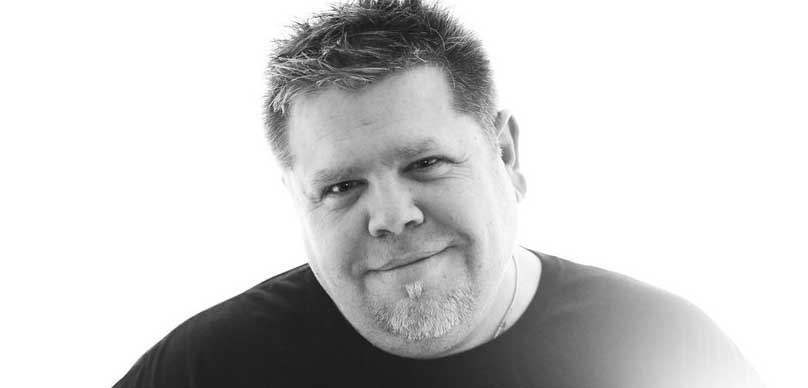
BPS 046: Sold a MILLION DOLLAR Spec Script & Was SHOCKED at What Happened Next with Diane Drake

Today on the show we have million-dollar screenwriter Diane Drake. Her produced original scripts include ONLY YOU, starring Robert Downey, Jr. and Marisa Tomei, and WHAT WOMEN WANT, starring Mel Gibson.  Her original script for ONLY YOU sold for $1 million, and WHAT WOMEN WANT is the second highest-grossing romantic comedy of all time (Box Office Mojo). In addition, both films have recently been remade in China featuring major Chinese stars. And WHAT WOMEN WANT has recently been remade by Paramount Pictures as WHAT MEN WANT, with Taraji Henson starring in the Mel Gibson role.

Diane, who is a member of the Writers Guild of America, recently authored her first book, Get Your Story Straight, a step-by-step guide to writing your screenplay. She has taught screenwriting through UCLA Extension Writers’ Program, and now offers story consulting, and her own guided online course via her website.

Diane has also been a speaker/instructor for The Austin Film Festival, Atlanta Film Festival, Rocaberti Writers Retreat in Dordogne, France, the American Film Market, Scriptwriters Network, Phoenix Screenwriters Association, Stowe Story Labs, Romance Writers of America, Oklahoma Writers Federation, University Club, Storyboard Development Group and the Writers Store, among others; and a judge for the Humanitas Prize, the Austin Film Festival and the UCLA Writers Program.

In this episode, we get into the nitty-gritty of being a screenwriter in Hollywood. Diane is very open about her experiences, the good and the terrible. If you want to be a working screenwriter in Hollywood then get ready to take notes.

Enjoy my eye-opening conversation with Diane Drake.

Right-click here to download the MP3

SPONSORS

  1. Bulletproof Script Coverage – Get Your Screenplay Read by Hollywood Professionals
  2. AudibleGet a Free Screenwriting Audiobook

Alex Ferrari 3:05
I'd like to welcome to the show Diane Drake. Thank you so much for being on the show.

Diane Drake 4:38
Thank you so much for asking me it's my pleasure.

Alex Ferrari 4:40
It's been an absolute pleasure to have you before we even get started. I have to say how much I love your your first screenplay. The only you it is was forever. For all those listening who don't know that movie only you is starting a very young and Babyface Robert Downey Jr. and Marissa Mayer And Bonnie Yes, as well. Oh, and Billy Zane, if I remember correctly, is in that movie as well. And Billy's A. And the reason I bring it up first is because it was it was during my video store days when I first saw that movie. And of course, I had a huge crush on Mercer to me because everybody of my generation has that crush without question. So when that movie came out, I was just like, Oh my God, but it was honestly the first experience the first time I actually fell in love with Italy because it was shot so beautifully. The director, Norman Jewison, right.

Diane Drake 5:34
Yes, the director was Norman Jewison. And the cinematographer was fun night. This too, was legendary. I mean, he did Ingmar Bergman's movies, and he done Woody Allen's movies. And I think the only reason he did this movie was because it was Italy with a lot of people who want to work on that movie, because it was Italy.

Alex Ferrari 5:53
Yeah, it's a rough, it's a rough shoot, that's a rough shoot,

Diane Drake 5:55
you know, I tell you, I was no pool, but I'll tell you something about that. So So I, when I came up with the idea, I was very much in love with Italy. I'd been there once, briefly. And I really loved it. And I wanted to go back. So it was sort of a vicarious, you know, fantasy of mine. But the other thing was that I had realized that I felt at the time and I could be wrong about this, but I don't think so that you really hadn't seen Italy on the big screen in a while. And the only place you had seen it was in like any movies like Cinema Paradiso, or there was a lovely, lovely movie. I don't know if you're familiar with it, but I love it called Enchanted April.

Alex Ferrari 6:38
I remember that movie.

Diane Drake 6:38
Yeah. Oh, it's such a beautiful movie. So, um, so and I knew by virtue of the nature of the story, that it had to go somewhere, right, and I didn't, you know, she had to take off. And I didn't want to go from LA to New York or whatever, right? I really want to go to Italy. So I'm like, I'm gonna send her to Italy. And in fact, I don't know if you remember, but they travel all through Italy. And kind of late in the movie, they go to post Toronto. And I had never been to post Toronto. So I sent them to post Toronto because I wanted to go to post. But one of the little wrinkle of this is that when I was writing that script, and I was down and out, I was unemployed I had, I had had one little tiny say, like, gotten to the Writers Guild, we can talk more about that if you want. But, um, but I was struggling. And a really close friend of mine, who I whose work I really respected a lot. And he was a script ahead of me. And we both worked in development prior to this, and we were both out of work. And I just really, I trusted his judgment. And so I was kind of having problems with the script as one does. And he very sort of cockily said to me, you know, he's like, Well, I'll send it to me, I'll read it, we'll have brunch, I'll tell you I give him a note, you know, I'll help you fix it. So we did that. And his notes were really good. I knew that I was so funny, too, because I literally just pulled them out. I hadn't looked at them in a million years. But I knew it meant I was gonna have to tear the script apart. And that would be difficult, but I knew it would make it better. So I was okay with that. But But the other thing he said to me was, but don't set it in Italy. And I was like, Why? Why not set it in Italy? And he's like, because if he said in Italy, it just becomes a movie about Italy. So there's a little lesson for you, you know, take what is useful for you. And we asked, because I just felt like no, you're wrong about that. To me. That was one of the great joys of it started as writing it. And I think it has been for people watching it. And I will tell you that movies done really, really well and DVD and whatever. I don't know if they stream it now, but I think a large part of the reason obviously, Robert, of course, you know, come on. But

Alex Ferrari 8:49
But but also Robert was Robert circa 1994. Isn't that Robert circa 2008 2018?

Diane Drake 8:56
No. He was a big star.

Alex Ferrari 8:59
Oh, he was a he was a star. What was that before after Chaplin? I think that was

Diane Drake 9:03
before it was actually let me think about it for a minute. I think it was for

Alex Ferrari 9:10
I think it was before Chaplin and before he had his his problems.

Diane Drake 9:14
Yeah, well, between us he had some problems then. But here's the thing. Here's the thing. In spite of that, he was extraordinarily professional, extraordinarily kind. I can tell you this, the sweetest story about him if you want me to later, that to this day makes me kind of cry. I mean, he was lovely. He was lovely. He may have had his own demons at the time, but he was amazing. And I think that's part of the reason there was so much goodwill for him, you know, in all right, you know, because he's just such a gracious, kind, gifted person. Yeah,

Alex Ferrari 9:48
No, no question. I had the pleasure of meeting him once at Sundance and he was just such a just a darling, he was no reason to be nice to me. I was just as a little, you know, guy just walking up like hey, You know, can I get a picture? I gotta talk. And he was such a sweet man. But I do love that movie in the magic between him and Marissa, were just wonderful in that film. But before we go off on a tangent, because we could talk about only you for the rest of us. First of all, how did you get into the business?

Diane Drake 10:15
Okay, so it depends how far back you want to go. But basically, I'll try to make it brief ish. I am. When I got into college, I had a degree in communications, visual arts, and it's kind of worthless, you know, in the marketplace, it wasn't worth it to me. You know, I had no connections or anything. And so I thought, well, I guess I'll be practical, because my BA is not real practical. And I'll get an MBA, because that's what everyone was doing. And I guess that seemed like a good idea. And I hated it with passion. And I remember sitting in my accounting class and thinking, if I survive this, and, and this is going to qualify me to do this for the rest of my life. And I don't want to do this. So I quit. And which was really hard, because I'd been a pretty good student up to that point. And, you know, it's like taking out loans and everything, but it's just wasn't for me. So I that was not in California, that was in Colorado. So I moved back to California, and decided I would go to law school, because that's impractical. But I thought, but I'll do it in California. And I'll do entertainment law. And that'll be kind of sort of cool. And it'll be practical, too. And so I got a job in the legal department at what was then Columbia Pictures and applied. And I looked around, and I saw how miserable a lot of people in the world of art and luck. And before I got into USC, and I got on the waiting list for UCLA. But I didn't want to spend the money to go to USC and I ultimately did not get into UCLA. And I thought, okay, I mean, I don't know that I want to do this anyway. And so that, that it was at that point that I first learned, because I was working on the lot, that there was such a job as being a reader. I didn't know that that job even existed when I started. So I thought well, I could do that, you know, and, and that's how I started. And I started as a reader and worked freelance as a reader and worked my way up. You know, I did acquisitions for an independent company for a while. And then my last job, before I started writing was I was a VP of creative affairs for Director Sydney Pollack. Um, you know, at the time, you know, it was a really good spec sale era. Yes, it was. And I can go into more about how I was leaving there, but basically, you know, I just kind of looked around, and I thought, well, you know, that looks like a pretty good life, you know, like, this writer was off on a cruise around South America, I mean, seemed very glamorous, you know, because they were feature writers, and they were at the top of their game. And so, you know, it was like, well, and here I was sitting in judgment on these people's work. But having said that, to be a critic, it's a write about writing is a lot easier than writing, let me just say, you know, so, it is, it is a different skill in a way. And I think the thing that I lacked, and I wound up having a little talk with myself about it was confidence. And I think by that point, I had read an awful lot of scripts, and I felt like I had a relatively good understanding of the process, at least intellectually. And I would read stuff that I thought, you know, not necessarily stuff that our company was working on, but you know, just around town that it's old or you know, was getting heat or whatever and I would think it wasn't that great you know, and like and these guys and in most cases, they were guys did not know as much as I did. But then I had to realize I'm like, Yeah, but they're doing it and you're not no, no.

Alex Ferrari 13:41
Yeah, fair enough. Well, can you talk a little bit about that time in the late 80s and early 90s which was the script the spec script boom, which I mean in today's world is just unheard of. I mean yet there still are million dollar scripts and they are still spec scripts they get bought but people don't understand even I was even because I was I was just coming into the business going to film school but you would read about obviously Shane Black kind of crack but and Joe Lester house those guys just busted the door open for like 234 5 million baht

Diane Drake 14:12
Kind of out of control to be honest, but I mean it's sad to me that there was a time that to be original commanded a premium. Right? That's pretty much the last thing they want. You know, that particularly the studio's I mean, it's, it's just not what it's about at this point is about intellectual property. It's about anything that's already been successful as something else. And they're not in the business of making the sort of movies I used to write, you know, and I used to go see, to be honest, that my favorite kind of movies, you know, the movies like Jim Brooks made, you know, those kind of that's not what they do anymore. They don't want to spend 50 million to make 150 million, you know, they want to spend 300 million and make a billion. And it's it's unfortunate, you know, and I mean, there's work to be out there, but it's pretty much to work on that to work on intellectual property. You know, you write an original so you can get a job writing something that's already been something else, I think. I will say, you know, so I'm sure you know, and probably your listeners know, there's kind of two businesses now there's a studio model, which again, is 300 million to make a billion franchise merchandising, you know, tentpole mostly superheroes, right. Right. handful of people, like Judd Apatow, who are sort of a brand unto themselves that can kind of get away with that little middle ground movie,

Alex Ferrari 15:33
Tyler Perry and those kind of guys. Yeah, there's there's a handful, but there's a

Diane Drake 15:37
franchise, you know what I mean, like kind of its franchise, I mean, appetite, you could almost say it's French. It's not quite, you know, but, um, but there are brands, let's put it that way.

Alex Ferrari 15:47
Blum house and things like,

Diane Drake 15:48
I mean, when I when I wrote on the you, I mean, I had had I sold, I hadn't sold anything, I had written one script. And I got me an agent, very small agent. And he got me one meeting, and I got the job, which is miraculous to me in hindsight to you know, to destroy a little treatment. So it's 25 grand, it got me in the right scale at the time got me insurance bought me the year to write only you. But But so I was nobody is my point. And yet, my agent, and my agent was coming off a hot sale, he had just sold the script for like half a million dollars. So he was kind of an even though it's a smaller agency. He was kind of a name at that point. But still, Julia Roberts agent wanted only you for her. And Demi Moore wanted it. I mean, you could not get two stars. Equivalent caliber. Now, if you were nobody, you know, and get your script read in a day or two. That's how it used to be. That's how much that's how big a market there was. And how much demand there was for original material. saying, Yeah, I'm such changed. I'm so sorry to say but but and this doesn't necessarily affect me, at least not yet. But TV streaming on

Alex Ferrari 16:59
Netflix. I mean, Netflix is now the 800 pound gorilla, and they're doing things that, you know, I mean, it's amazing. They came in and just completely changed the game.

Diane Drake 17:09
They changed the game. And so you know, now there's Amazon. I just I Yeah, exactly. I just taught an advanced class for UCLA, and a manager came in to speak, it was lovely, and she was talking about Disney plus, and you know, that there's gonna be that and that's a lot of intellectual property, too. But apparently, they're looking to make some originals as well, which kind of shocked me. And in that 40 $50 million range, which kind of almost no one's doing, although somebody was telling me what Netflix is doing that day. Netflix is doing everything. But um,

Alex Ferrari 17:39
I was looking at I still always remember that film that just came out this last Christmas, which was the Kurt Russell Santa Claus movie. That's right. That was direct. Yeah, Santa Claus, whatever, I forgot the name of it. But it was it chronicles of Santa Claus, or whatever it was. But regardless, we'll see it every year for the rest of our lives now. But it was directed by Chris Columbus. And that was easily $150 million. Film.

Diane Drake 18:03
Oh, to make it? Yeah, I

Alex Ferrari 18:05
You do a lot of visual effects in that. I mean, it's over 100. It's over 100. And you still got Kurt Russell, who's

Diane Drake 18:13
I think it was we should look it up? I know, it was.

Alex Ferrari 18:17
But regardless, it could have been released theatrically without question, it would have probably made 250 million it would have been in

Diane Drake 18:22
the olden days. I'll tell you something about a Christmas movie, though. I'll tell you something. I wrote a Christmas movie with a partner a few years ago. And because I thought, you know, let me just do intellectual property. Right, like Santa it. You know, it's public domain. It's intellectual property. Everybody knows the story. So a partner and I wrote like a Santa Claus origin story, you know, and basically like, how he met Mrs. Claus how the reindeer learn to fly. Yeah, like, it's kind of right, fun. And I felt like we haven't seen this. And I'm even seeing a new Santa Claus. You know, even friends who were in the business like, Oh, that's really fun, you know. And it was basically the idea that he started off as a con man and a cat burglar. And that's why he was so good at breaking into places genius. And so you got this great character arc. And you know, you have fun with like, how all these things came to be. So I thought that seemed pretty marketable. And I sent it to an agent who said, who I could tell between us had not even read it. And I can tell it because it starts with Santa as a little kid, but it's only for like the first five or so pages. And then you cut to him as an adult, not as an old man, but as an adult. And he's like, Well, you can't do Santa as a kid. And so I had to kind of be like, not rude and saying, Well, he's really not, you know, it's just the first few pages and, you know, and then he said, and this was the critical thing. This was a few years ago now. But he said, Well, you can't you can't do a Santa Claus movie anyway, because they don't celebrate Christmas in China. Wow. Wow. Really? Yeah. There you have it. That's the extent to which the money and the marketplace is dictating what gets made. Because when I was first in the business, global market us You know, two thirds foreign was 1/3. And now that's reversed. And it's two thirds us is 1/3. And of that two thirds, a lot of that's China. And a lot of that is action. Um, so and I thought to myself, I thought, well, I guess that's why we haven't seen another Christmas movie on the big screen then it since elf. I couldn't see him since he no longer that was that was

Alex Ferrari 20:26
Early 2000s, wasn't it?

Diane Drake 20:28
I guess John Fabro wanted to make Elf 2 they would be happy to let him but aside from that, I don't think we'll see it. And so it was so interesting to see that Christmas Chronicles thing. My partner and I even talked about it about dusting ours off. But honestly, it needs more work. Like,

Alex Ferrari 20:47
If we go down Christmas movies, then, you know, the Disney Channel Hallmark has those things so, so on lock on those low budget.

Diane Drake 20:54
But But getting back to what we how this, what kind of kicked us off was you know, we had flying reindeer and stuff. So that was the other thing was like It couldn't be made cheaply, we thought because you were going to have to have those visual effects you were going to have to have, you know, it was not a cheap movie to make. So yeah, that was kind of interesting. But it was funny too, because both my movies only that have been released only what we want had been remade in China with Chinese stars. So I kind of felt like but they liked me in China, I think it would have shot.

Alex Ferrari 21:28
It's fascinating, fascinating. The, the way the marketplace has changed so much. And then such a kind of ignorant comment by that agent is like, Oh, they don't celebrate Christmas in China. If you could just that's such a Hollywood la thing to say

Diane Drake 21:44
Marketing driven right now, but here's the thing, here's the reality. He's got his finger more in the marketplace than I do. He knows what buyers are looking for. One assumes Now obviously, again, nobody knows anything and all that. I mean, I yeah, I did feel it was dismissive. And I did feel that like, you know, it was like, really? And yet, when I stopped to think about it, I thought well, and maybe that's why we haven't had enough because it used to be like every few years, you get a new Christmas movie. I mean, all those Tim Allen movies at home, you know, and we haven't seen it. We haven't seen a big family action comedy Christmas. Maybe that's why Christmas Chronicles was huge deal. I think, you know, because and people, you know, Kurt Russell, people who used to go to those movies when they were younger, and now they've got kids or grandkids or whatever, you know, and they remember him and it was kind of genius casting that way

Alex Ferrari 22:35
They credit Chris Columbus is no slouch as a director.

Diane Drake 22:39
We see MCs right? But it's so interesting that of course, it was not released theatrically. Like they didn't sell that theatrically.

Alex Ferrari 22:44
No, they could have easily if that would have been released, it would have easily made a couple 100 million to 300 million

Diane Drake 22:49
access the I think Well, you're right, maybe right. But I think the prevailing wisdom was, you know, and that's why it was Netflix. And I don't think it costs as much as you think

Alex Ferrari 23:00
I think you might be right. And I think it's at least 80 Because just to get Kurt Russell and Chris Chris out of bed, it's gonna cost a couple bucks. I don't, I don't know we will have to, after this

Diane Drake 23:12
interview, after this interview be interesting to see we should look that up.

Alex Ferrari 23:15
After this interview, I will look on that. Now, you also said you work for Sydney Pollack, who is obviously a legendary director. And I'm a huge fan of not only him as an actor, as a director, but also him as an actor, is you know him and Eyes Wide Shut. I love his stories with Stanley and all that kind of stuff. What was it like working for a legend like that? What did you learn from him?

Diane Drake 23:37
Um, gosh, well, first of all, sadly, he's no longer with us. But, um, he was difficult and extremely demanding. But because he was extremely demanding of himself, you know, and, and driven, you know, and, and kind of brilliant. I mean, he really was one of the smartest people I've ever met. He could be very charming. He started as an actor. And he could be not very nice, you know, he could be really, really tough. But I learned so much work in there. And I don't, I really don't think I would ever become a writer had I not worked there. You know, it was a combination of what I learned. And also the fact that I felt like, I'd reached the end of the road there and I couldn't I'll get into that if you'd like. It wasn't him but someone else I was working with, they're just kind of made my life a living hell, and I had to get out and so I, you know, that sort of a gun was put to my head and I was like, Well, you know, if you know so much, why don't you see what you can do. But, um, but it was great. I mean, to watch him work with writers and he was so articulate and he was so insightful and you know, yeah, they don't really make them like that.

Alex Ferrari 24:54
If they broke the mold with Sydney without question, and and just to go back to only you for a second Sorry,

Diane Drake 25:00
I'm sorry. So the guy said he was doing like in Tootsie, and husbands and wives, you know, and you know, he didn't want to be in touch. He didn't want to play that part. Right? That was Dustin Hoffman, who insisted.

Alex Ferrari 25:14
He was great at it. And just, and just to go back to only you for one second, that script was the first script you sold, and it was a million dollar buy if I'm not mistaken.

Diane Drake 25:23
It was. It was crazy. I mean, God, it, it was really nice. It was a million dollars up front. It wasn't even like if we make the movie. You know, it was it was a million dollars. Um, and like I said, I think largely because at that moment, at that little tiny window in time, we had Julia Roberts potentially interested in to me more interested. And then Norman came on shortly thereafter, I think he came on after the deal was closed. But um, yeah, I mean, you know, it was just again, it was a different time, there was a lot of competition for it, you know, the stars aligned in my favor. And, yeah, it was kind of surreal. And I remember I was so like, just praying that I could sell it at all that I could get, like, Writers Guild minimum or something, you know, so that I can continue to be a writer. I don't know. Because I didn't know what else was gonna do. At that point. I didn't think I could go back to work in development. I just had kind of burnout on that. And I just thought, I mean, I'm so yeah, and it happened so fast, you know, because this, there's a saying in Hollywood, good news travels fast. And I think it's still largely true, maybe not quite as true as it was then. But back in those days, it was like, you know, you get all this heat and, you know, things would happen or not. And so it was really like less than a week from the time it went out to closing that deal.

Alex Ferrari 26:53
Now, what is it? What is it like cuz I want, you know, writers listening, you know, you get a million dollar deal, which obviously, is a lottery ticket. I mean, it does not happen often. What happens to you on your career afterwards? Like, I know, it gives you a career, obviously. But what are the steps? Like, what are the meetings you're taking? What are the assignments you're picking up? So people understand? Like, if it just so we can live vicariously through you? What it's like, after a sale like that?

Diane Drake 27:24
We'll learn from my mistakes. Oh, okay. I did some things, right. And I did some things that probably I might have done better, or definitely, um, so I obviously kind of came out of nowhere and, and had a lot of meetings, and had a lot of things thrown at me. But, you know, I really was a new writer. I mean, it was my second script. And I'd written the first one while I still working for Sydney, like it three, in three months at night. It was a talking animal movie. only took me about a year. So, uh, you know, I at that point, for better or worse, I felt like, well, I kind of want to work on stuff that I want to work on. You know what I mean? Like, that sort of means something to me. So I probably in hindsight, had I been totally mercenary should have just stacked up assignments to the just like taking whatever came my way. And, you know, done the best I could and taken the money and run. But hopeless romantic ideal is that I am, I just didn't really feel like I could do that. I didn't know where I would pull it from, you know, I didn't even know how I could do like, a not about a bad job on something if I didn't relate to it in some way. So there was actually only one project in that time. I took meetings for about a year. You know, I was I actually went to Italy, while the movie I worked on only for a while. And it was in Italy for a little while shooting. And then I came back and you know, it was doing the meeting thing. And there was only one project that I really wanted. And actually, Meg Ryan was attached to it. And she had a deal at Fox and I didn't really have what they call a quote because I hadn't worked on assignment. So I just had, like, you know, I have a million dollar sale. So my agent asked for a lot of money, which was fine. But they didn't want to pay it. And it was a movie, pretty much starring all women. Interestingly, in hindsight, and all the people involved were women like it was it was it was actually Rosanna Arquette it was a story of hers. And Meg was gonna play Rosanna Rosanna was gonna play her own best friend. And it was complicated. But anyway, um, so we came down in price three times, like we came in at a certain level and fox came back really low, and then we came down and buckskin back really low, and then we came down and bucks came back really late. So three times they never came up a dime. And to me what that meant was, they're never going to make this movie. They don't want this movie. And maybe I'm wrong about that. Maybe I misread it, but that was my interpretation that they were placating Meg. They weren't gonna tell her no, she had to deal with the studio. But they they had no interest in making this. And because I had been so fortunate as to not only sell a script for a million dollars, but actually have it go into production. I kind of thought, Why do I want to sign on for something that I know they're not excited about? To begin with? Right? And that was when I walked away and thought, well, you know, you did Okay, last time, right? In your own idea. So why don't you come up with something else? Oh, the ego? Yeah, wow. But here's what happened. So I gave an if I could only do this now, if only but at the time, I was younger, then I said, Alright, you got a week to come up with something. And that was when I came up with what women want.

Alex Ferrari 30:42
Wow. And, and that is a great segue into what women want, which is obviously was a huge hit with starring Mel Gibson, pre Mel Gibson. And you know, Mel Gibson, pre Mel Gibson, and, and the lovely, incomparable Helen Hunt, who's amazing in the film, and I remember watching that film 1000 times I love that movie. And but there was a bit of drama with that movie wasn't there for you.

Diane Drake 31:11
There's a lot of drama with that movie that I am still technically not at liberty to discuss. But let me just say it was very bittersweet. It is very agonizing. Honestly,

Alex Ferrari 31:23
it was you have a story credit, you have a story credit on

Diane Drake 31:25
that. I have a story credit. And I wrote the original script for that movie, and there's no way that should have happened. There is no way by Writers Guild rules. Uh huh. That that should have happened. And that's all I'm gonna say for now. But that was a huge, huge battle in my life. And yeah, I, you know, I, I always say to people, I'm really trying not to do this anymore. But I always say to people when

Alex Ferrari 31:53
I want to say anyway, but but I'm gonna say it anyway, I don't say this.

Diane Drake 31:58
I say I will never get over it. And I will never get over it. But I have to start, I just have to tell myself, I'm bigger than that. You know, but I the reason it's particularly fresh right now is I just relived it all, because it just got remade, right. So I had to deal with the Writers Guild again, and I had to deal with the credit again, and I had to deal with what was done to me on that movie again. And what was done to me was, you know, brutal, it was not right. And I'm not the only writer in Hollywood to have had this experience. I know that I did get paid, I got paid very well, for my torture. And the movie got me, you know, and it was a huge hit. And all that's to the good, but um, yeah, I have a few bones to pick with a few people, including the Writers Guild.

Alex Ferrari 32:43
And, you know, and if it makes you feel any better, I also had on the show, Paul Castro, I don't sure if you know who Paul Castro is he used to use he taught over at the UCLA Extension program for almost 10 years as well. He wrote August Rush. And he wrote the original screenplay, and the original story. And he had the exact same thing happened to him. And he does, I mean, he did get the store credit, and he has a store credit, but another bigger, the producer brought in a bigger screenwriters name, and then they, he wanted to take credit. And then it was a Writers Guild battle. And it does happen, it does happen, you know, unless you are unless you are an 800 pound gorilla. You know, that's not happened.

Diane Drake 33:24
You know, that's the thing. I mean, after I sold on the EU, I didn't teach anything. I didn't do the kind of thing I'm doing now. But every once a while, I get asked to speak somewhere, you know, and I'd always get the question like, how do you protect your material? And I would always say, Listen, you know, I mean, obviously, at the time, I was in The Guild, I had an agent, I had a lawyer, but still, you know, it's like, you can register your stuff with the guild, even if you're not in the guild, like $25 You can register it with the US Copyright Office. And my response was always, it's just easier for them to pay you than to steal it from you, really. And then what women want happened to me. So yeah, it's, uh, there's, you know, there's only so much you can do and,

Alex Ferrari 34:13
you know, when you go up against when you go up against a studio when you go up against bigger, you know, bigger name, you know, like, you know, for lack of a better term, like, you know, this doesn't happen to Aaron Sorkin or Shane Black you know, yeah, Quinn Tarantino

Diane Drake 34:26
would have not I think I mean, listen, read William Goldman. I mean, they all have their horror stories, even people very top you know, it's just, it's just differently, but, um, yeah, I will say I feel like and I always have to, like temper this. Like, I've been very fortunate. You know, I was fortunate that it sold I was fortunate that it got made. I was fortunate. I got paid. I had a really good attorney. I'm not good enough as it turned out. But, but you know, I really do fault. The writer skill a lot on this And, you know, I'm not the first writer to do that. And you know, they do their best. But, um,

Alex Ferrari 35:07
it's politics. It's Politics, Politics, Politics.

Diane Drake 35:11
It's just the reality, you know, and I had the guilt exists. And I appreciate, you know, the residuals and all that. And, but, yeah, they're, they're not immune. They're not, you

Alex Ferrari 35:21
know, it's politics. And I think that's something that they don't teach in film schools and stuff, they don't understand any new screenwriters coming up, don't understand that. Look, there's there are rules that everyone says there are. And then there's rules that nobody tells you there are until you get slapped across the face with those new rules. And you are a perfect example. And Paul's a perfect example of that, that things happen, especially when egos get involved, especially when big names get involved. And a lot of times are like, well, who's that? Well, that's an app, let's just crush that and move that out of the way. It does happen. It does happen. It's unfortunately, it

Diane Drake 35:55
does happen. And it happens far too often. I mean, you know, compared to a lot of what people go through, you know, at least my name is on it, and at least

Alex Ferrari 36:04
Absolutely, you actually have one of those success stories.

Diane Drake 36:07
Having said that, I mean, you know, that it's just, you know, it's funny, I'll do a little segue here. So one of the things I talk about, and it's only kind of recently come to me, you know, it's interesting teaching, because when you're writing, it's, you know, I assume it's like somebody who's a good tennis player or whatever, it's intuitive, right? They've been doing it so long. And then when you teach it, you have to really break it down. You're trying to explain to somebody else, you know, how it works. And so I like teaching because you always kind of get new insights for as long as I've been at this I'm still like learning stuff myself, you know, there's never ending. But one of the things I've recently kind of concluded, or at least, you know, contemplated is that I really do believe that in a way stories are about justice. Because I think everyone feels like an underdog and everybody recognizes that life is not fair. It's just not and yet And yet there's something really deep in us like primal almost Lee almost that wants to believe it is that you know, is so like, we just like expect it's going to be but of course it's not. And that's part of the function story, sir. Right? Because we want to see people get what they deserve. We want to see the hero get what he deserves. We want to believe there's justice in the world. We want to believe, you know, we want to see the villain get what he deserves. And you know, and that leads to the whole Zeitgeist thing about superheroes now, because I think everybody feels so powerless. But you know

Alex Ferrari 37:38
what I mean? I always use this as an analogy, because what you just said is a perfect analogy for arguably my favorite film of all time Shawshank Redemption. Yeah, you saw shank redemption. I always people like what is about that movie that, you know, I saw that movie when I was 20 something where I literally probably still thought John Claude Van Damme was a greatest actor of all time. So there wasn't a sophistication there to see a good story but yet even my high school and college friends were liking that movie. Like, what is about that story? Like, on paper? It's a horrible title. It's like not right horrible worse, worse marketing worse marketing campaign ever. I mean, it's about you know, in the middle, it just there's nothing appealing from on the surface about that film. But yet I always tell people that I think it's I think people connect with it so much because it's an analogy for life where you are Andy do friend and you feel like you your your life sometimes might feel like you're in prison or that it's not fair. And then you get beaten constantly for 20 years, and then you finally escaped and assistance cathartic thing? Yeah. So that's why I just thought of that when you were saying that because it was, I feel it's very much what do you think about the damage? I'm assuming you like that? If not, you're dead inside. And I

Diane Drake 38:53
haven't seen as many times as you have. I remembered I remember very fondly. But you're absolutely right, that it is a lot of people's favorite movie. Like, you know, if you're on Twitter, and people name things, that movie comes up a lot. So it really did strike a chord with people. And and yeah, getting back to what I was saying. I mean, I think the most powerful people in the world think of themselves as underdogs. You know, it's all relative right? Here. I think they identify with the underdog. And it's funny, you know, that, how I am and I don't know who it's by, I should know, but I'm into each life some ramus fall, you know, that saying, okay, so I only just recently came across the line that precedes that, which I think is really lovely, which is by fate is the common fate of all into each life summary as well. That's awesome. Like, you're not going to be exempt, you're not going to be exempt and it's going to suck you know, and so we all have our our crosses to bear so to speak. So yeah, I do think stories really speak to that in the desire to believe there's some I mean, you know, we look at we build temples to justice, Supreme Court, whatever we want to believe that that matters, even though so often, it seems not to

Alex Ferrari 40:04
what is the what is the great fear that you had to overcome to finally be able to put your fingers on that typewriter or on that computer or on that on that computer to actually start writing and put yourself out there as a writer, because I know a lot of people listening are either just starting out, and they just have these. I'm a very big mindset guy. So like, it's all about your mindset and what beliefs you have about yourself and the confidence that you spoke about? And what was that thing that you finally, what was the dragon that you slayed to get to where you were,

Diane Drake 40:35
um, you know, I don't know if I can quite put my finger on the fear, although, like I said, just sort of the general umbrella of lack of confidence, which I think stays with you, you know, I just think stays with writers period, and probably most creative people. And, and I but I do remember telling myself that I needed to accept the fact that I was not going to probably be able to write to a level that I would really respect, right, because even though my critical faculties have been pretty well honed, I was just beginning as a writer. So you know, cut yourself a little bit of slack there, right? You know, you haven't been doing this, as long as you've been watching movies, you know, even people who don't do development for a living, don't analyze material for a living, you still do it right, as a viewer, an audience member, whatever. So you've consumed a lot, but you haven't produced much chances are, you know, depending on where you are in your life, and what else you've done, in terms of creative writing, so there was that. And then there was also an again, this is a little bit more of a function of the fact that it was such a great time to sell originals. But and what I was saying earlier about, you know, looking around and seeing people selling stuff and thinking, Well, I know as much as they do, or you know, so I really didn't kind of start thinking, Well, why not me? Why not? You know, I been at this, you know, so I think it's a combination of, again, allowing yourself to be a beginner in a way and at the same time doing your homework, so that you have something to back it up. Right that you have educated yourself about the craft. And that's one of my pet peeves, I have to say is that I think people, a lot of people by virtue of the fact that they've seen a lot of movies, I think it's probably it's not that hard to write one, right. But the analogy I always use is like, well, I've driven a lot of cars, but I wouldn't attempt to build one without investigating how an engine works and aerodynamics and those things, right. So and it's also the function of the fact that like, not everybody thinks they can play a musical instrument, but everybody can type. Everybody can, you know, they know the alphabet, they got a computer. So you know, but there's a little more to it than that. So yeah, you have to do your homework, too.

Alex Ferrari 42:44
Now what? So we've, we've gone down the rabbit hole of your career, and actually just kind of talked all about the business of screenwriting, which is fantastic. And I think it's great, great information that doesn't get talked about often. But let's talk a little bit about the craft. Just a little bit about the craft. What are some of the most common mistakes or issues you see in first time? screenplays.

Diane Drake 43:08
Okay, so I, I'll be a little plug for myself here. I recently not that raised by now. But a few years ago, wrote a book called get your story straight about writing screenplay. And it grew out of my teaching for UCLA. And as I was saying earlier, in terms of like, trying to figure out how to teach it. What I wound up doing, you know, what sort of happened was, I found myself putting a lot of emphasis on structure. And I know people have a problem with that. Sometimes they think of it as formulaic or whatever, but it's really not sorry about the sirens.

Alex Ferrari 43:44
Oh, good. So good. I'm assuming you're in LA. So it's okay. Yes.

Diane Drake 43:50
Yeah. But, um, so I think that's it, I think a lot of times, you know, because the screenplay, it's a marathon and you spent 120 pages now it's maybe 100 to 110. But that's still a lot, right. And it's very easy to get lost on that sea of possibilities and, and write yourself into a corner to mix my metaphors. And I think, again, getting back to what I was saying about justice and sort of how it's primal. I think that story structures like I, I didn't invent it, you know, this was Aristotle, this is beginning middle. And this goes way back. And again, I think is sort of primal. It's kind of like you, you may not know a lot about music, but you can tell if something doesn't sound right. If it's out of tune or whatever, right. You might not be able to put your finger on why it's the same thing. It's like, we almost have this intuitive sense of like how things ought to be building or moving forward or shifting, you know, as the story progresses. And I think structure is something that's often kind of invisible to the average person. They don't they're not conscious of it, but they are unconsciously aware of it, you know what I mean? And that's and so Those are the problems I see most often, you know that people are structural, yeah, they're structural, you know, it's like it, you and that everything needs to have a purpose, right? It's not just random chitchat, it's not, you know, you need to be building, these seems to be telling you something that you didn't already know. And they need to be taking you in a specific direction, and you probably better have a pretty good idea of where it is you want to wind up before you start, if you're going to stand any chance of getting there.

Alex Ferrari 45:28
We'll be right back after a word from our sponsor. And now, back to the show.

Diane Drake 45:39
So and I also always, you know, the caveat to that is, you know, there are movies that don't follow those, I don't even like to call rules, principles, maybe, you know, but if you want to do that, well, fantastic, you know, then, but it, you'll be doing it if you if you educate yourself about it, you'll be doing it consciously, you'll be breaking those rules consciously, instead of you just don't know any better. And you're just kind of bound, right? Like Charlie Kaufman can

Alex Ferrari 46:06
do that. Right. But very much so.

Diane Drake 46:10
But that's a high wire act, you know, I mean, don't try that at home. That is that is somebody who's at the very top of their craft, and very unique sensibility and all that. For the most part, the vast, vast majority of critically and commercially successful films hit those beats, they just do. And it's funny, because even movies that you think of as being, or I think a lot of people think of as being novel and indie or whatever. You'd be amazed how much they fulfill that. I just, just recently, we screened Little Miss Sunshine. And I had them do a worksheet on it, like, you know, what's the inciting? What's the opening image, you know, opening image of that movie, it's so on target, it's all sitting there watching a pageant, and it's reflected in her glasses. I mean, it's so perfect, and she's acting it out. So you instantly know what that movie is about, or you know, you don't know. But in hindsight, like, that's what that movie was about. And all those beats that inciting incident in the first plot point, and you know, the midpoint, and he's just hitting those marks in in really inventive and character driven ways. So

Alex Ferrari 47:16
very much. So one thing I wanted to ask you as well, what do what does the scene always have to have in it? Like, what are the elements in the scene? Because you're right, so many times people are just like, so how are you doing? I'm doing fine. How is that going? And they like, just, it's like, no, that's that way we watch a movie to watch real life. That's called a documentary. What should a scene do? And what elements should be in every scene in your script?

Diane Drake 47:39
God, I wish I knew. But I will say this, you know, I mean, dramas conflict, right? Somebody should be one, tell me she wants something, you know, and they probably should know. And I wouldn't say always, but oftentimes, we going up against somebody else who, you know, doesn't want them to have it. Right. That's kind of how you feel it. But I think, you know, some scenes are more character oriented, and they're telling you something more about the person, particularly in the first act, you know, when you're getting the lay of the land. You know, some scenes are really just kind of moving the plot along, we know who these people are, by now, you know, you want to be consistent with who they are. But this is What's tricky about it, right? Because you can't really totally boil it down to a formula, that it's the prototype every time out, right. And that's why even people like Sydney, Pollack, you know, have their hits and their misses, you know, it's just, they're there. It's intangible in a way, you know, but, um, in general, you want to be moving things forward, you don't want to be repeating yourself, and you want the story to be building as you go. And you want there to be something at stake that people care about, or understand at least what it means to the protagonist, and that you care about whether or not they get it, because if you don't care, then the whole thing is moot. Right? Right. That's kind of fundamental.

Alex Ferrari 49:01
So then what film in your opinion has, as an example, like a perfect setup, structurally speaking, like just like, great,

Diane Drake 49:09
you know, there's quite a number of them because I, I know this because I teach them in my class. And I don't have anything that's really brand new. But you know, I try to get to newer things, but tipsy is genius. But you know, 10 Seems like I don't know, eight writers on that. Right? I mean, credited it's not but like Elaine May was uncredited on that, you know, Larry Gelbart was on that Marsha school, who was the guy who came up with it with Dustin. You know, and then there were at least three or four others. I wasn't working for Sydney at the time. But you know, I'm aware at least three brothers that you know, he worked with plus Sydney, who never took a writing credit, but worked very closely, you know, with people developing scripts. So that's how hard it is. Right? That's that this is how challenging this craft is. You got all those people at the top of their game and it took them years That thing did not happen overnight. I think that thing was in development at least three or four years before. And when they first pitched it to Sydney when Dustin and I guess my Cisco versus Sydney, he's like, you know, and he had not done comedy right. In fact, I think that's his only comedy. And it's really a shame because it's such genius, but he felt like, you know, I don't really do farce, and it's great. I would go see it. You know, Blake Edwards did it, I go see it. But I don't know how I don't know a way into it. You know, a guy putting on a dress. And apparently, in one of those meetings, somebody said something about, you know, how it makes a man out of my goal, like being a woman, man. And that was what Sydney latched on to thematic, Lee, that was interesting,

Alex Ferrari 50:43
then I'm assuming that is a that's a difficult pitch like that, at that time in history as well. It must have been a difficult pitch,

Diane Drake 50:51
Dustin, and he was pretty big star. But, um, and he really wanted to make it and he really wanted to play it. You know, there was something about playing that character he really sunk his teeth into. But that was the thing that made it interesting for sending this was sort of the larger thematic question that he could explore there. But Toy Story is also master class and structure.

Alex Ferrari 51:14
Pretty much almost every one of their movies is a masterclasses structure. I mean, you could argue that all of them,

Diane Drake 51:21
I'm going to be unpopular here and say that I'm not as big a fan of the Pixar movies as I used to be, because this is just me. I don't think they're as funny as they used to be. I think they've gotten very sentimental. And yeah, and, and I missed the wit, you know, and I don't know if that's just a function that most of the guys and they are guys, almost all guys, and maybe there's some women now, but who made the bulk of those movies have gotten older. I don't know whether it's just easier and safer. commercially speaking, you know, it is easier, I think, to sort of push those sentimental buttons than it is to be genuinely witty and inspired. Especially when you're kind of working on almost like Shakespearean level where you're aiming at kids and adults and everybody in between. But I just think the original Toy Story is genius. And, and so funny and, and, and ultimately, so touching. But I mean, the idea that buzz has this existential crisis when he realized he was not a Space Ranger. I mean, now, right? There was best things ever in a movie. And it's fantastic too, because it's fantastic character arc, because it's that's his epiphany. That's the moment that they're able to escape sins and you see the light go on in his eyes. And he finally realizes, you know, it's okay not to be a space ranger, you know, he's cool with being Andy's toy.

Alex Ferrari 52:46
isn't a great in the sequel, where he actually runs into another Buzz Lightyear who still has that same thing. He's like, Oh, you silly, silly, man.

Diane Drake 52:56
I mean, yeah. The King's Speech is another one that really hits those marks sideways really hits those marks. A lot of them you'd be surprised so you can any really, in my opinion, pretty much any really successful commercially critically, you know, solid movie, you can go through that checklist and identify for yourself those beats again, unless it's something very different. Like like Charlie Kaufman or

Alex Ferrari 53:24
you know, Tarantino Tarantino stuff.

Diane Drake 53:26
Yes, exactly. We've got that loopy structure and stuff, you know, which is genius, too. But I think even in that, you know, you can identify Inciting Incidents and stuff. Yeah, that's, that's yeah,

Alex Ferrari 53:37
you break Pulp Fiction down, and it follows the path, but it's it's done that

Diane Drake 53:42
The way. It's, yeah, it's so put around in time that way, and like 500 Days of Summer, or Yeah, yeah, they're hitting those marks, but they're doing it in a way that like, it's like, really,

Alex Ferrari 53:53
it hurts the brain. It hurts the brain to think about how he, he was able to structure that up. No, I wanted to touch about because you touched upon this earlier superhero films. It's obviously so pervasive right now in our culture. Um, look, I have a Yoda sitting behind me. I have some superhero statues in the back. I'm a huge superhero fan is my generation. I was raised with comic books and stuff. So I love it. But it is now a thing that now studios every, like, if you were I remember, like 89 When Batman showed up that Tim burns Batman, everyone was like, holy cow, a superhero movie that was not Superman, circa 1977. Now, every week, there's a new $300 million movie. What is it about the superhero genre, which Spielberg also said that will eventually go out like the Westerns? I don't know when it'll go out but waiting. It's gonna it's gonna be probably another 30 or 40 years. I mean, they're gonna they have 40 or 50 years of these characters still going and then they can reboot it and as long as people keep showing up, they're gonna keep going, but what is it about that genre? What is it about? What's your opinion on the genre? And in better and better question is like, is there anything that could be done with screenwriters coming up in this genre?

Diane Drake 55:12
You know, I am not the person to ask because I really, I all admit that upfront, I'm just I'm, I, I've tried, I really have tried design. No, that's what the kids are saying. You know what I mean? I like I know, of course, I'm well aware of how popular these things are. But they just make my eyes glaze over.

Alex Ferrari 55:30
I have a Nolan How about Nolan's work?

Diane Drake 55:34
Christopher Nolan. Yes.

Alex Ferrari 55:35
Like the Dark Knight?

Diane Drake 55:37
I haven't seen it. I'll confess. So I'll say this. I love Iron Man. Okay. It's Robert. And because it's John Pharaoh, and I love John. I think John Piper was fantastic. So there's wit in that movie. I think that's just for me. I just, I like, things that make me laugh. And I'm bored by watching an accident sequence that goes on for 20 minutes. I mean, how many times can you watch things blow up? How many times can you watch, you know, giant fingers punch each other? I just entertaining. I wish I did. Because clearly there's there's money to be made, you know, and I feel a little left out in the cold at this point. But I it just they don't entertain me. I never read comic books. I'm not interested. I think the original Superman is brilliant. Because again, it's character, right? There's width, and there's romance, and there's character. And there's tongue in cheek, you know, and maybe some of these movies have that. And I've missed the ones that do. But I'm like you said There's a new one every week. And i just i i It's not my thing.

Alex Ferrari 56:44
The one thing the only movie I will suggest you do. Only one I would say you watch is the Dark Knight. It is arguably the godfather of of superhero movies. And if you take the superhero element out of it is a basically an amazing heist film, just a heist film mixed with a crime drama thriller. If you take it because a lot of these you you take the suit off. It's done. Right, right. Christopher Nolan does such a good job that and that's the second one. Not the first. The first one's great. And the third one is good. But the second one is, if that's the reason why we have 10 That's why we have 10 Oscar nominees. And because of because of that movie, right?

Diane Drake 57:23
Right,

Alex Ferrari 57:23
it was so good.

Diane Drake 57:25
Well, and this is not superhero, but um, you know, it's not like I don't like if anybody cares. Really, right. Like, I'm like, you know, darker movies. Like, really a movie that I love, actually that I was also just pointing out to my students because the final battle in it is aliens. The second one simply ever did, which I just think is genius. You know, it's so suspenseful. But again, great characters. You know, Paul riser is so scary in that movie. Like you can't believe he's that bad a villain and he's frightening

Alex Ferrari 58:01
and normal looking. But is normal looking. That's the thing the same, right?

Diane Drake 58:05
Whoa. And we're used to seeing him in comedy. And then again, it's gonna be incredible. And oh, my God, oh, Caxton. I know.

Alex Ferrari 58:21
Man, and I would argue and I know, I might get crap for this on people listening. But I'm like, it honestly hasn't been a James Cameron film that he's made really, that I don't like, I think they all have. I mean, he's just one of the, like, the abyss, I thought was,

Diane Drake 58:36
I actually never saw any of this. I was not a big fan of Avatar. In fact, I felt like Avatar was a bit of a rip off of aliens. Oh, no,

Alex Ferrari 58:43
Avatar was a ripoff of FernGully it was a ripoff of a billion other things. But it hits those he was able to hit those buttons. So yeah, everyone was a bull's eye. Everyone was a bull's eye. And then you mix that in with insane technology. Insane,

Diane Drake 58:59
respectable. Exactly. And I clearly that's part of its success. And probably a lot of people who loved avatar never saw aliens, you know, I didn't realize the extent to which, you know, he was kind of ripping himself off. But um, I just and I also think, you know, aliens had wit, I mean, it just so you know, if you can combine all those things, it's fantastic. But to me, I just feel like so much of the superhero movies are the ones I've seen. And again, I haven't seen very many, but the ones I've seen and even wonder woman like I heard so much about Wonder Woman and of course I wanted to, you know, applaud it. It wasn't that great. I'm sorry. It really wasn't I was expecting Superman and maybe the bar was too high. But in terms of like that relationship between her and I can't even remember the guy now. I just really expected more of it. It looked great. She looked great. You know, but that whole third act is same old same old you know, it just I I don't know I mean a Listen, I'm not an easy person to go see movies with

Alex Ferrari 1:00:00
Fair enough, fair enough? No, confess,

Diane Drake 1:00:02
whatever you do your that was more critical.

Alex Ferrari 1:00:06
So what?

Diane Drake 1:00:07
Let me just say, I will say this, when something's really good, in my humble opinion, I appreciate it so much. Because I know how hard it is. I really do

Alex Ferrari 1:00:16
I agree when I say like, I saw green book, and I was just like, well, that's just great. I mean, it was just so well, the chemists literally two guys in a car. And it just held you and it was wonderful performances, wonderful writing wonderful directing. It was just hitting every I don't know if it was best picture. But it was still are arguably one of the best films I saw this last year. But yeah, when you find it when you see it, if it keeps me up past my bedtime, that means it's a good movie

Diane Drake 1:00:48
See it again, because you want to see how they did what they did. You know, that's something for what it's worth, I really recommend to your listeners and writers is, if there's something you really like, watch it and read it and watch it and read it over and over and over. I feel like it seeps into you the rhythms of it. You know, even if you feel like you know it forwards and backwards, if you can still learn from it and really dissect how they're doing what they're doing. Look at how it looks on the page, look at how you know, it hasn't made it to the screen, that form has been changed that kind of thing. Just really do the forensics.

Alex Ferrari 1:01:25
Yeah. And yeah, of course I've been I've worked in a video store. So I saw 1000s and 1000s of movies. And that's how I kind of got started in my business just watching. It was the first time in history that you could do that when the VHS came right, right. That's right. Yeah. Before then you have to wait for the movie.

Diane Drake 1:01:39
Scripts,

Alex Ferrari 1:01:41
you can pause it and rewind it. And you're gonna have Martin Scorsese talking to you.

Diane Drake 1:01:46
Yes. Now.

Alex Ferrari 1:01:48
There's no excuse whatsoever. Now, your book, uh, tell me a little bit about your book. I want to I want to get people to if you're interested in it, where they can get it. What's it about?

Diane Drake 1:01:58
Um, it's called get your story straight. It's on Amazon. Like I said, it kind of grew out of my teaching for UCLA. And it I really go into what I think are the important elements of a functioning screenplay. And I use a lot of examples. Like I was saying I dissect a movie at the end of noumenon every chapter but almost every chapter, including Ironman and King's speech and sideways and Tootsie and toy stories, and the kind of all over the map fell on the waves, you know, winning screenplays, yeah, genius. Thurman always so holds up. How well that movie. It's so good. It's so good. That sequence I just gonna go up on tangent here quickly, the sequence because founders are talking about turnaround, the sequence where they get stopped by the cop. And Thelma, you know, starts in that sequence as like a little girl, you know, she's like, please, please, please don't let it get stopped. Please don't ask us. You know, and then they need the cop clips of the car. And then she sort of coqueta she was like, officer, I told her to slow down. No, it doesn't work either. And he makes Louise get out of the car and makes her go sit in the police car. And then, you know, Thelma appears at the window with the gun and start calling the shots. Oh, shoot the radio. And so you see that character arc in that sequence? You know, and it's just so brilliant. And it's so brilliant too, because you believe it? Right? Because we know she's met Brad Pitt. And we know there's money been stolen. We know. You know, she's desperate at this point. She's also, you know, had this little quick romance with him. And yet he's taken their money, but he's taught her how to Rob I mean, so it's not like it's not set up. You know, it like you don't see it coming yet. At the same time. It's like, oh, yeah, I can buy that she would do that. So

Alex Ferrari 1:03:49
it was such a great such agreement, and we are going to attach it but that was a great movie. Ridley Scott directed it. And people like Ridley Scott, like when he did that movie. It was like, what the guy with the Blade Runner and aliens doing?

Diane Drake 1:04:01
I know and it's visually so stunning. You know, it's Oh, it's so great. Anyway, so about the book. So yeah, so that's that's what the book is.

Alex Ferrari 1:04:10
With. Thank you. And then what else are you up to? What other things do you do?

Diane Drake 1:04:14
So I teach I do consulting. I do private consulting I speak I which I really enjoy I last year and I'm doing again this July I was a mentor at a retreat at this castle in France called marijuana castle. There are some folks anyway, it's miles Copeland. I don't know if you know that music producer responsibly. His castle. But it's fantastic. It's just a great experience. And then I'm gonna do another one of those in a monastery. Naples.

Alex Ferrari 1:04:46
Rough. Yeah, that's

Diane Drake 1:04:49
the best part. Honestly, I'm like being read. Anyway, that's an April 2020 The Italy one. So I do that and I I am Working on working on something and I haven't written anything in a while for all the reasons we discussed. But I do have a story I want to tell. So a lot of people have told me I should write it as a book. For a number of reasons. A Hollywood's more interested in books right now than they are in original ip ip. Yeah, exactly. No, it's really true. I mean, the manager who came to speak at my seminar or whatever, at UCLA recently, was saying literally even self published books they're more interested in than they are in an original screenplay. Because it sort of doesn't matter. It's as long as it's something else first. It's stunning. Um, but having said that, you know, I'm not. I've spent all these years in Screenwriting. That's what comes to me naturally and to try to write it as a novel. Oh, although the thought of like, not having anybody mess with it is really appealing. And it's, it's kind of daunting to me. So we'll see. But I yeah,

Alex Ferrari 1:06:00
I'll tell I'll tell you what if I can write a book because I have a story that I had to tell. And I wrote a book that just got released about a crazy story in my life as a filmmaker, and it got published and people already asking me, when's the movie coming out? Because a friend of mine wanted me to write the screenplay. I'm like, I'm not gonna write the screenplay. I'm not gonna go chase money for a screenplay. I'm not gonna, and I can't tell the whole story. In a screenplay, it's gonna be so much more difficult. But what a lot of freedom in a novel, it is a tremendous amount it's for. And I've written more screenplays that I've written anything else in my life? It just just flows. It's so it's nice. It's,

Diane Drake 1:06:37
well, how you encouraged me, I appreciate that. I just, I don't know, I don't literally like kind of know how to do it on the I'm so used to being spare, you know, like, now. I've got to like, you know, they said, you know, it's like, I find that really challenging. Maybe I should just like, map it all out and then translate, right?

Alex Ferrari 1:06:55
It's like speaking, it's like speaking publicly doing a 10 minute speech versus a three hour speech. Like, it's much harder to do a 10 minute speech than it is to do a three hour speech, because three hours you can just Miranda and

Diane Drake 1:07:08
tell stories. And can you think the novel is like a three hour speech?

Alex Ferrari 1:07:12
Absolutely. Because I was able to go into places until until little detailed stories and then not have to be so precious with your words. Because when you're a screenwriter, they just beat you down with like, every single word has to mean something, that description has to move the story or we're in a novel, you could just you literally just all the chains are off, and you could just write and it is honestly for me, as you know, as a screenwriter, and as a writer it is so it was so freeing. I was like I'm just gonna write 1000 words today and then just write 1000 words and I'm gonna write another 1000 words today and, and there's no the structure is so much more freeing it as a writer, it feels it feels so much better for me. I do think that novel writers have an extremely difficult time becoming screenwriters. But I think screenwriters have a much easier time become novel writers. I had Doug Richardson, the screenwriter from bad boys, and diehard to on. And Doug. He's writing. He's writing novels now. He, he loves to teach. He said series of novels. And he still write screenplays. But he's like, oh, man, it's just so great. Because you could spell play and what you said, it's yours. No one's gonna mess with a word.

Diane Drake 1:08:24
Well, that's, that's the biggest thing. You know, I mean, obviously, you got editors, you know, if you get that are your sisters but, but, ya know, it's a whole other. Yeah, that that is something that, you know, is, I think, kind of unique to screenwriting. It's like, you know, if you do if you're a painter or poet, or whatever, you do it and maybe people like it, or they don't like it or whatever. But nobody's like, let's put a little more read on that. You know, write your own brush. Yeah. So I

Alex Ferrari 1:08:54
hope I've encouraged you to write in a novel.

Diane Drake 1:08:57
It's a good perspective shift for me.

Alex Ferrari 1:09:00
So I'm gonna ask you a few questions. I asked all my guests. What advice would you give a screenwriter one to break into the business today?

Diane Drake 1:09:05
You know, I I think I think okay, if you happen to be a minority, there's never been a better time. Right? So many fellowships, diversity fellowships programs out there particularly in television. I think the vast majority are in television but they all these you know, platforms and networks and everything as we discussed have so much you know, time to feed you know, and there's unlimited Netflix right?

Alex Ferrari 1:09:39
Oh, there's Netflix is just the starting there's so many streaming I think there's like 1000 moments shows going on right now. It's insane.

Diane Drake 1:09:45
And who knows how long that's gonna be the case. But for the time being, there's there's that vacuum not backing but you know, there's that market to fill. And there's a lot of heat on these organizations to open doors to people who always have been kept out basically. So, um, so if you're one, if you fall into that category, I would absolutely encourage people to pursue those fellowships and, you know, do your homework on that. And that's easy to find on Google that stuff. And then there's the contest, you know, nickel, you know, there's a handful that I think really sort of matter nickel as Film Festival, probably final draft, you know, there might be a couple more that I'm not thinking of right now. But that's kind of a way to get noticed, you know, and then, you know, the other thing is, and this is the trick, right, it's like, go do your own little thing. So there's this democratization of the technology, right, but at the same time, there's so much clutter out there. So that's hard to rise above. But, you know, I always say, and I always add that, you know, sometimes I wish this weren't the case, when my work doesn't seem to catch fire, you know, but, um, I really do believe if you write something good enough, and that bar is very, very high. But if you do, it will get noticed, people will talk about it, they will talk to their friends about it, and it will spread, and you will get somewhere with it. But you know, Mike Lawrence, you know, who wrote Little Miss Sunshine. There's a great clip of video of him online, if people are interested, where he talks about sort of his inspiration for that movie, and the origins of it, and he's really lovely. But one of the things he talks about is how he was a reader before he became a writer, I think, from Matthew Broderick, and and he says, I believe it's in that clip, where he says, you know, that I realized the talents, kind of a wash in B minus two B plus scripts. And then a lot of them just didn't ultimately fully deliver, particularly in the end. And he it was very important to him that that ending on Little Miss Sunshine really said something I did, and yeah, you know, like, it went away, you didn't expect and yet it made perfect sense. And it tied everything together with the medically and, you know, story wise and everything. So, I think that's true, you know, I think, to, to write a B script, it's probably not going to get you that far. But if you can, either, you know, whether it's in the conception of the idea that so unique that it's like Jurassic Park or something, you know, that it just really is just almost sells itself that way, or your execution is really so masterful, and and that is hard. That's really hard. And you had it, it doesn't happen in one or two drafts, you know, you'd have to really be willing to keep at it.

Alex Ferrari 1:12:31
Now, what can you tell me what book had the biggest impact on your life or career?

Diane Drake 1:12:37
I wish you'd asked me these questions about what book had the biggest impact? Um, you know, I can't think of one in particular, there's a book I really, really love. I don't know that it had the biggest impact on me, but it's called West with the night. It's actually setting African people wanted Sydney to make it after he did out of Africa. And it's a true story too, but he'd already done out of Africa. So sure, he wasn't gonna go back there. But that's a brilliant really book written by a woman who was a pilot in a bush pilot at the same era of Isaac Dennison. But what I will say is after I quit business school, and was thinking of going to law school, when I was in college, I didn't take any Well, I took one literature class, and I hated it, because they made us read books I didn't like, and so which is kind of like being forced to eat food, you don't want to eat, you know, and irony of ironies, that's what my living became, was reading, reading stuff. I didn't want to be reading screenplays. But for whatever reason, I just decided, when I got out that I wanted to have a better understanding of classic literature. And so I did my own little self, you know, self directed course, I guess, of reading the classics, sort of right after I got into college. So I read because I wanted to know what we built by Moby Dick Or they talked about Grapes of Wrath, or they or, you know, Jane Austen, or whoever, Tolstoy you know, I wanted some familiarity with that. I don't honestly really even know why. But I did. And what I learned from that was, it just taught me a lot about the universality of human nature. You know, like, at the time, like, you know, it was still the Soviet Union, and they were like, the big red menace, and I knew nothing about Soviet and then I read Tolstoy, and it's like, oh, but they're just like, people. Right? I mean, obviously, he was precisely, but you know, what I'm saying like that this Russian guy, you know, from the 1800s, right? Us 1800s, I believe, could speak to me, you know, in the 20th century, which was astonishing to me, but he really did and that's it. That's Shakespeare, right? That's, that's the things don't change that much. And so I think collectively that experience, really, it gave me a lot and I think it also gave me kind of confidence in my ability as a reader That was

Alex Ferrari 1:15:02
Very good. Now what is the lesson that took you the longest to learn whether in the film business or in life?

Diane Drake 1:15:11
Wow, what am I still learning? Um, you know it, I'll say this, it gets back a little bit to what we're talking about justice, you know, and you stay in this business long enough, some really shitty stuff is going to happen to you. It's just going to, and like I said, nobody is immune. And it's ugly, it is it is uglier than you can possibly imagine, that I could have possibly imagined. Um, the other side of that coin is, is can be incredibly exciting and incredibly fun. And I got to go to Italy and hang out with Robert Downey Jr. You know what I mean, it's like, but it runs the gamut. But I do remember having a point, a long time ago, in my life where I thought, you know, you either need to just accept that this is the nature of the game, you know, this is the nature of the beast, or you need to get out, because you are not going to change this. And so, yeah, you're not. Now having said that, I still have difficulty with that. And, and I will say, in the wake of the me to stuff, part of me is like, hats off, you know, for your collectively for those women collectively going, No, you know what, it's not okay. And we are going to try to change it. And, you know, maybe they will in the long run, maybe they won't, I don't know, but I really give them credit for having finally said, No, we're not just gonna say that's how it works. That's how the business is. There's nothing we can do. So if you have to, I think almost have like a duality, you know, where it's like, okay, this is the way it is. And you do your best to cope with it and just keep your head down. You know, do your work. That in the end, I think is your salvation, is do your work, do the best you can and, and strive as you do that, because it is so critical to be inspired by the work that you admire, and the work you love and really seek that out. Because that's what beat you.

Alex Ferrari 1:17:10
And the toughest question of all three of your favorite films of all time.

Diane Drake 1:17:14
Oh, my goodness. See, now this is so hard. Um, well, I would put them on Louise up there. I really would. I love that movie. Um, gosh, we think hear from it. I mean, there's little movies that I love. I don't know if I put them My all time but they just touched me like Al Pacino. I love love Pacino's beautiful. It's so beautiful. And it's just so quirky and sweet and beautiful. I really like Pulp Fiction. Fiction, and I and yeah, so and yeah. Butch Cassidy maybe Hello. Paul Newman. Anything Goldman? It? Yeah. And anything really true

Alex Ferrari 1:17:58
Princess bride I mean,

Diane Drake 1:18:00
Princess Bride, misery. I mean, come on. Yeah. All the presents. And at all of them. He's just genius. And they all hold up so well.

Alex Ferrari 1:18:09
And where can people find you and the work you're doing?

Diane Drake 1:18:13
I didn't, they can go to my website, which is dianedrake.com. And you can reach me there.

Alex Ferrari 1:18:18
Very cool. Well, Diane, it has been an amazing conversation. I'm so glad it went into places I wasn't expecting, which I love. Which is great. And you really drop some knowledge bombs on the tribe today about the realities of being in this business. And hopefully some inspiration and some cautionary tales, as well. So thank you so much for taking the time out to talk to us.

Diane Drake 1:19:02
Oh, my pleasure. Thank you. It's really fun.


Please subscribe and leave a rating or review
by going to BPS Podcast
Want to advertise on this show?
Visit Bulletproofscreenwriting.tv/Sponsors
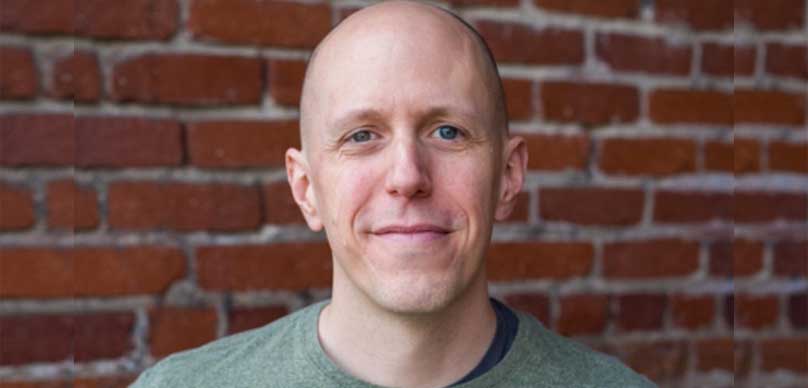
BPS 045: How People Around You Can Hurt Your Screenwriting Dreams

I wanted to do an episode on this subject for a long time.

“You are the average of the five people you spend most of your time with.” – Jim Rohn

I wish I had someone to tell me this early on my screenwriting journey. In this episode, I go over what happened to me when I was starting out, how my friends affected me and my ability to move forward in my career and what happened to me when I moved to Los Angeles over a decade ago. I discuss how the people around you affect you on a personal, professional and even spiritual level.

I really hope you find some value in this episode.

Right-click here to download the MP3

SPONSORS

  1. Bulletproof Script Coverage – Get Your Screenplay Read by Hollywood Professionals
  2. AudibleGet a Free Screenwriting Audiobook

Alex Ferrari 0:00
Welcome to the bulletproof screenplay podcast episode number 45. right until it becomes as natural as breathing, right until not writing makes you anxious, anonymous. Broadcasting from a dark windowless room in Hollywood when we really should be working on that next draft, it's the bulletproof screenplay podcast showing you the craft and business of screenwriting while teaching you how to make your screenplay bulletproof. And here's your host, Alex Ferrari. Welcome. Welcome to another episode of The Bulletproof screenplay podcast. I am your humble host, Alex Ferrari. Now today's show is sponsored by bulletproof script coverage. Now, unlike other script coverage services, bulletproof script coverage actually focuses on the kind of project you are and the goals of the project you are. So we actually break it down by three categories micro budget, indie film, market and studio film. There's no reason to get coverage from a reader that used to reading tentpole movies when your movies gonna be done for $100,000 and we want you to focus on that at bulletproof script coverage. Our readers have worked with Marvel Studios CAA, WM E, NBC, HBO, Disney, Scott free Warner Brothers, the blacklist and many many more. So if you need your screenplay or TV script covered by professional readers, head on over to cover my screenplay.com and today's show is also sponsored by indie film hustle TV, the world's first streaming service dedicated to filmmakers, screenwriters, and content creators. If you want access to filmmaking documentaries feature films about filmmaking, interviews with some of the top screenwriters and filmmakers in Hollywood, as well as educational online courses all in one place. ifH TV is for you. Just head over to indie film hustle.tv. Now today's episode is a really quick one, I wanted to kind of put together this small episode, I thought it was something that needed to be said. And I know a lot of the tribe listening, haven't thought about this because of many reasons. So I heard a quote the other day that made so so so much sense that you are the average of the five people you spend the most time with. And I wanted to tell you stories about what happened with me and and the people I used to hang out with back in the day. A lot of times when filmmakers are hanging out or have a group of people around them, a lot of times you are the

the most advanced, the most driven the most the biggest hustler out of your group. And that, to me, is the worst place to be. Because you don't grow, you don't become better at what you do. You need to find people who are better than you, who will challenge you who will make you take your game up to another level. And that's the that's the positive way of looking at this, I'm not gonna talk about the negative way as well. Now, if you're hanging around five losers, and five guys or girls who are bringing you down, who are negative towards everything you do, you're never gonna get out of the out of the box, man, you're never going to get out and never get, you're never going to start the race, how you even get to get to the track, you need to find people around you, who are not only going to inspire you to be better, people who are going to support you and push you to grow as a artist, as a filmmaker, as an entrepreneur, which is all well you have to be in in order to make it and in the business today, those three things very, very, very much so. And when I was coming up, I you know, when I was in high school, I hung around with you know, good people, good friends, but they really weren't helping me move forward. A lot of times, some friends were some friends weren't. And same thing happened when I was in college. And when I got out of college, I didn't have anybody around me that was really, you know, in a different place. It was that at a higher level, let's say in, in the business somewhere, someone who would push me to be better than who I was. I was always pushing myself. I was always hustling myself. And I'll tell you what, when I was in, in Florida, you know a lot of ways and not always and I'm not trying to be cocky or anything like that, but a lot of ways. I was the big fish in a small pond, you know, and a group of friends that were around me, you know, were excellent. And some of them really did push me, but others didn't. And it wasn't their fault. It wasn't my fault. It was just the nature of where we were we were in a smaller town. In the film business was just not as you know, prolific. And then occasionally I would meet people like Egon Stefan Jr. who definitely pushed me To go a little bit farther, there was where, where he had been in the business for so long, and he taught me a lot about, about cameras about lenses and so on. But when I got to Los Angeles, that's when things changed for me. Because in LA, you know, you have to take your game up a notch, in order to survive, you know, you, you have to be, you're being pushed left and right, when you're meeting and working with people, a lot of these people have been in the business a lot longer than you have a lot of people have been, have much more experienced than you did, then you had. So when I got here, every single job I did, in a lot of ways, these clients were pushing me, these filmmakers were pushing me harder and harder. And that was, I mean, I grew within the first two years here, more than probably in the 10 years that I was in Florida, purely because of the nature of Los Angeles. Now, you could do that maybe in Atlanta, you could do that. And in New York, you could do that in many other big cities and a lot of other areas around the world that have a big film communities. But for me, it was LA. And I just, I just wanted to kind of put that message out there. Because I think you guys need to reevaluate people who around you and don't tell me about your I live with my mom, that doesn't count. I'm talking about friends. You know, I'm talking about people who are, you know, are in your business, we're trying to help you now, again, family, friends, if they're not helping you, if they're bringing you down, that might be something you need to reevaluate in your own life. I've had to do that many times with family. And it's not always very pleasant. But I know for me, it works. And it helped me move to where I need to go, especially early on in my career. So look around you and see who is around you, who are you spending the most time with? Who what is the average of the five people you spend the most time with? Are you hanging out playing Halo all the time, or drinking all the time or going on, and not really getting, you know, not writing, not doing what you need to do to get to that next level to get to that next place in your career, in your life, in your dream on your journey, you know, you've got to kind of grow. And when you're growing, you need those people around you. That's why I love masterminds. masterminds are when you get a group of people, you know, hopefully people who are farther along than you are, so they can guide you push you keep you accountable. That's why mentors are so important. Finding a mentor that can push you that can keep you accountable, and get you to that next place. It's kind of like having a personal trainer, you know, when you have a personal trainer, they're going to push you farther than you think you can go. And that's the kind of people you need around you. You know, I'm blessed because I get to talk to these people all the time, I get to have them on on my show, I get to talk to them. And they're not pushing me, but they are they are pushing me whether they know it or not just by me talking to them. I see where they are, I see the path they've walked in their journey. And it inspires me to move forward and inspires me to become better at what I'm doing. You know, and I, you know, who are you listening to on your on your way home or on your commute every day? Obviously, hopefully me. But if you know, but what podcasts you listen to what audio books are you listening to? You know, what are you doing to take your self to the next place to take you that next step further on that journey. And I think it all starts with the people you spend the most time with. And really you need to evaluate that in in 2019. And I hope this message gets out to you guys. And I mean it from a good place. And I want you guys to I don't want you to break up with your girlfriend or your boyfriend. I don't want you to leave your parents, because I said so I want you just to be really truthful and honest with yourself and find out hey, what what are these people doing for my life? Are they helping me? Or are they hurting me? Or are they just even worse, not doing a thing? They're negating they're just like, they're just they're just black. And they're not doing anything for me you if you want to make it to the next level. If you want to take your filmmaking journey farther down that path, get those skills up to push you farther than you were before. Then you've got to surround yourself with people who are better than you in those specific areas of life. Whether it's entrepreneurship, business, filmmaking, losing weight, getting healthy, meditation, spirituality, whatever it is, find those people ask the universe For those people to come into your life, and I promise you, they will. And slowly but surely you start just just releasing and letting go of the negative energy, letting go of those negative people letting go of those people who are not helping you, people who just want to stay at home, and do nothing, when you really want to get something done. And I know that is really helpful in smaller towns around the country and around the world. Places where the film business is not spewing out of every corner, like it is here in LA. But you really need to do this guys. And I, again, hope that this message reaches you guys at a good time in your life. And also, I don't care how old you are, you could be 20 or you could be 60. And if you're still surrounded by the wrong people, they're not going to move you forward to where you want to be in your life. Alright guys, better your situation better your chances on this turbulent filmmaker filmmaking path that you've decided to walk down in whatever avenue you decide to walk down in this business. I really do hope nothing but the best for you guys, and wish you nothing but the best. So thank you again for listening.

And that is the end of another episode of The Bulletproof screenplay podcast. As always keep on writing no matter what. I'll talk to you soon.


Please subscribe and leave a rating or review
by going to BPS Podcast
Want to advertise on this show?
Visit Bulletproofscreenwriting.tv/Sponsors