
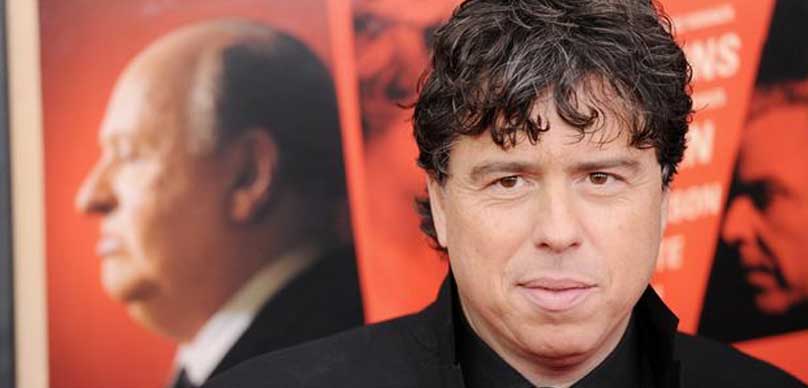
BPS 118: From Short Film Script to Spielberg with Sacha Gervasi

Being a podcaster now for over 600 episodes I’ve heard all sorts of stories on how people make it in the film business. From Sundance darlings to blind luck. Now today’s guest story is easily one of the most incredible and entertaining origin stories I’ve ever heard. We have on the show today award-winning director, producer, and screenwriter, Sacha Gervasi.

Sacha won the screenwriter lottery with his first-ever screenplay, which was a un-produceable short film script, caught the eye of the legendary Steven Spielberg. That script, My Dinner with Herve would eventually be expanded and released in 2018 by HBO. The film stars the incomparable, Peter Dinklage 

Unlike most writers/directors who go on to produce their debut films, Gervasi’s 1993 entry project wasn’t made until just three years ago. I promise you, Sacha spills every detail of the fascinating story of his encounter with Hervé Villechaize, the famous little person from shows like Fantasy Island and films like James Bond’s The Man with the Golden Gun. Hervé was arguably one of the most famous people in the world in the late ’70s and early 80’s. Sacha sat with Herve in a marathon interview, and the connection they forge during their brief, yet impactful meet.

After his life-changing encounter with the Fantasy Island star, which followed Hervé’s abrupt and unfortunate suicide, Sacha was determined to get his story told in its entirety and justifiably.  He ditched his mid-level journalism job in England and moved to Los Angeles to attend film school at UCLA after developing the script for My Dinner with Herve. 

While on the climb-up, Sacha wrote screenplays for The Big Tease (1999) and The Terminal (2004) which was directed by Steven Spielberg and starred Tom Hanks. The comedy-drama film grossed $219.4 million at the Box office with a $60 million budget and has become a holiday classic in the UK.

Tom Hanks played an Eastern European tourist who unexpectedly finds himself stranded in JFK airport, and must take up temporary residence there because he is denied entry into the United States and at the same time is unable to return to his native country because of a military coup.

In 2008, Sacha made his documentary directorial debut and executive produced Anvil! The Story of Anvil

The amazing documentary premiered at the 2008 Sundance Film Festival about a heavy metal band that never gave up on their dreams of being a successful band. Anvil was established in 1978 and became one of the most influential yet commercially unsuccessful acts with thirteen albums. The documentary ranks at 98% on Rotten Tomatoes.

He also directed the 2012 film Hitchcock, a story about the relationship between Alfred Hitchcock and his wife, Alma Reville during the filming of Psycho (1969). It starred Anthony Hopkins, Helen Mirren, and Scarlet Johansson. 

I also interviewed Sacha and an old friend of his, Iron Maiden heavy metal band singer, Bruce Dickinson on my new podcast, Next Level Soul that you have to catch up with if you are down for more knowledge bombs and cool stories from Sacha. That episode comes out on Saturday. 

Here’s a bit on my new podcast Next Level Soul.

The Next Level Soul Podcast is a self-help & spirituality podcast that asks the big questions about living and thriving in the world today by having candid and inspiring conversations with thought leaders from every walk of life. The show covers inspirational, motivational, spiritual, health-oriented, yoga, meditation, wellness, and many more topics. New episodes of Next Level Soul air every Saturday anywhere you listen to podcasts. Let’s take your SOUL to the next level.

Sasha is such an interesting human being, I had such a ball talking with him.  We talk about the film business, his origin stories, his screenwriting craft, what he’s doing now, and so much more.

Enjoy my entertaining conversation with Sacha Gervasi.

Right-click here to download the MP3

LINKS

SPONSORS

  1. Bulletproof Script Coverage – Get Your Screenplay Read by Hollywood Professionals
  2. AudibleGet a Free Screenwriting Audiobook

Alex Ferrari 3:56
I like to welcome to the show Sacha Gervasi, man How you doing? Sasha?

Sasha Gervasi 5:03
I'm good man. How are you?

Alex Ferrari 5:04
I'm doing great man. I am I'm excited to talk to you, my friend. we've, we've talked a little bit off air already. And it's I wish we could record it.

Sasha Gervasi 5:14
Frankly, cannot put on this podcast,

Alex Ferrari 5:16
obviously and legal or legal reasons. So I knew just from those few interactions we had that this is going to be, this is going to be fun, without question. And you so I wanted to ask you when we before we start the whole thing, how did you get into this ridiculous business?

Sasha Gervasi 5:37
I got into Well, I was always fascinated with film. I went to a school in unequal Westminster and I started the film club at Westminster School in about 1980. And my what I would do is I would go with my housemaster of I called Tristan Jones Perry, who was literally a character Brideshead Revisited a brilliant mathematician, completely, Ill functioning socially, but really a wonderful man, we wouldn't he would accompany me to Soho where we would pick up 16 millimeter prints of films. And so I remember bringing to all my classmates, I was 15 or 16 at the time, movies, like don't look now and Easy Rider. And so I loved film at school, and, you know, kind of got into actually getting the 16 mil prints and putting them in the film club. So I think it was a very early dream, but I never thought I'd actually end up working film. Because I was for many years, you know, a really terrible musician. And I was struggling with my own mediocrity for quite a few years, even though I ended up in some bands, you know, actually did some stuff. But the reality was, I think the real dream was always film. And ultimately what happened was, I was in the music business, got out of the music business. And then I decided I was offered an opportunity to work for a very sort of famous British satirical magazine called punch. A fantastic guy. They're called Sean McCauley. I called him up, he was the features editor, and pitched him an idea over the phone, I got through to him and Secretary was out to lunch. And he gave me my first assignment. And so I started as a journalist, and I worked for work for punch, punch, punch magazine, and associated newspapers, Evening Standard Mail on Sunday, and I would do kind of profiles and interviews with what I thought to be interesting people. And remember, in one week in 1993, I think it was I interviewed Johnny Rotten of the Sex Pistols released

Alex Ferrari 7:25
in February, that must have been a hell of an that must have been a hell of an interview,

Sasha Gervasi 7:30
an Italian restaurant in Greek street in Soho, and he ended up throwing a chair at me, because he didn't like he was promoting his book, no black, no Irish, no dogs, which was a great book, but he didn't like the sound of my voice and thought I was a tosser and decided literally to throw some kind of, you know, Art Deco chair in my general direction, which of course made it but that same week, I interviewed, you know, Ted Heath, the former British Conservative Prime Minister, you know, and many, many people along the way, and I just would meet all these fascinating characters. And journalism, for me was just a, you know, an opportunity to try and make money writing, even though I wasn't really, you know, that wasn't really my end goal. But it was massively fun for me to fly around the world. And I remember my first foreign assignment, I was flown by associated newspapers to meet this young prodigy violinist called Sarah Chang and Florence, and I met her. She was 11. And this was brilliant musician who we had performed some exquisite. I think it was of all the I can't remember what she was doing at the time. But you know, she had an entourage her dad, her cousins, her mother's there was like, 40 adults in the room while I interviewed this 11 year old genius. Yes, I have these incredible kind of experiences just meeting very different types of people. And I think all of that ultimately, as you know, probably, if you know, a bit of the story is that, you know, one of the interviews that I was sent to do in the summer of 1993 was was to interview Herve vilchez, who, you know, had been the star of Fantasy Island, and 10, you know, 10 years after you've been fired by Aaron Spelling was in quite a bad condition. I was sort of sent to this interview, kind of as a joke. You know, while I was waiting for, frankly, something more important. So the Gore Vidal interviews appears in, in the film, and ultimately, that experience changed my life and led to screenwriting. I know that sounds very strange, but I was sent from London to LA to do a series of important show business interviews as if that really exists as a concept in reality, and have a village with the kind of throwaway joke piece, you know, and they said to me, you know, get 500 words with the midget, you know, where are they?

Alex Ferrari 9:37
So that's your, cuz I didn't know as a tester to write that's it. Yeah.

Sasha Gervasi 9:41
Yeah nicknack in the bond, film and write a seminal, kind of famous kind of cult figure in the 1970s and, frankly, the most famous little person that's successful that the person after that, that had been at all And you know, I went in there filled with judgment and cynicism and you know, fuck I've got to get through. This is the this is the dregs of celebrity I've been given like the, you know, the formerly famous dwarf from fancy Island, the

Alex Ferrari 9:45
one hit wonder the one hit wonder almost

Sasha Gervasi 10:14
Yeah. I was like, wow, this is really where my career is, you know, I'm interviewing tattoo, I wanted to shoot myself. Well, I won't say I knew I was gonna say something terrible. But anyway, so we, we went to meet at Liberty Chateau in West Hollywood, and I was with this photographer who was sent from the newspaper with me and his, his name was Sloane Pringle. I mean,

Alex Ferrari 10:38
you can't make this up. You can't make this up.

Sasha Gervasi 10:39
You can't make that up. Not a stage name slump. And, you know, Stein was like, Look, we've got to get to this other place. We have half an hour just get your interview. And so you know, I just went through what was your life class, the island, The Man with the Golden got the stories and I literally was packing my shit to go away. Right? To say, you know, thank you heavy. It's been wonderful, great stories about Fantasy Island. You know, it was all the ludicrous kind of showbizzy stuff we knew. And I was putting my stuff and I turned back and Herve had come off his chair and around the corner, and was holding a knife at my throat and I was like, I'm about to be shipped to death by tempted by tattoo is about to kill me. And I didn't know whether to laugh or cry. And he wanted to get my attention. He was like, he literally said to me, You wrote the story before you got here. You prejudge me, you have no idea who I really am. You just see me as a joke, you know, on this show. And I'm just like a sort of Sunset Boulevard, kind of sad, past celebrity. And he was right. He was absolutely right. He wasn't really threatening me with my life. He just wanted to puncture kind of this bubble of judgment and cynicism and disinterest that I kind of clearly walked in with. And he said, if you want to hear the real story of my life, come meet me tomorrow night. So I was so shocked. I was like, you know, because my editors said, Look, 500 words, three paragraphs, you know, where are they now? They didn't really, but I there was something about him that was so fucking compelling. So human and a broken and, but also interesting, I mean, such a charismatic person, that I decided to meet him. And I ended up spending three days with him. And he told me his life story with such kind of emotional intensity and need. And you know, as as I'm sure any other journalists will tell you, when someone tells you the story of their lives, they become quite mad, because how often do you tell all the major emotional events of your life and badger let's take advantage of it, I actually found him so different to how I imagined him to be to me the whole thing was like a lesson about judgment and pre judgment. Because I really did just see him as being defined by his size, and being defined by these kind of quote unquote, you know, jokey roles. But at the end of the three days, I was so compelled, I went to see him at the universal Sheraton where he was staying. And I remember having this really weird feeling and it's actually recreated in the film my dinner with Herve and we shot the final scene of where the actual events have taken place in the same lobby of the universal Sheraton. 25 years after it happened, it was just a very weird thing to think pledge, recreate the scene with, you know, I'd have with her back in the same place. And, you know, I went up to his room, and he had all his band mail laid out, and it was just so sad, you know, it was like he said, they still write to me, and, you know, I just felt I felt they it man, I just, you know, I reconnected with them, I felt, here's this guy who's been basically totally destroyed by the cruel fate of, you know, his biology, and was totally rejected by his mother, and became famous. And of course, none of it really worked, you know, worked for a time, but you know, and then, of course, he lost his mind, blew up his career, and was just, but also underneath, it was really just a painter, you know, he really is really a very talented artists who have won prizes, and gone to, you know, some very famous art schools in Paris. And he was the youngest painter, for example, to be exhibited in the museum of Paris. And he was just an extraordinary character, I really connected with him at the end. And so I remember going back and he had all these photos of his life, and he says, you take these for your article in 2000 slides of his whole life, and I'm like, thinking to myself, my editors want like maybe one photo, and you know, like, what am I gonna do, but I felt like I had to take it. And we went down in the elevator together, and then he sort of tagged me on my sleeve, and he pulled me into very close to him, and he said, he had tears in his eyes, and he said, Tell them I regret nothing. And I just had this like, fear of like, what is going on this? I just knew something was going on. I didn't quite know what it was. But it was just so like, such a shiver up my spine. And I just had this connection with this weirdo that you would never think I would never Why would I connect with this guy? You know, it just we have something in common and yet we have everything in common. I just was newly sober. He was clearly struggling. During our three days together, he tried, you know, I told him that I was stopped drinking, and he was like constantly trying to get me to drink and take him to strip clubs. I mean, it was, he was like the devil and an angel. He was just like, the most interesting, charismatic and unusual person I think I've ever met in my life, probably to this day. And I ended up having this bond. And anyway, so I go home to London, and I've got basically 14 hours or 12 hours of these little micro micro cassettes that used to have, you know, you recorded. I remember listening back to this thing going, how the fuck am I going to put this in an article to take to my editors, like, I'm really interested to begin with, and then I come back with this anyway. So I got a call from Kathy self, who was his girlfriend who I'd met during the sort of three day interview. And Kathy called me at home, it was a Sunday, it was like 615, in the evening, Sunday, September, the fourth 1993. I'll never forget it, it was a really pleasant early afternoon, late afternoon, evening, and the phone rings, it's Kathy and Kathy says, have a committed suicide four and a half out. And I know we will have wanted to let you know that that happened. And just to let you know how they really connected with you, and is so happy that you have this interview. So I'm like listening back to these tapes now. And suddenly, I have a whole new perspective. And the perspective is, this guy knows that he's gonna kill himself. This, this is like some random, you know, English journalists, some young kid who knows nothing has been sent to interview me, I'm just gonna grab him. And I'm gonna give him the whole story about the family about everything. And it really like was like, you know, what do I do with this, I started crying when I listen to the interview again, because I understood that he was absolutely conscious of the fact that he was telling someone his story for the very last time, and he was clearly planning to do this, I decided to change my whole perspective on the article and come at it from a point of view of here, I was walking in this judgmental, cynical British journalist to knows nothing. And I was just completely captivated by this extraordinary character. And he opened his heart to me. And then, you know, six, five days after we see each other, he kills himself. And so the whole article was about so I do a 5000 word piece. And I take it into my editors, the paper, and they were like, this is great. But this is not what we asked for. We wanted you to go do a stupid, funny story. And I was like, but this is the truth. I mean, this is the story important. And luckily, I had already spoken to someone else who I thought would take the story. And they agreed, okay, we'll take the story, and plot it and publish it the way you wanted to do it. And I went to my newspaper, I said, You've got to give me front cover. And I need, you know, six pages, whatever it is lots of photos. Here they are, you know, the whole thing. And so I had this extraordinary thing where they basically said, No, we sent you out there, we own the story, you're going to rewrite it. And it was really tough, and I just couldn't really do it at a certain point. And in the end, someone else rewrote the story. It was, I think, four pages or two pages, somewhere in the middle of the magazine. And I really felt horrible, because I'd had credibly important personal experience completely out of the blue. With this person, I was essentially his suicide note. And here were these guys who would just didn't give a shit, they would just get it to me summed up everything about British journalism, and that and those newsrooms at the time. And the editor literally came out of the room and said, well, Giovanni's top two midgett, which means made a major commit suicide, where do we send him next, and everyone's laughing? And I'm like, Wait, hold on a second, like, this guy is a human being, and you guys are just your pigs, you know, and they're all bitter. And they're all just, you know, judgmental, and they're not, you know, none of them probably wanted to be writers or painters, or filmmakers, and none of them really were willing to take that risk. And so it's much easier to sit on the sidelines and judge than actually take a risk, you know, do something. And so I just got that was where the idea for the film was born. And so I'd never written a script before. And it leads into my very first script. Well, I wrote a short script, a 32 page screenplay. I've never written one before, called my dinner with her back. And I thought, This is great. It's a short about the most famous short man in the world. You know, what I didn't understand is that I'd written essentially, an unmistakable $2 million short film that once someone looked at it, they were like Paris in 1940, and Barbados. I was like,

anyway, um, became an interesting thing, because I wrote this script from the heart to feel like, I felt like the newspaper robbed me of the truth of that story. And so the script was my first attempt to tell the story from a technical point of view. And I, I ended up being read by Steven Spielberg. I mean, that script that I was, you know, got to speak But you

Alex Ferrari 20:01
made the 32 page $2 million short film about a dinner with her but unbreakable, unbreakable called my debt my eat my dinner with with aurvey about the most famous short man in the world, that script. How did that 32 page script that's

Sasha Gervasi 20:19
another story you see as as So, okay, here's the story. This is crazy story. So I had applied to UCLA film school and I was really on the fence about whether I wanted to go and I got for whatever it is, I got I applied to UCLA. So I was in LA doing all these interviews have a and the kids from Beverly Hills 90210, by the way, on the same trip that I interviewed her, but you know, when he pulled the knife on me, the interview was going to was the kids of Beverly Hills 902. That's how I also interview. So I'm like, Well, I'm sitting there listening to these imbeciles talking about this terrible show. And all I'm thinking is about tattoo shaming me. And what happened back then I'm like, I was so disinterested. 24 year old. Anyway, so. So, anyway, so I was I was basically I applied to UCLA because I was in LA so much. And I do I went back to the original dream, you know, I was, I was at school, and I started my Film Club, and I loved film. And, you know, I really wanted to see, you know, UCLA was a legendary school, you know, that so many fantastic filmmakers, and I was a huge I am a huge Paul Schrader fan. And Paul Schrader had been at UCLA, and he's just an extraordinary and USC seem to be like the, you know, really successful, rich kids and UCLA was the kind of, you know, messy disaster. It felt like Anyway, it was much cheaper. So I just applied to UCLA. And I got into UCLA. And so I was in LA. My mom said, Go to LA, I knew not a single person, not one person. And so my mom had an old friend called Ruthie Snyder, who she grew up with in Toronto. My mother came from Toronto, and then it moved to New York, whatever, and then to England. And she said, Look at my old school friend, you know, she hadn't seen her in like, 30 years. I was like, great. I walked up in LA. I have some woman I don't even know. Anyway, so she was very kindly introduced me to her daughter Fonda Fonda Snyder. And what happened was, I got invited she said Fonda was running a company called story opolis, which was a bookstore and in LA, opposite the IB restaurant, Robertson, and Paul Allen, that, you know, the Microsoft guy was funding this kind of children's bookstore. And so she said, I were doing a dinner. Do you want to come? I didn't know her at all. Anyway, so I go to this dinner. And I and I get there early. Because you know, I don't know anyone at all. I'm like, you know, I'm talking to the waiters.

Alex Ferrari 22:47
What year what year? Are we talking?

Sasha Gervasi 22:49
Like 93 to 92? three foot 494. Right. Something like that. Yeah. And anyway, so I'm in my suit, like, cuz I'm very English. I'll put on a suit or the card for me, whatever. So I go there. And I look at this, these long tables, and they're having a dinner to honor the incredible author Maurice Sendak, who did Where the Wild Things Are. So and I'm looking at this table, and I'm looking at David Geffen, Peter Guber, you know, but like the people coming to this dinner would like and so Fonda was like laughing because she thought I was going to some kind of, you know, like free festival

Alex Ferrari 23:26
mixer mixer.

Sasha Gervasi 23:28
What I was talking to so she thought was very funny. So anyway, so I see all these kind of luminaries, Oliver Stone was at the dinner, I think, and you know, unbelievable, so I'm nervous as hell. I'm no one. I have no idea. I'm smoking met read more Brits. Like, without stopping. I've smoked two packs. Anyway. So I go outside. And I'm watching all these Hollywood luminaries through the windows, if you know aware of where new line needs to be opposite the IV. The story of this was all glass and they had this kind of little area, Piazza area with benches. So I'm sitting on the Piazza benches watching through the windows is like Oliver Stone and David Geffen. And all these people arrived, going, what am I doing here? I was thinking about going anyway. So this tramp comes up to me, who was like wearing some sort of that kind of grungy Seattle look or whatever. And it was sort of a bit befuddled, and he sits down and he says, you know, do you have a cigarette? I was like, Sure. So I ended up chatting with him. And we started talking and smoking cigarettes, and he was very nice guy. And he said, you know, what are you doing? I said, Well, I'm English. I'm actually here. I think I'm going to go to film school. And, you know, and he says, really, what, what, what are your plans? I said, Well, you know, I'm going to become a screenwriter. You know, I'm going to be a screenwriter like that. And he looks at me and goes, hmm. And I literally remember thinking I looked at him, I thought maybe I can help this guy. Maybe I could just give him I don't know, some money for the bus or something. I don't mind how he seems nice. So anyway, so we're chatting. We're getting on incredibly well and talking about, you know, America versus England and the favorite TV shows and customers But I can't remember. But it was great conversation and we're big cigarette smokers. Anyway. So I'm watching the assembled mass through the windows, we both are on this very beautiful woman comes out and goes up to this tramp. I thought perhaps to give him money. I didn't really know. But she comes up to him. It turns out, it's her husband. And she is coming to this event. And by the way, he is coming to this event. And I'm like, okay, they're letting the homeless in his open community. I mean, we've got the luminaries, but we're also we're working with. So I, so I was basically just like, okay, so anyway, whatever. So she says, Who are you? And I said, Well, I'm Sasha, Razia come from London. I'm going to UCLA. I'm going to be a screenwriter. And Elizabeth says, Oh, really? That's what my husband does the tramp. And I'm like, Oh, okay. So So who are you? Oh, he's called Steve Zaillian.

Alex Ferrari 25:54
He's like, Oh, my God,

Sasha Gervasi 25:56
the Oscar the previous year for his screenplay for Schindler's List. So I could not speak.

Alex Ferrari 26:03
Oh, my

Sasha Gervasi 26:05
dad's one of the greatest

Alex Ferrari 26:07
living screenwriters

Sasha Gervasi 26:08
ever together right now, then. Doesn't matter. Unbelievable. And so anyway, we go into the dinner. I'm like, freaking out. Elizabeth finds it very funny. Cuz I'm like, you're steaming. Okay. You're Elizabeth Second. Okay, great. So then I find out but I'm seated like three seats away from him my card, you know, next to the head of new life, you know, sees me freaking out. And he finds it hilarious,

Alex Ferrari 26:37
because he's 16

Sasha Gervasi 26:39
as well. So that will like laughing at me anyway. So I couldn't speak after that, because I felt like I behaved like such a dickhead. Like there I am proclaiming, I'm a screenwriter. And there I am next to the academy award winning writer.

Alex Ferrari 26:52
So the equivalent of me of a kid going to Steven Spielberg, you know, one day I'm going to be a director. Right? Not knowing that that was Steven Spielberg.

Sasha Gervasi 27:00
I went into a massive shame spiral. And I remember just eating all the food and picking out on dessert I was trying to eat on my feelings. It was so I was so nervous. I felt terrible. I felt like an imposter. And I felt like I really made a fool of myself in front of essentially, I've never seen him but I'd read all his screenplays. I'd read searching for Bobby Fischer. I'd read his awakening script, you know, it was extraordinary. I, you know, there is so you know, serpentina and other scripts and bad manners, whatever these things. were, you know, he was just an extraordinary human Bob town to me with the guys, right? So I'm like, meeting him made a photo. Anyway, at the end of the dinner. He comes over to me and he said, here's my phone number. If you want to have a coffee, let's have a coffee or whatever.

Alex Ferrari 27:48
How many? How many days? Are you in LA at this point once you arrived?

Sasha Gervasi 27:54
like three weeks? in LA. I know my mother's friend from high school in Toronto. And I'm meeting literally, but so anyway. Now I had written that my dinner with her a script, right? But I didn't know what I was doing. But I had this script. So he said, Do you have anything, you know, that I could read?

And I said,

I have the script. And I told him the story of meeting have any found that story? Very interesting. Yeah. Anyway, so I ended up sending him the script to where to where to where he lived in Santa Monica. I sent him the script. And I didn't hear anything,

Alex Ferrari 28:31
as you know. Yeah.

Sasha Gervasi 28:33
And I was like, okay, I've met Mick Jagger. I've given him my demo tape. And I'm a loser. And I made a fool of myself. And I offer basically the given bus money home. I mean, it's just like, a full on disaster from start to finish. So I was in my little $100 a week apartment. I was living in West Hollywood. And the phone goes and this is like three months later. It seems alien. I'm so sorry for not getting back to you. I've been on a project that's finished. Now. I just happened to get to your script. And I think it's really good. Would you like to have coffee? I drive down theatrics and cinema. In fact, my friend Adam dropped me off because I didn't have a car because remember, I felt Well, for the first two, three years in LA. I did not have a car traveling by bus or walking, which was fine, right? So I'm going to I got dropped off at diederichs. I had a coffee with Steve. And he said, I think this is special. I think you're a writer. I think you're right to go to UCLA. And I think this is a very important and special piece of work. And I was just like, Jesus, I've never written anything. This is the first thing I wrote. And so in the end without getting into it, because there's lots more obviously to chat about. He gave that script to Steven Spielberg. And so I myself on the set of Amistad you know 10 feet away from Anthony Hopkins, you know, right on the on the set with Steve introduced because Steve was oh We're working on that I've rewritten the whole thing was to me to Steve, Steven Spielberg, and I just couldn't believe it. And he complimented me on the script and said, Would you like to watch and was could not have been that nicer. And ultimately, that ended up that led to me working with Steven on the terminal. So it was all through Steve's alien, like literally had I not had that chance meeting with Steve had Steve not been as cool and generous and so unpretentious and kind with me. He was just extraordinary with me extraordinary. Like, you know, in life when you get people who suddenly appear in a certain moment and their aim is alien was for me. He was absolutely an angel. I would not like everything that's happened since that moment, I would have absolutely no career without Steve and his belief in me and and at times when it was really, really tough. You know? Yeah. Anyway, so

Alex Ferrari 30:57
alright, so you basically had and I've talked about this a lot as because I mean, so many screenwriters listening tonight and filmmakers as well who are listening. You You, you look up to people, like you know, Steve Zaillian, and, and Spielberg and, and I, I consider them to be Gods on Mount Hollywood. They're literally like Greek gods in Mount Hollywood. And when one of them decides to come down with the peasants and touches you on the shoulders that you now shall be a screenwriter. You now shall be a director that literally happened to you. And, and he was, and he wasn't even. And the funny thing is, if I if I may go full Greek mythology on you, he was like, hidden. So he was in disguise. Oh, my

Sasha Gervasi 31:40
God, because I was totally myself. I had no I was I didn't, I was giving this guy cigarettes and possibly giving him money. And possibly any screenwriter, helping him when I discovered he, too, was a superhero.

Alex Ferrari 31:54
Oh, my God. No.

Sasha Gervasi 31:56
It was like magic. Because had I not look, I'm very like, had I known it was Steve's alien, I would have probably completely clammed up. And I am. And so therefore, it was a massive gift. It was like such a weird and wonderful thing. And, you know, he and his family and Elizabeth and Nick and Charlie would just have been fantastic.

Alex Ferrari 32:16
Well, yeah. So I have to ask you, because I mean, and I've spoken to other people on my show as well, they've had these kind of magical paths. Because this is a this is absolutely lottery ticket. This is magical. And so so many ways. Do you believe in it, there has to be some sort of fate in this because the chances of this happening? Do you believe there are other things that that kind of guide, because I do, I truly do. Like when doors are supposed to open for you, they opened for you in a magical way that you just can't understand, you know, how how I get how I have had the opportunities to talk to certain people on my show, like yourself, and like, what's happened to my show what's happened to my career, all these other different things, when something's supposed to happen? It happens in a way that you will never know. Like, if I would have told you this exact story, when you were flying over to LA to go to UCLA, you would have said, you're you're mad, you're mad, if I would have told you that tattoo was going to be the catalyst for your entire career, you would have said, That's right. You're insane. So what do you what do you What's your feelings on that?

Sasha Gervasi 33:24
Also, him threatening me with a knife?

Alex Ferrari 33:26
Obviously. I mean, that's, that's the given.

Sasha Gervasi 33:29
The whole thing I do, what how can you ignore that? I mean, there's obviously something going on. I'm not saying that goes on for everyone all the time. That doesn't go on me all the time. But I think there are certain critical moments in life when things happen when you meet someone. And I think it's all about being open. And recognizing it. Because, you know, a lot of times we don't recognize things. Yeah, so I got very lucky because, you know, without getting too much into my personal story, I didn't really, you know, a pretty bad time with drugs when I was younger, and I, you know, nearly was not here. And I think when I got out of that was able to figure out, like, actually, I don't really want to, I actually do want to be here. And here. When I sort of got clear of that. I just saw everything in a strange way as a huge blessing. Because it's like, you know, whenever things would be going badly, you know, I would say to myself, you know, for a dead man, you're not doing that badly. You know, I'm alive. I may and I definitely have that appreciation of life at a very basic level. I don't take stuff for granted. And so I think when you carry that energy, perhaps you invite sometimes positive perhaps the negative but in this case of very positive things. You know, I was recently kind of, you know, in recovery clean and sober when I came to LA like coming to LA was all about a completely new beginning. And I think when you've been through a tough time, and I'm sure many of your viewers have And listeners have been through their own version of that, you know, you know that there's something about getting through it where you just, you want to live. Yes. And that brings stuff to you. And I think that that may be that was an example of that. I don't really know. But I was just, you know, I think when I nearly pop, you know, when I nearly was not here. It's very humbling. Oh, I think that, you know, like, I think the problem is, I see a lot of Hollywood, you know, screenwriters sell their first script for a ton of money, and then it all goes to their head, you know, and, and I had that later, I actually have to say, I call myself all that, you know, because it does affect you, right? When people start telling you all this shit, and you have to really watch it. And I would say, as a writer, as a writer, particularly in Hollywood, you know, if you don't seek humility, it will find you.

Alex Ferrari 35:53
Amen, brother,

Sasha Gervasi 35:54
amen. You will be fired, you will be, you know, taken down and denigrated, and all that. And so, you know, and actually, Suzanne gave me a great good advice. He said, it's a roller coaster, when it when the corner get squeaky, squeeze on tight, just hold on, you know, and I think that, I've always done that there have been some terrible, terrible moments, as well as some extraordinary moments. And I think that, you know, it is about not being a wanker. Being You know, one thing when people like that, but I think what happens is, you get these moments of grace. And clearly, that was some kind of a miracle with Steve, you know, it's when the ego cuts in, and it starts taking credit for all that shit, you get into a lot of trouble. So you have to just count your blessings and go, thank you, rather than start making it about you. And that is something that, you know, we're all prone to at different times. But you've got to watch for that. And I've certainly, if I haven't been watching for it, I've learned the lesson the hard

Alex Ferrari 36:50
way. I mean, the ego is the I mean, listen, the ego is one of the the thing that we all fight every single day, and I believe in the in the film industry, more so than ever because, man it is, so it is so enticing.

Sasha Gervasi 37:07
Having an ego is kind of like, you know, that night in the Monty Python, we get knocked off, and then his leg does that flesh wound. It's like a quivering stump, you know, that's like, a screenwriter will come here,

Alex Ferrari 37:19
come here, I'll take you.

Sasha Gervasi 37:23
You know, it's just a waste of your energy, just better get real and take your breaks when you get them. And and pass it on. That's the key thing. Yes. If people come into your path, and you feel even if you can make it like a tiny difference, but you know, you don't delude yourself into thinking you could do what someone likes things only Steven Spielberg could do. But if you can actually help someone, even if it's reading a script, or listening or whatever, you know, do it, man, because you got given that times 10. And I think it's in a strange way, it's, it's your duty to do that. It's the pay forward. It's not you, you know. So that's, I just think if you're coming from basically a place of honesty and fairness and trying not to be a tosser, trying not to be and catching yourself when you are, then you know, you're going to be alright, you're going to go, you're going to survive the crazy times of the roller coaster, and the ups and downs and the rapids and the river. And there will be plenty, as I'm sure you know, most of your, you know, writers, no, it's just very, you know, and you can go from the hottest thing to the coldest and the hot, you know, and it's like, try not to pay attention to the temperature reading, focus on the process, and the long term plan, because, you know, today's hottest screenwriter is tomorrow's cold is like, I've got, I've got the best reviews and the very worst, you know, it's like you'll have all of it. Try not to get buy into it too much. I think just focus on Okay, I got to deliver this script, and I got to deliver this movie or whatever. Stay in what you do, you know, and don't worry about the other bullshit.

Alex Ferrari 38:46
And look at Herve, I mean, look, I mean, he was the hottest biggest thing in the 70s you couldn't, just couldn't, he was everywhere. I mean, he was, he was so hot, and look where he

Sasha Gervasi 38:59
was the lesson of the Hyundai story. And he went ahead and he got into it with Ricardo montalban. And he wanted to trailer as big and basically spelling fired him because he was completely out of, you know, out of control. And, you know, he was destroyed, he went from, you know, a TV star on an ABC show getting 30 or $40,000 a week in 1979 8081. to, you know, when I found him having to flush his toilet by taking water out of his swimming pool to flush the toilet because the water had been cut off. You know, it was really extreme. So yeah, here's an example to me, you know, and I also fell for him because there was clearly he realized that he kind of completely fucked himself, you know, and if you go you know, his ego was not his amigo as they say, you know,

Alex Ferrari 39:51
what, like, that blew everything off. So

Sasha Gervasi 39:53
anyway, yeah, there are so many examples of that you know, of just don't take the work seriously. They just don't take yourself too seriously.

Alex Ferrari 40:02
Now, so let me ask so you're working with Steve and Steve Steve's on on terminal. What is that? Like did Steve bring you in? I think he It almost sounds like he Donnie Brasco. Do. He's like he's a good fella. He can come in with me. So he kind of like vouched for you. You walked in and Steve's like, I want to work with you on the terminal is how did that? How did you first of all, how do you collaborate with it? Well, it

Sasha Gervasi 40:25
was waterparks really who I work with mostly waterparks. It was then running Mike's also brilliant producer, who we develop the script together. And then initially what happened was that Tom Hanks came into just thinking my first meeting with Tom Hanks. Tom Hanks said he would like to do the script. And then I went to meet him in his office in Santa Monica. And it was, it was unbelievable. It was hilarious.

Alex Ferrari 40:47
Well, what happened? What happened when you?

Sasha Gervasi 40:49
I can't remember I think I had I said, I've got to do something really? No to I'll come up with a joke. So I think I came into his office. And Walter Park said, and here's Tom Hanks. And I looked at Tom and I looked at Walter and I said, but you said Tom holes. And then he laughed his head off. And then we became friends.

Alex Ferrari 41:10
Oh, my God. Oh my God. That's a myth.

Sasha Gervasi 41:13
A notable entry. It was hilarious. So we ended up having a good time. And I ended up being hired. So anyway, so he came on to terminal he wanted to do it. And then originally, actually, Sam Mendez was gonna direct the film. And I met with Sam and Sam was like, don't change the word of the script. And then it sort of all went quiet. And it was really weird. I was on a research trip with Tom Hanks in Europe. And we were working on this other project, but unfortunately, never got made. It was called comrade rock star. It was a great project. And Tom was very into it at the time. And so we flew on on the DreamWorks jet, which was also another, of course,

Alex Ferrari 41:48
why wouldn't you?

Sasha Gervasi 41:50
I went, and we went to, we went to Berlin, to do search and meet various people to do with the Conrad rock star story. And we were staying at the Adlon Hotel in Berlin. You know, this point. I didn't know what was happening with time. And I knew Tom was interested in it. I knew we were developing this other thing. And so Tom was on the catch me if you can, you know, press junket. And I remember I got a call. Tom's driver or whatever called and said, You know that there's a car downstairs, you know, go and have dinner with Tom, right. So I got into the car and I go into this restaurant in Berlin, which I think was called Vaughn or vow, I can't remember it was this big room with a like a gallery and like a main floor. And there was this table of like, 20 people. And there's an empty chair at the end, and there was waterparks, Leonardo DiCaprio, and suddenly, you know, Tom Hanks or whatever. And then there was a guy not facing me, just as I walked in. And Tom was with Steven. And Tom said, Hey, Sasha, yeah, Steven Sasha's here. And Steven Spielberg turned around to me, and he said, congratulations, we shoot November the fifth. And I was like,

what, what are we?

Alex Ferrari 43:02
What are we? What are we? What are we shooting

Sasha Gervasi 43:05
his moment where he said, I'm gonna drag the terminal. And I just was like, they were all again, that they were all laughing at me, because I was just like, so.

Alex Ferrari 43:13
I feel that I hear a theme here, that when I hear a theme here, Sasha, that when, when these giants when the gods when the gods get together, and they see the and they see that the commoners walking among us, they they like to poke fun at them, essentially, is what I hear

Sasha Gervasi 43:32
the same thing with sweetness of all right, oh, yeah. So in fact, when Tom Hanks told me he was going to attach himself to the script, he said, I was at his office, he said, will you drive me home? I said, Sure. I didn't really know. I thought maybe he couldn't afford Uber. I didn't really understand.

Alex Ferrari 43:48
Don't give them don't give him No, he don't give him changed for the bus like you were gonna do.

Sasha Gervasi 43:52
Steve gave some bus tickets designing and then I thought I'll help him with some vouchers. Anyway, so I'm driving. So this is a true story. So the mirror stories that I'm driving with Tommy's in the passenger seat, I'm driving by, you know, very excited, I've solved my first script. And I've Of course, got a Cadillac cuz I'm an idiot. He said, Why did you go from Britain? Why did you lease a Cadillac? And I said, because I'm from Britain, you know, and so anyway, I driving along and he says, I'm just gonna hold the steering wheel for just a minute. And I said, Sure, do you Okay, so he holds the wheel. And he turns to mean, he says, I'm going to start in Terminal. And I was like, because he knew I was gonna have a moment. And so we held the wheel. So Tom did that. And then we had the when Steven Spielberg told me, he was directing the film in Berlin. So it was quite, you know, you're outside. This is my second movie. So I've done a small hairdressing comedy called the big tease at Warner Brothers that no one saw which we made 4 million. And then, you know, suddenly I'm doing the Spielberg Hanks movie. Number two, right? So it's like complete madness.

Alex Ferrari 45:03
Oh my god. We'll be right back after a word from our sponsor. And now back to the show. And I have to ask you that, because I told you off air, I absolutely adore the terminal. I adore it. I, my wife and I watch it every few years because everyone's, you know, between the story and the characters, and of course, Hanks his performance and and in Stephens direction. I mean, how did that story come together? Like it's based on a real story, right?

Sasha Gervasi 45:40
I called them Alfred, the Sarah, who lived for many years at a Paris airport shelter ago, he was an Iranian dissident. It was a true story, when it is done, who escaped escaped into, into France illegally, and came back to go to his home country, they discovered that he was he would probably be imprisoned or executed if he got on the plane back to Toronto. And so but at the same time, he did legally been in France, so they wouldn't let him back out. And they said, Just wait in the terminal a minute. So that was a whole story with, you know, a lot of political complexity. And it was about many things. And we decided, well, let's just take the scenario of a man stuck in the airport based on the true story. And let's do something slightly different. So that became, you know, Victor Navasky and crocosmia, and all of that stuff that was in the film. So does that mean, people love that movie? And it's sort of it's sort of, you know, what, some people love to initially not everyone, but over the years, it's become kind of has this own life. And in England, I started to realize it's become a christmas film on the BBC, like five years ago, like, either plays Christmas Eve or Christmas Day on BBC One. BBC, you know, it's sort of a bit of a tradition. Now, I didn't really realize that. But it's obviously great to be part of something like that. And, you know, it was an extraordinary experience having this film made by obviously, some of the greatest people, people had to study the film school, and then, you know, six months, I'm working with them. Yeah, no, it was without those guys. And Spielberg was just, he was extraordinary with me, incredibly generous. And it was hard. You know, when this is happening to you don't really understand what's happening in you, right? You don't handle it brilliantly. I didn't really, it was only like now years later that you really understand my God, Steven Spielberg decided to make your movie. Wow. You know, I kind of knew it at the time. But I really know now. And I really feel grateful to Steven and to Tom and to Walter and to Steve's alien for really creating that whole scenario. So I'm lucky.

Alex Ferrari 47:43
I mean, lucky. I mean, I can only imagine reading a textbook with Steven Spielberg in it. And then a few months later, or a year later working with him. I can't even I can't even comprehend that. Now, you You are not just a screenwriter, you're also a director. How did you make the jump from screenwriting to directing?

Sasha Gervasi 48:06
Well, I just decided that I was gonna direct something. I wanted to be a director always. And then I thought, you know, because what happened after terminal was that I got offered lots of kind of big studio comedy rewrites and stuff, right, you know, and I thought, I obviously had this incredible experience, but I didn't really want to be, you know, just doing big assignments all the time. I really wanted to see if I could be a filmmaker and to you know, have a go. So I realized no one was really going to give me a chance. And I realized that I'd have to, you know, think think it through on my own. I knew this band. And then tie a tie into what we what we talk about later with our mystery special guests. Yes, I, I knew this band when I was 15 called Danville, a Canadian heavy metal band. And I met them when I was 15 at the marquee club in London, in 1982. And I got into the dressing room and I ended up talking to them. They'd never been to London before they were my heroes. I said, Have you been here? They said no. I said, I'll give you a tour of London. I ended up taking Advil, you know the band behind metal on metal and, and, you know, strength of steel and hard and heavy. I ended up taking them on a tour of the Houses of Parliament, the Tate Gallery, and I took them back home to meet my mother. You can imagine my mother's how thrilled she was when she opens the door to find me with the four members of a 15 year old 5050 with posters on the wall of that band. She's completely she said, You've got 10 minutes, get them out of it. Anyway, so they will find me quite entertaining. And I found them I'd say they said look, what do you do next summer. I said, Well, I'm old school holiday. Do you want to come on the road with us? Rob Reiner, the drummer of amber was named Rob Reiner. Like as in the director of spinal tap. You couldn't again make that shit up. And Rob said, Would you like to be my drum tech on this tour? So I following summer, I lied to my mom. She was never letting me go on tour with them. But I told my dad, they were split up he lived in New York. I said I'm gonna spend this Somewhere my dad went to my dad and I said, I'm going on tour with this heavy metal band will you meet them to make Give me your blessing and my father, you know taught economics at Oxford. So you know that Andrew was not his core demographic band. And they met and he was you know, he gave them a talking to and said protect my son, but he gave me the go ahead to go on tour. We went on a tour of Canadian hockey arenas in the summer of 1984. And I learned how to play drums from the drummer of and or Brian and on that tour, and had you know, an incredible experience. I was just really young. Yeah, at I went on three tours, I think at three, four or five or four or five or six. I can't remember but I was a, you know, a drum rodeo is a roadie. So I met those guys, and I loved them. And I remember this young guy, this young Danish tennis prodigy, or prodigy or player called Lars Ulrich, who was around my age who was around at the time and anvil fan and Scott Ian, who later went on to be anthrax. And basically 20 years past, I lost touch with Advil. And then I realized that you know, all the bands that influenced you know, Metallica, anthrax, mega death or whatever, they don't become mega bands and and all that disappeared. I went online, I figured out and I figured out that they were playing like pub gigs in like Northern Ontario. It was still going after 30 years. And I was like, why are you still going? So I wrote to the lead singer, whose name is lips. And I said, Come to California lips flew out, he was wearing exactly the same scorpions t shirt he'd been wearing. Last time, I'd seen him in 1987. He was like, frozen in time. And he was going, my band's gonna make it man, it's gonna be great. We're gonna do it. And I was like, thinking to myself, he is completely mental, like, What is he talking about? It's over, right? But there was something so infectious. And actually, I took him to see Steve's alien mental that weekend when he was in LA. And I'm sitting there with Steve making coffee, and we're looking out as lips is talking to Steve's wife, Elizabeth. And he's saying, Who the hell is this guy? And I told him the whole story. And he said, there's a movie there. There's a movie about friendship and not giving up on your dream. And it's bittersweet, and you should direct it. And I said, wow. And I did. And it became and so it was and it was one of the enville

Alex Ferrari 52:13
the story of anthem.

Sasha Gervasi 52:16
And I just rolled the dice, no one was gonna pay for it. I financed it myself. And I within, I think, 12 weeks of that encounter with Steve, down on the beach with the lips. I was in northern Romania, shooting Advil on one of the worst tours that you've ever, ever seen the film. I mean, it was beyond a disaster. Oh, my God. And so that and that movie, then, you know, became my directorial debut, which then came into Sundance. And, you know, still to this day, actually, you know, people love that movie. Because it really is about not giving up. And it really is about, you know, doing something for the right reasons and passion, and you know, all of that stuff.

Alex Ferrari 52:55
absolutely remarkable. So that documentary, which has become a cult phenomenon. People love that movie. And you were telling me, like, everyone says, is your best work ever?

Sasha Gervasi 53:07
Well, people love that film. It's so well, it's also done from a place of total naivety innocence, and I don't know what I'm doing. I'm just following a feeling. And I think the film captures that, the essence of it. And it just has travelled so far and wide. And it was like an amazing story, because he was this banner that the movie in one sense is essentially a portrait in failure. And yet, every band loves this film. And in fact, ACDC we're doing a stadium tour and invited Anvil to open for them. I remember standing on the side of the stage with Anvil, a giant stadium and 50,000 people are shouting, Advil, Advil, apple, and it was just like, you never know what's going to happen. You just never know. Like, we had no idea that any of that stuff, we had no idea that, you know, they went to the total rock awards, you know, Jimmy Page of Led Zeppelin came up and bill to thank them for inspiring him to keep doing what he's doing. And it's like, you know, it was just like, we were at the Bowery Hotel in New York. And, and, and lips is smoking a cigarette on the terrace of the bar, and he comes out, he said, this is really interesting guy, and another guy, and they really like the movie and I don't know who they are. Maybe you can go talk to them. For me. I'd like to know more about them anyway, so go out with lips. And it's Chris Martin of Coldplay and Jay Z. And they're talking about and they had no idea. They had no idea if anyone

Alex Ferrari 54:28
they live in this. They live in this black bubble.

Sasha Gervasi 54:31
Yeah, I mean, the premiere in Hollywood. We did the premiere at the Egyptian theater, Dustin Hoffman came to the premiere. And he's in tears after the movie coming up to lips and Rob and Rob is like, has no idea who he is. And then after about 10 minutes he he turns to me he goes, is that the guy from Pappy? Oh yes. I feel happy. Oh, was wonderful about this is they're just living their own magical world. But were it not for that there would have been no movie to make about, you know, and then I'll be turned into as inspired, you know, other bands and certainly a lot of other movies about bands. Emotional,

Alex Ferrari 55:12
amazing. Amazing. So then, okay, so from story from from Anvil, so I'd love the title and what the story is. Great title. So once that happens, that's a documentary. But then you're, then you're thrown into more narrative work. And one of the films you worked on was Hitchcock,

Sasha Gervasi 55:29
which, well, that's that, but it's all to do with Advil,

Alex Ferrari 55:33
right? Like, how did Advil, get you? Hitchcock?

Sasha Gervasi 55:37
So what happened was that Tom Pollack, who was another angel of mine who would run universal from 85, to 95, incredible guy, and he was partners with Ivan Reitman, and they had Montecito pictures, and they financed them they did, you know, and they, they were fantastic. You know, they, they just supported young filmmakers. I actually got my first fan letter with about Ando was from Tom Pollack, who saw the film and said, This makes the old guys think they can keep going, and I want to meet you. Anyway. So they had this assignment for Hitchcock. And I was like, Okay, I'm fast. I'm, you're obviously Hitchcock. I'm fascinated subject. I thought it was based on this thing that Hitchcock in the making of psycho. I thought the book was brilliant. And I was just like, so I thought, okay, I'll you know, my agent said, we'll just go in and meet Tom Pollock. He likes your movie and, and the, the meeting began with, it's lovely to meet you. We love and Bill, you're not going to get this job. But anyway, let's just meet we just wanted to meet you. Yeah. And I was just like, you know, when someone says, something's not gonna happen, you're just like, fuck it. Okay, whatever. So I just, I said, this has got to be about Alma and you know, the, the unknown force behind hitch and it's got to be fun and irreverent, and tongue in cheek, hopefully. And it's, you know, it's only a movie, you know, like, Don't take it too seriously. It's meant to be sort of droll in the way that Hitchcock was, so I pitched them this. Anyway, they were like, well, this is great. But you know, Anthony Hopkins, pretty major actor, you know, probably you're not going to get past him. Anyway. He was a massive and OFAC was an apple fan.

Alex Ferrari 57:18
Oh my god,

Sasha Gervasi 57:20
how it just goes to show like you're coming from a place and you're doing it for your own fucking reasons. Fuck everyone else. And somehow. So Tony was like, let's do the film. And then Helen was like, love it need a bit more of our so I did some work on the script. You know, it was john McLaughlin script, but I did do a little work on the Alma roll. And yeah, and then the movie came together and such like made the film. So you know, it was and then I got Scarlett Johansson. I did have this weird moment where I was in rehearsals with with Anthony Hopkins and Helen Mirren. And I was like, I can't believe I'm actually in. I can't believe that talking to me, let alone like, you know, listening to a potential suggestion. Anyway, it was. I learned so much. I mean, you could imagine like working with those people in Scala Johansen and Jeff Crone and laugh and the incredible Pam Martin who cut the fighter was cutting the movie and working with searchlight. I mean, it was an extraordinary learning experience.

Alex Ferrari 58:20
Yeah, I, you just says like, I can't believe I think if there's a biography about you ever, it's gonna be I can't believe I just can't believe this is happening. Because it's from everything you've told me. There's just been one amazing event to Atlanta. And I know look over the years. These are the highlights and I know there's been ups and downs throughout like anybody's life. But again, just like Herve just like Steve Zaillian and then and then you're like, you'll never gonna get past it. Anthony Hopkins, because I watch saw your documentary. I'm a huge and,

Sasha Gervasi 58:51
like, in it three times. Yeah. Like mean is like, what

Alex Ferrari 58:54
is the what are the chances that the legendary Anthony Hopkins would be a fan of a, basically a failed metal band from the 80s that you happen to make a documentary about? Because you have, by the way happened to be

Sasha Gervasi 59:11
the thing that people should take them all of this? No, the thing that people should take for this is the deep down inside. Anthony Hopkins feels like a failed metal band from the 80s. You know, we all you know, have like it's a human right. We all you know, we're always on ourselves, and we're most more critical of ourselves than perhaps anyone elses. And it's, you know, so it was just it was very truthful. You know, it was about flawed human beings who are trying their best who don't actually necessarily succeed. And I'd say, of all the people I've met, who, some of whom are massive successes, they don't necessarily think about things like that or feel that they often just carry the wounds of the failures with them. Structurally, it's just a weird thing that I've observed. I don't know if it's true, but I think that that Sometimes true. So, you know, some of the greatest successes feel like failures.

Alex Ferrari 1:00:04
Oh, no, I mean, I can get 1000 good reviews. But I'll focus on the one bad review. And it's just, it's, it's human nature. And it's so overwhelming because you're looking you've obviously been given literally 1000 reviews are fantastic. But there's that one guy or gal who just like, you know what? terminal? Yeah. But then there's 1000 other ones that are just like, right. Now,

Sasha Gervasi 1:00:29
there's a great English newspaper, but I can't forget it. It's a terrible review. They said something like, watching this film was like standing in a waterfall of vomit and treacle,

Alex Ferrari 1:00:42
oh, my God, what a visual.

Sasha Gervasi 1:00:46
And I just thought, you know, okay, but what I'm saying is, you remember, I just remember that, I don't remember anything else. Apart from that, like the worst kind of shave. You know, and I don't know, maybe that's just human nature.

Alex Ferrari 1:00:59
I was, I was talking to Troy Duffy, the the famous director from boondock, saints, that whole legendary documentary, ledgering documentary, as well. And he told me, he's like, there was this one review, I he goes, by the LA Times, I think it was so brilliantly written, that if you're going to get smashed by someone, at least, let it be a really good writer, because it was entertaining, it was

Sasha Gervasi 1:01:26
world class beating, you're gonna have to deal with that man, you're gonna have to deal with getting shipped in every part of your body by someone at some point, you're gonna have a knife sticking out of it. But you know, you've got to kind of also ignore it. It's like, you know, having been also having been a viewer, myself, and having been a journalist, I really do understand what's on the other side of that, you know, a lot of those people are blocked creatives, they're blocked filmmakers who aren't able to actually do it themselves for whatever reasons, either they don't have the talent or the courage or both, or whatever, or it just hasn't happened, you know, so, you know, so it's, they're kind of bitter, slightly, a, some of them and others are really constructive. And they use the criticism to try and say, actually, here's how you could have done a better job. And here's, you know, and you can actually learn from a great review, you learn a ton of shit. So it's important to be aware of them and look for the stuff that you can learn from, rather than taking any of it too seriously. Because when it gets like, nasty, you know, the person's got, like an axe to grind. Like, you know, people have a, they've got an agenda that's not really about, you know, like, sometimes you read a review of something, and you go, and you've seen the film, and you go, they obviously did not see the same film. The film they just had this is that this was, this is a review based on the what they wanted it to be, and what I was, you know, then go make your film. You don't I mean, but everyone's entitled to be creative in their own way. Anyway, so it's you, you can learn that for I think you can learn

Alex Ferrari 1:02:52
Oh, no, absolutely. I mean, I mean, Roger,

Sasha Gervasi 1:02:55
although highly entertained by the, you know, standing in a waterfall of trouble and vomit, which is I mean,

Alex Ferrari 1:03:01
I mean, that's amazing. But like Roger Ebert literally got the Pulitzer for his criticism, his film criticism, and he's, he's one of those. And he loved filmmakers, he loved filmmakers. And I have a Roger Ebert story, I'll tell you off afterwards, that when he he was kind to a short film

Sasha Gervasi 1:03:16
of mine, for example, when we have when we had an NGO, right? No, we didn't know how anyone, if anyone was even gonna see it, let alone review it. And it was incredible. I got the New Yorker one week, and we had two and a half pages from Anthony lane. He's one of our greatest viewers. And he said, this is all about mortality and aging. And this is the ravages of time. And I was like, Oh, my God, you know, I will know. But what I'm saying is circumstance, people will get stuff from it that you didn't even intend, yeah, that you do something for a pure point of view for you, then you do something for an emotional point of view, or you want to tell a certain story. And if there's something pure about it, people will bring in their own interpretations which you had no idea, you know, yeah. So I feel lucky when that happens. And it has a couple of times, and I feel good about it and the other stuff we learn from

Alex Ferrari 1:04:06
Okay, I wanted to touch on something really quickly for you. Because you've I mean, you've obviously played you know, you've roamed in circles, with you know, legendary filmmakers, and you've worked with studios and you've worked inside the machine. Can you touch a little bit about the politics of working and navigating those waters? Because

Sasha Gervasi 1:04:24
I would say what I've what I've learned is very simple, is listen to everyone. executives, producers go crazy. If they feel they have not been heard. You know, I just think that when when you're in a development meeting, a writer or a director shuts an idea down without entertaining it, that person gets really mad. And look, to be fair, those people are considering giving you millions of dollars to go off and make your dream come true and tell your story. You know, the least you could do is at least listen to them. doesn't mean you have to take their suggestion, but at least be civil and at least Do that. And I see a lot of people get into problems where they're just like, oh, that guy's an idiot, you know, he's also writing you a check for $10 million, about listening to that part of it, you know, so, but there are certain techniques, when you do have someone in the creative mix who's absolutely stupid, you just keep that to yourself. First of all, don't say anything. And then you can do something called IOI, which is technique I use, have you heard of IOI? I have not. Okay. It's, it's a term called it's It stands for the illusion of inclusion, where what you do is you listen to that absolutely stupid idea. And you pretend to No, you got that, that's great. I'm gonna try that, you know, knowing that it's done. And you just let them feel that they've been considered and that their thoughts have been entertained. So that's, but just be nice to everyone. Even if it's like, this should take place on a skateboard on the moon, you know, just go. Okay, you know, let's, let's see what we can do with that, you know, so I just think it's best to be polite, and use the IOI technique, if in doubt, because, you know, there's nothing worse than a frustrated filmmaker who wants you to do something. And who is not a filmmaker, but who's an executive or producer, or, you know, someone who everyone just wants to be heard. So that's one thing I would do is listen to everyone. Even if disagree, just be politic. Just don't tell people that idiots people do not like to hear that. They're idiots.

Alex Ferrari 1:06:20
And by the way, and you might, and this is something I've seen throughout my, my, you know, being a student of the industry for the last 20 odd years, is that there might be a moment where you have the power and you are hot, and you have the power to crush somebody. Yeah, but that power generally doesn't hang forever. And there will be a moment where you go down. I mean, even Steven Spielberg, I mean, I remember 91 when Hulk came out, everyone's like, It's over. It's over. He's done. He's done. And hooked. By the way, still one of my favorite i'd love hook, but it didn't do well. And he's like, Oh, he's, he's washed up. He's not. And then Jurassic Park is Schindler's List, same year.

Sasha Gervasi 1:07:02
The same? Yeah. But you know, probably took that as like, well screw these guys. I'll show them you know, sometimes down. But really, it's like, anger is a powerful emotion. You could wrap it in the right way. You know, it's like, it's a very powerful thing. You know, I think when I direct an Advil, I was like, I got something to prove that I, you know, yeah, I'm gonna, I'm gonna do it. Like, I'm just doing it right. And I think that so use it, like, whatever your cards are, even if they're shit, use the power of what they give you, even if it is disappointment, anger, frustration. People, listen, people write you off all the time, all the time. And they take delight in it. Nothing Hollywood than the sharpen Freud aspect, right? Luckily, I hang out with a group of filmmakers who are extremely supportive of one another. Like, for example, Alexander Payne, you know, whoever it is, you know, we, we read each other's scripts, we're supported, you know, we give each other notes and thoughts and stuff, I try and support all other filmmakers, you know, because it's so hard. Oh, my God. You know, sitting in judgment and kind of belittling people and trying to you know, it's just not, it's just not the way to live. Because if that's what you put out, that's obviously what you're going to get back. If you put out support genuine help and generosity, that's what comes back to you. Amen. Very, very simple. So it's really math, it's physics actually. Just, you know, be smart about it. And the people who are hot and take advantage and you know, put people down and, and, you know, act like they're hot shit, you know, guess what ain't gonna last. And then you will come a time when you want people when you're down to be supportive of you. And because you are such an asshole when you are hot, they won't do that. You've there's many careers where people were so unpleasant as they went up that when they got hit, no one wanted to help the Knights coming. You know, endless executive studio heads will make it No, just, you know, what is it that a wise man learns from his own mistakes? A genius learns from the mistakes of others, you know, just look around? Because if you just learn from what other people do, you know, you know, take that information they get.

Alex Ferrari 1:09:16
Now I'm gonna ask you a few questions. I asked all of my guests because I know I could talk to you for about another hour. And I might actually with our mystery guest and a little bit. But a few questions ask all my guests. What are three screenplays every screenwriter should read?

Sasha Gervasi 1:09:29
Well, for me, I would absolutely say that Chinatown. I would absolutely say that Steve's aliens. Shooting script of Schindler's List is extraordinary. There are so many The Godfather.

Alex Ferrari 1:09:45
Yeah, of course.

Sasha Gervasi 1:09:48
The Graduate script is incredible. Sunset Boulevard is incredible. You know, even I read recently again that the original Magnificent Seven script is You know, so those are the kinds of scripts that were an A useful technique. If you're blocked as a writer, which I've been many, many times, I nearly threw me out of UCLA at the end of the first year, because I didn't finish a script, I started three and finished. Now, a great thing is take a great script, like it's trying to town and begin typing it out, as in copying it out. So when I've had a blog, I'll take a Rob town script, or Robert Towne script, or a steep learning script, or a Scott Frank script, depending on you know, and I'll sit down, I'll begin typing it out, you unblock maybe because when you've like, got nine pages into Chinatown, it's that something just by the proximity, the engagement with the energy of that kind of intellect and ferocious kind of justice, it just somehow could just push your block. So it's a technique I just discovered by accident, because I was so frustrated. And I actually started writing Schindler's List, if you actually go and copy a script out in is great for unblocking.

Alex Ferrari 1:10:58
That's what I what I thought when I when I'm writing, one of the things I found as well as like, when I get blocked in something, I'll actually just go back to the beginning, and just start reading. And just that process of going, it's kind of like getting the it's kind of getting the momentum going. So as you're reading, then it just kind of and then you.

Sasha Gervasi 1:11:16
But then there's a potential trap there, Alex, which is you can also have people who spend 10 years polishing the first 30 pages, it's important to write a compiler is less than you've got to write a complete bad script, but just get the end, even if it's total shit, because it's much harder to go from nothing to something than from something to something better. So just get to the end, even if it's trash. Another trick people use is right, the end seen first. So you kind of know, okay, but I'm getting there, you know, so you don't have this big, you know, wild, sort of massive unknown ahead of you, you know, you're going to end on this scene, which you've already written. So I would say that, I agree with you, the layering, and the going back and forth is important. But I also know people who can get stuck in the pattern of writing 30 to 50 pages, and then overnight, just write the rest,

Alex Ferrari 1:12:11
I go back to I go back to like that scene or a couple scenes back, I try not to go back all the way to the beginning. Because if I go where the beginning, I get caught. And you're right, it's it's like this kind of Whirlpool.

Sasha Gervasi 1:12:22
Exactly. That gets you. If you're if you're a good writer, or you think you're a good writer, you know, that you get, you have to work yourself into a place where you're basically taking notes, and you're basically getting something, it's not about you creating it, it's about you allowing it, it's doing the kind of grunt work so that you can kind of deserve actually to get to get what it is you have to sort of earn it through hard work, if that makes

Alex Ferrari 1:12:47
sense. So yeah, so and I think this is, I believe this completely is when I'm writing, I honestly, sometimes I don't even know who's writing like, I'll just I'll be it's almost channeling, if you will, like something is just like they're talking and it's talking by themselves. And I'm like, Okay, I'm just here to write this stuff out. Do you as you as a writer, do you feel that as well,

Sasha Gervasi 1:13:06
I think in the best cases, when I remember when I was really writing the draft of the terminal that Spielberg said that he wanted to do, I remember being in a zone for the first time where it was just like I was irrelevant. I was just in the stream, just kind of servicing whatever the story was that wanted to come through, and it is blissful. But guess you're just able to not you're not responsible for it, you're not the source of it. But you're doing the work, you're earning your place by kind of like servicing, you know, your creativity. And it's a it's a freeing feeling. And actually, when you're starting to write, it's a lot of work, and it's horrible, and you get headaches, and you want to distract yourself with any number of things. But if you just push through, then you reach that time where it's just like, okay, the thing basically is working on its own now. And you just allow it to kind of pull you where it wants to go, rather than you determining everything. I think that's the difference. You'd go from cerebral to kind of creativity being the spirit that pulls you through the thing and gets gets it done. You know, I did not do the best work I've done. Like it comes from somewhere. Hopefully there's some source out there. And I think people who take credit and think that they're geniuses, you know, I don't know, I just I would say that if they're being honest, they know that, you know, they're merely the facilitator. I think I don't think they're the facilitator then the probably have a crash at some point.

Alex Ferrari 1:14:34
Absolutely. Now, what advice would you give a screenwriter wanting to break into the business today?

Sasha Gervasi 1:14:38
Write a fucking good script. I mean, it's as simple as that.

Alex Ferrari 1:14:42
You put that on a T shirts or

Sasha Gervasi 1:14:43
put that on a T shirt? No, it's not like having part you know, going to the right parties and meeting people. There's a certain amount of bullshit that you can do and have the right agent But at a certain point, your script will find its home. If you just focus on the work, just focus on the work, not the bullshit or the trades. Or you know what your task

Alex Ferrari 1:15:01
was not.

Sasha Gervasi 1:15:03
And don't jump on a bandwagon? And don't, you know, just do try and be you. You know. So I do think the screenwriting courses I find UCLA massively helpful, you know, the full time program, but there's also the professional program is fantastic. There are some great teachers in it, you know, go and meet other writers, man, find your group of people, you know, that you respect and trust, work together, support each other, read each other's material, you know, engage, but focus on the material, because the material will get the actors, the actors will get the film made, you know, because actors want a great role. So if you're writing, you know, strong roles, you know, you can focus on getting good at that it will fall into place. That's my feeling.

Alex Ferrari 1:15:43
Now, what is the lesson that took you the longest to learn whether in the film industry our life,

Sasha Gervasi 1:15:52
I obviously I'm still learning it. Just to be really grateful for every thing that tap is happening right now. Like right now, because that's really all we've got, you know, I've got like, right now, I'm really enjoying this chat with you. Right? Thank you. You know, but because as we're doing this, I never really obviously do stuff like this very often, when I'm promoting a film, I do an interview, I never really do an in depth chat or anything like this. So for me, as you're asking me these questions, I'm like, remembering all the fighting, that I had to all the fighting I had to do to get all of these films made, to get them seen to get anyone to be bothered. And it just reminds me that like, you know, I just feel lucky and grateful for that. So what I'm saying is right now I'm in that because you're replaying to me all this stuff, and I don't think about this stuff. So I think staying present focusing on the work, I would, I would say, you know, be genuine, be genuine in your dealings with people be genuine in the emotion you're trying to put on the page. You know, if it's being funny, be genuinely funny, like, do stuff for you, not because you think other people are gonna like it. Yeah. most authentic to your voice. Like Anvil is a movie that like literally no other person could have made apart from me. My dinner with Kobe is a movie that literally no other person could have made apart from me. What are those stories that are so singular to you and your existence in your experience, and what you want to say in the world, that you alone must do them. And I think if you're coming from that place, you know, you can just get through a lot of bullshit. You know, life is short, man, we're not here for that long. For long, man, you know, so you might as well go for it and, and Don't bullshit around. And also procrastination. I think that's a lesson I could still learn. I still procrastinate. I still, you know, go well, I maybe I'll watch that daytime TV show. It's really fascinating. I really want to learn about haymaking in Flanders in 1765 it's fascinating. It's just I'm trying, I don't want to face the pain. But I am a shit writer who must earn my place at the table every time to become a slightly better writer. You write a really good, you feel good about it, you go back to the beginning page ones blank, your total shit again, all that experience is gone. You've got to climb another mountain, and it's just as fucking hard. That's my experience. So don't procrastinate still working on it. But I would say I probably wasted two full years of watching bad daytime soap operas, televisions, game shows and useless historical programs.

Alex Ferrari 1:18:28
And this is pre This is pre Netflix pre populates. Now what is what did you learn from your biggest failure?

Sasha Gervasi 1:18:41
Only work at studios where you like the studio head word namely that is you learn you know in the immortal words of yes keyboard is Rick Wakeman, who played keyboards for years. He said success is buried in the garden of failure. And so that's important by the way you know we have our special guests

Alex Ferrari 1:19:04
Yes, we're gonna we're gonna be there in one second Give me one second and we're gonna bring him in and

Sasha Gervasi 1:19:13
then I feel it and I

Alex Ferrari 1:19:14
know I can I can feel the energy as well we're gonna bring him in in a minute because I just want to finish right off and last question sir. Three of your favorite films of all time.

Sasha Gervasi 1:19:24
Oh my god with nail and I with nail and I have you had with now my Bruce Robinson genius film? Yes. As

Alex Ferrari 1:19:30
long as was that 80s

Sasha Gervasi 1:19:32
Yeah, yes, that's gonna pay for the killing fields. Yes. With the with Leyland I terribly uncommercial film one of the most brilliant films of all time, Richard II grant, Bruce wrote and directed the film. If I were to pitch that film, no one would buy it to unemployed actors go away to Wales for the weekend. That is the plot of Withnail and I can do it is absolutely fucking brilliant, sweet smell of success one of the best scripts ever. But I guess the Tony curve Is Clifford Odette's and it's late. James Wong How is the camera man it is. Kendrick directed it. Brilliant. So I'd say that also Chinatown I have to go with Chinatown again. This is a nice sweet smell of success Chinatown. And also Christmas American movie I love

Alex Ferrari 1:20:19
Oh my god so good

Sasha Gervasi 1:20:20
cause spinal tap. Yes, but I will say Bertolucci's underrated masterpiece, the last emperor won the Best Academy at seven o'clock. If you go back and look at that film, it's unbelievable. I have a 35 millimeter print of it. So those are some of my films. I love the Bond movies obviously not the Pierce Brosnan period. A little bit limited. But yeah, so stuff like that. Any jack tatty is fantastic. And all that jack tatty stuff made its way into the original script of terminal. So yeah, those are films British films. I also love the long Good Friday with Bob hoskin. Yeah,

Alex Ferrari 1:20:57
Yeah. Yeah.

Sasha Gervasi 1:20:59
Fantastic British film.

Alex Ferrari 1:21:01
Sasha, we could, I know, we can keep talking for hours about your insight, you're easily one of the most interesting screenwriters I've ever had in the show. Your adventures are mythical almost in its way so much drug fueled. I mean, I mean, this is Hollywood.

Sasha Gervasi 1:21:18
I like the sound of

Alex Ferrari 1:21:20
Exactly, but I appreciate your time. And thank you so much for for coming on the show

Sasha Gervasi 1:21:25
Project snacks.


Please subscribe and leave a rating or review
by going to BPS Podcast
Want to advertise on this show?
Visit Bulletproofscreenwriting.tv/Sponsors
BPS 117: How to Be a Screenwriter in Hollywood with Marshall Herskovitz

Our guest today is producer, director and screenwriter Marshall Herskovitz. Many of his production projects have been in partnership with his long-time filmmaking collaborator, Edward Zwick whose films, he’s produced and written half of. Their decades-long filmmaking partnership was launched as co-creators of the 1987 TV show, ThirtySomething. 

Now, Marshall had already written for the TV show, Family, in 1976. So his understanding of TV was pivotal in the success of ThirtySomething.

Other projects he’s credited for executive producing or creating include Traffic (2000), The Last Samurai (2003), Nashville (TV show 2016), Blood Diamond, and Women Walks Ahead(2017), starring the incomparable, Jessica Chastain.

Marshall show, ThirtySomething, which only ran for four-season was quite successful. Co-created with Zwick, the follows the stories and journeys of seven thirtysomethings living in Philadelphia who struggle with everyday adult angst.

The show’s success earned over a dozen Primetime Emmy and Golden Globe awards, and personal honors for Marshall from the Writers Guild and a Directors Guild.

Herskovitz’s filmography is pretty adventurous. We discussed as many as we could in this interview and he was totally down for the ride. But if we are to highlight some must-mentions, Traffic will get the spot. Herskovitz co-produced Traffic in 2000 alongside esteem producer, Laura Bickford and directed by Zwick.

The film holds a constant 93% approval rating on Rotten Tomatoes and won numerous Oscars BAFTA, Screen Actors Guild, and Golden Globes awards in 2001. It followed through grossing a total of $207.5 million on its $46 million budget

The President appoints a conservative judge to spearhead America’s escalating war against drugs, only to discover that his teenage daughter is a crack addict. Two DEA agents protect an informant. A jailed drug baron’s wife attempts to carry on the family business.

Another classic of his is the 1999 TV show, Once and Again. A divorced father and a soon-to-be-divorced mother meet and begin a romantic courtship which is always complicated by their respective children and their own life problems.

Marshall dropped all sorts of knowledge bombs on the tribe this week. You have to listen to the episode to hear all those extra deets he shared with us about the attempts at rebooting ThirtySomething and many more.

Enjoy this conversation with Marshall Herskovitz.

Right-click here to download the MP3

LINKS

SPONSORS

  1. Bulletproof Script Coverage – Get Your Screenplay Read by Hollywood Professionals
  2. AudibleGet a Free Screenwriting Audiobook

Alex Ferrari 0:05
I like to welcome to the show, Marshall herskovits How you doing Marshall?

Marshall Herskovitz 0:10
I am. Well, how are you?

Alex Ferrari 0:12
I'm doing well, my friend. Thank you so much for doing the show. I'm a fan of of many of your films, including the films that you've just written and produced, but directed as well. And we'll get into that in the future. But I, I heard nothing but good things from you from Ed, who was on the show as well. Edward Zwick, and, and I said, Well, I kind of get Marshall on the show, too. I can't just talk to Ed, I want to talk to Marshall as well. It's so thank you so much for doing this. I appreciate it.

Marshall Herskovitz 0:40
Well, I'm happy to do it. And just know if I say anything that Ed said. Yes. stole it from me.

Alex Ferrari 0:47
Fair. Fair enough. Fair enough. Okay, give me one second. Hold on a second. technology's acting up. So give me one second. You're

Marshall Herskovitz 1:00
just like your room there.

Alex Ferrari 1:03
Thank you. I worked hard on it. I give my wife the excuse that it's for business. That's how, and I always tell. I always tell people that the Yoda was a is a pre pre wife purchase is definitely a pre wife purchase. To say the least because it's a hard it's I have kids now. And it would be it'd be it. I can't have that conversation. I know the kids need money for school, but I need a life size Yoda. I get it. Alright, so. So before we get started, Marshall, how did you get into business?

Marshall Herskovitz 1:50
Well, you know, it's funny. I went to Brandeis back in the early 70s, which dates me severely. And I majored in English. In fact, I majored in Old English, I was very interested in medieval England. I was a Tolkien freak, and just loved sort of Beowulf and that whole kind of, you know, early medieval, epic poetry sort of thing. And at the same time, at that moment, for some reason, I can't explain. There was a huge interest in old movies. Like when I was living in Boston, there were two different revival movie theaters in Cambridge. And then on campus, one night a week, there was an old movie shown. So basically, I was watching three old movies a week. And when I look back on it, I realized that the real education I got in college was in movies. I just didn't know it at the time. And I fell in love with movies, I fell in love with classic movies. And by the time I was a senior in college, I wanted to be a filmmaker. And, and the odd thing is, all I wanted to do was make medieval epics. That's that was my goal, go to Hollywood and make medieval epics. And here I am, 40 years later, and I haven't made one. But, you know, there's still hope, at any rate, that is what propelled me into the film business. I graduated, I made a short film, which was not a medieval epic, it was a very intimate, you know, drama. And I, I came out to Hollywood, thinking that that would be my ticket to fame and success. And I literally could not get one person to even look at it. It was that was the most disheartening. And in those days, all you had was the Yellow Pages, I went through the Yellow Pages for all production companies, and called every single one in Los Angeles, and no one would look at it. So after about six months of floundering, I heard about this amazing film school called American Film Institute. And I thought, well, maybe I should do that instead. And so that's, that's where I went. That's where I met ad on the first day. And, and really, that gave me my start, really, and you guys just just, you know, school, school chumps who got together and then and just

Alex Ferrari 4:05
stuck together for the last 40 years working on projects together. That's amazing. That's

Marshall Herskovitz 4:09
right. That's right. We're the longest living partnership in Hollywood right now.

Alex Ferrari 4:13
Really? That's actually saying a lot actually.

Marshall Herskovitz 4:16
Yeah, actually is no, I told me I'm very proud of and, and I know he is, too, and we have worked independently all along, but nevertheless, our preferences to do things together.

Alex Ferrari 4:29
Yeah, absolutely. I, I had a similar education when I but I didn't, I had a video store. I worked at a video store for a while. So I did the same thing. I'd watched three movies a night, you know, high school, so there's nothing else to do homework. So I would just, I would just take home movies and just watch and watch and I got such an education. And that was before I even wanted to become a director at the end. I was like, I guess I guess I kind of want to be a director kind of similar to you. So you wanted to make Excalibur but never did

Marshall Herskovitz 4:55
is what you say that's correct. Yes, yes,

Alex Ferrari 4:58
but there's still hope. There's Till hope,

Marshall Herskovitz 5:00
I finally after 30 years got to write a screenplay of the story of 1066, the Norman Conquest of England, which was something I had desperately wanted to do. And, you know, I still have hope that we'll make that as a movie. But you know, it's not exactly a moment now in the history of the film business when you can make big films like that. So

Alex Ferrari 5:21
we'll see. I mean, you put a cape on the main character, I think you have a better shot.

Marshall Herskovitz 5:28
I know that's the world, you know, with superpowers could these various people have? It's?

Alex Ferrari 5:33
No, is that is that is that a serious conversation that someone actually have a conversation with you about that?

Marshall Herskovitz 5:39
Not about that, but about something as ridiculous. Something I don't even want to go into. It just, it was a thing about Vietnam. And someone suggested that maybe if they had different superpowers, people might be more willing to look at a story about the Vietnam War. upsetting

Alex Ferrari 6:01
It was kind of it's kind of like when when they went in and pitched James Cameron Titanic to, you know, Jack's back like that a certain point, you just got to go. It's enough. It's enough. Now I have I have to ask, I was looking through your filmography. And I have to ask, what was it like work writing for chips. I mean, I'm a 70s. Kid. So I have to go right there, I went straight to it. I went straight to chips because I had the By the way, I had the pleasure of directing Erik Estrada, and some commercials years ago, and the stories Oh, my God, the stories he told about what happened in the 70s. People just don't understand what the 70s

Marshall Herskovitz 6:39
I understand. By the way, I never went near that set. So I have no stories to tell about the production of it. All I can say is that that was the low point of my career. I wish when I got out of film school, right, I spent about three or four years trying to be a freelance writer in episodic television, which is, by the way, doesn't really exist anymore. They don't really have people to make a career as freelance writers and television anymore. And, at one point, chips was the only job I could get. And I read one of their scripts. And it was like it was written in another language, I just had no idea how to do this thing. There was no connection there. Once he went to the next dialog didn't make sense, I literally was completely lost. And I came up with it with a sweet idea, actually, about an old Native American who thought his grandson was losing, you know, was not knowing enough about the old way. So he was raising his grandson in Griffith Park, away from people, you know, hidden away. Nice. And they bought it, they liked that do and it was Michael ansara, who played him, of course, because in those days, Michael and Sarah play Native Americans. And so it didn't turn out so bad. But for me, it was a very humiliating experience, because I had no idea. I just was not the type of thing I knew how to write. And in fact, that was part of what catalyzed, I think, the most, one of the most important moments in my career, which was a decision I made after three or four years of doing that, that I just was going to stop. In other words, I sat down and wrote a screenplay as a spec thing. And I wrote out the work the story together together. And then I wrote the screenplay. And I said to my wife, I said, you know, either this is going to work, or I'm leaving the business because I just cannot go on doing what I feel to be a bad job, doing other people's voices, meaning the voices of shows, you know, and and. And so that willingness, I think, to take that chance, and to say, I'm either going to make it on my terms, or I'm going to walk away. What's what turned everything around. And the interesting thing is that that screenplay that I wrote, had never been made. It was almost made three times. But it did change everything for me, because people were able to see my voice and I got work from it. And the work I got from it was what then gave me my career. So the willingness to bet on myself, was a scary thing at age 26, or 27. But that was that was what made it happen.

Alex Ferrari 9:31
I mean, that's pretty enlightened for a 26 or 27 year old, to be honest with us, God knows I was in much worse shape than you were at 26 or 27. I was lost. I was in the darkest pit of my time. That's a whole other story for another podcast. But um, but in most, most 20 year olds don't have that kind of reflection or that honesty, that kind of bravery. to just go, you know, I'm gonna make it on my end, and people listening. It's a very different industry than it was when you were doing this. It was less competition that it wasn't cool to be a screenwriter or director. It wasn't. Nobody even knew what that was to just knew that movies were made.

Marshall Herskovitz 10:08
Yeah, I know, it's true. I mean, it was hard to break in it, by the way, there were trade offs, because there was much fewer product. You know, there were three television networks in those days instead of 200. You know, it's easier to get a job today, but harder to have your own voice today. You know, I think you could have a voice in those days. And, and, and I felt that I had one. And it was something that I that I felt I needed to listen to. So you know, look, the one thing has always been true, which is to make it in this business, you have to be driven, you have to be, you have to need to do what I remember, when I was still in Boston, talking to some person who had been to Hollywood, you know, saying, you know, how do I do this? And, you know, do I have a chance of making it? And this person said to me, basically, if there's anything else you can do, you'll end up doing it? If there's nothing else you can do, then maybe we'll have a chance.

Alex Ferrari 11:15
I don't listen, I don't know if it happened to you. But I mean, I've gone through this, I mean, I've got a lot of shrapnel, I'm sure as you do in this battle of these years working in this business. And there was times I wanted to leave, I'd like I just I can't take it anymore. I want to quit. It's I'm like I and then the voice in the back of your head, like what else you're gonna do? What are you going to go and get real job? What does he get it like it's at a certain point you just like, and that happened to you multiple times? And how did you break through that? Because it's still happening?

Marshall Herskovitz 11:53
I have to say about that, I have to say about that. First of all, I had an inherent belief in what they now call the hero's journey before he had any idea of what a hero's journey was, it's so deeply embedded in our culture, that I believe that everything was a test. And, you know, they're going to throw the shit at you to try to get you to quit, and therefore you just have to try harder. Why I thought that I don't know, no one told me that. That was just my belief. And so my belief was Okay, I get it. Oh, now, six bad things have happened. And I want to leave. Okay, this is the moment when you have to dig down and say, No, I'm not going to leave. I don't know why I believe that. I'm grateful that I did. Because I think it got me through. But the other thing is, it took me many years to realize this something somebody Ed and I talk about a lot. There's a cycle in this business and probably other businesses, but I think it's more of this business, because it's so speculative. The cycle goes like this, you are nobody, you have nothing to lose, you do something bold, you do something original. people notice it, you get attention, you they start to build you up, you start to make money, people start to believe in you, you start to think that you know what you're doing. And in thinking that you know what you're doing, you become cautious, and, and maybe arrogant. And then you make a stupid mistake, and you come tumbling down and are completely humbled by the business. And in the midst of your despair, you have nothing to lose, and you could start being original again. And I could chart five times in our career, when that sort of thing has happened where in some way, you know how they say in Southern California, fire is a natural part of the lifecycle of this environment and it you need to have fires. Well, failure is a natural part of the lifecycle of a career. You have to have failure, you have to fail at things. That's the only way you learn. That's the only way you you grow and become better. And I think people are so afraid of failure, that they become mediocre to avoid it. And the business now allows for that, you know, you know, we always talk about how people fail upwards, which means they're mediocre and they don't make a huge mistake. So they sort of keep sort of moving up. I'm not a believer in that. I'm a believer in you take the chance and then you take what happens

Alex Ferrari 14:32
you know like I mean there's a filmmaker out right now who's you know, taking swings at the bat that I'm so regardless if you'd like the movies or not but someone like Chris Nolan who oh my god is taking massive swings at the Bat believable. Yeah, unbelievable swings at bat and I'm so glad there's guys like him and Fincher and these kind of guys that just go up there and just take massive because there's there's you could take Creative choices are creative challenges and do things that are original at a lower budget. But when you get up to the 150 to $100 million, and you do something like inception, or 10.

Marshall Herskovitz 15:10
I know

Alex Ferrari 15:11
that's, that's a that's a risk. Because imagine if that really badly, you could put in direct to jail. And that's the thing.

Marshall Herskovitz 15:20
I understand. And I have enormous respect. And as you say, it's like I couldn't even follow Tennant. You know, I'll be honest, I couldn't follow it. I want to watch it again. Watch it backwards, you know. And then he makes Dunkirk, which is like, sublime. Do you know what I mean? And it doesn't matter, because he's an incredible filmmaker, who has a vision, who has the resources, the wherewithal and the courage to follow that vision. And, and and you're right, we need people like that. We need a business that will still support people like that. And if there's one big difference between today and 3040 years ago, it's that there were more people in positions of power, who were willing to trust filmmakers back then. That's just a fact.

Alex Ferrari 16:08
I mean, look, we wouldn't have Star Wars. Without Alan Ladd I mean, Alan lamb took a risk on a filmmaker who made THX 1138, which was a horrible bomb. He's like, Hey, you know what? I think let's give him like 9 million sure you can have the merchandising rights. I'm sure that that will work out fine for everybody.

Marshall Herskovitz 16:28
You know, one of the most famous stories in Hollywood merchandising story was amazing. Well, because

Alex Ferrari 16:34
all contracts were rewritten after that. I mean, it would have for that

Marshall Herskovitz 16:37
totally.

Alex Ferrari 16:39
Because like there's no money in lunchboxes and our action figures. What is that to a sci fi movie at? You're taking kid? It's, it's absolutely remarkable. I always talk I always talk about the the punch that everybody gets in this in this business. No matter how big you are, no matter how accomplished minor were what stage in life you are. punches continues to come all the time. And as you get older, as you get older, you learn how to duck, a bit. Like when you're younger, you learn how to take it, you learn how to take the punch and keep going like you were saying like, okay, they threw six or seven things at me. Screw you, I'm still going. That's the taking of the punches. But some people get that first punch and their outfit out of the game. They're cold cocked. Yeah, as you get older, sometimes you could duck sometimes you can weave, sometimes it gets getting off you and sometimes it just misses you all together. But that's that's age. That's experience.

Marshall Herskovitz 17:35
Well, can I tell you, I don't think Ed and I have ever learned how to duck or we've, I think we got one of the worst punches of our career this just this past year in 2020. And we were just destroyed by it just destroyed. And I'll even say what it is we we thought we were doing a reboot of 30 something. Yeah, I had a great idea. It basically, it wasn't a redo. It was basically saying it's another generation, all of their children are now in their 30s. And it's going to be as much about their children as it is about the original cast members. And we wrote seven scripts, and we thought it was going to go and we had our our whole heart and soul in this thing. And ABC decided not to do it. And we were just like, we were undone. So here we were, you know, there was no ducking, there was no weaving that was a straight punch right to the face. Yeah. And, you know, and, and the, you know, the thing about the business, if you're a creative person, meaning if you when I say creative person, we're all creative people, what I need is if you make your living by creating things, either as a producer, director, writer, that sort of thing. This is gonna happen over and over and over again, you have to be willing to endure that kind of rejection, which is not the same as failure failure is once you've made it, and people shit on it, you know, rejection is before you get to make it, and people don't take it seriously, or they don't think it's good enough, or they decide they don't want to do it for whatever reason, you know, and and, you know, the point is, it takes just as much work we have, we put months and months and months of work into that, even though we hadn't shot you know, anything. And it was it was awful. But that's why that's that's the that's the job if you can't handle that you

Alex Ferrari 19:39
can't do this job. And that's the thing that I want people listening to understand because a lot of people think, you know, someone like you and Ed, you know, all all doors are wide open. They just, you know, how much do you need? Marshal? How much do you need and because of your track record, I mean, you guys have an remarkable track record individually and as a team remarkable track records as writers producers and directors. And yet and I've said this so many times I look, I always use the example of Spielberg, but I'm going to use you guys as an example. But like Spielberg couldn't get Lincoln gonna get Lincoln, you know, finance, you have to go. So Scorsese couldn't get silenced finance for 20 years ago. And to do icon Yeah, they're too iconic. And yet, Graham, I

Marshall Herskovitz 20:17
don't read my go, Oh, they should be able to do it. Also, I know it would be

Alex Ferrari 20:21
impossible, right. And you know what I've said that story to other people like yourself, and they're like, you know what, I'm not crying for Steve. I'm not crying for Marty, either. But I understand your point. But there's people at every stage of their career at every stage, no matter what they've done Oscars, no Oscars, big box office hits non big opposite, you still is still a struggle. It's still a struggle,

Marshall Herskovitz 20:45
constant struggle constant.

Alex Ferrari 20:47
And that's what I want people listening to understand that, like, there is no magical place that you'll get to in this career. We're just doors, doors will be wide open all the time. It might happen once or twice. Yeah, after big hit after a big hit. You're that you're the toast of the town. You're the belle of the ball. What would you like, and that's when you stick in that that project that you've been wanting to get done for the last 20 years? Like a medieval Excalibur reboot?

Marshall Herskovitz 21:11
There you go. Correct.

Alex Ferrari 21:15
Now, when you brought up 30 something, how did you guys you and had come up with that? Because I mean, I remember when I was growing up, I mean, I wasn't in my 30s then but I do remember 30 something was a he was a monster hit it was a monster hit for ABC. When it came out? How did you? How did you guys come up with that whole that whole thing?

Marshall Herskovitz 21:33
Oh, there's a funny story behind it, you know, we Oh, my God, you know, I'm trying to figure out how far to back this up. But But essentially, out because we had done this TV movie called special bulletin, which I can talk about later, which made a big splash in the 80s. It was about nuclear proliferation and nuclear bombs and all of that, it kind of put us on the map. And we were offered a television deal at MGM television, right. And of course, we didn't want to do television, we want to do movies. We thought television was you know, shit. And so we took this deal at MGM television, explicitly for the purpose of the fact that I wanted to put a second story on my little tiny house in Santa Monica. And it would pay me just enough money to do that. And the idea was to try to get out of doing anything they wanted us to do, because they were going to pay us a guarantee. But we didn't have to do anything, you know, we were only obliged to try to sell the television series. That's That's it, just try to sell the television series. So the moment came, where we were going to have the pitch meetings at the network's. And, you know, we had come up with ideas for series and I turned to Ed, and I said, you know, these are all terrible ideas. What if we sell one of these? It's like, we would have to make this this is awful, you know, I and so, and this is not a joke. We sat down, we said, okay, what we need is an idea for a series that has no chance of going. But if it goes, we wouldn't mind doing. So we said, What would that look like? And I sat there and I thought well, you know, what's interesting is that on television at this moment, we're talking about now 1986 there is nothing that represents the baby boom generation except Saturday Night Live. And show called Kate nalli.

Alex Ferrari 23:27
Yeah, remember kitten alley? Yeah.

Marshall Herskovitz 23:28
Yeah. And that was it. Everything else would had nothing to do with baby boomers. And I said to add, you know, look, we know all these people in this moment in their lives, they're having babies are messy with their careers, you know, this person is afraid to settle down. And it's very interesting, because ed is normally so open to everything looked at me with this look, he gets, you know, we have the same. It's like, he gets this look, that looks like a grimace. And I go, why are you tilt down on this already? And he goes, I'm not down on it. It's just my face. I'm not making a face, you know, they right? He gave me that face. And he was he was just completely, you know, didn't buy this. And in those days, of course, we had this stupid little office at MGM and and at one in the afternoon, we could just go home because we didn't have anything we had to do. So we went back to his house, and his wife Liberty was there. And I tell her this idea I have Why don't we just talk about people we know know, Ed's will point was, but there are no cops in it. They're no lawyers, no doctors, how you going to sell a television series that doesn't have any of the franchises. And I said what do we care about that? Their story and and God bless her Liberty went, Oh my god, I love that idea. And she started just listing all the people she knew and all the dilemmas in her life. And because ed is added he loves liberty. Somehow when she said it, it made sense to him when I said it didn't make sense to him. So literally by the end of that afternoon, we had sketched out this seven characters. You know, by the next day, we had written this sort of manifesto of the series, we went in the day after that to ABC. And of course, who are the executives in the room, they're all in their 30s. One is pregnant, they were exactly the demographic for the show. And we basically sold it in the room to them. And, and, you know, it was the whole thing was kind of charmed. And the irony was, we didn't want to do it. We did not want to do it. You know, it's sort of, that's when Ed started quoting that great john lennon line of you know, life is what happens while you're busy making other plans, because at every step along the way, you know, alright, so we wrote the pilot. And people loved the pilot, they said, Go make the pilot. And then I directed the pilot, which is the first thing I directed, and they loved the pilot. And then, in those days, they had what was called selling season in New York City, in May, where they would, you know, show everything to the advertisers and decide what they were going to pick up. It's what now it's called, whatever the sweeps, like sweep, sweep, not the sweeps, you know, the the, the TCPA is whatever they're called, up front, basically. But in those days, there were no cell phones. So you were ordered to go to New York and sit in your hotel room for five days and be within range of your telephone in the hotel room, because you might get a call that your show was picked up. So we sat there like idiots for for four days in New York on the on the fourth day, we get a call from the head of the studio. And that's a whole other story. David Gerber, who was one of the greats is such a character. Every second word was it was a curse word. And he says, and he had this, he said, they love this package. Oh, that's great. But you got to change the name. They don't 30 something, make no sense. But you got to change the name, they want to use grownups. And we go grownups. That's a terrible idea. He goes, Well, they don't know if they can get it because she'll swiper older, but they want to use grownups. And we go, Well, we hate the idea. We don't want to use grown up, we want it to be 30 something. So he hangs up. Okay, so we thought it was over, you know. And then of course, the next day at noon, he calls he goes, they're picking up the show.

Alex Ferrari 27:21
So you're actively trying to sabotage, sabotage.

Marshall Herskovitz 27:25
And not only that, I'll go further. We hang up the phone, and he's like, you guys are amazing. They're like, you could hear cheering behind that they picked up the show. We hang up the phone, and we look at each other. And the thing is, Ed, and I have this shorthand with each other. We don't speak very often, you know, in sometimes these situations, we just looked at each other. And we listed, you know, shook our heads, and went for a walk up madison avenue for about an hour, thinking that our lives had just been completely derailed. And now we were doing a television series instead of being movie makers. And in those days, remember, TV was the great wasteland in those days,

Alex Ferrari 28:03
right? It was about to say that it's not the thing like now TVs have no place to be.

Marshall Herskovitz 28:08
Yes, no, we were sellouts. It's like what are we doing with our lives? It's so and I say that in the full knowledge of how stupid we were at that moment. And I delight in our stupidity at that moment. But that's where we were, we thought, Oh, fuck, we sold a television series.

Alex Ferrari 28:25
I guess we're gonna have to go do it now. And that's the thing. That's the one thing I've I've heard this from multiple people in the business. If you want to get rich, you work in television, if you want to be an artist, you go to movies, because because there's a lot more money to be made, at least there was back, you know, when the residual there was much more money to be made in television than there was in syndication and all of that kind of stuff. As opposed to a movie. It's just a one. So it's like,

Marshall Herskovitz 28:54
That's right. That's right. Yeah, nowadays. You're one of those few people, you know, who, you know, the few directors who can make $10 million, a movie or they can make 20. But they're very rare. Very rare, and especially in today's world. I mean, look, the last few movies Ed and I have made literally, we ended up losing money on them. You know, we made a woman movie called woman walks ahead, we ended up not only giving up our fees, but each of us paying $25,000 you know, in the post process, and so we lost money on that film, when you know, so that's, you know, basically the movie business now consists of 90% indie films where nobody makes money and 10% these big studio productions that are $200 million productions, and that's a very small club that makes those movies

Alex Ferrari 29:45
right in you're absolutely right. And I mean, movies, some of the movies that you guys got made, like, glory, I can't see glory getting made in today's world. Sure, you know, legends of the fall. I mean, Even even if even if you still had Brad Pitt and and Anthony Hopkins in it, I'd still be a tough sell as a studio movie, it might be more as a mini major kind of scenario,

Marshall Herskovitz 30:12
we have a follow up to legends of all i don't mean a sequel, I mean a, a piece that said in 1905, not the same characters or anything like that, but it has a lot of the feel of Legends of the fall. We can't get anybody to even consider making that movie because they're, it's just a different world. Now.

Alex Ferrari 30:32
That's all again, super if you put a cape on them. I'm Jeff, hey, I'm nobody. I'm just saying it might be a lot. I'm just trying to help. I'm just trying to help Marshall. So, so obviously, you and Ed have been, you know, you've obviously been great friends since since the AMI days. What is the writing process? Like? What is the process? How do you guys actually do the writing? Like I always love to hear really good questions. Yeah, I love it.

Marshall Herskovitz 31:01
You know, what's funny is that when we started, I did the writing, we would do the stories together. And then I would do the writing. And when I was supposed to write the pilot of 30, something I was seriously blocked. I mean, I was so blocked, that after three weeks, I had written one act. And, you know, he and God bless him. He he came in one day we were, we had these little offices, like I said, at MGM, and he sat down next to me. And he just took the keyboard. And from that moment, we started writing together. We never said a word about it. We never had, we never discussed what the terms were how we would do it, we just started doing it. And it was all Him, He saved me a demo, he literally saved me. And I think over the years, what we've worked out is we just hand off, in other words, some period of time I have the keyboard some period of time, he has the keyboard. And by the way, this works just as well. Over zoom, actually, we use a thing called goto meeting, but it's the same thing. But you can at least look at the document while you're doing it. Or in person. And one person is looking at a monitor and the other person has the keyboard. And basically, the person with the keyboard is kind of the captain of the ship at that moment, the other person talks and yells and says no do this. And but the person or the keyboard says no, I'm doing it this way. You know, unless we scream too much, then you know, but basically, we we listen to each other. Um, we, you know, it's funny, when when Ed and I started out, he had a very specific set of skills, and I had a different set of skills. And over the years, we've learned each other's skills, but he's still better at what he started out at. And I'm still better at what I started out at. And that's part of I think, what makes us such a good team. And, and that differences that Ed has the greatest story sense of anyone I've ever met in my wife. I mean, I used to say, you could drop ed in any story. And in five minutes, he can tell you where it came from and where it's going, it'll his his ability to, understand the schema of what has to happen, what happened before where it has to go, where the other people fit into it is astonishing. And his speed at it's like speed chess, watching him work, sort of structuring a story. When I met him, he didn't really have much skill at sort of depicting how people actually speak or what happens, you know, between people in a scene, and that was my strength. I hadn't a clue what a story was no clue at all. But I could write a scene, I could, you know, get into the nuances of how people behave with each other, and why sometimes people say what they feel or don't say, what they feel and why they sometimes don't talk and why and other times, they can't stop speaking. Um, and so, you know, we quickly learned to respect the other skill. And so if I'm writing a scene, and he would say, why are you doing that back and forth? So many times, I would say just shut up. It's gonna work, you know? And then he would see that it would work because it would all go boom, boom, boom, just like that, you know, two people why? I don't know, we actually know. But you said that, that other people talking over each other. That was something I understood. Whereas he would say, this scene makes no sense. It doesn't fit into what you're doing, I would learn to understand that he's right when he says that. So. So we each apply our skills as it's going along. But there's a certain level of trust you have to have. I mean, I couldn't do this with anybody else. Because basically, you're like, you're you're just saying any stupid thing that comes to your mind. And what we've come to realize, by the way, and I think this is really important to understand is we've come to understand that if there's a moment where you hesitate because you think Your idea is dumb or embarrassing or revealing in some way. That's the moment where the other person has to say, what is that your thing? You're thinking right now? What is that thing? Stop right now tell me what you're thinking right now. Because whatever that thing is, that's going to be great. The thing you fear is going to be bad is going to be the good idea. And so we expect that in each other. And it's a vulnerability, that it's a sort of a mutual vulnerability, where you know that the things that are the truest are the hardest to say, and therefore you're, you're not going to want to say them. And by the way, corollary to that is that we both hate writers rooms. I mean, I, you know, I know we are far outside the mainstream, but I think writers rooms are terrible places for just that reason. Because the best ideas can't be said in front of eight people. It's too revealing to say it in front of eight people. And so when we do our shows, we don't have writers rooms. I mean, we bring everybody in, and we will sort of talk about the season in general. But then when we're working out each episode, we bring that writer in and we we we get we we work out the outline for that episode with that writer and let that writer going right in. And that works out much more efficiently. And with a much better product, we feel for that very reason. Because people then are less afraid to say what they're really thinking.

Alex Ferrari 36:25
Now, you talking a little bit about fear, and breaking kind of because there's this whole town is run by fear. Let's just be honest. Everyone in the entire town is run by fear. This entire industry is run by fear. And it's getting worse and worse and worse as the years have gone by even in my short tenure in this business.

Marshall Herskovitz 36:46
I've seen the corporate America is run by fear. And now the movie business is corporate America. Exactly.

Alex Ferrari 36:52
So you always so did you ever write a loan before at or did you guys just start and just that's

Marshall Herskovitz 36:58
not always I wrote alone? I but we both wrote alone? I wrote a bunch of things alone before. Yes. Okay.

Alex Ferrari 37:04
Okay. So my question to you is, when you decided to say to yourself, I want to be a screenwriter. And you sat down and you saw a blank page, because I'm assuming there wasn't a screen at that point, it might have been more likely might have been a page or a screen. And up to you,

Marshall Herskovitz 37:18
though, it was a page, it was a bit.

Alex Ferrari 37:20
So when you looked at that blank page? Yeah. What did you say to yourself to break through the fear of actually starting to write because it is the most terrifying thing for a writer to see a blinking cursor, or a blank white page, it is a terrifying place to start.

Marshall Herskovitz 37:34
It's the most terrifying thing. It's the thing. And by the way, I would say did me and for 20 years, I mean, I think why was I blocked when I was writing 30 something because I have that fear you're talking about? I just, I couldn't break through that fear. I think, look, I'm a I'm a big proponent of psychotherapy. And I think psychotherapy in particular, when it comes to work, when it comes to the creative process is incredibly valuable. Because each of us has a voice inside our heads. That is self loading. Then you just wrote us a piece of shit. And it instantly goes into we'll tell you exactly. We humiliated you will be when people read that horrible thing you just wrote, and it's paralyzing. That kind of fear is paralyzing. That's shame. It's really shame is what we're talking about. Writing is so filled with shame, because you are exposing yourself. And you're exposing yourself to the worst kind of criticism, shaming criticism, how could you have thought that? How could you write that you bore me, you know, you're uninteresting, you're bad, all of those things. So you have to develop the ability in yourself the compassion in yourself, to say, I'm going to write this anyway, even though I might be shamed. You know the words it's about letting the shame wash over you and realize you survive on the other side. Now, Ed's wick, who is less afflicted by shame than I am, although he certainly is afflicted by it, for sure. But he's, I think we're able to cut through that his invoice is right at bad. In other words, go right for the shame. Just write it bad. Because it won't be that bad anyway. But the point is, except that it's going to be bad and write it anyway. Because you can always rewrite, rewriting is much easier than writing. I think, once I learned that, once I learned, I could try a scene. And if it's bad, it's going to take me 30 minutes to rewrite it anyway, what's the difference? It was very freeing. And so it's much easier for me to write now than it was 30 years ago because I was so consumed with shame and fear of shame at that time, so I feel for every writer, this is our lot in life issue is to face that shame. Every single day, but it's to understand that it's shame. That's what you're afraid of, is shame

Alex Ferrari 40:06
at the I've said this on other episodes about this, and it's something that I've, I think all creatives go through, but I think we, we, we go through it a little bit more as filmmakers and screenwriters is, the ego is a very dangerous, dangerous thing inside of ourselves. And that that voice that you're talking about, I always use the analogy is, if you go out and you have a big meal, and it's you're stuffed, and then the dessert tray comes, that voice in the back of your head goes, go ahead, have the cheese cake, you just work out tomorrow, it'll be fine, then you get the cheesecake. And then later that evening, when you're at home and you're undressing in front of the mirror, that same voice goes you fat pig, hi, could you have eaten that damn cheesecake. And that is, and that is the voice. And this is similar voice to the shame voice that you're talking about. You can have voices the one that got you to write, but then the other one, but it's also going to shame you it's it's it's horrible thing that we have to deal with,

Marshall Herskovitz 41:04
as human beings, as human beings. And by the way, I see it as two different voices. Okay, I see, we all have parts. And that's what I believe we all have parts. And there's one part that's a shaming part. And there's another part that has the appetite and the desire and wants to be a big deal or be creative, or be famous or be rich or any number of things. We have different parts, you know, and the problem is at any given moment, one part is Ascendant and the other part is pushed down. So yes, you look at that cheesecake, and the part that says, Oh, I can do this takes over. And then the next morning, the shamer says, You idiot, why did you do that, you know, and, and it's learning how to live with them, and, and sort of figure out some middle ground between all these voices. And also, I believe, very strongly at this point in my life, in the idea of compassion for yourself, I think that's the thing I did not have, for many, many, many years, I had no compassion for myself. And I, you know, I think most people would have described me as a very compassionate person toward other people. It was something that was very important to me, I had no compassion for myself. And that was very hard won and hard fought. And it's changed my life to be at a point where I do have some compassion for, you know, why I became that way why I'm so susceptible to shame. And here's the problem. People don't go to Hollywood, we go into this business, if they're all right up here.

Alex Ferrari 42:38
I've said that 1000 times

Marshall Herskovitz 42:40
1000 times some hole to fill, you know, you've got some deficit that you're trying to get over from your childhood, if you're out, you're trying to do this, instead of going into the family business in Pittsburgh or, or becoming, you know, what I mean? Honestly, they're, they're, we are propelled by by darkness, you know, in many ways to do this. And that, that's a part of our makeup that were damaged in some way. I believe that and and I have a lot of compassion for that, you know, other people and in myself, and as you know, I like the percentage of damaged people in the film is this must be higher than than other, per capita,

Alex Ferrari 43:21
or industry, per capita.

Marshall Herskovitz 43:25
I mean, patiently, you're surrounded by crazy people of one kind or another. This is one of the few, this is one of the few industries that rewards you if your bipolar rewards you if you have ADD, you know, rewards improve things that would normally harm you in other businesses. So, you know, look, we we are that thing about the tilted the country and all the nuts and bolts, all the nuts went to California, there's some truth to that, you know, because, because there was an ache that brought us out here to try to achieve something and you have to understand that that ache, that's never you're never going to find a source of that in success, you're going to find a source of that in healing yourself.

Alex Ferrari 44:08
Yeah. And I would agree with you. And I think that's something that a lot of writers go through is that that self compassion, and I mean, in my early years, and even into my mid to late 30s, I was brutal to myself, brutal, I just would just pound myself and beat so hard and literally just tear myself apart, where I was more compassionate to people outside of me. And it took my wife to be pointed out to me she's just like, you've got to stop Do you can't beat yourself up about that. Till Finally I I finally get into the place where I'm like, I gotta I gotta give myself a bit of a break, man, because it's, I'm only hurting. You're only hurting yourself. You're hurting your chances only makes it worse. The only makes it worse. It's tough enough, and it's tough enough. Yeah, it's really true. Now you you have gone through a lot of ups. You've got you've gone through a lot of ups and downs in this business, you've been at the highest of highs, and I'm sure you've been at the lowest lows. How do you handle? How does the the psyche, the ego handle, you know, being at, you know, the Oscars, you know, with a project or and then having 30 something, your new 30 something completely just get punched in the face? How do you deal with that at different stages of your life? What's your advice for that?

Marshall Herskovitz 45:27
Well, I think, you know, it's it's along the lines of what we've been talking about, which is, is understanding that, that you're free. There's a, there was a wonderful book 20 years ago called iron john by Robert Bly about what it is to be a man. And a lot of people made fun of that book, because there were all these men's group that respond from it, which were kind of silly, but the book itself is filled with incredible wisdom. And that book helped me understand the idea that, you know, that that failure is part of the lifecycle, and that no man can really avoid failure forever. And that, you know, you have to embrace failure. And so I think understanding that as a big, big help, but it's Look, these blows are just, you know, I had a terrible thing happened 1314 years ago, where I had a startup called quarter life, that was a, that was a social network, and also show an online show. And the online show was successful for a while, but the social network failed, because at that time, the whole point of our social network was it Facebook was only open to college students. And we thought, Well, what happens when you get out of college? You know, and of course, right, when we were developing our website, Facebook just opened itself up to everybody. So our entire financial model went away. And I lost a huge amount of money in this, this was a huge humiliation for me, and not just humiliation, it was destructive. And it was horrible. And I had to say, you know, what, I took a chance, this is something I believed in, and I took a chance and it didn't work, and I gotta move on, you know, and so, that took a while, but you pick yourself up. If you if you still have that fire inside to do something, then you have to listen to that and and say, there are more challenges ahead. So that's all you can do you live with the shame of that and you you move on.

Alex Ferrari 47:36
I mean, look, Katzenberg, you know, put out to put out kwibi. And yeah, he took a swing, he took a very billion multi billion dollar Swing, swing, and you know what, and he he was he was chatting, he was taking a chance and he's like, you know what, I think this is where it's going. I have a pretty decent track record. I think this is what's going and on paper it seemed like a solid investment. But unfortunately, it didn't go up but you know what, I give them nothing but props for taking the swing. You got to gotta have people like that. If not, you know, if it wasn't, you know, for SpaceX or Ilan Musk, or or Ford or Edison, or jobs, or any of these guys who took those big swings in every aspect. We wouldn't be where we are today. So Oh, boy, that's that bravery. And I think as a creative as a screenwriter. Sometimes you got to take that that swing as well.

Marshall Herskovitz 48:26
Absolutely. I I've lived that way I believe in that. And I and I'm willing to take my lumps because I believe in that because you will because you're going to take lumps if that's the way you're going to live.

Alex Ferrari 48:39
Again. No question. Now I wanted to I wanted to take you to your first your first directorial debut jack the bear with Danny DeVito. I love that movie. It was it came out during my my window, my window in the video store. my years at the video store came out so I remember recommending it. I remember the Bach the VHS box on the stage. Like, like I tell a lot of my guests 87 and 94 I'll beat anybody in Tripoli will pursue one movie serviette because that's the time I saw everything that came out. When you when you did that film, which was a wonderful film. You didn't write it you directed if I'm not mistaken.

Marshall Herskovitz 49:16
It was written by Steve Zaillian

Alex Ferrari 49:17
right, not about he's he's okay. He's done. Okay. He's done okay for himself. Um, what was the biggest lesson you learned directing that film? Because I'm assuming I know you direct to some episodic at that point. But

Marshall Herskovitz 49:29
yeah, you

Alex Ferrari 49:30
were you were you were you were at the game. You were at the at the Big Show?

Marshall Herskovitz 49:35
Well, I learned a lot of lessons from directing that film and most of them were negative lessons. Um, it was a very difficult film very, very difficult. There were a lot of problems attendant on that film. And, And truth be known. In retrospect, I think I should have withdrawn and not made it actually. And that's a hard thing to say. Yeah. But, you know, without going too deeply into it, here's here's the issue. I think that although I think Steve Zaillian is one of the greatest writers of our, of our industry, that script has structural problems when I got to the project, by page 60, you did not know what that story was about. And and I don't think a movie can sustain that. And so I, I wanted to make some serious structural changes in the first half of the movie. And Danny DeVito, who at that moment was very ascendant in his career. He was actually prepping hoffa, which was his going to be his big

Alex Ferrari 50:43
directorial,

Marshall Herskovitz 50:45
big, big directorial project. You know, he had script approval, and Dan and, and Danny love the script as it was. And so they would not allow me to make any changes in the script. And I knew that it didn't work. It was a wonderful script, from page to page, in the scenes, the dialogue, you know, was wonderful, but structurally, it was very problematic. And, and so, I remember, it's very interesting. Danny and I had an interesting relationship, you know, in pre production. We argued a lot about the script. And, uh, and he is he, he's a very smart guy, Dan, and he got, he saw what my fear was, and he and he went right to it one day, he said to me, he said, Look, you're the director of this movie. And when we're shooting this movie, you tell me to stand here, I stand here, you tell me to laugh. I laugh. But right now we're talking about the script. And, and that's what's important. And, and he understood that I, as a first time director, I had anxiety that I was working with this big star, you know, and he was true to his word, you know, as an actor, he was great to work with and, and, and cooperative and, and collaborative. You know, the issues were about the script. And we went ahead and shot the movie, we had a lot of issues in the shooting, because the the, the, the schedule was too short. And I knew it, and the people in production knew it. But the studio didn't want to spend more money on it, because it was a soft kind of movie. And so we went behind schedule, as I knew we would, and got into big fights about that. But the big problem came in editing, the problem came in editing, because when we put it together, sure enough, the beginning part didn't work, as I had told them, it would not work, because, you know, it just it was it needed to be sort of condensed into something that you understood where you were going. And so they wanted to fire my editor. I said, You're not firing this editor. This is a guy Steve Rosenbloom, who we've worked with, both at and I've worked with since film school, who I think is the most brilliant editor in Hollywood. And, and, you know, I put my body in front of him, they actually brought in a second editor in addition to Him, who finally gave up saying, I don't know what to do with this. And, you know, we spent a year just editing that film. That's unheard of less than three months editing a film, three, four months, tops, editing a film, you know, a year just editing. And finally came up with something I suggested two days of reshoots to help knit some things together. And they gave me the two days of reshoots, and we were able to sort of create, you know, sort of knit together the story in such a way that that beginning part worked. And so, you know, it was a difficult painful process it you know, as a first movie, to have to do battle with the studio head to do battle with your star and all of that. It was it was, it was tough. It was tough. And then it came out and of course, did no business at all. And, you know, and critics, here's an interesting thing that I that you know, it you know, we talked about you you never see the bullet that hits you.

We, we knew the problems were in the first half of the movie. Once we got through the first half of the movie, it worked like a top. Okay. And so I'm sitting there with my editor Steve, in a in the first preview, and the audience is laughing and they're into it and we get to halfway through the movie and they're clearly loving the movie. And we're like high fiving like we solve this and then you get to that last part of the movie where it turns dark right and you know the the neighbor Norman you know, attacks the boy and oh, That you could feel the energy in the audience change immediately. And we realized, oh my god, people don't like this at all. And what I realized is that when you have a tone change in a movie, late in the movie, people don't like it doesn't mean it's not good. It means they don't like it. There's a difference, in other words, that they thought it was one kind of movie, and then it became a different kind of movie. Now, when you look at the movie, I put in 100 warnings, what's coming? Some of them, I think, very overt, of like, watch out, watch out, watch out monsters are real monsters that are real. But people don't listen to that. Do you know what I mean? They were taken by surprise. And they thought it became a different kind of movie at the end. And that was, you know, critics hated that. And, and it did no business. And so, you know, I look, I look at the movie. And to me, it still works as intended. And I think those warnings are there, and they work. But for audiences, it didn't work. So, you know, I learned also that you have to think, like an audience member,

Alex Ferrari 56:12
you can't

Marshall Herskovitz 56:12
just think, as a filmmaker. And now when I am writing, and when I'm directing, and when I'm editing, what I'm doing is on the audience, I'm not just the Creator, I'm the person. I'm looking through both sides of the telescope. And I'm saying what is my experience as an audience right now? And is it what I expect? Am I disturbed by it? I'm disturbed in a good way in a bad way. Am I taken out of the movie? I think about that much more seriously than I did before that process. So I think there were lots of lessons from that movie.

Alex Ferrari 56:51
So I love I love the concept of the tone changes because that is something that's a very dangerous thing to do in a film is to change the tone because you'll lose your audience. And the the, the one film that always stuck with my head is a Tarantino film, which he wrote but didn't direct which is called From Dusk Till Dawn, which was the first half of the movie is basically a kidnapping heist film right? Out of nowhere, vampires show up. And then the, and then it turns into vapor. And the tone shift just jars so jarring. There's nothing before that tells you. Hey, there's some vampires coming out even a poster on the wall. Nothing. Nothing. So that's something that writers listening really careful with that tone change because it can really just throw you off.

Marshall Herskovitz 57:38
Yes. Yeah, absolutely. Absolutely. Yeah. It's it's just one of those things. It's the difference between movie reality and real reality and real reality. Shit happens. You know, all of a sudden, you have a car accident and your life just changed.

Alex Ferrari 57:52
Tone shift, but tone shifted. Yeah.

Marshall Herskovitz 57:54
But but in movie reality, there has to be some unity of of not just tone of character of Overwatch thing. So that's what's what people expect.

Alex Ferrari 58:04
Yeah, like, you can't have Darth Vader all of a sudden be the nice guy at the end. Like, it's that that doesn't but but yeah, I've seen that happen in bad movies with characters that just, yeah, they weren't the guy. They weren't the kind of character that would kick the dog. But then halfway after halfway through the movie, they kick the dog. You're like, wait a minute, I know, No, you can't. You can't take me down a road. And then Sucker Punch me like that.

Marshall Herskovitz 58:28
It's Yeah, yes.

Alex Ferrari 58:30
It's very, very tough. Now, another project you were involved in as a producer, which I would love to hear any, any stories behind the scenes or how you even got involved with it with traffic? I mean, that that is such a I mean, obviously, it's at this point in legendary film, I remember when it came out. It's, it's bizarre Berg, who's, you know, brilliant, and so on. But, yeah, it was a risky film, like the way he shot it the way you constructed the storylines. How did you how did you get involved the movie? And how did that go?

Marshall Herskovitz 59:00
Well, first of all, that was mostly Ed. I mean, Ed wanted to do a story about the war on drugs. And, you know, I, I think, I think my participation in that was more supportive than than most of the things especially because, you know, we didn't write it. We didn't direct it. I mean, Ed was going to direct it. But when he found out that Soderbergh was doing something very similar and had the rights to the traffic miniseries, you know, he called Steven I'm sure he had told the story that he called.

Alex Ferrari 59:32
He didn't he didn't tell us Oh,

Marshall Herskovitz 59:34
it's very, very interesting, because he was kind of stuck and on, on how to make it work. And he called Steven and said, Listen, we don't know each other. I know you're doing this thing. We're doing the same thing. Let's not try to do two things. Let's work together. Would you be open to that? And Soderbergh just said, done. That was it. That was the whole conversation. You know, so from that moment on, you know, yeah, he was gonna direct it, we were gonna produce it. And he kind of, you know, got it together in such a way that the script worked and went and did it. And look, we had no interest in telling Soderbergh what to do. I mean, he was, he's amazing, you know, and, and we learned a lot from him. He has such a different style from us. And I just wanted to see how he worked. And I'll tell you an interesting thing that happened. You know, it's basically three or four different movies. I mean, the casts in their stories almost never saw each other. Okay. And yet, there's this incredible consistency of performance throughout the film. And I remember I was doing a panel when the film came out with with two of the actors. And one of the questions was, how did Sodor How does Soderbergh work with the actors? And they each said, Soderbergh never said a word to me. He never gave me any direction. He just I was so shocked, because you know, I spent a little time on the set, but not enough to really like, you know, first of all, Soderbergh was the operator.

Alex Ferrari 1:01:20
Yeah, he's he's the DP Yeah.

Marshall Herskovitz 1:01:22
And so you know, you're he's right there with the actors, you're back with the monitors. I didn't really know if he was talking to them or not, you know, so. But I was shocked that he, they said, literally, he didn't talk to us. And I, and it's funny, Ed has a theory that, that, you know, that a lot of directing is osmosis in the sense that your bio rhythms as a director, get transmitted to the actors? And you know, and and so you have to be very careful what your biorhythms are, because it's going to affect their performances. And what I realized at that moment was that Soderbergh if you know, him, he's very taciturn. He, he's not that expressive as a person, which I think puts a lot of people on edge and makes him seem very serious. He's actually not that serious. He's very funny guy, but he seems very serious. And but I think actors, when they're around Steven, they know they can't fuck around. They know they have to show up. And there's something about his, that that fear of being judged, because he's not judgmental. I'm not saying that. But when somebody is not expressive, or reactive, you put it in, you put out that thing, right? You know what I mean? Right, right. So I think having this guy six feet away from you holding the camera, and sort of in the scene with you had the same effect on every actor, which brought out sort of their A game, their most grown up self, you know, and, um, it's an amazing effect, that, that, you know, in some alchemical way, he got these consistent performances from everyone because of who he is. And that was a very interesting lesson for me.

Alex Ferrari 1:03:18
I mean, because the cast was I mean, the cast was remarkable and so many different styles of actor and actor

Marshall Herskovitz 1:03:26
yeah and performance are wonderful and they're so every single one of them is so internal and so available when I say internal it means I can see into they're actually not internal they are they are their windows of into their thinking process is so open, you know, and Benito Del Toro is, is sublime, just sublime. In the movie. It's like, just watching the dailies you're going this guy, I it's like, you can't even imagine. You can't even call it acting. It's something else. It's some it's some. He's some possession, possession, possession, whatever it is, you know, um, and Michael Douglas and all of them and Don Cheadle. They were all Catherine's place. Yes. All over some place that was so remarkable. And, you know, that's Soderbergh's gifts that he creates that that world on the set that allows these actors to to inhabit that place in themselves.

Alex Ferrari 1:04:27
Is that the is that the first app? Please remind me because I mean, I'm not I'm not that keen on Soderbergh's history, but was that the first time was the big hit cuz I know Erin Brockovich, and obviously the documentary was the same year.

Marshall Herskovitz 1:04:43
He was nominated. He's one of the first he's one of the only directors should be nominated against himself as a director cheese or an Oscar. He was up for two Oscars as director that year. And, and

Alex Ferrari 1:04:56
and Best Picture two,

Marshall Herskovitz 1:04:57
I think right black Best Picture. Yes, yes. He wants to traffic. He wants to record. You want director for traffic. And I remember telling him on the phone I said you just have to beat that asshole Steve Soderbergh?

Alex Ferrari 1:05:10
I mean, he's everywhere. This guy, this guy is everywhere. I mean, he left.

Marshall Herskovitz 1:05:15
And by the way, when we were at the Oscars, it's just so terrible. You know, you're, we're in the second row. And you can see into the wings at the, in the in the auditorium. Right. So Michael Douglas comes out to give our best picture. And you could see that first of all, they had three Oscars for best picture, and we had three producers. And then as he opened the envelope, I can see that the film is one word. I couldn't read it, but I could see it's one word. And so I hit head, and I whispered, we won. And he goes, and the winner is Gladiator, which was one word and had three Oscars. You know, it was, it was one of those great, horrible moments where we thought we won, but we didn't. But you know, so what?

Alex Ferrari 1:06:05
Yeah, it was all No, I made it. Overall. It you guys did. Okay.

Marshall Herskovitz 1:06:14
You know, just don't get ahead of yourself more. Yeah.

Alex Ferrari 1:06:18
And honestly, talking about you know, guys who swing take swings at the plate. I mean, Jesus Sonnenberg I mean, he's not making use of his iPhones. IV is

Marshall Herskovitz 1:06:30
really absolutely remarkable. So much respect for him.

Alex Ferrari 1:06:33
I have to I have to ask, when you start writing? Do you add, start outlining first? Do you start with character? First, you start with plot first? How do you how do you start that process?

Marshall Herskovitz 1:06:44
It's a good question. What we have learned over the years, is not to try to structure anything at first, including the conversation. In other words, so much of what we do when we're starting something is just talk, talk about how we feel about it talk what what is it what ideas come to mind, how do we see the characters but not not in any organized way, we will just go from history to things we've read to what this reminds us of this is like my aunt Marcy, this is whatever, you know, that, that we just kind of inhabit that space. And that could go on for a week, you know, we're more where you're just kind of living in it. And, you know, it's like somebody wants said, you know, if you are want to make a sculpture of an elephant, just cut away everything that doesn't look like an elephant. Yeah, you know, that in some way the thing exists there. And you have to just pull it out that in some way, that's true. It's just harder when it's something like this, that's a story. But we still believe that in some way, it exists. And we have to find it. And that means being open to the most gossamer foggy notions that might be true and be willing to change and follow something down a line. And so it's the willingness to be unguarded and unguided in that beginning part that allows you to really start to have a sense of what the thing is, and then, you know, then we talk about the characters a lot. And I think we get to structure at the at, that's the last thing, you know, there may be some things we know we want to happen. Or we know we want the person to be this kind of person. And so that's going to dictate certain things are going to happen. But but to actually structure the story. That's the last piece of the puzzle for us before we start writing.

Alex Ferrari 1:08:40
Now, there was a movie you did that was in your filmography, that kind of like one thing, like that old song, like something in this thing doesn't belong, which was jack, jack Reacher, which is, I think the only sequel you ever did, right? And it's, you know, it's a, it's a, you know, Tom Cruise vehicle. It's an action movie. Obviously, there's a lot of action and a lot of like, Last Samurai and other things you've done, right? But this was different. How did you guys approach this? And I mean, when I spoke to Ed a little bit about it, he's like, I've never done it before. So I kind of just wanted to try it and see if I could do it. How did you guys approach the writing process of that?

Marshall Herskovitz 1:09:16
Well, I think, you know, first of all, I mean, I'll talk about this I I tend to not want to talk about anything that pertains to other people what other people said or did and so I'm going to be a little bit circumspect, just out of respect. Sure, those people. But basically, the idea behind that film was to take one of the novels where Reacher is in relationship to someone, because usually he's not that much in relationship, because they wanted to humanize him a little bit. And so they picked that novel. And so our mandate was to and I think why they used us was because they wanted the relationships they wanted that sense of connection between him and the woman and the girl. And that's what we wrote. And that's what Ed shot. And they loved it. And I remember Tom, who we love working with, by the way, we're going to movies with Tom. And he's a great guy to work with. So he's, that's a whole other subject.

Alex Ferrari 1:10:22
No, I mean, I've heard john

Marshall Herskovitz 1:10:24
out. I'm happy to get into but he is. He's, you know, who was it? Who said, Tom shows up on the set each day and basically says, How can I make your dreams come true? I mean, that's how he looks at movies, he's full of gratitude, and wants them to be great. And it's so it's a great experience. So at any rate, we made the film, Tom looked at the film, he turned to Ed, and he said, this fucking film made me cry, none of my films make me cry. You know, thank you, then we test the film. And women love it. And young men go too soft. In other words, the idea didn't work for the intended audience of the movie. Now, have I said too much? Maybe? I don't know. But what the hell, it's past history. So we, you know, we did some work on it didn't take that much. We did some work. We we did some things together, we shot a little bit more action, we just kind of toughen it up a little bit. And that's something I believe in I look, I believe in the post production process very strongly, maybe because of my experience with jack the bear, but maybe also even from television, that you can surgically change something and make it into something that works better. And and we've done that a lot. And so that's what we that's what we did with that. And, um, you know, I think it's, it's, you know, it sounds some audience, it's just, it was each of these things looks to me, it's a miracle movie ever gets made. Amen. Is it good? No, I don't I look at that. And I go, Okay, I'm proud of it. We, you know, we did what we were supposed to do, and and then we did what we could do, and a lot of people liked it. So you know, if it's not the most popular movie of all time, we can survive, you know,

Alex Ferrari 1:12:27
and, and I've spoken to multiple people who've worked with Tom and they say, I've never heard of a negative word come everyone's always like, he is the utmost professional,

Marshall Herskovitz 1:12:38
he shows up, he just is can I tell you, when we when we did Last Samurai with Tom, and we went to New Zealand. After we'd been there a week, it was an article in the local paper saying that everyone on the crew had to sign a affidavit that they would not speak to Tom and they would not look Tom directly in the eye. And not only was that not true, but the opposite was true, which is of all the people I've worked with, he's probably the most polite to fashion on the crew. If someone says hi to him, he will actually stop and say hi, how are you and talk to them? You know, he's incredibly available to people. And I suddenly realized, maybe that's never been true. Maybe there's never been an agreement where you're not supposed to look at the star. You know, we could we all think that that's like something that that people have and I thought maybe it doesn't exist because it certainly wasn't true with him.

Alex Ferrari 1:13:39
I mean, I'm assuming you don't want to be in an actor's eyeline. But that's just being professional.

Marshall Herskovitz 1:13:43
That's different. Yeah, different. That's just a that's just a matter of, and in fact, that that's just understood on the set. And anyone who is in the eyeline, we usually tell them to get out because it's just not nice to them. You know, that's different. It's called

Alex Ferrari 1:13:56
being it's called being professional bf. I've heard all the, I only want green m&ms. In my in my trailer, I heard that actually, I actually heard that the origin story of that, which was really the origin story, too. I can't actually say I'll tell you off there. Because there's it's a little it's a little saucy. But heard the story of that one. But yeah, you hear all these stories and look, you know, talking to a lot of a lot of people like yourself and professionals in the business when they work with these big actors. The amount of attention and and you know, that gets thrown on someone like a Tom Cruise or Will Smith the rock under these giant movie stars. A lot of times it sells papers. It's sensationalism. And a lot of times they want to tear tear them down. A lot of times. It's just a

Marshall Herskovitz 1:14:48
weird thing that with Tom. And by the way, the thing that always hurts so bad for me, was that thing about him jumping on the couch for show It's like, that's Tom every day, almost the most enthusiastic person I've ever met. It's like when we did the final battle of Last Samurai, and I came up with a set that day. And we have 500 men on each side, and he's in the full Japanese armor. And we've got seven cameras up on towers. And Tom comes over me and he grabs me by the chest, and he screams at me. This is fucking great. It's just fucking great. That's Tom. He does love the guy. He's the most enthusiastic person in the world. Why would you make fun of him for jumping on a couch? It's like,

Alex Ferrari 1:15:37
God bless him. They always wanted they always want to tear down and that's the thing. Look someone like Tom and then we'll stop talking about time because I could talk about Tom forever. I've been a fan of his since since the beginning, since all the right thing all the right moves. There is a charisma that these these these stars have, there's an energy that they project on the screen. There is a reason why Tom Cruise has been a movie star for 30 plus years. There's not a lot of movie stars. who have been who are still

Marshall Herskovitz 1:16:06
movies. Exactly, exactly.

Alex Ferrari 1:16:10
movie star, he's still the biggest movie star in the world. He really he green lights a picture today, just like he did in 1990 after he did Rain Man, or Top Gun or any of these things. So there's a reason there's a reason for that. Yep. And you gotta kind of respect that about him. Yeah, look, we all have. And we all have bad days. And of course, when you have a bad day, and you're Tom Cruise, it's news. When you and I are having a bad day.

Marshall Herskovitz 1:16:38
nobody hears about it. No one cares about it.

Alex Ferrari 1:16:41
Now I'm going to ask you a few questions. I asked all of my guests Marshall. What are three screenplays every screenwriter should read?

Marshall Herskovitz 1:16:49
Oh my gosh, that's such a good one. Um, Butch Cassidy and the Sundance Kid

Alex Ferrari 1:16:54
comes up very often.

Marshall Herskovitz 1:16:56
Yeah. Um, Chinatown for sure. And I would say Annie Hall, probably. Because I'm Annie Hall. It's funny, because everyone's talking about this right now. And it's been a, it's been a very particularly difficult experience for me, because Woody, first of all, Ed has known woody since Ed was 23 years old. And in relationship with him, and he's not just a hero of ours, you know, creatively, he was such a touchstone for us. And, and, you know, it's just been a very painful, painful experience. And, and the only way I can live with it is to understand that many of the artists that we revere turned out to be monsters. Picasso was a monster, Wagner was a monster, a lot of people, you know, and, you know, artists art, and I cannot take away the fact that, you know, of, you know, Annie Hall is probably my second favorite movie of all time. And that's just will continue to be a fact because he packed so much about what it means to be a human being and what it means to be in relationship into that movie. It's, it's amazing, and you can't take that away from him.

Alex Ferrari 1:18:18
So I mean, how do you in that's a conversation about being able to separate the artist with the art. And, you know, his van, you know, his van Gogh? Do I appreciate Van Gogh differently? Because the way he lived his life? Yeah. I don't know. And that's a that's a much deeper question and a more controversial conversation to have. But at the end of the day, you know, any halls any hall?

Marshall Herskovitz 1:18:46
Yeah.

Alex Ferrari 1:18:47
It was any hall for a long, long time. You know, tomorrow morning, tomorrow morning, Francis Ford Coppola could go out and murder 30 people. But, but the Godfather

Marshall Herskovitz 1:18:58
made the Godfather, but the Godfather

Alex Ferrari 1:19:00
and the Godfather two and the Apocalypse Now and Dracula and all of these classics. It's, it's still the Godfather. Right? By

Marshall Herskovitz 1:19:07
the way. I think I should add a screenplay to that. Yes. Which is it's a wonderful life. You know, we named our company Bedford Falls FPL. And it's a wonderful life. Because for me, it's far and away the best movie ever made. But it's really the best movie ever made. Because it's the best screenplay. It because it shows what you can accomplish in storytelling, that this is a man that I think I once counted. I think there are nine different stories in that movie that are then turned around in the period when he comes back and he never existed where you instantly understand what has happened to those people because he didn't have an effect on them. And if you think it's easy to create nine stories, and in one second understand the effect this guy's had on people's lives because he didn't exist. It's an remarkable piece of work, and also filled with things that add an icon gifts to the audience, which is something I think I learned from George Lucas from from Star Wars, you know, that just thinks to delight you. In other words, when you look at It's a Wonderful Life, the fact that the squirrel crawls up uncle Billy's shoulder that they have a crow in the office and, and the little bits that they play and and, and that, that and he says at the end, I've been saving this money for a divorce in case I ever get a husband. It's like, there's so many great things in that film that are all in the screenplay, you know, and and, you know, as somebody said, you can have a shitty movie from a good screenplay, but you can never have a great movie from a bad screenplay. And that that's, that's the truth. It all starts with the screenplay.

Alex Ferrari 1:20:47
Now, what advice would you give a screenwriter wanting to break into the business today?

Marshall Herskovitz 1:20:51
That's simple. I've given this advice a lot. I have a theory about this. I believe there are 1000s of undiscovered great actors. There are hundreds of undiscovered great directors. And there are no undiscovered great writers. Because if you can write you know, people will see it right away.

Alex Ferrari 1:21:13
And you're absolutely.

Marshall Herskovitz 1:21:15
And you can get people to read your stuff, you can get assistance. I'm a big believer in assistance, I think, you know, assistants run this town. And if you can get on the phone and get an assistant to read a script, because by the way, every one of those assistance is ambitious and wants to move up. And their capital is finding people especially like if they work for a producer, or they work for an agent, that sort of thing. And the thing is, if you can write, and I'm not saying this isn't, this isn't really about talent, per se, it's about whether your writing fits with the movie business. If you're writing fits with the movie business, people will see it, they will, they will recognize it and there will be an energy coming toward you. And what I usually tell people is that this is very Darwinian, and it's a sad, but true fact of life. Be willing to write three spec scripts. If by the third spec script, you don't feel that energy coming towards you, then you should probably do something else, because you're missing something. Now, maybe you can learn it from one to the next and see what you did wrong. But if after three, you haven't learned it, just it's not going to happen. Because you because because it's electric. When when people like what you've done, it's electric, that energy that comes toward you from people, because there's such a desire for good material. So I just tell people, look, it's the simplest way to break in you just right? It's not the easiest way. There is no easy way. But it's the simplest way. You don't need money. Yeah, you have to live. But I mean, you don't need equipment, you don't need to hire people, you don't need people to like you, you just have to write which is hard enough.

Alex Ferrari 1:22:57
It's one of the toughest things any artists could ever do is to write a good, solid story. And I've said this a million times as well, in the show, I feel that screenwriting is probably the toughest form of writing maybe next to a haiku that you can that you can do because of the condensed and the way it works. A novel is so much easier. And I've written and I've written, I've written, you know, books, and I just oh my god, when I when I've written scripts, and I've written books, when I started writing the book, I was like, Oh my god, I'm free. I could just write whatever I wanted. Right? I don't have to worry about it. And you just go Where is the screenplay? You're like, what is the mean in this in this description? is do I need the Can I do a B there? Can I do a to like it's,

Marshall Herskovitz 1:23:42
it's by the way rudall show true. Show true. We just go through and take out words, right like why do you need a complete sentence there? You know what you know? Um, yeah, that's why it helps to read the Great's because you realize how little they actually have people say, you know, and, and also the greats who have people talk over each other and and create a kind of a kind of real interaction between people that you could just see on the page. Yeah, and

Alex Ferrari 1:24:15
I've seen descriptions by some of those greats like the Shane Black's Aaron Sorkin's, you know, those guys, that you look at, in depth descriptions, like one word sentences, like,

Marshall Herskovitz 1:24:24
just that, just because you want the script, you want the reading of the screenplay, to feel like you're watching the movie. So if you're going to spend a page describing the scene, you know that you don't have a minute of the movie to do that. You're gonna see that in one second. You know, so that's a really tricky thing. How do you convey a lot of information in a very short number of words.

Alex Ferrari 1:24:46
As you said earlier, this is our lot in life. This is our lot in life. This is why we get paid the big bucks. This is why we get paid the big bucks if you're able to

Marshall Herskovitz 1:24:56
do that. If you can do it, you can do it. Well, now you get the medium About a million bucks,

Alex Ferrari 1:25:01
media bucks, no residuals. Media bucks buy out. That's it. Now what is the lesson that took you the longest to learn whether in the film business or in life?

Marshall Herskovitz 1:25:14
Oh boy. Um, well, I'm gonna tell you something that I don't usually talk about out loud. having to do with why I don't direct anymore. And when I direct, I'll direct an episode, but I don't direct movies anymore. Um, I suffer from an anxiety disorder. And it took me many years to admit that I've obviously affected my life a great deal. But all I ever wanted to be was a film director, I only became a writer so that I could direct films. You know, and I'm, after I made two films, because the second one was dangerous beauty, which is actually my favorite. And something I really loves Beautiful, beautiful film, I love that film and, and it still has a life today, people even though it didn't do well, when it came out, people still watch it. I realized that I paid too high a price directing a movie, that it's just too hard for me to get up every single day for 75 days. And go out there and function for 16 1718 hours a day at your top. I'm the kind of person that needs a lot of time to process, what's going on, that's how my anxiety, that's how I deal with my anxiety is that I need downtime. And you don't have that you're suppressing it constantly. And you know, you basically have to work all that time to be able to just fall into bed, fall asleep, immediately, get your six to seven hours of sleep, get up and immediately just perform at your best every single day for however many days of that schedule, and I it killed me, it just killed me. And I realized it was a very painful realization that the here's this thing that I had wanted so much my whole life was to be a director. And part of that was ego, let's face it, you know, and part of it was creative, that it just made me miserable. You know, it just wasn't worth doing if it made me miserable. And so I said, I'm gonna stop. And that was very painful. And, and by the way, still is because it affected my career. In fact, in how much money I made affected, you know, how people saw me. I think a lot of people didn't understand that it was my choice that I stopped, right? Because the movie didn't do well. So they thought maybe I couldn't get a job after that, actually, I was offered jobs, it was my choice to stop, because it hurt too much. And so you know, I think that was, I think coming to accept that you are who you are, you have your strengths, and you have your weaknesses, and they are all connected, you can't have one without the other, you know, my sensibility, my sensitivity, my ability to see and to help people feel it's very connected to my anxiety, you know, it's all it's all part of the same thing. So I think, again, it has to do with compassion for yourself that, that I realized, I just can't keep breaking myself on this rock, just to prove something that I don't need to prove for myself, you know, so I've had a very good time since then, as a writer and a producer and directing occasionally when it's only a few days, you know, to an episode or, or something like that. But it's very painful at the time.

Alex Ferrari 1:28:29
I first of all, I appreciate you sharing that because I think that's something that the audience needs to understand, first of all, to be being honest with yourself and who you are, is self realization. Huge, huge thing in our in our business, but as a human being in general. And the there's always this kind of myth of what a director does. And after I've talked to so many, so many, like, you know, I mean, I feel that I think I think it kind of started with, with Spielberg. But then I think Tarantino put fire on that with that, which is called like the rock and roll director was like, it was cool and hip to be a director when, like in the 70s in the 60s and 50s. No one knew who made these things. Really. I mean, Hitchcock probably, but that's it. But the reality of what it takes to be a director like I stopped directing commercials, because I just couldn't it suck my soul. Like I'm like, I don't want to sell a product. This is not what I do it paid well. But I just said you know what, I it's not me. I got a I got I'll just pull back I'll I'll go into post production. I'll open up a post house and I'll produce and I'll do my short films and I'll write and I'll do other things. But it was a decision that I made for myself but it was it's all about that self realization. So people who have the dream screenwriters listening now, they think I'm going to write and direct my friend like listen, it's it's a chore and I've also talked to so many directors on the show that they they've told me when I go to direct the movie, I got it. I go into training. physical training because it is

Marshall Herskovitz 1:30:02
brutal on the body route. It's brutal. It's brutal. Yeah. Brutal it. Yes.

Alex Ferrari 1:30:08
Yeah. And then and then mentally, it's your psyche. And, and that's a bet that's best case scenario without a star that's giving you problems without studio executives trying to sneak in other people trying to, you know, cut your knees out underneath you because it's their agenda. There's so many other politics. And, and that's one thing I never actually asked you about. This is kind of a side note. Can you please talk a little bit about the politics of being a director? Yeah, politics behind the scenes because so many screenwriters, so many filmmakers don't understand that. I mean, an agent told me once when I'm looking for a director, I'm looking for three people, I'm looking for an artist, a politician, and a business person. Because that's what I'm in the greats, all the greats have those three, have those three? Yeah. What? Can you explain just a little bit about your, your experience with the politics, you did another with jack, the bear? But any any any tips on how to deal with that?

Marshall Herskovitz 1:31:04
Well, I think it's, you know, every situation is different. And by the way, I think the business has changed a lot. I think that when we came up, it was understood and expected that as a director, or producer, you could be very difficult and take stands. And and, you know, and and go in the face of studio executives, and when now if you do that, that mostly fire you. So you know, unless you're Nolan, you know, you don't get to do that anymore. So you have to sort of you have to be more political today than you were then. But I think, nevertheless. Okay, I'll tell you a little story. I don't know if we're getting going over time or not. There was a wonderful book called Shogun in the seven about medium exam. Yeah. Okay. And there's a scene in that book, where one of the Japanese warlords had captured the English soldiers, and he was boiling one of them alive in a big VAT. And he was having his people sort of gauge the temperature of the boiling, so that the screams of the man would be just the right pitch for him. That would be like poetry for him. It was very brutal, and horrible and sadistic, and at the same time, spiritual in a way, you know, that, that he would do this, okay. And he's name was Yabu. That was the that was the name of that character. And I remember saying to Ed, that when you're budgeting a movie, and you're in pre production, the studio will grind you and grind you and grind you down. Until the pitch of your screams change. This is not a joke. I realize this is true, okay. They, either consciously or unconsciously, they depend upon the director to actually protect the movie, because at first you're getting, I'm not gonna cut that thing out. But there's a moment when you become desperate, and you feel like they're destroying the movie. That was the moment when they would relent, because they were actually depending on you to know what the movie really needed and not. And so when your screams change, that's when they would say, okay, that's the budget. Now, that was the old days. Now, they decide beforehand, by a mathematical model, what the budget is going to be, and they don't care what your screams are, and they won't make the movie. They just won't make it. It's like, they'll you know, they'll just, they'll just say, forget it, if it costs too much, you know. So it's a very different world now. And you have to decide, can I make the movie I want to make without help from these people, they say where your partner in those days, they might have been mean about it, but they were still your partner. They just don't want it a great movie. Now. It's different now. It's pretty much mathematical. It's the best. Yeah. And because we can get our money back, and you don't have that sense of that these were cowboys in the old days, who would take chances on things they believed in? You know, you don't have that now. I mean, it's rare. You occasionally have it, but it's rare. And we can you imagine taxi driver today?

Alex Ferrari 1:34:19
I mean, we had to put a superhero in it. And that was Joker. Yeah, there you go. That's the only way taxi driver would get made in today's world. I heard Guillermo del Toro say this once. And I think it's so an amazing analogy for working in Hollywood. He said, in Hollywood, you're going to eat a shit sandwich. Now, you can change the bread. You could put some avocado on it. You could put some really nice Grey Poupon. But at the end of the day, you're eating some shit.

Marshall Herskovitz 1:34:50
By the way, we have our own version of that, which we have which we believe to be absolutely true. It's based on an old sexist joke, where a man is hitting A woman at a cocktail party. And he says to her, if I paid you a million dollars, would you sleep with me? And a woman says, Well, actually, if you actually paid me a million dollars, yeah, I probably would sleep with you. And he says, Well, if I paid you $5, would you sleep with me? And she says, What do you think I am a prostitute? And he says, Well, we've already established what you are. We're just negotiating the price. a horrible sexist joke.

Alex Ferrari 1:35:23
It is it is.

Marshall Herskovitz 1:35:24
But but but the point is, that applies to filmmaking, right? Which is, and it's not about money, it's not about sex, it's about quality, that in the end, you're going to compromise the quality of your film, you're going to compromise, it's not going to be as good as you want it to be. And the question is, negotiating the price, how high quality can you get before you have to compromise? It's that simple. And each film establishes that sort of going into it, you know, based on how much money you have, how many sets you have, who the actors are, you kind of get, like how good that movie can be. And you fight that every step along the way for the highest price of quality that you can fight for before you give in. But every day you give in every single day you give in and and you have to understand that you give in it every day. You're just basically losing at the highest level you possibly can. That's unfortunately the truth. But if you keep it there, then you have a good movie, you know,

Alex Ferrari 1:36:32
and it's about and and the filmmakers that get those masterpieces done. It's about the battles that you can wage. And when I mean Coppola was I mean, look, we had to go through with godfather Apocalypse Now Jesus Christ.

Marshall Herskovitz 1:36:47
Oh my god.

Alex Ferrari 1:36:49
I mean, she's his apocalypse is out.

Marshall Herskovitz 1:36:51
I mean, God for that documentary, so we know what he went through.

Alex Ferrari 1:36:54
Oh, that's by anyone listening prerequisite. You need to watch hours of darkness, the documentary, apocalypse that

Marshall Herskovitz 1:37:00
was such him on the phone saying, You mean I paid Brando a million dollars of my own money. And he's now not going to show up when you see him in his kitchen.

Alex Ferrari 1:37:12
Yeah, you go, oh

Marshall Herskovitz 1:37:14
my god. It's like, I never want to do this. As long as I live. I never want to be in a position

Alex Ferrari 1:37:20
where when my or my machine punches the mirror out. And he's like, he's about to he's drunk. And he's about to go after Frances mother while they're shooting. Yes.

Marshall Herskovitz 1:37:31
Keep it in the movie.

Alex Ferrari 1:37:34
His hands all bloodied out is that Oh, yeah, totally. I mean, it's it's it's insane. But it is about when riders it's tougher because you have less power. But as a writer, producer or writer, producer director.

Marshall Herskovitz 1:37:48
Yeah. Yeah.

Alex Ferrari 1:37:49
It's about fight. And and look, I'll say this man, you and Ed have have fought some good fights, because you guys have put out some amazing quality work over the years. Some of my favorite films. I mean, Last Samurai blood, I mean, Blood Diamond and other just everything that both you guys work together and separately together on it is you fight I mean, look, you can't get Last Samurai to where it was, without fighting a couple battles.

Marshall Herskovitz 1:38:19
Creative. Oh, we fought many, many battles. Listen, I feel very lucky, Ed feels very lucky because we spent our entire careers making only what we were passionate about. So very few people get to do that. Very few. And, and we are so grateful about that. And, you know, whether that was a combination of we're, you know, difficult or, or, or, or ferocious or, or people liked us or whatever it was, you know, to be given that gift to make movies and TV shows that you really love and care about and that you're not pushed into making is a great gift. And and and always be grateful for that. Marshall,

Alex Ferrari 1:39:06
Thank you so much for your time and your and your just transparency and your raw, brutal honesty, which is what, what what I'm all about and what this show is all about hope. I hope it scared and terrified people in a way that if it's not, if you're scared and terrified and you don't think you should do this don't. But if this is but if this is embolden you to like you know what, I can take that I can take that hit and I can keep going forward, then this is for you. But I'm so glad that you helped us with that. So thank you so much, Marshall.

Marshall Herskovitz 1:39:36
Well, thank you. I really appreciate it.


Please subscribe and leave a rating or review
by going to BPS Podcast
Want to advertise on this show?
Visit Bulletproofscreenwriting.tv/Sponsors
BPS 116: From Horror Indies to The Revenant with Mark L. Smith

I’ve spoken to many people in the film business over the years but today’s guest is one of the hardest working craftman I’ve had the pleasure of sitting down with. Today on the show we have screenwriter, producer and director, Mark L. Smith. If you look at his IMDB you’ll see a list of 15 projects at various stages of development. He’s come a long way from entering the Hollywood scene some 15 years ago with his fear-striking horror screenwriting and directorial debut, Séance in 2006.

Read Mark L. Smith’s Screenplays

Mark stumbled onto writing as a hobby during off-seasons at his family’s ranch where he worked after college. Self-taught, some workshops and an inventory of specs later, his path crossed Mel Gibson’s – who bought Smith’s first-ever script written in 2001.

From then onwards, he’s been credited for successful writing and producing for hits like The Revenant (2015) and Overlord (2018) and The Midnight Sky which was just released in 2020, starring the incomparable, George Clooney.

In Overload, a small group of American soldiers finds horror behind enemy lines on the eve of D-Day.

While producing his directorial debut horror, film Séance, with friend of the show and veteran producer Suzanne Lyons, Smith was also a writer on Vacancy in 2006. You will hear more in the interview of his experience navigating the world of filmmaking on both sets, as a rookie, and the village of support he received.

Vacancy follows the unfortunate adventure of a married couple who becomes stranded at an isolated motel and finds hidden video cameras in their room. They soon realize that unless they escape, they’ll be the next victims of a snuff film.

After Vacancy, many horror projects started to open up for Smith. He worked those for a while until it felt old and he had the urge to do something different. That’s when he co-wrote the revisionist western script for The Revenant with legendary director, Alejandro Gonzalez Iñárritu.  The film was based in part on Michael Punke’s 2002 novel by the same title. You can watch the remarkable Making of documentary of The Revenant here.

Starring Leonardo DiCaprio, Tom Hardy, Will Poulter, and Domhnall Gleeson, the story sets in the 1820s, where a frontiersman, Hugh Glass, sets out on a path of vengeance against those who left him for dead after a bear mauling.

The twist and turns that caused delayed production of the film and its eventual success will pique your interest. The Revenant became an instant commercial and artistic success. It grossed $533 million worldwide, earned 11 Oscar nominations, 3 Golden Globe awards, and 5 BAFTA awards

Mark recently wrote The Midnight Sky that released last year, starring George Clooney. It is a screen adaptation of Lily Brooks-Dalton’s novel, ‘Goodmorning, Midnight’ which is a post-apocalyptic tale that follows a lonely scientist in the Arctic, as he races to stop Sully and her fellow astronauts from returning home to a mysterious global catastrophe.

I had an absolute ball speaking to Mark. He’s one of the hardest working screenwriters in Hollywood. We discuss everything from The Revenant, genius-level tips on how to adapt a book to the screen to what it was like work with Quentin Tarantino on the Star Trek script that has yet to be made. If you pray, please pray to the Hollywood Gods that Mark and Quentin’s Star Trek gangster film sees the light of day.

Enjoy this conversation with Mark L. Smith.

Right-click here to download the MP3

LINKS

SPONSORS

  1. Bulletproof Script Coverage – Get Your Screenplay Read by Hollywood Professionals
  2. AudibleGet a Free Screenwriting Audiobook

Alex Ferrari 0:03
I'd like to welcome to the show Mark L. Smith, man. How you doing, Mark?

Mark L. Smith 0:07
Great. Thanks for having me. Alex,

Alex Ferrari 0:09
thank you so much for being on the show. Man. I am a fan of yours for a while. And, you know, we I was telling you before we started, we have a friend in common one, a friend of the show of the indie film, hustle podcast, Suzanne Lyons and anybody who's been at the IFH Academy knows Suzanne very well, because she's one of our best selling co instructors selling courses and webinars. And you guys got a little history as well if I'm not mistaken.

Mark L. Smith 0:35
Yeah, man, we go way back before God, I think before I ever had anything made, I sold a few things. But then something got to Suzanne and, and she was just so lovely. I wouldn't let her go, you know, I just hung on. And so we just, she's just the greatest. So it's, um, so we we kept finding things, trying to put little, little indie projects together and it's okay, and as hard as it is to put like a big studio movie together to get all those. It's those little indies or even tougher, you know, it's just like trying to find all the pieces, you know, because it's got to be just right.

Alex Ferrari 1:13
Yeah, absolutely. So we'll get we'll get we'll get a little deeper in the weeds on on that project in a minute. But before we get started, man, how did you get into the business?

Mark L. Smith 1:22
I stumbled into it. I actually had a right out of college. My family had a dude ranch, believe it or not in Colorado. And it was like 2000 acres surrounded by a quarter million in National Forest. And we were I mean so remote our driveway. Our entrance was a two and a half mile old stagecoach trail, literally North stagecoach trail through canyons and over creeks. And so we we would have guests come in from May until like the first of October. And it was you know, hot air balloon rides and whitewater rafting, horseback riding camps, you know,

Alex Ferrari 1:56
all they like sit like cities like city slickers.

Mark L. Smith 1:58
Yeah, the same thing, just kind of a little more of a resort vibe with the tennis courts. But it was that same sort of thing where you got that rustic, they stayed in cabins, you know, and it was kind of cool. But we were only open, like five or six months a year. And so I had to figure out a way to kill those Colorado winters. And so it was, um, they were they were very long, very cold, lots of snow. And so, after about two or three years, I start actually started writing stories for my kids, little short stories. And, um, and then I realized, I've always I just loved films, I just love movies. And so it was like, well, these stories are kind of fun. I wonder if I can combine them. So I did. And I just wrote a couple things. And now this is back, man, this is you weren't emailing scripts around and everything this is this is mid 90s, you know, early 90s. And it was um, so I started playing around just during every offseason, I would try to write one or something. And then I actually went out to the asi did a workshop there. And kind of grasped the one thing that the great thing from the workshop that I remember that I took with me was the first class he said in front of all of us, Nico's, you guys all are here because you want to write a screenplay. I'm going to tell you right now, none of you are going to write a screenplay. You all think you're going to write a screenplay, you're all going to try to write a screenplay, but you're not going to finish none of you're ever going to finish. So that to me was like, I'm incredibly competitive. And everything I do is my family and friends will tell you a little too much at times. So I took that as a challenge, you know, so it was I was going to go and so I started those off seasons starting to write starting to learn to write and then I wrote a couple things that I optioned one option to a producer at Disney, and then they they got like, I would enter in the nickels. nickels. Oh, of course, of course, they still do. And so I entered and I would get a one like, each year, I would get into the nickels finals kind of thing. And so and it finally got around to enough that I I wrote a spec and sold it to, to paramount for Mel Gibson, it was the first thing that I ever did, and back in 2001 that ever sold. And so um, so from that point, it just, it was weird, because everything kind of changed. And it was, um, I was super lucky to get it to a guy who knew a guy was just like this really weird way. But it finally got to people, you know that that they were able to buy it. And so after that it kind of people started coming to me more. And so it was from that point on, I was writing steadily and all the way until I guess the first thing I got made was Vacancy. I think it was like oh six

Alex Ferrari 4:39
years or so.

Mark L. Smith 4:41
And then uh, but all during that that period of time it was just kind of nice, nice steady work and couldn't get anything quite made. I was doing a lot of dramas that people like but they were harder to get made. And so I actually the reason I wrote things like they can see your stance on that was because horror was kind of big at that time and it was like okay, I'm Ready? I've had enough fun, just selling things, you know, it's like, let's get something in, let me see it and so on. So it worked out.

Alex Ferrari 5:07
Yeah, that's the thing that i a lot of screenwriters coming up don't understand that just because a screenwriter might have one or two credits on their IMDb have produced things that has, they could be working steadily for a decade. Oh, yeah, making well, making a really good living as a writer and and in script doctoring and, and doing all sorts of things, but only get one or two things produced. And yeah, I know. So.

Mark L. Smith 5:34
It's so even the super successful like, say, a Scott frank, I love Scott Frank is just just, he's my guide as far as writers, but it was, um, you can look and you think, Oh, it's I would have thought he was busier, you know, you look through it. But what you don't know is he's doing he's doing just dozens of jobs in between each of those, you know, he's non stop, he never stops writing. And so it's a it is it's, it's, it's a little deceiving. When you just look at credit system, you know, it's like, oh, they've only they only written that one thing or two things, you know, now what?

Alex Ferrari 6:04
What fear did you have to break through to write your first screenplay, because I know when you when you sit down to write the very first one, when you kind of really are kind of clumsy? You kind of you might have read Syd field, you know, you might have read saved a cat or something. And you might have had something like, what was that thing that you'd like? I'm going to do this. I'm not I'm done. Because there obviously there was fear, there has to be fear. Any writer who looks at a blank screen, it's free

Mark L. Smith 6:29
No, there absolutely. As I tell you, what saves me. It saved me it was William Goldman and Sinfield. And the the structure aspect is, to me is invaluable. And I tell everyone I ever talked to about it structures that thing. Because you're suddenly if you're looking, if you're really into the structure of a script or film, you're not looking at a blank screen that you got to fill 120 pages with, you're looking at a blank screen that goes well, I just got to kind of get 10 to 12 before I get my inciting incident. So if I give good characters and good, you know, some fun action do that, that's 12 pages, I can do that. And then well, now I've only got like 1618 more pages, I've got my first act, you know, so I break it down. And then it's like to my, to my midpoint. And then it's like, where I'm going to turn. And I don't outline when I write I've never outlined. And so I know kind of my beginning, middle and end. But the fun for me is discovering it as I go. And so I tried outlining a couple times. And it was like, actual writing got boring, if that makes any sense. Because Well, I know what's going to happen there. You know, I already know this, it's like, I need to be I need to kind of box myself into a corner and write my way out and twists and turns. So um, so yeah, the structure kind of helped me overcome that fear of kind of just staring at that thing. And I think part of it, obviously is too stupid to know how difficult it was gonna be. Well, I mean, so because I was, like I said, I just started, I just started writing. And back then it was, you know, everything was through the through regular mail. And so I would write a script, send it off to people for to get reads. And by the time I was hearing back, I just immediately dove into the next one. And so I was writing the next one, because it was like, I didn't even care about that anymore. It's like, Okay, what did I learn from writing that script that I can use on this one, I'm gonna write this one. And then I'll say, I just kept doing it, it just got to be in such a cycle of writing that it just became really easy. You know,

Alex Ferrari 8:19
the, the thing that so many screenwriters and filmmakers in general who decide to write as well, they don't understand the absolute insanity that it is to be a screenwriter, the, the diff, the level of, of craft that you need to write a solid screenplay is so much more difficult than reading a novel so much more difficult than writing a novel, or any honestly, other than the Haiku, I think is probably one of the most difficult forms of writing invented. Is that fair? It's,

Mark L. Smith 8:48
it's funny, it's a little bit, um, it's like, to me, I look at almost like a math problem, you know, because I do fall back on the structure of it, you know, it's like, Okay, I've got to do this much in this many, this amount of number, you know, this amount of pages. So everything goes there. So then I have to fit the words and the character and, and all of that into those little, those little sections. So the math part just helps me the structure helps me but it is tricky. And people don't, don't really realize even people that are working in it every day, there was a producer on a film I was hired, went flew over to London, doing a weekly thing, they needed a quick rewrite, they were shooting immediately, and the script was in trouble. So they asked me to do it. So I, I go, and there was I had some friends that were part of it. And so I write I'm writing like crazy. And I, I they need a complete rewrite, but they needed in 10 days. And so I wrote three straight days, gave them the first like 50 pages of the script. And the producer looked at it and she said, This is great. When do I get the rest? You know, it was like, I told her I said, I feel like I'm I'm like having to teach you like you're a small child. I have to teach where babies come from, you know, it's like you don't understand the process. This is what goes into it. You know? It's so it's not as easy as just writing the words down, you know, everything affects everything. And so that was, um, so it's just everyone, you know, it's until you've done it. I mean, it's like anything, you know, it's like, I remember my kids played, played football and stuff in high school sports in high school, and I would you know, I'd be in the stands and grumbling about the coaching and the stuff and I, and then I did some little league football and I'm coaching them and it's like, oh my god, this is so hard. You got to think about everything you got to know. So until you do it, you just never know.

Alex Ferrari 10:32
Oh yeah. Oh, yeah. It's like it's it's I think the film industry, and specifically screenwriting is the only business where someone goes, Hey, I watched the movie. I think I can write that. Like, you don't go You don't you don't pass by a mansion and go, yeah, I could build that. Like, you don't do that and any other

Mark L. Smith 10:46
bridge Game and Watch the Brom play and say, Yeah, I can get out there, you know? Sure. Was that hard? No, but it is, it is funny, because everybody can write everybody has a story. And everybody, you know, so it feels and to be honest, more people could do it. If they had the time, that was the huge benefit that I had, what were those five, six months a year off where everybody else is having to work, go to their day job, do all that stuff. I was at home in the middle of nowhere, you know, and so I could just focus on and without that, I don't think I would have been able to do it. You know, it just it is so consuming and stuff. So yeah,

Alex Ferrari 11:24
it was very, it's very shining, like, very cool.

Mark L. Smith 11:29
Yeah, but no, the writing it was so much. So I figured I would write instead of grab an axe, you know.

Alex Ferrari 11:36
fair deal. I think it worked out better for you that way.

Mark L. Smith 11:39
My wife and kids were thrilled.

Alex Ferrari 11:40
Exactly. Now, how many? This is another thing? How many screenplays Did you write before you sold your first one?

Mark L. Smith 11:51
I auctioned my first one, the first thing I ever wrote out. And

Alex Ferrari 11:55
that's lucky. It's very lucky.

Mark L. Smith 11:57
Yes, very lucky. And then it came through I entered in. It was like the Nichols and the Austin heart of film and those kinds of things that they had. And so, and it was just lucky that somebody stumbled on it. So I actually like the first two or three things I wrote. And then I got a little cute, tried to do some things differently and be smarter than I really am. And so I probably wrote two or three things that I didn't so it was probably like my 76767. Yeah, Devil's kiss was it was a Western, it was a Western thriller, that I am sold to Paramount, with no this

Alex Ferrari 12:30
and that. And and the reason I ask is because I always am a proponent. And in many people that I've talked to a lot of professional screenwriters like, say you need to just write. I mean, just write as many and have as many of those screenplays in your inventory. Like you should look yourself as a business. And your inventory and your product are scripts, the more of them you have. So when you walk into a room, you're lucky enough to get into a room. I don't like this one. What do you have? What else do you have? And you bust out two or three other

Mark L. Smith 12:54
100%? Because it's so key because good writing people will find good writing, but the stories are so subjective. You know, it's like, they may like your writing, but not like that story. So it's so valuable to have those other things kind of in your pocket that it's like, like you're saying, you know, well, I do have this, you know, you never know when one of those will click so

Alex Ferrari 13:14
yeah, absolutely. So now, when you did your first movie with Suzanne, I think that was according to IMDb. At least that's the first movie that got produced on I think it's around the same year, as Vacancy.

Mark L. Smith 13:25
Yeah, I was actually bouncing back and forth between the vacancy set, and that's that they were kind of shooting at the same time. So you were directing nothing to everything. But you were directing that one was like, so I had no clue what I was doing. And I'm sitting here it was so lovely to let me do that. I mean, of course, I would never tell them that. But it was like I was following Jeff Shaft who was who was our dp and, and, and Suzanne and Kate. And they were just kind of like, okay, yeah, you probably want to you know, you move the camera here, because I knew the story. And I knew the performances, I wanted to get into stuff. And the one thing that I realized going bouncing from the vacancy set to the SAM set was we're shooting 10 to 12 pages a day on seance we're shooting half a page, sometimes on vacancy, you know, it's like you have so much more time, right? So I had to like, I remember the actors we we just rehearse on sounds rehearse, rehearse, rehearse, because I knew I was only going to have time for like two or three takes so we had to really do it quickly. And so Um, so yeah, that was it was it was a really wild year and a half or so on those two.

Alex Ferrari 14:25
Now what was the biggest lesson you learned working on Seance because that was kind of the first like you were thrown into the deep end of the pool. And I didn't know that you were jumping back and forth between Vegas he was so you could actually see the difference in budget and in between say, hey can see cuz Vegas. He was like walk back

Mark L. Smith 14:42
into that stage on Saturday and go Oh, God, here we

Alex Ferrari 14:45
go. It's just like, what I had to bring my own lunch today. Suzanne when the hell we did that I used to run.

Mark L. Smith 14:51
There was a Carl's Jr. Just around the corner for work. And I would run during breaks to get myself a sandwich because it really was like the nr Our crew was mostly film students from, I think it was the LA film school. And so that was it. There was there was a time there was a point where we were trying to use a gurney. And I'm sorry, a dolly. And we couldn't. We didn't have anybody that could that could do the dolly. So we couldn't do the shot. You mean literally

Alex Ferrari 15:19
you had a dolly, but you had no doubt, we

Mark L. Smith 15:21
had a doubt you couldn't have anybody do it. So just the DP where he's trying to figure out a way and I'm there trying to do it, but we couldn't get anything, anybody to work. We just didn't have enough people and enough stuff. And there was one day where we walked in, I walked into the set, and the stage, and I go into one of the bedrooms, the college bedrooms, which had been gray, and it was kind of I wanted this kind of dark kind of a, you know, just a plain, plain background. And one wall was yellow, the other was bright blue. The other was like red. It was like a rainbow of color. I go What the hell what happened, you know? And this guy goes, I just thought this was so great. It would make everything pop. And it was like, but no, you know, we don't. And we're shooting now in like an hour. And so there's nothing that can be done. And so now every some of the the wardrobe, were the same colors. So there were shooting scribbles there with a blue shirt against the wall. It's like we're losing. It's like, Oh, god, it's like, okay, move over to the yellow wall. It was just like, it was a learning experience for all of us. I think it's like,

Alex Ferrari 16:19
it's like you were you see those shots with people with green shirts over a green screen. And just like

Mark L. Smith 16:24
it was it was so brutal, but it was, but it was, it was fun. If nothing else, I learned it. It was it was weird. I learned I never had time to be creative on directing. So I was talking to a director once years later, and it was like, it becomes such a machine, you just have no time. So everything has to go so fast. That whereas I can sit with a script and really kind of decide what I want to do and make choices and all of this. You're locked in. You know, when you're on set, you're locked in you're you know, that's that's it. And so you're kind of all your creative stuff comes prior, you know.

Alex Ferrari 17:02
So then you're you're doing vacancy at the same time, which was a hit. It was a hit when it came out, because that spawn to sequel and did it did fairly well. Did did opportunities really start opening up after vacancy?

Mark L. Smith 17:14
Yeah, they did. Then Then I've got every every horror project, Senator, you know, it was all of those. And then I got I saw I did a couple of those kinds of things. And then well, I did a couple of those things. And then I wanted to do something different. So that's when Revenant I actually wrote, I wrote The Revenant right after they can see came out. And really,

Alex Ferrari 17:39
yeah, also, that was a script. That was Hank did. I was an old script, he was hanging around and I wrote

Mark L. Smith 17:44
it, they wanted me to do a pitch on it. And the producers had the book gave me the book, they wanted me to come out and do a pitch. And I'm just the worst at pitching. I just can't do it. I can't tell. I mean, I couldn't pitch you The Revenant. Now,

Alex Ferrari 17:58
you know, now that's done. There's a bear, there's Leonardo DiCaprio, that

Mark L. Smith 18:02
would stumble and say, well, the bear kills the guy. And then they know he's, you know, it's like, so it's it is for me, it's easier to write. So I wrote the spec, and I wrote it on spec. And then it just turned out really, you know, I got lucky, it turned out pretty well. And so we started putting it together. And we were God, it went through so many iterations It was originally I wrote it for Samuel Jackson. That's who was going to be Hugh Glass. And I ran into I ran into Sam on another set, and on another movie that I was working on. And I said, Hey, do you remember that because he sent me this great email after we read the script. He was so excited to do it and stuff. And I said, I asked him, you remember how we we used to, we were supposed to revenue together. And of course, he dropped into some of his, you know, his efforts. And you know how that went. That went didn't happen. But we went out with it with a different director. It didn't, it didn't go they wouldn't give us kind of the budget that was necessary. And so I there were so many iterations we had, we had several different directors, we have Christian Bale was on at one point, and with another director and everything, and then Leo saw draft. And then we got all 100 and 100 came in and then it kind of all started started happening. And then um, so it was it was a really long process.

Alex Ferrari 19:18
Yeah, that's something that a lot of people listening who don't know about the business don't understand is that even if it's an indie or big budget, it it just takes for ever.

Mark L. Smith 19:29
And especially what I found was especially with like, because I've done it, I've done like three things written three things for Leo. And so the great thing is is Leo and whenever he's ready to make it, anybody will make it the tricky thing is that everybody wants Leo in their movie, so he gets sent everything and so you can write these things, but there's, there's only he's only gonna make one every year or two. So you have such a small chance that you're going to be one of those ones, you know, so it took a long time like we were getting ready to go in the financing. Wolf of Wall Street came. So they did that first. And then while that was happening 100 got Birdman financing. So that kicked revenue back a little bit further. And so it was just, you're just waiting for all these kinds of things to align. And it's tricky

Alex Ferrari 20:15
It's Yeah, you got these these kind of giant, you know, solar galaxies kind of flowing around. So you got Leo is one galaxy. Alejandro is another galaxy. The project is another galaxy, and we're just trying to get everything to align properly. Because if, you know, oh, 100 got up there. And that's what people don't understand. Like, the second you get financing on something like something like Birdman for God's sakes, that's not the most box office. I got, I have to, I have to go my friend, I have to

Mark L. Smith 20:45
know that it is a little bit like waiting for like this perfect kind of three Planet Eclipse, you know, for everything to just kind of fall off. And just, it's really tough. And so, um, so you just jump on a bill, you know, just be very grateful when it does happen.

Alex Ferrari 21:00
So Alejandro comes on. And then Alejandro starts working with you on the script, as well. He starts he starts working with you and developing the script. I mean, the concept of The Revenant, you know, with is it's, it's awesome. It's based on a true story. The visuals are amazing, feels amazing, the movies remarkable. But, you know, that's, that's a tough pitch. I'd imagine that that's not an easy that's not an easy studio project in today's world.

Mark L. Smith 21:25
No, and that's why I didn't want to I didn't see any way I could pitch it. It was because, you know, I was even when I was writing because it was like yeah, there's going to be like, I'm going to write 30 pages where nobody says a word you know, and it's going to be really quiet you know in our our star leading man is gonna just get mangled you know, so you probably he's gonna look rough for most, you know, all these different things you know, it's gonna be expensive and out in the cold and and we need to shoot it you know, outdoors are no stages and, and so I knew that was that was going to be really tough and it wouldn't have gotten made without like a Leo. It just wouldn't have known then. So no, and then so and then Allah Han and Alejandro as well. You know, you had to have that combination, but all 100 after Birdman. Right? You know, with the combination of Leo that was the key.

Alex Ferrari 22:07
Yeah. Cuz after Birdman, because they both came out year after year.

Mark L. Smith 22:11
Right? Yeah, he wanted us director for both

Alex Ferrari 22:14
years in a row. And Chico was

Mark L. Smith 22:16
kind of talented. Yeah, Chico. Oh, my God. Geez. We'll

Alex Ferrari 22:18
talk about Chico in a minute. So. So you you Yeah, so he did Birdman which exploded. And it's still arguably one of the best films I've seen in the last 20 years. It's still Yeah, I just absolutely love those genius. So it's a it's at a different level. And I got to ask you, man, because you've worked with some some of the most amazing people in the business. When you're working with someone like Leo or Alejandro? I mean, they, they are at genius levels. I mean, they their crafts is, and I'm not trying to blow smoke up anybody's but but I mean, they definitely playing with a different set of cards than the rest of us in a good way. Because they're just, you don't make Birdman and The Revenant. Right after each other in that, you know, no. Feels like there's something they're playing. Yeah. So, I mean, you've worked with everybody from, you know, low budget Indies, all the way to, you know, Oscar winning guys like Alejandro and Leo, what is that? What is it like being in the room? Not to say that you're not part of that group as a genius as well. So you have done some amazing work

Mark L. Smith 23:27
over the corner

Alex Ferrari 23:28
with the writers, but the writers generally are often

Mark L. Smith 23:34
a little stupid is that's expected. But it's no, the, the thing with 100. He's, and then you combine with chivo. And what they do, because we're working on the script, and we do something like we can pull that one off, you know, we can't really do this. And this because mark, you know, I can do this. Just let me watch. And so so it and it always worked every time that I bought, you know, there's just no way he's gonna be able to pull off that shot and make it visible in there. But he did it and antiva did it. And so and that and then Leo's performance, and especially coming off of I mean, you kind of look at you know, all 100 did Birdman and then Revenant and then Leo just did just did Wolf of Wall Street where he's just rat a tat tat with a dialogue and everything's over the top. He's doing good. And then he does The Revenant, which is all just kind of expression and so quiet and everything that I mean, when you can pull that off. I mean, again, like you said, they're just on a different level. And so it was so fun. I just, I just was on go up on set and just watch them up in Canada. It was like, this is like an all you know, but you

Alex Ferrari 24:36
were on set. So you were on set for a bunch of it. Yeah,

Mark L. Smith 24:38
it was just a as a tourist, sometimes I would go it need a little we didn't change and he had it so heavily rehearsed, that everybody knew every move. And so there was really no changing of the script. But he would say I need some background dialogue here. Can you give me something that's going to happen there so I go to the trailer and do that. But the rest of the time. I'm just standing there watching them work and it was it was just amazing. Like I said, I just I felt like I learned so much just by seeing those guys what they could do.

Alex Ferrari 25:07
And I mean, I saw that documentary that they did about the making of that Alejandro was on and I mean, it looked like hell, man. I mean that that's a hellish, hellish shoot like,

Mark L. Smith 25:19
I mean, there was there was a time I was thinking there was a scene where Leo's hang up the Rockies trying to fill a canteen after he's kind of drug itself to the river. And it is so cold up there. I mean, I've got gloves and hat and and he's laying there on the side of the river and he's filling this canteen is his elbow deep in the water. And, and

Alex Ferrari 25:37
it's not Hollywood, and it's not Hollywood water. It's real.

Mark L. Smith 25:40
This is this is Canadian, Rocky, right? He's there and they would shoot Alejandro would shoot different angles until he was just shivering so much that they'd have to stop and then put him in the suit with a with, like blow dryers heaters that would then heat him up inside the suit and he's doing doing eating soup, and then they'd go do it again. And then they do it to the shivers then pull them out and do it. I told him, I walked up to him one day, and I go and this is the only time in my life that I'm glad I'm not Leonardo Decaprio, you know, it's like, it was the most brutal thing. Again, stuff you don't really realize that actors go through, you know, and so it's not all just let's hang out in the trailer to we shoot this thing. And um, he was super, he never complained. There was never one time that he like moaned and bitched and groan or anything, he was just like, he's just the best it just, he's there to do his job and do you know, give the director exactly what they're looking for?

Alex Ferrari 26:31
I remember I remember someone saying the commentary for for God's sakes, somebody give Leonardo DiCaprio the Oscar before he kills himself? Like everything

Mark L. Smith 26:41
I mean, you know, Alejondro would ask you to do it. You know, it's like, you know, Leo just called God now, really, but he would do it.

Alex Ferrari 26:48
And, you know, he's an intense figure. I mean, he's he without question. He's an intense director, not in a bad way. But he has, he has a vision, he has a presence about him. You know, I've had him I've had I've had the pleasure of meeting Guillermo a couple times. And he has that kind of different energy, different energy completely, but has that presence and those those kind of directors, I mean, when you're going to make the revenue you you've kind of be a general like, you can't, you can't lollygag around you can't show any week. I mean, you're in jail during the year badly that elements and Yeah,

Mark L. Smith 27:23
everybody, you know, it is like your army is miserable. You know, they're looking, you know, you're you're trying, you're looking for deserters at that point, you know, because it is so brutal. And that and it's it's long and it's cold, and it's hard. And so um, he had it, he had a cool thing that he would do, he had this chime that would go off the same time, every afternoon. And when that time would hit everybody would just even if they're, you know, they would time it. So they weren't in the middle of a shot. But every but if it was pre shot for everything, everybody would stop. No, no one would say a word. Everybody kind of just look around, get get get a feel for nature, kind of, you know, remember what we're doing and stuff and then boom, go back into it. And everybody was ready. And it was every day. And it was really cool.

Alex Ferrari 28:04
That's an that's an interesting technique. I mean, it's just kind of like, because you can get caught up in the not only the minutiae, but just, you know, when you're in the battle, it's tough to just go, Dude, look where we are, look what we're doing. Take a second to breathe. That's it. Yeah. So and that's,

Mark L. Smith 28:20
I think he did it for everyone, because he knew he needed it as well. I think it was very helpful to him because he is so intense, you know, and it is, you know, there are directors that will go and it's just the job. It's it's more than the job for a hunter. Of course, this is life and death, you know, and so he's, it's, it's important. It's funny, because I did something with gamma as well, we wrote a script with him, and they couldn't be more different. You know, no, come on. You know, it's so funny. And they're good friends and everything, but they are completely different. And both so amazingly talented stuff in their own ways, but it's just yet very different.

Alex Ferrari 28:55
And how was it writing with Alejandro? Like, I mean, bringing that energy because you're pretty much a loan writer from your credits, like you generally don't partner with?

Mark L. Smith 29:03
No, I don't. And it was, I wasn't sure. But we got in it was it was kind of fun, because we would each write things that he wanted to tweak and change. I would write my 10 pages, he would write his 10 pages, and then we would trade you know, he'd send me his I'd send him mine. And then we would, you know, discuss which one was, you know, we'd have an argument about which was better, you know, and he always won. Which is, you know, that's what he should have, but it was, um, but it was, it was fun, because I got to kind of see storytelling through his eyes in a different way. And also, you know, not just kind of like the lens kind of thing, but also how the character stuff and everything that he would do now, it's funny because we made one big change that my draft of The Revenant was much more of a kidnapping. There was no Hawk there was no sun, in mind, oh, really, in your mind, the sun you actually opened with the, you see the hands of a little boy and a father and they're carving this star in To the wooden stock of a hunting rifle, and you hear the boy coughing and stuff, and you know he's sick, you're getting just a couple words of dialogue. And then there's a splinter in little boy's hand and it gets a couple drops of blood bleed into the star of the rifle. And you kind of go into the grain, you know of that rifle. And then when you pull back out, we're with Hugh as Leo now, and this age old, battered rifle and everything. So my story was when after when Fitzgerald leaves, leaves glass to die, he hadn't killed anyone, he took his rifle. And so we took the last piece of his son, he The last thing that glass had of his son. So it wasn't my story wasn't as much of a revenge to get to get Fitzgerald for that it was he just wanted his his son back. And so it was literally just to get his hands on the rifle. So it was a little different takes. So that was the one big change, I think, in the, in the two versions, and everything else, kind of more nuances, you know?

Alex Ferrari 30:54
Yeah. And that's, I mean, to be honest, either one seems to work

Mark L. Smith 31:00
fine about his version, you know, no, no, it is, it's just it's like, if you want to go really hit somebody hard with the reason for revenge, or if you want it to be something that is more, you know, a little more subtle, and I do tend, I tend to be subtle, even in, you know, in dialogue, it's like, I don't want to say anything on the nose, just like, let me take a few extra lines or a couple extra scenes to get stuff across. You know,

Alex Ferrari 31:23
now, I have to ask me, because when Chivo got involved, yes, when you start seeing this footage, come back. I mean, it's unlike, it's really unlike anything that had been shot the camera was pretty much I think only that if I'm not mistaken, was a fairly new sensor, new everything, I saw some behind the scenes shots of how they did it, you know, with these giant, you know, giant silks across the forest. I mean, like,

Mark L. Smith 31:49
yeah, it was all natural lighting. So we would have just that little window, you know, two or three hours on some days where there was light to shoot, you know, and so it was, so that's why I was so critical. They did the, all the rehearsing and everything, because they knew they didn't have any time to waste. And so um, no, and then to watch to stand there and watch them shoot, and then go watch the dailies, and they had a nice theater that we'd go to and watch the dailies and to see what was coming out of it what Shiva was, you know, what I was seeing compared to what Shiva was finding, he was like, Oh, my God,

Alex Ferrari 32:18
yeah, yeah, cuz, because we were on set. I know, he was insane. But like when you're seeing like, what, what they're shooting and you're just like, there's no light. I mean, it's an exposure, or is this gonna work? Because To the untrained eye, not knowing who chivo is, and not knowing what the heck's going on in the camera, in the sensor in the lens and all that stuff. It looks like it's amateur hour, there's no lights, there's nothing like there's no even

Mark L. Smith 32:42
flags. And it was so funny, because if you walk down there, it was along a river you walked way. I mean, you drove forever, then you'd walk there to like that. The first attack scene where the the Native Americans came in, and it was, like, you walk back in time, and everything looks so real. And there were so many layers for hundreds of yards, there would be extras, walking across getting water doing this. And if one of those people timed it wrong, which happened, all the horses would race through, we'd get some attack stuff. And it was like, Wait a second, that person that no one's ever going to notice, you know, was out of place, we start over again, you know, and so it was just my god, it was just amazing to watch.

Alex Ferrari 33:23
So then once The Revenant comes out, everyone just loses their mind. How was it? You know, Oscar night? You know, again, it gets what was it? How many nominations? Like 11 nominations or something

Mark L. Smith 33:35
like that? I don't even know a lot. Yeah. whirlwind.

Alex Ferrari 33:38
It was. So what is that like being in the center of a storm like that? Because you're just like, I'm assuming you're just holding on for the ride at this time. Yeah.

Mark L. Smith 33:44
Alejandro and I just had to do we went from New York would fly to New York to LA and back, I guess, just doing a bunch of Q and A's. And so it was just he and I and it was it was just a whirlwind. And it was so much fun. And it was, you know, we did a lot of it before, like, after it came out. But before the you know, before there was we did a bunch of stuff before it ever premiered. So we knew how much we liked it. But it was still such a different film. You know, it was kind of a, an action film. But it was an art arthouse film a little you know, so

this, you know,

Alex Ferrari 34:15
it's an art house studio. It's like an art house studio

Mark L. Smith 34:18
film. It really was. It's so it's like, you know, we weren't positive of the reaction, you know, so whenever we got the reaction, I remember the night it opened. And we're all texting and emails and, and new Regency is sending the fox or sending the box office stuff throughout Friday night of what the you know, this is it and it's gonna be this we were like, Oh my god, you know, it was so much more than we expected. So it was it was great from from both into the commercial and artistic kind of sides. It was nice. It was. Yeah, very, very lucky. It was funny because the the title, everybody wanted to change the title at the beginning because they It was like, No, nobody knows what The Revenant means. You know, it's like, let's get something that's simpler and everything but now The Revenant you know, I remember years ago seeing it be thrown around on Saturday Night Live, you know, somebody's giving someone the nickname of the revenue. It's like, it's kind of cool, you know? gonna hang around for a while. Oh, no, you

Alex Ferrari 35:10
know when you hear the word The Revenant you just think bear attack. If you just think Leo and eating, did he eat this? He ate the salmon Dendi.

Mark L. Smith 35:19
Yeah, he did that he actually ate up real liver. He ate a buffalo liver, or I think it was a cow liver. And that one thing and then threw up immediately after the camera stopped. It was just rough because he was vegan. I can't remember he did. It was really crossing a line for all hunter to get him to do it. But he got him to do it. Jesus

Alex Ferrari 35:39
Christ, Matt. Yeah. Now you've adopted a couple of books. As you as you as The Revenant. Do you have any tips on how to adapt a book to the screen? Because I know that's a lot of everyone's looking for IP, everyone's looking for existing intellectual property and kind of things to write scripts about, is there a way that you approach adaptive adaptation?

Mark L. Smith 36:00
Yeah, I find I do the things that there's whether it's theme or character, or world something about it, pulls me in, and I never really go. I don't follow the story, the structure of the novel always, it's like, it's like, I find the character and then I kind of go my own route with it. And so it's, it's a tricky thing. I mean, I love I always feel like it's cheating a little bit, you know, after writing so many originals. It's like, God, when you can adapt something, it's like everybody's doing all the heavy lifting for you, you know,

Alex Ferrari 36:35
it's a play, you're playing at that point.

Mark L. Smith 36:37
Oh, yeah. And it's, you're just finding the stuff that you love, and then using it and building off of it. And so, I don't know that I think I approached it a little differently than most. So I'm not sure I'm the best person to give advice, because I don't follow. I just don't i don't jump in where the novel starts, you know, and I don't ever do that, even with, even with The Revenant, we took on a micropump, the authors, a friend of mine, and it was we just took little tidbits, you know, and then and my first draft was was a little more loyal, close to it. The second one distance itself a little bit more, but it's just you, you kind of find the stuff that you love, you know, in a novel, and then, um, and the stuff that works, and then you you go with it.

Alex Ferrari 37:16
So basically, that's the thing, a lot of times screenwriters will look at a book and be like, Oh, well, it's not exactly like Harry Potter. Like, you know, you missed that part. Like you can't, it's you can't do an adaptation like that, because then it's gonna be a mini series at that at that point, or eight hours, or 10 hours worth of stuff. So your approach, and I think the best adaptations is they take the best of the of the, of the novel in that form, and turns it into a new plot a new a new format, because it is a brand new story, new format, everything

Mark L. Smith 37:44
it is, and there's so many things, I actually just ran into this on this. Another thing I was adapting. There's so many things in a novel that you can get away with little cheats, little things that visually, you can say something's happening on the page. But if it's on a screen, it's like, wait, no, that's not right. That doesn't work, you know, or a cheat in a plot that a plot hole that you go in? Well, I read three days ago, when I was reading, you know, the first 30 pages that that happened, this shouldn't have, you can't do any of that in a movie. So you have to you have to fix those. So there there are some novels that I have loved and wanted to adapt. But they had holes like that they had things like that, that I couldn't figure out a way to get around it cinematically, so I just didn't do them.

Alex Ferrari 38:26
Yeah. Now, you said you said something a little earlier in regards to on the nose dialogue? Do you have any advice on dialogue? And how to how, because you have some very realistic dialogue in your scripts? How do you how do you approach dialogue?

Mark L. Smith 38:39
I tried to my one thing is never answered the question. Somebody asked, you know, it's like, if you if someone asks, is the sky blue? You don't say yes, you know, you would say the sky is blue, but not not like it was yesterday, when the you know, when the storm was here or set, you know, what had just blown through or something that leads to something else, you're always every line of dialogue should kind of be telling you something about the person that is speaking it, you know, and the events and what's going on, you just want to you want to get that feeling. Because that's how people in real life, you know, they don't, you just everything isn't just a ba, ba ba back and forth. It's like things, things flow, you know, and you kind of get off tangent, and you get back and you find your ways. And, you know, it's um, it's essentially, I'll throw another name, name drop on you again. So I was doing the Star Trek with with Quentin Tarantino. And so he and I are working on that together. And when we're talking about he's writing this dialogue scene that I've written, and then he writes it. And it's like, Oh, my God. I thought I was like, didn't want to be straightforward with anything. So I'm kind of flowing over here. And then he does this thing, which is now five pages longer than my scene was. And he's going all out here and he's touching on stuff. That's way over here. And then he comes back over. And it was just beautiful. It was just so wonderful and so funny. And so it's like, he just, again, you're talking about someone that sees stuff. Oh, well, normal humans, you know. And so. And I say that, you know, reverence. It's, but it, he's just that guy. And so he's really good at not just being straightforward with that, you know? So yeah, clearly. And so that that's to me is that you just kind of, you want to take your time, don't rush, don't rush to feed information, don't just deliver information through exposition and everything, you, you just want to you want to have conversations and then let the stuff come out in conversations this did this thing we're just selling, it's a TV show with Benedict Cumberbatch. And I've got these two strangers that kind of meet in Europe. And they're each asking questions about each other, just having a conversation, but neither one ever gives a straight answer. So you, by the end of it, you kind of know where they're coming from, but you don't really know any details about either one, they're still missed your mysteries to each other. And that's, I think, is is important, you don't want to, you just don't want to know who everyone is, you know, in the first 510 minutes, because then it's like, Okay, I'm just gonna follow this guide, then it then it all comes down to and I build everything from character anyway. But if you if you do that, if you feed everybody, if you've given everybody, the audience what they need to know, in the first 10 minutes of a character, then it's like, you're now you're relying on explosions or actions, or whatever, you know, it's just, you're not really getting into the twists and turns of character. And that to me is like that. That's the fun.

Alex Ferrari 41:39
So that was I was gonna ask you, because I always ask screenwriters Do they? Do they start with plot or character. And I know they obviously need both. But some, some writers focus on the plot much more than the character but I always say is my personal experience in it. And I've talked to a lot of writers about this is like, when you think of a movie that you've loved. Rarely do you remember, it's like, Man, that plot was amazing. I mean, you could say that the sixth sense, like Sixth Sense was such a strong plot that right, that that's what you remember from it, but that was like that, yeah, but generally, like Indiana Jones, like I kind of, I kind of remember Raiders of Lost Ark, I vaguely remember Temple of Doom, because not one of my favorites. But then I vaguely remember, Last Crusade, like I get the general plot, but what I remember is Indian, his father and Last Crusade, like that's what, that's what you connect to?

Mark L. Smith 42:32
Or are short, rounded moments, right? It's moments and moments come from character, you know, unless you're in a Michael Bay film, you know where it's like. But it is it's so unique characters, everything. Like I said, I always start off with the beginning, middle end, just two lines. So I know kind of where I'm headed. And then when I my character, I start building the character, normally that middle will change, you know, what's gonna, what I thought was gonna happen at the middle no longer happens, because this character decided to do something else. And so the ending is, usually I'm going to get to the same ending at some point, you know, it, that doesn't vary as much, but it's all about, it's all about the character and where they're taking you, you know, and it's a reason why I'm not, I can't really pitch because I can't, I can't write, I don't know what I'm going to write, you know, I don't know who this character is going to be. I can't tell you like in a TV show, I can't tell you what he's going to be doing in Episode Five yet, you know, I've got to get him to the pilot. And, and there was one time I was first starting out the only time I ever pitched it was a job I really wanted. And I had a week to get ready. And so I sat down and I wrote the script. And I just plowed out the script, 111 pages or something, whatever it was. And then I wrote a pitch from the script that I'd written. And that's what I pitched. And so that's the only way I can do it, I have to actually write it.

Alex Ferrari 43:54
And fill on what you said something really interesting. And I've heard this said so many times, and I've read it in so many books, is that a lot of times writers like Stephen King and some, you know, prolific writers, they'll say this, this comment where like, all the character took me somewhere, or the character decided to do something. And I know a lot of writers listening, I get where that that statement comes from. Because as a writer, I see kind of words, certain things kind of start flowing. But I want to hear your opinion on like, what does that actually mean? Because for some for some people who are starting to write, let's say they start off with Indiana Jones like, well, where does Indiana Jones go? How is Indiana Jones talking to me? Like I think quitting says it he's like, I just let them I'm just addict. What is it a dictator, not dictator, um, court reporter Yeah, yeah, yeah. A court reporter between two I'm like, that sounds great. Quinten but for the rest of us, mortals. How does that work? Like I'm sure you know, Mr. Mr. Blonde, and Mr. Black are talking. That's fantastic. You know, but like, how like, I just want to know from your point of view, and being inside of that space in your own writing, how does that work?

Mark L. Smith 45:03
It is it's so weird. It's, um, it's like he said, it's these guys are talking, and I'm hearing them and I'm saying it, like my wife will say, I heard you, I heard these lines, you know, the dialogue, she's walking past. And it's like, because I don't even realize I'm saying them out loud, you know, and it's, I'm just doing it and it's you, they just, they do they speak to you and they change. It's like I just this one thing, I just sold it. In the in the first 10 minutes, this guy, this man and woman they meet, and you think they're gonna be this great, this this love stories can be wonderful. And then boom, there's just this like tragic death. It's kind of in a thriller action thing. And by it's a TV show, so near the end of the pilot, she dies. And that's the way it was all planned, that's whales all written. I liked her character so much, and they were so good together, that it was like, okay, we're not going to kill her now, you know, we're gonna change this, because she, she just did things that became so important. And she became such a part of the story that we never intended, I never intended that now, she is kind of the second lead in the show. So she's gonna, you know, it's all gonna work out. So that's, I guess, again, the thing that I say, I don't like to outline don't, I don't want to get too locked in, I would always recommend that to be flexible. You know, just because this is the way you thought you were gonna do it when you started. Don't Don't lock yourself into that, because there's so many moves that can be made. And, and if you find, if, as you're writing, and you find something that wow, this feels like it's really working, and I really like it, that means it's really work. And it's probably good, you know, so keep going, keep that person. If that dynamic, you need those two people to really make it work, then don't get rid of the one person. And so um, so there's, there's all that stuff in and characters again, they just, they evolve, and they write I mean, the way I write is I write as many pages as I can in a day. And then when before I start the next day, I go back and I read all the pages that I wrote the day before, and then I kind of change and I tweak and I do all that stuff in those, those first pages. And I keep going that way. So I'm always rewriting. And like, if I just stuck on page 40, I'll go back to page one, and read all the way through and start making changes. And I just keep doing it.

Alex Ferrari 47:15
So that's kind of so so in your writing process on a daily basis, you let's say you write 20 pages, the next day, you'll you'll come and read those 20 pages, and it's almost kind of like a runway to get you going to the next gen like Dodge, as opposed to just starting cold. Pick it up. Exactly.

Mark L. Smith 47:31
I'm already now Okay, I'm with them. I'm with the journey. Now. It's like I'm going I've got momentum. And so it's like, I just keep going and, and it's a quick read, you know, because you know what's going to happen and stuff, you're just kind of seeing if everything is flowing, and if you bump on anything, and then if not you just like you said to run what you just take off.

Alex Ferrari 47:46
And when I'm writing, you know, when I was writing my my nonfiction and fiction books, I do the exact same thing. Sometimes I'll get caught. And I'm like, Where do I? Where do I go from it? Let me just reread this chapter. And you just start back and it just all of a sudden, oh, there it is. And it just, it's kind of like you're picking up a signal or radio signal almost like your channel.

Mark L. Smith 48:05
Yeah, a little beacon back there, you know that you get Okay, and then I got that now I can go but it is true, there are those little things that that you've put in this first sections that you knew were going to take you to the next ones, you just sometimes have to remind yourself, you know, and just see them again.

Alex Ferrari 48:18
Now another thing and I would love to hear your point because you've you've sold a lot of scripts, you've been working in the business for a long time. When and I'm sure you probably did this originally because if not, you wouldn't have sold your first scripts or options your first scripts with the the way that the script is formatted. I've always heard that you people want to see a sea of white, they want to see as much white as possible not as not a lot of description not a lot of black. Unless and obviously dialogue to a minimum unless you turn into you know, which then you do whatever you want. That's a whole other that's another thing. And then also before I'm gonna just go sign off for a second people are always use quit and Shane Black Sorkin you know, Kaufmann these kind of giants in the screenwriting space and they're like, well, we'll quit and does this and and I was reading a quitting script the other day and there was some grammar grammatical errors. And I always tell them, dude, he could he could misspell every word. And it's still gonna get sold. He's at that place.

Mark L. Smith 49:18
That's that's so that's so exactly right. I mean, you just you don't ever pattern the way you're going to do things the way off you know Tarantino or stalking, you know, it's just you're not gonna be able to and right it's you you do want my thing is always I tried to be as sparse with words. I get very descriptive in my in my action. The because the short

Alex Ferrari 49:43
though but short

Mark L. Smith 49:45
Yeah, it's short, but it's I want people to know I it's like you get one shot at reads and read in a screenplay can be kind of a cold read. You know, it's like it's not. They aren't the warmest emotional thing. So I do add flavor I do. Mine's a little different. There. was an executive at Paramount once that told me that, you know, she got a script without a title page. And she started reading and she knew it was mine, because it was the way it was written and a lot of haze a lot of ellipses and I just, I go, and I continue action and then a lot of dialogue, and I'm, I'm doing action down here and, and I space it out, but I want people to, I want people to really invest, you know, because I've got him for a read. And if I have him for 10 pages, if I don't have after 10 pages, if I don't have him for those 10 I don't have them, you know, and so it's like, you've got to be you want to you want to pull them into the story. And sometimes you just, you know, the description for me helps it more than the dialogue, you know, you can, that was what I was gonna say on some of the ones that I, I kind of got off my path I got early on, I got real, I thought, well, I've kind of figured out the structure and all this, I'm going to get super cute on dialogue. And every single person is going to have all these really snappy lines, and it's going to sound great, and people are gonna love me and think I'm so clever. And what it was, was, every character sounded exactly the same. And they were all annoying, you know, it was just like, oh, enough, enough of the cue banter, you know, and so you just, you don't want to do that you you just want to, again, keep people keep people authentic, you know, keep keep, you know, keep them real.

Alex Ferrari 51:15
Now you you've written a handful of horror scripts and thriller esque scripts in your in your day. In your opinion, what makes a good terrifying film? Or script? Is there an element or a couple elements that you feel? Yeah,

Mark L. Smith 51:31
I mean, you need that kind of cool hook on a horror script, you know, that it's something, you know, like a vacancy where it's like, they know, they're going into the hotel and their cameras, you know, and now, you know, it's gonna be a snuff film. It's weird.

Alex Ferrari 51:44
It's a terrifying concept. Because we've all i think that's another thing, if you feel like you've been there, or are going to be there, like, Look, if there's a giant shark coming after you like, chances are, I'm not going to be that's not gonna happen to me, right. But if but going into a motel on the side of the road in the middle of nowhere,

Mark L. Smith 52:00
a lot of people have done that. Airbnb now or whatever, you know, you don't really know where they are. So that to me was that you get a hook, and it's a hook that people can relate to. And then it goes, everything goes back for me to the characters, you have to then build characters that you care enough about that the audience will care enough about that it matters, whether they get through it or not, you know, that you're rooting for them that because if they're people that you don't care, you might get some jumpscares out of or whatever, but you're not going to be really an audience won't be tense, they won't be frightened. Because they don't really care what happens, you know, the fate of the characters and so that it's it's you just have to you have to write you know, characters that people want, you know, want to love want to protect.

Alex Ferrari 52:41
Yeah, cuz if you think of Well, I mean, the exorcist. I mean, Jesus. I mean, like, that's one of the I mean, you want you want you want to save that little girl.

Mark L. Smith 52:50
Yeah, that's it. I

mean, so that's it so often, that's really what it comes down to. And I mean, any great you know, any great story is really about you just want the people to be okay at the end of it. I mean, if if it's like a thriller, man on fire denville you know, and so we've got a fan, which is just, I just love that film. But these guys these two characters that you care so much about, you know, his journey, and then this little girl in that relationship, and then all the other stuff that happens you're just so tense because you're not tense because the guns are firing, you know, you're not tense, because the cars are flying around. You're tense because the people you care about are in the car or getting shot, you know, and so, it's always you just always have to remember characters is the key.

Alex Ferrari 53:32
Yeah, I mean, you look at you look at something and everyone listening on the show knows that's one of my favorite scripts of all time, Shawshank. I mean, it's all about Tyler Hunter, because it's just, it's, it's about you know, a guy who's been thrown in jail and it's in that what is in the 40s 30s 40s something like that. Yeah, 4050s or something like that takes place. And it's you know, it's a horrible name. Let's I mean, if you think The Revenant was a rough sell, I mean, Shawshank Redemption is even more. But it's all about you. You follow? You know, Andy dufrane you following red? You? It's all about character. The plot is fantastic. Don't get me wrong. Yeah.

Mark L. Smith 54:11
No, it's I feel like it's a near perfect film. I just hate that movie. And it's everything about it. The world the character, you know, and even the stuff you know, that that was, I know was written into that because i've you know, I've read the script and the stuff that you think is just a director's choice, but it was on the page, you know, the, the vibe of what this place feels like and what these guys were, you know, no, it's it's wonderful.

Alex Ferrari 54:36
It's Frank. It's a fab. Frank is Frank. Okay. He does okay. Yeah,

Mark L. Smith 54:40
yeah. I think he's gonna make

Alex Ferrari 54:42
i think i think he's, I think he's gonna make it is gonna be fine. Yeah. That your latest film that just got released a little bit ago, the midnight sky. How did you get involved with that in George Clooney?

Mark L. Smith 54:52
It was I got my manager found the book. It was just this kind of little thing. So I'll book review on it and he sent it To me, and, and I didn't read it for a long time, I was really busy. And I said, I don't think so and everything. And so I slipped it to my daughter, and who she and I actually wrote a script together this shooting summer, but but so she said, she said, You need to read this because you're gonna want to do it. And so and she was right. So I read it and loved the characters loved the setup. And then knew I was gonna change certain things, again, kind of like we're talking about it, it was I, I grabbed hold of, of kind of a core there and then want to do my own thing with it. And so I wrote the script, we sold it to Netflix, just the pitch. I didn't pitch Luckily, but my producers are really good talker. So he loves Netflix. So I wrote it, and then it came out. Okay, and we sent it. We were looking for directors, but we were also thinking about the character of Augustine and who we could get we kept thinking about cloning, we thought well, who's a director that could, you know, that could get George and we didn't think George

Alex Ferrari 56:05
Lucas was the director who could get George George George could get George.

Mark L. Smith 56:10
But, um, so we did, yes. So we sent it, it got to him more for the acting part of it. And then he read it and said, No, but you know, I'd really like to direct it. So there were a few different directors that we're trying to get at that point. And we just loved the, the Clooney package. So we, we we did that. And it came together like incredibly fast. And probably God, three months after I wrote it, it was in pre production, it was like super fast.

Alex Ferrari 56:35
I mean, I remember when when George came out with his first when his first directorial film, the one about the Gong Show guy confessions of vessels of dangerous, dangerous, but I was so blown away by his, by his take his his choices, as a director, he doesn't get as much credit for the directing, because his persona, and his acting is so locked, that shadow is so large that the directing almost gets swallowed up. But man is accomplished director, man really so good.

Mark L. Smith 57:06
There's like an ease to it, which I think is, is sometimes people don't appreciate what the effort that goes into it also is acting as well. No, just is amazing. He makes it look so easy. That it's it is um, you know, it's not always appreciated. But, um,

Alex Ferrari 57:19
and how is it? How is it collaborating with him?

Mark L. Smith 57:22
It was great. It was really great. I mean, it was it was nice, because he loved the script. And he didn't, he didn't want to do a lot to it, you know, like some directors and then he made some tweaks. The biggest changes, I think, we ended up going because Felicity Jones turned out to be pregnant, she, she wasn't pregnant when she was cast. And so the character, her character, Sally was this kind of loner who never wanted a relationship. And everything that we'd built was this idea that she was she was traveling to space and stuff. So she would never have to settle at home and actually have a relationship with another human being. So now suddenly, we had our our character was that and now she's pregnant. And it's like, Wait,

Alex Ferrari 58:00
does that happened? immaculate? conception.

Unknown Speaker 58:05
It's different movie.

Alex Ferrari 58:07
That's a whole nother movie. immaculate conception and space. Somebody pitched that pitch that right now. That's ours. Yeah.

Mark L. Smith 58:17
But it um, so. And then. So George was in London when it happened. And, and he goes, Okay, we've got to make some changes. And I was over here in the States. And so he and Grant Heslov who they've written so much stuff together, I mean, nominee for Oscars and stuff, so they know exactly what they're doing. So they ended up working in the pregnancy angle, I didn't, I didn't do that one. And so the stuff that happened on the ship changed a lot because it became so much more about her pregnancy, because that was such a part of the story, that other stuff that was kind of built in for conflict, and everything kind of lost that. But um, but it was a trade off in some ways, because it was, it probably worked to some advantage, because there was maybe a little more of an emotional thing, because now it's like, you know, there's a child that you're kind of protecting for the future. Also, it's not just a bunch of adults on

Alex Ferrari 59:02
there. It's, it's fantastic. That's it. I mean, you have had a heck of a ride so far. Mark, I have to say,

Mark L. Smith 59:09
I know. And it's fun because it's enabled. I just get to work with this the best you know, it's just really talented people. And it's like all these people that are kind of, you know, walkthrough just watching their films and stuff. And now to be able to actually kind of interact with them and stuff. It's and work with them is really cool. I'm incredibly lucky.

Alex Ferrari 59:28
Yeah, it's and that's what I was gonna I was thought we were going to talk about earlier is there isn't a matter of luck for this. But the thing is, there's no question because there's a there's 1000 other screenwriters who are really good writers. But the differences I feel with is luck, helps once you've prepared for it. And once you you need to help it along. And then certain things kind of like the character in a story. It starts to Miranda but you've got to give it that that push that fuel. Yeah, that's what's writing constantly and getting all Those scripts out and, and putting yourself out there. And that's when these things happen. Because if you don't write those scripts, chances of anyone knocking on you don't go, Hey, can you write a script for Alejandro? and forgot? George? Like, that doesn't work that much. Yeah.

Mark L. Smith 1:00:16
I always took it like the old, you know, the old good fishermen, you know, good guys a lot of lines, you know, yeah. And, you know, you're not gonna, you know, you're probably not gonna get a bite with one. But if you throw out 10 or 12, you thought we cast out those many hooks, then you just your odds increase. And so it's luck. But it's also kind of perseverance is kind of just not never stopping. You know, it's never, like I said, if you if you write one, and then just hand it off, and hope, you know, for the best and, man, if I, you know, I should be lucky enough to get that it's not gonna you know, it's not gonna happen. You've got it, you've got to keep going. Because not only are you increasing your chances for luck, but you're increasing your chance, you're increasing your skill, you're getting better so that the, the fifth sixth one is going to be better than the first one, no matter how much you love the first script. The fifth one's always gonna be better, you know? And so it's just the way it is you everybody gets better when they you know, use the muscles,

Alex Ferrari 1:01:07
and then and also work on a dude ranch, obviously, yeah, that

Mark L. Smith 1:01:12
was one of the things that I one of my early scripts was all on a dude ranch and so did that. But

Alex Ferrari 1:01:16
that gets old did that gets old, it got optioned.

Mark L. Smith 1:01:19
It did never come later. So yeah, so. But it is one of those things that also helps to write what you know. Yeah, I was gonna say that. Yeah. Because, um, it's, it's one reason that I, I've always kind of stayed away from sci fi. So I'm, I'm not, I don't really know, I don't love writing technology technologies. I've always found if I bring into story, I use it as a cheat. You know, it's like, I want people to have to deal with their own emotions and their own conflicts and their own stuff. And I don't want to have to be able to use technology to get in and out of stuff. And I know other great writers smarter than me can use it well, but it was even like on Star Trek, whenever I told a told witness. It's like I I'm not a Star Trek guy. You know, I'm not a big sci fi guy. I know the characters. And I like the relationships and all this and I know about it, but he goes, don't worry about that. I'll take care of all the, you know, the big sci fi stuff and everything. Would you do that? And so you kind of find what you know, when you write what you know, don't try, especially when you're starting out, don't try to try to write something that doesn't feel like a fit. Because if it feels clumsy, it's probably gonna be clumsy at first, you know, just kind of build build up to that.

Alex Ferrari 1:02:20
And I have to ask, because I know, I'll get shot if I don't. How did you get involved with quitting and Star Trek? Like how? Because I've heard of the, I've heard of this, this story in town that, you know, Quinn's gonna make a Star Trek movie and he's writing a Star Trek movie. And it's going to be whatever, like pulp and fiction and space. I don't know. But so how did you and generally couldn't doesn't work with other writers? He generally is a lone wolf like yourself. How did that work? How did you guys get together?

Mark L. Smith 1:02:45
It was it was through JJ Abrams. And so it's through Bad Robot. I've done a few things with them. And so they always they kind of bring me stuff. It was like they had a tough script. Guillermo del Toro that they that he was on and so I worked on that with with him I worked on and then with Edgar Wright on a script with for JJ and stuff, which was another I mean, completely different experience, but just as much fun. But, but Tara Tino was like, he wanted to do this. And then we so we all gather in your room, and we talked about the ways in and so after that, he they just called me it was like the day later and said, Hey, are you up for Do you want to go? And if so, you know, quitting wants to wants to hook up. So I said, Yeah, sure. So and that was were like, one of the first times I ever I guess it was the first day I met when we were in the room. And he's reading a scene that he wrote, and it's like this, this awesome scene, and he's acting it out. And he's doing the book, back and forth. It's like I told him, I said, Man, I'm just so mad at my phone, like, record it. At that point, this would be like, so valuable. It was just amazing. But um, so yeah, so then it was that then I then just we started, where do I go? Right? We hang out. I go hang out his house one one night and watch old gangster films. I mean, we're there for hours. I don't

Alex Ferrari 1:04:02
know what to film on film, obviously, on film. Yeah,

Mark L. Smith 1:04:05
in his little in his theater. He's got this amazing, huge theater attached to his house on film, he actually had his projection is from his theater there on Beverly coming on coming through it. So it's just, you know, we're just kicked back and I watched some gangster films laughing at the bad dialogue, you know, and, and then, but talking about how it would kind of bleed into what we want to do. And so, um, so yeah, then it was it. I don't know. I give it 10% chance that ever gets made. You know, it's one of those things that's so tricky for him to do. It's like if he really wants to, he's got this set limit that he puts on and he keeps, he'll tell me he's got an you know, well, I can say it's not an original so it won't count against my you know, his Yeah. And so, but I think it's, it's, I would love for to happen my god I'd be I'd just be thrilled if it did. But I gotta

Alex Ferrari 1:04:51
I gotta say, though, I mean, when I heard that, I'm like, how is that how is paramount? going to give? Karen Tina one of the most valuable IP They have me Quinn's gonna do what Quinn's gonna do? Like he's not he's not gonna like, you know, kowtow to studio execs on, like, Well, you know, we're gonna make some toys like yet no, it's gonna be full blown open. So how does that like when I heard that I'm like, I want to see it. I'm first in line to see it. But like, how is a giant conglomerate going to give their biggest IP, arguably Paramount's biggest IP? Yeah, to to one of the most Renegade filmmakers of his generation.

Mark L. Smith 1:05:31
Again, it goes to like, you know, guys, like Quentin can do stuff that the rest of us can't, you know, they can get into, they're going to trust him because they know what they're going to get is going to be like, something that's going to be talked about for years. You know, it's it's just and it and it was I mean, the, the script is it is so Tarantino and it's it's hard are and it's violent. And it's you know, it's got all these great elements, and, but and I guess probably too, I mean, I guess they've gone, Paramount has done different things that kind of veered back on Star Trek, they probably feel like Tarantino's worth being able to veer off path and

Alex Ferrari 1:06:07
always be its own thing. It could be its own thing. And in the Zeitgeist of Star Trek, like it's in the Pantheon. It's not going to mix in with Kirk. I mean, maybe it does. I don't know. I haven't read the script. But yeah, no, it does.

Mark L. Smith 1:06:20
Yeah. No, we've got no it's all the characters are there and stuff. And so it would be it would be those guys, but it's like, you know, I guess you look at it probably like, all the episodes of the show didn't really connect, you know, yeah, this will be almost its own episode, you know, and

Alex Ferrari 1:06:39
it's like an adventure. It's like it's a cool episode. It's like an adventure somewhere else that kind of doesn't connect with the rest of the

Mark L. Smith 1:06:45
little time travel stuff going on. There's all this other Yeah, so it's, it's not really just stop it. You're

Alex Ferrari 1:06:49
getting me excited. Stop it, and I'll never ever gonna

Mark L. Smith 1:06:52
get more angry that it has.

Alex Ferrari 1:06:55
And the more you tell me about it, like what time travel What? What's going on? I need to know. Oh, my God.

Mark L. Smith 1:07:00
It's so great. Yeah, hopefully, fingers crossed. He'll, he'll decide that he gets so bored. And he just he's gonna do it. Yeah,

Alex Ferrari 1:07:06
I mean, it's Yeah. Oh, anyway, Alright, stop. I gotta stop. I can't I can't stop thinking about it. Because it's just gonna get me upset. I'm sure afterwards, you're gonna get quit and what's going on? Man? Are we just happening?

Mark L. Smith 1:07:18
Some angry call from the studio? Wait, what do you know? What are you talking about? You know?

Exactly how secret.

Alex Ferrari 1:07:25
So now, what's next? What are you working on next?

Mark L. Smith 1:07:28
I am doing God. Well, we've got a Daisy Ridley film that's shooting. That's the one I wrote with my daughter Marsh king's daughter starts shooting in June, we hope and it's a little little thriller that we're really excited about. I adapted a book for another book for Clooney called boys in the boat. And that is its true story of the Olympics. 1936 The crew that um, had to go over to Germany to Berlin and kind of these underdog things. It's a it's a really cool sports. You know, I just love how the script turned out. Doing a thing. I did another thing memory wall adapted for a short story that I'm Johan rank the, the director from Chernobyl and everything he's going to, he's going to do and so I don't know another thing for JJ. Couple. I'm doing a couple things with Pete Berg, who I just Yeah, I love Pete Berg. He's insane. He's insane. He's insane. We're doing this. We're doing this as quick story that I'll get out. But the first I'd never met him before. And we were going to do this Western TV show. And I go into his office and I'm just sitting there waiting. And all of a sudden I hear this screaming, yelling and it's like, God, what is going on? And it's getting louder and louder and closer. And all of a sudden the door comes open and Pete Berg runs in with his hatchet. And he's charged him he goes this is the show. This is what we're going to do. This is our show. And so

Alex Ferrari 1:08:58
did you saw yourself sir? Did you saw yourself at that point?

Mark L. Smith 1:09:01
Yeah, okay, sir. Sure. Whatever. But uh, so it was so it's he's so fun. So I'm doing doing a couple things with him and separate Robert Redford. He was going to direct but now he's producing and so yeah, it's um it's it's it's a charmed life. Sir.

Alex Ferrari 1:09:16
You lead it's in pretty.

Mark L. Smith 1:09:19
really lucky I'm waiting for like, my roof to crumble is crashed out.

Alex Ferrari 1:09:22
I have to ask because I have daughters man. What's it like working in writing with your daughter man? Like, I mean, I have young daughters. So they're not the right the stories would be interesting now. Very interesting. They would find that structure might be a little off. But um, but how is it like just on an emotional and creative level as a dad working with someone that you've raised? Like, I'm just curious, this is just purely This is not even for the show. Now. This is just me asked dad. What's it like man?

Mark L. Smith 1:09:52
It was tricky. To be honest. Now it was funny because the we we were adapting a novel but it's about a Father gets out of prison. And he's, you know, they love each other very deeply. And, but he's not a good guy. And so it's really the story is about her trying to, you know, he, she has to kill her father, you know, instead of sending her daughter thing, you know, all these emotions that, you know, all these little secrets that she had about me, you know, she's gonna, it'll all come out. It'll flow easily for but it was, he was really good. She's really good. She she feels a lot of the gaps in my writing, you know, so she, she finds things that kind of keep it going and, and, and really good with female characters and stuff. So that that's good as well. She'd always helped me with stuff. She was always kind of the first person I would send a script to when I was done with it and let her read it and stuff. She went to NYU Tisch, and, um, and majored in writing and stuff up there dramatic. But so, but the process was tricky. Because there would be feelings hurt, it was almost it wasn't unlike, and I, you know, it's like, we can have our arguments, but 100 was always gonna win my daughter, and I learned and I could always have arguments, but I was always gonna win, you know, and so that's just the way it was. And, um, and so, so

Alex Ferrari 1:11:07
you were the 800, you were the 800 pound gorilla in that in that room? Well, 100 was 800.

Mark L. Smith 1:11:14
I know, I wish I thought to kind of do all my, my arguing and like that in all 100 Spanish accent, you know, to really get some flavor. But um, but it was good. And it turned out, it turned out really well. And we've done other stuff together since so it's like, yeah, we haven't killed each other yet.

Alex Ferrari 1:11:30
That's I can imagine that must be tricky. Because even when I I've shot some stuff with my daughters for school, and it's, I'm directing them, and I'm directing them in a scene and it's just like, it's, it's in my wife. It's hard. My wife would be sitting there like, they're not actors. They're your daughters. I'm like, and I'd get frustrated. I'm like, No, you gotta do this. And you're like, they're they're eight.

Mark L. Smith 1:11:56
Luckily, yeah, luckily, I started very young in college, when Lauren was born, so it was, she's she's older so she can take my, my kind of yelling, it's like, No, you know, structure this has to happen by Hey, what are you talking about? You know, so, but it's no, it's, it's really, it's turned out? Well,

Alex Ferrari 1:12:14
fantastic. Now I'm going to ask you a few questions. I asked all my guests. Okay, what are the three screenplays every screenwriter should read? Oh, God.

Mark L. Smith 1:12:24
Oh, man, you pop this on me? See, I would I would point people I would. I would steer people away from a Tarantino script for almost the reasons you were talking about earlier. It's an outlier. He's an outlier. Yeah. You don't want to do that. Because you don't want to pick that stuff up. You don't want to get infected because because you're just not going to do it as well. You know, so you're always gonna write bad parenting and the best you could ever be is a bad parent, you know, and that's like, who wants to do that? Yeah, right. So

the

I mean, any anything by Sorkin is his he's just so clean and his dialogue so good. Scott Frank, out of sight. Oh, such a good move. Oh, Clooney film? Yeah. Yeah,

Alex Ferrari 1:13:08
that thing Soderbergh? Oh, so good.

Mark L. Smith 1:13:10
Yeah. In the writing. It's so that's such

Alex Ferrari 1:13:13
an under that's such an underappreciated film because it wasn't a massive hit when it came out. I mean, in the head, obviously, George and George was George was still George but he wasn't no Ocean's 11 George hitting that he wasn't Ocean's 11 George yet, but he was still George and Jennifer Lopez was just starting to become Jennifer Lopez. And Soderbergh was still started becomes auto Berg as well. So it wasn't, it was a real kind of interesting film. But when you watch it, there's so much style. Some of the dialogue is crisp, it crackles. It's Oh, yeah. The cast line.

Mark L. Smith 1:13:45
No, just amazing. No, it's Yeah. Including I would talk about that one a lot. Because it didn't. To me, it's like it's probably my favorite of his films. And so but um, of the things that he started but its people it did kind of miss you know, it just kind of slipped under the radar. And I'm sure people found it later. But it's got everybody

Alex Ferrari 1:14:04
go watch out. Yeah, watch out. So

Mark L. Smith 1:14:07
via I don't know on screenplays, I'm I'm terrible at that stuff. I mean, I have my writers, you know, the,

Alex Ferrari 1:14:13
the writer so so so. Frank Aaron Sorkin, who else we study? You can't go wrong with Goldman, I guess? No, we've

Mark L. Smith 1:14:23
Goldman's was the guy that Butch Cassidy was the first movie I ever saw. So it's all in the theater. So it holds a special place in my heart. So yeah, Goldman would be the other. I mean, again, you're talking about dialogue and kind of stuff and characters. I mean, those journeys he takes, I mean, film wise, jaws is my film. I mean, that's the that's the that's my go to and um, if somebody is gonna, you know, what's your favorite guys?

Alex Ferrari 1:14:49
Can you kiss because jazz has come up so many times on the show on both my shows and it is as perfect of a film as really you can get I mean, it's such an it's a movie made in the 70s Very few movies hold the way jaw. I mean, go to godfathers and those of course but right. And there's others that the jaws man, it just hold so well. And considering we all know, it was hell. And it wasn't planned this way. And it wasn't like things just happen. It was all the mastery. It was almost like almost like a possession by Spielberg to get that made the way it was because even he thought it sucked.

Mark L. Smith 1:15:27
So scared, I know No. And what's amazing is that it holds up with a mechanical shark that was done in the 70s you know that now you look at you go got that thing. So fake, you know, but it doesn't matter. This, the characters in the story and everything are so great. And it's funny, I bumped into the only time to meet Spielberg. And it was, um, it was at this. This was after the Oscars, it was after the governor's ball and, and revenue just lost this picture. And I was kind of in a lousy mood. And I was I was kind of saying stuff, my wife, we should just go home or whatever. And she said, You better get your act together and appreciate your look over there Spielberg talk and I go, you know, you're right. So I go over, and I just introduce myself and tell him he's, he's the kind of the guy that got me into this. And

Alex Ferrari 1:16:12
I'm sure he's never I'm sure he's never heard that before. Yeah.

Mark L. Smith 1:16:17
But so he goes, Okay, which movie was it? And I said, jobs. And he goes, Okay, so you're a storyteller. And so he just starts going, because he just the judges people, and they're kind of what they see in films by their favorites. And so, so that was kind of a, it was an interesting thing, because I kind of like to do consider myself a storyteller, you know, and so it was, um, it that was that was, that's my Spielberg moment. And my jaws moment. And so it just, even jaws was always there. But it just went a little bit higher after that,

Alex Ferrari 1:16:45
right. And so jaws is number one. Fair enough, that's not a bad number one to have. It's not a bad one. What advice would you give a screenwriter trying to break into the business today?

Mark L. Smith 1:16:55
Right, just write every free moment. I mean, just never, you just, that's the only way it's going to happen, you know, you're, you just have to keep, you have to keep producing content. And then once you have that content, send it out. I would also say don't send anything out too soon. You know, if you're, if you're going to write something, and you've got this first draft, you call my God, this is just the best thing and you send it to your, your very best friend, they go, Oh, god, you're genius. You know, this is also great, I would love to see this movie, don't send that to any agents or anybody that you really are going to count on. Because you're going to need to do work, and you're going to look at it yourself three weeks from now and think, Oh, God, I've got to fix that, you know, I always when I wrote it, I would set it aside. And, and then I would come back to it, I write I set aside, I'd start working on something else, that pull that one out and go through it and make all the changes that I want to make for ever let anybody read it. And, um, it's really important. So it's, you just, you just want to make sure that you um, I guess it's, if you want to be a writer, you got to love writing, you know? So it's like, you're going to be doing it a lot. And so if you find that it's a chore, and you don't want to sit down and put in and write the words and look at those blank pages. And then you're probably you're not gonna be great at it, because you're not going to want to do it for very long, you know, and I guess maybe that's what that instructor know that first guy that if I when he said to me, none of you guys are going to ever write a script, you think you are but you're not. It's probably what he was thinking. Because it's just, it's not for everyone, you know,

Alex Ferrari 1:18:28
but but there are moments I'm assuming, even in your writing, where you just don't want to sit down is there or do you always like, there's moments you're like, Oh, God, I can't crack that next scene. I don't want to go in there right now. I mean, there has to be those moments, right?

Mark L. Smith 1:18:42
Every right. There's our I usually I try to have two things going. Now that never I slam into a wall here. It's like, Okay, let me go over here, because I'll beat my head against you for two or three days and realize I'm not getting anywhere. So I'll jump in this one. Fine, kind of get my flow. And then I'll go back here and do that thing where I read through again, it's like, oh, yeah, that and then gets me through it. And so it's it is kind of nice to have to

Alex Ferrari 1:19:03
know. And what is the lesson that took you the longest to learn whether in the film business or in life?

Unknown Speaker 1:19:11
Oh my god.

Mark L. Smith 1:19:14
I'm a slow learner. It really, I think it probably comes to if you think you're good at it doesn't mean it's gonna be easy. You know, I think that's what really took me a while to figure out it was like, wait, I'm writing this stuff, and it's good. And I know it's pretty good. You know, people are telling me is good, but why isn't Why isn't it selling or why isn't getting made? You know, why are they making this instead of that? And you just have to realize you have you kind of just have to trust yourself and kind of the process is isn't simple. And so you just you've got to you got to be in for the ride and and know that, you know that to be patient. You know, I guess maybe patience is the thing to learn because it's it's The good stuff rarely happens easily and quickly. You know, and it's, um, you know, the stuff, the stuff that you remember. I mean, Revenant meant so much more to me because it took seven years to get made than it would have if it got made in this first six months. You know, it's like, it was such a journey and these things that you fight with, and that you just, you know, so and patients because it's at ups and downs, so you just gotta, you just gotta be able to ride them all pay

Alex Ferrari 1:20:25
me I'm telling you, patience is my anytime I asked to answer my own question. It's like, it's patience, man. I it's never gonna go as fast as you think it's gonna go and it's it will probably go slower. And then your thinking is going to be at every level.

Mark L. Smith 1:20:40
Yeah, no, and you can't even sometimes get sucked into where, you know, like, oh, wow, these two things happen quick. Now. I've figured out the way it's gonna work. So they're all gonna happen now. It's just the next one's gonna stop and it'll be three or four years, you know? So

Alex Ferrari 1:20:51
that's amazing. The Mark, man, thank you so much for being on the show, bro. It is

Mark L. Smith 1:20:55
no, no, this was so great. No, I thank you for inviting me. Yeah, this was this was really fun. And as we're talking, I'm just, I'm admiring your room. I love all that stuff. But no, this was this was so great. And please, next time you talk to Suzanne, tell her I said hi.

Alex Ferrari 1:21:13
I will. Thanks again.


Please subscribe and leave a rating or review
by going to BPS Podcast
Want to advertise on this show?
Visit Bulletproofscreenwriting.tv/Sponsors
BPS 115: Writing the Netflix/TV Drama Series with Pamela Douglas

There’s always been a feel-good, easy-times nostalgia for the 80s and 90s TV shows. More so now that we sometimes feel overwhelmed by the plethora of shows we have to pick from. If you feel me then you will enjoy this conversation. Our guest today is the award-winning screen and television writer, professor, and best-selling author, Pamela Douglas

Pamela is a member of the Board of Directors of the Writers Guild of America and a USC School of Cinematics Arts tenure professor for screenwriting.  She is credited for her writing on shows/series such as Star Trek: The Next Generation and The Ghostwriter (1992) to name a few.

Aside from her awesome career as a screenwriter, she’s an international writer with multi-lingual adaptations of her books (German, Mandarin, Italian, French, Korean, and Spanish). Pamela packed her expertise in her 2018 revised fourth edition of her 2008 book ‘Writing the TV Drama Series: How to Succeed as a Professional Writer in TV‘.

The book is a complete resource for anyone who wants to write and produce for television drama series or create an original series, as well as for teachers in screenwriting classes and workshops. It leads the reader step-by-step through every stage of the development and writing process, offering practical industry information and artistic inspiration. The Fourth Edition leads readers into the future and engages provocative issues about the interface between traditional TV and emerging technologies. It’s also the single most comprehensive source on what is happening in original television drama around the world, with surveys of 15 countries.

As you will learn in this episode, Pamela’s passion for writing goes back to her childhood. Even though she’s dabbed in screenwriting for movies, she’s discovered throughout her career that television carries a bigger pull in terms of communicating ideas, stories, characters, life, and experience. Its essence allows for vertical story-telling, expansion, and continuity to reveal newer plots and characters.

Star Trek: The Next Generation is a classic sci-fi series set almost 100 years after Captain Kirk’s five-year mission, a new generation of Starfleet officers set off in the U.S.S. Enterprise-D on its own mission to go where no one has gone before – the exploration of the Milky Way galaxy.

Ghostwriter is an American children’s mystery television series that revolves around a circle of friends from Brooklyn who solve neighborhood crimes and mysteries as a team of young detectives with the help of a ghost named Ghostwriter who can only communicate through writing and words.

Chatting with a seasoned screenwriter like Pamela, there is so much wealth of knowledge packed in every word. We talked about presentation reelers, the forex structure and her approach to it, and why she thinks The Wire is the best show of all time in terms of character, layering, and sterilized storytelling.

Enjoy this conversation with Pamela Douglas.

Right-click here to download the MP3

LINKS

SPONSORS

  1. Bulletproof Script Coverage – Get Your Screenplay Read by Hollywood Professionals
  2. AudibleGet a Free Screenwriting Audiobook

Alex Ferrari 0:18
I like to welcome to the show Pamela Douglas. How you doing, Pam?

Pamela Douglas 0:21
Hey, good to see you. Alex,

Alex Ferrari 0:23
thank you so much for doing the show. I really appreciate it.

Pamela Douglas 0:27
You're very welcome.

Alex Ferrari 0:28
So I wanted to bring you on the show. Because you've written a book, you wrote a book, this is the fourth edition of the book now, writing the TV drama series. And obviously, if you I mean, the first edition is perfectly fine. Nothing has changed in, in television drama at all. It's pretty much the same thing as Hill Street Blues, essentially, though. Things have definitely changed at a beatnik pace in television. And it's even as a call television anymore. It's now streaming. It's like this whole thing. So we'll get into the details of it. As we get through the through the conversation. But before we get started, how did you get into the business?

Pamela Douglas 1:11
Well, I was always a writer. And by the way, I'm also a visual artist, so I have lives. And it seemed to me long ago, that the power in terms of communicating ideas, stories, characters, life experience, was all in television. I dabbled in movies. But nothing has the reach or the impact of television, even in the era before streaming. Because it's in people's homes. It speaks to them in an intimate person to person way. And that has sway over people's viewpoint and notions of what matters and who's in the world. So I think I was partly attracted to the scale,

Alex Ferrari 2:00
the scale of what you could do. And I mean, when you were writing, I mean, you worked with you written for Star Trek The Next Generation, which was amazing show, and a lot of a lot of shows in the in the 80s and 90s. How, I mean, I mean, for the youngins listening, back then it was three channels, and there was only so many shows, you can watch where now there is just an obscene amount of content coming through the doors all the time. How do you as a writer, kind of? Well, I mean, obviously, there's more opportunity now than ever before, to be a television writer. But how do you break through as a series? How do you try to get in? I mean, you know, both as a writer and as a series creator, and I know those are two very different?

Pamela Douglas 2:49
No. no, really, they're, they're a single track. And just once ahead of the other the way up, let me address the first point. It's true that most of my credits are from the later 90s into even early 2000s. Next Generation, bless its heart was a very long time.

Alex Ferrari 3:12
Yes, it was. Yes. And I don't know how that's possible, since you look like you're 25. So I've really don't

Pamela Douglas 3:21
it, it was an important show at its time. And it's the one that people cite, because it's familiar. Most of my writing after that really was was in originals, the the TV dramas, the TV, what was that one time called TV movies? So I've done us a large spectrum of things and television even before I started teaching it. But what has happened in terms of evolvement? Is that, yeah, when I was a beginner, there were three networks, then for sure. Now, the legacy networks, the traditional networks, they're still around, but even they are going to streaming. You mentioned something about, well, whatever television is if it's even a word anymore, and I think there's a simple answer to that, which is that television is inclusive in the language. In other words, television long since stopped being a box in the living room. People gathered. Most people watch television on their computers or on other kinds of screens now. The difference in fact between small screen indie films and large screen televisions is is almost disappeared. And as Netflix in particular and HBO is has also Amazon to another extent have moved into the two hour format, what used to be called featured films that blurs the line even further. So the question is, of what is television is, is an interesting one. The writers field has a definition. And it's a strange definition. Because it says, television is everything that is not feature films in a in a closed movie house. And that is in my

Alex Ferrari 5:25
wow

Pamela Douglas 5:26
Yeah, that was because the problem with that not problem, but what that opens up to, is to what extent are games television, they are looked at on a screen, you know, so we're, we're off on that side. And then when you get to the whole international aspect of all of this, the definition of the range of television gets even more expansive, where television is made, how it's made, who was made for all of this is new. And I think it's, I think it's encouraging, really, to people who are coming into the industry, because you mentioned is it different to create a show or to write for a show? Well, the way in, which is the question you actually asked before a ramp back. The way in is twofold. The first thing is that it's basically a ladder, that the way into doing anything, including creating original series generally starts with whatever is the lowest rung on a series Ram. That's usually staff writer, but sometimes it's writer's assistant, which is a fine job. Sometimes it's researcher, there are people who have taken any job they could get including Secretary just to get their foot there. And once they're there, and you meet people, they might be embarrassed to not read your script. So that's that's the hope that you get in somewhere. Once you do that. If you're successful in your first forays as a, as a writer of an episode for somebody else's show, you will find yourself moving up and up and up and up until somebody offers you an overall deal or says, Hey, do you have an idea for a show you like to do? Because I see now you're a good writer. And that's that's normal. That's normal. It's not the only way. There are people who have with the tremendous amount of production, just immense amount of production, who have written pilots. I have had a number of students who have written pilots and sometimes been successful in actually placing them they don't get to be the showrunner if they're a new writer, because they wouldn't know how to run the manufacturing operation. But they do. If they're smart, they stay with the show, and come on in a mid range and can grow with the show. So yeah, I have seen it happen once in a while. Not often, but once in a while. I've often known of people who've written theatrical features that became backdoor pilots. So in other words, you got to a pilot, not by writing a pilot, that you admit that as a pilot, but by writing something that shows your voice and your characters and your world and gets get someone excited to go into further development.

Alex Ferrari 8:43
So is that a backdoor pilot, I was gonna ask you what a backdoor pilot, it's like me writing the script and then sending it into there. Like really, it's really a pilot for a show. It could be turned into a show. But you're disguising it as a feature script.

Pamela Douglas 8:55
Kinda. Basically, it's something it's not unusual to have a two hour pilot anyway. These days, a lot of readers, judges, agents, managers, producers, don't want to read 100 or 120 pages. Because you can tell in 60 pages or less, whether there's a voice, whether there's a personality, whether there is whether this is a real storyteller. So they figure they could no no it from that. If you marry that with the Bible. It goes on to the answer the question of why is this series and not a movie? In other words, how come it doesn't just end right there. Where are the legs where the springboards and where are we going to be a few years out? Now? You hear of everything though? I mean, if you look at something like Netflix that's been on a mad buying spree all over the world. You know, it's that's the Netflix joke. Somebody comes in and pitches I want a story about who? And they said yes, I love it. Here's some money.

Alex Ferrari 10:07
Exactly. Like it's perfect example like, you know Jaws can't be turned into a series like that's a pretty much beginning, middle and end. Jaws the series is going to be very difficult to to pull off for seasons of that.

Pamela Douglas 10:19
You know what? No, it i don't i wouldn't personally proposed Jaws the series. But but but somebody who is clever enough, just the movie and do what theatrical features often do look at all the Batman's. But the Star Wars, Star Wars,

Alex Ferrari 10:43
those are adventures that could happen where they just basically jaws is the one you can maybe stretch it out over to it like a season. But I can't see five, six seasons of

Pamela Douglas 10:53
it would have to change.

Alex Ferrari 10:54
Yeah, it'd be a nice thing. It has to be a whole new thing.

Pamela Douglas 10:57
Actually this is a question I'm sometimes asked from somebody who writes a finite script. And, and it is possibly because the character dies at the end. So you can't go on anyway. Or, or the quest is finished, the arc is finished. And they say, gee, I'd love to do this as a as a series. And I don't know how because it finished. And my answer to that is stop looking at the ending. Look at the middle, you don't expand from the end. The difference between episodic television writing episodic television and movies is partly that up, I've speech a film script or a finite script has an art. Somebody wants something here, the complex in the, you know, the complications. They go through all the obstacles, and at the end, they win it or lose it. Television and television can still have that kind of horizontal storytelling. But it also has vertical storytelling. And what I mean by that is that while you will also while you will do your plot in a horizontal way, there's so has to be so much depth in the characters, that you could take a character from the center and tell stories outwards from that. So it's not been the question of what happens to Jaws, the shark, or in fact any of those characters, it may be the story of one of the people in it, who is affected and how their storyline goes. Give you a perfect example. Classic, great example is what happened Breaking Bad.

Alex Ferrari 12:42
You read my mind. read my mind.

Pamela Douglas 12:45
brilliant, brilliant. That's Vince Gilligan, who is a great writer and expert in this whole thing. Walter Wade is dead at the end of Breaking Bad shows vastly popular. Where are you gonna go? And they brilliantly saw when the lawyer Saul Goodman, and did a prequel, which is absolutely a wonderful piece very often a spin off of any kind is not, you know, they just trading on. This is brilliant. It stands on its own feet as its own show with its own style, its own tone, its own cast. And that's a perfect example of expanding up from the middle from one of the characters and the richness rather than going from the end

Alex Ferrari 13:33
Right. And that and also with Saul is at first you're just like looking for the Easter eggs from breaking bad. But after a while, you just watching it because it's a good show. Not just like, oh, there's that thing from that episode of Breaking Bad. Oh, there's that one character is back. And yeah, that's all great, but at a certain point. Wow. It's just solved. And I was just like, its own thing, too. And it took them a little bit to find those legs. But yeah, they found out

Pamela Douglas 13:57
Well they had character richness. Oh, all right from its him also character, Mike. I mean, there's a whole episode co five. Oh, it's in the first season. I think it's the third episode or something. Where? Where Mike? I forgot his last name. You know?

Alex Ferrari 14:16
Of course, Mike. Yeah. Mike, I know he talked about Yes.

Pamela Douglas 14:19
Yeah. Where it's his life with his grandchild and his dad. You know? You can do that. If your characters are rich enough. You can't do that if all you've got is a plot. I mean, if all you've got is a scary shark, not that that's all Joe's had. But if that's all you've got, you really don't have anywhere to go. But great television. You can spin off vertically as long as characters have secrets.

Alex Ferrari 14:49
Right and or people are interested in like, I'm like what was saw like before breaking bad you like wow, like he's such a great character. He's a runaway in a show with 1000 great powers. Characters he was he stoled the scene anytime it was in it. I mean, literally,

Pamela Douglas 15:03
Yeah. Oh, well, that. And also, it posed questions like, how did this attorney get into this situation?

Alex Ferrari 15:13
What got him into the strip mall? How did he get into the strip mall?

Pamela Douglas 15:16
All of it? Yeah. And so what do you want a pilot to do is not answer questions but to ask them.

Alex Ferrari 15:22
Right, exactly. Now, one thing you said earlier, which I wanted to really emphasize, emphasize this to the listeners was a lot of writers out there who really don't understand the machine that is television, writing and television creation. You said the manufacturing process. And I've never heard television used in that, but it is so apropos because it's exactly it's it's in our industry, the closest thing we have to a product, because our industry is insane. I mean, the entertainment business is pretty crazy, because we create a product. And then if the products hit, we can't create it again. So if we have one big hit, that's why they're sequels and prequels and they're trying to reach, you know, one star was a hit that Like we need the sequel to Star Wars, but television is like, but if you have a like a bag of a bottle of Coca Cola, you can make 1000 million Coca Cola cans and keep making money. But you can't do that with entertainment. But television is the closest thing we have to that where you can recreate that product. And it's a manufacturing. Is that fair?

Pamela Douglas 16:27
I, I would depart from the analogy to Coca Cola. Yes, no, because every episode, if you again, look at something like Breaking Bad shirt from any of the great shows. Each one is a work of art in and of itself. Correct. However, you're right. The end, what I meant by the manufacturing process was actually the the act of what it takes from your first idea to things getting on television, or things getting on any screen. With a movie, there's also a manufacturing process, there are people who do the camera and the sound and the editing. So you are still manufacturing a product. With television, especially traditional television, you really had to say spill out a product every week raw, which means that you have to have a writing staff, you have to have a structure with a showrunner with executive layers, and with people who have jobs that you can depend on to deliver their many stories. Before streaming, which is structured a little differently. Of what happened when the script falls out. When you think you've got it, you've got a tight schedule, you have to shoot for seven days, you have to edit this number of days, you have these days, before it actually airs and it's already advertised. And the thing falls out and he ended up we end up with a repeat episode. It rarely happens doesn't happen really anymore. But it's a marathon. If you look at something like The Good Wife, which was probably the last of the great written series that tried to do 24 episodes a year my god was Nobody. Nobody does that anymore. Nobody does it anymore. And they did it. Well, they did wonderfully it's been compared to the Ginger Rogers who has to dance as well as, as Fred Astaire but backwards in heels. You know, that's what happens with trying to do something like The Good Wife with all those episodes. Nobody does that anymore series are now maybe Netflix might do 13. The number of episodes in a season has pretty much settled in at eight, eight to 10, eight. So there are shorter seasons. And because with streaming especially, they're all in the can in advance or almost all in the candidate, that intense weekly pressure to get that script done and out there is not what it used to be. And then it also makes other changes happen. But what I'm talking about with the manufacturing is when I see somebody who has a pilot, and a good idea, but as a beginner has really not worked on a show, or even if they've worked on the show a little bit far be it for them to have a clue about the budget for the rice, set construction or casting a million of the things and that's where and they say I'm going to be the showrunner it's my Shall I agree? Well, no, you're not. And you don't want to because you, you don't know what to do with the, with the various craft unions, you really don't know what to do in terms of directors, actors, even staffing your show. So that's why it takes some time actually being in the business to move up to that. And that's, there's nothing wrong with that. There's nothing wrong with learning your craft. I must say, that's how I learned everything. I mean, now I'm a professor at USC. So my students all come out of school, you know, with some education in all of this and experience and they have a portfolio. When I was starting, I really hadn't gone to school for it. I'd been a creative writer, done other things. But I learned I learned because the showrunners took the time on a staff say, you know, no, they were not three acts and television

Alex Ferrari 21:07
right

Pamela Douglas 21:08
now. Or even this is how a page looks.

Alex Ferrari 21:14
basic stuff like that.

Pamela Douglas 21:15
Yeah, yeah.

Alex Ferrari 21:17
Now, what are some myths about writing television dramas that you would like to debunk here?

Pamela Douglas 21:25
Let me the book has a chapter on some of my favorite, terrible myths. I'm going to open the book to the myths. Let's see, where are my favorite myths? By the way, book, everybody. Everything you would ever want to know is in this book? Where the myths?Okay. All right. It is. Okay, here we go. It is in the very first chapter. And the first myth is that TV is small movies. TV is not small movies. TV is very, very, very, very big movies. Because if you've got something that's going to end in 90 minutes or two hours, you're off the hook pretty quick. If you've got something that's going to go on for 100 hours at some do, or even 36 hours, with the three series of 13. Or even if you've got a limited series of something that's going to be six or eight hours old together, it's much larger. Also, even the size of the screen sizes are changing. Yeah. Well, they're watching people watch everything on phones that drives me crazy. Somebody has taken the trouble to beautifully light and go

Alex Ferrari 22:49
go through color and everything. I think

Pamela Douglas 22:52
the size. But no TV is not small movies. Here's another one. TV is cheap. Well, it depends. Yeah, there is some cheap television, YouTube is cheap. There are some off of network platforms, especially those for a very young audience that pay lower salaries, and don't have much budget. But in general, he looked at HBO, Game of Thrones, please, you telling me that's cheaper than some feature films? No, it's much more expensive. There's more of it. There are cost savings in various areas, because you may have sets that you can reuse over time. So you amortize some costs. But no, unless you're getting a movie budget that's completely bloated because of a star salary or something like that. Movies, even very expensive ones are not more expensive than television and television costs cost plenty. So I wouldn't, I wouldn't even think about that. Now I do warn students to be realistic that if you're going to decide to create your own series, you're a beginner, you know, use common sense. I mean, if you're going to have people flying all over the world for you know, international locations, and you're a beginner, the answer is going to be no. If you're Game of Thrones, the answer is yes. But you're not game of thrones so. So common sense.

Alex Ferrari 24:34
Now what, um, you in your book, you talk about a presentation reel, can you can you explain what a presentation reel is?

Pamela Douglas 24:41
Yeah

Alex Ferrari 24:41
And why writers need to do it if they do.

Pamela Douglas 24:44
No, I don't do it.

Alex Ferrari 24:46
Okay, so what is so what is it so we don't we avoid it?

Pamela Douglas 24:49
I'll tell you what it is and then I don't think it's worth the time. Okay. I'm advising you not to do it with the caution. That there is nothing that you can't do sometimes and won't work sometimes somewhere. Sure. So there's nothing hard about this. But a presentation Reelers is basically clips from other work you've done. Or it might be scenes from what you were hoping to do, that you were going to present to a network or studio as an example of, of your plans, that it's really not the way things work anymore. Generally, it's pretty straightforward in terms of brand new shows, they want to see your pilot script, the pilot script, accompanied by a Bible. Now there's a there's a story from long ago, and this story I don't think happens anymore. But this was way back in my beginning baby days, there was a movie called Star man,

Alex Ferrari 26:02
there was the John carpenter,

Pamela Douglas 26:05
it was a movie. And because it was a successful movies, for some reason, Michael Douglas, and I don't know Michael Douglas, the actor. For some reason, I have no idea what his connection to that movie was. Maybe he had an ownership in it, I don't know. But he decided this should be a television series. Well, there was really no way for that to be a television series. That was a classic cases, something that actually pretty much ended. And it was at a time before streaming, serialization was different, it wasn't a good idea. But because he is an important person, he decided that the way he was going to present this was no pilot with no nothing was to get some of his friends who are also professional actors, to ballpark some scenes that might be in the future. So this guy goes to top brass at the network, because he truly is, and says, here's some clips from how this is going to show if I take this franchise and make it into a series. And because he is who he is. They said, okay, pretty like that. realize what, there was nothing there. And he wasn't interested in staying with the project, he had other jobs to do. None of the people in those clips were in the show. I left with a commitment for a show on the air. I think this was like spring, and it had it be on the air in September or something with zip. So they brought in some very, very experienced producers, television producers who had just done a lot of work. And they put out a call to the agencies, please send us some writers who can tell us how to the show. And I was one of the people brought in, which is how I came to know about this. And they gave us a Bible, which was mainly their hopes for who would be in it and how it would work but no stories because they didn't know. It didn't last, I think they did get something on the air. I wasn't part of it. So I don't know the rest of the story that that story doesn't happen anymore. Really, I wouldn't bother making a presentation reel for anything I would just write well. Now, there are cases where people have done web series that are in effect presentation reels. In other words, you're showing something on screen that gives the look and feel of it. But it's not the way it mostly works. Honestly, the way most shows get on television right now is that they are they have underlying books,

Alex Ferrari 29:01
IP or IP of some sort

Pamela Douglas 29:03
of some sort. It could be a graphic novel, good example, or another movie could be played. But mostly novels, mostly novels. And so sometimes people who are struggling to get into the business because they have a deep sense of story, and character and really something to tell someone. And if they don't have an MFA, in screenwriting, and are not in one of the fellowship programs, they might actually be better off doing a graphic novel or a novel and taking that in to see if they can adapt that. The reason that is so attractive, is that it gives a buyer the sense that the project has a future. You see, because one of the questions you ask in television is besides is this well written do I like the characters? Is the story moving and all those things they're asking? Is there enough here? For many, many episodes, and a novel will answer that again back to the Lord of the Rings, and no or other other great examples like that.

Alex Ferrari 30:11
So then how the hell did Vince Gilligan ever get Breaking Bad made? That's arguably one of the worst pitches. He said he's like, was the worst pitch ever?

Pamela Douglas 30:20
Yeah. Well, Vince Gilligan didn't come out of the woods. He had a track record. Yeah. Andy wrote the script, he wrote the script of the pilot was not awfully different. The names changed, location changed. But it's not awfully different from what was finally shot. If you look at the original original script, that show benefited from a an oddity, which is the writer strike at the time. Yeah. Because they had time to do development that he hadn't done in advance. They were going to kill off Jesse. And fortunately, the show got suspended during the strike, during which time they said, Oh, wait a minute, that is the show.

Alex Ferrari 31:12
Right? Yeah, cuz that's exactly it. Yeah. Because it was only eight episodes. I think that the first season or something like that was a short run. And then they picked up afterwards. Yeah, I've, I've studied. I've studied that show. It's one of my favorite Shows of All Time. Great. It's a there's there's basically I think, two episodes that I wanted to kill somebody afterwards. But other than that, every other episode, the fly the fly episode, fly the fly episode. Please stop. I mean, I was watching the

Pamela Douglas 31:38
Hawks word course.

Alex Ferrari 31:40
I don't know what that was. But I'm just sitting there going. Why are we What is going on? Like?

Pamela Douglas 31:45
Mostly only two characters in the whole hour? A little bit of males, but not much.

Alex Ferrari 31:50
And there was a fly, fly two characters,

Pamela Douglas 31:53
just because it was a metaphor. It wasn't

Alex Ferrari 31:55
what I mean. Yeah, I know. I know. I know. But like, yeah,

Pamela Douglas 31:59
there. There were some other examples of things that once were what was called mini series, which is a word you don't really hear anymore. Like Battlestar Galactica, was started as a very tiny group of shows was so popular that it took off and ran for five years. But it was another case we were on more great show runner, an experienced writer, who, by the way, had his training on Star Trek, you know, knew how to draw out stories that come from character going forward, because it did have legs.

Alex Ferrari 32:36
Yeah. Yeah. And I think they're talking now about I mean, Queens Gambit was one of the limited limited minister and other ministers with a limited series on Netflix, which was it just exploded. And who knew it's the show about chess. And it's brilliant. And it's so popular that they're actually talking about doing another season of it. And I'm like, it ended like how, yeah,

Pamela Douglas 33:02
I don't hit I saw it. I thought it was successful. I really don't know where it's gonna go from there. I'm but in the right hands. Who knows? Maybe they'll develop one of the other characters in the depth, I forgot his name the boyfriend?

Alex Ferrari 33:17
Yeah. Or her as older? I don't know. Like, I don't really like is she gonna become the Mrs. Miyagi? And teach somebody else? Like, I don't, I don't know where you go with it. But it was so well done. It was

Pamela Douglas 33:30
that but those are the kinds of puzzles that are given to writers coming in who are new. And then somebody says, Look, I've got a quandary. I've got this product here. I don't know what to do with it. And then they hear pitches, and somebody comes up with a way to do it.

Alex Ferrari 33:46
Now you in your book, you also spoke about the four act grid? Can you can you tell us a little bit about that?

Pamela Douglas 33:52
Yeah. Again, people really need to see the book. Not because I get 10 cents for it. But because if

Alex Ferrari 34:04
you get 10 cents, you're you're good most only get

Pamela Douglas 34:09
no, because it really goes into depth in this. The forex structure goes back to traditional television where an act occurred, the act breaks occurred, because commercials had to be fit in roughly every 13 minutes or so 13 to 15 minutes, and you take the hour and you divide it and that's what you get. The template became teaser plus four. And then after that, sometimes teaser plus five. It was originally created partly because of commercial television, which doesn't make sense anymore on any of the streaming places. And we're setting aside Hulu that just interrupts things bizarrely, but that's their problem. You can Without the commercials

Alex Ferrari 35:01
I as I do as I do, I don't I don't have a title that could cause the peacock to I did with peacock, I just got peacock to watch Yellowstone. And I'm like, What is I don't know, how much is it a month? I just need to I can't do the commercials. This is ridiculous.

Pamela Douglas 35:13
Yeah. exactly, exactly. So that's how the structure emerged. But if you really look at it structurally, without being concerned about the commercial breaks, you discover that things that don't have commercials anymore, are still largely relying on something like that, in order to have some sort of basis for telling your story. And if you think about it, the three, the so called three act structure, the old Sinfield model is the first act is one quarter, the second act is half. And the third act is one quarter. But if you do a midpoint in the middle of that second half, which you need any way to turn it, you've got a forex structure. So it's it's a, it's a kind of a normal breathing structure. So I, I recommend that to students and people who are just struggling with laying out this plot. At an early time, it gets more complicated when you have a, b and c stories, when you have parallel storytelling, and it's not a single story that's broken up that way. But you might have this many beats of the beast story and this act and this many another act. And it's it's not quite as linear. And then you come over to something like Netflix and HBO. And they don't want to hear about that. They want to hear you break the story based on character on character arcs. But the truth is, even if you break the story on character arcs, the writer has to go home and organize the scenes somehow. And that's why I recommend that writers try filling in the grid just to get an overview of the layout of the story. You can be flexible with it to some degree. There are some template things that tend to work. So for example, at one is usually longest, in a classic script, it might end somewhere around page 18 to 20 at four is shortest, or if you've got a five act at five is very short. It's almost a tag. So there, there are ways to make adjustments, but you need something to hang on to. And that's why I put a grid in the book, just before you're even writing, just so you can see it laid out. In effect, you talked about chess, sort of like a chess board, where all the moves are going to be aware that things are going to be in where you can move stuff around in the earliest stage before you start writing.

Alex Ferrari 37:54
Now, how are you talking about a, b and c kind of stories? When you're structuring a four Act, or grid, let's say a four act grid or four acts to structure with these parallel stories? How do you allot the time in let's say, the first act, establishing the characters if you have big if you have ABC characters? And well, let's talk about the pilot because once the show is off and running, it's a different conversation. But But let's say the pilot, how do you how do you adjust or allocate time to these other plot points in the infrastructure in general?

Pamela Douglas 38:35
Usually, the a story is the dominant character of the series, or certainly the dominant character of this episode, for a pilot is probably the dominant character, the whole series. And you will probably want to tell that story throughout first. So if you have, let's say a scene is roughly two minutes. That's not always true. There was a time when we there was a lot of vignette storytelling and people were pushing the scenes to be one page long. There was also a kickback on that and something like mad men, which is very slow, we would have really, really long scenes. Which by long, I only really need three or four minutes. I mean, we're not back to Casablanca with a seven minute scene because people wants it for it. That is the audience is ahead of you now. But let's just use as a ballpark number. Let's say a scene is in two minutes. And let's say you've got 60 minutes, which nobody's got 60 minutes, but let's just imagine that two minutes into 60 is 30 scenes, you're not going to get 30 students let's let's go for 28 and then you say okay, so we the whole hour is going to be something like 20 Five to 28 seems as though you got people sometimes mistaken and they're up and 5060 scenes and they're doing, you know, some large movie it's not. It's shorter than that. So let's say, if you were to have 4x divided into 28 scenes, that would give you roughly seven scenes per act doesn't actually work out that way. Usually, at one is a little longer and more is less, as I said, but what you would want to look at is, okay, out of these 28 scenes, you're probably going to have many of them be your a story, is it going to be 1214? You know, maybe it's 14, maybe it's half of the whole show? Well, now you've only got 14 scenes left over to divide between B and C stories, probably a B story is going to be pretty important to also. And so you might have 10 scenes on the B. So now you up to 24. That leaves you only four scenes for the C story, which is fine, because the C story sometimes a runner, those are ballpark numbers, nobody should try to do that. Exactly. I'm just giving a sense of the rhythm. There are many shows with a and the b story, meaning the story for one character and the story for another character are almost balanced are almost the same size. There are also shows when they're when the pilot in particular will not have a B and C stories will really follow the central main character who's got a quest throughout the show. And that that is where you are going with your storytelling. That's what you want to hook the people on. So you may have only in a stories show. And that's okay.

Alex Ferrari 41:51
It which is which is fine. I mean, I mean, are you like something like Sherlock that was done over at the BBC. Sherlock is obviously the main driving force. And that's almost also procedural. But Holmes gets a little bit of a little bit of action every once in a while. But generally, what drives the show is Sherlock. And that happens with all you know, you could go down the line with all these kind of major shows. But yeah, I was just curious on how you felt to kind of like, we're really starting to break it down into the nuts and bolts of an episode, and of story and things like that. And obviously, we could talk for hundreds of hours about this. But this is just, this is a touch. That's why you want to go buy a go out and buy the book. Now you did talk about something, you refer to something called the staff ladder. Can you break down what the staff ladder is like in general? And so people that aren't understanding of what the pecking order? If it's, if you will, yeah,

Pamela Douglas 42:45
yeah, well, the lowest level, they used to be a job and a lot of shows called staff writer, a lot of shows don't do that anymore. And that entry level is now very often, the writer's assistant is actually not technically a writing job. But it's a lot. It's a way into a writing job. And it's a good job, you get to be in the room, where the stories are broken, you get to see all the scripts, it's a it's a wonderful postgraduate learning experience, then the first step after that is is staff writer, the staff writer may or may not get to write an episode, they might just talk in the room, or they may get assigned one or two. The problem with the staff not the problem. The situation with that beginning level is that you've got your salary, but you may not be paid in addition for the script. So it's a financial difference. The next step of that is story editor. And then executive story editor for in some shows a story editor is a high level position. And other shows it really just means a staff writer in their second year. So yeah, shows don't use these titles always in exactly the same way. So the story editor is going to probably be assigned one or two scripts, they will be paid for the script in addition to the weekly salary, and they may have some little bit of rewriting jobs. They're also continuing to learn. Again, it depends on your show, sometimes it's higher level. After that the next step up is producer, producer in this sense does not mean producer like you think of a movie producer. It's a writing title. And it's simply one more step up. You're getting a larger salary, you're getting paid for your scripts, you may be rewriting scripts for the lower level staff people and somebody a little more experience. After that you're supervising producer. All these get all these promotions. If you if the show goes on for a while you make get promoted up the ranks or you may go to another show and make a lateral move or you may be hired up depends how good your writing is and other things. supervising producer very likely is doing rewriting of other people's scripts or holding the hand of the beginners. Sometimes it's a complete rewrite that gets put on in the supervising producers lab, in addition to writing their own scripts. From producer on up, you're also probably sitting in on casting section sessions, and you're going to dailies. So you're seeing actually the process of it, you seeing how it changes, and you're learning you show, you're learning the strengths of the actors, you're learning all of this from supervising producer. Next Level up is executive producer, to very wiggly title. There are some shows where everybody on the show is called executive producers with meaningless it just means that the agents got them a bump up. And they're just still writing and rewriting. But on some shows, the executive producer, many shows is also the showrunner and showrunner is, is the person whose vision is guiding this whole, as I said, manufacturing operation, but it's also the visionary and has the look tone field style. And in some shows, depending on who's doing it, some some executive producers and showrunners will run every single script through their computer, even if it doesn't make changes, because they want to feel ownership of it. Or they want their own voice in it. So all scripts, in that sense, are written by those people. David Kelly is an example of somebody who runs a shop like that, where generally they do let the lower level writers keep credit on screen. But actually, it's a very much rewritten script.

Alex Ferrari 47:02
Interesting. Yeah. And so basically, the buck stops at the executive producer slash showrunner.

Pamela Douglas 47:07
The show writer. Yeah, you might have five executive producer.

Alex Ferrari 47:10
Yeah. So but the showrunner is that is the guy there and like, and like you said, it's such a different it's just such a different skill set than just being a writer. And a lot of a lot of writers like I wrote the pilot, I'm going to be the showrunner. I'm like, you have no idea what Yeah, and experience in the you could be inexperienced writer with a lot of credits and still not have the skill set or the personality to be a showrunner?

Pamela Douglas 47:36
Well, you know, it is a matter of personality. This is an executive job for him. He wants to be an executive, some people want to, you know, have more of their own time to really create. It depends what you want to do there are if you think of a great showrunner is john wells, one of the masterful show runners, john Mills is essentially a manager. When he graduated from USC, he had written some of his first jobs was where as a writer, but he graduated from the Peter Start Program, which is a producing business program. And that was always why he did such a wonderful job on whether it was West Wing, or er, or late, more lately, shameless. And you know, all his other credits, he's got a million credits. Because he was an outstanding manager, he is not just what he could write, but that would he could enable other people to write, which is what makes a great manager.

Alex Ferrari 48:45
Right, exactly. And I just wanted to make sure everyone listening, if they if they have any illusions of writing their first pilot, and then show running, it's just a different, it's a really different skill set. That's why a lot of writers who jump into the director's chair, get a stark, stark reality. And, and and vice versa, when a director wants to start writing. It's a different it's just a different skill set. It's a different skill set. And some people are that that wonderful combination, like a Vince Gilligan who could just bring it all together. Really. Yeah. But it's it's hard. It's that's why I've had a lot of show runners on the show. And I hear it, I hear the stories I hear what they've gone through and, and also, one thing we've never even discussed in this episode is the politics. There's an obscene amount of politics that go on behind the scenes of just dealing with the politics of person, like any office, but then when you're talking with studio execs, and, and execs,

Pamela Douglas 49:43
I can give you, your listeners a tip if you are beginners, and you get a first job on the show. And this was told to me by one of my graduates. Yes, Yasmin, Yilmaz. Google her very first job her very first show after graduating. And she said, she made a policy to be the first one there in the morning. And the last one there at night, regardless of what her assignment was, and after a while, the boss noticed that here is somebody who is really giving all she can, and never asked for an assignment and then got one, because she was helpful in the writers room, she made other writers look good. It was the generosity of spirit, not competing with them. But making other writers look good being available to do whatever job there was, and being there. And I'm sure she will do very well. And anybody else who's got that attitude, there's an arrogance that you want to set aside. It's it's not that it really is. I mean, there are people who really should just go, you know, to a private room in the attic and write their movies and produce them in the Bentley. And that's the kind of art they do. And that's the life they do. It's nothing to do that's really very different from from actually being in the industry, if you want to shape your work.

Alex Ferrari 51:16
And I look, when I first started out, I was I was driving an hour commute every day to work for free. I worked for free for like four months. And I just showed up every day as an intern at to this production company until they say, hey, you want to work? Hey, you want to do this? And then my boss quit. My boss quit. And they're like, well, how are we going to get this job to where he's been here every day? Let's give it to him.

Pamela Douglas 51:38
Yeah, and I was, that's life.

Alex Ferrari 51:41
But it was that you're right. That kind of work ethic is something that is really should be taught in school people.

Pamela Douglas 51:49
Yeah, I wouldn't call it politics so much as I would call it. A sense of participation and cooperation and making good relationships.

Alex Ferrari 52:00
And it's all and that is the one other big tip. I've heard from all the hundreds of interviews I've had. It's all about relationships. It's all about building authentic good relationships. I had a producer on the other day, who the craft service intern 20 years later, got him a job animating a huge studio movie that went on to make a half a billion dollars. And it was his. And it was his Emmy, they stayed friends all that time. But imagine if they would have never built that relationship, he would have lost out on that job. 20 years later.

Pamela Douglas 52:35
Well, it's another reason to either go to school or join a workshop because you hear about openings from your friends. You know, buddy gets it becomes an intern or finds out there's a possible job somewhere. And yes, when you're further along, and you have an agent, that's their job to do that for you. But you're not gonna probably have that starting out. So you know, for everybody out there who's just all alone in you know, Nebraska, wherever, you really got to get yourself to some kind of film school or workshop. You got to get in the mix.

Alex Ferrari 53:13
it does build the relationships. Yeah.

Pamela Douglas 53:16
Probably should be in Los Angeles. But But there are some other places too,

Alex Ferrari 53:19
for television, television. Like it used to be the case that you had to be in LA for everything. And that from what I'm understanding now, is not the case anymore. In the feature world. There are things of television is still very difficult. You need to be here, it helps a lot to be here.

Pamela Douglas 53:37
They were writers rooms. Yeah. You meet in person with people, right. So you pretty much have to be here. There are a few other places to be there are some shows that are based in New York,

Alex Ferrari 53:52
Vancouver,

Pamela Douglas 53:53
Vancouver. Canadian work is another whole issue of a certain number of Canadians have to be on staff.

Alex Ferrari 54:01
Georgia,

Pamela Douglas 54:02
Georgia, Atlanta, for sure. Yeah. You know, so there are a few other hubs. But basically, it's, I see the people who do really well. They probably, you know, got an MFA at a film school or were part of some Writers Workshop, wrote a lot didn't write one script and say they're saying I'm done. Now I know I get it.

Alex Ferrari 54:27
I'm on ... where's my money, guys? Where's you? You could just back up the truck here. Yeah, so I'm going to ask you a few questions. I ask all my guests. What is the biggest mistake you see young screenwriters make or young writers make?

Pamela Douglas 54:53
I can let me enter the two ways I paused because I wanted us think about whether it's about right The pilot or the industry? This one, let me do a micro first students who want to write not students, but new writers who want to write pilots make certain key mistakes in the pilots. And the first one is to stuff that pilot too much. They say to those Oh, I know television is a big ensemble cast. Some they're put all 100 of them in the pilot. Yeah,

Alex Ferrari 55:27
no, just like Lost, just like Lost

Pamela Douglas 55:29
Yeah. Right, exactly. But last, the series began close on Jack's eyeball, it follows one character right in. And so you need to hone in on the quest of a single character in your pilot to draw the story forward and to draw the reader in. So if there was one single mistake that pilot writers, that would be the one I've noticed in beginnings, students I teach. From the industry point of view, I think, misjudging the level that you are going to enter in that this is a, this is a process that's not one minute long, then you really want to try to get a fellowship, you want to try to get experiences in turn, start on whatever job is there. Join organizations, learn your way. Put aside that arrogance that you were the one and only most brilliant person, and your first draft is going to make you a star. Because you want a substantial portfolio, you want to have written a lot, believe me, every script you write will be better than the one you wrote before.

Alex Ferrari 56:48
Very much. So. Now, we're three pilots that every writer should read.

Pamela Douglas 56:54
Um, oddly, some of the best shows are not the best pilots. So let me just take a departure to recommend some of the best shows that people should see from beginning to end. And the top of my list, which is not a good pilot, actually, we're not they're not a useful pilot, most people is Thed Wire. imitate the pilot, do not imitate the pilot. That's an example of 100 people on screen in the pilot, don't do that. But if you can look at all 60 hours, you will learn so much about writing depth of character, layered, serialized storytelling, it is truly the great American novel, as it's been called. So you must watch that you should see all of Breaking Bad, the Breaking Bad pilot is one you should read so good. So that, you know I have to tell you that the actual pilot has produced doesn't exist. There's an early draft, but it's close enough. Enough that you could just watch it actually just. So that's it. That's another one pilots. Another good sample for learning is Orange is the Black. Because although it's going to spread and have many, many layers of depth in the many characters who don't even meet in the pilot, it gives you a wedge in to a single characters issue. And it has the example that all pilot writers should know that opposed to movies, it doesn't close at the end, it opens at the end. And so that's a perfect example of a structure. There are other fine pilots. I'm sure. There are many good pilots out there. Yeah,

Alex Ferrari 58:46
that's excellent. Now where can people find you? Where can people find the new fourth edition of the book and so on.

Pamela Douglas 58:55
There are two ways to buy the book and I I plead with everybody to please buy the fourth edition plush in 2018. A lot of people have that third edition, but that was 2011. And the world has changed since then

Alex Ferrari 59:08
a little bit a little bit, a little bit.

Pamela Douglas 59:11
So even if you have a third edition, go get the fourth. And there are two ways to get it. One is Amazon is inexpensive, and they will bring it to you in a day. So that's but also my publisher, Michael Wheezy MWP calm. You can buy it direct from the publisher and they also have some discounts going. bookstores unfortunately don't don't exist much anymore. You could probably get it at Barnes and Noble or something. If you order it, they would have to go get it for you. But you can get it immediately at either Amazon or MWP.

Alex Ferrari 59:49
Britain. Is there a way for people to reach out to you Do you have a website?

Pamela Douglas 59:53
I'm not used. I have a book website. I don't really use it. So just I'll tell you what, I'll give you my email.

Alex Ferrari 59:59
Well I'll put it we'll put it The show notes, so don't worry about it. Okay. All right, Bobby, because I don't want, because you put your email out, you're gonna get inundated.

Pamela Douglas 1:00:08
Yeah, the best way to get to me is, is through the book, honestly. And you'll see the book also, by the way, has referrals to people who do consulting. Not, not me, other people who do this professionally. And if you can't go to school, go to something. And so there are some of the services here,

Alex Ferrari 1:00:34
Pam, it's been a pleasure talking to you and getting deep into the weeds of writing TV dramas. So thank you so much for the fourth edition of the book. It's been going strong for quite some time. And it's ever-changing. And I'm sure the fifth edition will be coming down any minute now. Thank you so much.

Pamela Douglas 1:00:54
You're very welcome, Alex. Nice talking to you.


Please subscribe and leave a rating or review
by going to BPS Podcast
Want to advertise on this show?
Visit Bulletproofscreenwriting.tv/Sponsors
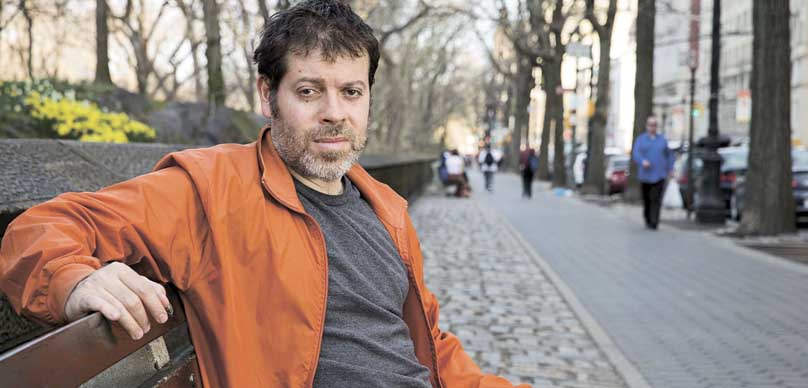
BPS 114: Inside Secrets to Blockbuster Screenwriting with Boaz Yakin

We have for you on the show today screenwriter and director, Boaz Yakin, The writer behind The Punisher, Dirty Dancing: Havana Nights, The Rookie, & Safe and directing, The Fresh, Remember the Titans and the comedy-drama, Uptown Girl among others.

Growing up in a talented theatrical family, it was only natural for Yakin to pursue a life in film or some sort of performing arts. His dad, who was a teacher at Juilliard and a theater director enrolled Boaz into the famous Stell Adler script analysis class when he was only 17 years old. Thereafter, he tried out film school at US City college, later transferred to NYU, before quitting school after his first script was auctioned and got him in the door at 19 years old.

At age 22, Yakin wrote his first produced film, Marvel’s The Punisher. When Frank Castle’s family is murdered by criminals, he wages war on crime as a vigilante assassin known only as The Punisher.

In 1990, Yakin co-wrote one of the action films of the times, The Rookie, starring star boy Charlie Sheen, and Clint Eastwood who also directed the film.

But his big hit came right after, FRESH, Yakin’s directorial debut is an emotional coming of age story, that offers a realistic glimpse of the dangerous life in New York City’s projects during the crack epidemic.

Michael, nicknamed Fresh, a 12-year-old kid running drugs for gangsters, notably Esteban, inspired by the chess lessons of his father, an alcoholic speed-chess master played by Samuel L. Jackson. Fresh devises and executes a brilliant plan to extricate himself and his drug-addicted sister from their hopeless lives.

Next up for Boaz was directing the box-office smash REMEMBER THE TITANS.

Academy Award® winner Denzel Washington shines in REMEMBER THE TITANS. Based on real events, this remarkable story celebrates how a town torn apart by friction and mistrust comes together in triumphant harmony. After leading his team to fifteen winning seasons, beloved football coach Bill Yoast (Will Patton) is demoted and replaced by tough, opinionated Herman Boone (Washington).

How these two men overcome their differences and turn a group of hostile young men into champions is a remarkable portrait of courage and perseverance. You and your family will never forget the Titans!

His blockbuster smash, Now You See Me featured big industry names like Morgan Freeman, Jesse Eisenberg, Isla Fisher, Dave Franco, Mark Ruffalo, Woody Harrelson, Michael Caine, etc. The $75 million budget film grossed $351.7 dollars.

The plot follows an FBI agent and an Interpol detective who track and attempt to bring to justice a team of magicians who pull off bank heists and robberies during their performances and reward their audiences with the money.

Boaz continued his blockbuster ways by working on the $200 million tentpole film Prince of Persia: The Sands of Time, starring Jake Gyllenhaal.

A young fugitive Prince and Princess must stop a villain who unknowingly threatens to destroy the world with a special dagger that enables the magic sand inside to reverse time.

Boaz and I chatted about his creative process, the business side and political side of screenwriting and directing in Hollywood during this conversation. He was extremely raw and honest about what it really is like working inside the Hollywood machine.

Enjoy this conversation with Boaz Yakin.

Right-click here to download the MP3

LINKS

SPONSORS

  1. Bulletproof Script Coverage – Get Your Screenplay Read by Hollywood Professionals
  2. AudibleGet a Free Screenwriting Audiobook

Alex Ferrari 2:15
Now guys Today on the show we have Writer Director, Boaz Yakin. Now Boaz has been a successful screenwriter and director in Hollywood since the early 90s. He wrote a couple of my favorite late 80s early 90s films The Punisher starring doff longeron and the rookie starring Charlie Sheen and Clint Eastwood. He made his directorial debut with his first film fresh which you wrote and directed, and went on to direct Remember the Titans and writing scripts like uptown girls Dirty Dancing Havana nights, the Prince of Persia, the sands of time, the blockbuster smash, now you see me and directing films like safe with Jason Stapleton and the family film, Max. And that's just to name a few. I had the pleasure of sitting down with Boaz and just going into the weeds in regards to his creative process, the business side and politics side of screenwriting and directing in Hollywood. And to be honest, he was extremely forthcoming, raw and honest about what it really is like working and building a very stellar career in Hollywood. So without any further ado, please enjoy my conversation with Boaz Yakin. I like to welcome the show Boaz Yakin.

And how you doing, buddy?

Boaz Yakin 3:43
I'm great. Thank you for having me, Alex.

Alex Ferrari 3:45
Oh, man, thank you so much for being on the show, man. Like I was saying, before we got started. I'm a fan. I've been a fan of yours for a while of films, you've written songs you've directed for sure. And it's, you know, it's, I just wanted to have you on the show to talk shop, man.

Boaz Yakin 4:00
Thank you. I'm glad to do it.

Alex Ferrari 4:01
So. So um, so first and foremost, how did you get into the business?

Boaz Yakin 4:07
Wow. Now this is a long time ago. Right? I know.

Alex Ferrari 4:11
You were only 25 bucks. How is that?

Boaz Yakin 4:13
Yeah. I haven't seen that for a long time. I, I was, you know, I grew up in a very with a very theatrical family. So it's kind of a family business. My father's a teacher at Juilliard and a theatre director and I always had that in my life, you know. And, in fact, I was lucky enough that when I was in high school, my dad got me into Stella Adler ad with a great acting teacher Stella Adler's script analysis class when I was 16 0 17. She never let anyone my age. See her classes and that was probably the most important school I ever got. was hearing her break down plays from the social Economic, religious personal perspective. And it really filled me up even as a teenager with an appreciation and a love for writing, even though it was ostensibly an acting class. And I thought I wanted to become an actor and I didn't get into Juilliard. And almost immediately after I went to film school, I went to a US city college because my grades were so bad in high school, I had to go to City College, and then I did get into NYU for a year. And this is a long time ago, this is the 80s. Now, what I think a lot of people don't necessarily understand, who are younger, is it screenwriting and getting into the movies wasn't as popular of a thing back then, as it is now. So for instance, I could get into NYU with grades that were pretty shitty. Today, I would never, ever get into Tisch, like with the grades that I got into Tisch with in the 80s, right. And I, I remember, my some teacher, one of my film teachers gave a course, a few days of how to get into the movie business. And it was all about like, you know, getting into a production company and working in internships and all this kind of stuff. And I have to say, I had a panic attack, because I hate real work. And I kind of attacked him after class. And I was like, Dude, what do you do to be a movie director? I can't listen to all this production companies. And he was nice enough, he said, Let me take you out to lunch. And he took me out to lunch. And he told me that a lot of directors start out as writers it was editors decides that I can do that. Right. So I actually wrote a screenplay on my spare time, when I was a sophomore at NYU. And my dad knew a guy who knew a guy, you know, and I'd sent him the script. And next thing I knew an agent from LA was calling me up saying I want to, I think I can option your script. And he did, he auctioned it. And I optioned it to a producer who had, at the time was already older and had produced some big films like he had produced the exorcist and a couple of things. And I auctioned the script. And I ended up moving to Hollywood, at like, 20- 19 years old actually left school. And I was terrified. But I came out here to work. And I started a career very, very young. I didn't the script never got made that it up. But it got me in the door, took a while for me to get stuff made. But I got in the door, and I started working, that must have been like 1986 or something.

Alex Ferrari 7:34
So the film that you wrote your first produced credit that I saw, which is because during that time 88, 89 I was working with a video store, I was still in high school. So between basically between 87 to 93, I'll go head to head with anybody in general pursuit, as far as film are concerned. So you made a few films, or you written a few films during that time. That was the hidden one of them being you wrote the first Punisher

Boaz Yakin 8:07
Yeah, I did. Was I mean, it was rewritten, rewritten by the producer would have been a lot better if it hadn't been but

Alex Ferrari 8:16
the theme of the show I hear,

Boaz Yakin 8:18
yeah, well, no, sometimes your shit, isn't that good. And someone else makes it better. I mean, that's happened to me once or twice. But but that time, it was just that Yeah, I was very young. I was like, 22. And I pitched them The Punisher idea. No one was making superhero movies at that time. In fact, you know, and, and it got made, it got made

Alex Ferrari 8:41
within a pitch the Punisher, and then then they went, they called up Marvel and said, Hey, can we get the rights to me?

Boaz Yakin 8:47
Yeah. And remember, at the time, Marvel, no one was making Marvel movies they were making like Captain America, and like weird rubbers are so bad. Like, and it was like, did you know so no one was making Marvel movies. Basically, yeah, I pitched the Punisher to this mentor of mine, who was a producer as well as a writer, and took it over to new line or new new world new worlds pictures, not new world pictures. And they went for it. And I wrote it. And what was interesting was that a lot of the time, their concern was it was to comic books. Right? Meaning that like, he had a skull on the shirt and all this stuff. So they changed a bunch of that stuff. And then very shortly afterwards, the Batman film The Tim Burton did, came out. And sort of right, they were around the same exact time or right afterwards. And it sort of changed the game in terms of what people were willing to do and how they were willing to approach it. But yeah, that was my first produced credit.

Alex Ferrari 9:45
So that for people not around at that time, in 1989, which is an amazing year for films. You couldn't walk the street without seeing a bathroom somewhere.

Boaz Yakin 9:57
Yes, that's right. Very big.

Alex Ferrari 10:00
It was everywhere. And it's so funny like punishers alerts and comic books. But because Batman is not comic books at all,

Boaz Yakin 10:11
But they really went for it with that with that version of the film. And that kind of opened things up for people a lot.

Alex Ferrari 10:17
Yeah, and that's, that's something a lot of screenwriters starting out have to understand is when you are, and even when you're more established you once you sell that script, unless you're a producer and or director on it, the powers you kind of let go, it's like you put it out.

Boaz Yakin 10:34
You know, I mean, obviously, I've managed to move into directing, after some years and all that. But one thing that I always, at the time when I was young, and I wrote scripts, I found it very painful to like write something and then have it taken away and completely reworked by somebody else. At this point in my life, when I'm writing a, quote, unquote, studio type film or something like that, I just for It's been years now I just want to do a draft or two, and then please fire me and take it. And like, you basically know that unless two or three other people rewrite your script, it's not going to get made

Alex Ferrari 11:17
Right.

Boaz Yakin 11:18
So when you're dealing with more personal films, with independent films, that's a completely separate story. When you're dealing in the studio system, you do a lot better for your health and mental well being understanding that you're part of a factory, that there is zero personal element involved, that you have to just be willing to like do your best as a craftsman and a professional, which doesn't mean you're not doing good work, right? It just means that you're treating it as a craftsman and as a professional, and hope that whatever combination of elements comes together and that they go make it somehow and that you make some money. But as a young person, you have this dream as a writer, whatever, that somehow Your voice is meaningful and that the film is going to reflect with it. Forget about it. So you know that that's definitely a learning experience. I think that screenwriters go through.

Alex Ferrari 12:13
Yeah, cuz everyone can, I'm going to be Storkin or I'm going to be Terrantino no first script out. I'm like,

Boaz Yakin 12:18
Well, but don't forget that Quentin direct his own movies. He's a filmmaker, right? PT Anderson direct his own movies. Wes Anderson direct his own room, right there. If you're going to be a script writer, it's a whole different story. You may be Aaron Sorkin you know, some of it, you know, he was also for the most part, someone who did television. I mean, he did a few features, right. But his his real, his real kind of claim to fame is television. And in television, the writers can, which is very different than feature films. That is a different world when we talk about TV, and now TV is much bigger, right? Like network, like, the writer in the writers room. And the executive producer is a different story in movies, the writer is not in the same position as the writer isn't in television.

Alex Ferrari 13:06
So then after the Punisher, you do another one of my favorite films of that time period, which is the Rookie with ..., it was in my mind,

Boaz Yakin 13:15
it's hard for me to talk about these things, you know what I mean? But like, Okay, why not?

Alex Ferrari 13:21
And the rookie, in my mind, I remember it fondly. I don't I don't want to watch it again. Right now, because I love the memory that I have of it. And then you know, start start a Clint Eastwood and a young, a young Charlie Sheen. So it was it was a warner brothers film, it was it was a studio project.

Boaz Yakin 13:39
Yeah. And look, I have to say I'm grateful, immensely grateful for it in the sense that like, first of all, it was I was 23 years old. It was a lot of money. And not just that, Clint was incredibly generous with me. And allowed me to watch him direct the whole film. I was there behind this, that the monitor the whole time and never spoke. But I got to watch his process. I got to see the way he ran a set, I got to understand the way he set up shots and constructed sequences. And it was an incredible film school. For me, it was probably the greatest film school I've ever had was just to sit behind Clint and watch him direct the whole film. And, you know, there's not a lot of actually, as I've learned, there's not a lot of filmmakers that would even allow a writer on set for more than two minutes, or two days, you know, and the fact that as long as I shut up, he let me sit there and just watch every day was was really something and when I directed my first film, so many of the lessons that I learned from from Clint Eastwood were there. So I'm forever grateful for it.

Alex Ferrari 14:52
And it's so funny because I was talking on the show to John Lee Hancock, who also did a movie with plant called a perfect world and he did yeah. The exact same thing he did with John Lee was just like, now I'm hearing it. And I'm hearing these stories as I'm talking to people who have worked with him. He does that for writers. And he didn't leave you and young people, just writers who were directors yet.

Boaz Yakin 15:15
Yeah. And he's he's very generous and very giving. And the thing that was really interesting about watching him direct. One of the things that's amazing, and really was something I learned from, aside from the creative aspect was how drama free Clint is, and how much he likes a drama free environment and how little he'll tolerate, you know, excessive, you know, emotions and like, and I appreciated that I love a quiet professional environment without drama without bullshit, you know, and I've had it, because I'm not Clint and people create that, you know, but as an aspirational work environment, it really did teach me a lot. But the other thing that's interesting about and I know this is about writing, but that's really great about watching Clint work is that Clint does very, very little planning, right? Like sometimes he'd show up on the set, and it would pick up or he'd go in a location scout and he'd see the set for the first time on the location scout. And he would basically plan out how to do a scene on the way to work, right? He didn't have a lot of shortlist, no storyboards, no nothing. And what that did was it created an environment where essentially, you're watching the person construct the scene right in front of you, right? There's nothing more boring than to watch a director's coming in with all of this planning and all the storyboards and everything. You're basically watching something that's completely pre planned. I mean, it can be fantastic, right? But with Clint, you really got to watch him create the scene on the spot. So you learn. And what was interesting for me was that like, after a few weeks, I could literally tell you where he was going to put the camera next from what to like, and be right 25 to 30% of the time, like, because I started to understand the process of how something was constructed. You know, and it really was an incredible film school on that particular way.

Alex Ferrari 17:16
That's amazing. That's an IT he did he directed he directed the movie too, right.

Boaz Yakin 17:20
Yeah, he starred and directed it.

Alex Ferrari 17:22
He directed Yeah, because it well, we could talk about calling for hours. But that's a whole other. That's a whole other show for another episode. Now, how did you make your jump? Because I know a lot of screenwriters listening to like I want to direct How did you make that jump from that to fresh which is your directorial debut?

Boaz Yakin 17:39
Well, what really happened was, you know, I am, you know, when you're young and kind of like your life is like that John Fabra movie in LA what was that movie?

Alex Ferrari 17:49
It is Swingers were

Boaz Yakin 17:49
Swingers, right? Like, yeah, like, that's literally what it was like to be 20 something in Los Angeles at that time. And you I didn't even enjoy that movie, because I was just kind of like, this is not like, it is boring. Like what happens when I walk outside? You know, now you watch it. You're like, God, super entertaining. And then, you know, but at the time, it was just like, what this shit like, no, but But anyway, that's it pretty much exactly what our lives were like. So I had a number of friends that I was making at the time, right? And a couple of my best friends was like this, this guy called Scott Spiegel, who co wrote Evil Dead two with Sam Raimi. And my friend Lawrence Bender, who was just an aspiring producer at the time, and, and I had put them together, I knew them separately, and they made Lawrence produced this little horror movie Scott did on Trudeau. Right

Alex Ferrari 18:39
Right.

Boaz Yakin 18:40
And after the rookie got made, honestly, I had gotten to a place which is, by the way, still, what I struggle with all the time in this creative field that we're in is that, you know, I started out trying to write commercial films and action films and all that, but I very quickly, so quickly, because I was only barely 23 realized it's not very much what I wanted to do at all with my life. And actually, I decided to quit the business and go live in Paris and write a book like, like most young Americans off to try and do. But before I left, I put together Scotty and my friend Lawrence, and I had met Quentin Tarantino through my friend Sheldon. And both Scotty and I were like, I was like, you gotta meet Scotty and Scotty actually ended up becoming friendly with Lawrence. And he introduced Lawrence to Quentin. And so while I'm in Paris, Lawrence and Quentin went away and made Reservoir Dogs. And I really had wanted to leave the business and so on. And I did write my book that never got published. And when I came back, Lawrence and Quentin had finished the movie and it had gotten some kind of like some real hype behind it. And it was Lawrence who pulled me back in Lawrence was kind of like Boaz. If you read the script, I think that we make can make for a low enough budget. I think I can get the money for it and so I spent half a year or however long researching and writing trash it took me a while on that one It took us a while to find the funds some French financing and we made the movie but that's that's how it came together It was actually Lawrence who pulled me back in after I was going to quit you know?

Alex Ferrari 20:21
Yeah. And from what I heard is more inset that as legend goes more into the one that'll quit and Hey, give me a minute. I'm gonna see if I can find money he's like, Man, I'm just gonna do this 50 grand with some friends on the weekend it that's why

Boaz Yakin 20:35
That's actually true Lawrence connected with Monte Hellman and with I think Lawrence pulled in Harvey titled said give me a little time. And he pulled on Harvey Keitel and managed to make the movie for like a million something rather than 30 - 40,000. So the Lawrence was the Lawrence was instrumental in that.

Alex Ferrari 20:52
Now, I'm one of the films that you directed that I absolutely adore. And I've seen as participant encounters Remember the Titans. It was just such a wonderful, wonderful film. How did you get involved in that because you didn't write that one right? You were just a director?

Boaz Yakin 21:07
I mean, I did rewrites But no, I look it was I had made I had made fresh. I made a movie about a frustrated Hasidic housewife with her nasal webinar called a price of always a popular genre. Backdrop is pasta has Coulter box office go frustrated see them. Although they didn't really did one on Netflix this this year that got a lot of attention, I have to say. It's called was it called Unreligious or something that I don't remember. Shira Haas was fantastic. And anyway, but um, I was actually in a position where I was having a hard time as I always find myself a hard time getting anything made. The Bruckheimer people reached out to me about the movie, and frankly, I would, you know, the truth of the situation is this. None of the big directors that they wanted to, for that movie, were willing to do it because Disney was only giving them a very limited budget. So the usual Bruckheimer suspects, you know, Tony Scott, people like that, we're just like, I'm not gonna do this,

Alex Ferrari 22:13
I don't, I don't get I don't get up for less than 100. Now

Boaz Yakin 22:16
He was doing what he does sometimes, which is he then looks for like an independent, whatever, someone that he can bring in. And I needed a job. I had no interest in making a football film or a Disney film. And that, you know, but I recognize that if I didn't try and do something like that, that I was going to be in trouble. And I kind of audition for it. I The script was like, 140 pages long. And then one weekend, I kind of cut 40 pages out and restructured things and showed it to them. And they were like, Okay, you've got the job. And I went in and I made it. I wish I had been less conflicted about it and enjoyed the process more, it was very challenging to make a film that became like, by far the most successful film I could have made. And it was the film I was the least interested in, in many ways at the same time, you know, and that's always a blow in some way. I wish I had handled it better. And with a little bit more fun and grace, but I it's it's sort of what, what ended up happening.

Alex Ferrari 23:22
Yeah. And it wasn't, it was a fairly big hit. I remember,

Boaz Yakin 23:25
I was a huge hit, and it's very watchable till this day. So

Alex Ferrari 23:30
I mean, I could turn it on with my girls. And we just watched it, it just, it's just such a it's just that that twist the heartbreaking scene and you're like, Oh, my God, like there's still emotion, so much emotion in that. And what was it like working with Intel on that project and directing it? Once you're, you're out? You got to? You got to two features under your belt at that point, right? And then yeah,

Boaz Yakin 23:49
mismatched features.

Alex Ferrari 23:50
Is that right? So then you got Denzel who was Denzel at that time, he still stands out.

Boaz Yakin 23:54
He was Denzel. He wasn't Denzel post Titans and post training day which he made those two movies one two punch really solidified themselves, like the major star, but at the time, he he still was, you know, he still was Denzel Washington. And you know, I, I can't say that. It's like, I direct you basically just where are you going to be you know, and then Okay, let's make the medium shot and but, you know, we he knew what he was doing to an extremely high degree. I think he was seeing the same movie as I was, you know, and so it went pretty smoothly in that regard.

Alex Ferrari 24:35
Now, let me ask you, when you when you write, do you start with character? Or do you start with plot? I always look at the question.

Boaz Yakin 24:45
I think I always start with character. Always except the man even, except for when I'm trying to come up with a more commercial Hollywood type idea. Then sometimes you think about plot, no, of course, plot always involves character in the sense of, there's this guy, or this gal who does this, and this is their problem. And this is what they're trying to solve, oh, it's about a spider fell out of the sky, you know, I don't know, it's always a character. It's always a human being. But, you know, with a more sort of, quote, unquote, commercial ideas, you know, you tend to think more of the situation. You know, and and I think with more personal work, you think more about the emotional and kind of his social emotional situation and the person's. But it does always start with with the character.

Alex Ferrari 25:38
Now, what, what advice would you give writers who, to on how to write a good protagonist? Something that like that can drive that story?

Boaz Yakin 25:49
Wow, I mean, that's such a personal kind of a thing. You know, I mean, I don't even know how to advise someone on something like that. Not not being evasive. But I do think, I guess, I mean, again, it's different when you're writing a studio film, and when you're writing a personal kind of a piece, it's quite different, although maybe certain similar rules apply, in terms of not being boring, and so on. But I think a strong connection to what that person wants, and meet, or at least what that person is searching for, even if it's unspecific. Right, because I mean, I think that's the thing that I think is sort of frustrating about trying to write commercial films or is that, you know, people are always asked to kind of come up with a very specific want or need or desire that somebody has. And if a person isn't driven in a particular direction, people have very little patience for it. Whereas I find that a lot of times, human beings, right, we are in an ambivalent state. And that a lot of stories that are interesting to me are about ambivalent people who are in a particular cycle of their lives. And somehow something happens to them in that space, that moves them into recognizing what it is that they are needing or wanting, or connecting to, and so on. But I always find myself starting from a very ambivalent state. And I think it makes for interesting pieces, but it makes for pieces that take more patients in the opening stages for an audience to get into, does that make sense?

Alex Ferrari 27:42
It makes perfect sense. It makes perfect sense. One area that that is not really talked about enough, I think with screenwriters, and I think this is where screenwriters and filmmakers for that matter, get sideswiped in our business is the politics behind the scenes, the stuff that you have to deal with, about how to get that how to get us to finance how to how to deal with personalities, how to deal with ego, how to deal with agendas. Do you have any advice? Because obviously, you've been able to navigate these waters

Boaz Yakin 28:14
Not so well all the time. I mean, when you think about the fact that I've been in the film business for 30 years

Alex Ferrari 28:21
Right,

Boaz Yakin 28:22
Like, the amount of scripts that I've actually had out there that got made or that you know, hey, the most personal work I've done, I paid for myself. Like the to like the movie, I just made a Viva this other movie I made it's very dark and painful and personal death and love. I paid for them with my life savings, no one finance them. You know, and not not a lot of people do that. And the last one I did before that this little strange little kitsch horror movie thing I did called boarding school. Like, I paid for a ton of it. Not all of it, but for a ton of it. And it's it's very, like, it is very challenging. And, you know, making a movie, even a lower budget movie. That's the thing, right? That that's the thing that's so difficult with our business, right, is that it takes so much money to make a movie, even if it's a small film, right? Even if it's a few, even if you're talking about a mic what they call a micro budget movie. Hey $150,000 in the real world is a fuckload of money, right? And people don't want to give you their $150,000 any more than some big company wants to give you $15 million. Right. And everyone wants to know there's going to be a return on their investment and Odetta. And it makes for a completely uncreative not risk taking, not kind of encouraging exploration environment, especially here in the states where you have no funding from like the government or anything like that, right? So there is no Lars von Trier here. There is no, there is no Thomas vinterberg here, right like it. There are good filmmakers here. Right. The Cohens are incredible. But somehow that filmmaker has to find the Zeitgeist that that work, they have to fit their work into an environment that makes a certain amount of money, right. And they have to, you can't really explore or, and fuck up and discover the way you can. And other art forms the way writers can, or painters can or even musicians can write. And it makes for a very boring array of work.

Alex Ferrari 30:53
So when you talk about politics and trying to get your stuff work, like, I would easily say that 90% 95% of what I think the most interesting stuff I've written is never got to the light of day. Now, am I saying it's great, or that that it up? No, not at all. It's interesting, though. And that doesn't really cut it in our particular field, because people have to feel they're going to make money off it. So it's challenging. And if you want to be a script writer, and if you want to sell your work, and if you want to be a solid, you know, you have to make sure your work can fit stars in it still till this day, and that actors who have some kind of a name are going to want to do it. It has to sort of fit cleanly into some kind of genre that people feel they can make money from. And, you know, anything that isn't that is very infrequent.

Right? And even when you were coming up, I mean, look, can you imagine taxi driver? Or Raging Bull? Getting finance today? I mean

Boaz Yakin 31:58
No, no, the differences. I mean, we all know that, like movies with the actual budgets that feature, you know, production value, and all that, that you can make with certain stars and all that in the late 60s 70s, very early 80s, that doesn't exist anymore. They take more chances with streaming shows and things like, you know, the taxi driver of then became the Breaking Bad of today, right where you have? No, but I will say this as much as they take chances. And they have like, you know, dark protagonists and things like that, right? All started by the sopranos, I suppose, right? Like and all that. The fact that these things need to go on for three, four years, to me inherently saps them. Have for me personally, have a genuine creative perspective. So at that creative art, I guess it's such a silly word artistic or something like that.

Alex Ferrari 32:59
I understand what there's like, like, there are there, there's this film, there's a shows that just go go go go. But something like Breaking Bad. Who this event actually said it this is this is the arc. It's five seasons, this is how long they wanted.

Boaz Yakin 33:12
I mean, five fucking seasons of it. Like, I mean, it's a good, right. But after a few episodes are like I get it, he's breaking bad. I mean, what more do you need? Like, what can you say in five years that the Godfather two couldn't say in about three hours? And I'm not saying you know, and I don't know. So. And by its nature, it becomes diluted. There's like a ton of directors, even if some of them are very good. There's a writers room filled with writers

Alex Ferrari 33:42
a different vibe.

Boaz Yakin 33:43
It's a it's a product of some kind, it can be wonderful. It can be a great show that people love, like the wire or whatever. But it's still a product, a corporate product. Whereas there is still something to an individual film, you know, whether you're watching, you know, the master by PP Anderson or Grand Budapest Hotel, by west or some where you go. It's a piece, it's other piece. It's complete in a division, its perspective, it says what it wants to say. And that's it, you know, that that day is close to being done. And it was certainly easier in the 80s was already getting more difficult than it was in the 70s. And in the 60s. That now I think it's completely shifted.

Alex Ferrari 34:34
Well, I mean, if you look, if you look at Well, first of all, I think that one thing you said the product television is it's close to a product as we can create in our industry. Because you know, like that bottle you're drinking from right now that's a product. It's a battle. It's a price you make it for certain costs, and you get certain you get, you know, markup and that's it. Television is the closest thing we have to that that's why they just keep pumping them out because you can keep pumping up product product.

Boaz Yakin 35:00
A lot of super talented people doing it. Oh, and making high level writing high level work apps. And yet, there's something about it.

Alex Ferrari 35:11
No, I get I get you. But if you look, you're saying that, you know, you were sent mentioning Wes and MPP. And these guys, I'm noticing that films that actually get some budget, have some star power is rarely the young, unknown directors anymore, or even the young, you know, maybe have one or two, it's the colon, that it's the guy that came up in the 90s. In the early 2000s. The had those they came in at that right time, and they're there, they've got the keys to the castle to keep doing that. I mean, Woody did it for

Boaz Yakin 35:45
Well, you know, what happens now? What happens now, it's sort of like, you know, it's what happened was, like, because the corporate structure is become so overwhelming, like, right, like, you can't be a robot, like, you can't be the class anymore. And like, do four or five album and then finally, like, the media realizes, oh, shit, the class is awesome. And then put them on a tour with the who were already bloated and all that stuff. And then the class basically fall apart. But they've had like five fucking class albums before they, you know, the rock, the Cavs Bon Iver commercial, and it's done. Right. Right now, if someone does something successful for two seconds, Disney marked like big jump on these kids. And some kid who just did like, you know, a great first Sundance movie or whatever it is. The next thing you know, is they're directing like some gigantic Marvel movie they've been set or a jurassic park or whatever it is. And that's also what people want, like, people are starting to approach this idea of making their first film or whatever as this sort of like, entree into like, the main corporate product. And so you get good first films still. But you almost never get to second, or third or fourth, right? It's like if you went and made Reservoir Dogs, and the next thing he did was direct, you know, Captain Marvel, whatever, you would have never gotten Pulp Fiction, right? Never. And that's the difference is that people are still making Reservoir Dogs here and there or, you know, their versions of it. that no one's doing the second one and the third one and the fourth one that really allows a voice to grow. That's what was had that PT Anderson Wes Anderson, Quint, the Cohens huge, I mean, they're the best American filmmakers right now. Like, today, you do one thing, that's good. And the corporations are just all over you. And it's super tempting. You can't blame somebody. And it's getting harder and harder to get financing for second and third films, right. So essentially, it's almost like a little beauty contest making that first films like this little beauty contest, so that you get picked up by the corporations.

Alex Ferrari 38:08
And it sucks. No, and it's really good to like right now. So if today, Joel and Ethan, bust out blood simple, then the net, they're there on a Netflix series, or they're they're doing a Marvel film or or they're doing a gritty Star Wars Show. I mean, it's, you don't get

Boaz Yakin 38:29
And what's kind of, I don't need to go dark with it. But what's kind of depressing is how much what once was like a synopsis he asked and kind of like, film lover community, right has basically been co opted by the corporations into becoming this sort of Geek community that just like, will argue about, you know, how big hammer should be or whatever it is. And they genuinely care about this stuff. Whereas once that type of person was caring about, you know, what the next Scorsese movie was, or what the next parent you know, Terrence Malick movie was and now it's become this kind of I don't know what you even call it,

Alex Ferrari 39:19
It's, it's like it's a different thing. I mean, it's the basically now people listen to like, Oh, these two old farts are just talking about the good.

Boaz Yakin 39:28
I I enjoy. It's like, the thing that that I find difficult is that it's not like is that people have the priorities are so weird. It's like, people aren't looking at like these gigantic entertainment. Like we used to look at these gigantic studio entertainment movies, whether it was Indiana Jones or whatever. In the day. It's like, oh, man, this is so much fun. I'm like, this is so much fun. It's so entertaining. This is great, like fun product, but I'm going to put my attempt Going into something else, my attention, my critical faculties, my discernment, my my real focus into something else as both a fan, a critic, a, you know, a creative person. But that level, I mean, their level of attention paid to stuff that's essentially well made version of McDonald's hamburgers. It's like, and the kind of discussion that that gets is what has flipped from the way things used to be. So anyway, folks getting around to shipping,

Alex Ferrari 40:40
I mean, but there's still the Criterion Collection for the rest of us. And we get it. And we get to do that still. And I remember like, I had my laser dip. And I had, you know, with with Scorsese commentary, and Coco commentary, and Dracula, and I'm listening to them. And that's the cinephile in it. But yeah, it's, it's just a different world. And there's nothing that's been wrong,

Boaz Yakin 41:00
I have to admit that as an American. I mean, not to be like that. America bothers me. Like, my brother. And I just did this deep dive again, into like, how yummy is Jackie's entire, you know, old one, or smorgasbord? Or smorgasbord. You know, she's a genius of some kind, right? And he's a genius. And he is a popular filmmaker. I mean, he is the Disney of Japan, like he is the Spielberg and Disney wrapped up into one of Japan. All over the world. His movies are like enormous. And in the States, finally, because of like, they're on Disney plus, whatever, you know, people have finally seen a little bit but no one talks about it. Right? Like, that's not what people do here. I'm not saying it's not possible to make beautiful popular films. But I just feel like our particular culture and our particular filmmaking culture is is is pretty frustrating. I get it. I get it on in 10%. I understand exactly what you're saying.

Alex Ferrari 42:08
And we can keep going down this path for a while but

Boaz Yakin 42:12
Okay we'll go with another path. What path would you like to go down?

Alex Ferrari 42:16
So now the you actually wrote a sequel to a beloved classic called dirty dancer, and you deserted dancing Havana nights now? I particularly liked. I liked it a lot, because I'm Cuban. But you know, Viper,

Boaz Yakin 42:31
Really talking about things I'd rather not talk about anytime.

Alex Ferrari 42:36
I loved it. I thought it was a lot of fun. watching that.

Boaz Yakin 42:41
Glad you did.

Alex Ferrari 42:43
Apparently, I'm the only one is what you're saying.

Boaz Yakin 42:46
I think you're like the only one. Like I find it very difficult that it's on my IMDB page. And when I do when and when I do something else people always like Oh, the guy who wrote Dirty Dancing too. And you're like I did a fucking written you know? Wish. I know I come off like the crankiest person in the world. I'm not really but here's something is difficult talking about screenwriting. By the way,

Alex Ferrari 43:14
Sure go ahead

Boaz Yakin 43:18
as script writers, we have to make a living. Right. And I say this, you know, in thought, like, we have to make a living. There are a few brilliant people, like Quentin or PT, or whatever that everything they like to do is what other people like to see. And they managed to like, right? A lot of us have to make a living, because this stuff that we make our independent stuff isn't as successful, blah, blah, blah, you've got to keep a roof over your head, right? And what you can't do as a filmmaker is having non diploma, right? You can't have a non diploma, like when I do rewrites for Jerry or for whatever My name is, you know, jack Ryan, you know, and when I do my own stuff, it's Bo as a key because there's a lot of egos involved and a lot of people's pride involved. Right. And so like if you're going to do a rewrite for a producer on a project and everyone Hey, my name is good enough to be on this movie. What your net, it's not good enough for you. You know. Larimer McMurtry said something really interesting in this book about script writing he wrote called stone plan. You know, and it's like a series of essays about filmmaking. He's a fantastic novelist is right. And he's written some beautiful scripts. That's not really been his focus, but so he has some interesting and always funny and biting stories about Hollywood. And the thing that he says it's so interesting for anyone who takes Script meetings or tries to get jobs in the screenwriter or whatever is that there's this sort of illusion in our business, that you need to be passionate about the material that you're working on. Right? That like, when you're going to take that writing job for that script about the dog who flies and saves the day that you can't come in there and say, yeah, you know, I'd like to do this, because I just got a kid and I need to build an addendum to the house, and I can really use that. $150,000. So, yeah, I'm down to write the story about the dog with the cake. Right? You have to come in there and be like, you know, when I was a kid, I had a dog. And, and, and you know, and the dog died when I was 14. And I realized that dog meant so much to me. And I can really identify with this material, I think it's going to speak to everyone who loves it. Right. Right. And as Larry McMurtry says, some of the worst work ever done has been done by people passionate about that work. And some really incredible work has been done by professionals who, you know, decide not to do and who decided to do something because they needed to pay the rent and put their craft and imagination and intelligence do it, and fucking knocked it out. Right? Like, like whoever wrote, I don't know, anyway, I'm not going to get into specifics, but there's a lot of very good commercial work that's been done by people who did it with a sense of commitment, and and, and intelligence and professionalism, but not because they were dying to tell that particular fucking story, right. And I think that that sort of illusion that we need to create that we're so passionate about everything we do, because otherwise you won't get hired, basically puts people in a situation where a lot of the work that you see like a lot of you know, an A name on a script, like whether it's dirty dancing to or whatever it is, it's like, yeah, you know, you did a job, there were four writers on it, what your, what that piece ended up being has very little to do with what you actually wrote and maybe recognize three words of it, and some structural changes that you put into it, that were deemed significant enough by the Writers Guild committee to give you a credit, right? And you're happy about it, because it means you get residuals, and you got a credit. And that means you might get another job, right? But does it reflect you as a creative person? No. And you could argue, well, then don't do the jobs that don't reflect you as a creative person. Right? If that's going to be something difficult for you later on in life, don't do that job. Don't do things that you don't believe in. I get that point of view. I know people who haven't done it, and I've done well, I know people who haven't done it and are like, out of the business. And for me, it's always been this sort of juggling act of trying to find a way to do things that I like to do that really do reflect my perspective. And things that you go back. If I don't make some money this year, I'm fine. Oh, you know, this thing? Yeah, sure. I'm down. I know how to do that. Right. And that's the thing, that being a professional, you know what I mean?

Alex Ferrari 48:16
I love I love that you bring this up, because it is a almost a myth, that the struggling artists that so passionate about everything they do, and you know what, of course, you know, at a certain level, your private things and things that you do are at that, like, I'm passionate and passionate. But man, when I was coming up, I would take jobs directing stuff that I'm like, I don't want you know, or I would do, I would do post and I'm like, I don't even I don't even want my name on. You know, but it was it was it was a paycheck, and you have to do and that's what a professional is. Yes. Like you said, there are those few geniuses who gets do both, but that those are anomalies. You know, the Coen Brothers barn anomaly. pcns is an anomaly Wes Anderson's an anomaly Tarantino's an anomaly, these guys are anomaly in our business. So for the rest of us, sometimes you got to take jobs that you might not be happy with, or do something else, or figure another way out to tell your stories. I mean, I know the duplass brothers, they just dropped their budget down to a place where like, I could do whatever the hell I want. And they just go out and do it. Great. If that's the kind of storytelling you want to do, and that makes you happy as an artist. Great. I mean, I heard the story when the duplass brothers were brought into Marvel, and they were offered a movie and they're like, yeah, we're good. Yeah, we're, we don't want to do that. Because they understood what was that going to be entailed? Let them kind of talk about today. But that is a myth that needs to be broken that you like it's all about the passion and it is about the passion but man you got to eat sometimes man or Yeah,

Boaz Yakin 49:45
I mean, look, I I just made a film that really was that. I mean, I basically I lucked out, in the sense that this movie that I wrote, I every once in a while I write something I'm like I have right so I wrote this piece. A dance movie about the this thing called a diva about the difficulty in being both in your masculine and feminine self and the struggle in that regard. So I did a story about a couple where I had four actors playing two people, a man and a woman playing each of the two characters. It's a dance movie. It's a sex movie. I mean, it's it's fun. It's so much sex and dance and experimental

Alex Ferrari 50:27
disulfide argument 500 million worldwide box office.

Boaz Yakin 50:30
Exactly. I i. And you know what, I, I got a surprise check. from years ago from this little comedy I made for a for MGM called uptown girls. were like, 15 years later, money that I didn't realize I was owed, suddenly came to me. And I was like, I'm making my movie. And I took that money. And I put it into making this movie. And I made it and i and i love it. It's unique. It's different. It's personal. If I had $20 million, I would just make 20 of these things and not give a shit who saw them or who didn't? But I don't. So after you make one of those things, suddenly you're like, Oh, fuck, what do I do? I guess I got to find a way to build again, to pay the bills, and to make sure that I can make another film or whatever it is. So it's this constant dance, you know?

Alex Ferrari 51:37
What I love about you was and what you're because, again, from if someone just let's say your IMDb, they just like, Oh, well, he's this and he's doing that. And you're just like, Look, man, I pasted this myself. I'm an artist. I'm still I'm still hustling. I'm you're still doing it the way you want to do it. The normal the normal mind. And I always tell this filmmakers, it's been the worst that we're we've been infected. It's a horrible disease that we have, because it lies dormant for years sometimes, and then comes back up. The normal human being would have seen that check and said, Oh, good, I could put it away. And they asked for security. Maybe I can invest it. You said, I can make my movie. That's what I love about that. I love about you.

Boaz Yakin 52:20
Well, yeah. And you know, I mean, I think the other thing that is very, again, we're not talking about our outlier, don't makers who both do exactly what they want to do and get funded funding for it and all that. But I think that a real hole that people fall into. And maybe it's good, I think in some ways, maybe I should have done a little bit more of it. But I it always freaked me out is that when you find a way that you're successful, you make Remember the Titans or whatever. The next thing you're offered is like 10, big sports movies or like another job. And I had that opportunity after that movie. And I kind of freaked out. And I was like, This isn't who I am, this isn't what I want to do. And if I go down this road, I don't think I'll ever remember who I really am. So I pulled back and tried to do my own thing with moderate levels of success, rather than, you know, pursue the thing that's most comfortable. And that makes me the most money. And I'm not advising it to anyone. I'm not advising it to anyone. But I am proud of the fact that at my age, and after doing this for a long time, I'm still when I can pull it together, experimenting and trying things I've never tried before, and trying to do things that are off the beaten path, rather than just sort of perfecting this thing that I quote unquote, know how to do over and over and over and over again, may be great for some people, and some people may be creatively inclined in that way. But I find that very uninteresting. You know,

Alex Ferrari 54:01
What i what i respect about what you're talking about what you're saying what you're doing is that you're still willing at this stage in your career that you've been in the business for a long time, you've done a bunch of stuff, you're still taking the swing at the bat, you're still taking swings at the bay at the fete where a lot of guys. And a lot of a lot of professionals who are at this point in their career. They just want to say say I'm just gonna do I'm gonna do the sport.

Boaz Yakin 54:23
I know people who want to stay safe the minute they do their first thing that does well okay, I've known a lot of people like that. Honestly, now that I'm getting older and I'm like starting to look at that like oh my God wouldn't be nice just to be on a beach in Hawaii for the rest of my fucking life and stop with this shit. Now, like go oh my god, what am I an idiot? Like? I think a million dollar good. You know, like, I would have been nice to have some money to buy that fucking house in Hawaii, right? Instead, I made this RTS movie that no one's ever gonna see. So it is it is it's a mixed bag but you know the Truth is, as someone dropped the check on me tomorrow, I would turn around and make another movie with it. Right? Yeah, I wouldn't like Hawaii. So maybe that's something.

Alex Ferrari 55:12
But that's the sickness. That is the sickness of being an artist, you know, and being a brave artist because there are artists who are brave and artists who are brave, and you are brave artists, no question about it. Now, you know, I was gonna ask you about Prince of Persia, was that the

Boaz Yakin 55:25
Rewrite?

Alex Ferrari 55:26
It's a rewrite. Okay. So,

Boaz Yakin 55:28
Actually, I love I became really good friends with the guy who created the video game and wrote the first draft, right, but that's very much an example of what I'm talking about in the Hollywood world, right? Like, there was a video game. Bruckheimer bought the video game and hired Jordan was a wonderful guy to write the original script, then they hired another writer to rewrite Jordan's script. Then they brought me on to rewrite the third writers, the second writers script, I did a bunch of work on it, a couple of drafts and then went, I think this is what I got for you guys. And then they hired two other guys to come on a writing team to come on. And they wrote the rest of the way for like, the next year and a half. The movie comes out, and it's like six people have written on it. I guess they decided that what I did had enough of left in it to have a credit. And that's a credit that you have, you know, and it's interesting, because people say, Oh, you wrote Prince of Persia right now like, yeah, I mean, I guess, is there two words in that thing that I did I that, you know, I don't even think so. But that's what that particular machine is. You make money. You get residuals, you get health benefits. This is the reality, dude, this is the reality of being a writer. And you cannot fucking complain about that. I mean, how many jobs are there in this world? Other than these fucking Elan musk types, right. But how many jobs are there in this world that you work on something for a few months, you make hundreds of 1000s of dollars, you get health benefits? If it does, well, later, and ancillary markets, you keep getting checks every year for a few $1,000 that you Whoa, I didn't reach out to you pay by the you know, $20,000 for Prince of Persia came in five years later, right? fucking amazing, right? So it's a factory, it's a machine, you do it to make a living? And that's, you know, I'll never get another job again. I'm sure if any one of these people listen to this.

Alex Ferrari 57:43
Or maybe you'll get the right job?

Boaz Yakin 57:44
Oh, no, I think I think people know, I think this, which is why sometimes I have a hard time getting those jobs, you know, and care about the dog with the cake. He doesn't care about the dog with the K I don't, but I'll do a good job. If I have to do it. You know what I mean? And and, and that's the thing, look, you know, what can I say? No, I get it. So. So when you when you What was your involvement with now you see me without an original or that? You know, that's an example of a friend of mine, a very good friend who's become who's actually a great person to talk to, because he's a writers writer, my friend and record. It worked for like 10 years, and I didn't mentor him a bit and co wrote something I mentored him had a lot of years of not succeeding, a lot of years of not succeeding. And he had this idea for a script that at the time, I remember we were sitting in a car, and he called it something insane, like poof, or something like that. And he was like about four magicians who robbed a bank in Vegas. And in Paris from the stage in Vegas. I was like, Ed, the dumbest idea I've ever heard, right? Like, I was just like, don't bother me. There's no money. There's no money here. No, it was just utterly brutal, dark, personal film that I called Death and love about horrible family dynamics and stuff like that. And after I finished it, I was kind of in a place where I was like, holy shit, I don't know if I'll even know how to ever write another commercial script. Again, this is like a year later or something like that. And I was talking to Ed and Ed said, Boaz, I wrote the first 15 pages of the script. Fucking read it. Right. So I picked up Ed's first 15 pages. And I read them and I was like, ah, like, essentially, everything that now you see me became very successful, right. And second, moving on, is based on that first 15 pages of EDS, his concept. And I was like, Ed, this is a great idea. How did they do it? And he goes, and I was like, Oh shit. Like that, huh? And I was like, I guess I better get in here with you, right. And so I then got in with Ed and we basically fleshed it all out. But it was Ed's concept, right? And then I came in, and I helped him figure out how everything would work. And we came up with all the solutions, and then the theology and all that. And we wrote it. And in fact, it got sold. And it was interesting, because we had one of those moments where they finally after a few dot drafts, replaced us with someone else. And Ed was very upset, you know, he was hurt. And I was like, Ed, this means they might make the movie.

Alex Ferrari 1:00:48
And that's exactly it's like what I was telling you before, right until they hire someone else to rewrite you. That movie is not getting made. And, and they did, and they ended up making the movie. But Ed and I really created the concept, and the first draft and then they took it from there,

Did you because it's a pretty common did you go down the rabbit hole of magicians and how magicians do things like me?

Boaz Yakin 1:01:12
Yeah, absolutely. Absolutely. Yeah. For the time that we wrote it. Absolutely.

Alex Ferrari 1:01:17
Did you interview that

Boaz Yakin 1:01:18
Expert, an expert on all that stuff? While we were writing?

Alex Ferrari 1:01:21
Do you call? Did you interview magicians? Did you talk to me? Just what kind of research did you do for that?

Boaz Yakin 1:01:26
Well, I mean, we do have the internet.

Alex Ferrari 1:01:30
There's that

Boaz Yakin 1:01:31
Which by the way, has made research a completely different experience than it used to be back in the day, when we had to go to library. He didn't call people, all that stuff, which was an interesting experience in and of itself, right? It was much slower, but in some ways richer. But yeah, there's the internet. And we also interviewed two or three magicians and blah, blah, blah, but you know, did our research.

Alex Ferrari 1:01:55
And of course, he took a couple trips to Vegas, obviously, just for research purposes.

Boaz Yakin 1:01:59
I think I've been to Vegas already. I don't know if we went there for that. But yeah.

Alex Ferrari 1:02:05
But right now that you've directed the phone call max. Again, I'm now I'm afraid to ask about any buildings, right? Is that is that a film that you were like, really passionate

Boaz Yakin 1:02:14
Massacre is a film actually that it, it was sort of like me, trying to make amends in a way for myself for how I felt when I was doing Titans. Whereas I also found myself again, in a position where I needed to make a movie, I had written a movie to sell with my friend, Sheldon, an old friend of mine, who loves dogs. And I had some idea about a dog. And I was like, he was like, Come on boys, we have to write this. And we wrote this movie, and sold it to MGM, I had no intention of directing it or anything, I sold it. And about a year later, I found myself needing to do something. And the producer had actually the producer called me up and asked me to take a look at the script that someone else had done some writing on and said, Well, what are your thoughts on it? And I read the script, and I read our draft. And I was like, you know, I think if we can go back to our draft, I know how to make this movie and make it appealing. And I call them and I said, Look, if you guys want me, I'll direct this. As long as we can go back to our script, did it? And they said yes. And I went, you know what, let me just try and have a good time work with some nice people and make some kind of an appealing movie. And for everyone, I can you tell everybody what Max is about the max is a movie about what they call an N WD a military working dog. So it's about a dog that gets traumatized in Iraq and gets his his handler killed. And then he gets adopted back into society by the family of the guy of the marine that was killed. So it's about a traumatized that dog who has to sort of like, get his shit together with his family that adopted him. So it's almost like an old school 5060s Disney kind of a movie those days those Disney movies had kind of an edge. You know, like when you watch Old Yeller or something like that. He just kill that bear like that. Those boards just Gordon. Wait, that kid just shot three walls like they don't do stuff like that. And I think we are at the end What the fuck? like wtf

Alex Ferrari 1:04:27
Soiler alert for everyone who hasn't seen all yellow?

Boaz Yakin 1:04:29
Yeah, spoiler that like family movies back in those days were like definitely a lot more hard bitten than they are now. And And anyway, so it was sort of like a callback to like those 50s kind of like Disney Disney family movies, the 50s just go back to the 80s.

Alex Ferrari 1:04:46
Remember, Neverending Story, or secret or man? \

Boaz Yakin 1:04:50
Which one?

Alex Ferrari 1:04:51
He could have named the animated dark blue film.

Boaz Yakin 1:04:53
Yeah, that was a little harsher.

Alex Ferrari 1:04:54
That was a little harsh and neverending story that killed the horse and you're like, I'm like Are you kidding? Like never. I mean, they're, they're freaking out about the Swedish chef right now on the Muppets. I mean, can you imagine

Boaz Yakin 1:05:07
Is that the character that they say is a negative stereotype? Why they put the disclaimer to the Swedish chef?

Alex Ferrari 1:05:14
Is the Swedish chef. Yeah. See the chef?

Boaz Yakin 1:05:17
Holy shit, man. I'm in let the as you get, but this is the one area where like, I'm like aligning with all these whiners about cancer, like come on people. act as if it's,

Alex Ferrari 1:05:32
I don't want to go into that conversation because that's not what you at a certain point, you just got to go look, movies were made at a certain time. shows were made at a certain time. Just have a conversation about it. And at that time, didn't look Can you can't even imagine. Like I was watching Clockwork Orange today. And the first 20 minutes of talk of words are in our insane, In. Insane. And I was remember, cuz I saw when I was a kid, and then I watched it again as an adult. And it just it just reminded me and like, first of all, what it seems Kubrick is obviously imagine a film like that being released today. You can't allow people to lose their collective mind over that.

Boaz Yakin 1:06:20
I mean, one of my favorite filmmakers of all time is Ralph Bakshi. You know, Ralph Bakshi?

Alex Ferrari 1:06:26
I don't.

Boaz Yakin 1:06:27
He made animated films back in the 70s. And he brought adult animation into the mainstream for a minute before he burnt they didn't let him keep going. But he made Fritz the Cat. It was the cat guy. Yeah, which was based on our crumb stuff, but the great movie, but it is based on our concept. Then he made two super personal movies that are I think that just some of the best films of the 70s. One of them is called heavy traffic. And one of them is an exploration of black politics and identity. He was Jewish, but black politics and identity called coonskin, which is so Roche's and one of the greatest animated films of all time, and you watch content, and try By the way, it ended his career then in the 70s. Although you may have to imagine now, can you imagine if someone made that film today, and it's a masterpiece, it's amazing. So it's a different time, you know, then hey, maybe it's okay for a minute to absorb that, you know, to absorb this different time, but it does make for a blender stew.

Alex Ferrari 1:07:36
Oh, there's, there's no your 70s 70s 60s 70s and 80s and 90s were much more interesting.

Boaz Yakin 1:07:43
Yeah. But by mid 80s, things started to go like

Alex Ferrari 1:07:48
compared to today, the 80s

Boaz Yakin 1:07:49
maybe my parents are dead, but yeah, but he's

Alex Ferrari 1:07:52
like the 60s.

Boaz Yakin 1:07:54
Like the 70s I have a by 8483 84 things were like, you know, starting to go down. I was just I was just you know, it was the kind of movies I was trying to write at the time that I was just literally watching like one of my friends and they like one of those you know, at HBO stations they have or whatever and you just flick through them and like Rambo First Blood Part Two came on. And like back in the 80s that was like actually an acceptable action movie. Like were you like, Oh, yeah, Rambo. He's fighting this. And you want it now and you're I literally with laughing out loud the entire time. I mean, it's it's a porn film. Basically. It's like just shiny greased up guy blowing apart hundreds of people and and just walking around it and you're just like, what am I even watching? What is this?

Alex Ferrari 1:08:51
If you want if you want to go down

Boaz Yakin 1:08:52
I really enjoyed it. I thoroughly enjoyed enough but I was like, it's a relic of a different time. a different mentality. a different perspective. Like it's actually surreal. The movie is actually surreal. And at the time, no one thought that

Alex Ferrari 1:09:10
I think Rambo was that there was that Rambo but then there's another film around the thing came up the same year even. That was even more than Rambo which is Commando.

Boaz Yakin 1:09:24
It came out after Rambo.

Alex Ferrari 1:09:25
Yeah, it came out. Yeah, around the same time. It was like a year or two different Yes, it came out afterwards. But commando is even more surreal. I mean, they literally have cardboard cutouts being blown up. In deceit.

Boaz Yakin 1:09:37
Oh, commandos. commandos, hilarious. I mean, on ramps that Rambo is a better movie in some notes, right?

Alex Ferrari 1:09:43
Rambo's the better.

Boaz Yakin 1:09:44
It was surreal. The 80s became absolutely surreal. kind of fun. Anyway,

Alex Ferrari 1:09:55
talking about the good old

Boaz Yakin 1:09:57
weird ass movies that you like, wow. We were actually trying to make those things back then and now you look at them and they're like, what is that?

Alex Ferrari 1:10:04
I remember when look when I was during that time in theory to the 80s, late 80s and early 90s I, you know, john Claude Van Damme. Steven Seagal did there was a greatest things ever for me. And I remember Bloodsport being show good and so revolutionary.

Boaz Yakin 1:10:20
The guy who wrote that as the guy wrote Max width my friend Sheldon.

Alex Ferrari 1:10:24
Oh, yeah. Oh, really? So Alright, so he wrote Bloodsport, right. I felt amazing appetite to Sheldon now. I gotta get. I gotta talk to

Boaz Yakin 1:10:34
Directed Lion Hart.

Alex Ferrari 1:10:36
Yeah, no, we I saw I spent I spent two months with Sheldon and john Claude in Hong Kong making doing rewrites on double impact. Okay, so now what do you see the writing this on your IMDb? I would be talking to you. Because I didn't get I was uncredited rewrite, but I was there. Okay, so you now Okay, so now See, see how the how the conversation has turned?

Boaz Yakin 1:10:58
Okay, so we're just gonna watch this. I'm telling anybody,

Alex Ferrari 1:11:07
Just as you make your movies for you, I make these interviews for me and if someone listens to them, fantastic. Alright. So you're in your Sheldon, here. That was a pair of Europe. Hong Kong making double effects. I remember going to the theater, seeing double impact and going. That makes all the sense. Absolutely not cost. What because jakab was that that was that? Was that a universe? That was a universe? Yeah. JOHN quad was in the studio system at that point. He hadn't left yet. He was he was working. I think it's Warner's or Sony or somebody like that. He was working. But that was a big. That was a big release. I remember that. That was what was it like being on that set? Because it was john Claude at the height of his powers. You know, and Sheldon had just done Lionheart was a huge hit for universal. Like, what was that? Like?

Boaz Yakin 1:11:56
I thought it was fun. I mean, basically, I was living in Paris. Remember, I told you I left the movie business. I was living in Paris. I was with my younger brother. He had just gotten super sick. It was winter. And Sheldon calls me up. And he's like bow, we're making double impact in at the time. I remember what was called was based on the Corsican brothers. This old Alexander Dumas story about these two twins, and they ended up updating it into Hong Kong and, and so that was like, and we could really use a few rewrites or whatever. Do you want to come to Hong Kong for a month and help us out? Right? And I was like, Eric, do you want to go to my brother? Do you want to go to Hong Kong for a month? And he's like, Yeah, what's the fuck out of here? And I was like, let's do it. So I was like, Yeah, man, let's go and they flew me into this hotel. This is before Hong Kong turned back to the Chinese. It was still a British protectorate or whatever it was called. And we just found ourselves hanging out with john Claude having dinner with bolo Yang from like, Enter the Dragon bow from Dragon. Yeah. having dinner with john Claude and bolo and bolos family and me and my brother. Were just like, Oh, my God. pinner with bolos is fucking insane. I mean, I had already known john Claude, right. Like I had been Sheldon and john Claude brought me in to help edit, re edit a movie called Cyborg, which was john Claude second. I was, like, total mess. And I cut my teeth editing, re edit, helping to re edit that movie. So I mean, I was friends. I was that was friends with those guys. And, and my brother and I spent a month, month and a half in Hong Kong. And just like, it was so much fun. We just like would write I would write a little bit in the morning, I go to that, like I try and do notes and I was there when they auditioned all this this stuntman and all this kind of and it was it was super fun. Like the culture clash of it all was super fun. I introduced Sean cloud the jungles movies, he had never seen one before. Nearly Yeah. Among amongst us guys. Like we had just seen. Better Tomorrow and a better tomorrow to I don't know if hard boil that come out yet. I mean, if the killer had come out yet, I don't think it had even come out yet. Maybe it was.

Alex Ferrari 1:14:15
That was later later. 80s.

Boaz Yakin 1:14:16
If certainly a better tomorrow and better tomorrow to had come out. And we were like john Claude, man, you've got to see this movie. And john cloud saw the movie and it's like, I have to shoot two gun. And that's why in double impact, there's a couple of couple of scenes where he's where he shoots to God, a great impression of a bah bah, bah, bah, what do you think of this idea? Bah, bah, bah. That was my conversations with john claddagh. Like, and it was super fun. It was super fun. It really was cool. So basically, your film school essentially was and why did they couldn't use what editing Cyborg that was a lot of my son's school. actually edit. So I've worked in clinics that was before and then Clint Eastwood

Alex Ferrari 1:15:03
Yeah. No cuz I remember editing, because I remember Cyborg and it was it was okay because I am. There's that there's a time a time period and die on the job on afficionado so there was Bloodsport, but before blisworth it was Black Eagle. Then came after Black Eagle, which he had a small part. Oh, no, no retreat, no surrender. Then he went into Cyborg and remember Cyborg? Yeah.

Boaz Yakin 1:15:23
You know. And by the way, I do have to take a little credit for this. He had just made Bloodsport. Yeah, we're super excited about him. Like, like cannon films, I think or whatever. And they made sideboard and it was such a complete and total it was visual, but it was such an utter mess. And they were going to basically just put it straight to video. Luckily, not straight to audio, right, but straight to video, and audio. And show them again, show them to john Claude said, Hey, do you want to take a look at this and I looked at it. And I was like, Guys, I had an idea if we can completely recut and restructure, and like re put like new dialogue on like scenes and data. And I just since it wasn't my movie, I just went in there and went crazy. I flipped the film, I reversed it. I turned it upside down and made sequences out of stuff that weren't sequences, and show them to john Claude to edit in the other room, and we were all just editing away. And then I

Alex Ferrari 1:16:25
John Claud was editing as well?

Boaz Yakin 1:16:27
Yeah, would show them in the room like composite, really smart dude. And, and, and we were at and we all like sort of re edited the movie, and I restructured it and they edit in the other room. Then I left they reshot a little ending. And they looked at it and they liked it so much. They put it in theaters. Mind you, it's not a classic. But it made money in the theaters. It made money and kind of saved john clods career. Like if that had gone straight to video as his second movie, he would have been in trouble. Instead, his second movie ended up getting a release, making a lot of money, and it just sort of took off from there. So I'm always very proud to have been part of helping john clods career stay afloat at a time when it looked a little a little shaky.

Alex Ferrari 1:17:10
It was a little bit and of course, as long as you have a split in there with I still remember that split between the two walls is a pain in the rain of good times during the 80s. Now, real quick, I wanted to ask you about your new project Bingo. called the harder they fall. Is there anything you could talk a little bit about no J visa, a producer with Lauren's on that?

Boaz Yakin 1:17:36
Yeah, what my mind and my friend James Samuel, who was a mutant comes from music, mostly, you know, he's a songwriter. And he, he directed a couple of shorts, a couple of his own videos. And he had this concept for this Western that he'd been trying to make for years. And he asked me to help him with rewrite it. He had, he had written the original drafts. And it was filled with great ideas, but a bit unruly or quite unruly. And I basically helped kind of pare it into something that I think was more like Mabel. And James then came in and rewrote on that. So we wrote, ended up writing that script together, based on his concept and the end, and they made it and they just shot it, it's, it's going to come out on Netflix at some points, great cast. And yeah, it's an all African American spaghetti western, basically. But it's going to have like a lot of music and all and he definitely has a vision and a style. And yeah, he just did. He directed it. And he it's a huge budget first directorial film, I mean, unbelievable. But again, taking those kind of chances. They're taking those kinds of risks. And I imagine it'll be fun. That's awesome.

Alex Ferrari 1:19:01
That's very awesome. I'm gonna ask you a few questions. I asked all of my guests. What is the biggest mistake you see young screenwriters make?

Boaz Yakin 1:19:12
Interesting, I mean, I'm gonna kind of not answer that question. Just in the sense, just in the sense. I don't tend to really focus on screenwriting in my ingestion of movies. I tend to think of it I think, filmmakers, you know, I tend to think that filmmakers I never know when I see a screenwriters name on a movie, how much of their voices in the movie or not?

Alex Ferrari 1:19:42
Or let me, let me rephrase the question. What were some of the biggest mistakes you made when you were first starting out at this?

Boaz Yakin 1:19:49
Well, nothing's a mistake you're learning. Okay, you know,

Alex Ferrari 1:19:56
you need to go through so you're basically saying we got to go through some of these hardships in order Democrats, you got to cut.

Boaz Yakin 1:20:01
Yeah, you're learning. I mean, you know, your process as a human being is filled with self imposed barriers, externally imposed barriers, some of which you cross, some of which you don't, you know, there's no mistake, right? Like, you know, like I could say, you know what, when you're writing a Hollywood movie, it's a mistake to take anything personal. Right? But it's not a mistake. You just have to go through that experience. Get your ass beat, and then somehow come out of it as either as a human being who can absorb that with a thicker skin or a deeper capacity to like, handle things or not. But there's no mistake in it. It's It's It's just the process.

Alex Ferrari 1:20:50
It's a great and I answer I love it.

Boaz Yakin 1:20:53
That's, that's my answer for your question

Alex Ferrari 1:20:55
What are the three screenplays that every screenwriter should?

Boaz Yakin 1:21:01
Wow, again, I don't really read scripts. I see films, right. Three well written films. Oh my god, there's so many well written sounds. Just pick three that comes to your head. Three well written films Ingmar Bergman's persona, yep. Mr. Bergman's scenes from a marriage, especially and winter, like, biting my bird. So, if there's another word that you want to see anything with a really well written script, watch a Bergman movie. That's my advice.

Alex Ferrari 1:21:46
Now, what advice would you give a screenwriter wanting to break into the business today?

Boaz Yakin 1:21:53
I have no advice. Make a move.

Alex Ferrari 1:21:56
Because it just don't make something write something make.

Boaz Yakin 1:21:58
Make a fucking movie. I mean, are you know, I don't know. I have no idea. I have no idea.

Alex Ferrari 1:22:06
World is so different. Now. It's just

Boaz Yakin 1:22:07
it's so different from like, I mean, I'm still trying to stay afloat in the business, right? That's a different thing. It's like trying to stay afloat. And I feel like I'm trying to reinvent the wheel for myself everyday. That's the thing that you mentioned before, when we that's what's so crazy is that, like, I've been doing this for so long. And every time I finish something, or whatever, I feel like I'm never gonna work again. Yeah, and sometimes, you know, like, right now I'm kind of in that zone, where I'm like, Oh, shit, am I ever gonna get another job? Like, Oh, my God, am I ever gonna make another trip like, and then one day you find yourself making something, whatever you're like, holy shit, I can't believe that happened. Like, I've always been really jealous of people that just seem to work, and treat it like a job. Because I always think it's a miracle every time I get a job, or every time I make a film. I'm always in shock. I'm always in shock, you know, but in terms of how you get in now, it's a totally different world.

Alex Ferrari 1:23:02
And what is the lesson that took you the longest to learn whether in the film business

Boaz Yakin 1:23:05
Oh, my gosh. gratitude.

Alex Ferrari 1:23:13
Yeah. grateful for everything.

Boaz Yakin 1:23:18
Gratitude to God, the Creator, the universe, whatever you want to call it, for being a part of it. Not taking things personally, no matter what it is. Understanding that nothing in this universe is personal, even if it might seem like it is. That's been the hardest. And the most important lesson for me

Alex Ferrari 1:23:39
I can I know I can keep talking to you for a long time, at least three, four hours, but I want to respect your time, and I do appreciate you.

Boaz Yakin 1:23:47
Thanks for having me, man. It was fun to talk to you.

Alex Ferrari 1:23:49
It was an absolute pleasure talking to you, man. So thanks again,

Boaz Yakin 1:23:52
down the rabbit hole of disappear.

Alex Ferrari 1:23:58
I want to thank Boaz for coming on the show and dropping his truthful knowledge bombs on the tribe today. Thank you so much, guys. If you want to get links to anything we spoke about in this episode, head over to the show notes at bulletproof screenwriting.tv forward slash 114. And if you haven't already, please head over to screenwriting podcast calm and leave a good review and subscribe to the show. It really helps us out a lot. Thank you so much for listening, guys. As always, keep on writing no matter what. I'll talk to you soon.


Please subscribe and leave a rating or review
by going to BPS Podcast
Want to advertise on this show?
Visit Bulletproofscreenwriting.tv/Sponsors

BPS 113: How to Rewrite Your Screenplay Like a Hollywood Pro with Paul Chitlik

On the show today veteran screenwriter, director, producer, educator, author, Paul Chitlik. Paul has worked on 80’s show classics like the Twilight Zone, Small Wonder, Who’s the Boss, and Perfect Strangers, among others. He spends his free time as a clinical assistant professor teaching Screenwriting at the Loyola Marymount University in Los Angelos.

Small Wonder follows the zany adventures of a suburban family, their next-door neighbors, and an innovative robot designed to look like a human child.

Chitlik’s best-selling book, Rewrite 2nd Edition: A Step-by-Step Guide to Strengthen Structure, Characters, and Drama in your Screenplay, is a gold mine of expert guidance for every aspiring screenwriter.

Veteran screenwriting instructor and award-winning writer Paul Chitlik presents an easy-to-read, step-by-step process to take your script from first draft to submission draft. He reveals the hidden structure of screenplays, sequences, and scenes, as he guides you through the process of examining your draft, restructuring it, and populating it with believable, complex, and compelling characters.

Along the way he outlines how to make your action leap off the page and your dialogue crackle. While the first edition was widely used in film school rewriting classes, it was also recommended as an introduction to screenwriting craft by a number of professors and professionals. Paul Chitlik has included, for the second edition, more examples, exercises, and applications for television, the web, and other media, using a wide range of citations in film, television, and the Internet to underline his approach.  

Paul shared so much of his creative thought process during our conversation and how he approaches cutting his scene. You don’t want to miss it.

Enjoy this conversation with Paul Chitlik.

Right-click here to download the MP3

LINKS

SPONSORS

  1. Bulletproof Script Coverage – Get Your Screenplay Read by Hollywood Professionals
  2. AudibleGet a Free Screenwriting Audiobook

Alex Ferrari 0:12
Well guys Today on the show we have screenwriter and author Paul Chitlik. Now Paul has been in the screenwriting game for a long time. He cut his teeth with at sitcoms like who's the boss, amen. Small wonder Twilight Zone, perfect strangers, and so many more. He is also the best selling author of rewrite a step by step guide to strengthening structure, character and drama in your screenplay. Now I wanted Paul to come on the show to discuss the rewriting process, which is one of my favorite parts because I find it to be much easier to rewrite as opposed to right, because once you've got a nice fat piece of meat, you can start trimming the fat much easier than actually creating the meat. So without any further ado, please enjoy my conversation with Paul Chitlik. I like to welcome the show Paul Chitlik. How you doing Paul?

Paul Chitlik 3:11
Pretty good. How are you?

Alex Ferrari 3:12
I'm as good as we can be in this crazy crazy world that we live in.

Paul Chitlik 3:17
It's nuts.

Alex Ferrari 3:19
It's it is it's there's what can that what can be said that hasn't already been said about the times that we're living in. I mean, it's like a really, I keep saying this. It's a bad alternative timeline from Back to the Future. It is just it's it just does not seem real. It hasn't been real. For years now, I think but specifically this last year is been. It's just insane. So I'm waiting. I'm waiting to wake up. And Marty McFly is going to come with me. Come with me. This is the way to go

Paul Chitlik 3:54
back to the DeLorean.

Alex Ferrari 3:55
Let's go back to the future, please. Yeah.

Paul Chitlik 3:59
It's insane.

Alex Ferrari 4:00
So um, thank you so much for doing the show. I truly appreciate it. Before we get started talking about your book rewrite. How did you get into the business?

Paul Chitlik 4:10
Well, that's a that's a funny thing. When I graduated from college, I went to Europe, because I wanted to be a novelist. I had lived in Europe as a junior in college in Madrid. And I thought, well, I think I'll go back there and he'll write a book, right? Because I was 21 years old and stupid. I got there. It was kind of crazy. But I ended up living in London after that for four years, came back here. And I just took whatever job I could get. And that was translating because I was fluent Spanish speaker by that time and teaching English as a second language. And I got stuck in that world for seven years and one day, I became an administrator at Long Beach Community College. One day, I was standing at the board at the blackboard substituting for one of my teachers. And the little voice inside my head said, this is not the plan. And

Alex Ferrari 5:14
he's in your head, too. Got it?

Paul Chitlik 5:16
That same guy. So I decided I wanted to go back to writing and I did some research and found out that novelist, the average novelist makes $750 a year. At that time,

Alex Ferrari 5:29
that's ambitious, actually, that's pretty ambitious.

Paul Chitlik 5:32
Yeah. So I looked into what does a screenwriter make? And I thought, Oh, that's much better. So I started taking classes in screenwriting at UCLA extension. And I wrote a play I had written a play by that time called Casanova Goldberg. and stuff as you had me,

Alex Ferrari 5:52
you had me at Casanova Goldberg,

Paul Chitlik 5:54
yeah, so I send it around to a couple of agents and one agent. Will the Casanova group will tell you very shortly about what it's about. It's about a guy that works in one of those Catskills hotels as the tumour, the guy that, that programs, all the entertainment and stuff like that. And he's an older man, he's like in the 60s or 70s. And he needs he gets a new assistant, and he falls in love with her, even though she's in her 20s. So, alright, the reason I tell you this is because I pitched it to this agent, he read it and it turns out, he was 78 and has an 18 year old girlfriend. So he, he understood exactly what this was like. Anyway, he got me out there, and he got me my first job on something called Guilty or Innocent.

Alex Ferrari 6:44
Okay

Paul Chitlik 6:44
which was my first Oh, it was a crazy thing. So anyway, that's how I got in the business. And then one thing led to the other,

Alex Ferrari 6:52
is it isn't it funny that one of my first jobs in the business was a translator as well. I was a Spanish translator for Nickelodeon's global guts. It was a it was kind of like a show of kinda like an obstacle course show like those, like, you know, you know, Double Dare and those kind of things for kids. And they had International, an international wing and, and they came in and I call my, um, my, my listeners know that I'm Cuban. So I, I'm from Miami, and I speak from experience fluent Spanish, but then I now I do much more because my wife is is South American as well. So now my Spanish is much, much better. But then I only spoke Cuban Spanish, which, for people don't know Cuban Spanish. It's not proper, but

Paul Chitlik 7:41
it's comprehensible.

Alex Ferrari 7:42
It's up sometimes, you know, it's like Tony Montana, like really, really bad Tony Montana. But I but I could understand I could defend myself No problem. And I call my parents up and I go, Hey, I got a job at Nickelodeon. Being a translator. I'm like, you, Trent. What are you translating? I'm like Spanish. And they go well, in the in the client of the blind, the one eyed man rules and

Paul Chitlik 8:05
vote of confidence.

Alex Ferrari 8:06
And I'm like, true. And and by the way, it was great. It was it. But that's how I kind of got my way into Nickelodeon when I was PA doing pa work and stuff that

Paul Chitlik 8:16
I've worked in Spanish and I taught in Spanish around the world. Yeah, I've taught in Venezuela, in Chile, Cuba, Spain.

Alex Ferrari 8:25
Wow.

Paul Chitlik 8:25
So it's been quite a career.

Alex Ferrari 8:27
Now you you've worked a lot in sitcoms, you were working a lot in the sitcoms in the 80s in the 90s. I have to I have to kind of go through some of my favorites of yours. Because I mean, when I saw them on your, on your filmography, I was like, Well, I have to ask him about this. Small Wonder. I mean, for people not don't know about small wonder, first of all, the most probable and completely acceptable premise for a sitcom ever. It's it's absolutely not ridiculous at all. It's completely acceptable. Almost as acceptable as Alf. I think Alf was a little bit more believable.

But for whatever reason, small wonder, still hold like because there's so many sitcoms in the 80s but that one and it was only a season I think was one or two seasons right?

Paul Chitlik 9:19
five seasons.

Alex Ferrari 9:20
Oh it did run it did run a did run a while. We did 100 shows. Wow, it did. So it kept going. I always thought it was like a quick run. Great. Well, that's even better. So you did a small run on it. Can you tell the audience what Small Wonder was about and And what was your experience doing that show?

Paul Chitlik 9:37
Well, it was a crazy show. We were I was writing with a partner Jeremy merchant Fitch. And we were freelancing at the time. And we pitched small wonder which was a show about a computer expert who invented a I guess you would say a computer driven young girl

Alex Ferrari 9:58
An Android. Like an Android?

Paul Chitlik 10:01
Yeah. A 12 year old Android

Alex Ferrari 10:03
lifelike, lifelike?

Paul Chitlik 10:05
Yeah.

Alex Ferrari 10:06
physic physically lifelike, not speaking, but physically.

Paul Chitlik 10:10
She spoke with his computer voice was very, very strange. we pitched the show to them. We wrote the show. He said, this is the best one that's ever been written for this show, right in front of all of his staff, which I thought was really strange. Then he said, after they shot that one, he said, we want to do a sequel. He said, Great. So we wrote the sequel. And then he said in front of his staff, guys, what made you think you were professional writers? the complete opposite. So we walked out of there thinking What the hell is going on? Well, we knew some of the staff and they said to us, that's alright. That's his game. So I called my agent I said, You know, I don't know what's going on over there. But once you give a call, she gave him a call. We got three more episodes to do after that. So obviously, we knew something about how to do the show. was really strange. We did we did the last show as well. I think shot.

Alex Ferrari 11:09
Oh, did you did that either the the series finale?

Paul Chitlik 11:11
Yeah, the series finale, which was goodbye Hollywood or something like that. I forget.

Alex Ferrari 11:17
Look, I was I was I don't want to tell you what grade I was in. But I was I was a young man. And I would and I use the word man very loosely. back then. I was a young boy, when I watched that. And it was I loved it. It was like it was such a wonderful 80s stuff. It's just so so so great. And you and you also wrote for Twilight Zone, which is, you know, legendary legendary series.

Paul Chitlik 11:40
Well, as a matter of fact, we got the job on Twilight Zone while we were writing for a small wonder. And we were story at the Twilight Zone, we should have been producers, but it had Canadian contents that we weren't allowed to have the title. But that's what we did. We, we listened to pitches, we rewrote people's work. We wrote several episodes ourselves. And that was really probably the best creative experience ever had in television.

Alex Ferrari 12:08
Yeah, you could just jump in, you could jump to whatever every week was a new adventure. There was no through line, there was no characters, you had to kind of pay homage to every you know, and work with exactly is fresh. And it was a fresh short, every,

Paul Chitlik 12:21
every week, every week was a new thing. And I would come into work, I would say, I would come into work after dreaming and say, I had this dream last night. And it was about a guy who points at a deer and the deer freezes. And from there, we made a show why I had a dream about cave drawings, you know about cave drawings, of course, and they came off the cave and became real became a show. So you could just think about things and bang you wouldn't you made a show.

Alex Ferrari 12:53
And it was in the you can't and you can't have the the EP can't say well, you know, that's not really what the characters would do. That's really not the vibe of the show. It's like, and there's there's I know that we did that. I didn't think we released twilight zone with Jordan Peele. It was Jordan Peele It was a twilight zone. Or was it?

Paul Chitlik 13:11
Yeah. And they did it again on CBS prime or whatever it's called. So they it's been it's had at least four different lives. You know, Rod Serling was first. Then CBS did it again in the 80s. And then they did it in syndication. I was I did one for the CBS in the 80s. But and then I also ran with Joseph Kosinski and Jeremy Bertrand Finch. We ran the show for the late 80s. in syndication. We did 30 episodes. Then they did it again on UPN.

Alex Ferrari 13:46
That was the one with Forest Whitaker wasn't Forest Whitaker once Forest Whitaker crash, right? Yeah.

Paul Chitlik 13:50
And they did it again. I guess. Jordan Peele on CBS.

Alex Ferrari 13:54
The Prime one yeah, the whatever these years

Paul Chitlik 13:56
prime word they're there.

Alex Ferrari 13:58
They're streaming all access all access? Yeah. It's hard to keep it's hard to keep track of all the

Paul Chitlik 14:04
The new names.

And they've changed. Let's see, I think CBS has just changed it to paramount.

Alex Ferrari 14:11
Is that no is CBS, CBS and Paramount. Is that going to be the same? I know Paramount plus just came out.

Paul Chitlik 14:17
Paramount Plus,

Alex Ferrari 14:18
it's just coming out.

Paul Chitlik 14:19
I thought it was CBS.

Alex Ferrari 14:21
It might be another chain to get to something I don't. I don't Who the hell knows. It's just so there's so many streaming services. I think that's all gonna I think there's gonna be a reckoning for that. Eventually. We can't be sure. There has to be there has to be something has to happen because spending this obscene amount of money on content. I mean, it's ridiculous. Yeah, rididulous, listen how much

Paul Chitlik 14:44
it's good time to be a writer.

Alex Ferrari 14:46
Yeah, it is. It is a good time to be a writer, especially this last year where you basically just got to stay home and write. It's pretty amazing. I know you've had you've had a very colorful career in In Hollywood, and you decided to write a book to help to help screenwriters about on the process of rewriting, which is something we've really never discussed heavily on the show. And I wanted to kind of dive into the rewrite, because it's something that we all do. We all have to do the rewrite, I always like the rewriting process, personally, much more than the writing process. Because it's like, I've got meat that I can shape or mold clay that I can shape. It's creating the clay, that's a big pain in the butt. All right, you know, so

Paul Chitlik 15:30
the original idea, that's the hard part. But actually, the craft is in the writing is in the rewriting?

Alex Ferrari 15:35
Yes.

Paul Chitlik 15:36
And, you know, no film gets done without many rewrites. As a matter of fact, I was at a conference at the Writers Guild once, several years ago. And we're talking about rewriting and they asked the panel, how many rewrites did your script go through before it got to the stage, and the average was 25. That's a lot of rewriting. Now, it doesn't always mean that you do a big rewrite. Sometimes it's just changing place, changing somebody's gender, taking out a character putting into character, whatever, doing a Polish, but 25 rewrites, and I've done several films where I've had to do that 25 rewrites.

Alex Ferrari 16:16
Oh, yeah. And then there's these legendary stories of like Stallone writing rocky in three days. And, and Stallone ends and Stallone Actually, I saw an interview with them. They asked him that, and he's like, no, I wrote it in three days, but I rewrote it for at least another five, six months. But the for that first draft i'd knocked out in three days. So that is true. It's just, that was not what you saw on the screen.

Paul Chitlik 16:40
Exactly, exactly. Never makes it to the screen on the first draft.

Alex Ferrari 16:43
Absolutely.

Paul Chitlik 16:44
Like the first job. Actually, even even when I worked on real stories of the Highway Patrol, which was a crazy show. I sometimes wrote two or three segments a day. But I always rewrote them in the same day, so at least once, but then I would hand them off to the director and then shoot it. So it only went through one rewrite

Alex Ferrari 17:06
that Yeah, and that was because that show was God if I remember correctly, like I remember the show vaguely in my head. But it was one of those shows that just it was a syndicated show, right. It just kind of

Paul Chitlik 17:14
was syndicated show, and it had two kinds of segments. One was right along, where they just had a guy with a video camera like cops. Yeah, like cops. And then we did recreations of of special things that the highway patrol had done, you know, special hold ups, or bank robberies, or pullovers or shoot outs or whatever. And I wrote 265 of those,

Alex Ferrari 17:39
Jesus. So that's Yeah, that was Yeah, it was, you got to do what you got

Paul Chitlik 17:47
What could I do. I had a family to support in private school, and you know, that to happen.

Alex Ferrari 17:53
I know, I know the feeling my friend. I know that feeling. Alright, so how do you approach a rewrite? Well,

Paul Chitlik 17:59
that's a good question. There's a lot of ways to do it. But the first way, I usually do it in eight steps. And the first step is you got to read it over again, after putting it aside for a couple of weeks and letting it cool off. Because you're not really objective enough, if you just start the rewrite the next day, so read it after a couple of weeks. And then the first thing you need to do is read it for structure. And there are there is a structure that we use in Hollywood, that's used around the world, really, and most people know it, but I'll just you give you a quick review of it. And it's a seven point structure, that is the ordinary life of the character, the inciting incident, the end of Act One goal and plan, the mid point where it's a turning point, the low point, the final challenge, which sometimes it's called the climax, and the return to normal life. So you make sure that your script has all those points. And then you have the connecting tissue for all those points as well. And you make sure all your scenes have those points, because that's the way a good scene is constructed. And make sure that your scenes have conflict. And then you read it over again. And you make sure that your protagonist stands out, and that your protagonist has his or her own language, that we can differentiate that person's language from everybody else's. And we make sure that your protagonist has a flaw, because if he doesn't have a flaw, there's no development, your character has to change from the beginning to the end, or it's not going to happen. Michael Caine used to say, I would read a script, the first five pages of the script and the last five pages of the script. And if the character didn't change, I wouldn't do the show. Yeah, it's a good thing if your character must change. So that's their, your antagonist also has to have a goal. Your protagonist has a goal. Your antagonist has to have goals. To, otherwise they're not in conflict. And those goals have to be in conflict. So you have to make sure about that. And the antagonist has a voice as well, then you have to check to see what is the story of the central emotional relationship. That is to say the person, sometimes called the love relationship. But it's not necessarily that it's not necessarily a romantic love. It could be two brothers, it could be friends, it could be a father and a son, a father and a daughter, whatever. But you have to make sure that there is a story there, too. So there's three stories going on. There's the plot that use your action plot that you see, there's the story that's going inside your character's head, as he's developing from whoever he was at the beginning to wherever he's going to be at the end. And then there's the story of the central emotional relationship. So you have to check for all those stories. And you have to check to see that the dialogue for all those people fits those people and those stories.

Alex Ferrari 21:02
So you're kind of going in as a almost as a doctor and doing a diagnostic on the story. When you're starting to rewrite, you're going in and checking. Okay, is this here? is this here? is this here? How's the heartbeat? Is the flow going? How's your cholesterol? Do you have to reflect this?

Paul Chitlik 21:18
I've never heard it described like that. But that is exactly what it is. We first we examined the patient, we make a diagnosis. And then we make a plan on how to fix it. And the plan is make sure that you have structure, make sure that every scene has conflict, make sure that every scene has structure as well. Make sure that all the dialogue is appropriate to the characters. Make sure that the action rises and falls where you're supposed to rise and fall. And make sure that it's fun to read. So you also have to go over the description. Make sure all the description is terse, and fun, cuz you don't want to have a lot of stuff. You know, you described writing as a haiku. Yeah, we

Alex Ferrari 22:04
were talking about that earlier. Like we were saying writing is arguably very difficult, just good writing period. But writing screenwriter screenwriting is arguably the most difficult form of writing, in my opinion, other than a haiku, because you can write a poem and then you can write a haiku and Haiku has to be so much more every single word has to have meaning so that the construction of Haiku is so much more complicated and harder than just a poem. Same way writing a novel and writing a screenplay are complete, you could tell the same story, but it has to be done so differently. So there's so much it's such a more technical writing, it's a skill set. That is, it's not for everybody. You could be a fantastic writer. I know. There's I mean, perfect example. So many great novelists. I mean, I don't think Stephen King has ever written an amazing screenplay.

Paul Chitlik 22:54
I don't know. Yeah, I mean,

Alex Ferrari 22:56
he, he's

Paul Chitlik 22:56
his stories have been the basis of amazing he

Alex Ferrari 22:59
is he is arguably one of the most prolific and best known and best selling authors of all time, definitely, of our generation, without question, but yet when he's tackled a screenplay, I don't remember. And he has written a few of them. But he's, they're not Oscar winners. And they're. So it's tough.

Paul Chitlik 23:21
Yeah, it's a it's a hard thing to do. I mean, there are there are steps you have to take in there things you have to keep in mind. But as I was saying about description, you know, it has to be like a haiku. It has to be very succinct. But it also has to create an image in your mind. So when people are reading it, and you, you're going to have somewhere between 150 and 5000, people working on your screenplay, they all have to have a document that they can look at, and see the same thing in their head. So that requires you to be very succinct, very clear, and you're writing, but not writing too much, but still writing enough. So it is a very hard technique to learn, but it's not impossible to learn. So that's what I get out of my book, there's, there are steps to take that you can do to improve your screenplay at any stage. And as a matter of fact, as I recommended my book, once you've done your first rewrite, set it aside again, and do another rewrite.

Alex Ferrari 24:26
Now can we touch upon just quickly structure because and I've talked about this on the show before but I just want people listening to really get understanding of this a lot of people's like, Oh, I don't, I don't go through like you know those seven steps that's going to block me in that's not creative. You're, you're not you know, it needs to flow and needs to go in like and be a lot of screenwriters arguably not professional ones, because I've talked to a lot of professional screenwriters at all of them. They might not follow the the, you know, Joseph Campbell's Hero's Journey or they might They might not do it. And some of them might not even thinking about it. But when they write, they're such craftsmen and grass women, that they are doing it instinctively. And they've said that they've said, they've said that to me. They're like, I don't think about I don't like sit on page 20 this happens. But I go, but on page 20, that happened, he goes, Yeah, but I didn't think about it. I just, that's just the way it came out. Can you talk just a slight bit about structure and the importance of it? Sure.

Paul Chitlik 25:26
Well, I understand the idea that you want to be free to create what you want to create. But we all understand that most automobiles have four wheels, a transmission, a motor, a steering wheel, brake, pipe, and an accelerator pedal, even electric ones. So we all understand that and how many forms of automobile so we seen 1000s 1000s I mean, a Ferrari is not a Fiat. They all look different. They all have different purposes. And indifference 500 cars different, the same thing with movies, but you still have to have the steering wheel, the four wheels, the brake, the accelerator, the motor. And so that applies to screenwriting. And there are certain things that work. And it's not always the same thing. And it doesn't always have to be in the same exact order, you can have the 12 steps of the hero's journey, but they can be in slightly different order, or slightly more emphasis on one step in another step. Same thing for the seven steps that seven points that I talked about. This is the way a Hollywood movie is formed. And even when, before this paradigm was set out, before Syd field wrote, you know, here's the three act structure, the Wizard of Oz has it. All the other movies that were made at those time had it because you just instinctively if you're a good writer, you know that this is what has to happen. Now we've made it more of a science, so that more people can access this kind of art. But you still have to follow it. Now, that doesn't mean that there are other ways to make a movie. I mean, you make a German movie, or a French movie or a Greek movie, they're different. I mean, in a French movie, everybody commit suicide, if you hadn't, you know, it's in a German movie. Everybody suffers, you know, from

Alex Ferrari 27:20
Italy, Fellini definitely didn't work with with the standard structure.

Paul Chitlik 27:25
Exactly. And those are fine. And those those are great, but you know, those stand up? On the other hand, how well do they do worldwide, not the same as avatar, which has 1007 point actually pops the 12 point structure, not the same as Star Wars, which follows the 12 point structure. But also you can leave that seven point structure right on top of that, and it works perfectly. So yeah, there are other ways to go about things. But you know, how many people see Chinese movies? You don't they don't do well around the world. They do well in China, but they don't do in the United States. It's not just because they're in Chinese. Because we have seen some films out here in Chinese with subtitles. It's because everybody's expecting be told in a certain way. Because we've been expecting that for the last 2500 years. Right? You know, when Aristotle outlined how a story goes, in the days of Greek theater, he was he didn't invent it. He was laying his structure on top of Europe at ease and Sophocles and all those guys. And just saying, Well, here's how it goes. His poetics is not something that he just invented. It's something that he saw the structure of and just presented the three act structure to the rest of the world. So we're used to hearing stories that way. And that seems to be the best way to tell a story. There are other ways to help tell a story and find if you can make that work. Like, I'm just thinking of Koyaanisqatsi. Have you ever seen that movie? It was a documentary, kind of a documentary. And it told a story visually never used any words.

Alex Ferrari 29:05
Oh, yes, yes, yes. Yes. I remember that one. Yeah,

Paul Chitlik 29:07
yeah. Crazy, crazy story. But it didn't follow the seven point structure, but doesn't matter.

Alex Ferrari 29:13
It's art. But it's art. There's a difference between art and commerce. And if you want, if you're spending $200 million for a movie, you got to get a return on investment. And you can't you can't create a $200 million art project.

Paul Chitlik 29:27
Well, it can be an art, it can be artistic. Absolutely. But it's not an art film. Right. You know, so there's, there's room for every kind of film. As a matter of fact, this week I I'm I recommend to my class to read a script, one of my classes to read a script every week. So last week, they read Deadpool, which is a kind of a crazy,

Alex Ferrari 29:49
amazing, crazy, crazy,

Paul Chitlik 29:51
crazy movie and it's really big and it's very action adventure and it's very sarcastic and, and it's very clever. This week, they're going to read Side Ways completely different kinds of

Alex Ferrari 30:03
very much, right? So

Paul Chitlik 30:05
because you There are all kinds of films, there's room for all kinds of films. But if you look at those films, they both Deadpool and Sideways both have seven point structure. And if you follow that structure, you have the ability to freelance, you know, all kinds of ideas into just what I call greenlight thinking. You can think about all kinds of things within that structure, just like you can think of all kinds of different form for an automobile to take.

Alex Ferrari 30:43
What advice would you give killing your darlings, as they say, which is the most one of the most difficult things for a writer to do? And also, I mean, honestly, for a director in the editing room? Oh, yeah. Like you got to cut out a whole scene that took you three days to shoot or it costs x, but it's not working and all of this stuff. What advice do you have, when you have to kill those darlings in your script?

Paul Chitlik 31:08
Well, you have to look at your script. From a realistic point of view, there's, you have to look at every scene and understand what the purpose is of every scene. And there are only two purposes first scene. Purpose number one is to move the story forward. If it doesn't move the story forward, you don't need that scene, it can be the funniest fucking scene that you've ever thought of. But it doesn't move the story, take it out. second purpose to tell us more about the character. If you don't tell us something new about your characters, we don't need that scene. So it has to tell us more something new about the characters and move the story forward, one or the other. If it doesn't do that, you have to take it out. So how do you do that? How do you do that? Well, you you read your script and you ask yourself at the end of every scene, does this scene move the story forward? Is there conflict in the scene? Do we see something new? Do we learn something new about the character? If you can't answer yes to those questions, you have to take it out. And if you want to shorten your scene, there's another way to if it's an important scene, and it does move the story forward. And it does tell something new about the character. But it's too long. Well, there's there ways to cut it. First way you can cut the heads of the tails. So that means enter early, enter later, and exit earlier. So that's a way to cut down your scene. Another way to cut down your scene is to look at every word of view of dialogue, and make sure that every word of dialogue is necessary. Have you repeated dialogue. Do you need to do that? Sometimes some characters repeat themselves on purpose if you've done it on purpose, okay? Is every word in your description necessary? And I'm talking about every uh, every the every is? Are they all necessary? If they're not take them out. So you can shoot. I've never read a script I couldn't cut by 10%.

Alex Ferrari 33:04
Wow. You've never you've never I mean, depending on where they are the rewriting process, obviously, but but Fat Fat script? Yes. I get what you say. If it's Yeah, you're right. And I've gone through my scripts before in the past. And I've literally just started because it's like, oh, it's too many pages. I've got to cut this down. And then you start going to the descriptions and and you get down to that that kind of minute level of, of the thoughts and the A's. And can I shorten this sentence somehow as opposed to kind of kill those three words? It's it's just this honing in. It's It's, um, it's masonry, your brush, chiseling and scolding the corners.

Paul Chitlik 33:44
The other analogy I use is sometimes sculpting. Yeah. So you cut a piece of marble out of the mountain, you have a block. Now, where do you go? Well, you cut away as somebody asked Michelangelo? How he did the PA top? Yeah, I said, I just took away everything that wasn't the Pi top? Well, yeah, that's easy. No, first you carve up kind of a rough copy of the shape that you want. And then you start carving it down and down and down in it. And then you polish it and you polish it a little bit more. And you smooth it and it just it's a process. You don't do it on the first cut.

Yeah.

As the PA top.

Alex Ferrari 34:27
It doesn't it doesn't you can't even though even a master like like Michelangelo could not do that. Because it's not. It's just not the process. It's not the process of any art form. Almost you can't. There's Oh, you could always go back and tighten and

Paul Chitlik 34:43
tweak. You have to go through the process.

Alex Ferrari 34:45
Yeah,

Paul Chitlik 34:45
you have to respect the process.

Alex Ferrari 34:47
And I think that's something that a lot of screenwriters don't do especially young young screenwriters who are new to the craft. They don't understand the the amount of work that is needed to really hone a screenplay to a place Where it's good enough to even be read. And, and then I'm not even talking about the idea. I'm not even talking about if it's marketable, I'm not even talking just the craft of a good, well written screenplay. That's why a lot of agents and please correct me wrong, like agents and managers will read a script and like, yeah, this will never get made. But I see the talent here. Now let's put them on a project or get them into a writers room, because he or she will be able to do really well. Even though this this script is crap. As far as Mark ability is concerned, it will never ever, ever get made. But I see that they have, they have an understanding of the craft.

Paul Chitlik 35:40
Sure. And that's what a spec, a good spec script should have. Not necessarily a makeup script or shootable script. But it should be crafted, it should be well crafted, we can see not only well crafted, it should have something different about it, it should have that particular writers voice. And that's what really sets it off something that speaks directly to the person, but it also speaks of the person so that we're talking person to person, and you can see in your head, what I was seeing in my head

Alex Ferrari 36:16
when I was writing story. Now, um, can you talk a little bit about that central emotional relationship with those characters, you kind of go deeper into that?

Paul Chitlik 36:27
Sure. Every film that you see has a central emotional relationship, every good film, then not every film is good, but every good. And romantic comedies are more complicated, because that is about the central emotional relationship. But there is there's always something else going on at the same time. Like you've got mail had something else going on at the same time, the bookstore story that was going on it besides the romance. So the central emotional relationship is something that people could in movies to see they go to the movies to see people and their relationships with other people, not just action, but their relationships with other people. Even fast, the Fast and Furious franchise, which is I don't know what they're

Alex Ferrari 37:16
nine or nine, there are nine right now. But as Vin Diesel says also many times in the movie, it's about family.

Paul Chitlik 37:26
Okay, so it's about family. It's not about cars and racing, right? It's about family, it's what we see the relationship between those characters. That's what's important. And so every film has got a central emotional relationship, the relationship that your central character your protagonist has with another character. Usually, as I said before, it could be a romantic relationship. It can be a familiar relationship, a father and a son, a mother and a daughter, sisters, brothers, whatever, it doesn't really matter,

But it's always about people. So that relationship also follows a seven point structure. So there's an ordinary life that, let me back up a little bit. That relationship has to either be created or resuscitated in the film, because a lot of times, you'll start off with a film where there's a bad relationship between two people. And they have to fix that relationship along the course of the film,

Alex Ferrari 38:32
like rain man would be a great example of that

Paul Chitlik 38:35
there's a good one, very good, he has to establish a relationship there. And he has to fix the relationship. So we have the ordinary life where they first meet, or we see them individually, then they first meet, and that would be the inciting incident. At the end of that one, your central character has to think about forming that relationship. I want to be with this person, I want to fix this relationship, whichever one it is, if it's a romantic comedy, I want to be with this person. Or if it's one romantic comedy about divorce people, so I want to fix this relationship. His golf, his girl Friday is about that. That's a no film, but he wanted to fix that relationship. That's what that was, that movie was really about. There's a midpoint where that relationship goes to another level. So it doesn't always have to be a sexual level, but can be just as friends, they go to another level. But if it's a romantic movie, they go to another level, usually physically, they kiss for the first time, or they make love for the first time. Something happens that's different than what's happened before that. But then they screw up, because people screw up. And it's because of their flaw that we talked about earlier that every character every protagonist has to have a flaw and they screw up because of that flaw and they screw up that relationship at the low point in the film. And now they have to fix that relationship. Before they can get into the climax of the actual plot of the film, so they have to fix that relationship, they have to overcome their flaw, then they can go into the climax, or the final challenge, as I call and, and come out victorious. And then there's the return to ordinary life with your central character, and his or her central emotional relationship, and we see them enjoying the fruits of their labors.

Alex Ferrari 40:28
Right, then, so as you were talking, I'm just running Rain Man in my head, as you know, the relationship in the, in the seven points in that relationship, where I think that that that next level where they they start with Tom Cruise, and Dustin Hoffman Finally, changed the relationship is when he gets dressed up to go to the to the casino. And all of a sudden, they're working together as opposed to being completely at each other on each other's throat. I mean, Tom Cruise is just that doesn't doesn't happen does not change. He's, you know, Raman is Raman. But, but then it's followed right afterwards, with the low point, one of the low points is that he's like, Oh, my God, this relationship has changed, we're finally going to be brothers. He goes to hug them. And he has a complete meltdown. Because he can't handle that, because. And that's I felt that was like, one of the lowest parts of that it was such a powerful secret. Am I right in analyzing that?

Paul Chitlik 41:30
Exactly. And you see that the part of the film that you remember the most. And you remember the relationship between those two men? That's what that film is about?

Alex Ferrari 41:41
Yeah.

Paul Chitlik 41:42
So it's all about just, it's such a movie like that wouldn't ever get made in the studio today. It just wouldn't, unfortunately, but the transformation of Tom Cruise's character throughout from being that just arrogant cocky in it for myself only selfish character to the end, literally willing to give up everything for his brother, sorry, spoiler alert, guys, but it's on you if you haven't seen the movie. And being able to give give of himself, even though at the end, he just he what, what doesn't have to need he can't give him. It's true.

But the Tom Cruise character did change, remember, very much. So huge character arc, he changes from the beginning to the end, he starts with the fly, he ends up a better person. And that's what we go to movies to see.

Alex Ferrari 42:32
Yeah. And that's why it was such a huge hit, because it was just, there's no action. Now. There's no explosions, there's nothing. I think that's one of the things that Hollywood sometimes forgets, depending on politics and other things, is they'll make a movie like battleship. And they through every single visual effect monster action, which was all executed beautifully on a technical standpoint. But it's shallow, because there's no character development. There's no connection, where then you can watch something like Titanic, which is as action packed as you can get is a very action packed film. But the emotion that movie is all about no one talks about Oh, did you see when Titanic when when the Titanic broke in half? Did you see that scene where the water was rushing? No. It's all about why didn't she just hold on to jack there was room for both of them on that damn plank.

Paul Chitlik 43:28
You know, and it's a Romeo and Juliet story that story has been told. Yeah. Oh, and it's the central emotional relationship that makes us want to go to the movies. As we want to see explosions, we want to see fun buildings and all that stuff. But what we remember is what the central emotional relationship was all about. And that has its own structure, just like the the structure of the plot, the central plot,

Alex Ferrari 43:57
I bring up Marvel often on the show, because it's arguably one of the most one of the best examples of storytelling in the last decade done at such a high level. Regardless, if you'd like superheroes don't like superhero movies, there is something they're doing right. And arguably one of the characters since we're talking about emotional, central emotional relationship, the character of Iron Man, from the very first time we see him being this arrogant, selfish, self involved character, from the very moment we meet him to the end of endgame, where he gives the ultimate sacrifice to save the entire universe. Talk about what a complete change and they did that over 10 films and or 10 years and, and he you know, how many films was he and but he was always part of so many different, but that character arc is there in that 10 years that they were making films and it was an emotional is absolutely an emotional journey for that's why people just ball at the end of endgame people who are invested in these characters which just Yeah, oh my god it's just offered. It's it's, it's remarkable.

Paul Chitlik 45:13
Yeah, well people go to films to experience emotions. This is what Aristotle was talking about 2500 years ago, people go to cleanse themselves, to cry, to laugh, to take themselves out. To entertain in Spanish, you know the word in Spanish. It means internet, internet. Yeah, to hold yourself in the middle to add to hold, you know, it's between things. It's to get out of yourself for a moment, and to cleanse yourself and to be a different person when you walk out of it. You know, it? It, we need entertainment. We need entertainment, and we need entertainment. That's emotional. And emotional doesn't always mean crying can mean laughing, scared shouting, it could be anger, whatever it is, we don't.

Alex Ferrari 46:05
Yeah, and. And that's the safe way. And that's why during the pandemic, Netflix has exploded and streaming services exploded and we're all just clamoring to for stories. It was remarkable. It was a human experiment on a global scale of like, sorry, guys. There's barely any real big news movies out for this not last year, we've been been being promised these films, but they don't come out because of the pandemic. And that's why people like I mean, personally, I've, I've binged so many shows, I've gone into shows and just watch shows and shows and shows. And it's because that need of going through that and it is a need, it's an absolute human need to get to it love the word juice cleanse, to cleanse yourself through. Because sometimes when you're feeling down, you go to a funny movie to help you come up. If you want it, you want that thrill of a horror movie, if you're into that, like you really want that kind of like, Oh my god, I'm gonna die, that adrenaline rush, but I know nothing is gonna happen to me. It's really, it's not saying that we do important work, but we kind of want to saving lives. Let's just put ourselves in this in the scope of what we're doing here. But it is a very important job. It's very important job.

Paul Chitlik 47:21
I mean, I'm just trying to think of gfrc sylvans. Travel travels.

Alex Ferrari 47:26
Yeah, of course. Yeah. Yeah. persisters.

Paul Chitlik 47:29
Southern travels is about the importance of film. Yeah. Yeah, you're right. So it is important. A television is important. But what will we be doing without television right now? I mean, good. luck, I would be stuck. So we were killing each

Alex Ferrari 47:46
other. Yeah, people will be reading a lot more I would imagine. We were reading a lot more. You talk about life support for your protagonist in your book, and you kind of dive into that a bit?

Paul Chitlik 48:00
Yeah, when I say life support, that means you protect this test to have people around him. or her. I say him or her. Sometimes I just say her sometimes they just say him, but it's always him or her. or non binary. If you want to get into what we do know that the people around your your protagonist, have to have a reason to be around your protagonist. Why is this person in this film? Does this person bring out something in your central character that we need to see? Does this person tell your central character something that he or she needs to hear? So those supporting characters are really important in films? And we remember the supporting characters if they're good, and so it's something to think about when you're writing supporting characters. Number one, why are they in this scene? How are they helping move the story? are they helping our protagonist understand what he or she needs to do? How are they hindering what your protagonist needs to do so that the antagonist is a supporting character in most films. So these are people that lend reality to films, they lend depth to films, and they give the opportunity to the to the protagonist to develop as a person within the film. So the central emotional relationship is a supporting character. The antagonist is a supporting character. Even the guy in the in the clothing shop that makes the espresso in the Eddie Murphy film Beverly Hills Cop. Do you remember? Oh, of course.

Alex Ferrari 49:39
Yes. Yes. Yes. The Yeah. With Perfect Strangers guy.

Paul Chitlik 49:42
I forgot his name. Exactly. And I forgotten his name, though. Right to pachow Oh, god,

Alex Ferrari 49:46
I'm hot. Not hot. Was it hands or search? Search? Search? Search? Yes. sighs we remember him. Yeah,

Paul Chitlik 49:55
from that film.

Alex Ferrari 49:56
We do. You stands out and

Paul Chitlik 49:59
if you have characters like that, it gives a mix a wider, more interesting tapestry in your film, so that we have much more to look at much more to see much more to remember.

Alex Ferrari 50:12
Now something like surge. Let's dive into that. Just real quickly surge is a relationship with Axel Foley in that movie. I think he came back a couple times. And it wasn't just was he only in one scene or

Paul Chitlik 50:27
two scenes.

Alex Ferrari 50:28
He's interesting. I think he came in and out. But it was a funny scene, obviously. And it was it was that was a purpose of his character. But I think it was also just a I mean it, can you I'm just trying to think the reasoning why they were put to that other than just being funny that that scene, if I remember correctly, it's been a year since I've seen that movie. But that scene was moving the story very much more because it was very crucial part of who killed who and you know what that where the money was in the drugs and all that kind of stuff. And surge was kind of like a tapestry in that. But at the same time, it kind of also was another fish out of water scene because Axl had never run into a character like surge ever in his life. So it was a learning experience for for Axl, as well. As for Serge.

Paul Chitlik 51:10
It taught us something about Axl. And that's what that seems, therefore, was to open axos eyes to the possibility that there are different kinds of people in the world and that they're valuable. And even if they're strange, and they rub you the wrong way. They're valuable. So or the right way. I've never seen a person like that. So what the hell, what else is going on here? It opens his eyes. And that's the point of that person. So supporting characters can help your central character and it can help your audience to to appreciate your central character.

Alex Ferrari 51:44
Have you been watching shits Creek? Have you ever seen that show? Oh, God. It is. I just finished benching that show a little while ago. Oh my god, such a great cry. It just the characters are so wonderful. The whole town talk about supporting characters, I mean, that town, every from the from the diner, the owner of the diner to the boyfriend, that garage that they're all just so wonderfully written and performed

Paul Chitlik 52:16
by the central characters in that story changed. Oh, it was so selfish and self centered at the beginning. Yeah. And they all opened up. It's all about love. That series five epic five seasons of love.

Alex Ferrari 52:30
Yeah, it you're absolutely right. It was about and it's slowly and it was a slow process. They took that they took their time carving and chiseling those characters into who they became at the end, where when they first got there, they just want to leave. But at the end, like I don't want to go. Even when given the opportunities to go back to their lives. It's even the most self centered.

Paul Chitlik 52:55
We're open to sharing their lives with other people to helping other people to sacrifice self sacrificing. Yes.

Alex Ferrari 53:04
Yeah, it was. It was a beautifully, beautifully done. Now in the rewriting process, we were talking about descriptions. descriptions, arguably are one of the two big difficult parts of writing a screenplay dialogue and description, obviously, are the two major parts of a screenplay. Sometimes, and I heard this from one of my former guests, you want producers and readers want to see a sea of white, a sea of white on the page, as you know, as little they have to read as possible. And that's a sign of really tight, good screenwriting, as they say, how that's arguably depends on who you're talking to. Because if you look at a Tarantino script, I mean,

Paul Chitlik 53:49
it's different. It's true. But there's a problem there. Because you want to make them see the film in their heads, how you going to make them see it if you don't describe the situation. Now, a lot of people do skip over that. And some directors even cross that stuff out. And just go into the dialogue and say, well walk or create the scene using this dialogue. But you have to have some description. Now, the trick is to spread it out. So you don't have paragraphs that are 10 lines long, because people are not going to read it, it's too black. So you have a paragraph that's two or three lines long, or maybe one line long, or maybe one word long. You can do that. And that's a good idea. And then some dialog and then sometimes you don't want to have page after page after page of nothing but dialog either because that will say Well, what's going on what's happening?

Alex Ferrari 54:44
Unless Unless your name is Tarantino then you can do whatever

Paul Chitlik 54:46
well. You can have, you know 15 minutes seems to be exactly the scene in the downstairs in the restaurant where

Alex Ferrari 54:56
they're all glorious bastards. Yeah. Oh

Paul Chitlik 54:58
yeah. Glorious bastard. I mean, oh my God, what a long 22 minutes I believe

Alex Ferrari 55:04
the opening starts opening just the opening sequence at that movie is a masterclass. I mean, yes. Oh, Jesus. All right.

Paul Chitlik 55:13
And the page, here's the difficult thing you have to create, you have to write visually. And they tell you this all the time. And they looking for this all the time. So that means you have to have description. But on the other hand, people don't like to read description. So what do you do, right? So you have to write it, you have to sneak it in there. That's why I tell my people not to write more than four lines at a time in description, six at the most, if you have to, you have to break it up into shops to make it look wide to make it easier to read, so that your eyes go down the page faster. So if you break it into shots, for example, if I'm writing about your, your office right here, I might do a wide shot on the office. And I would say Alex is sitting in his office, I don't have to describe every part of your office. But if I want to do something specific about your office, I would say, well, there's a figure of Yoda wearing a cap in the corner. But I would say I put that on its own line, Yoda and I would capitalize it, Yoda. And then I would skip a line is standing wearing an overcoat and a cap. So we would direct the readers eye to that. So we would direct the reader to see that in his or her head. And then we would do some dialogue. And then we will get back to some other part of the room.

Alex Ferrari 56:36
Isn't that a lot of a lot of times screenwriters, when they're writing screenplays, they try to do it like a novel. So novelists extremely, you know, writing about my office, let's say as an example, can go into the detail of Yoda and the Lord like the the lanyards around his neck and, and the posters on the wall and the, the sculptures in the back and, and they could go into this. They could write a page just on this office if they felt like but a lot of screenwriters do that. And I've seen screenplays do that, that they write 6789 lines explaining this room, unless the room itself is the central character. And even then you wouldn't do that. You just don't do that? No,

Paul Chitlik 57:21
I tell my students, for example, if you're writing about a college classroom, all you have to say is his college classroom. That's all you have to say. People are gonna figure it out. Yeah,

Alex Ferrari 57:31
unless it's a specific unless it's a specific thing that you need to do. So like in goodwill hunting, I doubt that they went into a great amount of detail in the in the hallway that that will does. The thing is there's a chalkboard on it. I'm sure it was just very simple. And it wasn't like this long, like in use in what is it MIT, the hallways are really built, you know, they drip with, with brick on the wall and no one cares. It's a whole it's a it's a hallway, guys. It's a hallway.

Paul Chitlik 58:02
Now, if there's something important in that hallway for something important in the classroom, it's a classroom setup for COVID 919. Yeah, so then we would see a different hallway. I mean, we different classroom. If it's a classroom set up for people with wheelchairs, we will see a different classroom. So if it's important you write it, you have to remember that everything that you want to see in the screen. That's important. You have to write in your screenplay, write everything that's not important that ever the people deal with it. And they'll fill it out. Same thing goes for the wardrobe.

Alex Ferrari 58:35
Oh, yeah, took it,

Paul Chitlik 58:36
you don't have to describe all the wardrobe. I can, I can just say, college students. And I don't have to describe what they're wearing. Everybody knows what college student wears. However, if I describe a college student who's non binary, and is wearing sweatshirt, and green, tennis shoes, and has purple hair, then that's important. I want to write that

Alex Ferrari 58:58
it's a characters like this characters dressed like he stuck in the 80s. That's all you need to know.

Paul Chitlik 59:03
That's exactly it. You don't have to say big here, big, big shoulder.

Alex Ferrari 59:08
Because that's not because I promise you, whatever you write will not be on the screen. If you go into great detail in what that person is wearing on your script, I promise you wardrobe and the director and the actor will all have their say on how that actors is I mean, unless this is a completely central part of the story, or the character or something in the wardrobe is magical. That case carries the story forward, then write it like you said, if it's important to the story, write it If not, you automatically get like all that out of a scene from the 90s out if they look like they just walked off the front set. You're done. You know exactly where that you are.

Paul Chitlik 59:45
Yeah, it's all about being very specific, and letting people create the image in their own head.

Alex Ferrari 59:51
Now, one of the things you talked about in your book, which I found interesting is that you discuss how to surprise the reader by Going outside the rules? Do you have any advice on how to do that? Because it's very similar to like, like we were saying, with Michelangelo, I just took away the stuff that wasn't supposed to be there. It's it's easy to say that said, Yeah, just work around the rules and surprise your character. How do you do that? We'll be right back after a word from our sponsor. And now back to the show.

Paul Chitlik 1:00:25
Well, that is that is a tough question. Because that has, you have to surprise yourself. Right? When you're writing, you have to say, what would this character do? That I wouldn't expect? But that, once I see it makes sense, because I know who that character is. So that's a hard thing to do. For example, let's say that your character is a police officer. And you would expect that character to enter a crime scene and do something, you know, examine the the body, look at the where the bullets are, see the blood, but you wouldn't expect that person to go down and put their finger in the blood. That would make sense, if they want to smell it, do something that's a little bit out of the ordinary. But that makes sense from this character's point of view. So that's harder to say, here's what you have to do. There's no,

Alex Ferrari 1:01:25
it's case by case. Yeah, it's a case by case basis, but something like arguably one of the best written shows in history, in my opinion, Breaking Bad. What Vince Gilligan did, I remember the character of Hank, the, the DEA agent, who had the biggest kingpin under his nose his entire time, he had a collection of rocks like he collected he was, I forgot what the term is when you collect rocks, like, Yeah, but anyway, he was really into rocks. And just like, that's really interesting. And then you start digging into that in your mind, like, why did he? Like, why did they throw that in there? But it keeps it interesting. It completely is outside of what you think of as a DEA agent.

Paul Chitlik 1:02:09
Right? It's something to give the character more depth.

Alex Ferrari 1:02:11
Something Yeah,

Paul Chitlik 1:02:12
yeah, we don't want to have a two dimensional character. So every characters got something a little bit different. I mean, I've never met a person that didn't have something unusual about them. One of the questions I asked about my students in the first day of classes, what is your secret talent, and they, they almost always come up with something weird. And it's very, it could be, you know, they can make their bed, they can bend their finger back to their elbow, or they can touch their nose with their tongue. Or they can play the violin. And, or they can do a magic trick. I had them do it in the class. And that gives us depth, but it's also something I do in class to teach people how to write a character. characters will have these things.

Alex Ferrari 1:02:57
That's why that's why a lot of my listeners, always freak out. When I tell when I've mentioned that a few times on my shows. I was like, Yeah, I used to own an olive oil and vinegar gourmet shop in Los Angeles. And they're like, what, like, Where did that come from? I'm like, Oh, yeah, if you need to know about olive oil, I can tell you how to pick a proper olive oil, how to sip it, how to taste it, how to buy it, you know, what's a good 18 year aged balsamic? And they're like, what is that about? Like? It's so that's like a little like, nobody would ever think that I owned the largest olive oil and vinegar tasting shop in Los Angeles in Studio City. For three years.

Paul Chitlik 1:03:35
I think I was there.

Alex Ferrari 1:03:37
Which one was it was in studio sitting right by Laurel Canyon. Yeah.

Paul Chitlik 1:03:40
Yeah. Yeah,

Alex Ferrari 1:03:40
that was my shop.

Paul Chitlik 1:03:41
I can't remember that. But yeah. I don't know if you can see this in my I'm trying to see if you see that. No, not there. Look at it. I've got a circuit. I have a poster on the wall of circus Vargas. Here's a little background.

Alex Ferrari 1:03:59
I see I

Paul Chitlik 1:03:59
see it in the reflection. Right behind you see reflection. I worked as a as a Rasht about in circus Vargas. What's the rest about? Rest about is the kind of guy that does everything. If I set up to 10 I put in the seat so you work you ran away with the circus is what you saw, I ran away with the circus. And there you go. Alright, so that's a part of me that most people don't know. But there's a little bit of an interesting thing. Now why would I bring that up in a movie? Maybe to show that I'm, I'm a small person. But by small I mean, I'm five foot six. But I'm strong. That was the hardest work I've ever done in my life. The first day I did it, I had blisters all over my hands. The second day I did it. I was wearing gloves, leather gloves that tour. That's how strong that's how tough the work is. So and I can describe stuff about the circus. Now that leads me to something else I we haven't talked about. And that's research. Hmm, yes. And I see this all the time. In my Didn't my students do? One of my students is writing about San Francisco in the 60s. Now I was there. So I know it. And I know what they said. And I know what they did. And they don't know. And I also had a student once, who was writing about Spain in the 1600s. And she was having a messenger, come to the door of a noble woman. Now, first of all, the noble woman answered the door, that would never happen. Second of all, the messenger was delivering a telegram in the 16th century, now they would,

Alex Ferrari 1:05:36
not so much, yeah, didn't get an email. They didn't get text. No, I didn't get that.

Paul Chitlik 1:05:41
So I have my people do research. And research gives depth to the depth to the characters. So it's an important part of your writing. If you're writing about something that you're not completely familiar with, you have to do the research. You can't

Alex Ferrari 1:05:58
write about what you don't know. It's so funny, because when I wrote a script that I had a short film that I wrote about a current carnivals, Carnival workers carnies, and I interviewed a carny. And I got a got what a carny actually didn't in my if you watch my film, you see things you've never seen him. Because no one had gone that deep into like the after hours of what a carny does and things like that. And it was fascinating as well. I'm just writing down I was like, Oh, this is all gold. He's just giving me gold, gold gold as I was interviewing them. And it's, it's amazing. If you look at some of it, like Michael Mann, I know does and it's sane amount of research. Oh, he writes, I mean, he's legendary for his research. Like he handed Jamie Foxx for collateral, like a binder, like this is where your character lives. This is his history. This is where he went to school stuff that will never ever, ever see the screen. But it gives so much depth to those characters. It's remarkable.

Paul Chitlik 1:06:55
That's one of the first steps I do have my students do is to write biographies of the main characters. And in those biographies, we go into depth where they were born, how many people were in their family, what kind of a family was it? what language they speak, what what school? Did they go to? How many years did they go to school, when they study what the Father do for a living with their mother do with their, maybe they had two fathers, maybe they had to mothers, maybe they were brought up by the grandchildren of their grandparents. All these things are important, the deeper you get into the character, the better you're going to write to character. The deeper you get into a situation, the better you can write that situation. So research of your character development and character is important in research into the media that your characters in is extremely important.

Alex Ferrari 1:07:45
And if you're in the rewriting process, and you go into a scene or you see a character's, you know, arc and stuff, like it's not working, maybe even during the rewriting process, you will go You know what, let me let me go into what like whatever they're, let's say, they're Carnival workers. And you're like, you know what I there's, it seems were way too one dimensional. You go do research, and then you go back into the rewriting process. And then you start adding all the nuance, as well. So research can be at the beginning, and could also be there for life support or helping revive the the patient if you will.

Paul Chitlik 1:08:18
Exactly, exactly. Now, we're getting back to the doctor analogy, what we're doing with the script,

Alex Ferrari 1:08:24
right, exactly, exactly. Now, I'm gonna ask you a few questions. I asked all of my guests. What are three screenplays every screenwriter should read? Well, I

Paul Chitlik 1:08:36
think every screenwriter should read

Groundhog

Alex Ferrari 1:08:40
Day. For one masterpiece.

Paul Chitlik 1:08:43
It's a masterpiece. Shakespeare in Love is another one great script. Shakespearean love was good. There's an interesting structure. You can lay the seven points on top of that, but it's a 5x structure. Because Shakespeare's plays were five acts now. If you look at that screenplay, you'll see five acts. And I think that's very important. Um, let me see what else what I would do I would recommend I find Inglorious Basterds was a good one.

Alex Ferrari 1:09:10
But like, even so, just to touch on Tarantino, for a second, if you look at Pulp Fiction, which is completely all over the place, story wise, the storylines it's not, it's not a coherent story when you know from beginning to end, if you still lay the points down, um, they're there. They're there. And that's the brilliance of that script. Because even though the character is in a completely different place in the timeline of the story, in the timeline of the script, it's still following that structure. And that is the brilliance of, of pulp fiction. Am I correct?

Paul Chitlik 1:09:44
Yes, I'm trying to remember this another screenplay I recommend and suddenly I can't remember the name of it. It's

memoria, memoria.

What is the one it starts backwards? Oh,

Alex Ferrari 1:09:55
momento momento. momento. Noland Norman's momento. Yeah, yeah.

Paul Chitlik 1:10:00
Also, that's very interesting screenplay because it's told in reverse order. But, but the the color, the thing that's in color is in reverse order, the stuff that's in black and white is in forward order. Both of those stories have seven points.

Alex Ferrari 1:10:17
It's the same. Now that's another. That's another script that you just him and his brother wrote that and you're just sitting there like, I just, you know, that's but that's Nolan. I mean, now, Nolan is who he is. But I mean, just absolutely brilliant. Great, great, great scripts. Now, what advice would you give a screenwriter trying to break into the business today?

Paul Chitlik 1:10:37
That's the hardest question there is, I would say, write and then write some more. And I would say, then write some more and rewrite it. So you have to have, at least if you're a screenwriter or a television writer, you have to have at least three original screenplays ready to go in preferably in three different genres, I would say, because you never know what people are going to be looking for. And right from your heart, right? Something you really know, don't write something about 17th century Spain, if you don't know it, because it's not going to work, right? Something you really know. And put your heart into it. And then rewrite it a couple of times, and then rewrite it a couple more times. And then start asking around and going to events. Well, when when we can virtual virtual events, virtual virtual, good, as many virtual events as you can. But as soon as we can go to real live events, go to real live events and start talking to people. And it doesn't matter who it is. You can go to a Screen Actors Guild event and talk to a screen actor. You can go to the Directors Guild event and talk to a costumer, you can go to a Writers Guild event and talk to somebody that is a first ad. They all know people you know who the best people to talk to our makeup and wardrobe people. Because the best thing to do for a new screenwriter is to get a star attached to it. And who talks to stars more than wardrobe people and makeup people. Nobody. So if you can talk to a makeup person and say so what do you been working on? And I'll tell you what, I've been working on shits Creek. Really? What? Would you be comfortable reading a script I have that I think Daniel lovies be really good for? Well, yeah, sure, why not? And they read it and then say, yeah, I think that'd be great in this.

Alex Ferrari 1:12:39
Then McCollum wrote to me. Yeah, I'll call him real quick. Yeah,

Paul Chitlik 1:12:42
I call because they're the people that know that can call them. Now you can talk to agents and managers and do the same thing. But I think talk to the craftspeople you can even call the cinematographer and talk to cinematographer or talk to a props person. Props persons know that the actors too.

Alex Ferrari 1:13:01
Oh, yeah. Yeah, some of my first big I got an academy nominated actor because my dp worked with them on a film. And he just called them up. And that's how it works. It works. It was it was it's pretty, it's you're absolutely right. One of the best pieces of advice on screenwriting I ever got was from a screenwriter, the screenwriter of Fight Club, when I asked him that question, and he said, All the best, here's what you need to do sit down, you write a script. When you're done with that script. Don't rewrite it, take it put another drawer, start writing a script number two, when you're done with that script, take it put in a drawer, start writing script number three. When you're done with script number three, go back to script one, number one, and start rewriting it. Because at that time you have already you've already become a much better writer.

Paul Chitlik 1:13:45
Exactly. He's totally right. He's totally right.

Alex Ferrari 1:13:48
The more you write, the better you write. Absolutely. Now what is the lesson that took you the longest to learn whether in the film industry or in life?

Paul Chitlik 1:13:57
Wow, film industry or life on film industry is when you keep my mouth shut when you talk.

Alex Ferrari 1:14:04
Great advice.

Paul Chitlik 1:14:07
And in life that applies. Oh, yeah, preach

Alex Ferrari 1:14:10
my friend preach. Absolutely true. Absolutely. God, the stuff that came out of my mouth when I was in my 20s, I would just be like to shut just shut up. It's not about you. It's not about you. Please just shut up. And

Paul Chitlik 1:14:26
it's about making the product.

Alex Ferrari 1:14:29
Yeah, it's about making it's about making that that show that movie, whatever you're working, making it better. Absolutely. That's your job. And where can people find out more about you and your work and your book?

Paul Chitlik 1:14:41
Well, I'm over Google, you can always Google me. imdb. You can go to WP comm which is Michael we see productions.com they have all the books that I've written on screenwriting that's only two but they also have a ton of books. about making films. I think it's the best film publishing house there is. And they work with people. So if you have an idea for a book, those are people to talk to. To find out more about me, I just go on the web. I'm there. I'm all over the place,

Alex Ferrari 1:15:19
not hard to find not hard to find. And I'll put all that information in the show notes. But it is thank you so much for being on the show. It's been an absolute pleasure talking to you, my friend.

Paul Chitlik 1:15:27
It's really been fun. I enjoyed it. Thank you.

Alex Ferrari 1:15:31
I want to thank Paul for coming on the show and dropping those knowledge bombs on the tribe. Thank you again, Paul. If you want to get links to anything we spoke about in this episode, including how to get his his book rewrite a step by step guide to strengthening structure, characters, and drama in your screenplay, head over to the show notes at bulletproof screenwriting.tv forward slash 113. And guys, if you haven't already, head over to screenwriting podcast comm subscribe and leave a good review for the show. It really helps us out a lot. Thank you again for listening guys. As always, keep on writing, no matter what. I'll talk to you soon.


Please subscribe and leave a rating or review
by going to BPS Podcast
Want to advertise on this show?
Visit Bulletproofscreenwriting.tv/Sponsors
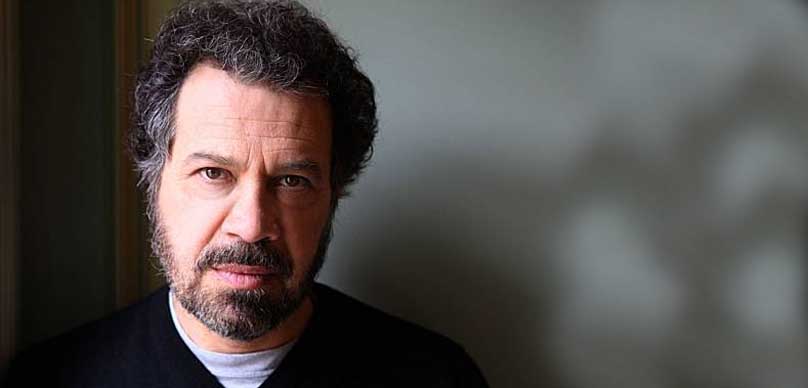
BPS 112: The Craft of Epic Story Screenwriting with Oscar® Winner Edward Zwick

We have been on a major roll lately on the podcast and this episode keep that going in a big way. Our guest on the show today is writer, producer, and director Edward Zwick. Edward made his big shift from his childhood passion of theater to filmmaking after working as a PA for Woody Allenin France on the set of Love and Death. He then moved to California in the summer of 1976 and has since forged a respected name for himself in Hollywood.

Edward Zwick is a multiple Academy Award, Golden Globes, and BAFTA award-winning director, writer, and producer.

Faced with the fear of going to law school during his first five years in the industry if filmmaking didn’t work, Zwick cards turned and launched him into projects that are now some of the most critically and commercially acclaimed in the business. His work spectrums the comedy-drama and epic historical genres. You can see just some of the films he written and directed below.

About Last Night, Edward’s directorial debut was about aman and woman who meet and enter a committed relationship for the first timedespite their personal problems and the interference of their disapproving friends.

He next tackled his first historical drama, and definitely not his last, the Oscar winning Glory.

This is the exceptional story of America’s first unit of African American soldiers during the Civil War and the young, inexperienced Northerner who’s given the job of training and leading them. Based in part on the actual letters of that young officer and brought to life with astonishing skill and believability.

Legends of the Fall: This epic romance follows a man’s fight to come to terms with himself and a family struggling to preserve its simple way of life. Taken from Jim Harrison’s popular Novella, LEGENDS OF THE FALL tells the story of three brothers and the beautiful, compelling young woman who irrevocably changes each of their lives.

Courage Under Fire: A soldier discovers how elusive the truth can be in this first major film about America’s role in the Gulf War. Lt. Col. Nathaniel Serling (Denzel Washington) was the commander of a unit during Operation Desert Storm who mistakenly ordered the destruction of what he believed to be an enemy tank, only to discover that it actually held U.S. soldiers, including a close friend. Since then, Serling has been an emotional wreck, drinking heavily and allowing his marriage to teeter on the brink of collapse.

As a means of redeeming himself, Serling is given a new assignment by his superior, Gen. Hershberg (Michael Moriarty). Capt. Karen Walden (Meg Ryan) was a helicopter pilot who died in battle during the Iraqi conflict, and the White House has proposed that Walden be posthumously awarded the Congressional Medal of Honor.

Serling is asked to investigate Walden’s actions on the field of battle, but he quickly discovers that no two stories about her are quite the same; Ilario (Matt Damon) says Walden acted heroically and sacrificed herself to save the others in her company, while Monfriez (Lou Diamond Phillps) claims she was a coward who was attempting to surrender to enemy troops.

Meanwhile, reporter Tony Gartner (Scott Glenn) is hounding Serling, trying to get the inside story on Walden and on Serling’s own difficulties. Matt Damon lost 40 pounds to prepare for his role in Courage Under Fire, which resulted in a potentially life-threatening illness for the young actor.

The Siege: When a crowded city bus blows up in Brooklyn and a campaign of terror begins to make it’s bloody mark on the streets of New York, it’s up to FBI special agent Anthony “Hub” Hubbard (Denzel Washington) and U.S. Army General William Devereaux (Bruce Willis) to find out who’s responsible and put an end to the destruction. Together, they face explosive danger at every turn when they team up towage an all-out war against a ruthless band of terrorists.

The Last Samurai: Tom Cruise stars in this sweeping epic set in Japan during the 1870s as Captain Nathan Algren, a respected American military officer hired by the Emperor of Japan to train the country’s first army in the art of modern warfare.

As the Emperor attempts to eradicate the ancient Imperial Samurai warriors in preparation for more Westernized and trade-friendly government policies, Algren finds himself unexpectedly impressed and influenced by his encounters with the Japanese warriors, placing him at the center of a struggle between two eras and two worlds, with only his own sense of honor to guide him as The Last Samurai.

Blood Diamond: An ex-mercenary turned smuggler (Leonardo DiCaprio). A Mende fisherman (Djimon Hounsou). Amid the explosive civil war overtaking 1999 Sierra Leone, these men join for two desperate missions: recovering a rare pink diamond of immense value and rescuing the fisherman’s son, conscripted as a child soldier into the brutal rebel forces ripping a swath of torture and bloodshed across the alternately beautiful and ravaged countryside.

Jack Reacher: Never Go Back:Ex-military investigator Jack Reacher (Tom Cruise) leaps off the pages of Lee Child’s bestselling novel and onto the big screen in the explosive thriller the critics are calling “taut, muscular, gruff and cool”*. When an unspeakable crime is committed, all evidence points to the suspect in custody who offers up a single note in defense: “Get Jack Reacher!” The law has its limits, but Reacher does not when his fight for the truth pits him against an unexpected enemy with a skill for violence and a secret to keep.

Edward even won the Academy Award® for producing Shakespeare in Love.

Shakespeare in Love’ showcases a young Will Shakespeare as the up and coming playwright of the time, but he has been disastrously struck by the bane of the writer’s life – writer’s block. His comedy “Romeo and Ethel, the Pirate’s Daughter” isn’t going anywhere and the playhouse is under threat of closure.

What Will needs is a muse, and she appears in the form of the beautiful and betrothed Lady Viola. The path of true love does not run smooth for Will, but the joys and tragedy of his own life find their way onto the page in a moving, witty and spellbinding tale.

The list goes on. Edward has had a remarkable career so far and still has much more to give. Speaking to Edward was like sitting in my persona filmmaking masterclass. We discuss ho he made the jump from a low budget comedy to epic historical dramas, his creative process, navigating Hollywood, directing some of the biggest movie stars in the world and much more.

Prepare to take notes on this one tribe. Enjoy my conversation with Edward Zwick

Right-click here to download the MP3

LINKS

  • Edward Zwick – IMDB

SPONSORS

  1. Bulletproof Script Coverage – Get Your Screenplay Read by Hollywood Professionals
  2. AudibleGet a Free Screenwriting Audiobook

Alex Ferrari 2:37
We have on the show the legendary Oscar winning filmmaker, Edward Zwick. Now, Edward has directed and written some of the most influential films of the past two decades, starting with about last night. Glory, Courage Under Fire, legends of the fall, the siege, Last Samurai, Blood Diamond, defiance, jack, Reacher and many, many more. He is also the producer of the Oscar winning Best Picture, Shakespeare and love. He's also the creator and executive producers of shows like Nashville 30, something and many more. I mean, the list goes on and on. I was humbled to sit down with Edward and discuss his career, his creative process when he's writing and directing how he directs legendary movie stars like Tom Cruise, Leonardo DiCaprio, Morgan Freeman, and Denzel Washington just to name a few. I was absolutely in awe of, of Edward while we sat down and discussed his his craft and the way he did it, it was awe inspiring to say the least talking to Edward. It was like sitting down in a master class of cinema. So I cannot wait to share this episode with you. So without any further ado, please enjoy my eye opening conversation with Edward Zwick. I like to welcome to the show Edward Zwick, thank you so much how you doing my friend?

Edward Zwick 4:21
I'm doing as well as can be expected given the circumstances of all of our lives.

Alex Ferrari 4:26
Amen. My friend event it is a weird and wacky world that we live in nowadays. And I mean, we've been locked up for a while now. And I'm sure for directors even. It's like your projects on hold, can we can we not shoot?

Edward Zwick 4:44
There's of course, all of that. I mean, I am also a writer. So social distancing. And that kind of sheltering in place is too familiar to those of us that that have to write so I mean, a bit of that.

Alex Ferrari 4:59
Yeah. I'm a writer, and I've been in post for 25 years. So I completely understand. So before we get started, how did you get into the business?

Edward Zwick 5:11
Oh, man, it's, it's a bit of a tale. I began, you know, working in the theater as a kid.I even began directing theater when I was about 15. And on through, I went abroad to France on a fellowship, after college and in the fellowship was to work with experimental theatre companies, Peter Brook, and Irianda Skien. But the truth is, the whole time, I had, you know, had a desperate love affair with movies. But it was a it was a, you know, a passionate fan and a viewer, I didn't really know much about the technology, I'd never really learned exposure. I took stills, but I had, you know, I couldn't read a bolex or work of a viola. And so I, I just didn't, I thought it was somehow, you know, forsworn, because I'd spent all my time in the theater, but through an odd set of circumstances, very odd. I had worked for a magazine when I was in college called the New Republic. And while there, I had had a correspondence with Woody Allen, because he was writing for The New Yorker at the time, those occasional pieces. And we had asked him if he wanted to give us some pieces as well. And he said, Yes. And so he was briefly published in the New Republic that year that I was there. So when I was in Paris, I had heard he was shooting there. I was walking down the street, in Santa Monica prie. And I saw him walking toward me. And I did something that I would never dare do now. Particularly knowing you know, how shy he really was, and is, and I just went up, introduced myself, and I said that he and I had corresponded. And I said, I was around and I was on fellowship money. And would it be okay, if I could just come by the set some time and see what he was up to? He said, sure. But actually, what he said was call me at the George V. And I thought, Oh, well, he's blowing me off, you know, which is fine. And I called him he said, Oh, no, come on by. And I did. It turned out that really, he was very lonely at the time, he was one of the few people when a few Americans there. And I spoke English, but I also spoke French. And within a very short time, he offered me a job to work on the movie as a PA slash assistant, which I did. Right. And, and the he actually was very kind he took me to, to Hungary with them, it was a movie called Love and Death. And, and then, that was really it. Except that he was exceedingly generous. He just suffered my ridiculous questions. And let me just observe, I was despised by the French crew, because there I was talking to the director, which is absolutely forbidden in any kind of hierarchical thing and, and yet, he was quite willing to, you know, indulge me. And and so that I had done something actually in college that Joe Papp had seen, and I had a sort of half assed opportunity to go back and maybe work at the Public Theater when I got back to the United States after this year. But I decided instead that I was going to do it, like so many people before me that I was going to sort of reinvent myself in the movies. And I applied to the American Film Institute, from from France, and it was a very early time there, it was not a it was a very small, not very known circumstance there. And I sent them reviews of plays, I'd done I tend some some things I'd written and I sent them some songs I'd written and for some reason I got in, and I came to Los Angeles in 1976. I think never having been to California, not knowing anybody, I arrived it was you know, about 180 degrees and there the hills were on fire, and nothing

Alex Ferrari 9:31
much has changed.

Edward Zwick 9:32
And I thought that I had made a terrible mistake, having left this this apartment that I'd been subletting in Paris and, and, and and went to the American Film Institute did very, very badly my first year would go home and just cry myself to sleep facedown on the mattress every night. But somehow, by the end of the first year there I had somehow managed to slipped by, and was one of the people asked to come back the second year and make a short film, which I did. And he did no good for me whatsoever. But I,

Alex Ferrari 10:11
you know, was that was that was that Timothy and the angel?

Edward Zwick 10:14
Yes, it was, it was it won a prize at a Chicago Film Festival meant nothing except, you know, some, you know, little plaque that I still have. And but the I had two years of the kind of demystification that you need when you first come here, when you understand what people mean when they say these things to you and and that whole nomenclature of Hollywood and development and you know, those horrible critical phrases that that development executives know, and you have to learn the translation. And probably the most important thing that happened is it Marshall Herskovits. And I met, he was there also as a director. And we became friends. And more than that, I think, after we left film school, because there is no, you know, continuing education, I think we remained each other's friends, but also became each other's teachers in a way. And finally, we began to get some kind of work, and it was horrible. The other would be willing to tell the other person it was horrible. And we would try to analyze why. And that relationship began and continued up, day in both and informal ways. At the same time, I met a guy there named Steve Rosenbloom, who cut my student film who'd never cut anything before. So we figured out that Viola and, and then esteem back and, and, and he has cut everything I've done since as well as having several Oscar nominations. And and I don't know, it was just that sort of that cauldron, that that very serene moment where you actually form certain relationships with people who are actually willing to tell you, you're full of shit. And, and you admit your aspirations to each other. And that's sort of how it began.

Alex Ferrari 12:23
Now, with when you did your, your, either your first short film or even when you apply to, to, or went to LA for the first time, what was the biggest fear you had to overcome? Because a lot of a lot of people listening might have not even taken that first step to walk towards the path of following something that they're passionate about. And they have something blocking them. What was that? Was there a fear? Or did you just go gung ho?

Steve Hodgins 12:47
Well, well, I mean, to be true, really honest, and my father had gone bankrupt when I was in college. And I had applied and had been accepted to law school. So ironically, when you get accepted, I don't know if it's still true now. But in those days, when you got accepted to law school, they and I had gotten this fellowship, they gave me a, what's it called, there was the, the possibility of coming back the year after, or they were able to attenuate my acceptance. And so I had that thing, that piece of paper. And my greatest fear is that I would have to go back and go to law school, because I just, I really had no wish to do it. I applied because I was scared. And I was a middle class kid who thought I had to somehow have something to fall back on. And I guess, you know, that continued for several years, because while I was starving and mooching off my girlfriend, who was willing to, you know, let me stay in her this little rented house. And, and I was, even if for years after that, when I was a script reader and the various things that I did to try to make money, those people who had graduating and clerking for supreme court justices and going to work for white shoe law firms and making a shitload of money and really advancing to the world and I was not as none of you right away. And so there was a, you know, a certain period of time, I would say, the two years of film school and maybe two or three years thereafter, where I was struggling,

Alex Ferrari 14:26
where as you would and and for people listening today, when you were trying to become a filmmaker, it was not the cool thing to do. Nobody really even knew what a film director did.

Steve Hodgins 14:37
Really, sort of true. I mean, I mean, look, I went to I went to an Ivy League school and particularly there I mean, that the couple years before me that I went to Harvard and the guys from the lampoon had come out, and you know, Doug, Kenny, and and and those guys. They had not yet made movies, but they were finding their way here. I seem to remember seeing Animal House like the first year that I actually was there. I don't remember Animal House what year it was. Was it about 77? Is that a good guess? 70?

Alex Ferrari 15:12
Yeah it was rough. Yeah, it was like mid to late 70s. Yeah.

Steve Hodgins 15:15
I think in any case, it was not an acceptable thing. There wasn't a mafia of people all from the same school who had come out here and, and there had never been film courses in the school that I'd gone to. And so it was all very, very new. But when I lived in Paris, all I had done was go to the movies, I probably should have spent a lot more time a lot more time, you know, doing the work I supposed to have done which is working with experimental theater companies, but the cinema tech was their only luck while I was still the head of it. You could spend four francs which was $1. And you can see three movies at a six o'clock and at eight o'clock and 10 o'clock show at the Cinematheque and that would be the Festival of Truffaut or it would be Antonioni, or it would be you know Zoo or Kurosawa and or Indian American films to and Paris, which few people know is probably the best revival city in the world. So they would have a John Ford Film Festival, or they would have a no Preston's Burgess festival. And that's every day, we just go to the movies. So my point is that, that I was there, and I at least had a sense of what I aspired to. I didn't know how to do it. And I did work at ASI, and I listened. And when all the fancy people would come in, tell me about their experiences. I thought I was paying attention. But then when I would try to go and do the work, it never resembled what Sidney polycon been talking about, or, or what Roman Polanski was talking about, as he talked to the students. And I, I just wasn't getting it. And I felt despairing about that. And, frankly, it wasn't for several years of just doing work that was mediocre. And until one day, the penny dropped, and I can't really explain exactly why it happened when it happened. But something was revealed to me about the relationship between what I wanted and what the cameras saw. What I wanted to say and what people said it the actors in their mouths and how stories were told and and and and really it happened like Helen Keller at the pump, I don't know if you've ever seen.

Alex Ferrari 17:37
Of course, of course. Yeah.

Steve Hodgins 17:38
The moment when, when she's got Patty Duke is there and she's pumping in she goes water just oh, Lord. Oh, and suddenly, at that moment, suddenly she can understand language. And for me, that was some language. And, and from then it was a very, very fast trajectory. After very little trajectory, it then began to really gather steam.

Alex Ferrari 18:03
But you struggled for years until that moment happened. And just

Steve Hodgins 18:08
Yeah, I would say the aggregate was was certainly certainly five good years of struggle. And by struggle, I also mean self loathing, of getting an opportunity to write something and then seeing it was bad. And even when I got an opportunity to do a television movie, finally, it was bad. And then the next one was just as bad. I mean, I mean, I'm not sure that they knew at ABC, or even the producers how bad it was, but I knew how bad it was compared to what I was trying to compare myself to.

Alex Ferrari 18:40
Sure.

Steve Hodgins 18:41
And I was embarrassed by it. No, better.

Alex Ferrari 18:45
No, there was. I mean, I've been a fan of yours for a long time and with your filmography, but I saw you on a DVD of this, this this little known amazing acting, directing the actors course called the Nina foch course, because

Steve Hodgins 19:03
Ah,

Alex Ferrari 19:04
can and and I saw you there and and, and of course, George Lucas was in there. There's like a ton of amazing directors who Nina really helped. And I, when I first launched the new film, hustle, I was probably one of the biggest sellers of our course, as I sold tons and because I took it, I'm like, No, I got to promote this to to an audience. And I love that course. But you actually I took the video course you actually took her course. Right?

Steve Hodgins 19:30
Yeah. I mean, there are a few people that mark you I mean, I was lucky enough to have several good teachers in high school and certainly one or two in college but she she just was so radical. I mean, you know, I've I know a little bit about Brando's life and because Anne's life and, and and what who Stella Adler was, and and and what effect she had on people and um and and Sandy Meisner, and and Nina was a student their's, and she took their gospel and apply and then really translated into her own understanding because she too had had a more Hollywood experience. She had been a contract player for Louis Mayer in the in the 40s. And she had then been, she worked with George Stevens and William Wyler as a coach.

Alex Ferrari 20:26
Yeah, then she worked with Kubrick and I think sessile made a million.

Steve Hodgins 20:30
I think something like two mil, she used to tell the middle story. She had the best stories of anybody. But she was also unbelievably tough. Yeah, she was unsparing about what the calling was of directing. And not just directing the actor. But but but storytelling. And, you know, the funny thing, when you have a great teacher, pay attention, you don't always get it right away. What happens is that, at least for me, a year later, or five years later, you'll find yourself in some situation, and then something will happen. And then you'll say, Oh, that's what you meant. And then a whole reservoir of things that will still have been in you will then be available to you, because nothing really leaves if you're paying attention, it's there, it can be called upon. And I think for me, that I just needed to have some thought sort of practical application of doing a thing for it to then be somehow internalized. But once I had done it, and even done it badly, and I maintain good teachers doing it, well, I was able then to reference what she was talking about. And all the things that she talked about, in terms of how one elicits a performance from an actor, how one uses behavior, how one really breaks down a script, it became something that I then took in and applied some of whatever my own experience had been been to try to make it my own. But, but she was she was really formidable. And and, and believed in it as a calling or believed in it as a you know, like a race to it

Alex Ferrari 22:34
almost like a priest.

Steve Hodgins 22:35
I was gonna go there. And I thought at least you said the pretentious part about it. Yes, I think that's true.

Alex Ferrari 22:42
And, and she was I mean, she was a formidable in the, in the DVD and the video course that I saw, I could only imagine being in the room with her. Yeah, it was amazing. I really was. She She was remarkable.

Steve Hodgins 22:54
Now, really, she would really take you apart. She had played the they created something that if I called the narrative workshop, where you would show something that you had shot and we all worked on tape at that time shot at single cameras, if it were film, broke, cut it ourselves. And the exercise was like a Communist Chinese self criticism session, where you have to show the film to your peers, and you're not allowed to speak. And they just tell you what they've seen.

Alex Ferrari 23:24
Oh

Steve Hodgins 23:25
And you have to sit there and fucking take it. And then and then you do some kind of that that repentance thing that you know the Chinese, I am guilty of the sin of pace, I am guilty of this kind of indulgent sort of session.

Alex Ferrari 23:44
That must that must have been amazing. Now, you, you You did a movie in the 80s, which was at least one of those classic 80s movies, which is about last night with Rob Lowe and john Belushi and, and Demi and Elizabeth and it was such a wonderful film. Last night, one of those amazing 80s films and it's a very small, I mean, that's small but it's it's a comedy. And then from from a controlled more controlled comedy you go to glory. Right? How the heck did that convert? Like? Was it an agent? Was it the script? What like what like, how did you get that gig because generally speaking, you don't go from romantic comedy to Epic civil war movie.

Steve Hodgins 24:28
Yeah, it was it was one of those again, flukes. Um, I will say that I had obviously studied American history. So I had a very particular interest in it. I had about last night and had the good fortune of doing well. It's a movie that was made inexpensively made a lot of money for the studio. So they were predisposed to be interesting what I might be interested in. When I said that you can imagine their response was the same as yours. But there's a guy named Jesse Jansky, who had actually been to college with me who had gone to work at that studio. So I had a personal connection with one of the executives there. And two things, they said to me finally, as I, as I first worked with Kevin, john, when they were considering doing it, I was involved with a producer named Freddy fields, who's a very sort of legendary character for any number of reasons in Hollywood, as a producer, and then having created what is now ICM, but um, we found out that there was going to be a reenactment of the 100 and 25th anniversary of the Battle of Gettysburg taking place on the field with the reenactors. And there were going to be 1000s of men, maybe three or 4000 men on the field that day, July 4 125, years after 1863, that would have been 63. A, it was like 89, something like that. And we convinced them to give us $25,000 or $20,000, whatever it was, where I could go with a friend of mine who's a cameraman, and another cameraman we picked up in New York, and Freddie and me to go on to that field, and just shoot what it might look like. And I didn't know what I was gonna see when I got there. But I read about these reenactors. And we went there. And we had to put on the union uniforms because he wouldn't let anybody on the field who wasn't actually in the reenactment. But there we were running around, is 100 degrees in Gettysburg in this mid summer. And we we shot hot, several 1000 feet of film. And I brought it back to LA and Steve Rosenbloom, who was not yet an editor. He was actually an assistant. But my my close friend, we took the film, and at night in the cutting room, when he was done with his day job, we snuck in there and we cut the film together and put it to music and put together about couldn't have been more than a five or six minute reel. But it was magic, because it was the dust would come up and the horses would go through and these cannons would go off. And, and and there was no narrative,

Alex Ferrari 27:23
right? But it was a sizzle. It was a sizzle.

Steve Hodgins 27:26
I invented the sizzle, apparently,

Alex Ferrari 27:29
apparently, because I was like this is the most amazing sizzle I've ever heard of.

Steve Hodgins 27:32
Exactly. And so we did that. And showed it to the studio. And the one thing the studios are sub are subject to and this is I think explains the sizzle. Which is Oh, well we're incapable of imagining it. But if you show me something that is in fact there, maybe maybe that makes it makes sense. I mean, I I find this sizzle to be a little bit offensive when someone's taking my film and 10 other directors films and saying that they've done it. But that's how it's gonna be because God helped them if they could do it the same way. But, but that was one thing that happened and they looked at it, they went, Wow, that's pretty great. They said to me, we will make this movie for a certain budget, if you can get Matthew Broderick to agree to do it. Now, Matthew Broderick at that point had done Ferris Bueller. He's not exactly the most logical, you know, choice to play in this kind of movie.

Alex Ferrari 28:35
Right.

Steve Hodgins 28:37
But that began in a bit of a conversation with Matthew and and some real hesitation he had about doing it and having to win him over to that idea. But the good news was they said basically, if you could get Matthew Broderick to do it, then all the rest of those guys, you know, those black guys, you know, well, you know, you'll you'll take care of that.

Alex Ferrari 28:59
Yes, it does a couple guys, whatever, whatever doesn't matter, which which, you know, amazing, amazing.

Steve Hodgins 29:04
It's an amazing story. Because I mean, I had known Denzel, because the year before we had started 30 something and, and, and Denzel was, I think he was they're still doing Sandy elsewhere at the time right away.

Alex Ferrari 29:17
That's right. He did say nice.

Steve Hodgins 29:19
And I'd seen Morgan do something that bam. And Andre Brower was still a senior it was still in. Still in his final year at Julliard. He had never done anything before. But it it bespoke something that's, I think, also interesting to talk about which that their approach to it was essentially as a white savior narrative, No, man, and that's what they wanted the movie to be. And therefore there was a lot of a lot of pressure put on me to really lift up that character of Shaw and talk about his how he was trained and where he was born. And it got there and there was literally, but two reels of film and, and really to put the burden of the narrative on him. And I had to write a lot of it. And in fact, as we started, I had to shoot a bunch of it. But it became abundantly clear that when I started rehearsing with the guys in the tent with Denzel and Andre and Morgan, Jimmy, that there's that was, that was the story that we shot that first scene and looked at it in dailies. Or let me back up for a second when I looked at the stuff with Matthew alone. And it looked like a kind of bad movie for television, because it was arch, and it was stilted. And it was just something you'd seen before. But when I started realizing what these guys had, it just all revealed itself to me. And I began to write more for them and figure out ways that there would be other scenes in which they would have figured even more prominently in the plot. And so that when I finally showed the movie to the studio, I cut the first two reels, I literally began with Matthew Broderick, on that field in that letter, and he meets Morgan Freeman, you know, three minutes into the movie, when he's lying there on the field, and starts meeting the other guys, you know, six minutes later. And the movie became what it became, which is not to diminish anything that Matthew did, or or to diminish his import, and, and, and, and his performance. But these guys were in a state of grace. They were they were representing something that I could only imagine or humble myself in front of.

Alex Ferrari 31:54
Yeah, and, and, and from what I when I saw the film, I mean, all I all I can remember from from the back of my head is Denzel just, it's just Denzel, I mean, Morgan and everybody else. And Matthew was great, but it's just Denzel. You just saw, he became Denzel and glory, like he became

Steve Hodgins 32:14
Yeah, in a relationship with us where we made several more movies together. But, but one thing we will say also, and this is how I tried to make that transition. And I think this is really important to say.

I know that about last night was you know, people in rooms talking and 30 something we should come right after at the regional Mirage the same time was the same thing. But I shot so much film, meaning in that movie, and in those 40 episodes that had preceded this I'm like a lot of the directors that became really great directors, who shot to Reelers, you know, George Stevens who had shot you know, a Mac senate and and john Ford, who had shot you know, crummy westerns and all that shooting film, cutting film, doing it, figuring out what makes a scene work was, again about gaining a kind of Felicity and, and, and the kind of chops as a jazz. You know, trumpeter might fingers scales as a pianist might. And one more thing, which is I went back to some of the Masters that I had so loved. And I think I watched Ron and Kaga Boucher, and the Seven Samurai 100 times. Because what Kurosawa did with those movies, he did not have a lot of money, and we didn't have a lot of money for glory. He showed me how to fill that frame and how to stage that in depth and how to give the impression of scale. And I, you know, stole mercilessly from his technique, even though it was different, you know, period and whatever. And I would have, I could afford, you know, four days in the movie where we had six or 700 extras or five days, right. And I figured out how to space those shots, when I needed them through the different aspects of the story. So that then when I only had 200, or even 100, and Phil inserted those shots into the bigger shots in your mind as the audience you're there among the 700 or 2000 of them, because you have to remember there was no CGI,

Alex Ferrari 34:47
none at all in

Steve Hodgins 34:48
All camera. It's all in camera. We couldn't we couldn't duplicate and tile and do any of those things.

Alex Ferrari 34:56
That's amazing. Now moving forward in your in your career. I've noticed that you worked a lot on the upcoming. Yeah, you've worked with a lot of up and coming. actors, like from Denzel. You know, Brad Pitt, Matt Damon encouraged to fire, you have a heck of an eye?

Steve Hodgins 35:17
Well, I mean, I thank you. And and I do, I am proud of that. And by the way, I would include, um, Claire Danes, and Evan Rachel Wood in the Intellivision, too, I think it's, it's, it's freeing, frankly, is that would go back to the theater and, and having some confidence in my estimation of who an actor really is, and who he is for that part, as opposed to what his reputation might be, or what other movies you might have seen. of, I would like to think that I would cast unknown actors as movie stars, and I would try to cast movie stars as actors that trying to find some equalizing of the voice and, and ask the same thing of both of them.

Alex Ferrari 36:08
Now, how do you know how do you sculpt those remarkable performances? Because throughout your filmography, I mean, you have amazing actors, obviously, but but use your films for specifically this, the performances are so sculpted, how do you work with them? How do you kind of come up with these from Leonardo and Blood Diamond to to Tom and Last Samurai? And these kind of films, like their performances are? So there's depth to it? How do you sculpt a great performance? Um,

Steve Hodgins 36:42
I think it begins with a kind of trust, that has to be earned. And I think that comes out of some set of conversations that begin, and they begin very early. Sometimes it's doing the research together. Sometimes it's doing physical things, you know, Denzel and I, I mean, the guys, even all of them in the tent, as they were learning how to, you know, load a musket and do drills with with the, with the reenactors, or Tom working with the sword or, or drinking Jagermeister, with Leonardo with guys who had been in the South African Defence Forces. There's a building of vocabulary and, and trust that that's part of it. I think there's also a commitment to honesty, about not bullshitting an actor or a movie star, about what what they're doing and not being the person whose job it is to suck their cock, but rather to really demand something of them, right, because you've done the work and, and, and the truth is, they want to do the work. And, and I think, obviously, over time, when you've done a certain number of performances, actors might come there, knowing that you might have some notion of what you're doing. Right and, and how to get them there. But by the way, you evoke Nina. And, and, and, and there's a very, very good example of something that I might things I might have heard her talk about, when I was 22. That then, when I found myself at 35, in these relationships with movie stars, or 45, those, that's when a lot of that stuff came in handy. Because, you know, she had worked with mighty Clift, and she had, you know, understood that, that that, that actors and actresses were a very particular breed. And there are very specific kinds of issues that you could understand that they have to deal with. And, and you could be sensitive to those. And then one other thing, I think, and that is maybe it's going to sound a little bit woowoo. But I think the directing, kind of directing, and I believe there's a certain amount of exchange that happens, a kind of my experience of the material first say as a writer, or even breaking it down just as a director of someone else's work, but that as I approach it, I want to understand the nature of the experience that the actor is going through. And when I go and talk to that actor, somewhere in me, I'm also communicating to him or her. What I believe the nature of that experience to be, and it might be the tone of my voice. It might be a touch on the shoulder. It might be my posture, it might just be the intensity and the sweat. I don't know what it is. But I think that there is some willingness to go deep. And to understand where that actor wants to get to.

And to create an ambience where that actor can be comfortable to discover something. And to feel like they have the time to discover it, a lot of what you do as a director is to is anti entropic push away all the entropy of life of noise and traffic and pressure and your watch in the end, is to give them at least the illusion that they have a safe space,

Alex Ferrari 40:46
Right

Steve Hodgins 40:47
which they can create. And, and something that I that I talked a lot to Steven Soderbergh about when we work together is creating a circumstance in which the default is truth. And just to say, the script and what you're asking the actor to do, is to not make some ridiculous transition into lines is not to have to give along expository speech for no reason. To have a costume that feels right, to have a set that feels like it's real, to not ask them to not to stage things in a way as to be arbitrary for the camera, but to have let life in to that process. And as a director, however much I prep, there's no substitute for me sitting there and letting them play an experiment and discovering myself even things I might not have known, because there is life happening in front of me. And if you can create enough of that, that the actor feels as if, as if they're cheating. As as if there's just life happening. And by the way, when you read about it, and you read about what the gift was suddenly of Kazakhstan and Brando, or, or James Dean or, or, or, you know, different actors, that was the Revolution, the revolution was was bringing life onto the stage and in front of the screen that was not very different than the life we know it to be. It's just that life put into extreme circumstances.

Alex Ferrari 42:34
And I think I think the two words that really sum up the performances I've seen in your films is depth and truth. Is there is that there is just, there's substance, it's not it's not it's not a veil, very thin performance, with all of them. Because some actors, you know, movie stars, in some movies, they're Oscar caliber. Other Other times, you just like what happened. And it happens with that happens with every artist in every field. But but but there's a consistency in your work. And that's why I wanted to ask you that question.

Steve Hodgins 43:09
Well, I mean, I think it's also it's also who you're surrounding them with, yeah, what are the nature of the words, you're asking them to say, you know, I listen, I I have found at times that the hero of a production has had been the, the, the costume designer, yeah. Or the prop man. Or, you know, the skinny knife that Brad has, and legends of the fall that was the built and that somehow becomes this, this thing and I and obviously, the the DP who creates this universe, everybody, if you're if you have those magnificent people, they are also creating this edifice on which the performance then can rest, but the edifice is already higher up and the performance is already lifted in some way. So it's, it's, it's, it's about everybody else, too. And of course, not me. I sometimes think that it's the hair and makeup, people who are in the trailer, who are the first people to see that see the actor in the beginning of the day. And the last people to see them at the end of the day, that are as instrumental in giving them that sort of confidence to to go out there like on a, you know, those umbilical lines that the guys go out on a spacewalk, you know, out there, they're out there in zero G, and you're back behind the camera with a cup of coffee, but but they're out there and they have to feel like they're like they're being taken care of and supported.

Alex Ferrari 44:39
Now, another another theme I've seen in your films is just the massive scale of many of your films. It's just so many like very, you know, just very epic films from legends of the fall to The Last Samurai to glory. As a director, how do you work with such a massive Live, not only crew, but just the 1000s hundreds, if not 1000s of people that might be in front of the lens sometimes. How can you like because I look, I have a, you know, when I'm directing, I'm directing a scene, I'm directing a scene with four or five people in a room. And you just try to keep hold of two or three cameras, and making sure everyone's you know, just trying to take the narrative. How can you even grasp that man?

Steve Hodgins 45:23
I know this, this is gonna sound a little bit fatuous. But I think it's it's just as hard to direct a scene with five people in a room as it is with 500. I think, you know, when you have 500, it's, it's about your canvas. What what is on your palate? And and in some odd way, there's more to photograph when there is 500 people out there, right? There's there you can juxtapose what's that that meyerhold phrase, neither, you can never be too close nor too far away. I mean, you have the you have the long shot, you have the great scale thing, which then juxtaposes to a close up you have, you have a kind of palette that is exciting. Action, certainly, particularly action where there is stakes that are emotional, where you're not looking at action for its own sake, but you're actually following the story. And that action has a purpose with that story that you're telling me that individual actor or that set of actors. And part of it is the thing that I never thought I would be well suited for it always having a certain amount of patience. I mean, you know, there, there have been there have been days when you arrive, it's 530 in the morning. And then about five hours later, six hours later, the ad says, okay, that's lunch, and you haven't got a shot. When, and, and, and, and Okay, and you know, you're getting written now it's three in the afternoon, and you're convinced that you're going to get fired, and you're going to have to lose student days, you have to get some confidence that you're going to then accomplish when you do those things, the things that you want that you've got the number of cameras, and then you've got the right shots, and you've done a shot list. I mean, II don't do shot lists of people in rooms and talking and whatever. But on those things, you damn well better have your shot list because you're not coming back there, you know, with 500 extras the next day?

Alex Ferrari 47:23
Yeah, so like, it's kind of like that old, that old story of john Ford on a script. The Indians take the fort. Like it's literally one line, but it took two weeks to shoot. And I'm assuming once you move that machine to reset that machine, that's another day, almost sometimes,

Steve Hodgins 47:41
there's so many great stories about that I won't bore you with and there's there's a great one about David lean, and they're setting the the the, the attack on aka but you know, without the camera without filming the cameras and, and, and there's, um, what was I gonna say there was another thing that reminded me of, of I, you know, yeah, you just have to that that's a real, that's about a kind of redundancy. I read a now something really weird has happened to the visual on the front, okay. I am I there's a book that I read by Rick Atkinson called the army at dawn. He's a Washington Post reporter about and it's about the Allied it was part of a trilogy about World War Two. And it's about the invasion of North Africa, which was an utter failure. And it's about all the preparations they had to do to create amphibious landings. Well, they'd never done them before, what is an obvious landing, they had invent the amphibious craft, and they had to understand about supplies and all of this. And it was about the redundancy of checking and rechecking and having these endless meetings with all of the departments and making sure that everybody's on the same page and, and being honest about you can and can't accomplish. And what they discovered when they did the landing, is they got it all wrong. But they never could have done D day if they hadn't fucked up so badly in North Africa. And so part of it is also making really stupid mistakes, as long as you then don't make them twice,

Alex Ferrari 49:27
then that's pretty much filmmaking. Not one one part of filmmaking that is not really taught in schools very often. And I know I felt I've had to deal with it I'm sure you have to every director has ever had to deal with it. Is the inevitable politics of being on set the hierarchy dealing with politics of actors or crew or studio or producers. Can you talk a little bit about how you as a director deal with those, those those panels Tick moments, which, when you have a group of people, it's going to happen.

Steve Hodgins 50:03
Yeal. well, you've you've mentioned, you know, by those seven people you've mentioned, if you if you triangulate them, you've mentioned about 49 different relationships, so, so maybe more, so I can only I'd have to talk about them somewhat separately. Um, the one thing I would say is I have over time, come up with a kind of an analog to what a film set is. And, and, and, and because it's not a startup, and it's not a team. It's not a business. It's this, a group of people all coming together with a common goal. But the goal is ephemeral. The goal is a story. And I think of it a little bit like the sort of like the sailing ships in the 16th century. Everybody on that ship is a master, the ship's carpenter, the sail maker, the cook, the navigator, everybody is really is an expert in what they do. Um, and at the front of the ship up in the in the in the prow of the ship is some guy with a big long beard, blown back by this spray in the wind. And he said, I don't really know the way, right, he has idea. But somebody's got to say that. And all the rest of them are probably capable of being that guy who's up there, but they don't want that gig. They're perfectly happy being in their own depart, doing their thing as experts, and also grumbling that the son of a bitch up there doesn't know what he's doing. But, but they're wonderful people, they might film people on a set are funny as shit, they are capable of working in long hours in inclement conditions with crummy food. And, and, and, and, and there's a love there. And there's a commitment to this thing. And it's, it's romantic, it's a beautiful thing. So generally, I find a crew to be just the best part of it are all that now, when you fold in the actors who have their own little world and their own set of issues, they have to be that they have to be dealt with in a very particular way. So as to be able to keep that separateness to a certain degree and be able to have the focus and the concentration that they need. But you'll also find that if actors are not in gratitude for their opportunity, or not aware of what's happening, they could lose a crew to an actor could get a crew to do anything for them. Or they could have a crew that's working against them. And it's all it's often a factor of what their nature is, you know, a little bit have a little bit of sensitivity on their part or kindness or awareness of what other people are going through goes a very long way. And and vice versa. Because a crew could sabotage an actor just in some very subtle but very unhappy ways.

Alex Ferrari 53:19
And when No, and I think the same goes for directors like it if you don't, I mean, I've had crews, I see I've been on sets where the crews are completely against the director, either in either in television, because television is even rough. And that's a whole other conversation. Yep. But in a feature world, they come in and if you just a little bit of kindness, saying hi to them, saying thank you, you know, all those little things, making sure that they that they're fed on time that these little little things go such a long way when you get when you're at our 12 and you need them to go another 30 or 40 minutes. Totally,

Steve Hodgins 54:01
totally and, and also I listen, I started I was very young, when I started really directing. I mean, I was maybe 26 wives, and I would do some of these shows at Universal. And those guys, you know, they had been working for 35 years, they've done 1000s of hours, right? And even when I started making movies, it became very clear to me that the dolly grip I was making my third movie so I shot six hours of film and he shot 600 and when I would start to say Okay, now we're gonna put the camera over and by the time I point he was already moving the dolly over to where the camera was going to be because he knew so so the part of it was actually surrounding myself with people who really knew much more than I did and trying to pay attention and really ask you know, dumb questions and and and try to listen

Alex Ferrari 54:57
their absolute absolute absolute

Steve Hodgins 55:00
When you when you try to then factor into the executives, and oh, yes, that's that's a whole other story about you know, yeah,

Alex Ferrari 55:08
that's another podcast, that's another podcast. Now, um, have you ever had to deal with an unprepared or difficult actor? And if you have what do you as a director? If it's a star, if it's a bit player, if it's if it's a secondary supporting character? How do you deal with that as an actor, as a director to keep the engine going?

Steve Hodgins 55:34
You know, I've dealt with actors who were too anxious to do well. And that's something you deal with. But when you deal with an actor who's not prepared, was drinking at lunch? At the bad scene, and I'm not sure I handled it very well, I'm not sure I even knew what to do. Because there's not much you can do. I suppose if you're in the position to fire someone, you can. But you also know that when you fire someone, you're also hurting yourself. Because the they're not going to necessarily say, Oh, it's fine. We'll go back and reshoot all this, and we'll give you all the time back, it'll inevitably hurt you in some way. I think there are two things. One, there are a lot of us, I think, who are perfectly willing to call each other out of the blue. And I won't mention names of guys who called me. But I could tell you that I have presumed to pick up the phone and call another director and say, before I work with this guy, I've heard something just talk to me, tell me honestly, this will never go any further. What am I looking at? What am I up against? Because that's the kind of honor among thieves. Yeah, if they've had a bad experience, they don't want they don't want you to have a bad experience. Directors, ironically, are very, are very supportive of each other, we may be competitive in some, in some industries mind as to who could do a better film, but any director who's been through it more than once, or has a life in it has real compassion for for their peers. So I will call people and they will call me and so that's one failsafe to avoid that thing happening. And only once I've been forced to use an actor that I didn't want to use that I heard stuff about. And it almost ruined, I think it actually did really hurt the third act of one of my movies, and I will not mention who that is, but it was, it was bad. And I hated it. And I should have fought it harder. It was because the movie was going out way over budget and that needed, they felt they needed another star and it was just a bad scene. So that was that. Um, but the other thing is, try to if there's a way that you know, you're not gonna get a movie star to read for you. Right? But you can, but you can try to spend time with them. And, and even though it seems awkward, really try to talk honestly and get the measure of who that person is. Because people will tell you who they are. I mean, there's, if you really listen, when you anybody in life, when you beat them, they want you to know who they are. And, and and if you can get past your own anxiety or your or your expectations, you know, I need this person to be in my movie, therefore, I'm going to like him. Right? In fact, what they're saying is crap, or what they're saying is terrifying about, you know, their, their entitlement or their, you know, pomposity, or, you know, they're ingratitude things that really make you crazy. You end up if you end up casting that person, then you get what you deserve.

Alex Ferrari 59:04
We'll be right back after a word from our sponsor. And now back to the show. Amen. Amen. Very, very, very true. Now, in Last Samurai, which by the way last summer is one of those movies that if it's on, it's a it's a remote throwing kind of throw away the remote kind of movie for me. Like if it's on wherever it is, in the movie, I just stopped Okay, I'm in I'm in and I'm, it's one of those films for me. I absolutely adore it. I also am fascinated with Samurai culture and cemetery history and I haven't recorded our autograph. In in, in the it's, it's on the wall in the back. I'm, I've got my samurai sword in the other room. I mean, I'm in so that's why when I saw that trailer for the first time, I was amazed. Some there's so many things in that movie that we could talk about, but The fight sequences in that film are so wonderful and so amazing. And I know Tom, from what I hear from other directors I've talked to who've worked with him, and also just the legend. He is a serious, committed, professional actor, and he wants to do everything himself.

Steve Hodgins 1:00:20
Yeah, I mean, yeah, there. Um, I would say, there is only one shot in that movie that Tom did not do. And that's when the horse that he's riding in the final charge takes a fall. Right? Right. Because, first of all, the insurance company would never let us do that. And I would never let him do it. Because the guys who did it were the gypsies from Spain, from zingaro, the great horse circus, who were the greatest writers in the world, and who had trained with those horses for four months before then. But he wanted to, but he wanted to do it. Oh, I'm sure and by the way, he's riding in the charge. He's, I'll tell you what he's in. He's in the charge on the on foot when the two armies come together and hit each other. Oh, he's in that shot that. But But what I remember is, is it was February, we didn't start shooting the movie. We till like September, October. So in February already, I remember he was renting a house someplace on the west side, and like, there was a tennis court there. And I went to go see him one night, and it was foggy, cold. And it was nine at night. And I remember walking down to the tennis court, and he is out there with a sword guy working out. And that's seven months before we shot the movie. And, you know, some of the learning Japanese. And I mean, you know, there was a great guy, a guy named Nick Powell very talented stunt guy who was really good with sword. But I also found that a lot of the Japanese had their own you know, experts and they had shot a lot of Samurai movies. And and there were there were some guys on that on that field of there were 700 Japanese who came to live in New Zealand with us, when we made that movie even created a village with our own doctors and diet and whatever. But there were guys on on that field who had been in those carousel movies. So and and there are certain guys in those battles, who must probably who die about 100 times, I think that it's

Alex Ferrari 1:02:46
as good as good stunt people. Do you just put another wig on them? Get them out there again.

Steve Hodgins 1:02:51
But But I do remember that literally. It was a kind of ghoulish exercise, certainly in that final battle about saying, okay, okay. What's another way to kill someone? How many ways are there that I could devise to kill someone? tell you another interesting thing. You probably like we there's the scene when that when the samurai first come out of the mist and they charge and they're on horseback and horseback week week, we built an app that's an animatronic horse. It was a million dollars to build a horse. That is probably only in about 28 seconds of film.

Alex Ferrari 1:03:36
How is that? That doesn't make a lot of sense ROI wise. Like there's not a really good return on investment or is there? I

Steve Hodgins 1:03:42
mean, seriously? No, it does. Because in the middle of this remarkable season, you have your movie star, doing things that you would never let a movie star do. Okay, horse rearing, turning sword bending, twisting to an end then getting t boned by another horse and going over.

Alex Ferrari 1:04:04
I guess you're right. I guess you're right. You're absolutely right.

Steve Hodgins 1:04:06
There's no other way to do it. And you save yourself. Okay, this whole sequence is going to be five minutes. If you got 30 seconds of that movie star doing that in the middle of it. It's probably worth it in a movie that cost $130 million. That million dollars was well spent. Yeah, but true.

Alex Ferrari 1:04:26
That's amazing. So like so that sequence that fight sequence in the in the back alley, the when the samurai surround Tom and that the way you shot that in the way that the timing and the slow mo and the way he the way he was thinking like the images. How do you approach a scene like that?

Steve Hodgins 1:04:44
Yeah, I am. I I read a I read a book by john McPhee talking about Arthur Ashe, and I think it might have been osuna playing a tennis match in the 60s. And it's a brilliant analysis of, of sport, but also competition and I remember him time trying to break down a tennis stroke into the composite motions of every change the weight and and and a vision and timing and and what the human brain might be capable of doing and understanding all at once. When you see a player in hang time twisting and reverse the ball and then going opposite Elio, since you know, things that are or I once had a cat, that I slow motion and dropping the cat from higher up upside down and seeing the cat come and find his feet with a kind of gyro ability that he would have. So the idea was to say, how would it be possible for someone because you know, in Samurai movies, when you see it, they're doing it, but it's very fast. And you're taking it on faith? That that's how it would have been. But I said to myself, okay, is there a way that we could literally break it down and see it, and do it in the reverse? Usually, what you do in action, or at least what I seen before, with action is some action starts in it immediately goes into slow motion

Alex Ferrari 1:06:33
Right?

Steve Hodgins 1:06:34
And that's how it happens. And I said to myself, well, what happens if we do it, and then find a way to then go backwards, and almost like that, that, you know, he's been training? Right. That's, that's why this makes so much sense. And when you're, when you're training it, you know, you train and you train and you train, and they try to say to you, and the whole theory of that was, which is what coaches used to say to me, if you did well, oh, man, you were playing out of your mind? Yeah, you're playing out of your mind. What does that mean? The zones are opening, you're only reacting,

Alex Ferrari 1:07:14
Right?

Steve Hodgins 1:07:15
So this first show him playing out of his mind, almost been unaware of what he had done. And then go back and almost to recapitulate it, in that penultimate moment, that leads up to the last moment, that was the whole theory. But Tom, I will say, Does every, and those guys are swinging, they're not they're not sharpened swords. But if one of those swords would have hit him in the face, or in the arm, that would have been, you know, the, if not the end of a career would be the end of a couple weeks of shooting. So, so imagine the amount of time that he spent rehearsing that with those guys to do that. It done all I wanted to show it all in one take first.

Alex Ferrari 1:08:05
Yeah, and that and the reason why all of that works so beautifully is because it works into his character. And that's what I love about that action sequence. It is it is a statement about what the character is gone through. It is not just an action sequence to look cool, which is fine. And there's those those stories in those films. But in this your action sequence are actually telling is a storytelling aspect. It's not just look how cool you swing a sword. It I mean, I believe I'm not interested in action for its own sake.

Steve Hodgins 1:08:36
I mean, I like it sometimes. So this is not who I am. I, if there's a reason. If something is accomplished narratively in it, then there's a reason for it to be in the movie. And sometimes that's a by design. It's great if you can reveal anything through behavior, rather than through exposition. And in this case, it It literally begins with that first scene with the character playing YuGiOh hero hero Yuki sanada when Cruz refuses to, to, to lie down, and get up, he's trading that stick Oh, so good. But it's a progression. And even that scene, by the way, which we did in the rain, which made it much more dangerous hurry for him. It happens to be a master. But that to have slipped if one of them slips at that moment in that wet, sloppy mud. That's just, you know, right out. So

Alex Ferrari 1:09:43
it is it is again and if anyone listening has not watched last time. Please do yourself a favor and watch it because the actual sequence is the story. I mean, I cry at the I mean, you're just tearing at the end of that. It's just so emotional and so well done. You go to something like Blood Diamond, which is again, another dis. I mean, it's not a war movie, per se, but it is a war movie. You know, there is definitely elements in that. And that's one thing I wanted to ask you. There is something I've noticed in your filmography as well, is there's a theme, a lot of the stories you tackle are deal with war, and even even pawn sacrifice about Bobby Fischer is a internal and external war of one character. So what draws you to that kind of material? Because it started way, way early with glory.

Steve Hodgins 1:10:37
I don't know.

Alex Ferrari 1:10:42
Because, I mean, you do see you sort of pattern, right?

Steve Hodgins 1:10:45
Yeah. I mean, look, I'm not the first dramatist to realize that, that in those extreme circumstances, you can find great story. And you got to go back to you know, let's start with Homer. Right, right. Right. And then and then the aliens are pretty good one.

Alex Ferrari 1:11:03
Time, it's okay. It wouldn't, it wouldn't have a good box office opening,

Steve Hodgins 1:11:06
I'm just gonna write and Shakespeare did, okay. With, with several different wars. And, you know, I mean, I, you know, in those moments, obviously, things are simplified. Yeah, the nuance of care, I had done plenty of ambiguity and ambivalence when I was doing 30 something and doing little, you know, modern, you know, behavioral comedy. But with this, there's an opportunity to juxtapose that kind of emotionality that's at the same, it's not strange to see that at the same pitch. Because that's the world that it's in the outside the external reality matches the internal reality there. So it doesn't seem stupid. For that to be at a certain depth of intensity.

Alex Ferrari 1:12:00
Now, the siege which is, by the way, one of my wife's and mine favorite films, which is he she adores that film. Um, she's the one thing I want to ask you there, it's an eerie Omen to 911 like you did that in before 911. How, how did you come up with that story? Because, I mean, imagine when you, you know, when you experience 911, you're like, oh, Mike, Oh, my God. I mean, it's Yeah,

Steve Hodgins 1:12:24
obviously, that certainly was a but

Alex Ferrari 1:12:28
comparing it to your to your story to your film, you're like, Oh, my God, this is? Wow. Well,

Steve Hodgins 1:12:32
I would say two things. One is that I was reading a lot about Europe, and what Europe was going through with terrorism. And, and I have a number of friends who went into government, and whom I could talk to write out what they anticipated. Because a lot of times, what seems like it's happening someplace else, is inevitably going to happen here. And I you know, and, and, and, and that only gets faster and faster. We look no further leaving in the pandemic, you know, which Oh, that's gonna be just over there. No. It is. It is one world in that regard. And, and so, I guess I was paying attention. I wasn't prognosticating. I was trying to pay attention to what was happening in the world. And, and I just felt that that was coming here. And by the way, the guy two people helped me on that script very closely. The first was Larry, right. Larry, right, who then wrote the looming tower. He's one of the greatest journalists of our day. And he wrote this book about the pandemic. A year ago, before this all happened. He's a, an amazing journalist who's paying great attention. And the others men omis, who's a friend and a great writer, he was actually I think he wrote a couple of the Indiana Jones movies and and he's a politically very savvy guy. So it was, you know, I had help. And I also had helped by talking to people from the, the the FBI, CIA, counterintelligence, Task Force, Task Force and and talking to people who were, you know, experts in the field of hostage negotiations, and at every stage, you know, if you're, I mean, I did have some experience at the very beginning of my life as a journalist, and I still hold on to the understanding that there's no substitute for talking to people and know what they're talking about. Especially if you bring a movie star with you.

Alex Ferrari 1:14:54
That always helps is what you're saying.

Steve Hodgins 1:14:56
Yeah, it really does. You mean then i would i would be there with the CIA with Annette Bening and and and and then would they would have stonewalled me at the minute she walked in it was like, Oh, wait, let me show you this secret document from like,

Alex Ferrari 1:15:12
what do you want to know who shot JFK? Like? Exactly.

Never underestimate the power of the star power of movie stars and trying to get anything done in this town in general. Now, you you have been, you've been a writer from for most of your career actually, I think it was in most of your career you've always been writing and you write most of you work that you direct. And then also you write scripts that are are, are that are not something that you direct. What is your writing process? Like? How do you get into it? Because arguably, directing 500 horses, taking a hill is probably easier than looking at a blank page. Yeah, I

Steve Hodgins 1:15:57
think that's a fair way to put it. I mean, I know that when I'm writing, I'd sure rather be out on the set with 500 horses, but I conversely, when I'm out there with 500 horses, I sure wish it would like to be back someplace else writing.

Alex Ferrari 1:16:11
It's, it's Yeah, it's always that yeah. So but what is so what is your process? Do you start with character? Do you start with plot? Is it Do you like what is that process for you?

Steve Hodgins 1:16:22
Hmm. I mean, I mean, I I do believe I mean, I mean, sometimes there are simple things I know when I when I started writing Blood Diamond. I Chuck Leavitt had written a very interesting script that really didn't have much to do with what we were doing but it was set in the time of you know, that the conflict diamond you know, moment and but I kept thinking and thinking about the story would be in as reading a lot of books and reading a lot of articles and talking to people whatever. And I came up with a phrase and the phrase was the child is the diamond. And like that, I put that on my like on a post it note and if you think about it, um, you know, the the the Solomon Vandy character is looking for his son. Leo is looking for the stone, Jenny Connelly is looking for a bus story. And somehow, the idea that the each had these goals were started it all spinning in my mind as to as to how one could, it's sort of a john Houston sort of plot really, where these different people have these different agendas, and they come together and, and apart. That's conceptual. And part of it is conceptual, I think, certainly, for samurai, no, Marshall and I, and john Logan, we've had because john Logan and I did the first drafts together. The idea that a man would end up turning against everything that he has been trained to do and believe in and fighting to the death for it.

Alex Ferrari 1:18:20
Right

Steve Hodgins 1:18:21
is a concept. Yes. How does that man get from that place to that place? And then we talked a lot about Samurai culture. We talked a lot about Zen. Um, so that's part of it. But the other part, I know is going to sound it's kind of sounds kind of hokey. But what's a movie that I really want to see that nobody else is making?

Alex Ferrari 1:18:46
Okay

Steve Hodgins 1:18:47
Can I entertain myself? Can I can I give myself the experience of doing this kind of doing this movie? Because while you write a movie, you are living it. And in fact, maybe the best performance of it is the one that nobody sees. It's the one that only you have been able to imagine and see in your mind. Because it's inevitably going to be reduced by compromise of money and time and performances,

Alex Ferrari 1:19:14
right.

Steve Hodgins 1:19:15
Is there any way that I can, you know, just sort of re imagine my experience of being a kid in the movies or that person at the Cinematheque at 22 years old? Just just been, you know, hypnotized by, by a thing that that really interests me.

Alex Ferrari 1:19:38
Fair enough. And that leads me to the next question. What drives you as a storyteller?

Steve Hodgins 1:19:48
Oh, look, you early in this conversation, you use the word calling?

Alex Ferrari 1:19:58
Yes.

Steve Hodgins 1:19:59
So I'll throw it At the end, I'll say, I'll say, I think that there is purpose. And I think there is value. In trying to hold a mirror up to our society, I think the storyteller had a role in the primordial cave cave, trying to explain to everybody why that saber toothed Tiger came and took that child away that day, or what that Eclipse meant, you know, that we've, we've, we've had a role. And it may be just to make people laugh, and it may be to to deal with their fears. Or it may be even to explain their own ambivalences or to give them language for something that they don't have. But but there's there is something of a ministry in it. And I and I do think that the reason that certain movies are memorable and others are forgettable is that the movies that are memorable, somehow dig into those personal secrets and, and internal workings of the mind and of the heart that that people want to explore. And they want to start with it. And when we are in movies, we are weeping for ourselves, we are weeping for those characters, but we're weeping for the parts of ourselves that identify with those people in that moment that have something of them or have experienced something, or will experience it. I had a conversation with James Newton Howard yesterday, who is a some wonderful composer with him. I've done several films. And he said, You know, people say they, they, they they, they make movies. Because they want to explore something they've experienced. He said, I write music, to experience something that I've never felt.

Alex Ferrari 1:22:06
Right.

Steve Hodgins 1:22:07
And that was so beautiful to me. It's very honest. And he and I want to have an experience. And and and then I want to offer it to other people. And that's a whole other way of sort of turning it around.

Alex Ferrari 1:22:21
Fair enough. Now I'm gonna I'm gonna ask you a few questions. I ask all of my guests. If you could go back and tell your younger self one thing, what would that be?

Steve Hodgins 1:22:34
Be? be bolder,

Alex Ferrari 1:22:37
take more chances. Take more chances. You'll be okay. It's okay. Yeah, don't be so scared. Yeah. I'll agree. I'll agree with you that I feel like my 20s were a complete waste. Yeah. Now, what advice would you give a filmmaker trying to break into the business today?

Steve Hodgins 1:22:59
Well, I mean, it's kind of remarkable in that, you know, with it with a consumer HD camera and, and avid for Mac and, you know, some you could make anybody can make movies now. I mean, I saw you actually had Shaun Baker on your show once before. Yeah. And, and and his first movie, and even a second. I mean, you you know, he, I think that it's not nearly so much about technology as it is actually coming to understand why you have any notion of telling a story. You know, what is it? The i i've never, yes, there's a whole world of people that, that make movies, because that's cool. And that's a comic book. And, sure, God bless them. And it's fine. It just, it just, it just does not, you know, my jam. But, but you've got to have something to say. You've got to, I would say, for a filmmaker, it's not just to look at other films, but to try to look at life and to read books about psychology and politics and science. And I think it's curiosity for the world about how people behave and how the world behaves. I just don't think it's about trying to figure out where to put the camera. Or, or or you'll you'll be, that was, by the way in going all the way back what I watched with Woody Allen, when I first was 21 years old. He didn't know any of that stuff. They were people I realized he was a writer who has somebody wanted to say and some of it was funny, and so it was emotional, but he had people who could help him learn that and he learned it and I loved it too. But I'd like to think that there were things that I was interested in beyond the process of making the film. I love the making of the film. And we've talked about that today even. And it's, it's delicious. But it's actually what's gonna give a film some kind of substance is something in it something worth saying.

Alex Ferrari 1:25:27
Now what is the lesson that took you the longest to learn whether in the film industry or in life?

Steve Hodgins 1:25:36
Boy. Yeah, I guess I would say that, when I was really young, and beginning, certainly in the, in the industry, that I thought that I was making movies, so as to get something else was to get fame or money or sex or, and some, some validation that I didn't get in childhood. And, and so so so my process was fraud, my process was contorted to some degree. And, eventually, and it took a while, I realized that, Oh, actually, it was the doing of it. That was the gift. I made movies, because I really liked doing it. I did it, for the joy of it. And, and, and the reward. It's not the credits on IMDB. It's not anything because they're all going to be forgotten. Like, everything is forgotten. It's it's, it's the the reward is the those relationships and the memories of, of the struggle, and, and the defeats and the triumphs, but to have the experiences that is that is the thing that that I have.

Alex Ferrari 1:27:08
And what you've just said is so perfect. So, so profound, that I just want to touch on it for a second because as as filmmakers, because I deal with independent filmmakers on a daily basis, and I've spoken to many over the years. And there is I mean to be a director in many ways there is there has to be some sort of ego there to be able to say I'm gonna, I'm gonna go do this. But a lot of them get caught up in the whole awards, or my legacy or what I'm going to leave behind or, or, or then of course, the more shadow things like rich, famous Sex, drugs, money, whatever that is. But if you look if you start to study history, you know, most filmmakers today, most people who really can name one Orson Welles film, can maybe name one or two john Ford films, unless you're a real cinephile can go in there. And at the end of the day, you know, no matter how many Oscars you've won, how many how many awards, you've gotten, what you said, is so profound, because it's about the experience, it's about the religious, it's about living life, it's about going through all that. And it's not about the awards. It's not about them, if you can make some money along the way, and when a couple of words along the way, great, but it doesn't mean anything. It's more about that experience. Would you agree?

Steve Hodgins 1:28:28
Think of the privilige of being an artist?

Alex Ferrari 1:28:31
Oh, god, yes.

Steve Hodgins 1:28:32
You know, and and by the way, it's it's it's maybe a pretentious to even use that word in film, because it's a film business. And so you're an artist, businessman, but whatever, you are sure. That rather than punching a time clock, or doing something that I despised, so as to get a pension, or, or deny, I have gotten up every morning, just excited. Now, what that day might hold, I've been given the privilege of exploring my imagination and my fears, or my fetishes, or my anxieties or my desires, and been overpaid for it, you know, really wildly over rewarded for it. And given some sort of sort of validation. I can't begin to describe, um, it's, it's that there's that commercial where it says, Oh, this thing is valuable. This thing is, you know,

Alex Ferrari 1:29:34
right, right. Right. Right.

Steve Hodgins 1:29:37
Ivaluable, whatever. But no, I mean, that, that that is it. It is it is this astonishing privilege, and to have been in relationship with really great, brilliant people, artists themselves, really, you know, passionate people who care about what they're doing. You can't even can't even estimate its value.

Alex Ferrari 1:30:02
And last question three of your favorite films of all time.

Steve Hodgins 1:30:05
Oh my god. Well, I named I already named no parasolid movies so you could take any one of those as

Alex Ferrari 1:30:13
many as fair enough, fair enough. I'll allow that cheat. Okay.

Steve Hodgins 1:30:22
Uh, I guess I have this movie that I really love. Um, yeah, it's by Ettore Scola. The Devil in Love. We all loved each other so very much.

Alex Ferrari 1:30:36
Oh

Steve Hodgins 1:30:37
It's in by Ettore Scola. It's an Italian movie that I really really love. It's going to be such a hokey thing to talk about, you know, to talk about you know, the Godfather one and two. I mean,

Alex Ferrari 1:30:49
sure.

Steve Hodgins 1:30:50
You say you throw the remote away. that's a that's a remote thrower away. I hope that if that movies on and it's 11 at night, I'm gonna be up till two you know it just

Alex Ferrari 1:31:02
I was seeing an interview with Tom Hanks once he's like, all things can be all answers are in The Godfather. Like if you have a question about life,

Steve Hodgins 1:31:11
it's true

Alex Ferrari 1:31:13
leave the gun, take the cannoli. That's a profound.

Steve Hodgins 1:31:17
And by the way, and and in and anything you want to know about, about about film about directing, is in The Last Samurai. It's narrative action, characterization, humor, pace. It's all there to staging. So if you had one on a desert island, it would be that one who want to learn go to film school be that one.

Alex Ferrari 1:31:38
Now I absolutely agree with you. And what it has been an honor and a privilege to talk. It's been an absolute pleasure talking to you. It's really, really been great. Thank you for your time, and I truly appreciate it.

Steve Hodgins 1:31:52
All right, well, I really enjoyed it too. And best of luck with your with your show.

Alex Ferrari 1:31:58
I want to thank Edwards so much for coming on the show and dropping his knowledge bombs and sharing his experiences in the film business and hopefully sprinkling a little inspiration to keep the tribe going and following their dreams. Thank you again, so much, Edward. If you want to get links to anything we spoke about in this episode, please head over to the show notes at indie film hustle comm forward slash 447. And if you haven't already, please head over to filmmaking podcast.com and leave a good review for the show. It truly helps the show out a lot. Thank you again for listening guys. We've got some more amazing guests coming in the weeks and months ahead. I've been very, very busy. And we got some other stuff. I've been cooking up for you guys as well. So keep an eye out for that. Thank you again so much for listening, guys. As always, keep that hustle going. Keep that dream alive. Stay safe out there, and I'll talk to you soon.


Please subscribe and leave a rating or review
by going to BPS Podcast
Want to advertise on this show?
Visit Bulletproofscreenwriting.tv/Sponsors