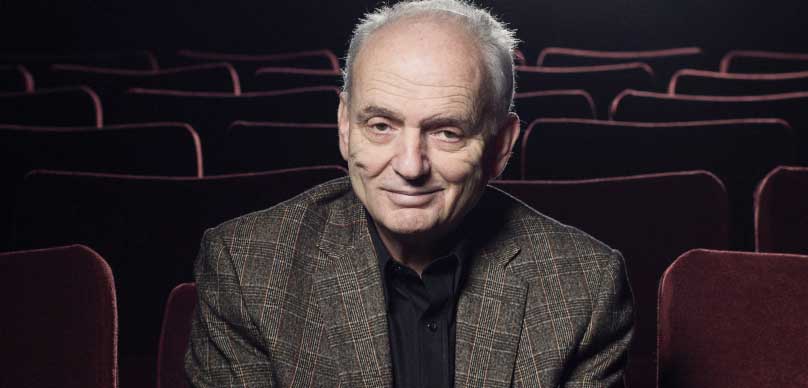
BPS 151: Inside Writing Ghostbusters: Afterlife with Gil Kenan

Who are you going to call? Yup that is right, we have on the show today to co-writer of the new installment in the Ghostbusters universe, Gil Kenan.

Gil co-wrote Ghostbusters: Afterlife with his friend writer/director Jason Reitman. Check out the trailer below.

From director Jason Reitman and producer Ivan Reitman, comes the next chapter in the original Ghostbusters universe. In Ghostbusters: Afterlife, when a single mom and her two kids arrive in a small town, they begin to discover their connection to the original ghostbusters and the secret legacy their grandfather left behind. The film is written by Jason Reitman & Gil Kenan.

Now Gil isn’t just an accomplished writer but also an Oscar nominated filmmaker (Best Animated Film) for the animation classic Monster House (2006). He also wrote and directed, Poltergeist (2015) and City of Ember (2008) and the new Netflix film A Boy Called Christmas.

In ordinary young boy called Nikolas sets out on an extraordinary adventure into the snowy north in search of his father who is on a quest to discover the fabled village of the elves, Elfhelm. Taking with him a headstrong reindeer called Blitzen and a loyal pet mouse, Nikolas soon meets his destiny in this magical, comic and endearing story that proves nothing is impossible. A BOY CALLED CHRISTMAS, on Netflix Nov. 24 in select territories.

Gil and I had a great conversation about working with Jason and his dad Ivan Reitman on bring Ghostbusters back to life, the pressure of playing in the Ghostbuster universe and lessons learned from his journey in Hollywood.

BTW, I had the pleasure of watching Ghostbusters: Afterlife and all I can say is if you like the originals you’re going to love it. Enjoy my conversation with Gil Kenan.

Right-click here to download the MP3

LINKS

SPONSORS

  1. Bulletproof Script Coverage – Get Your Screenplay Read by Hollywood Professionals
  2. AudibleGet a Free Screenwriting Audiobook

Alex Ferrari 0:00
I like to welcome the show, Gil Kenan. How're you doing Gil?

Gil Kenan 0:14
Great. How are you?

Alex Ferrari 0:15
I'm doing great, man. Thank you so much for being on the show. Man. I I am I'm a fan of your work. I've from Monster House to city of Amber. And your latest collaboration with Mr. Reitman. Both Mr. Reitmans Ghostbusters afterlife, which we will definitely be getting into later in the conversation. But first, how did you get started in the business?

Gil Kenan 0:39
Well, I had one of those experiences that you you think about sometimes when you're going to film school as a sort of scenario that might happen but that you accept at some point during school isn't going to happen to you, which is that I made a short film that was screened at the DGA. And out of that screening, I got representation, and that the representation ended up being pretty serious. So I got signed to ca while I was sort of graduating from UCLA Film School. And the weird thing is that I had made a short film this short called the lark, that, by any measure should not have had a commercial break through potential. It's a weird 10 minute black and white, live action animation hybrid about an abusive relationship with a with a bird.

Alex Ferrari 1:44
So money, just money, just you could smell the money, you could smell it.

Gil Kenan 1:49
Nothing says box office like a play animated, tiny bird that that comes to life and murders and abusive husband. It just says give this kid a shot. And so to that film, screened at the DGA as part of the UCLA spotlight awards, and there was an assistant on the desk of a film lead agent at CAA who was there covering the event. He came afterwards and gave me his card. And he then took a DVD, he might have gone with a hybrid strategy of DVD and VHS because this was the the final phase of VHS, short distribution. And he brought it into the agency and made a bunch of copies was very interested with it, sent it to everyone. And by the following Wednesday, I was represented by some pretty serious people. And so so that's kind of how I got my start as a film director because they ended up sending the film around to a bunch of people. And one of those people was Robert Zemeckis, who was beginning to think about producing monster house. And then he and I had a series of meetings that led to me being brought on to make that film. But I will say that, before any of that, I I grew up in the valley in the in in receita, you know, outside of the center of filmmaking, which is sort of Burbank and Hollywood, but still sort of tangentially connected to it. And I ended up getting through a summer internship program called inner city filmmakers, a series of internships from the time that I was 17, just right after I graduated high school, in various various departments on film, mostly editorial. And so my very first paying job where I had to actually report to work was as a editorial intern on the Tony Scott film Crimson Tide and and so that was a pretty crazy initiation to the world of film filmmaking and then ended up working on films throughout my university and in film school.

Alex Ferrari 4:25
I got that you What is it like watching Tony Scott work? Did you get to see him like a director or being on set a little bit

Gil Kenan 4:30
So that was actually a pretty weird experience because it was a very caustic environment, the editing room, it was actually pretty harsh. Yeah, I ended up being basically a human mural carrying prints from the Disney lab to the Culver studios where the temporary editing rooms were set up. But I I remember feeling good The seriousness of it that everyone was like taking the task of telling the story extremely seriously. Like there was a lot of sort of octane and machismo in the air.

Alex Ferrari 5:12
No, I can't I don't understand why I have no understanding why.

Gil Kenan 5:17
It was like cigar literal cigar boxing going on. There may have been some cowboy hats. It was a hardcore environment. But it was it definitely felt like a threshold. Anyway, I got hooked from that moment on to the allure of storytelling on a grand scale, you know, a couple 100 friends coming together to tell a story. And haven't it sort of never, never waned?

Alex Ferrari 5:47
Yeah, it's, it's, it's what I like to call the sweet disease. Once you get bit by the drug, by the by the bug, you can't kick it, it's, you're done. You're done. It's it's for life. You can't get rid of it. As much as you might want to sometimes, and your journeys, you're unfortunately stuck with it. Now, I also got to ask you, you know, because not many of us are going to have the opportunity of having a meeting, especially that first meeting with Robert Zemeckis out of out of college. Dude, what is that, like walking into that room? And just sitting down? You're like, Hey, Bob.

Gil Kenan 6:22
It's, it's pretty intense. I mean, so it's, there's two ways to answer it. The the, the film fan in me is freaking out, obviously. Right? Because filmmakers, film directors, to people like us who grow up eating, drinking sleeping film. It's, it's the storyteller. That is the real star of every film, you know, the actors are cool. But the people who are making the film are the ones that I actually had, you know, if I could have had trading cards, it would have been Robert Zemeckis, Steven Spielberg. Yeah, so. So that part of me is freaking out and doing backflips and like, terrified and shaking. But it's, it's sort of offset by another part of me that I discovered actually, in that meeting, or in the hours leading up to that meeting, which is the part of me that had a story to tell, and became so passionate about making sure that I was the person who told that story, that somehow I am able to suppress the terror of eating Assad. And actually, look, look him in the eye and say, I know how this story should be told, or I have some ideas for this story. And, and being taken seriously. Maybe not totally seriously in the first meeting, but progressively with more with more seriousness, and, and I actually kind of found that out about myself at that point. And I am fed that experience a few times since where I'm like, I should be objectively, like, freaking out and I should be vomiting in a trash can in the hallway right now. Right? I, but I feel a responsibility to the story, that I don't want to let the story down. And I feel like I have if I if I'm not the voice for this story right now. I don't know who else is gonna do it. And they might not care as much as I do. So anyway, it's a little earnest, but it's, it's the damn truth.

Alex Ferrari 8:28
Yeah, and it's also just like, Yeah, cuz I imagine you still have to act as a professional because you want to get the job. But at the same time, the the, you know, the 10 year old inside you like, Oh, my God, Back to the Future. Oh, my God. Oh, my God, Roger Rabbit, oh, my god, like, you're just freaking out. So I can only imagine that there's that.

Gil Kenan 8:45
I may have mentioned in one of those first meetings, that I did create a linear, graphed out version of the, of the space time continuum, across the three Back to the Future films, of course, to find the try to find holes in the narrative structure as a kid. And

Alex Ferrari 9:11
What did he say? What did he say? What did you say to that?

Gil Kenan 9:14
I think he's probably heard every version of that he changed my life. Because for so many of us, it was a gateway moment where Sure, so many, so many engines were firing in unison at the same time with those films, that it just felt like we were, we're the back of a future generation.

Alex Ferrari 9:35
Yeah, exactly. there and it's, it's, I should back to the future to my wife a few years ago, and she just, I hadn't seen in forever, and I was just sitting there smiling the entire time. And she's like, You really liked these movies? Oh, yeah, I do. These are amazing. It's probably one of the best trilogies of all time, like it is. It's perfection. And God and God help anybody who wants to remake it. I'm just throwing that out there into the universe. God help anyone who tries to remake? Because you can't?

Gil Kenan 10:02
I don't I mean, the weird thing is like, what would it be? It would take place in, in the 90s. At this point

Alex Ferrari 10:09
It just like you, you, it's kind of like the remake of Point Break really? Like you can't capture that magic again.

Gil Kenan 10:18
No more, more more power to him. Let's see. Let's see what they do. But yeah, I don't I don't I don't need to see that maybe I've got a perfect. There's a perfect place on my mantel for the films that that Bob made.

Alex Ferrari 10:31
Yes, absolutely no question. Oh, casual. Bob. Hey, Bob. So So you worked with Bobby also worked with Steven Spielberg on Monster House? What was the biggest lesson you took away from working with those two legends?

Gil Kenan 10:46
Well, I, it's hard to even figure out how to approach the subject of that, because there were a few things. One, I was immediately struck by my tremendous luck at being a person was able to be in that environment, because nothing in my life up until that point, suggested that that was possible. So luck definitely had something to do with it. I had an extraordinary experience on Monster House where the very first time that I met Steven, it was with Bob. And we were showing the work that I had been doing for a couple of months to start to create the look and sort of design of the film that I would be making our hopes to be making. And then we went into the next room, which was the Amblin screening room, and projected the animatic that I had put together with a very crack small team of artists. And sitting down was probably one of the scariest moments of my life, like as the lights dimmed, and the animatics. I was like, Okay, I guess I'm putting this out there in front of these two literal gods of storytelling. But when the lights came up, a conversation started within a few sentences, I realized that we weren't talking anymore about whether or not I would I would be making the film, we were starting to talk about the the content of it, like the the pacing and tone, and a couple of specific plot points. And 45 minutes passed. And it was just the three of us having this conversation. I remember just thinking in the back of my head, like I'm trying to stay cool, engaged. But I'm also thinking holy shit like this is actually happening. I'm having a story conversation with these two wizards, film. And, and I so I learned an incredible amount of stuff. I mean, one of the things that I that I've taken from that very first conversation was because we were talking about structure and pacing. And specifically first act, and there's always a tendency first acts are really easy to write. And then you get to go put a film together, and you start to pull away because you're like, Okay, you want the audience to be able to get into the into into the real nuts and bolts of the story. And I remember coming out of that conversation, both of them impressed on me that that tendency, that instinct to cut into the first act is one that you have to suppress as a director, that you should actually fight to keep those moments that feel like they are too long feel like they they don't have any place and in a film, because if an audience ends up loving your film at the end, it's because of the investment that they put into character in the first act. And so that felt like, okay, that's an actual lesson. You know, I took it, and I never, I never like, oh,

Alex Ferrari 13:58
Wow, man. That's that's actually a really great piece of advice. That's a really great advice.

Gil Kenan 14:02
I'm happy to happy to pay forward.

Alex Ferrari 14:06
Now, another film you did, which I was a big fan of when it came out when I watch the city of ember. Oh, you're the fan. I'm the one. I'm the one. I was a pleasure. No, I actually I actually really enjoyed it when it came out. And I saw it and I was like, this is really ingenious and so funny. You're the dude. But how I knew I had me to vote it. Okay. But I'll Joking aside. How did you come up with how did you come up with the concept of it and go down that road? And how did you get that made? That's another question.

Gil Kenan 14:43
Yeah, it. It definitely was a moment in time. I mean, I started developing city of ember, actually, at the same time that I was beginning to have my meetings on Monster House. So city of ember was adapted on, on a novel a series of novels by Jean Dupree, who. And those books were sent to me by play town, Tom Hanks, his production company, again, as part of that initial round of short game, why not? very casual moments in my life totally

Alex Ferrari 15:20
Normal, normal, completely normal.

Gil Kenan 15:24
But, so I ended up developing that and was lucky enough to bring on a screenwriter who I really loved Caroline Thompson, who had written Edward Scissorhands and countless other incredible screenplays. And she and I began a collaboration that was going on throughout posts on Monster House. So I was lucky enough to have a script that I could say, This is what I want to make next, before Monster House was even out. And I think that the answer to the question of like how it got made, was probably the sort of the excitement that was starting to happen around the release of Monster House. And then what sealed the deal was when monster house got nominated for an Oscar, right, basically, city of ember got greenlit, it was a weird moment, though, because it was like being made by a sort of experimental Studio is a partnership between Fox and Walden, that actually didn't arrive the release in the film. So they were they went out of business or broke apart as a studio before we came out. And that wasn't great for the film, or for me, it was a bit of a nightmare, because I ended up not dealing with executives. By the end, I was dealing with lawyers who were

Alex Ferrari 16:47
That's always fun.

Gil Kenan 16:48
It's great. It's why you go into the business, you know, you want to,

Alex Ferrari 16:52
And you want to talk to lawyers about assets. Yeah.

Gil Kenan 16:56
It just felt like your creativity. But so that was like, it was an incredible experience. I had the best cast, I met Toby Jones. So I continue to work with Bill Murray, who obviously I've now been lucky enough to have worked with in some capacity twice. Sushil Ronan Tim Robbins, Robin. Yeah. It really an incredible group of actors and artists. So it was a wonderful experience that was tinged with a lot of complexity. And what came out I'm proud of, but could have been so much more. And so it's, it was a big lesson. And for those of you who are listening, who are thinking, screw this guy and his easy path to get a good directing career from film school, this is the moment in the conversation where you sit back and smile. And shoden Freud that I had, I had a really hard time on the on the second time.

Alex Ferrari 17:56
Well, there's there's that and that's the thing that Look, man, I've talked to hundreds, if not 1000s of filmmakers now over the course of what I do, and, and I've heard every story. And there's never one that's the same. Like, oh, I just happen to run into Spielberg at a coffee shop and he greenlit my movie. Like you hear the weirdest stories. And I've heard the easy ones. I've heard the hard ones. I've heard the ones that are completely lucky. I've heard the ones I've taken 20 years. It's all relative, but I don't care who you are. You always have there's always those pits in thought, you know, the valleys? Yeah, there's always that there's always that. So regardless of how you get in, man he got for me, it's like, more power to you, man. If you got in that's just hopefully that gives us a chance somebody else's chance at one point or another to get that opportunity. But it was timing though. And that's the thing. I always tell people because they always a lot of people look back to the 90s especially during the Sundance independent phase with Robert and, and Rick Linkletter and burns and Smith and all these kind of guys. And they're like, I'm gonna do what they did, like you can't like that's, that was a moment in time. That was very specific. So you happen to get monsters monster, which is against all odds, monster house off, then it happened to get nominated. And you also had to do Amber's waiting in the wings. So you didn't like start it after you got nominated. So it all the timing was perfect. And of course, the way Hollywood works is like, Oh, you just got what do you want to do next? And that's your that's your goal. And that's your willy wonka ticket. And then exactly,

Gil Kenan 19:27
So so. So it's sort of was a, it was a really good set of timings and circumstances. And it was a crazy experience. You know, I'd gone from making an animated film to now having an entire city built in Northern Ireland and Belfast.

Alex Ferrari 19:46
Well, you have to ask because I mean, I remember the sets were stunning. And it wasn't. It wasn't I mean, it was 2007 2008. Yeah. Yeah, it was a relief. Yeah. When we felt so you film the 2007. So yeah, there's visual effects. And yeah, there's still you know, but it's not where we are now as far as like world building like a lot of their stuff. If you would reshoot that movie today would probably be done digitally.

Gil Kenan 20:10
Yeah, maybe wait till you see a boy called Christmas. I can't. Actually, we,

Alex Ferrari 20:16
You believe that we thought bill

Gil Kenan 20:18
I built so much of that city. So I had an incredible production designer Gary Williams and on a boy called Christmas and I learned a lesson on city of ember that when you can swing it, building world makes an incredible difference both for the audience, but more importantly, for the actors and the cameras when you're shooting, because you just have that sense of place that's very difficult to fake when everything was green screened, and correct, Dan, and I still fight for as much build as possible. I, for me, that's a priority in filmmaking. So I put real emphasis emphasis on in the budgeting phase, towards getting as much tangibly built

Alex Ferrari 21:03
Practical stuff. And then so when you walked on the city of ember, like as a filmmaker, man, what is that like playing in such a beautiful pig playground? I mean, you've got Bill Murray, you've got Tim Robbins, you got this insanity of a set? What is that? Like? You know, how did you feel being on set like day one involves and again, this is not an animated movie anymore. Now you're on a live action. Yeah, playing with with serious hitters serious, serious monsters.

Gil Kenan 21:31
There was a lot of stress about getting what I needed on on camera and that film, because the, the amount of visual material was so overwhelming, and I had to stay very disciplined about what I was shooting so that I could make sure that I was emphasizing performance, and storytelling, and not getting lost in this sort of beauty of the environment. Because I was my eyes were bugging out every direction I look, because it was so cool. And I think that a part of me clicks into place, which is like, focused on character focus on the story. That's what ultimately is going to communicate to an audience. But it was so fun to shoot in. For imagine it was designed to be filmed. So you know, we were just able to move the camera through it in such a in such a cool dynamic way. And I love moving the camera. And it was like a real joy to be able to have all those practical lights creating material for the eye. And we shot on film, too, which is another thing that I really fought for on that one. It was like one of the last 35 millimeter films before the full conversion to digital, obviously now there are films that fight for shooting on film again, but it really was one of the one of the last in that series of the pure 35 millimeter from the ground up show.

Alex Ferrari 23:02
Yeah, yeah, no question in 2007. And red had just basically come out and it wasn't you weren't it wasn't there just yet digital. I mean, there was so lateral collateral. Yeah,

Gil Kenan 23:14
She'd been out and we sort of knew what were the Viper. Yeah,

Alex Ferrari 23:19
But it was still like you had to work with that giant monster of a frickin rig. And it was just like, it was a it was like shooting on on Attack of the Clones or something like that. It's like it's the beginning of it's like the olden days of 35. You saw those giant blimps that they used to work on. It's it's equivalent is x, same thing. Now, as film directors, we all we always have a day on set, where we feel that the entire world is gonna come crashing around us. Everything is is going wrong. Bad performance actors not working. We're losing the sunlight. The first ad is killing you because you're not making your day. Something happens in that moment. And that day, what was that day for you on city of Ember and how did you overcome it?

Gil Kenan 23:59
Oh, my God, this is so long ago.

Alex Ferrari 24:02
Or or any movie, by the way? Any movie? On poltergeists on anything?

Gil Kenan 24:07
It's a it's a it's a it's a really good question. I mean, there was there was one injury that really frightened me on on city of ember, but it wasn't, you know, it didn't end up being something that was catastrophic. But the Steadicam operator had a slip during a very complex tracking shot. And that was a really difficult moment as a director sure, because I felt so responsible you know, I had designed a complicated shot you know, the look required a spray down a hose down of the streets, of course in treacherous conditions. So that was really difficult. One thing on ember that I remember that was just like a reality of filming in Northern Ireland, and I just didn't know how to expect it. We only have one day scheduled of exterior shooting, which those of you have seen that film can under Stand. Why, but the entirety of the film was in a soundstage, in this city city set, which ended up being Game of Thrones. By the way, this whole the, I think the the entirety of Game of Thrones, all the interiors were all shot in the footprint of the city of ember set. Which is, which is always funny for me to think about is like, I know, I know just how cold that tree was on that day. But it ended up raining every single day that we shot on city of ember, there was not one day without rain, it was like, just a crazy summer with no break in, in weather. And then we kept trying to get this one day of the exterior and having to having to miss it. It's not that dramatic or interesting, except for the fact that there was just one shot at it. And to do, we have to take the entire crew including serratia. And Harry Treadaway, up to a mountain to film and we finally got the one break and just squeaked it out because we were supposed to wrap and and finish the shooting. In a pinch, that's the closest I can remember to like a real a real practical challenge. The harder ones were all what came later on, you know, like the the studio and getting and that's a much more complex, nuanced conversation. But, you know, I guess suffice it to say, I'm proud of the finished film. And yeah, especially because of the performances of it. And and searches second performance, and she's already a superstar in it. And yeah, so I'm psyched that you're a fan.

Alex Ferrari 26:49
I am I am I am definitely a fan of him. And I'm glad it I'm just glad movies like that. Because Can you imagine trying to get that thing to me today? Like it'd be unless it's a Netflix film? Yeah, I mean, it streamers would do it.

Gil Kenan 27:02
See when you know, when you see a boy called Christmas, you'll see that somehow, I've been able to squeak out another film that sort of goes against the grain, it has yet more original elements to it. It's not based on another film IP, not that based on IP. And it allowed me to build out a full world, that that's the kind of stuff that's really, as you say, super hard to do nowadays. So I'm extraordinarily proud of the world building and that came in a boy called Christmas.

Alex Ferrari 27:41
Now, you also tackled another film called Poltergeist, which how in God's green earth do you approach a classic? Like remaking remaking a classic and then that in you know, Steven, so Steven was obviously heavily involved with the making of poltergeists. It was still you know, Toby Harper directed it. But Steven was there as well, you know, you see him all you see the behind the scenes of him, like, you know, pointing and nobody will ever know what actually happened. The scenes of like, what happened there? But regardless, the movie is a classic. How, how do you as a filmmaker go, Alright, I think I can bring this to the new generation and how do you how do you approach that? I'm fasting?

Gil Kenan 28:19
Well, there's, there's a, there's a few things first of all, you know, it's it's definitely about as difficult of a, an attempt to make as you can do, because the chances of connecting with an audience when you're entering hallowed ground like that are pretty slim. On on. There's a few ways that that process started, they gave me a sense that I should try this. One was that I got a call from Sam Raimi.

Alex Ferrari 28:50
And that's always that's always a good, that's always a good sign.

Gil Kenan 28:53
I basically should just stop there, because done done, Sam Raimi calls you done. So that was like, sort of the beginning and the end of it for me. But also after that, I went out and found Toby Hooper. And I went up to him and introduced myself and said that I'm thinking about going into this world of film that he created. And, and if he had any advice, and, and he was so gracious, and he was just like, you know, it's it's just the story, like, and

Alex Ferrari 29:38
It's just a movie, man. It's all good. Yeah.

Gil Kenan 29:40
I've sort of gotten that kind of feeling from folks who have made things that are so meaningful to me as a especially as a young person, where you talk to them and they're like, oh, yeah, that was a movie. You know, you just use a gig identity.

Alex Ferrari 29:54
It was a gig. I did. ,

Gil Kenan 29:56
Yeah way too much. Way too much. Generally a slight chill out. And so it was a there was a sort of combination of those moments and that, you know, I remember talking to to Zemeckis about it and him saying just how loose the process was when, when poltergeists was being made that you know, they were him and pop Gail were in the next room working on the draft that they were trying to get back the future greenlit while Stephen was in pre production on D and in production on folder, guys. And then it was just like a it was a perfect vehicle for cool gags. Like they all approached it like, oh, try this, you know, have the head melt offer.

Alex Ferrari 30:49
Have the towns have the time with the arms?

Gil Kenan 30:50
Yeah, exactly. And, and so obviously incredible artistry very, very difficult to enter into that world and connect to people who, to whom that film was so important. But I had a great time making it so proud of my cast. Cast. Yeah. And, and yeah, and I'll and as I began, I got a call from Sam Ray.

Alex Ferrari 31:21
And look, I mean, if Sam Raimi called him like, Hey, man, can you redo Evil Dead for me? I'd be like, I don't. I mean, you're asking me so I guess I guess yes. If that's ever you say whatever you like. Now, did you pull any nuggets of wisdom from Sam working with him on that?

Gil Kenan 31:41
Oh, yeah, he's so cool. First of all, there's no better audience in the world than than Sam Raimi. He watches every single screening of every film, whether he worked on it or not, as if it was a matinee in a movie theater, it, you know, it when he's 10 years old, he sits, he sits front front and center with a huge grin on his face, soaking up the story. And I got mostly from him, the notion that you can work in this career in this industry for as long as he has, with as much success as he has, and still find absolute joy in, in film viewing as much as film making. And so that would just like put so much wind in my sails to it's inspiring when you're working with collaborators, who are just so passionate about about the craft of storytelling

Alex Ferrari 32:39
It you know, I've had the pleasure of meeting some of these these folks as well. And it's they're just like on a whole nother level. Like their the way that they approach the craft is is just at a completely different depth. Then then the The civilians are normal, or yeah, it's just it's just remarkable to see them approach story and I love that they You said to like, yeah, it was a story. Yeah, it was a little gig. Yeah, we were just trying some gags that there see what would work. Because that's what we do when you're starting out. Like that's exactly what we do with our friends. It just so happens that they're friends who happen to be like, you know, John Melius and Brian De Palma and George Lucas.

Gil Kenan 33:20
So they just they just happen to be hanging out with a with a high wattage crowd.

Alex Ferrari 33:26
That's great. Great term. Great there. Love that, sir. Oh, yeah, it's it's, it's pretty awesome now. So your latest project you worked on? Was your second to latest project have two projects are coming out pretty close together. But we're here to talk about Ghostbusters. And oh my god, I saw it last night. It is there's no spoilers here so you can continue to listen to everybody. There is no spoilers I won't spoil anything. All I gotta say is, it is the sequel that Ghostbusters deserved. In my in my humble opinion.

Gil Kenan 34:00
That's very kind of you to say I'm so proud of it.

Alex Ferrari 34:03
And I am and for people for people listening. Ghostbusters for me was one of those films I literally saw probably I'm not an exaggeration you pray 35 times in the theater like it was it was a goal of mine to keep going back every weekend and anytime I got rereleased because it was rereleases back then I wore out the cassette tape.

Gil Kenan 34:23
You know what's crazy is God Mackey to see how long that film played in cinemas or theaters theaters. It came out in June of 84 and was still in movie theaters all the way through like fall. I think by by November, it was starting to leave movie theaters. But it's just an incredible concept when you think about it. And I think it's I think it's stayed number one in forever.

Alex Ferrari 34:49
Oh, yeah. Oh, yeah. It was a phenomenon and I was living in New York. And my Ghostbusters stories is this. My dad My stepfather was a taxicab driver. So wait, so we're driving around Manhattan and I was with him in the front seat. And all of a sudden I drive by the Ghostbusters set when nobody was there. It was just blocked off. And it was like, it was after the after Gozer did all the thing and the The ambulance is inside and there's snow because I didn't know it was marshmallow snow everywhere. And then six months later, I go to theater. I'm like, oh my god, I was on the set of Ghostbusters. It was my first so cool. It was my first true experience of, of being even close to to Hollywood being close to a real movie was the first time I ever even understood what a movie set was. Because for kids listening today, there was no information in the 80s about filmmaking. None. None.

Gil Kenan 35:41
No, I learned I learned most of what I know about moviemaking from the Universal Studios tour. When Yes, when we went to tourists, like I think that that's where I learned about the ideas behind what went into making something. But so. So it's so cool that you got to experience that said probably the morning after they filmed it. Yeah. And I don't know if you've heard Jason talk about this, but Jason Reitman, my, my collaborator, co writer and the director of Ghostbusters afterlife was on set that day at that, you know, on the west side of Central Park, yes on the road opened up. And he was actually filmed with his mom. And I think his sister as part of the background of the watching. He goes by she's doing her thing and was cut out of the film. Oh, but but he remembered it's one of his first memories as a as a kid was watching them pouring that marshmallow fluff out of buckets on risers and feeling like alright, this is moviemaking. This is what I want to do. I want to do this what I want to do, yeah, so you guys happen to be in the same place in the same moment in time, which is really cool.

Alex Ferrari 37:11
That's actually really it's that's funny as hell man. And so Ghostbusters has a very special place in my heart for both Ghostbusters one and Ghostbusters two. I just, and I was in New York when that hit. So you could only imagine it was it was a phenomenon around the world. But being in New York as a kid when Ghostbusters it just it just is everything. It was like there was nothing like I don't know what the Indiana Jones had just come out maybe like there wasn't it still wasn't as much stuff as there is today. There's 1000 a million things to watch. It was like Ghostbusters was it man and music that song? Jesus Christ

Gil Kenan 37:49
Good. So it was a pretty crazy summer because I think Goonies came out. Yeah, right. Sorry. Gremlins later I've been gremlins. Yeah. About the other. The other the other G titled when found Gremlins came out that same summer. And so obviously, that was like a life changing summer for those of us who were lucky to go to that time. And for me, it was a pretty crazy experience with it. Because we moved to America when I was seven in July, almost August of 1984. And Ghostbusters was the first film that I saw in a movie theater when we moved to America. And obviously I'd seen films before that but i i So associated with with this country that I was now living in with what a Hollywood movie was and could be and just like you it totally became culture. It became more than a film. Oh yeah, it was something it was something that I we grew up with.

Alex Ferrari 38:49
I actually called the 555 number trying to get to the Ghostbusters I did it just was it just busy. No it's just it's it's a 555 number so nothing happened I think was busier to like that but I actually like watched it a commercial one by I'm like I wrote down the number real quick. I'm like, Okay, I'm gonna call Ghostbusters.

Gil Kenan 39:09
Sweet and you know, by the way, we all stuff that instinct that's why there are moments in this film right so when again you saw last night that are about satisfying the gods perience that we had as young people watching Ghostbusters because that is sort of that was that was our mandate was like how to capture the the awe and the joy and weirdness and magic of seeing Ghostbusters in 1984. In you know, in today's world,

Alex Ferrari 39:42
it is it is the Ghostbusters universe is something that I feel that needs to be respected. And you guys definitely did it in a way that the Star Wars universe or the Star Trek universe or any other sci fi universe because it has its own world Nik in that world can be built out beautifully. And I think you guys, I think, got the thing I loved about the film and it's, uh, you guys got the tone. So perfectly done because you can tell that you were definitely nodding to to the fanboys in the room, you know, and then you were also helping the kids of the fanboys in the room, as well. So how did you as writers balance nostalgia with bringing this concept into the new generation?

Gil Kenan 40:29
Well, I think that one of the ways we did it was by being aware of what our own expectations were for a new Ghostbusters film, right van. I mean, right, obviously look like Jason, I come at this from similar but extraordinarily different places, I grew up with a love and a passion and respect for Ghostbusters. But I was a kid watching it in a movie theater in the valley, his dad was the son of a director on the side of the camera. And he went on the press tour with AI then when the film was being released, and so for, for for, for him, it was an incredibly intimate relationship. And for me, it was just like a fanboy one right. But both of us, both of us approached the idea of telling another Ghostbusters story with incredible respect for the the films of the 1980s. And we had a sense as fans of what we would want to see. But we also knew that if we just made this a sort of museum tour of the past, it would end up feeling like a pretty stiff and lifeless spectacle. And it happened that through the work of building the characters Phoebe and her family are brother Trevor mom, Callie are friends, podcast and lucky that we got to a place where realized that actually just as important as our own satisfaction of seeing things that we would want to see in a Ghostbusters film, we have the opportunity to have pure discovery in this film, because we have characters who have no fucking clue what a Ghostbuster was. And they've grown up in a world where just like, a lot of events from the 80s history. Yeah, this is stuff that that doesn't really register in the lives of many people. And so, and there's a specific reason for why this particular family, Phoebe's family, has kept sort of blinders to the events of those years. Much more, you know, much more sort of emotional and, and baggage related. Shit now, but but the point is that through the character of Phoebe through her eyes, were able to discover Ghostbusters, for the first time all over again, if you know what I mean. No, yeah, yeah. And that became that became that became our compass that was our way through.

Alex Ferrari 43:09
It's so funny, because my daughter's, they say, old timey. When it comes to anything that was pre when they were born, to like, So when was that? Like, like the 80s? Sometimes they'll bust out like the 30s. I'm like, How old do you think I am? Like, like, you know, when Titanic came? Like, were you around when Titanic sank? I'm like, No, I'm not around with what?

Gil Kenan 43:29
How have you been freaked out when that train came at you in the movie?

Alex Ferrari 43:34
I was. I jumped right, I jumped right on my horse and buggy and I just bolted out of that theater.

But it was it's, it's fascinating because I love the way that you bring back the 80s In a way, it will bring back those events in a way that this generation understands, you know, the way they view things and things like that. So it was just, it was just it was it was masterfully done. And I applaud both you and Jason to do it when I heard about it. I was like okay, if there's anybody that can do this as Jason as a director, it was just it I just felt it was like okay, cuz I respect him as a filmmaker tremendously and that he's tackling this thing is remarkable now well,

Gil Kenan 44:21
it I mean, did to that point, I mean, one of the things that made this whole thing meaningful and and actually gave it as sort of shape is that as much as this is a film about characters discovering their legacy as Ghostbusters. It's it's also a film about a director who is tackling his legacy as a filmmaker. And that that because that works on multiple levels. It felt like there was always a way in like we always understood that this was a film that had had something to say it was about the weight of familial responsibility, and what whether you choose to turn around and face it, or try to chart your own path or, you know, run away from it. And so we sort of knew that

Alex Ferrari 45:18
that was in the background. And I heard Jason came up right prior to the screening on a little pre pre recorded video and he's like, this is the most personal film I've ever made. And I understand why because you write the characters are mirrors, like the director in the in the in the characters in the movie? are mirrors, they're both struck, they're both dealing with legacy. And, and approaching it and should you do it? And I have to imagine you, you and Jason must have had conversations is like, should I go down this road? Because I mean, you know, the amount of I mean, look, fans are fans and haterade haterade. And that, you know, all that's gonna come out but at a certain point he's like, I mean, do I want to I want to step foot in this hollow like, this is hollow for me talk about hollow ground. Ghostbusters. Yeah,

Gil Kenan 46:03
YYeah, it's, it's so loaded. But also, I think that we approached it without an expectation that this was something that had to get made. We started talking about it as friends and collaborators. And Jason had had these couple of images that had sort of been haunting him, right, a girl discovering a proton pack, a teenager finds what was the Ecto one, but now sort of Arrested overheat. And, and all of that was kind of swirling in his head while he was thinking about the loss of Harold Ramis. And oh, really, you really can't. You can't have a Ghostbusters story, or at least continue the story of the original Ghostbusters, without Harold Ramis. And of course, there was this. So so. So there was just this idea that that started to come together about a way to thread that concept with the images that I was just explaining. And when Jason and I started talking about it, we never said, let's let's make sure this happens. Because we've got to make the Ghostbusters film or because Jason has the direct one. It was like there is actual genuine enthusiasm because we started to feel like a, an honest, a true way to make a sequel to Ghostbusters was beginning to form in our, in our eyes. And that we we started to work this out without a studio without any interference, just the makers as friends. And then we realized that it just kept coming together. And before we knew it, we had a story. And we brought that story to Ivan and pitched it to him. And that that was obviously a really important moment in the life of this film. And then we brought it some of the other Ghostbusters, and we brought it to Sony, and they were just so supportive. And so understanding of what this could be. And it really felt like okay, this has a chance to be a true continuum. It's not something that was handed to us as an assignment, like find a way to make a new Ghostbusters film, it was done in about as pure of a way as, as could could be imagined.

Alex Ferrari 48:27
I mean, you were basically writing it as almost like fan art. Like,

Gil Kenan 48:31
I mean, we we really, really were I mean, the only complication is that, you know, Jason was had a front row seat to the entire building of the, of the empire, right. But it really was done with absolute sort of removed from the expectations of the of the business or the fans. It was done as two lovers of Ghostbusters, who were seeing if we could build a story that would live up to to this world.

Alex Ferrari 49:05
And from what I understand from Jason's video intro to the screening, Papa Reitman, Mr. Ivan Reitman was on set every day with his director's chair right next to Jason. So what was it like, you know, having that presence over over you this and it's like, it's having Toby Hooper, on the set of poltergeist everyday sitting next to you.

Gil Kenan 49:29
I didn't, you know, the way Jason describes is like, Could you imagine if your dad was sitting next to you at work every day,

Alex Ferrari 49:36
And questioning everything you do?

Gil Kenan 49:38
Are you gonna you're gonna push that button? Okay. I mean, that's fine.

Alex Ferrari 49:41
I wouldn't. I wouldn't I wouldn't do it that way. Yeah.

Gil Kenan 49:46
There's lots of ways to do it. You know. And so you, you just have to put yourself in the position of Jason to have made a film that works as well as it does. That's amazing, but the truth is, and I've seen this Now countless times on this process that Ivan is extraordinarily proud of his son and has so much so much love, both for his son as a as a human, but also for insight as a filmmaker as a storyteller, and just had, like an incredible respect, they have a lot of mutual respect those two, and being close to them over these years, has just given me a lot of appreciation for the relationship that they have.

Alex Ferrari 50:34
Now, let's talk a little bit real quickly about a boy called Christmas. How did you come up with that idea? How the hell did you get it made it with a with a budget in today's insane world.

Gil Kenan 50:48
So I can't wait for you to see it. It's a it'll be out in the states on Netflix the day before Thanksgiving. So really soon, like next next Wednesday. It's based on a novel by Matt Hague, who this year I think is the number one selling author in the world for his novel midnight library, which is been changing lives all over the world. And he wrote this book with a really simple question. His son asked him one night before Christmas, what was Santa Claus, like when he was my age? And that question, just kicked off a bedtime story that very quickly became a novel and, and the book is so full of life. It feels it felt to me when I read it. Like this was the obvious next step in the storytelling mode of Roald Dahl. You know, like this is the way to approach a young characters adventure where you're not holding back from all the horrible things that kids have to go through Scott monsters, it's got real magic. It's got incredible scope because I went to Lapland to start filming this film. So I went up to the Arctic Circle. Then we went up

Alex Ferrari 52:10
to you filmed up at the Arctic Circle.

Gil Kenan 52:13
Yeah, we filmed in the Arctic Circle. It was the coldest man, I've never been so cold in my life. I got off the plane and I felt my breath freezing in my mouth. It was the craziest feeling. And I survived barely by having Bluetooth controlled electric socks that I was able to like Bluetooth. That's amazing. Yeah, I probably shouldn't be saying that even out loud because I realized it's embarrassing.

Alex Ferrari 52:36
No, no, listen, when I've been called I understand what that means. Whatever it takes to stay warm. I don't care if it's Bluetooth. I don't care if it's a fire log in your socks. Whatever, man.

Gil Kenan 52:46
You do it the gear. Yeah, but we we had a scene one of the first scenes of drama in this film. We had taken all the camera equipment up to a frozen lake at the top of the High Tatras mountains in Slovakia, using snowmobiles. It was the only way we can get the equipment up there. And then filmed on a frozen lake using a mobile camera rig but the grips invented for this film because we shot 70 millimeter and they hammer rig using basically a series of metal poles with a gyro controlled head slung from them, just so that we can have really smooth, precise camera moving camera work on a frozen lake in the mountains while a snowstorm was coming down. And that was the first proper scene that we shot with all the actors. It was an incredible adventure. I'm very proud of the film it film. Like all over Europe, we ended up filming in London and the Czech Republic and Prague where a lot of the sets were built in Slovakia and in Finland, as I mentioned. And it was a labor of love. Like it's that adventure cast. The cast is insane. Maggie Smith, Toby Jones, Sally Hawkins, Kristen Kristen Wiig, Stephen Merchant. Yeah, I'm just like for you to see it. I

Alex Ferrari 54:09
can't wait to see it.

Gil Kenan 54:10
Hopefully as a as somebody who Doug city of ember I think, I think this one's gonna be right up your alley.

Alex Ferrari 54:16
Yeah, it's it's it's remarkable that you were able to get this made man and it's just having the mill and just like that's your unicorn essentially with film like this. I mean, I mean, seriously, like, you know how it works in the business man that they don't they don't make movies like this, let alone 70 mil, let alone wanna fly. Like that's a James Bond movie. Like that's, that's it? Like, you know, and I know you didn't have James Bond money.

Gil Kenan 54:39
You know, now that it's all it's all on the screen, then some I mean, basically, you know, you'll, you'll, you'll, you'll see that we really got we got a lot of story up there and can't wait. It's cool. Yeah, man. I'm excited for you to see it.

Alex Ferrari 54:55
Now. I'm gonna ask you three questions asked all of my guests. What advice would you give a filmmaker trying to break into the business today?

Gil Kenan 55:01
To tell stories in whatever way you can, and that doesn't always mean film or a script, it can be a tiny picture book, it can be a Christmas card, it can be a craftily worded letter. But I think that actually storytelling is the exercise that makes you a filmmaker, not directing or camera work or the technical aspects to the job. But the pure act of of storytelling. So I would just say, nothing can stop you keep telling stories?

Alex Ferrari 55:37
What is the lesson that took you the longest to learn whether in the film industry or in life

Gil Kenan 55:42
saying no, is it is a really powerful? Yeah, somebody grew up like me, you know, in a, in a, in a part of the city, with no real access or opportunity. The idea that at some point, you need to be able to say no to things because you have only so many films or so many stories, there's so many years or days in your life that you get to do. And it's not a natural one, but I think it's an important one. Because if you say no to something, then what it immediately asks or suggests to you is that you have to have the thing that you say yes to. And I've found now in my recent experience, that when you say no, somehow a light shines on the thing that you should be doing the same time. And so that's, that's something I've learned.

Alex Ferrari 56:39
Great, great piece of advice, three of your favorite films of all time.

Gil Kenan 56:44
So Clockwork Orange, because I remember the and it's not because of all

Alex Ferrari 56:47
the Kubrick memorabilia.

Gil Kenan 56:51
It's because it was a moment of pure pure cinema for me. I remember. Yeah.

Alex Ferrari 56:58
How in the God's green earth did he get that made? In the 70s? That movie couldn't get made today? The first 20 minutes just the first 20 minutes of that film. How could that even get made? It's it's so masterwork, it's a miracle.

Gil Kenan 57:14
Alright, I'm gonna get pretentious with the next one. But but it because it says I mean it because it was a movie that actually changed my life. When I was young. I my dad took me to see this film when I was way too young. It was it was the 10 drum. I don't know if you've seen a German film. It's incredible. And so messed up, but totally changed my life. Okay, there you go. And another film that I'm going to bring up because it changed my life because I remember that when it ended. I thought to myself, somebody made that film. This is this there's a there's a person, there's a madman behind this story. And I want to be that person one day. And that film was time. Yes. Yeah. And, and when it when it ended, I just remember feeling like a rush that this was a story that that that was made by people and, and how lucky they were and I would do anything in my powers to to get to be in that chair one day.

Alex Ferrari 58:15
Terry Gilliam, I mean, one of the most under I feel, I think one of the most underappreciated filmmakers of his generation. It's just he's so So I remember seeing time bandits in the theater. And when I was a kid, and it just blew, it blew my head wide open. I was like, How is this even I spent even then I still didn't believe I didn't even think it was like, being a filmmaker was not even a conception in in the mid 80s. Really? It just really was so it just it was it was so another world

Gil Kenan 58:44
It was close. Yeah, it was a closed. It was a closed world. I mean, it wasn't something again, I every time I step on a set, I still get that rush. They're like that. I can't believe I'm doing this again. Yeah, they're letting me do this. But yeah, totally agree. I got to meet Terry Gilliam right before, right before I film, city of ember, we we had dinner together. Oh my god. So cool. He was amazing. He weirdly, you know, grew up in receita. Just like me, so we had a lot of we had a lot of stuff to talk about. But It's cool.

Alex Ferrari 59:17
And last question three screenplays that you think every screenwriter should read?

Gil Kenan 59:22
Well, I recently read the so it's so obvious, but I recently read the screenplay to Chinatown. And I thought I would just be reading it for a couple of pages because I had found it somewhere and I started reading and that was like, holy shit. This is so good. And I just could not getting it. Three screenplays. If you haven't read a Sorkin screenplay on the page, I really recommend it because the way that the words form and like you know the The Social Network screenplay is so so good. So so on the page and and I guess in a in a slightly different way I feel like reading a Diablo Cody script is like a total bit of joy for the brain like I've I've had the good fortune of reading a couple of her screenplays on paper and she just has such an amazing way with words in character. And obviously my my friend Jason Reitman's been lucky enough to bring a few of them to life on the screen. Those are the ones that sort of come to mind right off the bat. I'm sure I'll think of 20 more.

Alex Ferrari 1:00:49
Right. But go man, thank you so much for coming on the show, bro. It has been an absolute honor and pleasure talking to a fellow film geek about geeking out about Ghostbusters and all the other stuff that we discussed. Thank you again for it. And again thank you for Intel Jason, thank you for making Ghostbusters afterlife because it is I can now I can sleep at night now. Because it was it was rough for me since 89. I just just like when is this going to happen? I can sleep now. So thank you my friend.

Gil Kenan 1:01:19
Hearing that you can sleep means that I can finally sleep and I'll call Jason. I appreciate it too. Thank you. And it's been a real blast. Thank you for taking the time to really talk through the the films that that I've been lucky enough to be a part of.


Please subscribe and leave a rating or review
by going to BPS Podcast
Want to advertise on this show?
Visit Bulletproofscreenwriting.tv/Sponsors
BPS 150: Screenwriting Masterclass with Oscar® Nominee John Sayles

Today on the show we have legendary independent filmmaker and Oscar® nominated screenwriter John Sayles.

John Sayles is one of America’s best known independent filmmakers, receiving critical acclaim for films including Eight Men Out (1988), Lone Star (1996) and Men with Guns (1997). He’s also written screenplays for mainstream films such as Passion Fish (1992), Limbo (1999), The Spiderwick Chronicles (2008) and did a draft of Jurassic Park (1993) for Steven Spielberg.

John has been named by American critic Roger Ebert as

“one of the few genuinely independent American filmmakers”,

which John modestly denies!

John has directed over 20 films and written well over 100 screenplays throughout his career. Two of his early films, The Return of the Seacaucus Seven (1978) and Baby Its You (1982), were selected by the United States National Film Registry for preservation in 2012. John was born outside Scranton, Pennsylvania and graduated from Williams College.

John is a talented screenwriter as well as director; he made his first professional short film TSR: Thirty Seconds Over Reims (1971) after winning a talent competition with a script for the film. John’s work often touches on social issues – including unemployment, inner-city violence and war – which John believes make excellent material for stories due to complex personal relationships involved with these topics.

John also discusses his career path, including his decision to become a screenwriter, the difficulties he faced working as a screenwriter in Hollywood and his experience of writing for other directors such as Steven Spielberg.

John and I had an amazing conversation that was full of knowledge bombs. It was truly like being in a filmmaking and screenwriting masterclass, hence the title of the episode.

Sit back, relax and get ready to take some notes. Enjoy my epic conversation with John Sayles.

Right-click here to download the MP3

LINKS

  • John Sayles – IMDB

SPONSORS

  1. Bulletproof Script Coverage – Get Your Screenplay Read by Hollywood Professionals
  2. AudibleGet a Free Screenwriting Audiobook

Alex Ferrari 0:00
This episode is brought to you by Indie Film Hustle TV, The world's first streaming service dedicated to filmmakers, screenwriters, and content creators. Learn more at indiefilmhustle.tv. I like to welcome to the show, John Sayles. How're you doing, John?

John Sayles 0:15
Good.

Alex Ferrari 0:16
Thank you so much for coming on the show my friend, I truly truly appreciate it. I've, like I told you off air it I'm a huge fan of of your work over the years. And, and you when I was coming up in the 90s as a as a film student, you know, Lone Star and Eight men out and all of those films really had a big impact on me. So I'm excited to get into it with you, my friend.

John Sayles 0:39
Great!

Alex Ferrari 0:40
So first of all, first of all, how did you start this insane journey of being a filmmaker?

John Sayles 0:47
You know, I I started really just telling story. So I certainly grew up watching more TV and movies than I did reading books. Although I did rebuilt books. I did some acting in college and directing of of theater in college, the College I went to didn't have a theater major, and certainly didn't have a film major back in 1970, or whatever it was. There were you know, maybe about four film schools at that time. I didn't go to any of them. And and so I started out, basically having this kind of long distance Jones for wouldn't it be great to make a movie. I didn't know anybody who had ever made a movie or bend in one I didn't know anybody who'd written a book or gotten one published. But I did. I was working just kind of straight jobs and started sending off short stories to magazines. Got one published got another one that the company said, Well, could you expand this into a novel? And so I started as a novelist, I wrote two novels and short story collection. And then a friend of mine who had produced and directed the summer theatre I worked in who I'd gone to college with, said, You know, we know so many, you know, good actors. And I had just started getting work as a screenwriter in Hollywood. Somebody had read one of my short stories. They worked for Roger Corman. He said, Well, let's get this guy and see if you can do anything. And I wrote Bronto for him, which was a very successful new world picture. Then I wrote two other movies for Roger and he was, at that time, a signatory to the Writers Guild. So I had to get paid minimum which was $10,000,which are screenplay.

Alex Ferrari 2:57
Which I'm sure he hate, which I'm sure he hated.

John Sayles 3:01
Yeah, well, wasn't it. He wasn't a signatory to the Directors Guild. So Joe, Dante who directed Parana got $8,000, which was well below the guild minimum at that time. When I had $30,000, in one place at one time, I figured when is this ever going to happen again? My friend who had run the summer theater, I've worked in just said, Let's make a movie. And so I wrote, We turned waka seven is really the only time I've done this where I said, here's how much money I have. Let me write something I can do well, for that budget. Sure. And I, you know, I had some vague idea about what, you know, camera rental of a 16 millimeter camera and all that, you know, very little idea, really, because they weren't books about filmmaking, or YouTube. There was a internet yet. And so it was kind of on the job training. And I had five weeks to shoot. And we rented this old ski lodge near the theater that we had worked in that we had lived in before, which became housing set. In no office. Nothing I shot was more than a five mile radius from that. The movie was full of people who were right around 30, who were good actors, but not quite in the the, you know, right, the actors guild yet. And it was about people turning 30. So it was very much tailored to as I said, what I could do for very little money. I had a crew of seven, who had made commercials in Boston but never a feature before. They had 16 millimeter film equipment. could rent the rest of it. And on the first day, my first shot I get up, not that complicated tracking shot and timed how long it took to, you know, get done. And I decided no more tracking shots. Like the cat, camera, and a little bit of handheld. And we got it made somehow and then got it made. I edited it. Just through a friend of a friend, we got a recommendation to submit it to a couple film festivals. One, the film felt film X Festival, which used to be in Los Angeles, good festival. And then the new directors Festival in New York. And we got into both of those. And this is 1978. There's about five, maybe six independent distributors who they'd watch anything with sprocket holes, you know, right, like, the head of the company would watch anything with sprocket holes, because there were so little competition. And so we had about three companies bidding for it. We went with a guy who, who owned theatres in Seattle, Randy Finley, he had a company and then he realized he really didn't know anything about east of the Mississippi. So he went partners with another of the bidders on the film, Ben Baron Holtz, who had a company in New York, and then kind of invented the midnight movie, and you know, had a long track record. And together, they got the movie of pretty good distribution. It, we never made that many prints, we probably had 10 prints and all. And we would play an era, you know, a region and then move those prints to another region and move those prints to another region. Didn't do TV advertising, we do a lot of radio advertising. And word of mouth. And in those days off Hollywood theater, if they were doing well with a movie, they just keep it on the screen.

Alex Ferrari 7:04
Yeah, because there was just no competition. There was nothing there was no content, they needed content.

John Sayles 7:09
Yeah. But you would get in a situation like in Chicago. The the Art Theater in those days was the Biograph, which is where John Dillinger was shot. And it was the only show in town for a non Hollywood movie in Chicago. And I remember my year what was called My brilliant career was doing very, very well. So we were in a holding pattern over Chicago until that started to do less business. And then we came in and did seven or eight weeks, which you just don't get to do anymore.

Alex Ferrari 7:44
Yeah, it was a whole other world back then. And then also that film got submitted or got into the film registry that the US film and film registry. Is that correct? Eventually, yeah, yeah. That's what was I mean, seriously, I mean,

John Sayles 7:57
It's a phenomenon, I think, you know, just kind of, you know, because it was kind of the beginning of the American independence movement. Yeah. All theaters showing American independent films starring nobody you ever heard of

Alex Ferrari 8:11
Right! It was it was the it was it was the Sundance movement. Before there was Sundance. It was kind of like what the nine

John Sayles 8:16
Years before Sundance I actually went to something called with a USA that the Park City Film Festival, okay. The became the USA Film Festival. It was basically the Denver Film Festival, I think was the pensez or ran Telluride for years. ran a couple years. And then Redford just decided to do Sundance, which, you know, step things up another notch.

Alex Ferrari 8:42
Yeah, I mean, I came up in the time of the 90s, which was the birth on like, I was telling, Rick Linklater when he was on the show was like, you know, you go, you're kind of like the birth of the 90s independent film movement. He's like, Yeah, there was John before me. There was many other others before me, I go, Yeah, but the Sundance phenomenon, which is the overnight superstar, like the lottery tickets, like, like Rick and like Robert Rodriguez and Kevin Smith, and at burns. And Steven Soderbergh. The list goes on and on Spike Lee, these kind of guys. That was that moment in time. But yeah, I always like to always let people know, especially filmmakers to understand, like, if you were able to just make a movie in the 70s and 80s. If you finished it, it was sold. Like it didn't matter if it was good or bad.

John Sayles 9:31
It didn't necessarily get that much screen time. Right? Well, but somebody would try to put it on the screen and see if it worked. Yeah, exactly.

Alex Ferrari 9:40
Now, I wanted to go back real quick to your Roger Corman days because is there anyone who did not go through Roger Corman? I mean,

John Sayles 9:48
A lot of people went through it and in their careers never really just, you know, took off, right. But Roger always said I'm suspicious of anybody who works for me more than twice. already good. They've probably moved on. But an awful lot of people did you know before me Francis Coppola and Peter Bogdanovich and Jonathan Demi and Jonathan Kaplan, and a whole slew

Alex Ferrari 10:15
Oh, God,it just the list goes on. The list goes on and on. And now what was it? So out of all the time that you were working with John, I mean, excuse me, we were working with Roger. I mean, you did Purana. Which, you know, is it's a classic. And then did you write also alligator?

John Sayles 10:31
I did alligator, which was not for Roger, but with with Lewis T, who I had done, lady in red. With, and then I did the howling with Joe Dante, but that was not a new world. I did battle be on the star. Yes, that's the one up there, which is, you know, James Cameron ended up being made head of the production line. Yeah, he met smarter who did the, you know, the soundtrack for it? And, you know, so we said, the great thing about working there is that Roger, if he paid you for a screenplay, he, he wasn't gonna waste that he's gonna make that movie. So for somebody to write three screenplays and see them on a screen within a year, that's very rare in Hollywood,

Alex Ferrari 11:17
That's insane. It is insane to actually be able to do that.

John Sayles 11:20
And then for the directors as well. He, he basically said, here's the deal, here's your budget, here's your script, don't go over, you know, make the best movie you can. And you know, some of them were good, and some of them less than good. And as he said, you know, if you're any good, you won't have to work for me again. So Howard was there when I was, you know, working there. And Rhonda to I think he started one and then he directed another for Roger, and then he moved.

Alex Ferrari 11:53
Right, exactly. And I have to ask you, what was the biggest takeaway you had from working with Roger at that time in your career? Like, what was that lesson? That you're like, Okay, I'm gonna take this with me. And I, you and I used it and you use it throughout your career.

John Sayles 12:07
Certainly, it was getting to go to the set, I got to go to the set of Pirana down in Texas for a couple days, and it was to see what couldn't be done with just hard work and creativity. And what do you need to draw money? And there's definitely, you know, a party in between those two. And so, you know, Joe, Dante had $800,000 to make this Jaws spin off. And he did what he could, you know, and some things cost money and and some he just fudged it and found a way around the expense and still did a good job.

Alex Ferrari 12:55
Right. I think if I remember Pirana, it was there was there was some of the Pirana shown, but I think he used a lot of the Spielberg book of saying, like, let's just see the aftermath. As opposed to always seeing the Pirana hit.

John Sayles 13:07
No Joe had started in the editing room, man, I'm cutting trailers and then cutting features for Roger. There's a lot of fast cutting. Yes, it's about this many frames, if you remember. Then and then they don't look good anymore. You know, but but with really good sound effects and good music by delta, non Joe. You know, Joe made it work?

Alex Ferrari 13:33
Yeah, no question. Now, you've also edited many things. And not all of you have edited all.

John Sayles 13:39
I work with editors of all three of my team films.

Alex Ferrari 13:43
Right, exactly. So and you edited a lot of them yourselves. Do you find that filmmakers or directors specifically, what is what what is the value you think being an editor brings to being a director because I've also been a cutter I started off as a cutter, and I man, it makes my life a lot easier on set, because I'm like, I'm already editing it while I'm shooting. Do you find that as well?

John Sayles 14:04
Yeah. I mean, absolutely. Certainly, if you're working on a tight budget, and you're doing a little bit of coverage, you know, I've got what I need. You know, so I often enacted were saying, wait a minute, we only get three takes and I blew a line, every take and I say yes, but you blew a different line, your take, and Your acting was good. And you didn't break character. And you know, I've got this cover, and we're moving on. I think the other thing is, you know, you don't need to edit your own movies, but I think it's a good experience to have had you learn, oh, it would have been nice to have a close up of this kind of way. Have a look left once, just in case, you know. So you you learn more about coverage when you're editing, especially when you're editing something You know, I'm always cursing direct the director when I'm in the editing room and saying, what did he get? He didn't get cut away the dog or whatever. Yeah, well learn that stuff, you know. And then the next time out, you cover things a little bit better, and not necessarily hosing things down. It's, you know, something very specific. Well, we'll maybe get me out of a problem in the editing room later. And I'm going to get that specific thing. Right now.

Alex Ferrari 15:29
I think you can never have too many cutaways. Never have too many cutaways.

John Sayles 15:33
I've also done movies where I, you know, I have done lots of master shots, sure, like 789 minute long master shots, and the things what Master shots, if you're really going to get the crew into it, you have to commit to them. You know, they hate it, when they see you stop and do some little bit of coverage. Because why are they busting their balls?

Alex Ferrari 15:55
Fighting the movement?

John Sayles 15:56
Yeah, well, that stuff. And so you know, when I do those, I really commit to Sure, and you'll build them up and rehearse them and everything. And then, and then the great thing about that, in your editing period is you come to that scene and you cut the slice off, and you just cut eight minutes and go to the beach.

Alex Ferrari 16:15
You know it? That's it? That is if you're when you're able to pull off one of those long takes, you're just like, oh, great, that was a great, it was an easy cut, it was eight minutes of the movie I don't have to worry about now.

John Sayles 16:25
It's wonderful. We that's the morning, eight minutes is a great board.

Alex Ferrari 16:29
Oh, absolutely. No, no question. Now, um, is it? Is it true, I read somewhere that you did a lot of acting and writing assignments to kind of support the directing aspect of it or to have freedom to do your own things? Is that kind of true?

John Sayles 16:46
Well, no, I that's how I make a living. You know, on my movies, I've a little better than broken even over the years, you know, because I have invested in my own movies, okay. And very often, the Directors Guild and Writers Guild very nicely have said, well, if you're investing your own money, you don't have to pay yourself upfront. If the movie makes money, then you pay yourself out back in some ways I do. And sometimes I you know, don't get to that point. I don't get paid, you know, I only I act for scale. So, you know, my acting is not going to finance anything. But I make a living as a screenwriter for hire. And that's, that's usually the money that I have, if I have to invest in my own project, to be one of investors in my own project, just stuff that I've built over the years, you know, as a screenwriter for hire. Now, you know, I've written over 100 screenplays between my own movies and other movies, probably 4550 of them have been made. So I do get residuals. And that's a nice income when you you have a fallow period and you don't get new work. You know you you've got some money coming in from those residuals. The howling does very well around Halloween.

Alex Ferrari 18:05
Yes, it does. But you're but you also do a lot of Script doctoring as well.

John Sayles 18:10
Well, not really doctoring. I do a lot of rewrites. Yeah, I've occasionally done doctoring. I think twice in my life, I've done something where they said, Can you just punch up this character? Right? You know, or you can you run this through one time, and that's gonna be it. Generally, though, I'm given a script. They say this isn't working, maybe they have an idea of what direction to go to. And then they just say, well take it from there. So something like the howling, you know, I had it, they gave me a script, and they said, you know, keep the werewolves keep the title. Go, and that was fine. You know, and I didn't have much time to do it. And, you know, that was good also, because then you don't get rewritten a million times by committees. You know, it's always nice to, to jump on the bus when it's about to go over the cliff because they're always can do anything to put the brakes on. You know, they're happy about it. That's, I think, you know, if you're not willing to bet on yourself, I know Mel Gibson has done it a couple times. John Cassavetes used to work on his house, you know, to get movies made. And you know, so I, I don't love the fact that I ended up investing in my old movies, but I, I do it when I have.

Alex Ferrari 19:33
But the game but the game has changed so much over the years in regards to investing in your movies and making money with your movies. I mean, back like you said, 70s 80s, even 90s and early 2000s, there was something called DVD. There was something called foreign pre sales. There was a bunch of that kind of stuff, where in today's world, it's so much harder for you to generate revenue from a film just because of the gluttony of content out there. I mean, you came up at a time when there was inability to do that. I think it's much, much, much harder now, from my experience in talking to filmmakers making.

John Sayles 20:09
You know, there's not as much of an audience going to non Hollywood films, right. You know, even before COVID You know, that was kind of hard traceable cash. I remember when Steven Soderbergh was the president of the Directors Guild, he had a study done. And it was something like 2% or less of directors income was coming from their movies being shown on computers. And higher and higher percentage of the people watching their movies, were watching them on the computer. Sure. And so, you know, he was just basically saying, you know, the internet had not really been monetized for filmmakers. And now that more and more movies are made for things like Amazon and network, Netflix, where they go into that thing. And who knows, you know, it's not money is not passing hands individually on that movie. How do you know, you know, you know, you get paid whatever they paid you to do it? Or are to hand it over? And then you just don't know.

Alex Ferrari 21:21
Yeah, exactly. There was that leak a few weeks ago about that they they paid for squid games, I think $21 million dollars, but it's been seen by 180 million people. So if you try to monetize, I mean, can you imagine I mean, that's a huge, but we don't get those numbers. So you're right. And I'd argue that the internet still hasn't been really, it's not really built to monetize for filmmakers. Now, either. It's getting better, but it's not where it's still, it's not the old days,

John Sayles 21:49
Something existed like this. In I'm in ASCAP and because I occasionally write lyrics for songs in our movies. And in the early days of ASCAP, they just sampled a certain number of stations, this before computers, and so if you just played on on eclectic stations, you might get nothing. Even though your your your thing was, you know, playing here and there, you got nothing. And Michael Jackson got everything, you know, what if that was playing everywhere? Now, almost every outlet that plays music is on computer and their playlist is trackable. So people are actually doing a little bit better if they're if they're getting any play time at all. But it's it's still, you know, the Michael Jackson equivalent is getting most of the money. But you're getting something is just that there's so much out there that it's it's diluted so many times that that ideal thing where you take something a person goes and sees it, they pay money, and that money goes directly to you. There's not that direct chain and was never that direct. There were like, five little things in between you and those dollars. Sure. Um, but oh, it's it's like it's all on the cloud. And who knows how that money's gonna flow back to you the filmmaker?

Alex Ferrari 23:22
Yeah. Now when you I mean, you've written like you said, over 100 scripts, at this point in your career? How do you start the process? Do you start if you're doing an original script? Do you start with character? Do you start with plot? How do you how do you start the process,

John Sayles 23:37
Umm, I usually start with a combination of characters and plot, you know, so for me, it's, it's a character or characters in a really interesting difficult situation. And it may be a life or death situation, it may be a moral situation, it may be a life change situation, but that situation in those characters interests me. And then I start, you know, very, actually, two or three times in the last couple years, I've done this, where I'll be being flown out to to Los Angeles, or find myself out these days to have a meeting or something. And in that six hours, um, I have an idea for a movie. And what I'll do is I'll just write all the scene headings, and then like a one line of what happens in that scene. And by the time I get there, I have maybe 20 pages of seeing headings, which is like an outline for a movie. And it's got, you know, this, that it goes to this and then it goes to this and then it goes to this and these are the places and this is kind of what happens with it. And I'll look that over and generally I'll just start filling it in. Now as I fill it in, I'm adding characters on you know, going into depth with those characters. Sometimes Sometimes I have to stop and do research on It may be something big, it may just be okay. What kind of weapons would they use? Right? You know, I'm sure the, you know Homeland Security high on their list. Oh, yeah, right. Right there. You know, he's pulling up the White House again.

Alex Ferrari 25:15
Google how to blow up White House. Not a good.

John Sayles 25:21
But But yeah, it kind of the plot and character come together, I write very fast. So I write a draft of a screenplay in about three weeks. Wow. And then generally, if I'm lucky and working on something else, and I go work on that, and then they come back to it. Or even if I'm not, I'll just do something else for a week or two. And, and the way my head works, when I come back, it's like, who wrote this and recognize it. And so then you can really be much more critical when you're looking at it and trying to make it better. Everyone wants I was like, geez, that's pretty good. It's like, Ooh, wow, that's brutal. Working on there.

Alex Ferrari 26:04
No, I had the exact same experience. Sometimes when I was when I'm writing my book, sometimes I'll, I'll look at it. I'll like who wrote this, like, I'll just go the next thing like who wrote this? isn't that bad? You just don't even read, you don't even recognize it. I always I always like to ask screenwriters and high performer high performance individuals? Where do you believe, you know, when you're writing? Do you? Do you like, tap into that? Are you going to flow? Like the flow state? Are you tapping into something? When you're writing when you when you're sitting down? Right, like the Muse that, you know, the old idea of the Muse showing up? What is that thing? And do you know how to get to it pretty easily for yourself? Or does it is it hard?

John Sayles 26:47
You know, I, I still write novels. I've got a novel coming out late next year, that's like, 100 page novel, wow. And you know, you do you do movies for a while, and you don't do anything for a while. And then you decide, okay, I'm going to, I'm going to try to do that thing as a novel. And, and there's like, for me about 10 minutes of just don't remember how to do this, and then I get interested in the story. And then oh, this could happen, and oh, this could happen. And oh, this connects with something else. And then you're into it. And so there really is like a zone, and I'm locked in, then I've never really had that, you know, writer's block thing, which is, and part of it is that I'm willing to just kind of, you know, keep moving and say better writing here, I'll work on that out later. I don't know how to do this scene yet. So I'm gonna go to the next scene and write that, and then maybe I'll know when I come back. So you just keep going forward, but I get into the zone pretty easily. And, and, you know, I like writing. So it's fun, you know, to see where the story is gonna go and know that, you know, I could connect this with this and all that, there's a lot of problem solving to it. So there's, there's, you know, there's kind of almost like a crossword puzzle kind of thing. It's not, it's already there, you're creating it. But to make those connections and to build one thing on another, and then you always get to rewrite. Right, though, so I don't know too much about anything being perfect while I'm doing it, because I know, I'm gonna go over it. And, you know, half of the writing that I've done for hire has been rewriting other people's stuff. And I'm always happy to keep the good stuff. You heard the structure, if that's what they want me to keep? You know, I'm not shy about, you know, that's a great line. I'm keeping it I don't care if I wrote it.

Alex Ferrari 28:48
Right now it Do you you've also directed some amazing, some amazing actors over the years, and I've noticed that you kept a lot of the same actors, you kept working with the same actors again, and again. Do you have any advice for filmmakers directing actors? How do you pull a performance when an actor is not going exactly where you want to go?

John Sayles 29:11
Well, you know, some of it, some of it's just trust. And that's one of the reasons to work with people that you've worked with before, right? You know, you know, I have, I tend to have big tasks. And you know, you've got 20 People in the cast, and eight of them are known to you, you've worked with them before. That's like, oh, I don't have to juggle 20 balls, I can put eight of them on the floor. And I only have 12 right now to figure out how you're there to help the actor and the actor is there to help you, you know, it should be mutual. And so the first thing you want to do is really talked to that actor beforehand about who's this character, and I mean, before you get to this app, so I write a bio for every character, even if The person has three lines, I write a bio for them, the bio may be longer than their, their screen appearances. You know, four pages is the most I've ever gone with anything. And it might be like, a short story or something like that. And that's the stuff that's not necessarily in the script, you know, how long have you been married? No, where's your life going right now, all those kinds of things that would be helpful that an actor would have to make up themselves, I want to make those things up and steer them in the direction, then you talk to the actor, you know, usually on the phone, in my case, because I can't afford to bring people in for rehearsals before I start the shoot. Um, so you know, you're on the same page. And then on the day, really, what you want to do is just set the scene for the scene that they're going to be in, and then watch what the actor is going to do. That's where you start. Now, that may not be where you finish, but what you want to do when you know, you're hiring actors, because they're good. I think they're right for the plot. Every once in a while I've had an actor who really interpreted without changing the line, something very differently than what I've imagined. And I've liked it better than what I imagined. That's why you want at least that first tape to see where they're going to go with, you know, and then you start to say, and, you know, you know, you do these things incrementally, is okay, let's bring it more in this direction. Because, you know, all you're really, you know, giving actors is direction, you're not teaching them how to act, you're directing them. So let's move in this direction, let's move in the direction where you are really, really pissed off, and you're working really hard not to show. Okay, and then you go to the other actor who's in the scene and saying, you know, what you really love to do you like to make this person break. They're cool. Yeah, you just so you know, just give them a little needle on this. And then you can have a different dynamic, you know, so, you know, it's, I always say it's like, especially in two people seeing it's like being the corner man, for both fighters, the other woman and say, you know, hit with a jab and said, Well, he throws that jab at him really good, you know, so you can change that dynamic each time and get something interesting. You have to handicap actors very quickly. Some actors are wonderful on their first take, right? Their instincts are great, their energy is all there. And then they start to complicate or lose energy. Those are actors, you want to have technical things all really, really ready to go. And probably the cameras pointing at them first. So they're not stale, from having the camera behind them, you know, for six or seven tapes, you know, and then you have other actors who actually, you know, maybe they surround their lines, you know, they get closer every time well, maybe that's the person who you're over their shoulder for four takes before you turn the camera on them. And they, they've had time to walk around in the scanner, the character a little bit, you handicap those things, the same thing with information. Some actors want a lot of information. I've had actors just say, give me a line reading, I don't care, I'll make up my own. And then other actors, it's if you complete a sentence there, I've stopped that, you know, and so what you really want to do is, is think of like three words, that's going to get them in the direction that you want to get them. And they'll they'll take it from there. Because anything else kind of gets in the way of their process. So you figure those things, you know, you can ask an actor before you start, how do you like to work? And they will tell you, that's not always actually how they like to work.

Alex Ferrari 33:48
That's how they think you want them to work?

John Sayles 33:50
Yeah. Well, like to think about themselves is working, but when you find out what's really going to be helpful for them. Um, you know, an actor's having a hard time with lines. A lot of what you have to do is depressurize that, you know, if it's an older actor, you say, you know, do you like to work with cue cards? No big deal. We'll just write them up. You know, usually they'll say no, and sometimes they'll say, Yes, you know, you wish they had said yes earlier, if they're at that point in their career, but what you have to do is defuse that, because when when people get tense, they get even worse at their lives. And so, you know, you just say we'll do this one line at a time if we have to, just you know, you know, keep your focus and stay in character. And don't, don't always say cut just you know, now, especially that we're not shooting on film, and we don't roll out after 10 minutes. Um, you can just keep rolling and keep the thing very, very kind of loose and, you know, easy and so much of my direction then is not you blue aligned. As the actor knows, they blew the line. It's, yeah, yeah, you'll get the line, really, you know, this time concentrate on this feeling, or this undertone, or this physical movement or whatever. And, and so that the criticism and the direction is not underlining the fact that they're blowing their lines, it's about the acting, it's about the character, to keep them in character. It's, you know, it's, it's a lot of work. But as you, you know, you really want to, you're there to help the actors. And if you've got people you've worked with before, and they're good at it, sometimes they can really help you with that other actor. I've taken actors aside and said, Okay, I need a little bit more out of this guy, exaggerate your performance, I promise you, we are behind you, you know, you can overact to beat the band on this one, and it camera's not going to see it. Or I'm not gonna cut out any bad stuff anyway, so you can just kind of, you know, to the scenery in this one and see what you can get out of this person. I work with a young kid in, in Mexico once, and I was working with Federico loopiness, a wonderful, large intending actor. And I said, Well, I'm going to do this thing on Danny. Because he's getting, you know, like, like, a lot of kids, he thinks, Okay, my job is to learn my lines in order. And so I'm waiting for my cue for the next line. And, and I want them to learn the line. So he's a character and when he's asked a question, he answered that question. And so I just said to Danny, you know, you know, Federico is kind of old, and he probably won't blow his lines, but he may say them out of order. So you're gonna really have to be on your toes. And really, no, you know, what your listen to what he's saying, you know, because he may owe you a curve, and you're gonna have to, but answer what he you know, don't do your things in order. And then every once a while, I had Federico mess one up, you know, and the kid was so on his toes that he was really active. Instead of saying he wasn't dead, turn his turn my turn his monitor,

Alex Ferrari 37:21
It, don't you find that sometimes with actors, you have to just kind of get them out of their own head, sometimes, especially, I mean, experienced actors are different. But when you have young actors like that, they're getting in their head so much, that you just have to take them out. And that's a brilliant technique you just laid out, that's a brilliant technique to get into the out of his own head.

John Sayles 37:39
Yeah, I don't like to call them non actors, I like to call them new actors, right? So very often with them, it's what I'll do with my body, you know, because all of a sudden, they're thinking about it, you know, and I'll give them something to do. And I'll actually be specific about so I'll say, Okay, you're me, you know, he's gonna come and question about a year and be hanging up laundry. Um, but the really important thing is, put all the blue stuff up first, and then put the red stuff up, and then put the yellow stuff up. And then I'll have the props people mix them all up. So while while they're like doing the laundry, they can't just be, you know, mind dad grabbing something and putting it up, they've got to look for the blue, they've got to really do something. Um, they probably will not blow their lines, but they're going to have that little lack of, you know, like a person whose attention is divided. Like, I'm doing my laundry here. This guy just showed up and he's asking me a question. I got I got a job here, buddy. takes them out of them worrying about what do I do with my hands? And you know, you know, how much how much time do I I take before I answer him and anything like that, and what, how much eye contact and everything like that they got a job to do. And that really I find helps. Occasionally I'll just, I'll just say look, you know, we're shooting you from here. I want you to be on I want you to be even more uncomfortable. Lift up your like left leg and balance on your right. Okay, let's shoot. A No. And all of a sudden the person is trying, but you know, make sure you don't look shaky hills, a person is really concentrating on something. And it gives them a sub, you know, a subtext of these they're worried about something here, what they're worried about falling over. But to the camera is just like what's going on with this person? You know, they're there answering the questions, but something else is on them.

Alex Ferrari 39:52
That's brilliant, that those those all those all those techniques are going to help everyone was taking notes on that one. Because those are things that you only learn from Doing only learn from going again and again and again and again and being on set so many times,

John Sayles 40:05
And having been an actor, you know, and that to knowing what helps you as an actor, you know, especially day players because that mostly the acting I've done in movies in other people's movies has been as a stapler, the you know, the important thing to know, when you're a day player is you walk on the set, and the crew looks at you as a liability is this guy going to kill us today we're gonna be here all day, you know, we're gonna get behind, you know, and that once you're done, you are furniture, when you when you're, you're wrapped, get out of the way, because they've got stuff to do, you know, and so you're there for a very, very specific thing. And, you know, as a day player, when the main things you have to do is just remember this movies about me. That's my character's idea. I'm going to go on, you know, the camera may stay there with that idiot, but I'm, I'm the star of this movie, and I have to play it that way. But in the real world, I'm firming.

Alex Ferrari 41:15
No, you're right.

John Sayles 41:17
I'm that the stars gonna get to get into character and all that kind of shit. I've got to be really be ready with this thing. And, you know, just open yourself up to the script supervisor should help you and the director who can help you and just say anything else you need, you know, and be as generous to the other actor who's in the scene with you as as you can be done. That day player thing is I really value people who can come in and just nail a scene. And, and and goodbye.

Alex Ferrari 41:51
Did you ever have one of those times that you acted in someone else's project? Did the director pull you aside and go, John, how do you? What do you think about this scene? How do you think I should shoot this?

John Sayles 42:04
Well, no, during it, I was in a movie with that bear trend. tavini, I directed in Louisiana, and John Goodman and Tommy Lee Jones were in it. And nobody pulled me aside while I was acting, but they started fighting over the cut, the director and the producer and the actor kind of went in different directions. So all of a sudden, you're asking me to look at the thing. And so guys, I would do a date player. I can't tell you. And finally I just I said okay, I'll watch both of the cuts. And I'll tell you exactly what i All of you exactly what I thought of them. And I thought, you know, these are both valid ways to cut this movie. And, you know, Breck Thrones is more poetic. And the one that Tommy Lee and the producer made, you know, it makes more sense, probably literal sense for an American audience. And they did what is rare, which is the smart thing, which is they finally decided in Europe, it was bare trans cop in the United States, that was the producer. And now and so they could all, you know, say nice things about the movie when they did their their press tour. Yeah. But, you know, really, you really, when you're acting in somebody else's movie, you're really trying to help them make their day and make the scene come alive. Right? You know. And, you know, a couple times I've been on, like, I wrote a TV show years and years and years ago, and called Shannon's deal. And I came to do a part on in an episode. And it was like, you know, the fifth episode or something like that. And every single actor who had a recurring part came to me, because they knew that I was the head writer on this thing is that, you know, in Episode Seven, they got me into chicken soup. You know, my character wouldn't wear a chicken suit. Guy, you know, I'm the writer. I'm not the producer. But, you know, you have to figure that they figured, I'm talking to God here, right apart, and to a certain extent, is good for actors to butter up the writer in a TV series. Absolutely. You know, good writers, when they when they when they see an actor start to take off or do something interesting. You know, especially for a series that you're trying to stretch into another season. It's like, Oh, I could hang something on that. You know, we could go somewhere with that guy.

Alex Ferrari 44:36
Now, as a director, I mean, I think every director, whoever who's ever directed a movie, there's always that day in production where everything is falling down around them. The world is coming. Though the world is coming to an end. Either you are at that moment going. I'm a fraud. This is horrible. I'm not going to make my day the sun is going down. What was that moment for you in any of your films? And how did you overcome it?

John Sayles 45:05
Yeah, I mean, we, you know, there was a scene in my second movie Leanna where I just said, We're never going to leave this room. Terminating angel is is like that boom, well movie, and because just light would break and somebody's stomach would blowing right in the middle of a scene. And it just, it just wasn't happening. And I did that. And then same thing happened when we were making Lonestar there was a walking talk between Chris Cooper and Liz Pena, alongside the real Bravo. And it just wasn't good. And both times I said, you know, I think I have to rethink this scene, when you shoot this again, and let's move on. And so you just get out of there, and then you have time to rethink it. And sometimes it's, I'm not going to change anything, but I'm going to appear to change things. So you move, you move the camera back, and you put a longer lens on, and you got the same image. But it seems like you've done something different, you know, you know, I up the angle, you know, let's, let's change this thing. And so it's not on the actors, if they're part of the problem. And it doesn't, it doesn't seem stale. So I read blocked the walk and talk slightly. I move some lines around. Then I made like one good kind of a line and a transposition or something. And I remember I, I got there. This is, you know, down on the border, near Eagle Pass, and I got there. I skipped lunch that day. And I went and I, I laid down on a hot rock and thought about how am I going to restage this thing, so the actors feel like they're doing something totally knew from what we did yesterday. And I started hearing the crew arrived and everything I looked up in the sky, and there were five buzzards circling rock, you know. And then, and then I explained it to them, as you know, you know, I think I figured this out. And I've changed some lines here and a slight change in the blocking. And it was new enough that the actors came at it with a totally different energy. And we did two texts, and we were gone. So so a lot of it is just kind of just change the change the dynamic a little bit. Sometimes it just means everybody's tired, and you should go home. Important to know that you're just gonna do two hours of bad work, why not go home and get two hours of decent sleep, and then you'll catch up at some point. Sometimes it's that, you know, something has gone stale. A hard thing for movie actors that you don't have in theater, because I've acted in theater, too, is that when you, you've got to make everything seem new. And it's not an order. And often when you're in trouble in a scene, just because you're playing the end of the scene, because you know what happens at the beginning of the scene. Right? And that's hard to forget that on take 12th Especially if it's kind of a long scene, well, whereas if you if you change the dynamic or come back another day, you have more energy for it, you know, and if it's different, it's different. It's not the same scene doesn't have to be that much different. It's not the same scene, and all of a sudden, you find another way to do it, and it comes along a little bit.

Alex Ferrari 48:56
Did you ever use that old editors trick where you if you have a producer that you have to appease? Or studio that you have to appease that you throw in a red herring in the cut to have them have something that's so obviously not supposed to be there where they can go, oh, I can I have oh, I yeah, you need to change that and seeing six and you're like, Oh, thank you for seeing that. But you knew that that was gonna come out anyway.

John Sayles 49:23
Yeah, you know, I really only had had that battle once when I was making baby two with Paramount and they just decided they wanted a high school comedy halfway through the shooting. And it wasn't written to be a high school comedy. It was never going to be Porky's or Fast Times at Ridgemont High. But I really just said, I'm just going to make the movie. I'm going to cut the movie that I think is the best movie and then we're gonna fight over and I got out of the editing room. Ah, they get their cut. They test marketed it their test market at one point worse than my, my cut. So they very grudgingly gave me back the movie to cut. And, you know, there were a couple things they done, you know, just kind of physical cuts that I liked. And I kept, that was a throw everything else went back to what I had before. But I didn't want to, I didn't want to test them with that kind of stuff, there wasn't a censorship problem, which I think you can get with with sex and violence, you can get censorship problem. And then sometimes it doesn't make sense to just like, let's just hit him with everything. And so in such shock and awe, that if we, if we cut things out, leave the four that we really want, you know, they'll be happy and think that they've won the battle. And you know, people would do that with the MPAA as well as they leave a couple things in that they could concede. Okay, you forced me to give up my favorite shot. You know, when it's a fair shot at all? I haven't really had to do that kind of gamesmanship. What I do, I do do is when I do screenings, I don't do the the fill out a form. Did you like this? Did you not like this thing? That's so subjective. My questions are all Did you understand this? Because that's when you lose an audience's right, don't understand what things are confusing. Right? You know, and that's usually the feedback I get from an audience that that means the most and makes me you know, change cuts. And then also just kind of sitting with my back to the screen and watching an audience watch it and feel them reacting to the picture. No. And does this seem like they're treading water a little bit? Should? Should we get to something quicker? Yeah. You know, it's good to have, you know, people who did not work on the movie, see it, but people who you think are gonna like it, or could like it. The problem with those invited screenings that they did is, you know, they did a test of baby, it's you. And there was a rumor going on, you know, in Paramus, or wherever it was that it was a Burt Reynolds picture. Well, some of our bad numbers were probably because people were pissed because Burt Reynolds never showed up. The son of

Alex Ferrari 52:22
What's Burt Reynolds gonna show up in this movie. Now, in your film, Lone Star, I honestly when I saw Lone Star I was I probably was in film school, and, or right before it, and I, for the first time really saw the transitions you did to transfer time. I remember like, it was all in the same shot. So you'd start off in the bar, and you would pan over and then it was in the past. And it was done so masterfully. Where did you get the inspiration for those shots? Because I've, I mean, I've seen Coppola do it and not with time as much I thought, like Dracula and and Tucker and things like that. But yours was the first time I really kind of noticed that mastery in that in that scene transition. Did you get inspired from somebody? Or did you come up with that?

John Sayles 53:08
No, I'd seen you know, tricky master shots before and stuff like that. Um, I think there might have been a couple of Italian movies, you might do that once in a film or what?

Alex Ferrari 53:20
Sure.

John Sayles 53:22
But I actually, like those kinds of transitions. I remember. I wrote the screenplay for cleaner, the cave bear. Yeah, there, Hannah might, you know, and originally it was going to be a TV movie. And in the TV movie, you had like seven commercial breaks. And so when there was going to be, you know, a time montage, you could get rid of the time montage, and just your cut to a commercial break. And, you know, so you know, we see some little blonde girl, get saved from a saber toothed tiger that, you know, scratches her thigh, you know, and leaves climax on her on her thigh. You cut from that to the commercials. And then, you know, seven minutes later, you cut to Darryl Hannah's thigh, and it's got this scar on it, and you pan up to her faces Carolina, and that many years have passed, you know? So I often thought about transitions and how different they are in a feature. They're different than in a TV movie. And, you know, and what a transition does as far as time is concerned. And so I was interested in how do I do a transition, where I underline the fact that we're living with the past. It's not this is now that was then it's, this is now and then is right on our shoulders, then is is, you know, loading the dice with everything we do now. And that's the kind of town that we're in. And so I thought up the shots where we would go from, you know, you know, present day, back 27 years or whatever it was 17 years, I forget how many years it was, and without a cut, and then you sit with your, your production designer, and your lighting guy and your grip department and you figure this shit out. And it's really fun for them to do. Oh, yeah, no, it's like, when you do this, you know, oh, well, you know, when we come back, the place has to be redesigned. So we have to have stuff that we can just stick on the walls and stick on the columns really quickly. And, you know, Cliff, James is a big guy, and he's in his 70s, he's not going to be able to get out of that chair quickly enough. So we're going to have to have two grips, lift him in the chair up and run ahead of the camera and get them

Alex Ferrari 55:55
Those are the best. I love this shots

John Sayles 55:57
You know, the other ones where we're going to start on two cops walking down the street being harried by these two civilian ladies. And then as they go behind the car that they're going to get into our camera operator is going to step onto a platform on the side of the cop car that's has to be slid in after the driver gets in. So that we need to give them two lines there for that to happen. When the guy slides in, he shuts the door, we hold on the guy on the other side, still standing up. But by the time we come down and look through the window, there's this platform, our DP has, you know, operator has stepped up on it, and they can drive away with them. And now we've got a moving to shot without a cut. And then they can get out and we can follow them into a building. You know, well, those for a grip department, it's so much fun, there's guys sliding under cars with Makita drills in you know, and pulling the trigger in between lines and stuff like that. And, you know, putting magnets on with with light units on the front of the car, because you saw the car first naked, and it's got to have all this rigging on it, you know, and you know, that's maybe half a morning of rehearsal, just for all that mechanic stuff. And then you start working the actors in and we we'd make three takes, and then you know, it's lunchtime, and you're done. There. There's so much fun and satisfying for our crew and for the actors and stuff. And there's a there's a nice kind of energy and spirit for the actors that comes with them. Um, there's the challenge, you know, you're doing a nine minute scene, and you come in at 830. And you have three lines. You don't want to blow off.

Alex Ferrari 58:01
Oh my god, yeah,

John Sayles 58:02
That guy who had the last line who was lying because you've been waiting for so long, you know, you know, and we just do another one. And you'll be better this time.

Alex Ferrari 58:16
And it's lovely. You go You You better be better this time. Now, um, I have to ask you, you know, you also got to direct a young up and coming musician back in the 80s. By the name of Bruce Springsteen. How did you get hooked up with Bruce and like, direct some of the most iconic music videos of the day of that of that era,

John Sayles 58:40
Kind of evolved. When we did baby, it's you, which was, you know, set in in Trenton, New Jersey, and, you know, during the 60s, and even though is the music that we used wasn't from that era. There were four songs that I really felt like iconically belonged in that movie, just as in they're not coming from jukeboxes or anything. So they're not, we're not pretending they were written then they're kind of the the more authorial music in the movie. And we just contacted his management and said, Look, we'd love to use these songs. We're going to cut the movie together, put the songs in, you get to see it, if you hate it, we have backups. If you like it, we'll make a deal. You know. And then as it turned out, they liked the movie. They liked the way the music was, was was used, and were very generous with their half of the music rights label performances. They own the publishing and they were very generous with the publishing which was, you know, great because, you know, we could buy some other songs. So we had that contact. Then Maggie frenzy who are married to and has produced a bunch of mine. Movies, her sister did a PBS movie, a dance movie? She's a choreographer that your Springsteen music and the thing with PBS is you can use anybody's music. And it's free. Because it's public, you know, television. So if you saw the the Vietnam series that burns dead, every hit of the of the six,

Alex Ferrari 1:00:21
You're absolutely right. I never thought about that.

John Sayles 1:00:25
Oh, wait, you know, 28 seconds of Rolling Stones in the background, because you don't have to pay for

Alex Ferrari 1:00:30
Oh my god, I never even thought about that.

John Sayles 1:00:33
You know, you could finance a country for you know what, what he has to pay for some of his soundtracks. But for Peasy PBS, it's just like, you want it, you got it. And so, Marta was able to get that movie to Bruce. And through that, we kind of met Bruce and the people who, you know, kind of ran his business forum. And I think it was right after the Dancing in the Dark video. He wanted to do Born in the USA kind of gritty, and they call us up and say, Hey, I do Grady. Any had, you know, so did the three videos for Bruce. And they were, you know, basically his ideas. And I certainly had, they weren't big budgets, but it was certainly more money than I'd ever had to make two and a half minutes of film, short class, I got to cut Springsteen, music, you know, in the at the end of the day, so they were really fun to do. A little difficult in the case of glory days, in that he had just gotten married, and was more famous than anybody on the planet for, you know, about three months. And so I remember, we were driving out to where we're going to do the intro on a baseball field. And there's like, you know, a rock and roll station helicopter following us reporting. We're just in case we need more people hanging out and in screwing up our shot. But there were fun. And, and, you know, the E Street Band was fun. For the first one, we got to film for concerts. So we get to see for Bruce Springsteen, live concerts are close every night, you know, so that there was some continuity in it. But that was kind of when you know, rock videos, I think there is an important role that they did for you know, upcoming directors. So many upcoming directors cut their teeth on those with a real budget with cranes and fog and all this shit that can't afford

Alex Ferrari 1:02:45
Techno cranes and stuff like that. Yeah,

John Sayles 1:02:47
Yeah. You know, creative things with them. So that was a that was a nice era, I think for upcoming filmmakers,

Alex Ferrari 1:02:56
Especially the 90s when like the finishers and Michael Bay and Quan Spike Jones. And, I mean, you look at some of those old Fincher like Aerosmith. Like Janie's Got a Gun. It's a masterwork. I mean, he had all the money in the world, it was insane.

John Sayles 1:03:10
Yeah, and in many of them are kind of like very small movies, right? Kind of diable cut out, you know, and they had to look good, you know, and they were it was very competitive, those kinds of things. And the record companies still kind of existed and still have money to spend on those things

Alex Ferrari 1:03:29
God so much money in the 90s.

John Sayles 1:03:31
And then it disappeared fairly quickly.

Alex Ferrari 1:03:33
Yeah, I remember working in Miami when I was coming up as an editor and working like two $300,000 budget music videos on like B and C level. X, not like a levels would be getting half million million million and a half. It was in since say it was a different time.

John Sayles 1:03:51
Feature films in my world? Absolutely.

Alex Ferrari 1:03:53
Absolutely.

John Sayles 1:03:54
Really. I'll make a feature.

Alex Ferrari 1:03:56
Absolutely. No question. Now, is there any advice you wish you would have heard at the beginning of your career?

John Sayles 1:04:03
Yeah, I think I could have used about a week of film school. Just for some technical things that would have been helpful. On my first movie, I wish I trusted my instincts a little bit more. My crew having having, you know, late 70s shooting commercials, everything was kind of rock steady and very clean. And the shaking cam thing on MTV hadn't started yet. And I wanted a more sound documentary look to it and handheld. And I would have been happy to have almost the whole movie handheld. And they just Oh no, it's gonna look terrible. People are gonna get sick. It's gonna be shaky. Right? When just to have some movement in the movie. There are two sequences in Secaucus seven, one where these guys are playing basketball and they work a thing out, and another where the whole bunch of more playing volleyball, and then a third one where they're playing charades. And I got the operator to handhold. And it turned out he was a great handheld operator he had worked for, forget the guy's name, who made all the scheme films, Warren Miller, why and he, my operator used to ski down a hill and duck his head between his legs and shoot upside down and backwards as people ski down a hill behind him. Wow, that guy and he used to shoot the Dartmouth football games handheld, you know, so he was a great handheld operator, he just, he just didn't think it belonged in a feature movie, because that's the commercial feature world that he was thinking of. Sure. So I think some is, look, you know, trust your instincts, and then live with them. So if your instincts are wrong, then you go in the editing room and you know, you you try to fix things, but and then I think it would also just be don't say cut so quickly.

Alex Ferrari 1:06:16
Oh, god. Yeah, that's one of the best piece of advice I heard some I forgot who it was like, when your

John Sayles 1:06:22
First one because we were running we were running out of 16 millimeter we were up in New Hampshire. We didn't want to over you know, buy stock because you couldn't really get back or anything like that. So it came on the on the Trailways bus twice a week. We just kind of parceled it out. And so I was always really you know, cut right on the thing because I don't I you know, if I've got two minutes left on that 10 minute reel, you know, I got a I got a, you know, minute and 52 seconds seen that I can get in there or take that I can get in there and I didn't want to blow that and half shortens. But so often, I caught a little too close, or there was a nice reaction from an actor. You know, it is the great thing about digital now which is you let it go. I saw I think it was Tom Hanks and Matt, what's his name on a show who had done a Clint Eastwood movie and they still were so so you know because cleaning wasted you know, notoriously low key on a set and you know, instead of action it's kind of okay, let's let's get into this guys. And they were saying that they had to get used to eastward saying when he was done with something Okay, that's enough of that which is better than clot too quickly. But there is a nice thing which is that sometimes what you get at the very end it may not even be for that scene. Yes reaction. It could be your face because they hated their cake. But that face can work.

Alex Ferrari 1:08:07
Yeah, yeah, I heard that same advice somewhere someone said when you're about to do cut wait five seconds just hold it for five more seconds even when you want to cut because you just never know and I've been in the editing room so many times I've grabbed a look a movement something from exactly what you just said an actor hating their take or something going like oh, and it's perfect for another scene.

John Sayles 1:08:29
I learned I also learned early doing conversations especially to just say okay keep going stay in character okay look left at the guy now look right at something done and and every once in a while you need that that right look you know or that left look and you have to flip something and have you know the

Alex Ferrari 1:09:00
The logo it digitally remove? Yeah. Now I'm gonna ask you a few questions asked all my guests. What advice would you give a filmmaker trying to break into the business today?

John Sayles 1:09:13
I would say you know, you're a filmmaker, make a film. Um, do and importantly, do something that you think you can do? Well, so let's say you wrote a nice 90 minutes feature and it can it can it can star you know, new actors or you know, kind of a mixed bag of people were pretty good actors are very new edit or whatever. See if you can go out and make that movie for your money. You know, with the best, the best equipment you can get. And then call it a rehearsal and look at it and if there is 20 minutes that you think is great after you cut it together. You You have that to start showing around. You may get to make that very movie, again, with ideal people, some of the same, some different, whatever. And you've already had a great practice, run. But really learn learn what works, what you did well, and that's what you show. But I think the best way now to get discovered is not you know, necessarily knowing somebody or, you know, showing, you know, oh, my film school teacher thought I was wonderful, you know, which is to have something to show behind, and then and then you're going to have to give it away. Yeah, you have to put it online, you know, and try to, you know, get it seen, wherever you can. Volunteer, you know, if you got to film school near you, if you're an actor, you volunteer to be in all those movies. Um, you know, I got Chris Cooper for making one who had never been in the movie before he done quite a bit of theater. Because he was in my production office coordinators, student film at NYU, Nancy Savoca, had used Chris Cooper. And when he was just an acting student in New York, she's you got to see this guy. You know, he volunteered, you only met Nancy. And he did a good job in her film. And she really liked working with him. And she talked him up. So as an actor, you know, just find out who's making movies and say, you know, here I am. I'm not the guild yet. I'm giving it away. You know? Um,

Alex Ferrari 1:11:38
Yeah. And you've and it worked out with you and Chris Christie, he's on okay for himself over the years.

John Sayles 1:11:42
Yeah. Yeah. Yeah. You know, and is, you know, if I hadn't discovered him, somebody else would have been, in those days, I somehow got away with making a, you know, $3.2 million movie with an actor who asked to lead who'd never been in a movie before.

Alex Ferrari 1:12:00
That's insanity. Yeah, yeah, that's insanity. That would never happen in a million years now. It just doesn't. Yeah.

John Sayles 1:12:06
Well, I mean, I think, you know, think about, you know, you've written a bunch of scripts, what's the one that you could do for almost no money? With friends, and it would be watchable, when the ideal would be watchable? Or is there a scene from it? That that that shows, you know, some part of your directing that you think is really good? Or somewhere you're writing that thing? You know, you just do that sing? It? It's, it's doable? No, it used to be that would cost you money. Even on an amateur level, it would cost you money, you have to buy film stock. And right now, you I was 16, at least equipment. No, it does not have to cost you any money. And here's the thing, though, about that, which is you and your collaborators. The hardest thing for you to survive and stay friends will be success.

Alex Ferrari 1:13:01
That's great advice,

John Sayles 1:13:03
A cut, you know, I've seen this happen a bunch of times, you know, when a movie comes out of nowhere and gets to be a success, really, only the director may be an actor, and may be the producer, but probably not will get any attention. And they really are going to have to grab on to whatever that is and get a deal for another movie or whatever. And, and other people may be jettisoned, you know, which is a why I say on your first movie, you can pay people nothing. On your second movie, you either have to pay people something or get new friends who are also just starting out. So it's a big deal. But also, just understand that, you know, credit doesn't go to the team. Very few lactams have stayed together for more than one picture. So, so really think beyond be honest with each other of what you're getting out of this is the experience. You know, I know people who had a big success at Sundance, and one of the great things they were able to do is they said, We are renting a condo, anybody who worked on the picture if you can get your ass here, come and you're invited to the party and you're invited to the movie and and that's it, we can afford to bring you there. And that that may be it that may be a reward, you know, is the fun of that party and having worked on something that's good.

Alex Ferrari 1:14:36
And how about for screenwriters. I mean, because you've just written so much about screenwriting is trying to come in and break in today.

John Sayles 1:14:42
Yeah, if you're only a screenwriter and you went to film school, I'm trying to buddy up to some of the people we think we're really interesting directors. You know, an awful lot of people Coming through film school, I think they have to be writer directors. I'm a writer, director, there are few writer directors. There's a writer directors, there's a lot of really good directors who have a good story sense, but they're not writers, right? They need. And if you're a screenwriter, that's who you want to hook up with somebody who think he really has a nice visual style, who has interesting ideas, who has a good story sense. And then you say up once a material to try your hand on. And once again, it might only be a scene but hook up with those people. It's a really hard thing as as a screenwriter to break in, as I said, Well, I broke in by having written two novels and a short story collection and introduction to a film agent, right. Somebody read one of my short stories, and then, you know, and when I wrote a screenplay, I had only read one screenplay. Somebody gave me a copy of William Goldman's screenplay for The Stepford Wives. So I knew, because there weren't, there weren't film writing books, then. So I at least knew. And I read it, and I realized, I could do that. For, you know, it's very simple screenplay. It's, you know, it's kind of a no brainer, you know, he said, what I could do that, you know, so it actually is good for my confidence of the this guy gets a half a million dollars for running things through his typewriter, you know, I could great premise, blah. But you know, just just kind of knowing that, and then we really having this thing is, okay, I'm writing for a reader. And so this thing has to read, exciting, it has to have the rhythm, the rhythm of a movie. And so you really have to think about your whitespace and your Yes, popping things up and cross cutting, and not too much description, you know, but my favorite example of great discretion is Raymond Chandler story, where he has this line. The detective goes to somebody's sleazy office, and he says, he gave me a drink of warm gin and a dirty glass. That's the only description of the office. That's all you need. If you can find that equivalent, you've got one little slug line, you know, don't be saying no. And then we see this, and we see that and you that's for the, you know, production, you can get it down to those one or two lines, you know, and, and maybe it's funny, or whatever, and keep the rhythm of the thing going. So that it reads like a house on fire, if that's the rhythm of those screenplays. But you know, this is the movie right now. And then later on the directors gonna say, well, I need to know more about this, this, this and this, and this, that's after you've got the green light, you can put all that stuff in. But the but the first thing you're writing is a selling document. And that's just got to just be exciting to read and have a page turning quality.

Alex Ferrari 1:18:23
What is the lesson that took you the longest to learn whether in the film industry or in life?

John Sayles 1:18:28
You can't predict the future. And there's a thing called the Monte Carlo fallacy, and gambling, which is basically okay, you're playing roulette, just because the ball went on the black 10 times in a row doesn't mean that it's more likely to go on the white the next spin the month, it's still a little less than 5050. Because there's, there's, you know, the one, the one greenspace. So, when you're not getting any work, that doesn't mean you'll never get any work again. And while you are getting work, that doesn't mean you're always going to get work. That there that there was so much luck involved in it, no matter what your talents. Um, there's, you know, I know actors who have had terrible time because they did good work and three movies in a row and those movies didn't get released. Right? Like they died, or Oh, does that actor have like a substance abuse problem? What happened to that actor? Well, they disappeared because the movies didn't get released, not because the actor did bad work, you know, and then that was over a year and a half, two year period. It's just like they disappeared. Well, they're off the list. That can happen with writers as well. So you you really have to just keep slogging away at it and not let it get you down, you know, you have in terms of life, you have to be realistic. And if you're gay, I've been lucky. And I've gotten to the point where I've made a living as a writer for a long time now, pretty much rapid interrupted by maybe a year or two of no work. But enough money coming in that I didn't have to take a different kind of job. If you're younger, if you have kids, you may have to take another kind of job, right? And then you have to really make that decision of what kind of job can I take, where I still have the energy and willpower to go home and crank at the, you know, the keyboard for a couple hours. Whereas I really, you know, doing that, when I when I was first sending out short stories, I found that when I worked in a sausage factory, or a plastic factory, I could come home and I could work for three or four hours. No, no human contact, just noise, you know, and, you know, kind of wrote, you know, routine, you know, motions and physical work, but but nothing mental. When I worked in hospitals and had to deal with people, I was too exhausted to work at all, and they paid. So probably the non human contact Job was a better one, to also have a career as a writer than one with a lot of human contact. Don't be a social worker.

Alex Ferrari 1:21:36
No, no way. Um, is there a lesson that you learned from your what is the lesson you learned from your biggest failure in life and in the film industry?

John Sayles 1:21:47
Um, I would say that the movie is gonna last for a long, long time. And that the compromises that you're willing to make with a movie are gonna haunt you, if you you feel you sold your own movie out? Yep. And so it cost quite a bit career wise, maybe. And, you know, my hair should still be blonde. Uh, I hung in and you know, on baby, it's you and I said, Look, you know, you financed this movie, it belongs to you, I'm just not going to put my name on it, unless it's a cop that I believe in. And finally, it was one of those deals where they said, they kind of threw it back at me and said, Okay, cut it the way you want to. And then pretty much told people do not do any work on this movie, we're going to let it escape, we're not going to release it. And so that was kind of a vindictive release of the movie. This is so counterproductive. So kind of productive. You know, that happens on it. You know, it especially happens when new people take over a studio and killed cups. You know, in this case, it was like they had some other successes. And you know, they just wanted to get this thing off their hands and not look bad. But the movies still good. And I still liked the movie. So I don't have to kind of say, Oh, God, I wish I had held out. You know, and you know, and so that was in some ways it was a failure because the communication broke down and round, as well as it should have. On the other hand, we turned out the way that I thought it should. Good.

Alex Ferrari 1:23:35
And last question three of your favorite films of all time.

John Sayles 1:23:40
Ah, yo, Jimbo,

Alex Ferrari 1:23:42
Nice.

John Sayles 1:23:45
You know, just just kind of the music, the everything, the rhythm, everything. camera angles, just really fun to watch again and again. Treasure of Sierra Madre. Just a great Hollywood movie. You know, by certainly independent spirited director, John, it was you know, he got himself down to Mexico. And where are from, you know, you're probing and made a really, really good movie and drank a lot of tequila, I'm sure. And, and it and it plays like an independent movie to me. Yeah. And has a real kind of soul to it. And then to women, which is Vittorio De Sica movie with Seville aren yes is just really, really moving. World War Two movie. And it's kind of my introduction to European cinema. I didn't see a movie with subtitles until I was in college. I just saw you know, foreign movies on TV, if they played them all, and if they weren't in English, language they were dumped. So I saw the dub diversion first with commercials and it's still, you know, got me to cry, you know, and, you know, just the kind of depth of humanity of it, you know, beautiful performances. And just SICA had a really, really human touch. So, you know, those three movies you know, to me just kind of got me interested. How could you? Could you actually because most movies weren't like that, right? Like, then mainstream movies and everything like that, but those were ones that really jumped out at me when I saw them.

Alex Ferrari 1:25:39
And when when's your next movie? When are we gonna see another John Sayles movie?

John Sayles 1:25:43
Why would I get one financed? Like most green screen writer directors, I have? three maybe four. Just just add money. You know, we're working on a couple now. I'm actually I got to work with Doug Trumbull effects, who also did Silent Running and brainstorm. We're working together on something that we would co direct it kind of big science fiction thing I've got that we shoot in Mexico. I've got a kind of one location bar room movie with John Cusack and Chicago that you know,

Alex Ferrari 1:26:26
But John, thank you again so much for being on the show man. I hope I hope someone listening please finance John's next movie. But I appreciate this has been a masterclass in directing and writing and I truly appreciate your time and, and and your career and all the work you've done and inspiration. You've given a lot of filmmakers over the years. So John, thank you so much for being on the show.

John Sayles 1:26:47
Thank you!


Please subscribe and leave a rating or review
by going to BPS Podcast
Want to advertise on this show?
Visit Bulletproofscreenwriting.tv/Sponsors
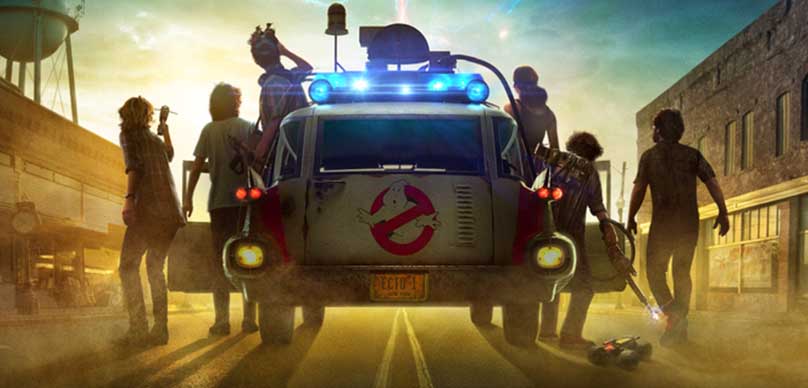
Eric Roth Scripts Collection: Screenplays Download

Eric Roth is one of the most sought-after and successful screenwriters in Hollywood today. His multiple awards winning screenplays are amongst some of the all-time exceptional films written and recognized by the American Film Institute. He’s well-known for writing or producing films like Forrest Gump, A Star is Born, The Curious Case of Benjamin Button, Munich, Ali, and many more

Alex had the pleasure of sitting down with Eric and discussed his career, the craft, and much more. The screenplays below are the only ones that are available online. If you find any of his missing screenplays please leave the link in the comment section.

When you are done reading take a listen to Apple’s #1 Screenwriting Podcast The Bulletproof Screenwriting Podcast, with guest like Oscar Winner Eric Roth, James V. HartDavid ChaseJohn AugustOliver Stone and more.


NOTE: For educational and research purposes only).

Dune (2021)

Screenplay by Eric Roth, Jon Spaihts and Denis Villeneuve – Read the screenplay!

Mank (2020)

Screenplay by Jack Fincher and Eric Roth (script consultant) – Read the screenplay!

A Star Is Born (2018)

Screenplay by Eric Roth, Bradley Cooper, and Will Fetters – Read the screenplay!

The Curious Case of Benjamin Button (2008)

Screenplay by Eric Roth – Read the screenplay!

The Good Shepherd (2006)

Screenplay by Eric Roth – Read the screenplay!

Munich (2005)

Screenplay by Tony Kushner and Eric Roth – Read the screenplay!

Ali (2001)

Screenplay by Christopher Wilkinson, Eric Roth, Michael Mann, and Stephen J. Rivele – Read the screenplay!

The Insider (1999)

Screenplay by Eric Roth and Michael Mann – Read the Screenplay!

The Postman (1997)

Screenplay by Eric Roth and Brian Helgeland – Read the screenplay!

Forrest Gump (1994)

Screenplay by Eric Roth and Winston Groom – Read the screenplay!


Alex Ferrari 0:00
I'd like to welcome to the show Eric Roth. How you doing, Eric?

Eric Roth 0:14
Good. I'm doing good. Thank you.

Alex Ferrari 0:16
Thank you so much for coming on the show, as we were saying earlier, before we got on, I am a huge fan of your work over the years. And, and during my formative years in the video store. Some of your early works. I've watched, like suspect and wolfen in a couple of those things. And I just had Whitley on on a on another show that I another podcast. A wonderful writer. Yeah. Oh my god. Wonderful, wonderful. Humans.

Eric Roth 0:46
That was a special job for me. I mean, I came on to rewrite it. And Michael Wadley directed it and have a quick story. And stop me when I tell too many stories that relate to my age. I think more than anything, I'm Michael. I remember. I was remember watching a movie called The man who skied down Everest. And when he got a captain as a true as a Japanese guy who went to climb Mount Everest and ski down. It wasn't really so much skiing down he, after a bit, he opened a parachute and the parachute. But I said wait a minute. Somebody had to be the cinematographer on this who filmed this. Michael Wadley. And Michael went on to do Woodstock. And and then I met I met Michael on this, which Alan King was a producer was really an interesting movie. The whole movie was kind of interesting. Albert Finney and everything.

Alex Ferrari 1:42
Oh, yeah, it was you know, it's it was a remarkable good movie. Yeah. Going back to going back through some of the older films they do. At the beginning of your career. I started seeing the cast. I'm like, Oh, my God, is that said James Earl Jones. Is that is that that's it? It's like, it's like they're young. They're their kids. It was amazing to watch. Um, so how did you get into the business?

Eric Roth 2:04
Um, well, I, I think a few routes one. I went to let me see which way I could tell the step tale. I went to Columbia University as in graduate school as an English major. And I, I started to find myself gravitating towards kind of making short films. And so I switched over to the film department. And still, I still took a lot of English classes, because writing was what I wanted to always do. And I got to be crew on a bunch of very independent movies like literally with like Bob Downey senior movie called Baboo 16. They were very busy. A lot of movies being made from a place called the Millennium will film workshop, a guy named Adam schwaller. And a lot of experimental filmmakers, real New York, guys, you know, and we everybody sort of switched off crews and things on those and I was busy. I was making some shorts and I thought I wanted to be a director. And I actually had an opportunity to do a kind of compete for something that I had thing that was going on at USC with a little short I made and it got me a little bit of a cachet in that sense. But the thing that was a big difference in my life was that I was at UCLA and I entered the Samuel Goldwyn writing award. And I'd written a script that I actually tied was Collin Hagen's, who wrote Harold and Maude and then went on to write that was his that was his script. And he went on to write nine to five. And I think he died of AIDS, I'm afraid to say but he was a wonderful writer, and literally was the day after my first child was born. I was quite young, and the $500 paid for the baby. So I wanted a COBOL award. But more importantly, it got me an agent. Got me an agent, and I must say, that was 1970. Basically, I've been working ever since you know,

Alex Ferrari 4:20
the business has changed a bit over the years.

Eric Roth 4:24
Yeah, I mean, some some of it I've been either I can't say for good or for real, but like House of Cards was mined with David Fincher. And that's certainly changed the business, you know,

Alex Ferrari 4:35
right. And we're gonna get into into house of cards in a bit.

Eric Roth 4:39
But uh, yeah, for a while I was kind of treading water. I got a couple of little movies made and did some rewrites. I mean, I went to I always tell the story, which is a lovely story that I was friendly with Stuart Rosenberg, who directed Koolhaas Lu can, it worked together on later on? We worked on the onion field, but it's like my work as a young writer, and he brought me on to rewrite the Drowning Pool, which was a Paul Newman movie. And I was literally I think 19 or 20, maybe 20 years old. And I had on No, I mean it so amazing out this for good, you know, 50 odd years.

Alex Ferrari 5:25
So let me ask you a question when you're 19 working on Paul Newman film because I mean, at that time, Paul Newman was Paul Goodman. He was falling so when

Eric Roth 5:36
he called my house people against quit fucking around Alan a friend. I went down there and I bought a new HP I always tell the story the same way. So I've told this before, but I bought a new pair corduroys and I had a new briefcase. And I walked on the SAT and Newman said there was him. Joanna Woodward, Tony Franti, OSA, a couple other people that were mean no known actors, and he said our saviors he felt that there was a was a wonderful experience. I got to know Paul quite well, we remained friends for the rest of his life in a certain way. And Stewart had a kind of up down kind of career, but was was a nice man. And when he hit he was really a good director. Yeah.

Alex Ferrari 6:26
So So what would So would you consider that your first big break?

Eric Roth 6:32
I think I think winning that award and getting me the agent was a huge thing. I was on a tiny little movie that was only released in America for like two weeks. But it was an original piece that I wrote with an oddball interesting man who was a director for Billy Graham, religious leader. Sure, he made his religious films and he wanted to do a les film set in Israel. And we I wrote a little love story for him. And we went to Israel that was then that was shot in 1970, I guess. Yeah. 69. And that was one and the other break I had was after the gold one where I'd written a script called the dead time. 5050 which was a oddball kind of, in keeping with the times the kind of they make a lot of and kind of, say anarchistic kind of movies or movies that were, you know, they were in keeping with that on this not anywhere as good as mean streets or something or easy, right, you know, these movies that were like, abstract, I guess better words. And I wrote a movie called 5050. That Bob Mulligan signed on to do and Bob Mulligan was famous for Kill a Mockingbird, and fear strikes out and he made some wonderful movies. He's a real kind of old timey director, and George C. Scott was going to do it and the premise was about a guy who is in a dangerous profession is turning 50. So I'm looking at that point, at whatever age I was, I thought 50 was so old is beyond. petrified and it was an odd little movie. And we Scott decided eventually not to do it with the star who was a guy named Jason Miller, who is in Exorcist as the young priest and also happened to win the the Pulitzer Prize for a play he wrote called the champ that championship season. He also was, he's married to Jackie Gleason's daughter. He was an interesting man, he had some drug issues. He was a father too. I'm trying to think of the actor's name now who doesn't have the same name as him but he was married to the father the son was married to try and think Anyway, my name is old man's memory. He's a pretty well known actor and the father died young from some drug problems I think but he's an interesting guy a wonderful actor kind of look like Garfield, I guess, you know, a little bit and the movie was movie was briefly. Tarantino loves a movie thought was one of the most interesting war movies and, and it opened a can and, you know, lasted very small time in America. But yeah, that one, I think got me a little more on the map in that sense.

Alex Ferrari 9:29
And then used and then you were off and running now. Yeah.

Eric Roth 9:32
Then No, I mean, yeah, I mean, I would get I was I was a good bargain for people for the price that I was charging and, you know, things that didn't get made and things are disappointing. You know, one of the one of the decisions I made that was not a good decision, I went back and did work on it as rewriting but I was asked to do the onion feel. I mean, I'm sorry, I was asked to Cuckoo's Nest. And my agent as also at the same time asked to do the onion field, which is A huge book at the time. And my agent said to me, they'll never make the Cuckoo's Nest movie. And I said, Oh, really? Okay. And so I decide I chose the other one. I was friendly with Michael Douglas. And I actually came back and did some work on it, but it's one of the great movies ever made. And it sure, yeah, I'd say probably, even though the guy who wrote it, I think is probably one of the greatest screen writers, whoever is Bo Goldman, won an Oscar for it. And he also won an Oscar for Howard Melvin. But he, he was a wonderful man, we he and our close friends from both like the race track, so we used to go to the racetrack. But anyway, he that was a movie I wish I had started from scratch.

Alex Ferrari 10:45
Now, you, you obviously, you know, had a successful career as a writer. And you know, as writers listening know, writing is not easy. It is a it's a it's a tough thing to have to come up every day and go in, what is your writing routine? What has kept you going for all these years at such a high level?

Eric Roth 11:04
Well, I mean, I the high level, I guess he had to thank God for something, you know, I don't know. Whatever, whatever alchemy makes up. What makes you may be good and not believe me not so good in many places. I've had real failures where I thought they were good. And, and most I think I could blame me in most respects. One, I think I blame a director on but I but I always tried to pick things that would have some lasting quality. I mean, I may have been wrong, you know, but I thought these things I can that will kind of attribute to me. Well, when I'm getting to the end of things, you know, when you look at the credits I have so I've been lucky that way. I've worked with everybody from Kurosawa through Marty through Spielberg, you know, so I've been lucky with incredibly talented filmmakers.

Alex Ferrari 11:50
What did you work on with corsola

Eric Roth 11:52
I did a little movie called Rhapsody in August that I just I wrote, you wanted to, and I think is one of my bigger claims to fame quite honest with you not because it's, he want there's a part in it for Richard Gere, who was friendly with and, and criticized wanna meet, it's a guy who is supposed to be an American who's marrying the main characters, a Japanese man's granddaughter, and, and there she lives in Hawaii. And Richard, he wanted me to write his part, which would be an American, and he felt uncomfortable quite getting that written through translations. And so I wrote all the scenes between the daughter and the Son and

Alex Ferrari 12:35
I have to ask you, what is it like working with course,

Eric Roth 12:38
was like, you know, really fascinating, mostly was, you know, we had many conversations, he spoke, I don't think he spoke much English and so translated. And then when he sent me the script, I just was so taken with it. If it was, it was written like a haiku. It was just, you know, he'd he'd write the answer the anteil. I mean, you just do two or three words. And it always gave me gave you the sense of what he wanted. And then you had me when I wrote my prose, which is very sort of Jewish, intellectual, psychoanalytic garbage, maybe, but, you know, it just was so different, you know? And, but it was like, a wonderful, yeah, it was like, we never matched, you know, they didn't have zoom or anything, then, you know, so we just talked on the phone, and he invited me over, and there's some reason I couldn't I think I just had a baby or something. And so I could go and, you know, but it's a great honor to have even been in the same breath of him with him. And he gave me a lovely, thank you on the movie and all that, you know,

Alex Ferrari 13:39
that's, that's remarkable. So So as a writer, what is your daily writing routine?

Eric Roth 13:45
My I sort of looked at writing as a job in a good way. I mean, I'm always thrilled to be able to sit down if I can create and I look at as a great adventure journey, you know, all those things, all those kind of cliche things, but it's always true. And I get to be alone and you know, sort of dream and try to make those dreams come true. I I do it like, I mean, I'd read once and I don't know if I this is what I didn't copy this, but I read this about john Cheever. And I've told this story many times he would get up at like, let's say eight o'clock and take a commuter train in from New York, Long Island. And he would go to a basement, little tiny basement room that he had it he rented his his office and quotes with the boiler and everything and he take off his pants, and he take off his dress shirt, and he'd sit in his underwear and work. Okay, so he worked till 12 o'clock. This is a story whether true but I like his pocket

Alex Ferrari 14:47
visuals are fantastic. Yeah,

Eric Roth 14:49
he'd get a 12 o'clock he put his pants back on his shirt ties tight but his jacket on go out and have a one Martini lunch. He'd come back at one you work till five, with his clothes off, he can put his stuff back on, you know, neatly fold and put it back on, go and take the commuter train home. That was his as if he went to work came in for a job, you know. And that's how he looked at it, I think you'll find most writers, not all. But most writers have some schedule, you know that whatever it is, could be goofy, they might write in the middle of night, they can write things in a month, they can write things in a year. But there is some kind of if somebody scheduled, I started about eight o'clock, and I'm done by noon or one and I dig around the afternoon, then I go back to work in the evening, not for very often, unless I'm really feeling it. And sometimes I don't sleep much I get up in the middle of the night and do it, you know, so, but I find it I find it mostly a joy in a way. In other words, I love that. And then and obviously, if you're successful, it makes everything so much easier. You know, you actually can not have to judge yourself against everybody else and start feeling the pressure. What's the next job and all those things? You know, so it's easier for me to say, you know, but that's my schedule. I mean, I've talked about this a lot. Also, I work on a, an old, an old movie, I don't have final draft, I have an old old program that requires me to have a das base per computer. So it's that's how old it is. It's called movie magic. Movie master. I mean, it's it went out of business. Like when it couldn't it couldn't figure out how to the people who made it couldn't figure out software, so you could email it. So they went out of business, but it's exactly the same function nasality as final draft is mine uses function keys, and they use tab keys for the exact same process. And but I like it, I mean, for a number of reasons is I'm superstitious. So I don't need to change. It's a pain in the ass. But it's good. In some ways. It runs out of memory after 40 pages, he had to open a new file. But that's a good way for me to sync Are you done with this app yet? Because you very good. And so it's also very safe because it's not on the internet or anything. So because I've had stuff that they've come to take out of here that they were worried with on my hard drive and all right, but it I and I and the other funny thing about it is and I don't know why I did this as this because I'm such a Luddite, you should have a white piece of paper that you're typing with black type on right like a typewriter on to look like against. And I for some reason have a black background with white. And I'd like thought I'm now I'm used to it now. So you know and so at some point, the thing goes over to the production company and they're gonna make the movie. And they they turn it into their final draft and and then I really don't even have the script anymore. I any changes I make they have to go retype them or I have somebody retype them into final draft you know,

Alex Ferrari 18:05
very cool now, do you when you start beginning when you begin to write? Do you start with character or plot when it's something original?

Eric Roth 18:16
Even was not original? I start with actually what I call theme. Okay. What What is this really about? You know, I'm saying don't not the story, but what is what's going on here? You know, what is this? What is this? And then after that, I'll think I'll lock up the story. And then I'd say character and story would be the same to me an incredible importance and I'm very I'm very diligent with character because I think they all should sound different. I always tell a story about how I rewrote a little movie from Michael Cimino called. Was it with Mickey Rourke? You're the drag. And I got to be friendly with Michael and, and I saw that he had given Mickey Rourke a wallet, which had everything that was, you know, the character would have in a wallet like photograph of a daughter, he supposedly had his draft card, whatever it was, and even down to like the detail of like a fortune he got from a fortune cookie, you know, that he kept like some people do. And I bet I'll bet you that probably Mickey Rourke never looked at it, but he had it in his back pocket and he knew it was there. And that that's how I look at character so that you have to have every understanding of the psyche, a psycho psychological portrait of the guy what does he sound like? What does his background I mean, you know, even down to smaller characters in the piece, so that each everybody's voices different. So any that's Yeah, so character, character, I don't know which is a B and C but character, gods in the details of all the reasons To do so you're using the stuff that's right. And then then the most important facility to be a really great writer and very few reach this, and I don't think I've reached it, some great novelists do is to be able to write sub textually. And that's to be able to write not about what's going on in the scene, which most people find themselves doing. Because it's just, it's, it's what we know how to do. But it's, you know, sort of earning the explainer. And you're telling things that people already know. And if you can avoid that and do it metaphorically, in a way, it's very hard writing, but it's a, it's what really good writing is. And there's and when you see a good movie, normally, you'll see a lot of really good metaphorically metaphorical writing, or the subtext of it. And some directors, I think, Marty Scorsese is a subtextual. Director. He doesn't need to have use, sometimes it's obvious what he's doing. Other times, it's not. And so it's, it's a real gift. And when the great playwrights can do it, you know, Shakespeare, I'm putting myself in company, but he didn't need to write about you know, that on the third, three weeks from now we're going to go do X, Y, and Z when people all know, I know, we'd have some other big concept. And that's what steam is, right? What is the concept of this movie? I was told once by Elvis Mitchell, the ex, who's who does the NPR show on film, and he's really, I used to be a New York Times film critic. He thought my movies were about loneliness. And I when I thought about, I thought he might be right, because I mean, if I started thinking of all the films, I wrote that, that might be the most pervasive theme, and main, and maybe sort of underlying all sorts of things about my own life, you know, so so I have that. And I also, I've never written a novel. And I keep thinking I should have and I want to, and I think I'm a frustrated novelist, because I write very, I think, pretty good prose. And I'll tell you a quick, sweet story. I tell. Brad Pitt was doing we were doing a read through of Benjamin Button. And I had what I think is pretty good prose. And Brad says, after someone read the pros, the narrow, you know, what the stage directions and you know, what people are supposedly feeling and what's going on? Brad says, look, Eric's got a pros Boehner.

Alex Ferrari 22:28
And I can imagine him saying that, actually. And I can imagine him saying that that's,

Eric Roth 22:35
it would be free. I was like, 30 people in a room doing a retreat with Fincher and everybody, Cate Blanchett, and whoever else?

Alex Ferrari 22:44
It's funny. Now you you have adopted some amazing novels over the years, how do you approach adapting someone else's work?

Eric Roth 22:53
Well, I mean, I think some things you have to try to be a little bit sacrosanct with because the work is great. And if the work seems like it's not, maybe not, it's not about great or bad or good for the thing, what what lends itself to be dramatize, you know, so, you know, I've done just recently, this killers of the flower moon, which is, was it you know, it's a really herculean kind of task not because, but to tell the story in this head, give it the size it deserves. Plus do it with some grace and elegance, that I didn't have to really change very much the dramas, basically all there, that's more the thematic of it about sort of, Marty and I agreed to about this the disappearance of sort of making the Native American invisible and that we're all culpable in a way, but also, the characters were all laid out, and, you know, how do we have shadings with each of them? And then, and then I but I didn't have to invent protect. I mean, I had to dramatize certain things. But other other books are more problems were problematic and different, like Doom was kind of

Alex Ferrari 24:01
how it's almost unadaptable

Eric Roth 24:04
Yeah, it's voluminous, you know, but you start eventually coming down to what the size of the thing hopefully should be. I mean, my scripts are usually too long. And a lot of it has to do with me, as I say, writing all this prose about what's going on, but if it's not, if it's not a book, that's particular, I mean, I've done a number i a lot has been, but I consider a lot original writing. So Benjamin buttons a good case, because that was a short does the art magazine article of Scotsman sherald of Genesis art wrote, and it was an article really wasn't very good. He did it for Colliers, and he, he just did it for the money, you need the money and but he had the idea of a guy going, you know, aging backwards. It's great. Yeah, which is a wonderful concept. And what does that mean? And then you can get into the theme of the piece, which I think is for me, it was like, well, who are the people you meet along the way of this journey? You know, either way, you're going forwards or backwards, but he But that I started just from scratch and inventing what the story was, you know, because the story he had was nothing that worked for me, you know, I'm saying and it really anybody who reads it, no matter how much you love us, because shall will say maybe my story is not any better. But his story was not something you write home about really was just a job for him. as best I can tell, Forrest Gump the book was kind of farcical to me in certain respects. And so I, I made it and it failed a couple times other people tried it and had no luck. So I had sort of free rein to do what I want it with it. And so I just took my imagination where it went and came up with a bunch of things that he said that seemed people seem to latch on to, you know, and and I looked at that as like doing candy, you know, it's, it's a journey of this guy through life. I'm trying to think what else in the main, though, is like, being a dramatist? In other words, you have to and I think we said this, I don't know, David said, his father said, or I said that which is relevant on manque that when they're talking about, you know, about Citizen Kane, because you can't, with the line we have is, to the extent of you can't show somebody's whole life in two hours, all you can do is give an impression of their life. Right? That's, you know, another part of it. So no matter what the book was, if I adapted it was to try to do the best to tell the best story you know, and, and yeah, summer dad stars born I think is adapted. But we started from scratch on that one. You know, we'd have to go roll whatever movies Munich music, Munich was pretty close to book, I don't think it would step for adding some more, kind of some ingredients that weren't really dramatic, per se will be more dramatic in the sense of the way Steven can do things with stucks trucks being stuck by little girls on the phone and stuff, which is not wrong. But it's so you have to count that that stuff was event invented a lot of that.

Alex Ferrari 27:11
Now, you mentioned Forrest Gump because I mean, obviously, you know, Forrest Gump by the time you started writing for his computer already been 20 years in 20 odd years in already. So you weren't, you know, you're you weren't a kid anymore. So you were a very seasoned writer at this point. But I think that Forrest Gump, at least at that point in your career, was a hurricane. I mean, it is it is a cultural milestone, it is in the Zeitgeist. I mean, people still constantly say all those lies you know, you never know what it like, you know, all the chocolate like, life's like a box of chocolate and everything, all those wonderful catchphrases and for people who weren't around to experience it and 94 year younger screenwriters in 94 I mean 94 was an amazing year Pulp Fiction, and yeah, it for us. I mean, it was a thing.

Eric Roth 28:02
Yeah. I mean, like, you know, talk apples and oranges. But if you want to talk great art, I would I would go with Pulp Fiction, you know. I mean, I love Forrest Gump beans obviously the world to me and world to a lot of people and has sentiment and heart and you know goofiness and but fiction was a pretty, pretty lasting movie that of its kind and, and ours is lasting in a different way.

Alex Ferrari 28:27
Right? They're very so different in so many ways, and both you and quit and both won the Oscar that year for original and, and adapted, but they couldn't be more different films and so different. But yet both of them are everlasting, and completely timeless. But what was it like even at that stage in your career to be in the middle of that hurricane? Because, I mean, it's

Eric Roth 28:51
obviously you can't expect that you don't know. Right? I have no clue I had met. I had met Tom Hanks. pretty early. And we were gonna do something else together. And then I was offered that book and I said, What do you think he said, Let's go for it, you know,

Alex Ferrari 29:09
and that was Tom woods. It's not that was before Robert Zemeckis jumped on board or was wrong? Oh, yeah.

Eric Roth 29:14
Yeah, it was actually there are two or three other directors that looked like they were going to do it. One was Barry sonnenfeld. One was a penny Marshall. And and Steven Steven was very interested in doing it at one point. And but I had the advantage of knowing Tom was going to do it if he was a music star, but not anywhere. He's not he wasn't quite Tom Hanks. Yeah,

Alex Ferrari 29:37
it wasn't posted post Forrest Gump. I post Forrest Gump columns.

Eric Roth 29:41
This is pre Forrest Gump and he was actually I think when I met him. I think he was filming.

Alex Ferrari 29:49
Didn't you do Philadelphia wasn't doing Philadelphia?

Eric Roth 29:51
No, he's done that but even before when I met him, he was doing the Ron Howard movie with You know about the mermaid?

Alex Ferrari 30:02
Oh, yeah. Oh god splash splash. Splash. Yeah,

Eric Roth 30:06
I think that was his. I think that may have been his first break from television Bosom Buddies or something,

Alex Ferrari 30:12
I think was it close to but that was his big break, then splash, splash blow. But,

Eric Roth 30:18
but as big as he was he was I mean, Forrest Gump was hard to get made. Because if we wrote a script, I wrote a script that Warner Brothers wasn't keen on didn't quite get it. And fortunately for us, the producer, when do you find them a very good producer, she was like 24 years old. She was married to mark Canton who ran the studio, and was able to get it in turnaround, otherwise, I don't think they'd ever put it in turnaround. And we took it to paramount. And Brandon tartikoff, who's one point the president of MVC, really nice man and really smart. He was in the head of paramount, and he, he agreed to do it, I mean, develop it. And Tom came in and pitched the whole thing. You know, so it's easy for me having to sell it with Tom sitting there saying, because I'd say and he's sitting on a bench and whatever we had envisioned at that point, we hadn't written, right. And he Tom acted out what we'd talked about. And Brandon said, Great, you got to deal and, you know, I did whatever work I had to do. And then we went out looking for directors and and then Zemeckis came along, you know, he read it and said, this is for me, you know, and he was a big, obviously, wonderful, big director. And that was amazing. You know, so

Alex Ferrari 31:37
yeah. And then and then it was off and running. And, I mean, obviously, it was, it was just such a cultural cut that you were such raising, you

Eric Roth 31:44
know, you know, no, of course not. No, but and also, because there's a lot of fights about the money about what we could film and not I mean, because there's, you know, there's fights with the studio, I remember Bob saying, there's a lot of blood under the bridge, he said on movies. And he did everything known to man cleverly, to get around some of the budgetary restraints, he would take a crew on Sundays, just literally four or five people, which would be Tom cinematographer on making up himself and, you know, a couple of production people and they'd fly off to go to that whole run was done on Sundays. They fly to Maine from we were in South Carolina, they fly to Maine, shoot him running to the lighthouse, get back on the plane and come on back.

Alex Ferrari 32:33
I was wondering how they did that. Because I mean,

Eric Roth 32:36
we didn't really have the money for it, it was more about the money for it. And we we thought this was pretty special. But we also thought we could just be drunk, you know?

Alex Ferrari 32:47
It's tough. It's tough. Yeah. When you're in the middle of

Eric Roth 32:50
all this movie, I mean, another one. I've done substantial movies where you can kind of get a sense of, you know, what's, what's solid about it. And you couldn't tell on this one. So when we got done, we started, you know, when Bob was finished, and he started preview it. And we had, he always did previews for his movies in a very small theater, Paramount, and then a little bit larger theater somewhere, I think, in the valley, and then a big big theater in San Jose. And we had incredible reaction in a little theater, and with whatever, got, you know, a test screening and they were like humongous numbers. We went to the one in the valley, I think it was as my memory serves me, well. It got to incredible numbers. And everybody started getting a little nervous now this week, and there was really almost no criticisms of the movie. And everybody just was delighted with it. And, you know, had 18 million favorite moments, all kinds of things, you know about feeling good about Forrest Gump. And then we showed it up in San Jose to a huge theater that had like a balcony, and I don't know, it must have seemed like hell, 3000 people probably didn't. But I remember sitting on the balcony, and you can see down It was one of those theaters that didn't have a middle row. So anybody getting up to a bathroom at a walk across, like 30 people, you know, 50 people. Anyway, we were flying home, we were on a paramount plane. And either Sherry Lansing, or who is president then in the studio, a wonderful woman, or john Goldwyn, who is her second in command was looking at the cards, you know, and he did percentages and all I said, you just went into Raiders of the Lost Ark land. Because there was like, 98% 99 Yes, favorable. And we they knew how that we had something that was a monster, you know, they know but they, they did a magnificent marketing job with that poster. You know, things like that. And then I knew I knew I was in business. When I went in the race. I was in a race track, like getting in line to bet. And I heard someone say like, you know, starting to do the accent. I won't you know, he's doing Forrest Gump. Right.

Alex Ferrari 35:04
Now, I've heard I mean, over the years, I mean, I've talked to every screenwriting guru, so many different screenwriters, and one constant thing that it's always talked about is in order to have a story, you need conflict. That's what gets the story across. And I remember one day in film school, my screenwriting instructor said, you always need conflict, except for one movie that pulled it off. And it's Forrest Gump force doesn't have any conflict. And I want to ask you the question what it because force just seems to be the world around them is conflict. But he himself, and you start analyzing towards the end, there is a little bit more conflict, but I just want you to kind of analyze

Eric Roth 35:45
your pay, if you want to. Yeah, I think that's true. I mean, it's a it is Candide, I mean, there's been a number of other things that are like candy, where people take a journey in the conflicts within the journey. But it's also a sort of the conflict is he going to get from point A to point path. And also, I mean, the other thing, I always felt there was a conflict was about the fact that he wanted this girl to love him. So he right loves. So the love story would be the center of the peace, I guess. And then these other things, he believes in his mother and God, you know, and where's God betraying him? And, you know, I mean, it's, it's like, I would say, a more sophisticated version, I'm not saying better or worse, but was like, being there was conflict and being there, once he steps what you know, there's a potential conflict of a guy who, you know, is having, you know, certain issues, you know, so he has mental issues, you know, intellectual issues, and he steps into a world that he's just fine with, where, you know, he says things that everybody thinks what he's saying is, you know, the most genius thing ever said, and they all run out, but, so being there was like that. No, we didn't have the normal things, you're gonna get thrown out of your apartment, and that his mother, you know, was gonna, you know, lock them up, or we didn't have any things, you know, so that, and that those were mostly from the book. I mean, nothing was different netway from the book. I mean, that was his his story. And, and I think there's, I mean, I think that's, I mean, the other thing I you know, the other rule was never use voiceover. I've been one of those guys who keep those things. Well, all the great filmmakers ever, including, if you like Forrest Gump, he uses voice over Marty, his voice over and every movie,

Alex Ferrari 37:33
Shawshank Redemption, not so bad.

Eric Roth 37:35
Not so bad. I'm saying that I always found that funny. There was a guy that famous, co wrote the whole screen. The books got,

Alex Ferrari 37:43
I think it was Robert McKee, Robert McKee. And he said, Never use voiceover. If you ever use voiceover in your script, it's all relative. I mean, because voiceover is a crutch sometimes,

Eric Roth 37:53
but conflict is I mean, I remember saying I won't mention who it is who's always a pretty well known actor who wrote a script and sent it to me. And I said, it's really well written. And I think you've, you know, you've got work to do some of the characters in this, but you're missing the one I agree, the big C, you have no conflict in this. So I mean, I think you do need to know what the conflict is how you show it, how you do it. I think there's probably varying degrees. And I probably have to, you know, probably ask somebody else who's smarter about these things to me about what would be the conflict in Forrest Gump? I don't know. Well, good now. Well, maybe it's him versus a universe in a way the irony is in the universe. Yeah.

Alex Ferrari 38:38
I would agree. I would agree with you. In other words, look, I

Eric Roth 38:40
mean, all these ridiculous things, you know, which we always we always were taken by, you know, how ironic or sort of ludicrous the absurdity of rah Reagan getting shot or, you know, john, I mean, of john or Bobby Kennedy, I mean, all these things, all the assassinations, and, you know, wars we entered into, and I mean, in other words, it's all slightly insane, you know?

Alex Ferrari 39:04
Well, the whole story is, is the whole story is slightly insane. In many ways. It is, but one of my favorite lines in the entire movie, and it's not one of the famous lines is when he opened up the letter and he goes, I invested in a fruit company. That's right. And I didn't need to learn I didn't need to worry about money anymore. One less thing.

Eric Roth 39:26
Yeah, well, I don't know why I don't know why I came to me I said it'd be kind of funny if he owned Apple

Alex Ferrari 39:32
because we all say that they

Eric Roth 39:33
actually say if he you know, he would have to cap the stock but that by whatever the price was, then they figured out that next to like Tim Cook he would he would be the second largest stockholder of Apple if he didn't sell it you know, he just kept it

Alex Ferrari 39:48
yeah him and jobs were like they're neck and neck. Yeah, exactly. Yeah, cuz everyone always jokes like I should have bought Tesla. I should have bought apple at eight bucks. You know?

Eric Roth 39:57
Why the same thing with when we did house a car For Netflix, not one of my genius, financial people want Netflix. She said buy Netflix stock. It was at like eight. I didn't buy a nickel. I mean, I would have done. I'm not. I don't invest much in anything, but I would have probably, I don't know, a couple

Alex Ferrari 40:17
bucks. bucks in there. Exactly. Now 900 hours, something ridiculous like that. Now you have you have collaborated with some of the most amazing filmmakers in history. We were just talking about Kurosawa, obviously Fincher Spielberg, Michael Mann, like, how do you collaborate with such established and then sometimes even legendary, like a Kurosawa or Spielberg? Or

Eric Roth 40:45
was it was less of a collaboration in the sense that he trusted me to write this character? And he, he didn't like he told me just could we not have him say this? Or was Yeah, sure. That was a little easier. It's very long distance, you know, Michael Mann or Spielberg.

So it each was different, because as some of them were writer directors, right. So Michael Mann was a writer also. So we had a shorthand together. And he's a tough guy, and we fought like cats and dogs about stuff, but I can't hold my own. And I always I also believe, to just be honest, that it's not capitulating, but I think you'll find a say you have my way, and you'll have Fincher his way. And it doesn't have to be the highway, then, you know, I'm saying you there might be a third path that that makes you feel you've created what you felt was accurate, and right for the material. And so does David Davis is a little tougher. Dave is very, Dave is very logical about what he wants and wants. Nothing wrong with it. Whatever one line is said that whatever comes back has some logic to it. It's a response. I'm a little more fanciful in the stuff I've done. So I've never looked at things that way. Michael Mann is wonderful writer and very analytical. And he came up with a great thing for the insider, which turned out to I think needed, and I would have never thought of it. He there's a scene early on. And we were talking earlier about, you know, trying to write some text the as, as opposed to expositionally, which is as bad writing mostly. But we Michael felt we needed to lay out for the audience quite early. What were the pet impediments to this guy? And what was what would what would needed to be accomplished. So we have a scene setting was supposed to be the CBS kind of kitchen where they're having like a lunch, and it's all exposition, which is not something I'm all about. But he said, we need to get this guy lawyer, we need to get this guy that we need to go talk to this guy, we need to get him out of his contract. In other words, and those were the kind of Michael's analytic about these were the kind of points we had dramatic points we were gonna have to overcome to become, you know, where the drop the dramatics worked for the movie succeeding. And it was a wonderful moment.

Alex Ferrari 43:06
Yeah. And I mean, I've had so many people on the show that have has worked with Steven. And I've just found so amazing how many careers he's touched. And early on, you know, Kevin Reynolds and john Lee Hancock, and like, he's the one that opened doors for people. He did. He's to me,

Eric Roth 43:26
I never had that relationship with him. I actually knew him when he was very young, he roomed with somebody I wrote a TV movie for okay. He was probably 18. And, and he was mean even that a wonderful entertainer, wonderful, a&r, dramatic director, he's, he has his own way of working. I mean, it's quite different than a lot of the people we're talking about. And he wants things in certain ways he had, one thing I liked about working with him was the Kathy Kennedy, who I adore is his producer. And she always send the pages to Stephen. And Kathy would then call me and say, here's what he likes and what he doesn't like. And I like that. So so when you went in, and I went to meet with them about this the work, you don't get your backup right away, you know, they've been getting a beef or you get insulted or your feelings hurt, or whatever it is, you know, about the work, you already know what's in you've thought about it, why is this not working? Why is it? How can we make this work for him and all that? So yeah, he was an interesting guy to work with. And it didn't come out. I mean, it wasn't holy. He felt at some point that we he wanted to have a little bit of a different voice. And he brought in Tony Kushner, who I adore, and a friend who was one of the great writers and in our lease in theater of Angels in America, he wants something a little more intellectual than some of the things I was writing. So, you know, I was wounded by it to some extent, but it all worked out in the end that we ended up having a movie that we're all very proud of, you know,

Alex Ferrari 44:56
yeah. And now you're working with Marty

Eric Roth 44:58
on Marty, Marty and I are supposed to work on two or three other things. And this was Marty's a dream. I mean, it's like to me, Fincher and him are very different in their approach to eating or char. So then Steven is too, but I mean, there's just these two guys, I know better, I've done thing to thing that Dave and I know, Marty over the years. And Marty, completely said, feels like you're a thoroughbred, and you should have your hand and just try to invent and imagine anything you want, he'll figure out a way to try to do it. And if he doesn't think it works, he just tells you in the nicest way. So he said, Let's, let's try it this way, you know, and, and he'll take you off, whatever you might get stuck on, you know,

Alex Ferrari 45:40
yeah. And he has that art, he has the ability to the almost the political aspect of being a filmmaker, it's like, as opposed to some other directors who are a little bit more hard, hard handed about it. Marty softer. And he's just knows how to play the game so well, that by the time you're over here, you're like, how did I get over here? I'm like Marty's like, this morning.

Eric Roth 46:00
I mean, it's also, you also know he, at least going in that he probably will get the money to be able to do anything he wants. It'll have the backing of a big differentiate on words. Somebody says, like, we can't do that, because it's too expensive, or something. And he'll say to you, I'll try it. You know, let's see what it looks like. If you want to, if you decide you want to run, do the whole movie backwards, or people walking backwards, they'll try it. You know, I'm saying might not work, but he'll try.

Alex Ferrari 46:28
And it's amazing how now Marty is working with Netflix. Because Netflix is basically I mean, please correct me if I'm wrong. I'm gonna say that giving them a blank check, but they're giving them

Eric Roth 46:39
a lot of leeway. He's actually moved on for the moment to go back to Netflix. But I think he he's an app. This is Apple, sorry, who's paying for this? Credit Apple,

Alex Ferrari 46:51
really, but it's going to the streamers though. He's going to streamers now now.

Eric Roth 46:55
I mean, that's where you're going to get the money from. But he does. I know that he wanted this on this that he wanted a certain amount of a theatrical release. It's not just a few days or a week. So he's gonna get that with Paramount's gonna release it theatrically. And then Apple have it part of the service and streaming service. And, you know, it's a wonderful thing for both for, you know, for Apple, I think, the idea of having Marty and Leonardo DiCaprio and Bob De Niro on this kind of big subject matter that will be wonderful fruit subscriptions and all that. And, and I think it's great when those when that when it works out that way? I mean, David has a blank check to a certain extent. I mean, I can't speak to that. But no, but in other words, anything creatively he wants to do Netflix is his home. And they they embrace David the way they should. So they're giving in a way an artist a chance to always express himself. How great is that? I think I think he's earned it.

Alex Ferrari 47:50
So without question. So you were there at the beginning with House of Cards, which it is a one of those moments in time where the business changed. The entire industry changed from the moment that Netflix says we're going to do original programming. And we're going to do and we're going to spend obscene amounts of money on an original IP. We have great people working on it. But it was when that came out. People were like, Wait, what? That was no. I mean, the story goes, which is true.

Eric Roth 48:23
I was sent in so as David the ARIA manual was, I think, trying to sign David more than me, but he wanted me as a client also at the time, and he said, I said, you know this, this is silly, Ari, I'm all for it. I've been the same agent for 32 years, but she and he said, What if I sent you a really great piece of material? He said, I'm always up for material. So he sent me house of cards on video, you know, which was the English show. And I said by Quint, I said to him, this is spectacular. I happen to know it because Michael Mann and alpa Chino, I had thought about doing it as a movie, because it's just Richard the third, you know, that's what it is. Right? So, um, within that, for whatever reason, we never, we never worked it out doing it, but it would have been great. So I said to David, if this is something you want to do, I mean, I think there's a there's a way to do this and not very difficult. Obviously, the work will be difficult, but that this would translate beautifully into an about America is politics. And so we hired a writer of Belleville men who had written a play about I think state of America, I forget the title of but it was a movie that actually George Clooney made, which understood politics quite well and, and Dave was agreed to direct the first couple of three and we got them. You know, that point Kevin Spacey was a great fine and David had worked with him and I and I helped get Robin right because she had been in Forrest Gump and all we were friends in So we've had a great package, I think, and there was an auction then and all the play all the players were there at that point, they came to David's office HBO, and I guess, Showtime, whoever it was, you know, they were We were in business and, and, and Netflix. And Netflix made an incredible offer. And I gotta be honest, I was, I didn't I understood that I thought there would be a place for this in time. But I said to David, I don't think there's enough eyeballs yet for this. And I think I would like to have the water cooler conversation like on the sopranos, they add, you know, at HBO, you know, and I thought there was, you know, the class of the field. And he said, You're wrong. He said, Those people are gonna know he did. And they said, You're a Luddite. You don't know what you're talking about. And this is going to be you know, people are going to watch this if we can make it, you know, attractive enough and interesting enough and dramatic all that. And we were, we were the second the first show is a shows TV Van Zandt did or something about called Oslo or something, a small little thing in Norway, and then then it was us. And obviously, you know, what happened that people start bingeing it and going crazy and, and all of a sudden, they got giant amount of subscriptions, which gave them money to go do other shows. And, you know, I it's a mixed blessing to me, because I'm such a movie lover and love going to movies and a 40 foot screen and everything, but I watch things on my phone, like anybody else, you know, and some things translate some things don't I liked it. It's available to everybody. I mean, one of the things I learned early on was, was not early, but we had like a 23 union of Forrest Gump at USC, and everybody was Bob and you know, Gary Sinise, the Hulk, everybody. And Bob asked the audience, how many people we showed the film first on a screening there. And Bob said, how many how many people have is this the first time ever seeing it on a movie? on a screen? Everybody?

Alex Ferrari 51:58
Of course, there's children there.

Eric Roth 52:00
Can't tell yet. though. I said on TV. So, you know, there's, you know, it's like, Alright, I understand when there's so many more people watching something how beneficial that is, you know,

Alex Ferrari 52:12
I mean, it started with cable and VHS. I mean, that's where movies now. Yeah, big Terminator was made on on cable, you know? And that's where it became.

Eric Roth 52:23
Yeah, yeah. So I was I was behind the curve on that one. And, and so but, you know, now we, I don't know, if we've reaped the wind, you'll sell the Whirlwind or if this is I think it's a mixed blessing. I mean, in the main is probably good. I mean, it was a little little disillusioning to me that they, they, particularly the way they handled it about Doom going right to, you know, day in date with being on the streaming on the streaming service, the same time was being released. But I think they're going to rectify some of that.

Alex Ferrari 52:57
I just read the article this morning, that it's going to be a 45 day window. So they are they are going to do a 45 day window. And Dude, I just literally read it this morning on. I'll call my agent when we hang up, see if I can get some money out of it. Yes, it is gonna be from what I read on on the trends. It Dune is going to be released 45 days, and then I'll end up on max. Yeah,

Eric Roth 53:18
it deserves to be seen. I've seen it as he deserves to CCI a great big screen and have the sound insight and it was so pretty amazing.

Alex Ferrari 53:26
I mean, to be honest, like how do you approach that that subject matter? It's such a,

Eric Roth 53:31
it was pretty daunting. But I mean, honestly, I'm a old hippie, done my fair share of I'm not advocating anybody do this my fair share of hallucinogenics even though I had some issues with the book, but the book is transcendent in some respects, and certainly for when I read a 15 year old boy. And I felt there's a spirit to it that I could probably capture and take you to places you haven't really thought about or seen. And I wrote a big full fat draft and it needed cutting down and Denise Villeneuve did that wonderfully. And, and then I think they brought in another writer because I was I've moved on by then to kind of even more grounded a guy named john speights is really terrific. And so three of us I think ended up creating something pretty amazing. And then Didn't he obviously, I think realized for what I saw, you know, as a piece of real work of art, and really a wonderful adventure and everything else is pretty special. I mean, I would tell you if it wasn't

Alex Ferrari 54:32
Yeah, and I have a feeling that you would have I don't think they know it wasn't when you were gonna tackle star is born. I mean, that movie has been remade with three times before you. This was before. And every time it was a hit from what I understand. And it was always like this kind of cultural touchstone when it came out. Yeah. And then you've got Lady Gaga and Bradley Cooper and Bradley. Bradley is the director. as well, so first time director. So you've got this, how do you approach telling that story again?

Eric Roth 55:09
Well, I mean, it was an interesting that was that was kind of a challenge. Not the work was very, really challenging. But I don't know, I hadn't had a movie made. And I was so used to getting movies made like every two, three years. And I hadn't had a movie, maybe maybe three years, maybe a little more. And that movie, even though it was nominated for an Oscar, extremely loud, incredibly slow, was not that well received either critically, or box office. And it was a disappointment to me. And there are many reasons why I think I have some things up. And I think that there were some decisions that maybe should have made differently. But, you know, that's, that's what happened. And they offered me the stars born, I said, Is this a good idea for me to want to my Am I too old for this? I mean, not just didn't understand the culture and music and, you know, and be as contemporary as it should be. And I in and they sent me a script, which I thought needed work. And I said, I kind of feel like I've got to, you know, start from scratch. To some extent. There was many some things there, that was certainly good. And I said, I'll, I'll tell you what if they said, you got to do it quickly. And I said, in six weeks, I'll have for you something new. And I think you'll hopefully you'll like it and, and I went to work and Bradley was there every day. And we would text each other in the middle of the night. He was wonderful to work with and had his own ideas about things. And we'd fight like cats and dogs, which I do with everybody. And in the end, we had something I think which was had the humanity that I think I can bring to things and he understood and and i think was a great contemporary story. One of the really wonderful moments for me on that one was Bradley and I and Lady Gaga working her house out in Malibu and it was the first time I had met her actually and Bradley pedigo. And I was going to leave when he did and she said to me mind staying, I said no, she's just like to talk about the character. And we did that and I gave her some I said take a look at Moonstruck how Cher played and was brought you know certain things. And I said I'll do everything I can to make this easy for you because she wasn't she's acted but she wasn't wasn't her, you know profession necessarily. And so, I promised her I'd make things as conversational as possible in the scripted that didn't have to be big monologues and all that and, and now, let's get to Lisa, do you mind if I play something for you? Like, yeah, okay. So she sat down pianist, he played Somewhere over the rainbow and sang it. He was like, Are you kidding me? It's like, Oh, my God. God just walked in, you know, really? He was like, yeah, I'm maybe it was, maybe it was not so accidental. But it was like unbelievable. I mean, it's like one of those moments you'll never forget.

Alex Ferrari 57:55
I saw a private concert by Lady Gaga at her house in Malibu

Eric Roth 57:58
kind of clip some of the songs are thinking about and yeah, and it's it was when I went and watch it with an audience. I was just so thrilled that people just really loved it. And they laughed and they cried, and, you know, the kind of thing that a good love story does. And you know, and I think Brad the Met, you know, added immensely to it. He had some great ideas for storytelling, and he certainly made it feel real and yeah, I think we were we did well together, you know.

Alex Ferrari 58:26
Now, what are three screenplays you think every screenwriter should read? Hmm.

Eric Roth 58:34
Well, I guess you'd have to start I don't know. But it's one of those you know, what's your what's the best movie ever made you as probably 20 you know? Sure.

Alex Ferrari 58:41
That's gonna come to mind.

Eric Roth 58:47
Wow, this is so hard. I mean, I guess you'd have to say Citizen Kane, because it has multiple points of view of one person is probably the first time that was ever done. And that is fresh with me because a mank I would say Chinatown. Because that's a movie that is all subtextual you're saying three is so impossible. I'll give you another I mean, to me, my favorite movie ever is 2000 either godfather 2001. So I don't know how to differentiate between sort of two fairly

Alex Ferrari 59:19
different they're fairly different. But so different, but godfather two's perfect. I always come anytime anyone says godfather I'm like, I will grant you godfather one and two as a warner because it's just as a as a whole that it's perfection

Eric Roth 59:33
to me is you know, even more perfect and in 2001 changed my life in some way. You know, so as I move experience, you know, so absolutely. are there so many I mean,

Alex Ferrari 59:44
oh, no, there's hundreds there's I mean, there's exactly, but three they just kind of like to start guiding people. Chinatown always shows up godfather always shows up. 2001 doesn't show up as much because

Eric Roth 59:56
it's not a script, you would say but look at the sparseness of it and then oh, No movie it said that the use of the by now but but those things have to still be written he had to write down that there's something as to black monolith even though it's from a book I know but especially the whole light of that says the use of ideas. Yeah, I don't know. It's like you know where it is where the things leave off between what the writing is and that's where you get into a whole thing. I mean, one of the famous I'll give you a funny little thing about US Citizen Kane, which is used as a thing about Writers Guild and the whole credit to speak credit. So they say they say what if I gave you a scrip which was about a famous man you know, magnet who owned newspapers and actually helped start a war and was one of the richest men in the world. They lived all alone, you know, sort of cloistered with his girlfriend up in this place. Zana do basically and and you know, at attract his life, you know, from beginning to end and you say it sounds like a pretty great story. Yeah, that'd be great. So you get credit for that, right, Eric Roth, and then someone comes along they, they read it, they sent it to another writer. So is there anything you'd add to it? And the writer writes on page one rosebud, on the last page wrote his book? And I said they get credit to that design. So you know, I don't know. screenplays are a tricky thing. I mean, I think they're, they're a they're a great craft. I'm not sure they're a great art form. You can be artful at it. But their craft, they're you because you can get away without finishing sentences. There's dots and dashes. You're not a player. You're not a novelist. It's a bastardized form a writing of a way. And it's also something that you that you need, it doesn't really exist unless you get amazing movie, you know, I mean, it could be something to read, it might be interesting. And there are many scripts who probably hold their own. There's a famous one called heroine alley that everybody always loved about the plague that a guy named Walter Newman wrote He also wrote cat in a bunch of movies and that but that always holds up I guess, is a great piece of you know, could have been a short story or something but uh, but it's of no value whatever scripts I don't have made, you know, the bid on the floor here.

Alex Ferrari 1:02:09
They're not best selling screenplays like you could still get not

Eric Roth 1:02:11
know you, wouldn't you and you wouldn't even feel they were if you bought them and read them. They might be really interesting visually and interesting. But they're they're such as I say, bastardized form of things.

Alex Ferrari 1:02:22
I always I always, I always tell

Eric Roth 1:02:24
other people would add probably in American screenplays probably add Butch Cassidy and Sundance Kid because it created a whole way of looking at, you know, it's so meta in its way. You know, it was very postmodern. So I mean, I could give you all the all the screenplays that matter, you know,

Alex Ferrari 1:02:40
right, of course. But I always I always tell people that screenwriting is arguably one of the most difficult forms of writing because of the condensed amount and like the, the you can't go like a novelist and just

Eric Roth 1:02:54
try to do I mean, good writers do less is more I unfortunately, haven't quite got there. I mean, it I really do. I mean, okay, Eric, you've done okay. Oh, but the director, I've done okay. But the directors appreciate the fact there's a lot more because they can make choices,

Alex Ferrari 1:03:09
and they can cut down. Yeah, I think it's better to have too much cut down, which

Eric Roth 1:03:14
is their job. I think good directors a great editor. Absolutely. Thank you work, we've crafted refashion. I mean, I always say that it's like kind of building as the writer gets to do and then director gets to take on this journey, you know, now,

Alex Ferrari 1:03:29
what advice would you give a screenwriter wanting to break into the business today?

Eric Roth 1:03:37
I would first of all, ask them to please watch every movie they could watch and also read every book they can read. So they have knowledge both forms. I think literature is as important as film literature. Get to know what characterizations are get to know what dramatizing something isn't. Even in comedy. In other words, everything's going to come back to three acts maybe four. I don't care if you stand on your head if you do Pulp Fiction when starts to end and ends up in the being it makes no difference you're still going to have a beginning you're going to start complicating the problem in the second act and the third act you're going to come to either a conclusion by God coming in and a machine DSS Mac and or you can find a catharsis for people that they find organically amongst themselves and the movie is going to end with some conclusion or left left left inconclusive. So these rules will always apply. So I think I don't know I think I'd have everybody try to read and get a sense of what drama is what how does how to describe do this and then also to I don't know some some people and it's like anybody, anything else, some people just better than you at saying so just right to your own level. So I mean that in other words, everybody tries to, you know, say I want to be Aaron Sorkin I want to be, you're not going to be Aaron Sorkin you're going to be whoever you are. And maybe you'll end up being, you know, more valuable and Aaron Sorkin some way, but you'll, but you also may also write for the great comedies or for the most popular movies, and there's no, there's no criteria for any of this. And I think the things that I think people, if you can't write it, I think put it right into talking to a tape recorder. I tell people that all the time, so I want you to do my life story. And I said, you do your life story. You know, and, and talking to a tape recorder, have it transcribed and all of a sudden, you'll have yourself basically a basis for a screenplay, you know, and everybody has something interesting to say about themselves and about their lives. So I think it's true when they say write about what you know, but I would say don't write necessarily what you know, I think write would out what you know, but not specifically necessarily. It'll come in, in any you can't stop from whatever, you know, coming into a screenplay.

Alex Ferrari 1:05:59
And now and what is the lesson that took you the longest to learn whether in the film industry or in life?

Eric Roth 1:06:09
I would say in life that I don't need to always be validated. I mean, it's like a whole world of that wanting these trophies and wanting people, you maybe don't critics or whatever you think, you know, starts sort of telling telling you who you are, that you can, you can be yourself without that, and I still haven't really quite learned it, I manage to have anxiety about things, you know, that I, why I do, I don't know, part of who I am about needing somebody love who I may not have gotten the way I wanted it all that thing was a question as either

Alex Ferrari 1:06:45
the lesson that took you the longest to learn whether in the film business, right,

Eric Roth 1:06:49
guys still think I'm learning this subtextual thing? The I mean, and you'll find that a great books have it I mean, no as you get it, right. You know, and it's not, it's not something you can quite, I just don't think I quite, I get up to the line. And in many cases, I can do it, and I can't quite always do it. I think also, I think I probably took too much time to write things before I'm a little quicker now. I was a little too, I was a little too precious with stuff, maybe, you know, I just I always wanted it to be the best version of what this was when I turned it in. Even though the next day you just start looking at and go, Oh my god, you know, this isn't so good. But I bet but the other thing is, if you can look at it, you look, it's very simple for me to say things, I get paid a lot of money, I get to live a great life, I get to be with all sorts of interesting people, not only actors and directors, but get to do research on things that are worlds I don't know anything about get to be a journalist of a kind and, and it's a struggle for luck. I have people in my family were struggling to want to be writers, you know, and it's like, and they just got to keep knocking that their heads against it, if that's what they want to be you know, and I know people who have one movie made in four years, and they still writing you know, and yet, that getting up and saying there's that blank page can be either incredibly frightening or incredibly liberating. And I think there's some, somewhere in between, and I don't think it has to do Prohm necessarily with being rewarded. But at least that you can finish it and then then see if you can get a reward out of it may just say, you know,

Alex Ferrari 1:08:35
I mean, I get I get it. But look, a lot of these lead these core things that you're talking about No matter if you've won an Oscar or you've just written your first screenplay apply.

Eric Roth 1:08:44
Yeah, I can tell you this, that after I wrote for won the Oscar Forrest Gump, I was up for a job called the horse whisperer. That there Bob Redford directed and I remember, very, I mean, he didn't say it this way. But we met the first time and he basically said, What have you done for me lately? So I knew, okay, you got to start all over. You know, I'm saying you put yourself all over again. And every time I go up to the bat, you know, it's a little, it's a little less daunting now. Because you have, I don't feel the same quite pressure. But you know, it just but you still want to get these things made. And it's like, then you have to go, I have three things I'm basically working on and starting, and I have the same excitement and a little bit of anxiety about Will I be able to make this different, what is it going to make this stand out whether these voices is going to be unique and but it's like I say I'm lucky to be able to do it.

Alex Ferrari 1:09:42
And there it has been an absolute pleasure and honor to speak to you it has been great and I hope our conversation helps a few screenwriters out there. So thank you so much, my friend.

BPS 149: The Art of Creativity and Wonder with Jeffery Davis

Jeffery Davis, Tracking Wonder: Reclaiming a Life of Meaning and Possibility in a World Obsessed with Productivity

As we get older it seems that we lose tough with our inner child. We lose touch with that remarkable creative engine. Filmmakers like Steven Spielberg and Guillermo del Toro have figured out a way to not only stay in contact with his inner child but also not lose his sense of wonder.

Today’s guest will be helping us tap into out own sense of wonder that can help you on your creative path. We have on the show author, entrepreneur and human potential expert Jeffery Davis.

Jeff approach’s life and work as a quest. Everything he does – from building a thriving business to writing books to serving as a branding strategist to designing live Brand Artistry Labs to delivering keynotes to guiding his two girls’ through childhood – are part and parcel of the same quest for integrity, meaning, and making.

But like most quests, mine has been neither easy nor straightforward.

He has deliberately sought a life of meaning and making since he was 19 and declared in his private notebook that he would become a writer and preserve my imagination.

In his 20s, he co-founded The Walden Institute, devoted to studying  human potential through the intersections of neuroscience, existential psychology, and the literary arts. By age 31, though, he was all intellect and drive with a shrinking heart and vanishing imagination.

I get to work with top-notch change-makers, and that includes our team of creative renegades at Tracking Wonder consultancy – our boutique consultancy focused on brand story identity, strategy, and asset development.

Tracking wonder is not kid’s stuff. It’s radical grown-up stuff.

Jeff lives with these burning questions that shape his days:

  • How does Story change us?
  • How is creating a signature brand with integrity a meaningful, creative endeavor?
  • How is wonder the source of every human being’s original creative genius?
  • How are building a family and building a business part and parcel of living a life of making meaning, projects, a livelihood, and a difference?
  • The result has culminated in this quest for tracking wonder.

His new book is called Tracking Wonder: Reclaiming a Life of Meaning and Possibility in a World Obsessed with Productivity.

Discover how the lost art of wonder can help you cultivate greater creativity, resilience, meaning, and joy as you bring your greatest contributions to life.

Beyond grit, focus, and 10,000 hours lies a surprising advantage that all creatives have—wonder. Far from child’s play, wonder is the one radical quality that has led exemplary people from all walks of life to move toward the fruition of their deepest dreams and wildest endeavors—and it can do so for you, too.

“Wonder is a quiet disruptor of unseen biases,” writes Jeffrey Davis. “It dissolves our habitual ways of seeing and thinking so that we may glimpse anew the beauty of what is real, true, and possible.” Rich with wisdom, inspiring stories, and practical tools, Tracking Wonder invites us to explore how the lost art of wonder can inspire a life of greater joy, possibility, and purpose. You’ll discover:

The six facets of wonder—key qualities to help you cultivate the art of wonder in your work, relationships, and life
How wonder can help us fertilize creativity, sustain the motivation to pursue big ideas, navigate uncertainty and crises, deepen our relationships, and more.

The biases against wonder—moving beyond societal and internalized resistance to our inherent gifts
Why experiencing wonder isn’t really about achieving goals—though that happens—but about how we live each day
Inspiring stories of people whose experiences of wonder helped them move through the unthinkable to create extraordinary lives
Practical exercises, tools, and reflections to help you begin your own practice of tracking wonder

A refreshing counter-voice to the exhausting narrative hyper-productivity, Tracking Wonder is a welcome guide for experiencing more meaning and joy in the present moment as you bring your greatest contributions to life.

If you are stuck or just need a jump start to your creative process then get ready to take some notes.

Enjoy my “wonder” filled conversation with Jeffery Davis.

Right-click here to download the MP3

LINKS

SPONSORS

  1. Bulletproof Script Coverage – Get Your Screenplay Read by Hollywood Professionals
  2. AudibleGet a Free Screenwriting Audiobook

Alex Ferrari 0:00
I like to welcome to the show, Jeffery Davis, how you doing Jeffery?

Jeffery Davis 0:15
Doing great. How are you?

Alex Ferrari 0:16
I'm doing great, my friend. I'm doing great. I really wanted to have you on the show. Because I need some wonder in my life, I need to track some of that wonder. And I need to use it to, to help me in my creative path as well as not only creative path, but honestly, your soul's path in so many ways just like your your life's journey. So I have to ask you, how did you get started? In this field of work?

Jeffery Davis 0:43
Yeah, yeah, this field of work, you're tracking wonder, right? Company consultancy? Like, do that? Yeah, I'll just start off briefly, we can talk about, you know, more more what is wondering what I've come to discover about the nature of these experiences of wonder after 15 plus years of deliberate research into it. You know, currently, I'm a I'm a strategist and consultant and. And that's often been my line of work for for quite some time. And over 15 years ago, I was researching another project related to creativity and the creative process came across a book, little known book of yoga philosophy. And it kind of really opened me up. And I'll just say, briefly, that was kind of the moment of inspiration. Because it just it the commentary said something about the nature of reality might be like this ordinary waking world, and this world of the interior world of the dreams and mind that we have. And when you can experience ultimate reality. Right here in this ordinary world, then you're characterized quite often by Wonder, or a sort of joy filled amazement. And so when I read that, that was a moment of inspiration for me, because I realized, I had been looking for much of my life, for those sets of experiences, the sets of experiences where you feel fully alive, and like this, is it in this ordinary world, without having to seek transcendence or some other reality? Yeah. So that was a moment of inspiration, I then devoted a lot of my work toward researching. And taking some deep dives into these experiences of wonder this is 2004. So there's very little science of Wonder available.

Alex Ferrari 2:41
So I didn't know that there was any there was any period

Jeffery Davis 2:44
There was actually some science of odd just starting. And so I was talking with some of those psychologists like Dacher, Keltner, at UC Berkeley, who actually confers with Pixar Studios that make science of all now. So there was a little science involved, but very little, yes, on the science of wonder. And so but I was taking some deep dives in some other areas, trying to make some, some connections, about wonder, kind of an intellectual journey. And then a few years later, after experiencing just a set of personal adversity. Within a year, my wife and I, getting married and buying our dream house, farmhouse in the Hudson Valley of New York, we had a house fire, I had Lyme disease, that the that fire put us out of our house for 15 plus months. We ended up having a baby and that 15 months, baby, there was just like a number of things that was just like a domino effect. But I did what I did. And I got really curious about what was going on with me in tandem with my explorations of wonder. So this is kind of the defining moment, you know, to your question, this was the set of inflection points for me. And that period, I got really curious about the relationship between our experiencing adversity, constant challenge, constant change. And whether or not experiences of wonder could help us not only navigate that adversity, but ultimately flourish in that adversity. So I committed a lot of my research and a lot of my delivery to my, my clients. With that framework in mind, and I'll just say in brief part of my discovery, and part of the premise of the book tracking wonder is that when we look at what I call fulfilled innovators, people who have really contributed to their fields, but who described their lives as being fulfilled, not burnt out, There's surprising advantages, not necessarily 10,000 hours of deliberate practice, or grit or wealth or some DNA, genius talent. It is actually they have maintained an abiding sense of wonder. And that's what I've continued to test out. And further now with the emerging science of wonder in the past six years, I've corroborated that hypothesis.

Alex Ferrari 5:25
There's there's one director that I always look at that that has that sense of wonder is that Steven Spielberg? Oh, yeah. Yes. Steven Spielberg is one of those guys who, who just you could just tell even though he's not making his his, I mean, his films that he's been making recently, in the last, let's say, 1015 years, have been more serious, more grown up tackling like Lincoln and Munich and other things like that. But there's always a sense of wonder and the stuff that he does, and he's maintained that wonder throughout his career,

Jeffery Davis 6:01
You're absolutely right. So Spielberg's early work is definitely wonder driven, very specifically, and just with what I said, it's wonder in this ordinary world, right, so I'm curious about the Harry Potter movies, in part because I have a 12 year old daughter who's really interested in them, and the Harry Potter stories. But what I the reason I'm less interested in those is because there's some other sort of Warlock world out there. You know, I'm really interested in the magic among the Mughals. Here, you, people, but you're absolutely right. Steven Spielberg, Wes Anderson, is another one who is constantly full of wonder who can sometimes take on serious subjects satirically, but also wondrously

Alex Ferrari 6:45
Yeah. And it's interesting as you start going down the list of filmmakers, or just creatives in general, in whichever field, the people who are at their highest level, they all seem to have a sense of wonder of what they do. Of almost and Pixar is a great example of that. I mean, Pixar is, you know, without without a doubt, one of the best track records in history of Yeah, of Wonder within their, their storytelling. So when you said, oh, yeah, we I think we were talking about earlier that you've interviewed people. I've talked to people from Pixar from animation, that world seems to have so much more wonder than normal Hollywood or normal storytelling, in many ways,

Jeffery Davis 7:31
In many ways, and yes, so part of my Interviews With Innovators in so many different areas in my research, including filmmakers, like Mark Osborne, who directed Kung Fu Panda, he also directed the audacious remake of The Little Prince, the most adored story in all of France. And he and he had to do it very different was beautiful, as beautiful as a shot. Credible remake. You know what I just saw this beautiful, so beautiful. And I asked him, so he said, You know, every animator making every animated film is like a nightmare, which is not unlike what Ken Burns also says, so can you know, amazing documentary filmmaker, says, Every documentary is like a million problems. So if you know that, right, so let's just pause there for a moment because one of the premises of the book tracking wonder in my body of work, this is what I tell everybody I work with. Every big idea begets a series of challenges. So you have a great idea for a film, it's like, yeah, let's make this film that sounds great. Well, that's fine. But just know that that's going to beget a series of challenges. So you normalize that. So the question is for Mark Osborne, or Ken Burns, or Alex or anybody is like, what is going to get you and your team through those series of challenges without burning out? And without burning bridges.

Alex Ferrari 9:12
Now, one thing I one thing I remember about myself when I was younger, is my sense of wonder was a lot more than it is today. And I'm not talking about when I was a child I was talking about like, even when I was in my early 20s at film school, or, you know, have my new first job and everything seemed wonders to me like, oh my god, is that a machine that edits? What is that? What is that camera? What is it? Every little part of the process for me was wonderous. And yet, as you get older, you become more cynical. Can you kind of lose that wander a bit. And those moments that I've always found happiness is when I reconnect to that wonder wherever that that wonder might be, and I think it's something that comes in We're born innately with that and the world beats it out of us. Is that a fair statement?

Jeffery Davis 10:05
It's in part true. So I appreciate that you that you acknowledge that about your earlier self. I think that's true for most of the people I work with. Certainly it's been true for myself. So if I could I'll elaborate just a bed on. Yeah. What? Why does wonder Wayne, right? We, every human being is born, wide eyed with wonder and certain can cultural anthropologist corroborate this, that we human beings, in part uniquely, are born wide eyed with wonder we're perhaps here, some evolutionary biologists are suggesting to wonder. So the question is, why do we lose it as you're as you're saying? It's important neurological, at about 12 or 13 years old. You remember that? Time? It was like the time I called like, the lowest ring of the inferno. For myself. It's like really hard years.

Alex Ferrari 10:59
Puberty. Puberty.

Jeffery Davis 11:01
Yeah. Yeah, it's hard. My 12 year old daughter is navigating get Grace graciously, so far, but far better than I did. So. But what's happening neurologically, even for her, his her synapses are paring out. She's not making as many synaptic connections and so not everything seems so amazingly new anymore already, right? That just is natural neurologically. The other part is, in part social and cultural, we start becoming self conscious how we're being sized up with other people. It's also cultural Alex, I mean, we swim in a culture in this country, that prizes productivity to a fault. And daydreaming and wondering doesn't appear productive. Although, I could argue and demonstrate why it ultimately is, but it certainly doesn't appear that way. So that's a part of it, too. Now, what you identified as a young filmmaker is the novelty part, that wide eyed wonder, right wonder as several facets that I explore in the book, but one is that wide eyed openness, right? When things are new, when the ideas are new, when the equipment's new, and like, oh my gosh, I'm going to be a filmmaker. And you're right, if we're not careful, we can become jaded. We can become cynical we can become we can approach the world has been there, done that? Oh, yeah. Tell me something. I don't already know. That whole mindset is self defeating. And it's clearly wonder defeating? Yeah, so So to answer your question, yes. It's all of that and, and more, right. It's not that the world beats it out of us. It's that the the world we've inherited does not necessarily support us, as wondering grownups. And but I will argue that wonders, not kids stuff. It is radical, really important grownups stuff.

Alex Ferrari 12:58
Yeah, absolutely. And I've had friends of mine, very good friend of mine who worked at Disney animation. And I would walk into Disney animation. And I would just see people playing video games, they would have like full room setup, with video games in arcades, and whatever your basketball net the things that are absolutely nothing to do with productivity. Because it allow their juices to flow and allow that guest sense of wonder that creativity, to want to come through. And when I saw that, I was like, This isn't me This is remarkable. And now they have that in the tech companies in the you know, Google and Apple and those they have those kinds of environments now where it's not the cubicle, sit down, do your job nine to five, yes, those worlds exist. But those companies I find don't, aren't nearly as productive as I mean, I just mentioned at Google, Apple, I mean, Disney, these are these are top of their industry kind of companies. And they're letting their their employees just kind of goof around, quote unquote, goof around. But they realize the benefit of allowing yourself even if you're working at home, allowing yourself time to wonder time to reconnect with that child. And and I go back to Spielberg because he said, it's so much I've talked to so many people who've worked with him over the years. And they said, It's like seeing a child on set. And a lot of these big directors a lot of these big screenwriters and filmmakers, and other people in other in other fields. They seem to be able to connect to that at will. And that's their superpower.

Jeffery Davis 14:36
Boy, you just set it. So I love that you're making these connections. Ron Howard, I think is another one.

Alex Ferrari 14:43
Oh, all right. Yeah. What Ron is, he's yeah, I've spoken to a few people who've worked with him. And he's just like this child on set, and you could see it in their eyes and the actors love working with these because they start feeling like Oh, I'm at home. dressing up for my parents to put on a show. And when you can connect to that energy as an adult, it's extremely powerful because we all watching that on a subconscious level yearning for that, that those good times if those were good times for you, but to go back to that moment of wonder to go back to believing in all the things that we believed in when we were children, it was just such a, you know, not nostalgia, but it's just something that connects you to that source. Whatever you want to use it

Jeffery Davis 15:35
Know, you so hit it and, and right, yeah, our childhoods are complicated. And I do watch my two girls and my younger one, I think wow, childhoods actually really confusing. Oh, nothing's nothing's at your scale. Nothing sized for you. It's like it's really good for you, you're learning these crazy roles that these crazy giants have set up you. So you've hit it on so many tracks. So there's actually a, an assay I often go back to is written in the late 1800s by a poet and art critic named Charles Bode lair, and he was looking at the artwork of this artist Constantine geese who had just started painting in his 60s, I think, you know, started pretty late, and was naively trained, not formally trained, exhibiting some of his early work in Paris, like the art center of the world. And he's writing this essay about Constantine GIS as sort of like a portrait of the future modern artists, sort of forcing the 20th century. And what he was recognizing and GIs who GIS wasn't drawing or painting the sort of common romantic figures of the heroic past, he was painting ordinary women and people on the streets and sidewalks right around him. And so, so bowed lair, to like something you said a minute ago, Bowdler says about GIS and about painters in general about us in general is that genius is the capacity to retrieve childhood, at will. Jazz is the capacity to retrieve childhood at will, which is exactly what you're getting on. And so not to get too philosophical for your audience. But I'm sure there are a lot to you know, if this is a film audience, I can go a little fill philosophical. So genius. So I've studied philosophy for a long time too, and in Greek philosophy among Aristotle and others. Genius, the word the Greek word for genius is de Amman. And so Aristotle and others contended that we're each born with a damn on this unique force of character. That is unique to every one of us. You know, Steven Spielberg has his Ron Howard has his Alex as his I have mine. The thing is, we're born forgetting what that unique force of character is. And occasionally, in certain moments, you will remember it. Occasionally, in certain moments, maybe a mentor will reflect back to you something innately talented in you that you don't quite see in yourself. So one thing I have teams do is actually recall moments when they might have been seven or eight, nine or 10 years old, before some of that neuronal pairing. And recall certain moments when you felt alive and free to be distinctly you without regard for reward or recognition. And when you really delve into those memories and sensory ways, maybe even write about them, you will remember certain traits about sort of your young genius, so to speak. And the evidence is showing that when you do that, when you actually recall those moments, share those moments, and then actively bring forward some of those traits to your work at hand. I just imagine if you recalled that young genius every morning, and wrote down say three of those traits of your young genius every morning and then looked at your schedule and said, How am I going to bring one or more of those traits with me today at work? Things change, and I've seen it happen over and over again that somebody feels like they've lost that sense of wonder. Starts to up there wonder ratio. It's not like you go through the whole day like Peter Pan, God forbid. You do up your wonder ratio and you maintain some of that idealism but in a pragmatic way.

Alex Ferrari 19:46
Yeah, there's, there's, I always say, when I'm when I'm speaking, I, I always tell people how many here know an angry and bitter filmmaker, and then people would people would raise their hands screenwriter and they would raise their hands. And I go, Whoever didn't raise your hand, you are the angry and bitter filmmaker that everybody else knows. Because it's just the way it is what in your opinion causes? You know, you know, we're using the we're using filmmaking as a as an example. But they're in any field, whether it be opening a business, writing a book, you know, being an actor, or a painter or anything. What is it that causes us to lose that hope, lose that wonder of what God has started in the first place? And turns us into those angry and bitter souls walking around the planet? Who we have to deal with on Twitter?

Jeffery Davis 20:43
It's a tough question. It's really a tough question. You know, part of my job, I feel like is to keep opened and wondering about our fellow human beings, especially the ones in the behaviors that so puzzled me like the trolls, right? And, and yes, very bitter people. And I've had some of them. And I'm like, How can I? How can I get through a little bit, and I often will succeed by just like, acknowledging, okay, they're coming from some, someplace some place?

Alex Ferrari 21:13
That has nothing to do with you. It has nothing to do with you

Jeffery Davis 21:15
Nothing to do with me, right? Oh, it's nothing to do with it's not personal, like, how can I get through here, you know, through Twitter, which is, you know, this strange, medium, and sometimes, you know, sometimes that can succeed and get a little opening and connection between us. That is a complicated question. I don't know if I can answer it. But I will say this, certainly, excessive trauma, betrayal, crisis upon crisis leads to it. But one of the facets of wonder, one of the six facets of wonder that I lay out and tracking wonder, and this comes after a lot of research, is the facet of hope. And I have to admit my own bias against hope, before I really dug into the science of Hope was Shane Lopez and some other psychologists, I had a bias against him, because it sounded sort of like, oh, you're just hoping you know, you got maybe false hope you're delusional, something like that sort of wishful thinking. It turns out that the facet of hope is not wishful thinking. It's very proactive. So I can't completely answer what it is that leads a certain individual to completely lose hope, after crisis after trauma and so forth that I will maybe tell a story about Nick Cave, since we're talking to a creative audience here. Nick, for those listeners who don't know is a phenomenal he's probably the most renowned musician and all of Australia. He's a bard singer songwriter. The bad seeds have been his band for a few decades. I think one of his musical scores has been on a Harry Potter film again. So So Nick, I guess Muse just doesn't stay near anyone lane. He I think he's, he's published novels as well. 2000 he married his wife Susie. And they had twin sons. And he said in an interview around 2000, that he became a nine to five man, his muse, like we'd come to work at nine was off at five because he wanted to be full on as a father and husband and so forth. Habit kind of integrated life was very successful that way and kind of operating that way. It's quite often how I function and flourish to I have to, like, bring my muse on at will. So 2015 his son's are 15 years old, one of them falls off a chalk cliff while they're on vacation and falls to his death at 15 years old. And as somebody who's a father of a 12 year old daughter, like that is just I can't really fathom what he went through. So what, what, what possibly gets us out of that crisis out of that darkness when the world has gone so bleak and dark. And as it did for him, as you can imagine, and for Susie as well. He said he was just completely off centered, and completely, of course, self absorbed, like they couldn't just imagine why this happened to them. And it took a while to get out of that. There are a couple of, I think, central pieces to his story about what brought him hope, again, one was community. His community of fans reached out to him. So he started a blog called the Red Hand files where he writes these intimate letters to people who are asking him questions, and that support network is really important for us when we're experiencing crisis and adversity or trauma. Just surround ourselves with other hopeful people, genuinely helpful. People give us real encouragement, not just bad advice. And so the other piece though, Alex, he says in the very first blog and read and file, somebody says, How are you getting through this incredible grief and mourning? What's getting you through? How are you able to create again? So he says in that opening blog, he said, you know, we had lost our center, what was our center? Well, for me, and probably for most creative people, if not all human beings, it's a sense of wonder. And the trauma completely divorced us from that sense of wonder, he said, and so we had to go through our mourning and through our grief and gradually find our back our way back to the creative process. He couldn't stick to a nine to five process, it was messy, so messy, but he gradually started to string together a few chords, a few lyrics, and ultimately created Alex an incredible album that I recommend to all of your listeners called Ghost teen. And it really illustrates how wonder can meet you on the other side of grief. So was a long way of not answering your question. I can't say what leads somebody to be so dark and, and cynical, and so forth. But I suspect and it's been my experience with such people, that there's still a glimmer and a desire for Wonder on the other side. And if they can surround themselves with other people who are hopeful, and if they can just move a little more forward towards something creatively, they will have more light than dark along the way.

Alex Ferrari 26:40
Now, when when we talk about wonder, we're also talking about connecting to creativity, creating in that creativity could be obviously in the arts, but that also could be in business that could also be in any, you know, in architecture could be in million different fields. How do you use wonder to tap into creativity? Or does creativity just begin to flow I always, I always talk to a lot of these high performing people who, who are able to get into the zone, it's a fascination of mine, I've been there a couple times, and I've been there many times in my life, especially when you're creative. Like you just lose track of time and, and you just flow and you're in the flow. You're just there, you don't even see what's coming in. Sometimes. When I write my books, I'm sure you feel this as well. When you're writing, you'll stop writing and you'll go back the next day and read what you wrote. You're like who wrote that? Like, I don't even that this is good. Like, I don't even remember writing it. When you get to that place in your, in your think How does wonder you how can you use wonder to tap into that creativity?

Jeffery Davis 27:47
Yeah, yeah, they're, they're intimately related. And so maybe a couple of definitions are useful. So and I do address creativity full front. In the early chapters of the book, creativity, we could define in the field of psychology as the capacity to generate and act on ideas, novel and useful ideas from fantasy to fruition, right, you've got a new idea for a film, you've got a new set of problems for the film or for the book or for the business, you're going to meet those challenges all along the way. Creativity is being able to face and finance each of those challenges and generate novel and useful solutions and then move forward with them. Right. So that's part of the creative process, and it's not always so flow. Me Hi, Chick sent me Hi, actually, the you know, the one who coined flow just died last week at 87 years old. And so he, you know, he did not define flow as being in a state of relaxation. No, no, no. He, he clearly acknowledged like it is often involving taking on voluntary challenges like filmmaking, or starting a business or up leveling up leveling and business. Right. So the creative process is like, how do we face some finesse those challenges, more expansively with a broader range of resources, both cognitively and socially, to generate and move on those novel and useful solutions. Okay, that's creativity. Wonder. Let's define wonder, right. So, wonder is a heightened state of awareness that's brought on by something that's unexpected that defies your expectations that either delight you disorient you, or both. And for a fleeting moment, right, whether it's a bald eagle that suddenly lands in your backyard, which actually happened here last week, we couldn't believe it. That certainly was delightful and disorienting. Whether it's Something a colleague of yours says, that helps you see that colleague in a new and beautiful way. You're like, wow, I never saw that part of that person. That's a moment of wonder as well. These moments of wonder, disrupt our biased ways of looking at a project disrupt our biased ways of looking at a collaborator disrupt our biased ways of seeing what we think is real. And something happens cognitively in our minds. And neurologically, that opens us up right to another possibility. So it turns out that these moments of wonder, are essential, both to starting the creative process, right with a brand new idea. And moving us through from curiosity to the middle stages of bewilderment, which is another facet of wonder, right? We're in the middle of a project, we're thinking, I'm never going to get out of this, like, Why did I even start this project? All the way to forming really good connections with our collaborators? Wonder happens at every one of those stages throughout the creative process. Does that make sense?

Alex Ferrari 31:09
It makes it Yeah, makes all the sense of the world because, you know, when you when I started this podcast, I'm sure you feel the same way. With your show, when I started this with all my podcasts when I start them, especially the first one I you know, was just like, Hey, can I get a guest, any guest, you know, someone who can come on, let me show, you know, let me start providing value to an audience that's not listening. Because I was nobody at the time. So you just and as you go through that, I'll use the analogy of a podcast, where you know, you just keep doing it and keep doing it and keep showing up and keep doing it. And, for me, I literally live in a moment, I live in a world of wonder every day with my show, because every day, I get an email from something from somebody pitching a show, or like yourself, or I have these amazing, ridiculous people who I've admired all of my life, who call up and like, I'd love to be on your show, and I get to talk to a couple hours with a hero of mine. It's become almost, it's almost become normal now on the show, and everyone listening will understand why because I've had these amazing guests coming on again, and again and again and again. And he's been going like this now for the last I don't know, year and a half. So it's just been growing and growing. And I just never really put a name to it. But I'm in a moment, I'm in a constant state of wonder. Because I'm waiting now for Steven Spielberg's people to call me and Steve is like, Steven would love to be on your show. I'm waiting for that call. Um, that hasn't come yet. But I'm waiting for that call to happen. Because that would just you want to talk about disruptive. It would just, it would completely this, like completely shake my world. And my world has been shaken multiple times over the course of the last year and a half, by people calling me up like, Hey, can I be on your show? And I'm like, What is going on? So I never really noticed that before. And then I and then all the all those connections and relationships that I've built, open up other doors. And ever since I started this whole show, I've been in a state of wonder, because every day, every week, something would come up and be like, What the hell is going on? So it's constant is really cost. It's really interesting. I've never really put a name to it before.

Jeffery Davis 33:27
I love that you said that too. I never put a name to it. Because that was my experience back in 2004 is like, oh my gosh, I think this is what I've been wanting since I was a towheaded. Boy, you know, wandering the woods there. And and so I love that on so many levels. Alex, let me let me kind of lay out for the listeners, the six facets of one Yes, please. And how they directly relate to this creative process. And even your experience in developing the podcast. It's so so spot on what you've said. So the, I think the six facets in three pairs and the first pair are openness and curiosity. So openness is like what I call the wide sky facet of wonder. It is that radical openness to possibility that we want to foster particularly at the onset of a new idea, a new chapter in our life. When we just want to be, you know, we want to reclaim that sort of wide eyed wonder that we were talking about. Curiosity is what I call the rebel facet of wonder because curiosity is very proactive at seeking new knowledge. It's it's, it's when you you know, you got really curious once you moved into the podcast idea, like okay, what's the best equipment like Who could I really get on here? And could I just set up a minimal viable experiment to like, see if this is going to work all of that experimentation as part of curiosity. Curiosity also allows us to question the status quo, which makes it really important these days to foster True curiosity. So openness and curiosity are foundational to us being able to approach our life and work more creatively than reactively really important distinction there. The second pair are bewilderment and hope and the despair. So bewilderment is what I call the deep woods facet of wonder. We get into that world of confusion. It's what much of the globe, frankly has experienced for the past year and a half. 20 is a state of bewilderment. And if we're fortunate, and we can put language to it, then we're like, Okay, this is a normal state, can I actually fertilize this confusion instead of pathologize? It can I bring some curiosity forward into the deep woods. And then there's hope hope is the rainbow facet of wonder. It's proactive. It is when we set our sights on just sometimes small near future goals. And it's where we do deliberately Daydream to foresee a better possible future. And I saw a lot of literature on this during the pandemic that was actually advocating some deliberate daydreaming. Those two facets bewilderment, and hope are essential for us developing resilience without hardening up right grid without burning out, right, really, really important for us in our well being our mental and physical well being the third facet, our connection and admiration. These I think may be the most important facets of wonder for our times, and they're not what we typically associate with wonder, but connection is the what I call the Flog facet. It speaks to our yearning to sync up with one another on a film crew, right and a dance troupe in a band or just on a team of collaborators. And it's where we really can't experience wonder with one another when we're feeling supported and buoyed and encouraged. among one another. Admiration is the mirror facet of wondering the actual root, the Latin root of the word, I'm kind of a word geek. The root of the word admiration is EMI era, which is Latin for Wonder, it is a part of wonder, and it's kind of like what you feel for Spielberg, is what I would call maybe a surprising love for someone's excellence in craft shoring character, or both, right? It's like, wow, it wakes something up in you. That's like, oh, I want to show up a little better in my care.

Alex Ferrari 37:42
Oh, that's, that's an under that's a very big understatement, my friend.

Jeffery Davis 37:48
To possibly for you and your experience with your podcast is that it's possible that you have and I mean this in a very genuine way, perhaps you've seen yourself differently to in the past year and a half like no racket. Some things were like, Whoa, like, I can show up and do like, why are people coming to me? Like, there must be something they're seeing me too, that all has to do with the facet of admiration. So I hope that was helpful to you and your and your listeners?

Alex Ferrari 38:14
No, it was without question. I mean, yeah, I mean, to show up with that love that you said, to show up a little bit a little bit better, I promise you with Mr. Spielberg shows up. It's gonna be a different conference. No offense, obviously, with anybody else I speak to. But, you know, I'm not. The funny thing is I'm not the only one. I mean, there's a generation, you know, of people who were raised with his films, and he's one of the most famous human beings on the planet, who's not a star in front of the camera. He's, you know, he's like Hitchcock, you know, he's like, one of those names that people know. So, you know, as for, and in every field, there's that, you know, they're there. And every fifth in the tech world you want to talk to, you know, Elon Musk, or Jeff Bezos, or you know, any of these guys who start up they say, so it's me, there's always somebody for everybody.

Jeffery Davis 39:02
And I want Can I up the Spielberg thing? Well, obviously, and let it speak to what you said like it didn't have a word for it. Right? Wonder so just a one up Spielberg, you know, when you were talking about like, you didn't have a word for wonder. I recognize, too, that before I had a word for it. When I look at the people I was drawn toward from my teenage hood, like, Why was I drawn toward these musicians? What was it when I look at Spielberg that I was drawn to starting in the 90s? I recognize it was that element of wonder in his films, and I realized when I was really looking into Spielberg's history in his films, I thought, Oh, alright, remembered when I was a boy. I saw on television, his first student film duel with I think Sam Weaver.

Alex Ferrari 39:52
Yep. It wasn't a it wasn't a student film, but yes, it was. It was his first it was, it was a TV movie. It was a TV movie. Was it wasn't that it wasn't supposed to go anywhere. But it was so good. They released the theatrically because everyone was like, What the hell's going on?

Jeffery Davis 40:09
Is that right? He completely just, like changed everything. So, yeah, but I do I, again, like I do remember, like my early fascination with Spielberg. And later I realized it was like, Oh, it was his sense of wonder, right? Even. Even in Schindler's List, right. That use of color was impart his sense of where's the Wonder amidst this devastating story?

Alex Ferrari 40:36
Yeah, yeah. And even in even in his later work that he's doing now, they're still senses of wonder, even in Lincoln, even in Lincoln. And absolutely, there's just a different it's just no, it doesn't have to be Peter Pan, you know, running around. It's really interesting. Why do I have to ask you? Why do you think that wonder is looked at as being so childish, that daydreaming? Isn't that the bond being so childish? I know, specifically here in the States, but I think worldwide, it there's a little less variations, depending on what country you're in, and what culture you come from. But generally speaking, you know, I don't I don't, I don't know, at least of any cultures, or countries that are just like, you know, what you need to go do? You need to just go daydream. And you need like, that's not something that happens wise.

Jeffery Davis 41:22
You know, I've spent some time in India. And and so, you know, and I referenced like, there wasn't a lot of science of wonder in 2004. So what did I went to the philosophers, I went to the wisdom traditions of the east with and I went to the poets and I've published collections of poetry. I went to all those sources, because they, of course, were advocating wonder, in many ways, because they got it, they understood it. There are certain cultures, that actually will promote at least a wondrous state of being more so than others, I can speak specifically to the one that I have swum in all of my life and inherited, and that's, that's this one, specifically in the United States. And part of the cultural heritage that we've inherited, whether we're part of this lineage or not, it in part goes back to in this country, to a sort of Scottish Irish heritage related to the Protestant work ethic. Part of that lineage, you know, considered idleness, the devil's playground.

Alex Ferrari 42:31
Yeah, I don't have idle hands is the devil's

Jeffery Davis 42:34
The devil's playground, right? And so, so just and so I dug into this more. In Scotland in the 17th century, there was a an illness called the wonders, that was characterized by sort of numbness and just sort of gazing sort of being in a stupor. This is part of what we've inherited, like you can imagine, right? A boy out the field, and he's daydreaming and they're like, Oh, look at that, that is not going to amount to anything, right. But he turns out to be an innovator who may may make labor conditions even better, you know, a generation later for this day dreaming. So in this culture, too, so I've been looking at the history of work as I'm you know, we're questioning the nature of work. Now at tracking wonder been looking at the history of work, and, and a fellow name, whose last name was Taylor, in the turn of the 20th century, started to be one of the first organizational consultants, so to speak, who later influenced Henry Ford and others. He was, he was determined, he gave a talk at nine 1903 where he's like, you know, there's hardly a laborer alive, and you know, in this country, who's not always trying to scheme or figure out some way to make it appear as if he's working more than he actually is. So, you know, then there is this whole perspective that like to be a successful company or a successful business, you needed to treat human beings as laborers of unit as units of labor. Right. And your virtues were discipline, control and speed, right. And so then the measurement of a workers value was all related to efficiency and speed, right? Not daydreaming, not having Google's 20% off to like, figure out

Alex Ferrari 44:23
Innovate and innovative

Jeffery Davis 44:25
Right? So this is all of what we've inherited, and certainly what we're questioning it certainly in part with the pandemic and other elements of the past year and a half. It started to make us question, but I can't help but tell you a recent story related to film that illustrates this point and part of its heritage in Ireland, and part of my heritage is is from Ireland and Scotland. So apologies to any Irish Irish listeners. But they'll appreciate it I think. So my daughters and I recently watched two films last week, both set in Ireland One was Billy Elliot, and the other was seeing St. Yeah, yeah, you know, those both right. They're both set in Ireland. They're both like, you know, and they're both of a Billy Elliot is a great illustration, right? He's an Ireland, his father and and his older brother involved in the labor wars, you know, trying to get better conditions for labor. And Billy, here's Billy he's wanting to dance, dance, to dance ballet of all things. Ballet ballet, right? Yeah. And so, but it is a beautiful story of just what we're talking about a culture that does not support wonder. And yet what the most beautiful aspect of that story, of course, is how the father ultimately recognizes the beauty of his son's dancing and why it is how he really needs to flourish. So that's a long way of answering this question, right? That we, we just inherited some of this paradigm, right? That That reduces wonder to Child's Play. The other thing is what we have to do, I would argue Alex, is then test ourselves and our own minds and disrupt our own default assumptions, about wonder about ourselves and about each other, right to just kind of check in and say, yeah, what is my, what is my view of wonder? Like, what like, Could I actually see some parts of myself that are really hungering to be more creative, more imaginative, more caring? In my relationships? And, you know, have I kind of boxed myself in, over the past 1015 20 years, right to kind of disrupt my own default assumptions and not just blame? The culture I've inherited? Yeah,

Alex Ferrari 46:47
Yeah. And that's the thing we there's a look, I, he can imagine me speaking to my father, who was a Cuban, who's a Cuban man who worked in a factory. And I'm like, Hey, I'm going into the film business. And this, like, what? And to this day, vaguely understands what I do 25 plus years later, and he's been on set with me, and he's like, I don't know what he does. But everyone listens to him on set. So

Jeffery Davis 47:14
Simple, right. And so many people I've interviewed to write who often come from first generation immigrant, yeah, families, right face that, that conflict, right? Like, wait, we didn't come here to the United States for you to become a philosopher, or, you know, or a musician or something like that.

Alex Ferrari 47:33
It's, it's, it's crazy. I mean, if you look at I mean, look, Steve Jobs. I mean, he created one of the biggest company in the world who arguably was very full of wonder. And you know, he complicated gentleman, to say the least. But he definitely had vision, and was tapped into stuff that nobody else was, no one else saw a lot of the stuff that he saw, and he saw five, six steps before anybody else did. I mean,

Jeffery Davis 47:58
One of jobs, his most common, consistent muses was the 18th century poet, William Blake. Yeah, Blake, you know, I can't I can't recite it. Unfortunately, right now, I used to a long time ago. But, you know, Blake, and some of the points that jobs would carry around, we're sort of like being able to see eternity in an hour. Right? You know, Blake just had these visionary points, really being able to see wonder Blake would talk about how most of us human beings experience reality through narrow caverns, right. But we occasionally can break out of those caverns of reality to experience infinity in the present.

Alex Ferrari 48:45
Yeah, the other book that he had the only book he had on his iPhone, an iPad, when he died was Autobiography of a Yogi, you know, by Yogananda. So that's, I mean, talk about wonder that book will, that book will mess you up in the best way possible. Without question now, in your book, do you have some examples of people using wonder to kind of build lives or to do extraordinary things?

Jeffery Davis 49:14
In every in every chapter? So there are six facets of wonder that I laid out for you there's an unchecked or there is an unchecked or that we intentionally did not number that actually the designers surprise me at sounds true and published sideways. There is a sideways chapter, where you actually be the book sideways, right? They did just some radical work design wise. So that's the chapter on your young genius. And your young genius. I talked about Arianna Huffington. In other chapters, another one I talk about Tracy Fullerton who's an amazing innovator in video games. Nick Cave, I recount part of that story in the chapter on hope, but there are Both what I would call exemplary geniuses of creativity, who stories I tell in a variety of industries, and every day, geniuses of creativity, and these are people in our international community at tracking wonder they're people I've worked with, they're people like Evelyn Asher, who is 80 years old, who is still working hard. And she reclaimed her young genius, just a few years shy of 80 years old to completely revive her business, right? And it's those everyday geniuses of creativity over the years who've taught me so much about the real applications and the real necessity of wonder in our times.

Alex Ferrari 50:45
Now, what are some tools or exercises that creatives you know, filmmakers, screenwriters, anybody listening? Can can tap into to use to tap into that, that sense of wonder if you become that angry and bitter person? How do you get out of the darkness? How do you see the light Jeffrey? Wow, okay, no pressure, no pressure? How do you come towards the light, Jeffery?

Jeffery Davis 51:07
No. Yeah, no, I appreciate that. So the book, actually, every chapter also includes some specific tools. And I tried to be very generous in that aspect as well. And we can start actually, sort of foundational practice is what I call DOSE, D. O. S, E, that then we can apply very specifically. So D, is detecting your default pattern of thinking about something or of reacting to a surprise or challenge, right? So your default ways of trying to solve a problem or advance a business or thinking about your podcast? Can you detect what that default pattern is? Can you detect your confirmation bias? And can you just kind of feel right, so O stands for Open up, pause and just feel that reaction or that default pattern. And then S stands for seek out wonder seek out some different possibility. And I'll give you some examples in a moment. And then he stands for extend, which means to really appreciate and reflect upon whatever possibility or moment of wonder or surprise that you actively sought out. So this can go to the level of how you shape your days for more wonder and openness on a daily basis, your default pattern in the morning, many people I know, check their phones first thing in the morning for texts and emails, it's like a default addictive thing. That's detecting the pattern. And when you notice that just like detect it open up to like, oh, how does this feel like not so great, like it puts me in a state of reactivity? And I'm just allowing other things to stimulate my curiosity instead of me directing it. So could I just feel that and then seek out something different? Instead of checking my phone every morning? Could I just actually get up and step outside for three minutes, and look up at the sky for just a moment and see how that helps me feel? And then could I extend and like, just write three minutes about what that experience was like? So you're shifting your default patterns, this is core to being a grown up. Right? That is is really fostering wonder. There are other things you could do them to disrupt your patterns, morning, afternoon, and evening, we, we lay out some of what we call wonder interventions for for teams and for individuals. So during the day, you and I I'm sure can work really hard and just get stuck. It's not really flow. It's just like, work hard and get through your to do list. Right, right. Right. That's not real. So we know, cognitively and psychologically, we can only focus for so long, optimally. So to work well, we have to break better. So how could we break better? So we have teams actually take wonder walks for five minutes, the science at Stanford is overwhelming for why this benefits your creativity and why it reboots your focus. So is there something you could do to just kind of disrupt your work patterns? Could you take a break and just have a curiosity conversation with somebody to open up in the evening rather than default and check out and numb out? That turns out to be Alex when you are tired and fatigued the afternoon or evening when your best opportunities to generate new and novel useful ideas. So rather than numbing out or checking out, it's a time to maybe take that meandering walk but also to reflect on. Okay, what were three good highlights today. I can tell you at the end of the Z So today, this conversation I've had,

Alex Ferrari 55:04
It's been very surprising, I appreciate

Jeffery Davis 55:10
The open moment with you really? Yeah, I know, I do talk about Spielberg, right. And so I will look back at the end of this day. And I will actually write a few things about this experience. Why? Because that reflection will be will increase the meaning and my life, we make meaning in part by reflecting on these sorts of moments. And so we have teams do this sort of activity as well to recognize the meaning that happens sometimes in the margins of our work, that help us work better.

Alex Ferrari 55:42
There's, um, there's one thing and I wanted to just go a little bit deeper on on a certain thing that because we're talking about creativity, and I always love asking high performing individuals who are creative in every field, you know, that they in whatever they do, where it comes from, like, Where does this creativity come from? Where is that thing, and I was talking to someone who, on my other show, that had the I love this story it is I keep repeating the story because it's so beautiful. He was heartbroken. He moved, he went on a job to India, in the 60s 63, if I'm not mistaken, and his girlfriend broke up with him while he was over there. He was heartbroken. He didn't know what to do. And someone said, You should go try some meditation. And he goes and it goes to, to this Ashram, where this yogi is teaching meditation. He gets the front door and it's like, I'm here to learn meditation. I'm sorry, the ashram is closed. He goes, Why is the ashram close? Because the Beatles are here. And I'm like, he's like, What? He's like, Yeah, the Beatles are here. And we're close. He's like, and he tells him to stay. He's like, look, I can let you in. Now, why don't you just stay, I'll bring you food. And you can sleep on one of our tents outside the door. And he did. He stayed there for eight days. Until finally, like, on the eighth day, he just thought he would just stay there because he had nowhere else to go. And he was it obviously needed help. They let him in. They go come in, I'll teach you how to meditate. They taught him how to meditate. They taught him TM, meditation. And then right after he was full of this amazing, you know, euphoria, after meditating for the first time, he's going out and he goes, go meet the others at the table, and he's walking. And there's John Paul, George, and Ringo, with his wives and girlfriends. And as he's walking, he's still in a blissful state, but his heart rate starting to starting to go faster and faster and faster. And he's starting to realize, as he's walking towards, like, oh my god, it's the Beatles. And for people listening, The Beatles in 1963 64, were the biggest human, the most famous human beings on the planet. There, everybody knew who they were. And he was about to go sit down with them at a table privately. And, and I never forgot what he said. He said, the little voice inside of his head, you could say wherever it came from, but the word little word voice inside of it says that, hey, calm down. They're human beings. They fart and are scared of the dark.

Jeffery Davis 58:29
And they all think they're imposters.

Alex Ferrari 58:31
Right! So but what I found, what I found about found out from talking to him was when he was talking to because he actually saw them for I think he stayed there for like, eight, nine days, and saw them writing, like, hey, Jude. Like an album of theirs. I forgot which album was I think it was after Sergeant Pepper, I'm not sure. But it was, it wasn't the White Album, it might have been the white part of the lineup. I don't remember. But it was like these amazing songs. And he was just there taking pictures of them. Not that he was a professional photographer, he just happened to have a camera, I was taking a picture of him. And he noticed something about their openness, their sense of wonder, I mean, being there meditating on a daily basis with with this with this yogi. And that's a sense of wonder. But anyone I've talked to who's been around, superb, Sir Paul McCartney, or Ringo Starr, or any of them, say the same thing. There is this lightness of energy around them. There's this openness to ideas that they were able because I mean, you can't argue with the output of what the Beatles did when they all four of them were in flow for for a long, long time. They tapped into something that consistently for decades, for a couple decades, at least. That was the magical part of it. So again, there's a long question. I just wanted to tell you that story. But I always wonder, and I'd love to hear what you think about where you think your creativity comes from where, where that thing when you're writing the book, and you lose yourself in the writing process, and you don't even recognize the words that are coming out of, of your fingers. Where that comes from, in your opinion.

Jeffery Davis 1:00:19
Yeah, so I actually want to demystify flow and creativity a little bit, because a lot of my process in writing this book was like, pacing, talking to myself, sort of like knocking my head up against the wall, all of which I would describe as part of flow. Okay, so. So inspiration, you know, the root of which is like to be breathed in to breathe, right? And so, yeah, so your question was like, what are the origins of

Alex Ferrari 1:00:58
Well, the muse, like the Greeks use the the, the Greeks use the muse, that the Muse would come in and whisper something in your ear. But there's people that I've continued to study over my work over the years that, and I've been studying high performers, since I was in high school, I've been reading books about and all of them seem, even scientists seem to be able to tap into that, well, effortlessly, for a period of time. Not many do it for their entire life. But for a period of time moments, they're able to tap into that. What is what is that thing

Jeffery Davis 1:01:34
I teach a course that like 1000, people have taken around the world called deepen your focus and flow at work. Right. So it's incremental. I don't know what the source of that sort of Spark is. Because I think it can be so defeating for people who don't necessarily experience that this sort of sort of chase after it. But I will say this, I, if it's true that all wisdom begins in wonder, all true knowledge begins in not knowing, I really do think that wonder actually begins in our human relationship with the natural world. I would contend that it is our human capacity to be attuned to and to actually perceive patterns in nature, including Steve Jobs and others. That actually gives us some neuronal psychological, soulful, spiritual networking. To be able then in those seemingly magical moments to come up with some new inspired moment that then we can act upon. Yeah, yeah. Now for me over the years, and the people that I work with, who are high performers, they ultimately learn to set up conditions to be able to create at will to retrieve their childhood, it will, you know, and I mean, and that can be so individual, how do you work with the constraints of your your life circumstances? But how do you shape time? How do you redirect your attention? How do you create 90 minute blocks where you like, everything else is gone? And your mind is fully focused? And in flow, though, that requires usually some setting up conditions to make the news appear at will? Does that make sense?

Alex Ferrari 1:03:32
It makes it makes all the sense in the world

Jeffery Davis 1:03:35
To get both from you know, more of a pragmatic. Yep. We help people like actually know that it's possible for them to create our paradise.

Alex Ferrari 1:03:48
Yeah. And the thing is to that and everyone listening, I want you to understand is like, I'm not saying that you have to tap into Steven Spielberg's Well, or Steve Jobs as well. Those are their wells, their, that's their flow, that's their, that's the thing that they get that they're able to tap into. You need to find out where yours is, and how to tap into yours. And now we're getting really deep. But sometimes it's Spielberg said this so beautifully. And I think I have a print story, too, that illustrates this as well, where Spielberg says ideas float around the universe. And when they come, they'll come to you. If you don't do something with it, it will leave you and go somewhere else. And that he's had so many times where an ideas come to him. He's like, now I won't do that. And like a week or two later, someone's announcing that exact same idea. Like, why is it all of a sudden we had Armageddon, Deep Impact. All these movies show up at the same time? Why did you know the exact same sort of volcano movies all of a sudden museum hot or there was something that popped in all of us and Prince had heard this wonderful story about the late great prince, who said he would get He had he, I don't know if you know this or not, he has 8000 songs done, that were in a vault through his life that never got released, ever, ever got released. So he has an album, up into the year 3000, he'll release a new album, up until the year 3000. He will be releasing music. That's who Prince was. But he had people on call all the time when the Muse hit him. And he one day called up one of his backup singers and said, hey, hey, what are you doing? He's like, Prince, it's three o'clock in the morning. Because, yeah, I needed I need you to come down, we need to record. And she's like, but But it's three o'clock in the morning. Like, I got to get this out. Because if I don't Michael Jackson's gonna take it. It is such a beautiful way of looking at you want to talk about someone have wonder, Jesus, look at this career,

Jeffery Davis 1:05:55
People like Prince and others, they pay attention to their innate capacity, or those sort of goldfish ideas, we all have that capacity. And we all can retrieve that capacity. And there are different tools, meditation being one of them. You're constantly you know, every day, writing in the morning just to see what is in that murky mind. These are all ways of, of learning to be in wonder, with one's own mind. It's, it's a mystery, the mind does. And these people like Prince, and Spielberg and others have honed the ability to pay attention to and capture those ideas, those inspirations that's the difference. We all have them. They're a goldfish floating past the Aquarium of our awareness constantly, all day long. But have we set up the conditions to actually observe them and capture those goldfish

Alex Ferrari 1:06:56
Oh, yeah, that's an amazing analogy. I've never heard this such a visual analogy that you're absolutely right. Most of us walk through life seeing the fish go by and there's a handful of us who've been able to go Oh, no, no one sees that. Let me just grab that. I

Jeffery Davis 1:07:12
Because it's gonna swim away before I go. Forget it.

Alex Ferrari 1:07:15
iPhones. Okay, we'll do iPhones. Jurassic Park. Okay, that will be good things for you know, the because how is it that nobody on the planet thought of an iPhone? Yeah. Nobody on the planet thought of an iPhone and and had the biggest and the brightest minds in the world thinking about stuff like that.

Jeffery Davis 1:07:35
Ofcourse, before Apple, there was somebody who had thought of the iPhone and what what, you know, Jobs was really good at was coming up in seconds. And then doing best, but somebody had innovated actually before him.

Alex Ferrari 1:07:47
Yeah, right. But But Oh, yeah. I mean, the Macalester I mean, from Xerox, of course, the famous story, but the ability to take that goldfish and then repackage it and rebuild it and redo something with it. And there was a kernel of an idea there. But how many people walked by the Xerox it labs and saw that technology? And actually, the owners of Xerox saw that technology and said

Jeffery Davis 1:08:13
That inspiration is only about 3% of the whole creative process, correct? Yeah, they're 97% requires ongoing experiences of wonder, to move you through from that inspiration to like, is this going to work? Who do we bring on board? You see what I'm saying? It's like, that's like, that's what requires ongoing experiences of wonder to get you through all of the hell that I know they experienced in finally making the iPhone work.

Alex Ferrari 1:08:42
Yeah, exactly. Exactly. And, as a writer, I found that and I've talked to so many writers over the years and authors. For everyone listening who wants to write wants to be a creative in whatever field, they are able to turn on the muddy water. And they have to let the mud come through first. And you just have to write and write and write and write and write. Because if not, once you have that, then the mud starts in the water starts clearing up little by little, and eventually you can drink it

Jeffery Davis 1:09:14
Completely. Yes. It's what Annie Lamott calls the SFD or the shitty first draft, you just have to,

Alex Ferrari 1:09:20
You got to get it out. Got to get it out. I've got to get it out. So I'm not going to ask you a few questions asked all of my guests. What is the lesson that took you the longest to learn whether in the film in the film industry, in your industry, or in life?

Jeffery Davis 1:09:35
The longest lesson to learn? That's the question,

Alex Ferrari 1:09:37
What is the longest lesson that you've that you've taken you to learn? Like, the universe kept beating you with it and you were like, No, not yet. Patience? That's mine. That's fine. Yeah. Yeah. It's taken me a take. And I'm still learning that I'm still learning that lesson. Yeah. What advice would you have for somebody who wants to find that wonder what wants to be able to connect to that creativity and is having trouble.

Jeffery Davis 1:10:04
I would say recognize that wonder is the most pervasive yet evasive emotional experience we have, it's all around. And the first thing you could do is actually relax your eyes from hunting so much information to step away from a screen and actually just let your eyes rest and pause. And then gaze upon something very ordinary, right around you for just a few breaths just to really let your eyes gaze and then maybe praise. Maybe just find the words of praise for that doorknob or the window pane, whatever it is, really, I can almost promise you if you do that, if you pause, gaze and praise, something's going to shift for you. And you say, oh, yeah, actually, there are moments of wonder that passed by me potentially every day.

Alex Ferrari 1:10:54
Jeffry, it has been an absolute pleasure talking to you, thank you so much for for writing the book and making me think about wonder a little bit more than I normally do and actually being able to put a name to what I've been feeling this these last years. And, and hopefully I can tap a little bit more into that myself. But thank you so much for what you do. And where can people find the book and find out more work about what you do.

Jeffery Davis 1:11:18
Yeah, well, first, thank you too. For the conversation you really do illustrate that wonder can happen in conversations when most beautiful places where wonder can happen. So tracking wonder reclaiming a life of meaning and possibility in a world obsessed with productivity comes out with sounds true, probably by the time this airs. And you can go to trackingwonder.com And you also can go to trackingwonder.com/podcastbonus and we'll have a couple of bonuses for you.

Alex Ferrari 1:11:48
Awesome, Jeffery, thank you again, my friend and be well.

Jeffery Davis 1:11:51
Thank you, Alex.


Please subscribe and leave a rating or review
by going to BPS Podcast
Want to advertise on this show?
Visit Bulletproofscreenwriting.tv/Sponsors
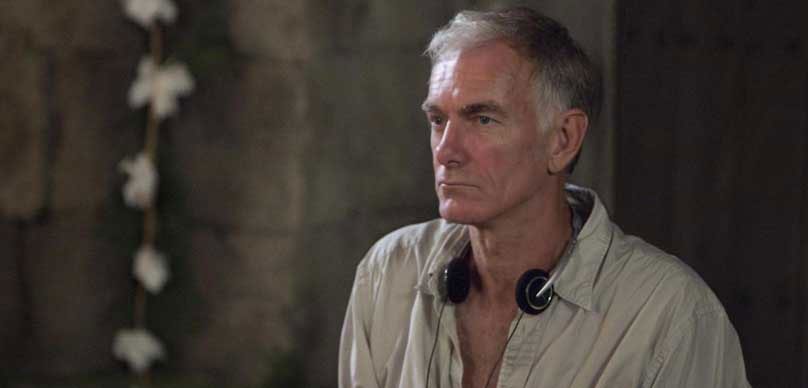
BPS 146: How to Succeed as a Screenwriter with Thomas Dever

Today on the show we have head of writer success at Coverfly, Thomas Dever. Thomas has been helping screenwriters for years. I wanted to have him on the show to discuss what he’s seeing in the film business, from a street level.

Thomas works with all the major agencies, top end producers and managers. If anyone knows what Hollywood is looking or he’d be the one.

We also discuss how screenwriters can better position themselves in the marketplace, debunk a few myths many screenwriters believe and much more.

Enjoy my conversation with Thomas Dever.

Right-click here to download the MP3

LINKS

SPONSORS

  1. Bulletproof Script Coverage – Get Your Screenplay Read by Hollywood Professionals
  2. AudibleGet a Free Screenwriting Audiobook

Alex Ferrari 0:00
This episode is brought to you by Bulletproof Script Coverage, where screenwriters go to get their scripts read by Top Hollywood Professionals. Learn more at covermyscreenplay.com I'd like to welcome to the show Thomas Dever. How're you doing, Thomas?

Thomas Dever 0:15
I am doing well. Thanks so much for having me.

Alex Ferrari 0:17
Oh, man, thanks for coming on the show, man. You know, you and I have been working together in a in a way for a while now. Because you guys work. You work with coverfly, who works with me on bulletproof script coverage? And why this hasn't happened earlier? I have no idea. So I'm glad you're here. Now we're going to talk all things about the business and how to, you know, I hope that you have all the answers, Thomas, because all of the answers because, you know, there's a lot of screenwriters listening right now who want to know how to make it. And I was told, you know, so we're gonna get into this.

Thomas Dever 0:52
No pressure.

Alex Ferrari 0:54
But how did you get started in the business?

Thomas Dever 0:57
Oh, I mean, I feel like I've got a pretty usual story that I grew up in the Midwest and film industry was just this mythical thing way out on the West Coast. And pretty much as soon as I finished undergrad, I packed up my stuff and moved out without really kind of any clue of what I was gonna do, how it was gonna work. Just like I think as soon as I realized, oh, people like actually do this for a living. And these are actual, like businesses, and I can work at them. Just kind of that was all I wanted to do, you know, started internship to then reading with a production company that had first look studio deal. So we're really fortunate to get that was my crash course on development and coverage and everything that goes into a film before it gets made. And then from there, I started working for a producer that was working on a Fox Searchlight film. So then, that was my crash course on how a film actually gets made. And then after that, I think everybody was kind of telling me, you know, you really got to work at the agencies, the agencies is what you do, that's kind of the way that you get into it. I interviewed at two of them, I won't say which scared the hell out of me, like, genuinely, the interviewer scared the hell out of me. I remember walking out in my, like, nicest suit that I could find and telling the HR person like, Yeah, I think you can take my name off the list, I don't think because I a little too thin skinned and little to reset from the Midwest. So then, yeah, so then I just kind of, I think I use the Verba, mid 20s my way around around the industry for a little bit of producing some things continuing to sort of work and freelance capacity taught at a film school at one point, before eventually finding my way to this, you know, this little world where we found each other, which, you know, the competition and the coverage space. And truly, I went into it, thinking, you know, I remember the scripts that I would write coverage on at the production company with the with the studio deal, and like, they weren't great. They really, I remember thinking, being a professional screenwriter is very attainable, based on me samples. And so when I went into the competition, I was expecting, like, Microsoft Word documents and typos and incoherent stories. And I started reading for them. And it was like, Oh, this is, this is really good. And this one's really good. And this writer is amazing. And these writers are every bit as talented like, what, what's like my brain couldn't process. And I think that's where it all sort of clicked to me of the like, all at once the sort of barriers to entry, not necessarily being your skill sets, or your quality of your writing or your dedication or your discipline, it's all of these other sorts of things, you know, be it geographic or socio economic, or, you know, you know, there's these sort of cliches of who you know, in the industry. And then I think the the rest is history kind of just really dedicated to this competition space. And then ultimately, the the platform that became cover fly, and, and creating those opportunities and providing that level of access and insight and resources to the writers that, you know, weren't fortunate enough to just have that readily available.

Alex Ferrari 4:33
What was what's so fascinating thing a lot of screenwriters don't understand this, they think that good writing and good screenplays are are unicorns, where, I mean, you've read 1000s of scripts, probably in your career. I've read a ton of scripts over the years and I've read some stuff from really accomplished screenwriters, people who have published like, have produced screenplays, some of them even with Some Oscar nominations, I've read some of these scripts, and they can't get them financed. They can't, they can't get them in. And then it just like, it's disheartening. I'm like, wait a minute, this thing is sitting on someone's shelf for the last 10 years. It is amazing. It's one of the best scripts I've ever written. And no one's financing this with with talent attached. And I'm like, What? What is going on, let alone the unknown scripts that I've read from screenwriters who are so talented? And I'm like, why are some Why do some pop? And why do some don't? And it's, I mean, I'd love to ask that question to you. Like, why do and it's a hard question. Like, why does one guy or one gal make it? Oh, get the opportunity to door opens for them? And the other one doesn't? If their talent is at the same level, you know, is you know, give or take?

Thomas Dever 5:49
Sure. Yeah, I mean, it's a it's a strange thing, right? I love a good craft panel or lecture. And I love like craft is undoubtedly more fun than the business. But the business considerations are what are deciding it? Because like, of course they are, you know, that this is a, you've brought commerce into it. And these are, these are companies that are distributing projects. And that doesn't mean that they're all Philistines that hate art. It just means that there's their considerations and what happens here, other than simply what is on the page, and I think that you can find a ton of examples of those of projects that were, you know, not in demand, and then you know, wait a few years, and suddenly they they are and your script that everyone was passing on is is aligns with that. Because the one thing I would say to your question is, you can't like so much of it is out of your control, like so much of it is out of your control. I don't know anybody that can write fast enough to either anticipate or accommodate like the trends, which of course, you're going to be changing on a regular basis. And they also don't know if I've met a screenwriter that can pander, you know, that can write something just because they think it's popular, and not really have

Alex Ferrari 7:16
It's too hard, it's too hard.

Thomas Dever 7:18
I recycle the cliche that like, Look, if it wasn't fun for you to write, it's really not going to be fun for me to read, watch or watch, or watch, right. And I think anybody can see through that. So really, I think our approach to it, you know, if you sort of consider whether your goal is getting staffed on a series, or signing with representation, or getting your project option, or sold, like the last step of that is a decision maker reading it and responding to the material. And there's nothing that you can do to make that happen. Like there's literally nothing that you can do, they're either going to like it or they're not. And so if you accept that, like the final stage of this, you have zero control over, it sort of puts in perspective, put your energy towards the things that you can control, right, which is the material that you're putting out the putting out the best possible version of it networking, creating those opportunities, getting in front of those decision makers, I guess, to increase the odds of responding to it and increasing the odds of this scenario that you have no control over. Because I would say the two the two most common things that I have seen in the sort of writers that quote unquote, make it which is maybe like a separate discussion of what making it. But the two most common things that I've seen is one, they they just they worked their ass off, like they truly just went when I meet the sort of more six most successful or busiest writers or highest level writers that I know. It's like, oh, hey, what have you been up to? And they're like, Well, I just did a draft of this feature. And I'm doing a polish on this treatment. And I'm also going out with this other thing, and that's just in like the past couple of weeks, you know, that is just you have to crank out the material and and it is just, um, it's a really the discipline and the dedication to it. And then the other tree is just a clear focus, like a really clear kind of focus on what their strengths are, what their goals are, what they want to do, what they're good at. And this kind of on this knack for not ever getting knocked off of that, that that not having a sort of like 10 step plan that goes to hell, if Step Two doesn't go as you thought it was going to that is just like, Yeah, I'm going to be a staff writer and oh, this didn't pan out. So I'm going to try this pathway and getting an opportunity that's not like a literal one to one of what they're trying to do, but seeing like, Okay, here's the parts of this that can move me towards my goal. So that's what I'm going to get out of this opportunity. Um, and and so that that's the closest thing that I can sort of I Identify in terms of commonality.

Alex Ferrari 10:02
Yeah. And again that that I love that you said that what is the definition of success? And so many screenwriters think it's getting that million dollar spec script or $2 million spec script or, but, you know, I always look at success now and this is maybe just because I'm a bit older now it's just like, can I make can I? Can I make a living doing what I'd love to do? Can I keep my roof over my head? You know, food on the table, send my kids to school, you know, live a comfortable life. I don't need millions can I do what I love to do? And that's that's a disconnect for a lot of screeners because they're sold so often only they're sold the lottery ticket. I always use the term lottery ticket mentality. They're sold, you know, and it goes back to Shane Black and Joe Astor house back in the 90s. When they were pulling in two, three $4 million. A picture or a script? Do you know your story? Do you know that Do you know the the story? I have to tell I haven't sold the story on the show?

Thomas Dever 11:02
I don't. I don't know just to that like what you're gonna say that like the industry that Blake Snyder describes and save the cat was just kind of like popping off ideas. Oh, yeah. Like that's the industry that I want to work in because that's dope

Alex Ferrari 11:02
God that was it was seeing at the moment. No, it's great. There was a story I heard from from a friend of mine of a house Shane Black and his lot that movie Last Action Hero which has got his the record 4 million you got 4 million for that. He Do you know that he sold that? That script off of a cocktail napkin idea.

Thomas Dever 11:43
It rings a bell. It sounds like I read this in our Grantland article way back when it was

Alex Ferrari 11:49
I just heard this. I was at afff the other day and I was talking to somebody at the bar and I know that I know that. You know, I know. It's it's a reputable person I'm talking to so they're like, this is how it happened. Apparently, the agent of Shane said, Hey, do you have an idea for a movie? And he's like, Yeah, I have a great idea for movie goes. Write it on this cocktail napkin. He wrote these logline on the COC that no script logline on the on the cocktail basket and then that agent called every studio head in Hollywood and said, I've got Shane Black's next script on a cocktail napkin. And you need to come to my office, and you can read it in my office. And wait a minute, and he goes, You can't send anybody it has to be you. So all the six or seven major studio heads all came down to the office read it and there was a bidding war off of over a lot of the cocktail napkin logline and ended up being 4 million for Last Action Hero, which then of course did not do well. And Shane Shane had a little rough time for the next decade. Until he came back.

Thomas Dever 13:01
We got we got nice guys, eventually.

Alex Ferrari 13:03
We know what brought him back was kiss kiss, bang, bang.

Thomas Dever 13:06
There we go. Sorry.

Alex Ferrari 13:07
Kiss Kiss Bang Bang brought him back.

Thomas Dever 13:09
It's like 20 25 years,

Alex Ferrari 13:11
But he was out when he was out for about I think it was about 14 years. Like he was like he couldn't get arrested. He couldn't get arrested. It was serious. But then he finally got Kiss Kiss Bang Bang made and then that launched him back into the good graces. But that was an I use that story as a as an example of the insanity. That I think that was the height of the the the being drunk. I think it was just being drunk on the spec scripts situations back then.

Thomas Dever 13:39
Sure. Yeah. I mean, well, that stories. That story is way sexier, right? Because super sexy if you're if you're sitting at home because writing is such an isolating thing, right? It's literally you you in the screen and the keyboard it is it's so low and some that I feel like it's more romantic to picture just coming up with this once in a generation idea and then the millions of dollars based off of that. I think that's maybe a more enticing story to hear then just yeah, you just like you work your ass off every day and you take these sort of progression these progressive steps with with your career, and you sort of grind your way up to that's

Alex Ferrari 14:22
Not sexy at all. That's not I don't want to hear that. Thomas. I want to hear the cocktail napkin story times I don't want to hear I have to work hard for this.

Thomas Dever 14:31
No, and that's I mean, that's the thing is it's and you know, even with even with that, I feel like it's not like it's not like they pulled shame. Blacks name out of a hat right? You know, he he was already exactly 10 to 15 years before that of the of the grind to get to it. But no, I absolutely and I think that that is the I understand the allure of thinking like that but but the truth is, or at least the more common thing that we're seeing as he is just, it's a job like anything else. And it's difficult, but

Alex Ferrari 15:05
You know, and so I'll give you another another story that might illustrate what we're talking about when Shane was passing around Lethal Weapon. Every studio passed on Lethal Weapon, every studio passing Lethal Weapon. It was a young from my understanding was a young Chris Moore, who is the Oscar nominated producer of Goodwill Hunting and Project Greenlight did all that stuff. He read it and said, This is great. And he forced it up the ladder and got someone to finally take a real look at it again and got it financed. But it was passed on everybody passed it because it was such a Buddy Cops were essentially the new the buddy cop really came in with in 48 hours. And that was only probably a couple years prior to that. So it wasn't a thing yet. And people passed on it. So it was just like he had a champion. And then of course the talent was there. And then everything else blew up. Yeah. And

Thomas Dever 16:01
I think that that kind of goes back to it. Right, which is what I was just saying a few minutes ago though, like, hey, the last step of this you have no control over that was even a script as incredible as lethal weapon. It's getting to exactly that or just not responding to it. But you keep you keep sending it out. You keep sending it out. You keep working on it until it finds the one and you just find that one champion, and that's really kind of all you need sometimes.

Alex Ferrari 16:24
Well, yeah, I mean, finding that finding that champion and finding we all need champions, everybody needs a champion. Spielberg had a champion, you know, Nolan, Shane, everybody, all these guys have champions. You know, if it wasn't for Steven Soderbergh, Nolan wouldn't have gotten I think was insomnia, which then of course, got him Batman. And then the rest is history. Right? Yeah, you know, so but you need someone to just go, Hey, it's okay. But you got to keep grinding. And that's the thing that people the screenwriters specifically don't understand is the grind. It's the grinding day in day out, do the work. I think the other thing is too, I always tell I always tell screenwriters this that if you if you have if you've been working on a screenplay for seven years, you're not a professional screenwriter anymore. You should read. You need to have 10. At seven years. Yes, like 510 screens?

Thomas Dever 17:16
Yeah, I mean, even to like what you were saying earlier, though, because I think that's one of the things that like we so cover fi with, we have a dedicated to you and people and we offer free consulting for screenwriters. And that's whether you're a professional screenwriter that's hit a, you know, hit a rut or you're just an emerging screenwriter, we'll you know, we'll consult and we'll help kind of come up with a focus and a plan moving forward. The first question I asked everybody is, what's the dream like genuinely what's, what is the dream if I could stop, not like, what you think you're supposed to be doing based on trends, or what you think is realistically attainable? Given your circumstances? Like genuinely, if I could, like sprinkle pixie dust or snap my fingers? What would you be doing? Because, like, let's figure out a way to do that, you know, that if your dream is to just make indie films that you write direct produce, that's an awesome dream, let's figure out how to make that happen, you're probably not going to make that happen by cranking out pilot samples and trying to get staffed in a room because you think that that is like the more viable pathway. And you're gonna do a lot of work and probably be unhappy. Right? Even with that your goal is to write and direct your own. And like, Look, if you can find a way through that, that it's like, okay, I'll use this to ultimately get back to the goal. Do that, but it's, you know, do Do you know, like, what you were saying, then like, finding a way to be happy with it. And I think if your goal is to just sell finance and make your own projects, like, do it, instead of living up to this, like that the only measurement of success is selling studio specs or something, it's, you know, that's, that's some person's dream, but that doesn't have to be yours.

Alex Ferrari 19:06
Right! No, and I think that what you said it was so wonderful, is being happy doing what you're doing. Because, I mean, I always wanted my goal, my dream, if you were gonna ask me that back when I was 22, I want to direct feature films. That's all I want to do. I want to direct feature films, but I jumped into post production, because that was a way to make a living. And I was very grateful for that. But I was probably in there a lot longer than I should have. And I should have really fought a lot harder to get out of just doing editing or color grading or post supervising or the other stuff that I was doing to make a living. To the point where I got so unhappy. I was bitter I was angry. I was I always tell people to angry and bitter story which anytime I speak, I speak in front of audience. How many people here know an angry and bitter screenwriter? And then everyone raise their hands and like if you didn't raise your hand, you're the angry and bitter screenwriter everybody else knows. So So But it's because you become angry and like that person's like, Oh, I'm working in, I'm working in a writers room. I've been pounding out these pilots. It's horrible. I'm on like this fourth or fifth level down, show somewhere in, you know, in the middle of the country or whatever. And I hate doing what I'm doing. But I what I really want to do is what you just said, I want to write, I want to write direct produce my indirect in detail, because

Thomas Dever 20:27
That's, that's the thing. I think that there's this. I don't know, there's this perception that, gosh, we're getting like, so philosophical here. And it's like, good perception and money is gonna make you happy, like genuinely, post people do pretty well. And if you're on top level projects,

Alex Ferrari 20:44
I did. I did. Right? I did fine. I did, I kept I, my, my, I was good. For a long time. The post, I can't say anything negative about it. But I wasn't happy doing it. Just just as the same thing. If someone paid me a million dollars a year to, to, you know, push a broom around all day, I, the money would be great. But at a certain point, you just like, This is not what I want to do. This is not why I'm here. And now you start asking the question, well, why am I here? Am I here to make money? Am I here to be happy? Now we're really getting deep into philosophy.

Thomas Dever 21:21
Because that's, I mean, usually, it's funny that we're going through like, the progression is like we're deconstructing a cover of like consultation calls. Yeah, another question that I asked, right, like you and I were saying before we fired it up, like we're crazy, right? This, oh, this is insanity. And you know, that I, I admire the conviction that I had in my early 20s, that I'm just like, all pack all my possessions and just drive to a state 2000 miles away. But like those, you know, asking writers it's, I asked what I? What is the like, what do you sort of see coming up in everything that you write, and not just like a format and genre, but like genuinely like what themes? What like philosophical or stylistic consistencies? Like, what are your projects like, and what are they about? followed up with? Like, why is that because this is not something that you just think about, or something that you're interested in. This is something that you are compelled to express in the form of feature screenplays and pilots and shorts. And, and usually, if we're, you know, talking with you, not just that you're doing it pretty well. So like, where that's coming from somewhere there is coming from some sort of innate need on your part to express this. And and so I think that puts in full scope, just how, I don't know just like how much passion is behind this, that, that if you're trying to put it towards something that your heart isn't in how much it is going to take out of you and why it is going to make you and just sort of suck your soul to the point that you were talking about? Because this is a I don't know, this isn't like a job that you can just like, Okay, I'm done. At the end of the day, you're playing, you know, heart soul, and you're into this.

Alex Ferrari 23:08
Could you imagine if you could just check out? Could you imagine if you just clock out at five, like okay, I don't I'm not a filmmaker anymore. I'm not a screenwriter anymore today. Oh, thank God, let me just let me just let me just get a beer and drink and just chillin. I think about anything anymore. No, it's a, I've called it a disease. It is a disease, that you get bitten by the bug, and that bug. And once you're bitten by the bug, it will never ever, ever go away. It can go dormant for decades. But eventually it will surface in one way, shape, or form. And I do this because I've talked to 65 year olds, who are seven year olds who's like, I'm retired now, what I really want to do is direct and it happens. And there's really, I don't even know what other industry there is that that has that kind of insanity. You know, like, look, I did the same thing you did. I did a little bit later in life. I didn't do it in my mid 20s it in my early 30s, where I packed up, moved cross country to California New to people. And this was my plan. My plan was I had to rent an apartment in North Hollywood, where one room would be where we slept in the other room would be where I put up my editing system. And I was just gonna show up. Now mind you, I had I had a decade of stuff behind me before I showed up but even then, I just for whatever reason, I started working. And I started working I started working and it worked out but it could very easily crash and burn.

Thomas Dever 24:33
Oh yeah. I mean, it's the it's the same thing. But I think that like like you said, I mean it sort of goes back to the Hey, you have this like unwavering focus of what you're going to do and you don't have the sort of steps figured out but you're just really not going to be denied. Because yeah, because your heart is in it to that point. And it is always fascinating, you know, to find so many people that are really successful in other fields that this is like a hobby for them or this Something that they're pursuing. And this is, you know, I, but that's I don't know, that's what kind of makes it. That's definitely what makes it so cool. You know, I think of all the I mean, I tell people all the time, I think I've just got like one of the greatest jobs, that I have all the ways that you could kind of get up and earn a living and pay your bills, I get to get up every day, and with an entire company full of people do something that we'd like, genuinely truly care about, and get to be with people that love the same things I love. And that's, that's what's so fun about stuff like this, you know, you were saying, you know, getting together at Austin Film Festival, we just, we kind of find one another, you know, there's this this this little like family that seems to emerge around the screenwriting community.

Alex Ferrari 25:48
Yeah, absolutely. And without question this, I went, when I started helping people with my podcasts and with my websites and things like that, my life changed. And I think I'm blessed just like you, I get to do what I love to do on a daily basis. And while I pursue my own projects, and I pursue my own, you know, books and stories and other things, that things I like to do. Now, one thing that a lot of screenwriters don't really get is the absolute necessity of networking. And being able to make those connections, but make them in a very organic way is opposed to Hey, man, I hear you're a producer. Here's my script, you know, yeah, like, I just met you, like, you know, it's like, it's ridiculous.

Thomas Dever 26:39
Yeah, I mean, I think that there's a I don't want to generalize writers, and I'll say this, that I used to be the exact same way, I think that there's, it's not that networking just makes a lot of people uncomfortable. Because let's let's just call networking, what it is, which is talking to strangers, it's, you know, it is starting a conversation with a stranger and, and, and putting pressure on yourself to build a connection in a short amount of time. And as a person that like I, my undergrad degree is in English, I sat in the back, I spent most of college just reading, you know, so Billy, like, yes, going and talking to people that I didn't know was like, My worst fear at some point in time. Um, so I think that there's a reluctance to do it. And that's what kind of fosters this idea of like, Oh, it's just, you just have to know this person. And they just give these jobs to their friends and things like that, when it's like he like, there's certainly a degree of that in the industry. But there's like, to put in perspective that if you're an exec, or producer, a showrunner or someone around those people, you're going to get a stack of like, 200 scripts for one spot, maybe, and they're all going to be good. Yes, it's very common that you break the tie, so to speak with the opinion of a person that you trust, or a person that you know, or a person that you like, or a person that you just, you know, is not going to let you down in that situation. So take that for whatever it's worth in the scope of networking. Um, but to what you were saying, yes, for some reason, the like, sentiment around networking seems to be, I'm just pitching any stranger that like, returns eye contact with you. And I feel like there is, um, you've all been at a networking event, regardless of how big it is, where there's just a person there. That's just kind of on like a loop of just like, they give their project and their spiel to this person. And then they give their project their spiel to this person. And it's like, I think, surely someone listening to this right now is like, like, they're feeling this, like chills down.

Alex Ferrari 28:50
They're cringing. They're cringing. Yeah,

Thomas Dever 28:52
You know what it is like to be on the other side of that? Oh, like, yeah, don't don't be that person. To me, I always say, go in with questions go in with learn about who this person is, what they do, what's important to them, what they're working on right now? Do they have any problems that you can solve? Do they have any projects that you can help on and like trust that if they're working on something where there is a world for you to collaborate, it's going to come up, I asked him those questions, that if you're, you have this amazing horror features back. And you start Hey, so what do you do? What sort of projects do you work on? What types of movies do you like? What types of material do you respond to? And they start saying, God, I just love horror films. And we've got to find the answer. And we're trying to find something like this that fits your project. That is such a better way to bring up your material and mention it to them versus going in and just being like, I've got a horror feature. This is what it's about, and you should read it and here's that and it's like, I work in TV. Why are you yelling at me? You know, also a screenwriter, I don't know what you want me to do.

Alex Ferrari 30:04
And I was like walk. It's like walking up to Jason Blum and going, Hey, I've got this dog safe Christmas script. That's, I think you'll be perfect for Jason. No. And, and the funny thing is, I, this is always infuriating. I get cold emails about pitching projects. To me, I have no power. I can't finance your script. I'm not looking for projects to produce. All you got to do is listen to three or four of my podcasts or just read a couple articles and you'll understand who I am. And people are just so desperate that they just start throwing things out and it just gets deleted automatically. But you start like emailing, you know, you get an IMDb Pro account, you just start emailing people you script. That is not the way to do it. The shotgun approach doesn't work, you've got to be more searchable.

Thomas Dever 30:54
Well, yeah, and that's that I mean, we take the same approach because we do console. I mean, the thing is, like, am I going to pretend that queries have a high rate of success? No, they do not. However, we've worked with writers that have 100% found success with queries, because I think that there's a, there's a good way to do it. And so if you, you know, so much of what we do is like, um, one be really concise and articulate, get get through who you are, why you're emailing them, and what the ask is as quickly as possible. Because if you're emailing a person that works in the entertainment industry, there's a good chance that they have like 200 emails in their inbox. And if they open it up, and it is five paragraphs of boilerplate, like even if you are a dead center bullseye of what they're looking for right now. They just don't have time to do that. And they're going to delete it. Um, and so like what you were saying with it, it's always like, here's where I am, here's what I do. Here's where I'm, like, emailing you, I'd love it. If you know, if it's a fit, I'd love for you to take a look at my script, if not no worries, knowing that most people are not going to respond. But you might have a person that is looking exactly for that. And you're respectful and got to the point. And they're like, Yeah, sure, send the script. At this point, they've requested your material, versus it's the equivalent of like, put again, put yourself in their shoes and use common sense of like attaching the script in the initial email. How would you feel if a person walked up to you on the street? And was like, Hey, I heard that you can help me spend two hours reading this script and giving me your thoughts on it. Your your response? 100% would be it's awfully presumptuous to just assume that I'm going to do this and yet that's kind of the common practice of queries. Right?

Alex Ferrari 32:38
Right. It's, it's it's a fairly insane. It's insanity. Man, it really is. And I also wanted to ask you this, because I actually had this question from a screenwriter the other day, should a screenwriter sign a submission release form, if they're submitting to a producer or a company or something like that?

Thomas Dever 33:01
There, the thing is, like, they're their common practice, you know, that they're commonplace. So don't think that you're signing your life away, you know, I guess read it and make sure you're not signing your life away. But I am guessing that somewhere in all of them, there's going to be a cause that it's like, Look, if you a year to five years from now see that we have a project that looks really similar to something that you submitted to us, like, you can't sue us. Um, and the reason that's the case is because you can imagine what companies would be opening themselves up to if they didn't do that, but if you, you know, they're already I think, getting sued all the time from people trying to claim that but of every script that was submitted to them that any line or story or beat or commonality that like appeared in a project that was later produced, that's why they're doing it. Um, at the same time. I, I don't think that you have any problem in signing it. I think that there's no, I don't know anybody that is it looking for an amazing script. And if they read your script and love it, and really respond to it, they'll work with you. Because I think that there's a perception among writers or a fear that, oh, they're going to read it and like my idea and steal it. And it's just like, I don't know, I don't know if I've really seen that. I don't really know why they why they necessarily would do that. But at the same time, I totally get where the fear is coming from.

Alex Ferrari 34:28
Yeah, I mean, I've had heard of some people's ideas getting stolen or read. And when I say stolen, it's more like, they took a couple of kernels. And sure, all of a sudden now they have something new. I mean, I remember when we were, this is years ago when I had a script floating around that got to Sony. And I said they asked for it because they seen one of my one of my films. And I said I submitted it to them, and they're like, Oh, we're gonna pass because we have something similar in theme and then two years later, that movie came out, which was not, not anything like anything like my script at all. But there were ideas and themes there. So you have to protect yourself as

Thomas Dever 35:13
I guess what I, you should 100% Protect yourself, you should, it's one of the biggest things that I think is valuable about a platform like cover fly, because you, you know, we have the writer platform where you can host your projects and your bio. And then we have an industry facing portion of it, where they can search for writers and projects. But we really closely monitor the activity on that side of it. And so if somebody downloads your script, we have a timestamp of when they download it, and this isn't necessarily a commercial for the data protection that is cover fly. It's it's to drive home the point that like, yes, you should be precious with your material. And and I think with a submission release form, you're passing it along through a friend or having them request it is always going to be the better option. So I would advise that I'm with it. I will say I'm by no means am I an attorney, and you should always check with an attorney, absolutely lightly taking my advice. The consensus is you cannot copyright an idea, only the execution of an idea. Um, because I do think that like most screenwriters, I know have had like an idea that they were super excited about. And then they see like a trailer they read in the trades and idea that is really similar. And I'm not going to pretend that that doesn't just like it happens all to be

Alex Ferrari 36:34
All the time. Are you kidding me? When I saw when I saw clerks by Kevin Smith, I was working in a video store. I'm like, son of them. I got I had this idea. Why didn't I just execute it? Well, they're you

Thomas Dever 36:50
No, truly and so I'm I get it, I feel the pain of writers in that situation. What I will say though, is that I don't want to say that ideas are cheap, but like Good ideas are good ideas are easier to come by than the execution of good ideas. Truly, um, I think most screenwriters I know come up with like five blockbusters in the shower and on their way to work in the morning, you know, it's just like, you're coming up with these ideas. And really, the tough part is an executing it. Um, so as tough as that can be, it sort of goes back to what we were saying earlier of like, you gotta be cranking out material. Because, man, if you're just kind of hinging all your hopes on one project, you are kind of opening yourself up to that, right? You are you are sort of opening yourself up to like, oh, I have to make this one thing go versus like, really utilizing your talents to give yourself multiple opportunities?

Alex Ferrari 37:44
Yeah, it and I wanted to ask you as well and kind of put this to rest for so many screenwriters out there. This is my opinion. I'd love to hear yours. I get asked all the time. How do you protect your screenplay? I go you register with the the Library of Congress. That's the only one that matters. You could do it with a W GA. That's nice. But the WJ does not hold up in court, the Library of Congress, right? That's the only one that you have the boom and is that and you can and again, you can't do the idea. But you can do the actual screenplay, right? The only way I know of and that I always recommend? Well,

Thomas Dever 38:21
Sure. I mean, and that's I mean, if that's, um, you're probably gonna do that, right? If your film is moving in any sort of production, right? Because at some point, unless you're just kind of shooting the project yourself, somebody else is going to need to own the script. And they're well, halfway there. Yeah,

Alex Ferrari 38:40
Once it gets into production, that's you have to have that that's part of a chain of title. But prior to that, whether you're pitching and things like that, to make you feel better, as a screenwriter, you want to have that attention, spend 35 bucks, 40 bucks, get a cover, and don't mail it to yourself, that doesn't work. That's that's a myth. Don't mail as yourself,

Thomas Dever 38:58
Because that's the thing. I think that like what you said there is it's making yourself feel better and giving yourself the peace of mind to know that you're protecting this version of this story on otherwise, I think it's always good to have a paper trail. Right? And and because I know that getting, getting an attorney can be prohibitively expensive for a lot of emerging screenwriters. Why it's just it's kind of like cover your bases to to as much as is necessary for it. You know, if you're in the sort of like talking stages of a project, and there's no real money on the table, you probably don't need a 15 page contract. Right? It says, like to find terms of why, you know, but I think always just be really clear. And I think this goes into a lot of what we've been saying whether it's like working with a producer with a collaborator, especially when you sign with representation, because that's a whole separate discussion we get with writers is just be really clear about being on the same page of expectations. Because I think that that's where a lot of problems come from right which is with I think a lot of writers with producers are being afraid of getting taken advantage of or afraid of their material being mishandled, which is why, you know, before you embark on a working relationship established, if the expectation is like, Okay, we want to, we want you to we want to develop this with you, does that mean one draft and a Polish? Or does that mean like infinite rewrites until I'm happy with it over some non specific period of time? Because if you think one thing and they think another, the project's kind of doomed before it even gets started, and same applies to working with, with a manager or an agent.

Alex Ferrari 40:37
Which brings me to my next question, the agent and manager conundrum, where there's so many screenwriters think that all you need is Ari Gold from entourage, and they represent you, they're going to get you the million dollars, they're going to get your career and so it and then people are like, how can I get an agent? How can I get a manager? I'm like, and I always asked him, How many scripts do you have? I have, I have one and a couple of ideas. I'm like, You're not ready for an agent. And, and I've known writers who won the Nichols, who placed in the Nichols who have placed in multiple big and they get signed, and they go nowhere, because the management is like, should I push Shane Black? Or should I? Should I push Bob? Who I just I'm talented. But what's gonna be how am I gonna make? What am I gonna make the most money from? Where's my money? Where's my ROI? And ROI? You know, make the most sense. So can you please kind of demystify the whole Agent Manager thing for people?

Thomas Dever 41:41
It is on doubtedly, the most popular question that we get. And I don't I actually don't know what's even a close second, it is always how do I get a manager? Right? That is the that is the the holy grail of emerging screenwriters. And I get it, right, because I think that the perception is, I think you're sort of feeling that frustration of being on the outside looking in the lack of access, the lack of opportunity, and like, yes, a manager, an agent can solve that. But if there is this perception that like, okay, great, I signed with a manager crack my knuckles, I put my feet up, and I just wait for the deals to roll in. That's definitely like not the case, right? Like it is you're going to be facing a lot of the sort of same struggles, and even the writers that we do know, with representation are still having to grind and get to that next step. Um, I can't remember, I can't remember who said this to me, because I would give credit if I could recall, but I think we made the comparison of like, view view, getting a manager like having an accountant, like, does your career

Alex Ferrari 42:52
Do you have money?

Thomas Dever 42:53
Does your career necessitate having a manager right now. And in the same way that it's like, if you've just got like your 1099, and your W two, as you can probably file your own taxes, right, and you can, you can get your own opportunities and develop your material and build that. But if your career gets to a point where you need a wrap, it's just a much clearer kind of pathway, right, and getting to a point where you need a manager and need an agent. Um, and that's not to say that people don't sign with representation very earlier, and they're very early in their career, but it's usually much more common that you've built up a degree of sort of, like momentum and opportunity in the managers not, I'm just kind of picking somebody starting somebody from scratch. Um, because I think with, you know, a couple of things. One, think about it from the perspective of the manager, to go back to the queries, we've seen a lot of writers that approach reps, and the consensus is, hey, you should sign me as a client, because I really want a manager. And it's like, that doesn't like what does that do? When I mean anything to them? Right? Like, this is their job. This is their livelihood, that yes, it is art. And it's passion, and it's emotion, and it's this thing that they deeply care about, but this is also their livelihood, this is how they pay their bills. And their job is to assemble a roster of clients and projects that are going to make money that they collect a commission on. So it might not be the sole determinant in their decision, but it's going to be a portion of it. Um, so if you you know, if you understand that, yes, they need to respond to the material, but also have this idea of where your career is going to look right and sort of have these opportunities and what working together is going to look like I'm getting to the part that you're working writer in that conversation. Because the other I think it goes back to the sense of indie filmmaking, which I special place in my heart, my heart is always in indie filmmaking, and will be an indie features. The economics of it don't always make sense to me. Have a rep, because if I'm a rep, and I get 10% of your projects and your deals, and you make a low budget feature, let's just even say 100 grand, yeah, 100 grand, right. And so you, if you're making any money as the writer director, you know, it's, let's say you get 15 grand, right, which is right now, there's no way that you would take 15% of the budget, let's say that you get by 10 grand, right? Five grand, and you're probably working on their project for like, at least a year. That means that their commission is $500 for one year, that even if they love you love the project care about the material, it just is really tough to dedicate any behind any job, anything right to $500 over 12 months, versus something that's going to yield that but I don't, I don't want to taint the perception because I really, I think so much about it too, is just finding that right fit is finding the person that gets you gets your material gets this sort of vision for your career, and you can work with and building that relationship. At the same time. Don't underestimate your own ability to generate those opportunities. We come across writers all the time that have gotten their projects sold that have gotten themselves staffed on series that have episode credits that are getting sort of meetings with major studios and streamers. And there's no really one way to do it. It's just a lot of networking and leveraging relationships and sharing their material and maximizing those relationships that getting themselves to that point, the discussion of pursuing representation becomes so much easier, right? Because if you're, you're kind of painting this picture of like, Hey, here's what my career is going to look like. It's much easier when it's tangible. And you're working in a writers room versus just off of like the samples, if that makes sense.

Alex Ferrari 46:56
It Yeah, it does make sense. And I want to ask you as well, so many screenwriters will walk into a room, you know, like, let's say, let's say perfect scenarios, they get in manager manager gets them a meeting at a studio, because they they had one sample script that they loved. And I like this guy's voice or like this guy's voice. Let's get him. Let's get him in. And let's have a meet. They come in like, Okay, what do we love this script? I can't produce this as it's unpredictable. What else do you have? Right? So that's the moment where a lot of deer in headlights because they're like, wait a minute, that took me three years to do. And I don't have any, I have three ideas. And if you have three ideas, you're pretty much dead in the water. Because everybody has ideas. Everybody in that room has ideas. But you can't produce an idea. You got to produce this grant. So how many scripts in your opinion is a good number two projects that you should walk into with a meeting like that, like real? Like real, real things?

Thomas Dever 47:54
Yeah, I mean, it's, um, I guess, two answers to that, like one, the idea thing is interesting, I guess I won't say but one of the more prestigious writing and directing fellowships, I've spoken to writers that have been through it, where the first couple of weeks is literally no writing, no development, just ideas. And they make you come up with a bunch of ideas, and then they throw them out and make you come up with new ideas. And speaking of the writers that have been through that program, they say, that is the most difficult part more so than notes and writing and rewriting because you're just, you're you're getting down to like the marrow of who am I as a creator? Like, what is my 25th idea? Or is it a new fresh idea, um, but I think that puts in perspective of just like the standard that you have to sort of hold yourself to as well as, like, um, I think after a certain point, you get good at generating those ideas, knowing it, um, to, to your question with it, you know, the two parts of it, I would say, the samples I, I think most people really want to see what you can do. And whether that is I would say at least two maybe, you know, if you've got like 15 It's sort of like oh man, this person just kind of like how like polished or any of these even are polished the perception of seeing 15 I think so. So at least two probably like three or four but but really the the more important thing is having a consistency and like what your voice what your talent is, what your perspective is and showing how it applies consistently but in different meetings, you know, there is no shortage in the world but especially in southern California have people that can write just a really excellent tight feature or one hour half hour pilot like that is not hard to come by. So if you're going in with like, oh, I can write a feature. You You know write write a horror feature writer like create. You're the one

Alex Ferrari 49:53
We've been waiting for you Bob. Poor Bob, Bob really has No clue.

Thomas Dever 50:02
But like truly is as sentimental as it sounds like what no one else literally no one else in the world has is how you tell this story, your respective your experiences, what you're bringing to the page. And as much as you can articulate that, as well as display that on the page, whether that's across four samples or two, whether it's across a, you know, one hour procedural and a thriller feature. I think that's kind of the key to it. And then within that meeting, yeah, that's every Gen ever, right, which is we love is the greatest thing ever, but it's not what we're making right now. So let's spend the next like 59 minutes figuring out what to talk about here. Um, and I think it goes back to what I was saying about networking, right, which is, if you don't make the effort to understand it, you should have done, you know, hopefully, you've done some research before the meeting. But if you don't make an effort to understand what is it that they're working on right now, what is it that they're developing? What is it that they're maybe struggling with? Or really looking for, or excited about? And what do I have that fits that? I think that's, again, it's a much easier discussion to have, because you, you know, what you have in your arsenal. And if they happen to be looking for this high concept project, that you've only kind of flushed out a little bit and maybe only have a treatment for, you can get to that by asking those questions. Whereas if you just fired off, oh, I've got like a comedy feature sample in this one hour, you're now like over three with them. Whereas you had this idea that they wanted to develop with you, if you could have just sort of like worked to that in the conversation. And that's kind of typically the advice we give for generals and things like that.

Alex Ferrari 51:47
That yes, the water bottle tour if you if you're lucky enough to go on the water bottle tour.

Thomas Dever 51:52
Now

Alex Ferrari 51:53
Now, it's a zoom tour water bottle, he announced the zoom to Yeah, bring your own bottle, your own Yeti, with you. Now, I'm gonna ask you few questions, ask all my guests. What is the lesson that took you the longest to learn whether in the film industry or in life?

Thomas Dever 52:10
Oh, my goodness, wherever? Um, I guess I'll give both I think I think in the film industry, it's just it's kind of seeing it for what it is. And I mean, that in the best sense, right? It's like, it's an industry industry, right? You know, and I think that anytime that you are asking people to do to give you money, and in some cases, a lot of money to make your project or to write a project, you do have to understand that there's a degree of business that goes into it. To recycle all my metaphors, they say, you know, Nike doesn't just like design a shoe and then put it on the shelves and hope that people buy it, there's, here's an entire presentation of why Nikes are cool, and why you should buy them and why they're better than other shoes. And that's why you sell them in like two cents. That's what you have to do as a screenwriter. And there's no substitute for excellent writing. And the writing always comes first. But I think the tough lesson is like, understanding the business circumstances that go into most decisions. But accepting that that's okay, that is something that you can use to your advantage. And that doesn't mean that you have to, I don't know, really, that it's all about the money that you can navigate it and, and understand that to your advantage. In life. I see like, you and I were talking before we started I just think like getting getting a little older, you like calmed down a little bit, I think is kind of trust that like things are gonna be okay, I had enough sort of like, one year, five year 10 year plans that just kind of like go out the window, perhaps none more spectacularly. Then in March of 2021, I, you know, have spent the past year and a half and counting at home. And I think that's really kind of informed the philosophy that we impart to writers, which is like, just remember what's important. Remember what the ultimate goal is, don't make it harder on yourself by like defining the steps along the way, as well as saying that you have to do it. There's no timeline on this. You know, there's, there's tons of people that break in in their early 20s in their mid 30s. or later, you know, just just have focused on what you're going to do and try and take steps towards that. That's, that's the best I've gotten in terms of a life philosophy.

Alex Ferrari 54:43
Fair enough. Fair enough. What are three screenplays every screenwriter should read?

Thomas Dever 54:51
Um, I'm going to go back to I'm thinking of my I'm thinking of when in my reader days when I was reading and reading it Kevin measures company it had already come out but I think that the screenplay for Little Miss Sunshine is just no. Brilliant it's like it's it's a it's a novel I didn't know if we can retroactively give it like a Pulitzer or something.

Alex Ferrari 55:22
No, it is it is. It is a brilliant it is a brilliant script and a brilliant film. Really excited

Thomas Dever 55:29
To just to just sort of have this really this like dark, quirky comedy that is this also deep exploration of Persia in philosophy that is like readily apparent on the first page and then perfectly executed for the rest of the script. That was the first one that came to mind. Um, I remember reading this script, this probably dates me but I remember reading the script for Crazy Stupid Love. Such a great script, also an a great script that when I read it, and I forget what draft I read, was like near identical to the film that they ended up producing it like down down to the like lines of down to like specific words of just sort of, I say that one not necessarily for like a philosophical or thematic of just like, This is what a produced screenplay looks like, this is a read the screenplay before I saw the film. And then I saw the film. And it was like, oh, that's like, verbatim that these guys just like got it up onto the screen. Um, and then the last one, I feel like I should give a shout out to a cover fly writer.

Alex Ferrari 56:40
Um, this is three of all time, so you don't have to feel

Thomas Dever 56:43
All time. So they're not. They're not whole. I mean, I guess it's prevalent. Now. I don't know how much it's changed. But again, from my like the last duel, which is finally coming out. I see that's a sort of put in perspective, like, there was some major talent attached to it when I read that script 10 years ago. And it is just coming out now. And I think it kind of made the rounds, then I'm just in the sense of like, I say that one to maybe just be cheesy and that it can. Sometimes it is like some really ageless people were on that script. And it still took 10 years, you know, it's just right. You never know, I'm so pumped. I'm so pumped to see it because it was amazing. And the fact that I think that's a testament to reading hundreds if not 1000s of screenplays since then that I still I still remember it. Um, and I don't know, I just gave myself goosebumps with it. Because there's, there is a there's what we love about it, right? That it's just all about building that connection with with the material that it does stick with you years and years after the fact.

Alex Ferrari 57:54
Thomas, it's been a pleasure talking to you, man, I know, we can continue talking for three hours. But yeah, I truly appreciate I know you have a young one that you're taking care of so and you're probably exhausted, and you're probably exhausted,

Thomas Dever 58:08
I've got a I have a two month old daughter. And so I've noticed that I just kind of start a sentence now. And it just I forget, I forget how I started it. And I just kind of go until I run out of steam. So hopefully your listeners and your viewers that this made this made sense and bearing with me. Um, no, I by all means I think before we run out of time, head over to cover fly Yes, get the account set up. Um, you know, that's always kind of the first step regardless of where you're at in your writing career, what you're looking to do, just by creating the profile completely free to do so we can find you and direct you to the resources that are that are most useful to what you're looking to do. And and our team will be able to support and one of those resources of course is is the coverage service that we were talking about beforehand

Alex Ferrari 58:59
Bulletproof script coverage Yeah, so i i Truly I truly appreciate you. Thank you for doing all the good work you're doing with screenwriters out there and helping them navigate this shark infested. You know, alligator snapping kind of world that is a fortunately but I do truly appreciate you man. Thank you again.

Thomas Dever 59:18
My pleasure!


Please subscribe and leave a rating or review
by going to BPS Podcast
Want to advertise on this show?
Visit Bulletproofscreenwriting.tv/Sponsors
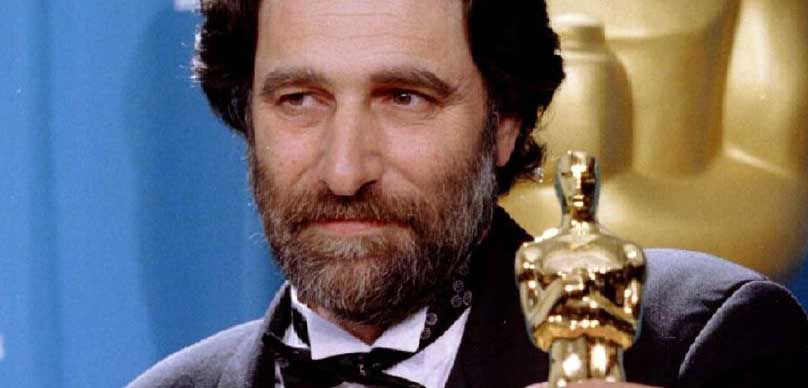
BPS 145: How I Write and Direct My Feature Films with Edgar Wright

In the house, today is the iconic screenwriter and director, of Scott Pilgrim vs. the World, Shaun of the Dead and Blockbuster hit, Baby Driver, Edgar Wright. Edgar has been on the scene making and writing satirical genre films, while also acting for almost thirty years. 

He’s here today to talk about his most recent and upcoming film, Last Night In Soho. It is set for release on October 29, 2021, and stars the Queen’s Gambit star, Anya Taylor-Joy. The “Last Night in Soho” title is taken from a song by those Tarantino soundtrack favorites Dave Dee, Dozy, Beaky, Mick & Tich.

The film’s plot: Eloise, a young woman with a passion for fashion design and a strange sixth sense, finds herself transported back in time to 1966 London in the body of an iconic nightclub singer of the era named Sandie. While in Sandie’s body, Eloise begins a romantic relationship; but she begins to realize that Sandie’s life in the Swinging Sixties is not as glamorous as it appears to be and both past and present begin to fall apart with horrifying consequences. 

Edgar is the ultimate creator. He’s worked across several genres of entertainment besides films. Some of the said expansion includes television, and music videos production, as well as video games.

Like most up-and-coming creators and filmmakers, we start off on a budget. Edgar began making independent short films around 1993 before making his first feature film A Fistful of Fingers in 1995. 

Some other projects he created and directed are the 1996 comedy series, Asylum, the 1999 sitcom, Spaced, and about twenty-plus others since then.

Edgar also created one of the most beloved films in all of geekdom, Scott Pilgrim vs. the World.

In a magically realistic version of Toronto, a young man must defeat his new girlfriend’sseven evil exes one by one in order to win her heart. Scott Pilgrim plays in a band which aspires to success. … No one knows what her past is, but Scott will find out very soon as he tries to make Ramona his new girlfriend.

In 2017, he made waves at the Box office with Baby Driver, grossing $226 million globally. The commercial success of the film was due to the positive word-of-mouth support and flagging interest in blockbuster franchises. 

Baby Driver starred Ansel Elgort, who played the role of a getaway driver seeking freedom from a life of crime with his girlfriend, played by Lily James.

Other A-list actors joined the supporting cast of the film– the likes of  Jon Hamm, Eiza González, Jamie Foxx, and Jon Bernthal. The Sony Pictures distributed film earned numerous nominations; including three Academy Awards, two BAFTA Film Awards, and two Critics’ Choice Awards.

It was exciting chatting up with Edgar about his signature editing style, writing, and the success of his career.

Please enjoy my conversation with Edgar Wright, and be sure to check out his film Last Night in Soho which comes out tomorrow.

Right-click here to download the MP3

LINKS

SPONSORS

  1. Bulletproof Script Coverage – Get Your Screenplay Read by Hollywood Professionals
  2. AudibleGet a Free Screenwriting Audiobook

Alex Ferrari
I like to welcome to the show, Edgar Wright. How you doing Edgar?

Edgar Wright
I'm good. How you doing?

Alex Ferrari
I'm doing great, man. I'm doing great. Thank you so much for coming on the show. Man. I I had the pleasure of watching your hypnotic, beautifully haunting film Last Night in Soho yesterday, and it was beautiful man, it was really, really well. It's like I was telling, telling someone earlier today, it's just so nice. watching a film when you have a filmmaker, a storyteller. You're in good hands. So thank you!

Edgar Wright
Ohh thank you!

Alex Ferrari
So, um, I wanted to jump in first and ask you what was the film that lit the fuse for you to become a filmmaker?

Edgar Wright
I think um, well, it wasn't exactly a film, but it was like a documentary about a filmmaker and it was related to the films. So I was a big film fan from a very early age. And you know, the first time I ever saw was style or size of that generation where, you know, my parents, two brothers each style was Superman Raiders, like Close Encounters, like, and I had a healthy interest in, in genre through that and you know, and certainly through like horror and sci fi and lots of films that I I wanted to see but wasn't old enough to see. thing so I was always interested in in films and in genre. But then the thing that kind of really flipped a switch in terms of I want to be a director, was a documentary on British TV called the incredibly strange film show, which was hosted by Jonathan Ross, you can actually find it on YouTube. And they would eat, they would do. They would do profiles on different directors. They do like Russ Meyer, Jackie Chan, George Romero, john waters, and this is on like network TV. And then there was one episode about Sam Raimi and watching that episode, and at that point, I hadn't seen Evil Dead or evil there too, but I certainly knew what they weren't. And because my parents didn't have a VCR, like, it was films that I was like too young to see at that point, but also, you know, it was not like I was able to see them even on VHS at that point. But seeing this documentary about Sam Raimi and seeing his story about being a teenage filmmaker and basically making a movie in Michigan did just kind of blew my head off I just thought wow, okay, that's what I want to do. And so because around the same time my parents bought me and my brother a secondhand separate camera, it was one of those presidents which went over you know, like a joint like Christmas and birthday present Of course, this was like for me and my brother so it was like one present went over for events. That's awesome. Hi, so my mom dad really so this was this was like a big deal present and so but so I had this separate camera and then I saw this documentary where Sam Raimi was making super eight films at school and then like you know, a matter of years later he's making a horror movie. So I just like completely that was the lightbulb moment and then after that I saw Evil Dead two first and then later saw Evil Dead because there was a period where it was banned in the UK and earlier not so that was the thing it was sort of like evil that too but through this documentary

Alex Ferrari
So so that brings me to your to the next question. Dead Right? I how did you get? How did you make it? I know we shot on super, super VHS for everyone listening Dead Right was one of your first short films, correct?

Edgar Wright
I mean, it's not a short film. It's like 70.

Alex Ferrari
It's quote unquote, a short film.

Edgar Wright
Um, so I, the first thing I did was make shorts in my school friends. And, you know, based around like impressions of celebrities that they could do. So I did this kind of silly, like, sort of so action spoof. That was about five minutes long. I won't mention like the name of the film because the the celebrity that it was based on has been involved in tech and national scandal.

Alex Ferrari
Fair enough. Fair enough.

Edgar Wright
Just happily like white from my CV. Yes. American people understand it is but British people were so I just I skip over that one. Sure. He's kinda like city comedy shorts. And then I made an animated film. For competition on TV, about wheelchair access in cinemas for this comic relief and So this national competition and I won the competition and I won a video camera which I previously would not have been able to afford. So once I got the video camera then it was around the time I was like 17 then I was really off to the races where I started making these longer form light films with my friends at school, one of which was dead right? So I did like I did three I did that superhero movie, it was called carbolic soap. Then I did a Western fistful of fingers not not not the film version, the video version, like the video version and then the final one I did was an It was a cop film called dead right, which was i'd shot like, over like Easter's, and summers, and I think there's like there's a lot of people in that movie I kind of figured as a sort of indie filmmaker or amateur filmmaker, that the more people that were in it, the more people might buy a copy

Alex Ferrari
It's great marketing good marketing.

Edgar Wright
People might buy a copy and the more family members might buy it like dead right and I was only 18 I think I sold like kind of 200 copies of it. And like 10 pounds each or something like that. go nuts nothing bad nothing better

Alex Ferrari
That to better return at all. Now what were some of the biggest lessons you learn from shooting those early films and I'm assuming dead right by the way was like a precursor to Hot Fuzz.

Edgar Wright
I mean, I didn't know that at the time Sure, of course. I mean, in a weird way the thing the thing actually sort of I think for I thought about kind of doing something more with dead right but then in a weird way Hot Fuzz is an inversion of dead re dead right there's this kind of like without without any like explanation. Like my friend Edward Scotland was playing like an American cop in you know, we're in like Somerset, where I was, where I'm from. And there was no explanation for why there was an American cop in this town. But then in a weird way the whole process was so doing some of the same things but just inverting it like so it was like doing an American style cop film in an English village with English actors. So that to me was more interesting than the idea of just having like a sort of, you know, I mean it dirty Harry's boobs had been done to death by that point you know, but that's it that's what I did did right. I think the thing I learned and this is something that I learned during my own stuff where I was like shooting and editing myself is the lesson that I learned that then you know, I kind of didn't kind of take heat up on the next thing. I think the thing that I learned during this stuff on video was just about coverage and editing because I did write I operated it I edited it you know i was i was there wasn't cameraman it was just me. Whatever Tree Lighting there was just me but thing is I just knew like WhatsApp very quickly, what how many shots and angles you need to edit something. And so kind of the best way of like learning how to direct is like, watching your favorite movies how they're constructed and trying to copy that you know, so the thing that thing Yeah, so so that was the big lesson was just kind of learning about coverage and editing itself.

Alex Ferrari
How did you edit? Did you ever like between VCRs

Edgar Wright
Yeah, like crash edited? Yeah, I've got pretty good at it as well. So did I back in the day. When I went to art college, I went to art college to do audio visual design, and I couldn't get onto the film course I wanted to get onto they said I was too young and said I should go on this other course first, which was like a audio visual design like a foundation course. But they had an edit suite they're like a tape to tape thing. And because it was in Bournemouth, which was a coastal town in the UK, it was like a beach town. Something was interesting as whenever the weather was good, nobody would be a college. Like everybody would go to the beach and the college campus would be deserted. And I took advantage of that because I think in as you can see, I'm not really a sun person. So I was told on my you know, classmates off down the beach sunning themselves, I'm going to get in that edit. So sometimes I'd sort of take the key and I go in on like Saturdays and Sundays and I just learn how to edit. And I'd be editing dead right on that machine tape to tape. And also, I would put together compilations of film clips, like to music, and I also sometimes would re edit movies like I had Evil Dead when it was released on video was re released. Cut by like kind of two minutes by the bbfc that a friend of mine at college had an uncut copy of Evil Dead, which was like ninth generation so it was pretty gnarly, but I thought Well, if I take my first generation copy of the cut version, and then I splice back in the cut bits, then it will be better than the ninth generation version. I remember telling Sam Raimi, I met Sam and I told him this story that I'd actually like, splice together my own VHS copy if he were dead. And I think he looked at me like I was insane.

Alex Ferrari
That's awesome. Now you I mean, you obviously a very prolific writer, how do you approach writing? Do you start with characters? Do you start with plot? What is your approach?

Edgar Wright
I mean, usually there's a storyline. I mean, certainly in in, in some cases, the storyline is very clear in my head, as it was with last night. And so with baby driver it sight eyes, he sort of had had a general idea, but it kept sort of just kind of like developing. But when I'm actually writing, I even if I have the story, a big part of it is just kind of like, I would call it creative procrastination, like you're in the lead up to writing, you're just like reading a lot like reading a lot of research, and listening to lots of stuff that's like, I like you to use music as inspiration. Or, you know, in the case of Soho, he was a lot of watching a lot of films of the period, not not horror films, or thrillers, but just like dramas and documentaries about the period. So it's just that thing to kind of get you in the mood. I think there's that point where you kind of keep sort of creatively procrastinating until, you know, your treatment document gets so much bigger and bigger to the point where now I'm writing screenplays. So it's not necessarily the most efficient way of doing something. But the way that I tend to work, it's a bit different when you have a co writer because then then you know, then it can be a bit more formal. Because, you know, with last and so her whichever it was Kristin was in Cannes, she came on to write the screenplay with me at a point where I had the story sort of, kind of pretty clear, when it was all mapped out. And tons of research, but it was a matter of like then Okay, let's sit down and write the screenplay.

Alex Ferrari
Right? So when you have a partner that keep you honest, is basically what you're saying.

Edgar Wright
So it goes both ways. I mean, I feel like somebody is always gonna be good cop and bad cop. Simon Pegg and he won't, he won't. You won't be annoyed that I say this and he cannot deny it. But definitely in the writing of like Shawn and hot furs. I was definitely good cop. I was like the headmaster, cracking the whip was kind of trying to sort of negotiate down the amount of time we spent in the writing room on a daily basis. Simon is an amazing writer. So it kind of all worked out. But I always found it funny that he was always you know, wheedling around, like, Hey, I might not be able to make it in until, you know, brilliant is, you know,

Alex Ferrari
Now, you've I mean, you've directed some amazing action sequences. I mean, from Scott Pilgrim and obviously, baby driver, how do you approach directing some of these big set pieces? I mean, baby driver alarm had so many car chases, and like big stuff going on, how do you approach it as a director? How do you even approach going to that?

Edgar Wright
I think just a lot of planning basically, I mean, in the cases of Scott Pilgrim and baby driver, you know, you I storyboard everything and you do like and yes obviously is what's written on the page which is almost like it's the screenplay but it's kind of like a beat sheet of what's going to happen then you draw it and then working with a stunt team that is embellished especially with something that Scott Pilgrim with like martial arts is that you know, we would draw like the key frames the what like sadly Les Brown would do is like sort of like he would do the sort of like, for every frame is like kind of like five to eight days. So you know, it's a kind of like sort of like brilliantly embellish on like the drawings because you don't like literally draw every punch with baby driver like there was so much more interesting situation where we have the songs and we know what the duration of the songs are. So we're kind of condensing the action into the songs which is quite good way to do it in a way because sometimes on big budget action movies, they just like shoot and shoot and shoot and just figure out on the Edit and they don't really have like the kind of like the shape of the sequence. But with baby driver and also with last night Sarah which isn't action but similar thing. The scene is only as long as the song so if you have the song kind of locked down and you know what that is, then it's like you kind of fit the story in the action into that and it's quite a good kind of gives you you know, really hard like You know, kind of limits basically, it's so easy because you're not going to start extending the music. It's like, let's make it fit into the song. Yeah,

Alex Ferrari
You're backing in, you're backing into it.

Edgar Wright
Yeah, exactly.

Alex Ferrari
Now, you have also done some, I mean, your comedy and your action. I mean, you You're so known for both those elements and balancing them so well, as a filmmaker, as a writer, how any advice on how to balance comedy and action in the way that you do I mean, even baby driver had, especially the Michael Myers sequence, you know, with the band, how do you balance the two?

Edgar Wright
I guess it's just like, the comedy comes from the characters. So I guess it's sort of if you've got, you know, like, the characters have good voices, and they have their kind of like, strengths and weaknesses, and their attitudes are well defined, then the comedy just comes out of that, you know, so, you know, that Michael Myers scene is just the idea of like, the sort of the one gang member who's kind of, you know, not not quite listened to the debrief. I mean, it's funny, actually, they sort of keep reading on the internet. It's like one of those kind of like, facts, true, you know, trivia facts that goes out there. And it's wrong. Like people say, oh, Edgar Wright wanted to use the Michael Myers mask, and couldn't, they wouldn't, you know, the sort of the Halloween like sort of owners wouldn't let him use it. So he asked Mike Myers instead and got the Austin Powers miles. And that's not true. The original, the original scene was supposed to be to Michael Myers masks from Halloween, and one often powers mask. And that was the joke, because even in the setup of the scene, doc says bio masks separately, so it doesn't look suspicious. So the idea is that they've all gone to the same job separately and bought the masks, but one of them has got the wrong one. So that was the original scene. And then like very close to the shoe, we sort of, we were told that we did have the Halloween mask, and then it was clear that we didn't and to be fair to the, you know, the kind of the owners of the Halloween franchise, they just didn't want the mask to be used in a funny sequence, which is fair. So as soon as I knew that wasn't happening, I called Mike Myers, who had already signed off on the Austin Paris thing and said, hey, I've got a situation I don't have the Halloween mask late. And I sort of So I sort of said, What if it was three awesome powers maths, and luckily, he was like, yeah, great, you know, fine. So I guess you know, I didn't answer your question.

Alex Ferrari
No, no, no, you actually no, it was perfectly exactly fine. No, I think it's like you said the characters. If the characters are well defined, you kind of just throw them together. And, you know, chaos ensues in comedy ensues in so many ways.

Edgar Wright
Yeah, it's all depends on what it is. I mean, in the case of things like shown in the den in the worlds and it's like taking real people and putting them in a fantastical situation, right and the comedy in showing the den and worlds n for example, comes from sort of real grounded, quite naturalistic characters reacting to something absolutely insane. And that was always the thing is that that was the kind of the key thing was showing the dead when we were writing it. And also trying to get across to people was that we didn't want it to be broad. We want it to be real. And this sort of like keep the situation keep the situation serious, like the zombie, like serious and scary and could kill you. And there's the zombies aren't doing anything funny. It's like the cat, the human characters doing the funny stuff. But then even all of their reactions are we just tried to ground it in what we think we would do in that situation, or how kind of like useless we would be in that situation.

Alex Ferrari
Now your new film last night and so how, how did that come to be? I mean, that is a it's a very specific story to come out of your dreams. How did that come out?

Edgar Wright
I think it's like a sort of combination of things. I mean, one part of it is just having grown out with my parents record collection, which was all 16 Records. And there's that box well otherwise, say I had this box, they had a box of records, and they never seen when I was growing up, play those records anymore. So I sort of like you know, when I probably bet as early as six or seven, kind of inherited the vinyl player and put it in my room and just listen to their records. And they didn't have it's funny the records seem to stop down at 1972. So no 70s records or early 80s Records, it was just like this to their albums that they they bought before. So I just use this as that a lot. And then through that you start to form a perception of the decade of obsession with it and a decade that I was not born in I you know, like so obsessed with the decade before you. So that's really interesting. To me, and then. And then that kind of develops in terms of like I kept having sort of time travel fantasies about going back to the 60s, when it'd be great to go back to swing in London wouldn't be great to go to this club or see this film or do that show. And then the more I would think about it, and the more it would kind of just become an ongoing obsession, I started to wonder why that was, and whether that was healthy, and was nostalgia itself, like a failure to deal with the present day was I in retreat. So all of these things start to formulate. And then the other big inspiration, aside from the genre elements are in the film, but the other big inspiration is just being in London, like I've lived in London for 27 years, and I spent more time in the Soho neighborhood than any like couch in any apartment that I've ever lived in. And that place is very sort of, like compelling and somewhat disturbing, sometimes, in terms of a slant entertainment district, like it's the home of the big nightlife district. And right in the middle of London, it's the heart of the film and TV industry. But it also, you know, certainly going back is kind of the heart of the underworld, and the sex industry. And all of these things kind of strangely sort of coexist, like now the Soho that today is sort of been gentrified, in a way, but not quite, it still has the thing that after midnight, the other Soho starts to kind of make itself known. So it's a very, very interesting and odd place, it literally feels a bit like midnight, like Brigadoon the other Soho appears. And so it's a very sort of compelling and interesting place. And I'm the sort of person who can't walk around the city and not thinking about the past. And you know, when you're in buildings that are like hundreds of years old. You know, I'm the sort of person like Eloise in the movie who starts to wonder what these walls seen.

Alex Ferrari
Now, one last question, what advice would you give a filmmaker trying to break into the business today or screenwriter trying to break into the business today?

Edgar Wright
I think it's a matter of like, finding your own voice. And I think the key thing is, and this is a difficult thing to do, the key thing is, is do things that you want to do, not things that you think you ought to do, I think sort of like, just kind of chase after things that you think other people want to see, rather than what you really want to do. Like, you know, you could certainly have success with that, but it but it's things that are from the heart or things that are real passion of yours will always I think score kind of like higher eventually. I guess as well, like, you know, in this day and age, there's more chance of getting your work out there than ever before. I mean, I know that kind of sounds like a pet response. But it's true just in terms of, you know, like people getting their shorts seen on you know, kind of various digital platforms wherever it's like, that wasn't something that existed when I was growing up. So you know, in terms of what people can do, just on social media, or even like on Tick Tock or whatever, or you see this kind of amazing things. People shooting stuff around the world. That doesn't I mean, I'm sure if I was like, sort of like that existed then when I was a teenager, I'd be like shooting kind of like silly comic comedy shorts and putting them online, you know.

Alex Ferrari
So in other words, you didn't look at Shaun of the Dead and said, where the money is, is obviously zombie comedies. And that's why I'm going to do shout out the day. You actually did because it came from the heart.

Edgar Wright
Well, at that time as well when we first started writing it in 2000 You know, there were there weren't there were the zombie film seems amazing to think of this because now you can't kind of move without knocking over a zombie film. Back then it was like the zombies it's sort of been gone from the Zeitgeist, you know, they've been sort of like died off kind of in the 90s essentially zombie movies. And it was around the time when the Resident Evil games were coming out. That's sort of what got me in Simon talking about it through the TV show, we did space. But when we started writing, showing the dead, it wasn't like they were really any other zombie movies on the horizon at all. Maybe there was the Resident Evil movie was the only one. Right? And we were writing the movie. I remember this. I remember vividly Simon calling me saying, hey, if he had the Danny Boyle is doing a zombie movie. And I was like, What the fuck? The first time I heard of 28 days later, and I was so mad. I was so absolutely livid because I was like, No, we're doing a zombie film. And as it turned out, in a weird way, I when I saw the movie, which I think came out maybe like 18 months before ours. You know, it wasn't anything like shown in the dead end in a strange way. It kind of probably tee this up, you know, in the sense that like, You know I think in a way like it helped showing the dead right and then you know, so it was it was actually sort of like a blessing in a way.

Alex Ferrari
Thank you so much for being on the show man I appreciate it and congrats on the new film man. It is a fantastic Feat. So continued success to you, my friend keep please keep making movies.

Edgar Wright
Thank you. Thanks for having me.


Please subscribe and leave a rating or review
by going to BPS Podcast
Want to advertise on this show?
Visit Bulletproofscreenwriting.tv/Sponsors
BPS 143: How To Become A Professional Screenwriter w/ Brooks Elms

Brooks Elms has written more than 25 scripts over the term of his career for companies like Gold Circle Films, Base FX, and Broken Road. 

We connected through a mutual friend and I couldn’t wait to have him on the Bulletproof Screenwriting podcast. 
Elms is a member of the Writers Guild Of America and a part-time screenwriting instructor at UCLA Extension where he’s shared his filmmaking and plot structuring skills with his students since 2016 through two classes he currently teaches; Story Analysis for Film & TV, and Story Development.

You may have seen films and television series he’s directed such as The Ultimate Fighter, Snapshots from a .500 Season, Montauk Highway, Drew, Trip and Zoey and So Happy Together.

Elms have consulted with all levels of creatives across Hollywood, including studio directors, rewrites for the oscar-winning writer while also writing and directing his own indie feature films. 

In his free time, Elms loves to coach other writers who have a burning ambition to deeply serve their audiences. We both should be working on a project of mine in the near future, so stay tuned.

I’m always down for a good screenwriting 101 conversation and my interview with Brooks will not disappoint

Enjoy my conversation on how to become a professional screenwriter with Brooke Elms.

Right-click here to download the MP3

LINKS

SPONSORS

  1. Bulletproof Script Coverage – Get Your Screenplay Read by Hollywood Professionals
  2. AudibleGet a Free Screenwriting Audiobook

Alex Ferrari 0:11
I like to welcome the show Brooks alums How you doin Brooks?

Brooks Elms 0:14
I'm great. I'm excited to be here.

Alex Ferrari 0:16
Thank you so much for being on the show, man. I truly appreciate it. You reached out to me a little while ago. I think you heard me that I was gonna write a screenplay. And you're like hey if you need any help man, I'll coach you through it I'll do that honestly and I appreciate that by the way thank you so much. I don't even know when I'm going to start writing this thing but but I'll I'll let you know

Brooks Elms 0:39
One of the many things that interests me about you because I you got on my radar like like maybe 10 years ago through a mutual friend Scott who did this podcast film trooper

Alex Ferrari 0:51
Of course and Scott yeah a friend of the show yeah

Brooks Elms 0:55
yeah he's awesome and it was funny because he kept going oh yeah there's this guy Alex Ferrari like who is this guy was like all jealous like who is this guy? Who is this man this guy's bringing it you know and so I I've watched how like you always help an indie filmmakers and then it's just kind of snowballs on now you're like the Amazon of helping indie filmmakers. It's amazing. That's

Alex Ferrari 1:16
awesome. I might steal that the Amazon of helping filmmakers.

Brooks Elms 1:21
You're welcome you're welcome to it I actually you can you can use that when I came up with the the tagline for the blacklist calm. Where Where? screenwriters meet filmmakers. There's something like that. They sent out their beta. And it had some terrible you know, line. I was like, This is awful here. You should do something like this. Blah, blah, blah. And they go Oh, that's great. We're awesome. I do marketing stuff too. So it comes comes naturally.

Alex Ferrari 1:47
So how did you start in the businessman?

Brooks Elms 1:50
Oh, man, I started making movies my friends back in high school. And it was just so much fun. I I got started. I was 15 years old. And my friends came up and said, Hey, we're making a kung fu movie you want it you want to do and I was like, Oh, hell yeah, that sounds great. So we made that movie and and then we have another one another we showed our friends. They were laughing their asses off. And I was like, Oh, my guy was so completely and utterly hooked and bite. And that was in high school. And I probably made 50 short film experiments before I even got to NYU film school. Because it was just it was intoxicating. And I loved it. You know, you know how that is? So

Alex Ferrari 2:27
the disease the diseases, I call it the disease? Yes. You get bitten by the bug and you can't get rid of it. It's it's with you for life. It

Brooks Elms 2:35
is it is yeah, consumers are recovering independent filmmaker.

Alex Ferrari 2:40
I'm a recovering independent filmmaker. is always Yeah, we're always constantly recovering. And then and then we and then of course, of course we fall off the wagon. Because we because we go and see you know we watch a Kubrick film or we watch a Nolan film you're like oh my god I gotta go back into God I got it I gotta make another movie. It's it's the we're we're very weird creatures. filmmakers and screenwriters. There's very strange in the world of all creatives, because it's just such a I don't think there's many other forms screenwriters are different but filmmakers need a team need to gather the troops need to get the parties together to put the tent up the pit put on the show. It is unlike any other art form not a writer not a painter even a musician could do something alone if they want to they could be a singer songwriter and do their own thing for us it's it's just weird we got to convince other people to jump on Crazy Train with us as an independent

Brooks Elms 3:42
there there was a moment So after I graduated NYU film school that summer I made my first feature and I was it was was about this based loosely on on the I play them mlu soccer team and the movie was about how our team was like perfectly average they were a great team there were a terrible team we were really good at drinking after games right? So I made this movie that was okay about about the soccer team and I was a four or five days into the shoot and we were doing the soccer sequences so there was like 3040 people on set. I'm 22 years old don't really know what the hell I'm doing but it went around I looked around I was like, oh my god this is the best thing ever. But it was it just and that's that it's just I guess it's like you know that love for movies. And then the love for creation kind of come together when you're directing.

Alex Ferrari 4:32
Yeah, when you're on set I love being on set set is one of the favorite places to be and we get to do it so rarely. You know unless you're Ridley Scott who's working 24 seven every day and he's on set every week. It's it's a tough it's it's tough because as an artist, you only get to actually do your art handful of times really unless you're doing commercials or, or doing something else but like as a feature director. If you're lucky once a year, and In a retina insanity if not you're working every couple years if you're lucky as getting a project off the ground getting the financing it's a weird art form and then you're depressed every the rest of the time. And is it like you when when we when you go off set, and it's the last day of shoot, I'm like depressed? Like I go into the post so it gives me something to look forward to. But when on on the day of like this family, these carnies are my family I've been with for a few weeks now. And it's like this whole, it's just, it's such weird creatures.

Brooks Elms 5:34
It's intense. It's absolutely intense, because it's just it's such a hurricane of intention, and hope and dedication and awesomeness. And then it just goes, Oh, there's a void when it's done.

Alex Ferrari 5:46
Oh, and it's and then and then after post, it's worse. Yeah, now you're just like, Oh, I got I got nothing to do now except, like hope the distributor is gonna send me a check.

Brooks Elms 5:59
I actually love the marketing. So I even saw that film that I made when I was 22. When we finally finished it, I took it on like a college tour on the east coast. So much fun. I did that I like we showed it cuz it was a college movie. But we showed it. I showed a bunch of different colleges on the east coast. And we did like a month long screening event in in an off off Broadway space in New York that I called the New York City gorilla cinema. So I'm from the jump I've always loved the marketing promotion side as much as I love the the creation side

Alex Ferrari 6:29
as I do, as you know, as I love, I love the marketing promotion side it gets me jazzed up big time. Now you work with a lot of screenwriters. And you know you consult and you coach and you help screenwriters break through their own crap. As we all have our own walls we have to grow through Why do you think screen Why do most screenplays fail? In your opinion?

Brooks Elms 6:53
Because they Well, a we have to define how they fail right there's there's failing for story my own Yeah, story well, ultimately like if I mean it, because it's part let's take off the subjectivity right? Because what might be a failure for me might be my favorite or vice versa right so let's take that apart so let's say it's not even by the by the writers own standards it actually didn't hit the mark generally you're talking about its hero goal conflict the the hero probably wasn't as defined as it could be the goal probably wasn't as compelling as it could be. In the stakes, the conflict was it wasn't quite right.

Alex Ferrari 7:31
Now do you when you start writing do you write with starting with character with plot?

Brooks Elms 7:39
Neither I start with concept basically,

Alex Ferrari 7:43
concept. So concept would be more plot esque, I guess, kind of,

Brooks Elms 7:48
if I had a theme. If I had to squeeze one, I don't know I think concept kind of bridges them both right as a great concept, we'll have people kind of you can say in a sentence, and it'll sort of crack open people's mind, they'll go Oh, hey, that sounds like I get I get a lot of the stuff that's happening there. And it's really compelling. Oftentimes, there's a bit of an irony in there that helps you sort of unlock that sort of magic and you can do great work especially if you're a good director or you have a good director do your stuff with a sort of not a great concept right? But like when you start with a great concept everything else gets easier because of that quality of the foundation

Alex Ferrari 8:28
So talk to me about theme because I think that's also another where another place where a lot of screenplays and stories fail if they have no no no compass and the theme is that compass and they just they you see it all the time you watch some of these movies and you're just like there's no theme here there's there's just like Oh look there's a bunch of people fighting or there's a bunch of action or scares but like when you look when you study like a horror movie specifically, you study a Halloween you study you know Exorcist the storytelling is so solid that the scares are just bonus as opposed to films that just focus on the scares and not the thing and there's that theme underneath it that really is the backbone What can you tell me about that?

Brooks Elms 9:14
Yeah, that's it's interesting question so theme is tricky because it's it's a gravitational center point. And yet it's kind of ephemeral. If we kind of hold it too hard it kind of slips through our fingers and it's fine it gets more confusing right? One helpful way that feels kind of concrete with you because you can be theme is like, you know, crime pays or crime doesn't pay or or love conquers all, or we will talk about Shawshank at some sometime we hope versus despair, right? So, but like, a very sort of grounded concrete way of thinking about it is really sort of your character's misbehavior. And then their behavior. So they start out here with some sort of obstacle and problem and they're doing it the wrong way, right. And this is an expression have our own life like we've had, we all have life challenges. And when we're in no more human side of ourselves, we're not meeting our challenge and well, we're running away from something we're cowardly. We're, we're gluttonous, or we're doing something some sort of misbehavior. And, and our screenplays are a metaphor for this real thing going on in us if they're really great. It's some sort of metaphor for something we did. And we did it kind of the wrong way. And the script is about how we learn to do it the right way through painful trial and error. Your theme is a is a word that kind of speaks to that transformation. So in particular, with your idea of shooting for the mob, right? We were talking, I was watching your awesome Episode 501. RV, and I was, and I was listening to it, it was like I was interesting. So if, cuz my understanding of where you're at is, it's like you've written the book, and you know, and at some point, you want to do it, and maybe you have some great tours and might be helpful, but you're kind of like, I'm not sure kind of where to start my, to my mind, cuz that's sort of like my specialties I help I take, I take a writer, and I clarify their superpower. And I walk with them step by step on how to completely powerfully realize it. And what's exciting to me about, at least where you are with your stories, your theme is always is already so light and clear. It's like it's about uh, you know, and I haven't read the book, I'm just basically on the concept. It's about an independent filmmaker that that is so you know, urgent to make his movie that he ends up doing it the wrong way getting that with the wrong people and then realizing he can't do that, right. So that it to me thematically, you're in a really good place. And a lot of times, especially independent filmmakers, they don't have a theme that's so clean and simple. So to my mind, structuring your story, even again, having read the book, I'm sure it's probably pretty good cuz I know you and I, you know, I know what you're doing. But like, just based on a conceptual thing, what's going to make a good film, I can already see potential for how you could structure that thematically and really powerfully, just because your theme is so good.

Alex Ferrari 12:01
Well, I appreciate that. That for me is a tough conversation, just because it's, it's such a, it took me so long to get the courage to just even write the book, and the emotions that were attached to that story. And you know, it was real life. And I literally, you know, was crying through some chapters as I wrote it, because I was like, going back to the darkest times of my life. But I felt that I needed to get out there to help other filmmakers and other not only filmmakers, anybody in a tough situation that they can't they think they can't get out of, but they can. But for me, it's just tough to even think about starting to write it again, going back to that place mentally. Going back to that, that world, I don't mind directing it. And that's actually what I had to prove. It's a precondition of anybody who wants to make the movie with me, is that I have to have, I have to direct and my dp has to be the DP because he was Boris in the movie. And that was in the book. And that's it. Those are the only two. That's it, that's all I need. But I don't know, I think I might be too close to it. But I will I have to, I'll figure that out. Next year, when I begin that process,

Brooks Elms 13:05
I can help you out offline this really quickly in terms of how to, because this is the stuff I started doing. First I like I want a screenplay award at NYU doing this very personal senior thesis film, right. And it was about how I, the previous summer, I brought my girlfriend home to my hometown, and like she and my best friend didn't get along. So it was a very personal film about my best friend, I had to choose between my best friend or my girlfriend, right. And it was very wrong, because it just happened. And then and then the first feature I made was about my friends on the soccer team and how I was frustrated with the coach and blah, blah, blah, so and then when I broke through to the next level and started really selling scripts, I was able to take my superpower as a guy that could write grounded characters and tension, and then put it into a genre that was just more accessible. Because again, I wrote this alien invasion movie that was very gritty and grounded, and it felt like felt like a shooter event or a terrorist attack. But it just kept unfolding from there into being this alien invasion. And it did it did really well. So anyway, so and I work with writers who are working with all sorts of deep personal issues. So one of my specialties is figuring out how to because we have to come in from the personal places exactly what's going to make that movie really great, Alex, and yet you're right, if you're too close to it, it just triggers too much stuff because you lived it. And you wrote about it already. And it's

Alex Ferrari 14:23
and it's tough to make a move because a book is one thing but to make a movie, it has to change, his characters are going to be added storylines, and plots are going to be added that that have to be there to make it into a movie or else and that's the thing that it's hard for me to even comprehend. I'm like, well, that's not the way it happened. And even even if I even if I don't, even if on a conscious level, I say no, no, I'm gonna let that go. On a subconscious level. It's going to it's going to read or it's going to rear its ugly head. So it's your stuff,

Brooks Elms 14:53
and he will hear it and here's how I would advise you or somebody in that situation, right? Because it happens a lot. The key is that unlocking is thinking of it as the same but different of something else. So for example, the last script that I sold, it's a father and son story and I basically ripped off the the form of Kramer versus Kramer right. So Kramer vs. Kramer Dustin Hoffman in 1980 is a workaholic, add man, last guy that is actually a good father, Meryl Streep, having a nervous breakdown takes off and goes, you gotta you got to watch our kid. He's like, what? He has to learn painfully how to be a dad. And then at midpoint, she's like, okay, I've had my breakdown, I want to come back and take custody goes, whoa, whoa, whoa. Now I like being a dad. So then it's them fighting, right? So I took that basic pattern, right? And I swapped out everything, all the characters all the same. And I wrote this script, called the art of the knockout that's going into production next year. And it's about this Bare Knuckle brawler that travels around the circus in the 1920s. he fathered this kid eight years ago that didn't even know about that kid's mom dies, and they stick him into the last guy that should be a dad, his bare knuckle brawler is stuck watching this kid, he hates it and tries to get rid of the kid is awful. And then slowly learns to actually really love being a father. And that has to fight to keep them at the end, right? So it's the same but different. And when that got set up, and I was getting notes, nother notes on the structure, structured, perfect, the only notes were they had a couple ideas on how to raise the stakes and this and that. So my invitation to you, or anybody like you that has something based on personal experience, see if it helps, it'll help you to vote and to sort of differentiate it from what actually happened and thinking that as a movie. And if once you think of it as a movie, oh, it doesn't have to be the same genre, oh, it's kind of like such and such, or this or that. And then what you think of as that, and then you use what actually happened in the book about as a buffet of elements to serve the vehicle of the story. Now you're just making it more accessible, that you might not want to do all that stuff, is independent filmmaking, we can do whatever the hell we want, right? So. So you got to do it the way you want. Most importantly, and if you want to lean into what Hollywood does best in terms of concept and structure, that would be my invitation, find a form of a story that you can kind of use you because you don't, because here's the other thing that happens, Alex, I kind of I liken it to people that put like a triangle wheel on a car, right? really creative, but that car's not going to go anywhere, because it's not gonna run. So what I say is, don't be creative, round wheels, big wheels, small wheels, fine, but round wheels. And then once we know it goes, then get creative. And so for me, for you, I think the most accessible and powerful version of what actually happened and sort of vision would probably be something like that, pick up a movie that you love, and then has an it around wheels from that, and then swap it out and make it completely personal to you. And to me, that's a way of being completely 100% authentic to the to that theme and the feelings because that's what we really care about. But the actual move that story that comes out, you know, is some things exactly what happened and some things that are just there to serve the new truth of your metaphor. That makes sense.

Alex Ferrari 18:15
Yeah, it makes it it makes all the sense in the world. I just had something that was really interesting. And I think it's a lesson that we can can we pass on to the listeners is the Utah Kramer vs. Kramer structure and swapped it out. There's so many screenwriters, working screenwriters, who do that all the time, that they'll take a movie their favorite movie, and they'll swap out the theme, they'll struggle, they'll swap out the conference, they swap out everything characters, it's not like they're stealing anything. Sometimes, sometimes it isn't, I'm going to give you an example of what it was. But, but but, but you can use that structure because the hard work has been laid out. It's kind of like already having a blueprint, and you're putting up new walls, you're dressing it differently, you putting new finishes on, but it's the structure that's been sound and it works already. And it's been proven to work. And that's something that a lot of lot of stress if you especially and again, it's also a good starting point to if you start looking at a movie and you break down there scenes, and you're like okay, I'm gonna replace this scene with this scene and this scene with this scene and I'm just gonna literally copy the the blueprint of that, that's a good starting point to get the juices flowing. And it could shift a bit as you go, it's not going to be exact, but the basic foundation is is is the is the same. And I found that to be really, really valuable. I always look at movies like What movie do I want this to be like it doesn't have to be same genre could be completely different. Perfect example of a movie that we all know that started one of the biggest franchises in the world. Point Break, Point Break. Wonderful film. Love it. One of the best action movies of the 90s Keanu Reeves and all of his glory pastor Patrick Swayze and all of his glory. It is Basically it was stolen. 100% is fast and furious. The first Fast and Furious is Point Break. Look at nice if you look at it and analyze it. Fast and Furious one is the it's actually the they just switched out surfers for cars. That was the only difference.

Brooks Elms 20:16
That's the only difference in the movies same but different.

Alex Ferrari 20:20
It's the exact same movie. It's like it's not surfers. And it's the same thing. And

Brooks Elms 20:27
another interesting example of that I in the script that I just finished now I was using the model of Dead Poets Society, a mentor comes in, gets really overly influenced that goes to a tragic place, but then they still celebrate the mentor at the end, right? And I was telling people when I was getting notes, I go Yeah, this is kind of like Dead Poets as it were, and people would read it and go, there's nothing like that posts it without you talking. So I had been so creative with around and I knew the screamer No, it was exactly exactly that pattern. Those were the exact same round wheels, but they couldn't tell because I made it 100% authentic to me and my characters, despite the fact that I had a rock solid foundation. So that's I think the key for you is that if you find a way of telling an aspect of what happened that feels like really beautifully in harmony with one of your favorite movies sort of patterns, dude, that that to me, I could see you just amazingly telling that story in a really powerful way.

Alex Ferrari 21:24
I appreciate that. Well, we'll see. We'll see I got a couple things I got to do this year.

Brooks Elms 21:30
And the broader thing for everybody is like anybody anybody who's doing memoir write something that's that's starting from a really personal place. It's tricky if we're too close to it, right? So this is a game of getting a real healthy distance. It's great that you're writing what you know, because it's going to resonate with authenticity, the game is to put it in a in a package that's more accessible to more people. depending on whatever audience size you want to serve. It's fine to do something obscure if that's really where your heart is. But if you want to do something that's really bigger and breaks through with a bigger audience, they're looking for a cleaner foundational package. And you can do that just by sort of, you know, understanding how the same but different works in terms of concept.

Alex Ferrari 22:09
Now, you mentioned Shawshank which everyone listened to the show knows my my love for Shawshank. And anytime we get to talk about Shawshank and analyzing and breaking it down, I think it's a benefit to every listener. I love to hear your thoughts on Shawshank and what Shawshank can teach us as writers as storytellers and the brilliance of what Frank Darabont did with a short a short story from Stephen King. Arguably still the worst title in movie history Shawshank Redemption it's absolutely horrendous title for marketing i'd love the title and it makes all the sense in the world but try to market that movie and they couldn't

Brooks Elms 22:53
terrible marketing decision

Alex Ferrari 22:56
but what do you call it though? But let me ask what do you call it if you can't call it a redemption will be but what do you call it?

Brooks Elms 23:01
No you it's about hope you basically not and obviously not like hope this or hope that but like something that evokes hope I would love to bring some really good title for that because I guarantee you won't look you can't do worse than that title right?

Alex Ferrari 23:15
Yeah it's pretty bad but it's like one of the worst titles that I still remember it was nominated for it was nominated for Best Picture didn't win anything down. I think it was not my first screening for I think it had to be nominated for Best screenwriting might have been might have been he got like it got like three or four Oscar nominations like some acting

Brooks Elms 23:32
i think i think its initial release I don't think it did very well i think it didn't buy but it kind of just limped along and then it got some awards and it got another bump but then it really picked up I think in in video dealing afterwards Yeah,

Alex Ferrari 23:45
yeah home video and then it then became number one on IMDB it beat the Godfather as the best movie of emotion love the movie of all time.

Brooks Elms 23:52
That's right That's right so um okay so here's here's here's my thoughts on the number one takeaway for anybody listening because I know these were all star fellow storytellers is to if you happen to like the movie, or especially if you love it, the best takeaway is really theme because the way they talk about hope versus despair is so beautiful and so powerful, and so clean and simple. But again, a lot of times with theme, it gets heavy, it's really hard to kind of track but with Shawshank it's so damn clear and compelling, but not like beating you over the head of head with it. But, but really easy to track. So and what you have is a really interesting dynamic of the way it's structured. So you have read play by Morgan Freeman, who I would characterize as actually the protagonist, even though Tim Robbins in 82 frame is driving the narrative so it's unusual usually are almost always our protagonist drives the narrative. But in this case, I would call read the protagonist because he changes in the end he goes from despair. Look, you can't use hope in this place. Hope will get you killed. You have to disappear. You have to be cynical about life. And then slowly he sees Andy like an effin freight train getting beat up and raped and all these terrible things happen over and over again. And he's afraid chain of hope and hope and hope and hope and hope and digs himself out and breaks out of with a break out of prison with like under a rock hammer for 10 years. I mean, that's the most magnificent expression of hope you could possibly believe. And he finally makes it out. And I think it's such a triumphant expression of hope over despair, and we all feel both of them. But to me, thematically, it's so powerfully laid out, and I think that's why it resonates so deeply. Plus there's some charm in those characters a warmth between that friendship between those two guys, but thematically it's a great model to study if you're confused about theme, or this or that. The thing

Alex Ferrari 25:50
that's so fascinating about about Shawshank for me, is that it on paper, it's it's a horrible pitch. It's a horrible, you know, you see the trailers like it's about a prison. It's a prison movie. It's like it doesn't hide that. Only once you experience it, do you understand the depth of it. And I remember seeing that it was what 94 so I think it was came out in 94. So I had just gotten out of high school a few years. And I was with a bunch of knucklehead friends of mine who were not movie goers, and they were touched. And when those guys were touched, I was like, wow, this is this hit this cut through everything. At that time, I even felt it. When I saw it into theater, I was just like, wow, this is this is a different kind of film. And Hollywood. Yeah. It was a very different kind of film. And I always my analysis of the film has always been like what I always ask the same question, why does it connect? Because we could all just pray for a connection with an audience like Shawshank, Kaz and in work What is it about that film because it's not obvious. It's not like rocky we get why people connect with rocky we connect with what people connect with. With Indiana Jones or or sort of Star Wars. We get it but Shawshank is so under the radar on the surface, you can't What do you think? here's

Brooks Elms 27:14
here's, you're gonna love this answer, because it's clear as day to me why it connects. And you can use that for your own story. It's because we feel despair. And the despair that I feel in my life as you know coddle white male and you know, in the richest country ever, is still hurts, it's scary to me. And when I see a depiction of it like that, like you know, the guys in prison and people are coming after him and he's his physical safety's his, and he was wrongly imprisoned and all these things, all these terrible things. And if that guy can have hope, in that place, holy crap, and then have it pay off by him actually getting out because that hope paid off after like, 1520 years, and it wasn't like, like a week. And to me, that speaks so deeply to all of us, because we all face oftentimes in a daily basis, an aspect sort of much lesser aspect, but an aspect of hope versus despair. Should I even got a bed you know, you feel despair. You don't want to get a bed and but you have hope and you climb out or whatever. So but it's that to me, it's so universal in our own way, that sense of Do we have hope? Do we have enough? Is there an opportunity for something to happen? And so like for your you know, your story about this guy who has this urgent hope that this movie is going to get made and he wants? He's got this beautiful dream? And then he's in this despairing place where he's getting involved with these people that are that are difficult so it's to me what you love about Shawshank? I you can bring out cinematically and what you love about your movie. In fact, when I work with people, that's exactly where I go to so I have the list of favorite movies. And we get into why they love them why Shawshank speaks so deeply to you? What does that hope versus despair really feel like in your real life? And I? Again, I haven't read the book, but I promise you, there are written there are things that went on in your real life that you sort of associate with this idea of hope versus despair that you also connect to Shawshank. And then what I do is I connect those things out so that when people write a movie that feel that has the same sort of pattern as Hollywood but it's authentic in a way that's really deep and personal. That's when it crackles with authenticity. And so that makes sense

Alex Ferrari 29:26
that may it makes it makes perfect sense. I mean I've always come I've always had a I've said this on the show before but I think the analogy of Shawshank and Andy the friends journey is what connects with people because you feel you are Andy defraying and in many ways, many of us in the world depending on where you live in the world. At one point or another feel imprisoned. Feel like the that the universe is doing is wrongly beating you attacking you. Bad things are happening to you, and you're innocent. And you're innocent of these bad things. And then that not only does he have hope to fight through all of that, but he literally crawls through a mile of shed. Then he literally gets out of that his cleanse from the gods of the shit, literally, this shit is coming off of him. He's taking the old clothes off of him, putting on a new suit, living the life that he has been dreaming about, for 15 years. And then on top of it all, he gets revenge the sweetest revenge on his jailers. And he literally lives on a frickin paradise. And that's, but that's why I think it feels so for me, for me, I mean, let's not get into the psychoanalysis of Alex Ferrari for a second, if anybody cares. For me, when I saw that movie, I didn't feel it as much as I felt it years later, where I hadn't been beat up by the business yet, as much. I had been beaten. I had I think when I saw Shawshank I hadn't The thing with the mob had happened to me yet. It was years away. So years later, that movie took another meaning for me, because of all the abuse that the business has given me. And failures that I've had that I'm like, why is this happened to me? Why can't I get the opportunity? Why can't someone open the door for me? Why can't I have my pickaxe, and to knock into some doors, and I felt imprisoned in miles. So there was a lot of that going on. And I think that's one of those things that when people watch it, they identify with,

Brooks Elms 31:47
so and that's exactly it, right? So the metaphor of being in prison, and even getting in and crawling through the shed. And all that stuff is, is a really good metaphor for how so many people feel about their life, how we psychologically process our life. And so when you do that, your own version of that, which is really great, because like most people don't experience prison, most people don't experience a run in with a mob. So it's a really beautiful, exaggerated metaphor for most people. Plus, you've got this hero with this beautiful, innocent Sweet dream. He wants to be a filmmaker, right? So it's, the key is in sort of, the takeaway I would invite for you to take it is just look at how much every scene there's conflict and conflict and conflict and conflict. So that allows us to feel like it's earned so much when it comes a lot of scripts you talked about what are some main things that sort of trip people up in terms of a great screenplay, a lot of times the conflict isn't strong enough. They, they take a little too easy, especially an Act to be when things that's when like Blake Snyder would say things are, because when bad guys close in, things can get much harder. A lot of screenwriters take their foot off the gas, we feel bad, because we love our hero, and it's hard for them. But now we need to burn their house down we need to because the more we torture them in act to be, the more powerfully they can rise from the act from the ashes in Act Three and be the hero they are meant to be.

Alex Ferrari 33:08
Without a good villain, you don't have conflict without a good villain, you can't have a hero be a hero. And that is as simple as that. And the balance is not to make the villain too powerful that the hero has no chance.

Brooks Elms 33:23
Well, well, I would I would do I would say it is, um, make the guy as absolute powerful as you can without losing plausibility. Right, that's Godzilla. I'm not going to win. It's stupid. Right? Right. And that's Godzilla then it's a decent fight.

Alex Ferrari 33:39
Right? Exactly. I know you want to make you know, Darth Vader's Darth Vader, you know, and you want that you want Hannibal Lecter to be Hannibal Lecter. But there's a chance like Apollo versus Rocky, which is I mean that there's not many movies from the 70s that still resonate To this day, in the way that they do, you know, like I could, I could show that to a 20 year old now. And they'll be like, Yeah, it looks a little dated, but I get it, and the music and all that stuff. But the Apollo and Apollo and the thing that was so brilliant about Rocky, in the first Rocky is that rocky didn't have any aspirations to beat Apollo. That was the brilliant move, and Stallone script. He didn't want to beat him. He just wanted to stay with

Brooks Elms 34:25
him was to let me jump in to things that I love about that as an example. So two things. One is one of my favorites is the double refusal of the call. He gets the opportunity to fight the champ and he goes, No, no, I'm just a bomb. I can't do it. Right. And then MIT comes so he basically says no, at first, right? And then Mick comes over and goes, dude, I can train champions, I can train you, you know, and he goes, No, No, I don't. So the double work because a refusal of a call is always a wonderful moment in Act One and they do it twice powerfully, then to your point at the end of Act Two I To my mind, I remember correctly he Oh, he once you committed to answer the call and commit, then he's like, Okay, I'm gonna take on it'd be the champ and at the end of Act Two, he's studying the tape over and over again and goes, I can't beat him. He's not darknight insulting. I can't beat that guy. But to your point, if I can go the distance, if I can hold my own, then I have the real win, which is my redemption and my dignity. That gives me chills just speaking. That's what we all want.

Alex Ferrari 35:29
I mean, it's it's fun when eight movies now it's more still, every time we're like, Okay, I'm gonna watch another one. I'm gonna watch it again. I could watch rocky 134 bolt six

Brooks Elms 35:44
and all the non renewals not a fan of Rocky two

Alex Ferrari 35:46
I don't mind rocky two as much I don't mind rocky two, but five is we should not discuss Five. Five is not to be discussed. It just goes right from four to Rocky Balboa. That's the way and that's actually the way he did it. I think. I think even still, I was like, Yeah, I don't know what I was doing back then. But the thing that was in it for everyone listening if you if you analyze Rocky, there literally could not be a villain like Apollo. There is absolutely no credible chance that Rocky Balboa should even be in the same room with him let alone in the ring with him. And as the movie goes on, you start seeing well wait a minute, he's cracking ribs of of cows. You're giving he's got a shot now is Kenny can he possibly beat the Titan? It's like the it's the mortal going after the Titan it's insane it's a wonderful thing.

Brooks Elms 36:38
It really is wonderful and I hadn't thought about it to to to just the way you said it there but but what's lovely about that construction is at the beginning Rocky's such a low point in his life he's so severely feeling self doubt and just hates himself and it just is and what is the opposite of that Apollo Creed perfect everything just content everything's the rich yeah with a beautiful mirror of each other which is a metaphor for us and part of us always feels that despair part of us feels that that power right and the movie really beautifully. You earn step by step to the point where the part of us that feels despair finds redemption in actually not even beating that beating the world champion just holding his own against the champ

Alex Ferrari 37:25
it's beautiful and the way and I love the way you were saying the the analysis of like he's the mirror image so he's the champ he's perfect he's got everything rock he's got nothing he's got self doubt so they're opposite they're mirror opposites of each other which is exactly what a villain and a hero should be his mirror opposites but as the movie continues and this is the brilliance of what Stallone did the the characters start getting closer together thematically, he starts to lose his confidence a bit he starts to gain it a bit till at the end of the movie they're even there even rocky has gone the distance with the champ the champ has now had a lost the fight or honestly lost the fight to rocky because he allowed a bomb to quote unquote bomb to hold them off and survive against the champ so when rocky two starts they're starting on even keel yeah that's the brilliant and it's just such a brilliant way of looking at it and you look at that now it's it's just it's been stolen a million times I mean how many times we've seen rocky it's like Star Wars

Brooks Elms 38:28
That's right. That's right well yeah and and if they steal it in the right way like we've been talking about the right amount of the same but different it's amazing and that's the tricky thing like when I do my own stuff and I work with other people it's really about dialing in the same amount of the same but different or the right amount because if it's too familiar then it's like boring. And if it's too different than it's like weird right? So you want familiar enough and fresh enough? You know the same but different.

Alex Ferrari 38:54
Did you see the movie warrior?

Brooks Elms 38:57
I did yeah. The MMA

Alex Ferrari 38:58
MMA fight. I absolutely love war. I think it's a master masterwork. It's easily the best MMA movie and there had been a few other MMA movies but then nothing that nothing that hooked it. But the thing that was so brilliant about warrior and because it's a rocky it's kind of a rocky ask there's an A you can mention rocky in the movie which is great. A Rocco you can bring Mickey that but the the emotion I remember seeing that in the theater I was bawling at the end I was bawling. My wife and I were sitting there and I was absolutely just like sniffles boogers coming out. I was on the ball and I connected so well. It because of the the emotional connection with the brothers. And the end of that, but it was just such a brilliantly constructed story. And then Tom Hardy was you know fabula it was it was amazing. It was amazing. Sorry, went off on a tangent there. But no, this is

Brooks Elms 39:55
great. My next project is like it's a fight film. So I love like a raging bull is my favorite fight. So

Alex Ferrari 40:00
I mean in Raging Bull, but like, you look at something like Raging Bull, and you just go, Well, why do I even bother? Sometimes, sometimes you make it. It's like watching you, you walk in and you see the Sistine Chapel. You're like, well, I just dropped the brush right now. It's, it's been done. But the thing is, it's not it's never been done to your, what you can bring to the table, and never underestimate that power. Not that you're going to be better. But there's something inside you that Martin Scorsese doesn't have. And vice versa.

Brooks Elms 40:31
Yeah, no, that's exactly right. Exactly. Right. One of my favorite stories about Raging Bull is, is that I heard that when they went to get this thing set up at a studio, you know, dinero is in there with with Marty, and they're talking in the studio execs like, this thing. This guy's character is kind of like a cockroach. And dinero goes, No, he's not that it was just like, it was that conviction. And that non judgement of this is a human being. And I'm called the plan and that he was, he was a force of an actor, playing a force of a man. And it was to me that was like, yeah, that's why that movie is so good. The guy is really in a lot of ways. He's a terrible husband, a terrible brother, a terrible, he's what makes him amazing in the ring makes them terrible in his personal relationships, which you know, is this is a metaphor that lots of people can do. But like Scorsese, and Schrader and dinero all, we're so devoted to the authenticity of that character and those relationships, that they didn't judge them. And that made it so compelling because we all have those parts of ourselves that go too far in this way

Alex Ferrari 41:40
or that way. Yeah, there's no no question. And sometimes you you like to wallow in the dark areas of your life and you rarely wallow in the good I mean, sometimes you do, but it's it you have to learn, I know you have to learn it's a skill,

Brooks Elms 41:57
it for sure. So that's actually one of the other things I do in my own life. And when I help writers, we practice wallowing in the good stuff, because it makes it more you know, it's a marathon right? And it's easier it's less challenging to run the marathon when we have more good good feelings more often. So this this flow state I'm an absolute champion of getting people into the flow state staying in the flow state as long as possible when they get bumped out getting them back in because it feels better and be you get better results because it's more sustainable than then sort of cynicism.

Alex Ferrari 42:37
Yeah. Can you talk a little bit about that flow state for a minute because it's an interesting thing I've brought this up on on a multiple shows that I host because his I always find it fascinating when I when I talk to you know, some of these you know, Oscar winning or legendary writers or something like that, and I go, how how do you tap into that? Because you know, like when you're writing Forrest Gump, there's something going on, like you're, you're tapping into something else. And then and it's always there's the one offs that do that want a great script, and they never they never can reach that height again. That's one thing and they were just able to get in there for a second and then they left but then there's the people that just hold that career. And they just hit boom and boom and boom and boom, and you're just like, how do you continuously connect to that that state and what is that state and Where Where is that coming from? is always a bigger like Who's the man behind the Who's the man or the woman behind the curtain sending you this this information? I always feel that we're as writers we're just conduits we're conduits of something coming in. I think Spielberg said this, that his like ideas float around the universe and they pop into your head and if you don't do something about it, someone else will pick it up. And you might get the first crack at it and that's why he's always so like it was it was it him know as Prince Prince, I was talking to somebody who worked with Prince and Prince would call three o'clock in the morning to is like a singer. And like a musician like hey, when you're done like I don't know Prince's three o'clock in the morning. What do you what do you need? Ah, do you want to do want to come in and record like it's it's three o'clock in the morning? Can Can I wait four or five hours? He's like, no, if I don't get this Michael Jackson's gonna get it and I want to record it first. It's great. It's this great story but that's a true story.

Brooks Elms 44:33
It's fascinating that you went to a musician because the the the examples that popped into my mind right away are from a few different musicians because they just hear it. So one of them was Chris Martin in an interview and there was just and you just see it, he goes, it was like he was in a listening state. He just said it just I was listening and it came through it came to me, Paul McCartney was like, one of his best songs. He woke up in the morning. He heard The song in his head he was like, Oh, yeah. Who Yeah, who sings this one? Who's this? And he kind of is, like, I'm not I've never heard that one. You know this one? Oh, he realized, Oh, no, but it was me. So it's this thing. It's a state of listening as opposed to like leaning forward. I'm writing my story. It's I'm listening to the universe in this flow state. And that's when we get to the height of our creativity. Same thing with Bob Dylan. I listened to an interview with him a couple days ago. And there it was, like in the interview was a 60 Minutes interview. He's like, he said, You were blown in the wind in 10 minutes. And he goes, yeah. And it was like, and I was looking at him. And it was the same energy. I saw around the other two, same thing with Prince he. And he was like, Well, how did you do it? And you just see him. It's almost like he's radio tuning. You just see him going here. And he was like, yeah, it just, it just came to me, he opened up in a way, and it came through. And then he also didn't, he also said, the same thing is like, I haven't been able to get to that quite flow state

Alex Ferrari 45:54
channel, that channel again, I can't I can't tune into that channel, again,

Brooks Elms 45:57
that that's what he said, but but to the people that are musicians or filmmakers, or whatever, that are able to sort of sustain optimal creative flow over decades, they have a repeatable process of getting into that listening mode, a way of sort of opening up and being soft, and you, you know, you'd have you spoken to all these amazing people, and I'm sure you see, there's almost a lightness of energy, when you talk to those people that are really hitting on that level, at least when they're doing their thing, it'll open and it'll flow and then you don't know where to hide, you're almost like a stenographer. It's like Oh, I didn't write this there's it's coming through me through me in service to the audience. And so that's one of my as a coach is one of my favorite things to do is make choices in my relationship when I'm listening to somebody to induce that flow state really deeply and as often as possible, and then when they show up on a call in and they're, they're having a tough day or whatever, I make choices that kind of just nudge them slightly up or give them really hold space I listen to them and let them unfold into that flow state so that they optimize their creativity. I love it.

Alex Ferrari 47:03
It's no it's amazing. I've actually felt that in an editing I've done that a lot like you feel the flow of the cuts and you just and then all of a sudden you're like I've been sitting here for six hours that's the state

Brooks Elms 47:16
that's all you know. Yeah. But with my

Alex Ferrari 47:19
books my two books that I've written both of them I'll go back to and I'm like who wrote this because it's just channeled through me it really I mean yes I obviously shooting for the mob is my story but the words of putting the story together I would just write and then I would go back and read it I'm like who wrote this like I see Same thing with Rise of the entrepreneur which is a it's a more of a nonfiction it's actually a nonfiction book, instructional book. Even then I'm like the concepts and stuff I know all of them but like who put I don't remember writing that. I don't remember writing this like how who wrote the book? This is good.

Brooks Elms 47:57
So so here's here's an interesting thing. So um, one of the reasons I love one of the things I did about Shawshank I Shawshank Redemption, I made this video about how you can read Shawshank Redemption as a law of attraction story, right? So law of attraction is this idea that you basically, however you show up, you will attract the energy of how you show up. So if you show up feeling successful, you attract success in general, right? That's a lot of other parts to it. But I did a video where I was showing you sort of walking through Shawshank with that lens of law of attraction. So instead of hope versus despair, it was sort of attracting versus sort of repelling. But it's significant in this context. Because when we, because some of those law of attraction people that when they're talking, they actually say they're channeling and they're saying it's coming from some people say aliens, or some people say spirits, right? And look, they might be I don't have that personal experience. But from my perspective, exactly what you said, it's like you felt like it almost wasn't coming from you. And so when some of those law of attraction, people talk about it, they believe literally, it's not coming from them. And who cares, because it puts them in a state of them being able to say, I'm spreading more joy. I'm helping people better on coming up with really deep, powerful ideas more often more consistently. So to my mind, I don't give a crap where how you're talking about it, whether it's aliens or spirits, or just like you or I see it as a sort of the Muse or creativity that comes through. If you're getting to those really beautiful, powerful ideas in a flow state. Great. That's what matters. Yeah. And

Alex Ferrari 49:32
I'm always fascinated about where creativity comes from. You know, I've been fascinated by this. Why always, I'd love asking some of these heavy hitters that come on the show of like, how do you do it? Like, how, where does it come from? And I was I was interviewing on another show, Bruce Dickinson, the lead singer of Iron Maiden. Wow, cool. And what a great conversation that was. And when I was talking to him, I was I asked him I'm like, Man What does it feel like? Being in Wembley Stadium? With 90,000? People? Like what it like, I'm never gonna get that i don't i don't i don't i don't think anytime soon 90,000 people gonna show up to hear me talk. So maybe one day, I don't know, but that's not happening right now. So, not many of us are ever going to feel that. But what does that feel like? And then when you're singing? Where does that come from? Because it's it's one thing to sing. And then there's another thing to perform at a level like that. Regardless if you'd like his music or not, is irrelevant. irrelevant. And he's like, he goes, Oh, it's not me. It just comes through me. Um, am I gonna complete I don't even I don't even know where I'm at when I'm on stage, almost. So it's flying through me. And then I go, Well, how do you get off that train? Like when you're on it? He's like, Oh, I have I have a whole routine after the show. Because like how the high of 90,000 Pete that energy coming towards you. Like as read as screenwriters and filmmakers. We don't get that the closest we get to that is that audience in a movie theater, or at a festival? That's the that's the closest we get to it. And that's really intense. It's Oh, God, if you have I've had been that I've been in that room when that standing ovations and people asking you questions, and all that attention and all that stuff.

Brooks Elms 51:28
And that's hot, explosive energy.

Alex Ferrari 51:31
It is someone like but can you imagine 90,000? like Paul McCartney, like, if I ever got a chance to talk to him, I'm like, How? Like, how is it? How do you live as you know, being the most, most famous human being on the planet?

Brooks Elms 51:48
Here's a great little poll. If you look at the clip of when he was doing a carpool karaoke with

Alex Ferrari 51:56
who's that guy does. James James Gordon James.

Brooks Elms 51:58
There's a really beautiful exchange. And it speaks to this idea that lightness of energy, where they're, they're talking, and, and he's going a while, you know, this is amazing, my dad who died if he knew that I was talking to you right now. And then Paul McCartney goes, he is he's listening. And there was again, there was this this lightness and other worldliness of how he's able to open to something. And, and Dave coordinates are crying. And that's it. And we our job as storytellers are, is to elicit emotion really deeply. And when we can get into sort of this open sort of flowing, ephemeral, sort of spiritual state, those ideas flow, and we're able to elicit motion much more deeply. And so there's a craft to sort of inducing it more often. And if you sort of make those choices, and there's things like meditation, or all sorts of different things, but like, whatever your sort of process is to find your own way. And to make that really the priority, like my priority is I get up and I find that flow state and from that flow state, all these other good things happen, as opposed to my job is to write a screenplay or to cross this next milestone or whatever those are to concrete and they put you down to sort of earthy, what you really want if you're being in the creative, professional creative, to find a way into that floaty, daydreaming state as consistently as deeply as possible because that's where your best ideas are gonna come.

Alex Ferrari 53:25
You know what's funny, I talking about light energy. You know, when I talk to some of these, some of these amazing creatives, the ones that are like that are at the top of their game. Almost all of them had an extremely light energy. They weren't heavy, they weren't heavy. Then there's very accomplished writers and filmmakers who I've talked to who who it seems like they almost grind it out they almost like by pure force are grabbing and creating amazing things. But it's their own physic almost their own will that's pushing them where someone like a Paul McCartney could just go Hey, dude. Hey, dude, okay,

Brooks Elms 54:14
here's my theory on that I love you brought it up. My theory is the grinders are succeeding despite the grind, correct that it's the flow is what works for everybody. Some people are able to more easily flow. Other people have to grind it out and haven't learned to sort of soften the grind part. And they're so good and so talented. There's, they're succeeding despite that sort of effort, grinding, hard work, kind of constipated energy. You want to let that thing flow.

Alex Ferrari 54:41
And that's the thing and that's constipated. Energy is a great word to use. Because, you know, and we talked a little bit about this before we started recording, but like someone like Spielberg, he has a very light energy to him, and everybody and I've talked to a ton of people who worked with him, you know, and I've hear stories on air and OFF AIR about Miss Spielberg and you just go I understand I get I get I get why he Steven Spielberg

Brooks Elms 55:07
I've heard that same exact thing that it's not that you talk to him and there's a there's at once a normalcy. He's totally normal and totally infatuated with the process at the same time. And that's that and that's that sort of light light balances, it's Yeah, it's amazing, it's and, and he makes it sustainable. That's why he's able to hit in multiple decades, because he's able to put himself in that flow state so deeply, so consistently in so many different variables and variations, cuz you're, it is a shark infested business, right? So can I It's one thing for you and I to kind of have a cool conversation about flow here. But can I keep that flow going, a when I'm writing and be when I'm on meetings, and see when I'm in all the more places in your life, you can up that volume of that flow state and be in there, the more success you have in to me somebody like Spielberg is master

Alex Ferrari 55:56
and you but you, but I think also the thing that stops us from doing that is just the the, for lack of a better term, the crap that is surrounding us in living life, the the crap that then in the the frames goes through, like literally, it's this heavy shit that's been thrown on to us. And that could be childhood stuff that could be anger, that can be, you know, envy, that could be ego, all of that is, is holding us down. But if you can shed it, shut it, shut it off. That's when you can become lighter and open up to these other areas.

Brooks Elms 56:35
And here's here's how to how to help you shift that, who put that shit on me. A lot of people say, Oh, it was my parents. No, no, I put it on myself, maybe because my parents were modeling it or whatever happened to my thing. But here's the powerful thing is, I created that reality as a kid, I created how I respond to that. I'm creating my reality now. So if I have if I have a shitty reality, I have the power to create a little less shitty reality, less shitty, less shitty, and eventually really magical, amazing reality. It's us owning our own perceptual system. I mean, it's got to be based on on objective reality, right? There's a there's definitely a consistent reality outside of our subjectivity. But we have a tremendous ability to choose how we respond to objective reality. And that's where that real power comes in our life.

Alex Ferrari 57:34
I'll tell you from my point of view, you know, coming up, I was an angry and bitter guy, because I felt that it was just I wasn't getting that. First of all in my 20s I'm like, why hasn't anyone recognize my genius? I mean, obviously, why don't they don't they understand? Don't they understand who I am? I mean, come on. So when that didn't so you when you didn't become Steven Spielberg or my our generation Robert Rodriguez, because he was the one that kind of like that was the that was the lottery ticket for our generation, no question. So like, if we're not Tarantino or Robert or Linkletter or Smith or any of the guys that came up in the 90s, we have failed. So when I couldn't get to that place, or for whatever reason the universe didn't open up that that those opportunities I became extremely angry, extremely bitter, and that completely stifles any sort of creativity. It stifles everything the moment I launched indie film hustle and let go of Allah all that anger and started to give and started to be of service and start writing my energy became lighter. Don't get me wrong I am perfect I'm definitely not Gandhi. But but I noticed it and this is something only us old farts can talk about. As you get older you start seeing these things some people never learn in a lifetime yeah but I started seeing that entered in then that's when things start then I made my first feature that I made my second feature that I wrote my books then doors that were shut to me all my life doors that would i would kill to talk get into are wide open now. So it was it's really interesting and if you look at some of the I don't want to get religious if you look at some of the spiritual leaders even some spiritual like a Gandhi, sure, sure. There they are not a heavy energy. There they there's a very light lightness to it and I don't want to get Fufu about it. But when we say light energy is kind of like this. You feel it when you meet somebody. People feel like when you meet somebody you just like, I gotta take a shower or Oh my God, I want to be around them. Like I don't know if you've ever been in a room with a movie star. Before I you know, when you when you meet a movie star, who is a real, real movie star, not a fallen star, not a star up and coming movie star. And when you're in the room with them, you'll go Oh, I get it. Don't say Word, and you just get that energy from them, you're like, Oh,

Brooks Elms 1:00:03
this is that's it's that it factor that they talk about. And it absolutely is an energetic thing. They're one way or another able to sort of, sort of show up with a certain type of energy that just is different than the way most people can do it. And part of its, there's an authenticity to it, and a sort of probably a lack of attachment to it. I mean, there's a qualities of how you sort of, sort of facilitate that in yourself. But you're right, they have a politician, I had a friend that met Bill Clinton, he was at some show, like at the Met. And he said, Man, after he walked on stage, and he said, he'd literally never seen somebody that like, literally looked like a million bucks. It was just an aura of energy. And he's not like an energy guy. But he was like that dude had this. And that's the thing. It's like he just, and obviously the President is there's a lot of stuff going on, right. But in terms of like, I mean, that's a need, but like, but movie stars have. And what's great about everybody that's listening, it's not anybody can do it every all of us can be we all are limited by what our own sort of biology believes. But we can be at the max of our own ability. By looking into these in your own way. What sort of spiritual shifts are energetic shifts, there's things you, I promise you, you can do in the return on that investment. It's so phenomenally better for your joy. And as you do that inside job and make those shifts, everything else is better. You write better stories, you have better relationships, it all happens, but it's got to start inside first. Like Like, if you don't do that, and you win the Oscar or whatever, you still feel miserable. And sometimes you feel even more of a fraud because you haven't got the inside job worked out.

Alex Ferrari 1:01:42
Oh, yeah, I've seen I've spoken to people like that, that have won an Oscar and I'm like, so what's it like afterwards? You're like, I feel worse sometimes. You know, it was cool that night, but then afterwards, then what? Then at last for a little bit, and then it's heartbreaking. It's you got a gotta get back up there again, like and then just like, this is like one of the Super Bowl like, Yeah,

Brooks Elms 1:02:05
well, that was where I was going. My one of my favorite stories around this is Phil Jackson's is he, before he like after the bowls, I think when he started coaching the Lakers, he wrote this book called sacred hoops. And he talked about when he as a player won the NBA championships for the Knicks. And they went to like Tavern them green and Robert Redford was there and Dustin Hoffman was there. And he was like, Oh, my whole life was like man to win an NBA championship. And I'm here, and he felt empty, F and felt empty. And he was like, What the hell. And it was because he was, which most people do, he was saying, the outcome defines who I am, as opposed to, I'm just, I'm just a soul that's expressing myself and my, my, my, my sort of purpose on life is to be happy is to be in this flow state. And then from there, I'm a great athlete, or great this or great, whatever. And he and for him, it was a real threshold moment that he was supposed to be the happiest point in his life. And he wasn't, it was a big part of the spiritual journey. So no, it's every day I show up every day, I chop wood and carry water. I can't go up and find my state of happiness in service to people. I love that story for you is that you found that that that place from I'm kind of a victim, things are happening to me to No, no, I'm going to take ownership in my life, you knew so much about independent film, and you started helping people this way and that way the other way. And that spiraled you up and up and up and up, and you can see it your your energy really shines in a way that's different now than it was 10 years ago. It's really awesome.

Alex Ferrari 1:03:36
I appreciate that. I truly appreciate that. And one other area that we all go through we talked we've talked about a little bit is failure. And we all had those those those blocks those things, you know, things not working out the way you go through how do you approach failure in the business in you know, because that script didn't get picked up, that didn't sell that script, I couldn't get the money for the movie. Oh, that's that that actor dropped out or a million things that could have happened. me with my shooting for the mob, I literally got as closest to hanging out with Batman at his house. And I mean, that's as close as you're going to get literally other than being on set, and then getting yanked from you. And that threw me in a two year depression and all of that kind of stuff. So how do you break through these because we all go through it. And it doesn't matter what level you're at. I mean, Spielberg still goes through it, you know, all of them do. Yeah, they go through their own versions of failure, obviously. But how do you get through it?

Brooks Elms 1:04:31
It's exactly what I just said it's it's prioritizing flow state and joy and service above all, right, because when we can be you know, and it's and it's a practice, right, and I'm really, really good at it, and I still stumble with it, right? But when my priority is I'm going to show up, and I'm going to find, you know, authentically, you can't just be like DS, you know, head in the clouds, whatever. You have to sort of be in your body and be of spirit right is the balance of those things. And when you can do that legitimately with authenticity, differentiated from outcome, that's when you know you're nailing it. And so the outcome could be deal goes through good or deal goes through bad you can be gotta be differentiated from either one could be a health crisis, relationship, crisis, business, it's all the same thing, all those things, you will be happy to the extent those things are secondary to your number one priority is I show up, and I'm an open human being. And I'm existing, and I'm trying to help other people. And that's, again, it takes practice, but anybody listening to this, if this sounds like Oh, you know what, there's some truth in it, find your way to practice, because you can do and I promise you, the more you practice this in your own way, in own style, the dividends are amazing. And what happens is you get the end, once you get the inside job shifted, that everything else out in your life, your relationships are gonna get better businesses getting better, you're just not because you know how it works in Hollywood. So you can't be desperate, and you can't be boring, right? You're not boring, you're authentic, and you're not going to be desperate. If you differentiate from outcomes, then you become that cool kid in high school. It's like, Okay, all right, everything's fine. Everything's great. And so wherever you are in your journey, if you have this energy of it's perfect the way it is. Now, it's effin awesome. More good. Things are coming and I'm already here. Everybody wants to work with that guy. If you're the crankier one, then it's it gets sketchy.

Alex Ferrari 1:06:26
Yeah, and the that energy of death I I always joke about the desperation as a cologne. We all can smell it in the business. It's it's called desperation by Calvin Klein. And we can and we can smell it, Amelie, and I know it because I used to wear a desperation quite often, especially when I first got to LA. And you would meet one producer somewhere in a set and you'd be on them like white on rice. And you were just like, what can you do for me? How can you help me How about Baba Baba? And is the wrong way of approaching it. And it's only afterwards where you just go when you sit back and you're like, hey, that works out great. If it doesn't, it's all good. You got that kind of energy to it. People want to work with that energy is much more so than somebody like me. Maybe I can help Canada desperation. It's horrible. And I don't know about you. I've only met a couple of desperate screenwriters in life. Not many. Not many. Never just as rare to meet filmmakers or screenwriters who are desperate. No, I'm joking. I kid who I love. Because we all have been there we've all been that desperate person and if you can break through that, that's where that's why you see some people make it

Brooks Elms 1:07:40
and what's so interesting is screenwriters. What do you Who is the screenwriter, you imagine stuff you imagine worlds you imagine things so screenwriters imagine this beautiful life for yourself. And again, an authentic way, not in a BS way. But like, look at the abundance in your life, the abundance of air, the abundance of like you're going to eat today problem, you're going to have all these few friends, there's so much you can frame legitimately, again, not be asked but like, authentically frame your life in abundance, no matter what's happening. And when you do that, in using the same muscles that you write screenplays in use, imagine this grounded, beautiful, blissful life for yourself and frame it that way. There was a way it struck me. A couple months ago, I was walking to Trader Joe's with my, my, you know, 14 year old son, we're going in there to you know, run an errand. And I had this really beautiful moment of going, Oh, if I was like 10 years, or 20 years in the future, thinking back to this moment, it would be so sort of romanticized and lovely. And then I was like, oh, but I can do that now. And so in that moment, totally mundane error. Aaron with my son, I romanticize that and it was so beautiful, just to be there as a as a dad with his son did nothing. We picked up some lettuce for lunch or whatever, you know, but it was so beautiful. And that ability for me to go, Oh, I can frame my existence in a way that's really beautiful the way we might frame a shot as a director, whereas the way we frame a scene as a screenwriter, you can frame your own existence. And I'm telling you guys, the more you do that, everything slowly up levels.

Alex Ferrari 1:09:15
And I'm gonna ask you a few questions. I ask all my guests. What is the lesson that took you the longest to learn whether in the film business or in life?

Brooks Elms 1:09:25
Um, the longest to learn? Yeah, was was that the nowness you know, that I that I have the power to celebrate, right now.

Alex Ferrari 1:09:38
What did you learn from your biggest failure?

Brooks Elms 1:09:43
Um, that it was not the failure. It was my response to the failure and how I what I was talking to myself about what I said, you know, because I failed, that I'm not good enough for this enough or whatever. And as I got more familiar with that voice, And kind of befriended that inner voice then the failure became a really beautiful lesson but in the moment that it happened it didn't feel that way.

Alex Ferrari 1:10:09
And what are three screenplays every screenwriter should read

Brooks Elms 1:10:13
Oh, your favorite three Oh really? yeah yeah no I hate and one of the things at NYU film school I had this one instructor that was like oh you have to watch this Lester's movie and I was like you know what if you I'm never watching them and it was a movie I would have liked but I just I resented that he was telling me I should so I'm very much the mindset that whatever you personally want to read or watch and just the amount that you want to watch it or read it is the ideal amount so five minutes in a Netflix you don't like it, turn it off, five minutes into my screenplay. If you're reading it five pages you don't like it put it down I want you to put it down I want you guys focus on what you love most by your personal perspective because to me that is the most powerful thing you can do for yourself

Alex Ferrari 1:11:03
and where can people get a hold of you and find out what you're doing?

Brooks Elms 1:11:08
Brooks alums coaching comm is my website for if you if you want to sort of explore working with me and there's two main programs that I that I do one is helping people develop a script one is helping people get it sold and and if not me I mentors that I that I because I don't I don't do hourlies sometimes people want our leads and I have other people that that I basically refer them to Although you are the guy to hire if for any sort of independent films guy's telling you because here's the here's the thing let me let me plug you for a second because he's got the Amazon of of internet information for for independent filmmakers you got right and you got everything a lot of it's free. You got premium, you got the whole damn thing. But I'm telling you guys, you don't know what you don't know. And so hire Alex for a couple hours and tell them I think I know this about making my next film or I think I know this or that. And he will go Yeah, you're right here, you're This is correct. But this, you're totally off. And you'd rather get that in one hour from a master like Alex and grow for years to figure it out for yourself and go god dammit, Alex could have told me that last year, but I didn't figure it out. So hire somebody that knows at whatever budget you can, and I'm telling you that's going to speed up your game so much,

Alex Ferrari 1:12:22
I I appreciate that wholeheartedly for that plugs. Or I can tell you from my experience, coaching could save you I've literally sometimes I've had someone give me an hour of their time. And they hire me for an hour and I save them. He's like you just saved me 50,000 bucks. I'm like, because you didn't know I mean, I know I've walked this path man, hire someone who's walked the path. It doesn't have to be me, it could be anybody that you feel comfortable with. But if they can give you an hour to talk into someone coaching that could be Oh my god, it's it's seen what you can learn in in an hour and 16 minutes on your story. It could save you six months, it could save you $60,000 it could save you so much time talking to someone who's just walked and they don't have to particularly be a master, they just have to be ahead of where you're at.

Brooks Elms 1:13:15
Right? Exactly right. It doesn't exam because some people will talk themselves out of getting that help because oh, I haven't heard of anything they've done or this or that or blah blah blah. But it doesn't matter if the guy at Trader Joe's has a good idea to help you with your script or whatever hire him do whoever can help you move one step forward is great. And you don't we don't know what we don't know. So even if here's what happens, this is never gonna happen. But if you guys hire Alex, and he goes, do you got it? Awesome. Yeah, I'm not worried about this, your ideas great, this is great. And he gives you no other tips other than to you are in great shape. That's like the best money ever spent, you're gonna have so much more confidence. It's so great. And of course, that's not going to happen. He's got all sorts of good ideas. But like that feedback loop is really where we make the most progress as quickly as possible. So find some sort of mentor in some sort of way. And that's the fastest way for us.

Alex Ferrari 1:14:06
Brooks. It has been a pleasure talking to you, my friend. I'm sure we'll have you back on the show in the future day. But thank you so much for all you do for screenwriters and filmmakers and thanks for being on the show brother. I appreciate it.

Brooks Elms 1:14:17
Completely, my honor. And my pleasure.


Please subscribe and leave a rating or review
by going to BPS Podcast
Want to advertise on this show?
Visit Bulletproofscreenwriting.tv/Sponsors
BPS 142: Changing Television Forever with Showrunner David Chase

The legacy of the crime drama television series, The Sopranos remains a defining art of storytelling for mob TV shows. We have the genius behind this hit TV series, David Chase as our guest today. 

As expected, Chase is a twenty-five-time Emmy Awards-winner, seven times Golden Globes winner, and highly acclaimed producer, writer, and director. His forty-year career in Hollywood has contributed immensely to the experience of quality TV. 

Before getting into the nitty-gritty of Chase, let’s do a brief of the HBO 1999 hit show, The Sopranos: Produced by HBO, Chase Films, and Brad Grey Television, the story ran for six seasons, revolving around Tony Soprano, played by James Gandolfini, a New Jersey-based Italian-American mobster, portraying the difficulties that he faces as he tries to balance his family life with his role as the leader of a criminal organization.

The series has been the subject of critical analysis, controversy, and parody, and has spawned books, a video game, soundtrack albums, podcasts, and assorted merchandise. During its run, the film earned multiple awards, including the Peabody, Primetime Emmy, and the Golden Globe Awards. 

Even though David has continued to dominate his craft, with other works like The Rockford Files, I’ll Fly Away, Not Fade Away, Northern Exposure, Almost Grown, Switch, etc, he is still most known for his television directorial debut, The Sopranos.

The genius is back with the Sopranos prequel, The Many Saints of Newark, which stars Alessandro Nivola and James Gandolfini’s son Michael Gandolfini as a young Tony Soprano. It has been in theaters and on HBO Max since October 1, 2021.

The plot explores the life of Young Anthony Soprano. Before Tony Soprano, there was Dickie Moltisanti, Tony’s uncle. Young Anthony Soprano is growing up in one of the most tumultuous eras in Newark’s history, becoming a man just as rival gangsters begin to rise up and challenge the all-powerful DiMeo crime family’s hold over the increasingly race-torn city.
Caught up in the changing times is the uncle he idolizes, Dickie Moltisanti, who struggles to manage both his professional and personal responsibilities-and whose influence over his nephew will help make the impressionable teenager into the all-powerful mob boss we’ll later come to know: Tony Soprano.

We also talk a bit about David’s five-year, first-look deal to create shows for HBO parent WarnerMedia. More culture moments, please!

Let’s get into the chat, shall we?

Enjoy my entertaining conversation with David Chase.

Right-click here to download the MP3

LINKS

  • David Chase – IMDB
  • The Sopranos (Season 1) – Amazon

SPONSORS

  1. Bulletproof Script Coverage – Get Your Screenplay Read by Hollywood Professionals
  2. AudibleGet a Free Screenwriting Audiobook

Alex Ferrari 0:08
I'd like to welcome to the show, David Chase. Thank you so much, David, for coming on the show. I really appreciate your time.

David Chase 0:16
Nice to see you.

Alex Ferrari 0:17
Thank you, my friend. So, you know, I'd like to just start off with how did you get started in the business? How did you What was your first entry into this business?

David Chase 0:34
I went to film school. And while I was there, I co wrote a script, a spec script, which our film, which our screenwriting teacher sent to a TV producer named Roy Hogan. And so we created Maverick. You know, that is, of course,

Alex Ferrari 0:57
it was Jim's spot for us, I think garden

David Chase 1:03
Maverick and run for your life and a bunch of other stuff. And he liked the script, my friend had given up and go back to Chicago. And like a year later, this guy called me or I don't forget, we got he got in touch with me universal, gotten in touch with me and said to call him and he hired me to do an episode and professional writing job.

Alex Ferrari 1:34
Now how but what made you want to become a writer? What made you want to become a filmmaker in general?

David Chase 1:43
Well, something was drawing after a certain age. In high school, I think something was drawing me to what we now call showbusiness. Right. And we call it that then, but it wasn't showbusiness that was drawing me it was. I didn't realize it then. But it was art, I guess. We didn't say it was pop art, but it was art. because of things like Twilight Zone

Alex Ferrari 2:21
I chose.

David Chase 2:23
But mostly, it was the Beatles and The stones that plan doing that got me interested in creating things. And I wanted to be a rock and roll performer for a long time. I played the drums and I was also lead vocalist in this nothing band that never went anywhere. And at the same time, I was I had switched schools and I was going to school. No, no, I remember now see you ever gonna regret this? I went to a school, a college in North Carolina called Wake Forest college, which is now Wake Forest. University. And it was a very, I don't know why I went down. There was a was a mistake. There was the South in 1963. And the Klan was active and all those bad things were going on. And I don't think there was one black student there was one black student in the freshman class. And I believe he was from Africa. And Ghana gambling wasn't allowed on campus. Dancing wasn't allowed on campus. Drinking wasn't allowed on campus and playing cards was not allowed on campus. It was it was the Sunday I don't know whether they owned it or who was affiliated with the southern baptist church. And somehow or other on Friday nights. So you can imagine. Listen to Tim. Well, here's the thing. It was still. It was a good college. I mean, the teaching was good. It wasn't really anti diluvian. You know, we're not talking about Jerry Falwell Academy or whatever. And on Friday nights, I don't know who did it or why they had a foreign film night. And so I saw Well, you name it. All the ones you need to see. I saw eight and

Alex Ferrari 4:35
of course our Fellini. Yeah.

David Chase 4:37
Yeah, it is. I mean, I don't know how many weeks you're in the semester, but it's all one every week. And I was I was completely blown away. I mean, I had like movies. And so I was a kid and I like television, you know, I just liked it. And maybe always wanted to be part of something like that. So I saw I saw those movies. And then comes Bob Dylan. And then comes the Beatles, and within a few months, the Rolling Stones, and that to me, was art. And that's what I wanted to do. And I had seen one Fellini film the age of 15 or 16. It was part of a trilogy. I forget what it was called but the his part was called the something of the temptation of Dr. Antonio anyone I've seen a movie like that. I couldn't conceive. It was just so wonderful. It was so imaginative It was so out there.

Alex Ferrari 5:52
Selena

David Chase 5:54
always loved movies but I'd never seen a movie like that.

Alex Ferrari 5:57
So all those years that you were working in, especially in the early years working in the writers rooms on on shows like The Rockford Files and and things like that. Did you what was the biggest lesson you took out of working in a writers room like you know either tips or tricks that to survive in a writers room or thrive in a writers room or how to crack a story? What does that less than that the one thing that you took from the early years

David Chase 6:25
well, I did not work in writers rooms until until I got the Northern Exposure okay there were no writers rose at the time when I was starting Rockford house was written by Stephen Cannell Juanita Bartlett, me and occasionally Gordon Dawson. There was no writers rooms and we our whole way of breaking story was different. And I before my time, I guess when I was still a kid, the standard I guess the Writers Guild definition of television was there was a producer, a story editor. And like for the defenders, you know, that is I remember the defenders. Yeah, but the defenders are Naked City or whatever. There was a producer, a story editor at an older writers were hired from a freelance world of freelance writing. And we've got more and more group oriented as time went on,

Alex Ferrari 7:37
do you like the older way or the writers room way?

David Chase 7:47
I think I like the writers room way. Honestly, because you could, you were swapping stories and memories. I mean, the other way was great, too. But when you sat down to break a story, that's what you did. You talked about the story. And it had very little to do with your real life. But writers rooms for whatever reason, at lunch, or even whatever it was, people would start the bullshit, start to shoot the shit. And that was always fun. Obviously, it's like, you know, like, seminal guys hanging out at a gas station in Virginia, you know. And let's read a lot of the stories we come from. If you and I were in with six other people, you tell a story about what happened to you when you crash the car into your father's station wagon or whatever. And that becomes a story somehow not in that form. But of course, it was a story. And I really liked I liked the socialization of the writers.

Alex Ferrari 8:51
Now when you when you had the idea for the sopranos, how did the sopranos come to, to life into an agenda?

David Chase 8:59
It came to life because my mother Norma Jace was I would say, mentally ill. And he took care of me. He wasn't like institutionalised, but he took care of me if you worried about me, she was a good mother. She did. But she was full of fears, obsessions, hatreds, and all that which was passed down to me. And also which were many of which were ludicrous. And I would tell people stories about my mother and I would always get a laugh and I My wife said to me when we got we weren't of your late 20s. So you got to write something about your mother someday, you got to write a show about your mother. And I didn't, didn't have any idea of how to go about that. And then later on, I was doing a show. I was I created and was running called, almost grown. And one of the writers Robin green said, you ought to write a series about your mother, like a producer with a mother, a troublesome mother. And I, I heard that, but I thought, who wants to see that a TV producer and his mother looks like anything. And then I realized, well, maybe if it was a tough guy who was a guy in the mafia, and his mother, maybe that would be good. And I tried to pitch that as a movie with Robert De Niro and Anne Bancroft. And wasn't much interest in my agent told me forget about it, mob comedies are going nowhere. And mob movies, so I let it be. And then someone. Years later, when I was signed with a company called Brillstein gray, to develop TV shows, they told me that they thought, how would I like they said, I had a great sick TV series, and it's inside me. I had never thought of and didn't want. I wanted to be in the movies. I was intelligent, because I'd gotten in there and and took the jack took the money. But I didn't want to be there. I want to I was always writing movie scripts on spec. So they said, How about do a TV version of the Godfather? And I said, No, I have no interest in that random. I thought the Godfather has been done. You get a bunch of guys, long coats and 50s cars. And then I was driving home. And I thought I'm going to a movie but the model mid level mobster with a troublesome mother tries to kill him because she, he put her in a nursing home. I thought maybe that'd be a TV show. And about him and his family and his work. And maybe that would work in TV because it's got a lot of interesting women in it. And TV, in many ways is kind of a was a woman's medium. At least that's what I thought. And so we pitched it to Fox, they bought it. I did a script. They didn't buy that. But two years went by Brad gray, the head of the company, went to Chris Albrecht at HBO told him the story pitched it to him. I went there. And then there's it also in my version, they bought it.

Alex Ferrari 13:02
And so when you when you started doing the it seems to me from watching the series, that I mean, you were breaking rules left and right. I mean with the you know, with Tony Soprano is the protagonist and, and the anti hero and television It was kind of like not really, there was nothing like that in network television before. No, nothing like that before. And you You didn't just sit on that you kept pushing. You kept like Episode Five, specifically a college, which is one of my favorite episodes. It's really a game changing episode because of the way Tony is the first time you see the main character of a TV series, do some extreme violence. On screen. No, no fluff. I and I've heard from from other interviews, you've done that. At the studio, HBO was like, you're going to you're going to destroy the show before I even get started.

David Chase 14:00
Chris Albrecht, who never gave me a moment's aggravation about anything. And said some very smart things when we were getting started. Crystal Breton's really angry. And I said, Well, you had the script. You know, that's the purpose of giving you the script. So you read it say they at that time before we spent all this money. Stop. Well, it didn't dawn on me until I saw it on the screen. Anyway, yeah.

Alex Ferrari 14:33
And, and, and I also notice that you love to do kind of almost one offs. Kind of like episodes that are standalone, that are not specifically about the overarching plot of the season, which is also against the grill against the grain as well, because normal normal shows, at least prior to its paranhos would you know every episode had to move things along, but you almost went to crap. character development in life, specifically, episode college. You know, it really didn't have anything to really do with the overarching plot. But but the development of Tony Soprano and his daughter's relationship is, is game changing? Is that is that did you did you love going into this when you were doing series? to do these stand? alones just to kind of explore characters? Oh, yes,

David Chase 15:26
I did. Well see, my whole thing was okay, I've got a, they want me to do 13 episodes of this thing. But what I can do, what I want to do is 13 little movies that are just making movies. But with this show. And I think it was, I don't know, HBO or Brillstein gray or whoever it was said notice the the the episodes she tied together, there should be an overall plot in in the season, and I was really against that I don't want to do that. It's I said, it's gonna be like Dallas, like a fucking soap opera. I don't want to do that. Right. And I don't know whether they talked me into it. All right. I just knuckled under. And actually that you know, they were it. I think we really made something that I think it became one of the best part to the show.

Alex Ferrari 16:32
But you but when you're doing all of this, I mean, you're you're really going against the grain on on so many things of television. I mean, when you were doing the

David Chase 16:44
officially because you said something like normal show, all the episodes would have to be connected. Not true. Most television the episode, it's the same fucking characters, but the episodes are not connected. Just Maggie and David, fall in love. Next week. Maggie and David are involved.

Alex Ferrari 17:08
Yeah, but like you were saying like Dallas like soap operas, it was kind of like that kind of overworking thing is what I was talking about. But when you were in the middle of season one, when, you know, did you know that you were pushing in breaking these rules that had been in place for so long? With these characters? Did you? Did you consciously understand that you were really just, I'm just gonna do whatever the hell I want. And, and I'm just gonna go for it.

David Chase 17:31
Yes, I did.

Alex Ferrari 17:34
That's exactly. So you're literally just like, I know what I'm doing. And I'm just going to push the envelope to see how far I could push it before someone stops me.

David Chase 17:43
That's true. Except for I did not say I know what I'm doing. Usually what I said was, okay, put your money where your mouth is. And it's all a big experiment. And that's what life is like. So

Alex Ferrari 17:59
you just went in? Yeah. You just wrote this kind of like, Okay, let's go. Let's see what happens.

David Chase 18:04
Yeah, I had been in the TV business a long time. And I was so fed up. And I hadn't gotten. I hadn't gotten my dream come true, which was to make movies. And I've been in TV a long time, I was thoroughly fed up and disgusted with network television. And I was 54 years old. And I thought, you know what? If it doesn't work, doesn't work. You'll have to come back and try something else, if they'll let you back in.

Alex Ferrari 18:40
So this was your swing at the play is what you said this was basically a similar play.

David Chase 18:44
That was it. That was my swing at the plate. And and I'm trying to keep the baseball analogy alive. But

Alex Ferrari 18:54
it's either well is either I mean, if when you take big swings like that, which I'm so glad you did. But when you take big swings like that you could easily strike out and then kicked out and get kicked out of the ballpark, which could have very easily happened with the show. Or you hit a Grand Slam, which is

David Chase 19:10
right. Yeah, right. And whichever happens more often a Grand Slam or getting escorted out three to nothing.

Alex Ferrari 19:20
Or getting escorted out of the game, period and make sure that when he can't play anymore anyway. Now, I'd love to hear your opinion is what is the job of a writer in network television today? What should they be? What should their goal be?

David Chase 19:41
What is the job of a writer and network television to the

Alex Ferrari 19:45
story wise, story wise or what you know, just in the end the craft of it not as much the actual technical job at the the craft of it. What should they be striving for?

David Chase 19:56
Well, I mean the way you phrase it If it's a job, that means you've been hired to do the job. Yeah. You have to give them some with what they want. That's why you're there. No, that's not why you're? No, yes, it is. I mean, you're there because they saw something which they think could be beneficial to them. So you need, you need to be aware of that. But you have to express yourself, that's your your, they wouldn't want you to, they wouldn't want to say this. Your job, if they're paying you for it, is to express yourself the best way you can, as completely and thoroughly that honestly,

Alex Ferrari 20:59
in the entire run of the series. Was there an episode that you said, I think I might have gone too far? No, not one.

David Chase 21:08
You just know, we're somewhere I said. I don't I don't like this as much as other ones. The Italian of the trip to Italy. probably could have done with that. But no, I never thought we would go too far. Never.

Alex Ferrari 21:25
And I also and I know I mean, one of the more controversial parts of the entire series was the ending. I personally loved the ending because of what the ambiguity of it and that he I know everybody wanted to see Tony's face in a bowl of Marin era, but many didn't. Many did. Many did. But you see, that's the thing. It's so it's like you're either on one camp or the other. But I just love that you left it open to the interpretation of the viewer. And I love the song that you chose is at the end, which was a nice nod.

David Chase 22:03
Well, you know, Steven Van Zandt, please Silvio, and, you know, was guitarist in any street van was in Florida when the last show aired. And he had booked an appearance the next morning on a talk show, radio talk show. And he All he did was defend and fend off all this criticism, people cursing at him. That's horrible. You know, motherfucker, this and we got robbed and all that stuff. And finally, he said, All right, well, what's your ending? Did you want to tell you to be killed? Oh, no, but you want to be here? Oh, what? Did you want to get away with it all? Oh, but I mean, well, what's your what's your great ending? Let me hear it. And most of them just, you know, some of them went away saying I see what you're saying. Now. I'm sure what they're really thinking was I'm not a professional writer. Don't ask me what I would have done. David. Jason had done what he was supposed to do. But nobody knew what that was.

Alex Ferrari 23:17
And honestly, as much as it's kind of, you know, divisive. You're absolutely right. Like, did you want to get away with it? Did you want him to die? Did you like there's no way to make everyone happy? There's just no way?

David Chase 23:29
No? Well, not many people have made everyone happy. You've seen the Wizard of Oz?

Alex Ferrari 23:36
No. But with the with the show with show endings in general are very difficult to pull off. I mean, did you when you were going into that last episode? What would I mean? I mean, I can only imagine the pressure that you were under, just because of the fans and everybody and it was the biggest show on HBO when all this stuff like how do you feel as a creator when you're ending something that you created?

David Chase 23:59
Well, the show was so popular. And it was such a you know, at that period of time, you'd read a news. People would always in newspaper Ruby's editorial, that's what Tony Soprano would have done. Or that guy behaves just like one of the sopranos. You kept hearing that all over the place. Sopranos Sopranos, Sopranos, it was that it was a phenomenon really not just a TV show. And I guess, like gave me a lot of balls.

Alex Ferrari 24:36
That's so big because of the success. It gave you the the wind underneath those wings.

David Chase 24:41
And most likely, had it not been a big success. It would have probably been more angering to a lot of people who knows what I would have done out of anger and disappointment. Just Kneel ism?

Alex Ferrari 25:01
Did When did you realize that? Or did you ever realize while you were making the show that it's kind of changed the game a bit, because after obviously years after all these other great shows with anti heroes like Breaking Bad and Mad Men and Dexter, which were some of the writers worked with you on your show? At what point did you kind of realize like, I think I might have changed the target directory of television? I mean, that's a fairly large statement to say. And maybe you don't want to say it. But many people have said it. Did you ever realize, like, maybe I've given other creators, I've opened the door for other creators to explore these kinds of characters.

David Chase 25:41
Well, that's a hard one. I guess I did feel that way. Good. This, other people can now do more interesting stuff. But what I also saw was like a lot of like, copying Sopranos I don't mean, like plagiarism, but just not doing something really, like the sopranos was way off the mark for network television. And I was hoping I guess that people would start to do things that were way off the mark. But they didn't really, you know, I was good shows. But I did feel that I felt glad that something had cracks and couldn't be replaced. I did, I did feel that way. But I remember saying at the time in print, which is also true, I don't take responsibility for any of those shows. But I don't take any blame either.

Alex Ferrari 26:44
That's a great, it's a great way of looking at it. Now, what made you want to go back to the world of the sopranos with the many saints of Newark? How did you Why did you? How did that come to be,

David Chase 26:57
you know, in 2012, coming off as, as front as over in 2007. And my dream was coming true, I was hot, and I was gonna be able to do a movie, or two. And I could do anything I wanted to do. I remember my agent telling me that back in 2004, you're a brand now you can do it, whatever you want to do, you'll be able to do. So we've reached the end of the sopranos, what I wanted to, and I wanted to do the story, semi kind of autobiographical about a rock'n'roll band in New Jersey that never makes it. And I wanted to do that. And I thought people would like it. And I got a chance to do it. Because Brad gray, who had been an executive producer with me on the show on Sopranos was now head of Paramount Studios. And he gave me the money to do that movie. I don't think any other studio would have done that. I don't think that movie was going to get made. And move No, but nobody went to see it. Nobody saw it. I mean, a few people did. And some people thought it was very good and liked it, but it was basically ignored. And there's a reason for it. Really, if you want to tell me the movie was shit, I wouldn't argue with you. But I also know that the movie had no support, or no marketing support, no advertising, because the guy was really in charge of that hated it. Anyway. So from that I did a couple of other projects. I wrote a couple of other things. One for HBO, which fell apart because of money budget. And then another another feature that Paramount bought, but they would only make it was an A list actress. And we got some actresses that were interested in doing it. But they weren't big enough. They couldn't open the movie, right? So I wasn't really doing anything. And then there was some illnesses in my family. And they had a warner brothers had been after me for 14 years, having coffee and talking to make a Sopranos movie. And he right around that he hit me again. And I thought you know, my friend, Larry Connor said, Yeah, you should do this. We should. You should work. Let's get back. And as well, this will get made you back.

Alex Ferrari 29:39
And that's it. And that's how it came back to me. And with the with the release of the film, how? Oh, hopefully it's going to be it's going to be released. I think, as of this recording, a Friday, Friday, Friday. What do you hope to happen? How do you hope the fans Receive the film.

David Chase 30:04
They love it. They love it. We had a premiere in New York. I've never been through anything like that in my life. The amount the amount of joy, excitement, laughter, suspense, it went over like, gang, like gangbusters. That's amazing. Unbelievable. I can't even express it. 2000 people in the Beacon Theater? Will we ever have another audience like that? No.

Alex Ferrari 30:39
That's amazing. Now, with all the success you've had over your career, what advice would you give a writer starting out in the business today?

David Chase 30:57
Well, you have to write. You can't talk about writing. You can't plan out stories that you don't write. You have to write as much as you can. And there is no simple no single way to quote unquote, make it just any opportunity that comes along. That brings you closer to the business say yes. Even if it's not what you're interested in doing. Just say yes. You will learn something from it, and you'll be one millimeter closer. I even use that phrase to business, you'll be even closer to a lot of people okay to business. You'll be one millimeter closer to your dream of being an artist. I mean, obviously, if you have to clean toilets, you're gonna say no, but Well, I don't know about that.

Alex Ferrari 32:02
Well, I mean, if you're cleaning toilets in the mailroom, it's like the mailroom is a perfect example like that.

David Chase 32:08
Yeah, say yes. Because you won't be cleaning toilets for long you're gonna be promoted in the mailroom. And then from the mailroom you go on, but you know, that's really attract to being an agent or a producer. Sure, of course. Oh, mailroom sorry. Yeah, what?

Alex Ferrari 32:34
The game has changed so much the game has changed so much over the years,

David Chase 32:37
the game changed so much. And well, we will go into that. I wish I could say something that

Alex Ferrari 32:52
Well, let me ask you this

David Chase 32:54
bold, but I guess it just be bold, on the page, and in the road, or on the street.

Alex Ferrari 33:05
Great advice. Not when you're about to sit down to write something like when you set when you sat down to write the the many saints in New York? And how do you be? How do you do outline? What is your process? When you're writing? Do you outline? Do you start with characters when you're starting a new new project? Or are you starting with plot? How do you approach the craft?

David Chase 33:28
I've done it both ways where we outline outline the whole movie or TV, well, each one of Sopranos episodes was complete outline, that you will see the outlines, you would say, this is really like naked, there's hardly anything here. That's true. It was just the scenes in order. It was the writers job to bring that to life. I've done it that way. And I've done it where you just start writing. And I think probably most of the great writers just start writing.

Alex Ferrari 34:04
Because they've already have a lot of the stuff that you have to work on in regards to structure and, and subplots. It's what it's

David Chase 34:13
about is they, they don't really know what they've got. But you only find out what you're doing. from writing.

Alex Ferrari 34:24
From just going down the path, you only find

David Chase 34:26
out Well, really into reality, you really only find out what your movie is, or your TV show is after you've edited it. Because all those pieces that make up the show can be rearranged to it the only difference where the emphasis is completely changed. And what you thought it was about isn't what it was about. Because two actors who sparked off each other. We're not around when you wrote it. But now you see all of that relation. That's when you Yeah, and I know, that's what's so great about it. They call it a plastic medium. And that's what it is. But they can be moved on.

Alex Ferrari 35:09
Yeah. And it's like, As the old saying goes, you write you, you write the story three times, once you write it, once you shoot it, once you edit it, each one is a different, different version, or draft of the story.

David Chase 35:22
Yeah, yeah. Yeah, no, exactly. Yes. All right. When you

Alex Ferrari 35:27
write, do the characters talk to you? Do they? Do they talk and you dictate? Or do you like, because I've heard that so many times from writers where they're like, I've just said, I'm just a dictator, I just do this. But is that the way it works for you? Or do you creating the dialogue for them? Feeling it?

David Chase 35:45
I've had it happen a couple of times, where there was this transcendent experience, where I felt that some power was working through me. But that doesn't happen all the time at all. But do it to the characters speak to me, like say, hey, David, do this and David do that? I don't

Alex Ferrari 36:08
know. Like the dialogue like, you know, two people sitting in a room and you're just like, you're sitting in a room,

David Chase 36:13
I pictured it. I picture a conversation we do. And Tony and Carmela and I

Alex Ferrari 36:25
just talk,

David Chase 36:27
say,

Alex Ferrari 36:28
you touched on something there real quick, when you said you had a transcendent moment. And I mean, I've had it and so many other writers and creators have it it's almost the zone, or when you feel like something is you're channeling something. You're like, when you're writing, and you're like, Who wrote this? This is this, this, I don't know who wrote this, and let's just spurts out of you, without you actually thinking. It's worthwhile. It's in those moments when you can, when you can, when you can literally, I don't know, tap into tap into that thing that brings in the creativity, where it's just flowing through you. And you're just a conduit.

David Chase 37:06
I think it's the closest we come to being a musician.

Alex Ferrari 37:11
Yeah, that's right.

David Chase 37:14
Yeah. And being a musician. I mean, I have always wanted to be one and I have great. What do you call? Jealousy, especially to be one of four musicians and you are playing together? One going off the other and it's coming out of your head. There's no pre that those moments when you're writing are the closest we come to that?

Alex Ferrari 37:41
Yeah, like I can only imagine Lennon and McCartney. I've seen some of those, those sessions when they were just like writing stuff. And just like, like, all of a sudden, hey, Jude just showed up.

David Chase 37:50
Like, right? No, I mean, I mean, those sessions where you're writing big, um, something's working through me or when you're finished, you go, woof. I was always coming through. I mean, a musician playing. It's the most like playing music. Got it. But like you're it's all you're you're feeling all of it. You're not thinking it.

Alex Ferrari 38:17
Now, is there anything you've learned from your biggest mistake? Or biggest failure in your career? Something that a lesson that you learned from one of those?

David Chase 38:49
Don't take the money?

Alex Ferrari 38:52
It's a great. Don't, don't do it for the money. Don't do it for the money. Alright, and working? And where can people watch the new movie?

David Chase 39:06
Their movie theaters, movie theaters? That's it's also going to be on I shouldn't even say it's also going to be on HBO max on the same day, October 1. Okay. As it opens, the mutated it's going to be on on TV. I'm disgusted by that. But

Alex Ferrari 39:24
I would say everybody goes see that in the theaters without question.

David Chase 39:27
It's really good. And you didn't do that.

Alex Ferrari 39:30
I couldn't good. I couldn't. But But David, thank you so much for your time. It has been an absolute pleasure talking to you. And thank you for all the work you've done. And everything you've done for television and for storytelling in general. So thank you, my friend.

David Chase 39:45
Thank you. And those are good questions.

Alex Ferrari 39:47
Thank you, my friend.

David Chase 39:48
Okay. Bye bye.


Please subscribe and leave a rating or review
by going to BPS Podcast
Want to advertise on this show?
Visit Bulletproofscreenwriting.tv/Sponsors
BPS 141: Selling Palm Springs for $17.5 Million at Sundance with Max Barbakow

I believe that most indie filmmakers have a dream of making a feature film, getting accepted to the Sundance Film Festival, and that film would be fought over in a massive bidding war that generates millions of dollars for the filmmakers. I’ve called this dream the lottery ticket mentally. I always say that someone wins the lottery every week somewhere.

Well, today’s guest is that lottery ticket winner. Today on the show we have director Max Barbakow, the filmmaker behind the largest sale at Sundance in history. His film Palm Springs sold for a record-breaking $17.5 million and .69¢. Those last cents are what broke the record.

The film stars Andy Samberg, Cristin Milioti, and J.K. Simmons and was acquired by NEON and Hulu at the festival.

When carefree Nyles and reluctant maid of honor Sarah have a chance encounter at a Palm Springs wedding, things get complicated when they find themselves unable to escape the venue, themselves, or each other.

I’ve always wanted to know what it was like to be a fly on the wall during a bidding war at Sundance. In today’s episode, I take you through the improbable journey of this first-time feature filmmaker and his adventures of getting his film Palms Springs from the page to the Sundance record books.

You can watch Palm Springs on Hulu.

Enjoy my conversation with Max Barbakow.

Right-click here to download the MP3

LINKS

SPONSORS

  1. Bulletproof Script Coverage – Get Your Screenplay Read by Hollywood Professionals
  2. AudibleGet a Free Screenwriting Audiobook

Alex Ferrari 0:02
Well guys, we are in the Sundance Film Festival season. It is just finished up but I wanted to take you on a journey I wanted to take you on the dream path that all independent filmmakers dream of making your first movie, getting accepted to Sundance and selling it for a record breaking $17.5 million. Well, that's exactly what our guest did. Today's guest is filmmaker max Barba CO, who is the filmmaker behind Palm Springs, which holds the record for the largest purchase price of any independent film ever at the Sundance Film Festival. And it holds that record by 69 cents. That's right, they paid him 17 point $5,000,000.69 there's a whole story behind that I promise you now in this episode Max and I talk about his rise on how he got the bill made how he was able to get Andy Samberg attached and JK Simmons, how they got into Sundance and I've never been in the room when there's been a bidding war at Sundance for a film. But in today's episode you're going to be a fly on the wall on what it's like to be in that bidding war in the middle to three o'clock in the morning in a hotel room somewhere at Sundance while the lawyers and the agents are all battling it out. And you know Max was literally there just front row seat just going oh my god oh my god. Oh my god and we are going to go through that journey. I hope this episode is inspiring to you because it inspired me so without any further ado please enjoy my conversation with Max barber co I'd like to welcome the show max barber co How you doing Max?

Max Barbakow 4:24
Good man. How are you? Thank you for having me.

Alex Ferrari 4:27
There thank you for being on the show man. I've always said I told my wife this and it didn't happen when I was going to one of my wife was pregnant I said if we have boys my boys gonna be named Max Ferrari which would be dope man. That would be an amazing they I actually wanted to go Maximus max for sure. I mean, let's just go straight up. Let's do this if we're gonna go and she's like, I'm so glad we didn't have any boys because that would have been an argument.

Max Barbakow 4:54
The girl My mom wanted to name my brother max. My brother's seven years older than me and my dad. It was like, no veto Max is a name for an old dude who smoked cigars. My mom was like, Alright, whatever. And then I come along, and I guess he changed his tune. Initially, I'll take it though

Alex Ferrari 5:13
I have absolutely bad. So, um, before we get started, man, how did you get get started in the business.

Max Barbakow 5:19
Um, just I mean, it kind of happened with Palm Springs, but I grew up in a family that really like valued movies. So it was always kind of something that I was allowed to dream about doing, which is cool. And a lot of people it's like a very foreign thing. And I grew up in Santa Barbara, California, just up the coast. So la was kind of like, right nearby too. And it demystified the whole exercise of making stuff. And I just always knew I wanted to be a filmmaker. So like, started documentary filmmaking, which seemed like a little more attainable, just because you could go out and shoot and then figure out what the story was kind of like as you were doing it, you know, there's like a low, gray, less involved, less of a blank page just to stare out, let's say, started doing that was doing freelance documentary stuff, I made a documentary about my adoption. That was a that was a feature length film that was kind of the first real thing I ever made coming

Alex Ferrari 6:14
out of college, which is Mommy, Mommy, I'm a bastard.

Max Barbakow 6:17
Mommy. Which, by the way,

Alex Ferrari 6:18
that's a great story. I saw this, I saw that clip on your website. On the website, it was so hilarious when your mom was telling the story, like, hey, my mama bastard. But that must have been me as a filmmaker, that must have been cathartic, just to kind of go through that whole process.

Max Barbakow 6:35
Totally. I mean, just to start something, it was the first thing I started finished

Alex Ferrari 6:40
to, you know, like, that's, that's a big, cathartic, that's a big thing for a filmmaker, and a feature no less.

Max Barbakow 6:46
Exactly. And then to pour yourself into it in a very intense way, and kind of do a lot of personal inventory in the excavation and kind of feel like I had become someone else, by the end of it, you know, and kind of like evolved was a super cool feeling. And I think I kind of got addicted to that, which is why Palm Springs is a little bit of the same way. It was a very personal movie, and a very intense kind of personal process with my buddy and DCR, who wrote the movie. And it's, it's, I love doing it, because that's I think I liked when I realized what making movies really was, I always like that to the idea that you would kind of chart your life through projects and kind of always go back to a moment and look at a project that you'd made or something and think about where you were, as you were making it. So it was always I don't know, I didn't I didn't know what I was doing. I was making a new bastard, which I also always trying to get back to, to that feeling of just like be like kind of learning a new language every time you're making something, and kind of just jumping off jumping into the deep end. But it really was just a great exercise in every facet of the process. Like I cut that movie myself, shot that movie myself. I kind of like, produced it myself. My brother did the music. But I got my feet wet. And I was able to get a job. I took that movie to a film festival and met a couple of producers that had done Silver Linings Playbook it was the year that that was out and I got a job is one of them had a kid that was adopted and kind of connected over the film. And I bothered the other one for a long time trying to get a job on David O Russell's next movie, which at that time was American Hustle and I got a job doing locations on that movie out Afton which was an incredible thing. It was kind of like I knew I wanted to go into narrative. It was a dream but that was kind of the bridge to go do narrative like the next year I went to film school at ASI. I kind of got into film school at the same time. And I was like well just watch that guy make a movie just made my my own movie. Now I could like kind of really feel like I kind of earned or like you had the necessary experience to go into like directing on a set, you know, working with partment heads and stuff like that. And then if I was great and and that was kind of like I met mbcr there who was a good buddy and a great collaborator and made a lot of stuff together. there with him and out of school decided we wanted to do a feature together, went out to Palm Springs to brainstorm came back with the idea of Niles and they kind of was in very unruly creative process from there like I know you said you like Groundhog Day, but it did not start as a time loop idea. Initially, we were very much arrived at that little into the process. But that's that's kind of how I got into making stuff.

Alex Ferrari 9:37
So okay, so you did a bunch of shorts with Andy as well. Um, yeah. And so I have to ask, because, you know, you're you're you basically lived out the dream of most filmmakers around the world. Where as in you make a movie. It's Yeah, there. You make a movie you you kind of live it You're living the dream that every filmmaker dreams of, which is essentially Hey, I'm gonna go write my movie with my buddy. And, and we're gonna go attach, you know an Oscar winner and really famous comedian and some other really amazing talent and, and then we're gonna shoot it and then we're gonna go to Sunday we're gonna get good assented to Sundance, get accepted to Sundance. And then we happen to go there and sell it and make it the biggest sale by 69 cents ever. at Sundance, I mean, you're essentially living the dream. So before we get to all of that amazing part of the story, how did you go from making shorts, to go into Palm Springs to figure out an idea for a script? Which, by the way, everyone listening right here is everyone's got an idea. Everyone's writing a script. Yeah. How did you get that package? How did you get Andy and JK involved in the project? Like, how did you get this whole thing up off the ground?

Max Barbakow 10:56
Um, well, the, the idea of going to make a feature, after a lot of shorts, and film school is just kind of an idea of desperation, kind of, you know, like we didn't, we didn't want to wait around and be and wait for an opportunity. And we had been given the opportunity to make a lot of stuff already. And we didn't want that to go away. So it's like, we got to make something we got to make something also, as I have been drilled so much in film school that I felt like I lost my instincts a little bit. So like the the mission with the movie was never to go attach big actors like that, or even make it on the scale that we made it out. It was like, let's go make something weird that feels like us, and could you know, around one location in a way that would help us rediscover our instincts a little bit. And it evolved from that place into something, you know, after, it wasn't even a wedding movie to begin with. It was it was like a I think it took place on New Year's and it was an existential comedy. We like to say it was like an absurd version of Leaving Las Vegas, like the dark comedy version of that movie, like a hipster goes to that Las Vegas to die, and then learns the meaning of life and decides to live. But it just evolved, it was kind of leaning into the process that we had kind of figured out for ourselves, Andy and I, which was locking ourselves in a room and trying to make each other laugh and try to make each other kind of acting as each other as each other as each other's therapists a little bit. And that's how a lot of those philosophical conversations about life and relationships. I mean, the movie was born out of a very busy wedding season where stuff started to feel the same. And I was like, hopeless, hopelessly single. And Andy had just gotten married in Palm Springs, and was kind of looking down the barrel at his life really stoked, but wondering if he was ever going to be as happy as he was on his wedding night, you know, and kind of those things were ingredients in this kind of this alchemic exercise, and it just got to a place where, you know, putting to commitment phobes stuck at the same wedding together felt like a really fertile premise for a movie, putting characters in their own version of hell. And we just follow the idea and worked really hard at it. And by the time the script was good, it it obviously gotten way bigger than a little movie, you could just go shoot in the desert, you know, there was like a time portal and dinosaurs and shed. So we you know, it just Andy's car siara got a manager who kind of knew what to do with it, he kind of became the third collaborator on the film and sent it around towns and around LA and it just got it got good reads. And it got passed up through UTA where Sandberg is represented and Sandberg Reddit was like, Okay, I'll meet these guys. And we went in to go meet with them and had a conversation and I kind of pitched the vision for the movie. And we got super lucky and that he was seeing the same movie that we were seeing, which was like, you know, comedy, yes, but something a little more driven by pathos, especially for him. There's, you know, it's a different term for him. And when we had the opportunity to meet with him in the lonely island as like potential producers, and then you know, him to star it was it kind of clicked. It's like, Oh, yeah, this could be our version of Eternal Sunshine, or punch drunk love a little more hard to comedy, but like, a generational talent and a goofball in terms of comedian doing a different turn something a little a little edgier for him, and it all kind of it all kind of clicked into like, Oh, this could be something pretty cool. And when he said, you know, that he wanted to do it and that they would produce and he would star and that I you know, was still gonna get to direct it to that level. It was an incredible thing.

Alex Ferrari 14:32
Yeah, that's so that's one thing I want to ask because I've sat in those meetings I've been in I've been in those meetings with with actors and things and getting you to be the first first time director and them giving you the reins. And I don't know what I don't know if you've even mentioned what the budget is. Can you say what

Max Barbakow 14:50
it was like under five or six credit but it was like at the time there was like four or something like that.

Alex Ferrari 14:56
So too, you know, and that's a fairly Large first film.

Max Barbakow 15:01
Oh, yeah,

Alex Ferrari 15:02
yeah, with basically your only narrative being a handful of shorts, and you and you and your documentary that you had done, you know, samples

Max Barbakow 15:09
for it, you know, that weren't similar in any way to the idea. So it's not like you're here's the short that could be the feature.

Alex Ferrari 15:15
Right, exactly. So that way. So it was basically you had a champion and Andy Sandberg, he was he basically said, I see your vision, you're gonna direct it, let's make it happen.

Max Barbakow 15:26
Yeah. And it was, it was, it was beautiful, because I don't if we had an Indy car and I hadn't gone in together, I don't think it might have played out in a different way. I think they recognize because they're buddies, like the Lonely Island came up together. And their friends, I think they saw us as buds wanting to make this thing. They saw how they could help us make it even better. And they're like, that's cool. Like, well, we'll do it. You know, I'm so lucky. They were into that. So we spent the summer after we first met them kind of doing a polish on the script together in that room that Andy and I had been in exercising our romantic demons make each other laugh, it just kind of got bigger with those guys. And Becky servitor, who was our other producer ran their company. And it was it was it was amazing. You know, it was it was unreal. That's no,

Alex Ferrari 16:14
it is very dreamlike. I mean, as a director as you're walking through this path, I mean, you've heard that any every filmmaker has heard these stories has heard you know, I always use El Mariachi or you know, yes. You know, you use it the Kevin Kevin Smith, or, you know, these kind of stories that you hear of this happening, but you're like, but when you're in it, like how does that feel? Like you're like, did you have a feel? Because I know I did. I like I came, I've come close to many damn times to even count. But at some point, do you just go this is gonna fall apart at any effing second? They're gonna fire me any second now.

Max Barbakow 16:54
That's it? That's it. It's totally it. It's like, not really, you know, but what you can focus on is like, is the work you know, I think it would have been totally different if, if, again, we weren't seeing the same version of the movie, you know? But like, we got we got so lucky in that way. They really did. And it was it's not a normal, lonely island movie, either. It's not it's a little nuanced, you know, there's a blended tone. They definitely made it funnier, and helped us like with the comedy and stuff. They helped us with everything. But like, yeah, it's it I you quickly learn to there's no room for that kind of insecurity just because there's so much you so much stuff to do, you know, so much stuff to think about. And especially on an indie movie, too. It's like, you're it's still the same scrappiness that we probably would have made the smaller version with you're just dealing with incredible actors, which is makes life easier. Everything so much better. Yeah. So like, that was a thing when you're dealing with like, it's like anybody like niyati Sandberg JK Simmons on set, they'll do it. We didn't have we shot the movie in 21 days, too, so didn't have any time. And you're like, they'll do a tank, you know, like, that was good. And I have to go like pretend to talk to the grip or something to come up with it. Like a note for them as I'm like, I'll go talk to this guy. Because, you know, it's, it's, we got so lucky in a way. And I was across the board with all the department heads to who had the same twisted sense of humor that we all had, and you know, just really got what was at the core of this thing. So it was an incredible experience. In that respect, which is what I was thinking about being a filmmaker, I always kind of thought about that. It's about having partners in crime, you know, you want to feel like you get away with something.

Alex Ferrari 18:31
Yeah, absolutely. And Andy and I've been a big fan of Andy Samberg for a long time. Back from the SNL days. I mean, I've just followed his career. I've watched Brooklyn nine, nine, I mean, like he's, he's, he's awesome. He's awesome. And he's a very unique voice and the way he does this thing

Max Barbakow 18:47
don't really take years to I didn't really realize it until we were working all together. But those guys were some of the first filmmakers that I looked up to when they were making there because they were just making stuff together and putting it on the internet channel one on one YouTube all that stuff and you're, you know, in high school you're like, Oh, these guys rule you know, like, we should do that. Like the first step I made was like, you know, like rip offs of like, dear sister in the doing stuff. So it was really they they're filmmakers do not not just comedians or performers.

Alex Ferrari 19:19
No, absolutely not. So what point did the story turned into this? Groundhog's Day? esque you know, time loop thing because it please correct me is Groundhog's Day, the first time there was a time loop in a movie in a comedy or is it just the most famous version of it?

Max Barbakow 19:38
I think so. There's like as with anything that's successful, I think there was like controversy when it came out that it was stolen from something like a boardroom or something like that, but I think it's

Alex Ferrari 19:49
probably it's a French film. It's a double leak. It was like dabbling.

Max Barbakow 19:57
But yeah, it evolved. I mean, it Really, we just started thinking about it really came from a place of character because we spent so much time working on like thinking about who these people were. And they're kind of compartmentalised versions of both like mbcr and myself, Sarah and Niles, that came first the foundations and Roy came in like, way, way later. That was like the last thing we put into the draft like a third person, he was here. It was so great. I sent it out. Yeah. When

Alex Ferrari 20:25
I said when that happened, when I watched it, that's a spoiler alert to everybody. But when that happened, when I saw that arrow, just show up. And then when you see it's like, oh, it's JK, oh, yes,

Max Barbakow 20:36
that's perfect. is the best. He's like, no, I we're gonna, you're trying to be on schedule. Right now I need to I will be running through the desert, I will be doing all that stuff myself. Like, this needs to happen, which is awesome. Which is the subject.

Alex Ferrari 20:52
All right, so so is working as a director, especially your first time working on a project of this magnitude? How do you direct an actor like Andy Samberg? Who's basically you know, he's, he does very, very good improv. And he's kind of like, you just kind of kind of like corral the lightning almost, cuz he's like lightning in the bottle all the time. Right?

Max Barbakow 21:15
Yeah. But he was very aware, because we had done work on the script together. And he comes from a writing perspective, too. And he's producer on the movie. So it was like having a real Christian came in, it was the same way. We had less time together like improv, but it was having like creative partners, you know, less than like, it was not like a mystery that you're trying to shroud an actor and they were very aware of like, what this thing was and why it was special. And their chemistry was going to be the engine of the movie. So for Andy, I think he was attracted to it, because it was a completely different term for it, that means playing like an indifferent defeated person. For the first part of the movie, you know, challenge, he was like, always very aware of anything that would be considered to arch, you know, or, or to wild or to goofy. And we were always kind of checking each other. But like he, he had it in, you know, he's done like, he's done turns on that are a little more serious, like in Celeste and Jesse did that movie. And that was one of those where you're like, oh, he has that, like, Is it like I could is a romantic lead for sure. He just had never met never made the decision to do it. So it was honestly just like a lot of communication, you know, and it was like, on this one, I realized every actor because we had a pretty big ensemble, it's like a two hander, you know, at its core, but there are a lot of different actors, and everybody worked in a really different way. So it's just about kind of like having that conversation upfront. How do you like to work? Like, what can I give you as a director, so I like to do things it's like, let's, let's talk about how it can be of help to you. And it with with Andy It was a lot of interest into was always a lot of like, conversations beforehand, like we did some rehearsals, and then just trying different versions of it on the day, you know, because we'd have a lot of time, like I said, so it's like, let's get it right. Just that intangible feeling where it's like this is this is the best version of it. Now let's go way this direction, way this direction, and then we'll do one that is completely out of left field. And then you kind of make choices in the

Alex Ferrari 23:13
Edit. So in you so we're working with someone like JK, who, obviously as an Oscar winner, he's he's amazing. He's an you know, he's played some very intense guys in his films. I'm assuming there was some sort of intimidation, just just meeting him and and having the potential of working with him. How does a first time director direct an Oscar winning actor? Like what is that process? Like? I mean, I had I've had other guests, and I've worked with Oscar nominees as well in my work. And I just go How do you want to be directed like, dude, I'm like, I'm just here. Because there's some people like if you're like, how can you direct Meryl Streep? Like, how, how does that work? So I'm assuming JK similar.

Max Barbakow 24:03
Yeah, I mean, he's intimidating just because of the roles that you associate him with. And he's also just been doing it for so long. And you know, he's, he's such a pro and such a legend. But the thing that I realized is everybody wants to be that that's what they're there for, actually want to collaborate actors want to be directed, you know, like he, he connected to the script and really liked the script. And he had worked with Sandberg before, too. So there was that familiarity they had played father and son and I love you, man. So they were they were friends. So he was there to have a blast and give it a go and like I, you know, you again, it's just communication. It's just something to work on. So like, how can we make this as easy for you as possible? A little movie for you legends, and it's like, I think he appreciated that too. And he, he came with so many ideas. That's the thing. It's like these people are legendary because they're so smart and so and so talented, but it is for them about the work if they're you know, they're not JK Simmons is not resting on his Oscar, you know, like and I'm sure Meryl Streep isn't resting on any of her nomination. She's just trying to do work that can make make her feel alive. Probably.

Alex Ferrari 25:14
Yeah, it's just about how I think you your answers absolutely on point, which is communication, like just seeing because everyone's different like Meryl and Denzel might want to be talked to differently and worked with differently than JK did and just have to have that open and then adjusting your directing style accordingly to them, not them adjusting towards you, because that's not gonna work as much.

Max Barbakow 25:38
Yeah, one thing I realize, like in it, it helps, even when it is everybody knowing what the coverage was, you know, obviously, like, was at the top of the scene and there again, there was no time. So just like, communication is everything. And if you if you could get through a scene, then you then you could have time to give people opportunities to play around, which is always great, because I mean, JK especially just had so many fun ideas. And we were shooting out of borders. And sometimes it was like, ah, who can't. We've already established that side. Like we can't do that. But that is like, that's why you're human.

Alex Ferrari 26:12
Right? And when you work with people of that caliber, you just like God, you make things so easy as a director makes life so much easier than having to pull everything. Now what was your expectation for this film? I mean, obviously has Andy Samberg has all these big, you know, big stars, but it's still in the you know, how, you know, 5 million below indie film and a marketplace that is full of, you know, good content, what was your expectation for this? We'll be right back after a word from our sponsor. And now back to the show.

Max Barbakow 26:50
I mean, initially, before Sandberg, it was like, let's raise $50,000 or something like that from friends and go make something just get one, get an auction about and that still is what it still was. It's like, let's go, let's ride the creative energy of this and go make it and then when Sandberg comes on board, like in that first conversation, we all agreed the goal was to go to Sundance, you know, and sell the movie, like we weren't trying to go to a studio next It was like, let's go make this on the fly and have a Sundance experience and see what we can what we can do. And that was awesome that that we got in you know, we got, I got the call. And it was I was didn't pick it up because there's like a four It was like a I thought it was spam. And I picked it up. And it was a couple weeks earlier than I thought it would be calling. And it was a sprint to the Sundance deadline in the Edit to you know, that was kind of crazy. And they wanted us and then they wanted us in the US dramatic competition too. Which is like the real that's the, like 12 movies. Yeah, so like, oh, man, they're taking this seriously. So it still was like, let's go, let's have a good time. Like I learned very early on. Even going into that first meeting with the Lonely Island, it's like don't have any expectations. Just like enjoy it. Enjoy the ride. If you have any expectations there, it's going to be way different than you think it's going to be. So like we knew we had made something that we liked, we had no idea what to expect. We thought we had a good chance of selling it, but obviously not at the level that we did. And like a lot of people kept telling us when we're in the Edit, show to friends and stuff. And it would be Yeah, it does really feel like a like a Sundance movie demands like that's good sucks.

Alex Ferrari 28:26
Like, thanks for the next night. Thanks.

Max Barbakow 28:28
I think it helped us in ultimately in this in the sale and in the reception that it was there. You know, we were in a year there were a couple comedies but not really, you know, I think people it was kind of a cathartic release for people in that festival experience to go see something that was like, kind of full of joy and irreverence and a little different and, and kind of a kind of an escape from what normally is a lineup filled with like, amazingly poignant films that are really intense, heavy, heavy and darker. Yeah, heavy. So that helps but like, you know, I sat in the back and our screen and Park City or premiere and I had no idea how it really played. I know we got a laugh right at the beginning because it opens with a lonely island classics card and it was a roomful of acquisitions, people. So like that got a laugh. Okay, we got one out of the way. But, you know, I had no clue until we went to our after party and like offers started rolling in and then revealed like the response on Twitter was cool. So it was just, it was a blur, man, it was, it was truly insane.

Alex Ferrari 29:26
It was the first time you've ever been to Sundance.

Max Barbakow 29:29
Yeah, I never I never having a movie and so is cool. And it's what was that? Like? Everything? It's like the last film festival Film Festival for the foreseeable future.

Alex Ferrari 29:44
Exactly. So what was it like? I mean, because I've been to Sundance Scott's like, seven eight times in my life. And never had the pleasure. I've always been rejected. She's like that. Be the hot girl that always kind of teases you like maybe maybe we'll go on a date and Maybe in your mind, we're gonna go out on a date. But you just you ran up in first first one out. You got that day mean, even when you're there and you're gonna leave like is this? Isn't it the same feelings? Like at any moment someone's gonna come in the door and go, you don't belong here. Yeah. That's amazing. So you go to Sundance, you get, you know, you have this amazing, these amazing screenings, you're getting good stuff and then the offers are starting to come in from studios.

Max Barbakow 30:34
Yeah, from from, from like platforms and distributors and stuff. You know, it was at our premiere party it was, we were drinking really for the first time that weekend, like celebrating and then go to dinner. And it's the thing where they're like, Alright, stop, like sober up, like, we're gonna have gonna have some meetings tonight. And it became the experience that you read about and like, Oh, you know, all the books about and so on. I fit in one thing where we went back to a condo, and people just different companies came in, and were pitching us their vision for the film. And it was just so surreal to hear. Like, I always I love in prep, you know, like, we got meetings or you know, just page turn meetings and going through the shit that you're trying to pull off in a movie and everybody taking stupid stuff like blowing up a goat. So seriously, like talking about it. Like, it's great. Like, it's funny to me on that level, when you haven't really thought about pulling stuff off. And now you're dealing with acquisitions, people, like pitching their passion for a movie based on the same stuff, you're talking about, like, loads of money, you're just sitting there like, what is this is crazy, but it what it meant was that more people were gonna have a chance to see our movie, which was so cool, you know, that I kind of had contextualize the entire Sundance experience to it's like, well, the all this means is like, it's no longer ours really, like we've lived with this for so long. And like, we're going to this festival, people are gonna see it. And then like, people are either gonna hate us or they're gonna, you know, they'll be okay with it. But like, it's not going to be our little thing anymore. And, and when there was a response from from buyers, it was their offers and stuff. It was incredible because it just went oh, my God, like more more people beyond this festival are gonna see the movie, you know, are gonna bring it. Were you involved in

Alex Ferrari 32:17
that process? A lot. Because you producer as well on the project,

Max Barbakow 32:21
not not a producer, but they were super cool. And we were all you know, we were up all night and all in the same meetings and stuff like that. And

Alex Ferrari 32:27
so you saw you saw first that you were front row on all this stuff?

Max Barbakow 32:29
Yeah, yeah. No, I just didn't I just like this is great. Yeah. How much? Like how much

Alex Ferrari 32:33
do they like? I'm sure the first offer that came in, you're like, yes, take it. Yes. No. 5 million. 5 million. Yes. Take five. Yes. breakeven. It's fine. Let's just go Let's go.

Max Barbakow 32:47
I never I never understood I was all I was thinking while we were going through and I'm like, can't read this all go party and do this tomorrow, or go to bed and do this to really get down understand. And then it's like, oh, yeah, you do it all night. So they can't say like sleep on it and change their mind. That's why you go a night like that. That makes

Alex Ferrari 33:03
sense. That makes us exactly if you go to sleep tomorrow morning. This will not be here. No, yeah, that's how that's basically because if they wake up in the morning, you know, that wasn't that good. I can't, I can't. Is that high? It's that high of the Sundance screening. Was that too? How did you handle the altitude By the way, that must have been rough.

Max Barbakow 33:24
I was like, I honestly was just all adrenaline like, yeah, after I stayed the whole time, too, because I had never been so I wanted to see movies, and I wanted to meet other filmmakers and stuff and other like everybody else in the world kind of left on which it became this other experience, which I loved. Like I just was kind of like a film fan. They're seeing seen other stuff, but I I crashed after that, man. I like like, I like the adrenaline when and I was like, I I heard all over. Like,

Alex Ferrari 33:53
I'm not 20 anymore.

Max Barbakow 33:55
Yeah, I've been taking care of myself. Oh, that's right. Yeah.

Alex Ferrari 34:00
Sundance, he has time. Isn't that does that to you? Yeah, that I've gotten sick almost every time almost every like last few times. I've figured out how not to get sick but you always altitude weather change. No sleep around a lot of people. It's I'm really curious to see what's going to happen this year with Sundance now because it's COVID and I can't force me they can't have a you know, there has to be a virtual version of it. But they can't be Park City is not there. Like you can't go to parks.

Max Barbakow 34:32
Yeah, though, and it's it's way different. I mean, I'm just so grateful that we had the Sunday live you could have played south by or Tribeca which would have been awesome. But that would have been a completely different experience. You know? So there's so many it's such a crazy year and there's so many great films that are you know, are getting lost. Change. Yeah, they got lost in there.

Alex Ferrari 34:54
Now what how did you guys come up with the whole 17.5 and 69 cents like how did that how does That happened.

Max Barbakow 35:01
That was a that was a key that one of our producer, like, just came up with that I think we're getting they're going back and forth. And 17.5 is the record. And rarely will ever gonna tie the record when they add like a little 69. And I just love that so much. It's like my favorite. It's my favorite thing because it also just holds a mirror up to the absurdity. And like, that was Akiva like, at 4am. Like she's Yeah.

Alex Ferrari 35:32
And now the thing is, to me, the amount of press that you guys got off of this off the sale was massive, I read somewhere that Hulu got like $50 million worth of press, just because they bought it for 17.5 and 16. And that 69 says, probably got it about another million or two of President would have gotten like that. But that must have been like, and I'm assuming everybody was bidding on it. But by the way, how did the neon get involved prior to the sale to Hulu or that together? They came in they

Max Barbakow 36:06
came in together it was partnership. And under looking at it, yeah. Which to me to begin with was like, pretty cool, because that just feels of this time, you know, it's like everyone, everything is gonna live on a streamer, you know that. But if you could have and you're gonna have a great theatrical release. And we did do drive ins with neon. And it's out film nation is now taking it out, like around the world, like it's playing in Italy in theaters, and it's in Russia and Taiwan and Taiwan and stuff, which is really cool. But like that to me, I was like, Oh, that's cool. That's a cool partnership like that feels like what how most movies should enter the world. Now. It's like you figure out where it's gonna live on a streamer. But then like team with a really cool taste making company to give it a little bit of a cultural moment, right and create a ripple so that that was always exciting to us. And they were great when the pandemic hit to just kind of like calling an audible and figuring out a way to still make it special. Despite the crazy circumstances, but then we did together and they they were great. They were when did it get released? What

Alex Ferrari 37:07
was the time like, what month July

Max Barbakow 37:08
time? so rough? It was rough, like in the neck you like so long? I was like, I don't even know. But it was definitely like, it was definitely the beginning just felt like one big snow day or something. You know, you're like, this is like, you know, like this is gonna be wacky and a little bizarre and maybe a little fun for a while. And July was definitely the point where like, God,

Alex Ferrari 37:36
everyone, just everyone just strapped in because the garden that I just started just started giving me tomatoes. And I learned how to make a mean sourdough like it's exactly, exactly. Now I have to ask you about how you know. So you have, you know, again, you you've got, you've lived the dream you've lived, I talked about the lottery ticket mentality, like so many filmmakers, what you said was basically their entire distribution plan is we're gonna make our $50,000 movie with no stars attached. And we're and our distribution model is to go to Sundance to get basically what you got. But the scenario, the timing, the cast the story, everything kind of it was a perfect storm, which is what a lottery ticket. You know, like I've said, and many I think even Robert and Kevin said this, like, El Mariachi shows up today, no one cares. You know, clerk shows up today, it's that no one's gonna see it. It's not gonna get you know, we don't see these directors. We don't those voices get squashed. Or it's not what we know it as today. So everyone's always looking at this lottery ticket. You know, at Sundance, Sundance is the lottery ticket. You won that lottery ticket. So I want to find out. What is it like winning the lottery ticket in regards to your career in regards to how the town treats you now? Because you're the belle of the ball, man, you won Sundance the biggest movie, and then you just didn't win Sundance, you sold the biggest movie ever at Sundance. So I'm assuming that comes with some sort of dancing, some sort of courting from people around. So how did the town treat you? And what was that experience? Like?

Max Barbakow 39:13
A lot of meetings, you know, you get to meet a lot of people, you get to just see you get kind of a fuller concept of what the, because you learned a lot putting the movie together too, right? We were trying to going out to try to find financing after the Lonely Island came on and we got to know kind of what the landscape was through the agencies and all that, but um, yeah, just get into to meet a lot of people. Getting to see what projects exist getting to kind of flirt and dabble and like think about projects and then realize, Oh, yeah, you always want to be self generating, like, like, anyway, you know, like, it's, I just, I'm stoked that I'm gonna get to work again. You know, that was the other thing at Sundance, when it went well. I'm like, Oh, yeah, we're gonna get someone someone's gonna pay. My mom is Like, employment, you know, it's like there's still a lot of speculative conversations, which are, it's always hard to sort out like, what's what's real or not. But that's just kind of, that's part of it. And I and I do say, I will say, like, I think the healthiest thing happened, which is that all this happened, and I've been at home, you know, like, there wasn't it, I think it would have been a little different if we were able to go places or go do a press tour, and it just like, it doesn't quite feel real still, it feels nice. It does feel real is having like certain work to do and projects to, like, get off the ground and stuff. That's really cool. And they're, they're actionable now because of the success of the movie. So, I mean, it's been, it's been cool, man, it's been, it's been a dream. It's like, it's always good to see something awesome to see something you made. People are engaging with it and makes you It puts wind in your sails. You know,

Alex Ferrari 40:54
that's why we do what we do. I mean, we, we make movies so people can watch it. Yeah, exactly. You know, and the more people that watch it, the more people connect with it, and actually like it. Oh, my God, that's the dream, you know, and if you can get paid. If you get paid somehow it can continue your continuous career. Why not? I love that, like, Hey, guys, we're gonna make another movie. This is awesome. Like, I'm actually employed for at least another couple years, at

Max Barbakow 41:24
least. Another movie and other thing and like another thing that we like, like and can choose from it. You know, it's like that, too. It's not just like taking the job for the sake of taking the job.

Alex Ferrari 41:34
And you said something, I want you to kind of clarify for people who don't understand when you say self generating as opposed to being like a director for hire, because I'm assuming you were pitched ton of stuff to direct and all that kind of stuff. And you've chosen I don't know, what what is your next project? And, and how do you

Max Barbakow 41:49
love that there's stuff that I'm attached to that, that were like directing assignments that but like, for me, it's always I'm, I'm about having that balance, like I want to work, I want to be working. And it's, I like I'm writing something right now. That's like a, like a passion project. And it's a labor of love. And I'm less, I like working with Andy a lot too, because there's another person in the room. And it's harder for me to stare at a blank page. And but I'm very passionate about this, I could do that. But like, I also want to go get back on set and stuff. So if there there's stuff that I could find a way into emotionally, and I think deserves to exist, you know, and I think it'd be really special. Of course, I'll go engage on that and try to get involved and make it. So for me, it's kind of like it's a balance.

Alex Ferrari 42:38
There. What is your next project? What's

Max Barbakow 42:39
the next project? Not not sure I'm writing this movie right now. That's that's about the the amazing Randy who actually just passed away yesterday. Rest in peace. That is super exciting.

Alex Ferrari 42:53
Isn't there a Jason momoa project that you're working on?

Max Barbakow 42:56
Yeah, they're trying to figure out when we could do that because of COVID stuff and scheduling stuff with that. Yeah, that's it's called the good, bad, good, bad and undead, and it's a it's very similar. It's Peter Dinklage and Jason momoa. It's like a buddy comedy. Nice, like a very, very self aware fantasy universe. I think we're just playing. The last Van Helsing version of Van Helsing is like, an alcoholic and a gambling addict. And no, as a vampire, we've taken a vow not to kill and a con artist comedy, they go around the village to village gone and people do this pretense to, to, to get them out. And they split the money. And then pretty soon, like a big bounce is put on their head and it becomes this giant chase movie. So it's like a very grounded human story about these two outcasts, you kind of bury a lot of their shame in this heightened world, which is kind of similar to Palm Springs. Right? That's, that's why I read it. I was like, this is really fun. Like, I could apply similar tools. You know, that sounds? That sounds awesome. I can't wait to see that. I

Alex Ferrari 43:58
hope I hope we are actually able to get that off. No big round one day, hopefully,

Max Barbakow 44:03
one day, hopefully

Alex Ferrari 44:04
to get on a set again, man. Just Exactly. I mean, do I mean, as I know, if I know a lot of directors and cinematographers who are working right now, depending on where they are in the country, or in the world. I mean, as a director, I haven't been on set since how, like, I don't want anyone to die. Because I'm making a movie. Like it's so yeah. How do you how do you how do you feel that you're going to get to back come back on the on the job?

Max Barbakow 44:31
I think from from what I've heard and and read it's it just is a lot you know, there's zones, it's a lot just very differentiated, like between shooting on film and shooting digitally. It's you have to be like very deliberate, you know, when the stakes are a little higher, and there's there's less room for for error. So I think it just is being very thoughtful with the number of people on set, which I think is good too. I think it's an opportunity, like redefine how many people you actually need to go make these things right. Think it's probably pretty hard for actors because you can't be as intimate. And for me, it's like, a no go go make something up. I think it's safe. But it's also you want to make sure that you're not. When you make something unsaid, I feel like it's already a set of compromises always. It's like once a compromise after caught, you know, you're always you're trying to just get it get into cancer, like this COVID thing is just a huge conference for everybody. Yeah, so it's, I don't know, man, I'm not I don't think I'm close to going back to anything. But hopefully soon, hopefully, in the new year.

Alex Ferrari 45:33
Let's hope man, let's hope now I'm gonna ask you a few questions. Ask all of my guests, all my guests. What advice would you give a filmmaker trying to break into the business today? past COVID? Like,

Max Barbakow 45:43
yeah, they don't quit, you know, find a way not to quit. Like, that's the number. I think a lot of people just quit. But it's about perseverance. You know, and also recognizing, what idea is the idea to or project to really put, because I do, I do believe it's important to I mean, you want to have a lot of irons in the fire, but you want to put all your eggs in the basket that deserves those eggs. So it's about having the self awareness and like the taste, to know what the idea is worth, what ideas worth kind of really investing in a lot of your time. And because I see that a lot. Just, there's a passion project that it's like, Man, this is not, this is not the one you know, it's like, you just have to know you just have to kind of be aware of that way. And a lot of times it comes from that's a gut, a gut feeling in an instant, you know, it's the one it's based on character, and it's based on on emotion.

Alex Ferrari 46:39
Now, can you also let everybody know, because I'm assuming a lot of people listening right now think that you are an overnight sensation that you made one script, and it's just you walked it over to Andy. And Andy said, Sure, and you got 5 million bucks, you won Sundance and your career exploded, that, please tell everybody how long this overnight success actually took.

Max Barbakow 46:59
We went to Palm Springs, to I'm talking about like, the beginning of your career. Oh, like, I started, that I graduated college in 2013 or 2011. And started like, doing freelance doc stuff and writing then, you know, and then what is it 20 2020. So like, nine years of, like, chasing it in a way, but not kinda like that, that's, that's part of it. It's the journey, you know, you're never ready, like, nothing to put into the work if it just happens, you know, you have no, you have no foundation to stand like you need that. Always. And now, it's about even when you're done with a project, it's about starting over, you're back to zero. So you also have to, like, figure out who you are now, to, like, put that to put that into the project, which is a whole nother, you know, layer of, of the process, at least for me personally, yes, but input Palm Springs that started in like, 2015, the first seed of the idea and kind of, you know, in, in just in like 2000, mid 2016. So it's been, it takes time, you know, we're not doing just this, but it's like, you know, that's the one like I'm saying, I'm like, this is, this feels special, this feels like it could be really cool. So we can't quit on it.

Alex Ferrari 48:15
Now, um, what is the lesson that took you the longest to learn whether in the film business or in life,

Max Barbakow 48:24
I think patience. I mean, we're talking about it, but like, patience, you know, and being okay. With being in the moment, being okay, like very being sad about the work, you know, like, and just persevering, and not also not being turning off that whether it's writing or in the editor, whatever, turning off that critical voice in your head, and just kind of leaning into the process that that, that takes, I think, a little bit of experience,

Alex Ferrari 48:56
and what is the biggest fear you had to overcome to make this film? What was that thing that you had to kind of like, I gotta get past this in order to even be able to set foot on set?

Max Barbakow 49:07
I think failure you know, just just just, you know, getting past that and not putting the carpet like before the before the horse so to speak. And yeah, just not not even thinking about what it was going to end up as just kind of again, engaging with the process.

Alex Ferrari 49:26
And three of your favorite films of all time.

Max Barbakow 49:31
Oh, man. I would say Boogie Nights is definitely in there. I would say he gets alone either Fellini movie is really good. This makes sense.

Alex Ferrari 49:55
Both films that makes perfect sense so far, so far. You're on point you're on brands. So far so far.

Max Barbakow 50:03
And I would also say I look basketball a lot. I watched that again. Forever somehow under a movie. It is it is aged well, I think it's gotten much better with age, like sports fandom has become even more ridiculous on that, you know, it's like it's so

Alex Ferrari 50:25
and then it's that they actually created that entire sport. Yeah, like this rule. commitment. That's what like, again, learning from the Lonely Island and it's just like the silliest stuff. It's such commitment goes into that. And that's the genius of it. It's so all that silly stuff is always like so dense and so smart. And so well thought out, basically, boy, I just love that excellent, excellent choices. My friend. Excellent choices. Max has been an absolute pleasure having you on the show, brother, I wish you continued success. You are an inspiration to all of us independent filmmakers out here you you have walked the path that many of us dream to walk. So I truly appreciate you sharing your adventures with us and, and continued success. Man, I wish you the best.

Max Barbakow 51:10
Thank you, man. I appreciate it. Thanks for having me.

Alex Ferrari 51:13
Want to thank max for coming on the show and inspiring the tribe today. It is truly amazing to feel like you were in the room when these big deals were being made at Sundance. And again, it really, really inspired me tremendously. And I recommend everybody listening to go watch Palm Springs on Hulu. It is a really really great film. Now if you want to get links to anything we spoke about in this episode, please head over to the show notes at indie film hustle comm forward slash for 38. And guys, I know most of us were not able to make it to Sundance this year. But if you want to feel like you're at Sundance, you should check out my movie that I shot at the Sundance Film Festival about three crazy filmmakers trying to hunt down a producer and sell their movie at the festival called on the corner of ego and desire. You can check that out at ego and desire film.com it's free on Amazon and on ifH TV. Thank you so much for listening, guys. As always keep that also going. Keep that dream alive. Stay safe out there, and I'll talk to you soon.


Please subscribe and leave a rating or review
by going to BPS Podcast
Want to advertise on this show?
Visit Bulletproofscreenwriting.tv/Sponsors
BPS 140: The NO Bullsh*t Guide to Making Your Indie Film with Jeff Leisawitz

Have you ever been in a place where nothing is going right creatively? Do you ever feel like you are standing in your own way? Me too. Today’s guest is author Jeff Leisawitz who wrote Not F*ing Around— the No Bullsh*t Guide for Getting Your Creative Dreams Off the Ground.  This little pack is quite a punch.

I wanted to have Jeff on the show to drop some knowledge bombs to wake up the tribe a bit. To help you get out of your own way; to get you out of any creative rut.

Jeff Leisawitz, Not F*ing Around: The No Bullsh*t Guide for Getting Your Creative Dreams Off the Ground

This guidebook is a manual for creatives who can’t quite get their creative juices flowing? The day job sucking your soul? Fizzled out before you put the finishing touches on your amazing creation? With relentless positivity, full-on authenticity, and a punk rock thunder spirit, author Jeff Leisawitz pulls back the curtain on the creative process and reminds us that we are all creative SuperStars.

It’s time to get off the couch and get on the path. It’s time to tap into the cosmic heartbeat that thumps in your chest and shines from your soul. It’s time to get NFA!

About Jeff Leisawitz: Jeff is an award-winning musician/ producer, a critically acclaimed author, and an internationally distributed filmmaker who has devoted his life to creativity.

As the guy behind Electron Love Theory, Jeff fused interviews with Seattle’s WTO demonstrators into electronic music, garnering more than a quarter-million downloads worldwide. Jeff has released five studio albums and has landed thousands of music placements in film, TV, and multimedia for clients like HBO, MTV, Discovery, Microsoft, NBC, and many others.

As the founding writer for Seattle’s taste-making alternative rock station 107.7 The End, he chronicled the alternative grunge scene in the 90s.


After training as a Life Coach and practicing NLP (Neuro-Linguistic Re-Patterning) Jeff landed a gig as an adjunct faculty member at Pacific Lutheran University— teaching college students to rock. (Seriously)

When creative businesses, schools, and organizations like Brown Paper Tickets, Tacoma School of the Arts, Gage Academy of Art, Northwest Film Forum, and others need to amp up the creativity, Jeff leads workshops and events to fire up the creative spirit and empower people to tap into their true potential.

Enjoy my conversation with Jeff Leisawitz.

Right-click here to download the MP3

LINKS

  • Jeff LeisawitzIMDB
  • Jeff Leisawitz – Website
  • Not F*ing Around–the No Bullsh*t Guide for Getting Your Creative Dreams Off the Ground – Amazon

SPONSORS

  1. Bulletproof Script Coverage – Get Your Screenplay Read by Hollywood Professionals
  2. AudibleGet a Free Screenwriting Audiobook

Alex Ferrari 0:28
Now I know all of us have problems getting our creative dreams off the ground. And we always struggle with our own demons, or obstacles that we throw in front of ourselves or obstacles that are thrown in front of us trying to just go down the journey go down the path to get to where we want to be, wherever that might be in our careers in our just life journeys. And today's guest, Jeff Leisawitz wrote a book to help you with that part of your journey. It's called no effing around the no BS guide for getting your creative dreams off the ground. And I had a chance to read this little book and it is just plumb full of amazing little stories, guides, things that to just kind of help you. And it's kind of like a reference book that you can go back to again and again. And again, when you're feeling down. Or if something comes up against you. It really helps you break through a lot of that creative bs that that we put in front of ourselves, I had to deal with that for 20 odd years of just constantly getting in my own way. And this book hopefully will help you get out of your own way to make your dreams and your creative dreams come true and your professional dreams come true as well. So this episode, me and Jeff really dive into the book go over a lot of the tips and techniques that he came up with to help creatives just get out of their own way and also just be able to achieve those goals that they're going after. So without any further ado, here is my conversation with Jeff Leisawitz. I'd like to welcome the show, JJeff Leisawitz. Man, thank you so much for being on the show, brother.

Jeff Leisawitz 3:36
Hey, thank you, I'm happy to be here.

Alex Ferrari 3:39
So you've written this wonderful book, called no effing around the no BS guide for getting your creative dreams off the ground. And I wanted to have you on the show. Because I think everybody in the tribe listening definitely can help have to get a little bit of assistance in that they get in their creative dreams off off the ground, myself included. So why did you decide to write the book in the first place?

Jeff Leisawitz 4:05
Well, I wrote this book, really by accident. I was minding my own business going to the coffee shop on a weekend morning as I often do, to do some writing, whether it's on a screenplay or journaling, or poetry, or just whatever. And I just wrote this piece, which was, you know, sort of this empowerment kind of stuff. And when I was done, I was like, geez, this is pretty good. Maybe I should write a book. Why not? I've never read a book before. Let's do it. So I wrote an outline, you know, shortly thereafter and then busted the thing out. But it wasn't until after I wrote it, that I realized why this was such an important piece for me and hopefully for the world as well. And that is because on one hand, I'm this big creative. I've spent my whole life as a musician, as a writer, as a filmmaker, as a photographer, all That kind of stuff. But on the other hand, I'm also really big into empowerment empowering people. So everything from being a summer camp counselor with the arts and crafts program to teaching songwriting to college students now, I also am a life coach, right practicing life life, life coach stuff, and something called NLP Neuro Linguistic repatterning, which is sort of fringy philosophy, psychology practice, where you help people untangle their subconscious blocks, so they can move forward and make better choices around their worlds and you know, the things that are sort of built in with them. So this book really put both of these pieces of myself together in the same place and seems to be working.

Alex Ferrari 5:51
Now, why do people get in their own way, specifically in the creative world, because I know I'm, I'm definitely a victim of that.

Jeff Leisawitz 6:00
People get in their own way as creatives for about a zillion reasons. But I believe it all comes down to our psychology, because the way we think, both consciously and unconsciously, seriously affects and maybe even totally affects everything we do. So if you have a belief system that was sort of programmed into your brain, when you were a kid, right about not taking risks, okay, and that's in there. And that's, that's your thing. And now it's time for you to take a risk in your creative life, guess what, you're probably not going to do it. On the flip side, if you were programmed with an idea that says, Take every risk possible, anything goes, right, maybe you sneak money out of your mom's retirement account, to make the film in black and white. Right, right. Right, because hey, any risk goes, both of these strategies are really not that helpful. Both are too extreme. So if you can understand where you're coming from, and the forces that are driving you, as a creative, you will then be much better able to make better choices.

Alex Ferrari 7:25
Now, how can you discover what you love to do? Because I know a lot of people listening, you know, they listened to the podcast, because obviously they want to be a filmmaker, or screenwriter, or some sort of creative, but but how do you know what you love to do? There's so many different things you can do even within the film industry, there's 1000 different jobs. How do you find that thing that it that makes it I gotta do this for the rest of my life?

Jeff Leisawitz 7:50
Well, the the biggest way to dig into that is to keep asking questions. And the question that at the end of the day is always Why, why why why. But before we even get to that, take a look at what you love. Right? If it's, you know, for talking about making films, what do you love about films? Is it the story? Is it the way the character emotes on screen? Is it the special effects? Is that the sound, right? I mean, this is pretty obvious, but it's going to drive you towards what you love. If you if you love experiencing it, you're then going to love creating it or working with it or something like that. So really just taking a look around. And then the next question is why? Why do you want to write a story? And what kind of stories do you want to write? There's a concept out there called make your mess, your message, right? What is your pain? What is your What is your tragedy? What is your, you know, the difficulties that you've had in life? And then create a story from that if you're a screenwriter, right, or director things like this. So those are ways to start digging in, you know, another way might be to look at what you do want, like aspects around the sort of job or career path? Would you want to work alone? Do you want to work with people, right? Huge difference, and that's going to separate you from you know, separate these jobs in huge ways.

Alex Ferrari 9:34
Also, I would also throw in there, ask yourself why you want to do something even if you find something you think you love. Ask yourself why do you want to do it? Because are you doing it for money? Are you doing it for fame? Are you doing it for Fortune? What what's what's the purpose? Would you do it if you weren't getting paid? You know, that's, that's always a great if you could do if you can answer them like I would do this and if I and I get paid, I'll be happy.

Jeff Leisawitz 9:58
That is absolutely True. Because if you are being driven by something that is not true to your heart, in any career, it doesn't even matter if it's creative, it can be anything. If your head and your heart are not aligned, you will never be able to take action that is that is balanced and focused. And it will never get as far as you would like it to go. If you were just doing it for the money. You know, that's not a it's not a real good driver. And hopefully there should be something else in there when we all got to get paid. And you know, of course,

Alex Ferrari 10:37
I guess you're on course, of course. Yeah.

Jeff Leisawitz 10:40
But it's not the only factor. And you know, fame. Like what is fame? And you know, the question, like you said, is why? Why do you want fame? Because guess what, when you get it, if you get it, it's not going to be what you think it is, I promise you that

Alex Ferrari 10:55
I just had the pleasure of doing a pre screening of the new movie coming out called the last movie star, I'm going to be having the director on soon, which is starring Burt Reynolds. And it is a story about basically a washed up actor, who was at one point, the biggest movie star in the world. And it is heartbreaking to watch, but rennels, for everybody who doesn't know on, you know, for all the millennials out there who doesn't know, Burt Reynolds was Burt Reynolds was basically Tom Cruise and Brad Pitt thrown together. And he was the number one star in the world for probably like six to 10 years, making the most money out of all of them. And you know, he's fallen on hard times. And you know, he's kind of fallen off. But the movie was brilliant. But the one thing I loved about watching that is, when you're talking about fame, it doesn't get more famous than Burt Reynolds at the point of his peak, like he was the biggest star in the world. But at the end, does it matter? What did you do with your life? Were you happy?

Jeff Leisawitz 12:03
Exactly what are you contributing? And what you know, what do you How are you healing? through your creative work? I mean, it's a huge part of my book, and my workshops and stuff like that, you know, sort of the the main theme of what I've got going on over here is using our creativity, our creativity, to be seen, expressed and healed. Right. So what do I mean by that to be seen? Well, you know, as we're running around in the world, it's easy to become anonymous, right? It's just people everywhere. So there's that piece, but then the next piece is like, Okay, what about your inner circles, your friends, your family, your you know, significant others, co workers, people like that? Did they see you and understand you? Yes, hopefully somewhat a little bit maybe. Right? But do they fully see you and understand you. So if you can use creativity, to you know, create something, whatever it is song movie piece of writing, whatever, it's a new way to be seen. The second piece is to be expressed. So what do I mean by that? It means to go from the potential to the actual. So the potential is, you know, the dancer who knows all the moves, but she's sitting in the corner, on the day, you know, on the dance floor is right there. And the music's playing in that moment, she has just potential. But as soon as she gets up there and actually does it, that's when she becomes actualized as a dancer. So once you're seen and expressed, then the healing comes in. Right. So a lot of creativity, a lot of films, a lot of books, a lot of stories, especially are, you know, away, to have a catharsis create a catharsis for yourself? What are my tragedies, what are my struggles, all this kind of stuff? You get it out there for the world, but it's even more than that. Right? That's the sort of obvious healing. But there's also a healing, I believe that goes on. When, you know, if you write a love song, right, sure. Where's the healing in that? Well, the healing and the love song is all the loneliness that preceded the celebration of that song. Okay. So when you're seeing expressed and heal through your creativity, something really cool happens. You give a gift to the world. That's your film. That's your screenplay. That's whatever you're up to. And then here's the even cooler part because it comes around in a circle. When you when you're seeing expressed and healed and you give your gift to the world, and by that I don't mean you know, a major release of your film or this or that. I mean, it can be a small thing, right? It can be a poem to your your friend or your girlfriend or something. Right. But when you do this, you become the gift, right? Because you show Others in the world that they can be seen, expressed and healed. And this is freakin huge. If we all did this with this kind of intention, the world would rise in a way that would be huge.

Alex Ferrari 15:17
You know, and one thing as I gotten older in life, I've noticed this with films, going back to features, that when you when you see a movie by a filmmaker or group of collaborators, who truly love what they are doing, who truly have an amazing intention, it spills off the screen, it spills off the screen. But it does, but when you watch something like and I've bashed this movie enough, but I'll bash it again, the Justice League, you watch that, and you can see people in it who want to, but the box is not, you know, the the, the car is not really well put together to go on the journey. You know, and it's just this, this Hollywood, like, flashy stuff. And we've seen it a million times, you know, with all the transformer movies, you know, all that kind of stuff, you can tell that it's not coming with the right intention. But you watch a movie like Black Panther, and it spills off the screen, the intention of that movie is you know, it's it literally, and audiences can pick it up.

Jeff Leisawitz 16:28
I totally agree with that there is a you know, I believe almost like a metaphysical energy that is imbued or infused into our creations. So an example I like to use on that is, you know, your basic pop star. Right, you put them up there, and yeah, they can sing. Yeah, the song has a hook. It sounds good.

Alex Ferrari 16:50
It's already He's good looking. Yeah, sure.

Jeff Leisawitz 16:52
Exactly. And you might even like it, and you might even like it for, you know, a minute or a week or a month, but then it disappears. Yep. And then you've got a song like Aretha Franklin going Ari SP CT. Mm hmm.

Alex Ferrari 17:06
And you can feel that oh, my God, can you that song? Oh, God, you can feel like almost any song by YouTube.

Jeff Leisawitz 17:15
Exactly. It's because they're coming from the heart. They're coming from real truth. And they're tapped into it. And that is what audiences always respond to.

Alex Ferrari 17:27
I think also, I know we're going off track a little bit, but I think we're still on topic is, as as filmmakers, as storytellers, if we can if we can tap into truth, and authenticity, because in today's world, there's so much Bs, there's so much fake news, if you will, fake this or fake that, or, you know, people putting out these fake lives on Instagram that like, Look, my life is perfect. Or on Snapchat, when you know, and I know, it's not one, but when you put something that's truth out there, people so so can feel it, and are drawn to it because they want authenticity in their stories. They want truth, they want to feel something from the artist, not something that's manufactured truth, because manufacture truth might have worked in the past, but people are so savvy now. And that's why Hollywood's having such a tough time. You know, they're having a really tough time. You know, unless they're able to tap into some of those real truth. And I'm not saying you can't have a fun movie and have truth. Like, again, Black Panther, I saw it was wonderful, so much fun to watch. But you could just see it spilling off the screen authenticity of that movie of Ryan coogler, who wrote it and directed it. It was amazing. It was amazing. But would you agree with that?

Jeff Leisawitz 18:49
I totally, totally agree with that. And I believe there is a major paradigm shift coming and actually underway right now. With artists and thinkers and business and all this stuff, because you're right, people are sick of the crap. They're sick of corporate, you know, agendas, they're sick of just just things without any soul or truth or that's

Alex Ferrari 19:15
Why artisan foods and artisan crafts and you know, in you know, they don't want to buy a table that was made in China, they want to make it they want to know who made their table, you know? Exactly, it's to an extreme I mean, I don't want to get hipster on everybody but but but artisan food like understanding where food comes from where organic food comes from, as opposed to McDonald's. That's why McDonald's is having such a an all these fast food places are having such a tough time because the world is changing and they're being left behind in their wake. And people want that authenticity in their food, in their in their entertainment in their books. You know, you can go back there's certain books you go read 1984 tomorrow today and it's still gonna ring true. Right gonna threw in another 50 years, maybe a little too true.

Jeff Leisawitz 20:03
And this is a huge opportunity for us as independent creators. Right? We have tools now, obviously with, you know, cameras and all kinds of computers and the internet and podcasts and all this stuff, right. As well as distribution that, you know, we've never seen before, you know, so we can tell powerful stories without spending $100 million to do it. Oh, yeah. Right. Absolutely. So that is a key piece that, you know, I think filmmakers really need to hear it's like, Yeah, it's great to have the production values and all that kind of stuff. But what's really going to drive the story is a great story and actors who care, right?

Alex Ferrari 20:54
Exactly, and not actors who want the biggest, the biggest trailer, it's about the story and about getting into the weeds and exposing themselves, not physically, but emotionally and spiritually on that screen. That's why when you watch Meryl Streep, god damn man every time because she knows how to do Daniel Day. Like, every single time, they just know how to tap into that truth. Without question. Mm hmm. It's pretty insane. It's pretty insane. So let me ask you, you suggest people fail fast? I agree with you. And I understand what you're saying. But can you explain it to the audience? why people should fail and fail fast?

Jeff Leisawitz 21:41
People should fail fast, because failure is an absolutely necessary step to success. Okay. I have talked to the hundreds of success, like very successful people in different fields. And they all say the same thing. Thank goodness for failure. Right? So here's the deal. failure. First of all, it First of all, it's looking at it in such a way that it's not you are a failure, it is I failed, right? And there's a very big difference. And that goes back to the psychology again, right? If you identify yourself as a failure, that's not good. And you really got to work on that. But when you look at it as I failed in this particular, you know, event, or or creation, or whatever you're going for, that's fine, right? You separate it, you deal with the pain of it, perhaps. And then you step back and you're like, what can I learn from this? Okay, here's what went wrong. Here's what could be optimized. Here's what could be better. Here's what could be cheaper, or here's what I want to spend more money on, you know, whatever, just ask a million questions, because remember, the better the questions that you ask, the better the answers you're gonna get.

Alex Ferrari 23:04
Right? It's like, a question like, why did I suck at this? Not a good question. Not a good question. Exactly. It's gonna Yeah, as opposed to like, what can I learn from this situation to make myself be a better filmmaker or person? Exactly. better question.

Jeff Leisawitz 23:21
Exactly. So you know, my philosophy of fail fast is you get it together, the best you can you get in the car, you you step on the gas, you crash into the wall, you step back, you learn what you can learn, you get in the car, and you step on the gas again, and hopefully you go a little bit further this time.

Alex Ferrari 23:40
You know, the funny thing is that with that mentality, I've done that so many times in my life where I just get in the car and just drive to see what happens. And I've crashed multiple times. Like as you as you should. Exactly. And then with my latest film, I actually got in the car, and just put the gas to the floor. And I didn't crash, which was very odd. I was like, Oh, my God, it's things are things are happening. Let's go. It was a fast trip, but I got it done. And I think well, I wouldn't have been able to do that unless I crashed a million times before. And I could just weave and dive through the obstacles that I knew were coming. Right, but you need to fail. And I would say not only fail fast, fail often. Yes, absolutely. as well. Now, are there any tips on how on how to handle the world just slapping you're kicking your ass on your journey because reality in the world always comes in and just slaps you across the face. It happened to me in my early 20s. And anytime I see someone young or even someone older, who's got a complete chip on their shoulder or completely arrogant, I'm like, I don't care who you are. It will happen at one point or another. The world will come crashing down on you Some sometimes bigger than, then than you expect, what do you? What kind of advice? Can you give people on how to handle that first slap across the face? From the world?

Jeff Leisawitz 25:13
Sure. Well, the first, the first thing I would consider is not taking it personally. Okay. Yeah, I mean, that sounds pretty basic, but it's true, because as creators, you know, somewhere within us, we believe that our creations and our projects are us in a way that is different from the way an accountant might think of this and accountants screws something up, ooh, you know, sorry, you know, that's my bad or whatever. But it's not like it's their baby, right? It's not their child, right. But creatives tend to believe that what they are creating is them. So you must separate this conceptually in your head. Right. And that is going to give you a lot more distance, and a lot more breathing room, from the pain that the world will definitely give to you at one time or another. And really, really, a lot of the time. You know, if you're going for it, you're gonna get way more rejections than success and failures than successes. In any of us. You know, when I was in college, and I was getting ready to graduate, you know, I've got all my creative dreams and stuff. And my advisor sits me down, and she says, you know, if you're going to be an artist, get ready for 97%, pain and rejection. And I was like, You gotta be kidding me. And now it's like, yeah, I maybe pick that up to 98 and a half percent. It's like, there's a lot. So there's the one piece. The other piece is sort of what we talked about before, which is process and product, right? If you genuinely and deeply love doing the thing that you are doing, there is a gift to bear. As opposed to, I got to make a ton of money. I got to be famous. I've got to win some award, like like the ego stuff. Right? So if you genuinely love writing screenplays, hey, of course, it's great to sell one, of course, it's great to produce one and go for it. And I'm totally down with that. And you're going to have a lot more longevity and a lot more health, in your hearts and being you get value simply out of doing it.

Alex Ferrari 27:47
Absolutely. And yeah, so much more. Because that kind of lessons, that's a great decimal great advice. Because if you love doing it, regardless of what the outcome is, which is one thing I've always said is don't attach outcome to whatever you're creating as much as little as possible, because that's when you really get hurt. And that's when those slaps really, really hurt. Without question. Now, can you discuss the two major motivating forces that guide most of every decision that we make, which is avoiding fear, and gaining love of one way, shape, or form or love of something?

Jeff Leisawitz 28:26
Absolutely, those are the true, the two forces that will guide everything, we are either moving towards love, or avoiding fear, and you know, in pain, and you know, those kinds of things. So, it's really critical to, again, ask yourself questions. What are you doing? And why are you doing it? Right, and if you're moving towards love, and there are reasons to move away from fear, and again, conflict and pain and all that, I mean, there's definitely a purpose there. But to use these powers, and these motivators in such a way, that helps you, you know, move towards the truth of who you are and what your expression is. And if you do that, the outcome might not be exactly what you thought it you wanted. But it will still be valuable for you. I mean, I'm sitting here now talking about this book and all this stuff, you know, around empowering creatives, guess what, up until, you know, two years ago, I had no idea this was like really my mission. You know, I want to be a rock star and a filmmaker and all this stuff. And I you know, I still love all that stuff. But again, I was attaching this huge outcome to these endeavors. Now, it's like, Hey, you know what, I'm going out here. I'm doing my thing. And, you know, hopefully people will get some value out of it.

Alex Ferrari 30:00
We'll be right back after a word from our sponsor. And now back to the show. And same exact same thing for me. Three years ago, I had no idea that I was going to be doing this, interviewing people like you doing a podcast, doing a website, doing all this kind of stuff. And if you would have told me, oh, you would have shot to feature films, and you, you know, have this podcast and, you know, in this community you've built up and helping people, I would have never would have never believed it. So it but when you find it, you're like, Oh, this feels good. I'm gonna keep doing, I'm gonna keep doing this.

Jeff Leisawitz 30:40
Okay. And, and again, I believe that's the alignment of our head and our heart and our action.

Alex Ferrari 30:48
Yes. Yes, without question. Because I mean, I've been I know, you've been on projects like this too, but you're on a project, you're doing it for the money, or you're doing it for something other than what really you should be doing it for. And it never turns out, right? It always becomes painful, it always becomes stressful. It always is. It's a car crash car. Hey, man, I've crashed that car plenty of times. And it's tough sometimes, because you want to take them, you know, sometimes a gig is a gig. And you got to do it for the money sometimes. And don't get me wrong, I've done that millions of times.

Jeff Leisawitz 31:27
And that, and that's okay. There's nothing wrong with that. But as we move forward in our lives, you know, the question is ask the questions of what can drive you towards sustainability, you know, as you know, making a living or whatever? And also, what, why do you want to do the thing that you want to do? Because that is going to make a huge difference. And again, you know, we're sort of talking about this in terms of, like career stuff, like, but it doesn't have to be, you can make films on the weekends for the hell of it. You can write screenplays, because you like writing screenplays and not even worry about selling it or making things right. It's just, you know, again, it comes down to the process and the product, what are you trying to do? Why are you doing it?

Alex Ferrari 32:18
And it's never too late. That's the other big thing I love to preach is like, Look, if you're 50 if you're 60 and you want to start writing screenplays start writing screenplays. Sure, that was a Julia Child's was 6465 when she started. Oh, wow. Yeah. And the colonel from KFC. I think he was like 70 when he opened up his first KFC. That's a good piece of trivia. I like that, you know, like these guys started late in life, it there's no reason why age should stop you. You know, and a lot of ways as you get older, you have a lot more tools in those toolbox to get started, as opposed to a 20 year old getting started. In the exam field. Would you agree? Yeah, absolutely. Now, how do you handle that wonderful little voice in your head? That tells you you're not good enough? Why are you even bothering doing this year? You have no talent? Look at you. How do you handle that guy?

Jeff Leisawitz 33:20
I call that little voice in our heads the IQ or the inner critic, right? You've sort of heard that before. And it is true that if the IQ gets loud enough, or talks long enough, it will kill any creative dream that comes across your your heart. Right? So how do we deal with this thing? Well, first of all, we have to realize that it's actually there for a reason. Okay? The reason is outdated, outmoded, whatever, but the reason is to keep you safe. Okay? So, you know, you go back, you know, 10,000 years or whatever, it's to keep you safe from the tiger and you know, all those kinds of things. But now, the world is a lot different. We're not faced generally, with that many physical threats. Now, what's more emotional threats, or possibly financial threats? Right? Are we fitting into the group? Are we you know, are is our ego balanced and healthy or not? Things like that. So, first, by acknowledging that IQ, you know, the, your inner critic, is there for a reason and to honor it for that, right? Actually lessens its power. Right? Then, you sort of you can get into meditations I do this in my workshops and my you know, stuff like this meditations where you go in, you go into your mind, you go into your heart, and you'll be like, Okay, again, thank you for your service, but you are not needed here. And I've got various exercises where you can essentially turn down the volume on what the IQ says and how it says it. by loving the EQ and letting it go, you take away its power. And that is tremendous. Because if it's too loud, it is going to screw you up. And we've all had it.

Alex Ferrari 35:24
Oh, yeah. Oh, yeah. Yeah, my IQ is Mike was on full blown. He was full blown. But eventually you kind of you kind of wrangle them down. It's, it's that little voice, I always tell people the story, the little voice, like, Look, the little voice in your head is the is your best friend and your worst enemy at the same time. We all we all had a dinner. And then we're stuffed because we ate this huge dinner. And all of a sudden, dessert tray comes out. And you want to like, Alright, let me just have a piece of cheesecake. It just looks too good. And that little voice inside of you is telling you. Yeah, I just had the cheesecake going, you'll go to the gym a little bit more, you'll you'll burn it off. Don't worry about it. That night, when you get home and you take your clothes off in front of the mirror, that same voice goes to you fat pig. Why did you eat that cheesecake? You've got to control that voice? Because if not, they will control you. Exactly. Exactly. Now, there's a there's a chapter in your book that says say yes. And agree to whatever is in front of you. Can you explain a little bit of that? Sure.

Jeff Leisawitz 36:33
So years ago, I took an improv comedy class, I guess, right? And there's a bunch of different tenets about how to do improv comedy. One of them that really struck me was say yes, and, and what they meant by that was, you know, when you're improving a scene, you need to take whatever facts or information that everybody else is putting out there and assume it's true. So if somebody else says the aliens are coming down, and they're spaghetti all over the floor, right? You buy it. And then you move on, you know, okay, maybe we should feed the aliens, some spaghetti might be your, you know, what you do as an actor in there. Okay, if you don't accept that reality, the whole thing stops dead. Right? So I thought this was really a really smart way to think about the world. Because if you say yes, in your life, what that essentially means is I am accepting reality as it is as objectively as you can look at it. Okay, that's the first piece. Where are you? Really? What are your skills? Where do you want to go? What's your thing? Right? And then the second piece is, say yes. And blank. What can you add to what's already there? How can you create value? How can you move forward? How can you do all this kind of stuff? That is going to essentially step the scene up? Right? Just like it does an improv comedy? What's the scene in your life that you can step up? So you know, if, if, if the reality of your life is I can't afford a big fancy camera, but Jeez, I've got my iPhone. That's the Yes. Okay. And then, what's the end? Well, jeez, I know, a couple friends who are actors, and I have this little script. Let's bust this thing out. So now, you've accepted reality, and you've created value and move forward with that, which is a lot different from the mindset of, well, geez, I only have an iPhone and not even realizing you have an iPhone. I can't get up my $30,000 to do my scene. You know, I have to hire all these people and stuff like that. Sure. It's great if you have that, but that's not your reality. Right? Right. So by clearly looking at what is your reality, you can then step forward in more meaningful and powerful ways.

Alex Ferrari 39:11
That's a powerful really powerful statement. Honestly, it really is because I was caught in that or in that world for so long. of I can't make I can't make a move until everything's perfect. So I have the right camera, the right dp, the right cast the right store, like it froze me for 20 years, you know, till I finally just said, screw it. I'm tired. Wait, I'm just gonna and I actually just said, This is my reality. This is what I'm gonna go do.

Jeff Leisawitz 39:43
And that I mean, that's my exact story filmmaking wise to I was trying to sell my screenplays, you know, to Hollywood producers and stuff and like, you know, getting the bites but you know, no sales. And finally, like, screw this. I'm just making, I'm making short. I'm just doing it. I just did. Man, isn't it. It's amazing. It's also amazing. By the way, it's might be helpful for your listeners, I put that thing out. It's called mystic coffee. I put it out to tons and tons of film festivals. And I got shot down by every single one of them. And I was like, oh, man, wow, that's a major fail. Right, right. And then I get a call out of the clear blue from a company called Gaia TV. Sure, right. Conscious media is what they do and call themselves and they're like, somebody showed us your film from a film festival, you know, or, you know, a curator at a film festival or whatever. And we love it. We want to give you a 10 year non exclusive deal worldwide. Like, sure. Like Okay, now the films out there, it's making money and people are seeing it. So you don't ever know. The way it's gonna go.

Alex Ferrari 40:59
It's never the way you think mostly. It's rarely the way it's it's rarely that way. And it's generally sometimes it's better. A lot of times I find it's better than what you imagined. Or at least different. At least different at least definitely different without without question. Yeah. It the whole Oh, by the way, I don't know if you knew this or not Steven Soderbergh just made this his latest film on an iPhone. Really, purely because, you know, obviously, Steven, because you in on whatever he wants, right? He decided to go on an iPhone, I watched the trailer of it, I was like, looks pretty good.

Jeff Leisawitz 41:37
And I'm sure I would love to hear his, you know, his reasoning for doing that.

Alex Ferrari 41:43
I think he just, I think he's one of those guys. He's like, he's never gonna make a movie for a studio again. He's done with that. So he, he just said that he's going to be doing his movies the way he wants to make them, and just go out and shoot them. And just, he doesn't care. And because he's got the clout of who he is, actors will come and work for him. And, and he's gonna just do his movies. And I think he wanted to, I think he wanted to prove that it can be done, which is a lot of stuff that he's done is like, I'm just gonna prove that it could get done. Right, you know, and he's just gonna do it. And it looked pretty good. You know, I mean, if you watch tangerine, which is Shawn Baker's beautiful movie, shot on the iPhone, it looked great. It was like, remarkably great. Did you see his latest movie Florida project? I have not. Oh, such right. We completely, completely snubz he should have been should have been an Oscar nominated film, without question. But anyway, um, so let me ask you, what advice would you give a filmmaker or screenwriter wanting to break into the business today?

Jeff Leisawitz 42:53
Well, basically what you just said, which is just do your thing and love what you're doing. If you're a screenwriter, write screenplays, put them out, you know, do whatever you got to do there with that kind of the business stuff. But write the screenplays for the right reasons, the reasons that matter to you. Same thing with the filmmaker, bust out your iPhone, or borrow your buddy's camera. I don't like just do it. However, you can do it. You're going to be moving forward, you're going to be getting better at your craft, you're going to be failing fast, and you're going to be getting better and you're going to be stepping closer towards your goal. And at the end of the day, if you love what you're doing, you're already winning.

Alex Ferrari 43:38
Amen. Yeah. Now, can you tell me what book had the biggest impact on your life or career?

Jeff Leisawitz 43:52
I've read I've read a lot of books. I, the first one that the one that pops into my mind is Catcher in the Rye, which I turned on to probably as a maybe 12 or 13 year old was sitting in my parents bookshelf. And I read that book literally, every year from probably 13 to 25. I love that book so much. And then I stopped and then you know, maybe when I was sitting around 40 or so I read it again for the first time since then. And I was amazed at the difference of perspective that I had between being younger and being a little older. So what did I get out of that book? I think I related hugely to obviously it's a Holden Caulfield, the character specifically, in ways that he could see through the bullshit of the world. Half of this book was him looking at stuff and saying, like, Man, this school that I'm at, everybody's a phony, right? And here's the beauty in this little piece of the world over here that nobody's even looking at. Right? And over here, this is this is a bunch of crap. Right? So, you know, grown up, and even now still, I have the same mindset. I'm like, Where is the beauty? Where's the truth? And where is the nonsense? And let's get rid of the nonsense. Let's think, for ourselves. Please write, we are so inundated with media, with, you know, peer group, with advertising and marketing, with social with, you know, like educational institutions and government, like all this stuff, has a gigantic effect on us. And if you're not, if you don't have your filters up, this stuff will brainwash you. So, again, being more conscious and asking questions, why do I think I have to buy this expensive thing? Hmm. Is it because you really need it? Or is it because you've seen 40,000 ads for it?

Alex Ferrari 46:20
Great. If I if I if I may translate that for filmmakers? Do I really need to buy an Alexa? Or can the iPhone work? Or can a Blackmagic Pocket camera work? You know, or cheaper? You know that that whole gear, people buying gear again and again and again and again? Do you really need it? What do you what's the minimum thing you need to do your art?

Jeff Leisawitz 46:41
Exactly. And it can be an excuse? Oh, guys, I need I need all this expensive stuff in a huge budget to do my thing. Now, you know, you know, the freakin Beatles made Sergeant Pepper's with a four track. Right? So if they can do that, what can you do with all of this stuff? Most of which is so cheap and even free.

Alex Ferrari 47:09
Right! It's pretty, it's pretty remarkable. And for the kids in the audience, The Beatles were a band back in the signum joking. I just saw amazing documentary on how the Beatles changed the world and just completely changed my perspective on them the death before but I really loved them after I saw that document.

Jeff Leisawitz 47:30
I just saw that too. Isn't that good?

Alex Ferrari 47:31
Netflix and Netflix and amazing documentary? Right? Yeah. I didn't know that. They literally changed the music industry multiple times. Yeah, it's remarkable. Now, what is the lesson that took you the longest to learn whether in the film business or in life?

Jeff Leisawitz 47:52
Wow, well, I'm still learning it, I'm sure. But something recently came up. That is really pretty extraordinary for me. And this goes down into the psychology. So I was I was with some people. And I was saying, Hey, you know, my business or my book and my workshops. In some ways, it's going great. I'm getting out there. I've got clients, and you know, people showing up to the events and all this kind of stuff, fantastic. But it's really not getting as big as I would like it to be, I'm not having as much impact as I know, I could write. So there was sort of giving me advice or thoughts on it. And one person said, you're not confident, I'm like, wait a minute, I'm confident when I started, I was not confident, you know, of course, I'm starting a new thing. It's out of my comfort zone. Now I can talk about the stuff I know what I'm doing, et cetera, et cetera. So I really felt in my mind that I was confident. However, somebody else said to me, you're you are confident in your mind. But your heart is not fully ready to be seen. And I was like, Oh, my mind blown. And this has, you know, without getting too far into it, this has been sort of an issue under an undercurrent of my consciousness my whole life for various reasons. And so I took this little bit of wisdom, and I'm still doing this journaling on this, why is it that I'm not really ready to be seen? And how can I be seen and how would it feel to be seen because that's vulnerability, right? That's huge. You're putting yourself out there as any creative does. And then meditations around this stuff, again, using some of these NLP techniques that I know to re essentially rewire my subconscious and let me tell you Have something within days of this happening. And this was really just like two, three weeks ago, within days of this, I have gotten a ton of new clients, a ton of new opportunities to speak, and do my thing, and workshops, and all this stuff without changing my outward actions in any significant way. Amazing, isn't it? It's amazing. And, and that is why I really believe so deeply, that it's not just your head and your action in the world that will help Of course, you know, move you towards your goals, but it is the energy within you. And if you can unblock that, and move that forward. That is it will help you in tremendous ways.

Alex Ferrari 50:52
And sometimes it takes a lifetime for people to understand that it does that they just they they die, bitter and angry, because they didn't achieve their goal. But a lot of it was like you just didn't find this one key inside of you to unlock that part that stopping you. Because at the end of the day, if you keep pushing forward. And obviously if you keep hitting the wall in the same place, and the walls not moving, you got to change your direction, change your attack, if you will, sure. But at a certain point, if you keep at it, you will have to make some sort of some sort of headway in, you know, look, if your goal is like, I need to win 10 Oscars, I'm like, this is not, this is not First of all, a horrible goal, to start the journey on. If that's if that's the only way you're doing it is to get 10 Oscars, that was the point. But I think that people do get so they see that thing inside of them, or they don't see that thing inside of them that stops them. Like me, it took me 20 years to get out of my own way. And once I got out of my own way, it was like a rocket ship. It just took off in a way. And it's only happened in the last three, three years or so. For me, and it was because I got on my own way. And I got a lot of these preconceived notions out of my head, you know, like, Oh, god, what is going to be my first movie, my first movie has to come out, it has to be Reservoir Dogs. Right? You know, it's got, it's got to take the world by storm. I'm like, No, dude, it does not. You could just make the movie. And if it's good, great. If it's not, you make another one. And so on. So it is it's sad. But anytime I see that in people, I always try to help as much as I can. Because I'm no expert by any stretch. But I always try to, like, look inside, what's stopping you? Because you've been doing this for 10 or 15 years? Do you agree? Like there's something there's something? It's more likely something inside of you?

Jeff Leisawitz 52:58
Exactly. It's it's always let me just say that it is always you to some extent, and usually, to a large extent, right. So again, that's what I do with my coaching. And that's what I do at these workshops is, you know, help people not only with the practical actions, because that's important too. But dig into the why unblock these pieces that are screwing us up, create different identities. Did you fail? Or are you a failure? Right? The all this kind of stuff? Are you ready to be seen Why or why not? Right? And if we get into that stuff, it changes. It just changes everything.

Alex Ferrari 53:40
Absolutely. Now, what are three of your favorite films of all time?

Jeff Leisawitz 53:44
Oh my. Well, gosh, three, I'm going to go with you know, it's so easy to say it but Pulp Fiction because I mean, that's just some great first Star Wars movie. You know, I feel connected with Luke.

Alex Ferrari 54:02
We all do. That's why it's why it's Star Wars.

Jeff Leisawitz 54:05
That's right. I sort of escaped my home planet and i've you know, believe in the forest. I'll turn that freakin scope off for that last, you know, killer shot.

Alex Ferrari 54:15
Yep, yep. Yep.

Jeff Leisawitz 54:18
What's another one I love? Well, I love contact.

Alex Ferrari 54:21
Oh, wow. Yeah, I love contact.

Jeff Leisawitz 54:24
No, I mean, that's essentially faith and, and science

Alex Ferrari 54:29
McConaughey and Foster had absolutely no chemistry but the movie was correct.

Jeff Leisawitz 54:33
Yes. I and one of my screenplays is thematically similar to that panaceas dream about a shaman, a scientist who invent a pill that cures any illness and it works. But they don't know why it works. And you know, when the scientist sister starts dying and the pill doesn't work for her. The scientist has to figure this out. Sounds Yeah, you Yeah. So, you know, I mean, I could list a bunch more movies, but

Alex Ferrari 55:05
No worries, no worries, threes good threes. Good. Now where can people find you?

Jeff Leisawitz 55:10
Right! best way is jeffleisawitz.com. Hopefully you can spell that right, or our show notes. And yeah, sign up, you know, for the newsletter, and you can have free chapters in my book. So that's cool. And then again, I do the coaching, and both creativity and business coaching, by the way, you know, branding, social media, all that kind of stuff, and online workshops. So you can be anywhere, and we can do this.

Alex Ferrari 55:40
Awesome, Jeff, man, thank you so much for dropping some beautiful knowledge bombs on the tribe today. I really appreciate it. I hope it inspires some people to ask the deeper questions on there.

Jeff Leisawitz 55:52
Absolutely.

Alex Ferrari 55:52
And on their journey.

Jeff Leisawitz 55:53
Thank you. And again, if we can all do this be seen expressed and healed through our creativity, the world will become a better place as well.

Alex Ferrari 56:02
Absolutely, my friend, thank you so much.

Jeff Leisawitz 56:04
Thank you.

Alex Ferrari 56:06
I hope you enjoyed Jeff and I's conversation. I learned a lot from it. And I really want to thank Jeff so much for being on the show and dropping some major knowledge bombs on the tribe. So thank you, Jeff, so much. If you want links to anything we talked about in this episode, head over to indiefilmhustle.com/226 for the show notes there, you'll have links to the book, which I highly recommend you get to small little book, but it is just plumb full of great, great stuff to help you guys on your path. So please check it out. I also want to remind you that Suzanne Lyons, and my indie film producing masterclass is coming out April 9, if you want to get in early, please email [email protected]. And you'll get on a list to get it a little earlier than everybody else. And maybe even a slight discount. And it's going to be $90. And, and for retail, and it's going to stay at that price. We're rarely ever going to have any specials. But if you email now and put yourself on the list, there will be a $15 discount. So please email at [email protected]. And if you guys really want to understand indie film producing from someone who's been doing it for many, many years and has worked with big stars, and done budgets from $50,000 budgets, all the way up to $15 million budgets, understand all the legalities, all the paperwork that you're going to need contracts, all that kind of stuff releases all of that's included in the course that you can download as well. So [email protected] to get in early. And as always keep that also going keep that dream alive. And I'll talk to you soon.


Please subscribe and leave a rating or review
by going to BPS Podcast
Want to advertise on this show?
Visit Bulletproofscreenwriting.tv/Sponsors