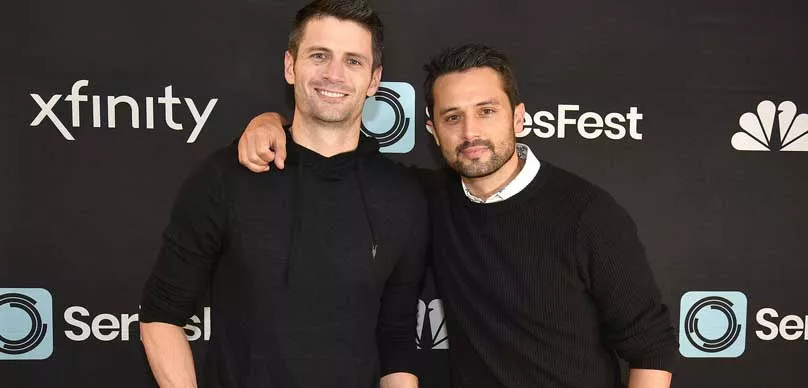
BPS 251: How to Sell an Original Show to Hulu with James Lafferty & Stephen Colletti

Our guests this week are stars from the early 2000s teen drama television hit show, One Tree Hill, James Lafferty, and Stephen Colletti. The buzz the show had was undeniable, and if you were a fan of the show, then you would be glad to know that your favorite characters, Nathan Scott and Chase Adams have a new project together and they talk all about it this week’s episode. 

But first, a summary of our guests’ track records in the industry. Both James and Steven landed their first acting gigs in their late teens and have since expanded their skills to writing, producing, and directing. 
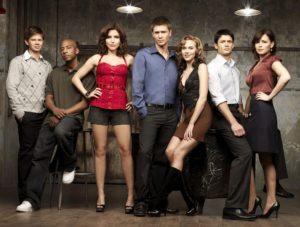
James, started out as a series regular on One Tree Hill in 2003, having appraised one of the lead roles of the show for which he was nominated four times by the Teen Choice Awards. Actor and television personality. Stephen joined as a regular after recurring his role as Chase Adams since the show’s premiere.

Half-brothers Lucas and Nathan Scott trade between kinship and rivalry both on the basketball court and in the hearts of their friends in the small, but not so quiet town of Tree Hill, North Carolina. Here’s a first look at the characters in its pilot episode:

Steven has consistently worked in film and television hosting MTV specials Beach House, Spring break and the VMAs backstage live among others. He’s made appearances on TV shows MTV reality television series Laguna Beach: The Real Orange County, VH1 2013 romance drama, Hit The Floor, and Taylor Swift’s White Horse music video.

Between 2009 to 2012, James began testing out the directing pond. He directed four episodes of the nine-season run of One Tree Hill and five episodes of The Royals, which he played another lead role on. In 2016, he briefly graced our screens in six episodes of Underground, the series, as Kyle Risdin.
With the country on the brink of the Civil War, the struggle for freedom is more dangerous than ever. Underground follows the story of American heroes and their moving journey to freedom.

The guys creatively reunited to create an original comedy television series, Everyone Is Doing Great that’s streaming on Hulu. They co-directed, produced, and wrote the show.  What was remarkable was that they sold an independently produced show to a major streamer, which never happens. We dive in on how they were able to do that. 

The seven episodes show follows Seth and Jeremy, two guys who enjoyed relative success from ‘Eternal’, a hit television vampire drama. Five years after their show has ended, they lean on each other as they struggle to reclaim their previous level of success and relevance, awkwardly navigating the perils of life and love amidst a humorously painful coming of age.  

I had lots of laughs with these two and can’t wait for you to listen.

Enjoy my conversation with James Lafferty & Stephen Colletti.

Right-click here to download the MP3

LINKS

SPONSORS

  1. IFH Academy –  Get MASSIVE Deals starts Black Friday to Cyber Monday!
  2. Bulletproof Script Coverage– Get Your Screenplay Read by Hollywood Professionals
  3. AudibleGet a Free Screenwriting Audiobook

Alex Ferrari 0:24
I like to welcome to the show James Lafferty and Stephen Colletti How you guys doing?

James Lafferty 3:58
Fantastic.

Stephen Colletti 3:59
Thanks for having us, man

Alex Ferrari 4:01
Thank you for being on the show. Man. I heard we have we have some friends in common in Dinesh Nelms who were on my show a while ago promoting or will talking about their whole career. But at the time promoting fat man, which is obviously one of the best Christmas movies ever made. It in my audience was going crazy for that episode, because it is just just hilarious if anyone listening has not listened to go find that episode on the back catalogue because the boys were great. And then they reached out to me. They're like, Hey, I got these guys who did this insane thing. We're part of this project and they pitched it to me and I was like, well, I've never heard of that before. How the hell did these guys shoot an independent series that got picked up by a major streamer? Like I know they picked up indie films because my film was picked up. My first film was picked up by them for a license for a year back when they were doing that kind of stuff, but a show is unheard of. So we're gonna get into The weeds about how you guys did that, because I'm fascinated it's really, really want to know how the hell that happened. But before we get into it, how did each of you get into the business? We'll start with you, James.

James Lafferty 5:12
Yeah, so I started really young, I started doing extra work. Actually, when I was about six years old, my, my mom would bring my brother and I and from Riverside County to LA just to get on two sets, just to sort of expand our world a little bit. We didn't really know, you know, at a young age, what we want it to be, you know, obviously, we didn't, you know, we weren't like, theater kids or stage kids or anything like that. It was really just for a mom to, you know, help us understand that the world was bigger than a small town that we came from. And we just fell in love with it. Of course, I mean, you can't really take a kid to a film set and play around with the kids and get to experience that atmosphere and have them not catch the bug. And sure enough, we did. And so from from about 10 years old on I started auditioning. And from there, it was just like a steady progression of you know, working my first Mervyn's commercial at 12, to, you know, getting a guest spot on, you know, Picket Fences or something like that. And then, you know, just continuing on from there to reoccurring roles. And I basically, yeah, by the time I was a senior in high school, I had booked this little web team drama called One Tree Hill, which ended up becoming sort sort of hit, I guess, I made at least ran for a very long time. Until about 2011. And, yeah, that sort of takes that takes us up to, you know, I guess, when I was an adult, right, you know, that's sort of how I was my way and really,

Alex Ferrari 6:40
but how about you Stephen?

Stephen Colletti 6:42
Yeah, I was a little more unconventional, I, I kind of first started working the business in 2004. The working with MTV, I started out doing a reality show with them completely victim of circumstance out of nowhere, did this show land in my community and dropped my lap. But I was interested in in hosting and wanting to get in there in entertainment. And so, in fact, one thing I want to do was, was to be a vj. You know, watching Carson Daly growing up and doing that gig, I thought that was a pretty cool thing and wanted to pursue that. So I looked at MTV is like, Well, alright, I feel like these people can get me in over there. So what I'm doing the show called Laguna Beach, for a season two seasons. And then I started hosting for MTV. And then I did a little bit of acting growing up it you know, just just in school and stuff and enjoyed it. But didn't think it was gonna be something I'd take seriously. And the more I kind of got into hosting wasn't so excited about it found acting interesting, wanted to study it and did and so as I was hosting for MTV, I was working on on acting and studying and from there, I booked my first film something called it was actually wind up being havoc, too. It wasn't that wasn't it wasn't supposed to be the sequel originally. But that's what who today new line, I think it was, it's what they want. I'm selling it as called normal adolescent behavior. And in that film, actually worked with a girl named Hilary Burton, who worked on One Tree Hill, and I want about shooting for One Tree Hill and getting a part there. And then it was kind of set on working on the show with James for about five or six years.

Alex Ferrari 8:34
So you guys, so you guys are coming out this whole thing very unconventionally, because you're coming from the acting side. So you guys were on a hit show, for a good amount of time. You've been obviously you guys have been on sets a lot throughout your careers up to this point. And then what what made you guys get together and say, you know, we're going to take the power in our own hands and build our own content and try to sell that. So you essentially, stop asking permission to do what you love to do and start creating those opportunities for yourselves very, very Ben and Matt, goodwill hunting style in that way, so what what made you as actors decide to like, you know, is there something that caused you to do it? Or is it something that tickles your fancy or just like, you know, what we you really need to kind of get our own stuff going?

James Lafferty 9:22
Yeah, I think it was a mixture of things, as it always is, I guess, you know, it's, it's, it has a little something to do with, you know, coming off of a TV show and thinking things are going to be easy and actually not being that easy. It's you know, getting to a certain point in your life as an actor or I guess, as a professional in this business where you realize that things are cyclical, like you're going to have, you're going to have times that are you know, really good for a while you're gonna have a great cycle and then you're going to have a really dry cycle and then you're going to it's going to come back it's a sort of pendulum swing situation and you start to realize that at a, I guess around for us, it was around that 2526 27 age when One Tree Hill was ending, right? But then also, you know, I don't think you can be on a show for that long and not learn something, I mean, really have to not be,

Alex Ferrari 10:09
you have to be pretty dense and you have to be pretty.

James Lafferty 10:11
Yeah. And I think, you know, we, we were always paying very close attention, because we always knew that behind the camera was where we want to be eventually we just we knew that we would want to tell stories, you know, for me a big part of it was being able to step behind the camera and direct on One Tree Hill. And then I know, you know, Steven can speak to, you know, the fact that he was producing coming out of One Tree Hill and stuff. But um, you know, that's, that's sort of where I was coming from is like, I know, I want to tell stories. But you know, and I know, I'm gonna want to write, right, so I'm writing scripts, and these scripts are like high concept and very expensive. And this is obviously as you know, and your audience will know, these, these ideas are very hard to get made. So at a certain point, for me, it was like, Okay, what can I make, that can be made? You know, what can, what can we make that that can be made for a reasonable budget, and that we can actually shoot so that we can prove to people that we can tell stories, and hopefully, take that next step as storytellers not just people who are, you know, auditioning for jobs?

Alex Ferrari 11:13
How about you, Steven?

Stephen Colletti 11:16
Well, I think it's, I feel like it was always somewhere. Yeah, it was something in the back of my mind knowing that, you know, in this industry, especially just with technology, these days, what it affords you, you better be able to figure out stuff on your own, because, you know, I just, I know that where I stand in this industry, and I was not, you know, God's gift to the entertainment industry as an actor. And so I knew to do certain things that I wanted to do, you know, you're gonna have to create those opportunities for yourself. And so I, you know, it's just kind of been a steady evolution of, you know, trying different things, you know, realizing I had all my eggs in that inactive basket, when I was in my 20s. And realizing that the opportunities that were coming to me, were kind of out of my control, you know, you go audition for things, and something's you really, really want and it's almost like, the more you want something more, you want it not getting it, and then a job that you're like, yeah, I really don't care if I get this job, and it's like, you booked it, you know, you gotta get I gotta go take it, because I need a job. So I think that, you know, to really, as I got a little bit older, and a little more, Yeah, a little more edgy about the business realize, I, if you know, what I want to do, I'm gonna have to, you know, take the bull by the horns and try to figure out to do it on my own. Because, you know, that's not going to all just line up with landing the perfect audition at the best time and booking it and then Off you go, you know, it's just not, that does not happen every day or, you know, likely at all. So, you know, yeah, I think from there, you know, it's, it's been an evolution of certain projects that, you know, haven't gone very far. And, and just, you know, whether it be a little bit of writing a little bit of producing, but, you know, kind of learning is something from each thing. And then, you know, with this one, with, everyone's doing great kind of felt like, all the pieces started to, you know, fall into place where, okay could take, you know, what I've learned up to this point, and in trying to get stuff made, and go out there also to say, you know, partner up with somebody, you know, realizes I can't do stuff, you know, on my own, and, you know, you got to get good people around you to help you, you know, you know, fill in your weaknesses and get, you know, get things made.

Alex Ferrari 13:29
So, how did you guys come up with everyone is doing great.

James Lafferty 13:35
Yeah, it was, it was sort of out of necessity, I guess. You know, I think we had, we had lived enough life coming out of One Tree Hill to realize that we had lived a pretty absurd life in our 20s. And to have that amount of success at such a young age is completely it's absurd, it's, it's insane what happened, and we were insanely fortunate. And then to have, you know, some some years that weren't so successful, you know, to really humble you and to make you look back and go, Okay, I see a sort of like arc forming here, where, you know, we had a late coming of age, you know, and we had a late coming of age in this really crazy industry, where the hilarious things are happening all around us. And there's, you know, extraordinary, extraordinary things happening all around us that really make for great comedy. You know, and we've never, we've never felt sorry for ourselves throughout this whole process of, you know, auditioning and rejection and all this stuff. Like, I think, you know, we've always found the narrative that it's, you know, a really tough thing to do a little bit tiresome, because it's what we chose to do, right like nobody's gonna feel sorry for you because you just keep coming back for more and you know, you're always going to come back for more. So really, for us the the catharsis and all this was just a laugh at it. So get together to share our stories, and they'll be like, you're never gonna believe what happened at this audition today. Like you're never gonna believe what I saw this party or this person that I met or, and, and and just laugh at these things, and you You know, this is something that we really wanted to bring to a show that that lined up with our comedic sensibilities, right. Like, we knew that we wanted to make a show. That was up to the standards of the shows that we love to watch. We love shows like fleabag, you know, catastrophe. We love the trip with Steve Coogan and Rob bryden. Like, we love will that best show on HBO doll on em, things that are feel really naturalistic and feel really dry. And mind humor, a lot of out of a lot of like, awkward and cringy moments, to the punch lines. And we we just felt like we were like living in this world where all of a sudden, we could see, we could see this happening around us, we were sort of observing it. And so we decided to sort of, I guess, take that and, and try to create some characters that we could map on to these things, and onto this world and into these situations, and create a story around it that would also line up with our storytelling sensibilities, which is really we gravitate to stories about, you know, friends, families, and, you know, families basically, that full of people that are just there, they probably shouldn't be friends, but they have this shared experience, or they have this shared past, where they're sort of forced to continue to deal with each other. And whether or not they stick together is based on whether or not they love each other. Right. Like, those are the stories that we're onto. So it was just all these things as sort of confluence of things that came together to at this time to make us realize that we might have, you know, a story to tell here through everyone's doing great.

Alex Ferrari 16:30
Now, Stephen did teach your agents and managers and your friends around you say you guys are absolutely that this is not going to work. No one's ever, you know, done an independent show before and sold it anything major before me did that happen?

Stephen Colletti 16:44
You know, I got kind of the status quo from the the reps were, that's, that's really nice. You know, they're like, Okay, you go to your little bit, you're gonna be auditioning, right? You should still be sending you stuff. And I'm like, Yeah, no, of course, we please do. Like, okay, just making sure. But you know, I think that they hear that and the expectation on there. And it's like, oh, man, I got a nickel for every time I heard a client talk about something that they're making on their own and never seen it even myself, they probably have a few nickels for me, because I definitely have done it before. As you know, try to shake them down to help you, you know, get some traction on a script or, like get something, you know, get them to read something that you wrote. So, there, you know, there was that kind of like, you know, yeah, they're just playing along. It friends. It was, you know, there was we had some good support from friends at rooting us on like, you know, I think people in the industry were like, Fuck, yeah, man, like, go do it. You know. And I think that it also, you know, with the community of people that God around our show, when we were crowdfunding, I mean, that really helped lift us up and continue. have us continue to move forward on it was that, you know, people were on board and excited, they heard about the concept, they would just be looking at a log line and being like, you know, what, that seems interesting. I'd be into that. And we're like, yeah, like, I want to contribute to the show. Go on and do it. So I think it was, you know, for the most part, it was positive feedback, and to have like, our communities of family and friends, saying, you know, go for it is really cool, and definitely helped propel us to the finish line.

Alex Ferrari 18:22
So I find it fascinating. You said that the agents play the long because I actually, you know, earlier in my career was I had a full films, and I got a star attached. And it was, you know, she'd done TV, and she had done a few movies and things like that, and we go in, and what you're saying is exactly what the agents would do. They came in, they did this show, they sat around the conference table, like, okay, so you know, oh, yeah, we can go out to this person. And, yeah, we might know this person to try to kind of play along and I was so green. I'm like, Oh, my God, we're gonna get this movie made. This is amazing. And then, you know, nothing ever panned out. But they needed to play along to keep the client happy. So I'm so like, I didn't know that was a thing. And when you just said it, like, that makes all the sense to me. Because I've been in that room when we're like, oh, yeah, cuz she's the producer on this. And she wants to put this all together. I was like, No One No wonder nothing.

Stephen Colletti 19:14
You don't listen for us. You know, it's like they don't they know, the road. And it's enough. It's time. They don't have the time for that. They're like, Look, this is the bottom line game. I'm here with my clients for like, you know, like, I know if this person is getting started on a project, like this film is not going to be made next month in six months. And wow, if they make it in a year, that's incredible. So they're like, I don't I don't have time for something that's two years out.

Alex Ferrari 19:40
To get paid Now. Now. I need my 10% I need my 10% I need my 10% Yeah. So

Stephen Colletti 19:46
10% in 2024 Yeah, exactly. Yeah,

Alex Ferrari 19:50
luck. Good luck. Yeah, exactly. Good luck to you, my friend. But you're still gonna go out. We could still send you out. Right. We could sit now we could still say yeah, I love that because we still need to make our money off. Right now so it's, it's fascinating.

James Lafferty 20:02
You're gonna be supportive 100% Oh, yeah. Just just means like, you know, saying like, yeah, sure we'll help out. And then we'll step in later.

Alex Ferrari 20:12
Yeah, we if you bring in 5 million, we can get the rest. up, bring 5 million and Will Smith to the table, we can get you. The rest of it. No problem. No problem. Yeah, that's, that's the way the game is played. So Alright, so guys, how did you put this this cell financed? I mean, because it doesn't look like it's like a you know, it's not Game of Thrones for sure. So I'm assuming the budget was, you know, indie. But how did you guys raise the budget?

James Lafferty 20:43
Yeah, well, it was, um, it was, I guess it was a sort of a tiered process, sort of just like the entire process was, you know, we, we didn't know that we were going to shoot our entire season independently. We started off with a pilot, and the pilot was self financed. And very naively, we thought that we would execute this pilot and the money be money, and they would sell it. And then somebody would be like, Oh, yeah, we want this to be a, you know, who the original or whatever. Yeah, that didn't happen. Didn't happen for a lot of reasons. You know, first of all, I think the pilot that we made was a pilot that we wanted to make, and we were really, really proud of it. But it was 2017. And, you know, a lot of the streamers that exist now didn't even exist back then. And a lot of the, you know, bigger ones. Now, we're just sort of booting up. And you know, they're different departments and sort of really defining what kind of things they want to do. And we just didn't anticipate the challenges of shopping around and independent TV show, we didn't realize just how kind of, I guess, unprecedented it was, it's just not something that happened, there was no template for selling it right. further than that, we didn't know that we even needed a sales agent, really, we didn't know the sales agent game, right? We were having our talent reps reach out to development people at these companies. And seeing if, like, you know, they would get it, you know, if they could push the ball forward. We weren't even we weren't considering the acquisitions departments and things like that. You know, we'll talk about this later about, you know, we didn't actually know how sort of nebulous that world was as well, and how many gatekeepers that there were and how relationship based it is. So we just didn't have any of these relationships or any of these connections. So once we realized we weren't going to sell the pilot. And that if we were going to produce the rest of the season episodes, two, three through eight, we were going to have to do it independently. We were we had always considered the crowdfunding route. But we didn't know for sure if we wanted to take that plunge. It was our last, it was really our last sort of final option, because we had heard that it's going to be the hardest thing you ever do. Yes, I've done it's over like, yeah, and you know, the gnomes brothers, who you had on in the past. Like they, they did it as well. And I watched them do and I watched them break their backs for the money they made for post on their first movie or one of their first movies. And, you know, they were they were encouraging us to do this as well, like the Noah's brothers had our backs on the crowdfunding front, they're like, you should do this, because it's going to help you retain creative control whatever money you can raise your budget, it's going to help you maintain that leverage, and that control over the project or for its life. And so yeah, I guess you know, once we had exhausted all options, we took that plunge, that crowdfunding plunge crowdfunded For how many days even 45 days?

Stephen Colletti 23:40
Yeah, at least 45? Not all July, June, July, and then we extended a little bit into August. So what's it been up to about three months?

Alex Ferrari 23:48
And what platform? Did you guys use Kickstarter, Indiegogo,

Stephen Colletti 23:50
Indiegogo.

Alex Ferrari 23:51
Right? And how much did you guys raise?

Stephen Colletti 23:54
we wind up raising about 270k. And that's after. Yeah, after fees. And we had to take some money for of course, for the perks and stuff like that, we were able to, to use about at least 200 210 215 in our budget. And then we had to bridge the gap a little bit to get to where we can, you know, still have enough to finish the season.

Alex Ferrari 24:18
That's amazing. But that's, that's a success man. Like you pull in over a quarter million on a on a platform for a television or streaming series. That's a pretty, it's a pretty good goal. I guess you tapped into a lot of your fans and things like that. To help with that.

Stephen Colletti 24:33
Yeah, no, I know, for sure.

James Lafferty 24:35
Yeah.

Stephen Colletti 24:36
To have people, you know, contribute for a you know, a show they haven't seen before, you know, this was not the reunion or these equal or something. So right, you know, people were having to take a leap of faith for us. And yeah, I think that was that. You know, we struggle a little bit out the gate, trying to get people on board for this, but it was, you know, Really, it was that community behind, you know, One Tree Hill that, you know, got involved and and wanted to see us, you know, where we wanted to support us and whatever our next venture was because they knew that maybe, you know, the reunion wasn't gonna be happening anytime soon. So yeah, incredible community of fans, they're been very loyal. And we're very grateful for that. Because without them, this doesn't happen. And it ultimately was, you know, about two weeks in we're like, we need some sort of kick, you know, we really need something to to boost the finances there, or at least the on the money coming in for the Indiegogo project. And we, we came up with the idea of, of doing some live watches, where we would invite some cast members from the show from our old show, once your Hill and and watch an episode. And, you know, it offered us a great opportunity for us to, you know, see some of our cast members that we hadn't seen for a while and kind of, to fill a little bit of that, that want for what the fans are looking for is they're trying to hear the news, and whether or not the show's gonna have a union or whatnot is like, well, they just want to see some of these people back together. And, you know, to get, you know, four or five of us sitting in a room chatting about the show, it was, you know, an experience that fans really enjoyed. And they came back, you know, four or five times as we did a few of them, and they wind up just being, you know, the most lucrative thing for us in our project. Yeah, raising up. Yeah, I

Alex Ferrari 26:25
mean, you leverage what you have. So, you know, if you've got a fan base, and I'm assuming, how did you get to that fan base? I mean, did you just hit the Facebook groups? I mean, I don't think you have an email list with a bunch of One Tree Hill fans. So like, how did you how did you reach out to these these communities and get them to, to watch and to contribute?

James Lafferty 26:43
Yeah, are following us on social media were a huge part of it. I mean, pretty much everybody that follows me is a One Tree Hill fan, unless they're my mom or my friend. So you know, that was that was that was really important is being able to connect with people through social media. That was what brought in, you know, I think our first wave of people, but I think another really important thing was that we were able to show these people that that just, you know, this first wave of people that we have a product that you're going to like, right, because the challenge with an arts project is that you can't really show them the content of the arts project, right? You can't really like have virtual screening for people on the movie you're trying to make. Fortunately, we were making a TV show and we had shot a pilot. And we were able to take this pilot around to some festivals that were really, really great, like at x festival is a television festival in Austin, that showcases all kinds of television. And you know, they they showcase a few independent pilots every year, they chose us for one of theirs. Series fest is an all Independent Television festival that they hold in Denver, Colorado. At the time, New York television festival was one. So there was just, there's a bunch of different festivals that we were able to hit and we were able to invite fans out, you know, people that knew about us from One Tree Hill, and invite them to the screenings, talk to them after these screenings, meet them after these screenings and get there first of all, creatively get their feedback, right? See if the show was actually funny to them. But then also they were able to see the first episode of the show. And then you know, tell other people on our Instagram feeds or on our Twitter feeds or you know, on the message board on Indiegogo like yes, this is a good show, you will like this show, you know, there's there's something here. So I think that that was a huge, huge asset to us being able to take out that sort of, you know, if this wasn't a TV show, you call it like a proof of concept, right? Wasn't TV shows a pilot. And it just it just the timing of that taking out those festivals, we in hindsight, we realized just how incredibly, you know valuable that was for us.

Alex Ferrari 28:47
And how many days did you shoot? Like how many total days? I mean, assuming you just sat and just just shot it all out in a row. Right? So how many days did you shoot eight episodes and each episodes? What 30 minutes? Less than that?

Stephen Colletti 29:00
proximately 30 Yeah, we got we got anywhere from 25 to 37 minutes. so thankful for the streaming services to be flexible. Right. Exactly three never to kill as many babies as we had expected. But yeah, we want up shooting over the course of about 35 days. eight episodes that's a lot and yeah, obviously block shooting everything getting locations wrapped up in was was you know key. Michelle Lange Who?

James Lafferty 29:31
those seven episodes right that we shot because we had already shot the pilot the year before and then we shot seven episodes, this seven additional episodes over that 35 day period.

Stephen Colletti 29:40
Thereafter, minus one is seven that is confirmed. This is why we make a great team. So we Yeah, and Michelle Lange who works with the nelmes brothers. She's married to Ian there they she you know was so clutch in getting ours. Schedule all dialed up and and and making sure that you know, we're maximizing our locations. And it was fluid to that schedule was changing constantly. And she did a good job matching mapping it out in the beginning. And we kind of had an idea of where we were going to be for the next 35 days from the jump, of course, but, you know, she was always kind of looking to adjusted, where can we make Where can we save a buck? And you know, having somebody like that on our team, just, you know, thinking about things that we are not even anywhere on this same universe and thinking about what that scheduling and how we can save some money. Because especially when we're doing our shoestring budget was key. So we it was it was hectic, but we we got it done. And you know, Michelle Lange was a big part of that.

Alex Ferrari 30:45
We'll be right back after a word from our sponsor. And now back to the show. So you guys have been you guys have been on onsets pretty much, almost all your life. At this point, you were like, really were on sets for a long time. And a couple and you've directed, you know, a few episodes here and there. How much did that play in in the success of what you guys we're doing it because obviously you knew what a professional quote unquote set was. But you knew that One Tree Hill set is definitely not going to be the all the bells and whistles that you're going to be using on this show. So how was that transition? Because you know, you're used to being on I've been on network sets, they're they're nice, they're plush. The craft, the craft is fantastic lunches, you know, lobster, you know, it's really it's really a nice scenario, depending on the budget of the show. But generally speaking, that work shows are really nice. So how was that transition from? Hey, I need something Oh, we have a department for that, too. We need something figure it out. Hmm.

James Lafferty 31:50
Yeah, I think it's a really good question. Because I think there are things that we that we learned, you know, from being on larger sets that helped us, and there were also things that totally blindsided us as well, right. You know, there was, I think that the general concept of time management really sinks in, when you work in television, you know, on whatever budget you're working on, like, you know, working on, whatever, whatever network TV show, you're still trying to shoot an ungodly amount of pages a day, no matter what, there's not enough time, you never have enough days to get the show to get the episode that you want to shoot. And as an actor, you sit around and you just watch people like run around like their hair's on fire, trying to make this impossible thing possible. So and you learn about time management really well, because you're always watching your clock, right. And so I think that's one thing that we were able to carry into, to everyone is doing great is his clock management, right is that time management is is making sure that, you know, we have contingency plans that we have this space in our schedule to shoot things that we might have missed, or that we're able to adapt, if you know, we didn't get this one thing at this location, what other location can we put it that we had seen enough of this sort of sleight of hand be played, you know, throughout our careers to be able to employ it ourselves, and obviously, with the help of our producing team, but then also, there's nothing that can compare you to, you know, or that can prepare you to for the, you know, first week of our shooting in Stevens actual apartment, and you know, the fact that there's going to be 35 crew and a two bedroom apartment, you know, wearing their work boots.

Alex Ferrari 33:27
And did you get from it? Did you get permission? Or are you did get permission? You didn't gorilla?

Stephen Colletti 33:32
Yeah, but you know, we, you stretch permission for a couple of people just for like, two days? Not necessarily. We won't say how many people were there. And we won't say For how many days but it didn't really work out to that

James Lafferty 33:49
when I quoted. And you know, you gotta like hand it to Stephen, who is you know, this is his apartment, he's producing, writing the show, he's directing one of the episodes that we're shooting at that location, and he's gonna be thinking about all these different things. And he's also thinking about the fact that like, this person today didn't wear social soft soled shoes. Yeah. So like, we might get kicked out, you know what I mean? Or he's worried about you know, getting Starbucks gift cards to all of his neighbors and making sure that they got them so that we've got you know, we're in the good graces of the building. You know, it's not a it's not a completely conducive mindset to creativity. Nothing can really prepare you for that nothing in our experiences on

Stephen Colletti 34:29
me right now. Seriously? Yeah, like you said,

Alex Ferrari 34:30
You started you're starting to see the twitching I could see the Twitch, you

Stephen Colletti 34:34
know, how we I don't know how we got through those those days. But yeah, I mean, I got sick in the middle of it as well.

Alex Ferrari 34:41
Oh, yeah.

Stephen Colletti 34:43
Anytime an apple box was just scraping across the floor. Mentally murdered that individual and then carried on with my scene.

Alex Ferrari 34:52
I'll tell you what, man like I've shot so much in my own places during my career like on my own house like my first my first like $50,000 I spent on my commercial demo reel back when I was doing commercials, which I shot on 35 and all that. I did it in my house, I'd like to two full shoots in my house like doing different areas, like in my living room, I'd set up a set. And I like because I had to. And that exact thing someone like a grip would just drag something along. You just like trying to direct it. And then you have the money. So this is basically exactly the only thing that you did that I didn't do is I was an act in it. Thank God. So I'm doing everything. I'm doing everything else. But I feel you man like you that Apple box kiss drags, oh, god,

Stephen Colletti 35:34
oh, we had a, I had this, this deck. That was great. Because you know, people can go have lunch out there and we can store gear out there. And but you know, we fired up breakfast there at like 615 in the morning.

James Lafferty 35:52
Oh my god, how did we get away with it?

Alex Ferrari 35:54
Starbucks Starbucks cards go a long way.

Stephen Colletti 35:57
Yeah, basically, you know, there was some supportive people, some supportive neighbors, but then there wasn't some supportive neighbors. And there was we did get a noise complaint, like on the first day, you know, there was a the manager who I'd spoke to how to talk to somebody else. And so they showed up and they were like, what are you doing? And I was like, you know, I talked to all that I Okay, all right, right on. But at first there I thought, you know, they had come to basically shut us down. So yeah, I mean, it's still Yeah, once

Alex Ferrari 36:34
he stressed out, he is stressing, it's over, Bro. Bro, it's over. It's over.

Stephen Colletti 36:38
It's felt like a mistake. Because after all this build up to get to this point of wanting to shoot the show. And it's our own. We're so excited. And we got our first couple days of shooting. And then all of a sudden, it's just back to back days, like in my apartment with one thing after another and I couldn't you know, once we got to the finish line, and we were like halfway through that last day there and I'm like, Okay, we got it now I know we're gonna get through this location. The shoot started for me but I couldn't tell you what happened on any of the scenes my characters department because I've my brain was just ping pong off the walls.

Alex Ferrari 37:15
And that's it they I mean for filmmakers listening now, man, until you're in the into you're in the weeds, or as they used to say like when you're in war, when you're in this shit. You really, really feel it because, man it's 1000 things going on at the same time. You've got money dealing with you've got your act, you You're acting, which is insanity to me. Like I can't even begin to begin to try to think about acting in a scene while doing all this stuff. It's it's brutal, man. But I think this is a comment that no one's ever asked this is a sentence has never been uttered in Hollywood. All I have is too much time and too much money to make this project like that. That's never been uttered in Hollywood since the days a fucking Edison. No one is ever said that.

James Lafferty 38:02
Absolutely.

Alex Ferrari 38:03
That you know, it's it's insane. So

Stephen Colletti 38:05
we got another week. You sure you don't want to use it?

James Lafferty 38:08
Yeah.

Alex Ferrari 38:11
Good. Do you want another month? I mean, we could just do another month if you want. Like, yeah, you've never you never hear that. It's insane.

Stephen Colletti 38:18
I mean, I go to Panama and get a shot on the beach. You don't want it? You don't

Alex Ferrari 38:22
want it. That's fine. We'll just green screen it. That's fine. Yeah, I can imagine the culture shock for you guys as being, you know, regular actors on a hit show. And never having to think about any of that. Like even when you were directing on the show, you still never had to think about that. You were just directing the show. And it's all your family and friends around. You know, you've been with these people forever. You don't think about all that other stuff. Really? I mean, time management. Yeah. But when everything's on your shoulders, I gotta believe that the culture shock must have been what at what moment? Did that hit? You guys? Like, was it day one? When you said on the on day one on the pilot even like, Did you just go? Oh, we're not in Kansas anymore. Like, what was that? I mean, I'm sure someone told you. It's like, it's like having kids. Someone could tell you you're gonna have kids. But it Oh, it's gonna be bad. You're gonna lose sleep until you have a kid you have no idea. It's like writing your face. So when was that moment? Yeah, guys.

James Lafferty 39:21
I think for me, it was when we were at Stephens apartment. And I don't know, this is probably the first time we've ever told the story might get crucified by our producers. But I just think it's too interesting. You know, we had at when we started shooting, we had about two thirds of our budget. And we had a contingency plan in place like we were starting in Stephens apartment. We're gonna shoot all this contained stuff. We knew that we could shoot a version of our season for two thirds of the budget, right? We just have to change a lot once we left Stephens department. And, and we were still waiting to see if financier was going to come on and cover that that final third. And we were getting to the point I was probably like four or five days in when it was really like a breaking point and Michelle laying had become set and like Sydney and Steven down and city and and Ashdown and Jaya Durango or other executive producer. And you know that like that was like the rest of the crew setting up a shot over at Stephens apartment and we are like down the hall and sort of around the corner and like a little outdoor lounge we can see across the gap to Stephens apartment, and it was nighttime. And Michelle is walking us through the fact that we might not get this money and could change a lot. And but everything's gonna be okay. I remember just having like a bit of like an out of body experience where I just sort of like, I just sort of went numb, and I just sort of left like I was sort of seeing the world from behind my eyes. And I was like, Oh, this is it. This is what they talk about.

Alex Ferrari 40:45
This is I'm dying. I'm dying. I'm dying.

James Lafferty 40:47
I don't mean to do much. And it's all on you. And yeah, something either really, really miraculous is going to happen, or this is going to be a horror story. You know what I mean? It's like, this is the moment that it hinges on. And thankfully something miraculous happened in that particular scenario. But that was a real. Yeah, that was a real moment. For me.

Alex Ferrari 41:08
It was it was like, you guys had a coming to Jesus conversation, like come to Jesus conversation is basically the set up is like this guy's Look, it's this is. And I've had, by the way, I've had those conversations with my first ad on projects, or my UPM on early, early early projects are like, Look, man, I know you've got 752 shots you want to do in four hours. I understand that. But this is the reality. You got four shots, let's do this. Yeah, see, we just say, Steve,

Stephen Colletti 41:38
I was gonna say, yeah, I think in I feel like, you know, James Nye, we've had this, like, you know, go get 'em attitude. So it was like, there's nothing that we can't handle, like, we could we will figure it out, you know, we'll figure out how we'll do this. Like, we're just not going to take no for an answer, blah, blah, like, just learn on the fly. That's why I like working with James. Like, he's resourceful. He gets it, he just shuts up and does the work, you know. And, you know, there was definitely times where like, Oh, you know, what we've Southern. So we've taken on too much. It's like, you just can't do this, like this isn't, there are people that have gone to school for this, or have trained to do this for a while. And some of the tasks like we just took for granted, like, for example, locations, like I was doing locations for a while, and then we got closer to shooting. And it was like, I missed a lot of locations that need to be actually locked. And then it was like, Well, those are kind of in the second half. So we'll start shooting, and now we're shooting and there's some locations in the back half that we're still trying to lock I'm trying to we're trying to negotiate like at every single location, it was not taking their you know, their their first offer, letting them know, like telling them the story, you know, we're crowdfunded, we're shoestring budget over here. So like, please, like, you know, what, what can you do to help us out, and it just there was, you know, you're just juggling those, and we actually had in the middle of the shoot to bring somebody on and say, Okay, this person is going to just handle locations, like stop worrying about you tried, you know, you got some good stuff, but like, it's starting to, you know, distract you from other things. So

James Lafferty 43:14
you can be driving from Northridge, down to down to Downey every day. like trying to, like putting the finishing touches on the script. It's just not.

Alex Ferrari 43:23
Yeah, and that's, that's one of the biggest mistake, first time filmmakers in the indie space do is they'd like, Oh, I can do all of this, or I could do this, I could Yeah. And they take so much on that you get nothing done. You have to bring you have to bring in people and you have to have help in one way, shape, or form. And sometimes it's it's educated help. Sometimes it's not educated help, like, you know, you get your, you get your brother, your buddy who wants to be in the business, like let's do location scouts. Sometimes it works out great, sometimes not so much.

James Lafferty 43:52
You know, I think the line is blurred these days as well with, you know, what you can learn and what you can't execute, right? Like you can learn, you can learn a lot like and this is this has been a blessing for us, you know, the fact that technology has come so far, the fact that our access to information is just so exponentially better than it was even 10 years ago, you know, but it also it gives you this false sense of security, it gives you this, you know, false sense of capability, really, I think, you know, we did learn to do a lot. And we did we were especially in post production, right? Once we got into the editing process, we were able to save ourselves a lot of coin just by doing things ourselves and learning to deal with things by ourselves. But the same time, we had to we had to recognize where we had to draw the line where like, you know, okay, we can we can keep banging our head against the wall with this thing that we just learned to do on YouTube three days ago, or we can sort of, you know, reach a point where we realize, Oh, this is what they pay people big bucks for, okay, let's go find somebody who knows what they're doing right before we, you know, you know, carve up our project more than we need to hear, you know, do something, you know, make some sort of fatal mistake, right?

Alex Ferrari 45:00
So you guys didn't shoot your own movie. You weren't a DPS as well.

James Lafferty 45:06
We did not Soderbergh it. Now

Alex Ferrari 45:07
he did. It is.I found out I honestly, within like a couple years ago, I found out that solder Berg was his own dp. And he'd always been his own dp, I had no idea because he changes his name on the credit.

Stephen Colletti 45:19
I didn't know that

Alex Ferrari 45:20
all of his and then you go back and like he did Ocean's 11. And che and I mean, Erin Brockovich, and like, he, he was a toy, you start thinking about it, like, and he was the writer, and he was, like, he's a freak of nature. He's like, an absolute freak of nature to do all of Yeah, very, very few very few guys can do. And trust me, I, my first feature I was the DP on. And mind you, I was already 20 years in. And I have been a colorist for 10 years. So I'm like, you know what, let me just get it down the line, I tried to sit it down the middle, expose it, I'll fix it in post, which is exactly what I did. But after after that, I was like, never again, never, ever, ever again. It's too much, man, it's too, it's too much. It's the takes a special brain to do all of that stuff.

Stephen Colletti 46:08
But I was just gonna say another thing we learned, like real quick was, I think was important to take, being able to understand like a pulse of your set, that I felt like I recognized as I'm sitting around on a set waiting for, you know, to act on certain acts, just the, you know, how, how quickly, like a dynamic can change, it's almost like people are, especially these long days, like people can get, you know, they get edgy, naturally, I totally understand it. And so it doesn't take much to set people off. And so to kind of, you know, be a little more aware of, of, you know, the treatment of people, especially for us, when you know, there's no room to go anywhere, we were crammed in an apartment, and we're crammed in whatever location, you know, all on top of each other that, you know, to try to, you know, respect people for the jobs that they're doing, give the attaboys and, and, you know, also, I guess, still try to provide some decent food because, you know, our, you know, we had them, there's no comfort for them whatsoever, and they're working completely full days. And, you know, I think Michelle Lange was, was key and saying, well, we're gonna, we're going to pay for a decent caterer, you know, we got to get some, we got to get them fed well, but, you know, just trying to just check in with with crew and, and have, like, you know, you create a cold, cordial relationship with everybody. And I think that also helps at the end of the day, when the going gets tough. And people either want to get the f out of there, which I understand or just so sick of like, This lack, like, we're missing a couple of resources, and you're having to wear an extra hat, you're not certainly getting paid for it, but like, you know, what, they're gonna step up because they believe in the people that are running this project. I think that that helped us a lot. And, you know, we also had young, we had a lot of young filmmakers, people that are just getting started in the business. And that was really crucial. Because while they're not getting paid, you know, big money, they're ready to hustle, you know, they're ready to, you know, to be on a set and make a film project, you know, so that was, you know, something that was also very vital to, you know, fill in the blanks of not having a comfortable set that you would get on a major network, you

James Lafferty 48:21
know, did you guys that we learn, oh, sorry, I was. I was just gonna say, um, that's something that we learned from the Nelms brothers as well. Being on set with the knowledge brothers, I learned very early on with them that like, the reason that their sets are so amazing, and people are so happy, it's because they realize that they're not being asked to do anything that the directors wouldn't do themselves, or wouldn't don't have the utmost respect for right? Like, these are guys that these are not directors that go to the directors trailer in between setups, and do whatever the hell they want to do. And they're like, these are guys who are they're on set every single, every single moment. They love the process, they truly love being that, and that is contagious. And that's what gets people through those long days and those long nights is, is knowing that the person at the top still really cares about this and really cares about, you know, really wants everybody else to care. And is is willing to put in the work just like they are. I just yeah, I mean, we learned that from that from them very early on. And just we tried to be those guys on set every day.

Alex Ferrari 49:23
Now, did you guys happen to feed your crew spinning wheels of death? Do you know what those are is that this is an old this is this is the best stuff comes from old DPS. So a buddy of mine who's like he's been in the business 4050 years, and he was DJing something I was directing. And it was a low budget situation. And we talked about lunch, and I said, Hey, do you guys you know, maybe we should just get some pizza. He's like do not bring out spinning wheels of death. Do not bring out just because that's what they're called because it just drags the crew, cheese and bread and it just slows everyone down. He goes, don't do it. Don't do it. And he also, he also always used to say every time he couldn't get something the way he wanted to say, I'm surrounded by assassins surrounded by everywhere I'd look surrounded by assassins, and I use that like constantly on a setlist surrounded by assassins. Goddamnit. But did you? Did you do the pizza thing at one point?

Stephen Colletti 50:20
We actually didn't do pizza.

Alex Ferrari 50:21
Good. That's a good producers

Stephen Colletti 50:24
producers shout out was a Spartan catering. James

James Lafferty 50:28
Spartan brothers. Yeah, but yeah,

Stephen Colletti 50:30
they were they were solid. They had good food. And, you know, we tried to make sure, yeah, you have you other options for, you know, people with with allergies or whatever, and just made sure we're on top of that, or, you know, there was a couple days where they might have forgotten or maybe those first days, you know, working through the kinks that there weren't enough of those meals. It was like, Let's go, you know, let's get this fixed right now, you know. And other than that, we kept them well caffeinated. That's for sure. This This started well, I know myself, but RDP was was a caffeine theme. And so we just made sure we got the Starbucks runs in the coffee going and, you know, thankfully, it was a small enough crew that were like our and this is something that James and I we just handled. We're like, you know what, just take our card and go. Let's get everyone whoever wants something from Starbucks or

Alex Ferrari 51:19
just go Yeah, it's the cheapest is the cheapest investment you can make in this film. I'll tell you a quick story. I come from Miami originally. So in Miami, onsets, there's a little old Cuban man, who's he's hired. It's always a little old Cuban man who walks around but two to three times a day with a tray full of these little thimbles of coffee called Puerto Rico's which is Cuban coffee or little. There's like this big and you look like that can't do anything. And I was just alone. I'm Cuban. So I was raised with this stuff. So I I see, you know, people who are not used to Cuban coffee, like oh, there's just a few of them. That's, that's so little. And they would chug like four or five of them at once. And within 15 minutes to just like she's like freaking freaking out and I like it we and all the all the people who are used to that coffee like let's let's watch let's see what happened to that act. That actor and you just see him just start freaking out like trying to do a scene. So Cuban coffee earlier, I

James Lafferty 52:15
love that. That's that sounds efficient.

Alex Ferrari 52:18
And there's a there's a little way he does it with the sugar and like, he he makes it all foam up. It's a it's an artistry thing. And it's just their little little thimbles man not even shot clock like symbols. That's how powerful and dense the human coffee is. Oh, he makes

Stephen Colletti 52:34
the card the Starbucks runs. And it is I think Starbucks you know, those are sure people that will shit on the coffee naturally, because it's not that great. But there's still a lot of people that are like, it's a desert to that right. A couple people. You get that dialed up for right after lunch? And yeah, you know, it's it's a little gift, that gift goes a long way. Those those anytime that the crew was feeling down, it was like, Alright, let's on the double with the the Starbucks runs in and then when someone would show up with them, you know, everyone perked up. And it was it was

James Lafferty 53:07
it was as much for us as it was. We needed it.

Alex Ferrari 53:11
You got to keep Yeah, you got to keep Yeah, keep the ball rolling. I mean, look, if you don't have money to pay them, the normal day rates, at minimum feed them well. And get them Yes, feed them over coffee. That's I mean, you could you could pay them nothing. Feed them. Well. Yeah, that's at minimum you have to do and that's going to be the best investment you can have in your projects. Without question. Sorry. So you finally get this whole thing together, guys, it's it's finished. It's done. You guys are feeling good about it. And you're like, Okay, now what? How the hell do you go out? How do you get hulu's interest in it? And like, you know, I'm sure you hit walls everywhere you went? Because like, this has never happened. No one's ever done this. How did you do it?

James Lafferty 53:54
Yeah, it was a series of unfortunate events, followed by one very fortunate event. One single very unfortunate event. Well, let's see we, we finished with it took us about eight months to finish the show, in post to you know, get all the episodes to where they needed to be. As we were doing that, we also we got to see, sorry, we got Episode Two across the finish line. And then we took Episode Two out to some of these festivals that had accepted us and you know, our pilot episode. We also use episodes one and two to shop really to take out in this sort of soft way. Right, like to take out some contacts or some you know, in rows that we had made. So we continued that festival circuit. We continue to take it out a bit but again, it was the same thing as with that pilot episode. We still didn't have a sales agent. We are still going to our talent agents to reach development executives. We are still running into walls and we couldn't get anybody to tell us what to do. You know, we there was no That whole side of the industry is so relationship based. And we didn't have the person with the insight or the or the relationships. Or if we could talk to somebody that didn't have the relationships, we had something that they didn't know what to do with. Because there was no template for it. They're like, You brought me a movie. If this was a movie, it would be one thing. There's a million ways you can go. But this is a TV show. And we don't know what to do with this right now. And so we got to I guess we finished the show sometime. And what was it mid mid 2019, Steven, something like that. Or maybe fall 2019, we started really getting to a place where you're happy with the show and felt like it was finished. Yep, yep. Yeah. And we're still taking it out. We finally realized that this whole sales thing is probably not going to happen for us. So we start getting ready to sell distribute, we were going to go through Amazon. We were getting our music finished, we were getting all our contracts in line. We were about two weeks away from hitting from hitting submit to Amazon's platform to

Alex Ferrari 56:07
but so for basically for s VOD, and T VOD, or just

James Lafferty 56:11
for for rentals. First, I think Yeah, to purchase for rented or buy a

Alex Ferrari 56:14
transit and transactional first. So, but you knew that I mean, your budget was,

Stephen Colletti 56:19
I mean, based on the numbers, you're saying your budget was well north of 250. So to generate that in transactional takes obscene amount of work, and luck, and magic from the film gods to make that work. So we're going we're taking that as we're gonna take the show on the road, like that, we're gonna do that. Now, we also got to go to what was successful for us and go fill some theaters, you know, like, tour around, make some stops, and do some parents kind of stuff just to leverage as much interest and bring in some income to try to get back our budget?

James Lafferty 56:56
Yeah, we came up with a pretty good game plan for that, you know, we did the numbers, and it seemed like we could get somewhere close based on you know, we've done fan conventions before for One Tree Hill, we knew that there was a certain amount of a built in audience for everyone is doing great itself anyways, you know, we felt good about our odds, really, we knew that it would be really, really tough. We knew that it would be basically like crowdfunding all over again. Fun, fun. Yeah. Just wanted to get the show out there. And we didn't know any other way to do it. And so yeah, that took us to, I think about january, february of 2020. And then, my brother, who was a producer on the show, as well, his name is Stuart, he just made a random phone call to a friend of his who is a producer who has a relationship with endeavor content. And so my brother sent this producer, our show our first couple episodes, the producer was like, Oh, this is interesting. I don't know. By the time he sent it to endeavor, this agent and endeavor had taken a look, and we were going into lockdown were blocked down wasn't far away. And this agent went, Okay, well, this is, you know, interesting. Like, he really is credit, like he really saw him himself in, in, in these weird ways. When we finally got on the phone to talk to him, he sort of pitched our show back to us in a way that nobody else really had, which was really cool. He seemed to just connect with it on on one level, but then on another level, he was like, you know, we don't know when people are gonna be making stuff again, there's gonna be a real hole in, you know, and buyer schedules, you know, come, you know, quarter three, quarter four, and, and, and this could be a possibility. So, endeavor content took it on. And then there was a list of about 17 different buyers that they were going to go out to with the show. And over the course of what, three or four months, each of those buyers passed, really, really painfully and slowly and slowly, and slowly and slowly and painfully. And yeah, we were worn down to the point where we were pretty much just like, you know, going to the park and laying down and staring at the sky waiting to die.

Alex Ferrari 59:04
Because there was no tour anymore. The tour was shut down. There's no tour. There's none of that stuff. Yeah, yeah, yeah. Oh, man.

James Lafferty 59:11
And then we got the Yeah, we got the call from endeavour that said, Yeah, really wants to make an offer. And that's, that, that changed. That changed literally everything.

Alex Ferrari 59:21
We'll be right back after a word from our sponsor. And now back to the show. Wow, so is the same. It was literally the timing right place, right time, right product? Yeah. a year earlier. Maybe not so much. A year later, maybe not so much. But that moment in time, was the time and similar to my film, like at that moment in time, it worked like they would never buy a film like that today. So it just happened to be the right timing, man, that's, you know what, like, like I always say to people, look, luck has a bit to do with this whole thing that we do, there is luck. But the thing is, if you hadn't built that product, all the luck, and we're really willing to help you, you needed something to sell. So it just happened to work out.

Stephen Colletti 1:00:12
It's kind of like it's a create your own luck scenario, you know? And there's no, you everyone's looking for like the recipe, right? How do you do it? So how did you get your independent show to Hulu? Right, tell us the secret. And, but ultimately, there was a lot of hard work that then fell on chance, you know, and fell on a right place, right time opportunity, which you do hear all the time. I think that the way you get the hair at the end of the day, is, you know, you pay your dues, you work hard, you get, you know, you're trying to you're bringing people in to you bring in smart people around you keep you motivated, keep you pushing where, you know, you're overextending yourself. And I think that's when invites the opportunity for for maybe that luck to strike, you know, and it's no guarantee, but this is also what we sign up for. But, you know, had we tried to do these buyer screenings that didn't work well, had we tried to shake down our reps for months, slash years to, you know, get it to the right people, and never feel like we got the right shot. You know, have we not done all of that? Would we have gotten to this gotten to this moment of right place? right time? You know, I don't think so. It just, you know, there was no shortcuts. So, you know, you can you can help your fate, I think I'd like to I'd like to believe you know, I believe,

Alex Ferrari 1:01:33
no, there's, there's no, there's no question about it, man. There's absolutely no question. So when does this so you basically sold Hulu for domestic only. So this still has an international opportunity as well for sales.

James Lafferty 1:01:45
We're going to be in Australia, in the Nordics. And in Latin America courtesy of paramount plus, and their rollout overseas. Which is, which is really, really incredible. And another one of those another one of those things, it's like, you know, man, it's just, it's just, it's crazy, because, you know, we didn't get Hulu, then our show is never legitimized enough to get on, you know, Paramount plus for overseas, you know what I mean? It's like this domino effect of, of things of things happening. And, you know, obviously, it shows the power of getting on to, you know, a streamer like that. But we're just really grateful that we're going to get a reaction from other cultures as well, because, you know, we've seen to have gotten a really good feedback from our domestic audience. People are still finding the show, most people seem to like it. But you know, comedy is hard. When you take it when you export it, cultures find different things funny. We were actually really inspired by some Australian comedy, and Australian stories, storytelling in general British storytelling, so we feel like it will export nicely there, we hope. But we know non English speaking countries, it's really impossible for us to tell. And so yeah, we're kind of waiting on pins and needles to see how it does. And it's gonna be really exciting. We got a call from endeavour actually asking if we wanted to, if we wanted to have a say, in the voices for the Latin American market and the Portuguese market for dubbing and we both were like, I think we could be hands off with this. Yes, this is the one we're comfortable delegating.

Alex Ferrari 1:03:20
If I keep up I would.

James Lafferty 1:03:24
I gotta brush up on my Portuguese, right? No,

Alex Ferrari 1:03:28
no, dude, I used to do I used to do translation not translations, but versioning out for commercials from Latin America. I had to do 30 different versions because every country has their own Spanish. So you you can't you can't send you can't send a Puerto Rican vo guy to Mexico you can't send a Mexican guy to Argentina there's such a different and accents. And that's when I discovered that you just can't it's not one spouse can't send a Spaniard down to Mexico like it doesn't it doesn't translate well doesn't get accepted well, so that that that that's going to be a process for you guys down there. whoever's doing that with you as hands off of that it's going to be an interesting

James Lafferty 1:04:08
You're making me very glad that we said no state

Alex Ferrari 1:04:11
stay away. Stay out of it. Stay out of that, dude, just collect the checks or just take the check a gadget. That's great, man. Listen, it's in this is an inspiring story. I know that there's a lot of actors out there who you know, have maybe been on shows or has a following and are frustrated just like you guys were with, you know, having to go and hustle out jobs and asking for permission constantly. And I'm not saying you're still not doing that, obviously, because not the ages will get very upset. So you're still going out on jobs and stuff, but at least you have a little bit more, a little bit more control of your own destiny, where you're like, you know, we have a track record now. Now we can go out and do it on maybe a movie or or another series and maybe get hired to do be on that side of the fence and now you're building a different level of your career. Um, you know, what, what advice would you give any actors listening out there right now, because I know I have a few actors who listen, as well about trying to do something similar to what you guys are doing.

James Lafferty 1:05:13
Yeah, I think I think, you know, one thing that was easy to forget, the more serious the process got for us was that we started this thing as an experiment, a creative experiment, and we agree with each other that, you know, if that pilot episode sucked, then nobody would ever see it. And that would be okay. You know, we only spent as much money as we were comfortable losing on that pilot. And we went at it experimentally. And I think that gave us the freedom to be creative, as creative as we could possibly be to be uninhibited, and you know, and being creative. And it really helped us to just enjoy the process. And that was, that was extremely important in finding the tone of this thing, and determining what it really was, you know, and shooting it. And also, you know, getting in there and edit and making sure that we just had the time, and we were giving ourselves, we were giving ourselves the luxury of time to learn and taking the pressure off, right, as much as humanly possible. At least with that, that first episode. And I would say for you know, that's the advice that I would give to an actor that's going to go out and make their their first movie is like, Look, you won't get this right the very first time it, you might get it right, but you won't get it as right as you could, because you will be learning every step of the way. And that's okay, that doesn't actually mean that it won't be brilliant, like, it could be incredible, but you're going to see the mistakes in it, you know, the finished product, you will see the mistakes. And so don't worry about getting it exactly right all the way through, worry about setting out to tell the story that you want to tell. And by the end of it, you know, hopefully you will, you will have told it, I think you know, know the story that you want to tell. And also make the kind of thing that you would want to watch. And that's all you got to worry, that's all you got to worry about the first time around, you know, surround yourself with people that can worry about the other stuff for you and treat them with respect and pay them well if you can. But at the end, at the end of the day, just just try to make, just try to make the show or the movie that you would want to watch and, and see what happens. And you know, if you make mistakes, that's okay, you will learn from those mistakes, and you'll get you'll you'll get it right the next time.

Alex Ferrari 1:07:29
Have you seen? Yeah, I

Stephen Colletti 1:07:31
would, I would say, you know, check your ego at the door from the jump, you know, it's it's not, you're not the star of the show here, I think anybody can come on, and work for hopefully a decent meal. And that Starbucks coffee after lunch is now the star for you, you know, it's it's, I think getting those people around you that that are going to be able to, you know, help push you with this project, help get it to its finish line, and have it you know, the quality in a way. You know, I think that creating those relationships and supporting them wherever they need support is is very vital. So you know, this isn't about just work on your project here. You know, you offer your ass up to carry gear for them on another project or whatever it is, you know, I do that and get that experience in and create those relationships because this is not something we're not Steven Soderbergh over here. You're not going to be able to do everything on your own. You need a lot of help. And and so you know, people are going to work with people that they you know, believe in and that they enjoy working with, especially when the going gets tough, you know? So,

James Lafferty 1:08:41
yeah, you have a really good script supervisor. You're gonna be in front of in front of him behind the camera. As a really good script supervisor,

Alex Ferrari 1:08:51
a good a good first ad doesn't hurt either.

James Lafferty 1:08:54
Exactly. Yeah, yeah.

Alex Ferrari 1:08:55
Yeah, definitely doesn't really yeah, I'm gonna ask you a couple questions. I asked all my guests. What is the lesson that took you the longest to learn whether in the film business or in life?

James Lafferty 1:09:07
True? Get off your button, do it? That was that was one that took me the longest to learn. Definitely, really? Yeah, definitely. I mean, coming from, look, as an actor, you are very single minded when you get to set your and that's the way it should be like you were there to take care of your job. And, and be present for the other people that are in the scene with you. You know, I worked in I worked as a director and television as well, which was incredible, which was one of the most like animating and eye opening things that ever happened to me because that's where I realized just how much of an ecosystem every single set is right? And how much every little component depends on the next one. That was a big eye opener for me, and it was a whole level a whole other level of working hard and and it was something that I enjoyed, but still You have that safety net, still there is a machine working to help you get everything done. You are not pulling the thing along, you are more of a facilitator. Right. But yeah, it wasn't until, you know, working with the Nelms brothers and Michelle Lange and Johnny Durango on their sets, that's when I realized the power. And the gratification that can come from just getting off your butt and doing something, you know, yourself pulling something yourself, together yourself how much you can learn how good you can get at what you want to do. You know, you want to tell stories, the best way to you want to tell stories this way, I think the best way to become a master at it is to is to, you know, try to pull something together yourself. That's what they they taught me. And it took me a while It took me a while to learn that I didn't meet me till I was like 25

Alex Ferrari 1:10:51
How about easy?

Stephen Colletti 1:10:53
Oh, man. There's a few things I figured out I'm still getting.But I thinkman,it's funny. Like, I do believe that. It's tricky that, like, once sustaining your own lane is is an important thing to know, like what you can't do. But the same time with this spirit, this project, it was like tried to do is figure out as much as possible. But I think that there was I still need to understand, like, knowing my, my boundaries, and and once I know what when I know what those are, like, just don't try to pretend like you know, anything else, you know, we're no further trying to, you know, take on something that you're like a wall, just figure it out. You know, I think it's okay to to seek out help or admit that you just don't know how to do something, you know, the sometimes we're fearful of, you know, feeling inept, at whatever, you know, at being able to finish a job. And so you know, you try to overextend yourself or try to say you got it, but, you know, and ultimately don't now you've set things back. So I think it's, it's understanding, you know, my boundaries, and I feel like I'm still, I'm still trying to figure that out. You know, like, you know, I can't say that I can do this when when I can't or you know, I'm just not everything I could figure out on my own. Right. So,

Alex Ferrari 1:12:18
and, and the toughest question of all three of your favorite films of all time.

Stephen Colletti 1:12:23
Oh, gosh.

James Lafferty 1:12:25
Alex, I listened to your podcast and prepared myself. Because I never had the answer to this. You say? Thanks for the heads up. Yeah, I planned. I planned it this way. at Ferris Bueller's Day Off Nice, nice. And Silver Linings Playbook. Nice because I I feel like I learned something from each one of those films at the time in my life that I watched it. So it was like, you know, when I was a tadpole, and then when I was like, you know, pubescent and then as an adult? So there's something for me in each one of those stages. So God beat that, Stephen.

Alex Ferrari 1:13:06
Wow. Well, he just left it dangling in the wind there, brother. I'm sorry about that.

Stephen Colletti 1:13:10
I'm just gonna say. But we had, we had like, three VHS tapes in my house growing up. And one was like somebody had left a Blockbuster Video, which was predator over at our house,

Alex Ferrari 1:13:27
obviously one of the greatest action films of all time.

Stephen Colletti 1:13:31
And Forrest Gump, which I thought like, the scope of that movie was always something that just like stuck in my mind. And the way Yeah, the way the story is told the way we go throughout all these different parts of history, and that sat with me I think, of late. Well, obviously not of late, but it was actually James little brother introduced me to True Romance.

Alex Ferrari 1:13:56
Oh,

Stephen Colletti 1:13:58
by Tony Scott. And that is a that is a favorite of mine. Dude,

Alex Ferrari 1:14:03
I remember walking out because I'm a bit older than you guys. So I remember walking out of the theater, watching True Romance. And me and my friends just looked at each other, like what the hell was that? Like, we were just so shock.

Stephen Colletti 1:14:18
That's another movie that another feeling that I had there. I'll give you two other movies that for me going to the movies with like the experiences about kernel activity when that movie, like just the reaction in the theater was amazing. And then also, Interstellar was another one which was amazing going into the bathroom afterwards and just getting everyone's reaction just like oh, wow, like that was like it's that when it's kind of hard to step back and society. It's not just the glare of being back in the sunlight. It's like whoa, like where did I just got

Alex Ferrari 1:14:53
I missed that I missed do I miss going to the theaters man I miss go in and get all that experience. I just saw a picture of Nolan in Burbank, oh, yeah, is going going to that's the theater I go to. That's exactly that's the exact theater I go to. He's just sitting there with his wife and his friend just like that. We're gonna watch. I think it was watching the Snider cut there. I'm not sure what he was watching, but he was watching something there.

Stephen Colletti 1:15:15
I was honestly trying to Google that as well.

Alex Ferrari 1:15:17
I think he was watching. I think he was watching. I think it was Justice League the four hour cut of that at the theater. It's Yeah, man. No one is me. Jesus, there's only one of him running around right now. That's for sure. Listen, guys, thank you so much for for being on the show and being an inspiration to a lot of people out there hopefully, listening and maybe they'll pick up their, their, their, their, their chariot to take it to the finish line, and try to get something done. So I appreciate that man. And good luck to you guys. Keep going. I can't wait to see what else you guys do next.

James Lafferty 1:15:51
Thanks so much, man. Yeah, I appreciate appreciate your podcast too. Great work.

Alex Ferrari 1:15:55
Thank you, Man.

Stephen Colletti 1:15:55
Thank you, man. Keep hustling.

Please subscribe and leave a rating or review by going to BPS Podcast
Want to advertise on this show?
Visit Bulletproofscreenwriting.tv/Sponsors
BPS 250: Inside Action Film & TV Directing with the Legendary John Badham

Today on the show, we welcome back returning champion, the legendary director John Badham. If you didn’t already know, John has directed some of the most iconic films in history. From the decade-defining Saturday Night Fever to 80’s hits like War Games, Short Circuit, Stakeout to 90’s action classics like Bird on a Wire, Point of No Return, Nick of Time, and Drop Zone.

John’s second edition of his second book continues with more stories from filmmakers and actors working in TV, movies, and streaming content.

John Badham on Directing also includes sections detailing methods for working with action and suspense, hallmarks of Badham’s Filmography, as well as a 12-step “Director’s Checklist” for comprehensively analyzing any scene and how best to approach it with your actors.

Sit down and get ready to take a TON of notes on this epic conversation with John Badham.

Right-click here to download the MP3

LINKS

SPONSORS

  1. IFH Academy –  Get MASSIVE Deals starts Black Friday to Cyber Monday!
  2. Bulletproof Script Coverage– Get Your Screenplay Read by Hollywood Professionals
  3. AudibleGet a Free Screenwriting Audiobook

Alex Ferrari 2:20
I like to welcome back to the show returning champion, John Badham, how you doing, John?

John Badham 3:45
Okay, I could be like Rocky. Okay,

Alex Ferrari 3:53
Last time you were on the show, the tribe really loved our interview. You know, we went deep into your history and how you got into the business and down your filmography a bit so can you for people who didn't listen to that first one, can you just tell us a little bit about yourself? And I mean, you've you've been around the business a few years. So if you could just kind of talk a little bit about what you've done, and and who you are.

John Badham 4:17
Okay, all right. Well, I, I came out here in the middle 60s, into Los Angeles, from I was an escapee from the Yale drama school. And people said, what do you what do you have you directed? I'd say theater and they'd say, get out? Nobody, nobody liked the idea of theater. What's that? That's for weirdos. And so my first job was in the mailroom at Universal and delivering mail with my two degrees from Yale. There I was, but then everybody else in the mailroom was in the same boat. And the thought of you know, becoming a director at that point was just kind of ridiculous. Like, you're down at the bottom of the food chain, lower than whale poop. And, and you're, you're gonna be a director. Oh, lot's of luck. But, you know, I spent some time as a casting director at Universal later eventually train me for that. And then got involved with some producers who let me start directing and television that universal. And then my first movie was with James Earl Jones and Billy Dee Williams, and Richard Pryor called bingo long traveling all stars, which was about a negro baseball team back in the 1930s, when the black people, you know, could not play with white teams, and vice versa. But they could if they were barnstorming around the country. So that was kind of the history of that of those teams were the players were so fabulous. They were much better than the white players. But nobody knew it. That that movie actually in a, in a weird way. Got me Saturday Night Fever, which was, which was the next movie that I was able to do and and that tells its own story.

Alex Ferrari 6:20
We went in deep into how that entire phenomenon happened back in the day.

John Badham 6:27
So I was lucky to get to, you know, to make a lot of really good movies like wargames and blue thunder and short circuit, but a lot of people say they grew up with short circuit. Oh, is number five. How is Johnny five?

Alex Ferrari 6:44
Oh, my God, short circuit? Are you kidding me? When I such I was in? Fifth, if I remember correctly, is 8586 if I'm not mistaken around that time, right? That's right. So I was in fifth grade. So I was, I don't know, 10 910 years old, 1011 years old, something like that. And when I saw short circuit, it, my whole world changed. I was just like, I thought it was the coolest movie I've ever seen. I was so enthralled with Johnny, Johnny five. It was just so so so wonderful. And yeah, I mean, I grew up, you know, obviously, you've heard this 1000 times, I grew up on your films, point in our return drop zone, nick of time, or game Saturday Night Fever. I mean, I grew up watching a lot of the films, and it's so funny that your career started in television, then went into features, and then you've kind of gone back to television, and had and kind of been playing in that in that ballpark for a while.

John Badham 7:37
That's right. And and the business has been changing non stop ever since I started in the mailroom. You know, it's changed a bit, it's just so different in so many ways, you know, take hours to go through all the stuff as we change from film to digital in the studio system disappeared. And, you know, so many things now streaming has become such a big part of our lives. So that the difference between film and television has vanished. I mean, it's not there anymore. And in the middle of this terrible pandemic that we have, you know, the movie business has almost completely vanished and it shows up now in places we never thought like, our iPhone, we can we can stream the latest release of something.

Alex Ferrari 8:28
It's pretty, it's pretty insane how, you know, production is halted. And we could talk a little bit about like, just, I know, everyone's talking about trying to get back to work here in Hollywood. And there's, you know, there's TV shows waiting, and there's movies waiting and everything's everybody's waiting, but at the end of the day, nobody really knows how to really do it. And, and it's, there's so much like, like, right now as as we're recording this, we're still kind of in that first wave of the of the virus. And now it's starting to come back. And we're a few days away from July 4. So now everything's shutting down where things were opening up or shutting down. So I think in Hollywood was like, oh, we're gonna open back up well, now I don't know and what's going to happen, there's just so much uncertainty. And there is no blockbuster season. Like this is the first summer without blockbusters in the movie theaters since 1975. When they were invented by Mr. Spielberg and Mr. Lucas.

John Badham 8:29
Let's try it since since jaws and Star Wars Yeah, they've they've gone away. There's gonna be a hell of an avalanche of blockbusters and all this is over

Alex Ferrari 9:37
I mean, I don't know everyone says it's coming out in the in the in the winter I'm like, but there's only so many slots. So many weekends you can put out it because they've pushed everything from the summer over the movies that are finished and done, are sitting on the shelf plus whatever was imposed that was going to go into this to the winter releases. So I you know, I know I've heard a few of them are just holding off till next summer. Not really Big ones, but some other smaller studio fair is waiting till next summer or it's that or lose or lose it. So it's like, okay, we could keep it and hold on to it on the books for for a year or we could release it and maybe lose our shirts. Yeah, so it's it's a crazy world.

John Badham 10:20
It's interesting that though the Disney movie about trolls

Alex Ferrari 10:24
Universal, yeah.

John Badham 10:26
Was that was universal? Ok, that's a universal troll. So okay, you're, I mean, apparently that did fabulously people were so desperate for something to watch

Alex Ferrari 10:38
But it's interesting. They bought it. Yeah, they paid 20 bucks a pop for it. It's streaming. But the difference is not trolls. It was at the moment it hit it was a family film. It was, you know, cost about 90 to $100 million. And they made about $100 million, plus whatever they're making now. It's a perfect kind of storm film. But I like to see that with a Marvel film. I'd like to see that with the next James Bond. I'd like to see that with, you know, Wonder Woman. Like let's these big 200 million plus dollar films. I'm curious to see what it does. I think there is potential for that world. I do think that look, if mike tyson fights back in the day, we're pulling three $400 million in in a night from pay per view. There is a potential for that, too, you know, for the next big Marvel, like imagine Avengers. If Avengers came out right now, at $20 a pop, I promise you that movie would probably make 150 $200 million this weekend. I just right? I think it would be it would be interesting. It will be the whole world is changing so rapidly. Nobody knows what's going on. It's such a unique place in in time, specifically for our industry. And you've been in our industry for a few a few a few years now. So you've seen things.

John Badham 11:57
Absolutely, absolutely seeing things change. But you got to keep up. I mean, you can't let you can't let things get ahead of you, or there's just no way of catching up.

Alex Ferrari 12:06
Yeah, and one thing I love about watching your career is that you have kept up you are working on, you know, really, as of as of this year, you've been working on television shows and you know, very, very hip and happening kind of fair out there. It's amazing to watch how you are continuingly you're an inspiration to all directors out there that you are you keep going and you keep making great work. You know, after these years, it's it's really an inspiration to watch you.

John Badham 12:41
Well, it's fun doing it. That's the that's the good part. If, if it can be fun doing it, then you're inspired to do more of it. I mean, just working on this show, ABC Family show called siren. You know, we're learning so much about how to do underwater photography and transforming normal human beings into mermaids and mermen. And having it absolutely believable, it doesn't look like they put on some dumb suit. You know, it's completely believable. And you think this is a miracle? We could we couldn't have even thought about doing this, like five years ago, or 10 years ago. And and it's so marvelous to see. You know, if we can imagine it, we can do it nowadays, which is quite quite something.

Alex Ferrari 13:32
Would you agree that that the the you already said that the line between television and films are starting to blur a bit. But I'm noticing just from my point of view that the technology that's happening in television right now is so exciting, specifically like in the Mandalorian, with the volume and all the things that they're doing, they're starting to create very high end looks and budget, look, you know, a production value at a very low cost. And I think that as this whole industry starts to shift as we are shifting right now, the $250 million plus film, you know, might become a little bit more extinct because it's just the financially with like, right now we have no movie theaters. So is there a business model that makes sense for $250 million plus film without a theatrical release? As we start shifting more towards streaming and moving towards that world? I feel that a lot of filmmaking is theirs. They're taking from television now as opposed to television taken from filmmaking, as far as Scott as far as cost is concerned, and quality, correct?

John Badham 14:38
Yeah, well, I mean, the Mandalorian is just like another almost quantum leap forward. It was strangely with history, way, going way back to the very beginning of film, where rear projection was was the standard of doing things, you know, and then it became outmoded and turned into blue screen, then sodium Green and green screen and all these different screens. But now there we are right back, because they invent these giant LED screens. So you get what you're seeing is what you get, you know, you, you have this marvelous stuff, and you probably don't have to move the camera around very much at all, because you just keep moving the background, changing, changing things around.

Alex Ferrari 15:25
And what I saw from the there's a behind the scenes series on Disney plus explaining the technology is now with the camera talks to the background. So as the camera moves in, in real space, the perspective changes only in the view of the camera. So you can see if you're just standing behind watching this whole thing, you just see the focus change, you see the perspective change. So it's like you're on a real location. It's it's mind blowing. It really is.

John Badham 15:52
Right? Absolutely. That's it. So YouTube video, isn't it that explains all of that.

Alex Ferrari 15:59
There's a couple, there's a couple. Yeah, there's a couple of that. And then there's a series on Disney plus, that explains the entire making of the Mandalorian as well. Right, which is which is wonderful. But So today, I wanted to talk about acting and dealing with actors and how you direct actors, because you have obviously such an experience with it. What are the major differences between directing actors? And specifically, but in general, direct and television streaming versus feature films? There's no difference. Okay, next question.

John Badham 16:31
There's no different, there's no difference you have, you have the same problems. In both in both places, you've got all kinds of stories, you know, there's no single kind of story in either field. And actors are coming in. And acting, directing actors 101, the first thing that you have to do with them in wherever is to make them feel comfortable, and make them feel relaxed. So many of our directors don't know how to do that. They they're so focused on the camera angles, the lighting, you know, the shooting, that they don't take the time to get, you know, this delicate, you know, nervous actor who's coming in baring his guts in front of everybody and needing to know that they've got somebody there that's got their back there front, you know, is there supporting him, you're the coach. And, and you're there for you're there for them. So that's, that's the very first thing that you have to do. And that's going to apply, wherever. I mean, I teach all of my, all of my students that the first thing they do when they get to the set in the morning, is they find the actor wherever they are, and talk to them about that day's work. Not something that takes very long at all is easy to do. But there's that actor sitting in the makeup chair or something just fretting and nervous about what today's scene is going to be like, especially the poor day players and the people who are there for just a short while. I mean, they need the most help at all. The guys who are the leads in the show, they're, they're pretty suave and savvy, and they know what's going on. But they still need direction, they still, you know, they still look at you at the end of tapes and go, how was it? How was it? When they look over and they see you just talking to the camera man, or the boom operator? Or the IT technician? They think well, he doesn't give a damn about us. And, and, and they, you know, they lose confidence and the morale goes down. So this is a huge part of it. It's it's, you know, it's like chapter one in the directing book. No, so people say oh, yeah, that's easy. That's easy. And then they forget and just don't do it. Just start talking to the camera or cool oh, and with.

Alex Ferrari 19:07
Right,

John Badham 19:07
There is no such thing as a five millimeter lens. Yeah, but what if there were?

Alex Ferrari 19:13
Exactly? Well, then what so what is that first conversation with an actor about his or her character look like? What what? How does that go when you are approaching? Not in television, but let's say in a feature film experience process. You're walking up to the actor for the first time talking to them about their character. How does that conversation go?

John Badham 19:32
How do you how do you see this guy? What do you what do you think about this character? And tell me about him. Oh, that's interesting. Now just for a moment, imagine that some god awful idea is coming out of the actor's mouth. Usually not they've they're bright. They're smart. You cast them, right? They're not going to come out and tell you crazy things though. Marlon Brando used to do it just to screw with you.

Alex Ferrari 19:59
Did you ever get a chance to

John Badham 20:00
Did you ever get a chance to work with Marlon Brando but my, my good friend Richard Donner no directed in the Superman. Yeah, sure. And john Frankenheimer, john Frank and I were got to direct him in the Island of Dr. Moreau. So I heard some, some stories and, and he just likes to mess with people just to see if the director knew anything, or just to entertain himself, you know, just get bored sitting around sets, being you know, one of the greatest actors in the world and being asked to do crap. So he just likes to mess with the directors. But, but if the actors coming to you, and and the idea that they're, they're putting forward is just awful. The, the way to come back to them is to say, not, that's a terrible idea, or that's not what we're going to do, it's to say, wow, I never thought of it that way. Tell me more. I want to hear more about this stuff. And you know, that the actors has spent some time thinking about their character and what they have, let them get a chance to get it out, let them get it out. If you don't let them get it out of their system, it's going to be in there just causing trouble. And, and whereas, once you know, you share ideas, and this goes down to even discussing how the scene is going to be blocked. You know, and how this moment is going to be, you know, you're you're always listening, you have to train your your listening genes, to, to be paying attention and not to be selling your own ideas. As much as giving the actor a chance to kind of catch up with you, and see what they've been thinking about. Because, gosh, guess what, they might actually have a good idea. And if they don't have a good idea, if they have a terrible idea, you can usually start to work around it. If you ignore it, it'll just come back and bite you. So, you know, bonding with your actors making a good relationship with them right off the bat. And and so on. Because so many so many actors just don't trust directors at all. They they've they've been met manhandled and ignored and directors are afraid of the hide in video village you know behind behind a bunch of displays and have the headphones on which never come off and and I've learned for Sidney Lumet you know who's who says in his book, after every take, after every take, I run over to every single actor in the in the take in the scene and give them you know, a little bit of a note or pat on the back, you know, a wink just something real quickly. He says we never lose any time. I should my movies in 30 days, you know, so it can't take any time to do it. But it definitely you know, lets the actor know that you're you're thinking about them you're watching them you know you're encouraging them and makes a big difference. You know, when I read that I said, Oh my God, that's going to take so much time but what the hell is it Sidney Lumet I should be listening right? I can try this this is a this is not Hi my uncle shorts this the crap director. So I started doing I going you know, this only takes a few seconds. This is really easy. And the actors really appreciate it. They appreciate it when you listen to them and take advantage of their process and and not be afraid of them.

Alex Ferrari 24:00
Very so. Let me ask you so in your career, you have worked with a couple of movie stars over the course of the of your career so how do you direct a Johnny Depp? Or you know a Wesley Snipes at the height of his career or you know, the are these you know, Christopher Walken, like how do you how do you direct movie stars like that?

John Badham 24:24
Well, you've got to sit and and have conversations with them Sydney Pollack. Talk to me about how he rehearses with with Redford or Streisand are so many of the stars that you know pitino and how does he work with them? And it's to spend, he says, I'll get you know, Redford up to my place for a weekend and we'll just sit and hang out and sort of talk about the character and so on. I don't necessarily get them together with the other actors, because I like that freshness of them. confronting each other, they're trained and so on. They're pretty good at it. But you know, I get there, I get their thoughts, I get us on the same page, I don't want to get to the set and find out that we see the character totally differently. Now, if we're on the same page for that, I'm, I'm just trying to help them maximize what they're doing. And give them give them encouragement and give them the room to play. That's really important. You know, we remember that we call actors players. And there's a good reason for that, you know, they need to be in a relaxed, playful state. And Anne Bancroft said to me, you know, what I like coming to the set here is nobody yells at me, before I've had a chance to show what I can do.

Alex Ferrari 25:56
And do I do recommend letting the the actor is general, not movie star and all that. But do you let them do you recommend just letting them go for a take or two, and see where they come up with? Because I found personally in my career that when I do that, I find there's magic there. And sometimes, and sometimes they go off off the rails, and that's where you're, but you pull them back in? But generally speaking, do you recommend letting them go for a bit and then honing them down to where you might want them?

John Badham 26:24
Absolute? Absolutely. I mean, when I'm staging, they, I get so much of their input coming back, I may say to somebody, okay, well come in from that door over there, and walk over to the desk, but that's all I'm gonna tell them. I mean, let them figure the rest out. Because so much of it is I'm relying on their instinct, as actors, and I have a plan in my back pocket. If everybody came in trunk hung over, you know, brain dead, I could block that scene, no problem. But I wouldn't get the advantage of their feedback. But so, so I come in, totally prepared, and also prepared to totally forget everything I prepared. And being willing to just say, That's okay, though, a better idea came up. It's alright. But if nobody's has an idea, I've thought through it enough so that I'm not blindsided. And the same goes for now, once they're performing the scene, and they're doing, they're doing the takes, let them go, let's see where they're going. Or if you didn't get a chance to do that, and then they were tied down to a certain way of doing it, you can absolutely freshen the scene up by saying, dude, completely the opposite. This is, you know, play this is a comedy instead of, instead of a tragedy, let's let's shake the scene up here, you know, or do something completely different that you'd like to do. You know, that we can't, I'll say there's no way we can screw this up, because we've got some good takes here. And, you know, so it's, it's not going to hurt if you can try anything that you like. And and sometimes, they say, Oh, great. Thank you so much. And it comes out exactly the same. But that's okay. They appreciate. That's true. They appreciate it, you know? Oh, was that better? Oh, yeah. Right. It was really good. Oh, so much better.

Alex Ferrari 28:31
So much. Better. Man. I'm glad we did that. Okay, let's move it on. Let's move on to the next setup.

John Badham 28:40
Don't don't publish what we just said here that we let the secret out of the bag. actors are gonna be pissed off forever. I know. I couldn't trust that son of a bitch.

Alex Ferrari 28:49
But you know what, I'll tell you what, what I when I'm editing. A lot of times, I just have clients behind me. And when I'm editing a movie and the like, Can you can you move it over for like five frames here if 10 frames there? And I'm like, sure. And I wouldn't do it. And I would play it back again, then like, Is that better? Like, Oh, yes. So much better? I'm like, I know. I know. All better to trick.

John Badham 29:09
Right. Right. Absolutely. One of the one of the best tricks ever.

Alex Ferrari 29:15
Now, um, how do you? How do you? How do why do directors get tested by the actors? Because a lot of times, depending on where the actor is emotionally, especially if they don't know you, you haven't built that relationship, build that relationship up. They'll test you like Mr. Brando. But that's an extreme case. But a lot of times I found in my career as well that actors will test you to see if you know what you're doing. What's your experience with that? And how do you deal with that?

John Badham 29:49
Well, hopefully, hopefully, you know enough about the script and the scenes that you're doing. That that you can be conversant with that, what you don't want that to happen is having them ask you questions that you don't know the answers to, because you haven't prepared and you're faking it all the way through and, and they're looking for somebody they can lean on and trust, who's going to give them a little feedback, you know, was that good, and has some sense of taste. So they're, they're constantly watching that, and I'm talking about more experienced actors, the beginning, actors tend to be much more malleable, because they don't know quite enough, and they don't know who to trust, but the experienced, experienced ones are going, my gonna pay any attention to this guy, or am I just gonna, I'm just gonna hang in there and do it, do it by myself. And, and that you don't, you don't know until you get involved with, with the actor and just see how they're how they're responding to you. And how you can can be helpful. Especially in television, you know, you cannot go and tell one of the leading actors, about their character they know about their character better than you'll ever know about their character, once you can tell them is, you know, here's, here's a slightly different way to approach this scene. Let's, let's, let's try to make your objective to, to sell the other character to persuade the other character, that you you want them to do something in particular, as opposed to the way you're doing it now, so you give them different verbs. And active verbs is one of the the real good tricks that you have to learn that an actor will say give me a verb give me a better verb sell, persuade is not working, how about seduce seduce? I can do Seuss. Okay, let me have it.

Alex Ferrari 31:58
Yes, I find that to be an issue with a lot of first time directors or younger directors or inexperienced directors where you're at, you write that a lot of times, they'll they'll try to like either, God forbid, give them a line reading, or like, try to be on the nose with kind of, like, try to like micromanage the performance. And that's very difficult for an actor to do. Whereas if you just say, instead of saying, okay, I want you to do this, and then I want you to do this with your words. And that way, you can't do that with an actor from my point of view. But you but what you just said is brilliant, just like, I want you to seduce him, or I want you to to seduce her in the way you're talking. And that changes the dynamic of the entire scene for the actor and for the scene in general. If Would you agree?

John Badham 32:47
Oh, yeah, yeah, I mean, what you're what you're trying to avoid, is what we call result directing. Yes. You're here, I want you to be better. I want you to be faster or funnier. All those god awful things? Or how about this one? Okay, let's do this with a lot of energy and give it a lot of heart. This guy doesn't know what the craps going on here. He doesn't have a clue. But you know, you give them a good verb, and they're going great, I can play that that'll be fun to play. That's another thing that you're looking for giving them goals that are fun to play, you know, that are interesting that way, but you don't want to be giving them result directions. Or, faster, funnier. Those kinds of those kinds of things. Mr. mismatch, you cry, can't you cry in the scene about buffering.

Alex Ferrari 33:47
I remember seeing a behind the scenes documentary of Star Wars where Carrie Fisher and Harrison Ford, they all said there was only two directions that George Lucas gave faster and more intense. Those are the only two things he said. Were their performances faster, more intense,

John Badham 34:07
Yeah, they said so you realize, okay, I guess we're pretty much in charge of ourselves here. Exactly. But he's and actors like that actors like Carrie Fisher and Harrison Ford, you know, are so good and so experienced that they can internalize those directions, and now give you something organic, you know, they're not just mechanically becoming a robotic of going faster, or speaking louder, or harder. I'm more intent says how's this, you know, which is totally on our on our granik and reads as fake?

Alex Ferrari 34:43
Right. And that's where those bad performances come in. Now, how do you give constructive notes on a performance, which I always find is kind of like a tightrope because you want to give them a direct, you don't want to walk up to the actor and go, that sucked. This is really how you really should go about it. Like how do you approach That conversation if they're completely off the reservation where you want them to go,

John Badham 35:05
You know what going up to them and trying an idea of where you'd like them to go. selling it as a pitch is always gonna is always going to work and you go up to a, to an actor and and you say, you know, it's interesting, you're trying to you know, I felt you're trying to persuade him here. But But what would it What would it be like if you're we're trying to seduce him? What would that be like? So, so notice I have not said when you tried that persuading stuff, it sucked. What I said was, what would happen if we tried it this way? How would it be if we did, you know, if, if we what would happen if you grab hold of her in the middle of the scene and just kiss her? You know, find find a moment that that might work? What would you would that work? You think? And the actor did? Yeah, yeah. Let me try it. Let me try it. So so we're not necessarily criticizing because that's not our business. Our businesses, were there playing with stuff, we're trying different things. And, and we're trying not to be judgmental about it. Because, you know, actors, no matter how tough they may act, they, you know, they're very sensitive people. And, and you don't want to be bullshitting them. So you're saying, okay, we're here. We're here in the playground, we're playing let's try it this way. What what would happen if, and and notice again, I'm not giving orders. I'm asking questions.

Alex Ferrari 36:49
That's great advice. That's really, really great advice. Which leads me to my next question, how do you relax a nervous actor? Because a nervous actors is like having a skittish cat on set. You need to relax them. How do you relax them?

John Badham 37:08
Boy, that's, that's tough. I think. I think sometimes, if you've got a slightly got a little bit of time, you know, to take a break and say, Hey, come on over with me over the craft service. You want you want some coffee? Or you know, you feel like some you know, a coke or something, and go over and just be talking to them about everything but the scene talking about how is your morning? You know, how did you how'd you get along? I heard you guys got a new dog. You know, I how's that going as the house trained yet? Isn't that the bitch when they poop all over your? No, your shoes in the dining room, you're having dinner. So you talk about everything except the scene. And first of all, it kind of helps them see that you're not freaking out about about it. Yeah, you have a chance I've taken actors out. And, you know, let's walk around the soundstage here, go outside, and, you know, take a take a breath of fresh air, and let's not talk about the scene. Let's go back in, you know, it takes a bit for them to relax to get all that stress out because it's building up like crazy inside. And if they're frustrated about what they're doing. I mean, you can you can always go up to the actor and say, Now, what, what are you playing here? What's, what's your goal? Here? What do you think is going on going on here? What What do you want out of this scene? You know, that's, that's always that's always something, you can go back to the beginning and say, you know, let's focus again on what the scenes that helped that that can be very, very helpful. Just to remind them of their, their goals and their objectives. And, and what the obstacle is. The obstacle is maybe the other character, you know, Dad, can I can I borrow the card? And I'm going, No, you had the car twice this week. You know, Dad becomes the obstacle. And, you know, how do you feel about it? Do you totally disrespect Dad? Or do you think dad is cool? And you're listened to him? Or you know, what do you feel about him? So so they these are kind of questions you can you can always be asking. Asking the actor, you know, what their goal is and what the obstacle is. And how would you solve this? How would you get dad to give you the keys you know, make him make Laugh Can you make your goal? let's let's let's see if we can get dad tickled and make him laugh. How about that?

Alex Ferrari 40:08
Now do you? Do you give that direction to one actor and not let the other actor know that it's coming?

John Badham 40:14
Oh, yeah, you can you absolutely you want to want to kind of keep them keep them fresh like that. Sometimes you can give them opposing things like Roseanne was famous, or giving actors opposing goals. And, and in one scene in a play called dark at the top of the stairs, the girlfriend of the boy who lives in the house comes in, and she's got a coat on and the mother of the boyfriend comes over and takes her coat and hangs it up for so because then because then goes to the mother and says, Now take the coat off and hang it up. And he goes to the girlfriend and says, Do not let her have the code.

Alex Ferrari 41:00
And, and action

John Badham 41:02
and action. And, and and what happens, you know, they don't know what each other what's going on with each other. But you know, one is thinking this little bit she's trying to screw with me goddamnit you know, and suddenly he gets a little bit of a hate relationship going. I mean, it's really tricky stuff to try that your it'll backfire on you like crazy. It used to backfire on Roseanne all the time. But you know, when it worked, it was fabulous. You know, you get these weird moments between actors.

Alex Ferrari 41:36
Right? And they're just like, let's, let's go. I got Yeah, that's actually really great. I mean, at the end of the day, we you want this an authentic, authentic performance, if you will. That is not acting. It's reacting in many ways.

John Badham 41:52
Right? Yeah, yeah. I mean, reacting. Gary Cooper used to say, I'm not a very good actor, but I'm a great listener. And so, so when you're when you're listening in a scene, you're not just standing there waiting for your cue line, and thinking okay, now what do I say? Okay, what do I do? know you got to be listening, actively listening. And, you know, finding a way that you're giving something back to the other, the other actor responding to them.

Alex Ferrari 42:27
Now, how do you deal with an overconfident actor, someone who thinks that they know everything and then they want to listen to you? And how do you deal with an overconfident actor?

John Badham 42:39
I guess it depends on on, on what they're what they're doing. You know, they overconfidence might be a cover up for a lack of confidence, you know, that they're, they're coming in. But you know, you got to give them room to hang themselves. And, you know, let them let them try. My experience with with Franklin jela in the Dracula film I did with him years ago, was when we got to doing on film, one scene that was almost a duplicate of what he had done on Broadway in the play of Dracula. He, he was acting suddenly at a scale that was bigger than Mount Rushmore. And right, and it just was not going to work on on film. And, and I, you know, I was trying to bring him down and, and get to a more manageable film scale. But he was just totally convinced that's the way it had to go. So eventually, I wound up saying to him, tell you what, when, when this film comes back from the London labs, we were in the south of in the south of England, in Cornwall, when it comes back, come to dailies and look at it with me. And if you like it, I'll shut up. I'll never say anything again. But if you don't like it, we have a chance we can redo this at some point. And so he shows up in dailies, and the scene comes up and he watches for, you know, a couple of minutes and I hear Oh, my dear God. And there you go. And, you know, he sees he sees that, that the kind of directing that was great on Broadway, was over the top on film. And, and so, several weeks later, when we were on a soundstage we had built, rebuilt the set, and we did it again. It's one of the best scenes in the movie. It's a big faceoff with Laurence Olivier, and the two of them are out acting each other all over the place, but in a way that works so powerfully on film. I mean, there's Olivier in his seven He's ill with cancer almost, you know, barely propped up. And he's, you know, out acting Langella like crazy. And, you know, Frank is realizing he's got to really step up to the mark here, because he's against, you know, a total master of film acting.

Alex Ferrari 45:21
We'll be right back after a word from our sponsor. And now back to the show. How was how was it working with Laurence Olivier? I mean, that's not a sentence, I generally ask people.

John Badham 45:40
What are quite a cool experience, you know, that man knew more about acting and directing than I will ever know. And understood my problems. So even when we had a couple of little disagreements here and there, he would say, Well, I'm, I'm only doing this because I don't want to embarrass you in front of the crew. But I don't believe this is the right way to do it. And so I could, I could get the hint. And I'd say, Well, go ahead and do it the way you want to do it what you think is right. And because, you know, the, I said to him, you know, the first person I ever saw in the movies, was when I was five years old, and my mother took me to see Henry the fifth ranked it by, you know, who and story you know, right. So it's really tough for me, you know, to work with you and call you, Larry. When I really want to say, Yes, sir. Lord, Lord Olivier.

Alex Ferrari 46:41
How young were you? You were in your 20s or 30s? early in your career? I was in like, the late 30s. Well, were you Oh, really? You would have already been directing a bunch, but still is still Lawrence living? I mean, you could have been 15

John Badham 46:56
Exactly what a trip. What a trip and and, you know, such a amazing professional and I'm never a never a diva, you know, always totally there for for what Whoa, he needed to do. And physically physically, you know, he was always the bravest physical actor on the, on the English stage. And, and even in his 70s a bit frail. If there was a you know, Chase or running or things. He wanted to do it. That's awesome. He could do it. No, no, don't don't send my double in here. I can do it. I can do it.

Alex Ferrari 47:35
He was great. He was the Tom Cruise of his day. Yes. Oh, boy. Now, I wanted to throw a scenario at you, I was actually talking to a director the other day who called me about a problem they were having on set. And they're like, Look, I have, I'm directing, you know, a few million dollar movie. And my lead, just got off of a big studio project. And he's a young young actor, like, you know, probably in his early 20s. But he was like, the third banana, or the fourth banana in a big studio, big monster film, you know, with a very big movie star who will remain nameless, in that, in that, in that big studio movie, that movie star, he started to idolize how that movie star did everything. So they would he would like, whatever that movie star did. He started taking notes. And he started acting like that movie star on this one or $2 million film saying that he I can't, I'm never going to allow myself to be shot sitting down. Because this movie star doesn't allow that to happen. And he does. And this movie star doesn't do this. So I'm not going to do that. So he started doing all these things. But yet he's never done anything. He's not a movie star. Nobody knows who he is. But since he played the second or third banana in this suit, his ego was out of control. How do you deal with that? If this is your lead? And the reason for the financing of the film? How do you handle that situation? In your opinion? Wow. That's a that is a tough one. Mm hmm. And then by the way, they actually did they actually did really love the director. So there was a good relationship there. But yet he stood firm on certain things that he wouldn't do because this other movie star wouldn't do it. So there's that a little bit more information

John Badham 49:28
Wow, boy. That's a stumper how to, you know, how to best to deal with that. Because you've got somebody coming in, who believes his rights so desperately because he watched somebody use those techniques and and admired how they how they worked and and, and yet not taking into consideration that one person could get away with it. Because she was you know, movie starring the Laurence Olivier of his time. And, you know, could be difficult not that Olivier ever was. But, you know, now now now you've got this punk. That's the only way to classify it pretty much funk coming in, coming in like that. And, um, I don't I don't know,I thought I think you have to have some, some conversations in, in in the motorhome about, you know how, how we're gonna, how we're gonna deal with this, so that you don't have these conversations in public. That's at least one of the first things I would do. Because when you have them in public, people feel, you know, honor bound to maintain that position, and you know, to the death, and they haven't they have an audience. So when these things come up, in front in front of the crew, the first thing you got to do is, you know, get, get them out of there, and, and get them in a place where you can have the conversation and, and talk to them about, you know, tell me, you know, tell me why you think that you wouldn't get shot, sitting down? How does that work? You know, talk to me talk to me about that. And, and see if See if you can think out, you know, good, good argument, but, but definitely you you have to hear them out, that's for sure. You have to hear them out. It has to be in private, where you can you can listen to them, and and listen to their listen to their opinions. And then they may be willing to listen to you the problems that you have in allowing them to do this. You know why shooting them? Sitting down? is right, you know, is is not a good is not a good idea. And why you have to be standing up, I take it that's what they wanted to do

Alex Ferrari 52:17
The other way, he always wanted to be standing up, he never wanted to be shot and the position of not powerful or not heroic.

John Badham 52:24
Yeah, yeah, I got I got it. Yeah. Always, always doing that, Oh, my God.

Alex Ferrari 52:35
After the show's over, I'll tell you who the star he was emulating his. But, um, but even like, that's a difficult scenario. And that, by the way this director was, it was the second film that he had been doing. So he's still just getting off the ground himself. So he really didn't have a lot of, you know, experience to kind of fall back on or, or, you know, a filmography or anything that he could fall back on to just go Look, man, I've done this for a while, this is just the way it's gonna be.

John Badham 53:04
Well, yeah. And, and if you're, you know, one of one of our great directors, they, you know, they're, the intimidation factor precedes them, right, they don't have to do anything. But somebody more beginning and I can remember back to those days with me, where you're constantly having to prove yourself. And, you know, an arrogant or very strong minded actor is going to try to walk all over you. And that's that, that's really tough, tough to deal with, but listening, listening to them, and, you know, getting, getting them to be able to articulate their points of view, and so on is a start on how you're going to how you're going to do that.

Alex Ferrari 53:58
But do you? Do you feel that a lot of this is just fear and insecurity? I mean, when you have an actor who's doing that it's just coming from fear and insecurity, and if you can address that you might be able to break through? Right, right.

John Badham 54:11
Yeah, of course, of course, it is a very defensive thing is, you know, here's a way to get through my life. I've seen a guy who can do it a certain way, and is really cool when he does it this way. So I'm gonna emulate that. And now I have to defend that position at the same time, and I get very defensive about it. So the first bad thing I could do is come in and say no, no, no. You don't want to you don't want to do that. I I had, you may have heard me tell the story with worked with Goldie Hawn on a movie called bird on the wire.

Alex Ferrari 54:56
Sure. Mel Gibson in Berlin, Ben and Goldie Yeah.

John Badham 54:59
And there's scene where she and Mel Gibson when they were boyfriend and girlfriend years ago, riding on a roller coaster. And she thinks back to that, she tells me on the day that we're lining up the roller coaster shot. She hates roller coasters. You know, she's only been working with us on the picture for four months. Now she picks the day to tell me, she doesn't like roller coasters. And you know, she's done want to do it when we shoot something else that day. And I'm going well, this is half our day's work today. And so I was saying, Well tell me more about this. You know, why? Why are you afraid? And and how does this bother you? And I let her let her talk about it. And I said, one thing I think that the roller coaster does for us is it helps show the relationship between these when they were boyfriend and girlfriend, and then a relationship and how much fun they were having. So what would you think? What would you think about this, Goldie? What would you think if we took the roller coaster when it rolls into the station and stops? You know where that is? Right? Yes, I know. Well, what if we could back that rollercoaster up about 50 or 100 feet? And have you be in it and it just rolls into the station? And you just, you know act your ass off? Being delighted and gleeful. And and we can use that and and then otherwise, I can I can use your your photo double dawn and and and she can hide her face. And we'll get by with it. She said Well, I can do that. I can do it just do all 100 feet rolling. Absolutely. That's all we have to do. And she gets into there and we we get the cameras lined up and she's sitting in kind of Mel Gibson's lap in the front car, the roller coaster, start the cameras. It comes rolling in, boom, it's all done. And, and I'm running over while the guys are checking the cameras to make sure they rolled. And I hear Mel talking to her. And he's saying, Well, that was nothing. She said that's all there is. I mean that that was the thing. He said, yeah, it's no big deal. And I suddenly went, oh my god. Okay, quick. I I'm I motion to the camera guys. Get away from the camera. I roll the camera, roll the camera, and I waved to the guy who ran the rollercoaster start the roller coaster. Go go go. And it just took off with them in it. Yeah,

Alex Ferrari 57:39
I can't. I'm assuming you had a camera and they're covering it.

John Badham 57:42
Oh, yeah, we had we had two cameras on it, covering it. And it goes up and around. I'm going I am in such trouble if she didn't have like this. I am so screwed. I can't believe it. But I had to just go for it. And it comes rolling back around about two minutes later. And her eyes are as big as saucers. And, and she's laughing and cackling. And carrying on and to all that was great. I love that. Oh, thank god. Oh, thank god the camera roll. And I'm not fired.

Alex Ferrari 58:21
That could have turned that could have turned ugly very quickly.

John Badham 58:24
Yeah, I mean, sometimes you just have to call tricks out, you know, and take your opportunity and, and kind of trick people into it and hope to hell that it doesn't, you know, blow back on you.

Alex Ferrari 58:38
Yeah, there's that one scene that just reminded me of like, telling an actor one thing and doing another which is generally not something you want to do. But in the end scene of diehard when Hans Gruber is being dropped from the building that close up that like kind of iconic close up shot. The look on his face of fear is because the stunt guys like oh, we're gonna go on three. And it goes one and he let go and he wasn't expecting it. And that fear in his face was actual fear. Oh my gosh. And, but it was a great, that's why it looks so but you generally don't want to do that. Yeah. Now, what is how do you balance knowing what you want, but still being open to ideas? Cuz I find that a lot of directors when I work with them, they they come in guns a blur and I know everything bla bla bla bla bla. So you have to have a sense of confidence that you are control. But yet you still have to be open to ideas and collaboration because that's what the filmmaking process is. So what's your what's your take on that?

John Badham 59:50
My feeling is that you have to be prepared. You have to be as prepared as you possibly can. With answering every question and assuming that you have no help but yourself that that people just barely can do it. Now, as you as you approach the set, you have to say, wait a second, this dp, I hired the best dp I could find. And I find he hired the best grip and, and gaffer. And we've got these great makeup people, let's see what they bring us. Let's Let's be, let's be open to that and see how it works with with what I'm doing, so that we wind up with a blend. if nobody's got any ideas, I know exactly how to do it, that I think will work. But I really want to hear what the what the other people are doing. So I will, I will turn to camera operators, for example, as I'm staging a scene, usually, the default position of a camera operator, when the director staging a scene is over, sitting, checking their iPod, their iPhone for emails, you know, and saying if they've got a date that night with their girlfriend, but I say no, you guys have to stand over here. And watch me stage these scenes. And I'm going to ask you, when we finished, how we're going to shoot it, you're going to tell me? So, so be ready with an answer. So I make them I make them watch, and I make them contribute? Well, I think we could go over here. And we could do this. And I think we could do this. And so what we wind up with is maybe a blending of of ideas, or trying a couple of different approaches to things. But I really make people come in and collaborate with me. And they're used to working a lot in situations where they just sit back and wait to be told what to do, which is the worst use of creative people. You know, these, these people, you know, I'm a camera operator. But that means I got here because I've got a very creative sense of, you know, how to how to work with this piece of machinery. And, you know, I don't I don't want to be stuck into just a robotic operator of a piece of hardware, I want to be able to, you know, contribute an idea. So if they know that I'm open to it, they're going to be more open to so I get great suggestions that way.

Alex Ferrari 1:02:30
Now, I have to ask you, in your entire career, is there a scene is there a moment that you consider like this is this was just magic this was a made this was this is my favorite acting favorite scene that I directed? Very, like what is that thing in your filmography that you still can remember to this day?

John Badham 1:02:52
You know, you're gonna think this one's crazy. Go for it. We talked about short circuit. Yeah. Yeah. While a while ago, and I'm thinking I've got a scene in there where Allie Sheedy is dancing with number five. Yeah, I remember it. And, and they're going to how deep is your love. And, and here she is, with this huge, unwieldy robot, and they're turning each other around, the robot is dipping her. And then we're doing crazy stuff here. And the and the, the playback is going with the BGA seeing how deep is your love. I mean, it was just it was so magical, because it was so silly. And, and yet, it was the kind of thing you can do in movies that, you know, just as a sense of magic that this big screwed together TV proper movie prop of number five, you know, could actually be doing this, this wonderful romantic, dip and dance. There's that. So I remember standing there as we're going through the takes just completely almost crying.

Alex Ferrari 1:04:05
You're like, this is just a piece of machinery.

John Badham 1:04:08
It's just so much.

Alex Ferrari 1:04:10
And that's the one that sticks out out of all the film out of all the stuff you've done. That's the one that's like, you know what that dancing scene with Johnny five? That's awesome.

John Badham 1:04:21
I mean, there, I'm sure there. I'm sure there's plenty of others. But you know, the first one that pops up in your head is that you go Wow, well, that means something I guess.

Alex Ferrari 1:04:32
Yeah, you know, and I, I mean, obviously a movie like short circuit would never be in made in today's studio system. Most of the films in the past that you've directed would not be made in the studio system. And that's generally for any filmmaker. It's almost wouldn't be made in the student system. I mean, do you as a creator, who's been around for so long? I mean, do you find that it's kind of sad that there's there's no As much risk taking in films and think there is more in television, but in films like short circuit, steak out, you know, those kind of films, war games, these kind of films that would just not be made in today's world and another going back to reboot it, like Gremlins in The Goonies, and, and all of these would never get made in today's world. And I think we're a lesser society for it, I think we, we should be doing stuff like that in the studio system, what do you What's your feeling on it, seeing how it's changed so much?

John Badham 1:05:34
Well, I have to look forward to what we can be doing, going forward, and not not worrying about what we can't do anymore. And I am seeing, you know, this opening up of, of streaming, and, you know, television, video, and so on, where so many things are getting made, that have their own magic and their own special thing to them, that would not be would not be made in the theatrical system, because it's hard to get people off their butts. And out to the out to the theater, you know, the people that like to go the young people, because they want to get out of the house, they don't want to be stuck in the place. And, and older audiences tend to, you know, not not be so flexible about that. So, so we're paying attention that we're seeing, you know, so many places in not just the three networks, but now suddenly, all these different channels. Now we've got, we've got Netflix, and we've got Hulu, and we've got this, and Apple plus and Disney plus and Google Plus and, you know, ever everything is plus. So there's so many possible places that you can, you can take material now that it's possible to make that I don't I don't think they television would have made years ago. But now they're much more open to much, much more edgy stuff. You know, watching watching the two versions of Catherine the Great that have been on recently, you know, one that's a complete romp. And one that's very serious. I mean, I can't imagine those being made as a movie. Nowadays, though, back in, you know, back in the 70s, and so on. Yes, that would have made the serious version, I suppose.

Alex Ferrari 1:07:33
Right, exactly. Now, what are you up to next? What what are you working on now?

John Badham 1:07:40
Well, we're just, we're just getting a book ready to come out. About four or five years ago, we published, john batum on directing. Now. Now we're doing the second edition, which is so much more about surviving television, how directors can survive the land mines in the political minefield, that is television. It's such a different setup from direct feature films, where you may be toward the top of the food chain, you as the director, but now in the world of streaming your way down the food chain. It's really tough for for a director who finds themselves constantly about to be run over by so many people who are in charge here and there. And how do you survive this. Because if you don't survive, you know, you're going to lose the way you make your living. Not just not be able to do creative work. But you know, that's how you that's how you make your living. And then you have to re gear your brain to see how you can survive and navigate through these really troubled, difficult waters of working in streaming media.

Alex Ferrari 1:08:59
And that is where the majority I mean, there's a lot more opportunity in streaming and television than there is in feature work nowadays.

John Badham 1:09:07
Oh, that's wonder that's what's wonderful about it. I mean, instead of there just being 15, or 20, dramatic shows a week now there are hundreds of them. And I tell my students at Chapman that I know we all want to make feature films, but I bet that most of us are going to start making our living, you know, in in a smaller medium. Maybe we may be doing queries or music videos or things for YouTube, things like that. There's great respectability and doing all of that. And it's your work. So you don't want to turn up your nose because that's how you're going to you're you're going to survive and make a living as a director, you're going to be snobby about it. You may never work

Alex Ferrari 1:10:01
Very true. Now, john, what advice would you give a filmmaker trying to break into the business today?

John Badham 1:10:09
Thank God we have the kind of equipment that we have, where people are shooting films on their iPhones. And I mean, it's amazing the quality that you can get on, on iPhones even of a couple of generations ago, and I'm saying what my students are shooting, when they're going out, no longer are they going over to the gold room, and getting, you know, some Sony prosumer camera, they're doing it on the iPhones and it's coming out really nicely. And if they get a little bit of good equipment, like decent microphones, then the quality just shoots up tremendously. Usually the, the part where we're, we're sound is involved gets gets the least respect. The visual always gets the strong respect. Anyway, the point being, you can make films that you can show to people, people that want to, you know, are entitled to say to you, let me see something you've done, let me look at you know, what's a what's a short film or a short reel that you have. And, and that you can do not having to be in film school, you can do it on your own. And and it's a much more entrepreneurial type of business, then then it used to be where when you were shooting 16 millimeter film, and stuff like that it was so bloody expensive, that only a few people could even afford to buy the film stock button. But nowadays, almost anybody can make a pretty decent looking film and give you a sense of this person knows how to tell the story. That's what we want to see. Can we tell a story? Not can we shoot a cool angle? Right? You know, not have we got a wacky lens here? But can they tell a story? Can they show us a character that that ultimately, ultimately is always going to be the most important thing. I mean, the thing that got Spielberg started, is the famous amblin film that he made. For next to no money, you looked at it, and you knew it had been made for 25 cents. But he told a story with characters that you're loved and, and your heart by the end. And that was all it took to get him going versus so many of the films that were being made by students at the time that you couldn't make heads or tails of.

Alex Ferrari 1:12:48
Now, what is the lesson that took you the longest to learn whether in the film industry or in life? Never be sarcastic? I love to be sarcastic. It's so much fun to have, you get this silly idea. And you just say it. And then suddenly there's blowback, you're in such trouble. Wrong, you know, they didn't want to hear that. And it's one of my biggest faults. I've gotten in trouble more times from that. I keep lecturing myself, don't be sarcastic. That that's amazing. Now, what was the biggest fear you had to overcome to make your first film?

John Badham 1:13:41
Well, I had been I had been making episodic television and television movies for four or five years at that point. But there was always this feeling of like, now I'm stepping into the bigger leagues. Is it going to look like I'm just still shooting? Little our television show? Is it going to not have the scope? The size, the storytelling? That was a big worry that I had. And, you know, it's always it's always a worry, to, you know, are you going to tell the story well or not. And I think that every day even as I go to the set now, I'm driving to the set in the morning, I'm scared to death, that how it's going to go today, you know, is the same kind of work. Do I even know what I'm doing? You know, I'm constantly worried. And I tell myself you know if I weren't worried maybe I shouldn't even be going to work.

Alex Ferrari 1:14:47
Good, good advice. And three of your favorite films of all time.

John Badham 1:14:54
Wow. I don't know what what the third one would be but I know that No Country for Old Men is a constant favorite of mine, Citizen Kane, I can always watch. I can watch the Godfather till the cows come home. You know, that's I mean, I don't know what it is about it. But you know if it is on television, and I happen to flick past so well, I'd like to see, let me watch a minute or so of it later.

Alex Ferrari 1:15:32
You're in part to get up and I say, Francis, thank you, God bless you for making this film. And where can people find find you and buy the book?

John Badham 1:15:45
And and they can, they'll be able to buy it on Amazon easily. Or Michael we see productions, which is also sells the book. But Amazon is the quick place to go.

Alex Ferrari 1:16:02
And where's your other book that you have that which is fantastic as well, your book,

John Badham 1:16:06
The other book is, is called I'll be in my trailer. And, and it again talks about dealing dealing with actors and how how I managed to almost complete the last couple of weeks of Saturday Night Fever by getting into a stupid argument with john travolta that I didn't have to get into and, and he turns and looks at me and says, I'll be in my trailer and heads off to his trailer while we're standing on the Verrazano Bridge at two in the morning. And he's refusing to come out to shoot all because of, you know, something stupid that I did. And a lot of the book is, you know about what could I have done better? So I never had to have this problem in the first place. is not his fault.

Alex Ferrari 1:17:02
Right! Well, John, I recommend everyone pick up both your books, I'd love to first version of on directing. And I'm looking forward to reading the second one as well. It is always a pleasure having you on the show sir. I'm as you know, a very, very big fan of your work and and the continued work that you're doing with education at Chapman, and with through your book. So thank you again, so much for being on the show.

John Badham 1:17:23
So much fun to talk to you.

Please subscribe and leave a rating or review by going to BPS Podcast
Want to advertise on this show?
Visit Bulletproofscreenwriting.tv/Sponsors
Emma Thompson Films Scripts Collection: Screenplay Downloads

Emma Thompson was born on April 15, 1959 in Paddington, London, into a family of actors – father Eric Thompson and mother Phyllida Law, who has co-starred with Thompson in several films. Her sister, Sophie Thompson, is an actor as well. Her father was English-born and her mother is Scottish-born. Thompson’s wit was cultivated by a cheerful, clever, creative family atmosphere, and she was a popular and successful student. She attended Cambridge University, studying English Literature, and was part of the university’s Footlights Group, the famous group where, previously, many of the Monty Python members had first met.

Thompson graduated in 1980 and embarked on her career in entertainment, beginning with stints on BBC radio and touring with comedy shows. She soon got her first major break in television, on the comedy skit program Alfresco (1983), writing and performing along with her fellow Footlights Group alums Stephen Fry and Hugh Laurie. She also worked on other TV comedy review programs in the mid-1980s, occasionally with some of her fellow Footlights alums, and often with actor Robbie Coltrane.

Thompson found herself collaborating again with Fry in 1985, this time in his stage adaptation of the play “Me and My Girl” in London’s West End, in which she had a leading role, playing Sally Smith. The show was a success and she received favorable reviews, and the strength of her performance led to her casting as the lead in the BBC television miniseries Fortunes of War (1987), in which Thompson and her co-star, Kenneth Branagh, play an English ex-patriate couple living in Eastern Europe as the Second World War erupts. Thompson won a BAFTA Award for her work on the program. She married Branagh in 1989, continued to work with him professionally, and formed a production company with him. In the late 80s and early 90s, she starred in a string of well-received and successful television and film productions, most notably her lead role in the Merchant-Ivory production of Howards End (1992), which confirmed her ability to carry a movie on both sides of the Atlantic and appropriately showered her with trans-Atlantic honors – both an Oscar and a BAFTA award.

Since then, Thompson has continued to move effortlessly between the art film world and mainstream Hollywood, though even her Hollywood roles tend to be in more up-market productions. She continues to work on television as well, but is generally very selective about which roles she takes. She writes for the screen as well, such as the screenplay for Ang Lee’s Sense and Sensibility (1995), in which she also starred as Elinor Dashwood, and the teleplay adaptation of Margaret Edson’s acclaimed play Wit (2001), in which she also starred.

Thompson is known for her sophisticated, skillful, though her critics say somewhat mannered, performances, and of course for her arch wit, which she is unafraid to point at herself – she is a fearless self-satirist. Thompson and Branagh divorced in 1994, and Thompson is now married to fellow actor Greg Wise, who had played Willoughby in Ang Lee’s Sense and Sensibility (1995). Thompson and Wise have one child, Gaia, born in 1999. She was appointed Dame Commander of the Order of the British Empire at the 2018 Queen’s Birthday Honours for her services to drama.

Below are all the screenplays available online. If you find any of his missing screenplays please leave the link in the comment section.

When you are done reading take a listen to Apple and Spotify’s #1 Screenwriting Podcast The Bulletproof Screenwriting Podcastwith guest like Oscar® Winner Eric Roth, James V. HartDavid ChaseJohn AugustOliver Stone and more.


(NOTE: For educational and research purposes only).

SENSE AND SENSIBILITY (1995)

Screenplay by Emma Thompson – Read the screenplay!

PRIMARY COLORS (1998)

Screenplay by Elaine Mae – Read the screenplay!

LOVE ACTUALLY (2003)

Screenplay by Richard Curtis – Read the screenplay!

HARRY POTTER AND THE PRISONER OF AZKABAN (2004)

Screenplay by Steve Kloves – Read the screenplay!

STRANGER THAN FICTION (2006)

Screenplay by Steve Kloves – Read the screenplay!

LAST CHANCE HARVEY (2008)

Screenplay by Joel Hopkins – Read the screenplay!

AN EDUCATION (2009)

Screenplay by Nick Hornby – Read the screenplay!

HARRY POTTER AND THE DEATHLY HOLLOWS – PART II (2011)

Screenplay by Steve Kloves – Read the screenplay!

MEN IN BLACK 3 (2012)

Screenplay by Etan Cohen and Lowell Cunningham – Read the screenplay!

SAVING MR. BANKS (2013)

Screenplay by Kelly Marcel and Sue Smith – Read the screenplay!

BRIDGET JONES’S BABY (2016)

Screenplay by Emma Thompson – Read the screenplay!

BEAUTY AND THE BEAST (2017)

Screenplay by Stephen Chbosky & Evan Spiliotopoulos – Read the screenplay!

HOW TO BUILD A GIRL (2019)

Screenplay by Caitlin Moran – Read the screenplay!


BPS 249: The New Film Language of “ScreenLife” with Wanted Director Timur Bekmambetov

I have been a fan of today’s guest since I first saw his mind-blowing film, Night Watch years ago. Timur Bekmambetov is an established director, producer, and writer who has built a name for himself both in his home country, Russia, and here in the U.S., making films, music videos, and commercials. 

At first glance at his film, I became obsessed with Timur’s work and his filmmaking style.

He is the producer and director of Day Watch (2006), Wanted (2008), Abraham Lincoln Vampire Hunter (2012), Profile ( 2021), and many many more.

Timur is a jack of all trades. His journey in the industry started with theater production design and soon he got the directing bug. While honing his directing skills, he took up producing which then led to movie production.  

One of my favorite of his films is the genre-bending Wanted, starring Angelina Jolie, James McCovey, and Morgan Freeman.

Wesley Gibson (James McAvoy) is an office worker whose life is going nowhere. After his estranged father is murdered, he meets Fox (Angelina Jolie), who recruits him into the Fraternity, a secret society of assassins that takes its orders from Fate itself. Fox and Sloan (Morgan Freeman), the Fraternity’s leader, teach Wesley to tap into dormant powers. Though he enjoys his newfound abilities, he begins to suspect that there is more to the Fraternity than meets the eye.

Abraham Lincoln is reinvented as a vampire-killing president in this Timur Bekmambetov-directed action picture starring Benjamin Walker, Mary Elizabeth Winstead, Rufus Sewell, and Dominic Cooper. Pride and Prejudice and Zombies author Seth Grahame-Smith adapts his own book for 20th Century Fox. Tim Burton produces alongside Bekmambetov and Jim Lemley.

Timur’s latest project is Profile. The film was initially released in Russia in 2018 and is set to be released in the US on May 14, 2021.

Based on Anna Erelle’s non-fiction book, In The Skin of a Jihadist, the film contextualizes our digital life and fears. It explores the role of digital spaces in the recruitment of young European Women by ISIS. British journalist, Amy Whittaker sets on this investigation by creating a Facebook profile under the alias of Melody Nelson along with a persona online of a woman who has recently converted to Islam. The results are thrilling and eye-opening.

Profile was shot in a new film language called Screenlife.

What is Screenlife?

Screenlife is a new format of visual content that has grown from independent projects to full-length, world-renowned films, documentaries, and TV shows. Its main idea is that everything that the viewer sees happens on the computer, tablet, or smartphone screen. All the events unfold directly on the screen of your device. Instead of a film set — there’s a desktop, instead of the protagonist’s actions — a cursor.

If you are involved in video production, cinema, or even video games, Screenlife is a new expressive environment for you, the potential of which is yet to be discovered. Before your eyes, there will be new tools to work with, such as the screen life recorder.

Bekmambetov produced the Screenlife film Unfriended, in which the action takes place on the screens of protagonists’ computers. With a budget of only $1 million, the movie raised $64 million at the box office worldwide. This new film language is extremely exciting. Timur and I discuss Screenlife, his visual style, his directing process, Hollywood politics, and much more.

Enjoy my conversation with Timur Bekmambetov.

Right-click here to download the MP3

LINKS

SPONSORS

  1. Bulletproof Script Coverage– Get Your Screenplay Read by Hollywood Professionals
  2. AudibleGet a Free Screenwriting Audiobook

Alex Ferrari 0:04
I'd like to welcome to the show Timur Bekmambetov. Okay, um, hold on, I'm gonna get it Bekmambetov.

Timur Bekmambetov 1:40
Great.

Alex Ferrari 1:41
Yeah, I've been practicing for hours. Seymour, how you doing my friend, thank you so much for being on the show.

Timur Bekmambetov 1:48
Thank you very much. It's a pleasure to be with you.

Alex Ferrari 1:52
Um, I, I've been a fan of yours. Since nightwatch. I remember when nightwatch came out. And it my mind exploded. I couldn't I could not believe what I was watching. And I became obsessed with you and your work and your style and all that stuff, which we're gonna get into all of that in a minute. But first, how did you get started in the film business?

Timur Bekmambetov 2:14
I was. I was production designer, stage designer, in the theater production designer, then I couldn't find the right director to work with. And I decided to direct myself. Then I, of course, then I couldn't find the right producer to help me to produce the movies. And I started I became a producer it just now then I then five years ago, I A producing screen light movies. I couldn't find the right tools to make screen light movies, because a different type of filmmaking, no cameras, and then I became an IT whatever inventor inventing new technology for new language.

Alex Ferrari 3:04
That's fantastic. Yeah, though, and we'll talk about that. And your new film profile, which uses that kind of screen. Is it called screen life?

Timur Bekmambetov 3:09
Green life. Yeah. Screen life.

Alex Ferrari 3:11
So that whole new, it's just genre of filmmaking right now, which is basically a film that takes place on a screen completely. The whole thing takes place. Like if you're on a computer screen. And it's an it's a new brand new narrative story. technique is a really interesting way.

Timur Bekmambetov 3:30
Yeah, and I would like to correct you.

Alex Ferrari 3:32
Yes, please. It's

Timur Bekmambetov 3:32
not right. It's not a genre. It's a language. You can use this language to tell stories of any genre. Yeah, because we produce horror movies like unfriended detective stories like searching. And we produce Romeo and Juliet, the last year. It's a classical tragedy. And now we are finishing disaster sci fi movie about alien invasion. And it's with ice cube and Eva Longoria. And many, many other type of movies like musicals and comedies. And, and it's all screen live, because just new language. Yeah,

Alex Ferrari 4:23
yeah, absolutely. You're absolutely right. Thank you for the correction. Because you're right. I mean, because now as you were saying that I'm like, ooh, an alien invasion. Like that would that would be kind of interesting. It was kind of like when you saw signs and and Shyamalan signs. It all took place inside basically an alien invasion. But all you saw was television. glimpses. Yeah. And it was all happening in that farmhouse, which kind of like okay, it's all happening on your screen and a giant alien invasion might be happening, which will be I'm can't wait to see that one. That'll be very interesting. Both so before.

Timur Bekmambetov 4:54
Yeah, but the difference is that the screen led with quite different Because before, it was just different ways to tell stories about physical space, we're really, but because now we live in two spaces at the same time and physical and digital. And in digital world in digital space, we spend so much time and so many important events of our life happening in digital space. That this is, this becomes the only way to understand who we are and where we go and what we looking for. And it's why it's why screen life is very, very contemporary and necessary.

Alex Ferrari 5:44
Yeah, it's really interesting as well, because you're absolutely right. Like, you know, when my children were born, my grandma, you know, the grandparents weren't in the room, they were being facetimed you know, you know, or we're off on vacation somewhere. If they can't be with us, we could show them or the kids, you know, they have seen during this quarantine for God's sakes. I mean, our you know, grandkid, the grandparents had been seeing the kids grow up this last year all through FaceTime, or through Skype or through something along those lines. And it is you're absolutely right, most of our life is on screens at this point, like a lot of our time is spent on screen and important in important moments. It's not just Facebook, and but that's part of it. But all those other things. It's you're absolutely right.

Timur Bekmambetov 6:27
Yes, it's so my, my my wedding. anniversary was in, in zoom. My in our interview is in zoom too, by the way, right Skype? And, and I don't know, and the robbing banks. Like, for example, robbing banks today. It's not about masks and guns. Because there is nothing to get, it's all about Yeah, about like a, like a, like a cracking code and, and stealing data. And even by the way, the aliens show that not to get some oil, whatever blood to get information. Because data is more important than is a data is a value,

Alex Ferrari 7:17
oh, massive value massive. the right amount of the right amount, the right kind of data is worth billions, if not trillions of dollars, if it's the right if it's the right kind of data. So it's we're in a weird world. And I've been going down deep the rabbit hole of cryptocurrencies and NF T's and blockchain and all of that information, AI and AI as well. A world is changing so rapidly, and I feel like

Timur Bekmambetov 7:46
good details. The story is a friend of mine, the banker, and he said that their data, allow them to tell that the woman is pregnant before she got the test. Because Because big data allows them help them to, to compare different activities. And the woman. She doesn't know yet. But banks already has this information.

Alex Ferrari 8:16
That is terrifying. That is air it is 1984. It's 1984

Timur Bekmambetov 8:22
is why profile is is thrilling, because it is about the the technology. It's not about ISIS. It's not about terrorists. It's about it's about the technology and how we'll leave in this new world where we have no idea who we are. where's where's my space? Where's your space? What's good with evil, okay, it's just totally different. Totally different reality.

Alex Ferrari 8:54
Yeah, absolutely. Now, I wanted to ask you when you came out with nightwatch, which I have to ask you How the hell did you make nightwatch for such a little amount of money? Because it's such a big budget looking film. It looks like 100 million 100 50 million? Well, today's money back in 2004 is money or when I think it was around that time when it was released. Yeah, it wasn't it would have been maybe an $80 million movie at that point. But I know it didn't cost that much.

Timur Bekmambetov 9:21
Yeah, it's it's all about ideas, the ideas the fresh ideas and about the creativity and freedom because what do you need to prove things with 50 partners and investors then you can you can make everything reasonable with a cost effective and enjoy and can you get enjoy the process? Because the many many movies were destroyed by Because of the very difficult process of the, of the producing, you know, because if it costs hundreds of million dollars, then you have 100 people scared to lose their jobs and lose their jobs. Jobs. Yeah. And, and this creates, like a creates the atmosphere of the, like a fear and, and no responsibility and like it and the screen life kind of a way out because when the moment movie called like a nightmare which was like 2 million or seven I don't know remember how much it gave us a freedom to be crazy to be creative to be to express yourself. And it's why it's green life is a future I think. So it's it's a language. Every filmmaker can make a movie with the cost of the like a writing book is the same, right? You need a pen and paper to write this you need the laptop and your talent.

Alex Ferrari 11:07
Now with nightwatch You know, when nightwatch came out, I saw it early on. And the visuals of it were so impactful. I mean, they were just something like stuff I've really never seen before. And I've I've been a cinephile, most of my life worked in video stores, and I've seen studied all the greats. But your style was so unique, you know? And then obviously when you did wanted and day watch that kind of you know, when wanted show up, and we'll talk about wanted in a minute, but it was just so visceral, the the the visual style of it. Who are your influences? And how did you kind of come up with this length? Because it's a language it is so specifically you like after, after you there was a lot of copycats that tried to do what you do. But people like you and Zack Schneider and, and even Michael Bay, Tony Scott, they have very specific kinds of language yours is very specific, how did you come up with it?

Timur Bekmambetov 12:00
I told you I was the production designer, with the background, being an artist being developing the new visual languages. And also, I like to experiment I like to I like to put things not upside down. But like, they just to put things right way because we live in a world of stereotypes. Because of the week caught with the culture means stereotypes means like rules. And sometimes you need to step back and just be little, little crazy little childish, little, naive little unresponsible just to flip things, you know, just to, to, to feel something, you know, because it's what I what I do, I'm my way to create the chaos and then to try to organize it all you need to destroy things, you need to challenge everything the story, the the aesthetics, the rules of the genre. And then when you messing it, then somehow it gives you gives your gives you the energy and the venue to organize and when you're organizing, trying to tell the story then it will be your way it will be your story, and not somebody else. story I've been I know also is based on my I grew up in the in the country with very talented filmmakers like Eisenstein, or like a coolie shop created the editing or like the the editing system. And as you Stein the poetry of cinema like and then we had a I watched a lot of art movies from the 70s and 60s 70s 80s from European European filmmakers like Fellini and to God and I don't know why it was so popular in Soviet Union. They all these are art movies from from from Italy, and France and, and then I of course a I was a I was a I was a disciple of Roger Corman. This is probably the easiest. That's amazing. Oh, who am I? Because I made a I made a first move with him.

Alex Ferrari 14:39
I you worked with Roger, really? I didn't know you work

Timur Bekmambetov 14:42
with Roger at the beginning. Yes, friend of mine, my mentor, love him. He's a he's a real filmmaker. He loves movies itself. And I think maybe it's an answer. I mean, maybe it's an answer. Maybe the movie I made like wanted is Roger Corman movie? Oh, B movie made B movie. Whatever.

Alex Ferrari 15:06
B movie made with a little bit of a little bit of higher budget.

Timur Bekmambetov 15:11
Yeah. Midnight, which is also Yeah, I made a movie for him with him spent a lot of time with him. He was in Russia. And we spent days talking about the, his his backstory, and then he gave me a lot he gets, he has a childish whatever, like he, he's in love with the cinema itself, you know, like, not specifically, like he's very, very educated very. He has very good taste. But at the same time, he's he he can, he has a sense of humor and lightness, you know, allowing his movies to be audience friendly, you know? Yeah, yeah, absolutely. And that's what I think this is what Who am I? I think it's it came from it's a mix between Fellini and Roger Corman. But, but it's not funny. It's so funny because I think he was official distributor of Fellini movies in the United States. Yes, he was. He has rights for all art movies. Yes. Art movies.

Alex Ferrari 16:27
Yeah, people think of Corman only as these kind of schlocky, you know, like straight b movies that he would pump out like and never lose a dime on. But he's, he's a very, very educated man. And very smart film producer is probably one of the most legendary film producers of all time. And he gave so many filmmakers his their start from Coppola to Scorsese, to Ron Howard to jack nicholson, and the list of James Cameron. I mean, it just goes on and on. So yeah, but I've never connected the two Fellini and Corbin in the same conversation. And if I wouldn't, that was not the answer I was looking for. That's not the answer. I expected. And I was like, Wow, that's a great answer. Because Roger Rogers are amazing. He's, he's,

Timur Bekmambetov 17:12
he's remarkable. You know, you know, you know, a friend of mine is here as a film festival in Russia a few weeks ago. It's a sci fi Film Festival. new one, and I called him and I said, Roger can do can you help people and be like, in jewelry? And like it is? Yeah, yeah. And he recorded this speech. And he said, unfortunately, cannot come because of the COVID. But he recorded the speech and he was in jury he gave his advisors and that's unbelievable. He's just, he has he has keep he's a man who knows? He has a freedom Yeah, he he's, he's not scared, you know? Oh, no,

Alex Ferrari 17:59
scared is not a word that I would imagine with with Roger Corman that for sure. That's not one of the words that I would associate with him at all. He's a legend a legend is definitely a word I would now when you when you go into pre production on a film, do you storyboard or do previous or do a combo of both, because it's very intense the visuals

Timur Bekmambetov 18:20
I do previous. And I love previous because it's only way to present my ideas to the Lego producer studio people because because sometimes, like for example, unwanted I had a I came with an idea that the Reds the James megaways should feed race with explosive materials to put the electronic flag like wires inside them to employ the factory of a fraternity of Morgan Freeman's team and the studio people were like looking at me like rats with explosive materials. What are you talking about? You know, sometimes I like new ideas very difficult to explain. It's why previous previous has helped to filmmakers to to explain what they think because storyboards is not enough.

Alex Ferrari 19:29
Now when when wanted hit Florida I mean hit Hollywood excuse me when I was in Florida. That's why I said that. When wanted hit Hollywood. It was like a bomb going off. I remember people around town and LA and everyone talking about wanton like this is the new way action films need to be made and it was it was very revolutionary. I mean, the last time something like that might have happened is maybe Top Gun when Tony Scott showed up, or Michael or one The Rock showed up or bad boy shut up with Michael Bay, there was a new visual language that was created by these artists. And when you showed up, everyone's like, oh god, this is the future of action movies. They all have to look like this. Of course, that's what Hollywood would say. But what was it like? Because I have to imagine that. I mean, you were the belle of the ball. You were that you were the very pretty girl that everybody wanted to dance with and date. So what was it like being in the center of that kind of hurricane that was wanted? Hit? I mean, I'm sure everybody wanted to talk to you. I'm sure you were taking meetings everywhere. What was that? Like?

Timur Bekmambetov 20:35
I didn't know what. I don't remember. Honestly,

Alex Ferrari 20:41
I lost it a year later. But yeah, watch it again. Yeah.

Timur Bekmambetov 20:45
Yeah. Just one second. Just one second. Yes, Gigi. Yeah, I, it was a, there was a time because I have two lives at the same time, because I have a Russian, my Russian team in the Russian project. And I have a project in the United States. And by the way, I shot two movies at the same time, secretly in Prague wanted in the Russian iron your fate, another Russian? Christmas curious, was it Christmas comedy. And it was done at the same time? and released all at the same time. And it was very different.

Alex Ferrari 21:29
Yes. I,

Timur Bekmambetov 21:30
I know, it helped me because I was not scared that there is there I will lose something. And I got the Russian Russian backlot helped me to feel independent. And, and, and experiment with with different forums. And, like being it myself, I don't know.

Alex Ferrari 22:02
Yeah. And when you were working also on wanted, I mean, was that the first time you really had like, giant mega stars, and you had Angelina Jolie and Morgan Freeman. Was that intimidating at all? Or had you worked with other big actors like that? before? It was,

Timur Bekmambetov 22:15
it was it was fun. I mean, it was it was fun. It was, it was challenging, because, because of probably the language was was an issue. Especially with James because he had his Scottish accent and it's very difficult for me to understand. And, but it was fun because I, the all professionals, they all looking for old profession is very, especially Angelina, she's just absolutely focused, how to make things the best. And, and it's challenging, of course, it's not easy. Because she wants to surprise people. She wants to do something nobody done before. But especially this, this famous shot. Famous for me. When she kills herself. I wanted Oh, scratch and, and because she just said okay, I will I will be in the movie, but I want to kill myself. And then and and the studio said okay, this probably will never happen because we cannot we cannot like put the gun in her mouth. Nobody will watch this movie. And I and I spend like few days just trying to figure out how to find a way how to kill how she can kill herself cool way like some, like unusual somehow logically. For for the story, but cool. And then this was an idea. I came up with an idea that she will bend the bullet bullets of kill 19 people and kill herself at the same the same time. And then I sent her this storyboard. And and she said yes. And this is a perfect example. The Death Stars provokes you to do to surprise to push something. Yes. Yeah. To push. Yeah. They they you cannot just do something mediocre. And it's, it's, it's very, very important.

Alex Ferrari 24:30
And so yeah, when you're with with when you're worth when you're working with certain level of actors, and I've had the pleasure of working with really high calibre Oscar nominated actors in my career. When you when you walk into the room, everyone knows it and then they're always you've got to lift your level up to them and they're going to push you in challenging you is because it just have so much more experience than you do a lot of times that I mean a Morgan Freeman and an Angelina who'd like she's been on a set pretty much her entire life. Like she's gonna have ideas, and she's gonna push you and challenge you. But I was wondering like,

Timur Bekmambetov 25:05
with the light I, yes, I never had a, and never had a problem of learning something. Right? If people give these ideas, it's good for me and I am happy to hear. At the end of the days, of course, there is a political process how to keep things. organized, you know, but but, but because I made a lot of commercials in my last Congress of commercials, I remember how to play this political game with a lot of people having voice but, but I was happy that because I had a Chris Pratt and then unwanted and join in Morgan Freeman. Chris Pratt was a with a fat boy. Yeah, that's

Alex Ferrari 26:03
not the action started yesterday.

Timur Bekmambetov 26:05
Yeah. And, and I had a great team, and just everyone had an ideas and, and I was lucky, because it's great. They were all for me. But the tone was important for me to keep the tone and the style of the movies I like. And then they just helped me to do. And it was exciting.

Alex Ferrari 26:31
Now, when you were when you were, I started in commercials as well. So I know what you're talking about, of handling the client, and this and the production company agency and the agency and all of that stuff. That is really great training ground for working? Yes, it really is. Because it's a whole other level of politics. I feel it's a bit more political, then because you're you're serving multiple masters on a commercial set, as opposed to a Hollywood set what you are multiple masters.

Timur Bekmambetov 27:01
Do you know what I have, I had my own interpretation of Yeah, not serving masters, entertaining people. For me, when I made commercials. With all these people, the clients and agency and they our audience, as your audience in a year to entertain them, they need to they must be surprised, and confident and confident and surprised at the same time. It's exactly the same process you need just to make to create something which will change Margot Julian Julie Murphy will say, Oh, it's cool. Let's try you need to create ideas. entertaining, you know, and producer they should. And I really like really like when you have a good producer like Mark block who has worked with and you really like to do something to to entertain, you know, just to make them feel Wow, it's it's like little scared. But but you got because the new something new but but good producer the the the feel the audience and they can

Alex Ferrari 28:15
understand you as as a filmmaker, you should feel a little bit of fear when you're out there, you should feel like you're a little bit on the on the on the on the line and you might have you might have a safety net, you might not but when you're on the edge like that, that's where really fun stuff. Because when I do stuff I get I try to push myself and get scared. I'm like, I've never done that before. Let's let's just jump in and see what happens. As opposed to like Okay, here we go. Again, we're gonna do the same thing. I've done 1000 times. So and you imagine are constantly pushing yourself like shooting wanted and a romantic comedy at the same time, but two different

Timur Bekmambetov 28:51
stages and stages in frog don't you? And also because I never had a dream to work in Hollywood. I mean, it was not my It was not my like, even plan. It just happened itself.

Alex Ferrari 29:08
Like how did it

Timur Bekmambetov 29:11
I made it I made Roger Corman movie for fun, because it was like $300,000 budgets in Russia, and they're, like, very funny with the two playmate girls, but of course, he said he said to blame in girls to play women, gladiators in ancient Rome. This

Alex Ferrari 29:32
of course.

Timur Bekmambetov 29:34
And then and then then amazing night, then I was trained well to make nightwatch right and, and we made a nightwatch for fun with little money and there was like few millions but and then suddenly, I I made commercials where the commercials were very popular in Russia and I was kind of infected By this interesting feeling when you do something and next day on the street people

Alex Ferrari 30:10
the, the viral ness of it Yeah.

Timur Bekmambetov 30:12
Wireless. Yes. And it's, it gives you these like a drug you know, you cannot live without it. And, and then Roger Corman and then night, which I just played, like was crazy playing with my subconscious like ideas and, and my aesthetic goal preferences, whatever, and then suddenly became a hit. And then next morning, the next morning, I think at the release of the after the weekend, the next Monday who called me, Harvey Weinstein called me and said, and said, I, Hey, how you doing? Like my, my boys? Oh, you flew all the way to Moscow to sign the deal with you. You will be in my next movie, something like that. And as Oh, no, no, we're coming. He was Angeles. And then we had a long process of picking the partner. And finally it was Jim gianopolous. And Fox. Not a very

Alex Ferrari 31:16
good move. What good move at this point. Good move.

Timur Bekmambetov 31:22
Yes, I never I never had a problem with him. Yeah. We made a few movies. It was Apollo 18. We made it Yeah. horror movie and in with the last one was with the with Cumberbatch and the current war.

Alex Ferrari 31:43
Oh, yeah. The current one. That was great. I love that. Yeah.

Timur Bekmambetov 31:47
This this my I mean, it's why I'm set when mentioning it. I never had a dream to be a Hollywood director or producer. I just just happened and it was lucky. Whatever. I don't know.

Alex Ferrari 32:04
Yeah. You kind of you kind of listen a lucky Yes. But you also it's not like someone you were just doing nothing and someone knocked on your door. Hey, do you want a Hollywood deal? You were doing stuff. And you made enough noise in Russia, where people were like, Hey, wait a minute. We want to do business with with tomorrow. We want to get into so yeah, there was that. But it wasn't like your goal. Like I need to get to Hollywood. No, it just happened to show up. But you were ready, though. It wasn't like you were just hanging out. And they're like, oh, let's give this kid a shot. You were a very established filmmaker at that point in the game. No, no, I

Timur Bekmambetov 32:33
did what I would what I love, like the the idea of the things I love and I never worked for hire and

Alex Ferrari 32:45
right you weren't, you weren't a hire, you weren't a paycheck director, you're gonna do the work that you want to do. And that's exactly what you've done. Which brings me to the next question. I have to ask you, Abraham vampire killer. How did this come into play? How does this even like when I heard it? I was like, This is ridiculous. And then I go, Oh, he's ultimate? Oh, well, well, then let's take a look.

Timur Bekmambetov 33:05
He said it's just it's a set step Grammys. He wrote this book. And, and I was, I was probably had the reputation of like a crazy person who can do crazy stuff. And they asked me to direct this. And it was fun. And I unfortunately, the link is too important for for American people. And I and it was very difficult for me to find the right tone, tone, because, and I was I was jumping from seriousness to insanity to Jiu Jitsu whatever. But it was different. It was quite it was it was experiment for me. Can we mix two things like she legend? Like the the basement of the of the whole American

Alex Ferrari 34:08
American philosophy? Yeah,

Timur Bekmambetov 34:11
and the Roger garment can come to mix it didn't exist. And we tried and we tried it's no but

Alex Ferrari 34:20
it's still a good movie. Still a fun movie. It still did well over I think it did well overall. Right? It did financially. Well. Did some Yeah, it did some business, no question. But it's like you're essentially for Americans, Abraham Lincoln's like Jesus. So it he has he has a very kind of Prophet, Messiah kind of energy. He's He's almost mythical. He's mythical.

Timur Bekmambetov 34:43
Yes. And yeah. And honestly, in the during the process, it changed me because I started as a like a, as a as a just playing with it with it with the image. And then little by little his whole story. his, his life and his what he had done. And suddenly, I understood it understood by making movie you know, right now this is not pre loaded.

Alex Ferrari 35:12
Yeah, it wasn't. In other words, yeah, you I was raised like that I was raised here. I was born here. So I know Abraham Lincoln, I've been taught that since I was a child for you, you just heard of the image and then slowly you you learn to respect him and respect his journey and you're like, Okay, how are we going to do this with the vampires now?

Timur Bekmambetov 35:31
He had very difficult choices in his life. He Oh, he, like, took responsibility. And, and, and it's in paid paid for for his choices.

Alex Ferrari 35:44
Right. And then of course, the vampire hunting was another thing.

Timur Bekmambetov 35:47
I By the way, by the way, I think the I think, I think, yeah, okay, this is different conversation. Because I, I think, okay, let's, let's

Alex Ferrari 36:03
move on. No problem, no problem. Let's keep. So let's talk about so let's talk about your new film profile. And I've had the pleasure of watching profile. And can you tell the audience a little bit about what profile is about

Timur Bekmambetov 36:16
the profile, it's about our digital life, it's about all our fears. Exploring the new new world we believe now, we never, it's not about the, it's not about ISIS, it's not about even the like, it's a trailer about our life in, in digital forms, you know, like, like, we, we spent more than half of our life today, half our day today, in stare, like, playing with a screen. We really like interacting with the screen like now. And, and, and we all feel feel like a deep feeling like we feel fear that we don't understand this world. We it's like everyday is like, like, you know, all four great horror movies. They are usually in like, a part like in very casual, right, like suburbia.

Alex Ferrari 37:26
suburbia.

Timur Bekmambetov 37:29
Yeah. And it's the same effect with with the, with the screen light with the, with the profile, we understand all the clicks, and zooms and, and swipes and, but we don't really understand what what is what's what's, what's the, what's be what is behind it, we don't understand why people are dead, but these accounts still active. And you can get suddenly a message from your friend who died year ago saying Happy birthday, because he just he just pulled the button send you messages every year. And it's me they did the the border between life and death doesn't exist in digital world. And, and also, you don't know where who controls your data, like you don't know who can call you, you you're not protected. You know, like we know the world's our door closed. Because there is a street there is like your house, and you have a gun to protect your house. But in interview, you don't have it. And suddenly you can understand that, for example, the fear of sending a wrong message to get

Alex Ferrari 38:57
you text the wrong person or email the wrong person something that was not

Timur Bekmambetov 39:00
often sometimes it's very sometimes very, very tragic. Because so many families fell apart so many people were were like, Yeah, because just you push the button. In we, we we know this world. We think we know this world. It's very real, very ordinary. But we understand that we don't have trust, we don't have we don't have trust, how to live in this world. You know, we don't know what's good, what's evil in this world. Like because cyberbullying like, like hating. And, and no, like a like security, you know, like safety. It's doesn't exist, you know? It's, it's, you know why? Because you can write any like rules and publish it and government can try to control it, but it doesn't work until people Until filmmakers or writers will write stories, emotional stories about our behavior in this world, and you will by watching this stories, you cry or you for your love, like smiling or you like a scared until you will processes emotionally. You don't understand what's good was evil. We don't have we don't have 10 commandments about digital world. No, no. We don't know what's the seven deadly sins? Like, what does it mean for digital world? For example, one of the deadly sins it's like, for example, it's like a, you're eating too much. You're like you're gluttony. And then yeah, and in digital world, it's a way of consuming so much data, so much information. That it's, it's a, it's destroying us status. We don't have. Yeah, we don't with stocks and or, or for example, we people chasing like, we want to be popular, get more likes, or no or whatever. This is also the one of the deadly sins, you know, I mean, screen life. It's a it's a language. First time, helping us to adopt digital space for for four hours for human beings to somehow to understand, to reflect, to express yourself to understand how to leave in this new reality. We, especially after the COVID we've all there.

Alex Ferrari 41:45
Now, do you guys in the movie, you were shooting some stuff? Like obviously, there's footage so there's like footage in the hotel rooms and footage out in, in, in, in Syria? and all that, did you? How did you shoot that? Like Did you give literally give it to people to walk around with? No,

Timur Bekmambetov 42:03
no, no. It was first time it was a we should have no real. She was in me like she was in, in a small house in Cockney in East London. And below the character he was in, in the Middle East. I sent actor to like 3000 miles away. And they really connected. And, and and this whole scene happened when he was playing soccer, right dusty Street. And so

Alex Ferrari 42:44
that was all real. So that was all real.

Timur Bekmambetov 42:46
Yeah, it was a real conversations, real Skype conversation between people in different parts of the world. And it was important because I understood that the the digital connections, scribes creating some kind of interesting bucks like a delays or like Like, for example, when we talk online, we a little louder. We don't really show that we're trying to force to break this wall. And just to connect. And this, it was very important for me to recreate this, this real environment of online communication. And it's it's really visible. And also what was new in this week? Because we're not we didn't have the cameras. Yeah, we shot everything by recording the screens. And and we invented the methods when we gave actors to real screens where they can really call each other and and we record recorded the screens and gave them the chance to play like like almost like a theater.

Alex Ferrari 44:00
And how long How long did it take to shoot this?

Timur Bekmambetov 44:03
Like 10 days? Because Because we shot 15 days, 15 pages per day, like 15 minutes per day.

Alex Ferrari 44:11
That's insane. That's amazing. No, it's it. After watching it. Like I was telling you earlier it was eerie. I felt like I was watching someone else's screen like I was voyeuristic. But I was watching it also on my computer so it was even weirder for me. So I wasn't watching it on a television screen. So it was a very unsettling at the beginning of it like for me it's like I hadn't seen a movie like this before. So at first I'm like, how am I getting into this but by towards the end I'm just like, get out of there. Get like you're completely sucked in. So it's it's remarkable but but listen to Mark, thank you so much for being on the show. Where can where can people be where can people watch us? When, when, when and where?

Timur Bekmambetov 44:54
I hope it will be in a week in a week years. Okay and And I really, really hope that screen light will will, will get the audience attention and, and this new language very, very well you know, every film festival where we send this movie we got exactly the same price, you know, which is audience Audience Award. The professionals never gave us a price.

Alex Ferrari 45:30
But the audience did. So that's a good that's that's a very, very good side. My friend, Roger Corman, Roger Corman would be very proud of user. friend, my friend, thank you so much for being on the show and continue pushing the envelope and get if you're a little bit scared. When you're making it. That means it's only going to be good for us. So thank you so much for doing what you do, my friend.

Timur Bekmambetov 45:50
Thank you. Thank you. Thank you, Alex.

Please subscribe and leave a rating or review by going to BPS Podcast
Want to advertise on this show?
Visit Bulletproofscreenwriting.tv/Sponsors
BPS 248: Producing Sundance Winning Indie Films with Jonathan Baker

Today on the show we have Sundance-winning producer Jonathan Baker. His new film Sylvie’s Love is the talk of Sundance 2020. Sylvie’s Love is an upcoming American drama film, written and directed by Eugene Ashe. It stars Tessa Thompson, Nnamdi Asomugha, Ryan Michelle Bathe, Regé-Jean Page, Aja Naomi King, and Eva Longoria. It will have its world premiere at the Sundance Film Festival on January 27, 2020.

Jonathan is a wealth of information. In the episode, I pick his brain on what it was like winning the audience award at Sundance, how the indie film market place is changing, and much more. His last Sundance-winning film was Crown Heights which was later sold to Amazon Studios.

In 1980, police in Brooklyn, N.Y., wrongfully charge Trinidadian immigrant Colin Warner with murder. Convicted for a crime he didn’t commit, Colin spends 20 years in prison while his friend Carl King fights for the young man’s freedom.


He made his directorial debut with the stoner comedy Manifest Destiny Down: Spacetime. Check out the trailer below.

In this absurdist satire, an awkward OCD physics genius and a hot ex-Catholic sorority girl wake up after blacking out Halloween night to discover they missed the evacuation of Earth. A mysterious agent pursues the feuding couple as they figure out how to work together to solve the recently entangled multi-verse and ultimately try to save humanity from AI.

Here’s a bit more info on today’s guest.

Jonathan Baker (JB) is an independent filmmaker, adjunct professor, and artistic coach. His company JB Productions, Inc. has many partnerships with artists JB develops and produces. He is a member of the Producer’s Guild of America.

JB worked at Sony Pictures Entertainment, first in television research, then at Screen Gems and TriStar Pictures as Marketing Manager. He marketed over forty major theatrical releases, of which ten films achieved #1 at the box-office status. He Co-Producer the documentaries Fang vs. Fiction (airing on AMC), The Real Exorcist (A & E), and Real Premonitions (A & E). Films of note include Closer (dir. Mike Nichols), Adaptation (dir. Spike Jonze), Big Fish (dir. Tim Burton), Boogeyman (#1 at the box office), Underworld (#1 at the box office), In The Cut (dir. Jane Campion), You Got Served (#1 at the box office), the Resident Evil franchise, and Exorcism of Emily Rose. While at TriStar, Lords of Dogtown (dir. Catherine Hardwicke), Oliver Twist (dir. Roman Polanski), Running with Scissors (dir. Ryan Murphy) and Silent Hill.

Johnathan’s new film The Banker starring Sam Jackson and Anthony Mackie comes out March 2020 on Apple TV+.

Two African American entrepreneurs in the 1950s hire a white man to pose as the head of their company while they posed as a janitor and a chauffeur and ran the business.

Enjoy my conversation with Jonathan Baker.

Right-click here to download the MP3

LINKS

SPONSORS

  1. Bulletproof Script Coverage– Get Your Screenplay Read by Hollywood Professionals
  2. AudibleGet a Free Screenwriting Audiobook

Alex Ferrari 2:48
I like to welcome the show, Jonathan Baker, man, thank you so much for being on the show, brother.

Jonathan Baker 4:43
Good to see you, man. Good to see you.

Alex Ferrari 4:45
Good to see you too, man.

Jonathan Baker 4:46
Thank you for having me. Yeah,

Alex Ferrari 4:47
Ofcourse, man, of course. So before we get into the movie you directed and your new Sundance movie that you've produced. How did you get into the business?

Jonathan Baker 4:58
Okay, good. Yeah. I I was dyslexic growing up. And so I was bullied as a kid quite a bit. And my mother discovered I could. I had like a habit of tapping on tables and stuff and rhythm. And so I became a musician, as I was learning how to read, and they kind of sponsored every curiosity I had in the performing arts. And so I went from like, drum lessons to trombone lessons to piano lessons to singing lessons to ballet, jazz tap, you know, I was on musical theater like I was the Glee kid before there was Glee.

Alex Ferrari 5:34
So you were so so you were super cool. That's what you're saying.

Jonathan Baker 5:37
I was the super nerd. I was the guy that everybody hated all the theater the fucking the. the jocks wanted to beat me up. You know, they were threatening me.

Alex Ferrari 5:47
Were you in a lot were you placed in a locker? Sir?

Jonathan Baker 5:50
I Dude, I was threatened so many times. Oh, me, too. I but I luckily had a good friend on the football team who actually defended me and he was like, my buffer. Ben, God bless his soul. He passed away whatever they are me. But um, yeah, so I had some heroes along the way, whatever. And at the end of the day, my mother passed away when I was 20. And I stopped performing. And I got into the business side, and I just became, I thought, okay, I'm just going to learn how the money works in the financing works. And just stay active that way until I kind of get over this crazy loss I had. And that that that that was it. I, you know, started right after going to University of Michigan School of Music for musical theater. I graduated and went to New York and just got a job on Wall Street to support myself started spending money on shows that I thought would be interesting place to produce, then left Wall Street to go to the nederlanders. And that was my first big entertainment break. Working for Jimmy Nederlander so.

Alex Ferrari 6:53
So you basically you got into the stable business of the music industry. And then you went into the stable business of stage and Broadway. And then you said, No, no, no, I need something more stable. Let's get into this.

Jonathan Baker 7:05
Yeah. Yeah, my as my dad says to me, my brother's a surgeon. My dad's like, well, john, you're a risk taker.So I'm like, Yeah, thanks Dad. Dan Baker.

Alex Ferrari 7:19
Yes, exactly. Alright, so let's talk about Sylvia's love, which is now as of this recording, is in the Sundance 2020 lineup. It is competition, right. Is it in competition?

Jonathan Baker 7:32
Yeah. Yeah.

Alex Ferrari 7:33
So it's in competition, which is a very small group. I mean, presently, what are we talking about? 20 films in competition. 30

Jonathan Baker 7:42
10 intermap, tenant dramatic competition.

Alex Ferrari 7:45
Yeah, it was tenant dramatic. So um, so you are like the one of the one of the one of the 1% that actually, yeah, the stats are really crazy. 15,014 15,000 Films 15,000.

Jonathan Baker 7:58
I look at this like, because I mean, I've been going to Sundance since 97. That was my first short film as an actor was in there. And it was an entirely different festival. Now. It's just I feel, I feel for the community of filmmakers who submit. It's such a tricky thing. And I just look at it and like, it's just it's a crazy, it's a crazy ride, you know, so, everybody, everybody who tries and submits should get a valor award. It's just, you know, you finished the movie. Everybody should get together and be in a stadium and have a rage at a party and be like, yes. But it's it's pretty amazing to be there. And actually, you know, kind of take the take the real right of it.

Alex Ferrari 8:36
So you know, it's funny that I heard Kevin Smith and Robert Rodriguez. I think even Linkletter all of them said that if they would submit slacker clerks or El Mariachi today, they would never get it. I know. It's a really, really different market. Yeah, it's really interesting. Yeah. So let's talk about Sylvia's love will tell us a little bit about the movie.

Jonathan Baker 8:59
Saudis Love is an amazing movie, and the fact that it's actually being made now. And it's, it's it's a very interesting sign of the times, in my opinion, as a producer, Nandi and I were attracted to the script, because it had so much jazz, and it was just a beautiful script that Eugene had written. And we we always look for things that are really sort of, not in the mainstream, that are really sort of side over to the side that nobody else is going to make this we should do it. And so the story is really what makes it relevant today because Tessa plays a young debutant African American girl growing up in Harlem and she wants she has a passion she wants to be a TV producer. So she's very she has She's like a modern girl and is sort of a bygone era and and with that she falls in love with sort of the wrong type of guy which Nandi and I really related to because we're both musical guys and It's he he plays a saxophone player. And so their relationship is really, really sort of this beautiful love story and test his character Sylvie really has to negotiate between her her ambition to be successful to be a woman, you know. And so she, she goes through this sort of process where she really makes some tough decisions in her dilemma between the love of her life clearly, and her career. And she has to reconcile those two things. And so she is a female breaking the glass ceiling story, which is what sort of made it was like, but this is a great story to make today. Because this is so fundamentally a part of the Zeitgeist, the culture, the you know, sort of the world that we live in. And yet it sort of operates because it's in the 19, late 50s, and early 60s, it's sort of beautiful in that it just, it's, it's just this time capsule, it's very classy, it's super romantic. And I think it really just plays it's whimsical, it's sweet, it's charming, it's heartfelt, it has certain moments that you really feel for these characters and what they're trying to do with their lives and how complicated sometimes it gets. And then ultimately, just kind of, you know, how it works itself out. So it's, it's pretty neat. It's been a, it's been a very special film, I've worked on a lot of different kinds of movies. And I tell you, I was talking to Eugene, last night Look, man, you know, this is a very special film, or I'm very proud of it. I think it's just, it's an honor to be a part of the team. And it's just great. It's great to see it sort of have a moment at Sundance, because it really doesn't feel like a Sundance movie. It feels very, you know, big comparatively to the kinds of things that Sundance tends to focus on. And that's, that's why I think it's getting sort of its own sort of buzz. You know,

Alex Ferrari 11:54
what, in your opinion, what are the films at Sundance focuses on, because that has changed dramatically over the years?

Jonathan Baker 12:01
Yeah, yeah. Yeah, I think I think when we did Crown Heights, like when I read that script tonight called Nanda said, this is the movie that we did make. I had been going as a buyer for Sony, I had gone as a filmmaker, I'd gone as a professor, and I've just I've seen it sort of move and shake and kind of zig and zag a lot. But, but Sundance really does something which I think is sort of unique and and to be revered, which is that it really focuses on an independent spirit. Like it focuses on truly unique filmmaking voices. And for that, it's sort of it can kind of go everywhere, but it has this counterculture to whatever you see as the mainstream box office. You know, Sundance is sort of leading the way in the independent space, so independent, that Sundance you know, so it's interesting to find, and to work on a movie that has what I you know, if I put on my old marketing studio brain, this is a, this is a bigger, you know, cross, if it is our house crossover, it's not even our house crossover, it feels like a more mainstream kind of studio movie. And I think the reason that it is there, and the reason that I think it got picked is because it tackles the more interesting sort of frame of what, what's happening with race and what's happening. And it doesn't, it doesn't, it doesn't go to the obvious. It's not about, you know, African Americans, sort of like being subjugated, like Crown Heights was, this is about classy, beautiful, intelligent African Americans living a beautiful life and figuring out how to make the best life for themselves right now, which is strangely independent. You know, to me, that's what makes it so Sundance he, it just doesn't look like a Sundance movie, because it's got this sort of a certain scope to it. But thematically, it's very Sundance. And so that's what I think is fascinating about the fact that it's there.

Alex Ferrari 14:01
Now, how did you attract such great talent? I mean, you have a great cast on this movie.

Jonathan Baker 14:06
Yeah, that's, that's interesting. I think that first and foremost, it's because it truly is a great script. It was it was a beautiful script. And then I think in terms of at least produce orally, as you know, it's just like, you climb up the ranks. And luckily for us, when when when Crown Heights got the audience Choice Award, there was this, okay, what do you guys gonna do next? And we looked around, we were like, you know, we had sort of a third and a fourth movie and focus, but but we weren't at that level. We needed to find something in sort of the middle range. And this movie, it was brought to us by an extraordinarily amazing woman, Gabrielle Glor, who, who's really connected, and UK Nash, who also has his own sort of legacy in the entertainment space, and then And then Nandi I think nominees, especially multi hyphenate and his ability to not only pick talent, identify the right kinds of people to go to carry bharden casting director exceptionally well respected and it just became sort of a could we go to first that can create the right old lineage for every other decision that focused on the Sylvie role, we had a couple of people in mind. And then it was, it became clear to us that there was something special happening with Tessa, not only because of her legacy at Sundance, but also because she was starting to kind of really get, you know, at a certain point where sort of her star power could hang a budget, like Sylvie and there was this, you know, I was a fan of her work in a couple of other things that were independent. But then with Westworld, and men in black, and I was at Sony, there was sort of a lot of, sort of, I don't know, there was a lot of synergy around her, we became friends with her because she she came out and started to sport Crown Heights in a certain way. And then, you know, there was this sort of, you know, I like to say there's this dating period where everyone kind of like, you know, investigates and everyone's sort of like talking to each other and try to are these people like and kind of go to war with, because that's what independent filmmaking is. And, and then in terms of what happened after that, Nandi was doing this beautiful play off Broadway and Tessa just showed up to see it. And I don't think that she really recognized. I mean, nobody really knows Nabis sort of talent. I mean, that's the hard part about moving from the NFL, to saying I want to be an actor, and I was just like, Look, dude, if you're gonna do this, we have to kind of do anything but ballers. So let's figure out this, this path over here. So it was really validating for I think her and other people to see Nandi on stage, being an actor, and really doing it the right way. Like, he's gonna go do an off Broadway play in at 99 seat theater in Union Square. I mean, this is an amazing thing. And that that really, I think, earned a lot of respect in the community. And for that, it was really, you know, after that, you know, test was like, I want to do this, and the team, everybody liked it. And we said, Look, here's what has to happen. Unfortunately, we have to kind of fit it in between these two, you know, megalithic sort of like spaces that I'm in the middle of. And so we kind of backed into that. Once we had, I think, Tessa and Nandi, then it became sort of a, sort of a, you know, kind of who's the perfect person or in my, in everybody's mind, and the team who's really, really the best person to play each role. And then it became just kind of reaching out to those people, one at a time. And, you know, there are a lot of characters in this movie, Nandi was inherently focused, while we were manufacturing the movie, I think he was the one really focused on casting most of the time and really making sure it was done meticulously, well, like he is, and it came into focus. One, one character at a time.

Alex Ferrari 18:04
It's great. Now, how do you how do you budget a story like this? That it is, you know, you know, hitting a smaller demo than, let's say, the Avengers? Yeah, in today's in today's world, which, yeah, it's harder, harder for the audience to find the films that filmmakers are making.

Jonathan Baker 18:21
Yeah, for me, you know, and one of the things that I kind of take my students through at Carnegie Mellon, where I teach, we, typically we use a lot of cops, where we're talking about other movies with the filmmaker, like, we spent a lot of time with Eugene, saying, what in this, what is the movie look like in your mind? You know, and what does the movie remind you of what other movies does it remind you of so we had some pretty interesting comps you know, like Carol and that kind of stuff, that kind of tapped tapped a certain sort of spot. And, and we were very committed to kind of really making it very authentic. So we, we just really invested in Eugene's vision for that. And that included shooting in on 16 millimeter, and, you know, really, just really putting a lot behind the locations. And the real look of the movie, it was extraordinarily mean. Everything that you see everything that we invested is on the screen. It's not in the actor salary. I'll tell you that much. And it was a labor of love.

Alex Ferrari 19:28
And it was shot on Super 16. Yeah, nice.

Jonathan Baker 19:32
Yeah, exactly. Quinn. The dp is such a wonderful guy. It I've never seen a movie graded so smoothly by harbor and Joe, but it was already in the dailies, like I've never seen a movie come out after being developed and look as good, as Sylvie did. And I was like, this is really something else.

Alex Ferrari 19:57
Like a dp who knows what they're doing. It's shocking. I mean, What are we going to what are we going to do in color? Not much, you know, it's really something. Yeah, we're always we're always so used to the raw like, flat look now that you like and you see some no lots no nothing. And now when you see like, that's what filmmaking wonderful. Oh, no, when I was like, What is this? What ever seen this for? I don't know. It's been years it's been I remember I've worked with DPS like that. You're just like, wow, you. You kind of know what you're doing. It's Yeah, it's refreshing. Oh, yeah.

Jonathan Baker 20:29
Oh, yeah. Yeah, yeah. And he, he and his entire team, were actually just really lovely people. Like, you know, it was nice

Alex Ferrari 20:37
in and I wanted to touch on that real quick that filmmakers a lot of times don't realize how important the team that you're putting together is, because you are you are going to a war with these people. And if you've got, if you've got, I mean, look, we all have egos, that's fine. But we have to keep them in check. And we have to, you know, put the movie first and all that kind of stuff. But there's, if you pick the wrong people, man, it destroys. It just it just destroys the right. So at any moment, like a film like the film I did, the one that I shot at Sundance, I had a very small crew, if anybody, including the cast, any one of them would have decided to give me attitude. Yeah, it's tough. So can you talk a little bit about the importance of building that team? Yeah, I

Jonathan Baker 21:22
think that we work with the one of the most complicated art forms humankind has ever come up with, you know, and the the amount of collaboration that goes into a movie is absolutely. It's like, I don't, you know, it's, it's, it's pretty amazing. And I sometimes look at I tried it, I tried it, you know, because I, you know, like you do you get people who want to do this kind of stuff. And they're like, Look, I'm writing a script. I'm like, let me try to be clear. We are not building a tree fort. We are building a skyscraper. There is a lot of physics that goes into that building, you know, and it looks, it doesn't look like that. You know, but it looks

Alex Ferrari 22:07
easy. It looks easy. Yeah. Yeah. It's like

Jonathan Baker 22:10
trying to create some metaphors for people to really get it. I come from a military background, my I'm a military brat, my, my, my, every single male in my entire family went into the military, except my brother and I, and after I started making movies is like, Oh, this makes a lot of sense. This is like going to war I might, you know, like, I mean, thankfully, nobody really, hopefully usually dies. But the the idea of the the system that it takes to support the filmmakers is absolutely jaw dropping. So every single key, every single person on the set, their energy, their flow, their intelligence, their creativity, it's all quite important, all the way down to the PA is I mean,

Alex Ferrari 22:52
it's the synergy. It's a synergy. Amazing synergy. I

Jonathan Baker 22:55
mean, it's absolutely great to see people working together. And of course, you know, by the time you're done with 30, some odd days or whatever how many days you're shooting, everybody is such a family. It's just unbelievable.

Alex Ferrari 23:06
I always I always equate it to being a carnival worker, because like a party because we are all carnies, we go off to a location, we put up our tents, and put up a tent, you do a show, you're really it's you and your team against wherever you're at, basically. So you're kind of like you're relying on each other, then you put the tent, then you put the tents down, you pack up and you go to the next town. But when the show is over, it's like, Oh, it's such relationships made on set are so intense that 20 years later, you can run somebody and go, doo, doo doo. Where have you been? And then you sit down and you have some drinks you like remember that time where the the giraffe got in the backseat? How did that happen? Yeah,

Jonathan Baker 23:54
everybody's got this. The stories are what actually make this business go? Because like, everything else, like what? What are you talking about? Like, oh, but you remember when this? Oh, that was great.

Alex Ferrari 24:04
It was very painful at the time. But now it's, it's hilarious. Exactly. Now you had you had a lot of success with crown Crown Heights, which we're going to talk about later in the show. But what you saw you saw that movie at Sundance or around around the time of Sundance. So what is the experience like of selling a film at the festival? Because we've all heard the stories of like SATA Bergen, you know, going to that little cafe or that little pizza joint and everybody just like making a deal on a napkin and all that. Yes, yes.

Jonathan Baker 24:36
Yes, it is very interesting. Yes. How is it like that? Well, first, first of all, what I like about Sundance is you are well, when I started telling my my Carnegie administrators, look, you know, don't do this. Don't do a networking event in LA, nobody will come. Go to Sundance, you know, like, go to Sundance, everybody's walking around like you just run To tensor, like, it's amazing. And so the idea that you sit in a cafe with the buyers, and you're hanging out with them is really actually the real deal. And I think that's what makes it so fun is that, you know, first of all, everyone's everyone loves movies, everyone's a cinephile, everyone's got lots of interesting sort of, like, you know, credibility, but taste and sort of the vibration is really quite, quite interesting. So, but selling the movies, at Sundance, I think, ultimately, is exactly what you you've heard, it is very much a market, it's very exciting. It's, it's really nerve racking, you get you, obviously, you showcase your movie, and then you get to kind of wait to see what happens. And people, the buyers, you know, kind of reach out to your rep and or reach out to you personally. And then you connect people, and then you say, and then there's just this sort of like middle Manning, that starts to facilitate the people who are dating each other, you know, and that everybody gets together and they meet, and they kind of talk about sort of what the plan is, or how would it work? And, you know, what, what would you do to support the movie, and you kind of try to understand exactly what the next level of partnership is going to be with that distributor? And then, once there is this sort of like, Okay, this feels like, we've gotten to know each other, and we're feeling good about it. And there's this negotiation that goes on. And I think that's where it gets really, really interesting. There are obviously lawyers and agents that help you work through those kind of particulars. I think that's really also that what comes up for a lot of independent filmmakers is, do I need an agent? Do I need that, like, Listen, focus on what you want to focus on? focus on making a movie, there's so much to do when you're manufacturing a movie, I don't mind and I think I like having other people to share, you know, the kind of responsibilities with the so the agents, the lawyers, they bring such a particularly valuable level of expertise. They know all the buyers, they see the mark, they're studying the market while you're, you're studying filmmaking. And, and that's really, really neat. You know, I've even coming up to Sylvia I've had, I've had an old student who's now buying for Sony call me. She's been out out of Carnegie Mellon for 10 years. And she's like, I'm tracking your movie. And I'm like, this, I'm having like, an amazing life moment here. Like, it's so interesting. The network plays out. Yeah, shout out to shout out to Lakshmi, but I think ultimately, you get into this sort of very surreal kind of flow. And then there's this, okay, you know, a lot of times it looks like this, you've got a couple of people kind of going up against each other. And you kind of pick the one that makes the most sense for what you're after. What is what is your bottom line? as a filmmaker? Do you want to make the money back? Or do you care more about a theatrical release? Or do you care about more about the personable kind of relationship with the people inside the company? And do you trust those people? And, you know, if you've made a movie, it's really much, it's your baby, it's growing up, it's going to college, you know, where do you want that child to go? And where do you think it's going to have the best chance to survive? You know, it's, it's a very, it's a really profound choice. And it comes with a lot of nerves. And then at some point, you, you, you know, it's very, like very much like Shark Tank, you eventually make a deal. And then you go, look, we love you guys. Like, yeah, we're gonna do this euphoric, like, you know, kind of, you know, next level kind of celebration, and then you're off to the next, you know, kind of game, which is, as you know, the NFL, like, you're moving from what is a really interesting, very intense microcosm of cinema, you know, Sundance, to what is the world stage, and then it's anybody's guess what's going to happen because the market is brutal up there.

Alex Ferrari 28:56
Now, I want to talk to you a little bit about that market. Because, you know, from, from my experience, and from my point of view, I've been watching and studying Sundance, for over the last 1520 years, if not, since the 90s. And what was once this kind of, like, you know, the, you know, Miramax, you know, buying things left and right, and Fox, searchlight and all of those, you know, Paramount Vantage, and all these kind of these little micro indie labels. The money was flowing heavily back in the day of but but the, and Sundance was a much more significant voice and kind of like spotlight for films, where in today's world, there's such a just avalanche of content that Sundance still has a light on it without question, and it's much better to be in Sundance than and not to be in Sundance. Yeah, but the marketplace I've noticed that there hasn't been as many deals made at Sundance films coming out of Sundance aren't being bought at the same rate. I mean, there was a year or two that Netflix was buying everything that Amazon was buying everything in the last year. Not that much. So yeah. What's your feeling about the marketplace? how it's changing? And how do you think it's gonna move forward? Because I, you know, I wrote a whole book about I feel how the markets moving forward, but from the Sundance experience from a producer of your statutes point of view, what do you think the marketplace is doing now? And where do you think it's going? We'll be right back after a word from our sponsor. And now, back to the show.

Jonathan Baker 30:34
I think that market works, I think, I think it really comes down to and, you know, we've said this, you know, at the studio level, where we're like, we're watching the box office, you know, kind of recede, and then it kind of goes up again, and then like, you know, kind of, it's all moving around, like, it's dynamic, I think the main thing is, if you make a good movie, people will buy it, if you if you if you create good content, the world wants good content. So it comes down, I think, usually the taste and your ability to execute something at a certain quality. And that kind of has a big part in it. And then obviously, with the streaming wars and the the sort of the real kind of boon, I think it's a boon in terms of economic muscle showing up. There's a lot of new buyers, and they're, they're very quick, sweetie, I love you. There's a lot of I think there's a world of opportunity for filmmakers, and I get people approaching me all the time say, oh, what's going to happen? Like, it's amazing what's happening. This is incredible. What's happening? Why is everybody so pessimistic? I always tell people is like, Look, the thing that you want to keep keep your eye on is the population of the of the world is 7.5 billion people. And it's only going up, unfortunately. And the penetration of the internet to those 7.5 billion people is only 30%. We've got a long, long way to go. And if the boom in the you know, the the boom in the internet, it reminds me of sort of TV and the the history of, of film, and people were so threatened by it until they figured out how to partner with each other. So we're in this really, you know, history repeating itself, kind of, I think phase of things, it will settle itself out, everybody's got to negotiate the right equilibrium. This is ultimately happening between the unions and everybody. But I think it's really, it's a really exciting time to be a content creator. And I just look at it and say, Look, at least from where I'm sitting. What I mean, I read a great script last night by a female filmmaker, named nothing Arizona, and I really hope she gets her, her her capital, I'm going to try to help her get this movie made. It's it's a good script. And I was just like, Great. Okay, cool. Like, Alright, we're alive. This is it? Because it's hard to write a good script. Yeah. Oh, yes. You know, it's like, it's just Okay, great. It's like diamond in the rough, like, Oh, great, she found great. Let's go, let's go. And so it's just crap, you know, I think you just got to focus on, if you're going to go to a streaming video, make a great streaming video, if you're going to go make a video game, make a fucking great video game, if you're gonna go make a movie, and you're going to be a part of that lineage. Let's make a great movie. And let's, let's move that ball down the field. They, they're all their own unique content. And I just I go back to that again, and again, again, just try to be good at what what it is that you're trying to do, the market will find you. Now you working within the studio system, you must have seen a lot of directors and had interaction with a lot of directors coming in and out through these kind of genre films through Screen Gems.

Alex Ferrari 33:58
What was what was like if you know you without calling anybody's name out what was the like the biggest mistakes or the biggest common things that you saw that made directors either fail or just get in their own way or something along those lines? And then on the opposite side, what was like, I mean, you just kind of set it with love and Wiseman but like, what was the other or the opposite? Like, this is this is how you do it. Right? And this is how you take advantage of something. So on the both sides.

Jonathan Baker 34:28
That's an interesting question. saw a lot of different kinds of directors come through a lot of different kinds of experience levels. The the better directors who, who, who were really experienced and knew how to navigate the system, we're used to the political dynamic, okay. And in a studio system, it's really interesting because it is a bit more democratic than I think people realize there's a lot of there's a lot of groupthink that goes into it and it is It is, it is usually up to one person, like it does have a pecking order and there is like the big boss, and they will say yes or no. But a lot of people what I like to say they don't like to go it alone, you know? So there is this sort of like, Well, what do you think? What do you think, and then you use a lot of research, and then you try to, you tried to get the best sense of what the right thing to do is. And so the filmmakers that I think were the most successful, at least in my perspective, in my mind, were the ones who were, we're ready to have that much input, we were ready to kind of Listen, and, and sort of democratically go with the flow to the point where they realized that it isn't, you know, and a tour like environment, it's, it's, you're answering to what I call public money, it is a very different kind of artistic process, you have a release state, it's, it's a, it's a process of deliverables, like it's a system, and you have to move on down the field, whether you like it or not, you have to finish that movie and hand it over. And that's, that's sort of the rhythm of that. And in terms of, you know, if the filmmakers sort of fought that, or they created a bit of a stew, then what happens is the the energy of the studio, and the people, they don't want to support the filmmaker, they don't want to put forth the film, and it is personal that way. And so you start to see the not only the economic muscle move into a different place that could be reallocated. It almost starts to feel like the the people who really have the, the mechanism to do or to not do they, they may not be able to get may not be able to get on the phone anymore with you, it's just kind of like they're personally over, they don't want to kind of like take that attitude or something like

Alex Ferrari 36:50
that. It's very passive aggressive is very passive aggressive in that way.

Jonathan Baker 36:54
It can be it can be aggressive, aggressive, it can be directly or as a as a, you know, as a filmmaker has a bit too much hubris or a bit of an attitude, or they think they know. And they really don't have the perspective, that a lot of the, I mean, I don't want to be rah rah, the executives, because some of them are really, really troubling, too. But a lot of the time when you're a filmmaker, you have and I'm saying this from being a filmmaker, so I don't want to show I've been through this on my own my own personally, you think you know, and the value sometimes of the executive ranks and the studio ranks is that I have, I have friends who have worked on over 400 films. I mean, they're not credited on IMDB. These are people who have extraordinary, extraordinary, extraordinarily valuable perspectives a lot of the time. And so it's, it's a balancing act. And I think that if you can go in with that level of respect, it tends to go a lot better for you.

Alex Ferrari 37:58
I mean, I've heard I've heard movies as studios doing this. I mean, it's legendary for some some big like, you know, Robert Altman, or I know kind of bro Kenneth Kenneth Bronner, where they literally they just literally just shut this, they just the movie goes to die, it gets released on a horrible weekend. And they get no, no PNA money, they don't market it, and they just literally go and kill it. And it happened, obviously to Orson Welles. And many of these big directors that happened, but I'd really never heard a firsthand, you know, account of it like, Well, you know, if they will, I mean, obviously, if it The movie is so big, if it's a $200 million movie, they can't do that. But on the older system, where movies were done for $20 million, or if they figured out we'll make our money, we're just not going to really push this guy.

Jonathan Baker 38:47
Yeah, it's, it's an interesting mix. Sometimes it's hard to actually know exactly what what's going on with those decisions, because you can't see through the economic or the deal. But what what I like to say, in terms of where the where the right equilibrium is, is, is you sort of like, you sort of want a studio to have skin in the game, so that they can't abandon the movie, right? The filmmaker, you want them to be invested because you want them to actually chase their their actual real investment. And then in terms of being able to get along, then there's actually the personal relationship which is executive to filmmaker or just person to person, like, how are people actually in or communicating with one another? How are they going with the sort of the schedule, the rhythm of it, and, and both of those things actually matter quite a bit. Quite interesting to see how they actually start to kind of seesaw with each other.

Alex Ferrari 39:43
The one thing that I you know, we've had many guests on the show, we talk a lot about many topics, but the one area that we really haven't touched upon, and I kind of talked about it every once in a while and it's it's kind of like an unspoken rule that is definitely not taught in film schools is the politics of not only In the studio system, the politics of a film set the politics of, of dealing with personalities dealing with egos. And if you're the director, which most people listening are either want to be directors or producers, or people in the position of power in these environment, these environments. That balancing act is as much of the equation is as the creative, because I've met creative directors, and I've met people who really are wonderful artists, or had no idea how to deal with personality, psychology, politics. And I was told by an agent, once he's like, what I'm looking for in a client, as a director, I need a filmmaker, I need a politician, and businessman. And those three aspects have to be that's if you look at all the big directors ever in history, three of them generally, combined. So do you have any tips for filmmakers on how to navigate the politics of a set and or the politics of the studio system?

Jonathan Baker 41:04
That's a great question. And that's a that's a very well framed setup. Because that couldn't be more true, is remarkable. It's remarkable, because in what we do, sometimes when I talk to my Carnegie Mellon students, I'm like, Listen, we're not we're not writing a song, you can't get up here and to sing a song You see, that's, that's, that's a,

Alex Ferrari 41:28
that's an artist, that's an art,

Jonathan Baker 41:30
that's a, that's a very specific kind of thing. There's no barrier of entry, there's no economic risk to singing a song to me, and I love that stuff, too. Like, trust me, it's great. But in terms of where we're going, we're going to a place where even to accomplish the smallest, you know, film, there's still an economic, you know, reality that we have to kind of understand. And so there's this business. Brain, I like to talk about it in terms of there's a hybrid, out here we are hybrids, we have to create a sense of the economics of scale, we have to create a sense of the creativity that balances that. So we talked about modeling, you know, what's the model, and how to how to kind of work within it. And each of those sort of bins have certain pressure points where the people who are going to be in there have certain demands on them. And it's often how they meaning how you navigate interpersonal relationships that matter the most. So I always say to people, you have to respect each other. And they're their ultimate, specify specific skill set that you bring to the table. This is because of this economic scale, it's the most collaborative thing that I've ever seen. It's so collaborative, that you have to look at everybody, as a teammate, as somebody who has more skill than you have, in a very specific thing that you frankly, don't want to know that much about. I'm not it, like I say, I can edit. But I can just, I can just get by, I don't want to be an editor, I want to be able to speak the grammar. But I very much need a fabulous dp and I very much need a fabulous executive, I very much need a fabulous producer and a fabulous line producer and amazing grip. I don't want to be a grip. I I'm cool. Just being over here. And and I'd like to tell a story. And I'm interested in exactly what everybody thinks of doing with that kernel. And that is sort of an organic, you know, thing that kind of grows out of that. So there's the sense of First and foremost, getting to the point where you're so humble, that you're the

Alex Ferrari 43:52
humblest. I mean, you're like the most humble ever.

Jonathan Baker 43:55
Yeah, I think you have to be and I think that I've certainly been worn down by life to the point where it's just like embarrassing. And I just, I, I I love what I get to do now I feel like I'm sort of a an inspirational story for people, which is why I really appreciate getting a chance to tell anybody about it. But I think past a certain point, anytime that my life has not gone, right, it's because I was either betraying who I was, who I personally was, or it was because I had some sort of hubris is I had some sort of attitude that I was better than somebody else or, or there's something about that. That kicked me in the head again, and and to this point now. It's just this sense of collaboration. And looking at people and picking the people that are going to be on the team with that sense of Can I trust that they have good taste, and that they are able to do that job better than than I could ever want to do and then let it let it ride from there.

Alex Ferrari 44:58
I mean, I think and I've said this multiple times in the show. But I think it's it's important to cast your crew as it is to cast your actors critically. I mean, it's absolutely critical because if you get a dp who needs 10 hours to light a corner, that's going to be a problem. And that corner might look fantastic. But there has to be a balance within their art form and how they do it. And then also, as a director, you need to be able to, you know, collaborate, but also at the end of the day, it has to be everything has to be filtered through you as a director, right? And dealing with these personalities dealing with these Eagles dealing with their own personal like everyone's got their own personal crap that they're coming in, like they're, they had a fight with their wife, they know they're getting a divorce, their kids are doing something or you know that they can't do it. They got a ticket that they like, there's 1000 things that that I never thought about in the creative filmmaking process. It's always like the shot that Scorsese did in Goodfellas when he did an unkind steadycam. Like, that's fantastic.

Jonathan Baker 46:03
Right? You're bringing up something with it's really funny. I just finished producing this movie or we're in the middle of finishing called Sylvie right now, but that that title is gonna change the stars Tessa Thompson and my producing partner in nom de asamoah and Eva Longoria. And it's this beautiful jazz era. Movie. And it's, we're, we're about to lock picture right now. And Declan Quinn is the DP. And he's sort of an iconic, you know, just like, old school dude. And he, he first of all, we shot Super 16. And he was, I mean, this movie looks better than most movies that I've ever seen. uncoloured and it looks fabulous. We haven't even gotten to the idea. And, but at the same time, we were shooting this movie in, in LA for New York. And it was just a big, big production. And we were moving pretty slow. But Declan is the nicest guy in the world. He couldn't have been more sweet. And, you know, I'm the producer on set, just trying to get this thing to move. Like that clip, Brother, please. Are we are we gonna be okay, we're gonna be okay. It's gonna be fine. gonna be fine. You know. And he had this just beautiful demeanor about him and everybody. Everybody just responded to him is just loving, moving through, like, Did we make our days like, barely every day, he was fine. But it was the way that he was able to do I was just like, this guy's got a skill.

Alex Ferrari 47:37
Yeah, as opposed as as opposed to many DPS that I know you and I've worked with, like, Get out of my face. You producer. Let me be the artists, you have no idea what you're talking about. I know how to light. You don't tell me how to do my job. I'll see the difference.

Jonathan Baker 47:50
No, he was really it was actually pretty, pretty awesome. And I think this is one of the special movies that we did a pickup shoot, like, I think two to three weekends ago. And it was like a reunion. Everybody came back as like, hugs, like, Hey, good to see you like, Oh, we've missed you. Your hair's longer. You look like you got some sun, you're like great, you know? Great. It was it was really just like, All right. All right. And a lot of that has to do with my producing partner. Nami is like, the most, you know, gentle, spirited, nicest, classiest guy on planet Earth, the guy is just an angel. So every place is super loving on, on set. So you know, you can get these great, great collaborations together. And then you could also go and have like a Whoa, what, you know, this is pretty intense every year. But I think it's definitely from the top down.

Alex Ferrari 48:38
And you do appreciate the the ladder when you deal with with. Let me tell you, when you have the other one, you're like, oh, man, it's true that once you find groups of people that you really do have a good working with. You try to build that team up again. And

Jonathan Baker 48:56
yeah, he tries, which is why I think with with some of these, you know, iconic filmmakers, you know, there's

Alex Ferrari 49:03
plenty of people. They're never nice word Ron Howard those guys.

Jonathan Baker 49:07
Why, why? Why, you know, try to fix something that's not broken. You know,

Alex Ferrari 49:11
without question. Now you've gotten a chance to work on a Sundance winning film called Crown Heights. Is that correct? That's right. That's right. What was that? Was that the first time you were at Sundance?

Jonathan Baker 49:23
Oh, gosh. That's funny. No, no. I went when I was acting. Yep. And my first short film that ever acted and went to Sundance in 1997. And that's free.

Alex Ferrari 49:34
That's that's preset sexualize a videotape. So it wasn't even. It was it was Sundance, but it wasn't Sundance yet. Right. Or not. I'm sorry. 89. I'm sorry. 8989. I'm sorry. That's Yeah, yeah, it was. It was already Sundance.

Jonathan Baker 49:46
Yeah, it became something it was already pretty, pretty interesting. I had no idea what I was doing. It was it was makeup. I was a theater kid. And this was the first short that I kind of acted in and it was was quirky. And I when I when we got And I don't think I realized what sort of like it meant, you know. And so we I went kind of died and experienced it as a as a college kid. And, and then since then I've, because I teach at Carnegie Mellon, a feature film economics course, I told my my awesome administrators, Dan Martin and Dan green there, I said, Listen, you should, you should take the kit, you should take the students to cart to Sundance every year because it's such a great melting pot. So we've been taking the class there for, I don't know, eight years or so. So I've been in at Sundance either with Sony as a buyer. I've been there as a filmmaker. I've been there as a professor. And now when I came back, ironically enough, when Crown Heights was there and won the Audience Award, that was my 20th anniversary of the short film. So to me, it was like this crazy Cinderella moment where I mean, Crown Heights in and of itself was a Cinderella story at that festival. But, but, but that was pretty, pretty awesome. I felt like I just won the Super Bowl. It was pretty, pretty crazy.

Alex Ferrari 51:10
And that movie went on to be sold to Amazon, if I'm not mistaken. Right?

Jonathan Baker 51:14
Yeah. Amazon picked it up at Sundance. And, yeah, it you know, it hit theaters at the fall in the fall after Sundance. So

Alex Ferrari 51:24
it I I've worked on a project that wasn't that one Sunday, I won a few awards at Sundance, and it is a pretty, it's pretty insane. It's a pretty magical, it's pretty magical. But but but do you but do you agree? I don't mean to cut you off. But the whole Sundance mythology, and every filmmaker in the world wants to go to Sundance and be in Sundance and everybody wants to God for when Sundance or when an award at Sundance would be insane. But do you feel that there is this lottery ticket mentality when it comes to filmmakers where they just like they put all their eggs in the Sundance basket, or they're like, this is the this is the only way this is going to happen? And I always say I, I've donated to Robert Redford retirement fund quite often on my end, it's a donation. It's a donation. It's a Sundance donation. I do it every time I have a project. It's a Sunday, it's a Sunday as donation. Because it's a lottery. It's a lottery ticket, isn't it? Yeah. What

Jonathan Baker 52:24
is it now? It's like the submissions are up like above 10,000. At

Alex Ferrari 52:28
last 2018 it was 18,200 and 118. films, including shorts were accepted. Yeah,

Jonathan Baker 52:37
it's, it's a well, this is I yeah, it's it's sort of this weird thing. I look at it now. And it just has to do with I say to my head, say this to people like we're in a content flood, you know, it has to do with has to do with our iPhones and I'm picking up my iPhone here. It's like, it's a great time to be a filmmaker. But it's also a very challenging time to because there's just so much content out there. And so even this movie that I releasing in Halloween, which is called spacetime Manifest Destiny on space time, this is a little scrappy movie that is really meant for streaming. I mean, it is a virally, you know, kind of we did I just wrote it to try to, you know, for these stars, these up and coming kids,

Alex Ferrari 53:22
what's the movie about? What's the movie about clicks? So that's pretty much about

Jonathan Baker 53:26
Sure, sure, sure. The movie is about these two co ads, a physics nerd and a hot sorority girl who wake up after Halloween. This blackout party night and they realize that they've missed the evacuation of earth. And they have to figure out what happened and you know, chaos ensues and it's it's a stoner comedy, it's really silly and it's, it's, it's just all sorts of quantum mechanics fun, and it spoofs all sorts of bullshit. It's it's boost the matrix and Back to the Future. And it's got every single scene is like a little nugget for cinephiles like you and I so, you know, nobody can take this movie. Seriously. That's not the goal. You know, it's really just have a couple drinks or a smoke and let it ride on a Halloween, you know, night party or something like that. And if you know my sales agent, when we first started the show, if he goes, Oh, you've got a cult classic on your hands. This will be fine. I'm like, Okay, yeah, it's, it's really just really just all sorts of fun. But I wrote it with this viral mentality in mind to just try to, you know, just look at like, you can do give me a little bit of money. Okay, fine. This is what we're gonna do. And it's a it's a, it's, we work in a world where, you know, there's no middle ground anymore. You either have stars, and you can do what we liked it on. The banker were we just like, Listen, without Samuel Jackson, this movie does not work. You know, it's like, the only way this works is if we have that guy. And it was a casting strategy. To do that,

Alex Ferrari 55:00
but But with that said with the cats just want to I don't mean attractive I want to touch on the casting. You know, Sam Jackson is obviously one of the biggest stars in the world. He's very, very recognizable. And he does do the 200 300 $400 million movies. And he'll also do a lower budget independent film he's he just wants to work in it's the kind of actor he is. But the days of a movie star opening a movie are gone. But yet, there are gone. So you know, Sam Jackson's not going to open a movie by himself at $200 million in The Avengers, he will. But at a certain budget range, it makes perfect sense. And that's more for international than it is for domestic or how does that work? in your in your eyes? With?

Jonathan Baker 55:47
Yeah, that's a great question. Well, when I started at the studio, we were at a 6040 split. So I worked in the domestic marketing environment. And so we had, we had sort of the greenlight final say, in a lot of movies, because we were the majority of the market. Now with it being more like 6040 it's it's much more of an international greenlight, And therein lies the migration into where we stand today. Then you then you add in the the the fact that DVDs have disappeared, and then streaming is not not making up nearly the difference. And so we have this really interesting, you know, kind of transition period that we're in, and somebody likes him. He he performs across the board. So it's a it's a carte blanche, you're getting your movie finance kind of thing. Other people don't necessarily have that punch, you know? So it's, it's a case by case experiment to kind of see where the the equilibrium is with, with the movie, the banker, we're good, like Apple picked it up. They're releasing it in December, they're putting it in a small theatrical like, we're, we're in good. It's awesome. That one, that's awesome, that that's actually great. And, and it's a very, very cool story. And Sam did it because of, you know, the story it said about, it's written and directed by a friend, George nolfi, who you might remember from, like oceans series and Adjustment Bureau. It's a true story about the first African American bankers who had posed as a chauffeur and a cleaning guy to, to kind of help a white front man that they had figured out to buy the banks. And so they would, they'd buy these banks, and they'd kind of That's awesome. It was It's a crazy caper his story, and it's, it just goes all the way to Congress. And that amazing, amazing film. So Matt, really well,

Alex Ferrari 57:47
So so with a movie like the banker, where you've got Sam Jackson, which basically is the driving force behind it, meaning audience wise, the audience that you're going to find for that, I mean, obviously, the niche audience is not going to be people interested in banking, you know, heist films. It's about people. Right? It's people who are interested in Sam Jackson, at this point,

Jonathan Baker 58:06
you better believe it? Yeah, exactly. So and getting that script, getting that script, finance was more of like, there were so many, so many different people who said, but it's a movie about banking, I said, it's a very smart script. And Georgia is an incredible writer. And it is a movie about banking. So the marketability is tough. So we had to kind of get over that and make it for the makeup or smart number, and get real cast, you know, to make it happen.

Alex Ferrari 58:29
So then, then your other movie that you just directed Manifest Destiny down space time, that yeah, it's the complete opposite where you, you're, you've actually developed the product, which is much more niche, which is a stoner comedy. And that is the that is the selling point of that film. Because there is no cast of any marketable cast murders. Correct. Do you think and and this is something I've been, you know, preaching from the top of the mountains for all filmmakers, especially independent filmmakers, but this obviously can work with within a higher budget range as well, is that the future there is such a dilution of content. There's just an insane I mean, the TV alone, I'm still catching up on HBO shows from like, the early 2000s. I just finished the wire for the I mean, I mean, it's a great show. So there's so much great content. The only way that a film, any film, even without major marketing muscle or major star power, yeah, it's gonna be niche. So the more niche you get, that's what's going to cut through all the noise. Does that make sense?

Jonathan Baker 59:37
Yeah, that's exactly the that was my approach to spacetime. It was to try and I think your your, your, your, your universal, really, I think get this, which was, you know, I had some talented clients of mine that were just here. I'm an artistic coach and I tried to develop develop talent. And then I had a financial come in and said, I have this much money. Can you make a movie? I said, Okay, cool. I'm gonna back into this. This is how much you've given me, no problem. I have these two people that that are kind of oil and water to begin with, which is comedy gold to me. And let's figure out a subject that kind of feels current. And then let's throw in as many crazies zinger one liners that feel viral. And let's make a movie. And that was it. And it's really designed to be laugh out loud, funny, which I think for people who have seen it, they do think it's really funny. It makes absolutely no sense whatsoever. It's not intended to make sense. In fact, it's making fun at this current science, which makes no logical sense.

Alex Ferrari 1:00:48
We'll be right back after a word from our sponsor. And now back to the show.

Jonathan Baker 1:00:59
So that's that, sorry. It's also existential. So for people who don't really understand existential comedy, like Waiting for Godot. It's frustrating, you know, like they're like, is a roadtrip movie that goes nowhere,

Alex Ferrari 1:01:15
is a stoner roadtrip movie that goes no,

Jonathan Baker 1:01:17
yeah. Sorry, you're frustrated. That's the point. Our existence on planet earth with Trump is frustrating. That's kind

Alex Ferrari 1:01:26
of, but let me ask you this, though. So and this is where I find the smart producers and the and the artists, they sometimes don't meet. This movie, obviously. Sounds more experimental. It obviously it's obviously a little bit more experimental. It's absurd. It's really, you're really swinging for the fences on this. Meaning that you're like, we think we have an audience for it. We don't know why. Right. But the budget, I'm assuming, is a much smarter point, then the banker? You got it? Oh, yeah. Yeah, it's a fraction, a fraction. It's craft services. It's craft services, basically, the budget for craft services on the bank.

Jonathan Baker 1:02:08
It's not a joke. It's not a joke. I mean, this is a kind of you know exactly what you're saying it is. It's that scrappy. That's all it is. It's Yeah,

Alex Ferrari 1:02:17
but a lot of filmmakers will try to make Manifest Destiny down space time on a and they're going to go out for six years trying to raise $20 million, because that's their vision. And that's where we all fall, and then some and sometimes every once in a while someone gives the money. Right? We all see those movies like How did this get financed? What is this game? Why didn't they call me? Why didn't they give me the money? I would have done something with that cup. odd. Exactly. Exactly.

Jonathan Baker 1:02:50
Yeah, it's a very interesting thing to try to find the I say the word balance or equilibrium a lot, because it is that it's just sort of like, well, what are you going to do? I said, and I put my artistic hat on. And I said, Okay, I like to, I like creative challenges. I like to kind of make the most of the situation. And I do have, I do have something I'd like to say, and I can do it with this money I can do with this to me in this movie. Manifest Destiny now spacetime. It was really, really fun that this movie was really fun to do, because it was about quantum mechanics. And I didn't know anything about quantum mechanics during this movie. It's awesome. And that was so exciting. I am so grateful to have had an opportunity to make this movie because I learned so much. So and to that extent, like the movie is really just to be it's supposed to be a physics for Dummies. It's supposed to be for people like me who grew up and missed physics class. And it's it's supposed to be like, Hey, did you know there's something called entanglement? Like? What are you talking about? It's not just a love position six nano particles entangle. It's kind of an awesome thing. You know. So it's, it's, it's making fun of myself, frankly,

Alex Ferrari 1:04:10
that's awesome. That's it. But that's a great thing to be as an artist where you can go out and do that and create and do it, but you have to do it because it's such an expensive art form. You have to do it for a budget you have to do it for like, like you say, it's smart number, which I'm going to steal now. This I'm going to use that all the time. Now. You have to do it for a smart number. Because it's, it's, you know, like I did my movie, I went to Sundance and I shot a narrative you know, waiting for guffman meets Best of Show up our filmmakers at Sundance completely guerrilla. And we did it for three grand and and I did I shot the whole movie to narrative and but I can't do that for 20 million. I can't do that for a million. I can't I can't I can't take those kinds of risks.

Jonathan Baker 1:04:55
Exactly, exactly. But it was good. Yeah, risk. This is a good That risk is the big, big word. I feel. Yeah.

Alex Ferrari 1:05:03
You mean? Like if someone would have given me 50 Grand 80 grand to do this? I'd be like, I don't know if this is that project. I mean, it's it. Yeah. This is perfectly designed for my audience. It's a perfect. Who's my audience for that people who are interested in Sundance filmmakers, my audience who knew who I am and what you know what I do? And that's and then maybe some people interested in the filmmaking process that that's Yeah, it's not a really lucrative monster. You know, it's not like a stoner comedy. There's a lot of people who want stoner comedies, but not a lot of people who want to watch this movie, but the $3,000 budget, right, I'll make 20 of those. Yes, yes,

Jonathan Baker 1:05:41
yes, yes, yes. No, you're absolutely right. And I think there's this you know, in terms of at least with you know, something with with my my stoner movie, there was something about it, that was such a particular balance of trying to get a get sort of a tone out. And at the same time, you are you are operating in this, like little tiny economic wiggle room where the concept was born out of the money, not the other way around. It was thought of

Alex Ferrari 1:06:18
as a shoot in the independent world. Yeah, yeah. And that. That was just, that was a fantastic challenge. It was just, it's crazy, you know, and the funny thing is that you have the experience of working with bigger budgets, you have the experience of working within the studio system. So you know, luxury. Yes, the luxurious Yes, their sushi, their sushi for lunch, and lobster tail, I got, yeah, I've, I've been on those sets. They're fantastic. But But I but I've also been, like, let's just grab that, that slice of pizza over there. And that's different for everybody. But it is, I find it at least as an artist, much more interesting to do a movie at such a ridiculously low budget, because I'm free to do whatever I want. And you're out there kind of on a tightrope without a net. And yeah, I as an artist, I love doing that. But I have to be responsible when you do that, again, 80 grand, not so much. three grand total, absolutely. Go take your risk.

Jonathan Baker 1:07:22
Yeah, totally. This, this is also an opportunity for me to return to performing because I play the agent in it. So I was going around the lens, and for that reason alone, like, I put my own money in it, you know, it's like, it's, it's like it's a it's a it's all in, you know, like, this is what you do, like, this is how we do this. And like, it's about the risk, and there's just, it's experimental, and it's fun. And that I'm not going to, you know, jump out of the office of when I was at Sony and jump into Sam Raimi, Spider Man, which was shooting at the studio stage across the street. Like, that's just not where I'm at, in my career. And I'm cool with that, you know, but, but it's pretty awesome to be able to walk around and see the scale, you know, to me, that's, that's kind of the most most fun about it. You know, it's just that that sense of the different resources that people people operate with?

Alex Ferrari 1:08:14
Yeah, okay. Yeah. You know, it's like I was talking to, there was an a director, friend of mine who was talking to was happened to be on set shadowing James Cameron. And on on the on the avatar set when the avatar was on. And he was there sitting there, and he's just talking him and then he started asking him like, indie questions, like questions like, like perspectives from an independent filmmaker. Sure. And James Cameron had no idea what he she couldn't grasp. Because he lives in his world. He lives in James Cameron's world, which is fine. We need we need a James Cameron out there. We need a Spielberg, we need to know and these guys who have these massive paint brushes and massive canvases because that's what we go the roads for. I say the same thing. It's exactly right. These are massive paint brushes and massive canvases and we want it that's why we go to cinema. You want that? That's good. But it was fascinating to me. Like if I like when I was on the streets of Sundance, and I was meeting producers in Brazil buddies of mine on set while I was shooting the movie, in the middle of the craziness of Sundance and they're like what do you do and I'm like I'm shooting a movie and you could see their face. Just go Yeah, yeah, you are you're doing you're like what Miguel? We're shooting right now in the confusion is so wonderful to see their faces. But it's fascinating. perspectives me like Peter Jackson on epsilon The Lord of the Rings. Oh man, can you I mean, this scope of these these guys. It's an army. It's an army. And also in a lot of people don't understand the pressure that is on the shoulders of these. These guys. Yeah, yeah $200 million on your shoulders. Yeah, you've got to be if that's a special kind of, you know, you don't have to just be an artist.

Jonathan Baker 1:10:09
I talked to my, my, my business partner nominee about this yesterday because we were talking about he's, he's an NFL star. And he's, he's moving over to acting, and he was he, he was one of the stars of Crown Heights. And we were producers on that film together. And then we've been producing content. And then we'll pick a couple pick a movie that he's going to star in very carefully. And we picked this next movie Sylvia's, the one with Tessa Thompson, I said, this is the perfect movie for him to star and because I like to, you know, when it comes to building star talent, you have to do it very particular, because people don't really understand the pressure that's on the star, they don't really understand what it's like for that person's face, to be plastered across the entire globe. And the level of our artistic integrity that it takes to build, you know, a star that can really open a movie or just that level of success, where the audience responds to the fact that they, they go to the movies, because they know that person makes good content. They go, there's, they're, they're loyal to that star, like Sandra Bullock I worked out in premonition and she's called Hughes evergreen, we call our evergreen, she'll, she'll open a movie, and the box office will sustain way beyond the norm, because Sandra Bullock just has the sense of, you know, this loyal following, you know, to create that level of value in the consumers mind to be of that much service to them, to be of service to the, to the, to the audience that you work for them. And to allow that to really be developed in a in a in a in a way that comes up from my partner and I because he has such a specific, classy taste. And this next movie is really quite classy. And then the next movie that we're planning to produce after that is is very special and will be more risky for him in terms of what he can do with his acting chops. But that sense of being able to just take baby steps and just grow organically the next from this, you know, this rung to the ladder to that rung, not that rung, don't go up there, you know, just just very, very mindful of the learning curve. And just the level of responsibility that you're taking on both economically artistically, those things are really interesting to me, you know, especially at my age, I just find it to be fascinating.

Alex Ferrari 1:12:41
I I've always found it very interesting to study Tom Cruise's career because he is just, he's one of those actors who exactly what you said to be of service to the audience. He, he does his own stunts, he does what he, regardless if you like them don't like them, but with all the stuff that he goes through, of course, as an artist, as an actor, as a businessman within the film industry, man he delivers man, those Mission Impossible movies like he's literally hanging from that airplane,

Jonathan Baker 1:13:11
like I just watched. I know I missed the last one. And I just watched it two weekends ago, and I was just like,

Alex Ferrari 1:13:18
if I need to lievable I just forget just like, it's just I can't I can't even I just can't even and the guys want 105 now How old is he like he's been drinking formaldehyde for years, you know, he bathes in in baby's blood. That's that's basically what I heard. I've heard that through the grapevine. That's how he states. Him and J. Lo, they have the same doctor. something going on there. Now, so I want to ask you, I'm gonna ask you a few questions that I asked all of my my guests. But one last question I want to ask you. Before we get to the final questions is, do you think that filmmakers moving forward, especially independent filmmakers, but even at filmmakers who aren't as independent? I mean, you do independent films like like space time, but you also do larger budget projects with larger stars as well? Right? Do you believe that filmmakers really need to start treating or start approaching filmmaking in an entrepreneurial spirit? and more of like a, like a, I coined the term film shoprunner. So it's kind of like, which is like looking at it, like how can I how can we recoup our money? How can we maybe generate other revenue streams from these films? How can we build our businesses, how build our portfolios, all that kind of stuff, even on even at the $5,000 movie level? Dude, if you did, if you did 20 movies at $5,000 a piece of each of those make $20,000 that's a business and people right so what's what's your point? What's

Jonathan Baker 1:14:52
what do you think? I, we live in a world where that's that's, that is front and center. Now. I mean, with the YouTube generation The influencers, the content creators, people like Gary Vee, I mean, these people are extraordinary. I'm very intrigued and fascinated by by, by that manifesting down space time isn't going to ever make its money back in terms of what was getting a streaming. But I've got these crazy, you know, t shirts and cups, where if people actually like it, they just go to the mall, and they can buy a T shirt that says, I'm not having sex with you again, fucker. You know, it's like, that's just funny, like sticky stuff. So there is this. There is this full service mentality that I think is filmmakers we have to have today. And it's just part of the way. And interestingly enough, historically, film is an entrepreneurial business. It always was. It's called

Alex Ferrari 1:15:49
Disney. It's called Disney. I mean, seriously.

Jonathan Baker 1:15:51
Yeah. It's just historically, it's a group of entrepreneurs that that left New York to form Hollywood, and ever, you know, it wasn't until vertical integration in the 60s that public money came in and everything kind of like kind of wackadoo. But look where we are now. I think fundamentally, it's still a great it's an exciting time to be a filmmaker, we have to continue to be entrepreneurial. You know, you brought up sex lies and videotapes, these are extraordinarily smart movies that are very, very creative and mitten in a mixing media like that one did, and finding just new ways to create really interesting stories. And I think it continues to go back to this a lot of people will say, like, well, it's so competitive, and it's competitive, because we still have to sharpen our pencils. Like, we need to be good storytellers. That's what we're that's what people are just looking for good stories. They're looking for good stories that are $300 million. Right? And they're looking for good stories that are like $8,000. Like, it's storytelling.

Alex Ferrari 1:16:50
Yeah. And I was I talked to a friend of mine at he works at Disney animation. And he was telling me, I'm like, how much how much did they make? He told us like he was telling me how much the animated movies were making they how they broke it down. Like they did the whole we made this much from this this like from merchandising from lesson that I think goes when it came to frozen. frozen meat a billion in box office. Yeah, but how much? How much do you think they made on the dresses? That's it? Just a little dresses that my daughter's bought? And every other little girl but how much do you think they made off just the dresses? Oh, it has to be a lot a billion dollars on the

Jonathan Baker 1:17:29
test and say Disney Disney makes 20 billion a year at least and doesn't it's like, the ratio is amazing. It's a toy company.

Alex Ferrari 1:17:39
You know? Oh, no, they're merchants. I mean, they are crazy. It's like George Lucas says the money is in the lunchbox, guys. I mean, it's, but they're entrepreneurs. This these an entrepreneurial I mean, they they're not about just making a movie. And then just selling that movie as a product. It's about 1000s of other ancillary. That's, that's why they're winning. Yeah. And boy, are they whether you like it or not, they're definitely winning. That's right. That's right. Am I real quick, you made a movie for Netflix as well. Right? But with Brie Larson.

Jonathan Baker 1:18:09
Oh, well, the Brie Larson movie was basmati blues. That's, that's, that's probably on its way into that. That distribution model now. It's, it's a musical with Donald seven, Sutherland and Tyne Daly and got that in Mumbai. That was quite quite a quite an amazing adventure.

Alex Ferrari 1:18:27
And you shut up and you produce that one as well. I co produced that. Yeah. Okay. And what was it like working with Netflix? I just love asking the producers who work with Netflix, I hear wonderful stories.

Jonathan Baker 1:18:38
Well, I have that that movie was made independently. And then it went into distribution through shout factory. And it's been, you know, handed over into, you know, the streaming environment. I haven't personally worked directly with Netflix, although I have some friends, some dear friends who are working at Netflix now. And I'm, you know, you know, it's just, it's an amazing. I mean, the evolution of that Comm. Company is is unbelievable.

Alex Ferrari 1:19:05
They changed the game, they changed the entire industry. Yeah, yeah. Whether you like it or not, they changed the

Jonathan Baker 1:19:12
way it's like, Yeah, what do you like it or not? Like, this is what's happening, you have to figure out what it means for everybody else, you know,

Alex Ferrari 1:19:18
What do you think? Where do you think this is all gonna go? I mean, I mean, cuz I feel that the what we're going through now with the industry, the film industry is what music business went through five years ago.

Jonathan Baker 1:19:28
Yeah, that's exactly where my mind went to. And I've been thinking about that even coming up, you know, for manifestation now, spacetime. That was written at a time when Trump was not president. And that's the joke. It's actually it's sort of like a doomsday scenario about Trump if if Trump had one, this is what was going to happen. Sure, sure. And, and even just in the last five years, looking at sort of how that process has evolved. Today, it's it is the As you know, dilution of the flood itself, the value itself and how we monetize things. It's changed drastically. So I don't know, in terms of the what we might say is the correction in the marketplace, I think that it puts a lot of pressure on us storytellers to be even better at what we're what we're doing. It puts a lot of pressure on us to be defined a certain unique voice, and, and try to, you know, cultivate our own sort of our own fan base and develop ourselves in sort of our own way. And, you know, there's this amazing expanding global universe. And I think that's what gives me hope. A lot of people get very Doomsday about moviemaking. I said, Why, said that, the expansion of the internet, we're only at 30 30% penetration to the 7 billion people out there, you know, this is a, this isn't an upward economic picture, it really just depends on you know, where you're focusing your own integrity, and where you're focusing your own skills. And, and not limiting yourself, I think, more importantly, than anything, so, you know, like, for me, I've got projects that, you know, I'm working on with clients or collaborators that are really really inexpensive things, because who's to judge? It's not about the budget, you know, to me, you know, it's sort of like there was there used to be the sort of like, well, you're working on Spider Man, it's like, so you're working on Spider Man, I know what that's like, you know, that's, that's 5000 people all running around, and who's really in charge? You know, it's not this. So it's, it's sort of where, where you can find your own sort of peace of mind inside the, the the opportunities is more important than ever.

Alex Ferrari 1:21:51
And like in the film, and like in the music industry, you know, artists now, the money is not in publishing, it's not in radio plays. It's in concerts, touring, or t shirts. And then now they're even doing like autograph and photo ops, they're selling for VIP tickets, and they're just, right. It's the it's the new world. It's the new Rayleigh we live in. And I think filmmakers need to think that way moving forward.

Jonathan Baker 1:22:16
Yeah. It's a very, very complete entrepreneurial spirit. Without question.

Alex Ferrari 1:22:24
Yeah. So I'll ask you, if I ask you a few questions, ask all of my guests. What advice would what advice? Would you give a filmmaker trying to break into the business today?

Jonathan Baker 1:22:32
Uhh filmmaker, I would say, focus on your writing skills. I think that, you know, it's interesting to me how important that skill is, and continues to be. And it's one of the fundamentals. And I often meet meet filmmakers and various types of, you know, crew and all that kind of stuff, who, who want to be writer directors or want to want to want to direct something. And I often just say, well, directors usually come in in a lot of different directions. But, but, but usually, there's like this writer, director, that becomes the real kind of voice that we're like, wow, how they get there. They wrote they wrote, they wrote that script. You know, there's something about that, that, I don't think that's going to change. So, focus on writing skills.

Alex Ferrari 1:23:23
Now, what is the lesson that took you the longest to learn whether in the film business or in life?

Jonathan Baker 1:23:30
Oh, wow, that's really interesting. The lesson, I'm learning lessons every day. We all right, yeah. I think the lesson for me, it has to do with just usually with money, how to how to work with the amount of money that you have to, to do what it is that you're ultimately trying to do. And that comes down to being okay, working in baby steps. It's, it's so often that people like well, I want to do that. I said, Good. That's a big dream. How does that how does that start? It starts with you putting one foot in front of the other, and discipline. I come from a military family background. And I think discipline is one of the more fundamental things because it's in your control to have. Everybody can have discipline, you can have discipline right now. It's really just letting yourself kind of get into a mechanism and taking one step in front of the other like, like the banker jover tell who the lead producer. He's been developing and working on that film. I think it's for 20 years. That project has been in development since he was at Paramount. And that was for both of us. 1520 years ago, he picked that thing up. So these are these stories. These stories take a long time, you know, to come to life. And that's good. That's okay. You know Just take your time Be patient. And for me, I think that's been one of the harder ones to really come to peace with, you know, patients.

Alex Ferrari 1:25:09
What is the biggest fear you had to overcome when making your first? Your first film as a director?

Jonathan Baker 1:25:15
Yeah, that's judgment. You know, that sense of people we're going to not they're not going to like this. For me when i when i when i started directing because I'm such a musical theater nerd. Like musical theater, people get my sense of humor, Mel Brooks people do like I'm a weird, weird director, no questions, getting a sense of just that, that Zay zany, like, you know, tone that that is a place where you're just I go in knowing that a vast majority of the market is not going to like me. And that's, that's just that like, but those people who get at laugh and we share a smile, we share a wink, you know, so I'm pretty cool. I feel better about that now, and certainly with Manifest Destiny down spacetime. That's a departure into absurdist theater. It's absurd,

Alex Ferrari 1:26:07
Obviously.

Jonathan Baker 1:26:09
Yeah, it's nuts and so people who are like series might not go see Waiting for Godot and then then call me like, this is frustrating. This is this is like, you know, it's supposed to be challenging. And that's, that's okay. You know, so that's, that's an interesting question.

Alex Ferrari 1:26:25
Now, what are the what are your three favorite fears of excuses? Three fairy fears, three favorite films of all time.

Jonathan Baker 1:26:32
The producers great movie, Dr. Strangelove. And I would say you know, had to say about the original Star Wars like of course some something I mean, I just I'm such a john Williams fan. I miss I miss melodic musical themes in cinema today like if you're a composer out there melody melody Give me something give me something to like bring my spirits to. So yeah, that's those are those are those

Alex Ferrari 1:27:05
Now where can people find more more about what work you're doing and your films?

Jonathan Baker 1:27:11
Yeah, okay, so you are more than welcome to check out what I'm up to jbprodinc.com or Instagram JB studio LA is where I do a lot of my like coaching and that kind of thing. And then for Manifest Destiny down spacetime, you can find me on social media. spacetime is really the one to kind of search for but Manifest Destiny down is manifestdestinydown.com is the website and you can you can IMDb me whenever you want.

Alex Ferrari 1:27:43
Very cool. And you are Jonathan number five Johnson. Baker. Number five.

Jonathan Baker 1:27:47
Yeah, there are a lot of Jonathan Baker's out there. Number five. Everybody, I got to meet them all. I don't want to have like a john Baker club. Like, hey, let's all get together. Like let's all hang out. I think some of us actually look alike

Alex Ferrari 1:28:04
It's scary. It's it's quite scary, sir. Jonathan is it's been an absolute pleasure having you on the show. Thank you so much for coming on, man.

Jonathan Baker 1:28:11
Thanks. Yeah, this has been great. Thank you so much for your time.

Please subscribe and leave a rating or review by going to BPS Podcast
Want to advertise on this show?
Visit Bulletproofscreenwriting.tv/Sponsors

Alan Ball Scripts Collection: Screenplay Downloads

Alan Ball is an American writer, director and producer who is known for writing the acclaimed film American Beauty and creating the HBO series True Blood starring Anna Paquin. He also wrote the films Towelhead and Uncle Frank. He also created Here and Now, Six Feet Under and Banshee. He won awards for American Beauty and True Blood.

Ball broke into television as a writer and story editor on the situation comedies Grace Under Fire and Cybill.

Ball has written three films, American Beauty (1999), Towelhead (2007) and Uncle Frank (2020), the latter of which he also produced and directed. He is also the creator, writer and executive producer of the HBO drama series Six Feet Under and True Blood. Ball was the showrunner for True Blood for its first five seasons.

In 2010 Ball began work on a television adaptation of the crime noir novel The Mystic Arts of Erasing All Signs of Death by Charlie Huston, to be titled All Signs of Death. In December 2010, after several months of pre-production, HBO cancelled production on the project.

Ball was also one of the executive producers of the Cinemax series Banshee.

In July 2016, it was announced that Ball’s family drama Here and Now had been ordered to series by HBO. Starring Tim Robbins and Holly Hunter, the show was cancelled in April 2018 after one ten-episode season.

Below are all the screenplays available online. If you find any of his missing screenplays please leave the link in the comment section.

When you are done reading take a listen to Apple and Spotify’s #1 Screenwriting Podcast The Bulletproof Screenwriting Podcastwith guest like Oscar® Winner Eric Roth, James V. HartDavid ChaseJohn AugustOliver Stone and more.


(NOTE: For educational and research purposes only).

AMERICAN BEAUTY (1999)

Screenplay by Alan Ball – Read the screenplay!

TOWELHEAD (2007)

Directed and Screenplay by Alan Ball – Read the screenplay!

UNCLE FRANK (2020)

Directed and Screenplay by Alan Ball – WILL POST ONCE AVAILABLE!


BPS 247: Writing an Epic and Impossible Sci-Fi Indie Film with Martin Villeneuve

Today on the show we have writer/director Martin Villeneuve. Martin is the filmmaker behind the impossibly epic Canadian sci-fi film Mars et Avril. Martin didn’t have the $100 million+ budget needed to produce a film of this epic size. He used his skills, hustle, and passion to bring the film to life.

Mars & Avril is probably the first Québécois film to be adapted from two graphic novels. It is set in a futuristic Montreal where humanity is preparing to set foot on the planet Mars. The charismatic musician Jacob plays on musical instruments inspired by the female form and designed by his best friend Arthur. Both men fall in love with Avril, a young photographer who has problems with her breathing.

This original cosmic fairy tale brings together the themes of art, spirituality, the world of inventions, and love; and it’s here that distinguished Canadian filmmaker Robert Lepage returns to the silver screen – as a hologram.

The film received 10 nominations including one for “Best Adapted Screenplay” at the Canadian Screen Awards, and toured in 20 festivals worldwide, starting with a World Premiere in Karlovy Vary. “Mars & Avril” has been described by io9 as

“one of the most beautiful, and immersive, sci-fi worlds ever put on film.”

His TEDTalk is an absolute must for any filmmaker who wants to get the filmmaking juices flowing. In this inspiring talk, he explains the various ways he overcame financial and logistical constraints to produce his unique and inventive vision of the future in Mars et Avril.

And I know you are all wondering, yes Martin is the younger brother of famed director Denis Villeneuve. It was a pleasure chatting with Martin. He is truly an inspiration.

Enjoy my conversation with Martin Villeneuve.

Right-click here to download the MP3

LINKS

SPONSORS

  1. Bulletproof Script Coverage– Get Your Screenplay Read by Hollywood Professionals
  2. AudibleGet a Free Screenwriting Audiobook

Alex Ferrari 0:05
I'd like to welcome to the show Martin Villeneuve how are you my friend?

Martin Villeneuve 4:48
I'm pretty good at you?

Alex Ferrari 4:49
I'm good as as good as we can be locked down and in COVID world and and in dealing with all the craziness that the world is doing but we're hanging in there and you know, as filmmakers You still talk about film?

Martin Villeneuve 5:01
That's right.

Alex Ferrari 5:03
So thank you for being on the show. You have a fairly incredible story about your, your film, Mars and April. But first, before we get into that, how did you get into the business in the first place?

Martin Villeneuve 5:16
Through writing and advertising, so two things that, you know, have similarities with cinema, but that are not filmmaking, per se, but that are school in itself. So I'm really a writer, first and foremost, I started off writing three graphic novels. Two of them were the inspiration for the feature film, Massey, aveline. They were photo novels. So while I was studying cinema, and graphic design, and working in advertising, I did those those books which, which, you know, kind of were successful in the sense that, you know, it was not a huge print, but they got good reviews and attracted some, some talent, I had the, you know, the privilege of working with such big names as Hobart Lopez, which was one of our top, you know, stage directors and actor and he accepted to, to play in my, in my, in my books at that time, there were books, and about came up with the idea of turning turning them into a feature film, because he thought that if we were to combine both graphic novels, it could could be, you know, the meat of the movie and the division behind it, everything was there to to make it a great sci fi movie.

Alex Ferrari 6:33
Now with with the with the graphic novels, did you self distribute them? Or did you have a district a publisher,

Martin Villeneuve 6:39
I did have a publisher, Lapis tech from Montreal, which is pretty much our best publisher here. In terms of graphic novels, it became quite big in the recent years, some of their graphic novels have been turned into into other feature films as well. And my friend, Nick Guzzi, is the publisher, so it's all family. You know, Montreal is quite a small place. You know, when people ask why, why? Why is it so creative in Montreal? That's one of the reasons you know, it's it's small, it's a small town, and everybody knows everyone.

Alex Ferrari 7:10
Fantastic. So then you so you, really, so you released these graphic novels, they do fairly well. And you decide to make a movie out of it, which I know a lot of people who make graphic novels would love to do a film about their graphic novel, especially a sci fi, epic, kind of what you've done. But you're but your budget on the film is still substantial. It's not a small, indie. It's not a small independent film, but it is regarding the scope of what you're trying to do.

Martin Villeneuve 7:41
That's correct. That's correct. It was 2.3 million Canadian. So a little bit short of 2 million US, which is which is

Alex Ferrari 7:51
How did you get ahead? If you don't want me? How did you raise that money?

Martin Villeneuve 7:56
It took a long time, I knocked in a lot of doors to to get it financed. Because obviously, it's you know, sci fi is not a thing in Quebec at all like it, it's probably the first true sci fi movie that was ever produced in Quebec, and it's not a sci fi in the tradition of, you know, the Star Trek and the likes, you know, it's it's has nothing to do with laser swords, or, you know, girls with big boobs, and you know, like the things we're used to associate with sci fi, I wanted to play with those codes, but in, in, hopefully a different way. So it appealed to a lot of people. But also, it's a very specific movie. So to finance it was was kind of a challenge I went to, so they can tell you film, which are Canadian funding agencies, and they welcome the project so that that onboard facilitated me going out to private sponsors, you know, and, and some private equity to, to to complete the financing. I was I started off with the movie with only half of the budget which which I don't recommend to anyone

Alex Ferrari 9:05
You launched you launched with half the budget.

Martin Villeneuve 9:08
I started off with one only 1.2 million, which was enough to get the movie shot, but not enough to finish to finish it. So after completing the editing, I had to refinance for the most difficult part of the process, which was getting those VFX made because there was 550 VFX shots in this movie, the Canadian record before that was like 125 shots so it was more like than five times what what had been done.

Alex Ferrari 9:40
What can you so so let's back up for a second. Can you tell us a little bit about the story because I know the story and I understand what the scope is but can you explain to the audience what I'm saying Mars Mars in April because I don't want to massacre because but what the store what the story is about what kind of scope it is and what you were really trying to achieve with this film.

Martin Villeneuve 10:02
It's a poetic story, you know, it's, it's about the myth of creation. You know,

Alex Ferrari 10:08
It's a small small small indie, very introspective. Got it.

Martin Villeneuve 10:12
Yeah. It said in futuristic Montreal, it's and it's a it's at the core is a love story. So the but it's not an usual love story in the sense that the the hero is 75 year old virgin Jasmine musician super popular that's that people associate with with some sort of charisma and a strong sense of seduction. And but the thing is he has never made love in his life has never met a true his true love. And this this Muse which has served as the model for one of his musical instruments, he falls in love with her. And she ends up on Mars. So it's a you know, like it's in he has to go getter where she originates, you know, which is the fantasy world that originates from, from music and from an internal world. So it's, it's, it seems like a complex pitch, but it's actually a very fairly easy story to get in as long as you accept those codes and are willing to go for the ride and in an immersive world that deals with music and creation and space and cosmos and our place in the universe and, and the language of creation. So, you know

Alex Ferrari 11:28
It's pretty, it sounds fairly ambitious.

Martin Villeneuve 11:31
It is it was an ambitious story, which I would never get into if it wasn't from developers, you know, my my, my friend, Robert, who plays a hologram, the movie, he's the guy with the holographic head, if you've seen my TED Talk, that was the highlight of my TED talk, you know, when I explain how I got to this part of that is a very, very busy man. And at first he was supposed to direct and produce the movie, and I was supposed to only write it, but you know, life being life, you know, like he had to shut down his cinema, company. And to back that was a while ago, that was back in 2007. He, he himself wasn't able to raise financing for his own movies, whereas he's our one our biggest creator, if not the biggest creator in Canada. So it tells you how hard it is to get financing from beginning agencies so so about shut down his company. And to make a long story short, he really encouraged me to continue on and he said, it's your baby, you should direct it. I'll help you. I'll play in the movie of our help you produce it? And yeah, the rest is history. I guess.

Alex Ferrari 12:35
So. So can you talk a little bit about that as far as how you got that because in, you know, in your world and your audience that you're trying to target, he's a very, very well known figure in in acting, and also in directing and filmmaking in general, up up in Canada. So he's extremely busy. So I'm sure every filmmaker out there wants an actor who's extremely busy, and can't, like, you know, do anything? How was your creative work around? Can you explain the process of the creative work around and how you were able to get him into your film in a very creative way?

Martin Villeneuve 13:10
Yeah, it was kind of a crazy thing. Because rabatt announced, announced me when I was finally ready to shoot the movie. He said, Nothing. Unfortunately, I am directing three operas, I'm doing a Cirque du Soleil show, I play in eight movies, I do all these things. Like, I can't do your movie, you know, like, and I was devastated. Because he was the reason he you know, like the he was the encouragement in the first place. So I was like, I cannot do this movie without your bed. And I woke up one morning, God knows how, how these ideas come to you, right? We never quite exactly know what I it's a mix of many, many things. But I said, What if we turn this character into a hologram? What if What if I capture is only his head, and somehow managed to turn that into a 3d object, this I can do in a very short amount of time, and then I can have on set another actor will play the body. And I can stick a bass head on somebody else's body, and that body was going to be unset that can use for, you know, the whole month that that's required for Principal photography, but at least I will have combat in my movie in a weird hybrid of virtual and real, right. And so I saw about one day at the airport, because he's always traveling. And by chance he was he was in the same plane and I got to pitch him the idea and I as I was pitching the idea, he said that's fantastic. But how are you going to do that? Because back in the days it had never been done, this is before Benjamin Button and all that stuff. So I drew remember drawing a circle with six cameras. So it's like basically pictures a silent or a green cylinder. And you you you punch six holes that are at 60 degrees. You No distance of each other, and you place a camera lens behind those six holes, and you place the subject in the middle. So what you end up having is a head that hides all the cameras to each other facing each other. And you're able to capture 60 degrees, so 360 degrees of that object, which is a head talking head, and you dress the person in green. And you end up having a hologram. At that point that I didn't have the technology to create the hologram that came another nightmare later for, for my VFX supervisor, but at least I had the device, which I, which I, I modeled in 3d and that I manufactured myself and that with the DLP and all we build that thing, and this is the very first thing we shot for the movie. So because of that I was super interested, as soon as I said those things, he said, Yeah, I mean, I'm in so now we had to do it, you know, so we build the machine, and about showed up, and it took three days to shoot all all his character for the movie. And the trick, because now of course, like if you shoot that first, that means you have a head, but you don't have the body language, but the head still needs to look real. In the movie, you know, with all the actors, which weren't there, he was in a totally 3d environment completely abstract, and, you know, it was a very experimental thing, but how that comes from theater, he comes from improvisation, and acting from nothing. So him he was like a fish in the in the water. And, you know, he was it wasn't his element he could create and manage to create, but he was like my thing I need to look at the right place. So fortunately, I had spent a year and a half way before that to drawing my whole movie. So I knew only I knew because of my drawings where you should be looking. So I was directing his look with the laser beam within the silencer and saying, you know, there's a character there, and I was playing the other characters, right. And, and, and about that all his character like that being the genius that he is, and being able to picture in his mind that six months, a year later, somebody else would would portray his body and that it would all need to look seamless, you know, in an ideal world, we would have done that in reverse, you know, we would have shot the movie, right the body, and then do about after to match whatever we had shot. But that's not how we did it, we did it. The other in the other direction.

Alex Ferrari 17:34
So you were really on the on the type rope here on this film, you were like you were just you were just jumping off and praying that there was a net somewhere that would appear when you needed it. Because as you just said, I've been imposed for 20 odd years, and I've done visual effects loop and all that stuff. So I understand everything you're talking about. But and I've done this too, by the way I went early on when I've shot my films, we'll figure it out in post, which is a horrible thing to say, if you're doing it, though, you can say it, but you kind of take the leap. And I've been at that place in my in a project where you're like, if this visual effect doesn't work, the whole film falls. Like,

Martin Villeneuve 18:15
That's correct, right. But you could, you could have said that in my movie about everything. I think fails, everything falls apart, if the music is not just right, everything falls apart, everything relied on people doing their very best. And it was my first feature on top of things. And I and I wrote directed and produced the whole thing. It was it was very abstract and difficult. We didn't have previous, you know, like people have now which means that, you know, if you look in the in the camera nowadays, you know, the director of big budget films is, is able to see what you know, a crude version of what it is it's going to be in the final movie, but me it was all in our head. So everybody had to rely on their imagination, which turned out to be great. And you know what, like, I always tried throughout this process of not seeing the obstacles as as you know, something that turned me down. I always tried to use those obstacles as a creative tool to make the movie better. Because in the end, one of the things that people remember the most is that holographic head, you know, which even Ryan Johnson did put in Star Wars episode eight, you know, like in the cantina sequence, you see it, you see a character that's that looks exactly like a Bella patch in my movie. And Kathleen Kennedy was there when I did my TED Talk. So I can't help but think that, you know, the data will not do to my movie it would be would be very hard to think that it's it's just a coincidence because it did exactly the same thing. So it's it's it's one of those things that people remember from the movie and it was born out of a problem. You know, I couldn't get my actor.

Alex Ferrari 19:59
Well, can you also tell them Buddy, how long you worked on this film? You haven't mentioned?

Martin Villeneuve 20:05
All of my 20s basically, it's seven years. Yeah. Well, you know, it took seven years to do the movie, which isn't that that longer than any movie, you know, all of my friends were filmmakers Do you know when the movie is over, people always think that it took a year or two to do. But most of the time, people will tell you, I started up this project like 10 years ago, you know. And, but the books before that took like, three, four years each. So, so in total, you know, like, it was like a decade, like I started in my early 20s. And it's in my early 30s, that the movie finally got out. So it was a long process, but always very interesting. And it was a big learning experience.

Alex Ferrari 20:49
So so you, you made a movie for about $2.3 million dollars, but generally it it looks like a 20 or $30 million film if not bigger.

Martin Villeneuve 21:01
And that's correct. That's, that's that's why in the first place, Chris Anderson invited me to Ted because he saw my movie on the on the big screen in Vancouver. And he approached me after because I had given a q&a. And he said, Hi, I'm Chris Anderson. And of course, I knew who he was, you know, he's the head guru. And he said, you know, how much did you say the budget was like 23 million? I said, No, no, it was 2.3 10% of what he thought. So he said, that's, that's absolutely incredible. He said, You have to come on the TED stage and tell us how he did it. Because he said it, it looks so much bigger than it is. So I think the ambitions that it's far from being a perfect film, but what I'm saying is the the ambition that fueled the project had legs, and a lot of people embraced it and gave it their all. And I had like amazing, amazing people working on the movie, like super talented people that chose to devote some of their talent and time to the movie. Whereas the there was very little money, you know, to pay them or to or to make.

Alex Ferrari 22:13
So what I found what I found in my, in my journeys, because I did, I've done some ambitious visual effects action films in my in my early career, and I have no money. So if this and I think you've, you've mentioned this in Ted and your TED Talk, where when you don't have money, you have to give something else. And I, when I was creating, I created a spectacle, I created an event I created a like, we're going to achieve something here that's bigger than we're going to try to do stuff that hasn't been done before. And we're gonna allow you to play and we're going to give you freedom, and that's the currency of an independent filmmaker with with this kind of project is where you're now challenging them to do something they haven't done before to stretch their, their, their, their wings out a bit. And I have guys who have worked on big giant, you know, Star Wars and bond and all these big movies. But when I call them, they're like, yeah, I want to do your project, because I'm really excited about doing something I haven't done before. Did you find that to be true? In your end?

Martin Villeneuve 23:16
Absolutely, absolutely. You know, this, this, I've always pitched this movie as being a lab. I told everybody who got involved that it would be a place of creation and experiment, and someplace where they could be. To go back to the to the aquarium analogy, you know, where there would be a big fish in a small aquarium, you know, because, you know, when I when I approached one of my childhood heroes, Hans Westgate, and he's a, he's a huge comic book artist from Belgium. And I grew up on his on his graphic novels, you know, they're huge for me. And he was a huge influence already. When I wrote my books. And when I approached him, he said, You know, my thing, you know, most of the time when Americans, American producers approached me, you know, he worked on the golden compasses, he worked on Mr. Nobody, you know, those big, big movies, he said, they, they steal my stuff, you know, they steal my work, and yes, there's a big paycheck at the end of the day, but I have no fun, you know, working like that on big productions because I don't feel that my voice makes a big difference in the end, you know, whereas he said on a smaller movie, like like yours, I can, I can explore I can experiment, I can develop a language and which he did so for four or five years. He and I drew Montreal in the future together, you know, like I come from the graphic world so for me to work with hospice Katyn for five years imagine it was no my dream come true.

Alex Ferrari 24:55
It's like working with Spielberg or Nolan or Fincher for like five years.

Martin Villeneuve 24:59
It Exactly, and it was like a ping pong game. And he would invite me to his place in Brussels and he would come to Montreal. And so it took a long time. So So time is is a currency, you know, when you don't have money, you must take time. That's one of the things I say in my TED Talk. And that cannot be more true for math average, because, you know, like the, for the composer, for instance, you know, I approached us an Oscar nominated composer, Whedon The triplets of Bellville, you know, he's our best Canadian composer. And he said, I'm interested, you know, but how much time do you have? You know, which is the first question that big creators are asking you? And I said, How much time do you need? And he said, Well, you're asking me to basically go back to Kepler's theory from the 17th century, and elaborate a new take on it, which is, which is something that just that holds as then and took years, you know, like, work for years on those things. He said, You don't have that luxury in cinema, you know, you have two months, normally, you know, and I said, Well, I can give you at least a year, it took a year and a half for him to do the music, but his beard would, would grow. Every time I would see By the way, his beard would grow longer and longer and longer. And you would then shave and he was like, trying to figure this out in the music one for Best Album of the Year. And candidate one a Felix for Best Album of the Year. So he did a fantastic job. And you know, the music and this movie was as important as the VFX. As important as the script. As important as the actors and the sets and all that stuff. It was a key component. So we had to get this right.

Alex Ferrari 26:37
So you. So that's, that's amazing. Because, again, when working with high end, people who normally get paid a lot of money, you have to give them freedom, you've got to give them creativity, creative freedom, collaboration at a level that you don't get normally. And to get an Oscar nominated composer to come on board to work on it. And then also having that amazing artists as well come on board, can you can you dig a little deeper into into how he and you created this world? Because I saw that you did a lot of matte paintings as basis and then from the basis then you animated elements in it. So you were doing old school matte paintings, but with some new new world effects, like, you know, water moving, or lights blinking or things like that, correct?

Martin Villeneuve 27:24
Yeah, so So basically, when when you do such a thing, it's like, it's like a puzzle, you know, like, you're a filmmaker, so you know what I'm talking about, like, you shoot one element, and you know that this element is going to fit in a bigger element, and that is bigger than men's will need this and that to make to make a final image that works. So you plan, you plan, all of that ahead, you know, so that when you come on set, it's pure execution. Because I only had 22 days, you know, to shoot this film, which is a huge, huge challenge for most people with 8090 days to shoot a movie like that. So you know, and I regret that a bit now, because I, you know, like, I wish I had more time, but when anyways, a lot of money. The problem. Now, I said, I said earlier that you need to give people more time, but the reality of cinema is that it costs so much when you get to shooting that the less time the better. So you have to be super prepared, like preparation is really the key. So I as I mentioned, I, I storyboarded, the 1200 storyboards, you know, like that I did myself as a few of my friends did help, but I, you know, I didn't have any money for that, that stage show I you know, the more you can do by yourself, the better it is because then again, you you have to picture the whole movie in your mind and get the whole thing in your mind. So that when you come to set, you know exactly what pieces of the puzzle you need to get for the final image to work. So when I worked with Westgate, then I came again, highly prepared, I had done my homeworks you know, like years of research and yeah, they asked me to come up with the concepts from for Montreal or the future. So it's, you know, when you when you come to a big designer like that, like I don't know, when when Sydney did the Blade Runner, you know, it's it's, it's it's not just Ridley Scott coming and say, here, design me, Los Angeles in 2049, or in 2019. It's, it's, it's much more complex than that. It requires the director to come with a lot of references. And yeah, if you can draw yourself that's even better, because you're talking abstraction, and the clearer it gets, the better it gets on the screen, you know, so I fortunately I can draw and I will use drawing as a tool as well. And I sat together and I had tons of references. And we would just look at stuff that that were real things will real projects, utopian projects that had been you conceived in the in the past for Montreal and that do exist like habitat 67, which is a beautiful piece by Moshe safdie. The biosphere by Buckminster Fuller was our thing from Expo 67. And we did contact Marcia Sadie and asked permission to to replicate his his beautiful construction, but make it 1000 times bigger. You know, and again, I took a risk, because, you know, like, I did create the model before I asked permission.

Alex Ferrari 30:32
We'll be right back after a word from our sponsor. And now back to the show.

Martin Villeneuve 30:43
No, you know, no producer on the normal movie would do, but I knew he would say yes, you know, because I was working with with also escaped then. And because what we did was good. So why would he say no, you know, so at one point, when we when I had the super strong 3d model of his habitat, 67, I reached out to him to his team sent the pitch, and he wrote me a letter that he granted me permission to use it. Within 24 hours, I had the letter, but I didn't make a few insurance people worried. At some points, that will be because I would do that all the time. You know, like, it would drive people crazy. But, you know, like, sometimes you need to do those things. You need to provoke reality for reality to give back to you, you know, like, most people great comment. Well, sometimes people are afraid, you know, like, they're like, oh, what if he says no, but I was like, why would you say no, you know, like, Why Why are you telling me that? He will say no, of course, he will say yes, you know, like it. Same with, you know, the biosphere was was trickier because it's owned by Buckminster Fuller's succession, and it's, it's owned by bureaucrats. Now it's on viola, Canada. And I, I went to them a few years prior to shooting the movie. And I asked for a 3d schematics, like the original schematics of the biosphere. It was not 3d it was 2d, but I needed to put them in 3d to create to recreate the biosphere, and shoot whatever I had to shoot in green screen, and recreate that thing and place it that at the top of the tower, because password that drawn this beautiful, the cool tower, and you want it to place the bubble at the very top of it. So this was 3d. So I had to recreate that. And years later, I phoned back Aviva Canada, and I said, Come and see the shots, you know, come come in to prove the shots that we did of the movie. And when they saw the shots, they could not believe that they said, When did you shoot in the biosphere? Exactly. Remember you showing up and I said I didn't shoot that I recreated it. And I showed them the before and after with the green screen. And at the end, they just couldn't believe it that I had three bureaucrats there and they got out of the room and they were like, Oh my god, like Congrats, you know, and they were they were very proud. So what I mean by that is when you have something something great why wouldn't people embrace it? You know, like, it's too easy to think that people are going to say no, like it stops so many projects from getting made and I find it sad.

Alex Ferrari 33:13
Yeah, I mean it's the thing is that you have to take risks and sometimes specifically creatively what you were spending is not obscene amounts of money but time it was a lot of time to create so your currency was time there. So if they would have said no, you would have lost time, not millions of dollars. So you were taking risks. But you have to you have to take those risks especially when you have an ambitious project like that. I mean, I've I mean I just been there on my own project so I completely understand I took massive risks and started projects when they shouldn't have started and just like jumped and it's like there's something's gonna be there when I went when I take my foot off and go into the into the unknown and sometimes it works sometimes it doesn't

Martin Villeneuve 33:58
Yeah, but the thing is though like it seems like a fluid process but it's not you face like you know like great great walls you know like sometimes you hit huge walls I had to remortgage my house twice It was a huge night nightmare to to refinance the movie some people had to jump in at the last minute and save save my ass sorry for the expression but again, you know like was was one of those people you know when the last very last minute you know like the you know, the bank was after me they were about to pull the plug and the movie and Bella bash came in and he said How much do you How much do you need to complete your financing and I said I'm still a quarter of a million short you know, it's still to 200 and

Alex Ferrari 34:43
It's a lot of money.

Martin Villeneuve 34:44
A lot of money it's the it's a house it's a you have to remortgage your house with which I had already done twice. So there was no way I could do that. So a buyer said, you know, like, I'm going to help you out and he sent me a check of his own money to complete the The financing so that there was some truly? Yeah, my path, you know, like because if it wasn't from him, we would have never finished a movie.

Alex Ferrari 35:09
Now there was another thing you TED Talk I'd love you to talk about. It's just another way. It's another example of how you approach this entire project because I know there's so many, you know, tribe members who are listening right now who have ambitious projects, but they're scared. They're scared because it's Oh, it's just too ambitious, or I don't know enough about this, or I don't know, I'm sure you learned a lot along the way. I'm sure you did not know everything. When you started the process? I'm assuming that's correct.

Martin Villeneuve 35:37
Oh, I know, I knew very little I, well, I had studied filmmaking and graphic design in university I have done numerous like music, videos, news,

Alex Ferrari 35:48
But nothing like this. But nothing

Martin Villeneuve 35:50
Nothing like this. Nothing prepares you to what if doing a feature film is it's probably the hardest, I wouldn't hesitate to say that's probably the hardest thing a creator can get involved in because it requires so many people, so many people, and you have to deal with so many different kinds of people and to get things right on every department and to keep your vision intact. and navigate with the the financial reality of it. You know, like, there's that thing. It's always that, you know, and especially for something like, like what I wanted to do, no one had done that before. So it's not like people could tell me Yeah, take that road and use those tools and go to these people, to these people to you know, there was no such thing. One thing we did have in Montreal that we still do have even better now is VFX. artists. Yeah, great, great, Vic VFX companies. And this I knew, and it was a time when I did this movie, where the effects companies were, you know, booming there was blooming in Montreal. Lots of great, great creative minds coming here to work on big productions, and companies that would be willing to help you if you're not on the right door, you know, because it's not always magical like that. But I went to the biggest, you know, facility we had in Montreal, because, you know, to make such a, you know, big, big number of VFX. But that little amount of money to go with it. You need a team that's going to, you know, you don't split it in 10 different VFX companies that would be killing the project, you need one strong team that takes six months and just do the thing banks like oh, yeah, so I showed my picture lock the people from the VFX. Company. It's called Mel's now, it was resolved Laval back in the days, and they looked at what I had done. They couldn't believe I had shot this for 1 million, you know, they were like, Wow, that's really, really well, well, we'll achieve and I had planned every shot. I knew exactly how it would be completed, you know, and I had my I had like 10,000 references, you know, like very well put together. Yeah, I had figured out everything. So they were like, Oh, good. And on top of things I had convinced Carlos Munson was just out of, you know, transformers and Avatar and those big big movies as a lead component compositor and he, he was in agreement with the direction of the project, and he wanted to contribute to add that, that card in my back pocket to help get everybody on board. And I got lucky, you know, like, there's a bit of luck. But I do think you create, when you create a movement, you know, there's an energy energy that's moving forward. People go with it, because, you know, like these companies, they're approached all the time to give freebies, but sometimes it's disorganized. It's not done yet. So what's gonna happen maybe, maybe I'm gonna get the money maybe I'm not, you know, like, it's, it's, it's a bit like me, it was it was very real, you know, and I had gathered that the, the one added another one roughly 1,000,001 point 2 million to complete the whole thing. They had to take the sound, they had to take the VFX they have to take the whole thing, but they didn't make money, but they didn't lose any you know, they kept their team because one of the challenges for big VFX companies is sometimes there's a hole. Yeah, you know, you lose it if there's a big us film, Harry Potter comes to town or you know, x star wars without shoot Star Wars. And then there was supposed to be another big movie, it's postponed for various reasons. So they have a drop of six months where they do advertising to keep their team and the team is like, Yeah, but we were promised our wares and we were working on Burger King. So you know, it's so so it you know, so so they're like, Okay, so we have this this great You know, creative thing. You know, it's, it's a very experimental object. It's fun, it's, it looks great. We can try stuff. We have Carlos Munson, we have all these great artists. So let's do, let's let's do it, you know, and so they, they embraced it. And they decided they put 60 VFX artists that worked full time for six months, which was very, very rewarding and fun. It was finally after the nightmare, because refinancing the movie took more than a year. So and, and I was alone working on that and left my full time job in advertising, I was just focusing on getting the thing finished. And after that, you know, kids desire, you know, after going through the desert, to finally get a lot, if I see the Oasis get to get to Mordor with the ring, you know.

Alex Ferrari 40:53
And just so everybody, so everybody understand, you know, what he was able to achieve was what I was able to achieve with his specific VFX team is like, what he's talking about is a 10, or $15 million deal. Like it 60 artists, I didn't expect 60, I didn't know I thought that we're gonna throw maybe five or 10 guys on it, and they worked on another part time on the side, you had 60 artists full time, for six months, that is a massive amount of manpower in the visual effects world. Massive it is, it's very expensive, it's not cheap to do something like that. So that you were able to pull that off for under a million bucks. And that's including music and, and and, and mastering and all that other stuff. Is is amazing. It really is amazing.

Martin Villeneuve 41:41
Yeah, I got I got a big gift, I will admit. But at the same time, the the owner of that company said that it was a very good investment. Because when I did my TED Talk, it got seen by millions of people. And normally when you go on the TED stage, you're not allowed to mention company names. Sure. I mentioned three companies when I, when I went on that stage, and didn't call it that, you know, it's still online. As I mentioned, some said a I mentioned visa global, which helped me with the VFX. And, you know, and all they got, I'm sure they got tons of press for it, they got a lot of press, and they got a lot of phone calls, and they made a lot of movies, and they made their money back, believe me. So it's, it's, you know, sometimes like those projects, the showcase, you know, they showcase what you're able to do. And truly, like, there are some really, really great VFX shots in this movie, you know, like, I'm very proud of some of the shots and some of them, you know, are very simple. But then again, you have to know where to invest your energy and your little money you have you need to invest. In other words, it's really rewarding, you know, because the problem is if you're too ambitious, and that you're doing something that involves, you know, crazy action sequences and the likes, you're not going to finish the movie. That's the that's the reality. Mine was the contained world, you know, it was those were not like overly complex VFX to achieve. It's the number is the number that was frightening 550 VFX shots to complete. This is the the volume that the

Alex Ferrari 43:20
Wasn't a transit is why it wasn't a transforming robot. Fighting robot.

Martin Villeneuve 43:26
No, it was not that that kind of thing. And it needed to be clever, and it needed to be well done. And so a lot of brains, but man was it was fun to see it happening. Finally, you know, when I when I got to that stage, it was the movie was was reaching its end at this point, you know, when it's, it's always a great joy after so many years, you know, wow, it's finally happening. It's kids getting put together.

Alex Ferrari 43:52
And they, I found that too, that a lot of times VFX specifically, they will do a project that they feel that they can they can showcase something or do something that they haven't been able to do before. And sometimes they'll do it for free. Sometimes they'll do it for for cost or for very, very cheap, because they see the value on the back end. And if you can provide them with press, which is something I've been able to do with my project since I started as a filmmaker, get attention. And then once you get a track record of that, like I promise you if the next movie you do, and you need a lot of visual effects are probably a line of companies who will want to work with you because of what you were able to achieve. So once you're able to build up that that credibility as well, then doors open a lot easier for you. Would you agree with that?

Martin Villeneuve 44:42
I wish it was the case. You know, I haven't shot the second feature film yet, but it's been eight years already, you know, so and it's not like I haven't been trying. What I what I do didn't notice is that everybody who has worked either as a cinematographer for, you know, the effects is like everybody was like key department of my movie got a lot of jobs, you know, they offered a lot of jobs. Me and Mike is it's a bit trickier because as a filmmaker, you're you create your own opportunities most of the time. And it's becomes a game of luck, you know, like you do pitches, you try to develop project you, you write things, you invest the same energy in every project. But it's it's, you know, it, luck needs to be on your side and timing. And, you know, like for a movie to all the components to be together and be able to allow you to do a second feature film is it's very complex. And to be honest, I didn't think it would be that hard. I thought after doing, you know, my first movie, it would get shown in more than 20 festivals worldwide, Dwight won awards at the I went to Ted, I was the first speaker from Quebec to get on that stage. Because you you know, and only the third filmmaker and the two others before me were JJ Abrams and James Cameron, you know, and James Cameron. So it I thought, Man, it's going to open doors for me. And it did it Did you know, it got me into into pitches, it got me into meetings that I would never have got gotten otherwise, it got me interview the number of times that I did numerous pitches and stuff like that. And I'm grateful for those opportunities. But for everything to stick together and allow you to make a second feature, it's super hard. And by the way, my brother Danny was directing Doom right now. Huge, huge, huge film. He was nine years without shooting before his second and third feature film in Quebec. Nobody would give him another chance. You know, so it's, it tells you how hard it is. And I mentioned about our bars, you know, like is probably our greatest mine creative mind from Canada, and he was not able to, and he did like six, seven feature film and they will never find in sim again. So so it's it's, it's incredibly hard. You know,

Alex Ferrari 47:12
I'm looking forward to see doing Actually, I seen some of the images, and I am super excited. I'm a fan of the Lynch version. I wish Lynch would have had free rein to see what he was really done back then. But I'm really curious to see what what your brother does with the film. It looks amazing. Yeah, Yeah, me too. Now, um, do you got the film distributed? Right. So how did you get did? Did you make your money back? all that?

Martin Villeneuve 47:40
I did? I did. But not thanks to the Canadian distributor who didn't believe in the movie too much. Like, when he started, Jackie, I think he did. Yeah, I think he didn't know what to make of it, because there was no such thing. And in Quebec, there, there has been there will never be again, because you know, you have to understand in Quebec reproduced comedies, or dramas that look towards the past, never towards the future, it's always about the past. And it's always the same stories. And I don't mind it, I think there's a place for that. But it's always that and nobody is looking at the future, which is what I wanted to do. And it was embraced by around the world, the US in Europe. You know, like, it's a niche kind of audience, but that could be found at a lot of places around the planet. So the movie did reaches its audience, which is very fortunate. Because that is a problem, as you know. And when I was invited to Ted, it became a huge, huge, huge platform, you know, like, something that I could never have dreamed of. And when I when I went to the Canadian distributor, to tell them the good news, you know, that I would be the first French Canadian first cubicweb to get on that stage. I could get millions of people to suddenly be aware of that movie. You know, what his reaction was what he said, what his Ted son, so so so so I said, Okay, let's, let's change the subject. So I kept my rights because I had I had the international rights, he had the Kenyan rights, but I should keep the Canadian rights, no problem. And I went to Ted and the next day after my TED talk, I had like 15 distributors like being like, you know, like wanting to buy the rights for you know, like,

Alex Ferrari 49:36
More than you make more than you made.

Martin Villeneuve 49:40
Yeah, exactly. So in the end of the day, it was an advantage because choosing your allies in the battle like that is crucial. And me I was I was like Indiana Jones making this up as I go you know, like I had no clue but some some accidents that were you know, it's a blessing in disguise is when I came back from that that At that meeting with the Canadian distributor, I was so discouraged. You know, I was like, Man, I'm offering him the biggest platform that the biggest stage on earth and it's free. And what I was asking him is to simply get an international distribution deal with Amazon and iTunes and the likes, so that if people in India, see my TED Talk, they click on the link underneath. And they, they, they can, they can say, I do in India, and if you're in the UK, and so, so on and so forth. And they didn't see it, which is now obvious. But that's back in 2013. So that that's what I did myself, but again, I had to do it myself. So I made those deals with all the international distributors, and the movie did make its money back within six months, you know, it's not like, it's not like the movie, like, made tons of profits, but it didn't make its money back, which is one of the few cases where this happens in Canada, you know, like, our movies very rarely make their money back. So I'm very proud because it's not only a creative success, but it's also you could say a commercial success, in a sense, just to make its money back. And I was, I was able to write a check. Because all my team, you know, the hundreds of people worked on movie, they had to reinvest, like 13% I think it was their salary to, for me to be able to complete it. So that deferred pay, I was able to pay back to all of my team members. And it was the first time some some technicians told me Oh, yeah, the first time I live, that I've worked on a movie and independent movie with a different band that I see my money back. So they, I had many people write to me and say, thank you so much. So, you know, like, it was overall a very, very positive experience. And I'm, you know, I'm, you know, it's, it's, it's what it is, you know, the movie is not perfect, but and some people will hate it. And some people think it's the greatest thing on earth. But, you know, it didn't leave anybody in different than it. It has a voice of its own, you know, like, it's been a while now, I don't I don't really identify to the movie anymore. But I can see that it's relevant. It's its place, and I'm glad it got me.

Alex Ferrari 52:12
No, it's your story on how you made it. And what you're able to do with it is is pretty remarkable. And an inspiration to everyone listening, honestly, because you can't be afraid to take risks. And but you took calculated risks, you know, you did have a base of knowledge to fall back on, you've been in, you know, you work been working as a professional in the advertising space, you are a graphic designer. So there were skills that were, as I say, tools in your toolbox that you walked into this project with, and you learned along the way, but you had a really good foundation to start off with. And then you learned as you went to take risks to take calculated risks. And I think that's something that you did.

Martin Villeneuve 52:51
Oh, yeah, no, absolutely. And then what I remember too, is is the the importance of network, you know, because every, you know, every, even in advertising, this is how I met Dr. liberati. From samsa, they will eventually helped me with the movie and, and Nobel eyepatch, who helped me with the movie and, and all these people, you know, I met by doing something else than cinema, which is also very important because sometimes we focus and we think like, it's cinema Cinema, so I there's a path that I need to take, but don't never underestimate the other paths, you know, the other path that you may take, because that may go a long way at one point, you know, you may find out that, you know, some some contacts you made. And in that sound company like a year a few years back may be very, very handy and helpful. And that, you know, people that you've met in the circ world suddenly will help you make you make your movie. And so so that, to me, is super important. And everything I've shot since Massey, I really have been because of my networks, you know, because I wasn't unfortunately able to get more money to shoot another feature, but I've done short films, and I got like the some of the best people in the industry wanting to shoot with me again, and you know, like, an experiment again and do other things. And so, so I'm still continuing in filmmaking and I have numerous, you know, feature films that are on the verge of

Alex Ferrari 54:23
Always on the verge, you know, that money that money's gonna drop any day now.

Martin Villeneuve 54:31
Well, yeah. But I am really hoping that next time we speak, I will be able to tell you about about the what it was to shoot the second feature

Alex Ferrari 54:42
Yeah, and what are you working on now?

Martin Villeneuve 54:45
I have like, six or seven projects, but I shot last fall before the crisis. I shot two sequels to a short film that I shot right after a massive avalanche which was kind of Little success in itself you know, it's called Imelda, and I play my own grandmother, which which may sound funny, but it's a character that I really really like and it's very simple form of filmmaking doesn't require a lot of money and I had a lot of fun doing the first one and I won the award for Best Actor from any all these artists which is the the only, you know, award you can win in acting for a short film in Quebec. So I you know, and people were like, what's happening after like, we want to see more of Imelda. So I know I shot two sequels and now I had the ballot badge for real he's not a hologram but he's cool starting to nail that too. I'm with about a patch and an email that three I'm with Jeanette Renault, which is a singer and actress Yeah. And so she sings in the in the third one and she plays my other grandmother. Family history, you know, my my Bella bash play plays my dad. So it's, you know, I use my family mythology as as a drama, which is very fun doing. I'm also working on a very elegant sci fi thriller called Joanna. Buy, you know, I this is a pitch I won for voltage pictures in Los Angeles last year. And if all goes well, we should be shooting in November, if not, you know, early 2021. If the fortunately the COVID crisis is over. It's about androids and we have a few actors at that show already. And financing is going well. So read it's a small budget, you know, it's 556 million US. I'm also working on a small drama. It's a dramedy called two pianos. And it's, it's a great great, great script, just two actors, two older actors, few few settings, very simple filmmaking but complex at the same times because everything relies on details. So this is also ready to shoot. I'm working on animated series called Red ketchup. It's based on a cult comic book series here in Quebec that I grew up with. It's a crazy FBI agent. That's that's feeding on drugs and it's completely stickability. worldly like it's like James Bond, but shut by Tarantino. You know, I would watch that. I want to watch that. That's why I want to do this this series. So this is looking good to

Alex Ferrari 57:41
You sound busy.

Martin Villeneuve 57:42
I am. The thing is, I've been I've been living out of writing you know, I this is why I could leave advertising because now producers, you know, pay me that's one of the great luxuries of of Massey Avril because it created another kind of network or suddenly like, I'm getting paid to develop projects. So Aquatica is something that I've been writing for years. Again, I'm teaming up with passwordstate. And it's it's an animated feature. So in the, you know, European tradition looks looks very nice. We did the test already. And finally, I'm working with another childhood heroes of mine, James v. Hart. Yes. Great script. You wrote Dracula, Dracula, Dracula. He wrote contact with Jodie Foster come back, of course, the. So, you know, like, he's amazing writing. Yeah, we're writing a big sci fi. Drama together called water Nova. And, yeah,we have an amazing script,

Alex Ferrari 58:47
Man, you are an absolute inspiration. You're an inspiration. Honestly, you you you personify the creative spirit. Because just to get your movie made in seven years, that takes a level of persistence. That's pretty remarkable. In the in the artistic world in general, but you are definitely an inspiration, my friend. I'm gonna ask you a few questions that I asked all my guests. What advice would you give a filmmaker wanting to break into the business today?

Martin Villeneuve 59:21
The patient process Katyn told me many times, you know, from his experience in cinema, it's not about talent. It's about being patient and tenacious and pushing your ideas forward and always always believing that it's going to happen. Never give up. You know, it's the it's the clue, every every filmmaker that makes it. I had big dreams and they never gave up, you know,

Alex Ferrari 59:43
What is the lesson that took you the longest to learn whether in the film business or in life?

Martin Villeneuve 59:49
The biggest lesson, I think, is not to get depressed by the fact that things aren't happening now. Because otherwise you know, you wouldn't Anything the problem with cinema is that it takes a long time. It's a long time in the making, it requires a lot of money a lot of people so don't get depressed if your projects don't take off right now. That's why I'm, I'm still believing in cinema. It's because you know, there's a timing for things and sometimes if you're too too early, things falls flat. If you're too late things have been done before you know, you need to hit that that string and that chord where it's just the right time to tell a story and stories want to live you know, believe me like Masada wanted to live beyond everybody was working on it. It's not used sometimes dictates those rules. It's, it's the project itself. So need to believe in that.

Alex Ferrari 1:00:47
You're essentially a vessel for the story to be born into this world, basically. And I feel the same way. A lot of times the story is much more powerful. And the message is much more powerful than you are. It's not about you. No, absolutely. Now I'm and three of your favorite films of all time.

Martin Villeneuve 1:01:05
Brazil, Brazilian, the first Blade Runner, yes. And the first Indiana Jones I would say probably. And of course everybody who knows me intimately know that I'm the biggest fan of Back to the Future on the planet. I know a lot of people will say that, but I am the biggest fan. You know, and

Alex Ferrari 1:01:27
I don't see a hoverboard anywhere. I don't see a hoverboard anywhere. Where is it?

Martin Villeneuve 1:01:31
Next time we speak. I'll show you my little collection. I got to meet the actors last year thanks to my girlfriend. She she introduced me to Michael J. Fox and Christopher Lloyd and Thomas Wilson and James Tolkien and Lee Thompson. And it was in Orlando and it was probably one of the highlights the last gathering. Yeah, and I had kept all that because when I was a teenager, I replicated the time machine in my parents basement, of course. Yeah, and all those those letters that they would exchange and all that stuff for you know the letter from 1885 and 200 from 1955. And I back then it was a VHS so I had to pause the VHS on the TV and try to

Alex Ferrari 1:02:14
The tracking thing what the track with the tracking going like that.

Martin Villeneuve 1:02:16
Yeah, exactly. Right. And it was a poor VHS copy. Let me tell you, and I, my mother, thankfully had kept some of these items, so I could bring them with me. And they all signed it and it was like amazing.

Alex Ferrari 1:02:29
That must be amazing. Yeah, I'm a huge Back to the Future fan. And they were talking about was that they were talking about trying to reboot it. And again, I hope not though Gail the producer, what's his name is Robert on the bob bob Gale, Bob Gill. Bob Gill said not while I'm alive. Right? It's like it's not gonna have to kill him. Eventually he will die and I hope that his estate will not allow the sequels to happen or anything to happen. It's done. It's it's perfection as it is.

Martin Villeneuve 1:02:58
Yeah. And it's all about the actors, you know, you will never be able to never inworld it and even with with tons of money and VFX you will never be able to replicate the chemistry between Michael J. Fox and Christopher Lloyd

Alex Ferrari 1:03:11
Enza Mecca NZ Mack is there and, and Spielberg has look at the Godfather around it. Like it is just it's just and

Martin Villeneuve 1:03:20
It's like any film, you know, it belongs to a time. You know, it's ironic that it's a movie about time, but it's really like about the moment where it was made in history and the influence it got and the writing of it and everything about it is great. And the age pretty well, you know, like and then that is a key for me. And movie that age ages well, like Brazil or Indiana Jones or all those classics like there's a reason why they're classics is because the the biggest, you know, thing that a film must do. It's not box office, it's not pleasing the fans. It's It's It's resisting time, you know, like, Is it still relevant in 50 years and 100 years?

Alex Ferrari 1:04:01
I mean, I can't I can't believe that, that, that when they shot back to the future that they shot like half the movie with Eric Stoltz as a guy, and then they just stopped. And they just like, yeah, we're gonna have to recast this and we're gonna shoot everything again. Like I can't even comprehend that in a studio project. But I think if it wasn't for someone like Spielberg backing Zemeckis at that time, because he, I mean, how much that cost that must have cost millions.

Martin Villeneuve 1:04:30
And it's not as a scenario that you would see nowadays. It's not any. It's not a movie that would be produced nowadays, and it makes no sense but that no, not by studios. And it saddens me sometimes to see that some of the best movies that were ever produced wouldn't get made today because people are afraid of risks and even Back to the Future back in the days was super hard to get off the ground and get through the script was refused 40 times

Alex Ferrari 1:04:55
Everybody. Yeah, Disney. So Disney said like there's incest like that. That's

Martin Villeneuve 1:05:02
Exactly that's another proof that you need to like the two creators were like no we're gonna get this menu Gail and the two Bob's, you know, they were fighting for it and they got it made. But I think it's an inspiration for for everyone you know that you need to fight and there is still plays for original voices. But what saddens me is nowadays, like it's all about sequels. It's all about collection, it makes that common grace and V that would that work 30 years ago, let's like, let's do a 98 Star Wars because, you know, and, you know, it's, I think there should there should definitely be room for that. I'm not saying those movies shouldn't get made. But please leave some room for the new because one of the things that cinema is proven is that it's the new original ideas that people are like, wow, I THIS I Like You know, this I'm excited about I back in the 80s we were surprised like movies

Alex Ferrari 1:05:57
Every every every weekend, there was something Ghostbusters Back to the Future Goonies Gremlins like Indiana Jones. It was just constant, constant originality, and they were taking risks. That Yeah, never in a million years get done today. Can you imagine Goonies today? Like this? No way. That's a Disney. That's like a Disney Plus, you know, three or $4 million movie if you're lucky.

Martin Villeneuve 1:06:26
Yeah, but but but people do Stranger Things. And they allude to those movies all the time, because they were good back in the days and they try to recapture this magic, which I understand. But you know, like, yeah, I wish there was more room for original and I stick to my ideas. You know, like, I want to make original films that people have never seen before. That's what drives me to do it.

Alex Ferrari 1:06:49
And to do it on a budget now because we don't have the the endless pocket book that the that are our ancestors, our cinematic ancestors had.

Martin Villeneuve 1:06:58
Yeah, no, exactly.

Alex Ferrari 1:07:00
And now working, where can people find you and your work?

Martin Villeneuve 1:07:05
I'm everywhere. I'm on Facebook, I'm on LinkedIn. I'm on IMDB, Vimeo, Martin Villeneuve and very easy to find. And I encourage you to see my TED talk if you haven't seen it yet, because that's what you know, I think it's a nice little introduction. 10 minutes, it's not long, you know, as every TED Talk is and then you can have a link to my my movie underneath. Thank God. And, you know, like, you can watch my shorts, you can Vimeo you can watch my advertising word. My name is demo reel. Everything is they're very easy to find.

Alex Ferrari 1:07:39
Fantastic. I'll put all of that in the show notes. Thank you, Martin. Thank you so much for being on the show. My friend. It's you are truly an inspiration. So thank you again for fighting the good fight. The creative fight and and keep and keep doing what you're doing my friend.

Martin Villeneuve 1:07:51
Oh, thank you so much, Alex, I appreciate it.

Please subscribe and leave a rating or review by going to BPS Podcast
Want to advertise on this show?
Visit Bulletproofscreenwriting.tv/Sponsors
BPS 246: The Wrong Kind of Women in Hollywood with Naomi McDougall Jones

Today on the show we have award-winning filmmaker, actress, author, speaker, women in film activist and force of nature Naomi McDougall Jones. Many of the IFH Tribe might remember Naomi from her first appearance on the show talking about her distribution adventures with her film Bite Me. You can listen to that episode here:Making Money Self Distributing Your Indie Film with Naomi McDougall Jones

Bite Me, is a subversive romantic comedy about a real-life vampire and the IRS agent who audits her. The film premiered at Cinequest, won Best Feature Film at VTXIFF, and then went on to the innovative, paradigm-shifting Joyful Vampire Tour of America in summer 2019, a 51-screening, 40-city, three-month, RV-fueled eventized tour that involved Joyful Vampire Balls, capes, a docu-series and a whole lot of joy. 

Naomi’s first book, The Wrong Kind of Women: Inside Our Revolution to Dismantle the Gods of Hollywood, is now available wherever books are sold in hardcover, audiobook, and e-book. It debuted as the #1 New Release on Amazon. It is a brutally honest look at the systemic exclusion of women in film—an industry with massive cultural influence—and how, in response, women are making space in cinema for their voices to be heard.

Naomi has been a vocal advocate for bringing gender parity to film, both on and off-screen. She has spoken at film festivals and conferences around the world and written extensively on this subject. Naomi’s TEDTalk on these issues and what to do about them, “What it’s Like to Be a Woman in Hollywood, has been viewed over a million times. 

Enjoy my eye-opening conversation with Naomi McDougall Jones. 

Right-click here to download the MP3

LINKS

SPONSORS

  1. Bulletproof Script Coverage– Get Your Screenplay Read by Hollywood Professionals
  2. AudibleGet a Free Screenwriting Audiobook

Alex Ferrari 2:09
I'd like to welcome back to the show returning champion Naomi McDougal Jones. How are you doing Naomi?

Naomi Mcdougall Jones 4:16
I'm okay and the quarantine is off.

Alex Ferrari 4:20
Yes.

Naomi Mcdougall Jones 4:21
Thank you for having me back. This is such a bright spot it feels it almost feels like life might be passing by normally

Alex Ferrari 4:26
I you know it's it's one of the things I wanted to do while while in quarantine. I told my audience, I'm going to keep putting out content I'm going to keep we'll you know, we'll talk a little bit about what's going on in the world. But I need to keep keep it normal. So there's some sort of something you can hold on to that makes you feel like it's something's normal because the show is a lot of people do listen to the show and it's part of their weekly routine. And if you take that away from it, it's just another thing that they don't have anymore, you know, or it's kind of it's another thing so it's making it my goal to kind of keep these Things Yeah, going Not that I have anything else to do obviously wrangle your eight year olds, yes, my my children Oh the miracles of life, aren't they? No, it just for everyone listening beforehand, I had a venting session with Naomi about the quarantine and, and what's going on here at the house. So it's just it's difficult anytime I do any interviews now it's like, oh, look an adult, I get to talk to an adult without a mask on. So that's always you never know. See your mouth move. Right? Instead of just like Bane from Batman was born into darkness. Sorry. Okay, so we brought you back on the show because you have a new book. But before we get into the new book, your last episode, which was about your self distribution, journeys, and adventures, he was one of the most downloaded episodes and in in the history of the show. And it was also put out in the entrepreneur podcast as well, and people loved your story and loves your documentary series about your truthful raw documentary series on indie film, hustle TV about your journey in your self distribution journeys. So can you give us an update? Because at the time you did that episode, you had just started getting numbers back from online from t VOD, and s VOD. And you seemed fairly depressed about that. I want to see how to continue with the raw truth. How how's it gone with bite me?

Naomi Mcdougall Jones 6:32
Well, so the the T VOD numbers continue to be horrendous. I think we've made about 18 $100 so far. But from iTunes, Amazon and Google Play combined into VOD antibody we've made. I think 50 $500 from seed and spark because they're awesome. alone.

Alex Ferrari 6:53
Yeah, they pay. They pay ridiculous amounts further. Don't ask questions, just take the money, take the money. Take the money.

Naomi Mcdougall Jones 7:04
And so I think overall, from the whole tour, plus t bot, and everything, and merchandise. From that whole episode of our journey we made about $54,000.

Alex Ferrari 7:16
That's including that's including the the trip around the country. And and so that's, that's all the money you've made for them

Naomi Mcdougall Jones 7:23
All the money we've made so far. But in a, in a surprise twist ending. So So part of the thing that had caused us to go on the tour in the first place, was the incredibly depressing conversations we were having with distributors the fall before we did the tour. And where they were just going like we love this movie, but we have no idea what to do with it. And you could just sort of feel the despondency wafting off of them. And we're like we we can't, this is not a good way to distribute this movie. So then we did the tour. And we collected all of this data about our audience. And we had all of these incredibly high click through numbers from our Facebook ads we have we had all of these people come out in costume we had, we had made this, like, audience reaction reel that we cut together. And so then we went back to distributors and sales agents off the back of the tour and knowing that we need to do try to recoup more money in other ways. And we and we had six offers within two weeks of going back to them a year later after the tours

Alex Ferrari 8:31
Is that with MGS? or just offers to take it?

Naomi Mcdougall Jones 8:34
Umm offers to take it there weren't any MG's But out of that we got a sales agent. So out of that pool, we decided on the sales agent, Teres Linden cone from top level media, who seems to be like one of the only honest sales agents in existence. And we like really vetted her knowing what we knew by the end of the tour and like talk to old filmmakers that she distributed films with almost every single one of them said they'd bring their film back to her for their next film, and we're like, okay, so she took the film to Berlin to try to sell it internationally, which sort of melted into the Coronavirus, but seems to have a lot of offers in the pipeline. So we'll see. We'll have to have you back. Because I want to know where this goes actually in a support and an even bigger surprise twist. We've been invited to pitch the movie bite me as a TV series to a major network. Yes. So we're working on that pilot?

Alex Ferrari 9:37
That's awesome. Yeah, because I went with it. When I saw it. I was like this would make a great Netflix show or you know, a nice series. I mean, if it's limited, even if it's a limited series, because I don't think you could keep going with the same characters. It would have to be able to create an entire world around it and this kind of stuff, but it seems it seems like it could do very well for

Naomi Mcdougall Jones 10:00
Here's where people kept asking us if there was going to be a sequel. And I was like, No, like, what are you talking?

Alex Ferrari 10:05
I was like a sequel that When Harry Met Sally, like, there's like, I don't understand.

Naomi Mcdougall Jones 10:10
But But I but I think what that means is that it was just characters in a world that people really wanted to spend more time in. So that seems to suggest that it would do you really well is a series

Alex Ferrari 10:19
And it is unique. It's a unique, it's a unique world. That's not a world that I've seen very much on screen before. And there's definitely a niche audience that's interested in that world. With so well, good. So it's, it's a long play, this movie is a long play. It's a lot. This is not a short Dine and dash kind of situation. As far as the cash is concerned, but it's a long play. And you you've learned a lot, what would you do differently? If you knew what you knew now? Would you have made the move that movie for that budget, knowing the world that we are in as far as no another Coronavirus, but just in general?

Naomi Mcdougall Jones 10:58
Yeah. And I am not sure about the budget, I definitely I would have, I would have still done the tour. But I would have known how to do the tour more cheaply. Like if I if I had the information I know I have now I know how to do the budget version of the tour because I know what worked and what didn't. And we were just we had to like spend money and everything if we didn't know what would work and it didn't look like everything, like everything. And so I would do that. But I wouldn't put the film on T VOD during the tour because that didn't end up amounting to that much cash. And then would have tried to find a creative distributor who was willing to sort of parlay the tour into more deals like immediately after the tour.

Alex Ferrari 11:52
Yeah. Because I feel that that also could do very well because of the genre. Could do very well in physical media. Because the audience loves physical media, DVDs, even old VHS is and things like that. T shirts, hats, all that kind of stuff. Yeah, we do very well with that. It's Yeah, I always go back and like should I What would I have done differently? So it's always nice. It's nice to do a post mortem, no pun intended. Empire jokes are an endless but yeah, it's very interesting. And you and you've been so courageous to be so forthcoming in the the warts and all experience of the film and getting it out there. I'm really curious, please keep me updated on where it goes. If it gets sold internationally, we're in. Yeah, and because I was like, I sold my my, like, little micro budget film in five, four or five territories internationally, which easily covered the budget. And then some, I was just like, it does they do now in today's world? I don't know which

Naomi Mcdougall Jones 12:58
I know. That was the twist ending was going very well. And then Coronavirus happened. So who knows what's gonna happen?

Alex Ferrari 13:06
So that brings me to my next question. What do you think? Or how do you think this industry is going to move on? You know, after this massive change, because it's, you know, the industry will grow, it will continue to go it's never it's never gonna stop. It's it's very resilient. But the way it goes will be different. There is absolutely no question that things have never be back to the way it was a month or two ago. It just, it just won't. I'm curious, just to hear your perspective on where do you think the industry is going to move in, in general? Because I mean, I just saw an article right now that AMC might not open up again. Yeah. And, and you know, all these events are shutting down and not all shutting down. They're all gone. They're all shut down. Yeah, for and nobody knows what's gonna happen. But even the the experiment now, which people been wanting Hollywood to do for a long time, which is to go direct to T VOD. Instead of going theatrical or do a combination of the two day and day with some of these bigger titles, and they are doing it and people seem to be liking I don't know what the numbers are. I don't know what kind of revenue that's being generated. But it's a really interesting time.

Naomi Mcdougall Jones 14:20
I mean, for sure, I feel pretty excited about it from the perspective that you and I talk about in your audience thinks about, which is that a moment like this is ripe for some kind of new model. And like, we've been trying to force a new model anyway. But now people's behaviors have shifted. I think, also the fact that everyone's becoming used to low fi production value, because they're watching Jimmy Fallon from his living room with all the lighting and they're watching, you know, like john oliver and

Alex Ferrari 14:56
Jimmy Kimmel, everybody. Yeah.

Naomi Mcdougall Jones 14:57
And so I do want If it's going to kind of allow us to strip back to the essence of what matters about storytelling, and allow us to make films more cheaply, but maybe not in a way that doesn't pay people, but just like, like, does it matter if you have this insane production value? Or is it the story that matters and the character that matters? And

Alex Ferrari 15:22
And we've been we've been, we've been kind of going that direction, in general, because the studios are not doing those smaller budget films. And when I say smaller budget, 20 million, I mean, it's like, they're, they're, you know, Disney basically does all they do except for the occasional like, Queen of whatever that that the African just yeah, which was great. But they do that, like once in a blue moon, or they do the Disney nature movies, which don't really count. They're stuck basically, they don't count in the sense of in the scope of Disney World. But they're stuck to doing studio films. And when I say studio films, they're tentpole 100 million plus, don't even look at don't even talk to me. And unless it's 100 120 5 million, and there's an IP behind it, but that's where all the studios have gone already. So everything else is kind of gone lo fi but even then, look at television, I mean, look at Game of Thrones was 12 million an episode or something, right?

Naomi Mcdougall Jones 16:18
Yeah. Like, I don't know that that's sustainable long term, either, particularly now that you know, there's Disney plus and all like the the propagation of platforms, I don't know that any one platform is gonna be able to spend that much money on shows anymore.

Alex Ferrari 16:40
That's the key to that's the thing, because when you you pay for a ticket to a movie, you're you bet you make a product you sell that you sell the access to that product. And that was the studio system for you know, over almost 100 years. And there was a revenue stream from that and then you can just from that one revenue stream, then you can go to home video, then you can break down the cable, there's different windows to generate revenue from that thing, where now that the windows would be closed in the sense that like onward, which was a Pixar Disney movie, which was great, by the way, so that's not likely yesterday or two days ago with my kids that went straight to Disney plus, like they did the the experimental t VOD theatrical for like two weeks. And they just said screw it. We're putting it on. I was I was shocked. I was honestly shocked. I did not expect that to go to Disney plus likely that was related to the Coronavirus. No. Well, of course, yeah, it was. Yeah, it was because it was being forced to go to the Coronavirus because of the Coronavirus. So it was shocking. And it did some money in the box of it. But it wasn't in the box office for a long time. So it was it was really interesting. So I'm curious to see where Wonder Woman is going to show up where Black Widow is going to show up, where james bond is going to show up? These movies that are finished in the can ready to rock. But they're like, do we release it? Right? We don't know how long are you gonna wait? I mean, that's the point like how long are you going to sit with 100 $200 million product on your shelf? Like it's weird, like, if you do release it? Like, is it a write off? Because Are you going to generate $400 million? You can't. So that the new model is instead of windowing, you basically have the one window which is your own platform. And it really is not about getting to a certain extent, look, look what happened to Netflix, they got 150 million of us here. There is some growth here in the United States, but not a lot. So that means you're basically now funneling money in just to keep the engine going not to acquire not to grow.

Naomi Mcdougall Jones 18:40
And from what I understand about their business model, that's why they're a little screwed right now because I think they've always borrowed against future growth in order to pay for the content right now. And like, they're quickly approaching the point where every human on the planet who will ever have a Netflix subscription already has a Netflix subscription. So then what do they do? It's gonna crater

Alex Ferrari 19:00
it's gonna create exactly so I've been saying this for a long time to that, that this this golden age or this buying spree that everyone's spending all this obscene amounts of money on content. It's gonna it's it's, they can't it can't it's not sustainable. It's a bubble. It's a bubble within our industry, it's going to pop

Naomi Mcdougall Jones 19:18
well, and it's going to pop because it relies on foreign markets, buying our movies, which already even in China, they're starting to go like, wait a minute, why are we watching all these movies about white people? Think our own movies about ourselves and see those movies. And that's going to like the more and more that these audiences become sophisticated and watching these movies, it's going to happen all over the place.

Alex Ferrari 19:42
Right? And there's only the few studio movies that will will penetrate like, you know, like the Disney movies and the universals and all the big the big tentpole things. And if you notice all those big temple films all of a sudden have more Asian actors in it. Right? We have more of this. I mean, it's not. There's like the ones that this is not that not my movie. This is like the mag that big shark movie. It was so the end of that big it was like the it was like basically jaws every every, like 10 years they put out a new job. Yeah, but it's like a dinosaur version of jaws was like disrupting the whole movie was like, like two or three Chinese characters. It was a Chinese company that was setting up the whole thing, but Jason Statham who was in it, but it was just like so blatantly kowtowing to the Chinese market, it was just like,

Naomi Mcdougall Jones 20:27
wow, because because domestic audiences hate their stuff now. So like, they're like, and they know that and they don't care because they're making a billion dollars per movie overseas. But it's it's, as you say, it's not sustainable. But this is where I see there's such an opportunity, correct, independent film. And and the problem is that we haven't figured out the distribution revenue model and it keeps changing. And now there's Coronavirus. But But if we could solve that mechanism for revenue and distribution, we should be able to step in and fill that void that Hollywood has left for grown up movies in the United States.

Alex Ferrari 21:09
Yeah, I do. I do agree with you. 100%. I do think that I mean, we were saying earlier, Rome is burning. And some people don't even realize that like, hey, it's hot in here What's going on? While a lot of us are like, dude, do you not see that Rome is burning, and when I say Rome, it's Hollywood. So it's slowly starting to started to shake and certain things are starting to fall. And within a bit before this is all said and done, there will be a lot of casualties. Some of the studios will be acquired or or gotten acquired no one, they're never gonna go away. Right? There'll be acquired by some of their libraries will be acquired by somebody else. But in the rubble is when the great new movements come out, then great new opportunities come out. And I mean, it was in 2008 2009 when Netflix started streaming. And, you know, look what happened then you know, it there's a lot of things that are going to be changing in the coming weeks and months. I was just such an unknown. Like we literally have no idea no fucking I nobody has any idea. In our we're gonna have a summer season. Like, am I gonna go to the theater? I doubt it. Even if everyone says, Hey, we're good. coronas taking care of, here's the vaccine. Here's some treatments. It's all good. Now just go down to your local CVS and get this little shot, you'll be good to go. You're good as rain. Even with all of that, if that was all said there's still going to be kind of this hangover. Yeah, that's left over. And I'm not going to go to the theaters this this. You know, I have kids so I rarely went to the theaters anyway. Right? Because the cost and that's a whole other conversation of how the movie theater industry has basically been abusing us for the last year. It's ridiculous pricing. And now it's people are like, Oh, really well, you know, you really weren't that good to us that but we're good. Now we have these home systems. We don't need to do this.

Naomi Mcdougall Jones 23:04
It's a shame. You were overcharging us and making shit content for the last 10 years. Like why why are we coming out for you when we might get Coronavirus? Exactly so

Alex Ferrari 23:15
it This might be the first summer since summer blockbusters became a thing in the 70s that we might not have a summer blockbusters Did you I just read that the only pulse left in the theatrical box office is drive ins. Maybe drivings will come back driving or the sale silver lining here is the only place that people are going to go watch movies is driving. I just saw a whole article about it like because there's the week before it was like zero and made like the whole box office made nothing. Then some drive ins opened up again. And now people are going to drive ins and people were like we I want to I want to go out I want to go but I'll be in my car with my with my dad or my family. Genius. So now drive ins are becoming a thing and that I was like again, isn't that insane? It's like like vinyl is become a thing, though. Because vinyl now is outselling CDs for the first time since the 80s. Yeah, that's true. The vinyls outsell CDs now. For the first time since the 80s. So now drive ins Can you imagine drivers are coming back? Maybe a track? Who knows it's coming back.

Naomi Mcdougall Jones 24:24
We're just going backward. We're just going back. The other thing I think so we for my third feature, we're we're looking at an opportunity to turn it into a radio drama during quarantine. First, with the idea of kind of like creating a pre existing IP thing and building audience and testing the idea and all these things. I think that might become a viable model to

Alex Ferrari 24:56
be. Yeah, well, I mean, the whole the whole you know A radio drama is huge and has become a thing. I know a lot of authors who write fiction created their own podcasts to talk about their fiction. And sometimes they'll actually write for them and then sell their books on there. So it's kind of like using the film intrapreneur model, like in the sense of creating content to sell ancillary product lines or services or things like that. You have to start thinking outside the box, period. I mean, that's the only way you're gonna move forward, if you think and I said, I did a podcast about side hustles, for filmmakers and screenwriters in the Corona, the era. And I said, Look, if you guys believe that in three months, it's going to go back to where it was in January, you're out of your mind. You've got to think differently. And I'm still talking to directors and writers and people in the industry, who who are, well, this is fine. If it were good to where everything's business as usual. It's a little bit of a downturn, it's kind of like the writer's strike everything kind of shut down. Like no, guys, no, no, this this is not this is going to really change and, and I don't know if it's delusions, or they're just denying it to themselves, like they just don't like they don't want to believe it.

Naomi Mcdougall Jones 26:13
I don't think they want to believe it. Because you and I outside of the system were like ready for this moment where like, we've been preparing, we have the information, like where do we sign up for building the new model? But like if you've invested Oh, no, your whole career in a system that may just have collapsed under your feet that is going to take some time to adjust to

Alex Ferrari 26:33
it that psychologically it's going to take a minute to adjust it. There's no question. I feel like I feel like we're, we're Rocky and rocky one who've been kind of like training around and someone's gonna just kind of like, hey, Apollo just said you want a shot at the title. Like it's kind of like, and Apollo happens to be the Hollywood system. And we're just like, let's do this. Let's let's get in. We have to take them down Coronavirus did it for us. He's weakened, he's shaking, his knees are shaking, we could take them out. And look guys, we joke Look, there's there's hundreds of 1000s if not millions of people who are affected by this in our small industry. And, you know, it's gonna it's gonna change things, there's so many lives that are who are reliant on the industry on the system. Like every, like every business everywhere. But regardless of that, you're going to have to, you know, whether you like it or not, you're gonna have to change like Mike Tyson said, The Great, incomparable mike tyson said, we all have, everyone's got a plan to get punched in the face. And, and we just kept on when we you and meet you. And I've been taking punches for quite some time. We're just like, this, this is just a normal this is I mean, it's harder, it's stronger, it's different. But we've been being punched all day, as far as our industries.

Naomi Mcdougall Jones 27:57
I've been thinking a lot about the analogy of forest fires as a natural part of the cycle of a forest. And the fact that at a certain point in growth in a forest, the sum of the trees basically get too big, and nothing can grow underneath them. And so in the natural cycle of things, a forest fire will happen, and it will take down those bigger trees. And after that happens, it's is the only time that new trees really stand a chance of getting any sunlight and being able to grow. And I feel like we're This is that moment. And like, yes, there's destruction, and there's pain, and there's suffering, and I don't want to minimize that. But it's also this unbelievable opportunity for growth. I'm going to steal that

Alex Ferrari 28:42
110% because I when you said it, I knew exactly where you're going with it. And it's a great analogy. Because and I think that's I think that's the, in a lot of ways. There's a lot of industries like that. There's a lot of industries that are fat, and bloated and leveraged. And they just kept, you know, doing their thing and thinking that the good times when it's like it's sort of like the roaring 20s again, it's like it's a great gas. Everything's gonna be great forever. And, and now all of a sudden, the guys were the ones outside the party. We've been knocking on the window for a while and the party's been going great. It's up and now the party's down. And now they're coming out like where do we go? Oh, there's these guys that couldn't get to the party. Let's see what they can do. They've been building a boat. And we're in the succeed guys. We're Bye bye. All right, we've gone off on a tangent a little bit. But I think it was important to kind of talk I'd love to I wanted to hear your opinion about it. And, and this kind of brings us into your new book called the wrong kind of woman. So first of all, tell us a little bit about what this book is right? Because obviously it's about an evil woman who is hurting a man obviously to

Naomi Mcdougall Jones 29:52
take all the men's jobs obviously. The book is called the wrong kind of women in some Are revolution to dismantle the gods of Hollywood. So actually, our last conversation was a perfect segue into this discussion. So the book is about the fact that if you've watched primarily mainstream us movies in your lifetime, 95% of all of those films you have ever seen were directed by men, and overwhelmingly white men. 80 to 90% of all of the leading characters that you've ever seen on screen were men, and overwhelmingly white men. And 55% of the time that you've seen a woman on screen, she was naked or scantily clad. And that has been true for most of the history of cinema and is still true, which is pretty mind boggling when you consider that women are now 50% of film school graduates. So like, somewhere between women graduating films, what 50% and only 5% of them directing studio films, a lot of careers are getting bled out. So the book is, is a look at the how that's happening. How is it possible that that is still true in 2020? What are the mechanisms by which those careers are being bled out? What is the impact that that's having on the brains of the people who are watching our content that that, that our contents coming almost exclusively from this monolithic the white male perspective, and it's not that it's a bad perspective, it's just that it's one perspective out of a whole new perspective, that is currently controlling 95% of our content? And, and then the book is about solutions, like, Okay, what do we actually do about this? Because we've had 7000 panels and discussions and the studios have sent out press release, after press release, saying, look, we've solved our woman problem, and they never have and it's like, Okay, how do we actually fix this?

Alex Ferrari 31:50
Yeah, there's, um, you know, being a, I'm a Latino man, and have been all my life. I didn't, I didn't choose that. Now. I was born that and, you know, for I remember, growing up when I was in the commercial business, I was doing commercial directing. And I worked in Miami, which was, you know, obviously a very Latino area. And there's a lot of, you know, South American clients and things like that. I was told that I couldn't put Spanish commercials on my reel, because I would lose out for anything domestic. That's how ignorant it was, you know, this is before Gizmodo, Toro, Robert Rodriguez, you know, just on the Latino side, and of course, there spike and, and john Singleton all the other great directors of color. But I still I never forgot that I never forgot. It was like, Oh, it's just like, Why? Why can't I you know, I'm not less of a director because I understand Spanish, or just because they're Spanish character or Spanish speaking people on the screen does not mean that I cannot direct English speaking. Right.

Naomi Mcdougall Jones 33:04
It's an insane and i would i would question whether that would be that different today, even with those that you cited?

Alex Ferrari 33:12
It is it isn't it is, is not? To a certain extent, if you are because you have to understand, especially in the commercial world, but even in Hollywood, it a little less than Hollywood, but worn in the commercial world. They want to put you in a box, you're the the tabletop guy, you're the dialogue guy, you're the comedy guy, you're the this director, that director and you heard me say guy, every time I said that, right? You've heard me say God, I never once met a female commercial director ever. In my, in my whole journey as an editor as a director, working with 1000s of clients. In the course of my career. I never once met a female commercial director, I worked with many female feature directors and television people, but never, never in the commercial world. And never in the music video world either. Not that they're not I just never ran into them. So it was and there aren't that many for sure. They're just not and it's such a boys club. It was essentially a you know, Anglo Anglo boys club, that it took a while for, you know Latinos to break through and African Americans to break through and Asians to break through like, it's, it's, it's a difficult thing. And I can only imagine for women because, you know, from my perspective, I was raised by a woman, obviously, single, single mom, single mom, and I have only daughters, and I basically have no testosterone in my life. especially nowadays. I talked to a guy in a house with three, locked in a house with three women and think I always tell him like if we get a pet. It's a boy, I need some sort of some sort of testicles. I can't take this anymore. And I can only imagine what's gonna be like it's when they're teenagers, and I don't want to think about these things. Not to think about it these days, not these days. Exactly. So, you know, I, I've always, I've always saw the problem. And I was dealing with my own problems of just trying to break through as a Latino director. But when I saw it when I saw your book, and I saw your TED Talk, by the way, this was Twitch, which was fantastic. It was shocking, but it wasn't shocking at all. Like, the numbers that you just threw out, are, are just ridiculous. They're I mean, that's the thing. It's like, it's so unreasonable. Like, it's not like it's like a 40 7030. Like, it's not like slightly, it's like, 5% it's like, it's stupid. It's stupid.

Naomi Mcdougall Jones 35:39
And just, it's stupid. And and like, just to put it in perspective. White men are about 30% of the US population. Which means that the rest of us are 70%. population. And again, it's not that it's a bad perspective, it's not that it's an invalid perspective, it's 100%, valid 30% of the time, it's just that it's taking up 95% of this, of the content and the space.

Alex Ferrari 36:05
Yeah. Without without question, and I think I mean, I do have I have to say, there has been some change in the in the recent years ever since the the me to movement, I have seen change. It's not nearly enough, in all scopes of life. It's got scopes of the job market, but I have seen more like when I watch television, I always watch who directed it. And I always want to see and I have been seeing more female directors.

Naomi Mcdougall Jones 36:29
Yes, but but can I get at least bad news? Sure, go ahead. Okay, so yes, and and this, this is sort of this danger point that we're in because we had me too, we had all of the articles we wrote, you know, Weinstein, all this. And, and one of the things that we are seeing that is real changes, there are more diverse characters on screen. So we are seeing more stories about characters who aren't white men, which is good. The problem is that the numbers behind the cameras are the people telling the stories are changing, almost not at all. And the reason that you feel like you're seeing more female directors is because there's been such an explosion of series content, that there is just more of it overall. So it is there are more women directing more shows, but the percentages have not changed, barely at all.

Alex Ferrari 37:25
Guys, there's just more opportunity. Basically, there's more opportunity in the scope of all the opportunity to draw.

Naomi Mcdougall Jones 37:32
Like, there's more opportunity for you if you are seeking it out. Or if you tend to like that kind of content to find content, but in the in the scope of what everyone is watching, it is still the same percentage. And I feel that

Alex Ferrari 37:48
Yeah, that makes that makes perfect sense. And, look, I remember when, you know, one of my heroes growing up, Robert Rodriguez showed up and he snuck in the door like he was he's completely snuck in. He was like the first major Latino director working with major budgets doing doing what he was doing. And I always tell people, regardless if you like his movies or not, you got to respect them Africa, how he does what he did, and how he continues to do it. And then get mo and Alfonso and and what's his name? Oh, God. The other one. There's three of them. Yes, interactive. They all they all came in and they just won every Oscar ever. I

Naomi Mcdougall Jones 38:30
know. But okay, but this is super interesting. So you're right. But they are all from foreign countries. For this,

Alex Ferrari 38:37
they're not domestic. This

Naomi Mcdougall Jones 38:38
is super interesting, because in this whole, like, it was awesome. The parasite one, love the director. He's amazing. so great that it won. But a lot of the Hollywood press was like, see diversity is soft, but actually look at the last 10 Best Director Oscars, nine of them went to foreign male directors, which is really interesting, because, of course, they've they've never given that the best dressed director asked her to an African American of either gender and only ever once given it to a woman, which was Kathryn Bigelow. So so it brings up this sort of disturbing implication that the Academy is more willing to see greatness, and empathize with the stories of men who live on the other side of the world than with the women in the people of color beside them.

Alex Ferrari 39:36
Yeah, and that you're absolutely right. I've actually when I was when I was still chasing the, the Hollywood dream years ago, I was like, maybe I should make a feature in Spanish. And, and and just, you know, submit it to some festivals as a foreign film.

Naomi Mcdougall Jones 39:51
You'd have to like pretend that you were from Spain or some are threatened by

Alex Ferrari 39:55
it. It's weird. It's a weird it's a weird thing, but look, this is the This is a system that is been in place since since Edison started this whole thing, you know, or the Lumiere brothers. Technically, we're actually somebody

Naomi Mcdougall Jones 40:08
almost. But did you know that during the silent film era, there were more women, directors, writers, studio heads, then at any time, so

Alex Ferrari 40:20
when did it switch? And why did the switch?

Naomi Mcdougall Jones 40:22
So it switched when talkies came around, because before that, it was considered basically an eccentric hobby. like nobody really thought there was an industry there. Sure. And the and the men were sort of away fighting World War One. And they were like, yeah, whatever, that's fine if the women are doing this, and there were actually more women, and they were getting paid better than the men were in Hollywood. And then when the talkies came around, and everyone was like, Oh, shit, this is going to be a real thing. Wall Street came in. And you can see in contemporaneous documents, they said to the guys, they were like, okay, we'll invest in this. We'll build it into an industry. But you've got to get the women out, first of all, because they don't know how to run business, obviously. And second of all, because they're making these really radical films about abortion and cross dressing and lesbian ism, and we're talking

Alex Ferrari 41:10
about like the 30s, Jesus, yes.

Naomi Mcdougall Jones 41:13
radicals, they were making films that were sparking riots, they were getting, they were shutting down theaters. And so the Wall Street guys were like, we're gonna have a real problem in society, if women around the country keep watching these movies, and start getting all these ideas about what their lives should be, like. So, so. So after an era where there were actually more women than men in these key positions in the industry, by 1945, they had so completely evicted, the women that only one half of 1% of all films were directed by women between 1945 and 1979. One half of 1%, Wall Street strikes again.

Alex Ferrari 41:53
Yes. Well, then this, this makes absolute perfect sense. I didn't know that. I had no idea about that. That's, it's, it's, you know, I've been I've been talking about the sizzle on the steak that Hollywood has been selling people for the longest time, the Hollywood dream. Can you talk a little bit about the Hollywood dream that you were sold, and we were sold together? Yeah. And, and the ambitions to make it in the business. And because I mean, from my perspective, I was sold. You know, when I went to film school, every every student was going to go to Hollywood, and every student was going to be a studio director. If they wanted to go into the directing side. And you were you it was, it's just, it's just you're just wait in line, when Spielberg is not working, you could jump in. And that was, that was kind of the story they sold, because that's how you got those kids in the door. Because if you told the kids, hey, this is really tough. And I came up in the 90s, which was a lot different than it is today, as far as opportunity. And as far as competition as far as anything. If you told them the truth, they would never have a full classroom, because it's like, Who would want to jump into something insane like that? So well. So for I want, that's my perspective. As a Latino man. I would love to hear your perspective as a female filmmaker. What what was what what was the story that they sold you to even think that you could even do anything in business,

Naomi Mcdougall Jones 43:21
one thing that they definitely never said was, Hey, your percentage is gonna go down from 50% and film school to 5% of directing studio films, like there was never any discussion about the gender, the gender disparity about what we would run into, about the sexism we would be up against which I, I have been, since the book came out, really pushing it to film school professors. And Dean's saying, like, well, you are doing a good service.

Alex Ferrari 43:51
I wish I hope I wish like I would love them to have my foot my book, The rise of the film entrepreneur, but it completely shatters what they're selling.

Naomi Mcdougall Jones 43:59
Well, I guess we've got to start our own film school, then. That's another conversation. Another conversation, but but the point being like, so so I interviewed over 100 women and mostly women, but some men also for this book, and, and ask them about their experiences to like, what did you expect leaving film school or acting school or whatever? And then what happened? And yeah, like I watched the Oscars every year from the time I was six years old in my pajamas. And there was like, I bought the myth, hook, line and sinker. And I never occurred to me that it wasn't a meritocracy, right, which was idiotic and naive, but, but I certainly never occurred to me that unless you were a white man, you basically had no transport like a ridiculously small chance.

Alex Ferrari 44:52
We'll be right back after a word from our sponsor. And now, back to the show.

Naomi Mcdougall Jones 45:03
And so what I, what I noticed in interviewing all these women for the book is that basically everybody goes through the same cycle, they, they go to film school, like raring to go, confident in their voice as a storyteller, film school slowly starts eroding that, right, because all of the films that are taught are, here is what great cinema is. And it's all buy in about white dudes. And so it's like, slowly, this messaging begins that your perspective doesn't matter that films that resonate with you aren't great. And then, and then you get out into the industry, you face all of this sexism, all of this racism. And you, you think, but you don't compute that, that's what it is, because nobody ever told you that that would happen. So then you go through this 10 year period of blaming yourself, trying to make yourself into something that they will pick, shaving pieces off of yourself. And then eventually, maybe getting to the point of understanding what you're up against, actually, and then maybe, maybe maybe, beginning to think about finding ways around it. But But if you could just, you could just, like, have them read my book, or a book or something and be like, Hey, here's the deal. This is so unfair, but this is what's true. Here's what you're gonna face, here are the things people are going to say to you. And here are some tools to think about how to get around it, you would save them decades of despair. right up front.

Alex Ferrari 46:28
This is what this is basically, my my mission in life. With what I do, yeah, it's what I try.

Naomi Mcdougall Jones 46:37
But it's but but but it's interesting how those two conversations tie together. Like this isn't unrelated from what we were talking about in the first half of the episode, because it's all the same myth, right? Like, it's also the myth that you have to wait for the system to choose you. Well, if you're waiting for the system to choose you, and you are not a white man, you are going to be waiting a very, very, very long time, and probably never have a career. So the the necessity of building new systems and finding ways around and being a film intrapreneur for people who are not white men is even more important.

Alex Ferrari 47:14
Without without question, I was mentoring. A friend of mine has a daughter here in in LA and she just got out of film school. And you know, she was a fan of mine and everything's like, do you mind talking to her? I'm like, do you really want me to talk to her? You just want me to talk to her? And she's like, No, no, no, give her the real truth. I'm like, Okay. And I sat her down. And she was the bright eyed and bushy tail. This is right before she got into before she hit the streets, if you will, yeah. She's, she's been in the business now about six, seven months. So you could do the shine is off that. She's She's already been beaten, like she was out on location working in production in our department. And then the director ran off with the money. And they're all left out there with no money to pay the bills, and they like have to drive home. And she's like he took turns out other job like this is she's already she's already going through the wringer a bit. And I told her when I sat down with her, and I told her, I'm gonna be really, really frank and honest with you. And I don't want you to take this the wrong way. But I would rather you hear this from me, then go through pain. Whether you like it or not, unfortunately, you are going to have to be about 100 to 200% better at your job to match up with a man at the same job who's 300% less than you? That's the starting point. And it's unfortunate. But yeah, it's the reality of, and I've seen it on my sets, which I try to always do. And I'm like, why is this dude here? She's much better, or that other dudes much better? Like, why are you here. So on my sets, I always try to make it as you know, I try to employ as best I can, whoever, whoever I can, but, and she was just like her eyes open up. I'm like, I want you to understand. And I go and by the way, that's not this industry. That's basically the world, unfortunately. And I look at this because I have two daughters. And I'm going to have that same conversation with them when they're of age and going to go, guys, this is what it is. But yeah, doesn't mean that there's other ways of going around it, but

Naomi Mcdougall Jones 49:26
right, well, that's what I want to say is that so? So what I had, I'd been an activist in the women and film space for a while before writing this book. So I kind of thought, you know, I I knew I knew what there was to say but but I did these 100 interviews, I pulled 1000s of pages of data and research and scholarly papers and sort of laid that all and like really looked at the whole situation. And there were a number of things that really knocked even meet my knees all over again researching this book, and one of them is that I was looking at this Oscar data right so only five women have ever been nominated for Best Director Oscar in 92 years of the Oscars, and only three of them have been in the last 25 years. So,

Alex Ferrari 50:10
I mean, I laugh, but it's not funny, but it's just like, it's ridiculous. It's absurd. Oh,

Naomi Mcdougall Jones 50:15
it's Sophia Cappella, Kathryn Bigelow and Greta gerwig. And so then I was thinking, Okay, well, like how did they do it? Right? Were they was it just that they were 1,000% better than everybody else? Like, like, what is the thing that they have in common? How did they actually manage to do that? Well, they're all white, straight sis. able bodied women for one thing, but then I was looking at I was like, okay, but what's the real connector is that every single one of them is either the daughter or the romantic partner of a man who had already been nominated for an Oscar by the time they were nominated for an Oscar.

Alex Ferrari 50:52
Yeah, yeah, I just when you said that I connected the dots. I know. Each person is like, yeah,

Naomi Mcdougall Jones 50:59
Francis Ford Coppola. Healthcare is a living icon. That's good. James Cameron,

Alex Ferrari 51:03
another living icon, Cameron,

Naomi Mcdougall Jones 51:05
Kathryn Bigelow and Greta gerwig know about back. Now, these are all very incredibly talented women also, right? I'm not taking over, of course,

Alex Ferrari 51:12
of course.

Naomi Mcdougall Jones 51:13
But what that means is that, in the last 25 years, if you have been incredibly talented and ambitious, and white straight says able bodied have all of the privilege, but you are not also directly related to a man who has already been nominated for an Oscar, it is not more difficult for you to reach that peak in your career, it has been literally impossible. And so that is the thing that I want women to understand is that if you play by their rules, you will lose.

Alex Ferrari 51:45
Of course, you're stacked against you,

Naomi Mcdougall Jones 51:46
of course, because they're big against you. Like it's not, because I think there's a feeling sometimes like well, but if I just keep my head down, and I don't say anything, and I don't complain, like yes, it's only 5%. But I could be one of the 5%. So a lot of what I want people to understand is there is no woman who has or person of color who has ever had the career they would have if they were a white man, there's nobody. And so then the only option, the only reasonable option is to invent something else.

Alex Ferrari 52:13
So what you're trying to say is just pay the minimum do on your credit card, and everything will be fine, right? You don't have to pay off, just pay the minimum payment. And it'll all work out. equivalence, for advice for like, exactly, just charge it up to the top, or pay your minimum. That's what they say. And if you play by that rule those rules, you'll be okay. You'll be fine. It's the equivalent of it. I actually, I knew a couple of crew members from Point Break. And I was talking to him about like, what was it like, you know, we're working with Katherine and this and that, and, and they were telling me, frankly, like she had the roughest time ever On Point Break. Because James wasn't there every day. James was off doing what James does. But James produced that. And if he wouldn't have produced it, she wouldn't have gotten the opportunity. That's it regarding kathryn bigelow is probably one of the best action directors of all time, or there's no question. And there's that she should be directing a lot more than she has even now.

Naomi Mcdougall Jones 53:14
Right? Even now, nobody's had the career sheet that man would have, like if kathryn bigelow had testicles, like, what is the career she would be? She'd

Alex Ferrari 53:24
be Michael Bay, she'd be Michael Bay, Ridley Scott, there's no question about it. Because she's, you mean, look at Point Break, and you look at that just just Point Break, and then you look a strange days and stranger days and other action movies that she did in her career. She's She's remarried, she's better than most men that I've seen. They're much better than most of the big Hollywood directing men that I've seen. But she was having a really, really, really rough time. There was no respect, and this was like, 90, so they shot that in like 89. So you could only imagine a female director on an action movie on a studio production. If it wasn't James. I mean, honestly, without James Cameron signing on, she just wouldn't have done it. Right. And then also james cameron did the next movie with her. So James Cameron basically opened the door. She was done. He was Donnie Brasco. He was like right she's a good fella. They said what it was and then it's Coppola did the same thing for Sophia. Again not taking anything away from their talents but it didn't hurt to get it got them in the door.

Naomi Mcdougall Jones 54:26
And it was impossible without that is my point like you can be as talented as kathryn bigelow and if James Cameron as a white man doesn't say like hey, she's she's okay. Oh backer, backer, then you still won't have that career

Alex Ferrari 54:42
without question and I didn't know all three of them. I'd never thought of it. That was bananas, all three of them. And in the scope of thing. No, Batman is a fantastic filmmaker, but he doesn't have the push or pull in town that James Cameron Did you know at all but you And then it's still something and it's, it's fascinating. It's fast. And that's why I like someone like Robert Rodriguez, he snuck in the door. And the person who let him in was his agent who happened to be the most powerful directing agent in Hollywood and brought this 23 year old and he's the one that said, Guys, guys, you gotta check this out. Hey, guys. And then I think he also brought in Singleton. A though and then that started that whole ball rolling. There's always someone if you're going to play this game, you need someone to get you out the door and open that door for you. It's you have to do something so astronomical, so revolutionary, to get the notice of the system outside of this kind of, you know, Donnie Brasco world,

Naomi Mcdougall Jones 55:47
but then also win the lottery, like you also win the lottery. Why would you like don't play that game?

Alex Ferrari 55:55
So that's what I've been, I've been preaching for the longest time because I chased that I chased that dragon for 20 years, trying to make my first feature, I'm like, Oh, I'm gonna do this. I played all the games I shot I shot my feature, I shot my short, I had a business proposal had the ppm I did an animated short up, you know, the pre order, sort of, like I created this entire IP. And I went out to town I met a bunch of people had actresses, attacks, actors. And my and of course, for whatever reason, most I think every single one of my films has had a female lead in it. I don't know why. But every single movie I've made, including my two features, have a female lead and it wasn't it was unconscious. I always just said, well, that's just more interesting. Because you spend your life surrounded by women is probably if we're gonna go deep into this Mr. Floyd on this, right? No, but but it's so I mean, I've I created this whole EPA, and I remember I still remember going into these meetings with these guys. And they looked at this this action short that I directed and this Japanese animated prequel, I had a comic book, I had all this stuff that I created for it. And they looked at me like Yeah, can we make the lead a guy cuz just can't make a female actions? Did the females can't, you know, Helm an action movie? And this was 2011 1213. Yeah,

Naomi Mcdougall Jones 57:13
no, no, in 2011 and 12. When I was trying to make my first film, which was about two women, heaven forfend. Everybody, with no explosions

Alex Ferrari 57:23
with every meeting, we went with no explosions,

Naomi Mcdougall Jones 57:25
no exposure. Right. So it's not just the female action problems, or sort of the woman, the woman problem in general, that every single meeting we went into, they'd say, Well, you can't make a phone back to women who would watch that. Like, I don't know, the 51% of the population that is women. And men, maybe, unlike some men, presumably,

Alex Ferrari 57:49
I actually. So my last film I made was called on the corner of ego and desire, which was a film about filmmakers trying to sell their movie at the Sundance Film Festival. While the festival is going on. I completely gorilla the entire movie. And I know we've all seen the great movies about making movies, you know, the player and living in oblivion and all this stuff. But I had never seen a female director in the lead writer, and I've never seen it. So I decided to make my director who happens to be her name is Sophia. Sonia Hara. I know her so Sonia. Sonia is a great she was she was amazing. In the park. Yeah, she's a psychotic in the movie like you want to. You want to wring her neck sometimes with the things she said it's a character. And I'm like, Oh, my God, you're a genius. But that movie wouldn't be the same if I would have put, which originally was going to be a male. But when I saw Sonia, I'm like, Oh, no, you're you're you're the director. I have to have you as director because it's so much more interesting. And I was like, I'd never seen it. I just thought about like, I'd never seen a female director portrayed on cinema, period. I think in the I don't know if in the history of cinema Has there ever been a female director, there might be I've never seen it, and definitely not out of the Hollywood system. Even in the olden days, there was never because that was just not a thing. So when women might start getting ideas that they could be dangerous, that's a very dangerous thing you don't want. You don't want the women in the ethnics. Getting ideas above their station. And again, I want to be very clear, and I think you've been clear about this as well. There's nothing wrong with being a white male. And there's nothing wrong with white male films. There's nothing wrong with a male perspective. There's nothing wrong with a female perspective and nothing wrong with a Latino or Asian perspective. I mean, crazy, crazy rich Asians. That's a fairly Asian perspective. And it was a huge, huge monsters hit. It's fine. It's just trying to balance it all out a bit more to kind of represent society.

Naomi Mcdougall Jones 59:50
Right. That's my point. Like it's, it's so unreasonable. Now it's so like the fact that 30% is taking up 95% of Have the jobs and the content creation, just like at a very basic level makes no sense.

Alex Ferrari 1:00:05
And I lost my train of thoughts on second. So do you find that the system in general, is built to be kind of predatory? In the sense he didn't even, even slow down? Definitely. I mean, I've women, to women and to, to women specifically, but to newcomers in general, like it's about, it's about eating them up and spitting them out and just absorb, like, kind of like almost leeching off of whatever talent or skill to have. And for you to kind of break through that and actually make a name for yourself in the business is, is a miracle. For a woman. It's just like, basically the Second Coming.

I mean, as I can, I can literally count on one, one or two hands, how many Latino directors of name recognition there are in our industry? With one hand, I could do Asian with one or two hands, I could do African American with women? Definitely one. You know, that's that seems to be a problem is, I mean, I'm just saying that seems to be a problem. And again, I'm nothing against the the, you know, white males, but we don't live in an account in a country or specifically in the US. That is 70% white male, you know, and like,

Naomi Mcdougall Jones 1:01:30
well, and like your life is would you wait, man, your lives would be better? Also? With no

Alex Ferrari 1:01:39
perspective? Absolutely.

Naomi Mcdougall Jones 1:01:40
I guarantee like, a the content would be more interesting. So that would be better. And be like part of what makes our industry so toxic is this is that it's all of the people are the same too. And they've whipped up this sort of like penis war toxic masculinity tornado that lies at the core of our industry. And like, it doesn't have to be this awful people.

Alex Ferrari 1:02:05
I'm sorry, stories. Can we can we just back that up for a second? Did you just say penis tornado that,

Naomi Mcdougall Jones 1:02:12
I think I said penis word toxic masculinity tornado.

Alex Ferrari 1:02:17
But let's go back to the penis tornado. I think that is and I think that's a sequel to shark NATO. I'm thinking it could be peanuts, NATO. And this should be directed by a woman. I'm just saying, Let's throw that out there right now. anyone listening? Take it, it's free, no IP, free it make millions to go make millions with it, let us know, give us a special thanks. Though, the other thing I was gonna say. And again, I'm going to go back to my daughter's with this is this is the system. This is the realities of the system. And what I was saying before, when I, when I was chasing my own dream of being, you know, doing my own feature and stuff like that I'm playing by the system by the rules of the system, they have to do this, this, this and this, and I did everything right, and still couldn't break through. I just said to myself, I'm tired of playing by their rules, I'm going to create my own rules, and I'm going to do my own thing. And the second I made that switch in my mind, my entire world changed. And I became much more free as not only an artist, but as a businessman and, and being able to provide for my family and being able to express myself as an artist and to cast whoever the hell I wanted to cast. And, you know, I keep my budgets really low to do what I want to do to have more freedom to do that. But I would tell my girls growing up, I would say, if you don't like the rules of the gate of the sandbox you're trying to play in, then go play in another sandbox or better yet, go build your own sandbox, and play your own game. And I promise you, the kids at the other sandbox will eventually start knocking on the door. And if they don't, it doesn't matter. Because you're having a better sandbox, you're you're going to be doing your thing. And that's exactly what's happened with me in my career where I started to build my own sandbox and now people from that other sandbox have been knocking and Okay, how can we do this? Hey, can we can do that. And that's I think that's the goal. I think that's the only way to do it. Because you know, maybe you and I are both a little bit a little too much shrapnel in us from the business you know and and we just know the realities of the business. I'm curious to see what's going to happen again at the end of this whole thing with the with this and see what because if if things were tough when things were good, meaning like if things were tougher, people of color and women when money was plentiful, when all that tightens down. Oh yeah. I don't see a lot of opportunity in the system. For those stories. They're gonna they're gonna just go straight down to what they know. Yeah, we're gonna do another john Claude Van Damme meets Steven Seagal meets Mike Tyson. And that's going to be sold in that Yeah,

Naomi Mcdougall Jones 1:04:56
right and they're gonna go Yeah, and all those these conversations we've been having since meet And ask her So why didn't like Yeah, but like now, now we need to get down to the real business and like, we don't have space for those conversations anymore. And like, we just need to get back to the white dudes. But But again, like I said at the beginning, this is our moment like, they're weak, right? They've been hit. They they are, they're the Hydra, they're absolutely going to double down on their old thing, but their old thing doesn't work anymore anyway. And like, well, this is the this is the opportunity for something else

Alex Ferrari 1:05:35
I want I want to there's a moment in our history in the film industry that this happened. This has happened a few times, but very not like this, but where there's a weakness in the system. It happened in the 70s when they the Hollywood system had no idea what to do, didn't had no idea how to make useful films. They saw a movie called Easy Rider show up and just blow them out of the water while they're making. Finland's dancing, whatever made it you know, thing that Coppola did, he directed this thing and did like 97 it was like, and no one went to go see it or, or Heaven's Gate are these kind of movies. And and they were like, what do we do? Well, let's, let's let these kids in. And because of that moment, that window of opportunity we've got, you know, again, some of the great Cinema of them in the 70s is amazing cinema. So Spielberg, Scorsese, melius, you know, Coppola, all those kind of guys. They got opportunities that would have never, ever gotten in the system, like Spielberg would have never been able to walk in to the 40s. In the 50s. It just, he wouldn't have been given that opportunity would have been very difficult for him. And I know these are all still white males. But we're talking about that time in history. Yeah, but that but that opened up an opportunity for that. And then it happened again, in the 90s. The Sundance generation, the Tarantino's the Robert Rodriguez is the Spike Lee's that Don Singleton's original link letters of the world. And that group was that small window, right? To get those opportunities. Then there was another window with commercial directors, when the features in the bays and the anti fluke was came in, as well. But you can notice every single time I've said any of these movements, there's no women. No women being spoken about that would be radical. I mean, we're talking about these people of color. So there's some there's some movement, progressively more of those words. Yeah, we get we're getting there. But, but this is going to be that for a for God knows what else, you know, I mean, I always, always tell him, like, you know, imagine Fast and Furious. It was, if it was, you know, the Dirty Dozen, it'd be pretty boring. Meaning that like, it was just like, dude, yeah, you know, that's one of the things that make that film. So well, that whole franchise, so well received, it's that there's such a multicultural. Yeah. And, and, and everything is in there. Moving out? I don't know. It's a very, it's a very tough topic to talk about. And I really am glad that you came on. First of all, I'm so glad you wrote this book. And I want to ask you, what do you what is your hope for this book? What is your hope that this book does for people?

Naomi Mcdougall Jones 1:08:17
Well, so it's, again, it's only been out about a month and a half. And already, I feel like a lot of the things that I'm most wanting to accomplish with it, I've heard are happening. So one, one thing is I'm getting a lot of emails from women, some of them, you know, from high school, all the way up to have been in the industry for three decades writing and saying, like, Oh, I didn't understand what we were dealing with before. And now I do. And I'm never gonna approach my career the same way again. So that's, so that's exciting, right? So it's like, it's like breaking them out of the matrix. I've gotten a lot of emails from from white men who have said, Hey, I didn't, I didn't understand. Like, I kind of got it. But I didn't really know. And like, now you gave me tools to actually be part of the solution. And I'm now like, I'm going to change my behavior going forward. But I have actually gotten a huge response from film schools, we'll see if they if they program it. But so far, there's been a really excited response about the idea of using it as a tool and film schools, and one of the major streaming networks that I can't name, read the book and bought a copy for every member of their content staff to help them understand how they were contributing to this problem. So that's

Alex Ferrari 1:09:41
That's very so look, it's it's books have a very amazing power. There, you know, I've been, I've written a couple books and books will go to places you will not even know about, and yeah, it will affect people in ways that you will never know. never see it. I mean, just the same way as I read, I read a couple books a week, and I try to absorb. And they, I mean, they've changed my life, they've changed my perspective that changed the way I think about things. And when you write a book, and you have that effect on other people, yes, it's, it's pretty amazing. It's it's pretty amazing experience. I got a, I had a school call me up and like we'd like to buy in bulk. I'm like bulk. Okay. Let me set that right up for you. Now, how many of you want and you know, it's like, I guess we're selling in bulk now. So, you know, there were, there were people that were excited about my latest book. And, and I've seen the reviews and the people come back to you, like you said, they come back to you with these things. Like you've changed the way I think about making movies and moving forward. And it's, it's very gratifying. It's very gratifying,

Naomi Mcdougall Jones 1:10:50
So gratifying. And it's, it's so exciting. And I think, like what I would say, to people who are like, well, maybe I'll read this book, maybe I won't. Like, you don't understand. Like, even if you've read articles, and you know, the numbers, and you've listened to this interview, and like, you kind of have a vague understanding, this is a problem. The thing that you can do in a book that you can't really do in any other format is pulling together 100 interviews, pulling together 1000s of pages of data, overlaying the human stories with the numbers and the percentages. And everybody who's read the book has said, like, I didn't really know until I sat down and read this cover to cover and like, saw the scope of it, and like actually understood, so and I think once you do, you can't ever move forward or watch film The same way ever again.

Alex Ferrari 1:11:43
Oh, no, I mean, without question, without question, you look at you like the perspective of what, and I grew up in the, the the 80s, essentially 80s and 90s, you know, coming up, and all I saw was what you said, you know, movies made by basically white males. That's why when she's got to have it showed up, everyone was like, what, what? What is this, you know, or even better? Hollywood shuffle. You remember? How do you remember Hollywood shuffle?

Naomi Mcdougall Jones 1:12:13
No, I think I'm, I missed that slightly.

Alex Ferrari 1:12:17
So Robert, so just to I want Robert on the set. Robert Townsend. You know, remember Robert Townsend, the actor. Okay, so Robert Townsend. So Robert Townsend was so upset about all the parts he was going out for in Hollywood, that he was just like, you know, he was the gang member. He was the this, you know, he was the drug dealer. He was the drug addict. He was like, you know, the butler. He was like those, he was so redeemed. So he's like, you know what, I'm gonna make a movie about that. And he made Hollywood shuffle, which was, it was made in 1987. It was the it was the first time To my knowledge, filmmakers, at least at a grand scale film, a filmmaker, put everything on his credit cards. So he spent he spent like 30 $40,000 $50,000 on his credit cards, and made this movie on film back in the day, you know, he made the whole thing, and then went on to gross like 10 $15 million. And it was all about how, like, how there was a white acting coach telling a black actor How to Talk black. It's hilarious. like, Nah, man, you see, you got to do it. Like the more bait like and he's like, and you see that and the black actress speaking very well. It's really okay. I'm from Juilliard. And it was just so brilliantly the satire was fantastic. And how he did it. So when these kind of films showed up, people were just like, oh, mariachi showed up, and Desperado, showed up on Robert Rodriguez aside, it's, it was amazing. And I was remembering, well, even Sofia Coppola with Virgin Suicides like that was just like, how it's just so it's jarring. It's like you don't know until you know it's you see it, you don't

Naomi Mcdougall Jones 1:13:59
realize you're in the matrix until you I had a 60 year old 60 year old African American woman come up to me after a talk. And she said to she said, when I watched Queen sugar, she said that is the first time in my whole life that I ever saw my family and myself on screen. And she said in that moment, I suddenly realized that that is what white men experience every time they watch a movie. She was 60 years old.

Alex Ferrari 1:14:30
Wow. Yeah. And that's shameful. It is without without question. And you know, whether you love them or not Tyler Perry, what he's been able to do, you know, with his with his work. He's he saw like, no one saw themselves up there. And I'd argue to say that Latinos are still struggling with that. There's not a lot of there's not a lot of, you know, there is more. There is more we a we had JLo JLo and Shakira on the Superbowl. What more do we want? I mean, seriously, I

Naomi Mcdougall Jones 1:14:57
know staff complaint. I mean, come on. It's I had an older white gentleman on Twitter the other day, said he, I had made reference to the fact that women are half of the population. And so he first corrected me and said women are actually 51% of the population. And also, it's getting very exhausting listening to women complain all the time. Not as exhausting as it is to have to complain all the time.

Alex Ferrari 1:15:28
So I'm going to ask you one last question. What would advice would you give a female filmmaker wanting to break into this business today? Before you step out of the door, I say the same thing to you.

Naomi Mcdougall Jones 1:15:49
And also read Alex's book, too. It is your civic, moral and ethical responsibility to make sure that you find a way to tell your stories and get them out to audiences who desperately need to see them and want to see them. And if the system works for you, great, but never, ever allow them to determine your worth. Because you have to understand that the system is fundamentally not set up to recognize your worth or your voice. So if it does not work for you, and they do not give you value, you have to make your own and you have to find ways around and tip it please, please find a way to tell your stories, because we need them.

Alex Ferrari 1:16:31
I can't set it better myself. That is a great way to end the show. Can you tell everybody where they can find your book?

Naomi Mcdougall Jones 1:16:39
Absolutely the wrong kind of women inside our revolution to dismantle the gods of Hollywood is available in hardcover, audio book and ebook wherever books are sold.

Alex Ferrari 1:16:49
Um, it's such a great title. That's such a just in your face title. I love it. I love it.

Naomi Mcdougall Jones 1:16:55
I have this Oscar on the cover. You that's a real benefit of buying the hardcover is that you get to have this book on your shelf with a decapitated Oscar.

Alex Ferrari 1:17:07
Naomi and and then where can people watch bite me on Amazon, iTunes and Google Play at the moment at the moment and hopefully other places coming soon. Yeah. Naomi, thank you so much for taking time out of your quarantine to to speak.

Naomi Mcdougall Jones 1:17:28
Thank you for having me back.

Alex Ferrari 1:17:30
Yes, and thank you for doing the the work you're doing and hopefully this episode will shine some light on it and open some minds and help help some filmmakers regardless of of race or gender to be able to tell stories that they want to tell within the system or preferably without outside the system. I just more fun being outside the party. I just

Naomi Mcdougall Jones 1:17:53
Very bad party.

Alex Ferrari 1:17:55
Thanks again.

Naomi Mcdougall Jones 1:17:56
Thank you.

Please subscribe and leave a rating or review by going to BPS Podcast
Want to advertise on this show?
Visit Bulletproofscreenwriting.tv/Sponsors
Barry Jenkins Scripts Collection: Screenplays Download

Barry Jenkins was born on November 19, 1979 in Miami, Florida, USA. He is a producer and director, known for If Beale Street Could Talk (2018), Moonlight (2016) and Medicine for Melancholy (2008).

Following an eight-year hiatus from feature filmmaking, Jenkins directed and co-wrote the LGBT-themed independent drama Moonlight (2016), which won numerous accolades, including the Academy Award for Best Picture. Jenkins received an Oscar nomination for Best Director and jointly won the Academy Award for Best Adapted Screenplay with Tarell Alvin McCraney. He became the fourth black person to be nominated for Best Director and the second black person to direct a Best Picture winner. He released his third directorial feature If Beale Street Could Talk in 2018 to critical praise, and earned nominations for his screenplay at the Academy Awards and Golden Globes.

He is also known for his work in television. Jenkins directed “Chapter V” of the Netflix series Dear White People in 2017. In 2021, he directed the Amazon Video limited series The Underground Railroad based on the novel of the same name and received a Primetime Emmy Award for Outstanding Directing for a Limited Series or Movie nomination.

In 2017, Jenkins was included on the annual Time 100 list of the most influential people in the world

Below are all the screenplays available online. If you find any of his missing screenplays please leave the link in the comment section.

When you are done reading take a listen to Apple and Spotify’s #1 Screenwriting Podcast The Bulletproof Screenwriting Podcastwith guest like Oscar® Winner Eric Roth, James V. HartDavid ChaseJohn AugustOliver Stone and more.


(NOTE: For educational and research purposes only).

MEDICINE FOR MELANCHOLY(2008)

Directed and Screenplay by Barry Jenkins – WILL POST ONCE AVAILABLE!

MOONLIGHT (2016)

Directed and Screenplay by Barry Jenkins – Read the screenplay!

IF BEALE STREET COULD TALK (2018)

Directed and Screenplay by Barry Jenkins – Read the screenplay!


BPS 245: How to Get One Million Followers in 30 Days with Brendan Kane

Ever wanted to know how to build a large following on social media? Today’s guest Brendan Kane was able to get over 1 million followers in 30 days. His new book, One Million Followers: How I Built a Massive Social Following in 30 Days breaks down how he was able to achieve such a feat. Brendan Kane is a growth hacker for Fortune 500 corporations, brands and celebrities. He thrives on helping brands systematically find and engage new audiences who reward relevant content, products and services with their attention and spend.

Over 60 billion online messages are sent on digital platforms every day, and only a select few succeed in the mad scramble for customer attention.

This means that the question for anyone who wants to gain mass exposure for their transformative content, business, or brand or connect with audiences around the globe is no longer if they should use social media but how to best take advantage of the numerous different platforms.

How can you make a significant impact in the digital world and stand out among all the noise?

Digital strategist and “growth hacker” Brendan Kane has the answer and will show you how—in 30 days or less. A wizard of the social media sphere, Kane has built online platforms for A-listers including Taylor Swift and Rihanna. He’s advised brands such as MTV, Skechers, Vice and IKEA on how to establish and grow their digital audience and engagement. Kane has spent his career discovering the best tools to turn any no-name into a top influencer simply by speaking into a camera or publishing a popular blog—and now he’ll share his secrets with you.

In One Million Followers, Kane will teach you how to gain an authentic, dedicated, and diverse online following from scratch; create personal, unique, and valuable content that will engage your core audience; and build a multi-media brand through platforms like Facebook, Instagram, YouTube, Snapchat, and LinkedIn.

Enjoy my conversation with Brendan Kane.

Right-click here to download the MP3

LINKS

SPONSORS

  1. Bulletproof Script Coverage– Get Your Screenplay Read by Hollywood Professionals
  2. AudibleGet a Free Screenwriting Audiobook

Alex Ferrari 1:16
Now guys, today on the show, we have author and growth hacker Brendan Kane, whose new book 1 million followers How do I build a massive social media following in 30 days is taking the world by storm, especially the social media world and marketing world. He was able to generate 1 million followers on Facebook and Instagram within 30 days. So we go deep into how the heck he did this, his strategies, and how you can use these strategies to help sell your movie and how to build a following for your film. So without any further ado, please enjoy my conversation with Brendan Kane. I'd like to welcome to the show Brendan Kane, thank you so much for being on the show, my friend.

Brendan Kane 3:11
Thanks for having me. I appreciate it.

Alex Ferrari 3:12
I am a big fan of your book, The 1 million followers. It's It's awesome. And I'm so glad someone wrote it. Now, first off, how did you gain 1 million followers in 30 days.

Brendan Kane 3:29
So first off, it wasn't like I just woke up one day and I'm like I'm I'm like without any experience or testing and design, we're just gonna do this I, I inspect. First off, I've been in the digital space for about 15 years. And I have in terms of how I generate a million followers specifically, I spent about three years building a set of my own, like testing methodologies on top of Facebook and Instagram that would allow me to test content at scale. And really learn what content formats themes and stories work so that you can generate growth in any area, whether that's lead generation traffic, and in this case, followers. And the basic system that I used was to to test as many variations of content in real time to really understand what it would take to get somebody to perform a specific action, in this case following an account. So I had tested over 5000 variations of content in that 30 day time period. Now that sounds like a huge daunting task. And they're like this guy's insane. He probably didn't sleep. he hopped on caffeine. But it really I spent maybe an hour and a half a day on it. It's not as daunting of a task as it seems when you understand kind of the system and the methodology. And the way that I did it for Facebook is different than I did it for Instagram. So with Facebook specifically, I'll just start with that because that was the 30 day time period. So what I did is I leverage the Facebook app advertising platform, which extends to Instagram and WhatsApp and messenger as not an advertising tool or media buying tool which people normally use it for, which is it's remarkable at that. But I use it as a market research tool to be able to see content of different people from different backgrounds in different parts of the world, and see the response rate of what would happen, and that would fuel my content strategy, both in the short and the long term. So when I talk about 5000, variations, it wasn't 5000 pieces of content, like there's two to a variation, there's five elements. So you have the creative itself, the headline, the demographics, the interest level, what like what they're interested in products or services, and then the geolocation. So if you take one piece of content and swap out a headline, that's one variation. Or you can swap out the demographics and interest a geolocation, all of them are interchangeable. So that's where you can take one piece of content and essentially test it 100 to 200 different ways. And what it does is it gives you more chances to win and more chances to learn. So every night at midnight, I would schedule tasks between 30 to 300 variations of content, when I would wake up in the morning, I would measure the results, see what have worked or what had not worked. And the things that were working, I would feel more of that the things that weren't working, I would figure out what behind it wasn't working, and take those learnings to apply it to the next test and the next test. So that's how I did it for Facebook over that 30 day period. And then Instagram, I had to develop a different system for that. Because the advertising platform doesn't really allow that much for follower growth, the way that we found for for rapid follower growth as you distribute content and other channels and drive traffic back versus Facebook, you can push content out and just generate exponential growth that way. So with Instagram, we still use this kind of rapid iteration process. But the way that we do is we have a partner account with 3 million followers. And we see content out to that channel test and measure the effectiveness of that piece of content to convert back to followers to an account. And then once we found a winning variation, then we have a we have about 18 different accounts that have large followings that we can syndicate that content out to to to scale and drive that traffic back.

Alex Ferrari 7:20
Okay, so it's kind of like creating a network of you within yourself that you are able to syndicate throughout your own your own war, your own ecosystem, if you will.

Brendan Kane 7:29
Absolutely. And but at the end of the day it comes down to content is, for example, we have a partner that has 17 million followers on Instagram. And if you post a piece of content that hasn't been tested, it's not really optimized. Even though you're posting an account with 17 million followers, it can only generate like two or 300 followers. versus if you have an optimized piece of content that has been designed with this in mind that has been tested and validated. It could generate anywhere from like five to 10 to 15,000 followers off that single post. So it's really, people get caught up in this idea of Oh, if I just get in front of a bunch of people, I'm going to be successful. That's not the case. Like, like, you know, in the film industry is these films spend 10s of millions of dollars getting a trailer out there that doesn't guarantee that people are going to go see the movie because of the trailers not good. It doesn't matter. The same principles apply here in generating followers or any of that having success in any aspect of digital is like you have to optimize that content to to a point that's going to motivate and inspire people to click that follow button.

Alex Ferrari 8:35
Now what advice would you have for filmmakers or independent filmmakers trying to generate some sort of attention? Or for them to actually have them click or rent or watch something on Facebook or Instagram? Like what what advice would you have for for filmmakers just starting out?

Brendan Kane 8:51
There's a few things that I would look at. I mean, first off, this is common knowledge because every major movie studio does this. But the first three to five seconds of the video is critically important especially when you're talking about Facebook or Instagram where 70% of the video is watched with the sound up as you're swiping up the feeds. And that's why the studio's think it has been like five or six years now put a three to five second trailer before the trailer plays. So really understanding that important the critical importance of that first three to five seconds of your video to get people in to watch for a longer period of time. I think secondarily is really knowing your audience is who is that core audience that you're going after? What is it that is going to capture their attention what what some historical data really look at trailers of movies that have worked in the past and also look at trailers of movies that haven't worked in the past it really decide or really determine what you can take away because I think some filmmakers they just look at it from from the actual movie of what worked and more importantly is actually look at the trailer of what worked because the truck the trailer is really What's driving success? I will film now, yes, there are films that are just so good that start on a limited release. And that word of mouth will carry them. But those films are so far and few between majority of the time it's the trailer that's selling the movie. So really understand and studied the trailers of films that have worked or have not worked? And what are the key elements that they used in those trailers to attract that attention? secondarily, it's testing like test different trailers. I mean, the studios do this all the time. But you should do this yourself is test different three second intros, test different clips, different ways of telling that story. I think it's hard. And I recognize it's hard for independent filmmakers, to create variations of trailers, but you're really limiting yourself if you're only putting one trailer or one teaser out in the world and expecting that just to perform. So I think that that's a good place to really start from a content perspective.

Alex Ferrari 10:59
And when you're saying testing, please explain to the audience that testing is something that could be done extremely affordably, I mean, for a few bucks, you know, 510 1520 bucks, you can do a real quick test to see if something's gonna play or not correct?

Brendan Kane 11:12
Absolutely. I mean, first off with the Facebook and Instagram advertising platform, which I think is one of the best testing tools at our fingertips, there's no minimum, like you can spend $5 $10 $20 and learn something from it. Or if you don't want to take it that far, you can test it organically as get the trailer placed on a blog or a website, or even on your own social channel and measure the response between that it's not as effective but at least you're learning something. But yes to test like, you don't have to spend 10s of 1000s of dollars to do it. You can spend 1020 3040 $50 and learn something from it.

Alex Ferrari 11:49
Now targeting How can you give any advice in regards to targeting for especially, especially for filmmakers? Because I find that they sometimes will, like let's say they do a romantic comedy, and then they try to target people who like romantic comedies, it's just not going to work. They don't have the finances to do you know, to hit that giant demographic? would you suggest niching? down as much as possible? What advice would you have for targeting demographically and also locations?

Brendan Kane 12:14
So typically, the way that I approach testing is, you test as many interest levels and demographics against each other. So within so within the Facebook advertising platform, there's there's three core aspects to it, or three levels. So you have the campaign, which is where it kind of you set the objective is like, am I trying to generate video views? Am I trying to generate conversions? Am I trying to generate traffic, whatever that is? Then the second is the ad set. And the ad set level is where you actually control the targeting. That's where you can control the audience. The demographics, are they male? Are they female, female? Are they age? What other movies do they like? Do they like romantic comedies, they like adventure movies, do they like Tony Stark Do they like the Hulk whatever it is like you can put it in there. And most of the time, they'll have it. And and also within that you can do geolocation, you could do it all the way down to the specific zip code. Now for filmmakers, I typically don't recommend that because your costs are extremely high in the in the auction. And then the third is the ad level is like the actual creative itself. So the ad set level is where you get really creative with all of this. And what I typically do is I create different ad sets that break out the interest level. So for example, you'll create an ad set with just romantic comedy fans, and you'll they'll create another one with adventure fans, another one with Tony Stark fans whatsoever you can, it's really important to segment those out into separate tests, because what most people will do is they'll put all those interests into one ad set. And then you don't learn anything because Facebook doesn't provide you data on who viewed it from which interest level, it does provide it from a gender and a age group. So what we'll typically do is we'll start just broad and say 18 to 65, plus both male and female, and then we'll see where Facebook pushes it because you can break down whether it was pushed to more males or females, or whether it was pushed to a specific age group. And I like to do that because for two reasons. A it brings down your costs and the auction so you can reach more people for cheaper costs. And then also I like it because what it does is it allows Facebook's auction and algorithms to push it to who they think is going to resonate with because that's its job, because they want to push content to the people they think are going to respond to it. And it gives you some data on who's actually responding to it who is getting seated to and then from that then you can create subsequent ad sets or tests based on that data that's coming in.

Alex Ferrari 14:49
Now, Facebook has basically become a pay or play kind of platform where before if you had a million followers you put a post up on your on your page and it would reach a significant amount or even even a small amount now, you know, I have 120, some 1000 followers and I post something and 300 people will see it 400 peoples unless it goes viral unless I push it or unless I do other things to get attention to it. Do you have any advice on getting attention or using the platform without having to boost or without having to pay?

Brendan Kane 15:23
Absolutely. So let's just talk about the algorithms because the algorithms control how many people see your content. And I feel like the algorithms get a bad rap. People are get upset and frustrated with them. And I understand I get frustrated by it as well. But if you really look at the fundamental principles of why they're there, it'll give you a better understanding of a how to take advantage of it, and how to problem solve if you're not getting the reach that you need. So the algorithms are designed so that every time you open up the app, whether it's Facebook, or Instagram, or Twitter or whatever app you're using, YouTube, it's designed that every time you open that up that app up, you're going to be served with content that they feel is going to be the most engaging for you. Because they know if you open up Facebook or Instagram, and that piece of content that you're first seated with are the first three pieces of content is not engaging, you're going to get bored, and you're going to leave. And if that keeps happening over and over again, you're going to resort to using that app less and less until eventually you won't use it any further. So the algorithms are always designed with. And this is individually for each person like what is the content that's going to resonate with this person the most, to get them to stay on the app longer. And today, we're following hundreds in some cases, 1000s of pages more so on Facebook than Instagram, I think you're following the hunt your 1000s of pages over the years of engaging with the platform, Instagram, maybe it's a few 100. And you've got to take into consideration when they're when you're opening that app, it's got to decide where to give me the top three or five posts that it's going to push to you out of hundreds or possibly 1000s of posts. So if you're pushing out content, so let's just say you have 100,000 followers, and you push out a piece of content, what Facebook is going to ultimately do is it's going to seed it to 500 of those 100,000 followers and measure the response rate. And if that response rate is not good, that contents not going any further. If that response rate is good, it will seed it to another 1000, measure the response rate and see if it holds and if it holds, it will extend it to more people and more people. And that's where that organic reach comes from. That's where that virality comes from. But if you keep putting out content that when it sees it to those initial people, it doesn't generate the response that it's looking for. And you do that over and over again, your page is automatically going to be labeled in the in the algorithms as something that doesn't push out, engaging content, versus on the flip side of your account gets known for pushing out content that's highly engaging, it has far more flexibility in the algorithms and the amount of reach that it gives you. So that's why you'll see content creators like Prince EA, who wrote the foreword of my book or like a Jay Shetty, who are generating 10s of millions, in some cases, hundreds of millions of views on their content, a their content is good. But B also they built up so much trust in the algorithms that they're getting so much reach out of their content. So that's first and foremost, just understanding that concept. And then if you're not getting the reach, then it's starting to determine Okay, what am I doing wrong with my content, what aspects of my content is not engaging when it first seeds it to that first three 300 to 500 people. And this is what we do a lot with my content and the content that we work with people on as well measures, things. For example, with video, what we'll measure is the the most important metric is the number of views to the reach that we get. And what is that ratio look like in a view is counted at three seconds. And that metric is so important to to Facebook, because it determines whether or not people are actually engaging because if people are swiping up and they don't watch the first three seconds, they're going to stop seeing that content to people. But if you can generate that a high ratio, and typically we look at anywhere between 30 to 40%. Anything above 40% is amazing. But 30 to 40% is our sweet spot that we're aiming for. If we can get in that 30 to 40% range, we just see the reach exponentially grow. Because Facebook's algorithm see that the content is resonating with people people are actually taking the time. Now unfortunately, Instagram doesn't give us that metric. But we can generally tell by the reach by the number of views that we're generating off piece of content. But that's kind of how we look at it and we just really design our content to feed into the algorithms. First of all foremost, because without that, you're just not going to get the reach that you need.

Alex Ferrari 20:04
So it's not throwing everything up against the wall on a Facebook page, you really, really got to be a little bit more strategic with what you're saying.

Brendan Kane 20:10
Yeah, I mean, there's definitely testing that goes into ball that's involved in I mean, one of the first places we already kind of talked about it, the first place that I start is competitive analysis, is who's doing well on these platforms? What are they doing right? What are they doing wrong? So we'll always do a competitive analysis of counts, we'll make a list of like five or 10 accounts that will track and we'll just see what they're doing differently than everybody else that's leading them to have success. And then we reverse engineer that. And then we see how do we apply that to our content.

Alex Ferrari 20:41
So that's what that because Jay Shetty is such a unique example, or tastes, a test case study, because he's basically he owns Facebook watch. I mean, he's got billions and billions of views. And he basically did in a very short amount of time. I mean, he within a couple, two, three years of putting these videos out. So he's not paying for that kind of exposure. This is just now he's gotten to a point where it's organic 100, almost 100%.

Brendan Kane 21:10
Yeah, I mean, for him, it's been organic since the very beginning print CA's, another great example goal cast. And they like what BuzzFeed did with tasty and some other platforms? Yes, there's been a bit of a dip in the algorithms being changed. But there is so much potential from an organic perspective. And that goes for Instagram and YouTube as well. It's just people. Where I see people go wrong is they're typically designing content for themselves, not for the algorithms and not for other people. They're just designing for themselves. And they get so caught up in what they want to say and what they want to show people. And first off, they don't think about the the audience. But more importantly, they don't even think about the algorithms all they just throw their hands up and be like, the algorithms are unfair, oh, Facebook just wants me to get people to pay for reach. That's not the case. Like, yes, Facebook and Instagram make their money off of advertising. But that's not the reason that they're limiting reach their limiting reach, because there's only so much content that they can push into your feed. And they have to be very selective with it.

Alex Ferrari 22:14
Now, we've talked a lot about Facebook and Instagram is Twitter and YouTube. How would you approach those two? Because they're such different beasts than Facebook?

Brendan Kane 22:23
Absolutely. So Twitter, I don't really touch that much. YouTube, I think is is still a tremendous opportunity and, and YouTube, there's a few different variables that come into play, thumbnail and headline are a huge critical part of success. Because a lot of video views are coming from like suggested videos that you'll see on like the right hand side. And what they'll typically do is they'll measure the first and foremost the click through percentage of if like, let's just say there's five videos on the right hand side, as you're watching a video. What is that click through percentage of somebody clicking on that video? And then they'll also match it with the watch time, like, how long are they watching that video. And if those two metrics play together, well, well, then it'll just give you more and more reach, because that's just showing you that are showing the algorithms that this content is retaining users. It's interesting to people and it's keeping people on the platform longer. So we typically focus heavily on thumbnails and headlines as that first component, but then also the content has to hold attention. Because all of these platforms, they make more money, the longer you're on the platform. And YouTube is a long form consumption behavior platform. So it's always looking for those videos that are going to retain people for the longest period of time. And that's where you see Facebook and Instagram, like Facebook, creating Facebook watch, and Instagram, generally are creating igtv, they're trying to change their consumption behavior, because their consumption behavior today is very short form content. But they're trying to compete against YouTube, which is a very daunting and difficult task, which I think they're gonna have trouble making that shift in consumer behavior on their platforms. But the whole idea of all these platforms is they want to see the best content to that. So the top that are going to retain the users for the longest period of time.

Alex Ferrari 24:16
And then so with Facebook, watch, you know, they're trying to go after YouTube. And but but I agree with you, 100% of people are so used to Facebook being what Facebook is, and now they're trying to change things. And the other thing that annoys the heck out of me is that they throw the commercials in the middle of the video, as opposed to YouTube that puts it generally at the beginning or the end. So, you know, what do you how do you feel that's going to play in, you know, moving forward? Do you think it's going to be successful? In your opinion,

Brendan Kane 24:44
I don't think that the current iterations are going to be successful. But the one thing that I admire about Facebook and Instagram is they are not afraid to fail. And they are not afraid to test things. So I mean, you just look at what they did in Taking out snapshot with with Bernice, she's, they've tested several iterations before that are things that just didn't work. But they figured it out and it was a game changer for them. I firmly believe they are smart enough that they will figure something out. I don't know that it's going to be the current iteration of Facebook watch and igtv. But I don't I don't doubt them for a second because they have the smartest people on the planet working for those companies. And I think that they will figure out a solution for long form consumption. My bet would probably be that it would be a separate standalone app instead of within Facebook or Instagram. But we'll see what they what they come through with.

Alex Ferrari 25:40
And what social media platform, do you see the most growth potential in moving forward?

Brendan Kane 25:47
It's a great question. I still firmly believe in the Big Three, it's it's Facebook, YouTube, and Instagram, I think there's tremendous amount of potential for LinkedIn, not so much for filming. I mean, there's some strategic things for filmmakers. But last, so I think Facebook, there's still a huge opportunity there. When you look at the global scale of it. I mean, there's 2.2 billion people on the platform, people just focus on the US numbers. But especially on the film side, where we know 60 to 70% of box offices is generated nationally, there's a tremendous amount of growth potential with that platform, if you're trying to drive traffic out to a third party destination, it's very good for that. It also the viral coefficient of pushing content through that platform is much higher than any others. That's where you can generate videos, that that or create videos that generate 100 million views. You can't really do that on Instagram, I don't even know if there has been a video that has generated 100 million views on this. Maybe there is but it would probably be less than five, YouTube, you can get some videos mainly on the music side to generate hundreds of millions of views. But it's not as easy for the average creator to do it like a Jay Shetty going to YouTube is not going to generate that exponential growth that he did on Facebook. So that's a huge growth potential Instagram, I see as a platform that is probably the most attractive from a brand perspective. Most people value Instagram over the other two platforms at this point. It's a little bit slower growth. But the engagement rate to generate typically is higher with stories in native posts. But that's going to change as more people get on the platform. And as we talked about what happens with the algorithms, if there's more content in the platform, it needs to determine which content to see to the top. And YouTube I think is filled. There's tremendous value growth potential in that platform, just by the sheer size. And just the fact that it is one of the only platforms on digital, that is long form consumption behavior where you can get somebody to literally watch a video for 30 minutes or an hour. And I think that there's there's a lot of competition there. But I think if you really study and you get good at it, there's tremendous value, because you're fostering a deeper relationship with your audience and your fan base than you can with an Instagram or Facebook. Now, would you recommend boosting a post on Facebook, or actually taking an ad out for that thing, I always do things through ads manager because you can have more control, you can segment tasks and all those things that we talked about earlier, I will say that we're very strict about what we'll put money behind. Because if you're putting money behind a piece of content that's not going to perform or is not performing while you're basically teaching the algorithms that your contents not good. Versus the reverse side is if your content is really good, and it just needs that extra push, you're teaching the algorithms that the content that your page is putting out is good. So you've just got to make sure that if you are going to spend money even if you're spending $10, that the content is worth spending $10 behind because are putting behind because that is going to reflect on how the algorithm see the content in your page.

Alex Ferrari 28:59
And last question, what is the biggest mistake you see people make when they're trying to grow their social media accounts, or build an audience in general,

Brendan Kane 29:08
Everything comes down to content. And the mistake I mentioned, one of the mistakes I think is a huge mistake is people are designing content for themselves. They're not designing for the algorithms or not designing it for their audience. So that's one thing. And then I think also, as people don't really look at any analytics or data, they just keep pushing the same content out and they're not testing, they're not iterating. And they just keep pushing content out. And then they expect different results. They expect the algorithms to start picking it up or for them to go viral. But if you don't take that time to test and iterate and also do a competitive analysis and study other people's content, you're never going to get better. And so we spent so much time looking at other people's content of how they're doing, what they're doing, where their successes, to really understand how we can get better as content creators not saying steal people's content, but steal their formats. peelers stealer structures, like if you see like on a lot of videos, they have a meme card built, burned into the top and captions at the bottom. Everybody is that now and they use it because 70% of that that video on Facebook and Instagram is typically watch with the sound off as as they're swiping up, and somebody came up with that concept. I don't even know how long you're five or six years ago, and everybody's doing it now. And now you have to iterate off of that to get it to perform. But those are the type of things that pay attention to is what are the formats? What are the structures that are working for people and pay attention to as much detail as possible pay attention to those first three seconds, pay attention to collars, tones, all of those different things.

Alex Ferrari 30:41
Brendan man, thank you so much for coming by. I know you're a very very busy man. You're you're creating social media empires everywhere. So I do appreciate you coming by and talking to the tribe today. So thanks, man.

Brendan Kane 30:53
Great. Thanks for having me. I appreciate it.

Please subscribe and leave a rating or review by going to BPS Podcast
Want to advertise on this show?
Visit Bulletproofscreenwriting.tv/Sponsors