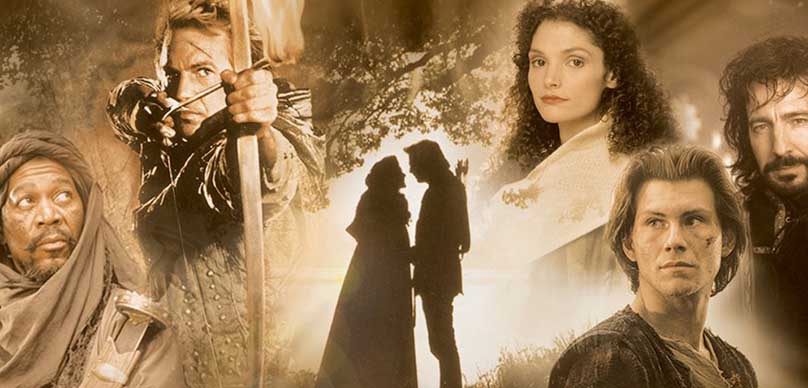
BPS 062: Confessions of a Hollywood Screenwriter with Pen Densham

Today on the show we Pen Densham. Pen is a successful award-winning screenwriter, producer, and director, with an extensive track record in film and television. He is responsible for writing and producing some of Hollywood’s biggest blockbusters, such as Robin Hood: Prince of Thieves, Backdraft, Blown Awayalong with some of its longest-running television series including The Outer Limits.

Starting with his first job in show business, riding atop a live alligator for a theatrical short film made by his parents, Pen decided to leave his English school system at age 15 and has since spent his lifetime in the business of entertainment, selling films and television series, as well as hiring, mentoring and collaborating with A-list writers along the way. His latest film is Harriet, which he is the executive producer of.

Pen’s latest project, Riding the Alligator: Strategies for a Career in Screenplay Writing and Not getting Eaten was written with one clear goal in mind: to write the kind of book he would have loved to have read when he was starting out as a writer-filmmaker. Pen is also an adjunct professor at the University of Southern California’s prestigious School of Cinematic Arts.

“Imagination is more important than knowledge. For while knowledge defines all we currently know and understand, imagination points to all we might yet discover and create.”– Albert Einstein

I had a ball speaking to Pen about his time in Hollywood, what it was like to screenwriter/producer monster hits and his screenwriting philosophy on how to make it in Hollywood.

Enjoy my eye-opening conversation with Pen Densham.

Right-click here to download the MP3

LINKS

SPONSORS

  1. Bulletproof Script Coverage – Get Your Screenplay Read by Hollywood Professionals
  2. AudibleGet a Free Screenwriting Audiobook

Alex Ferrari 0:17
I'd like to welcome to the show Pen Densham. How you doing my friend?

Pen Densham 3:57
I'm doing great, Alex, nice to be chatting with you again.

Alex Ferrari 3:59
Yes, I know, we met at a wonderful mixer the other day. And we hit it off. And I'm like we have to be on the show. And, and you've written some of my favorite movies and produce some of my favorite movies of all time. And I will get to all of those in a minute. But before we even get started, how did you get into this business?

Pen Densham 4:18
Oh, well, I was born into it. My folks are making short films when I was a little kid. And so I'm four years old, and I'm writing an alligator in a movie that my folks are making about people who keep strange pets, dating myself. That movie actually went out with Africa Queen into the movie theaters. So I saw my mom and dad with cameras and the power of cameras. And since that time just yearned to tell stories and have that but I call it casting a spell. You're you're doing something that's extraordinary people are all drawn to it. And I don't think they had babysitters back then because they couldn't afford them. So they took Meet a Water Street. So I'm four years old, meeting the people that are distributing their movies, and sitting in the theater with them, watching them with them. And from that time on, I just yearned literally yearn to be involved. And then my mom died when I was eight. My father's behavior was not as supportive, he married a very difficult lady, and a 15. I left school with an eye love cameras, but my school was trying to punish me out of being imaginative and helped me by getting me a job as a bank clerk or something. And my stepmother and my father, were doing the same thing. And it's very destructive, to your sense of self worth, and your holistic, the way your mind works if you're a creative person, to have people banging on you to being egotistical or difficult. And so, it, it left me with a deep sense of trying to protect other people's creativity. And, and also, it gave me a lot of understanding about creativity and vulnerability, which I think people who have very complex imaginative minds are also vulnerable to a lot of self doubt. And so we were talking a bit about why I wrote a book on screenplay writing, it was that I couldn't find a book that reassured me, when I was starting to write screenplays way back, that I was normal, that this process was not perfection, you sit down to write from A to Z, or you have to have every plot beat and every structure, I learned that when I let myself go, sometimes I would have the last lines of a movie in my head that had been in my brain for two years, knowing I was going to write it, get the last lines that make me cry, and then pursue getting the rest of the movie. And it's illogical. And then sometimes we have what we call the islands of sanity, which you get two or three pieces in a movie. And you know, you have to write the rest. And it's not about writing to fit somebody's belief system or some architecture, but it's how do you get that voice out of you. And I think if you get that voice out of you, you write to a different potency level. And also you protect your work for longer, you fight longer to try and make it more approachable for a buyer. And so you don't give up on it. Whereas if you write something to hit a formula, oh, horror movies are selling or ROM coms are selling, right one, but it's not in your nature. When the people that you're trying to sell it to give up on you, you give up too. Whereas I have scripts that I've fought from generation to get made. I can't give up on them, because they're somehow in my soul, which sounds crazy. But

Alex Ferrari 7:44
it doesn't sound crazy at all. Wait, well, first of all, I always tell people, we're all crazy to be in this business. We are we are all carnies. We are all we all ran away to join the circus we are isn't that isn't that a good analogy, we all are currently, the most unique people ever you meet in this business, they're all a little bit crazy. You know, we just put on a show. And if you want to get a complete, you know, perfect analogy is, when you're making a movie, you go to a location, you put up your tent, you shoot for the day, you put on a show, you record the show, you put it down and you move on to the next location. That's a carny.

Pen Densham 8:23
That's fascinating. I liken it slightly differently. But I still think that's an incredibly valid way of looking at it. I, I look at it, because I've tried to figure out how to overcome the suffering of it. Because the way I looked at it is, it's like a sport, and I absolutely love playing it. And the sport I think it is, is American football. Because I get hit, I have to put a team together. I don't have to love everybody in that team, but I have to inspire them. I'm going to have the ball stripped from me, I'm going to sit in the bench sometimes. But if I get to play and I love it enough, it makes it worthwhile.

Alex Ferrari 8:58
And then you get your start in the business as a screenwriter correct?

Pen Densham 9:02
Not quite No, actually. My my. I don't like talking about my mail too much so but left school at 15 tried to start my own businesses in England, fled to Canada at 19 thinking I was a washed up failure ended up in a culture where young people were being helped to make movies. And I'm going Holy crow. And I'm watching a 15 year old guy making a six sound 16 mil movie. And because I've been trying to sell things in England, I was able to help him sell his movie to the to the TV network. And started to see in Canada, there was an exchange of ideas from young filmmakers. And we were making short films. We were learning from each other selling to the world markets and the schools and libraries, which was a market back then. And in some ways I see this parallel happening in the way that the business is now aggregating again, many different avenues of opportunity. And so we tried worked with a couple of companies. When including introduced me to Marshall McLuhan, who is the guru of Communications at that point in the world, and that sense of free thinking and the sense of starting something, because you cared about it, and pursuing it until he put all the money together, and all the pieces together entrepreneurial side, was trained into making short films, at a point where we, we also learned, if you don't enter, you don't win awards. And if you don't win awards, people don't know how to judge your movies. So award winning became something we pursued. And we ended up winning over 60 Awards got medals from the queen, but it's bullshit. Because if you don't see it, it doesn't happen. And we made this one film, which was vitally important emotionally to me, which is where we asked children to direct commercials for life as if they were selling. And I wanted to make a movie about young people's imaginations in a way of protecting the punishment that I've gone through and saying, These people are incredibly valuable no matter what age they are, their imaginations of vital and powerful things. So by doing this, we got a movie that we ended up with nine young people each directed their own commercial for life with real actors, real crews, and we managed to get it nominated for an Oscar. And we we i'd also learned being a huckster being a carny that I'd seen other friends of mine in Canada get occasionally nominated for an Oscar, and wait to see if they won, and went to the Oscars didn't win and came home and no one knew what had happened. So I said, Okay, bucket, we're going to put every ounce of effort into making sure everybody knows that this nomination happened. And so we were on the front page of every newspaper, we had a film crew fly with us to Canada, from Canada, to the Oscars, we got permission with the government's help to take all nine children to the Oscar ceremony, and you know how hard it is to get tickets. And the end result was that when we lost, there was only three movies in that year, but one was part of the LA Philharmonic. So the we were on the front page of every newspaper in Canada. And we were on the nightly news Palooza. And that put our company on the map, which again, gave us the opportunity to go out and beg for more funds to go do films that we cared about.

Alex Ferrari 12:22
That's amazing. And it's something that they don't teach this that exactly what you did is you get an opportunity like this, whether it's an Oscar nomination as a short film, Sundance, a big event, a big news article, something that you leverage it, and you and you try to use it to push your your yourself and your company or your movie further along. And filmmakers aren't taught this I yell at this about this at the top of my

Pen Densham 12:48
writing a book about this, right?

Alex Ferrari 12:50
Yeah, my my new book, Rise of the film shoprunner talks about that, as well as many other ways of creating revenue streams and so on. But one thing I wanted to talk to you before, before I ask you some other questions I have for you, the whole world of distribution is changing so dramatically. And you know, you we were talking OFF AIR about this whole distributor thing and you know, and all the press that I've been getting, and not only me, but all these 1000s of filmmakers who have been been hurt by you know, the downfall of this film aggregator, and how that many ways that the system is rigged against, especially at the at the low indie level, the system is rigged against independent filmmakers as far as distribution is concerned. How do you see things going forward? I mean, we we kind of touched upon it a little bit. But there is going to be a change, look, look, Netflix came along and literally changed the entire industry. You know, this little, little company that would could have been purchased for 50 million bucks by blockbuster back in 2000. And I think two or three and now it's worth 150 billion. And it's changed not only the industry but changed how we view our viewing habits, how we the concept of bingeing the concept, all the you know, it's changed the world. That's there's still going to be more changes coming in, I think they're going to come faster than we even anticipate for independent films and for for creators, what do you think the future is in distribution?

Pen Densham 14:14
Well, you know, it's, it's the Gold Rush, nobody knows where the veins are, no one knows how you're going to chill them out. It's a creative entrepreneurism, which I always call that process that you must spend as much effort selling your material to people as you use to create it. And I call it also building a bridge backwards, which is you can't anticipate that your buyer understands what you've got. If you make them make the effort of trying to categorize what you've got, you lose because you're doing something where they have too distracted and don't understand it. So I break selling down into four component elements which I'm now going to give you my two minute lecture on how to sell please. First rule is identify your buyer because no one buys from a stranger research them and then reach out to them and find compatibility Because you're not going to sell to someone unless they, they feel that you understand them a little bit. So you know that they were the people that did that particular movie that was successful and you praise them genuine. Everything is about authenticity. Because people have a big bullshit detector, you can't, and you've got hustle on your forehead, you can't hustle people, when they don't feel so good a reality. Yes, there's, there's a good passion. So anyway, so you research your buyer, you create a rapport with your buyer by meeting with them and talking about things that they value. Second one is demonstrate passion, because why should they care if you don't? So you take you take an idea. And I tell my I taught a couple of times at USC film school. And I'd say you can be almost inarticulate if you demonstrate passion, because the excitement is contagious. And if you have got something and it's cold blooded, and you don't really care, and it's a marketing device, you're not going to get me believing that you're going to go through brick walls to achieve it. So by demonstrating passion, what you're doing is getting the that this is the root stem of my belief systems that I'm investing in this thing. And it's more likely to get people to support you. And when you're doing a movie with somebody, if it's a development deal, they're putting their job on the line a little bit with you. And so really a pitch is a chance to have a conversation with somebody, and not a chance to say okay, I've got 47.2 minutes, and I have to give you a to z of a of a structure, because that leaving them out that then I use a demonstration, I say that my wife had a dream. And it was so scary. She stayed up nights. And then she told me the dream. It seems scary. It was keeping me up. But I decided to turn it into a movie, which is my passion statement is a totally illusory one, but it's helpful. And then I say that movie, which is what I call the goalposts is sort of like halfway between the exorcist and alien. Now the reason I use that term, before I describe what the movie is, is that I've made a relationship with the buyer. I'm demonstrating passion. And I've told them that I'm going to show them what this movie is in terms of the things that they need. Because selling a movie is really filling the need of the buyer, not your idea of getting them to buy you, but what you're trying to sell them that you provide a solution to their goals, which is a nice say this movie is halfway between the actor system alien. Now what developed exact wouldn't like to have one of those in there. And so what I've done is I put two goalposts and simplicity, I don't say it's halfway like the X is the alien and got a game of thrones, because you screw up there, remember, and so, hopefully, between the Xs and the alien, and they might give them my pitch. And I say this movie is about a defrocked alcoholic priest who's taken to the moon by NASA, because they found the devil's bones up there, and people are becoming possessed. And I could sell that. And I just use it as a pitch module. But what what I'm really trying to demonstrate is that people will send me scripts or ideas every day, I get dozens of emails, and I've got a movie that's a horror movie and horror movies of selling. I have no interest in you haven't you don't know that I did Houdini Moll, Flanders Robin Hood. And that I've got a an interest in physicalized in historical characters, and that I'm interested in making altruistic care heroes out of things. You have no idea who I am or what I'm, what I'm. And so because you didn't research me, you're not going to touch my heart. And if you send me an email, and you say mall, Flanders, my wife and I crave when we saw that movie, we love seeing Houdini, which you did. And we wondered if this project would have an appeal to you, that changes the whole dynamic. And so I also see people trying to sell their work. And they'll say, Oh, this sold in the movie theaters this weekend, and I got one just like it. And you go, oh my god, I bet you you've already sent that out to hundreds of people and why would I care?

Alex Ferrari 18:59
Can't can we can we? can we can we I just want to for everyone listening right now. I need to just I want this to be put out there into the universe. I've said it before. But I want to say it one more time. If you're creating a pitch, and you're making a horror movie, do not use Blair Witch Project in the paranormal activity as examples of how much more money your movie can make. Is that a fair statement to say? Well, it's

Pen Densham 19:22
it's a fair statement, because those are so extreme that they're unlikely to be taken seriously. But if you can find a couple of films that are really solid, yes, in great lengths into the market, and have got a similarity of relationship, there's two goalposts things. But also what you're looking at is the buyer is the button. The most buyers don't want to do exactly the same thing twice. There's no stimulus. If you go to a director and you say, hey, you did The Blair Witch. Well, I've got this other shaky camera movie about people,

Alex Ferrari 19:51
but I'm not a witch, a witch, you

Pen Densham 19:53
know, whereas if you take a look at them very seriously, and you study them a little bit, you say, you know, I noticed you did this. In this with this challenge you, would this be exciting, and you're really looking at the next stepping stone. And actors are also excited to get involved with things that challenge their skills. They like to be a little scared. And so if you got a you know, it's like going to Costco and saying, hey, you just did Robin, how would you like to do? Will you tell? He's gonna say no, no, not at your mind. But when you like play some of the investigative john f kennedy death Yeah. Because that's fascinating. And your goal is the artist entrepreneur trying to sell your work is to try and see the buyers and there's a lot of buyers out there, you know, we normally need to have you come at us through an agent or a manager or a lawyer, those are the three routes. But you can also go in through potentially a professor of school, USC or somebody who would, who would add you add their name to you as an advocate. And I suggest to people going after the actors, or directors or producers with their own companies, and avoid the studio, because they don't have a system to engage people like us, the more freebooters. But the directors or the actors, they have people looking every day for things that will stimulate their biases. And so you don't look like you're coming from a prompt proforma place, you're coming from a place of discovery for them. And if you can do that, then you've got a good chance of breaking through the system and actually getting seen, but you got to research your buyer, you got to even make friends with the assistant, a lot of us forget that we're dealing with human beings, and it's human beings, to human beings that will help you. And by taking the time in a meeting, when you're going to meet the boss, take the time to say hello to the assistant get them number, and follow them up afterwards and say, you know, is there anything I could learn from what I went down and when would be a good time to talk to you about and you realize, again, assistants are on every phone call. They they monitor the progress. And they also scuttle that with each other about what their studio is looking for what their boss is looking for. And a lot of the time the students the the assistance in a structure are people trying to get up through the system just like you are. And by by taking again, honest interest in them and asking to their experience to help you get to your goals. You create friendship. And as they as they go to their levels of opportunity. And I've seen a direct a friend of mine ended up being represented by the assistant to the to the agent he was with, it was with a big agent who never had any time for it. And suddenly the assistant gets promoted to agent. And she's only got three clients. So suddenly, he's gone from being ignored to being someone that they're trying to push. And now she's the head of lit for a major agency. So again, this this process of creative entrepreneur ism is looking at opportunity and trying to find it not being scared to look for ways to get yourself to the front. And I also believe there are systems for reinforcing yourself such as I call it story midwives. But there are safe people that you trust, who will tell you the truth in a kind way. And you've got to expose your work to people there before you expose it to the Philistines the net, the naysayers, the difficult ones, because they can cross check all the things so that you get it really right. And can be reassured that when you go out to the other buyer that you've gotten most of the questions answered, or you've got most of the material clear, so that people understand it. And we call that asshole proofing. So we don't send a script out until it's really clear that we've got most of the objections and the things that are hard to understand out of it. Because you don't get to read. And if you put a year of your life into a script or longer, and you've got things that people didn't understand in it, it's it's like falling in the water of a stepping stone and you know, you're going big, big thing and then and then you're wet for the rest of the script if the rest threat. Whereas if you fix those things, you've got a script that's solid, and your friends have reassured you that it makes sense. And then you put it out to the world, but you never put it out until you've got it. Because all that effort deserves that. That kind of sense of value in your own.

Alex Ferrari 24:23
Now you've spent you've said it a couple times creative entrepreneurship, which I call film intrapreneurship which is, which is the same exact thing. I truly believe that in the future, the film entrepreneur is going to be the only way independent films, independent filmmakers can really make a living is being an entrepreneurial filmmaker, entrepreneurial, creative, and that goes with screenwriting that goes with filmmaking. Do you agree? Do you think that because the because the opportunities, I mean, you come from a time you know in the early 90s and before but like specifically in the 90s there were there were a lot of gates Lot of gatekeepers, there was only a handful of places you could go with a project. And, and out of that you were like, really, you were stuck in the really independent world, where and again, even there, there weren't a lot of outlets. Now, the gates have been flown open. The big boys still have gatekeepers, but there's so many other places that will accept your your, your art, your your projects, your writing, that the there's so much opportunity, that if you're not entrepreneurial about going after those opportunities, and then monetizing those opportunities, once they come into your world, you won't survive. Because if you're trying to play the game by the rules that they set out for you, which is stacked against you, I don't believe that I don't believe it will work. Do you? Do you believe that that the entrepreneurial creative, the creative entrepreneur is going to be the key to making a living in this business,

Pen Densham 25:55
we're in a revolution, we don't know where we're going. But I always figured there'd be 100 million TV channels. And I was thinking that since the 90s. Oh, we're not

Alex Ferrari 26:05
too far off.

Pen Densham 26:06
We're not too far off. It costs you nothing to upload your film now to YouTube and actually profit from it. So you can actually become your own studio and your own distributor. Now what what the next thing is, how do you get an audience and that comes back to being imaginative in some way. We did a TV special on magic many, many years ago. And we complete that show, we hung a guy in secret over Niagara Falls and did a straight jacket escape. And that we, you know, first of all, when we when we went to Niagara Falls parks commission, they said no freakin way, you're never going to do that. So then we realized that we've been totally reject. And then we decided, Okay, so then we analyzed who was on the parks board found a guy who was 80 years old, who knew my brother, my father in law. And we asked him if we could show him one of our movies. And we showed him a movie that was about sports heroes of Canada, he came out of the screening crying, and he then let us go and make a presentation to the board. Again, it would already totally refuse this. And I happen to go to that on a day when they were fixing Niagara Falls, and they had a crane outside, killing in concrete on places on it. And I said, I really, first of all have to apologize, I failed to tell you how important this was to our company. But secondly, I'm going to tell you a secret. My guy who's doing this study was the amazing, Randy says it's no worse than falling out of bed. It's like no danger. And but we don't want to tell people that. And then I said you already have people hanging out over the Niagara Falls right now, if you look out the window. So I all that effort ended up that I was able to shoot raising Randy upside down and when Agra falls in secret in the middle of winter, and then we held the photographs until the show went on the air. And I phoned up every newspaper in Canada. And they said, We will give you exclusive on this these photos that no one knew we'd done of a stunt at Niagara Falls, if you'll put them on the front page. And we weren't with any other newspaper have. So and we ended up getting front pages with our stunt which promoted our movie. Now, is that effort normal? Or is it what you have to do? I don't know. But it certainly for us was the only way we could break through the clutter that we had back then. And I think that same kind of application of energy, whether it's finding a reason why an audience should tune in or find a reason why a buyer should buy those things are really part of making films. And I learned from Norman jewison. Mike, Mike, my luck was that we did a lot of short films, then we did a lot of TV specials. And we would not be in getting support to do a drama. And I eventually found to a friend of mine who's another filmmaker, he said CBC is giving 10 grand anybody that can make an idea as a young filmmaker that they'll approve. I decided I would write a drama, which was the most miserable experience in my life never done it before. It didn't matter, right. I was 30 I had always been too scared, ended up working with direct directing actors that never done in my life. It was the most miserable experience, like Todd edited, like a sports film together. He pours out of it. It was a piece of shit. And I was so embarrassed. I sat with him in the editing room and there was days it was taken film. Oh my god, I just let everyone down. We have to do something what happens? What does this face look like before he says that line? And you know that was a

Alex Ferrari 29:33
man that took a minute to do back that took

Pen Densham 29:35
all Yes. And you look at it looks like the guy's thinking. And you go oh my god. What else can we do? So I went through the whole thing doctoring it with my partner putting it into cuts, expanding the pauses, you know, and it wasn't 14 Awards. I'm going no no no. I just barely survived this and Norman jewison offers me free paper by the Indian Government come to Hollywood and are going, Oh, I don't deserve this, you must I mustn't do this, because there's a thing called imposter syndrome. And when I'm coming back, some you're talking about earlier, but people, I'm invited every year by final draft and meet the winners of the final draft contest. And what I do is I have a breakfast with them. And I talk about imposter syndrome, which is the failure to take advantage of an opportunity. And what we only get those opportunities once in a while. And if we question ourselves during that opportunity, instead of pushing to its most possible, beneficial outcome, we fail ourselves, and we're going to be polite, we're going to feel like it's it's wrong to push ourselves and that this is probably a mistake, and we don't deserve it. And I will frequently ask them, What else have you succeeded with? And I said, Well, we, you know, was in leading school play, I have several writing prizes. And you realize that these people have a consistency, but they don't validate it. And that's one of the most dangerous things as a creator is not believing in yourself, and not going to take opportunities. And I say, my worst personal damage is the things that failed to have the courage to stick my neck out and try. I call those my errors of omission. And they still haunt me for going, Oh, you idiot, you could have walked across the room and class. That guy, that actor you didn't do it because you didn't. And so I want to encourage people take the freakin shot because your areas of comission where you embarrass yourself briefly minor compared with the opportunities you might find. And so going back to taking another shot at Niagara Falls, it was embarrassing. It was scary. I'd already been rejected. Les Moonves when I had the idea of trying to revive the Twilight Zone last time was revived, rejected me soundly, three times in a row would actually said yes. And then changed his mind. That might send him a letter saying, you know it because he's changed his mind. Because the system they said, TV couldn't use anthologies. And I said, Well, you've got 60 minutes, and you've got unsolved mysteries. They're anthologies, same host every week, different stories. And they've been number one. That's not the same thing. So I get shut down. Can we got this clip of pieces from our adult limits TV series, which was science fiction, fantasy, some wonderful, really fascinating CGI and things we were doing at that point. And we put this together to demonstrate what we've been doing. And I said to my partner, john, he put the Twilight Zone music on that. So I then I delivered it to Les Moonves, and his, his people thought it was fantastic. Unless there's I'm not doing this stuff. And then les gets control of UPN, which is the network at that time that had Star Trek on it. And that was the number one show. And I go to my partner, john and said, Could you get a lesson mentioned that Twilight Zone might be good, because we found, by the way that they own the Twilight Zone. So it was not me coming to them with something I'm trying to actually get them to do something. I love the Twilight Zone, I'm the only person who can actually provide both the Twilight Zone have the outlet. So I my partner says, No, no, no, you have to do it. And I got to do this. I'm too scared, I'm gonna he's gonna, he's gonna like scream at me. And then what I did was I found what I call a framing device, which is, I'm taking you through the steps of trying to be entrepreneurial.

I found something that made me comfortable. And a framing device, we use these terms because we needed the, we need to help each other, find these things, which is something you could say, or something you felt that protected you so you could take the risk of sticking your neck out and trying to get to your dream. And my framing device was I wasn't courageous enough to phone less. But I was willing to write him a letter. And my letter that came up to me that gave me permission to talk to him was DLS. So healthy. I swear I will never mentioned the word twilight zone to you ever again, after this. And that was my friend device. And I felt great. And then I wrote, how about it being a companion piece to Star Trek. I was in his office the next day. He said, I'm giving you 10 days because we're up against the deadline. You can write whatever you want a 10 minute presentation, whatever you want. I wrote it on a one hour pilot. I didn't know I could write a one hour pilot. But if you fucking put yourself under the it's amazing what you can do. We were shooting it within 40 days.

Alex Ferrari 34:47
So to me that's unheard of in the industry.

Pen Densham 34:51
But it's because the demand was at his need. I was filling his knee. He's taking over a network he has a number once Science Fiction show. And the idea of teaming up with one of the greatest anthology series is, and we, we always bowed to that not being us, we were picking up the mantle of storytelling. But it wasn't our show. We were, we were celebrating what had gone before. And that's an example of not giving up.

Alex Ferrari 35:25
That's that's his

Pen Densham 35:29
word. But once in a while, you end up with a success. 22.

Alex Ferrari 35:35
That's amazing. And one thing that

Pen Densham 35:38
you said before, because we had two stories every episode,

Alex Ferrari 35:41
so that was fair enough, fair enough. So the one thing you said that I wanted to touch on is that you were fulfilling his need, where I feel that a lot of screenwriters and filmmakers are asking you to fulfill their needs, you're not being of service to you. So like, if you're the person I am trying to pitch or do something else, doing that research, because you, you want good projects, you you want good things to do, and so to studios, and they all want you to be a good project. They all want your script to be the next greatest thing of all time. But most people and I see it, I get it in my inbox every day. I just literally got one today that like sent me a screen, a screenwriting a screenplay, a courier script, Curry, whatever that thing is, where they're like, Hey, I have a new script, I got this kind of coverage Would you like to do? I'm like, do you not know who I am? Do you? Do you think I have some sort of? Sure, here's a million dollars, that's gonna make it. I'm not that guy. You didn't know research, but you sent it to me anyway. And, but but by being of service to whoever you're trying to pitch is so much more powerful, and also more powerful when you're selling to an audience, when you're selling to a customer, when you're selling to a producer or a studio being of service to them should be the way you lead with these pitches, is

Pen Densham 37:02
that make sense? Well, you chose to play this game, which cost millions of dollars or high school if we now make a film on our iPhone, which is possible. But you're still investing your time and energy you have to look at the end result is trying to get it to a mass market. It's not like you're trying to do this for personal reasons, you're trying to get as many people as possible to see it. Now, if you would, if you were selling a car, would you go out and sell a house like a mini within who's got six family members? You know, so it's like, asking those questions, you're going to sell a Cadillac Escalade, to somebody who's just come out of college and has, you know, gigantic bills for their education and no money now. So you're what you're trying to do is fit your project, because there's probably a place your project might fit. If you've asked for proof the project by checking out with people that you trust, that the material is strong enough now. What you're looking at is, okay. What what people? Could you see using this as a tool to get into their goals? Not I'm going to send it everywhere. But how can I make it personal, so that you see a director who's done several, very, very high key but very unimportant, unemotional movies, Marvel Comics or something, you wonder if they and you see your research underneath them, you see, wow, oh, my God, this guy studied Shakespeare. And then and then. And then you realize that maybe he likes something that's really contained, but would really show off his skills, working with actors and emotions. And you you then approach the system in his through his either his agency's management or through his own production company, and you tell them and the most important thing in any letter is acknowledge the quality that you validate in that person. Because the first thing they read is going to be, oh, he gets me or she gets me, as opposed to I've just got this project and would you buy it? It is I understood from researching you because I loved your this, that this and that. And but also I saw that you had this deep heart, you're actually donate money to charity for whatever this is. And I have immense feelings for that same thing. Would it be okay if I shared this project with you? And another tool is don't sell, ask for advice. Sometimes it is easier to get in to meet somebody or to exchange information by showing them that you understand what they've done by finding an advocate. Maybe you've gone to film school and your professor will say, you know, I love this guy. He's very unique and I believe that you're talking to him would help help his career. You get that out of your professor, you make the effort. And then you go to this person and you sit with them. Talk about your Career, what you can learn from them, you create a relationship. And along the way, you mentioned the project, you think that he might like, that's the effort, you have to go to not sending a frickin email app.

Alex Ferrari 40:10
You mean sending 5000 emails out and, and it doesn't even say their name, it just says Hello,

Pen Densham 40:16
yes. Or even worse, you know, and those poor people, you know, they they're, they're not wrong in sense that the school systems don't teach entrepreneurs, the colleges are not about trying to help you find routes to success, they're about trying to fit you into a system. And, and it doesn't mean to say that you won't succeed some time just the law of averages, the monkeys and typewriters will write Shakespeare, you know, we have enough of them. But if you can help yourself by finding your framing devices and finding tools that reach out to people through your genuine care and excitement, to deliver something to them, you believe it's special to their skills that you validate. That's a much easier way to sell. Now,

Alex Ferrari 41:00
I wanted a one of the things that we talked about when we first met at that at that mixer was your work on a film that was released in 1991, called Robin Hood, Prince of Thieves. And I told you I sat there gushing, because Robin Hood in 1991, I still remember it. So clearly, I was working at a video store during that time. And I went to the movie theater with my friend, we sat in the front row because it was sold almost sold out. So we had to sit in the very front. And you know, with our necks cranked up and we watched it and I don't know if it was the reason that we felt like we were inside of it because we were so close to the screen. Or if it was just that impactful to that that high school kid. But when we walked out of that theater, we went right back in and watched it again within within 20 minutes. And I don't I could count on how many times I've done that in my hand. That's how wonderful of an adventure it was for us. And it was such a it's one of my favorite films of that era. Can you tell me how did you you wrote you wrote Robin Hood? Prince of Thieves and you're also a producer on it. How did you how did this whole thing come to come to be? Because Robin Hood is one of those you know, every every decade or two they just redo a robin hood? You know they and I don't know before though Kevin Costner one. When was the last Robin Hood? Like prior to that?

Pen Densham 42:19
Oh, probably Disney. The anime?

Alex Ferrari 42:21
Yeah, the kouachi. So that we're talking about like 30 years prior to that. And then Flynn was prior to prior to that. And

Pen Densham 42:28
I remember that there was a banks whose before that, and

Alex Ferrari 42:32
others, but I do remember that there was a TV movie that came around that was trying to hack it just jump on that Robin Hood bandwagon I remember very clearly in the jar to release it as a because I worked the video store. So I remember watching.

Pen Densham 42:44
Oh, yes. Right. So I remember watching that video story behind that too. Okay, well, if I get boring, cut me off and just say get to the end.

We've been very successful in Hollywood working with people like Stallone who'd asked us to fix things in his films as consultants, because our own hands on way with GM was very successful for getting problems resolved. We worked outside of the definition of just a script. So we had access to people, which is very cool. But we also looked at what we were also doing was in Canada, we choose and chose to pursue things that excited us. Having had the privilege of having a wife, I looked at what do I want to say and I'm looking at Stallone making movies about killing lots of people and sports and I can make in commander where human beings are just targets and I'm looking at us raising his kid putting all this energy and and going, what an enormous amount of love and effort it takes to raise a child and you are using them as target practices, what would I like to say. And I came up with this idea of putting a Muslim and a Christian side by side in a robin hood, which would show to people are different of different who's supposed to be enemies actually learning from each other. And also came up with this idea of what I called the makers of life versus the takers of life, which was if you had a hero hero, and it could be a heroine who's willing to die for the future of someone else. That's like a we did backdraft which is like a fireman is willing to die so he gives other people a future. That's a maker of life. That's an altruistic hero. Whereas a taker of life is someone who puts their foot on a hot dead corpse and thinks they've done something wonderful. So I went out and pitched a robin hood. That was about a lesson hidden inside an adventure because I grown up on Robin Hood. I grown up on the TV show just like you watched ours and came away with my heart full of jumping off rocks with a sword in my hand. And I went to three different studios and pitched the Robin Hood idea I had which was to take it and make it a an adventure but with this idea of putting a Muslim with him. And the three all said pretty much the same thing. No one wants to see guys with swords all he wants these guys with guns, you're wasting time. And I was about to give up. There was a number of there was a, there was a thought that I was also off course, by trying to put an Arab in Robin Hood that didn't look good to a couple of people I knew. And we had a partner, we have an assistant who was working with us called Mark Sturm. And marks sort of looked at my notes and said, You know what, I think it's a great idea. If you start out try and help you. And so the only reason Robin Hood exists this because that guy gave me enough encouragement to blow on the embers of something that I'd almost given up on. And I started writing. And every day I looked at what I was writing, because I wrote just passionately not not, not with any plan just to see what would come out to me. Every day, I looked at my pages and thought they were obvious. It's silly. And Maid Marian comes out. And she's very large. And she's and Robin is shocked and looks up at her on the balcony and says, Oh, my the years have been kind to you. And then suddenly, he's jumped by a person in leathers. And that turns out to be made. And that seems obvious to me. And like my assistant is no, no. And then he's giving the pages to john Watson who's reading Oh, my god, no, no, keep going pen. So I've got encouraged to keep taking risks. And we ended up that the film I got, I got the script out of me in three weeks. But it also then I gave it to john, to go through it and format it and add any any ideas, any adventures, and so it had his layer on it. And then as it got shot, different people added other elements. And we ended up with a rich, funny, warm script that was the seeds of what I created, and the energy of what I created. And to me, I was making a movie where you taught people a lesson about altruism, where you took the richest, most spoiled and not just Lord son, and he told his dad to go screw himself, he was going off to fight and father's begging him not to try and force a man to another man's religion. And he comes home, sees his father's dead, and takes his anger by making his peasants go out and fight the show. And then realize that all he's doing is destroying their lives. And then he has an epiphany, and he's willing to die for their sons for their children's future. And we put a birth scene in the movie. And the birth scene is metaphorically my son being born. And Robin Hood doesn't. It is both an adventure. But it's also a philosophical statement of life for me. And I couldn't give up on it. And so there were and john

took on the challenge of he was what I call up to with Aston Martin arrows most of the time, because he's a great onset producer, and I'm bar philosopher, producer. So I was working on changes and writing things. And, and whereas he was really taking the brand and getting 100 day shoot. But the movie itself grew as each channel is each element came to it. And Michael came and score was just extraordinary. I also got to run the mix. And I am very much about when you create a movie, you're weaving a dream. And the goal is never to let your audience wake up. It's like blowing up a balloon, you must never let the air out. And so in a mix, I worry about every facet of it. Can I pre lamp a sound coming in from the next scene? So there's no pause, but you're not conscious of it. If there's a pause in the in the dialogues, that's, that's empty, can I put birds flying from the trees so that your ears tuned without it knowing that you didn't actually hear some dialogue. So I I'm also excited in that process of keeping a trance, which is don't wait, don't like the audience wake up. And so when you mix a movie, which is the most beautiful part of the movie, because like a Frankenstein, you're putting new blood in it. And then when it comes to life. To me, every aspect of making a film is like costumes tell a story. Sound Effects tell a story. They have character and distribution, even the title. Your title sets up a trance state and induction. A few I studied hypnosis. So there's a thing you know, it's just inducing people and inducing people makes them want to go with you into the dream state. And what does that mean? I think Hollywood is a is a called the dream factory. Because truly, stories work on our Dream Center. Like we have receptors in us. And that was what Marshall McLuhan taught me when I was all those years ago, saying, Look at an audience watching a movie. And you'll see they're in a trance, and they're moving their faces with the characters on the screen. And years later, I found myself So that said, the reason that that's happening, which is fascinating to me is that we have a social structure in us, which is the ability to sense and feel empathy with others. And the way it works is that we are hardwired to our pain centers, we micro mimic the expressions of others as we watched them, and then we feel what they feel. And if you Botox yourself, you don't feel as much and you don't send as much, right, which is fascinating. And we have these things called mirror neurons, which are in a switch light up in the parts of our brain, when we watch somebody do something, or even when we read a book about somebody doing something, those same parts of our brain light up as what the characters doing in the book. So that's why I come back to this trot state. The purpose of a story, which is the thing that most people don't understand, is to teach us a lesson about ourselves. So that we can actually watch the struggles of the characters and make choices about our own lives and the things we struggle with. Based on making a decision. Having observed others struggle comes back to if you have a hero in a movie, Superman isn't vulnerable, he doesn't have a problem. There's nothing to learn from. So and the real purpose of films is to find what the characters floor is what the difficulty is, and illustrate it to the external story of getting the adventure out. But inside is the actual journey. And it's usually only like three steps. I'm a spoiled rich brat, I then have a tantrum, which causes more problems. And then I come to learn who I should be, if I was not spoiled, and take responsibility for myself. That's wrong, you

Alex Ferrari 51:46
know. And so the way you've explained it now, knowing the movie so well as well, as I do is that it just adds a whole other layer to it. You should have done the director's commentary, or a commentary producers commentary, writers commentary on the DVD track, back in the day, because it does open up

Pen Densham 52:05
a completely. You know, again, it's different different things get to a writing audience, I'll talk about these things. It's nutrition. An enormous number of stories don't have nutrition and emotion is that you, you've got a personal journey that you can relate to, that you can discover how to change yourself because of watching these people struggle. And I came up with a system inside our company because we developed hundreds of stories, where I changed camera with code words pulled a nugget nugget for us, is the seed inside the story that's going to grow in the brain of the person watching it. And what you know, an example would be a man is getting married, and his girlfriend is starting to feel the closer to the date, the more he's sort of like living in a world and she's feeling that she's being suffocated, because everything she's doing is there. And he's not letting her have a sense of her own freedom. And she called off the wedding. And she says to him, you know, I can't do this. And you know, you're not letting me be me. And I'm, and he said, You don't understand. My mother left the family on Christmas Eve when I was five years old, and I didn't know how to love her enough. So she was Stay with us. And she says I'm not your mother, you have to trust me, you have to give me my freedom. That's a nugget. And it's three lines of dialogue. But it's got such pain and damage in it. And the story is, can he let go of his old fears and trust this woman to be the one MP he wants her to be in? Can you be the person that you would have been if that damage had never happened? So once you look at the story, and you say Okay, can I can I define those things? in you? My rule is you write stories Anyway, you can't, then you look for these things and see if you can emphasize them. And usually this piece of information is discussed at the belly of the beast is not as, as Joseph Campbell says, when the characters crash and burn at the end of the second act, and all looks hopeless, they do a reassessment of who they are, and a character who has an influence on them will will suggest something or will change their perspective on themselves. And the last act is can they become who they really should be. And we learn we then learn about ourselves letting go of our own fail damages or and using strategies to have a better position in life.

Alex Ferrari 54:31
Yes to everything you just said yes. It's it's, it's it's amazing. I'm just sitting here just listening to you. And I'm just like, you know, like, I feel like I'm just sitting here like around a campfire right now talking to you as you explain these things the way you do you have a very hypnotic tone

Unknown Speaker 54:48
to you. Right?

Alex Ferrari 54:50
You have your voice is very

Pen Densham 54:51
hypnotic in a very good way can write for everybody because there's going to be people that do things absolutely different from anything I could imagine. Oh no, no question. And I say Einstein said, it's not that I'm smarter than other people, I just stay up think longer. And I have the privilege of doing so many stories and trying to make that process simpler and make it effective. And I'm a humanist. So I want my stories to reach out. And I believe storytellers are basically what shaman would have been around that campfire, which is to help the society pull together.

Alex Ferrari 55:25
And that's its purpose. Now, when you made when you made you had a run of the two films back to back, which was pretty successful. You had Robin Hood, and then you had backdraft, which is the Ron Howard movie. And both of them are amazing films again, during my video store day, so I, I made sure to suggest that to many, many people, sir. So. But what was it like cuz I've had other guests on the show, too, when they had that one or two like that. There's moments you've had multiple moments in your career, but that I think that was probably one of the first big

Pen Densham 55:56
exposure that put us in the math in a different way. We've done several features, but nothing has opened the doors as much. And and even though the doors open, they didn't mean you get carte blanche. No. I say scripts are like sperm in this town, there's millions of eggs in production, so that you can frustrate the heck out of yourself. You write a script, and it could be the most beautiful, the most coherent, the most emotionally potent, you can't get it made. And you're damning yourself, because you think you failed. No. When I look at my I vote in the app, it's every year, which is the Academy. And there's usually a list of 300 movies, only 300 movies qualified in America to be considered the best. And so we've got 1000s and 1000s of scripts out there. And it's not a it's not necessarily a statement of failure, when something doesn't get made.

Alex Ferrari 56:54
Now, what was it like I always ask my guests at some time, especially if there's been that moment, that moment that kind of really explodes them in town. What is it like being the belle of the ball, because I remember Robin Hood, when that came out, that was a monster hit. It was a very, very large hit for both Kevin.

Pen Densham 57:10
I mean, Kevin was on that was that was his peak time it Dances with Wolves. So we were getting an enormous amount of dreams, terrible reviews. My son was with us in New York, and he said, Why do these people hate you that has their reviews in the New York Times are horrible, but you know the thing, you know, Time Time heals all wounds and remembers critics. So you know, in a way, you can't judge what you've achieved except, and that comes back to this thing. Do what you do, do it to the best of your skill level, let let time be the judge of it. But if you don't, and I when I say right, create think you don't do it to the point where it's dangerous, which means you're going against the convention, as you're going in, you're taking it, you're not going to find your voice, you're not going to be the significant person. Everybody says, Well, I want to film like his because he's got a voice. And we those don't stick out with novelty and originality, but they're still going to follow the same footsteps of any good story. But they will be in a fresh way. So we get Robinhood we get some doors opened up. But we also get asked to do every bow and arrow film in the world. And then we find their films that the system is not it's you got to love it. And you can't get it let it get you down. But I spent time with Mark Stan actually helping me with my my my writing assistant on that project. I spent time with Arnold Schwarzenegger working on Gulliver's Travels for Disney spent like 18 months, the Disney at that time goes, you know, it's a really good script. I don't know why I'm not gonna make it

Alex Ferrari 58:59
and have and have Arnold attached. Yes. So Arnold in the 90s, which arguably, he was still one of the biggest movie stars in the world at the time.

Pen Densham 59:08
So he says, but you But you see, this is normal. And we've gone through dozens and dozens of steps. And you realize that the logistics of this are not why not their survival long enough with keep trying to present the things you care about. So that you're willing to take the risks of exposing yourself to try and get them to become reality. And if you don't care about what you've done, which goes back to don't just do something because you think it will sell. You're not going to keep going through the years and years. Now what we're talking about Harriet Tubman briefly.

Alex Ferrari 59:43
Yeah, so yeah, it's for everybody to know when we're recording this Harriet just came out the weekend prior. And it did bid at the gangbusters and people were like really overperformed so please tell us how you're involved with that.

Pen Densham 59:54
Much more than anybody anticipated, which is wonderful. Harriet Tubman I discovered As an Englishman, listening to a quiz show, which asked what what woman wearing American uniform went into battle soldier. And I got that sounds interesting. It's the only one. And I go and start researching the answer, which is Harriet Tubman and find this extraordinary, mythic, incredible altruistic heroine. And it appeals to me very much to make films which have got a reinforcement of human nature. We managed to get Disney, which was Hollywood pictures that time to write a script with Gregory Allen Howard, who was one of the producers and one of the writers on the Harrier, and we got three drops out, and we couldn't get it made. Run, we were approached by people who had picked up the baton, and proud to say, we did not stand in the way we said, Take the project, did not charge the money for it, and said, just let us stay involved in some way. Give us a credit, if that's comfortable for you. But God bless you go out and get it made, because her story is much more important than us having money in exchange for it. There are things that you you just think America needs that story. Mm hmm. Oh, then the producers on the movie, who took up the challenge? You know, they go through fire, and they got through fire. And they ended up with a beautiful film, a wonderful human statement, a moral purpose that I am so proud to be associated with. But all I did was plant the seed

Alex Ferrari 1:01:41
in you, when did you start that journey? 90? Correct. So I can only imagine trying to get here.

Pen Densham 1:01:50
A 94 when we sold, Greg Allen, how it getting written. So even there was four years of trying to get that.

Alex Ferrari 1:01:57
And during the 90s this was not gonna happen. Like there was just I don't think it would have been very difficult in that environment. I mean, in today's world, it's it's tough. But there's an opening for that there's a conversation about, about minorities and about other other other stories that need to be told from different perspectives and so on. Back then it would have been very difficult, like, I'm just trying to think of the Hollywood pictures logo coming up with that movie. I'm like, in the 90s

Pen Densham 1:02:25
I'm an optimist. So you never know. I mean, that's the thing. You gotta go, you gotta try that. And the beauty of it is it, it takes a team. I was I may have, you know, blown up the football at the beginning.

When I played the game,

it takes a team where we chose a very difficult business.

Alex Ferrari 1:02:49
No, and it is and it's and I always tell people, we've our paintbrush, and canvas is probably the one of the most expensive on the planet, you know, to play with. And other than architecture, I think I always say is like, as far as an art form is concerned, this is probably one of the most expensive art forms there is. And as filmmakers, and as creatives, we have to take some fiscal responsibility with the money that we're given, or that we spend on this on these on this process on this process where I just love when filmmakers we've never made a movie ever. And by the way, I put myself in this category because I said the exact same thing. When I first started, all I need is 3 million. All I need is 5 million, 5 million I can make It's nothing. It's 5 million. It's not that big a deal. The last movie was made for 200 million a Marvel spending 5 million on coffee. it you know, and that's all fine. I did write that. I've heard this. I'm sure you've heard this a million times. anyone listening out there? No. It doesn't work that way.

Pen Densham 1:03:42
Yeah, there's some outliers, of course that have that, you know, they make their their indie movie and then are given a Marvel movie or given a big studio movie or something like that. But they're outliers. It's not the way the business works. Is that fair to say? Well, you can create your own business if you're able to have enough guts or enough partners who are helping you. I do think that movie business as you've been asking is, is changing. But I can't tell you how it's changing. Where's the where would you put your energy right now to try and get movies made? I think that, you know, the apples and the Netflix is still not accepting independent films until you've succeeded, then they'll cherry pick you. So your goal is to try and get something out. That gets viral, that gets emotional responses that gets you to be noticed in legitimate awards, because I think there's a lot of awards comp groups that are out there that may not be actually giving you status whereas the Nicole's are in final draft or the Austin have very sincere, very real judgments on your work. And if you if you get and you got to fight for these things, and and it's hard, frightening, demoralizing, and therefore that's why I keep coming back to if you Have a personal philosophy and you're pursuing it, nothing you do is wasted. Every element that you write, even if that movie doesn't get made, adds to your ability, it's like muscle development, it adds to your ability to the next time you write. And I've seen myself right out of sheer passion, when I suddenly hit the click moment when it's right. And I was talking with another young writer yesterday and talking about exactly the same thing, we tend to write a form. That is our nature comes out of our subconscious, what you're really trying to do is to get it out of your subconscious. And I have tools for that. One of my tools is to look at the process, like a Lewis and Clark Expedition. Any frickin way to the coast is legitimate.

Alex Ferrari 1:05:46
Amen, brother, amen.

Pen Densham 1:05:48
You've never been there before. How can you critique the journey? know that once you get there, the brilliant thing is just get to the end. Because just get any way you can get to the end. And if necessary, I write bits. So I might have an ending and then get, I might have a middle and an end. I don't write in a linear form, I write whatever way it comes to me, and I'm grateful for once you get to the end, then you get to see what you've created. And you see what you've actually subconsciously been given to yourself. And sometimes it's like dictation out of God. You know, you just don't know why you're getting it. But if you question it, you screw yourself. So there's a net, there's a nag in your head, this game is always the time, no one's gonna like it, that neck has nothing to be objective about, what it's doing is it's just trying to prevent you from going into a dark cave. And it's helpful when it's doing that. But it's not helpful when you're writing something you've never written before. So you got to ignore the nag. And then you write down this stuff, and you get to the end, and then you take a giant celebratory sigh, because that's a monumental achievement to get to the end of anything creatively. And then you get the permission to look at it, and see why you really wrote. And now now, you have this opportunity to see what it says to you. And it didn't exist before. So now you're you can make a judgment call. And I call that putting the freeway through. And what you're doing is you cleave off all the things you don't need, you combine two characters, so they become one, you essentially, now know why you and how you want to go and why you're getting there. And then you put up freeway signs. So everybody else can follow you. But you don't do that as one thing you don't right, I gotta be perfect got to get it out of me. And I got to cut it right it so it can be a hit. No, you just get it out of you, and then tune it. And then return it once you've had people read it. So that you make sure that the people who are reading it, understand what your goals were and don't don't just have an ego snip and say, Oh, that's obvious, they should not know if you're going to do that. And you're just damning yourself, because you will find that most people don't know, they don't have the time to read, they read very badly. Or they give it to somebody who does coverages, who's paid 50 bucks to read it in a hurry. And so the more powerful you can make the statement and not allow it to be misunderstood, the more chance you have of selling it.

Alex Ferrari 1:08:15
Now you also you work obviously, as a producer, you've worked with many directors in your in your day. And you you're always looking for collaborators to put like that team together. Specifically, when you're hiring the director, what do you look for in that director? Because I think there's so much misinformation about what filmmakers want, you're smiling. Because Because you're like it because there's so many filmmakers have this illusion of what a director needs to be like I always tell people if you walk on a set and the director has a T shirt that says director or a hat that says director you need to run away. Generally speaking, I don't see Ron Howard, or I don't see Steven Spielberg was the director and everyone just knows who they are. So what do you look for? What are the characteristics you look for for a good collaborator and specifically the director?

Pen Densham 1:09:03
Well, it two different forms. One is in TV, I look for people who will bring the kind of style that I had envisioned for the show to the screen. And you know, I'm I did space Rangers, which was a great fun, I call the rock and roll in outer space compared with Star Trek, which was classical music. We only land we only got six episodes shot. But I chose people that could shoot it like Hill Street Blues with a sense of human. So I was looking for directors who could actually facilitate things I couldn't do myself as a as a show creator. But the other way we look for is people who've written something that's so poetic and beautiful, or so that we understand that we can support them getting it to the screen. And so we frequently work with writer directors. It is or we work with directors whose work we feel simpatico with a visionary, who tend to use the camera in a way that's poetic So that our goal is if we're not, if I'm not doing it myself, I want to do it with somebody whose work I really think is exciting. And my my mentorship as a producer on a set is to ask the questions of the director in the quiet spaces that you get what you want. Don't give up. Let me figure out how to help you. Because I know when I'm on a set, the amount of pressure, the number of people asking you questions, the the, the time issues, the frickin effect didn't work, and you've got somebody tapping and saying, we're going to golden time. I know if you don't shoot it, and it doesn't work, right. Don't accept it. We'll figure it out. Because I've been there. And I know if you accept it, you're the Florida film. And so I'm quietly trying to be an ally, for the vision of the director, not telling him what to do. But I'll sometimes come with a palette of options. Because I'm with pressure, it's really easy to have ideas. Very true, very true. See three different ways you can solve this and any of these help, but never telling him what to do.

Alex Ferrari 1:11:13
No, now you written this amazing book called riding the alligator. Can you go a little bit into details? And we talked about it a little bit earlier in the show. But can you just go into a little detail about what this book is and who should read it. Because you know, it's not just for screenplay writing, I mean, it's also about the business in many ways about how to deal and navigate the business, which is from a person who actually navigates the business and actually has navigated for many years. So tell me a little bit about the book, The origins of the book, and what you hope that it achieves.

Pen Densham 1:11:44
I was invited Well, it's an interesting thing. Again, I'm assistant to us, one of the development execs, who left our company and gone to work for other companies came to me and said, I gotta talk to you. And I go, Okay, what is it? He says, You got to write a book, it's I'm not writing a book, because I don't have anybody explain things the way you do. And I think because I work with partners the whole time. And I and I am a visionary, I don't deny my creativity. I've always had to explain my creativity in some way to try and get other people on board. So we could all go in the same direction. And so he said, write a book on creativity. And I'm never going to do that. And then my partner who's gone to USC, and is now a tenured professor there. So would you like to teach, and I'm going to teach but, and they said, well, it would be the entrepreneurial class, which is the pitching class. And I go, oh, cool, creative entrepreneurial ism, I wouldn't mind to find out what that is. Because maybe this is when I could write a book. But I was too scared to write a book. But it was I wrote one chapter. And I went in that first day, I gave the students my chapter. And I said, under professor, mark my paper, and it was unpatched. And I wrote the book based on what I felt I wanted to communicate, where my biggest vulnerabilities were, where my biggest failings were, were the things I needed to be reassured about, to create a sense of voice, not to dictate what you should achieve, try and find ways to reinforce people's skills, so they could take the risk of being themselves. And my book was determinately, responsive to what I was learning from the MFA students at USC, about what were their instincts and what were their feelings, and how could I give them strength? So my, I, I don't believe in teaching, I believe in inspiring. I didn't want to make a book that was a formula, because I, you know, we one day, we had a young guy get up, run out of the room. And I phoned him up, and I said, what, what happened is that I just panicked. And I decided I'd write a chapter on stress and the good side of stress, and try and put stress in a perspective, which is stress is actually a positive survival mechanism. When you look at it the right way. You know, we're naturally problem solving creatures, but it doesn't mean it doesn't cost us something to try and figure out how to solve the problems. So never seen a book with stress in it. I, when I first went in, I never taught I didn't want to freakin syllabus was I thought it was something had to take penicillin. So I'm looking at the syllabus in this, the previous guy, it was one book, and going, I've got 30 people already in one book, what a waste of time. So I then found 18 books, and I found them on Amazon and I said, Okay, we're going to divide these books up, and everybody's going to do one paragraph on this book, and the 10 most important things that they learned from it, as if this was information you're going to share with your friends. So the first week, the students come in, and they're pitching the books and the 10 things, that's Amanda and and then I put 10 of those in my book which were They could you could sample 10 books on this in this area in Hollywood instantly, and make decisions, whether that books you want to buy where these ideas just sort of fit you. And I also found people like Shane Black and lead a colleague ritas, who are successful Hollywood, I asked them to write a single small chapter on overcoming fear. And what was the worst thing that ever happened to and because I would bring in people, and I wouldn't ask them, How did you succeed? I'd say, what's the worst thing you have? Okay. And you find that then it normalizes the process, you know, I spent, one of the most wonderful things like like was, I got to be able to go and spend two days with David lean. He was at the American Film Institute, doing a retrospective of his films. And what we discovered was that when he went when the film, were happy to introduce it, and he come in afterwards to answer questions, and then he sat in the lobby. So, you know, the guys that were smart, went out in the lobby and spent two days asking him questions. And he complained about not being able to get Dino dilaurentis to greenlight his version of Mutiny on the Bounty, Robert bolt script. And he felt sabotage by that. He talked about his struggles to get things that he wanted done. And it wasn't as obvious and as simple as he makes it look when he succeeded. And it's not that I'm David lean, but what it did was it humanized the process. And it made it so it was understandable and achieve that look at what he is his body of work and see how he work, which, again, just gave me courage.

And so I wanted my book, to take the myths of being perfect. And I really don't like schematic books, except as a checklist at the end of writing, then they're helpful. But at the beginning, if you're trying to write someone else's formula, you're you're going to run into a lot of problems, trying to think like someone else, a lot of these people are wonderful, they developed exactly, they've gotten a lot of experience, but they've never initiated, an initiating is blowing on an ember sometimes, and making it flame up. It's like getting a two year old to ride a bicycle, when they're 15, you got to get all the way to all those stages of creativity. And you don't do that by yelling at it, you don't do it by beating it every time it folds over, it's like, you got to be able to see yourself as nurtured and taking risks and that making mistakes is normal. And it's acceptable. Because if you don't, then you won't be able to take on the challenge of getting to the end of a script. We allow ourselves in film to do multiple takes with an actor, and then we shoot another angle. So you know, we should allow ourselves that life, that having multiple takes, you know, rewriting a book is more important than writing it some way. Because you're able to distill down, what do you maybe took 10 pages to write, you can now distill it down to a more cogent level, you can't do that the first time you write it. And to criticize yourself for not writing coherently immediately is self flagellation is terribly unfair. So my my, my thing was to try and help allow people to jump into the unknown and other things, philosophy philosophy, so choosing an agent or a manager, we tend to think we should get the biggest one, because that's going to be a career bonus. In fact, the biggest one has to deal with the biggest other writers. And so you get very little that person's time, my feeling was searched for the person who is your, what we would call a Fairweather friend, someone who's going to talk to you when it's shitty, not somebody who's going to talk to you when it's easy to sell you that they they're philosophically looking to support the vision and the style that you've got, as a human being in your art. Because if you're working against them, and they say, Oh, I can't sell that console that can't sell that, you end up being demoralized. But if someone says, you know, if you just did that, I could sell it. That difference is enormous. It's it's vital to create a people so my books effort was to try and find and guide people to take steps in a career in a lifetime. So that your work became your life, so that you can integrate both of them and also deal with the fallow periods which along and also deal with the things that you don't necessarily sell because there's just too much out there. And also encouraged to take risks and to stick your neck out and try entrepreneurial ideas and when they don't work switch again. And I you know, I'm and it goes right down to the philosophy of how do you lay out a page, which you can't argue about when you're writing your first draft. But when you get down to it, every word you get off a page makes it easier to write easier to read. So I worry at the end of the process, right down to the whitespace. In the layout, if you see a script that sort of helps you read it, because it's embracing your eye, and it doesn't have big wedges, just an easier script to sell. So every step of my processes is all about trying to get the thing I deeply care about to an audience that can buy it. And if it doesn't go there, at least I've carried it on with a sense of personal purpose, and learn from the process.

Alex Ferrari 1:20:31
Amazing, sir. Amazing. Now, we've gone we've were we could talk for another three hours, I'm sure. But, but I am going to I'm going to ask you a few questions. I ask all of my guests. So first of all, what are the top three screenplays every screenwriter should read? We will I mean, it's not going to be on your gravestone suggests, you know, just

Pen Densham 1:20:56
it's not the sort of thing I think about so I mean, I could I could risk three right now. And then another three. Yeah, gosh, that's awfully difficult. Everybody's gonna say Lawrence of Arabia. Good. Rubble, wrote in a very distilled and powerful fashion, we actually got the privilege of meeting with him and tried to work with him on things and actually did work with his son. And so a bolt script is a great thing to read. I think you should read lethal weapon, which is again, and it has what I call fusion writing. And fusion writing is what I really, again, you have these rules, you're supposed to use the descriptions for certain stuff. No, you're supposed to use the descriptions to support your store. And therefore, when you read it, when Shane Black is like putting punch lines into the description, he sees a gun. It's a big gun. And it's really a hiring gun. You know, your potency is in the description areas as well as in the dialogue. And if you know, practice can carry thoughts that make you see into their mind. So I insist that people write for him. I heard other people say, Oh, no, no, I do. That's against the rules. There are no rules. The rule is sell your story. So if you read lethal weapon, what you're reading is this potency of imagery, this pulp fiction writing, but it's just so dynamic, that it causes you to want to keep reading and pulls you into the characters and into their lives and into their minds. So that's two, three. Okay. It's a Wonderful Life.

Alex Ferrari 1:22:34
Okay, very good.

Unknown Speaker 1:22:36
Yeah,

Unknown Speaker 1:22:36
that'll do. That'll do. All right.

Pen Densham 1:22:38
I yearned to try and make a film like it's a wonderful life, I worked for 12 years on a project of mine called father time, which was about father time, who gives human beings time every year. And he argues with the original architect that we're just a waste of time, and is forced to go down to earth for the last 24 hours before he has permission, not give us any more time, and bumps into a family and friends what it is to be human. And I want to see that movie. What

Alex Ferrari 1:23:03
why is that movie that made

Pen Densham 1:23:06
more films out there than there are people to make them, you know what scripts out. But it's a wonderful life, people can use it as a comedy. But in fact, it's a it's a semi tragedy is a guy, it's going to kill him. And everybody loves him, and he's going to leave them behind. And what it really is illustrative again, of this altruistic heroism, the humaneness of that film is just beautiful. So if you read it, you really get to grips with some of the the elements of it that are very humanistic, and quite troubling, and at the same time, very beautiful. And reinforcing of human nature. Now, what

Alex Ferrari 1:23:45
advice would you give a filmmaker, or screenwriter trying to break into the business today?

Pen Densham 1:23:52
Well, it depends what your goals are. If you want to write, I would say, go and try and write anyway. I, in my book, I have a chapter on what to do if you're not actually in the business, which is go work somewhere that's creative, see creativity going on. Go work for a cable company that's doing local shows for the community, because they're going to likely let you do things because no one is really wants to take on the work and volunteer for it. Try writing things that are that you put out yourself on your cell phone, put them on the internet, put them to the train, try and get noticed. You know, again, don't overwhelm yourself. Another thing that lifetimes nine was selling commercials for life, and that was to not overwhelm the kids. And so sometimes people will do these epic things, which they can't, they struggle to achieve. But if you say I'm going to do a three minute utterly, incredibly potent short film, you'll get people to look at that. You can get that to a studio executive. He said All I want is you know 120 For your seconds or whatever it is. And if you've mastered something, and you can do it, I mean commercials do it every day that is original, different, potent, we've got a better chance of getting noticed. Then if you do something which is 10 minutes and floppy and doesn't quite hold together because you could. So my my attitude is due to tools that help you break in, find allies who are willing to spend time with you already in there. So social go to go take classes on screenwriting, that there are night school because you're going to meet other people that are doing and you're going to find a community. That's the Ken Robinson as the number one TED Talk, which is Weis, how schools kill creativity. What what he talks about is find your tribe and hang out with them. And that means engineers only feel comfortable talking to other engineers because their brains work that way. musicians are most comfortable with other musicians. And they suddenly start grooving off each other and they start giving each other katatak charismatic catalytic ideas. And so you should go try and find where you can hang with people that are doing something you want to achieve in a non dogmatic area, so that you can learn from them. And I say that my buddy who flew me out and said the CBC has got this TV show is the reason I have a career in Hollywood. A friend tipped me off. And interestingly enough, we're still friends and executive producer on his latest movie, which is a movie about the Beatles going to Rishikesh with Maharishi. And yesterday, we're chatting. And, you know, I've tried to help solve these problems. And because from the outside, it's so easy. You know, when you're in the middle of it, you got this cloud around your head. So

Alex Ferrari 1:26:43
is that movie being made is that movie being made, it's made, it's,

Pen Densham 1:26:46
it's finished,

Alex Ferrari 1:26:47
I can't wait to see it.

Pen Densham 1:26:48
I can't wait to see. And, you know, I actually went with him and my wife and another friend to Rishikesh a year ago and went to the ashram, which is now like a jungle ruin. And that the Indian government is slowly trying to turn it back into tourist spot, tourists neck. That's amazing. He went out when the Beatles first were there, and photographed them, because he was running away from a bad breakup. And just like spending the 60 times, Jesus.

Alex Ferrari 1:27:23
Alright, so what is the lesson that took you the longest to learn whether in the film business or in life?

Pen Densham 1:27:29
That's the one I have? stick my neck out more?

Alex Ferrari 1:27:34
Really take more chances is what you say.

Pen Densham 1:27:37
Yeah, I'm terrible at it.

Alex Ferrari 1:27:39
You've done okay, sir, you've done okay.

Pen Densham 1:27:42
I, but the interesting thing about creative people, is the thing that you most care about is what you have achieved. Especially if you're working on things that in passion, you have projects, two, or three, which are what I call life scripts. These are the things that forced me to write and tells you, and I am failing my life scripts, if I'm not doing enough to get them made. And I'm not finding the actors that can become the carrier wave to get them laid on. And I'm trying, but I'm not trying hard enough because they deserve more.

Alex Ferrari 1:28:16
Now, what was the biggest fear you had to overcome to make your first film or write your first screenplay?

Pen Densham 1:28:26
Well, self doubt, I think that that's the you know that this is a waste of time. I'm a freakin idiot, who am I, we came to Hollywood. And we sold a couple of projects. And we we determined even though I'd won all these awards for this drama, I sure that I didn't know how to write, and that Hollywood writers didn't know how to write. And so we hired writers. And then we looked at the work realize that no better than us, there were, in fact, some ways we were better interpret, better interpreting my ideas. And I kept doing that kept sort of trying give someone my idea, and have them write it because I was scared, I wouldn't succeed with it. I wasn't good enough. And then when you see the result, you go, Oh, God, why did you do that? And I've done that to two or three projects where you go, Oh, I should have stayed on and had the courage to write to self doubt is the biggest problem and putting yourself with the right people don't hang around with people who do a lot of drugs do Allah, you know, I sound pompous saying that, but I did drugs. When I was a young guy. I tried them all in fun. But I actually want to hang out with people that are constructive, who are self studying, who have a vision of the future that is optimistic, and are going to be problem solving, and they're going to be allies when it gets tough. And that those are the people that you can build a foundation on. And coming to this town to start a career. You have to find the People we have to work together. Which is why trying to find community places like going down to like school or something it, it puts you in a banding opportunity. And going through school or USC or something, I say, keep reaching out that network of people will be vital to you in the future, try and help them try and give them things so they want to trade with because somebody don't mind someone will know some access to something that can change your life.

Alex Ferrari 1:30:32
Now, where can people find your book and more about you?

Pen Densham 1:30:36
Well, I don't promote myself well enough. I did put up a kind of cheesy looking site called writing the alligator calm. And you can download a free chapter from my book, which I love. And also you can download this link to downloading a book I wrote, which is a mini book called a creative person success manager. I wrote that out of passion. When my son wrote me an email. He's also a writer, and we tend to mentor each other. And he wrote me an email one night saying, I hate this is awful. And I decided I had to write him a letter by by six o'clock the next day, of course, myself. And then the ideas kept coming. So I ended up with this, what I call a mini book, which was just a philosophy of structuring the process of creativity in a way that you could embrace it, and see yourself inside it and see that you're normal. And that the feelings you have are part of being a special creative person. And there's things in there, which I wanted to share, learn from other people. So that's for free. I got I persuaded Michael, we see books can give it away. And

Alex Ferrari 1:31:51
that was a big, that's a big, that's a big ask.

Pen Densham 1:31:55
You know, what they see in this? Michael AC books is the best film book company in the world. Because they was Michael says, I will ask an author to write a book, I don't necessarily believe we'll sell profitably, but because I think this voice needs to be in the film community. And so instead of writing books that are like pro forma, which some companies do, you got to have these stereotypical stuffs in a book, he's asking his writers to find their own passion expressed through the book. And they're cool. So you can get if you go to writing the alligator.com, and doing my pitch, which I very seldom do, you can get led to both the download of a chapter, which is designed to inspire you to write, designed to take away that fear that you must do it in a certain process, but to actually embrace yourself as being the instrument and that you're entitled to allow that instrument to play itself as you discover it. And that, that again, is if I could tell if somebody ever gets up at an Oscar and says, You know, I read that chapter and it helped me I will be so proud.

Alex Ferrari 1:33:07
Penn It has been an absolute pleasure talking to you today it is you you've dropped all sorts of knowledge bombs on the tribe today and I truly truly appreciate you taking the time to to share your experience your and your knowledge and your wisdom with us. So thank you again for taking the time out. I truly appreciate it.

Pen Densham 1:33:26
Thank you so much. You're a great interview, and I enjoyed it. It was easy to do.

Alex Ferrari 1:33:31
I want to thank Penn again for coming on and dropping those knowledge bombs on the bulletproof screenwriting tribe. Thank you again pen. If you want to get pens book or want to get links to anything we spoke about in this episode, please head over to the show notes at indie film, hustle comm forward slash bps 062. And if you haven't already, please head over to screenwriting podcast.com and leave us a review give us five stars and really help our ranking in iTunes because that way more and more people more and more screenwriters can get the information that we're trying to put out at bulletproof screenwriting, and like I've been hinting to before there is going to be a big big announcement for the bulletproof screenwriting tribe soon. I'm working on it in the background as we speak. But thank you again so much for listening guys. As always, keep on writing no matter what. I'll talk to you soon.


Please subscribe and leave a rating or review
by going to BPS Podcast
Want to advertise on this show?
Visit Bulletproofscreenwriting.tv/Sponsors

BPS 061: What are the Essential Elements in ALL Successful Stories with Karl Iglesias

Today on the show we have returning champion Karl Iglesias. His last episode is one of the most popular shows ever in the history of the podcast. I wanted to bring him back to dig deeper into his thoughts on writing for emotional impact and breakdown the essential elements of every good story.

Karl Iglesias has been a writer for over 20 years now with varying degrees of success — an option here, a couple of contest finalists and winners there, an indie development deal, many writing and script-doctoring assignments, a TV spot for a Coca-Cola campaign — and of course, his first published book, The 101 Habits of Highly Successful Screenwriterswhich ignited my unplanned teaching and consulting career, and my second book, Writing for Emotional Impact. Since then, he has contributed to two other books on the craft, Now Write! Screenwriting and Cut to the Chase.

In between teaching and consulting, Karl keeps busy script doctoring for other writers, directors, and producers when the work comes his way, while developing his own scripts, having about ten projects in various stages of development.

Enjoy my conversation with Karl Iglesias.

Right-click here to download the MP3

LINKS

SPONSORS

  1. Bulletproof Script Coverage – Get Your Screenplay Read by Hollywood Professionals
  2. AudibleGet a Free Screenwriting Audiobook

Alex Ferrari 0:06
Today on the show we have returning champion Karl Iglesias, who's a screenwriter, author, script doctor and all around screenwriting guru and his last episode, which was I think Episode Seven, here on the bps podcast is one of the most downloaded episodes in the history of the show. So of course, I had to bring him back at one point or another, to dig in deeper to his methods and discuss the essential parts of what all good stories have the power of adding emotional impact to your writing. And we even talk a little bit about the Joker. So without any further ado, guys, please enjoy my conversation with Carl Yglesias. I'd like to welcome back to the show returning champion Carlin glass. Yes. How are you, sir?

Karl Iglesias 2:45
I'm doing great. Thanks. Pleasure to be here.

Alex Ferrari 2:47
So you have a distinct honor of being one of my very first guest ever on the indie film hustle podcast. You were number episode number eight. Wow. And you were kind enough to give a fledgling podcast, they're an opportunity to interview you, sir, all those years ago. And that interview is done. I mean, I think that that's interviews downloaded 10s of 1000s of times over the course of the last four years. It's It's been one of the most popular ones. And we've always like, Oh, we gotta get you back on the show. We got to get you back on the show. We got to finally we'd like let's, let's do this.

Karl Iglesias 3:22
After so yeah, glad I finally found the time.

Alex Ferrari 3:28
No, but I appreciate it. It was such a wonderful interview talking about the craft. And I told him and like I said before, you know you were one of the first people I reached out to you because your book, creating emotional impact was one of those really pivotal books that I read. It was actually it was a producer that I was working with on a movie. And they said you should read this book after they read my screenplay. They're like you should read his book, it's probably going to help you. And I was blown away by not only the emotional impact, but I remember just those little segments, there was a segment in that book that like, if you have this word in your screenplay, too many times just go in and do a find and replace this word. or replace this with like this, those like lazy words that you use for writing. It's like, when people read this, it's like those little things I had just blew my mind when I was writing the first time. Yeah, because the whole thing

Karl Iglesias 4:16
was from the readers. My whole concentration is the readers emotional experience. So you got to remember that when you're writing a script, your very first audience and only audience will be a reader reading that script. Right? And if they pass on it, that's it. You're done. So you're really writing for one reader.

Alex Ferrari 4:33
And if you can get and if

Karl Iglesias 4:34
you can make everything the reading experience the description, let alone of course the craft of storytelling, right but it doesn't actually experience of reading a script is so important.

Alex Ferrari 4:43
But what I wanted before I even get into the questions I want the audience to understand in regards to writing a screenplay because I've written screenplays, I've written books. I much rather write books. There's so much more freedom theorizing Oh my god. It's Writing seems so easy, because it's like less words. It's less words. It's less pages. It's like, Oh, it's easy. You know, my first book was a movie.

Karl Iglesias 5:07
And we go there movies all the time. My

Alex Ferrari 5:09
first book was like, I think, almost 60,000 words, and my second books, almost 60,000 words. And I wrote them like water, it was just like, Oh, this is easy. I can, in the first book was was a narrative story. So it was kind of like, Oh, I could do this, I can do that. There's no economy at all. We're in a screenplay, you have to be so economical. And I want you to just explain to the audience that when you're reading a page, you need to look out into a sea of white. That is the goal is a sea of

Karl Iglesias 5:39
white space. Yeah. As much more as

Alex Ferrari 5:44
Yes, as much as much white space as you can get. And, you know, descriptions, how long should descriptions be all this kind of stuff? So please just explain the whole sea of white. Well, I

Karl Iglesias 5:54
mean, it's obviously there's also an art to it. There's a you know, a lot of producers and development executives that I talked to they look for voice right, it's the voice of the writer. And it's the same with fiction, but with screenwriting it's even better. So there's, there's a sense of, of weariness, of rhythm of visual imagery, vividness. But the key is, the best analogy I find with screenwriting is that it's called it's visual poetry. Right? So you know how poetry is very, very high because exactly Haiku is even is even more intense and short. Right? But, but if you think of poetry as opposed to prose, one of the one of the mistakes that I see a lot with beginning writers screenwriters is that they write as if they're writing prose. So it's like we call it a very novelistic voice in the script that describe too much, when you really should think about how to describe the same thing with the least amount of words. So it's really more about poetry and visual poetry than prose.

Alex Ferrari 6:54
Yeah. Like I've read screenplays where like, the man walked into the bar, the bar was you could smell in the air. The stale cigarettes, as he walked is the floor stuck to the bottom of his shoe?

Karl Iglesias 7:06
Like that's what he was thinking about what he had for breakfast, and he

Alex Ferrari 7:09
was thinking and then and by the way, here's what he had for breakfast, he had bacon, eggs, but the eggs were running out of money,

Karl Iglesias 7:17
like in this town is like 200 pages,

Alex Ferrari 7:19
right? And that's and that's how it's written. And you like, I look, don't get me wrong. I was when I wrote my first screenplay. I was not far off from that. It was like, it's something that you have to learn it is. Because when you when you write in school, you know, when you write, even if you're writing in a creative writing it they don't teach you the economy of, of words, and to make that impact so much and, and using dashes. And there's like little tricks and techniques to kind of just move things along. And yeah, but when you read out, you'll know, by the way, right page one, you'll know page one, right? page one, you'll go know,

Karl Iglesias 7:53
yeah, most executives can tell by page one if it's going to be a good reading experience. And I'll even most readers, and I sell remember an anecdote by Jerry Bruckheimer, the famous, you know, parts producer, who's who's known to pick any script at random and open anywhere, and he reads one page. And if he's not wowed by that one page, he throws it off. The challenge, you know, and I do talk about, you know, in my book, we talked about this, when I talk about describing, and writing, it's not just page one that counts, it's not the first 10 pages that counts, not the first deck that counts. It's every single page. And the challenge you should have as a screenwriter is that you should be able to pick any script, open it anywhere, and you should be completely engrossed and engaged by that one page. And if it makes you turn the second page, and so on, and so on. That's the key. That's the that's the secret, the

Alex Ferrari 8:44
thing that I feel that screenwriters have been dealing with for years and now even more so than ever is what filmmakers are starting to deal with now in today's marketplace. So before and also in screenwriting in the early days, there wasn't a lot of competition there weren't a lot of people screenwriting that concept of you could be a screenwriter didn't come in until arguably the 70s and the 80s is when it really started to come up

Karl Iglesias 9:05
early. May correct you on that, please tell me when that goes all the way up to the 1910s when what is actually the very first

thing

photoplay these because it used to be there used to be an how to industry for screenwriters all the way back to 1910.

But how much how much repetition but how much competition? Like how many

books already printed? I guess. Everybody wanted to write screenplays right then. So it's amazing.

Yeah, I agree with you. 100%. There was some competition without question

right in the 70s. I think Syd field is the one that kind of turned it around and blew up a dream. Yeah,

Alex Ferrari 9:43
yeah. Linda came out afterwards. And they really were the the catalysts of like now everybody in the technology was, you know, much more affordable and it was a big thing. So there was a lot less competition back in the days now there's a just ridiculous amount of competition for screenwriters, filmmakers. For two had less competition in the marketplace, you could if you just made a movie in the 80s it was sold. Good, bad, Toxic Avenger was sold internationally. It was it, there was less competition. So I think what we're talking about the reason I'm bringing that up is because when you're a screenwriter, now you've got to use every trick in the book to cut through all the competition and formatting and having that creative whitespace. I'm assuming you are a genius storyteller. This is beyond the storytelling. That's an assumption.

Karl Iglesias 10:32
I'll correct you on that one as well.

Surely Go for it. Tell

me tell me please. As much as much as the the there's an importance in, you know, the formatting and the description, right? Sure. Sure. Sure. Like a professional. The number one thing above and beyond anything, is the craft of storytelling. Yeah. If if you if you don't know the craft of storytelling, which I find a lot of people don't they think they do. But they don't. They could have the most perfectly formatted script and the best written description wise, but you're still not gonna have a good experience after reading that script. Right? Right. Right. Oh, it's like there's that joke about you know, that William Goldman. You know, when he was writing screenplays, he could write or Joe Esther has, he could write a script in a napkin, and it would sell for $3 million. Right? Because it's not about the napkin. It's about the the craft of storytelling. So at least for me, I mean, obviously, I'm biased because I'm all about the craft of storytelling,

right which is which is important thing, which is without question, I do not disagree with you in the least. But with that said, you know, when your job is or house when you're Shane Black when you're Tarantino when you're Aaron Sorkin, you really don't have to deal with any of the rules that we're talking about detail, because people are going to read it because of who you are. But that first, but that first script. Yeah, that very first one, you can't have misspellings. You can't have grammatical issues. You can't like, good,

you have to take first impressions count. You know, you've got to remember when I used to be a reader, that was my first my first entry level in the industry right? via a script reader for Edward James Olmos. And you know, we have all these tricks we can we look at the last the last page, we go, oh my god, it's 200 pages, we know the guy's an amateur, we look at formatting. So there's all these little things that you can do right away to kind of like already get the flags out of the way, right. So you see all these red flags to go, Okay, that's gonna be that's an amateur. And then you read the script. So you don't want that. So you're right. And those are very fixable. You want to you know, checking for typos. Make sure it's formatted correctly, and all the staff make sure it looks professional. That is, that's obviously the first step.

Alex Ferrari 12:28
It's tightening. It's tightening up the craft of just the presentation. Exactly. With the storytelling involved. And that's it. That's what you need to cut through all of this competition, because look at look at look at Bruckheimer, you're like he'll just grab I mean, how many scripts that Jerry Bruckheimer have in his office? I'm sure piles literally pile. Alright, pile pile up. So if you're lucky enough to like, if the gods are with you on the day that he picks up yours and goes, pirates we call the Caribbean?

Karl Iglesias 12:57
Yeah. What do you mean, fighter pilots?

Alex Ferrari 13:00
No, that's not gonna work. So it's so important. So I wanted it. So we I haven't even asked you the first question yet. So the first question this is gonna settle and guys, we're gonna be here for a minute. So explain to the audience what is the concept of emotional impact within screenwriting? It's something that is basically your bread and butter and your angle on the craft, which is what I get when I have reasons I'd love to have different points of view on the same problem, which is the craft of screenwriting. Right?

Karl Iglesias 13:31
Ah,

well, that's a really good question. Um, and, and it's funny because I, I don't know, if I look at it from a point of view of an angle, or a niche, even though this is really my niche, because I feel that that's a need every, every, it is the core of storytelling, right?

You need to create emotion. You need to create emotions, and you're

talking about the emotions of the characters, right? We're talking about the emotions of the audience, we talked about the emotions of the reader reading your script, right? So whether an actor read your script, he they gotta be emotionally moved by it. If a director read your script, they have to be impacted by it, a producer needs to be impacted by it. The film needs to impact an audience. It's everything and now not only in screenwriting, but in music and fashion in everything. It's all it's like life, right? Everything is an emotional impact on the reader, and it's what makes you like something or not like something, right? You go to a movie, you say I like this movie, or it's my favorite movie of all time. The reason it is is because it was it emotionally impacted you more than the movie you forgot about that you saw Netflix or whatever, right? So, so for some reason, I feel like I'm kind of surprised that, you know, everybody kind of talks about it, but not really, right. They tend to focus more on, on on structure and plot and characters and stuff. So This actually brings up an interesting point about when beginners learn the craft. And they write a script, they usually go in disorder, there's three things, right? They start with plot, they try to figure out how you know, how to develop their plot, then they think of their characters, right? They put the characters in their plot. And maybe they're thinking about theme, which is what their whole story is about, right? Whether it's trying to say with their story. And so plot character theme is like the the process that most writers as they start go through, when you're an intimate intermediary writer, right? When you know a little more, you have a little more tools and craft under your belt, you start with character, right? So you think of character, then they think about the plot, because the characters what they do and what they want, create the plot, that's smart. And maybe then they think of theme. theme is always the last thing. It's also the least thought subject, but the most important, and people don't think about this. So theme is something that I've really kind of like dug deep the last, you know, five or six years, because it's the most important thing in terms of its its what it's at what starts at all, in a sense is what do you want to say with your story? Now, I remember one of my favorite writers, Rod Serling with the Twilight Zone, you know, of course, the genius screenwriter. And he said, A overall theme. So his process was theme number one, leads to character, which leads to plot. So the process and that's the process of most professional writers, right, who write great stories is theme character plot in that order, not plot character, and maybe theme, right. So for me, when I see when I read scripts, when I consult or teach, and, you know, you may have a good plot, you may have some good characters, but a lot of the times we have a breakdown in theme. In other words, they may some maybe realize that they're trying to say something with their script, but it's not what I call successfully argued through the script, there's no thematic argument to the script. And so it doesn't work. This doesn't work. Even though you may have great characters, great dialogue, maybe a good plot, some twist surprises. Okay, that may work. But there's something missing. And to me theme is what takes a script from good to great. So it's like, to me is the most important thing. It starts with theme, which gives you characters which gives you plot, but I'm getting a little ahead of myself.

Alex Ferrari 17:30
Can you give us an example of a movie that really started with theme, character and plot? Do you have any ideas?

Karl Iglesias 17:37
Well, I don't know. Now, most great movies. I don't know how they started.

Yeah, you're right. Yeah, I

don't know. I can probably talk about the Little Miss Sunshine. Because there is a there is a clip of Michael Arndt the writer who's at a bookstore, and he talks he answered a an audience question. And he talked about how he came up with the idea for Little Miss Sunshine. And for him, it started with theme. And the the way he started with him is because he had heard a quote, I had heard that Arnold Schwarzenegger talk about whatever at an interview, and Arnold Schwarzenegger said, the thing that I despise most is losers. I don't like losers, right. So life is about winners and losers. And he thought that was such a despicable thing to say. And beings that he had this idea formula, Miss Sanchez, now let me sunshine. So he started with theme, because every single thing a Little Miss Sunshine is on point with theme. And I was this is one of the best. And that's the reason why such a simple movie is so loved because it was so thematically rich, it was on point, everything fits together. The characters, the way the characters want their emotions, their arcs, the dialogue, the plot, everything is in service of that theme. Right? Which is, what's the best way to live? Like, is winning a sign of success? Or is it just you know, being a human being and loving your family and just enjoying it? Right? So the the grandfather in that movie who says, you know, it's not about winning, it's about trying and enjoying what you're doing right? As we think about every scene in the movie fits that right especially the last one. Yeah, exactly. And even even simple scenes, like the diner scene where they're at with their desk, ice cream. It's such a simple scene, but it's like everything about that about the theme of winning and losing and it's everything with the Father says which is all about being a winner, and everybody around him is rolling their eyes. Oh, come on and trying. You know. So when you think about it, a story is really an argument between two sides. Right? And you're trying to tell the audience which side is the best way to live, that's what theme does. You know, it's a how to manual for life when you think about it,

Alex Ferrari 19:48
right? Exactly. There was a last year's best picture winner Green Book. You know, I remember watching you know, I had a had a screener for it. And my wife and I were white and we started it late. We started leaving Even though like oh, we'll watch a little while and then we'll go and it we we wouldn't turn it off until I hit like midnight and we were like we got to keep watching this and and the

Karl Iglesias 20:09
emotional impact for you moved you engaged you you wanted to see the end of it there was it was exactly right. That you're good,

Alex Ferrari 20:19
right and the thing that I found so amazing about that movie which it's not a movie that I'm gonna watch 1000 times it's just not one of those films like Star Wars is one of those films or you know, you know, for me Shawshank Redemption is great and radically, exactly, it's Shawshank Redemption, which is everybody in the show knows my love for that film. But there's there's some that I'll watch 1000 times, but that movie, The theme of it and it was just two guys in a car essentially, the entire movie was two guys in a car. You know, for the most part, it was just like the banter between these amazing actors that dialogue was remarkable right in and you're just sitting there I said why was the

Karl Iglesias 20:54
movie about for you? Like you say what was the movie about?

It's about friendship, it's about friendship. It's about friendship. It's about it's about the Battle of of societal norms

friendship overcoming racism,

yeah. Friendship overcoming societal

issues that the driver takes right right

Alex Ferrari 21:12
societal norms and then on both sides on both sides because he was a he was an elitist the the I forgot his name is his he won the Best Actor I forgot there's a beagle Borges and and the other guy. The other guy was an elitist because he was a very well educated man and Vigo was in

Karl Iglesias 21:29
the streets, and alone and disconnected

Alex Ferrari 21:32
completely. While this guy was ignorant. A street thug had a heart of goal. Exactly. And he had a moral compass. Yeah. And as rough as it was just but it was so simple. It was like a good meal. And a well

Karl Iglesias 21:49
executed Amelie. Right? That's not my kind of Maxim's that I always tell students and clients, which is like, always aim for a simple story with complex characters, not the other way around. Right? A lot of people think of complex stories with twists and surprises on stuff. And then they come up with simple characters, which is not good. Right? So think Simple Stories, complex characters, without question, man.

Alex Ferrari 22:11
Now, what are what are some key elements that you need for a very impactful scene, which are the scenes are the building blocks of our of our story in this in this platform?

Karl Iglesias 22:23
Well, that's another that's a big topic. So scenes is something that I find that a lot of writers don't know how to do, even though they think they do, right. So they think of, you know, they think of a scene with two people talking. And what they mostly do is basically, it's just exposition, right? They're talking about what they need to the audience needs to know for to advance the the story. And so you have two people, basically, most of their dialogue is exposition. So the first thing that I tell people about screenwriting is look at it as a mini story, right? So if you think of a story, you think about three acts, right? You think of a beginning, middle and end, you think of a character who wants something, right? You think of conflict, what's standing in their way? And what do they do about it? Right? That's your whole script? Well think about the same thing in a scene. In a good scene, you have a character who wants something, is having difficulty getting it, right. And you watch how they get how they go about getting it. And sometimes they get it, sometimes they don't. And then you move on to the next scene. Right. So that's why I call dramatic scenes so dramatic, not in the sense of, you know, melodramatic, like, you know, steric people yelling at each other, I'm talking about dramatic in the true sense of the meaning of drama, which is a character not getting what they want. That is the essence of

Unknown Speaker 23:38
drama. And then it's also

Karl Iglesias 23:40
on something and not getting it,

Alex Ferrari 23:42
right. And if you do see, if you if you're able to construct scenes like that, you keep the audience engaged the entire

Karl Iglesias 23:48
time that creates tension, they wonder if they're going to get it or not, right. And especially if you have stakes, which is another part of the equation, right? high stakes, low stakes, it's got to be important for the character to get in the scene. So if we don't care, we're not going to care. Right? So it's got its kind of, you got to have high stakes in the scene, right? A strong reason for a character wanting something and a desperation for them to get it. And then we you have tension. And to me tension is this kind of interplay between, you know, US worrying that they're not going to get it or something bad's going to happen, and hope that things are going to work out for that character.

Alex Ferrari 24:28
So a scene like in a Hitchcock movie, Hitchcock is the bomb underneath a desk about the bomb under the coffee table. That whole concept of you know, we're because that that scene to me and there's a lot of Hitchcock, Hitchcock. Arguably he was very there were characters and some of his best movies were character driven like psycho North by Northwest. Some of his other ones were much more structural and plot

Karl Iglesias 24:54
but he was the master of suspense. He right well cared about the Bible suspense. That's cared about great tension, he really cared about leading the audience's emotions. Right? Right. Right. And he even said, that is actually a great anecdote that was shared by Ernest Lehman, who wrote North by Northwest. And he said that you remember when it used to be on set in between takes. And Hitchcock said, you know, it's amazing how how the movies, you know, we do this, and the audience feels this, and then we do this, and the audience feels that it's almost like we're playing an organ at a church and and each key is a specific emotion. And, and, and, ah, gotcha, yeah, pretty, pretty soon we will need, we will need that we will need the movies anymore, we'll just kind of like put him to electrodes or something like that, and, you know, play play all the different keys, but he was a master at that. And that example, about the bum on the table was really, to explain the difference between surprise and dramatic irony. So there might guarantee is also known as reader superior position, or audience superior position, which is putting the audience in a superior position than the characters that they

Alex Ferrari 26:07
know something that nobody

Karl Iglesias 26:08
know that the characters you know, something the characters don't know. So his his take, which he was right about is that you could have two characters talking in a scene at a restaurant talking about the weather, right? And suddenly, the bomb goes off, because it was a bomber. But we didn't know this, right? So you have five seconds of shock and surprise, okay. Another way of doing that scene is to actually have the two people talking in the scene and then put the camera down. So you see the bomb ticking, and it's got 15 minutes to go. And then you go back again to there to the people talking about the weather. Now you have 15 minutes of tension and suspense. So he said you're fit 15 minutes of suspense is a lot better than five seconds of surprise and shock. Yeah, right. All right, so. So audience superior position is probably one of the most often used techniques very effective for creating that engagement and creating the suspense and that tension.

Alex Ferrari 27:01
And then the concepts that you were just talking about before work away, our character in the scene needs to get something and something stopping them in that conversation at that table. It could be all of that. But then you add into the mix. There's a bomb underneath the table. Right? Right. And but the Hitchcock said, One very important thing that you left out that you cannot, once the audience knows the bomb is there, you cannot blow the table up, you can't blow the place up. Because they will be very upset with you, if you kill them, and they didn't know about it. Okay, but if you let them in on it, and you torture them for 15 minutes, and you still kill them, they'll never forgive you.

Karl Iglesias 27:36
I know. Exactly right. All right. Yeah. So

Alex Ferrari 27:40
So now you also have gone deep into Pixar. And the magic of what Pixar is able been able to do

Karl Iglesias 27:45
because they're the master storytellers. I mean, they are this my favorite stories of all time are Pixar. I'm a big fan of Pixar. I study their techniques and they all fit with what I'm talking so

Alex Ferrari 27:57
it's so it's so fun. It's so fascinating their process with the creative like kind of roundtable they're the mind the mind. What is it? Oh, the brain trust your interest? Yeah. So the brain trust me, they have like, you know, seven amazing storytellers that like literally rip apart stories and they put it together. And Pixar, you know, they haven't hit it out of the park every time they have a hell of a good batting average. But they have it you know, there's cars too. But, but, but there's also you know, up, you know, they're, you know, and there's so many amazing stories, and they, they let's say there's like an eight out of 10, nine out of 10 from Pixar

Karl Iglesias 28:32
without question, they still know how to tell a good story.

Alex Ferrari 28:34
They still don't know how to tell a good story. What, um, what do they do? What is it about them that that makes them able to pull those emotions because like, I just watched Toy Story for and I'm with my daughter and I was just like at the like, I mean, Pixar. I'm a grown ass man. And I'm like crying at a

Karl Iglesias 28:56
cartoon. If they do make you cry. I

Alex Ferrari 28:58
mean, three Toy Story to that song in Toy Story, Julie.

Karl Iglesias 29:05
emo ya know,

Alex Ferrari 29:07
you you listen to that sad song that What's her name? The cow, the cow girl song. Yeah, yeah, that's the sad song about the toy. It's a three minutes and you're just like, Oh, yeah. What are the first four the first five minutes of the most? The most amazing way to tell a story of an entire life's love you just like,

Karl Iglesias 29:30
Oh, yeah, exactly how they do Oh, they're so they're very good at that. But again, you gotta you gotta understand, too. It's not just about that, right? I mean, they don't they don't take you to the movie and then show you just a sad scene. Oh, Ryan, you go home. That's right. No, no, that's a whole fleet experience. So that's the good thing about about, about Pixar is that because they're they write, they write for everybody. They write for kids, they write for adults, right every they got the four demographics right there. work we call it right young old men, women. But they tell what I what I call a complete story, right? A complete story is gap characters we care about. A good story, right? A thematic argument, right? So all of them are about something important. Character transformation. This got some funny scenes, it's got some sad scenes, it's got some tense scenes, right? It runs the gamut of emotion. So, you know, I talk about emotional impact. But a lot of people think when I'm talking about the character emotions, it's not a character emotion. It's about the audience emotion. So when you think about the emotions you like to go and pay money for, you go to the theater, or watch TV, or watch Netflix, to feel these emotions. So the emotions that you want to feel is laughter right? If you want to watch a comedy, you want to feel romance, you want to feel love, you want to feel connection between human beings, you want to feel anticipation, you want to feel hope, you want to feel curiosity, you want to feel surprise, you want to feel tension, we like tension, because this engages us, right? It creates, it keeps our brain locked in, right? So all these emotions is what I'm talking about in the book, and in my classes about how do you do that? How do you create curiosity? How do you create anticipation? How do you create suspense? Right? There's actually techniques, which is what the craft is about, right? So you can teach the techniques I can teach people what to write, I can't tell you what ideas to write or what story to write, or what characters to write. But I can tell you when something does not work, if I read a script, and I'm not engaged by it, I'm bored with it, I don't care. I want to tell you why I don't care. And I'm going to show you how to fix that. Because that's what I focus on. That's my specialty in terms of like the actual emotions of the reader and of the audience. they they they have, I mean,

Alex Ferrari 31:45
obviously, they have amazing batting average and the stories that Nick continues to tell again and again, you just sit there. Yeah. How do you do and it is one good thing about them. If 71 listening is writing stories for kids, you gotta throw those inside jokes for the adults because that's what's that's what's gonna make it better. It goes away from that there's a difference between Saturday morning I know an agent dating myself a Saturday morning cartoons, right, which are dedicated directly to kids, and then a Pixar movie, which an adult would watch again and again and again and again.

Karl Iglesias 32:20
All right, like local cartoons like my favorite cartoons, London cartoons was the Roadrunner cartoons right with Wally Wally God, favorite character. And those I mean, adults enjoyed those

out, you know, but that was there's some conflict. Okay, so let's Okay, let's break this down. And you brought this up, let's break down the road runner, and Wile E. Coyote, and why they endure to this day. And they also there's no language, so every every language in the world can get it. Every every culture in the world pretty much got everything in it. So it's about it. And we've talked about simplicity. So let's, let's let's break it down.

Okay, well, you got a character, right? Who wants something, and it wants something desperately. And what does he do about it? He's the most creative person in the world because he comes up with all these different ways. And we appreciate that we go Oh, that's very clever, right? And then we hope because he's been doing it because believe it or not, we care about wily coyote, right? We also care about the bird but the bird just keeps running away, right? And Bernie's actually smarter than most, there's no me. There's no, I would argue this route for Coyote.

Alex Ferrari 33:31
There's no emotional connection to the Road Runner. There's an emotional connection to the plight, the plight of the kayak,

Karl Iglesias 33:37
right, because we understand, right, and, and the thing with wily coyote is that it's the epitome of perseverance, epitome of perseverance, and we all that's the thematic argument, right? In all those cartoons, they talk about perseverance, how to be how to persevere, how to keep going, how to come up with new ideas, even if you fail, it's not about failing. It's about failing, and getting up and try again, a different way. And that is a life lesson. If I didn't hear what you know, that's what we love so much else. It's funny, you know, and it's how we want to see how the coyote just keeps failing all the time.

Alex Ferrari 34:13
And I've only seen a couple of I remember he only caught the Road Runner, like two or three, four times I think in the

Karl Iglesias 34:18
club. I got this reminds me there's actually a clip online. He could he could Google it. I think it was a I don't know if it was Seth MacFarlane or something. So like the Family Guy guy. Yeah. And he did a small cartoon of what happened the day that wily coyote actually killed the Roadrunner and his life afterwards. It was so fun. It's only four minutes long. And it's hilarious because it's like you get this guy the coyote is like so depressed because he has nothing to look forward to and he's drinking and he's like it's not yes no goals.

Alex Ferrari 34:51
And and it I know we're laughing but that is actually what happens in our business all the time. You see these people who win Oscars or Have a $200 million, big huge movie. And once they get to that success

Karl Iglesias 35:05
up, there's nothing else up. There's

Alex Ferrari 35:06
like they crash and their entire world comes crashing down around them. People who win the lottery, you see that happen all the time. But I am a good look up. By the way, this

Karl Iglesias 35:17
is one thing you have to understand about stories is that there's a reason why we love stories. There's a reason why stories are shaped the way they are in terms of characters with goals and transformation. Because it is we evolved with stories and stories kind of teach us how to live, right. So this, like we talked about the Road Runner, that's a lesson in perseverance and not giving up, right, that's something that they teach us in life, as well. So it matches. And so when I when I talk to writers about storytelling, and themes, specifically, because the theme addresses that is, you've got to make sure that what your story addresses is life. You know, like all the problems with life. So in terms of like perseverance or love, right, I mean, there's a reason why love stories are the most popular and Roman romances. You know, relationship stories?

Alex Ferrari 36:09
Yeah, no, of course, of course. And it was just it was those stories that kept us alive, because the you would tell the story about the tiger at the end of the river that killed the boy and all of a sudden that story would go like there was a tiger that killed by the river. And that story kept going and kept the tribe safe. Exactly. And in those stories

Karl Iglesias 36:26
around a survival mechanism is what made us evolve and survive up to know, right, for a long time. Yeah, there's never been, there's never been a culture without stories. Like every culture, in an entire civilization, from the very beginning has had stories from the moment we're able to communicate with each other. We've had stories. And I think it's also just another way for us to share our life experience.

Alex Ferrari 36:48
So we can feel that we're going through it with somebody.

Unknown Speaker 36:51
Exactly, exactly.

Karl Iglesias 36:54
bring up another very interesting point. Have you heard of mirror neurons? Yeah, I've heard of that. So the whole The reason we so connect to movies and to, you know, it's all about this, this concept of mirror neurons, which is we have we have neurons in our brain that that when we watch something, the brain thinks that we are doing it. And so when we, when we see a character doing something on screen, your brain is thinking the same thing that you're doing on screen. And so that's there's that connection, right? So you see things that look like life, and you see characters doing things and transforming, right? That, in a subtle way teaches you how to do it in a subtle way.

Alex Ferrari 37:33
Is that why the Joker has gotten such a visceral reaction from the public because there's a lot of people who walk out I was in the theater when I was watching and there was people walking out.

Karl Iglesias 37:44
You haven't seen it yet. Which

Alex Ferrari 37:46
I won't I won't ruin it for you. But it is you you understand that

Karl Iglesias 37:51
is really good.

Alex Ferrari 37:52
I loved it. I thought it was I thought it was a masterpiece. I think I think Joaquin Phoenix will win the Oscar. I mean, if he doesn't it's a it's an absolute travesty if he doesn't win the Oscar. But But I was fascinated. I walked in with, you know, to get me to go to the movie theaters nowadays with a family I think it's rough to get me and my wife to go and spend the money on a baby like it was it? Like, you know, you know, you know, it's really hit the mainstream when my wife turned to me and goes, have you heard about what's going on with the joker? And I'm like, how do you know about this, like, it's everywhere, we gotta go see this movie. So but it was fascinating to watch a character and same thing happened to taxi driver. That's why a taxi driver is because it was obviously the Joker his taxi driver pretty much in many ways. The taxi driver rubs people the wrong way, because you're going on a journey with Travis Brickell. And you were feeling what it's like to be insane, essentially, right. And not the One Flew Over the Cuckoo's Nest and said which was fun, like this kind of insane and I think that's why I think I mean, this really people are reacting. So interestingly to Joker, just an interesting thing in today's world

Karl Iglesias 38:59
war two seeing it when I when I have a minute. Yeah, it is definitely my number one movie on my list to see. Yeah, but man, those mirror neurons is something very, very, very powerful. If you feel for what the characters going through, exactly right. It's the whole the whole thing of empathy, right? It's like, and that's the thing, whenever, no matter what if the character is, is good or evil, or immoral, or moral or a good person, a bad person, the fact that you know, he's the main character. And there's also absolutely techniques and, and tricks to make you connect with to make you care, right. So it's important to make you care because you can care about a character you can not care about a character. If you don't care about a character doesn't matter what they do, your script is done. So you got to learn how to care about the character. And so I bet you even even though haven't seen the movie yet, I bet you that that the filmmakers take the time to make you care about Joaquin Phoenix's character before you see him do what he does, right which I'm assuming is a negative You kind of root for root for him, right? Because you care.

Alex Ferrari 40:03
But and that's where I think the problem lies was that you're rooting for a crazy man you're rooting for a murderer and it's like look like Santa. At least with Silence of the Lambs. We love. I love Hannibal Lecter like Hannibal Lecter is such a charming. He's a cannibal. He eats people. But yeah, but that we have, but we had Jodie Foster as the but then later in the other movies like Hannibal and things like that he became

Karl Iglesias 40:26
the main character. Here's the thing, though. They may he may eat people right, but they were only eats the people that Well, maybe not that he did that deserve it right, the way the film ends, you know, we feel this point of justice, okay, eating out to children at the end. And it's the same with shows like Dexter, for example, right? Like Dexter is a serial killer, but it kills the wrong people. He kills the people who deserve it. And so that makes us feel good. And dilettante.

Alex Ferrari 40:51
And that's and that's the thing, that you're exactly right. Like anytime that, you know, the quickest way for you to hate somebody on a screen. It's one of those old tricks like kick have the villain, kick the dog, like,

Karl Iglesias 41:02
kill the dog? Yeah,

Alex Ferrari 41:03
you kill the dog, he'll eat the dog, whatever you want to do.

Karl Iglesias 41:06
Stephen King once say that of all the the hate letters he got was when he actually killed the dog in one of his novels like he could do. You could kill people in the most amazing ways. But if he kills the dog, he's gonna get the hate crowd.

Alex Ferrari 41:20
Right. And that's like, the easiest way. It's the easiest way for you to hate somebody right away. So

Karl Iglesias 41:25
have them hurt an animal, hurt a kid. And that's not really the end. It's not the only thing. There's a whole bundle of stuff. There's when I read scripts for clients, and I say, and I'm very aware of what connects us and what disconnects us. So there's gonna be times in this in the script where I go, okay, you know, this what he did? Or said, there is a disconnect, or it disconnects us. So do you want to keep it there? Is there a reason why you want it? Or is it accidental? Because a lot of times, the writers don't know what they're doing, right? They're just writing the script. And they don't realize that they just disconnected the audience from the character. And they don't know why they don't know why the scenes not working, didn't know why the script not working. And I could tell them, well, you just disconnected us here. It was intentional, but that we don't know, don't care about the character. So everything that happens after that we don't care about the character, you're done.

Alex Ferrari 42:11
So what are some of those elements and techniques that help you create a character that you have strong emotional ties to? Because that is also agreed? I mean, I watched I was watching a show the other day, and it was just like, like, I just like, the plot was, the plot was, plot was good. But like, if I get up and go to the bathroom, and I tell my wife just keep playing it, it's fine. You don't have to pause it. I'm, I'm disconnected. Right? But then you watch other shows or you watch other movies and just like,

Karl Iglesias 42:37
think about the classics, right? Think about the classic sitcoms, right? Like friends or you know, the Seinfeld office or Seinfeld, right? They're classics or Cheers. I mean, because you care about the characters, right? It's like you one you don't care even even if the jokes are not funny, or you know, I mean they are but if even if they weren't, you would still want to be with those characters. You just want to be in the same room with them. And that's why you keep tuning in Week after week after week, you know,

Alex Ferrari 43:03
so what are some of those elements that create those that emotional tie?

Karl Iglesias 43:06
Well, there's I mean, there's a whole bunch of them right I have a whole chapters in my book but um, but in terms of connecting emotionally right so there's these three things that I talked about and you can see that very well with Pixar as well. So when I teach my classes on that I show the the Pixar clips and show you how it's done and then show you the people that don't do it right. So there's so there's an element of what I call pity humanity and admiration, right so there's if you don't create pity in the character, meaning we care about something that happens to them right so something happens and it could be any character you mean any character you don't know anything about them. And if something happens to them that is that makes you feel sorry for them. Like let's say they're they're bullied by someone or they just got robbed or they're they lost their wife or they just lost their dog or whatever it is anything that makes us empathize and we feel sorry there's hundreds of those right? So empathy and pity is one of them right? You cannot you because of the way we're built as humans we cannot not care if you feel pity for someone and it could be a violent as well. That's what they do with Annabelle Lecter. Right the fact that Dr. Killed children abuses As Americans, we feel we feel sorry for him even though he's Adam is a cannibal, right? So So pity is one of them. Humanity is very important and that basically is show the character the characters humanity in a sense, make them make them care about something other than themselves. So if a character was not selfish, so a character cares about something whether it they care for a dog, they care for a pet they care for a plant. They do this in the Leon Do

Unknown Speaker 44:44
you read my mind?

Karl Iglesias 44:47
That's the killer, right? He's a hitman. But we care for him because we go home. He drinks milk, and he takes care for his pint. We know Oh, he's a good guy. You know, he

Alex Ferrari 44:56
just happens to kill bad guys.

Karl Iglesias 44:58
Yeah, exactly. Yeah. So, so that's one of them. So show you man any show that you care about something, a cause, you know, you have a friend you care for you care for your parent to sick. I mean all this stuff, right? You talk somebody in bed, you bring him soup, there's there's 1000s of those. So humanity is a second one. And then the third one is the one that most people know about is admiration. Meaning that you give the character traits that we all admire in a human being. So think about like in your dating days, you had a list of the admiral admirable traits, admirable traits you wanted in your mate, because that's what most people admire. So somebody who's beautiful or handsome, somebody who's smart, somebody who's funny, somebody who's the best at what they do, right? So the best cop, the best agent, the best soldier, the best, whatever, right? Best surgeon. And it's, there's a whole bunch of stuff, somebody who's courageous as opposed to

Alex Ferrari 45:49
Indiana, like Indiana Jones, break the list

Karl Iglesias 45:52
the list of positive traits that are admirable in a person. So when you combine those, those three, and it's funny, because talking about Pixar, again, I showed the clip and Wally where we, when we meet in the beginning we meet while the end, he's doing the garbage thing. But there's the same way he finally goes to his house to his little home. And it's only a three minute, a three minute scene. But in those three minutes, you get about 20 plus little tips of all the stuff that I talked about, right? And those 20 things are kind of like designed to make us care about the character and he's a robot. he's a he's a garbage cleaner, right? But yet, you see you feel sorry for him. You see as humanity you see that he cares about things. They're showing us how human he is. Right? And there's a lot of admirable traits in there but although things of how he keeps his house and he collects things, and he likes romantic movies and and he thinks to himself, and there's all these little things that just add up those are called the little touches, character touches. And that's what you want in you know, in all your characters.

Alex Ferrari 46:52
Yeah, it's Yeah, I was thinking about that movie like there's no dialogue there's barely any dialogue and

Karl Iglesias 46:58
that yeah, it's my like my my my top five favorite movies of all time that was up and Finding Nemo. The Incredibles Toy Story, Toy Story, two Toy Story, three story 404 of them. It's amazing.

Alex Ferrari 47:11
All four of them are actually really good. They always hit it out of the park with the Toy Story without question. Now, there's another thing that I think a lot of screenwriters have a problem with is the dreaded dialogue and being able to write realistic and sharp dialogue and and and so one on one any any help you can give us to help dialogue in the world will be for but also the talk on the nose dialogue, which I when I wrote my first few screenplays It was horrible. It was I was just I would get that note back constantly be like, dialogues on the nose. And I'm like, What is this on the nose mean? Like, I don't understand. I didn't even I was so ignorant to the process. I don't even know what under. So please explain on the nose dialogue and then how to avoid on the nose. All right.

Karl Iglesias 47:59
Well, I'll take your first question, because I had a funny remark for that when you said how do I how do we become good dialogue writers? And I was gonna say well, there's a there's a very simple process, but it might it might require a little bit of surgery, which is go and take Aaron Sorkin's brain and put it inside your skull, and then you'll be it though.

Alex Ferrari 48:18
Or Tarantino Exactly.

Karl Iglesias 48:21
So, but all joking aside, the craft of dialogue is probably the most important thing. I'm not I mean, I've been theme and scenes and craft of it, whatever. Right? So I like this analogy that Ernest Hemingway shared with writers where he said that a great story is architecture, not interior design. Right? So architecture of a story is the structure. The theme, the plot, the characters is the foundation of a good story, right? So it's a solid story. Dialogue is interior design. Right? So it's like, it's all the little color of your walls and your posters. And I'm looking at your room, right? There's this very specific interior design going on. Right? That would be so you could have a solid house that that is standing on its own. But if the room has no good interior design, it's still gonna look kind of yucky, right? You're not gonna have a good feeling about it. Right? If your room was empty. So so that's what dialogue is, you could have a really good script, but with terrible dialogue, it's still not gonna create that emotional impact you want in the reader, right? And by the way, it doesn't mean you're not going to sell your script, it just means they're going to hire a script rewriter to do the script. As a matter of fact, I don't know if you know this, but in Hollywood dialogue, writers are hired at six figures for a couple of weeks work just to punch up the dialogue, because that's how important it is. Right?

Alex Ferrari 49:42
So can I stop you for a second because I want I want to make this really clear for people because it's a wonderful analogy. If you have the most beautiful home designed mansion, but the interior design is tacky and bad. The value of the entire house goes down. Yes. It's that simple and I think it's a great great analogy for screenwriting. I've never heard that before. I think it's so so important because it is the house is the foundation with the theme, the structure, the characters, but that dialogue is the painting What color is the paint? It is it is it is a neon green paint.

Karl Iglesias 50:18
You know, I mentioned that every single time with clients and students because when I give feedback and something is not working at the foundation level, right? That's okay. You know, thematically Oh character's story, something's not working. And they come back to me and say, oh, but what about that little scene with this character says this, and that is the next line. And I'm going Yes, it is. But I don't care. I just don't care. You're talking about your house is crumbling. And you're talking about what poster to put in your wall? I mean, come on. Right. That's exactly it. So that's a great analogy. I love that analogy. Thank you. No, thank you, Ernest Hemingway. But, but that's, that's the thing. And so writers sometimes do not understand that the foundation has to be solid before they think about the interior design. So but dialogue is one of this, the interior design and and on the nose dialogue to come back to your question is probably one of the biggest challenges with writers because there's, there's different levels of dialogue, right? So there's dialogue. And I break it down into these four categories in my book, which is emotional impact, which is the lines that that make you smile that make you laugh, witty line sarcasm, all the sudden, they create an instant reaction, right? So they they like, Ooh, that was a great line, right? That's an emotional impact. Then you have character, which is character voice, which is what the what the the character says. And the way they say it reveals their personality reveals their opinions, their their traits, etc, etc. So those are character, the so called individuality for dialogue. The third one is exposition. And unfortunately, most writers tend to focus on exposition. And that's where you get the on the nose. claim, right? feedback, because exposition is character saying information that you feel the audience needs to know, to figure out what's going on in the scene or in the story. Unfortunately, that's all they do, right. So all another feedback you get with dialogues, and all the dialogue sounds the same, all the characters sound the same, because it's really just your voice. And all you care about is giving exposition, you don't care about character, you don't care about emotional impact. The opposite of on the nose is subtext. And that's the fourth category. And that's probably the hardest thing to master. It's usually where you get to the professional level. And you're a master of dialogue, that's when you get subtext. And that and that's when the dot the line of dialogue kind of implies things you don't stay at it on the nose on the nose means you're stating exactly what the character is thinking, and what he's feeling. Right. So I'll give you an example. From top of my head, if you're a friend of yours, you know, who you don't really like, comes to visit you write. And and and you say, Oh, it's you write in effort, right? We we understand that subtext for I don't like you, right?

Alex Ferrari 53:11
But if it says, Oh, it's you, it's all about performance.

Karl Iglesias 53:14
But now, so that would be right. So that would be like the subtext right over to you, you know what he's thinking, you know, what he's feeling without saying it now and begin, a writer who's going to write on the nose dialogue would be, oh, I'm really unhappy to see you right now. Right, that's, you're stating exactly what he's feeling that's on the nose dialogue. So you may be not happy right now. Or I'm so happy to

Alex Ferrari 53:38
see you that's on the nose. So So you mean basically the room basically, time it was the room is basically the entire movie is on the on the nose dialogue, which makes it so beautiful and wonderful of that movie. I absolutely love my fight so bad that it's good. It's one of my favorite movies of all time purely because it's so bad. And when you said that, I'm like, wait a minute, that sounds familiar. That's like, Oh, hi, Tommy, I just walked in the door. Thank you. How was your day, it is here on the nose dialog. Also another thing and if I'm, if I may dissect the room here for a second when you're writing a scene, and I think writers should understand this is that you really need to pick the most important and interesting part of the scene. So what a perfect scene is is wonderful scene in in the room is the scene that they go into a cafe. And the scene starts with two people we've never seen before in our life ordering. I'm gonna have a coffee I'm gonna have this great and two other people should go right behind them in line. Order. We don't know who these people are. The third people are our characters, and they order Ah, so you sat there for a minute and a half watching someone else order for no reason. And that's the most interesting part we would have should have picked it up at our characters or happened

Karl Iglesias 54:58
on scene. Like, what do you cut a lot, because a lot of our brains just wants to set up the scene. Right? So the examples I usually give is like if you're going to show an interview scene, right? Somebody had a job interview, you're not going to show the guy driving there even like even before getting ready for his interview, driving, finding parking, getting up on the elevator, checking in with the receptionist, you know, waiting reading a magazine until he's called to the interview, you're going to cut right at the interview. Right? So that's, that's a, that's what it's about. Yeah, it's

Alex Ferrari 55:29
it's Yeah. And that seems specifically you might even have to have them ordering the coffee, they should just maybe just be sitting down at the coffee shop. Unless the ordering really is moving the story along. That's fat. That could be.

Karl Iglesias 55:41
Yeah, so actually, one of the first questions you should ask yourself with with screenwriting is what's, what's the point of that scene? What's the purpose of that scene? Right.

Alex Ferrari 55:50
Do you have any? Do you have any tips on how to create good subtext in dialogue?

Karl Iglesias 55:55
Ah, I do because I show a whole bunch of techniques as well in, in the book on subtext. I mean, there's, there's a whole bunch of them, I mean, the ones that come to mind is implying things. Right, or even not even saying a line, like think about how if the character can actually do something that implies something, as opposed to so it's all about implying things right subtext means the meaning behind the text. Right? So going back to our examples, your friend, if you say, Oh, it's you, right? Oh, it's you doesn't say anything. But we know in the context, if we know the way you said, or we know before that you hate the guy, right? We know that Oh, two means I hate you. And I'm not happy to see you. Right, right. Now an example of subtext so blank line,

Alex Ferrari 56:39
it says something

Karl Iglesias 56:41
physicalized in the line sometimes,

Alex Ferrari 56:42
so. So like something like if a woman, a woman, or a wife knows that her husband's cheating on him, and she hasn't told him yet. And he walks in, and he's like, Hi, honey, and she's washing the dishes. And she, she's like, Oh, I'm doing Oh, right. And the way she's washing the dishes, says everything about what that seems about physical

Karl Iglesias 57:02
icing, and then and then

Alex Ferrari 57:04
he's starting to pick up on it. And then it's like, and then but but no one's saying, You cheated on me why, but it's all done within. It's all done within the scene. Right? That's subtext basically.

Karl Iglesias 57:15
Exactly. Yeah. And there's a whole bunch of other style. There's,

Alex Ferrari 57:18
there's many ways, but subtext is an art form, though. That's

Karl Iglesias 57:21
it, it is it is an way in the craft as well, you know, his, like little budget techniques and give you examples of it shows you that there is a technique. So you can you can definitely apply that.

Alex Ferrari 57:33
So yeah, I mean, your script. Dr. Locke, you also you also consult a lot with screenwriters. What is the biggest thing you see like what what do you come in to fix the most? Like, what is the thing that you're like, the house that the house you come into, to to analyze the structure of the house? And the interior design? And what is the thing that you see like, man, if people could just get this right? It would be so much better?

Karl Iglesias 57:57
It depends, I there's so many so many different things. It depends on the student and I also teach at UCLA. So it's kind of like depends on on where the students level. So like I said, Sometimes a student can, or a client can write great characters and great dialogue, but the scenes are not working, or the story's not working a lot of the times its theme. That's the reason why I feel, you know, one of the things that I've come to realize is how important stories are for us humans and why that is and that's really theme. So if you really know how to write to theme, right? Because everything connects to it like the the the the characters in the character arc connects to theme, the dialogue will connect with him if you have a good thematic argument. And then of course, the plot so so that's the thing. And if theme is a foundational issue, remember Rod Serling say it's where it starts. So you have to know theme, you have to know what you're trying to say. Right? And then figuring out your character who's going to convey that and the plot and, you know, the ending of it. And then you had one up would be the answer.

Alex Ferrari 59:01
Okay, so do you also, you also wrote a book called 101 habits of highly successful right, as far as your very first book, what are some top habits that screenwriters should do to be a good screener? And I'm going to say what the first one will probably be just right. But yeah, what some other ones? That's basically it, that's just just right, just right,

Karl Iglesias 59:23
there's that there's 101 habits in there. And all the big big time writers talk about what they do in all those specific habits. So there's a lot to read. Um, but But yeah, pretty much it comes down to ask to the chair, right, like putting your butt on the chair and dedicating the time. So a good tip is to schedule the time you know, like, you know, when you have your calendar and you schedule your dentist appointment, you don't miss that. Right. So you you you show up for that right? So a good tip, a good technique is to actually put in writing time in your calendar with this with a start date, start time and an end time. So that you get those notifications on the Mac that says, you know, your meeting starts in 30 minutes, you know, and, and and so if you actually write down your writing sessions, at least you'll show up and hopefully dedicate yourself to writing. So that's a that's a habit right there.

Alex Ferrari 1:00:14
Well, how about for screenwriters who I've heard this 1000 times? I only write when I'm inspired. It's when I, when I get the inspiration. And these are the, these are the same guys who have the screenplay they've been working on for seven years, but the one screenplay, not the 20, the one screenplay, and every time you talk to me, like, how's that screenplay going? Almost there? Yeah, Almost. Almost just just a little bit, almost there. So

Karl Iglesias 1:00:39
the answer and this is actually came from actually who said that to me. I forget now, but one of the writers in the one one habits book, who said, you know, does a plumber have plumbers block? He has to go and he has to fix what he needs to fix. He shows up on time. That's his job, right? He doesn't have you don't go to your office job and say, I don't feel like it today. Right? You go, you do it, because there's a lot at stake. That's that's the problem with writers, they don't have a lot at stake, right? I mean, cuz nobody's forcing you to write, right? There's no deadline, there's no put somebody is not putting a gun on your head. So that's another another tip for you guys, is to make sure you give yourself stakes, like give yourself deadlines. Get yourself. Like one great trick is to tell people that you're going to write right that you're going to finish your script in by let's say, three months from now, right? So in February 1, right? You're gonna and you tell people, you're gonna, I'm gonna finish my script February 1. And if I don't finish my script by February 1, I'm gonna have to donate $1,000. Right? To the NRA, or to the Trump campaign, or to

Alex Ferrari 1:01:57
you know, not Yeah, not not, not not Nazi lovers or whatever. But

Karl Iglesias 1:02:01
basically, anything that you totally a bore hate, and you're gonna force yourself, and believe me, if somebody is going to hold down down to it. So actually, you're going to have to give the $1,000 to your friend, so that they're going to send it and they will send it if you don't give them the script by February 1. And I guarantee you, you will finish your script by February 1.

Alex Ferrari 1:02:21
There's actually there's actually websites dedicated to this. There's one called I think, stick calm, which is like the characteristic right, and you do a public Yeah, you put it you put up your thing, and it does exactly that they'll deposit if you don't, if you don't supply it, they will deposit it directly into the the opposite, you know,

Karl Iglesias 1:02:39
and believe me, and that suddenly now you have stakes, now you have motivation, you will you really need to finish that right you will

Alex Ferrari 1:02:45
write you will write,

Karl Iglesias 1:02:48
it may not be good, but at least you'll finish it. And that's step number one, you have to finish it. And then you can go back to it and fix what's not working.

Alex Ferrari 1:02:55
Can you can we talk about the rewriting process a little bit because that is such a, that is such a about oh my god, big but also, like I found myself when I'm writing a lot of times in this old, the old versions of me is I would I would rewrite as I write because it was an excuse to not continue. So you have the greatest first chapter, or the first the greatest first 20 pages ever. Yeah, but you It's useless because you haven't finished it.

Karl Iglesias 1:03:23
I'll meet you halfway on that one. There's a trick. And it's actually Eric Roth was the big time screenwriter or as GM. So Eric Ross technique, which I think is pretty, pretty effective, is that every day he rewrites from page one, but every day he adds to it. So that so he so let's say the first day that's the first scene, right is three pages or 10 pages, the next day is going to rewrite page 10 and continue to page 15. The next day is going to go page one to page 20. The next day is going to go to but he's always starting from scratch so that by the time to script is done, he's rewritten it like 30 or 40 times. Right. So I think that's a really good technique. It takes a little longer, but that's his technique and and you know, you can, you can tell, but that's

Alex Ferrari 1:04:05
but that's like Samurai level writing. Like you're talking about a master. He's talking about like to be a first time writer doing that. Like he says

Karl Iglesias 1:04:14
you cannot be a minister right off the gate.

Unknown Speaker 1:04:18
We talk Karl Karl, stop

Karl Iglesias 1:04:19
Alex, we're talking about techniques here. We're not talking about we're not talking about talent. Okay, darlin, right talent is that thing that you either have it or not, or you keep you keep getting feedback. Well, yeah, good idea. good story. That's fine. But we're talking about writing habits here. And these habits, right? You can line anybody can do the rewriting trick. There's another benefit is known for the break the chain. Have you heard of that one?

Alex Ferrari 1:04:44
No, no, I haven't which one.

Karl Iglesias 1:04:45
So this was to be Jerry Seinfeld's technique for making sure that he wrote jokes every single day. And so what he did is that he had his calendar, and every time you wrote he would put a big x, right, and then the next day, an X an X and another x And his job when he looked at his calendar was to not break the chain. Like he got yet to make sure he had an X every time because if he didn't do it one day, he would break the chain, you would see this whole of the chain of x's. So that's a really great trick, like you look at that chain, you go, Oh, my God, look at all those things in a row, I've been so productive, I don't want to break the chain. So you just keep doing it, you know, they're very, very powerful.

Alex Ferrari 1:05:25
And the longer the longer that chain is, the less likely you are gonna break you like I have my chain has been going for five years. And it's just like, it just keeps going. And that's very powerful. The Eric Eric Roth one I love and I think it's a wonderful way of you do that. That's so simple.

Karl Iglesias 1:05:42
We're not talking about we're not talking about some people rewriting the same chapter one or four scene right and never never writing anything new. But that's right, something new. But that's the

Alex Ferrari 1:05:51
thing. That's the discipline. That's the discipline that I'm pointing out is like, you have to have the discipline to keep going. Make sure you it's that's why it's like I think it's a little bit more Samurai in the sense of the just the discipline aspect of it. But in theory, I think it's a fantastic technique. It's a fantastic habit.

Karl Iglesias 1:06:09
Not everybody can be a samurai if they if they applied in practice.

Alex Ferrari 1:06:14
I I agree. I agree. Maybe I'm here. Maybe Maybe I'm a little too cynical. Maybe I just got to I got too much shrapnel. I got too much shrapnel in me. Right. I'm in the midst of this. I'm still you're away from Hollywood right now. Like I'm in it. I still am very cynical. I just seem too much.

Karl Iglesias 1:06:33
fresh air. Yes.

Alex Ferrari 1:06:34
Yes, exactly. You og. Exactly. The stench of Broken Dreams are out here, sir. And I can't go We're here to help. But we're here to help. And that's why I do the show. I want filmmakers to understand the realities of what the business is. But yet to continue to follow that dream. Because if we don't, what is the reason why we're here? I mean, if not, we can all be accountants somewhere making money, or we can be I'll be a lawyer somewhere doing stuff. We're here. We're crazy. We have to understand we're all nuts just for even being here. This is a crazy business. And to try to make money in this business is even more insane. We're carnies. We're Carnival folk. Especially. Alright, so I'm going to ask you a few questions asked all of my guests, sir. What are three? What are the three screenplays every screenwriter should read?

Karl Iglesias 1:07:25
Whoo. That's a great question. Um, it really depends on john. Why? Yeah, well, no, not just john rrah. But why would you read like, if you say, if you like, for example, for me, like, if you had a problem with dialogue, I would tell you which dialogue scripts territory, you know, like, I would say, Go read the Tarantino script or, you know, Aaron Sorkin or David Mamet, right? Or if it was for description, specifically, like I would say, read a Tony Gilroy, read the Shane Black scripts, right? I mean, so that's all very, very specific. You have craft elements that some scripts are better than others. But overall, for overall great storytelling. I don't say read any, any Pixar script if you can get your hands on it. But But you know, I would go for my favorite filmmakers, like, you know, a Billy Wilder so they read the read some like a hard read the apartment, which is one of my favorite movies of all time. Blade Runner. You know, inception. I mean, it's all you know, I can just name all my favorite movies and say, Go read that script. You know, now, what

Alex Ferrari 1:08:29
advice would you give a screenwriter trying to break into the business today?

Karl Iglesias 1:08:33
Write a great script. I know you've probably heard this a million times. But it's really telling you I mean, so many people are so worried about the marketing and the networking, pitching, pitching and all this thing. And they don't realize all they need is just one great script. I'm not saying only write one script, I'm saying just write a great script, because you can literally drop it anywhere or anybody you meet by accident, even if it's the accountant or, you know, I'll tell you a funny story. One of my clients recently, they're writing a script, and they're writing it for a specific actor in mind. And they've been, they've been working on it for a very long time. And out of the blue, he's a tennis player. And he tells me that a blue that one of his tennis partners that he plays on a regular basis is the head of accounting for Netflix. And I'm going okay, dude, because all this time has been waiting to send it to the actors. Production Company, right? I say, dude, just make sure you let you finish to make sure it's a great script, right? And then give it to the accounting guy on Netflix, because I guarantee you that if he loves that script, he's going to give it to the right people at Netflix, who then will show it to that actor. And the actor will say yes to Netflix and not to these two unknown writers. Right. So that was my advice to them, but that's the thing. So write a great script and you can show it to the you know, it in my, in my one to one habits book, I heard so many stories of how these writers broke in. And, and a lot of them were I gave it to I wrote this great script, and I gave it to the Secretary of this of the friend of a friend of a friend. And you hear so much of these stories of just somebody. I mean, think about it, if you saw a great movie, right? Once you die to tell your friends about it, right? And it's exactly that somebody reads a great script, no matter who it is, they're gonna, they're gonna chances are, especially if you're in LA chances are they're they know, somebody in the industry says, Hey, I read this great script. Could you want to read it? Of course, you know, it's all about word of mouth. You know, it was Oh,

Alex Ferrari 1:10:39
yeah, it was it was how Tarantino got in. Because Tarantino was trying to knock on doors for years. 10 years. And finally, someone said, someone read it. Like, I think it was Natural Born Killers, I think it was or to romance. And, and they handed it to somebody handed this out. Right. And he got it.

Karl Iglesias 1:10:56
Right. So I mean, you know, Michael Arndt wrote, ended up being hired by Pixar strictly on the strength of a Little Miss Sunshine, who, when they read the script, and hired him was before the movie came out. So strictly on the, on the strength of the script, that he got hired. So that's, that's why I keep saying write a great scripts learn, take the time to learn the craft, take the time to write and rewrite as many times as it takes to write a great script. And when you finally have a great script, then you can go ahead and try to network and try to tell people about it or enter it in in a reputable contest like Austin or dimichele. And just just have a great product, because right now, people are just jumping the gun. They're just trying to make connections and, and, and, and, you know, friendships and relationships within the business, right, which is important. But the first thing they care about is, if you tell them you're a screenwriter, the person who says, Okay, tell me about the script you wrote, tell me about your best script, because that's what they want to know, they want to read a great script, everybody's looking for a great script in this town. Nobody has a job in this town without a great script. Right? No, actors have nothing to say directors have nothing to direct agents. I mean, think about all the crew production. I mean, this, like 1000s, the entire town runs on a script, you got to have a script. And that's why it's such I mean, it's the, to me is the best profession, right? Because you It starts with you, the writer, right? You write a great script, and everything will go from there. But if you don't have that great script, if you if you like, you know, you're trying to market without or you're trying to sell a script that's not ready. You're just wasting your time. Because, you know, let's, let's say, let's say you have a great idea for a script, right? And you tell them executives that you just run into somebody at a launch place, right? and say, Hey, I wrote the script. And it's about, let's say, they pitch him like Blade Runner or something. Right. And let's say Blade Runner was never made. It's kind of like that movie yesterday with the Beatles.

Alex Ferrari 1:12:51
So I love that. Right, exactly.

Karl Iglesias 1:12:52
So imagine you were a screenplay screenwriter, in an age where nobody knew all the great movies that have ever made Chinatown, the Godfather, right? Oh, is that right? And they say you're the writer, you'll be the hottest writer in the world. Right? Right. That's only an idea for a movie man. Well, right now. So imagine you're that let's say you pitch a great idea. Right? And the executive Oh, wow. That's a great idea. Can I read the script? Yeah. Okay, you send them the script, the script is not is not good, not ready. The idea is good, the script is not ready, the reader is going to read it, they're gonna do coverage on it pass. That's it, you're done. And chances are you're running, you run into this other that same executives, again, with a second script, or with a with a better version of your script. And believe me, you already you, you got a bad taste in his mind right? about that. So they're not going to be that enthusiastic to to read your script again, or to read another script of yours. So don't break, you know, you only have one chance to impress and so make sure you have a solid script, make sure you learn the craft, take the time, take the classes, read the books, whatever it is, there's so much free information out there right now. Especially on your site, right. Kudos to you for that. And there's other big time. websites that have a lot of free information, like going to the story with my Yes, yeah, lay Right. Exactly. And so, you know, and then get get, you know, get coverage. If you want to see how your script is doing if it's ready, right, there's a lot of reading services, like yours went for, you know, less than $100, you can get a reader to say if your script is good or not. And you and then you don't lose that important first impression from a real executive, right? So get that out of the way or send it to a to a contest to see, you know, the contest take longer to get feedback. Yeah, Peter is I think the reading service is a good way to start. And then if, you know, you may, the reader will just tell you what's not working, that's okay. It's not working. And they may tell you why. But a lot of them they don't tell you and that's when you go to consultant because a consultant will be able to kind of like, go deeper and analyze why something is not working and tell you how to fix it. Right. So I consult as well. And and it really depends on the consultants knowledge of the craft, right. So the more they know about the craft and know, the more they know what works in a script and doesn't they'll be able to help you. So that's what I would suggest. But take the time to write a great script. That's probably the biggest mistake I see writers make that they they just mark it too soon. Right. So that's the

Alex Ferrari 1:15:30
tower. Yeah. And where can people find out about you and your work?

Karl Iglesias 1:15:35
Just go to my website, Carl iglesias.com. My books are the one to one habit of highly successful screenwriters and the big one, the writing for emotional impact, which is all the techniques that I talked about to create that emotional engagement in the audience. So I feel that is probably the key to the craft. That's also available on Amazon and on my website, and everywhere books are sold. But you can get all the information from my website. So Carl guy says calm

Alex Ferrari 1:16:01
Yeah, absolutely. And then we have some of your courses on indie film, hustle TV as well. Yeah, so we'll be able to and they're great. And I saw I want before I ever had the pleasure of meeting you, sir. I was taking that that DVD course and reading that book. So thank you so much, Carl, for all the work you've been doing to help the screenwriters out

Karl Iglesias 1:16:19
my manager. I was I was love to talk about the craft and it's a pleasure. Thank you.

Alex Ferrari 1:16:23
Thank you my friend. Thank you, Carl, again for coming back on the show and dropping the knowledge bombs on the bulletproof screenwriting tribe. I truly, truly appreciate it my friend. And I've partnered with Carl to bring you his screenwriting masterclass series on indie film hustle TV, which includes how to craft dialogue, how to create themes, how to dig into plot, how to use some of the best habits that the biggest screenwriters in the world have, and much much more. You can check all that out at indie film hustle.tv and if you want to get links to anything else, Carl has to offer his consulting his other high end courses his books, head over to the show notes at indie film hustle.com forward slash bps 061 Thank you guys so much for listening to the podcast. I truly appreciate it. If you haven't, please leave a review for the show, head over to screenwriting podcast.com and leave a good review for the show. It really really helps us out a lot. Thank you again so much for listening guys. As always, keep on writing no matter what. I'll talk to you soon. Thanks for listening to the bulletproof screenwriting podcast at bulletproof screenwriting.tv


Please subscribe and leave a rating or review
by going to BPS Podcast
Want to advertise on this show?
Visit Bulletproofscreenwriting.tv/Sponsors

BPS 060: How to Write Your Screenplay in 2020 – Happy New Year!

I can’t believe another year has gone by. 2019 was one for the record books. So many things happened to me and to the BPS Tribe this year. In this episode, I breakdown this past year BPS style and also give you a large dose of TOUGH LOVE to get you revved up for 2020.

Don’t wake up Dec 31, 2020, and say

“Damn I just lost another year.”

Don’t let anything stop you from making your dream come true. Don’t let people tell you you can’t do it. People told me I was crazy for jumping into this business. Be smart, educate yourself as much as humanly possible and go for it. 

Don’t be that angry and bitter screenwriter. Don’t wake up when you are 70 and wished you would’ve taken a shot and your dream. Why haven’t you taken the steps needed to make your dream come true? Take the power back. Take control of your own destiny and make it happen for yourself.

I also go over what to expect from all the companies from IFH Industries. IFH, IFHTV, Bulletproof Screenwriting, and Filmtrepreneur. If you thought I did a lot in 2019 you ain’t seen nothing yet. Strap in for the episode you need to listen to get your 2020 off to a great start.

Happy New Year to the entire BPS Tribe.

Right-click here to download the MP3

LINKS

SPONSORS

  1. Bulletproof Script Coverage – Get Your Screenplay Read by Hollywood Professionals
  2. AudibleGet a Free Screenwriting Audiobook

Alex Ferrari 0:00
Now guys, I do this episode every year, I think it's a good episode to do as far as just hyping you up for the new year and we are walking into a new decade, it's going to be 2020. And I've been doing this will be the fifth this will be the fifth episode that do New Year's because I've been I've been doing the podcast number four and a half years. And it is a is an interesting I was going back and listening to some of the older ones that I did around this time of year. And they're interesting, they're interesting to see where I've been and what ideas I had and dreams and aspirations I had during those times a few years ago and and where we are today. And this episode, I'm going to do a little bit of a little bit of tough love. As you know, you guys are a fan of my tough love episodes where I kind of, you know, just kind of give you a little bit of inspiration, while you know give you a kick in the butt that you need. I think we definitely need it for 2020. But I'm also going to do a year in review about what we've been able to do here at indie film, hustle. And what we're going to be doing in 2020, as well. So first in the year review, I'm going to talk a little bit about the distributor debacle and all that craziness that took up almost four or five months of my life and still going on. And I'm so glad that I was able to break that story about the travesty of what go digital distributor did to 1000s of filmmakers, and continues to do to filmmakers, as that process of bankruptcy and winding down is being done over there. And we do have some plans in the new year to do it to bring a little bit more light back to what they're doing and how they're doing it because I've become a watchdog of this side of the business now because I I feel truly 100% I truly feel that the abuse that the distribution side of the film industry specifically at the indie film level, it is so abusive, it is so out of control is so systemic in the system of abuse of filmmakers of financial raping of the filmmakers and distributor was just a tip of the iceberg. And I am going to be bringing more and more light to that as as the year goes on. And I have a few surprises as well in that arena. But I wanted to bring that out. So that was a very big part of the year. I released two books, shooting for the mob and rise of the film intrapreneur and I first of all, I can't believe I wrote two books literally wrote one book later on wrote two and the the response to both books have been amazing specifically to rise the film intrapreneur the sales, you know the downloads that have been seeing on the books, it's just humbling, and the quotes and reviews have been very humbling as well. So I am so glad that that that book is starting to change the conversation and hopefully sparks that revolution. And a little surprise for you guys that the audio book version of shooting for the mob will be released within the next week or two depending on how fast audible approves everything. So that is coming for you as well, after so many people have been telling me, why don't you have a job and I finally just sat down bit the bullet and went through it. And it was very emotional to go through that entire story again, but I did it. And I hope you enjoy my performance because I actually play Jimmy in there as well. So my, my voice was talk

like this, or something similar to that, when, when Jimmy speaks in the book, and it's really, it's good, I hope you guys like it, I hope you guys like it. So that's gonna be coming on. And if you want access to that you can go to shooting for the mob comm to check that out. We also launched a brand new website this year, the film entrepreneur website for entrepreneur.com. And we also launched the film to printer, podcast, YouTube channel, and of course, the book. And the reason I again, open that that whole website, the whole brand and company was because I felt that that is the future of filmmaking, independent filmmaking, I feel becoming that entrepreneurial filmmaker becoming that film intrapreneur will be where everybody needs to be, if they want to make a living, you want to be a hobby filmmaker, that's one thing hobbyist that's fine, no problem. But if you actually want to make a living, doing films, and creating content like this, I think the film to printer method is the only way that we're going to be able to survive as a community. So that's why I took so much effort to launch that new company. And there's been a lot of other stuff that I've been able to do with indie film hustle this year. But I don't want to sit here for another hour talking about all the things that we've done. But those are the big highlights. And it's been an insane, insane year, it's been an insane year of growth, for indie film, hustle and ifH industries in general, for all the companies that I I run and all the impact that we've been able to do to the community and helping filmmakers and screenwriters, and content creators through all the content that we provide through our platforms. And I'm so humbled and excited to continue to do that for the community. And I hope whatever I do on a daily basis, helps you on your path. Now, we have reached the tough love portion of our podcast. So I need you to prepare yourselves. Now I want to ask you the question, Why haven't you taken the steps needed to make your dream come true? What's stopping you? What's stopping you from making whatever you want to happen for you happen? Do you don't have money? Is that the problem? If you don't have money to make your movie, then make a smaller project. Partner with somebody do something else put the larger idea that the Opus that you have put it in that drawer man, you know, and keep working on multiple projects, you can't just work on just one. But you've got to take the steps and it could be baby steps doesn't have to be big steps. It can be baby steps. Why haven't you written that screenplay? that you've been thinking about forever? Why are you procrastinating? What is it that you haven't written that screenplay, you know, or haven't created a haven't created a system or schedule to write a page a day, or two pages a day, no matter how good or bad they are. Just write and write and write. You know I have now over 400 500 episodes of all my podcasts that I've done. If you go back and listen to the very first podcast, they're horrible, I think they're horrible. There's good content in and all of them. But they're not that great. I you know, I'm still trying to figure myself out trying to figure this show out. But now after doing it so long, I feel very comfortable doing this. I took a lot of trial and error, it took a lot of just grinding it out. And that's what you have to do. You got to grind it out. If you want to be a writer, right? If you want to be a director direct. If you want to create content, create content, and it doesn't have to be perfect. It doesn't you know, you have to get away from this perfection because there is no perfection. Don't let that stop you. That's just an excuse. Because you know why? Because you're afraid. Because you're afraid of whatever of success of failing of, of what people will think of you of what people think of your art, whatever. But at the end of the day, those excuses are all based around fear. And if you're afraid of failing, good, fail, I want you all to fail. And I want you all to fail often. Because that's how you learn. You learn nothing from successes, nothing. You learn a lot more from failures than you do from successes and I speak from personal personal experience on that I've learned so much from my failures. And don't think that indie film hustle has been a smooth ride for the last four and a half years that I've been doing this, it hasn't. I failed on multiple occasions on many different things that I've tried, and it didn't work. And I just keep going. You know, and I fail sometimes publicly. You know, so I think Just keep going. Don't let that stop me, you can't stop yourself from following your dream, your passion, your goals, because you're afraid. Because you don't want to wake up December 31 2020 and say dammit, I just lost another year of wasting time of doing other things of procrastinating. What I really want to do, if you're not happy with where you are in life, you have to make the choice to change. You have to take control of your life. You can't blame other people for it. You can't blame the world for it, whatever your circumstances are. And I was, I mean, look, I was a day or two away from being homeless. If you read my book shooting from a mob, you'll understand, you know, I was I was gonna go bankrupt, I was gonna lose my house, I was gonna lose a bunch of stuff.

And I just kept going, you can't blame anybody else. For whatever failures you think you are having, or that you are having. You need to man up or girl up and take responsibility for where you are in life.

Okay, it is nobody else's fault. Sure things happen to us. Sometimes they're self inflicted, sometimes life just hits us with things. And believe me, I've been hit with multiple uppercuts in my life, multiple from many different directions. So I understand. You can't control what happens to you. All you can control is how you deal with it. How you perceive it, whatever your situation is, it is, for better or for worse. how you deal with that. How you deal with what life gives you is in your control. You are here on this planet, to follow your dreams. To follow that thing, that burning fire inside of you. That is why you're here. There's that thing that doesn't let you sleep that virus I talk so much about that filmmaking virus, that that film industry virus, that screenwriting virus, whatever that creative thing that you got bitten by years ago, that won't let you sleep at night, that will always continue to bother you for the rest of your days. Because you're not doing it. That thing, that's why we're here. That is why you are here is to make that thing happen for you, whatever that might be. You have to be smart about it and take chances. But make sure you take those chances. Be smart about it. Don't mortgage your house, don't take unnecessary risks. But you have to move. And it could be baby steps, but you have to go, you've got to be smart on how you do it. The state of the industry has changed so dramatically. In just these last five years, from the moment that I launched this podcast and launched indie film hustle to today, the industry has taken gigantic leaps. And it's shifted multiple times. You know, when I was when I launched this podcast, DVDs, were still kind of a thing. You know, that was five years, almost five years ago. You know, there's all these things that ways to making money and things like that with your films, there were other options. There were other opportunities, those are all gone, the business has changed. You have to understand that that old system, the Hollywood system, the film distribution system, the old ways of doing things, is broken. And that old system never was built to benefit you, the filmmaker, or you the creative. It just wasn't. filmmakers need to take control, to take the power of their own art form back into their own hands. We have the technology we have the opportunity. We have the direct access to customers, to audiences to be able to do that that wasn't available five or 10 years ago, in the way it is today. With the tools we have today. You have to take advantage of it. You need to be in control of your own destiny. No longer should you give the power of your film to a third party in hopes that they will one day pay you in hopes that they one day will make your dreams come true. That is just a recipe for pain and trust it from a guy who wasted 20 years of his career, chasing that exact dream and the moment I took The power back into my own hands with my own art, and built my own world, built my own business around my art form, and around being of service to others, my entire life changed. I want that for you. I want that for you. distributors and distribution companies are one revenue stream for your film, only one. And it shouldn't be the only one that doesn't make business sense. You can partner with a distributor if you want. And there are some good ones out there. Like I've said many times, but they're unicorns, the majority of them are predatory, the majority of the business is predatory. So you need to be careful. And the only way that you can kind of up opt out of that system is to change the rules to play by your own rules, to chain into play by the film intrapreneurial rules and control your own revenue streams and control your own destiny 2020 will be the year of the film intrapreneur you're going to hear me say that a bunch 2020 will be the year of the film entrepreneur. This is when the revolution begins in 2020. This is when filmmakers take back their power, take back control of their films, have their scripts of their stories of their content, and start learning how to make a living with it by using the entrepreneurial method. This is the year of the film entrepreneur. And you need to take control back. And you need to take the steps every single day to make your dreams come true. Because I promise you something, nobody else is going to care about your dream more than you will. Because you know what everyone's got their own dreams. So you've got to be the caretaker of your own dreams. Now I hope that lit a fire in your in your butt this year to get that thing going to get that script written to get that movie made to take that course to learn that thing to make that short film, whatever it is, I hope this little talk this last episode gets you riled up. And if you need to listen to it again, throughout the year, listen to it again. I have a whole ton of motivational videos on my YouTube channel that will help you get you know you want to get hyped up you listen to those are two three minutes apiece. And that there are indie film hustle.com forward slash YouTube and takes you right there. And I also want to go over what you can expect in 2020 from indie film hustle from bulletproof screenwriting and from from entrepreneur. So from indie film, hustle, you will continue to get a ton of new guests on the podcast, I'm going to be creating new content as always, there might be an update to the website, I'm still figuring out when I can do that. So a little bit of an update. You can see you guys if you guys go to the website, you can start seeing a little bit of shifting in how things are being presented and things like that. So I'm going to try to hone down a little bit on indie film hustle.com. Now as far as indie film hustle TV is concerned, I am going to be putting a lot of effort and energy into indie film hustle TV, we will be adding a ton of original courses and content, new films with special editions education, and adding new workshops and seminars. Like I said, I'm putting a lot of energy and resources into indie film hustle TV to make it the one stop shop for Real World Film education streaming around the world. The latest updates on distribution on cinematography on screenwriting, everything, I'm going to be putting it into indie film hustle TV. So if you haven't checked that out, please go to ifH TV comm check it out, and we will be adding amazing amounts of stuff there over the course of 2020. Now for bulletproof screenwriting, I'm going to be launching a standalone bulletproof screenwriting website dedicated to screenwriters, breaking down the art and the business of storytelling. And I'm going to be focusing a lot about the business as well as just how to write stories. I'm going to be teaching you how to apply the film entrepreneurial method in screenwriting, how you guys can create side hustles how you can start generating revenue with your skills, your writing skills, how you can start making money with your writing, in addition to selling your own projects, possibly creating your own projects, partnering with others. People are going to be creating a bunch of new content for bulletproof screenwriting on its new website, which will be bulletproof screenwriting.tv. And of course, we will be adding exclusive bulletproof screenwriting courses on ifH. TV as well. And now for film entrepreneur, we will be adding exclusive film propranolol training on ifH TV, doing a deep dive and exploring different avenues and aspects of the film shoprunner method and breaking down the concepts from Rise of the film entrepreneur as well. And of course, I'll be continually adding great guests to the podcast and adding more resources and education to help you on your film entrepreneurial journey. And I will be launching my first ever live workshop, which is the make your movie boot camp like two day event that will be held in late March. And in about a week or so week or two, I'm going to be putting out new ads and new website where you can sign up for it. And it's going to be a two day event. It's going to be still held here in Burbank. Last year, I did launch it. But I got so caught up with the whole distributor thing that all my energies went to that and I had to cancel it had to return money and you know and made sure everybody got their money back. But we will be doing it in the new year. And it's going to be a little different than what I originally hadn't planned because things have changed. So I'm always changing, always adjusting my method and adjusting what the information I'm trying to provide you guys with. So one day of the boot of the making movie boot camp will be focused on micro budget filmmaking, and how I was able to shoot this is Meg and on the corner of ego and desire my tips and techniques on how I was able to do all of that on such low budgets. And on the second day, we will be going over an introduction to the film entrepreneurial method and breaking down the basic concepts of the film intrapreneurial method. And of course, we will be adding possible couple of surprise guests as well. A couple other things we will be working on in 2020, I will be working on a new book, I have an idea for the book I have I have five books actually. But I'm going to be working on one of them's at least one this year. So keep an eye keep an eye out for that. Like I said before the audio version of shooting for the mob will be available. We'll be releasing my film finally on the corner of ego and desire on indie film hustle TV on January 21 2020. With an amazing amount of special edition content, breakdowns, interviews, audio commentary, I really wanted to go all out for on the corner of Elan desire and ifH. tv. And it will be available just to watch the movie on Amazon and on Apple TV as well. And I have a bunch of other secret projects that I'm working on at ifH industries this year, coming this coming year. And there's a lot of little things I have going on. You know me guys, I always have something going on. I'm always trying to create new experiences for you new content, new value for the tribe. And I just want to thank you, from the bottom of my heart to all of you, for all the love and support you have provided me over the last four and a half years that I've been doing this for you and for the tribe. And it's very humbling, it really, really is humbling.

The the well wishes, the reviews, the comments, the messages I get on a daily basis from you, I'm I'm so humbled to be of service to you and help you on your filmmaking journey or entrepreneurial journey or your screenwriting journey. This business is brutal as you are very well aware. And I hope that the work that I do helps you a little bit maybe saves you a little time, maybe save you a little bit of money, saves you a lot of pain and heartache. And I hope that this podcast and I hope everything I do through all my companies at ifH industries helps you on your path I want to thank you all from the bottom of my heart. I do not take this very lightly. You've been you've given me the opportunity to do this for you. And I am forever grateful. So I will continue to hustle. I will continue to grind every single day to help you guys on your journey. I want to leave you with this guys. Don't let anything stop you from making your dream come true. Don't let people around you tell you that you can't do it. People told me when I said I wanted to be a filmmaker or a director. And I wanted to jump into this business. I was crazy. Friends of mine from high school said what are you going to do? That's insane. It was so beyond anybody's idea that that could be even a possibility that they were trying to they start trying to stop me Family members tried to stop me, they would tell me that I'll never make it. You'll never make anything of yourself, you know, all all the things of all the things. And you know what? I proved them wrong 25 years in, and I'm still here, still hustling. And I love what I do. And I'm so blessed that I'm able to do it. And I want you guys to have that same experience, not the exact same, I don't want you to go make a $20 million movie for a mobster and get your life threatened on a daily basis. I don't want that for you. But I want you to be able to make a living, doing what you love to do. And that's why I'm here. To help you do that. You need to be smart. You need to educate yourself as much as humanly possible about this entire process, not just a sexy parts, not just the lenses and the cameras and the cool stuff. All parts of this process, you need to educate yourself as much as possible. Read as many books as you can get an audible account and listen to books everywhere you go, while you're in line at the supermarket while you're driving to your commute, whatever it is, educate yourself as much as humanly possible. And the last part of that, that equation, she got to go for it. You got to get up off your ass. And just do it, just go for it. And if you fail, it's okay. You fail, you move on again. I've said it many times before, but Robert Rodriguez made 2025 short films. And I'm sure a lot of them were not that great. Before he made out of mariachi. He practiced and practiced and practiced. And he failed and learned and moved on, failed and learned and move on. That's how you make it. That's how you get to where you want to be in life. You just have to keep going. Like the incomparable Rocky Balboa said. It's about how hard you can get hit, and keep moving forward. It's not gonna be an easy ride guys that I can promise you. It's not gonna be what they what the Hollywood sells you, which is that lottery ticket, that someone's gonna come down from on Hollywood, and give you a shot. And all your dreams are gonna come true. It's not gonna be that guys, I can promise you that. The only thing I can promise you is that as you continue to learn, you grow and you better yourself. And you might not get to your dream exactly the way you wanted it. Or you might get it exactly where you wanted it. Or something even better comes along like it did for me.

Alex Ferrari 27:48
And my journey is far from over. I got a lot of walking left. And you guys will be there with me as I take you through my journey in this business and hopefully help you along yours. Want to wish you guys happy new year. And amazing 2020 we are getting into the 20s. Guys, we are in the 20s now, so it's going to be the roaring 20s get ready for an exciting year. I don't know what what we have in store for us. I truly don't. But make your dreams come true this year, guys. I really want that for each and every one of you listening to my voice. And now since this is the first ever crossover triple crossover event between all three of my podcasts. I'm going to do a sign off for each one in this one podcast. So for the bulletproof screenwriting tribe, keep on writing, no matter what. For the film shoprunner podcast. The power is in your hands. Be a film entrepreneur, and for the indie film hustle tribe. As always, keep that hustle going. Keep that dream alive. Happy New Year. I'll talk to you soon.


Please subscribe and leave a rating or review
by going to BPS Podcast
Want to advertise on this show?
Visit Bulletproofscreenwriting.tv/Sponsors
BPS 059: The Business of Selling Story with Ken Atchity

Today guest is author, publisher, and producer Ken Atchity. Ken recently produced the global blockbuster (Jason Statham) and is the founder of Story Merchant. Ken wrote the best-seller Sell Your Story to Hollywood: Writer’s Pocket Guide to the Business of Show Business. I wanted Ken on the show to discuss the business side of screenwriting, a part of the industry that isn’t spoken about enough. We also discuss the “story market.”

Here some background on Ken.

In 1976, Atchity founded L/A House, Inc., a consulting, translation, book, television, and film development and production company whose clients included the Getty Museum and the US Postal Service. L/A House began by extending Atchity’s teaching of creative writing to manuscript consultation and soon moved on to publishing with the production of Follies, a magazine covering creativity, and CQ: Contemporary Quarterly; Poetry and Art of which he was editor. In the 1980s L/A House moved into television, with a syndicated television pilot of BreakThrough! of which Atchity was executive producer and co-writer.

In 1985, L/A House began development of a set of video/TV romance film projects entitled Shades of Love, which became 16 full-length films, produced in 1986–87 with Atchity as executive producer, that aired throughout the world, distributed by Lorimar, Astral-Bellevue-Pathe, Manson International, and Warner Brothers International, nominated for Canada’s Gemini Award; in the U.S. they premiered on Cinemax-HBO.

In 1989 he sold L/A House and founded AEI (Atchity Editorial/Entertainment International), a literary management and motion picture production company. Atchity sold Steve Alten’s Meg to Bantam-Doubleday at auction in a $2.2M deal; and then to Disney, partnered with Zide-Perry, for $1.2 (later, to Newline Pictures for a similar price). Incorporated in 1996, its name was changed to Atchity Entertainment International, Inc. in 2005.

In 2006, he and manager-partner Fred Griffin of Houston’s Griffin Partners along with a group of investors from Louisiana and Texas, acquired The Louisiana Wave Studio, LLC in Shreveport, Louisiana from Walt Disney Productions. The LWS is the only tank specifically designed to make waves for motion pictures in North America. Films produced at the LWS include The Guardian, Mayday—Bering Sea, Shark Night 3D, Streets of Blood, and I Love You, Philip Morris; along with numerous government and industrial films.

In 2011 Atchity was nominated for an Emmy for producing The Kennedy Detail (Discovery) based on their clients’ Jerry Blaine and Lisa McCubbin’s New York Times bestselling book by the same title published by Gallery/Simon & Schuster in 2010. AEI’s films include Joe Somebody (Tim Allen, Julie Bowen), Life Or Something Like It (Angelina Jolie, Edward Burns), and The MEG (Jason Statham).

In 2010, Atchity also founded Atchity Productions and Story Merchant.

Enjoy my conversation with Ken Atchity.

Right-click here to download the MP3

SPONSORS

  1. Bulletproof Script Coverage – Get Your Screenplay Read by Hollywood Professionals
  2. AudibleGet a Free Screenwriting Audiobook

Alex Ferrari 0:00
I like to welcome Ken Atchity, man, how you doing, sir?

Ken Atchity 2:55
Good. How are you doing? Very good. Nice to be with you.

Alex Ferrari 2:58
I appreciate it. Thank you so much for being on the show. I truly appreciate it. I know you're a busy man. So thank you for taking the time.

Ken Atchity 3:04
My pleasure.

Alex Ferrari 3:06
So before we get started, how did you get started in the business?

Ken Atchity 3:10
Well, in show business, I got started because I was a professor, working with stories, analyzing stories and helping people construct stories and of course, writing my own stories. And I just decided that I wanted to be on the other side of the coin, so to speak, I didn't want to be on the critical side, I wanted to be on the, you know, the making side, and get stories out to the world both in publishing and in film, and television. So I came up with an idea that ended up being 16 movies. And the rest was history. I just went on from there.

Alex Ferrari 3:47
Very cool. Now, in Europe, you you obviously focus a lot on story. What makes a good story, in your opinion?

Ken Atchity 3:57
Well, what makes a good story is is the reader or the audience not being able to forget the story? I mean, that's the ultimate test of a great story, I think, and that it really changes their lives in some way. Either. It really entertains them or It teaches them or shows them something memorable, that they have a hard time forgetting. To me that's the main, you know, the main symptom of a good story.

Alex Ferrari 4:23
Is that focusing more on plot on you know, the structure, is that talking about character, or is it a combination, like what are some of the elements?

Ken Atchity 4:31
Oh, it's a combination, but but the primary thing is character. Okay, so creating an unforgettable character. One of the signs of that is that, that people will start telling you things about the story that didn't even happen in the story. Because they, they they got the characters so well that they have yet you know, imagine the character in other settings. So I think the number one important thing is a good character, what we call the protagonist, who is the first actor in the story and who makes the story happen based on a need of theirs, and then has to go out and somehow battle against an antagonist, you know, obstacles to that need and accomplish it or tragically not being able to accomplish it by the end of the story. In your opinion, what

Alex Ferrari 5:19
does make a good a good protagonist?

Ken Atchity 5:22
Well, generally speaking, it's it's a flawed human being, it's somebody that we can immediately relate to, because of some problem that they're having. One of my favorite examples is lethal weapon. You know, Revell, Gibson, being a homicidal, you know, homicide detectives and as suicidal homicide detective, that's kind of hard to forget. So in the one of the opening scenes, he's actually playing Russian roulette, as he wakes up in the morning, and skwiggs, a cold beer has been, you know, puts the gun to his head. But it you know, he, he's, he's survived that day and goes on to another day, but you immediately can't forget him, he a guy who goes out and does his duty, despite the fact that he wants to kill himself, because his wife had been recently killed, etc. So, I mean, there are all kinds of memorable characters like Rain Man, and, you know, Silver Linings Playbook. You just go from one to the other, but it's usually the characters that you remember.

Alex Ferrari 6:29
Yeah, I never, I mean, there are obviously very good plots, you know, I remember, you know, Usual Suspects being you know, has the plot was so amazing. But generally speaking, it is character that drives like, that's what you really connect to, because they're the human beings that you're connecting to, that's something you can actually hold on to correct,

Ken Atchity 6:47
right. And one of the observations that you have in the in the film business is that the character is great. The plot is replaceable, so that that's what leads you i i specialized recently, in selling book lines line, you know, books, that my clients have written several on the same characters, and making them into series. So we're heavily involved in setting up series, and what buyers in Hollywood are trying to buy is they're trying to buy the characters, you know, they, they buy the characters, and they can go on making movies or episodes about those characters, without reference to the plots that the original author came up with. Sometimes they use this plot, sometimes, the writers, you know, the television writers, or film writers just make up their own plots to go with that character. Are you?

Alex Ferrari 7:38
Are you um, when you're consulting your clients now? Are you recommending that they if you're writing a book, let's say that you're, you're not just writing one book that you're writing series of books based off the same character, kind of like a Sherlock Holmes, or, you know, or, you know, jack Ryan or something like that?

Ken Atchity 7:55
Yeah, I mean, I, I end up doing that, because I kind of have the ultimate home run from a financial point of view for a writer is to sell a television series. And so one of my writers took the train in to see me the other day, and we sat there at lunch. And he, he done two novels already that were pretty good. And I told him, you should start thinking about, you know, writing another novel using the same character. And I did that a couple of years ago with another writer, Texan. And he's now written three books with the same character that caught my attention. And I took it out to a pitch meeting with a major producer a few weeks ago, and I could pitch it in two sentences. And the minute he heard about the character, he said, that's an obvious series. Let's Let's do it. So we're partnered on on the series, just because he heard about the character and the world the character finds himself in. So that's obviously a good reason to write more than one novel on the same character, not to mention the fact that you're much more likely to sell multiple copies of your novel, if you have several other novels that somebody can read with the same character.

Alex Ferrari 9:08
Yeah, I recently got, I was recently found the show called Bosch, which is a based on Michael Connelly's series of books. My grant it's so well done so well. And the character is, he's such an interest the Bosch character is so interesting, because he's he's a flawed human being. But yet he's not Indiana Jones. He's not Sherlock Holmes. He's not superhuman by any stretch. But yet you're just drawn in and if obviously, it's the actor, but the character itself and the world that that Michael created. It is fascinating. I'm seeing that because of all the streaming series and there's so much opportunity for filmmakers and for and for writers out there now. I mean, we are pretty much in the gold rush of story at this time.

Ken Atchity 9:54
Yeah. Would you agree? Absolutely. I mean, look at Breaking Bad and and look there and you know, the escaped from Connemara you know, limited series, but it's the characters that that draw you into it. You know they the plot. isn't that important. I mean, if you think about Bosh, like how many plots Can you remember right away?

Alex Ferrari 10:17
It takes me a minute it takes me a minute to, like, I have to go back to season one he had to do this season three, he had to do that. But it's Sparsh. It's like Indiana Jones, like you know, you know, it's it's it's James Bond, like how you know, how many plots of James Bond Do you remember? But you boy, you remember James Bond pretty clearly.

Ken Atchity 10:35
Yeah, exactly. And, and sometimes to show Hill, how the plot is harder to remember, they'll put the plot in the title, you know, the temple of Dune or Raiders of the Lost Ark, just in case you you forget, because you're not gonna forget Indiana Jones, for James Bond. So you think, you know, call his books after his villains? Because they're the ones you have to think about to remember Goldfinger and, you know, Dr. Know, etc, right. But you don't need to be reminded about James Bond. That's why you're reading the book or watching the movie.

Alex Ferrari 11:07
So in today's world, that we have such a huge opportunity for writers to be able to put, you know, write content, create content, do you recommend instead of going after possibly a screenplay, which is a one off to actually focus on series to focus on limited series? Is that where the marketplace is kind of leaning now? Because there's just so much need and want for original content? Now? Is that a smart move as a writer?

Ken Atchity 11:36
Yeah, it's definitely a smart move. It's, it's a little more difficult move. But it's a smart move, because we have so many channels demanding programming, that it's hugely competitive, mean, new, you know, broadcasters are born every year, whether it's Hulu and Apple recently, or Amazon and Netflix, the generation before, or you know, in the old days, the HBO and Showtime and even older days, the network's that they're all competing for, you know, stories and series, one of the big decisions we have to make when we go out with a series is whether it should be a network series or cable series. Because of the difference in content, obviously. But But clearly, that's it's not only it's not only easier to sell a series in this demanding market, but it's also it's also the smarter way to go because, honestly, the smartest writers and the best writers of all gravitated to television, television, you know, years ago, 1520 years ago was regarded as kind of a wasteland of no man's land. And it was very hard for us feature a feature writer to even want to go into television. And now it's just normal that television is dying for feature writers and rating feature writers. And more importantly, the feature writers are starting to write original stuff for television, because it's so difficult to set up a movie. By comparison, movies are still being made and huge numbers are being made, but not by the studios. The studios are limiting what they do to four or five movies a year where they used to do 30 or 40. And so the explosion of growth there is an independent films, but an independent film can have a very long road to production, because of the uncertainty of financing and the distributors reluctance to actually put them in theaters compared to the big blockbuster from, you know, Disney or from Warner Brothers. So all together television is a much friendlier and smarter environment. For writers I think to to aspire to.

Alex Ferrari 13:47
Do you agree with what Spielberg said about the implosion of Hollywood where this this whole new Hollywood the studio's to some specifically, which is just blockbuster after blockbuster after blockbuster that eventually one of these is going to pop that we're there's going to be a studio that's not going to be able to take a $500 million hit. And they're just going to go under and it's going to be kind of like this bubble that's gonna pop eventually do agree with that. Because I mean, it is riskier and riskier and riskier as I mean, we're talking about I remember when Titanic came out, and everyone's like, $200 million budget, everyone was like, insane. Everyone. $100 million budget was a lot of money. Now. Now we're talking 300 $350 million budgets, and plus marketing. So we're talking half a billion dollars to make a billion and a half dollars. What do you I just a curiosity just from from your perspective?

Ken Atchity 14:37
Well, it's complicated if he were, you know, if he were talking strictly about moviemaking. It would be easy to agree with that. But the truth is, studios don't make most of their money from movie making a studio, head of the studio head, somebody lunch with him one day and he said don't don't ever accuse me of being a filmmaker. I am a toy salesman. Makes films to advertise my toys. And most of the money that's made by any of the big studios is in merchandising. And so hopefully, if they have a $300 million bus, they'll be making it up from, you know, the $500 million they're making on another movie, or even on the merchandising from the failed movie, because there's no end to it. And, and plus, the studios are generally owned by international conglomerates. And those conglomerates are heavily invested in real estate. You know, the suit, one of the reasons they buy, the studio is for its real estate. And so I don't quite agree with him that that's going to happen easily. But it certainly could happen if a studio made three bad judgments a year. And all three were upside down. It would be difficult for them to survive it. And they do though. I mean, they do. Paramount has survived that several times. And you know, it's sad. I mean, DreamWorks has not really quite survived it. So they end up being more or less part of, you know, universal and that's basically the fate of studios has been acquired by another studio as Fox was just acquired by Disney, which still blows my mind. Fox was such a distinctive studio. And so is Disney the fact that they're all now in way the same conglomerate. It's just very upsetting and weird. It just, you know, narrows the number of places I can sell the movies, you know, my clients movies?

Alex Ferrari 16:30
Yeah, with without question and yeah, it's it's a weird world that we're living in. I think they're the the amount of stories that are being told. The channels are smaller at the big at the highest levels. It used to be many more studios, many more things. But I think we could thank George Lucas for all this merchandise, because he was basically the first one to really to do it, honestly. I mean, they didn't merchandising prior to George Lucas, but no one's done it as good as he has. From that point.

Ken Atchity 17:03
Yeah, I think no one kind of focused on it the way he did, from the very beginning. He was he recognized the value of the merchandising, in fact, you know, the story is that that fox, who financed Star Wars wasn't as interested in the merchandising as they were in the movie. I'm not sure that story is true or not, but it's, it is a legendary story. Yes, it is. And now, you know, now the Disney has acquired the franchise, you know, they're very careful to continue the toys, because that's where Walt Disney made all of his money is, you know, from Mickey Mouse t shirts, and Mickey Mouse dolls and all those other characters sitting on the shelves, like like they are in the background of, of your office there.

Alex Ferrari 17:54
Yes, my Yoda. All that good stuff. Right. Now, can you discuss a few pitfalls to watch out for on the business side of storytelling? Because I think storytellers are artists, we're, you know, filmmakers, we're just artists, we don't want to think about business or, you know, a distribution or a month, let somebody else deal with that. What are some pitfalls that we should look at in this new world that we're walking into? And that we're in currently, but I think that the the, the, the two avenues between business show and business are really starting to cross a lot more than before. So are there any pitfalls that you can kind of help help us watch out for?

Ken Atchity 18:35
Yeah, my, my second last book was called, you know, sell your story to Hollywood writers handbook to the business of show business. And I always tell my clients that the more they know about business, the better, the better, they're going to be in terms of being in this business and making a living out of it. And people, like you said, they're not that they're not that interested in the business part of it. But to me, the most upsetting situation for a writer that they should be looking out for is what's called reversion. And that means that you sell your story, you get some money up front, which is option payment, you even may get the right payment that occurs on the day of principal photography. But if something happens, three weeks into that, and the movie never gets finished, never gets shot. Your movie, your story, which was brilliant enough to get somebody to invest a lot of money in it, and to raise money for it is suddenly in limbo. And I can't tell you how many wonderful stories I've sold in the past that are in limbo and are likely to stay there. There's one in particular that a new finance group approached me a few months ago and said, we want to make this movie. We almost almost made it 10 years ago, if you'll recall. And yes, I do recall because we sold it to a distributor, and now it's in what's called turnaround, which means the distributor has its its claws on the story. They will not release it to another financer without the financer pain, not only how much money that studio had put into it, but also 10% interest a year, since then. So it ends up being a ton of money, like 50 times the amount of money that they actually spent on it, because of the interest. And, and that story basically is, you know, can be gone forever, and this Limbo state, and it's something to really look at to make sure that your attorney, your agent, your manager, has got a strong reversion clause that says something to the effect that if your movie is not made, within five years of of the, you know, the the data was contracted for, that it will revert free and clear to you, as opposed to go into turn around, where the studio can hold it up, you know, for for money. And God, we must have a dozen great stories in that situation. And it's, it's a huge thing to worry about. And of course, the other thing is to make sure that if you're a writer, especially over an animated film, that you are getting a true part of the back end of the story, meaning the profits of the movie, you know, they so rarely does that happen in Hollywood, that those points, as they're called, are referred to as monkey points, because I suppose only a monkey would believe that they're actually going to get those points. But if you have a really good attorney, there are things you can do to make sure that doesn't happen. And people don't really think about this on their first two or three deals. But after those deals, especially after something has happened, to show them what they might have made, have they had a better deal. You know, they'll they will get smarter about it. And we try to educate our writers, in fact, in that real fast Hollywood deal that we do. Online, it's a course on how to succeed in the business of show business, not just, you know, not not just the show part, but the business part. And people do I mean, obviously, people like Lucas and Spielberg have done pretty well for themselves, because they, they went to business school and learned the business part of it.

Alex Ferrari 22:20
Yeah, I was, I was told years ago when I was meeting with an agent that he's like, when I'm looking for a creative writer or director, I'm looking for three people, I'm looking for a politician. I'm looking for an artist, and I'm looking for a businessman. And Isn't that it? I think that was really great. It was a great window into what really is needed in this business. You know? And is this those three things? Because if you if you have just one of those, it won't work. You have to have all three, because a lot of people don't talk about the politics behind the seats. That's a whole other conversation.

Ken Atchity 22:59
Yeah, no, it is. Mostly it is 90% of the effort. It's dealing with the people dealing with the business. And honestly, when they say that creativity is you know, creative ideas are a dime a dozen. That isn't literally true, but maybe a quarter a dozen, you know, there are lots and lots of ideas, and they never make it to the screen unless you have those other qualities of business and, you know, political savvy, how to deal with people. Because you know, there's a there's a set of rules about how to operate in Hollywood and one of them is being a fun person to work with and stain off of everyone's life is to shortlist. It's a guy like that

Alex Ferrari 23:42
i like i like that term. Life. I've heard of the Life is too short. I've never heard it called that life is too short list.

Ken Atchity 23:49
And one of my books I I talk about it and what it takes to get on that list. And at a certain point, no matter how creative you are, and how brilliant your ideas are, nobody wants to hear from you. Right and

Alex Ferrari 23:59
even into some of these legendary directors and writers for that matter, that that are super talented, and they win Oscars and they make lots of money, but they're just horrible human beings, or horrible to work with the moment they stumble, it's over the the second they trip up, the second thing they stumble, it goes they never get to they never get back in. And but if you're a super nice guy, you know, like I use Ron Howard all the time, because Ron Howard is such an amazing filmmaker. And he's had he's had really strong bombs in his career, but he's also had really strong hits. But he's I heard so many good things about working with him.

Ken Atchity 24:41
Everybody likes him. You know, he returns people's phone calls. He's always nice. He doesn't show his the arrogance that he deserves. He doesn't act like it. You know, he's, he's humbled because whatever the reason is his character It was not destroyed by success and too often Success can destroy character. And I try to tell my writers that when they fail a few times that they're actually building character. So they'll do better. You know, in the long run,

Alex Ferrari 25:13
I call it trap milk. It's like you need a little shrapnel, you need a little scarring, you know, to toughen yourself up and to kind of go through this business.

Ken Atchity 25:21
Yeah, that's right. It's absolutely right. Now, can you can storytellers

Alex Ferrari 25:25
in today's world make a living with their stories? And if there is, what are some other ways that storytellers could make money with their business with their with their stories, besides just you know, trying to pitch a studio? Or you know, at the larger levels? Or do you have any advice on like what other writers could be doing to sell their stories or make money with their stories?

Ken Atchity 25:46
Well, of course, because of the Internet, and Amazon in particular, everyone can, you know, publish books that used to have to go through gatekeepers, mostly in New York to get to that point. And Hollywood is in love with books. So if you're going to try to sell a story to Hollywood, the best possible advice I can give you is to write it as a book first. And in the old days, hollywood used to insist that it be from a major publisher. But that's all changed in the last 20 years. And I discovered about 10 years ago that I was having a much harder time sell books, selling books to New York than I used to. I used to sell 30 or 40 books a year, and two, all the publishers, but then they were always, they were also bought up by the big conglomerates. So every major publisher of which they used to be about 50, they've now gotten down to about four. And those four have purchased the other 36 imprints and made them part of their, you know, they're big flags, because they're owned by herrschaft and Bertelsmann and Penguin, Putnam and so on. And as a result, they don't buy new voices the way they used to, they're not interested in unknown writers the way they used to be. So I got upset about that, because I didn't have as many books to take to my Hollywood lunches. And I decided about eight years ago now to start our own imprint, story, merchant books of which we now published over 300. And, and I set up a whole bunch of them as series and as movies, because they look like books, and they talk like books, and they sound like books. And so people go, I gotta read this, and I take the book to lunch with me, and they go home with it, and read it and call me in a few days and say they, they want to make it into a movie. So any any writer can do that they can put out, you know, go to to Amazon and print their books, or they can come to a company that helps them do that, like one of mine does. And that's a huge thing they can do. And, of course, they can also edit and help other writers and a lot of writers make a steady income by doing that. But there are more opportunities, I think, than ever before, to make a living as a writer.

Alex Ferrari 28:11
And do it in like, again, today's world that we have so much opportunity in the streaming space in the streaming space specifically, do you recommend that screenwriters begin to create their own video content to create a pilot or create instead of walking in with a just a pitch to walk in with a sizzle reel, or a scene or, or even a full blown pilot that they shot, you know, for 15 or 20? grand, you know, as a proof of concept? Or like in was it It's Always Sunny in Philadelphia, that basically that's exactly what they did, they shot a pilot and then went off to do I think four or five seasons with that with that pilot with the same actors. I think even they just added a few more bigger names. So what do you think?

Ken Atchity 28:53
I think it's a visual medium. And if, if you know how to do it, then by all means, that's what you should be doing. Because that's what we're all looking for. We're looking for movies, you know, for moving pictures. And I have a client who kind of behind my backs. He was a business, not a business writer. And I had sold to his business books. And then out of the blue, he told me a couple of years ago, you know, I decided to make a dream of mine come true. I made a movie. And he he I couldn't believe it because he seemed like not the complete opposite of a guy who would make a movie, because he was a button down businessman. But he did make a movie and I saw it and now I'm helping him get a distributor for it. And he's also written a brilliant novel. And it took him years to get up the courage to do either one of them, but he's done them both and nothing's stopping you now me were the one thing about the creative world it is it's free. You're free to think outside the box and the boxes are not like they used to be ever since Jeff Bezos came along. The entire world has changed as much as it did when Gutenberg printing At the printing press or, you know, back in the old days, when someone invented writing to take over from the oral tradition, we're going to see through a sea change as big as either one of those not bigger. And where, whereas there used to be maybe 20,000 books published every year in the United States, it's now over a million books published every year. And a lot of them are horrible. A lot of them are really bad. But more than ever, a lot of them are good. And a lot of them are better than, you know, books that were published before. It's just the statistics, know, a lot of books means a lot of better books to, to you,

Alex Ferrari 30:41
can you talk a little bit about the need for marketing and understanding marketing branding, because you just said a million books are being published a year. So that's great. And it's great opportunity that our stories are getting out there. But because of the just the sheer number of amount of content, let's not even get into video content will take us 20 lifetimes to just watch what came out this week, alone. But on the book side, or just on the story side alone, without marketing, and this plays for both screenwriting, for for Novel Writing and filmmaking, the understanding of marketing and branding to get eyeballs on your book on your product on your story is more vital than ever before. And I think I find that even mediocre writers who understand marketing and branding go a lot farther than

Unknown Speaker 31:30
brilliant writers

Alex Ferrari 31:30
who have no understanding about it.

Ken Atchity 31:32
Yes, that's absolutely true. And I wish I had your speech you just gave to, to show all of my my author clients who, whose books we publish, because I give them the same speech. And and I, you know, if they're not willing to market, they're not going to be the ones that are visible. I mean, the speech that I always give is that sales depends on marketing. And there is no direct relationship between marketing and sales, there is no magic formula. But one thing for sure, is that a book needs visibility of somebody, somebody's going to buy it, they've got to see it. And so visibility is directly related to sales, because in the absence of visibility, there will be no sales, you've got to make it visible. And the formula is, you know, some advertising agency agencies talk about his impressions. And they say that you need at least four or five impressions before somebody will think about buying your product. So that's why in the slick magazines, you see ads, you know, full page ads for BMW or air mace, or, you know, clothes a quick vote tequila, it's not because there's a direct relationship between you see a BMW ad and you run out and buy a BMW, it's because you have a lasting impression from seeing an expensive ad in these magazines. And that's number one. And then you see a billboard with a BMW on it, and then you watch one go by enviously, and then you you read about one on Facebook that somebody just bought. And by the time you get up to four or five, and you're needing a car, you're going to be tempted, you can't go to every showroom and look at every car. So chances are BMW is going to be up there in the, in the top, you know, whatever percentage of cars you look at. And same is true as a book, they say you need five impressions. So Amazon ads, Facebook ads, blog, site tours, making a, you know, making a trailer for your book, anything you can think of doing we have services that we offer authors to, and they're things that help you get reviews, one of the primary things on Amazon is getting at least 20 reviews. And once you've got 20 to go for, you know, go for 100 reviews, once you go for 100. You go for 501 of my novels has 400 reviews or something like that at this point. And that just means that the sales start getting serious. And they also say that, as I mentioned before, if you write three novels with the same character, and then you're much more likely to get a following, because when somebody looks at it, and they get intrigued, they think oh, and here's two others. So if I liked this one, I can come back and read a couple of others. People like to do that they like to binge read, just as I like to watch, you know, binge watch bush or other TV series. That's the way we're doing it. Now. If you feel like Madam Secretary, chances are you're going to wait until the whole season's available and, and sit there and watch them on a weekend. more likely than tuning in the same time every week. And doing that we're one of our big viewing changes is that we watch things on our own time as opposed to watching them on the network's time and I'm not sure how Much longer that commercial networks are going to last, given how much pressure we have on us for, you know, to use our time.

Alex Ferrari 35:09
Yeah, I'm noticing that too, because, you know, even, even with even with mainline shows, I mean, Netflix kind of ruined us with the bingeing situation at Amazon and everything else. So now, like, when you're watching a network show, you're just like, Ah, it's, I gotta wait a whole year or whatever season to watch this whole thing play out, it's annoying.

Ken Atchity 35:32
It's not to mention having to go through the commercials. I mean, it's, it's just unbelievably annoying. I mean, I've even got to the point where, you know, I, I like to, I like to watch the news a lot during the day. So I'll get up at you know, when I get up at five o'clock, and, and record, CNN, and I don't start watching it for a couple of hours. And that way, I can go through the commercials because I, I just don't have the patience to, you know, turn off the sound during every commercial and, and they're endless, you know, they seem like they last 1015 minutes, before you get another 10 minutes of content. So that way of watching is, I think not going to be around too many more years, I think we are going to be binge watching everything uninterruptedly. And of course, that means the economics of everything will change because the networks exist based on commercials You can't blame them for, for doing what they have to do to exist. But but the cables have done is come up with another financial pattern, you know, to keep them going.

Alex Ferrari 36:34
Now, one thing that we all do, as storytellers and as creatives, we always have to deal with something called rejection. How do you in your opinion, how do you deal with rejection?

Ken Atchity 36:45
Well, I just do so many things that I don't have time to stew about it. You know, it's like, if you're, you have that much out there. And I I've written about rejection many times and in many different books and blogs. And basically, rejection is not something you should spend an ounce of your emotional time on. Because it's, it is a category that is required for success. I mean, if you don't fail, and if you want to call rejection failure, if you don't fail, you're never going to succeed. Because everyone who's ever succeeded, has done it through failing or being rejected. Just imagine if you were selling, you know, vacuum sweepers from door to door, if you got discouraged and had to go out for to the local bar for a drink every time you got the door slammed in your face, you would you would quickly become an alcoholic and not sell very many vacuum sleepers, right. And so what's interesting is in the book business, they actually use the word rejection. But in the film business, they never use that word I don't think I've ever heard it, once. They they simply, if they say anything will say they're passing, more likely, they're gonna say, especially to me that the door is always open. This just isn't fit here, right now. We just got a rejection on a major series that we know we're going to sell. And it from a major company stars, who told us, we have to pass on this right now, if you understand. But please come back here after Christmas, after the holidays, if you haven't set it up. And the reason has to do with, you know, regime change and all kinds of things. It almost never has to do. Yeah, it never has to do rarely has to do with the story itself, assuming that you've got a good story. So you just have to get used to it. And I tell my clients that the best way to get used to it is be working on something else, all the time. So your objective toward the thing you worked on before. What you have control over is what you write, you have no control over the fate of what you've written. And you shouldn't waste any time thinking about that. You know, once you've gotten it into the hands of somebody who knows what they're doing to represent it, you should simply start you know, creating more stuff and get put together a whole gallery of things you've created.

Alex Ferrari 39:12
Yeah, I also there's there's an element with storytelling in general is being in the right place at the right time with the right product. And there's certain there's certain time periods that a certain story, it makes absolute sense that would never fly in today's world. I mean, I always use Blazing Saddles, will never get made it to taste. Many of Brooks's movies would never get in today's world. But like I had a film that I was pitching around town eight, nine years ago, which had a female lead, kind of like comic book II style movie. And everybody would say, Oh, you can't put a female as a leader and an action movie. That's insane. Why would you do something like that? So I was a little ahead of the curve. Regardless if my story is good or not. That's it, you know, but the point is just the concept of the constant thing I was saying I heard and there weren't many movies being made that had female leads where now, female lead action movies are not a big deal. I mean, depending on the type of movie it is, and, and so on and so forth. So I do I do believe that that there is a certain timing good place for certain stories. Have you run across that as well? Oh, yeah, I

Ken Atchity 40:19
I don't ever forget, I was walking down the street in New York one day. And I got a phone call from a publisher and said, I am so sorry to be getting back to you. What, three years later? It has, is that book still available? And I said, I think it is we have some interest in it. But I think it's available. And of course, it was not only available, but the author had forgotten it existed. And long story short, I ended up making a three book deal, you know, that day, and the author was flabbergasted because he had moved on to other things as I had advised him to do. But the story set, you know, its timeliness had just suddenly occurred. And recently, I sold a movie that was on up channel on a novel that we had been trying to sell for 20 years. And there just wasn't a market for it. And we finally sold it and it was on two years ago, it finally played 10 did very well. And you simply would never know that it had been waiting around for 20 years. Like the Meg was the Meg, the biggest movie of the last couple of years that I've done 540 million worldwide to date that was sold 22 years ago for the first time. And it was simply in limbo all those years, going from one studio over the other from one writer to the other, and finally got made and, you know, knocked out the box office as, as I predicted it would 22 years ago. And that that's just happens all the time, a story's time has come, or it hasn't come. You can't predict, you know, whether your overnight success will happen in 20 years or in, you know, overnight.

Alex Ferrari 42:07
Now, with the mag specifically though, I think 22 years ago, it would not be the same movie as they made today, technology was just a little bit more advanced today than it was 22 years ago.

Ken Atchity 42:18
In fact, I think that was a good thing for the movie. You know, we plus it was much less expensive than it might have been 22 years ago, because the technology was is so much more advanced. And you know that that's true. So it's, it's almost like every story has its own fate and its own God in charge of it. And you really have to let it go the way you want a child at a certain point and make its way in the world or not.

Alex Ferrari 42:45
Now with with the movie, the mag specifically for people who don't know the movie, the mag was it was basically kind of like a jaws. But with a prehistoric shark that was just the size of a skyscraper,

Ken Atchity 42:58
a prehistoric 70 foot long shark, as opposed to a 12 foot long shark or, you know, 20 foot long forest. So not only do you need a bigger boat, you need to have a bigger ocean port to deal with. And so that that was a story that led to I think we sold seven more mag books for Steve after the first one, and then another six or seven books that are not about mag. So he built a whole career out of it while waiting for the movie to get Finally, you know made.

Alex Ferrari 43:33
Is there going to be a secret?

Ken Atchity 43:35
Oh, yeah, they definitely will be a staple. Soon as the US Chinese financing situation gets, you know, settled down. Both sides living in complete uncertainty every moment. That's the only impediment there there is right now to the story.

Alex Ferrari 43:54
Now, you obviously have pitched many studios, because executives, you've yourself been a studio executive. Or you have been a studio executive, correct? Oh, no, no, I'm sorry. I'm sorry. So you have pitched many studio executives. How do you any advice any tips do you have to pitching a studio executive your story?

Ken Atchity 44:15
Well, that's a good good question. Because I teach pitching all the time. And pitching is extremely rare opportunity because you have to be in the room with a person, you know who can buy something. And that doesn't happen very often. That's why we write treatments and written pitches. Because you know, an oral pitch is is a chance and and I learned quickly as a literary manager that at least 50% of the time, writers are the last person you want to bring into the room to pitch their own stories, because they have a very bad habit that they go into a trance when they start pitching and that trance means that they may be very excited and But they're no longer in contact with the eyes of the buyer. And as a as a professional salesman who spent all my life selling buyers and rooms, that's all I care about is your eyes. But I'm trying to tell you a story. Because I can tell within a microsecond, when you've lost interest in the story. And if I keep pitching you, then not only have you lost interest, but it's going to be impossible to recover your interest. And you're creating a negative view of the story. And writers don't even see that because they're in a trance, you know, they're in their own creative trance. And I always tell them, I'm going to kick you under the table, when that happens, so that you can come back to consciousness and, you know, recognize what's going on. Because most pitches are long when they should be short. Most pitches go on for 20 minutes when they should be two minutes long. Because the way you really sell somebody in the room is you get their attention in those two minutes. And then you let them ask questions for the next 20 minutes, until they're invested in the story that they that they got intrigued by in the first two minutes. So it's a it's a real art to be pitching. And it's something that the more you think about it, the worse you're going to be. And I'll tell you one story, I know we have to wind down at some point. But I once took a writer, a brilliant novelist who's going on to write for television, to HBO to Michael Fuchs, his office who was the head of HBO in those days. And we in practice his pitch at Warner, which was the financier that partnered with me to take it in there. And we went in said, Hello, there was a few minutes of chitchat. And Michael says to him, let me let me hear the story. So this guy, despite every warning, reached into his jacket pocket and pulled out a little packet of three by five cards. And Fuchs said, what, what is that? And he said, these are just my cards, you know, to prompt me and he said, Wait a minute, didn't you write this novel? And he said, Yes. He said, How long did it take you? He said, a couple of years, he said, You You worked on the story for two years, you wrote a novel, it became a best seller, and you have to use cards, get the fuck out of my office, sorry, get out of my office. And we left, we left the office, that was the end of that sale. And it taught me you know, an important thing. Every time I go to a writers conference and talk about pitching, I tell him, you know, when you come up here to pitch, you're not going to have paper in front of you, and you're not gonna have your computer, you know, computer screen open, you're just gonna look at me and tell me the story. And if you can't do that, and you're not ready to do the pitch, so come back next year. And you know, when you're ready when you know your story. So pitching is, it's got to be from the heart. It's like telling the story. Imagine, you know, you go to Thanksgiving, you sit down with your dreaded uncle, because every time he wants to tell a joke, he takes out some three by five cards, so he can read the joke to you. I mean, that that's exactly what you know, it is the danger of a writer pitching. Well, I'm a writer, I need words, words come from your heart, they don't come to your, you know, from your screen.

Alex Ferrari 48:22
Now, do you have any advice? Any advice for about protecting your work? There's so much rampid, you know, thievery, or, you know, people just stealing ideas? Is there anything you could tell the listeners? How to Protect help protect your work?

Ken Atchity 48:39
Sure. I mean, first of all, I don't agree at all that there is so much rampant stealing of ideas. Okay. I, I ran across that and 30 years in the business, maybe twice. Were in both cases, I'm almost sure it was totally unconscious and unintentional. Because people go, you know, executives go to hundreds of meetings, pitch meetings. And if an idea comes up two years later, in another meeting, or somebody's looking for an idea, even though they take notes during meetings and trying to keep it all straight, they might not. They might not remember this is where they heard it. But mostly I never see this. JOHN Gardner, who was one of my mentors, a famous novelist, said that he once had written a story about a giant Alligator, and never sold it. But then found out that a movie had just been made. So he snuck into the theater and watched the movie. And he said, I almost fell to my knees after the after the after the movie, thanking God, that my story had never been sold because I thought, let somebody else take the rap for this hideous idea. You know, but I keep moving so fast that people can't keep up with me and that's the way you protect yourself by moving fast. You know? Not worrying about it. On the other hand, if you have to have an answer to that, you There are two ways to do it, you go to the Writers Guild of America west.org, and you register it, register your story register, your treatment cannot register ideas. Or you go to the Library of Congress, copyright register, and a page and register register it there. Those are about the only two legal ways to protect your story. And they don't protect your story, by the way, any good attorney would want me to make point to sell, they protect your claim to have written the story. The truth is that American copyright, international copyright, except for China, immediately protects what you've written, the moment it's written, you already copyright it legally. But to register your copyright, you can go to the copyright office and register online. And that proves your claim that on this, you know, particular day, you claimed that you wrote the attached story. And that way, if it ever comes to court, you can show you registered this and the only one only way someone can beat you, in your claim is by showing a registered ID two years earlier. And that has happened. Some big lawsuits have been won by, you know, false claims of authorship, by people who had registered a story two years after they're already been registered by the person who really wrote, you know, the story. So yeah, I wouldn't worry about it, I would spend like 1,000th of the percentage of your effort worrying about, you know, you're losing your your rights to something, spend the rest of it, writing a news story. Fair enough.

Alex Ferrari 51:48
Now, I'm going to ask you a few questions. I asked all of my guests. What, what advice would you give a screenwriter trying to break into the business today?

Ken Atchity 51:58
Right, just write. And before you write, watch every movie you can get hold of every movie you can see, especially your favorite ones. And read the screenplays. It's just shocking to me how many people send in things to us, that indicate that they don't know anything about movies. And they always start with something like, you know, all the movies made today are horrible. They're not like they used to be. Which by the way isn't true. There's so many contenders for the Oscar in every category. It's crazy. I mean, as somebody has to watch all these movies for the academy and one vote on them. That is just a preposterously untrue thing. But people say it all the time, which indicates to me that they don't watch movies. Certainly, I would tell a novelist. You know, don't write a novel until you've written read a lot of novels. And that's the number. You know, watch that, watch movies, read screenplays, and then write your screenplay. And just keep writing. Now, what

Alex Ferrari 53:02
is the lesson that took you the longest to learn whether in the film business or in life?

Ken Atchity 53:08
That is such a good question. I don't I don't know if I'm ready to answer that yet. The lesson that took the longest to learn was I guess, being disappointed that people don't do what they say they're going to do. I don't think I still learn that. Because I see oh, you know, I deal with a lot of people. And at least half of them are more do what they say they're going to do. And they you can count on. They say they're gonna do it, they're gonna do it. But the other half don't. And it just surprises me that they don't and I don't understand, they swear I am going to do this. And then they just don't do it. And my brain was not constructed to, you know, either do that or understand how people can do. So I guess that's probably it.

Alex Ferrari 54:00
It's it's fairly shocking that people don't do what they say they're going to do in Hollywood. I mean, I've never heard of that before. It's very shocking. It's the first I've heard, I

Ken Atchity 54:09
guess what you'll find is true in the real estate business. And in you know, the architectural business and in the cookie business, every business, a cookie business. Yeah, exactly.

Alex Ferrari 54:20
Now, what is, what did you learn from your biggest failure?

Ken Atchity 54:28
Well, I guess what you learn from failures, never take anything for granted. And, and choose only the best people to work with you. And in particular, I would say choose people that are better than you. When you work when you're putting together a film for example, in any given field of the film and the given department, people that you can learn from because when you choose a weaker person that will We'll come back to haunt you. It's guaranteed. And you know, I have made that mistake and several times, and I don't want to make it any worse. So that was probably answer that question.

Alex Ferrari 55:15
No. And what are three of your favorite films of all time?

Ken Atchity 55:18
My favorite films of all time t that is that you think I get that question so often you think I'd have a pat answer to it. But one of them is a movie called fatso, which you probably never heard

Alex Ferrari 55:29
of have heard of that? So it was in the 80s, if I'm not mistaken.

Ken Atchity 55:32
Yeah. donvale always written, directed and started by Anne Bancroft mill mill, you know, Mel Brooks, his wife, one of my all time favorite movies, and and you mentioned the usual suspects, I definitely would put that up there somewhere. The pawnbroker one of the most unforgettable movies I've seen. I could watch it over and over again. I love life or something like it one of the movies that I made. I think it's still a good movie. I watch it on airlines whenever I can. Just extremely charming. It burns Angelina Jolie. But yeah, there's so many great movies. I, I kind of hate the question because it makes me choose when in fact, I'd rather give you a list of 100. Sure,

Alex Ferrari 56:24
sure. It's like choosing your favorite kid.

Ken Atchity 56:27
Yeah, exactly. You're not supposed to do that. Right?

Alex Ferrari 56:30
That's what they that's what they say. And now Is there anything you want anything you're working on anything, any new books, any new courses, things like that you can talk to the

Ken Atchity 56:38
audience about? Well, I just finished a book a few months ago called tell your story to the world and sell it for millions. Because I realized that, you know, having learned to to do storytelling on the front porches of Louisiana, my Cajun relatives who could come out and get you in laughter within seconds and others could put you asleep within seconds, who didn't know how to tell stories, I realized that there was no book that exactly showed you how to get from the front porch, or the dining room table, you know, all the way to signing a deal that could be worth millions. And that's what the book tries to do. I wrote with my vice president of story merchant called Lisa, Sarah Sally, we both had wanted to write a book like this. And so it just came out a few months ago. And it basically takes you from A to Z. And I'm really happy with that one.

Alex Ferrari 57:35
Very cool. And where can people find out more about you and the work you're doing?

Ken Atchity 57:40
My main website or the four or five companies that I run serving writers in various capacities. The main website is story, merchant calm, because it kind of shows you what all the different companies are, and you lead you from one to the other. And it shows you the movies and things that we've done, that we're proud of, and some of the movies that we're planning to do and series that we've set up.

Alex Ferrari 58:07
Very cool. Ken, it has been an absolute pleasure talking to you, my friend, thank you for dropping the knowledge bombs on the tribe today. I want to thank Ken again for being on the show and dropping those knowledge bombs on the tribe, the business of selling your story, guys, it is something that a lot of people just don't talk about. It's always about the craft, and about how to work with characters and how to work with plot and how to create a great theme and all those things. And those are all part of the process. But you have to understand the business side as well and that business is ever changing. So you've got to stay on top of it. It is your responsibility as a writer to do so. If you want to get links to anything we talked about in this episode, including Ken's book, direct links to him and what he offers to writers, please head over to the show notes at indie film, hustle comm forward slash bps 059. And guys, if you want to get access to all of the Oscar contending screenplays, you can download them for free at bulletproof screenwriting.tv. Just click on the link free screenplays and it will be there for you or it's on the front page of indie film hustle as well. And I'm updating that daily. As new links come up as new studios put out new screenplays, I will continue to put them up there for you. And there is a ton not only this years, but over five to 600 other screenplays from past years all Oscar contending screenplays, as well as links to the entire screen play library at bulletproof screenwriting, which is categorized by director and or writer. So you can find your favorite writer or favorite director and see the movies and the scripts from their films and the scripts from that writer specifically So you can check that all out at bulletproof screenwriting dot t v. Thank you again so much for listening guys, I truly appreciate all the support for my new book, Rise of the film shoprunner and just your support in general of what we're doing here at bulletproof screenwriting. So thank you, again, very, very much. Happy Holidays. Merry Christmas. We'll be one more episode before the year is out. And then we're starting 2020 and there's going to be a lot of exciting new content coming to indie film, hustle, TV in regards to screenwriting. We already have hundreds of hours of courses, documentaries, things about screenwriting programs to teach you about screenwriting. And there's going to be a lot more coming in the new year. So definitely check that out at ifH tv.com. Thank you guys again for listening. Merry Christmas, Happy Holidays. And as always, keep on writing, no matter what. I'll talk to you soon.


Please subscribe and leave a rating or review
by going to BPS Podcast
Want to advertise on this show?
Visit Bulletproofscreenwriting.tv/Sponsors

BPS 058: Confessions of a Hollywood Script Doctor with Peter Douglas Russell

Today’s guest is screenwriter and Hollywood script doctor Peter Douglas Russell. I wanted to go deep into the back alleys of what Hollywood script doctors actually do in the business. Peter’s conversation was eye-opening, to say the least.

Peter Russell sold two television pilots in 2017. He enjoys working on projects both as a ghostwriter and as a consultant.  And he can both write and teach what he knows. So many successful screenwriters and producers have no idea how to teach what they do, and so many teachers can’t actually sell stories. But Peter does both.

Peter was UCLA’s Teacher of the Year in 2009. He invented (along with his then partner Cecilia Najar) a process called The Storymaker which you can use to quickly develop an original, complex, vivid story from a single idea — and the Storymaker is helping scores of his students shape wonderful stories.

Peter started as a story analyst in the 1990s and has read over 6,000+ screenplays for major film and television giants including Imagine Entertainment, Participant Productions, HBO, CBS, Walden Entertainment and dozens of others.

As he read these scripts, he started seeing deep, hidden patterns in the best stories. He wrote these down and started getting jobs FIXING writer’s stories. He got good at it — really good.

Peter was invited to teach at UCLA in 2004, and it became a passion, too.  He has now been invited to teach television pilot and film story creation at Pepperdine University’s Seaver College Screenwriting MFA program, at Story Expo in LA and New York, and many others. Meanwhile, Peter has turned The Storymaker into the most powerful tool for helping storytellers create original vivid stories. Simply and quickly.

Enjoy my conversation with Peter Douglas Russell.

Right-click here to download the MP3

LINKS

SPONSORS

  1. Bulletproof Script Coverage – Get Your Screenplay Read by Hollywood Professionals
  2. AudibleGet a Free Screenwriting Audiobook

Alex Ferrari 0:36
I'd like to welcome to the show Peter Russell. Man, thank you so much for being on the show my friend.

Peter Douglas Russell 3:55
Thank you, Alex. Big fan. I think that you've got the whole Joe Rogan thing going. I really think I see great things ahead.

Alex Ferrari 4:05
I appreciate it, sir. I appreciate it. Now, how did you get started in the business?

Peter Douglas Russell 4:11
Well, I was a theater director in New York, in New York City. And I was doing really well. And then I went to a Broadway show and I saw what the directors were making even though they were on Broadway but they didn't have hits and I realized I was going to be poor my whole life and so and I was getting married and my wife wanted to move to LA she's from LA I said well let's let's go out to LA because I don't think theater is gonna ever make I'm never gonna be able to buy a house

Alex Ferrari 4:43
so then so then you said screenwriting that's that's where the money is.

Peter Douglas Russell 4:49
To get rich quick scheme is screenwriting yet rich in 30 years. Yeah, exactly. Or get rich never and live off security. Yeah, that's You know that but yes, you're right. But that but of course, and then I'm an idiot like every other idiot and decided to go out here and then I I lied my way into a job for CBS working closer into into Kupo, who was a brilliant, brilliant producer of what back in the 90s was what was saving CVS, which were the movies of the week that they had, which was the thing that and CBS was completely in the toilet. And this suit was she's an amazing genius of music. We made 80 movies a year close to it. And which is more than all the studios made? Granted, they were $3 million movies. And still, yeah, it may take six weeks. But I learned from her what commercial story was and how powerful commercial cinematic story is. And of course, it was a genre who was called the it's called the men are no damn good. Movie. That's that's what we call those stories. Men are no damn good movies. So like,

Alex Ferrari 6:05
it's a lifetime, basically. So lifetime. Yeah,

Peter Douglas Russell 6:07
yeah, it was, in fact, lifetime. They took away the business eventually. And a lot of the execs hopped from CBS to lifetime. But by then, Les Moonves was there. And CBS is really coming back. But I learned just how to quickly I was a script reader. And I learned how to quickly assess story. And I learned a lot about what makes great film story, because movies were everything then. And then I started doing these notes. And then these notes, I did script coverage, and then people would read it. And then the people were making a movie would read it, the director and they say, Hey, you know, this is really good. These notes are great. So what we got this problem you said and third acts, so what should we do? And I just started calmly, confidently telling them what to do. I didn't know. But I sort of got a knack for it. So then I started getting paid for my notes. And then I decided this is better than working at Costco. And if I can get paid for these notes, Damn, that's fantastic. And so I started doing notes for directors and writers. I'm doing film. And within about me, it wasn't quick. It took me like five years. And I worked as a script reader while I was doing this too. So I worked as a script reader for imagine, I worked for Brian Grazer, and Ron Howard. They were amazing, amazing teachers, an amazing just geniuses at what they do. And I worked for Brian doing Pete and Brian was an amazing guy. He, he if he's interested in something, he'll just buy all the books on it. You want to Einstein series, and eventually he did, right. But one of the things he decided he wanted to learn about was was quantum physics. So he got me to read several books on quantum physics now I'm an English major, right? So, you know, I'm basic math at Ralph's. You know, that's it, I can't even do that. So but I had to boil down these quantum physics books into into coverage. And I learned a lot. But he would, he would commission, and I learned a lot about movie story from him and TV surfing, remember he, he was an omnivore he would he would learn everything about a subject that he was interested in. And he had a Ron bass was going to do the movie script on onset. And eventually his thing became what's now on, I think, National Geographic, which is a series of television series, Einstein. But it was a long process. And I just got to watch, and also participate in his creation machine, which is an amazing thing to see. Because he was just, he's a, he wants to learn everything about anything that interests him. And then it eventually comes out in the story. So it was a great lesson in how you want to how your story gets informed by every piece of information about it that you can find. And I think it's why later on I got interested in historical stories in this miniseries that I just did on jack Johnson was also a historical figure, jack Johnson was the first African American heavyweight champion of the world. And I read everything I could get my hands on about him. Because, you know, Brian Grazer was sort of the guy who showed me, this is what you do, and your story will be so much more interesting if you know, all this information. So anyway, so long story even way longer. I started doing that and then eventually about, I guess, 12 years ago, I started going Writing for film for screenwriters, and I no credit and, and that's often still how I work. I get paid, I get money, I don't get credit. I'm not even in the W GA, although I want to be. And that's going to be a stipulation, I think of a couple of jobs I have coming up. I'd like to actually get in the W ga instead. And there's no real easy way to do that if you don't have your name on the scripts. But so for the last 10 or 12 years, I've done a lot of ghosting for a lot of screenwriters want help?

Alex Ferrari 10:38
So let me let me stop there for a second that I I've heard of, I mean, obviously ghost writers in novels. And I've heard of, you know, script doctors, which we're going to go a little bit deeper into script codes in a second. But I've never actually heard of a script doctor screenwriters script, a ghostwriter script, a screenwriter, like, like, are you writing full blown scripts? Or are you just taking other people's scripts and then really doing the bulk of the writing and then they get to put their name on it?

Peter Douglas Russell 11:06
It's all all of that. Sometimes. Yeah, sometimes it's someone who's gotten three drafts of a big screenplay or television now, which is, obviously a lot of my work now is TV. But they haven't, they'll have three drafts, they've done a lot of work on it, but they want it to be better. So I'll come in, and I'm essentially in those situations. I'm giving a lot of notes. And I'm actually helping them realize their vision. I don't go Okay. Well, I think this character ought to do this, this, this and this, and he's not getting I think we need storyline here. That's something I've learned that often, screenwriters, especially fairly successful ones don't really want you to do. They've got their own vision and use or you sort of, are there to, to deepen their vision and to really understand what they want. Now at the same time, often what happens is, I'll say, Well, what if we had them do this? And then they'll say, Yeah, that's great. And I love that idea for a scene. And I love this idea for a scene. And then sometimes you find yourself writing complete new storylines, but it's always in service to their vision. And if you lose that idea, you can run into trouble because they don't want you to create a whole nother story. It's not like you guys are writing partners, they want their vision, but better. But then there's also and this happens a lot with beginning writers and I work with beginning writers to, especially if they if they hire me, I'm you know, I'm, I will work for money. And often, people that are beginning, they do want to really sort of be shown what works. And they they really want my ideas. But there's all sorts of variations in that as well. Sometimes. They really want their vision still on the screen, but then I'm teaching them because I am a teacher. You know, I've been a teacher at UCLA since 2003. So I do and I'm a very good teacher, I'm probably a better teacher than writer To tell you the truth. I'm still feel like my writing is, it's certainly not the equal of great screenwriters. I have sold projects in the last several years under my own name. But and that's a great advance for me, but I don't feel like I'm anywhere near the kind of writer that, you know, like, Craig Mazin just did this Chernobyl. I mean, you watch Chernobyl, and you just go, Wow, I you know, that guy's on a different level. He's just, he's just amazing. So I, I'm very humble about my writing talents. It's taken me a very long time to sell. And I, I also, I also know, and it's always difficult to to tell people this or not, this is always a dance I do when I've got a, someone who's interested in doing this. What do you tell them? You tell them? do you encourage them? Or do you tell them the Absolute Truth? It's, it's a dance, because, you know, I've done this for 20 years, and I'm only now really getting some success as a writer myself. You know, john wells said that he wished when he started out and of course, john was probably one of the greatest show runners of all time. You know, does all kinds of fantastic stuff. Just I just saw his last season of animal kingdom, which he just pinned a lot of episodes himself. She's unbelievable. Uh, he taught he said he wished somebody told him when he started out how long it was going to take. Yeah, because I get people and you don't really want when you got total newbies, and they said, Well, you know, I'm gonna in six months I'm going to have this done. So I would go Yeah, that's fantastic. Yes, yes, you got to aim for that. You got to go for that. But the truth is that most of the time, it takes many, many years. before you're any good. And obviously, if you're a super Shakespeare genius, that's not true. But I only know one guy who sat down in a coffee shop, he was a comic. He sat down in a coffee shop and the first thing he wrote got sold. I know one guy who did that. And I don't know, and then I know a lot of writers and none of them did that.

Alex Ferrari 15:35
Okay, so it's rare on both sides of the camera like it's you know, it's on on for for actors to be a blowout success right away or for a director to be a blowout success or producer. It's those are called lottery tickets. It happens once in a while, like I had john August on the show the other day, and john doesn't look so how was it? Were you know, was it really tough? It was, you know, it was lucky my first script got sold. And it but it doesn't happen. It just generally doesn't happen. I think you're completely right. I I fall into the same world with independent filmmakers and even screenwriters would where I tell them this is a long game, you cannot think this is gonna, I've got a five year plan. I'm like, you're done. Like that. That's not enough time.

Peter Douglas Russell 16:20
Yeah, that's a five year plan to get me one place, but not all the way. Well, yeah. I mean, it's mean, you mentioned john August. I mean, he's, you know, he and Craig Mazin have an amazing podcast. And, um, yeah, he's super talented. I mean, I direct my students to him for just last week for some of his dialogue lessons. I mean, so yeah, a guy like that, you know, I don't put myself in that league. at all, as a writer, it was a painful, long process for me to even get where I am now, as a writer, and I just think I'm still a baby. I really am. Especially when it comes to TV. Because TV is a complex beast. And it's, it's where so much of my work is now it's so much more most of Hollywood's work is now although movies are coming back. But um, so when you're doing television, and you're handling four or five, six storylines. Yeah, I just my head explodes. It's such a complex form. So I yeah, it's, it's, I guess, if you're a super genius, like john Auguste, or this guy that I'm not going to mention, because I have, he hasn't told me I could tell him anybody about this, this comic guy who sold this, and he's very successful. And he just sat down and wrote it, but 99% of the very successful writers that I know, took a long time to do it. But yeah, there's exceptions. You know, Nancy pimental, who's an amazing writer on shameless. You know, Nancy was a comic and, and she just, you know, she heard her rise, you know, she doesn't sweat it, she just sort of writes it out. And the other thing I've noticed about people and I don't think Nancy would mind me telling the story about her. Nancy was a comic and but she's a stand up comic. And those guys always are super talented, super genius people they're just to do that requires so much. But she she got she sold a movie off of I think it was off of a pitch. And it was and it sold for an astonishing amount of money. This is before the big crash in 2008. And and sold for like a lot of money because that's when movie specs were just flying off the shelf people would enormous amount. And then these three brilliant actresses top named actresses, you know them all. They all they even moved into Nancy's house because they were all going to be in the script. And they hung out with her and they did and, and the script had insanely great buzz. And when they were filming, it was like, This is the next thing and you know, fantastic is going to be amazing. And all these actresses were talking about interviewing about and then the movie came out. And it was a huge bomb. And, and the critics were were just vicious about it. Now me I would have crawled into my bathroom with you know, with a bunch of heroin I wouldn't have come out for you.

Unknown Speaker 19:19
Right.

Peter Douglas Russell 19:20
Nancy had a party. And she invited everybody over to her house and the end to read these reviews and to watch movies and she just laughed about them. And and then she went and you know and then she she just started writing her next thing the next day

Alex Ferrari 19:35
because she's a stand up comic. She stand up comics has a diff they have a different resiliency. to that because it day and I know a lot of stand up comics. I've worked with a lot of high high profile stand up comics in my career. And they, they there's a there's a special kind of animal like to get up on stage with a microphone and basically have to you're very voice, your ability is the only thing that's going to make them laugh. And things even the biggest, most successful comics of all time. All have bomb nights. They've all had bomb situations that day. But they get used to it because it's day in day out every night and that made that makes perfect sense makes perfect. That's a great,

Peter Douglas Russell 20:20
you're absolutely right. I hadn't thought about that. But you're right. They they're in the fire. They're in the fire every night. And yes, they get they get humiliated horribly where Yeah, actors, writers, and we think humiliation to second hand or whatever, they don't really get scalded?

Alex Ferrari 20:35
It's not in their face. It's not in their face, like like a crack. Right?

Peter Douglas Russell 20:38
That's right. I have never done stand up. And you know, I think everybody who hasn't done stand up who thinks they're funny? They have that fantasy that Yeah, they say it's really hard. But I know if I got up there, I know. And I think that I that is the siren song of disaster. Right? And I still have that in my head. I gotta secretly admit I do. It's like, Well, you know what, I'd be different. I'd get up there. I'd be the one guy who I've never done before I would kill I just know I would kill. And you know, what would happen if I got out? It would be the biggest fucking sorry, the biggest disaster in history. It would be I'd be humiliated. Oh, yeah, my face would be made fun of like, all my secret horrible embarrassments. People would shout them out, you know, you know, that's what would happen. But you

Alex Ferrari 21:25
know, the funny thing is, I was directing a comedy special for a comic friend of mine. And we were doing rehearsals before the audience came in. And I stood up on stage and grabbed the mic so we can get some lighting. You know, I was doing a stand in. And I was I was looking out at empty seats, empty seats. And I'm like, Oh, hell no, like this. This is terrifying. Like, and I'm a I'm an outgoing guy. I can I can spit ball. I'm great. In a room, you get me in front, you know, at a party, get me a corner with five or 10 people. I'll have them on the floor crying. But this is I've worked with enough stand up to understand the technical aspects of their storytelling, how they do it, how they deliver the timing of it. It is it is such a brutal, brutal, and you've got to be kind of nuts to do it as a general statement.

Peter Douglas Russell 22:18
Oh, I think I'm fascinated by them. I think they're great. And I'm going to have to do it someday, just so I get that full, horrible experience that I know is coming to me that I dare to have the secret tiny little snuggery hope you know, the

Alex Ferrari 22:32
audacity Sir,

Peter Douglas Russell 22:33
you have the audacity, I know I'd be punished horribly for it. You know, I've always thought it'd be fun to just have 20 guys like me, these arrogant twits who think they can do it. Just get up there and give them three minutes and film it. I think the humiliation level might be compelling to watch. But you know, no.

Alex Ferrari 22:52
Do you know how much three minutes is that? Oh,

Peter Douglas Russell 22:57
yeah, one minute, you know, and yeah, I think that would be all you'd need. Yeah, maybe all you could stand me add to stay out three minutes that might be part of the horrible fun of it is they had to stay out there even if you were being eviscerated. But yeah, I think that comics. And the thing about Nancy is that she's so funny, and she's such a brilliant writer, and she's done so much great stuff on shameless. But she just didn't. I mean, I admired the balls of someone who, who could just get those kinds of horrible reviews and go forward I don't even like I can't even stand table reads I have to take tranquilizers to have somebody you know I I'm even when I've got the final draft, you know, voice up where they do the dog. I don't even want to hear that. So I can't stand being having my stuff bomb. I can't even stand watching it at a table read. So I've got some work to do on myself.

Alex Ferrari 23:57
Now, you obviously are a script doctor and you've done a lot of script doctoring. Can you kind of really explain to the audience specifically what a script doctor does and and in China kind of shine a light on the whole sub like this not sub genre. But the the, the there's a there's a very cultural subculture of script doctors that run throughout Hollywood that do a lot of a lot of heavy lifting that people just don't really know about. I know personally, multiple big names screenwriters, who have big scripts under their belt, but they have maybe three that been pop that have been produced, but they never stopped working. Like they're always script doctoring or taking this assignment constantly. So can you kind of touch upon that a little bit so people understand.

Peter Douglas Russell 24:49
Yeah, underworld. Yeah, the best way to describe it as I talked to the can't think of his name, but he's really good guy over at the W GA. About a year ago, I ran into any and we taught. And he goes, Oh, yeah, I said, he said, we don't, you know, we don't really have an official category for you guys. And he was kind of laughing. And I said, Well, you should I mean, if you want more dues, you know, we should be able to be in the WETA story doctors. And he goes, the problem he says, is that the writers wouldn't like it. He says, because you know that and they don't want. Sometimes they don't want to acknowledge that, you know, they didn't write the script. And even if just a story by credit it you know, it can rankle them. And so we there aren't enough for you guys to to put up that new category, compared to the source we'd get from the writers about it. Now, most a lot of writers aren't antagonistic about it, but they can be insecure about it and not wanting to share credit. So what they tend not to shocking, sir

Alex Ferrari 25:51
shocking.

Peter Douglas Russell 25:52
Yeah, shocking. insecurity in Hollywood, but what they tend to want to do then is pay you. And so what you get into is a bit of a Faustian bargain. Well, it's not really bostian, because it's actually pleasurable. And I don't think you sell your soul, maybe you do, maybe it is fosston, because it does delay your development as a as a screenwriter yourself, because you don't get credit, but they pay it tend to pay you a good amount of money to help them. And then but you don't get a credit, you don't get your name on the thing. So

Alex Ferrari 26:25
any, any residuals or any benefits or any of the spotlight,

Peter Douglas Russell 26:29
you don't even have, you know, no health insurance, because none of the W GA. So what I'm going to do in the next couple of years is I am going to take less money for what I do, just so I can get a credit so I can actually get on the books somewhere. So there isn't sort of a surreptitious, furtive quality to script doctoring. It's a little bit shameful in a way.

Alex Ferrari 26:53
It's like a dirty, it's like Hollywood's dirty little secret in a lot of ways. Well, it's

Peter Douglas Russell 26:57
it's one of the cleanest dirty secrets.

Alex Ferrari 26:59
Very true, sir. Very true.

Peter Douglas Russell 27:01
But yeah, but yes, in a sense, we are kind of a horse in that sense. Come in, you get a and we leave, and we leave. And you know, no strings attached. No acknowledgement May, which I think keeps it underground. But it scores, doctors are fine with that, again, because the money can be very good. But it is when you if you want me to talk about what I actually do. It's really as varied as let's say you have a regular doctor, and he sees 10 people in a day. Well, he's going to do something different for every one of those persons, because they're all sick. But they all have different things wrong with them. But then of course, you can begin to see patterns there too. So there are things that are usually wrong with scripts. And you do look for symptoms. It's almost like you are a doctor, you can sometimes someone just walks in and the way they walk, you know, okay, well, I think I know what that is. or then you have to do X rays or CAT scans. And I have several tools for that as well. So I will, I will, I often asked, I often put the screenplay into a synopsis form, because I like to see the bone structure of the story. And often the bone structure of the story is wrong. And if the bone structure is wrong, then everything else is wrong. But bone structure, I mean, things like

storyline structure, what the characters do, it's often not right. So how do I know that? It's not right? What am I comparing this cat scan to? What's the ideal script? ideal story? Well, there are wonderful, wonderful scripts, and I've read probably 5000 to 6000 features. I counted it up last year, I think about 6500 features I've read in synopsize because I was just I was a script reader for 10 years, which is way longer than you should do it. Most people do it for a year or two and then they go into the business. Well, I was too stupid to do that. I just just kept reading more scripts. And then I've read several 1000 television scripts two of those. I've sort of distilled what what is what's good and what's bad. And believe it that the best scripts share certain traits almost always, no matter what the genre, no matter what the subject, and I'm not talking about French movies that don't follow Hollywood structure. Those are obviously out of my purview. You know, I love Godard, but he's doesn't follow commercial structure. You know, and and though that's great that he doesn't, but Hollywood does. Because Hollywood has to sell Hollywood has to sell to people all around the world. Hollywood doesn't have to ingratiate itself with film festivals, or have political connections like so many European countries have so that it isn't real whether or not you can sell tickets that gets you your movie. It's You know, on a film commission or who, or who you can get the money from politically, you know, those are, those are great models for filmmaking. But Hollywood is commercial. And so you have to sell tickets. So there, there are models that help you sell tickets. And by the way, I think selling tickets is the ultimate test of a great story. I mean, Shakespeare had to sell tickets. I think the reason Hollywood is so great, frankly, and I think Hollywood is great, the best movies are great. The best in the world is that we have to sell tickets, we are not just trying to please a group of judges or a literary committee or a political committee, we have to sell tickets. And yes, you can say, Well, that makes you a whore of China, whatever. And it does, but it also creates the very best movies, I think, the very best movies in the world. A lot of them are Hollywood, commercial films. So I've studied what those structures are. And they're fascinating, because they're not things that amateurs understand. These structures are actually really cool. And when I was just a professor at UCLA, starting 2003, I started showing these structures in class. And, and, and I became pretty successful. I was teacher a year there, I'm really proud of that, because I had these, I would. And that's all I really did is I showed these patterns that I'd found in film and television. Now, I thought that was really cool back then. But I was still approaching things academically. When I started applying all these patterns to my work, or to the work that I've started to get hired to do. I found that some of them were brilliant, and helped me a lot to actually create story. Some of them were more film theory and academic. So that was fascinating to see as well. So anyway, as a story, Doctor, I've got these ideas of what makes a healthy, great body of story. And then I take an X ray of your body or story, and I go, Oh, you know, your bones out of alignment, you know, your femur doesn't hook up with your buba you know, and that can be you know, if you don't have a core wound for your hero, you don't have proper reflector characters in your story. You don't have a good theme, you don't know where you're going in two of your storylines. They don't pay off, you know, 1000s of things like that, where I diagnosed those.

Alex Ferrari 32:24
Can you actually can you actually put to rest because I think a lot of variable especially first time screenwriters and even people who've been trying to get their stuff made for a long time, they fall into this camp of like, well, structure is going to take all the creativity out of this and it's going to be very formulaic, and I'm not gonna write like that. And I've yelled at screenwriters, often I'm like, Dude, it's just, it's like a frame of a house. All houses have frames, but not all houses are the same. But you still need framing, you still need a structure.

Peter Douglas Russell 33:02
I like the frame metaphor. I have one too, which is that Hollywood commercial structure is like a vanity license plate. Okay. When when you see a vanity license plate. The reason it's funny is that it's a limited form. It's a limited Canvas, right. But the canvas actually dictates the humor. In other words, you see a guy driving a Porsche around and his license plate. I think you get a words

Alex Ferrari 33:33
in letters. Yeah.

Peter Douglas Russell 33:35
And his license plate says three inches. Okay. So that's, that's funny, right?

Unknown Speaker 33:41
That's hilarious.

Peter Douglas Russell 33:42
It's funny. Now imagine that the license plate could be 10 feet long. And it says instead of three inches, it says, I'm driving this portion because I don't have a large penis. Right? That's not funny. Right? So you actually had more room to write something? But there's no entertainment to it. Yeah. Commercial form is a limiting form. You must in a movie. It's got can't be longer than two hours unless you James Cameron or Scorsese, or Peter Jackson. Yeah, right, Peter Jackson. But the exceptions prove the rule. And it can't be. It's got to have three acts. It's got to please the audience at certain points. It has to do those things. The genius of it really is figuring out how to write within that very limited form. Something that delights people almost precisely because it's limited.

Alex Ferrari 34:40
Like a high school like almost like a haiku.

Peter Douglas Russell 34:41
Yes, just like a hike. So commercial form is necessarily limited. But within those limits is where you show your genius. It's like I made a ship in a bottle, right? Well, if you made the ship out of the bottle, big deal, you know, anybody can do that. So you've got to follow This commercial form, but I find that sort of a delightful puzzle. Now having said that, you know, I used to be friends with Blake Snyder, who wrote save the cat and Blake was a genius. But Blake knew God bless him that his book save the cat was not sufficient to make to write a great movie, because he didn't have any say about character. He didn't have anything to say about huge portions of what it takes to make a great movie. He had a structure. Yeah, and you can follow a structure exactly, I have something called the bmrc structure, which all my students know about. But it's it's sort of like the 30 6090. But but I think it's cool. But anyway, you can do all that you can follow a structure and, and like your folks say, Oh, my God, you can make such a boring movie, you can have a perfect VMO you can have a perfect structure and make a terrible, terrible movie, you see it all the time. But most of the time, you don't. If you eat most of the time, you have a lousy structure, and it makes a lousy movie. But I tell people if they're starting to write, don't worry too much about structure at all. Do a vomit draft, right exactly out what you think you want your story to be about. Just write it all out. Write it out, don't worry about Oh my God, I've got 30 pages for the end of the first act, I've got to have a cliffhanger here. I've got to do this. write it all out. Write it a couple of times, I'll forget about anything. Don't write from a rulebook, you'll kill yourself. And then when you're sort of run out of steam, and your your movie or your TV show is on the page, one or two things will happen. One, you'll be that one in a million. Who goes oh, well, it's perfect. Here I go. You'll be john August, or you'll be this guy. I was talking about Craig Wright, but 99.9% of you. And by the way, these are the people that are going to make it these are these are really smart, talented people. 99.9% of them will be like, Oh, well, this is really just a heap of shit. And I've gone now I've got to make it better. And that's when you start looking at it and going okay, well, I'm going to ask you some questions. And the question is going to lead you to maybe make get excited about this guy, or get excited about this setting or get excited about this portion of it? Well, you did a really good job. These people are really funny in this scene, so let's explore who they were and what they are. And then you'll start going okay, yeah, yeah, then, and you'll get really excited about the story by my questions, or by the questions of anybody, you collaborate with her the reactions you get from them, and then you start going, Okay, wow, well, I want this to happen here. And that's going to have consequences here. And by the way, then you're doing structure, then you're then you're working on structure. And but here's, here's the truth, you're going to be rewriting this thing 4050 6070 times. And that's another sort of hard truth that it can be hard to tell the beginner about, because every beginner me included wanted to be john August, we all want to be the guy who just sits down, writes it out, you know, you buy a book, like one of those great books you can get in the bookstore on Amazon. Now it says things like, you know, write your screenplay, you know, while you masturbate, you know, write

Alex Ferrari 38:31
a screenplay in 30 days, or something like that.

Peter Douglas Russell 38:33
Yeah. Or you're in 15 minutes, I saw one that said something that you can write your they implied, you can write your script, while you are on a break at the office, right? Get get getting a drink from a cooler. And it's very attractive. And some of these people have a lot of really valuable things to tell you once you get that book. But the book title is bullshit. I'm sorry. Sorry. The book title is Bs, right? It's it just, you know, unless you're the one and literally 20 million, you're gonna have to work hard to get your script in shape. And you're gonna have to write it a whole bunch of times. And that's when structure comes in. That's when storyline when character when premise when all this stuff that I make a living doing comes into play. But yes, start from inspiration. Don't start from a rulebook, I think you'd kill yourself, and it doesn't work. So many of the tools I use won't work for you. You have to, I've got like 50 tools, and I see people come in and pick them up, and they'll go, Okay, I really love this one. I think this will happen and that doesn't really help. And then there'll be another one that they pick up like, Oh my God, this has helped me so much. So everybody's different, but you are gonna have to eventually structure your story whether it's instinctive or not. You will have to structure your story because it is a commercial art form.

Alex Ferrari 40:00
Now what is the biggest mistake? You see first time screenwriters make? I mean, you have read 6500 screenplays, I'm assuming you've seen a couple of patterns of mistakes.

Peter Douglas Russell 40:11
Well, the beginning script writer has a completely different problem than the professional. The biggest problem beginning screenwriters have doesn't have anything to do with what's what's on the page, it has to do what's in their head. And it is what we just said, they, they, I often feel like I'm more of a psychotherapist, than I am a writing guide for sometimes people that start out, because when they get that crushing realization that this is not going to happen in two months. That the story that they are, we're pretty sure And believe me, I sympathize with this enormously. I had it too when I was a young guy. The idea that in two months, I'm going to sell this and I'm going to be in Malibu, you know, and that and that motivates you. And I love that it motivates you. And you know, maybe that one in 20 million, you're gonna win that lottery ticket, and you're gonna be that guy or that girl. But it's managing the disappointment of my clients or students. learning that this process will take years that I find is the biggest mistake that beginning screenwriters make. They don't they underestimate how long it's going to take. And then when they get a glimpse of how long it's going to take. They crumble. Oh, and maybe they and by the way, that can be a really wise move. Okay, they're like, you know what, I don't want to spend the next 10 years of my life, you know, with four roommates, who are all you know, doing Chinese gone at four in the morning, and, you know, and I'm here, because I got to work my messenger job, I don't want to do that. I'm going to go be a CPA, I'm going to have a nice life. I'm gonna have a house in Toronto. And and, you know,

Alex Ferrari 41:59
there'll be but there'll be miserable, I promise you.

Peter Douglas Russell 42:02
Yeah, well, you know, maybe they will I always open to wanting people to take the right path. But they gotta know that it's a warrior path. It's a path of Machito it is. It's tough. This is not, yeah, this is a path of Bushido, this is not your standard issue. This is like going to med school. This is like, this is like particle physics. You know, and people say people in Hollywood. And it's a cliche, that they're that they're there's a lot of dumb people in Hollywood who lucked into their success, and they just do a few lines and they have a meeting and then, you know, then they go to their house, and they're done for the day. I never run into smarter people than I have. And they're just as smart. As you know, I was in academia for a little while. They're very much smart as university professors are very much as smart as Wall Street guys. They're very much as smart as all the typical stud occupations that brag about how smart they are around the world. Hollywood is full of insanely smart people that to succeed. So it's its path of Bushido. Yeah, you're you're committing to a path where some of the most competitive people in the world are trying to do exactly what you're doing. And you've got to compete with them, and you got to compete with their product.

Alex Ferrari 43:24
Now, what I find funny too, is that unlike the doctors, the lawyers, the CPAs, you can go down a certain path and and when you graduate, most of the time you'll be able to find a job, you know, your doctors are pretty much set up to get a job, lawyers, you know, it might be a little harder, but generally speaking, if you're even halfway decent, you're gonna get you're gonna get a job somewhere. CPAs there's, God knows we need more CPAs in the world. So there's always always I mean, we always work but you can go to you can get a PhD in screenwriting story and mythology. It means absolutely nothing in this business.

Peter Douglas Russell 44:04
Because it's a commercial business look, right? Hollywood doesn't give a shit. I just sorry, doesn't give a crap about your credentials. Right, right. Is it not a crap. And when people say because I teach at UCLA and I love UCLA, where I teach because the school I teach at, you've got to be working in your field right now to teach screenwriting or story development. You have to be working now. You know, you can't have done it. 10 years ago, you can't just have an MFA from film school and you decided you're going to teach at UCLA entertainment division Extension School, you've got to be working in your field right now to teach how to make a movie or television show and for me, that is great. That's why I love UCLA. Because you're actually getting it from people who have to do it. And so I think it's a people that is often asked me Should I go to film school and that That's, of course, a loaded question. Sometimes you should, if you've got rich parents or you're wealthy, and you want to learn a lot about film and maybe meet some people you're going to work with in the future. Absolutely, you can go to film school, it's going to cost you probably a couple $100,000. To do so, unless you're very lucky and give us a full scholarship. And that can be extraordinary. And I know that USC is great, UCLA is great. Right? If you are ordinary, middle class person, it's, it's a tougher question to answer, because so much of what you do is gonna be what you've learned, just doing it. And it's easy, do you want to be $200,000 in debt, and then coming out, and then you're still in the same place, or a similar place to somebody who hasn't gone to school at all, but who's really hustling it as a as a assistant, you know, in Hollywood. And obviously, if you've got, you know, hollywood parents and all bets are off, you've got a, you've got a smooth ticket in but most of us, you know, you gotta you got to think about that are is school really going to give you that much of an edge, I get a lot of people at my school, that have gone to film school, and they didn't learn what they thought they were gonna learn. And I think, I think if it's a third or fourth rate film school, that costs a lot of money, and there are a lot of them out there. I'd be very careful about going to a school like that,

Alex Ferrari 46:35
for screenwriting or for filmmaking there and but I do feel truly that there is so much information that you can self educate, you can take workshops, you can take extension classes, you can you can do what you need to do to learn the basics, and no matter all that stuff that they teach you until you're in the fire, when you're in the fire when you're when the bullets are swinging by with flying by your head. That is when you learn in my right.

Peter Douglas Russell 47:04
Eye. Most of the people I work with, a lot of them didn't go to film school, and they're very successful. I mean, the classic example everyone's faces. Spielberg, you know, didn't didn't get into USC, although they claim him as one now, but I was confused about that. But I really realized he didn't he didn't go they turned him down.

Alex Ferrari 47:22
No, he didn't. He went to a community college for a little bit dropped out of that.

Peter Douglas Russell 47:25
And by the way, community colleges are fantastic ways to learn your craft.

Alex Ferrari 47:30
Yes,

Peter Douglas Russell 47:31
I you know, I went to an Ivy League school. And, and I gotta say, it was no better than for actually what you're learning practically. I think community colleges are often better.

Alex Ferrari 47:46
So better ROI, better ROI without question.

Peter Douglas Russell 47:49
I think they are. And I think the apprentice system, by the way, is a system that worked well for 1000 years. And I think being an apprentice, if you can get a gig in Hollywood, in an actual production company, I think that is just as valuable as going to film school or more. The other thing that I'd realized about film school is that I don't know if it's because it's just the nature of institutions. But they took a long time to pivot to television story. They were teaching film story exclusively up till just, you know, a few years ago, even when the industry had really pivoted to television after 2007. The bottom fell out of my business. By the way, when we had that big crash in 2007, all the independent film companies went away because the financing wasn't there anymore. We all had to pivot to television story.

Alex Ferrari 48:45
So yeah, I was gonna I was gonna ask you about that there has been an absolute explosion in long format streaming series, and there's such a need for content. Do you really believe that that is where a lot of screenwriters and writers in general can actually there's a lot more opportunity in those areas than trying to be a feature film screenwriter in Hollywood.

Peter Douglas Russell 49:05
Well, I'm sort of going to be a contrarian because yes, I agree with all of that. But having said all that, Apple is buying movies, Amazon's buying movies again. So these guys, these IPS, these internet platforms, they're pivoting and buying movies again, but yes, of course you're right. For the last six years, I think we've gone from like 200 scripted shows, and Hollywood delays.

Alex Ferrari 49:29
It's it's a lot. It's a logical,

Peter Douglas Russell 49:31
it's a ton of them. And but yes, so a television story has exploded. And it's kind of like the Russian novel I mean, as the longer they get, it's a sign of the of the absolute. The, the, the the the the idealization of the form, right, the television, long form television has become really a Russian novel and it's I'm so amazed and happy to be able to To be in a business at a time when there's such a boom, in that store, and then that stuff I've sold under my own name, they both been television story. So yes, obviously the market is way bigger than it used to be.

Alex Ferrari 50:16
But do you think but do you think there's that this is a bubble? Like, do you? I mean, you know

Peter Douglas Russell 50:21
what everybody says, No, it's not a bubble. And that means it's a bubble. But I'll say it too. Because I think television is just getting started. And it is because the means of distribution, right? It's just, it's just all internet now. And so those, those classical distribution channels of the networks and theater, they're over. So people have an enormous thirst for story. I've got students all over the world. Now, because i a lot of my I teach international students as much as national now because, because hell because the zoom because I, I can let her anywhere. And in fact, most of the work I do is at my laptop. Now even when I'm contracted for story doctoring, you know, I sit in my house, and I do the work, I don't even come in to, to Hollywood much anymore. So and that sort of reflects what I think has happened to the entertainment business. It's a pipeline now that's infinite. It's is it has no, you know, the old pipes were like, let's say the three inch pipes that carry so much water per hour, you know, those of your networks that your movie theaters? Well, the pipes now can be 800 feet wide, because that's the internet. It's just how much data you can pack in. So people's appetite for entertainment is insane. And it's getting bigger, and we've barely scratched the surface. I've got a Nigerian client now who's they're starting a new television network in Nigeria. So Africa is almost untouched. I have a client coming up a film client that's in South Africa doing a show and they're and they're they're building a studio in, in a in a city in Africa that that has never had production before. I don't think obviously things are going to crash and there'll be a crash. Obviously, this bubble will pop, probably because our financial markets will pop. And they're the ones that that fund a lot of Hollywood now. And that's what happened in 2007, I think, is when the stock market crashed, all the indie money fell out of film development, that'll probably happen again, you know, but it'll come back because we are thirsty for entertainment in our world. And so yeah, I think I think it's going to get bigger and bigger. Having said that, just let me caution. Again, this is an insanely difficult business to get your story even in front of people who matter. It's if anything, Hollywood's gotten more closed off in the last few years than ever, I used to tell my students Hey, you know, when you want because I teach a class on how to become a script reader. On Peter Russell script doctor.com it's one of my most popular classes. And I used to tell people at the end Okay, so now here's how you get in script reader job. You know, you go on IMDB Pro, you get a it's 20 bucks a month. And then you look, you look up all the production companies, you see what they've got greenlit. So that means they've got money. If they're making movies, they can't lie about it. They're making movies, that means they've got money, and they're the people are going to hire. So just find those companies. And then you look and you say, Okay, how are they going to direct your development? Here's the email. Well, guess what, a couple of years ago, they stopped putting their emails up on IMDB. And now either not even phone numbers there. I tried. I was trying to pitch a an exec I used to work for and I couldn't even find out what building he was in anymore. And I couldn't find his email, his old email. And I couldn't I still haven't gotten a hold of Arturo because I don't know what buildings I don't know, the company he works for. I know, I know where the building is physically. I can't I literally can't contact Dr. O. Because I don't have any way to do it. So they they sort of shut down. And I don't know why this is. But they've sort of even more recently shut down always to get in touch with them. So you've got a lot of frustrated creators out there that I have to tell every day like I'm sorry, it's really tough.

Alex Ferrari 54:34
would you would you recommend that? You know, like I always tell people that if you're a screenwriter, you should try to start, you know, developing your own projects and producing your own work. Because that's a great way to get seen because you're stepping yourself out of the crowd because not everybody does that. Yes. Yeah, yes and yes, right.

Peter Douglas Russell 54:57
Yeah, look, I was in a big film. Recently, and I noticed that the way people sold their work if they're new, they have a three minute trailer on their iPad and they go up to the sales agent or the manager or the agent. And they shove it under their nose and go look, here's here's what we did. They don't even give them a logline that even pitch them a script, they thrust this image under their nose. And so for two minutes, this guy will watch their sample reel. And it isn't a sizzle deck. It's an actual excerpt of their show. Let's say it's for women, they want to make the new friends. They shot it in their apartment in New York City, they're in Bed Stuy and they, they spent maybe five grand total on a on an eight minute webisode, which is a great way to, to pitch now to Netflix and stuff. And then they take it to the sales agent, and they just thrust it under their nose of the managers to go here. Here's what we did. Here's, we've already got it on, we've already got it down in the can. That's how people were selling at this mark. That's how that's who that's who Netflix was interested in. And they weren't interested in many of those, but they were in some of them. But if that's the way people are doing it now, not Oh, I'm going to take my logline and my script sample and I'm going to do a pitch, a verbal pitch for you know, four minutes in front of a manager an agent, they want to see that trailer, they want to see it. And it otherwise you're and that's if you can get a hold of them. I mean, just getting in front of a Netflix person. We were we did that a few months ago for them. For this jack Johnson mini series that we sold and the guy listen to the pitch. And he said, Well, where's your trailer? He's not we don't have a trailer. I've got this little picture of jack Johnson you want to see it? And then he any? And then he said, Okay, so how much are you going to ask? What do you want to um, how much are you going to ask for? If I was going to buy this? What What would you What would you tell me the price was, and we were so done. We hadn't even thought of that. And so finally, my partner is a sweet, wonderful guide. You said, Well, what do you think? And the guy gave us the finger. And he said, here's what you here's what Jasper never asked for less than that. So it but it's it was just it was fascinating to see, you know, the selling end of this? How how difficult it is just get in front of one of the people that can that can get your project done. It's very tough.

Alex Ferrari 57:31
I'll tell I'll tell you, I'll tell you what I actually got. I was reached out by Amazon Studios reached out to me about a project like out of the blue. Which is, which is insane, right? So I get a call out of the blue. And they're like, it's Amazon Studios. We'd like to set up an appointment all this stuff. And I'm like, great. This is insane. Right? Wow. And the project never happened. But, but I did have multiple calls with them. And then I spoke to some high level executives at Amazon. But every time they called me the phone number was different. Every I'm not kidding. Every time I got called their phone numbers were different. And I and then to the point was when this whole you know, we went through this whole pap project and it didn't go through. I can't get anybody back on the phone. Yeah, exactly.

Unknown Speaker 58:15
Yeah,

Unknown Speaker 58:16
I you know, I can't it's always

Peter Douglas Russell 58:18
the way it is a it they're very super paranoid. I'm sure they have to be

Alex Ferrari 58:22
Yeah, because everybody's trying to pitch them and even if they approach you they still like you're still not part of the team yet.

Peter Douglas Russell 58:29
Yeah, you know, Hey, watch out Be careful. Don't Don't get too close to me. I'm standing here but I could go away at any moment.

Alex Ferrari 58:36
It's It's, it's, it's hilarious. But you know, but what I find that, that i a lot of a lot of people are still teaching the old ways of doing things, which is that logline the elevator pitch and and that's fine, and there's still pitch fests and all of that kind of good stuff. But what sets people apart is what you just said, if you have a trailer, if you have a reel, a sizzle reel, something that a producer or a production company or somebody can see. And you have a good story, and you have a good script. That's almost I feel that that is the new norm. And that's where we're all going like if you don't have a sizzle reel, if you don't have four minutes of a scene, if you don't have a trailer, you won't even walk in the door, even if you can find the door.

Peter Douglas Russell 59:25
Yeah, and I've got a class in how to make a webisode. And I always urge people to take this class because the webisode form is an ideal way to show off your skills to a TV producer. It's a very short form, you've got to do a lot of things in it, you got to do what I call a BM OC, a sequence set. There's all these things you need to do in your webinar. And you really should study it. Because as you said, this is how you get the job. Now you don't do it with a pitch off a three by five card and maybe next year. That'll Change again. But this is the current market. And yes, you, you, you. And by the way, you only learn that by going to these markets and seeing how it actually works. I don't think too many people are teaching that because just the nature of the beast is that they are there behind the times. The other things you can do is, is obviously, you can put your shit up on YouTube. And I have to say that the one of the main reasons I have that I get my jobs is word of mouth. But also, I've done a lot of interviews now, up, and I get people contacting me, I go, I got my current manager, because she saw me on on YouTube. And, and of course, she hates me, I hate her. You know, she tells me I'm horrible. I tell her she's horrible. We have a classic dysfunctional manager relationship. It's just, you know, it, that's just kind of what it is. I mean, if this business is so full of, I don't mean, she really hates me, and I don't really hate her. But there's an antagonistic relationship you have with the people that that are supposed to help you sell. Because their job is so difficult, because you don't know so many things they know about the business, and you don't want to know. So you've you've, you're always, it's always an interesting day. This is never there's never a dull day. I've never had a dull day in Hollywood. always exciting. It's full of shouting and anger. And, and but also greatness. So I don't have great advice on how to get a manager an agent. It, it seems, it's almost like you almost have to it's like a real estate agent. You almost have to have a beautiful big house and they'll come knocking, right? It's

Alex Ferrari 1:01:47
exactly it. That's exactly it. Because if if you don't it's like that's a great analogy. Imagine if you're gonna go get a real estate agent, like I need a real estate agent or a real estate agent. When you finally get one. They're like, Well, what do you have? I'm like, I have this idea for a house. Yeah,

Peter Douglas Russell 1:02:02
exactly. And, you know, I often people always say, you know, to me, when I do seminars and stuff, they go well, you know, okay, just assume I've got a great script, how do I get an agent or manager? And I said, That's like saying, Okay, look, let's assume I'm a great brain surgeon. So am I going to do your surgery on you? How am I going to you that that assumption is insane? I mean, I have a great project. If you Why not be why not have a great project before you think about an agent or manager? Because I think some people think that Hollywood is a place where once you get in the door, everybody's the same and I okay, I love your project, all you need to see it, Here's your money. But the first thing I will tell you is what, what, okay, I'm a big agent, you're meeting me, what do you have to sell me? And people don't want to think about that. Sometimes they just want to think, Well, once I get that agent, I'll be able to write something great. We gotta write something great. You really do. And it can take you years before you even ought to think about an agent or manager. I know people don't want to hear that. They want to shortcut it. And there's some people in Hollywood, by the way, who will help you with that delusion, they'll say, well, we're gonna get you in a room with a bunch of famous agents and managers, that's, that's what we offer we offer access to you. And and people will pay money to get into that room. But then they don't have anything to sell. They're just, they're not gonna just like the person the agents not gonna go, you know what I like the cut of your jib Boy, you know.

Alex Ferrari 1:03:33
But that's the myth that Hollywood has been selling since you know, what's her name was found at that, at that ice cream bar back in the 30s?

Peter Douglas Russell 1:03:41
Actually, by the way, and yes, actors do advertise themselves on their bodies. I mean, if you're gorgeous, then that's sometimes all you need to be for an agent or fascinating looking, because that's a product that's a product that they can sell the product right there. And they'll take you, a writers that don't have that most writers aren't gorgeous. A few of them are actually my friend, Nancy Gordon, how

Alex Ferrari 1:04:04
dare you, sir? How dare

Peter Douglas Russell 1:04:06
you, oh, believe me, I'm not going to. But even if we were, then we might want to be actors. And that's fine. But our product is internal, or it's on a page. So we, we have to have that product, our equivalent of a beautiful face is our story. And and you got to realize you're not going to get an agent or a manager on the short run a force of your personality or your charm, or even your hustle. You know, I had a I had a manager telling me the other day, she said, Look, she said, I don't ever accept any manuscripts from anybody, unless they're a friend of a client. And she said, The reason is, if you're talented, you have talented friends. And you're and so that's, that's the only that's my filter is if I've already employed you, if you're already an actor or writer who's working for me, then if you Got a Friend, they'll be talented too. So that is, I guess the good news for someone who's a networker. Maybe Don't try to meet major managers or agents, but maybe try to meet talented people and befriend them. That can be a way to use networking to your advantage in Hollywood if you're a writer, have talented friends

Alex Ferrari 1:05:22
now, would you would you? would you suggest and I know this is a very out there concept. But how about spending instead of spending the time chasing a manager agent? How about spending that time on the craft and becoming a better craftsmen?

Peter Douglas Russell 1:05:37
Oh, yeah, that's the obvious answer. I always give that and that's correct. Yeah. People are thirsty for so many jobs are about who you know, they really are. And Hollywood can be of course, too. If you're a rich kid and your dad's the head of a studio, then your your, your path is, is smooth. It won't be easy, but it will be smooth. But for people who really want to say, Well, I'm a hustler, I want to be able to hustle. How do I hustle in Hollywood? I would say yeah, don't try to hustle and hustle up some friends, some talented friends you think are going places? If they get representation, then you can say hey, Dale, you know, here's my script, give it to her. And this manager told me that the other day, she said, I do believe if you're talented, you've got talented friends. So I just I'll read a script. If If one of my existing clients has a friend that has a good script, and they say it's good to read the script. But yeah, otherwise, it's very difficult to come into this town as a writer and network your way into

Alex Ferrari 1:06:39
gig. It doesn't, it doesn't work. Because at the end of the day, you have to have the goods, you have to have the goods, whether it's a product that you've already created, or multiple products you've already created to prove that you have the goods, they're not going to take you on the word that just because you're a nice guy, then I gotta go, you know, I'm going to give you that first shot on the next Marvel movie, because you were able to get to me and I like you that doesn't work that way.

Peter Douglas Russell 1:07:02
Doesn't work. And by the way, there is a slot for those people. But it's your it's your brother or it's your cousin or it's your son or daughter. I mean, nepotism in Hollywood is huge. So you're not going to get in there anyway, even if they do like you there that slots already full. It's the nepotism slot, you know, and and yes, that that's that's not going to work either. But hey, having said all that, you know, the business is bigger than it used to be. It's a really actually a really good time to to be entering as a writer. You just have to realize that it's also still insanely hard. It's the doors slightly ajar. But actually the door is not ajar anymore. It's just inside the roof. The house is bigger, but the door is still really hard to open.

Alex Ferrari 1:07:51
More people are trying to go through that door to

Peter Douglas Russell 1:07:54
I am maybe Yeah, maybe Yeah, you're right. I think I think you're right. You know what, I'm at UCLA in the coffee shop. And I'm sitting there and the entire university is all there, right? It isn't just filming. Everybody's talking about their television show or their screenplay. They're all you know, even if they're pre med or pre law. Everyone's got a show. And yeah, I think entertainment has become just overwhelming. It's exciting. I mean, I love it. I love I love what the business we're in. I think it's an amazing, fun, wonderful business. And yeah, it's so a lot of people want to do it for sure. But 90% of those 90% of those people won't really be your competitors because they'll they'll either stop when it gets really hard. Or they're too sane to take the take the notion that they're going to do something for five or six or 10 years that may completely not pay off. No, you sane people who think about their IRAs and retirement and you know and kids you know, sane people don't really enter this business. We're all insane. Without question,

Alex Ferrari 1:09:11
you have to have a little work carnies as I always say we're carnies. Yes,

Peter Douglas Russell 1:09:14
that's exactly what I say do yeah, we're comfortable. You know where those guys you saw you know, smoking next to the tilta world you know, when you were in high school would pop I tattoo on their arm it looks like they take your wallet. That's

Alex Ferrari 1:09:28
us. That's basically what we are. And and you've got to be a little insane to be in this business. There's no way I mean, I've been in it 25 years. And I've seen a lot and the one thing that's common is that everyone's nuts and diverse. There's very smart nuts, but you've got to have a little bit of insanity to to do this because like you just said, if you just sell the pitch of you're going to work for 10 years on something that you have absolutely no guarantee that you'll ever be successful at It has nothing to do particularly with you possibly, you might be a genius. But the breaks might not happen.

Peter Douglas Russell 1:10:07
Yeah, but chances are that the genius parts important. But look, I deal with this as a professor all the time, I have to tell, and I don't tell people this, but I should tell people this, I wrestled with it all the time. And in any fine art, this is probably the case. But one to 2% of you are going to succeed one to 2%, right? of a class, maybe not even that. Now, how do you palpably tell people that it's very difficult, but the fine arts have always been that way. They're very demanding, there's not many jobs. So you have to go into it with the idea that it's going to make you a better person. And also, you couldn't not do it. You know, and this is cliched advice that everybody Gibbs but it's true. If you cannot do it, don't do it. If you can, if you can avoid a career in show business, avoid it. Because you'll you'll probably be more content, at least in the short run. But if you can avoid it, those are the people who should do it. Because you're you're never going to be happy. Being a CPA. And if you've got that burning desire, you're just not you'd rather be, you'd rather wonder, hey, I might end up being an Uber driver. I mean, I don't know. You know, I've sold some stuff but but only in the last couple years. I did this for 20 years, without really having my name on anything that's sold. And, you know, I made enough money to live on thank God and most people don't even do that. But you because you do need a side hustle, usually. But and that's why screen. That's why script writing by the way can be a good good thing because you can do it at home in your jammies and eat but you can't you got to live a really small life. And by the way, why all your friends are having their kids in there. And they're by their driving the Mercedes and they got their big homes and they're and they're going to France in the summer and and they're doing this and doing that you're going to be in your rent controlled apartment in West Hollywood eating peanut butter. You know, I just always like to lay out the most dire so

Alex Ferrari 1:12:15
so peanut butter, what do we what are we? What are we the rock the raw Rockefellers peanut butter? Exactly. It's ramen, sir. It is ramen,

Peter Douglas Russell 1:12:23
Top Ramen, whatever. Yeah, it's that's what it is. But, you know, a Jerry Seinfeld said, you know, he was interviewing the South African comic. Oh,

Alex Ferrari 1:12:35
yeah. Real Africans? Yeah.

Peter Douglas Russell 1:12:37
Yeah. And, and in the guy said, he said when you get up and, and he said, I get up at, I get up around 11pm. And then I go to clubs, I go to five clubs. And then I get home at eight in the morning. And Seinfeld said to him, oh, you're you're you're a classic, you're going to be just fine. You're gonna This is going to be your, your your life, and you're going to do really well. And of course he has. But that's the sort of pure dedication that this sort of thing requires. Did you?

Alex Ferrari 1:13:14
Did you ever see the documentary Jiro dreams of sushi? No, but I heard of it. It's a fantastic documentary about this master sushi chef, who's whose restaurants in a subway. He's the only sushi chef ever to get a Michelin star. That's how good he is. Wow. And when he got away in Japan, he's like in a subway somewhere in Japan and like takes three months to get a get get a reservation. And basically you walk in you don't you say nothing. And whatever JIRA gives you you eat, and that's basically it. But But your life will change once you do it. But what the reason I'm saying is if you want to be an apprentice with him, it's a seven year apprenticeship. And you have to agree to seven years. I think it's seven or 10 years. I'm not sure. I don't remember exactly. But what I found really fascinating is because you know, this is exactly what happens with screenwriters and filmmakers. is they want to jump in. They're like, Oh, I want to I want to jump on that techno crane and let's let's start moving the camera. I want to be like Scorsese and everything like I gotta calm down. Calm down. Sorkin just calm down for a second there apprentice in order to touch fish. Because if you're a sushi apprentice, you you're assuming that you're going to touch a fish, right?

Unknown Speaker 1:14:29
Yeah.

Alex Ferrari 1:14:31
You don't touch fish for three years.

You're all you're No, no, no,

you're cooking rice.

Peter Douglas Russell 1:14:38
Oh my god.

Alex Ferrari 1:14:39
You have to cook the rice you have to master rice first, before you're ever allowed to touch a fish. And that is what we hear in our business need more of and the more understanding of that. You're going to have to write and write a lot A lot. That's true. And you

Peter Douglas Russell 1:15:03
know that my, what I see a lot, and I did this myself is, I would think about writing more than I wrote. And I think they're, they're six months or a year I'd go by I, you know, that's a fantastic idea. I just have to write it down. And there's a lot of that in the biz, which is that, you know, you don't actually get to the on the page, you don't do that much writing. And that's a really bad thing. And a lot of, I think a lot of people when they feel I haven't gotten anywhere, you say, Well, how much have you actually written? Do you write every day? No, I write once a week I write when the spirit moves me. Then, you know, it's they're not cooking that rice, right? They're just not cooking the rice. And, and, and so Yeah, and I think I also had a person that a lot of money that I trust fund, and they'd wanted to be a screenwriter for like, 20 years, but they actually only written one script in that entire 20 years. So there wasn't that urgency. Yes, you got to write you got to do your thing. And that's why I think it's great to apprentice with someone, and really just start doing scenes and start and pick up the camera and make something, you know, make a tic tock, you know, even even these commercial forms, that are, are are now prevalent in social media where you have 30 seconds to make your movie, or 45 seconds to make your movie, or Tick Tock I don't think that's 15 or 20. Those impose discipline on you and they make you need to tell a story in that form. And it's all about that discipline. So yeah, cook the rice man. that's a that's a good metaphor.

Alex Ferrari 1:16:41
Now, I'm gonna ask you a few questions. Ask all my guests. What are three screenplays every screenwriter should read?

Peter Douglas Russell 1:16:48
Oh, wow. Um, well,

um,

okay. Are we talking film? Are we talking television?

Alex Ferrari 1:16:56
I mean, give me give me a couple of film and one television one.

Peter Douglas Russell 1:17:00
Okay.

Unknown Speaker 1:17:02
Well,

Peter Douglas Russell 1:17:03
I think one of the greatest Okay, so so there's I have to go to with TV. That's one is the wire. And I I think you should read the wires entire first season, which I guess is cheating because yes, one script but and also read the wire story Bible. Because Simon is and I don't know if you've seen the deuce the his newest one on the deuce. Simon is one of the most brilliant journalistic writers there are, he creates worlds and his dialogue is extraordinary. It's so naturalistic, it almost feels like a document, documentary. And that's true of all of his work. But if you want the most sort of brilliant, naturalistic storytelling, you can find around I think he and and then also, Chase. So in television, I really think there are three great guys you want to you want to want to study? Yes, one of them is, is Simon the other one's David Chase and the sopranos. Because again, the writing is extraordinary. And then I think that Matthew whiner also is a brilliant teller of television story. I think that I'm sorry, I'm going to go to Vince Gilligan course, if you want to study the our form to television form. Vince Gilligan is just the greatest at what he does, I still teach the pilot of

Unknown Speaker 1:18:57
Breaking Bad,

Peter Douglas Russell 1:18:58
breaking bad because it just, it just shows you what an amazing writer was. Now, I will also tell you that I think for network television. I think you can study john wells, I think the way that wells writes is amazing. And it's a sort of a different kind of, of storytelling on network. So so those are the guys that I would, I would really recommend. They're the sort of the classics, okay. And then I think, by the way, Phoebe Waller bridge. Also television writer of fleabag Phoebe bridge is an extraordinary writer. She's just she's probably the best new television writer we've got comes out of playwriting as a lot of these guys do.

Unknown Speaker 1:19:51
And then for

Peter Douglas Russell 1:19:55
for screenplays, gosh there's

Unknown Speaker 1:19:59
almost no To

Alex Ferrari 1:20:00
three to come to mind three to come to mind.

Peter Douglas Russell 1:20:02
Okay, well, I this is one that I don't know how much he's gonna help you. It's Charlie Kaufman. I love Charlie. Love. But she's he's so he's such a singular genius. He doesn't follow structure really, although we really kind of does. But it's difficult. But I love him. I can read his stuff all the time. And, and so I also Well, I think that so many I think that probably Yeah, that's really true. Okay, so in I think that Robert Towne I do think that the the the mystery thriller is such a potent vision so I would, I would say town as classic. And and then I would I think the cones I think Joel and Ethan Coen are probably the greatest filmmakers that we have right now to write television to. And if you like action, I think Christopher McQuarrie I often use his stuff for modeling action, Allen ball, anything. I almost go more by writers than by by word. Sure, because it's what helps me an Allen bolt has been enormous help for me in a drama that I'm I'm writing right now. Steven Zaillian is amazing. I'm sort of a classic. I've been I've been reading William Goldman's scripts, who was a 60 screenwriter, and he's his world building and his, his cinematic style is, is just amazing. I love Brian Helgeland.

Alex Ferrari 1:21:56
There was 33 sir three, there's three.

Peter Douglas Russell 1:22:01
I went nuts. I was thought that way. That's there's like 40 more that are just about as good so bad. But yes. But you know, I think that Yeah, that'll do. Okay, so

Alex Ferrari 1:22:12
Okay, good. Now, what is the lesson that took you the longest to learn whether in the film business or in life?

Peter Douglas Russell 1:22:22
How hard I have to work. I I'm kind of lazy. And I think it's probably the reason that took me so long to succeed. I'm kind of lazy. And I have delusions of grandeur. So I kind of, I kind of want to be a big deal. But I when I see the work involved, I'm like, Oh, God, damn, let's just, let's have a, let's have a join. I think learning how to work super hard. Was was the toughest lesson for me in life. And also, as a writer, you know, the first thing I ever wrote, won a big prize. And I thought that was really cool. I was 20 years old. And I thought that I was home free man, my life was going to be fantastic. And, and it was the worst thing that could have ever happened to me because I didn't have a good work ethic. And I thought I was a genius. And I see a lot of people with that who want to go into Hollywood. They they think they're a genius. And that's gonna be more important than their work ethic. And the appalling truth is it's not. And and a work ethic is everything that your boy scout master and all those nasty adults that were so boring with all the things they told you about. That life was about that you sneered at if you were a little rebel like me. Turns out they were right. That that hard work is an enormous important part of success. And yeah,

Alex Ferrari 1:23:52
now what is what did you learn from your biggest failure? Oh,

Unknown Speaker 1:23:57
okay.

Peter Douglas Russell 1:23:58
Well, I wrote a book that I wrote three quarters of a book, when I wanted to be a novelist, because that was my first big love. And it was picked up by probably the most prestigious publisher in New York, even when it was even just halfway done. I got a big agent. I just sent her the first chapter. And she was, oh my god, you're the next whatever. And then she sent it to this press, and they said, Oh, my God, you're amazing. We had a meeting about you. We want it we want you to come to New York, blah, blah, all this wet dream crap that you never imagined going to happen to you happened to me. And then I couldn't finish the book. Even though the publisher flew me out to New York and said, Hey, we're gonna sit down with you and walk you through the outline something my man, my agent said, it never happened in our old career. This guy here. That's how much he he loved my vision and said, I could never finish the book. But why? Well, and this goes to structure and what we talked about earlier, what You were saying about structure and what people think about structure. I think what happened is, I had written the first half of the book purely on instinct, and adrenaline and pleasure. I didn't have a clue in my head, what was gonna happen next. And then I got halfway done. And I should have just finished. But I got halfway done and, and I thought, Oh, well, you know, I got to get an agent. But we got enough here, I read it in a book, you've you got a couple of chapters, you send it out. So I sent it out, I sent half the book out, and got the agent got the publisher got it all. And then they said, This is fantastic. We can't wait. I got an advance. Then I went back, I was living in Topanga and I went back to my little cabin. And for the next six months, everything I wrote was shit. Because sorry, crap, because I have this structure. Now in my head, now you've got to do this. And this, now your hero has to do this, this and this. And I couldn't get my hero to do any of that stuff, all the entertaining, effervescent tone, because it was a comic novel was gone. And nothing he did, it was all LED. And it was my It was awful. And, and three times the publisher tried came in with a new plan. Oh, that's terrible, Peter, but you're always gonna, you're gonna do it. Here's another plan. Here's another, you did. So structure can sometimes kill you. And that's why I imagine I say when you're writing your script, and you're cooking, don't quit. Just get it all out on the page, write your excitement, as long as you can, maybe you'll be done. And even if you're not done, you'll have this whole work on the page that have a piece that isn't about Oh, got a plug in column A got to do B got to do see, because that can kill your creativity.

Unknown Speaker 1:26:59
So yeah,

Peter Douglas Russell 1:27:01
I that's my that's what I learned from my biggest failure. So don't try to rely on books and structure and stuff you read. Just ride your own excitement as long as you can. And then you'll have to go to structure and stuff. And by the way, Hollywood Story is such a complicated form, that the chances are, you're not going to get the whole thing out. And you are going to have to and this is the last thing I'd say, if you can have a collaborator, have a collaborator. This is such a lonely business. And it's so hard. If you have somebody who helps you who you're co writing with, I've seen it many times, because that's kind of what I get hired to do. Sometimes I'm professional friend, I'm your screenwriter, but I'm also your friend in this business. You know, I'll help you at this moment. If you can have a collaborator, so many people do. And the reason is, this is so hard, and doing it by yourself can feel terribly lonely. So having a it's not till I got partners, by the way that I really sort of started having some success under my own name.

Alex Ferrari 1:28:09
Now, where can people find out more about you and the work you do?

Peter Douglas Russell 1:28:12
Okay, well, it's just this simple. It's my last my first and last name, Peter Russell, script doctor.com. That's it. Peter Russell script doctor.com. That is where if you go to Peter Russell, script doctor.com. That's where all my classes are my lectures. I've studied most genres, and I have lectures in every genre on my site. And they talk about all the things I've observed that the greatest writers in this genre, whatever the genre is, love stories, ROM coms, action, whatever the common patterns are, that these guys and girls, us, I show you those patterns. And I've noticed that when I give a writer these patterns, when they get stuck in their story, if they're writing a rom com, or they go and they look, and they see Oh, that's what this guy did at this point. Oh my god. And this is how this guy created this character. And this is how these lovers fell in love. And this is how they, this is when they fell out of love. And this is why and this is what almost every great romantic comedy character has in them every time so and some of those things will, in my experience, they will set your heart at glow and they'll fire you up again and you will be excited about your project. Because, you know, like Picasso said, you know, talented people borrow geniuses steal. And I do think that and this These aren't structural patterns, although those are in some of them. These are tricks. These are tricks that The greatest people like Tarantino use in his story, their tricks, their tricks with guns, their tricks, with knives, their tricks with the suspense, their tricks with the way you enter a scene and get out. He stole so much of what he did from 1970s drive in film directors, a whole bag of tricks that that he uses and all of his work. He stole from classics too, but you want to steal stuff, and you can't patent suspense devices. You can't patent what Hitchcock did, you can't patent What lowen? Does, you can't patent what tintina does. They're there for you to steal. And I just show you the big glass case of things I've stolen. Hey, would you like to try this? You know, here's a plot device, man, I think you'd love it. And you go, Okay, I'll

Unknown Speaker 1:30:50
try that. Let

Peter Douglas Russell 1:30:50
me have one of those. And two of those. It's like when john wick goes into get his guns, you know. So that's kind of what I've got there on that side. It's a glass cabinet full of tricks you can steal,

Alex Ferrari 1:31:00
Peter, we can keep talking for at least another two or three hours. I know for sure, for sure. But I do appreciate you taking the time and dropping knowledge bombs on the tribe today. And it's been very educational, without question. So thank you so much for being on the show, my friend.

Peter Douglas Russell 1:31:16
Dude, I love your show. And I think you're performing a real service. And it's been really entertaining and fun. So yeah, I I've been really appreciative. Thanks for your intelligent questions.

Alex Ferrari 1:31:30
I want to thank Peter for coming on the show. I really appreciate all the insights that you brought to the tribe today. So thank you, Peter. If you want to get links to Peters work his his little tricks of the trade that he offers on his website for you guys to take a look at and steal as he puts it, head over to the show notes at indie film, hustle, calm forward slash bps 058. And guys, if you haven't already checked out I have done a complete revamp of indie film, hustle TV, and I added a ton of new trainings series Doc's about the screen writing process. It has become a treasure trove for not only screenwriters, but for filmmakers as well. If you want to check that out, please head over to eye f. h. tv.com, available on Apple TV, Roku, Amazon Fire TV, as well as iPhone, iOS and Android apps. Thank you for listening. I really appreciate all the support. I hope this episode was a value to you on your journey. As always, keep on writing, no matter what. I'll talk to you soon.


Please subscribe and leave a rating or review
by going to BPS Podcast
Want to advertise on this show?
Visit Bulletproofscreenwriting.tv/Sponsors

BPS 057: The Neuroscience Behind Profitable Screenwriting with Paul Gulino

Today’s guest is screenwriter Paul Gulino. Paul is the author of The Science of Screenwriting: The Neuroscience Behind Storytelling Strategies.

Paul believes in Hitchcock’s adage that “films are made on paper.” Although students may obsess about a film’s look, all of the visual elements, he says, function to enhance the story. And that, ultimately, comes from the mind of the screenwriter.

In spite of the fact that there seems to be a screenwriter behind every corner (in California, at least), screenwriting is something of a lost art, Gulino maintains, having seen hundreds of flat screenplays as a story analyst for Showtime Entertainment.

Honing his own skills through writing for the theater and practicing the craft as taught by Frank Daniel and Milos Forman, Gulino secured an agent with William Morris on the basis of his thesis script. With that “real world” confirmation in hand, Gulino went on to write and see produced features, plays and comedy sketches.

Screenwriting, he says, isn’t a craft you can learn from a book.

“The best way is to learn from someone who knows the craft, so you can see how theories can be applied to your own work.”

There must be something to that. Or at least it’s worked for screenwriter Paul Gulino.

Enjoy my conversation with Paul Gulino.

Right-click here to download the MP3

SPONSORS

  1. Bulletproof Script Coverage – Get Your Screenplay Read by Hollywood Professionals
  2. AudibleGet a Free Screenwriting Audiobook

Alex Ferrari 0:36
I'd like to welcome to the show Paul Gulino. How you doing my friend?

Paul Gulino 3:12
Oh, I'm doing much better now that we've started live. Thank you for being part of my world.

Alex Ferrari 3:20
Yeah, I appreciate it. Like I told you, when we were off air, I always love bringing different voices and different ideas on the screenwriting process, because you just never know what's going to connect with that individual screenwriter out there where they might would like one person or they might like the other person, or this book really talks to them, or that idea really talks them. So I always love to bring new ideas on. And when I read about your ideas and your approaches, I was like, well, I gotta get Paul on the show. So I'm so glad. I'm so glad you're on. So first of all, how did you get started in the business?

Paul Gulino 3:51
I started with a super eight camera when I was 10 years old, you know, dad to break camera and making a movie with our dog, the family dog and then graduating to Super eight sound and then finding out one day that there was such a thing as the film classes taught at university but I was like, really, and I studied with Frank Daniele at Columbia University. And as I said before he was the he's have a lot of very successful students is a was unique teacher is stable would include Milos foreman would be recognizable David. David Lynch was another one Terrence Malick. Martin breasts was one of his students at the American Film Institute. He's on top. So there were a lot he had. He was the founding director of the American Film Institute, and he brought his pedagogy from Czechoslovakia to the United States through that, and in turn, his pedagogy came from studying American Cinema in Czechoslovakia, and basically watching movies over and over and over again, because you could do that for one price, sitting in the theater and then applying Western dramatic theory to understanding how how movies work. And then his approach to teaching was sort of like working with you as a collaborator on your script, while smuggling theory in so you have a broader picture of how, what your choices are basically making you aware of what your choices are when you're telling a story, so and so that's how I got my start. After I went to film school with Frank, I was doing the thing with writing and was in New York City. So I was working on stage plays, and trying to get things release in front of an audience and then moved to LA in 89. And then, was able to get an agent and he was able to sell a spec script and and got that made, I like to say the screenplay was loosely based on a real story. And the movie that resulted was loosely based on my screenplay. And another film made a few years later, and I've been working as a consultant working, worked on an Animated Feature Animation on a project that could not get made, but it was a it was a great experience, you know, one of these things where they spent $30 million on it, and then decided I was the sixth writer out of about eight writing teams on the project. Fair enough.

Alex Ferrari 6:48
So when you came, so when you came to LA, though, it was during the whole spekboom time, isn't it? It was the time where spec rise spec scripts were like, everybody was making a million here, 2 million there. I mean, the whole Shane Black Joe Astor house era of spec scripts, it was that time, right.

Paul Gulino 7:07
Yeah, that was basically the 80s was the discovery that there's such thing as writing a screenplay. And that you can that that's a viable option, and that Hollywood resolve into this thing back then. Yeah, there were there have been periods when they work. And then they weren't. And then they were, you know, there was a boom in this an interest in screenwriting, or what they called, at the time photoplay writing back in the 19 teens. So you look back there, you'll find about, I believe there's about 60 titles on how to write a photo play. And the public was very interested in this. And there were manuals, how to write a photo play, and because they were taking from the outsiders at that time, and then you have this drought for many years, because Hollywood became sort of a closed shop, Film School of that time, and then starting for variety reasons. In the 70s, things fell apart, and it opened up and new voices were heard, and that's when screenwriting was sort of rediscovered, and then starting in 79, you have subfields book come out. And then the boom in screenwriting books, pedagogy and interest in it begins there. And so when I was in film school there actually, my path is my frame of reference is very different because there were no manuals at the time, I was learning from somebody who is from a master teacher, and there were books on playwriting. Certainly there were plenty of those. But it was it was something being rediscovered at the time. And what how do you put this stuff together?

Alex Ferrari 8:52
So you you've been teaching for many years now. So you've had a lot of students you see, you've probably read a handful of screenplays, just a handful in the course of your of your time teaching. What is the biggest mistake you see first time screenwriters make?

Paul Gulino 9:08
That's an interesting question. Because my perspective is a little strange in that I I'll train them initially. So like they're not writing a feature script that nobody hands me a feature script right away and it has the effect that they have to go through. Kind of like Etudes you know, how musicians have scaled cetera? Well, we have writing Etudes, you know, they're going to exercise different writing muscles and then they build up to a feature and then then start working with them on that. So said once I've consulted on where I get a full line, are you hearing a hammering it somewhere?

Alex Ferrari 9:47
That's okay.

Paul Gulino 9:47
Okay. We got sound engineers, you know, that's it. I'll get rid of that. The ones that I see nowadays what I can notice is In a way, they're overthought. Like there's encrusted with all these different, you know, they read a lot of books on it, and they want to do it right. And I'll have stories that are promising. And then, but I see they're jamming it into some idea. And then they're really proud of the fact that I, okay, I have the second twist here, see, see, I got it here. And this is here. And so there is often a departure from between conflict between what their story is and how they're executing. So for example, I was doing a romantic, working with someone working on a romantic comedy recently, and this person had a woman main character, and she's going after them, she's with the wrong guy, you know, she's with the wrong guy, and the right guy is right out there. So enter the second act. He's got this, all is lost moment, or dark night of the soul. And that moment consisted of her finding out that the guy that she's with is all wrong for her. He's not only not right for her, but he's stealing and he's cheating. He's, I don't know why he's probably got, you know, murdering puppies somewhere. I wasn't that bad. But it was like she makes discoveries. And why? Because you're supposed to have this happen at the end of the second act. And I said, Well, wait a minute. She doesn't belong to this guy. So maybe the end of the second act is she gets some audio. But it sounds like from what your material, the worst possibility would be that she lines up with the wrong guy. So the worst thing that could happen is he proposes to her and she accepts it. Now we have a third act tension, which is going to be is she going to realize in time before the wet hick send the right guy right there, you see that the landscape is, I like to say all all truth in screenwriting is local, you know, depends always. Yes, you could have a desperate moment at the end of the second act. And then what the terrain of the story is you're working on. And so I've run into that. I don't know how helpful that is. The The thing was, the other thing I noticed that I have to work with students on is his dialogue, and the mistakes that they make, and it's certainly mistake I made. And it's a mistake that people starting out make. And I can see that it's not about overall feature screenplays, it happens in short films. So I can tell you what they come with is what I call q&a dialogue, Question and Answer dialogue. Yeah, character enters the room and says, How are you today? And the person says, that I didn't sleep much last night. How about you? Well, I slept pretty well. But I am thinking of going to the store. Would you like to go to the store? I think I might go to the store. But you know that one question, one person questions, everyone answers, and it's emotionally neutral. So we work I work with them on how to overcome that that problem, how to understand how characters interact, and how you can avoid that sort of behavior in your scripts, and then make them readable. So that's, that's a mistake that I see. And that's what people do. takes a while.

Alex Ferrari 13:23
I realized when I was first writing screenplays I'm by by no stretch a master screenwriter by any stretch. But when I first started writing, I did everything a lot of the things that you're saying right there, I did, because I was I've read so many books, and I read so much technique that I was like, on page, this, this has to happen on this line. So I would like jam it in there. Regardless if it meant it was correct or not correct. And I would literally conform the story around. Absolutely having to hit this specific point. And I found it and from my own experience, that it is just it's insecurity. You know, it's an insecurity of not not feeling comfortable with the craft enough to be able to just let it let me do what I need to do to tell the story like, you know, with with these master screenwriters out there, even master filmmakers that they take their time and they don't, you know, they don't have to hit certain things. Yes, they're going to hit probably the three act structure or something like Raiders of the Lost Ark, which I think has a five act structure if I'm not mistaken. You know, those kind of things. They'll hit those points in good time. And as long as it works within the stories that makes sense.

Paul Gulino 14:38
Yeah, it's it's, it's to me it's because I was trained before a lot of theories came out other than Aristotle and sure poetics other more traditional drama. The way I was trained, if you look at what the function and what then out from the very first meeting in first class, it's about connection, as opposed to expression. If it when, take a step back and ask yourself, when you go to a film school, when you take a writing class, what is it, you're actually learning, you're now learning how to be creative. That's not something that can really be taught that we know of yet. And you can create circumstances by which people can maybe be more creative, but it's not well understood. And, you know, it's hard to model with computers to get computers to be creative. So we don't do that we don't teach you the creative process. What we do teach you that what we have learned a lot about, over the last several 1000 years, is we've learned about audiences. And, and we can, if you know that your job is to connect with an audience, we can teach you about audiences. Now, I don't mean like, a particular demographic, I mean, a general person, a normal human being, how do people respond to material? And so when you think about how a story is structured, a term that's used a lot, by structure, I guess I would mean, the arrangement of the pieces, the pieces being the scenes, and information. You You can see that strategy, you know, three, x five, x, whatever, as a kind of subset of the bigger question of how do I grab them? And how do I keep them? How do you grab an audience? And how do you keep that up. And if you know how, the tools, if you have the tools to do that, you can use it in a variety of very exciting, interesting ways. And you can pivot between the feature film and the stage play series, you know, streaming series, because you know how that's done, you know, how to get in people's heads. And that's one of the things that fascinates me about this, why I wrote that the second book with county shares a psychology, like a college professor, it's how to film get into people's heads. And how can I get how can you teach people how to get into people's heads and manipulate them? And one of the things I like to do when I'm lecturing is, I'll show them like a short film that I like, like a four minute movie, and then I'll stop it, like, with about 30 seconds left in and say, Sorry, we got to move on. I'm sorry, we you know, and this movie has achieved something. It's got them wondering what's happening next. And when I do that, you hear the groans I say, what's wrong? I'm, okay, I showed you most of the movie, why do you have to see the rest, you know, and I, I just showed this, these images up here in sound, and it went out into the audience, and it worked them over, and it manipulated them. And now they're kids, because they want to see the end of this. And that's like, amazing. And I love that fact, and I love learning how to do that. And then teaching people how that can be done. And so when we talk about three act structure, or do you need it, or do you not need it the way it's about how you define, if you define them by function, what is the function of the Act? Well, if the function is to create what we call dramatic tension, which is who will the boy get the girl or the boy get the boy and let's not generalize this, we can, in the modern age, we can we will, the LGBTQ person gets the one that they like, yes. Well, that person get that person. Okay. That's the question, okay. And we, if we connect with that character, we're going to be tilted into the future, we're going to be wondering whether they're going to get that person. And then, so you wind up in drama, it's called the main dramatic question. Okay.

Will will the person get the other person? And the question question has three parts, you post it, you deliberate, you answer, you don't need more, and you can't have less. And so if you want to do dramatic tension as your main tool for keeping the audience interested in your movie, you don't have a choice. I mean, if the character if the audience is watching something, and they don't know why the character is doing what they're doing, then they're not going to be in suspense about whether they're going to get what they want. It's not gonna work. So therefore, you need to pose that question in the audience's mind. And then the third act as you answer the question, I'm sorry to interrupt you. So

Alex Ferrari 19:40
no, no. Because you wrote this book, which is called the neuroscience of screenwriting, which is is amazing. It's amazing. I love studying neuroscience. It's a hobby of mine as crazy as that sounds. I love studying neuroscience. And I want to ask you, what is it about the human mind That that example that you said in your class when you cut them off? What is it in our brains? That is this need to know what happens this? Absolutely, because you go on the ride and a good story, a good movie, a good book will take you down this road. And if someone ruins the ending for me, that's still worse if you get a spoiler out, or you ruin the movie for them before they ever get to watch it or ruin the book or anything like that. There is anger, there is like pure anger. What is it on a on a neuroscience level? What are the connection? What are the synapses in your mind that are coming I mean, this is just programming over 1000s and 1000s of years, 10s of 1000s of years of telling stories around the campfire where now we're just if we don't hear the end of that story, we could die. Because that was the original. Originally the story was like there was a tiger who ate the child. And if you go around this corner, what corner? What corner, what corner, we need to go around? I'm sorry, I can't tell you the corner. And now you're dead. So I don't know, is that something? I'm just throwing that out? out there?

Paul Gulino 21:09
What do you think? Well, that's there's, there's one theory, which is a little bit experimental. It hasn't been confirmed yet. So we didn't actually put it in the book. But there's a theory of mirror neurons that Connie talked about that. This idea that when you watch somebody eat a chocolate pie, the very same neurons that are happening in their brain, if you like chocolate, you know, are firing in yours. So you connect with it in that way.

Alex Ferrari 21:37
That's, that's basically advertising.

Paul Gulino 21:42
And, by the way, I make a great chocolate meringue pie, you know, so just because it's important to me, but so, but that's one there, but it hasn't been confirmed. But the best, the best argument that I've heard about, okay, why do we read stories? Why do we watch stories? It's because it's universal, you kind of look for, what's the adaptation and evolution, because in evolution and human existence in any kind of life form, any activity takes energy, and you're going to have to eat or consume things in order to have enough energy to do that thing. And you don't want to waste energy, you could start Okay, or not efficient. If you could spend your time hunting rather than doing something else, you're wasting your time and you're reducing your chances for survival. Well, so why are what stories must play some role in survival? And a good argument comes, there's a book called the storytelling animal by Jonathan gottschall. And his argument is this that we mentioned in the book, it's that it's like learning, it's a learning, it's a way of learning about life without being in danger that you are, it's a rehearsal for life. And it is a learning thing. You like you just said, you tell a story about this Tiger that's over there. And you don't tell people? What's the lesson learned? Then? It's, it's, it's not. It's frustrating. And this process by which we become involved in the storytelling, there's other theories about that. It's it has to do with how we, in terms of connecting with main characters, let's say, Now, why do we do? Well, there is a process by which some would argue that morals and society are created, which is one theory is called blurring, that you'll literally you'll blur and become another person. Like the example, the one the theorists gave was, this lady is thinking of killing his neighbor, her neighbor. Okay. And then, before she does that, she imagined what it would be like to be that neighbor. And then for a moment, she mentioned the pain that she would cause by doing that, and then they're blurred, their identities blur, and then she decides as a result, I better not do it, because I don't, I don't want them to feel the pain that I've paid to feel. Okay. So that's a theory of how we connect with people. And that's deployed by storytellers. When we tell a story. When we connect with a person on screen. We literally lose ourselves. I mean, I know you've had this experience, of course that yes, yeah. You You're watching a movie I've had in a movie theater where the power went out, you know, where am I I'm, I'm in a movie theater. It's new and I thought it was nighttime because the movie, you get lost in it. It's

Alex Ferrari 24:35
very mad. It's such a magical thing. It really when it's a good story in a good movie or a good book. You're not there you are in the story you are, everything else just shuts down because you were we're literally sitting in a dark room for two hours. Looking at some images flicker and some sound play. It's it's fairly a magical experience in the moment

Paul Gulino 25:01
Right, there's this thing called the willing suspension of disbelief that you're willing to do that. Okay? Well, gosh, I'll argue that it's not willing, you can't help it. If I start telling a story, okay, there was a ship on the sea and the sea salt was blowing. And you know, the waves were coming in the clouds appeared on the horizon. And there was, you're there already, you can't stop feeling those things. And hearing and imagining

Alex Ferrari 25:28
is, is the equivalent of saying, Don't think of the pink elephant.

Unknown Speaker 25:32
It could be

Alex Ferrari 25:34
whatever you do, don't think of a pink elephant right now. And you're you can't, you can't stop it. Now everyone who's listening right now is thinking of a pink elephant. But I told them don't think about it. So very soon, when you were telling that story, I was already I was already going in my head. And connecting to the experiences of when I was on the Odyssey on a boat, or when I was on and I could smell the ocean. I was already I was already going real quick. And I wasn't even exerting any energy to do it.

Paul Gulino 26:02
Yeah, it, it comes naturally to us because it helps us another psychologist. Let me get I want to make sure I get the name, Keith outlays. He has an article called the flight simulator of life, that stories are the equivalent of a flight simulator. For an airline pilot, you're on a flight simulator. So when you crash, you don't die. A movie, your you become that other person in the movie in the story in a film and the TV series. And they go through all kinds of danger, and they learn lessons. And guess what you got to learn the lesson that they learned but you didn't have to die. You've got to learn it. So even a tragedy where the character doesn't survive. You learn from you know, you've learned don't do that.

Alex Ferrari 26:55
Now, isn't it interesting because as of this recording, the Joker came out in theaters last week. And it is causing all sorts of commotion people are walking out of the theater, people are loving the movie. It is it is a very diverse, a film that divert not diversity. What's the word divisive film, right? Because and I haven't seen it yet I have. I have my tickets because I either. I want to see it too. But the thing which I bring it up for this conversation is that you are following a villain. You're watching a person go from being maybe a damaged human being into a full blown villain, arguably a psychotic maniac, who is arguably one of the you know, greatest villains ever created in the scope of movies and possibly in comic book lore as well. So people have a problem with that, because you're now attaching yourself to a villain in such a deep, dark way that it is bothering people. And I can't remember a movie. I mean, taxi driver would probably be the closest thing like when you watch taxi driver, there's a lot of people who just can't deal with it because you're you're Travis Brickell, I mean your,

Paul Gulino 28:19
your work that I do that

Alex Ferrari 28:21
you're in there, there is nothing else you can attach yourself to and the filmmaker and the storyteller and the screenwriter. Dave, you're Travis and you're going through and you're he's, he's who he is. So people that's why films like that have such a diverse, divisive, a feeling. And in today's world, you don't get those kind of films. So I'm excited to watch the Joker in these put up by Rudy.

Paul Gulino 28:45
Yeah, that that'll that'll be very interesting. The usually, like there have been successful movies. And one reason one word I discouraged by students from using that's popular is when they talk about the main character is hero. And I understand like the hero's journey, they don't necessarily mean hero, but when you say some of the hero, he got a The, the impression you get the connotation is, oh, someone who's hero, they do heroic things, and they're strong, and they're attractive and all that. But we don't learn from those kinds of people we learn from people who got problems and, and trends that transgression, they do the wrong thing. But you can still you can have a character who's a, let's say, a man who has an affair with a married woman and decides to murder her husband so he can get money. And we'll go with it. Because you know, Double Indemnity, that that works, but there isn't enough there for us to connect with so that we're okay with going for the ride even though it was controversial at the time. Yeah. And there was questions about who couldn't get naked. For a long time, and then there was this sense that people do learn from movies, and therefore we can't have bad people as main characters, unless they're really punished. And I don't know if you're aware of this, but they wrote and shot an extra sequence in that movie that they cut out. And that extra sequence was, you remember the film very clearly.

Alex Ferrari 30:20
Very clear. I saw years ago probably films

Paul Gulino 30:22
years ago. Okay. Well, the last scene is spoiler alert, but it doesn't matter. It's so

Alex Ferrari 30:29
if it's over, if it's over 5060 years old, it's not a spoiler alert anymore. It's the

Paul Gulino 30:36
I can't get to the Statue of Liberty Statue of Liberty. Exactly. So this what happens at the end is he actually it's wrapped around with the beginning of the pack that begins with actually a flood that begins of the present. And the whole thing is a flashback with the guy narrating. And in the end, he stumbles and falls in the office, and that's where it ends, you know, and he's with his buddy, who suspected him and had to, you know, ultimately turn him in. But that was, that's where they ended it. But the next sequence that they didn't shoot involved, Fred MacMurray is execution, he goes to the electric chair. It was an extensive, elaborate sequence. And keys, his best friend is sitting in the audience, you know, watching his best friend being put to death for his crime. They realized it was a little too much. So they they cut that out, but you could see how conscious they were making sure that we don't connect with, we don't learn that it's okay to kill people from this movie. Another picture that I like to cite is one that's made the main character committed statutory rape, and is in jail for fighting, fish fighting and people having you know, assaults. And also he's a lazy bum and doesn't want to do any work. That's One Flew Over the Cuckoo's Nest. That's, that's, you know, McMath mcmurphy. A movie. Yeah. But so you've got this flawed character in his own way. And the way it is, is tragic flaw is a good thing. He has humanity. You know, that's how the movies really twist things around. But we, our first impression of them is, and that's something called the primacy effect first impression, the first time you see him, he's, he's whooping it up for joy. And then he's going around trying to talk to people and helping him with play cards. So your first impression is, he's a good guy. And then you learn a little bit more about him. And then you find out what kind of person he is, but but his behavior is at odds with that. So I don't like didn't censor themselves from having interesting flawed characters. Now, the Joker, I haven't seen. The reason for diverse opinions is something else that we talked a little bit about in the book, it just has to do with, of course, what we bring the movies, and we do bring on life experiences. We write and so different movies are going to affect people in different ways. And I tell my students, you know, when I pick movies that I show that I analyze that it's taken for three reasons. One is I feel have to feel that they work, because I can't show you a movie that why and how it works if I don't think it work. The second is it has to be rich in the in the craftsmanship. So I can point out different things that the writer and the storytellers are doing, that they can learn. And the third thing I tell them is the luck of the draw, I got to love it. And that's just me. And if they're out of luck, as the guy in the next room, he's going to show a different set of movies. And that just has to do with what resonates with me in particular. And there is a concept in constructivist psychology called the schema. A schema is a is a conceptual framework by which we understand the world. It's a shorthand way of understanding things. You it kind of borders with object recognition, but it's like constructivist psychology, which plays a role in how we understand movies, and which I think if you understand that you can have fun is the premise of that the argument is that our experience of the world, our experience of life, is not largely knowledge based. It's

based on inference, because our brains are powerful enough to process everything that we're seeing all around us, you know, of course, of course, right? So an example would be if you see a curb on a street, you know, a curb. The first time you're going to look at it, you're going to check it out, when you're two or something and you're going to navigate it. But once you store it, it's called that's called bottom up processing. You see it, it goes up in your brain. Then after that, it becomes top down processing where you see a curb, you compare it to their memory of how curbs work, and then you assume it's like any other So you just walk over, you don't measure each time you walk over, that wouldn't be efficient. So we take, we have those shortcuts. And what happens is that sometimes we're wrong. Sometimes that curve isn't what we thought it was. It's a different curve. So we thought we thought so. So when we that, we'll get back to that in a second how that plays a role in screenwriting, but in terms of how we perceive things, we do bring that top down processing to the world because we've all had slightly different experiences. So that going back to Cuckoo's Nest, there's a scene in which a nurse ratchet the first time she does this group therapy, and it's terrible. She's it's just everybody's at each other's throats. And she's sitting there impassively at the end, okay. And I started there, and I asked my students, what do you think's going on with her, and I got different reactions. The first one said that she was a sadist. And she's happy that they fell apart. Another one said that she thought this person had regret that they weren't healthier. Another one was, you know, there was a variety of these things. And no one's right. It's just, they're bringing their stuff. So the Joker will be an interesting one, to look at what we identify with,

Alex Ferrari 36:17
I always I always tell people that, from my studies in neuroscience, that many of the things that stop us from specifically being like screenwriters, or being artists in general is by the associations of things that happened to us in the past, where you either associate failure and your brain tells you, you're basically the brain needs to keep you in this nice safe box, you're in a safe zone, that safe zone is where you go, and you only go up to the edge of that safe zone, because outside of that zone is unknown, and whatever is unknown, is potentially deadly, because that's our how our, you know, our alligator brain or reptilian part of our brain works. So that's why it's so difficult for people to lose weight, because their safe zone is being where they're at, or I can't write a screenplay, I'm just gonna do a short first. And then they slowly build up the courage to like, I'm gonna do a screenplay. And then, and if it's not really good, or if it's, someone beats them down, and they're not prepared for it, they're like, Okay, I'm gonna go back. It's kind of like you're always stepping in and stepping out, you're always trying to do, we're built to be comfortable. And in a comfort zone. And I always tell people to be comfortable with being uncomfortable. That's the only way you grow. That's the only way you get out there and do things. And it's and that works with writing as well. Because I know you as well as you do this many screenwriters out there who live in their box, and they do their box well, and they don't generally jump out of their genre that their style. You know, that's why I love people like, you know, Tarantino who stays within his box, but man, he's jumped into every genre possible, and just throws his flavor into every genre. Same thing with Kubrick, when Kubrick was was doing his masterpieces, I mean, he literally made the definitive film of every genre that he walked into, essentially, so so I was just I wanted to get your opinion in regards to the neuroscience behind that and the in the how it affects us as screenwriters and as creatives.

Paul Gulino 38:22
Well, I'm, I'm certainly not a neuroscientist.

Alex Ferrari 38:24
I don't, neither, neither am I, but from

Paul Gulino 38:27
from, I have several patients I'm going to be operating on later today. Because you know, you everybody's got to make a little money on the side of

Alex Ferrari 38:36
neuroscience is a nice side hustle.

Paul Gulino 38:39
Yeah. You can do a series of multiple surgeries for the same issue. But there it is true. What I that are to talk about the reptilian brain, our two most basic impulses are hoping fear, emotions are hoping to fear okay. And, and fear is actually what you're describing, saying that safebox fears actually stronger than hope. And the example that I heard from one psychology professor was that if you are in a restaurant, and you get this, you know, a fancy restaurant with a wonderful seafood plate, you know, with all this all the fixings and everything, and you're about to eat it and you see a roach cockroach in it. That's it, you're done. Okay, you're not going there, you're not going to touch it. Contrast that suppose your sit down to a meal, and it's covered with roaches, and you see one, you know, artichokes? You're not going to say, yeah, look at that. I get an artichoke out of it. You don't you don't touch it. So that's the example they gave the top and fear. Now something else that's useful that we didn't talk about in this book. But it's another thing that I think is useful for when writers work with characters is this narrative theory of of psychological development. Because you're talking about people that say the posterity was different, that, that the idea is that we, up till age, by the time we get to age three, we have developed a narrative of our lives. And we tend to notice the things that confirm that narrative and ignore the facts that don't. This leads to all kinds of neuroses. I mean, like, you know, I'm the one who never was loved. So I'm unlovable, okay, someone throws himself at you. That's an aberration. That's not doesn't fit, you know. And there was this episode of a senator I forget his name a senate US Senator A few years ago, who was caught having sex with men in bathrooms in Minneapolis. Right. Okay. So what? What was his story? Well, he was married, and he again, and he's a he's a straight man. Right? Well, that's the story, he tells himself. The fact that he's meeting strange men and having sex with them, gets ignored in that narrative. It's like, Oh, I don't know what that is. But that has nothing to do with who I am. What I am, is a straight man with a family and all that. And in a way, this guy is living two different lives, you know, what he's aware of, and one that he blocked out? I can't speak to him. He's not my patient. I don't know. I'm not a psychiatrist. But you can see that process happening, that it's possible that a guy who's spent 50 years of his life, he's like, 6050 years of his life, suppressing some reality, and construct a reality in which he was not gay. If he ever came at 865, to realization that he was gay, that's 50 years of your life that you're a stranger.

Alex Ferrari 41:44
It's dead. It's devastating. It's devastating.

Paul Gulino 41:47
Yeah. We should put that away.

Alex Ferrari 41:49
So that so let me so let's turn this into something for for screenwriters in regards to the the script, the screenwriting guys who's listening? No, because I mean, listen, I could talk neuroscience all day. But the but the concept for for character development, this is so powerful. And it's such a powerful tool to use as a screenwriter to get into psychology and to get into almost the like, just the concept of what we just talked about, adding that, that sub layer that, that that that thing underneath of the that underlining thing is like, I have to stay in this safe Spock's perfect example a guy who's been, you know, 50 years saying, I'm married, I have kids, but then I go off. I mean, that's, and and exploring why he did that. That's a story. That's a screenplay, or the person who has a wife and kids and he's a serial killer, you know, on the side, and we've seen those kind of movies, like they they literally compart my compartment. I can't say the word you know what I'm saying? To mentalize Thank you, sir. I'm a little bit, but they're but they put their their worlds in different boxes as almost a defense mechanism for themselves. So someone like this, the guy you're talking about this politician, he literally was doing this to protect himself in his mind. Like, that's that other story, which is his true nature. He couldn't for whatever reason, the way he was raised his environment, his social group or community wouldn't accept that. So he suppressed it. And now it comes out in this very strange way, years later, because it can't You can't hold something like that in it's not something you can maybe hold it at bay for decades. But eventually it will come out that is such a powerful,

Paul Gulino 43:39
a character development tool, the difference between the story you tell yourself about yourself, and the reality when that collapses, that's huge. And the way you can use it in screenwriting, you know, a lot of people like, I think creating characters, it's, it is kind of a mysterious process, people come up with him, some people are very good at it, some have more plot driven or that kind of thing. They divided that way. stories and characters are more primitive. But usually people try to write a background about that character, okay, he was raised this, he did this. And that's useful to generate ideas. But the other thing to think about is not what they went through, but what do they tell themselves about what they went through? What is it because this is really important, when you're when you're writing a screenplay, when you're even plotting it out? The character doesn't know what the story is about. They think it's about something completely other than what what you're in the journey here, but I'm going to put them up. So where is their head? Where is your characters thinking things are going to go? What's the narrative that they're telling themselves, while you're plotting while you're God? doing all kinds of things to their lives? So in that sense, to give a little thought to this question, when you're thinking about coming up with a character when you're trying to come up with the specifics of a character, what are the what are they? What do they think about themselves? What's their image of themselves? And their story really their story of themselves. And and we certainly we do exist in a story, you know, we do that

Alex Ferrari 45:07
as a defense mechanism defense mechanism for our own sake, you know, just for us to be able to, to continue to it's a story stories are so powerful that we tell ourselves stories just so we can make sense of this insane thing called life. And I think that's one of the powers of story, it is a way for art in general is a way for us to process just being alive and just generally, so we're always looking for something to just grab on to and story is such a powerful thing. Would you agree with that?

Paul Gulino 45:36
Yeah, well, let me tell you some practical things for your students how to apply that. That was the first lesson that Frank Daniel, I mean, I have it in my notes from the first day of the first class was that your job as a screenwriter is to turn the audience into keen observers of detail, that you are going to give them clues. And when you give them the clues, you do it in such a way that they're going to anticipate where you're going. And once you've got them, anticipating where you're going, you got and you can do all kinds of things with that. And that idea was formula I studied with him in 79 to 82. Okay, in 1985, a theorist named David bordwell, actually took that idea. Now, he didn't get it from Frank Daniele, he did it himself. He came out with a book called narration in the fiction self. So there was a very influential narratology in the study of narrative in academic world, and he applied constructivist psychology to how we comprehend movies, that in other words, we're not sitting back in just absorbing, we're actively involved in anticipating. And that's how we go through life. I was telling you about how we assume things about the world. Well, I can give you clues. I could tell you a simple story now. And it's like that. Suppose I show you a movie. You're watching a movie, and in this movie, you have a man, and he goes to a flower shop. And he gets flowers, and he puts on the on the flowers, Happy anniversary, and he gets a box of chocolate, okay. And he's, he goes, he's heading home. Meanwhile, his wife gets up, you know, she gets herself all attractive, and negligee and all that, and at home. And then she gets out a gun. And she puts the gun in the drawer of the nightstand. Okay, so where are we going with it? I just tell you that much. You got a pretty good idea that he's planning to make love and she's planning to make war. Okay. That's how it's going to read. I can pretty much assume that there may be some people who think, well, I really have no idea what's going to happen. But I think most people are going to say, shit, he's have a lot of trouble. Okay, so then he comes home, and presents her with the flowers and chocolates, she reaches for the drawer opens it up and says Happy Anniversary that turns up. He's a gun collector. And this is the gun that he's been hoping for. And she's been saving for a year to get him this gun. Okay. We have a twist, we just, I just told two stories, the one you thought you were seeing and the one you're actually saying, right? That's all twisted. But I rely on giving you clues. And assuming that the audience is going to put them together. Now then I then she takes a piece of chocolate, she gets sick. And and then it turns out he poisoned stock. Okay. There's another trip, I give you that information. I just I decide what information to give you and what to withhold. And that's one of the things that Daniel mentioned. He said, there's really three questions when you're developing a story. When you're in the ideation stage, and you're trying to figure it out on the outline stage, be cheap. The three questions are of course, what is the main character want? What are they trying to avoid? Okay. The second is, what does the main character know? And what is the main character not know? And the third is what does the audience know? And what is the audience not know. And based on those three things that's going to determine how your story plays. And a story can be. It's, it's a difference between the story and the telling of the story are in narratology terms, terms, the narrative, which is the story and the narration, which is the telling of it. Another example I could give you. There's this there's this man, he's at the doctor, right? And he tells the doctor, I'm really worried about my wife. I think she's getting Harvard here. Okay. And, but I'm afraid to bring it up with her because she's concerned about you know, maybe she'd be offended. I'm getting older and all that sensitive to a doctor says very simple. Go home tonight. Get a certain distance away, talk to her in your normal voice and keep getting gradually closer until she can hear you. Right. And then you'll know if there's really a problem because if there's no problem, you'll know. So it goes home and she's over in the kitchen and he's in The living room, you know, the doors open. And he's sitting on the couch and he just says in his normal voice, darling, what's for dinner? Okay, so he gets up and he goes to the edge of the kitchen when the door is open, he says, normal voice, darling, what's for dinner? Nothing. So then he goes into the right into the kitchen. Darling, what's for dinner? Nothing. So finally it gets right behind her, and says, darling, what's for dinner? She says, for the fourth time chicken.

Like, alright, the story was a man is hard of hearing. But he thinks that his wife, who's hard of hearing, the doctor tells him to go home and do this test, he does a test, and then discovers that it's actually he's one of those artists here. If I tell it that way, you're not going to go, it's not going to go anywhere, right. But if I withhold certain information, I tell you the same story, but it plays differently. So that's one of the elements of constructivist psychology you can play with. And it's it's a, it's useful to realize, too, that audiences don't. When they go to a movie, they don't see a story they see seen at the scenes, and they construct the story based on the clues you give them in the team. That's all they ever see our feet, what they create the story in their minds. And knowing that you you realize you have this power that you can manipulate. Anyway, I'm sorry.

Alex Ferrari 51:30
The the the master of this of suspense, of course, is Mr. Hitchcock, which, and as you were saying the story I was thinking of psycho, which was a perfect example of that he played on the audience knowledge of Janet Lee as a big movie star. And they thought and they went down this road with her. And they're like, well, she's, I mean, obviously, she's the movie star. Nothing is going to happen to her. And 20 minutes in. She's gone. You know, sorry, spoiler spoiler alert, guys, she gets killed in the shower scene. Yeah, she gets killed in the shower scene. So now the audience has nobody to hold on to. And now they're handed over to this weird dude at the hotel motel. And now he becomes the main character in the middle which was completely revolutionary at the time and you know, West Craven did it again with the scream in a smaller way at the beginning of scream as well. They do that like just kill off the the but but the thing is that they carriage you along. And it was this whole narrative that he the whole narrative that he was talking about, like the money and she was running and then the cop pulls her over. And it was all Bs, is it he was completely leading them down the wrong way. Like, no, we're just gonna kill her. And now it's really about this. That's brilliant storytelling.

Paul Gulino 52:50
He played the audience. And I think that's a great example. I'm glad you brought up a great example about I know you had another guest though a while ago, and said, Carly glacius. I think he said he echoed what I what I think is that, if you if you think about rules, because you always hear here's the conversation. I hear the film school all the time. Because it's like, somebody we watch us a student film, and it's kind of underwhelming and somebody says not that are our students always have breakdowns,

Alex Ferrari 53:18
obviously. Obviously,

Paul Gulino 53:21
university for God's sake. All right. So somebody will say, Well, you know what, they really got to learn the rules, you know, filmmaking storytelling. And someone else would say, Yeah, but you got to break the rules. And then someone else will say that you're gonna learn the rules before you break the rules. And then somebody else will say, how about lunch? Let's go to lunch. I love it. You know, it just goes, this conversation never goes anywhere. Or I'll hear someone say, Well, he broke the rules. But he was Hitchcockian a breakthrough. What does that mean, that doesn't help you as a writer? Well, if you don't, instead of asking, what's the rule, ask what's the effect? See, if you follow the rules, and I've seen students do this, they'll follow every rule, and they want me to go like this. Hey, congratulations, you follow the rules? The rules don't apply to you. And they don't pay you. And, and following them means you're a follower. But if you ask, what's the effect of my choice, storytelling choice on the audience, then that puts me in the power position, I'm the one deciding the effect. And audiences do applaud, and they do pay for it. So think about what's the effect of what your choices are. So for example, with psycho is a good example of a schema, you just mentioned the schema if you have a major star, and audiences are used to seeing major stars in movies, and they're used to seeing them all the way through the movie, they may die at the end, but they're used to seeing them all the way through the movie. And the producers who paid money, a lot of money for that car, they want to wait to the movie to get their money's worth from it, then that's what the expectation is gonna be. So and another thing we talked about how audiences can To a main character, well, you use that as a way in a traditional drama, not like an ensemble, but it's a drama, like a traditional drama with a single protagonist, that that's where the audience connection. So you're going to keep them interested because that person is alive. Okay, so you have a lot of powerful things going on. And then, but then if you violate that, if you break that, like, like Scott did, the question isn't, he was bad because he broke a rule, it's hard to get away with that. He didn't have the connection to the main character sustained audience interest through the movie. So what did he do instead? And what he did you mentioned, he dwelled and he did it intentionally. He dwelled for a long time on getting the base to cover it up. And he really took a long time, they could have just caught away, and it's all cleaned up. But he washed it out. And he's cleaning it up. And he's doing this and he's barely putting the body in there. And it's now by that time, we've connected to somebody and we've connected to a young man who's desperately trying to cover up something his mother dead. That's the story. And we're or

Alex Ferrari 56:15
is it? Or

Paul Gulino 56:17
is it a path? What do you know what you think? And I'll give you one more example of the of how, you know the contrast between following rules and, and going for effect, okay. Let's say you wanted to write a book about how to tell a mathema joke, right? What would you do, you would go around inside every Knock Knock joke you could find. And you would come to some general conclusions about it, you would write the book, and you would say, in order to tell a mathematic joke, you have to have you start out by saying Knock knock, the other person will say who's there? Then you give a partial answer. And then they say partial answer who would repeat it back? And then you give the full answer with a choice. That's how you do it. Those are the rules. Okay, so let me let me try this. Knock, knock.

Alex Ferrari 57:08
Who's there?

Paul Gulino 57:10
control freak. Okay. Now, here's what you say, control freak who think that, right? I just broke the rules. But I didn't. What the effect I wanted was a laugh, not talk rules. So I relied on the team of Knock Knock joke, to get the effect I wanted, which was the laugh rather than to simply deliver another knock that joke of a different Thank you. But so this is the world of prank Danielle got me into which is playing games with the audience. And ultimately, strategizing on how to keep the audience wondering what's going to happen next. And if you can do that, if you know how to do that. You can do anything with them in a feature film. And you can pivot into streaming, you can pivot into stage, one x 10 minute plays, what it doesn't matter, you understand what, how to grab them and how to keep them, it puts you in a real power position. So we were not taught, like, by page 30. This by date 60. This by page 90, they weren't really taught that or we were discouraged from following formula. Actually, the one formula we were told to follow was stories about exciting people told in an exciting way. You know, if you if you use that formula, you're asking the right questions, what's an exciting character? And what is how do you tell that story? That way? It doesn't mean that you're not going to see the patterns, because often you will. And if you don't have any other resource I know, I know a really successful very good writer who learned from fifield says read the book, and she's done one and I'm saying I've analyzed the films for the class, and they're like, terrific. So it's a tool that can help you. We were just taught in a different world where you're thinking about how it's affecting your audience. And yes, we Frank Danielle, did the three act structure that I hear people say well Sinfield give up a three act structure. There was actually a book that came out the year before screenplay that espouse the three act structure, but it just didn't catch on. I forget what it was called. But Frank, Danielle 79 has been talking about it for years. And, of course, you can trace it, you can trace it to Aristotle. It's it becomes explicit. There's a book called playmaking by Archer to get the guy's first name came out in 1901. Lightning, and he described essentially a three act structure. He said plays tend to be five acts, but it really three, you know, set up developing resolution. It's been around a while, but as I say, it's really we, the way I approached it, it's a tool for getting up into this mode of hope and fear, which is what sustains our interest. And then you go from there. So if you want to use that tool, use it.

Alex Ferrari 1:00:10
Your brain, it's exactly what you're saying is like, if it works for the outcome that you're trying to achieve, then use it if you want to use a hammer, or if you want to use an iPhone to get that that nail in the into the wood while you're building the house. It's your choice, one tool probably will do it better than the other. And is that less expensive, but whatever works for you, that makes sense for you and what you're trying to achieve. You should use I'm not sure if that analogy works or not. But

Paul Gulino 1:00:38
yeah, well, I mean, if you want to destroy your iPhone, then that's what you you use the iPhone or the hammer, you know, the hammer, you say for other jobs, right? Maybe a hammer

Alex Ferrari 1:00:49
or a wrench, let's say a wrench, you could use a wrench to get it in as opposed to a hammer. But the hammer is better prepared to you know, better built to do some kind of job. So I think all these tools, all these methods, all these techniques that all of these authors and gurus and and just teachers from throughout history have thrown on us. That's exactly what they are their tools, their techniques, and they put them in your toolbox and you bring them out to achieve the what you achieve what you want to achieve. Yeah,

Paul Gulino 1:01:21
yeah. And there's other tools too, that I've talked about with the students that that I've noticed filmmakers use to keep us wondering what's coming up next. And sometimes you can sustain a whole movie with him. Sometimes you really can't you need to help other tools. But something like what Frank Tanja used to call advertising, I don't like that term, I use telegraphing. It's essentially telling the audience literally where the show was going. Because a drama, unlike a novel, novel have usually there happened in the past, you got a narrator that tells you drama, since Greek times was something that was about to happen right in front of you. And they were both they've been written to the present tense their instructions for actor and that set people about what to do for something you're going to create right in front of the audience. And so it's particularly important to keep the audience attention in the future anticipating and so you can have something called an appointment. You've seen it use a movie, you know, Micha Jerry's use a terrier five o'clock. Yeah. And then because film is selected, you don't just turn the camera on and run it, you cut to different places, when you arrive at Jerry's carrier, the that confused about that? You know, you don't know, you know why you're there. So you maintain anticipation. And also, you're not coherent. Another one that can be used as a deadline, called a deadline, or a ticking clock, you know, you've got five days to bring the Duke back, you know, by midnight Friday, or you're uncooked, you know, that, you do that. And it's done in toy store. You mean from the get go? These guys knew what they were doing the original one. It's the birth, the move is in a week. Right? So we know that we have one week that this story is going to take place in a week. And that helps us because we've all I think have the experience of being in a movie where you thought it was over. And then it just keeps going. keeps going.

Alex Ferrari 1:03:25
That would be the end of Lord of Rings, Lord of the Rings, eight endings, and we're just like, Are you kidding me? Peter, come on, let's move on.

Paul Gulino 1:03:34
Yeah, I remember I had a friend a bunch of us, like we're teenagers went to the, to the opening of the first one, you know, get together in the theater, a bunch of colleagues, and one of them had, just before the movie started, you got one of the big Gulf waters. But you know, I said, You're not gonna make it. There's no intermission. I was right. Anyway. See, the problem is that the filmmaker hasn't signaled properly when the big moment is because we do emotionally save ourselves for these big moments. And so a deadline can help with that. But you put a framework around it. The one that I like the example I like to give it. But instead American Beauty where it starts out with a year I'll be dead. Right? There the deadline for you. Yep. So what it does is it it lets us it lets the audience relax and not wonder where this is going. You don't want to be wondering where it's going. You want them to be anticipate. So if you tell them where it's going, Okay, let's get there. Yeah. And

Alex Ferrari 1:04:27
that's what it's like. So American Beauty is a great example. I love doing this with movies. I did it with my, my, my last movie I directed, where I show a scene that's far from inside the movie closer to the end, at the very beginning to let everybody know, Oh, hell, this is gonna we're in for a treat. And you're waiting for like, you know, either there's a meltdown or a murder or something happens. And you know, it's not a surprise that there's a murder. We all know that someone's going to get killed, but like, who did it and when are we going to get to that point and now Now you're on the ride with him. So I love that technique as

Paul Gulino 1:05:05
Sunset Boulevard with my students.

Alex Ferrari 1:05:09
It's a great player. I mean, if you remember the player, there's so many of those, that technique is so powerful. If you do it properly, you you show that that little bit of information at the beginning you're like, what do you mean someone's gonna die like and then all your into now you're completely connected to these characters? Like, when am I going to see that? When am I going to see the tiger come out? This is basically where we've, we've been informed that the tiger is there. And he killed somebody. And we're like, Where is the tiger? When is this? When is the hammer gonna drop? And I love that I love speaking of suspense, because again, I'm a huge Hitchcock Hitchcock fan, and I never, I've never heard anyone Express explain suspense better than Hitchcock. Which is the the bomb underneath the underneath the table? Can you tell that story?

Paul Gulino 1:05:57
Oh, yeah, that's the idea is that you can stay in suspense longer than surprised, is the effect of surprises. 15 seconds, I think. suspense, maybe 15 minutes. So the difference would be that if you have two people sitting in a cafe talking, and then a bomb blows up, okay, you have a shock effect. But if you reveal to the audience, ahead of time that there's a bomb under the table, then every line of dialogue is imbued with this dramatic irony. And every line of dialogue has a double meaning. I mean, when somebody says, Do you think I should get another coffee? Well, I'm not sure you know, I'm tick, tick, tick, tick, tick. Suddenly, that innocuous line has a huge impact. And that's another one of the tools is dramatic irony. I have to let my students know, you know, the characters don't have to know everything all the time. You can, you know, reveal things and just not them see certain things.

Alex Ferrari 1:06:55
But what was the big rule? But what was the big rule that Hitchcock said that you cannot break when doing that technique? Do

you remember?

Paul Gulino 1:07:03
Oh, no.

Alex Ferrari 1:07:05
So the technique of suspense is he goes, he did it once in a movie, and the audience was very, very angry at him, which is you show them the bomb, and it's ticking. But under no circumstances can that bomb go off and kill the characters? You cannot let that happen. He goes, because the audience will be very angry with you. If you kill them actually, like surprise, that's fine. But if you tell and you torture them for 15 minutes, and then you still kill them, then you lose the audience. And I was like, that's it. He was he did it in one of his early movies. I forgot his foreign correspondent or something like that, where there was a bomb on the on the bus. And we knew the bomb was on the bus and it was ticking and it blew up. And everyone was like, No, no, no, no, no, no, no, you can't. There's a contract. There's a contract. We have an agreement here. You can't do something like that. So you know, that's a rule that I haven't seen broken very often. I mean, in a suspenseful situation. in that specific scenario, you can't blow up the characters. You just can't.

Paul Gulino 1:08:05
Yeah. Because you know, I happen to have a script right now that I'm working on, where I killed out characters, I'm gonna change that change it

Alex Ferrari 1:08:12
right away. Mr. Hitchcock said, No, I'm gonna ask you a few questions, because I could keep talking to you, Paul, for about another two, three hours. But I know you're busy man. You've got fresh minds, you have fresh minds to teach. So I want to

Paul Gulino 1:08:26
I want to say one more thing about the deadline thing. There are a couple of movies that they do that you I've seen that sustain an audience interest and those primarily through that purpose through that means one of them was The Hurt Locker. Now that's a that's a huge I don't know if you saw that. But it's a countdown. So the screenwriter there is he seems to be able to write these micro realistic scenes were very vivid. But it freed him to just explore these different situations. As long as we're reminded once in a while that we're ticking down to day zero. And we know it's going somewhere. So we

Alex Ferrari 1:09:03
like high noon, like High Noon eventually. Yeah,

Paul Gulino 1:09:05
I do another one 500 Days of Summer didn't go exactly North but eventually when you know that when you get to 499 the movies almost so you know or Julia Julia You know, there was Yeah, different recipe every day when you get the recipe 350 we're close to being at the end. So you can do that to frame things and then it frees you to to explore other kinds of drama. Anyway, okay,

Alex Ferrari 1:09:31
it is a it's a kind of roadmap for the audience like at the end of it like at 12 o'clock all Hell's gonna break loose at 365 recipes. We're pretty much gonna be close to the end of this thing. So it's kind of

Paul Gulino 1:09:46
chocolate cake by that point. You know the really rich prospect but perfect.

Alex Ferrari 1:09:50
So perfect example with Julia Julia which I love that movie. By the way, imagine if you've made that agreement with the audience at the beginning and at the at the at the A 365 she's like, you know, there's another book I'm gonna do and you go on and like, and that's like, and you just, she's just like, you know, I want to do another blog, and I'm just gonna end that's in the movie keeps going. Can you imagine that movie would be horrible? You'd be like, No, no, no, no, we there was an agreement here. You can break that you can break that agreement here and there. But you've got to be careful with how you do it. You know what I mean? That may suffer. But I could just thinking how horrible that movie would be. Like, let's say high noon, at noon, they're like, four o'clock. We're just not we're

Paul Gulino 1:10:32
a bit late, right?

Alex Ferrari 1:10:35
Where we did a shoot out here, but there's three other guys coming at four. So we're just gonna keep going. Like you can't.

Paul Gulino 1:10:45
You've got to keep that promise or people will turn on you without question.

Alex Ferrari 1:10:50
So I'm going to ask you a few. A few questions. I asked all my guests and what's specific to you? That I've never asked before the show and I want to I'm going to start asking all of my guests. What are three screenplays every screenwriter should read

Paul Gulino 1:11:03
three screenplays that every screenwriter should read? Boy. You know what I so closely identify the screenplay with the movie button, you know the style of like, I consider Billy Wilder like the guy who could teach me any of his movies. It's like a textbook on how to write a screenplay. But the screenplays that he was writing, were done. They were called continuity. And this thought was very different. Or Preston Sturges I love Preston circus. Yeah, if you're going to read a screenplay and really enjoy it, any of the Preston Sturges comedies from the early 40s will get you there.

Alex Ferrari 1:11:45
And also of his travels, also of his truck, yes.

Paul Gulino 1:11:48
All right. But just be prepared that it's not going to be in the master sequence, Master scene format, it's going to be in the continuity with the sequences marked, you know, sequences a through whatever they were doing. Okay, the screenplays that I've loved, if there's the one screenplay, and one of my favorite movies, is called trouble in paradise. Number 1932, the first talkie romantic comedy, and arguably still the best one. And it's in. It's in a book called three screen comedies by Samson raphaelson. So you can actually get that book and read that and I happened to read that script before I saw the movie because the movie was finished when I was young, you know, we didn't have VHS, we couldn't get the movie. It was tied up somewhere. So I had to record. But but that script was so you can see this students every step of the function. See this? It's, it was one of these, it's one of my pet peeves about a lot of films I see nowadays. It's about how the third act is like, usually too predictable, because there's a misunderstanding of what the third act is. But that's another podcast. But in this one, for example, what is that I'm reading this and I'm turning the pages of this comedy. And I have no idea how they're gonna solve this problem. I think that's it. Yeah. It's like, all these different elements are coming into play. It's like, no, there is no way for this guy to get out of here. You know, it's not even can you run faster or jump higher. It's like, running faster jumping. That's not going to even help out here. He's, like, trapped anyway. So that's raphaelson one of Raphael Sims, Billy Wilder. Double Indemnity is a terrific one. Because you can learn about indirection with a dialogue. You know, what a lot of people call subtext, I use a slightly different term. But how the characters are speaking metaphorically. So they don't have to reveal what there really, is there. Is

Alex Ferrari 1:13:47
there any movies in the last, let's say 20 years in the 2000s? that that that screenplay, you're like, man, you've got to read this.

Paul Gulino 1:13:57
I don't know if I've, I've seen some good, obviously, some really good movies, but I scripts I've read no recent movies that I read recently anymore. Which kind of breaks the rules a little bit is in Bruce. I'd like to show that after I show a classic like Toy Story. I mean, I've read the script. It's a great script to read. But it's I think it's a conforming script. It's one that they wrote after the the animation is a little different. They when they get to the end, then they write the script that is that maybe the you know the stars are gonna actually read because it's linked up to that thing, but that's alright, that's 25 years ago now that was

Alex Ferrari 1:14:39
fair enough. You know, I don't want to put you on the spot. It's fine.

Paul Gulino 1:14:42
But I've read know the in Bruges is very literate. I liked it. But he I'd say the script was flawed compared to the movie because the the I think it was interesting.

Alex Ferrari 1:14:53
It's always interesting. Sometimes the script is so much better than movie and sometimes the movie is so much better than the script. Right? He

Paul Gulino 1:14:59
definitely cut Some things out of there just like Well, everybody does. I mean, I don't even know if you know if you know, Sunset Boulevard, there was an opening there that was cut out. Did you know that? No, I didn't. Yeah, it starts out in the morgue. With him talking to the other dead bodies. I'll explain. Well, how'd you get here? Well, I'll tell you my story. And when they test screened if they shot it, when they test screened it, they found out that people were laughing too hard. And then they didn't know how to take the rest of the movie. They thought it was straight up comedy. Well, I

Alex Ferrari 1:15:29
mean, they said to a body talking to other bodies, and yeah, I mean, right.

Paul Gulino 1:15:34
So that you can read the script, I think, no, I'd never read. I'd never got to read that version of the script. But anyway, in bruises, very literate. That's a good script to read, I think. But, yeah,

Alex Ferrari 1:15:49
that's plenty good ones. That's, that's plenty. That's plenty of homework for everybody.

Paul Gulino 1:15:54
Okay. Now, what

Alex Ferrari 1:15:55
advice would you give a screenwriter wanting to break into the business today?

Paul Gulino 1:16:00
Yeah, well, that is probably going to sound familiar to you and the other guests, but obviously reading screenplays, I've you asked about reading screenplays, I have read that many lately. But when I was when I was younger, when I was learning, that's what you do. You have to read the screenplays and find out how they read and what, you know, how things are expressed. So you read a lot of those, and then you write them. And you just keep writing. And I am the the persuasion that you write what you're really passionate about without concern about marketability. I mean, yes, you wanted to connect with people. But the there's another teacher I've heard interviewed, named, let's see, he talks about the Pitch Perfect, authentic script, that's the term he uses. I think it's a great term. The pitch perfect, authentic script. That's the one that's very unique that the the that is really your original voice that connects with people that don't be afraid of that, you know, write the things that are really exciting to you. And so doing that, and then just again, the same in history that's opened up you're talking about, I'm encouraging the screenwriters to take initiative and make their stuff. Make Yes,

Alex Ferrari 1:17:22
yeah. And nowadays, you definitely have the power to do so.

Paul Gulino 1:17:26
You if you wanted to do it in 1965, the other 260 millimeter black and white, think, sound and pray. And now you can choose something that they can't really tell Is it done with a million bucks, and you make it look good. Now you can look, don't worry about the gatekeepers to it, and you are going to learn and I'm doing a class though experimental class where the students were all writing queries, you know, the could be thing with five that we're doing five to seven minutes, they're doing seven to 15 minutes. But each student Right, right, seven minutes of a, of a continuing story that we're trying to the audience, and then we shoot it in January and see if it plays, you know, and get them. My hope is that, eventually develop it in a way that students leave film school with a credit on something that people maybe have seen. You can, right now the model of film school is make a short film, send it to festivals and pray because there's a market for short films in 100 years, it went out in the teens, when we went into features and cereal. The original cereals were actually what we call babies, now, they're about 1520 minute episodes. And that's what we're going to come back to that they can go they can do that, and have something marketable anyway, that that suggestion would be good to go, you could still do these things and and i think you get recognized that way and draw attention to yourself. And I do think this great many opportunities now than there ever was.

Alex Ferrari 1:18:59
What is the lesson that took you the longest to learn whether in the film business or in life?

Paul Gulino 1:19:06
Okay, so given that, the without trying to sound mysterious, it's understanding that you can, you can be living two lives when you think you're living in the one you're in. You know that you will learn this lesson that something you thought you knew you didn't really know. And that it you reassess how you how you understand saying, No.

Alex Ferrari 1:19:34
Now what did you learn from your biggest failure?

Paul Gulino 1:19:39
Learn from my biggest Oh, I'd like to tell you, I've had plenty of those. So I mean, this is a rich experience. same person I like. You've heard of the Duke of Wellington, the guy that beat Napoleon. He has a quote that I like to use frequently. If he wasn't always a winner. He had this disastrous campaign. paid in Spain a few years before he beat Napoleon, the Waterloo. And he commented on it. He said, Well, I learned what not to do. And that's always something. And the biggest lesson that I've learned from that he said from a failure,

Alex Ferrari 1:20:18
yeah, what's the What? What did you learn from your biggest failure?

Paul Gulino 1:20:22
I learned my biggest failure to, I guess the biggest thing would be to relax and focus on what you really want to make. And, and, and do that, you know, because I remember the experience was that out of film school, I developed a thesis screenplay, you know, and it actually got recognition. And it got me a William Morris agent. And I was like, this is really great. I'm on my way. But then, when that didn't sell, you know, he was like, Hey, what's the next project? And suddenly, I was in a different world, because I felt like they were watching me, like, and I was being I was trying to create, under these circumstances of desperately, you know, and it changed my process, I didn't know enough to just say, whatever, I'm gonna do what I'm gonna do, and you'll like it or not. So that that was a failure. That was an opportunity that was met. And it was.

Alex Ferrari 1:21:22
Now what was the what was the fear that you had to overcome to write your first screenplay? Was that big fear that you had to overcome?

Paul Gulino 1:21:31
Oh, the biggest fear to overcome when I was writing that first screenplay, I suppose whether I had enough story, you know, remember, I was under the guidance of a master? Who is that, you know, factor that was not only a teacher, he did produce and write a lot of films in Czechoslovakia and one Academy Award for shop on Main Street 1965. But there's certain decades, so we actually knew the process inside and outside. So I had that, that guy, but still, when I'm just when you're just trying to when I was just trying to get ideas together about how I would do this. You know, what sort of story there I suppose that that might have been it.

Alex Ferrari 1:22:17
Okay. And three of your favorite films of all time.

Paul Gulino 1:22:22
That one, you know that that kind of changes? Depends every day? Ah, I am with it. But I would certainly put the trouble in paradise. Up there. It's defining that movie. Yeah, put it on. I'll watch it again. You know, that kind of movie? I certainly, what else? I mean, there's so many amazing ones. I did, I really think from the point of view of pure craftsmanship, took the first toy stories is a remarkable accomplishment. I was actually invited to give a lecture at Disney Animation a little while ago. And guess what I use that movie. I said, I don't know what process they used to work this. But here, I'm going to show you what they were doing. And it's just in 80 minutes, you know, the stuff that they did? What else if I may I love Lawrence of Arabia. That's another textbook

Alex Ferrari 1:23:23
of cinema in general,

Paul Gulino 1:23:24
a seven month period. I guess that dates me a little older films, but that's dead. So

Alex Ferrari 1:23:32
those are three good ones. Yes, three good ones they've been on the show before. So it's except for trouble in paradise. It is the first time that's been on the show. So but you have very good choices.

Paul Gulino 1:23:41
Now, I gotta tell you problem paradise, written by a guy named Samson raphaelson. I had a chance when I was in college, to take a class with him. He was at he was 80 years old. When he was teaching that class, they would come in with his wife. He was a part of hearing, you know, he would help him a little bit. And he the first class he told us don't think that you're going to you know, get any industry contacts from me because everyone I know is dead.

Alex Ferrari 1:24:13
Right? Why line? That's great. All right. I plan to I plan to do I plan to use that in about 40 years, 40 or 50 years. Now, where can people find you and find out about your work and the books you've written?

Paul Gulino 1:24:31
Well, I the first book I had, which seems to have legs that came out 15 years ago, but it's called the screenwriting, the sequence approach. And we haven't talked much about that, but it's a technique that I learned from Frank Danielle, that one is available. Then the new one is called the science of screenwriting by Tony shares of me and then my website is called right sequence calm Okay, all one word of it, you know for people want to learn more. So,

Alex Ferrari 1:25:06
it has been an absolute pleasure having you on the show my friend. Thank you so much. You have dropped multiple knowledge bombs today, sir.

Paul Gulino 1:25:13
Okay. But they're peaceful, right? They're positive.

Alex Ferrari 1:25:17
They're positive bombs. They're very positive good information bombs. So thanks again for being on the show, my friend. I appreciate it.

Paul Gulino 1:25:23
Thank you. Take care. Talk to you soon.

Alex Ferrari 1:25:26
Thank you so much, Paul for coming on the show and dropping those knowledge bombs on the tribe. If you want to get any of Paul's books, or get in contact with Paul. You can get his information in the show notes at indie film hustle.com, forward slash bps 057 and if you haven't already, please head over to screenwriting podcast comm subscribe and leave us a good review. It really helps to show out a lot and as you can hear my voice is a little bit hoarse today because of all the talking I've been doing at AFM and if you guys are going to be at AFM, I will be there probably Monday and definitely Tuesday doing my talk at 230 on micro budget filmmaking. So I hope to see you guys there. As always, keep on writing no matter what. I'll talk to you soon.


Please subscribe and leave a rating or review
by going to BPS Podcast
Want to advertise on this show?
Visit Bulletproofscreenwriting.tv/Sponsors
BPS 056: From Synopsis to Subplots – The Secrets of Screenwriting Revealed with Geoffrey Calhoun

Today’s guest is screenwriter Geoffrey D. Calhoun. Geoffery is the author of the #1 best-selling screenwriting book The Guide For Every Screenwriter: From Synopsis to Subplots: The Secrets of Screenwriting Revealed.

Screenwriting made simple. The Guide for Every Screenwriter is one of the most efficient instruction manuals on the craft. This book cuts past the verbose film school expository, and gets straight to work, delivering sample-driven outlines and templates that anyone can follow. It is quick to apply to your work and serves as a side-by-side checklist for the writing process. This is the book for anyone looking to write a screenplay and for any professional needing a refresher. Whether you are learning how to write a screenplay or are a veteran screenwriter, this is the perfect tool for you. This book reveals the mysteries of screenwriting from concept development, subplots, to format and beyond by using easy to follow templates and examples.

Geoffrey D. Calhoun (Heroes from Heaven – S.O.S. – Lily) is the founder of WeFixYourScript.com where he and his team mentor indie filmmakers and support them with all aspects of screenwriting from concept to development, polishing a script, one on one consultation, and even write for hire. Geoffrey is a multi-award-winning screenwriter and is sought out as a script consultant and a re-writer for various stages of development and production. He is the director of the Script Summit Screenplay Contest which is listed as one of the biggest Screenplay Competitions by The Script Lab.

He is known for his fast-paced thrillers but has also won awards for comedies and dramas. He has received honors in several film festivals and contests including the Louis Mitchell Award for Excellence in Writing. In 2017 Geoffrey was listed as a Top 100 Indie Writer in the World. He believes everyone is a writer at heart and has dedicated himself to help others learn the craft. His seminars are designed to break down the mysteries of screenwriting by using easy to follow templates, outlines, and modern popular films as examples.

Enjoy my inspirational conversation with Geoffrey D. Calhoun.

Right-click here to download the MP3

SPONSORS

  1. Bulletproof Script Coverage – Get Your Screenplay Read by Hollywood Professionals
  2. AudibleGet a Free Screenwriting Audiobook

Alex Ferrari 0:28
I like to welcome the show Jeffrey Calhoun brother, how you doing, man?

Geoffrey Calhoun 3:21
Good, man. Thanks for having me on. I appreciate it.

Alex Ferrari 3:24
Oh, man, thanks for thanks for being on. We're gonna hopefully drop some knowledge bombs on the screenwriting tribe today. But before we get going, Man, what, how did you get into the business man

Geoffrey Calhoun 3:35
actually started on a bet about 15 years ago,

Alex Ferrari 3:40
the best step best beginning to any story about the film.

Geoffrey Calhoun 3:46
I had aspirations to be a writer at all. Alright, so

Alex Ferrari 3:50
how did you do it?

Geoffrey Calhoun 3:51
I had a friend I was working with and he was an editor on a on a local TV shows like a morning show. And he wanted to get into screenwriting. So he wanted to motivate himself to write it. So he bet me out of the blue to write a screenplay. It was more like a script. And we had like a month to do it. So you know, I got like, you know, a bunch of books, screenplay and stuff like that. And I wrote it. And then we compare it and I ended up winning. But you know, I was really into it. Because I'm, I'm a little competitive. And I don't know, people don't realize that. So then I set it down in the kitchen table and my wife read it. She's like, Hey, you know, this is pretty good. And I said, I actually confessed to her like I really got a kick out of it. I really liked this thing. And it was just funny because I'm dyslexic and writing for me it was very difficult. So I ended up trying it again and I just fell in love with it and haven't stopped since.

Alex Ferrari 4:49
That's amazing. Now, you know, we were talking a little bit about this ON OFF AIR, but there's so many different people. If there's a there's a few screenwriting books out there. There's a couple There's a counterpoint there's at least there Syd field and like save the cat. And I think there's a couple maybe one or two other screenwriting books out there. What makes your book which is called a guide for every screenwriter, which is, which is a bold or a bold title in the screenwriting space, I have to say one of the reasons I caught my eye I'm like, well, who is this guy? Um, what makes your perspective on screenwriting different than then the plethora of other options out there?

Geoffrey Calhoun 5:28
No, that's a great question. I mean, the the title is supposed to wave a flag, of course, but I wanted this to be the biggest little book in screenwriting, I wanted this to be a one stop shop in screenwriting, because something I found with the industry of screenwriting books is that they all kind of specialize in one particular field. And so you end up having a library of like 20 bucks, and I wanted to take all of that condense it into one book, while still really honoring these great screenwriting masters, because I don't believe in reinventing the wheel, you know, and, and then write this in a way that is so efficient and fun to read that you can be you know, going back to it regularly, it could be your desktop book, it could be your back pocket book, and, and really get a lot out of this thing.

Alex Ferrari 6:15
That's awesome. And yeah, I guess it's it, you're right, there's a, there's a there's a 1000s of books, and they all are like, because screenwriting is such a vast, deep, dark hole that you could fall into. You could literally just talk about character arcs for 200 pages, you know, it's it's, and there's actually a book called character arcs, which is, it's water based. So there's multiple ways to do it. So to kind of put together a guide that kind of, at least hits everything you need. And you could always go deeper into any specific field and any specific thing, but just something like that reference guide. Yeah, it's a great idea. Now, what advice would you give for filmmakers? You know, because I think genre is a big issue. People people get pigeonholed in. Oh, I'm only the comedy writer. I'm only the act. Yeah, I'm only the romance and romantic comedy guy, or girl? What advice would you give to write in any genre cuz I know a lot of screenwriters out there would love to just jump, like the Coen brothers to like jump from wherever they want to go and just do it. Any tips? Yeah, man, I

Geoffrey Calhoun 7:19
don't limit yourself to genre. I have this section of the book called The Myth of writing, which you know, where people think that they should only just stay in a little circle. And that really pigeonholes you as a writer and limits your your overall vision. And I tell in the book, you know, if you're a horror writer, right around calm and just see the difference, do your research on a rom com and see the tone, hit the beats, and I even give like, methods of how to do that type of research in the book. But really doing that will give you a larger overall breath of writing and make you even better and deepen your craft. I mean, Me Myself, I can't be married to a particular genre. Because I work as a script doctor or a consultant where I get called in to fix screenplays. I mean, sometimes last minute, like days before shooting, I come in, and I do a reread, you know, and I can't be limited to a horror and just say, Well, you know, it's a rom com, you guys are so well, like, I have to be able to come in, right and really kind of hit those hit those beats in those tones. So I think, yeah, if you want to be a better writer, work outside of your genre, you know, just be brave and do it.

Alex Ferrari 8:25
And when you're building a screenplay, it's it is very similar to building a house, you know, the bones, of all stories are similar, if not the same, but different. There's different blueprints, let's say for different kinds of houses. But there's a limited amount of houses you can buy. But generally speaking, the bones are the same, the structure, the frame is all the same, the foundations the same, it's when you start designing within those parameters. It's what makes a story, what makes the screenplay work. Every once in a while, you'll get a pulp fiction that kind of like, well, we're just gonna build a whole other kind of thing over here, or there's those kind of films that just kind of like, throw everything upside down. But that's very rare, generally speaking, and even then, even when you and I've talked about Pulp Fiction multiple times on the show, even if you look at poker fiction, if you even if you look at Pulp Fiction, and you say, Oh, it's so like, it's all over the place. Like, if you look at it, and you actually find the beats, he's hitting the exact beats, but and that's what makes that film so ridiculously genius. Like, how do you do that with changing the timeline with jumping back? And you're still hitting the beats? Like, that's insanity?

Geoffrey Calhoun 9:33
Yeah. Yeah, I mean, 17 was a master of structure, and he really loves to play them. And I always respect that when a writer can just play with structure and come up with something out of left field. It gives you a good template of like, okay, I can do that now. And they really start to try and figure out and break that down. See, I agree, the structure is there in when you start to master that thing. You really start to see the craft change another guy, another writer who's like that it would be Jonathan Nolan. You know, a few years ago Westworld the TV show, I mean, oh my god, they're knocking them out of the park. The structure is is amazing, but it's all there the beats are there, especially with the, you know, full season arc.

Alex Ferrari 10:11
And that's a whole other like a whole other conversation let's talk about series versus screenwriting. Is this like feature work? But at the end of the day, though, it's similar beats, it's similar things just stretched out over a larger budget, or, or larger timeframe without question. Now, can you the one thing a lot of screenwriters always especially young screenwriters coming out? is what's a high concept versus a low concept? That's, that's a big thing. Can you just explain to people what a high and low concept is?

Geoffrey Calhoun 10:44
Oh, man, thank you appreciate that. I actually love talking about this, because high concept is so huge right now, but I actually have some theories on it. So high concept is really an easily explainable idea. It's something that's easy to market, which is kind of why producers really hop on it. Because it tends to have a wider demographic. So you know, something like Jurassic Park is a high concept film because it's, you know, a dinosaur park where the dinosaurs get out and go crazy, it's really easy to explain. But a low concepts are also called like a non high concept is really your character study, film. It's the it's the indie film, where they kind of lean into a character and less about the world, and more about how the character sees the world and interacts with the world. And personally, I feel that high concepts are, are getting less popular, and you're seeing lower returns on these films, but you're seeing an uptake and in the low concept, character study films, and a nice example I like to use is that new Joker film coming out Joaquin Phoenix, I mean, that's a low concept film. And it's getting it's getting a lot of buzz. And I think you're gonna really start seeing that a big uptake in that with the with the market right now.

Alex Ferrari 12:02
Yeah, I think I think the audience or the thing is that the audience is just getting smarter, man, we're so much more sophisticated. I mean, you know, you and I are of similar vintages. So, you know, we, we we've seen hundreds of 1000s of hours of entertainment and story, and I must have easily seen 10s of 1000s of movies in my life. Oh, sure. I mean, with without him, and I've worked in a video store. So I mean, for four years, five years, I'm like that. So I mean, I've seen a lot of stuff in my day. So all of that input, and and we're trained like we're in the business. So it can you imagine someone who's not in the business. And still, like, I always use my wife as the barometer, like if she calls it out. Like, she's like, Oh, that's, that's the character development was just so weak, wasn't it? And I'm like, Who are you? And I didn't marry this, like, I don't understand. That way. She's like, Look, I've been living with you for so many years, something has to have rubbed off on some point or another. But when she's talking about, oh, that care, oh, that was just no motivation there or all this it felt dry or this or that. It's interesting to see people outside the business. And that's what the reality is of our world. Now. We're so savvy. And can you imagine the kids coming up now? Well, I

Geoffrey Calhoun 13:21
mean, my son is, you know, he started writing screenplays and he actually won a bunch of awards. He's 13 now, but when he was 10, he was really getting getting into screen.

Alex Ferrari 13:31
So let's stop this. Stop this right here. Bastard. I can't believe a 13 year olds writing screenplays. I didn't even know what a movie camera was at 13. Are you kidding me? No, I had a kid on who's like, yeah, I'm 17. I've shot you know, like six features already. And I've, you know, yeah, they're on amazon prime. I'm making a little bit of money with them. But I really want. And I'm like, first of all, we all hate you to understand. So let's get that out of the way. And let's move on from there. But no, it's it's just a different world. Like it's a world that you and I can't even think about. Because it was just, you know, we didn't have this. It didn't exist. I didn't mean to call your son a bastard. I apologize. All right. So you're saying so I'll tell him. He really started at 10 years old. So

Geoffrey Calhoun 14:17
we were we were sitting in a theater and this is before he started writing. And we got through moving. I don't want to name it. But he looked over to me and he goes, that character development was terrible. Oh, you and the ending of the movie totally destroyed the ark. Whoa, hold

Alex Ferrari 14:34
on. Please name it. Please name it. I want it. It's Justice League. It's Justice League. Go

Geoffrey Calhoun 14:39
ahead. With that one, too,

Alex Ferrari 14:43
I'm sure.

Geoffrey Calhoun 14:44
But I looked at him as like, you want to do a daddy does and he's like, I'll give it a shot. So then he wrote his little screenplay. Yeah, it was cool. Yeah. So I mean, they're just they get it. You know, they've seen the same beef, like you said, and they've kind of learned it through analysis.

Alex Ferrari 14:59
Right. Exactly. mean the things that you know when I read Syd field book? That was the first time I think for a lot for an entire generation? Yeah. It was like the book that everyone was like, what what we all do sit. It's all the same story. At 20 minutes something happens at this time it happens here. Like, that was mind blowing to me. And I wasn't even in I think I was just I wasn't even in film school. I just got out and film school when I read that it was insane when I read that. And now that's common knowledge. Like the hero's journey, everybody Yeah, knows the hero's journey, like, you know, it's just something that's built into our psyche at this point again. So that would make sense why high concept movies are starting to waver. And yeah, the Joker is a really great example of that. I was gonna ask you, what word is the matrix fallen? Because the matrix is not high concept. It isn't it isn't. Because you can't pitch that balance, doesn't it? You can't pitch that in a sentence.

Geoffrey Calhoun 15:54
Yeah, and I think you're right. They definitely lean in to the the monomyth figure though the show the holy figure that way. And so I think by doing that, they're able to lean into the inner character relationships, and then they really explore that world. And exploring that world is definitely a high concept take. But yeah, I think they strike that balance, which is incredibly difficult. You know? It's,

Alex Ferrari 16:20
it's a it's a masterpiece. I mean, that first, yeah.

Geoffrey Calhoun 16:21
Oh, that's classic. So I use it in the book.

Alex Ferrari 16:25
Yeah. I mean, it's, there's, there's certain movies that come out into just kind of change things. And that matrix was definitely one of those films when it came out. It definitely changed things without question. Now, can you? Can you give me some ideas of how to create a high concept project some tips? Um,

Geoffrey Calhoun 16:41
well, I think one of my favorite tips is to find a classic, and then put a nice twist on it. And that is, that is a good way to to get into high concept with with something that's original, but yet put your own spin on it, like I think of was the lungs, Chris Hemsworth, and Snow White, like Snow White and

Alex Ferrari 17:00
the Huntsman or the Monte Carlo Count of Monte Cristo or something along those lines? Yeah,

Geoffrey Calhoun 17:04
yeah. I think that, that doing that. And then just when you're coming up with your concept, you want to just keep bringing it down and making it simple and more simple and easy to understand. Because when you get into concepts that are like 234, sentences long, like it's too much, gotta cut it down, make it easier, make it easier.

Alex Ferrari 17:20
So what's when you're saying make it easier, you're just thinking is like, simple simplify the story. So like, Jurassic Park story, so Jurassic Park is so simple. It's like it's a dinosaur park where the dinosaurs are alive. I mean, that that pretty much. That's the sales page. That's a search. You know, but what is like the superhero genre? So monstrous right now? And it's I mean, it is it is the film industry. If you take out movies, it's huge, right? If you take Marvel away from the film industry over the last 10 years, they will I mean, seriously, $20 billion would be gone.

Geoffrey Calhoun 17:54
Like, simply now. Yeah, they're there. They're definitely huge. they've they've, they've created their own marketing kind of saved the industry in several ways, which is just crazy.

Alex Ferrari 18:04
It's it's it is insane. I mean, we could talk a little bit about Marvel's I mean, because I Oh, and I don't want to do the Marvel DC thing. But I see a Marvel character in your background. So I'm assuming you're a Marvel guy. I see Iron Man I a little bit more often. I see. Because your star wars and marvel. I'm assuming your Marvel. Yeah. I'd like stories. I mean, I like DC movies as well. There's I mean, I love Batman and all that stuff, though. Arguably, Batman is the only Marvel character in the DC Universe. But that's a whole nother conversation. If you think about it, if you think and I yeah, I can see. So I love to ask, I'd love to ask story. You know, gurus or alchemists, if you will, why Marvel has made it so been so successful in DC has not in the end, you know, and I was I beat up Justice League so much because it is it is the lowest hanging fruit there was like you're talking about the five four or five biggest superheroes with the biggest, you know, no, like no one knew the hell out Iron Man is the Avengers. These are all bc character B character

Geoffrey Calhoun 19:19
and in the nail, I mean, but you got to look at the casting though.

Alex Ferrari 19:23
Nobody's the casting character. There's a four, you know, like Black Widow like you kidding me? Like Hawkeye? Like you all the work that had to be built to build up that entire movie, where literally, all you had to say is Batman, Superman and Wonder Woman are going to be in this movie. That's all you have to say. And everybody in the world knows what that is. And they screwed it up so royally, that it's upsetting. was literally upsetting. So, in your opinion, what do you think Marvel has done and why their films have hit so many beats and so much success with Is the DCS habit?

Geoffrey Calhoun 20:01
Well, it's the long game for Marvel because the brilliant thing they've done is with each film, they release, they release it in a different type of town. So you'll have you know, Captain America Civil War is more like World War Two film, I'm sorry, is more like a spy thriller, whereas Captain America was like, you know, World War Two. But then you have Thor Ragnarok. That's obviously a comedy. So they keep releasing it, change it up.

Alex Ferrari 20:28
It's like it was a psychedelic comedy. Yeah, the colors and it was just always

Geoffrey Calhoun 20:32
vibrant. Yeah, I mean, so they keep changing it up, you know, in the Marvel movies that don't do well, or the Marvel movies where they don't have that really interesting new type of tone where it freshens it up. Whereas DC they kind of kept trying to just imitate, you know, The Dark Knight and go dark and dark and dark. And the audience kind of got tired of it. And so by the time they brought, you know, Wonder Woman and Aquaman, and I think it was too late, because they were changing up the tone there a bit. And then they just leaped right into the Justice League, but the groundwork wasn't laid the way you need it to be. So you get a you get a film that tonally is all over the place. It's dark and somber, but then it's funny, and it's a buddy comedy, but we don't really know the characters and their relationships aren't really that well defined. So actually think about this a lot. And I feel that DC is better suited for television. I think if they were given a bit longer of a game on television, I think they would be far more successful. And Marvel will continue to be rocking out these films and their phase. What are they in phase 20? Now?

Unknown Speaker 21:39
phase three,

Unknown Speaker 21:40
three, or four? I

Alex Ferrari 21:41
think. Yeah, I

Geoffrey Calhoun 21:42
think it says you're in and you're going to see more and more various genres coming out. I think with that Black Widow is going to be another spy thriller. And you'll see really cool stuff like that. I mean, they're bringing in changxi right. So that's going to be like a kung fu action film is totally different. I mean, was last time you see that? I mean,

Alex Ferrari 22:02
and also and also Natalie Portman is going to be the new Thor eventually. Yeah, that's gonna be like insane. Like, I mean, it's there's so much cool, you know, and then blades coming back the blade being done within the world of the Marvel the MCU right.

Geoffrey Calhoun 22:18
And they're talking about bringing Deadpool and so that can be really interesting. We

Alex Ferrari 22:22
haven't even talked about x men Deadpool Wolverine with you know, fighting alongside like, they haven't even we haven't even spoken about five and Fantastic Four and all these other Yeah.

Unknown Speaker 22:31
Oh,

Alex Ferrari 22:33
x men, and maybe we'll finally get a real Fantastic Four.

Geoffrey Calhoun 22:38
That's gonna be a hard one to figure out, baby. I would like that challenge. Just because that's such a tough nut to crack.

Alex Ferrari 22:44
It's well they've tried it a bunch of times and they have not been able to hit it. But look, man, they made Ant Man. I know. They made Ant Man they made

Geoffrey Calhoun 22:55
which is which is a heist film, right?

Alex Ferrari 22:57
Which is a high school. Yeah, high school both of them but and wasp is kind of like a romantic heist film like a will they won't they kinda When Harry Met Sally,

Geoffrey Calhoun 23:07
another different genre, right? So they just keep hitting these different genres throughout each film,

Alex Ferrari 23:11
and they made Guardians of the Galaxy. Are you like we're not even on the B or C level characters that basically the bottom of the bargain bin, like knew nobody ever was like, What? Did you ever see the Saturday Night Live skit about like, Guardians of the Galaxy about Marvel, like Guardians of the Galaxy is coming out. And you know what? We're Marvel so ftu because we knew we could do whatever we want. We're gonna have a talking raccoon and you you're not gonna love it. Why? Cuz we're Marvel. That's awesome. We're gonna have a talking tree. Why? Cuz we're Marvel. What are you gonna do watch DC? just brilliant. Brilliant. Brilliant skit. Alright, so we've gone off this I've gone on a tangent. I do those tangents every once in a while the Marvel star. But we'll get we'll get back looking back to the screenwriting. But it's important because I want to I want people to understand why those characters and why those movies have resonated in a way that no other series ever in the history of films has done. Yeah. And there's something to be studied there. And to lay down that they lay down the work they took the time, you know, imagine if they would have brought out the Avengers before Thor. Or before was it Thor or Captain America and they just kind of threw this character. It would have never worked.

Geoffrey Calhoun 24:28
It goes back to what we talked about earlier about trying out different genres. You know, obviously Marvel has proven you know, doing these different genres can lead to success. So as far as a screenwriter, why would you ever want to limit yourself to a genre?

Alex Ferrari 24:40
Yeah, and that and I've never actually I've never thought about it before like that with the Marvel films being different genres, but they are. They're all. They're all. They all have the good ones like, you know, you watch a winter soldier. That's just an amazing spy thriller.

Geoffrey Calhoun 24:54
Absolutely.

Alex Ferrari 24:56
It's kind of like when you watch Dark Knight. Well, that's just heat. That's just a quick Yeah, that's just heat with a super Yeah, it's with a superhero and a crazy man. It's, it's really, really good. Um, now you also talk about mind mapping in your book, what is Mind Mapping in your, in your opinion,

Geoffrey Calhoun 25:13
oh man, mind mapping is so useful and really underutilized. So all mind mapping is just a way of an exercise to create freeform thought. So you just write down whatever your you know, concept is in a metal bubble, whether it's a concept or a character or something like that, that you want to build off of. And then you create branches of ideas. And now the really fun thing about this is to not be married to any particular idea, and just let your imagination go wild and crazy. And then when you come up with another idea, you do like little sub branches, and then you kind of cross out what you don't like and what you like, and you circle and then you just kind of follow it around, and you create this beautiful myriad tree of ideas. And then you're able to come up with with what you're looking for. And it's amazing. And if you do it in a public place, it's really cool, because then you start getting influenced by your surroundings, and actually did it with a with a new writer a little while ago, who couldn't come up with a with a killer concept, right? So we sat down, and they wrote down their, their concept idea, and they started doing all these crazy branches, and within 15 minutes, they had everything figured out.

Alex Ferrari 26:21
It's amazing. It's amazing. Are there any tips you have for mind mapping,

Geoffrey Calhoun 26:24
I say mind mapping is just be free with it. Don't Don't worry about going crazy. Just, you know, let it happen. You do it in a public place. And, and don't be overly judgmental of it. And like I said, if you want to use the environment, and you know, you can even do fun things like write down sounds or noises, if that even trigger something in your mind and just kind of let that flow happen. It's kind

Alex Ferrari 26:51
of like turning on the faucet and just whatever comes out comes out basically.

Geoffrey Calhoun 26:55
Yeah, absolutely. You know, your subconscious is always working on this stuff. Like if you're writing a script and say you get stuck at a point, I say go take a little time off, come back, you know, while you're out cooking dinner or running errands, your brain is working on it. And then when you come back and you sit down you like finish that scene, oh, it's a miracle. Well, it's the same thing with with developing concepts. So if you can just sit down and then just let all predisposition goes and just sit down as Okay, I'm just going to create this now I'm just going to write down whatever happens, then you're gonna get some really cool stuff coming out.

Alex Ferrari 27:28
Now, what is the biggest mistake you see with first time screenwriters

Geoffrey Calhoun 27:32
that they think it's easy?

Alex Ferrari 27:35
Well, I mean, obviously, it's easy. All you need is final draft and an idea, right? And you should just and you should just get the million dollar check any day now?

Geoffrey Calhoun 27:42
No, that's not how it works this out work for you. Right.

Alex Ferrari 27:45
I've done that four times by myself, sir. Just four times. And that was this week. And that was

Geoffrey Calhoun 27:51
that was right before lunch.

Yeah, I know that they think that they think it's easy, that they don't have to do things like format and structure. Or when I meet with new writers, they say, well, do I have to do it this way? And I'm just like, Oh, I mean, yes. You know, and so

Alex Ferrari 28:08
I have to hit the nail in the wood to build the house. Do I

Geoffrey Calhoun 28:13
know that's perfect? That's exactly yeah, yeah. No, no,

Alex Ferrari 28:17
I want to I want to use duct tape. I think it's prettier, and it'll be fine. What could go wrong? What is it about our industry that in filmmaking and in screenwriting that you'd like anybody feels like they they can do it? Like, you don't listen to a symphony and go, Oh, yeah, I could do that. Like, you know, you don't you don't go like you know what, today I'm gonna go build a house. I've never built a house before I've seen it on TV I've seen I've watched HGTV. So I'm sure it's not that hard. And I'm also going to mortgage my house. Yeah, I'm gonna mortgaged my house, I'm gonna take $200,000 out of my house, take a credit line off my house, and I'm gonna build this house that I've never had any experience doing?

Geoffrey Calhoun 29:02
What? I'm gonna build this house because I saw one on the street. So obviously, I know how to do it. With the only industry

Alex Ferrari 29:09
this the only industry that does that, like, I mean, other than being an entrepreneur, where people like, Oh, I could I could run a business. But it's, it's like, even that, it's like, well,

Geoffrey Calhoun 29:22
when I teach seminars on this stuff, and I sit down, and I tell people, like screenwriting is the most difficult literary art that exists, and I just kind of watch everybody's eyes glaze over. Like it doesn't land, you know, but like writing a book is is forgiving. Like, you can write in whatever voice you want. You can you know, you do you do Haiku, you just hit the beats, you know, you can write a poem. There's not a free form of that. But when you write a stage play or screen for a screenplay, I mean, you've got to write something that some producer is going to consider for, you know, 100,000 to a million dollars, but now you're going to write something that has to be very specific and deliberate and it's not open. To you know, your your your willingness to just kind of do what you want to do like you have to do in a very specific way

Alex Ferrari 30:09
you can play around but within the box there is a box you got to fill up. And I can tell you being an author, I'm sure you as well. writing a book is so much easier than writing a screenplay like infinitely. I sat down and I wrote a book like that that a Tata Tata Tata Tata Tata, like I'm like, Oh, I could just, I could just write, I don't have to worry about beats, or I don't have to worry about like, structure, like basic grammar structure, but that's basically what a paragraph in a sentence is. And that's basically all I have to worry about. Oh, it's It was so free. Yeah,

Geoffrey Calhoun 30:43
I gotta get screenwriting is the hardest, most difficult, soul crushing, best, wonderful, amazing thing you can do. But writing this book was just like, This is fun.

Alex Ferrari 30:57
This is exactly it is. It is something and I hope everyone's me. If there's any screenwriters listening to this. It's exactly what we're saying. It is. It is soul crushing. It is brutal, but yet wonderful, lovely. Amazing. But you've got to love it.

Unknown Speaker 31:12
Yeah.

Alex Ferrari 31:13
Gotta love what you're doing, man. No, this is.

Geoffrey Calhoun 31:16
There's a quote that. You just reminded me of that. I think Jonathan Nolan says I hate writing. But I love having written.

Alex Ferrari 31:25
Oh, it's great quote. Oh, man. That is an amazing I wrote. And then I think it's a I think it's Hemingway who said writing is easy. All you got to do is sit at the typewriter and bleed.

Unknown Speaker 31:37
Yeah, absolutely.

Alex Ferrari 31:39
It's so true. Now I wanted to talk a little bit about loglines because it's something that we we hear about in screenwriters like oh, you have to have a good logline has a good luck. I have a compelling logline, just about to let everybody listening know what a logline is, and any tips on creating a compelling logline.

Geoffrey Calhoun 32:00
So a logline is just a one to two sentence breakdown of your story. Really. It has to be efficient, brutally efficient has to be interesting if to hook the reader. It can't be boring. It can't be overly wordy. And I have a template in the book on how to efficiently write one and kind of create that hook for it as well.

Alex Ferrari 32:22
Excellent. Because it's it's not easy writing a logline. Like if writing a screenplay is hard if writing a screenplay is hard, like boil, boil down those 90 pages into a sentence or two. Good luck. Oh God, when I had to write once for like my short films that I did back in the day, I was just like it would they were perfect. I'm like, Dude, it's a short film. If you can't get this out in a sentence, dude, it's it's 10 minutes, man, let's let's move it a lot. Yeah. And one thing I want to talk to you about, and this is something that writers and because I've read a lot of scripts in my day, especially young writers, they, they will bust out the thesaurus out in in your script, and you will start getting these 5075 cent words out there even some dollar 50 words, man, and it's just like this, this hodgepodge, and I'm reading it, I'm like, dude, if I gotta look, I'm like, if I'm fairly literate, I read. I personally read around two to three books a week, you know, I try to mice, I really try to consume as much information as possible. Man, if I've got to look up the word, it's probably it shouldn't be here. It shouldn't be a hero. So can you can you please just talk about stop trying to show off your English Lit degree.

Geoffrey Calhoun 33:46
That's really interesting. Um, yeah, writing a screenplay when you reading it needs to be. It needs to be pleasant to the eye. So you don't want it overly wordy. So you want to be Spartan with your words. You know, when I do like action blocks, for lines, I don't do five. I don't do more than that. I do four lines, it makes my scripts just a breeze for a read. You want to be efficient with with your description. But if you start playing out those dollar 50 words, you're not impressing anybody. And if you're frustrating them, they're not going to want to keep reading your script. I don't want to be looking at boards. You know, I mean, you know, there's there's, you know, instead of saying very tired, you can say exhausted Sure, that's easy. But if you start getting into something crazy, you're not impressing anybody you know the goal and I mentioned this is is that my job is to glue you to your chair with my words. If you're reading my my script, and you have to go to the bathroom, I want your bladder to be killing you because you can't get up and walk away from the script because you need to know what happens. And I'm not gonna do that if I'm if I'm getting crazy with with really fancy words.

Alex Ferrari 34:56
Because there is a plethora, a cornucopia, if you will, sir have options. Exactly. Bye bye if anyone please look up cornucopia do not use that in the screenplay. It's a red flag. Can you imagine just like the the he ran, ran into the store where there was a cornucopia of gun options. Could you imagine if you read that line, it's so pretentious. It's like, yeah, it's a lot. I

Geoffrey Calhoun 35:28
wanna, I wanna, I want to buy that script right now.

Alex Ferrari 35:31
Exactly. I think that's a dog safe school, though. I think that's a dog saves Christmas movie, I'm not sure. But which is obviously pre sold in most of multiple markets around the world right away. That's another thing I wouldn't mind talking about is is is aiming your script, making your script marketable? Because there's, there's something that's that screenwriters also don't do a lot of is think about, specifically about, oh, is my script even marketable? Is my script even doable? Am I presenting this script to the right producer? If you're if you made a 200 million if you wrote a $200 million visual effects extravaganza, and you give it to a producer who's used to making one to $2 million, and most of their movies are the dog saves Christmas movie that goes straight? The hallmark? Yeah. That and you're like, what? Nobody? Nobody understands me? No, dude. You didn't you didn't do market research. You've got to, you got to understand my kid is a cornucopia of scripts. I

Geoffrey Calhoun 36:34
have a cornucopia of awards.

Alex Ferrari 36:36
Exactly. Oh, God. That is the word of the day, everyone cornucopia. But it's so true. So they don't they don't start to make Look, it's an art form. So we want to write a story that just means something to us. That's great. And you should write that. And it's, it's fairly cheap to do. So. You can write whatever you want. It's the cheapest part of this entire process. Sure, without question, but if you but what are your end goals when you start writing? And that's I think something that is not talked about a lot is like to actually sit down and go, Okay, I'm going to write this story. What is my goal with this story? Is it for me is am I something that I'm going to try to produce? This is something I'm going to make for a few, you know, $100,000? Am I going to try to sell this? What can I do? If I am going to try to sell this? What can I do? What can I put in that script? That's going to give me a better chance? How can I load up the script, if you will, with things that are going to make me more appetizing for purchase? Or for actually a movie to go into production? What advice do you have?

Geoffrey Calhoun 37:31
Well, I it's funny that you mentioned this because I was literally talking about this a couple nights ago with a young screenwriter. And he was frustrated with, you know, a lack of direction with his writing. And I, I tell everyone, I have a strategy. Whenever I plan to do anything with this craft. I strategize if I want to get an indie horror film made, I look at the market, I look at the democratic demographic I want to work in, I looked at the budget I want to work in. And then I hone a screenplay around that. And then approach producers who are making those films, and then pitch it to them in a way that they want to hear it. And so when they say Wow, this is great, I think I want to option this. And all makes sense. Because it's all lined up. I've set myself up for success. No one else is going to make you but you so you can't just you know write this crazy $300 million feature and then send it out to people wonder why they don't want it. You have to set yourself up for it. So yeah, I mean, strategize and plan, you know, outside of like hiding and some producers bushes. I'm not saying you want to work. But I'm not saying

Alex Ferrari 38:44
don't do that. Don't do that. Let's just put that out there. Don't do that. Don't. Don't hide in the bushes. Don't stalk. Generally speaking, don't stalk them. Don't try to don't do not approach them in the bathroom. That's not it. Like as as he's as he's like unzipping. You're like I can't do you have to use your logline. That's what I like, I just need two seconds. It's about a park with Dinosaurs get out.

Geoffrey Calhoun 39:11
It's not called Jurassic Park. So it's called Carnot. It's called connoisseur.

Unknown Speaker 39:17
Cars. Oh, fantastic. Oh, Roger Corbett baby. You're welcome.

Geoffrey Calhoun 39:21
So yeah, just just strategizing. And there's ways there's ways to do it. There's ways to find the connections that you need to get there and get your script to where it needs to go. And in always have a plan and by doing that you're setting yourself up to succeed.

Alex Ferrari 39:36
Can you please tell me your opinion and I think I know the answer this, but I'm gonna ask it anyway, because I want this information out on this episode. A professional writer does not spend five years on the script. A professional writer has 20 scripts in their in their desk or on their laptop, and they're not precious about any of them. They might be more passionate about some of them, but they're not precious. And that's a professional writer. Is that a fair statement to say?

Geoffrey Calhoun 40:07
I think that's 100% accurate. I mean, I mean, as far as gigs go, I have a nine week turnaround time, I can do it. And I've done it in six. But I don't take I don't take three years to write a script.

Alex Ferrari 40:19
But you know, but you know that but you do know those screenwriters who've been on that screenplay for like, and every time you run into them, like, how's that script? Go? It's almost there. Yeah. I'm like, Oh, so close. I'm almost there. Have you been working? Anything else? Nah, man, just focusing all my energy. Yes,

Geoffrey Calhoun 40:33
this one script. Yeah. And in the meantime, I've sold two scripts, and I got one producer, you know. And so and like, my career's is going where it needs to go, and they're just stuck. And then I just want to like, shake them. But you know, that's, that's where they're at. So yeah, the the other thing is, is our job is to make a product that the producer, the director really wants to see come to fruition, if that means they need their voice in there somehow, or they need things change in a particular way. We're not here to fight and argue and, and and attack, we're here to Yes. All right, give me whatever notes you have, I love notes, I want this thing to be the best possible outcome for you. And and then you make that happen. And so I mean, that's always been, my, my attitude. And it's, it's, I mean, producers like to work with me. So I'm assuming it's the right it's

Alex Ferrari 41:26
another mistake that I've seen a lot of is, and I did it back in the day, because I'm a director for first and foremost, but I would write in my screenplays, camera direction, dolly, dolly, in crane up, things like that, or you start creating the visuals of the film are so detailed. That's also a sign of like, unless you're directing it yourself, and you financing it yourself. It's it's difficult. I mean, maybe if you're a writer, director, you might be able to get away with that. But if you're not the writer, director, and it's a it's a work for hire, or if it's a product that you're trying to get sold, a director reads it and like, I don't need anyone telling me how to shoot.

Geoffrey Calhoun 42:05
Exactly. Yeah, no, I think you're absolutely right. I mean, we are the screenwriters, our jobs, aren't to create the story. But we're not the costume designer. You know, we're not, we're not the set designer. We're not the we're not the director, we're not the cinematographer, there's, there's subtle kind of cool ways that you can make that happen suggestively, but you don't have to be married to it. And the other issue with camera directions is one thing I hear back is, I'll hear well, I really love your voice as a writer. Well, if you're lost in camera directions, the reader, the director, producer, they can't hear your voice as a writer because it's hidden behind those camera directions. And that actually cuts into your creativity as well.

Alex Ferrari 42:49
Now, another big thing I'd love to talk about is the reading script versus the shooting script. And oh, man, is that a big difference? Can you talk a little bit about the difference between those two?

Geoffrey Calhoun 43:01
Yeah, well, so the shooting script is what we just talked about. It's chock full of camera directions, and it's created specifically for production. The reading script is a script that we use a screenwriter writes to make this thing be really interesting to, to what to create what I call the theater of the mind. So as you're reading, you know, you read aloud, so as you're reading your books, are you reading the script, you start to see the script happen, you start to see it become a movie, you've cast it in your mind, and, and in the end, it happens as a play in your mind. So that can't really happen with camera directions, because the camera directions pull you out of story. If you're if you've written a really great script that reads well, and it's beautiful, and isn't overly wordy, and you don't have $1 50 words in there, and it's natural, then that theater of the mind kicks in, and then they're able to become lost in the story. And they walk away with a positive feeling for it.

Alex Ferrari 43:58
Yeah, without question. Now, can we talk a little bit about the difference between sympathetic versus empathetic characters? Because that's again, another confusion that I see a lot of.

Geoffrey Calhoun 44:10
Yeah, they're two different things. So sympathetic, is when I know you're hurting. And I understand that as a fellow human, you're hurting and I and I feel bad for you. But empathetic is will say, I see you're being abused. And I can feel that pain because I've been abused. And so it runs deeper into my core and I have a stronger emotional attachment to you as a person or on film as a character. And you mentioned the Dark Knight. So really cool thing about that film is they tried creating empathy for the Joker character by consistently changing his origin story.

Alex Ferrari 44:50
Yeah. Yeah. He keeps telling the different origin story how he has a smile which is which is brilliant, which is brilliant and and you know it to talk about dark night. For just a quick second, I mean, I've never seen such a perfect villain. For the hero like, Yeah, it's great. Like the Joker as a villain works only because of Batman and vice versa. Like you can't put the Joker in another movie and he's not gonna play the same. You can't put the Joker in Indiana Jones like it's not, you know, you can't put Batman, Darth Vader in the, to create a good villain you need to create basically a polar opposite, right? And that's basically what that is. Do you agree? Absolutely. I

Geoffrey Calhoun 45:31
mean, it's that order versus chaos. I mean, that's why the Joker does not work very well in team ups because it's just too random. And and you know, things like Luke and Vader, they're polar opposites. And it really plays thematically and with the character because well, if you do the character, right, you can have that villain character arc will be the polar opposite of the hero or throughout the story.

Alex Ferrari 45:54
Now what is what is what makes a good hero? In your opinion?

Geoffrey Calhoun 46:00
Yeah, so I think Yeah, character that has. Yeah, deep empathy. So some somebody that you can feel for and understand what they're going through and why they're going through it. Somebody who's who's written with kind of universal human truths involved in them. So if you kind of infuse a hero character with someone suffering with loneliness, or they don't feel like they belong, or trying to overcome some kind of internal sabotage mechanism, that you know, the loss of a loved one things that we've all gone through as the human experience, if you can infuse that in a character, and then you put them on a journey through through this arc of them going through this pain and then learning to overcome it makes a great character because when we're watching these films, and we're watching this character, and we and we and we really attached to this character, eventually we're not really rooting for the character anymore. We're actually rooting for ourselves because we want to succeed ourselves. So when we see this character going through this we envision it as us and not them, which is why you want to have this character have an arc that it's satisfying because I want to win as a person so if I see them when I went and there's this moment of catharsis and release that happens within us which is why you see like a movie that does really well in an act two and act three or an act one and act two, but kind of loses it in an act three and people go nuts is because they didn't get that they were hooked to this character they love this character and then the ending made them feel wanting and that reflects us as as a lashing out at the story.

Alex Ferrari 47:45
Can you give us an example of some anti character anti heroes that are like like our so I love anti heroes

Geoffrey Calhoun 47:53
like also like Logan was

Alex Ferrari 47:55
yeah you read you

Geoffrey Calhoun 47:56
can read my mind forgiven Unforgiven was anti hero you know Dan Poon ways but he kind of borders on the parody as well. So these guys that are

Alex Ferrari 48:08
like let's let's analyze Logan for a second what makes him like Wolverine as a character is such a he's such a for lack of a I don't want to bust out Shrek but he's like an onion. He has multiple he's there's a reason why that character has is the most popular character in the x men universe and has been able to go and obviously the casting with Hugh Jackman is an amazing amazing I don't even know how they're gonna do another one but oh man Yeah,

Geoffrey Calhoun 48:37
we said the same we said about Batman too. So

Alex Ferrari 48:39
yeah, it's always the same thing but we haven't seen it yet with the same thing with Iron Man. Eventually they will there will be another Iron Man one day yet. How is that going to be? I don't know. But Logan, can we analyze Logan? What makes what what what? What are the characters clicking in logon? Because obviously, there's a lot of history that the audience has has brought to the movie. You know, like like, like Marvel when they start up Avengers, endgame. There's or even Avengers Infinity War? Like, there's no conversation about who these people are. There's no conversations about what's going on. They just they just assume that you've been on for the ride for the last time. Yeah. Yeah.

Geoffrey Calhoun 49:17
I mean, it's just the Avengers is all high concept. And it's just action and let's get to it. They do weave in some subplots, and some some theme there going on with with the Avengers without teamwork and regret. But the interesting thing about Logan, but I think what makes him really empathetic is a couple of reasons. One is he's a character that craves to have people in his life but he pushes them away. And I mean, that's like, we all suffer with that. And another thing is resentment. He has a lot of resentment about the decisions he's made in his life. And I mean, who doesn't regret, you know, something they did in their life. And so by by putting that in this character, and then Watching him go through this arc, especially with a little girl, where he opens his, you know, her his heart to her eventually, and then sacrifices himself to see that type of thing. I mean, if you're a parent, you're on board with this, you know, right away. So I think those are the things that really kind of bring you into this on top of the whole fact that it's actually a Western and people don't realize it, or that, you know, he's the he's the lone wolf that we've loved. And he's he's coming to the end of his journey on top of all that thing, putting in the resentment, the fact that he craves to be loved, but can't let him self love and putting these things in there and then just suddenly hitting those beats.

Is, is what does it and then he's ended he's also fighting his younger self in Oh, yeah. I mean, that's just a whole other, the whole other layer of doubt I do it. I argue. I always tell people, I argue that dark nights still probably the best overall superhero film of all time, but Logan is probably a close second, in my opinion, my solid, it's so it should have been Oscar nominated. In my opinion, it was so because you take away the superhero aspect of it's still just, it works.

It's the last one. Yeah, it works.

Alex Ferrari 51:13
It works without question. Now, what do you have any other tips on? creating great characters in general, villains and heroes?

Unknown Speaker 51:24
Um,

Geoffrey Calhoun 51:26
yeah, I mean, making them likable, obviously, making them unique and interesting, giving them some internal conflict that actively sabotage is their external conflict is really important. So and we talked about that with Logan, putting them on a journey, that that doesn't leave any threads undone. So making sure that they have that that resolution in the end is incredibly important. Making sure you have supporting characters that, that reflect aspects of the hero, that, that allows them to interact and show aspects of the hero that he needs to sell to the audience in order to really get them behind. You know, are they likable? Are they? Are they frustrated? Are they angry, you know, you know, like, like Logan's relationship with with Professor X, for instance, you know, his his relationship, there is definitely one of a son who has to take care of an elderly father. So there's the regret and the resentment that he has to do that, but then a deep love for him. And then moments of where he's embarrassed by his dad being you know, I get

Alex Ferrari 52:40
almost killing it almost killing everybody, because he has a seizure. Got it?

Geoffrey Calhoun 52:43
Yeah. So yeah, there's all these these moments and building that relationship allows us to see different aspects of Logan. and kind of get into that onion that you're talking about

Alex Ferrari 52:54
now is what can screenwriters do to get the work read by the right people? That's a big question. But I was just curious.

Geoffrey Calhoun 53:02
Yeah.

Oh, no, I you know, I do things like you do your research and find who wants to read it? So are you talking about getting it produced or getting it or getting it kind of rewritten or

Alex Ferrari 53:14
getting it read by the right like either getting sold or getting produced? Or getting a writing assignment from it like, yeah, how will any advice on get because look, we all know that there's 1000 script I made literally, I've been in rooms and studios where there's a wall, from floor to ceiling just piled up with screenplays that if they've been read once, it's amazing. There's so much competition out there. So what can you do to set yourself apart? Besides write the greatest screenplay ever written?

Geoffrey Calhoun 53:42
Yeah, other than writing that killer script that we know you have inside of you, um, networking, I think is huge for this for this industry. Film Festivals is a great way to network, getting out there making connections with with that script. And the really cool thing about networking is, you just don't know where it's gonna go. I met the very first person I ever networked with, we are still friends to this day, we still have each other's back when things go wrong, or we promote each other when things go great. And we kind of you know, help each other out as their careers get better. So like the rising tide lifts all ships. So I think networking is huge. Outside of that, if you're looking to like, I want to get into this guy, and I'm able to meet him, you just do your research, find out you know, who's who's reading for this producer. You can do that on IMDB, IMDb Pro, or you can find it on, you know, there's books that tell you who to find. And then you send out your query letters. Outside of that. I mean, getting a manager and isn't isn't as crazy difficult as everybody thinks it is. It's just about forming that relationship with a manager and making sure that there's someone that can get you to where you need to go because managers are like a great key to doors. Cuz querying Can Can, can lead to more querying, and you can kind of get addicted to it like a slot machine and not get any returns. So but if you foster you know, relationship with a manager over time and then they decide to, you know, take you out if they believe in you, you know, lots of doors open for you.

Alex Ferrari 55:19
Okay, can you please just tell everybody to, to do some damn research before they Curie anybody? When I get a link to a screenplay, they're like, hey, Alex, I need you to read my screenplay. So you can get it produced. I'm like, you have not done your research. I am not in that position. Maybe what I like you get it too, right. So and it's the shotgun approach. It's just like, I'm just gonna, I'm gonna spam everybody. Yeah, and hopefully something will happen. And generally speaking, nothing ever does, because you're pissing off. If you're a professional in this business that pisses you off, and you'll never look at that person again, or work with that person.

Geoffrey Calhoun 55:54
Not spam. It's spam. Yeah, that's why, like I said earlier, strategize, have a strategy, find who you think this works for, and then send them the query if you have to, and, and then go from there. But I think networking is use us as an even better alternative and, and building those relationships within the industry. And because nepotism is real well, you know, you know, if you're, if you're working your way through the industry, and you start getting your reputation, like I did, were like, hey, this guy is he's got something. I mean, I was going to film festivals as a film festival in London. And I ended up not going in any of the screenings, because as I said, I'm sitting in the lobby, and a director came up to me, and he's like, Hey, what are you doing on the writer, and he had a script with them, and he's like, I have issues. I'm gonna go on board. So then I look at the script, you know, and I give them notes on it. Well, the next thing you know, I'm holding court at this film festival. And I have people literally Alex running to me with scripts in hand. handyman. What do you think of this? And I spent my time in London doing that just looking at scripts and and, and,

Alex Ferrari 57:00
and some kids came out of that, I'm assuming.

Geoffrey Calhoun 57:02
Yeah, I mean, you know, and then people start liking and it just builds your reputation. So I mean, things like that are are priceless.

Alex Ferrari 57:09
Without without question, man. I'm gonna ask a few questions. I asked all of my guests. Sure. What advice would you give a screenwriter wanting to break into the business today?

Geoffrey Calhoun 57:20
Yeah, it takes time. It just takes time. You got to put it in

Unknown Speaker 57:27
the game.

Geoffrey Calhoun 57:28
It's the long game and and everybody says that I say time, talent and tenacity personally, so how long can you go for? Can you build your skill? And are you are you strong willed enough enough or like me pigheaded enough to really really stick it out and take take the damage? You know what I mean? Sometimes you get feedback when you're just starting out that is brutally personal. And I remember going to to the grab a drink a few times with a buddy and be like, Oh, man, this was rough. You know, but you just kind of get through it and then you go do I really want to do this and if you do, you stick it out and eventually you will get there but it's not gonna be pretty and it's not easy. It could take 10 years it could take 15 years but if you think you're gonna break out tomorrow one I pray that you don't because you're not ready for it. You don't have the tough skin so if you break out tomorrow I really worry about you because I don't know how well you're going to handle this system. You know you kind of have to develop the shell around you not in a rude way but in a like in that in I they don't understand my genius we need shrapnel

Alex Ferrari 58:39
you need some shrapnel you need some scarring. You need some shrapnel you need some some you need that rhinoceros skin and yeah, that's Yeah, but this is my this is my this is my brand, sir. This is exactly this is I always tell people I'm like, I'm like I've like I tell people all the time. Like the reason why there's a grizzled voice on the other end of this podcast because i've i've got shrapnel lots of it. In my in my in my body. So and and it's just kind of like that. Being a kid star. Like that's why so many kids scars don't break out eventually from being kickstarts because it's just too much. It's too much and you can't handle it. And it's kind of like I've never swung a bat before but now you're on the New York Yankees lineup and you're batting you're back and forth. Like but I've never swung a bat but you're here you're at the show. But yet you're just so unready, like you see baseball on TV. It seems easy enough. I mean, and you just swing the bat and the ball goes somewhere. No. It's just that easy, but it's completely 100% agree with you. I rather I rather take some a little bit more to and I think that's only when you're young. You don't want to go through this. But when you're older you go Ah, you needed to go through this. You need you need it. You need those obstacles.

Geoffrey Calhoun 59:54
I had a full head of hair when I started.

Alex Ferrari 59:57
I'm 25 Dude, I look at me Yeah, no I do not sir. I look horrendous for 25 I look fantastic for 65 but I look horrible for 20

Geoffrey Calhoun 1:00:06
I read it. I think we're the same age and I get 5011 I'm like,

Alex Ferrari 1:00:10
oh I haven't gotten that yet. I'm some No, no, I haven't gotten 50 yet no one has had the balls to call me out 50 yet, but it's worse because I'm vegan. That's why but I clean living baby clean, clean, live and medically living. All those impossible burgers. They are tasty. Don't get me started. Alright, so what was the book that had the biggest impact on your life or career?

Unknown Speaker 1:00:42
Oh

Geoffrey Calhoun 1:00:46
yeah, I gotta go with I'm gonna I'm gonna be honest. Gonna go with the screenplay. Yeah, that was the first book I read on screenwriting. And that Yeah, blew my mind. And then from there that led into you know, like story. And then I went into a hero with 1000 faces. And then I was well into the rabbit hole, my friend and as like, Well, I'm not coming out of this for a decade, you know? And, and I was just like in it. Because when I do something I have to some weird like this. I can't just learn something, I have to break it down to the genesis of it. Like, where did this start? Where did this come from? Oh, that's how I have to understand. So it's a lifetime. That's a lifetime. Yeah. So I mean, so I just spent like a decade really diving into this stuff going into the monomyth. And then kind of seeing how the different master screenwriters kind of took parts of the monomyth and then kind of call it their own and then tracking that was actually fun to me, because I've been recently as called a screenwriting geek. And it's incredibly appropriate. And so yeah, I'd say that was that was the entry to my to my journey on this.

Alex Ferrari 1:01:51
Now what is the lesson that took you the longest to learn whether in the film business or in life Oh,

Geoffrey Calhoun 1:02:00
that I needed to be better that I wasn't you know, this screenwriting genius because I actually had an early success in screenwriting. I optioned my first screenplay.

Alex Ferrari 1:02:12
It's easy that all of them should be that like, exactly right. That's the worst thing that could happen to you because they was awful because that's that that's the only reference point you have to the business. Like why does anyone talking about this? It's super easy. They just right? option. Yeah, it

Geoffrey Calhoun 1:02:26
was so in Detroit, we had incentives for while they were filming everything here, like you know, like the dark night and and so there was a studio here that the option my very first screenplay, and this is great. We did a table read, you know, they did the whole show. Oh, okay. Great. And then the then we got a new mayor in and then the incentives disappeared. And I'm not kidding you. A week later, the studio folded, of course. And then I had like a 10 year drive period after that. I was like, Okay, so this is this is, you know, I guess I'm not this genius. This isn't not supposed to be this easy.

Alex Ferrari 1:02:59
My first short film, I'll never forget this my first short film, which went on to have a lot of success on my first short film, the first film festival I got into I won. And I'm like, wow, what are you talking about? This is great as this did not win an award for like 50 other screenings, like 50 other festivals have to go through before. I mean, it did it did was a very successful film eventually, but right. I didn't win another festival 50, like 50 submissions, or some 50s. It's

Geoffrey Calhoun 1:03:24
great. And you're there, and you're that guy at the festival, like, Oh, yeah, it's my first piece. It was my first work. And he won, and everybody else is like, this guy.

Alex Ferrari 1:03:36
is son of a. Now what did you learn from your biggest failure?

Unknown Speaker 1:03:45
Um,

Geoffrey Calhoun 1:03:46
so yeah, one of them. I would say that. You can't please everybody. You know that, that a lot of this craft is subjective and not objective. And so you're going to get work in front of people that people are going to hate. I did this script that was very much like in Tarantino, as it was a Rashomon style three different stories coming together, interweaving really difficult. A lot of fun structure was cool. And I like you like personal attacks from people. You know?

Unknown Speaker 1:04:26
What the hell's going on?

Geoffrey Calhoun 1:04:27
I mean, people complaining about my characters, what they do after the story, and I put the scripts open, you're talking about like, a month later, I didn't read any of it. You know, and then I one of my future mentors. He said, Well, you know, it's probably pretty good. Yeah, I sent him and it was really your brand. It's and he's worked on a lot of great stuff. And then he read He's like, oh, man, you've got some skill. And so then he took me under his wing. And in the same with like that Weston, he took me under his wings moment when he when he read that type of stuff that I did, so Then I ended up thinking about like, Well why was it and is because my characters were hitting that emotional core with the with the audience I was making them feel and they are getting pissed about it because they didn't like the ending. And so that's what I started to take away from that.

Alex Ferrari 1:05:17
Yeah, very cool. Now what was the biggest fear you had to overcome to write your first screenplay?

There's just for everyone not watching this there's a smile on his face.

Geoffrey Calhoun 1:05:35
So and I actually want to equate this to the book as well if you don't mind because it's the audacity to create something to say that you're good enough to do this. Maybe like cuz this guy's guys writing a screenplay? You know? Like same thing like the Who is this guy's thinking that he's good enough to write a book you know, it's there is that audacity I had to get over and not be like, I'm a screenwriter now, you know, and like, just just to just get into the craft and really enjoy it and, and leave the ego out of it.

Alex Ferrari 1:06:05
Oh, it's it. There's a little bit of ego in this business. Just a slight bit of ego in this business that we deal with and let alone our own egos. Kind of like when you get your first screenplay options, like instantly. I'm sure you do. I'm sure you were a little difficult to be around during those days. I'm sure.

Unknown Speaker 1:06:27
I just like you said,

Geoffrey Calhoun 1:06:28
I just thought it was like totally normal like this, how you read a screenplay and someone wants it? I mean, isn't that how it works. And then life just beat me down for like years on end.

Alex Ferrari 1:06:38
And I think life did that on purpose. So like, let's give them a taste. So he doesn't have his guard up. And then all of a sudden, we're gonna just clock him across the face. Like Mike Tyson says, great quote, everyone's got a plan to get punched in the face. And it's so so so true.

Geoffrey Calhoun 1:06:55
How bad is this guy? Want it? You know, I think that was but

Alex Ferrari 1:06:59
that's but that's isn't that a definition of this business? Like, how bad do you want it like because in every aspect of this business, being a cinematographer, being a director, being a writer, being a producer, whatever aspect you're trying to go after in this business, it's all about how bad do you want it? How much are you willing to put up with? How long are you willing to hustle? The tenacity of it? And yes, as the famous Rocky Balboa said in Rocky Balboa? How hard can you get hit and keep moving forward? And it's, I mean, it's so true. It's so true. And that's what this business is all about. And, yeah, when I talk to kids, man, when they're coming up, and they got the stars left in their eyes, that's why I always anytime I meet someone like that, I beat them down right there. And I do it in a very loving, I do it in a very loving and constructive way. Because I tell them after I'm done doing it, that they'll go. I rather you get it from me that we're sitting in a room with someone who can actually do something for you. And then you've earned that opportunity. I rather you hear it from me. I was at a festival the other day, I was up on a panel and this filmmaker, I swear to God, he comes up and he's like, and there's like a bunch of power hitters on this panel. Like these guys are all like they can they can greenlight a movie tomorrow, you know, the 2030 $40 million guys, right? And this kids like, raises up his arm. He's like, so how can I get you guys to watch my short film that's in the festival? And I just, I mean, we all and then you saw them they kind of saying they're all awkward. They all the guys are awkward because they don't want to deal with it. I you I'm used to this. I'm used to filmmakers, I know how to deal with it. So. And I said, Well, first off, you don't do that. You don't you don't you don't just walk up to somebody you've never met before. It's like Do me a favor, like you don't do that you need to provide value to that person before Yeah, and build a relationship with that person. Then later on in the in the battle, he raises his hand up again. And before I answered my go, we're not gonna watch this. We're not watching you're short and out. And, and the guys on the panel like, dude, you're brutal. Like I rather them get it from me now when rather than when they're in the room with you.

Geoffrey Calhoun 1:09:10
You know, you just said something. That is really a great point, though. And, and I talked about this actually, when I did a seminar recently in Vegas, I'm providing value. When I network with people. It's not about read my script. It's about providing the value of what they need, how can I help you so it's not but what I need is what I can do for you. And when I network with people, I make sure that they get that vibe from me because I'll listen to them. And you know, everybody wants to talk about themselves. Everybody wants to talk about their project. So I'll listen. I'll ask some probing questions. And eventually, they're like, Hey, you know, I heard you I heard about that your issue with character development, and I'm actually pretty good at that. I'd be happy to take a look at your script. And next thing you know, you're working with that person. They're hiring you for a gig. You know, so that's, that's Yeah, that's a great point, man.

Alex Ferrari 1:09:58
Yeah, being a value is the first thing I ever tell anybody in this business because it's like that's what that's all I was that guy I was that when I was coming up when I was younger, I would walk up to somebody have any sort of power and you could feel the desperation you could smell it just comes out just comes off you that desperation. They're like, Can I get your card? Can I get the eyes are open Can I get your card? I can you read my script? Can Yeah, I mean I've got and then you start going into the pitch. You've just met this person. You haven't even gotten their name yet. Oh, and now like my radar for that stuff is so like, within a second I'd be like, dude, just stop. Just stop.

Geoffrey Calhoun 1:10:39
We've had very similar journeys.

Alex Ferrari 1:10:41
I don't think it's unique dude, we all we all I think we all start when we're young. Like you know, Tarantino was like he said it very beginning like he couldn't get arrested in this town. And he was literally always looking through the window at the party, like no one would even look he was desperate to get his stuff seen. But his talent finally rose to the top and somebody I think it was Tony Scott was Tony Scott was the first one who bought Drew romanski Yeah, he brought romance and then Oliver Stone bought Natural Born Killers. And then that's how it kind of and then he started doing rewrites and script doctoring and all that kind of stuff. But, but it took how long he was in his mid 30s. When Yeah, when he finally got hit, you know, he was Yeah, it took a minute. It's a it's a Yeah,

Geoffrey Calhoun 1:11:22
I'd rather have a late start honestly, to have the mental maturity behind me and be able to handle it, you know,

Alex Ferrari 1:11:27
without question and this business. Now I'm gonna ask you the last question. The hardest question of all three of your favorite films of all time.

Geoffrey Calhoun 1:11:34
The fountain

Alex Ferrari 1:11:35
I love the fountain. Oh, so under, under under, under. appreciated.

Geoffrey Calhoun 1:11:40
It's It's beautiful. It's it's literally a beautiful film. Aronofsky is a genius. You're gonna laugh at this one. Return of the Jedi

Alex Ferrari 1:11:52
over Empire,

Unknown Speaker 1:11:53
dude. Oh, is the emotional

Geoffrey Calhoun 1:11:55
it's

Alex Ferrari 1:11:58
a box, isn't it? It's the box. You know, I saw

Geoffrey Calhoun 1:12:01
it in the theater when I was a kid. There's a whole story behind it. And then there was at the theater as actors and Darth Vader walking up and down the aisle and actually crawled over people to get to him and as he walked by a touchdown, and so there's just that emotional. Yeah, and

I think so has less to do with the movie and what to do with your personal experience. Got it. I love return to the jet. I think return is fun. But you compared her Empire to do but I get it. Yeah, no, I see. I was the third one.

Oh my god. Um, you're gonna make me think pretty hard now because I never really considered I love I love all movies. Um, let's go with i i'd say man wasn't Empire. Yeah,

I don't know, man.

Alex Ferrari 1:12:50
I'd have to say any movies. Any movie. Any movie that comes to your head right now. It doesn't mean you're not like we're not going to put it on your gravestone, dude, it's okay. The Matrix matrix is my top five. I always use Yeah, matrix and the top five I always my top five. Number one is always Shawshank that's always gonna be mine. Yeah. Shawshank Fight Club. Fight Club. The the matrix, Pulp Fiction. Fiction salad. Oh, God, what's up? I mean, I could I could I mean, I can then then now it's a free for all like,

Geoffrey Calhoun 1:13:29
yeah, I mean, there's so many films, you know,

Alex Ferrari 1:13:31
but Fight Club Fight Club, Fight Club specifically. I just frickin love. I mean, I'd love seven to I think seven is amazing.

Geoffrey Calhoun 1:13:39
I mean, I mean, I like the sixth sense. You know, that was a huge one for me. I was like, Oh my God. You know, my

Alex Ferrari 1:13:46
mind was blown. Of course. Yeah. Spoiler alert. He sees dead people. But

Unknown Speaker 1:13:53
actually.

Alex Ferrari 1:13:58
And if I if I get any angry emails, it's over, like almost 30 years old at

Geoffrey Calhoun 1:14:02
this. But I was gonna watch it next week.

Alex Ferrari 1:14:07
Never seen this movie. Now, where can people find you and your book and all the wires that you have, sir? Yeah, so

Geoffrey Calhoun 1:14:15
the guide for every screenwriter is, is on Amazon. It's on Barnes and Noble. There's the guy for screenwriter.com You can find me at we fix your script.com because that's that's the brand that I run. And I also run the script summit screenplay contest as well, which is top 20 biggest screenplay contest by script lab.

Alex Ferrari 1:14:37
Awesome, dude. Well, man, listen, it's been a pleasure. I'm sure we could talk for at least another two, three hours, which is always a sign of a good guest when we could just keep chatting chat and sauce. Thanks. I appreciate it, man. So thanks again for dropping those knowledge bombs on the tribe today. Hopefully we've done some good here today. Maybe we've saved some egos maybe we've helped somebody along their path a little bit and things that you And I take for granted they might have just gone, huh, so, so don't don't yell out read my scripts. Hmm, that's don't do that.

Geoffrey Calhoun 1:15:07
Yeah, don't run after him.

Alex Ferrari 1:15:09
Don't approach them in the restroom. Yeah, if we could take if there's a because there was a cornucopia of things we learned in this episode. Man, it was a pleasure having you on the show, brother. I

Geoffrey Calhoun 1:15:21
really appreciate it man. Nice to meet you.

Alex Ferrari 1:15:24
As I promised Jeffrey Calhoun brought the pain and brought the knowledge bombs on the tribe today. Thank you so much, Jeffrey, for all your amazing knowledge. And if you want links to anything I talked about in this episode, including all of his amazing services that he offers screenwriters, head over to the show notes at indie film, hustle, calm forward slash bps 056. And I also have links for those in the screenwriting resources page on indie film hustle. Now guys, I'm also working on a, you know, a little project just for the screenwriting tribe just for the bulletproof screenwriting tribe, I am going to be coming out with some big stuff, hopefully in the next two to three months. For you guys, specifically, I think it's due It's time. And I'm going to be bringing just an insane amount of value to you guys coming up. So please keep an eye out for that. If I were you, I would be very excited. Thank you guys for listening so much. I really do appreciate it. You guys have made this show, one of the top screenwriting podcast on Apple podcasts, Google podcasts, Stitcher, and all other major podcasting platforms. And I am humbled. And thank you so much for all the reviews. If you haven't reviewed this show yet, and have not subscribed yet, please head over to screenwriting podcast.com. subscribe and leave an honest review for the show. It really, really helps us out on the rankings. I truly, truly appreciate it. Thank you again so much. As always, keep on writing, no matter what. I'll talk to you soon.


Please subscribe and leave a rating or review
by going to BPS Podcast
Want to advertise on this show?
Visit Bulletproofscreenwriting.tv/Sponsors

BPS 055: Writing and Selling Screenplays Outside of Hollywood with Allen Johnson

Today’s guest is screenwriter Allen Johnson. Allen has taken a unique path to become a working screenwriter. He has been able not only to sell ten screenplays but has been able to do it without an agent and living outside of Hollywood. Allen lives in South Carolina, not exactly a mecca for screenwriting. In this episode, we dive into how he was able to make a living writing screenplays ys and discuss his tips and tricks to get screenwriting gigs.

Some info on today’s guest: Allen Johnson is a Screenwriter, Historic European Martial Artist, and a fight choreographer/stunt fighter. Allen has had several screenplays and stage plays produced with several more in development. He has trained in historic swordplay for over 15 years and has been involved with the Society of American Fight Directors for about 6 years.

He also teaches numerous screenwriting classes, workshops, and panels, and has appeared as a guest speaker on writing as well as providing script coverage services to others. He continues to train in historic martial arts with the Palmetto Knights: Historic Steel Combat Team, based out of Columbia, South Carolina.

Enjoy my inspirational conversation with Allen Johnson.

Right-click here to download the MP3

LINKS

SPONSORS

  1. Bulletproof Script Coverage – Get Your Screenplay Read by Hollywood Professionals
  2. AudibleGet a Free Screenwriting Audiobook

Alex Ferrari 0:36
I'd like to welcome to the show Alan Johnson. Brother, thank you so much for being on the show, bro.

Allen Johnson 3:49
I am honored to be here. Thank you so much for the invite. Looking forward to it.

Alex Ferrari 3:52
Yeah, man. Absolutely. So you are a longtime tribe member. Without question, you bet. I talked to you on on the Ask Alex show when I was doing that for a while like this, like two years ago now?

Allen Johnson 4:06
Yeah. Yeah. years ago. Yeah.

Alex Ferrari 4:08
It two, three years ago, we did that. And we were talking. And you reached out to me the other day. And you were just just as a casual statement, you just said oh, by the way. Yeah, you know, I've shot I've sold 10 scripts, and three of them got produced. And I also sold some plays, and they're being produced as well. And you know, and I'm like, wait a minute, you don't live in LA? And like, how does this work? So I was like, I need to get you on the show. I invited you on the show. Because I want to give everybody out there who's listening to this podcast, some hope that you don't have to live in LA to make this happen. You look, we all love to get the big giant projects, but there's ways of making a living with your art and with your writing outside of the Hollywood system. So before we jump into all of that, sir, how did you get started in the business?

Allen Johnson 4:55
Well, it's been a really long slow journey like most kids have. Are our vintage were of similar vintages as you'd like to say, yeah, you know, I grew up obsessing over our film heroes, you know, I, I wanted to be Obi Wan I wanted to be Indiana Jones. You know, I wanted to do all I wanted to be James Bond all these exciting action heroes, you know, that we grew up with. And I grew up mainly in South Carolina. And as we all know, it is another mecca of Hollywood. Yeah, I mean, there was nothing, there was nothing. There was no realization that, you know, people actually did this for a living. It was just a magic thing that happened in a dark theater, you know, so I never really had any formal education. The only time I ever got close to anything was like my senior year in high school, my friends and I got together and made a ridiculous spoof film, it was awful. We had to borrow a VHS camcorder from the athletic department in order to shoot this thing over a single weekend. It was awful. But that was my that was my first taste. And I was never a great student. I was always the one always daydreaming, getting that was the note always going home to my mom constantly daydreaming? Well, look at me now. daydreaming for a living, right? Yeah, but, but but I couldn't get into a really good university, I went to a junior college for a while and actually had a decent little theater program. And so I started getting into acting, a few classes, you know, of touching on to script analysis, stuff like that. And I enjoyed that. And then I finally was able to transfer it to a four year university, I transferred to the University of Utah, which is great, because we had Sundance right there in our backyard. So I had an opportunity to see that. And you know, and again, though, this was in the early 2000s, you know, this is like 2000 2001 2002. So is it's a very different world than it is now. We were just starting to see the the the the celebrity invasion of of a Sundance and how that thing changed over time. But I continued to make a few little short films here and there, nothing was, it was it was really great. I was not a talented filmmaker. The education that I got, there was mainly theoretical, a lot of film theory, I read a ton, and watched a ton of movies, which are great, great education. You know, I think that's something that's missing from a lot of young filmmakers today, they don't study the classics. And so I had great background in that great study. But all the upper level classes were all they were they were geared for people who were voted in essentially by the administration, and they only had a very few amount of cameras and equipment. And back then everything was taught on 16 millimeter, because that's how real artists did it, obviously. And of course, you know, back then, I mean, they taught editing as actual splicing flap out of the film. Yeah, I remember seeing walking by these guys with these glazed look in their eyes, staring at this flip flop flip flop thing in this box, you know, as they're taping, their, you know, pulling the tape across their thing, learning how to edit and, and of course, we had to fight over the few high eight camcorders. And we were editing on like a 1999 version of Final Cut. You know, the one that if you had a five minute video took about five hours to render, inevitably, it would crash halfway through, and then you'd have to start all over, you know, people sleeping underneath the desks in the editing room and stuff like that. And so that was, you know, my film education and I, during this time, I was never aware of any kind of, you know, here's a way to get out to LA and here's what here's a sponsorship or any kind of internship or anything like that. Nothing like that was available, or, you know, they just didn't offer it to me. One way or the other, you know, that was it. But at the same time, I was continuing to try and do acting, I found a little agent, they're in town, and I started doing commercials and things like that, at the same time. Kind of my other passion along with this. I do historical European martial arts. I specialize in historical European sword fighting. So I started sport fencing in college. And then I got into the more historical aspect, I started finding ways to get into films that way, doing some stunt fighting, doing some choreography. But after a while, I started really focusing in on my screenwriting classes had a really great professor. And that's where I really found my love, I really found being able to sit there and create and to delve deep into these characters and come up with whatever I wanted. I didn't have a budget you know, so that was that was really became a passion for me and that's really where I kept kept honing my craft. In fact, I took it took the class a couple of times without getting credit for it. You know, I had expired my allotment for getting collegiate credit for this class, but I kept wanting to take it because I loved the the atmosphere so much.

So that went on for a while and then Everything started to stagnate. life wasn't going well had some relationship changes that didn't go well. I was getting down is getting depressed. I was working at a movie theater as a manager, and then a glorious gig, you know, do whatever you can to even touch the the the

Unknown Speaker 10:17
celluloid

Allen Johnson 10:18
the cell. Yes, yes. And then we actually had to back then we actually had, you know, flatbed reels with the the film on it, you know, we had to do an upright, you know, stuff like that. So I'm sitting there. And, you know, I one day, I'm sitting there opening up the theater, and it wasn't in a great area of town, I've got a gun press up to my face, because a guy's jacking the till for literally 65 bucks. I'm like, Dude, this is gonna buy you a shoe. You know, not, not even a pair. And so I think I need a life reboot. I just need to kind of hit reset, and it was your Fight Club moment.

Alex Ferrari 10:54
It was when Tyler journey puts it puts a gun to the head at the end in the back alleys. Like, what do you really want to do? Yeah.

Allen Johnson 11:01
So, but at this point, I didn't have any options. So I went back home to South Carolina, I went back to my roots. And, you know, again, I was hoping that I'd be able to kind of re get back into things and find a new way to get back in. But it was even worse. You know, it was it was just dry. There was no market, there was no opportunity. I did find a little agent got a little extra work here and there. But if

Alex Ferrari 11:24
you got an agent in South Carolina, yeah. So they had no, they had screenwriting agents writing agents in South Carolina says

Allen Johnson 11:31
more is more Talent Agent just because I was trying to grasp for anything, so it was not a literary agent wasn't anything like that. So I got in a Kevin Bacon movie as an extra sitting in an office and you know,

Alex Ferrari 11:44
assuming Awesome,

Allen Johnson 11:46
well, now I'm great at the Six Degrees of Kevin Bacon, I scored that game now. Right. So. But, you know, at that point, it was there was nothing. So I submit one of my favorite scripts of all time to a screenwriting contest, this is the script that I just absolutely loved. I was this is the best work I've ever done. And the thing with this contest is this. If you submitted to this contest, you get free coverage. And I was really excited about that. And the coverage I got back just absolutely. It destroyed the story. I mean, I keep I keep it with me, everywhere I go to to keep me accountable. And to remind me I mean, I've got the thing right here. And the comments were you know, this, this is a premise without any commercial spin. Why would a producer spend money on this? This has been done many times the script is dull from page one, there isn't a shred of originality to this. There's like four or four pages of that. I quit that day. I quit that day I was done. That's it. That was the best thing I could have ever written.

Alex Ferrari 12:59
You took your shot. You went up to the plate. And that was it. That's it.

Allen Johnson 13:04
That was it. There was nothing. There was nothing. So I started getting into jobs I had I was doing designing brochures for a restroom partition company. I was one of those horrible people that called you in the middle of the dinner, asking if you want to refinance on your home. I mean, that's how bad it had sunk, you know. So about a year after that contest, I get a call out of the blue from a friend of mine from outwest, who lives still lived in Utah. He was a dp really good dp. He had been working on an independent film for a producer and he says, Are you still writing? Kind of, you know, what are you looking at? He says, Well, this guy just finished shooting a film form. He wants to jump right into another one. But he needs a writer. Can I send him something for you?

Alex Ferrari 13:52
If that's like, that's if that's not the universe knocking on your door. I don't know what it is.

Allen Johnson 13:57
But it's one of those things where like, do I even dare to get my hopes up even a little so of course, I sent it off. And in less than a week, called me up said I love what you read. You wrote here. I want you to write this story for me. Here's the concept. We're shooting in a month. Let's go. That was my first professional sale. That's my first professional assignment. Since then, I've had 1010 professional sales. They've all been assignments, and three of them had been produced I've been able to to produce or sell for stage plays. Three of those have been produced. I've been able to write magazine articles. I've spoken on panels and workshops and conventions, and two different kinds of writing groups. And my best accomplishment 10 years ago I got married and my wife is still with me. They haven't they haven't disowned me yet. From you know, literal from going to the point where I thought there was no hope whatsoever, I thought that I didn't have anything to offer. And here and all this takes place in sunny South Carolina, you know, right. Like,

Alex Ferrari 15:13
that's, that's fascinating, man. That's fast. So did you ever consider moving to LA?

Allen Johnson 15:19
I did a little bit, I had seen a number of people who had made that jump. Especially when I was living in Salt Lake You know, they're they're excited. They had both as actors and producers and directors and writers, they made that jump and just about without fail, within six months to year, they all came back, they got chewed up and spit out. And they were angry and bitter and broke. And, and, to me, that's all I knew. So well, if you make that jump, unless you've got an in already, there's no hope. So I was too scared to make that jump. I never thought you know, I could, I could do that. It takes a lot of money to make that jump and it just wasn't there. You know, I

Alex Ferrari 16:01
mean, being an East Coast boy, myself, it took me years before I jumped out here, I got out here 11 years ago. And it took me I mean, I went out once. I think right after that whole shooting for the mob thing came out to LA and I was my I got my ass handed to me, like complete, like so handed to me wasn't even funny. And I went back to back to Florida with my tail between my legs. It took me another four years before I attempted it, you know, not four years, like seven years before I attempted it again. But at that point, it was a little bit different. I was on my feet, I was coming from a place of strength. But I came out here with nothing. Like I had, I knew two people, no job prospects, my whole plan was have a final cut system. I'm just gonna set it up in my extra bedroom that we're going to get a two bedroom place in North Hollywood, and we'll see what happens. And it just so happened that everything kind of worked out. But it's I get you, I get it. It's not an easy jump. But also if you only know one way like like, oh, if you move to LA if you don't have a job waiting for you, you're gonna get destroyed. Yes, yes. And no, it all depends on how you lay it out. I what I find fun what I find interesting about your story, and I think it's something we could dive into a little bit is that first right hook that you got with that coverage? Yeah, that decimated you. Absolutely. That completely knocked you out. And it's so many of us on our journey. You know, I always I always refer to that quote by Rocky Balboa is like, it's about how hard you can get hit and keep moving forward. And it's so true. And you're going to get those punches and you're going to get that shrapnel you're going to get that the scarring, you're going to get all of that stuff, you know, you're going to get weathered, you know, you're going to get weather during this during this process. And I find that fascinating that How old were you when you got that? That smack?

Allen Johnson 18:07
Let's see. That was I think I was probably in my early to mid 30s. Yeah, so

Alex Ferrari 18:13
you weren't a kid anymore. You don't know you weren't a kid. But at that point, and I feel you because I was there because I lived outside of the Hollywood for so long. That that one punch, you know, knocks you out? And, you know, it's it's, it's it's interesting, if you wouldn't have gotten that phone call from that dp, what do you think would have happened? Because that phone call changed your life?

Allen Johnson 18:38
It absolutely did. You know, I like to think that if you, I didn't have that perspective, then but I kind of have a little bit of this perspective. Now. If you keep on doing what you do, and you do it in the right way. I think that you are going to be given opportunities to succeed, you just have to be sure that you're in a place to accept them, and have the, I guess, ammo, for lack of a better term to take advantage of the situation. If I wouldn't have had a script ready to go when he made that call, that opportunity would have passed me by you know, I'd like to think if I was still trying to do the right thing and be a better person and stuff like that somehow I would have been rewarded with another opportunity. But you can't bake on that you have no idea. And by my spirit still would have been crushed, I would still have been in the soul crushing job that I that I hated. Waiting for what I don't know. You know?

Alex Ferrari 19:34
I mean, I'm still waiting for that studio to call me. You know, I've taken meetings and I've done a lot of things outside of that, but I'm still waiting for Marvel to call me and see, you know, to get that, you know, like I always put out there like Marvel I'll take the meeting. We'll see what

Allen Johnson 19:49
happens. But I was I put out there that you know, my my favorite character in all fiction is Obi Wan. And so apparently the universe has passed me by with the opportunity to write the Adobe series, but that's okay. I'm happy that it's happening.

Alex Ferrari 20:05
I was gonna ask you, I was gonna ask you, I was gonna ask you that I was like, so what do you think of that whole Obi Wan Kenobi series coming up? Because I know you're such a huge fan of Obi Wan Yeah,

yeah, yeah, I know, I'm excited for it. I'm glad that it's happening. And I absolutely tickled that that yuans gonna be a part of that. And, you know, I couldn't I couldn't think of anybody better to do that. And I'm just The only negative is that I'm not involved.

But obviously Yeah, I mean, I I said the same thing. I said the same thing about every single Marvel movie ever made. And for that matter, every Star Wars movie ever made. So, alright, so you got the one you one opportunity to write a screenplay? And do you mind? If you do mind talking about money? Or is that something you want to kind of keep quiet even in the early stuff?

Allen Johnson 20:52
I can, I can tell you what I was told, I have no idea if what I was told about the budget at the beginning, was the same at the end. So at the beginning, they were talking about a $300,000 budget, and I think it ballooned up from there, I'm pretty sure I have no idea what it ended up being at the end, of course, you know, as a writer, you know, you work with them before early on in a process, you complete your draft, you turn it in, and then you sit around and the film comes out. And you're like, Oh, that's what you did with it, you know? So that's, you know, you're usually out, you know, once you turn in that final draft, you're usually out of the the process.

Alex Ferrari 21:28
So by doing that one project, that kind of just you just kept getting work from that producer, you start, how did you get the next the next hands then

Allen Johnson 21:36
it was it was all kind of linked together. There were a couple other projects that came from that producer. There were other people that worked on that production in other capacities that went on to do other jobs, that ended up reaching out to me and said, Hey, I really like what you did here, you're easy to work with, I like how you collaborate, I have this idea, you know, or I'm working with this, or I've got this business partner, he wants to do this thing. Let's explore this idea. And it kind of ballooned out from there. So it was it was these links and chains. And then a couple of times, there were instances where I saw somebody that was working on a project that I liked. And I just contacted them, you know, online and just said, Hey, I really like what you're doing. This is a lot like the type of stuff that I enjoy doing. Here's my IMDb if you ever looking for another writer in the future, you know, I'd love to work with you. And once or twice that's been you know, they've come back, they haven't all worked out as far as getting all the way through production. But you know, just keeping an eye on just being a fan, you know, saying I like what you're doing. I want to be a part of it. Here's what I've done so far. You know, if you want if you'd love to want to collaborate, I'm here,

Alex Ferrari 22:51
you know, so you're basically you're hustling, sir. Yes, yes.

Allen Johnson 22:56
You know, and and again, it's it's it's kind of funny because one thing that I've had to accept as I I'm getting on in my ears, I'm not as young as I used to be, I'm now doing the dancing season, like a great chicken or something like that? I don't know. But, um, but I've had to manage my expectations a little bit more. What I think it's really important, at least for me in my career, to identify what am I willing to sacrifice to get my goals? What am I not willing to sacrifice to get older that does become very important changes, it changes I'm willing to sacrifice a lot to achieve my my screenwriting dreams. I'm not willing to sacrifice my relationship with my wife, I'm not willing to sacrifice my relationship with my kids. That means that sometimes my indie film hustle turns into a little bit more of an indie film shuffle. You know, it's it filmmaking over 40 in default shuffle, you know, but it's it changes you know, it it, you have to be at peace with that too. So as long as you're willing to establish You know what, you're willing to sacrifice what you're not willing to sacrifice, and then work towards that and be at peace with the rest you know, you can manage your expectations a little bit better from there.

Alex Ferrari 24:15
I think as you as you get older, you start to realize at least I have that you you start defining what happiness is for you. And you start defining what not only what you're willing to do what kind of BS you're willing to put up with if any as you get older but that that tolerance level goes way down than it used to like things I did in my 20s I would shoot somebody now if I had to do because I just don't have the patience for that anymore. I

Allen Johnson 24:45
don't got time for foolishness anymore.

Alex Ferrari 24:47
Yeah, I just don't and, and, and just being just understanding the definition of what makes you happy. is so powerful man because I really hope I'm really hope that people out there can just dive into that one question like, what makes me happy? Like, you know, what, what do I really need to be happy? And is it? Do I have to live in the Hollywood Hills and make a billion dollars? Sure, that's a dream, if you wanted to be a dream great, is it going to really make you happy? What are the chances of you getting to that point, in this lifetime, you have to be honest with yourself, I'm all about chasing that dream, don't get me wrong, that's what my whole thing is about. But be you know, like, I always say, like, follow your dream, but Don't be an idiot. You know, so,

Allen Johnson 25:42
and also translates well, to, you know, how we spend our time. I, I'm really disturbed by this growing trend of how much time people spend, especially online, discussing how much they hate something,

you know, so much wasted energy,

Alex Ferrari 26:00
if you were to take half of that time, right, and dedicated it to something constructive, or at least building up something that you like, you know, how much better you know, would it be, you know, you could, you can actually be generating something positive. And I've noticed that, you know, with, with people that you work with professionally, if somebody is constantly talking about how much they hate something and how much, you know, this is, this is horrible, and that's horrible, you'd want to work with that person, you want to be the the person who's who's upbeat, who's positive, who builds up, you know, and, and, and that took me a while to realize one of my, in my past, I was also a film critic for about a year for a small little newspaper, but you

did anything to be around the business, anything,

anything, and I enjoyed being a film critic in the in the sense that, you know, I got to go to all these screenings and stuff like that, and that was a lot of fun. I enjoyed that. Watch about four to five movies a week, you know, in the theater. But I was a terrible critic, I was bitter because I thought that's what I had to be, you know, that's that film school mentality. You know, if it's not black and white and subtitled, then it's just drivel for the masses, you know, anything that could remotely be, you know, commercially relevant, you know, that's, that's for the ground links down there, and your to the above such thing, and you start to buy into that stuff, and it's ridiculous. But then one day, you wake up and the sun is shining, and the birds are singing you think yourself, man, I just want to watch Andy punch some Nazis, man.

Allen Johnson 27:30
And you're wrong with that. That's, that's,

that's what I want to do. You know, and so that's, that's kind of been my thing. You know,

Alex Ferrari 27:37
I've been I've been pumping this theory out lately. And it's gonna be in a bunch of episodes coming up. And I've said it a couple times. But I think it's something it's a really great analogy about the disease that both you and I have. And it is a disease. I mean, once you get bitten by this, this virus, which is called being a filmmaker being in the film industry, it is there is no vaccination for there's no immunization for it. And I mean, it's kind of like herpes. It's kind of like, once you get it, you got it for life. It's sometimes it's dormant, but sometimes it flares up. And you know, and but no matter what you do, you're always a little itch. There's something like, you know, it's it's always there. It's a horrible analogy, but it's so

Allen Johnson 28:22
true. It is it is absolutely true. You know, and it's it's one of those things where, you know, it's when people ask you, you know, about writing, why would you do something like that, and you have other talents, don't you? And you respond to job, Nicolas, like, it's not that I can't do anything, but right, but I just can't do anything but right. You know, and they just sit there and blink at you. And you're like, Well, you know, that's they don't get it, either get it or you don't. And I am so incredibly blessed. I'm so fortunate that I have an incredible wife who supports me. Oh, amen. And, and, I mean, if you, everybody has got to have that person in their camp, whether it's a spouse, or a partner, or a friend or whatever, that's just support you 100% you also need the people that can call you out on stuff. And sometimes that could be the same person. Some, sometimes you can get somebody that you know, gives you honest feedback, that can really be critical, but loving, but you always need that person there to say no matter what, I'm going to believe in you. Because you have to have that life raft. It's way too hard without it.

Alex Ferrari 29:32
Yeah, there's no question. I mean, I couldn't have Well, there would be no indie film hustle without my wife. So I'd be straight up. I mean, if it wasn't for her, telling me Alex, do what you got to do. You're gonna and I still work and I still was doing post and I was still directing every once in a while, but she was the one that just kept supporting me. She's like, I know this is gonna turn into something. It's just gonna take time. I believe in you and that, that belief is what got me through you. All this time that I've been doing this, it's been a little over four years now that I've been with indie film muscle, and all the stuff I've done, but if it wasn't for her, it would have never, it really wouldn't have happened, you know, if I would have had someone nagging or jumping on top of me, like, what do you do go get a staff job somewhere, or no, she gave me the freedom to do what I need to do it. There's never underestimate the power of a good, a good partner, whether male or female, whatever, you know, whatever. Whatever support you can get man is so invaluable. And the thing you know, again, I wanted to have you on the show, man, because you represent something that I haven't had on the show before, which is somebody who's making a living outside of the Hollywood system. And to give people who are listening, hope that that can be done, because that is not an image that is projected anywhere. I don't see that anywhere. I don't see anyone talking about it. I don't see anyone saying, Hey, I live in South Carolina, and I'm a working screenwriter, like that is not something I see. I just don't see it. And I'm in this every day, right? I read everything. I'm in this all the time, I talked to a lot of people, I've never seen this. But that's why I wanted to kind of put this, this image out into the world and having you come on is so important, because I really do hope it gives people out there, not only in the US, but in the world. You know, and you know that they don't live in near a major city or they're, you know, in Calcutta somewhere or, you know, they're in South Africa or something like that, there's always a way to do it. It's just about being prepared when that opportunity knocks, but you've got to show up every day, with no expectations. You know, you got to show up every day with no expectations of what's going to happen. And if you just keep showing up every day, and I use indie film, hustle is such a good analogy for that. Because every day, I would show up, I would put up to podcast every day, I would put blog posts out every day. And at the beginning, you know, crickets. I mean, I did jump I didn't move fairly quickly. But it's still everyday just show up grind that grind. And you got to know

Allen Johnson 32:10
that one of the things that I talk about when I do my little classes and workshops, you know, a lot of people, especially the the more our tour variety, like to talk about the Muse and being inspired and stuff like that. Well, you know, sometimes you just got to tell that lazy old muse, I'm going to be here tomorrow, from three o'clock to eight o'clock. If you want to show up.

Unknown Speaker 32:31
That's where

Allen Johnson 32:32
I'm going to be here working. Yeah. And and sometimes she shows up, and sometimes she doesn't. That's fine. I still have a plan.

Alex Ferrari 32:41
Regardless, now, do you have an agent?

Allen Johnson 32:43
I don't know. It's,

Alex Ferrari 32:46
again, another beautiful example of like, Oh, you need an agent to get anything done? No, you don't?

Well, writers and agents ain't really talking these days anyway. So that's true that sir,

true that

Allen Johnson 33:00
aren't exactly on speaking terms at the moment. But

Alex Ferrari 33:03
are you? Are you union? By the way? Are you? Not? So do you have an agent at all? No, I don't. And that's another that's a great. Another wonderful thing about your story is that, like so many people will tell you in film school, you need an agent to get anything sold. Or you need an agent to have a career you don't.

Allen Johnson 33:21
Right now you don't you don't know, I would add something I would like to get it. I would like to get the point where I'm getting those wha wages, you know, and things like that. But that w ga and the ATR talking these days anyway. So I'm just you know, doing the thing that I've always done for the last 10 years, you're hustling

Alex Ferrari 33:38
outside the usual you're hustling outside the system, because you're not WETA that you're not in union. So you know, and then and again, your rate for screenplays varies, you know, because what is the what is the wg a minimum, I think isn't a 30 40,000

Allen Johnson 33:55
I think it's like 36 for a feature or something like that. It's been a while since I've looked at the schedule of minimums, but and again, with with so much new media stuffing, it's there's a lot of variety. And they've done a lot of a lot of work to try and make it affordable for different levels. So they got you know, the ultra low budget, low budget, and there's different ways that you can kind of use union riders and defer payments or break it up a little, a little bit. And I'm not an expert in that stuff. But yeah, I try to work with people's budgets. I try to make sure that it's you know, something that works for me. You know, and this is something again, my great wife has to keep reminding me of and I have a tendency to undersell myself, Oh, she she keeps on reminding me you're worth more than this. And so I need that voice in my head as well. To to help out with that.

Alex Ferrari 34:49
This is I'll tell you what this is, this is a another affliction that we have is that when you hustle so hard, and then And you'd like us, for me when I was coming out and post, literally anything that knocked on the door I took, right? I just took it because I was outside the system. So like, Oh my god, it's a job, I gotta take it. You know, I was an editor in Florida, you know, with the occasional directing job, which was rare. So I took anything, and I worked with any budget. That's why my IMDb is sick. It's stupid, right? It's so long, because I took every single project that showed up. And at a certain point, you know, you just have to like, Hey, I'm worth more than this. And it took my wife to tell me like, you can't, you can't keep doing this. You're killing yourself for a few grand. Like that's, that might have worked when you were 25. But you can't keep doing that. You know. So it's a mind shift. It's a mindset change that you have to kind of do in your head, because you're just, you're just like, it's that kind of like, Oh, I I if I don't take this, when's the next one showing up? So I got to, I got to take it in I underbid anybody else to get it. So make sure I get it. It's that kind of desperate mentality that we outside the system sometimes have

Allen Johnson 36:06
the imposter syndrome swinging in there. Like, if I were bid myself, you know, they'll they'll say, No, they'll realize that, you know, I don't really know what I'm doing, you know, and that type of, and then you read other people's screenplays. And you're like, Okay, I'm okay. I'm at least better than that. And that got made? So let me keep going, you know?

Alex Ferrari 36:25
Exactly, exactly. Now, I want to ask you, what is your writing process? Like? Do you have a daily writing process? How do you work, I

Allen Johnson 36:32
used to have a daily writing process. But with my kids, that kind of changes a little bit. So I kind of have to, to be flexible, and adjust. And a lot of it depends on you know, if I have an assignment or not, if it's something that I'm just writing spec, then I can kind of just go with the flow and write when I have time to do something like that. If I have a writing assignment course, my family's understanding, we kind of create blocks of time for me to work, things like that. But what I like to do, especially with assignments, is I spend a lot of time and outlining and developing, before I even type fade in, I would say that out of my entire the entire time that I spend writing, probably at least 65 to 70% of that is before I actually write the script, you know, so I really like to take a lot of meetings with the producer, the studio, the director, whoever's involved, and really make sure we get on the same page about what's going on. And I really try to, especially with all these things being, you know, low budget, low ultra ultra low budget things, I write to their assets. So we'll have meetings about you know, where are you planning to shoot this, you know, what type of things you already have, that you know, you want to use, that I can use in developing the story? Do you have performers that you know, you're going to cast in your movie? Can I see their real? Can I see some of their previous work? So I know how they deliver their lines, what kind of cadence do they have? Let me get inside their heads so I can deliver something that fits with the kind of characters that they do. You know, those type of things that I'll sit down and talk them to if they've had department heads set up like wardrobe or, you know, locations or, you know, stunts and special effects? What can I do to make your job easier? You know, what can you do? What can you not do? How long are you going to be shooting? You know, do you want to avoid nights? Do you want to avoid, you know, dealing with rain, you know, so I get all those questions answered beforehand. So that when I start writing my outline, everybody's already on, on, you know, on that same page with, okay, here's the things we're going to do. It's so much easier to change 10 pages of an outline, than realize you're on page 70 of a screenplay. And you got to go back and start over because something doesn't work. You know, when you're able to hand those those producers or that director that outline, and they can see what every single scene is where it's going, the things that they'll need. It's so much easier to change stuff in that moment, rather than do pumping out draft after draft after draft. And then, you know, having people kick around this 90 page document, as opposed to something that's 10 pages. So that's something that I usually try and do with a lot of these projects.

Alex Ferrari 39:26
You know what was great about that is you are really coming at it as being of service to your client, basically is where a lot of screenwriters have this ego, that it's like it's my work. It's my story. It's my screenplay. I'm like, No, dude, you were hired for a job and you're being paid for that job and you need to be of service to the client. You know, when you when you get to the point where you're Aaron Sorkin or Charlie Kaufman or Shane Black, that or Tarantino then you do whatever the hell you want. And it's a different conversation at that point. But you're still being of service and even these, even these screenwriters who are working on Avengers, I promise you that they were being of service to, to the

Allen Johnson 40:11
elite, they have a very specific sandbox that we're working on, you know, and then going back to, you know, talking about Star Wars, you know, we've seen a lot of writers come and go. And I really think a lot of that is probably because, you know, I'm not in the room, I don't really know. But I imagine a lot of that is, you know, the the producers say, here's our overall vision, you can work with this or not. And if you know, things get outside of that, and they decide, you know, I can't stand this box that you've given me, then you move on to somebody who can run the thing with independent stuff. It doesn't matter how artistic or eloquent you think your script is. If it's unsuitable, it's on producible, then they'll find somebody else to replace you with. So it's not so much selling out as it is buying in.

Alex Ferrari 40:57
Right, exactly. Now, I want to ask you, Ben, how do you stay motivated, when you're not surrounded by the business? You know, because like, for me, I mean, I live in Hollywood, I live in the mecca when I walk out my door, there's everywhere there's something about the business. And I know a lot of people outside Hollywood. That's like when you come to Hollywood. I'm sure you have you been you've been here, right? You've been to LA Oh, oh, I haven't. So if you get to LA one day, you walk around your mouth will be on the floor, and you'll be like, Oh my god, the streets are paved with gold. I was like that for about two years until they came cynical. You know, because when I first got it, it was just like, Oh my God, is that a post? Is that Warner Brothers? Is that Disney? Is that Sony? Like you just every everywhere you go, it's all about the business. You know, any coffee shop? That's the big joke, any coffee shop you walk into all you see is final draft everywhere, you know, and all this laptops. But you don't have that in South Carolina. I didn't have that in Miami. So how did you stay? Or how do you stay motivated to just kind of keep after this, this this dragon, if you will?

Allen Johnson 41:56
Well, I think that, you know, writing is one of those things where you have to be in love with the, with the process of writing, that's the thing that has to be pleasurable for you and rewarding because if you're chasing accolades, or or you're chasing the end result, you're going to be disappointed because production is an absolute meat grinder on scripts, you know, you you don't realize it at first, but the script that you write will not be the film that scene. And if I'm looking to see every single word that I put on this page beautifully, you know, blown up into to a big screen or on the TV exactly the way I wrote it. I can't use that as my vote of motivation, because it'll never happen. You know? If I'm, if I'm chasing, you know, that, that that name on the screen, yes, nice to see your name on the screen. But you know what, everybody gets rewritten.

Alex Ferrari 42:55
Everybody

Unknown Speaker 42:56
asked Oscar winning.

Allen Johnson 42:59
I mean, you had that great interview with john August a couple a couple of months back. And and he's one of the best writers in the entire business and he gets rewritten. You know, and, and kind of coming back to to my my story, you know, I've had, I've made 10 sales and three have made it through production. You know, john August has like, what eight or nine films on his IMDb but what do you say is sold like third or something like that he's

Alex Ferrari 43:26
worked on 30 or 40 projects. Same thing with Jim rules. You know, the writer of Fight Club. When you look at when you look at his IMDb, he's got like a handful of credits. But Jim doesn't stop working. He's constantly working on projects, but they just for whatever reason, they don't go over the finish line. And a lot of these single

Allen Johnson 43:43
writer, these guys never see the light of day.

Alex Ferrari 43:47
Yeah. And it said, and I love what john said, I love what john said, He's like, you've got to become kind of like a stock picker. like is this is this project have the legs to get to the finish line? Like what are the what are the you know, if I'm gonna take on this, this gig, it's not about the money anymore. It's about like, I want to see something produced. You know, so like, when Tim Burton when Tim Burton calls, generally speaking, those those projects get done.

Allen Johnson 44:12
Yeah, that's true. So yeah, to kind of come back, you know, full circle to your original question. And I have to be in love that story. Is this a place that I want to live for a few months? Is Is this exciting to me. So that's what keeps me motivated. Is is the the joy of writing, I enjoy that creative process. I enjoy collaborating, it took me a while to realize that I am one cog in the machine. But if I do my job really well, everyone else will, will be excited by that too. And things will run more smooth. So I have to be in love with you know what I do and the way I do it. And to me, that's that's you know, self motivating if you have to look to other sources, to be able to do something that you claim you love. It's not going to work out it's going to end You know, you You have to be able to self motivate, you know, you got to be in love with the process and and committed to that. And that doesn't mean you don't have bad days or bad weeks or even bad months or years.

Alex Ferrari 45:12
Bad years

Allen Johnson 45:14
there, I don't know anybody who has any job on the planet that hasn't at some point said, Man, this is a drag. And that's okay. You do that. And then you find other things to get your mojo back and you keep going.

Alex Ferrari 45:26
Right? It's about being in love with the grind. You gotta you've got to love the daily grind. You can't do this for the red carpet. You can't You can't do it for the red carpet. There's so many filmmakers who do it literally for the red carpet. And I'm like, dude, because when the red carpet is over, which is so quick, it's it's done. And then now what now you're depressed for like months because it takes forever to get

Allen Johnson 45:50
another project off the ground. And it's especially true for for writers because honestly, nobody cares about writers. It really don't. I was at a I was at a workshop once and a girl asked me if I was famous. And I'm like, No, of course not. I'm not famous. She's like what you write movies. So that's what's your favorite movie of all time? And she said like clueless or something like, who wrote that? She had no clue. Her most favorite movie of all time. She had no clue who the author she knew the author of her favorite book. She knew the stars of her favorite show. Right? You don't get famous and that's okay.

Alex Ferrari 46:22
There's there's there's only a handful that do and and and, you know, I mentioned a few of them. Sorkin, Tarantino Shane Black Kaufman,

most of those are filmmakers as well.

Unknown Speaker 46:32
like gold writers. Yeah.

Alex Ferrari 46:35
You know, there's, you know, there's a handful of them. There's not a whole lot of them, that people really know who they are. Because it's it's you know, it's a thankless job. Unfortunately, it isn't.

It it's one of those things that unfortunately, and this this might sound a little self righteous, but that's okay. Cuz you know, we're having fun here. But it's one of those. It's like, it's like driving, everybody understands, because they know how it works. They think they know how to do it. Well.

Yeah, I watched I watched a movie. So I obviously to make one

Allen Johnson 47:09
steel industry. You know, with the film stuff, you know, if you sit somebody in front of a camera, there's a lot of buttons there. There's a lot of numbers on that thing. That's kind of scary. You sit somebody down in front of an avatar, like why are there colors on the keyboard? You know, this is ridiculous. This is scary. But you sit somebody down to write a story. They're like, Oh, I can make words I could write top to bottom left to right, you know, I can do this. This is easy, right? You know. So it's one of those things that unfortunately, especially with the independent productions, it's a little bit difficult to convince people, this is something worth investing in. You know, I'm worth investing in to get you a good script. And we're like, well, I can write a script. Anybody can write a script? That's easy. Maybe?

Alex Ferrari 47:52
Exactly. Now, I'm gonna ask a few questions. Ask all of my my guests, sir. What advice would you give a screenwriter wanting to break into the business today?

Allen Johnson 48:02
Study of the craft, study the, there's a lot of especially young writers get so caught up and so excited about the idea of breaking the rules being the rebel. And when you're starting out, it just looks like sloppy writing. There's a reason why this format is specific to the industry is because it tells other people how to do their jobs. If you don't know how to properly format, a slug line, when they go to drop that script into movie magic. It's going to get all screwed up. And they're going to have to spend extra time to fix the problems that you created, because you couldn't format a slug line properly. And you're not gonna get

Alex Ferrari 48:39
called again,

Allen Johnson 48:40
No, probably not. But if you can do that easy, and if you can say, Hey, you know what I can help you with tagging the props, and the vehicles and stuff like that on my end. So it can populate it, you know, when you drop it in, you know, you might earn yourself some extra points there. So that's certainly something that I would, I would suggest, you know, for for young writers to do. Study the classics. read as much as you can read screenplays, see how they work, see how they look on the page, study or genres, whatever you whatever you're writing, and whatever your wheelhouse is, you know, make sure that you understand that understand subtext. You know, for the love of God, please understand on the nose dialogue and how to avoid it. You know, and don't get so obsessed, especially when you're first starting out with trying to blow people's minds. You're knocking out inception, inception. It's just an action movie that the actors the characters themselves slept through, you know, so it's, it's, you know, you're not just learn how to be entertaining, learn how to tell a story. And then you can go and write your existential crisis piece that's in slow motion, and black and white and all that stuff.

Alex Ferrari 49:55
Why don't you try to build three or four houses the proper way and then if you want to create your Your, your masterpiece and have windows on the floors and doors in the ceiling, then do that. But I believe it

Allen Johnson 50:08
was David Mamet, in his book on directing, he had a story in there about I think it was in the 60s or 70s, there was a trend, called counterculture architecture are basically as all these hippie architect, architects were fed up with the fuddy duddy way that they used to do things back in the day. And we're gonna build build links based on how we feel, not a bomb these formulas, these these gross things that you know, you old guys use. And of course, it was a colossal failure. There's a reason why these blueprints exist. And you know, you need to need to figure that out. So then when you go to bend a few of the rules, you know exactly what you're doing, how far to take it, and you're doing it. So it serves a purpose in the story as opposed to just being a rebel, because that's cool. Because it's not your ego, you're feeding.

Alex Ferrari 50:59
It's the story you're feeding. Exactly. Now, can you tell me what book had the biggest impact in your life or career.

Allen Johnson 51:06
So when, you know, with most writers, when they start out, usually the first thing that they come in contact with is is Syd field screenplay. And, of course, that was one of the early ones that was influential. But the one that really struck out, struck me a chord with me was one called Lou hunters, screenwriting for 30, for the most obnoxious title ever. He was a screenwriting professor at UCLA. And it's essentially his class. And this is the first book that I had ever read, where he actually takes you through the entire process of writing the script. Here's how I gather ideas, here's some things that you can do to formulate ideas about stories, here's how I can develop characters. Here's how I give them personality, and voice. And he actually goes through and writes an entire screenplay inside the book showing you the process that he goes through. So it he essentially, you know, broke down this this mystification of how you somehow put all these words on a page, and it makes sense, into I'm doing these specific things to achieve this creative result. And so that was really, really influential to me. So Lou hunters, screenwriting for 34, you know, I have no idea if it's even still available. Of course, this is back in like, 2000 2001. So we're going back a little while Amazon,

Alex Ferrari 52:24
Amazon, actually, it was a great one. Now, what is the lesson that took you the longest to learn whether in the film business or in life,

Allen Johnson 52:33
um, knowing my worth is a big one, knowing whose opinions really matter, I made the mistake with my first film, I read the comments.

Alex Ferrari 52:47
Don't do that.

Allen Johnson 52:50
You know, but you know, especially as a writer, you have so little control over the end result of that picture. Ever, it's never going to be exactly the way you wrote it. The The, the lines are never going to be delivered exactly the way you thought, people are going to make stuff up, the actors want to put their stuff in, anybody who has a voice on that set is going to want to change it in some way. And it happens. And that's the process and you kind of have to be at peace at that. So learn whose opinions really matter. And just ignore the rest because it really doesn't matter. Now, what

Alex Ferrari 53:25
did you learn from your biggest failure?

Allen Johnson 53:29
What did I learn from my biggest failure?

Unknown Speaker 53:33
I think

Allen Johnson 53:36
that I'm enough. That's like, that's

Alex Ferrari 53:39
one of our popular one. It's, it's,

Unknown Speaker 53:41
it's,

Allen Johnson 53:42
you know, it's one of these things where you, you get hammered by people. And there are legions of people out there that will tell you, you're doing the wrong thing. You don't know what you're doing. You're a hack, you're an imposter. And, and if you don't, if you buy into that, that can crush you. But realizing that you're enough, you know, that that can that can really bolster you and keep you afloat because there, you're vastly outnumbered.

Alex Ferrari 54:16
Fair enough.

Allen Johnson 54:18
So just being able to rely on that is is extremely helpful.

Alex Ferrari 54:23
Now, what is the biggest fear you had to overcome to write your first screenplay or just to become a screenwriter in general? Um,

Allen Johnson 54:33
that it's not going to happen when I want and how I want it.

Alex Ferrari 54:37
Yes, great. Would

Allen Johnson 54:38
you ever want to you know, get a good chuckle as some young filmmaker about their five year plan, you know,

Alex Ferrari 54:46
you

Allen Johnson 54:49
exactly these expectations and these ideas. By this time, I'm going to do this by this guy. You have all these grand ideas. And, and it's not going to happen that way. And it's okay. You'll You'll figure Hear it out,

Unknown Speaker 55:00
you know, three of your favorite films of all time.

Unknown Speaker 55:04
Well,

Allen Johnson 55:05
I would not be here having this conversation if it wasn't for Star Wars and Indiana Jones. It's it's cliche, but I am I am. I am no longer too ashamed to say that those popcorn movies have had the biggest impact on me and still remain my favorites to this day. I am so much of a fan. I even like to prequels. Alex, stop it.

Alex Ferrari 55:29
Stop it.

Allen Johnson 55:30
Stop. Listen, hot take hot take. I will I will contend that any complaint that people have about the prequels either can be explained within the context of the film's or has a precedent already set in the original trilogy.

Alex Ferrari 55:46
I'll go toe to toe I am I that's another episode for another time, sir. I listen, I just I just I just I actually I just watched five minutes the other day with her daughter for the first time because she's a Star Wars fan because I'm a good dad. And I it was horrible. It was it was really, really I mean like I was just looking at it. I'm like, I loved it when I first came out like I was like I was I drank that Kool Aid. I bought I you know, I did all of it. The the action sequences were fantastic. You know, the Padres I loved, but charger. Oh my god, it was just painful. I did enjoy Attack of the Clones better. And I and I think Revenge of the Sith is probably the best of those of that trilogy. Great. Hayden's acting could have been better you and was fantastic. One of the highlights of the series was without without that was you and Natalie Portman was basically just dressing. She didn't let her do what she does. It's it's a painful, it's a painful process to go through. And we I don't want to get into it, Alan. But I don't want to get into it. But I do tell people if you are introducing your kids to Star Wars, you have to watch it in this order. You watch new hope Empire, then Phantom, attack, revenge and then go to revenge of the Jedi. or excuse me, you turn to the Jedi. Okay, that's that's the original six. Then you continue from then you can and then you continue with the new trilogy, which I love the new trilogy. I think the new trilogy is fantastic. Fantastic. And I love the Rogue One.

Unknown Speaker 57:28
What was

Alex Ferrari 57:29
the greatest Darth Vader scene? Ever? Oh, yeah. You want to hear something funny. My buddy worked on that he worked on on the one and he was telling me He's like, dude, I would just sit there. And because they could have they could look at any clip in the system and ILM. So they would he would just grab the QuickTime for that sequence. And he would just played in the background on. He's like, it was just the greatest thing ever. Yeah. So sorry. Sorry, everyone, we're kicking out We will now stop.

Allen Johnson 57:59
So yeah, if you had to nail me down to one specifically, I'd probably go with empire that thought that was just a fantastic film. And of course, Raiders is just just so fundamental. And as far as the third one. The other film that was just incredibly influential for me was was Braveheart. That one was, I saw that at the time, I was working at a movie theater. And this was when I was, you know, in high school. And because I worked in a movie theater, I saw 26 times in the theater. Yeah. And, and that was the point where I think I decided, I don't know what this thing is or how it gets done. But I want to be included in something that generates this. You know, that was a childhood hero. That you know, the story of Wilma comes from Scottish heritage. And so that was just, you know, a dream come true to see that that thing on the big screen. And I wanted to be a part of that I had no idea how or why or you know what that was, that was what big calling cards, Fantastic Film fans.

Alex Ferrari 59:00
Now, where can people find you and your work and what you're doing?

Allen Johnson 59:04
Okay, well, I've got a website and it's long and obnoxious and we can just put that in the show notes. I'm on Facebook and I'm on Instagram, my Instagram is at Alan j underscore right fight that's a Ll e n, the letter J underscore WRI te si gh t because I write and I find

Alex Ferrari 59:25
nice, fantastic element. I really do. Thank you so much for being on the show. It's my pleasure. Thank you and giving everybody a new image of what a working screenwriter is and can be so I really do appreciate and I hope it does inspire and give some hope to a lot of screenwriters out there.

Allen Johnson 59:46
Well, it's not a pretty image but it's one that works there's a lot of mileage was it's not the years that's the mileage right that's that's how it, how it works out for us. But I'm absolutely tickled that I could, you know, be a part of this and try and give back To the tribe, I really admire what you're doing and how much you're giving out. And I think that it's just a wonderful thing and the more people that do this type of stuff, that that rising tide is gonna raise all of our ships.

Alex Ferrari 1:00:14
Thank you, brother. I appreciate it.

Allen Johnson 1:00:15
Thank you.

Alex Ferrari 1:00:17
I want to really thank Alan for dropping those inspirational knowledge bombs on the tribe today. Thank you, Alan so much, you are an inspiration. To many screenwriters listening to this today, there is hope you can make a living as a screenwriter and you don't always have to go for that giant home run the big movie studios and a $200 million movies you know, you don't have to that shouldn't be the only bar to a successful screenwriting career there are hundreds, if not 1000s of other writers making a living in the screenwriting space or in the playwriting space, loving what they do and actually generating revenue every day with it. So thank you, Alan. If you want to get links to contact Alan or anything else we spoke about in this episode, please head over to the show notes at indie film, hustle comm forward slash bps 055. And if you have that screenplay, that's so amazing, but you can't get it produced for whatever reason, the things aren't lining up the way you want to. Maybe you should join me at the maker movie boot camp. So I can show you how to produce that movie yourself. produce that screenplay yourself. Create your own content and take control of your own destiny and not wait for someone to give you permission to do your art and to be a screenwriter and a filmmaker. So if you want to check it out, please head over to m y m bootcamp that's make your movie m y m bootcamp comm I'm hosting it on October 26 and 27th in Burbank, California. And if you haven't already, please head over to screenwriting podcast comm subscribe and leave a good review for the show. It really helps us out a lot and make sure to share this episode with at least five of your friends or if not this episode, the entire podcast or website with five of your screenwriting friends. I want this information to get out to as many people as humanly possible. Thank you for listening. Thank you for your support, guys. As always, keep on writing no matter what. I'll talk to you soon.


Please subscribe and leave a rating or review
by going to BPS Podcast
Want to advertise on this show?
Visit Bulletproofscreenwriting.tv/Sponsors

BPS 054: Writing a Screenplay from the Inside Out with Brian Herskowitz

Today’s guest is screenwriter Brian Herskowitz. He wrote the book called Process to Process to Product: From Concept to Script: A Practical Guide for the Screenwriter.

Like millions before him, Brian Herskowitz moved out to Los Angeles to pursue an acting career.  He soon learned that there was a dearth of roles for shorter leading men and began searching for other outlets for his creative passions.  In 1980 he wrote his first screenplay, an action thriller about a young man who moves to Tokyo to train for the Olympics in Judo and gets caught up in an intrigue with the Yakuza.   

Through that script, based on his true-life experience as an international judo competitor, he uncovered a knack and passion for writing.  As a writer, Brian has completed well over a dozen feature films.  His first produced feature was a low budget slasher titled DARKROOM.  He currently has several projects in active development including, THE ABDUCTION, THE EMPRESS OF ELSEWHERE (co-written with Theresa Nelson based on her best selling novel), TAKE A RIDE, and FAIRIES (co-written with Pam Dawber and Andy Tobey).

His TV credits include a staff writing position on the NBC sit-com BLOSSOM, multiple episodes of the syndicated series HERCULES: THE LEGENDARY JOURNEYS, and ACAPULCO HEAT, the HBO hit comedy DREAM ON, CBS’s RENEGADE, THE EXILE, MURDER, SHE WROTE, the FOX Network’s YOUNG HERCULES, and CBS’s critically acclaimed was series TOUR OF DUTY (associate producer). Brian co-wrote the FOX pilot MANTIC with Jason Alexander.   In addition, he worked as a punch-up writer on BOB PATTERSON, and LISTEN UP.

Brian currently holds the title of lead faculty in screenwriting for the prestigious  BOSTON UNIVERSITY IN LOS ANGELES – WRITER IN HOLLYWOOD PROGRAM.  Brian has taught online for UCLA EXTENSTIONS and has had students from every corner of the earth. 

Enjoy my conversation with Brian Herskowitz.

Right-click here to download the MP3

SPONSORS

  1. Bulletproof Script Coverage – Get Your Screenplay Read by Hollywood Professionals
  2. AudibleGet a Free Screenwriting Audiobook

Alex Ferrari 0:33
I like to welcome the show Brian Herskowitz. How you doing, brother?

Brian Herskowitz 2:39
so far? So good. Good,

Alex Ferrari 2:41
man. Thank you. Thank you for being on the show. I truly appreciate it. We are going to talk some shop today, some screenwriting and craft shop today. But before we get into it, how did you get into the business? Well,

Brian Herskowitz 2:53
I started off I was a, a quote unquote, child actor in Houston, Texas, and then dinner theater, and always had it my my mind that I was going to eventually come out to LA and become an actor. And I did part of that, and did come out to LA and started trying to work as an actor and found that Michael J. Fox had all the short parts rolled up. So I was like, Okay, now what do I do? And my father is a writer, not a screenwriter, but he's written over 60 books, and quite a few bestsellers with people like Jean tyranny, and Bette Davis. And I don't know George Bush, a lot, a lot of people that people would have heard of, and I guess, the apple Phil, sort of next to the tree, and I started looking at screenwriting, and I was actually in my youth, and I still am a martial artist, and I tore my anterior cruciate ligament in the Olympic trials in 1981. And I spent about nine months in a cast, and couldn't, couldn't go out on auditions, couldn't really do anything. And I sat down and I said, I have an idea for a screenplay. And I sat down, I wrote it in five days. And this is easy. And got an agent and was optioned a few times. And then I said, I'm going to do another screenplay. And then about 70 pages into that went, I have no clue what I'm doing, not even an inkling and started kind of studying the craft and then over the years developed my own blocks and process.

Alex Ferrari 4:24
Very cool. Yeah, it's easy, right? It's five days you should knock one out every it's on that you could knock out for a month easily. Yeah, with the in the weekends. I still do that. And the weekends off and the weekends off on top of that. Exactly. You know, many people I talked to think that that's the way it goes. You know,

Brian Herskowitz 4:42
you you're looking at what he did, I thought oh, this is you know, why haven't I been doing this? It's like going to Vegas The first time you go to Vegas, and you win. Oh, you think oh, why haven't I been gambling my entire life. I won't just box I could do this every day I'd be a millionaire You know? And then you find out that it doesn't quite go That way.

Alex Ferrari 5:00
Yeah, that's exactly what happened to me when I first gambled when I was like, in my teens in a cruise ship. I was like, Hey,

Brian Herskowitz 5:06
I plan it that way. I think I actually there was some sort of like, you know, algorithm. Yeah. Okay. You know, there's SMERSH or chaos is sitting there, right? Okay. I think if we get these guys set up so that they think they're gonna win, they'll come back and lose their entire life say,

Alex Ferrari 5:22
Is it because I put in a court I never forgot, I put in four quarters. And I was like, 16, I was working International. I was gambling international waters. And I got the 60 bucks off of a quarter slot machine. And I'm like, this is amazing.

Brian Herskowitz 5:37
I'll just similar experience.

Alex Ferrari 5:38
I'll just stay right here until I make is the $1,000. And then when I was back down to $5. I said, You know what, I think I should probably quit.

Brian Herskowitz 5:48
Five times my money. I'm good. Yeah. At least you learned one in one go. It took me a couple of guys go. Oh, oh, wait a minute. You mean you don't win every time? What What is that about?

Alex Ferrari 5:58
Exactly? Exactly. Now, you've been in the business for a while? Yes, you've been just here just just starting out. Yeah. And you worked on some really fun shows back in the day back in the 80s. Specifically, three that I remember very well as blossom. Which was was a great was was a hit a huge hit as a comedy is a huge hit for i don't know if i forgot what network it was on. It was NBC, CBS. And then two of my favorite to my favorite 80s action. Shows Hercules and Renegade. Like that's so abs, we have

definitely

Lorenzo Lamas godsakes. And it was great. So how was it working on those kind of hit shows like in the in the writers room? Like how was it that those times, you know,

Brian Herskowitz 6:53
they were all very different. Renegade was kind of a one off, so I was a guest, writer on that freelance writer came in. And that was a great experience, but it was really just that show, and then out with Hercules, banner, and and Renegade. Also, they were both the syndicated shows. So one of the things about the syndicated shows is they didn't have the kind of money that you have on the network. So a lot of them really relied upon the freelance writer. They have a very small staff or almost no staff, and they would do most of the shows would be people outside of the office. So on. On Hercules, I ended up doing four episodes for them, and then kind of spot off to do one of the young the Hercules with Ryan Gosling. People forget that he was young Hercules.

Alex Ferrari 7:42
Was he on Hercules? have to look? Oh, my God. I have to look that up. Yeah.

Brian Herskowitz 7:48
We don't keep in touch. I don't I never call. We're so close and then nothing. But the Hercules. I loved working on the Hercules series for a myriad of reasons. One. You could do virtually anything. If they were open to it just about you know, I mean, I wrote some I don't know if iconic is quite the word but I wrote some interesting episodes. I wrote one called the miserables, but no, it wasn't miserable. It was a les contemptible. That's what it was okay. And it was, they came to me and they said, Hey, we want to do a wraparound show. And I said, Great. And they said, let's set it. We want to set it in revolutionary France and I would. Hercules in revolutionary France. You got to give me a little more here what they said, yeah, we just want to do something where it's, you know, revolutionary, for instance. Okay. So I took, I took I can't remember what the dangerous les isms. I took the movie dangerous laser guns and I basically, I took that concept and married it to the Scarlet Pimpernel. I took that and I said, Okay, so they had ceremonious, which was one of the kind of recurring characters in the show plays this Scarlet Pimpernel like character, I think they called it I called him the chartreuse box. And he is with this beautiful woman, and he's talking to her about how he can turn anybody into a hero. And then, of course, he runs into iOS and Hercules, who are just these kind of bumbling thieves, and he kidnaps them and forces them to listen to the lessons from other shows of Hercules to become heroes. And that was kind of the concept of the pretty wacky, pretty out there. The other one that that was interesting, for a lot of reasons was, I did a show an episode called a start a guide, which was a retelling of the birth of Christ. Just in terms of history, doesn't really make a lot of sense since if you think about the Greek mythology and Gods probably not in the same time that that Christ was being born. But

Alex Ferrari 10:00
dinosaurs or humans were around the same time. So it doesn't matter.

Brian Herskowitz 10:02
You know, you have to you have to go with it a little bit. So that one was actually written by the executive producer. And then he left the show. And they called and asked me on a Thursday, when I come in and do a rewrite, I said, Sure. They I said, When do you need it? They said, Monday, spellers. Yeah, of course. So I took that show and rewrote it, and on Thursday, delivered on Monday, and that was an episode where I Oh, this is kind of, again, I'm married, Close Encounters of the Third guide with, with the birth of Christ, where he gets hit by a star and it suddenly, you know, he has to follow this path to this manger where Christ is being born.

Alex Ferrari 10:49
So you're basically kind of like the originator of Sharknado. Like, you threw two things together, and just like, well, sharks and tornadoes, obviously, why wouldn't you do? So? Of

Brian Herskowitz 10:57
course, Who wouldn't? Who wouldn't think of these exactly, mash up, I'm all about it.

Alex Ferrari 11:02
So but back, you know, when during the syndication days, because I remember watching a lot of the syndicated shows, it was kind of carte blanche on a lot of these shows, like you could do almost anything, as long as the rating stayed, you are kind of free to do whatever you want. And I feel that there's no reason, within reason, within reason, as long as you stayed within the rules of the world, and even then you can still break them a little

Brian Herskowitz 11:23
bit. And they didn't mind breaking the rules. And they're actually I worked on another show under a pseudonym, which called Acapulco heat,

Alex Ferrari 11:34
I remember Acapulco.

Brian Herskowitz 11:36
So he, I did two episodes on. And when they first pitched this is, this is apropos to what you're talking about in terms of they can do anything. Um, a couple he was pitched to me as an international spy thriller, with a professional diving competition team. Okay, we're gonna go all over the world have gadgets, and do international spy stuff.

Alex Ferrari 12:00
Cool. Diving James Bond. Got it?

Brian Herskowitz 12:02
Yeah, exactly. Well, the first episode I wrote had to do with an athletic event taking place in Israel and, and the Palestinians are trying to infiltrate and they think that one of the people in the shooting competition is actually going to end up being an assassin and all this stuff. Great. By the time we went into production, they said, okay, we couldn't find enough people that can dive. So they're there now swimsuit models. Okay, that's fine, great sense of them. And that was fine. And we did that episode. And then they came back and said, we're going to do another another episode, but there's some budgetary constraints. I said, Okay, what are those? They said, well, you can only have one guest star with two other speaking roles. And you can only have one other outside location besides our standing sets. So it went from this huge international spy ring to you can have one location and three actors. And I was like, okay, basically, I got people on a beach saying, I will kill you. You can kill me. I will, Gary. But that so a lot of it had to do with what what are the, you know, the monetary budgetary constraints. Hercules was fun that they never heard them say, Oh, we can't do that. We can't afford that. Other shows? Sometimes, particularly in Yeah, they gotta go. Well, we can't really have you know, a hoard. How about two guys?

Alex Ferrari 13:29
in a dream two guys in a dream? Yeah. Yeah. No, Hercules was fairly popular. And it's been off the Xena and spun off young Hercules is off to a lot of things. So there was a

Brian Herskowitz 13:40
there was a there was actually also there was a an animated series and yes, but yeah, in fact, the last time I went in to meet with them, they asked me to come in and pitch and almost everything I said they came back to me and said, Oh, we did that on Xena I can't do that. So okay, well what about this though? We did that on the on young Hercules get to that? What about this? We did that on the cartoon. We did that in the features of the cartoon we did that on the feet is like okay, I give up. So they had they had a universe they had a complete universe?

Alex Ferrari 14:09
Well, not. So now you you do a lot of teaching and you and you do a lot of instructing a young screenwriters. What are the biggest mistakes you see young screenwriters make?

Brian Herskowitz 14:18
You know, really coming right out of the box? The biggest thing that I see is that they want to do something that is not that is heartfelt, which is great, but not necessarily commercial. And I think one of the things a lot of young filmmakers forget is that films have to be producible. And that means several different things. It means one, there has to be a commercial angle. That doesn't mean it has to be you know, x men or the Marvel Universe. But what it does mean is it has to have a place in the industry. So for instance, if you're going to do something that's very interpersonal and very kind of, you know, small, you have to express That you're going to have a budget and contained enough that you can do it in a on a very low budget that allows it to be done on a on a small scale. And in you know, art houses are directed to video, if you can't do that, then you've got to be able to get to the stars and generally, the writer right out of the box, they're not going to have that access. So my my advice is, you know, look for something that is absolutely personal and touches you but find a way to couch it that is that attracts a wide audience. Because I think a lot of times, you know, you're and it's it's 100%, understandable, you write what you know. And when you're young, you know, you're, you're full of this kind of anticipate anticipatory anxiety and, you know, where's the world going to go? And, and it tends to a lot of young writers tend to do things that are very dramatic and very small. And they're not really, you know, that's not really the popular popular genre right now.

Alex Ferrari 16:02
Exactly. I mean, unless you can make it for a budget that you can afford to do it yourself. If you can make it you make a feature for 20 30,000, which is very, very doable in today's world. Yeah,

Brian Herskowitz 16:11
I mean, right now, there's, you know, unlike 2030 years ago, you know, you you can take your iPhone, you can take your Samsung, you can go out, you can shoot a movie with it, you really can't. And you know, there's all kinds of gimbals and gadgetry that you can use. And there's there's plenty of opportunity, if you have the will, and you have the courage to just jump into the deep end. Do it. But you know, I work with a company right now called horror Equity Fund, which is focused on the horror genre, and for a lot of different reasons. One is, it is a fairly low bar in terms of the entry into the industry, and it's the highest return on investment for narrative films. And, you know, there's, there's still, you know, we get a lot of stuff that's very, it's not commercial. And, you know, maybe it's horrific, but it's not commercial.

Alex Ferrari 17:02
That's actually quite surprising, because you would think almost anything in the horror genre would be commercial, but apparently, it's not. What's an example of a non commercial horror idea? Because I mean, generally horror is like a ghost story. You have a slasher film, you've got a serial killer. There's multiple different genre sub genres within that, but like,

Brian Herskowitz 17:21
Yeah, it really it really has to do with the quality of the writing. Talk about what what is and isn't commercially viable. And I mean, I'll give you an example. We had we had someone who came to us who, whose kind of mantra was I make really bad movies.

Alex Ferrari 17:38
Well, there is that sub genre that mean, Lloyd Lloyd Kaufman has kind of cornered the market on that without pushing trauma.

Brian Herskowitz 17:45
Yeah. So So those kind of things, but, but my feeling is, you know, yes, there's a place to aim for that. But the market has become so saturated and everything that you really have to do something that stands out. I watched a movie the other the other day part of a movie The other day, which was I think it was either killer, I think was killer doughnuts attack that.

Alex Ferrari 18:10
I had I had the producer on the show.

Brian Herskowitz 18:12
Okay, so I apologize. I

Alex Ferrari 18:17
don't know. It's okay. It's not supposed to be gone through.

Brian Herskowitz 18:21
Yeah, well, then it succeeded and exactly what it was, but I want I really marveled at the fact that one people got it done. You know, they got

Alex Ferrari 18:29
an actor in it. They got it, Thomas. Khalid it.

Brian Herskowitz 18:31
Yeah. And and they and they got it into the theaters.

It's what it was.

It I don't know if I went to theaters. Okay, well,

Alex Ferrari 18:39
I'm not sure if it went theatrically. But it did go international. And he did make money with it. A lot of it, actually. But the thing was that the don't the the poster was so brilliant. That's why I got him on the show. When I saw the poster like I have to, I have to, it's just like, you know, doughnuts with like teeth coming to bars. And it's all very ad style. And there is definitely an audience for that kind of movie. And when I saw that, when I saw the trailer was like, Oh,

Brian Herskowitz 19:04
so So I mean, the thing about that is and and we do look at this is that, you know, that film had a hook very much. You know, you look at it, and you're the poster. Oh, I got to see it. I got to see a movie where doughnuts are attacking and killing people. Because it's and then don't they don't they become giant donut students. And I've

Alex Ferrari 19:21
never personally seen the whole thing. So I think they do.

Brian Herskowitz 19:25
I think they become donut. It's a little bit you know, 3040 years ago, there was an attack of the Killer Tomatoes. Well,

Alex Ferrari 19:31
of course, that's

Brian Herskowitz 19:33
the same. Kind of it's in that same wheelhouse for sure.

Alex Ferrari 19:36
But the big difference was that back then there was no competition. And there wasn't as much saturation on media and like to have

Brian Herskowitz 19:44
people that said, I've got a stupid idea. I'm gonna go out and play. Although, yeah, you didn't have you didn't have to sharpen

Alex Ferrari 19:49
and it was and it was it was and it was also shot on film back then.

Brian Herskowitz 19:52
Yeah, that's right. That's right. Yeah. And the expense of that has changed significantly.

Alex Ferrari 19:56
That would you do I mean, I always tell people this too, like, there are certain time periods and certain windows of opportunity where certain things will fly, certain careers will flourish, where in today's world, they wouldn't or in a different in a different time it wouldn't. So, Lloyd Kaufman and troma got was able to build their their foundation in the 80s and 90s, during the DVD revolution, during the VHS revolution, where you were renting stuff like the blockbusters, and that's your mom and pop that doesn't exist anymore. So if someone like trauma shows up today, it's a tough sell. Is

Brian Herskowitz 20:32
there the differences you know, where we're used to be direct to DVD? Now you've got the streaming service, and there's too much. Yeah, it is, but it's changing. And right now, you know, you have there are a lot of entities that are getting into the game that are going to have to have a ton of content and they're going to all be competing against each other. Apple is getting in the game. You've got you know, got got Netflix and Hulu Disney is now in the game. I

Alex Ferrari 21:00
mean, I'm already bought it. I mean, Disney's Did you hear what they're doing with frozen too? So

Brian Herskowitz 21:05
no, we're so

Alex Ferrari 21:06
frozen two will be the first Disney movie that will go theatrical, and then will only live on their on their

Unknown Speaker 21:14
platform,

Alex Ferrari 21:14
it will not be available for rental, it will not be available for purchase, it will only live on Disney plus, so how many subscribers will you think they're gonna get off of that? Sure.

Brian Herskowitz 21:25
And it's been that's been the formula, you know, when when Netflix came out with Arrested Development? Yeah, you know, and rebooted that when they when they had House of Cards, you know, they there are things that that the streaming services have doing. To em. Disney has an incredible library and at some point they can say, you know, you want to watch a Marvel movie you come to us you want to watch you know, I mean, they've got starting Pixar

Alex Ferrari 21:52
Star Wars, Pixar Star Wars Marvel, Fox, the entire Fox and

Brian Herskowitz 22:00
they bought Lionsgate today, we mean they bought Lionsgate. Today they bought Lionsgate. Disney bought Lionsgate. Today, I didn't even know that. That's right. I mean, I think no, double check me on that. Yeah. Double check. They

Unknown Speaker 22:10
bought Lionsgate?

Unknown Speaker 22:13
I think so.

Alex Ferrari 22:16
I really thought it was gonna be Apple, I thought it was Apple is gonna buy Lionsgate because someone was gonna buy them. We all do. We all knew. And

Brian Herskowitz 22:22
I think it was, well, it's not on here, but we'll look it up.

Alex Ferrari 22:26
It will be determined anyone listening, this will be in the future. So you'll easily know if it's true or not.

Brian Herskowitz 22:34
But yeah, you can fact check me It's okay. Sure. You know, with that all of those different, you know, studios, because they're going to have to have original and exclusive content, there's going to be a full while there's going to be a huge boom in an acquisition. I don't know if they're going to go out and produce the you know, thing about Netflix, Netflix is output is producing a ton. But they're acquiring just as much as they're, they're producing. And they're very, they have the pick of the litter right now. So they can go and they can get JJ Abrams, and they can get you know, Guillermo del Toro or they can get, you know, speed scrollbar or whatever they want. They can although Spielberg and he's he's not a fan, Apple might take that piece.

Unknown Speaker 23:16
He's over an app, he's at Apple.

Brian Herskowitz 23:18
So you know, there's, there's gonna be this fight for who's going to have the greater talent and, and the content that only can be seen there. HBO is another example where you know, if you want to see Game of Thrones, bam, you went to you went to HBO, and HBO has changed their model a little bit, you know, there used to be the network of really high quality, and they are seeing the landscape and going that's not going to be enough. We have to have we have to have quantity as well as quality so they're cheap. So yeah,

Alex Ferrari 23:50
it's it's funny because HBO could have you know, they had they had the potential to own that space as well. Let's not even talk about blockbuster. That's a whole other conversation. But but it's fascinating. At the end of the day, the 800 pound gorilla is actually apple. Yes. Yeah. Apple Apple could buy Disney cash.

Brian Herskowitz 24:11
Didn't like saying it out loud. It No, it's it's it's really awe inspiring to think about. The question is what are they going to do with it? You know, and they've, they've started off with,

Alex Ferrari 24:23
they're just like, like 2 billion. They think they spent like 2 billion I think this year, it's like they're slow, slow. It's a slow burn for them.

Brian Herskowitz 24:31
twice what I spent last year, so I

Alex Ferrari 24:32
obviously obviously Me too. But, but like someone like Netflix is spending eight to 10 billion a year, Disney. Disney came out. I don't know if Disney could definitely outspend Netflix, but they have the properties that everybody wants. And then they also have the libraries that everybody wants. Yeah, that's,

Brian Herskowitz 24:51
that's one of the things I'm wondering you know what's going to happen in terms of, you know, I presume that the deals at Netflix and Hulu and Disney owns Hulu Pandora, you know, Disney entrepreneur?

Alex Ferrari 25:02
No, no, they they're the majority when they bought Fox, they became the majority stuff and and Hulu.

Brian Herskowitz 25:07
So Hulu will probably have continued to have some Disney content. But you know, I think eventually Netflix

Alex Ferrari 25:14
deals gone. Yeah. And the whole Marvel all the Marvel shows on there got cancelled because they're like, well, we don't want to do anymore because Disney is opening up their rival studio. I mean, I'll be the first one online for Disney plus, because I have kids. And I love Marvel and I love and I would love to just go to one place and just like I don't have to go hunting for a movie, I know it's there. And they have Fox and now you're saying they have Lionsgate as well, which is insane. They're huge. And, you know,

Brian Herskowitz 25:41
so they're they're going to be they're going to be formidable. And Apple can absolutely be a player in that space. But it's going to be what happens with their content, what kind of content you know, I just not my digress. But you know, DirecTV and at&t, they're another huge entity. But they haven't seen the quality of the content company, but

Alex Ferrari 26:01
they're there, but their quality of work is not good. And they're also they're also in legacy technology, cable cables, legacy technology dish is cable is legacy technology, it is not the future of where things will go. So they're just struggling to keep a foothold on things.

Brian Herskowitz 26:19
But, but that's a whole nother space that you know, could have, should have and didn't. And if Apple doesn't, doesn't, you know, rise to the level of a Hulu of an HBO of a Disney, they're not going to have the audience.

Alex Ferrari 26:35
Netflix will just have been purchased by Netflix. Let's just buy Netflix straight up. I think I think that's probably the acquisition that everyone's counting on that Apple's just really Netflix. I've heard that from multiple industry insiders, they're like, you know, Apple could easily just go in and buy Well, they can or as well, they can go and buy. I mean, they literally they have 200 and what is it 250 or 270 billion cash, cash sitting in the bank cash? It's not I mean, it would double what's the interest on that's pretty good, right? double double what I have at least, about the interest I can live off the interest off of a percentage of that, sir. But, but with all that said with screenwriting, though, that there the potential and the opportunity for screenwriters now is just massive. So many writing so many shows so many good shows out there. You know, there's not a day goes by with a friend like, oh, did you watch that show on x network? I'm like, Nah, man, I haven't.

Brian Herskowitz 27:32
How many hours in the day?

Alex Ferrari 27:33
I mean, there's like, I was just saying this to another guest. The other day, I was like, Look, you know, I would need multiple lifetimes, to watch all the good shows on on TV right now. Where, when I was coming up, and growing up when I was working in my video store in the late 80s, early 90s. I literally watched everything that got released every week, which was five or six movies, right? And TV, cable there was like you'd have 30 shows like that. Was it total? You know, now there's how many shows is like that? 2000 shows a month a year? Yeah, I there's so many shows. So there's a lot of opportunity for for screenwriters. But there's also a lot of competition.

Brian Herskowitz 28:12
Yeah, it's easy to get lost. And just for the reason you're talking about and one of the things that, you know, when I talk to students, I talked to a console with writers it's, it's really about how do you find a voice that is going to attract attention? How do you find a voice that's unique to you, and, and has a quality to the work? That's undeniable, right? And those are the things that you have to really focus on when you're, when you're starting in the craft.

Alex Ferrari 28:40
Now is a creative, it's a creative process for you different when you're working in TV rather than film.

Brian Herskowitz 28:47
There are different pressures, when you're on TV, you know, you you have, you have a time crunch that you don't have as a feature writer, unless you're hired to write, you know, a film for a studio. And even then there's flexibility. With television, you know, particularly if you're writing sitcoms, it's, you know, you write, you got a script to write, it's got its do, it's like the one you know, on Hercules, Thursday, we get a Monday. And you it's not that fast, but but they you know, you have to be able to perform under pressure, and you have to be able to get the scripts out quickly. And television, that's important. But ultimately, you know, and even now, it's more about quality, how good is it? You know, how much how much do people want to see that episode? How much do people want to, you know, what did you bring to the table in terms of the character voices in terms of, you know, a kind of a new take on on what we've been doing, and particularly in television, you know, when I was coming up, you wrote a spec script of a show, right? And, and then you didn't give that to the show that you wrote, because they wouldn't look at it, you gave it to somebody else and they looked at it and all this is great, and you got to get it again. golfer that. Now, most shows are not really interested in looking at specs as much as pilots. And certainly the the representation out there, much more interested in seeing somebody with original work. The problem with that from a showrunners perspective is, if you write a, an original piece of material, and I'm looking at you, as a staff writer on my show is can you really capture the purview and the characters and the voices and, you know, get the essence of my show? You can do your thing, great, but can you do mine. And that's where the idea of having a spec, samples are also a great idea. And I always recommend that if you're going to do that, have a pilot and have a spec, you know, find a show that you love, do a spec episode.

Alex Ferrari 30:48
There's so much more I feel freedom in TV now. And I use the term TV very loosely because it's streaming its web, it's whatever. But episodic, if you will, there is so much more freedom, I feel there. Because that I feel is where all the a lot of the independent filmmakers and those kind of people that would have normally found a voice in the indie world have found a stable job in the streaming world. And it's also there's, it's kind of, I wouldn't say it's the wild wild west, but there is things that like breaking bad or Better Call Saul, for those from that, that universe, those shows are like you would have never in a million years have a show like that 20 years ago, it just wouldn't have never happened, it would have never happened. And there's shows like that all the time coming out now. And there's, and they're everywhere. And they're all good. And I feel like the quality of everything has to go up now because the audience is so much smarter. But now there's so much more competition that it's not about the flashy, it's not that's why the era of the movie star is kind of gone. Like you know, just because you have Tom Cruise in a movie does not guarantee opening, like it used to, like you mean, you put Wilson you put Will Smith in a movie, it was 20 million minimum opening, every time those days are gone. Like really who there are, there's a handful of there's a handful of guys or girls that if you put in helps, but by no stream guarantees. It's it's all now about the event.

Brian Herskowitz 32:17
Yeah, you know, in a way, you know, the similar thing happened on Broadway. And you know, thanks partly to Disney.

Unknown Speaker 32:25
Like, again,

Brian Herskowitz 32:27
you know, the shows went from, you know, small musicals to we have to do you know, Spider Man turn on the lights, we have to do King Kong we have to do you know, really and, and the film industry is is kind of a microcosm of the world as well. And so you have the Marvel Universe you have, you know, did our Star Wars. Yeah, the Pixar, Disney, but you have those universes, which people will still go to the theater because it's an event movie, if you're going to go it's going to be a spectacular, you know, big screen event. You want to see it with an audience. But their shows like I watch Handmaid's Tale.

Alex Ferrari 33:05
Yeah, so good. brutal,

Brian Herskowitz 33:07
really, really beautifully made, right? Yeah, yeah. And, you know, terrifically acted, very well written gorgeously shot. They have a lot of talented people Game of Thrones on HBO, you know, you have that was an epic, epic series, I could, you could make the argument that had they done that as a feature series, that it probably would have garnered an audience and it might have because it was epic, but not every episode was epic. So, you know, it had its own journey on television, the thing that's happening, and in terms of what, what's available for the industry in terms of what's available for the for the young writer, the new writer. It's democratize it in some ways, but you're right. It's also the level has been raised so much, that it makes it very difficult for a young writer to break in on a higher level. So part of what writers need to do in my opinion now is anything. You need to do short content, you need to do web content you need to do and also produce

Alex Ferrari 34:07
and produce your own stuff. If you can produce you can afford to do it, produce your team up with someone who can produce a series I always tell I always tell screenwriters, you know, like, write a web series or write a streaming series, write four or five episodes at 10 minutes each. And join a filmmaker who has the means they're looking for content, you're looking for production, and all of a sudden on your IMDb you have a credit that states that you have an Amazon series. Yeah, it's better than nothing.

Brian Herskowitz 34:34
It's not a bad idea. It's you know, there's, it's the where's that guy who said he would team up with me, you know, how do you find those people that were

Alex Ferrari 34:42
in LA where we're at so that it's easier? It's easier here? But no, but you're right. You're right. It depends on where you are in the world. But

Brian Herskowitz 34:48
it is I you know, I shot a film in Wisconsin, and Appleton, Wisconsin, and we ran out of duck we ran out of gaffers tape and I Eddie I I ran over to every hardware store in the city and couldn't find it. And people looked at me like I was at this huge box store, you know, they were looking at me like gaffers tape. And they had no clue. And I went, well, that looks kinda like gaffers tape. And I brought stuff on. But you know, you, a lot of it is what, what, what is available around you? That doesn't mean that you can't get stuff done. In an acquaintance of mine, who I've had come and speak to my classes a few times is Oren Paley who did paranormal activity. Yes, is a director, writer, producer, editor on that. And you know, it was really a fascinating study on someone just going, Well, I can do that. And then he took 15 k out of his own pocket. But what he did the others who do the same path, the head didn't do. He worked for a year and a half on just, you know, kind of conceptualizing. How are the shots going to work? You know, what am I going to do? How do I make this effect happen? What, how do I make the door closed on its own? Well,

Alex Ferrari 36:03
you mean, he did his homework,

Brian Herskowitz 36:05
you actually, he actually did his homework beautifully. And the other thing he did that I thought was really sharp, is he got terrific actors. And he worked with them improvised with them for a long time before they got before the cameras, and that is a five day shoot when they actually sat down to shoot it. And they basically slept at his house. And you know, he'd come in and scare the crap out of them in the middle of the night. And anyway, you know, probably don't have to do that. But halfway through it, yeah, I probably shouldn't, shouldn't wake them up at three in the morning with, you know, scary noises. So, the he kind of learned on the job,

Alex Ferrari 36:37
like method method directly.

Brian Herskowitz 36:40
Yeah, exactly. So that, you know, those kind of things, absolutely can be done. But, you know, what people kind of universally make the mistake of, particularly outside of the industry is they think, well, if you can make a movie for $15,000, you can make any movie for 15,000 It's so not true. You know, movies cost what they cost. And, and, you know, it's fine to do it as kind of like, I've got to get something done, and I want to make something and go out and just do it in you bite and scratch and claw. But as a business model, not a good idea to do everything for $15,000 from feature leveling, nobody gets paid. You know, the food's crap. Nobody sleeps not you know, and you end up nine times out of 10 you end up with crap. You know, one out of 1000 you get paranormal activity. The rest are like, No, no,

Alex Ferrari 37:30
no more than one one out of a million million.

Unknown Speaker 37:32
Yeah.

Alex Ferrari 37:33
How many? How many other films? Can you count in the last 30 years that were made for 15 grand and Bolden $300 million on? None, you even

Brian Herskowitz 37:43
Blair Witch didn't do that? Because I Russia's 60,000 I think

Alex Ferrari 37:48
No, no, it was like 2735 2000 something like that. Yeah. And then it made just a smaller 180 million figure and and inflation inflation you're looking at it doesn't. It's a lot of money. I had Eduardo on the show. And he the his story, the story of The Blair Witch, from their perspective is Yeah, it was fantastic. And I love to get up Haley on the on the show as well, because he's, his story's just different. It's just the next generation. Yeah, he's he's out. Oh, yeah. He's

Brian Herskowitz 38:16
He's one of the things he said, You know, I, his journey was he was a, he was a programmer with a video game company, and hated it. And saw Blair Witch, when I could do something like that came up with this idea. He says, you know, and he said, I hit the lottery, I hit the jackpot. He said, I don't have to do anything else ever, ever. And he wasn't really all that interested in being a filmmaker as much as it was, this was I think I can do this. And then, you know, he directed a few other things. He produced a few other things. He had that universe that went on, you know, and continues to go on. And he kind of went, yeah, I'm done.

Unknown Speaker 38:54
I'm good. I'm good. Yeah,

Unknown Speaker 38:55
you did fine.

Brian Herskowitz 38:56
So when you're when you're going, when you're doing writing, when you're doing writing, listen to me, is what I'm doing right. When you're doing writing, when you write? How do you approach structure, because I think that's something that a lot of a lot of screenwriters and writers in general, have problems with structure is

the two things that are probably, for me, the most important in writing our structure and logic, store logic. Okay, the idea that I create a world in a universe that makes sense, that doesn't mean that it's a real universe, or real world, it can be as fanciful as you can imagine. But you want to be able to track the motivation of the characters and understand why they behave the way they behave. And that's one of the things that for me, structure and character are, are really intimately tied together. Because it is what the character does, the behavior that they have, that makes the choices for the story. In other words, you know, the example I use in my book, I think, is that you know, Have you one of the first films that Sylvester Stallone did? was a woody allen movie? Where? Yeah, and the other trademark, it was called bananas. Yeah, he's a margarita tree. And if you switch those parts, and you put Sylvester Stallone seated in on the bench, and you know, somebody like Woody Allen coming in and messing with people, how does it change that? Well, obviously, those characters make very different choices. So every individual person, their lives unfold a certain way. There's a movie with Diane Lane and oh, gosh, unfaithful gal. Yeah. Yeah. And, you know, you there was a character that was played by Richard Gere as this kind of devoted husband, who's been betrayed. And throughout the film, he's very sympathetic. And I am I'm gonna do a spoiler, I apologize to anybody who hasn't, please. It's too many years. Okay. Yeah, it's been long enough, I think I think the pain is gone. So at the end of the film, he confronts his wife's lover, and in a moment of passion, picks up a globe, you know, snow globe, and yeah, and smashes them in the head and kills him completely out of character, and you believe it and understand it 100% nobody walks out of there moving on, he would not do that. And so that's what I mean by, you know, understanding the motivation of the characters, that that that becomes a pivotal moment of the story, because then it becomes, here is this good, decent guy now, what's he going to do? And he ends up of course, going in, you see him outside the police station getting ready to turn himself in. So one of the things that I look at is that kind of clarity in who the people are. So I to understand structure, I really have to understand one the world of the character, where are they? What kind of universe they in? And then the other is that character, who are they, at their core? What are their values? You know, sometimes I get like these little flashes of you know, gameplay where, you know, you have to decide their stats, you know, how much intelligence and how much you know, how much power and how much you know, speed and all the different things that make up who they who they are, because that's going to determine the choices that they make.

Alex Ferrari 42:26
It is it's about it's kind of like Captain America turns into Tony Stark all of a sudden he starts being the croc doing the crime, the wisecracks and, and starts being that character like that, that doesn't make a lot of logical sense in that world. You have to stay within the rules that you've created for us universe. And you can I give you

Brian Herskowitz 42:45
Yes, slightly, slightly better example. Okay. If you saw Superman versus Batman,

Alex Ferrari 42:52
okay, don't get me started. So.

Brian Herskowitz 42:55
And we have a moment where these two, you know, superheroes are going at each other. And Batman is ready to kill Superman. And he's got him down with a kryptonite spear don't kill him. Mm hmm. And out of something, Superman says, Martha is stupid and says, Why did you say Martha? And he says, Well, that's my mother's name. Is

Unknown Speaker 43:25
that his name?

Brian Herskowitz 43:27
Let's go. It is the stupidest moment of character logic that that just completely destroyed that film for me. Not that not that I was really what was

Unknown Speaker 43:37
that? What was it was that the moment that it

Brian Herskowitz 43:39
got lost? That was, but that was the one that was most glaring for me because I went, here are these two guys that are killing each other. And the idea that that the guy who he who has in Batman's eyes murdered half of Metropolis, you know, shouldn't shouldn't be destroyed, because they have a mother and the next step. Here we have a universe where Superman is one of the most powerful beings Batman has almost killed him. He's lying on the floor and Batman system. And I'm paraphrasing here. Hey, I know you're probably the most powerful being in the world. But you know, you've been through a lot right now. Just rest. I know your mother's about to murder, but I'll go. I'll go gas up my bat jet. I'm sure it's already take off. I'll go save her. Yes, you know, shooting through the window. I might hit her but I'll try not to. I'm gonna rescue her and bring her back. You just hang out. Don't worry about the flying thing. Do your thing. You know, it's like what are you talking about? That's Superman. He jumps up he go gets his mother What? Why are you getting his mother in this plane where you're going to shoot machine gun? It's insane.

Alex Ferrari 44:50
I just I love that, that you're trying to create some logic of one of the worst films in research. I mean, I know I know. You don't want to You know, he's like, horses, no logic at it. And let's not even get it to justice. That's

Brian Herskowitz 45:04
a whole nother conversation. But that film suffered for that, you know, and you look at that DC versus the Marvel Universe, see, you know, Marvel tends to have within the world, very logical, very well thought out structure. And that structure has to do the you know, the other thing about structure people talk about, and it's changed over the years a little bit used to be that you can have a slow burn, you can have a story that kind of rolls out. And now you really need to hook the audience immediately, you've got to get into the story quickly, you've got to build the suspense or the comedy or the drama, or whatever you're building and get to the heart of the story. So what what becomes a little more difficult now is filling the story with, with what is compelling to an audience. And that becomes really the bottom line.

Alex Ferrari 45:50
I mean, you can argue as well that I mean, the second that they've made Superman brooding. Who's not what is not his character, his character is not a brooding pissed off angry character. He's a very uplifting, very much like Wonder Woman, I think what what made Wonder Woman so wonderful, is that was so full of hope, and so full of, you know, just goodness and power, and power. oment.

Brian Herskowitz 46:14
Yeah, and that goes back to earlier Superman movies in this universe, when there wasn't just here.

Alex Ferrari 46:20
Oh, this man is the Man of Steel City, like he killed to kill Zod. Like, Superman doesn't kill you. He just doesn't kill, you know, like, you don't do that in this. You know, then you go back to the Christopher Reeve, Superman. And you're like, that's the Superman that is in the books. That's the Superman. That's the source. And but that's the one thing that Marvel does have many things. One of the many things that Marvel has over is they're really true to the source material

Brian Herskowitz 46:46
that they know, they have writers that are, you know, just their their sharpest tax.

Alex Ferrari 46:52
I mean, they made Ant Man, the movie, and man, the movie, and it was fun. And it was fun. It was a heist movie, it was fun. They made Guardians of the Galaxy. I'm a comic book guy, I barely knew who they were, right. They could do whatever they want, basically, whatever. I think at this point, they're drunk on their power. And watch the downfall of Marvel Universe moving forward.

Brian Herskowitz 47:15
Next is going to be can, you know, this is a heart Honest to God, you know, keeping that kind of level of quality up is not easy, but they did it over a large number of films for a long time and finding the talent that can continue to bring out that kind of level of quality. It's hard. And you know, it doesn't take a whole lot for a rabid fan base to turn on you. You know, it does. You know, if you look at look at Star Wars, and look at you know, jello Jar Binks, you know, and and Oh, yes.

Unknown Speaker 47:48
Oh,

Alex Ferrari 47:50
yeah. Yeah. Oh, yeah. They'll

tell they'll turn quick, but kind of, but the difference between that is Marvel, the Marvel Universe is full of comic book geeks. And Marvel has been dealing with comic book fans for decades. So they're very comfortable with with the audience. Exactly. Now, can you give us some, I want to ask you, is there a film that you can recommend that has impeccable structure? Like when you see it you just like wow,

Brian Herskowitz 48:19
you know, that? I can think of a quite a few examples. And it really kind of, kind of has to do with what kind of story do you want to tell? You know, I'm a big believer in kind of, like your, your real estate developer, you look at the comps, you look at what's out there you looking at, you know, what kind of movies do you love that you want to write? You know, I do. And I've always thought it was one of the really, truly brilliantly structured movies was Trek.

Unknown Speaker 48:48
Oh, it is it's, it's, it's a breakdown, like

Brian Herskowitz 48:51
I break it down in my book, you know, kind of beat by beat. And, you know, it has everything that you want in terms of a story in terms of the structure. It starts with this hook that gets you in immediately into the story and tells you exactly what universe we're in what what is the world we're about to experience? You know, it starts out with him in a cracker, you know, with this fairy tale very lilting story, and then he says, Yeah, right wipes his ass with the book and we go, Okay, I get it, it's going to be irreverent, it's going to be funny, it's going to be, you know, unusual, then it goes into this kind of montage of him and the people who are getting ready to try and throw him out of the swamp, and, you know, he's taking racks out of his ears. And that, you know, that kind of completely described in a nutshell the universe that we're in. And it just goes from there and every beat is meticulous in terms of what happens structurally where it goes from there. So that was what I loved, I thought on kind of a comedy drama sign. I thought Silver Linings Playbook was very well structured, beautiful movie. And, and again, you know, really well structured. We, you know, we meet are kind of reluctant hero who, you know, is pining for the girl in his past that he wants to get back and has to put together this plan to try and win her and meets Jennifer Lawrence. I mean, it's all again, all there and we get, you know, it's it's a very, you know, way different story from from track in terms of you know how it's structured, where it goes, flows out because of different genres. I was mentioned, I went to China in January, to be a part of the first national, Chinese screenwriting competitions, one of the mentors, and one of the things that I did is they, they wanted to publish my book there. And they asked if I would look at some of the Chinese films, and one of the films I looked at was a film called The mermaid. Yeah, remember those? Yeah. So mermaid was the highest grossing film in China history at the time, made over $500 million worldwide. And they barely made a splash here. And I started to look at it in terms of not just structure Why, why didn't it work, it's from Steven Chow, who I love challenges, great kind of fu hustle, and, and soccer, very wonderful, and, and imaginative and fun and inventive. And I thought, you know, in terms of structure, I thought, kung fu hustle was wonderful. Not it's not typical to the American sensibility, in terms of structure. And in this film, again, he went into fantasy comedy. But there were two things that I thought stopped it from being successful here. One was, there, there was a tone shift in the film, where it's an extremely wacky comedy, you know, with this Mermaid, walking on our fins, you know, and seducing this guy. And, but then there are moments where we see dolphins and tigey being slaughtered. And, you know, the mermaids being killed by sound waves and slaughtered by people shooting them. And it's, it is, you know, that the, there was a mismatch in terms of the tone. And the other thing was logic. The story and character logic where it was a little bit about, we have to set up this this big, you know, overriding entity enemy for them to be for our heroine, heroine to be fighting against. And therefore it doesn't really matter, it's more a MacGuffin than anything else. But the macguffins in the world still have to come out of something, they still have to be able to come out because otherwise, what happens is an audience member, and I always try to put myself in, you know, in the seat of the audience. I think as an audience member, when we see something that we just even if we don't clock it, consciously or unconsciously, we sit there go, that doesn't quite reveal true to me, that doesn't work. And it just takes us out of the film a little bit. So we distance ourselves from the emotional impact of the movie. And that's, I think, what happened with this film though, even though ultimately, it's a fun ride. It's a it's a wonderful ride. But there just are these moments where you just go, Wow, what, what what happened to the world I was in. So the consistency of the character that consisted of the story logic, the world logic, and that tonal shift is what I think kept it from being a hit here. Doesn't mean that and I don't know enough about Europe and the rest of the world to say, Well, you know, they accept that that's fine. And you know, I do you know, the movie The lobster.

Unknown Speaker 53:35
Yeah. Okay. There's

Brian Herskowitz 53:37
a lot of people a lot of people love the last. parceling Not a fan, okay. And for the same reason about this idea of story logic. European films often will take a story and they'll go, they'll do two things. One is they'll say, it's not really important, why? We're just going to show you what. And the other thing is that you get to a point where in that movie for me, where where I kind of, you know, clinched on it. Besides it just being an odd film, and I like odd films. I love being john malkovich. You know, the what was odd about it was kind of fun, but it was also very dark. And what ultimately, kind of, you know, made me go, it didn't work for me was, we have a moment I'm going to spoil it again. We have a moment where in this world every everybody has to have a mate. And every mate has to have something in common. And at the end, this young girl that he's in love with a color feral, she's been blinded. And he's asking her What's your favorite color? And she says blue and he says, Oh darn, red. Do you speak German? No, I don't speak German. And they have this moment where they're going back for about what you know, what are you? What do we have in common, and the last shot of the film is him with needles, poised to poke his eyes out and I wanted to say to The film writer, have you ever laughed at a joke? Do you have two legs? About hair? Do you do you breathe? There are other things that they could have in common, right? And I just for me was logic, blind himself over this, and then they ended there. So we don't know if he finds himself or not, which is very European.

Alex Ferrari 55:21
Very, very open.

Brian Herskowitz 55:22
There's the movie the skin on him. Do you know?

Alex Ferrari 55:25
No, no,

Brian Herskowitz 55:26
I don't know. That's Antonio van Dennison. It's a Spanish guy, the surgeon who takes the guy who rips his daughter, or attacks under National River, tax his daughter and, and forces them to have a sex change operation and then falls in love with her.

Alex Ferrari 55:42
Oh, yeah, that's, that's very mainstream. It's very much that kind of intervention that

Brian Herskowitz 55:47
that film. really well done, but had an ending where you weren't? Really, this is where you okay? All right.

Alex Ferrari 55:57
Yeah. That was like the, you know, I'm a huge fan of Tarantino's work. And one of his films that he wrote has this tonal shift. That is one of the one of the reasons why the movie I felt, I enjoy because it was fun, but full from dusk till dawn, which half the movie is a wonderful kind of caper, not caper film, but like a heist, you know, on the run kind of film with a psychotic, you know, sex driven, you know, pedophile, which is played by Tarantino and George Clooney, who's awesome, then all of a sudden, it turns into this bloody vampire movie, like, out of nowhere, like there's there's just not even a mention of a vampire anywhere before. Yeah. And I mean, it has gone on to spawn TV shows and a huge cult following. But everybody says it and never even to Tina Rodriguez, who directed it is they both said to like, Well, everyone says to movies, like it is.

Brian Herskowitz 56:56
Yeah, and here's the thing, you know, it's interesting, because, you know, you have to master filmmakers. And, you know, nothing wrong with what they did. But what happens, in my opinion is, you know, because people always, always talk to me about well, you know, don't you want to just break free from the structure, and don't you want to do something different, don't get the ABS 100%. But the difference is that you have a wide kind of, you know, V shaped audience, when you're in the structure zone. And as you change structure, and you change character logic, you can still have an audience, but it starts to shrink when you have masters like Tarantino and Rodriguez, you know, even though they they brought that in, they still had an audience, you know, you look at their death proof. Same kind of idea where, you know, no tonal shift, but it was, it was made to be kind of an homage to, oh, it's a very, it was very, it's a very, it's a very kind of targeted, this is who we're going to go after this is. And you know, you can hit a homerun with that. But, you know, they didn't say, Jim, Jim Hill, but you can who is it here? Jim Jarmusch, I think is Yeah, he, you know, he makes films, they're, they're arthouse films, he gets his friends to do it. You know, small budgets, though.

Unknown Speaker 58:18
Yes, got small budgets. And he's got a lot of,

Brian Herskowitz 58:20
but he's got a formula. You know, he knows how to do that. And he knows how to get it to where people want to see that

Alex Ferrari 58:26
was like Woody Allen films back before when he was, you know, did what he did, but but woody films, I mean, to that point, he was making a film a year for what, 30 years. And he had a formula, he had a wonderful formula. And I was a fan of his you know, as a director, I'm a fan of his work, you know, from Annie Hall and Crimes and Misdemeanors balloon over bro. I mean, there's so many did you know that must have been fun. But, but it was, but the point was that he was able to do small budgets, huge movie stars that would come on board for scale. It was a filmmakers dream, basically. And he had complete control.

Brian Herskowitz 59:08
And, you know, often his films didn't make money. And studios would do do a woody allen film because there was prestige to having a woody allen film. And now you go back, you know, to take the money and run or, you know, go back to what's up tigerlily or, you know, some of his earlier movies. That was not the formula at that time. You know, he wasn't getting the big stars. He was just he was just making his films. And, you know, I think in start it was it sort of memories Yeah, that he did the, the kind of the aliens come down and talk to him about you know, why don't you do more like your early films, the funny funny sounds like he has this kind of existential conversation with these aliens about, you know, artistic growth. He's, you know, he's got a mind that just doesn't stop and he's great on that level,

Alex Ferrari 59:56
on that level. Absolutely. So I'm going to ask you questions I asked all of my guests. So what advice would you give a screenwriter wanting to break into the business today?

Brian Herskowitz 1:00:07
Don't say no. Keep writing. Write as much and as varied and as often as you can, and create things for yourself, if you can go out and shoot stuff, shoot stuff. Also, don't stop learning. You know, don't stop, start taking classes, don't stop getting into network groups don't stop, you know, trying to learn what's out there now. And be aware that this is, you know, as much as we all want to be artists, and I do believe we are, you also have a business to take care of if you want to have that as a career.

Alex Ferrari 1:00:48
Can you tell me what book had the biggest impact in your life or career?

Unknown Speaker 1:00:52
Um,

Brian Herskowitz 1:00:55
you know, I'm Mike, as a writer, I might actually have to go back to Syd field screenplay. Yeah,

Alex Ferrari 1:01:03
that was my first book.

Brian Herskowitz 1:01:04
Yeah, I mean, the thing about that, that was the first book that really kind of laid out structure for me. And, and one of the things that, that, you know, I started, it took me a while to come to the understanding of is that simple, kind of reverse engineered film. So you'd look at a film and sell about a third of the way through, there's this happens, and then, you know, this happens. And then and that, that's formula, and formula can be dangerous. So you have to you have to take all of that with a little bit of a grain of salt. You know, every 10 or 15 years, there's some kind of seismic shift in the way that the people the other the other was permitted was, he wrote the 1000 faces. Sure, Joseph Campbell. And, you know, when I first started out, and I would go to meetings, people would say, Hey, you know, so what's a three act structure? You know, what happens on page 29? What happens on page three? And then people were saying, What's the hero's journey? And you know, and who's your wizened old man and what Boone is bringing back? And then, you know, eventually, more recently, it was, like, Snyder, safer guy. Yeah. And, honestly, I have I had negative reaction to save the cat for the reason that I felt like it might micromanage. You know, so there are five, page five, page seven, page nine. And but there were some nice things about it. The one thing about save the cat that, you know, they talk about, in terms of pitching is the idea of what's the same as but different from and for me, that there's a real risk and danger of being derivative. And I look at films like The the feature version of Hannah, with social rownum

Unknown Speaker 1:02:51
I love the movie.

Brian Herskowitz 1:02:52
Yeah, but but what that movie was, was the Bourne Identity with a little girl, you know, and I could just see the pitch. You know, it was like, here's so there. And, you know, Tony, Bill is the listing director is a director, producer, bodyguard

Alex Ferrari 1:03:13
untamed heart. He did untamed heart, I think was another one with Christian with Christian Slater and Marissa Tomi, maybe,

Unknown Speaker 1:03:20
yeah.

Brian Herskowitz 1:03:22
He came and spoke to my class. And it was interesting, because he was the polar opposite. He said, I don't want to see anything that anybody's ever done before. And as much as I admired that, and a producer, I also thought, Well, good luck. There's only so much in the world in the universe that people haven't seen. And, you know, you you just like, there is a an audience that has a certain girth. You know, when you start to say, I'm going to show you something that no one's ever seen, you may hit that home run, because you're aiming, you know, for those those corners, you may be foul. So, use a baseball analogy, obviously. So that, you know, to me that that was one of the risks in doing the Blake Snyder idea of you know, same as but different from but but for a while, when you ended a pitch that's birthing Well, how is it? How is what is it the same as in different? How is it different? You know, that's a limited, so you want to know what the trends are? You want to know what how to be current. For me, like I said, hero, 1000, also, Bird by Bird, I enjoy very much and and I also really, really admire and liked Stephen King's book on writing.

Alex Ferrari 1:04:33
Yeah, it's great book, great, great, great book.

Brian Herskowitz 1:04:35
And one of my favorite quotes of all, which was, you know, as a writer, I create an image here, and I projected into the future, and in the future, someone receives it, as I wrote it, and I went, Wow, that's right. Because, you know, the clearer the image is to that person down the road is going to get it as you intended it, then it's well written.

Alex Ferrari 1:04:56
Very cool. Now what is the lesson that took you the longest to learn whether in the film business or in life

Brian Herskowitz 1:05:00
Wow, we're probably still learning it. First of all, you know, the one of the probably the hardest lesson is to, to listen to criticism. And, you know, I think that sometimes, you know, hearing from people that they don't just adore and love your work and that there are things that can be improved is difficult. And I think what the other thing about that is that you have to, you have to eventually learn to have a certain kind of core piece and center to say that that note is correct, and I need to change it or that note isn't right. And I'm not going to change it. And and know when you know, it's kind of God grant me the serenity, you know, to know what the difference is. And that's a hard lesson to learn.

Alex Ferrari 1:05:53
What is the what did you learn from your biggest failure?

Brian Herskowitz 1:05:57
Or my biggest failure? Well, first of all, let me think, what was my biggest failure? You know, what actually goes back to this idea of notes. And one of the I was a writer, for a TV movie, for universal. And it was for Angela Lansbury. And I was, at the time kind of sitting on top of the world, I was represented by William Morris, they had picked my script out of about 2000 submissions to be the one that they wanted to write the script. And I wrote the script. And I really was thrilled. And we missed her hiatus from Murder She Wrote, and they had a little extra time to think about it. And they asked me rewrite it. I ended up doing about 3030 drafts of the script, without being paid for it. And part of what happened was, and this is going a little bit to what's going on with the agents right now, the agency represented Korean War, the production company, and they were packaging for Korean War. And I was a writer so that I was very young and very stupid. And nobody said to me, Hey, you know, every time you write you're supposed to be paid for. And one of the one of the things that happened is, I got notes from Universal from the producer, universal from the executives and universal from CBS, from Korea, or from Judith Kristof, The New Yorker, everybody, and their cousin was giving me notes. And I was trying to do them all. You can do that. That was the lesson that that I that I really had to take in and go, okay. That failure taught me that I can't listen to everybody. I have to, I have to, I have to hear everybody. But I have to then follow what I think is the best course of action for the project. What makes it a better story? What makes it better character? What makes it more entertaining? Those are the things that are important. People don't always have the answer. They may have a question you have to look at why did you ask me that? What is it I can do to address that without blowing up? My concept of my idea, and giving away my heart and soul on project?

Alex Ferrari 1:08:06
What is the biggest fear you had to overcome to write your first screenplay?

Brian Herskowitz 1:08:11
Ah, my biggest fear. Um, you know, on my first screenplay was pretty fearless. So

Alex Ferrari 1:08:18
so your second screenplay that

Brian Herskowitz 1:08:20
Okay, let's go with this. Like, it's a lack of knowledge.

Alex Ferrari 1:08:24
Okay,

Brian Herskowitz 1:08:24
the idea that I didn't know what I was doing. And it was really, the, the real, it was more a realization that a fear and that I wasn't afraid that I didn't know what I was doing. I discovered that I didn't know what I was doing. And I went, ah, okay, do I want and then and then the question is, you know, I had intended to be an actor. That's what I wanted. I didn't want to be a writer, I want to be an active. So I was like, do I want to give up that and pursue this? And if I do, how do I do that? That was a big step, in that I did.

Alex Ferrari 1:08:58
Three of your favorite films of all time.

Brian Herskowitz 1:09:02
Well, gosh, let me think about that. I gotta tell you, I'm a big fan of Deadpool. I thought it was a terrific movie. I really love this wonderful film. It was it was again, very well structured, very inventive. You know, took risks broke the rules, but within that universe consistent as it could be. I love that film. You know, I love I think fields of dreams.

Alex Ferrari 1:09:31
No, so good. It's

Brian Herskowitz 1:09:32
a wonderful phone. Um, you know, going way back I think Lawrence of Arabia was probably, you know, one of my all time favorites, just superb Li directed, beautifully shot. Excellent. Written everything. It's an and as far as you know, kind of a an epic that we don't see a lot of today anymore. You know, young every young filmmaker should study that film, you know, forward and backward. sideways, the I'd say those are three and

Alex Ferrari 1:10:03
there's many more of course but

Brian Herskowitz 1:10:05
tons I mean, you know in comedy Something About Mary I think was brilliant. I thought bridesmaids and then I love the woody allen so so

Alex Ferrari 1:10:13
now can you tell me a little bit about your book process to product?

Brian Herskowitz 1:10:16
Unfortunately no. Okay loud that I started that because I partly out of out of the concept of you know Syd field I felt was a fantastic book. But I thought that a lot I saw a lot of writers getting kind of straight jacket straitjacketed by the concept of you have this structure and you have to fit into it. And then with here with 1000 faces, I thought almost the opposite. It's a great concept in terms of how do you evolve character and a journey, but there's no real kind of, you know, pinpoints to say how do I get there. So I wanted to give writers two things, I wanted to give writers the freedom to explore within a structure without being straitjacketed and yet allow them a structure that if they got lost, they could come back to me. So that was the impetus. And it came out for 10 years, I taught at UCLA extensions. And all of my classes were online. And I'd written all of my my coursework. So it was taking that all of that information and kind of, you know, molding it over the course of a decade or two, to come up with, with the book. And, you know, I wanted it to be easy to read, clear to understand and specific and I think I succeeded.

Alex Ferrari 1:11:41
And where can people find you in your work?

Brian Herskowitz 1:11:43
They can find me on my website at Brian Herskowitz calm or at her equity fund.com and then the book, you can get an Amazon. It's readily available there. And there's also a link from my my website if you want to go there. Okay, and

Alex Ferrari 1:12:01
I'll put it in the show notes as well, Brian, thank you. It's been an enlightening conversation.

Brian Herskowitz 1:12:05
Yes. A lot of fun. So thanks for that anytime.

Alex Ferrari 1:12:09
Thanks for coming on. Thank you, Brian, so much for coming on the show and sharing your knowledge with the tribe. If you want to get links to his book or anything we spoke about in this episode, please head over to the show notes at indie film, hustle comm forward slash bps 054. And if you haven't already, please head over to screenwriting podcast.com Subscribe to the show and leave us a good review. It really helps the show get seen by more and more people really want to get this information out there guys. Thank you guys so much for listening. I hope I was a value to you today on your screenwriting journey. Thanks again. And as always, keep on writing no matter what. I'll talk to you soon.


Please subscribe and leave a rating or review
by going to BPS Podcast
Want to advertise on this show?
Visit Bulletproofscreenwriting.tv/Sponsors
BPS 053: How to Write for CSI: Vegas, NCSI & Law & Order: SVU with Jennifer Dornbush

Today on the show we have author Jennifer Dornbushwho has written the book Forensic Speak: How to Write Realistic Crime Dramas. We sit down and discuss all things forensics. We even discuss the im[pact of the OJ Simpson case on the world of forensics. Here’s a bit about her amazing book.

Crime stories have always intrigued viewers and storytellers. Today, crime shows rule the airwaves and there is truly a procedural drama out there for every personality — and every writer. Born out of the author’s real-life experiences growing up around death investigation, Forensic Speak unlocks the secrets of forensic science for writers and fans alike. With a filmography of 100 film and TV examples and 80 additional resources, the book provides writers direct access to hundreds of ways to make their crime writing more authentic.

Enjoy my conversation with Jennifer Dornbush.

Right-click here to download the MP3

Alex Ferrari 0:00
I like to welcome to the show, Jennifer dornbusch. How you doing Jennifer?

Jennifer Dornbusch 2:52
Very well today. How are you?

Alex Ferrari 2:54
Good. Good. Thank you so much. You are the first author I've had, we're going to talk all things forensics, and it is a it is a niche of a niche of a niche. And it's actually really important considering the popularity of crime dramas and crime feature films and TV shows Geez, TV shows Can you maybe shows there's so many Um, and I mean, just on Law and Order alone, but like, I think there's three lifetimes we would have to live, watch all of the lawn orders, every episode of every

Jennifer Dornbusch 3:27
Don't even get me started in the NCIS

Alex Ferrari 3:29
NCIS. CSI is I mean for like multiple lifetimes left to get reincarnated many times to come back to watch all those shows. So I want to have you on the show. Because I think it's something that nobody really does talk about very often. I guess that's one of the reasons why you wrote your book. And it is something that I've seen in scripts that I've read, and TV shows, I've seen that like, oh, that doesn't, it doesn't sound good. Even even someone as you know, someone like myself who's not an expert, but I've watched a lot of those shows over the years that you start to pick up certain rhythms in the dialogue and certain rhythms in Well, that doesn't make any sense that DNA situations not working now, like you can't get DNA from that, can you like so we're gonna get into all of that. But before we get started, how did you get into the business in the first place?

Jennifer Dornbusch 4:20
The business of

Alex Ferrari 4:23
both I would love to know, I like to like to know, forensics and film and television and then how did you bring the two together?

Jennifer Dornbusch 4:30
Yes, they they do have emerging story. So I was I will start with forensics. I was born into it. I was born into the world of forensics, so I had no choice.

Alex Ferrari 4:40
So you were born into mercy. Got it? Got it. Exactly. Exactly.

Jennifer Dornbusch 4:46
That would make a good story

Alex Ferrari 4:47
that would actually make a really good story.

Unknown Speaker 4:50
My father was a medical examiner for three counties in northern Michigan and the office was in our house. So yes, Literally, now the autopsies were done at the hospital, but everything else came to our house. tissue samples, blood samples, files, detectives, victims, families. morticians always knocking on our door. video, you know, there was always like a set of like, there's always like a death certificate on the kitchen table next to the, you know, casserole or whatever. or pictures from the latest, you know, investigation. My mom would be like, Can you move those? Can you get those off the table? It's dinnertime now. I I did my first case when I was eight, my first death investigation investigation, and I just I grew up around it. So I didn't really I didn't think it was weird until I became a teenager. And then you get kind of self conscious and you're like, wait, nobody else's dad does this like you guys don't have like livers in your freezer? I don't get it. Any human livers? Yes, yes, yes. Um, it sounds very like Hannibal Lecter. But it was it was very interesting, because my father is very scientific. And he's also very much a teacher. And so everything was a lesson. Everything was a lesson in anatomy, biology life. And my mother, she worked the business, she was sort of the bookkeeper, the office manager kept track of all the records, when people came to the house looking for a death certificate, she would talk to them, and give them what they needed. So it was just, it was just how I lived. So when I grew up, and went off to college and tried to figure out what am I going to do with my life, I always kind of running away from the dead bodies. I always knew that I wanted to be a writer. And it took me a while to kind of figure out the path I did journalism, I did public relations, I did a lot of different things with my writing until I finally was like the thing I really want to do is write for the masses. And so I started to take screenwriting classes started to learn film and television writing. And as you know, when you when you start to become a creative person, especially a writer, a content creator, whatever that is director, producer, you're like, what is it I have to bring to the world? Like, what do I want to talk about? What do I know about what makes me different? In my storytelling, excuse me, that is going to kind of make me stand out. Because as you know, Hollywood is ultra competitive. And it's not enough to be a good writer, you have to have that thing that makes you stand out. And I really did not put this together my background and my writing for a very long time until other people were kind of starting to point it out. And they're like, Jennifer, you kind of had this proclivity for writing about mystery and crime. And like, you know, you seem to know a lot about this forensic world. Why is that? And I literally had, it was other people who said, Who said this to me? And then I'm like, oh, oh, I've kind of taken for granted that I have this whole wealth of knowledge about death investigation and forensics and how things work in police investigations that that most people don't know, right. But I really did not put it together for a very long time. And then I decided to go back to school to get some more forensic training because I realized that I kind of liked it a lot. I kind of missed it. I kind of I love science. I love that world and so much changes in forensics all the time. There's always new things developing. I mean, DNA science alone isn't ever emerging, emerging science. So went back to school, got some training in forensic science, so that I could actually build from the platform that I had. And that's kind of how it all landed. So it all came together.

Alex Ferrari 9:02
Yes, because it's we're always the we're always the last to realize what we're good at. Isn't Isn't that the truth? I literally sat when I was 18. In my room going, what am I gonna do with my life? And I looked around I had 3000 VHS 's of movies from my video store, walking around, and I looked around, I'm like, Yes, I like movies. Maybe I should have a director and that was pretty much the route.

Jennifer Dornbusch 9:27
I always funny, you know, because we just live it. We

Alex Ferrari 9:29
don't think about it, you know? Right, exactly. But that's a very unique story. Like you literally were born into it other than being born out of mercy. And you're the next best thing is literally around at the entire time. It's pretty amazing. Now, you've also consulted on a bunch of shows, haven't you? What kind of shows have you consulted and what have you consulted with them on if you could talk about?

Unknown Speaker 9:49
Yeah, yeah. It's Yeah, of course. So, out of that experience of going back to school, I wrote this book forensic speak, which is basically like a forensic boot camp. In a book, because I couldn't find anything that really kind of compiled all that forensic knowledge into a really easy, fast, understandable, authentic, comprehensive, other than a textbook, who's gonna read a textbook. And because of this book, I started to get speaking engagements. And then people started to find me. And I guess it was really just word of mouth because I really didn't advertise it. And then I would get calls or emails from like assistance on shows like Hawaii Five o or rectify leverage conviction, Bull just along the way, just these kinds of souls, and they would just have kind of random questions about mostly about like, if a person died this way, is that plausible? Or if we do this, what kind of evidence can we get off that body? So?

Alex Ferrari 10:52
Yeah, and that that must have been the that must have been exciting starting to get those kind of calls?

Unknown Speaker 10:57
Yeah, it's, I love it, because I love to research. And so if I didn't know the answer, I got a chance to learn something new.

Alex Ferrari 11:05
So can you give a definition of what is forensic speak?

Unknown Speaker 11:09
Yes. So forensic speak, is basically how do you speak forensics? There is authenticity to the language of DNA Crime Scene Investigation, death investigation, what happens in a courtroom? fingerprint investigation, there's a whole language to that. And so not just the science behind it, the book is about the science behind it. But it's also like, what does it mean? So I break it down into sections chapters that breaks all the like, fingerprint science, DNA science, how do you investigate a crime scene? What is a Google swab? What you know, what, what is mitochondrial DNA? what and how can you use it in your writing or in your content creating?

Alex Ferrari 11:53
It's funny, because I actually remember very vividly when I first got to LA, almost over a decade ago, I went to the California Science Museum. And they had a CSI exhibit out there like an hour from the show from the show. Oh, and I got to walk in and we go through three murder scenes. And it's like, and literally you go in and start playing the game of like, what's the blood splatter? How is blood splatter actually done? Like, how does it really feel? How do you buy the blood splatter you can tell if the how the body was hit or the how the injury happened. You probably can explain blood splatters much better than I can. But it was but it was kind of so fascinating to go in through all of that. And there was an autopsy table it was like insane stuff. So it was I know you're like what I wanted

Jennifer Dornbusch 12:44
literally have an autopsy table.

Alex Ferrari 12:46
So what was so what like so just a perfect example like blood splatter, you know, something as simple as blood splatter? How can blood splatter really determine how somebody might have died? Or, or got or the kind of injury or things like what can you get from that? So yeah, there's this data.

Unknown Speaker 13:05
Okay, so I actually have a whole section on and I'm gonna have to correct you. It's not spell splatter,

Alex Ferrari 13:11
it's better.

There you go. You see, that's why you're on the show.

Unknown Speaker 13:14
Now, right. So this batter is the thing, okay. So the splatter is how do I is it semantics is really semantics. The splatter is kind of what happens, right? The spatter is the image that it makes or the pattern that is so it is really fascinating because things like the spatter, you know, when a blood drops, it drops at a certain velocity. So it was it's a low velocity, if you can tell from the way they have tailed, they have bodies and tails. And so from the tail points you in the direction of where the person was going, when it the hit happened, or when the injury happened. And then whether it's low medium or high velocity, impact, so like low velocity is going to be somebody bludgeoning you with a hammer or crowbar, a high velocity is going to be gunshot wound. And so the spatter is going to look different it's going to it's just going to look different depending on what kind of velocity and so that alone can tell you a lot about how an incident happened. where an incident happened. There's this thing called arterial wave pattern in blood spatter. So if a person is still living and they're moving like they're trapped, they they get hit, they get injured, they get shot, and it's in an artery and but they're still trying to get away or move because the heart is beating, the blood is coming out in that that rhythm and so you can and it creates this wave pattern so like you can some I've seen pictures where you can see it like on the wall a wave of blood and so you know, that person was living while they were trying to travel that Makes sense

Alex Ferrari 15:00
makes absolute sense. I'm fascinated crazy,

Jennifer Dornbusch 15:02
right?

Alex Ferrari 15:03
It's insane, like just thinking about, it's insane to think about, like, how the blood is pumping. And then as they're walking away, you see the that kind of determine how long they live for how it determines so many things. And this is just simply alphabets a blood spatter. Which is, which is remarkable. And, and these are the kind of thing Well, let me ask you like, what is the biggest mistakes you see in crime traumas?

Unknown Speaker 15:34
Um, listen, I have a whole lecture on. And I want to preface this by saying, there are reasons why mistakes, or I call them fabrications are created, obviously. And a lot of them have to do with just the condensing of time. So we were talking about DNA, like you were mentioning DNA, one of the biggest things content creators have to do because we only get maybe 45 minutes to tell a story or an hour and a half to tell a story. So we can't in real in real life, it's going to take six to 12 weeks for a DNA result to come back to the lab. If it's not backed up, rape kits are backed up years. Yeah, so. So we don't have six to eight, or 12 weeks on a TV show to wait for that to happen. So that's one of the things that happens a lot. It's just the condensing of time. Where were you? You put a DNA sample into the lab, and like, you know, half an hour later, you have a result? Okay, probably not gonna happen unless maybe you bribe the the technician? I don't know. Sure. But I think it also gives us opportunity to create things in the story like that, like, say you have an investigator who's like, I need to know this by today, by the end of the day. So they go and they talk to the technician and and what does that conflict look like? So it gives us an opportunity to raise some conflict in the story. I think these are things we can use. So

Alex Ferrari 17:06
and so are there other mistakes specifically, not just like, condenses of time, like mistakes, like when you like something you should avoid?

Unknown Speaker 17:14
should avoid? There are so many. I always like to start from the position of try to speak it well. Like try learn forensics enough that you can speak it well that you don't, because you don't have to make these mistakes. I'm trying to think of one there, there's very much shades of gray, a lot of them some of it has to do with in the process of how do I say the the protocol of processing a crime scene or the protocol of getting evidence. So sometimes you'll see maybe people go, investigators go back to the scene, and they'll find a piece of evidence or see something in that scene that they didn't notice before that then they use to try to solve the crime. Okay, great. You can do that. But that piece of evidence you find after the crime scene is shut down, is totally not going to be admissible in court. That crime scene is done and over, it's been trampled on by 100 people, there's no way anything you find there is is how you can't use that evidence that you find after you open up the crime scene. So I see that up in a lot. And I'm like, you know, where they maybe go back to the location where the person dies? happens all the time they find a bracelet or I don't know. Sure. Well, I get what you're doing for the story. Sure, that would never even be considered good evidence.

Alex Ferrari 18:52
So So let me ask you though, and it because I think our I think the audience is for the films that are made today and TV shows are made today we are so savvy, we are so educated in the sense of the way things are done where things you can get away with in the 70s or the 80s you couldn't even begin to try to get away with now. It's just we're just too We're too sophisticated as an audience because we've just consumed so much of specifically this kind of content but a lot of different things. Even bad visual effects you could like I have my wife who's not even in the business like she's like oh that's a bad green screen I'm like what do you what No, that's just like looking at the comp is really bad I'm like oh jesus you've been listening to so there's so many there's so there's so many things that that so difficult for us to get to get past as writers now you have to really know your stuff. There's somebody out there listening right now saying Well, you know what, why do I need to know about forensic speak like it really is all about the story. It's really all about these are detail this is minutia that really isn't as important as the character development. This or that? So how would you like argue to the sense that I know my answer to that. But what why would you argue that to like, Well, look, you know, this is why this is kind of important. And it doesn't have to be exact because we're This is we're telling the story, right? But I want to hear what you say. And then if it's the same, as I say, I'll just say agree. If not, I'll have I want

Jennifer Dornbusch 20:22
to hear what you have to say.

Unknown Speaker 20:25
That's a great question. And I yes, I believe I'm a writer, I write film, I write TV, I write novels, I believe, first and foremost, we are here to tell a great story into entertain. And that is primarily done through character, not necessarily plotting. Plotting is important, of course, structure plotting, very important, but what I think some of the best some of my favorite crime shows, excuse me, are the ones who where the character is completely informed the character's motivations and all that are completely informed by the investigation that they're doing. So not only are they just uncovering, you know, a crime scene and investigating it and finding justice, that's wonderful. That's a good structure. But it's how is it informing their motivations, their wounds, their strengths? How is it playing to their strengths? How is it really digging out their wounds? How is it changing them as a person? So I think that that's like, first, you have to get the base level, right? You have to get, I always say, I love writing crime drama, because it's very left brain and right brain, you have to get the trails of evidence absolutely locked tight, you have to get the plotting, lock tight, you have to get that structure. But then on top of that, you have to get this a mate, you have to work in this amazing story about a character who really goes from A to Z, right? Who makes this 180 arc. And the thing that's doing that for that character is the crime that they're investigating. The people that they're meeting the victim, the victims, families, those suspects, those are all working to change them to transform them to test them to provide obstacles. So that's, that's my answer to it, I guess. So you need to know, you need you need to be authentic in your crime plotting and crime plotting has to do with trails of evidence, and trails of evidence have to do with forensic evidence.

Alex Ferrari 22:35
My answer to this is a little bit different. But I think it's a great idea if anyone even cares. But my point of view of forensics, or that kind of details, you look at a film like Titanic, which, you know, Jimmy Jimmy camera went a little crazy on that film as far as authenticity is concerned. But there is an underlining feeling that the audience can feel when things are authentic. And with forensics is even more so like I literally know that he used, like the napkins that were on the tables. were manufactured by the company that did the napkins 75 years, or you know, 100 years ago when they first did it. Like, would you notice that? No, what I noticed that no, but everybody else on this crew did notice that everyone in the crew felt that the actress felt it and that came right off the screen. You can't. And I feel the same thing with forensics. Like if you're just, if I write a if I write a scene that's forensic base, and all I'm going to use is my pre knowledge of all the shows I've written, I could probably write something that's somewhat acceptable, but will not and will not pass the smell test. It just won't. It won't pass the smell test, you know, as opposed to something that you might write or someone who's been who has read this book, or have you as a consultant were, like, perfect splatter. Like I thought I was flattered that spatter, like these kind of details, but you do feel it. And I think that's why it's so important to understand the language in whatever genre you're talking. Does that make sense? Absolutely.

Unknown Speaker 24:07
I love that analogy. Yeah. Yeah. Right. You're right. I love that. That's really cool. It's very cool. Yeah, it's like infused then. You know, and when the actors that everybody on set, it's infused in in it, and yeah,

Alex Ferrari 24:21
like, like, er, I mean, like, or any of these medical shows, like, there's stuff that that gets spit out there that nobody knows what it means. But it's authentic. And I think we're now as an audience, expecting that we, we expect that you guys have gotten your stuff together enough to like really confuse us with this technical title. And it makes us feel like we're actually there. Does that make sense as well? Yeah.

Unknown Speaker 24:45
Yeah. It's funny because I've actually had it work against me a few times where I'll get feedback from I think it happened more that with my novels, rather than my scripts where I got feedback from the editor that was like, Yeah, I don't Really think this is how it happens? And I'm like, no, it's exactly how it happens. Because we're so used to seeing things that aren't correct,right?

Jennifer Dornbusch 25:10
The CSI effect, you know, where they're like,

Alex Ferrari 25:12
what CSI the first show that actually really took it seriously. Like the forensics. First time forensics, like became a thing for me. axios is the first thing.

Unknown Speaker 25:24
I mean, you know, there was like, Homicide Life on the Street. There were cop shows. I mean, cops have been staple since the 50s. But forensics, because that's the first time. Yeah, people were actually like, oh, what there's a science. How do they do that? How do you figure that out? Because I know when, when I even growing up, I was kind of embarrassed about what my father did. Because when I would tell them, oh, he's a medical examiner, I would get these looks like I don't know what that is. And I'm like, Well, you know, he does autopsies he's in but he investigates death. And I would get these looks. I don't know what that is.

Alex Ferrari 25:59
But he wouldn't be in the crime scene. He wouldn't be in the crime scene. No, he would absolutely. Would he be a crime scene investigator like, as well? Or would he be a medical examiner?

Unknown Speaker 26:07
Or is there a difference? There is a difference. So in our county, there's a coroner medical examiner system. So it's a smaller County. So he whenever something happened, you know, a death and not all of them were criminal, obviously. But he would go out and he would take his own set of pictures. He would do his own investigation. Nobody could touch the body until he was done doing his examination first, which we

Alex Ferrari 26:33
see which we see a lot on these CSI kind of scenarios. You always see a guy there a girl there taking pictures, can't touch about it. So she's done.

Unknown Speaker 26:41
Yeah, yeah. And so he because there was nobody else to do it. You know, the detectives did their thing as well. But he had to do his investigation, because there you know, he was the coroner, the medical examiner, the death investigator, he was everybody. He was everything. So he would do everything. And then once his he was satisfied, then they would finish up their investigation and examination of the scene. And then they would bring the body to the morgue, and then he could do the examination of the body. Now in Los Angeles, for instance, we have a coroner medical examiner system. So the medical examiner's stay at the county morgue. They never leave the basement. They never leave the morgue. All they do they're just like churning out autopsies. Boom, boom, boom. Sad. But but true. Yes. They had butcher so they they don't they only examine the body. But then we have coroner's in LA who go out and coroner investigators who go to the scene and they do their own pictures and, you know, take temperature, the body and investigations. So it really depends where you're at what system.

Alex Ferrari 27:50
Now, in your opinion, what is the best show and the best film ever that has this kind of like forensic authenticity? Hmm. Gosh, there's

Jennifer Dornbusch 28:01
so many. Let's see.

Um,

show wise. Wow.

Alex Ferrari 28:10
I mean, I imagine CSI is pretty

Unknown Speaker 28:12
hard. I mean, yeah. I mean, they they do a really good job they cover I mean, obviously, they go beyond what is possible. And their labs look amazing. And I don't think any lab in the United States really looks like that even in New York or LA. But, but they, you know, I do think they have done a great job of, of exposing the science of what, and that and in the depth and intricacy of the science and, and how it's changing and evolving. And we're getting better at it.

Alex Ferrari 28:49
How about movies or any movies that you think

Unknown Speaker 28:54
you know, forensically? Gosh. You know, I have to say one of my favorite movies investigatively is prisoners.

Alex Ferrari 29:05
Oh, God. Yeah, I remember that movie.

Unknown Speaker 29:08
Yeah. Because the truth of the matter. And the thing is when I've broken down that movie extensively, and in terms of evidence, trails, and when you follow the evidence, trails, I think there are only I think there is only one piece of physical evidence in one or two in that entire case, because I I look at it also as cases. The rest is all circumstantial or direct evidence. And I think that is, I love this movie so much, because that is actually how it usually happens. Most cases are tried off of, of sorry, most cases are tried off of circumstantial evidence, or maybe direct evidence. It's actually a lot more challenging to find admissible physical evidence. than what we see on television. So forensically, I think that that's a pretty accurate depiction of how cases are more typically investigated through kind of detective, you know, detective work and talking to people and putting together inferences.

Alex Ferrari 30:23
Okay. Now with characters, I think this is a great a great thing that we could talk about to just to help the writing. If you create a crime and you create that crime, that evidence trail, that's kind of like plotting, and you're kind of outlining the story. So if you know a lot about this process, just doing the normal forensics, you know, situation kind of helps you write the story. Is that correct? That does that

Unknown Speaker 30:52
is that fair? 100%. I always when I start a new project, I always pretend like I'm the detective, or I'm the investigator, and I create a case file. And I start laying out like, Okay, this is what I think is going to happen with the murder. And I start laying out what are the trails of evidence to get there, even if I never use all of them, or I don't use everything. I pretend like I build the entire case first. And that becomes my structure. That becomes my, my foundation.

Alex Ferrari 31:20
That makes it makes writing a little bit easier, almost, if you're going down this road. One of my favorite shows, and it's not specifically forensics, but there's a lot of forensics, and it was bones. Oh, yeah, loved bones, and my wife and I just, we just found it like a year ago, and we just ate through the entire 12 seasons, just over six months. We just anytime we didn't and it was just and you're sitting there going? How does she finding out like this inflammation from the bone, like you can actually see where the hatchet hit and what kind of blunt instrument it is. And that's all that I'm assuming is true. That's just that's just like a sub Fiat within this in this world, right?

Unknown Speaker 32:00
Yeah, forensic anthropology is a completely different subfield where you're really just you have no tissue. Yeah, you just have bones. So it's very fascinating and, and ways to figure out the ages of the bones and the sex and gender and height and yeah,

Alex Ferrari 32:15
all all based on just bones. It was such a good show such a good show. Yeah, it was. Now I'm sure you've been asked this question a bunch of times, because you're in forensics. Oh, Jay, what happened?

Unknown Speaker 32:30
To you? No, we actually studied that case. I'm sure

Alex Ferrari 32:34
you you had been the other?

Unknown Speaker 32:36
Yes, in the forensics Academy. And we had guests come in who had worked that case. Okay. That's actually such a pivotal and it was just the anniversary of this.

Alex Ferrari 32:49
Yeah. Cuz

Jennifer Dornbusch 32:51
25 years?

Alex Ferrari 32:52
Yes. And I just found out that oj has a Twitter account. And I just was like, I mean, he was like, Hey, guys, you know, I got some payback to do. So I'll get ready to hear what I have to say. Like, you don't want oj to say he's got payback. That's just not so brutal. Ah, so what happened with that case, because we we all know he did it. So it's such a failure of the complete justice.

Unknown Speaker 33:20
But anyway, it is, you know what, it's a failure of forensics first. And that case, actually, was pivotal and was like a turning point. And they teach it For this reason, in the way that we, we handle and process evidence, because I know this is hard to believe, because we think we're so advanced, and things are advancing so fast. But 25 years ago, it was very common and not unusual for a detective to just slide a vial of blood in his pocket, it's three in the morning, I'm going to run home, get three hours of sleep, and then I'll bring it to the office. That was common. That was normal.

Jennifer Dornbusch 34:03
And, I mean,

Unknown Speaker 34:05
I remember times even like when my dad would be investigating a crime, or not even a crime, a desk, you know, late into the night, it's for, he's tired. There's snow all over the road. It's snowing, he's it's another 10 miles to the morgue. He's just gonna pull the car into the garage, sleep for a couple hours. And then in the morning to three hours later, he'll bring it to the morgue. He says leave it in your car, leave it in the car, lock the door, lock the garage. It's just us. But you can't do that anymore. I mean, that's but that's kind of that's kind of how things were done back then. So that's basically what happened with the oj case. They weren't trying to be you know, they wanted to prosecute this. Obviously they wanted to do the best they could but that was just normal procedure and adjust.

Alex Ferrari 34:51
And the attorney and the other side's attorneys. Oh geez attorney. Yeah, just just rip them apart. Yeah, just Tori.

Unknown Speaker 34:57
Then you have a huge hole. You have this huge break in the chain of evidence and boom, you're done you it's not admissible anymore.

Alex Ferrari 35:05
So and they just I mean it's it's a masterclass you mean Crocker was it's a masterclass to watch how you can literally just destroy heat. But there was so much. He was the chef, there was so much meat out there. I'm not sure if that's a good analogy or not at this situation. But he just, I mean, he cooked them. I mean it. Yeah. And I was one of the guy and I was I don't know how old was what year was that was 25 years ago. Or 30. Yeah, so I was I was just, yeah, I was just like, just out of high school. And I we all watched it like every we did we you know, it was the best reality show on television. You just turn it on and like, oh, there it is, again. And oh, there it is, again, or you hear the updates of what it was insane time.

Unknown Speaker 35:50
I know. Don't they say that? It's kind of the start of reality television to it kind of,

Alex Ferrari 35:54
I mean, arguably the stark reality shows where the real world which was on MTV, that was the first that kind of reality show. But yeah, this was like our obsession of like, what a reality show. It's cinema. verite. A it's what it is. It's it's cinema Veritate watching that that court case, but yeah, and I became you again, so many people started becoming like forensic experts by watching that, because there was so much speak, right? When did CSI come out? That must have come out really? soon? After? Late 90s?

Jennifer Dornbusch 36:28
Yeah, with the 899. Yeah, that came out after because it was

Alex Ferrari 36:31
such a, because forensics played such a part in that case. Oh, my God is such a thing.

Unknown Speaker 36:37
Yeah. things. I mean, really, policies and procedures really changed. First of all in LA, and then yes, spread throughout the county or the country. Yeah.

Alex Ferrari 36:47
So now what what types of evidence are there? Because you kind of mentioned a few of them, like, there are specific kinds of evidence and, you know, I always thought is, like, you know, so I circumstantial and physical. Those are the two that I know from watching shows, what other kind of evidence is there? Sure.

Unknown Speaker 37:03
Sure. Sure. Sure. So I mean, you have physical evidence, and you can break that into trace evidence, biological evidence, impression evidence, you know,

Jennifer Dornbusch 37:10
once an impression, what's impression impression is

Unknown Speaker 37:12
like, you walk through certain footprint, yeah, or somebody you know, hits a hammer through your drywall, that's an impression. And then you have direct evidence, which is really your video feeds your, your photos, anything, witnessed eyewitness testimony, anything that directly shows that thing going on, which we have so much of that now.

Alex Ferrari 37:38
I mean, it's big brother, it's 1984. everybody's watching everything. But so so in the Rodney King court case, that video that the guy took of the beating would be considered what kind of evidence

Jennifer Dornbusch 37:51
direct evidence

Alex Ferrari 37:52
that's direct evidence direct, which which meant, which meant nothing at the time. That's a whole other, it's, it's not your job. It's not your job. It's not It's not your job to judge the evidence, you just have to present the evidence.

Unknown Speaker 38:09
is science applied to the law, all we have to do is apply the science and then the legal system hopefully takes care of

Alex Ferrari 38:16
it. So what other kind of evidences are there?

Unknown Speaker 38:18
So what we did, we did direct we did physical, and then there's then circumstantial, which is really the gray area of evidence and actually where I think story can live very nicely. Because it hasn't, have you seen seven seconds. It's a show on Netflix. It's a limited series on Netflix, it's a crime, a crime series set in New York City, so much circumstantial evidence. So it's all about you look at what happened and you try to piece together like a dotted line. So it's like if somebody broke into your studio, you weren't there. And let's say you know, let's say you leave your studio, everything's perfect the way it is. You get your nice stools and your your pillow, and my Yoda, Yoda, everything's perfect, right, your fixtures, you leave for two hours, go to the Trader Joe's you come back, your stools are tossed across the room, your pictures are off the wall and broken, your yodas are all smashed up or maybe missing, maybe your yodas are missing, and your equipments missing. What can you assume happened while you were gone?

Alex Ferrari 39:31
That someone broke in and generally speaking, someone broke in and was searching for something or actually there was some theft involved. That's one case scenario. Another case scenario is an ex girlfriend from 30 years ago has found me and just wants to ruin my life. I don't have one of those but just you know, so for this case for the state for the state of the of the podcast. Three, my uncle came home and he was drunk. Like there's a I mean, I don't have a drunk uncle but that's another There's so there's many scenarios what the first place you go to was foul play or someone tried to break into a deal.

Unknown Speaker 40:06
Right? Right. I mean, another option is, you got drugged, you came home and you did it yourself and then you woke up and I mean, there's so many 1000s there's 1000s of great story options, but the point is you look at what happened. And you say, what are the circumstances that are possible in here and then you start to talk to people like okay, so did you have an ex girlfriend? Did you have a drunk uncle? You know? Did somebody drug your drink while you were in the Trader Joe's?

Alex Ferrari 40:35
My little coffee the little coffee? That free coffee you get a Trader Joe's that really

Jennifer Dornbusch 40:39
wasn't creamer

brutal, brutal. I'll never drink Trader Joe's coffee again.

What is in the syrup?

Alex Ferrari 40:51
We're writing shows right here as we speak. We're literally writing shows the Trader Joe's murder.

Unknown Speaker 41:01
So yeah, so circumstantial is where you're, you're looking at the things that happened and trying to piece together a dotted line that leads to the truth.

Alex Ferrari 41:09
And that's but that's basically why there's so much of that in, in cinema and in television, because of anime, but also in novels and things like that, because that's where it's a gray area. So you really, like literally we just you throw a scenario, I threw out three possible scenarios. And you could have started to and we could have literally had 20 or 30 always the ex girlfriend Oh, was the daughter? Oh, it was the bottler that did it in the, with the candlestick and Exactly. So there's so many that but then forensics would come into that scenario, and then like, okay, let's see what evidence has been left behind. So maybe, maybe there's some blood leftover or some sweats or, you know, things like that from and then you and then like, who has access to this place? Okay, right, this exactly. I'm speaking purely from watching shows for the last 20 odd years. That's how I'm even able to even have this conversation with you. It's purely from watching, right? So many of the shows just like Well, there's this and there's this option, and then this could happen and this it's funny like but let's seriously like you're like a forensic specialist and I'm literally having a conversation I'm not by any far by any stretch. Am I an expert, but at least I could have a conversation with you like oh, well, DNA could have been blood it could have been sweat it could have been spit. A hair follicle could have been left behind soil from the shoe. Maybe somebody's shoe left a piece of dirt. Yeah. Where is that soil? It's, it's it is it? What is it from I see Beverly Hills Cop to like, oh, the shoes, they have mud on it, where's the mud from the oil fields where he used to jog over at the oil fields, that's where he's at and all of these things. And this is like literally decades of information that gets flown into your head as a writer of all these shows and all these experiences that you start throwing in there. It is fascinating and it's really fascinating. It is fun to write this stuff

Unknown Speaker 43:00
right and what you just did with that I mean that's okay that's how we do it. We're storytellers and and so you what you just did with the shoe to the jogging to the oil that physical evidence physical trace evidence and you made a circumstantial jump to the oil fields that's perfect. That's that's you know, you're building a trail of evidence that's awesome.

Alex Ferrari 43:21
Right? Is that what that was literally the plot of of Beverly Hills Cop? No, always never forgot that. Like at the bottom of the shoe, there's this kind of sand well, where have I seen that sand before? Oh, it's over down like a blocker to where the oil fields are because there's oil in it because it's he jogs at the end this is jogging shoes on the must be that's where he is. And that's where the bad guys were. So but that's how that's how you construct the story like this. It's it's really really fascinating.

Unknown Speaker 43:48
And see how Beverly Hills Cop right? Yeah, to look up to you guys kept you. That's a comedy, but it's a crime.

Unknown Speaker 43:58
It's a detective story.

Unknown Speaker 43:59
Yeah, so people think that detective stories are just this one thing, but there's actually like, I have a whole lecture on there's like 11 types of crime stories and one of them is comedic community. What

Alex Ferrari 44:09
are Can you give us a few examples of those kind of crime stories because everyone thinks of CSI everyone thinks of homicide or lawn order that kind of stuff. Which

Unknown Speaker 44:18
is Yeah, obvious. Absolutely. Okay, there's the first one Beverly has got you. But then another one I loved this show it was on Pushing Daisies. We are great. It was great show.

Jennifer Dornbusch 44:29
It's sad. It went away. You have monk

Alex Ferrari 44:34
monk was so

Unknown Speaker 44:35
good comedic. Oh goodness. Of course. Now that you ask I'm like totally blanking on all these bones has some humor. psych has a lot of humor. There. They're even Brooklyn nine nine, which is like one of my favorite shows right now. Nine Nine is a forensic comedy. It's a it's a detective cop comedy, and they solve cases every episode

Alex Ferrari 44:59
right in a funny ridiculous,

Unknown Speaker 45:01
right? Yes. And so when would these obviously the forensics doesn't have to be as Loctite? Because that's not the point, you know, processing it for that, you know, how did they get the killer,

Alex Ferrari 45:11
but there still has to be some, but there still has to be some basic understanding the forensics because the audience is so well, so well educated and so sophisticated that if they're even in the comedy, yeah, there's some basic things like DNA, you can only do so much with DNA and you can't go too far off the off the reservation makes sense.

Unknown Speaker 45:32
Yeah, absolutely. And if you were to just break down an episode of Brooklyn, nine, nine, purely just for clot and for the detective elements, the trails of evidence, it would work, it would totally, it would totally work every single day. So that, you know, this is like the character, the plot character, left brain, right brain.

Alex Ferrari 45:51
And that's great. I'm glad you brought that up. Because a lot of people again, only think of like CSI think of those kind of shows for this kind of stuff. But it is everywhere. And it's anytime there's a detective story, anytime there's a cop story. There's always forensic, even if like Beverly Hills Cop, for perfect example. Or even just fun, stupid comedies, there's still always some sort of forensics involved or evidence based stuff involved. Now let's talk DNA, because DNA is a very broad term. And what is the truth about DNA? What can we really truly get out of DNA in today's world? And how long has DNA been around? Is it been like 30 years? 40 years? 50 years?

Unknown Speaker 46:35
Um, okay. So yeah, I love starting DNA. I mean, the first sort of inklings of genomes and all that were back in the 50s. But truthfully, the first case that was used, sorry, the first case that used DNA, legitimately in a court to solve a case was in England, and it was at 1988. And so, really, you did not see DNA really start to become widespread? Why'd you have widespread use in a courtroom until probably the mid to late 90s. So that's kind

Alex Ferrari 47:14
of like exactly when oj happened. So it was in its infancy, basically, DNA was in its infancy.

Unknown Speaker 47:19
Yeah. And and at that time, too, it was difficult to test it because you needed larger quantities of it. There were limited testing, right? yet. It's evolving so much. I just wrote two newsletter articles in my newsletter about DNA and the different. The last one's all about kind of the different things that are evolving in DNA right now DNA research, like they're starting to do research and develop tests where you could actually get, it's not really DNA, it's considered more of like a chemical compound that can determine your, your if you're male or female, because DNA doesn't determine that it can't determine male or female. You can do y DNA tests which determine male, but you have to know first that it wasn't a male. So it's a little tricky. To so it's constantly evolving. It's constantly getting better. But, for instance, this is a fascinating statistic I learned recently. It's sad, actually. So there are over 400,000 rape kits sitting in laughs

Alex Ferrari 48:26
Yeah, what's his name? Last Last Week Tonight, john oliver did like, Oh, I love that 25 minute, just rant on rape kits. It's

Unknown Speaker 48:35
insane. That that total? No, and he did one before that on death investigation, which was hilarious. And also very true, by the way. Yes, yes. Um, anyways, he, I think something like only point 2% of those kids, let's just say right now or whatever is getting tested. Only point 2% of those cases of those kids are actually solved based on DNA. Wow,

Alex Ferrari 49:02
that's, that's it. And you would, you would think that that has the best option of actually using the DNA to solve a case.

Unknown Speaker 49:11
This just illustrates the point that most times either DNA isn't available at the scene or its partial DNA, they can't get a full reading or it's degraded. It's just not what we think it is based on television. It's good. It's wonderful. It's getting better. But also, it's expensive. And so another thing people don't realize is that when an investigator investigates a scene, DNA is not necessarily the first thing that they go test. Like if they have certain things that they're testing because it's expensive. So they'll try other tests first, a lot of times, test on I don't know fibers and and shoe prints and things like that. They'll send those off to the lab first before Cuz they're cheaper, they're easier to get. And then the DNA tests again, it takes six to 12 weeks to get those back. It's sometimes it's backlogged. They're expensive. And you got to and you, you were talking about police budgets and investigative budgets across the country that are constantly being challenged. And there's not enough money to do things that really need to be done. And I mean, that's, and there's not enough technicians to be to be tested. That's another big problem. There's not enough labs and not enough technicians trained to test all of this, on top of funding resources being a bit scarce, too. So yeah, we need some reform in that area.

Alex Ferrari 50:45
I mean, just just talking to you in this episode. I mean, I there's being being a storyteller and a writer myself, it just seems that there is endless amounts of just ripe story ideas in forensics, you know, just to create, I you know, that I mean, literally just having conversations with you, right now, I've had five or six different story ideas, like just what we could do this. And we could do this detective story here. And they could, and that's basically what TV shows are like, they just, there's just this one every week, there's just, that's why you could do 3000 5000 episodes of CSI in multiple states in multiple different genre, you know, there's just so much so much to be mined, so much to be mined. So, as a beginning writer, if any writers out there who are beginning, you know, this is possibly a really nice niche, to walk into without question, and if you know your stuff, and you can actually write really well in this niche, chances of you getting hired at a at a show or streaming service becomes a lot, a lot better, would you would you agree?

Jennifer Dornbusch 51:52
I would, I would agree. I would hope that would be true.

Alex Ferrari 51:56
Well, in the in the magical world, of course. Now, also, I wanted to ask you really quickly, any advice on how to make a courtroom scene a bit more realistic? Because I've loved courtroom drama. I love a good cop courtroom drama, like a few, A Few Good Men. So like the verdict, you know, these all these amazing courtroom dramas? What can we do to make those a little bit more realistic?

Unknown Speaker 52:23
Okay. Well, I do have a section in forensics speak on courtroom talk, because you should be able to understand, because I know I wasn't even complete. When I started diving into this. I knew a lot about death investigation. But I was like, Yeah, what does happen in a courtroom? So I started to really talk to judges talk to attorneys. Fine. I've sat in on murder trials before and and I love it, I love doing it. So I think that's a really good way for a writer just spend a couple days sitting in on a trial on a criminal trial or civil. I mean, I think criminal ones are a little more interesting. Now. They're not the most exciting things in the world. But you get to understand how the process works and who asks what and what they can ask or can't ask. And that's probably the best advice I have is just to experience it. And then if you know people who are criminal trial attorneys, or judges or whatever, talk to them, I've sat down and talked with the judge and asked, and she was just so gracious asking me, as I asked a bunch of questions about what does this really mean? And can you how Why isn't this thing admissible? And how does the process work?

Alex Ferrari 53:34
Yeah, I mean, it's do you'd be surprised that attorneys and judges, they're not often asked to be interviewed. So if you ask them, like, Hey, I'm a writer, I'd love to talk to you and kind of pick your brain about your process. It's a very high likelihood that they're gonna say,

Unknown Speaker 53:50
yes. Especially the retired ones, because they just they want to talk and share and

Alex Ferrari 53:56
Exactly, exactly. Now, tell me about your book. I mean, we've been talking about your book a lot in this episode, but tell me a little bit more about your book. And where can people find it? And then where can people find you and your other work as well?

Unknown Speaker 54:09
Sure, sure, sure. Okay. So it's forensic speak. It's over 300 terms on forensics. It is a forensic boot camp in about in a book. And you can find everything super easy on my website, Jennifer dornbusch comm You can find links there to purchase it, and that you can find my blog, my all kinds of information. There's some free videos on crime writing there as well. And yeah, so Jennifer dornbusch comm will be the I also have Twitter and Facebook, and you'll find those links too. And so I like to just talk a lot about forensics on my forensic speak Facebook page. So I'll put a lot of just fun facts and you know, things that I run across,

Alex Ferrari 54:55
and then you don't you have a book coming out to the sequel to the corner.

Unknown Speaker 54:58
Oh, yeah. So this is a novel that came out Last year, and the sequel comes out January 2020. Nice. So yeah. And we're actually pitching this as a TV series. So

Alex Ferrari 55:09
as you should, as you should. Listen, there's so many streaming services out there. There's so many shows out there. I mean, come on someone's good finance, and get it out on this. One.

Jennifer Dornbusch 55:24
We'll see Fingers crossed. Now,

Alex Ferrari 55:27
I'm gonna ask you a few questions to ask all of my guests. What advice would you give a screenwriter wanting to break into the business today?

Unknown Speaker 55:34
Yeah, oh, my goodness, that's such a great question. Because the business is so different than when we tried to break in. I think it's so much friendlier. Honestly,

Alex Ferrari 55:44
it's there's more opportunity now than there was. But there's also a lot more competition,

Unknown Speaker 55:48
there's a lot of competition, there will always be competition, because what we do is unique and special, and people want to be a part of it. So that's amazing. Um, my path has been so odd in in trying to break into

Jennifer Dornbusch 56:02
the world. So get born into a forensic family.

Unknown Speaker 56:06
Yeah. So if you could just, you know, get born in to forensic family. That's the first step. I have no magic beans on this. It's been so much hard work and perseverance and honestly, just never quitting. Just never quitting. Find that circle of support, because you need it, you need that support along the way. Just keep challenging yourself. In your craft, cuz I'm not a natural networker, but I had to learn. And so now I actually love meeting new people like you, I love going out to meet new people. And just keep adding to your your contact list and keep in touch with people. I think the biggest thing and I think this is a little challenging, and I don't mean to pick on millennials or Gen or Gen Z's. But I think one of the things that has gained me the most progression is that I stay in touch with people, like I've met, I met people 12 years ago that I just put them in my contact and you stay in touch, you let them know what you're working on. Because it's a marathon right? As we know, it's a marathon. It's like five marathons, maybe even 20 I don't know. ran like 5000 miles already. So everybody knows that. And they're in it for the long run. And so just develop friendships and relationships and keep developing those and and I think they work best when they're on a personal level not on social media. On

Alex Ferrari 57:40
a phone call and personal and fit in face. That's always it's always in person. So

Unknown Speaker 57:45
yeah, just have a coffee fun because that's what you're gonna do. You're gonna go out for coffee a lot. Like,

Alex Ferrari 57:51
fair enough. Hey,

Unknown Speaker 57:51
take people out for coffee go for just honestly, I really think it's about building relationships and persevering.

Alex Ferrari 57:57
Fair enough. Now, can you tell me the book that had the biggest impact on your life or career?

Unknown Speaker 58:04
Yes, I can. I mean, I love to read so I have a bazillion books on my love book list. But I honestly I'm going to tell you this is maybe a little shocking, but the biggest I actually this actually came to me this year. The book that has had the most impact and influence on my life, and my career is the Bible.

Alex Ferrari 58:28
Okay, fair enough. That's actually that's that's happened in this show before it fantastic stores are fantastic stories. Sometimes brutal, sometimes brutal.

Jennifer Dornbusch 58:41
There are x rated stories in the Bible,

Alex Ferrari 58:43
people I love I like the second part more than the first part. It's a little nicer, a little nicer. Not too much, but a little bit, a little less wrath. But anyway,

Jennifer Dornbusch 58:51
more about more about grace and mercy. Yeah.

less blood less blood, not by much but a little less. The crucifixion is pretty bad. But like I said, a little. A little less.

Unknown Speaker 59:03
Less wars. I don't know. Okay. I honestly Yeah. Because and and my, the the story that I keep going back because you know how they say you always continue to write about the same story model. Sure. For me is the prodigal son. I find that my work. Right. Like, I just, I write about that in so many different ways. I even if I'm not trying I find I come back to that those themes. Oh, okay.

Alex Ferrari 59:32
Now what is what is the lesson that took you the longest to learn whether in the film industry or in life?

Jennifer Dornbusch 59:39
I'm still learning it patience.

Alex Ferrari 59:42
That's mine. That's my patience. Yeah, patience is mine, too. Yeah. And the universe has a way of forcing you to learn, forcing you to learn that lesson. Whether you like it or not, it's because no matter how much you're angry about things not happening the way you want it to at this timeframe. You want to no one cares? No one cares. No one cares. No. What did you learn from your biggest failure? Oh, man.

Jennifer Dornbusch 1:00:15
That's a good question biggest failure?

Alex Ferrari 1:00:19
That means you've learned a lot, then that's a good thing. I always say fail and fail often. Oh, man.

Unknown Speaker 1:00:25
You know, I guess most recently, in the last, say, two years, my biggest failure is, has been, and it's, you know, failure is a great thing, right? Because you learn has been learning focus, because I was split in so many directions, scattering the energies, yeah. Oh, awful. And I thought I could do it all. And society tells us we can do it all. And especially as women, they're like, you can have it all you can do it on like, well, maybe, but I don't think you do at all. Well, when you try to have it all. So, focus,

Alex Ferrari 1:01:02
I suffer, I suffer from that belief. And a lot of people listen to like Alex suffers from focus on like, I focus, but I focus on a lot of things. And I do a lot. But I wish I could just focus on one thing at a time. And when I do those small times, I do actually focus on one thing, I get so much more done. I know it's called Deep work. Have you ever read that book? Deep work? No, I would love to. It's a great book. It's just all about athletes and entrepreneurs and scientists and all these kind of people that kind of just what they do it when you go into deep work to great book. It's just called Deep work. And and because we're all distracted with so many things in life, that when you can actually just turn everything off and an hour of deep work is much more valuable than five hours of scattered work. Very true. It's it's very true. Now, what is the biggest fear you had to overcome for writing your first book novel screenplay?

Unknown Speaker 1:02:00
Mmm

Unknown Speaker 1:02:02
hmm. I wrote my first screenplay in 2002. We were living in Phoenix. And I was teaching high school at the time. So I would come home after being exhausted from teaching high school all day. brutal, brutal. Oh, no. And because I didn't really have time in the morning to write and I was like, No, I'm gonna write from three to five. And my biggest fear was just that I wouldn't be able to do it to get in the habit and really make it happen. Because I came to that kind of writing later in my life. I really ran from my calling for a long time, as we did.

Jennifer Dornbusch 1:02:36
He has as one does as as one does,

Unknown Speaker 1:02:38
as one does. But there's a great book called The late bloomers that I'm wanting to read. Maybe you've heard about that? I haven't heard that one, though. I'm embracing that. But yes, I was just so fearful that I wouldn't be able to be disciplined enough to actually not do what I knew I was supposed to do.

Alex Ferrari 1:02:55
Very I trust me. I know a lot of people listening right now are in the exact same boat. It's like I can't I actually do this. And if you just what I always found was like, just set yourself a goal every day. And if it's one page a day, write one page a day, it could take you five minutes, it can take you an hour, but just write that one page a day. And in 90 days, you'll have a screenplay. Exactly. And if you're feeling Froggy two pages a day, and you'll have it in 45 days, and so on and so forth. And not to rewrite, don't rewrite, rewrite, just keep it going. And then go back later. And then now this is the toughest question of all three of your favorite films of all time.

Jennifer Dornbusch 1:03:39
Uh huh.

Huh. Oh, my goodness. I hate these questions, because I have so many. All right, definitely gone with the wind.

Alex Ferrari 1:03:50
Just been on the show many times.

Unknown Speaker 1:03:52
Yeah. I mean, I saw it at 15. And I fell in love with Scarlet. And

Alex Ferrari 1:03:57
I saw at around 16 or 17. I was just like, this is good. Like, even then when john club went down was the greatest actor of all time for me. That was that it's still cut through anytime a movie can cut through in your teens and still hit you. That means it's really,

Unknown Speaker 1:04:12
really good. It's funny because a lot of these are not crime related at all, because people will say, Oh, you must watch a lot of crime like Yeah, I do for research. But what I love to watch is is comedy or lighter things so Amelie is definitely another one. I really, I just turned it on till just so sweet and beautiful. And yeah. Amelie got Oh, oh, no, I have to pick another one. From what Okay. All right. Here's another one. And this is actually this is actually a crime. A comedy crime. Movie. Gross point blank.

Jennifer Dornbusch 1:04:48
Oh, so good. JOHN, Zack, as

I wish I could have written that

Alex Ferrari 1:04:55
film. So good. So So yeah, it's good. Jennifer, it's been an absolute pleasure having you on the show. It is a very, this is a morbid conversation topic, if you will, without question. But it is the realities of life and also a wonderful, in very fertile ground for writers to dive into and has been diving into them. Since the since the late 90s. Basically, since CSI kind of showed up, people have taken this entire sub genre of writing into a whole other place, and it really can't help every genre. Yeah, you know, completely in every genre. So it does help a lot. So thank you for shedding some light into the dark places, as you like to say,

Jennifer Dornbusch 1:05:39
that's what I do.

Alex Ferrari 1:05:40
Thank you, Jennifer.

Jennifer Dornbusch 1:05:41
Thank you. Thank you.

Alex Ferrari 1:05:44
I want to thank Jennifer for coming on and shedding some light on a very dark subject matter and making it so fun and playful and wonderful. But something that is really needed, especially in the screenwriting community to be as accurate as humanly possible because audiences today are extremely savvy, and they've just seen too much for you not to be accurate on these kind of things. So again, thank you, Jennifer so much. If you want to get links to her book, or anything we discussed in this episode, please head over to indie film, hustle comm forward slash bps 053. And if you haven't already, please head over to screenwriting podcast.com Subscribe to the show and leave a good review. It really really helps us out a lot with the rankings. Thank you again so much for listening. I hope this has been of service to you today on your screen writing journey. As always, keep on writing no matter what. I'll talk to you soon.

SPONSORS

  1. Bulletproof Script Coverage – Get Your Screenplay Read by Hollywood Professionals
  2. AudibleGet a Free Screenwriting Audiobook

Please subscribe and leave a rating or review by going to BPS Podcast
Want to advertise on this show?
Visit Bulletproofscreenwriting.tv/Sponsors