BPS 144: A Writer’s Guide to TV Development with Kelly Edwards

This week I had the pleasure of sitting down with writer, producer, former studio executive and diversity thought leader Kelly Edwards. Many of us want to be able to pitch our shows to a network or studio but just don’t know how the game is played. Kelly not only knows how the game is played she wrote a book on how to do it.

Her new book is The Executive Chair: A Writer’s Guide to TV Series Development. 

To make compelling television, our industry depends on enthusiastic new voices with fresh ideas. While there are plenty of books about the mechanics of writing, this is the first time an insider has detailed the invaluable TV executive perspective. As key pieces of the entertainment puzzle, executives hold institutional wisdom that seldom gets disseminated outside network walls.

The Executive Chair breaks down the business from the gatekeeper’s point of view, illuminating the creative process used by those who ultimately make the decisions. Whether developing a project for the entertainment marketplace or merely probing the executive mindset, The Executive Chair dispels myths about the creative process and takes the reader through the development of a pilot script.

There are a million ways to break into Hollywood. Your journey will be unique to you. Meet all the people. Work all the angles. But most of all, enjoy the ride.” – Kelly Edwards

Kelly Edwards recently transitioned from inside the network ranks into a writing and producing deal with HBO under her Edwardian Pictures banner.

In her former executive role, she oversaw all of the emerging artists programs for HBO, HBOMax, and Turner. The pilots she produced through the HBOAccess Writing and Directing fellowships have screened at major film festivals including Tribeca and SXSW, and garnered multiple awards.

Prior to HBO, Edwards was a key corporate diversity executive at Comcast/NBCUniversal for over five years where she oversaw over 20 divisions, launched employee resource groups, and introduced diverse creative talent to NBC, USA, Syfy, Bravo, and Telemundo.

Edwards’ career spans both television and film. Early in her career, she worked as a creative executive in features at both Disney and Sony under such talents as Garry Marshall and Laura Ziskin.  After moving to television, she served as a senior executive at FOX where she developed LIVING SINGLE, CLUELESS, and THE WILD THORNBERRYS.  While heading up UPN’s Comedy division as the SVP of Comedy Development she developed GIRLFRIENDS, THE PARKERS, and MALCOLM IN THE MIDDLE.

In 2000, Edwards co-founded the non-profit organization Colour Entertainment, a networking group for diverse creative executives in TV, Film, Digital, as well as assistants, all designed to connect current and future industry executives with one another.

Kelly and I had an amazing conversation about the business, how to pitch a television project to a studio, and much more. Enjoy!

Right-click here to download the MP3

LINKS

SPONSORS

  1. Bulletproof Script Coverage – Get Your Screenplay Read by Hollywood Professionals
  2. AudibleGet a Free Screenwriting Audiobook

Alex Ferrari 0:00
I like to welcome to the show Kelly Edwards how you doin' Kelly?

Kelly Edwards 0:14
I'm doing great. Thank you for having me.

Alex Ferrari 0:16
Thank you so much for coming on the show. I'm excited to talk to you because you've got your new book coming out the executive chair, which is the executives point of view for of the entire television process, and actually what it takes to make a television show and all of that, and I really wanted to kind of dig in, because that's kind of the mystery that's like, the man or woman behind the curtain for a lot of writers. Yeah, they want to know what's going on. They all want to go to oz.

Kelly Edwards 0:44
Everybody wants to go does everybody thinks they want to go to oz?

Alex Ferrari 0:49
Oh, I understand. Everybody wants to be in the film business.

Kelly Edwards 0:52
There are a lot of wicked witches in Oz.

Alex Ferrari 0:56
And there's not nearly enough houses dropping on them. Anyway. So how did you get started in the business?

Kelly Edwards 1:04
Oh, well, let's see, I got into the business right after college, I came home. And my dad's like, you've got to, you've got to get a job. And I'm kicking you out of the house. And so I knew I needed to work. And I always wanted to be a part of the industry. I just didn't know in what capacity. And I ended up getting a sort of a hookup from a friend who was working for a very well known manager, talent manager. And he was leaving the job. And there was another person coming in a month later. And they said, Oh, would you bridge the gap between, you know, him leaving and this new person coming in, and it was only a month. And so I went to work for this manager. And then I proceeded to be terrible at it. I was just an awful assistant. And I screwed up more things than I care to admit. And before I got fired, there was another job across the street working for a casting company called the casting company. And I went I worked work there and vowed to be a better assistant that I had been before. And that was sort of you know, I was off to the races it was. I've always said that every job that I've ever had in this business has been a hook up for a friend from a friend. So one thing has led to another and led to another. I've never gotten a job as a cold call. I've never just blindly sent my internet my resume in and it had an interview. It's always been there's been some connective tissue from the last job to the next job. And so I got on this road working through as an assistant for this casting company. And one of the casting directors who was their days champion happened to be friends with a guy named Jerry was again, who was just coming off of a deal. He's just been writing with Don Segal on the Jeffersons and they were looking for an assistant. So I went to work for them. And that really was the real, I think, kickoff to what I'm doing now because I was a writer's assistant, and we were in development. And then there was a they had a show on CBS. And they weren't development on a number of projects. And I got to see the real nitty gritty of not only being in production, but also the develop development process from the writer side. And I really thought I was going to be a writer than but looking around the landscape of television at the time, there wasn't a lot of black women on shows. And, and so I decided, well look, I've got to get a job because my dad's breathing down my neck and I've got to make some money. And and so I ended up I end up going into the into the executive route, which I loved. And, you know, it was still working with the written word, it was still working with writers it was still being super, super creative. And I I went on that road for many, many years, I started in features, and then went into film, and I'm sorry, pictures. And then when I went into television and rose up the rings on the television side and then watch it at Fox worked at UPN as the head of comedy development and then decided that I needed to have another skill set because you know, there's a life expectancy to every executive and I could see my expiration date coming down the pike. And I left UPN to go have my own production company, I partnered up with a guy named Jonathan Axelrod, who had a deal at Paramount And together, we were in business for about six years, we had a show on the air, and I got to see, you know, the selling side of it, which was an incredibly important piece of the puzzle. Because as a buyer, you know, you're in this reactionary, you're receiving pitches, but you're not really in it. And then as the as the seller, and working with the studios and then going out and pitching. I was learning a whole new skill set that was really, really important to having career longevity. And so I did that for about six years and then We founded the company in 2007. And, and I went to work for NBC Universal on in the diversity capacity. And it was a very big corporate job. And I had 20 networks reporting to me and did a lot of work with the presidents of all the different divisions. We did a lot of diversity workouts and a lot of big, big gigantic projects in the diversity space. And then I went to HBO, to work for to set up their their diversity efforts, which really consisted of the writers and directors, programs, a set of topics and some photographers programs, and a lot of emerging artists programs over there.

And then, and then at the top of last year, they came to me and said, there have been a big shift, because, you know, the at&t merger had happened. And a lot of things were changing. A lot of people were, were changing chairs over there. And they came to me with a with a big offer and said, Look, you could have this, this huge, huge increase in pay, we're going to give you worldwide diversity. And you know, don't you want to do this. And I said, I said no, because by that time, over the last couple of years, I had gone back to, to school to get my MFA in screenwriting in TV writing. And also I had gotten into Sundance and the experience of those two things together really showed me that I had really been living in the wrong skin for a long time, I was probably supposed to be a writer all along. And I had poured all of my energy into making other people's dreams come true, and helping them and really learning along the way as I was teaching them about television writing. And this was my chance to do it on my own. And it was a huge risk, because, you know, you've given up a 401k and a Cush paycheck every other week, and great healthcare to, to go off on my own and start my own thing. So that was a long story. That's the that's the whole that's the whole megillah about how I got from here. But it's been a crazy, crazy, fulfilling last 12 months that I have been on my own. I do this, I'm gonna say it's a first look, HBO deal, but also I'm on a staff of a show. So it's, it's my dream has really come true over the last 12 months. And I feel like I feel so renewed where I feel like you know, many people get to this part in their career, and they just kind of go well, let me just write it out until retirement, I only have a few more years left for me just sort of enjoy it. And I'm just getting started.

Alex Ferrari 7:38
Yeah. And you know, what I love about your story is that, and this is only because of age, because as we get older, we don't realize this when we're in our 20s or even our 30s for that matter, is that your I love the comment I was in the wrong skin the entire time. And we don't kind of realize what makes us happy, too late or some people are very lucky they get that right away. But most of us don't. And but we played in the arena. We weren't the gladiators but we but we help the gladiators put their armor on. Right We were next to it. We could smell it. We organize the the the battles, if you will, if you use this analogy, but we really wanted to be in the arena. And I did that for a long time. I mean, I wasn't sure I wanted to be a director. And before I started directing, was imposed and I lived in post I was like I'm close to it. I'm adding skill sets. And that's great for a year or two but then you fast forward 10 or 15 years just like am I I'm not happy anymore. I'm like I'm not happy at this. I got to do what I love and then when I start doing what I love, then that's what made me happy. I think that's a big big lesson everyone listening should really understand is Be true to that voice inside of you. Because you can you can muffle that voice for years. It'll come back, it'll come back out. It'll come back out at one point. But you're like I've turned down my God when I was I only had two staff jobs ever in my life and I got fired promptly from both of them because I was so miserable in them, but they were Cush jobs, obscene money for the time, and I just let but I'm not happy. So it's not about the money and it's not about this it's like you guys very seductive though. Oh, so I said oh man not having to hustle for that check every week. As you know, freelancing you gotta hustle. But when you got that check coming in. oh 401k oh, I don't have to worry about healthcare. Oh it's it's it's very seductive. But it's something

Kelly Edwards 9:37
Your soul could die a little every day inside. Oh I was feeling I was feeling after a while that my soul was dying. And I knew that if even if I got out and did it for only a month or two months or I you know if I had to go back and you know, you know work work for McDonald's or you know, scrape tar For somebody shoe or something after that, that that, however many months I had would have been worth it. And that's when you know that you just have to do something, it's sort of like when we get what I think of. I'm not even sure if I'm going to articulate this well, but it's almost as though you have this light inside you. And you know that if you keep keep trying to patch it over, you know, you keep trying to sort of put something or said it doesn't really shine, but then eventually it's going to eke out somewhere, it's gonna burst out somewhere. And you might as well just open up the bag and just let it burst out everywhere. Because I've literally never had this much joy in my entire life in any job. And I loved my job. I loved working, you know, in development, it was a great experience. But there's nothing that compares to what what I've been living this last year.

Alex Ferrari 10:50
And we were talking a little bit before the before we started recording about the angry and bitter filmmaker and screenwriter. And, like, I always think the joke is, you know, in front of a film of an audience, I'll go everybody here knows an angry and bitter filmmaker. And if you don't know an angry, bitter filmmaker, screenwriter, you are the angry and bitter screenwriter, those angry and bitter filmmakers and screenwriters are the people who are not doing what they love to do, and they're in a job or in a place, that they're not fulfilling what they want, generally speaking, right? They're probably variations. But because I was, I was pissed. I was so bitter and angry. And I used to be in an editing room. And I used to see like a 25 year old walk in with a $3 million movie I'm like, and I'm looking at the movie. I'm like, this movie sucks. I'm fixing everything for this guy. And he does. He's never even seen Blade Runner. What's going on? Like, it's

Kelly Edwards 11:43
So so what changed for you then

Alex Ferrari 11:46
40

Kelly Edwards 11:49
Okay,

Alex Ferrari 11:49
40, I was 40. And I launched Indie Film Hustle. And the film also was the thing that really took me to a place of happiness, because I was able to give back I found my I found my calling, my calling is to be an artist, and to be a creative, but in the film possible, affords me the opportunity to do that, whenever I want, when and, and also, my joy comes from writing a book, doing a podcast, writing an article, show a movie, shooting a movie, uh, speaking in front of people, I found all of that, and I was like, Oh, great, I don't have just one outlet anymore. Because if I can't, because that sucks. When you only have one outlet, if that outlet closes, you're screwed, I found five or six or eight different things that make me truly happy that gets me up in the morning. And, and they all work within the same world for the most part. So that's what kind of, and then when I turned 30, I was like, I gotta I gotta go shoot a movie. And I want to try to film my first feature, sold it to Hulu, and, you know crowdfunded into the whole thing. And that was that that was a turning point, really. But it was the audience that really gave me the strength to do that I was, I was scared to do that prior to having any film hustle. So for me, it was just like, you know what, I'm gonna go do this. And if it doesn't work, I got I got my show, and come back to my show. You know, and, and also just the joy I get to meet meeting people like yourself, you know, to sit down and talk to someone like you for an hour, there's people out there that would kill to have that opportunity to get that kind of access to someone like yourself, or any of the other wonderful guests, I get on my show. And I get that opportunity daily or weekly. And that is massive. And I get to talk to people at a very high level in the industry, and very high level executives and high level writers and Oscar winners and all this kind of stuff. And it just, it gets me jazzed.

Kelly Edwards 13:48
Right. So well you know, you said a couple of things that I think are really interesting. First of all, you didn't really wait for anybody else to give you that opportunity. Correct. You made that opportunity and not only that, but you said you found many avenues for that. And I love to tell people sometimes your vision you can't have such a myopic vision of what success looks like that you think oh I need to work at x like if you said you know to yesterday tomorrow whenever I want to go work at ABC you would then work you would then completely miss working for Hulu and working for you know, audible like your your creative muscle might might be doing something completely different. That still gives you that same satisfaction. And I think you did that you found the speaking you found the book, you found the podcast, you found the film. All of those are creative endeavors. And you're able to get that satisfaction of that love and that joy in your in your life through things that didn't necessarily look like well, I had to do my $50 million universal picture. Because I think that's what we sometimes when we when we think about oh we want this career. That's what it looks like.

Alex Ferrari 14:59
Oh

Kelly Edwards 15:00
All the things that can give you joy.

Alex Ferrari 15:02
Oh, there's absolutely no question. And I know people listening right now are like, well, what is what is success for you? Well, I have to go win an Oscar, I have to work on $100 million movie, I have to go work for Marvel or I have to go work for HBO. And do you know a game of thrones spin off and have to be in the writers? Like that's, it's a very specific goal. And my experience I don't know about you is, whenever I've made goals like that, the universe laughs at me. Because it's just does it does it never falls into, if you would have told me 10 years ago, and I would have a podcast. And that podcast would give me access to some of the biggest minds and highest big powered people in Hollywood. From my little room in Burbank, at the time when I was starting this now I'm in Austin, I would have laughed at you. Of course, it sounds ridiculous. Oh, and because of that, you're gonna be able to do this and this and this. And this, none of which were in my none of which were my plan. But you have to be open to what the universe gives you. And that's the thing that I always find. I found in my in my elder years because I'm geriatric now because I just broke my foot. But But no, in my in my years come is being open to what comes. And as a young man, I was not I was closed off. It had to be I had to be tweeting Tarantino had to be Robert Rodriguez had to be Steven Spielberg, do you have any directors walked into this? Because like, I'm going to be the next Steven Spielberg like No, you're not. Not because you're not capable. But you're talking about I'm going to be the next Michelangelo, like, that's who you're talking about. Like, there's a hand there's a handful of masters, who we all look up to. And even Spielberg was looking up to Kurosawa and Kubrick and all these other, they all do it. But you have to be the best version of you. And whatever that takes you. It's okay, as long as you're happy, and you're helping people and you're expressing yourself as an artist, and you're making a living. That's the goal of life. And that was the other thing. I don't need millions of dollars. And that was another big thing. Because a lot of people think filmmaking is about millions of dollars and fame and fortune. And when you're young, that's what you think about. But as you get older, you're like, you know, what, can I pay my bills? Can I support my family? I think I'm good. Like, I don't need, you know, $10 million a year, it'd be nice to be able to do some fun stuff with it. But it's not gonna make me happy. What makes me happiest,

Kelly Edwards 17:33
Right! I do so and it may or may not come the millions of dollars may or may not come? Who knows? And that's fine. If, if you're enjoying it. Yes, exactly. Exactly. And I think you're, you're you're just as much of a fanatic about film as I am. And I listen to your podcast. And I love the fact that you do these deep dives that you have the screenplays that you can sort of dissect on line, that I never get enough of just having conversations about content. And I think that for me, if I if I had to go work at a desk job and push paper, I would just shoot myself in a little ball. Absolutely. So any chance that I get no matter where it is, being in touch with other people who love this is life giving for me.

Alex Ferrari 18:17
Absolutely, it is a it is it is a joy to be able to do what I do every day, and I have the privilege and I tried it. I try to take advantage of it as much as I can every day. But it's about giving back Honestly, I mean, so much of our conversation, I'm asking you questions that I want answered personally. And then everybody gets to kind of listen into our conversation. These are conversations that you would have at a bar at a festival, or at a commentary or on a set. And I was like, you know, I want to have those. I've had so many of those in my career like Man, I wish I would have recording that one. Or always, you know, like that little gem that would have been great. And that's what I do for a living and I'm able to jazz myself up, but also give the opportunity to millions of people around the world to listen to to our conversations and hopefully help them along their path. Because I would have killed for an opportunity to have a podcast like mine to listen to when I was coming up in my 20s exactly Oh my god. It would have saved me but we've gone off

Kelly Edwards 19:16
Dealing with JVC tapes and you know,

Alex Ferrari 19:19
God don't don't go How old are we? Oh god Stop it. Stop it. I was cutting out a three leg. I was cutting I was cutting on a three quarter inch. Sony raises them putting putting reels together for a commercial house back in the night. And I was there I was there sell old I am. I was I was there Apple tech. For all the whole production company. I was the tech for all the computers which were all the little Macs and a little boxes. Yeah, axes. And there wasn't a Wi Fi. So in order to network everything you had to use appletalk and that was cable that you would cook and it was just like a long daisy chained cable across the entire company. And if somebody had to have I swear to God, if someone kicked one open and knocked the entire network out, and I would literally have to go and hunt down, where did they get kicked out and then plug it back. It was seen, but we have

Kelly Edwards 20:17
Okay, all right. Well, I when I was first, so I used to work on a Selectric typewriter when I was doing my first thesis and my you know, working for my, my two writers. And then I was so excited when we when we converted to Wang computers. So that was the big thing. And I loved typing on it because it made a little clicking sound. And I thought, Oh, this is so cool. So yeah, I'm gonna go toe to toe with the only person on the planet.

Alex Ferrari 20:45
Hey, listen, the struggle was real. The struggle was real. I just want to put that out there for everybody. And everyone listening is like, okay, Alex, enough with the old telling the two old farts. At least one old fart. You look much younger than me. Yeah.

Kelly Edwards 21:02
Sorry. I'm just I'm saying we're right there. This is this is the good news though. I just made a transition in my life and my career. And I'm I 30 plus years into the business. So I just turned 58. And I've just gotten stabbed for the first time. So if anybody does out there listening, go, I don't know if I can make a change. Absolutely. When I'm, you know, an adult. I've got three kids. They're all adults. They're all legal, then, you know, you can't you absolutely can't you just have to put your mind to it. And you have to make a plan. But don't ever let anybody tell you you can't make a change, man.

Alex Ferrari 21:39
Amen. Amen. Now, the executive ranks which is is a mystery to me. Executives get a bad rap. As a general statement in the film side and the television side. It's the evil executives, this is this is a lot of writers think this way. It's your evil executives who come down with their notes, they have no idea what they're doing, they don't understand what's going on. What First of all, what are the executive ranks? Is there like a specific kind of pert? You know, like, I have no idea what the ranks are. I mean, obviously, I know the studio head and head of television and things like that, but the hierarchy. And then let's first go into the hierarchy, what is the hierarchy of a standard, you know, executive ranks at a studio?

Kelly Edwards 22:27
Well, I delineate this in the book pretty early on, in laying the groundwork, because it is important for you to know what the levels are when people come in. Usually in the executive ranks, you start out as an assistant, sometimes there's a level lower than that, like an associate some of the programs that they used to have it I don't think they have any more use to start with associate, then you go to assistant and then coordinator, which is interesting, because years ago, back in the 80s, coordinator and assistant were were reversed. But now it's assistant coordinator. And the coordinator is really the junior executive on that track. And they they go from, you know, just answering phones to and creating, you know, coffee meetings, and you know, lunches, and all of that and scheduling. Travel to, okay, now you're a junior executive, and you're probably getting writer's list together, you're doing a version of notes, you're sort of you're in the meetings with the executives, and then you've got a manager. And that's even more on that scale. So as a manager, you're really fully an executive, but but you're still a junior executive, you're not necessarily running the meetings, you're not necessarily the person who's giving the notes to the higher the higher ups. But you are absolutely a utility player, you're reading a lot of scripts, and you're in the game. And then there's director level, sometimes there's an executive director level, that's really just a half step. You know, somebody, somebody HR is trying to squeeze in another steps that you don't have to get to VP, you can't be top heavy in your department. But then after director, it's VP and then Senior Vice President, Executive Vice President, and then you're going to sort of get into the, you know, the president ranks of the of the company, and then you get up to CEO. So there are there are steps in there, and you learn different things at different places along the way. By the time you're a VP you are, you can be heading your own department. Usually a director is not heading their own department, but a VP would be SVP for sure. EDP is in charge of a division most likely. And then present year and taught in. And I think, also what's interesting is that the more the higher up you get, the less creative sometimes it gets. So if you're a president of the network, you're not necessarily in the creative meetings all the time. You're not necessarily hearing the pitch you you've sort of aged out of the fun stuff. And I know a number of people who, who can get to that level they go oh gosh, I really Love the process of being in the middle of it with the with the writers. And now I'm dealing with marketing and sales and

Alex Ferrari 25:07
Ratings.

Kelly Edwards 25:08
And ratings. Yeah, exactly.

Alex Ferrari 25:11
So how So how has the when I said the evil executives, because I mean, I mean there it's been infamous like that's in Hollywood for a long time. Can you just from the point of view of the executives now you've been on both sides of the of the table? Wow. I've heard from many writers, and, and filmmakers, there are some excellent executives out there that give great notes. And really, they have an outside perspective, and they really have an understanding of story The and to have that understanding of character, and they really do help. And then there's the the egocentric, you know, climbers who are just there to like, I can't, I gotta get I got to stick my nose into this. If not, why am I here? Kind of executive? How do you deal with that kind of an executive as a creative? And how would you, because they have the power, they have the keys to the car that you're driving. But yet, if you let them drive, they're going to run it off the road. So there's this balance of creativity versus politics, which is, there is no book that I know of, there is no course that I know of that talks about the true politics of this industry. And it is yeah, it is important to understand

Kelly Edwards 26:23
It is there are a lot of things. And I think a lot of little pieces to this, because you have to remember it's not just on the executive side that you're looking at, you're looking at the status of the writer. So if you come in and your baby writer and you're getting notes from somebody, you pretty much have to take them. If you're a baby writer who's paired up with someone who can help, then you have a different level of influence. If you are coming in and you're the you know, the top eat me Shonda Rhimes, you're not necessarily taking anybody's notes. So you're depending on what you're what you're, you know, you can listen to them or not. So I think it depends on where you are as a writer on the food chain as well. Here's the thing about executives, though, if every executive comes into the business, as someone who is a fan of entertainment, the way that we are, they hopefully they're doing the work that we are, they aren't always but they love content. So they love television shows, they love film, they love books, they love the creative side of the business, just like the writers do. They're just a different part of the process. And hopefully a good executive has taken the time to figure out you know how story what you know, they read all the good books they read, you know, the hero's journey, they read, they, they know what they're, they're talking about, some people don't do that work. And I think that's when you see a bad executive, when you see somebody who's come in who hasn't been on the production side, you can always tell I can always tell somebody has or has not been in production, because you see that they give notes that aren't doable, or workable or even make sense. But they don't know that because they're they're dealing with limited information. But the executive who is a really good executive, is trying to help you realize your dream, your goal, you have a story to tell. If you've gotten to the place where you're having a conversation with an executive, it's because they like your work. So already, that's a good thing. It's not like they're coming in and saying, Hey, I read your script, and I hate it. And let me you know, tear it apart for you. That's not the goal. Everyone's goal is always with good intention. So they're going to see your material and say, This is how I think you can make it better. Sometimes the way that they deliver those notes is not great, is it can be demoralizing. I think, again, that's part of the executives journey on trying to figure out how do they become the best executive they can be. And they may be. I was telling, I was talking to the director on our show this today, who happens to be Joe Morton, who's who's in our show. And I said, I just cringe at some of the notes that I must have given as a junior executive, back in the 80s. I want to apologize to every single person that I ever gave a note to back then because I am sure I came with so much arrogance, thinking Oh, I know better than you do. And I'm going to help you make this better. Not realizing that that's not the way to to anybody's heart. And I say now I actually don't give notes anymore. I I asked questions. Because I realized along the way that the writer had a goal in mind. If they didn't make that, that if they didn't hit the mark, then it's not because they didn't try is that there's probably some missing information you probably haven't earned those moments. You probably haven't given us enough information about The character you haven't done it done the hard work, but there's something missing. That's that's not connecting. So I ask questions because usually through a process of asking questions there's a revelation that happens for the writer it's not I'm dictating the note to you but it's I'm helping you discover what you want to say and how to say it better and that's how I put things down but people don't come into the business to be horrible to be to be to be negative and they're the goal is let me help fix it. And I think that's sometimes where the disconnect is between writers and and executives in a writer can can receive that information in a terrible way if it's not if it's not given with the spirit of collaboration

Alex Ferrari 30:49
Right and there's always that thing called ego as well that gets thrown into the mix on both sides of the table this is the deal and as we get older we you're right when oh god the arrogance when you um I couldn't even sit in a room My head was so big when I was younger oh my god and my 20s oh my god it was I will fix it you have obviously you people who've been in the business for 20 years you don't understand I'm here to exactly I'm here to fix this Just listen to me I know that we will guide you right to the promised land now how has how has streaming changed the game because you You came up in a time when there was no internet no streaming there was no Netflix there was none of that stuff both of us did. So in the 80s and 90s you know we were still you know, there was cable and then there was more shows but now there's literally how many how many scripted shows are there now the 1000 a year?

Kelly Edwards 31:44
Yeah probably a gajillion I'm sure

Alex Ferrari 31:45
It's insane how is the game changed and it's a lot of the stuff that we're talking about still apply in the streaming world as well as the network world or has streaming completely changed the paradigm

Kelly Edwards 31:58
It has changed it in very significant ways. And in some ways it hasn't changed at all. You still need a camera at a script and an actor so that doesn't change it's not like the it's revolutionized to the point where we don't recognize what we're doing. It's it's very similar in that way. You still call cut you still call to action and but it's changed it in obviously how the business works. monetarily change Did you ever zoom in on the executive residuals well yeah residual Exactly. But if you think about it even on the executive track you know if you go from working at a regular network to going to work for Netflix you all of a sudden become a millionaire in a couple of years so it's changed a bit a big way you know every no how's that work? No.

Alex Ferrari 32:47
So how is that work holiday let's back up for a second so if you're an executive working at CBS, then you jump over to Netflix why at Netflix is your what is the compensation difference? Why is it it's just because Netflix is just giving money away? Like it's water? Oh, yeah.

Kelly Edwards 33:01
Oh, yeah, it's it's many times just putting a time is next to that number. It's double, triple, quadruple what you can get paid at a regular network. But they also don't have contracts, they also don't have the same kind of titles. So things are different. You know, I don't think that they have pension plans in the way that you know, you have a 401k at an at another network. So I do think that there's given take a little bit but yeah, you are getting paid. Some nice, nice paychecks are coming into your direct deposit. But it's changing also in a lot of other ways in that if you think about the way people are developing content, obviously when when we went to from broadcast and a certain number of act breaks now let's go let's let's actually jump back in time, let's back in the time when I was coming up, and I was working for Don and Jerry, you know, we were working in for camera tape shows, you know, and we were looking at quad splits and we were and the directors were in the booth and they were you know, she kept the shots. It's very, very different that we went into more when I was working at UPN in particular we started to work in more of the single camera area and by that time you know Seinfeld was around and so shows became have our comedies were not just two acts with a you know, a teaser and a tag. All of a sudden it's three acts. It's you know, when Seinfeld came out the scenes were so much shorter. They were a lot of you know, comedy stings. And there's just a lot of things that change in terms of the, the way that we made shows if you watch the the pilot of Sex in the City, they have these little Chi rods in it, there's a lot of DIRECT address. There was a lot of gimmicks that were happening around that time. We don't see those necessarily as much as we do we did then. So things are always changing the evolution of television, always changing the boundaries in terms of what you can and cannot say, are always changing. When you get to streamers, we're now dealing with no act breaks. You know, we had that it. We had that at HBO, we had the HBO and Showtime and all that. But now we're dealing on a massive scale with no act breaks for your, for your, your shows. So you have to make sure that you are keeping a structure to it so that things are moving forward. Oh, there are you have to do, you have to find a way to get people to push next episode in a way that you didn't have to before. So in broadcast from before, you'd show up every Thursday night for mercy TV, or you show up every Monday night for whatever you're showing up for. And it was one episode at a time. And now we're in bingeing. But in order to get somebody to binge on the writer side, my goal is now to get someone to binge. Well, I then have to figure out what is going to get them to binge. That means a more serialized kind of storytelling. And that means I need to find a way at the end of episode one to get you to press episode, you know to get to next episode. So that changes storytelling quite a bit, you have to figure out a whole new paradigm for telling a story that might have been really successful as a one off. Let's just say you're doing lawn order SBU and everything is self contained. Well, the good news about lawn orders to you is that you might want to do next episode, just because you love Mariska Hargitay, but there's no reason that you need to do it next episode. Unlike watching queens Gambit, I have to get to the next one because the story's not finished. So we're dealing with very, very different ways of storytelling that we didn't have before.

Alex Ferrari 36:57
Yeah, like, you know, watched castle that was, you know, that was on forever on an ABC. And that was a procedural show. It had a small arc through the season, but it was a procedural show a fun, procedural SBU. So every week basically, it was a self contained episode, but there was a small like, will she ever find her mother who killed her father or something like that? There's always that one little arc that carries throughout the entire episode, or the entire series a season. But then something like Queen's gambit. Like that's just crack. It was absolutely it was absolute

Kelly Edwards 37:31
Or squid game. If you watch squid game

Alex Ferrari 37:32
I have not seen it yet. I my wife says no, because that means I have to do it on my own now and that's gonna take me more time to do because she saw she's like, that looks violent. I'm like

Kelly Edwards 37:43
It is so it's terrible.

Alex Ferrari 37:46
I've been hearing nothing about it. I have to but I have to watch it. I have to watch it right, or Narcos, when Narcos was the first three seasons of Narcos was just like Jesus every week he just wanted to keep every week every episode you want to keep going. And it just changes the whole way. You look at story structure. You were saying evolution? You know there was one. There was one show that really changed the game. I'd love to hear your point of view on it. You know when the sopranos showed up? And David chase created the sopranos. It really just changed everything. Like it changed. storytelling and television. And you know, you had you know, Breaking Bad Mad Men, Dexter, Game of Thrones, right? All of these the lineage goes right back to the sopranos, pre Sopranos. a show like Breaking Bad would have never even It was tough to even get breaking up the air.

Kelly Edwards 38:41
I really wanted a shield Come on, it was that just before it was around the same time it

Alex Ferrari 38:46
It was I think it was either around the same time or a little bit after this a little bit after I think the sopranos was the first time that was that anti hero. In a way. It was the episode The episode. It's fresh in my mind now because I just had the pleasure of talking to David chase on the show. And and that was a that was a trip. There was an episode five, I think it was episode four or five. It was happening. It was Episode Five was called college where Tony strangled a rat. On Air, like full blown. The rat didn't do anything to him. It wasn't like the guy what? And HBO had a major problem with it. They're like you're going to destroy this character before he even gets off the ground. Nobody's gonna want to follow this guy. He's your little and they murder him right on, like a glorious daylight like it's bright and everything. And that was the moment it shifted. Because prior to that, you just saw instances of that, but you never saw the brutality of Tony Soprano. And that moment, after that episode came on, everybody was even more jazzed about seeing the show. And the executives were like, oh, things are changing. We we don't need to have a hero anymore. We don't need To have a guy who has moral a moral compass, we can root for the pet guide. And that was right. It kind of just shifted everything. And movies have been doing that for a while. I mean, I mean, Goodfellas. You know, if you want to go into that genre, I mean, we were all sure we were all rooting for Scarface. I mean, you could I mean, we are all falling, but in television that would never done never ever prior to that. So what did you What's your opinion on the legacy of the sopranos and then also these other shows that kept pushing the envelope after the sopranos like a Breaking Bad like a madman, like, like, Dexter for serial killer. We're rooting for.

Kelly Edwards 40:42
Yeah, and I remember being out there, I think around the time that Dexter came out with something similar. We were pitching something with a with a couple writers under my deal at Paramount, and yeah, it was a it became a big thing. I think, I think a couple things happen at the same time, which is, when you think about the sopranos, it was remarkable. And I would love to I did not hear your David Chase.

Alex Ferrari 41:07
It just came out. It just came out, as of this week, as of this recording. Came out right there. So you can listen to that, like,

Kelly Edwards 41:13
Where is he? Like, what is he doing now? Because I, I mean, he dropped,

Alex Ferrari 41:19
He dropped the mic. That's basically I dropped the mic situation like he he's been in television for what 40 years braved the rock for files and all this stuff. But then he was given that opportunity to do the sopranos. And when he was doing the sopranos, he literally just like, I don't care. I'm gonna do it my way. And I'm gonna be bold, and I'm gonna fight for whatever I want to do. And that's and they just let HBO let them do it. It's an it's a weird. Just everything aligned. So perfect. Right at that. The timing for a show like that. And I think and I think HBO was really trying to get into television, and they're trying to make Yeah, big swings, right? And they took that. And I actually said that to David. I was like you I'm so glad you took the swing at the back because we need creators on the on Bay at home plate, taking those swings. And I go, what would what would have happened if you would have missed because it Sopranos could have absolutely missed, right? And he's like, Oh, no, I would have just gone back into something else.

Kelly Edwards 42:19
I don't care. Yeah, it was low stakes for him, I guess. Because Yeah, for I and correct me if I'm wrong, but my guess is, I think the story was that he had it at Fox first. And they didn't want to do it. Well, it was

Alex Ferrari 42:31
It was a feature. It was a feature. And, and he he wrote a feature first and he still tried to go around town with it. Nobody wanted it that somebody at HBO pitched him an idea about it wasn't a feature about the mob. It was about. It was about a studio executive who had an issue with his mother, his psychotic mother, because it's based on his life. That's his mom. The Sopranos mother is his mother.

Kelly Edwards 42:58
So when they say right, which, you know, right, which you know, it's

Alex Ferrari 43:01
exactly that, but then someone's like, hey, do you want to do a mob, a mob show? And then he then he connected the two. And that's how, and that's how the sopranos game. And then he did pitch it. I think, I'm not sure who who paid. I got to HBO somehow. And then HBO said yes, to whatever I mean, I mean, the episodes the first season was, and they just kept going with it. But then it was just this, this magic that you can't, as a writer, as a writer, and a creator, you could do so much on the page, but then the actors show up, then the director show, then the location show up, and then you're rewriting there. And then on the edits, you're rewriting there, it's like it's, he said, it was like when you saw Tony talking to this other character, you're like, Oh, I didn't see that before. Why don't we try this? That's a magic that it's lightning in a bottle. You can't get the free, you know, this as well as anybody having the freedom that he had, at that budget range on a network like HBO is unheard of, especially at the time. Right? basically let the the lunatics run the asylum for a minute. And then by the time Yeah, and by the time the show was off, the lunatics completely, do whatever they wanted. Along the way

Kelly Edwards 44:17
Exactly. But that But see, here's the thing. Remember that? When I went to HBO, they make you read a book, at least they write made me read a book about the history of HBO, and they talk about the fact that it started off with, you know, sports and movies and Fraggle Rock, would you go that doesn't make any sense amazing Fraggle Rock, and then you've got Dream on and some of those shows that we're trying to burst out, then didn't make it really, you know, for the long haul. And by the way, where is Brian? Ben Ben, because I think three years Thank you. So I feel like then, and then they had to court. big name. They had a court people, they did court people because they didn't just like when I was at foxing UPN. We were the also RANS and Everybody wants to go to NBC and ABC and CBS because that's what everybody knew. And so when you're building a fledgling network, you need to, to entice people and so we we kept going out to people and saying, you can do whatever you want. Why do you want to do just push the envelope? We can't look like a ABC and CBS, we have to look different than they do. What? What would you like to do? We'll, we'll let you have creative freedom. I think that's probably what HBO was doing at the same time, which was like, let me bring the Michael Patrick kings over, let me bring the Darrin stars, we bring the David chases, let me bring the people who would like some creative freedom who have the ability to run a show, and who have something that has, that's a big swing, and let's just give them the keys to the kingdom. And then they had, you know, the David Simon's of the world and they they took off with that model of let's let the creator be the Creator. So I do think that there was probably an evolution to at HBO that was saying, how do we entice people over here because we need to be not the weird thing on the side of

Alex Ferrari 46:09
They were not able they weren't cable they're not even Fox or UPN whether they were networks. This is cable, it was like oh,

Kelly Edwards 46:18
How do you do that you make it really really enticing and you take a big swing on something that nobody else is going to do and what's that well nudity, it's going to be violence it's going to be pushed content and it's going to be freedom for your creatives to come in

Alex Ferrari 46:33
And as an oz came out before Sopranos which was also a very big show as well but it was different than the sopranos how they they worked it and it's it you know doing doing the research I did on on that episode just as you look at us it's just it's one of those moments that just changed television forever and and and we wouldn't have i mean i'm a big Breaking Bad fan like I love Vince Gilligan and I love everything he does and and you would have never had a show like that it barely got on yeah get right they got on to a network a network a cable network like AMC that like what do you don't you play like Citizen Kane and Gone with the Wind you want to make shows now. So that's the only reason again let the lunatic in. Let's but

Kelly Edwards 47:22
I think madman's the same thing. Yeah. Matt was like, you know, he was on the sopranos, he he was right. He had this thing that he loved and, and then somebody allowed him to do the thing that he loved. And he just went for it. 100%. And he asked, Where do you get those?

Alex Ferrari 47:38
Sorry? No, no, no, I'm sorry, Matt. They asked Matt, like, would you have been able to make madmen without Sopranos? And he's like, no, first, I wouldn't have been able to make it because it didn't exist. Secondly, I wouldn't have been able to make it because I didn't get to sit in that writers room for as many years as I did, and see how David broke it down and break down his stories and stuff. One other thing that was really interesting about and I'll get off the sopranos kick in a minute, but it's, it's just good. It's just a good educational television conversation. He now he loved doing singular stories episodes, that literally didn't really feed the plot of the series. Just like character development, just like right episodes of just like, Hey, we're just going to talk about these three characters that have nothing to do with the overarching arc of the scene. That was also new. That was something that was it's not a procedural it's it's it's the right so it was like a weird I

Kelly Edwards 48:30
Love that. Don't but don't you want more of that? Yes. I feel like I want more of that. And I don't feel like I get enough of that. I feel like sometimes we are. There's so much of a draw. And again, it gets back to executives who's got the courage to just let you have a two person conversation between you know what to do a play. Why don't we do more of that? Why don't we just sort of sit in the moment

Alex Ferrari 48:53
It takes it takes a it takes some courage. It takes some courage and he was able to do it early on like episode like Episode Five college is that is that that episodes his favorite. And that's the one that really changed. That's when the sopranos became the sopranos was Episode Five. And it was that whole episode had nothing to do with the story. It was about his relationship with his daughter, and this rat that just came out of nowhere. And the executive forced him to make an scene to make the rat look a little bit worse than he did originally, there wasn't even a scene. It was just like, Tony just killed a random guy that he says because they were scared that they were really scared. It was such edgy stuff at the time. And now you look at something like Dexter, which is like you're literally following a serial killer. And, and you're rude,

Kelly Edwards 49:42
But a serial killer with a moral code. That's the thing right? And you're invited into his thought process and you understand why he got the way he got. They were very, very smart about how they constructed Dexter I think, and how you really went along for that ride because you're just killing the bad guys. And who wouldn't want that.

Alex Ferrari 49:59
It's Yeah, it's when you're writing like that. And when you're creating a show like that, or a character like that, it is such a razor that you're dancing on. It's the bullet the blade of a razor, you're just like, at any moment, you can slip and get your head cut off. I mean, it's great, because if you're if you do one scene the wrong way, or you break that code that you've created, just just a smidge, you lose your audience. So you're on the creative, bloody edge of writing. And it's this is a terrible visual, but it's all visual. It's a horrible visual, but it's but it's you're really our omens dexterous, that's why I was bringing this horrible visual into mine. But your, as a writer, you you are dancing, a very, very thin line. If you if you just go a little bit off, you can lose an audience. And that's why I think in that episode of Sopranos, the executives were like, I think, I think you're going way off the reservation here. And nobody's like, well, no one's ever gone that far. Let's see what happens. And oh, right there with us. They're still with us. Oh, they want more. And, and you keep going. But again, Tony Soprano as a character, his, his, he had somewhat of a moral compass. And he wasn't just a horrible bad guy. He was a horrible human being. But yeah, you fell for him because of his mother issues.

Kelly Edwards 51:21
Right! Well, he was but again, you know, go back to the Godfather. Everybody has a code. And they he followed the code. And so what he was doing, he had completely understandable reasons for what he was doing, even though we wouldn't do that. It made sense in his world. And I think that that's when you when you do misstep is because you completely got out of the work. Here's a perfect example of that. I was just having this conversation yesterday was somebody about walking dead when they killed Glenn. Oh, and they said they crossed the line, because that's not the world they'd set up for us. That's they completely took our trust. And then they bashed it when they bashed his head in. And I stopped watching I was a rabid rabid fan, yes, loved every moment of it. But when neguin did that, I said well, that they have betrayed my trust, and I will no longer I will no longer give them my time. So I think you have to make sure that you're working within the rules of the world too.

Alex Ferrari 52:15
So can I also say I was a rabid Walking Dead fan, until Negan showed up. And it wasn't for me it wasn't the moment that he hit Glen that was pretty horrible and painful. But for me, it was a whole season because they made a cardinal mistake in that they created a villain that was too powerful. He they never gave him any wins. You didn't I don't know if you saw that scene or not, but they never gave any wins to our heroes that we loved. The problem with a villain is they have to be able to be balanced with the hero the hero has to have the ability to beat the villain. If not, it's a boring show, or a boring game story and that's the mistake they did because there was no the whole season it was just they were just getting beat up and be rocky was getting pummeled again and again by Apollo play and he never got a shot and and at the

Kelly Edwards 53:10
Lost battle every single episode exactly right. And then at

Alex Ferrari 53:13
The end of this at the end of that episode that season, they're like, Oh, look, you got to punch in FU. Screw you, man. I am angry. And we and we stopped watching. So even a show like that cuz and then you start and when neguin showed up, you saw that the ratings just go. They start dropping, because before walking dead was like the biggest show on television. Right. But neguin showed up and they handled it. That was that bloody edge I was talking about, right and mishandled it and the zombies had got cut off, I'm sorry.

Kelly Edwards 53:48
It was such a beautiful, beautiful show up into that point, it went really well.

Alex Ferrari 53:52
It was a wonderful show. Before that, I have to ask you, you've probably seen a bunch of pilots, you've written a few pilots in your life, I'm sure what makes a good pilot,

Kelly Edwards 54:01
That's like, wow, you just completely you want to be with that

Alex Ferrari 54:05
I just making you with that. I just love from cutting zombies head off to bam.

Kelly Edwards 54:12
Obviously, there are a number of things that make a good pilot, it's not just one thing, but it's a confluence of things you have to be you have to be timely. So even if that thing does not take place in this time, it needs to be relevant to that to today. So I think you have to be seeing something that makes a really great pilot, you need a great character with a new very unique point of view. And you need a construct or a world that they are in that is antithetical to who they are. So that makes the world hard for them to navigate. And I think if you have those things, you have the makings of a great pilot. So if you think about any of your, your favorite pilots, let's get back to Breaking Bad. He is a very nice chemistry teacher and he gets into the most violent world possible. So he is a very, he's got a very specific set of skills, just like Liam Neeson does. And taken, he has very specific set of skills, he is ill equipped to handle them against a very formidable world that he is entering into. So it's completely antithetical to who he is. And I think at the time, it was very, it was a, you know, we're dealing with, you know, epidemics constantly in terms of the drug world. So, I think it's incredibly prescient kind of television making. Think about any of your favorite pilots think about if you think about scandal, I talked about scandal in my in the book, and you've got a, a woman who is a hard charger, she's a badass from the very moment that she shows up on screen. And even before that, because there's a scene before she shows up on screen. And you have a character telling another character, don't you want to be a gladiator and a hat? Gladiator for this for, for Olivia? And the woman goes, yes, of course, I want to be Gladiator. And then you cut to Olivia Pope. At the time, I think it was a different name, but cut to her coming in. And she's she the way they described her in the in the, in the script. And on screen. She's just a badass. And then she comes into a scene where she's negotiating basically a kidnapping, and then you realize the kidnapping, they've kidnapped a baby. And you just go, I'm so sucked in. And I cannot wait to see what happens next, because I've never seen this character before. So she's a very, very great, amazing character. And what what world is she in she's she's a rebel, a rebel, she's a cowboy. She's in one of the most highly regulated rule. I don't know. regimented kind of businesses in the world. She's in politics, and only that but she's in love with the president united states. So we've set everything up against her she's gonna have to come up against the most formidable foes we tweet. And it's exciting and we're, we're leaning forward. And we're all into politics. We've all been in politics and you know, Brock, Obama's president, maybe it was, even Bill Clinton, where there were really charged, you know, sexy men. And then in the, in the White House, like, there's a lot of stuff that that you can sort of glean from probably the time that it was it came out along with his character and this particular place, but you want to then lean forward into character and into the world. So if you have those things, you're going to have a really great shot at pulling a pilot together.

Alex Ferrari 57:50
But so from what you've just said, the one thing I grabbed on to was that unlike movie, because you only have 90 minutes to two hours in a movie, you generally have a villain, you have one villain, maybe two or three or group of villains. But there's, there's a very specific, you know who the bad guy is. Whereas in those both those shows, yes, there are some adversaries, but there are brand new adversaries that can come in on a weekly basis, season wide basis, that will constantly give the character the leader that lead character issues. So I'm breaking bad. He's basically you're you're entering a new world. And in that world, there is 1000 things that can kill you. And that's what's exciting, as opposed to on Batman, you're the Joker. And that's the series that doesn't work that and I think that's where a lot of pilots make mistakes, if they lean you up against a villain and that could be one villain across a season, maybe even two or three seasons. But there are also others come you really should be. And correct me if I'm wrong, in Intellivision that we're talking about and we could talk about the sopranos, Mad Men, Dexter, all of them. They're not against one person or even a small group. It's generally an environment a world that they're entering, that there's 1000 places where they can get they can get their heads cut off. And absolutely, that's what makes really interesting television. Is that the fair statement?

Kelly Edwards 59:20
Yeah, they have to have many photos. Because it's if you whether you do it it's one it's like an SBU we go back to SBU or you go back to you know, whatever those procedurals are they're going to be it's going to be the bad guy of a week. Sure. But then there's got to be Yeah, a system in place it's the world is a is a dangerous place. So I have to fix the world. So yes, it's you're absolutely right.

Alex Ferrari 59:44
And it just keeps in that and that opens you up for many seasons. You can keep going. Exactly. Like with with Heisenberg, he, there was a point there was an end point there was a certain point where like You there was even even my wife when she was watching it with me. She was like, he's he's starting to cross the line a bit. He's not the guy I started liking. I'm not rooting for him anymore. He's turning into why am I Why do I like why am I following that guy? And that that it took us off the show still was a genius, so, but there were moments that you're just like, he's not a good guy anymore. He's not doing what he's doing. And he even said, He's like, I don't I'm not doing it before I first it was for my family. Now is because I like it. And you're just like, Oh, this is awesome. He's so is. It was like what it said, is turning Mr. Chips into Scarface.

Kelly Edwards 1:00:38
And Right, right. And it's and I think that that's also the beauty of Now, again, when you talk about dreamers, and how are things how have they changed, we're no longer necessarily going to 100 episodes. So we don't have to keep it open for forever, you can have a story that does arc like a movie over, you know, five season eight episodes, or whatever it is that you can tell the story that that needs to be told in that amount of time. And you don't have to belabor it, and you can see an end game, which I think is it actually makes our content better. You know, when you think about something like lost and you go Oh, lost was probably trying to figure out Hey, let's throw another monster.

Alex Ferrari 1:01:20
They were lost. They were lost. Yeah, they were definitely go.

Kelly Edwards 1:01:23
Well, it was probably a factor of Well, we've got a we've got another 22 episodes. What do we do now? We have to figure it out. Let's bring in what were those characters the three characters that nobody liked, and everybody wanted to kill off a monster. It's like the same

Alex Ferrari 1:01:39
Monster. It was I stopped I couldn't. The pilot was fantastic. It was wonderful. But at a certain point, you just like what's going on? And you're absolutely right. They needed to fill air. As opposed to the streamers you don't like I know Stranger Things has, I think they're going to do five seasons. And that's it. And I think Cobra Kai, another big show on Netflix. They're only going to do five seasons. And that's it. Like there's an out like there's only so many more seasons, we can see how many more characters you can bring back from The Karate Kid universe. Like at a certain point you're like, Ah, okay, so now Daniel and and Johnny are okay, they're fighting together against the ultimate bad guys. Okay, they're bringing back the guy from Karate Kid three. Okay, we ran out after Karate Kid three. So how many more seasons do we got here, guys? And they know in the Creator, Mr. Miyagi is not coming back. It would have been Mr. Miyagi would have been amazing magic Pat, was still alive. Oh, my God, I know, I would have made that show even better than it is. But anyway. Let me ask you, what are you up to now? What do you What's the what are the new shows you're working on now.

Kelly Edwards 1:02:44
I am a staff writer on a new show that just premiered on Fox, Tuesday nights at nine called our kind of people it is amazing. I have had the best time of my life working in this writers room. And it was again, it was a goal from when I was first in the you know, coming out of the gate, and never got a chance to get in the writers room. And this has been an amazing, an incredibly fulfilling ride for me. So we started in May, at the end of May. In the writers room, we are now shooting Episode 107, we have an order for 12. So we're writing episodes 910 1112. And it's I learned a lot I've learned a tremendous amount. I thought I knew a lot about the business and about development before I got in here, which has helped me quite a bit. But also just being in the writers room and seeing how stories are broken, and how things change and the reasoning for certain things and how to protect characters in the show. And it's been just phenomenal. And every single day is like Christmas. I cannot wait to get to work every day.

Alex Ferrari 1:03:57
Isn't that a great feeling? It's like we skip to work. Yeah. It's like you. Yes. It's like you skip to work and a smile on my face every day. And it's it's hard for people to understand, and I'm not doing it to rub into anybody's noses here that listening like Hahaha, no, it took us a long time to get here. And now we're like, oh, I'm happy. And you know, I'm like, it's just such a fulfilling feeling. As opposed to like, Okay, I got some money, but I'm miserable. I got that big paycheck. But I'm miserable. I'm like, Oh, the paycheck might be smaller, but I'm happy. And as you get older you realize happiness is a really big thing. Much more than money. Well, it's much I mean, you need money to live but at a certain point like okay, what's, where do I have enough? And I don't have to great doing something I don't like just to get more money to do what it's like happiness means so much more. And being creative is even. And being creative is even more than that. Now I'm going to ask you a few questions asking my guests. What is the lesson that took you the longest to learn whether in the film industry or in life

Kelly Edwards 1:05:00
I will say this, this sort of ties into what what you were saying and what we're talking about. I got. I was married for 23 years, the last five, we were separated. So my big lesson was that I deserve joy. And I wasn't living in joy. And didn't I deserve to live in joy. And so I had white knuckled it for quite a while. Now this is granted, I'm best friends. I love him so much. My ex husband is an amazing person. We are besties, we talk multiple times, we're always on. We're always texting. So I don't this is not about him. This was about I think this was really about being in the right place. And being the right being the right me being 100% mean. And when I found the right combination of what I needed in my life, my joy level just shut up. Incredibly. And I think it was all precipitated by the divorce because the divorce in 2015, when we started divorce proceedings, the year of 20 2016 was I did a year Yes. And I just say yes to every single thing. And I ended up on six different continents got a tattoo met, the Dalai Lama was at the White House twice. I was I just had a complete I did, I asked twice, I just had this complete, let's just busted open and do all the things that I felt like I had missed along the way. I had kept living in this very, very tiny little box and thinking that I was like, Oh, I'm an executive, I've got it all, whatever it is. And I thought to myself, what have I not tried? And why have I said to myself, that I needed to do certain things in a certain way. So I just started living a bigger life. And part of that was I needed to not be attached to my ex husband. Because I felt like he was part of that rigidity of you have the kids, you have the house, you have the dogs, and you don't do certain things. So I kind of went off the rails a little bit in 2016, which then snowballed into, let's go back to two to get my education. my MFA, I was almost gonna say High School. Let's get out of high school, it kind of felt like it. But I went back to school, I applied to Sundance and again, it was I was thinking, Well, what why? Why would I ever move out of this executive box? Because I'm, everyone's gonna know me in a certain way, you can't switch? I always have that mindset. You know, I was I was drinking that Kool Aid. And then I went, well, why? Why was I thinking that? So why not change that thinking, just start to challenge, everything, every assumption that I had made about my life, and get back to what I wanted to be and who I wanted to be when I was 15 and 1413 years old, loving content and movies and wanting to be a writer. So it really did take 35 years for me to get there longer. But it was so worth it. Because again, it's about living enjoy. And why was I why was I okay, not living in joy every day.

Alex Ferrari 1:08:22
Oh, because we could talk ourselves into a lot of stuff gateway. Oh, God, can we? Yeah, yes. But actually, when that check shows up?

Kelly Edwards 1:08:29
That's right. But if there's one, let me be honest, you know, I, my transformation, let's just say my becoming the butterfly out of the cocoon. I don't know, for everybody, I'd like to think it is. But I have friends who complain about being where they are, and just and never make the move and don't change. And I then have to say, look, I I appreciate that you are feeling this way. But I can't listen to this anymore. Because either you do something or you don't. But not everybody is equipped to make that move. And I completely understand that. And that can be their journey in their life. And that's okay. So what I say I went out and I made a big change it just not to mean that everybody needs to go out and quit their job and completely go off the rails and do something different. It worked for me because I think I had I had set myself up for it. There was a chain of events that made sense for it. I did go back to school and might get my degree. You don't have to do that. But I was working and I was writing and then I was starting to show my stuff on social media. And I was getting positive feedback that they gave me courage to go back to school that gave me courage to go to Sundance that they gave me courage to be to say no to a big opportunity at HBO. So there was a very specific chain of events. I didn't just walk in and quit and say I'm just doing this I was financially ready to do it. I had saved some money. I was rolling into a first look deal at HBO. So I Have a support system. So there were things that happened that made it possible. But as you started off talking about the universe, the universe making plans, you make plans, and then the universe blows them apart. The universe also will catch you if you're living in that truth. And I had a perfect example of that, which is not only was when I said, I'm going to leave HBO, and when they when Christina Becker had kept coming to me, and she said, Do you want to have this big motion? I said, I really don't I'm, I'm content to sit here for another 18 months off my contract. And I'll just write and I'll just enjoy it. And I know the job, I'll just write it out. And she said, Send me your script. She read the script within 48 hours, and she called me back and she said, No, you have to do this. Well, that's part of the universe say, there's support there in a big way. And by July, I had my deal in place, I was rolling out. And I was rolling into a deal. So the universe was then providing funding finances for me. Now, did I take a big hit? financially, yes, it's half of what I made at HBO. But it was still it was enough. And that's all I needed was enough. So I got this deal. And a week after I left HBO, so it was a Thursday. That was my, my last night was a Thursday, July 17, something like that was my last day at HBO. The last day I was gonna get a paycheck from, from my regular job, and I was rolling into this deal is gonna pay me half. And a week later, I had the book deal. A week later, I got the call that I had the book deal. So again, it's the universe saying, You think you're going to fall off the face of the earth, you think you're probably going to drown, you don't know what's going to happen, you may or may not sell anything, you may or may not get on staff. Guess what I'm going to give you I'm going to show you this book, this book is going to come and be part of the next part of your life. And I had that book to deal with, deal with to write over the next four or five, six months or whatever. And it was, again another another piece of the puzzle. So I do feel as though even though we sometimes feel as though the universe's is kicking us in the teeth constantly, the universe can also bring us some of these blessings and joy that we are expecting that can help nurture and satisfy us in a different way.

Alex Ferrari 1:12:18
And where can people find your new book executive, the executive chair

Kelly Edwards 1:12:24
It's going to be released on Amazon next week, on Tuesday, the 12th so that's, so by the time this comes out, it might already have been but it's gonna be on Amazon, it will be on mwp.com. The Michael weezy Productions website, it will eventually be at Barnes and Noble. I think you can probably search for it online and probably find other booksellers that that will have it but but if you like it, please leave it. Leave it out. Yeah, a nice review on Amazon. I hope people get something out of it. My goal with the book is really to give people the tools that they might not have otherwise had about how to navigate some of the ins and outs of the industry and to know what's an executive head so that you can navigate that more effectively than you might have not otherwise had the had that advantage. So it's with good intentions but I put that out there in the world.

Alex Ferrari 1:13:23
Kelly It has been an absolute pleasure talking to you on the show today. I know we can keep going for a little while longer for sure. We could geek out about television for a while but I appreciate you coming on the show and thank you for putting the book together. And I wish you nothing but the best in your new endeavors and I'm not to sound condescending, but I'm proud of you. I'm proud that you that you took the you jumped it's the it takes bravery to leave a cushy job and to leave a good paycheck and and and as you get older it gets even more risky so that you did it and you've landed on your feet and you're happy is a hopefully an example that everybody listening can can take to heart so thank you so much Kelly.

Kelly Edwards 1:14:04
Thank you for having me. This has been amazing. And I appreciate what you do. This is what you do is is is just gives me like it really does I love with your podcast. So thank you for having me.


Please subscribe and leave a rating or review
by going to BPS Podcast
Want to advertise on this show?
Visit Bulletproofscreenwriting.tv/Sponsors
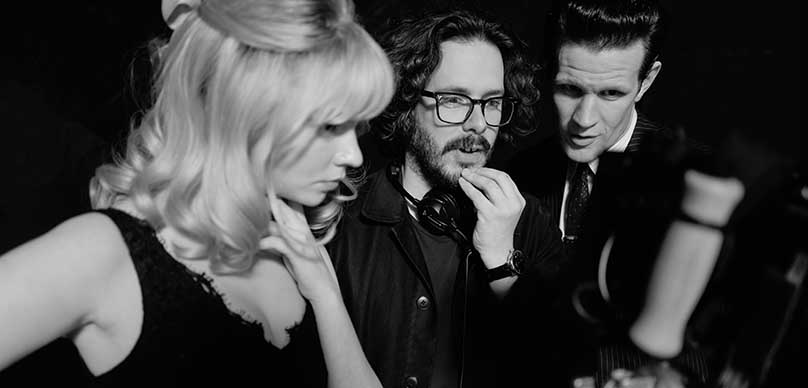
Edgar Wright Scripts Collection: Screenplays Download

Edgar Wright is one of the most unique filmmaking voices of his generation. With films like Last Night in Soho (2021), Baby Driver (2017), Shaun of the Dead (2004), Hot Fuzz (2007), Scott Pilgrim vs. the World (2010), and The World’s End (2013) to name a few. Below you will find all the available screenplays by Edgar Wright available on-line.

When you are done reading take a listen to Apple’s #1 Screenwriting Podcast The Bulletproof Screenwriting Podcast, with guest like Oscar Winner Eric Roth, James V. HartDavid ChaseJohn AugustOliver Stone and more.


Watch Edgar Wrights student film Dead Right and his first feature film A Fistful of Fingers, that was never released.

(NOTE: For educational and research purposes only).

Last Night in Soho (2021)

Screenplay by Edgar Wright – Will post as soon as it’s available

Baby Driver (2017)

Screenplay by Edgar Wright – Read the screenplay!

The World’s End (2013)

Screenplay by Edgar Wright and Simon Pegg – Read the screenplay!

The Adventures of Tin Tin (2011)

Screenplay by Steven Moffat, Edgar Wright, and Joe Cornish Read the screenplay!

Scott Pilgrim vs. the World (2010)

Screenplay by Edgar Wright and Michael Bacall – Read the screenplay!

Hot Fuzz (2007)

Screenplay by Edgar Wright and Simon Pegg – Read the screenplay!

Shaun of the Dead (2004)

Screenplay by Edgar Wright and Simon Pegg – Read the screenplay!

Spaced (1999)

Screenplay by Edgar Wright and Simon Pegg – Read the screenplay – Uploaded by Edgar Wright!

Disney Scripts Collection: Television and Screenplays Download

Disney Scripts: Screenplays Download

What can be said about the magical work the screenwriting and storytelling teams over at Disney Studios have created over the years? If you are interested in writing animation scripts then you need to read Disney animation scripts. The screenplays below are the only ones that are available online.

I even add Disney Studios live action and television scripts for you as well.

When you are done reading take a listen to Apple #1 Screenwriting Podcast The Bulletproof Screenwriting Podcast, with guest like Oscar Winner Eric Roth, James V. HartDavid ChaseJohn AugustOliver Stone and more.

(NOTE: For educational and research purposes only).


Disney Animation

The Little Mermaid (1989)

The Rescuers Down Under (1990)

Aladdin (1992)

The Lion King (1994)

Mulan (1998)

Frozen (2013)

Zootopia (2016)

A Goofy Movie

The Nightmare Before Christmas 

The Song of the South

The Hunchback of Notre Dame


Disney Studios (Live Action)

Who Framed Roger Rabbit? (Who Shot Roger Rabbit?)

Beauty and the Beast (2017)

Mary Poppins Returns (2017)

Pirates of the Caribbean: The Curse of the Black Pearl (2003)

Pirates of the Caribbean: Dead Man’s Chest (2006)

Pirates of the Caribbean: At World’s End (2007)

Pirates of the Caribbean: On Stranger’s Tides (2011)

Pirates of the Caribbean: Dead Men Tell No Tales (2017)

The Haunted Mansion (2003)

Frankenweenie


Disney+ Studios (Television)

Hanna Montana (2006)

WandaVision (2021)

Mary Poppins Returns (2017)

George R.R. Martin: Masterclass with Creator of Games of Thrones

George R.R. Martin, George R.R. Martin masterclass

George RR Martin is one of the most beloved and hated storytellers of his generation. He’s best known for his international bestselling series of epic fantasy novels, A Song of Ice and Fire (FREE AUDIOBOOK VERSIONS HERE), which HBO later adapted for its dramatic HBO series entitled Game of Thrones.

Ever since HBO released the Games of Thrones television series, the world can not get enough of Geroge RR Martin. People also prayed every week that George RR Martin would not kill off their favorite character. As the t-shirt says:

“Guns don’t kill people, George RR Martin kills people”

George RR Martin is not only an American novelist and short-story writer in the fantasy, horror, and science fiction genres, he’s also a screenwriter, and television producer. He has written for shows like The Twilight Zone (1985), Beauty and the Beast (1987), and The Outer Limits (1995).

Martin serves as the HBO series’ co-executive producer, while also scripting four episodes of the series. In 2005, Lev Grossman of Time called George RR Martin “the American Tolkien”, and the magazine later named him one of the “2011 Time 100,” a list of the “most influential people in the world.

George RR Martin’s work has been described by the Los Angeles Times as having:

“complex story lines, fascinating characters, great dialogue, perfect pacing.”

I came across this amazing master class George RR Martin gave at TIFFon his life, career advice and how he comes up with his stories. He goes into some detail on the craft of storytelling and techniques that work for him. Enjoy!

“A reader lives a thousand lives before he dies, said Jojen. The man who never reads lives only one.” – George RR Martin

Spoiler

Host
Please welcome George RR Martin Thank you have you always been a writer George?

George R.R. Martin
Yeah, pretty much it said in an early age, and I did indeed make up stories and some of the other kids in the projects for you know, I started out with a penny but I rapidly raised my prices all the way to a nickel which could buy a Milky Way bar. So two story sales and I get a comic book. So, but it ended that little professional career and my childhood ended abruptly when one of the other kids who was my regular customer started having nightmares about the stories and his mother came to my mother and no more. So damn.

Host
Do you know what inspired those even those early early stories where the where they came from even then,

George R.R. Martin
you know, I don’t know where any of this stuff comes from it just it comes thank God and I’m glad it does. I if I want to get on psychological I can say maybe I was trying to fill a need in my life for I don’t know, for adventure for travel and all that. I mean, we were we were poor. We lived in the projects. We didn’t even own a car. We never went anywhere I lived in a world that was five blocks long from first street where I lived in history where my school was, so I would you know, read of these other places and dream of other planets and distant lands and darkest Africa and Far East and the Ancient Rome and all of the places that one could read about in books and making up stories about these places allowed me to go there in my imagination even if I couldn’t go anywhere beyond Fifth Street in reality

Host
and were there books or shows or or comics or those that were inspiring to to them that maybe influenced the direction your stories duck.

George R.R. Martin
Why I always love the weird stuff as my father called that the you know, we’re talking now the the early mid 50s. Which there wasn’t a lot of science fiction or much less fantasy or horror around. So I seized eagerly on the shows that were like the original twilight zone with Rod Serling. But even before that, science fiction shows that the early 50s Things like Concorde bed space cadet and Captain video, which I barely remember, that was I was very young when Captain video was on and little later rocky Jones Space Ranger which had a huge impact on me. Very cool show. Sort of the precursor to Star Trek if you actually kind of look at it. And, you know, of course, science fiction and horror movies, a science fiction movie to the 50s was about atomic bomb growing grasshoppers to the size of 740 sevens, which was, you know, pretty cheesy, but, you know, they were they were cool in their own in their own way.

Host
And, and when did you realize that writing could be, you know, beyond those that sort of early Penny and nickel sales? When did you realize that writing could actually be a profession or career you’d want to pursue? Oh, about

George R.R. Martin
three years ago? No, in my early childhood, I was confusing the reality for the, for the imagination, I decided I actually wanted to be a spaceman, which is what we called it before the word astronaut was coined, and nobody had ever heard the word astronaut until the Mercury program, when they didn’t want to use the word Spaceman. But, but before the Mercury program, you know, in the, in the days of rocky Jones and all that it was guys who wanted the space for Spaceman and, you know, you could choose among the kids of my neighborhood that were the ones who wanted to be cowboys and the ones who wanted to be cops and, you know, the ones who wanted to be Spaceman and I was on the Spaceman side and later upgraded to an astronaut. But at some point I decided now I’m never going to do this. So how about I just make up stories about outer space is that of actually going to outer space. And that was fine until I think it was like junior year of high school they they gave us an assignment to research the profession that we we propose to enter. So I researched fiction writer and discovered that the average fiction writer made $1,200 A year from their fiction and even in you know 19 65 to $1,200 a year was not a hell of a lot of money. And you know what some of my relatives heard that they said, you know, maybe you should be like an electrician, they make good money, plumbing, have you considered plumbing? People always need a plumber. And then you can make up these crazy little stories of yours on the side and collect that extra $1,200. So I didn’t go into plumbing. But I did follow journalism since I was good with words and good writing. I went to college I majored in journalism and, and the plan was, well, I would, I would write a few stories on the side and things like that, but my main profession would be as a as a journalist. But it turned out that I started selling, even when I was still in college, selling my first short stories, to the magazines. And then I did a couple years in Vista alternative service and continue to sell more stories. And by the time I got out of this and finished those two years, I had enough stories under my belt and being you know, kind of young and I didn’t have a lot of expenses, then I could live very cheap with, with roommates in a bad neighborhood in Chicago and all that. And I said, Well, I don’t want to really try to go out and get a real job here. I’ll just continue to write a story thing and see where it leads. It led to some pretty good places for me. So I’m glad i i continued that.

Host
And did this the studying in the journalism did that affect your writing in any way or directed in any different way?

George R.R. Martin
Well, journalism schools certainly affected my writing. I don’t know if, since I didn’t actually practice journalism. I don’t know if it did. But the training for journalism, I found was very good. And it’s in several ways. First of all, it was it was good for my style. You know, I mean, I I wrote those monster stories as a kid I wrote for comic fanzines, when I was in high school, little amateur stories about superheroes that were published in the amateur magazines in a day. But my style at the time was let us say purple. You know, I seem to be operating under the assumption that if one adjective was good, three were better. So So I would just pile on the the adjectives and I mistook that kind of verbose prose for rich and textured and poetic prose and Journalism School cured me of that, you know, as the professor’s kept drawing lines through all my wonderful adjectives. And, you know, hardly an adverb survived the entire four years. And it was also good for me. I mean, I was as a younger kid, I was very shy, I was a kid who lived in my imagination, who, as they said, always had my nose in a book. And training as a reporter actually forced me to kind of come out of my, my little shell a little and go out there and meet people. And I had to approach total strangers and ask them questions and, you know, set up interviews and some of them with some pretty fearsome like authority figures and, and people that I would not normally have, like, dared to talk to in, in my ordinary life, you know. So it made me more outgoing. It sort of opened me up as a as a shell, which I think was also good for a writer, the ability to talk to different sort of people and so forth and so on.

Host
And how did you get to then to Hollywood to be a writer for television?

George R.R. Martin
Well, that was, you know, I never actually one I like watching television. But I never wanted to be a writer for television. It was not part of my dreams. I just wanted to write books. And it all had to do with the commercial vagaries of the market. And actually, with, you know, there’s a lot of truth to the old saying, it’s not what you know, it’s who you know, especially in in Hollywood, where contacts are a huge part of it. I was a science fiction writer, and in my early career, and I published a number of short stories, I was nominated for awards, I won some awards. Six or seven years into it, I wrote my first novel, which was pretty successful. Then I wrote up a second novel in collaboration, and that was even more successful. And my third novel was was a vampire novel that that kind of broke out of the district genre things and that was yet even more successful, and I was getting higher and higher advances for all of these. And then I wrote my fourth novel, which was a book called The Armageddon rag, which was a rock and roll, mystery, dark fantasy kind of Hybrid novel that my editors said, Well, this is going to be it. This is your big breakthrough, the book that said, we’re going to make this book a best seller and they paid me a six figure advance for it, and came up with this big advertising campaign to make it a best seller. And it was great. I was looking forward to my you know, incipient career as a as a famous best selling writer. The only problem was the book failed to best sell. In fact, it failed to sell it all it became like my worst selling book that I had ever written and suddenly my careers and novelist was over because so that I couldn’t get arrested. You know, I’d been like a hot rising writer for for a number of years and you know, publishing is not unlike Hollywood in that it’s it’s not a profession and I know you guys are film students and and into this thing, it’s not a profession built for security. If security is important to you don’t go into this profession because you know, you can be the hottest thing in town on Tuesday and on Wednesday nobody’s going to return your calls all those dear friends that you think you had that you’ve been having lunch and that certainly happened to me suddenly I couldn’t sell another novel. At any price I thought okay, well the armor getting rid of failed I’ll have to come down in my price. I will get a six figure advance again. But I’ll get like a high five figure advance like I did for figured room No, you know I’ll get like a low five figure advance No. You know, by the end I was willing to even listen to offers for four figure advance but nobody was offering anything because the book had sold so just make a great reviews. But oddly enough, this self same book to destroyed my my career in publishing, also opened the door to Hollywood for me because my my film agent, showed it to another client of his a guy named Phil de guerre. And Phil was a experienced television writer. He’d been on a number of shows as a staff writer and producer. And he recently gone on to, to do his own show. And he had a hit show called Simon and Simon that he had invented. And he was coming up on another show called Whiz Kids, one of the first shows about computer hackers. And but what what our agent we had the same agent Marvin knew was that Phil was also a dead rock and roll guy and he was a deadhead. And he loved to go to a Grateful Dead concerts. He knew all the dead, he had backstage passes and things like that. And he knew the rag would appeal to him. So I showed him Armageddon rag. And indeed, Phil did want to appeal, he wanted to get into feature films. So he optioned Armageddon reg for a feature film. And he was going to write it himself, write the screenplay himself, he was going to direct it himself. And the first thing he did was fly me out to Los Angeles to talk to me about it. Now I’d sold other options before I you know, you if you have a lot of books and short stories, and they get any kind of attention. In those days, especially you’d find someone option them in Hollywood world this little changed a lot. We’re talking now the the early 80s.

So it doesn’t work quite the same way anymore. But in those days, these cheap options were were all over. And I would have four or five or six of my short stories and things under Option simultaneously. But normally, they just they option that they send you a check, you know, you never actually met any of these people will talk to them. They didn’t care you just the author of the original material. They didn’t necessarily want to involve you in the process. But Phil did. And so he flew me out. And we had some meetings and we discussed how we would do the Armageddon rag and you know, who tricky points about the novels and so forth. And I got to visit TV sets and watch him filming Simon and Simon and watch them filming the Whiz Kids which sort of was his Armageddon rag that showed sank without a trace after a short time, but he was still hot enough so that I made that contact with Phil and we remain friendly. So like a year or two passes, and suddenly, CBS has said to Phil well, we want to get another show from you, Simon Simon is doing real well. What else do you got? And Phil says, I want to bring back Twilight Zone. I always love Twilight Zone. No, okay, well, sure we own twilight zone, you can bring it back. So Phil ramped up to to do Twilight Zone. And he turned to a lot of science fiction and fantasy prose writers and called me up and said, Hey, ever think of doing writing for television doing a Twilight Zone episode. And you know, since I was rapidly Well, in fact, I had run out of money and was wondering how I was going to pay my mortgage and couldn’t sell another book because of the value of Armageddon rag. I was eager to try this new thing and I said, Sure, I’ll I’ll do some Twilight zones and I wrote a script for him. and led to another script and etc etc. Next thing I knew I wanted myself out as a staff writer moving to LA for six weeks or so to to work on the on the Twilight Zone staff. And after that came beauty in the beast, and it was two seasons the Twilight Zone and a brief flirtation with Max Headroom was in there briefly and then then beating the beast for three years. And then five years in, you know, development, which sometimes known as development hell. So, all told, I spent about 10 years primarily working in Hollywood.

Host
We’re gonna take a look at a scene from an episode of Beauty and the Beast. This is a episode called brothers, where the beast Vincent, played by the legendary Ron Perlman connects with a character called the Dragon Man, who’s, as you will see also ostracized from society for his appearance, much like a beast so let’s take a look at beauty in the beast.

George R.R. Martin
Yeah, that was from the second season of beauty and a beast, which is probably the three seasons we did the one that’s most representative to show that we actually wanted to wanted to do. You know, I enjoyed my my 10 years out in Hollywood, I learned a lot from it, it was very valuable to me in a number of ways. Not only financially where it certainly was helpful to me after the situation, I’d fundament found myself in after Armageddon rag but also, you know, as a writer, I learned things I. But there were also frustrations, there’s just no doubt that working in television and film requires a certain temperament. And skills that prose writers book writers don’t necessarily need or often have. And I found that on both Twilight Zone and beauty and a beast, and even later in development. The thing that really, I think, drove me back to prose. Well, there were a number of things, but but one of them was the constant. The constant arguments with with other people, the the politics, the fighting of it, it’s, it’s, you know, when I sit down to write Ice and Fire, I can just do the work. And ultimately, I am the judge. Yes, I have editors and my editors make suggestions to me, they say, well, we don’t think this thing is working. And I give away their words consideration, and I change things if I think they should be changed. But in television and film, of course, you’re you’ve got all these people, the studio and the network and the standards and practices department and the actors and the directors and the producers. And sometimes, it’s hard enough to do the good work, and then you do the good work. And then just other people want to mess around with it, or they have their own idea and all that. And so you have to have a temperament not only to do to good work, but to fight for your work. And I don’t necessarily enjoy fighting after after. I mean, I did it. And I defended my work as best I can. And I won some and I lost some. But after a while, some of it just

just wore me out. You know that if you know beauty and a beast, the show.

We always wanted to do shows like this character based shows. I think from the very beginning, the network wanted us to be the Hulk. They were they wanted a much more formulaic show that was much more action oriented, where Catherine would get in trouble every week, and Vincent would be stout and come to her rescue. And and there are more shows that fit that criteria I think you’ll see in the first season where, you know, and they even said well, can we you know, the whole key always be Sout twice he he would be stabbed or would hulk out as they called it at the end of the second act. And then he would have a bigger Hulk at the climax where he would solve the situation and they really wanted us to do the same thing. Well, can we we’d like to be stout in episodes. And could we have less of the poetry reciting and all that and you know, we wanted more of the character pieces and all that and of course, you’re you’re in a constant struggle depending on your ratings. If you the stronger your ratings are, the more you can do it the way you want. And the weaker your ratings are, the more help they will give you and we did pretty well the first season and a half. So by the second season we were really doing the shows we wanted to do and was kind of disregarding the network pressures but they were still there waiting and We were winning our time slot for the first season. And not we weren’t like a top 10 Show or anything, but we were winning a time slot, which was very good. And then I think NBC we were on CBS, NBC made a change up in the in the lineup opposite us. And it had a couple sitcoms on opposite us. And they, they replaced one of them with a new sitcom called, I think it was full house and starring the Olsen twins, and this goddamn thing became a hit. And suddenly, suddenly, we were not winning our time slot anymore. And the network was coming more and more down on us of Oh, my God, you’re losing your time slot. And you know, that’s why I’ve always hated the Olsen twins, and still do to this day.

Host
You’ve given me another reason to were there were there things that you learned when you were writing? You know, serial television that would inform your books later on?

George R.R. Martin
Oh, yeah, certainly. I mean, one of the the structure of Song of Ice and Fire with his viewpoint, things and cutting between the viewpoints, and all of them ending, essentially, with no cliffhangers, or interesting points is a structure I learned in television, you won’t see it in my earlier novels. But of course, working for network television, you have to have act breaks. And depending on the structure show, is it a four four act show? Is it 4x plus a teaser, or 5x or a teaser in a tag, you know, what have you but you always have to go out on an act break before you go to the commercial. And it can be a cliffhanger, that’s a good egg break. It doesn’t have to be it can be just a twist point or a new revelation or a piece of information or, you know, something is resolved. But you know, it’s, it’s for you watch Law and Order. It’s always done moments, you know, right before the commercial did, uh, oh, my god, something has changed. And that is to bring you back after the commercial, of course, but it’s a good way to end a chapter or, or an act. And sometimes it’s pretty hard when you’re designing your story to come up with those act breaks. But, you know, that’s where you get the big bucks. And it certainly works. In the books too. I mean, I It’s keeps people reading, you know, they reached the end of the chapter. And they want to know what happens to that character, because they’re engrossed in Tyrian. But God’s just not another Tyrian chapter for a while yet. First, they have to read this aria chapter, or this John Snow chapter before they finally get back to Tyrian. And those in by the time they finished the Oregon chapter, it isn’t kind of an act break there, too. And that hopefully draws them back for the next one. So yes. And also, I think it helps your dialogue when working in television, and you’re actually hearing actors speaking your lines, you know, I look at my earliest scripts, and you know, I would have people giving long speeches, you know, that take up a substantial chunk of the page. And it’s, you know, it’s too much you get much better readability and, and for, especially for contemporary audience, if the characters aren’t giving speeches to each other, but are having much shorter back and forth kind of, kind of dialogue.

Host
And in it’s interesting, because I think the the in Game of Thrones, that idea of leaving people wanting more is as a constant thing. And there’s also the idea of, you know, Game of Thrones in the books. You know, songs, by so far are not like, other books that one might compare them to, or other shows, they they often break the conventions of the various genre that then what might assign them to how does that play into how you you write?

George R.R. Martin
Well, you know, I’ve always liked breaking conventions. I mean, I love the genres. I’m not one of these guys who’s trying to burn everything down with a flame thrower. I love science fiction. I love fantasy, but I hate familiarity. I love Whether I’m watching television, or going to a film or reading a book, I want it to surprise me. I don’t want to know where it was heading, you know, maybe I get that from my childhood with my mother. I mean, we would sit at home watching TV as a family. And my mother would always say aloud exactly what was going to happen. Oh, it’s the butler who killed them. And sure enough, it would be the butler who killed her you know, I you know, she would, you know, be watching I Love Lucy and all that belt is going to start going much faster. She’s not gonna be able to keep up with the chocolates. And yeah, sure enough, that would happen. So I learned pretty early the trick of watching the shows and predicting where they were going to go. The one which she couldn’t predict Of course, maybe it was one reason I loved it so much was the original twilight zone with the famous twist endings. It’s hard for for, you know, a crowd. Looking around. I see a lot of young people here in this audience and to know what a revolutionary show Twilight Zone was in 1959 and 1960. And how surprising those twist endings were. When we revived twilight zone in the mid 80s, you know, the network was always on us. One of the things we had an ad show is, why can’t you have more twist endings as as the original show did? And we tried, man, but you know, what worked in 1959 really did not work in 1986. I tell you, uh, you know, people, the audience had become so much more sophisticated, and they could see those twist endings coming a mile away. You know, it’s the minute somebody walks into the store as she’s a mannequin. Yeah, of course, she’s bad again. The minute you know, you don’t show the face of a bandage characters. Oh, she’s the Darrell the ugly ones. Haven’t you noticed that they’re not showing faces. You know, these great techniques that Rod Serling invented 59. In the ensuing 2030 years had become so familiar to the audience as you couldn’t put it over on them anymore. So coming up with a, with a really genuine twist ending that worked, became harder and harder. Someone should tell that to M Night. He should, he should trump trying for those twist endings.

Host
Let’s take a look at one of the many. Well, we won’t call it a twist. But surprises perhaps in Game of Thrones, okay.

I mean, not many shows, or books have the guts to kill a 10 year old, let alone after them catching an incestuous relationship.

George R.R. Martin
That’s true. Probably more surprising in a book where Chris he’s the first viewpoint character. You know, he’s the viewpoint character, the first chapter, and then we switch, wait a couple of viewpoints. And I’ll come back to him. But since he was first, I think the assumption of most readers is that he’s going to be, you know, the main guy through that, and then suddenly you think he’s, he’s dead, or maybe he’s dead. But what we find out more later, but you know, it’s what I, we, we write what we want to read. And I, as I said, a minute ago, I don’t like stories or books that are too familiar to too predictable, that I feel like I read 1000 times before. So I want to keep you on edge and surprise you and make you think that no one is safe. And that was that was certainly the intent there. And that scene has, I think, gotten a lot of people hooked on these books and said, You know, I, I thought I was reading just another fantasy till I hit that scene. And then I realized that this was something a little different. So. So that moment has worked very well for me.

Host
It’s I mean, it’s an interesting point, because, you know, in the 60 odd years since the Twilight Zone, these sorts of stories have really gained an enormous foothold in popular culture. You know, you look everywhere, from the literary world, to movies, to television, to video games, to everything. It’s, you know, fantasy stories, superheroes, these sorts of stories that are so dominant. Why do you think we’ve seen such as such a dramatic shift in terms of acceptance and could

George R.R. Martin
geeks have conquered the world? Yes. Actually, I did Yes. doing an interview yesterday, I one of the reporters interviewed me said he we his TV station specializes in geek and nerd culture. And it really took me back to my old high school days where geek and nerd were not things that you want it to be called. And now they’ve become, you know, proud badges of of a group that has a culture. So you know, the world really has changed. You know, my father called the list stuff weird stuff, you know, he couldn’t understand why and disinterested in weird stuff. Science Fiction, Fantasy horror, because it wasn’t like real. He liked westerns, which, of course, as we know, we’re very real. All those gunfighters meeting in the center of the street to practice their quick draws. Yeah, that would have happened every day.

I don’t know. But it’s nice to be part of the the culture that has that has conquered the world and taken over popular entertainment. I think there’s these are all flavors of imaginative literature. To put it in a realm of the romantic tradition as another way to put it, as opposed to realism, which, in a great literary tradition, I think split off at the end of the 19th century into being a 20th century and into two currents, one of which was considered more respectable than the other the the realistic tradition became the literary tradition and all the genre fiction, which followed the romantic tradition sort of got shuffled off into ghettos, but it still appeals much more to, to a much larger audience and science fiction and fantasy, especially as the as the world has shrunk around us and with the television news and, and, you know, our technology, there’s no longer you know, lost cities in Africa, or the exotic, Far East, or all of these colorful places where old adventure stories used to take place these, these corners of the world old now have, you know, Starbucks in them. And so we go to outer space and we go to realms of the Hyborian age or or Middle Earth or other alternate worlds to define the kind of color and of the verb that we use to get out of romantic the tradition of romanticism and adventure stories and things that people like Robert Louis Stevenson wrote,

Host
and yet in even in your stories, these imagined to the stories, there’s a sense there’s a grittiness, there’s a there’s a realism to the characters in the situations. Well, you

George R.R. Martin
know, I think characters have to be real characters to my mind, at the heart of all of all fiction. And characters fascinate me human beings fascinate me and always have were such wonderfully perverse and contradictory, you know, creatures. You know, my quarrel with a lot of a lot of fantasy, as it as it was written, particularly by the Tolkien imitators not Tolkien himself. But the, the writers who followed him into high fantasy in the in the 70s and early 80s. Was that they, they presented a very simplistic view of, of human nature and you know, the war between good and evil as a subject for, for fantasy, I think is legitimate for this subject for any fiction. But to my mind, a war between good and evil is not fought between armies of heroes and white cloaks and armies of really ugly guys in black cloaks, but rather, is fought within the individual human heart in the choices that that we make in times of crisis. I mean, I think all human beings have within them the capacity for good and the capacity for evil. And in fact, we’re all you know, I look at history and all of the greatest heroes have have flaws. All of the greatest villains have moments of humanity or redeeming qualities about them. And to my mind, that doesn’t make them less interesting. And that makes them that makes them more interesting. I was talking last night I don’t know I don’t know how much I’m duplicating myself here. How much were you were at last night’s thing as well. But one of the great things about working for HBO as they they have shown not only on my show, but on on a variety of their other shows beforehand shows like The Sopranos and Boardwalk Empire and, and other shows that they they’re willing to present as the center central characters of their shows very flawed and human characters who are full of contradictions. I mean, a character like Tony Soprano, who is at one point, a family man, who obviously deeply loves his his children, and he loves his wife, which doesn’t prevent them from fucking around with all sorts of other random women that he encounters. And, you know, he, you’ll see him feeding the ducks at his at his back at his backyard pool and being very upset that the ducks have flown away. And then a couple of weeks later, he sees a guy who owes him money and he runs him over with the car and gets out and starts kicking him in the head.

And yet, you you do you like Tony Soprano? I don’t know if you if you like Tony Soprano or not, but you certainly find him fascinating. And I think you do find him sympathetic on some level, his his humanity makes you kind of want to root for him. But then he starts kicking someone in the head and you sort of have to examine Whoa, why am I rooting for him? What am I doing there? And, you know, that sort of reaction to me is very helpful. and the frustration about working for a traditional network television is that for, for most of the history, certainly the period I was working for them, they were not interested in presenting anyone that was that was flawed or, or unlikable. And you know, they were trying to pretest everything with their focus groups and all that. I mean, one incident for my own career after beauty and a beast I, I did development and I wrote a number of pilots for them, only one of which was filmed, which was an alternate world show called Doorways. And in the opening sequence of doorways, it’s a, it’s a parallel world show, this sort of feral girl from, from an alternate dimension appears suddenly in the middle of a freeway on Earth, you know, at night, and all this all that she’s never been on a freeway, she’s never seen cars or trucks before. And they’re all these vehicles rushing at her at high rates of speed, you know, and she has this alien weapon with her this gun that shoots explosive needles, and the cars are all honking and all that and they’re slamming into each other as they try to avoid this, this person on foot who suddenly appeared in the middle of the freeway. And then she sees this huge tanker truck coming toward her. And it can’t possibly get out of the way it starts to break and it starts to jackknife. And it’s obviously going to hit her and kill her. So she whips out the alien weapon and blows to shut out of it. And it’s a spectacular sequence that it was in the you know, it was in the script, and it got proved all the way through it. It’s the opening scene of the of the thing and done right it could it should have been very effective here. And we’re reaching the screening stage and suddenly the network realizes something and I say, Wait a minute. What happened to the driver at a tanker truck? Well, she blew the shit out of him. He’s, he’s dead. Oh, no. Oh, no, we can’t have that. He’s just an innocent Teamster. He’s just driving his truck. And suddenly there’s this girl and he breaks he tries to avoid her. He doesn’t deserve to. Well, no, but you know, she doesn’t know any of that. She just sees this big iron thing heading toward her and she has this weapon that’ll stop it from Gilligan’s. So she uses it. It’s like a monster. Well, yes. But if she kills this teamster, this truck driver, the audience will hate her. No one will watch the show. They’ll turn it off right there. Oh, I’m not gonna watch your show about a murderer. But we never even see this guy. We don’t see a driver wish he had truck coming at us. And she blows it up. You know, I’m saying she’s not gonna care. They’re gonna realize that there’s a guy in the truck, no one is gonna make this intellectual thing. But no, no, the network the network was locked in on that. So we had to go back and boot up the cameras again and shoot a scene where the driver unharmed leaps from the flaming truck and goes running away scampering to safety. So we know even though his truck is like at pieces over the sidewalk that no harm has come to innocent Joe, the truck driver who has gone home to his wives and children. So the focus group would like my character and not dislike her because she blew up the truck. So that’s the difference be working for HBO and working for a network?

Host
Well, let’s take a look at another set I suspect a focus group would also disapprove of I’m just gonna guess that the old knife through the eye is not a popular focus group moment.

George R.R. Martin
I don’t know if the focus groups would like that very much. We I mean, that brings me I don’t want to slag on beating the beast. I learned a lot on that show. And I think we did some very good work. But we did have our troubles with the network. On that one, which again, is indicative of what’s going on beauty to be how many of you have ever watched beauty and a beast? Okay, a good number there. It was a very romantic show. And we were nominated for Emmys. We’re very well regarded show and and we had pretty decent ratings never never hit ratings. We will watch like 97% of our audience was women, however, which I thought was fine. But the network wanted some men to watch the show. And they were always on us to increase the action. Because they thought if we had more action, then that would get more men to watch. Action is the network word for violence. They can’t actually ever saved violence because then someone might find it on a memo and they would be accused of trying to put more violence on TV and you know, and they have the standards and practices group that always reviews yourself Epson is telling you Oh no, this is too violent it to be too disturbing to the audience at home rip, please remove it, please tone it down or something like that. And from the very first time I started working even on twilight zone where, you know, we had some of the same problems, but certainly on feeding the beast I bristled at the hypocrisy of this. You know, because it seems to me that if you’re going to present violence, and then you there’s an obligation to present violence, honestly, and to present it as things like this as the as the knife through the, through the eye. I mean, Vincent was killing people. He was ripping people apart with his cause is what he was doing in the action scenes where he rescues Catherine, but we were never allowed to show any blood. You know, I one point we thought, you know, there was the classic beauty and a beast that Cocteau did labelling Labette, where the beast when he came back from hunting, his hands would smoke. And that was, of course a symbolic way of showing an artistic way of showing blood. And we kept trying to come up with what’s our thing? Well, we can’t use smoke Cocteau’s already used the smoke, will, you know, people will say we’re just ripping him off. So we can’t do that. But we can’t show actual blood either. So you know, and then network didn’t even like the fact that he was killing people. They said, What can’t the Hulk never kill people? Couldn’t he just destabilize them? And like, like, what? Well, you know, he should pick them up and throw them a long distance. And they could, they could bounce off the wall, and then we could see them get up and, you know, say feets don’t fail me now and run away and terror. Then wouldn’t the city be full of like thugs who have been thrown across the room by a lion man, you know? So no, we finally got them to allow that he would rip them apart, and they would go down and they would not get up. But we still wouldn’t ever allowed to show any blood. Which means that although in an intellectual sense, if you watch the episodes, you know that he’s killing people, but you never really feel it in a visceral sense, and it is necessary to to feel it in a visceral sense. And you know, we would do episodes, where he kills almost no one or where it’s all character based, you know, an episode like brothers that you saw earlier. That’s a great deal of it is psychological. And, and they wouldn’t like that they wanted more action episodes more and more, get more action in it. We got to get some men watching this show. It’s all just women watching this show. It’s you know, how are we going to balance our demographics here, they’re wildly unsecured. And we never succeeded in that. But we became unbeknownst to anyone. We became the most violent show on television. There was a period there where the show Hunter which was on the same time as us was really getting criticized as it was so violent Hunter Hunter was, you know, like shooting people with every episode and they were dying and we actually learned so we’re like three times as violent as Hunter finsa just killing way more people than Hunter. You know, Hunter is killing like barely one guy in Episode You know, Vincent is going in there with three or four thugs and ripping them to shreds, and leaving their end trails and pools on the floor, but a dress, we’re not allowed to show any of that, you know, and then after he does that, he reads a poem. So

subtle lesson is that if you’re going to have a lot of real violent stuff, have your character read a poem afterwards, and it just cancelled it all out. Of course, you’ll never you’ll never get any men to watch it then because oh my god, he’s reading a love bow my quick turn to Hunter. I might have to hear more of this stuff. So, but of course, thankfully, on HBO, we don’t have any we can present that. But that scene is an interesting scene because they in the book, those of you read the books know that it is a somewhat different scene in the book, in the book, all of the characters are on horseback. You know, he is he is riding back with jewelry, on their horses from the brothel. And he is accosted by Jamie and his men who are also on horses also his it is at night, and it is during a rainstorm. So the rain is pouring down all around us. And that is exactly the way that David and Dan wrote it when they did the first draft of the script at night in the rain on horses. And of course, as filming time approached and budget overruns happen one by one. Each of these elements got lost. Oh, okay. Well, it doesn’t have to be during the rain does it? We’ll lose that. Do we really need it to be nice it would be fit the schedule better if it was day, you know, and horses do we have to have horses. So we wound up instead of at night in the rain on horses. We round up on foot in the day, no nice and dry, would have been great to do it the way it was originally written, very atmospheric and cool in the rain and horses. But this way, they certainly got it a lot quicker and it still worked. And I think the realities of television and television production means you do have to sometimes make make these changes to fit your budget and your shooting schedule. The trick is to know where to draw the line and what to what to fight for. What is something where you can change the fundamentals of a scene without harming the scene, and other changes that rip machine to shreds? Because you you’re accidentally ripping out the heart of it? Or maybe deliberately, we’re being at the heart of it, as you make a change to make it more suitable? Because this

Host
show really is very faithful to the books. Yes, not exactly. quite faithful. Yeah, if not exactly a representation of them. The major change, of course, is really around perspective, because the books do change perspective. And that the show does not as much,

George R.R. Martin
but it’s it’s all through. Well, I mean, as a novelist, you have certain tools at your disposal to tell a story with and these tools are not available to to a filmmaker. I mean, as a novelist, you are, you know, you have internal monologue, you can you can do exposition simply as part of the narrative. You know, you have access to the character’s thoughts. You can do unreliable narrators, where you really can’t do any of this as a filmmaker or a television director, you’re external. You’re never inside the character. I mean, yeah, you can try to be there are those occasional experimental films where you’re looking out through someone’s eyes, and there’s a voiceover telling you their thoughts, they’re mostly terrible and don’t work very well. You know, the voiceover and film is a usually a technique that says something really isn’t working here and we’re having to patch it over with this clumsy voiceover technique. And it’s frequently added at a later point like the famous voiceovers in Blade Runner which I think really detract from from that film and weren’t necessarily but but you have other techniques that make up for that as a as a filmmaker or a television writer you have you have tricks that are not available to novelists, you can you can bring in music to heighten suspense or to build up the emotional impact of the of the scene. You can do things with lighting, and of course you can your actors can bring a tremendous amount to it with just just a look. Just expression on their faces. I mean, the scene we showed last night. I referred to in the comments afterwards, where the King Robert is arriving in Winterfell. And he hops off his horse and walks up to Ned and, you know, looks at Ned and says you’ve got fat. And Shawn being just sort of raises his eyes and looks him up and down and the whole audience How’s with laughter because it’s Robert has really gotten fat. That was something that the two of them, two of them did. I thought it was even in the script. I bet it was. I don’t know, some by play of the of the actors, but maybe it was in the script. But I certainly could not have done that in prose. I mean, imagine trying to write that in prose and how would it go, you know, Ned, you’ve got fat. Robert said Ned flick does eyebrows raised his head up and that doesn’t have the same impact as actually seeing Sean Bean’s face as he does that? Does does that little trick. So you have to always be aware of what medium you’re working in and what things will work in that and what things don’t work.

Host
Now as a as a fan, I have to get to season two. Just Just quickly, we’re gonna take a look at a scene here I think from season two and then I’ll ask you a bit afterwards now as a fan, there’s I know there’s a whole heaping of awesomeness that occurs in book two. How just how excited should I be George? I don’t know if I can get more excited. What set us up for season two, what should we expect?

George R.R. Martin
Well, of course I haven’t actually seen Season Two either. So I’m also pretty excited. I was able to visit the the center knee filming the original pilot, and then when we got season one I was able to visit a couple of sets for a couple weeks. But, you know, last year when they were filming Season Two, I was just too busy dance with dragons had just come out and I was on like a 12 city book tour and having to attend some major conventions. And then I had to go home and do some work. So I wasn’t able to actually see them shoot any of this. So I’m seeing some of these trailers and such for the first time. I know I’m pretty excited about my own episode, which again, I haven’t seen, but I know it was in the script. And it’s episode nine, which is the battle of Blackwater. Probably the biggest battle in the books. And it’s a massive set piece and we hired Neil Marshall to direct it. First time he’s ever done television for a well known British director who’s done century in and the descent, dog soldiers, relatively low budget movies, but with terrific visceral action sequences and great visual look to them. So we’re hoping he’ll he’ll bring all of that to the screen and capture give us a very exciting battle. Those of you who watched the first seasons know that we we did a lot of things right. But our battles were not our high point. Battles are very hard on a television budget, even an HBO television budget, if you’ve seen the battles in like Rome, for example, or Well, they did very well with the Pacific but the Pacific was, had had much bigger budgets and and you can do a lot with explosions to what, um, so. So I’m excited about that. And now I’m excited about some of the new cast members who will be joining I have seen the auditions and they’re, you know, some marvelous, marvelous actors that we’ve got. We have Stannis will be joining the thing status and Melisandre John meets Igrid for the first time, we introduce Brianne Davos, Seaworth Marjorie Tyrael lots of lots of great new characters will be joining the mix so even though I am notorious for killing my characters, I I do keep throwing new ones in there too, so you won’t miss the dead ones that much. Gotta gotta keep a full larder in case I want to kill some more.

Host
OMG I am so excited. We’re gonna turn it over to you folks for a q&a. I’m going to ask that you wait. You raise your hands and wait for the mics to get to you so we can actually properly hear you. So raise your hands. We have a mic over there. Yes.

Unknown Speaker
Hi, George. My name is Gloria. Um, I love your work. Love it. Love it. Love it.

George R.R. Martin
Thank you. Yeah,

Unknown Speaker
I remember when I first discovered Game of Thrones, I just I couldn’t stop reading it. I just it was like, I’d be so tired. And I’d want to throw up because I was so tired. But I couldn’t. I guess. question, when is your next book coming out?

George R.R. Martin
Well, you know, that’s a good question. The next Ice and Fire book will be a few years. I mean, I’m working on it. But these are gigantic bookstores. The last one was 1500 pages and manuscript. I suspect this next one will also be 1500 pages. And I’ve given up predicting how long it’s going to take me to write that because every time I do make a prediction, I’m wrong. And then people come howling with torches and pitchforks outside my house. Oh, my God, you said it would be in it every year. And it’s thought to you lied. So, so I don’t want to predict anymore. I just write one page at a time and it’ll be out. They hope eventually. And even more important, I hope that it will be good.

Host
It’s worth waiting for folks who’s got a mic? Yes.

Unknown Speaker
Hydrogen. My name is Matt, you mentioned earlier that you wrote mainly to explore and discover new worlds and Westeros in the world of song a nice and fires so rich. So I’m wondering with what’s left in the books, how much of Westeros do we have left to discover? And how much do you write because it’s necessary for the story? Or do you write mainly because Oh, hey, this is a cool place to tell a story.

George R.R. Martin
No, the story takes over the story makes it some demands. There are other parts of Westeros that you will see in the last last few books. I mean, I haven’t I haven’t bought the action to to Casterly Rock yet you’ve never seen Casterly Rock you’ve never seen high Gordon, I think both of those locations will will play key roles and in the books to come. But there is a lot of and you know I may do when I’m going years ahead now. So who the hell knows what will happen but the world that I’ve created there is rich enough to sustain many stories and the Song of Ice and Fire is only one of those stories. So if I finish these last two books that will be the end of the story. but not necessarily the end of the world, I think I would probably want to do something else after I finished that something very different, and maybe some short stories, or maybe a science fiction novel or a horror novel, I’ve been thinking for some time. But eventually, if presuming that course, I live long enough and keep writing, I might return until other stories set in Westeros at different parts of Westeros different historical epochs or different continents in geography. So that might be fun.

Unknown Speaker
Hi, George, how difficult Do you think it is for a new science fiction or fantasy writer to break into the industry?

George R.R. Martin
It’s actually, if you’re good, of course, that’s always the Preface. So you have to have have to have talent. It’s pretty easy to break in, actually, you know, I always advise new writers, young writers to to break in with short stories. That was the way I did it in the 70s. And that’s still the best way. I mean, we’re, we’re fortunate that science fiction fantasy still has half a dozen magazines that are looking for new material every month, and therefore have to read their slush pile in a fairly timely manner to find the contents. You know, the established writers that there’s there’s not much money in short fiction, you’re not going to get rich, writing short fiction by any means. And the result is that most established writers don’t do very much short fiction past a point a certain point in their career, they switch to novels, which is where you could actually make a living. So as a result, there’s a lot of openings for new talent in in the pages of analog and the magazine, a fantasy and science fiction, and Asimov’s magazine, and even new E magazines, things like Lightspeed and tor.com, and, and so forth. And my mind, a good career path, still, as it was in the 70s is to is to write a whole bunch of short stories. And sell as many of them as you can and build a name for yourself in the in the world of short fiction, because science fiction readers and fantasy readers will will notice these stories. And then when you finally do write your first novel, it and it hits the stands, it’s not just going to be the the first novel by some new person that you’ve never heard of in your life. And why should you pick up their novel when you don’t know who they are? It’s got to be the long awaited first novel by this person who’s published 20 short stories, and, you know, you’ve been seeing their name and all the magazines and you kind of like what they did. So it gives you, it gives you a leg up when you do move to the to the world of novels. And that’s a that’s a good way to start.

Unknown Speaker
Advent. Hey, George, big fan of yours, on your right side. So I just wanted to ask you, in terms of writing Renly, a lot of people were taken aback in terms of that one scene that had shown up near the end of the season. And I guess they weren’t necessarily picking up on a lot of the subtle hints that you had written in the series. So I was wondering if you had wondered, in terms of what fan reaction would have been at the earlier stages of the series towards reading a more explicit scene, like was seen between randomly and the native flowers and how that might have played out differently? If you had written it earlier in the series.

George R.R. Martin
In other words, if I’d had a explicit scene in the book says what you’re saying, yeah. Well, I don’t know, I don’t know what the reaction would have been. You know, I I do like to do certain things. I don’t know subtly. I think subtlety is, is a virtue. There, there are things in there that that some of my readers pick up on, and that other readers Miss until it’s pointed out to them. One of the things of course, that’s changed in recent decades with the advent of the Internet is that readers are sharing their reading experiences. So if, if there’s something there and some readers pick up on it, and other readers don’t the readers who missed it soon become aware of it by reading the blogs and bulletin boards and the people were trotting out their theories and showing all the hints and things like that. So that changes things but I like to I like to reward the readers who are reading closely and paying attention because there there are a lot of things I like to write the books, to reward rereading, you know, I think First time you read a book you’re reading for plot you’re reading, what happens next is my here is where the guy got to live or die or something like that. And, but then if you go back and you reread the book, you may pick up things on a second reading or even a third reading that you missed the first time and you and you see, oh, my God, look what he’s doing here. Look at this piece of foreshadowing or look at this, he said this, and I didn’t notice it the first time but it’s, it’s right there. It’s cetera. You know, neither Renly nor Loris is a viewpoint character. And since I’m following a very strict structure of seeing everything through the eyes only of the viewpoint characters, there was really no way to present explicit details of their of their relationship without having someone like walk in on them when when, which is sort of, I suppose I could have done but is, is a clumsy technique, but a television show is, is a very different animal, and doesn’t doesn’t have to have the restrictions they get the camera is your viewpoint there. And that viewpoint can be pointed anywhere on any character. It doesn’t have to necessarily just follow your six or seven designated viewpoint characters. You’re going to see a much larger example of that, of course in the second season episode, one of the things in Clash of Kings is that a lot of stuff is happening to Rob Rob takes us army west into the western lands, and is ravishing the Lannister lands. And as those who read the books know various important things happen at the at the crag in particular, and we don’t learn about any of them. We learn about some of the victories from a distance while Rob has won this battle. Rob has been wounded you know Rob is coming back now he didn’t die of his wound. We hear about this whole third hand through messages to to his mother back at River Ron and finally he shows up and there’s big revelations but David and Dan in the in the show are actually going to follow Rob and we’re going to see some of the things that are occurring in the western lands. So it’s it’s going to be just as with the Renly Loris thing, it’s going to be a lot more explicit and you’re not gonna have to rely on third hand reports or rumors or you know ravens coming in to tell you what’s happening you’ll you will see what’s happening with your own two eyes.

Unknown Speaker
Who here yeah, this question comes from reading your blog and I was just very curious as a as a football fan, just the in the flesh personal experience of the roller coaster ride that the Giants puts you on the season. And I have to say I’m not too happy because as a Packers fan, I was not happy about losing that playoff game to JPP and Mr. Cruz so I’m just curious about what happened and what you were feeling as you watch the losing streak and then then come back and win the Super Bowl.

George R.R. Martin
I was the winning the Super Bowl part was amazing. I tell you I love that there were points where I was really ready to give up on the Giants I may even have written on my blog I mean that that second loss to the Redskin this was such a a gutless loss. I thought their season was over at that point. It’s like they didn’t show up in neither of those Redskin games as they showed up to play. But the second one was particularly galling, you know, because they were competing for you know what, a playoff berth and how, how the hell could they lie down that gets an awful team like that and lay another egg, especially when the team had beaten them early earlier in the season. But you know, that’s my history is a Giants fan. I’ve noticed even back into Parcells days that the giants are always one of these teams that seems to play to the level of the opposition. You know, if they are playing a good team like the packers or the Patriots, they’re really tough. They’re really good. They play tough against these teams. And even when they lose, like in the you know that the game to the Packers in the giant Stadium, which I actually attended. That was a terrific game, it could have gone either way. The only mistake was leaving 58 seconds for Aaron Rodgers after they scored the tying touchdown. And but then they play the Redskins who were a terrible team, or the Seahawks they played early in the year and they play down to the level opposition. It’s like they think well, they’re a better team. They just showed up, they should win, but they never seem to actually crush anyone 42 to three like some of the other good teams do when they’re playing a bad team. So it is a roller coaster ride with the Giants and with the Jets. My other team I’m I often tell Parris my wife that she ought to get one of those home defibrillators because I’m sure I’m gonna, I’m gonna die during the last 30 seconds of a chess game as as they, as they’re in the process of either blowing it or somehow miraculously pulling a wind out. So, you know, I don’t know.

Host
I love that we got a football question. Over here next. Yes.

Unknown Speaker
Hello, George. I was wondering if you had any reservations about making your books into a TV series

George R.R. Martin
If I had any reservations you know, it’s it’s there’s always a certain trepidation when you when you’re going to sign a deal, you know, is this going to turn out? Well? Or are they going to? You know, are they going to ruin it? You know, I liken it to a mother sending her children off to, you know, daycare for the first time. I mean, you had this kid, and he’s your kid, and you spent all the time with him, and you’ve been in charge, and now you’re entrusting them to strangers? And are the strangers going to take good care of them? Is he going to get his milk and cookies and time? Are they actually a bunch of child molesters? Who are just lurking there? And they’re going to get the kid off and you’re going to be gone and who the hell knows what they’re going to do?

But you know, I mean, I’d met the people involved. You know, I love HBO shows. I love what they did with Rome and Deadwood. So they had a, they had a terrific track record. And David and Dan, I had several meetings with we we discussed what they wanted to do, and they said all the right things, and I’d read their their own work. They were both established writers themselves. And David Benioff in particular, had done some amazing work with 25th. Our and Troy and his his novels, city of thieves and 25th. Our was actually in a novel before was the movie. Kite Runner, you know. So they’ve done terrific work. So I didn’t I didn’t think they were child molesters, it seemed pretty good. And you know, you have to you have to take a chance sometime when what is it that Mariel Hemingway says to Woody Allen in Manhattan, there’s sometimes you got to trust someone. So I did that too. And also the large dump truck of money that they pull up in front of your house sometimes sways you. And and, you know, the other thing to keep in mind is that the books continue to exist by themselves. That Roger wretches last night, who was a good friend of mine had the misfortune of having his novel damnation alley, made into something that purports to be a film. And it was terrible is a piece of shit, but they completely ruin the book. But Roger built a whole new wing on his house with the money that they paid him for damnation alley. And when he was asked about it, he would always quote James M. Kane, the famous nor writer who, when when asked famously Well, Mr. Kane, what do you what do you think about what Hollywood has done to your books, he would just point to the wall and say, Hollywood hasn’t done anything to my books, they’re, they’re right over there. They’re on the shelves. They’re exactly the way I wrote them. Not a word has been changed. So, you know, go, go forth and enjoy them. And indeed, the original books sell more copies. One thing I’ve been adamant, though, from the, from the very start of my association with Hollywood and for every project I’ve ever done in Hollywood, is to retain full and complete publication rights in any deal and to forbid any novelization. So if any, if any movie is ever made of my work, we will rerelease my original novel, and it will sell we will not have a novelization. You know, even if they completely trashed a novel and changed everything about it. People have to go to the original book, and the original book will benefit from from any sales generated by the movie or a television show. We won’t have some cheesy novelization written by a hacker, which they like to do, too, but that’s one point where I draw my own personal line. That’s always a deal breaker for me if they insist on novelization rights. So So yeah, there’s always trepidation but it’s it’s worked out well, in this case, and that’s fine. You have to know who you’re who you’re doing. business with. When you’re when you are dealing with Hollywood, you know, if if Steven Spielberg comes to you, or Guillermo del Toro comes to you when they want to option, your work. That’s one thing if Jerry Bruckheimer comes to you, you know, you got a different situation there and yet, you got to know what you’re what you’re looking at, going in.

Host
Well, I’m afraid that’s all the time we have this morning. I want to thank you, Mr. Martin, very much for joining us and for all your amazing work.

George R.R. Martin
Well, thank you very much. My pleasure.


The Power of Myth: Creating Star Wars’ Mythos w/ Joseph Campbell

Star Wars Power of myth

The Power of Myth is very powerful. Whether you love or hate Star Wars you have to admit that creator George Lucas tapped into something primal when he came up with the saga that will define him.

With the gluttony of no story visual effects studio films, Star Wars has stood the test of time, but why? What is it about Star Wars that touches so many people around the world.

Sure the visual effects were and are amazing but it comes down to is STORY, something lacking in today’s cinematic landscape.

When George Lucas was in USC film school he was fascinated with the work of a Joseph Campbell, an American mythologist, writer, and lecturer, best known for his work in comparative mythology and the all-important ‘Hero’s Journey‘.

His work covers many aspects of the human experience. His philosophy is often summarized by his phrase: “Follow your bliss,” advice we all need to take to heart. George Lucas stated, following the release of the first Star Wars film in 1977,

“…that Star Wars was shaped, in part, by ideas described in The Hero with a Thousand Faces (FREE AUDIO BOOK VERSIONS HERE) and other works of Campbell’s.”

The linkage between Star Wars and Joseph Campbell was further reinforced when updated reprints of Joesph Campbell’s book used the image of Mark Hamill as Luke Skywalker on the cover.

Below I have compiled a group of videos detailing the creation of not only the mythology of Star Wars but of STORY itself. They will show you how you can create a mythology in your stories and screenplays. Enjoy and May the Force Be with You.


The Mythology of STAR WARS

In this interview, made in 1999, Bill Moyers discusses with George Lucas how Joseph Campbell and his concept of the Monomyth also known as ‘The Hero’s Journey’ and other concepts from Mythology and Religion shaped the Star Wars saga.


The Power of Myth

This EPIC1988 documentary, The Power of Myth, was filmed at George Lucas’ Skywalker Ranch. During his interviews with Bill Moyers, Joseph Campbell discusses the way in which Lucas used The Hero’s Journey in the Star Wars films (IV, V, and VI) to re-invent the mythology for the contemporary viewer.

The interviews in the first five episodes were filmed at  Skywalker Ranch in California, with the sixth interview conducted at the American Museum of Natural History in New York, during the final two summers of Joseph Campbell’s life.

The series was broadcast on PBS a year after his death. In these discussions, Joseph Campbell presents his ideas about comparative mythology and the ongoing role of myth in human society.

These talks include excerpts from Joseph Campbell’s all-important and best-known work The Hero with a Thousand Faces. Below are some videos explaining Joseph Campbell’s work. If you are a screenwriter, this is a must-watch. Watch it here: The Power of Myth

Here are some of Joseph Campbell’s Video Series you should watch to get a better understanding of the “Power of Myth.”


Star Wars: The Legacy Revealed

This Emmy Award-nominated documentary (for Outstanding Non-fiction Special, Outstanding Writing [Non-fiction], and Outstanding Directing [Non-fiction]) explores the mythological and historical underpinnings of the Star Wars saga, through interviews with scholars, artists, and politicians of our time. Produced in 2007, it highlights the depth and breadth of the franchise as created by George Lucas.

Charlie Kaufman Scripts Collection: Screenplays Download

Charlie Kaufman is an enigma wrapped in a riddle. His work is so uniquely his that you can tell you are reading a Kaufman script within the first page. His breakout screenplay Being John Malkovich established him as a creative force in Hollywood.

Charlie is one of the most celebrated screenwriters of his era., being nominated for four Acadamy Awards, twice for Best Original Screenplay Being John Malkovich and Eternal Sunshine of the Spotless Mind(he won the Oscar® for latter). You can learn volumes about pace, structure, and dialog just by reading his screenplays.

Before you lock yourself in a room and start reading all of Charlie Kaufman’s Screenplays, take a listen to this masterclass given by Mr. Kaufman himself.

When you are done reading take a listen to Apple’s #1 Screenwriting Podcast The Bulletproof Screenwriting Podcast, with guest like Oscar Winner Eric Roth, James V. HartDavid ChaseJohn AugustOliver Stone and more.


(NOTE: For educational and research purposes only).

SCANNER DARKLY (1997)

Screenplay by Charlie Kaufman (Unproduced Draft) – Read the screenplay!

BEING JOHN MALKOVICH (1999)

Screenplay by Charlie Kaufman – Read the screenplay!

HUMAN NATURE (2001)

Screenplay by Charlie Kaufman – Read the screenplay!

ADAPTATION(2002)

Screenplay by Charlie Kaufman and Donald Kaufman – Read the screenplay!

CONFESSIONS OF A DANGEROUS MIND (2002)

Screenplay by Charlie Kaufman – Read the screenplay!

ETERNAL SUNSHINE OF THE SPOTLESS MIND(2004)

**Won an Oscar® for Best Screenplay**Screenplay by Charlie Kaufman – Read the screenplay!

SYNECDOCHE, NEW YORK (2008)

Screenplay by Charlie Kaufman – Read the screenplay!

ANOMALISA (2015)

Screenplay by Charlie Kaufman- Read the screenplay!

I’M THINKING OF ENDING THINGS (2020)

Screenplay by Charlie Kaufman- Read the screenplay!

Sofia Coppola Scripts Collection: Screenplays Download

Take a listen to Oscar® Winner Sofia Coppolaas she discusses his screenwriting and filmmaking process. The screenplays below are the only ones that are available online. If you find any of his missing screenplays please leave the link int he comment section.

When you are done reading take a listen to Apple’s #1 Screenwriting Podcast The Bulletproof Screenwriting Podcast, with guest like Oscar Winner Eric Roth, James V. HartDavid ChaseJohn AugustOliver Stone and more.


(NOTE: For educational and research purposes only).

The Beguiled (2017)

Screenplay by Sofia Coppola – Read the treatment!

The Bling Ring (2013)

Screenplay by Sofia Coppola – Read the screenplay!

Somewhere(2010)

Screenplay by Sofia Coppola – Read the screenplay!

Lost in Translation (2003)

Screenplay by Sofia Coppola (Oscar® Winning)– Read the screenplay!

The Virgin Suicides (1999)

Screenplay by Sofia Coppola – Read the screenplay!


The Life and Times of Writer/Director Sofia Coppola

Sofia Coppola who lives in Paris, France is an American. She was born in New York City, New York and attended the California Institute of Arts, Mills College. She is a film director, producer, screenwriter and actress. She has two children and her parents are Francis Ford Coppola, her father a veteran movie director, producer and screenwriter and Eleanor Coppola her mother. In 1999, she wrote and directed the movie The Virgin Suicides.

For her directional role in Lost in Translation, she received the Academy Award for Best Original Screenplay in 2003 and presently is the third in line of women who have been nominated in the category of an Academy Award for Best Director. Sofia Coppola won the top award “Golden Lion” at the Venice Film Festival in 2010 for her role in the drama Somewhere; she is the only American actress and fourth American filmmaker who has won this award). Her personal life is unique.

Sofia Coppola was given birth to on May 14, 1971, and is 45 years. She happens to be an only daughter and the youngest child in the Coppola clan. According to her, she had spent a quite number of years in Tokyo, especially during her 20s when she and a friend owned a miniature clothing line together.

This according to her accorded them the opportunity to always travel to Tokyo a couple of times per year. In 1999, she married Spike Jonze who she had met in 1992 and divorced him in 2003 after an official statement that stated that the divorce was one reached with sadness. In 2006, she and her boyfriend had a child and subsequently got married again in 2011, she got married to Thomas Mars her boyfriend. She has two daughters, the eldest born on November 28, 2006, and the younger on May 2010.

Her career is unique, as she is believed to have started as an infant taking up background roles in at least seven of her dad’s movies. One of the early infant roles where she appeared is in the baptism scene bearing the name Michael Francis Rizzi in the movie called The Godfather. Subsequently, she has roles to play in The Godfather series, that is the first, second and third The Godfather movies. In The Godfather II, she played the role of a child who is believed to be an immigrant. In 1983, she acted in her father’s movie, The Outsiders alongside Matt Dillon, Tommy Howell, and Ralph Macchio.

In the same year, she featured in The Rumble Fish. In 1984, she also acted in her father’s movie The Cotton Club and did same in 1986 in a movie called Peggy Sue Got Married as the sister to Nancy Kelcher under the screen Kathleen Turners. In 1984, she acted her first movie titled Frankenweenie, which was not in a way connected to her father.  Just to prove her prowess, in 1989 a short film she co-wrote with her father titled Life Without Zoewas released. This was part of a three-way anthology New York Stories, which was directed by her father.

After all these roles played in several movies, Sofia Coppola was chosen for a role due to the disengagement of one of the original casts of the series, Winona Ryder. She had to play the role of the daughter of Michael Corleone. On this particular role, the public criticized her ruthlessly for been stiff and false portrayal of the role. Critics argued that she brought no originality into the role, this led to her being selected as Worst Supporting Actress and Worst New Star at the Golden Raspberry Awards of 1990. Sofia Coppola retreated after this experience of backlash and criticism but featured in the movie Inside Monkey Zetterlandan Independent film in 1992.

This led her to enroll in the California Institute of Arts for a program in fine arts. During this period, she focused on her photography, fashion design, experimenting with attires and at the same time contributing towards a film directed by her brother Roman. However, she began to write the screenplay of adaptation of Jeffrey Eugenides’ The Virgin Suicides in 1993. This screenplay which happens to be elusive and memorable stirred the likes of Kathleen Turner, Kirsten Dunst and James Woods and at the end turned out to be a huge success. From several interviews she gave during the promotion of The Virgin Suicides, she is believed to have said that the level of criticism generated by her role in The Godfather III was not hurtful because she originally did not take acting as a career.

She is versatile in her career. In the 1990s’, she has appearances in various music videos like The Black Crowes by Sometimes Salvation, Sonic Youth’s by Mildred Pierce, Deeper and Deeper by Madonna, Elektrobank by The Chemical Brothers, and a video from Funky Squaredance titled Phoenix’s.

On filmmaking, her filmmaking career started as early as 1998 when she shot her first short film known as Lick the Star, which was played numerously on the Independent Film Channel. In 1999, she struck gold and made her debut role as a film director of the movie The Virgin Suicides, which received accolades when it premiered at the 2000 Sundance Film Festival in North America. In 2003, she had her second feature in the film Lost in Translation.

For this, she won the Academy Award and three Golden Globe Awards in 2003. In her interview on the 10th anniversary of Lost in Translation, she attributes the inspiration for the movie Lost in Translation as a reflection of her personal experience as she described the movie as her most personal movie because it envisages what she went through in her 20s. With this huge success and

With this huge success and being a third-generation Oscar winner, she was extended an invitation to join the Academy of Motion Picture Arts and Sciences. In 2006, her third film called Biopic Marie Antoinette debuted; this was an adapted biography of a British Historian called Antonia Fraser. In 2010, she produced her fourth film titled Somewhere, which was filmed at the prestigious Chateau Marmont as released.

She would not stop now, hence in 2013, she released another film The Bling Ring, a true life story centered on a group of teenagers from California who engaged in the burgling of homes owned by celebrities. Sofia Coppola began negotiations for to helm The Little Mermaid, adapted from a script written by Caroline Thompson. Unfortunately, she dropped out as a director in June 2015 because of creative differences.

She was versatile and so ventured into Television during the mid-1990s in a series called Hi Octane with her best friend Zoe Cassavetes on Comedy Central. This show never made it after four episodes. Her first commercial called Gossip Girl debuted in December 2008. She went further to launch various Christmas ads for Gap a clothing chain line in October 2014. She also ventured into modeling in the 1990s and would often feature in several girl-focused magazines such as Seventeen and YM.

Due to her love for fashion, she launched a fashion clothing line in Japan called Milk Fed with her friend Stephanie Hayman. She was selected as the face of House of Fragrance by Marc Jacobs a fashion designer. She would also do double duty as a photographer as well. Her photographs of Paris Hilton were published in an issue of Elle in July 2013. She once again ventured in opera and was announced as an opera director in May 2016 where she took up directory role for the production of an opera known as La Traviata.

She has won various awards over the span of her career. In 2003, she was nominated for three Academy Awards for the film Lost in Translation in the categories such as Best Picture, Best Director, and Best Original Screenplay. She won the award for Best Original Screenplay but lost the others to Peter Jackson for The Lord of the Rings: Return of the King.

She became the first American female to be nominated for Best Director and the third in the whole of the world after the likes of Jane Campion and Lina Wertmuller. Subsequently, her film Lost in Translation won two awards in the Golden Globes Award; they are the Best Motion Picture and Best Screenplay. She also won the Golden Lion award in September 2010 at the Venice International Festival. Sofia Coppola is the first America woman to have won this award.

Her family became the second third-generation Oscar winners for Best Original Screenplay as she, her father and grandfather have won this awards in the past. The family of Walter, John and Anjelica Houston was the first family to have achieved this feat.

She is currently the director of a yet to be released remake of The Beguiled, a 1971 film starring Clint Eastwood. This film features such amazing talents like Nicole Kidman, Colin Farrell, Kirsten Dunst, and Elle Fanning and will be released in 2017.

David Lynch Scripts Collection: Screenplays Download

Take a listen to the legendary David Lynch as he discusses his screenwriting and filmmaking process. The screenplays below are the only ones that are available online. If you find any of his missing screenplays please leave the link in the comment section.

When you are done reading take a listen to Apple’s #1 Screenwriting Podcast The Bulletproof Screenwriting Podcast, with guest like Oscar Winner Eric Roth, James V. HartDavid ChaseJohn AugustOliver Stone and more.


Watch David Lynch’s micro-budget short film The Alphabet.

(NOTE: For educational and research purposes only).

THE ELEPHANT MAN (1973)

Screenplay by David Lynch, Christopher DeVore, Eric Bergren – Read the screenplay!

RONNIE ROCKET(1977)

Screenplay by David Lynch – Read the screenplay

ERASERHEAD (1977)

Screenplay by David Lynch – Read the script synopsis

DUNE(1984)

Screenplay by David Lynch – Read the screenplay

BLUE VELVET (1986)

Screenplay by David Lynch – Read the screenplay

ONE SALIVA BUBBLE (1987)

Screenplay by David Lynch, Mark Frost – Read the screenplay

TWIN PEAKS(1989)

Screenplay by David Lynch, Mark Frost – Read the screenplay
Episode 1 – Read the Teleplay
Episode 2 – Read the Teleplay
Episode 3 – Read the Teleplay
Episode 4 – Read the Teleplay
Episode 5 – Read the Teleplay
Episode 29 – Read the Teleplay

WILD AT HEART(1990)

Screenplay by David Lynch – Read the screenplay

FIRE WALK WITH ME(1994)

Screenplay by David Lynch, Robert Engels – Read the screenplay

LOST HIGHWAY(1997)

Screenplay by David Lynch, Barry Gifford – Read the screenplay

MULHOLLAND DRIVE (2001)

Screenplay by David Lynch – Read the screenplay

Guy Ritchie Scripts Collection: Screenplays Download

Below are all the screenplays written by the phenomenal writer, director, producer Guy Ritchie available online. Watch the video below to get a deeper insight into his writing process. If you find any of his missing screenplays please leave the link in the comment section.

When you are done reading take a listen to Apple’s #1 Screenwriting Podcast The Bulletproof Screenwriting Podcast, with guest like Oscar Winner Eric Roth, James V. HartDavid ChaseJohn AugustOliver Stone and more.


(NOTE: For educational and research purposes only).

The Gentlemen (2019)

Screenplay by Guy Ritchie – Read the screenplay!

The Man from U.N.C.L.E (2015)

Screenplay by Guy Ritchie and Lionel Wigram – Read the screenplay!

RocknRolla (2008)

Screenplay by Guy Ritchie – Read the screenplay!

Snatch (2000)

Screenplay by Guy Ritchie – Read the screenplay!

Lock, Stock and Two Smoking Barrels (1998)

Screenplay by Written by Guy Ritchie – Read the screenplay!

Mel Brooks Scripts Collection: Screenplays Download

Esteem EGOT winner, Mel Brooks is a director, writer, producer, actor, composer, and comedian whose career and legacy spans over 60 years in the Hollywood, and Broadway entertainment industries.

Below you’ll find a list of every film in Mel Brook’s filmography that is available online. Watch the video below to get a deeper insight into the writing process. If you find any of his missing screenplays please leave the link in the comment section.

When you are done reading take a listen to Apple’s #1 Screenwriting Podcast The Bulletproof Screenwriting Podcast, with guest like Oscar Winner Eric Roth, James V. HartDavid ChaseJohn AugustOliver Stone and more.


(NOTE: For educational and research purposes only).

The Producers (2005)

Screenplay by Mel Brooks – Read the Screenplay!

Blazing Saddles (1974)

Screenplay by Mel Brooks, Norman Steinberg, Andrew Bergman, Richard Pryor, and Alan Uger – Read the Screenplay!

Young Frankenstien (1974)

Screenplay by Gene Wilder and Mel Brooks – Read the Screenplay!