
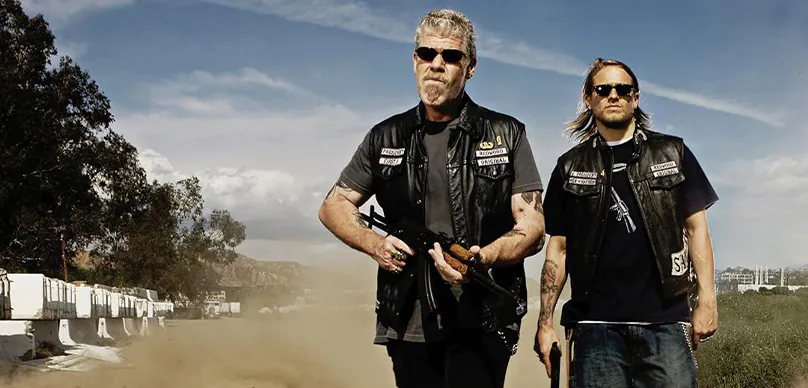
On today’s episode, we welcome Sandra Leviton, a television development executive turned producer and writer who has worked on shows like Sons of Anarchy and It’s Always Sunny in Philadelphia, and now runs her own production company while developing feature films. Her journey is one of evolution—moving through different corners of the industry while learning how the business really works behind the curtain.
From the very beginning, Sandra knew exactly where she was headed. There was never a backup plan, never a moment of doubt about her path. She started young, working in theater and cable access television, eventually landing in Los Angeles with a built-in network from her college community. That early support system became crucial, because as she makes clear, no one truly builds a career in this industry alone. Relationships, connections, and shared growth are part of the foundation of any long-term success.
Her early career is a reminder that the path into filmmaking is rarely linear. Sandra began in reality television, working on shows during a time when that side of the industry was exploding. It wasn’t glamorous, but it was opportunity. From there, she transitioned into agency work, balancing both reality and scripted television before fully stepping into the scripted world. That movement between formats—reality, scripted TV, and eventually film—highlights something many filmmakers overlook: the industry is fluid, and your path can shift as long as you stay in motion.
Her time at FX became a defining chapter. Working during what many consider a golden era of television, she witnessed firsthand how shows were developed, pitched, and brought to life. She was there as projects like Sons of Anarchy and Louie took shape, and she saw how the business evolved from more open pitching environments to a system increasingly driven by established talent and recognizable names. As she explains, what once allowed scrappy creators to break in more easily slowly transformed into a more competitive, gatekeeper-heavy process.
That shift is especially clear when discussing how television differs from film. Many filmmakers assume the two operate similarly, but Sandra makes it clear that television is still deeply rooted in a structured system. Unlike independent film, where you can create, distribute, and build momentum on your own, television typically requires navigating a funnel of agents, managers, networks, and executives. Even success stories like It’s Always Sunny in Philadelphia had access to industry connections that helped them break through. The lesson is not to be discouraged, but to understand the system you’re trying to enter.
After years in development, Sandra made the conscious decision to pivot. She launched her own company, focusing on producing and writing feature films, where she could have more creative control and build projects from the ground up. Her short film Zone 2 became a stepping stone—proof of concept, creative expression, and a way to re-engage with the hands-on process of filmmaking after years behind the desk. It’s a move many filmmakers eventually consider: stepping away from the system to create something on their own terms.
One of the most practical insights she shares is about strategy. Too many filmmakers pour resources into projects without thinking about the end goal. Shooting a television pilot, for example, may feel like progress, but if the intention is to sell it into the traditional system, it will likely be redeveloped from scratch anyway. Instead, she emphasizes focusing on writing, building a strong portfolio, and understanding how the industry actually evaluates projects. It’s not just about creating—it’s about creating with purpose.
Sandra also speaks candidly about the realities of building a career. There is no such thing as overnight success. Behind every “breakthrough” is often a decade of work, relationships, and persistence. She stresses the importance of networking—not in a transactional way, but in a genuine, human way. People can sense when they’re being used, and the strongest connections come from authenticity. In an industry built on collaboration, those relationships often become the bridge to future opportunities.
Perhaps the most grounded advice she offers is also the simplest: keep creating. Whether it’s writing scripts, producing small projects, or experimenting with content online, the act of doing the work is what builds skill and visibility. Today’s technology has removed many barriers, giving filmmakers the ability to create and share their work instantly. The only real limitation is whether you choose to use it.
In the end, Sandra Leviton represents a filmmaker who understands both sides of the industry—the system and the independent path—and knows when to navigate each. Her journey is a reminder that success in filmmaking isn’t just about talent, but about strategy, relationships, and the willingness to adapt as the industry evolves.
Right-click here to download the MP3
LINKS
- Sandra Leviton – IMDb
- Sandra Leviton – Official Site
SPONSORS
- Bulletproof Script Coverage– Get Your Screenplay Read by Hollywood Professionals
- Audible– Get a Free Screenwriting Audiobook
Alex Ferrari 0:48
Episode with guest host Dave Bullis.
Dave Bullis 1:54
My next guest is an amazing TV and film development Exec. She has worked on shows like It's Always Sunny in Philadelphia, which, by the way, we're going to talk about Sons of Anarchy. And now she just produced her own film, which is zone two, with her production company, under the stairs entertainment with guest Sandra Leviton, hey, Sandra, thanks a lot for coming on the show.
Sandra Leviton 2:17
Thank you for having me
Dave Bullis 2:19
So, Sandra, you know, growing up, you know, were you always sort of interested in, you know, in film and TV and and was that the main reason why, you know you're in it today was because, you know, you sort of found it at a young age?
Sandra Leviton 2:31
Oh, absolutely. Um, there's never been a point in my life where I wasn't going to do this, as my mom likes to tell the story, that by the time I was born, my bags were already packed and ready to move to Los Angeles to work in film and TV. There was never a single question ever in terms of what I was going to do with my life. This was always going to be it. And I started doing it quite young theater at very early ages, and then eventually started working in cable access. So I started working in television at a super young age, probably around 16 years old.
Dave Bullis 3:05
So when you, when you first moved out to to Los Angeles, did you actually know anybody, or did you just completely know nobody? And you sort of just had to find your way.
Sandra Leviton 3:13
Thankfully, I came out with a really great support system. I went to, you know, Emerson College, and we have a huge alumni, you know, Mafia, if you will, out here along with, you know, all of our friends. So by the time that we, you know, get to our senior year, we do internship, we move all move out here together. We do internships, you know, we make contacts that way. And we all just kind of grow in the industry together. So thankfully, coming out here, fresh out of, you know, during school, actually, we had a wonderful support system, excellent.
Dave Bullis 3:43
So do you actually, and you did go to college for film production?
Sandra Leviton 3:46
Actually, I am probably one of the few people who actually has a degree in television. Oh, wow, yep. I'm very specific. Yeah.
Dave Bullis 3:56
I mean, I actually have a degree in business. So it's kind of, you know, it's interesting how everyone sort of finds their way into this industry.
Sandra Leviton 4:03
Oh, definitely. Everyone has such a unique and such a fascinating path. It's really cool to listen to everyone else's stories.
Dave Bullis 4:08
Yeah, yeah, exactly. That's why, when I was doing this podcast, you know, I've heard, I've heard everyone who's been on here there has a different story. And it's always interesting to hear everyone's different story, because they're all different, you know.
Sandra Leviton 4:20
Oh, absolutely, absolutely.
Dave Bullis 4:22
So when you got it out to LA you know, what were some of the first things in certain first, some of the first projects that you sort of want to work on?
Sandra Leviton 4:30
Oh, gosh, well, my very first Los Angeles jobs, if you will, was an internship while still in school, and that was at 20th Century Fox. And I'm going to date myself a little bit here, but it was a really exciting time in TV development. I was in, I was interning in one of the current programming and development offices, and it was the season where they were developing house and bones and Desperate Housewives was coming, and they had a Lost in Space reboot. And it was just, it was kind of considered like the start of the new golden age of television. And so it was really exciting time to be there. And so, you know, that was, you know, just a semester or so. And then I had a job, pretty much straight out of school, working at a small agency that worked with celebrities, doing commercial endorsements and voiceovers. And then from there, I actually took a turn and worked in reality TV for a number of years. So my first, like real shows, like, if my first real on screen credit, if you will, is for shows like extreme dodgeball, America's most talented kid. And you'll see that my credit is like receptionist. But it was really exciting, because this was my first on on screen credits. And then I had a lot of jobs where I worked on really great shows, but because I was doing more production coordinating, or I was behind the scenes at an agency or at a network, you stop losing, you end up not having any on screen credits for a while. But yeah, my very first projects was a, you know, outside of school were these, like bunch of reality shows. And so it was like the Surreal Life and Mad Love with Flavor Flav. And it was kind of a really fun and interesting time to be even in reality TV, because it was just exploding.
Dave Bullis 6:08
You know, I actually remember this real life with Flavor Flav. That was actually, I remember that show and Flavor Flav, and I think Jordan Knight was on there. And, yeah, I remember that now. And, but, yeah, you know, you know, reality TV, you know, has opened up a lot of doors for some people. Because, you know, as I as, again, as I've had a lot of people on here, you know, reality some of some of them have actually started in reality TV. And, you know, they say, Hey, listen, even like episode 99 you know, when I am working Jay Freeman on here. He actually started in film, and now he works primarily in reality TV.
Sandra Leviton 6:44
You know, that's one of the great things about this business, and particularly now, like when, I think, when I first started, people were very much like, Oh, you're in scripted TV, or you're in film, or you're in reality TV, or, you know, eventually you're, you know, you're only in digital. But now everyone can cross over into all the different mediums and formats, and so whatever your heart desires, or whatever medium your story dictates that it wants you to be in, you have the freedom to do that. And I think that's one of the most exciting things that's happening right now, is being able to do all of that. So I'm not surprised that you're you're getting those kinds of stories. When I was, you know, when I was starting out during that time, I think almost all of us got jobs in reality TV, because that's just where all the jobs were at the time. And so a lot of us started there. And I know many friends who are still there and loving it, and I have some friends and people like myself who transitioned over into the scripted world. So it's such a cool and exciting time, I think, to be in the business because of the crossover everywhere.
Dave Bullis 7:40
Yeah, I definitely agree. You know, there's just so much going on. And, you know, once you once you started doing the reality shows like, you know, it's real life, you know, where did you go from? From there, did you go back into TV, or do segue into film?
Sandra Leviton 7:54
I was, I stayed in TV, and so from there, I actually worked at paradigm lead agency for a while, and I was able to transition there quite seamlessly, actually, between reality and scripted television, because when I first started there, I was working for two agents, and one of them was in alternative television and the other one was in scripted television. And so I was able to kind of play the fine balance of knowing the reality world really, really well, and beginning to really immerse myself in the scripted world. And then eventually, I don't know if you've ever been inside of paradigm, but they're in two buildings, and my agents ended up being split into two different buildings. And then from there, I fully transitioned into scripted television. And so then I was there about 15 months or so, so I, you know, I did my year, and I did my time, and it was actually had a great time there, and then eventually went to FX. And so I stayed in scripted television, and I've only recently transitioned into film about the last three, four years.
Dave Bullis 8:53
So, you know, when you went to FX, you know, obviously from reading your bio, you got to work with some really, really cool shows, like Sons of Anarchy. You know, It's Always Sunny in Philadelphia. So is there any sort of, like, you know, things you can talk about, you know, from your time there, you know, like, some of the things that you've learned,
Sandra Leviton 9:12
Oh my gosh. I mean, we'd be here all day. But honestly, like, I'll say that, you know, that was my, that was my dream job, you know, FX, when I first started working there, had the shield and nip, tuck and rescue me and nip talk was my all time favorite show. Like I had even wrote a spec script of it in, you know, for one of my screenwriting classes when I was in college, in season one. And, you know, so like that, show just had so much emotion for me. Being able to go and work on my favorite show was like the coolest thing ever, and also working at a network that was just so exciting and was going through such a growth phase, and actually still is. And so, you know, it was really great. My very first day there was the day that they picked up damages to series. And so shows like damages and Sons of Anarchy and Louis and all of these other great shows. You know, I was there from day one. Meanwhile, I got to enjoy the final seasons of The Shield and rescue me and nip talk and some of the classics, and really watch how not only the network changed, but how television changed through the various different development cycles there. And it's been super fascinating. And so, you know, Sunny too. I think sunny too. I think Sunny is a really great example. And this is something I talk about a lot with clients and people I work with now and when I do panels and stuff, and it's just about how television has changed, even during the short amount of time. So when I first started there so sunny was in season three, when I first started. And I'm being a fan. I'm sure you know the background, but the real quick thing is, you know, these guys were actors. They had basically bought a camera from Best Buy for like, 200 bucks, shot a pilot, returned the camera, so they essentially spent $0 and was able to shop this around and get a show on the air and for basic cable at that time in the, you know, early to mid, 2000s that was actually really possible to do. And in the amount of time that I was there, and I was at FX for about five years, that became harder and harder for people to do. Suddenly, the schedule was, you know, not just peppered with, you know, people we already had good relationships with writers on other shows, all different levels of writers pitching shows. But by the time that I had actually left, and that was in 2012 and we see this a lot more now, I think across the board in television is that it has gone very much of the way the film studios, which means that you need to have a plus talent attached. And that can mean writers and showrunners. That can mean some other high level producer, some high level actor, talent, musician, somebody who's a household name, and it was even hard to get on the schedule. People were fighting to get on the schedule, to just pitch shows at that point in time. And this was right before, you know, Netflix and Hulu and them, like, really exploded onto the scene as well. So thankfully, there's more outlets to do all of that, but it just to be able to see all of that change, and to see the, you know, just even growth of television during that time was just fascinating. So I recommend going back and definitely like reading up on, you know, history and interviews, not just with critics, but, you know, when they interview the executives and the show runners, you really see how the shows have changed.
Dave Bullis 12:50
Yeah, you know, I was actually inspired by It's Always Sunny in Philadelphia to create my own TV pilot, and I ended up shooting that mine cost a hell of a lot more than theirs did, though, because theirs caused zero I was very stupid, and I tried to put way too much production value in mine. So to make a long story short, I ended up shooting in a news film studio, a new sound stage that opened up right down the street from me. We ended up buying up a Best Buy, a Rite Aid, and there was one other store that was going out of business. We bought a lot of stuff at a heavily discounted price, including racks and cover art for like movies and stuff and all this other stuff. And was just, I mean, I'm talking with pennies on the dollar, and we built this whole thing. I shot it. And the whole time, I'm leaving out a lot of stuff, by the way, sure, but as you know, as I shot it, there were so many problems behind the camera. You know, listeners this podcast know what I'm talking about, but there's so many problems behind the camera that it showed on camera. And when I went to shot this, around, one of the notes I got was, this seems like it would be like something that my kids would watch, and he's like, you know, it's almost like you're there. He's like, it's almost like, this is a is a polished version, but it's not quite there yet. And I, and I would say, you know, exactly, right? You know? And I got to pitch to to a g4 and right as they were closing, and that's how I actually met Chris gore. And it was a shame, because people were saying that this is exactly what we would have put on G4.
Sandra Leviton 14:24
Yeah. I mean that that happens. And, you know, this is a debate that I engage in often on on Twitter with people, because I think it's just, it's so fascinating and to watch it change. But there really isn't an independent television market quite yet in the same way that there is with film. And so a lot of people are going out and they're doing exactly what you did. They're spending a lot of money to shoot these pilots. And, you know, there's a couple good festivals now for like ITV and whatnot, and occasionally people do get options and pickups from it. But television tends to be also a little bit more. More of a hierarchy than film does. So you can come in with something like, really, really great, but with no experience. You're going to be paired with, you know, other show runners. You're going to have other people kind of coming in creatively and financially. And when you sell to a studio in a network, you know, they they're really the ones calling the shots and in charge, and they like to work with people they've worked with before. And so selling and pitching shows still kind of tend to go through the same funnel system where you need to have the representatives or, you know, lawyers and the people that you know to get you in through the proper doors to do that even for a lot of the new digital networks, you know, Hulu and crackle and Awesomeness TV and all of them, they have a little bit more of an independent stream, but at the same time, you're still going through that kind of same gatekeeper funnel system. And, you know, in film, you can really, you can just go out there, you can make it, and you can find some way to distribute it, either through, you know, bigger companies to distribute it. You can do it yourself online. I know you've had some really great indie filmmakers who have done that themselves and have really wonderful careers that way. And in television, it's a lot harder because TV signals are still owned by big conglomerates. And even with these big digital outlets like Netflix and Amazon, they're still owned by these big conglomerates, and so I still have this very traditional funnel system. So being able to go out there and make an independent TV show and just shopping it around is very difficult, and so that's why a lot of them end up turning to web series. And hopefully you can build your audience that way, and then get the eyeball enough eyeballs to be able to get you into that funnel system. So it's still a really, really tricky thing. And I know a lot of people like to debate me on this, and I'm happy to so feel free we can talk about this on, you know, online and on social media a ton, because I love hearing different people's experiences. And, you know, there's a lot of great cases, even right now, where those things do happen. You know, insecure is a great example of that, where she was a web series that started out, you know, online, and then has, now has a great HBO show. You know, the sunny guys are really great example of that, but their time was earlier where that was a little bit possible. But what I think a lot of people don't realize about that story is they were already part of the traditional funnel system. And I think that's something that people don't necessarily realize they were actors. At the time, they already had representatives. They had, at the very least, managers, and they were the ones that really helped them get into the doors at the networks. They were the ones making the phone calls and doing the pitching and all of that. So while their story is super great and inspiring, and it totally is across the board, because, I mean, they're and they're wonderful. It's one of those elements that I think people don't realize in television that that in order to get to the proper channels and the proper networks and the proper studios and the proper production companies, you still have to go through that funnel system to get there. You know, there are some really great examples of what we would call independent television that have done this in a very different way, which, you know, the show insecure is a great example of that, where she had a web series where she built an audience, and it was that audience and the eyeballs that were she was already accomplishing with her show online is what got the attention of the agents and the managers and everyone else involved, that brought her into the traditional funnel system, that got her into HBO. And so I think that's one of the big things that comes up, that there's this misconception that TV works the same way as film, because it really doesn't, there's you still have to go through some kind of funnel system in order to get distribution. Otherwise, you are doing it yourself. You're doing it online, in which case you're considered more of a web series versus an actual television show.
Dave Bullis 18:59
Yeah, you know. And, it's also about like Felicia Day, when she actually hit her stride with with her, with her, yeah, yeah. And that's, you know, that's again, you know, that's what a lot of people use for inspiration as well. But you know, it makes sense with the always sunny guys, because I know Rob was an actor before, and it does make sense that by that point, he probably did it, you know, he would have to have a manager at that point, and because, I guess he was, what, in his late 20s, early 30s, when he was pitching that so, yeah, yeah. So, I mean, I imagine that's probably, you know, what happened, I mean, and it's just again, you know, that's, I use that as inspiration, and my biggest mistake Sandra was I should have aimed smaller. And looking back now, I actually have tons of ideas now that I could have used to shoot my TV pilot for like, a fraction of what it actually ended up costing me.
Sandra Leviton 20:01
Yeah, absolutely. And I think, you know, really, if that's the way that you want to, that you want to go with it, you know it is. It's all about cultivating that audience and finding that audience and really building that part. And, you know, distributing it yourself for a while online, and which means you have to watch the cost, and you have to act like an actual producer, not that you're not when you're doing it that way, but you have to kind of think that way and be a marketer at the same time, because the more eyeballs that you get, that's when you know the representatives come running. That's when other producers come running. That's when the people who want to help lift the tide come running is when they feel like there's something there that they can legitimately sell and make money off of just going out there and shooting something and then trying to shop it around without having that extra boost of people really kind of helping you along. Is extremely difficult in television.
Dave Bullis 21:00
Yeah, it's, you know, and when I look back, back to on it, Sandra, you know, I probably, if I had to do it all over again, I would do it with the way I was just describing, but like now, I would handle it completely different, like you're saying, I would actually handle it a lot better. And in fact, that I probably, I may have not even done it at all instead of just, and just instead focused on film. You know, I actually the reason I did it was because I had the, you know, it was kind of like the perfect time for me, but I ended up I probably should have done a film instead. And actually, about a year after that, or about a year and a half, I ended up doing a trailer project, and we were going to be part of a bigger team, and that ended up, you know, fizzling out, but we still shot the trailer anyway. But, you know, just looking back at all this stuff, you know, it's all it's all learning experiences, that's why I think, you know, why I do this podcast, is that way. So if somebody out there is, you know, thinking about doing something similar to what I did, they can at least learn and, you know, save themselves some, you know, time and energy and money, but just by hearing about, you know, mistakes that I made.
Sandra Leviton 22:02
Yeah, oh, absolutely. And honestly, like, if you feel the drive to go and do it, by all means, go and do it, you know, because at the end of the day, it's still excellent experience. It's how you grow, it's how you find your voice, you know, it's how you get yourself out there. You know, what I would recommend is that if you do want to have a television show in the traditional sense of the word, I would say, just write, write, write, write, write, because that's really the way TV works. It's a writer driven medium and so, you know, and it's got a hierarchy within it, you know, there's a hierarchy to get there. There's a hierarchy in the writers room. Can you skip some of those steps? Absolutely, but those are rare, and so what they like to see is this kind of experience. But if you do want to have a traditional TV show, the best thing you can do is to write a massive portfolio and get those people interested. Because what's going to happen is, whether you've shot a pilot or not, the studio and the network are going to go and completely reshoot everything. They're going to have you rewrite everything. They're going to have you recast everything. They're going to have you completely redo everything. So going out there and, you know, shooting it and doing it all for yourself. If your intention is to be in a more traditional TV environment, you are kind of, I hate to say wasting your money, but, you know, you want to be financially smart, and you want to be smart with your energy as well.
Dave Bullis 23:28
Yeah, and that is one thing too, is I've after talking, after making that pilot, was that they are going to remake, they're going to recast everything. I kind of knew that going in, though I had kind of figured, you know, what I did with my pilot was, I was like, this is an example of what things could be, which is gonna just, I know it's too late to stop being a dead horse, but if I could have made it cheaper, I, believe me, there would have been a lot, lot of different ways. And I actually ended up just writing out a script one day without any idea of what I was. You know, I really didn't have a plan, like, oh, this could have been another pilot, and I could have used this as more of like the concept pilot or the proof of concept. But as I started writing it, I said, You know what? I could have shot this in somebody's house, and it would have cost me a fraction of what it cost me to actually do that, because I had to pay the studio costs. We had to buy insurance, I had to pay for the crew. I had to pay for all the stuff we used. I mean, we had a ton of stuff going on. And, you know, I still haven't released a pilot, because right after we got, I got done making it, I actually was pretty pissed off about a lot of things. And I actually have an inclination now I think about, about re editing it, and uploading it. I mean, because also, I also had a manager at the time, not like representing me, but he was, you know, talking to me about things, and he said, you know, don't upload that pilot. Somebody could take the idea, then you'd be really out of all that money. And so I kept it back. And now, you know, in the passing years, other people in the business have said, Dave just, just released it on YouTube. Tube just to gain some attention. Yeah.
Sandra Leviton 25:03
I mean, I guess the big question that I would say, I would recommend to ask yourself, and for other people who are, who are doing that, is, you know, what is your ultimate goal and intention with it? And also, what is your goal for the series? You know, if you do end up uploading things online, then the idea is to get eyeballs and to get attention, and then to build an audience. So now you have a pilot. So then what you know, now you're trying to build an audience on just, you know, a half hour or an hour's worth of work, versus you need to start churning out content. You know, that's the one thing about when you're building an audience, and particularly online, you need to start churning out content to get people to keep coming back to you and to grow that audience. And so I think that's one of the big things to keep the perspective up. And that's how television in the grand scheme of thing works. So if you only have a pilot, you wrote a pilot, you shoot you spend all this money shooting a pilot, and then you're like, Okay, well now what you know, if you're going the more independent route, then you need to build the audience, which means you need to actually have a series, and not just a singular pilot.
Dave Bullis 26:10
Yeah, that, when I talked to another producer about that, they actually said, you know, could you ever do it like in someone's house, like, you know what I mean, like, or some other location that you could get for free or cheaper. And that's the reason why I didn't make more episodes, was because I was, you know, the whole thing took place, you know, at the on the sound stage, where we made it look like a video game store. And it was so, you know, I said, No, we had to break all that stuff down. Half of it was thrown away. The other half was supposed to be sold and the person at the last minute, but, you know, bailed out of the deal, which was killer again. I mean, honestly, Sandra, I actually wrote, and this is a funny part, too. I actually wrote a book all about this, and I chronicled every day. I chronicled all the things that went wrong went right, and I actually pitched the book as well. And most publishers were like, we don't. We don't really have, have had a lot of success with firsthand accounts like this. Usually, we prefer the How To books. But now, the more I talk about the book, everyone goes, Well, do you still have that ready to publish? And I'll say, Well, it's, you know, it's, it's in a bunch of note forms. And they said, Well, if you ever typed it up, you know, you should just self publish it now, because
Sandra Leviton 27:20
That's one of the great things about now, is that you can do things like that.
Dave Bullis 27:24
Yeah. I mean, I actually think about putting it together with another book I was going to write, and put the two together. And just because it was going to go back and forth, I actually got, there's a book called The disaster artist by Greg sostero, and it's about making the room. And I got inspired, because it was almost like he, you know, each chapter is different. Each chat, one chapter is in the present. One chapter is in the past. And that's sort of what was going on, and that's sort of what I was going to do anyway, was, you know, trying to make this film, and also working at a soul crushing day job. And those two things, the stories I have for both of those, nobody really believes. And, you know, I ended up starting this podcast in 2014 when I got turned down for a job that was, you know, rightfully mine. And I was like, you know, what Fuck it. I got to do something creative, so I started this whole podcast. But, you know, that's, that's something that I've actually, you know, I'm just working on, you know, so many different things. It's kind of hard to sometimes find a time to do some, some of these little like projects like that, like creating the book and and then just doing the kind of publishing route. But it's something in the back of my mind. And I also wonder if some people would actually believe half the stories that I actually have in there.
Sandra Leviton 28:33
You know, I think people working maintenance and already working in the industry would absolutely believe the stories, because we work in a very strange, very interesting business where weird things happen very often. And you know, I know whenever I talk to my friends back home, and I, you know, talk about things in my day to day life, or things that have happened and experiences working on the various shows and projects I've worked on, and they just can't comprehend the kind of life that we lead sometimes. And so, yeah, I think if they're in the business, they will completely get it, and they'll be like, Oh yeah, we've been there too. And then I think, on the flip side, I think it is kind of fun and interesting for people who are not in it to hear that, and it could be a little unbelievable to them, but we know it's real.
Dave Bullis 29:18
Yeah, absolutely. You know, it's just, again, some of the stories, you know, it is, it is just so outlandish, and sometimes they're just so unbelievable. But if you get, if you, if you're working in the industry, they it seems it's like, well, all right, it's just another day at the office.
Sandra Leviton 29:33
Yeah, exactly. I think one of the fun stories I like to tell, and by all means, not the weirdest, is when I was, you know, working at FX, and I was on the Fox lot, and they were shooting Water for Elephants at the time, and so they were doing this big parade scene. It was kind of down like the New York Street set, and it was right outside my window. And I had a friend come by for lunch that day, and we were walking over to the commissary, and we turned around the corner of a building, and there's a giant elephant. Getting hosed down right in front of us. And you know, who does that happen to? You can't work at a hospital, turn a corner and then suddenly, like, there's this giant elephant taking a happy bath. You know, it's one of those things. And one of the fun things about our business is that, you know, that's in where the least can be an everyday occurrence.
Dave Bullis 30:29
Yeah, absolutely. You know, a story I like to tell is this guy who I was once when I first started, we were going to go make this film that he was always talking about making, and he finally got some funding to make it. It wasn't a lot of money, you know, about about 20 grand, and we were finally going to make this film. And the film didn't have a lot to it, so it didn't really, it was a self contained thriller, self contained horror. So we get to this, this like house. It was like an old dilapidated mansion, and there were these brand new steel gates, locking everybody out, right? So we get there, and we said, and we get there, and he says, oh, wait a minute, I forgot the key, and we can't get into this to this house, because these gates are now. These new gates are there. So he says, let me call my brother. His brother is all the way across the country. And he says, oh, huh. So then he's trying to convince that this little PA, I mean, because they're smaller and you know this, to hop the fence and try to let us in on the opposite side. And the PA was like, I think that might be breaking and entering. He's like, no, no, we have permission to shoot here? Well, the PA hops the fence. Well, the gate doesn't open. There's no latch. It's literally a traditional locked gate. So if you don't have it, the key, you know? Yeah, exactly. So, so he eventually said, I guess we're not filming today. He's because he said, I'm there's no way I'm getting over this fence. And I was trying to think of a way we could do this. But, you know, it's just funny, because I tell this story to people, and they go, what the hell they were like, you don't have that. How do you not have a key? And I said, well, the guy who was doing this whole thing just completely forgot about it. And, you know, even still, we tried to get in there, and he eventually was just like, You know what? He goes, let's just call it a day. I But that's after we were there for a couple of hours trying to figure out a way to break into through this fence. But, I mean,
Sandra Leviton 32:29
The stories are hysterical. I mean, like, when you think about your daily conversations that you have when you're, you know, in pre production and production on shows, and you're trying to figure it all out, and you're having these intense conversations about, you know, somebody's, you know, bodily functions, or, you know, how to make something look bloodier or not bloody, you know, like, there's so many like aspects of it, like, I remember we would want, you know, whenever we'd watch dailies, and particularly on some of our shows, they were a little bit more on the racier side of things. And we were always so paranoid that like, HR would be walking down the hallway and think we're watching porn, because we're sitting there watching dailies of, you know, a sex scene, and we're, you know, making sure, and you can hear them screaming to make sure that the actor has the proper sock in the right places to be able to shoot properly, or they're swearing. And meanwhile, you know, you have, particularly at a place like, like Fox, you know, it's a big corporation, and different departments operate very differently than creative departments. And so we were always so paranoid that they would be coming down the hallway and report on us for, you know, vulgarity or porn, or, God knows, what else you know, because, you know, we would be in things, you know, these group things about, like, you know, sexual harassment and language, and there would be another, like, there would be like, a little lady complaining how somebody swore during one of their meetings. And we just kind of duck our heads, because that's half of what we're doing. So it's really fun to think about the kinds of conversations that we get to have on a daily basis.
Dave Bullis 34:01
Yeah, it's always a different day, and it's always some kind of, some, some kind of new problem as well. And, you know, especially now because, you know, things are going into more of a tech route. So now, you know, there's a lot of problems like, oh man, you know, final cuts not working, or hey, ADVIS not working, or these new 3d effects aren't working, or something like that. You know, it's just, you know, it's funny, because now it's the same problems, but they're different. So it's, you know what I mean now, it's like, there's always, there's always those tech problems that never seem to exist outside of when you're actually going to go shoot your film, and all of a sudden, you know, all these interesting tech problems that you know when it happens, you're ready just to say, Oh, that's it. I'm done. I'm going home. But, you know, it's so it's stuff like that, and you know it's, it's just, again, that's why I enjoy this podcast, because again, you get to hear stories like that. And hopefully, you know, you try to avoid some of that stuff. You know what I mean? If you can as much as you can, you try to minimize it.
Sandra Leviton 34:58
Yeah, absolutely. And I think what's so funny is that you can talk to people who have been in the business. Business 30 40, years, and they still have problems that they never thought they would ever experience. It never goes away, no matter, like, how much experience or how long you've been doing it. And so, you know, you definitely have to have a good sense of humor trying to get through a lot of this.
Dave Bullis 35:13
Yeah, oh yeah, I've listened the thick skin and being able to laugh in the face of, like, total, total collapse. And, you know, it's interesting. You know, I wanted just to get back to, you know, to your career. I know, I kind of got sidetracked there, you know. So what are, you know, you've done all this work, great work at FX, you know. So what are you currently working on right now?
Sandra Leviton 35:32
So I left FX, I said, in 2012 I took a little time off, because I have worked my entire life. And from there, I started my company under the stairs entertainment and mainly to produce, and then I actually transitioned into writing in the last couple of years as well. So I produce and write, and my attention went to features. And the reason behind that was because I knew I could go out there and produce a feature and actually build an audience and really make a name for myself and my projects and you know, and still keep my foot in television. So that's what I had been doing. And so for the past few years, I have been developing a number of projects, mostly dark character driven stuff. I'm a big proponent of diversity in film, both in front and behind the cameras, and unfortunately, in that in this business, it also includes being a woman. Even though we're 51% of the population, we're still considered diverse in the film industry. But you know, that includes everything across the board, from disability, sexuality, ethnicity, skin color, whatever. And that doesn't mean every position necessarily on my projects has to be filled by that, even though I do like that, but all of the major components, whether it's, you know, story elements, whether it's key cast and crew, has to incorporate that in some way. And so I'm very proud of my projects to be able to get voices out there that aren't normally heard. And so while I've been developing and writing and amassing my my feature projects, released a short film in the meantime called zone two, made the festival rounds for the past about year year and a half, and we're just now diving into digital distribution, so that will be coming out shortly, probably in the next handful of months, and so we will have announcements on that soon. But that one did really well, played a lot of major horror festivals, played all over the world, super proud of it, and really just acted as a way to propel the company into the features and kind of regaining my my onset toes, because spending so much time working at a network and working at the agencies, I hadn't been on set in a while, and so it really helped do that. And so currently, now have about three projects I'm producing and about three that I'm writing. One of them right now we are going out. We are in the process of finding financing and casting, and I'm looking for directors on two of the others.
Dave Bullis 38:10
And you know, we're talking about in the pre interview. You have so much going on right now. And, you know, like all these projects start taking off. And, you know, it just, it's almost that they all take off in the exact same time. And it just sort of, you know what I mean, it's almost like, it's almost like it has that luck to it all the time.
Sandra Leviton 38:26
Oh, absolutely, it never fails. I know one of the things we were discussing before was my company script chicks that I had formerly been doing with Miranda Sajak, who was a previous guest on your show, and we had co founded it together not long after we had both left our jobs kind of around the same time to pursue our various elements. And we realized that we were doing a lot of, you know, we were working with a lot of writers, you know, doing notes and business coaching. And so we decided to form script checks at that time, and we actually just recently closed it down due to the fact that our individual projects have started taking off and doing a lot of really great things, and so we haven't had the time to put the attention to it that we've still that we'd like to you know, we're both taking individual clients still, but our projects have really kind of shifted and become more of the focus in our each of our lives. So it's, you know, all good things, and it's really exciting to be able to do that. And you're right, when it rains, it pours, and, you know, all the tides rides together. You see all your friends, you know, making it at the same time. You see all your projects going at the same time. And so it's a really exciting point in life when you finally get there.
Dave Bullis 39:40
Yes, yes, it is. And like I was saying too about this podcast, you know, like, when I'm trying to do all the other stuff, sometimes I feel like this podcast has, like, a life of its own, you know, it's like, it's just the more attention I try to put towards other things, the more it like tries to pull me back in. I kind of, I kind of feel like, what was it? Scarface? Said that. Why am I drawing a blank? Yeah, exactly. I was like, Wait, who said that? Oh my gosh. For a guy who's seen a lot of films, I blank out on here all the time. And I don't know why that is probably because I'm trying to do too many things at once here, because I'm always, it's not that I'm not, you know what I mean, I'm trying to do the interview, and I'm also watching to make sure that, like, the recordings, doing going properly. I'm making sure that the internet's proper now. I'm just like, you know, I'm looking at these, like, these, these, all these things now. And I'm always like, you know, having, sometimes having brain farts here. But you know, Sandra, I wanted to ask you also, if there was one piece of advice that you could give to anybody about who was, who were starting out. You know, what would that piece of advice be?
Sandra Leviton 40:55
Oh, gosh, that is a very big question. It would be really to just get out there and do things and meet people, because this business is so much about networking. And I know that this is advice that you've heard a million times before, but it is true. It's you know, get to know people, and get to know people in a very genuine, authentic way, because people can smell BS from a mile away. We all know that we're all talking to each other, and we're going to networking events because we all want something from each other. So, you know, why not make it a little bit more pleasant get to know each other as people, and they're also more likely to help you once you get to know them as people, and they don't feel like you're being used. And so I would say just, you know, make genuine connections with people while you're doing that. Do not be afraid to pay your bills and eat. But also, please go out there and be creative and make stuff like we're at a time right now where you can, you can make stuff on your iPhone and put it up on YouTube, and it may or may not go anywhere, but you're just exercising those muscles and creativity. And all of this is just practice. And so if you're not doing it, you're not going to get better at it, and people aren't going to pay attention to you. You know, there really is no such thing as an overnight success in this town. You're a 10 year overnight success. You can ask any successful, you know, writer, director, director, photography, producer, they were all plugging away at it for 10 years before anybody knew their names. It's just everyone likes to, you know, hear the fun stories and not the you know, struggle that everyone went through. But you know, the truth of it is, is, you know, just get to know people, because that's how you're going to get your jobs in this business. And you know, apply your energy to your practice, whatever that may be, whether it's writing or producing or directing or, you know, photography, just be doing it.
Dave Bullis 42:54
Yeah, you know, that is a fantastic, you know, sort of way to end the podcast, Sandra, because, you know, I agree with you 100% and the fact is, you know, I think now is the time if you're going to make a film, to make a film, because I think in five years time, if you're, if you're listening to this podcast and you're thinking about making a film, five years from now, you're going to be glad you did, and you don't want to be that person five years from now, going, Man, I should make that film still. It's like, you know, time's ticking away,
Sandra Leviton 43:21
Absolutely and, you know, and I'm so jealous of all of you young people now who have all of this technology, because when I was coming up and when I was growing up, you know, we had, like, VHS cameras, we could, you know, I learned tape to tape editing, you know, trying to be able to do things was a little bit more difficult at the time. Even when I started in this business, it was much harder to, you know, develop your voice a little bit earlier on and build that and now you have every opportunity. I mean, we have video on our phones where we can upload things immediately, and so you can start developing your voice at so much of a younger age, where I feel like a lot of people from, you know, our generation and older than us. You know, it happened a little bit later in life, because we had to wait to the point where we had jobs where we were able to do those things, to gain access to the types of things. Now we have access to everything. So you can develop your voice so much younger. So, God, don't waste any time. Go do it now.
Dave Bullis 44:19
Yes, absolutely. Sandra. And you know, that's why I have so many people on here, and of all different age backgrounds. Youngest person I ever had on here was 19 or 20, and the oldest person I had on here was 86 Oh, I love it. I love it. Yeah, so very, very, very wide range. You know, it's funny. And the person was 86 by the way, actually used to work with Bruce Lee, and that is, that is Leo Fong, by way of one who's wondering, but yeah, he was an very interesting interview and how he got movies made. And the youngest at that point was, was Joe Kowalski, but I'm actually talking to somebody now. Who's like, I think she's 16.
Sandra Leviton 45:02
There's a young there's a young teenage horror filmmaker, female who's like, 16, who's been doing really well. So I hope
Dave Bullis 45:08
it's her. There's a girl who lives around me who does horror films as well. Her name is Emily, something, but I don't know. I've tried to get her on the podcast, have her dad come on, but I can't. We can't sort of make our schedules meet. But there's a friend. There's another girl that I was thinking of. Her name is Kansas Bowling, okay? And she actually, I was talking about her to have her on,
Sandra Leviton 45:32
Yeah, I think it's great. There's such a great community of filmmakers online, like, it's just such a great, great resource and social media, and everyone's getting younger and younger and younger, but it's so wonderful to be able to that they have the opportunity to cultivate the talent, and for all of us to be able to meet in this, you know, ambiguous kind of place, but connect on such deep levels.
Dave Bullis 45:57
Yes, yeah. I couldn't agree more, and that's why I, you know, I like your social media can be bit of a double edged sword, but the one part I do like about it is, I do get to meet people like you, Sandra, and then doing this podcast is, you know, it's just even extra, you know, and being able to meet different people and really expand my network. And, you know, it's just, yeah, I think it's great for everybody, you know. And it's, it's just great here about what everybody's up to.
Sandra Leviton 46:22
Yeah, absolutely. I mean, I've met many of my collaborators and my writers. We met on Twitter, and, you know, Twitter has been an amazing, amazing tool, you know, for the projects I've worked on, for myself personally, and even when I was, you know, at the network, it was such a great tool for our shows in terms of research and connecting with fans. I mean, social media just provides such an amazing, amazing community and so much opportunity.
Dave Bullis 46:49
Yeah, absolutely. And that's the that's the key word, is opportunity. And you know, that's so listening to not only this podcast episode with the other podcast episodes, it's all about either creating your own opportunities or finding other opportunities that you can, that can help you know, where you can provide value, and then they can help you out at the same time, like finding a crew to be a part of, or if you're gonna need to create your own opportunities, you know, maybe make your own movie, maybe write your own movie that you wanted to actually do.
Sandra Leviton 47:19
Absolutely and I think also too, I mean, every person you Meet is another opportunity, and it might not be tomorrow. It might happen, you know, years from now. I mean, the reason why I got my job at FX stemmed directly because of not just my job at the agency, but because of a very particular conversation I had with my, you know, future boss. You know, I was working for an agent who had a bit of a reputation of being very intense with people, and which was fine, we had a great working relationship. But I also would have to follow up and clean up a little bit after some of those phone calls. And so after this one particular conversation with my future boss. They had gotten into an argument over a show that we had been developing together with some of our clients, and she had been developing at a previous job. And I don't know, we called back at some point, and I just started immediately apologizing for him and just totally taking responsibility for my boss's intense conversation. And, you know, I completely forgot about it, because it was so normal to me. And then fast forward, you know, about eight months to a year later, and I was interviewing at FX, and, you know, and these jobs are very tough to get. And you know, I was really fortunate to be able to have this job. And I think it was two years into my my time there, she finally told me why she hired me, and part of the reason why she hired me was because of that conversation that I had taking responsibility for my boss three years prior. And so you just never in the point of all that is to say, like you never know what you know who you're going to meet and what you're going to do and what's going to be that thing that creates that opportunity for you. So just be open.
Dave Bullis 49:07
Yeah, absolutely. Sandra, I couldn't agree more. Sandra, I want to say thank you very much, you know, for coming on. I mean, I could talk to you all day. I could, you know, I mean, you and I could be sharing war stories all day. Sandra, where do people find you at online,
Sandra Leviton 49:21
Absolutely you can find my company at utsentertainment.com, I'm also on Twitter. I have two handles, one for my personal handle, which is lil s, j l, so that's L, I L, underscore, s, j l, and the other one is Understairs Ent. And that one, obviously, is for my company. I like to host a little thing called TV chat. And I love talking about television. I love talking about film and story. So come hang out with me there and ask me anything. I'm always open for conversation.
Dave Bullis 49:55
And I will link to all of that in the show notes, everybody and you can talk. To Sandra on Twitter and or argue with her, as she put earlier,
Sandra Leviton 50:06
Come, come argue with me. It's fun,
Dave Bullis 50:10
Sandra, I want to say thank you so much for coming on
Sandra Leviton 50:12
Well, thank you so much for having me. This was super fun. And let's talk more.
Dave Bullis 50:16
Yeah, absolutely, absolutely. And please stay in touch and I will talk to you soon.
Sandra Leviton 50:20
Absolutely. Thank you so much.
Dave Bullis 50:22
Thanks Sandra.
Sandra Leviton 50:23
Bye, bye.
Sign up to receive email updates
Enter your name and email address below and I'll send you periodic updates about the podcast.
Please subscribe and leave a rating or review by going to BPS Podcast
Want to advertise on this show? Visit Bulletproofscreenwriting.tv/Sponsors